
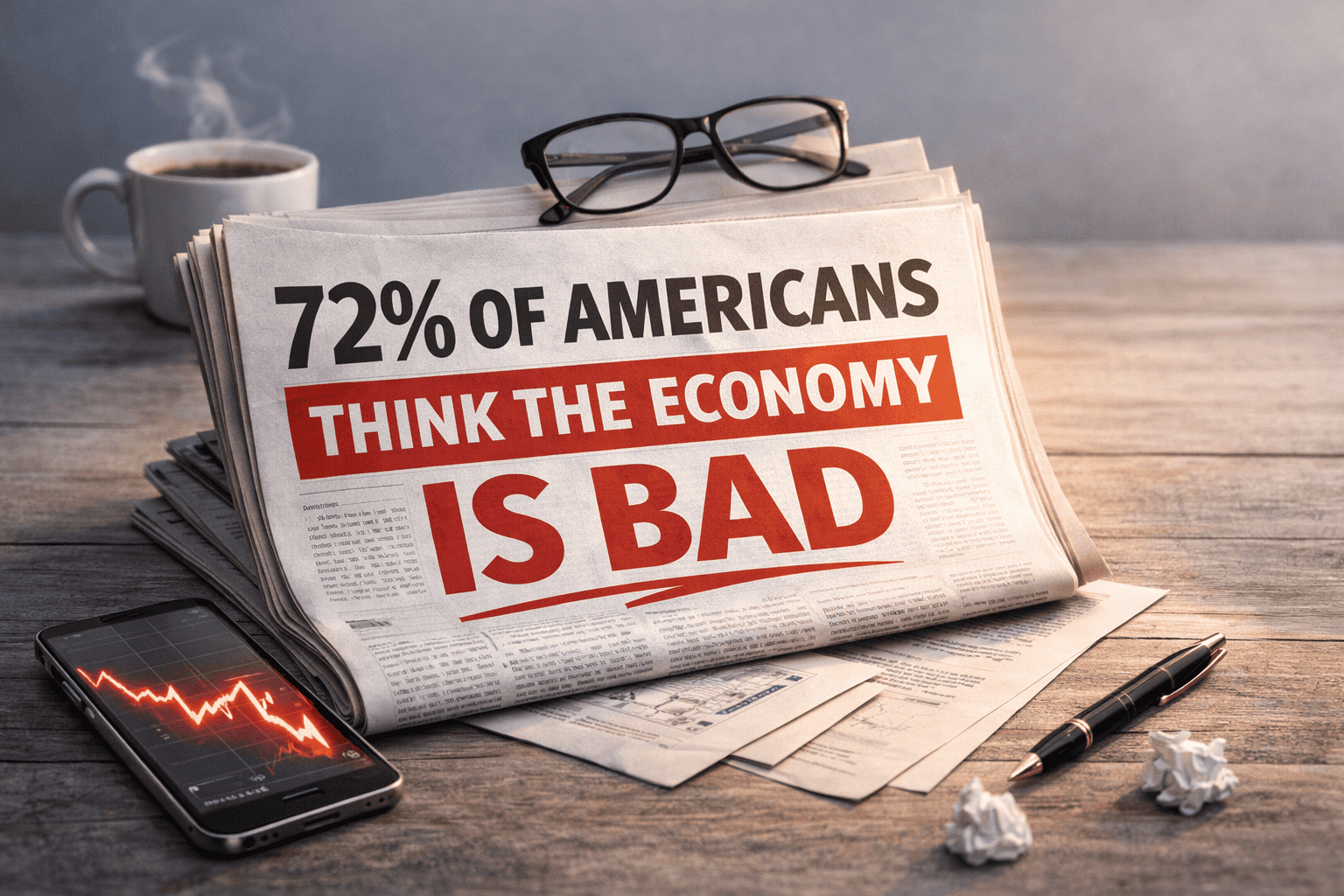
A Pew Research survey from February 2026 found that 72% of Americans have a negative view of the economy and nearly 40% believe conditions will be worse a year from now.
Meanwhile, the S&P 500 is hovering near all-time highs, unemployment is low, corporate earnings are solid and mortgage rates are finally dipping below 6% for the first time in years.
What’s the fear about?
Either 72% of the population is seeing something the market isn’t… or sentiment has completely disconnected from reality. I think it’s mostly the latter. And that disconnect creates both risk and opportunity for investors who know how to read it.
I get it, the past few years have been rough.
Inflation spiked to levels most people hadn’t experienced since the 1980s. Groceries, insurance, housing… everything felt more expensive. Even though inflation has cooled, the prices didn’t really come back down. They just stopped rising as fast. People feel poorer even if the official numbers say otherwise.
Interest rates also shot up. Anyone who needed to buy a home, finance a car, or carry a credit card balance got squeezed. The 3% mortgage era ended abruptly and millions of people who thought they’d move or refinance got stuck.
The headlines haven’t helped either. Recession warnings, bank failures and layoffs at major tech companies. AI threatening to replace jobs and political instability. Every week brings a new reason to feel anxious about the future.
So when 72% of people say the economy feels bad, I honestly believe them. It does feel bad for a lot of people. The lived experience doesn’t match the macro data.
But the thing is, feelings and investment returns don’t always move together. In fact, they often move in opposite directions.
When everyone is optimistic, prices tend to stretch. Because when everyone is pessimistic, prices tend to be compressed. That’s just how markets work.
Think about March 2009. The financial system had nearly collapsed, unemployment was spiking and headlines were apocalyptic. Public sentiment was in the gutter.
But it was also the BEST buying opportunity in a generation. The S&P 500 was about to begin a decade-long bull run that would return over 400%!
Or think about late 2021. Everyone was euphoric when crypto was mooning, SPACs were printing money and people were quitting their jobs to day-trade meme stocks. This time, sentiment was through the roof!
But what followed was one of the worst years for a traditional 60/40 portfolio in decades. Stocks fell, bonds fell and crypto crashed. The people who bought at peak optimism got crushed.
After some time, you start to notice a pattern…
Now. I’m not saying sentiment is a perfect contrarian indicator. But extreme pessimism (72% negative) is historically more associated with opportunity than with danger.
When people feel bad about the economy, they don’t invest. They instead choose to sit on cash. They wait for things to “settle down” before making decisions and tell themselves they’ll get in once things look clearer.
But things almost never look clear at the bottom. Clarity comes after the recovery has already started. By the time everyone agrees the economy is fine, the best opportunities have already passed.
I’ve talked to dozens of people over the years who’ve been “about to invest” for five or ten years running. They’re always waiting for the right moment. The right moment never arrives because they’re waiting for certainty… and certainty doesn’t exist in investing.
Meanwhile, time continues to pass… compound returns they could have earned are lost forever. Every year you sit on the sidelines is a year of returns you never get back.
The flip side is that widespread negativity can work in your favor if you’re positioned to act.
When most people are scared, competition decreases. In real estate, fewer buyers means less bidding pressure. Sellers become more motivated and all of a sudden, deals that wouldn’t have been possible two years ago… start appearing.
We’re seeing this right now in commercial real estate. Operators who borrowed at 3% and can’t refinance at 7% are selling at discounts. The headlines call it “distress” but for buyers with capital, it’s an opportunity.
The same dynamic plays out in other markets. When sentiment is low, assets get mispriced. Patient investors who can look past the headlines and focus on fundamentals tend to do well in these environments.
This doesn’t mean you should be reckless. Pessimism exists for reasons and some of those reasons are valid. The economy might get worse before it gets better. A correction could absolutely happen.
But if you’re sitting on cash indefinitely because you’re waiting for everyone to feel good about the economy, you’re going to be waiting a long time. And you’ll probably miss the recovery when it comes.