
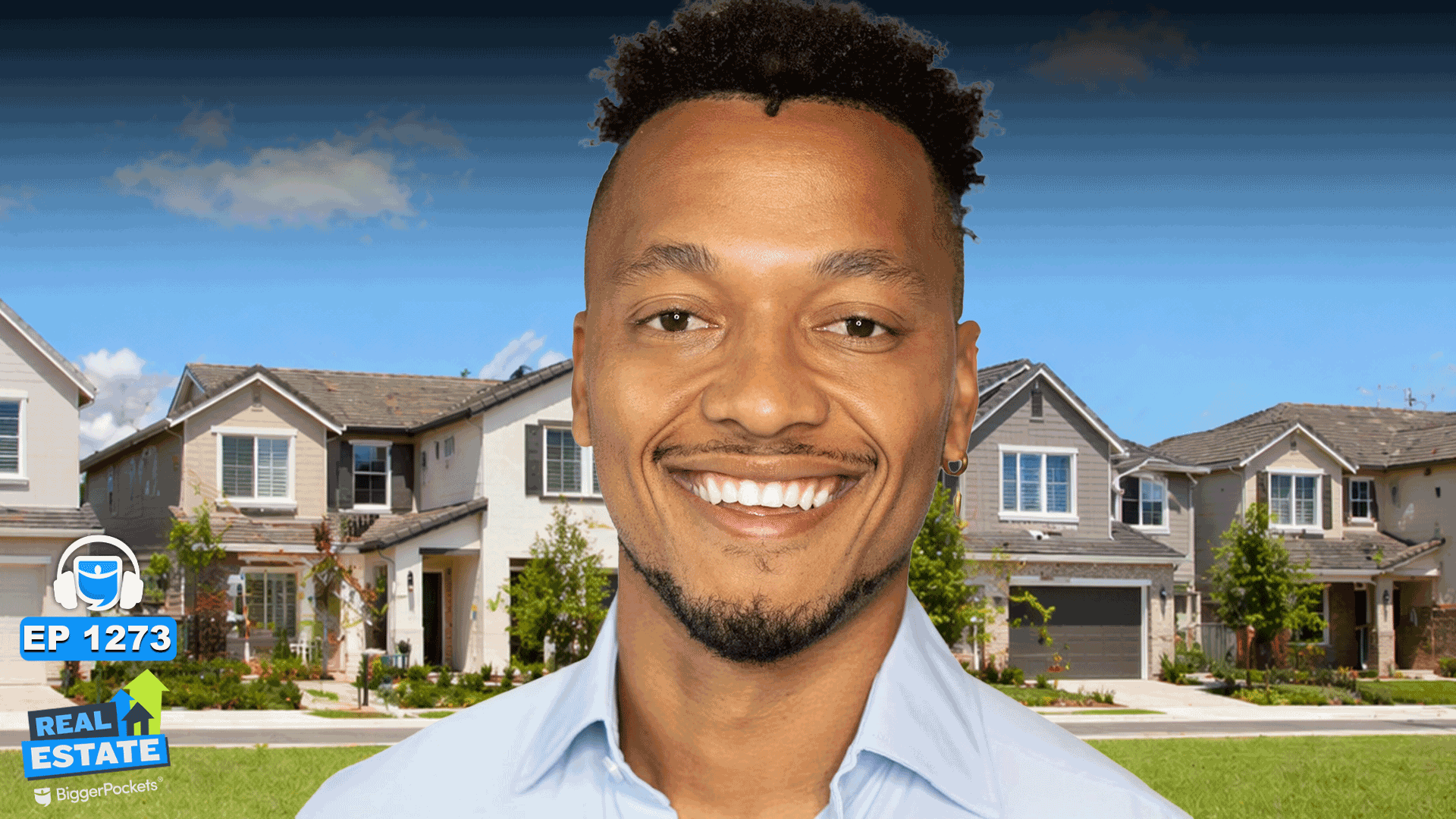
Brett Hundley doesn’t want an employer or a nine-to-five job. Ever. At just 32 years old, he has already retired from one career and is now chasing the freedom and flexibility that real estate investing can provide.
During his eight years as an NFL quarterback, Brett spent evenings after practice learning the ins and outs of real estate from teammates who had already discovered its wealth-building potential. Early on, he tried a little of everything—short-term rentals, new construction, and other investing strategies—before zeroing in on house flipping, which has since become his bread and butter.
Brett says the skills he developed running an NFL offense directly translate to the real estate investing world, where he now manages contractors, deadlines, and budgets instead of playbooks. His goal for 2026? Complete 24 real estate projects. But he’s not staying busy just to pass the time post-football. Like most investors, he’s after true financial freedom—not just the income but the flexibility to spend more time with family, travel the world, and retire on his terms.
Brett:
Don’t want a boss or a day job deciding your future? What if you could ditch the nine to five for good and replace it with a business that gives you serious income and total control over your time? Today, you’ll hear from someone who’s actually doing it. At just 32 years old, Brett Hundley has already retired from one career and built a thriving real estate business designed around one goal. Freedom. Not just money, but the ability to live life on his terms. Take that dream vacation and say yes to opportunities that most people can’t. Brett’s secret weapon is using the leadership skills he honed during his eight-year NFL career to build and manage teams, to run renovation projects day-to-day and hit lofty goals like completing 24 deals per year. If you’re ready to build a real estate business that doesn’t just cover the bills, but actually funds the lifestyle you want, Brett will show you how to find your lane, scale from zero and take control of your future.
Hey everyone. I’m Dave Meyer, Chief Investment Officer at BiggerPockets. We got a great show for you today. It’s an investor story with Brett Hunley. He’s a former NFL quarterback turned Arizona real estate investor who’s doing the exact type of deals that everyone in our community could also be doing. So let’s jump in with Brett and hear what he’s up to. Brett, welcome to the BiggerPockets Podcast. Thanks for joining us.
Man, thank you for having me. This is a fun one. Yeah,
Dave:
This is going to be a lot of fun. So tell us a little bit about yourself. What’s your professional background? How’d you get into real estate?
Brett:
Man, I like to say I fell into real estate, but background, I played football, went from Chandler, Arizona, and then went to UCLA, played in the league for eight years as a quarterback. And then during my time actually while playing football, I had sort of got into real estate when I was in Green Bay.That’s where I bought my first house. And that is essentially what got me into it. And then it wasn’t until I got to Arizona who I started sitting down with teammates of mine, Larry Fitzgerald, Devin Kennard is another big one and I grew up with Devin. And then Prince Mukamero, who is another Arizona native, I used to sit down with them every day after practice. Prince was doing short-term rentals. Devin was doing long-term rentals and Larry was doing a whole bunch of stuff.
Dave:
Oh, wow.
Brett:
Yeah. And picking their brain, and then that’s how I started buying my first short-term rental, then the first new build. So
Dave:
You had a little real estate club? No,
Brett:
100%. That’s pretty cool. Yeah, 100%.That’s how I fell into real estate.
Dave:
I have a Prince of Mukamara Jersey.
Brett:
Do you really?
Dave:
Yes. I’m a Giants fan. He was our first round draft pick.
Brett:
Yes, no way. I
Dave:
Went to the opening game and bought it, still got it.
Brett:
So Prince too, so he’s from Arizona. Oh, I didn’t
Dave:
Realize that. Okay.
Brett:
So from Arizona, so it was me, him, and Devin Kenard on the same team playing for the Cardinals. And Prince was doing short-term rentals. And one day, I was like, “Dude, I’m just sort of saving my money. What are you doing?” Because I was like, “Okay, maybe buying some rentals and stuff.” And he was like, “Dude, check out the short-term rental.” And he showed me all his numbers and it was crushing it. I was like, all right. So I bought my first property five minutes away from his. Really? Yeah. Okay. That’s awesome. And then it started crushing it. And then Devin Kennard as well was doing a lot of long-term holds, so I was running a lot from him. So man, just picking those guys’ brains sort of got me into it and then I sort of just took off running.
Dave:
Devon’s been on the show before. He’s written a book for BiggerPockets. What do you think it is? There seems to just be this overlap between professional sports and real estate. Why do you think that is?
Brett:
Let me dispel this thing right now because people look at us and they’re like, “Man, you guys have the access, can dump all this money into real estate.” And honestly, when you really look at the statistics of making it to the league, one, I mean, you’re talking 0.0002% of all athletes who try, but then once you make it, most NFL rosters are made up primarily of undrafted guys. And then when you hear all these 100 million, $200 million price points, it might be one or two guys on the roster and the rest are usually at league minimum. And then if you do get a contract, most average are 2.3 years, 2.8 years. Wow. That is a career. That’s your average career. Most guys. And so that doesn’t even get you to your pension, which is 3.3. Luckily, I was blessed to play eight years, so I had a great career, but most of us, if they make it, are going to play for 2.8 years and then have to figure out what’s next.
Dave:
So is that kind of the mentality when you talk about meeting with Prince and Larry and Devon, is that what you guys are thinking about and why you’re starting to plan real estate?
Brett:
Like I said, I found a passion for it when I did the thing, did the property in Green Bay and then I actually started outside of that in new builds. So it was right in the Arcadia area and I had a friend of mine out here who had built the house I had bought and was living in out here. I’d found a house and I said, “Hey, dude, would you be cool to partner up? I found a good house I would love to tackle.” And so we toured to the studs and built up new and sold it. And that was when COVID happened too. So I mean, the city shut down everything. Ended up making money, but it was a two-year, three-year process. But I think a lot of the times when we get into the real estate space, I think for us, it’s just the process.
If you do it right, it is a process. If you’re flipping, and that’s sort of what we’re used to. So I think that’s some of the things we look for in other investments.
Dave:
Yeah, it’s just kind of a math problem.
Brett:
Yeah.
Dave:
I mean, there’s process and you have to do the execution,
Brett:
But
Dave:
You can build a system to make it somewhat repeatable,
Brett:
At least.
Dave:
Absolutely.
Brett:
And it’s almost like systems, especially for me being a quarterback, my whole thought was I’m used to leading a team of receivers, knowing the offense, knowing the whole play calls. I view real estate the same. It’s putting a team together and then knowing what the triggers of each person is, and then also making sure we get to the end goal, which is creating this product and building this thing. And it’s a system. So once you do it once, I think a lot of us say, “Oh, okay, it was some challenges, but it’s not the end of the world. Now let me repeat this, refine it, make it more efficient and keep it going. ”
Dave:
Awesome. Well, I want to talk to you a little bit more about the leadership part because I think that’s super important for our audience here today. And let’s talk more about your portfolio, but we got to take a quick break. We’ll be right back. As a host, the last thing I want to do or have time for is play accountant and banker, but that’s what I was doing every weekend, flipping between a bunch of apps, bank statements and receipts, trying to sort it all out by property and figuring out if I was actually making any money. Then I found Baselane and it takes all of that off my plate. It’s BiggerPocket’s official banking platform that automatically sorts my transactions, matches receipts, and shows me cashflow for every property. My tax prep is done and my weekends are mine again. Plus, I’m saving a ton of money on banking fees and apps that I don’t need anymore.
Get $100 bonus when you sign up today at baselane.com/bp. BiggerPockets Pro members also get a free upgrade to Baselane Smart that’s packed with advanced automations and features to save you even more time. Welcome back to the BiggerPockets Podcast. I’m here with Brett Hundley talking about his transition from being an NFL quarterback to real estate investing. So it sounds like you got a little bit of influence.You said Prince, Mukamara’s doing short-term rentals, you did a little new build, you did a renovation. How’d you think about your portfolio strategy when you really started to get into it?
Brett:
When I first started, did the property in Green Bay, but then I’d sat down and was sitting with Devin Kenard, Prince and Mukamara, and Prince was doing short-term rentals out here. Devin was doing long-term holds in the Midwest. Larry, again, was sort of overarching, making big investments and projects and stuff. And I had started with short-term rentals as a rental portfolio. And this at the time, I do say I got lucky. This one interest rates were like two or 3%. So I could probably shoot it not missing. Yeah. I was like, I could shoot and not miss, honestly. And so I bought my first property right around the corner from Prince’s short-term rental. And we would sit down every day after practice. He would sort of show me everything, he would show me the numbers and I just learned and I just tried to soak it in.
And same with DevaCondar, he showed me a lot. And then from there, I bought one properties, started a management company as well, just to keep it rolling. And then bought another property, which I ended up living in. And then I bought another property. Short-term rental or long-term? All short-term rentals at first. And then from there, once I bought three, then I started my new build. And so I was sort of just jumping into things. I was like, okay, I like the cashflow that’s coming from this. And then from there, once we did the new build and finished that, then that’s when I sort of analyzed doing a new build, the money I made, the ROI and how long it took. And then I dumped into probably a flip style property, but it was about a $1.5 million resale. I bought probably like 900, sold it for 1.4, 1.5.
So it was a bigger investment. It’s a big swing. Yeah, a big swing. But then I started working my way down and seeing the price points of all these homes. So I did that. And then the next one, I jumped into buying at 350 selling for … I just started seeing what worked and what was the best return on time on capital. I love that. And so I got to find from the top to the bottom and the spread of each. And then I sort of found my niche and then just started rolling with that, honestly. And
Dave:
The niche is flipping.
Brett:
Yeah. To be honest, I love new bills, no discredit to anybody who does all the new builds. But for me, time-wise, as far as return in and out on projects in capital coming back, I found a true passion for flipping.
Dave:
That’s really cool.
Brett:
Yeah.
Dave:
I love what you were saying too about just thinking about efficiency because I think a lot of people hear, oh, you could go out and flip a million dollar home, make a big profit, but you’re also buying 350.
Brett:
Yes. So
Dave:
Why would you spend your time doing the lower price home?
Brett:
Yeah. A great friend who became a mentor of mine, but now is one of my best friends. Zachary keeps out here his slogan, Trash Cash, Zach. Love you, man. But he’s probably one of the largest single family home owners in Arizona. He’s been doing Flipping for 20 years, and I sought him out and actually just wanted to learn from him as well. And I was telling him what I was doing and the money I was making, he was like, “Dude, just try one of these.” And I was like, all right, cool. Tried it. And I dang near made as much money as I did on the big projects. And I was like- And
Dave:
Less risk,
Brett:
Right? Yeah. And that’s exactly what he was getting at. He was like, “Dude, your capital is being used. There’s so much more risk. You do one of these.” And I think actually one of the properties I did bought it, I made a hundred some thousand. It was just a quick flip, but I realized, man, I don’t have to take these big swings and risk all this when I can still do in this range and still make some decent money in it.
Dave:
So did that become your buy box after that or are you still kind of open to anything that makes sense?
Brett:
Yeah, I’m honestly open to anything that makes sense. I think for myself, what I’ve tried to focus more of is just analyzing deals as sharply as I can, man, because especially in this Arizona market, there’s a lot of people doing it. And it’s not like I’m jumping at everything. So a lot of this stuff, most of the stuff I just passed on. But if the deals anywhere it’s coming from, small, big, if the opportunity is there and the risk is worth it as well, I’m sort of open for it.
Dave:
Yeah, that’s good advice. We have a mutual friend, James Daynard, some often hosts on BiggerPockets who does the same thing. He takes these huge swings. He’s flipping a $6 million house. Is it cool? Yeah. He takes these massive swings,
Brett:
Right?
Dave:
Yeah. But he’ll also buy stuff that’s like 300,000 and it doesn’t really make sense until you think about efficiency and return on time and return on capital and just being open to anything that meets your underwriting numbers and not being too strict on your buy box. Is that one of the ways you are competitive in Phoenix? Because Phoenix, I mean, it’s as hot a flipping market as I would imagine in the country, right?
Brett:
Yeah, saturated for sure.
Dave:
So how do you stand out?
Brett:
I think the biggest thing is just having that wider range buy box. And a lot of guys, now that I’m trying to get my name out there a little bit more and people know I’m buying cash buyer and stuff like that, and I always throw that out their cash buyer if anybody’s talking.
Dave:
Hit a ball.
Brett:
But I think it is having that wide range. Just like James, and I’ve been around him and been able to pick his brain and study him and watch what he does, but I think it is just a lot of guys I’ve noticed, and there’s nothing wrong with it. They find their sort of sweet spot and they run with it. Me, I’m like, dude, if the deal’s worth it, even if we’re talking a million, two million, six million in James case, as long as the returns are there to outweigh the risk, just like if I’m buying a 300, $400,000 house and doing that, I’m completely open to it. And honestly, I like the less riskier ones. Yeah.
Dave:
Right. I mean, if you can make as much money and it’s
Brett:
Less
Dave:
Risk,
Brett:
Why
Dave:
Wouldn’t you do that? That’s
Brett:
A better
Dave:
Deal.
Brett:
100%.
Dave:
Buy the numbers, that is a better deal.
Brett:
One of the things too that I think sticks out, especially as athletes and just general society, everybody wants this big, shiny home run, swing the beautiful things. And I’m like, dude, you have a nice three, $400,000 house. It might not be the big multimillion dollar mansion, but it still is a cash flowing entity. You can make money off of it and it’s less risk.
Dave:
For sure. I mean, I would rather risk 50 and make a hundred than risk 200 and make 250.That’s just the math at how it should work out. But I got to ask you, man, you said you liked flipping and you’re passionate about it. I’ve done two now because James forced me to do it. I am on the fence of if I like flipping. I got to be honest. What do you like about it?
Brett:
I have enjoyed the process of seeing something completely run down and in the matter of a couple months turning it into something beautiful, honestly. And I mean, it does come with the inherent risk of getting into the property and finding things that you might not be ready for. But at the same time, again, everything falls back to underwriting. If you underwrite it right, you sort of walk it, you know what you’re looking at and you do the homework, I feel like you get a good understanding of some things to be able to now say I’m taking a bad property in my own stopping grounds where I grew up at
Dave:
And
Brett:
Adding value, I think it’s an awesome thing. I
Dave:
Think it’s one of the most underrated part of real estate investing. It’s like you do provide value to your community if you do it in the right way. There are some shady operators in real estate. Absolutely. Yes. I don’t think you are. No, absolutely. I get good vibes.
Brett:
I want to make sure people get a good home. Yeah,
Dave:
Exactly. Right. And you are restoring something and providing that, especially at those lower price points. Some affordable housing is super cool. To me, in my very limited experience as a flipper, so much of it is about leading a team. So you talked a little bit about that recently, but how has your experience as an athlete, literally a team player and as a quarterback in particular, sort of translated into your flipping career?
Brett:
Yeah, that has been the one thing that I think is the biggest … I find the most joy in, honestly, I went from leading offense, going out to the field, getting hit, and trying to score some touchdowns to now doing the same, but trying to build a property. And in all transparency, nothing’s perfect. You find people, you meet people, you meet contractors that you work with one time, and you probably … I’ve had experience, I don’t work with them again, and I’ve went through multiple contractors, but I think finding the right people to fit what I’m looking for. And my biggest thing too is the culture behind it. I also do want people to enjoy what they’re doing. Everybody’s out here to make money, get paid and stuff. But at the end of the day, you don’t want people walking into a job sloppy, not caring about what they’re doing.
You want people who actually enjoy what they’re doing. And I think finding that team for me has been the greatest thing. Because now when I get a new project, I’m excited to send out a text like, “All right boys, we got another one. Let rock.” And stuff like that. I think it’s been fun for me to just swing by the project, see how things are going, put up the pictures, making sure they know whatever … And that’s the small joys that I get and then to see it come together. And it’s not something I got to be there every single day, but when you find the right guys, it makes the world’s difference.
Dave:
I think this is such valuable advice or insights for our audience because I haven’t done a lot of flips. I’ve done a lot of burrs and renovations and that kind of stuff. And you don’t think about culture because they don’t always work with each other. They work different businesses, but there is a culture of the job site almost where it’s like if you’re the flooring guy and you show up and the electrician’s sloppy or grumpy or not doing a good job and you as the operator let that slide, they might not put in their best effort. 100%. So it’s sort of on you to create the standard and the work environment and people want to be there and they want to contribute a lot of success, whether you’re renovating a bathroom or doing a whole flip, that little difference in the culture you create will cascade probably throughout the whole project.
Brett:
Yes. And I always envisioned it like Seattle, Pete Carroll is a great example. He had one of the best culture programs. And that’s also what I get to learn from and take what I’m trying to put together and building. But Pete Carroll, John Harbaugh, these guys at practice, it was fun. You enjoyed what you’re doing while you’re doing it. And there’s been some times in programs when you’re losing and stuff, you come in and it might be dreary or whatever, but at the end of the day, as long as the culture, you got music blasting in practice. I like walking into a job site and I hear the music. I’m running around, demo team is in there. I’m like, all right, listen, I enjoy it. But you should come in and we’re all in this to make money and enjoy what we’re doing, but there has to be a standard of set.
And it’s a performance standard. So it’s something where everybody knows, hey, the music’s going, we’re all in here working, but we’re all trying to get done what we need to in time.
Dave:
Totally. Yeah. And if you don’t have that and everyone’s grumpy, it makes it harder to give feedback too. I think it’s like if you- That’s a great point. You’re ultimately accountable for the job, right? Everyone’s pissed. They’re not going to be receptive. If they’re having fun, if they feel respected, if they feel like you’ve got their back and have their best interest at heart, when you put in a change order, they might not look at you like they want to kill you. It’ll actually be a little bit
Brett:
Better. It’s so true though, man. I think the craziest and the beautiful thing about it is like, I want everybody to feel like it’s a team.That’s literally what it is. So if designer does put in a change order, I unfortunately have to deliver the message. But I don’t want people looking at me like … I want to bring the energy. I want people to have fun while they’re
Dave:
Doing it. Yeah, I love that. That’s great advice. What role do you like playing on the team?
Brett:
I like being the manager. And what’s cool about what I’ve built is it’s almost like a family affair. So my mom by trade is an interior designer.
Dave:
Oh, cool.
Brett:
And my wife is an agent. So it worked- Did you plan
Dave:
That?
Brett:
I didn’t.
Dave:
That
Brett:
Just happened that way? It did, man. When I first started buying my properties, my mom, she’s a flight attendant as well and does interior designing, went to school for it and I was like, “Hey, can you just start doing my short-term rentals?” She did kill those. Perfect. And then when I got into the building and the flipping, she didn’t started doing those and it sort of became this cool family team.
Dave:
That’s awesome.
Brett:
And yeah, didn’t plan it. But then in my position, I’m like, okay, well, I’m not the guy who’s going to be at the job site every day on people’s butt. I let people breathe and enjoy and do what they need to. But at the same time, it’s like, “Hey, we need to get this done by then.” And I want to make sure if I can get them as efficient as possible, I give them the schedule, I put up the photos. I say, “Hey, I got cabinets being delivered on Monday. When do you need this? ” I’m the middleman between all the contents. So you’re
Dave:
Doing project management,
Brett:
A lot
Dave:
Of that
Brett:
Stuff?That’s why I found my sort of niche and what I like doing. Okay, hey, we got flooring coming, cabinets delivered. When do you need this? I’ll make it happen.
Dave:
Yeah. Well, it’s not all rainbows and butterflies. So what part do you dislike the most about the process?
Brett:
The thing I dislike most is when you get a call about some unexpected, something unexpected- Sitting down to dinner. Just recently, man, I was laughing with our contractor. Well, for the demo team, we told them when they’re demoing cap the sort of plumbing fixtures. Sure enough, man, one of them had to miss it because I walked in and there was water everywhere. Oh God. And stuff like that, but you take it with what you get. But I would say probably the unexpected calls and then having to figure out the budgets and stuff, that’s least favorite.
Dave:
It’s a grind.
Brett:
Yeah. It is.
Dave:
But that’s every real estate business. You have to take the good with the bad, but it sounds like you’ve found a way to minimize the stuff you don’t like and to maximize the stuff you’re enjoying.
Brett:
Yeah, absolutely.
Dave:
Sounds like you have a great business going. What are your goals going forward?
Brett:
My big, hairy, audacious goals. So I want to do 24 flips this year.
Dave:
Whoa, okay.
Brett:
This big hairy one. And so when I say 24, I would say 24 projects. So when I say that too, that does include me wholesaling deals now. So I got into that on the side and honestly, it was just a way for me to cut out the middleman and start finding my own deals and hopefully find some better spreads.
Dave:
Cash buyer.
Brett:
There we go, cash buyer. Yeah. But I would love to do 24 this year and I’m on track.
Dave:
That’s
Brett:
Awesome. So I’m rolling right now. That’s intense. It is. But it’s almost like I want the challenge. I forgot what coach said this, but it’s like you change the mindset of like, I get to do this stuff rather than … And that to me is what drives me.
Dave:
Yeah, that’s a good way to frame
Brett:
It. And so if I can- You get to do 24
Dave:
Profitable projects.
Brett:
Yeah, that’s
Dave:
Amazing.
Brett:
And so if that is my goal, and hopefully I can keep this up through the rest of the year and find more deals that better fit, but if I can just maintain that at the end of the year, I’ll look back and I’ll say, “I did that. ” And then I’m sure from there we’re going to increase the goals, but that’s where I want to shoot
Dave:
For. Did you come up with 24 because you feel like that’s your max capacity?
Brett:
No, I wanted to just try to shoot for something. I wanted to think bigger than maybe doing two or three a year where I was probably at, especially while I was traveling in year stuff. And now that I’m here, I was like, “Okay, what is going to keep me every day waking up saying, I got to do this, I got to do that and push me to be uncomfortable.” I think that’s the biggest thing. That would make
Dave:
Me very
Brett:
Uncomfortable. 100%. Oh, there’s been moments where I’m like, “Man, we got another while we’re doing this. ” Why did I do this? Yes, but it’s been fun too, man. The big goal that I really want to do is I want to be doing these projects, whether it be 24 or whatever, a year, but I also do want to do one big build, like a upper luxury brand and build type thing or a bigger, like a James $6 million or $4 million. And the reason being, I would love to do one of those and live in the house for two years.
Dave:
Oh, do a live-in flip.
Brett:
Yes. Oh, dude, that’s
Dave:
The way to
Brett:
Go. And then sell it taken. I’m married so I get to the capital gains. So I want to do one big project a year and do that and then just have these rolling.
Dave:
Yeah, that would be very fun. And get to live in tons of cool houses as well. But I’m curious how you evaluate these goals. Super ambitious and very impressive, by the way. What are your lifestyle goals? What do you want your day-to-day to look like? Because it’s tempting as a real estate investor to keep taking on more and more projects. Some people want the more passive side of things. How do you find that balance?
Brett:
So my biggest thing was freedom and being able to go and me and my wife are huge travelers, huge travelers. So we ain’t got no kids. We got one dog at 13 years old. So boy, old man at this point. So for us, freedom is a big thing. We’re heading out to Bali for three or four weeks. Amazing. We want to be able to do that and we don’t want to stop. So I think having that flexibility of saying like, “Hey, I don’t want to get into something where it’s a nine to five.” I think that’s the one thing I’ve always wanted to stay away from. I’ve always wanted something that also I wake up enjoying, I wake up excited and I’ve loved real estate for that reason. But then I think the biggest thing is really just finding passive income. So the end goal for me is really once I get these, these are all operating businesses, operating cash.
I want to then start deploying into passive multifamilies or whatever it is that I can now hold and then start offsetting the mix. So that’s our future goals.
Dave:
Yeah. But you’re trying to build up the equity
Brett:
And then
Dave:
By either own a multifamily or do passive or …
Brett:
So if I can own and start acquiring multifamilies, and my thought is using this strange strategy. If I have the crews who are building stuff like this and the flips, I can then say, okay, I want to buy a rundown eight unit that might not be managed as well or 16 or 32, do this and do the same thing at a bigger scale.That’s where I want to- The game right now. It’s a good
Dave:
Place to be right now. Yeah, it makes sense.
Brett:
You
Dave:
Have the skills to do it for
Brett:
Sure. And that’s what, so me and my wife, our thought is once we can analyze and find a 32 unit, we’re jumping.
Dave:
So you’re telling me you get to do 24 flips a year and go to Bali for four weeks at a time. Absolutely. You’ve killed it. Absolutely.That’s the dream, right? I mean, I know depending on your family situation, but it’s not like you’re getting to do something you’re passionate about with work and it’s supporting passions that you have outside of the work. I mean, that’s what we talk about on the show all the time. Trying to achieve that is really what everyone’s after.
Brett:
Yeah. It’s been fun and I embrace the challenge of all this stuff. And what’s crazy too is it’s not like … I’m seeing guys who’ve been doing this for 20 years, 15 years, and I feel like I’m just getting started. And that’s where I’m the most excited. I’m still learning. Man, learning from you, all these guys, Devin Kenard, I feel like I’m still getting going in this race. So it’s more fuel to the fire for me that I get to continue learning from guys like yourself and …
Dave:
I think it’s the best way to succeed. A lot of people get into this, myself included for financial freedom, but it almost is tempting if you get into it with that mindset to have one foot out the door. You’re like, how quickly can I stop doing this? Yeah. And I really feel like it’s almost this weird reverse psychology thing. If you commit yourself to being in it for longer, you almost achieve the financial freedom part faster. If you commit, I enjoy doing this, I’m going to stay with it and just see where this goes. You’ll probably get to quit sooner. Yes. Most people don’t wind up doing it, but you’ll get that faster than just thinking how fast can I get in and out of this, get rich quick kind of thing.
Brett:
And very true. And honestly too, even when we were talking off set a little bit, I am curious, because again, I always love learning, but have you built enough to where you’re like, that is a true passive type of thing?
Dave:
Well, what I’ve done is I’ve actually sold a lot of my, not all of them. I still own a bunch of active real estate, but we were talking before the show. I moved to Europe. I sold a decent amount and I’ve put a lot of it into passive real estate. So I do a lot of multifamily syndications.
Brett:
Got you. I
Dave:
Actually think that industry has gotten a bad rap, but it’s starting to get good again and do some private lending as well. So between those things, I probably could retire, but I haven’t because I like working and I like dabbling. I’m still selling and buying stuff. I like doing it, but I am trying to … I’ve told our audience, my goal for the next two, three years is to get to what I would call my end game portfolio, which is kind of what you’re talking about getting to eventually is like, how do I buy a couple small mid-size multifamilies, solid, recently built, great neighborhoods, load LTV, 50% down on something like this, and that’s my life. And I’ll still do stuff, but I know that I can fall back on that forever. So I’m trying to just reposition my assets into that. It’s
Brett:
Kind of where
Dave:
I’m at. See,
Brett:
That’s cool, man. And I think that’s the cool thing about real estate, especially coming from a football background, we know we can’t play football for the rest of my life, but real estate, sort of like golf. You can play for the rest of your life and just have fun doing it, man. That’s what’s cool. And then it only gets better over time.That’s what’s been cool.That
Dave:
Is really the nice thing.
Brett:
Yeah.
Dave:
Well, Brad, it’s been so much fun. Thank you so much for joining us here on the BiggerPockets Podcast. We appreciate it.
Brett:
Thank you so much for having me, man. I appreciate this.
Dave:
And thank you all so much for listening to this episode of the BiggerPockets Podcast. I’m Dave Meyer. We’ll see you guys next time.
Help us reach new listeners on iTunes by leaving us a rating and review! It takes just 30 seconds and instructions can be found here. Thanks! We really appreciate it!
Interested in learning more about today’s sponsors or becoming a BiggerPockets partner yourself? Email [email protected].