Burger King is getting ready for a future where people still want fast food, just less food. “This GLP-1 movement is going to have a profound impact on the industry,” said Tom Curtis, Burger King’s president of U.S. and Canada, in an interview with NBC News. The chain is already testing items like Whopper Bites and protein-forward bowls to satisfy shifting appetites.
The stakes are real. A Gallup poll found 11% of U.S. adults are currently on a GLP-1 medication, nearly four times the number from two years ago, and nearly half of GLP-1 users told the National Restaurant Association they’ve cut back on dining out. JPMorgan estimates GLP-1s could wipe out $30 billion to $55 billion in annual food and beverage industry revenue by 2030.
Curtis said Burger King isn’t rushing to overhaul the menu yet, since Whopper sales remain strong. The chain is instead leaning on its $2 billion “Reclaim the Flame” turnaround, which helped drive a 5.8% same-store sales increase last quarter, reversing a 1.1% decline the year before.
Burger King is getting ready for a future where people still want fast food, just less food. “This GLP-1 movement is going to have a profound impact on the industry,” said Tom Curtis, Burger King’s president of U.S. and Canada, in an interview with NBC News. The chain is already testing items like Whopper Bites and protein-forward bowls to satisfy shifting appetites.
The stakes are real. A Gallup poll found 11% of U.S. adults are currently on a GLP-1 medication, nearly four times the number from two years ago, and nearly half of GLP-1 users told the National Restaurant Association they’ve cut back on dining out. JPMorgan estimates GLP-1s could wipe out $30 billion to $55 billion in annual food and beverage industry revenue by 2030.
Curtis said Burger King isn’t rushing to overhaul the menu yet, since Whopper sales remain strong. The chain is instead leaning on its $2 billion “Reclaim the Flame” turnaround, which helped drive a 5.8% same-store sales increase last quarter, reversing a 1.1% decline the year before.
Colette and Andy Bell started a handyman business in 1998 to tackle small projects for homeowners.
In 2018, they connected with Ace Hardware, which purchased their business in 2019.
Colette is now the vice president of franchise development for Ace Handyman Services, and she continues to lead expansion.
Colette Bell and her husband, Andy Bell, started a handyman business in Denver, Colorado, in 1998 after identifying a unique need.
They found that big specialty contracting companies did not want to do small projects for homeowners. For example, if someone had one sticky window and called a window company, the firm wanted to sell them 25 new windows for their house.
“We found that homeowners had a really hard time finding somebody professional and reliable for small projects,” Colette tells Entrepreneur in a new interview. “That was the niche market we built this business to serve.”
They knew immediately that they had struck gold. Their first year in business, the company “just took off like a rocket,” Colette says.
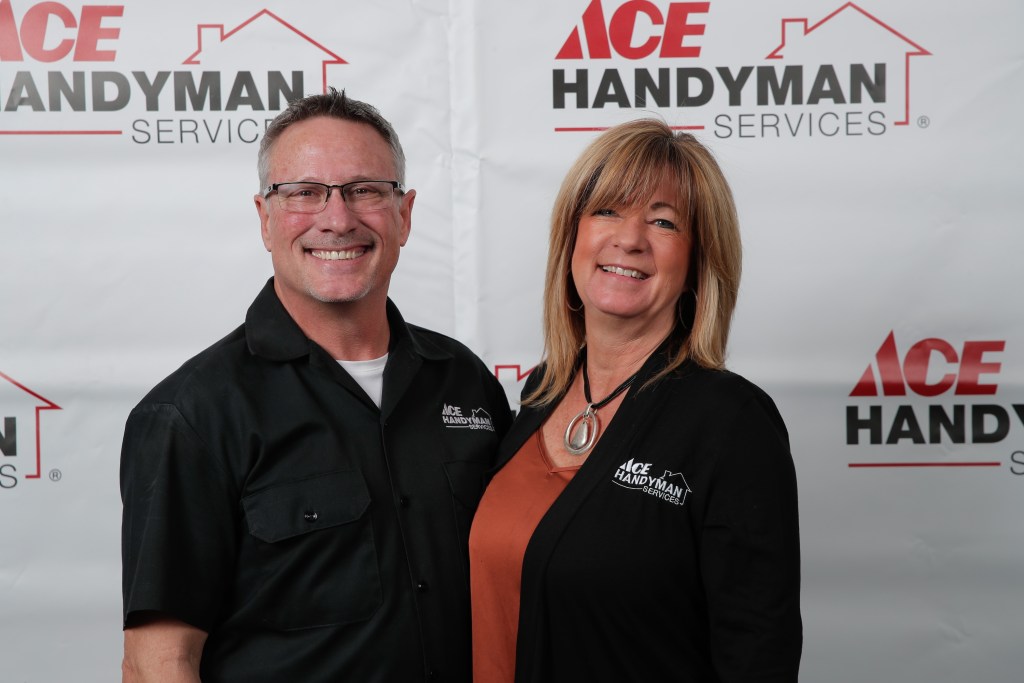
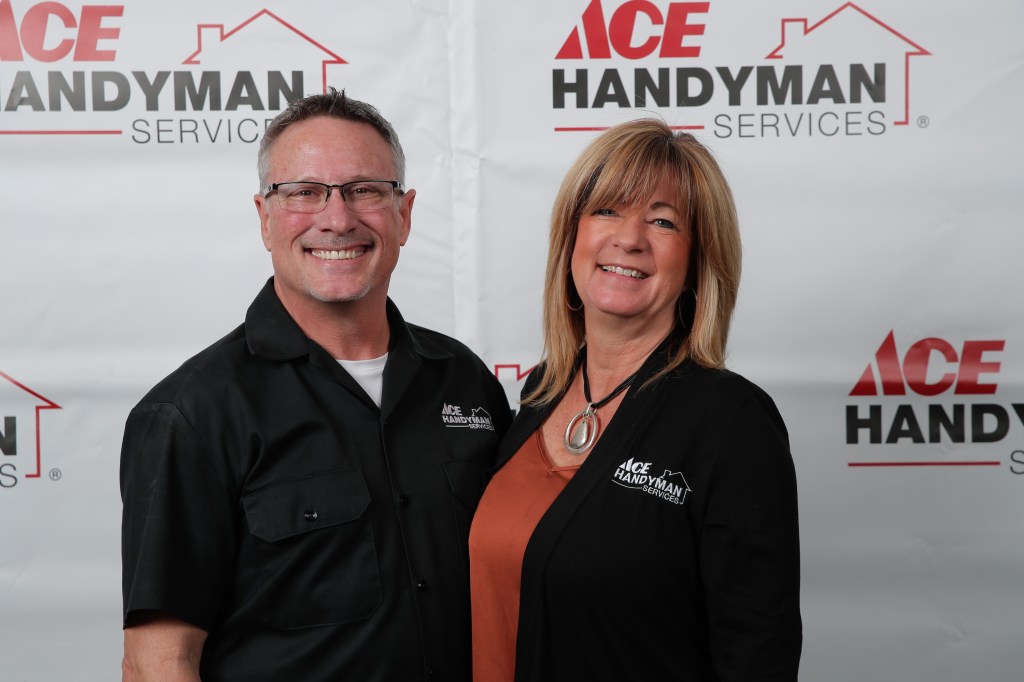
Andy and Colette Bell. Credit: Ace Handyman Services
They ended up franchising the business, called Handyman Matters, in 2001. Andy led the business as CEO while Colette took on multiple leadership roles over the years, including chairman of the board. In 2018, they connected with Ace Hardware, which acquired the business in 2019.
“This is the only career I’ve had my whole life,” Colette says. “For 28 years, I’ve been working on the handyman business.”
Andy is now the CEO and president of Ace Handyman Services, and Colette is the vice president of franchise development, a position she has held since 2019. She continues to lead expansion, helping the brand grow from 119 territories at the time of its 2019 acquisition to 383 territories as of April this year, more than tripling its footprint.
Ace Handyman Services grew by 12% from 2024 to 2025, with total sales exceeding $113 million in 2025.
The following interview with Colette has been lightly edited for clarity and concision.
Colette Bell. Credit: Ace Handyman Services
Growth tactics
What were the main factors that allowed the company to grow so quickly? What did you do to facilitate growth? We set exact appointment times and coach our employees that “if you’re not early, you’re late.” They need to arrive on time, look professional and wear logoed shirts. If they walk up and see the trash cans still at the curb after pickup, we coach them to move the cans back up the driveway — little things that show we’re there to help with the whole house, not just a single project.
We do extensive follow-up: calling the day after to make sure the customer is happy, and again at 11 months because we offer a one-year warranty. Adding that high level of customer service to a low-tech, fragmented industry made a big difference.
Getting things right with franchising
Looking back at that 2001 decision to franchise, what did you get right about franchising, and what did you underestimate about how hard it would be? We underestimated everything. But we did get a couple of important things right. One was creating protected territories for franchise owners delineated by ZIP codes. ZIP codes are clearly defined by the post office and have accessible demographic data, so we could build territories using that data. Franchise owners then had protected territories and didn’t have to worry about competition from neighboring owners. We did that from day one.
The other thing we did right, which was more accidental, was our billing model. Even though we’re a handyman business and construction often estimates projects as fixed dollar amounts, we decided to bill customers using a time-and-materials format. Time is universal — an hour is an hour everywhere. Pricing, on the other hand, varies significantly between, say, Connecticut and Arkansas or Illinois and California. Instead of trying to force one universal price structure across the U.S., we made time the constant and allowed each owner to choose their own hourly rate.
That made the business much more feasible in different markets. About 85% of our work is labor and only about 15% is materials, because we focus on small repairs and restorations, not large remodels.
Choosing franchising over corporate locations
What convinced you that this idea would scale better through franchising than through company-owned locations? We learned that firsthand when we expanded to California. At one point, we were effectively running six corporate locations — three in Colorado and three in California. We quickly realized we couldn’t give every employee, and therefore every customer, the time and leadership they deserved.
It was clear this business model should be available across the U.S. Every homeowner deserves a professional, reliable handyman service for small projects, but there was no way we could build that nationally as a purely corporate chain — especially since we started in our basement with $10,000, every bit of savings we could scrape together.
The franchise model made national expansion possible because it relies on local owners rooted in their communities. Handyman businesses are very community-centric; you’re basically working for your neighbors. Franchising fits the model perfectly.
The biggest surprise about franchising
What is something about franchising that surprised you? The biggest surprise — though everyone tells you this upfront — is how much the success or failure of the business model depends on the relationship between franchisor and franchise owners. Until you’ve lived it, that doesn’t fully sink in. This relationship has to be strong and reciprocal. It can’t just be the franchisor giving and the franchise owners taking; franchisees also need to contribute ideas and feedback.
Early on, we had franchise owners with fantastic business ideas we never would have developed on our own, and they were willing to share them so we could roll them out systemwide.
A great example was during Covid, when the whole country shut down, and no one could enter customers’ homes. We spent that downtime on conference calls with franchise owners, figuring out how to make the business as touchless as possible.
For instance, we used to take customer signatures on invoices. During Covid, we shifted to reading the contract language aloud and recording “verified by voice” instead of a signature.
Franchise owners helped design new standard operating procedures, which we rolled out to everyone. So when we were designated essential in April and could return to homes, we had safer, smarter procedures in place. That level of support and collaboration is critical in franchising.
The ideal franchisee
For an entrepreneur evaluating Ace Handyman, how do you define the ideal franchisee in terms of background, skills and mindset? Our owners come from all kinds of backgrounds. One of our top franchisees is a former horticulturalist. We have people from finance, marketing, plant management, a large number of veterans, former teachers, and former coaches and mentors.
The through line is a passion for improving their community and strong leadership skills. As an owner, you don’t go to every customer’s house; our volume is too high for that. The way you deliver great service is through your employees, which means you must be an excellent leader. That includes paying good wages, providing training and mentoring and offering real growth opportunities. Leadership is at the heart of our most successful franchisees.
For us, a red flag is when a prospective owner focuses more on money than culture and people. Our business has robust numbers — you don’t grow otherwise — but if the primary focus is financial, it typically isn’t a good fit.
How much does it cost to start an Ace Handyman franchise? In our 2026 franchise disclosure document, Item 7 shows startup costs ranging from $132,200 on the low end to $226,000 on the high end. That includes a $70,000 franchise fee.
Long-term vision
When you imagine Ace Handyman Services 10 years from now, what does success look like for the brand, for individual owners and for the customers they serve? First, success means our current franchise owners are still here. Longevity is very important in franchising. Ace has always believed in generational businesses; many hardware stores have been passed down from great-great-grandparents through multiple generations.
In our system, we already have franchise owners who’ve been with us 24 years. I’m very proud of that. They stuck with us when we were young and figuring things out and contributed ideas, passion and suggestions. We’ve seen transitions where a father handed the business to his daughter and uncles passed locations to nephews.
My goal for the next 10 years is that we’ll not only expand to cover perhaps half of the U.S., but also see more of our locations become generational businesses, with kids taking over for their parents. That kind of longevity would be a real measure of success.
Key Takeaways
Colette and Andy Bell started a handyman business in 1998 to tackle small projects for homeowners.
In 2018, they connected with Ace Hardware, which purchased their business in 2019.
Colette is now the vice president of franchise development for Ace Handyman Services, and she continues to lead expansion.
Colette Bell and her husband, Andy Bell, started a handyman business in Denver, Colorado, in 1998 after identifying a unique need.
They found that big specialty contracting companies did not want to do small projects for homeowners. For example, if someone had one sticky window and called a window company, the firm wanted to sell them 25 new windows for their house.
“We found that homeowners had a really hard time finding somebody professional and reliable for small projects,” Colette tells Entrepreneur in a new interview. “That was the niche market we built this business to serve.”
Opinions expressed by Entrepreneur contributors are their own.
Key Takeaways
The most effective founders don’t work harder — they run a five-day audit to find where their own involvement has quietly become the bottleneck slowing the business down.
Real growth comes from deliberately reclaiming time for strategic work, delegating the rest, and rebuilding your week around the few things only you should own.
There is a stage in business where effort stops producing the results it once did. Your calendar is full, your team depends on you and yet progress feels slower than it should. You are involved in everything, solving problems throughout the day, and still carrying work into the evening. From the outside, it looks like commitment. Internally, it starts to feel like pressure.
I reached that point while building our companies. I believed staying involved in everything was leadership. In reality, it was creating a ceiling. The business was growing, but only as fast as I could personally keep up. That realization forced me to rethink how I was spending my time and what my role actually needed to be.
This five-day audit is the framework I now give entrepreneurs to help them step out of the daily grind and back into a leadership role that allows the business to grow.
Day 1: Capture your time with precision
Start by tracking your day in real time, not from memory. I like to write down what I do in short intervals as the day unfolds. This includes meetings, emails, problem-solving, quick check-ins and even the small interruptions that seem insignificant in the moment. Those small moments add up quickly, so it’s important to track them alongside the larger time drains.
Most business owners underestimate how much of their time is reactive. When you see it on paper, it becomes clear how often your day is shaped by what comes at you rather than what you plan. This is where many leaders lose control of their schedule without realizing it. But before you can optimize your time, you need to know where it’s going.
Day 2: Evaluate the return on your time
Once you have a clear picture of your day, begin evaluating the return on your time. Look at each activity and ask whether it contributes to growth, improves the business or simply keeps things running. There is nothing wrong with operational work, but problems arise when it takes up the majority of your attention.
In our own experience, the biggest breakthroughs came from focusing on the right work, not just doing more. When we expanded into new business lines and partnerships, those decisions did not come from busy days. They came from time set aside to think, plan and act strategically. That kind of work creates leverage because it produces results that extend beyond a single day’s effort.
If most of your time is tied to maintenance, your business may stay stable but will struggle to scale. Growth requires deliberate time investment in areas that move the company forward.
Day 3: Identify where you’ve become the bottleneck
By the third day, you will start to see where your involvement is slowing things down. These are the areas where decisions wait on you, tasks return to you for approval or outcomes depend entirely on your direct input. While this often comes from a desire to maintain quality or control, it creates dependency that limits progress.
For me, one clear example was decision-making. Team members would wait for my input before moving forward, even on routine issues. At first, I saw that as a responsibility. Over time, I realized it was slowing everything down.
I recommend putting pen to paper and writing down every time your team relies on you to move forward. Note the questions that get sent to you and the approvals you oversee. Then identify whether someone else can step in or how you can free up the chain of approval for a faster result.
Day 4: Redefine what only you should own
After identifying where your time is going and where you are over-involved, the next step is redefining your role. Not everything on your schedule deserves your attention at your level. The most effective leaders focus on a small number of responsibilities where their input creates the greatest impact.
I remember a point where I had to consciously step away from tasks I had done for years. It felt uncomfortable because those tasks were familiar and I knew I could do them well. But they were no longer the best use of my time.
Instead, I shifted my focus toward developing leaders and thinking about where the business needed to go next. That change created space for others to step up and for the company to grow beyond my direct involvement.
This change typically includes setting direction, developing key people and making decisions that shape the future of the business. Everything else should either be delegated, systemized or eliminated over time. The goal is not to remove yourself from the business, but to reposition yourself where you create the most value.
Day 5: Rebuild your week with intention
The final step is to redesign your schedule based on what you have learned. Start by making targeted adjustments that create space for higher-value work.
Block time each week for activities that drive growth. This might include developing partnerships, improving systems, mentoring key team members or evaluating new opportunities. Treat this time as a priority, not something that gets pushed aside when things get busy.
In our own journey, the most meaningful growth came when we intentionally created time to step back and focus on expansion. That shift allowed us to build businesses that were not dependent on our constant involvement. Instead of reacting to daily demands, we were able to guide the direction of the company and make decisions that produced long-term results.
Consistency is what makes this work. Even a small, protected block of strategic time each week can change how the business operates over time.
Start with one change
You do not need to implement everything at once. Start by tracking your time for a few days and reviewing it honestly. Identify one area where you are over-involved and take steps to shift it.
Delegate one responsibility. Create one process. Protect one block of time for growth.
Burnout is rarely caused by effort alone. It comes from spending your effort in a role your business no longer needs you to play. When your time aligns with your leadership, the business begins to move differently.
Key Takeaways
The most effective founders don’t work harder — they run a five-day audit to find where their own involvement has quietly become the bottleneck slowing the business down.
Real growth comes from deliberately reclaiming time for strategic work, delegating the rest, and rebuilding your week around the few things only you should own.
There is a stage in business where effort stops producing the results it once did. Your calendar is full, your team depends on you and yet progress feels slower than it should. You are involved in everything, solving problems throughout the day, and still carrying work into the evening. From the outside, it looks like commitment. Internally, it starts to feel like pressure.
I reached that point while building our companies. I believed staying involved in everything was leadership. In reality, it was creating a ceiling. The business was growing, but only as fast as I could personally keep up. That realization forced me to rethink how I was spending my time and what my role actually needed to be.
This five-day audit is the framework I now give entrepreneurs to help them step out of the daily grind and back into a leadership role that allows the business to grow.
Opinions expressed by Entrepreneur contributors are their own.
Long before Adam Multz became the founder and CEO of Diamond Recovery Group, he was simply a younger brother searching for help.
At sixteen years old, he watched his older brother struggle with substance use disorder. Finding quality treatment proved far more difficult than his family expected, exposing the challenges many families face when trying to navigate an already overwhelming healthcare system.
That experience ultimately shaped the course of his career.
Rather than pursuing behavioral healthcare as a business opportunity, Multz entered the field with a deeply personal mission: to help people and families find hope during some of the most difficult moments of their lives.
Years later, that mission became Diamond Recovery Group.
Growing With Purpose
Since opening its first facility, Diamond Recovery Group has expanded into a multi-state behavioral healthcare organization operating seven treatment centers throughout Florida, Georgia, New Jersey, and California.
Today, the organization employs more than 300 professionals and offers a full continuum of behavioral healthcare services, including medical detoxification, residential treatment, partial hospitalization, intensive outpatient programming, and specialized mental health care.
The company’s growth has been significant, but its leadership maintains that expansion has never been the objective.
Instead, growth has been the result of a simple philosophy: every new facility represents another opportunity to provide life-changing care to individuals who may otherwise struggle to access quality treatment.
That mission continues to guide the organization’s long-term vision of making exceptional behavioral healthcare available to more communities across the country.
Changing How Behavioral Healthcare Feels
While many treatment organizations focus almost exclusively on clinical outcomes, Diamond Recovery Group has built its identity around something less common in healthcare: hospitality.
Multz believes that people seeking treatment for addiction and mental illness have spent decades carrying the weight of stigma. Too often, individuals entering treatment have been made to feel ashamed, judged, or less deserving of compassion than patients receiving care for other medical conditions.
Diamond Recovery Group was intentionally designed to challenge that perception.
Drawing inspiration from world-class hospitality organizations, the company has developed a patient experience centered around dignity, warmth, service, and human connection. Every interaction—from the first admissions phone call through discharge planning—is designed to remind patients that they are valued, respected, and deserving of care.
The philosophy extends beyond customer service.
Within the organization, hospitality is viewed as an essential component of treatment itself. Clinical excellence remains the foundation of recovery, but Diamond Recovery Group believes healing also requires people to feel safe, welcomed, and genuinely cared for.
For many patients, that sense of belonging becomes the first step toward believing recovery is possible.
In an industry often defined by protocols and regulations, Diamond Recovery Group has sought to humanize the treatment experience without compromising clinical quality.
Specialized Care, Not One-Size-Fits-All Treatment
As the organization expanded, Multz recognized that different patient populations required different treatment environments.
Rather than housing addiction treatment and primary mental healthcare under one umbrella, Diamond Behavioral Health was created as a dedicated division focused exclusively on individuals whose primary diagnosis is mental illness.
The separation allowed each organization to build specialized clinical teams, programming, and environments tailored to the unique needs of the people they serve.
That philosophy of specialization continued in 2026 with the launch of Diamond Nourish, a 15-bed residential behavioral health program in Braselton, Georgia, designed exclusively for women experiencing mental health disorders and disordered eating.
The program was created in response to a growing recognition that many women benefit from a more intimate, highly specialized treatment environment—one that addresses the complex relationship between mental health, trauma, nutrition, body image, and emotional wellness.
Rather than adapting an existing model, Diamond Nourish was intentionally developed from the ground up as a boutique behavioral healthcare experience where every aspect of treatment is designed specifically for women.
The program combines evidence-based psychiatric care, nutritional rehabilitation, trauma-informed therapy, and individualized treatment planning within an environment that reflects the same hospitality-first philosophy found throughout Diamond Recovery Group.
For Multz, specialization represents the future of behavioral healthcare. As patient needs become increasingly complex, he believes treatment providers must move beyond generalized programming and create environments intentionally designed around the populations they serve.
Building an Organization Through People
Rapid expansion often leads organizations to prioritize hiring quickly.
Diamond Recovery Group has attempted to take the opposite approach.
The company places significant emphasis on culture, believing that technical skills can be developed, while compassion, integrity, humility, and service must already exist within the people joining the organization.
That philosophy has helped shape a workforce of more than 300 professionals across multiple states, while maintaining a culture centered on patient care rather than operational growth alone.
Multz has frequently credited the organization’s success not to having every answer himself, but to building leadership teams capable of challenging ideas, solving problems collaboratively, and remaining committed to the company’s mission.
For him, leadership is less about individual expertise and more about creating an organization where exceptional people can do their best work.
Looking Ahead
Behavioral healthcare continues to face rising demand throughout the United States, with millions of Americans still unable to access timely addiction and mental health treatment.
Multz believes the next generation of providers will need to do more than simply expand capacity. They will need to rethink how behavioral healthcare is experienced.
That philosophy extends beyond the organization’s existing facilities.
Through the Diamond Fund, Diamond Recovery Group plans to provide treatment scholarships for individuals who otherwise could not afford care, reinforcing the company’s belief that financial limitations should never prevent someone from receiving lifesaving treatment.
Looking ahead, Multz’s long-term vision is to build a nationwide behavioral healthcare network that combines clinical excellence with genuine compassion, creating environments where patients receive not only exceptional medical and therapeutic care but also the dignity, kindness, and human connection every person deserves.
For Adam Multz, success has never been measured by the number of facilities the organization operates.
It is measured by the number of lives that leave those facilities believing something they may not have believed when they arrived:
Opinions expressed by Entrepreneur contributors are their own.
Key Takeaways
Brands are increasingly getting cultural moments wrong because they’re prioritizing speed over understanding and visibility over legitimacy.
To get cultural relevance right, define your role before entering the moment, design for participation (not passive visibility), pressure test ideas through the audience lens, and commit to consistency beyond the campaign.
A campaign launches with the right intentions, taps into a cultural moment that feels relevant, and within hours, the reaction shifts. What was meant to connect starts to divide. The comments tell the story before the brand has a chance to explain itself.
Brands are showing up in cultural spaces more often, but the margin for error has narrowed. According to Sprout Social’s Q1 2026 Pulse Survey, 66% of consumers say they feel more selective about the content they engage with than they did a year ago.
What’s changed isn’t the ambition to be part of the conversation. It’s the expectation that brands understand the role they’re playing before they enter it — and that audiences are far less willing to give them the benefit of the doubt.
From where we sit at Inspira, working at the intersection of brand, culture and live engagement, one thing is clear: Cultural relevance isn’t something a brand claims; it’s something an audience decides based on what they experience.
Why more brands are getting cultural moments wrong
Culture isn’t a trend cycle. It’s how people express identity, build community and define belonging. That makes it powerful, but also unforgiving when something feels off.
Audiences are more selective about who gets to participate. The question is no longer, “Why is this brand here?” It’s “Should this brand be here?” That shift raises the bar from visibility to legitimacy.
At the same time, brands are moving faster than ever. Teams are built to react in real time, but culture doesn’t reward speed without understanding. When brands jump into moments without fully grasping the context, what feels timely internally can feel forced externally.
The brands that get it right aren’t just faster. They’re more aligned. They understand the role they can credibly play and show up in ways that reflect it consistently. So, how do brands close that gap?
1. Define your role before entering the moment
The most common mistake brands make is showing up before deciding why they belong there in the first place. Audiences can tell the difference between a brand that is contributing to a moment and one that is borrowing from it. Without a clearly defined role, even well-intentioned campaigns can feel out of place. That’s when participation starts to feel self-serving rather than additive.
Brands that consistently resonate take a different approach. They align their presence in cultural moments with how they behave every day. That consistency builds familiarity and trust, which makes their participation feel natural instead of opportunistic.
Nike is a useful example. Its presence in conversations around athlete advocacy didn’t appear overnight. Years of alignment with athletes and a clear brand point of view made its role in those moments feel credible and authentic.
Defining a role upfront creates a filter. It helps teams quickly identify which opportunities make sense and which ones don’t, before anything goes live.
2. Design for participation, not passive visibility
Visibility alone doesn’t build connection. Participation does. According to Eventbrite, almost 80% of event attendees say they would pay more for entertaining or educational events that are also meaningful or transformative experiences. That shift reflects a broader expectation: People don’t just want to be targeted; they want to be considered and involved in what brands create.
Brands often focus on what they want to say instead of how people will experience it. That gap is where many cultural efforts fall short. Messaging might be clear, but if the audience doesn’t feel invited into the moment, the impact is limited.
Experiential marketing shifts that dynamic. It creates space for people to engage, respond and shape the moment alongside the brand. When done well, the experience becomes part of the culture around it rather than an interruption.
Designing for participation forces a different mindset. It requires brands to think about how they are adding value in real time, not just what they are communicating.
3. Pressure test ideas through the audience lens
Many missteps happen before a campaign ever reaches the public. The issue isn’t always the idea itself. It’s the lack of perspective applied to it.
Pressure testing starts with a simple shift. Stop asking what the brand wants to say and start asking how the audience will receive it.
The most effective brands gut-check ideas against two questions: How will this land with our consumer? And how does this make the moment better for them? In practice, this is where many ideas fall apart. Concepts that feel strong internally often reveal blind spots once they’re evaluated against real audience expectations, cultural context and timing.
In our own work, we’ve seen how quickly those blind spots surface when ideas are pressure-tested properly. Concepts that initially feel timely or compelling can reveal disconnects once they’re viewed through the audience’s lens, which is why this step is critical before anything goes live.
It’s also critical to pressure test intent. If the primary beneficiary of the idea is the brand itself, that’s a red flag. The ideas that resonate tend to create value for the audience first, whether that’s enhancing an experience, adding meaning or simply showing up in a way that feels thoughtful and relevant.
Strong brands rely on a clear understanding of who they are and how they behave. That clarity makes it easier to sense-check ideas before they go live and identify what feels off before it becomes a public misstep.
4. Commit to consistency beyond the campaign
Cultural relevance isn’t built in a single moment. It’s built over time. One of the biggest misconceptions is that a well-executed campaign can establish credibility on its own. In reality, audiences look for patterns. They pay attention to how brands show up before, during and after key moments.
Dove, for example, didn’t earn its place in cultural conversations overnight. For more than a decade, the brand has consistently challenged traditional beauty standards through campaigns, partnerships and ongoing initiatives that reinforce the same point of view. That consistency has shaped a clear role in culture, so when Dove shows up, it feels credible rather than opportunistic.
Consistency is what turns a one-off activation into something more meaningful. It signals that the brand’s presence is intentional, not reactive. It also changes how brands recover when things don’t land. Missteps happen, even with the right intentions. What matters is how a brand responds and what it does next. Owning the mistake, understanding the disconnect and adjusting behavior moving forward carries more weight than any single statement.
Trust is built through repeated actions. Brands that stay close to their audience, listen continuously and evolve with them are the ones that maintain relevance over the years.
Cultural relevance isn’t about reacting faster or louder than everyone else. It’s about showing up with a clear sense of purpose and delivering experiences that reflect it. Brands that focus on alignment and contribution tend to find their place naturally. The ones that don’t usually find out just as quickly.
Key Takeaways
Brands are increasingly getting cultural moments wrong because they’re prioritizing speed over understanding and visibility over legitimacy.
To get cultural relevance right, define your role before entering the moment, design for participation (not passive visibility), pressure test ideas through the audience lens, and commit to consistency beyond the campaign.
A campaign launches with the right intentions, taps into a cultural moment that feels relevant, and within hours, the reaction shifts. What was meant to connect starts to divide. The comments tell the story before the brand has a chance to explain itself.
Brands are showing up in cultural spaces more often, but the margin for error has narrowed. According to Sprout Social’s Q1 2026 Pulse Survey, 66% of consumers say they feel more selective about the content they engage with than they did a year ago.
What’s changed isn’t the ambition to be part of the conversation. It’s the expectation that brands understand the role they’re playing before they enter it — and that audiences are far less willing to give them the benefit of the doubt.
Opinions expressed by Entrepreneur contributors are their own.
Key Takeaways
Investors aren’t evaluating how polished your pitch is — they’re testing whether your business can survive the structural realities of taking their money.
From cap tables to burn rate to governance, the founders who close rounds are the ones who’ve pressure-tested the fundamentals long before they walk into the room.
The first time I fundraised, I assumed my success hinged on the persuasiveness of my pitch. I refined the deck, rehearsed the narrative and memorized every metric. My belief was simple: if I could communicate the vision clearly enough, the capital would follow.
Over time, I learned that fundraising is more of a readiness exercise than a simple pitch. Investors don’t care about how polished your pitch is or how persuasive you are. What really matters is if you can handle the structural consequences of taking their money. In other words, are you prepared?
Across multiple rounds, I came to understand that early fundraising stalls because the founder has not pressure-tested the fundamentals beneath the story.
Here is the checklist I wish I had worked through before raising my first institutional dollar.
1. Can you explain your business in one sentence, without features?
Founders often over-explain. In my early investor meetings, I walked through onboarding flows, backend mechanics and feature sets, assuming detail would signal depth. Instead, the details worked against me, muddying the vision for the investors who needed to understand the whole picture before getting into the small details.
A strong one-liner answers three questions immediately:
What problem are you solving?
For whom?
Why now, and why you?
If your company requires five minutes of explanation before it makes sense, the positioning is not sharp enough. When I distilled our business into a clear, simple narrative focused on the economic opportunity and target customer, the tone of conversations shifted dramatically.
Fundraising relies heavily on pattern recognition. Your job is to make it easy for investors to categorize and embrace your opportunity quickly.
2. Have you separated product validation from business model validation?
Many founders, myself included, assume that if customers love the product, monetization will follow naturally.
As I began building my first company, a platform that simplified saving and investing for kids’ futures, I believed all parents would be willing to pay for our solution because the value felt obvious. Yet in reality, we had to identify very specific customer personas who not only appreciated the product but also had both the willingness and financial ability to pay for it.
We also realized that monetization did not need to sit entirely with the end user. We built additional revenue streams, including affiliate partnerships with brands and transaction fees associated with gifting. These diversified channels strengthened our overall economics and reduced reliance on a single source of revenue.
Before fundraising, founders should be able to answer:
Who pays?
Why do they pay?
How do customer acquisition costs sit alongside customer lifetime value?
Are there additional revenue streams?
3. Do you understand your own cap table and the waterfall?
Many first-time founders do not fully grasp liquidation preferences, preferred shares or how the waterfall functions in an exit scenario.
Before raising institutional capital, you should clearly understand:
The difference between common and preferred equity
How liquidation preferences impact outcomes
How dilution compounds across multiple rounds
What various exit scenarios mean for founder ownership
In strong markets, structure can be overlooked because valuations appear generous. In more constrained environments, structure determines outcomes. If you do not understand your cap table, you could be exposed further down the line.
Professional investors assume founders know how their own capitalization works. You should meet that expectation.
4. Have you pressure-tested your credibility narrative?
Early in my fundraising journey, I assumed investors would intuitively connect my background to the business. They did not.
Some viewed the company primarily through the lens of personal passion rather than professional expertise. While personal motivation was part of the story, the foundation of the business came from years of experience in finance and firsthand exposure to industry-wide structural inefficiencies.
I had to reshape my narrative to highlight that strategic foundation.
Before entering fundraising conversations, founders should clarify:
Why they are uniquely positioned to build this company
What asymmetric insight or access they possess
Whether their story signals expertise or simply enthusiasm
5. Is your burn rate survivable if fundraising takes twice as long?
Markets move in cycles. Capital availability expands and contracts. A “hot” environment can cool quickly.
Before launching a fundraising process, you should know:
Your true runway in months
Which costs are fixed and which are flexible
What levers you can pull to reduce burn
Whether the company can withstand a delayed or smaller round
Many founders begin fundraising when they have limited runway remaining. That creates pressure and weakens negotiating leverage.
The strongest fundraising positions come from optionality. When you have time, conversations feel different. When survival depends on closing quickly, power dynamics shift.
Capital accelerates growth, but it also magnifies risk if the timing is misaligned.
6. Are you ready for governance, not just growth?
Taking institutional capital introduces governance: board oversight, reporting expectations and formal accountability.
Before raising your first dollar, consider:
Are you prepared for a new level of transparency?
Do you understand the difference between board seats and observer rights?
Have you modeled how future rounds may affect control?
Institutional investors expect regular updates, financial reporting and thoughtful board engagement. That means preparing materials, explaining strategic decisions and occasionally defending them. For founders who are used to operating independently, this shift can feel significant.
Capital brings partnership, but it also redistributes authority. Founders who focus solely on valuation often underestimate the long-term governance implications of early decisions. The structure you agree to in your early rounds will influence how decisions are made — and who ultimately has a voice in them — for years to come.
Fundraising is a diagnostic tool
The most important mindset shift I experienced was reframing fundraising as a diagnostic process. Investor questions are rarely random. If multiple investors struggle with your positioning, the narrative likely needs refinement. If they challenge your revenue model, there may be structural gaps worth addressing.
Fundraising exposes weaknesses that already exist.
Before raising your first dollar, don’t stress too much about whether your pitch is polished. Your focus should be on whether your business is structurally prepared for institutional capital. Investors want to know if your ownership is clean, your model is resilient, the team is top-notch, your narrative is credible and your runway is protected.
Because once you take capital, the game changes. Readiness, far more than persuasion, is what closes rounds.
Key Takeaways
Investors aren’t evaluating how polished your pitch is — they’re testing whether your business can survive the structural realities of taking their money.
From cap tables to burn rate to governance, the founders who close rounds are the ones who’ve pressure-tested the fundamentals long before they walk into the room.
The first time I fundraised, I assumed my success hinged on the persuasiveness of my pitch. I refined the deck, rehearsed the narrative and memorized every metric. My belief was simple: if I could communicate the vision clearly enough, the capital would follow.
Over time, I learned that fundraising is more of a readiness exercise than a simple pitch. Investors don’t care about how polished your pitch is or how persuasive you are. What really matters is if you can handle the structural consequences of taking their money. In other words, are you prepared?
Across multiple rounds, I came to understand that early fundraising stalls because the founder has not pressure-tested the fundamentals beneath the story.
Opinions expressed by Entrepreneur contributors are their own.
Key Takeaways
Google Search isn’t all people are using these days. Artificial intelligence tools such as ChatGPT, Perplexity, Claude, Gemini and others have become popular search engines — and the ways we optimize our online presence for AI are different from Google.While AI search continues to evolve,
AI search continues to evolve, and if you don’t want to get left behind, there are four signals your business needs to get right to stay at the top of the search results page.
Recently, a client came to me with a problem that turned out to be anything but small.
On paper, their business was thriving. Their clientele was loyal. The offer was polished, and the team was exceptional at what they did. Yet when people searched online for their business, particularly inside the newer AI tools, they were nowhere to be found.
This client did not need another generic marketing checklist. They needed a real strategy to be seen. They needed to appear where people actually search today, not where they searched a decade ago.
Today, people are not only typing business names into Google. They are asking ChatGPT. They are turning to Gemini. They are consulting Perplexity. They rely on AI to decide who to trust, where to go and which expert deserves their business.
So if your company is built only for old-school search, you are playing yesterday’s game.
I watch this every single day across all of my businesses. AI search keeps evolving and I have no intention of being left behind. More importantly, I refuse to let my clients be left behind either.
Search isn’t just ranking anymore — it’s your reputation
For a long time, search felt fairly predictable.
You chose smart keywords. You placed them across your site. You pursued a few backlinks. But that version of search is no longer the full picture.
The bigger question now is not simply, “Where do I rank?” A better question is, “Do new ways people search the internet trust my business enough to recommend me?”
That is an entirely different game. Now your business has to be more than findable. It has to be worth recommending.
I think of it this way: Old search was about landing on the list. Modern AI search is about earning the introduction.
Different search engines want different things
One of the most common missteps I see owners make is assuming every search platform behaves the same way. They do not. Google, ChatGPT, Gemini, Perplexity, Claude and the rest each have their own way of finding, reading and sharing information. They overlap, but they are far from identical.
Some lean heavily on indexed web content. Some look for trusted sources and citations. Some study reviews and reputation closely. Some want clear, structured details so they understand exactly what you offer.
Picture each platform as a different customer. One wants credentials. One wants social proof. One wants receipts. One wants to hear what your clients think. One simply wants everything explained plainly. Your task is to make certain they all leave satisfied.
I build genuine proof across the web: clear messaging, strong content, accurate business details, press signals, reviews and a consistent story. When that foundation is right, your visibility begins to travel.
The 4 signals I build for every business
Your customers look for four signals: trust, authority, relevance and reputation. Get those four things right, and you give every engine more reasons to notice you and recommend you. If they are weak, even a beautiful website can struggle.
1. Trust
Trust is the starting line. Before anything recommends you, it needs to feel certain you are real and consistent. Your name, address, phone, website and profiles should match everywhere. You would be amazed how many businesses have mismatched versions of themselves drifting around. To clients, that looks careless. To search tools, it looks risky.
2. Authority
Authority is when credible sources vouch for you. Press, interviews, podcasts, articles, partnerships and recognition all help. You can praise yourself all day, but when a respected source says it, that carries real weight. I would rather earn one strong mention in the right place than 50 weak ones nobody trusts.
3. Relevance
Relevance is clarity. Engines need to understand what you do, who you serve and where you operate. Vague phrases like “solutions for modern businesses” sound impressive but say nothing. Be clear in your messaging.
4. Reputation
Reputation is what people say when you are not in the room. Reviews, testimonials and social proof shape how you are perceived. You cannot fake it for long. You earn it by doing exceptional work, inviting delighted clients to share positive reviews about your business.
Why this is so important
Here is the part people do not love to hear: AI search is not a fix-it-once-and-forget-it affair. There is no finish line. Platforms change. Results change. Competitors improve. Reviews arrive. Signals shift.
So I treat visibility as an ongoing part of every business I touch. AI search evolves daily and I refuse to wake up six months from now to discover a competitor became the answer to their question while I ignored the question. I check. I test. I ask AI tools what they recommend. I watch who appears and why. It is like glancing at your dashboard. You do not stare at it all day, but you want to know the moment the warning light flips on.
What this means for you
If you own a business, the truth is simple: Your clients already use AI search, ready or not. They ask for recommendations and weigh their options. If the tools they trust never mention you, you may never get the chance to compete.
Start by seeing what is actually happening. Ask Google, ChatGPT, Gemini and Perplexity about your industry and local market. Notice who appears. Then strengthen your foundation. Refine your information. Build real reviews. Create clear content. Earn credible mentions.
The winners in this new era will not be the loudest. They will be the clearest, the most trusted and the easiest to recommend. I am not chasing rankings like it is 2012. I am building trust across the entire web.
Key Takeaways
Google Search isn’t all people are using these days. Artificial intelligence tools such as ChatGPT, Perplexity, Claude, Gemini and others have become popular search engines — and the ways we optimize our online presence for AI are different from Google.While AI search continues to evolve,
AI search continues to evolve, and if you don’t want to get left behind, there are four signals your business needs to get right to stay at the top of the search results page.
Recently, a client came to me with a problem that turned out to be anything but small.
On paper, their business was thriving. Their clientele was loyal. The offer was polished, and the team was exceptional at what they did. Yet when people searched online for their business, particularly inside the newer AI tools, they were nowhere to be found.
This client did not need another generic marketing checklist. They needed a real strategy to be seen. They needed to appear where people actually search today, not where they searched a decade ago.
Opinions expressed by Entrepreneur contributors are their own.
Key Takeaways
The most consequential experience work happens before design, in a room where the people who own each part of the customer’s path agree on what the company does, who it serves and what the customer needs to understand first.
The experience your customers have is an outcome of how your company makes decisions, not a deliverable you can redesign your way into. Change the decisions, and the surface follows; leave them in place, and the same confusion returns in a cleaner form.
Most of the friction a customer feels is inherited — the effort passed to them from a disagreement the company never settled internally. The symptom shows up on the screen, but the cause sits in the organization.
Every company starts with a clear reason to exist. Someone saw a problem the rest of the industry was solving in the same tired way and believed they could do it better, or saw a problem nobody had bothered to solve at all.
That mission is vivid in the early days. It shows up in how the product works, how the company talks and what it delivers. The founder is in every room where a customer-facing decision gets made, so the experience comes out coherent and full of intent almost without effort. Nobody has to coordinate it, because it all runs on a single premise.
Then your company grows, which is usually the entire point. New services and products get added, and existing offerings get reworked and improved. The work that growth creates splits into functions. Marketing owns acquisition, product owns the roadmap, support owns the tickets, and sales owns the pipeline. Each team gets good at its piece. And the customer, who never sees inside the organization, starts to feel the seams between those pieces.
Because most interactions with a company now happen on a screen, the website is usually where that strain shows first. The navigation uses internal language. The sales page answers a question nobody asked. The original idea is still in there somewhere, but it has been spread across a dozen heads and softened at every handoff. The clarity you started with is usually the first thing growth blurs.
The instinct to fix the surface
When this shows up, the instinct is to fix what you can see. Traffic is flat, a few customers have mentioned the site is confusing, the brand feels like it has drifted, so you commission a redesign, refresh the identity and add the feature everyone keeps requesting.
The work gets done, the launch happens, and it feels like progress for a few weeks. Then the same friction comes back wearing slightly different clothes at some point down the road.
That pattern is worth paying attention to because it usually means the problem was never on the surface to begin with.
Experience is an outcome
A website, a brand system, a new platform: these are deliverables. They are real, and they matter, but they sit downstream of something larger. The experience that the customer and user actually has is the cumulative result of how decisions get made, who owns what, how teams resolve competing priorities and how well the company still understands the person it set out to serve.
When those conditions stay the same, a new interface just gives the old confusion a cleaner place to live. You can see it whenever you trace one piece of friction back to its source. A form asks for information the customer can’t see the reason for because three teams each wanted a field. A label confuses people because no one ever decided what the customer should understand first. The symptoms surface on the screen and go on living in the interface, but the cause sits inside the company.
A customer never sees your org chart. They only feel the seams between its parts. Call it inherited friction: the effort a person absorbs that began as a decision the company never finished making. It is the most common reason an experience feels harder than it should, and it stays invisible to everyone except the customer.
Exciting work ahead
Here is what gets lost when experience is treated only as a deliverable. Design is not just where the trouble becomes visible. The UX alone can’t solve the entire challenge. But at the same time, a user experience design exercise is the most direct way to put the original clarity back.
The real work of design is simplification: taking the tangle of internal complexity, competing priorities and accumulated compromise and turning it back into something a person can move through without thinking. A narrative that says what the company actually does and that is easy to understand. A structure that follows how customers think instead of how the org is shaped. Visuals that carry meaning rather than just serve as a surface layer to decorate it.
When a team does that well, something happens beyond a better interface. It happens internally within the team that owns the outcome as much as externally with customers sitting on the opposite side of the table. People remember what they were trying to build. The work gets its energy back, excitement starts to echo, and teamwork is empowered again.
Simplifying on behalf of the customer is one of the few exercises that forces a company to agree on what it believes, and that act of agreeing, of making something clear and meaningful together, is genuinely good for a team. It sits closer to the spirit the company was founded on than another quarter of incremental output.
That is the spark worth mentioning — the moment a team uses design and expression to rediscover and sharpen the reason it exists.
The work starts in a room
In practice, that work rarely starts with design. It starts before a single screen is sketched, in a room with the people who each own part of the customer’s path. Marketing, product, support, sales and whoever speaks for the company answer a short set of questions out loud.
What do we actually do (in one sentence)? Who is it for? What does that person need to understand first, before anything else? Who will own this after the project team is gone?
The answers rarely line up the first time, and that is the point. The disagreement was already there. It had simply been reaching the customer one decision at a time instead of being resolved in one place. What comes out of that room is a shared premise, written down, that the design can then express. Skip it, and you brief a website redesign on top of an unsettled question, which is how a company relaunches the same confusion in a cleaner typeface.
The moment to do this is before the redesign, not after it disappoints. It produces nothing you can show in a status meeting, which is exactly why it is the easiest step to skip and the one that quietly decides the most.
Why this matters more now
It has never been easier to produce things. You can generate copy, layouts, code and campaigns faster than at any point in the history of running a company. That speed is useful. It also changes what your attention is worth.
When production is fast and cheap, the scarce resource is no longer output. It is the judgment that decides what should exist, what the customer actually needs and which tradeoff to make when two good priorities collide. A tool can draft the page. It cannot decide what your company is trying to say, or feel the satisfaction of getting it right.
The companies that stand out over the next few years will be the ones whose experiences feel clear and intentional, because people cared about the decisions underneath them and made them well.
None of that begins on a screen. It begins when a company is willing to settle, out loud, what it wants a person to understand. Do that, and the work stops being damage control and becomes what it was at the start — a group of people making something clear because they believe in what they are clarifying. That is the part worth doing well, and the part no tool can hand you.
Key Takeaways
The most consequential experience work happens before design, in a room where the people who own each part of the customer’s path agree on what the company does, who it serves and what the customer needs to understand first.
The experience your customers have is an outcome of how your company makes decisions, not a deliverable you can redesign your way into. Change the decisions, and the surface follows; leave them in place, and the same confusion returns in a cleaner form.
Most of the friction a customer feels is inherited — the effort passed to them from a disagreement the company never settled internally. The symptom shows up on the screen, but the cause sits in the organization.
Every company starts with a clear reason to exist. Someone saw a problem the rest of the industry was solving in the same tired way and believed they could do it better, or saw a problem nobody had bothered to solve at all.
That mission is vivid in the early days. It shows up in how the product works, how the company talks and what it delivers. The founder is in every room where a customer-facing decision gets made, so the experience comes out coherent and full of intent almost without effort. Nobody has to coordinate it, because it all runs on a single premise.
Then your company grows, which is usually the entire point. New services and products get added, and existing offerings get reworked and improved. The work that growth creates splits into functions. Marketing owns acquisition, product owns the roadmap, support owns the tickets, and sales owns the pipeline. Each team gets good at its piece. And the customer, who never sees inside the organization, starts to feel the seams between those pieces.
Opinions expressed by Entrepreneur contributors are their own.
Real estate is one of the world’s largest asset classes, yet the information behind those assets has remained fragmented for decades. Everybody knows the worth of a house, a building or land. But the information contained in those assets remains inaccessible, difficult to clean, and challenging to use.
Over the years, property data has been distributed across thousands of counties, jurisdictions, MLS systems and private sources. They are all different in format, rules and limitations. For large businesses, it creates delays. For startups and developers, it can create major barriers to building new real estate tools.
That’s what RealEstateAPI aims to solve.
The company was founded on the premise of making it easier to use property data. Developers should not have to go through lengthy sales processes, complicated contracts and heavy engineering work just to build real estate products.
RealEstateAPI provides businesses with clean self-service APIs that deliver property intelligence. Rather than having to deal with massive, unstructured data on their own, the platform harmonizes property data into a single model. This enables customers to search, filter and analyze data in real time across more than 150 million properties. Today, the platform serves more than 300 customers across PropTech, FinTech, insurance, home services and AI.
From Survival Mode to Stronger Infrastructure
Photo credit: RealEstateAPI
RealEstateAPI traveled a jagged road en route to its current success.
The founders had a digital marketing platform for real estate investors when the pandemic started. Active deal flow and stable financing were things their customers depended on. That all changed when COVID struck. Deal sourcing dried up, lending activity became more conservative, and new risks emerged from regulatory scrutiny surrounding telephonic marketing.
The business model was harder to justify.
The founders decided against trudging forward in a weaker market and instead asked themselves a more honest question: What part of the business created the most long-term value?
While the team had developed a keen facility with UX, they realized their real competitive advantage wasn’t the interface—it was the infrastructure behind it. Their true strength, they discovered, was gathering, cleaning, and normalizing large-scale property data through high-performance APIs.
“We saw that gap and built the missing layer,” said CTO Justin Winthers.
That decision fundamentally changed the company. Instead of competing as another software application, RealEstateAPI became infrastructure—giving it stronger margins, lower regulatory exposure, and a more durable position within the real estate technology ecosystem.
CEO Harris was more pointed: “COVID nearly ended our company. Instead, it forced us to build a stronger one.”
Why Property Data Matters More in the AI Era
Real estate has long lagged other asset classes in the financial sector. Strong data tools, standardized information, and quick access to market intelligence have always been available in public securities markets. Real estate, by contrast, has stayed disjointed.
That gap matters even more as artificial intelligence becomes embedded across the industry. AI is moving into underwriting, lending, insurance, portfolio management, and local market analysis. But its performance depends entirely on the quality of the data underneath it.
Without complete, structured, and accessible property data, even the best AI models produce unreliable output.
Rather than simply providing property records, RealEstateAPI is building an infrastructure layer that developers, enterprises, and AI systems can use to understand real-world assets. One early example is its integration with an MCP server, which lets AI systems access and interact with property data conversationally and in real time.
A Bootstrapped Path to an Eight-Figure Exit
Perhaps equally notable is how the company was built.
RealEstateAPI started as a self-financed business without institutional VC backing. Under the leadership of co-founders Vincent Harris and Justin Winthers, the company focused on profitability, customer experience, and capital efficiency instead of following the traditional venture-backed path. It also used a non-dilutive, SBA-backed debt facility to support growth without giving up equity.
Without the pressure of outside investors, the founders say they were able to prioritize building a sustainable business instead of chasing fundraising milestones. They grew the company to multi-million-dollar ARR while maintaining a clean cap table.
Beacon acquired RealEstateAPI in an eight-figure deal in early 2026. Beacon is an AI infrastructure platform backed by the founders of Stripe, DoorDash, and Ramp, with institutional backing from General Catalyst and D1 Capital. The company has also publicly highlighted its partnership with OpenAI.
The acquisition positioned RealEstateAPI as Beacon’s property intelligence layer within its broader AI infrastructure strategy.
A Lesson for Founders Building in Hard Markets
Photo credit: RealEstateAPI
The RealEstateAPI story is a strong example for other founders.
Its journey shows that difficult markets often reveal stronger opportunities. COVID almost ended the company’s original business. Instead of giving up, the founders identified the stronger opportunity beneath the surface and focused on building it.
RealEstateAPI did not follow the conventional venture-backed path of raising multiple funding rounds. It emphasized customers, revenue, and control. That approach gave the founders greater flexibility when market conditions changed—and stronger leverage when a strategic acquisition opportunity emerged.
Building for the Next Version of Real Estate Software
Photo credit: RealEstateAPI
The founders share a conviction: software is approaching an inflection point.
For the past two decades, the economics of software rewarded companies for building one product that thousands of customers could share. Success meant standardizing a workflow, embedding that opinion into software, and asking every customer to adapt their business around it.
That model made sense when software was expensive to build.
AI is changing those economics.
As software becomes dramatically cheaper to produce, the advantage shifts away from prescribing the “right” workflow and toward helping every customer encode their own business logic.
Harris summarizes the shift:
“We believe the next generation of software will be far less opinionated. Instead of forcing users into predefined workflows, the best platforms will invite them into the logic layer—allowing them to express their own rules and decision-making processes. The software becomes less of a product and more of a canvas.”
That has profound implications for the data underneath. If every customer is building different logic, the data layer can’t presume how they think—it has to be flexible enough to answer questions no vendor imagined and support workflows that don’t exist yet. If the software is no longer opinionated, the data can’t be either.
That’s the philosophy behind RealEstateAPI.
Harris continues:
“From the beginning, we built our platform to let customers interrogate property data from almost any angle—not because we knew what they wanted to build, but because we assumed they would know better than we ever could.”
CTO Justin Winthers puts the AI dimension more concretely:
“Through technologies like our MCP server, AI agents can reason over property intelligence conversationally—becoming participants in a workflow rather than tools that simply retrieve records. An agent can ask the follow-up question, test the assumption, and pull exactly what a decision requires. We built the layer so that as those agents get more capable, the data underneath them never becomes the ceiling.”
For the team, the ambition is bigger than becoming another data provider: to be the programmable property intelligence layer that developers, AI agents, and operators rely on—regardless of how their workflows evolve.
Real estate is one of the world’s largest asset classes, yet the information behind those assets has remained fragmented for decades. Everybody knows the worth of a house, a building or land. But the information contained in those assets remains inaccessible, difficult to clean, and challenging to use.
Over the years, property data has been distributed across thousands of counties, jurisdictions, MLS systems and private sources. They are all different in format, rules and limitations. For large businesses, it creates delays. For startups and developers, it can create major barriers to building new real estate tools.
Opinions expressed by Entrepreneur contributors are their own.
Key Takeaways
Founders often assume weak conversions indicate a problem with their offer or traffic source, when the real issue is usually a handful of fixable website mistakes that quietly push visitors away.
Fixing these mistakes doesn’t require a full redesign or a six-figure agency retainer. It requires an honest look at your site through your customer’s eyes, not your own.
You can run ads, post content daily, build a solid social following and still watch your conversions flatline. I’ve seen it happen to smart founders repeatedly. They pour budget into getting people to their website, then lose them the moment they arrive.
The problem isn’t always your offer or your traffic source. More often, it’s a handful of fixable website mistakes that quietly push potential customers away before they ever reach your checkout page or contact form. Here’s what to look for and how to stop the bleed.
1. Slow website load speed
Every extra second your site takes to load costs you customers. Google research found that as page load time increases from one to three seconds, the probability of a mobile visitor bouncing increases by 32%.
Compress your images before uploading them, enable browser caching, and upgrade your hosting if you’re on a shared plan.
2. Confusing navigation
If someone lands on your site and can’t immediately find what they need, they leave. It’s not their job to decode your menu structure — it’s yours to make it obvious.
Audit your navigation by asking someone unfamiliar with your business to find a specific product or service page. Watch where they hesitate. That hesitation is revenue walking out the door.
3. Weak or unclear call-to-action (CTAs)
A call-to-action shouldn’t make visitors think; it should make them move. Vague prompts like “Learn More” or “Click Here” don’t tell anyone what happens next or why they should care.
Replace passive CTAs with action-specific language: “Get Your Free Quote,” “Start My 14-Day Trial” or “Book a 20-Minute Call.” To craft calls to action that actually convert, understand that the copy around your button matters as much as the button itself.
4. Designing based on assumptions, not actual user behavior
This is the mistake that quietly costs the most. Most business owners design their websites based on what they think users do, but real behavior is often completely different.
What behavioral tools actually reveal:
Instead of guessing, smart businesses use tools that visually track how users interact with their sites: where they click, how far they scroll and what grabs attention. Understanding these patterns can dramatically sharpen your design decisions. For a deeper look at how this works, this guide on heatmaps and website optimization breaks it down in a practical way.
How to act on behavioral data:
Once you know where users actually engage, make targeted changes rather than overhauling the whole site. Common insights include:
Visitors ignore hero banners entirely and scroll straight past them
Key CTAs sit below the scroll depth most users ever reach
Navigation links that feel important to you get almost zero clicks
Running session recordings alongside heatmaps gives you a full picture of friction points before you spend a dollar on redesign.
5. Poor mobile optimization
Over 60% of web traffic now comes from mobile devices, yet many business websites still deliver a desktop experience squeezed onto a small screen. Pinching, horizontal scrolling and tiny tap targets send mobile visitors straight to a competitor.
As this Entrepreneur piece on thinking mobile-first from the ground up makes clear, responsive design isn’t a feature you bolt on later; it’s a foundation you build from the start. Test your site on multiple devices and prioritize what users need most when browsing on the go.
6. Overloading pages with information
Packing every page with text, widgets, popups and sidebar offers doesn’t make you look thorough. It makes visitors shut down. Cognitive overload is real, and it kills conversions.
Trim every page to one clear purpose. Use whitespace intentionally, lead with your strongest value statement, and eliminate anything that competes for attention with your primary CTA. Less is genuinely more when it comes to converting browsers into buyers.
7. Lack of trust signals
People don’t buy from websites they don’t trust. If your site has no testimonials, no case studies, no recognizable logos and no visible security indicators, you’re asking strangers to take a leap of faith — and most won’t.
Build credibility visually and specifically:
Display real customer reviews with names and photos when possible
Add recognizable press mentions or client logos
Show security badges near payment fields or contact forms
Feature case studies that reference real business outcomes, not vague success language
Learning how to build trust with your company’s online audience is one of the highest-return investments you can make in your online presence. Credibility isn’t just about what you say; it’s about what visitors can verify for themselves.
None of these fixes requires a full redesign or a six-figure agency retainer. What they require is an honest look at your site through your customer’s eyes, not your own. Businesses that treat their website as a living asset (testing it, watching how real users behave and making targeted improvements) will consistently outperform those that set it and forget it.
Your website isn’t a brochure. It’s your best salesperson. Make sure it’s actually doing its job.
Key Takeaways
Founders often assume weak conversions indicate a problem with their offer or traffic source, when the real issue is usually a handful of fixable website mistakes that quietly push visitors away.
Fixing these mistakes doesn’t require a full redesign or a six-figure agency retainer. It requires an honest look at your site through your customer’s eyes, not your own.
You can run ads, post content daily, build a solid social following and still watch your conversions flatline. I’ve seen it happen to smart founders repeatedly. They pour budget into getting people to their website, then lose them the moment they arrive.
The problem isn’t always your offer or your traffic source. More often, it’s a handful of fixable website mistakes that quietly push potential customers away before they ever reach your checkout page or contact form. Here’s what to look for and how to stop the bleed.
1. Slow website load speed
Every extra second your site takes to load costs you customers. Google research found that as page load time increases from one to three seconds, the probability of a mobile visitor bouncing increases by 32%.