How to afford a mortgage as interest rates and home prices rise

How to afford a mortgage as interest rates and home prices rise


It’s no secret that it’s a tough market for prospective home buyers.

In October, U.S. buyers needed to earn $107,281 to afford the median monthly mortgage payment of $2,682 for a “typical home,” Redfin reported this week. 

That’s 45.6% higher than the $73,668 yearly income needed to cover the median mortgage payment 12 months ago, the report finds.

The primary reason is rising mortgage interest rates, said Melissa Cohn, regional vice president at William Raveis Mortgage. “The bottom line is mortgage rates have more than doubled since the beginning of the year,” she said.

More from Personal Finance:
4 tips for maximizing the impact of your charitable donations
Taylor Swift public ticket sale canceled: How to buy on the secondary market
60% of Americans are living paycheck to paycheck heading into the peak shopping season

Despite the sharp drop reported this week, the average interest rate for a 30-year fixed-rate mortgage of $647,200 or less was hovering below 7%, compared to under 3.50% at the beginning of January.

And while home values have softened in some markets, the average sales price is up from one year ago.

“Home prices have gone up substantially, mortgage rates have more than doubled and that’s just crushing affordability,” said Keith Gumbinger, vice president of mortgage website HSH.

Meanwhile, a higher cost of living is still cutting into Americans’ budgets, with annual inflation at 7.7% in October.

How to make your mortgage more affordable 

While the current conditions may feel bleak for buyers, experts say there are a few ways to reduce your monthly mortgage payment.

For example, a higher down payment means a smaller mortgage and lower monthly payments, Gumbinger explained. “More down in this sort of environment can definitely play a role in getting your mortgage cost under control,” he said.

Another option is an adjustable-rate mortgage, or ARM, which offers a lower initial interest rate compared to a fixed-rate mortgage. The rate later adjusts at a predetermined intervals to the market rate at that time.

An ARM may also be worth considering, as long as you understand the risks, Cohn said.

Rising rates pushing out potential homeowners

If you’re planning to stay in the home for several years, there’s a risk you won’t be able to refinance to a fixed-rate mortgage before the ARM adjusts, she said. And in a rising rate environment, it’s likely to adjust higher.

Your eligibility for a future refinance can change if your income declines or your home value drops. “That’s a greater risk, especially for a first-time homebuyer,” Cohn said.

Of course, home values and demand vary by location, which affects affordability, Gumbinger said. “Being patient and being opportunistic is a good strategy for market conditions like this,” he said.


Source link

How to afford a mortgage as interest rates and home prices rise Read More »

5 Ways to Win During a Down Housing Market

5 Ways to Win During a Down Housing Market


Knowing how to invest during a recession is what separates the good from the great investors. Most veteran real estate investors know that during downtimes, the lucky landlords get swept away while the intelligent investors start to pad their pockets with deals others are too scared to take. This is both an opportunity and learning experience for all the listeners who are waiting to get their first, or next, real estate deal. Now may be one of the best times to strike!

But we don’t have Dave leading the charge this week. Jamil Damji, an investor who made millions during the last housing crash, is here to share five of the best ways to build wealth during an economic downfall. Jamil uses this show to test all of his theories with our expert guests as he double-checks if his tips are truly being used by the masters of multifamily, house flipping, buy-and-hold, and more.

Whether you have zero rentals, ten, or three hundred, this episode will give you everything you need to start hitting future home runs with the deals you do today. None of these strategies are too complicated for any investor, and all of them work in today’s market. These are the buying opportunities we’ve been waiting for!

Dave:
Hey, what’s going on everyone? Welcome to On The Market. I’m Dave Meyer and today, I am not going to be your host. We have a special host today, Mr. Jamil Damji. What’s going on man?

Jamil:
Hello. I am happy to host On The Market today because of a bet that you lost. For those of you that were at the Bigger Pockets convention, we, James Dainard and I, won a bet where we dominated at a debate. And so, therefore, I am your host today. And because I am your host today, I have chosen a great topic and it is called The Depressing Show.
Yes guys, I plan to depress everybody today but actually, not depressed, because if you look at what we’re going to talk about, we’re going to show you how you can gain, how you can make a tremendous amount of money and find big opportunities in a down market. So don’t get depressed because everything that we’re going to talk about today will be an opportunity for you to gain. But before we get into that, we’re going to take a quick break.
Hey everybody, welcome back. Let’s hear from our panelists first. Henry Washington, how are you today brother?

Henry:
I am doing well sir. Thank you. Thank you for doing this. I wouldn’t say you dominated the debate. I would say you eked out a slight victory on a technicality, but I mean you won, so we’re here. But thanks for having me.

Jamil:
Well, I appreciate the fact that you’re a very sore loser, but we did dominate and it was a fantastic debate. I mean, look, you showed up, you did your best, but it just wasn’t enough. Kathy, so good to hear from you today. How are you?

Kathy:
Well, I think we should have another live debate on On The Market at some point so that we can redeem ourselves.

Jamil:
Well, redemption is always good, but it’s not for you today. The only person that I actually have a tremendous amount of respect for on the panel today, is Mr. James Dainard because he was my partner and helped us win. How are you, James?

James:
I’m doing good. We did dominate then, didn’t we? Did we get a standing ovation, if I remember it?

Jamil:
We absolutely got a standing ovation. In fact…

Henry:
It’s cause you were leaving.

Jamil:
Wow.

Kathy:
I remember there was some cheating, some guessing…

James:
Me and Jamil just have good synergy. It just is what it is. But I happily accept Kathy’s challenge for another live debate on the On The Market.

Jamil:
I’m with it. I’m with it, but you know what? They can’t have a round two for another 12 months because you don’t just get another at bat. You got to earn the at bat. And so for now, we’re going to hold onto that belt. Dave Meyer, how does it feel to be demoted?

Dave:
Honestly, I’m terrified right now because you’re going to find out how easy my job is.

Jamil:
Oh.

Dave:
The ruse is up.

Jamil:
Well Dave, I’m sure that the entire audience is going to be looking forward to you taking control of On The Market again. Everybody loves you, myself included. But today’s topic is really important because this is a down market, guys. We are seeing the market completely shift. Interest rates and the Fed have engineered one of, I would say, the fastest slowdowns that I’ve ever seen in the real estate market. It was the dramatic halt. And for anybody investing in real estate right now, there has to be an opportunity. I’ll tell you guys a little story.
Back in 2010, I reentered the real estate market after losing millions of dollars in the financial crisis of 2008. And I built a fortune in that down market. In fact, most millionaires will tell you that you will find the best opportunities in down markets. So what are they talking about? What strategies can we implement? What things can we do right now, to put ourselves in a position to win when the market is cooled off? Because as you might know, when people are zigging, the rich zag, wouldn’t you all agree?

Dave:
I a 100% agree. This is my favorite time.

James:
Yeah, absolutely.

Jamil:
It’s my favorite time too. So let’s share with the audience some of the strategies that we can put into practice right now, while the market is down. And I have five specific ones that I have been personally using to generate opportunity for me. And I will share those five. And I would love if each of you would speak to your experience with one or some of these strategies so that we can share with the audience how they can participate when the market has cooled off.
The first strategy is buying deeper. The second strategy is getting creative. The third is finding new ways to hold property. The fourth is going after foreclosures because they are up. And the fifth is short sales. Guys, do you find any resemblance to what happened in 2008? I know we have to be careful because we have a completely different market than 2008, but some of these things came back up. What are your thoughts. Henry?

Henry:
Yeah, I totally agree with you. There is tons of opportunity out there. I’m seeing more opportunity on the purchase side than I ever have before. And you’re right, foreclosures, short sales, those are all… You know what, a lot of people don’t know this. I bought my first property, to live in, back in 2007 and so, I paid a pretty decent price and then everything went crashing and I was in a tough financial spot. I had to short sell my property. So, I know the not so fun side, what that’s like, but there is absolutely opportunity out there and I think we’re 100% looking at more of those strategies.
And I think the catch or what a lot of people are going to have to figure out is, yes, the opportunity is there, but how do you find the money or the funding to buy those opportunities? And I think that’s getting a little trickier but not impossible and not hard. And I’d love to be able to expand on places where people can… It’s a double edged sword, right? Opportunities are there, find the financing and then, if you can hold through the downturn, then you make yourself a substantial amount of money as things come back up.

Jamil:
So, what Henry is talking about is buying deep. When the market starts to slow down, sellers still need to sell and real motivation is going to move people. Now because there’s so little money in the market right now, so few people are actually taking action and people are fearful to enter the market. A lot of the retail buyers are standing on the sidelines, just waiting for things to cool off. They’re trying to see, “Are interest rates going to come down? Are prices going to come down? Do we have more of an opportunity? When will the bottom actually hit?”
So buying deep is actually, right now, one of the biggest opportunities that we have. But you have to look at it from the point of view of, “How deep do you buy,” Right? That’s a big question because, what if you don’t buy deep enough? What if the market depreciates even further? Kathy, James, Dave, what do you guys think about buying deep? And I know Kathy, for you specifically, you are an expert at raising capital. Just like Henry had described, where do you find the money? If there’s anybody on this panel that I think has a real insight into where the money is hiding…

James:
It’s hiding in Malibu.

Kathy:
There’s a lot of money out there. There’s still a lot of money out there. Lenders are getting more cautious but that’s mainly because, and this is way off topic and we’ll do another show on it, but it’s because there is a belief that mortgages will come back down. And so, it’s not a great time for lenders to be lending. So it’s a little bit harder to get money right now, from a traditional place, although it’s still out there. Again, topic for another show, I’ve got a great guest for that. But at times like this, this is where doing partnerships, JVs, syndicating, working with people who don’t know what to do with their money. Maybe they have a self-directed IRA and they’re just frozen, they don’t want to lose any money in the stock market. There are people who want to invest and know that there’s opportunity but don’t really know how to take advantage of that opportunity.
They don’t have the experience but they have the money. Maybe they don’t have the time. So, it’s times like this, that private money, talking to people who just want their money secured to something because you could… What are they getting elsewhere? What kind of return are they getting elsewhere? They could lend to you. Be in first lean position at… I mean, what are interest rates today? What seven, 8% return that they could get being secured in first lean position on your deal? I mean, private lending is a wonderful opportunity for people to be able to participate with you. You bring in the experience and they bring the money.
I started syndicating in 2009, before I even knew what that word meant. Which was, basically, collecting money from lots of people. Lots of people invest together. It’s regulated by the Securities Exchange, is the SEC. So it’s different than the Department of Real Estate. There are lots of rules about how to use other people’s money. If you have just one partner, you still have to be very aware of security law because if the person bringing the money isn’t doing any work, then it’s considered a security. So, you need to know the laws and regulations. There’s lots of ways to learn that. We could do a show on it sometime, but this is an opportunity. If you could do that, you can acquire so many great deals.
So that’s why we have a fund started right now. We’re going deep, as you say, we’re getting discounts. Discounts on property that we could not even bid on before, there was a wait list for these properties. Now we’re getting discounts. It’s incredible.

Jamil:
Incredible. That’s the feeding frenzy. And of course, there are a lot of people right now who have taken big hits in the stock market and are looking for alternative opportunities to invest. And real estate is always a great option for folks, especially in times like this when you can get incredible deals. And James, I’ve been following your social medias, been watching you walk properties and you are one of the most talented renovators that I’ve ever seen. But I also know you to be an extremely talented acquisitions person. And so, tell us how are you and your team pivoting right now? Because if there’s anybody who can navigate the waters that we’re in right now with great grace, it’s you Mr. Dainard.

James:
I appreciate that. I always try to be graceful. I think this is a great topic. Like, buying deep, what does that mean, right? Everyone’s like, “Oh, the market’s getting unsteady. What do you need to do to get into a safe deal?” And everybody’s answer should be different, right? And going into what Kathy was just talking about, cost of money.
The first thing you got to figure out if you want to define how you want to buy is, what is your cost of money? You have to know what that financing debt’s going to be, what the worst case scenario is and then you put that into your performa at that point. So for us buying deep right now, we bought hundreds of homes in 2008 and nine, when the market was crashing down rapidly and we were flipping properties on the regular. So it’s a business model that works, but you have to be really good at implementing the right plan and knowing what your buy box is, based on your own costs.
So buying deep for us, based on that is… What we’re doing is, we’re packing our performa. Is where we’re taking right now because we see that the treasury yield’s higher, the economy’s not loosening up and the Fed’s going to keep increasing rates. And so, we think that the market is going to keep coming backwards a little bit. And that’s okay, as long as we build that into our metrics. So buying deep for us, we’re using our ARV values at comps that are only 30 to 45 day sold and pendings, at this point. So it’s very current, recent data. In addition to, because we think rates are going to increase, we’re knocking 5% off that number because if we think that there’s an annual 6% slide coming, if we are in and out of our flips in six to seven months, we’re going to knock 5% off that value at that point.
In addition to cost of money, we’re running this with extension fees already built into our performa because it could take longer to sell these things. We’re adding two months of debt cost, of whatever our debt cost is going to be. And that’s why it’s so important for you to understand what the actual expense is. If it’s 12% money, that’s fine. In 2008 we were borrowing 18% money from a loan shark, essentially. And that was okay. I always talk about this guy because he really did…

Henry:
Was it Jamil?

Jamil:
It wasn’t me.

Kathy:
It was me.

James:
Yeah, Kathy. Should have known. Well, speaking of sharks, Jamil, I still have our Snuggie shark outfits, by the way. So, those have to come out. But it doesn’t matter what your interest rate is, as long as you build it into the deal. Even when it was 18%, I wasn’t sweating the 18%, I just had to put it in my performa. And then, as we think the market’s going to slide down, we’re adding two months to our whole times and we’re adding in extension fees because usually, we’re getting a six month term. And we’re just accounting for that upfront. So that goes into our deep buying process. In addition to, we’ve increased our margin expectations by 10% than what we were buying nine months ago. So if we were targeting to make 30 to 40% with leverage on a deal, we’re now targeting 50 to 55%. So we’ve increased our margin expectation, we’ve taken the juice out of our ARBs with actual logical information to us, that we think there could be another 5% slide.
And then we’re over budgeting for a financing and debt cost, because it could go longer right now. As the market slows down, transaction slow down. And lastly, we’re putting 10 to 20% contingencies on our construction, just to pad that deal a little bit more. Even though we have seen a sudden drop in construction costs over the last 30 days, I’ve already clipped down my budgets by 10%. And so for me, defining what buying deep is, yes, buying deep is buying cheap, but you really want to think about what are all your expenses, pack those expenses and then that will give you the defined buy box of what you should pull the trigger on.
And that’s really what we’re focusing on, is just putting the metrics in, padding it and as long as it clicks out that way, we’ll buy that deal. We just bought three homes in the last two weeks. There is good buys out there but you really need to define it. They just don’t gut check them anymore. The last couple years, you could kind of gut check a deal, buy it and make some money.

Jamil:
Yeah.

James:
Not going to happen anymore.

Jamil:
I love what you’re saying right now. In fact, you gave me insights that I haven’t been using either. Like baking in the extension fee, that’s something that I completely missed on all of the flips that we’ve been purchasing recently. Now, I feel like I need to be texting my team and letting them know, “Hey guys, bake in an extension fee as well.” I think what you just said right now was magical. Everybody needs to be taking notes. He is baking in added construction costs, he is increasing his profit margins, he is baking in a slide of 5%. He’s only using data that’s 90 days or newer and checking pendings.
All of the things that James is saying to you right now, are as good as of a crystal ball as you could possibly get. The data is the crystal ball, guys. And if there’s anybody on this panel and a panelist used to be a host, but a panelist that is tied to data and understands data better than anybody else that I’ve ever met in my life, Dave, what the heck is happening out there and what do the numbers say is going to happen?
I mean, if there’s anyone that I know is studying the trends, I feel you have an insight beyond any of us on this entire episode. So, what do you see as going to be coming around the corner Dave?

Dave:
Well, I was going to just sit here and not talk because this is kind of my day off but you flattered me enough so I’ll respond to this.

Jamil:
I love it.

Dave:
Thank you. I think this point about buying deep is excellent and it’s kind of just returning to being what an investor is. When I started investing back in 2010, you never paid what people were asking for. That’s just what investing is. You try and get a deal every single time. And so, I think that there is a lot of downside risk in the market that property prices are going to drop in a lot of markets. And my advice and what I’m trying to do is to head that off by basically saying, “Okay, my market might decline five to 10%. So that’s what I would offer, under the asking price so that if it does go down five to 10%, that you are protected.
You’re not going to get it exactly. And honestly if you’re off by a few percentage points and it goes down on paper, if you’re a buy and hold investor, it’s not a huge deal. So the question is, how much is your market going to go down and no one really knows. I think the best way I’ve heard it described is, we had John Burns on the show recently, and he said that he expects all of 2021’s appreciation to be wiped off the board.

James:
That’s what I been saying for the last year. I think we’re going back 2020 pricing.

Dave:
Which is still up from pre-pandemic. So I think that’s still important for people to know, depending on how you define a crash. But you look at markets that popped 20% last year, they’re probably going down 10 to 20%. But if it went up five to 7%, that’s probably the ballpark, at least, you should be considering for how much below current values they might go. But I mean, again, Kathy mentioned this, so this is a whole different story, but if mortgage rates do come down and a lot of people are forecasting that, the downside might not be as bad as I think a lot of the more bearish forecasters are calling for right now.

Jamil:
So, that’s really great news because that means that if you essentially, just for back of the napkin math, if we erase the insane appreciation that happened for that little short period of time, if we take that off the table and we get back to fundamentals of underwriting and really get out there and use the negotiation techniques and leverage what’s happening in the market right now, if things don’t turn out as bad as we might think they might get, we’ll be actually doing really well.
And so, guys, there’s an opportunity here for you to continue to participate by being hopeful and knowing that the market could rebound or could come back to a normality here, sooner than later. But even if it doesn’t and we lose the gains of 2022, there’s still a massive opportunity for you to take advantage of motivation. Guys, when people need to sell, they need to sell.
I’m in a deal right now, where an appraised value on a property was 1.7 million and I’m under contract at 1 million dollars. The seller needs to sell, there’s nothing that they can do. I’m the only person that’s willing to come in and take the deal. And so, this is the opportunity that I get to take advantage of and I’m seeing this day after day after day. Guys, the next strategy that I want to dive into is being more creative. When we find ourselves in situations like the market now, where rates are seven, maybe even 8%, we want to take advantage of the cheap money that trailed into this market. And again, there are so many people that have motivation, that are ready to trade their property and have incredible financing attached.
So for those of you that are not familiar with creative financing or subject to, that’s when we are leveraging existing financing. Where we are having a seller provide us their existing financing on a property and we take over that property or control of that property, with the existing financing in place. Now, if we look at the rates that trailed into the current market, we had rates at 2%, 3%. So there’s thousands of homes out there right now, that have incredible financing attached to it and we can leverage that financing as an asset. Henry, are you taking advantage of any creative solutions right now? Are you buying any properties subject to? And how can people participate with that strategy?

Henry:
Yeah, man. Creative finance is super fun. I’ve actually been spending a lot of time educating and re-educating myself on different creative financing strategies just to have that additional tool in my tool belt, to not only use it to make money, but you use it to provide your sellers another solution to their problem. You’re right. People still need to sell and the problem or the opportunity is that, there’s less people that are willing to buy these deals that need to sell. And there’s less real estate agents who are willing to take on tough listings because it’s harder to sell properties right now. And so, if they’re going to spend their time, they want to spend their time on the deals that they feel like are going to be easier to get over the finish line. So that creates this opportunity. Yes, we’re absolutely looking at creative finance, I am looking at any deals that I am offering on.
I’m also looking at what would the terms be on an owner finance and offering an owner finance solution as well, because if that deal needs to sell, I can typically pay a little more on an owner finance and it creates this win-win situation cause I don’t have to go get expensive money from a bank or a hard money lender.
Also, we are taking a look at deals that we looked at 3, 4, 5 months ago. Specifically, commercial deals that we’ve looked at 3, 4, 5 months ago and maybe the numbers didn’t work, maybe the seller wasn’t quite ready to work a deal yet. And what we’ve done is, we’re looking at who’s got the debt on these deals, we’re calling those banks and asking them, “Are you good with us assuming the loan, or taking on the loan with the current debt in place? And then, what would you need from us to bring to the table additionally, for us to do that?” And we’re reworking the numbers on deals that have still been sitting there and the sellers are now a little more desperate, a little more willing to negotiate and now, we can work a deal because we’re taking over a loan at a lower interest rate, we’re getting the deal done or sold and we know there’s some motivation because these are things we’ve looked at several months ago.
So, that’s two of the strategies we’re using to look at creative financing.

Jamil:
Guys, to highlight something here that Henry just said. A lot of people have this irrational fear of the due on sale clause being evoked when somebody takes over a subject to property, and Henry is running in front of that situation, by calling the institution and getting permission. Understand that you will never get what you don’t ask for. And there are lots of institutions out there who do not want to lose the loans if it can be a performing note, and if they can find somebody to come in and take control of the property and do better with the asset than the current seller, they would love to have that person.
Now, that might mean that you have to re-qualify or add additional security or something, for that institution, in order for them to allow that assumption to take place but guys, that money is so cheap, we’re talking low, low, low. One, 2%, 3% loans. You guys could really get and take advantage of those opportunities. Dave, what are you seeing there?

Dave:
Jamil, I’ve seen, in the last week, two deals for commercial, like 12 to 20 plus units in Colorado, where the seller has arranged that with their financier. Because they’re motivated to sell, and they know how difficult it is for you to find a loan, they are going to the banks and advertising that the loans are assumable by the buyer, which is just incredible. One of them I was looking at was at 3.2%. So they’re going and doing the work for you right now because they know how hard it is and they’re offering these incredible financing deals that… I mean, this is just unheard of over the last couple of years.

Jamil:
So people would actually be crazy not to take advantage of this, right? I mean, when would you ever be able to… Again, I don’t see rates coming down to 3%. I don’t. Even with the market rebounding and turning around again, I do not think we’ll find ourselves in money that cheap again. So these opportunities guys, if you look at an amortization table and you see how much you spend in interest, how much you pay in interest. If you can take advantage of this cheap financing, it doesn’t matter if you’re paying a little bit more for the building. Over time, you are going to win. And I see that smile Kathy, and I know that that just tickles your fancy. How are you guys taking advantage of creative opportunities right now, in your business model?

Kathy:
Well, it really is important to have banking relationships because there are a lot of commercial properties that are in trouble right now. I don’t see that so much with residential, but we’re obviously seeing an uptick there. But with commercial, a lot of people got into bridge loans or they didn’t do proper underwriting and having those banking relationships, I have banks contacting me all the time saying, “Hey, do you like this deal? Do you want this deal? Will you look at this one,” Because banks are not real estate investors. That was how we did our first syndication.
We were able to just take over the bank loan. It was 26 town homes, riverfront, waterfront in Portland, that were 70% complete but not finished, and the bank failed. There was a 3 million dollar loan on it, the value was about 20 million. We just took over the note. And we were able to finish out those properties because a bank’s not going to do that. They’re not going to finish out a 70%, almost finished, product. So banking relationships are a great way. And I mean, mostly with the portfolio lenders, the private lenders because they’re maybe stuck with some stuff they want to get rid of and don’t know what to do with. So that’s one way, for sure. It’s a good time for that.

Jamil:
I couldn’t agree more. Relationships are incredibly important. And when we’re talking about getting stuck with and holding property, I mean, holding and being creative and expanding our thought process on how we can hold property if we end up having to wait out a market cycle.
And James, I’m fixing and flipping right now and I’m holding some of these luxury flips that I have to be creative on how I can refinance these properties and cash flow to hold them until the market takes some kind of rebound. I know you to be one of the most incredible fix and flippers in the entire country. How are you holding property that you got stuck with? And are there any creative solutions? Like possibly, corporate rentals or nursing homes or sober living? Are there any things that you are doing to hold property more creatively, to generate increased cash flow for some of the stuff that you might get stuck with?

James:
A lot of people aren’t going to like what I’m going to say, but I’m a firm believer, if I bought that inventory to sell it, it’s getting sold. And I’m not afraid to lose money if I need to lose money because one thing I don’t like to do is force an investment into something that it’s not supposed to be in. I would rather take a clip. I just lost 300 grand on a house and it was just, the deal went sideways every different… It just went wrong on all avenues and breaking even in a good market would’ve been okay. And that happens. If you buy a lot of property, you’re going to get clipped on a minimum one out of 10 properties. That’s just the way it goes. You can’t hit every stock, you can’t hit every investment.
There is no magic crystal ball where you’re a hundred percent accurate. So, there is going to be those times you get clipped. So for me, a lot of times, I’m looking at how much am I going to bleed on it or how much can I break even on it, is there the equity position. I’m looking at the core metrics. I’m okay to keep some properties and take a little bit of a hit every month and ride out a bad market, and I can look at doing things like short term rentals. We can do corporate housing, we can just do a straight traditional rental or we can add a kitchen in the basement and maybe just add a couple more units in the building to kind of subsidize down the cost. But majority of the time, when we’re doing luxury stuff, it’s not going to pencil well.
I’m going to have to put that up at a high end Airbnb. Like where you got to [inaudible 00:29:25] two flips that we’re listing that are going to be four and four and a half million dollars in the next 60 days. Those are expensive properties, we’re into them for 2 million. My debt cost on that’s going to be 15 to 16,000 a month on a traditional rate, if I refinance that deal in. That’s not healthy. That is not good to do. I would rather sell that money, get the cash back out and I could rent those out probably, for four to five grand a week, actually more than that. I could probably get seven to 8,000 a week for these properties, but that’s not what I’m doing. And if there’s a vacancy and if we’re going into a recession, people are spending less disposable income. Those pricing could come down, and at the end of the day, I have a substantial amount of cash in each one of these deals.
Seven to $800,000, sometimes a million bucks. I would rather get 400 grand back and lose the four, and go buy a smart investment with a big kicker down the road. That’s just short term paying, long term game. If I got to take the clip, I want to get my cash back and then go buy something better because the buys out there now, are unbelievable. We are ripping deals right now. Large multis, small multis, single family, development sites, we are getting really good buys. So I’d rather just take the loss now and reload, and keep to my same basic principles. I don’t like to force a plan. And if it needs to be sold, it needs to be sold. And I know that’s a hard thing for a lot of people to hear because on these luxury flips, when the market compresses 15%, it hurts. No matter what you do, it’s going to hurt.

Jamil:
A hundred percent.

James:
And so, I’d rather just take one in the teeth and move on to the next one.

Jamil:
Well, I mean James, that is very astute and I agree with you. There’s going to be some deals that we’re going to have to just lose money and write a check on. And forcing a business model that’s not your core competency, is also problematic, right? Because you take your eyes off of what you do, to generate capital. When you do that, when you pivot and you do other things, you take your focus away. But I still believe that there’s a way that we can, at least not lose the entire bank. We don’t all have your jaw line, so we can’t all take it on the chin. Henry, what would you do creatively, to hold any of the stuff that you get stuck with?

Henry:
I run a much smaller operation than James, right? And so, that means I need to manage my risk a little differently. Partially, I do that by, I’m not in million dollar flips because A, my market doesn’t have a ton of them. I’m in a whole different area of the country, and B, my margins are slimmer. And so, what I am doing when I need to pivot is, I am planning in my underwriting, for buying it at a price point that I know I can cashflow as a long term rental, if I have to pivot. So my strategy typically and still is, I market heavily direct to seller. I buy everything that’s a deal. I sell the singles, I keep the multis. But I am also a believer in, you know, “You take what the defense gives you.” And in 2020 and 2021, 2022, the market was saying, “Hey, you can take a lot of your cash flow in the form of a sale right now and then reinvest that money into better cash flowing assets.”
And now the market’s telling you, “Hey, it makes a lot of sense to buy some of these properties that you’re getting great deals on, and just sit on them and hold them.” And so now, when I’m making offers on my single families, I’m writing in to my underwriting.
In other words, I’m not going to offer at a price point that’s only going to work if I flip it, I’m offering at a price point that’s going to cash flow very well, and will make me a good amount of money if I sell it, so that when, and if, I have to pivot, I’m totally okay with it because the numbers say I’m going to cash flow well. So it’s just a matter of understanding where your properties are, what they’re going to be able to rent for, and then what you’re going to have to put into it. And I won’t buy a property that doesn’t have one exit strategy right now.

Jamil:
Smart. And that takes a substantial amount of confidence and level of sophistication to pivot exit strategies. But guys, what Henry’s saying is really important. Look at every deal before you get into it and see what are the different exit strategies that I could put into place here, if things go wrong. And Kathy, I seen you do that at a project in Park City. Tell us a little bit about what happened there.

Kathy:
Well, first I wanted to make a comment on what James was saying because I see a lot of the comments that people make and people do DM me and tell me that they’re really struggling with trying to sell a property. And I think knowing that you can take a loss on one property but take all the knowledge you learned and go make more money on the next, is really what makes you a professional investor.
You just have to be able to cut the ties and walk away if it’s not going to work. So I think that’s just really, really important advice. I know there’s a lot of pain out there. I know that we hear talk about how exciting it is to be investing right now because there’s deals out there, but it is not good if you’re trying to sell. This is a hard time to sell and you’re just going to have to either find a creative way to hold and wait, or you’re just going to have to take a cut, in most cases. I know there’s pain out there and I just wanted to address that and let you know, you’re not alone. It’s just part of being an investor. You’re going to be the one who gets the great deal on the next deal if you have to take a loss this time around.
So, with discovery, with our properties in Park City, I’m actually going there this weekend. We’ve had to pivot in so many ways because this is 20, well was a hundred homes that we’re building and selling. We’re down to 20. And the 20, are the ones we’re supposed to make all the profit on. So this is a painful time to be a builder because all your costs are usually upfront, all the infrastructure, the roads, the utilities, and you make your money at the end and if you don’t time it well, it stinks. It means you might have just spent the last five years not making money when the profit’s supposed to be there.
So we’re just working to hold, not build spec homes. Banks don’t even want to build spec anymore. So we’re just holding tight. And I have a very different perspective than a lot of people. I really believe that mortgage rates follow inflation and we’re going to start to see it go in a better direction because we’re just simply comparing year over year and the average of the year. So we know that inflation was really low in the summer of last year. So when we’re comparing, it’s terrible numbers and we knew that, we knew it was going to look bad. But starting in October, that’s going to change but we’re not going to get the results of that till November or even December.
So there’s still going to be pain but right around the corner, unless we have major problems with diesel and energy and gas and that [inaudible 00:36:38], that’s another issue, we’re we’re going to see inflation go down, most likely, and that would bring mortgage rates down and I just think that there’s going to be another housing boom. I know I might be alone here on the panel thinking this, but spring summer of next year, when we’re down to like 5% rates, there’s just not inventory and there’s demand and when we get down to a five or a low six, it’s going to be a boom again. So I don’t think this opportunity’s going to last very long, honestly. So if you can just hold for a bit, that’s great.
Or create a financing. And answer to your question, some of the ways that we’re selling what we will build or that people want to build, is shared vacation rentals. There’s technology that’s bringing in more options. I know people who are using technology to just rent by the room. That’s really cool. The medium term rentals, there’s options to just be able to hold a little bit and not buy into the fear.

Jamil:
I love that.

Kathy:
That’s my [inaudible 00:37:43]

Jamil:
No, that’s a great perspective Kathy. And I think anytime that we allow ourselves to succumb to fear, the result is just more fear. So I think your perspective is astute. I think it’s really good for everybody listening. You’ve got to be able to take the pain. And you spoke about pain and I want to take these last two topics and kind of put them together because they address the pain.
And Dave, I’m looking at foreclosures, I’m looking at short sales and I’m seeing that there is definitely increases in both of those. Have you done any studying to find out how much they have been increasing and where they might be leading or what indicators they’re showing us the market to do or where the market is going in the coming 90 days, with respect to the pain that we’re feeling as sellers?

Dave:
Yeah, so it does. You will see a lot of dramatic headlines about foreclosures right now, because they’re going up on a relative basis, at a very high rate. So you might see, “Hey, foreclosures went up 200% since last year,” And that is true, but it’s going from one to three. The relative amount of foreclosures compared to even a normal year, not even 2008 to 2018, is still relatively low. And we actually had Rick Sargon on the show recently, who was explaining to us that a lot of the foreclosures we’re seeing now, are actually people who were just defaulting back in 2018 and they just got into the forbearance program. They sort of caught a break with COVID, were able to defer their foreclosure for several years. But I do think it will tick up.
A lot of what Kathy was saying about rates going down, that theory that rates are going to go down is predicated on a recession, right? Because if there’s a recession, bond yields will go down. So, if that happens, there probably will be a slight uptick in foreclosure but I don’t think it’s the point where we’re going to see anything like what was going on in 2018. Generally speaking, Americans are in one of the strongest cash positions they’ve ever been in, and are very well positioned to service their debt. If you just look at credit scores, you look at foreclosure rates, default rates, they’re really low. And that one I’m talking about here, is mostly residential. I think James actually had a really interesting point about defaults in a recent show, in a commercial space.
I don’t really know that much about that data wise, but I think there will be an uptick, but I don’t think it’s going to be this feeding frenzy. And I think one of the things that we talked about, I forget who the other guest was who said this but, someone was saying that they don’t expect the foreclosures to really even reach the auctions because banks are much smarter and they learn to hold onto these assets or not to sell them at such a steep discount as they did last time. I think there will be slightly more opportunity, but it’s not the strategy I would count on.

Jamil:
I love that. But I also really want to highlight that one position where there could be some opportunities in the commercial space. And James, I know that if there’s anybody on this panel that would be able to deploy the capital to take advantage of a possible foreclosure or a short sale situation in commercial real estate, you’d be the man to do it. What are you seeing and are you making any purchases in that realm right now, with what you’ve been seeing in the market? Commercial wise?

James:
Yeah, we come from… I mean, that’s where I grew up when real estate was banging on foreclosure doors and working short sales back in 2006, seven and eight and nine. And I will say about short sales, it’s a miserable process for me. We used to do 300 short sales at a time for servicing. I will never do that business again. It was just not enjoyable. It was very much a pain. But where I do, do short sales is, I like negotiating and targeting foreclosures and short sales with paper that wants to move things. This is not traditional Fannie, Freddie Mac paper. That’s a slow process. It goes into a box, you can’t negotiate, is fluidly with them. And so what we have been doing is, I’ve been calling over the last 30 days and my phone is ringing off the hook. Construction lenders, hard money lenders, private lenders and people that were underwriting deals very… These hard money lenders were asking for so little down on these investments, they were asking for 10% down, funding a hundred percent of rehab.
And now the market has came down 20% in some of these sectors and their paper is overvalued at that point. And they are bankers, they are not rehabers, right? We actually own a lending business in Seattle and we are actually rehabers. So if someone goes wrong, we’re going to come in, fix it, stabilize it, get rid of it. The most operators are not in the lending space and what they want to do is, they want to move paper. That’s how they make money. What they don’t make money on, is sitting on assets that are just compounding and dilapidating as it goes. A lot of these things are half built, they’re not moving forward and they’re going down in value as it speaks. And so, a lot of times, I’m actually targeting more of the business sector… Like a B2B foreclosure situation rather than the homeowner. The homeowners, I do think there is going to be some opportunity there in people that overpaid, that did very little money down, they’re going to walk away.
I think that does happen. I also do think we are going into a recession and I think people, yes, locked in great rates, they worked on their DTI in the now, but I think people’s income are going down right now. People’s income is going to be the [inaudible 00:43:19] over the next two years, or at least that’s what I think. If they were stretched to a 50% DTI, and their income goes down 20%, that’s a problem. I don’t care what your rate is. And so, those are the sectors that I do think there’s some opportunity. And actually, that’s where I think the sub two financing’s going to come into play. If it’s a nice cookie cutter house and they’re at default and you can take it, assume their loan, pay it current and then take over, that’s a great rental for you down the road.
But the short sales and foreclosure, we are targeting B2B opportunities. People moved a lot of money over the last 12 to 24 months. They want to get the paper off their books. A lot of these lenders have… I call them daddy lenders. They’re not the people financing the deals. Their daddy is going to call their notes due and they’re going to have to pay off these lenders that they sold notes to. And I want to step in the middle of that and buy those deals. And for me, it’s a great opportunity. There’s going to be half-built things, a lot of the stuff’s already going to be permitted, which is nine to 10, 12 months of hold times that I can cut right through, and I can go directly to the source, take over the project and usually buy that paper. That was where we were buying our best deals in 2008.
Wasn’t buying property, it was buying paper in distress. They were selling it to us at like 20 cents on the dollar back then. And if you could buy that paper that cheap… It was like, we would buy the paper, take it to foreclosure and a lot of times, it would get bit up to 40 cents on the dollar and we would rack a hundred percent return in a very short amount of time, or we got it back and we got to stabilize it and we would rip those deals. So working with people that don’t want to deal with assets, bankers will get rid of a property a lot quicker than a homeowner will. So that’s actually what we’re targeting right now. Foreclosures in the business and commercial space.

Jamil:
Incredible. Guys, I brought to the table five ways that I believe we could all benefit or at least pivot in this down market, but just listening to you guys talk for the last 40 minutes, I can tell that I’m definitely not the smartest guy in the room. So I’d love to turn it over to you guys and ask, where you are personally making changes. Henry, I know that you’ve got a lot of great opportunities for you up there in northwest Arkansas. What do you got going on?

Henry:
Yeah, I think a great thing for people to be doing in this down market is, working your network hard. Shooters shoot, right? Investors invest, it doesn’t matter the market, they find opportunity. So there are people that are buying, we’re all actively buying. There are investors in every single market right now, that are actively buying. I think there’s a great opportunity to find really, really good deals and sell those deals or assign those contracts to the shooters, the buyers.
I think your competition is going to be less because as things get more difficult, economic times get harder, I think you’re going to see less wholesalers active, less deal finders active. Especially the ones who haven’t developed a strong buyers list, because that’s the part that’s going to be hard to find. Now the deals are going to be out there, but if you don’t have a strong buyer’s list or a strong way to dispo your deals, you’re going to be stuck with telling people you’re going to put their property under contract and know where to take it.
So, if you can develop that strong list of buyers, I mean, you can make money hand over fist right now because the buyers are still buying. If you find that right network… I think it was Kathy who alluded to it earlier, about finding private money, talking to your network, find the people who are still investing regardless of what’s happening. Let them know, “I’ve got deals coming for you.” And then you can take advantage of buying deep and then assigning those contracts to the buyers who are out there, active in these markets, looking for those deals.

Jamil:
Great. Great advice. Kathy, what do you got going on that’s different?

Kathy:
Ooh, I mean it’s not different, it’s what we’ve been talking about. We’re syndicating. We’re back into syndicating heavily and that means, again, raising money to raise cash to go be a cash buyer without competition and not having to pay high interest rates to a bank. I’d rather just give that to an investor and part of the profits.
So it’s where we’ve got a 20 million dollar, single family rental fund. It’s actually one to four units and we’re doing exactly what James just said, finding builders who couldn’t complete. My partner has operations in Dallas, so she’s got property management, she’s got all the repair teams, she’s got the acquisition people. So we’re able to just go in where somebody just got a little too aggressive, didn’t understand how to build or how to do a reno and we’re able to pick it up for cheap, finish it off, but we’re keeping it, we’re not selling because this to me, is not a seller’s market.
I mean, yeah, it’s just a time to be buying and holding, in my opinion. When it’s time to sell, we’ll sell. But these cash flow. So it’s a little bit different than what James is doing because he is actually cash flow really well. So we’re just going to hold. We’re sharing the cash flow with the investors and sharing the profits with the investors.

Jamil:
That’s great. Relationships win all the time. James, what do you have going on?

James:
It’s all about restructuring deals for us right now. As the market, one thing I’ve learned is… We’ve been through five different little market cycles since I’ve been doing this in… We started in 2005 and we’ve seen all sorts of things go on. And one thing I have learned is, you have to pivot and change your whole… Structure your business and how you operate with every market change. And one thing that I like to do in transitionary market is, we’re actually engaging… We can find the deals right now. Finding the deals isn’t a problem. I have lots of properties coming in, they’re large multis. We’ve done a couple syndication deals recently. Small multis for development [inaudible 00:49:07], we’re looking at fix and flip, we’re still buying development, we’re buying with only permitted sites now, to cut the cost down. So we kind of know that strategy.
But how we reduce risk and what we’re doing right now is, we’re actually meeting with our strategic partners that we’ve known for a long time. And a lot of these people, we’re looking at different ways to joint venture deals. Because half it is, we know that time is a killer right now. There’s two things that are killer on deals, time and debt cost. And so what we’re trying to do is address those two items. The first thing is time, is we started engaging. We know that our contractors are actually low on work right now and pricing’s coming down, they need work and they need a better kickers on them. So we’ve actually met our best three contractors and we have proposed joint venture deals with them to where I can operate, focus on my business, focus on getting the deal flow and then we are giving them 30% of each deal but they are getting these projects done 25% below budget and it’s moving extremely quick and that’s going to reduce my exposure to a bad market.
I’m happy to give money away to make sure that I’m staying in and out and fluid in the market. That’s the first thing is they’re doing. Finding joint venture deals with operators that can reduce our risk through professionalism and good strategies. The second thing we’re doing is, instead of looking at the same way that we always look at it, “Hey, find a deal, get whatever debt cost we can get,” Right now, short term bridge cost has gone up three to four points in the last 90 to 120 days. You used to be able to get money at seven, 8%, now it’s 11 to 12. And that is going to consistently keep going up for a little bit. So what we’ve done now is, how do we reduce that risk? Well, we can go find bigger money partners that are not great operators because what we’ve seen over the last two years is, a lot of people bought assets, they made a bunch of money but they didn’t really have the right plan but they still made money anyways.
And these people know that they went a hundred percent over budget. They got a little bit lucky but they’re cash liquid at that point. So what we’re doing is, we’re proposing and looking at deals and bringing in JV partners, where we’re giving them a pref return and an equity split because it reduces our carry cost. No matter what, it mitigates the risk down. So we’re focusing more on the strategic partnerships and how can we operate and mitigate risk during transitionary time, rather than just trying to buy cheaper and do those things.
And so, really lean into your partners, figure out where the synergies are, figure out what everybody’s good at, and then put the puzzle together. And then we’re buying based on what puzzle pieces we put together. It’s all about the resources and the bench. And by doing this, by having this, it gives us like… I can go still do luxury flips if we’re very liquid on cash because, what kills us on a luxury flip is, our payments 10 to 15 grand a month to carry that house, it’s expensive. And if we can reduce that, wipe that off, we can still get in those deals and we’re buying them for substantially cheaper, mitigate the risk and still rack the good returns. So we’re just looking at deals differently.

Jamil:
That’s mind blowing, James. I had not renegotiated with my contractors yet, either. So again, another insight that I’m going to take back to my team and implement immediately. Dave, what are you doing differently out in Amsterdam right now, to help your investing over here stateside?

Dave:
Well actually, this is the first time since I’ve moved to Europe that I’ve actually been pretty seriously considering buying individual properties. I’ve been just doing syndications and funds over the last couple years because I couldn’t play the game when you had to bid and respond to a seller in like four hours, because I’m asleep when you guys are all doing that stuff.
But now, since things are sitting on the market and you have time to actually consider some deals, I’ve actually been… In addition, I’m still doing syndication investing, but actually looking at buying in Colorado again, it’s starting to make sense for the first time in two or three years for me. So I’m super excited about that.

Jamil:
That extra time also just gives the seller a little bit more anxiety because you’re sleeping and there’s…

Dave:
Like, “What is he doing? Why isn’t he signed yet?”

Jamil:
“Why is he taking so long? How aloof.”

Dave:
Yeah.

Jamil:
Guys, this was really fun. Dave, thank you so much for letting me win that bet. I know it happened guys. You guys felt sorry for me and you wanted to give me a win, so you’re like, “Hey, let’s just let Jamil win the debate and let him have a takeover show.” I know it was all a conspiracy behind the scenes to love on me a little bit, but thank you so much for giving me the chance to take over the On The Market show today. Dave, how did I do?

Dave:
Oh, you did great, man. Now I get to go on vacation. I’m going to call you and you can do all the planning and research too. This would be great.

Jamil:
This is a lot of fun. Guys, again, if you have not yet subscribed to this channel, please like and subscribe and leave us a review on whatever platform you’re listening to this podcast on. It’s really important and it helps our numbers. And from myself and the rest of the panelists here and our old host, Dave Meyer, we will see you On The Market on the next show.

Dave:
On The Market is created by me, Dave Meyer and Kailyn Bennett. Produced by Kailyn Bennett, editing by Joel Esparza and Onyx Media. Research by Pooja Jindal and a big thanks to the entire Bigger Pockets team.
The content on the show, On The Market are opinions only. All listeners should independently verify data points, opinions, and investment strategies.


Note By BiggerPockets: These are opinions written by the author and do not necessarily represent the opinions of BiggerPockets.




Source link

5 Ways to Win During a Down Housing Market Read More »

You Won’t Believe It. Inflation Finally Peaked—Here’s The Proof

You Won’t Believe It. Inflation Finally Peaked—Here’s The Proof


Earlier in November, new Consumer Price Index (CPI) data was released, revealing that inflation had dropped on a year-over-year basis from 8.2% in September to 7.7% in October. This is welcomed news. Don’t get me wrong, 7.7% inflation is still unacceptably high, and no one should be cheering yet. But the fact that the year-over-year inflation rate has fallen four months in a row is a good sign, and I believe it will fall even further. I ran some numbers and believe it’s very likely that inflation has peaked and will decline (albeit slowly) throughout 2023. 

There are several reasons for why inflation has likely peaked: Fed action, supply-side fixes, and the “base effect.” I’ll quickly touch on the first two, but I am excited to share my research on the base effect, so make sure to check that out. 

Fed Action

As we all know, the Federal Reserve has been raising its Federal Funds Rate for most of 2022 in an effort to reduce inflation. Inflation is often described as “too much money chasing too few goods,” and by raising interest rates, the Fed targets the “too much money” part of the equation. 

Raising interest rates makes it more expensive to borrow money. When borrowing is more expensive, people tend to spend less (otherwise known as lowering demand). Less demand removes money from circulation in the economy and helps to tamp down inflation. 

The thing is—this takes time. It’s not as if the Fed raises rates and suddenly, people stop buying things. The reduction in demand takes time, and interest rate hikes are not fully felt in the economy for several months. So it’s very likely that we’re only now beginning to feel the impact of interest rate hikes. And since the Fed has indicated they intend to keep raising rates, we’ll likely feel the impact of lower demand in the economy for the foreseeable future, helping to tame inflation. 

It’s also worth mentioning that the rapid increases in money printing have stopped. Below is a graph that shows the year-over-year change in M2 monetary supply in the U.S. As you can see, after a wild ride the last few years, annual increases in money supply are back to normal rates and the lowest they’ve been in 10 years.

m2 fed reserve
M2 Percent Change From A Year Ago (2012-2022) – St. Louis Federal Reserve

Supply-Side Fixes 

While the Fed is attacking the “too much money” part of the inflation problem, there has also been a more silent contributor to inflation: supply-side shock. This is the “too few goods” part of the “too much money chasing too few goods” equation. When there’s not enough stuff to buy, prices go up. 

Supply-side issues arose from Covid when manufacturing was limited across the globe. There were just fewer products made, and that causes inflation. The U.S. and most of the world resumed manufacturing gradually throughout 2021, but China, which manufactures a ton of goods for the U.S., has been much slower to ramp back up. This has constrained supply and helped inflation stay stubbornly high. This is starting to change, though, and manufacturing is ramping up now, which should help curve the supply-side issues. 

The second main issue that caused supply-side issues was the Russian invasion of Ukraine. Russia is a major exporter of food and energy, and western sanctions have cut those goods off from most of the world. Furthermore, Ukrainian exports, particularly wheat and grain, are having a hard time hitting the market. This has further constrained global supply chains and pushed up inflation. 

While the war in Ukraine is unfortunately still raging and sanctions still exist, the world is adapting to the new reality. This means other suppliers of goods normally supplied by Russia will step up production and help stabilize the marketplace. This could help inflation cool as well.

The Base Effect

While the Fed’s actions and supply-side fixes should help cool inflation, there’s another reason why you should expect to see inflation numbers come down in the coming year: the base effect. Check this out. 

We talk about inflation in the United States on a year-over-year (YoY) basis. When the recent data said inflation was at 7.7%, what it’s really saying is prices went up in the U.S. by 7.7% between October 2021 and October 2022. 

Because of this, it doesn’t just matter what prices are today. It also matters what prices were a year ago because we’re comparing the two. When we compare high prices this year to low prices last year, the difference looks huge, and that’s what’s been happening for most of 2022. When we compare high prices this year to low prices last year, the difference looks smaller, which is what is starting to happen. This is known as the base effect. It matters what data you’re comparing today’s numbers to. 

CPI
Consumer Price Index (2019-2022)

Just check out this chart. Remember, during the beginning of the pandemic, inflation was pretty normal. In fact, we had deflation for a few months! Things didn’t really start to go crazy until the middle of 2021. So for the first half of this year, we’ve been comparing high 2022 prices to relatively lower 2021 prices, which makes the difference (YoY change) look really high. In the second half of 2022, we’re comparing high 2022 prices to already-high 2021 prices, which makes the difference look smaller. 

For this reason, inflation on a YoY basis (which is what the Fed cares about and how we generally evaluate inflation in the U.S.) peaked back in June and has fallen for four straight months.

CPI YoY
Consumer Price Index Year-Over-Year Change (2019-2022)

This is likely to continue, and I expect YoY inflation to decline slowly but considerably in 2023. Why? Because I did the math! 

In the most recent CPI report, prices rose 0.44% month-over-month from September 2022 to October 2022. That’s pretty high, yet YoY inflation still fell. That’s the base effect in action! 

If we continue to see prices go at a similar monthly rate for the next year, we will see inflation fall to somewhere around 5.5% next year. Again, the same monthly increases, but year-over-year inflation goes down. And if prices start to increase at a slower rate, we could see inflation come down even more. 

Check out this colorful chart I made. Across the top, you see potential scenarios for monthly price increases from 0% to 0.7%. Each row represents a forecast for YoY inflation by month for the next year. As you can see, the only way inflation starts to go back up YoY is if monthly price increases accelerate to 0.7% (remember, we are at 0.44% now).

YoY expected inflation
Expected Year-Over-Year Inflation By Monthly Inflation Rate

Conclusion

Personally, I think it’s unlikely that we see monthly inflation increase unless there is some big, unforeseen geopolitical shock again. Instead, I think it’s pretty likely we will see monthly inflation rates decrease, perhaps to somewhere between 0.2% and 0.4%. If that happens, we can expect the inflation rate to be between 2.5-4% in 2023. Still not where the Fed wants us to be (around 2%), but way better than where we are today! As long as the monthly rate of price increases stays close to where it’s been the last four months, inflation should come down.

YoY Inflation Rate
12-Month Year-Over-Year Inflation Rate Forecast By Monthly Inflation Rate

None of this is to say that the Fed will stop raising rates soon (they’re not). But it should offer some relief to Americans who are struggling to keep up with inflation. If this trend continues, it should also give us a clearer picture of when we can expect normal inflation, which will help us forecast when rate hikes might stop and when economic conditions become more predictable. 

Of course, something unforeseen could change this trajection. But if the status quo continues, we should see inflation come down. Let’s all hope that’s true. It’s the best thing that could happen to the U.S. economy. 

On The Market is presented by Fundrise

Fundrise logo horizontal fullcolor black

Fundrise is revolutionizing how you invest in real estate.

With direct-access to high-quality real estate investments, Fundrise allows you to build, manage, and grow a portfolio at the touch of a button. Combining innovation with expertise, Fundrise maximizes your long-term return potential and has quickly become America’s largest direct-to-investor real estate investing platform.

Learn more about Fundrise

Note By BiggerPockets: These are opinions written by the author and do not necessarily represent the opinions of BiggerPockets.



Source link

You Won’t Believe It. Inflation Finally Peaked—Here’s The Proof Read More »

FTX used corporate funds to purchase employee homes, new filing shows

FTX used corporate funds to purchase employee homes, new filing shows


The logo of FTX is seen on a flag at the entrance of the FTX Arena in Miami, Florida, November 12, 2022.

Marco Bello | Reuters

Corporate funds were used to purchase homes in the Bahamas and “personal items” in the name of employees and advisors of FTX, a bankruptcy declaration said, days after the penthouse apartment of founder Sam Bankman-Fried was listed for nearly $40 million.

It is not immediately clear what the source of those corporate funds was.

In a declaration to the court, newly appointed FTX CEO John Ray III said that a lack of disbursement controls meant accounting for spending was done in a way that was not “appropriate for a business enterprise.”

Corporate housing arrangements are not unusual, especially in high-cost areas, but Ray’s filing noted that “certain real estate was recorded in the personal name of these employees and advisors,” a nontypical arrangement.

A penthouse home in the same private complex that Bankman-Fried and other FTX executives lived in was listed for just under $40 million a few days ago. The penthouse has been widely reported as having belonged to the onetime billionaire and FTX founder.

In the same filing, Ray excoriated the former executive‘s team for a “complete lack of financial controls,” saying that he did not have confidence in the balance sheet statements of FTX’s companies.

Auditing for one of the FTX corporate verticals – what Ray referred to as “Silos” – was done by Prager Metis, a firm with “which I am not familiar,” Ray wrote.

Bankman-Fried wasn’t immediately available for comment. Prager Metis did not immediately respond to a request for comment.

Ray, who oversaw Enron’s bankruptcy proceedings and restructuring, declared he had 40 years of experience in the bankruptcy and corporate space.

“The Debtors do not have an accounting department,” Ray wrote, stating he expected it would be “some time” before reliable financial statements could be prepared.

FTX and affiliated companies, including Alameda Research, Bankman-Fried’s crypto trading firm, filed for Chapter 11 bankruptcy protection earlier this month.


Source link

FTX used corporate funds to purchase employee homes, new filing shows Read More »

Landlord Tax Loopholes That’ll Help You Pay ZERO Taxes in 2022

Landlord Tax Loopholes That’ll Help You Pay ZERO Taxes in 2022


Non-investors hate real estate tax loopholes. It always seems like the wealthiest landlords, apartment owners, or short-term rental hosts walk away with not only massive income but little-to-no tax bills at the end of the year. Are investors unethically avoiding taxes OR are they carefully, quietly using the tax code to build wealth and bring their tax burden down to zero? And if the big investors can do it, can average investors use the same strategies?

Whether you own one, ten, or a thousand rental units, Matt Bontrager, CPA at TrueBooks, has a solution for you. He’s been working with real estate investors for years to help them minimize their tax burdens and maximize their portfolio values. And unlike most CPAs, Matt can explain these strategies in a way that excites you, instead of slowly lulling you into a depreciation-induced dream.

Matt touches on the most powerful ways to eliminate your taxes in 2022. These tax strategies work for almost every type of investor, whether you’ve got a full-blown business or just a short-term rental side hustle. These tax tactics, when used correctly, can allow you to walk away from 2022 with a bigger refund, no tax bill, or years’ worth of losses to roll over so you walk into 2023 in a better reposition than ever before.

David:
This is the BiggerPockets Podcast, show 689.

Matt:
I can buy a $50,000 car, put no money down, and if, let’s say, it’s over 6,000 pounds and all of that, I can get a $50,000 deduction for not putting any money down. So that’s why depreciation is so powerful because you get so much more. You get so much bang for your buck, we’ll say.

David:
What’s going on, everyone? This is David Greene, your host of the BiggerPockets Real Estate Podcast here today with my co-host, Rob Abasolo, who brought in one of his friends and people that work with him, Matt Bontrager, who is a managing partner at TrueBooks CPA and does Rob’s tax planning. So we got into a great conversation with Matt, which I think was maybe one of the most fruitful and simplistic explanations of how to save money in taxes that I’ve ever had. Rob, what did you think?

Rob:
Yeah, man. So this specific episode really came out of one of the more common questions that we get, but a very specific YouTube comment. Is it okay if I read it really fast?

David:
Yeah. Let’s hear it.

Rob:
Okay. So it says, “Hey, Dave and Rob. I’m a big fan and think you guys are great.” So let’s just take a minute to marinate on that. We’re great, David. Don’t forget that. “I think it would be awesome if you guys could go deep into the short-term rental loophole, go deep on the tax savings of bonus depreciation through cost segregation, which you touched on a little in this episode. Thanks, and keep the great information coming.” So, yeah. I think the cost segregation, the short-term rental loophole or hoophole, whatever you want to call it, it’s a really big topic right now. I’m seeing it all over Instagram, all over TikTok, and we bring in a pro to actually come in, and lay it down, and just give us all we need to know. So I’m excited because I think a lot of people after today’s episode are all of a sudden going to be like, “Hmm, how do I buy an Airbnb to cancel out my taxes?” So, yeah. I’m excited.

David:
Yeah, and if we’re being completely transparent about this, this is something that a tax preparer would probably charge you thousands of dollars to teach you. You’re literally getting that, and this is not a sales pitch, for free in this episode. This is what Matt would charge people to tell them. This is what my CPA charges me to talk about it. In fact, I think they even charge me sometimes to go look up the information that they are then going to go charge me to tell me about. Right? So if you like getting free information that will save you tens of thousands of dollars or more, would you please do us a favor and leave us a rating or review on Apple Podcasts, Spotify, wherever you’re listening to this? That’s all that we ask for. We’re never going to charge you for information. We just need to make sure we stay at the top of the charts.

Rob:
With that, let’s get into today’s… Are you going to throw it to me, or can I? Sorry, I was feeling froggy. Did I steal your thunder?

David:
I like that you just grabbed it, and took it, and ran with it. Yeah. If you’re feeling froggy, leap.

Rob:
All right. Okay. For today’s quick, quick, quick tip, whenever you’re trying to plan out your taxes, it’s best to really have a good understanding of your accounting and your bookkeeping at least by October so that you have roughly about a quarter of the year worth of time to figure out how you can get rid of some of that tax bill, slice and dice that tax bill to hopefully zero if you’re using all the right tax strategies and tricks out there. Otherwise, if you’re waiting until December to get all of your bookkeeping in order and you’re trying to figure all this stuff out, you’re not going to have enough time, especially if you want to buy more real estate. If you want to buy more houses, that takes time. It takes two, three, four months sometimes. So the faster you can start planning, the more time you give yourself, the more likely you are able to cut your tax bill pretty significantly. How did I do, Dave?

David:
Amen to that. In fact, that was only one take, which I don’t know that I’ve ever seen you do.

Rob:
No.

David:
You’re clearly developing very nicely.

Rob:
Thank you. I’ve learned from the best.

David:
Now, if you listen all the way to the end of today’s show, you will actually hear us give you some examples of how to take all of the tax strategy we’ve given you with other strategies like house hacking, and borrowing money, and leveraging. It all comes together for some very, very simple ways that you could shield your W-2 income with very little money down. That’s the beautiful thing about real estate is as you’re putting in your time listening to these podcasts and you’re developing your tool belt here with all these different tools, you put them all together, you can create something beautiful. So you’ll see at the end this culmination, this climax of how you can take all this information, put it together, shelter your income, and then take that tax savings, and put it right back into real estate investing. Let’s bring in Matt.

Rob:
It’s going to be a good one. All right. Matt Bontrager, welcome to the BiggerPockets Podcast. How you doing, buddy?

Matt:
Doing great. Super pumped to be here. This is a huge thing for me.

Rob:
Well, awesome, man. Well, I want to throw you right into the fire here if you’re cool with it because we actually get a lot of tax questions, and you are my tax guy. You are my personal CPA, and I was like, “I want to put you to the test in front of everyone at home.” Are you up for the challenge?

Matt:
I am. Hit me.

Rob:
Okay. First question, fellow house hacker. “I have my first house hack, and I’m wondering how to best list it on my taxes. Do you get a difference between claiming the property as a rental versus a personal residence? If so, which would be better to do? I know this varies state by state, but I’m sure there’s some sort of commonalities. I’m in DC, by the way, in case you have firsthand experience.” Matt, what you got?

Matt:
Okay. So, first, house hacking is a great way to build wealth starting out. Right? So when it comes to house hacking, part of the property is going to be used as a rental, part of the property is used as your primary. It’s going to be more advantageous to, one, take the expenses like your property taxes, your mortgage interests, utilities, and things like that against the rental income that you’re receiving because you’re going to have to report the rental income from the tenants you have in the property with you. So you’re going to want to lower that income with those expenses, and it’s basically going to be pro rata. So if half of the home is listed for rent and used for rent, you would write off half of those utilities, half of that mortgage interest, and things like that. So, yes, better to take against the rental income.

Rob:
Okay. Okay. Very good. Very good. Very concise and very clear. Good job, man. We didn’t even feed you this question beforehand. Question number two, “At what point did you decide to get an accountant? I typically do my own taxes. I just started my investment property portfolio last year, and I have less than five doors. I’m on track to have 10 total by the end of the year. Also, I have an LLC, but I go back and forth on whether it’s really necessary, right? At least until I reach 10 more doors.” So I guess they’re asking, at what point shall someone consider an accountant?

Matt:
Really good question because we’re also going to segue into when you should hire an advisor versus a tax preparer or an accountant. My answer here would be I’m a fan of hiring a professional when you either become a landlord or when you have a small business. At that time, you need somebody that knows what they’re doing. But when it comes to hiring an advisor versus just like a tax accountant to prepare your tax returns, at this pace, for what you’re on, I would hire a CPA or an advisor that can help you tax strategize, not just prepare your tax returns.

Rob:
All right. All right. Take a deep breath. We don’t ever do this, but how do you feel after? Just giving you a couple of, I don’t know, softballs, curveballs? I don’t know which one these would be classified for you. Probably softballs.

Matt:
Both were pretty high-level softballs, but the first one was good because that does get a little bit nuanced with, “Hey, I’m living in this property, but also renting it.” So there’s some complexity there with separating the expenses, but no, those were good.

Rob:
Okay. Well, awesome. Well, now that we’ve proven your credibility to everyone at home, tell us a little bit about yourself, man. What do you do? Give us some background here.

Matt:
Yeah. So I’m 30 years old. I’m a dad of three hooligan kids. I have really young kids. I got a three-year-old and twin one-year-olds, and I’m a CPA. I love money. I love finance. I went to school for accounting. Luckily enough, it was one of those degrees that I got where I use it every day, and I’ve always been in accounting.

Rob:
Yeah, yeah, because I text you every day. I’m like, “Hey, can I write this off?”

Matt:
I got to stay sharp, so that’s what keeps us sharp. No, it’s great, and so I’ve been in accounting since I left school. I’ve stayed in public accounting, which is pretty important to recognize because I service a multitude of clients. Right? I’m not working at an accounting firm, just servicing one client, or I’m not working at one client’s in their backend accounting office. Yeah. So, 30. I got a family going, growing the CPA firm that I’m a part of, I’m the managing partner here at TrueBooks, and just staying sharp, helping people with their taxes, strategizing to bring it to zero if we can.

Rob:
Yeah.

Matt:
Right? So, that.

Rob:
Yeah.

Matt:
Yeah.

Rob:
That’s the goal.

Matt:
Yeah, always the goal.

Rob:
I’m very jealous because David, I think David is… He bought a commercial property that wiped out some of his tax bill there for a couple years. Right, David?

David:
Yeah. Two years, basically, I got covered.

Matt:
Nice.

Rob:
So, Matt, you touched on a couple points here, but can you walk us through the difference between being a tax preparer and a tax advisor because I know that they’re two very different functions? Is that right?

Matt:
They are. So most people that are using a tax accountant, the old school style is they’re going to prepare your taxes. So I’ve always made the joke that it’s awesome because anybody I shake hands with, I can do business with because they need to file a tax return. But when it comes to you running a business or becoming a landlord, growing a portfolio, you need more than somebody that just understands the forms that you’re sending them and preparing your return. All they’re doing is really filling out the report card for what happened in the previous year, and so what’s important now is you need that next level of advisory, somebody that’s going to help you forward plan to, “Hey, buy this building. If you do, it’s going to lower your tax liability by this many dollars,” or, “If you do this, within a couple years, you will be at this stage.”
So somebody that’s helping you plan and look at things in the future is more of that advisory role, and most people now, they either do their taxes themselves like we just saw in that question, which is fine. I used to do my taxes myself as an accountant before I started to do tax. But now, once things get a little bit more complex, I would at least hire a professional to prepare your returns. You’ll get a couple questions with them and things like that, but when you’re starting to grow and run a business or grow a portfolio, you need to sit down with somebody and look at everything holistically, which is where an advisor comes in. So, for example, at our firm, those are two different services. We have a tax preparation team, we have an advisory team, and it’s because those roles are completely different. So, two components to this game, for sure.

Rob:
Yeah. I miss the good old days where… Basically, from the ages of 18 to 26, I could log onto TurboTax and put a couple thing. Maybe I would even get a return. Maybe get $2,000 and $2,000 then.

Matt:
Yeah, refund.

Rob:
Then, I became self-employed, and I’ve really understood the importance here of proper strategy really early on in the year. So what is it exactly that you do? What’s your particular specialty?

Matt:
So we specialize in three things. Accounting, which we’ll also go over. So doing the books and the bean counting. We do tax preparation, and then we do tax advisory. I specifically am focused on the advisory side and in real estate. So 99% of our clients have a touch point in real estate, whether they’re agents, landlords, developers, whatever it may be, but we specialize in tax, and then in a sub-sector of real estate. The most tax-advantageous moves you can make are in real estate.

Rob:
Well, I can speak to your advisory skills, my friend, because you saved me… I don’t know. I would say at least $150,000 in taxes, but probably more than that, and hopefully, more than that this year too. So I know we have a lot to cover here, so I want to get into some questions and just understand and help people understand, really, everything that they should be thinking about as they start planning for taxes and everything that goes into it. Is that cool?

Matt:
Yeah, for sure.

Rob:
So why is your accounting so important for anybody in the real estate world, or if you’re self-employed or if you’re really trying to strategize with the whole tax side of things, what makes accounting particularly important?

Matt:
So there’s a few reasons of just why it is the core backbone to every business. One, if you’re looking to get a loan, your loan officer is going to ask for tax returns, and year-to-date P&Ls, and balance sheets. So if you don’t have your accounting, you will be scrambling. If you’re going to sell your business, they’re going to want to see the profitability, the balance sheet, what your numbers look like. If you’re looking to JV with a partner, they’re going to want to see how your business is doing, see the KPIs. Last, what hits us closest to home is people see us, and they’re like, “Great. I’m in this situation to where I can use an advisor.” The problem is if you come to us, and we go to sit down and tax plan, and you don’t know what your year-to-date numbers are or any numbers, we can’t even start.
So while accounting is boring and it’s like, again, bean counting the green visor in the back room, it is literally the backbone to everything business related. So that’s why I tell people. I just got off a call earlier, and they were saying, “Hey, I’m just starting out. I’m about to buy my first flip. I have one rental. What would you do before year end?” I posed the question of, “Could you pull your financial statements right now through at least September?” That answer was no. My answer to him was, “I would scramble to get your accounting caught up to at least October before doing anything else because again, it’s the first step to anything else that you want to do.” Again, it can be costly, but it’s such a requirement, which I think you both now could attest to. Rob, we’ve had a lot of conversations about accounting.

Rob:
Yeah.

Matt:
So, again, I can’t emphasize enough. No matter what talk I do, if I’ll get to do a speaking engagement, it always ends with and comes back to the importance of accounting.

Rob:
Yeah, and just to clarify for people, punching in on that, that’s bookkeeping. Right?

Matt:
Exactly.

Rob:
Properly understanding how much cash flow is going into your business, how much cash flow is leaving. Are you profitable? There are months where I… Really, when you just look at your bank transactions, for example, it shows you two numbers: money going in, money going out. If you’re looking at that, it’s a very, in my experience, inaccurate way of really understanding the profitability of your business just because money comes in and out at different points in a month, but it doesn’t necessarily reflect… I don’t know. It could have implications for many months down the road and stuff like that.
So, for 2021, I was having a VA do a lot of my bookkeeping, but my business exploded. Then, I gave you my books, and you were basically like, “Yes. Thank you for these. For 2022, would you mind putting them in a garbage can, and pouring gasoline on it, and lighting it on fire?” So, now, we’re having to scramble to get back, and I know that one of the main questions we get in the forms a lot is, “Should you wait until you’re established to dial in your bookkeeping?” Really, it’s the first thing that you need to do. Right?

Matt:
The very first thing, and that’s where I tell people, “If you’re comfortable using a spreadsheet,” I mean, I’m in spreadsheets hours a day, “Cool. If you can use a spreadsheet and track your money in and out, your expenses, your income, great.” But I’m a fan, and I’m not affiliated with them, but QuickBooks online. They make it so easy. You sync your bank accounts directly with it. The money comes in and out. You just classify what it is, you’re done. But when you have the cash flow, and it makes sense, and you’re a flipper, you need to hire a bookkeeper.
If you care about your finances, and your tax strategy, and all of that, you’re going to need your accounting because that’s the other thing. It blows my mind. Accountants are very risk-adverse, but I’ve seen so many people make a ton of money, and they have no clue where it’s at, how many bank accounts they have, what their P&L looks like. All they’re worried about is the day-to-day. So that’s when I say, “The first thing you can do when starting a business, buying a rental, whatever, getting your accounting squared away. Either you’re going to do it or you’re going to hire somebody to do it.”

Rob:
Yeah. So, really, a follow-up on here is, because you did talk about it, if you know how to work a spreadsheet… I do remember when we were doing taxes this year. I mean, when my bookkeeping was still getting caught up, that was a big back and forth, “Hey, do you have this?” “No,” and I’m reporting back to the bookkeeper. But then, I brought you a surprise set of taxes. I was like, “Hey, my other CPA dropped the ball. Can you do my taxes?” “Yeah.” I gave you a spreadsheet that had all of those listed, and you were able to really crank out the return super fast. So, the spreadsheet method, that’s a totally viable way of at least tracking expenses when you’re starting out. At what point should you convert over to something a little bit more robust like a QuickBooks Online account?

Matt:
I’m honestly a fan of… I don’t care if it’s a lemonade stand. If you’re willing to pay the 20, 30 bucks a month for QuickBooks, I would come out of the gate with an accounting software because you’re not in business to just start up and fail in six months. So if you plan to be in business, you might as well come out of the gate with what you need that will sustain you when you’re doing $5, $10, $20 million in revenue. But if you wanted to do the spreadsheet, I would say to break… If you have more than a hundred transactions a month, I would go to an accounting software because then, if you care about your time, you will get so much of your time back using an accounting software.

Rob:
Well, a fun fact. In college, I took Fundamentals of Accounting, and legitimately, for the first 15 minutes of every class, we played Lemonade Stand, which was a new app back in the day on the iPhone, and everyone was always like, “Okay. We get it,” because I guess it was a good illustration of accounting in some capacity, but the professor was obsessed with it. Sometimes we would spend the whole class playing it. We’d be like, “Teacher, the test is next week, and we still haven’t actually learned what you’re trying to teach us, so.”

Matt:
Yeah.

Rob:
So, yeah. I get a little PTSD there, but moving on, man. One question that we get… I mean, this is one of the hottest topics right now. We’re going to actually get into a lot of hot topics here. Hot topics. What is a cost segregation, and when can this be performed? I think there’s a lot of confusion here, a lot of people that don’t really know all the ins and outs. I’d love to dive into this, if you don’t mind, just imparting some wisdom on the greatness that is cost segregation.

Matt:
So when you purchase a property, you are buying the land that it sits on. You’re buying the actual structure of the building, the roof, the plants outside, the windows, the carpets, the paint, all of that. All a cost segregation study is doing is you are telling… Let’s assume you hire a firm to do it because you can go one of two ways. You can DIY it online and use a software where you’re telling them what you paid for it, you’re submitting pictures, and things like that. Let’s assume you hire a firm to do it. All they are doing is going in, and evaluating this property, and saying, “Okay. We know that you bought this asset, including the land,” and they’re going to break out the cost of that into certain buckets. Why does that even matter?
Bonus depreciation and depreciation alone is the holy grail for people in real estate. It is basically you getting the expense for likely sometimes money that you never even paid. So if you put $10,000 down on a house, you can get a way larger depreciation expense just because it’s based on the purchase price, not based on how much money you put down. So, at the end of the day, a cost segregation study is literally taking what you paid for something, the cost, and segregating it into these smaller buckets so that when they’re done, you literally take that PDF report, stash it away, give a copy to your accountant so that they can do your tax return correctly, but you honestly hope to never use the report other than what your accountant needed it for because… Why do you need the report?
Let’s assume you buy a rental, you do a cost segregation, you get this huge depreciation number, and then you later get audited, and the IRS goes, “Hey, how did you come to that? What do you have in your back pocket?” The cost segregation study from a reputable firm, an engineering-based firm that now you can use to defend that audit, but that’s all it is. It’s really an evaluation and a cost segregate report of this piece of property you just purchased. I mean, we can dive into when I would do one and stuff like that, which… I mean, it’s fairly quick.
If you’re a landlord of long-term/short-term or you’re in real estate full-time, it’s very likely you should do a cost segregation study. To the point of when, we’re about to close out 2022. Let’s say I bought a rental right now. I get it up and running by December 1st. It’s rented for those 30 days, and we’re in March of next year, and I want to cost segregate it. I totally can. I can go hire a firm, they can go do that report for me. I just wouldn’t get my tax return done, obviously, until that report is back, and I can compile all my records, but you can do them after the fact too. Quick tip there. I’m always a fan of doing the study, the cost segregation study after you spend your rehab money. So I would buy the property, rehab it, then go in for the study so that they can look at everything as a whole.

Rob:
Oh, okay. Yeah. That’s a good tip. So, I guess let me punch in on this because there are a few intricacies, I think, with how this works. So, typically, if I’m not mistaken, you’re my CPA, so I’ll let you take all the liability here. Typically, when you’re depreciating a long-term rental, for example, that is depreciated over 29… No. Sorry. 27 and a half years. Then, if it’s a short-term rental, it’s over 39 years. Is that right?

Matt:
39 years. Yep.

Rob:
Okay. Cool. So, basically, every single year, when you’re running your taxes on these properties, you get a small portion of that depreciation that you can write off?

Matt:
Mm-hmm.

Rob:
Right? Okay. So if you run a cost segregation report, basically, what this allows you to do is instead of breaking up that depreciation over 27 and a half or 39 years, you can now actually just… and taking a small portion of it every year, you can take a very large chunk of that depreciation and write it off in the first year?

Matt:
Exactly. Yeah. Do you want me to hit you with a numbers example? I’ll try to keep it as…

Rob:
Yes, please.

Matt:
Okay.

Rob:
Yeah, yeah.

Matt:
Okay. So if an accountant is listening to this, they’re going to grill me, but that’s where I want to preface this with. This is an example, a drastic example. If I bought a property for $400,000, I just paid… and we’re not going to rehab it. We’re assuming it’s rent-ready.

Rob:
Turnkey.

Matt:
Let’s say of that $400,000, $100,000 of that value is to the land. The IRS says, which is safe to assume, you cannot depreciate land. It is not going anywhere that we know of.

David:
Do you mind if I stop you real fast, Matt? I’m sorry.

Matt:
Yeah. For sure.

David:
Can you just define what depreciation is so it makes sense why you can’t depreciate land, but you can improvements?

Matt:
Yes, it’s because… Think of it as the deterioration of the asset. The best example is cars. How they’re always like, “Ugh, don’t buy that new car. It’s going to depreciate the second you drive it off the lot.” Sure, it will, but it’s basically the wear and tear of an asset over time.

David:
There you go.

Matt:
Right? So the reason there is why it’s so powerful to that extent is think of the car. I can buy a $50,000 car, put no money down, and if, let’s say, it’s over 6,000 pounds and all of that, I can get a $50,000 deduction for not putting any money down. So that’s why depreciation is so powerful because you get so much more. You get so much bang for your buck, we’ll say.

David:
Now, the problem with cars, the reason we don’t do this is often, it’s very difficult to make a car cash flow.

Matt:
Yeah.

David:
So even if you borrowed 50 grand, you’d be losing that money plus the interest every year. But with real estate, it will cash flow. So it pays for itself. Yet, the IRS still gives you that deduction because technically, it’s losing value as it falls apart. So thank you for that.

Matt:
Exactly.

David:
I just know everyone gets confused when they hear depreciation and no one ever wants to admit they don’t know what it is. They don’t want to be the one person who says it.

Matt:
Yeah. No. For sure, and so right? So to that question that you just mentioned is that’s why land… Land is land. You can kick it. You can dig it.

David:
It doesn’t go away.

Matt:
You can do whatever, but you own that piece of land. It’s not going anywhere, but now there’s a difference between land improvements, which you can’t depreciate. So if you lay concrete and all of that, you can do that, but…

David:
Mm-hmm.

Matt:
Okay. So we got a $400,000 house we just bought. We’re going to say $100,000 is land. So we’re left with $300,000 of this pie. For ease of numbers, let’s say the building structure itself, so the roof, the framing, the actual structure and foundation is, of the $300,000, $200,000 worth. Okay? So, now, we’re left with $100,000 of this pie. $400,000. $100,000 was land. $200,000 was the building itself. Now, we’re left with that other bucket of $100,000, and let’s say that that cost segregation study report shows you that the windows that are in that property, the paint, the carpet, the desks, the furnishings, the lights, the fans, the sinks, the cabinets, all of that equates to $100,000 of value.
Now, I’m sitting with that, and I can bonus appreciate that because the rules say every asset that you buy is given a life. If it’s a 20-year or less life, the IRS allows you to bonus appreciate it in the first year. So, normal cabinets, if I spent $20,000 on cabinets, I’d have to take it over five years. But because the bonus depreciation rules allow me to bonus anything less than 20 years, I can bonus that, so that’s where… In that example, if the cost seg firm evaluates this house, and they say, “Yeah, $100,000 is your small assets inside that are five and seven years,” you can bonus depreciate that.
Why that is so important is because if you didn’t do that study, your normal accountant is going to look at, “Oh, cool. You just bought a $400,000 house. We’ll say $100,000 is land,” and they’re just going to take the $300,000, divide it by 27.5 which… Let me run this. Would only give you an $11,000 deduction. But if you went to a cost seg firm, and they say, “Wait. We’re going to say only $200,000 is the building, but then $100,000 is small assets inside of it,” you would get a little over $100,000 deduction. So that right there would swing you from probably having to pay tax because you would cash flow and have income profit on paper versus now showing this huge depreciation expense which would drag you to a loss, which is what everybody aims for.

David:
So to illustrate this point even further, are you saying if I buy a short-term rental, and let’s say it grosses me $100,000… or let’s say my profit is $100,000. If I take $100,000 deduction, is my tax bill then zero?

Matt:
If that was all you did, exactly, your tax bill would be zero because now you’re looking at… Your P&L for that property is zero. You have no taxable income when it comes to that property.

David:
Normally, you would not be able to depreciate $100,000 of losses because it would be spread out over 27 and a half years or five years for the cabinets. But with bonus depreciation, you’re able to take that long period of time, crunch it up into a short period of time, and take it all upfront.

Matt:
Exactly. So that’s all you’re doing. All a cost seg report does is, “Hey, what in this property that I just bought…” I don’t care if the property is $20 million or $200,000. It’s, “Tell me what the 5 and 7-year and 15-year property is so that I can identify the value.” So if I paid a million bucks, what if the value of that property is $300,000? I get to take $300,000 immediately as an expense, and I still get to take the building just over 27 and a half or 39 years. So that’s why they’re so important is because you get a huge depreciation expense deduction, which is likely going to swing you to a net negative or a loss.

Rob:
Okay. So, man, there’s just so much. Okay. Cool, cool. So let’s say that you do a cost segregation and you take all your depreciation in that first year, you can still depreciate for the next 39 years, right? Isn’t there still some leftover at 27 and a half?

Matt:
Exactly. So let’s take that example of the $400,000. $400,000. $100,000 is land. $200,000 is the building. $100,000 is the five and seven-year property. If you depreciate the five and seven-year property in year one, that’s gone. Think of it as you’re not going to get to depreciate any of that hundred grand anymore, but what are you left with? The $200,000 building that you just have to depreciate over 27 and a half. So let’s say instead of 11 grand, if your accountant did it the wrong way, you’d get $200,000, and you’d still get 7,200 bucks as a deduction because that $200,000 for the building value, you’re just taking it over a longer period of time. So remember the rule. Bonus depreciation is 20-year life or less. The building in a residential long-term is 27 and a half. Commercial, 39. So neither of those are you going to get to bonus, but the goal is to identify the small stuff, the electrical, paint, carpet, windows, all that.

Rob:
That’s crazy. So, really, you still get depreciation every year after. So is there any reason to not run a cost segregation report on your property?

Matt:
Time, value of money, and all that would tell you no. That’s what I’m saying. If you’re a landlord, short-term or long-term, or you’re in the nature in the game of real estate, I would cost seg it because worst case scenario, you make a $50,000 W-2, you kick up two long-term rentals that you cost seg and somehow drive $100,000 loss. Even if you don’t meet the rules to where like, hey, you have this W-2 for 50 grand and this $100,000 loss, and you can’t net them and say, “Hey, IRS. I made no money on paper,” you can still roll that loss forward, or you can sell rental property number two, and you take this huge loss you just got from year one, and net that against it. So there’s still so many other ways. Just think of it as delayed gratification if you just can’t use it that year.

Rob:
Dang it.

Matt:
So that’s why I would still cost seg, and sorry, this is the last year to do a 100% bonus. When Trump passed that Tax Act, we got a 100% bonus depreciation. It was just a heyday for real estate investors. Now, this is the last year that we get a 100%, and it will phase down to 80% next year and continue to phase out 20% each year.

Rob:
Yeah, yeah. Okay. So just so I’m clear, and I want to make sure we understand the concept because then we’re going to get into another thing here, but let’s say I have a short-term rental, and let’s say I’d take $100,000 deduction from the cost segregation you talked about. Let’s say that I have any rental I guess, and let’s say I’m making a $25,000 profit. Then, let’s say that I have another business that’s self-employment like of a 1099 employee of myself, right, and that’s a $75,000 profit or gain. Would my deduction count towards both of those?

Matt:
So think of it as the rentals could offset. So if you have a rental making 50 and a rental losing 50, it’s likely there are circumstance that you can net them out and pay no tax on your rental income. If you want to start involving your business and saying, “Hey, I’m going to buy real estate, and I’m going to take these huge losses against my business income,” that’s where we’re going to get into that because there’s a few ways to do it, but there’s a lot more check boxes to go that route, but for sure on the rental side where rental making money, rental losing money, and you can net those out.

Rob:
Okay. Cool, cool. So I guess that gets us into another really big hot topic here in real estate in the forums, which is real estate pro status, and what are some of the qualifications here, and what are the benefits of being a real estate pro?

Matt:
Yeah. Okay. So that’s exactly what we’ll go over. One thing I want people to think of real estate professional status as being as a designation or a badge that you get from the IRS. There are two rules that you have to follow to be a real estate professional, and they’re not this or that. It’s this and that. You have to meet both of them. The first test is 750 hours, personal service hours in a real property trader business, real estate.
There’s nine of them, I’ll read them quickly. Development, redevelopment, construction, reconstruction, acquisition, conversion, rental, operations, management, leasing, and brokerage. Those are the types of businesses which if you’re a realtor, if you’re a flipper, a wholesaler, landlord, you will pass, but you have to have 750 hours in this business. Quick note there. If you’re an employee, you have to own at least 5% of the business for those hours to count, but the first test, 750 hours.
We have a lot of clients that are like, “Great, I’m a real estate pro. I’ve hit 750,” but they forget about test number two, which is more than one half of your total work time has to be in a real property trader business or in real estate, and that is where most people fail. They’ll be a manager at a department store. They’ll be a doctor, a dentist, whatever. That’s why what we see is one spouse will… Let’s say they’re a money-maker. They’re a dentist. They’re making a ton of money.
Their spouse will now go out, maybe be a realtor, start flipping, run their portfolio, and they will earn this real estate professional status because let me tell you now, from my understanding, there’s been one court case where somebody argued that they were a full-time employee somewhere, yet still a real estate pro, and it’s because it’s very hard. If you’re working full-time, how are you going to argue to the IRS that you work 4,000 hours a year and more than one half in real estate while you maintain a W-2 job? So those are the two rules, 750 hours, and then more than one half of your total work time to be a real estate pro.
So the reason why real estate professional status even matters. We have to look at rental real estate and business income of what you do day to day. They’re separate. Rental real estate is considered passive, and business income is non-passive. There are a lot of rules with the IRS to merge the two. Being a real estate professional is one of those carve-outs where the IRS says, “Hey, if you have a lot of losses from real estate, rental real estate, and you are a real estate professional, you have the ability to take those losses. If you’re not a real estate pro, basically, kiss it goodbye. Your only other option is the short-term rental loophole, which we’ll go over after. So what we need to segue next into is being a real estate pro is great, and that gives you the ability to take these losses. But if you don’t materially participate, being a real estate pro doesn’t even matter.

Rob:
Okay. So you mentioned something when you’re breaking down real estate professional status, which is material participation. That’s pretty important too. I know that there’s a lot that goes into it, so can you quickly just break… Well, as quickly and whatever you need to do to get the point across, but what is material participation?

Matt:
So, at the end of the day, the IRS wants to see if you’re taking these losses from real estate. They want you involved. They want skin in the game. They want to see that you’re managing or assisting managing the property. So material participation basically is… There are seven tests. In this case, you only have to meet one of them. There are three that most clients will meet, and so we’ll cover those. So if you have a long-term rental, and you are a real estate pro, and now you need to meet material participation, this is how you would do it. The gold standard is 500 hours. If you spend 500 hours on that rental, they call it an activity, but a rental, then you would qualify as materially participating. That’s hard. If you have one long-term rental, it’s very unlikely you’re going to hit 500 hours.
Test number two is a little bit easier where you have to hit 100 hours and more than anybody else. So you notice how if I hire a landscaper, a cleaner, or anybody like that, I now have to manage their time and see how much time they’re spending because I have to hit at least 100 hours and more than them. Again, showing the IRS that I have skin in the game. I’m doing the work. Test number three is a catchall, but it’s a little bit sketchier, and it is basically substantially all. You’re saying you did substantially all the work. The problem with that test is notice that the second you hire somebody to assist with the property, you’re now held back to that test number two because now you have to track their time and make sure you’re doing more than them.
So I say this as you have to think of real estate pro as the first hurdle jump over, and then materially participating as the second. You have to be a real estate pro. You have to materially participate to take that loss that you just got from that big cost segregation study. That’s why I was saying even if you don’t get to take the loss because, let’s say, you’re not a real estate pro or you failed material participation, it’s okay. You’ll get the loss later. But for you to maximize this and take these big losses that cost segs are giving you, you have to be a real estate pro, and you have to materially participate if you’re going long-term.
We’ll get into the next piece, which is short-term rentals, which is… There’s a bit of a loophole there around this entire section that we just talked about, but everybody, every TikToker, every Instagrammer forgets or leaves out that piece, and that’s the piece that I want people to remember is not only do I have to be a real estate pro, but I have to materially participate in these properties, or else the real estate professional means nothing.

Rob:
Okay, and so if you materially participate and you’re a real estate pro, at that point, you are able to take your depreciation losses against W-2 income or no?

Matt:
Exactly. The best example. You have a spouse making $50,000 as a manager somewhere. You have the other spouse being a real estate agent, and you buy a property. They’re a real estate pro because their day-to-day work is in real estate. You buy this property, you self-manage it, you do a cost segregation study, you get a little bit of rental income, you write off your mortgage interest, and you’re basically at zero on your profit and loss. Then, you come in with this whopper depreciation expense of… Let’s say it’s 60 grand. You now would be able to take your W-2 of $50,000, take the $60,000 loss, and on paper, look like you lost $10,000. You’re getting your entire refund back, and you’re sitting pretty. You’re going into year two with a $10,000 loss, but notice they had to be a real estate pro. They had to materially participate. But when they did, huge tax savings because now you basically made no money on paper when in reality, you took home at least 50 grand, and the property probably cash flowed.

Rob:
Man. Okay. So, all right. Again, every time I talk to you, my mind melts, but this is where… This short-term rental loophole, this is a really popular thing. This is, really, a groundbreaking thing for people in the Airbnb space, short-term rental space. So tell us about that because this is where things start changing a little bit, right?

Matt:
This is a wild one, and let me preface this with too. People don’t like the term “loophole.” Don’t care because this is truly a loophole. I don’t think this is the IRS’s intent with this. I do think this will go away, and here’s why. Real estate professional status, and material participation, and basically, back to that example of you earning rental real estate, and taking losses, and trying to net them with your business income. You’re held back by doing this because of Section 469 rules and the STR loophole. You are simply skirting the rules because in the definition of Section 469, it says these things are not rental activities with respect to these rules. So you think, “Okay. Well, if I don’t have something that’s a rental activity, I don’t have to abide by those rules,” and how you’re avoiding it is two main rules.
If you have a property where the average rental period is seven days or less, you are considered transient use property, not rental property. So, therefore, I get to avoid those rules. The next rule is I have a… so a client out here in Vegas. They just bought a high-rise condo, and they’re held to doing mid-term rental. So they have to do 30 days. The rule for that is… so another one of those exceptions to this whole code section is if you have a property where it’s equal to or less than 30 days on average being rented, that’s okay too. That’s not a rental property. But in that case, you have to have substantial services, which in that case is like daily turnover service, private chef, a vehicle for them to use. Something more along the lines of a bed and breakfast. This is not just a normal short-term rental now. This is a business.
So if you can meet those two, you’ve now skirted the rules of 469, which was disallowing you to merge these things, your day-to-day business and your rental real estate, and now you’re able to do that. The only kicker is what do you still have to do? You still have to materially participate. So, perfect example. Couple, they buy a short-term rental. It doesn’t matter what they do for their day-to-day job because I don’t need to be a real estate professional here. They get an Airbnb. The average rental period is six days. That’s the average stay for a tenant. They manage the bookings. Right?
So, let’s be honest. Back to those three tests of material participation, you’re not going to want to clean it yourself. You’re going to hire a cleaner. What happens if you hire somebody? You’re held to doing 100 hours and more than everybody else. So what’s going to happen? You’re going to manage the bookings. You’re going to walk it. You’re going to post it online. You’re going to do everything else, but clean the property. You’re going to hit your 100 hours. You’re going to let somebody else clean it. You’re going to do a cost segregation study. You’re going to drive a huge loss, and you’re going to net it against your day-to-day income. That, at the end of the day, is what everybody in real estate should aim for because that’s the holy grail. That’s the Trumps, the Kiyosakis, the Grant Cardones, all of that of how you’re netting these losses from your business against this or with this rental income. So the STR loophole is a great way to do it and like you said, is really catching a lot of attention now because it’s so powerful.

Rob:
So if I’m understanding this correctly, just to break it down, let me make sure that I’m picking up what you’re putting down. So you can basically buy a short-term rental or an Airbnb of sorts. I guess in some instances, a mid-term rental, but I’m just going to go with the short-term rental side of it. You can materially participate in that. You’re working at least 100 hours on it and more than anyone else who’s working on that property. If you do that, when you take a loss with the cost segregation, you can count that loss towards W-2 income as well, and the loophole is that in other scenarios like long-term rentals, you would have to be a real estate professional on top of materially participate. In this instance, you just have to materially participate. Is that right?

Matt:
Exactly. I can avoid, right? So me as an accountant and a CPA, I can do this. I don’t need to be a real estate professional. Prior to that, it was cool. Real estate is great. It appreciates. You cash flow. But if you want to really realize the tax benefits, you got to be a real estate pro. Now, this is simply a way to skirt those rules if you can still meet these new rules and still maximize your losses from real estate.

David:
Matt, what are some other things people can do that would qualify for working on the property? So if you’re doing research on other properties and what they’re doing to generate revenue or stay booked, or if you’re looking up information about how you could generate more per stay, or you’re shopping for furniture for a couple hours, does all of that… Can those hours be counted towards the time you spent on the property?

Matt:
That time does count. What I want people to watch out for is, is if you went to battle with the IRS, and they look at your time log. There’s operational hours, we’ll call it, which are the good stuff, like you said. Furnishing it, dealing with tenants, drafting the contracts, walking the property, those kind of things. Very managerial day-to-day ops. But then, there’s like you mentioned researching other properties, “I’m checking the financials,” “I’m collecting the rent,” “I’m reconciling the bank account.” Those are investor level hours or what could be considered education and research hours. If you sent a time log to the IRS, you wouldn’t want the majority of those hours to look like educational or investor level hours. You want it to be property related. So there’s no for sure answer of what allocation can be those hours, but I wouldn’t have the bulk of them be that. But just as you said, there’s a lot of different things you can do to earn those hours.

Rob:
Yeah. So, David, I was going to ask you. You bought 15 short-term rentals this year. Is that just going to slice your tax bill for life?

Matt:
That’s nice.

David:
No. Now, I’m actually wondering because I wasn’t thinking about this before. I had that property that covered last year’s taxes and this year’s taxes, but I’m wondering if these ones could cover next year’s taxes. So is there a way that I can build up depreciation in 2022 that is unused and could be applied towards 2023, Matt?

Matt:
For sure. We just had a conversation with a client this morning that it’s still rolling over depreciation. This will be his third year into 2023. So if you have a net operating loss, which is what you likely generated last year, that rolls forward with you, and if you generate another one in 2022, you will continue on with that. For sure. That’s the game. That’s the name of the game.

David:
This depreciation is just like a superpower, right? When we’re trying to figure out how to shield our income from real estate, this is almost exclusively. We’re just looking for creative ways to take advantage of it. We call it a loophole. I hate that phrase.

Matt:
I know.

David:
I know what we mean when we say it, but it sounds shady. It’s not shady.

Matt:
Yeah.

Rob:
Yeah.

David:
The reality is if you owned a restaurant and bought a dishwasher, that dishwasher is going to break down. It’s not going to run forever. You get to ride off the period of time because you got to buy new equipment for it. Right?

Matt:
Mm-hmm.

David:
Your rental property, even though it’s a house or whatever, it does fall apart, and you got to spend money to paint it, and fix it, and the foundation will go out over time. The roof will go out over time. The cabinets will wear down. It is slowly falling apart. It’s just got two things that nothing else has. One is you can leverage buying it much easier. You can borrow a bunch of money against it. Two, it tends to appreciate in value where your car doesn’t. The dishwasher doesn’t. Everything else you buy becomes worth less once you own it, but real estate, because of inflation, goes up, and you can borrow. You get this trifecta of leverage and appreciating value through inflation mixed with this depreciation factor, and bam, it’s how the Trumps and the Kiyosakis, like you said, say they don’t pay taxes. Now, it irritates me personally when they go up there and say, “I don’t pay taxes. I’m not that dumb,” because then it incites everyone to go want to get on this political rampage like, “Let’s get rid of depreciation so these greedy investors stop doing that.” Right?

Matt:
Mm-hmm.

David:
If people hear everyone say, “Oh, there’s a short-term rental loophole,” it’s very easy to say, “Loophole? That’s bad and not in my backyard.” The next thing you know, you’ve got a political wave of people that are going after short-term rental owners.

Matt:
Yeah.

David:
This is more of a way of qualifying as a real estate professional because they are recognizing this ish is hard work. Owning a short-term rental is not just buying an apartment complex, having someone manage it, and swimming in the dough. It’s frustrating. Rob could sit here and tell you. He wears the same black shirt every day because he has no mental energy when he wakes up trying to deal with the complaints and the headaches of managing what accounts to be a very small hotel by yourself. Right? There’s a reason why the tax code is written to benefit you. The key is, in my opinion at least, it stops you from looking at real estate like, “Should I buy real estate, or should I make money at my job?”

Matt:
Oh, yeah.

David:
It lets you do both. I can make money at my job that I can save if I buy real estate. Right? It creates this holistic approach to wealth building, which is what I think our industry needs. There’s too much of this, “Take a $100,000 course of mine, and I will teach you how to quit your job and just buy real estate.” Right? It never works. There isn’t a person I know… I know, Matt, you work with Ryan, I believe, and a lot of us know people that own real estate. All of them work a lot. We don’t know people that are sitting on the beach doing nothing that bought real estate. Right?

Matt:
Mm-hmm. Yeah, not really. No.

David:
We’re still lurking to earn money in different ways, but we’re sheltering it in the real estate. Right? Let’s not forget. There’s a risk associated with buying estate. This is part of why you’re compensated for these things because you could lose money in it. It’s not like a W-2 job where you go to work, and you do a bad job, and your boss charges you 900 bucks for sitting in their office or at their desk all day. There’s no downside to a W-2 job. There is to real estate. Now, we haven’t seen much of a downside because the last 10 years, we’ve been printing money like crazy. So everyone has done well, but it’s not always like that. Right? You do hit circumstances where you can lose in real estate, and this is a form of shelter against some of those losses.

Matt:
Yeah. For sure. Right. It’s to the point of… So I get a lot of flack because, again, to that loophole method, and it’s like you’re still following the rules. When people like to talk about, “Oh, well, you’re sort of one with the government, and you get these incentives because they’re written by the government.” What do they want you to do? Spur economic development. What are you doing by being an STR landlord? You’re spurring economic development. Right? You’re likely rehabbing a property and making it nicer for the area. You’re generating income that will likely be taxed. So it’s just like that’s the benefit that they’re giving you.

David:
You’re also ruining neighborhoods, driving up housing prices in my backyard. If you really, really go deep on this… I love your point, Matt. Let’s take the property Rob and I bought in Scottsdale as example. Okay?

Matt:
Mm.

David:
We are employing house cleaners to go in there and make money that are going to have their income tax and provide revenue to the government. We are employing landscapers who have to go in there, and they have to do work, and we’re generating revenue for them that will be taxed and will go to the government. We are paying money for utilities, for water, for energy, a lot of stuff. We have a pool service person that has to go in there. We’re constantly buying new products like a $25,000 water heater that Rob really wants for this property that’s going to be taxed, that’s going to make money for some business that employs people that all pay money on that.
We have a handyman that have to go fix stuff all the time. Right? A person had to build that house in the first place that made money from it. The airlines that people fly in from to visit our property are making money and being taxed. The car that you rent at the airport or the Uber driver you take to get to there are all generating revenue, and they’re all being taxed. So it’s easy to say the real estate investor isn’t having to pay tax, but like you said, they’re generating more revenue for the government than what they are keeping and not having to pay the tax from the property.

Matt:
Exactly. It’s why you get the benefit for doing it is because you’re spurring all of that development, and then just like you said, how many did you buy this year? Look at what you’re doing across the board. I almost wish you could mind map that out and see how many other people and how much other income and tax you’re generating by those assets even though you may not pay tax. Yeah.

David:
Let’s talk about the neighbors that don’t like it for a second. Okay?

Matt:
The Karens.

David:
The Karens, right?

Matt:
Yeah.

David:
They all complain, “I don’t like that person making money with that house.” All right. I bet you don’t mind the value of your Scottsdale property quadrupling in the last six years, and there’s a reason why. Those properties are worth more to an investor who runs it as a short-term rental, so they pay much more for the house, which now takes the comps and bumps it up for every house in the neighborhood. You know what happens when a house sells for more. The Scottsdale city and the state of Arizona get more money in property taxes because the basis doubles, and property taxes go up. Now, they have more money to fix roads, and put on events, and do all the stuff that everyone loves.
It’s super shortsighted to just get angry at somebody who’s making moves and to get upset. It makes that entire area worth so much more. Every one of those homeowners has six figures minimum to all of them with what their house is worth, and the same happens in a lot of different environments. A lot of different areas where short-term rentals have moved into there, you do get your stereotypical loud parties and crap, but in general, they make the area worth so much more. They increase the tax revenue for the area. The basis of all the properties goes up. The homeowners make more money. Now, they get equity lines of credit on that, and they go spend it on new stuff which now creates revenue for all the people that are selling them this stuff, which now pay income taxes on their W-2 income. When you look at the big picture, it makes so much more sense. It’s often when we focus in on the one little thing that you get that negative Karen energy. Is there a name for that? NKE?

Matt:
Bad vibe.

Rob:
I think it’s NKE.

Matt:
Yeah.

Rob:
I will say, dude, make sure that you have an editor cut that last one to two minutes and put that on TikTok, and you’re going to go viral, man. That’s all very true. This short-term rental loophole, whatever you want to call it. I mean, this is one of those things that I’m a lot more unapologetic than I used to be, a younger, not as wise self. It’s like people are always like, “How can you not pay taxes? What about the roads?” And, “How dare you.” I’m like, “Look, first of all, all the millionaires and billionaires are out there. They’re using the tax code. I’m not going to just be…” What is it? What is it? I’m not going to be the guy that’s like nice and being like, “You know what? It’s wrong that they did that. Thus, I’m going to mail in a check to the government because I’m a nice guy.” It’s like, “No. I don’t want to do that. I’m going to use the tax code as it was written,” and the tax code was written for real estate.

Matt:
That’s exactly it, and that’s what always gets me, and I love to clap back at these people in the comments is I would love to sit across from an auditor and show them your tax returns, show them any of our clients’ tax returns is because we are following the rules. We’re not exploiting any rules, or I guess you could say exploiting if that’s the word, but whatever. We are following the rules that they’re writing. To your point too, when you look out at the macro, it’s either you pay the tax, let’s say, as an employee, and the money goes to the government. The government depends on where it spends the money.
The government is terrible at spending money. I would much rather have somebody go in and like you said, hire the cleaners. Maybe you buy a lot off somewhere else in the desert, and you got to build roads to get to it, bring utilities to it. So you spending that money your own way is likely still better than having the money go directly to the Fed, and then them spend it that way. So it’s like you’re going to get the economic development somewhere. I’d rather have it go from the investor who’s going to want to grow it into more. You know?

Rob:
Yep, yep.

Matt:
Any day, so.

David:
Which is the same principle behind the 1031, right?

Matt:
Yeah.

David:
It’s the same idea. You’re not avoiding taxes. You are taking your gain and putting it into a bigger property that the government is going to get more money from later because you’re better at using the money efficiently than any… the government isn’t going to do and stuff. I’m not trying to be negative, but look at your experience with the TSA versus if you go to Clear. Okay? Do you ever go to the DMV and walk out like, “I’m going on Yelp and give it a great review because this DMV experience, they were so good?” It’s just that’s the way it works. They’re not incentivized. It’s not a capitalistic endeavor. So anytime you can take people that are good at doing something and put the power in their hands, it’s going to be better for everybody than when you rely on the government. It’s like opportunity zones. Same idea, right?

Matt:
Mm-hmm.

David:
Investors do a much better job developing an area that’s been hurting by pouring money into it in a prudent way than the government going in and building public housing, and then ignoring it, and it turns into a crime-ridden area that’s been ignored, and none of them know how to fix it. I like painting the tax code in the appropriate light, which is they’re wanting to incentivize this behavior. They want the brightest and the best minds in business that are good to develop real estate because people need housing, and the more that houses are worth, the more taxes it makes for the area. All those people that are not real estate investors benefit when their area generates more property taxes, and it can get poured back into the schools and everything else that’s benefited. Don’t take the shortsighted approach that you’re going to see in YouTube comments or Instagram hate where they’re like, “Greedy landlords are ruining this for everyone.” It’s usually the opposite.

Matt:
Think about it. They want you to grow as an individual. You could be a W-2 employee, right? When I say they, the IRS or the government in this case for the tax code. You could sit on the couch, be a W-2 employee, and you’re going to pay tax on your W-2. You go stand outside, and hold a sign, and start selling lemonade for a dollar, you’re a business owner and can take deductions. Why? Because now you’re in the pursuit of income, and you’re going to now start spending money in other ways that are going to drive economic development. If you’re going to just be an employee, and retain money, and spend it on goods and services that you’re going to use personally, great. There’s room for that. We need that. But if you’re going to go out there and spur development, you’re incentivized, and so you get to take those deductions.

David:
What happens if you buy a primary residence, you live in it for a period of time, you move out, you turn it into a short-term rental?

Matt:
You can cost seg it. You can take the loss. You can do all of that, and potentially, when you end up selling it, because we all know if you sell your primary residence and you’ve lived in it two out of the last five years, you get huge tax advantages. So even if you, let’s say, lived in it for 10 years, you have it be a short-term rental for a year or two, you don’t like it, you sell it, you still may get to bite off a piece of that tax benefit just not as much, but totally fine. It’s a great strategy.

David:
So you live in it for two years, then you rent it out for three or so as a short-term rental, you get all the tax benefits of the short-term rental, then you sell it at the end of that, and some of that gain would be sheltered by the two years that you lived in it as a primary residence? Totally legal, totally intelligent. You don’t have to go put a massive amount down to get into the short-term rental game. You can go put an FHA loan on a primary residence, live in it for a period of time, rent it out. You can take advantage of everything we’re talking about without needing to be a multimillionaire with 400 grand to go drop on a Scottsdale property.

Rob:
Mm-hmm, like 500, but that’s neither here nor there. Plus, another 200. Ah, that’s not the fucking price.

David:
[inaudible 00:56:57]?

Rob:
We’re going to make it. We’re going to make it back. Okay. I do actually want to say before we wrap up today that one thing for people to keep in mind… There’s already some angry man or angry lady that’s already left a comment in the comment saying, “Oh, how dare you not talking about recapture tax.” So all of this obviously is riding on the fact that you don’t sell the property because if you cost seg and you take the loss on your taxes, you can’t… don’t think you’re going to get smart, and then sell the property, and then use that money to go buy another one, and do it again. You’ll have to pay back a recapture tax, right, Matt? Can you explain that briefly, or did I do it? Did I do a good job?

Matt:
Yeah. Basically, yeah. So if you take depreciation, the government is giving you the expense now, and so later, when you sell that asset, you will have to pay some recapture. But for those of you that are like, “Well, why would I even take it then?” One, you have to because if you end up selling the asset, the IRS is going to make you calculate it as if you took depreciation even if you didn’t. So you’re still going to have to pay recapture. So that’s where, always upfront, you’re going to take the depreciation when you can, but you nailed it. You’re going to have to pay some recapture.

Rob:
Yeah. Is the recapture just proportional to basically the years that you owned it?

Matt:
Kind of. So it goes back to those buckets of property because there’s different recapture rates. So, for example, on the building, that’s a 25% recapture. So if you took $100,000 in depreciation, $25,000 is going to be depreciation recapture. On the smaller assets like the windows, carpet, all that, five and seven-year property, that’s ordinary recapture. So whatever your tax rate is, wherever you fall in the bracket, but…

Rob:
Okay. Cool.

Matt:
You will have to pay recapture, but that’s where, to what David was saying, if you continuously purchase real estate, you shouldn’t have to worry about it. The example I like to use is Grant Cardone and the jet. He buys a $90 million jet, sells it, has a huge gain because of this recapture. What does he do? Go buy another jet. What are you going to do if you’re a landlord? Buy another property or 1031.

David:
That is an important point to highlight because it’s not… Like I was saying, it’s not a free loophole. There’s risk associated with buying real estate, and the other thing, when you get into the strategy, like we are, it hits you, “Oh, I can never stop.” You’ve heard the phrase “to grab a wolf by the ears?” You familiar with that, Matt?

Matt:
I’ve heard that, but now I want to see exactly how that…

David:
No one knows what it means, but we have all heard it. Right?

Matt:
No, I’ve heard that though, but yeah.

Rob:
Good. Can I take a guess really fast?

David:
I’d love this.

Rob:
Okay. So it’s like you grab a wolf by the ear before it bites you, and then you’ve got to… It can no longer bite you because you’re holding it by the ears. But if you let go, it’s going to bite you.

David:
Yeah. You could never let go, but it can never hurt you. It’s a stalemate that you’re locked in and by the ears. You’ve got both ears, so he can’t bite you, but you can’t let go. Right?

Matt:
Yeah. That’s a good one.

Rob:
Well, to be fair, I didn’t get that. As I explained it, I was like, “I think I’m getting it. I think I’m getting it.”

Matt:
He’s formulating it as he…

David:
That’s so funny.

Matt:
I was like, “He’s so smart.” Yeah. That’s good though. That’s good.

Rob:
You’re right. I totally see the correlation here. For sure.

David:
It’s that Michael Scott quote, “Sometimes I just start a sentence and hope I find my way as I go.” That’s what Rob did. Yeah. You got to understand. As you’re making money, because you’re taking all the depreciation that’s normally over 27 and a half years or I believe 38 years for a property…

Matt:
39.

David:
39? Okay.

Matt:
Yeah.

David:
You’re crunching it into the beginning, so it’s not free. Right? At some point now, that income is very difficult to shelter because you’ve used it all up. So if you stopped buying more real estate, then you would be taxed higher on the revenue that’s coming in because you took it upfront. It’s not free, and if I keep making money, but I stop buying real estate, I’m getting taxed on it. So what I like about the strategy frankly is it forces me to always be buying real estate.
If I ever got cocky and was like, “You know what? I just want to buy a couple Lamborghinis. I want to get my Andrew Tate on. I want everyone to call me The Top Greene, The Top G, and I want to look like a big shot,” I would be getting taxed terribly on the income that’s coming in. It forces me to keep and delay gratification. I got to keep buying real estate. I got to keep delaying gratification. I have to keep running my finances from a more wise position of living off of the cash flow that the assets produce as opposed to the temptation to live off the cash flow that my business may produce.
I think it’s smart. It’s one of the reasons I recommend this to everybody because it’s… The biggest fear with getting in shape is you’re going to fall out of shape. It’s very hard to stay constantly eating good and constantly working out. This is a way that you stay in financial shape. You can’t get off the treadmill ever. You are committing for as long as you make money to investing in real estate and managing that, and you’re going to have to ride some of the down times too. So what you often find, at least what I’ve found, is the money I’m putting down on the property is very close to the money I’m saving in taxes. It almost ends up being the same. Okay?

Matt:
Yeah.

David:
So I don’t really ever have a ton of money left over to go spend. The majority of my income has to get reinvested into the real estate. So it’s like this perfect… In so many ways, it’s just a better way to live, and that’s why we’re here to talk about it.

Rob:
Boom.

Matt:
What you would think too, at that point, the government probably thought that through, like you had mentioned, where they’re forcing you to do it over and over is because these benefits that you’re getting are temporary. It’s not a one-and-done. You got to keep doing this stuff, so.

David:
That’s why it’s not a loophole. It’s why, and we all understand that, but that’s why it’s not fair to classify it that way because it’s like saying working out is a loophole.

Matt:
I’m coming from the… which is really good because you’re right. It’s not a loophole because I think if you’re following the tax code, it’s legal, and it’s purely not a loophole. I think loophole is you’re skirting some rule and not following it.

David:
That’s how it sounds. Yes.

Matt:
Yeah, and so my context of it being a loophole is I think that there will be new rules that will not allow this because they see, “Oh, crap. Our rules didn’t cover this. So now, we need new rules.”

David:
That’s why we’re telling people to take advantage now.

Rob:
For the sake of the clickbait title and the thumbnail, we’re going to call it the short-term rental loophole. But if you listened all the way through to the end, you know it’s just a tax rule, and that’s all.

Matt:
Yeah.

Rob:
We did it, guys. This was fun. This was a good deep dive. Both educational, little spicy at the end, and then a good, just little like, “Here’s good perspective for you moving on.”

David:
Matt’s got the CPA thing going on that are typically the most difficult people ever to communicate with. I know everyone listening to this is like, “You got to ask your CPA the same question seven times to finally try to get some idea of what they’re trying to explain because they use big CPA words,” but you can communicate with everybody. You’re like that perfect hybrid that’s meant to bring the two worlds together.

Rob:
Dude, I’ve been telling you this, David. I’m like, “You got to get with my guy, Matt Bontrager.” I talk about you all the time, Matt, because, I’m telling you, there are very little CPAs that can talk passionately and be charismatic at this tax stuff, so thank you.

Matt:
I’ll never forget. I was at a bowling event after school just about to graduate with my accounting degree, and I met this guy, and he was like, “You’re going to be a CPA?” I was like, “Yeah.” He’s like, “You don’t seem like an accountant.” I was like, “Well, that must be pretty good,” because that’s it though, and that’s why I was saying advisors and tax preparers are way different. Preparers are a little more nerdy in the background. An advisor has to be really smart and know their stuff, but be able to communicate.

David:
Yes.

Matt:
So that’s where, in a tax world, that’s so hard to find.

Rob:
Well, geez, pat yourself on the back more, Matt. Dang. No, I’m just kidding. Well, awesome.

Matt:
For now, I’ll do that. Thank you so much.

Rob:
Well, Matt, if people want to find out more about what you do and where they can learn more about your services, where can people find you on the internet?

Matt:
Yeah. So, the best way, I’m even still… I’m not big. I’m in my DM. So I respond on Instagram, @mattbontrager. I got my handle, just my name. Then, if you want to work with us, our website is the best way. Submit your info there. We’ll reach out because that’s where…

Rob:
Which is?

Matt:
Oh, yeah. Sorry. That would help truebookscpa.com.

Rob:
Okay. Cool.

Matt:
Yeah. So through the website or through Instagram. Both ways.

Rob:
Or you could buy truebooks.com. I looked it up for you. It was like a million dollars.

Matt:
Oh, definitely. Yeah.

Rob:
Yeah.

Matt:
They’re trying to get us there.

Rob:
David, what about you, man? Where can people find out more about you on the interweb?

David:
Check me out, @davidgreene24, on LinkedIn, Instagram, pretty much everywhere. Now, it’s a YouTube handle, so you can follow me there, and let me know what you think about what I’m posting. How about you, Rob?

Rob:
You can find me, @robuilt, on Instagram, Robuilt on YouTube. YouTube is the main one, and then Robuilt on TikTok. Also, if you like this, if you learned something in the tax world, and this has got you fired up, pay it forward to the BiggerPockets Network by leaving us a five-star review on the Apple Podcasts platform. It really means the world to us. It helps us in the algorithm. It helps us get served to so many new people, and hopefully, help change lives and help people get started in this real estate thing. Final plug here, Matt. Just go follow Matt on Instagram, @mattbontrager. You’ve been posting a lot of good reels. You’ve been blowing up on Instagram. You make taxes very approachable on Instagram, so go give him a follow, and that’s it. That’s it. Mic drop over here. I’m done.

David:
All right. Thanks for your time, Matt.

Matt:
Thank you, guys. That was awesome. Thank you so much.

David:
This is David Greene for Rob, the sworn enemy of negative care and energy, Abasolo signing off.


Help us reach new listeners on iTunes by leaving us a rating and review! It takes just 30 seconds and instructions can be found here. Thanks! We really appreciate it!

Interested in learning more about today’s sponsors or becoming a BiggerPockets partner yourself? Check out our sponsor page!

Note By BiggerPockets: These are opinions written by the author and do not necessarily represent the opinions of BiggerPockets.


Source link

Landlord Tax Loopholes That’ll Help You Pay ZERO Taxes in 2022 Read More »

20% housing correction is coming, says Peter Boockvar

20% housing correction is coming, says Peter Boockvar


Share

Bleakley Advisors’ Peter Boockvar agrees with the Dallas Fed’s warning about the state of the housing market and warns that a 20 percent correction is coming. With CNBC’s Melissa Lee and the Fast Money traders, Karen Finerman, Dan Nathan, Guy Adami and Julie Biel.


Source link

20% housing correction is coming, says Peter Boockvar Read More »

Investing in 100-Year-Old Homes Straight Out of College and the “PRR” Method

Investing in 100-Year-Old Homes Straight Out of College and the “PRR” Method


To have something you’ve never had, you have to be willing to do something you’ve never done before. Today’s guests, Amy Wright and Mitch Mathern are doing something most people haven’t seen before, a twist on the BRRRR method. They’ve closed on three properties in three years, and all their properties are over 100 years old!

Amy and Mitch started their real estate journey right before COVID and went into contract on their first property in February 2020. They started investing when Amy was fresh out of college, and with no money to buy an investment property, they bought a primary residence instead. Since they purchased the home as a primary residence, they used an FHA loan and came to the closing table with only $7,000! Their first property marked the beginning of their strategy: purchase as a primary, rehab, and rent—the PRR.

But buying older homes isn’t a drawback to this strategy, it’s a benefit! Amy and Mitch refer to themselves as restorers instead of flippers. While they rehab their homes, they do their best to keep the character and history alive. Their unique strategies have helped them differentiate themselves in their market and succeed. They hope to keep up their current pace of one property a year and eventually increase the number of properties per year as they continue to scale.

Ashley:
This is Real Estate Rookie episode 235.

Amy:
I think we strategically try and price our rentals a little bit higher. This isn’t just like a super cheap rental you can move into and mess it up. We’re also extremely transparent when people are toying the houses. Like, “Look, we actively live here right now. We’ve spent an entire year, every single night, every weekend renovating this house. This is our baby. We want to find people who are going to treat it the exact same that we will.” I think the tenants that we have in our houses are exactly that. They’re extremely kind, nice people who really value what the historic aspect of the homes.

Ashley:
My name is Ashley Kehr and I’m here with my cohost Tony Robinson.

Tony:
And welcome to the Real Estate Rookie Podcast where every week, twice a week, we bring you the inspiration, information and stories you need to hear to kickstart your investing journey.
I want to start this episode by shouting out someone who recently left us review on Apple Podcasts. The username is Jen Detour. Hopefully I’m saying that the right way, but I love this review because it’s got some good stuff. So this review says, “Ashley and Tony, thank you so much for always bringing great guests to the show, bringing so much knowledge and expertise. Please keep sharing info about your projects and struggles every week. It’s so extremely valuable. Also, Ashley, your life is great and contagious. I find myself sometimes laughing like you and then I tell myself, ‘Ha ha ha, I’m laughing like Ashley. I listen to the show all the time and the knowledge from your show and the other BP podcast have allowed me to own now a rental and I’m currently house hacking. Thank you forever.”
So if you guys haven’t yet, please you leave us a honest rating review on Apple Podcasts, whatever platform it is you’re listening to. So Ash, how do you feel? You got fans out there that are-

Ashley:
For my laugh.

Tony:
… contagious. Yeah, your laugh is contagious.

Ashley:
I mean, I can’t help it. I can’t stop it. Even the other day I was with some friends having a fire and whoever built up the fire like, “Oh we would love to have you on Survivor, whatever.” We were joking about Survivor and he started pretending like he was being interviewed, like on Survivors one of the contestants talking about the other players and talking about how our other friend wasn’t good at this or whatever and he needed to step up his game. Then to me he is like, “Yeah, all she does is sit around and laugh all the time. This annoying laugh.” And I started laughing of course. And I was like, “I couldn’t even help it. It just came out.

Tony:
There you go. There you go. Yeah. Well what else is new? What’s going on?

Ashley:
Well, we haven’t recorded in a couple weeks because you are on that [inaudible 00:02:29]-

Tony:
I know. In Mexico.

Ashley:
I mean, the video is amazing. I looked. It’s so beautiful.

Tony:
Yeah. So we’ve gone to this resort now three times, it’s the third time going back. Every time we just fall more and more in love with the place. So it’s always good to rest and recharge a little bit. We’re always moving a thousand miles an hour. And as soon as we got back that very next day, we had a day filled with meetings. So it’s always good to get away. But I’m feeling ready now to take on the last quarter of the year. I have my fill of tacos and margaritas and tequila. So I’m back to the real world now.

Ashley:
Doesn’t it also almost make you even more eager to get back to work? After not working for a little while, being on that vacation, on that plane ride home, I always get like, “Oh my gosh, I can’t wait to do this. I want to do this. I want to dive into that.”

Tony:
Usually yes, but it was really weird. I think we’ve just been moving so fast for the last two years. We’re honestly having discussions around like, “Okay, how do we start to slow down a little bit?” Because a big goal of us building this business was for not just financial independence but time freedom. And I feel like our time freedom has suffered a bit because we do have so many different things that we’re working on right now. So I think a big realization coming out of this last vacation was that we needed a little bit more time back in our lives and how do we start to either delegate or delete some of the things that we’re doing so we can’t get that time freedom back.

Ashley:
And you know what? I’ve heard from a lot of investors, very successful large investors who scaled and grew so big and then they actually cut back, they cut employees. They’re like, “This is not actually what I wanted. This is way more work. I don’t have any time. I’m trying to oversee this. I’m managing all these people” and they cut it down. So it’s finding that boundary, that line. Where’s that gray area between scaling enough and not going too far where you’re even more overwhelmed and more busy than having that time freedom? It’s finding that perfect spot, which of course is hard to do.

Tony:
You know what might be a cool episode is if we got a business coach on here. Those are the kind of conversations you should be having like a business coach. It might be cool to get someone who’s talked to a lot of different investors and what those kind of ups and downs are and how to navigate those. So yeah, maybe we should do that. That might be a cool episode.

Ashley:
Once again, Tony and I using the podcast for our own personal gain. Well, today we brought on some amazing investors, which did add a ton of value to us and we’re super cool to listen to and talk to. So we have Amy and Mitch out of Philadelphia on. They are renovating how homes that are over 100 years old. The first house that I ever lived in, this old farmhouse that was my husband’s grandma’s house, that was I think 120 years old as of right now. That’s how old it is. Half of it was built in. I can’t even imagine going in and renovating this thing. I wouldn’t even know where to start. The floors are so uneven, just bad. So I give them tons of credit for going after these older homes and renovating them. So they talk about how they purchase the property as their primary. They live in it for a year, renovate it, and then they turn it into a rental property.
And before we did this interview, Tony and I were kind of stumped. Is there actually a coined phrase for this? It’s not a live-in BRRRR because they didn’t refinance the property, they kept their original financing on. So we need you guys to DM us or comment on the YouTube video and let us know what that term should be for, you’re going to buy something as your primary residence, live in it, renovate it, and then turn it into a rental.

Tony:
Maybe we can call it a PRR, so like P-R-R. So Primary Rehab Rent.

Ashley:
Sure.

Tony:
I’ll keep working on it.

Ashley:
Time to pitch that to BiggerPockets’ publishing.

Tony:
To the publishing team.

Ashley:
You better coin that coin that book.

Tony:
The PRR. Yeah. But no, Amy and Mitch, they were great. I think they shared a lot of insights around how they’re working together as a couple and what that dynamic looks like. They talk a lot about how they educated themselves. Neither one of them had any rehab construction experience prior to this and they’ve done three properties. They’re on their hunt for the fourth right now. So there’s a lot of insights. But I think what I enjoyed most out of Mitch and Amy’s story was the level of dedication and commitments that they have to their business and to not making excuses around why they can or can’t do something. There’s a story that Amy shares near the end about two flashlights and a pizza. I think that story is just really, it shows just who they are as investors and as people.

Ashley:
Well, before we bring Mitch and Amy onto the show, make sure you guys listen to the very beginning very carefully. And if you’re watching on YouTube, even more enjoyable as Tony makes it super uncomfortable for all of us during this interview. So if you want to see Tony make it real awkward real fast, I mean, take a look it at YouTube when you’re watching this podcast episode.

Tony:
Amy and Mitch, we were super excited to have you on the Real Estate Rookie podcast. We are obviously going to get into the nitty gritty of your real estate business. But before we do that, give us a quick backstory. Who are you guys? How’d you get started in real estate investing? Amy, we can start with you and then Mitch, you can lead in afterwards.

Amy:
Sure. Well thank you guys for having us. My name’s Amy and…

Mitch:
I’m Mitch.

Amy:
We actually grew up in the same small town together in South Jersey. We went to high school together and now we live in Philly. We’ve been living here for a little over… I’ve been here for four years.

Mitch:
Yeah, I’ve probably been here for about six or so in different boroughs of Philly.

Amy:
Yeah. And in terms of our real estate portfolio, we were lucky enough to become under contract with our first property right before COVID, right in February of 2020. And even before we closed on that property, we kind of had a goal in mind of getting one property per year to build our investment portfolio. And so we’re three years in and we have three properties and we’re currently looking for our fourth.

Tony:
Congratulations, guys. Now you said you guys met in high school. So are you guys in a relationship? Are you guys just business partners? What’s…

Mitch:
Yeah, we’re in a relationship right now and business partners.

Amy:
Yeah, a little bit of both.

Mitch:
A little bit of both.

Tony:
I love that.

Ashley:
Geez, Tony, way to make it awkward. [inaudible 00:09:17] figuring it out. Way to put pressure on him.

Mitch:
No. No. No. We’ve been together for almost four years now, but we’ve known each other growing up. Yep.

Tony:
I love that. So are you guys high school sweethearts? Is it that kind of deal?

Mitch:
Sort of.

Amy:
Yeah. I’ve known him since high school.

Mitch:
We found each other after college, you know?

Tony:
There you go. Okay. Now my wife and I, we’ve been dating since we were seniors in high school. So I always love when I hear stories that had the genesis early in life. And now we’re also business partners as well, so that’s a good time.

Mitch:
It’s awesome.

Tony:
Well, kudos you guys for having that goal of getting one property per year and sticking to that. Are all of those properties located in and around the Philly area?

Amy:
Yes, all three of them are in Philly. Two of them are in one neighborhood and then the third is about 20 minutes away but still within city limits.

Tony:
Got it. So you guys got one in February. Just give us a quick timeline for the other two. February 2020 was the first one. What was the timing for the other ones there?

Amy:
The second one we closed March 2021 and then the third one, February 2022.

Ashley:
What made you guys, and maybe Mitch you can take this question, what made you want to start investing in real estate? Who was the one that kind of brought up the idea of it?

Mitch:
Yeah, so for us, I mean for me actually, it was probably Amy and she could probably talk a little bit more about this, but her mom was a big mentor for us and has experience doing this kind of stuff. So she was a big reason why we got into it.

Amy:
Yeah, Mitch and I were renting an apartment together and we were spending $1,500 a month for a really, really tiny 400 square foot apartment. We were living on top of each other and my mom urged me to consider looking to buying. At first it was like, “How can we afford to buy?” But then really looked into it and saw that mortgage monthly payments were a lot cheaper than what we were paying in rent. So that really what catapulted us into looking in the first place. And here we are three years later. Of course we were obsessed with it.

Mitch:
Yeah.

Ashley:
With your first property, did you guys house hack or was it multifamily? What kind of made that first deal turn into an investment property?

Amy:
So going into it, since like Mitch said, my mom owns a couple of rental properties herself, I knew in the long term I would want to turn it into a rental one day. So before we were looking, our criteria for homes had to be conducive for tenants in the future. So we were just looking at single family homes within the neighborhood that we were living in at the time. The house that we ended up closing on was only a couple blocks away from our apartment. It was three bedroom and one bath so we knew it had rental potential since we ourselves were running in the city at the time. But that’s how we really settled on that first property, just a long term rental potential.

Tony:
So just to get some clarity around what your guys’ strategy looks like. So you set the goal to buy one per year. Are you guys moving into each one of these properties and then getting it stabilized to be a rental Then moving out to the next one? Give us the kind of 30,000 foot view of what your game plan looks like.

Mitch:
Yeah, so high level, we’re really kind of doing the live and flip. We’ll find a place that needs some work, move into it, take our time a little bit in terms of doing the renovations, it gives us a little bit of breathing room not having to hold two mortgages or rent in a mortgage. We live in it and then fix it up. And then by the end of that year or 12 months look to rent it out typically.

Amy:
When we first started I was fresh out of college, I had just turned 22 and we had no money so we really couldn’t buy an investment property with 20% down. We knew our only option was to buy a primary home to get those low percent down loans. So that’s how we settled on using an FHA loan first. We got a large amount of sellers assist so we only had to come to the closing table with just shy of $7,000. And then moving forward from there, we were able to put all of our renovations on a credit card throughout the 12 months and paying it off actively every single month. So that was a big priority for us since we really didn’t have that much cash to work with.

Ashley:
Amy, with the FHA loan, can you talk about some of the benefits as to why maybe somebody else would want to go that route for purchasing their first investment property or their first primary, I guess, to become investment?

Tony:
And Amy, if you can also just define what FHA is for the folks that aren’t familiar with that.

Amy:
Sure. So it’s a first time home buyer loan. I think the biggest benefit for us was the low money down. So we did three and a half percent down. And with an FHA loan you’re able to get a large amount of sellers assists as well. So when the seller pays money towards our closing costs, so that’s how we’re able to put so little down. I think another big benefit is they’re really, really strict. They have their own inspections so the sellers were forced to make a lot of fixes themselves before we even moved in since it had to be habitable for us to live there. So I think those are the two big benefits.

Ashley:
So how did you find a property that had value add and needed rehab? Were you looking more cosmetic since you still needed to meet those FHA requirements that it couldn’t be this huge fixer-upper that you had to do?

Amy:
Yes. We’ve looked at a lot of properties that were complete dumps and that we kind of knew we weren’t going to be able to get an FHA loan for. So we had to narrow it down to mostly cosmetic fixes. And for our first property, we thought it was just going to be cosmetic. And then we had the inspector go in and he found a lot more issues, some of which were handled by the seller such as the roof. Once we got in there we found even more issues because you can’t really see everything during an inspection.

Ashley:
What were some of those things? And looking back, could there have been red flags that maybe you could have found those things out just so maybe if somebody else is going through the same situation, things they should watch out for that might not come up in an inspection?

Mitch:
Yeah, for sure. I mean now looking back on it, we were renovating our kitchen for example. We started tearing up the floors and then tearing up… It ended up being seven layers of floors or whatever, something crazy because it’s super old home from the 1800s and it’s just been through years and years of rehab. We pulled up so many floors that we actually found out that there was a two inch gap between the kitchen and the living room and there was some structural damage under that last floor and that part of the house was actually sinking. So then that started spiraling. It quickly became not just cosmetic fixes.

Tony:
So I want to dig into that a little bit. These are really big rehab issues. So Mitch or Amy, did either of you have construction experience before this first property?

Mitch:
No, I mean going into that first property, honestly it took me a day to change the locks and figure out how to do that, let alone flip a kitchen to be honest.

Amy:
We could not do anything. Kind of a silver lining in a weird way was that COVID hit right after we closed. So even if we wanted to hire a contractor, we couldn’t because there was a stop work order on everything. So we were just forced to figure it out ourselves by watching YouTube and reaching out to Mitch’s family who’s really handy and just kind of figure it out as we go.

Mitch:
Yeah, my dad’s always been super handy fixing stuff. He doesn’t sit down. Every weekend he has a project fixing something in the house. So I was able to pick his brain, use some of his tools. I mean, he was super helpful throughout the whole process.

Tony:
So did you guys self perform all of the rehab for that first project? Was there anything you guys subbed out or was it literally all Mitch and Amy?

Mitch:
So I mean it was a good mix. I mean, I think now our goals trying to do 70 to 80% of the work ourselves. Nothing huge like plumbing or electrical. One of my best friend is electrician so that was super helpful when we were renovating the kitchen. He was able to rewire a lot of stuff. But yeah, I think a majority of the time we try and stick to us doing it.

Amy:
Yeah. Things that are best left to the professionals like window replacements, electrical, we subbed out, but everything else we did ourselves.

Tony:
So I just want to ask, sounds like you guys had some good people in your corner, maybe some parents in-laws, friends, but where did you guys go to build that foundation of knowledge to even start doing these things? Was it YouTube University? Was it trial and error? Just kind of walk us through that initial educational phase of building that confidence even get started.

Amy:
I think for a full year before we even started looking at houses, I was really invested in just kind of educating myself on real estate and investing in home ownership. I listened to million podcasts, watch a ton of YouTube videos, read a lot of books. So kind of going into it, I felt comfortable with the business aspect. And I know Mitch was learning a lot from his dad, kind of shadowing him in some of his work and watching YouTube videos on the renovations. So we had a little bit of knowledge. We just hadn’t actually performed it or put it to use.

Mitch:
Yeah. When we first started looking at houses, we kind of saw some trends in terms of like, “For our price range what’s the kitchens are looking like?” Like for example, what goes into installing new cabinets? So when we were looking at houses, in the back end I’d go home and I’d be like, “What really goes into putting new cabinets up or renovating a kitchen?” So just trying to build as much knowledge before we dove in as possible.

Ashley:
Now you guys are investing in Philadelphia, the northeast. So this typically tends to be an area with older homes. Are you guys going after older homes or are these newer builds that you’re going in then doing these cosmetic updates?

Amy:
All of the homes, all three of them are really old. The oldest built in 1870 and I think the newest in 1890. So they’re all extremely old. We could definitely look at one of the new builds because there’s so many in the area. But I personally love the history that Philadelphia has to offer. We kind of consider ourselves not really house flippers but restorers. We want to bring back the historic value that all these houses have because I think there’s such character that just flipping houses it just rips out. So I really pushed us to just look at these really, really old homes because there’s so many fun stories and things that you can learn while you’re renovating these houses just the fact that they’re almost 150 years old.

Tony:
Amy, I so love that you brought up that point of restoring houses versus flipping them. So for you, when step into this house that was built in 1870, what’s your thought process between deciding what to kind of keep, what to make new, what to just refurbish? How do you go through that process of still keeping the history of the house but making it functional for 2022?

Amy:
Yeah, there’s definitely an easy way to go of just laying carpet over the original hardwood floors or laying laminate flooring. But we wanted to invest the money and ripping up the carpet that was there and restoring all the original hardwoods just build a lot of character into the homes and just kind of figuring out what would be best without taking out that historic value that we found. Obviously I think when these homes were built, I don’t even know if there was indoor plumbing, but we had to take the bathrooms and the kitchens and just bring more life into them while keeping all of the charm that they have.

Mitch:
Yeah, we found houses… Our first house is a cold closet in the basement for when they used to have to heat the home that way. It’s crazy.

Amy:
It’s so cool.

Ashley:
Well along that note, you’re turning these properties into rentals. Do you ever have any fear that these hardwood floors are just going to get ruined? Because that was the first thing I thought of is that. Or do you have such a tenant base of great tenants that look for these homes that are more attractive than going and finding a modern day plain Jane apartment or something like that?

Amy:
Yeah, I think you’re spot on. I think we strategically try and price our rentals a little bit higher. This isn’t just a super cheap rental you can move into and mess it up. And we’re also extremely transparent when people are touring the houses. Like, “Look, we actively live here right now. We’ve spent an entire year every single night, every weekend renovating this house. This is our baby. We want to find people who are going to treat it the exact same that we will.” And I think the tenants that we have in our houses are exactly that. They’re extremely kind, nice people who really value what the historic aspect of the homes.

Tony:
So I want to talk a little bit about how you guys are splitting up those responsibilities because there’s a lot, I would assume, that goes into restoring a 100 year old house. So Mitch, I’ll ask you, is there a certain aspect of the rehab that you like to focus on and then you kind of pass the rest to Amy? Or how do you guys handle those responsibilities?

Mitch:
Yeah, I mean think there’s a good split. I feel like I probably take a brunt of the heavier lifts, but she’s always there for moral sports. She’s diving in where she can in terms of helping restore, whether it’s painting, putting on a new trim. I mean, you’ve helped a lot of stuff. I mean, I feel like I probably do take on most of that renovation responsibilities, but we help each other out.

Amy:
Yeah. And then I think I’m more so, I guess, the business aspect. I love running the numbers, touring houses and bringing them to Mitch and seeing what touch he can put on them to make them our vision come true.

Mitch:
Yeah. I don’t think there’s necessarily a weakness in terms of me with numbers or her with the renovations. I mean, I’ll be doing a project and she’ll be like, “Why don’t you do it this way?” I’m like, “Why aren’t I doing it that way?” There’s a good mix.

Tony:
Do you guys ever find yourselves maybe at odds with what you should be doing with any specific project?

Amy:
I would say absolutely, especially because we live there while we’re fixing it. So I have a tendency to want to over fix things and make them nicer than they need to be. Our long term goal is to rent them out and kind of build a real estate portfolio so we don’t need to renovate these to the nines. And Mitch really brings me back down to earth and he’s like, “What’s the point of getting this quartz countertop?”

Mitch:
Yeah. I mean, if we can make it as functional as possible and bring back some life to it with obviously doing the best supplies and materials we can use and putting our touch on it, but not over renovating because it’s not a forever home we’re looking for.

Ashley:
For your guys’ partnership, do you guys have an LLC or a company together? Are you taking turns as to whose house it goes into? What does the actual structure look like? And would you change anything about that for maybe somebody who is dating someone, they’re going to become business partners, what advice can you give them as to ways that they can protect themselves and what’s best for both of you?

Amy:
So we started out… I just bought the first property with an FHA loan. And then for the second property, Mitch and I went 50/50 with a conventional 5% down. And then the third property, back to myself, 5% conventional. And then the fourth property, Mitch will buy that just to split up our debt to income ratio there. And in terms of in LLC, we do not have one yet, but with our fourth property we’re really hoping to have that established before we close on that.

Ashley:
The next question I have about your guys’ partnership is the management piece of it. Are you guys self managing? Do you have a property management company? And if you’re self-managing, how are those roles kind of split up between the two of you?

Mitch:
So we don’t have a property management company. I think one benefit of the live and flip and doing a lot of the stuff ourselves is when we do have an issue come up at one of our properties that the tenants are in, I probably am already thinking about a fix because I had to fix it at one point or I know all the ins and outs of the houses. So if they have a leak, I know we’re had to shut off the water. Every spot I can direct them, I can run over there. That’s one other benefit of them all being in the same area. So we haven’t really looked into a management company yet. We haven’t had any issues. It’s just us.

Amy:
We have our tenants text me, no calls, just texting, so we can talk about it and kind of evaluate a plan before we either send Mitch in to do the fix or hire out someone to do it. But that’s how we’re going right now. But I think moving forward with our fourth property, it maybe a little bit much to handle. So we are thinking about property management and somewhere to put all of our maintenance requests into one place to make it a little bit more organized. But so far just the two of us has worked pretty well.

Ashley:
Yeah. Even if you guys kept doing what you’re doing, if it’s working and just putting in some property management software in place, are you using any of that?

Amy:
We’re actually in the process of signing up for Rent Ready. We we’re using-

Ashley:
Oh, awesome. We love Rent Ready.

Amy:
Yes, I heard about it from you guys. We were using the Zillow Rental Manager, but it’s a little disorganized. When you have three separate properties, you have to have three separate kind of profiles. We wanted some that we can put everything in one since we own them all ourselves. So we want everything in one cohesive place, so Rent Ready seemed perfect for that.

Tony:
Can we lead into how you guys are actually screening these tenants? You said you walk them through the property, you let them know that you put your blood, sweat and tears into this place. How are you making sure that you’re not going to get someone that’s going to go in there and just trash the place and not take care of it? What does your screening process look like?

Amy:
So everyone applies… Well, currently through the Zillow Rental Manager that we were using, which includes a background check, credit check, employment verification. We ask for previous landlord information and we’re calling for a referral. And then after that, for all the people that actually applied, we had everyone come over and we set up a 30 minute time period for everyone. We kind of held it like an open house on a Sunday but gave everyone their own time slot to also kind of follow COVID protocols. After we showed everyone the house, we sat down with them and just asked them, “Why are you looking to move?” anything we can get to know about these people and really interview them basically.

Mitch:
Yeah. And it’s not always like a formal sit down. Like, as we’re walking around the house, it will be a little bit of an interview like, “What are you guys looking for? Why are you moving into the area?” Things like that. So we can see what they’re looking for and I guess see how they’ll gel with us as landlords and them as tenants really.

Ashley:
Before you guys started doing your showing for your first property, how did you educate yourself on different landlord laws, like what are the questions you can and cannot ask and different things like that and even putting together your lease agreement? What are some steps you took to get that education and do that research?

Amy:
I think that goes back to my mom being such a great mentor for us. She has a couple of rental properties so she was able to help me with her real estate lawyer who helped us put together a lease and kind of briefed us on landlord tenant laws that are specific to Pennsylvania. There were a lot of things that we needed to know that kind of just flying by the state of our pants we had no idea about. But having people in our kind of network to lean on really gave us those things that we could educate ourselves on.

Ashley:
Amy, do you remember how much it cost for the attorney to put that together for you?

Amy:
I think we had an initial console and it was $250 for the hour.

Ashley:
I mean, well worth it. Or at least you can use over and over again. I think there’s often time this big fear of like, “Oh my gosh I have to hire an attorney to do this. It’s going to cost me so much money.” But oftentimes not really. Well worth $250 to make sure that you have that airtight lease agreement.
And BiggerPockets, if you’re a pro member you can get access to landlords leases too that are state specific for your state too. So if anyone’s a pro member, you can download those and then you just fill in the information. But going the other route and hiring attorney to create it directly to your property and to add in the things that you want in the lease too… You probably have in your lease or an addendum or some kind of rule that states like tax only and the different ways they have to pay you and things like that, which will vary depending on each landlord as to how they want that process done. But yeah, 250, I think well worth it to have a lease agreement. And you’ve been able to use it for your other properties, you just changed the information in it, correct?

Amy:
Yeah, exactly. I think the best thing that we put in was anything under $100 it’s responsibility of the tenant to fix themselves. So we’ve gotten quite a few calls of, “Hey, can you guys come out and we’ll ask some more details.” We’ll be like, “Sorry. The lease, it’s under $100. That’s an easy fix. You guys can do it yourselves.” And I do feel really bad saying that, but it makes the most a lot easier.

Mitch:
Yeah, you hear stories of people calling their landlords to change a light bulb. I mean, especially when we’re doing the property manager, like property management responsibilities, we don’t want to drive an hour to change a light bulb, you know?

Tony:
I think so many new investors, and this kind of tax on to what you were saying Ashley, they’re willing to go out and spend several hundred thousand dollars to purchase a property, maybe even more, tens of thousands of dollars to rehab this property but then they are appalled at the idea of spending another $200 to get this lease agreement created and think about, A, how much money you’ve saved by not having to goal change light bulbs and unclog toilets because it’s in your lease agreement but there’s also the protection side of it because now you guys have a binding agreement between you and that tenant. So if there’s ever an issue, you have this document you can fall back on.
And the value of that, you’re getting paid back 10 times over. If it can just save you one trip to replace a light bulb that’s paid for itself. And the fact that you can use that same agreement over and over and over and over and over again, it just drives me crazy when people aren’t willing to spend that extra little bit of money to really drive home all that money they’ve already invested into the property.

Ashley:
To add on to that too, when you said like, “$100, you have to cover it,” I’m sure there are some people listening that are taking them back, “Wait, what? You can’t do that. You’re the landlord. You have to take care of the maintenance.” You can put a lot of things into the lease. They are signing that lease. Obviously you want to disclose it to them and not try to bury it in the lease agreement that that’s the thing. But if they know upfront that, “If you want to rent this property, this is one of the conditions of it” and they sign the lease agreement, nobody should feel bad that you have to tell them, “Oh it’s under $100, it’s for you to cover it.” They signed that lease agreement for a while.
So starting out, I’d always had appliances include. And then just the repairs and maintenance on them I just didn’t want to handle anymore. So what we did was going forward, any new units didn’t have appliances supplied. But any ones that still had the appliance in them, we put into the lease agreement that these appliances are included. But any repairs or maintenance or if they completely break is on the tenant to repair or replace them. They were just provided as a courtesy because they were still in the unit from when we did supply the appliances. So really there’s tons of ways that you can put different things into a lease agreement.

Tony:
Yeah, as long as you’re not breaking the law, you can put whatever you want to. If you want to tell your tenants that every year for Christmas they have to put up a big Santa Claus, you could do that, right? It’s whatever you want it to be.

Ashley:
Actually, that might be discrimination if they don’t believe in Santa Claus.

Tony:
Yeah, Santa Clause, that’s true. Maybe that was a bad example but you get my point, right? As long as you’re not breaking any of the landlord tenant law, you can do whatever you want. So I think it’s really instructional for you guys to have that in there.

Mitch:
And Ashley, I really like that idea with appliances too, because in our experience I feel like when we have had some appliance issues, those are some of the things we can’t fix ourselves. I mean you need to be a specific repairman to fix those things and we would have to hire out somebody to fix the dishwasher or just buy a new dishwasher. So putting that on the tenants, I like that idea.

Ashley:
Yeah. Another one that we started doing too recently, and my business partner actually is the one started doing it in his own unit before I implemented it, was that the drains are all free and clear when you rent it. So if there is a drain that is clogged, it is from your hair, your grease, your whatever that went down the drains. Because that really has actually saved a lot of money. And a lot of time too is unclogging drains and you snake them and you pull out this big clump of hair. Well, obviously that’s not my fault or the apartment’s fault that that is stuck in there. So that’s another one that we’ve been using too.

Tony:
It’ll be a really weird conversation if it was your hair, Ashley that’s stuck. Ashley’s like sneaking in the middle of the night showering in their [inaudible 00:34:20].

Amy:
That’s just scary.

Mitch:
They want a DNA test on the hair.

Tony:
Yeah.

Ashley:
Yeah.

Tony:
So Amy, Mitch, you guys have obviously learned a lot as you’ve gone through these three different properties. How has your maybe buying criteria shifted from property one as you now look for property number four?

Amy:
I think we started out a little naive saying we were just going to look for cosmetic fixes. We were really awaken once we started ripping out walls that cosmetic fixes are always possible. We thought we were just going to be able to rip off cabinets and put up new ones. But we found a slew of issues. So we were really looking deeper like, “Is this truly cosmetic?” We went through three different inspectors and we think we found the perfect one who can actually really help us identify a lot of issues. But we’ve also kind of created a do not buy box, this is what we’ve been calling it, that we’re looking for with our fourth property that we’ve learned from our previous three. One of the big ones is foundation issues. Anything with the foundation issues we’re staying away from, that’s not something we can DIY and fix ourselves. And it costs a lot of money to get an engineer, a specialist to come out and fix that.
The second one, and it sounds kind of silly, is a house without central air. That is on our do not buy list. A house must have central air. And the reason being is our first two properties did not have central air and we thought, “Oh we can easily add that throughout the years.” But we’ve gotten quotes and it’s upwards of $20,000 to add in central air because the homes don’t even have duct work. So it’s a huge renovation, but it’s kind of expected for tenants in this area. They all really want central air. And we found that the ROI in spending that money to put in central air, we don’t return. It’s not a return.

Mitch:
Part of that tenant criteria we were talking about earlier too, where we’re trying to price it a little bit higher than I guess people that would come in and potentially ruin it, those kind of tenants expect to have central air versus a window unit.

Tony:
I love, as you do more of these projects, you start to identify the things that you are okay with and the things that you aren’t okay with. And when you’re first starting out, you don’t know what you don’t know. So that kind of naturally happens with all new investors. But there’s something that you mentioned, Amy, that I want to circle back on. You said that you’ve gone through three or four inspectors, but now you feel like you finally found one that you want to stick with. What was unique about that inspector that the other previous three didn’t have?

Amy:
I think this inspector really valued us as kind of DIY renovators. The past inspectors didn’t really take us seriously. We wanted to follow the inspector around the house and learn as much as we could. And they kind of wanted to just get in and out, inspect the property, write up the report and email it to us. And the inspector we’ve most recently worked with, I think he was here for maybe three or four hours and walked us through every single piece of the house and we were taking detailed notes and he was saying, “I would recommend you use this to fix this” or, “This isn’t even worth your money to put your energy into.”

Mitch:
And he was a guy that really respected the old homes too. There is some really old doors in our house and he was like, “I have a hundred skeleton keys at my house. I can bring it over and we can try it out, see if it works.” He was a really cool guy. He liked the older homes that we were looking at. So it was a cool perspective in having him along the journey with us.

Tony:
How did you guys find that inspector?

Amy:
Through our amazing real estate agent. We’ve gone through a lot of inspectors and lenders. Our real estate agent has been our main constant and she knows exactly what we’re looking for and what we need in terms of our team. So she’s the one who recommended him based on what we are looking for.

Ashley:
Do you guys have a deal in mind that you’d want to take us through and we can talk about your real estate agent helping you find it and go through the whole process with the inspection and everything?

Amy:
Yeah, we can talk about our second deal.

Mitch:
I think so.

Ashley:
Yeah, I’ll just ask you a couple rapid fire questions just to kind of get a basis of it and then you can kind of go into the story of it. So where is this property located?

Amy:
It’s in Philadelphia

Ashley:
And single family?

Amy:
Yes, it’s a town home, but it’s single family.

Ashley:
Okay. And what was the purchase price?

Amy:
300,000.

Ashley:
Okay. And how did you find it?

Amy:
We found it on the MLS. Our real estate agent set us up there and we found that it was coming soon to market.

Ashley:
Do you want to lead us into maybe when you saw the property up until when you closed on it and then into renovations?

Amy:
Sure. So we saw that it was coming soon to market. It wasn’t going to hit the market for a week. So we texted our real estate agent and we were able to view it the very next day. We knew this was going to be a home run. I think I had a really strong gut feeling about it. It was the perfect location, perfect size for rental property. So we put in an offer at full price right before it even hit the market. But we weren’t exactly strong offer because we were conventional 5% down. We also wanted a little bit of seller’s assist. So we had to go back and forth, but we ended up being under contact at $300,000 with 3% sellers assist prior to the home even being on the market. So that kind of gave us more money in our pocket thanks to the sellers assist before closing day.

Ashley:
Okay. So you’ve made your offer, you’d negotiated on the property, you had an inspection done on the property. Did anything come up during the inspection and did you have the sellers remediate any of that?

Amy:
Yes. So the home was listed as is, which was a little scary for us since our first property wasn’t. But once the inspection happened, we saw that there was knob-and-tube electrical. We were kind of panicking because we knew that our mortgage company wasn’t going to grant us a mortgage because we weren’t going to be able to get insurance with knob-and-tube. So our real estate agent went back and said, “My clients have to walk away unless the knob-and-tube is remediated.” And I guess we just got extremely lucky and they didn’t want to list it again. So they agreed to update the knob-and-tube, which was something that saved us almost $10,000.

Mitch:
Yeah, that’s awesome.

Tony:
Wow. So the seller paid $10,000 to remediate the knob-and-tube and in addition to that, they also gave you the 3% seller assist?

Amy:
Exactly.

Mitch:
Yep.

Amy:
It was a home run. And like we mentioned, it was early on in 2020 and the market was extremely hot. I think we just got extremely lucky and thanks to our real estate agent who’s just a rockstar.

Tony:
So how did you guys negotiate that seller assist for this deal specifically? Because like you said, you feel like you didn’t have a necessarily strong offer because of the lower down payment, the seller care that you guys were asking for. What do you think you guys did to still be able to get this deal closed? How was that negotiation process?

Amy:
I think we leveraged the fact that it was as is originally. And kind of walking through the home, you can tell it needed a lot of work. So we told our real estate agent to say that they need 3% sellers assist to have a little bit more cash in their pockets at closing because there’s obviously a lot of work that needs to be done. The sellers just agreed like, “Look, we don’t want to pay for any of these fixes, so we’ll give you guys a little bit of money back so you guys can do it on your own.” And then of course we found knob-and-tube after they agreed to that so we just got extremely lucky.

Tony:
I think that goes to show that each seller is motivated by something different. It sounds like what your seller was most concerned with was convenience to sell, right? Some sellers are just most concerned with, “How much money am I getting at the end of the day?” Some sellers are concerned with speed, but it sounds like what was important to your seller is that they didn’t want to have to do anything to sell this property. They didn’t want to have to fix anything. They didn’t want to have to invest a single ounce of energy to get this property sold. And if you as the buyer could make it easy for them to sell without doing any work, then they would be more willing to negotiate and give you the kind of terms you were looking for.
So I think it’s a really good example for all of our rookies that are listening that the better you understand your seller and what their motivations are, the easier chance you have at making it a win-win situation for both of you. Because I’m sure that seller walked away happy because they sold their property without doing any work. You two were obviously happy because you got an amazing deal, right? You got this scary back, you got the knob-and-tube remediated. So it was a win-win for everybody, but it only happened because you guys took the time to really understand what that seller wanted from the situation.

Amy:
Yeah, exactly. I think we are very fortunate because we had an agent who spent a lot of time calling the seller’s agent and kind of learning more about them and then educating us on our options because we didn’t know too much about sellers assist. We used it with an FHA loan, but it’s a little bit different with a conventional loan. So she was able to help us maximize our offer.

Ashley:
And then when you guys did the renovations, you had mentioned briefly before that you had use credit cards before to pay for the renovations. What was the cost of the renovations for this property and how did you cover them?

Mitch:
This one was 10,000. Around 10,000, 15,000.

Amy:
It was just shy of 15,000.

Mitch:
Okay.

Amy:
But that was in just in pure materials since we did all the labor ourselves. So we spread the 15,000 over 12 months. So it’s really not a heavy lift. We were able to pay our credit cards off in full every month, not carry any debt, but thankfully we saved a ton of money by not really hiring out too much work.

Ashley:
And then after the renovation is done, you probably didn’t have an appraisal since you haven’t gotten in refinanced, correct? But what do you think the ARV is after you have done those repairs?

Amy:
So we’ve had our agent run a market analysis against the comps in the area. So we bought it for 300,000 and she thinks it’s worth around 425,000 to 435,000. So added about $130,000, which is crazy to say.

Ashley:
Yeah, that’s amazing. And then how much does it currently rent for and what is your expenses on it? How much does it cash flow?

Amy:
So our current payments for principal taxes and interests are 1,600 a month and it rents for 2,750 a month. So we have a profit of 1,150 every month.

Ashley:
Congrats guys. That’s so awesome.

Tony:
Yeah, it’s amazing.

Ashley:
Yeah. Well thank you so much for sharing that deal for us and giving us the numbers and the breakdown of it.

Tony:
Yeah. But before we go into the next segment, I just want to comment. I think every rookie, when they hear that $1,100 in cash flow, their ears are going to perk up. But we also can’t get lost in the fact that you guys lived in this property, rehabbed it yourselves, did all the work, educated, YouTube University, talking to people. You guys, grinded it out for a while to make this deal happen. And so often we can look at Amy and Mitch and say, “You guys are overnight successes” when really there was so much that went in to be being able to get to that point. So I feel like it’s important to remind our Ricky listeners of all the hard work that went into it before you guys started cashing that check.

Mitch:
Yeah, and just to piggyback off that, I mean, the first one, anybody can look into it right on their first one, but being able to do it twice and getting a cash flow like that on the second one, I mean, it kind of just shows the hard work paid off and we didn’t really just luck into it. We’re doing it.

Amy:
It was a lot of sleepless nights and not seeing friends and families on the weekends and kind of dragging ourselves to renovate. It was a long two years, but we made it worked.

Tony:
But it’s worth it. Awesome guys. Well, I want to take us into our next segment, which is the Rookie Request Line. So for our rookies that are listening, if you guys want to get your question featured on the show, give us a call at 888-5-ROOKIE and we just might pick your question for the show. So Amy, Mitch, are you guys ready for today’s question?

Amy:
Yes.

Mitch:
Yep.

Tony:
All right. So today’s question comes from Ethan. Ethan says, “I’m 18 years old and I’m interested in getting into real estate. I really don’t want to go to school, meaning I don’t want to go to college. I figured I have about $20,000 saved up and I want to invest in real estate. My initial thought was to purchase a rental property, but as I said, I’m 18, I have no credit built up. I’m wondering what is the first step for me. How do I navigate getting started at a young age? Love the podcasting so much.” So what would your guys’ advice be for Ethan at 18 years old trying to break into this real estate game?

Amy:
I would say first things first, get a credit card and start building your credit responsibly, paying off everything in full and then maybe asking someone to team up with them. Maybe it’s one of their parents or friends who already has established credit and can go in on the house together. He clearly has a lot of liquid assets he can use, so it’d be a great option to ask maybe their mom or dad or another family member to go on the loan with him and kind of split it with him. And that’s going to be another great way to build credit. And then from there, the possibilities are endless. You could house hack and kind of get a roommate and reduce your expenses that way too.

Ashley:
Yeah, I think another great option would be, we actually have this episode coming up this Saturday in the Rookie Reply with Pace Morby. He’s talking about ways to do creative financing, like seller financing or sub two deals. So maybe even looking into something like that where you’re not even going to a bank where they’re going to run your credit and check your credit can definitely be an option too and you have that amount to put some or all of that as a down payment too.

Tony:
Yeah, I love that advice, Ashley. The one thing I think I’d add to that is if I were, I were 18 and I was trying to decide if I were going to college or not going to college and I decided that I didn’t want to go to college and go full time in real estate with limited capital, limited credit, I feel like I would put the majority of my energy into getting really good at finding deals. I’m going to be the world’s best door knocker. I’m going to be cold calling. I’m going to try maybe direct mail. Direct mail’s a little bit more expensive, but do door knocking, driving for dollars and cold calling or things you can do with your car and your smartphone. And Ethan, if you can get really, really good at finding deals at 18, 19 years old, that will give you the foundation of pretty much branch out into every other type of real estate investing that exists. So my advice to you, Ethan.

Mitch:
Yeah, just to also piggyback off that too, we’ve done a little bit of that ourselves too. Like, just driving around our neighborhoods, houses that we love that we think aren’t getting enough love. We’ve sent letters to the owners before, looked at their addresses and said, “Hey, we’d love to purchase your property.” We’ve actually heard back and they’ve said, “Just not at this time, but when we will, we’ll keep your number in email if something comes up.” So I mean, yeah, reaching out as much as possible and becoming a better deal maker for sure.

Ashley:
Well, Amy and Mitch, it is time for the Rookie Exam. So we have three questions for this exam and we’ll direct each question to one of you. So Mitch, you can take the first question. What is one actionable thing a rookie should do after listening to this episode?

Mitch:
I think trying to find a good mentor or partner if you’re interested in getting into it. Whether that is somebody that you can talk numbers with, somebody that you can talk renovations with, just somebody that you can bounce ideas off of and learn. I mean, there’s plenty of forums out there, there’s YouTube channels if you aren’t able to find somebody specifically. But I mean there’s Facebook groups and everything. So I try and find a mentor or start to build a support system.

Tony:
Love that advice, Mitch. Most definitely. All right. Question number two. Amy, this one’s for you. What is one tool, software app or system that you use in your business?

Amy:
Well, I already mentioned we were currently using the Zillow Rental Manager, but we’re kind of pivoting into Rent Ready to make it a little bit more easy for us and keep everything in one space where all of our tenants can put in their maintenance requests, they can pay through Rent Ready. And also it reports to the credit bureaus too, so that we can help our tenants build their credit, which we know is really important. A lot of our tenants want to buy their own houses one day too.

Ashley:
And then Mitch and Amy, this one is kind of for both of you. Where do you plan on being in five years?

Amy:
I hope we-

Ashley:
The same place or different?

Amy:
We will definitely not be living in the same place. We’re going to keep moving. We were kind of on a path, currently one house every year. Hopefully we can start to make that a little bit faster and kind of scale our business a lot faster now. We’re kind of at the point where our rental income profit allows us to buy one home a year. So as we keep growing and growing and get more and more profit from our rentals, hopefully we’ll be able to buy a couple every year.

Mitch:
Yeah. And we both have W2 jobs too, so maybe in five years one of us could maybe leave that and focus 100% of the time on real estate. Whether that’s property managing or looking for deals, that’d be awesome.

Ashley:
You know, we didn’t touch on that at all, your guys’ W2 jobs. What do you guys do and how much time does that take up where you’re still able to renovate these homes and have a W2 job?

Mitch:
So I am in marketing in the pharmaceutical industry, like 40 hours a week, 9:00 to 5:00, Monday through Friday. But I mean it’s like we were saying earlier, it’s a lot of those sleepless nights. Luckily we had a lot of downtime in COVID with the first one. We were able to do some of the renovations. But yeah, I mean just finding time. Lunch breaks, after work, before work. Whenever you get a chance.

Amy:
And I’m in pharmaceutical sales. Same thing. 40 hours a week. Don’t really get time away from the field. So every single night and weekend we renovate. And that’s kind of one of the good and bad parts about living in a renovation. We are just living in a complete dust zone, so we’re forced to renovate. It’s not like we can really relax, so we have to get it done.

Mitch:
Yeah. Exactly.

Tony:
Love that. Just random question just for my own knowledge. So when you guys are demoing the kitchen, how are you guys eating? Are you just Post-mating and Ubering every night or like Uber Eats?

Amy:
A lot of takeout. At one point, both of our kitchens at our past two houses, you didn’t even want to walk in there it felt like unless you were in a hazmat suit, I wouldn’t even want to heat up a meal in there. So a lot of Uber Eats, pizza.

Mitch:
Yeah. There’s that time where it was like buy a gift card from your restaurant to help them during COVID. We did a lot of that.

Tony:
I love that.

Amy:
Yeah, there was this funny time I remember. When the knob-and-tube was getting updated, the house did not have any electricity at all, but we still had to go and renovate because we were on a time crunch. So we were going there every night in the dark with our flashlights. I vividly remember one night we were sitting in the living room in the pitch black with two flashlights and a pizza. And we’re just sitting on the ground eating and we’re like, “How did we get here? How is our life like this?”

Tony:
I love those stories. I absolutely love those stories because it’s those things that will lead to your guys’ future success. And I’m sure it’ll help you guys get to those goals you’re thinking of because you’re willing to do those things. There are so many people who are listening to this podcast that have the desire, have the dreams of maybe one day doing this full time, but they’re not willing to sit in the living room with two flashlights and a box of pizza while they renovate the house. So I’m glad to see you guys doing that.
So before we wrap up here, I want to give a quick shout out to this week’s Rookie Rockstar. And today we like to shout out Melissa Yee. And Melissa says, “We closed on our second live-in flip a week ago, and we can’t wait to get started.” Their plan is to turn this into a modern mid-century house. Melissa purchased a property for $430,000, got $10,000 in seller credits, and they’re expecting to do about $45,000 in renovation costs with them doing about 95% of the work themselves. And they’re looking for an ARV of about 55,000 bucks and they’re expecting to profit about 85,000. So Melissa, congrats to you on getting that second live-in flip and we cannot wait to see what it looks like once it’s all done.

Amy:
That’s awesome. Congrats.

Ashley:
Well, Amy and Mitchell, thank you so much for joining us today. It was really awesome to have you guys share your story and some knowledge on how to get started in investing. Can you tell everyone where they can reach out to you guys and find out some more information?

Amy:
Yeah, I think our best place is on Instagram. Our handle is @phillyfixerupper, kind of a nod to the legends, Chip and Joanna. But yeah, that’s the best place to reach out to us.

Ashley:
Well you guys, thank you so much for joining us. We really appreciate it. I’m Ashley, @wealthfromrentals. He is Tony, @tonyjrobinson. And we will be back on Saturday with a Rookie Reply. And this Rookie Reply is special because we will have an expert on creative financing, breaking it down for you rookie listeners as to how you can do it too. We’ll see you guys on Saturday.

Interested in learning more about today’s sponsors or becoming a BiggerPockets partner yourself? Check out our sponsor page!

Note By BiggerPockets: These are opinions written by the author and do not necessarily represent the opinions of BiggerPockets.



Source link

Investing in 100-Year-Old Homes Straight Out of College and the “PRR” Method Read More »

Two Lines Just Crossed. Here’s Why Investors Need To Be Really Careful.

Two Lines Just Crossed. Here’s Why Investors Need To Be Really Careful.


You’ve heard about the blue pill and the red pill. But have you heard about the blue line and the green line?  

You should. Because they recently crossed. Which could be disastrous for some real estate investors. And no, I’m not talking about an inverted yield curve.

I recently wrote an article about the strange time we are in. There is a predictable disconnect between sellers and buyers, and I warned that it could worsen before it improves. 

When that article was published, BiggerPockets CEO, Scott Trench, made the following insightful comment: 

scotttrenchcomment

This was a great insight, and my hat’s off to you, Scott (and I’m certainly not buttering you up as the BiggerPockets boss. Certainly not). 

We Are In The Negative Equity Zone

Green Street is a premier data provider and analyst for the commercial real estate space in the U.S. and Europe. Green Street did a webinar in September called “Navigating the ‘Upside Down’ in Commercial Real Estate.” If you’ve seen Stranger Things, you know this is a strange time indeed. 

In this webinar, they made a lot of comments about the current strange environment. Similar to what I said in my article in August. The following graph jumped out at me: 

lower leveraged returns
“Lower Levered Returns” – Green Street

First, the graph on the left shows a significant decline in the projected levered returns. Commercial real estate investors should expect lower returns if currently investing in conventional commercial real estate. Popular investments like multifamily are especially at risk. 

I’ve been sounding an alarm bell on this topic for years (even though I wrote a book called The Perfect Investment about multifamily investing in 2016). Multifamily investing is not perfect if you must overpay to get there! It’s just a fact of life. 

When interest rates go up, investors should expect lower ROIs unless purchase cap rates expand accordingly. That’s the situation we are in for syndicators and investors who are paying “full price” for multifamily and many other commercial assets. Be sure you don’t do this, especially right now. Why? 

I recently heard a multifamily syndicator lament that he had been outbid on a $20 million+ apartment deal in the Midwest. He said the winner outbid him by approximately $2 million and acquired this asset at a 3% cap rate! He said there was not that much value-add available. I can’t imagine how that will end up for their investors. It’s hard to imagine how that will end well. 

Look at the second graph. As I warned and Scott Trench clarified a few months ago, we are in a strange time where interest rates have gone up dramatically, but cap rates have yet to follow, at least not much. 

The blue line (interest rate) should never meet or exceed the green line (cap rate). For the most part, the cap rate should always exceed the interest rate by what I will refer to as a “risk premium.” In other words, the risk of investing in commercial real estate, or any real estate, is higher than investing at the risk-free rate (buying U.S. Treasuries). Therefore, it should significantly exceed the blue line (interest rate) here.  

It’s actually a little worse than that in this situation, however, because current commercial loans are priced with an additional premium reflecting the additional risk institutional investors see in the commercial space right now. 

The following graph shows what I mean. Note the spread from 0.93% to 1.67%, an increase of almost 80%. It’s just a fact that credit markets are tightening, and lenders want to get paid more than they did when “everyone was happy, and nothing could go wrong” over the past decade. 

higher debt costs
“Higher Debt Costs” – Green Street

So, interest rates have shot up from 3% to 5%. Cap rates have not followed yet. Why? 

I think part of the reason is that there’s been substantial training, coaching, and excitement in the syndication world over the last decade, especially in multifamily. All kinds of new players have thrown their hats in the ring. And many of them didn’t experience the pain of the last several recessions, while many of the more experienced cohorts remember those quite well.

Many syndicators and their investors are so excited to finally get a chance at a deal! They proceed to pay full asking price or thereabouts for suddenly overpriced commercial real estate assets. Instead of bidding against 60 other well-funded players, as before, perhaps they’re only duking it out with three or four others. After studying and courting investors and longing for a deal for years, they finally have their chance. 

But the question is, who is getting the short end of the stick? It may not even be the syndicator because they often charge hefty acquisition fees, asset management fees, property management fees, and more. 

Their investors could be victims. I’m writing today so that you don’t become one of them. 

These “newrus,” as I call them (new gurus), sometimes tell investors, “it’s different this time.” Unfortunately, they may believe that themselves. 

But trees don’t grow to the sky. And as economist Howard Stein wryly remarked, “If things can’t go on forever, they will eventually stop.” 

As I often say, the tide has risen for everyone over the past decade. But as Warren Buffett often says, “Someday the tide will go out, and we will see who is swimming naked.” 

We might be coming into a time like this.

Negative Leverage

Many commercial real estate deals and their investors have entered an era of “negative leverage.” Negative leverage is when an asset is acquired at a cap rate below the interest rate on the debt used to finance it. Our Wellings Capital Director of Investments, Troy Zsofka, explained this situation to me. 

In this case, leverage is no longer accretive to the return profile and becomes a burden that puts downward pressure on equity returns (hence the term “negative leverage”). Furthermore, increased debt service reduces the LTV at which lender-required Debt Debt Service Coverage Ratios (DSCRs) can be met, thereby requiring additional equity in the capital stack, further diluting investor returns.

One may ask how, then, it could ever make sense to purchase properties using negative leverage.

In my experience, one way these sponsors get the investment to pencil is to assume continued rent growth. This growth will eventually result in a “forward-looking cap rate,” if you will, that is higher than the interest rate on the debt. In other words, they grow their NOI out of the problem.

But this is clearly a risky endeavor when downside potential is governed by market forces outside an operator’s control. 

Another way to justify negative leverage, as Scott Trench said, is with a heavy value-add deal that relies on expeditious execution so that the upside potential mitigates the negative leverage position. 

Relying on execution to go exactly to plan to protect the downside is also a risky endeavor, especially for many less experienced syndicators, and it often doesn’t make sense from a risk-adjusted return perspective.

To the first point, I often see offerings that tout the market’s historical rent growth, highlighting that Phoenix or Austin, for example, have experienced 18%+ rent growth over the past two years. The inference is that this is somehow indicative of the future as if this growth rate will continue. This justifies using 8-10% rent growth in the pro forma underwriting assumptions and calling it conservative!

In my opinion, the fact that a market has experienced outsized rent growth in recent years is, if anything, indicative of the exact opposite—it can be unsustainable. Rent growth typically stagnates to some extent for equilibrium to be reached.

Decreasing housing affordability is a headwind to continuing in-migration to a market, and continued demand growth should, therefore, not be relied upon to sustain outsized rent growth.

How can you fail in this environment? Let me count the ways…

  • Acquire a “market rate” (often brokered) deal with “typical” leverage at the current interest rate.  
  • Make a bad situation worse by adding an extra layer of preferred equity to compensate for increased rates, lower allowable leverage, and falling return projections. 
  • Drag a bunch of unsuspecting passive investors into the mix, promising them a great opportunity to create income and grow their wealth. These are known as victims. 
  • Worst of all: be that unsuspecting victim. 

How can you succeed in this environment? 

  • Acquire an off-market under-managed, underpriced deal with lots of predictable upside.
  • Create that upside through your experienced team and well-honed process. 
  • Acquire the above through preferable loan terms (like owner-financed or assumable debt). Or acquire for cash and refinance someday. Or hold in cash. 
  • Invest with an experienced syndicator or fund manager who specializes in the above. 

A Final Word About Banks

Banks aren’t stupid. As the largest investors in most commercial real estate deals, banks are obviously wary of making bad deals and losing money. Many of their junior staff weren’t around for past downturns. Some are still eager to make loans, hit their quotas, etc. 

But most banks have some seasoned professionals who have been around the block. Many of them are tightening the commercial lending noose as we speak. So watch for a significant decrease in lenders willing to make commercial loans in the coming days. It has already started.  

Conservative bankers often overreact to cover their risk. So it is possible that many of these bad deals won’t even get to closing, which could protect some of you from a bad investment. 

But please don’t trust bankers to protect you from harm. Instead, do your own due diligence. Learn to be an intelligent investor and partner with others who have successfully weathered these storms in past decades. Pain + Years = Wisdom. At least in some cases. 

Storing Up Profits 3d 1 1

Are you tired of overpaying for single and multifamily properties in an overheated market? Investing in self-storage is an overlooked alternative that can accelerate your income and compound your wealth.

Note By BiggerPockets: These are opinions written by the author and do not necessarily represent the opinions of BiggerPockets.
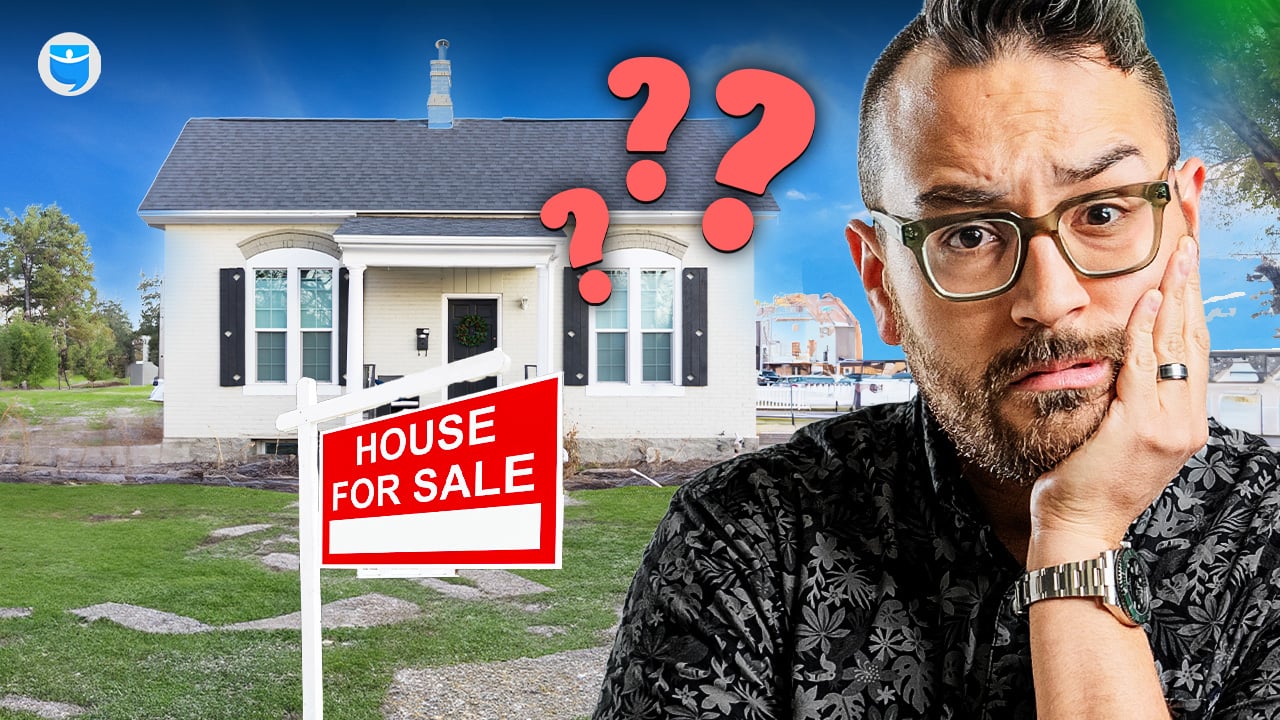


Source link

Two Lines Just Crossed. Here’s Why Investors Need To Be Really Careful. Read More »

Scott Galloway on Why Smart Investors Stay Away from “Sexy”

Scott Galloway on Why Smart Investors Stay Away from “Sexy”


Scott Galloway, NYU professor commonly known as “Prof G,” thinks that America is adrift. Communities are dying, young people are feeling helpless, and wealth is slowly being sucked out of the system to give the ultra-rich even more comforts than before. The average American merely wants to make it—having a house, a family, and maybe an ounce of peace. But with mainstream media violently pointing fingers at one another and the modern worker feeling desolate in the daily grind, what can we do to put this country on the correct course?

Scott knows that the game is rigged. He has strong feelings that real estate investors, like many of us, are playing with “cheat codes.” But, that doesn’t mean we’re doing anything wrong. Scott dives into his personal philosophy on who has taken advantage of this country, who needs the most help, and how a young, aspiring entrepreneur or investor can build wealth, without blindly buying into “sexy” assets.

Although Scott likes real estate (and wishes he bought more of it), he cautions young investors to take a step back and be intelligent with their investments. A few right moves when Scott was young allowed him to live the life he has today—but this was through hard work and taking the right action, not waiting for someone else to save him. No matter what age you are, what side of the political spectrum you fall on, or your feelings toward real estate—Scott has words you’ll want to hear.

David:
This is the BiggerPockets Podcast Show 688.

Scott:
What I would tell people, through no fault of your own, the lobbyists who have fomented this notion that buying a house is the American dream, and there’s been such amazing regulatory capture that if I had it to do again from day one, I would probably be putting a disproportionate amount of my capital in real estate.

David:
What’s going on, everyone? This is David Greene, your host of the BiggerPockets Podcast, the biggest, the best, the baddest real estate podcast in the world. Joined today by my co-host, Dave Meyer, as we interview Scott “Prof G” Galloway. Scott is a very intelligent and very successful man who teaches other people how to build wealth, has a lot of experience in the tech sector, has started and sold companies, writes a book a year, has a lot to say about a lot of different things and brings a very well thought out and nuanced perspective to the podcast. Dave, what were some of your favorite parts of our interview with Scott today?

Dave:
Man, he is, like you said, really knowledgeable about a lot of different topics. I think it was just interesting to hear from someone who’s an investor, a big investor, but not primarily a real estate investor, and just get their opinion and take on the economy, what’s going on in the American society, what’s going on in the American economy. He knew more about real estate than I thought he was going to, and I thought he had some really-

David:
Surprised us at the end there.

Dave:
Yeah, he was like, “I don’t invest in real estate,” but then he was dropping some bombs right at the end. So I thought it was really insightful to learn from a different type of guest than we have a lot of times on these shows.

David:
Well, I think it’s important to do that, right? You don’t want to end up in an echo chamber of your own, especially when you criticize other people for ending up in their echo chamber. So we typically talk about real estate and, more specifically, real estate success stories. This person house-hacked a million houses, this person bought 27 units working as a janitor, and we’re like, “Oh, this is so great.” But you don’t hear about the people that didn’t make it.
The same is true about people that built wealth in other ways that were not specifically real estate investing and the perspective that they have on how wealth creating works, what principles work, what people should focus on, the right path to take as you are looking to improve yourself and build your wealth in the process. It applies to real estate, absolutely. I think it’s healthy to get a perspective that’s not just the same thing we’ve had recycled by every single BiggerPockets guest that comes in. So, yeah, that’s exactly what we’re trying to do here-

Dave:
Totally.

David:
… is we’re trying to bring a more mature and nuanced perspective to what we know works with building wealth, which is real estate, and see if there’s ways we can accelerate the process, improve the process, or decrease our own risk in the process. That leads us to today’s quick dip, which would be follow some of the best advice that I ever heard Robert Kiyosaki say.
So I was listening to Robert speak at a GoBundance event and he said, “Look, most people are either a Republican or a Democrat. They see heads or they see tails, and they argue over if the coin is heads or if the coin’s tails and they do not want to acknowledge what the other side also sees. Well, there’s a third side of a coin that many people don’t realize, and that is the edge.”
Robert’s advice to us was don’t pick a side. Stand on the edge and you can look over each side and see what is happening on both sides, and then make your decision based on the information you’re presented, not the ideal that you identify with. I thought that that was brilliant advice.
So as you listen to today’s show, keep that in mind. It doesn’t really matter if you’re a heads person or a tails person. What matters is you see heads and tails. You know what’s going on around you and you make the right financial decision to put you in the best position possible. Dave, any last words before we bring in Scott?

Dave:
No, well said. I think I believe strongly in objectivity and trying to develop your own understanding of issues.

David:
That is right, because you love data, and data doesn’t lie.

Dave:
I sure do.

David:
Scott Galloway, welcome to the BiggerPockets Podcast. How are you today?

Scott:
I’m doing great. Thanks, David.

David:
I’m glad to hear that. I’ve got to say, your hair is looking fantastic.

Scott:
That’s right. Same barber.

David:
I’m actually considering copying you.

Scott:
Yeah, no. If we had Dave’s hair, we’d be the junior senator from Pennsylvania.

David:
Well, anyways, Scott, thanks for being here with us today. For those of our audience that are not familiar with you, can you give us a rundown of your background, what you’re known for, and then the contents of your new book?

Scott:
Sure. So good to be with you guys. I’m a professor of marketing at NYU Stern School of Business. I’m an entrepreneur turned academic. Born and raised in California. Brief stint in investment banking, then graduate school, and started several consulting eCommerce and business intelligence firms. Then started teaching at NYU about 20 years ago and now do a lot of media, write books, stuff like that.

David:
Awesome. If you had to say what you’re most passionate about right now, what’s on the front of your heart?

Scott:
I consider myself, at my core, a teacher, at least professionally. I think the only business card I think I’ll have, and I don’t have a business card, but metaphorically, will be that I think I’ll always teach. I have an online edtech company. I’m still on the faculty at NYU. But at the end of the day, I think of myself as a teacher.

Dave:
All right. Well, Scott, I’d love to get into the book Adrift, which I read over the weekend. Really, really fascinating topic. After reading it, I was just curious why you called it Adrift and not something like We’re (censored) or Everything is Terrible, because it paints a grim picture, right?

Scott:
Yeah. I force myself now in every presentation, and tried to do it in the book, to talk about solutions and silver linings. But Adrift was I don’t think we’re lost. I think all of these problems are of our own making, and that’s the bad news.
The good news is they can be unmade. I think we can see land. I think all of our issues are fixable. There’s nothing wrong with America that can’t be fixed with what’s right with America. I think we see land. I think we know what needs to be done. I think we have to row in unison, or whatever nautical metaphors I can come up with.
But I don’t think we’re lost. I don’t think we’re (censored). For lack of a better term, I just think we’re a bit adrift. Like I said, I’m actually quite hopeful because the incumbents and the what I’ll call the entrenched want to create this illusion of complexity and that these problems are intractable.
I don’t think there’s a single problem that ails us that can’t be fixed. We talk about teen depression at the hands of social media. They will claim it’s multidimensional and difficult. It is difficult, but they’re absolutely solvable.
There’s no reason we can’t age gate social media. There’s no reason we can’t hold these firms accountable when they are sending emails saying … Pinterest sends an email, saying to a 14-year-old girl, “Here’s a board with images on suicide you might be interested in.” There’s just no excuse for that. We can fix that. We can fix our tax structure. We can make investments in trade schools and junior colleges.
We’ve accomplished much bigger things. We’ve stared down much bigger problems before. So I don’t think we’re lost. I don’t think we’re (censored). I think we’re adrift.

Dave:
It’s a good way of saying it. Yeah, I’m mostly kidding. But I agree that acknowledging what the problems are is probably the first step towards coming up with some of those practical solutions. So for those of our audience who haven’t yet read your book, can you tell us just what are the big problems, some of the themes that you’re seeing that are impacting American society?

Scott:
Sure. So there’s several. I’ll start with some major ones, and then what I think is the profound one or the biggest one. We talk a lot about income inequality. That gets a lot of warranted attention. What we don’t talk about that I think needs more attention is what I’ll call age inequality. That is a 75-year-old is 72% wealthier than he or she was 40 years ago. Someone under the age of 40 is 22% less wealthy.
The percentage of wealth controlled by people under the age of 40 in the last 40 years has gone from 19% of GDP to 9%. In some, we have, from a legislative standpoint and a fiscal standpoint, decided to transfer money from young people to old people.
Again, the entrenched, the old wealthy generation will say, and I’m a part of that generation, is that these are big problems because of globalization and network effects, which is total (censored). These are concerted decisions.
Reagan taxed all income at the same rate and then we decided, “I know. Let’s have a lower tax rate for capital gains.” Then the second biggest tax deduction is mortgage interest rate. So who makes money off of stocks and bonds? Old people. Who makes money off of current income and salary? Young people. They pay a higher tax rate. Who owns homes? People my age. Who’s renting? People your age.
Social security is considered the third rail. I get attacked immediately when I say we should reconsider much harsher means testing for social security. The largest transfer of wealth that takes place every 12 months on the planet in history is young people transferring a trillion and a half dollars to the wealthiest cohort in the history of the planet, seniors, in the form of social security.
But because over a quarter of our elected representatives are over the age of 70, because the first two states that basically set the presidential primary are the oldest states in the Union, Iowa and Maine, we have massively overinvested in older people at the expense of younger people. Even if we get a chance with the bailouts from COVID to make rich people richer, we decide, okay, we’re not only going to (censored) younger people, we’re going to (censored) their kids and their grandkids with unsustainable levels of debt, so pop-pop and nana can upgrade from Carnival to Crystal Cruises.
So there’s been massive age inequality. There is also massive … I think a huge issue we’re going to talk more about is failing young men. The education system is highly biased against women, and people are afraid to talk about it. Richard Reeves from the Brookings Institute just wrote a wonderful book called Of Boys and Men. But the moment you start advocating for men, you’re labeled a misogynist. People see it as a zero-sum game.
When we decided to advance the interest of women when it was 40, 60 women to men in college, when you were in favor of affirmative action, people of color, which I am, I’m a huge advocate of affirmative action, you weren’t seen as being anti-white. So we don’t even want to have an open conversation around how young men are really struggling.
I think it’s changing. I think people, mainstream media is becoming much more open and accepting of saying that. You’re not immediately labeled a misogynist. But, look, three times more likely to commit suicide, four times more likely to be addicted, 12 times more likely to be incarcerated. Seven in 10 high school seniors are girls. In the next five years, for every one male graduate of college, we’re going to have two females. It’s going to be two to one. Two to one.
Then you have this war on what I’d call masculinity, or we’ve conflated toxicity with masculinity. We’ve decided that masculine attributes … Female attributes should be celebrated and protected and honored and male attributes should be starched out, that there’s something unhealthy or dangerous about them.
So I think failing young men is a huge one. Incredible age inequality. An emerging crisis, loneliness. People don’t speak to their neighbors. Church attendance is down. People aren’t joining the boy and the girl scouts. The number of kids that see their friends every day has been cut in half in the last 10 years.
We don’t go to work. We don’t go to the mall. We don’t go to the movie theaters. When we don’t touch and smell each other, we have less empathy from one another. We resent people. When there’s immigrants in your neighborhood you interact with, you’re pro-immigration. When there are no immigrants and you don’t see them, you become very anti-immigrant. Too many people, especially young men, are spending way too much time alone in their parents’ basement.
Then what I think is the biggest problem is if America’s problems were a horror movie, the call is coming from inside of the house. Now what do I mean by that? Geopolitically or relatively speaking America, I would argue, has never been stronger. We’re food independent. We’re energy independent. Smartest, brightest people in the world all have one thing in common. They all want to come here.
We’re the football team that gets every draft choice, the top hundred draft choices every year, but we don’t like each other. A third of each party views the other party as their mortal enemy. 54% of Democrats are worried their kid is going to marry a Republican. We have 20% of Americans would be fine with an autocrat as long as it’s his or her gal.
So it just strikes me there’s this falsehood, this dangerous falsehood, or a lack of recognition that Americans’ greatest allies will always be other Americans. We don’t like each other. People dislike our leaders on the other party more than they dislike Putin or Xi. That’s (censored) ridiculous.
Just to wrap up this word salad here, I’m a huge fan of World War II history, and there’s this wonderful photo generalist, I think her name’s Maria Amolo, and she’s been colorizing these World War II photos. I don’t know if you guys have seen this, but my favorite is a landing craft, in the invasion of Normandy, dumps its front doors and you see these men wading through the water, really boys. Average age was 26, average salary was $800, these GIs.
The most unskilled, expendable men were sent first because they knew that most of them were getting killed. They’re headed towards Omaha Beach, wading through this cold water. Two of three wouldn’t make it off the beach.
I can’t even imagine any of them at that idea, for the life of them, could have told you who was a Democrat and Republican wading towards that beach. Then I imagine them turning around and being able to suspend the time-space continuum, as we can looking at the past, and they could look and see us and go, okay, teen depression, election interference, polarization. They would go, “You can’t fix that? Jesus Christ, look what I’m facing. Look what I’m running into. But you can’t face that?”
So I’m motivated by history to believe that America can absolutely fix all of these issues. But I would say the biggest problem is Americans need more connective tissue and to start joining hands physically and metaphorically with other Americans and stop this nonsense and this polarization and just this vitriol towards each other.

David:
If I’m hearing you right, Scott, I’m picking up a pattern in what you’re proposing here, and I just want to get verification that this is the point you’re making. It’s that a lot of this is due to policies enacted that affect incentives. So we created policies that would incentivize women to attend college and now it’s out of whack. We’ve created policies that have allowed a certain generation to be able to hold onto and attract wealth at a faster rate than others, and it’s created something out of whack. Is that more or less your perspective?

Scott:
There’s some nuance there. So when it comes to education, what we found is when we leveled the field in education, girls blew by boys. Boys, biologically, are at a disadvantage. An 18-year-old girl and an 18-year-old boy, essentially when they’re competing for a college seat, the girl is competing against a 16-year-old. Boys’ prefrontal cortex doesn’t grow and mature as fast. The executive function that is gas, break, when to play FIFA, when to stop and study. Girls are one to two years ahead of boys, and school and college rewards that behavior, that discipline, that delaying of gratification.
I don’t know if you guys have kids or boys, but basically when you’re a dad, all you really are is the prefrontal cortex for your boy until he develops his own, right? You’re like, “Okay.”

David:
By proxy.

Scott:
Yeah. “Okay, stop playing video games. You have homework tomorrow.” “No, you can’t yell in a restaurant.” I mean you’re just sitting there going, okay, I’m the front part of your brain until it actually grows. Girls, theirs shows up sooner. It just shows up sooner.
Also just there are societal reasons. Two kids in the principal’s office, a boy and a girl, exact same behavior, cheating on a test, exact same test, exact same cheating. The boy is twice as likely to be suspended. Black boys five times as likely to be suspended. Once a kid is suspended two to three times, he’s not going to college.
80% of primary school teachers are women. Who are they going to champion? I don’t resent them for this. Who do they see themselves in? In that little girl who has the same colored hair that comes from the same background. Two-thirds of high school teachers are women. So there’s fewer male role models.
We also have 21% of US households are run by a single parent, which is Latin for mom. Girls actually have similar outcomes in single-parent homes. Boys come off the track. The moment there’s no longer a male role model living with a male, he becomes twice as likely to be incarcerated.
So the system, the educational system, is biased against boys. Now having said that, the labor market, there’s this moment of equality when men and women are young. They have about the same wage as girls, or women have closed the gap, which is a wonderful thing. Then the labor market turns against women about the time they have kids. Wages for women drops to $0.77 on the dollar once they start having kids. Anyway, so there’s biases everywhere.
In terms of school, I think it wasn’t policy as much. It was that we level the playing field and the behaviors that the educational systems value favors biologically women, both in terms of the norms of education and just straight biology.
Now on the age inequality stuff, or income inequality, this has been a concerted policy effort by a Congress and a Senate that increasingly looks like a mix between the Golden Girls and the Walking Dead. We’re just too goddamn old. It’s not surprising that one in five children are living in food-insecure households because none of these people have young kids at home. They just have trouble relating. And old people vote. So we effectively have a geriatric government that is supporting other old people.
That’s not to say people can’t represent people on like [inaudible 00:18:41]. We have the oldest leadership in the world. I mean think about the presidential race, the two leading candidates. If Biden or Trump win president in 2024, that means the last time Marine One leaves the West Lawn, we’re either going to have an 86-year-old or an obese 82-year-old. That is (censored) ridiculous.
We are so worried about being called an -ist, specifically an ageist, that we don’t want to acknowledge that you know who else is ageist? Biology. The majority of us have this uncomfortable conversation with one of our parents, taking their driver’s license away. It usually happens in the ’70s, but we’re going to have an 82 and an 86-year-old running the biggest economy and in charge of 11,000 nuclear weapons.
There’s a huge problem, I think, around a representative government that does not represent young people. And so, the policies you were talking about have been enacted that it just slant money, just the level the playing field that’s just taking more and more money from young people and sliding it down to the entrenched incumbents.

David:
So looking at this from the perspective you have, what are some of your recommendations for how younger people can navigate through this environment to put the odds in their favor to build wealth?

Scott:
Well, one, I think we should have one … Just from an economic standpoint, we need to reform the tax code and make it progressive again. Basically at about 99%, your taxes go down.
So I’m an entrepreneur. I sold my company, L2, for $160 million. The first $10 million is tax-free. That doesn’t make any sense. Why am I not paying any taxes? Why is FedEx and Nike not paying any taxes?
If you look, I would like to see taxes coming down. Government requires 23% of GDP. We’ve been deficit spending, so, arguably, tax rates should be, on average, 21%. If you had corporate taxes at 30% and you tax people making over a million dollars current income, just one income … There’s just income. I believe in what Reagan did. There’s just one income. And you tax people making over a million bucks 30%, that means everybody else would pay somewhere between 12% and 14% tax.
So you could cut taxes as long as you force everyone to pay taxes. As somebody who came into wealth later in life, you just see how the game is rigged. I have these incredibly intelligent people engaging in massive tax avoidance. It’s all legal, but it’s just striking. My tax rate is between 17% and 19%. When I was working my ass off making all my money in current income living in California, my tax rate was 46%.
So we’ve decided, we’ve made a concerted decision that if you get the gold medal, we’re going to give you the silver and the bronze. We’re not going to say, “Okay, you’re lucky you need to pay some tax and help get more people on the podium.” We need to redo our tax policy. We need to provide double the number of freshmen seats at colleges.
Me and my colleagues are so drunk on exclusivity that we’ve created artificial constriction of supply such that we can feel better and better about our degrees. We have a numbious rejectionist culture. Once I have a college degree, I want admission rates to go down. Once I have a house, I don’t want any new projects or development projects approved. Once I have a successful tech company, I’m going to weaponize government such that small companies can’t get merged because I engage in monopoly abuse.
The result is the gale forces of disruption never really get to blow, and there’s no churn. There’s fewer and fewer younger people who have access. We artificially suppress interest rates … Unless you have rich parents, how do you buy a house if you’re a young couple? How on earth do you buy a house?
Now that’s changing, I think, for the better. I’d love to see mortgage rates go to 9% and see housing prices crash, because I got to buy a house when I was young and I didn’t have parents that could help me. How the hell does a young couple buy a house right now?
Anyway, I think simplification of tax code, massive increase in freshmen seats, big investment in our junior colleges and vocational programs and stop fetishizing the traditional four-year degree in elite colleges. There’s a lot of job demand for cybersecurity, specialty construction, installation of solar panels. There’s a variety of two-year certification degrees, vocational degrees that would give kids $60,000 to $120,000 day one. But instead we have this weirdness in the US where if my kid doesn’t end up at MIT or Google or KKR, I failed as a parent.
33 out of every thousand workers in the UK and Germany have the term apprentice. In the US, it’s three. 50% of Germans have some sort of vocational certification. In the US, it’s five. So I’d like to see national service. I’d like to see similar to what they do in Israel and Northern Europe, mandatory conscription of one to two years. So you meet people from different backgrounds, different ethnicities, different income levels, different sexual orientations.
I think we need to establish connective tissue and have a generation of Americans that see themselves as Americans first, not as Republicans or Democrats, or college attendees or non-college attendees. So I think there’s a variety of social and fiscal initiatives that we could do to start investing, again, in the middle class, and specifically investing in our younger Americans.

Dave:
Scott, a lot of this advice is this societal-wide, macro ideas, and it’s really interesting, your thoughts there. What about some of the individuals … Because a lot of the people listening to this show are in the Gen Z or millennial age group. By the fact that they’re listening to this show, I’m going to presume that they’re very interested in getting ahead financially. What are some of the ideas or paths that you recommend to people who, despite these headwinds that they’re facing on the societal level, that they can take as individuals to try and improve their own financial position?

Scott:
Well, I mean there’s a few best practices. So very basic peanut butter and chocolate is certification and geography, and that is we live in a LinkedIn economy. What is on your LinkedIn profile is very important in terms of access to middle-class economy. So if you can have the opportunity to get to college … We all like to say college sucks and people don’t need college any longer. But that’s mostly a gag reflex because it’s become so unattainable for most people.
But if you have the opportunity to go to school, you should take it. I’m not suggesting you go to a mediocre school and pay $100,000 or issued a ton of debt. You need to be smart about it and make sure it’s worthwhile. But if you have access to a good certification at a reasonable price where you can afford it, it’s a good plan B.
Get to a city. Two-thirds of economic growth is going to happen in 20 super cities. It’s like I’m a mediocre surfer, but occasionally I get somewhere with a perfect offshore breeze and perfectly shaped waves and I believe that I’m a good surfer. Then I go back and surf in real waves and realize I can’t surf. You want to get to where the waves are great. In cities, the waves are just better.
It’s like when you play tennis, you play against someone better than you, your game elevates. When you get to a big city, you’re playing against the Federers of the world. You just have to be better, and you are better. You have to work harder. You have to get better skills. So the peanut butter and chocolate of early ascent is certification and getting to a city.
The algebra of wealth, and I think about this a lot, is, loosely speaking, focus on your talent, not your passion. So first thing is focus. Find something you think you’re good at. This is what you need to do in your 20s. Don’t try and figure out what your passion is. That’s dangerous. I’m super into sports and I like alcohol, so I should open a sports bar, or I love media. I would love to start a magazine. I would love to start a magazine.
You want to open a restaurant, go to work for Vogue, open a nightclub, or go to work in sports, you better get a ton of psychic income because it’s going to be (censored) return on investment, because those fields are overinvested. Just as Miami real estate, no one wanted in 2010 and the returns were huge. Now everybody wants Florida real estate and the returns have been starched out. The same is true of your own human capital.
So your job isn’t … Be a DJ on the weekends. Find something you’re really good at. Like I’m good at math, or I think I’d be really good selling soft … What can you do that you think you could be amazing at, like you have some natural inclination? You can’t hate it, but you don’t have to … When people say passion, people immediately go to, well, I’m really into art. Oh, okay, great. That’s a tough way to make a living.
Anyway, find your talent, investor requisite 10,000 hours, and becoming great at it. Then get to a certain level of stoicism. It sounds basic. Try and figure out a way to make more than you spend. When you’re young, before you have kids and dogs, live in a (censored) small apartment. Spend as little money as you can on your living situation because you don’t need to. If you’re young, you should be in your apartment max eight hours a day, and seven of that should be sleep, or six of that.
Try and start saving right away. Try and show a level of stoicism around being really disciplined. Try and work out five or six times a week. You should, before the age of 30, be able to walk into any room and know that if (censored) you got real, you could kill and eat everybody or outrun them.
I think being in great physical shape before the age of 30 makes you more confident, makes you more kind, gives you the stamina to work really hard. You bring very little to the workplace when you have no skills when you’re young.
I joined Morgan Stanley out of UCLA. I wasn’t as well-educated. I don’t think I was as smart as the majority of my classmates or peer group, my analyst class. So I decided, every Tuesday morning, I was going to go to work and I was going to stay till Wednesday at 5:00.
I would work the night through Tuesday night. I would work for 36 hours straight. And I could do it. I was an athlete in college. I didn’t have kids. I didn’t have dogs. I could go sleep-deprived. No problem. It sent a signal that I came to play. They were like, “Oh, yeah, that’s that kid that went to UCLA, who works through the night every Tuesday.” I got opportunities. People like that. I could not do that now. I’m not physically capable of it and I want to see my kids at night.
So go really hard. Be stoic. Try not to let emotions get in the way. Try to show real discipline around saving money. I’d say focus very much on work. I think there’s a lot of talk about balance. I get that a lot of people work to live. Good for you. You’re going to need to move to a lower cost neighborhood and you’re never going to get that economic security that most people want. I’m not saying my way’s the right way, but most of the people I talk to are very economically ambitious.
Then in terms of once you have a little bit of money, diversify. I think diversification is your Kevlar. It’s easy to think, oh, Solana’s going to the moon or Michael Saylor is a genius, and I think he is. He thinks Bitcoin’s going to $400,000, so I’m going to invest everything in Bitcoin. By the way, he might be right.
But diversification is your Kevlar and that is … I’ve lost everything twice, 2000 and 2008, because I was convinced and I was a genius. eCommerce was everything, and then tech was everything. The market is bigger than any individual, and you are putting yourself in a position where if you take a bullet, it can kill you financially.
So now I diversify, put money in all sorts of different unrelated things. That way if I take a bullet in my stock, a stock goes to zero, it hurts, but I survive.
Then time. Find things you want to invest in, where you don’t have to pay attention to them and ignore them. The best performing cohort of investors are dead people, and there’s research here, because they don’t trade their accounts.
So, anyways, find your talent, focus, a certain amount of stoicism, save more, spend less than you make, diversification, and then let time take over. You’re going to wake up … You guys are younger than me. I was 22 yesterday. I’m going to see my college buddies in LA. It’s like we’re seniors at UCLA. I literally can almost feel and smell the same things.
Now I’m 57, and just a little bit of money back then, just a little bit of money every month would be millions of dollars right now. Most young people don’t believe it because they can’t evaluate time. They can’t assess time correctly.

David:
Or inflation, the way that the actual value of the currency changes so dramatically over time.

Scott:
100%. Yeah. I’m always invested. I’m always in the market, because I don’t think you can time the market. I just try to diversify. I think the market’s going to absolutely throw up in the next 12 months. I’m still fully invested, because I don’t know. I mean I don’t know. I have a gut, but I don’t know.

David:
I heard a conversation on the Lex Fridman Podcast, where he was speaking with someone … I couldn’t pronounce the guy’s name, it was like Amadeus or something, that was talking about … He was a proponent of Bitcoin as well. He’s talking about the fiat standard versus the gold, or he was calling it the Bitcoin standard, and just discussing how in a fiat economy like we have, which basically means the government can manipulate the money supply, they can print the crap out of it … And print isn’t actually accurate, but it serves the same purpose … to fund wars that we’re fighting or interests that we have overseas or programs that we have here. Whatever it is that the government wants to do, instead of raising taxes on people, which is unpopular, they just print more money.
For some reason, none of us talk about it. To me, it’s amazing that we’ve done what we’ve done to our money supply. Maybe 80% of the entire money supply has been created in the last little over two years, probably. It hardly ever gets talked about at all. But we’ll talk about other things in the news nonstop.
Well, anyways, his point was savers are punished. If you’re just simply making money and saving money and setting it aside, you can never catch up to the rising tide. You are forced to become an investor if you’re in a fiat economy, almost just to stay even. Like you were just saying there, Scott, if you look back 30 years, there’s not a human alive who would say, “I wish I wouldn’t have bought that house,” “I wish I wouldn’t have invested in that stock,” “I wish I wouldn’t have invested my money in something prudent.”
But when we think forward, I don’t know, there’s a disconnect that the same will be true 30 years from now, and probably much more dramatic with the way that we’re printing money now. Are you of the same opinion that we should be telling people you have to be investing your money and you have to be holding onto it because you’re not going to get ahead if you’re just making some money, spending some money, and saving a meager amount?

Scott:
So in terms of … So let’s go here, fiat currencies. Every fiat currency throughout history has eventually failed because, to your point, the political temptation to spend more money such that you can provide a short-term sugar hit to the economy and not be fiscally responsible, which requires short-term pain and oftentimes means you’re going to be booted out of office, requires adults thinking about their kids and grandkids, and the political system doesn’t occur. So that’s long-term thinking. So, ultimately, over time, the temptation to print money becomes too great and the currency becomes inflated and goes to zero.
So by that standard, you probably always want to be in an asset. You don’t want to hold onto cash. Now having said that, treasury bills and bonds, for the first time, are giving a decent amount of reward relative to the risk. So I think there’s a decent argument. Older people would say it’s not a bad time to own treasuries because you can get 4% instead of 1%.
But I’m a big believer in always have your money in the market, diversify. But I would tell young people … Adidas, I’m fascinated with what’s going on with Kanye right now. Adidas is at $60. It’s off, I don’t know, $50 or $60. It’s been cut in half. Alibaba’s been cut by two-thirds. PayPal’s off. There’s just so many great companies.
I don’t want to say they’re on sale because their valuations got so high. But I think a decent strategy is looking at places where there’s dislocation and then buying stock, trying to be really disciplined. I’m going to try and save a thousand bucks a month, which is a lot for a young person, and I’m going to put it in names I like or I’m going to, better yet, put it in an index fund or an ETF, the natural trajectory the market is up, and then ignore it.
You know what is a low ROI? Buying crypto. The reason I don’t like kids buying crypto, it’s not that I don’t like the asset class. What I don’t like is that crypto usually means you’re staring at your (censored) phone all day. That’s an investment.

Dave:
Yeah.

David:
Well, that does remind me of the older folks that are like … They’re retired, they’re bored, they have nothing to do, and they sit at their computer and they watch the tickers. They tinker with their portfolio doing absolutely nothing to benefit. But it’s such like their brain needs something to do.
It does turn that into the 23-year-old that bought an NFT or some crypto, and now they’re doing the same thing. It gives you this dopamine release as if you accomplished something. But, like you said, Scott, it’s not building skills. It’s not putting your 10,000 hours into something. It’s not putting you on a path that’s going to improve your position. It’s like a substitute for it that many of us have just been hypnotized into.

Dave:
Yeah, there’s an inverse correlation between how often you check your portfolio and your returns. I think you mentioned that with dead people, Scott, like the less you look at your returns and the more you just allow your investments to compound over time, the better your returns actually become.

Scott:
Robinhood’s tagline, if it was honest, would be the more you trade, the more you lose. 80% to 95% of day traders lose money. If you owned any five stocks in the S&P and you own them for longer than a decade, no one has ever lost money.
So now I want to be clear, occasionally I trade. Occasionally I buy options or I usually write options, and I enjoy it. It’s like gambling for me. I take a little bit of money and I do it.
I love Vegas. I was in Vegas last week. I go with a group of guys. I put on a kilt, I get (censored) up. I go down, I take a thousand bucks. I assume I’m going to lose it all. So if you’re trading stocks or you’re trading options or doing weird stuff, realize, okay, it’s fun, it’s consumption, but you’re probably going to lose most or all of your money.
But don’t con yourself into thinking that you’re learning or investing. I’m not against it. I love to gamble. I love to drink. But neither of those things are going to create economic security for me and my family, their consumption. What makes wealth is the boring (censored) buy a REIT. You think the future is in eCommerce, buy Prologis and then don’t look at it for 10 years.

Dave:
Scott, what do you think about regular real estate, though, in addition to REITs? Buying rental properties. How do you view that in the spectrum of potential investments?

Scott:
So I’m now at the age where I think about what if I could do it all over again. If I could do it all over again, I’d be a Broadway dancer, a Navy Seal. So there’s still time. But I would also get into real estate.
Essentially, if you look at the most valuable companies in the world, they’re a thick layer of innovation based on enormous government investment. Google and Apple are built off of GPS and DARPA technologies. Tesla’s built off of massive subsidies for carbon credits. Moderna is built off of NIH investments and vaccine research at universities.
So the way to make a lot of money is to be a remora fish on massive investments by other people. The regulatory capture of the real estate industry is extraordinary. I don’t have any other investment. I wish I’d come into this later.
I bought some apartments. During 2010 or ’11 in Florida, the Palm Beach County Clerk’s Office was auctioning off repossessed condos. I was buying these things for $80,000 or $100,000, and I could get $12,000 a year in rent. I’m like I don’t know real estate, but I can do math. If I can get 12% cash-on-cash, this is just going to work out. If I can hold onto these things long enough, this is going to work out.
Then I find out, your industry, I can depreciate these things. I’m like, okay, they’re going up in value, but I can depreciate them? I can’t depreciate my Amazon or Apple stock.
Then if I get a call from an investor who says, “Oh, you own 30 apartments. I’d like to buy them,” I can then, within six months, not incur that gain and roll it into another asset? I mean you can’t do that anywhere else. You guys have figured it out. So here’s the thing. You can be good in real estate, and it’s as good as being great in any other asset class.

Dave:
That’s true.

Scott:
So what I would tell people, through no fault of your own, the lobbyists who have fomented this notion that buying a house is the American dream, there’s been such amazing regulatory capture that if I had it to do again from day one, I would probably be putting a disproportionate amount of my capital in real estate.
Now, having said that right now, I wouldn’t buy a house right now. I think there’s a standoff between buyers and sellers because the top is sticky. I love real estate. I’m one of those SNL skit where I look at real estate like a lot of people look at porn. I’m just fascinated what’s selling where and for how much. I don’t think sellers … Sellers anchor off the high. They go, “Okay, my house was worth $500,000.”

David:
That’s now their baseline.

Scott:
Yeah, that’s it. “Oh, that’s the normal market.” No, it wasn’t. That was the peak. Now your house is worth $380 and it’s probably going to be worth $340 in another six months. Eventually there’s capitulation, but capitulation usually takes 12 to 24 months. I wouldn’t want to buy a house right now, I think, with interest rates going up.

David:
What about an investment property that would cash flow positively?

Scott:
It’s all about cap rates and specifics and nuance. When I saw the hurricanes coming to Florida, I started looking at Fort Myers. I love these apartments that I bought and I’m like, “Oh, maybe there’s opportunity.” I also, and I’m in a position of privilege, I try to pay all equities so I’m not forced to buy insurance, which is a total (censored) scam.

David:
Oh, I’ve heard you talk about you’ve saved, what, $200,000 over four years or so of not paying for …

Scott:
Again, everything we do in our society is a transfer of wealth from the poor and the young to the old and the rich. Okay, let me give you a shocking statement. Me and my family do not have health insurance. Really? Bad dad, bad husband. Irresponsible citizen.
Here’s the thing, I’m a narcissist. So I think if I have health insurance, I have to have the best plan. So I got the best plan costing me $48,000 a year for me and my family. $48,000 a year. I am very privileged. I could absorb any health shock, any rare disease, million, two million bucks. I can absorb it. I don’t need to worry.
Then I did the analysis. Half of our medical expenditures, we weren’t getting reimbursed for, because the insurance industry is very good at creating complexity and nuisance. You have to call somebody and they’re only there from 11:00 to 3:00, central standard time. You give up and you don’t get reimbursed for going to have that mole removed. Oh, and the dermatologist I want to go to is not covered under their plan. There’s purposeful breakage.
So I said (censored) it, I’m not having health insurance. I did that six years ago. I’ve saved $300,000. That will buy a lot of healthcare. 45% of insurance premiums go to administration and profit. When I bought these apartments, because I paid cash, I’m like I’m not getting flood insurance. These things could fly away. They could Wizard of Oz on me. As long as they don’t fly away more than every 11 years, I can afford to rebuild them with the money I’m going to save in insurance.
It’s this industry that plays on fear and ignorance, and also regulatory. If you get a mortgage from the majority of bulge bracket banks-

David:
They’re going to require it.

Scott:
… you have to have insurance. Otherwise, you can’t qualify for a mortgage. So what does that do? It means a guy with some money who’s older like me doesn’t have to have health insurance, doesn’t have to have flood and fire. So, again, another transfer of money.
But I think real estate … Again, if I had to do it again, the wealthiest families in Manhattan, they don’t really talk about them. Everyone’s obsessed with tech billionaires. There’s like a handful of families in New York that own all the office buildings. They never sell them, they just borrow against them. I mean if you have the capital and the staying power to survive cycles in real estate, which can be very vicious, those are the people …
If you look at the Fortune 400 or the Forbes 400, the two people that populated outside of people who inherited wealth are entrepreneurs, number one, and number two is real estate people. It’s just a great way to get rich slowly.

Dave:
So why’d you get out of it? You bought in at a great time in 2010 and you like a lot about it. What stopped you from continuing?

Scott:
Well, in my core, I’m an entrepreneur and I’m fascinated towards eCommerce and growth. I think I’m seduced by what I’ll call the sugar hit of investing in Airbnb and seeing a double. Tech is my bag. It’s what I get. I’ve worked with Ned Spieker at Spieker Properties, and Hamid Moghadam is someone I would call a friend. I know people in real estate and it strikes me that their business is better than my business, but it’s just not my business. I’ve never really done it, understood it.
So I did a crash course in it in 2010 because I saw an opportunity. Now, looking back, I wish I bought 300 of these things, not 30 of them. But I think it’s a fascinating business. Again, if I’d do it again, I would probably try and be in and around real estate. I think it’s a great business.

Dave:
Well, it gives you some of those advantages you were talking about that might be geared towards older people. But if you’re able to buy real estate as a young person, it does allow you to capture those things, like you talked about, mortgage interest, depreciation, some of these things that you said at the top of the show are more designed to help older folks. But if you are young and able to get into this industry, it can help you get some of those cheat codes that the older generations are enjoying, right?

Scott:
Well, again, going back to what other asset class can you get five to one leverage on? I mean-

David:
Or better sometimes, yeah.

Scott:
Some young people do some … I think government programs can get 10 or 30 to one leverage. Again, I think prices have gotten a little too high, so I’d be careful. But I work with Goldman Sachs. They’ll give me two to one on my stocks. By the way, if my stocks go down, they start issuing margin calls. But I can lever up 10 to five to one in real estate. Usually, if you get a five or a 10-year mortgage, they can’t do margin calls on you. They can’t go, “Oh, your house has gone down 30% of value. We need you to put more money up.”

David:
No, that’s-

Scott:
They can’t do that. So it’s the most tax advantaged, it’s the most levered. Now the bad news is all of those things have probably led to an asset class that I would say … And, again, it’s so specific, it’s so regional in asset class type, but I would argue the majority of residential real estate … You didn’t want to be buying six months ago, right? I’m not even sure you still want to be buying.
You guys are going to forget more about this and I’m never going to know. But I went back to the Fort Myers thing. When I saw the hurricane hit and they were saying insurance costs are going to triple, I’m like, okay, there’s opportunity here. I love running into the fire.
I called some brokers down there and said I’d be willing to buy some apartments, or even a small apartment complex, and I thought I was going to get a great deal. They were like, “Oh, yeah, all the guys with the black hats have already shown up. All the biggest capital in the world is already down here trying to be … ” It’s like, “Oh, this wasn’t an original idea?” They’re like, “No, the blip, if you will, or the decline in prices in these areas that were hit by the hurricane lasted about 48 hours.”
But I love the asset. I think it’s a very interesting way to make a living. The majority of my friends out of business school who went into real estate didn’t get as wealthy as I did in the first 10 years, but they didn’t get as broke as I did during the downturn. Yeah, they’ve just slowly but surely … I think real estate’s a great way to get rich slowly.

David:
That’s a wonderful line. When you were describing why you didn’t get more into it, and I really appreciate your transparency there, which what I heard you say is compared to what I’m used to, it’s slow and it’s boring and it doesn’t hold my attention. There isn’t as much upside, there’s not as much creativity I can exercise.
People like you that have the capacity of intelligence that you have, Scott, they know what they can do when they’re put in the highest of stakes environment, which in our modern day environment, I would consider to be tech. You’ve got the biggest upside.
It does make real estate, by comparison, just seem, I don’t know a good comparison, elementary. It’s just this is hard for me to follow. I’ve heard several other people in tech that were pitched real estate opportunities. They’re like, “So you’re telling me I’m going to get a 12% return over five years? It doesn’t really move the needle for me. It’s not a bad idea, but I don’t get excited.”
That is absolutely true. I look at it like people in your space and a lot of your audience, they’re used to throwing haymakers and they’re getting big knockouts. It’s very exciting. They know they’re very talented fighters. This is just a steady stream of body shots that don’t appear to be very powerful until you look over a 20 or 30-year period of time.
Like you said, it’s very difficult to lose and your returns start to amplify, largely because, this is David Greene’s opinion here, inflation. Inflation makes your casual real estate tinkerer look like a brilliant mad scientist because it’s so leveraged. So you’re putting 20% of your capital into an asset that triples in value, but your 20% down payment then would have a 600% increase. It’s different when you’re looking at how quickly you can build equity over real estate, but it’s boring.
So when I come across the people that are very successful in the tech space, a lot of our audience is, they’re into podcasts, they’re into media, they’re also … I live in Northern California. So I’m right near Silicon Valley. They’re fascinated by innovation and creativity and what’s next, what’s a better way to do it, how do you do it more efficient. I look at it like you’ve got to work these vegetables into the sexy, fancy diet that you’re used to. You have to bring this in as a safety net or a baseline on top of what you’re already doing.
When we’re giving advice to young people about building wealth, are you of an opinion that real estate could be a part of a bigger picture or are you pick your thing, completely doubled down on that, and excel as far as you can in whatever asset you’re investing in?

Scott:
So there’s your human capital and there’s your financial capital. I think with your human capital, you should be 110% focused, and that is I don’t believe in side hustles. I think if you have a side hustle, it means you need to find a different main hustle, and that if you find a good job that’s your main job, that incremental investment and time and effort and mental bandwidth that you would give to a side hustle, you’ll get a greater ROI.
In other words, try and figure out a way to be great at your main hustle. The difference between being good and great at your main hustle will produce more than if you’re just good at your main hustle because you’re on weekends and evenings selling rare tennis shoes or something.

David:
DoorDashing.

Scott:
I think side hustles are actually dangerous, unless you see it as a short-term pivot to something else that’ll be your main hustle.

David:
So if you don’t like your girlfriend, get a better girlfriend. Don’t start dating other girls on the side as a hedge.

Scott:
That’s a whole other talk show. But in terms of your investments and your capital, you don’t have to be fully diversified when you’re a young person. You can take more concentration risk. But a third of my net worth, maybe 40%, is in real estate.
A lot of it’s around consumption. It’s hard to time, “Should I buy a house right now?” I get a lot of that question. Then I’m like, “What’s the situation?” They’re like, “Well, we’re in an apartment and we’re having a kid.” I’m like, “Well, do you make a good living?” “Yeah.” “Does your wife make … ” “Yeah.” I’m like, “Buy a house. You need a house. I mean your family’s growing.”
Real estate has a different component of it. Some of it is about consumption where you are in your life. But I wouldn’t … I go all in and have huge concentration risk around your human capital when you’re young to get great at something. I think focus is a key component of being great at something.
But in terms of when you start investing, if you love real estate and you’re young, maybe half your money goes into real estate. But as you get older, and especially when you get to my age, you really don’t want to have more than, in my opinion, 20%, maybe 30% in any type of asset type, because real estate just might get the (censored) kicked out of it the next 24 months.
Now I don’t care what kind of genius you are, market dynamics will always trump individual performance and genius. And so, as smart as you are, as good as the opportunities, your Kevlar is diversification. I invested in oil companies, I’m investing in aircraft maintenance companies.
Another thing you said, David, that I think is really important. I have a chart that I present at the end of my class at Stern. On the Y axis, I have sex appeal and on the X-axis, I have ROI. I’m sorry, I flipped that. Y-axis, ROI. X-axis, sex appeal, how sexy an industry is. The line just goes straight down.
A friend of mine is starting a members-only club here in New York just for artists and entertainment people. It just sounds like it’s going to be awesome. No way will I invest. That is way too cool.
Another friend of mine is starting a healthcare maintenance company that uses scheduling to manage workers who maintain health tech equipment. I hear this business, I want to put a gun on my mouth. That sounds so boring and so awful. I am absolutely stroking a check to that guy. The less sexy the business, the higher the ROI, because not every kid’s dreaming of going into that business. It’ll have an underinvestment in human capital. It’ll have an underinvestment in financial capital.
So there is an inverse correlation between sex appeal and return. Real estate is somewhere in the middle. It’s kind of cool. It’s kind of cool, but I would imagine investing in sea malls or warehouses. It’s not that sexy. Everybody wants to buy, probably.

David:
Self-storage, mobile home parks, [inaudible 00:53:13].

Scott:
Whatever it might be. Yeah, that’s where the money is. When something sounds awful, you should smell money, and when it sounds boring. My dad, later in life, four marriages, total train wreck financially. He and his fourth wife bought a trailer park and it saved his ass. Just saved his ass. A weird business banging on doors for rent, collecting quarters from the washing machine. Great business. Like 17%, 18% a year. Great business.

Dave:
All right. Well, we do have to get out of here soon ,Scott. So I want to bring it back to your book, Adrift, and some of those high-level realities that we’re all facing as Americans. Is there anything you think real estate investors or the people who listen to this podcast can do to create some of the change that you suggest?

Scott:
It’s a thoughtful question. I would just say that … And this is more around, I guess, philanthropy or trying to. I think this notion of third spaces, I think we need more spaces where people who are strangers, or maybe don’t know each other through the course of their day, have a chance to be in physical proximity with each other. Open layouts.
I tell my kids … When I say my kids, the kids who work for me. I have about a dozen people. The median age is like 24. It’s like a bunch of kids straight out of college and then a few of us old people. I say to them, I give them my credit card, and I’m like, “Anytime you want to get together, if you all want to go to Tulum, if you all want to go have dinner, if you all want to go to a concert, I will pay for anything you guys do together.”
I think young people need to be in physical proximity. I worry we’re losing our third spaces, our movie theaters, our malls, the workspace. So any opportunity … I think an investment in your culture and an investment in society is to try and figure out really compelling places for people to meet each other, to establish friendships, to establish romantic relationships. But I worry that young people aren’t meeting, that they aren’t meeting people from different backgrounds. So they don’t have the opportunity to develop empathy, to realize that, okay, that guy who just immigrated here from El Salvador loves his kids, kind of like me, and you have a little bit more empathy for someone.
You run into someone who had a marriage that didn’t work out and she’s trying to raise a kid on her own, and you realize, (censored), this is hard. This is hard. Also, have the opportunity to meet people, fall in love, have sex, and get married.
I think that’s the basis of our society, and we’ve decided that somehow it’s bad, that somehow people getting together and wanting to have romantic relationships, that that’s fraught with all sorts of HR risk. Now that’s the whole (censored) point of all this. That’s the whole point.
So what I tell young men is there’s nothing wrong with approaching a stranger and exhibiting interest. If you don’t know the difference between expressing interest and harassing someone, you’ve got bigger problems.
But I’ve had three weddings from my last company, L2, and each of them is a mitzvah. It’s wonderful. They met and they expressed interest to each other. They started a relationship and now they’re getting married and they’re going to have kids.
Anyways, you asked me what real estate people need. Create third spaces. You might already have your mate, you might already have your house, you might already have great places to hang out with people you love. The majority of young people, and they’ve been taken away. Those opportunities and those spaces have been taken away from them. We need to create more of them

Dave:
Is what you’re talking about here, Scott, really boiling down to community, like a lack of community?

Scott:
I think that’s right, but you can have communities online. You can have … What I’m talking about is physical proximity. Online dating, I think, is a disaster for men-

Dave:
Oh.

Scott:
… because we don’t like to talk about it on the left, but women have different criteria for mating than men. Women primarily want kindness, number three, intelligence, number two, and, number one, resources. Online dating creates this mating inequality where 50 women on Tinder, 50 men, 46 of the women throw all of their attention to just four to six men, leaving 44 to 46 men fighting over four to six women.
The beautiful thing about relationships, friendships, romantic relationships is there’s an X factor, smell, body language, movement, your humor, all this stuff, the way you laugh. You just never know the people you’re going to be drawn to for friendships, mentorships, or romantic relationships, and you’ve got to give the bottom 90% of us an opportunity to exhibit some of those behaviors. You can’t do it online.
So I think to your point, Dave, we need to create more opportunities to develop community in person, boy scout troops, sports leagues, church groups, if that’s your thing, riding clubs, whatever it might be, talking to strangers. I think we’re desperate for touch. I think we’re desperate for community. I think we’re desperate for affection.

David:
Yeah, get out of the YouTube comments.

Scott:
100%.

David:
If you don’t mind, I’d like to move us on to the last segment of our show before we get you out of here. It is called Would You Rather in 2023. So Dave and I are going to take turns asking you questions, and you can give your answer and a supporting statement of which you would choose. So I will go first. In 2023, would you rather buy real estate or stocks?

Scott:
Yes, whichever declines more in the next four months. Whichever takes the biggest beating in the next four months. Probably real estate because … Probably real estate.

David:
Because you see what interest rates are doing and it’s just creating it.

Scott:
There’s opportunity and dislocation. I think the next six months, we’re going to see capitulation and a lot of buying opportunities in real estate.

Dave:
All right. Well, along those lines, which would you rather invest in: tech stocks in the next year or a REIT?

Scott:
Probably a REIT because, at my age, I’m more focused on diversification. I’m just always overinvested in tech.

David:
That’s wise. Got to eat a little more vegetables. That’s my problem. I always want to eat that steak.

Scott:
There you go. 100%.

David:
All right. In 2023, would you rather invest in a series C round of startups or in a real estate syndication deal, which is basically somebody else is buying a property and you are having an opportunity as a limited partner to come in and get access to the equity?

Scott:
Probably the latter, because I get a lot of opportunities around series C investments. I’ve been investing a lot in opportunity zones. Again, another tax avoidance scheme you guys have figured out. But, yeah, probably … I’m at a point in my life … It’s all so true. I’m at a point in my life where I’m not looking to get rich. I’m looking to not get poor. So probably real estate.

David:
Yeah, defense.

Scott:
Yeah, that’s right.

Dave:
All right. Well, then we might know this answer already and, Scott, we’re going to have to have you back on to talk about your opportunity zone investing. But a short-term rental like an Airbnb or Bitcoin?

Scott:
Investing?

Dave:
Yeah. Which would you invest in? I know you like gambling. Want to throw some Bitcoin in there?

Scott:
Oh no, no. Short-term rental. I’m a no-coiner. I’ve never owned a coin. I don’t get it. I just don’t get it. I can’t think of a use case-

David:
It’s too sexy.

Dave:
What is there to get? What’s there to get?

Scott:
I don’t.

David:
That’s the first thing I thought of when you described your inverse relationship between successful and sexy was all these cryptocurrencies that were just popping up out of thin air along with the NFT space. Then we found a way to marry them. So you’re like, well, if you buy this crypto, it works in this theoretical metaverse that we’re trying to create, that has an NFT that is the door to get into it. They took all of these things that were inherently useless on their own and tried to make them valuable by turning them into … It’s like combining a bunch of alcohol together that shouldn’t be good and trying to make it taste good. This Voltron of nonsense is how it looked like to me. It was very sexy, and we saw what happened. It corrected very quickly.

Scott:
Yeah, some of it’ll be enduring. You can’t have this much human in any asset class and not have enduring innovation. But at this point, every time I try and understand crypto, I feel like I could slip and break a hip. I just feel old. I don’t get it. I don’t.

Dave:
[inaudible 01:01:28].

Scott:
More power to them. I know some really smart people making big investments in it. I’m on the board of a company called Ledger, which is a cold hardware storage for mostly crypto, but also for identity. I did it just so I could learn. But I’ve never owned a crypto asset and I doubt I ever will.

David:
So short-term rental it is.

Scott:
Oh, by the way, I should have disclosed, Airbnb is hands down my biggest holding from an investment standpoint.

David:
All right. Dave, any last questions for you?

Dave:
No. Scott, it’s been a lot of fun. Really fascinating. Wish we had more time. But appreciate you coming on the show and sharing some of your thoughts with us.

Scott:
Well, thank you guys and congratulations on your success.

David:
Thanks, Scott. If anybody wants to look you up and learn more about you or opportunities that you present, where’s a good place they can go?

Scott:
God, to resist his futile. I’m everywhere. It’s Prof … Again, my Twitter handle is-

Dave:
He’ll find you first.

Scott:
Yeah. Twitter’s @profgalloway. I have a newsletter called No Mercy/No Malice that comes out every Friday. I’m about to do a show on BBC. If you want to take a course, I’m involved in an edtech company called Section4. So I’m everywhere.

David:
Well, we appreciate you, brother. Thanks for coming on. We’re going to have you back to talk opportunity zones and Tinder strategy in the future. Seems like you have a lot to offer on every element there.

Scott:
They’re related. All right, gentlemen.

David:
Thank you.

Dave:
All right. Take care, Scott.

Scott:
Take care.

Dave:
All right. Man, well, that was a fascinating conversation, David. What were your initial takeaways from the conversation with Scott?

David:
Well, first off, we went all over the place, which was pretty cool. Scott gave us some pretty insightful commentary on a lot of different things, a lot to chew on there.
I like his perspective. He’s coming from someone that has made a lot of money that has been successful in a lot of different areas of finance and has a nuanced position when it comes to both the individual, specific micro ways that we can earn more money for ourselves, as well as the generalized macroeconomic perspective that has to do with government policies and the unseen pressures that allow wealth to be created in different ways.
So I mean I would love to have talked to Scott for longer. We only had a short period of time, and I’m glad that he did talk to us. So what were some of your favorite things that he brought up?

Dave:
Man, yeah, there was a lot there. I do agree, I wish we could have a longer conversation. But I think one of the things that really stuck out to me, which I have conflicting opinions about it, I should say, is the idea that he hates side hustles. I think that’s pretty contrarian to what we talk about here on BiggerPockets a lot.
I get what he’s saying and I think for a certain type of individual, it makes sense to do what he’s saying. But I’m not sure that’s advice I would give blanket to everyone. What do you think?

David:
Yeah, you’re making a good point. See, I think when he said side hustle, we never defined what he meant by that. So I don’t know. I’m now speculating for Scott. But when he said side hustle, what I interpreted was don’t allow your energy to be diverted in several different ways. This is when Brandon Turner would say don’t try to build five bridges to Hawaii at the same time.
So if you’re in a location, in an opportunity where you can be building your skills, which I am passionate about, and I heard Scott talk about as well, like especially when you’re young, skill-building needs to be at the forefront of what you do. I did my TED talk on this.

Dave:
Totally agree.

David:
In the next book I’m writing, I’m big into it. When we interviewed Cal Newport, So Good They Can’t Ignore You, some my favorite books, and that’s exactly the point he makes is you’ve got to build your skills like Napoleon Dynamite, because girls like guys with skills.
I think what he’s getting at is don’t try to avoid the work. It’ll be like, ugh, that’s a hard path to take. I’d rather look for the next NFT that’s going to blow up, or I’d rather make my own blog and make money that way because it’s easy. He was like, no, stay the course. Walk the path.
But what we talk about with BiggerPockets when we talk about a side hustle is probably more geared towards you don’t have a lot of opportunity in your job. You’re listening to this podcast and you’re picking up shopping carts at Home Depot or Lowe’s. What you really want to do is be in construction. So you like working at Lowe’s, but you’re not making enough money to get anywhere.
To you, your side hustle’s actually a step up. Your side hustle might be a contractor you met coming into Home Depot, that hires you to help do some work on the job site, and now you could start to learn a trade. Your side hustle becomes the path, right?
So I think that’s how I’m looking at what he’s saying is it depends on which path you’re on and if the side hustle is a step up, which is a good motivation, or if it’s a distraction, which would be a bad motivation. What were your thoughts on that?

Dave:
Yeah. No, I actually think that’s a really good way of phrasing it is that it’s really about where your focus is. If you’re in a career where you can make a lot of money and do what he’s talking about, or if you really focus, your income can go from $50,000 a year to $500,000 a year, maybe that is a great option for you. I don’t know. I don’t think there are a lot of those careers out there, though.
And so, I think for everyone else who might not have that potential, maybe you’re not working in finance or on Wall Street or whatever, you try and find the place … Put your attention towards the thing that can offer you that ability to 10x your income. If it’s not your regular W2 job or whatever job it is, maybe real estate, or what we were calling a side hustle, can be your main hustle. It’s just something you’re doing concurrently or at the same time as your real job. So I think that was really interesting.
But I completely agree with the sentiment that it’s just get really good at something. I completely agree with it. I think that’s excellent advice for pretty much anyone.
I guess the other thing I was interested in was when he was talking about taxes a little bit and about how advantaged taxes. He was really going off about how amazed he is that you can depreciate things, you can lever it. This is for someone who is primarily a stock investor. So I thought that was pretty cool that he was recognizing some of the advantages that real estate investing have.

David:
Yeah. He also made it clear he doesn’t operate in this space very often. He’s not a real estate person. He’s a stock person. He’s a tech person. He’s fascinated by innovation and startups. If you listen to Scott, Prof. G, he talks a lot about his opinion on Elon Musk per se. That space is much more in creativity.
He mentioned real estate is just comparatively boring. It’s a great way to build wealth slow, which was funny he said that because that’s literally what I say all the time. I’d say this is a get rich slowly scheme. It’s not a microwave, this is a crock-pot, and at the very end is where it starts to get really fun. When you’re really hungry and you’re like, “Oh, I want to get out of this situation in life. I want to eat. I’m so hungry,” no one thinks of a crock-pot.
You’re looking for that hot pocket. You can hit it really big in tech. You can make a lot of money really quickly. When I say a lot of money, we’re like, wow, an 18% ROI is fantastic. They’re more like it’s an 800% ROI. That’s just the world that they’re used to playing.
I liked that he admitted real estate’s amazing, it’s just slow. It’s not my speed, because not everybody is in that same boat. For some of us, slow is the best speed. What about you? What do you think?

Dave:
Well, it’s funny what he says about diversification, because in the venture capital world, which it sounds like what he operates in mostly, the calculus is very different than real estate. They’re acknowledging that they’re going to hit on one out of 10 investments, and they’re hoping that that investment is a huge home run. I think he was an early investor in Airbnb, and that’s awesome. He’d probably readily admit that it took him failing on 20 investments to hit that home run with Airbnb.
That’s just a totally different game than real estate. Real estate investing is about making incremental progress with every single investment and hopefully losing on none of them. You might never hit a grand slam, but that’s okay. You’re like the utility guy in the baseball team who’s just hitting singles every time. That’s totally fine because, for me, especially if you’re starting young, that’s all you need. If you’re starting in your 20s or 30s, if you do that for five to 10 years, you’re going to end up in a good position, almost guaranteed.

David:
You want an analogy I just thought of?

Dave:
Yes, I definitely do.

David:
All right. So tech in the world that Scott operates is like animal husbandry. You are trying to breed-

Dave:
Where is this going?

David:
… a race horse. You’re trying to breed a race horse that’s going to win the Kentucky Derby. You’re going to go through a lot of duds, but if you get that one that hits, you’re incredibly wealthy. You’ve made a ton of money. You can now stud out that horse and do really well.
Our world is much more like farmers. We’re just planting trees. We want an almond orchard. No one ever said it’s really sexy to own a lot of almond trees. It is a little bit more work to have to harvest those almonds and then store them somewhere and sell them. It’s a little more work when you’re running a short-term rental or you’re managing a property. It’s a little bit more like running a business.
When you hit a big on a property, it’s not like you’ve got this race horse that you can make a bazillion dollars off of. You’re probably going to take some equity out of it by three to four more trees and wait, wait for them to start growing almonds.

Dave:
[inaudible 01:10:59].

David:
Right?

Dave:
Yeah.

David:
But it is so easy to repeat it. It’s simple. I mean it’s the same freaking thing you’re doing with a tree over and over and over. Maybe you have some almond trees and some orange trees and some apple trees. You diversify a little bit between a duplex and a short-term rental and a regular house somewhere, but it’s all the same type of stuff. You’re watering trees, the land works the same, the irrigation works the same.
And so, to me, the weaknesses of real estate is it doesn’t scale incredibly fast. The strengths are it’s harder to mess up, for sure. You can have a curb where you never lose money on a house ever and it’s much more scalable versus the high-risk, but high-reward element of the world that Scott lives in.

Dave:
Well, it’s interesting. First of all, if we were playing the game of bingo where you try and work weird words into the podcast, animal husbandry is one I never thought I would hear on this show, but here we are.

David:
Here we are, Dave.

Dave:
No, it makes me wonder about his personality. He said several times he really likes gambling. And so, it’s interesting if that kind of high stakes VC, venture capital world is attracted to him. It’s part of his personality trait. People always think like investing, it’s so dangerous. It’s risky. It’s like, personally, I’m a very financially conservative person.

David:
Me, too.

Dave:
I’ve got a lot of financial anxiety. I just want to keep what I got and just build it slowly. I just wonder if it’s comes down to different personalities and what you’re looking for.

David:
I think that’s exactly right. I’m glad you’re bringing it up because I think it creates confusion for the listener who doesn’t know that, because they’re looking for the blueprint. They’re like, “Well, is Scott’s the right blueprint or is Dave Meyer the right blueprint, or is some other entrepreneur out there? Is Elon Musk the right … Is Gary Vaynerchuk the right one? What am I supposed to do?” Well, it depends your personality. You’re probably going to go in the direction that your personality is bent towards. So figure out how to make real estate work within your personality. You’ll have a much more fun time.

Dave:
Absolutely. The last thing I thought was really interesting is right at the end, he was talking a little bit about community. I asked him what real estate investors could do to address some of the challenges that he laid out in his book, and he talked about a lot of different things there. But I think what resonated with me was that if you are into real estate and real estate investing, create your own real-life community.
We just got back from BiggerPockets Conference where it was a perfect example of that, being able to meet and connect with people who are like-minded, who can help you reach your financial goals, who you can help them reach their financial goals. I found that personally being at BPCON. I work remote. I live in Europe. I found that really energizing to be there and be with the community in real life.
And so, I thought that was a really good lesson that people can take or learn something from, especially if you’re new. It feels really scary, because if you’re sitting in front of your computer or you’re just listening to this podcast and you never went out and talked to other people about it and seen and learned from people directly, it seems like this foreign thing that you can’t really touch or feel. But if you go out there and go to a meetup, you can see that this is achievable and you can meet people that can help you achieve it.

David:
Yeah, it’s funny. When I look at real estate, I don’t ask myself the question of is it achievable, which is what the new person would be thinking. It’s more how could it not be achievable? If you did all the right moves, how would you screw it up? You buy the right property, you buy in the right locations, you keep enough money in reserves, and you wait. Under those circumstances, it’s hard for my mind to conceive of a way that people would lose money through real estate in the long term.
And so, there’s some hope there if somebody’s like, “Oh, I really want to get into this, but I’m just afraid.” The fear is largely based on ignorance or expectations that are incorrect, like, “I’ve got to make $300,000 in my first year because I’m quitting my job in three months.” This is not the asset class to do that.

Dave:
You’re going to have to take on a lot of risk if you want to do that, and it’s probably not going to work out. But if you like the slow and steady approach, we got some ideas for you.

David:
All right. Well, I thought this was a good interview. I enjoyed you being here with me, Dave, as always. You always ask really good questions. If people want to follow you, where can they find out more about you?

Dave:
Well, you can find me on BiggerPockets, of course, or my podcast, another BiggerPockets podcast, called On the Market, or I’m on Instagram at @thedatadeli.

David:
Thank you very much. I am online at DavidGreene24. That’s it. DavidGreene24. YouTube, David Greene Real Estate. You can check out my website, which is also davidgreene24.com. If you have not done so already, please do me a favor and go leave us a review on whatever service you use to listen to podcasts. That would really, really help us.
So thanks everybody for listening here. We hope you enjoyed this. Dave, thank you for joining me. I’ll let you get out of here. This is David Greene for Dave “The Scaredy Cat Investor” Meyer signing off.

Dave:
That’s so true.


Help us reach new listeners on iTunes by leaving us a rating and review! It takes just 30 seconds and instructions can be found here. Thanks! We really appreciate it!

Interested in learning more about today’s sponsors or becoming a BiggerPockets partner yourself? Check out our sponsor page!

Note By BiggerPockets: These are opinions written by the author and do not necessarily represent the opinions of BiggerPockets.
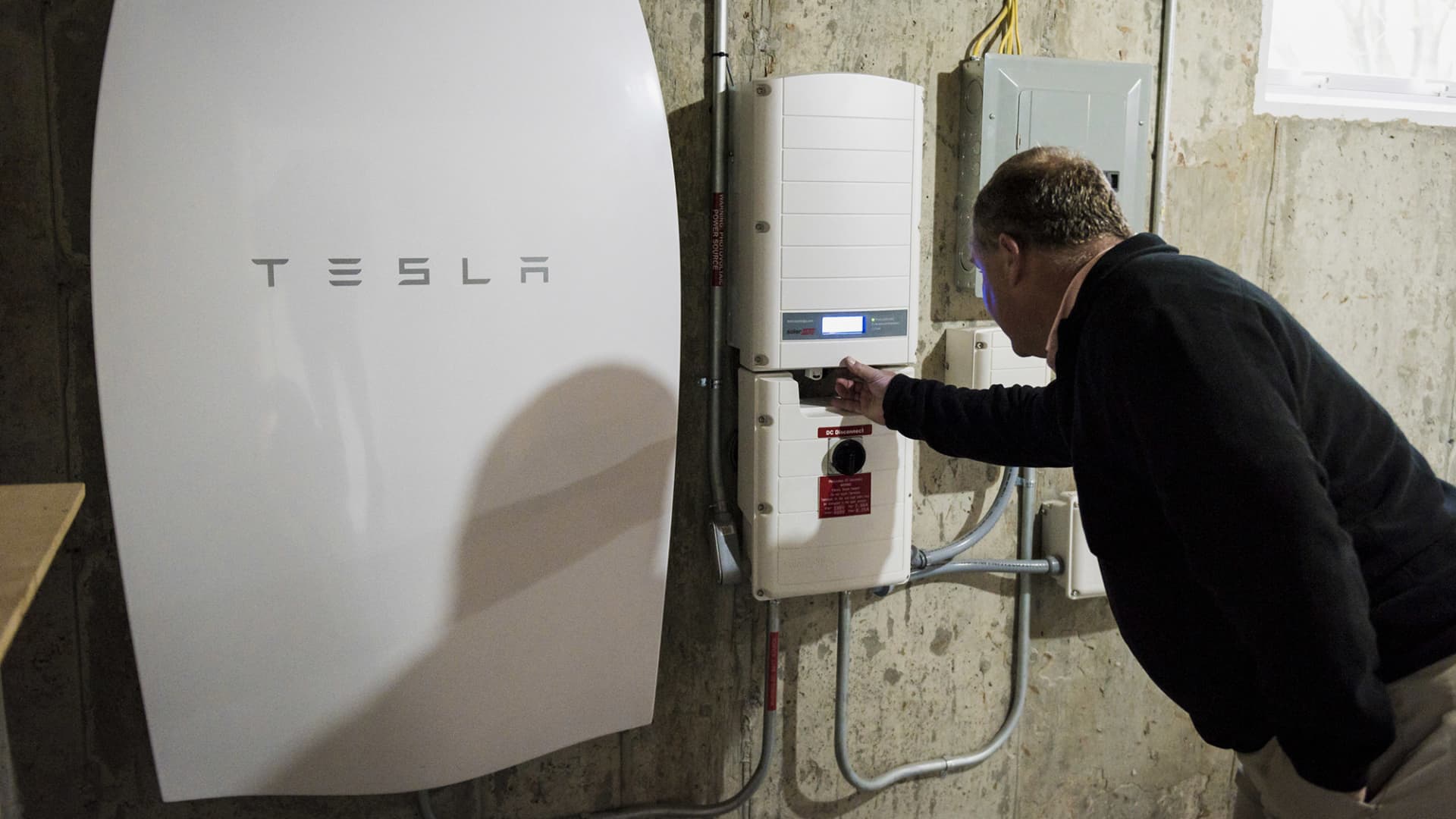


Source link

Scott Galloway on Why Smart Investors Stay Away from “Sexy” Read More »