How much money you actually need for a home down payment

How much money you actually need for a home down payment


nd3000 | iStock | Getty Images

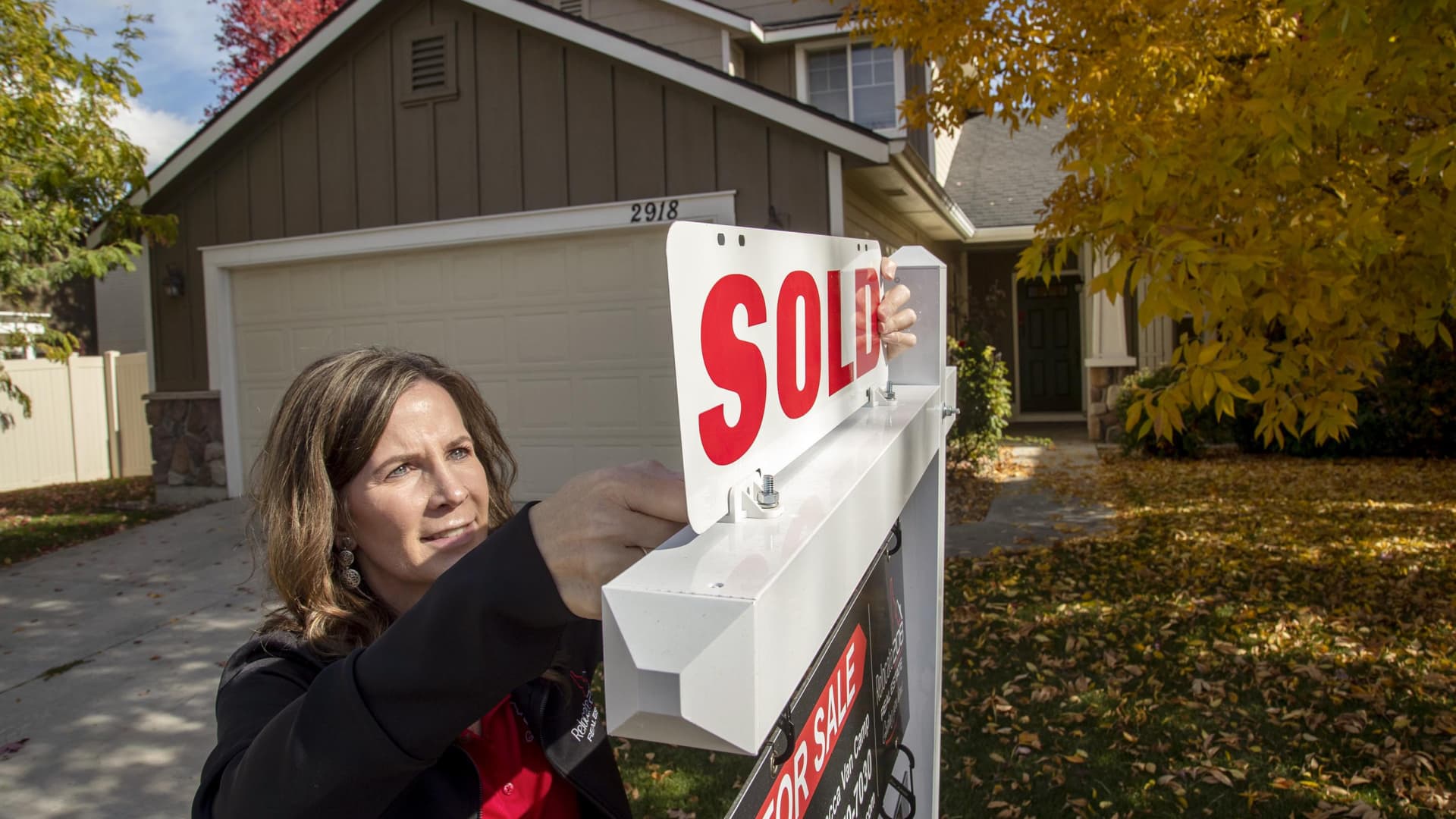
Despite signs of a cooling housing market, home prices are still relatively high, resulting in bigger down payments. 

Over the past year, average down payments in the country’s 50 biggest metros have grown by more than 35%, according to a LendingTree report, based on 30-year fixed-rate mortgage data from Jan. 1 through Oct. 10, 2022.

While high home prices and interest rates may push some buyers to the sidelines, those still in the market may have “deeper resources,” particularly if they’re downsizing, explained Keith Gumbinger, vice president of mortgage website HSH.

More for Personal Finance:
How to best position yourself to buy a house, according to financial advisors
Your last chance to secure 9.62% annual interest for Series I bonds is Oct. 28
Federal consumer watchdog is upping efforts to crack down on ‘junk fees’ at banks

Here are the top five metros with the largest down payments.

5 metros with the biggest down payments

How a bigger down payment lowers mortgage costs

With high prices, many buyers struggle to put down 20%

Despite softening demand, home prices are still “significantly higher than two years ago,” with many buyers struggling to put 10% or 20% down, said Melissa Cohn, regional vice president at William Raveis Mortgage.

The median home sales price was $454,900 during the third quarter of 2022, compared to $337,500 during the third quarter of 2020, according to Federal Reserve data.

Many buyers take advantage of lower down payment options, she said, such as 3% or 5% for conventional mortgages or 3.5% for Federal Housing Administration loans.

“With a smaller down payment, it’s more expensive every which way,” Cohn said. “But for many people, it’s the only way they can afford to get into their home.” 

While smaller down payments mean higher interest rates and mortgage insurance, home buyers may reduce these expenses in the future, she said. When interest rates drop, there may be a chance to refinance, and buyers may remove mortgage insurance once they reach 20% equity in the home, Cohn said.

Total mortgage demand sinks to lowest level since 1997


Source link

How much money you actually need for a home down payment Read More »

Cashing In On Overlooked Off-Market Deals & Overcoming Analysis Paralysis

Cashing In On Overlooked Off-Market Deals & Overcoming Analysis Paralysis


Your network can be your most powerful tool inside and outside of real estate. Today’s guest, Ryan John, started his real estate investing journey after seeing his friends succeed in the investing space—including his childhood friend, Ashley Kehr. Ryan has been in the real estate game for a year and a half and has closed on two off-market deals—a house hack and a duplex. 

As all rookies know, trying to find and close on your first deal can be a mix of emotions. From excitement to fear to anxiousness and fulfillment, you go through various emotions when trying something you’ve never done before. While Ryan wanted to get started right away, he experienced a lot of nervousness regarding his first deal—waking up at three in the morning, scared he was missing something. But, unlike many other investors, he didn’t allow this to deter him from accomplishing his goals.

Ryan prefers off-market deals because he doesn’t have to go through a realtor. An off-market deal requires more legwork but often comes with significantly better numbers. Becoming an investor has also given Ryan the freedom to make big life changes. Ryan went to his first real estate investor meetup and met investors with a wide range of experience. After attending, an incident at work prompted him to quit. Since he lives below his means and has cash-flowing rentals, he has the time and ability to breathe and explore his options before deciding his next steps.

Ashley:
This is Real Estate Rookie episode 229’er.

Ryan:
I preferred the method of not being an imposter syndrome, but just telling people, “Hey, I’m looking for property. I’ve had property in the past, just primary residents that I ended up selling. I didn’t know about house hacking or really major flips.” And then when I met the guy that I bought the duplex from, I just jumped right in at him. I figured I was nervous. I was waking up at 3:00 AM sweaty and like, “I’m going to screw it up,” because there’s something I had to have missed, right? And I just keep kind of researching and then realizing that once you get in it, you just learn so much.

Ashley:
My name is Ashley Kehr and I am here with my co-host, Tony Robinson.

Tony:
Welcome to the Real Estate Rookie Podcast where every week, twice a week, we bring you the inspiration, information and stories you need to hear to kickstart your investing journey. We oftentimes like to start the show with a quick shout out to folks in the rookie community who have left an honest rating and review for us on Apple or whatever podcast platform you’re listening to.
Today’s review comes from BraveSmith28. Brave Smith says, “This podcast has been constantly pushing me in my real estate investing career. Listening to this podcast has gotten me to think about different strategies. I’ve bought three single family houses since listening to this podcast. I’m about to do my first short term rental. I wouldn’t have thought about it without this and the other BiggerPockets Podcast. The tips and tricks are easy to follow with whatever strategy you use.”
BraveSmith28, congratulations to you on the success. We appreciate you giving us a shout out. And if you haven’t yet, please do leave us a five star rating and review on Apple Podcast, whatever platform it is you’re listening to.

Ashley:
Tony, what’s new? How’s California? I bet the weather’s great because it’s pouring rain here.

Tony:
It’s actually blistering hot today. There’s like a massive heat wave warning this weekend, supposed to get into the triple digits. But outside of that, not too bad. But actually before we hopped on, I was a little late hopping on this morning because we were negotiating with a seller for a motel in Utah. So we’re hopefully getting close to maybe getting a signed LOI on that property. We still have the Big Bear deal that we’re working on so there’s a high possibility we end up having two hotels under contract at the same time, which I guess isn’t a bad situation to be in. We just have to figure out which one makes the most sense. But we’re moving. It’s progress.

Ashley:
That’s exciting. That’s awesome. I knew you went to Utah a couple weeks ago, but I didn’t realize that was to look at a property, so that’s awesome.

Tony:
Yeah, it was super last minute. We’ve been going back and forth with the seller and then we got pretty close on terms to like, “Hey, the seller’s actually going to be at the property if you’re willing.” So I actually ended up driving up there. I was trying to fly but there were no direct flights and I would’ve had to have landed in some other part of Utah and still drive an hour and a half from the airport to the hotel. It was only a six hour drive from my house, I was like, “Ah, whatever. I’ll hop my car and I’ll drive.” So it was a little road trip up to Utah.

Ashley:
Nice.

Tony:
Yeah. What about you Ash? What’s new?

Ashley:
Not much. Finishing up our A-Frame, started to refinance on that to pull our money back out this week. So it’s always good to get money back. It’s exciting to wait for the appraisal to see what the appraisal says. Our attorney says we should be closing on our lake house in 10 days or so, so that’s awesome except for that lake season is coming to an end so we can’t really enjoy it, but-

Tony:
It’ll build the anticipation for next year.

Ashley:
Yeah, the downfalls of trying to close in New York state, it takes forever, so yeah. But we have a couple closings. Campground we have under contract, we have the signed LOI on it. But now that we’re actually putting the contract together with our attorneys, the seller’s trying to change some things.
One thing that he has all of a sudden decided that he wants is he wants 10 years of timber and mineral and oil rights to the property. So there is a lot of timber on this property that’s valuable. New York State also offers kind of a tax incentive. If you sign up for their 10 year forestry program, they will actually come in and slowly harvest the timber over 10 years. So it’s not just you’re going in, you’re killing the forest all at once, you do it throughout time. And that actually helps the forest grow because you’re getting rid of trees that need to be cut down. You’re opening up where it’s not so much coverage. I don’t know the technical terms of it or whatever.
So sunlight gets in and more trees can grow, something like that. So you get a big tax savings on your property taxes if you do this, where if we give him the timber rights, he could just go in the first year and slash all the trees and we don’t have those rights to get the tax credit anymore. So that’s something we went back and said no, we’re not even considering willing to budge on that especially with it being a campground too. We just don’t want him to be able to come in at any time and just start cutting down trees.

Tony:
It’s crazy how every market is so nuanced. If I were negotiating with the seller and they asked me for timber rights, I would have to figure out what that meant. I know minimal rights, but I’ve never heard of timber rights before so that’s interesting.

Ashley:
Yeah. You know what I was thinking about too the other day is you didn’t know what a well was for the water.

Tony:
Yeah.

Ashley:
Yeah. And it’s just because it’s not common in your area and Daryl is actually working on getting a new well or getting one rehabbed on one of the properties, I was thinking like, “We should actually do a video on this for…” And I was like, “Well, what would people care?” And I’m like, “Well, there’s actually probably other people that don’t know what a well is and kind of [inaudible 00:05:42]-

Tony:
I would love to see that.

Ashley:
… what goes into it.

Tony:
And if you can let me know… I’m still nervous. We have a property that’s own a well, we bought one last year in Tennessee. I’m just still so curious what happens when the water runs out. What am I going to do? But they keep saying that it’s not going to happen, so I don’t know. We’ll see.

Ashley:
You know what? That actually has happened on this property, is the well water is so low.

Tony:
No way.

Ashley:
That actually happened at my house, like my primary residence. When we built our house, we ended up just tapping into the well. There’s two other houses on our property and we just tapped into one of those wells. Last winter, the well actually ran off water because there was more people living in the other household and it just like we weren’t getting enough water to keep up with the water usage in both. So as soon as spring came, we actually put our own well in now.
But learning about the wells with this other property we have and Daryl kind of dealing with that is there’s not enough water in there to pump up to the one house that’s up on a hill, so we’re going to try and rehab it. The people think that there’s actually some kind of blockage in there. He said, “Yes, it’s very hard for a well to actually go completely dry, but there could be issues in it that it’s just more cost effective to actually put in a new well than to rehab this one.” So as of right now, we’re going to spend $2,000, we’re going to have them attempt to rehab it and see if that fits the issue. And then if not, then we’re going to go into doing a new well.

Tony:
We got to do a well episode. If for no reason other than my own interest and curiosity, we got to do an episode on well water.

Ashley:
Okay, well we’re going to have to have Daryl do that because he knows way more than me.

Tony:
Well, we’ll have all of five listeners for that episode.

Ashley:
Yeah. Well, maybe we’ll do well and septic together.

Tony:
There you go. There you go.

Ashley:
Well today anyways, we actually have a friend of mine as the guest on the episode and we’re doing it in person. So Ryan joined me at my house to record this podcast. His name is Ryan John. We are actually childhood friends, and just say we actually weren’t super close for probably since high school even, but I started riding a motorcycle and knew he rode a motorcycle. So last summer we rode motorcycles a couple times and we started talking about real estate investing, and here we are today where Ryan is now a real estate investor.

Tony:
Man, I’m super excited for this episode, not only because Ryan shares a tremendous amount of embarrassing memories about Ashley as a child, but he also has a fantastic story as a real estate investor. One of my favorite parts of this episode is where he talks about how he recently went to his first real estate meetup and how the very next day a big massive change occurred in his life as a result of that meetup. So make sure you guys listen towards the end because he shares kind of how that experience changed his life.

Ashley:
I thought you were going to say he talks about his first all-girls sleepover he went to [inaudible 00:08:41].

Tony:
That as well. It also changed his life. It probably just as equally changed his life.

Ashley:
Well Ryan, welcome to the Real Estate Rookie Podcast. Let’s start off with you telling everyone a little bit about yourself and how you got started in real estate.

Ryan:
Yeah, my name’s Ryan John. I’m let’s say a year and a half into the real estate game. I started by nagging Ashley with questions I could have answered off of Google and then she sent me some books and then I continued to dive from there.

Ashley:
So before we go any further, what does your portfolio look like today?

Ryan:
A whopping two units. I house hack a primary residence that I’m currently living in with my girlfriend. And then I have a duplex that originally was an in-law suite that I finished the conversion on that’s rented right now.

Ashley:
Well Ryan, we are very happy to have you on today and dive into your story. I know you said a whopping, sarcastically only, those units, but that is great and that’s part of the reason we wanted to have you on, is because it’s so fresh in your mind as to how you got started in real estate. So why don’t we kind of talk about why you even considered real estate investing. What made you reach out to me? What was the first thing?

Tony:
And Ryan, if we can, before you answer that, just also give us some backstory on how you know Ashley and how she was as a child and any other embarrassing stories you can share that we can use as leverage for future podcasts.

Ryan:
I had my first all girl sleepover in fifth grade with all her and her friends, so that was fun. Basically with the property that I got, it started off just asking people for help, like Ashley. And then I had other friends in the industry too so I was kind of always intrigued by it. And then to be honest, seeing her on the boat having fun, I know it’s not all fun all the time, but I was intrigued. I was like, “Okay, maybe the 9:00 to 5:00 isn’t for me,” so I just wanted to dive in and get dirty and start learning.

Ashley:
So once you started learning about it, how long until you actually did your first deal? You said you’re house hacking your primary residence. Did you start doing that right away or did you get your duplex first? What did that look like?

Ryan:
I moved into the primary first. I wasn’t house hacking it at the time. Probably a month or two ago I actually just started house hacking it with my girlfriend. And then the duplex, it was a year or so of just reading podcast, avoiding the shiny object, I was just like, “Oh maybe I’ll do this. Ooh wait, let’s do this. Oh wow, that sounds fun.” And then I believe it was the lapse thing where you narrow down what you want to pick and I did that. I figured small mal multi-family is going to bring a little bit more income than just a single family. I wanted to take a little bit more of a risk. So that’s when I decided to go that route.

Ashley:
Okay. So once you made that decision, how did you take action? There’s lots of people probably listening now that want to get into real estate. So what are some tips or advice you can give them so that they actually go out and get a deal?

Ryan:
I preferred the method of not being an imposter syndrome, but just telling people, “Hey, I’m looking for property. I’ve had property in the past, just primary residents that I ended up selling. I didn’t know about house hacking or really major flips.” So I just put it out there. And then through meeting a lot of people at my old job, the deal… I got denied on a lot of offers. I only put five or 10 in so not really a lot, and then just kept hammering down and meeting people. And then when I met the guy that I bought the duplex from, I just jumped right in at him. I figured I was nervous, I was waking up at 3:00 AM sweaty and like, “I’m going to screw it up,” because there’s something I had to have missed, right? And I just keep kind of researching and then realizing that once you get in it, you just learn so much.

Tony:
Ryan, I just want to follow up with that because I’m glad you mentioned that fear and waking up in the middle of the night. I think so many rookies that are listening have that same fear around getting started. At what point did you realize that you were ready to actually submit that first offer? Do you remember that moment? What switch went off in your mind to say, “Okay, today’s the day. Here’s the property I’m going to put this offer in”?

Ryan:
Well, it really started fast because basically I was at my old job and the guy walked in the building and talk to the owner of the business and he said, “Hey Russ,” the guy’s name was Russ, he’s like, “Can you sell my house for me?” And I was like, “Boom.”

Ashley:
That’s where the ears perk up.

Ryan:
Yeah, I barged right in the conversation. I’m like-

Tony:
Do you work at a real estate brokerage? Or why [inaudible 00:13:49]?

Ryan:
No, I used to be an insurance appraiser so I would go out basically when you screwed up and tell you how bad you screwed up when you crashed your car. I was able to meet a lot of people through that, which I’m glad about that. But basically, the guy, he said, “Yeah, it’s right in Boston.” I live in Colden, Glenwood and kind of in Ashley’s market too, so it’s right down the road, it was 15 minutes away. And he goes, “I’m going there now.” The driveway’s not plowed. I’m wearing sneakers, two feet of snow, I’m like, “Okay, I don’t care. Let’s plug through there.”
Walk through. I’m not a home inspector, I’m literally a rookie with all this. I just kind of used my sense of judgment. The market was hot and I thought the price was reasonable. He denied a few offers that were a little bit lower than what he was asking. So I just walked around for 30 minutes and shook his hand and then called everyone after and was like, “Can you look at this and make sure I didn’t pay too much or it’s going to fall over?” stuff like that. So I just kind of dove in with it.

Ashley:
Did you give him what he was asking for it? What did you pay for it?

Ryan:
Yes, this was before I read the Chris Voss negotiation book. I was a professional negotiator at my old job, but I was kind of so excited to get going. He turned down a lot of offers. I just gave him his asking price, it was 185,000. I shot at 175,000 and he just shook his head and I just figured, “Why go back and forth? He’s pretty set on his price. The market was fair.” Long story short, with some of that stuff, the appraiser came back higher than my bid.

Tony:
What was it about this property, Ryan, that like… Because you said you had been studying for a year, give or take, leading up to that point. What was different about this property, this opportunity as opposed to all the other properties you had seen before that moment?

Ryan:
I like off market stuff. My first home was off market. The primary one I’m living in now, that house hacking was off market. And so was this. I just like the thing of not having to go through a realtor and being in control of doing all that myself because I was a little bit familiar with it and had a lawyer. And then the main thing was the fact that I walked downstairs and it had everything to be a full apartment besides a stove and a gas line for a stove. It was just an in-law basically right there and it just needed that little extra. I don’t think… Maybe other people didn’t see that when they looked at it, but to me that kind of stood out.

Ashley:
Let’s go through that process of buying an off market property. So you’ve done that what? Three times now?

Ryan:
Yes.

Ashley:
Okay. So what does that look like? Can you kind of walk somebody through who’s maybe never bought a property before or only used an agent what that process looks like?

Ryan:
Yeah, basically the first one is going to be the sweaty syndrome a lot. You’re going to be all nervous and, “Oh, did I not fill out that form?” or something like that. But basically, I just called friends and family and just asked for a lawyer who specializes in doing real estate transactions, I did that. And then basically just be married to the bank for the next three months when they call and say, “Hey, I need this form. Hey, I need this.” Just a little bit more legwork that I think maybe would scare someone off. I mean, it is easier to do a realtor. I sold my house with a realtor. It was a breeze. But just a little bit more legwork when you don’t have a realtor.

Ashley:
What tips do you have for somebody who’s looking for off market deals besides just being in the perfect place in the perfect time when you hear somebody talking about it and eaves dropping? But what are some other ways that people can find off market deals? How did you find your other ones?

Ryan:
The old school drive for dollars sort of thing. At my old job, I did a lot of [inaudible 00:17:49] at the time as my boss used to call it. I just drove all around Western New York, I mean roads that I didn’t even know existed, literally stuff that was dirt road, not even on Google Maps yet probably. I didn’t really know about all this stuff yet, so I would kind of take pictures and then jot down every bad address that I saw.
But I recently just did one too. It was down the road. I sent a letter. I didn’t act fast enough. They emailed me back and they’re like, “Oh it’s already listed.” But just doing the homework that not a lot of people want to do. Maybe go to the town halls, kind of get familiar with the code enforcement, maybe trouble properties because I’m starting off and I just don’t have that big bank yet so that’s the way I choose to look at it.

Tony:
One follow up question and then I want to talk a little bit about the small multifamily piece, but you said driving for dollars. First, can you explain what that is for folks who aren’t familiar with that term? And then second, once you found properties that you liked, what was your process from there? What was the next step?

Ryan:
Yeah, basically I took the advice from your guys’ podcast too actually. But just looking for stuff that’s like overgrown, there’s not a lot of cars in the parking lot, maybe the roof lines bad, like it just looks like it’s just been left to die essentially. Obviously you want a turnkey, like get right in there and get rent, but there’s a lot of meat left on the bone normally if you can get the right price. And then this is, honestly, I want to get better at this because I’m still kind of struggling with this part, but is tracking down the owners. I know there’s a lot of tools online and stuff, but sometimes they’ve passed away or there’s no will and stuff like that.

Tony:
But say you do find that person, what do you do when you find that person?

Ryan:
So the recent letter, full transparency, I’ve done two letters at all because there’s market that a lot of the houses just sell really fast, so the drive for dollars might not work all the time. But my girlfriend has wonderful handwriting, I don’t. So I printed up a sheet with my information on the bottom typed because I didn’t want to blow smoke or anything like, “I’m new to the game but I wanted to be a little professional with everything.” And then just a nice handwritten short message just to show that I’m not kind of one of these computer generated lists that just send out thousands of things every day. So once it works, I’d love to come back on here and explain how well it went. But so far I’m striking out but that’s part of the game.

Ashley:
What’s her cut, her percentage if you end up getting a deal from one of her handwritten letters?

Tony:
That’s a great question.

Ryan:
I can’t get her on the pay. Well, I don’t like the word can’t right away, but right now I’m not set up to put her on the payroll. So basically, I took my tax return, I bought myself some gold and then I gave her my old gold bracelet to get her…

Ashley:
She gets the old gold, you get the new gold.

Ryan:
… and the asset. I wanted her to get the asset trading and buying commodities that are valuable instead of clothes and stuff. I said I wasn’t going to talk about her too much in this, but oops.

Ashley:
Like my Gold Mike, hot commodity.

Tony:
There you go.

Ryan:
Yes. See, I love the Gold Mike. I was like, “We can get along with this.”

Tony:
Ryan, I want to ask a little bit about the small multifamily piece. A lot of new investors when they first think of investing in real estate, they think single family house, long term tenant, buy a property, manage it, do your thing. You went the small multifamily route. What was it about that asset class that intrigued you more than going the traditional single family route?

Ryan:
Honestly, probably listening to the BiggerPockets stuff I heard a lot of people starting off because it’s safer in the single family, but I’ve also heard the returns were a little bit less so I was just kind of under the impression, “Well, if I get a duplex and let’s say one of the tenants is bad or I can’t book it, at least I have some cash coming in to cover the rent or the mortgage costs and everything like that.” So kind of to mitigate a little bit of the risk with it. It’s weird though, with mine, it’s a duplex but I only have one tenant so technically it is a single family. He has a large family, he ended up taking the whole unit himself

Tony:
Really?

Ryan:
Yeah, it’s kind of a weird thing. He was striking out. A local real estate agent reached out because he works at a local plant down here and they ship in a lot of workers from out of state. He was in an Airbnb for two months, he was bleeding out from that. So he was thrilled that there was an option for him to get in. Honestly, I’m pretty happy about that too because he seems like a great tenant and I’m not negotiating between noise complaints or anything like that being that it is a new duplex and everything like that.

Tony:
It’d be really weird if he was complaining about noise, you know?

Ryan:
It’s just like, “The kids out.” Kick the kids.”

Tony:
Like, “Dude, can you…”

Ashley:
“My kid’s in the lower unit,” right? But to touch on like that, how you said if one tenant isn’t paying rent, then you know have the other tenant. And it’s kind of like that security, at least there’s some income coming in from other units. You have more units under one roof, there’s less overhead per unit. And so if you had 10 in a complex, that was 10 units under one roof. Compared to 10 single family homes, there maybe cost differences there because they’re all under one roof. But you do have that side of tenant complaints then, people living wall to wall to each other that there will be disputes over different things that you have to be the one that they think is the mom in the situation and take care of it, which it’s not always the case. You’re adults, you could take care of yourself and figure it out.
But my biggest complaint about that is the tenants that they don’t even talk to their neighbor first. Sometimes that’s all it takes, is for them to say to the neighbor like, “Hey, just so you know, I can hear you screaming at night” or something like that in a way nicer way. But that was the thing I always did. We’ll have you talk to the other tenant first and talk to them about it and they would be like, “Well, no.” And that would always be the first step, is to take that from there.

Ryan:
I like that.

Ashley:
Yeah. But Daryl and I went to a property today too, which reminded me of the point that you made. The more units under one roof was, there was an eviction there, the tenant hasn’t paid since June and so the eviction’s been done and it’s time to get rid of her content. So we went in. I mean, there’s just stuff everywhere and just the garbage removal’s going to be $1,100. We have to repaint, we have to put new flooring in the two bedrooms, just all these costs and we’re just thinking like, “Wow, this was a single family home. This would’ve taken away your whole cash flow for the year. Maybe even more and you would’ve broke even.” But since there’s other units on this, then it’s not going to hurt the property as much, this one unit out of 40 not making any income this year. I mean, it’s still obviously sucks, but that idea of having more units under one roof.

Tony:
That’s it. That’s such a good point, Ashley. I think the only thing I would add to that is that for those of you that are listening, what’s most important is that you just get started. If you buy a single family, you buy a small multifamily, you buy a mobile home park, you buy an Airbnb, whatever it is, I think you just get started.
This is what I like about your story, Ryan, is that you educated yourself, but as soon as you saw that opportunity, you’re like, “I’m not letting this pass me by. Maybe I’m ready, maybe I’m not, but I’m going to figure it out.” And it was that one decision that’s led you to the success you’ve had so far. So for all of you that are listening, try not to get too caught up on which path, which model, which asset, which this, which that. Just make the decision and get started because eventually you’ll learn the lessons you need to learn to make it a successful thing for you.

Ashley:
There’s so many pros and cons either way you go. I mean, it’s like not one way, it’s multifamily, lots of units is the perfect way. It’s not. There’s tons of advantages to having single family too.

Tony:
Even me, right? I’ve made a name for myself in the Airbnb space. And even so I’m like, “Man, should I be buying self storage right now?” I have those questions with myself all the time. So it’s like whatever asset class you’re in, the grass always I think feels greener or seems greener on the other side.

Ashley:
Well Ryan, do you want to talk us through the numbers on one of your deals? You want to go through the duplex?

Ryan:
Yeah, I’ll go through the duplex.

Ashley:
Okay, I’m just going to rapid fire questions at you and then you can tell us more of the story of once you closed on it, what has kind of happened. So what was the purchase price?

Ryan:
Purchase price, like I said earlier, 185,000.

Ashley:
Okay. And how did you finance this?

Ryan:
Just a traditional finance through a local Nickel City Funding in Buffalo.

Ashley:
So like a 30-year fixed rate?

Ryan:
30-year fixed. Yep.

Ashley:
What was your interest rate on that?

Ryan:
My interest rate was very nice. It’s 3… That’s another reason why-

Ashley:
Okay, you already said three, and yeah we’re all like, “Yep, that’s good.”

Ryan:
We’ll go quick to my primary residence, that was 2.62 which wow, I love that.

Tony:
Wow.

Ashley:
Wow.

Ryan:
The iron was hot, I wanted to strike again. I got 3.36 something like that. So yeah-

Ashley:
Yeah, that’s awesome.

Ryan:
… just that alone was huge for me to get the loan.

Ashley:
Okay. And then would you do just 20% down on the property?

Ryan:
I was able to do a 15% just because I got referred through another client that they work with.

Ashley:
Oh cool.

Ryan:
They gave me a little bit of a break, which was nice.

Ashley:
Yeah, that’s awesome. I didn’t even realize that places would do that. That’s cool. So definitely something to ask if a bank will do that and then you go and find one of their clients and get referred and get a discount on your down payment. Okay, so you purchased it from 185,000. How much did you put into the rehab of the property?

Ryan:
This is a true rookie statement because literally I have rough accounting done. I need to sit down and just QuickBooks it out. I’m very good with the receipts because I had to do that with my old job with expenses and everything. So I’m going to ballpark, it was probably 10,000 but I want to say closer to 15 grand. It was just adding appliances, flooring. I just wanted to make it nice to bring in a better tenant.

Ashley:
Did you do a lot of the work yourself or did you hire it out?

Ryan:
Yeah, and I recommend… Halfway through I learned to get off my wallet and just pay professionals because I would say I paid my flooring guy like 700 bucks and next thing you know I’m demoing the basement, drywall and doing all that. I come up and upstairs is done, where before I was banging my head against the wall trying to do everything, work till midnight. I think it’s good to DIY because you learn it, but you got to start treating it like a business even though it’s new, you got to learn to outsource, which is hard for me.

Ashley:
I think too, just the time, at least for me, I know how to install vinyl plank flooring, it’s just going to take me two days longer than paying the professional. So what is my time valued at? Am I actually saving money by doing it myself or is it costing me more because now for three days I’m installing flooring instead of paying a contractor who could get it done in one day and then I’m actually working my regular business in what I do in those two other days and making even more money because I didn’t have to be stuck installing flooring. So looking at that opportunity cost as to what your time value is too I think makes a big difference if you should pay a contractor or not to.

Tony:
Yeah. Can I add just one thing to that? I love what you said. You said get, “Off of my wallet.” I’ve never heard a phrase that way, but it’s such a smart way to do it. Obviously what you said actually is so true. It’s like people want to hold on to the $5 not realizing that they’re costing themselves $10 by doing it themselves. But one caveat I will say is that a lot of times when you’re starting, you maybe can’t afford to hire it out. So when you a rookie, maybe sometimes you do have to realize that, “Okay cool, I am going to invest a lot of time into this, but it’s because I don’t have the funds or the resources to hire it out to somebody else.” So for those of you that are listening, just know if you have the money, definitely spend the money. If you don’t have the money, don’t feel bad about it. You’ll figure it out.

Ryan:
I would say get creative too because I mean every state’s a little bit different with contractor rates and stuff, but I would get ahold of a friend that used to work doing trenches or drainage or general contracting and you say, “Hey, can you come over here? I’ll give you, I don’t know, 25, 30 bucks cash” and they’re like, “Okay cool. Yeah.” I mean it’s going to cost you 75 to 100 to get a licensed contractor, but if you know someone in the game and experience and not that you’re being a boss, but be a good leader/boss, don’t be brutal and beating up your people with work they’re helping you out. So just kind of incentivize them because then I’ve noticed the ones I pay the most, they’ll just come back and help me. They’ll come over for a couple hours and they don’t expect anything. That’s kind of nice. It goes a long way.

Ashley:
I think too when you’re starting out too, it’s great to barter. So if you have a friend that is really good at something, maybe exchange services with them for them to help you too with something. Daryl, he’s had bartered for stuff before and it’s been really great for me. Huge advantage for me. I don’t have to do anything or pay anyone.

Tony:
Wait, can I tell you guys about a time I failed at negotiating? It was the funniest thing. For my 30th birthday, we had a 2000s throwback party and I wanted to dress like I would dress in the early 2000s, so I wanted to get a really big old school basketball jersey. They only sell those at the swap meet by my house, right? So I went to the swap meet. Swap meet’s all these different vendors kind of doing their thing. You can usually like, “$5?””No.””$10?” And you guys go back and forth. So I find this jersey, it’s like a replica of this Michael Jordan jersey and I see it hanging up, I’m like, “Okay cool, this is the one I want.” So I go up to the guy, I’m asking him, I was like, “Hey, this is a nice jersey.” He’s like, “Yeah, it’s a great jersey.” And I was like, “All right, cool man.” I was like, “Look, I really want to buy it but I’ve only got so much money.” I was like, “I’ll give you 40 bucks for it.” He was like, he turned the jersey around. And on the backside of the jersey there was a price tag and it said 40 bucks. So I’ve completely failed at negotiating. Because what can I do at that point? Can I go back and say, “I meant to say 30.” So anyway. Double check the price tags before you start negotiating was the point of that story.

Ashley:
I think another way too to save money with contractors is also if you continue using them. So today, even when we got the estimate from the junk removal company, this is only our second time using them and right off the bat, we didn’t even have to ask, he said, “Usually this job I would say 1,300, but since you guys are a repeat customer and you’ve talked about using us for other work, we’re going to do it for 1,100.” And yeah it can be blown smoke or whatever, but we do appreciate that for sure. And it still was. Our other quote we got was $3,000 so no matter what, we were receiving tons of money going with them and we’ve used them before and they were great. So I think too using those same contractors and sticking with them I think can be super beneficial. If they do do a good job and they do give you good rates, keep using them.

Tony:
That’s a great point, Ashley. Honestly, you can even leverage that before you’ve done work with them. If you can say, “Hey, I’m a real estate investor. I plan to buy X number of houses this year. Every time I buy a house I’m going to hire you to do my trash haul,” that by itself can kind of help give you some leverage to get a discount. So that’s a fantastic point.

Ashley:
And giving the contractor out for referrals. I think a lot of people like to hoard their contractors because they don’t want them to get too busy. But even Ryan has sent me your electrician that you use and other people’s referred me to them and I’m sure they appreciate it as much as I appreciate it. So next time Ryan needs a referral, I’m going to go through and see who I can connect him with. And I think having that and the contractors knowing, “Oh, Ryan has been referring me, I’ve been getting tons of work to him. I want to give him a deal too because of that.”

Tony:
Can I ask one follow up question, Ashley? Are there certain people who you work with that you won’t refer out?

Ashley:
I would say yeah, there’s one person right now that I won’t because I want to really use him for one project and I know that he’s super busy already, but I think everybody else I would. Yeah.

Tony:
Yeah, same. I have our main guy who runs all of our rehabs in JT and I will never give his name out to anybody. But our subs, our electrician, I’ll refer him out. Our countertop guy, I’ll refer him out. Our garage door guy. But our main dude, I’m taking that name to the grave. No one’s going to know who he is.

Ryan:
I got a friend like that too. He was like, “You can call him, but wait six months.”

Tony:
Yeah, that’s how it goes.

Ashley:
Okay. So now that the rehab is done, what is the property renting out for?

Ryan:
I’m going to be a little long winded with this because it is a single family home with an in-law suite, so it would’ve cost a lot of money to get separate meters. So essentially it’s two units. I had 200 per month for utilities. So 400 since he’s taken the whole thing. But 2,400 and then the 400 is included in that. Honestly with our market it’s a little bit high, but the more I talk to people, people are running sides of a duplex so they don’t even have a whole backyard, a whole house themselves, shed, deck, there’s a lot of amenities at this property. They’re 1,900 to 2,200. So I’m right in line with it. I think a good lesson is I bit the bullet and ate the first month’s mortgage because I was looking for a good tenant. I think an extra 100 to $200 isn’t nothing if you have a good tenant and you don’t have issues. I think that’s goes a super long way.

Ashley:
So 2,400 is what you’re getting in total?

Ryan:
Yeah.

Ashley:
Okay. So you say you account 400 to that in utilities, which especially when winter comes, is it gas for heat?

Ryan:
Yeah.

Ashley:
Yeah, so you’ll definitely need [inaudible 00:36:40].

Ryan:
And there is two central layers, you know?

Ashley:
Yeah, so running AC. Okay, yeah, great point. Okay, so what does your cash flow end up being after you pay the utilities and you pay your mortgage payment?

Ryan:
It spreadsheet it out at 700. I’m not taking this money or running to the bank and smiling and laughing, but last month the guy… Actually, when he moved in the, he was helping me seal up all the windows. He go, “Oh this window’s not sealed. If I’m running the AC…” And I’m over here like, “Yeah, it’s like this guy gets it. He’s not going to be just burning stuff up on me.” So I appreciated that and I was hoping it was going to go smooth. And then last month it was 1,017. I mean, well above what I projected, but like I said, I’m not too high on that knowing that the winner is coming and he’s from Texas.

Ashley:
Okay. Ryan, nobody cares. That is amazing, okay? Your first investment property outside of your primary, a thousand dollars cash flow, even $700 cash flow. How much money did you end up putting into it? The 10,000 rehab. And how much was your down payment on it?

Ryan:
There was some I gifted or took a loan out from a family member, but I think all in right now I’m at 32,000 we’ll say.

Tony:
Yeah, I just did the math. That’s a 27% cash-on-cash return.

Ashley:
Tony, I was going to ask you to calculate it and I was so happy you read my mind.

Tony:
Yeah, that’s a 27% cash-on-cash return.

Ashley:
Good. That’s awesome.

Tony:
But dude, that’s amazing.

Ashley:
Yeah.

Ryan:
This is why I want to do my accounting so I can be like, “Oh okay, it’s going okay. Good.” I’m having the numbers in front of me, but…

Ashley:
Didn’t you know we do deal analysis live to let you know the results of [inaudible 00:38:25]? Well that is super cool, Ryan. That’s awesome. Congratulations on that first find. So what’s next for you now? What are you looking for next?

Ryan:
As much as I would love thousand dollars returns each month, I’m looking at just doing more duplexes and conservative even if it is a couple hundred dollars. I know all the deals aren’t going to be a home run deal. But even last night, I looked at, there’s a ski resort by us and there’s a little mobile home. It’s built in ’76. I started learning you can’t do a traditional mortgage on anything older than ’87. But I figured, “Hey, let’s look at it and all that.” But as I’m looking at it, I’m like, “Is this really going to be in line for what I want to do?” Just because there’s a deal out there, I don’t want to jump on it, because if it doesn’t line up with what I’m trying to do, then I’m jumping around doing too much and I’d rather master, let’s say, one asset class and then move away from there.
I mean, I wouldn’t mind getting a campsite with her. We used to camp all the time. I got it all the time in the world to manage something like that now.

Tony:
Can I ask, Ryan? You say you have all the time in the world, what does that mean?

Ryan:
I went to my first ever real estate meetup a month ago. Ashley sent me the link for the local stuff.I just had a really good time, hit it off with everyone. There’s people with no units and then there’s 5,000 units there, so you get a taste of everything. I was talking to a local agent and I’m like, “Yeah, I’m kind of an investor.” And he’s like, “No. No, you are an investor. You tell yourself you’re an investor.” I’m like, “Okay. Yeah. Yeah.” And it helped my self esteem all that. And then the next day I go into work and we had a disagreement and we parted ways.
I’ve been listening to the Quitter Podcast of the BiggerPockets. I was planning on doing that three to five years, but hey, my hand was pushed a little bit sooner. So I’m just trying to take advantage of the time and not feel forced to jump back into the traditional job market.

Ashley:
Well, I think Ryan too is we even talked about this a couple months ago, I think it was, where you’re like, “I really don’t have that much living expenses.” You’ve always lived way below your means. You never made a huge income at this job anyways and you’ve bought a house. You’ve never had a car payment, right? You always had your cars paid off. I think that you had that foundation that you set, your personal finances up like that has put you in a great situation so that when you did leave your job it was okay. You weren’t panicked to go, and you have your duplex money now.
I think that is such a big thing that even if you’re not ready to invest now, start getting your personal finances in order so that when you’re ready to leave your job, you do have that option and you have some time to breathe and figure it out, “Okay, here’s what I’m going to do now.” I think you’ve gotten a lot of people having you do different stuff anyways during this time. I think just the time you’ve been able to put into your investing and the research and everything has been kind of awesome.

Ryan:
That’s an awesome point because that’s why I like hanging out with Ashley and other people in the business because they have just such a cool mindset where if I talk to friends after I left the job, they’re like, “Aren’t you freaking out?” I’m like, “I’m never been this relieved In eight years.” I realized I wasn’t doing stuff that “aligned with me” and what I enjoy. I’m glad you made the point about low expenses because it was always hard on myself, like, “Man, I wish I had 50 grand cash reserve to just do whatever.” But when I went to finance the duplex actually, they’re like, “What did you drive here?””My vehicle. Why?” They’re like, “You’ve never had a loan on a vehicle.” I’m like, “Yeah, I don’t know. I’m like a country boy. I don’t know. I just buy beater trucks and they last me five years and cost me two grand.” So you start doing the math and then you realize how there is a lot of people with a lot more money, but kind of like Ashley saying, if you’re just rolling a bigger ball and you’re buying flashy stuff and you’re buying liabilities, you’re not going to get to the goal you want to be at. You can just, I don’t want to say struggle and don’t have pleasure in your life, but just realize that you might not need all the things you think you need. It might be more of a want or trying to impress somebody. Just own what you can own to survive and save for the cash assets I think is smart.

Tony:
Ryan, can I ask next, so now that you have no day job, what’s your plan here? Are you thinking about entering back into the workforce? Is this more of like a sabbatical or are you planning to go full force into real estate and never go back to the 9:00 to 5:00?

Ryan:
Well, since I… I want to be clear with all the rookies, because I’m a rookie too, this is not passive, doing the duplex stuff obviously, unless you were to let’s say have a property manager handle all that stuff. So in the theme of being passive, I’ll say this now because I know Ashley’s too busy, so she’s not going to snipe this idea, but my friend, I actually looked at these a couple years ago, but when you go to a wedding event and they have those luxury toilet rentals, I just went to my friend’s wedding and he actually told me a year ago, he goes, “If you get in this business, I would rent it from you.”
So I go to his wedding and get slapped in the face with, “Oh there it is, there’s a trailer. It could have been mine.” So I’m actually working right now to get a little bit of private money. It’s in the theme of real estate because it is a rental entity and I look at it as the cash flow is equivalent in a weekend to what a month of rent is. I like the pressure of I could go work for someone. We all know friends who we could probably do side work or cash or sell off some toys or something, but I like the pressure that kind of motivates me to try a new business and make myself a little uncomfortable again.

Ashley:
Ryan’s known me a long time, but obviously not long enough because he made the mistake of posting on Instagram in a story of where he was getting a quote on these toilet trailers from and I already went in, got my quote, and it should be delivered any minute in my driveway.

Ryan:
Yeah, she’s going to rub it in and deliver this bad boy and I’m going to sink into my chair.

Ashley:
But I think I shared with you too Codie Sanchez on Instagram and she has YouTube too.

Tony:
Oh, yeah. She’s cool.

Ashley:
Talking about boring businesses and you can be a real estate investor, but also investing in businesses too just to diversify and create some income and how to make them as passive as possible too. So she’s really awesome to follow if you guys are interested in doing something like the toilet travel trailers and things like that.

Tony:
Yeah, I mean just one thing to add on to that, not having that steady paycheck from a job is definitely a scary thing because as a society we are so heavily programmed to think that that’s the one and only way to make a living for yourself. And even if you’ve been setting real estate investing and even if you’ve been deep in this world of entrepreneurship as a real estate investor, it’s still scary when that moment actually happens because you’re like, “Oh it’s here. Oh my god, it’s happening,” right? And it’s scary. But I can tell you, my business had a tremendous amount of growth the day that I stepped away from my day job because it’s like you said, there’s this pressure to make sure that you’re able to provide for yourself and provide for your family.
When you have a day job, you know that check is coming every two weeks. But when you don’t have that, the check is only coming if you do the work and it does kind of motivate you in a way that this never happened before. I think that’s why when people take that leap, they see this hockey stick kind of growth because everything’s on your shoulders now. So I’m glad you recognize that and I’m glad that it’s motivating you to take that action as well.

Ryan:
Yes, and I’m being hesitant too because I’ve had opportunities like you kind of just said of getting back into the workforce and people trying to transfer businesses. And it’s so funny, it’s like people want to do that but then they almost just want the worker be, because the minute you ask, “Hey, what would the buyout be or what is your monthly payment that you would like?” because I’m trying to look at it like she looks at stuff, business stuff, I don’t want to have to be in the field doing everything. I would love to be able to hire it out. You can employ people, give some the freedom and all that. They just keep a lot of older mentality or something like business folks think you just got to do it all yourself and they think, “Oh, if something’s ‘easier,’ it’s not going to last and it’s not real.” I’m all good with hard work. I think you should work hard and smart, but not just hard.

Ashley:
It’s kind of like Robert Kiyosaki how he has the four quadrants. The first one is you’re the employee, you work the 9:00 to 5:00 job, you have a boss. And then it’s also the business owner, and it’s where basically you own the job. Like, yes, so I think of, I always think of a chiropractor for example. You own your chiropractor business, but you’re not making money unless you’re there cracking backs. So you have to work every single day to make money. You take off work, you are not there.
And even my dad, he is a mechanic and he owned a mechanic shop forever. It’s always been really hard for him to take off work because he’s the one that does everything, runs everything. He has a few employees, but he never had that person that could really take care of things for a long time because he’s always put himself as… He’s the reason people come to his shop because they want him to work on their vehicle, not other people. So I think kind of having the difference between that. And then there’s becoming the investor where you are just investing in the businesses and it becomes a lot more passive. Tony, what’s a fourth one? Which one am I missing?

Tony:
I think it’s employee, self-employed, business owner, investor.

Ashley:
Yeah, so the self-employed one would be the one where you are the chiropractor example. Yeah.

Tony:
Right. Right. Awesome. Well thank you for sharing that, Ryan. I appreciate the trans transparency, man. It’s always a scary moment, but being able to take that leap, it’s like the matrix, right? It’s taking that red pill and you see this whole new life that you didn’t even realize existed before.

Ryan:
[inaudible 00:49:29].

Tony:
There you go.

Ashley:
I feel like it would be impossible for me to go back to a job. I would have to find a sugar daddy or something. I don’t think I could dust in my mind.

Tony:
I would also look for a sugar daddy if I had to go back to, so I’d be right there with you.

Ashley:
Yeah. Ryan, we’re going to take it to our Rookie Request Line now. This is where anyone can call in and leave us a voicemail at 1-8885-ROOKIE and we may choose your question to be played for our guests to answer. So Ryan, here’s today’s question.

Dom:
Hi, my name’s Dom. I’m new to this podcast. I’m a student college. Right now I have just about $20,000 saved up in my account. What would your advice be to me to get started in real estate and what books to read and what other things I could do to prepare if I want to get into it?

Ryan:
I would read… For the book thing that’s easy for me to answer, is I got The Richest Man in Babylon in my duffle bag over here, and Relentless from Tim Grover. Those are just really good, like going back to what Tony said, is like we’re so ingrained that the only way you make money is trading your labor for time. The more research you do on success, the most successful wealthiest people trade their money for money, like let the money work for them.
And then in regards to the 20 grand, I mean I guess I don’t want to dodge the answer, but I guess it would depend on what market you’re in. I mean, they always say you can go partner with someone too, which I think is a great thing. Me personally, in my first one I love doing it single, by myself, just because you got to take on all that responsibility. You learn a lot more. I feel like on a partnership you could maybe push some of the pressure on someone else and there could be issues. But honestly with the 20 grand, I’m assuming you’re working and you’re not a bum like moi, you could get financed really easy on that luxury restroom rental too. And that might be a way to learn how to do the passive sort of income. It’s going to take a couple hours of your weekend to get going on that.
I mean, obviously you want to buy a house right away, but I have a friend who’s in a similar position where he renovates vans and does that and he’s like, “Maybe I should keep doing that until I get some cash going and then buy one.” And I’m like, “Dude, you’re renovating these vans, they look awesome. You’re doing interior design. The house is the same thing, it’s just on a bigger scale. So you’re building up experience right there.”

Ashley:
Yeah, that’s so true. I think a lot of people have a skill set they don’t realize is a huge advantage that other people don’t have. That if they got started, they might have it a little easier because they have the skill that they can use and apply to buying their first investment property. I think asking the $20,000, people get too hung up on finding the perfect, the best way, the biggest return on that first investment. Don’t get hung up on that. Look at all the different scenarios you can do with that money. First of all, congratulations, you have $20,000 saved up. You’re way ahead of the average American I would say with that money ready to invest.

Tony:
Especially in college, right?

Ashley:
Yeah.

Ryan:
Yeah.

Tony:
I was negative in college.

Ashley:
I think that just look at the different ways you can get started and pick one, okay? Run the numbers. Look at the property the way you invest it. If you put a $20,000 down payment and maybe you buy two houses and do a $10,000 down payment on each and they’re just smaller houses, if you partner with someone in five years, what are you going to end up with? You don’t have to make the perfect investment, you don’t have to have the best return on your money because once you get started, you’re going to figure out so many other ways to keep buying properties and keep going because you become addicted.

Ryan:
Momentum is a real thing.

Ashley:
Mm-hmm. Yeah. There you go.

Tony:
Fantastic advice. All right. So Ryan, I want to take us to our next section, which is our Rookie Exam. So these are the three most important questions that you’ll ever be asked in your life. So are you ready for the exam?

Ryan:
Yes, my deodorant stopped working an hour ago.

Tony:
All right. So question number one, what’s one actionable thing rookie should do after listening to your episode?

Ryan:
Well, I’m assuming you’re already reading, but it’s hilarious that you brought that up because me and her just chatted the other day and just reading even if’s 10 pages a day, just enamor yourself in the mindset of doing real estate business. It doesn’t even have to be a real estate book, right? Just something that you’re learning constantly every day. And then let’s say you were like me and you were reading and going down the rabbit hole of everything and talking yourself out of it and talking yourself into it and all that, and on the fence of just going in on it, even if you know an Ashley in your neighborhood or someone like me just starting and they need help, I don’t know, framing up a duck something, just trying to get used to the terminology and just dealing with people and the tenants and stuff like that because that’s just inevitable when you’re on the job site and picking people’s brains for information.

Ashley:
I would just want to add in too because I know people are going to ask Ryan this question, is like, “How do you find somebody like Ashley to talk with you?” or whatever? First of all, it’s taking me out to eat. So free food always works. But he will bring a piece of paper like a notepad and he will have all of his questions ready to go and he will take notes. I feel like sometimes I talk to people and they just ask very generic questions. And Ryan even said to me the other day, he came to my son’s football practice and sat with me for two hours-

Ryan:
Whatever it takes.

Ashley:
… and kept me occupied a while and just we talked real estate the whole time. It was great, but he was willing to come and just sit there with me. And it’s the same thing, he had his questions ready and he is like, “I remember you saying before not to ask generic questions. It’s super specific so that you can actually help me through my situation.” And I thought that was awesome that he is actually listened to things that I’ve said and that he comes prepared. He has his questions ready and then he takes notes too. I always think that people that do take notes, it shows that you are generally interested and you really want to take action on what that person is saying instead of someone just like, “Oh yeah, cool. Okay” and then listening. How can you actually remember all of that? When I go to a restaurant and they don’t write down my order, I have severe anxiety that they’re going to mess it up.

Tony:
Hey, Doug. Hey, Doug. Like, “Doug, if you don’t just write this down like every other server in this restaurant…”

Ashley:
I know. So yeah, I think having great questions prepared, asking detailed questions and then taking notes I think is… And that Ryan’s obviously taking action too

Ryan:
I don’t want to toot your guys’ horn too much, but the more I immerse myself in this stuff is I realize my time is very valuable. And I can only imagine, I don’t have kids, you guys have kids and stuff. Your time is valuable and I can understand the frustration with being in a position of having the knowledge and then being asked like Ashley said of generic stuff, like you can go on Google. Because that’s what I started with her. I was bugging her and then I’m like, “Wait, I got to just take some action.” And then once I do it and trip over myself and then be like, “Hey, how do I fix this or what about this?” And it kind of helps add value to each other because I don’t want to leech on her, that’s why I’m offering her and Daryl some help on their property. Anything I can do.

Ashley:
Yeah. He came out to one of our properties and worked for a day with Daryl. That was awesome that he did that.

Ryan:
Not a lot of hardwork. I was handing tools and stuff. Daryl’s smirking over here but…

Ashley:
Okay, so our next question is, what apps, tool or software do you use in your business right now?

Ryan:
Boom, I was waiting for this. I got a good old Rent Ready from her and then I’m sure there’s probably promo codes still active for all that. So if you guys want my referral because I don’t need her to send you the referral, I could use that hundred too. No. But no, it’s very convenient. And being me that I’m scatterbrained and stuff, that’s why I do jot down notes when I do ask questions with everyone because I think it’s just a society thing. Our brains are so overwhelmed with information, it’s hard to keep all that together.
So I think it’s good to be organized. It’s on a spreadsheet. Everything’s right at the app portal and it just helps organize a tenant and yourself, because you’re running a business so you tell the tenant, “Hey, this is how the business operates.” A lot of people are like, “Oh I used to just give cash or run a check over.” Well what if you’re on vacation going back to the job thing? What if you’re out somewhere and it is the end of the month and you can’t get your rent checked because you’re on vacation? Something trivial like that. And then it helps with accounting, which I’m not good at. So that’ll be all organized and just make it a little easier at the end of the year I would say.

Tony:
Awesome. So last question. Where do you plan on being in five years?

Ryan:
Five years I originally thought, okay, when I first bought my duplex, I’m like, “Oh man, I get five of these?” And I do the math, I’m like, “That’s more than I made working.” But the more I thought about it, my friend said, “Hey, are you going to buy one next year?” I’m like, “I want to buy one this year. I don’t want to wait that long.” But as the more I thought I want bigger multi-units because there’s less grass, I mean our environment out here is we have all four seasons and it can be horrible. So there’s just a lot of expenses involved with like say you had five properties, that’s a lot of grass, a lot of driveways. So my goal would be to buy in the 10 to 15 unit range because I just don’t want to bite off too much right off the bat, but I just like the versatility of having that much income and value add opportunities and stuff like that.

Tony:
I love that, man. So moving into our last segment here, this is the Rookie Rockstar, and super excited for this one because it’s a great story. Today’s Rookie Rockstar, it’s Patrick Eldridge. Patrick says, “My wife and I are no longer employees as of today. Our real estate journey started just under two years ago. After working so incredibly hard we were able to acquire a whopping 32 doors following the BRRRR method.” So Patrick, but congratulations to both you and your wife and welcome to the Matrix.

Ryan:
Yes, call me.

Ashley:
Did you just watch The Matrix recently so [inaudible 01:00:44] couple times to reference it?

Tony:
I didn’t. I just feel like putting your job and doing the thing. I don’t know.

Ryan:
I respect it.

Ashley:
You know what, Tony? You’ve been on with this podcast for what, two years? I think this is the first time you’ve ever quoted movies. You’re trying to make up for never watching [inaudible 01:01:01].

Tony:
For never watching it.

Ashley:
Well Ryan, can you tell everyone where they can reach out to you and find out some more information about you?

Ryan:
Yeah, I’m not going to give you my other personal page because I’m kind of a crazy man on that. But my real estate page is BND Rentals. Boy, Nancy, David Rentals. I’m on there a lot because I am a professional bum. So if you have questions or a deal or help, I mean even if it’s something I can’t personally do, like Ashley said, maybe we’ll know somebody. I just love reaching out and following just the like-minded people so we can just get to the path we want to go on.

Ashley:
Awesome. Well thank you so much for joining us.

Ryan:
Thank you guys.

Ashley:
Ryan’s computer conveniently wasn’t working during his audio check yesterday, so he had to come over and do it in person.

Ryan:
I wanted to check out this massive empire, this Real Estate Empire in person.

Ashley:
Well thanks so much for coming over and dealing with all our tech set up and everything. So thanks again. I’m Ashley, @wealthfromrentals, and he is Tony, @TonyJRobinson on Instagram. We’ll be back on Saturday with a Rookie Reply.


Interested in learning more about today’s sponsors or becoming a BiggerPockets partner yourself? Check out our sponsor page!

Note By BiggerPockets: These are opinions written by the author and do not necessarily represent the opinions of BiggerPockets.


Source link

Cashing In On Overlooked Off-Market Deals & Overcoming Analysis Paralysis Read More »

Home prices cooled at a record pace in August, S&P Case-Shiller says


Dillman: Rising interest rates are giving way to a faster cooling of home price appreciation

Home prices are still higher than they were a year ago, but gains are shrinking at the fastest pace on record, according to one key metric, as the housing market struggles under sharply higher interest rates.

Prices in August were 13% higher nationally compared with August 2021, according to the S&P CoreLogic Case-Shiller Home Price Index. That is down from a 15.6% annual gain in the previous month. The 2.6% difference in those monthly comparisons is the largest in the history of the index, which was launched in 1987, meaning price gains are decelerating at a record pace.

The 10-city composite, which tracks the biggest housing markets in the United States, rose 12.1% year over year in August, versus a 14.9% gain in July. The 20-city composite, which includes a broader array of metropolitan areas, was up 13.1%, compared with a 16% increase the prior month.

House for Sale by Owner, Forest Hills, Queens, New York.

Lindsey Nicholson | UCG | Universal Images Group | Getty Images

“The forceful deceleration in U.S. housing prices that we noted a month ago continued in our report for August 2022,” wrote Craig Lazzara, managing director at S&P DJI, in a release. “Price gains decelerated in every one of our 20 cities. These data show clearly that the growth rate of housing prices peaked in the spring of 2022 and has been declining ever since.”

Leading the price gains in August were Miami, Tampa, Florida, and Charlotte, North Carolina, with year-over-year increases of 28.6%, 28% and 21.3%, respectively. All 20 cities reported lower price rises in the year ended in August versus the year ended in July.

The West Coast, which includes some of the costliest housing markets, saw the largest monthly declines, with San Francisco (-4.3%), Seattle (-3.9%) and San Diego (-2.8%) falling the most.

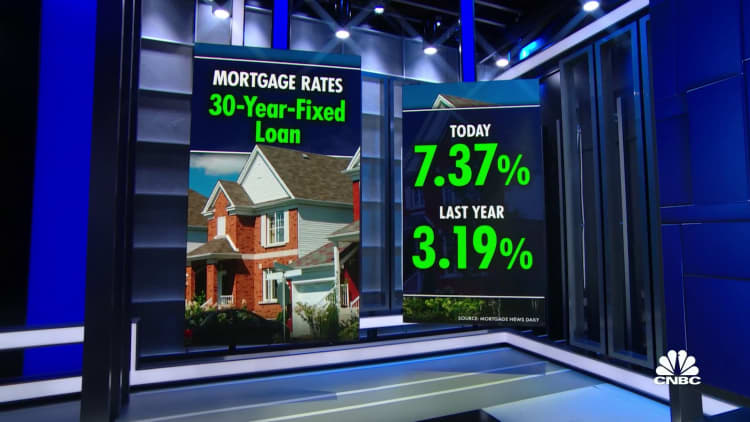
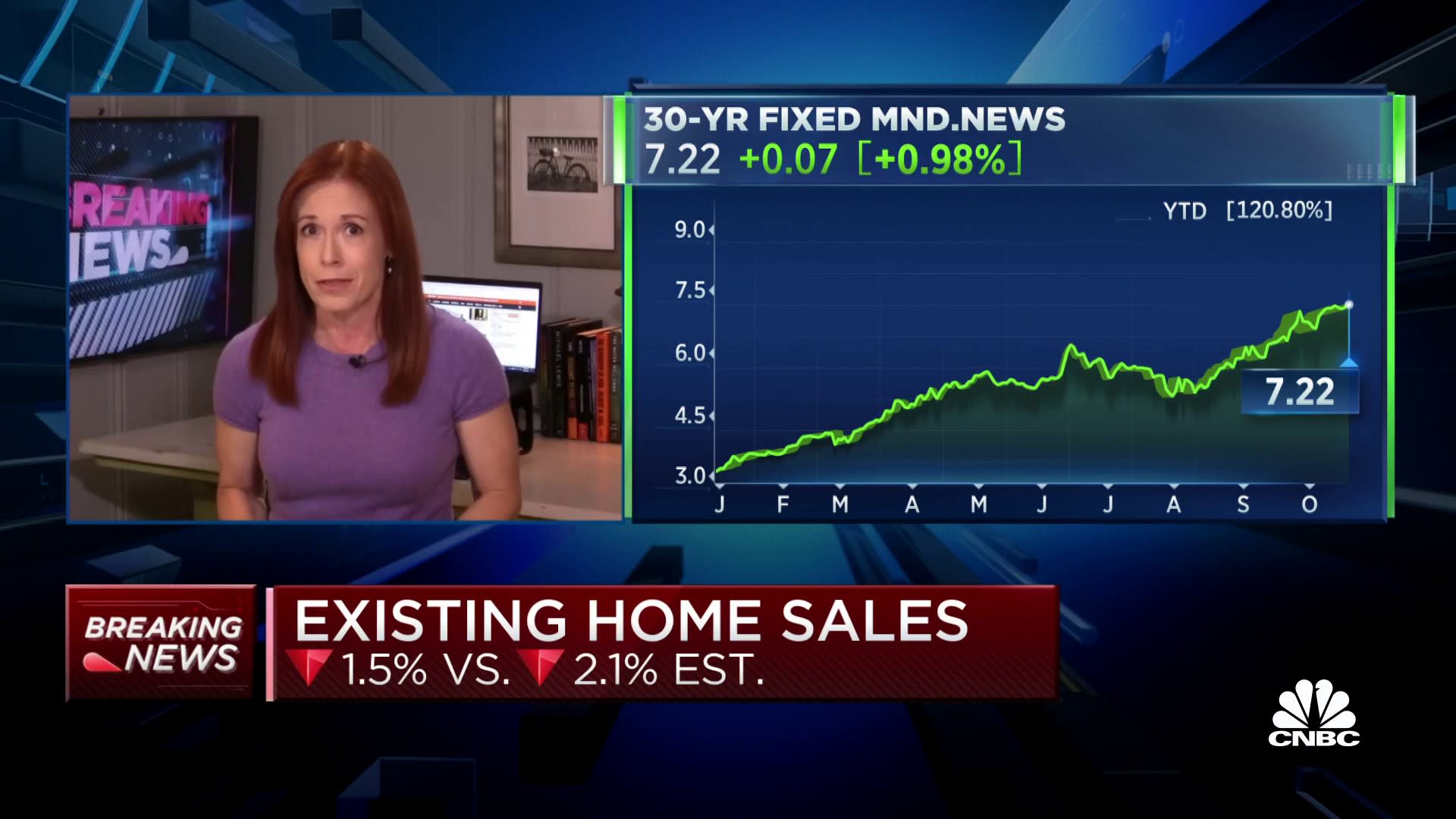
A quick jump in mortgage rates from record lows this year has turned the once red-hot housing market on its heels. The average rate on the popular 30-year fixed home loan started this year right around 3%. By June it stretched over 6% and is now just more than 7%, according to Mortgage News Daily.

“With monthly mortgage payments 75% higher than last year, many first-time buyers are locked-out of housing markets, unable to find homes with budgets that have lost $100,000 in purchasing power this year,” said George Ratiu, senior economist at Realtor.com.

He also noted that higher home prices combined with higher interest rates are keeping would-be sellers from listing their houses. They appear to be locked in to their lower rates.

More homebuyers look to ARMs to finance their homes


Source link

Home prices cooled at a record pace in August, S&P Case-Shiller says Read More »

Stop Shopping For Low Rates, They Don’t Matter

Stop Shopping For Low Rates, They Don’t Matter


I know what I am about to say may be unpopular—even controversial. But I believe that my advice on deciding which lender, or lenders, you will work with will resonate with many experienced investors. 

How do I know? Because although I am the co-founder of a lending company, I am also an accomplished investor with hundreds of projects under my belt. 

So, here’s my statement: When choosing a lender, their rates should not be an investor’s first consideration. I understand that many people teach this approach, but I strongly disagree. Here is why.

What Could Be More Important Than A Lender’s Rates?

Yes, rates are important, but in terms of priority, I think they should be at number three or lower on your checklist.

If you are looking to be an investor for the long term, you will get farther faster if you:

1. Choose lenders that are also investors

2. Choose lenders with reliable capital

In full disclosure, these points mirror two of the primary marketing aspects of my lending company, but that is not why I am talking about it here.

I am saying it because, as an investor and a lender, with experience in a variety of market conditions, I have seen the major effect that these two criteria can have on an investor’s game plan and their ability to grow. These two things impact individual investors on a much larger scale than the slight differences between lender rates. 

To prove my point, I am going to share specific examples of how choosing lenders who understood investing propelled several investors forward rather than holding them back.

I will also explain how counting on a lender, who does not have reliable capital, can stop your project mid-stream and potentially shut you down.

Finally, I will provide a mathematical example to show you how getting the lowest interest rate on a loan is not as important as you might think it is, particularly when viewed in the context of the velocity of money for investors doing multiple projects.

Lenders As Investors

You want a lender who understands your business on a gut level. Why? Because lenders who are entrepreneurial and who understand the real estate space can use both traditional and creative means to help you access capital and grow your portfolio. 

These types of lenders see things differently than other lenders, calculate risks and rewards on a more insightful level, and see project pitfalls and potential based on a full range of investing experience, not just numbers on the spreadsheet.

You already know the importance of creating a team with knowledge and experience. Imagine what a game changer it would be if you had a lender who was not just someone you called when you needed money but who was an integral part of your investing team.

Here are a few examples of what that looks like, taken from our own client experiences:

We recently had a developer with over $20 million and 660 stabilized units and apartments. This highly experienced investor wanted to enter a new market, but his bank relationships and other outreaches would not support his effort. 

It took lenders who were also investors to understand the potential in the developer’s team and their ability to execute. Because we are also investors, we were willing to learn alongside this client by visiting the market area in person, meeting his team, and seeing his plans. All of this allowed us to get comfortable enough to partner with this developer to make a big move into a growing market that would not have been possible otherwise.

Experienced investors who raise capital also look for higher leverage, and many would gladly pay higher rates to get more leverage. Because lending exposure is higher with an alternative lender versus the bank, and this developer wanted greater leverage to enter the new market so that he could make a larger impact, working with us was advantageous for him.

In another example, we had a borrower who was an extremely seasoned builder with 1,100 stabilized units, who ran into major liquidity issues when construction costs rose, and local municipalities were understaffed and slow to issue permits. Local banks, who held the paper, told the investor they would not refinance him and that he would have to come up with the cash to complete his project. 

As investors, we understood that the last thing this builder needed was a lender who was riding him because his loans were coming due. We knew that even the most experienced builders would not have been able to forecast what took place during Covid, and the subsequent supply issues, along with the rapid rise in interest rates. This investor needed a lender who understood how commodity and labor prices were affecting his situation and who could help figure out how he could creatively use what he had already built to get him back into a position where he could keep moving forward. 

As lenders and investors, we felt his pain. We were all over this, and together, we got it figured out. Because of the added leverage that alternative lenders can provide, we were able to structure the deal for the investor creatively. We allowed this investor to recover some of the imputed equity he had created thus far in the project and adjusted his construction budget to reflect the new cost of completion. This allowed the investor to continue to buy more real estate while having the correct working capital needed to complete his projects. 

If you are a newer investor, having a lender who understands investing on your real estate team is a huge benefit. You want a lender who is willing to sit down with you and go through the nitty gritty of your proforma and co-underwrite your deals alongside you to help determine the viability of your investment. 

This is an invaluable service for new investors and a partnership that could mean the difference between you making a great move or a problematic one. If you are not using a lender who is willing to work with you on this level, you get absolutely zero value from what could be one of your most important resources. 

Speaking of resources, your lender should also be a full professional investment resource for you—willing to share connections for everything from reputable architects and reliable contractors to trustworthy attorneys, title companies, and real estate agents.

Find an Agent in Minutes

Match with an investor-friendly real estate agent who can help you find, analyze, and close your next deal.

  • Streamline your search.
  • Tap into a trusted network.
  • Leverage market and strategy expertise.

find an investment-friendly real estate agent

Reliable Capital

A lot of investors have just gone with what is easiest in terms of the lowest rate for accessing capital. They treat lenders like commodities and always look for the lowest bid.

But some investors who approach lenders this way and who lack strong, long-term relationships with lenders that have reliable capital are experiencing major project setbacks in our changing market.

Over the past few months, we have had many investors calling us whose lenders have either temporarily stopped their loan draws or who have ducked out on them altogether.

This has happened because some lenders do not have the liquidity to withstand market fluctuations (and others are simply brokers masquerading as lenders). When Wall Street recently stopped buying loans from retail lenders, who loan to real estate investors, lenders who lacked the depth on their own balance sheets to carry their investor’s loans had to temporarily or permanently stop lending. Some lenders even left buyers and sellers at the closing table!

So, especially now, you want lenders who have reliable capital—meaning, they have enough resources to back you if things get even more unpredictable. 

In addition to assuring your lenders have reliable capital, find lenders with a full range of loan products. When you want to go from a 1-4 unit multifamily home to a 1-30 unit apartment building, it is important to know that the lender you have put the time into developing a relationship with can get you there.

In practice, most experienced investors have relationships with more than one lender, not to play their interest rates against one another, but because they offer various products for distinct reasons that could be more optimal as you grow. (A lender’s product offerings are largely driven by the amount of capital they have on their balance sheet and the relationship they have with institutional investors.)

Regardless of which lender you choose, treat them not as commodities but as integral parts of your ecosystem. The most successful investors treat their lenders like family—trusted members of their inner circle who have the invaluable knowledge and resources they need to help them get where they want to go. 

How Much Do Rates Really Matter?

Don’t misunderstand me. It is not that rates are not important—they are just not the most important thing when choosing a lender, especially when you consider how moving more quickly with non-bank loans can allow you to accomplish more with your money faster.

Here is a mathematical example to show this:

The Deal: Fix and flip project that takes five months to complete.

Purchase Price: $375K

Rehab Cost: $100K

Total Project Cost: $475K

After Repair Value: $575K

LTC (Loan to Cost): Assuming all lenders are lending at 85% LTC*

Loan Amount: $403,750

Bank loan: 7% interest-only loan payment is $2,355/month x 5 months = $11,775.

Alternative loan: 9.5% interest-only loan payment is $3,196/month x 5 months= $15,980.

Cost comparison: Alternative loan costs $841 more/month in interest ($4,205 over 5 months).

The benefit of fast loan closings to the velocity of your money: You can close an alternative loan in three weeks, versus closing a bank loan in two months. For ease of showing this point, everything else being equal, this means that you could theoretically complete two of these same projects in 11.5 months with an alternative loan and two of these projects in 14 months with a bank loan.

Alternative loan profit = $100K/project x 2 = $200K – $8,410 (the additional alternative loan interest versus a bank loan)/11.5 months = $16,660/month

Bank loan profit = $100K/project x 2 = $200K/14 months = $14,286/month

In this scenario, the additional profit you gain by using an alternative loan versus a bank loan, after factoring in the higher alternative loan rate, is $2,374/month.

*The additional benefit of higher leverage: The above example does not take into account the added benefit you gain by getting higher leverage from an alternative lender (85%) versus the typical bank’s leverage (75%). For simplicity in this example, we used an LTC of 85% for both. This is one more factor to consider, as less money out of your pocket means you have more to put down on your next project. 

Challenging Long-Held Assumptions In Institutional Lending

The entire landscape of lending is changing. 

It is time that we, as both lenders and investors, challenge some of the long-held assumptions of traditional institutional lending systems. One of those assumptions is how investors should be making decisions about which lenders are the most optimal for them to use across a range of scenarios.

Prioritizing your lender choice based more on their investment experience and their reliability of funds, rather than solely on their rates, will give your investments the advantage over the long run.

Find a Lender in Minutes

A great deal doesn’t just sit around. Quickly find a lender who specializes in investor-friendly loans that are right for you and your investment strategy.

find an investment-friendly real estate agent

Note By BiggerPockets: These are opinions written by the author and do not necessarily represent the opinions of BiggerPockets.


Source link

Stop Shopping For Low Rates, They Don’t Matter Read More »

Existing home sales fall to a 10-year low in September

Existing home sales fall to a 10-year low in September


Real estate broker Rebecca Van Camp places a “Sold” placard on her sign in front of a home in Meridian, Idaho, on Wednesday, Oct. 21, 2020.

Darin Oswald | Tribune News Service | Getty Images

Existing homes are selling at the slowest pace since September 2012, with the exception of a brief drop at the start of the Covid 19 pandemic.

Sales of previously owned homes fell 1.5% in September from August to a seasonally adjusted annual rate of 4.71 million units, according to a monthly survey from the National Association of Realtors.

That marked the eighth straight month of sales declines. Sales were lower by 23.8% year over year.

Sharply higher mortgage rates are causing an abrupt slowdown in the housing market. The average rate on the 30-year fixed home loan is now just over 7%, after starting this year around 3%. That is making an already pricey housing market even less affordable.

Despite the slowdown in sales, inventory continues to drop. There were 1.25 million homes for sales at the end of September, down 0.8% compared with September 2021. At the current sales pace, that represents a 3.2-month supply. Six months is considered a balanced supply.

“Despite weaker sales, multiple offers are still occurring with more than a quarter of homes selling above list price due to limited inventory,” said Lawrence Yun, chief economist at the NAR. “The current lack of supply underscores the vast contrast with the previous major market downturn from 2008 to 2010, when inventory levels were four times higher than they are today.”

Tight supply continues to put pressure on home prices. The median price of an existing home sold in September was $384,800, an increase of 8.4% from September 2021. Prices climbed at all price points. This makes 127 consecutive months of annual increases.

Prices are cooling, however. September marked the third straight month-to-month price decline, which usually fall this time of this year.

They’re falling harder this year, though, particularly on the lower end of the market, where inventory is much leaner. Homes priced between $100,000 and $250,000 dropped 28.4% from a year ago, while sales of homes priced between $750,000 and $1 million declined 9.5%.

Homes did sit on the market slightly longer in September, an average of 19 days, up from 16 days in August and 17 days in September 2021.

Higher mortgage rates aren’t just spooking potential buyers. They’re keeping sellers on the sidelines as well, which adds to the inventory crunch.

“Homeowners love their 3% mortgage rate, and they don’t want to give that up,” Yun said.

Existing homes sales drop 23.8% year-over-year from 2021


Source link

Existing home sales fall to a 10-year low in September Read More »

Is the Buyer’s Market Back? How to Find Deals and Steals on the MLS

Is the Buyer’s Market Back? How to Find Deals and Steals on the MLS


Let’s be honest. The housing market has been a pain over the past few years. Sellers wouldn’t entertain any offer that wasn’t 10% over the listing price, real estate agents wouldn’t return your calls, and you may have thought that the time to buy rental properties was over. Fortunately, the tides have turned, and the seller’s market has almost overnight become a buyer’s market. Price drops are aplenty on the MLS, real estate agents want to be your best friend, and sellers desperately need to get their homes offloaded. This creates an opportunity for you to start buying deals at a discount.

Jamil Damji, America’s leading wholesaler, knows that now is the time to get properties under contract. He’s been an expert at off-market deal-finding for decades, but now, he says that on-market deals are becoming far easier to find. Combine his nationwide knowledge with David Greene’s agent expertise, and you have a masterclass on finding steals, not just deals, in today’s housing market.

David and Jamil go through eight different techniques you can use to find deals, lock them in at a low price, and grow your real estate portfolio, while everyone else is too scared to act. In times like these, when fear is at an all-time high, smart investors keep their cool, continue buying based on the numbers, and walk away far richer than the average investor. Interested in doing the same? Grab your notepad and write down these eight techniques. There’s a good chance you’ll be using them soon!

David:
This is the BiggerPockets Podcast, show 678.

Jamil:
Now is the time for you to talk to your real estate agent about pitching creative options to their sellers, right? Maybe this is just the right time where you can go get a seller finance or a seller carryback, a subject to. These are the conversations that we can start having when there’s motivation and not a lot of equity to deal with.
So, I think that all of the things that we talked about today were fantastic and they opened the door to even more creative opportunities.

David:
What’s going on everyone? This is David Greene, your host of the BiggerPockets for Real Estate podcast, here today with a special episode where we talk about, on versus off market opportunities and what strategies work in both.
I’m joined today by my co-host, Jamil Damji, joining me live from San Diego.
Jamil, what’s going on?

Jamil:
Man, I’m just enjoying the market, enjoying San Diego, and all the deals out there, just sitting on the market ready for me to grab them.

David:
Right for the picking. That’s exactly right. And in today’s show, we share some very tactical strategies that anyone can implement, to get the best deal possible, while the market is in a place where it’s actually favorable for buyers to do so, finally.
Before we get into that, today’s quick tip is, real estate is relationship business and now more so than ever. Really focus on building relationships with the right people. Jamil talks in today’s show about how he gets deals before they hit the market. Realtors literally bring it to him and he gets to write an offer before it even goes on the MLS, and he even wholesales deals like this.
BiggerPockets wants to help you do this. There’s lots of agents like me that are on the agent finder. You can use the BiggerPockets agent finder to be connected to an agent in your area, or reach out to me or Jamil, if we happen to be in the area that you are for recommendations of agents that we like, we found through BiggerPockets.
All right, Jamil, any last words before we get into the show?

Jamil:
I’m excited to get these techniques out there so that people can get out there, take action and get some business.

David:
Now, last week you and I had a very interesting interview with Taylor Wing, who is a young man who’s crushing it, finding off market deals, and it’s not that uncommon to hear about off market. In fact, it’s sort of been the talk of the town for the last couple years. Off market has been idolized. If you just said, “I have an off market deal,” immediately people were like, “Ooh, tell me more. It was the pocket listing, right?”
Off market was just, yes, that was the coveted thing that every… It was Pearl Jam tickets in the nineties. Everybody wanted it. It was very hard to get. But the market has shifted, and as someone who has their finger on the pulse of the markets, I think that you and I are pretty well qualified to talk about this because we both purchase off market and on market and then we also make our livings from on market dealings. So tell me, Jamil, what have you been noticing in the last couple months that’s changed regarding the on market/off market dynamic?

Jamil:
Well, oddly enough, I think that it has reversed in with respect to how good of a deal you can actually get. Here’s what I mean.
When you’re talking to a homeowner, going direct to seller, and you are trying to explain to them how the market has shifted, that prices have dramatically corrected in certain markets, I think that it’s a much more difficult conversation to have with people, where their entire life isn’t dedicated to real estate.
Imagine this, you live in a neighborhood, a nice subdivision. The guy across the road has a model match to the house that you have. They completed a nice renovation and they sold at say, $500,000 in March of this year.
Now, we know March of this year was a very, very interesting time because the competition for housing was insane. Everything got bit up, sometimes 50, 60 or a hundred thousand dollars over what I think the house was really worth. That emotional equity comes into play. And what I think is happening now is sellers still haven’t come to terms that things have shifted, massively.
So what I’ve been seeing is that if you engage with a real estate agent, or if you go online and go to the MLS and look for opportunities that might have been sitting for some time or houses that might be listed at a higher price but are still in original condition. You know those listings I’m talking about, where the agent is literally basing their price expectation, or the seller is basing their price expectation, with respect to something that had sold in the same subdivision but was fully remodeled. Those houses exist all the time.
I think right now you are finding some incredible opportunities, having real conversations with realtors because they see it. Their phones have stopped ringing. Everything that we’re experiencing in the market, they’re experiencing in the market as well. And so it gives you that layer of relatability, and I think that if you can have that advocate that is speaking sense to your seller, you’ll do better.

David:
Yeah, we can dissect that a little bit. Let’s think about why the dynamic has changed. So when you would go off market, and I would even add this. Off market used to be valuable because you weren’t competing with other buyers. That was the main value is, theoretically it was you and the seller. You didn’t get that 12 offer competition where, “Well, do I have to go a million over or can I just go 800,000 over? I don’t want to go 200,000 more than I have to.” Nobody likes to do that.
So with off market, you can make a offer, get a counter. But the other benefit that still exists is, you get to talk to the seller. You get to figure out the story. That’s very, very, very valuable, especially if someone isn’t necessarily sophisticated on what the asset is worth or good with finances. They just have a problem. You can help solve it. It’s trickier to do that when you’re having to go through your agents.
But what you’re describing, I really like it. If you get to know the agents who have these deals, they know their client’s story. It used to be with listing agents that you couldn’t get them to tell you anything other than highest and best. It was like a parrot squawking on a pirate shoulder. “Highest and best. Highest the best.” And they called themselves an agent. It was very frustrating.
Well, now they know which of their clients are like, “Nah, I don’t have to sell. I’ll hold on to this thing and I’ll wait for the market to shift.” And which one are like, “Nope, I’ve got a house being built in Texas, right now. I got to sell to pay for it. Bring me an offer.” And if you can figure out that story, you’ll know which deals you should be pursuing with the more motivated sellers.

Jamil:
It’s exactly right. There’s four pillars that I would say really determine whether or not an opportunity is going to make sense for what we do as investors.
First and foremost, you always want to understand price. You want to understand condition. You need to understand the seller’s timeline and their motivation. See, for us, when we’re typically negotiating belly to belly with a seller, you can get the answers to those like you just said, very easily or through some rapport building and conversation.
But typically, in the past, real estate agents because of the fiduciary duty that they have to their sellers and as well as if you’re talking to a listing agent direct, they’ve got to be very careful. But I think people are more open right now to sharing the reality, and I’m hearing it more and more and more. You’ve got these sellers that are in a desperate situation.
Right now, especially if they’ve taken the time to list the property, you and I both know that very rarely can you just list a house, put it on the market, and it sell. You’ve got to prepare for these things. You’ve got to do some repairs or maybe clean up the house and maybe even move out of the house. There’s things that people do to make their house more attractive to a retail buyer.
So if you’re taking that investment and if you’re doing these things, I think it’s really to your advantage to have a conversation with the agent to at least find out motivation and timeline. I think those things can really help you make adjustments to the price.

David:
Well, off market could have been, in many cases it was, sort of the make me move approach. I don’t have to sell my house, but if you get me two million for it, I’ll sell it. Get me 800. So then, some realtor would go and say, “Hey, I got an off market deal. It would probably sell for 950 if I put it on the market, but you could get it for 940,” and people were moving forward on those deals.
But now that isn’t the case, a lot of those non-motivated people, they’re sitting in the off market space. The motivated people, like you said, if you’re putting your house on the MLS, you’ve done some work. You have to be motivated to do that. You had to get it cleaned up. You had to spruce things up. You had to go get it ready for pictures. You had to spend some money on the pictures. You had to meet with the realtor. The realtor had to put some time and attention into this. It’s actually takes quite a bit of time to get a house listed on the MLS. It’s not just you push a button and it happens. So everyone’s motivated. The realtor’s motivated, the seller is motivated and the other people that are involved in the transaction are motivated.
So going on market, you typically will find a higher percentage of motivated buyers… Or sorry, motivated sellers and that’s what we’re looking for. So, I wanted to play a little bit of a game with you. I wanted to take turns seeing if you and I could share some of the ways that we know that a market has shifted from a seller’s market to a buyer’s market. Sound good?

Jamil:
I love it, man. Let’s go.

David:
Okay, I’ll go first.
One way that I can tell. The number of rings that it takes before a listing agent answers their phone. You try to call listening agent during the seller’s market, they don’t answer their phone. You have experiences like that too?

Jamil:
No, they’re overwhelmed. Oh my gosh. It was out of control. It was one of the most challenging things I would actually find in connecting and trying to buy houses was realtors just took a completely different… And I all due respect to people who work at airports. I travel a lot and so I definitely respect what they do but did you notice that there was when you couldn’t get away with even saying, “Boo” to anybody at the airport. You have to just be nice to everybody at an airport, right?

David:
That was that whole, you can’t say, “bomb” on an airplane skit, from Meet the Parents?

Jamil:
Yeah, yeah. You can’t do anything at an airport right now that somebody wouldn’t like because you can just get put on the no-fly list and thrown out. Right? It’s like, and that’s just what it is. And so everybody at airports is just insanely rude. I can’t… I’m not finding even the people at the coffee shop aren’t really nice to you at the airport anymore.
So, I feel like that’s sort of what happened with real estate agents. They got this power rush and they were like, “No, I don’t even have to answer my phone. You know what? I’m going to go get a recent headshot. I’m going to go to get a recent headshot and you’re going to do business with me even though I look 90 years old.”

David:
That could be one of the ones you say, right? The market shifted when the realtors are bold enough to put a recent headshot up.

Jamil:
Yeah.

David:
That’s a joke.

Jamil:
I’m going to go with that one.

David:
Realtors use headshots from… Okay, that’s going to be yours. It reminds me of a scene in the Office with Dwight and Jim where Dwight gets a raise and Jim says something like, “Never before has such little power led to someone having such a big head in the history of man.” That was listing agents, right? I sell one house a year and I have a listing and they would just be running around a 16 year old in their dad’s Ferrari, thinking that they were hot stuff. So true.

Jamil:
Insane. The other thing that I’ve noticed has happened very rapidly and it never before, is realtors are really interested in me now. When I do get ahold of them on the phone and I start talking to them, they want to know all about me. They want my full name now. They’re taking the time to actually write things down, right? Before it was just like, “Oh no, you send me a text. Oh no, you send me an email. Oh no, you do everything and make sure that you’re finding. I’ll forget you. I get so many people call me. So many people text me. There’s no chance I’m going to remember you at 5:00 PM today.”
Now it’s like, “Oh, hold on a second. Okay, you said your name was Jamil and how do I pronounce that? Wonderful. Oh my God. Such an interesting name. Where are you from? Where are you from?”

David:
That’s so true.

Jamil:
And you’re getting real…

David:
Descended from Mount Olympics.

Jamil:
It’s real. Yes.

David:
They’re rubbing elbows with mere mortals again.

Jamil:
So good.

David:
Okay, that’s a good one. How about this. The number of agents that will follow you on social media after you make contact? So sometimes when I call the listing agent directly, not only do they answer their phone after one ring, when it used to be you could call four times in a row and they were just going to send you to voicemail.
Now you actually see that they go follow you on Instagram, follow you on Facebook. After they get your name, they want to go see what’s up with this. Is this a real buyer? Is this someone I could actually make friends with? Have you noticed that too?

Jamil:
My gosh, I have actually had that happen to me while I was on the phone with an agent. My life has gotten a little bit more public in the last couple of years and so I have a blue check and I was on call with a realtor who searched me and found me on Instagram and said, “Oh my gosh, you have a blue check mark besides your name.” And to me that’s not a deal anymore. When I first got to blue check, it got to my head a little bit. I purposely left comments on people’s pages just to be like, yeah, because I feel like I had jewelry now. You got Instagram jewelry when you have a blue check. I’m over it now.
But when that agent said that, I was like, “Oh wow, you literally just went to IG right now, typed in my name, found me, and now you’re scrolling through my photos to see if I’m legit.”

David:
That’s very true. I’ve walked out of open houses and had realtors that looked me up and when I came back later that day, they were saying things that they wouldn’t have normally known. You didn’t see that when the market was hot. Nobody cared who you were. All they cared about was that price at the top of that residential purchase agreement that you better be sending over.
All right, how about this one? What about the percentage of times that we hear the phrase, the sellers are open to all offers?

Jamil:
Oh my god. What does that say? It’s tell me you’re desperate without telling me you’re desperate. Really though the number of like that, it’s like the sellers are open to anything, but back in the day… Well when I say back in the day, I mean March, okay?

David:
Yeah, right.

Jamil:
Back in the day, in the other world, you would literally have no low balls. You dare ask for repairs. The seller is not open to anything. I would love this to be a non-refundable earnest deposit, like as-is, all of the things. And now it’s like the sellers are open to all offers it. It’s like, what I almost want to know is, was it the sellers who became monsters or was it their realtors who became monsters when the market went crazy? Because I think a lot of those things the sellers wouldn’t even know to do, right?
What seller, who is an accountant out there in the world and doesn’t trade real estate very often, how many of them do you think know about escalation clauses?

David:
I mean escalation clauses weren’t even talked about until it was a ridiculously hot offer and it was a way for the buyer’s agents to be like, “Look, I don’t want to have to write 14 offers. When a higher one comes in, can I just write an escalation clause and be done with it?”

Jamil:
Yeah. For those of you that don’t know what an escalation clause, it’s what David just said, but think of it this way. Your agent was basically saying, “Hey look. If you get an offer of 450, we’ll go $5,000 higher up to 600,000.” How likely do you think that that offer hit 600 grand? I mean more often than not, it got there. I’m not trying to say that people were not being honest with respect to what those highest and best numbers were, but there was a lot of money that got thrown on the table that probably shouldn’t have.

David:
Yeah. That’s not hard to do. When you’re the listening agent and you get escalation clauses where they’re like, “Hey, we’ll pay 10,000 more than your highest offer and your highest offer is 550, you could just ask your buddy in the office, ‘Can you send me over an offer at 575?’” And then like, “Oh, now we’re getting 585.” That type of stuff would happen frequently, which is why I never ever advised escalation clauses. There’s no way that you can tell. We never use those on the David Greene team and sometimes buyers would get upset because they thought it was a guarantee and far from it.
What was the one that you mentioned? I forgot you had an example.

Jamil:
Oh, I was just talking about those head shots, man. Just coming in and really what I was thinking too? These promotional companies that make the fridge magnets and all the notepads and the pens, for a year, they had no business from realtors. Not a single realtor was like, “I’m going to invest in promotional items this year and going to make sure that people remember me when they’re using magnets.” No, no. The agents stopped doing anything. They stopped caring. A lot of them just were like, “I don’t even have to brush my teeth and I get paid.”
I think everything has changed. It’s a totally different world. Totally different world. I, oh… There was another thing, David, that I had no I’d noticed. So, price reductions. Oh my gosh, right? Price reductions. They didn’t happen for the better part of the early part of 2022, but now they’re very, very prevalent and I’ve talked to some realtors and have asked them their opinion on price reductions and why they do them.
Some of them think that when they make a reduction in price that it repopulates in the MLS and it bumps the listing up to a higher visibility and so they like doing that because if there’s an agent that may be a little bit less likely to scroll through all of the listings, maybe they just want to skim off the top, those realtors will now see, or I should say real estate agents because now I learn the difference between a realtor and a real estate agent and I didn’t realize that there was a distinction. But those real estate agents, they would see that and now these price reductions have become silly, right? It’s like every real estate agent wants their listing to be at the top, so you’re getting price reductions of a hundred bucks.

David:
There’s a lot of that. So, that you’re right. What happens is when people set their buyers up for a search, what happens is you can look for every house within parameters, like this price range, this size, and it will show you all of them.
Then after that, it won’t show you the same houses every day you’ve seen, it will only show you the new stuff that just came on, or something that had a price reduction. So that was a little trick that we figured out. If we’re not getting traction, we can do a price reduction. People will see it again, which might make sense after it’s been on the market a week. It’s not still product yet, but it didn’t get an offer in the first week, we would do that. But like you said, people just, they always do what people do. They get a good thing and they ruin it.
So you have realtors dropping it by a hundred dollars or by $50 and then it shows price reduction and it like the little negative 50 or something, so that’s another sign that you’re in a buyer’s market is when you start seeing ridiculous things like that. Or when the seller’s like, “Well nobody wants my house for 900, so let’s drop it to 875.” I promise you brother, if no one was buying it at 900, because there’s so much competition, it doesn’t make sense at 875. You actually have to accept, I need to drop my price to 800 or 775. The market has gotten away from me.
So in these hot markets you’ll frequently see these price reductions that are just minuscule that aren’t even keeping up with how fast the market is dropping and it’s almost funny. What is going on in their head that they’re like, “Maybe if I just change this one little thing, the universe will bless me with the buyer that I’m looking for.” And that’s not how it works.

Jamil:
It’s not. It’s lazy.

David:
I agree with you. That’s another…

Jamil:
Ir’s super lazy and I’m sorry if you’re listening to this and I’m talking to you right now. We’re onto you.

David:
We are onto you and we are sharing the information with BiggerPockets, as Jamil who works with realtors and me who is a realtor, we know the schemes, we know the tricks, we live in the matrix and they’re not going to work on us.

Jamil:
What about these interesting times that people are conducting their showings. Back in the day first, and when I say back in the day again guys, I mean March. In March, there were no open houses. There was just, it wasn’t going to happen. But now they’re doing broker opens and they’re doing twilight open houses and they get wine. You could actually feed your entire family for a whole… I bet you could feed your family for an entire month going around from open house to open house to open house and have some of the best food. You’d get a charcuterie board everywhere you went for the next 30 days if you wanted to, on the house.

David:
This is such a good example because I know what it’s like to be in the agent’s shoes. When you have that seller that you want to list at 975, they insist on going in at 1.1 because they think they know better and they’re looking at prices from back in the day, March, thinking that they’re still going to get that again. Right?
And so the house isn’t selling and you go back to them. You’re like, “Look, it’s been four weeks. We’ve had two showings. Not only are they not writing offers, no one’s even looking at your house because it’s priced too high. When they see what 1.1 gets them, they have better options. And when they, the people that can actually afford this house are looking at the 975 range, they’re not looking at the 1.1. We got to drop it.” And they never say, “Yes.” They always say, “Well, have you held a twilight open house? Maybe if you get the twilight and you get better cheese. What cheese are you putting out, actually? Are using the cheap stuff? I’m paying you 3%. I want the nice cheese. That’s going to get people to come see my house.”
You scratch your head because they will never know there is an open house because they’re not looking at houses like yours in the 1.1 price range. It’s like it’s so frustrating when you’re dealing with those sellers that still think that way and you’re as the agent and you have to tell them, “No, you maniac, this twilight open house with all your expensive cheese, is not going to provide any more people showing up. And if they do, it’s just going to, your neighbors that come eat your cheese.”

Jamil:
My gosh, dude. Now I just figured out where they came up with the name Laughing Cow cheese. The cow is laughing at you for putting the cheese in there, you dummies.

David:
That’s it. So if you’re listening to this and your house is listed at 1.1, it’s getting two showings, drop it to 975.
All right, let’s move on to the next hero. We are going to talk about on market versus off market strategies, particularly what you can do if you want to get a deal on market house.
Now before we go there, Jamil, do you have any advice for off market deals? Is there anything you’re seeing particularly that’s working or do you just think that space isn’t as good of an option right now?

Jamil:
Well, I do have one. I got one trick. For off market doesn’t necessarily have to be without agent. Okay? Let’s understand the distinction between off market just means it’s not listed on the MLS, but that doesn’t mean that it doesn’t have agent representation, or could be a pocket listing, or there could be a relationship that a realtor has with a specific seller that they know they’re not quite ready yet, but it could be coming to market at some point. There is a massive opportunity for the entire BiggerPockets audience to hear this, take action, and get it done.
You want to take advantage of all of the industry knowhow or all the industry knowledge, all of the current market condition knowledge, but still get an off market house, start having conversations with realtors, building relationships with them and finding out if they have anything coming to market that’s an original condition or needing a substantial amount of work that you might be able to take a look at before it gets listed.
You see, there’s nothing that an agent hates more than a stale listing and they know that if they list some of these really gnarly houses on the MLS, it’s just going to collect days on market and it’s actually going to be to the detriment of the seller. You can convince a realtor to really take that into consideration and present that solution to a seller to say, “Hey, would you just like to hear from this investor and see what their offer would be? I think that we might be able to get him to pay more than he may have been able to pay if it was just on the market.” And that gives you that entrance through the side or back door guys, that still gets you an off market deal but still is being dealt with through a real estate professional who can talk sense into your seller.

David:
And someone might hear that and immediately think that’s not going to work. I tried it before. If you tried it during a seller’s market, it wasn’t it likely to work because the agent wants the ego boost to being able to go drive their dad’s Ferrari. I have a listing, I am now posh, I put my pinky out when I drink. I swirl my wine that I have at breakfast. Nothing gets a realtor going more than being able to say they have a one or two expensive listings and so you saw just the power went to their head right off the bat. It was very frustrating.
Not like that. The tides have turned. These realtors are now desperate. Like, “You got to buyer. Oh my god, let’s talk. My seller’s open to any offer,” is what’s coming out a lot. So I agree. Asking realtors for something they have coming, especially if they’re thinking they might get to double end it, they will prioritize you over putting it on the market, having to spend money on pictures, having to put the worker going to MLS, having to have the talk with their seller every single week why nobody looked at the house and everyone blames the realtor when that happens. That’s just how this works. The question’s always, “What are you doing to sell my house?”

Jamil:
And those gnarly houses, David, like those ones where the seller is really, really worried about how much they’re going to have to do to get the house prepped for the listing. I mean when you’re talking a hoarder situation or something that’s just falling to pieces, I mean those people really need our offers, they need our help, and you can put together some pretty great situations.
Imagine this, the realtor gets to double end it. They take 4% instead of 6%. The additional 2% goes back to the seller and it’s a win-win-win. What a beautiful day.

David:
So, if you’re going to look for off market deals that don’t have representation, that can help you too. I would say go for both. Talk to realtors about what they have coming on and if you come across a seller that might want to sell their house, they’re probably hearing the same news everyone else is hearing and there’s a good chance they understand the market’s turning I want to sell before it gets worse. That was different than I won’t sell, unless I get a ridiculously good offer.
The psychology, the collective psychology of the entire market has shifted drastically, and that’s a situation where you have an advantage as well. The standard seller doesn’t listen to the podcast, doesn’t follow the news, doesn’t know what the other houses are selling for. They’re not aware of the market we are. They don’t know what it costs to fix something. If they know they have a house with problems they don’t know. They can’t convert that problem into a dollar. We can because we live in this industry all the time. So, you have an advantage dealing with a seller who doesn’t have representation and you also have an advantage dealing with an agent with the deal before it’s gone to the market. Take advantage of both of those situations and off market opportunities.

Jamil:
Absolutely.

David:
All right, let’s talk about some on market strategies now that will work. Frankly, this is what I’ve been using. I bought a handful of deals off market, maybe I can think of two, maybe three, but probably 15, 16 that I bought on market. And it’s funny because I’m finding that there is more motivation on market, especially when you follow the techniques that we are about to give you.
So take out your pencil or if you’re not old, take out your phone and write some notes down where people actually take notes now. Don’t know why I said pencil. I’m sure the day is coming when people will look at a pencil and be the same as if we looked at a cassette player.
Do you think, Jamil, I’ve always wondered, how old do you think people are that don’t know why the save icon is a floppy disc on a computer?

Jamil:
I mean I bet you, right, there’s like a whole generation that doesn’t understand it. That they have no idea what it is. They don’t even know what they’d never seen a three and a half inch floppy disc. Or what about the floppy discs before that? Remember the black ones with the little film on it and you couldn’t touch them because if you touched them in that little spot, then they would be… It would… It’s like wiping the fairy dust off of fairy. They can’t fly anymore.

David:
Like exposing your camera film to the sun, which now there is no camera film. You don’t have to worry about that. Yeah, that was a thing we were really worried about that you are hold your breath when you’re like, “Oh God, I have to take the film out of my camera. I hope I don’t do it wrong.” Don’t have to worry about that anymore either. All right.
So one of the things that we’ve talked about is sellers are going to be more motivated if they’ve gone through the work of putting their house on the market.
Another is the emotional influences that are inherent in on market deals. So sellers are often looking at other homes, while their house is on the market. They don’t just sit there like a disciplined person should and say, “I’m going to wait for my house to go into contract, see what price I get, wait for contingencies to be waived, then I will go look at houses.”
No, no, no, no, no. They get emotionally involved in their next house while their house is sitting, which creates this pressure cooker. Because on one side they have pressure, “I want to put this house in contract. Someone else is going to buy it, I want to move on.”
And on the other side, they have this pressure of, “Nobody’s going to buy my house. Prices are dropping. Rates are going up, and as rates go up, my house is worth less. But at the same time, the house I want to buy, I’m going to have a higher rate. I got to do something now.” And you want to be the person to come in and take the pressure off of them.

Jamil:
I saw that play out right in front of my eyes right now on a flip. We had a flip that we had a seller come in, they wanted the house so bad. They said, We have to sell our house.” And we thought, “No, we can’t do a contingent offer. This is never going to work.” But we asked if they would allow us to help them with pricing. So, we had to approve the price that they were going to list the property at, in order for us to accept the contingent offer and they agreed. They agreed to that. And so we helped them come up with the listing price and they actually went under contract, after multiple offers in this crazy market.
So, we had them listed pretty low, but they still got multiple offers and so that absolutely worked. And what you just described right now, David, is on the nose. It’s on the nose. When you create that pressure cooker and you can be the person that comes in and relieves the pressure, there’s nothing like that. And you want to talk about getting a tremendous opportunity, rewind what he just said. Actually, what’s the new word for rewind? Is there a new technical word for rewind?

David:
Yeah, we don’t rewind anymore. We’re talking about this old technology. That’s exactly right. Put your finger on the red circle and move it to the left.

Jamil:
I love it.

David:
So, that’s why having a good agent really helps, right? Because if you’ve got me or another agent who actually owns property, we understand the psychological component to negotiating, not just the numbers element of it. Real estate is very, very emotional even though people don’t realize it.
All right, let’s get into the next one. This is the most important thing to look at of all of your thing. It’s that the number of days the house is on market. When I’m looking for deals, I don’t even look at something that hasn’t been on for 30 to 40 days. When I put my search together, I start at 30 to 40 days and then I prioritize 80, 90, a hundred days on the market.
So when people say, “Well it’s easy for you to find deals. If you started looking at the clearance bin, you’d find that the store was much more likely to negotiate on the price as well. These are sellers that have already had their dreams destroyed of selling with multiple offers really easy. They’ve been told at this point, “You have to fix up your house. You have to make repairs. You have to clean it. It can’t smell like dog urine.” There’s things that have to be done and they’ve just staunchly decided they would not do that. They’ve already been marinating in worry and they are prime for you to come in with a very aggressive offer that won’t look bad to them because it’s better than no offer.

Jamil:
I totally agree. There’s one caveat. There’s one little scenario where this has a little bit of a lower likelihood to work and that’s when they went under contract, immediately after listing, and it fell out and then it sits. Oh, when a seller gets that first taste of we’re under contract and they think that the house was going to work at that number and usually it’s a wholesaler that comes in and screws it up for everybody because they’ll go in and put it under contract too high. They’re thinking that there’s a deal there. They comped it wrong and there’s no deal there. And now all of a sudden the seller has this misguided belief that their house will actually trade at that number and now it’s this standoff and the seller is trying to get it. But high day is on market, David, it is the holy grail of getting a good deal.

David:
Absolutely. Now you bring up a really good point that would relate to the next point we’re going to make here, which is look for houses that are back on the market.
So back on the market means it was under contract, it fell out, it’s back on the market. There’s two ways this goes. The first is what you just said, Jamil. They got a taste of thinking their house is worth way more than it is and now they don’t want to accept that it didn’t sell at that price. In their head, if they sell for less, they’re losing money. Even though the market is clearly telling them that wasn’t accurate. The other person, receives that same information, but goes a different direction. They go, “Oh my God, I was this close to getting it sold. I had my next house picked out. I had the furniture ordered. I walked the house with my kids and they picked out their bedrooms. My whole family is ready to move in. We’re already researching the schools.” They made that mistake and now their house falls out of the market and their dream is being threatened and maybe their house was under contract at 900,000 and they only owe 500,000.
For that person, you go write an offer at 775. That still makes sense because it keeps their dream alive. They’re not just looking at the money.

Jamil:
This is the magic scenario, right? Because you’ve got that person emotionally invested. And guys, we really have to take this to heart. When David says this, it is absolutely facts. People will walk away from hundreds of thousands of dollars of perceived value, in order to keep their emotional dream alive.
I can tell you this, as a person who was a real estate investor myself. The dumbest decisions I’ve ever made was buying personal residences. Ever. I know better. I always know better. I know what to buy, I know how to get a deal. But it’s when my wife looks at me and says, “But honey, I really love it.” And my children are, like you said, picking out their rooms and thinking about which of their friends live nearby so that who are they going to hang out with and play with?
I was actually, funny enough, I was trying to buy a house not too long ago. For tax purposes, I was trying to see if I could buy a house in my LLC and then rent it to myself. It doesn’t work. There’s a arms length situation there that didn’t make it work. But we were going to go buy a very expensive home and to make this situation work as a tax break. My wife got really invested into it and my kids got really invested into it and it didn’t work out for us and it was heartbreaking, brother. I would walked away from hundreds of thousands of dollars just to make that situation real.

David:
There’s a person involved in the BiggerPockets community who I will not say their name, who at one point wanted to buy a primary residence and didn’t quite have enough capital to make it happen. They came to me and said, “Hey, can you lend me a couple hundred thousand dollars so I can close on this house? I’ll pay you back later.” And it was a two million primary residence that they had fallen in love with. It was the same story that you’re telling. Beautiful backyard. Every amenity they could ever hope for. They fell in love with the house and there was 10 other people that also fell in love with it. And I was like, “All right, I’ll just tell you right now. You’re my friend. I’ll let you borrow the money if you want. So, let’s just set that aside. Let’s talk about if this is a good move for you.”
I talked sense into them. Friends don’t let friends overspend on primary residence moments and I am so glad that they admitted, “I don’t want to do this. I’m kind of pissed at you for telling me this, but I’m just going to listen to you because you’ve been in longer than me.”
Two months later, the entire market shifted. That would’ve been one of those stories that you hear about someone bought their dream home and then lost it to foreclosure because they would’ve overpaid. But man, that never goes away. That fear is real. You got to talk to people when you’re getting ready to make a decision like that because you need that perspective. It’s like you get drunk on this home. Home intoxication is a real thing. So, I agree. You got to be careful on those primaries.

Jamil:
I want to get that put on a t-shirt; Friends Don’t Let Friends Overspend On Their Primary Residences. I’m going to put that on a shirt.

David:
Yes, that’s good.
Next thing is listen to the news. If you hear Jerome Powell saying the market’s going to crash. We’re going to keep raising rates. The sky’s falling. All the home sellers are hearing that too. And I will purposely, when I hear the Fed come out with bad news or all the YouTube channels saying, “Oh terrible things are going to happen,” I make it a priority to go write more aggressive offers the next couple days because the sellers are probably hearing the exact same thing and you want to hit people when they’re in that panic mode.

Jamil:
Yeah, that’s a brilliant strategy and you know what? I haven’t used it enough, but I think that that gives us a lot of days to look forward to. I mean, leading up to a rate hike, I think you could and we know that they’re coming. We know that there’s more coming down around the corner. I think that you could start having those conversations with homeowners prior to, so if we’re the week leading up to a rate hike and then the week following a rate hike, I think that you’ve got two weeks of juicy negotiating opportunity there. I think that’s brilliant, David, and I would absolutely, absolutely advise people to do that.

David:
That is actually another method. I call it, having several lines in the water. So, I don’t usually pursue one house at a time. I’ve got several offers and actually this combine two methods here.
I’ll say let’s, I’ve got six houses in areas I really like. I really like the property they’re listed at. Let’s just assume all of them are at 1.2 million. I don’t want to write an offer that’s going to be accepted immediately upon issuing it. That means I went too high. I look at an offer. In a seller’s market, when they have all the power, you got to throw haymakers. You got to knock them out in one punch. That’s your only chance. This you better throw a superman punch to start the fight and if you don’t get it, you’re getting torn apart.
But in a buyer’s market, you want to throw a jab. An offer is just meant to test them. How motivated are they? How far down do they come off their price in their counter offer? Are they eager or are they not eager? If they’re not eager, I just let it go. If they are, now that starts the negotiating process of how far can I get you down?
If I do that with five or six different homes and I’ve got several different sellers that I’m working on over the next coming weeks, like you said, they they’re at 1.2, I write it at 900 or I write it at 950. They counter me at 1,000,050. They came down a lot. Okay, that’s a motivated person. I stay in touch with them, but I don’t try to put it in a contract the next day. I want to see is the news going to turn bad while we’re here? Are rates going to go up again? What are they thinking? Are they falling into Chicken Little? As the days on market, maybe I wrote the offer, it was at 40, now it’s at 60. Now it’s at 70. That’s stacking in my favor as the buyer. I have the leverage, I have the thing they want, which is the ability to close. They used to have the thing everyone else wanted, which was the asset.
So, I’ve got all these lines in the water and the fish are coming towards the boat at varying degrees and I’m just waiting to see which one of these fish gives up and just jumps on into the boat.

Jamil:
Brother, that’s such a masterful negotiation strategy. One of the ones that I’ve been really paying attention to as well, is how much of a relationship I can build with the listing agent. And that brings us to the next one is really finding ways to create positive relationships with these listing agents, where maybe they’ll let you do a dual representation. Maybe there’s some states that don’t allow it and I understand that it’s not going to work all the time. But even in those markets where you can’t do a dual representation, I will still contact a listing agent, create a relationship with them, and then I’ll ask, “Since I’m not working with anybody, do you have somebody that you could refer me to, that could write the offer for me?” And now all of a sudden it’s their daughter or their cousin or somebody in their office that they owe a favor to.
So, you’re still getting that proximity. You’re still aligning to their side of the equation, which wins them over essentially. Because look, if it’s a family member that might just be coming into their business as well. If it’s a friend that they owe a favor to, this is emotional income. This is an opportunity for them to scratch somebody’s back, that they’ve been wanting to scratch for a while.
So aligning yourself with listing agents so that you gain proximity, closer proximity to the seller, it’s such a powerful way to play guys. Because now they’re gunning for your offer to be accepted. They’re telling the seller all the reasons why you’re the person that they should go with.

David:
That is another point we have on our list, Jamil. It’s like you were born to do this. You have to win over the listing agent and this is something I learned in the real estate agent game, myself. If the listing agent takes the offer, let’s say their client’s house is listed at a million and my client wrote an offer at 900,000. There’s two ways it could be presented.
“Hey guys. I have an offer I’m legally obligated to present you to, but just don’t worry, we’re not even going to consider it. These idiots think that they can buy your house for 900,000. They’re low balling jerks. Don’t worry about it. I’m going to get you a better offer. Hang in there. We’re just going to reject this. Okay?”
Versus, “Hey guys, good news. We got an offer and it’s actually not too far off. We’ve been considering a price reduction. We might not have to do it. This is close to what we were thinking we were going to have to reduce it to and they’re willing to shorten their contingencies. They wrote it at $900,000 and there’s a very strong earnest money deposit here. What do you guys think about this? We can start looking at your next house.”
The lens that the listing agent presents that information to the client through, is wildly important. And this is why if your agent is a butt-head or has a big ego and gets into it with the other people, it has a significant effect on how your offer is presented.
Now when there’s going to be 12 offers, it doesn’t matter, they’re just going to go with the highest price in the best terms. But in the situation where there’s not multiple offer, that human component is very powerful. And what you’re describing there, Jamil, is how you yourself can win over the listening agent.
One of the things when I’ve got those six lines in the water, one of the actual metrics I’m looking at is not just the home, it’s the agent. If I got an agent who’s not interested in us, who doesn’t really get back to us, who doesn’t seem like he’s that motivated, I won’t prioritize that fish or that line, nearly as much as the other ones because I got an uphill battle trying to convince that agent to sell the client.
When I have an agent that’s like, “Please get me an offer. Let’s make this happen,” and I know they’re going to present my information in a positive light, I will even coach that agent. I will say, “Hey, here’s the way you should present this to the client. I know the price is low, however, tell them that you negotiated an extra $12,000 higher than I was stuck on and tell the clients that you saved them an extra 12 grand if they take this and then just we’ll have a $25,000 closing cost credit, which you can just tell them is standard in the market right now.”
If they take what advice I give and they actually go say that, you’d be amazed how often the sellers will come back and accept that. I had this on a house I put under contract a couple days ago. They were listed at 1.175. I wrote the offer at 1,000,050 with about 40,000 in closing cost credits. They said, “No.” I waited. Or no, then they countered me in 1,000,075. I waited. They came back and accepted 1,000,050. I said, “Well, that was my offer four weeks ago before they raised rates. Now you’re going to have to do better.” I didn’t even send a new offer. I told my agent what to say. He went to their agent, they came back and said, “We’ll do 1,000,025,” and I still got the closing cost credits. So now I’m under a million on the net price on a house that was listed at 1.175 that I’m going to double the size of through the BRRRR Method.
All of that was just because of the way that we got their agent to communicate the information to them. I timed it with the rates just went up and the Fed said they’re going to keep raising rates, so now the agent can go to the client and, “Guys, if we don’t take this offer, it’s going to be even worse in a month. The market’s going down.”
So, those are all ways like Jamil, that what you said, there’s nuance this. It’s not just about shotgunning offers, like what worked in 2015, when the advice was, just write a hundred offers and five of them will be accepted and of those you’ll close on three. This is a different space.

Jamil:
That was crummy advice then too, though. That was crummy advice back then, as well. You know what? This guy’s… Let’s understand that this is a business of relationships, right?
Let me tell you, there’s one thing that I have very rarely done. Multiple deals with a homeowner, when I go seller direct. Very rarely do you go and go direct to seller and build a relationship and do such a great job for them that they give you 10 more houses. Doesn’t happen, right? Because you build a relationship or they have one house and they sell you their one house, and that’s the end of the day.
But I can tell you I’ve got multiple relationships, in fact, dozens of relationships out there with real estate agents, that I’ve done upwards of 10 to 15 houses with on a year to year basis. Now just imagine that. These are friends. These are people that invite me to their Christmas parties. These are people that I hear about what’s going on with their lives and with their children’s lives. And we’re actually in each other’s worlds. I get first look at any listing those agents have. I get to write them a cash offer, day one, and they’re always telling their sellers how great of an investor I am and how I always perform.
And even when the market was nutty, even when prices went, skyrocketed, I was still in the conversation.

David:
That’s brilliant. That’s where the money’s going to come from. Okay, we covered a couple points to the example I gave. One of them was make your offer and if they don’t accept it right away, you can go back to the agent and say, “Hey, that was our offer on that day. The market has decreased. If they want to sell me their house, it’s going to be less. I would advise you to accept the offer before it gets worse.” Jonathan Greene mentioned that on previous podcast we did. I think that that is good. You don’t always have to say it as directly, but if they come back to you, it is okay to say, “Yeah, that was my offer three weeks ago. The market’s not as good.”
Another one that we mentioned there was to have several lines in the water and then to set a follow up system. So, I’ll write an offer. They say, “Thank you, but no.” Or they counter, but their counter isn’t aggressive enough. That doesn’t mean I give up. They go into a CRM. We get a reminder. They go on a spreadsheet of offers I’ve written and every week we reach out and say, “Hey, has anything changed?” Because guys, things change. They find that next house they want to buy, they hear the news and they get scared. They realize that, okay, I was listed way too high. They hear some horror story of somebody else who had to sell their house for way less. They get emotional and in that moment, they go sell and this is how people do things.
This is why stocks, crypto, everything tends to crash at once. Everyone hears the same news. Everyone goes and immediately panics and does the same thing and this is why you see markets collectively go up and down. So, use that to your advantage.
The last point that I have here is going to be a silly one, but it’s to look for poor marketing pictures. The way that real estate sales used to work is that you would have to, as an agent, actually do work to go market a property. You had to find ways to get it in front of someone. The newspaper, a periodical, a magazine, the classifieds, some billboard, right? How can I get someone to see this house and make them interested in it and then they will call.
And the problem is, realtors still act like that’s how it works. You’ll hear them say, “I will get your house in front of more eyeballs than anybody else ever can. I’m going to advertise it on Facebook where everyone’s going to see it.” Until those go, “Ooh, that sounds good to me. We’re on Facebook.”
And you never think, Has any of us ever saw a house on Facebook and said, “I’m going to go buy it right now without looking at any other houses. I haven’t been shopping. I’m not pre-approved. I don’t want to see any of the other homes. I’m just going to buy that one.” It’s crazy. That just gets advertisement for the realtor. It’s not for the house.
The way it works now is online dating. Everybody sees everything. There’s no secret place to go look at houses other people aren’t seeing. Not only are they all in the MLS, but they’re on Zillow, Realtor, Redfin, Movoto, all of it. The key, just in online dating, is to have a picture that everyone sees and says, “I want that one.”
Now, I’m not in online dating, but a long time ago when I was in law enforcement was kind of my only option because the crazy hours I worked and I remember how horrible that was because there was way more dudes than girls, so it was kind of like being a buyer in a seller’s market where it’s very difficult to get any attention there and they’re getting way more opportunities than a guy would be getting. They don’t know anything about you, so they don’t know if you’re a serious buyer or if you’re not. They just see a picture and the only shot you have is that very first picture someone sees has to catch their attention. If not, they’re swiping the other direction. I don’t even think it was swiping at the time I was doing it, but you get the picture.
So now if you want attention on your listing, that first picture has to be amazing. The next couple really have to pull you in, or they’re not even going to look at all of them. They’re going to go like two, three pictures in, Nope, forget it, I’m done.
So, I purposely look for terrible listing photos. I like it when four pictures in, the photos sideways. Or they skipped on the commission, so the realtor didn’t get professional pictures taken and you see them in the bathroom mirror taking their own picture. It’s dark. It’s poor angles. Things a professional photographer would never do. Because even if people see that house, if it’s priced well, they don’t look deep into it. It doesn’t catch their attention and they don’t want to set up a date, which the equivalent would be going to actually look at the house where emotional connection can be made.

Jamil:
David, it’s so interesting that you bring this up. I remember laughing my butt off at one photo that I had seen an agent put up and I actually ended up wholesaling this property. I got under contract, wholesale at mid money.
We literally fixed the marketing, which is what you’re talking about. The photo that this agent had taken was from the second story bedroom window, into the backyard. There is dog pooping in backyard. The perfect time, perfect place, perfect opportunity for a great, great segment. I was waiting for you to drink that water and I’d swallow it.
So, the thing is, I’m looking at this, I’m like, there’s no way this house is ever going to sell with this. This is the most unappealing thing I think I’ve ever seen in a house. And a realtor thought, and maybe the agent thought this was funny, or maybe they thought cute. Whatever it was, terrible decision. And we ended up getting the house at a steep, steep, steep, steep discount.

David:
I feel pretty confident Jamil, that if you had looked into that, you would’ve seen that it was a discounted commission. That’s what that sounds like to be.

Jamil:
Oh, absolutely. Absolutely. There was no care there. There was no care there on the part of the realtor. And the fact that the seller, I’m sure that they looked online and saw that and must have been mortified by it but what can they do?
You see, the thing about retail home buying is, I’ve learned this. That when somebody’s looking at a house that they potentially want to buy, they’re not making that decision by themselves. They’re sending that listing to all of their friends and all of their family, and they’re looking at the pictures. And then when they’re looking through the pictures, they’re responding to their friend or family saying, “That’s the one. That’s the house. Oh my God.”
So not only does it have to create an emotional impact on the person who may be the buyer, but it’s got to win over all of their family and friends. And if you can’t see how somebody’s marketing is going to be able to do that, there’s a really good chance that you have an opportunity to get in there and get a deal.

David:
Yeah, you’re supporting my online dating theory here. If your picture’s terrible and that girl sending it to her cousins and her aunt and she’s like, “What do you think about this person?” And they’re like, “Oh, you could do better than that.” It doesn’t matter that you could have a lot of other good qualities. They don’t show up in that picture, you’re not getting a chance there.
So you have, this is how brains have been formulated to work and the world that we live in now. Dating works this way. Real estate works this way. A lot of things work this way. Pictures, photos, the visual aesthetic of something has become more important than it probably should be. So, I’m a big fan of, I want to see those pictures that look bad. I want to go look at the house because odds are that house with a dog pooping in the backyard probably looked just like every other house on the block. When you actually saw it, it didn’t give you the same impression as that terrible picture but you want to go look at that one because all your competition, all the other buyers, they don’t want to go look at it. They think that the pictures are terrible.

Jamil:
David, I got one last one for us guys. In times like this, especially with all the things that we’ve just talked about, now is the time for you to talk to your real estate agent about pitching creative options to their sellers. Maybe this is just the right time where you can go get a seller finance or a seller carryback, a subject to. These are the conversations that we can start having when there’s motivation and not a lot of equity to deal with. So, I think that all of the things that we talked about today were fantastic and they opened the door to even more creative opportunities.

David:
It’s exactly right. No, but no seller wants to do something scary when they don’t have to. When someone’s just going to go get a loan from a bank and put a big down payment, of course they’re going to take that option.
However, when it’s getting close to prom and you don’t have a date for the dance, you’re willing to lower your standards a little bit and some of these creating options that we teach on a podcast like this can become much more useful. So, you got to have to coach your agent, or the other agent and how they work, but you should definitely look at that.
Jamil, I really appreciate you being here and sharing some of this information about what you’re seeing for buying on market deals. Quite frankly, this is why I say I’m having more fun now investing in real estate than I ever have in my career because I’ve never been able to use any of these techniques with the success that I am right now.
I’ve used them to a degree for my clients in some ways, but oh boy. Now if you’re a buyer, if you can get pre-approved, if you have the capital and you’re willing to play, all of the balls are in your court.

Jamil:
I absolutely love this and I think guys, now more than ever, especially if you’re looking at, how do I get involved? How do I go and kick down the door of my real estate investing career? Take some of these tactics, take some of the things that we’ve taught you today, and go and get yourself your first deal. Get that deal and you can steal it right now. Go take advantage of the opportunity. Go take advantage of the market. Get yourself the best deal you would’ve ever been able to get and make a life out of it.

David:
All right, Jamil, before I let you get out of here, where can people find out more about you?

Jamil:
You can find me on my Instagram @JDAMJI. That’s @JDAMJI. Also, I have a YouTube page where I talk a lot about stuff like this. It’s just youtube.com/jamildamji.

David:
There it is. You can find me @DavidGreene24, all over social media, talking real estate, and on YouTube at David Greene Real Estate.
If anybody listening knows anyone at Instagram that can get me the blue check mark, there are so many fake accounts. They come up every single day. It’s exhausting trying to take care of that. I’ve applied 25 times, I can’t get the check mark. I’d love it. Jamil, you’re raising your hand. Does that mean that you can help?

Jamil:
Yeah, I got some people.

David:
Okay. Well thank you for that. Hopefully this happens. It’s been more difficult to break in to than Fort Knox, every single time I’ve tried, but it would be very nice if people could know who the real David Greene is.
Until then, be very, very careful. Look for underscores. Look for periods. Look very closely at the screen name of whoever is messaging with my pictures because it’s often not me.
Thank you very much, Jamil. Appreciate you being here. I hope we see you on future shows and I will see you soon at BP Con.

Jamil:
Thank you, David.

David:
This is David Greene, for Jamil, stealing deals, like Ricky Henderson is stealing third. Damji, [inaudible 00:55:34].


Help us reach new listeners on iTunes by leaving us a rating and review! It takes just 30 seconds and instructions can be found here. Thanks! We really appreciate it!

Interested in learning more about today’s sponsors or becoming a BiggerPockets partner yourself? Check out our sponsor page!

Note By BiggerPockets: These are opinions written by the author and do not necessarily represent the opinions of BiggerPockets.


Source link

Is the Buyer’s Market Back? How to Find Deals and Steals on the MLS Read More »

We’ll continue to see double-digit declines in home sales, says KPMG’s Swonk

We’ll continue to see double-digit declines in home sales, says KPMG’s Swonk


Share

Diane Swonk, KPMG chief economist, joins ‘Power Lunch’ to discuss whether the U.S. is currently in a housing recession, if the housing sector is a leading indicator for the rest of the economy and more.


Source link

We’ll continue to see double-digit declines in home sales, says KPMG’s Swonk Read More »

High Rents, Low Risk, and Better Than Vacation Rentals?

High Rents, Low Risk, and Better Than Vacation Rentals?


Finding cash flow isn’t easy, especially with rising interest rates, high home prices, inflation, and an economic crunch on everyday investors. Where is the best place to park your cash while riding out today’s economic unfolding? Some say vacation rentals—the highly popular (and even higher cash-flowing) real estate strategy many new investors have adopted. But what about medium-term rentals? They’re a cross between regular rental properties and short-term rentals, marketed mainly to traveling professionals, travel nurses, and digital nomads. How is this under-the-radar strategy faring?

Unfortunately, we can’t ask Dave this question. But, we can ask Sarah Weaver and Zeona McIntyre, two financially free medium-term rental experts and authors of the new book, 30-Day Stay. Zeona, a former short-term rental fanatic, changed her strategy after finding that medium-term rentals provide similar cash flow with far less work. Sarah Weaver, investor and real estate coach, lives her nomadic lifestyle thanks to a portfolio of high-performing medium-term rentals.

The most attractive thing about this strategy is that it can work almost anywhere, in less expensive homes, with far less work necessary. That means you get to keep traveling, investing, or whatever you like to do best, while your rental properties quietly pump out passive income. In this episode, you’ll hear all about this extremely lucrative strategy, how today’s housing market is affecting it, and what you can do to set your medium-term rental apart from a sea of others.

Dave:
Hey, everyone. Welcome to On the Market. We have an excellent show today to talk about one of the most up and coming, most exciting new strategies in real estate known as mid-term rentals. For this interview, I am joined by Kathy Fettke. Kathy, how are you?

Kathy:
Great. So happy to be here. This is a really interesting topic that I think a lot of people want to learn about.

Dave:
Yes. It’s an amazing interview, which we’ll get to in just a moment, but I want to know about your weekend furnishing, your short-term rental. Kathy sent a text to the On the Market team, showing a giant shopping cart full of all sorts of stuff. What were you up to?

Kathy:
Oh, my gosh. Well, you know we have a development in Park City that our company syndicated, and Rich and I bought one of the town homes early on, so we got an amazing deal. Finally, it closed and we’ve been furnishing it, and it was such a pain. After our last show, you and I talked about, “Hey, if we would all just stop spending money just for a month, then maybe inflation would go down,” and then I send a picture of me with this huge shopping cart with all the things, all the things, and so I just thought, “Wouldn’t it be nice if someone would just do this for me?” I had hired my property manager to do it for me, but it just was taking too long and too slow.
Anyway, to have this interview today, just after I spent hours, days trying to furnish this thing, or finish the furnishing, the property manager did a lot of it, but not the final touches, and of course you want to come out of the gate strong, you don’t want your first review to be bad. So, I just thought, “Well, it would be really great to automate,” and that’s something you can really learn from this interview, is how do you automate this stuff to make it easier, so you can travel the world like they do.

Dave:
If you’re curious who they are at Zeona McIntyre and Sarah Weaver who wrote the new book for BiggerPockets, 30-Day Stay, and we’ll get all into that in just a moment. But, yeah, I think Kathy and I both had our minds blown talking about the automation of furnishing. I’ve only done it once, I shared the story, but it’s hard. It is not easy, and it’s something I completely underestimated when I was first doing it, and it is extremely time consuming, and it’s amazing to hear how Zeona and Sarah have created this lifestyle for themselves as really pretty automated, and sounds like it’s only going up from here. It sounds like the growth of this niche could be just at the beginning, we could see a lot more growth in the next couple of years.

Kathy:
Yeah, and how they automated the management of it too. Because in short-term rentals, the management fees are really, really high. If you use a manager, they can take 20, 25%. Oh, that’s a big old chunk.

Dave:
Oh, they could take 40%.

Kathy:
Oh, man.

Dave:
I talked to a couple places that do 40. It’s insane.

Kathy:
Yeah. So, to just that alone, to be able to automate like they do with… I don’t know exactly how they do it. I’m going to read the book again, and I’m going to hire them as a consultant, which they said they would do for me. So, yay.

Dave:
Well, I learned during the course of the interview that, “Kathy wrote the foreword for this book.” So, I think you get some free consulting in exchange for that.

Kathy:
Perfect.

Dave:
Well, with that, let’s not waste any more time. Let’s bring on Zeona and Sarah to talk about mid-term rentals.
Sarah Weaver and Zeona McIntyre, welcome to On the Market. Zeona, how are you doing?

Zeona:
So good. Thanks for having us. It’s very exciting.

Dave:
Sarah, how have you been?

Sarah:
Yeah, really good. Still recovering from BPCON, and excited to be here.

Dave:
Well, and recovering from being in Thailand, right?

Sarah:
Yeah, I’m in the future. 12 hours ahead.

Dave:
I think this is the most global podcast we’ve done. We have three continents represented. We have Sarah’s in Asia, I’m in Europe, and we have everyone else in the US. Pretty cool.

Kathy:
Amazing.

Dave:
All right. Well, both of you are here because you are the newest entrance into the BiggerPockets authors club. Congratulations on your book. Can you tell us a little bit about it, Sarah?

Sarah:
Yeah, absolutely. It’s called 30-Day Stay: A Real Estate Investor’s Guide to Mastering the Medium-Term Rental.

Dave:
How did you decide to write this book?

Sarah:
Yeah, Zeona and I met virtually, like you do most of your real estate investor friends, and we realized we had two things in common. We love to travel, and we both owned furnish rentals. After a few shared Ubers and a shared hotel at a conference, we kind of came up with the idea to pitch a book to BiggerPockets, and here we are exactly a year later with our book, not only written, but in the hands of investors.

Dave:
Wow, that’s amazing. That took one-fifth of the time it took me to write my book. So, well, congratulations.

Zeona:
We were on the fast track, for sure.

Dave:
That’s awesome. Well, Zeona, I know you’ve been in the short-term rental market for a while. How did you start getting into medium-term rentals?

Zeona:
It really happened for me in COVID. So, before then, of course, I’d had some longer requests and longer guests, but it wasn’t until that kind of time in March that was really intense for a lot of short-term rental hosts. I don’t know if either of you were hosting then, but it just happened that one day to the next, all of the reservations canceled, and so it seemed like it was fine, and we were ramping up for a great summer again, and then everybody freaked out around COVID, so it was early March. Then I had to collect myself and pivot and say like, “Well, I’m financially independent if these places are rented, but if they don’t rent, I got to figure something out here.”
So, luckily I saw bookings coming in that were longer, people started to come as relief workers and people needed more space for homeschooling their kids and working from home, and so it started to naturally happen, and I had a lot of places out of state, and so I was like, “Man, the biggest hurdle for me is how am I going to show these properties?” But, luckily I realized pretty quickly that a lot of these people are booking sight unseen, just like a short-term rental, and so I was able to really pivot and adapt and figure out everything online. Took a little bit of iterating.

Kathy:
What’s the difference between the guest? I mean, obviously with a medium-term rental, they’re not necessarily travelers, or are they?

Zeona:
Well, it kind of depends. I can also let Sarah answer this, but…

Kathy:
By that, I mean vacationers. I mean, obviously, it’s traveling people, but…

Zeona:
Yeah, so the typical short-term rental in my experience was three or four nights, and these are more three months, but I’ve seen a lot of digital nomads do one month. So, especially at the beginning, people were like, “I’m going to go to Denver, and then Austin, and then New Orleans,” and so they would just hop around like that. So, I’ve definitely had one month stays, but travel nurses are also big part of our tenant pool, and they’re three months, generally three to six months. Sarah, do you want to mention? I know you’ve had renovations and we’ve both had people from insurance claims, so yeah, what other tenants are you seeing?

Sarah:
Yeah, I think one of the things we want all of the listeners to understand is that it’s not just traveling nurses. The title of the book could have been traveling nurses if that was the only people that we served. But, we really… Medium term rentals can serve all different types of populations. So, I have a friend, she has a duplex in South Kansas City, she has been a hundred percent occupied, had even a couple turnovers in there where it was same day turnovers, and she’s never housed a nurse. I have another friend who has rentals or medium-term rentals in Waco, and she is renting two construction workers who are working on a job site for 60 to 90 days. I’ve housed a divorcee who just messaged and was like, “Can I move in tomorrow?”

Dave:
Wow.

Sarah:
So, we have people from all different walks of life, renting from us, not just traveling nurses.

Dave:
Sarah, did you get into medium-term rentals in the same way? Or, had you been doing it prior to COVID?

Sarah:
Actually, my first furnished rental was a medium-term rental, and so I posted my own unit that I was living in, on Airbnb, and in my mind I was like, “Oh, it’ll get rented on the weekends and then I’ll just go travel, or go visit my grandparents,” and my very first booking was for 30 days, and so I became homeless overnight. For a normal person, that would be a problem, for me, I was like, “Woo hoo, I’m going to Mexico.” So, that’s what I did, and so I actually got into medium-term right away, and then I do what’s called the hybrid model. So, my units are in markets that still allow short-term rentals, meaning municipalities don’t limit the nights of stay. So, I will switch it to a short-term rental in the summer, and kind of utilize those shorter term stays to net more money. But, then I noticed a trend come September, October, no one’s going to Omaha on a Wednesday night, and so I switched from short-term to medium-term to keep my occupancy rates high.

Kathy:
Well, that begs the question, why are people vacationing in Omaha during the summer, or are they?

Sarah:
I had the same question, and I own eight units in Omaha, and I was scratching my head too. So, what I have is in the summer there’s the College World Series, so I can make an entire mortgage payment just by renting a couple of days in June for the College World Series. Then a really interesting trend is that people use Omaha as a stopover on their road trip from Chicago to Denver. At first I was like, “Oh, that’s so interesting.” I was like, “That makes sense, and I allow pets, so they might bring their dog, and they prefer to stay in an Airbnb over a hotel.” But, then it was great, I would have repeat guests. So, they loved my place so much that then they’d stay on the way back as well. Then this summer I had even more repeat guests, where they did that last summer, it worked out really well, so they did it again this summer, and so those are great because they’re staying on a Tuesday or a Wednesday, which really helps with my occupancy rates.

Dave:
I had no idea that was a common travel pipeline.

Kathy:
No.

Dave:
The Chicago to Denver road trip.

Sarah:
Yeah, I at least house, I think, 10 people like that, over the summer.

Dave:
Whoa.

Sarah:
Yeah.

Dave:
Wow.

Kathy:
They would stay in your home versus a hotel because you allow pets? Or, are there other reasons why… Obviously your competition is the hotel.

Sarah:
Yeah, it’s really interesting, especially when we’re talking about medium-term rentals. If someone’s going to stay for a month, they would prefer to stay in a home. We’re seeing a lot more families utilize medium-term rentals in the summer. Maybe one of the parents typically is bound to their job during the summer, but because of COVID they now have the ability to be untethered and work remotely, and so we’re seeing more and more families utilize houses in the summer, even as medium-term rentals, to get away from the city or just change location, because now one of the parents can work remotely or both of them can work remotely.

Dave:
So, as the title of the book suggests is that I assume the cutoff between definition between short-term rental and medium-term is 30 days. Is that sort of the-

Sarah:
Yeah.

Dave:
Okay, so I’m curious, Zeona, what about market conditions… You said you started in COVID, like what makes you think medium-term rentals are going to maintain this demand, going forward?

Zeona:
Yeah, there’s a few things. So, first, just the ability to work from home grew tremendously, and I know some places are bringing people back to work, but I think there’s just been a change in the culture and a lot of people are specifically looking for jobs that are location independent and they might be joining their partners on travels. So, we see a lot of traveling nurses that now bring their partner or their child along with them. So, we’re kind of seeing that trend some more, and then just a lot of people working from home. So, often I’m seeing people wanting two bedrooms so they can each kind of have an office during the day and then go explore on their off hours. I do this with my partner too, Sarah also does this, she lives in Airbnbs full time. So, that is also just a bigger trend. We see that a lot in the financial independence community. A lot of people just go from Airbnb to Airbnb and don’t actually have a home.

Sarah:
So, what we saw with COVID is that there are now 11 million digital nomads, and for those of you that don’t know what a digital nomad is, it just means that they work likely for themselves or for a company and they can live anywhere, and so that number was 7% of the workforce before COVID, and then it jumped to 42%, and so those are significant numbers. They’re not all are our tenants, for example, I don’t just house digital nomads, but it’s becoming more and more, so much so that 24% of Airbnb bookings were for 28 days or more this year.

Dave:
So, I guess the question then is, with medium-term rentals, does it sort of fall in terms of revenue per night? Is it less than short-term rentals but more than a traditional buy and hold year-long lease?

Zeona:
So, this is interesting because this kind of changed for me recently, but what I used to tell people is that there’s market rate, I find medium-term to be like one and a half times, and then short-term to be twice market rate, just as a very loose general rule. But, I found this guy just a couple nights ago that is doing contracts directly with nurse placement and with insurance companies, and although I’ve had some of those bookings, I just don’t necessarily go after them directly. But, he’s saying that, “There’s no reason why you shouldn’t be able to get the short-term rental rate of two times even in your medium-term rental,” and so that’s Jesse Vasquez, I think it’s Vasquez. If you guys want to look him up on YouTube, he’s just kind of getting started, but it seems like he has programs for going after them specifically and building those connections. So, I’m definitely going to try to learn that because that’ll bring up my revenue, which is already fantastic.

Kathy:
So, what markets does the strategy work in?

Sarah:
It seems cheeky to say, but every market. So, I’m seeing medium-term rental work in small town Iowa, in outside of Seattle, Washington. I own a few in the Midwest, Zeona owns some in Colorado, in places where she couldn’t do short-term rental, and so it’s really nice to be able to utilize this in markets that restrict short-term rentals, but then also in markets that you wouldn’t necessarily think to own a short-term rental like Omaha, Nebraska.

Kathy:
How are you managing them when they’re out of state? Do you use a regular property manager or are you still using services like Airbnb?

Sarah:
We both self-manage. So, both of us started out self-managing ourselves to keep costs down and really hit that financial independence number as quickly as possible. Then both Zeona and I now have what I call in-house property management. So, I have a virtual assistant and an executive assistant helping manage these, and neither of them are in the locations that my medium-term rentals are either.

Kathy:
Same for you, Zeona.

Zeona:
Yeah.

Kathy:
I mean, what about the cleaning and the things that a property manager would normally do?

Zeona:
Yeah. So, even when I was teaching people about short-term rentals, I said that, “You could start with a really bare bones team. Once you have the property, all you need is a cleaner and a handyman and you’re off to the races. So, it doesn’t have to be super complicated, and most of those contacts you can get from your agent, so if you’ve got a good investor-friendly agent in that market, they usually have a list of contractors and different people to reach out to.” Yeah, from there, we have taken on assistance and that really helps, but for a long time we were just doing it ourselves. It’s actually pretty management light because you’re only needing potentially four tenants a year. It sounds like a lot if you’re coming from long term rentals, but from short-term rentals it’s like, “Ooh, walk in the park.”

Kathy:
I know when we were at BPCON, I was asking about just what types of property, and it was pretty exciting that it could be not what would be normally a long term rental, so you can go after properties that maybe other people aren’t looking at. So, yeah, Sarah, tell me about that.

Sarah:
Yeah, all of my units are one-one or two-one units, and so what normally might not be as attractive to a long term buy and hold investor, I can go ahead and swoop in because it’s exactly what I want want.

Zeona:
Yeah, and I’ll say that I have a bunch of… Well, not a bunch, but I have a few condos, and so that’s usually the lowest on the totem pole for investors. They don’t want to touch an A2A, they don’t like condos, a one bedroom, no way. So, those I love, because actually they’re being looked over, and I feel like that’s the important thing as an investor, is like, “How can you make something that is overlooked, something really valuable?” So, the condos that I actually love are ones that one bedroom, that have shared utilities in the building, so those might be a shared boiler, shared water heater, so you don’t have to have a furnace and a water heater in your unit, and then even ones with shared laundry, because the longer term stays, they’re fine, they’re not living there forever, so they’re like, “Oh, cool. I’ll just…” As long as there’s laundry in the building, they’re fine with that, and so in my unit, there’s almost no maintenance, because all I have is a fridge and a dishwasher and an oven. So, there’s almost nothing that can go wrong.

Dave:
I was going to ask that because I own just one short-term rental, but just owning one is enough to know that you get some ridiculous tenant stories or guest stories, I guess you could say, how the houses get a little abused. Do you find that the wear and tear on properties is similar with mid-term rentals?

Sarah:
I find that it’s actually less, and so you have these tenants who really take a sense of ownership with the unit, also because they’re there for three months, like if they do break something, they’re going to tell you, and so that allows me to replace something even while that tenant is in the unit, which is less stress at time of turnover. Whereas when you have a short-term rental and you have turnover every two to three days, and then someone’s checking in that same day, it creates a lot of stress in my opinion.
Then to compare it to long term rentals, what I find is that my long term rentals, they move out and they’ve been living there for a year, they haven’t told me anything that’s wrong with the property, so then when I do finally do a walkthrough, it’s like, “How on earth are there scuffs on the ceiling, or silly string on the wall?” And then you have to clean that and paint that and maybe even redo flooring, and so it creates a lot of headache. But, my units, I own nine medium-term rentals now, and I can tell you maybe two stories where it was like, when we went in, there was a bad surprise. But, with all of the turnover that we’ve had, it’s usually really simple.

Kathy:
Yeah, it seems like a very different type of occupant or tenant. The short-term rental’s definitely going to be more of a party in most cases.

Sarah:
Well, and sometimes these nurses, they’re so tired after a long shift that they’re not even using the unit at all, and so I had a cleaner who messaged me, and the tenant had been there for three months, and the cleaner’s like, “I don’t even think she touched a dish. Nothing in the kitchen looked like it had been used.”

Dave:
All right. I want to talk about a subject that I’ve been very interested recently, which is the regulation of short-term rentals that seems to be becoming more and more common across the US, particularly in big cities. Do you think that, one, I’m just curious about your opinion about that, and do you think that trend is going to continue? If so, could that increase demand and maybe supply, like could more short-term rental people start getting into mid-term rentals? Zeona, I’m curious what you think.

Zeona:
Yeah, I mean, I do think that trend is continuing. It seems like most places have already outlawed it that are going to do it, but I still hear about like it started with the cities and then it kind of leaks out, right? Because people are like, “Well, if it’s illegal in the city, I’ll just be right on the border,” which I think is a great strategy. So, they’re starting to say like, “Oh, no. Now it’s the county,” or this or that. So, that is still changing. I see that a lot in Colorado where I live. So, that I think will continue.
I also think that there’s just a trend now towards more urban markets. Just the way that things are happening with a recession happening or on the rise, it just seems like people are scaling back on their travel. So, first they’re not going to do plane travel, so they might cut out Hawaii and Mexico or something, and then I think it moves towards the vacation rental markets where they’re like, “Let’s just drive. We’re going to drive to Orlando.” Or, “We’re going to go to the beach.” Then later, as they get a little more scared, which I’ve been seeing lately, people are saying, “I’m just going to do necessary travel. We have to see our family in Omaha, we’re going to go there.”
So, that ends up being more urban, and I just feel like that’s a little bit safer than buying in these markets where they may stay vacation rental friendly, but they don’t allow you to pivot your strategy. So, if you’re in a place where, I mean, for example, the Smokey Mountains, it’s like people that live there and work in the restaurants or cleaning ladies, they’re not going to rent out your place for $5,000 a month, which is what people’s mortgages tend to be. So, I feel more worried about buying something without a backup plan, right?

Kathy:
Yeah, it just seems like there’s not as much competition for it, whereas there is with STRs. That’s been one of the issues I’ve seen, and that Airbnb came out with saying that, “Yes, there’s actually more people using short-term rentals, but hosts are actually making less because there’s so many more units available.” But, would you say that’s the case with medium-term rentals too? There’s more and more people getting into it?

Sarah:
Well, it’s really interesting. I love talking about the competition because if you’re a listener thinking about turning one of your units into a medium-term rental, what I encourage you to do is go to a website called furnishedfinder.com, and look as if you are a renter, like you’re going to rent a place, and you’ll really quickly see that the units are, I don’t have a nice way to say this, they’re just not as aesthetically pleasing, whereas there’s a lot of beautiful listings on Airbnb, and so competition is so much higher on Airbnb for short-term rentals. Whereas Furnished Finder, which is where I find most of my tenants, I don’t have any competition in Omaha. “Come at me, you guys.” No.
But, what I find is that I’ve had tenants actually say that. So, I had a tenant who was willing to live in a hotel for two and a half weeks, waiting for my unit to come available, and so the first thing I asked as an investor was, “Oh, my gosh, are there no other units?” Meanwhile, I’m texting my agent like, “Must buy more MTRs.” And she said, “No, no, no. There are other units available, but they’re all granny units, none of them are cute like yours. I’ve been a traveling nurse for two years and I’m just sick of living in ugly places, and so when I saw your unit, I’m willing to wait for it to come available.”

Kathy:
So, how does Furnished Finder work? Do you just list your property there and is that the main site that you use?

Zeona:
That’s a great question, Kathy, because at BPCON I realized people don’t know how to use Furnished Finder, so I’m like, “Trying to get the word out.” So, the difference between Furnished Finder and a website like Airbnb is that Airbnb is a booking platform. So, people actually go on there and they book your place through the platform and they market it through there. With Furnished Finder, it’s more of a lead generation platform, and so what they’re doing is they’re capturing people’s information and then they just give you a list of potential tenants, and then from there it’s kind of your job to reach out to these people.
So, they can reach out to you, but you’re not going to see many requests coming through. There’s just like a lot happening. But, if you reach out to people and are proactive, you can have just a copy paste template that’s really easy and just blast that out when you’re doing your tenant searches. But, it’s not that labor-intensive because you’re only looking for tenants maybe a couple times a year. It could be twice a year, it could be three times a year. So, I find that that just makes it a little bit easier.

Kathy:
Sounds like an opportunity for someone to create an app. BiggerPockets, for medium-term rentals.

Dave:
Yeah. Well, we’ll get right on that. I’m curious, it’s sort of along the line of Kathy’s question. In the short-term rental market, there have been some companies that have sprung up with data about demand and pricing, like AirDNA or there’s some other ones. Does that exist for medium-term?

Sarah:
It does. That same website, Furnished Finder, if you go to furnishedfinder.com/stats, that’s where a lot of the data we’re using, we get. It was fun, I actually was using it just this morning before this podcast, because I had a consultation with an investor outside of Salt Lake City, and her area… Sorry, I’m going to go ahead and tell you the market, so now everyone’s going to go there, but it’s Ogden, so it’s just north of Salt Lake City. There were only four listings that rent the entire unit, whereas the other, I think it was eight listings are all only a room in someone’s house. So, that’s a concept we haven’t really touched on is that you can rent a portion of your house to a medium-term tenant as well, and that’s obviously really common, it’s more common in Ogden, for example, there were more listings where you just rent the room than the entire unit.

Kathy:
Wow.

Dave:
Yeah, this is pretty cool. I’m looking at it right now. It seems like if you are curious about this, you can go on furnishedfinder.com/stats, we’ll throw a link to that and you can type in a city and get some information here. I obviously can’t look at all this, but it does seem like there’s some really good ways that you can start measuring demand and seeing where there might be opportunities for you.

Kathy:
So, Sarah, on your Facebook page, I saw you were showing one of your latest renovations and what you do for decorations that attracts nurses and has them want to come back and stay and tell their friends, which I imagine is a thing, there might be some referral in there. So, what are the kinds of furnishings that you want to put in your rentals to make it cozy?

Sarah:
Yeah, absolutely. It sounds silly, but I have always have a $250 coffee table book budget. They are aesthetically pleasing, they photograph well, they’re easy to clean, they’re not going to break, and so I always recommend coffee table books. You want to create texture and depth in your photos, and so that’s a really easy, cheap, beautiful way to make your listing pop, and then the other’s throw pillows. So, many times I see a couch that has either no pillows or they’re just a solid color, no texture. That’s a really inexpensive way to do that. I prefer ones where you can take the cover off and wash them in between guests, but those are two of the most inexpensive ways to do it. Some staples that you have to have in a medium-term rental are blackout curtains in the bedroom, and then I really like using rugs.
So, I go to a store called At Home, and they actually have washable rugs for under $300, and so that really brings a room together, and then I beg everyone, “Please go bigger when you’re buying rugs.” I can’t tell you how many listings I see that have a little three by five in a 15 foot living room, and I’m like, “Oh, man. Why not a bigger rug?” People are so afraid to buy bigger rugs. But, those are some quick tips.

Kathy:
That’s a really good point. I know Rich and I looked up, you can actually look up online what your rug should look like to really make the room look bigger, or its own space, and there’s rules around that. So, yeah, follow the rules. Zeona, how about you? How much do you generally spend on the furnishings?

Zeona:
Oh, well that really depends on the size of the unit. So, I did a unit recently that was two bedrooms, and spent about 8,000, and that was also paying the two helpers that built all the furniture and put it all together. So, it doesn’t have to be crazy expensive. I’d say, again, I don’t like rules of thumb because it really depends, but you can probably get a one bedroom unit for about 5,000 if you’re doing it yourself and it’s all new, and then each bedroom after that might be an additional 2000. Then, yeah, there are companies, Sarah offers us, that will do the furnishing for you. So, they’ll either, on their highest tier, fly out there, on a lower tier, they might just give you a furnishing list, and in the middle, maybe they’ll design the room specifically, but then you have to put it all together.

Kathy:
Where on earth do you shop that you can get prices like that? Because I need to read the book a second time.

Zeona:
So, mostly, let’s see what we do. We do a lot of Wayfair, Amazon, Target, and then we love HomeGoods. So, Amy Levine is on my real estate team and she furnishes all the medium-term rentals in my market, and so we go together and do, she does all my units. Yeah, we love going to HomeGoods.

Kathy:
On a Wayfair, there’s a section that’s more like commercial use furniture. Do you use that, or just regular stuff?

Zeona:
I don’t know that we have, but honestly, Amy picks everything out, and then my assistant orders it. So, I just show up and it’s there. So, I can’t claim to be like that cool.

Kathy:
Because you’re in Hawaii, you’re in Thailand, you don’t have time to be furnishing. I got a lot to learn from you two.

Dave:
It is suffocating.

Zeona:
I know. Let me tell you a little story. So, the last place that I bought was in Denver, and the reason I bought it is because I had this 1031 exchange that didn’t happen, and I had it all planned out, I was like, “Oh, I’m going to buy this place, it’s going to be great, and I have all this time,” and then we ended up buying the place without using the 1031 exchange and then had to find a place fast, and it was just bad timing.
So, the place I found was in Denver, it was like two days before my exchange expired, and I was like, “Oh, my God.” So, I was like, “We picked Denver because it’s close to home. I could just go there and physically furnish it. It’s going to be so easy.” Well, I didn’t think, but actually I was going to be in Europe when I was closing on that place, so I was like, “(Censored) it.” So, I had two of my helpers go do everything, and it turned out beautifully. I still haven’t seen it furnished. Oh, actually I did once. But, yeah, it’s just one of those things where I don’t really know where I’m going to be, and I have helpers for that.

Kathy:
Do you just give the helpers a budget and they just pick out stuff? Or, do they send you… I’m saying this because I just went through it and it was not fun for me at all to do from a distance.

Zeona:
Yeah. Well, Kathy, if you pre-order our book, it comes with a furnishing spreadsheet, and so that’s a great guide. But, yeah, furnishing spreadsheets, I think, they’re like a general rule, and then you have to kind of think, “What is the style? What’s the age of my place? What is it kind of asking for?” And then you customize some of the things. So, we’re always changing things a little bit. But, yeah, I mean, happy to help you the next time you want to do something good.

Kathy:
Thank you.

Sarah:
Yeah, that’s really how my company came about is people saw that I furnished a place in Nebraska while I was living in New Zealand and messages started coming in saying, “Oh, my God. Can you do mine?” At first I was like, “No, because I’m busy, I got other businesses,” and then the entrepreneur in me was like, “Wait a minute, this smells like an opportunity.” So, that’s how Arya Design Services was born, and now just this year alone, we’ve done 27 units in 11 states. So, please tell everyone how terrible it is to furnish your own unit, so that I can get more people using our services.

Kathy:
Wow, that’s a great offer. Yeah, that’s a great service.

Dave:
Yeah, having done a short-term rental myself, furnishing, it’s absolutely miserable. Especially if you don’t know what you’re doing, which I definitely did not know what I was doing, getting into.

Sarah:
He’s texting someone like, “Okay, don’t let Sarah see my three by five rug.”

Dave:
No, I did. I was smart enough to hire an interior designer. I am horrible at design. But, then I went and picked up literally 183 boxes from Ikea, that was one of three runs, and did it all myself, and tricked my friends into helping me. It was absolutely miserable.

Kathy:
And then putting all that stuff together, did you guys do that?

Dave:
Oh.

Kathy:
Oh, no.

Dave:
I did a build your own bed party. I invited my friends, but there were no beds so they could come stay at the house because it’s a cool house, but didn’t tell them that there was no beds. So, then when they got there, they had to build their own beds so they had a place to sleep.

Kathy:
Oh, [inaudible 00:35:01].

Sarah:
That’s amazing.

Dave:
But, seriously, that’s how you have to do it. You have to trick people into helping you.

Kathy:
Or, read their book.

Dave:
Or do it the professional way. Sorry.

Sarah:
Exactly. No, I have some things on the furnish list that they look great, it’s within my budget, but putting it together will make you want to throw the nightstand out the window, and so I never will buy that nightstand again. So, you can rest assured that everything I buy, I have put together myself, and I’m not saying putting it together is fun, but there are things that like never again will I buy that nightstand.

Kathy:
Zeona, how do you find people that they’ll just put the stuff together for you and they like that, that’s their thing?

Zeona:
Well…

Kathy:
I paid my kids to do it, but…

Zeona:
Well, so Amy is a machine. So, Amy Levine that I work with here, it’s crazy. You give her a drill and she just puts stuff together in moments. So, I am really bad at that. I am just not… I’m like, “I will unpack the boxes, I will put things where they live, but I’m not going to build anything.” I’ve seen her really upset around a credenza. It always seems like the credenza brings people down. But, now, yeah, I’ve had a few different assistants that help me with it. I have my showing assistant, she loves to build furniture, so that’s good. Sometimes you bring in a handyman, but I’d say Taskrabbit, if you’re just kind of in a new market and you don’t know people, Taskrabbit’s a great option. Just have them build everything at once, and then help you move it around.

Kathy:
Well, I just think we have to find out where the best place you both have gone to visit while you’re making all this money from your medium-term rentals.

Dave:
Good question.

Zeona:
That is a good question. So, do you have one, Sarah? I have to think.

Sarah:
Yeah, yeah. I keep going back to Antigua Guatemala. It’s great as a digital nomad because it’s Central Time Zone. So, the time zone’s a lot easier than Asia. The price is amazing. I can live like a queen for $1,100 a month, and the flights there, you can fly direct to Miami, Houston or LA for like $79, and so Antigua Guatemala has become my second home, or home away from being homeless.

Dave:
Sounds amazing.

Zeona:
Yeah, I spend a lot of time in Europe and Hawaii because that’s where… My partner’s from Europe, I’m from Hawaii, so we kind of go both of those places a lot. But, for ease of time zone, going down to Mexico, I like doing that a lot. So, Sayulita is a fun place. I like that there’s surf and then also there’s a lot of yoga and healthy food and things like that. So, yeah.

Kathy:
I love Sayulita. Yeah.

Zeona:
Good taste.

Sarah:
Okay. I am not a fan, so I went to Sayulita with Soli. I think you guys just had her on the podcast, Lattes & Leases. We both got a parasite.

Dave:
Oh, no.

Kathy:
Oh.

Sarah:
So, it’s funny how, as a traveler, some places are like, “Yeah, that’s great. I’m so glad you love it.” I’m like here with clinched teeth, like, “Never again will I go there.” But, obviously it’s not the entire town of Sayulita’s fault that we got sick, but…

Dave:
So, before we wrap up, since the show is On the Market, I need to ask you both a little bit about the housing market and how you’re preparing, or are you making any adjustments to your business based on some of the shifts that we’re seeing in the housing market? Do you think medium-term rentals are going to keep going up? Are you adjusting at all? Curious to hear your thoughts. Sarah.

Sarah:
Yeah, so I’m doing a mixture of two strategies. I’m doing out-of-state investing to keep prices lower, and then using the medium-term rental strategy to keep rents high. I find that that’s been the best way to battle inflation, rather than have my money in a money market account, or God forbid, in a checking account. I want to put as much money into real estate as possible. But, then we have these higher interest rates, and so I find that, with the increased cash flow and increased rental income that I’m getting from the medium-term rental, it’s one of the best ways to combat the higher interest rates.

Zeona:
I am a believer, I’ve seen a few trends now since I’ve been in real estate like 10 years, is that the rents are always lagging behind the mortgage prices, and so even though people are seeing softening in their markets, it’s not necessarily that buying a home gets cheaper, it’s just that the interest rates make it so expensive that actually the mortgage price that they’re paying every month is still really high and still getting higher in some places, and so rents have to catch up with that.
Of course, some places, people have owned it for 10 years and they can charge a cheap rent, but for new investors coming in the market, they need to cover their mortgage, and so this idea that like, “Oh, I’m going to save money and be in a cheap rental forever.” That’s not real, that’s not going to happen. So, for us, I see that there’s a lot of demand which helps low supply, and then rents are continuing to come up, and that’s just really going to help us grow. Then of course if you can specialize and get these really high contracts from insurance agencies, that’s going to be a huge bonus.

Kathy:
Yeah, yeah. My daughter experienced that with the California fires just by accident, where she had put her home on the short-term rental Airbnb market, and then when the fires happened in Paradise, California, just the whole city burned down, she was getting calls from insurance companies saying, “Please, this family will pay $3,500 a month,” when her rent had been, or her mortgage was 1200. So, she experienced that firsthand, and then built that relationship with the insurance company. So, when that family left, they had someone ready for her. So, I can see how you want to get to know the insurance companies.

Dave:
All right. Well, thank you both so much for being here. This has been a pleasure, and congratulations on the new book. Is there anything else, Zeona, you think our audience should know about medium-term rentals before you get out of here?

Zeona:
I can’t believe we didn’t mention this, but Kathy wrote the foreword to our book, so that was especially why we had her here. So, definitely go in and read that, guys. So, if you guys pre-order our book now, and that is at biggerpockets.com/pod30, I believe you can use any of our names for 10% off. You get a bunch of bonus content. So, we did some cool behind the scenes interviews with other investors, on furnishing, on whether you should turn your short-term rental or long-term rental into a medium-term rental, we’ve got the furnishing list, we’ve got an analyzer tool, and then there’s going to be a webinar with Sarah and I, in December, for everybody who pre-ordered. Then the last thing is that one lucky person is going to win a one-on-one call with both Sarah and I. We both do consulting on our own, and so that’ll be really fun. I’m excited about it because I don’t know how she consults versus how I consult. So, it’s really just like selfishly awesome.

Dave:
So, both of you’re going to be consulting with one winner?

Zeona:
I know. Their head’s going to explode.

Dave:
Wow.

Zeona:
It’s going to be crazy for us.

Dave:
That’s going to be very valuable. That’s amazing.

Kathy:
Yeah.

Dave:
Well, that’s definitely worth… I mean, the book seems great, so you might as well pre-order and get a chance to win that incredible additional value.

Sarah:
Oh, thank you, guys. We really appreciate it.

Dave:
Does Kathy get entered to win? She wrote the foreword. I mean-

Zeona:
Yeah.

Dave:
… she should probably get entered.

Sarah:
Kathy can call us anytime she wants.

Kathy:
All right.

Sarah:
Actually, for Kathy, I’ll fly to Malibu and do all of our strategy sessions in person.

Kathy:
Let’s do that. Okay.

Zeona:
That’s what I said too. I was like, “Hmm, let’s make this a little more attractive.”

Dave:
Kathy just has the trump card. Yeah, she just is like, “Anyone will go consult for Kathy. You just go get to hang out in Malibu. It’s amazing.”

Zeona:
Come on out, pick the date.

Dave:
Awesome. Sarah, what about you? Any last thoughts on medium-term rentals that our audience should know about?

Sarah:
I think, for investors out there that are thinking, “Oh, yeah. It sounds great, but…” Or, “I’ve always wanted to do that, but…” My biggest urge is to just try it. The best thing that I ever did in my twenties was just buy real estate. I didn’t have all the answers, I didn’t have community, I didn’t have masterminds and coachings and mentors. I just went for it because that’s my personality, and it’s the best thing I could’ve ever done. So, we joke about all the travel that we get to do, but my life is only possible because I chose to invest in real estate, and so if you’re listening to this podcast and you want to own more rentals, you want more cash flow, I urge you, don’t wait, just do it.

Zeona:
I second that.

Kathy:
Yeah.

Zeona:
Time. Time is what makes you wealthy. You can make all the mistakes and it’ll correct you over time.

Dave:
That’s a good way to put it, for sure. Well, Sarah and Zeona, thank you so much for being here. We really appreciate it. Congratulations on the new book. I’m super excited. I’m going to come to that webinar for sure.

Kathy:
Yeah, me too.

Dave:
I sort of swore off active investing when I moved to Europe, but now you all are inspiring me. Maybe I need to get off my ass and start doing things directly again. Thank you for being here, and we’ll post all the information about the book in the show notes as well, if you want to find a place to pre-order and get attached for all of that. Hopefully, we’ll have you on again soon when maybe next year we’ll learn more about what you all are up to.

Sarah:
Thank you.

Dave:
All right. Well, I guess I could ask you what you think, but now I know that you wrote the foreword to this book, so I already know what you think. You think this is cool, right?

Kathy:
I think it’s so cool. What BiggerPockets brings to the table is just so much youthfulness, so many new ideas, new techniques, and this is one of them that I had heard about. There’s been a few people out there talking about it and doing it. I just never really understood what kind of demand was out there for it. I knew traveling nurses, but how many are there, and then we heard that that number’s increasing dramatically. In fact, they said there’s almost more traveling nurses than full time. So, this is just great information. I love all the fresh ideas that BiggerPockets brings.

Dave:
Yeah, it’s super cool, and I think that the work from home thing really will add significant demand there. There is a lot of chatter about work from home declining a little bit, but if you look at the data, it’s pretty stable. It’s staying where it was six months ago, and if there’s a recession and the labor market really changes, that could make a difference. But, I’m guessing that we’ll still keep pretty high elevated levels of work from home for a while, and I think those people, it sounds pretty fun, right? If you had a family and you could work remote and rent a lake house or something over the summer, or go visit family instead of staying in a hotel. It is a really intriguing option for people who don’t… I guess location independent is the word I did not know, but people who are location independent.

Kathy:
Well, especially in this market. On today’s market where the employee has the power, because there’s just not enough employees out there for all the employers that want them. So, I’ve heard that employees are making the demand, “Yeah, I’ll work for you, but on these conditions. I want to be remote, I want to be independent.” So, it is a really exciting thing. We’ve been doing it at RealWealth. For 12 years, we’ve been a remote company.

Dave:
Oh, really?

Kathy:
Yeah. Yeah, because Rich and I wanted to live in Malibu, but we didn’t want to have an office here and our employees didn’t want to move, so it just made sense that… So, we’ve been doing the whole Zoom thing and it started with GoTo Meeting and so forth, and using online systems like Basecamp. So, yeah, I just think more and more companies learned that, “Wow, you can really broaden your pool of potential employees if you can hire anyone from anywhere and not have to move them.” So, a lot of stodgy companies learned some new tricks over the last two years that they might really like, and then cutting back on office space, why would you not? Companies are going to want to cut their budgets. So, yeah, I think the 30-Day Stay, well, it’s a great book, I loved writing the foreword for it and getting to know them better. I’m going to read the book a second time. You and I, I think we have a competition now. We got to go do this.

Dave:
One of us has to do it first. Yeah, I’m already thinking, I have some markets in mind.

Kathy:
Good.

Dave:
Maybe this will be… We’ve already all been talking about how On the Market, our cast, needs to buy something together. Maybe it’ll be a medium-term rental.

Kathy:
Yeah, either we buy together or even just looking at something maybe you own that’s underperforming.

Dave:
Oh, that’s true.

Kathy:
I have a Cleveland property that’s a really nice property. It just never occurred to me to…

Dave:
Oh, that’s a great idea.

Kathy:
It’s a decent income, but wouldn’t it be nice to double it?

Dave:
Yeah, yeah, that would be awesome. I really liked what Sarah is saying, because I guess in my head I don’t know a lot about mid-term rentals but I will read the book, is that I’m always just worried about the regulation. Because right now it’s like 30 days, and I kind of just worry about city’s just moving the goal posts. Like If everyone’s like, “Okay, 30 days,” then the city comes back, they’re like, “Okay, it’s 45,” and it just becomes this game. But, I really like what she said about doing this even in markets where short-term rentals are allowed, because sort of like you’re saying, repurposing an existing property, now that gives you three options. You could have short-term rental, medium-term rental, or a long term rental. It’s the type of maximizing your exit strategies we talk a lot about on BiggerPockets, this is just one more way you can make a lot of cash flow and just keep optimizing your existing portfolio based on current market conditions.

Kathy:
Yeah, and I don’t really worry too much about the regulatory part of it because you just can’t stop progress. People want to and they don’t want things to change. But, look at Uber and all the pressure from the taxi industry saying, “You can’t be here.” They’ve kind of learned to coexist, and I think that’s what we’re going to see here. That 30 day has been pretty common, the month to month lease is 30 days. So, I don’t know, I can’t imagine they can mess with that too much. So, it does seem like a great option if you want that higher income from a furnished rental, but don’t want to deal with regulations on the short-term.

Dave:
Yeah, for sure. It’s really interesting. I think in Arizona maybe, the Supreme Court ruled that the regulations on short-term rentals went against the state’s constitution. So, I’m curious that like it could go that way too and open up more short-term rentals. But, I think we’re just sort of at this weird pivot point now where regulations are coming, maybe they’re illegal, I don’t know. Or, maybe there’ll be more of them. But, I love that idea of just having a lot of optionality. Makes it pretty safe. All right. Well, thanks, Kathy. It was fun as always and appreciate it, and obviously I should’ve known that you wrote the foreword to this book, but it was fun to have someone who is so knowledgeable about this topic. Join for this episode.

Kathy:
Thank you. It was fun. I love being here.

Dave:
All right. Well, thank you all for listening. If you enjoyed this show, please make sure to share it. If you think there’s people you know who would be interested in medium-term rentals, send it along so they can hear about the book and learn from Zeona and Sarah directly. With that, we will see you next time for On the Market.
On the Market is created by me, Dave Meyer and Kalin Bennett. Produced by Kalin Bennett, editing by Joel Esparza and Onyx Media. Copywriting by Nate Weintraub. A very special thanks to the entire BiggerPockets team. The content on the show, On the Market, are opinions only. All listeners should independently verify data points, opinions, and investment strategies.




Note By BiggerPockets: These are opinions written by the author and do not necessarily represent the opinions of BiggerPockets.


Source link

High Rents, Low Risk, and Better Than Vacation Rentals? Read More »