Blog

Fannie Mae Is Preparing For Housing Downturn—Here’s What They Said

Fannie Mae Is Preparing For Housing Downturn—Here’s What They Said


15% ROI”,”imageURL”:”https:\/\/www.biggerpockets.com\/blog\/wp-content\/uploads\/2021\/05\/large_Extra_large_logo-1.jpg”,”imageAlt”:””,”title”:”SFR, MF & New Builds!”,”body”:”Invest in the best markets to maximize Cash Flow, Appreciation & Equity with a team of professional investors!”,”linkURL”:”https:\/\/renttoretirement.com\/”,”linkTitle”:”Contact us to learn more!”,”id”:”60b8f8de7b0c5″,”impressionCount”:”280887″,”dailyImpressionCount”:”168″,”impressionLimit”:”350000″,”dailyImpressionLimit”:”1040″},{“sponsor”:”The Entrust Group”,”description”:”Self-Directed IRAs”,”imageURL”:”https:\/\/www.biggerpockets.com\/blog\/wp-content\/uploads\/2021\/11\/TEG-Logo-512×512-1.png”,”imageAlt”:””,”title”:”Spring Into investing”,”body”:”Using your retirement funds. Get your step-by-step guide and learn how to use an old 401(k) or existing IRA to invest in real estate.\r\n”,”linkURL”:”https:\/\/www.theentrustgroup.com\/real-estate-ira-report-bp-awareness-lp?utm_campaign=5%20Steps%20to%20Investing%20in%20Real%20Estate%20with%20a%20SDIRA%20Report&utm_source=Bigger_Pockets&utm_medium=April_2022_Blog_Ads”,”linkTitle”:”Get Your Free Download”,”id”:”61952968628d5″,”impressionCount”:”459208″,”dailyImpressionCount”:”123″,”impressionLimit”:”600000″,”dailyImpressionLimit”:0},{“sponsor”:”Walker & Dunlop”,”description”:” Apartment lending. Simplified.”,”imageURL”:”https:\/\/www.biggerpockets.com\/blog\/wp-content\/uploads\/2022\/03\/WDStacked512.jpg”,”imageAlt”:””,”title”:”Multifamily Property Financing”,”body”:”Are you leaving money on the table? Get the Insider\u0027s Guide.”,”linkURL”:”https:\/\/explore.walkerdunlop.com\/sbl-financing-guide-bp-blog-ad”,”linkTitle”:”Download Now.”,”id”:”6232000fc6ed3″,”impressionCount”:”169094″,”dailyImpressionCount”:”125″,”impressionLimit”:”200000″,”dailyImpressionLimit”:”6500″},{“sponsor”:”SimpliSafe Home Security”,”description”:”Trusted by 4M+ Americans”,”imageURL”:”https:\/\/www.biggerpockets.com\/blog\/wp-content\/uploads\/2022\/09\/yard_sign_100x100.png”,”imageAlt”:””,”title”:”Security that saves you $”,”body”:”24\/7 protection against break-ins, floods, and fires. SimpliSafe users may even save up to 15%\r\non home insurance.”,”linkURL”:”https:\/\/simplisafe.com\/pockets?utm_medium=podcast&utm_source=biggerpockets&utm_campa ign=2022_blogpost”,”linkTitle”:”Protect your asset today!”,”id”:”624347af8d01a”,”impressionCount”:”142537″,”dailyImpressionCount”:”122″,”impressionLimit”:”200000″,”dailyImpressionLimit”:”2222″},{“sponsor”:”Delta Build Services, Inc.”,”description”:”New Construction in SWFL!”,”imageURL”:”https:\/\/www.biggerpockets.com\/blog\/wp-content\/uploads\/2022\/04\/Image-4-14-22-at-11.59-AM.jpg”,”imageAlt”:””,”title”:”Build To Rent”,”body”:”Tired of the Money Pits and aging \u201cturnkey\u201d properties? Invest with confidence, Build To\r\nRent is the way to go!”,”linkURL”:”https:\/\/deltabuildservicesinc.com\/floor-plans-elevations”,”linkTitle”:”Look at our floor plans!”,”id”:”6258570a45e3e”,”impressionCount”:”129202″,”dailyImpressionCount”:”108″,”impressionLimit”:”160000″,”dailyImpressionLimit”:”2163″},{“sponsor”:”RentRedi”,”description”:”Choose The Right Tenant”,”imageURL”:”https:\/\/www.biggerpockets.com\/blog\/wp-content\/uploads\/2022\/05\/rentredi-logo-512×512-1.png”,”imageAlt”:””,”title”:”Best App for Rentals”,”body”:”Protect your rental property investment. Find & screen tenants: get full credit, criminal, and eviction reports.”,”linkURL”:”http:\/\/www.rentredi.com\/?utm_source=biggerpockets&utm_medium=paid&utm_campaign=BP_Blog.05.02.22&utm_content=button&utm_term=findtenants”,”linkTitle”:”Get Started Today!”,”id”:”62740e9d48a85″,”impressionCount”:”110345″,”dailyImpressionCount”:”99″,”impressionLimit”:”150000″,”dailyImpressionLimit”:”5556″},{“sponsor”:”Guaranteed Rate”,”description”:”One-Stop Mortgage Lender”,”imageURL”:”https:\/\/www.biggerpockets.com\/blog\/wp-content\/uploads\/2022\/06\/GR-512×512-1.png”,”imageAlt”:””,”title”:”$1,440 Mortgage Savings”,”body”:”Whether you\u2019re buying new or cash-out refinancing to upscale the old \u2013 get started today and we\u2019ll help you save!”,”linkURL”:”https:\/\/www.rate.com\/biggerpockets?adtrk=|display|corporatebenefits|biggerpockets|july2022_blog||||||||||&utm_source=corporatebenefits&utm_medium=display&utm_campaign=biggerpockets&utm_content=july2022-blog%20%20%20″,”linkTitle”:”Buy or Cash-Out Refi”,”id”:”62ba1bfaae3fd”,”impressionCount”:”65877″,”dailyImpressionCount”:”90″,”impressionLimit”:”70000″,”dailyImpressionLimit”:”761″},{“sponsor”:”Avail”,”description”:”#1 Tool for Landlords”,”imageURL”:”https:\/\/www.biggerpockets.com\/blog\/wp-content\/uploads\/2022\/06\/512×512-Logo.png”,”imageAlt”:””,”title”:”Hassle-Free Landlording”,”body”:”One tool for all your rental management needs — find & screen tenants, sign leases, collect rent, and more.”,”linkURL”:”https:\/\/www.avail.co\/?ref=biggerpockets&source=biggerpockets&utm_medium=blog+forum+ad&utm_campaign=homepage&utm_channel=sponsorship&utm_content=biggerpockets+forum+ad+fy23+1h”,”linkTitle”:”Start for FREE Today”,”id”:”62bc8a7c568d3″,”impressionCount”:”69571″,”dailyImpressionCount”:”118″,”impressionLimit”:0,”dailyImpressionLimit”:”1087″},{“sponsor”:”Steadily”,”description”:”Easy landlord insurance”,”imageURL”:”https:\/\/www.biggerpockets.com\/blog\/wp-content\/uploads\/2022\/06\/facebook-business-page-picture.png”,”imageAlt”:””,”title”:”Rated 4.8 Out of 5 Stars”,”body”:”Quotes online in minutes. Single-family, fix n\u2019 flips, short-term rentals, and more. Great prices and discounts.”,”linkURL”:”http:\/\/www.steadily.com\/?utm_source=blog&utm_medium=ad&utm_campaign=biggerpockets “,”linkTitle”:”Get a Quote”,”id”:”62bdc3f8a48b4″,”impressionCount”:”66188″,”dailyImpressionCount”:”50″,”impressionLimit”:”300000″,”dailyImpressionLimit”:”1627″},{“sponsor”:”MoFin Lending”,”description”:”Direct Hard Money Lender”,”imageURL”:”https:\/\/www.biggerpockets.com\/blog\/wp-content\/uploads\/2022\/06\/mf-logo@05x.png”,”imageAlt”:””,”title”:”Flip, Rehab & Rental Loans”,”body”:”Fast funding for your next flip, BRRRR, or rental with MoFin! Close quickly, low rates\/fees,\r\nsimple process!”,”linkURL”:”https:\/\/mofinloans.com\/scenario-builder?utm_source=biggerpockets&utm_medium=cpc&utm_campaign=bp_blog_july2022″,”linkTitle”:”Get a Quote-EASILY!”,”id”:”62be4cadcfe65″,”impressionCount”:”71737″,”dailyImpressionCount”:”69″,”impressionLimit”:”100000″,”dailyImpressionLimit”:”3334″},{“sponsor”:”REI Nation”,”description”:”Premier Turnkey Investing”,”imageURL”:”https:\/\/www.biggerpockets.com\/blog\/wp-content\/uploads\/2022\/07\/REI-Nation-Updated-Logo.png”,”imageAlt”:””,”title”:”Fearful of Today\u2019s Market?”,”body”:”Don\u2019t be! REI Nation is your experienced partner to weather today\u2019s economic conditions and come out on top.”,”linkURL”:”https:\/\/hubs.ly\/Q01gKqxt0 “,”linkTitle”:”Get to know us”,”id”:”62d04e6b05177″,”impressionCount”:”61113″,”dailyImpressionCount”:”70″,”impressionLimit”:”195000″,”dailyImpressionLimit”:”6360″},{“sponsor”:”Zen Business”,”description”:”Start your own real estate business”,”imageURL”:”https:\/\/www.biggerpockets.com\/blog\/wp-content\/uploads\/2022\/07\/512×512-1-300×300-1.png”,”imageAlt”:””,”title”:”Form Your Real Estate LLC or Fast Business Formation”,”body”:”Form an LLC with us, then run your real estate business on our platform. BiggerPockets members get a discount. “,”linkURL”:”https:\/\/www.zenbusiness.com\/p\/biggerpockets\/?utm_campaign=partner-paid&utm_source=biggerpockets&utm_medium=partner&utm_content=podcast”,”linkTitle”:”Form your LLC now”,”id”:”62e2b26eee2e2″,”impressionCount”:”47947″,”dailyImpressionCount”:”67″,”impressionLimit”:”80000″,”dailyImpressionLimit”:”2581″},{“sponsor”:”Marko Rubel “,”description”:”New Investor Program”,”imageURL”:”https:\/\/www.biggerpockets.com\/blog\/wp-content\/uploads\/2022\/07\/DisplayAds_Kit_BiggerPockets_MR.png”,”imageAlt”:””,”title”:”Funding Problem\u2014Solved!”,”body”:”Get houses as low as 1% down, below-market interest rates, no bank hassles. Available on county-by-county basis.\r\n”,”linkURL”:”https:\/\/kit.realestatemoney.com\/start-bp\/?utm_medium=blog&utm_source=bigger-pockets&utm_campaign=kit”,”linkTitle”:”Check House Availability”,”id”:”62e32b6ebdfc7″,”impressionCount”:”49260″,”dailyImpressionCount”:”83″,”impressionLimit”:”200000″,”dailyImpressionLimit”:0},{“sponsor”:”Xome”,”description”:”Search & buy real estate”,”imageURL”:”https:\/\/www.biggerpockets.com\/blog\/wp-content\/uploads\/2022\/08\/BiggerPocket_Logo_512x512.png”,”imageAlt”:””,”title”:”Real estate made simple.”,”body”:”Now, you can search, bid, and buy property all in one place\u2014whether you\u2019re a seasoned\r\npro or just starting out.”,”linkURL”:”https:\/\/www.xome.com?utm_medium=referral&utm_source=BiggerPockets&utm_campaign=B P&utm_term=Blog&utm_content=Sept22″,”linkTitle”:”Discover Xome\u00ae”,”id”:”62fe80a3f1190″,”impressionCount”:”31785″,”dailyImpressionCount”:”80″,”impressionLimit”:”50000″,”dailyImpressionLimit”:”1667″},{“sponsor”:”Follow Up Boss”,”description”:”Real estate CRM”,”imageURL”:”https:\/\/www.biggerpockets.com\/blog\/wp-content\/uploads\/2022\/08\/FUB-Logo-512×512-transparent-bg.png”,”imageAlt”:””,”title”:”#1 CRM for top producers”,”body”:”Organize your leads & contacts, find opportunities, and automate follow up. Track everything and coach smarter!”,”linkURL”:”https:\/\/pages.followupboss.com\/bigger-pockets\/%20″,”linkTitle”:”30-Day Free Trial”,”id”:”630953c691886″,”impressionCount”:”35270″,”dailyImpressionCount”:”103″,”impressionLimit”:”150000″,”dailyImpressionLimit”:”1230″},{“sponsor”:”BatchLeads”,”description”:”Off-market home insights”,”imageURL”:”https:\/\/www.biggerpockets.com\/blog\/wp-content\/uploads\/2022\/09\/image_6483441.jpg”,”imageAlt”:””,”title”:”Score off-market deals”,”body”:”Tired of working dead-end leads? Generate personalized leads, find cash buyers, and close more deals.”,”linkURL”:”https:\/\/batchleads.io\/?utm_source=biggerpockets&utm_medium=blog_ad&utm_campaign=bleads_3&utm_content=v1″,”linkTitle”:”Try for Free”,”id”:”6318ec1ac004d”,”impressionCount”:”23697″,”dailyImpressionCount”:”93″,”impressionLimit”:”50000″,”dailyImpressionLimit”:0},{“sponsor”:”BatchLeads”,”description”:”Property insights + tools”,”imageURL”:”https:\/\/www.biggerpockets.com\/blog\/wp-content\/uploads\/2022\/09\/image_6483441.jpg”,”imageAlt”:””,”title”:”Beat the shifting market”,”body”:”Don\u0027t let market uncertainty define your business. Find off-market deals and cash buyers with a single tool.”,”linkURL”:”https:\/\/batchleads.io\/?utm_source=biggerpockets&utm_medium=blog_ad&utm_campaign=bleads_3&utm_content=v2″,”linkTitle”:”Try for Free”,”id”:”6318ec1ad8b7f”,”impressionCount”:”36327″,”dailyImpressionCount”:”160″,”impressionLimit”:”50000″,”dailyImpressionLimit”:0},{“sponsor”:”Walker & Dunlop”,”description”:”Loan Quotes in Minutes”,”imageURL”:”https:\/\/www.biggerpockets.com\/blog\/wp-content\/uploads\/2022\/09\/WD-Square-Logo5.png”,”imageAlt”:””,”title”:”Skip the Bank”,”body”:”Financing $1M – $15M multifamily loans? Competitive terms, more certain execution, no strings to personal assets”,”linkURL”:”https:\/\/explore.walkerdunlop.com\/better-than-banks\/bigger-pockets\/blog\/quote”,”linkTitle”:”Learn More”,”id”:”6318ec1aeffc3″,”impressionCount”:”39171″,”dailyImpressionCount”:”168″,”impressionLimit”:”200000″,”dailyImpressionLimit”:”2334″}])” class=”sm:grid sm:grid-cols-2 sm:gap-8 lg:block”>


Source link

Fannie Mae Is Preparing For Housing Downturn—Here’s What They Said Read More »

No One Seems To Agree On What’s Caused Inflation—That’s A Big Problem

No One Seems To Agree On What’s Caused Inflation—That’s A Big Problem


The Fed’s most recent increase to the federal funds rate has driven mortgage rates to their highest level since 2002. That was the goal—to increase the cost of borrowing to slow down the economy, which is still surging post-pandemic. So why are prices still 8.2% higher than they were last year? 

Pent-up demand and increased national debt are only partially to blame for inflation. Global supply chain issues and rising energy prices, which the Fed can’t control, are also contributing. And other potential factors are up for debate among economists. 

When the Fed began pushing up the federal funds rate, there were worries the central bank had taken too long to act. Some experts say the rate hikes are too aggressive and happening too quickly, as the full impact of the increases haven’t been realized yet. Other experts say the Fed’s actions simply won’t work. Meanwhile, workers are already feeling the pain of higher rents and unaffordable mortgages. But even if experts could agree on the primary driver of inflation, they don’t seem to have any solutions that could actually work.

Are High Corporate Profit Margins Driving Inflation?

Competition in the market typically prevents companies from overcharging consumers. But in recent decades, most U.S. industries have become more concentrated. Corporations can raise prices with little fear that other businesses can offer the same products for less—and it is the corporations with the largest market share and most power that are currently raising prices the most. Many economists are saying that corporations are taking advantage of the current inflationary environment by raising prices above and beyond what they would need to account for the rising costs of materials and wages.  

report from the Economic Policy Institute revealed that, between April 2020 and December 2021, 54% of price increases in the nonfinancial corporate sector went toward corporate profits, while just 8% went toward increasing wages. That’s a sharp reversal from the period between 1979 and 2019 and seems to dampen the argument that labor costs are to blame for inflation.

One example of what appears to be corporate greed is the profit margins in the meat-processing industry, which is having a major impact on the cost of groceries. The four biggest companies in the industry reported a 120% increase in gross profits at the end of 2021 compared to before the pandemic. The CEO of Hormel Foods announced that the company would continue to increase prices, even though its operating income had increased 19% year-over-year as of the first quarter of 2022, in part because of its pricing power. 

Those who agree that corporate greed is a significant driver, which includes economists from The Brookings Institution and The Roosevelt Institute, contend that policy decisions should attempt to control it, such as increasing taxes on windfall corporate profits. But some argue that it’s boosted profit margins protecting the U.S. economy from a recession. 

There are also a few problems with the argument that fatter margins are driving inflation, according to other experts. The first is that corporations don’t need an excuse to be greedy. They will always charge the highest prices that the market will allow. When demand is high, and supply is low, it allows corporations to charge higher prices. Increased profit margins are, therefore, a result of inflation, not a cause. Corporations aren’t being especially greedy now, just as they weren’t being kind to consumers with their pricing when inflation was low. 

Similarly, monopolies were around before the pandemic, a Wharton professor argues. Oil and gas companies lost billions during the pandemic, revealing how susceptible even consolidated industries are to market conditions. Now, they’re profiting as a result of higher demand.

Furthermore, inflation is higher in certain high-demand industries (like used cars and major appliances). Some economists are wondering why haven’t we seen an equivalent rise in prices across the board if corporate greed is a primary driver, as it’s unlikely companies in certain industries are greedier than others. 

Analysts at the New York Fed also point out there’s nothing historically unusual about the current relationship between corporate profits and inflation and that gross profit margins don’t account for sales, general, and administrative costs. As this debate rages on, many businesses are faced with higher costs that cut into their profits, and net earnings are now falling for the S&P 500 when excluding energy companies. 

If fatter profit margins are contributing to inflation, they likely represent one of many factors affecting prices. In any case, most economists do not support the idea of legislation to control price gouging during a market shock. Historically, price controls have had negative consequences—for example, attempts to cap gas prices in the 1970s led to gas shortages and long lines at the tank.  

Are Trump-Era Tariffs Contributing to Inflation?

Economists tend to agree, based on historical evidence, that taxes on imports and exports decrease economic output and real wages. Though the intent of a tariff is to protect domestic jobs and increase revenue, it typically has the opposite effect. 

If another country can produce goods in a specific industry cheaper than the U.S., it might hurt employment in that industry. But if Americans can buy those goods for less, they have more spending power in general, which increases employment in other industries. Furthermore, when another nation’s profits from exports increase, the response is inevitably to spend more money on goods from the U.S. Free trade without tariffs results in a rise in U.S. revenue, employment, and real wages.

On the other hand, tariffs act as a tax on consumers by raising domestic prices. Plus, trade partners often retaliate with tariffs on exports from the United States. The Tax Foundation estimates that the latest trade war cost American consumers nearly $80 billion. But there’s debate about the size of the impact on inflation. 

U.S. tariffs on Chinese goods raised the consumer price index by 0.26 percentage points, so it seems removing them would have a minimal impact. But there’s also the indirect result of U.S. companies competing to reduce the cost of goods—perhaps reducing corporate profits in order to offer lower prices than foreign competition—which could eventually reduce the CPI by a full percentage point, according to the Peterson Institute for International Economics.

But the Economic Policy Institute contends that the timing is off for the tariffs to be considered a primary driver of inflation and that removing the tariffs could harm key industries during a global supply chain crisis. 

The causes of inflation are many and varied. It remains to be seen whether the Fed’s tools alone can tame the economy. A multi-pronged approach is more likely what’s needed. But often, attempts to manipulate the economy have side effects, and as the disagreement among economists reveals, it’s difficult to know which interventions are justified. 

The Impact of Inflation on the Housing Market and Investors

Whatever the primary cause of inflation may be, it has created an affordability crisis for prospective homebuyers. It’s not just that mortgage rates continue to creep up as the Fed raises the federal funds rate. Wages have also not increased enough to keep pace with inflation, and rising rents, groceries, and gas prices make it more difficult to save. And the volatile stock market has made American retirement and investment accounts less viable resources for purchasing real estate.

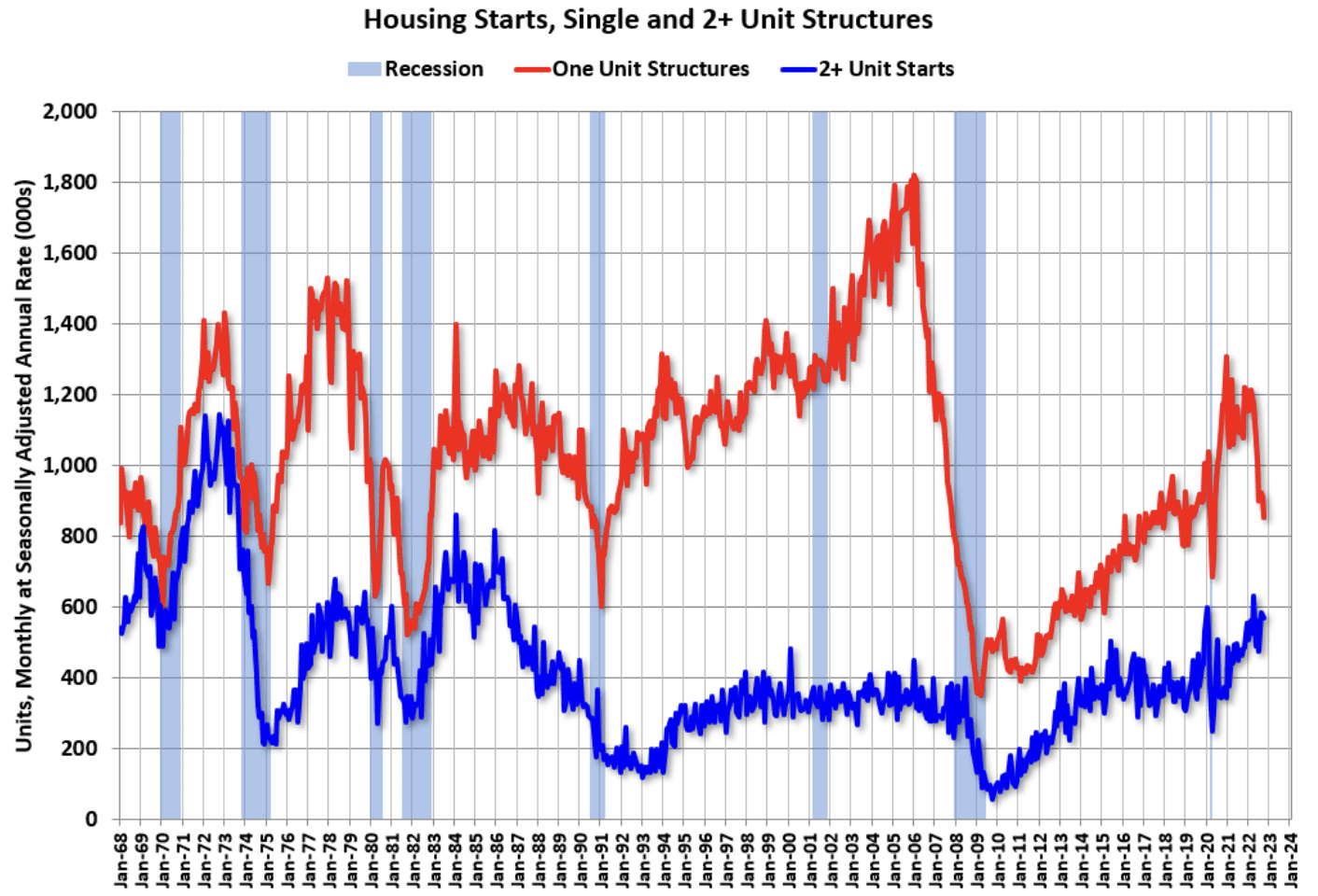
Yet most economists don’t expect a housing crash, even as prices cool in many markets. Prices are still higher than they were a year ago. There hasn’t been an increase in the supply of available homes or new housing starts. At the same time, Gen Z is approaching the typical age to pursue homeownership more financially prepared than millennials, so experts think demand will stay elevated or even increase. And current borrowers are much less likely to default than their peers who were approved prior to the 2008 crisis. 

It may be possible for corrections in housing prices to offset the higher mortgage rates. But current home prices, along with steep rates at a 20-year high, are making it difficult for new investors who count on financing to break into real estate. If the right deal comes along and the numbers work, most experts think you shouldn’t be deterred by worries of an impending housing market crash. But in the meantime, bolster your savings and consider passive cash investments in real estate. Ultimately, having a diverse portfolio of real estate and other investments will offer you the best protection going into a recession. 

On The Market is presented by Fundrise

Fundrise logo horizontal fullcolor black

Fundrise is revolutionizing how you invest in real estate.

With direct-access to high-quality real estate investments, Fundrise allows you to build, manage, and grow a portfolio at the touch of a button. Combining innovation with expertise, Fundrise maximizes your long-term return potential and has quickly become America’s largest direct-to-investor real estate investing platform.

Learn more about Fundrise

Note By BiggerPockets: These are opinions written by the author and do not necessarily represent the opinions of BiggerPockets.


Source link

No One Seems To Agree On What’s Caused Inflation—That’s A Big Problem Read More »

Caesars, developer SL Green join forces

Caesars, developer SL Green join forces


Video slot machines at Caesars Palace in Las Vegas, Nevada.

George Rose | Getty Images

Developer SL Green Realty is working with casino operator Caesars Entertainment on a bid to bring a casino to New York’s Times Square, the companies announced Thursday.

The partners said the proposed project would redevelop Times Square building 1515 Broadway into Caesars Palace Times Square, which will include a Broadway theater that will be home to “The Lion King” and other entertainment attractions.

They also promised the development would “accelerate economic recovery for surrounding businesses” in Times Square, as well as “create good-paying union jobs for New Yorkers.”

In April, New York state approved up to three full-service casinos for the downstate New York area, with two licenses likely to go to existing casino operators — Resorts World racetrack casino in Queens and the Empire City Casino at Yonkers Raceway, north of the Bronx.

Now, competition for the third license that Caesar is aiming for is heating up amid a public bid for a casino in nearby Hudson Yards from Related Companies and Wynn Resorts.

“We believe that Times Square offers the best location for a new resort casino that can attract tourists and benefit local businesses. Our approach will ensure that under-represented communities benefit both in terms of employment and investment opportunities,” said Marc Holliday, CEO of SL Green, in a statement.

Holliday added that because the project will be a renovation instead of a new construction, the opening can happen quicker than other proposed facilities, and without changes to the law or disruption to local communities.

In 2013, New York voters approved a constitutional amendment that granted seven full-scale casino licenses for the state — four of which went to regions upstate and the remaining three allocated for the New York City area. The approval process is expected to be lengthy and costly, with licenses costing at least $500 million each.

Caesars Palace Times Square will be 100% privately funded, the SL Green and Caesars Entertainment said, with Caesars managing the casino’s operation and brand.


Source link

Caesars, developer SL Green join forces Read More »

How to Build an Income-Replacing, All Off-Market Rental Property Portfolio

How to Build an Income-Replacing, All Off-Market Rental Property Portfolio


Financial freedom in two years? How can that be possible with high interest rates and higher home prices? If you’re looking at what’s on the MLS as the only deals around, you could be missing out on buying properties that could fast-track your journey to early retirement. Taylor Wing, unlike most investors, didn’t go the conventional route when building his rental property portfolio. But, walking the road less traveled has paid off significantly, as he has already found financial freedom in less time than it takes most investors to buy their first property!

Taylor’s career trajectory was cut and dry from the start. After graduating from West Point, he entered the Army and knew exactly how rankings, raises, and benefits would work from the day he started until the day he retired. This rigidity didn’t sit well with an entrepreneurial-minded, soon-to-be investor like Taylor. After his first house hack, and a very successful BRRRR, Taylor went full-throttle on investing.

Now, just two years later, he has a portfolio of over thirty rental units, a Rolodex full of private money lenders, and teams in multiple states ready to help him grow. So what sets Taylor apart from the rest? Aside from his resilience, Taylor chose to take action once he had enough information, instead of falling victim to analysis paralysis. If you follow Taylor’s advice, you too could grow a portfolio as fast as he did!

David:
This is the Bigger Podcasts Podcast, show 677.

Taylor:
For me, communication, trust is everything, and honor is a big character trait that I like to stress on is building something that’s based on honor and trust. Being able to meet people face to face, I think builds that kind of relationship. We’re not just an email address or a voice over the phone, but they know who I am and I know who they are, and it helps, and I think it kind of helps build that rapport with each other.

David:
What’s going on, everyone? It’s David Greene, your host of the BiggerPockets Real Estate Podcast, here today with another fantastic episode, and I am joined by my co-host Jamil Damji. Jamil, how’s it going?

Jamil:
Fantastic. I’m really, really stoked about today’s show. Taylor is an incredible guy, not only served our country and continues to just blow my mind with what he’s been doing, not only in real estate, but just as a dude in general. Love the guy.

David:
Yeah, this is a great example of a go-getter who’s doing a phenomenal job with simple techniques that he learned on the podcast that anybody can replicate. He’s in a strong rental market, he’s creative, he hustles, he looks for deals while walking his dog, I love that, doing two things at one time, time management, and there’s a lot of other stuff that you guys will get out of the show if you listen. I think it’s one of the more inspirational stories because, frankly, what Taylor’s doing anybody can do. But before we bring in Taylor, today’s quick tip is brought to you by Jamil Damji.

Jamil:
Thank you, David. One of the things that I really love about Taylor is really making sure that you’re doing business with honor and he epitomizes that in everything that he’s doing. Not only is he getting belly to belly with sellers, but he’s looking at how he can solve the problem, and not enough people are looking at how they can solve somebody’s problem in order to get them the best situation and the seller the best situation, and then on top of that, he’s sticking to markets that he really knows. This isn’t just throwing spaghetti at the wall and seeing what sticks. He’s going in with intention, he’s going in with honor, and he’s making it happen.

David:
Great point. Especially if you’re investing in a market where you live, that’s even more important because reputations get around. All right, let’s bring in Taylor. Let’s get these things started. Let me ask you, what is your story? How did you get into investing in real estate? Take me back to a young Taylor and what was going through your mind when you decided you want to get into the industry?

Taylor:
Yeah, of course. I don’t come from a entrepreneurial background at all. My dad did 30 years of government service. I went straight to West Point after high school, and I just went straight, got spit onto the army. My whole background has just been government service. It’s just been military time. Really, I had to find my way on my own. I just did a lot of podcast listening, a lot of education, just a lot of soul-searching to figure out what I was going to do after the army and then kind of real estate felt on my lap after doing all that research, and I just started buying property really.
It was super fun. It’s been an exciting journey. I’ve only been in real estate for a couple years now, but in those couple years we’re able to buy about 30, 31 doors, and my goal was I created an action plan for having three years, three years before my contract was up at the army, I wanted to get my financial freedom and be able to leave the army. Luckily we’ve been able to do that, and we’ve been able to meet our financial freedom number.

David:
Were you listening to podcasts at a certain point? Where did the seed get planted that you could hit financial freedom through real estate, especially while still in the service?

Taylor:
Yeah. What happened was is that back then, I met my now wife, we just got married this month, and we were thinking about leaving the army for, thank you, for a little while, just because active duty life is a little tough on family life. For those that kind of don’t know how it goes is you’re moving every couple, three years, you’re deploying a lot, you’re doing a lot of training rotations. And so, I was looking for a way out, but I didn’t know exactly what that looked like because like I said, all I knew was really the army. Once I got into podcasts, BiggerPockets was a big one I was listening to, it seemed like the way I can build cash flow, build wealth. All science kind of pointed towards real estate. Even though I had never financed anything at that point, I kind of knew that that’s the way I wanted to go.

David:
How did you find the first deal? Were you sitting in the barracks looking at Zillow when everybody else was goofing around? What was that moment like?

Taylor:
I was actually deployed, and so, I had some time on my hands, and that’s when I really started digging into some of that education. By the time I got back I knew I wanted to buy my first property, and so, I started off pretty easy. I used a VA loan when I got back and the VA loan is a powerful tool. I highly recommended for a lot of vets. There’s no other tool I can think of in the world where you can leverage a hundred percent of an asset. And so, I just bought a regular single family house, moved into it, and I did my first house hack, moved in another soldier in one of the bedrooms, and I actually lived for free that way because that rent offset the mortgage. I bought a pretty inexpensive house and I was able to pocket all of my BAH. It’s like a basic allowance for housing that the army gives me. That is what really kind of hit that light bulb was when I started pocketing all that BAH and offsetting my living expense.

David:
The first property that you bought, Taylor, what did it look like? Did you house hack? Did it cash flow, or did you just have to pay the mortgage?

Taylor:
Back then the market wasn’t too crazy. I think this was in 2020, so it wasn’t too, too crazy back then. I was actually able to negotiate the seller to cover all my closing costs. I bought this house with zero down. All my closing costs were paid for. I think I even got a check for 200 bucks and the property was just under 100k, so maybe $98,000 was when I paid for it. The mortgage is under $600, and then that room rented, rooms are renting for about $600 in that area. That one room I was renting out offset that entire living expense for me, and I was able to pocket my BAH that the army was giving me as well.

Jamil:
Taylor, it’s really interesting the launch pad for you to get into this, right? Because you’re one of those people that I think is uncommon listener to podcasts and consuming education or consuming content because you took what you were learning and found a way to take action, right? And for the people that are listening to this right now, I think this is one of the most important pieces of inspiration, right? How do you get yourself out of the content consumption portion of this and then take action to actually buy your first house? Because that decision is difficult for people to make. They’re constantly evaluating, they’re analyzing, they want to make sure I’m not making a mistake. They’ve got to feel like they’ve got it all right. You probably didn’t feel like you had it all right. How did you make that choice and what pushed you over the edge? Because I feel like if we can nail that down, there’s going to be a lot of people listening in right now who are looking for that moment, that moment that makes them feel like I think I’m ready to do this. When did you find yours?

Taylor:
Yeah, that was the toughest thing. I mean, I was a sponge absorbing all that education, but the application, taking action, it was really scary for me, especially being a government employee. In the army, if you want to know how to do something, there’s a manual that shows you how to do everything. Even there’s a career progression. You know exactly in five years, I’m going to be a captain, and I’m going to know exactly how much money I’m going to be making. It was a big mental pivot for me going from that mindset to an entrepreneurial mindset where I kind of have to figure out everything on my own. There wasn’t anybody to handhold me. It was that big mental pivot and I had to just believe in myself. I had to be able to take that risk. And so, after I did buy, that VA loan, I kind of saw some that power there, I decided to go ahead and believe in myself, and I bought my first BRRRR property.
I put pretty much every dollar I had saved into that first BRRRR. It was a big mindset pivot. I had to overcome a lot of self-doubt, those fears. I even liquidated what I had in my IRA because I didn’t have any money, just a couple months of paychecks to do this deal. Luckily, I believed in the numbers, and everything worked out, and so, with that one BRRRR and pretty much every dollar I had, I was able to recycle those funds, do more and more deals and have a nice cash flow on rental.

David:
Tell us, I understand you had a different type of loan that you got, like an SBA type that helped you get into these deals. Can you share what that was?

Taylor:
Yeah. For the house hack, it was just a VA conventional loan. When I did my first BRRRR, I went out and I found a hard money lender to get me into that deal. I’d maybe saved somewhere between 30 and $40,000 to do the down payment. I think they funded up to 80 or 85% of that loan to value and then they funded a hundred percent of the rehab. I just had to get into that deal with the down payment with those funds I had saved.

David:
Okay, so you’re got this first property, you’re renting out the rooms, it probably had to feel like this is too good to be true, like, I’m getting my whole thing covered just by renting out a room. You’re renting out to people that you know, so you don’t have this weird stranger danger thing going on. You guys are in the same culture. Everything’s just lined up for you. I’m sure you thought, “I’m just going to scale this. How hard could it be?” What was your thought process and then how did you get into the next deal?

Taylor:
Yeah, once I finished, once I did that house hack and that first BRRRR, that’s when everything clicked, and I was like, “oh I got this. This is not bad at all.” Again, I had all my funds back and then I started doing a lot more creative financing, and then after that I started doing a lot more direct to seller marketing as well to find these deals because for me, creative finance, I didn’t choose creative finance. Creative finance kind of chose me just because of in that financial position I was in.

Jamil:
Wow.

Taylor:
And so, I had to figure out how was I going to get into these houses because I didn’t have the funds to just put 20% down or go to the MLS or anything like that. I just knew I needed to find good deals and sellers that were willing to work with me and sell them on my story to help me get into these deals.

Jamil:
Creative finance chooses you. I absolutely adore that you said that because it can be a little confusing for people if they’re just getting into real estate investing to wrap their heads around, “Wait, I can get financing from a seller, or I can take over somebody’s property and leave the existing loan in place?” How did creative finance find you, and second, how did you wrap your head around all of the nuance and the intricacies that are necessary in getting one of these deals accomplished? Because in truth, they’re not that complicated, but they feel complicated, and I’m really interested to hear how you bridged that gap and were able to accomplish your first deal. I mean, for me, it took me a long time to get comfortable enough to do creative finance, and it sounds to me like it was your second at bat. How does that happen?

Taylor:
Yeah. I knew everything theoretically just from listening to podcasts like BiggerPockets or just googling things on the web. I knew everything in theory. I’m one of those guys that just needs to do it and just get smacked in the head a couple times to figure things out. And so, just by going into it and kind of starting ugly, just writing my own contracts on a Word document and just going to the title company and saying, “Hey, is this going to work for you?” So, just starting ugly and just trying it. There’s no harm in trying I feel like. The worst I can get is laughed at or a no.

Jamil:
What type of creative deal did you first do? Was it a sub to? What did you do, an owner finance? Walk us through that.

Taylor:
Yep. I’ve done a number of sub tos. That was one of my favorite go-to strategies. I was able to just, basically my favorite thing is walking my dog. I would walk the dog, I would just write down addresses and cold call if somebody’s home. Just, I would feel free to door knock, see what’s going on. But some of these sub tos, I was able to just knock on the door, talk to the seller, kind of build a little rapport there, and pitch a sub to. Even though I have never done a sub to, I knew enough about it to speak intelligently about it and somehow convince them that this was a good idea. I was able to get into those deals that way, otherwise I would not have been able to get into those deals.

Jamil:
For the audience that’s listening right now, if they’re questioning what’s a sub to, that’s essentially when Taylor took over a property with an existing loan in place and he was able to take that property, take title to the property, but leave the financing in place and basically make that his loan. Was that a large entry fee? Was it favorable terms? Did you overpay for the property? How did that all work? And the second thing is I got my first deal walking a dog as well, so you and I are kindred spirits.

Taylor:
Yeah, helps me keep the weight off, me and the dog. I’ll share this one particular deal. Basically the property was worth somewhere around 2, 215, something like that, and when I called this guy, he was really just motivated to get out of the property, and so, I told him our story. He was also a vet, we kind of bonded over that, we built rapport, and really it was kind of not a good situation for him, he just needed to get out of it. I told him, “Hey, the quickest way I can get you out of this deal is if we did a sub to.”
And so, he only owned about $100,000 on this property. I just was able to close on it without any funds. I just closed on it. I paid the title companies some closing fees, and I was able to step into this deal with no money down. Luckily, I had some cash. I did renovate it a little bit. It needed about $15,000 in repairs. But on the back end, I was kind of able to combine the BRRRR strategy and do a refinance on the back end to get my rehab money back, and then I actually profited too, almost like a flip. I got maybe like $25,000 profit after I paid myself and had a cash flank rental locked in a lower interest rate there as well.

David:
Yeah. We just interviewed Ashley Hamilton and she describes it as the reverse flip when you make a profit off a property that you keep. And so, what I like about this is you didn’t ask the question, which strategy should I use. You found an opportunity and you said, “What strategies do I have available to me to use?” You’re like, “I’m going to pursue a BRRRR. I’m going to pursue a subject to.” You found a motivated seller and you said, “I can use creative financing, I can use subject to, I can use my construction knowledge in a rehab, then I can refinance it. Oh, I took more money out this.” We started calling it a pilf because that’s how you spell flip backwards. Then Ashley came up with property I’d like to flip which is very funny when we did that episode. But you’ve got this toolbox of knowledge from listening to BiggerPockets podcasts, studying real estate investing.
The deal comes along and you didn’t have to say, “I need a mentor, I need a mentor, somebody tell me what to do.” Like, “Oh no, I’ve heard about this before. I’ve got these strategies lined up.” What I want to ask is because to me when I hear this, the most important part of this entire deal was finding that person that didn’t want to own an asset, and you did, what had they done wrong? What was going on with the deal? What was their motivation why they wanted to sell it and didn’t necessarily need to get any money out of it?

Taylor:
Yeah. I think the biggest piece was he was just kind of in a sticky situation, and when I talk to these homeowners, really what I’m looking to do is align myself against the problem and provide solutions. I don’t want to sell them on just the house, make it transactional. How I like to word it is it’s more of a relationship base. I’m selling them on who I am and I’m selling them as I’m selling the solution. I’m not just buying the house. And so, the problem was is I think they bought it when he was in a previous marriage and it didn’t end too well. That was the last I think thing they owned together, so it was kind of like the last thing tying them to that ex-marriage.
And so, I told him who I was. “I’m Taylor. Hey, I live a couple houses down from this one. I’m your neighbor. I’m still active duty army. I’m just looking to buy a couple properties to help me and my family out on our financial freedom journey, build a little generation of wealth.” I think other people really resonate with that story. And so, he said, “Hey, I don’t even need a profit. If you can get me out of this situation, I’ll be super grateful.” And so, we were able to create a win-win situation where he walks away happy, he doesn’t have that burden. It was essentially just a money coming out of his pocket every month. I was able to win with a nice cash flowing rental, and then the neighborhood won too because I made the neighborhood nicer as well.

David:
What’s worth acknowledging here is you didn’t find a person and ask the question how do I convince them they should do seller financing. That’s the wrong question, and a lot of people go that road. You found a person who already wanted to get rid of an asset and then you provided the solution of seller financing. There has to be a hunger there before you can provide the food. A lot of the listeners find a deal on Zillow and they’re saying, “Now how do I convince this seller to give it to me for no money down and let me take over their mortgages? How do I get this two-year-old that isn’t hungry and doesn’t want to eat?”How do I shove this down their throat?” and you just end up with a big mess, right? Jamil, have you had experiences like that too?

Jamil:
Absolutely. I love that you brought that up, David, because it’s so important that we approach any seller, whether we’re talking direct to seller or you’re working through a real estate agent. The facts are is that this specific house probably wouldn’t have been able to sell through a traditional real estate agent. There wasn’t enough equity in the deal to even pay commissions. When you think about this, Taylor is looking at the opportunity and he’s talking to this seller and he’s literally coming to them with, “Look, I want to be able to solve your problem and the only method that I can think of that can actually get you out of this house, that’s going to get you out of here without having to come to the closing table with money is if we do a sub to.” And I love the fact, I love the fact that you come in solution-based, relationship-based thinking. See this is how you create real opportunity. This is how you solve problems, and you brought so much value to the circumstance that at the end of the day, you were able to profit from it. I think that’s fantastic.

David:
That brings us to the next question here. The market has clearly shifted. You don’t have to go off market to find deals anymore, and my understanding is you’re still buying off market. So what is it about the off market approach that you like so much that has you going back to that well time and time again?

Taylor:
What I really love about the off market and getting that property under contract yourself is just the flexibility it provides you. I know on MLS you can still find some good deals nowadays, but when you’re able to lock up that property and be the first one to that seller, there’s so much you can do with it. You can wholesale it. You can wholetail it. You can flip it. You can buy and hold, sub to. I mean, the opportunities are endless there. I just love that flexibility of when I can lock up that deal myself and go ahead and kind of see how I want, what exit strategy I want to choose.

Jamil:
Taylor, what primary methods of lead generation are you doing to get in front of these sellers?

Taylor:
I’ve done a little bit of everything but right now what we’ve really been focusing on is SEO, PPC, kind of going into the online realm, and right now I’m in a big transition-

Jamil:
Internet deal.

Taylor:
Yeah, because before it was more a bootstrap. I was just walking the dog, writing down a couple of addresses, but it’s not scalable. Like I said, I’ve met my financial freedom number, so officially I’m getting out of the army next year and I’m going to be a real estate entrepreneur full-time. And so, now I’m trying to build an actual business. I have now a little bit of real estate knowledge, but now it’s another set of education I need to learn of how to build a business systems and a team around me so that we can consistently close deals every month.

Jamil:
Where specifically are you doing business? I understand that you’re in multiple markets. Walk us through those.

Taylor:
Yeah, I really like investing where I am locally. I know a lot of people can’t, don’t have that luxury, but I’m a very hands-on guy. I like to be a member of my community, shake hands, kiss babies, so I like to invest where I am. I’ve invested locally in North Carolina where I was last stationed. Right now I’m investing in Sioux Falls, South Dakota where I’m living currently. And then once we transition out of the army and we go full-time entrepreneur, we’ll be down around the Treasure Coast area of Florida where my wife’s from.

Jamil:
Do you find that when you’re looking at the markets that you specifically know, does it make it easier for you to understand and possibly get boots on the ground and be able to manage these if you get moved to another market or if you have to go to another city for whatever reason? Is that part of the strategy, part of the thinking process that leads you to it? Because North Carolina is great, but personally, I don’t even know anybody investing in South Dakota. So, it’s interesting because it’s not like a buzz market, right? I’m curious to find out some of the… Other than just being there geographically, are there other advantages to why you’re choosing these places?

Taylor:
Yeah. Well, one, I like both markets I invest in, but I just like the fundamentals. The first market, Fayetteville, North Carolina, it’s a military town, but why I really like it is just because it’s essentially in a bubble, a recession-proof bubble because the largest army base that we have is there. And so, anybody that wants to buy property there, if you’re renting to military families, they’re always going to get paid unless something really, really terrible happens to our government, but everyone’s going to keep getting paid and they’re going to be paying their rent.
And then here in Sioux Falls, South Dakota, it’s another great market which I would’ve never expected, but it’s a stable Midwest market that’s been continually going up throughout the years. There’s no crazy dips in the market, and just has a nice economy with healthcare, finance, and agriculture. And so, I like those market indicators, for one, and then two, I think for me it’s way easier to build a team on the ground because I can meet the property managers face to face, I can look at the contractors and see how they’re doing right here on site, and then once I leave I feel comfortable with those relationships I have built. I’m still buying in North Carolina. I’m buying here in South Dakota and still Florida. I still buy in those areas with those teams I set up.

Jamil:
You’re obviously working with people that you have deep relationships with and there’s a level of trust there, right? I think for me, when I am making purchases and I’m investing in specific cities, I remember when I first bought in Phoenix, Arizona, I was investing there because, A, proximity to Los Angeles, I was seeing that there was an opportunity there, I could get in at a good price. But what ended up ultimately happening was I was getting ripped off by my property manager, and I ended up having to move to Phoenix in order to take control of the situation. I was losing money. Literally, my property manager was taking cash rent from my tenants and telling me that the places were vacant, and there was a whole mess that I had to unravel when I got there. I love the fact that you’re working with people that you know and trust. How important do you think that is in building a business?

Taylor:
Yeah. For me, communication, trust is everything, and honor is a big character trait that I like to stress on is building something that’s based on honor and trust. Being able to meet people face to face, I think builds that kind of relationship. We’re not just an email address or a voice over the phone, but they know who I am and I know who they are, and it helps, and I think it kind of helps build that rapport with each other. But that really sucks that you got treated like that with your property manager in Phoenix. I did buy one turnkey property before and that was in a market in Alabama, similar situation to you where I had never seen it before, and I thought it would be easy, it’s just turnkey, and same situation, it was just terrible, terrible time. And so, I was like, “I’m never buying a property that I’ve never built a team out myself and just let it go on autopilot.” I know, I did get burned once with the same situation with a property in Alabama that with a team I had never met.

David:
Yeah, that story happens quite often unfortunately. As you’re looking for properties that you think will work, a lot of the time, those that buy a lot of properties, we just take for granted, we get a feeling like, “Oh that will work, that one won’t work.” And then the newbie who’s listening is like, “How did you know? I’ve analysed 700 deals this week and I don’t know which one’s good.” Can you share what your buy box looks like? What are the things that you’re just like, “Okay, that catches my attention. I don’t even want to look at this one.” And then how do you know which one to pursue?

Taylor:
Yeah. For each market I have a different buy box criteria. Again, for that one in Fayetteville, military town, first of all, I kind of look at the market and I identify who’s my clientele, who do I want to market these properties to. In Fayetteville, I love running to military families. I kind of target properties in not the top neighborhoods but something in the middle where they can get nice cash flow, but they’re still nice homes for military families that they can rent and live in comfortably, they don’t have to worry about getting shot at. I kind of rent in those areas, and I look for houses that are three bedrooms typically for military families, and I usually put nicer, higher level renovation just so that they’re happy as well.
Here in South Dakota, what I look for is we kind of switch strategies over to short-term rentals. That’s something we started last year, mid-term rentals. In Sioux Falls, we have two of the largest hospitals here in South Dakota right there in Central Sioux Falls. We’ve been buying small apartments in close proximity to those hospitals and renting them out mid-term, kind of short-term to those travel nurses. My wife a travel nurse. She kind of gave me the idea, and we outfit them with everything a travel nurse would need. And so, really proximity to those hospitals there for South Dakota here is for my buy box.

Jamil:
Taylor, what’s very interesting to me is that you’re working with primarily folks that you resonate with, people that have lived the same kind of life with you in active duty. I feel like there’s a real opportunity for you here to create a synergy where you can rent to some of these families and then educate them into home ownership themselves, maybe even getting them into a house hack. A community can be built out of this strategy. Have you thought of taking this the next step and bringing in or creating an army of other investors that you might be able to teach what you’ve learned and possibly get them into home ownership themself?

Taylor:
Oh, I would absolutely love that because the vet community is something I have just a big passion for helping. Of course, it’s where I came from. I have a ton of respect for all of my brothers and sisters in uniform service, and that’s what kind of gave me my start is there was some other vets that had their own kind of small course, and I took that course and that’s what helped me get that confidence to go ahead and start closing some deals. That’s something I want to do in the future is be able to help other vets and do something that I’m doing because I didn’t do anything special. It was just a lot of base hits that kind of got me to where I’m at now. But I think anybody can do this and even though with your busy active duty schedule or anybody on a W-2, they can find the time to go ahead and start doing what I’ve been doing.

David:
When you’re looking at an off market deal, what are some red flags that you see that would let you know, walk away from this one, it’s not worth it?

Taylor:
Yeah. Really, I always have my contractor that I trust walk these properties, and I like to stick to light cosmetic rehabs. Anything that’s going to be a complete gut job, usually anything that’s too old, 1960s and earlier, where we’re doing either foundation work or we’re ripping out walls and we’re replacing all the CapEx items, I stay away from those because those budgets can get out of hand very quickly. If I find something that usually is just maybe disgusting on the inside, you just got to clean it out, maybe slap on some new paint, floors, hardware, that is my bread and butter. Anything that’s too crazy, I would stay away from me.

David:
Jamil, what about you? Do you have anything when you’re approaching an opportunity, you got a fish on the line, you’re trying to figure out do I reel this thing all the way to the boat or do I cut bait that you’ve learned over your experiences, like, “Oh man, as soon as I see this I just know it’s not worth it, get out of Dodge”?

Jamil:
Yeah, there’s a few. First, foundation problems for me, they’ve been a nightmare to deal with. I have rarely had a foundation repair come in anywhere near what the original quoted number was. They always escalate. That for me is definitely one of those types of repairs that I won’t want to do. And then the other thing is anything that requires some kind of abatement. I found that when I’m getting into a property that might have a mold issue, that or asbestos, something that I know I’m going to have to have a professional company come in and doing an abatement here and then it’s going to be a situation where I have to disclose this process to a future buyer. For me, I found that that has always, even after you’ve completed the repair and you’ve got the city to come in and make sure that everything has been done to standard and code, there’s still always that piece of uncertainty for a buyer.
I’ve never been able to maximize my return on a deal like that because I’m literally having to go to my buyer and say, “I want you to trust that I fixed it all and this is all the documentation that says that it’s done,” but there’s always that thought in the back of their mind, “What if the mold is still here? What if the biohazard is still here and my family could be affected?” And for me, I think that that’s always created a problem for getting a return on investment. So, I’m staying away from foundation problems and anything that requires severe abatement.

David:
That’s really smart. And the other problem I think you have with the abatement issues, foundation issues, the stuff that Taylor was saying are non-cosmetic, the seller tends to want to overlook the significance of how much it would cost to fix that. The seller’s like, “Yeah, my kitchen’s old, you’re going to have remodel it.” They understand it. If you got to spend $65,000 to fix a foundation issue, it’s tough to get them to understand you got to take more than 65,000 off, plus the cosmetic issues, plus the profit I have to get in here. Now, it feels like they’re being gouged when they’re not. That’s the actual problem. And when you have a situation where it’s just cosmetic work, there’s usually a discount that they can live with and you can still make work. I think that’s really good.
It’s like when you get into that issue of the foundation issues, mold, what are some, like fire damage can be one of them. Sometimes a roof can end up in that situation, depending on if it’s a house that is not priced very high, the roof becomes a significant portion of it. On a million dollar-house, a roof’s not nearly as big of a deal. I’ve noticed the same thing is you just never see eye to eye. You end up with those irreconcilable differences and you spend all this time and it never goes anywhere. Taylor, I can see that you’re absolutely picking up steam here. Tell us a little bit about who makes up your team, and what is the first hire that you think someone should make if they want to do what you’re doing?

Taylor:
Yeah. For me, it’s almost tied between lender and contractor. Those were the two I would say were absolutely pivotal for me. Contractor really because I’m not the best guy to swing hammers. If you can find an honest guy that’s going to keep prices reasonable, he’s going to let you know exactly what he needs to do, not do anything extra or delay the timeline. To me contractor is going to be the make or break for keeping your projects under budget and within time, even though it almost never happens. And then number two, the lender, because my lender also educated me, and if you can understand the finance and the lending piece, they help me a lot figure out how to finance a lot of different projects. Once I had a good lender in my corner, I wasn’t worried about financing at all. I’ve been able to close deals and work around some things just for having a good lender right there in my corner.

Jamil:
For me, my team is always starting with my sister. She’s the project manager for any of our construction projects. I know that she’s got my best interest at heart because we share companies together, we share resources, and so, I’m positive that she’s going to be taking care of us. But aside from the swinging of the hammers and all of the physical things, right, there’s a massive team that helps me systemize the business, make sure that I’m doing things as efficiently as possible. Taylor, you mentioned that your team, beyond your trades, beyond your contractor, beyond the physical things, you’ve got this team of virtual assistants that are helping you generate your leads and make sure that you’re building a pipeline of opportunity. That is difficult to arrange and it’s difficult to track to make sure that you’re being efficient and that you’re actually getting a decent ROI. Walk us through that process of building your team to help you build your systems out and create a pipeline of deal opportunities for you.

Taylor:
Yeah. Really, it’s been me and a partner. I’ve been kind of figuring out more of the visionary side, he’s been a little bit more of the operations, but what we’re really looking for is what’s going to be our highest return on investments. Finding these VAs that are going to do all these calls because I used to do all the calls but quickly realized that’s not the best use of my time, so if I can get VAs to qualify these leads and then if I can close them, that would be the best use of my time. So, using VAs to supplement my time or I can afford using VAs to handle the back end on the disposition side. There’s lots of things that you can sub out to just really optimize your time and find what’s my highest and best use really.

Jamil:
How do you track everything? Are you using a CRM? Is there a specific methodology? What’s that look like?

Taylor:
To track all of our leads, right now we’re using Follow Up Boss as our CRM, and we’re also using a lot of key performance metrics to track what’s working, what’s not, what should we cut. We’ve cut some things like different Facebook ads, sites that we’ve been using just based on how much we’re paying and what are we getting back.

Jamil:
Are you finding that the direct to seller approach is a little bit… Sellers right now, they may not be aware of how the market has shifted, and it’s interesting to me that you’re very, very forward thinking with respect to, hey, I’m only going direct to seller and that’s my favorite way to build relationships and to create opportunities. Have you tried working through agents and going the on market route? Because personally I’ve been finding a lot of success and finding great opportunities working with realtors who actually know that the market is very frothy right now. I’m interested to hear your answer to this. Have you thought about possibly pivoting into working on market opportunities?

Taylor:
You know, I haven’t yet personally. I know there’s going to be a lot more opportunities coming up. I think we’re just good at what we do, and so, I kind of like to just hyperfocus on what works for us and become really good at it, become experts at that. But if there’s any opportunities that pop up on the market and the market is shifting, it’s something I would definitely look into in the future, but right now, off market’s working for us. We’re closing deals. We’re going to keep the train moving. We’re going to keep chugging.

Jamil:
It’s this what you know? Is this like, hey, this is what I know and I don’t want to fix it, I don’t want to break not broken? Is that a piece of it? I’m sorry, I might be drilling on you a little bit about this, but I feel like you’re missing a major opportunity to get out there and increase your possible deals. I’d be curious to see if you’d open that door, if you might find a wealth of opportunity for you.

Taylor:
Yeah. I actually do have a license and I do plan on using that too once I get down to Florida. But you might be right there. Especially now, there might be getting a lot more opportunities in that area, so I’m open to checking it out, for sure. We just haven’t done pretty much anything yet on market. But I think I might look into that and see if we have some opportunities coming our way.

David:
One thing I can see would be a potential hurdle, and I realize this when Jamil and I were having a conversation the other day specifically about how on market opportunities are now where more opportunity is sometimes, the biggest hurdle is you got to propose your solutions and communicate through usually not only one but two realtors. You got to sell your realtor on how to explain an off market, subject to, creative thing. Then their realtor has to understand it. Then their realtor has to explain it to the client in a way that makes sense, and everybody has to feel confident they’re still going to get a commission because if they think they’re not going to, they’re going to shoot it out of the sky. Jamil, do you have any advice for how you can navigate those waters?

Jamil:
Yeah. Dual agency, I am the huge fan. Here’s the thing. I believe that when I work through a buyer agent, I create friction in this situation because I have to sell my buyer’s agent on what I’m trying to accomplish, then that buyer’s agent has to go and communicate with the listing agent and explain to them what we’re trying to accomplish, and now it’s the telephone game, right? How much of what I’m saying is actually going to be communicated to the listing agent, and then how much of what that listing agent heard is going to actually fall into the seller’s ears.
And so, for me, I think the fastest way to get the appropriate message across is I’ll find the opportunity on the MLS, and I will go directly to the listing agent, and I will explain what I’m looking for, and I’ll have them represent me, and I’ll doubly incentivize them to do business with me because they can represent me as the buyer’s agent. They represent the seller as the selling agent. Now they’ve got an opportunity to either make 6% commission or refer back 3% to their seller. It could be a win-win-win for everybody and I don’t have to create that added layer of communication.
Taylor, I’m very curious about this concept of how you created your financial independence, and I think a lot of our BiggerPockets listeners are here for an understanding of how to do that, right? You’re a young man, and it’s so amazing to hear that you’ve been able to gain your financial independence. Walk us through how you make that decision and what it feels like right now because, look, for any of us that are out there right now, if you’re at a job that you may or may not dislike or you like your job but you think, “Hey, I would really like to spend more time with my family or I’d really like to pursue this other goal in life, but I just don’t have the financial capacity to do that,” Taylor, you’ve accomplished that. So, how did that happen?

Taylor:
Yeah, absolutely, and this is one of my favorite topics to hit on because it’s something I’m really passionate about. Once that real estate light bulb clicked for me, then I really dug in and created an actionable three-year plan because three years is what I still had left on my army commitment. I created an actionable three-year plan to replace my active army paycheck passively with real estate income. And so, now we’re about two years into that plan, and not only were we able to replace my active duty army paycheck, but we were able to double that, and so, we’ve more than exceeded what we needed to. I can confidently say once we get out of the service next year, I feel comfortable leaving without having to sacrifice putting food on the table for my family. But we can get out comfortably and I can focus on starting my real estate business.

Jamil:
Wow. I mean, you could retire, right? You could literally just dial it in if you wanted to at this point, right? I mean, if you’ve replaced your income, that is a life goal for a lot of people. I mean, I don’t know what I would do with myself. For my financial goals, I’ve hit them, but I just, I’d be too bored not to work, right? For me, I would always want to get off and keep doing things, keep growing, keep expanding my business and my life. But how does it feel, man? How does it feel to know that I can wake up tomorrow morning and I could just decide, “Hey, I don’t need to do anything today, it’s great”?

Taylor:
Man, it’s a big weight lifted off my shoulders, not having to worry about the financial piece, just putting food on the table, keeping the lights on. It enables me to pursue what I’m passionate about at that point. It’s not just working to get by. It’s working in something I’m passionate about. That’s doing real estate, and that’s talking to you guys, hopefully providing more content so other people can also move along on their financial journeys as well.

Jamil:
All right, let’s move on over to the deal deep dive. Basically go into a deal that you’ve done and walk through the mechanics, how did you find the deal, and really get into the meat and potatoes of an opportunity that you’ve taken advantage of, and have our listeners be able to follow along and see if they could create something like that.

Taylor:
Yeah, absolutely. I’ll go ahead and share one of my favorite deals. It was my first commercial deal that I just pulled off this year.

Jamil:
Taylor, so a commercial property, that’s different. I mean, gosh, you’re blowing my mind, left, right, and center here because you do things that are so outside of the box. Creative finance finds you, and then you jump into commercial. I mean, commercial again is so much different from residential. It is a completely different beast, valuation, how you add value to it, force appreciation, even exit is a completely different situation than single family. Walk us through that. First, how did you find the deal, how did you underwrite the deal, and then what was your plan with it, and how did you get out of it?

Taylor:
Absolutely. Jumping into this deal kind of had a similar background of me doing residential. I was actually walking my dog again and I wanted to buy-

Jamil:
Yes.

Taylor:
yeah, that dog.

Jamil:
What’s your dog’s name, by the way? It better be Money.

Taylor:
Leo.

Jamil:
Okay.

Taylor:
Yeah, cash money, huh. But yeah, Leo, he’s the key. Leo, get a dog, walk it, that’s going to be the key to your financial freedom journey. I wanted a mom-and-pop-style apartment, something small. I was looking for units in my local area, and I wrote down some addresses again, did some cold calling, trying to find the landlords. Again, I found one, and kind of built rapport with him, told him who I was. This guy, he owns a bunch of property in the area and I just sold him on me, again like I always do. “Hey, I’m a young guy, army guy, and I’m just looking to build financial freedom for my family and get a little extra cash flow coming our way.” He really liked my story, met up a couple times, awesome dude, and he agreed to sell me his commercial deal, and of course, this is my first time doing a million-dollar deal. Before I was doing maybe like $200,000

Jamil:
A million-dollar deal.

Taylor:
Yeah.

Jamil:
What are we talking about in numbers? Well, how much was this and how did you find the funding for it?

Taylor:
Yeah. Pretty much 1 million on the dot, and again I am used doing residential deals, maybe 200k or less. This is a big step out of my comfort zone, but it’s something I’ve always wanted to do and it was one of my goals. Luckily, I was able to make it work so that he carried a note to cover the majority of the down payment, and he also linked me to a local commercial lender. I was able to network with that lender. Through him, he put in a good word for me. He was able to underwrite the loan. I was able to get a seller back note to cover the down payment, and I even got a little bit more creative and collateralize some debt in another property we owned. And so, really I came into this deal with no money down and I just had to-

Jamil:
Again.

Taylor:
Yeah. Creative financing was the fundamental again. And that got me into this deal because there’s no way I would step into a million-dollar deal this early in my real estate career.

Jamil:
Now, for the folks that are listening right now, they might be thinking, “Okay, yeah, so you got into the deal with no money,” and that’s incredible. Creative finance dominates and wins again here, guys. But what kind of debt service are you looking at? Was it scary to get into a situation where you now have this monthly payment due? How did you play with or how did you figure out how to debt service? What was the plan?

Taylor:
Yeah. It was a little terrifying because I never spoke to a commercial lender before. I didn’t want to sound like a complete idiot to him. I was really nervous meeting him, but he was a really cool guy as well, and he also helped me educate myself as well. That’s kind of been a thing with these lenders, built a nice relationship where he not only lended to me, but they also taught me things along the way. And so, I was a little nervous taking on that debt, especially since there’s two mortgages on this property. But my game plan for this thing is why I truly believed in it because this house or this building is about a block away from a large hospital that my wife works at actually. We basically short-termed, STRed this entire building. We dramatically increased the NOI on this building just by converting those units to furnished units and renting to primarily travel nurses. I wasn’t worried about the debt service because I knew I had a nice plan to refinance on the back end before that balloon is due in I think five years or so.

Jamil:
What kind of property was this? Is it small multifamily? How many units are we talking?

Taylor:
Small multi. It was a package. It was eight-unit building with a lot with a single family house that’s next to it. So, a total of nine units.

Jamil:
A nine unit, and your plan was to rent it out to traveling nurses. You already had all that lined up. Was there a moment there where you were negative cash flow or was there any CapEx situation that you had to come out of pocket for? Because I know that you got into this deal with seller carry for the down payment. How much out of pocket did you have to come to improve the property to get it ready for the traveling nurses?

Taylor:
The reason why I really liked this building for the strategy was that it was essentially turnkey. I didn’t have to do any cosmetic updates or anything like that. It was a really nice looking building as is and had everything we needed. What was expensive was the furnishing, because we were furnishing like nine units up front, but they’re all one bedroom units so it’s not too terrible. I think we were able to finish all of them for about a little under five grand a unit. And so, that was where our money went was furnishing all these units up front. It took us maybe a couple months to get them all up and running. But now after that stabilization period, right now we’re sitting really pretty because they’re all on Furnished Finder or on Airbnb, and they’re all cash flowing very well for us.

Jamil:
You still own the property. Any plans to refinance out of it or are you planning to sell the property at any time?

Taylor:
Right now, I plan on keeping it, but I’ve kept everything almost. I haven’t hardly sold anything, and so, I always say, “Oh I might own this one forever.” But who knows? Maybe there’s going to be some awesome deals in Florida that are coming my way. We’ll see what I end up doing with it. But right now the plan is to keep it and refinance it, and we’ll see how the market goes and see if interest rates go down or anything. But right now we’ll plan to keep it and refinance it down the road, if we can improve what we did, improve that net operating income substantially, I think we’re going to have a nice cash out refinance on the back end waiting for us.

Jamil:
Any key lessons that you take away from a deal like this?

Taylor:
I think the key lesson for me here was just to not be afraid of the deal. I know the fundamentals are the same, even though the price tag is a lot higher than what I was used to. Just not let indecision and fear hold me back from doing the deal. And of course, using creative finance to figure out how to get into the deal because if I wasn’t able to talk between the lender and the seller and figure out a way to make it work for everybody, I wouldn’t been able to get into a deal this size.

Jamil:
Suggest or I would say that I think everybody listening right now considers you a hero, and every deal has a hero. Who would you say was the hero of this deal? Would it be the deal finder? Would it be the person on your team who negotiated or had got you in front of the seller? I know you actually were walking your dog to meet the seller, so that’s how that happened. But was the hero creative finance?

Taylor:
It was Leo the dog.

Jamil:
Hey, yes, of course he’s the hero.

Taylor:
He was.

Jamil:
I love it.

Taylor:
Yeah.

Jamil:
It’s so good.

Taylor:
Yeah, creative finance, man. It was just knowing how to use those tools to unlock the keys that we needed and using those tools to your advantage. Just like a tool, like a hammer to a construction worker or a M4 to a soldier, creative finance was the tool that it enabled me to get into this deal. This one’s going to help out the family a lot along our financial journey.

Jamil:
I love it. Before we get to the famous four, I’ve got one last question. Because the market has changed and the environment with the interest rates rising the way that they have, are you finding it harder to find deals right now?

Taylor:
You know, a little bit. I think things have kind of almost slowed down or maybe stagnated a little bit. I think people are a little more hesitant to sell their houses, and people maybe are a little bit more hesitant to buy. I think it has slowed down a little bit, but I think there’s still deals to be done, still money to be made.

Jamil:
Are you changing your strategy or outlook at all with respect to what’s been happening, and are you pivoting at all?

Taylor:
For me, it’s much stricter underwriting because now when I’m doing a BRRRR I need to analyze the deal not from a 4 or 5% interest, but I’m running at higher 7, 8% interest so that the underwritings, yeah, underwritings has gotten a lot more strict. I would say I’ve been a little bit pickier about what I’ve been keeping.

Jamil:
I think that’s absolutely a great strategy to have and it’s important to take note of that. So, I don’t know if our listeners are aware, but David Greene actually midway through this podcast decided he was hungry and went to go make a sandwich. But we always ask our listeners these four questions, Taylor, and I’d love to hear your answers to them.
(singing)
What is your favorite real estate book?

Taylor:
Right now, my favorite book that I just finished reading was this Financial Freedom with Real Estate Investing: The Blueprint to Quitting Your Job With Real Estate – Even Without Experience or Cash, which is totally who I was, and that was by Michael Blank. He kind of went into a lot of multifamily. That’s the book I read that kind of broke it down Barney style for me how to do a commercial deal. And after I read that book, a couple months later is when I went out, applied it, and closed that first commercial deal. So I have to give a shout out to that book.

Jamil:
Amazing. You’re an action-taker. The second question is what is your favorite business book?

Taylor:
This one was recommended to me by a good friend of mine who also has a nice wholesaling business, and it was Traction: Get a Grip on Your Business by Gino Wickman, and that was especially important to me right now because before I was just bootstrapping and doing real estate myself, and right now I’m in that pivotal moment where we’re building our business, a legitimate business where we’re trying to get consistent deals and build out those systems and build out that team. This book was our bible figuring out how to build those systems.

Jamil:
The next question is, especially for a guy like you that’s got so much going on, I mean, you are a massive action-taker, you learn something and then you go off and do it, does it leave you any time for special hobbies? I would imagine you must build rocket ships or something on your spare time, right? What do you do?

Taylor:
Yeah, right now, I’m kind of a robot. Between the army, man, and doing the real estate stuff, also trying to hit the gym. I’m kind of a gym guy, just like to lift things up and put them back down. Between those three things, eating and sleeping, it almost takes up like 95% of my time. But with that last 5%, I do love to spend quality time with my wife, Helen. And so, we’ll do anything together, either watching movies or go biking, anything. With that last amount of time, I give to my wife.

Jamil:
I would imagine one of your hobbies is also walking the dog, right? Because that dog, that Leo makes you a lot of money. Leo, that is a money puppy.

Taylor:
Yeah.

Jamil:
Awesome.

Taylor:
Yeah, I need to give him a promotion or something.

Jamil:
I would imagine you got to get him in a bigger house.

Taylor:
No, not yet.

Jamil:
Go buy him a new bed.

Taylor:
Maybe if I can figure out a creative financing strategy for a dog house, then we can get him into a nice one.

Jamil:
Oh my god. That’s great. Lastly, Taylor, what do you think sets successful people apart from those who give up or just don’t even get started?

Taylor:
Yeah. For me, getting started again with my story was the hardest part, making that mental pivot. For me, it was kind of establishing my why, why was I doing it, and for me, that was my family. It was for my wife to get out of the active duty army lifestyle where I was gone a lot, deploying, training, out in the field, and I wanted to get my time back and then be with my family. Once I really established my why and that kind of embodied me and took over in this business, that’s what really set me up for those long days with balancing the army and doing real estate because that why was able to keep me through and keep pushing me even through all the struggles and the long days.

Jamil:
Taylor, you are a phenomenal man and a amazing husband, I can tell, an amazing dog owner, and a genius real estate investor. I mean, you’ve just, you’ve really put it together, brother, and you’re taking action, and the fact that you consume a little bit of information, then you go off and do it, I think that should inspire everybody who listened in and tuned into this podcast today. I’m sure there’s a lot of people that are going to want to meet you and actually connect with you and possibly do deals with you. Tell us, where can people find you?

Taylor:
Yeah. Lately, I’ve really been trying to build up a little bit of a social media presence. I’m trying to be the most active on Instagram, and that’s just my name, taylorwing_, and so, that’s where I try to post what I’m actually doing because we’re doing a lot of cool projects, and people love to see the before and afters, and so, trying to be the most active on that Instagram handle.

Jamil:
Love it. Love it. I think you should also have a YouTube at some point because I truly believe there’s a community that you can build for people that are in active duty and helping them get into real estate investing. When people can find folks that are just like them doing the thing that might be the key to their financial freedom, I think there’s something there, and, Taylor, I’d love to help you do it. Folks, if you’d like to also follow me, you can find me on Instagram, @jdamji, @J-D-A-M-J-I. I also have a YouTube page, it’s just Jamil Damji. And on behalf of David Greene who is still eating a sandwich and the rest of us here at BiggerPockets, Taylor, we just want to thank you. Thank you for your service. Thank you for your time today, and thank you for taking action because I think that you’re going to inspire thousands of people who are going to hear your story and want to do the same. We loved having you on here, Taylor. Have a great day. David, what are you doing? We’re already done, bro.

David:
You guys are done?

Jamil:
Yeah. Yeah.

David:
I thought you were going to wait for me to go get a sandwich and come back. I even, I got you a PB&J, bro.

Jamil:
I mean, we were talking a lot of good stuff and away you went.

David:
Oh geez.

Jamil:
How was the sandwich?

David:
I’ll tell you in a minute.


Help us reach new listeners on iTunes by leaving us a rating and review! It takes just 30 seconds and instructions can be found here. Thanks! We really appreciate it!

Interested in learning more about today’s sponsors or becoming a BiggerPockets partner yourself? Check out our sponsor page!

Note By BiggerPockets: These are opinions written by the author and do not necessarily represent the opinions of BiggerPockets.


Source link

How to Build an Income-Replacing, All Off-Market Rental Property Portfolio Read More »

An Essential Book For Every Investor

An Essential Book For Every Investor


15% ROI”,”imageURL”:”https:\/\/www.biggerpockets.com\/blog\/wp-content\/uploads\/2021\/05\/large_Extra_large_logo-1.jpg”,”imageAlt”:””,”title”:”SFR, MF & New Builds!”,”body”:”Invest in the best markets to maximize Cash Flow, Appreciation & Equity with a team of professional investors!”,”linkURL”:”https:\/\/renttoretirement.com\/”,”linkTitle”:”Contact us to learn more!”,”id”:”60b8f8de7b0c5″,”impressionCount”:”277506″,”dailyImpressionCount”:”342″,”impressionLimit”:”350000″,”dailyImpressionLimit”:”1040″},{“sponsor”:”The Entrust Group”,”description”:”Self-Directed IRAs”,”imageURL”:”https:\/\/www.biggerpockets.com\/blog\/wp-content\/uploads\/2021\/11\/TEG-Logo-512×512-1.png”,”imageAlt”:””,”title”:”Spring Into investing”,”body”:”Using your retirement funds. Get your step-by-step guide and learn how to use an old 401(k) or existing IRA to invest in real estate.\r\n”,”linkURL”:”https:\/\/www.theentrustgroup.com\/real-estate-ira-report-bp-awareness-lp?utm_campaign=5%20Steps%20to%20Investing%20in%20Real%20Estate%20with%20a%20SDIRA%20Report&utm_source=Bigger_Pockets&utm_medium=April_2022_Blog_Ads”,”linkTitle”:”Get Your Free Download”,”id”:”61952968628d5″,”impressionCount”:”456790″,”dailyImpressionCount”:”212″,”impressionLimit”:”600000″,”dailyImpressionLimit”:0},{“sponsor”:”Walker & Dunlop”,”description”:” Apartment lending. Simplified.”,”imageURL”:”https:\/\/www.biggerpockets.com\/blog\/wp-content\/uploads\/2022\/03\/WDStacked512.jpg”,”imageAlt”:””,”title”:”Multifamily Property Financing”,”body”:”Are you leaving money on the table? Get the Insider\u0027s Guide.”,”linkURL”:”https:\/\/explore.walkerdunlop.com\/sbl-financing-guide-bp-blog-ad”,”linkTitle”:”Download Now.”,”id”:”6232000fc6ed3″,”impressionCount”:”166884″,”dailyImpressionCount”:”188″,”impressionLimit”:”200000″,”dailyImpressionLimit”:”6500″},{“sponsor”:”SimpliSafe Home Security”,”description”:”Trusted by 4M+ Americans”,”imageURL”:”https:\/\/www.biggerpockets.com\/blog\/wp-content\/uploads\/2022\/09\/yard_sign_100x100.png”,”imageAlt”:””,”title”:”Security that saves you $”,”body”:”24\/7 protection against break-ins, floods, and fires. SimpliSafe users may even save up to 15%\r\non home insurance.”,”linkURL”:”https:\/\/simplisafe.com\/pockets?utm_medium=podcast&utm_source=biggerpockets&utm_campa ign=2022_blogpost”,”linkTitle”:”Protect your asset today!”,”id”:”624347af8d01a”,”impressionCount”:”140087″,”dailyImpressionCount”:”223″,”impressionLimit”:”200000″,”dailyImpressionLimit”:”2222″},{“sponsor”:”Delta Build Services, Inc.”,”description”:”New Construction in SWFL!”,”imageURL”:”https:\/\/www.biggerpockets.com\/blog\/wp-content\/uploads\/2022\/04\/Image-4-14-22-at-11.59-AM.jpg”,”imageAlt”:””,”title”:”Build To Rent”,”body”:”Tired of the Money Pits and aging \u201cturnkey\u201d properties? Invest with confidence, Build To\r\nRent is the way to go!”,”linkURL”:”https:\/\/deltabuildservicesinc.com\/floor-plans-elevations”,”linkTitle”:”Look at our floor plans!”,”id”:”6258570a45e3e”,”impressionCount”:”127400″,”dailyImpressionCount”:”160″,”impressionLimit”:”160000″,”dailyImpressionLimit”:”2163″},{“sponsor”:”RentRedi”,”description”:”Choose The Right Tenant”,”imageURL”:”https:\/\/www.biggerpockets.com\/blog\/wp-content\/uploads\/2022\/05\/rentredi-logo-512×512-1.png”,”imageAlt”:””,”title”:”Best App for Rentals”,”body”:”Protect your rental property investment. Find & screen tenants: get full credit, criminal, and eviction reports.”,”linkURL”:”http:\/\/www.rentredi.com\/?utm_source=biggerpockets&utm_medium=paid&utm_campaign=BP_Blog.05.02.22&utm_content=button&utm_term=findtenants”,”linkTitle”:”Get Started Today!”,”id”:”62740e9d48a85″,”impressionCount”:”108465″,”dailyImpressionCount”:”175″,”impressionLimit”:”150000″,”dailyImpressionLimit”:”5556″},{“sponsor”:”Guaranteed Rate”,”description”:”One-Stop Mortgage Lender”,”imageURL”:”https:\/\/www.biggerpockets.com\/blog\/wp-content\/uploads\/2022\/06\/GR-512×512-1.png”,”imageAlt”:””,”title”:”$1,440 Mortgage Savings”,”body”:”Whether you\u2019re buying new or cash-out refinancing to upscale the old \u2013 get started today and we\u2019ll help you save!”,”linkURL”:”https:\/\/www.rate.com\/biggerpockets?adtrk=|display|corporatebenefits|biggerpockets|july2022_blog||||||||||&utm_source=corporatebenefits&utm_medium=display&utm_campaign=biggerpockets&utm_content=july2022-blog%20%20%20″,”linkTitle”:”Buy or Cash-Out Refi”,”id”:”62ba1bfaae3fd”,”impressionCount”:”64118″,”dailyImpressionCount”:”170″,”impressionLimit”:”70000″,”dailyImpressionLimit”:”761″},{“sponsor”:”Avail”,”description”:”#1 Tool for Landlords”,”imageURL”:”https:\/\/www.biggerpockets.com\/blog\/wp-content\/uploads\/2022\/06\/512×512-Logo.png”,”imageAlt”:””,”title”:”Hassle-Free Landlording”,”body”:”One tool for all your rental management needs — find & screen tenants, sign leases, collect rent, and more.”,”linkURL”:”https:\/\/www.avail.co\/?ref=biggerpockets&source=biggerpockets&utm_medium=blog+forum+ad&utm_campaign=homepage&utm_channel=sponsorship&utm_content=biggerpockets+forum+ad+fy23+1h”,”linkTitle”:”Start for FREE Today”,”id”:”62bc8a7c568d3″,”impressionCount”:”67562″,”dailyImpressionCount”:”193″,”impressionLimit”:0,”dailyImpressionLimit”:”1087″},{“sponsor”:”Steadily”,”description”:”Easy landlord insurance”,”imageURL”:”https:\/\/www.biggerpockets.com\/blog\/wp-content\/uploads\/2022\/06\/facebook-business-page-picture.png”,”imageAlt”:””,”title”:”Rated 4.8 Out of 5 Stars”,”body”:”Quotes online in minutes. Single-family, fix n\u2019 flips, short-term rentals, and more. Great prices and discounts.”,”linkURL”:”http:\/\/www.steadily.com\/?utm_source=blog&utm_medium=ad&utm_campaign=biggerpockets “,”linkTitle”:”Get a Quote”,”id”:”62bdc3f8a48b4″,”impressionCount”:”64809″,”dailyImpressionCount”:”134″,”impressionLimit”:”200000″,”dailyImpressionLimit”:”1627″},{“sponsor”:”MoFin Lending”,”description”:”Direct Hard Money Lender”,”imageURL”:”https:\/\/www.biggerpockets.com\/blog\/wp-content\/uploads\/2022\/06\/mf-logo@05x.png”,”imageAlt”:””,”title”:”Flip, Rehab & Rental Loans”,”body”:”Fast funding for your next flip, BRRRR, or rental with MoFin! Close quickly, low rates\/fees,\r\nsimple process!”,”linkURL”:”https:\/\/mofinloans.com\/scenario-builder?utm_source=biggerpockets&utm_medium=cpc&utm_campaign=bp_blog_july2022″,”linkTitle”:”Get a Quote-EASILY!”,”id”:”62be4cadcfe65″,”impressionCount”:”70227″,”dailyImpressionCount”:”122″,”impressionLimit”:”100000″,”dailyImpressionLimit”:”3334″},{“sponsor”:”REI Nation”,”description”:”Premier Turnkey Investing”,”imageURL”:”https:\/\/www.biggerpockets.com\/blog\/wp-content\/uploads\/2022\/07\/REI-Nation-Updated-Logo.png”,”imageAlt”:””,”title”:”Fearful of Today\u2019s Market?”,”body”:”Don\u2019t be! REI Nation is your experienced partner to weather today\u2019s economic conditions and come out on top.”,”linkURL”:”https:\/\/hubs.ly\/Q01gKqxt0 “,”linkTitle”:”Get to know us”,”id”:”62d04e6b05177″,”impressionCount”:”59580″,”dailyImpressionCount”:”144″,”impressionLimit”:”195000″,”dailyImpressionLimit”:”6360″},{“sponsor”:”Zen Business”,”description”:”Start your own real estate business”,”imageURL”:”https:\/\/www.biggerpockets.com\/blog\/wp-content\/uploads\/2022\/07\/512×512-1-300×300-1.png”,”imageAlt”:””,”title”:”Form Your Real Estate LLC or Fast Business Formation”,”body”:”Form an LLC with us, then run your real estate business on our platform. BiggerPockets members get a discount. “,”linkURL”:”https:\/\/www.zenbusiness.com\/p\/biggerpockets\/?utm_campaign=partner-paid&utm_source=biggerpockets&utm_medium=partner&utm_content=podcast”,”linkTitle”:”Form your LLC now”,”id”:”62e2b26eee2e2″,”impressionCount”:”46411″,”dailyImpressionCount”:”127″,”impressionLimit”:”80000″,”dailyImpressionLimit”:”2581″},{“sponsor”:”Marko Rubel “,”description”:”New Investor Program”,”imageURL”:”https:\/\/www.biggerpockets.com\/blog\/wp-content\/uploads\/2022\/07\/DisplayAds_Kit_BiggerPockets_MR.png”,”imageAlt”:””,”title”:”Funding Problem\u2014Solved!”,”body”:”Get houses as low as 1% down, below-market interest rates, no bank hassles. Available on county-by-county basis.\r\n”,”linkURL”:”https:\/\/kit.realestatemoney.com\/start-bp\/?utm_medium=blog&utm_source=bigger-pockets&utm_campaign=kit”,”linkTitle”:”Check House Availability”,”id”:”62e32b6ebdfc7″,”impressionCount”:”47651″,”dailyImpressionCount”:”169″,”impressionLimit”:”200000″,”dailyImpressionLimit”:0},{“sponsor”:”Xome”,”description”:”Search & buy real estate”,”imageURL”:”https:\/\/www.biggerpockets.com\/blog\/wp-content\/uploads\/2022\/08\/BiggerPocket_Logo_512x512.png”,”imageAlt”:””,”title”:”Real estate made simple.”,”body”:”Now, you can search, bid, and buy property all in one place\u2014whether you\u2019re a seasoned\r\npro or just starting out.”,”linkURL”:”https:\/\/www.xome.com?utm_medium=referral&utm_source=BiggerPockets&utm_campaign=B P&utm_term=Blog&utm_content=Sept22″,”linkTitle”:”Discover Xome\u00ae”,”id”:”62fe80a3f1190″,”impressionCount”:”30199″,”dailyImpressionCount”:”145″,”impressionLimit”:”50000″,”dailyImpressionLimit”:”1667″},{“sponsor”:”Follow Up Boss”,”description”:”Real estate CRM”,”imageURL”:”https:\/\/www.biggerpockets.com\/blog\/wp-content\/uploads\/2022\/08\/FUB-Logo-512×512-transparent-bg.png”,”imageAlt”:””,”title”:”#1 CRM for top producers”,”body”:”Organize your leads & contacts, find opportunities, and automate follow up. Track everything and coach smarter!”,”linkURL”:”https:\/\/pages.followupboss.com\/bigger-pockets\/%20″,”linkTitle”:”30-Day Free Trial”,”id”:”630953c691886″,”impressionCount”:”33470″,”dailyImpressionCount”:”163″,”impressionLimit”:”150000″,”dailyImpressionLimit”:”1230″},{“sponsor”:”BatchLeads”,”description”:”Off-market home insights”,”imageURL”:”https:\/\/www.biggerpockets.com\/blog\/wp-content\/uploads\/2022\/09\/image_6483441.jpg”,”imageAlt”:””,”title”:”Score off-market deals”,”body”:”Tired of working dead-end leads? Generate personalized leads, find cash buyers, and close more deals.”,”linkURL”:”https:\/\/batchleads.io\/?utm_source=biggerpockets&utm_medium=blog_ad&utm_campaign=bleads_3&utm_content=v1″,”linkTitle”:”Try for Free”,”id”:”6318ec1ac004d”,”impressionCount”:”21812″,”dailyImpressionCount”:”176″,”impressionLimit”:”50000″,”dailyImpressionLimit”:0},{“sponsor”:”BatchLeads”,”description”:”Property insights + tools”,”imageURL”:”https:\/\/www.biggerpockets.com\/blog\/wp-content\/uploads\/2022\/09\/image_6483441.jpg”,”imageAlt”:””,”title”:”Beat the shifting market”,”body”:”Don\u0027t let market uncertainty define your business. Find off-market deals and cash buyers with a single tool.”,”linkURL”:”https:\/\/batchleads.io\/?utm_source=biggerpockets&utm_medium=blog_ad&utm_campaign=bleads_3&utm_content=v2″,”linkTitle”:”Try for Free”,”id”:”6318ec1ad8b7f”,”impressionCount”:”33499″,”dailyImpressionCount”:”281″,”impressionLimit”:”50000″,”dailyImpressionLimit”:0},{“sponsor”:”Walker & Dunlop”,”description”:”Loan Quotes in Minutes”,”imageURL”:”https:\/\/www.biggerpockets.com\/blog\/wp-content\/uploads\/2022\/09\/WD-Square-Logo5.png”,”imageAlt”:””,”title”:”Skip the Bank”,”body”:”Financing $1M – $15M multifamily loans? Competitive terms, more certain execution, no strings to personal assets”,”linkURL”:”https:\/\/explore.walkerdunlop.com\/better-than-banks\/bigger-pockets\/blog\/quote”,”linkTitle”:”Learn More”,”id”:”6318ec1aeffc3″,”impressionCount”:”36242″,”dailyImpressionCount”:”276″,”impressionLimit”:”200000″,”dailyImpressionLimit”:”2334″}])” class=”sm:grid sm:grid-cols-2 sm:gap-8 lg:block”>


Source link

An Essential Book For Every Investor Read More »

The Coming Collapse of Downtown Office Real Estate

The Coming Collapse of Downtown Office Real Estate


After incredible appreciation over the past few years, the residential real estate market has finally started to decline. Many chicken littles are saying this is the beginning of an all-out collapse. While the market will almost certainly go through a correction, a collapse is almost certainly not in the cards. There is a segment of real estate, however, that will go through something close to a collapse. 

Broadly speaking, the outlook for commercial real estate, specifically office buildings, is not great. And large office buildings, in particular, are doing poorly and will have difficulty in the coming years. It will be even worse in large, coastal cities, particularly acute in downtown areas, with San Francisco being the poster child for this coming collapse. 

Indeed, if such a thing as credit default swaps or some sort of short position on downtown San Francisco real estate, I would strongly recommend thinking about buying such (I believe non-existent) investments.

As The San Francisco Standard points out, “Citing data from real estate firm JLL, chief economist Ted Egan tagged future vacancies, in a worst-case scenario, as high as 53% in the Jackson Square area and 43% in the mid-Market area in 2024 as the clock runs out on office leases.

“The current vacancy epidemic cuts across buildings of all sizes and price ranges in San Francisco’s downtown core, from the struggling mid-Market area to the sparkling office towers of the East Cut.”

For some buildings, the collapse has already happened, “For example, 415 Natoma, a 653,900 square foot office tower owned by Brookfield Properties that was the sole ground-up office project to deliver in San Francisco in 2021, currently has just one announced lease: 20,000 square feet taken by ‘remote-first’ startup Thumbtack.”

The reason we can know for certain that this problem is going to get worse is the way commercial leases are structured. Unlike the typical lease on a home or apartment unit, commercial leases are usually 3-5 years long and sometimes more.

Downtown commercial real estate was already declining before 2020, but the pandemic turbocharged that decline. Many of the firms that signed leases in 2017, 2018, and 2019 are stuck in those leases for a few more years. But all signs point toward a large number of them leaving after the end of their lease. 

So, if you think vacancy is high now, I’d recommend you buckle up.

As I noted, San Francisco is only the poster child for this phenomenon. San Francisco came in dead last in the Urban Displacement Project’s ranking of 62 cities’ downtown recoveries from Covid and lockdowns. But the rest didn’t do well either. Only four of 62 cities had fully recovered, with the average being somewhere in the 60% range (San Francisco was at 31%). 

This has, quite understandably, led analysts at the Institute of Taxation and Economic Policy to project huge losses in downtown commercial real estate, with San Francisco coming in first (or, more accurately, last).

High Office Vacancy All-Around

As The Business Journal notes, “Office vacancy is on the rise everywhere, but the rate of increase in downtown office vacancy is outpacing that of suburban office.”  

They quote Ian Anderson, senior director of research and head of Americas office research at CBRE, who points out that,

“Downtowns across the U.S. have gotten clobbered much more through the crisis…People have been much more comfortable driving to work in suburban locations with less density, so that’s favored them more.”

Indeed, downtown Los Angeles office space has hit 25% vacancy. In Manhattan, it’s over 17%, downtown Portland, Oregon, is at 26% vacancy, and in Washington D.C., it stands at 20%.

And all of them have the same problem with pending move-outs once pre-Covid leases expire.

Typically, suburban vacancy rates are substantially higher than downtown rates. But the latest report from CBRE has shown the two rates have not just compressed but actually flipped.

CBRE
Suburban and Commerical Vacancy Rates (2006-2022) – CRBE

The increase in vacancy rates has tapered off this year (for now) as Covid receded and various restrictions have been lifted. Even still, vacancy rates have leveled off over 50% higher than where they were before the pandemic.

The First Cause: The Pandemic and Downtown Deterioration 

Obviously, the immediate cause of this commercial real estate calamity was Covid-19 and the subsequent lockdowns. 

A report from The Visual Capitalist noted in September 2020, during the first year of the pandemic (but after the most severe lockdowns had been lifted), that small business revenues in 52 American metro areas were down between 13%-49%. (And, of course, San Francisco was the city where they were down 49%). Furthermore, “Small businesses in the leisure and hospitality sector [had] been particularly hard hit, with 37% reporting no transaction data.”

The New York Times also pointed out that as many as 400,000 small businesses closed, and many went under, never to return.

Downtowns were hammered during the height of Covid, with places like Manhattan looking like a ghost town. And while things have gotten better since then, the damage done cannot easily nor quickly be fixed, especially since many downtowns have notably declined in quality since then. 

A lack of proper maintenance and upkeep causes deterioration, making fewer people want to visit or work there, reducing the area’s revenues and funds available for maintenance and upkeep even more so, and the vicious cycle perpetuates itself. 

Other policies have also caused significant issues as well. Unlike some memes you may have seen, California did not actually legalize stealing $950 or less, but it did downgrade and deprioritize such crimes leading to a noteworthy uptick in shoplifting which has led multiple retailers to relocate. Walgreens, for example, has closed 10 stores in the city, including several downtown and cited “organized retail crime” as a leading cause.

In general, crime is on the rise throughout the country, and that tends to be worse in densely populated areas, which makes downtowns less desirable. 

The Martin v. Boise decision also made it difficult to remove homeless encampments from downtown areas unless the city has sufficient homeless shelter beds for its homeless population. Unfortunately, very few cities have enough beds to do so, and California’s “housing first” instead of a “shelter first” policy has resulted in a much larger homeless population sleeping on the streets at night. Thus, tent cities accumulate in high-density areas and often dissuade foot traffic and lower demand.

Unfortunately, as things get worse, they tend to spiral out of control as you reach a point where people don’t see the point in putting in any effort to improve a situation because their effort would make almost no difference. 

Why pick up litter in a garbage dump? In fact, why not litter yourself?

This has gotten so bad in San Francisco that someone even made an interactive “poop map,” and the number of “human feces incidents” on the streets, showing that it had increased by over 500%, even before Covid struck.

And again, while I’m clearly picking on San Francisco, this is a problem in many large coastal cities and really throughout the country as well. 

The Second Cause: Work From Home

A while back, flex work was all the rage, and futurists dreamt of a time where everyone would work from home and live happily ever after. Then Covid hit, and those dreams were, more or less, realized.

And it turns out that working only from home drives a lot of people crazy.

That being said, many (probably most) people love the option of working from home and want to be able to do so 1-2 days per week. And there are some who prefer it and would like to work from home all the time.  

The Census reported that the number of people working from home tripled between 2019 and 2021. Companies like Twitter (but certainly not Tesla) now allow employees to work from home as much as they want.

A survey by McKinsey & Company found that 87% of employees who are given the chance to work from home take it at least sometimes. They further found that 35% of job holders can work from home full-time and 23% part-time.

That seems a bit high to me, but such arrangements are certainly on the rise. Further, some research shows that people who work from home some of the time can be even more effective than those who only work at the office.

What this means for commercial real estate is that we don’t need as much office space as we did before. Sure, companies still need offices (working only from home makes a lot of people feel really “cooped up,” and zoom meetings can’t completely replicate the real thing). But those spaces don’t need to be as big. And we don’t need as many of them.

Furthermore, the ones that will be hit the hardest are the ones that require the longest commutes to get to. I know I would be much more apt to work at home if my commute was two hours of traffic!

And in the spirit of continuing to bash San Francisco, the average commute for San Francisco residents is the third worst in the U.S. at 34.4 minutes each way. The worst is New York at 37 minutes, and the national average is 27.6 minutes.

Lastly, as BiggerPockets’ Ben Leybovich pointed out, “Another major issue is vintage and the functional obsolescence that comes with it. Huge swaths of commercial real estate in old primary markets are aging. Before the pandemic, people were in those units by inertia. Now, nobody wants to go back there.”

It will cost huge sums of money to upgrade these outdated and sometimes obsolescent units.

Risks and Opportunities

Needless to say, right now is not the time to be buying downtown office real estate. Offices, in general, are something investors should be cautious of. But if you are going to buy office space, smaller units and buildings are safer. As far as commercial real estate goes, restaurants, industrial and retail are a better bet (although with retail, large outlets are still at risk of being bled out by Amazon). 

That being said, every bear market has a trough. There will continue to be demand for office space in the future, and there will continue to be demand in downtown areas. We have, after all, seen this story play out once before. Downtowns throughout the country deteriorated drastically in the 1970s before making a major comeback in the 1990s and 2000s.

Right now, there is still an enormous housing shortage in the United States. In 2020, Freddie Mac released a report arguing there was a 3.8-million-unit shortfall in available housing units. And the pandemic and lockdowns slowed new construction to exacerbate that gap.  

The National Association of Realtors even has an interactive housing shortage tracker with a map of where the problem is the most acute.

As you can see, the biggest housing shortages are in many of the same areas that are having and will continue to have severe vacancy issues in commercial real estate.

Despite crime and livability issues, many people love living downtown and being “close to the action.” Once the bottom falls out (probably around 2024), there should be major opportunities to convert old office buildings into swanky condos and apartments.

Sure, it will be very capital intensive, but for those looking for big projects in the relatively near future, this is definitely something to keep an eye on. 

Run Your Numbers Like a Pro!

Deal analysis is one of the first and most critical steps of real estate investing. Maximize your confidence in each deal with this first-ever ultimate guide to deal analysis. Real Estate by the Numbers makes real estate math easy, and makes real estate success inevitable.

real estate by the numbers

Note By BiggerPockets: These are opinions written by the author and do not necessarily represent the opinions of BiggerPockets.


Source link

The Coming Collapse of Downtown Office Real Estate Read More »