October 2026

3 Reasons Why Your Team Has Stopped Giving Honest Feedback

3 Reasons Why Your Team Has Stopped Giving Honest Feedback


Opinions expressed by Entrepreneur contributors are their own.

Key Takeaways

  • Ask your employees for feedback before it’s too late to make any necessary changes.
  • Don’t only ask for feedback during an annual review. Have regular check-ins throughout the year.
  • Set your expectations before problems arrive; be proactive.

An email arrived this summer with the subject line “Magic Key Holder, your Magic Key pass expires in one month.” It invited me to renew before my expiration date of Sept. 17.

I’ve been a pass holder since 2018, first through the Annual Passport program and then through Magic Key, which replaced it in 2021. This past year I held the Inspire Key, the top tier, at $1,749. I’ve stayed at Disney’s Grand Californian. I’ve booked guided tours at both Disneyland and Walt Disney World. I’ve eaten and shopped in the parks.

I decided more than six months ago that I wasn’t renewing my pass. My last visit was December 20. I still love Disneyland, and I plan to go once a year with my parents.

The part of the email that stayed with me was the timing. It was tied to a date on my contract. It had nothing to do with anything I did or stopped doing. If they had solicited my feedback earlier and not just assumed I would renew my pass, they might have changed my mind.

In my work coaching tech leaders, I watch the same thing happen with feedback. Leaders build a feedback process, put it on a schedule and receive information too late to actually act upon it. Here are three timing problems to fix if you want honest feedback from your team while you can still use it.

Ask hard questions while plans can still change

One of my clients found out days before his latest product launch that his team wasn’t going to hit their deadline. He came to our session frustrated with them for not telling him sooner. I asked what he had done to create a way for them to tell him the launch was falling behind schedule.

He had been checking in, but the problem was when. He asked for updates late in the cycle — after the plan was already set — because that was his habit, and he accepted what he heard at face value because it matched what he expected. He didn’t give his team any other way to raise a concern before it became a crisis.

We changed his check-in cadence. He started checking in earlier, well before the plan was locked in, and he stopped assuming projects would take the length of time he had in his head, asking his direct reports directly instead.

Most of his launches have gone out on time since. For the ones that fell behind, he knew far enough in advance to get ahead of disaster.

More importantly, he avoided having to tell his executive team and the customer that he was going to be late, which was the part that frustrated him most.

Don’t make feedback a once-a-year thing

Years ago, a boss of mine asked our department to complete a written feedback exercise on every colleague. I was on my way out the door at the time, so I declined to participate. Formal feedback about people I was leaving, delivered in my final week, wasn’t going to change anything for them. I also didn’t want their last impression of me to be a critique that was headed for their employee file.

The exercise was reasonable. My issue was the timing, since the results would land after I was gone.

Annual reviews and exit surveys work the same way. If you wait until your staff submits a form in June or December, you’ll just get a summary of decisions people have already made, and you’ll have no way to change course.

You have to ask yourself whether what you learn will still change the outcome. When the answer is no, you’re just keeping records.

Set expectations before problems arise

Another client was promoted multiple times, from senior engineer to vice president. His title kept changing, but the way people treated him stayed where he started. He noticed it most when former peers, now his direct reports, kept taking questions to his boss instead of to him.

We decided that it was best for him to set up a series of direct conversations with each person now reporting to him. He opened with language like this: “I recognize our working relationship has shifted. In this capacity, I need to give you feedback as your manager rather than as a peer. How would you like to receive that feedback?”

Then he asked the reverse: How did they want to give feedback to him?

He did this before anything had gone wrong, which is what made it work. Sorting out how feedback moves between people is a much easier conversation when there’s nothing at stake.

Within a few months, his team was bringing issues to him first, instead of going to his boss.

Final thoughts on getting more honest feedback from your team

I tell my clients they have a choice: You can be frustrated that the feedback you want isn’t reaching you, or you can go get it.

Getting useful feedback means asking earlier and asking more often. Ask at a time when people can still act on what you say, then pay attention to what shows up. You’ve got this!

Key Takeaways

  • Ask your employees for feedback before it’s too late to make any necessary changes.
  • Don’t only ask for feedback during an annual review. Have regular check-ins throughout the year.
  • Set your expectations before problems arrive; be proactive.

An email arrived this summer with the subject line “Magic Key Holder, your Magic Key pass expires in one month.” It invited me to renew before my expiration date of Sept. 17.

I’ve been a pass holder since 2018, first through the Annual Passport program and then through Magic Key, which replaced it in 2021. This past year I held the Inspire Key, the top tier, at $1,749. I’ve stayed at Disney’s Grand Californian. I’ve booked guided tours at both Disneyland and Walt Disney World. I’ve eaten and shopped in the parks.

I decided more than six months ago that I wasn’t renewing my pass. My last visit was December 20. I still love Disneyland, and I plan to go once a year with my parents.


Source link

3 Reasons Why Your Team Has Stopped Giving Honest Feedback Read More »

Unreal Candy CEO Shares the Sweet Science of Scaling

Unreal Candy CEO Shares the Sweet Science of Scaling


Who can take a sunrise, sprinkle it with dew, cover it with chocolate and a miracle or two? The candy man can, and this time, the candy man is Kevin McCarthy, CEO of Unreal Snacks.

Kevin’s story is a great one for anyone who thinks they need the “right” résumé to succeed. He joined Unreal in 2014 at 22, fresh off a congressional campaign, with zero food experience. He was one of three employees. Today, Unreal is the largest better-for-you chocolate brand in America, sold in 35,000 stores across the U.S. and Canada.

Kevin joined me on How Success Happens (where I ate an embarrassing amount of peanut butter cups on camera), and I’ve broken down 5 bite-sized success tips from our conversation to help give your career a sugar rush.

Listen here

Subscribe now: Apple | Spotify | YouTube

Sometimes the Smartest Move Is Shrinking

Unreal launched in 2011 and exploded fast, but the infrastructure wasn’t there to support it. “The company used to be in 34,000 stores,” Kevin says. When he arrived, it relaunched in just 38. “We were trying to do way too much way too quickly, and we weren’t learning at an appropriate pace.” The fix was going small, nailing the basics, and climbing back one step at a time.

Takeaway: If growth is outpacing your learning, slow down until you’ve mastered a smaller version of your business.


The First Bite Is Your Real Marketing Plan

Kevin believes a healthier product only works if it delivers on pleasure. “The bite is the moment of truth,” he says. “When you have a big name like Unreal, you need to deliver on the taste.” That obsession drives Unreal’s high repeat-purchase rate, and its loyal customers have become what Kevin calls “the best marketing engine of anything.”

Takeaway: Before you spend a dollar on ads, make sure your product earns a second purchase on its own.

Subscribe to the free How Success Happens Newsletter for weekly inspiration.


Give Your Team a Perk That Makes Them Smarter

Unreal has an unlimited chocolate policy: employees can buy as much chocolate as they want, from Unreal and its competitors, then report back on taste and shelf presence. “We’ll do close to a ton of chocolate this year,” Kevin says. The result is lively internal debates, like testing thousands of samples to decide whether a peanut butter center should be gritty, crunchy or smooth. Everyone gets a voice, “but then we pick a path and we move forward.”

Takeaway: Design perks that turn your employees into sharper students of your market.


Good Surprises Are Dangerous Too

Kevin’s leadership philosophy centers on staying level. “You can never get too excited. You can never get too down.” He goes further: “I don’t like surprises that are bad. I also don’t like surprises that are good because we’re probably not prepared for them.” Landing a big retailer like Costco is worth celebrating, but it also means “now you gotta succeed.”

Takeaway: Treat every big win as the start of a new to-do list, not a finish line.


Think Massive, Act One Step at a Time

For the person in their kitchen whose friends keep saying “you should sell this,” Kevin says to start by being clear about who you serve and why your product is different. Dream about building a massive, well-loved brand, but be ready for the unglamorous work and the near-failures. “You’re gonna take step one, but there’s gonna be step two million someday down the road.”

Takeaway: Write down exactly who your product is for, then take the very next step toward reaching them.


Learn More

Load up on Unreal candy at unrealsnacks.com or at major retailers including Costco, Target and Whole Foods. And follow the brand on Instagram at @unreal.snacks.

Want to go deeper on the topics Kevin covered? Check out these stories on Entrepreneur.com:


About How Success Happens

Each episode of How Success Happens shares the inspiring, entertaining, and unexpected journeys that influential leaders in business, the arts, and sports traveled on their way to becoming household names. It’s a reminder that behind every big-time career, there is a person who persisted in the face of self-doubt, failure, and anything else that got thrown in their way.

Who can take a sunrise, sprinkle it with dew, cover it with chocolate and a miracle or two? The candy man can, and this time, the candy man is Kevin McCarthy, CEO of Unreal Snacks.

Kevin’s story is a great one for anyone who thinks they need the “right” résumé to succeed. He joined Unreal in 2014 at 22, fresh off a congressional campaign, with zero food experience. He was one of three employees. Today, Unreal is the largest better-for-you chocolate brand in America, sold in 35,000 stores across the U.S. and Canada.

Kevin joined me on How Success Happens (where I ate an embarrassing amount of peanut butter cups on camera), and I’ve broken down 5 bite-sized success tips from our conversation to help give your career a sugar rush.


Source link

Unreal Candy CEO Shares the Sweet Science of Scaling Read More »

McDonald’s Wants Staff to Know What a Bad Big Mac Tastes Like

McDonald’s Wants Staff to Know What a Bad Big Mac Tastes Like


Not every Big Mac is created equal. McDonald’s is now asking its workers to taste bad Big Macs so they can tell the difference.

The fast-food giant is rolling out the largest training effort in its history, coaching all 2 million of its restaurant workers worldwide on quality standards, management and hospitality, according to Restaurant Business. It’s part of McDonald’s “Next” strategy, which also includes restaurant remodels, AI in its stores and new menu items aimed at GLP-1 users. Part of the training has employees taste the difference between food made to McDonald’s “gold standard” and food that’s bronze at best.

“If you taste a Big Mac that’s made to the standard, you can tell the difference between that and one that’s not quite to standard,” Chief People Officer Tiffanie Boyd tells the outlet. “It’s different if you actually experience that.”

In the U.S., McDonald’s has swapped some restaurant inspections for coaching visits through next March. Those visits focus first on taste and quality, then on shift management and hospitality. Boyd says the payoff is tangible: restaurants in the top 25% for employee engagement and retention generate 15% more sales and 20% more cash flow.


Source link

McDonald’s Wants Staff to Know What a Bad Big Mac Tastes Like Read More »

Why Your Business Plan Needs Room to Change

Why Your Business Plan Needs Room to Change


Opinions expressed by Entrepreneur contributors are their own.

Key Takeaways

  • A business plan can provide direction, but when market conditions or regulations change, sticking to it at all costs can put growth at risk.
  • Changing a plan doesn’t mean giving up on the goal. It might mean delaying a launch, scaling back expansion spend, shifting to a different jurisdiction or narrowing the product to what you can responsibly deliver.
  • You can create habits that help the business respond well to changes: regular strategy and financial reviews, scenario planning and crisis preparedness, and building a culture of adaptability

One of the hardest decisions for entrepreneurs is not making a plan. Changing the business roadmap can feel like a loss of credibility. It’s admitting that a plan you believed in, invested in and asked your team to follow no longer makes sense.

To me, true business maturity is knowing when to let go of the original plan, adapt to changing circumstances and move forward in a new direction. Throughout my career running a legal consulting firm that advises fintechs on licensing and expansion, I’ve dealt with compliance every day. 

My experience has shown that regulatory developments can reshape the business landscape with little warning, and sometimes, growth begins with recognizing that the assumptions behind the original plan no longer hold.

It’s not an unusual challenge for business leaders. KPMG’s 2025 Global CEO Outlook reads that 72% of CEOs had already adjusted their growth strategies in response to interconnected challenges.

That figure doesn’t tell us whether those changes succeeded or whether the CEOs changed their ambitions. It does show, however, that revisiting a strategy is a familiar part of leading through uncertainty, not necessarily an admission that the original plan was badly conceived.

For fintech and crypto firms, the distance between a business plan and reality can widen rather swiftly. According to The Atlantic Council’s September 2026 tracker, digital currencies are classified as legal in 45 countries, partially banned in 20 and generally banned in 10. 

Consider a company preparing to enter a new market. It has budgeted for licensing, hired a local team and set a launch date. Then regulatory requirements change, banking partners become harder to secure, and the cost of entering the market rises.

The question is no longer whether the team can deliver the original plan. It is whether doing so still makes business sense. In an environment this fragmented and dynamic, I would start with a straightforward question: “Given what we know now, would we make the same decision today?” If the answer is no, it’s worth understanding why before committing further money or people.

Tweak your vision without losing sight of the goal

Changing a plan doesn’t mean you’ve given up on the objective. It might just involve postponing a launch, scaling back expansion spend, shifting focus to a different jurisdiction or narrowing the initial product to what the company can responsibly deliver.

I learned this firsthand when a geopolitical shift caused us to lose half our market virtually overnight. It was a stark reminder of how costly it can be to rely on a fixed roadmap because the plan was built for conditions that no longer existed. It reinforced a lesson I’ve carried into later decisions: Strategy needs room to adapt when circumstances change.

We still hold a five-year vision of where we want to be, alongside an annual plan that guides our priorities. We review our metrics and assumptions every month and conduct a deeper strategic review every three to four months. In some cases, we adjust these roadmaps even more often, because industry regulation moves faster than any planning cycle can keep up with.

My business decisions rest on concrete questions:

  • Can we operate lawfully and sustainably in this market?
  • Do we understand the full cost and likely timeline?
  • Are qualified banking, payment and technology partners available?
  • Can our teams support the expansion or restructuring without compromising existing customers?
  • What evidence would make us confident enough to proceed?

They help me decide whether to move ahead, pause or change course, and stop “being cautious” from becoming an excuse to avoid making a decision.

The real reason changing a plan feels so hard

Changing course is also hard because clients, employees, investors and business partners may have already invested time, money and trust in the original plan. Changing direction means reconsidering not only your own decisions but also the commitments and expectations you’ve created for others. And this is exactly why it calls for honesty about uncertainty.  You simply need to explain what the company knows now, what remains unclear and what it will do next.

From a practical standpoint, your employees need to know what changes in their work, customers need realistic expectations, while investors and partners need to understand which risks the company is reducing and what conditions would justify resuming investment.

“We are delaying the launch because we cannot yet support it responsibly under the current conditions” is more helpful than a fog of corporate euphemisms. 

To make future course corrections easier, it’d be good practice to create habits that help the business respond well to whatever changes come next:

  • Regular strategy and financial reviews: Put a monthly review of your finances, strategy and priorities on the calendar. Check whether the assumptions behind your plan still hold, and move resources when they don’t.
  • Scenario planning and crisis preparedness: Think through the risks that could disrupt your business. Decide what you would protect, what you could pause and who would make the call.
  • Build a culture of adaptability: Make it normal for people to raise concerns and question assumptions. You want to hear about a problem while you still have options, not after it has become expensive.

Ultimately, business maturity is not about sticking to the original plan at all costs. It is about understanding that a plan is a tool for reaching your goals, not a promise to ignore reality.

For entrepreneurs, real leadership means questioning their own assumptions, acknowledging when a strategy no longer works and changing direction when circumstances demand it. The responsibility of a leader is not to defend yesterday’s decisions, but to make the best possible decisions based on what they know today.

Key Takeaways

  • A business plan can provide direction, but when market conditions or regulations change, sticking to it at all costs can put growth at risk.
  • Changing a plan doesn’t mean giving up on the goal. It might mean delaying a launch, scaling back expansion spend, shifting to a different jurisdiction or narrowing the product to what you can responsibly deliver.
  • You can create habits that help the business respond well to changes: regular strategy and financial reviews, scenario planning and crisis preparedness, and building a culture of adaptability

One of the hardest decisions for entrepreneurs is not making a plan. Changing the business roadmap can feel like a loss of credibility. It’s admitting that a plan you believed in, invested in and asked your team to follow no longer makes sense.

To me, true business maturity is knowing when to let go of the original plan, adapt to changing circumstances and move forward in a new direction. Throughout my career running a legal consulting firm that advises fintechs on licensing and expansion, I’ve dealt with compliance every day. 

My experience has shown that regulatory developments can reshape the business landscape with little warning, and sometimes, growth begins with recognizing that the assumptions behind the original plan no longer hold.


Source link

Why Your Business Plan Needs Room to Change Read More »

How to Generate 818K Impressions With Just Your Local Expertise

How to Generate 818K Impressions With Just Your Local Expertise


Opinions expressed by Entrepreneur contributors are their own.

Key Takeaways

  • Your audience isn’t opening social media for a lecture. They’re looking for signals — buy now or wait, hire the specialist or DIY it, follow the conventional wisdom or trust the contrarian take.
  • Expert content says “here’s what I know.” Decision content says “here’s how I’d think about the choice you’re facing.”
  • For one real estate client, that shift alone drove 818,000 impressions and 25% follower growth in four months.

Most entrepreneurs have been told to “educate the audience.” It sounds right, since educated buyers make better decisions and useful content builds trust.

But a lot of educational content behaves like a textbook in a room full of people who came to make a decision.

Your audience isn’t opening social media for a lecture. They’re looking for signals. Should I buy now or wait? Should I hire the specialist or keep doing it myself? Should I follow the conventional wisdom or trust the contrarian take?

That’s why one of the biggest shifts we’ve made for clients is moving from “expert content” to what I call “decision content.” Expert content says, “Here is what I know.” Decision content says, “Here is how I would think about the choice you’re facing.”

In a recent campaign for a real estate client, we weren’t starting from scratch. The client already had what most professionals in the category lack: real local market knowledge, genuine investment experience and a clear point of view. The issue wasn’t a lack of expertise. Too much of the category sounds the same, with everyone explaining interest rates, neighborhood trends and generic buying tips.

So we stopped treating the content calendar like a list of topics and started treating it like a list of decisions. Instead of explaining a neighborhood, we framed the conversation around whether that neighborhood was undervalued. Instead of posting a broad investment tip, we turned it into a framework for spotting a good investment property. And instead of making a polite market observation, we created comparison content that helped viewers choose between two places, strategies, or assumptions.

The performance changed because the content asked the audience to participate. They could agree. They could disagree. They could imagine themselves making the same call. That’s the difference between content people scroll past and content they stop for.

From May through August, the organic campaign generated:

  • 818,000 impressions
  • 11,515 interactions
  • 25% follower growth
  • A top post that reached 48,000 impressions and drove 1,678 interactions on its own

The common thread wasn’t production complexity or a trend we’d copied. It was the framing. The highest-performing short-form videos helped people make sense of a real decision.

Here’s the framework we used, and how entrepreneurs in almost any industry can apply it.

1. Replace topics with tension

A topic is “how to choose a CRM.” Tension is “the CRM features founders overpay for before they have a real sales process.” A topic is “email marketing tips.” Tension is “why your best customers may not need another discount.”

Tension doesn’t mean being inflammatory. It means identifying the real trade-off your customer is weighing and naming it plainly.

2. Make your audience choose

People engage when content gives them a doorway into the conversation. “Here are three options” is fine. “Which of these three options would you choose if your budget were cut in half?” is stronger, because it gives the audience a role instead of a readout.

This matters most when your buyers are stuck between competing priorities: speed vs. quality, customization vs. simplicity, growth vs. margin and stability vs. experimentation. Your content shouldn’t flatten those trade-offs. It should bring them to the surface.

3. Use comparisons more often than explanations

Comparison is one of the cleanest ways to make expertise usable. “This versus that” forces specificity, and it mirrors how people actually buy, hire and invest. They’re rarely deciding whether a solution is good in the abstract. They’re deciding whether it’s better for them than the alternative.

A strong comparison doesn’t have to crown a universal winner. The best version explains who each option is right for, giving the audience a practical decision rule (way more useful than another list of tips).

4. Give your point of view before your proof

Many entrepreneurs pile on context, credentials and caveats before saying what they believe, and by the time the point arrives, the audience has moved on.

Decision content works better when you lead with your point of view. Say what you believe. Then explain how you got there. That doesn’t mean being careless with nuance. It means respecting the audience’s attention enough to lead with what matters.

Consider two openers:

  • “I’d pay 20% more for a vendor who hits deadlines than save money on one who doesn’t.”
  • “Price isn’t the only factor to weigh when comparing vendors.”

The first gives you an action to take while the second would still be true no matter which vendor you picked.

5. Measure the quality of the reaction, not just the reach

Views matter, but they don’t tell the whole story. Decision content often shows itself in the comments, saves, shares and messages that follow. If people are tagging someone, arguing with the premise, saving the framework or asking a follow-up question, the content is doing more than filling the feed. It’s helping the market think.

Many entrepreneurs make the mistake of believing they need more content ideas. Usually, they don’t. They need sharper decisions inside the ideas they already have.

If you sell software, stop explaining only features and start comparing moments when one workflow beats another. If you run a retail brand, stop only describing product benefits and start helping customers choose the right product for a real situation. And if you advise other businesses, stop only sharing best practices and start naming the tradeoffs leaders are afraid to say out loud.

The internet is overflowing with people who can explain things. Explanation is no longer enough on its own. The entrepreneurs who stand out are the ones who help their audience make a call.

Decision content works because it respects the real reason people pay attention. They’re not just collecting information. They’re trying to reduce uncertainty, defend a choice and move forward with more confidence.

So before you publish your next post, ask one question: What decision does this help my buyer make?

If the answer isn’t clear, the content probably isn’t either.

Key Takeaways

  • Your audience isn’t opening social media for a lecture. They’re looking for signals — buy now or wait, hire the specialist or DIY it, follow the conventional wisdom or trust the contrarian take.
  • Expert content says “here’s what I know.” Decision content says “here’s how I’d think about the choice you’re facing.”
  • For one real estate client, that shift alone drove 818,000 impressions and 25% follower growth in four months.

Most entrepreneurs have been told to “educate the audience.” It sounds right, since educated buyers make better decisions and useful content builds trust.

But a lot of educational content behaves like a textbook in a room full of people who came to make a decision.

Your audience isn’t opening social media for a lecture. They’re looking for signals. Should I buy now or wait? Should I hire the specialist or keep doing it myself? Should I follow the conventional wisdom or trust the contrarian take?


Source link

How to Generate 818K Impressions With Just Your Local Expertise Read More »

What Doing Everything Myself Taught Me as a Founder

What Doing Everything Myself Taught Me as a Founder


Opinions expressed by Entrepreneur contributors are their own.

Key Takeaways

  • When I launched my business with an $8,000 credit card, I couldn’t afford a team. Instead, I packed boxes, handled customer service and learned the company from the ground up.
  • Doing the work myself taught me how much work was involved and what customers needed. When I started hiring, I knew what I was asking people to do because I’d already done it myself.
  • I spent money where it mattered. I had to think carefully about what the business needed, rather than what I wanted it to look like in a few years. 

I started my medical business, MedLab International, with only an $8,000 credit card. I used that money to pay for my website and the first batch of inventory, but it also left me in a difficult position. Unless I could start bringing in orders and delivering on my promises to customers fast, I wouldn’t be able to pay my rent.

So, with no outside investment and very little money to work with, I couldn’t afford to hire people to do the work for me back then. I had to figure out how to run the business myself.

I didn’t realize it at the time, but having to do everything myself taught me how my business actually worked. When I eventually started hiring, I had a much better idea of what I needed from people because I’d already done their jobs myself.

Do the work yourself

When you’re bootstrapping a business, you don’t always have the money to hire someone every time a new job needs doing. In the early days of MedLab, that meant I had to do pretty much everything myself.

I packed boxes in the warehouse, managed inventory and negotiated directly with suppliers. I couldn’t afford a forklift, so I climbed warehouse racks to move boxes around. I even drove packages to the post office at 3 p.m. on Saturdays to make sure customers got their orders on time.

Outside the warehouse, I also handled customer support and onboarding. I continued doing much of this work myself as the business grew because I couldn’t afford to build the right team overnight and didn’t want to rush that process.

The hours were long, but doing those jobs taught me how much work was involved and what customers needed from us. When I eventually started hiring, I knew what I was asking people to do because I’d already done it myself.

Spend money where it matters

When you first start a business, it’s very tempting to spend money on things that will make it feel like a proper company. There’s an impulse to splash out on an office, hire a big team or bring outside experts on board. But none of those things necessarily help you make your first sale.

Because I didn’t have venture capital or money to fall back on, I had to be careful about where every dollar went. I negotiated with suppliers, kept costs down wherever I could and put money back into the business rather than buying things we didn’t really need back then.

I couldn’t afford to spend money just because something would make my life easier. I had to think carefully about what the business needed, rather than what I wanted it to look like in a few years. 

Don’t get me wrong, there’s a time to invest in offices and bigger teams. But there’s no point spending money you don’t have on things you don’t need yet.

Know when it’s time to grow

As the business grew, there were more orders to pack, customers to deal with and work than I could realistically handle myself. That’s when I knew it was time to start bringing people in. Luckily, when I started hiring, I knew exactly which jobs I needed help with because I’d already spent countless hours doing them myself.

But knowing which jobs needed filling was only part of it. I also had to find the right people. I’ve always liked hiring people with a chip on their shoulder. People who might not have the most impressive qualifications but have something to prove. I look for people who are willing to work hard and learn as they go.

Some of those early hires from around 10 years ago are still with us today. Seeing them grow with the business, buy homes and support their families has been one of the best parts of the whole experience.

Keep building, even when you succeed

MedLab started out in a warehouse that was around 600 square feet. We then moved into a 1,100-square-foot space and eventually grew into a 160,000-square-foot operation. We also made the Inc. 5000 list, which is something I never would have imagined when I was packing boxes myself and only sleeping a few hours a night.

But even then, I didn’t spend much time celebrating. I put the Inc. 5000 plaques in a closet and got back to work. I’ve since gone on to build several other businesses, and I still love the process of starting something from nothing. I think those early years, when I had no choice but to do everything myself, taught me more than anything else.

Success is not arrival; it is becoming. There is no finish line. The price is the point, and I will keep inching forward every single day forever.

Key Takeaways

  • When I launched my business with an $8,000 credit card, I couldn’t afford a team. Instead, I packed boxes, handled customer service and learned the company from the ground up.
  • Doing the work myself taught me how much work was involved and what customers needed. When I started hiring, I knew what I was asking people to do because I’d already done it myself.
  • I spent money where it mattered. I had to think carefully about what the business needed, rather than what I wanted it to look like in a few years. 

I started my medical business, MedLab International, with only an $8,000 credit card. I used that money to pay for my website and the first batch of inventory, but it also left me in a difficult position. Unless I could start bringing in orders and delivering on my promises to customers fast, I wouldn’t be able to pay my rent.

So, with no outside investment and very little money to work with, I couldn’t afford to hire people to do the work for me back then. I had to figure out how to run the business myself.

I didn’t realize it at the time, but having to do everything myself taught me how my business actually worked. When I eventually started hiring, I had a much better idea of what I needed from people because I’d already done their jobs myself.


Source link

What Doing Everything Myself Taught Me as a Founder Read More »

How This HGTV Star Bought and Revived a 35-Year-Old Salon

How This HGTV Star Bought and Revived a 35-Year-Old Salon


Every great small business has a story, and Entrepreneur’s America’s Favorite Mom and Pop Shops series goes on location to hear them firsthand. In this episode, editor in chief Jason Feifer visits Bethlehem, Pennsylvania, a former steel town that has spent 30 years figuring out what comes next.

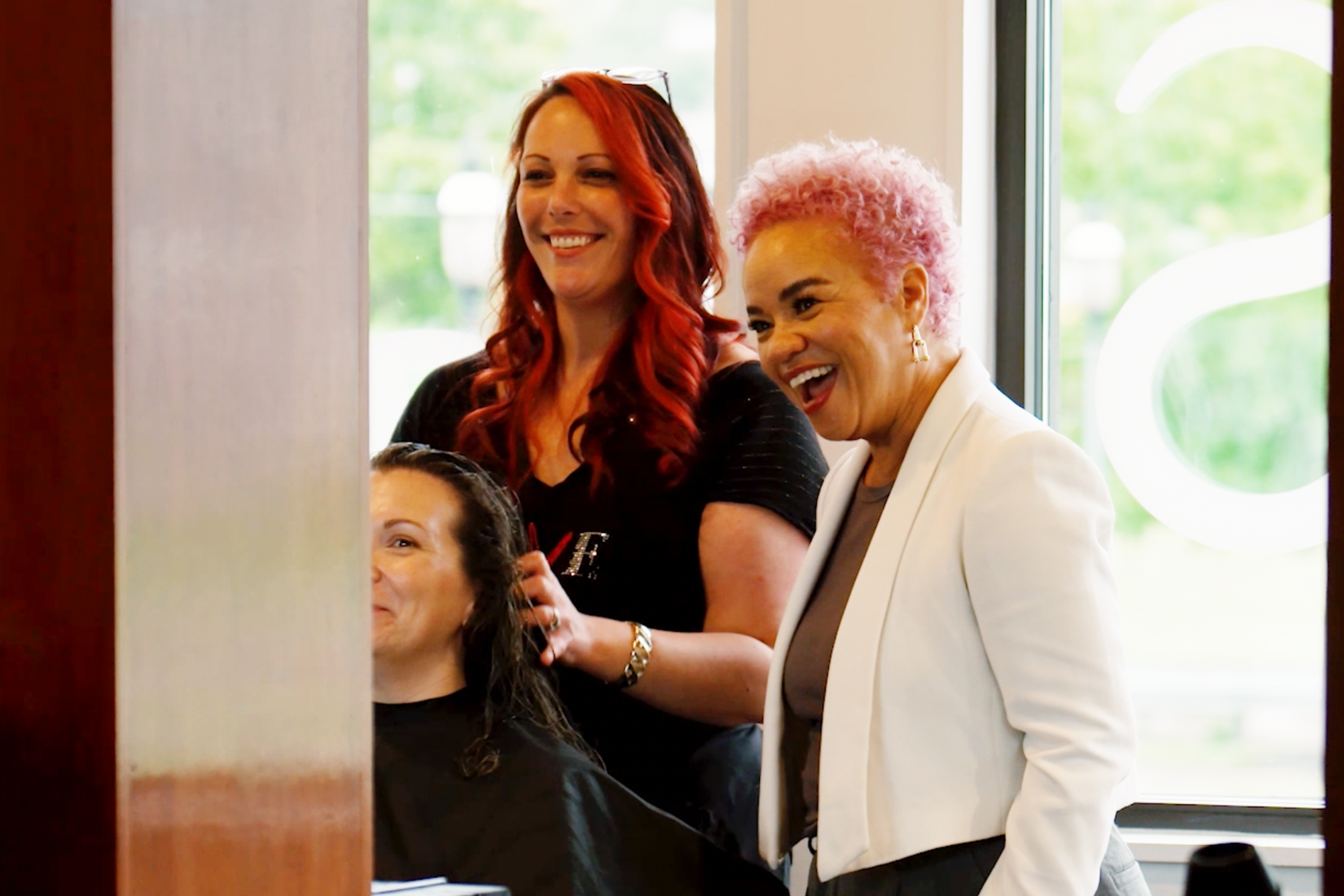
That’s where he meets Kim Myles, who won HGTV’s Design Star and spent two decades on television. A year ago, she and her husband, Scott, bought Gadzooks, a Lehigh Valley salon that has been on the same corner for more than 35 years.

Her first move was doing nothing. Kim promised her team she wouldn’t change a thing for six months, aside from sprucing up the interior. “You be curious, and you shut up, and you listen,” she advises entrepreneurs buying beloved local businesses. The strategy worked, keeping loyal customers coming through the door, while making gradual changes to bring in new ones.

Another out-of-the-ordinary move: While Kim has skills, she doesn’t cut hair at Gadzooks. As Jason puts it, “If a company can’t run without its owner, you didn’t buy a business, you bought a job.”

Gadzooks offers perks that are rare in the salon world, including 401(k)s, maternity leave and mental health leave. Next, Kim and Scott plan to make Gadzooks employee-owned. “We hope by making this an employee-owned company that this outlives us,” Kim says.

Watch the video above to see how Kim redesigned the salon without closing its doors, what building community really means, and why she believes the long way is the right way.

America’s Favorite Mom and Pop Shops® is brought to you by ‪CLA‬. Learn how CLA can help your small business grow.


Source link

How This HGTV Star Bought and Revived a 35-Year-Old Salon Read More »

Why Is Europe Exporting Its Best Tech Founders to the U.S.?

Why Is Europe Exporting Its Best Tech Founders to the U.S.?


Opinions expressed by Entrepreneur contributors are their own.

Key Takeaways

  • American AI companies raised $355.9 billion in the first half of 2026 alone, more than eight times the roughly $42 billion Europe raised for AI in the same six months, a gap that keeps pulling ambitious founders west.
  • France carries one of the heaviest tax burden of any major economy, and its exit tax specifically targets founders who leave, taxing paper gains on a company they haven’t even sold yet.
  • Mistral just raised the largest equity round in European tech history, but that same announcement revealed it has quietly stepped back from competing head on for the best model, and is opening its platform to Chinese models instead.

Europe trains excellent AI researchers, and then watches a disproportionate share of them build their companies in the United States. The reasons aren’t mysterious once you look at the numbers, and the last few weeks gave us an unusually clear picture of what Europe is actually competing with.

I’m an AI engineer building ChatMakr, an AI-powered platform that creates multi-agent chatbots in seconds, from France. I also spent two years at an innovation financing firm, working closely with hundreds of Parisian tech founders. Here is what I’ve learned.

Why the European talent keeps leaving

Europe doesn’t have a talent problem. One mapping of global AI professionals estimates that it has roughly 30% more AI talent per capita than the United States. What it has is a capital and customer problem.

The first half of 2026 made that gap concrete: according to AI Weekly, American AI companies attracted $355.9 billion of the $412.7 billion invested by U.S. venture capital, about 86% of all U.S. venture dollars deployed during the period, while Europe’s entire AI venture haul for the same period was roughly $42 billion, about 8% of the global AI funding total.

Even European success stories bend toward the U.S. eventually: Klarna had to rebuild its product “nearly from the ground up” for the American market before its US revenue grew 58% year over year. Nvidia agreed to acquire Hugging Face for $12.93 billion in early September, and the deal represents an extraordinary exit for its three French founders, but Hugging Face was founded in 2016 in New York City, not Paris. Swedish startup Lovable is one of the rare exceptions, reaching a $6.6 billion valuation and $400 million in revenue without restructuring around a U.S. move.

The tax cost

Funding is only half the story. What happens once a company actually succeeds matters just as much, and this is where France in particular becomes a concern for founders. In the latest OECD data, covering 2024, France had a tax-to-GDP ratio of 43.5%, the second-highest in the OECD.

Then there’s the exit tax itself. If a founder has been a French tax resident for at least 6 of the previous 10 years and holds shares with an aggregate value exceeding €800,000, or shares representing at least 50% of a company’s profit rights, moving their tax residence out of France triggers taxation of the unrealized gain on those shares. A founder sitting on millions in paper gains can therefore face a potentially six- or seven-figure tax liability triggered by the move, even without having sold the shares.

A different funding mix

The funding that does exist in Europe also looks structurally different from what’s available in the U.S. Y Combinator and the broader American VC system give founders relatively fast equity financing in exchange for ownership and the expectation of rapid growth.

Europe, by contrast, has a much larger ecosystem of public and non-dilutive funding. In France, Bpifrance’s Prêt d’Amorçage can provide €50,000 to €100,000, rising to €300,000 where a regional guarantee is involved; the EIC Accelerator offers grants of up to €2.5 million without requiring equity if a company applies for grant-only support; and Germany’s ZIM programme provides substantial R&D subsidies, with eligible costs for individual projects now reaching €690,000. These programmes can help founders preserve their equity, but they generally come with more eligibility requirements, documentation and application processes than a VC round, and they don’t provide the same investor network or direct pressure to scale that an equity investor does.

Two French tax mechanisms are genuinely generous on paper. The Crédit d’Impôt Recherche gives companies a 30% tax credit on eligible R&D spending, with immediate reimbursement available to qualifying SMEs and other eligible companies, and the IP Box also offers a 10% preferential regime for qualifying IP income, including income from certain copyright-protected software, something the U.S. has no direct equivalent for. In practice, however, they can be difficult to use. R&D tax claims face detailed eligibility rules and scrutiny, and plenty of founders I’ve worked with either underclaim out of caution or skip these programs entirely because they don’t know the filing process well enough to trust it.

Mistral is betting beyond the frontier-model race

On Sept. 8, Mistral raised €3 billion in a Series D round led by Samsung at a post-money valuation over €21 billion, described as the largest equity funding round in European tech history. That’s genuinely a record, and it should be treated as one.

But read past the headline number and the strategy shift is just as notable. Mistral is no longer consistently at the top of the raw model benchmarks. On SWE-bench Verified, a widely used coding benchmark, DeepSeek V4 Pro leads at 80.6% and Qwen 3.6-27B scores 77.2%, while Mistral isn’t competitive at that tier. The strategy is broadening beyond the race to build a single best-in-class model. Mistral is investing heavily in compute, infrastructure and sovereign AI, while opening its platform to third-party models. The first one Mistral added wasn’t a European model: GLM-5.2, built by the Chinese lab Z.ai. The strategy suggests that Mistral sees owning the sovereign infrastructure layer as potentially as strategically valuable as competing at the model layer, even if that means hosting a Chinese competitor’s weights.

The bottom line

None of this means Europe is out of the race. Mistral’s move toward sovereign infrastructure is a genuinely different bet than trying to out-model OpenAI or Anthropic, and it might be the smarter one long term if European governments actually prioritize data control the way they say they do. The Hugging Face outcome shows that European founders can build category-defining companies. If Europe wants that story to end differently next time, the fix isn’t more talent. It’s more capital willing to bet on that talent before it boards a flight to San Francisco.

Key Takeaways

  • American AI companies raised $355.9 billion in the first half of 2026 alone, more than eight times the roughly $42 billion Europe raised for AI in the same six months, a gap that keeps pulling ambitious founders west.
  • France carries one of the heaviest tax burden of any major economy, and its exit tax specifically targets founders who leave, taxing paper gains on a company they haven’t even sold yet.
  • Mistral just raised the largest equity round in European tech history, but that same announcement revealed it has quietly stepped back from competing head on for the best model, and is opening its platform to Chinese models instead.

Europe trains excellent AI researchers, and then watches a disproportionate share of them build their companies in the United States. The reasons aren’t mysterious once you look at the numbers, and the last few weeks gave us an unusually clear picture of what Europe is actually competing with.

I’m an AI engineer building ChatMakr, an AI-powered platform that creates multi-agent chatbots in seconds, from France. I also spent two years at an innovation financing firm, working closely with hundreds of Parisian tech founders. Here is what I’ve learned.

Why the European talent keeps leaving

Europe doesn’t have a talent problem. One mapping of global AI professionals estimates that it has roughly 30% more AI talent per capita than the United States. What it has is a capital and customer problem.


Source link

Why Is Europe Exporting Its Best Tech Founders to the U.S.? Read More »

5 Psychology Tips for High-Stakes Negotiations


Opinions expressed by Entrepreneur contributors are their own.

Key Takeaways

  • Prepare emotionally, not just strategically. Stay calm and know your bottom line before you walk in, so pressure doesn’t push you into concessions you’ll regret.
  • Communicate with clarity and restraint by stating facts, impact, needs and consequences, then pausing to let them land. The goal is a deal that leaves the relationship intact.

Negotiation is never just about the terms on the table. Beneath every exchange is a psychological layer shaped by stress, emotion, boundaries and our need for safety and control. That layer runs through every difficult business conversation — and ignoring it can be costly.

I’ve spent much of my career running businesses and navigating high-stakes negotiations within them. Across those experiences, one lesson has stayed constant: Be human first. The most effective negotiations I’ve been part of were the ones where both people walked away with the relationship intact, because neither became so focused on controlling the outcome that they stopped paying attention to what was happening in the room.

These are the five principles I return to again and again.

1. Regulate before you negotiate

Our nervous systems affect one another in ways we can’t see. In clinical work, we call this co-regulation: One person’s ability to stay calm and grounded can become a stabilizing reference point for the other.

That’s why I treat regulation as part of preparation. Before an important negotiation, I notice whether I’m rushing, tense, angry or carrying stress from something unrelated. Sometimes the most useful preparation isn’t another 10 minutes refining an argument but 10 minutes walking, breathing, moving and becoming aware of what’s happening internally. Grounding reduces impulsive reactions and emotional spirals because it brings our attention back to the conversation in front of us rather than the threat we think we’re facing.

As leaders, our job is to stay regulated enough to keep our judgment. If you can’t steady yourself, how will you steady your team?

2. Know your limit before you walk in

Many people enter negotiations knowing what they’d like to achieve. Far fewer know the minimum they’re truly willing to accept, and those aren’t the same thing. The outcome you hope for is your ideal scenario. The minimum you can accept is your boundary.

You need to know your boundaries before you walk in, because they’re much harder to identify under pressure. If you haven’t decided in advance what you’re protecting, it’s easy to make concessions you never intended or to agree to something simply because you’re anxious about losing the opportunity.

That clarity changes how you communicate. We need to remain the authors of our own participation. When we feel we’re losing our autonomy, as leaders or as employees, resentment builds. Knowing our needs before we negotiate preserves our self-respect.

3. State the facts, then the impact, need and consequence

Many high-stakes conversations become needlessly complicated because people speak from their emotional reactions. Facts, interpretations, needs, expectations and pressure get mixed together, and the other person ends up responding to the emotional charge rather than the issue itself. I return to a simple sequence: Describe the facts, explain the impact, name the need and, when necessary, state the consequence.

Start with what’s observable. What happened? What changed? What was actually agreed? Facts create a shared reference point and leave less room to argue about motive or intention. That’s especially important when expectations were never clearly communicated in the first place. A person may agree to one set of terms while privately expecting them to evolve, then feel betrayed months later even though nothing objectively changed. Returning to the facts separates what was agreed from what was assumed.

Next, describe the impact on you. That doesn’t mean accusing the other person of causing your feelings. It means explaining your own experience and taking responsibility for it. From there, name the need beneath the reaction. A need isn’t a demand. It’s information about what will allow you to stay aligned going forward.

This is where negotiations often become more psychologically interesting than the surface issue suggests. A disagreement about compensation may not be only about money. It may be about financial security and fairness. A disagreement over a title may really be about recognition for one’s contribution.

The consequence comes last, and it isn’t a threat. It’s simply what happens if the need can’t be met. Sometimes that means changing the scope of an agreement. Sometimes it means walking away. Good negotiation isn’t about forcing the other side to give you what you want. It’s about being willing to realign your choices with your limits when an arrangement no longer works.

The clearer this sequence becomes, the less likely the conversation is to descend into accusation and defensiveness.

4. Say less than your impulse wants you to

We often mistake speed and volume for confidence. In reality, one of the clearest signs of confidence in a difficult conversation is the ability to pause. Silence is uncomfortable because it takes away our ability to manage the other person’s response. Once we’ve said something important, we often feel an immediate urge to soften it, explain it again, add context, make a joke or fill the space before the other person has had time to think.

In therapy, silence is often used deliberately because it creates room for thought rather than reflex. The same is true in negotiation. A pause lets what’s been said settle. It gives both people a moment to notice what’s happening before reacting. Confidence is being able to state something clearly without arguing for your right to say it.

The same goes for listening. If you’re constantly preparing your next response, you aren’t really listening. Reading the room means paying attention not only to the words being spoken but also to shifts in pace and tone, withdrawal, hesitation and your own physical reactions. Saying less gives you access to more information.

5. Stop treating the conversation like a scoreboard

Most negotiations take place within relationships that need to continue after the meeting ends, and that changes what winning should mean. When a conversation becomes a zero-sum game, where one person’s gain requires the other’s loss, the relationship can become collateral damage. If you secure every term you wanted but destroy the trust you need to work together afterward, is that really a win?

Two people can disagree without the relationship collapsing. For me, winning a negotiation means looking beyond the immediate moment. It isn’t about whether you walked away with everything you wanted. It’s about whether both people leave with their dignity and their ability to work together, intact.


Key Takeaways

  • Prepare emotionally, not just strategically. Stay calm and know your bottom line before you walk in, so pressure doesn’t push you into concessions you’ll regret.
  • Communicate with clarity and restraint by stating facts, impact, needs and consequences, then pausing to let them land. The goal is a deal that leaves the relationship intact.

Negotiation is never just about the terms on the table. Beneath every exchange is a psychological layer shaped by stress, emotion, boundaries and our need for safety and control. That layer runs through every difficult business conversation — and ignoring it can be costly.

I’ve spent much of my career running businesses and navigating high-stakes negotiations within them. Across those experiences, one lesson has stayed constant: Be human first. The most effective negotiations I’ve been part of were the ones where both people walked away with the relationship intact, because neither became so focused on controlling the outcome that they stopped paying attention to what was happening in the room.

These are the five principles I return to again and again.


Source link

5 Psychology Tips for High-Stakes Negotiations Read More »

Megan Thee Stallion Says This Was Her ‘Biggest Mistake’ Early On

Megan Thee Stallion Says This Was Her ‘Biggest Mistake’ Early On


Key Takeaways

  • Megan Thee Stallion is the stage name of the three-time Grammy Award-winning rapper Megan Pete.
  • At Entrepreneur’s Overcoming Impossible event, Pete said that her biggest mistake was being scared to ask questions about her contract.
  • Now, if she doesn’t understand something, she asks about it.

Before Megan Thee Stallion made it big and signed her first record deal, she thought that rappers made a tremendous amount of money. She saw the social media posts they made sporting new cars and fancy clothes. She couldn’t wait to become a rapper and take care of her whole family.

However, the three-time Grammy Award-winning star, whose real name is Megan Pete, said that the reality of her first record deal was that she wasn’t getting paid what she was worth. 

At Entrepreneur’s Overcoming Impossible event last week, Pete said that when she signed her first deal, she knew “it wasn’t the best deal.” What pushed her to sign it was the knowledge that she was going to be able to take care of her mom and pay the bills with the money. She was excited to “take care of her people.”

However, the bigger she got, the more she realized how much her likeness and sound were worth.

“I started realizing I’m not making as much money as I should be making because I kind of just gave my life away to somebody else,” Pete said. “I had to take a step back and think, Okay, let me see what’s going on with my contracts. Let me figure out how I can be my own boss.”

Her biggest mistake

Pete said that her biggest mistake early on was being scared to ask questions about her contract.

“I was a little bit nervous about asking questions,” she said. “I feel like that is one of the biggest things that hold people back, being afraid of sounding stupid.”

Pete said that now, if she doesn’t understand something, she asks.

She added that she didn’t just want to be famous; she wanted to own her own music. Ownership became important to her because she was putting in all the work and felt like she wasn’t receiving anything back.

Asking questions and trying to figure out how she could be her own boss paid off. In 2024, Pete signed a deal with Warner Music Group that allowed her to have full ownership of her masters and publishing. She retains her independence as a musician while tapping into Warner Music for promotion and marketing.

“I do own my masters,” Pete said. “It was important to me, coming out of a situation where I didn’t own anything and I didn’t have control of my career. I just didn’t want to ever be in that position again.”

Her motivations

Only one topic made Pete tear up on stage. 

It happened when she was talking about her “North Star,” or the guiding light that keeps her focused and shows her the way forward.

For Pete, her North Star is her family. Her mom, dad, grandmother and great-grandmother are her foundation.

“I do things that I feel like they would have wanted to see me do,” she said. “I just keep them in mind, and I just know that my mom is proud of me, my dad is proud of me.”

Wiping away tears, Pete said that her responsibility is bigger than herself. She wants to make her family proud and give her fans “little pieces” of her to incorporate into their everyday lives. She filters decisions by how her family would respond to them.

Pete also said that anyone in any career path can achieve success. They just have to follow one principle: Be true to themselves.

“When they’re being authentic to themselves, that’s when they win,” Pete said. “That’s when they’re most successful.”

Key Takeaways

  • Megan Thee Stallion is the stage name of the three-time Grammy Award-winning rapper Megan Pete.
  • At Entrepreneur’s Overcoming Impossible event, Pete said that her biggest mistake was being scared to ask questions about her contract.
  • Now, if she doesn’t understand something, she asks about it.

Before Megan Thee Stallion made it big and signed her first record deal, she thought that rappers made a tremendous amount of money. She saw the social media posts they made sporting new cars and fancy clothes. She couldn’t wait to become a rapper and take care of her whole family.

However, the three-time Grammy Award-winning star, whose real name is Megan Pete, said that the reality of her first record deal was that she wasn’t getting paid what she was worth. 

At Entrepreneur’s Overcoming Impossible event last week, Pete said that when she signed her first deal, she knew “it wasn’t the best deal.” What pushed her to sign it was the knowledge that she was going to be able to take care of her mom and pay the bills with the money. She was excited to “take care of her people.”


Source link

Megan Thee Stallion Says This Was Her ‘Biggest Mistake’ Early On Read More »