
November 2026

He Went From an NYU Dorm Room to $1 Billion in Revenue

He Went From an NYU Dorm Room to $1 Billion in Revenue


Key Takeaways

  • Phil Shawe grew TransPerfect, a translation company, from an NYU dorm-room startup into a billion-dollar business.
  • He started with cold calls “till our fingers bled” and self-financed growth.
  • Shawe now embraces technology like AI, even though it reduces billable hours.

At age 23, Phil Shawe was pursuing an MBA at NYU when he had a business idea that made some people around him skeptical. Why spend money on business school, thousands of dollars, only to start a small translation company?

Shawe saw an opening. Advertising agencies, law firms and big corporations needed language services. He believed he could deliver something better than what was currently on the market.

“I met my former partner in business school, and she had worked at the largest translation company at the time, Berlitz,” Shawe says in a new interview with Entrepreneur. “She worked there in New York, and they were constantly unable to satisfy clients. We theorized that there was a better mousetrap to build in the language business.” 
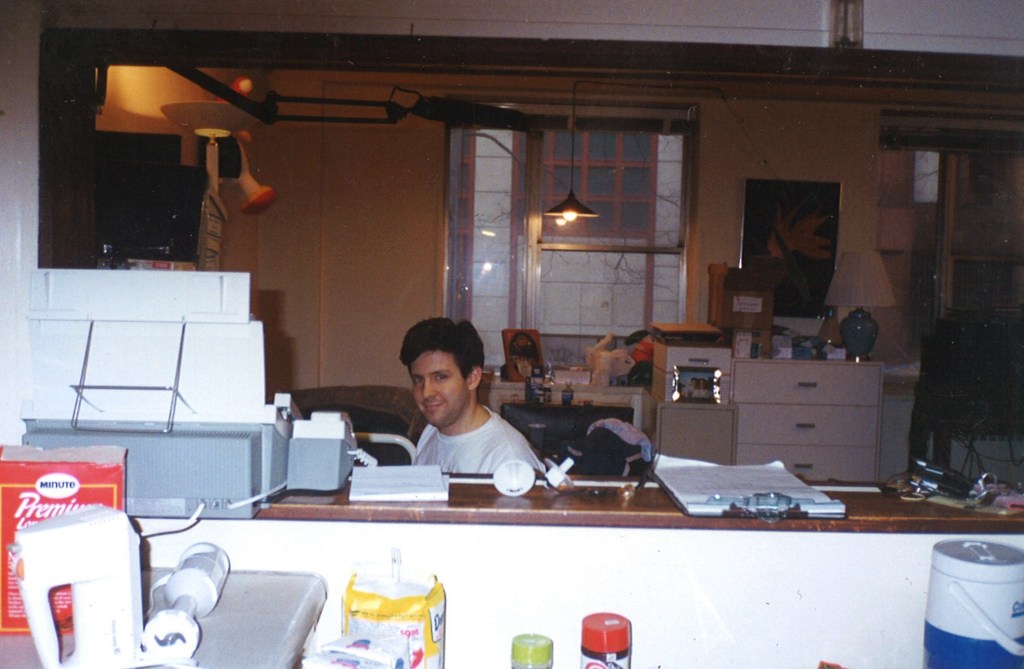
Phil Shawe in his NYU dorm room where he started TransPerfect.
Phil Shawe in his NYU dorm room where he started TransPerfect in 1992. Credit: TransPerfect

In 1992, Shawe and his business partner, Liz Elting, co-founded TransPerfect from his NYU dorm room. They didn’t have a large financial backer underwriting their ambitions. They financed the business themselves, leaned on credit cards and tried to find customers. 

First, the founders had to persuade someone to hire them. 

“We would basically cold-call till our fingers bled,” Shawe says. 

They also faxed prospects and sent mailers containing information and brochures. As projects came in, they built a network of linguists to handle the work. Shawe’s description of the early sales strategy is simple: “Brute force clients in the door.”

Shawe has since helped turn that operation into a business generating $1.32 billion in annual revenue. He notes that TransPerfect now has more than 10,000 employees, whose work extends from translating contracts and supporting global drug studies to developing software and helping companies implement AI. 

Shawe says that about half of the company’s revenue still comes from language translation services. The rest comes from technology consulting and other businesses shaped around customer needs. 

As TransPerfect has grown, so has Shawe’s net worth. According to the Forbes billionaires list, Shawe, 57, is currently worth $1.7 billion. 

Phil Shawe. Credit- TransPerfect
Phil Shawe. Photography by Two Elk Studios

Winning customers was only the beginning

TransPerfect produced about $400,000 in revenue in its first year, Shawe says. He recalls that the company broke even that year, with little choice but to keep spending below what it brought in. 

The founders reinvested in the company as it grew. There was an exception to the largely self-financed approach: In 1998, Shawe says, they separated the technology business from the traditional translation operation and raised $4.1 million, with Deutsche Bank as the lead investor. 

After the internet bubble burst, he and his partner used their own money to return investors’ original capital. Shawe later bought out his partner in 2018.

Shawe does not credit the company’s rise entirely to persistence. TransPerfect arrived as the internet and globalization created new connections across borders. The founders worked hard, but the timing helped.

However, as the company expanded, landing work was not the toughest problem. Shawe says hiring and retaining people who could deliver the work became harder. The founders could not oversee every project or client relationship, so training employees became increasingly important. 

Growth also taught Shawe a costly lesson about the difference between a customer’s promise and a binding commitment.

Early on, a client indicated that a substantial amount of business was coming. TransPerfect opened an Atlanta office, placed people on-site and made significant investments to prepare. Then the customer changed course, leaving the company financially exposed.

“It almost put us out of business,” Shawe says.

He says that situation was his most expensive mistake as a founder. The error was investing heavily in a venture without adequate contractual protection. His takeaway was not to make massive capital commitments for business that a customer has only verbally agreed to provide. 

Phil Shawe speaking. Credit- TransPerfect
Phil Shawe at the TransPerfect ELEVATE Conference in Amsterdam, 2022. Credit: TransPerfect

Growth strategies

TransPerfect started with cold outreach. Keeping customers helped it scale. “If you want a business to grow, the most important thing you can do is retain your customers,” Shawe says.

For TransPerfect, that meant hitting deadlines and delivering projects in the formats clients expect. Consistently performing well could turn a customer contact into an internal advocate, or someone willing to recommend the company to another team or division.

Shawe says referrals between divisions of large corporations is an important source of business. TransPerfect prefers to obtain new customers through recommendations from within an organization, and much of its sales activity now involves expanding services for existing customers. 

TransPerfect also organized around industries. Once it had enough banking work, for example, it could build a dedicated finance division staffed with people who understood that sector. It applied the same approach to law firms, life sciences and luxury brands.

The company’s goal is to become a trusted advisor, not simply a supplier accepting translation orders. Listening to customers opened doors. For example, legal translation clients needed help with electronic discovery, or finding and processing digital information for litigation. TransPerfect expanded into those services, and Shawe says the e-discovery and litigation-support business is on pace to generate $160 million or more this year.

“E-discovery and litigation support is not something that we started in the dorm room, but over the years enough of our customers communicated to us that they needed better or different services in this field, and that’s what drew us into it,” Shawe says. 

He added that the business is now a “huge contributor” to the company’s annual revenue. 

Addressing AI and advice for young founders

TransPerfect faces new advancements like AI and rapid translation features from tech giants like Apple and Google. Shawe says that TransPerfect must bring new technology to customers.

“We want to be the ones constantly disrupting our own business,” he says.

Shawe has witnessed several waves of technology reshape translation, including neural machine translation, or AI that automatically translates text with advanced technology, and now large language models, or AI programs trained on massive amounts of text data. Shawe says each change has created ways to accomplish more with fewer resources.

He notes that if formatting a multilingual manual once required 40 hours, and software can reduce that work to an hour or 15 minutes, TransPerfect should introduce the software, even if it loses billable hours. 

“It might decrease our revenue in the short term, but it’s going to cement our client relationship and allow us to grow the business with that customer in the long term,” Shawe says.

TransPerfect can go beyond translating words and help businesses use language technology effectively. Shawe says customers continue to turn to the company for additional languages and higher-risk content even as automation handles more work.

He advises young founders to “raise as little money as possible” and “show real revenues as much as you can.”

If he were starting from scratch with limited money and no network, he says he would focus on building relationships with customers and team members. 

“These contacts that you make when you’re young, they compound like interest, and the value of those relationships also compounds,” Shawe says. 

Key Takeaways

  • Phil Shawe grew TransPerfect, a translation company, from an NYU dorm-room startup into a billion-dollar business.
  • He started with cold calls “till our fingers bled” and self-financed growth.
  • Shawe now embraces technology like AI, even though it reduces billable hours.

At age 23, Phil Shawe was pursuing an MBA at NYU when he had a business idea that made some people around him skeptical. Why spend money on business school, thousands of dollars, only to start a small translation company?

Shawe saw an opening. Advertising agencies, law firms and big corporations needed language services. He believed he could deliver something better than what was currently on the market.

“I met my former partner in business school, and she had worked at the largest translation company at the time, Berlitz,” Shawe says in a new interview with Entrepreneur. “She worked there in New York, and they were constantly unable to satisfy clients. We theorized that there was a better mousetrap to build in the language business.” 


Source link

He Went From an NYU Dorm Room to $1 Billion in Revenue Read More »

Why 100 People Waited Hours Outside a Wendy’s in New York

Why 100 People Waited Hours Outside a Wendy’s in New York


Fans started lining up at 8 a.m. Wednesday outside a Wendy’s popup on Fifth Avenue in New York City and waited up to three hours. The draw? A recreation of the chain’s old solarium, according to Restaurant Business.

Restaurant Business editor in chief Jonathan Maze posted photos of the event on X.

The glass-encased sunrooms were a Wendy’s staple in the 1980s and early ’90s, when fast-food chains wanted customers to stay for dinner. They became obsolete by the 2000s as the drive-thru took over. The popup featured original Wendy’s tables, a portrait of founder Dave Thomas and a ’90s-style photo studio.

It promotes the chain’s Holiday Box, which pairs a Dave’s Double or 10-piece nuggets with fries, a drink and a knit cap. It comes packaged in a box shaped like a snowy Wendy’s, sunroom included.

Other chains are mining the past too. A major Pizza Hut franchisee is bringing back red roofs, red cups and Pac-Man machines. This brand of nostalgia marketing is a way to hook both legacy fans and Gen Z, who are drawn to retro offerings.


Source link

Why 100 People Waited Hours Outside a Wendy’s in New York Read More »

Why Brands Need to Rethink How Consumers Find Products

Why Brands Need to Rethink How Consumers Find Products


Opinions expressed by Entrepreneur contributors are their own.

Key Takeaways

  • The creator economy is expanding beyond paid posts. Platforms are building tools to find creators, distribute their work, attach products and measure sales.
  • Community conversations and creator recommendations are becoming inputs to the same AI-powered discovery and commerce systems.
  • Brands should show up where customers evaluate choices, while keeping a direct relationship with the people who buy.

What does a Reddit search ad have to do with the creator economy? More than it first appears. When someone looks up a gaming headset or asks which software is worth paying for, Reddit wants to be more than the place where people discuss the options. It is testing ads alongside search results, putting promotions close to a high-intent decision.

That move makes more sense when you look at the conversations Reddit is selling access to. The company points advertisers to its 1,300 gaming communities and cites TransUnion research finding that 71% of U.S. Reddit gamers had purchased a gaming product based on information they found on the platform.

It is a platform-sponsored finding, not a forecast for every campaign. Still, it shows why community context can be more valuable than a broad audience count: The discussion may already be helping someone decide.

From conversation to commerce

Reddit is building out that decision path inside its product. In a test, AI-powered product discovery can summarize community discussions, show product information and send shoppers to a retailer. A user could ask for recommendations, compare what Redditors say and move toward a product without starting over somewhere else.

There is a business reason to make that journey shorter. Reddit’s ad revenue climbed 54% in the third quarter of 2026. Yet the company also faces a vulnerability: In October, its CEO said search referrals fell by more than a million a week on average, citing changes to Google’s AI search experience. Building a destination people use directly is one way to reduce reliance on another company’s results page.

Reddit’s AI strategy has another side. The platform has given Google structured access to Reddit content and formed a partnership with OpenAI, while developing its own AI search and shopping tools. Those moves create a tension: The same discussions can help answer a question in another product, attract an ad on Reddit or lead to a product listing on Reddit. Who gets the value from that recommendation is becoming a business question, not just a product question.

The pattern extends well beyond Reddit. On YouTube, creator partnerships and shopping connect brand discovery, sponsored videos, product tags and affiliate income. Pinterest is making it easier for creators to connect storefronts to product pins. Google is also testing ads in AI Mode, bringing sponsored offers into conversational search. Each company starts with a different strength, whether it is video, visual inspiration, search or community. All are trying to connect influence to action with fewer steps in between.

This is a bigger definition of the creator economy. It includes the creator, but also the system around that person: discovery tools that match a brand to a voice, paid distribution that extends a post’s reach, shopping features that monetize a recommendation and AI that helps a customer make sense of it. Communities can play a similar role even when there is no single influencer at the center.

Trust is the asset. Control is the contest.

For brands, a shorter path from recommendation to purchase can make campaigns easier to run and measure. The trade-off is that a platform may control the audience data, the recommendation, the ad placement and the definition of success. Creators face a similar bargain. New tools can open income streams, but access depends on platform rules, algorithms and fees. And the communities whose conversations influence a purchase may not share in the value those conversations create.

I have seen this kind of shift before. Search began as another channel to test; the companies that moved early understood it was infrastructure for existing demand. Discovery is changing again. People can use AI search and Google during the same research process, then look for a creator’s review or a community’s experience. That overlap makes it harder to assign one channel all the credit, but it does not make each influence less important.

For a brand, the competition is often for the moment before purchase, when someone decides which options deserve a closer look. The platform that earns that moment can shape the shortlist long before a customer reaches a checkout page.

What brands should do now

Begin with the facts an AI assistant, creator or customer might use to describe your business. Product details, pricing, availability, policies and differentiators should be accurate wherever they appear. Strong third-party coverage, credible reviews and useful customer experiences give people evidence to evaluate. A paid placement cannot compensate for conflicting claims or stale information.

Then plan around context, not just audience size. A creator’s expertise or a community’s product knowledge may matter most when someone is comparing options. Paid media, communications, creator partnerships, search and ecommerce teams should be working from the same view of that journey.

Measurement needs the same broader lens. Track AI mentions, branded searches, qualified leads and sales alongside creator and community activity. Ask customers what helped them decide. Platform reporting is useful, but compare it with your own results instead of assuming a view or click tells the whole story. Building AI search visibility is part of that work, not a substitute for measuring whether the right customers act.

Finally, give people a reason to keep the relationship going beyond the platform: useful product information, a strong site experience, an email program or a customer community. The goal is not to avoid platform commerce. It is to benefit from the new routes to discovery without making one company the only place your brand can be found, understood or purchased.

Platforms are turning recommendations into a product. Brands that recognize the shift can earn a place in the decision, while keeping enough independence to understand what is working and why.

Key Takeaways

  • The creator economy is expanding beyond paid posts. Platforms are building tools to find creators, distribute their work, attach products and measure sales.
  • Community conversations and creator recommendations are becoming inputs to the same AI-powered discovery and commerce systems.
  • Brands should show up where customers evaluate choices, while keeping a direct relationship with the people who buy.

What does a Reddit search ad have to do with the creator economy? More than it first appears. When someone looks up a gaming headset or asks which software is worth paying for, Reddit wants to be more than the place where people discuss the options. It is testing ads alongside search results, putting promotions close to a high-intent decision.

That move makes more sense when you look at the conversations Reddit is selling access to. The company points advertisers to its 1,300 gaming communities and cites TransUnion research finding that 71% of U.S. Reddit gamers had purchased a gaming product based on information they found on the platform.

It is a platform-sponsored finding, not a forecast for every campaign. Still, it shows why community context can be more valuable than a broad audience count: The discussion may already be helping someone decide.


Source link

Why Brands Need to Rethink How Consumers Find Products Read More »

Why Your Everyday Work Could Be Your Best Marketing Content

Why Your Everyday Work Could Be Your Best Marketing Content


Opinions expressed by Entrepreneur contributors are their own.

Key Takeaways

  • Your everyday work, from solving problems to handling stressful moments, can become content that shows customers why they should trust you.
  • Build an audience before people need your services, so when they’re ready to buy, they already know and trust you.

For years, I thought I knew what separated my moving company from others. I’m a fourth-generation mover and have worked in this industry professionally since I was 18. My father always said moving was in my blood — hence our name, Can’t Quit Moving. I built my business on lessons passed down through my family: Work hard, treat people and their belongings with respect and do the job the right way. After hearing countless moving horror stories from customers, I knew we operated differently.

And I thought that was enough: doing honest work and making sure people had a good moving experience. I certainly didn’t see our everyday work as content, as something other people would want to know more about or as something that could help grow the company. That changed when someone from outside the industry spent a day with us.

During the pandemic, a good friend of mine who worked as a cameraman was out of work, so he joined our crew for a day. At the end of it, he climbed into the truck looking rattled. “That was a crazy day,” he told me. My response: “That was a Tuesday.”

Every day, we dealt with closing delays, low bridges, furniture that wouldn’t fit, last-minute additions and customers navigating one of the most stressful days of their lives. To me, that was second nature. To him, it was a story, and he told me we needed to film it.

That eventually became an unscripted docuseries about our company, but it also changed how I thought about growing a business. Until then, we had relied solely on word of mouth. What I hadn’t realized was that showing people what sets us apart from the competition could become a growth strategy.

Your everyday work may be your best content

When you spend every day doing the same thing, you lose sight of what makes it interesting. I didn’t think twice about the problems we encountered on a move, because solving them was my job. But to an outsider, the process was wild. Parking and loading our truck, for example, fascinated our cameraman. It made me realize that the work my team and I do takes real skill.

That’s something business owners in any industry can overlook. You don’t need a glamorous product or a business built for social media to have a story worth telling. A contractor solving a job site issue, a restaurant prepping for a Saturday night or a bookseller opening their store all have something customers rarely get to see.

Simply put, your best content could already be happening. You just have to recognize and document it.

Don’t tell people to trust you. Let them see why they should.

When we started filming, I had to unlearn some of my business owner instincts. After our second day, my wife paused a piece of footage and asked what I had been thinking in that moment. The truth was, I had been thinking plenty. I just wasn’t saying it.

I was trained to stay calm even when things went off the rails. My wife told me to talk to the camera like I was talking to my best friend. I had to rewire my thinking: Explain the problem. Share what you’re thinking. Admit when you’re frustrated. Just be real.

That taught me the difference between advertising and real storytelling. Business owners spend a lot of time telling customers who they are: We’re trustworthy. We care. We go above and beyond. And so on.

Documenting our work allowed us to show those things instead. Our motto is “We take the stress out of your move,” and now people could see that firsthand: how our crew wraps belongings to protect them from torrential rain, how we responded when a move didn’t go as planned because of an insurance headache and how we treated customers even when we were close to pulling our hair out under high-pressure deadlines. The messy moments showed more about the company than the camera-ready ones.

Other entrepreneurs can learn from this. What do you claim about your business that you could demonstrate instead?

Build the audience before you need the customer

After we finished filming the show, a former customer who worked in the film industry encouraged us to start sharing our story on social media. Creating content consistently has sometimes felt like starting another business, but it also changed how I think about marketing. Traditional advertising usually tries to reach someone around the time they’re ready to buy. Telling a story and building an audience can create a relationship long before that.

That’s especially important in a business like moving. People don’t need movers every month. Someone might discover one of our videos today and not move for another year. But if they keep following the company and seeing our crew at work, we don’t have to introduce ourselves when they’re finally ready for a quote. The audience comes first. The customer can come later.

And we’re starting to see that play out. When we ask new customers how they found us, more and more of them mention our videos. One man contacted us about moving his lemon trees because he’d seen us move palm trees on Instagram. During another move, a customer’s 6-year-old recognized us from our YouTube Shorts. To me, that was proof: People weren’t just remembering our moving company. They were remembering us. They felt like they’d gotten to know the people behind the business, and more importantly, they already trusted us.

Don’t get me wrong: You don’t need to create a docuseries to apply this strategy. I’d start with three questions:

  • What does an outsider find interesting about my industry? Ask a friend. Sometimes we’re too close to our work to notice what might interest others.
  • What am I telling potential customers that I could show them instead? Give the proof up front. Don’t just make the claims.
  • What can I give people when they’re not ready to buy? Create something worth following, even when there’s no immediate transaction attached to it. That might be something educational or something relatable.

The goal isn’t to capture someone’s attention for the sole purpose of selling something. That’s empty, and it doesn’t build trust. The point is to give viewers, your potential customers, a reason to keep paying attention.

Your competitors can offer similar services. They can lower their prices and make the same claims about why they’re better. What they can’t replicate is your people, your experiences, your perspective and how you do your work.

Key Takeaways

  • Your everyday work, from solving problems to handling stressful moments, can become content that shows customers why they should trust you.
  • Build an audience before people need your services, so when they’re ready to buy, they already know and trust you.

For years, I thought I knew what separated my moving company from others. I’m a fourth-generation mover and have worked in this industry professionally since I was 18. My father always said moving was in my blood — hence our name, Can’t Quit Moving. I built my business on lessons passed down through my family: Work hard, treat people and their belongings with respect and do the job the right way. After hearing countless moving horror stories from customers, I knew we operated differently.

And I thought that was enough: doing honest work and making sure people had a good moving experience. I certainly didn’t see our everyday work as content, as something other people would want to know more about or as something that could help grow the company. That changed when someone from outside the industry spent a day with us.

During the pandemic, a good friend of mine who worked as a cameraman was out of work, so he joined our crew for a day. At the end of it, he climbed into the truck looking rattled. “That was a crazy day,” he told me. My response: “That was a Tuesday.”


Source link

Why Your Everyday Work Could Be Your Best Marketing Content Read More »

3 Ways to Retain Top Employees Without Counteroffers

3 Ways to Retain Top Employees Without Counteroffers


Opinions expressed by Entrepreneur contributors are their own.

Key Takeaways

  • Counteroffers and raises can make your top performers price-sensitive, so identify the few roles that matter most and build long-term retention plans for them.
  • Tools like deferred compensation and supplemental executive retirement plans reward tenure without inflating payroll or giving away equity.

Like all business leaders, I have had some of my top performers tell me they were leaving. There is no way to sugarcoat the feeling. It’s like a kick in the belly — and in the wallet. 

According to statistics reported by HR Morning, replacing an employee costs upwards of 200% of what they were making. And that is probably a conservative figure, given that losing a valuable team member can cause a ripple of lowered productivity and tabled projects as people scramble to pick up the ex-employee’s work.

Given these facts, I used to follow the standard pattern of attempting to keep talented team members by offering them higher compensation, bonuses or company equity. It was a tactic that almost always worked, but it didn’t create loyalty. Instead, it made those people price-sensitive, and they eventually found organizations willing to pay more, so they left anyway.

I am not suggesting that it is wrong to counteroffer someone’s resignation with money. However, it’s reactive and arbitrary. Unless you have put a cap on how high you are willing to go, your negotiations will begin to feel like a moving target that’s out of your control. Again, you may end up delaying someone’s departure, but you won’t keep them forever unless you put more proactive measures in place.

1. Pinpoint which roles bring the most profit to your business

Some positions in your company drive enterprise value and some don’t. McKinsey and Company suggested in an older article that these will probably make up about 5% of your workforce — and contribute 800% more than others across your organization. 

Over the years, I’ve found that I could typically name fewer than 10 roles that would materially impact my business if they remained vacant for an extended period. My recommendation is to name those roles and then create retention plans for each of them.

What are some focused plan ideas? Deferred compensation structures allow team members to grow their money tax-free as long as they stay with your organization. That way, you won’t inflate your overall payroll and can concentrate your resources where they matter most. This type of long-term incentive can be tangibly meaningful because it’s tied to tenure and not merely performance. Since it’s only applicable to a small group of high-value employees, you aren’t raising your compensation across your organization, either.

2. Rethink giving away equity

I once considered using equity as a major retention lever. Why not? It felt right and seemed to be a no-brainer way to get people to stick around and contribute to our company’s growth. Yet when I mapped out the risks and rewards, I realized that giving away equity has massive long-term costs.

Here’s the issue: equity permanently dilutes your ability to use equity in other ways later. For example, you can’t bargain with equity with potential investors if a chunk of it has been given to your employees. Going the equity route also complicates your organizational governance, which can make your financial picture blurry.

Rather than offering equity to someone who wants to leave, explore non-equity alternatives. Treat equity as a last resort that you’ll only consider if you think it will bring out an employee’s long-term ownership behavior. And be open to talking about this with a professional who has helped other businesses design executive benefit and compensation structures that retain key people while protecting tax exposure and equity. Looking for a resource to get your feet wet? Colin Steinberg, a partner at Institutional Architects, frequently shares advice on executive planning and related topics.

There are many business-friendlier alternatives to simply handing an employee who’s about to leave more money or equity. As mentioned before, you might provide deferred compensation, a way to delay income that benefits both you and the team member.

You might also look into supplemental executive retirement plans. Chances are strong that you already offer retirement benefits. Could you offer additional ones directly tied to both tenure and performance? Supplemental executive retirement plans help C-suite employees see meaningful future value in putting down roots, which SmartAsset explains can help trim churn among your highest-paid performers.

When structured appropriately, these types of retention strategies avoid immediate financial strain on your balance sheet. They also allow you to turn retention tools into ways to improve your tax efficiency, reduce volatile compensation models and retain control over your equity.

I firmly believe that founders who lose their most valuable people (but are otherwise building solid, fair companies) don’t have a problem with their retention. They have a problem with the way they’ve structured their long-term compensation packages for their most impactful roles. If you want to get real leverage as an employer, you need to develop smarter systems that incentivize your key players without losing your ground.

Key Takeaways

  • Counteroffers and raises can make your top performers price-sensitive, so identify the few roles that matter most and build long-term retention plans for them.
  • Tools like deferred compensation and supplemental executive retirement plans reward tenure without inflating payroll or giving away equity.

Like all business leaders, I have had some of my top performers tell me they were leaving. There is no way to sugarcoat the feeling. It’s like a kick in the belly — and in the wallet. 

According to statistics reported by HR Morning, replacing an employee costs upwards of 200% of what they were making. And that is probably a conservative figure, given that losing a valuable team member can cause a ripple of lowered productivity and tabled projects as people scramble to pick up the ex-employee’s work.

Given these facts, I used to follow the standard pattern of attempting to keep talented team members by offering them higher compensation, bonuses or company equity. It was a tactic that almost always worked, but it didn’t create loyalty. Instead, it made those people price-sensitive, and they eventually found organizations willing to pay more, so they left anyway.


Source link

3 Ways to Retain Top Employees Without Counteroffers Read More »

Pizza Hut Co-Founder Who Started With a $600 Loan Dies at 95

Pizza Hut Co-Founder Who Started With a $600 Loan Dies at 95


Franchise legend Dan Carney died on November 13 at age 95. Carney co-founded the original Pizza Hut, which grew into one of the world’s largest franchise systems, with 18,642 locations today.

It all started with a magazine article and a $600 loan from his mother. After reading about the growing popularity of a new food sensation called “pizza,” Carney, then 26, and his younger brother, Frank, opened a small pizza joint in Wichita, Kansas, in 1958, CNN reports. It sat on the same corner where their father once ran a grocery store. A year later, the brothers opened their first franchise in Topeka. They expanded overseas in 1970, and in 1977 they sold the chain to PepsiCo for $300 million.

Carney gave franchisees much of the credit. When the original building reopened in 2018 as the Pizza Hut Museum on the Wichita State University campus, he said it honored those who “shared risks and ambition in building a global organization.”

Carney also chaired the Cerebral Palsy Research Foundation of Kansas for more than 50 years. “When you win at something, you owe something back to the community,” he once said.


Source link

Pizza Hut Co-Founder Who Started With a $600 Loan Dies at 95 Read More »

The Rooms Where AI Gets Decided Are Filling Up. Women Need to Be in Them

The Rooms Where AI Gets Decided Are Filling Up. Women Need to Be in Them


Opinions expressed by Entrepreneur contributors are their own.

Key Takeaways

  • Women are adopting AI about 25% less than men, widening an existing leadership and capital gap at a decisive moment.
  • Start using AI before you feel ready, since fluency comes from hands-on practice rather than waiting to be an expert.

AI is one of the biggest market-moving shifts we have ever seen. Leaders are reorganizing around the technology, new businesses are being built around the opportunity, and decisions being made about AI today will define our economy for generations.

I care passionately about seeing more women in leadership, having access to capital, and steering the choices that shape our world. So when I heard AI expert and advisor Allie K. Miller on Emma Grede’s podcast share that women were adopting AI 25% less than men, it stuck with me.

For my whole career, I’ve watched women start a step behind: we still hold only about 29% of C-suite roles and make up fewer than one in five decision-makers at venture firms. Even 2025, a banner year for women-founded startups, tells a misleading story: nearly 41% of the almost $74 billion raised came from two megadeals. Most women founders saw very few of those investment dollars.

If women are already underrepresented among leaders, investors, and founders, and now we’re adopting AI more slowly, the gap widens at the exact moment the next generation of business leaders and global decision-makers are being decided.

Concerns around whether AI is ethical or looks like cheating are driving women’s slower adoption, but I also think it comes down to time. We badly underestimate what it takes to carve out hours to learn something new on top of a full-time job, personal responsibilities, and commitments to friends and loved ones. If I spend a Sunday afternoon building an agent, I’m missing time with my family. The trade-offs are real, and you don’t get that time back.

Research suggests the adoption gap may be shrinking, but given how fast AI is moving, incremental progress is not enough. This isn’t a shift women can opt out of. If we want to drive the decisions that will define the next decade, we need to be leading this transformation, not watch it unfold.

Here are four things I believe women should focus on right now:

Get comfortable being uncomfortable

I always come back to this line from Ginni Rometty: growth and comfort do not coexist.

I’ve seen this firsthand throughout my career: I joined ServiceNow just before COVID hit. Within ten weeks, I went from never having worked from home to doing everything remotely—building relationships, leading a team, and learning dozens of new tools. It wasn’t comfortable, but my team and I adapted. AI demands the same mindset. 

The women I see pulling ahead here are the ones who just start using AI before they feel ready or have it all figured out. Getting your hands dirty is the whole point: use AI to analyze a dense report, pressure-test a strategy, or build a simple agent to handle a task you dislike.

Pick low-risk moments and let yourself get things wrong. You learn AI by being close to it, not by watching from a distance and waiting until you feel like an expert.

Seek out mentors — And pay it forward

You don’t have to navigate this shift alone. Seek out AI-specific meetups and groups—and connect with professionals who are experimenting in real time and asking the same questions as you. 

It is also worth looking closer to home. Some of our best AI teachers at ServiceNow have been early-career employees who are more comfortable with these tools than others. A little reverse mentoring can go a long way.

Just as importantly, you need to pay it forward. The more women help each other build confidence and capability around AI, the faster we will close the gap. One of the reasons we invited Allie K. Miller to talk about AI and leadership at Knowledge, our annual conference, is that she consistently shares insights that lower the barrier to entry for others. 

You can’t be what you can’t see, which is why those of us in senior leadership roles also need to lead by example. When I’m asked how I use AI as a CFO, I’m deliberate about sharing how it has become a real partner in how I work. I want women coming up behind me to see AI fluency as part of their own leadership path, too. 

Stay close to AI strategy 

For much of my career, I was the only woman with a seat at the table. Looking back, I can see how much that proximity shaped my career. Watching leaders like Barry Diller and Dara Khosrowshahi navigate complex, high-stakes decisions taught me lessons no class ever could.

It also gave me exposure to projects that prepared me to lead. Before IAC, I didn’t have much M&A experience. There, I learned what a good deal actually looks like, how to think about integration, and the kind of judgment you can only build by doing the work. 

The same principle applies to women and AI right now. Get as close to the AI decision-making as possible. Participate in strategy conversations, use-case assessments, pilots, and learning sessions. Raise your hand for the AI project no one has figured out yet and ask to be in the room where your company is determining how it will use this technology.

When leadership sees you leaning into the hardest, most important work the company is taking on, you become someone they picture in the next big role.

Understand Your Role in the AI Transformation

We need more than just engineers and programmers working closely with AI. 

To ensure artificial intelligence is as safe, ethical, and effective as it can be, we need people with diverse perspectives and skills working on it. Those with expertise in governance, risk, talent, and change management, for example, have important roles to play in ensuring successful AI deployment at scale.  

At ServiceNow, when we added “AI Enablement” to Jacqui Canney’s title of Chief People Officer, it was done for a reason. AI can’t just be dropped into the tooling mix. People need to understand and learn how to use it well in the enterprise, which means we need to invest in that happening.

We’ve done this in many ways, from company-wide learning sessions, to role-based skills development opportunities through ServiceNow University, to building groups of AI champions that shape how the technology is being used at the team level.

Even the best company programs won’t do it all for you, though. I always say that no one will care as much about your career as you do, and that’s to no fault of your managers or your company. They may open doors, but you’re the one who must walk through them. 

The rooms where AI is being built, deployed, trained, and governed are filling up, and if you’re not in them, those decisions are getting made without you. The time you invest now in learning, the skills you build, and the judgment you develop will compound. As this next era of leadership unfolds, the women who stayed close to AI won’t just be ready for the future; they’ll help define it.

Key Takeaways

  • Women are adopting AI about 25% less than men, widening an existing leadership and capital gap at a decisive moment.
  • Start using AI before you feel ready, since fluency comes from hands-on practice rather than waiting to be an expert.

AI is one of the biggest market-moving shifts we have ever seen. Leaders are reorganizing around the technology, new businesses are being built around the opportunity, and decisions being made about AI today will define our economy for generations.

I care passionately about seeing more women in leadership, having access to capital, and steering the choices that shape our world. So when I heard AI expert and advisor Allie K. Miller on Emma Grede’s podcast share that women were adopting AI 25% less than men, it stuck with me.

For my whole career, I’ve watched women start a step behind: we still hold only about 29% of C-suite roles and make up fewer than one in five decision-makers at venture firms. Even 2025, a banner year for women-founded startups, tells a misleading story: nearly 41% of the almost $74 billion raised came from two megadeals. Most women founders saw very few of those investment dollars.

If women are already underrepresented among leaders, investors, and founders, and now we’re adopting AI more slowly, the gap widens at the exact moment the next generation of business leaders and global decision-makers are being decided.


Source link

The Rooms Where AI Gets Decided Are Filling Up. Women Need to Be in Them Read More »

Here Are the 10 Best Business Books You Should Read in 2027

Here Are the 10 Best Business Books You Should Read in 2027


Key Takeaways

  • These 10 books approach business from different angles.
  • Some focus on personal discipline while others examine trust, creativity and service.
  • Together, they offer ways to think more clearly about leading through uncertainty.

Maybe you have a business idea in your Notes app that you keep thinking about. Or you could be trying to grow a company without letting it take over your life. 

Whatever your next challenge looks like, there is something reassuring about learning from authors who have been exactly where you are or conducted research to help you grow. 

The best business books show that success is found in the habits people repeat, the conversations they avoid and the attention they give each other.   

These books help leaders notice those pivotal moments and make better decisions. 

These 10 bestselling books approach business from different directions. Some focus on personal discipline, while others examine trust and creativity. Some were published in the early 20th century, while others debuted last month. They all offer ways to think more clearly about leadership.

Atomic Habits

James Clear’s Atomic Habits explains how habits develop and how to redesign routines so good behavior becomes easier. The four rules are to make it obvious, attractive, easy and satisfying. Systems matter more than goals, and repeated actions shape how we see ourselves. For business readers, this is a practical guide to turning ambition into routines. This book has sold more than 30 million copies since its debut nearly a decade ago. 

Unreasonable Hospitality

This book, written by Will Guidara, is the story of how exceptional hospitality helped transform Eleven Madison Park into a celebrated restaurant over the course of 11 years. It shows that there is a difference between delivering competent service and making customers feel genuine care. The book describes memorable gestures and close attention to detail in customer interactions. It also showcases a workplace where employees can take initiative and leaders can encourage ownership. The book has sold more than a million copies.

Inside the Box

In this book, David Epstein examines how limits can encourage experimentation and help people solve difficult problems. It draws on research and stories to explore when deadlines, scarce resources and careful boundaries support creativity instead of suppressing it. The question is if constraints help with the task at hand. This is a different way to approach innovation, through clearer boundaries instead of greater resources.

Extreme Ownership

This book was written by former Navy SEAL officers Jocko Willink and Leif Babin, who translate combat leadership lessons into principles for business and everyday work. They say that leaders must take responsibility for their team’s results and not pin the blame on circumstances or other people. This means owning up to mistakes and explaining the mission clearly. They also have to develop a plan to improve. The biggest takeaway is that accountability begins with the leader’s own behavior.

Leadership: In Turbulent Times

Ever wanted to learn about leadership through the lives of great presidents? Doris Kearns Goodwin examines leadership through the examples of Abraham Lincoln, Theodore Roosevelt, Franklin Roosevelt and Lyndon Johnson and considers how experience and adversity shaped these presidents. The different crises they went through reveal different ways of responding to uncertainty. The book demonstrates how leaders can adapt when no playbook exists for the situations they are experiencing.

The Fearless Organization

What do organizations lose when employees feel unable to speak honestly? They may notice a problem, have a useful question or recognize a mistake, yet remain silent because speaking feels like a personally risky move. Author Amy C. Edmondson presents psychological safety as a prerequisite for learning and innovation. She argues that information cannot help an organization if people are afraid to share it. The challenge for leaders is to create an environment where concerns surface early and prompt productive discussions.

Hidden Potential

Author Adam Grant, who is an organizational psychologist and professor at the Wharton School of the University of Pennsylvania, challenges the tendency to judge people by their starting point. His central argument is that potential depends more on how someone develops and less on where they begin. That shift changes how leaders think about talent because current achievement does not tell the full story of an employee’s future contributions. The book encourages attention to growth rather than fixed assumptions about ability. 

Capitalism, Socialism, and Democracy

Economist Joseph Schumpeter, who is often called the “father of entrepreneurship” or the “father of creative destruction,” wrote this book in 1942. In it, he examines how capitalism develops and why it changes societies. The book explains creative destruction, or the notion that innovation replaces established products, businesses and industries rather than just improving them. This is a demanding work of economic and political thought and offers readers a broader understanding of economic disruption. 

Unspeakable

In this book, which debuted in October, author Christina Wing examines the conversations people avoid even when silence leads to serious consequences. Her subjects include money, retirement, succession, failure, politics and other sensitive issues. She draws on work with family businesses, boards and classrooms to show how fear and secrecy can weaken relationships and delay important decisions. The book offers cases, questions, strategies and scripts for approaching difficult discussions. Its aim is clear communication grounded in empathy and respect.

Vibe

This recently released book also from author Adam Grant focuses on connection. Why do some relationships deepen while others remain distant? How can people build a stronger sense of belonging? Vibe challenges the idea that meaningful bonds require similar personalities or immediate chemistry. It notes that connections can develop through shared experiences and curiosity. Examples include astronauts learning to trust colleagues they do not like and musicians strengthening relationships through disagreement. The book encourages a more deliberate approach to relationships. People can actively cultivate belonging.

This article contains affiliate links, which means we may earn a commission if you make a purchase through them, at no additional cost to you.


Source link

Here Are the 10 Best Business Books You Should Read in 2027 Read More »

Your Press Page is Rotting. A Yearly Audit Is the Only Thing That Stops It.

Your Press Page is Rotting. A Yearly Audit Is the Only Thing That Stops It.


Opinions expressed by Entrepreneur contributors are their own.

Key Takeaways

  • Coverage is a depreciating asset: a quarter of the web from the last decade is gone.
  • 66.5% of links have rotted, so the press page you built years ago is almost certainly broken somewhere.

A quarter of the web from the last decade has vanished, and two-thirds of links eventually die. The coverage on your press page is decaying on the same schedule, and a yearly audit is the only thing that stops it.

A client sent me their press page last spring with some pride. Fourteen logos, a decade of coverage, the kind of wall a sales team loves to point at. I clicked through every link while we were on the call. Roughly a third were dead, two more redirected to a publication’s homepage and one article had vanished when the magazine that ran it was sold.

Nobody had done anything wrong. The page simply had not been checked since it was built, and the web had moved on without telling anyone. At ESBO Ltd, the link building and brand mentions agency I run, re-checking the placements we deliver is part of the job, and even so we lose some every year. Coverage is an asset that depreciates, and almost no company books the depreciation.

The web forgets faster than you think

The scale is documented. When Pew Research Center sampled webpages that existed at any point between 2013 and 2023, 25% were no longer accessible by October 2023. Of pages that existed in 2013, 38% were gone. Nearly a quarter of news webpages contained at least one broken link, and the news sample was not obscure blogs but 2,063 sites a measurement company had classified as news.

Links die faster than pages. Ahrefs tracked links pointing at more than 2 million websites since 2013 and found 66.5% of them had rotted. Almost half of the lost links were dropped because the page or domain carrying them disappeared, and a third were removed by someone editing a page that still exists. Put those two causes together and your coverage is being deleted both by neglect and on purpose.

Why your coverage goes dark

The causes are rarely dramatic. Publications fold or get sold, and the buyer prunes an archive it never wanted. A redesign migrates the site to a new content system and old addresses stop resolving. An editor runs a cleanup and strips outbound links from older articles, which is the 34% in the Ahrefs data and the one that stings most, because the article survives while your name’s connection to it does not.

Then there is the fine print. Some publishers sell placements with an expiry buried in the terms, and the article comes down on schedule 12 months later. I have written here before about four-figure placements vanishing overnight, but the slow version is more common and nobody notices it, because nobody is looking.

What dies with the page

Three things go at once. The search value of the link disappears with the page. The social proof disappears from your press page, replaced by a logo that leads to an error, which is a worse impression on a buyer than no logo at all. And the mention falls out of the layer of the web that AI assistants read live. A system answering a question today can only cite pages that still resolve, so a dead article stops feeding the answer, even if an older training run remembers the name. Everything the mention was doing for you stops on a date nobody told you.

My own trade does not come out of this well. An agency that sells placements and never re-checks them is selling an asset with an unknown lifespan, and clients should ask about it far more often than they do.

The audit takes an afternoon a year

Start by listing every address where your brand appears: the press page, old coverage reports, campaign spreadsheets, the links in your email signatures and investor decks. Most companies have never had that list in one place, and building it is half the value.

Run the list through any broken link checker, then sort the results into four piles. Dead domains, where the publication itself is gone. Dead pages on live sites, where the article was removed or moved. Removed links, where the article stands but no longer connects to you. And redirects, which usually mean a migration that lost your page along the way.

Each pile gets a different response. For a dead page on a live site, pull the copy from the Internet Archive’s Wayback Machine, send it to the editor and ask whether the article can be restored or the reference updated; the hit rate is better than you would expect, because editors dislike broken archives too. For a removed link, ask once and politely, then let it go. For a dead domain, retire the logo from your press page and replace it with coverage that still loads. And for redirects, test whether the new address carries the mention, because sometimes it does and the fix is a copy and paste.

Then change how you acquire coverage so the next audit is shorter. Save an archived copy of every new article the day it appears. Before paying any publisher, ask in writing whether the placement is permanent, and treat a vague answer as a no. Put a yearly reminder in the calendar, because this work gets done only when it has a date.

Finally, spend on maintenance before you spend on growth. Restoring a mention that already exists costs one email, while earning a new one costs weeks. The press page that impresses a buyer in 2027 will not be the one with the most logos. It will be the one where every logo still goes somewhere, and that is a choice the company makes once a year, with a link checker and an afternoon.

Key Takeaways

  • Coverage is a depreciating asset: a quarter of the web from the last decade is gone.
  • 66.5% of links have rotted, so the press page you built years ago is almost certainly broken somewhere.

A quarter of the web from the last decade has vanished, and two-thirds of links eventually die. The coverage on your press page is decaying on the same schedule, and a yearly audit is the only thing that stops it.

A client sent me their press page last spring with some pride. Fourteen logos, a decade of coverage, the kind of wall a sales team loves to point at. I clicked through every link while we were on the call. Roughly a third were dead, two more redirected to a publication’s homepage and one article had vanished when the magazine that ran it was sold.

Nobody had done anything wrong. The page simply had not been checked since it was built, and the web had moved on without telling anyone. At ESBO Ltd, the link building and brand mentions agency I run, re-checking the placements we deliver is part of the job, and even so we lose some every year. Coverage is an asset that depreciates, and almost no company books the depreciation.


Source link

Your Press Page is Rotting. A Yearly Audit Is the Only Thing That Stops It. Read More »

My Business Was Thriving. Then One Question Made Me Restructure the Entire Thing.

My Business Was Thriving. Then One Question Made Me Restructure the Entire Thing.


Opinions expressed by Entrepreneur contributors are their own.

Key Takeaways

  • Growth doesn’t always mean adding more — the businesses that thrive are often built by founders who stop to ask what they actually want to do more of.
  • Your story is one of your most valuable business assets, and when your LinkedIn profile spells out exactly who you serve and how, the right people know to reach out.

I spent more than two decades asking questions for a living as a TV news anchor and reporter. But it took a room full of women casually discussing $20 million and $200 million exits for me to ask myself the one question I never had.

Last year, I gave the opening keynote at Entreprenista’s Founders Weekend in Palm Beach. All weekend, I was surrounded by women who had built and sold companies and were already planning what to build next. It got me thinking about my own business, Jett Communications. We were growing fast, but sitting thousands of miles from my daily routine, I finally asked myself:

Am I building the business I actually want?

After years of interviewing other people, I realized it was time to interview myself.

When a thriving business left no room for the life I wanted

A business can look successful from the outside and still not fit the life you want to live. On paper, mine looked great.

I didn’t have a traditional business background, but my years in TV news gave me the instincts that became the foundation of my company. Today, I work with executives, founders, athletes, celebrities, family offices and even members of a royal family, along with leaders at Amazon, Meta, Apple, Netflix and Uber. My private clients lead companies with $5 million to $6 billion in annual revenue.

What that doesn’t show is everything else competing for my time. My clients know they can reach me before their high-stakes moments, and at home, I’m the mom who will happily get up at dawn to take my kids NeeDoh hunting at Target (if you know, you know). I love my work, but I was so busy keeping up with all of it that I never stopped to ask whether I wanted to do things differently.

Why survival mode can keep you from building the business you want

When the pandemic hit, my keynotes and media appearances disappeared within weeks, so I did what I had always done as a reporter: I focused on the story in front of me. My media training business evolved into offering PR services, an online course, a boot camp and a mastermind group, and once the world reopened, I was managing all of that while getting back on corporate stages.

I’m proud of what I built, especially because I did it while raising a toddler during lockdown and navigating infertility, including a miscarriage and multiple procedures.

But in hindsight, I was in survival mode at work and at home. Don’t get me wrong, survival mode can be productive, but when you’re constantly reacting, you stop designing and you never step back to ask whether the business you’re running still fits your goals.

Getting clear on what I wanted next

When I got home from Florida, I started to explore my options. Then two companies approached me about acquiring my business, and those conversations forced me to think about what someone would actually be buying and what I wanted to spend my time doing.

The answer wasn’t another course, program or a larger team. It was to double down on the work I love, which is to sit across from someone, ask the questions other people don’t think to ask, find the story beneath their accomplishments and help them show up with clarity and confidence, whether they’re stepping into a boardroom, onto a keynote stage or under the arena lights.

Why knowing your story can change the trajectory of your business

The one thing that has helped me build my business more than anything else is knowing my own story and being able to tell it. It’s also what I see accomplished leaders struggle with most, because they can build incredible companies and still not know how to explain what makes them different.

Once clients get clear on their story, I’ve watched it change the trajectory of their businesses and careers. One client, a life sciences executive navigating a global reorganization, wasn’t sure what her next step would be. We built a platform around her expertise in women’s healthcare, and she went on to land keynote invitations, a new role and a board seat.

Fourteen years in, those were the moments I kept coming back to, so I rebuilt my business around them. I created a bespoke one-day experience for individuals who don’t have weeks or months to get clear on their story, and our Leadership Lab, which helps teams communicate with the same clarity. Once I knew what I wanted my business to be, my LinkedIn profile was the first place I went to share it.

How LinkedIn can help you take the next step

My clients taught me how much business happens before anyone gets in a room together, because investors, partners and future hires form impressions long before the first meeting.

Here are five things I’d tell any entrepreneur ready for their next step.

1. Show people how you got here

It’s tempting to only post the wins, but the decisions and challenges behind them tell people so much more about you. Share the thing that didn’t go as planned or the lesson you learned the hard way. People want to know what you know, but they also want to understand how you think.

2. Tell your story before someone else does

If your visibility hasn’t kept up with your growth, people may still know an older version of you, so use your profile and posts to write the headline yourself. It’s wonderful when people say your name in rooms you’re not in, but only if they’re describing who you are today.

3. Show up in other people’s conversations

Some of my best business relationships started with a thoughtful reply, not a pitch. Congratulate people, share work you think deserves attention and comment when you actually have something to add.

4. Get specific about who you serve

Once I got clear on exactly who I wanted to work with, the right people started recognizing themselves in what I shared and reaching out. Client stories (shared with permission) are one of the best ways to do this, because when someone reads about a situation just like theirs, they can picture what working with you would look like.

To make it even clearer who you serve, I’d point entrepreneurs to LinkedIn Premium Business. Imagine a founder who just sold her company and wants her next chapter to be advising early-stage CEOs. People still know her as the founder of her last company, so a built-out Services section on her profile helps them see what she offers now, and request matching can connect her with people already looking for that kind of help. When a CEO lands on her profile, reviews and testimonials from founders she’s mentored build trust right away, and a custom button takes them straight to her calendar. She can also use InMail to reach out to founders she’d like to work with, and for someone who just needs advice on one big decision, a paid one-on-one advice session is an easy place to start.

5. Write for one person, not a thousand

When I was on TV, I learned I was never really talking to the thousands of people watching, but to one person sitting at home. LinkedIn works the same way, so instead of announcing what you do, write like you’re talking to that one person. That’s what makes people feel like you understand them, and it’s what makes the right person reach out.

Stay in the room a little longer

I used to think growth meant adding more: more services, more people, more opportunities. Now I think it’s figuring out what you want to do more of, and having the guts to build around it.

If you take one thing from my story, let it be this: stay in the room a little longer, listen to people playing a bigger game than you are and then interview yourself. Ask whether you’re building the business you actually want, or just getting really good at running the one you already have.

If you’re ready to rethink what’s next for your business, LinkedIn’s new Small Business Playbook shows how to use LinkedIn to build your brand, grow your network and find customers. You can also explore LinkedIn’s tools for small businesses to help the right people find your story.

Key Takeaways

  • Growth doesn’t always mean adding more — the businesses that thrive are often built by founders who stop to ask what they actually want to do more of.
  • Your story is one of your most valuable business assets, and when your LinkedIn profile spells out exactly who you serve and how, the right people know to reach out.

I spent more than two decades asking questions for a living as a TV news anchor and reporter. But it took a room full of women casually discussing $20 million and $200 million exits for me to ask myself the one question I never had.

Last year, I gave the opening keynote at Entreprenista’s Founders Weekend in Palm Beach. All weekend, I was surrounded by women who had built and sold companies and were already planning what to build next. It got me thinking about my own business, Jett Communications. We were growing fast, but sitting thousands of miles from my daily routine, I finally asked myself:

Am I building the business I actually want?


Source link

My Business Was Thriving. Then One Question Made Me Restructure the Entire Thing. Read More »