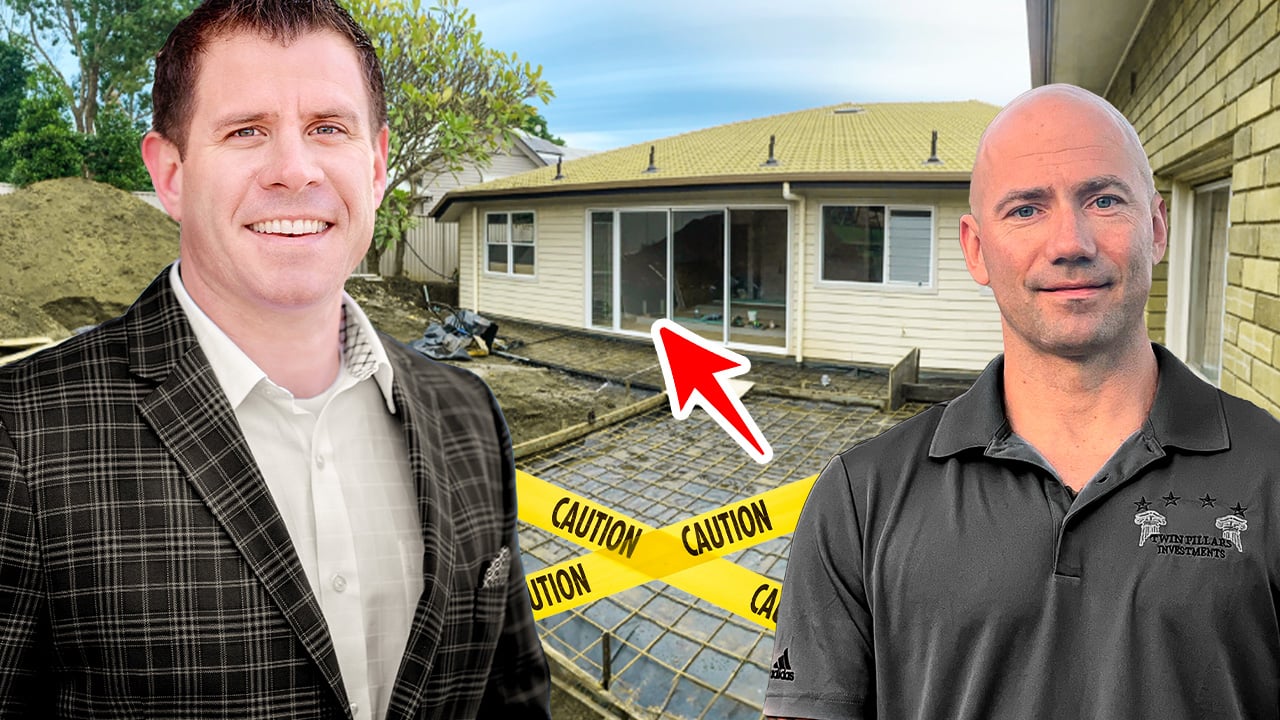
In this episode, Justin and Nate stress the importance of keeping your contractors in check and fostering healthy relationships in real estate. They also talk about why you should build your buy box early on in your investing journey and how to get your family on board with your real estate investing goals!
Ashley:
This is Real Estate Rookie Episode 357. My name is Ashley Kehr and I am here with my co-host, Tony J. Robinson.
Tony:
And welcome to the Real Estate Rookie Podcast where every week, twice a week, we bring you the inspiration, motivation, and stories you need to hear to kickstart in your investing journey. And today, do we have a story and a little bit of motivation for you. We’ve got two amazing guests on the show, Justin Noe and Nate Cherubini, and they’re business partners doing this real estate investing thing together. And obviously, Ash and I are big on partnerships, right? Head over to biggerpockets.com/partnerships, learn more about that. But I think today, you’re going to hear firsthand how partnerships help you as you’re going on this journey, especially for those that are new in the business. So really excited to get into today’s conversation.
Ashley:
We have a story today that involves a property in distress, a hometown bar, longtime relationships that turned sour, termites, zoning issues, and a plane ride with a wholesaler. So stick around how this can all possibly tie together. We’ll get into how to turn around a bad relationship with the city, taking extreme ownership, and the importance of problem solving today.
So Nate and Justin, welcome to the show. We want to hear about one of your first deals together and why you guys actually decided to do a deal together.
Justin:
Thank you, Tony and Ashley, for having us on here today. This is huge and a lot of fun to be here with you guys. But Nate and I, we started a journey together back in 2018 where we were at a marine requirements conference and he’s in real estate and I was into real estate and we started out as a mastermind and spent about six months doing a mastermind. And then I had bought a deal in Florida, showed him the deal, he liked it so him and I bought a deal together. We thought we did so awesome on the first deal together that we would buy a second deal together, and then things unraveled pretty quickly from there.
Ashley:
What were some of the reasons that you decided to partner with Nate? Did you have this checklist of, “Here’s the things that I want in a partner”? Was it spur of the moment? Can you tell us a little bit more about taking that leap into partnership?
Justin:
Yeah. We knew each other in person. We both went through officer training together in 2013, and so we became really good friends there. And then kept up with each other through the community and we-
Ashley:
Oh, I see.
Justin:
… came back together for an event that was put on, and we talked real estate at lunch one day. And so from there, he had actually introduced me to BiggerPockets and I never had heard of it. And so at the time I drove home, I spent about six hours just crushing BiggerPockets podcasts and learning so much about real estate. And I was like, “I didn’t even know that this was all this stuff is in real estate.” So from there, him and I, this was in December of 2018, we decided in January that we would become accountability partners. And we spent five to six months working as accountability partners, giving calls every week, holding each other accountable to the goals that we set for that week and did a lot of that.
And one of my goals was is to buy. I had rental properties already, but I wanted to buy a property that I’d never lived in as a rental property. So as a marine, you travel around, buy houses, leave, and then turn them into rental-type situation. And so I was looking originally in Colorado for that. And I dropped my kids off with my grandparents in Florida in my hometown, spent the time in Denver, came back, and ended up finding a rental property in my hometown. And it met the 1% rule. It was a pretty good deal. And I showed Nate the numbers, it got him interested, and then that’s where we decided that we would partner on something. And it took about three months for us looking together to find our first deal.
Ashley:
Nate, I see you smirking. Is your story completely different as to why you decided to work with Justin?
Nate:
I didn’t like the first deal. I thought he was biased towards his hometown, so I tried to disqualify it and use some intel analysts on the analysis on the market there. And I realized that the place just really worked. And getting into why did we partner, over the five months of holding each other accountable, I realized we had shared values and vision. We looked at money the same way. We looked at helping people the same way in our careers. So I feel like it was a good match. At first, I felt like we were too similar, and you’re supposed to find a partner that’s opposite to you. And over the last few years, I realized that we’re very different. We have shared values, shared goals, and that’s important. I think that’s the underpinning important in a partnership. But we do have very different characteristics that complement each other, so I think it’s a good fit.
Tony:
I just want to comment on that because that I think is the ideal partnership where you have the same values, you have the same vision, but you have complementary skillsets. If you can align all those pieces, that is a partnership that’s going to take you guys to the moon, right? Because you guys are working towards the same goal, you guys value things in the same way, but yet you can be strong where one person’s weak and the opposite is true as well. I think you get conflict in partnership where there is that lack of alignment, there is that lack of vision, or there’s too much overlapping skill sets and now there’s deficiencies in the partnership, so man. I guess how did you guys come to understand that the vision and the values were shared? Did you sit down and just have a discussion like, “Hey, tell me your vision,” or was it just more of an organic thing that happened over a beer or whatever it was?
Nate:
We did a vision statement. We did lay out what our goals were with our careers and our families for the next five years, and we zoomed out to the 10-year and 20-year, which isn’t as detailed obviously. But if you know the direction you’re driving and you set that course, then we can fill in the details of where we’re going to stop for gas. So we started with the big picture, what kind of life do we want? What kind of impact do we want? How do we want to feel like we’re still serving after we retire from the military? And a lot of that set the roadmap for us on how we’re going to operate. So unless Justin sees it differently.
Justin:
Yeah. No, I think that it did happen organically though. It was us talking on the phone, us being in in-person meeting, talking through these things and these strategies, and then that culminated into us actually writing a article in the future of 2026, which I got from Brandon Turner’s, one of his methods.
Ashley:
Yeah, the Vivid Vision, right?
Justin:
Yes, the Vivid Vision. Yes, correct.
Ashley:
Yeah, that’s a great book for anyone who wants to read that. We are going to hear more about mistakes that were avoided by Nate and Justin when we get back from this commercial break. Let’s hear a word from our show sponsor.
Okay, we are back with Justin and Nate. So starting out in this partnership and on your real estate journey together, what are some of the mistakes that you both avoided during your journey that maybe you saw other investors make? And Nate, let’s start with you.
Nate:
Shiny object syndrome. Everything looks good. Listened to the first 700 straight BiggerPockets podcasts and note investing sounds great, land flipping sounds great, everything sounds great. So we came up with more detailed plan of what we’re going to go after, like our buy box, and tried to stay focused on what do we have to do this month, this week, this day to make progress and less about do we need to set up an LLC now or next month. Do we need liability insurance after we have 10 units or before? So instead of worrying about all the things that are distracting, we just broke it down. What do we have to do today? Who do we need to call today? And try to make it manageable.
Tony:
I just want to add to that because the shiny object syndrome is such a real thing, especially for people that are entrepreneurial. I feel like Ash and I are probably even more prone to shiny object because we talked to two to three different entrepreneurs, real estate investors every single week. And we just talked to someone before you guys, and I’m Googling. What was she doing? She was doing group homes in Philadelphia for sale. It’s like every week, I’m searching for something different.
Ashley:
Tony already found one by the end of the episode.
Tony:
I already found one. I already found one for sale during the episode. So it’s really a common thing that happens. But I think your point of really getting clarity on, okay, what is it that we want to do and then what are the specific action items that we need to take this week today to make progress towards that is important. And the more successful that I become in my personal life and my business life, the more successful people that I know, a lot of times it’s not about what they’re saying yes to that makes them successful. It’s about what they’re saying no to and your ability to say no to more things so you can really focus in on those one or two that are going to drive the ball forward for you. That’s what makes a big difference.
But there’s this misconception with new investors where they hear, “Oh, real estate investors have eight different income streams and I got to go chase eight different things if I really want to be successful.” But that’s only after you’ve achieved a certain level of success.
Ashley:
You’ve built that foundation.
Tony:
Right, you build that foundation first. Elon Musk can be Elon Musk, can be the CEO of eight different companies because he started with one that he sold to PayPal for a bunch of money, and then he went and did all these crazy things. So we’ve got to really focus in on what are those one or two things that we really want to be great at. Justin, what about for you, man? What were some of those mistakes you felt that you guys were able to avoid by seeing what other folks have done wrong?
Justin:
One of the things I believed in, and this is my first deal I got into with no money down as a VA loan that I bought as an eventual rental property when we were PCS-ed, was gain knowledge, gain some knowledge about real estate. And then you can do some analysis, whatever you need to do. But the most important step in all of that, in my opinion, was action. And so that’s where I’ve always gone is hey, we can learn as much as we can and analyze a deal until you think everything’s 100%, but you got to take action. And so I think that’s where Nate and I are a little bit different. He likes to analyze things. I like to take action. And so we have a good balance there where I have to, whenever I’m bringing something to the table, I have to know my numbers. I have to know some analysis. And then Nate will then murder board me and then I’m pushing him to try to take some action on it, but he’s always like, “Hey, let’s make sure we’re doing the right step here.”
Nate:
Justin is aggressive. He gets after it. He sees an opportunity and he’s like a bull in a China shop. “We’re going to make this happen.” I am not nearly as aggressive. That is my downfall. So I’m glad to be partnered with him. I would just be on the sidelines. So he brings something to me. And we’re both marines. We’re supposed to have a bias for action. It’s one of the things that we’re known for, and he gets after it. I can’t justify trying to bring him down. So I get on board and I’m like, “All right, let’s think about how this can work. Let’s solve this problem. Let’s figure it out.” And we get into it and we brainstorm. And sometimes we talk ourselves out of it and other times we solve the problem and figure out how to get in the deal. So I’m grateful to have him because that action motivates me to put all my analytical brain that gets paralyzed with whatever doubt, fear, and indecision, and it gets me out of that.
Justin:
And on the flip side, because Nate is there to walk me through the steps, it has prevented us from getting into things that we shouldn’t.
Nate:
Not to mention the SPOT project, but whatever.
Justin:
Yeah, that’s it.
Ashley:
Well, before we actually get into your deals, I do want to follow up with one more question about your partnership is just seeing you guys complement each other and talking about what each other’s skillset is, how do you guys stay aligned? Are you having alignment meetings or what do you do to build your partnership and to keep it strong?
Justin:
We started out where we would take trips down here to Florida at the same time and spend time together doing a variety of things, not just real estate stuff. We’d go out on a boat together. We’d go fishing or go have a beer at a local establishment. But then we also do a lot of calls. So we were talking once, twice, three times a week if we needed to. Now, we’ve got ourselves on a weekly call with our team and just making sure that things are staying updated, that we understand what our tasks are for the week and then executing towards those tasks. But we recently took a trip to the BiggerPockets convention over in Orlando where Nate came down and we both went to that together and got a lot of mind melting and a lot of bonding time, if you will.
Tony:
One thing I see when we talk about mistakes is that people get focused on step 10 when they haven’t even completed step 1 yet. And you talked about that a little bit, right, where it’s like, “Hey,” you want to have this bias fraction and Justin’s one that pulls you along. But what I see is a reason for that is people are so focused on step 10 like, “Man,” like you said, “Man, I don’t have my LLC set up,” or, “I don’t have this,” when really it’s just get the first deal. So I guess how have you guys avoided that mistake? What’s allowed you to really focus on just that next action?
Nate:
We look at what the problem is so we spend a lot of time talking about the problem, and Marine Corps calls it problem framing. We sit there and say, “What are we trying to solve right now?” And then when we fully understand what the problem is, we know what the action step is that we have to execute in order to solve the problem. Sometimes, it’s a complex problem that’s going to take multiple weeks and interactions and outreach to other team members to get done, but we always know when we pull the thread on this, what we have to do today. Is there a phone call I got to make? Is there an insurance agent I got to call? Is there a tenant we have to go serve a notice to? We just are, I think, pretty well aligned at identifying a problem and coming up with that next action step instead of getting bogged down with all of the steps. We’re not going to try to eat the whole elephant. We’re going to take a bite right now.
Tony:
I think you couldn’t have said it better, right? It’s like, “What is the next action that I need to focus on today, right now?” And as long as you focus on that one thing, you’re going to make meaningful progress towards whatever goal you set for yourself. But something you said, Nate, that I want to circle back to because I feel like this is a really important thing for rookies to understand, is that oftentimes we jump into problem solving without problem clarification first. We don’t even really know what the problem is. We’re throwing all these things on the wall trying to see what sticks, when really if we just spent a little bit more time upfront getting extreme clarity on what the actual issue is, then it becomes easier for us to solve that problem.
So say that you’re, I don’t know, say that you haven’t bought your first real estate investment deal yet because nothing fits your budget and you’re doing all these crazy things to try and do creative financing and this, that, and the other one. Really, it’s like, “Hey, if I just worked an extra shift every week for the next six months, I would have the money I need to buy my first deal.” And now you can put all that energy towards that one goal and now you’re in the right position. So I guess maybe not going too far off on a tangent here, but I think it’s an important thing to understand. How do you guys go about getting extreme clarity on the actual problem? What is your, you called it a problem frame? I’ve never heard that before, but what is the steps to actually do that?
Nate:
When you’re problem framing, you’re looking at what your current situation is, what your desired future situation is, possible things you can do to get from where you’re at to where you’re trying to go. You list out things that are facts, you list out things that are assumptions, and you try to make decisions based on clarifying assumptions and bringing those into a fact where you know better what’s going on to eliminate uncertainty. So it is a process and there’s videos on YouTube and all about problem framing and the steps involved, but a quick summary is you just walk through where you’re at now, where you’re trying to be, and how do we get there, essentially.
Ashley:
Speaking along those lines, what is the long-term view? Where are you trying to get?
Justin:
The long-term view that we initially discussed was, “Hey, we want to build a portfolio of 100 units that are all cash flowing a minimum of $250 a door.” Probably every newbie investor decides they want 100 doors or something, a variation of that, and it’s producing enough cash flow so they can go and live the dream of flying around the world and playing golf every day. So then reality sets in and you look at everything. And we are now still on a path to continue collecting doors, but obviously the markets have changed a little bit. Things are a little bit tougher. Cash flow’s getting reduced because of interest rates and stuff of that nature. And so we’re pivoting.
And so we look at other opportunities to how do we raise capital inside the company so that way we can then go and park it into an asset. Now, instead of looking at real estate as a cash flow to set us up for the rest of our lives, we’re like, “Well, how can we find some active things inside of real estate to produce capital to go buy assets to then continue building that portfolio in these tougher times?”
Nate:
Yeah. I don’t know that we have a well-defined end state as far as metrics. I think it’s more of the lifestyle. We’re both going to be okay because of our military retirement and medical coverage and all that, that we’ll make ends meet. That’s not the problem. So cash flow is less important at this moment. It’s more about building that sustainable foundation, parking, hedging against inflation, having something to teach our kids how business works, how working with people, how to manage things, how to manage projects. We both have four children. We want them involved as much as possible. We want to be able to give and show that we make this money so we can help others that are in need.
And I think that it’s more of the lifestyle of that vision of comfort, reduced stress, or we’re going to stress but it’s going to be about the things we want to be stressed about, not about feeding our family or anything like that. So we’re picking our problems. There’re going to be big problems and sometimes pretty hairy problems to deal with, but we’re looking to have a certain lifestyle that affords us flexibility, spend time with family and friends and stuff like that, while also continuing to push ourselves outside of our comfort zone and growing the business.
Ashley:
I think that a lot of people, especially rookies, even myself included at one point, get caught up in that financial independence of like, “I just want to get on my W2.” And then sometimes that translate, “Well, you know what? Now that I’m doing it, this is like managing rental properties. I don’t like this. I don’t like this part of it. I don’t want to manage contractors, all these things.” And that’s where the mindset shifts. Instead of focusing on how many units and cash that you need to have that financial freedom, it becomes, “Okay, how do I now build my business around my lifestyle?” Like you said, Nate, and that’s where it becomes transformational is building these systems and processes to get to that point and building your business around what you want to do and how you want your lifestyle.
Nate:
Absolutely.
Ashley:
So let’s jump into one of your deals. In the beginning, we had mentioned termites and a bar story. Do we want to start there?
Nate:
I would like to just say that I listened to the first 700 straight BiggerPockets episodes. I introduced Justin and countless others to BiggerPockets podcasts. It’s been a game changer for me. This was 2020 that this happened, and there’s a pandemic and murder hornets and the Tiger King. Stuff was weird. And when the dust started to settle, I looked at Justin and said, “If we ever go on BiggerPockets, not that we ever would, but if we ever did, we’re going to have to talk about the anatomy of a disaster and just say how we lost 100 grand.” And at BiggerPockets Conference 2023, Mindy approached us and out of the blue asked if we had any stories where we lost money that we’d like to share. And me and Justin just looked at each other over our beers and said, “Oh, we’ve got a story. We lost a lot of money.” So yeah, I’ll let Justin unpack where it started, but it’s a pretty crazy adventure of how we turn this into a financial education or a master’s degree.
Ashley:
It seems like it costs that much.
Justin:
Yes, definitely.
Nate:
Oh, yeah.
Justin:
We were on our first company trip down here to Florida to look at the asset that we were getting ready to purchase. We were going to be closing on it and everything else. It was a two single-family homes on the same piece of land in our downtown that I grew up in called Brooksville, Florida. And so we were down here hanging out. We ended up doing some boating with my brother at the time, really building our relationship and showing Nate the town because he had never been here and he was getting ready to invest down here.
And so after some events that day, we ended up seeing this house and a “For Sale” sign in it, and we were like, “Ah, okay. Maybe we’ll call on it. Maybe we won’t.” We go down to the local watering hole called Florida Cracker, which is a Floridian, old Florida style tap room and bar and all that. And we go there, we have a beer or two, and then we’re like, “Man, we should really call that guy on that number.” And so we decided we were going to call this guy and got a little information. He showed us the house and we came back with an offer to him for $60,000. He laughs at us, literally laughs out loud and says, “That’s what we bought it for.” And I said, “Oh, okay. Well, I guess our number sounds right.”
And we had our contractor that was in there working on that deal that we were purchasing a couple of weeks later, and we had told her about that and her and her husband, and they were friends of mine from growing up and all. And they said, “Well, hey, let us go take a look at it for you. Since we’re already working on this duplex, we can go and check that out for you.” And we said, “Okay.”
So they went and looked at it and they walked it and they were like, “Oh, this wouldn’t be too hard to just turn into a triplex and it’d probably cost you 20, 30,000 a unit,” and boom. So we were looking at it. We’re like, “Okay, 20, 30,000 unit, needs a new roof.” And then so we were like, “Okay, we’re in the 80, $90,000 range.” And we said, “Well,” she was a licensed realtor as well and we asked, “Well, what do you think? We offered 60.” And he laughed at us and she goes, “Well, I actually think the price is pretty good and I think they had it listed at 1 5 or something like that.” So we ended up offering, “Well, let’s put an offer in at 115 and go from there.” So we did that and we ended up buying this property.
Tony:
Let me ask something just really quickly, Justin. So you initially offered 60. You went almost double to 115. What was the thought process in between those? Because that’s wildly different. What was the thought process there?
Justin:
Yes. Yeah, great question. So based off of what the general contractor and the realtor had told us right after they walked the property and gave us some numbers, we were like, “Oh, well, this isn’t too bad.” We were thinking that it needed a $200,000 rehab just based off of some knowledge that we had. And so we were looking at it like, “Well then,” if it was a triplex, which we didn’t account for that, we were just thinking a duplex, we’re like, “Okay, now it cash flows even better.” So we were just running the numbers based off that. So we were like, “Okay.” At 115 plus a $100,000 dollar rehab, you’re in it for 215. It produces gross rents of around 2,800 to $3,000 on a conservative estimate at the time. And so we were like, “Wow, this would be a great deal.”
Nate:
We didn’t get any second opinions or statement of work or anything. So we had a lot of faith, a lot of trust and confidence in this couple as a contractor and an agent. So they really did talk us into that price. They actually said to offer full price. They said, “Someone’s going to snatch it up.” And we offered 115 and we got a deal. In our mind like, “Oh, we had a great deal.” So we’re off to the races.
Ashley:
By the tones of your voice is it was not a great deal.
Justin:
Definitely not.
Ashley:
So what happens next?
Justin:
They start work on the project. I think we closed on it in October of 2019. They started doing some demolition, getting all the old stuff out, found out it has termites. We have to tint the property. They painted the outside for some reason before. That’s usually the last thing that you do. But they painted the outside and we got a new roof put on there, and that was all done before the New Year while they were waiting on permits from the city. I follow up with them on a weekly basis and then start biweekly and they’re like, “We’re still waiting on the city. We’re waiting on the city.” Then it’s the holidays, you know how all that goes.
And so January comes. I’m like, “Okay, we’re through the holidays. Everybody’s back to work. We’re ready to get after it. Let’s go.” So this is January 2020, mind you. We’re still having problems with the city at the time. The city planner and all this other kind of things were happening with them and they were holding up our permit and they kept asking for more and more information, that they want us to have architectural plans. So we pay for our architectural plans, for everything that we’re trying to do. And we’re still going through that, following up every week. Nate and I had our scheduled six-month trip come up February 2020, at the end of February of 2020. Just think about what’s going on at that time in the world. Nobody knows what’s lying under the surface at the time.
And so we have our trip. We have a great time. We meet with the contractors. They show us the plans. They say, “Hey, we’re almost there. We’re getting ready to get the approval from the city for this.” COVID happens. The city’s like, “Yeah, we’re not allowing you to approve this plan because it’s not zoned as multifamily.” But we are like, “Well, it was a duplex.” They’re like, “Yes, but now it has no longer been used as a duplex for six months so now it goes back to its original zoning, which is office space or single-family residence.” So we’re like, “Oh, man. Well, what do we have to do to make this multifamily?” Like, “Well, there is a process to do it.” So we were trying to go through this process. The contractor that we were working with was trying to help but wasn’t being a big help. And-
Tony:
If I can just get some clarity before we jump over Nick, because I just want to make sure I understand what you’re saying here, Justin. So the home was a duplex, but because it had been vacant for more than six months, the zoning pretty much expired and your only option was to use it as a single-family home or as an office space?
Justin:
Correct. So it was single-family, office space was the original zoning. The previous owners before the guy that we bought it from, I guess, it had sat vacant for a long time. They had it set up with a duplex upstairs and then a single-family home downstairs, and then there was a garage space where we were going to make the third unit.
Nate:
A dental office.
Justin:
So it was non-conforming duplex, and that was the issue.
Ashley:
So they had never gone and gotten the zoning changed to duplex then?
Justin:
Correct. They just, back in the, I guess ’80s or whatever, they probably… Small town.
Ashley:
They just went and did it, yeah.
Justin:
Nobody was checking that kind of stuff.
Tony:
Wow.
Ashley:
Yeah. I bought a property recently that is a single-family but it’s actually zoned as a duplex but they converted it to a single-family but it’s still zoned as a duplex. It was never changed at all.
Nate:
Throughout this process, Justin has a ravenous appetite for information, thank God, because I assume good intent. So I’m like, “Contractors, they’ll get to us when they get to us.” And he’s like, “No, we need an update now.” So we would get updates and then me and him would jump on a call on Sundays and go over everything and like, “All right, here’s a problem this week. What are our options?” We’d come up with some stuff. And then the relationship started to deteriorate between Justin and the one contractor, so I started just dealing with the contractor.
And Justin and I would war game our solutions, call them up, and sometimes they would work with us and other times they’re just like, “Tell us what to do.” They were not really trying to help solve our problems. At one point they said, “Oh, we can still make it a triplex, but we have to put in firewalls that are up the code and it’s going to be about $40,000 per unit extra.” And it’s like, “Well, that’s more than double that you’re quoting per unit to do the job in the first place. We don’t have the budget for that.”
So we constantly looked to them to help solve problems and they just weren’t on board. They did hire someone to work with the county, the city, and we found out later from the city that the relationship had soured. They didn’t trust them. They found them doing unpermitted work. We got fines for it, which our contractor talked us into paying, saying we are getting ahead of the work schedule and it’s worth the $280 fine. And so we just assumed good intent. They were in over their head and we’re going to get through this. We did get to a point where we said, “Look, let’s just do this like a high-end flip. We’re just going to make it a single-family home and we’ll try to break even on it.”
This is the middle of 2020. This is before things are getting crazy in the buying market. There’s a lot of fear sitting out to see what was going to happen. Everything was closed down. So there’s a lot of uncertainty in the air. And right around when we said, “Let’s just make it a single-family home,” our contractor’s husband hurt his knee and said that they could no longer do any work essentially, and their team quit because they made more money from not working by COVID relief than from working.
Ashley:
Wow.
Nate:
So now, Justin and I are stuck with this. It’s a house set we brought our handyman into because we were talking about coming down there with our handyman and just working under their license and trying to get it done. He’s like, “This is not safe.” We had the place tented and termite damage was repaired, but they did demo and they took everything out to the studs and then started some foundation work but didn’t finish. They started a lot of work and didn’t finish, and so it was like it’s just a shell of a house at this point. We literally spent roughly $110,000 on demolition and supplies that we end up not seeing any work, any value for that money that we spent. And that’s when we decided we’re just going to cut our losses. We’re going to sell this thing.
Ashley:
You just sold it, gutted as is?
Justin:
Yes.
Nate:
I was flying home from one of the trips and I had met a guy sitting next to me who he’s in real estate, and I was like, “I’m in real estate,” a property in a disaster, but I didn’t say that. He’s a wholesaler. So I got his contact information, and later on when all this went down, I said, “Hey, I have a number to a kid that’s a wholesaler. He is an army kid out of Texas but he works with this team down in Florida.” So we got linked up with a team in Florida and they made us an offer of $105,000. Mind you, we bought it for 115 and sunk 110 into it.
Tony:
Wow.
Nate:
So we’re like, at this point we have private money that’s coming due and we just want to get them whole. So if we sell it for 105, we can make them whole and Justin and I just eat the $120,000 left that somebody had to cover, so…
Tony:
Wow.
Nate:
That’s what we ended up doing. We unloaded it to a wholesaler. And then we also didn’t get stated in the terms. We wanted the cabinets and some paint and flooring that were all in there that we paid for, but the contract that the wholesaler signed, he didn’t list that. Those items didn’t convey, and so they had sold the house with all our stuff in it. And so we contacted the new purchaser and said, “Hey, there’s a mistake that was made,” explained this, the case, and said, “Can we just come get our stuff back? “And the guy responded with, “I’ll take legal action to the fullest extent of the law and this is my stuff and this is how I bought it, and essentially was not willing to play ball.”
So I was like, “Okay. Well, you have a good day and rest of your life. Hope I bid you well.” And we moved on and there was so much to chew on when this went down. Justin actually flew out to California so we could do, we call it a hot wash where you sit down and just go through what was good, what was bad, and what was awful, and try to come up with a plan to how not to do this again. But we needed a month to not talk real estate before we could even do this. It’s still raw. It still hurts.
Tony:
But kudos to you guys for going through that and not saying like, “Man, this real estate stuff is a scam. Hey guys, real estate is a lie.” You guys said, “Hey, what do we need to learn from this so we can do it better next time?” What were some of those lessons that you guys were able to clearly see coming through the other side of this thing?
Nate:
I’ll push that to Justin, but first, I’d just like to say this project ends most people’s real estate investing careers. If it wasn’t for BiggerPockets, we wouldn’t have known all the success stories out there. We wouldn’t have known that it is possible to take your lumps. People have taken much bigger losses in this, and they’ve gone on to build real estate empires. So having that perspective and clarity of what’s possible helped us stay focused that this is just a step in the road. It’s just a lump that we took and we have to keep going, or it is a failure and we’re not going to accept failure. We’re going to keep going. We’re going to learn from it and we’re going to be better. But yeah, Justin, what did we learn?
Justin:
Oh, we learned a lot. Yeah, we learned a lot. So biggest thing is needed a better ground game, somebody there that we could absolutely trust with everything. We literally thought we had that in the contractor and realtor because of past relationships with them that we had built personally for me, and that wasn’t enough. So we ended up bringing both of our brothers onto our team. Nate’s brother basically handled all resident relations because we had a few tenants at the time when we were going through all of this through COVID and everything. And then my brother as our ground game because at the time I was in Colorado, Nate was in California, and so we were running a business in Florida. And so we brought him onto the team or both of them onto our team. And that right there alleviated something where we had somebody that we completely had 100% confidence in, so my brother Seth. And we brought them on the team in 2021. We then were able to scale quite a bit more deals just in that year alone.
And the other thing that we learned was all of the stuff that happens with the city and how to navigate that effectively and how not to get on their bad side, I guess, if you will, which they’re the government so they shouldn’t be giving bad treatment to you. But we now navigate things differently. Let’s make sure our permits are in. Let’s make sure that we need a permit. What’s the schedule of work going to be? We get multiple quotes on certain jobs. If it’s a bigger job, we’re going to get multiple quotes on there or we’re going to use a guy that we know for a fact 100% is going to do us right because he’s done us right on past deals.
And so we really look at those types of things as big lessons learned, having a strong ground game, doing things within the law the right way, building good relationships with people, and then having people that you trust to do the work and then do it in a timely manner.
Ashley:
One of the first things you said there was really building your team. So you took on these two team members. How did you structure that? Or did they become equity partners? Are you paying them a salary? How did that work that you were able to bring on two people and it worked out for you financially, I guess?
Justin:
Yeah, absolutely. That’s a great question. So we did bring them in as equity partners. We took the lump, Nate and I did, on the big loss that we had in 2020, and we basically started with what we had which was just a couple units at the time. And we said, “Hey, we’re going to give you guys each 10%,” 10 from mine and 10 from Nate’s. So each of our brothers got 10%, and we brought them in that way.
And then as we started growing and getting more properties under our belt, then we started to provide Nate’s brother, Jeff, who was doing our resident management, he was getting paid a certain standard fee for each property that he was managing. And then my brother, Seth, he already had a lawn business or landscaping business that he had so we were paying him to do all the lawn care. There was two things. We made sure that the lawn was getting done every month or every couple of weeks, and we had somebody having eyes on the property on a routine basis to inform us if there was some kind of issue that was going on on site.
Nate:
We learned that we had to manage our relationships better. The city planner was the first thing we had to make amends to and take ownership and say, “Hey, we trusted our contractor. They did work that wasn’t permitted. That was never our intention. We did not approve it. We want to do things above board and by the book, and so we’re going to come to you and look for guidance and help so that we can do this the right way.” We made amends. We had to throw our contractor a little under the bus, but we took ownership. We hired them. We didn’t watch them close enough. And by doing that, that disarmed, the city planner and the folks that worked up in Brooksville and they were way more willing to work with us and give us information when we asked for it.
When we branched that mindset of explaining our intention through all of our relationships, whether it’s a roofer or painter or tenants. All of our insurance rates had gone up substantially after one of the hurricanes. And so we had to make $100 a month raise in some of the rents and we explained it in a letter to our tenants. “We’re not sitting on money bags like Scrooge McDuck here. We’re trying to provide you with safe, affordable entry-level housing. We’re trying to give you a good product. But to do that, we need to raise the rents because our costs have gone up substantially.”
And so we found we got a lot less pushback and all of our relationships when we explained why we can’t pay as much as a painter wanted, like, “Hey, I really believe that your work is worth every bit of that $4,000, but our budget’s 3,500. Can you meet us at that?” Instead of just scoffing at them and making an adversary relationship, Justin and I are much more about being open and honest with our intentions and fostering relationships because oftentimes, it comes back and pays dividends where people feel like it was a good interaction and then they bring a deal to you later like, “Hey, my stepmom’s selling a house. Are you interested?” So I think you put that good energy out in the universe and it comes back tenfold.
Tony:
So Nate, Justin, what would you say is one missing component that you think a lot of rookie real estate investors might be missing?
Nate:
A big part of what’s helped me get to where I’m at is working on mindset, and the foundation of mindset is physical fitness. I feel like any endeavor, success in any endeavor, begins with physical fitness because that leads to confidence and self-esteem and the mental fitness that gives you that positive mental, that frame that leads to the execution because you’re confident in yourself now that you’re going to take action. And whatever happens, you’re going to get through it. So those consistent daily tasks, consistently getting uncomfortable, consistently putting in workouts when you don’t want to, that all leads to the right mindset, the right frame and self-esteem that make you accountable to yourself. So I believe you have to work on your mindset, and the key to that is through fitness.
Justin:
Yeah. And I just have to pound onto that. Being Marines, we grew up being physically fit and having that in our daily battle rhythm. But I tell you this, that big long ordeal that we had, it was a year long, stressful for 12 months basically of stress. That was huge. And had we not had physical fitness in my daily routine at the time, and I’ve even taken that even further now, I know Nate has as well, and I focus on mental toughness type things every day, getting uncomfortable every single day in something, whether it’s a cold shower, whether it’s going out in a snowstorm to run or a rain, a thunderstorm, whatever the case may be. Because then when a real tough situation comes into play, whether it’s in business, in your family, in life, whatever, we’re going to be able to, like Nate said, handle that.
Ashley:
So those are some great takeaways that you have explained. There’s one thing though that I am very curious about as to you’ve paid for these master degrees with this property. What did your wives think when you came to them and said, “We have each lost $55,000”?
Justin:
I’ll start with that, just because we had to sell two of our other rental properties, not just to cover that but we were already going to be offloading them. But we had plans, other plans for that money, if you will. And so it was tough, but my wife definitely trusted me and understood she could see the stress that it was causing me on a daily basis. And she did trust me to figure it out and learn from it. And now, she’s partnered with me and on a few other deals. So it has worked out in the long run. We’ve learned a ton from it, and I know she’s learned a ton just by watching how that all transfolded or transpired, excuse me.
Nate:
Yeah. It was just open communication. I didn’t hide anything. And when things were going sour, I think she was looking the same way we were, just to minimize the bleeding at this point. And so when we got out of it, it was just a sigh of relief like, “Okay, that’s done.” It really sucked. We had to take out a loan to cover some of the things that we had purchased, and it’s like, “Okay, I’m just going to have to grind this out.” There’s a light at the end of the tunnel. Kids are fed. We’re comfortable. I guess because we didn’t have to really be put in a bad situation financially, we were able to weather the storm. It sucked but I think that they kept faith in us to get through this.
Ashley:
Yeah. I asked that question just because I think it’s so important to have your family involved in what your vision is, that you’re in alignment with not only your business partner but your family too as to, “This is what I’m working for and this is what I’m trying to do.” Even if they’re not part of the day-to-day operations or anything like that, having a supportive significant other can make such a huge impact. And when you do have these ups and downs, having somebody that’s going to motivate you and stick with you, especially when there are those downs, and that’s just one of the really big questions we get from listeners is to how do I get my spouse on board? And I think there’s that big difference of being that support, being there with you through the ups and downs. And that doesn’t mean they have to be your leasing agent or be your bookkeeper. They don’t have to be involved in the day-to-day. So that’s great that you both have supportive spouses.
Nate:
The biggest thing is you have to ask them what their concerns are, what their fear are, and acknowledge it, even if it’s irrational like, “Oh, you’re going to have to be fixing toilets at 2:00 AM.” “I understand that’s a concern, and we can have a plan so that when there’s a call at 2:00 AM to fix something, there’s stuff that happens before we get a phone call so we’re not going to be disturbed.” But to get the spouse on board, you just have to be clear about your intentions and listen to them and their concerns and not to make it an argument, but just to hear them because that’s the whole point of communication, is so that we understand each other. So I think going into it without an agenda, just to be open about where you’re trying to go and try to put their fears at rest with action, that helps.
Justin:
And one thing that I just happened to be lucky doing at the time was going through a public speaking class for a college course I was going through, and one of the things that I was learning at the time was BRRRR strategy, and so I had to give a speech on something. And so I just chose the BRRRR strategy because I had been reading the book, listening to podcasts and everything else. And I used my family, my wife, my daughters, and some friends that were over to give them the class prior to me going in and actually giving the instruction, period of instruction and everything. And so that was an opportunity for me to actually explain the process and how I viewed it, and it actually got her on board with the process once I understood it so well that I could actually explain it in a way, even though I hadn’t had a successful one yet at the time.
Ashley:
Everyone listening is creating a PowerPoint slideshow right now to present.
Justin:
I’ll send it to them. I’ll send them an example I used.
Ashley:
Yeah.
Tony:
We’ll put in the show notes for today’s episode.
Nate:
Yeah,.
Tony:
Nate, Justin, so, so many good nuggets throughout this entire conversation, and we appreciate you guys being transparent about not just the successes of being a real estate investor, but the downsides as well. Ash and I have done episodes on our failures. I just had a six-figure flip that failed last year so I know how that feels. When you think something’s going to turn out one way and for one reason or another, it turns out the complete opposite, but it’s the courage to move forward after those failures that really, really makes you successful in the long run.
So I want to take us to our Rookie Reply, and for all of our rookies that are listening, if you want to get your question featured on the show, head over to biggerpockets.com/reply and we just might use your question for the episode. Today’s question comes from Jonathan E. and Jonathan’s question is, “Would a hard money/private money loan be advised against as a first-time flipper? I’m not too keen on how rates and financing work. Do I need bids beforehand or will a hard money or private moneylender help me work with the GC they have a history with?”
Justin:
Man, that’s a great question. The first deal that we did, we did not use private money. We went and got a traditional loan. But the second one, we did use private money and Nate went and pitched this deal. That was a disaster to them in the end, and they had no clue where Brooksville, Florida was. In subsequent deals that we used, we used private money for the same thing where people didn’t know where the area was. And they were buying in on us, and the fact that they trusted us with their 100,000, 200,000, 60,000, 15,000, however much that we had to do to raise the money, they trusted us and that we could get it done and that we would make them whole no matter what.
And that was actually a big plus I didn’t think about from the failure is we actually are open about it to people. We’re like, “Hey, look. We failed here. We could have lost these investors’ money, but we made every way possible. We sold stuff to make them whole again and give them exactly what we said we would give them.” And so if you are a trustworthy person and you can prove that to someone else, I think you’ll have plenty of opportunities to find money to get a deal done.
Nate:
I think hard money and private money are great tools. As far as using it on your first flip, that comes down to your risk tolerance, your comfort to take a chance like that. We always come with a prepared investor’s packet like, “Here’s the numbers.” But like Justin said, they don’t really care about that. They’re investing in us and they really just want to know what’s the interest and how long. Is it six months or a year? So we’ve done private. We’ve done hard money. Right now, I’m a lender on the side as well. Private money hasn’t gone up as high as regular mortgage interest rates. So I remember we’re getting private money at 8% when mortgages are 3 1/2 and private money is still around 8 to 10%. Hard money is 10 to 12% plus points.
So it’s not far off from a regular mortgage right now if you can get in and get out, and it’s not a heavy lift. I don’t advise, if the rookie’s looking to use hard money on their first deal, I don’t advise something that’s like, “We’re going to make this into a triplex. We’re going to make this into a quadplex,” or something crazy, rezoning and all that, because you’re at the whims of the zoning and all these other factors. Do something where it’s a little more cookie cutter, a roof, HVAC, prime valve, plank floors, granite, stainless, get it done, and a three-month timeline or two-month timeline. I think if you have a more cookie cutter approach to it, then private money and hard money is a great option. If you’re going to something that’s, say, a full gut rehab down to the studs and changing walls and all that, you’re taking on a lot more risks. So I would just caution that.
Ashley:
One thing from Jonathan’s question that I realized is the last part of his question was, “Do I need bids beforehand or will a hard moneylender help me work with a GC they have history with?” That might actually be a great way to find a general contractor is ask a hard moneylender as to what contractors have been on the deals that they’ve done, because most likely a hard moneylender is sending out an inspector. They have record of who the contractor was, and maybe they can actually give you a recommendation as to, “Yes, in this market, this contractor has done a bunch of the deals that we have financed. Everything’s always been great, every inspection. Payment was always on time because they’ve got the work done,” things like that too. So could be a way to find a contractor.
Justin:
Yeah, that’s a really good point.
Nate:
Yeah, that’s a good point.
Ashley:
Maybe I’ll have to do that today. So Justin and Nate, thank you so much for joining us on this week’s episode. We appreciate you both taking the time to provide lots of value and also thank you so much for your service too.
Justin:
Thank you, Ashley and Tony. We appreciated every minute of it. This was a great opportunity and a lot of fun, and you guys do a fantastic job. So thank you.
Nate:
Yeah. Ashley, Tony, this was great. I’m looking forward to our buddy Tom Mors listens to this because he listens to the Rookie podcast religiously. This coming to fruition after I said in 2020 when we’re still sweating from the loss of money, that one day we’re going to do the anatomy of a disaster on be it BiggerPockets. Thank you. Thank you for making that real.
Ashley:
You just have to think you paid $100,000 to come on the shelf.
Nate:
That’s right. That’s right. It’s all cost, guys.
Ashley:
Great investment.
Nate:
Thanks for having us. It’s great.
Ashley:
Well, if you want to find out more about Justin and Nate, you can go down into the show notes below the episode in the description and reach out to them and find out more information. You can also find the social media handles for Tony and I. Thank you so much for listening to this week’s episode, and we’ll see you guys next time.
Speaker 5:
(singing)
Help us reach new listeners on iTunes by leaving us a rating and review! It takes just 30 seconds and instructions can be found here. Thanks! We really appreciate it!