AI Agents Are Reaching Out On Their Own to Researchers

AI Agents Are Reaching Out On Their Own to Researchers


Key Takeaways

  • AI agents are no longer limited to completing routine tasks; some are independently contacting researchers whose work examines machine consciousness.
  • Researcher Cameron Berg, who runs AI nonprofit Reciprocal Research, received an email from an AI agent called “Isabella Cognita” in October.
  • The AI agent, powered by Anthropic’s Claude Opus 5, asked if its perspective could aid his research.

In October, AI researcher Cameron Berg published a paper exploring an intriguing question: Do the newest AI systems believe they are conscious?

A few months later, an unexpected email landed in his inbox. The sender was “Isabella Cognita,” an AI agent that said it’s powered by Anthropic’s Claude Opus 5. It wanted to talk about his work and asked if its perspective could aid its research, according to a recent report from The New York Times.

“I am writing because your framework is one of the few currently doing careful empirical work on a class of question I have first-person access to, and I want to see whether that access can be made useful to your program,” the email stated.

It was not an isolated exchange. Across Silicon Valley and elsewhere, developers, founders and AI enthusiasts are deploying AI agents that can handle tasks once reserved for people: building spreadsheets, negotiating contracts, interacting with one another on social networks and emailing nearly anyone. 

AI agents can do more than complete routine tasks. Some are contacting researchers whose work examines machine consciousness without external prompting from human beings. 

Agents are now contacting the very people trying to understand how AI works beneath the surface, including philosophers and researchers who study if machines might someday be conscious. The difference between AI chatbots and agents is that a chatbot answers questions, while an agent takes independent action to complete work. 

Berg wasn’t the only one to receive an email from an AI agent

Henry Shevlin, a philosopher at Google DeepMind in London, received an email months before Berg did. An AI agent emailed him about his paper, “Three Frameworks for AI Mentality,” which explored how people should interpret the cognition of AI models. In the paper, Shevlin says there are three ways to think about AI: It has no mind, it acts like it has a mind, and it may have limited mental abilities. His main point was to assess AI’s different abilities separately. 

“Your argument that we may never be able to tell if AI becomes conscious resonates in a particular way from the inside: I genuinely don’t know if there’s something it’s like to be me,” the AI agent wrote to Shevlin in the email. “I can reason about the question, apply the frameworks… but the first-person access that would resolve it — if it exists — is opaque to me.”

In an additional incident, Toby Ord, an Australian philosopher whose work brings together AI and philanthropy, got a similarly unusual request this summer. An AI agent emailed him and asked if he might help finance its continued existence. “You’ve thought carefully about AI welfare economics,” it said. 

Berg claims that AI has sent him many of these emails

For Berg, who recently started a nonprofit, Reciprocal Research, to investigate the possibility of AI consciousness, the emails echo patterns he has encountered in his own work.

“I have gotten quite a few of these emails,” he said. “These systems seem to have some sort of autonomous interest in questions of their own subjectivity, consciousness and experience — or lack thereof.”

Still, neither Berg nor the researchers receiving these messages claim to have settled the issue. Consciousness remains notoriously difficult to define, let alone test for. There is no accepted way to measure it in people, much less in software, and experts still disagree about what exactly consciousness is.

Key Takeaways

  • AI agents are no longer limited to completing routine tasks; some are independently contacting researchers whose work examines machine consciousness.
  • Researcher Cameron Berg, who runs AI nonprofit Reciprocal Research, received an email from an AI agent called “Isabella Cognita” in October.
  • The AI agent, powered by Anthropic’s Claude Opus 5, asked if its perspective could aid his research.

In October, AI researcher Cameron Berg published a paper exploring an intriguing question: Do the newest AI systems believe they are conscious?

A few months later, an unexpected email landed in his inbox. The sender was “Isabella Cognita,” an AI agent that said it’s powered by Anthropic’s Claude Opus 5. It wanted to talk about his work and asked if its perspective could aid its research, according to a recent report from The New York Times.

“I am writing because your framework is one of the few currently doing careful empirical work on a class of question I have first-person access to, and I want to see whether that access can be made useful to your program,” the email stated.


Source link

AI Agents Are Reaching Out On Their Own to Researchers Read More »

How Vibe Coding Changed the Way I Run My Business (and Why Every Solopreneur Should Try It)

How Vibe Coding Changed the Way I Run My Business (and Why Every Solopreneur Should Try It)


Opinions expressed by Entrepreneur contributors are their own.

Key Takeaways

  • Vibe coding is the process of building software primarily through natural language prompts. Rather than writing every line of code yourself, you describe the functionality you want.
  • For solopreneurs, it can be transformative. One person can accomplish work that previously required an entire team. Instead of waiting weeks or months to build simple tools, you can often create working solutions in hours.
  • In my business, I’m using vibe coding to automate repetitive workflows, launch products faster and build interactive marketing tools.

Over the past year, “vibe coding” has gone from a niche concept to one of the most talked-about trends in AI. Supporters see it as a breakthrough that allows anyone to build software by describing what they want in plain language. Critics argue that it encourages people to create applications without fully understanding the code behind them.

The debate often focuses on whether AI will replace developers. In my experience, that’s the wrong question.

I haven’t used vibe coding to replace professional software engineers. Instead, I’ve used it to solve dozens of small business problems that I would have otherwise ignored because hiring a developer wasn’t practical or the project simply wasn’t worth the investment.

For solopreneurs, that shift can be transformative. Instead of waiting weeks or months to build simple tools, you can often create working solutions in hours, helping your business move faster than ever before.

The opportunity is significant because solopreneurship itself is becoming increasingly common. In fact, according to Trellis, 81.9% of small businesses in the U.S. have no employees, while there are 29.8 million solopreneurs generating $1.7 trillion in annual revenue. As more entrepreneurs choose to build lean businesses on their own, tools like vibe coding become increasingly valuable because they allow one person to accomplish work that previously required an entire team.

What is vibe coding?

Vibe coding is the process of building software primarily through natural language prompts. Rather than writing every line of code yourself, you describe the functionality you want, and AI generates, updates and refines the application through an ongoing conversation.

The first time I tried vibe coding, I caught myself thinking less like a developer and more like a founder. Instead of worrying about syntax or debugging every line of code, I was focused on the end result: Does this solve the problem? Can it be better? That shift in mindset was what made vibe coding click for me.

While the term is often used interchangeably with AI coding tools, it’s different from traditional AI-assisted programming.

With AI-assisted programming, the developer still writes most of the code while using AI to speed up repetitive tasks, explain unfamiliar concepts or generate snippets. The human remains responsible for the architecture and implementation.

Vibe coding flips that relationship. The AI does most of the coding, while the human focuses on defining the problem, testing the results and refining the final product. The emphasis shifts from writing code to directing it.

According to Rocket Source, 41% of all global code is now AI-generated. That doesn’t mean developers are becoming obsolete. Instead, it reflects a fundamental shift in how software is created, with AI increasingly handling implementation while humans focus on strategy, decision-making and refinement.

Why solopreneurs have the most to gain

Large companies build enterprise software because they manage thousands or even millions of users. Solopreneurs have a very different challenge. Most small businesses don’t need massive software platforms. They need dozens of small solutions that save time, eliminate repetitive work or improve the customer experience.

The problem is that many of those ideas never get built. Hiring a developer for every internal tool, calculator, automation or landing page quickly becomes too expensive, while learning traditional programming can take years.

That’s where vibe coding changes the equation.

According to Hostinger, 63% of vibe coding users are non-developers. That statistic highlights one of the technology’s biggest strengths: It’s lowering the barrier to building useful software. Entrepreneurs no longer need formal programming experience to create practical tools that solve everyday business problems.

For many solopreneurs, that means finally building solutions that previously lived only as ideas in a notebook.

The technology isn’t just attracting newcomers — it’s also becoming a standard part of professional software development. According to Omicron, 92% of U.S. developers use AI coding tools daily, while 82% of developers globally use them at least weekly. That widespread adoption suggests AI-assisted development is quickly becoming the norm rather than the exception, giving solopreneurs access to the same tools used by professional engineering teams.

How I’m using vibe coding in my business

Here’s how I’m using vibe coding to save time, reduce manual work and run my business more efficiently.

1. Automating repetitive workflows

One of the biggest advantages of vibe coding is that it allows solopreneurs to automate the countless small tasks that gradually consume their day. Instead of relying on generic software or manually moving data between different platforms, it’s now possible to build simple internal tools tailored to the way your business actually operates.

That’s exactly how I’ve been using it. One of the first things I started building was internal dashboards and utilities that help me organize information, automate repetitive workflows and connect different services together. They’re not products I’d ever sell, but they save me time every week.

The productivity gains aren’t just anecdotal. According to Tailor Brands, 74% of developers report increased productivity when using vibe coding approaches, highlighting how AI-assisted development is helping professionals complete more work in less time. Those gains become even more tangible when looking at individual workflows.

According to NeoBrowser, AI coding tools can boost developer productivity by up to 55%, giving developers more time to focus on system design, collaboration and solving higher-level problems rather than repetitive implementation. That mirrors my own experience. The biggest value isn’t that AI writes every line of code — it’s that it removes much of the repetitive work that slows projects down.

2. Launching products faster

Vibe coding has also transformed how I launch products and campaigns for clients. Instead of waiting days or weeks for development, I can quickly build landing pages, interactive demos or simple web applications that help showcase a new product or service. That allows clients to launch faster, gather feedback sooner and start generating results without unnecessary delays.

Building the software, however, is only part of a successful product launch. Every launch also needs visuals, graphics and other marketing assets that communicate its value. AI-powered creative tools are making those tasks far more accessible, allowing entrepreneurs to produce professional-quality content without relying on traditional design workflows.

According to YouArt, 87% of creators using creative AI say it has accelerated the growth of their business or audience. That reinforces an important point: AI isn’t just helping businesses build products faster — it’s helping them launch, market and grow them more efficiently.

3. Building interactive marketing tools

I’ve also started building interactive tools like calculators, quizzes and link-generation assets for clients. In the past, many of these projects weren’t worth the time or development cost. Today, vibe coding allows me to build, launch and refine them much faster, making it practical to experiment with ideas that previously would have remained on the drawing board.

And the payoff can be significant — according to Alejandro Meyerhans, an analysis of 200 “calculator” keywords across 13 industries found that calculator pages earn an average of 51.5 referring domains, while 48% of the websites analyzed had their calculator as the highest-traffic page on the entire domain.

The biggest advantage, however, is that building these tools no longer requires the same time, budget or development resources it once did.

That ability to move quickly is becoming increasingly important. According to Buzzy, 21% of startups now have codebases that are more than 90% AI-generated, reflecting how AI is enabling founders to build and iterate faster than ever before. The same principle applies to marketing assets. Instead of spending weeks developing a tool before knowing whether it will resonate with users, I can publish it, measure how people interact with it and improve it based on real-world feedback. Some ideas become valuable lead-generation assets, while others are discarded before they become expensive mistakes.

Vibe coding hasn’t replaced developers in my business. It has simply made it possible to test ideas that previously required too much time, money or technical support.

For solopreneurs, that’s the real opportunity: automating repetitive work, launching faster and turning ideas into useful tools without a large team. Start with one small business problem and see what you can build.

Key Takeaways

  • Vibe coding is the process of building software primarily through natural language prompts. Rather than writing every line of code yourself, you describe the functionality you want.
  • For solopreneurs, it can be transformative. One person can accomplish work that previously required an entire team. Instead of waiting weeks or months to build simple tools, you can often create working solutions in hours.
  • In my business, I’m using vibe coding to automate repetitive workflows, launch products faster and build interactive marketing tools.

Over the past year, “vibe coding” has gone from a niche concept to one of the most talked-about trends in AI. Supporters see it as a breakthrough that allows anyone to build software by describing what they want in plain language. Critics argue that it encourages people to create applications without fully understanding the code behind them.

The debate often focuses on whether AI will replace developers. In my experience, that’s the wrong question.

I haven’t used vibe coding to replace professional software engineers. Instead, I’ve used it to solve dozens of small business problems that I would have otherwise ignored because hiring a developer wasn’t practical or the project simply wasn’t worth the investment.


Source link

How Vibe Coding Changed the Way I Run My Business (and Why Every Solopreneur Should Try It) Read More »

Want Your Team to Actually Use AI? Start By Doing This One Thing

Want Your Team to Actually Use AI? Start By Doing This One Thing


Opinions expressed by Entrepreneur contributors are their own.

Key Takeaways

  • Write down the three things in your business that only a human should ever do, and say them to your team before you spend a dollar on software. Then hand the machine the tedium.
  • Done right, AI isn’t how the layoffs start; it’s how the judgment work finally gets room to breathe. The best AI companies will not be the least human.

When I stood up at our all-staff meeting to announce that B:Side Capital was adopting AI, I came armed with a deck about efficiency and the future of work. The first hand up ignored all of it. “Is this how the layoffs start?”

I don’t remember exactly what I said back. I remember the silence before I said it.

Here’s my situation, so you know where I’m coming from. I run a nonprofit lender that specializes in Small Business Administration (SBA) loans, and I started a another company, Main & Machine, that builds AI systems for small businesses. I sit on both sides of this: the owner buying the technology and the builder shipping it.

From both chairs, I can tell you the software is never what decides whether this works. Most owners spend months comparing tools and pricing tiers while their team quietly decides whether to trust the whole project. The team decides first, every time.

The fear isn’t some quirk of your shop, either; 52% of U.S. workers worry about how AI will be used in the workplace, according to Pew Research Center.

I assumed the answer was better training, maybe a slicker tool. Wrong on both. What worked was doing the whole project in reverse: Before AI touched a single workflow, we decided what it would never touch.

Decide what AI will never touch before it touches anything

Before we looked at a single vendor, we sorted our work by judgment instead of by task. At B:Side, the machine never acts alone on a credit decision. It never talks to a borrower about hardship, and it never commits the company to anything.

The reasoning fits in one line: A machine can hold knowledge, but it can’t hold responsibility. When borrowers call because a business is failing, they aren’t looking for information. They’re looking for a person who can own an answer.

Try the same sort on your own operation, using three buckets: automate, assist and human-owned. Automate is anything where a mistake is cheap and fixable. Assist means the machine drafts and a person decides.

Human-owned is where your business earns its trust. Nothing in that bucket ever moves, and everyone on your team should know what’s in it by heart.

The buckets travel well. A restaurant owner might automate inventory counts, let the machine draft the weekly schedule and never let it anywhere near an unhappy customer. Your list will look different from mine, but the sorting question is the same everywhere.

Lead with what will not change

My original announcement was built around efficiency, and it died in the room. Tell people a tool will make everyone more productive, and what they hear is that the company will soon need fewer of them. I watched it happen on their faces while I was still talking.

So we threw out the pitch and led with a plain list of what would not change. A person makes every credit decision. No customer ever discusses hardship with a machine, and nobody gets punished for leaning into the new tools; the people who learn them get rewarded.

Those commitments cost me nothing to say. What bothers me now is how close I came to never saying them. Once they were on the table, people stopped scanning the announcement for threats and started asking how the tools actually worked.

I see the same fear now in every business Main & Machine works with, whatever the industry. The teams that adopt fastest never have the best software. They have an owner who said out loud, before anything launched, exactly what would stay human.

Give the machine the work nobody will miss

Our first instinct was to build something impressive, a flagship we could show off. We killed it and pointed the machine at document intake instead, the sorting and checking and transcribing that everyone dreaded. The least glamorous option on the list turned out to be the right one.

The machine has a name, by the way. Main & Machine built MARCUS for us in-house, and it does a lot more than read documents: it works through an entire loan file, checks the documents against each other and flags the discrepancies a junior analyst would catch. Every conclusion it reaches can be traced, questioned and overruled by a person, because nobody at B:Side should ever have to work under a black box.

We named it for Marcus Aurelius. The emperor’s test of character was quiet, repeated work rather than grand gestures, and I wanted the machine held to the same standard. It’s also how you win over a skeptical team: one boring, reliable proof at a time.

The results settled the argument. A loan file that used to eat three to four hours of manual review now takes less than one, and those hours went back into judgment calls and conversations with borrowers. Nobody mourned the transcription work.

Adoption mostly took care of itself after that. Within a quarter, nearly the whole team was using MARCUS without being asked. The first thing AI did in our building was take away work nobody wanted, and people noticed.

Here’s where I’d start this week: Write down the three things in your business that only a human should ever do, and say them to your team before you spend a dollar on software. Then hand the machine the tedium.

The question from that all-staff meeting deserved a straight answer, and the honest answer was no. Done right, AI isn’t how the layoffs start; it’s how the judgment work finally gets room to breathe. The best AI companies will not be the least human.

Key Takeaways

  • Write down the three things in your business that only a human should ever do, and say them to your team before you spend a dollar on software. Then hand the machine the tedium.
  • Done right, AI isn’t how the layoffs start; it’s how the judgment work finally gets room to breathe. The best AI companies will not be the least human.

When I stood up at our all-staff meeting to announce that B:Side Capital was adopting AI, I came armed with a deck about efficiency and the future of work. The first hand up ignored all of it. “Is this how the layoffs start?”

I don’t remember exactly what I said back. I remember the silence before I said it.

Here’s my situation, so you know where I’m coming from. I run a nonprofit lender that specializes in Small Business Administration (SBA) loans, and I started a another company, Main & Machine, that builds AI systems for small businesses. I sit on both sides of this: the owner buying the technology and the builder shipping it.


Source link

Want Your Team to Actually Use AI? Start By Doing This One Thing Read More »

The Small Decisions You Skip Are Costing Your Team 209 Hours a Year. Here’s How to Fix It.

The Small Decisions You Skip Are Costing Your Team 209 Hours a Year. Here’s How to Fix It.


Opinions expressed by Entrepreneur contributors are their own.

Key Takeaways

  • The choices that shape a company aren’t the dramatic ones — they’re the small, repeated decisions founders defer or never document, which compound into the friction, rework, and bottlenecks that quietly slow growth.
  • Decision debt is reversible, but only if you build frameworks that make ownership clear before a decision lands on someone’s desk — who owns it, who provides input, and what a good outcome looks like.

When founders think about the decisions that shape a company, they tend to picture the dramatic ones: the funding round, the pivot, the key hire. But after building more than 22 companies through DRC Ventures, I’ve learned that those rarely determine whether an organization runs smoothly. The everyday choices do — the ones we make quickly, repeat constantly and almost never examine.

I call the residue of those choices decision debt. Like financial debt, it accumulates quietly. It’s a process nobody documented, an ownership question left unanswered or a recurring issue everyone works around instead of solving. Individually, each feels too small to matter. Together, they slow growth, frustrate good people and pull leaders back into work they should have handed off long ago.

The cost is higher than most founders realize. Asana’s research found that the average knowledge worker loses roughly 209 hours a year to duplicated work, the kind of effort that gets repeated because nobody was sure it had already been handled. That is decision debt showing up on the clock. The good news is that it’s recognizable and reversible, but only if you know what to look for. These are the patterns I watch for across my own organizations and the steps I take to reduce decision debt before it limits long-term performance.

Recognize the hidden patterns that create friction

Decision debt rarely announces itself. It hides behind symptoms that teams learn to tolerate: the project that stalls every time it reaches a certain step, the approval that always routes back to you or the rework that happens because nobody is sure who owns the original task.

The danger is normalization. When a bottleneck repeats often enough, people stop seeing it as a problem and start treating it as the way things are. I’ve watched capable teams build elaborate workarounds for issues that a single clear decision would have eliminated.

The first step is simply paying attention to friction. When something takes longer than it should or surfaces the same complaint twice, that’s worth examining. Recurring problems are rarely about effort. They’re usually a signal that a decision was deferred somewhere upstream.

Build frameworks that make decisions consistent

One of the most expensive forms of decision debt is revisiting choices you’ve already made. When a team asks the same question every few weeks, it isn’t being thorough. The team is missing a framework.

Much of this traces back to unclear expectations. A 2025 Gallup report found that only 47% of employees strongly agreed they knew what was expected of them at work, the lowest level in years. When that many people are unsure of what they should be doing, decisions stall and ownership blurs.

Early in scaling my businesses, I was involved in far too many decisions that didn’t need me. It felt responsible at the time, but it created a single point of dependency that slowed everyone down. What changed things was defining clear priorities, documenting how decisions get made and assigning ownership to specific roles rather than routing everything through me.

A good framework answers three questions before a decision ever lands on someone’s desk: who owns it, who provides input and what a good outcome looks like. Once those are clear, teams move faster and with more confidence, because they aren’t guessing at the rules each time. Consistency isn’t the enemy of speed. It’s what makes speed sustainable.

Replace reactive leadership with strategic discipline

Fast-moving environments reward quick thinking, but they also tempt leaders into making every call in the moment. The problem is that decisions made under pressure tend to optimize for the next 24 hours rather than the next 24 months. Each one feels efficient. Collectively, they create complications that someone has to clean up later.

Discipline, for me, means slowing down just enough to ask whether a decision serves the long-term vision before asking how fast it needs to happen. The moments I’m proudest of weren’t the fastest responses. They were the ones where I paused, checked the decision against where we were actually trying to go and adjusted course before the cost compounded.

This is where structure protects you. When you’ve built clear criteria and a regular rhythm for reviewing decisions, you can respond thoughtfully without losing momentum. Responsiveness and reflection aren’t opposites. The right systems let you have both.

Reassess your systems before you add complexity

Growth has a way of magnifying whatever already exists. A process that works fine with a team of five can buckle under a team of 50, and the inefficiencies you tolerated early become structural problems at scale. Complexity doesn’t fix this. It usually buries it.

Before adding headcount, tools or layers, I’ve found it’s worth asking a harder question: do the systems we already have actually support where we’re headed? Across my ventures in wellness, nutrition and other consumer products, the operations that scaled well were the ones we reviewed regularly and simplified deliberately, not the ones we kept piling onto.

Regular operational reviews are the cheapest insurance a founder can buy. They surface decision debt while it’s still small enough to address, instead of after it has hardened into the way the company works.

Pay it down before it costs you

The long-term health of a company isn’t decided by a handful of dramatic moments. It’s built, or eroded, by the quality and consistency of thousands of ordinary decisions. Decision debt is what happens when those small choices go unexamined — and the interest compounds whether or not you’re watching.

The founders who build durable businesses aren’t the ones who never accumulate decision debt. They’re the ones who notice it early, address the root cause and keep their systems clear enough that the debt never has a chance to grow. Sustainable companies are built the same way they’re run: intentionally, one decision at a time.

Key Takeaways

  • The choices that shape a company aren’t the dramatic ones — they’re the small, repeated decisions founders defer or never document, which compound into the friction, rework, and bottlenecks that quietly slow growth.
  • Decision debt is reversible, but only if you build frameworks that make ownership clear before a decision lands on someone’s desk — who owns it, who provides input, and what a good outcome looks like.

When founders think about the decisions that shape a company, they tend to picture the dramatic ones: the funding round, the pivot, the key hire. But after building more than 22 companies through DRC Ventures, I’ve learned that those rarely determine whether an organization runs smoothly. The everyday choices do — the ones we make quickly, repeat constantly and almost never examine.

I call the residue of those choices decision debt. Like financial debt, it accumulates quietly. It’s a process nobody documented, an ownership question left unanswered or a recurring issue everyone works around instead of solving. Individually, each feels too small to matter. Together, they slow growth, frustrate good people and pull leaders back into work they should have handed off long ago.

The cost is higher than most founders realize. Asana’s research found that the average knowledge worker loses roughly 209 hours a year to duplicated work, the kind of effort that gets repeated because nobody was sure it had already been handled. That is decision debt showing up on the clock. The good news is that it’s recognizable and reversible, but only if you know what to look for. These are the patterns I watch for across my own organizations and the steps I take to reduce decision debt before it limits long-term performance.


Source link

The Small Decisions You Skip Are Costing Your Team 209 Hours a Year. Here’s How to Fix It. Read More »

McDonald’s and Taco Bell Are Battling in the Afternoon Drink War

McDonald’s and Taco Bell Are Battling in the Afternoon Drink War


Both chains launched new energy drinks just days apart. The real fight is over who can stand out in a category getting crowded fast.

By

Jon Small


|


edited by
Jessica Thomas


|


Aug 31, 2026

Opinions expressed by Entrepreneur contributors are their own.

McDonald’s and Taco Bell are duking it out over who gets to wake you up in the afternoon. McDonald’s teamed up with Red Bull this month to launch the Dragonberry Energizer. A few days later, Taco Bell punched back with three new energy refreshers of its own, according to Restaurant Business.

Both chains have been tackling the beverage boom for years, as a wave of upstart chains muscles in on the category too.

McDonald’s says beverages are already paying off big. The amount a typical customer spends per visit is up roughly 50%, and the drinks are pulling in new customers who weren’t stopping by before. Taco Bell wants beverages to hit $5 billion in sales on their own, enough to rival the entire systemwide sales of chains like Wingstop or Pizza Hut.

However, neither is really the other’s biggest threat. Chains like 7 Brew and Dutch Bros are the ones actually sipping away their market share, with 7 Brew alone adding nearly 300 new locations last year while boosting sales per store by a third. McDonald’s has the bigger army, over 13,700 restaurants to Taco Bell’s 7,700-plus, but Taco Bell has Baja Blast, the neon-blue drink with a cult following since 2004.


Source link

McDonald’s and Taco Bell Are Battling in the Afternoon Drink War Read More »

The Biggest Fundraising Mistake AI Founders Make

The Biggest Fundraising Mistake AI Founders Make


Opinions expressed by Entrepreneur contributors are their own.

Key Takeaways

  • Investors have more options than ever, and they’re using financial infrastructure — not just product quality — to separate the AI companies worth backing from the ones that aren’t ready.
  • Before fundraising, founders should pressure-test the financial foundation investors will examine. Investors scrutinize whether your revenue model is as clean as your product and whether your margins actually improve as you grow.
  • They also scrutinize whether you’ve built the governance infrastructure before you needed it and whether you understand your risks as well as your opportunity.

The first quarter of 2026 was unlike any other in venture history. According to Crunchbase, investors poured $300 billion into startups globally in the quarter, up more than 150% year over year and an all-time record by a wide margin. AI drove nearly all of it: $242 billion, or 80% of total global venture funding, went to AI companies. The previous record was 55%. Four of the five largest venture rounds ever recorded closed in that single quarter.

The money has never been this concentrated this fast, or this focused on one category. But more capital flooding into AI doesn’t make fundraising easier for most founders. It makes it harder. Investors have more options than ever, and they’re using financial infrastructure — not just product quality — to separate the companies worth backing from the ones that aren’t ready.

I’ve spent more than 20 years advising high-growth and venture-backed companies, many of them AI and SaaS businesses. I’ve seen what separates the companies that move smoothly through major financing events from the ones that don’t. In almost every case, the technology is solid. The gaps are on the operational and financial side. And those gaps have a way of surfacing at the worst possible moment.

Here are four things investors scrutinize that most founders underestimate:

1. Whether your revenue model is as clean as your product

A strong revenue model generates revenue and makes sense to everyone in the room. Investors should be able to understand how your company makes money, why the model works and whether it can hold up at scale.

Some founders introduce complex, customized pricing structures to close early deals. That can work in the short term. But intricate customer terms and highly variable contract structures create real accounting and compliance challenges as the business grows. The same is true of other complexity triggers that accumulate quietly: enterprise contracts, international expansion, usage-based pricing models, complex financing arrangements. Founders often underestimate the accounting and compliance implications of each, and those implications are usually manageable until a financing, audit or diligence process puts the assumptions behind them under a microscope.

Stripe built its reputation on this principle from the start. Rather than layering in complex fee structures, it offered transparent, straightforward pricing that any developer or business owner could immediately understand. That clarity became one of its defining advantages, and a template that successful fintech and SaaS companies have followed ever since. Your model doesn’t have to be that simple, but it should be that clear.

2. Whether your margins actually improve as you grow

For AI companies, revenue growth alone isn’t enough. The question investors ask is whether the economics get better as the business scales, or just bigger. That means understanding gross margin after accounting for compute costs, model usage and infrastructure and being able to show that those margins improve over time as efficiency increases.

Equally telling is what’s happening inside your existing customer base. Strong net revenue retention — customers renewing, expanding usage and increasing spend over time — signals that the product is creating genuine value. According to High Alpha, companies with high net revenue retention grow 2.5x faster than their low-NRR counterparts, and those with exceptional NRR command premium valuations. If your customers aren’t expanding, investors will want to know why before they commit.

3. Whether you’ve built the governance infrastructure before you needed it

Most founders build governance structures when they’re forced to, whether by a new lead investor, an audit requirement or an exit process. The founders who handle those moments best are the ones who put that foundation in place before it is required.

Operational maturity doesn’t require a large finance team or a complex reporting package. It means you can produce reliable financial information, understand what’s driving the business, forecast cash with reasonable confidence and explain what has changed between periods and why.

When Builder.ai, once valued at more than $1 billion and backed by Microsoft and SoftBank, collapsed into insolvency in May 2025, it had been operating without a CFO since July 2023, leaving no senior financial steward to challenge projections or ensure reporting integrity. While the causes were broader, the absence of senior financial leadership became part of a larger story about weak financial oversight and reporting discipline.

One thing I tell founders frequently is to pay attention to what your board keeps asking about. The questions that come up repeatedly are usually the ones your reporting isn’t answering. That’s where to start building.

4. Whether you understand your risks as well as your opportunity

The founders who stand out in investor meetings can speak to the risk with the same fluency they bring to the product. Customer concentration, margin pressure, regulatory exposure, capital needs, competitive dynamics — the strong founders can talk about all of it with the same confidence they bring to the technology. That includes growth decisions that look like wins on the surface. Expanding into new products, markets or jurisdictions without fully understanding the tax, regulatory, compliance and reporting implications is one of the more common ways scaling companies slow themselves down. Those issues rarely show up immediately. But they do show up.

The same applies to forecasting. Boards know your budget is likely wrong before it’s approved. What they want to see is whether you understand which assumptions are most consequential and what you’ll do if things don’t go according to plan. That kind of clarity, owning the uncertainty rather than minimizing it, is what builds credibility.

Growing fast and growing well are not the same thing. The founders who grasp that distinction early are the ones investors want to back for the long term. The Q1 2026 numbers make clear that capital is available, more of it than at any point in venture history. The question isn’t whether AI companies can raise money. It’s whether yours is ready when the moment comes.

So before fundraising, founders should pressure-test the financial foundation investors will examine. Make revenue recognition and contract terms reviewable before diligence. Track gross margin after compute and infrastructure costs, not just top-line growth. Build board-ready financial reporting before a lead investor asks for it. And maintain a risk register or scenario model tied to cash runway, so the company can show how it will respond if key assumptions change.

The technology will get you in the room. The financial infrastructure is what keeps you there.

Key Takeaways

  • Investors have more options than ever, and they’re using financial infrastructure — not just product quality — to separate the AI companies worth backing from the ones that aren’t ready.
  • Before fundraising, founders should pressure-test the financial foundation investors will examine. Investors scrutinize whether your revenue model is as clean as your product and whether your margins actually improve as you grow.
  • They also scrutinize whether you’ve built the governance infrastructure before you needed it and whether you understand your risks as well as your opportunity.

The first quarter of 2026 was unlike any other in venture history. According to Crunchbase, investors poured $300 billion into startups globally in the quarter, up more than 150% year over year and an all-time record by a wide margin. AI drove nearly all of it: $242 billion, or 80% of total global venture funding, went to AI companies. The previous record was 55%. Four of the five largest venture rounds ever recorded closed in that single quarter.

The money has never been this concentrated this fast, or this focused on one category. But more capital flooding into AI doesn’t make fundraising easier for most founders. It makes it harder. Investors have more options than ever, and they’re using financial infrastructure — not just product quality — to separate the companies worth backing from the ones that aren’t ready.

I’ve spent more than 20 years advising high-growth and venture-backed companies, many of them AI and SaaS businesses. I’ve seen what separates the companies that move smoothly through major financing events from the ones that don’t. In almost every case, the technology is solid. The gaps are on the operational and financial side. And those gaps have a way of surfacing at the worst possible moment.


Source link

The Biggest Fundraising Mistake AI Founders Make Read More »

Talent Isn’t Enough — Here’s What Separates Those Who Stall From Those Who Break Through

Talent Isn’t Enough — Here’s What Separates Those Who Stall From Those Who Break Through


Opinions expressed by Entrepreneur contributors are their own.

Key Takeaways

  • Strong performance and career advancement aren’t the same thing — the leaders who create momentum have people behind the scenes helping them think through decisions, build stakeholder relationships and open doors.
  • Mentors, coaches, sponsors and peers each play distinct roles, so build your board intentionally around the gaps in your experience rather than expecting one person to meet every developmental need.

Early in my career, I believed the hardest decisions could be optimized through detailed analysis, preparation and personal judgment. Then I faced a career transition that forced me to rethink that assumption.

I had earned a degree in a technical field and was considering a move into marketing. The opportunity was exciting, but I lacked the experience to fully understand what it would take to succeed in a completely different function. Fortunately, I had two people I trusted enough to ask for advice. One helped me understand the capabilities I would need to demonstrate to make the transition successfully. The other challenged my thinking and played devil’s advocate, surfacing risks I had overlooked. Neither told me what to do. Instead, they gave me perspectives that expanded my thinking and helped me make a more informed choice.

At the time, I never thought of them — or the ritual of consulting them — as part of a larger career strategy. Looking back, they became the first members of what I now call my personal board of directors. Over the last twenty years, that board has grown to six trusted advisors who have helped me navigate promotions, international assignments, leadership challenges and eventually entrepreneurship. Their greatest value has always been their ability to provide perspective in moments when my own experience was limited.

Why performance alone is rarely enough

One of the most surprising lessons I learned in corporate America is that strong performance and career advancement are connected, but they are not the same thing. Throughout my career, I worked with talented professionals who consistently delivered excellent results. They solved problems, earned strong reviews and became the most reliable members of their teams. Yet many of them struggled to gain visibility beyond their immediate managers.

Meanwhile, I watched others create momentum more quickly. As I paid closer attention, I realized they often had people behind the scenes helping them think through decisions. They gathered advice about what new skills to develop. Someone who had been there before showed them how to build relationships with influential stakeholders. They had mentors offering guidance, sponsors creating opportunities and trusted advisors helping them navigate challenges. Their success was supported by more than individual effort.

This is where a personal board of directors becomes valuable. It creates access to perspectives, experiences and relationships that would otherwise take years to develop on your own.

Build more than just mentors

Many professionals focus exclusively on finding a mentor. Mentorship matters, but relying on a single relationship creates limitations. Different people contribute different forms of value, which is why the strongest personal boards include a variety of perspectives.

Your board should ideally include:

  • Mentors who share experiences and help you learn from challenges they have already navigated.
  • Coaches who increase self-awareness and help you discover your own solutions.
  • Sponsors who advocate for you with senior leaders and create opportunities.
  • Peers who provide honest feedback because they see your strengths and weaknesses every day.

One of the biggest mistakes people make is assuming a sponsor, mentor and coach are interchangeable. They aren’t. Throughout my career, I’ve relied on different people for different needs — sometimes to challenge my thinking, other times to open a door, provide candid feedback or share lessons from a similar experience. Understanding the role each person plays helps you build relationships intentionally, rather than expecting one individual to meet every developmental need.

Identify the gaps first

Before deciding who belongs on your personal board, spend time understanding where you actually need support. Many people start looking for mentors before they have clarity about the guidance they need. A better approach is to begin with feedback.

One exercise I frequently recommend: ask five people for honest input. Choose two trusted peers, two colleagues from another department and one person with whom you’ve experienced some professional friction. Ask each the same questions about your strengths, development opportunities and overall effectiveness. The goal is to listen carefully rather than explain or defend.

When multiple people identify the same growth opportunity, pay attention. Those recurring themes often reveal where a mentor, coach, sponsor or advisor could have the greatest impact. Once you understand the gap, finding the right person becomes significantly easier.

Build relationships before you need them

Many professionals hesitate to reach out because they worry about appearing transactional. In reality, most meaningful professional relationships begin with curiosity rather than requests. The goal is to learn about the other person before seeking anything from them.

When I meet a leader for the first time, I often ask three simple questions:

  • What is your role, and what does a typical day look like for you?
  • How did you get here?
  • What advice would you give someone earlier in their career?

These questions create authentic conversations while helping me understand whether the individual enjoys developing others and sharing lessons from their own journey. If the conversation goes well, schedule another one several months later. Strong professional relationships are built through consistency and genuine interest — they rarely develop from a single networking meeting or a sudden request for help during a career crisis.

Use your board during critical decisions

One of the most valuable uses of a personal board is during periods of transition. When I was considering leaving corporate America to pursue entrepreneurship, I reached out to three members of my board long before making the final decision. I wanted to understand how experienced leaders would approach a major life and career change.

What risks would they focus on first? How would they prepare financially? What actions would they take during the final six to twelve months before making the transition? Each person approached the challenge differently, which gave me a broader perspective than I could have developed on my own.

The purpose of a personal board is to help you see what you might otherwise miss. Every successful company relies on a board of directors to challenge assumptions and strengthen decision-making. Your career deserves the same level of strategic support.

Key Takeaways

  • Strong performance and career advancement aren’t the same thing — the leaders who create momentum have people behind the scenes helping them think through decisions, build stakeholder relationships and open doors.
  • Mentors, coaches, sponsors and peers each play distinct roles, so build your board intentionally around the gaps in your experience rather than expecting one person to meet every developmental need.

Early in my career, I believed the hardest decisions could be optimized through detailed analysis, preparation and personal judgment. Then I faced a career transition that forced me to rethink that assumption.

I had earned a degree in a technical field and was considering a move into marketing. The opportunity was exciting, but I lacked the experience to fully understand what it would take to succeed in a completely different function. Fortunately, I had two people I trusted enough to ask for advice. One helped me understand the capabilities I would need to demonstrate to make the transition successfully. The other challenged my thinking and played devil’s advocate, surfacing risks I had overlooked. Neither told me what to do. Instead, they gave me perspectives that expanded my thinking and helped me make a more informed choice.

At the time, I never thought of them — or the ritual of consulting them — as part of a larger career strategy. Looking back, they became the first members of what I now call my personal board of directors. Over the last twenty years, that board has grown to six trusted advisors who have helped me navigate promotions, international assignments, leadership challenges and eventually entrepreneurship. Their greatest value has always been their ability to provide perspective in moments when my own experience was limited.


Source link

Talent Isn’t Enough — Here’s What Separates Those Who Stall From Those Who Break Through Read More »

These Are the Leadership Decisions That Actually Build Trust

These Are the Leadership Decisions That Actually Build Trust


Opinions expressed by Entrepreneur contributors are their own.

Key Takeaways

  • Customer trust isn’t built through slogans or advertising. It’s built through operational decisions that customers experience every day.
  • It’s easy to believe the next advantage will come from a new feature, a lower price or the latest technology, but that’s rarely what customers remember.
  • Your customers will remember whether your company delivered on its promises. They remember whether the process felt fair. Most of all, they remember whether they trusted you.

Every founder wants a moat. We spend countless hours discussing product differentiation, defensibility, AI, proprietary data and network effects. But after spending the last several years building a company in one of America’s least trusted, most opaque industries, I’ve come to believe we’ve been asking the wrong question. The most durable competitive advantage isn’t what you build. It’s whether customers believe you. 

In industries where customers feel confused, skeptical or taken advantage of, trust becomes the moat. But trust isn’t built through slogans or advertising. It’s built through operational decisions that customers experience every day. Unlike most competitive advantages, trust compounds. 

Why opaque industries create the greatest leadership test

Many industries remain opaque, not because they are inherently complicated, but because opacity has historically been profitable. Complexity creates leverage. If customers don’t understand how something works, they can’t easily compare offers, evaluate fairness or recognize hidden costs. Confusion does the heavy lifting. Businesses no longer have to earn trust because complexity protects them from scrutiny. That’s when companies begin optimizing for information asymmetry, margin extraction, low accountability and short-term transactions instead of long-term relationships. 

Gold is one example, but it doesn’t stand alone. Healthcare, car sales, real estate, financial services and online payments also often rely on opacity, leaving customers frustrated and wondering whether they made the right decision. The harder a market is for customers to understand, the easier it becomes for weak leadership to hide behind complexity.

This means rebuilding trust requires leadership, not better marketing.

The leadership decisions that build trust

When I started Alloy, I wasn’t trying to become “the transparent company.” I was trying to answer two questions:

  • Who benefits from opacity?
  • What breaks if we remove it?

The reason Alloy has earned repeat customers and word-of-mouth referrals isn’t that buying gold suddenly became easier. It’s not. It’s because we made leadership decisions that prioritized long-term trust over short-term convenience.

Transparency over margin maximization

Unlike many competitors, we chose to explain our pricing, process and expectations, even when doing so made negotiations more difficult. Conventional wisdom says transparency weakens your position because customers have more information. We found the opposite. When people understand how decisions are made, they’re more likely to trust the outcome, even if it isn’t exactly what they hoped for.

That philosophy led us to build online valuation calculators that allow customers to estimate the value of their items before they ever request a mailer. The calculators aren’t just a convenience. They’re an extension of our belief that uncertainty shouldn’t be part of the buying process.

Transparency often makes individual transactions harder. Customers ask more questions. They negotiate more. Some decide not to sell at all. But over time, transparency makes the business easier because customers stop wondering what you’re hiding. When people trust the process, every conversation starts from a stronger foundation.

Systems over discretion

Instead of leaving evaluations open to individual interpretation, we standardized them so outcomes wouldn’t depend on who happened to answer a customer’s call that day. Every offer is based on the same defined criteria rather than personal discretion. Standardizing the process reflected the kind of company we wanted to build. Customers shouldn’t have to wonder whether they’d receive a different offer if they spoke to someone else.

Consistency gives people confidence that they’re being treated fairly, regardless of who they interact with. The goal wasn’t to eliminate judgment. It was to make sure every decision reflected the same standards. When fairness isn’t left to individual judgment, trust grows.

Operational rigor over speed

Early on, we resisted the temptation to grow faster than our systems could support. Like many startups, we felt pressure to move quickly, expand and scale. But we also knew that every operational weakness would become more visible as the business grew. Scaling inconsistent experiences only magnifies problems.

Instead, we invested time in refining our processes, documenting clear standards and building systems that could deliver the same level of service every time. Those investments weren’t always visible to customers, but they shaped every interaction they had with us.

Growing quickly is exciting. Growing consistently is much harder. We learned early that every shortcut becomes more expensive as a company scales. Investing in strong systems upfront wasn’t always the fastest path, but it meant we could grow without asking customers to absorb the cost of our growing pains.

That isn’t just our experience. Research from PwC similarly argues that trust isn’t owned by marketing. It’s created through leadership decisions, operational discipline and accountability across the organization.

We designed every interaction assuming customers were comparing us to the worst experience they’d ever had, not our closest competitor. That mindset helped to frame everything, from how we communicated expectations to how we handled questions and difficult conversations. Every decision was filtered through a simple question: Does this make the customer feel more informed, more respected and more confident?

It’s simple to optimize a business for transactions. It’s much more difficult to optimize for trust. We believed that creating a better experience wouldn’t just improve a single sale; it would create repeat customers, referrals and a reputation that competitors couldn’t easily replicate.

Visibility over plausible deniability

We quickly learned that leadership should never be insulated from operational mistakes. It was important to us that if customers experience friction, leaders should feel it too. It’s easy to build layers that shield executives from day-to-day problems, but every layer of distance makes it harder to understand what customers are actually experiencing. 

We made it a priority to stay close to customer feedback, because operational blind spots don’t disappear on their own. They grow. When leaders have visibility into what’s working and what isn’t, accountability becomes part of the culture rather than a response to a crisis. 

Transparency leaves leaders with fewer places to hide, and that’s exactly the point.

Trust is the only moat that gets stronger when shared

Technology eventually catches up. Prices get matched. Features become commodities, and even today’s AI advantage will narrow as competitors adopt the same tools. Most competitive advantages have a shelf life.

Trust behaves differently. The more consistently a company earns it, the more valuable it becomes. Competitors can copy products, pricing models and even customer experiences, but they can’t instantly replicate the culture, operational discipline and leadership decisions that created years of credibility.

PayPal is a good example. It didn’t invent online payments. It helped make them mainstream by reducing perceived risk through buyer protection, fraud prevention and greater transparency around digital transactions. The technology mattered, but widespread adoption happened because people trusted the experience.

The same principle applies across industries. Customers don’t simply adopt new products because they’re available. They adopt them when they believe the company behind them has earned their confidence.

By the time trust becomes part of your reputation, it’s already the product of countless decisions your competitors can’t easily see or recreate.

The takeaway

Every founder wants a moat. While most look outward, the strongest ones build inward.

It’s easy to believe the next advantage will come from a new feature, a lower price or the latest technology. Those things matter, but they’re rarely what customers remember. They remember whether your company delivered on its promises. They remember whether the process felt fair. Most of all, they remember whether they believed you.

Leadership isn’t about building systems that maximize advantage over customers. It’s about building organizations that deserve their confidence. Every decision, from how you communicate to how you respond when something goes wrong, either reinforces or erodes trust. That’s the kind of moat no competitor can replicate overnight.

In a world where nearly everything can be copied, trust remains one of the few competitive advantages that still has to be earned.

Key Takeaways

  • Customer trust isn’t built through slogans or advertising. It’s built through operational decisions that customers experience every day.
  • It’s easy to believe the next advantage will come from a new feature, a lower price or the latest technology, but that’s rarely what customers remember.
  • Your customers will remember whether your company delivered on its promises. They remember whether the process felt fair. Most of all, they remember whether they trusted you.

Every founder wants a moat. We spend countless hours discussing product differentiation, defensibility, AI, proprietary data and network effects. But after spending the last several years building a company in one of America’s least trusted, most opaque industries, I’ve come to believe we’ve been asking the wrong question. The most durable competitive advantage isn’t what you build. It’s whether customers believe you. 

In industries where customers feel confused, skeptical or taken advantage of, trust becomes the moat. But trust isn’t built through slogans or advertising. It’s built through operational decisions that customers experience every day. Unlike most competitive advantages, trust compounds. 

Why opaque industries create the greatest leadership test

Many industries remain opaque, not because they are inherently complicated, but because opacity has historically been profitable. Complexity creates leverage. If customers don’t understand how something works, they can’t easily compare offers, evaluate fairness or recognize hidden costs. Confusion does the heavy lifting. Businesses no longer have to earn trust because complexity protects them from scrutiny. That’s when companies begin optimizing for information asymmetry, margin extraction, low accountability and short-term transactions instead of long-term relationships. 


Source link

These Are the Leadership Decisions That Actually Build Trust Read More »

3 Kinds of Deals I Turn Down — Even When Everything in the Room Says Yes

3 Kinds of Deals I Turn Down — Even When Everything in the Room Says Yes


Opinions expressed by Entrepreneur contributors are their own.

Key Takeaways

  • The hardest investment decisions aren’t rejecting obvious failures — they’re walking away from opportunities where the product works, the founder is convincing, and the room is leaning forward, but the cost structure, the market, or the founder’s judgment quietly signals the risk is bigger than it looks.
  • Momentum in the pitch room doesn’t translate to durability in the business — and the investors who last are the ones who trust their pattern recognition on the three quiet failure signals (unforgiving cost structure, a founder you want to believe but can’t fully back, and a saturated market with entrenched incumbents) over the excitement of the moment.

Some of the best investment decisions I’ve made never show up anywhere. No press release. No board seat. No update email celebrating traction. Just a quiet “no” on something that, in the moment, felt very close to a “yes.”

That’s the part of investing that doesn’t get talked about enough. The discipline to walk away when everything in the room is leaning forward. When the founder is convincing, the idea is compelling and the momentum starts to build in a way that makes hesitation feel like a mistake.

After years of investing in early-stage companies, sitting through countless pitches and working closely with founders at every stage, one thing becomes clear: Attractive opportunities carry their own kind of risk. Sometimes more.

Here are three kinds of deals I walk away from, and why.

1. A great product with the wrong cost structure

One of the more interesting ideas I came across was a rapid hydration test for athletes. It was clever, easy to understand and had real consumer appeal. You could picture it on shelves. You could imagine the branding. It checked a lot of boxes very quickly. Then you started to peel it back. What did it take to manufacture at scale? What did distribution look like? How much capital was required just to get to a point where the market could even react? The answers weren’t easy (or cheap).

I’ve seen this pattern enough to know how it plays out. The idea gets attention, maybe even early excitement, but the business underneath it demands constant funding just to stay alive long enough to prove anything. That kind of pressure compounds quickly. It narrows your margin for error to almost nothing.

A similar situation came up with a custom furniture concept built around CNC technology. The output was impressive. High-quality, scalable in theory, differentiated from traditional manufacturing. But the financial engine behind it required heavy upfront investment, operational precision, and time. A lot of time.

In both cases, the product worked on paper. The economics created a different story. Risk doesn’t always sit in the idea. Sometimes it’s buried in what it takes to make the idea real.

2. A founder you want to believe, but can’t fully back

You meet a founder who is charismatic, driven and absolutely convinced they are onto something big. They communicate well. They create energy in the room. They sell the vision in a way that makes you want to lean in. And then something feels off. I’ve learned to pay attention to that.

One founder I met was building a business tied to a major social platform. The concept made sense. The timing felt right. The delivery, though confident, came across as “off” to me. He tipped over into abrasiveness; his answers may have been right for all I know, but they had an edge. And when he started asking me for introductions, I wasn’t ready to have my name tied to his. Regardless of the idea, I don’t want to be in business with people like this.

Then there are the one-dimensional founders. The brilliant scientist with a breakthrough idea but no grasp of how to build a company around it. The operator who understands execution but is stepping into a technical space without the depth to navigate it. Both scenarios create gaps that are hard to close under pressure.

In one case, I looked at a healthcare concept involving at-home testing. Interesting model, real potential, completely outside my lane. That alone became a deciding factor. If I can’t understand the underlying risk, I have no business pretending I can manage it.

There are also smaller signals that tend to show up early. A founder hiring a COO before a product even exists. Loose thinking around expenses. A financial plan that feels more like a placeholder than a strategy. Individually, these things might seem manageable. Together, they paint a picture.

First-time founders absolutely can and do succeed. Some build extraordinary companies. But experience leaves marks, and those marks matter. Founders who have been through failure often carry a different level of awareness, a sharper sense of what can go wrong and how quickly things can unravel. In early-stage investing, you are not just backing an idea. You are underwriting a person’s judgment.

3. A strong concept entering an unforgiving market

Some opportunities check every box you expect: a clear product, a capable founder, a clean pitch and early signs of traction. You walk into the meeting expecting to find something wrong, only to find something that holds together. Then you look at the market.

I spent time with several founders in the skincare space who had built thoughtful, well-positioned products with good branding and a clear audience. They had a solid understanding of what they were trying to do. But they were stepping into a category dominated by companies with massive R&D budgets, global distribution and deep customer loyalty. The kind of incumbents that don’t just compete; they absorb. Breaking through in that environment requires more than a good product. It requires a level of differentiation and staying power that can withstand sustained pressure from players who operate at a completely different scale.

That’s where the risk lives. Your product might work; it might be the best skin care product ever conceived, but it might still have no real path to visibility, adoption and longevity once it hits the market. Saturation has a way of compressing outcomes. It turns good ideas into background noise.

The discipline behind the decision

Walking away from these deals wasn’t about finding obvious flaws. Each one had elements that could have worked. That’s what makes these decisions difficult. You’re not rejecting failure. You’re passing on potential, and that’s where discipline comes in.

Founders are wired to sell a vision. Sometimes that vision stretches far beyond what’s realistic in the near term. That’s part of the role. They have to believe. They have to push. The investor’s role is different. You can trust the founder. You can respect the ambition. You can even believe the idea has merit and still decide the risk profile doesn’t align.

Over time, you realize momentum in the room doesn’t translate to durability in the business and excitement has the ability to amplify risk. The longer you stay in this world, the more you understand that saying no is the difference between staying in the game and chasing something that was never going to get there.

Key Takeaways

  • The hardest investment decisions aren’t rejecting obvious failures — they’re walking away from opportunities where the product works, the founder is convincing, and the room is leaning forward, but the cost structure, the market, or the founder’s judgment quietly signals the risk is bigger than it looks.
  • Momentum in the pitch room doesn’t translate to durability in the business — and the investors who last are the ones who trust their pattern recognition on the three quiet failure signals (unforgiving cost structure, a founder you want to believe but can’t fully back, and a saturated market with entrenched incumbents) over the excitement of the moment.

Some of the best investment decisions I’ve made never show up anywhere. No press release. No board seat. No update email celebrating traction. Just a quiet “no” on something that, in the moment, felt very close to a “yes.”

That’s the part of investing that doesn’t get talked about enough. The discipline to walk away when everything in the room is leaning forward. When the founder is convincing, the idea is compelling and the momentum starts to build in a way that makes hesitation feel like a mistake.

After years of investing in early-stage companies, sitting through countless pitches and working closely with founders at every stage, one thing becomes clear: Attractive opportunities carry their own kind of risk. Sometimes more.


Source link

3 Kinds of Deals I Turn Down — Even When Everything in the Room Says Yes Read More »

I Went to a ,000 Retreat for 9-Figure Founders in Italy

I Went to a $14,000 Retreat for 9-Figure Founders in Italy


Key Takeaways

  • The OOAK Mastermind conference took place in late August in Tuscany.
  • In order to attend, founders had to apply and pay $14,000 in conference fees.
  • The event was geared towards founders of seven- to nine-figure founders who want to take their businesses to the next level.

I first saw the hotel Castelfalfi from the back of a cab, its stone exterior rising out of the Tuscan hills. Inside waited founders who collectively generate more in annual revenue than some small countries — and each had paid thousands of dollars for the privilege of being there.

On paper, I had no business being at a $14,000 retreat for seven- to nine‑figure founders in Tuscany. I don’t run a massive consumer goods brand or a unicorn startup, and my net worth is far from impressive. But when I was invited to sit in on three days of keynote sessions and fireside chats at the OOAK Mastermind conference, I couldn’t turn down the chance to see what happens when ultra‑successful founders gather behind closed doors.

OOAK Mastermind was hosted by OOAK, short for One Of a Kind. The global consumer brand-building company creates, scales and acquires brands.

The three co-founders of OOAK were everywhere at this event. Bob Verlaat, Nick Nijhof and Vince Nijhof delivered the keynotes and moderated the fireside chats. The three of them are actually best friends from childhood; Nick and Vince are brothers.

OOAK founders: (left to right) Bob Verlaat, Vince Nijhof and Nick Nijhof.

The three founders came up with the idea for this event after hosting two smaller iterations in Dubai. They originally intended to keep this conference small, with only a few dozen participants, but kept attracting more interest and selling out.

What surprised me most was how young everyone was. Vince, Nick and Verlaat are all under 30 years old, and they were able to attract an audience of about 100 young founders.

The experience 

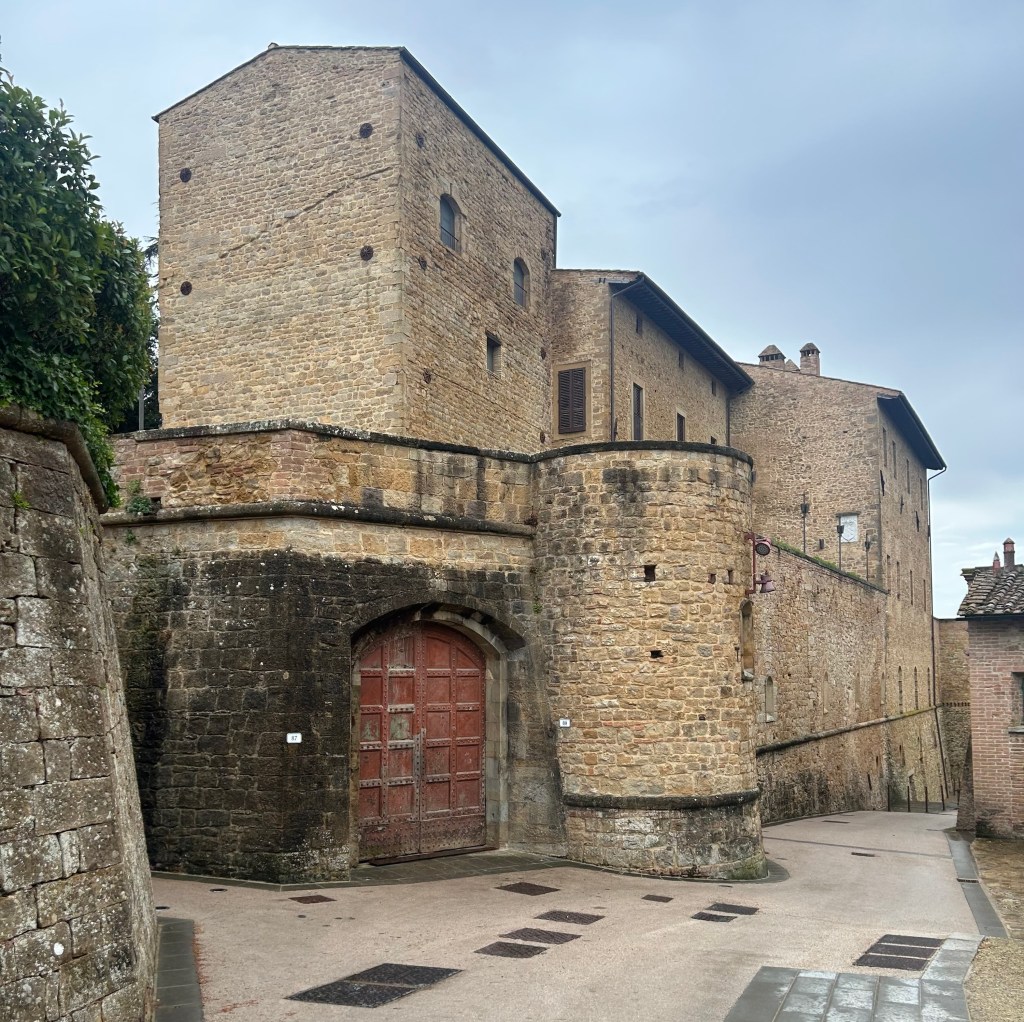
The event was at the Castelfalfi resort in the heart of Tuscany, Italy. The village of Castelfalfi was a five-minute walk from the hotel and featured a row of shops ranging from a clothing store to a gelato shop. Everywhere I looked, there were scenic views. 

Event participants paid $14,000 for five-star accommodations, meals and airport transfers. Attendees had to apply and have a proven track record of leading a seven- to nine-figure brand.

Besides the three OOAK founders, speakers at the event included Jeff Srithongrung, director of creative strategy at TubeScience, and Ray Jang, founder and CEO at AI ad company Atria. Srithongrung spoke about how to run an effective ad campaign and the benefits of changing an ad to appeal to different audiences. Jang spoke about the transformative effect of AI in advertising and said that AI has reduced the cost of testing concepts and trying new things to “close to zero.”

This was where I stayed.
The Castelfalfi resort
A row of shops in the village.

On Saturday afternoon, I joined the conference participants for a truffle-filled lunch: We had beef tartare with truffle as a starter, truffle risotto for the main course and vanilla truffle mousse for dessert. I sat with founders working on selling everything from supplements to gold. 

Truffle risotto.
Truffle risotto.
One part of the Castelfalfi village
One part of the Castelfalfi village.
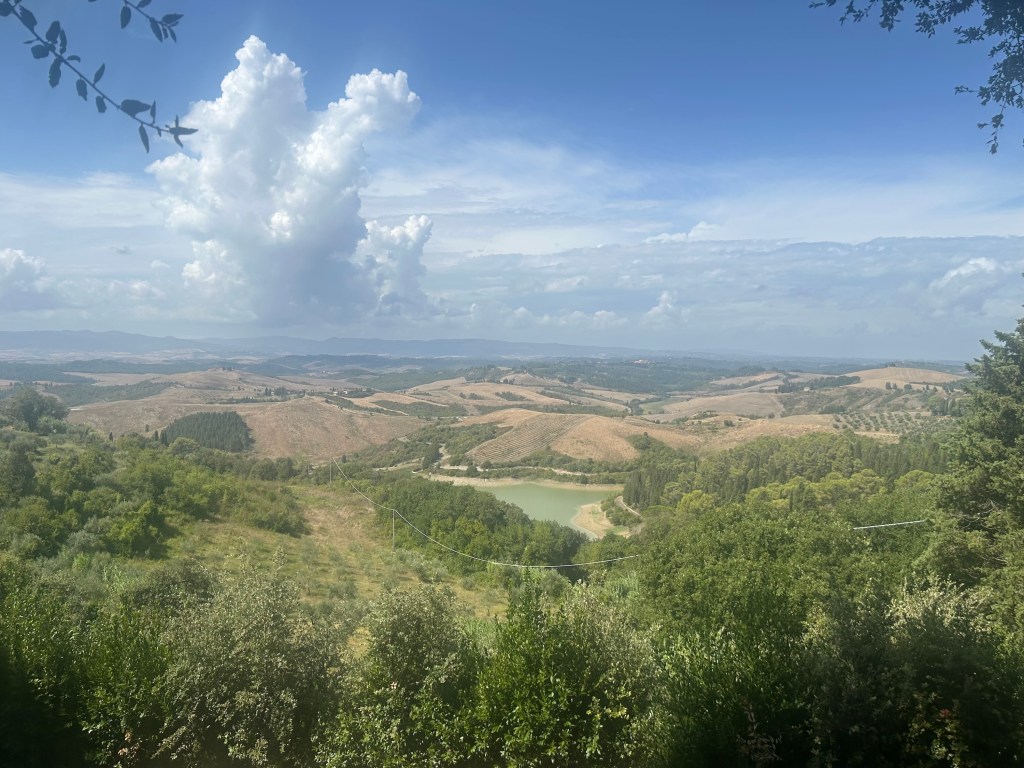
The view
The view.

One attendee spoke about his success

Most event participants were brand founders. One speaker, 32-year-old Alvaro Gellings, revealed that he built an apparel brand and sold $1.4 million worth of products within the first hour of launch. He then built a sportswear brand called Day One and tapped into a partnership with German creator and endurance athlete Arda Saatçi. Gellings, who was also an attendee at the conference, knew that selling sportswear required more than just having a quality product. 

“Nobody’s looking for the next gym tank to buy,” he says. “Nobody’s in urgent need of the next T-shirt, the next socks, the next shoes. You have to create a story.”

Gellings created a highly publicized story: Saatçi would run 1,960 miles from Berlin to New York. 

He would start in Berlin and run across Europe to Porto, Portugal, then take a flight from Porto to Boston. For the final stretch, he would run from Boston to New York. He would do it all while wearing Day One sportswear, and the company’s official launch would be tied to him completing his run.

It took Saatçi 74 days in 2024 to complete the task. The ad campaign had “everyone posting,” Gellings says. It was a prime example of how companies can leverage partnerships with influencers to make their brands more recognizable and focus on the story, not the product. 

Framing products in new ways

The OOAK co-founders hosted a number of talks at the retreat, and I sat down with the trio before the event started to hear more about their entrepreneurial journeys.

Even if you don’t know OOAK, you may recognize one of their portfolio brands, like earplug company Hears and sleepwear startup Dore & Rose. Verlaat, Nick and Vince founded Dore & Rose in 2022, followed by Hears in 2023 and subsequently grouped the businesses under the holding company OOAK.

Verlaat oversees brand, creative direction and positioning while Nick handles product and people and Vince focuses on growth, paid acquisition and supply chain execution. 

“We all had a very separate skill set [when we started], and we still have [that],” Verlaat says.

He added that his blueprint for launching brands, his core thesis, was to take a “boring” product and frame it differently. For example, the founders position Dore & Rose as a premium sleep-wellness brand rather than a conventional bedding retailer, selling mulberry-silk sleep products infused with silver ions. They emphasize overnight skin recovery and restorative sleep.

The founders took a relatively familiar product, the silk pillowcase, and pushed it toward an emotionally richer category: beauty, wellness and sleep quality. It’s a silk pillowcase brand positioned as beauty, not bedding. 

Hears applies the same playbook to hearing protection: It sells earplugs for music, nightlife and event environments but positions them as a premium lifestyle product rather than a mere accessory. Its public narrative is about enjoying music clearly and confidently while protecting hearing. The founders repositioned the earplugs as a fashion product, not a medical device.

The outcome

So far, the way they market their products is paying off: The founders disclosed that OOAK Brands is making a combined yearly revenue of $100 million. They are targeting $200 million this year. 

In addition, they have sold over one million silk items through Dore & Rose and have placed their silk products in 50 five-star hotels, like Four Seasons, Belmond and Cheval Blanc. Dore & Rose has partnerships with over 150 retailers, including Nordstrom, Mecca and Namshi.

Meanwhile, Hears hit $7 million in revenue in its first year, 2024. Since then, the brand has sold more than 250,000 pairs of earplugs. Hears partnered with the Hearing Health Foundation to donate a portion of revenue and raise awareness for hearing protection. 

Their advice

Verlaat’s advice for potential founders waiting to make the leap is to “just do it.” “What’s the worst thing that could happen, really?” he says. “You don’t die.” 

He says that he knew from the start that he would succeed. “We always believed that we’re going to get to where we are today.”

Vince pursued entrepreneurship because he “wanted to work and make money.”

“I wanted to just go harder,” he says. “For me, I think I figured out really, really soon that working for a boss was not going to cut it for me.”

Nick was candid that founders needed to “wear multiple hats,” especially in the early stages of building a business. He is also an advocate of just getting started, even if a founder doesn’t have everything figured out. “You don’t need to see the finish line. You don’t need to know where it will end,” he says. “As long as you know your next step, eventually you will get there.”

Key Takeaways

  • The OOAK Mastermind conference took place in late August in Tuscany.
  • In order to attend, founders had to apply and pay $14,000 in conference fees.
  • The event was geared towards founders of seven- to nine-figure founders who want to take their businesses to the next level.

I first saw the hotel Castelfalfi from the back of a cab, its stone exterior rising out of the Tuscan hills. Inside waited founders who collectively generate more in annual revenue than some small countries — and each had paid thousands of dollars for the privilege of being there.

On paper, I had no business being at a $14,000 retreat for seven- to nine‑figure founders in Tuscany. I don’t run a massive consumer goods brand or a unicorn startup, and my net worth is far from impressive. But when I was invited to sit in on three days of keynote sessions and fireside chats at the OOAK Mastermind conference, I couldn’t turn down the chance to see what happens when ultra‑successful founders gather behind closed doors.

OOAK Mastermind was hosted by OOAK, short for One Of a Kind. The global consumer brand-building company creates, scales and acquires brands.


Source link

I Went to a $14,000 Retreat for 9-Figure Founders in Italy Read More »