Blog

How to Buy Great Deals From Wholesalers As The End-Buyer

How to Buy Great Deals From Wholesalers As The End-Buyer


15% ROI”,”imageURL”:”https:\/\/www.biggerpockets.com\/blog\/wp-content\/uploads\/2021\/05\/large_Extra_large_logo-1.jpg”,”imageAlt”:””,”title”:”SFR, MF & New Builds!”,”body”:”Invest in the best markets to maximize Cash Flow, Appreciation & Equity with a team of professional investors!”,”linkURL”:”https:\/\/renttoretirement.com\/”,”linkTitle”:”Contact us to learn more!”,”id”:”60b8f8de7b0c5″,”impressionCount”:”273478″,”dailyImpressionCount”:”504″,”impressionLimit”:”350000″,”dailyImpressionLimit”:”1040″},{“sponsor”:”The Entrust Group”,”description”:”Self-Directed IRAs”,”imageURL”:”https:\/\/www.biggerpockets.com\/blog\/wp-content\/uploads\/2021\/11\/TEG-Logo-512×512-1.png”,”imageAlt”:””,”title”:”Spring Into investing”,”body”:”Using your retirement funds. Get your step-by-step guide and learn how to use an old 401(k) or existing IRA to invest in real estate.\r\n”,”linkURL”:”https:\/\/www.theentrustgroup.com\/real-estate-ira-report-bp-awareness-lp?utm_campaign=5%20Steps%20to%20Investing%20in%20Real%20Estate%20with%20a%20SDIRA%20Report&utm_source=Bigger_Pockets&utm_medium=April_2022_Blog_Ads”,”linkTitle”:”Get Your Free Download”,”id”:”61952968628d5″,”impressionCount”:”453881″,”dailyImpressionCount”:”325″,”impressionLimit”:”600000″,”dailyImpressionLimit”:0},{“sponsor”:”Walker & Dunlop”,”description”:” Apartment lending. Simplified.”,”imageURL”:”https:\/\/www.biggerpockets.com\/blog\/wp-content\/uploads\/2022\/03\/WDStacked512.jpg”,”imageAlt”:””,”title”:”Multifamily Property Financing”,”body”:”Are you leaving money on the table? Get the Insider\u0027s Guide.”,”linkURL”:”https:\/\/explore.walkerdunlop.com\/sbl-financing-guide-bp-blog-ad”,”linkTitle”:”Download Now.”,”id”:”6232000fc6ed3″,”impressionCount”:”164265″,”dailyImpressionCount”:”292″,”impressionLimit”:”200000″,”dailyImpressionLimit”:”6500″},{“sponsor”:”SimpliSafe Home Security”,”description”:”Trusted by 4M+ Americans”,”imageURL”:”https:\/\/www.biggerpockets.com\/blog\/wp-content\/uploads\/2022\/09\/yard_sign_100x100.png”,”imageAlt”:””,”title”:”Security that saves you $”,”body”:”24\/7 protection against break-ins, floods, and fires. SimpliSafe users may even save up to 15%\r\non home insurance.”,”linkURL”:”https:\/\/simplisafe.com\/pockets?utm_medium=podcast&utm_source=biggerpockets&utm_campa ign=2022_blogpost”,”linkTitle”:”Protect your asset today!”,”id”:”624347af8d01a”,”impressionCount”:”137387″,”dailyImpressionCount”:”318″,”impressionLimit”:”200000″,”dailyImpressionLimit”:”2222″},{“sponsor”:”Delta Build Services, Inc.”,”description”:”New Construction in SWFL!”,”imageURL”:”https:\/\/www.biggerpockets.com\/blog\/wp-content\/uploads\/2022\/04\/Image-4-14-22-at-11.59-AM.jpg”,”imageAlt”:””,”title”:”Build To Rent”,”body”:”Tired of the Money Pits and aging \u201cturnkey\u201d properties? Invest with confidence, Build To\r\nRent is the way to go!”,”linkURL”:”https:\/\/deltabuildservicesinc.com\/floor-plans-elevations”,”linkTitle”:”Look at our floor plans!”,”id”:”6258570a45e3e”,”impressionCount”:”125237″,”dailyImpressionCount”:”235″,”impressionLimit”:”160000″,”dailyImpressionLimit”:”2163″},{“sponsor”:”RentRedi”,”description”:”Choose The Right Tenant”,”imageURL”:”https:\/\/www.biggerpockets.com\/blog\/wp-content\/uploads\/2022\/05\/rentredi-logo-512×512-1.png”,”imageAlt”:””,”title”:”Best App for Rentals”,”body”:”Protect your rental property investment. Find & screen tenants: get full credit, criminal, and eviction reports.”,”linkURL”:”http:\/\/www.rentredi.com\/?utm_source=biggerpockets&utm_medium=paid&utm_campaign=BP_Blog.05.02.22&utm_content=button&utm_term=findtenants”,”linkTitle”:”Get Started Today!”,”id”:”62740e9d48a85″,”impressionCount”:”106321″,”dailyImpressionCount”:”292″,”impressionLimit”:”150000″,”dailyImpressionLimit”:”5556″},{“sponsor”:”Guaranteed Rate”,”description”:”One-Stop Mortgage Lender”,”imageURL”:”https:\/\/www.biggerpockets.com\/blog\/wp-content\/uploads\/2022\/06\/GR-512×512-1.png”,”imageAlt”:””,”title”:”$1,440 Mortgage Savings”,”body”:”Whether you\u2019re buying new or cash-out refinancing to upscale the old \u2013 get started today and we\u2019ll help you save!”,”linkURL”:”https:\/\/www.rate.com\/biggerpockets?adtrk=|display|corporatebenefits|biggerpockets|july2022_blog||||||||||&utm_source=corporatebenefits&utm_medium=display&utm_campaign=biggerpockets&utm_content=july2022-blog%20%20%20″,”linkTitle”:”Buy or Cash-Out Refi”,”id”:”62ba1bfaae3fd”,”impressionCount”:”61715″,”dailyImpressionCount”:”280″,”impressionLimit”:”70000″,”dailyImpressionLimit”:”761″},{“sponsor”:”Avail”,”description”:”#1 Tool for Landlords”,”imageURL”:”https:\/\/www.biggerpockets.com\/blog\/wp-content\/uploads\/2022\/06\/512×512-Logo.png”,”imageAlt”:””,”title”:”Hassle-Free Landlording”,”body”:”One tool for all your rental management needs — find & screen tenants, sign leases, collect rent, and more.”,”linkURL”:”https:\/\/www.avail.co\/?ref=biggerpockets&source=biggerpockets&utm_medium=blog+forum+ad&utm_campaign=homepage&utm_channel=sponsorship&utm_content=biggerpockets+forum+ad+fy23+1h”,”linkTitle”:”Start for FREE Today”,”id”:”62bc8a7c568d3″,”impressionCount”:”65210″,”dailyImpressionCount”:”270″,”impressionLimit”:0,”dailyImpressionLimit”:”1087″},{“sponsor”:”Steadily”,”description”:”Easy landlord insurance”,”imageURL”:”https:\/\/www.biggerpockets.com\/blog\/wp-content\/uploads\/2022\/06\/facebook-business-page-picture.png”,”imageAlt”:””,”title”:”Rated 4.8 Out of 5 Stars”,”body”:”Quotes online in minutes. Single-family, fix n\u2019 flips, short-term rentals, and more. Great prices and discounts.”,”linkURL”:”http:\/\/www.steadily.com\/?utm_source=blog&utm_medium=ad&utm_campaign=biggerpockets “,”linkTitle”:”Get a Quote”,”id”:”62bdc3f8a48b4″,”impressionCount”:”63166″,”dailyImpressionCount”:”215″,”impressionLimit”:”200000″,”dailyImpressionLimit”:”1627″},{“sponsor”:”MoFin Lending”,”description”:”Direct Hard Money Lender”,”imageURL”:”https:\/\/www.biggerpockets.com\/blog\/wp-content\/uploads\/2022\/06\/mf-logo@05x.png”,”imageAlt”:””,”title”:”Flip, Rehab & Rental Loans”,”body”:”Fast funding for your next flip, BRRRR, or rental with MoFin! Close quickly, low rates\/fees,\r\nsimple process!”,”linkURL”:”https:\/\/mofinloans.com\/scenario-builder?utm_source=biggerpockets&utm_medium=cpc&utm_campaign=bp_blog_july2022″,”linkTitle”:”Get a Quote-EASILY!”,”id”:”62be4cadcfe65″,”impressionCount”:”68549″,”dailyImpressionCount”:”191″,”impressionLimit”:”100000″,”dailyImpressionLimit”:”3334″},{“sponsor”:”REI Nation”,”description”:”Premier Turnkey Investing”,”imageURL”:”https:\/\/www.biggerpockets.com\/blog\/wp-content\/uploads\/2022\/07\/REI-Nation-Updated-Logo.png”,”imageAlt”:””,”title”:”Fearful of Today\u2019s Market?”,”body”:”Don\u2019t be! REI Nation is your experienced partner to weather today\u2019s economic conditions and come out on top.”,”linkURL”:”https:\/\/hubs.ly\/Q01gKqxt0 “,”linkTitle”:”Get to know us”,”id”:”62d04e6b05177″,”impressionCount”:”57846″,”dailyImpressionCount”:”180″,”impressionLimit”:”195000″,”dailyImpressionLimit”:”6360″},{“sponsor”:”Zen Business”,”description”:”Start your own real estate business”,”imageURL”:”https:\/\/www.biggerpockets.com\/blog\/wp-content\/uploads\/2022\/07\/512×512-1-300×300-1.png”,”imageAlt”:””,”title”:”Form Your Real Estate LLC or Fast Business Formation”,”body”:”Form an LLC with us, then run your real estate business on our platform. BiggerPockets members get a discount. “,”linkURL”:”https:\/\/www.zenbusiness.com\/p\/biggerpockets\/?utm_campaign=partner-paid&utm_source=biggerpockets&utm_medium=partner&utm_content=podcast”,”linkTitle”:”Form your LLC now”,”id”:”62e2b26eee2e2″,”impressionCount”:”44623″,”dailyImpressionCount”:”202″,”impressionLimit”:”80000″,”dailyImpressionLimit”:”2581″},{“sponsor”:”Marko Rubel “,”description”:”New Investor Program”,”imageURL”:”https:\/\/www.biggerpockets.com\/blog\/wp-content\/uploads\/2022\/07\/DisplayAds_Kit_BiggerPockets_MR.png”,”imageAlt”:””,”title”:”Funding Problem\u2014Solved!”,”body”:”Get houses as low as 1% down, below-market interest rates, no bank hassles. Available on county-by-county basis.\r\n”,”linkURL”:”https:\/\/kit.realestatemoney.com\/start-bp\/?utm_medium=blog&utm_source=bigger-pockets&utm_campaign=kit”,”linkTitle”:”Check House Availability”,”id”:”62e32b6ebdfc7″,”impressionCount”:”45697″,”dailyImpressionCount”:”210″,”impressionLimit”:”200000″,”dailyImpressionLimit”:0},{“sponsor”:”Xome”,”description”:”Search & buy real estate”,”imageURL”:”https:\/\/www.biggerpockets.com\/blog\/wp-content\/uploads\/2022\/08\/BiggerPocket_Logo_512x512.png”,”imageAlt”:””,”title”:”Real estate made simple.”,”body”:”Now, you can search, bid, and buy property all in one place\u2014whether you\u2019re a seasoned\r\npro or just starting out.”,”linkURL”:”https:\/\/www.xome.com?utm_medium=referral&utm_source=BiggerPockets&utm_campaign=B P&utm_term=Blog&utm_content=Sept22″,”linkTitle”:”Discover Xome\u00ae”,”id”:”62fe80a3f1190″,”impressionCount”:”28163″,”dailyImpressionCount”:”246″,”impressionLimit”:”50000″,”dailyImpressionLimit”:”1667″},{“sponsor”:”Follow Up Boss”,”description”:”Real estate CRM”,”imageURL”:”https:\/\/www.biggerpockets.com\/blog\/wp-content\/uploads\/2022\/08\/FUB-Logo-512×512-transparent-bg.png”,”imageAlt”:””,”title”:”#1 CRM for top producers”,”body”:”Organize your leads & contacts, find opportunities, and automate follow up. Track everything and coach smarter!”,”linkURL”:”https:\/\/pages.followupboss.com\/bigger-pockets\/%20″,”linkTitle”:”30-Day Free Trial”,”id”:”630953c691886″,”impressionCount”:”31386″,”dailyImpressionCount”:”251″,”impressionLimit”:”150000″,”dailyImpressionLimit”:”1230″},{“sponsor”:”BatchLeads”,”description”:”Off-market home insights”,”imageURL”:”https:\/\/www.biggerpockets.com\/blog\/wp-content\/uploads\/2022\/09\/image_6483441.jpg”,”imageAlt”:””,”title”:”Score off-market deals”,”body”:”Tired of working dead-end leads? Generate personalized leads, find cash buyers, and close more deals.”,”linkURL”:”https:\/\/batchleads.io\/?utm_source=biggerpockets&utm_medium=blog_ad&utm_campaign=bleads_3&utm_content=v1″,”linkTitle”:”Try for Free”,”id”:”6318ec1ac004d”,”impressionCount”:”19164″,”dailyImpressionCount”:”289″,”impressionLimit”:”50000″,”dailyImpressionLimit”:0},{“sponsor”:”BatchLeads”,”description”:”Property insights + tools”,”imageURL”:”https:\/\/www.biggerpockets.com\/blog\/wp-content\/uploads\/2022\/09\/image_6483441.jpg”,”imageAlt”:””,”title”:”Beat the shifting market”,”body”:”Don\u0027t let market uncertainty define your business. Find off-market deals and cash buyers with a single tool.”,”linkURL”:”https:\/\/batchleads.io\/?utm_source=biggerpockets&utm_medium=blog_ad&utm_campaign=bleads_3&utm_content=v2″,”linkTitle”:”Try for Free”,”id”:”6318ec1ad8b7f”,”impressionCount”:”29588″,”dailyImpressionCount”:”388″,”impressionLimit”:”50000″,”dailyImpressionLimit”:0},{“sponsor”:”Walker & Dunlop”,”description”:”Loan Quotes in Minutes”,”imageURL”:”https:\/\/www.biggerpockets.com\/blog\/wp-content\/uploads\/2022\/09\/WD-Square-Logo5.png”,”imageAlt”:””,”title”:”Skip the Bank”,”body”:”Financing $1M – $15M multifamily loans? Competitive terms, more certain execution, no strings to personal assets”,”linkURL”:”https:\/\/explore.walkerdunlop.com\/better-than-banks\/bigger-pockets\/blog\/quote”,”linkTitle”:”Learn More”,”id”:”6318ec1aeffc3″,”impressionCount”:”32017″,”dailyImpressionCount”:”410″,”impressionLimit”:”200000″,”dailyImpressionLimit”:”2334″}])” class=”sm:grid sm:grid-cols-2 sm:gap-8 lg:block”>


Source link

How to Buy Great Deals From Wholesalers As The End-Buyer Read More »

We’ve once again downgraded our forecast for China’s growth, says IMF

We’ve once again downgraded our forecast for China’s growth, says IMF


Share

Anne-Marie Gulde, deputy director of Asia and Pacific department at the International Monetary Fund, explains why it cut China’s growth forecast to 3.2% for this year, and to 4.4% for 2023.

01:53

Tue, Oct 11 202211:14 PM EDT


Source link

We’ve once again downgraded our forecast for China’s growth, says IMF Read More »

Does Gen Z Stand a Chance in Today’s Housing Market?

Does Gen Z Stand a Chance in Today’s Housing Market?


Gen Z, the generation just on the cusp of homebuying age, may not have a chance to buy homes in the first place. For years, we’ve heard how millennials have been struggling to buy homes—but what about the generation behind them? With rising affordability issues, wages that won’t match inflation, and a recession on the horizon, will this newest generation ever be in the clear to become homeowners? Or, will they become the largest generation of renters the world has ever seen?

In today’s episode, Dave breaks down the data behind the demand, showing where Gen Zers are heading, what they’re buying, and whether or not they even want to buy homes at all. This data highlights significant differences in where renters/homebuyers of this generation are moving. Landlords, pay close attention—buying in any of these high-demand cities could mean steady rent checks for years to come.

We also chat with twenty-four-year-old investing mogul, Soli Cayetano, a Bay Area-based investor who grew her portfolio entirely out-of-state. Soli, being one of the oldest Gen Zers, has insight into why some of her peers will/won’t be buying homes anytime soon. She also gives some stellar advice to new or young investors just getting into the rental property game.

Dave:
Hey, what’s going on everyone? Welcome to On the Market. I’m your host, Dave Meyer. Today, I am going to be doing a semi deep dive into a topic that has really been interesting me recently. And yes, it is nerdy, it’s a little wonky, but it is demographics. And I know that probably doesn’t sound like the most exciting topic, but I’m going to try and make this fun. We have a great interview for you and I want to also just make sure you know that demographics are actually a really important part of investing, particularly with real estate investing because it makes up a lot of demand, right? On this show, we talk a lot about supply and demand and how that really impacts the price of assets.
It impacts where rent is going to grow, where vacancy is going to be, and demand is in large part, comprised of demographics like how many people are there in the entire generation or how many renters are there total. And today we’re going to focus in on a subsection of those demographics, which is Gen Z. They are the cool kids, the youngest generation starting to enter the workforce right now. And we’re going to just talk about what they’re doing and how that impacts the housing market. So this is important. One, if you’re in Gen Z, this could really help you figure out where you’re going to live, how you’re going to maximize your financial position, how you can get started investing in real estate. But also if you’re not in Gen Z, and most of us are not going to be, this episode is still designed for you because it’s going to help you understand where demand. And I think this is critical because we’ll get into this demand not just for houses, but where demand for rent is going over the next couple of years.
Because millennials, I am one of them, sadly, we are all getting older and soon it’s going to be Gen Z that’s pushing some of the trends in the housing market a few years out. So you’re going to want to pay attention to this because as investors we want to plan several years into the future. And if you understand some of the trends that are going on with this younger generation, it could help you make more informed investing decision. So that’s what we’re going to look at today. I’m going to do 15, 20 minutes just talking, giving you a background. And then we have an excellent guest coming on to join us. Her name is Soli Cayetano.
She is the personality behind a really popular Instagram account called Lattes and Leases. She is an excellent investor. She’s only 24 years old, has something like 20 or 30 units, it’s really cool, very impressive to hear how she got started. She’s investing out of state. So I think people who are young and maybe can’t afford in their market or if you’re just like me interested in investing in out of state, she has some really good tips for you. So that’s what we’re going to get into today and hopefully this will help you understand what’s going on in the younger generation and how that’s impacting the housing market. But before we get into that, we are going to take a very quick break.
If you listen to the show or any economics, you know that millennials have really been the drivers of demand and economics over the last couple of years. And that is because household formation, basically a lot of economic activity starts when someone forms a household. And that basically means when you move out and start your own house. So that might mean maybe you’re moving out from your parents and you’re renting something for the first time or maybe two people have been living together as roommates and then they both go on and form their own household. That is this really important thing in economics because it drives demand, right? When there’s more households, that’s more demand for rental units, it’s more demand for owner occupied houses. And so millennials have been driving a huge amount of household formation over the last couple of years and that’s just based off simple things like birth rate.
So for the last couple of years, for generations we’ve always talked about the baby boomers, how they are the biggest generation and what they did had these cascading effects throughout the economy. And that was true for quite some time, but recently millennials, which are largely the children of baby boomers, so it makes sense that they are now the biggest generation. Millennials are now the biggest generation in the United States and that means that what they do economically is going to impact the rest of the country. And what’s been happening that has impacted the housing market in particular is that they’re reaching family formation years. So people who are millennials are generally now starting to reach at the high end or around 40 years old, at the low end are like 25 years old. And the peak age where people start to form families, like what I’m talking about, is 30.
So you can imagine that if we have the biggest generation of people in the United States entering this household formation years, that’s going to have a big impact. And this is one of the reasons why over the last few years when we’ve seen an increase in housing prices, and of course that’s been fueled by inflation and low interest rates, but one of the really strong foundational things that have pushed up housing prices and rent prices is that household formation has really started to take off. It was really low in the early 2000s and even in the early half of the 2010s. But over the last five to 10 years, we’ve had this huge boom of people who want to start households. And that is a powerful force because as investors we’re often trying to time the market and saying like, “Oh it’s a great time to buy interest rates, I’m going to wait for this and that.”
But if you are ready to start a family, if you want to have a child, maybe you’re even having children, that is a pretty strong motivator and people tend to form households whether regardless of financial conditions. Of course not everyone can do that, but people try and find a way to make it work. And so we’ve seen millennials driving a lot of this over the last couple of years and this is likely to continue for at least another four or five years because as I said, millennials, biggest generation, peak family formation around 30, the youngest millennials are around 25 right now. And so we still have a few more years of millennials and it does start to tail off a little bit, but I think it’s safe to say three to five years we still have a lot of millennial demand for housing in the United States.
This of course for anyone who invests long term as most of us do, begs the question what is going to happen next? What happens when Gen Z comes? Because it’s the driving force in the economy because Gen Z is smaller than the millennial generation, but at the same time it still makes up currently 20% of the US population that’s pretty sizeable. And more notably by the end of next year, by the end of 2023, Gen Z is forecasted to make up 30% of the labor force in the US. So if you’re talking about who’s earning money, who’s spending a lot of money, Gen Z is sort of the up and coming player. And even though they might not be leading household formation, they will be leading the demand for housing and a lot of economic activity over the next couple of years.
I actually found this chart that is really helpful by a company called Yardeni Research, we’ll put a link in the bio, and it basically shows that people under 35 have a home ownership rate of about 39%. And that sounds pretty good and that’s probably mostly millennials. But if you look at the next generation people who are 35 to 44, that home ownership rate jumps up to 62%. So that’s pretty serious. That means that millennials and Gen Z combine could increase their home ownership rate by 50% just to get to where the next generation is because millennials and Gen Z generally speaking have faced a lot of economic challenges that weren’t there in previous generations. Just speaking for myself, I graduated in 2009, which was right into the great recession. We all know that it took years and years for wages to come back after that.
Just as wages were starting to rebound, we’ve faced this whole COVID fiasco over the last couple of years, which has created further economic difficulty. And so even though we see data that shows that these two generations, millennial and Gen Z, both want to buy homes, their home ownership rates are much lower than they are for previous generations were at the same age. So that is a good sign for housing demand in my mind because that means people still want to buy homes, they expect to buy homes but they haven’t been able to yet. And so that means that they still want to and hopefully if affordability improves over the next couple of years, they will be able to. So that just shows that this is an important demographic to pay attention to because this generation could be fueling demand. When you look at Gen Z, a staggering amount of them want to buy homes.
And I think there’s this media narrative that says, “Millennials, they don’t want to buy home. Gen Z, they’re renters forever, they don’t want to own anything.” Honestly, I think that’s nonsense. I think that just is a reflection that they can’t afford to buy homes right now, but everyone wants to buy homes. There’s been data that shows that 86% of people in Gen Z want to purchase a home. They want to, and 45% of Gen Z wants to purchase a home in the next five years. So that is encouraging for the housing market demand. This idea that people don’t want to buy homes and are content being renters, I think is really honestly pretty dumb. And that is just not necessarily true. And which is why I wanted to get into this episode again is because what Gen Z prefers, what they like, where they’re moving, what they’re doing does really matter.
That said, I think it’s going to be tough for Gen Z to start becoming a force in the housing market over the next couple of years because of affordability. It’s just so low. When you look at that same survey I was talking about, it shows that 66% of people who want to buy home say that they will face significant financial obstacles in buying that home with over 20% saying that they don’t have enough savings for a down payment, 18% saying that they won’t be able to find a home in their price range. So those are the same thing. Honestly, I don’t know if that was just a bad survey question. 16% said they don’t have a good enough credit, which could be a huge problem with rising interest rates. And lastly, 11% saying they have too much student loan debt. I do think this was taken before the debt forgiveness thing, so I don’t know how that was impacted.
But again, I can see why Gen Z, even though they want to buy home, are facing some of these affordability issues. If you look at Gen Z’s just medium income, it’s lower. And of course that makes sense because they’re less experienced and they’re in entry level jobs. The oldest Gen Z I think is 24 right now. So they’re still in entry level jobs, but just to contextualize this, the median income for someone in Gen Z is about $46,000. Whereas if you jump up to millennials, just one generation above, it’s $76,000. So that’s a lot more, right? You’re talking not double but 60, 70% more income. And so that means in this era of super high home rates, we’re probably going to see difficulty for Gen Z in buying a home. Furthermore, so just you guys could say basically what I’m trying to say is they’re going to have a hard time and I think that really matters for the housing market and for these people because it could fuel rent demand, which we’ll talk about in a minute.
But according to Rocket Homes, I don’t know if you’re heard of Rocket Mortgage, but they’re one of these big mortgage companies, they did the survey, and they show that 81% of Gen Z underestimates how much it costs to purchase a home. So not only are they already forecasting problems and earning less, but they’re also underestimating how much it costs at the same time. And this company who did this survey, Rocket Homes, estimated that it will take them on average six years longer than it would given what they think it’s going to take. So it could take six years longer than it would. So to me that’s really interesting because I said millennial demand will probably keep up for four to five years. But if Gen Z demand starts to lag, that could put downward pressure on asset prices and home appreciation in that lag period.
And that is a very broad generalization because what we’re talking about here specifically is only entry level homes. As millennials age, the demand for move up homes, more luxurious, bigger homes is going to still increase, right? They’re going to keep making waves throughout the economy as they age. I’m just talking about entry level homes here when I’m talking about Gen Z. But it’s something to note and I don’t think we’re already going to see this glut and crash in those prices because there aren’t enough entry level homes right now. But I think it is just important to know that demand in that area could slow down over the next couple of years and would have some impact. That is a long way away. I think it’s hard to really forecast the exact impact of that, but it’s just something to take note of because basically 45% of the people who of Gen Z say they’re going to buy home in the next five years.
But the same time that Rocket Homes thing is saying that on average it’s going to take them six years longer than they’re expecting. And so that might actually just push all this Gen Z home buying activity. So that is really interesting because basically Gen Z, again, they want to buy homes but they face these large affordability issues already. And I think where we are in the economic climate is going to make it even harder because wages have been going up a lot over the last couple of years, not compared to inflation, they are not keeping up with inflation. But just in absolute terms, they have been going up. Now with the Fed raising interest rates and probably a recession that we’re either in currently or coming pretty soon, we are probably going to see wages peak because the labor market is starting to soften a little. The most recent jobs data is actually quite good given where we’re at.
But I do think we will start to see wage growth come down. The same time, the Fed is saying that they’re going to keep interest rates high, and housing prices, they’re probably going to come down but I think it’s unlikely that they’re going to come down on a national level more than 10%. In certain markets, people are forecasting 20%, 25% in some of the hottest markets. And that could come true, but I think generally speaking, 10% with high interest rates, 10% decline in prices with elevated interest rates isn’t going to make it way easier for Gen Z to start buying homes. So I think this is something to keep an eye on is can our newest generation of workers afford homes? Because that’s important for society and for the housing market in general. So that’s just something to watch. Generally speaking, you are seeing Gen Z react to this by buying houses but only in less expensive cities.
So according to this data that I just found, it was an article from a site called moveBuddha. They did this analysis of some data that showed where Gen Z is buying homes and the top five markets that I’ve seen are pretty small cities. They’re not the names that you hear a lot about. Number one is Madison, Wisconsin, and that’s been a trendy city, but it’s a lot less expensive. Fargo, North Dakota, that one came out of left field for me. Columbus, Ohio, that’s been a hot market recently because of that affordability. Lincoln, Nebraska and Missoula, Montana. So again, smaller cities, some of these have gotten really expensive as everything has, but relatively to the Seattles, the New Yorks, the Austins, that is not as expensive. After you get out of the top five, you do see some of the bigger, more expensive cities. So San Francisco’s six, Denver is seven, Minneapolis, which is expensive, is nine, and Washington D.C. is 10.
But you have Burlington, Vermont, another small city there in there at eight. And then in the top 15, you see cities like Pittsburgh and Cincinnati. Pittsburgh, if you listen to our recent show about affordability, is the most affordable city in the entire world according to some analysis. So I think if you’re looking for where Gen Z and some of the demand for entry level homes might be over the next five to 10 years, I would look at these affordable cities because you look at this combination of economic factors where you’re seeing work from home, low affordability, but people can work from anywhere. They might start moving to these cities where they can actually afford a home and start gaining some of the benefits of either investing in real estate or home ownership. If you are a Gen Z investor, these are some markets that you should consider house hacking or buying in.
Our guest, Soli Cayetano, who’s going to be coming on in just a minute, invests in Cincinnati but lives and grew up in the Bay Area. So she found a place where she could buy and research something more affordable. And I think this is of one of these generational trends that is likely to continue that for many years, people primarily invest in where they live and through resources, like this show and BiggerPockets in general, and because of this work remote trend and the internet just in general, people can invest anywhere.
And so I think we’re going to start seeing Gen Z investors as well as Gen Z home buyers gravitate towards these cities that are a lot more at affordable because they are facing pretty stiff challenges in the more expensive cities. Now the second point before we bring Soli on I want to make is this trend that makes home ownership more difficult for Gen Z will likely bolster demand for rent for longer because people have to live somewhere and they’re becoming a larger and larger part of the workforce in the US and if they can’t afford homes, unfortunately, they’re going to have to rent.
And when you look at rent, I wanted to find some of the cities where Gen Z was moving so you can see some of these demographic shifts and I was surprised because if you listen to the show that a lot of the demographic trends, a lot of the migration has been out of big cities and towards the Southeast, sometimes towards the Midwest, these more affordable cities, especially since COVID. So you see places like Florida and Texas, Alabama, Tennessee has been the hotspots for demographics and growing population. But when you look at Gen Z, that is not necessarily the case. And this is cool and interesting because as an investor you should pay attention. I’m going to share two surveys with you. New York Times partnered with a company called CommercialCafe.
It’s a commercial real estate company that provided the data, New York Times published it. And basically they took the top 20 cities where Gen Z renters are best for Gen Z renters. And this is based on affordability, recreational opportunity, unemployment rate, commuting options, the Gen Z population and other metrics. The number one city is Atlanta. That has definitely been a boom city over the next couple of years. But number two is Minneapolis, which I was surprised by. Definitely not the profile of some of the other cities that have seen big population growth followed by Boston. Again, not really one that’s been up there. Then you have Tucson, Raleigh, and Columbus, all big popular destinations. Then you see Seattle, a very expensive city. Austin, a very expensive city. New York is up there. So you really see different trends with rent demand and it’s really the theme that I would say is economic growth.
This isn’t based what we see, this is based off affordability and everything, but the trend I see across these cities is places where there are a lot of jobs. Atlanta, Minneapolis, I think Minneapolis has more Dow 500, top hundred, whatever, companies than anywhere else in the [inaudible 00:20:40], Fortune 500, something like that. Minneapolis has more headquarters there. That’s a huge economic powerhouse. Boston has a huge biotech, it has a lot of banking. Seattle with tech. Austin, all these tech companies are moving to Austin. New York’s still the center of finance for the entire globe. Houston with oil and gas. These are the cities Gen Z appears still to be attracted to and moving towards the cities where economic growth is the biggest, at least in rental terms. Remember, I’m not talking about home demand because when we looked at home demand, we saw smaller cities that were more affordable.
But when we look at rent demand, we’re seeing bigger cities that are less affordable but have the biggest economic growth and I guess that makes sense. If you’re young, you’re ambitious, you’re trying to make more money, get your career started, you want to go to one of these big cities where the job opportunities are the best. I also looked at this other survey that showed the trending cities for Gen Z renters and the number one was San Francisco, number two, Jersey City, which is right outside New York City. Number three is New York City, Manhattan. Then we have Philadelphia, Boston, Arlington, Virginia. So six cities leading the way in the northeast. I mean I guess Virginia’s not northeast, but whatever. It’s on the East Coast. So that’s really interesting because we’ve had this talk about how a lot of people have been moving to the southeast and I think this is more like millennial Gen X.
People are a little bit older maybe of families, but the younger generation, rental wise, are moving to the places that the other are being left. So after those top six, we have San Jose, California, that’s where Google and Silicon Valley. Then we have Seattle, Minneapolis, LA, Peoria, I don’t even know where that is, Arizona, Long Beach, San Diego. Some of these big more expensive cities are still attracting young people. Maybe they’re attracted to the nightlife. But I think that really makes a lot of sense because people want to start their career in a place where they can have fun and where they can also have some of the highest paying jobs in the entire country. So that is something just to pay attention to as an investor. If you’re thinking everyone’s moving to affordable places, that might be true for Gen Z when it comes to home prices.
But when it comes to rent demand, so low vacancy, higher rent growth, it’s still the big cities that the youngest people who will drive rental demand over the next decade are moving to the big cities. So I think that is a different narrative than we’ve been hearing about other migration patterns and one of the things I wanted to make sure that we talked about on today’s episode. So with that, let’s just summarize what I just said. Basically, Gen Z, just like every generation, they want to buy homes but they’re facing really difficult economic conditions. And so I don’t expect that they’re going to be fueling a lot of demand in some of the more expensive cities. For home buying, they probably will be active but in some of the less expensive cities. But they are fueling rental demand in big population centers, big economic centers.
And that’s going to probably play out over the next 10 years and bode well for the rental markets probably, if I had to guess, best for multifamily rental markets over the next couple of years in some of those bigger cities like Seattle, New York, Austin, Minneapolis, keep showing up on those lists. So it’s super cool, really interesting thing to pay attention to. But in addition to just talking about data and numbers, I do want to get some context from a member of Gen Z who is investing and has a pulse on what’s going on with her peers. So let’s bring in Soli Cayetano from Lattes and Leases to talk about what it’s like to be a Gen Z member in today’s housing market. Soli Cayetano, welcome to On the Market.

Soli:
Thanks for having me.

Dave:
Well, thanks for being here. I have to say, I think this is the most intimidated I’ve been for an interview. Gen Z people, I’m scared of them generally.

Soli:
Why?

Dave:
I don’t know. You’re cooler than me. I know you’re just cooler than me. I don’t know any of the trends or don’t know how to talk to Gen Z people. So hopefully I can pull this off.

Soli:
We’ll teach you some. I’m like the oldest Gen Z-er you can get. So we might have to bring a younger person on the show.

Dave:
Oh God, that’ll make me just feel terrible. I’m already feeling old.

Soli:
18 years old. 18 is usually free.

Dave:
So people listening to this might know Soli from her great Instagram account, Lattes and Leases. But, Soli, could you tell our audience just a little bit about yourself and how you’re involved in real estate investing?

Soli:
Sure. So I am 24, the oldest Gen Z-er you can be. And I’m located in the Bay Area, California right now. I got started investing just over two years ago and obviously it’s very expensive to invest in the Bay Area. So I built my portfolio in Cincinnati, Ohio. So right now I have about 29 units between Cincinnati and a small town in Georgia into combination of long term, midterm, and short term rentals.

Dave:
That is incredibly impressive. How did you get started with this at such a young age? What inspired you to get into real estate investing?

Soli:
So I was always surrounded by real estate. So I was in the real estate association in college. When I was 19, I was a sophomore in college, I needed a job really badly because I had no money and ended up getting a job at a commercial brokerage firm. So I worked pretty much full time in an office leasing position through college as well as eventually leading the real estate association. So those are my two touch points. I listened to BiggerPockets, had some friends who bought some out of state rentals, but I was always so busy between working full time and going to school that I never really considered investing until the pandemic hit.
So pandemic, wiped out office leasing, obviously no one wanted to lease office spaces at the time and also school shut down, I was a senior in college. And when everything shut down I rediscovered real estate investing and decided it was now or never that I’d have the chance to really focus on investing and that’s when I committed to buy my first property. So from that commitment day, I believe it was 12 weeks till I closed on my first property in Cincinnati.

Dave:
Wow, good for you. That’s unbelievable. That is super fast. How did you pick Cincinnati?

Soli:
I went for work actually. So the year before, I was moving a client over to Cincinnati and I had the best time. We were wined and dined. The food was incredible, a lot of young people. It was super lively, beautiful waterfront. And then I looked on Zillow and the houses were a hundred thousand dollars and I was shocked. So I met an investor while I was out there who had a couple single families and I didn’t really have any, I guess, what I like to call competitive advantage in any other markets and I didn’t know how to research markets. It’s really, I guess, just ignorance that I chose the market but ended up working out really well.

Dave:
Yeah, you’re a prophet. I think Cincinnati has some of the highest appreciation rates right now, even in, we’re recording this, in late September 2022. Even as a lot of markets are starting to come off their highs, we’re seeing that Cincinnati’s doing really well and has some of the strongest rent growth in the entire country. So you picked well.

Soli:
It kept floating. Yeah, no, I mean I learned this later, but they spent over a billion dollars I think in the last 10 years really revitalizing their downtown because they were having trouble retaining students and so they reinvested, made it an amazing place to live, and that’s why a bunch of people are sticking around.

Dave:
I feel like everyone I know who is from Cincinnati just passionately love Cincinnati. I’ve never been, but it’s one of those places that if you’ve been there or you’re from there, you absolutely love it.

Soli:
Have you tried their chili?

Dave:
No. That’s a thing?

Soli:
Also passionately love their chili. I personally think it’s gross, but it’s like cinnamon chocolate chili. You’ll have to try it sometime.

Dave:
Oh wow. Kailyn, our producer, knows my dream in life is to somehow merge real estate investing and being Anthony Bourdain and travel around and invest in real estate and eat so that maybe I’ll get to do that one day. So we do want to talk about being in Gen Z and being able to invest. So do you have peers who are also investing or are you one of the only people in your age group you know that are investing in real estate right now?

Soli:
So I’d say that it’s a little bit regional. So in the Bay Area, I honestly don’t know that many people who invest in real estate because I think that a lot of people have the perception that you have to invest where you live. And so here it’s million dollars, 2 million properties, it’s really difficult for young people to invest. But I actually lived in Cincinnati for about four months this year and there are tons of young real estate investors. I would go to young real estate meetups, there was a ton of house hackers, a lot of people who own maybe two properties. It was a lot more common over there because the houses are a lot more affordable.

Dave:
That’s encouraging to hear. I got started relatively early out of necessity, not a great job market when I graduated college. And you hear in the media that Gen Z is not as interested in home ownership or investing. It sounds like that’s not what you’re seeing in your experience.

Soli:
I think it depends. I think that Gen Z-ers love to consume content. They’re content consumers from TikTok, from Instagram, usually from social media, from YouTube. And so the algorithms have gotten so good at showing you more of what you’re interested in. And so if you are interested in investing they will continue to feed you content. That’s how it happened for me. So I started following couple, I created at my real estate Instagram, I was following investors and so what did they do? They showed me more people who were interested in investing. They kept feeding me more real estate investing content. And so I think that made me think, oh, this is normal. Everybody’s investing in real estate. I’m the weird one. And that what really propelled me to keep buying real estate. If someone were to curate their feed to be about shopping or about news or about other things, I think the algorithms and what you feed yourself with content tends to take you in a different direction and then that becomes your world. Does that make sense?

Dave:
Yeah, yeah, absolutely. It’s great when it feeds you helpful content, but it’s terrifying that you could get in this spiral of either negative or unproductive content and you get consumed by it.

Soli:
It’s choose your own adventure. So I think that before when Instagram had a chronological feed, you could follow one person who was interested in finance and you could follow one person interested in clothes, you could follow your friends too. Now it’s not really no longer the case. It is based off of your likes and your views and how long you spend looking at things. And so they can really curate based off of just one thing. It’s hard to get more diversity.

Dave:
Yeah, yeah, that’s definitely true. It’s very interesting new frontier and I’m sure it will shape your generation for the next couple years or for the rest of your lives around how you interact with these social media platforms. It’s pretty crazy. In terms of your peers, you said you’re from the Bay Area, do most of your friends, peers still rent or are people trying to buy homes? Because one of the things I’m really interested in is, I don’t know if you’ve heard this, but millennials are now the driving force behind demand in the housing market and there’s always media that says, “Gen Z, they don’t want to buy houses, they’re going to be renters forever, they don’t want to be tied down.” We have some data around that, but I’m just wondering anecdotally, do you see any truth in that?

Soli:
Again, I think it’s a little bit regional. So I think in the Bay Area, a lot of people stay renters for a really long time, if not forever. My parents are still renting because they can’t afford to purchase a house. And so I was doing some calculations. Right now, I’m in Sausalito where the average home is $2 million. And so if you want to purchase a house, you can’t use an FHA, you can’t use a first home buyer’s loan, you got to put down half a million dollars. And for me as an investor even I feel like if I had half a million dollars, I’d probably invest in real estate then put it into a $2 million primary residence.
And so I think locally where a lot of my friends are, it is people will be renters for a long time as well as a lot of the digital nomad. I guess everyone during the pandemic wanted to travel more, they wanted more experiences, they wanted to not be tied down like you said. And so I think for the short term, there might be a lot more traveling, less home ownership, especially with people very discouraged about the housing market and how difficult it was to actually win an offer. So I think it’s mixed. Again, the country is so diverse. I think the Bay Area is in a bubble. We live in a bubble and the rest of the country is not like us, most of the country. But locally I would say primarily renters especially because it’s just unaffordable to live here.

Dave:
That makes a lot of sense. I actually pulled some data that showed where Gen Z people are buying homes. And this isn’t investors necessarily, this is home buyers as well, but it’s a lot of these smaller cities and less expensive cities that you’re talking about. So the number one was Salt Lake City, which has a higher average price, but then after that it’s Louisville, Kentucky, Oklahoma, Cincinnati, where you invest, Indianapolis, Phoenix and Minneapolis, which are both expensive, but Birmingham, St. Louis, and Virginia Beach. And it just makes me wonder, this is just speculation if we’re going to start to see those places start to grow faster because this is where Gen Z, not just as investors but as home buyers in general are going to be more attracted to these they’re almost like tertiary cities because they’re just more affordable and everything else is so expensive right now.

Soli:
And you can also work remotely a lot now. And so I know a lot of people in Cincinnati who have remote jobs getting paid Bay Area salaries to live in a place where you could buy a home for one year’s worth of your salary. So I think that that has really changed the playing field as well with a lot of companies being okay with you working wherever you want to work or living wherever you want to live.

Dave:
Totally, yeah, I mean it’s really going to be interesting to see, because we’ve talked about on this show and like Soli just said the amount you can earn is no longer tied to your proximity to these economic hubs anymore. We’ll see what happens, because I know a lot of companies are starting to call people back to the office so it’ll be interesting to see what happens there but I generally think you’re right.

Soli:
I actually worked in office leasing and so that was a question that we talked about all the time is, are company is going to force people back into the office? And what we saw a lot of the time is that if they tried to force people back into the office, people would just quit and try to find remote work. And so I don’t know where the future of the office holds. I think that there’s a lot of community to be built in offices, but I think people value flexibility a little bit more. And so I’m not really sure people will come back.

Dave:
Yeah, it’s interesting. I saw some data that showed that 30%… The amount of days total across the country that are worked remote have leveled off at 30%. But not to name the companies or people, but two people I’m close with both work for these large publicly traded companies that both said they’re never going to call people back and have both been called back to work in the last six weeks. So it’s interesting, I’m just curious what will happen. But I agree. I mean I’m all for the flexibility, so I personally like it, but I also sometimes really miss being in an office. So I think the hybrid solution is going to be popular and can support moving to some of these other cities. So on your Instagram, I know you often give advice to other Gen Z potential investors. What are some of the main pieces of advice you give to people who are your age and younger who are looking to get into real estate investing?

Soli:
Yeah, I think that house hacking is a very good place to start. So if you can buy a home with three and a half percent down, I think oftentimes Gen Z-ers don’t have that much money to start investing. And so it’s like how can I invest with not that much time and not that much money and house hacking is an easy way to start. So put three and a half percent down, honestly not very much money if you live in a lower cost area and then rent out the other rooms or the other units. So I think that’s a great way. If you do live in a really expensive market like me and maybe doesn’t make sense to house hacked, look at a state. So I would say those are the two options I give people is either looking at more cost effective market that cash flows or house hack.

Dave:
That’s very, very good advice in both things that work pretty well, even in down market conditions or confusing market conditions like the one we’re in today or the ones we’re in today. So you have, what did you say, 29 units now. What’s next for you? What are you planning? What are your ambitions in real estate investing?

Soli:
Honestly, I haven’t bought very many this year, so I think I’ve only bought maybe five units because I’ve been really busy stabilizing my portfolio. And now that it’s almost completely stabilized it, I feel like it is on the verge of re-exploding, which I’m really excited about. And so I’ve been looking making tons of offers on right now portfolios of single families and small mall ties. So not single families but portfolios of them as well as dipping my toes into office buildings, which is what I used to work in. So have put offers in on offices, warehouses and actually should hear back on one today, so cross [inaudible 00:39:21].

Dave:
Oh, awesome. Well, good luck. Is that in Cincinnati as well?

Soli:
Those ones are in Augusta, Georgia. So Augusta’s another, I guess, tertiary market where the Masters tournament is held and two hours outside of Atlanta. Same kind of landscape as Cincinnati. Very cash flowing, but good amount of appreciation as well.

Dave:
Nice. That’s great. Well good luck. Well, thank you for joining us. Is there anything else you think our listeners should know either about investing as a Gen Z investor or about your peers and how their preferences about the economy or their living preferences might come to shape the housing market in the coming years?

Soli:
Yeah, I mean I think there are a lot of Gen Z-ers who are probably interested but feel alone because they don’t have peers who are interested in investing locally or friends that they talk to often, which was my case. And so I had to really build my community online, but then I found hundreds of thousands of people who also shared the same interests and thousands of people who are my age or even younger. And so I would say that if Gen Z-ers are interested and they do feel a little bit alone or lost, that there’s a giant community online of people who are excited for you and there to support you.

Dave:
All right, great. Well, thank you. I mentioned it at the top of the show, but where should people who want to connect with you do that?

Soli:
Yeah, Instagram is probably the best place. So my Instagram name is @lattes.and.leases.

Dave:
All right, great. Soli Cayetano, thank you so much for joining us today.

Soli:
Yeah, thanks for having me, Dave.

Dave:
All right, big thanks to Soli. She is a really, honestly, an inspiration. If you’re 24, if you’re young, it’s incredible what she’s doing. I think it’s really interesting to see and just prove that out of state rental investing is possible. A lot of people are intimidated by it. I have been in the past, but it shows like if you build systems, you find a great agent, which you can do on BiggerPockets. There’s a great agent finder tool. If you can build a team, you can find markets that are growing where there is Gen Z demand, where there’s millennial demand, but it is more affordable and it’s more reasonable, more practical for you to get involved. And as a non Gen Z member, someone who’s an investor, I think it’s really important to listen to what Soli is talking about how location dependent this demand is going to be.
I think we talked about that in the beginning where we saw certain markets are going to capture Gen Z demand for home purchases while other markets are going to capture demand for Gen Z rent. And so this is just something you should consider in your investing strategy is what’s coming down the pipe of the next couple of years. Are you buying multifamily? Because buying multifamily in a place where home sales are going up is great, but if rent prices aren’t going up, that’s how commercial properties are valued. So you want to find the place where rent demand is going to be really strong, not just where there’s population growth all by itself. So that is something to pay attention to and I think Soli did a great job explaining that to us. Thank you, guys. Hopefully this was helpful to us. If you have any questions about this episode, please hit me up on Instagram where I am @thedatadeli. If you want to connect with me at all, you can do that there.
Ask me questions, give me feedback. If not, I welcome you to check out my brand new book. I’ve been talking about it a lot, but I’m pretty excited about it. It’s called Real Estate by the Numbers, helps you understand how to be an analytical real estate investor. I think that’s the only way to be a real estate investor, but of course I’m biased, so you can check that out. I wrote it with J Scott. It’s available on biggerpockets.com/store. Thank you all so much for listening. I will see you next time for On The Market. On The Market is created by me, Dave Meyer and Kailyn Bennett, produced by Kailyn Bennett, editing by Joel Esparza and Onyx Media, copywriting by Nate Weintraub, and a very special thanks to the entire BiggerPockets team. The content on the show On The Market are opinions only. All listeners should independently verify data points, opinions, and investment strategies.


Note By BiggerPockets: These are opinions written by the author and do not necessarily represent the opinions of BiggerPockets.


Source link

Does Gen Z Stand a Chance in Today’s Housing Market? Read More »

Demand for riskier home loans is high as interest rates soar

Demand for riskier home loans is high as interest rates soar


Demand for riskier home loans high as rates continue to climb

Mortgage demand dropped again last week as rates climbed higher, but one type of loan is attracting borrowers. Adjustable-rate mortgages, or ARMs, which offer lower rates, are seeing renewed demand after getting very little interest over the last decade.

Total mortgage application volume dropped 2% last week compared with the previous week, according to the Mortgage Bankers Association’s seasonally adjusted index, a consequence of surging rates.

The average contract interest rate for 30-year fixed-rate mortgages with conforming loan balances ($647,200 or less) increased to 6.81% from 6.75%, with points increasing to 0.97 from 0.95 (including the origination fee) for loans with a 20% down payment. That is the highest rate since 2006.

“The news that job growth and wage growth continued in September is positive for the housing market, as higher incomes support housing demand. However, it also pushed off the possibility of any near-term pivot from the Federal Reserve on its plans for additional rate hikes,” wrote Michael Fratantoni, MBA’s chief economist in a release.

The average rate for 5/1 ARMs, which has a fixed rate for the first five years, increased slightly, but was still lower, at 5.56%. The ARM share of applications was just under 12%. When rates were lower at the start of this year, that share was barely 3%, where it had been for several years.

ARMs can be fixed for up to 10 years, but they are considered riskier loans because the rate eventually adjusts to the market rate. Rates have been so low for so long that before rates started to rise borrowers didn’t need to take on that additional risk.

Higher overall rates crushed refinance demand even further, with applications off 2% for the week and 86% from the year-earlier week. At this rate level, there are barely 150,000 borrowers who can benefit from a refinance, because so many people already have loans at far lower rates, according to Black Knight, a mortgage technology and analytics firm.

Mortgage applications to purchase a home, which fell 2% for the week, were 39% lower than a year ago. Buyers have stepped way back this fall, as higher rates have made affordability even worse. Home prices are starting to ease, but potential buyers also are concerned that if they buy now, their new home may drop in value in the coming year. Concerns over a recession also have buyers wary of making such a big investment.

Mortgage rates moved even higher to start this week; another survey from Mortgage News Daily has the 30-year fixed now well over 7%. All eyes are now on the latest inflation report set to be released on Thursday. It could move rates decidedly in either direction.


Source link

Demand for riskier home loans is high as interest rates soar Read More »

4 Critical Things You Must Do To Protect Your Investments During The Housing Correction

4 Critical Things You Must Do To Protect Your Investments During The Housing Correction


15% ROI”,”imageURL”:”https:\/\/www.biggerpockets.com\/blog\/wp-content\/uploads\/2021\/05\/large_Extra_large_logo-1.jpg”,”imageAlt”:””,”title”:”SFR, MF & New Builds!”,”body”:”Invest in the best markets to maximize Cash Flow, Appreciation & Equity with a team of professional investors!”,”linkURL”:”https:\/\/renttoretirement.com\/”,”linkTitle”:”Contact us to learn more!”,”id”:”60b8f8de7b0c5″,”impressionCount”:”272047″,”dailyImpressionCount”:”309″,”impressionLimit”:”350000″,”dailyImpressionLimit”:”1040″},{“sponsor”:”Public.com”,”description”:”Investing social network”,”imageURL”:”https:\/\/www.biggerpockets.com\/blog\/wp-content\/uploads\/2021\/06\/public-logo.png”,”imageAlt”:””,”title”:”Invest in stocks with $1 “,”body”:”Invest in thousands of stocks and ETFs, with any amount of money, and get a free slice of stock on Public.com.”,”linkURL”:”https:\/\/x9pf.adj.st\/?adjust_t=gxp30be&adjust_campaign=C_ACQ_US_NAXXX_DI_AD_AP_190924_ACQ_IMPACT_US&adjust_impactradius_click_id={clickid}&adjust_fallback=https%3A%2F%2Fpublic.com%2F%3Firgwc%3D1%26yay%3Dgxp30be%26adjust_impactradius_click_id%3D{clickid}”,”linkTitle”:”Get a free slice of stock”,”id”:”60d24aade40f7″,”impressionCount”:”133″,”dailyImpressionCount”:”91″,”impressionLimit”:0,”dailyImpressionLimit”:0},{“sponsor”:”The Entrust Group”,”description”:”Self-Directed IRAs”,”imageURL”:”https:\/\/www.biggerpockets.com\/blog\/wp-content\/uploads\/2021\/11\/TEG-Logo-512×512-1.png”,”imageAlt”:””,”title”:”Spring Into investing”,”body”:”Using your retirement funds. Get your step-by-step guide and learn how to use an old 401(k) or existing IRA to invest in real estate.\r\n”,”linkURL”:”https:\/\/www.theentrustgroup.com\/real-estate-ira-report-bp-awareness-lp?utm_campaign=5%20Steps%20to%20Investing%20in%20Real%20Estate%20with%20a%20SDIRA%20Report&utm_source=Bigger_Pockets&utm_medium=April_2022_Blog_Ads”,”linkTitle”:”Get Your Free Download”,”id”:”61952968628d5″,”impressionCount”:”452937″,”dailyImpressionCount”:”175″,”impressionLimit”:”600000″,”dailyImpressionLimit”:0},{“sponsor”:”Walker & Dunlop”,”description”:” Apartment lending. Simplified.”,”imageURL”:”https:\/\/www.biggerpockets.com\/blog\/wp-content\/uploads\/2022\/03\/WDStacked512.jpg”,”imageAlt”:””,”title”:”Multifamily Property Financing”,”body”:”Are you leaving money on the table? Get the Insider\u0027s Guide.”,”linkURL”:”https:\/\/explore.walkerdunlop.com\/sbl-financing-guide-bp-blog-ad”,”linkTitle”:”Download Now.”,”id”:”6232000fc6ed3″,”impressionCount”:”163211″,”dailyImpressionCount”:”217″,”impressionLimit”:”200000″,”dailyImpressionLimit”:”6500″},{“sponsor”:”SimpliSafe Home Security”,”description”:”Trusted by 4M+ Americans”,”imageURL”:”https:\/\/www.biggerpockets.com\/blog\/wp-content\/uploads\/2022\/09\/yard_sign_100x100.png”,”imageAlt”:””,”title”:”Security that saves you $”,”body”:”24\/7 protection against break-ins, floods, and fires. SimpliSafe users may even save up to 15%\r\non home insurance.”,”linkURL”:”https:\/\/simplisafe.com\/pockets?utm_medium=podcast&utm_source=biggerpockets&utm_campa ign=2022_blogpost”,”linkTitle”:”Protect your asset today!”,”id”:”624347af8d01a”,”impressionCount”:”136290″,”dailyImpressionCount”:”203″,”impressionLimit”:”200000″,”dailyImpressionLimit”:”2222″},{“sponsor”:”Delta Build Services, Inc.”,”description”:”New Construction in SWFL!”,”imageURL”:”https:\/\/www.biggerpockets.com\/blog\/wp-content\/uploads\/2022\/04\/Image-4-14-22-at-11.59-AM.jpg”,”imageAlt”:””,”title”:”Build To Rent”,”body”:”Tired of the Money Pits and aging \u201cturnkey\u201d properties? Invest with confidence, Build To\r\nRent is the way to go!”,”linkURL”:”https:\/\/deltabuildservicesinc.com\/floor-plans-elevations”,”linkTitle”:”Look at our floor plans!”,”id”:”6258570a45e3e”,”impressionCount”:”124381″,”dailyImpressionCount”:”176″,”impressionLimit”:”160000″,”dailyImpressionLimit”:”2163″},{“sponsor”:”RentRedi”,”description”:”Choose The Right Tenant”,”imageURL”:”https:\/\/www.biggerpockets.com\/blog\/wp-content\/uploads\/2022\/05\/rentredi-logo-512×512-1.png”,”imageAlt”:””,”title”:”Best App for Rentals”,”body”:”Protect your rental property investment. Find & screen tenants: get full credit, criminal, and eviction reports.”,”linkURL”:”http:\/\/www.rentredi.com\/?utm_source=biggerpockets&utm_medium=paid&utm_campaign=BP_Blog.05.02.22&utm_content=button&utm_term=findtenants”,”linkTitle”:”Get Started Today!”,”id”:”62740e9d48a85″,”impressionCount”:”105396″,”dailyImpressionCount”:”171″,”impressionLimit”:”150000″,”dailyImpressionLimit”:”5556″},{“sponsor”:”Guaranteed Rate”,”description”:”One-Stop Mortgage Lender”,”imageURL”:”https:\/\/www.biggerpockets.com\/blog\/wp-content\/uploads\/2022\/06\/GR-512×512-1.png”,”imageAlt”:””,”title”:”$1,440 Mortgage Savings”,”body”:”Whether you\u2019re buying new or cash-out refinancing to upscale the old \u2013 get started today and we\u2019ll help you save!”,”linkURL”:”https:\/\/www.rate.com\/biggerpockets?adtrk=|display|corporatebenefits|biggerpockets|july2022_blog||||||||||&utm_source=corporatebenefits&utm_medium=display&utm_campaign=biggerpockets&utm_content=july2022-blog%20%20%20″,”linkTitle”:”Buy or Cash-Out Refi”,”id”:”62ba1bfaae3fd”,”impressionCount”:”60728″,”dailyImpressionCount”:”210″,”impressionLimit”:”70000″,”dailyImpressionLimit”:”761″},{“sponsor”:”Avail”,”description”:”#1 Tool for Landlords”,”imageURL”:”https:\/\/www.biggerpockets.com\/blog\/wp-content\/uploads\/2022\/06\/512×512-Logo.png”,”imageAlt”:””,”title”:”Hassle-Free Landlording”,”body”:”One tool for all your rental management needs — find & screen tenants, sign leases, collect rent, and more.”,”linkURL”:”https:\/\/www.avail.co\/?ref=biggerpockets&source=biggerpockets&utm_medium=blog+forum+ad&utm_campaign=homepage&utm_channel=sponsorship&utm_content=biggerpockets+forum+ad+fy23+1h”,”linkTitle”:”Start for FREE Today”,”id”:”62bc8a7c568d3″,”impressionCount”:”64315″,”dailyImpressionCount”:”171″,”impressionLimit”:0,”dailyImpressionLimit”:”1087″},{“sponsor”:”Steadily”,”description”:”Easy landlord insurance”,”imageURL”:”https:\/\/www.biggerpockets.com\/blog\/wp-content\/uploads\/2022\/06\/facebook-business-page-picture.png”,”imageAlt”:””,”title”:”Rated 4.8 Out of 5 Stars”,”body”:”Quotes online in minutes. Single-family, fix n\u2019 flips, short-term rentals, and more. Great prices and discounts.”,”linkURL”:”http:\/\/www.steadily.com\/?utm_source=blog&utm_medium=ad&utm_campaign=biggerpockets “,”linkTitle”:”Get a Quote”,”id”:”62bdc3f8a48b4″,”impressionCount”:”62463″,”dailyImpressionCount”:”120″,”impressionLimit”:”200000″,”dailyImpressionLimit”:”1627″},{“sponsor”:”MoFin Lending”,”description”:”Direct Hard Money Lender”,”imageURL”:”https:\/\/www.biggerpockets.com\/blog\/wp-content\/uploads\/2022\/06\/mf-logo@05x.png”,”imageAlt”:””,”title”:”Flip, Rehab & Rental Loans”,”body”:”Fast funding for your next flip, BRRRR, or rental with MoFin! Close quickly, low rates\/fees,\r\nsimple process!”,”linkURL”:”https:\/\/mofinloans.com\/scenario-builder?utm_source=biggerpockets&utm_medium=cpc&utm_campaign=bp_blog_july2022″,”linkTitle”:”Get a Quote-EASILY!”,”id”:”62be4cadcfe65″,”impressionCount”:”67919″,”dailyImpressionCount”:”112″,”impressionLimit”:”100000″,”dailyImpressionLimit”:”3334″},{“sponsor”:”REI Nation”,”description”:”Premier Turnkey Investing”,”imageURL”:”https:\/\/www.biggerpockets.com\/blog\/wp-content\/uploads\/2022\/07\/REI-Nation-Updated-Logo.png”,”imageAlt”:””,”title”:”Fearful of Today\u2019s Market?”,”body”:”Don\u2019t be! REI Nation is your experienced partner to weather today\u2019s economic conditions and come out on top.”,”linkURL”:”https:\/\/hubs.ly\/Q01gKqxt0 “,”linkTitle”:”Get to know us”,”id”:”62d04e6b05177″,”impressionCount”:”57171″,”dailyImpressionCount”:”115″,”impressionLimit”:”195000″,”dailyImpressionLimit”:”6360″},{“sponsor”:”Zen Business”,”description”:”Start your own real estate business”,”imageURL”:”https:\/\/www.biggerpockets.com\/blog\/wp-content\/uploads\/2022\/07\/512×512-1-300×300-1.png”,”imageAlt”:””,”title”:”Form Your Real Estate LLC or Fast Business Formation”,”body”:”Form an LLC with us, then run your real estate business on our platform. BiggerPockets members get a discount. “,”linkURL”:”https:\/\/www.zenbusiness.com\/p\/biggerpockets\/?utm_campaign=partner-paid&utm_source=biggerpockets&utm_medium=partner&utm_content=podcast”,”linkTitle”:”Form your LLC now”,”id”:”62e2b26eee2e2″,”impressionCount”:”43929″,”dailyImpressionCount”:”143″,”impressionLimit”:”80000″,”dailyImpressionLimit”:”2581″},{“sponsor”:”Marko Rubel “,”description”:”New Investor Program”,”imageURL”:”https:\/\/www.biggerpockets.com\/blog\/wp-content\/uploads\/2022\/07\/DisplayAds_Kit_BiggerPockets_MR.png”,”imageAlt”:””,”title”:”Funding Problem\u2014Solved!”,”body”:”Get houses as low as 1% down, below-market interest rates, no bank hassles. Available on county-by-county basis.\r\n”,”linkURL”:”https:\/\/kit.realestatemoney.com\/start-bp\/?utm_medium=blog&utm_source=bigger-pockets&utm_campaign=kit”,”linkTitle”:”Check House Availability”,”id”:”62e32b6ebdfc7″,”impressionCount”:”44953″,”dailyImpressionCount”:”168″,”impressionLimit”:”200000″,”dailyImpressionLimit”:0},{“sponsor”:”Xome”,”description”:”Search & buy real estate”,”imageURL”:”https:\/\/www.biggerpockets.com\/blog\/wp-content\/uploads\/2022\/08\/BiggerPocket_Logo_512x512.png”,”imageAlt”:””,”title”:”Real estate made simple.”,”body”:”Now, you can search, bid, and buy property all in one place\u2014whether you\u2019re a seasoned\r\npro or just starting out.”,”linkURL”:”https:\/\/www.xome.com?utm_medium=referral&utm_source=BiggerPockets&utm_campaign=B P&utm_term=Blog&utm_content=Sept22″,”linkTitle”:”Discover Xome\u00ae”,”id”:”62fe80a3f1190″,”impressionCount”:”27409″,”dailyImpressionCount”:”141″,”impressionLimit”:”50000″,”dailyImpressionLimit”:”1667″},{“sponsor”:”Follow Up Boss”,”description”:”Real estate CRM”,”imageURL”:”https:\/\/www.biggerpockets.com\/blog\/wp-content\/uploads\/2022\/08\/FUB-Logo-512×512-transparent-bg.png”,”imageAlt”:””,”title”:”#1 CRM for top producers”,”body”:”Organize your leads & contacts, find opportunities, and automate follow up. Track everything and coach smarter!”,”linkURL”:”https:\/\/pages.followupboss.com\/bigger-pockets\/%20″,”linkTitle”:”30-Day Free Trial”,”id”:”630953c691886″,”impressionCount”:”30544″,”dailyImpressionCount”:”198″,”impressionLimit”:”150000″,”dailyImpressionLimit”:”1230″},{“sponsor”:”BatchLeads”,”description”:”Off-market home insights”,”imageURL”:”https:\/\/www.biggerpockets.com\/blog\/wp-content\/uploads\/2022\/09\/image_6483441.jpg”,”imageAlt”:””,”title”:”Score off-market deals”,”body”:”Tired of working dead-end leads? Generate personalized leads, find cash buyers, and close more deals.”,”linkURL”:”https:\/\/batchleads.io\/?utm_source=biggerpockets&utm_medium=blog_ad&utm_campaign=bleads_3&utm_content=v1″,”linkTitle”:”Try for Free”,”id”:”6318ec1ac004d”,”impressionCount”:”18326″,”dailyImpressionCount”:”193″,”impressionLimit”:”50000″,”dailyImpressionLimit”:0},{“sponsor”:”BatchLeads”,”description”:”Property insights + tools”,”imageURL”:”https:\/\/www.biggerpockets.com\/blog\/wp-content\/uploads\/2022\/09\/image_6483441.jpg”,”imageAlt”:””,”title”:”Beat the shifting market”,”body”:”Don\u0027t let market uncertainty define your business. Find off-market deals and cash buyers with a single tool.”,”linkURL”:”https:\/\/batchleads.io\/?utm_source=biggerpockets&utm_medium=blog_ad&utm_campaign=bleads_3&utm_content=v2″,”linkTitle”:”Try for Free”,”id”:”6318ec1ad8b7f”,”impressionCount”:”28448″,”dailyImpressionCount”:”274″,”impressionLimit”:”50000″,”dailyImpressionLimit”:0},{“sponsor”:”Walker & Dunlop”,”description”:”Loan Quotes in Minutes”,”imageURL”:”https:\/\/www.biggerpockets.com\/blog\/wp-content\/uploads\/2022\/09\/WD-Square-Logo5.png”,”imageAlt”:””,”title”:”Skip the Bank”,”body”:”Financing $1M – $15M multifamily loans? Competitive terms, more certain execution, no strings to personal assets”,”linkURL”:”https:\/\/explore.walkerdunlop.com\/better-than-banks\/bigger-pockets\/blog\/quote”,”linkTitle”:”Learn More”,”id”:”6318ec1aeffc3″,”impressionCount”:”30497″,”dailyImpressionCount”:”292″,”impressionLimit”:”200000″,”dailyImpressionLimit”:”2334″}])” class=”sm:grid sm:grid-cols-2 sm:gap-8 lg:block”>


Source link

4 Critical Things You Must Do To Protect Your Investments During The Housing Correction Read More »

We are nearing a bottom in the real estate market, says Black Knight’s Walden

We are nearing a bottom in the real estate market, says Black Knight’s Walden


Share

Andy Walden, Black Knight vice president of enterprise research, joins ‘The Exchange” to discuss how Walden would summarize the mortgage market right now, what happens if rates stay where they are for the rest of the year, and insights into home-seller activity.


Source link

We are nearing a bottom in the real estate market, says Black Knight’s Walden Read More »

6 Charts That Paint A Picture Of Where The Housing Market Is At

6 Charts That Paint A Picture Of Where The Housing Market Is At


The housing market is in an unfamiliar place. After several years of appreciation and a few years of massive booms across the U.S., the train is finally losing steam.

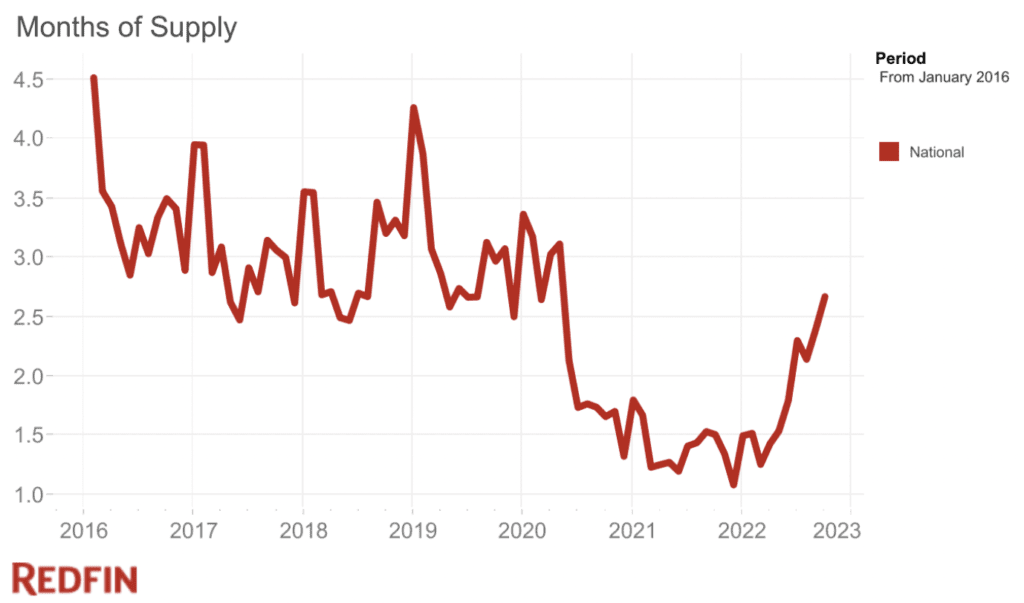
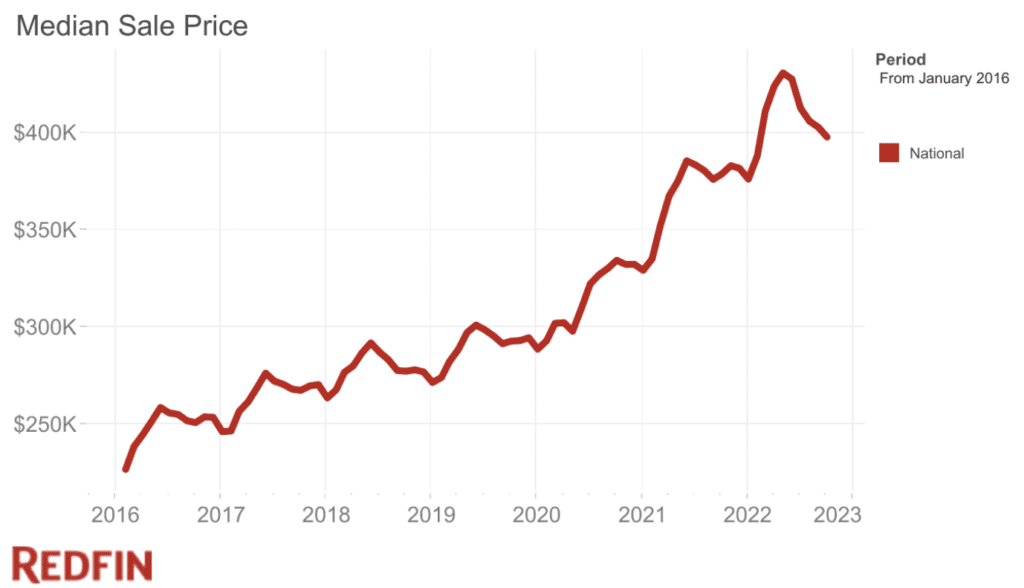
With affordability maxing out, prices are on the decline, along with increasing inventory, median days on market, and migration patterns that are disproportionately affecting the way markets rise and fall.

Here are six charts that characterize the current housing market.

Affordability Is Lower Than Ever

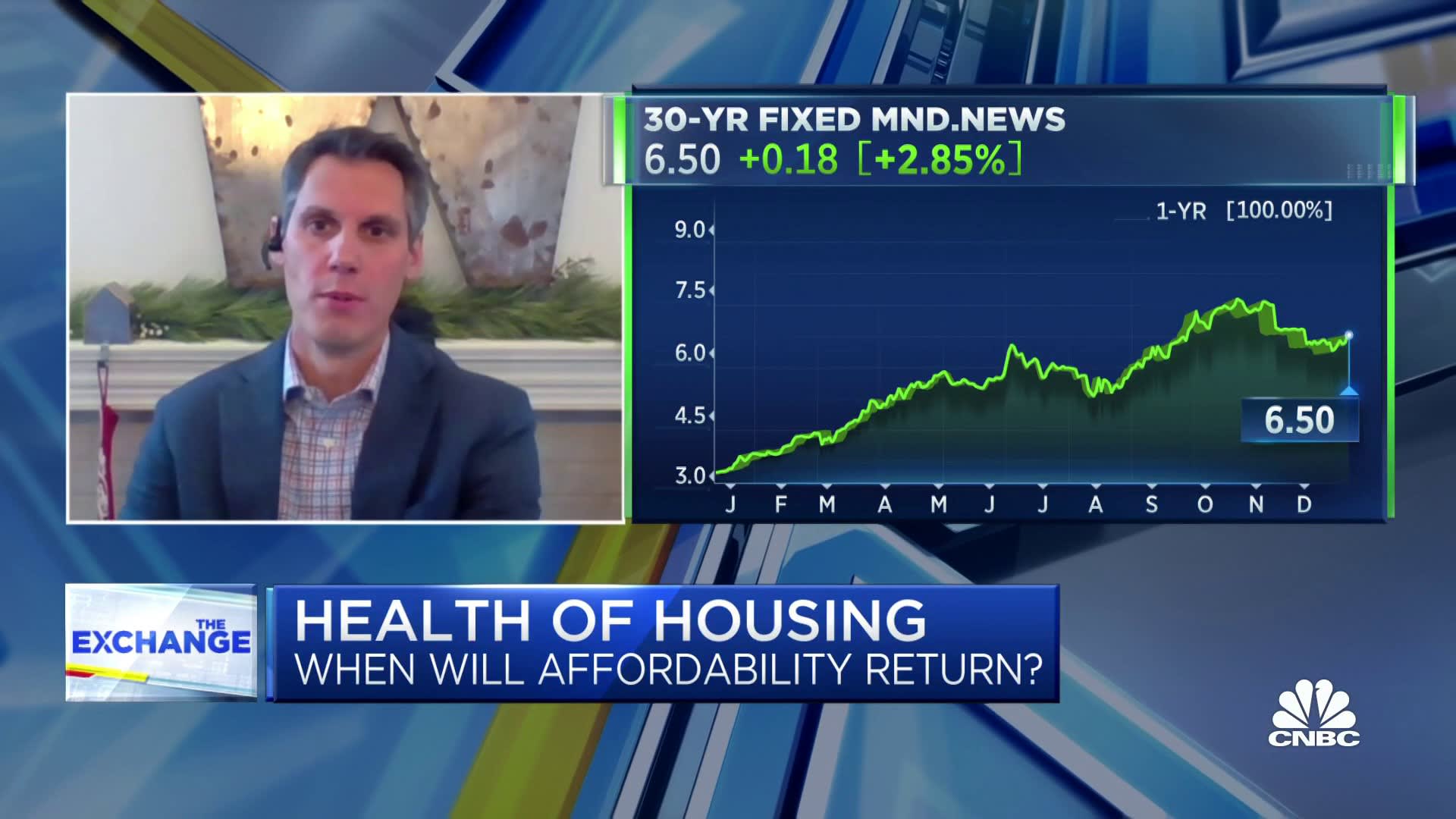
First things first, mortgage rates have skyrocketed this year from an exceptionally low 3% to just over 7% as of early October. While 7% is still lower than historical rates that flirted with 20% in the 1980s, it has still created sticker shock for prospective homebuyers calculating their would-be monthly payments and has led to the fastest declining affordability rate ever seen.

US mortgage rates
30-Year Fixed-Rate Mortgage Average in the U.S. (1971-2022) – St. Louis Federal Reserve

Of course, we have the Fed to blame for this. Chairman Jerome Powell’s ultimate goal is to defeat inflation. Raising interest rates, especially at the pace they’ve been doing so, is meant to quell spending and slow down the economy. Housing prices are just one piece of the puzzle.

The combination of historically high real estate prices, rapidly rising interest rates, and 40-year highs in inflation have made this the least affordable market we could imagine. According to the NAHB/Wells Fargo Housing Opportunity Index, which measures the relationship between household income and housing cost, the index is at the lowest its ever been.

Prices Are Starting To Soften

Speaking of prices, the S&P/Case-Shiller Index has looked wild since the beginning of the pandemic. Would you believe me if I told you that it had its first recorded month-to-month drop since December 2018 to January 2019? Look for yourself.

case-shiller index
S&P/Case-Shiller U.S. National Home Price Index – St. Louis Federal Reserve

Of course, a one-point drop isn’t the beginning of housing armageddon, but it breaks the trend and shows that we’re moving into a softer market. It’s also important to note that this data hasn’t been updated since July, so when August’s data comes out, we’re expecting to see this fall even more. 

Overall, appreciation has been rising since 2012 and really hit the gas in 2020. This is the first time many new investors are seeing any sort of drop in prices, which is a significant development. It’s important to note that home prices are still up year-over-year (YoY). Redfin’s data from August suggests we’re still up 6.7%YoY. However, this is expected to change as the months roll by. 

Supply And Demand Remains Complicated

BiggerPockets’ VP of Data and Analytics, Dave Meyer (who also just happened to write this book), spoke about the “lock-in” effect several months ago before mortgage rates were increasing as fast as they are now. The idea is that as mortgage rates increase, homeowners will be less inclined to sell their homes as they likely have lower fixed rates and may find it harder to afford their next home. They’ll also find themselves selling in a market with falling prices yet higher costs of living. 

While statistics suggest that the average length of time a homeowner stays in their home is eight years, the odds of them selling right now are low anyway if they locked in a 3% rate within the past couple of years. 

I’ll also remind you that mortgage rates still hovered around 4% in 2014. As rates increase, you may find that many would-be equity-rich sellers who have lived in their homes for a long time will hold out until rates come back down. It’s also important to note that homeowners who may have had high rates probably refinanced within the last two years, resetting the clock.

Regardless, inventory, while rising, is still staying within cyclical norms.

US housing inventory
U.S. National Housing Inventory (2017-2022) – Redfin

However, new listings are down, which is a sign of what’s to come. 

national new listings
New Listings Nationally (2019-2022) – Redfin

Here’s the conundrum. If supply decreases, demand remains higher, despite it decreasing. I think it’s pretty evident that demand will remain higher than supply for the foreseeable future. The question is how well it paces against supply, as that will be a big factor in how much home prices rise and fall. And, even more importantly, where.

Migration Patterns Are Distinct

The question of where brings me to my final analysis for this article. Migration patterns are ever-present, but there were some big-time winners during the pandemic. 

Austin, Texas; Boise, Idaho; Tampa, Florida; Phoenix, Arizona; and many other cities saw tremendous growth during the pandemic. Meanwhile, juggernaut cities like San Francisco and New York City lost some of their population.

During the pandemic, many of those boom towns saw the highest appreciation rates in the country. Austin’s median sales price capped out at $670,000 in May, up 15.5% YoY. Boise got up to $585,000, nearly 21% YoY.

But now, those same markets are softening, both taking $100,000 median sales price tumbles since their peaks.

What does this mean? A couple of things. One, it proves the affordability crisis is real and is either pushing people out of markets or preventing them from coming in. Second, it means that some markets will continue to appreciate while others will decline. 

Most importantly, the markets that experienced the most rapid appreciation stand to lose the most, as some may have overinflated well beyond their intrinsic values. Picking and choosing which markets will wind up like this is easier said than done. However, by looking at the regional migration patterns below, you can get a pretty good idea of what homeowners are thinking.

Map of U.S. migration by state

Real estate is local. Therefore, keeping track of local trends is just as critical to making sound investments as any national trend can show. One of the more overlooked but essential elements of market analysis is recognizing and understanding population trends. 

If a state’s population is growing, is that because the state is experiencing an influx of newcomers? Or is it just a product of birth rates?

Furthermore, does the state offer business or tax incentives that would lead folks to move from places with higher taxes or poor business incentives? Exhibit A is the migration from California to Florida. California, one of the country’s highest-taxed states, versus tax-free Florida.

With enough research, you can make well-educated bets on what markets stand the most to gain—and lose.

Conclusion

As the housing market shifts, staying informed is the best way to protect yourself and your investments. These charts paint a picture of where we’re at right now, but things can change quickly.

However, even if the market you’re in (or want to be in) is starting to soften, it could still be a decent bet in the long run if the intrinsic economic factors are in line. If the population is growing and business and wage growth are solid, you wouldn’t be out of your mind to invest during the dip and ride out the wave.

After all, real estate is considered one of the safest investments you can make. And most of the time, when markets fall, they rise again.

On The Market is presented by Fundrise

Fundrise logo horizontal fullcolor black

Fundrise is revolutionizing how you invest in real estate.

With direct-access to high-quality real estate investments, Fundrise allows you to build, manage, and grow a portfolio at the touch of a button. Combining innovation with expertise, Fundrise maximizes your long-term return potential and has quickly become America’s largest direct-to-investor real estate investing platform.

Learn more about Fundrise

Note By BiggerPockets: These are opinions written by the author and do not necessarily represent the opinions of BiggerPockets.


Source link

6 Charts That Paint A Picture Of Where The Housing Market Is At Read More »

,000 a Month from 1 Property!

$6,000 a Month from 1 Property!


Life is unpredictable, and there’s no way to get around that. Instead, you have to learn to pivot and accept where you are, so you can get to where you’re going. Today’s guest, Josiah Hein, was hit with life’s unpredictability when he was in a car accident with a drunk driver, resulting in damage to his neck and back. Josiah could have easily used the accident as a reason to give up, but instead, he took it as an opportunity to pivot and build another business. Josiah has closed on three deals, including a tiny home that alone cash flows $6,000 a month!

Josiah’s first business required strenuous physical labor, so after his accident, he couldn’t work as much. He used his newfound time to start learning about real estate. He had always considered real estate as a long-term retirement plan, but his plan suddenly got expedited. He started investing right before COVID by converting his old house into a rental property.

His portfolio also includes an out-of-state property and a tiny home. He was inspired to invest out-of-state after reading David Greene’s Long-Distance Real Estate Investing. After five months of researching to find an out-of-state market, he settled on Tulsa, Oklahoma. He also has a lucrative tiny home bringing in some serious cash flow every month!

Ashley:
This is Real Estate Rookie.

Josiah:
Yeah. And so that is the thing, a lot of people, they just see the end result and so they don’t see the work. It’s just like with my out-of-state rental, I did spend five months just researching different markets and digging in and making offers on properties before I finally found something that worked out. And when we started looking at the Airbnb, I mean it was about a year from the time we started looking at them to when we finally got it on our property and all set up and stuff.

Ashley:
My name is Ashley Kehr and I’m here with my co-host, Tony Robinson.

Tony:
And welcome to The Real Estate Rookie Podcast where every week, twice a week, we bring you the inspiration, information and stories you need to hear to kickstart your investing journey. And we oftentimes like to start the podcast with some reviews from folks in our Rookie audience.
And today’s review comes from Ashley Nichols and she says, “To give this podcast less than a five star review is pure insanity.” I appreciate that enthusiasm, Ashley. Ashley says, “I’ve listened to every single episode and every single one is full of so many gems. Tony and Ashley are literally out here giving out free game and changing people’s lives. If you’re a rookie investor, the information they’re exposing you to is exactly what you need to help master your mindset and take action to achieve your real estate investing goals.”
Ashley, we appreciate you for the kind words. And if you are listening and you haven’t left us an honest rating or review on whatever platform it is you’re listening to, do it right now. The more reviews we get, the more folks we reach, the more folks we reach, the more folks we can help. And that’s our goal here, isn’t that right, Ashley Kehr? We want to help people, right?

Ashley:
Tony, you are so ethical by saying an honest review when I say a five star review.

Tony:
Leave us a five star review. Five stars, we don’t need one. I think because I also get joy from reading the mean tweets about us too. So it’s like, if you guys want to say something mean, we can do that too.
But it’s so funny, every time that I get with people in person, we host our meetups here locally, we were just together in Denver, and every single time since I’ve started reading the mean reviews, people always come up to me and they’re so offended that people will write such mean things about us. And they’re like, “I couldn’t believe that person said that. Don’t listen to what they’re saying.” So even the bad reviews, I think they help bring the community together.

Ashley:
But they also hurt the podcast and my feelings. So next time, they should just slide into my DMs with their hurtful comments. And I will just leave it at that.

Tony:
There you go. Fair enough, fair enough.

Ashley:
So today on our episode we have Josiah, and this is really exciting because he talks about how he added a short-term rental into his property where he lives without having to get permits, without having to get utilities because they were already there, just all these different things and how he pieced it together to make this perfect short-term rental and also didn’t affect his property taxes, which we all love.

Tony:
People always ask me, “Tony, hey, how do you choose which market to invest in?” And a lot of times honestly it’s just having conversations with people. So listening to Josiah’s episode, he talks a lot about the success he’s had in this market that a lot of people wouldn’t think about investing in.
But the other thing that Josiah talks about is going out of state, one of his properties is out of state, and how he built that team and manages it remotely. So if you’re thinking about investing not in your backyard, you’ll definitely want to listen through to the end to hear how Josiah manages that part of his business as well.
Josiah, welcome to The Real Estate Rookie Podcast. We’re super excited to have you on. So if you wouldn’t mind just share with us, with the listeners a little bit about who you are and how you got started in real estate investing.

Josiah:
Okay. So my name is Josiah Hein. I’m 36 years old. And my wife and I are actually an investing team. And so we started real estate investing basically in 2020 right before COVID hit. But if you back up a little bit before that, I started really digging into real estate investing and learning about real estate investing in 2019. I actually got hit by a drunk driver while at work. They were going 100 miles an hour and rear ended me and it messed up my neck and back pretty bad.
And so I actually have a pool and spa cleaning and repair business and it’s a lot of upper body work and being bent over and stuff. And so for about two years after that I was able to do very little physically within my business, and so I really had to lean heavily on my employees at that point.
But because I was basically incapacitated, I got out on YouTube and started searching about real estate investing and found BiggerPockets and was just hooked. And so I would watch two to four podcasts a day literally just because I had a lot of spare time on my hands all of a sudden. So that’s what started with the whole education piece of it, and then from there it led in.

Ashley:
How did you even start thinking about real estate investing? Did someone talk to you about it? Did you come across a video? What even intrigued you to start searching?

Josiah:
Well, when I started my business, I learned everything online about business. And so watching YouTube videos primarily, everything from how to set up corporations and how to structure businesses to how to run systems and help manage everything.
And so I knew that my wife’s dad did real estate and so we knew real estate was something we wanted to do as a long term goal. We weren’t really looking to dive into it in depth, but after getting hit by the drunk driver and being all messed up, I wasn’t sure if I was going to be able to continue my business going forward.
And so I just got online and I was like, “What else can I do? What can I do in real estate especially to make money?” And just started digging in and learning about it because I wasn’t sure if I was going to be able to keep going with my business.
And so it was her family and then it was just something we knew we wanted to do long term as a retirement strategy. But then I kind of got forced into it a lot sooner than I was planning and my shift focus for my business specifically to real estate because that’s what I felt like I could probably do at the time.

Ashley:
Okay. So you had something really, really crappy happen to you, something unexpected and instead of getting into the mindset of this sucks, pity me, you took advantage of your time by learning about real estate and researching. That right there just shows the type of person you are, that mindset, because it would be so easy to feel sorry for yourself and that my life sucks.
But instead you took that horrible thing and you somehow found one little tiny piece of advantage is that now you had time to research and watch those YouTube videos. And that is awesome that you did that because I’m sure that was not easy to do, to get into a mindset of, okay, I have to figure something else out, I have to do this. And to have that kind of endurance is really awesome.

Tony:
And Ash, it kind of reminds me of AJ Osborne’s story where it’s this really debilitating or discouraging thing happens and like you said, they use it. They use that additional time and just that epiphany to say, “Hey, real estate is the thing that I really want to invest in to be able to provide for my family in case I’m ever not able to myself.” So we all have those moments, Josiah, and I’m glad that moment turned out to be a positive one for you in the long run.

Josiah:
Yeah, thank you. I really appreciate that. And I mean, I have a wife and three kids now, but at the time I had two kids and when I got hit, it was just a week after my second daughter was born. And so it was traumatic, but I walked away from it, thank God. I was happy about that, but I was like, “I need to keep making money for my family and keep pushing forward if we want to be okay.”
My wife was working and stuff as well, but I really need to feel like I’m bringing value to the family and stuff and to our relationship. And I’ve always just been someone who’s really driven and motivated to keep going and going and going. And so it’s hard for me to just stop and give up or not do anything. It’s just not really in my DNA or who I am I guess.

Tony:
Josiah, can I ask one follow up question? You said you started investing in 2020, so this is in the middle of COVID. I think there was a lot of uncertainty in the world in general, but especially around just making big investments. Were you at all concerned about investing during such uncertain times? And if so, how did you work past that fear and uncertainty?

Josiah:
So that’s a good question. So basically it was February 2020 when we started, so right before COVID hit and it definitely was a big fear. I wasn’t sure if it was going to derail everything we were working on, but we had already started and we started by buying a new house for our family to live in.
Our family was growing. Our first house that we bought together, my wife and I, was getting a little cramped and stuff and I was starting to feel a little anxious. And so we ended up buying a second house and then we were able to keep our first house and turn that into a rental actually.
So we did a remodel on it, basically just a long-term BRRRR. We lived in it for a couple years, remodeled it, rented it out, and then refinanced it and repeat. But yeah, starting all that whole process in COVID, it definitely made us pretty anxious for sure.

Tony:
We recently interviewed another guest, Nick Troutman. He was on episode 223 I want to say it was. And he had this really beautiful, not even an analogy but just distinction between danger and fear. And his whole premise was that people oftentimes confuse danger and fear.
Danger is something that can hurt you. Danger is something that you should avoid, but fear is something that exists only within your mind. And sometimes it could represent danger, other times it could just represent you stepping outside of your comfort zone and being fearful of the unknown.
So it sounds like you were able to make the distinction between the two versus actual danger and what was just fear that might be holding you back.

Josiah:
Yeah, and so it was pretty crazy. As soon as COVID kicked off, it seemed like the whole world just paused because they didn’t know what was going to happen, and so we did the same as well. I mean we were still working on remodeling our previous house, but we didn’t know how any of that was going to look or any of the stuff with the eviction moratoriums or what the government was going to do, if they were going to start printing money like they did, trying to bail people out, keep things afloat.
And so we did pause a little bit, but we were already in the process also at the same time with our first house. So we got it remodeled and then rented out. And it took us a while to remodel it. We got it rented out basically in September of 2020. And so we were full in on COVID then and the rent moratoriums were getting put in place already.
And so I mean the main thing was we just made sure that we really vetted our prospective tenants and stuff and went through and checked that they were paying rent, taking care of the places they were in and had a good credit score still and was just staying on top of everything. And so basically just really the core fundamentals of real estate.
And so anyway, that was our first place. We got it rented out almost immediately. We live in southern Oregon and so it’s a really hot market, I mean pretty much anywhere on the West Coast is right now. And so had lots of applications and stuff, got it rented out.
And then did some work around our own house, meandered for a bit. And then finally got to the point where we could do that cash out refinance to pull our equity back out of it. And so we got to that point in the spring of 2021 and we were basically able to pull out $60,000 to go towards our next deal.

Tony:
60 grand? That-

Josiah:
Yeah.

Tony:
You say that so casually, Josiah, but that’s a big number, man. I mean that is the ultimate goal for every new investor, especially the ones that want to use the BRRRR strategy, is to be able to buy a property, put some love and a little bit of money, time and effort into it and then get back the majority if not all of what you put into it.
But before we keep going, Josiah, if you can just set the table for us, how big is your portfolio with your wife today and what markets are you guys invested in?

Josiah:
So it’s actually pretty small still. We’ve only done three deals so far. And so we started with our single family home that we lived in and then did a BRRRR, pulled out the 60,000 and then we also did a HELOC on our house because we remodeled it and then refinanced it and then we did a HELOC on it as well because we didn’t pull any money out when we refinanced. We wanted to keep something that was easier to stay liquid with so we could keep using that money in the future to invest with, and so we did a $60,000 HELOC as well.
And then pretty much other than refinance stuff in 2021, that was all we did. I did start searching in September for our next deal and after reading David Greene’s book on out-of-state real estate investing, I decided that that’s what I wanted to look at because Oregon is a really expensive market.
And so I spent about five months just going from market to market. I started in Ohio, like Akron area and stuff, looking in cheaper markets. And I’d get on Google Maps there and start looking around and see a bunch of boarded up windows and some houses half burnt down and that kind of scared me.
And so ended up getting some advice from our lender actually and she was investing in North Carolina. And so I started looking in North Carolina. After that, reached out, got on BiggerPockets, found a property management company and a realtor, reached out to them, started looking around. And that market was just so crazy and such a hot market that we made multiple offers, couldn’t get anything locked up and I was looking there for months.
And so it was getting around Christmas time or just before Christmas and my mom was telling me that I should look around Tulsa, Oklahoma, because they just moved there a couple years ago and she’s like, “Oh, it’s a good market. It’s seen good growth and the property prices are pretty affordable.” And so switched to my third market, Tulsa, Oklahoma.
And again I got on biggerpockets.com and I searched property management companies in Tulsa and I found this amazing one and they had a 4.7 star review on Google and 300 or 400 reviews that were … So lots of reviews to say that they were actually a good company.
And so I got online on Zillow and just started looking for deals and stuff and going through. And as before, I even reached out to the property management company and then I found our two bedroom, one and a half bath that we ended up purchasing there.
And so we bought that there and it was actually being listed by the property management company that I wanted to use and it had been recently remodeled by them and had a long-term tenant that was placed in six months before that was on a two year lease.
And so I called them up, the manager of the property management company that was also a listing agent, answered right away. And I just expressed to him, “Hey, I want to look at purchasing this property.” And I told him I wanted to continue working with the property management company and use him for the transaction for both me and the seller. And I think he really liked hearing that being a dual agent and stuff.
And so everything honestly went really easy. The purchase price on that property was $80,000. So we ended up buying in cash, doing a quick close and then we did a cash out refinance on that as well. And so because that tenant was in there already, we were able to just make that happen immediately after the purchase.

Tony:
So you guys have the one in Oregon, the one in Tulsa, and then where’s the third unit at?

Josiah:
So it’s actually on our property in Shady Cove, Oregon, and it’s an Airbnb. And so we set up a little tiny home that one of my clients that I met through my pool cleaning business makes. And it’s just a really high-end tiny home built on a trailer. And I had this concrete pad and I was trying to figure out what I wanted to do with it. It already had utilities down there.
And so initially I was thinking I could put a shop down there and then do an apartment or something above it to rent out. And then one day I went to my client’s house to clean his pool and I saw him building it there and I was like, “Oh my gosh, what is this?” And he shows me it and I’m just like, “This is amazing. I have a perfect spot for one of these.” And so that was in the summer of 2021.
And so we knew we wanted to get another long-term rental just because we weren’t sure about the whole short-term rental thing yet, but we also knew we wanted to try it. And so we ended up staying in contact and going back and forth with him. He built a couple of them and we ended up, after we did the cash out refinance on the Oklahoma property, being able to make the timing happen to where we could purchase one from him. And so-

Tony:
That’s amazing.

Josiah:
And so we ended up … I watch Rob’s channel a lot, Robuilt, and I watch you in the Real Estate Robinsons as well. And so taking a little play from Rob, we ended up naming the tiny home Casita De Venado, which means tiny house of deer basically is how it translates because we have a bunch of deer all around the property.
And since we launched it, it’s just been doing phenomenal. It’s been probably 95 plus percent booked. We just launched it on May 18th and I mean it’s doing probably a $100 a night more than we ever thought it would also. So it’s been pretty phenomenal for us.

Ashley:
That’s awesome. Are you guys self-managing it then and do you want to talk about the operations of it? Because getting a short-term rental up and running, I’m currently sitting in one right now of getting everything ready to make it go live. But even once it’s live and it’s bringing money in, how are you handling the actual management of it?

Josiah:
So yeah, we are self-managing it and we do most of the stuff just through the Airbnb and Vrbo platform, but my wife handles that mostly. She actually ended up leaving her job that she was at back in May and so now she manages it full time, turns it over for us and runs everything from that aspect.
It was funny though because while we were getting it set up and started, we knew it would take a couple days for it to go live on Airbnb and Vrbo, and so we were just almost done with it and we go ahead and we go to post to get it live and stuff and a couple days goes by and then it goes live. And we didn’t know anything about the platforms or how they worked yet even really, and so we had instant booking on. And so we got a booking for the same day that it went live on Airbnb, an instant booking.

Tony:
That’s good news. That’s a good thing.

Ashley:
Yeah. So did you have to rush to get some things finished?

Josiah:
Oh yeah. So we were thinking, “Oh, it’s going to get booked out and then it’s going to be maybe worst case scenario a couple days before someone comes and stays in it, so we can get all the finishing touches done.” And no, it got the instant booking. My wife’s like, “Well, we might as well accept it and just see how this works out.”
And so I was at work and it was on a Friday and they said that they wanted to come. They were traveling from Seattle to the Bay Area and they wanted to stay the weekend when they came through. And so we were up until midnight just scrambling to get it done. I mean I was putting fake grass out in front of it because it was just a concrete pad in front of it and doing the final cleanup stuff.

Tony:
I mean, Josiah, these are the stories that you don’t usually hear. People see the Instagram flex of people, “Hey I got the keys from our first,” but they don’t see the staying up till midnight laying down some grass for your guests. They don’t see you recording podcasts in your new Airbnb unit because you got to stay there to get it set up. Or they don’t see you renting a U-haul and driving all the furniture and everything from your house to your Airbnb and staying there for three days.
So it’s easy to glamorize the idea of becoming an Airbnb host or a real estate investor in general, but there’s so much hard work that goes into it as well. So I’m glad you shared that battle story with us.

Josiah:
Yeah. And so that is the thing, like a lot of people, they just see the end result and so they don’t see the work. It’s just like with my out-of-state rental, I did spend five months just researching different markets and digging in and making offers on properties before I finally found something that worked out.
And when we started looking at the Airbnb, I mean it was about a year from the time we started looking at them to when we finally got it on our property and all set up and stuff. And I mean with our first house that we remodeled even, I did a lot of that myself with a messed up neck and back after getting hit by the drunk driver. And I demoed out all the old carpet and stuff and was repainting the house on the inside.
And it was really hard and that’s why it took so long. It took I think four months to get the whole thing done, start to finish. And it was because I didn’t have the money to just pay someone to get it done for me and I was having to grind out and do it on my own even though I was injured.
And it’s like there’s always struggles and stuff that people go through, and especially as real estate investors, people don’t see all the struggles. And it’s just the main thing you got to do is just keep going and keep on grinding and never give up. And so-

Ashley:
What was it like for you, Josiah, when you went from doing all that work into your first property to doing an out-of-state property where you did no work for it? How did that feel? Was it almost like you’ve lost control as you’re not doing it anymore? Or was it like, this is amazing, I never want to rehab a property again?

Josiah:
So I actually really did like the out-of-state investing and I do want to continue doing the out-state investing and long-term rentals in the future just because it is so passive. But it was a lot on my phone and a lot of communication back and forth with the realtor and the lenders and stuff.
And even, because the property has an HOA in Oklahoma and they take care of the outside. And so the inside was completely remodeled, but the outside really needed some repairs done and completely repainted.
And so when we were in the process of doing the refinance on the Oklahoma property, I was actually involved with managing, trying to help manage the HOA company or the people doing the remodel from the HOA, keep them going and on their toes. And so I was a property manager. So it wasn’t completely hands off in that sense, but ever since we did get it up and running, I mean it’s just been cash-flowing good for us and super smooth.
And so yeah, I definitely enjoy that aspect of it and so want to continue that. But also, I mean the cash flow of short-term rentals is just phenomenal. And so I think the goal is to just keep the short-term rentals building for now and then maybe in a couple years do some multi-family that’s out of state.

Ashley:
That’s awesome. With your short-term rental, the one behind your house there, the tiny home, how does that affect your property taxes? Since it is mobile, does it not count into the assessment on your property taxes at all? That’s something I’ve always wondered about.

Josiah:
Yeah. So the tiny home is actually built and certified as an RV. And so I plug it right into an RV outlet and it’s got the same hookups for sewage and because of that it’s just an RV trailer essentially. And so it is on the line in a gray area as far as codes go and stuff, but as long as no one’s staying in it more than two weeks, then it’s not really considered a rental, and so it works out really well because of that. But there wasn’t any heavy permitting to do. It is allowed within the county. And I mean it was really easy for the most part to get it all done.

Tony:
Josiah, one follow up question on the tiny home piece. I know you said it’s been booked like 95% of the time, but are you getting a lot of people that are coming to actually visit that area or is it more so people, like you mentioned, that are road tripping from one part of the country down and you’re just a stop in the middle? Have you noticed a trend there?

Josiah:
Because we’re so new with it, I couldn’t really … It’s been a mix of both, actually. A pretty decent mix of people traveling from northern California to the Bend area, that’s a big vacation area and then also just up and down the I-5 corridor.
But we’re also about, well, we’re exactly an hour from Crater Lake National Park. And so it’s the deepest lake in the world and it’s absolutely beautiful park. It’s up on top of an inactive volcano that erupted I think almost a quarter million years ago.
And then this area has tons of lakes. We’re a quarter mile from a boat ramp for a river that is huge for rafting and stuff in the summer and tons of waterfalls and hiking areas as well. It’s really just an ideal Pacific Northwest area.

Tony:
Crater Lake, I’ve actually never heard of Crater Lake before, so I’m going to look into that. Who knows, maybe we’ll be neighbors here in the future. I’m always looking for that next market to invest in. So Josiah, I mean first, congratulations to you and your wife on the success you guys have had. That’s awesome. But I want to talk a little bit about the funding aspect of these units that you’ve purchased.
What are you guys doing to be able to afford all of these properties? You’ve purchased three properties in about two years. Is it all money that you guys have saved up? Were you guys partnering with other investors? Just walk us through what that journey has been like.

Josiah:
Okay. Previously, I mean up to this point it’s just been my wife and I. And I’ve had my pool cleaning business and that’s done really well. I started that in 2016 and it pretty much just exploded. There’s a ton of pools in this area, a ton of demand.
And then my wife did accounting actually. Well, she was a bookkeeper at a school for about five years and then she worked for a payroll company for another five years. And so when we’re doing all these deals and taking things down, she’s been imperative because I am terrible on computers and that paperwork and keeping stuff organized and stuff.
And so she’s the backbone there with sending emails back and forth to the lender and stuff and I’m the one that finds the deals and tries to manage them and get them across the finish line in that sense.
But yeah, we’ve done it just working regular jobs, just regular people. Like I said, we did the cash out refinance on our first house and then the HELOC on our personal home. And so other than buying our first house and our second house just using conventional financing, we’ve used some fundamentals of real estate to get the rest of our cash.
And then moving forward though, I mean we did spend all of our money on the tiny home and stuff and that’s been going great, but I do think we’re going to try to partner with people.

Tony:
For the tiny home, so did you use your cash from your HELOC to fund that construction or did you get some kind of construction loan to fund that project?

Josiah:
Oh, okay. So yeah, we did all cash with that. And so it was $76,000 for the tiny home and then all in we’re about a $100,000 on it because we had some unexpected paving for the driveway. It was too steep for cars to get in and out of. And then we did a Trex deck. That was more expensive than we thought as well. Both of those things were about 6,000 each. And then we did a hot tub and a gazebo and a fire table and stuff. And so that’s all on the deck at the end of the tiny home. That’s all underneath the gazebo.
And then actually where it’s at, my property is shaped like an L and it’s only an acre, but you have your own private hillside where the tiny home’s at. And so because of that it makes it really private. You’re looking at mountaintops and tree tops and stuff when you’re sitting either at the fire table or in the hot tub and it really just gives you a feel that there’s no one else around even though there are a couple houses, a hundred yards behind you and then a couple hundred yards down the hill in front of you and stuff.
But yeah, in the future we definitely want to partner with some investors and I have a deal that I’m looking at putting together right now.

Ashley:
You said that the land is an acre that your house is on?

Josiah:
Yeah, that is correct.

Ashley:
Okay, so one acre, I mean, that’s not a huge amount of land, but you were able to put another unit on there, produce income off of that. So I’m super curious now, okay, so you’re a $100,000 in, what are you cash flowing off of this and what do your expenses look like on it? What are you actually paying for? You paid for the property in cash. Your utilities, are they separately metered or do they connect to your house utilities on the same meter, so you don’t really know how much is exactly going to that unit?

Josiah:
Yeah. So the gross on that property right now in the tiny home is about $6,000 a month.

Tony:
That’s great. That’s fantastic, Josiah.

Josiah:
Yeah.

Tony:
For a $100,000, I mean, that’s great.

Josiah:
Yeah, it’s pretty phenomenal. When I was running the numbers for it, I was estimating, I was being really conservative, but I was thinking it’d do at least $3,000 a month, which would still be a way better cash on cash return than anything else we did. But it’s been steady, 95% booked anywhere from 180 to I think to 240 a night with a $50 cleaning fee.
And so self-managing and doing the cleanings ourselves, we’ve been able to keep pretty much all of that. Even the hot tub running constantly and it’s got a mini split air conditioning unit in it, with it being 100 degrees almost every day, 95 to a 100, it’s only been about a $100 a month for power.
And so we clean all of the bedding ourselves and then we do provide just a couple water bottles for each person or couple that stays. We do a couple little snack bars and stuff and then we do a bottle of wine as well. And so it’s just a nice little welcome pack.
And then one thing we do actually for a little bit of extra income is we’ll do these special little setup packages where my wife will go in and decorate for anniversaries and stuff. And then she even had a college graduation a few months ago that she did. And so we’ll do little charcuterie boxes and stuff and some flowers and even flower petals up on the bed. And then get a couple …
Well, we did one that was an anniversary and then one that was actually for a honeymoon. And so it was a honeymoon that was delayed due to COVID. And so we just had congratulations and stuff hanging on the wall and really spruced it up a little bit.

Tony:
So Josiah, I mean, just congratulations again, man, to be doing that well on the tiny home. I’m super pumped for you guys. I actually have one follow up question. What city did you say your property is in?

Josiah:
It’s in Shady Cove, Oregon.

Tony:
Shady Cove.

Josiah:
So it’s a very small town.

Tony:
And how far is that from Crater Lake?

Josiah:
It’s literally an hour from the lake itself.

Tony:
Oh, it’s still an hour. Wow. That’s amazing. So to be that far from the main attraction, but still gather that much interest and demand to do six grand a month on a tiny home is super, super impressive.
I guess one last question for you. Do you know, in that area, is there a limit to how many short-term rentals you can have on your property? Because you’ve got some land, you could probably slap on a few more tiny homes with the acreage that you have, right?

Josiah:
I can’t because it’s a hillside and it’s pretty rough, it’s a lot of river rock and stuff being right up above the river. And so it would just be hard to keep it such a good experience for the customers of the tiny home right now, if you have multiple just units on it. I feel part of the thing that people really enjoy is just how secluded it feels and how private it feels. And so I don’t really want to take away from that.
As far as being by Crater Lake National Park, so there’s not much else any closer. It’s a lot of national Forest and stuff around it. And so there’s only one even smaller town that’s closer to it and there’s probably only a handful of short-term rentals there. And so this is a pretty prime spot to be for that.

Tony:
But from a permitting perspective, for example in Joshua Tree, we can only put two short-term rentals per parcel. Are you limited in that same way near Crater Lake in shady Cove?

Josiah:
Yeah, there is a law. And so the way I did it on the RV pad, you can’t have multiple RV pads and RVs on your property in Shady Cove, but there is no law saying how many short-term rentals you can actually have. And so they’re pretty relaxed. Shady Cove is primarily a tourist town, especially in the summer. And so that’s where most of its revenue comes from, is just people traveling in the spring, summer, and fall.

Tony:
Interesting. I’m sold. You sold me, Josiah. I’m going to Shady Cove. I’m writing it down. I’m booking my flight.

Ashley:
He just booked your Airbnb.

Josiah:
There we go. Do it.

Tony:
So I want to move on to our next segment, Josiah, which is our Rookie Request Line. So for those of you that are listening, if you guys would like to get your questions featured on the show, give us a call at 8885-rookie and we just might use your question on the show. So Josiah, are you ready for today’s question?

Josiah:
Yeah, I’ll do my best.

Tony:
All right. So here’s today’s question from Corey.

Corey Robinson:
Hey guys, my name is Corey Robinson. I just had a quick question for you guys. I was thinking about the turnkey rental route, but have you guys ever thought about doing turnkey rentals and using those rentals as short-term rentals for either travel nurse rentals or Airbnb? I’d just like to know your thoughts on that, if you guys think it’s a good route to go or if you think it’s not a good route to go. Thank you. Appreciate you guys. Later.

Josiah:
I think that’s a great route to go, honestly. It’s not something I’ve looked at a whole lot specifically with the travel nurses. I do know that’s a huge industry though, and a lot of people in my area that do the travel nurse short-term rentals, it’ll often be they’ll be making like 20, 25% more income off their property. And so I feel like that is a really good route to go just because you just have to buy some furniture and stuff, but other than that, do a little bit of decorating, it’s good to go.

Tony:
And Corey, I mean honestly it’s slightly a personal preference, but I mean if you don’t have the time or ability to find a good deal, find a good property manager, get it set up, then turnkey could be the route to go. But typically your returns on turnkey investment are going to be lower than what you get if you did that work yourself. So there’s some give and take.
But is it a good way to break into the world of real estate investing for someone that’s new? Absolutely. I think you just got to ask yourself if it’s worth it or not. So thank you for that awesome advice, Josiah.
I want to move on to our next segment, which is the Rookie Exam. These are the three most important questions that you will ever be asked in your entire life, Josiah. So are you ready for the exam?

Josiah:
I think so. We’ll have to wait and see.

Tony:
All right. So question number one, what’s one actionable thing a rookie should do after listening to your episode, Josiah?

Josiah:
One actionable thing? I would say the biggest thing is just learn to run numbers. And so learn the numbers on the type of deal you want to do, whether that’s short-term rentals or long term rentals or out-of-state rentals even. But if you can learn to run the numbers, that’s about 90% of it, I mean as far as having the confidence to know what you need to do.
And that’s what’s helped me so much. I’ve learned to run the numbers in different scenarios and because of that it’s given me the confidence to just keep moving forward even through uncertainty and the pandemic and stuff like that. And if you can do that, that’s number one that’s going to help you just get started in your career for real estate.

Ashley:
Josiah, what is one tool, software app or system in your business that you use?

Josiah:
So one that I use a lot to actually help me run the numbers is a rental calculator. And it is a long-term rental calculator, you could use it for short term as well, and it’s called CDS Rental Calculator. It was actually developed by Chandler David Smith who was on the main BiggerPockets podcast I think about a year ago.
And it’s really good for just going through quickly on your phone and analyzing deals. You can put in purchase price, percent down, taxes, insurance, I mean it has every single metric you can think of basically. And then you process it and it’ll go to a cash on cash return and a total return on investment and stuff.
And so that’s what I used with the out-of-state purchase and with the out-of-state property and it’s just been … I analyzed hundreds and hundreds of properties. So that was such a big key. And then when I go into the long term, once I find a deal that looks like it’s going to make sense, then I’ll get on BiggerPockets and use the BiggerPockets calculator for a more in depth analysis.

Tony:
Awesome. That’s great advice. Obviously we love the BiggerPockets calculators as well, but I’ve heard good things about Chandler David Smith as well. Awesome. Last question, Josiah, where do you plan on being in five years?

Josiah:
In five years? Hopefully on a beach somewhere, just taking it easy. No, seriously though, in five years I’m hoping to be able to spend a lot more time with my family and have a good portfolio of both short-term and long-term rentals.
And so like I said earlier, I would like to grow the short-term rental side of things pretty quick because it is so scalable and get the income up pretty quick, but then invest in multi-family out of state and do that using both partners and maybe even some private investors along the way.
So the ultimate goal would be to get to about $20,000 per month income from our real estate investments. And then at that point I feel like we could comfortably just do real estate full time and not have to worry about much else. I would want to keep doing deals and growing and stuff, but not feel like I have to push myself as hard as I can basically to keep going. I

Tony:
I mean, Josiah, you’ve already had success with your pool cleaning business, so obviously you’re a smart, savvy business person, so I’m sure you’ll be able to take a lot of those skills that you learned in that business and apply it to your real estate deal as well. So five years from now you’ll be on the Real Estate Podcast with Rob and David talking about all the great things you’ve done, man.
So we appreciate you answering those questions for us. And just a heads up, you passed the exam, your answers were phenomenal. So you’re in our good books, man. So before we wrap up, I just want to highlight our Rookie Rockstar for this week. So this week’s Rookie Rockstar is Andrew Reese.
And Andrew says, “Today my fiance and I closed on our first real estate deal. 35 days ago we went under agreements on a three family near Boston, but the story doesn’t start there. Two years ago, I lost my job and I literally couldn’t afford my own rent. Now I’m engaged, have a great job and achieved my goal of acquiring a three family in the town of our choice. I started working with my agent 18 months ago looking at houses before I became even preapproved. Then we got squeezed with the rising interest rates, but when this listing went live, we were ready.”
And Andrew finishes this by saying, “Let this be inspiration to all of you who think it’s too difficult to get your first rental in this market. It is possible and don’t lose hope. Don’t lose your vision of what you want and your dream of building towards your goals and becoming wealthy.”
So Andrew, major congratulations to both you and your fiance on taking this amazing first step in building your real estate business.

Ashley:
And great advice too, Andrew, at the end there. Josiah, thank you so much for all of your advice and your knowledge that you shared with us today. Can you let everyone know where they can find out some more information about you and reach out to you?

Josiah:
Yeah, so I’m just Alpha REI LLC on Instagram and then we also have Casita De Venado on Instagram. And then outside of that, we’re not really too active on any other platforms and so you can find our tiny home at just if you search Casita De Venado around Shady Cove, Oregon as well, if you want to book that out.

Ashley:
Well, thank you so much for joining us. I’m Ashley, @wealthfromrentals, and he’s Tony, @tonyjrobinson on Instagram. And we’ll be back on Saturday with a Rookie Reply. (singing)


Interested in learning more about today’s sponsors or becoming a BiggerPockets partner yourself? Check out our sponsor page!

Note By BiggerPockets: These are opinions written by the author and do not necessarily represent the opinions of BiggerPockets.


Source link

$6,000 a Month from 1 Property! Read More »

Mortgage rate is over 7% and it’s getting harder to qualify for loan

Mortgage rate is over 7% and it’s getting harder to qualify for loan


JB Reed | Bloomberg | Getty Images

It’s a double whammy for would-be homebuyers. Not only are interest rates soaring, it’s getting harder to qualify for a loan.

The average rate on the popular 30-year fixed mortgage climbed over 7% at the end of last week, according to Mortgage News Daily, and is expected to hit around 7.125% on Tuesday. It’s been over 7% for several days.

Meanwhile, mortgage credit availability is now at the lowest level since March 2013, which was when housing was in a slow recovery from the financial crisis at the end of the prior decade. It fell for the seventh consecutive month in September, down 5.4% from August, according to a monthly index from the Mortgage Bankers Association.

While lenders may be desperate for business, as mortgage demand drops due to higher rates, they are also more concerned about a weaker economy, which could lead to higher delinquencies. Executives and economists have warned the U.S. could fall into a recession in the coming months as the Federal Reserve hikes rates to battle high inflation.

“There was a smaller appetite for lower credit score and high [loan-to-value] loan programs,” Joel Kan, a Mortgage Bankers Association economist, said in a release.

Mortgage delinquencies, at the moment, sit near record lows. While new foreclosure actions rose 15% from July to August, they were still 44% below pre-pandemic levels, according to Black Knight, a mortgage software and analytics company.

Credit availability fell the most for jumbo loans, which more borrowers today have to use due to higher home prices, according to the Mortgage Bankers Association. Higher prices also have more borrowers turning to adjustable-rate mortgages, because they offer lower interest rates. These loan rates can be fixed for up to 10 years, but they are considered riskier mortgages.

Borrowers are clearly concerned that mortgage rates will move even higher. While mortgage rates don’t follow the federal funds rate exactly, they are influenced heavily by the Fed’s policy.

“The Fed is determined to hike rates as high as it can and keep them there as long as it can, even if that means the economy suffers,” Matthew Graham, chief operating officer of Mortgage News Daily, wrote on its website.

Graham noted the Fed is not considering mortgage rates or the housing market because home prices are overheated and a correction is “good and necessary.”


Source link

Mortgage rate is over 7% and it’s getting harder to qualify for loan Read More »