
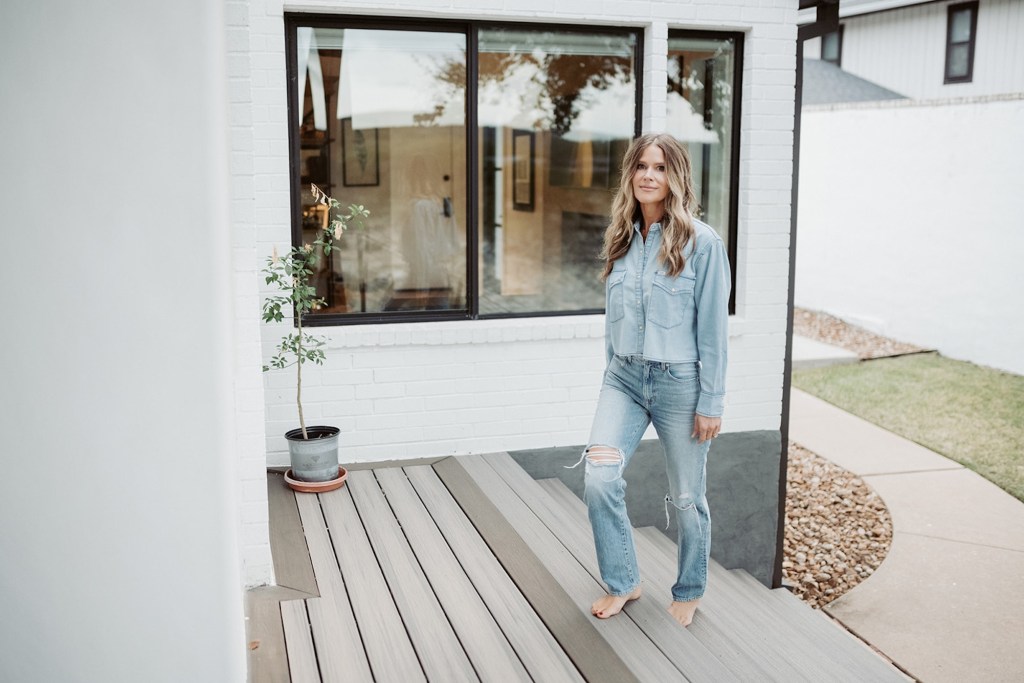
I love talking to entrepreneurs whose mission goes far beyond profits — they genuinely want to improve people’s lives. McCall McPherson, founder of Modern Thyroid Clinic, has done exactly that, redefining thyroid and metabolic health diagnosis and treatment through nationwide telemedicine. She built the business from a solo brick-and-mortar practice in Austin into a 16,000-patient network with 10 clinicians and three physicians in leadership — all self-funded and with zero marketing spend. Her team uses proprietary lab ranges and treatment protocols, with documented remission of Hashimoto’s disease. And because she speaks from lived experience (she was debilitated for a year) her story offers a lesson entrepreneurs can’t afford to ignore: when your customers’ pain is real, mission turns into strategy.
Dan Bova: Can you give us the elevator pitch for Modern Thyroid Clinic?
McCall McPherson: Modern Thyroid Clinic started as a brick-and-mortar medical practice in Austin, Texas. And the demand was so large that a few years ago we expanded nationwide. We serve women and men, but a lot of our patients are women who have complex thyroid disorders who are just not able to get the help and the care that they need in the traditional medical landscape, which for thyroid conditions is quite antiquated. Modern Thyroid Clinic serves those people so that they can actually not only get their lives back and thrive, but have improvement in long-term health outcomes and chronic disease prevention.
What inspired you to start it?
When I was 27, I was already practicing medicine as a PA. I had a long-time thyroid condition myself, and I was spending 16 hours a day in bed. I went to my doctor, he ran one panel and told me, “Your thyroid’s fine… eat less, exercise more. Also, here’s a cholesterol medication for you at the age of 27.” I was sent away and really grappled with the fact that I knew this was thyroid symptoms. Eventually I got on a wait list for a physician who dealt with thyroid issues more progressively. He ran a more in-depth thyroid panel. He didn’t just look at one of six markers, he looked at the entire picture and it was very clear what was going on. He put me on a completely different class of medication, the kind that less than 10% of Americans ever are offered in the thyroid world. He completely changed my life. And from that, Modern Thyroid Clinic was born.
Why is it so hard to get treatment in the first place?
Medicine looks at hypothyroidism in a very, very simplified way. In medicine, we’re trained to see people in about eight minutes. And it’s really hard to deal with complex medical issues that aren’t procedures in eight minutes. We’re trained to run one lab, glance at the sheet, and if it’s normal, tell them they’re fine. Or treat them with one class of medication that around 91% of people are offered. And we’ve sort of resigned ourselves to: if they don’t get better, it must be something else. But that particular treatment will never work for a huge percentage of people — just like cholesterol meds. If it doesn’t work, you need to change it. That’s the piece that’s missing.
How did you build a business model that solved the time problem?
Number one, we spend an hour with our patients. We’re not trying to herd them in and herd them out in a small amount of time. We’ve created enough time to inform, empower, educate these people, talk them through the whole process and do a thorough job, which is what people deserve. We don’t take insurance for that consult, but we accept insurance for everything else, for labs, for medication. It’s an exchange of time for dollars, and it’s worked really, really well.
You started as a solo clinician. What’s the story from “one office” to where you are now?
I started as a one-woman show in a one-office building as a single mom to two girls, my youngest daughter is disabled. That put a fire under me to really figure it out. When you have a niche that impacts people quickly and makes them feel better so quickly that they keep coming back and want to spread the word naturally and organically, that creates its own momentum.
The waitlist hit 9,000 women seeking help — without ever spending a dollar on marketing — and that’s when I launched a national telehealth network. Currently, the network has grown to 16,000 patients, led by me, with a full medical staff including 10 clinicians and 3 physicians in leadership. And all of them have personally dealt with thyroid-related health issues.
If people don’t feel good and they don’t know why, what are the first steps they can take?
I’m a big advocate for data. Get a full thyroid panel. We share our optimal lab ranges so people can understand exactly where their labs are versus where they should be.
For men, they also should be checking testosterone, free testosterone, and total testosterone. And find a partner who is looking outside of the box — someone who’s not sitting with you for eight minutes and seeing if anything’s “in bold or off to the side.”
Sometimes paying out of pocket is an investment. But every dollar people spend on their health, I tell them they’ll get a hundredfold back in productivity. Investing in health is the biggest return on investment for entrepreneurs. Without it, you’re working half-mast and you’re not going to get the outcomes you would if you were thriving.
You’re also a leading voice on GLP-1 microdosing. What is that exactly?
Microdosing GLPs is a different way of taking them. Many of the side effects people hear about in the media are related to taking too much medication and not eating enough food.
When you make these medications available in smaller doses — microdose means a dose lower than the lowest available dose — we use doses an eighth or a quarter of the lowest dose in our weight loss program. People still get the benefits of weight loss, but GLPs also have incredible longevity benefits documented in the literature. And when we run lab data on these microdoses, we find the same benefits as standard doses with a fraction or none of the side effects.
What do you wish people would stop repeating as health advice?
Two things. Number one: society is still stuck with the calories-in versus calories-out construct, and that somehow magically we are all biologically created equal. Many people are metabolically dysfunctional — thyroid conditions, hormone conditions, pre-diabetes — and at a certain point, they can’t actually lifestyle their way out of it anymore.
Number two: A link between thyroid cancer and GLPs. There’s a black box warning because in rat studies given 20 to 100 times the equivalent dose, they developed medullary thyroid carcinoma. But humans don’t have the same receptor pattern in their thyroid. And the data in human studies has been pretty darn clear: GLPs do not, in fact, cause thyroid cancer.
How can people learn more?
Learn more at our website and you can always find me on social. I love to like educate and empower people. And I have a book coming out with Penguin Random House in 2027 called Take Back Your Thyroid.
I love talking to entrepreneurs whose mission goes far beyond profits — they genuinely want to improve people’s lives. McCall McPherson, founder of Modern Thyroid Clinic, has done exactly that, redefining thyroid and metabolic health diagnosis and treatment through nationwide telemedicine. She built the business from a solo brick-and-mortar practice in Austin into a 16,000-patient network with 10 clinicians and three physicians in leadership — all self-funded and with zero marketing spend. Her team uses proprietary lab ranges and treatment protocols, with documented remission of Hashimoto’s disease. And because she speaks from lived experience (she was debilitated for a year) her story offers a lesson entrepreneurs can’t afford to ignore: when your customers’ pain is real, mission turns into strategy.
Dan Bova: Can you give us the elevator pitch for Modern Thyroid Clinic?
McCall McPherson: Modern Thyroid Clinic started as a brick-and-mortar medical practice in Austin, Texas. And the demand was so large that a few years ago we expanded nationwide. We serve women and men, but a lot of our patients are women who have complex thyroid disorders who are just not able to get the help and the care that they need in the traditional medical landscape, which for thyroid conditions is quite antiquated. Modern Thyroid Clinic serves those people so that they can actually not only get their lives back and thrive, but have improvement in long-term health outcomes and chronic disease prevention.
What inspired you to start it?
When I was 27, I was already practicing medicine as a PA. I had a long-time thyroid condition myself, and I was spending 16 hours a day in bed. I went to my doctor, he ran one panel and told me, “Your thyroid’s fine… eat less, exercise more. Also, here’s a cholesterol medication for you at the age of 27.” I was sent away and really grappled with the fact that I knew this was thyroid symptoms. Eventually I got on a wait list for a physician who dealt with thyroid issues more progressively. He ran a more in-depth thyroid panel. He didn’t just look at one of six markers, he looked at the entire picture and it was very clear what was going on. He put me on a completely different class of medication, the kind that less than 10% of Americans ever are offered in the thyroid world. He completely changed my life. And from that, Modern Thyroid Clinic was born.