
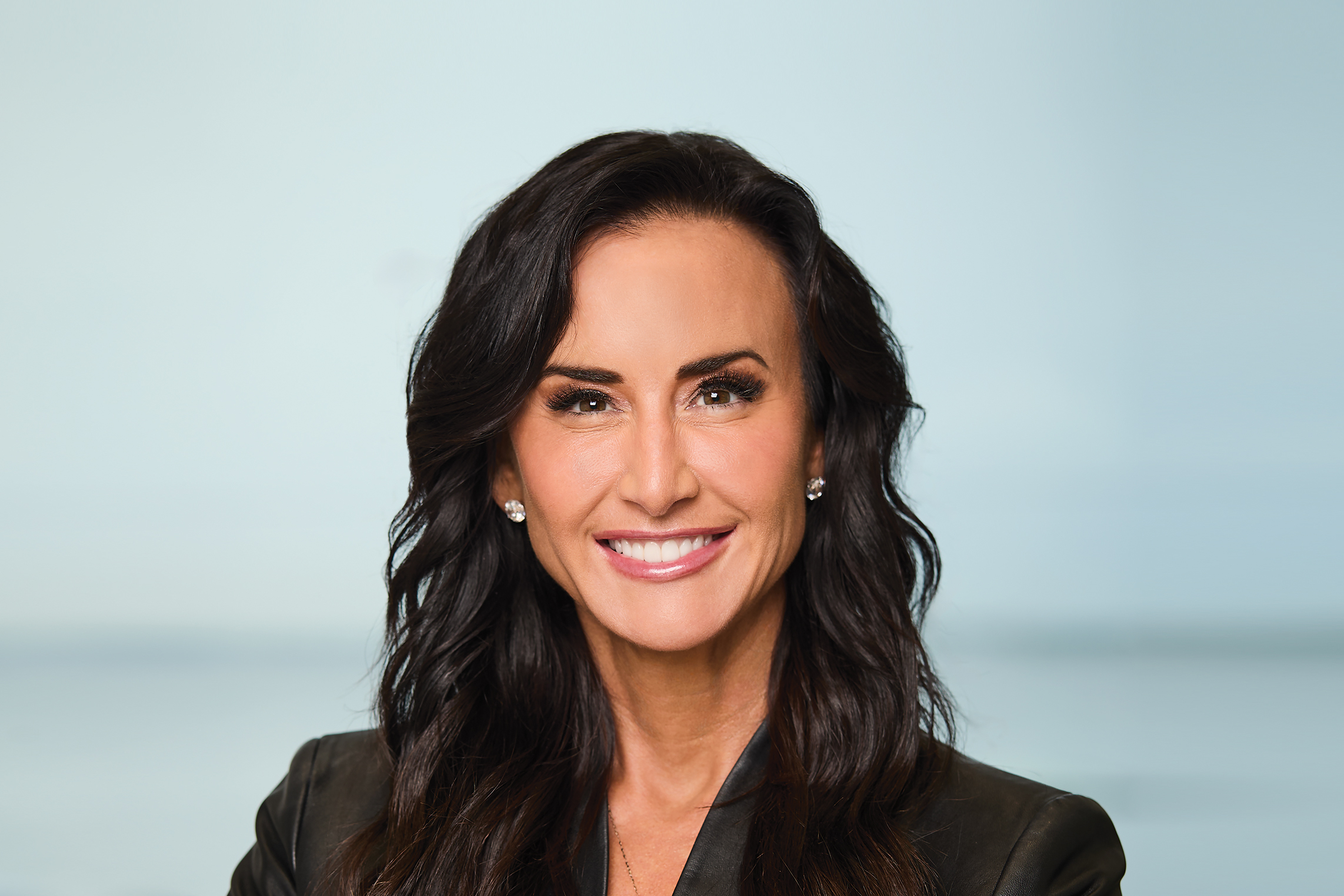
Kim Perell was slumped over her computer with a 104-degree fever. Her husband found her there and woke her up. She arose, groggy, with indents on her face from the keyboard.
This was 2004. And at the time, Perell didn’t think this was strange. She was working on her first company, and she thought that’s just how things get done: Business is about individual resilience, right? It’s about putting everything on your shoulders, and doing everything yourself, and caring more than anyone else.
Why do so many entrepreneurs think this way? Perhaps it’s the cultural stories we tell — Elon Musk sleeping at the Tesla factory, Nike cofounder Phil Knight selling shoes from his car during the company’s earliest days, or Steve Jobs and Steve Wozniak hand-assembling Apple computers in a garage. Founders often get treated as the lone hero of a story. Then the next generation of founders internalizes the message, and believes that they, too, must be lone heroes.
Perell definitely felt that way. Until it nearly broke her. That day at the keyboard was a turning point, teaching her that something needed to change.
“ No one is successful alone,” Perell says now. “For all those entrepreneurs that are lone wolves, including myself, you must recognize that in order to really be successful, you have to ask for help. And you need a team. It’s really important.”
So she set about learning a different skill: Instead of being a solo founder, she became a world-class team-builder. It made all the difference.
She’s built nine companies to date, and her most recent exit was for $235 million. Today she juggles multiple teams: She’s founder and CEO of 100.co, a Miami-based brand incubator; she’s also cofounder and CEO of Juni Sparkling Adaptogen Drink alongside wellness influencers Jay Shetty and Radhi Devlukia; and she’s cofounder of the loyalty platform SmartMedia Technologies. She’s also invested in more than 100 companies (including on Entrepreneur’s TV show Elevator Pitch).
“ Business is about people,” Perell says, “and people are personal. You need to care for everyone that you’re interacting with — and actually care. Because if you care about them, they will care about you, and they will want to do great things.”
But she offers a word of caution: Business isn’t just about finding people. It’s about finding the right people. And that’s a skill all its own.
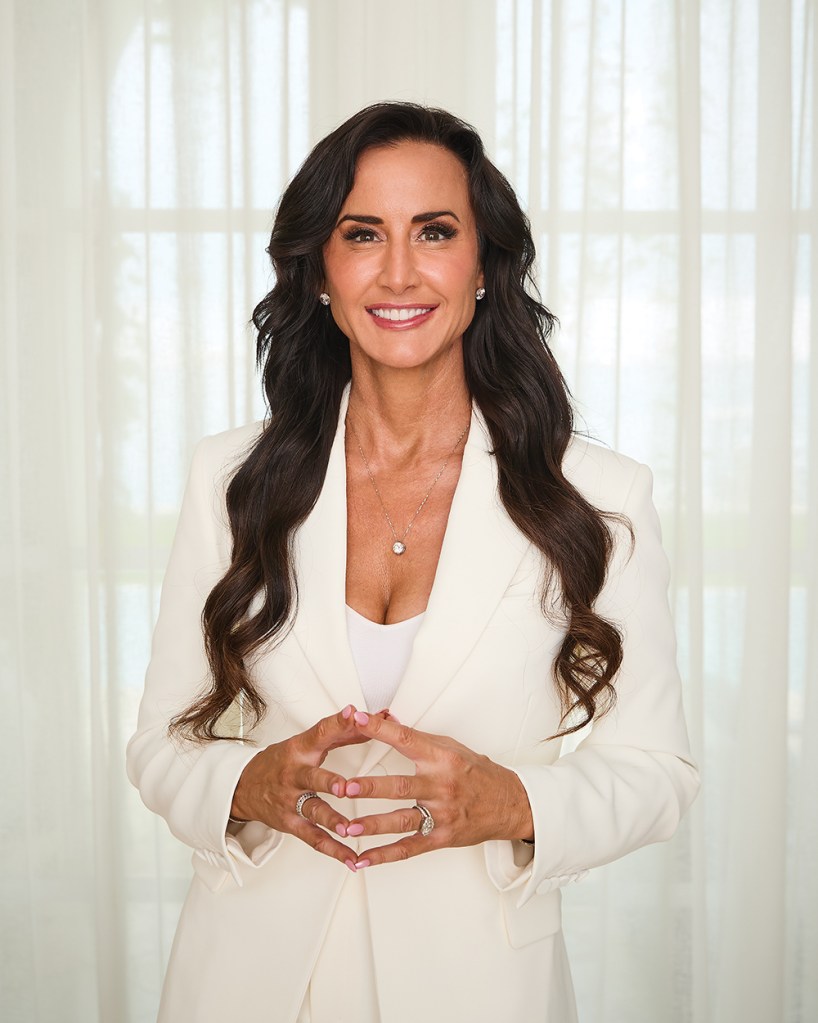
Perell didn’t set out to become an entrepreneur. Originally, she just wanted a job in marketing.
By 2002, she had it: She was running marketing for a dot-com startup. Then the crash came, she was laid off, and she had an idea: She could funnel her knowledge into her own performance marketing company, which she called Frontline Direct. Her 82-year-old grandmother loaned her $10,000 to get started, which became her first lesson in teamwork: “ It only takes one person to make a bet on you,” Perell says.
Perell threw herself into building Frontline Direct. And at first, growth was strong. She grew it to $3.5 million in revenue largely by herself, and this seemed to validate her strategy — because the more she bet on herself and did most things herself, the more her company thrived.
But as any longtime entrepreneur knows, this kind of success becomes a self-inforcing trap. You see growth, then double down on what got you there. But at the same time, you lose sight of your own limitations — when you, the founder, become both the engine of early growth and the bottleneck holding your company back. For example, Perell was able to scale to $3.5 million by doing almost everything herself…but that $3.5 million was likely the maximum value of her time. “You can’t scale to $100 million by yourself,” she says. “Even in the world of AI, it’s impossible.”
So she had to ask herself: Where do I find the right people?
It’s a difficult question, because interviewing and hiring are so hard. Recently, former Spanx and Tupperware CEO Laurie Ann Goldman went viral while discussing this. She said her “worst hires” were always the people who interviewed the best. And conversely, the people who interviewed poorly were often the best fits for the job.
Hiring felt like a puzzle to Perell, and she needed to figure it out. So she started to move past people’s resumes as quickly as possible. She doesn’t want to know what a job candidate did. She instead wants to know what they’re going to do next, and whether they’re adaptable enough to make it happen.
To determine their fit, Perell developed a go-to interview question: “What would your previous employer want to change about you?”
“The question really has to make you think,” she says. “You can’t have a good canned answer.”
Perell has gotten all sorts of responses to that question. But here’s what she’s really looking for: She wants proof that someone can hear and implement feedback. She doesn’t want to hear candidates present a strength cloaked as a weakness, as many do. (“I work too hard,” someone might claim.) “ That’s just so annoying,” Perell says. “Because I’m actually looking for people who reflect on their weaknesses and work to improve them. Awareness is half the battle. I’m a huge believer in always upping my game and listening. Feedback is a gift.”
In other words, Perell wants employees with a no-holds-barred growth mindset. And once she hires them, she expects that mindset to remain constant.
Today, she often uses AI as a signal of positive growth. Is an employee experimenting with AI, and therefore willing to rethink how they work? “They are able to work so much harder and so much faster,” Perell says. “I want people that are telling me how many [AI] agents they have that are doing different tasks for them. That curiosity about how they’re using AI right now in their job function is a huge win.”
When people work for her, she wants them to have three big things: clarity, ownership, and access. People need to know what success looks like, have the decision-making authority to get the job done, and have the resources required to actualize it. Then she maintains a rigorous review process to make sure they have what they need and are maximizing the opportunity.
That’s why, instead of an annual review, she has everyone reviewed on a 30-day cycle.
“The team is very aware and very transparent in terms of what is expected in 30-day increments,” she says. “Think of how fast the world’s working. If I assess you one year from now, that is too long. We need to be making micro changes all the time in order to maximize performance.”
This system transformed Perell’s first company — and her life. She grew Frontline Direct with a small but focused team, then sold it to Adconion Media Group for $20 million in 2008, retained a substantial amount of equity, and came aboard as CEO of Adconion Direct — a merger of Frontline Direct and the Adconion Audience Network. Then she scaled Adconion Direct beyond $100 million in revenue and sold it to Amobee for $235 million in 2014.
That’s when the idea of “investing in people” took on an entirely new meaning for Perell, because she started to invest in early-stage founders. And just like when she met a potential new employee, she needed a way to answer the question: Is this the right person?
So she developed a system for that too.

As an early-stage investor, Perell has heard a lot of business ideas. They’re “a dime a dozen,” she says. But talented people who can scale those ideas are rare.
That’s why, instead of evaluating an idea solely on its own merit, Perell is really evaluating the person behind it. The successful founders will have the resilience and humility required to sustain their vision, and the awareness (like she ultimately had) that they cannot do it alone.
“So I’m actually looking at: Is the individual going to be able to keep going when things don’t work out?” Perell says. Because things will not always work out. At least not right away.
When she meets founders, she really wants to hammer that point home. Failure is OK. It’s expected. It’s why she wrote a book, which became a bestseller, called Mistakes That Made Me a Millionaire. She loves rattling off examples of famous companies that had to pivot: YouTube started as a dating site; Twitter as a podcast platform. Sure, there’s value in having a clear vision, Perell says. But cold, hard data doesn’t lie, and a successful founder can’t ignore the facts to preserve their initial idea.
“We are in an era where you have to be willing to make change,” she says. “That’s the type of entrepreneur that I’m looking to bet on.”
So when Perell does due diligence on a potential investment, she looks hard at the founder’s ability to adapt. She’ll ask them, “Give me examples of adversity that you faced, of things not working out, of challenges that you had to overcome.” She wants to hear about how things went wrong, so that she can understand how they respond.
Here’s one success story that really sticks with Perell:
In 2017, Dr. Amy Beckley appeared on the first season of Entrepreneur Elevator Pitch. It’s Entrepreneur’s pitch competition show, where investors (often including Perell) hear from entrepreneurs and decide whether or not to invest in them.
Beckley founded an at-home fertility and hormone-tracking company called Proov, and was hoping to secure an investor to help Proov scale. But the investors passed. Beckley’s idea was too new, and it felt risky.
So what did Beckley do? She saw the problem: She hadn’t yet validated the market enough for investors to share her vision. To win over investors, she needed to make Proov feel like a safer bet. Which means she needed data, evidence, and partners. So she spent the next several years gathering all of that: She won $1.5 million in government grants, secured a partnership with a major diagnostic company, and got her product into the hands of 100,000 women. Then she returned to Elevator Pitch in 2021 to show what had happened since her last appearance.
That’s when Perell invested. “Her willingness to return after rejection showed me how she would respond when the inevitable challenges of building a company arose,” Perell says. The company completed its Series A and expanded its product line, growing from a single fertility test into a broader hormone-health platform.
“Resilience is not simply saying that you are determined,” Perell says. “It is having the evidence to prove it.”
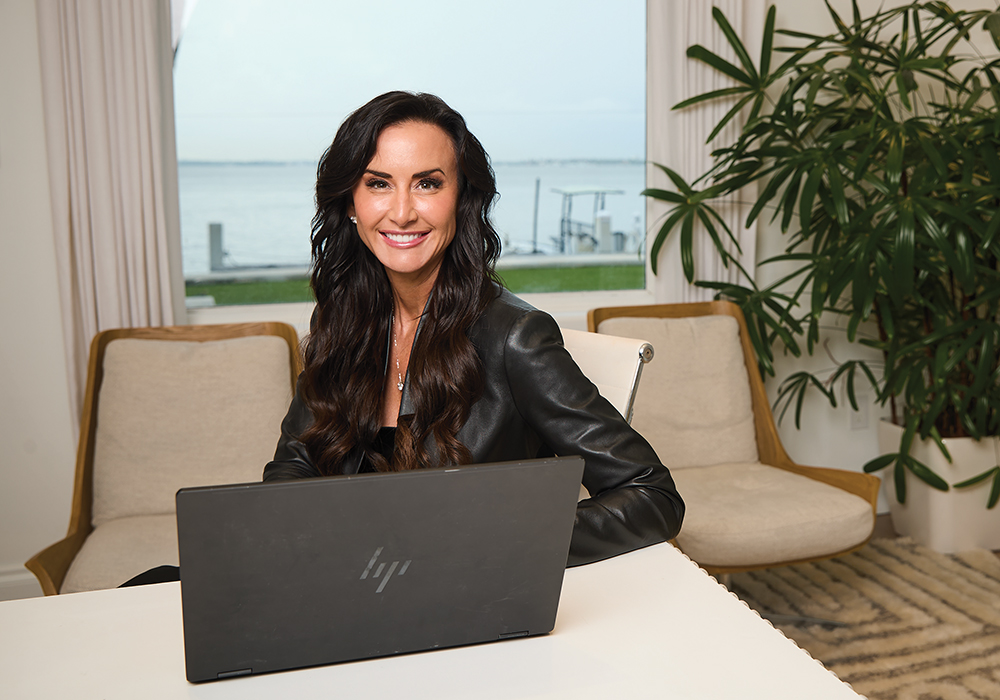
In sum, so far: Perell wants to see resilience in the people she hires and in the founders she invests in. And there’s one more quality she looks for:
A willingness to ask for help.
Perell is a big believer in mentorship, and believes it can take many forms. Some involve regular meetings and open correspondence that lasts decades; others are more casual and occasional, or meant for specific circumstances. Perell herself had mentors she turned to for every one of her businesses, and considers it key to her success.
But how do you get someone like Perell to be your mentor, or to even give you some casual advice? It’s a hard ask; she’s inundated with requests, just like any successful founder. But she says it’s possible. Here’s how.
First, she says, find a warm intro if you can. “ I love a good referral,” Perell says. “Referrals for myself, referrals for other people. If someone makes a referral, they’re putting their name on the line, so I’m much more open.”
Then, reach out with a simple and straightforward ask. Perell suggests starting with three words: “Let’s have coffee.” And don’t get discouraged if your first email to a potential mentor goes unanswered.
“You have to be proactive,” Perell says. “If you email, I have so much going on. So use the triple tap, which is ask, ask, ask. After three asks, I probably am just too busy. But so many people stop at one. They assume I don’t want to do it. Maybe it just got lost in my inbox.”
To increase the chances of getting a “yes” to your initial request, be sure to personalize any outreach. Look for details you both have in common, even if it’s something as simple as you both having a twin or going to the same college. Perell appreciates when people know something personal about her, because it shows they actually care.
“I have a lot of people I could give my time to, but I want to give my time to someone that actually spent the time to learn about something that was important to me,” Perell says.
But before reaching out to someone like Perell, she suggests looking around for people who are already in your network. Who is worth deepening a relationship with? Who could you learn more from? Perell asks herself this often, which is how, about 15 years ago, she met a transformative mentor while serving with him on a board of a company she’d invested in.
The company itself ultimately went under, and Perell lost the money she’d invested. But the mentorship she gained was much more valuable than the money anyway.
“He became a trusted mentor and friend whose perspective has influenced the way I think about business, branding, and creativity,” Perell says. “He would often push me beyond the first idea by asking, ‘What would this look like if you thought 10 times bigger?’ or ‘What could you do that no one else is willing to do?’”
In other words, he was teaching her resilience.
The right people can make you a success, Perell has learned. But the wrong ones can drag you down.
That’s why, at the end of every year, Perell does what she calls a “life audit.”
“I know it sounds harsh,” Perell says, “but I make a list of the 10 people I spend the most time with. If they’re energizing and supporting me and challenging me to live up to my greatest potential, I put a plus. If they’re naysayers or dream-killers or telling me why it’s not going to work, I literally audit them out.”
The people you surround yourself with have the biggest impact on who you become, Perell says. That may sound obvious. But it’s a reminder we all need, because we often aren’t proactive enough about who we spend time with. And it’s so easy to drift back toward unhealthy relationships.
“Think of the emotional drag that has on your mental capacity,” Perell says. “You can’t dream big when you have an anchor. You have to let go of the anchors in order to be able to truly fly.”
And when you’re flying with the right people, you soar.