Richard

Build Smarter Portfolios With AI-Guided Stock Picks and Risk-Based Recommendations

Build Smarter Portfolios With AI-Guided Stock Picks and Risk-Based Recommendations


Disclosure: Our goal is to feature products and services that we think you’ll find interesting and useful. If you purchase them, Entrepreneur may get a small share of the revenue from the sale from our commerce partners.

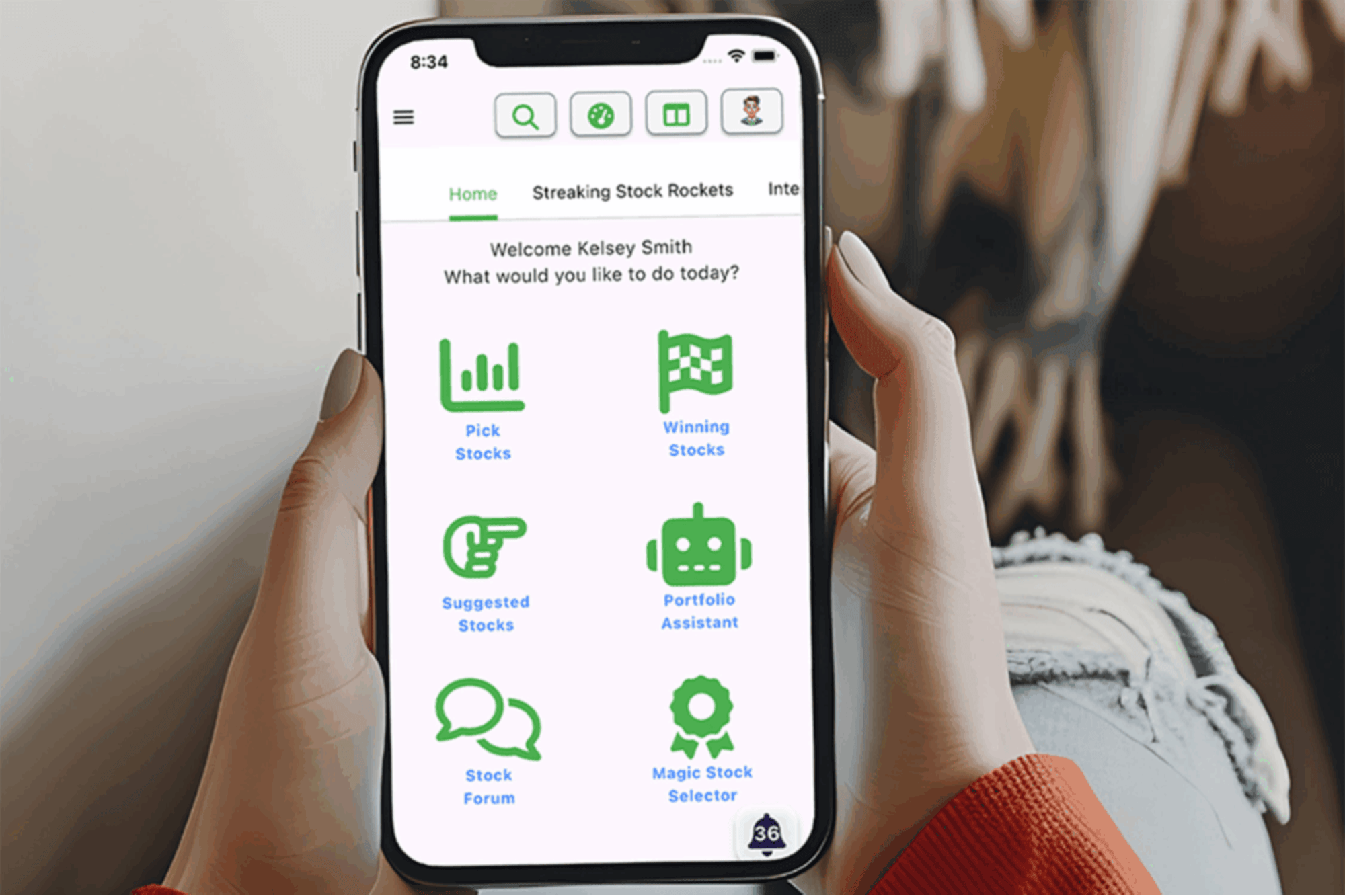
Building a strong investment portfolio shouldn’t require a finance degree, or hours of your day. With Sterling Stock Picker, users get a platform that simplifies stock selection while supporting informed, personalized strategy. For a one-time payment of $68.99 (MSRP $486), this lifetime subscription offers long-term access to a suite of tools designed to align your investments with your goals, values, and risk tolerance.

Sterling Stock Picker’s standout feature is its North Star guidance engine, a proprietary tech that cuts through the noise to offer clear recommendations — buy, sell, hold, or avoid — based on real performance metrics. For even more support, Finley, your personal AI financial coach, is always available to provide market insight, risk analysis, and plain-language answers to portfolio questions.

From day one, users can build a diversified portfolio with minimal friction. Begin with a 5-minute risk tolerance quiz, then get personalized stock recommendations based on data-driven analysis. Want to focus on value-aligned investments or high-growth opportunities? You can filter stocks by performance, values, and sector — all backed by financial and technical insight, the company says.

The platform also encourages deeper financial literacy, offering detailed breakdowns of complex terms and investment strategies, along with access to a built-in investor community. Whether you’re actively managing your own portfolio or simply want to level up your financial decision-making, the tools are designed to work with your pace and priorities.

If you’re ready to approach investing with more clarity, efficiency, and long-term strategy, this lifetime subscription to Sterling Stock Picker for $68.99 offers a professional-grade solution without recurring costs.

StackSocial prices subject to change.

Building a strong investment portfolio shouldn’t require a finance degree, or hours of your day. With Sterling Stock Picker, users get a platform that simplifies stock selection while supporting informed, personalized strategy. For a one-time payment of $68.99 (MSRP $486), this lifetime subscription offers long-term access to a suite of tools designed to align your investments with your goals, values, and risk tolerance.

Sterling Stock Picker’s standout feature is its North Star guidance engine, a proprietary tech that cuts through the noise to offer clear recommendations — buy, sell, hold, or avoid — based on real performance metrics. For even more support, Finley, your personal AI financial coach, is always available to provide market insight, risk analysis, and plain-language answers to portfolio questions.

From day one, users can build a diversified portfolio with minimal friction. Begin with a 5-minute risk tolerance quiz, then get personalized stock recommendations based on data-driven analysis. Want to focus on value-aligned investments or high-growth opportunities? You can filter stocks by performance, values, and sector — all backed by financial and technical insight, the company says.

The rest of this article is locked.

Join Entrepreneur+ today for access.


Source link

Build Smarter Portfolios With AI-Guided Stock Picks and Risk-Based Recommendations Read More »

‘Catfish’ Star Nev Schulman Has a New Job in Real Estate

‘Catfish’ Star Nev Schulman Has a New Job in Real Estate


The median age of all real estate agents who belong to the National Association of Realtors is 60, making the profession a top choice for entrepreneurs of a certain age who want to start a second (or third) career. It’s also a top choice for working parents who want to set their own hours. And now, even MTV stars want in on the action.

“Catfish” host Nev Schulman, 40, told People this week that he has started a new career in real estate. The television host and podcaster has joined the firm Coldwell Banker Warburg.

Related: I Risked Everything to Build My Company. Four Years Later, Here’s What I’ve Learned About Building Real, Lasting Success

In a press release announcing the news, the agency said that Schulman’s time on “Catfish,” which helped people discover who they were really talking to online, will help his clients with the “trust-building and problem-solving skills” needed to make a deal in New York’s complex housing market.

Nev Schulman during the Juventus Podcast Stories of Strength At Juventus Creator Lab on October 08, 2024, in Turin, Italy. (Photo by Diego Puletto/Juventus/Juventus FC via Getty Images)



“Hosting Catfish taught me how to listen deeply, build trust quickly, and help people navigate some of the most emotional decisions of their lives,” Schulman said. “Real estate in New York is no different — you need empathy, patience, and the ability to see through the noise to find the right home.”

Although most people know Schulman from his time on television, including a stint on “Dancing With the Stars” in 2020, he’s now a father of three who’s hoping to step into his father’s footsteps — Robert Schulman is a broker at the same firm, and a “top producer” for the last 15 years.

Related: These Are the Highest-Paying Jobs for Older Adults (With the Least Physical Labor), According to a New Report

“After watching my father dedicate more than 50 years to this business, it feels meaningful to follow in his footsteps and join Coldwell Banker Warburg,” Schulman said.

If he ever gets the television itch, though, there are a slew of real estate programs on Netflix and Bravo to choose from. Just ask the Altman brothers or Barbara Corcoran.


Source link

‘Catfish’ Star Nev Schulman Has a New Job in Real Estate Read More »

Don’t Just Disrupt Your Industry — Transform It

Don’t Just Disrupt Your Industry — Transform It


Opinions expressed by Entrepreneur contributors are their own.

More than a decade ago, business gurus were quick to label any idea or development that was mildly novel as “disruptive innovation.” Originally coined by American academic and business consultant Clayton Christensen in his 1997 book The Innovator’s Dilemma, it was used largely to describe how small businesses could challenge larger players within a market, often entering at the low end and moving upmarket and disrupting established competitors’ core business.

But in the mid-2010s, gone were the days of the so-called disruptors, as critics began noting how the term had become a business buzzword rather than a term that was describing meaningful change. Jill Lepore, a professor of history at Harvard, wrote an article for The New Yorker about how “disruptive innovation” is being used inaccurately in the business world, stating that many companies described as “disruptive” never succeeded in displacing incumbents. Her critique sparked a major rethinking in business circles, which made way for terms like “transformative innovation” in the 2020s.

Furthermore, when compared with “disruptive,” the word “transformational” helps you visualize positive systemic change. The effects caused by transformational innovation are incremental and long-lasting, and frankly, quite relevant in the age of systemic shifts, such as climate change, ESG and sustainability factors, AI technologies and other major global innovations. Here are five reasons why entrepreneurs today need to focus on transformational innovation instead.

Related: To Achieve Sustainable Success, You Need to Stop Focusing on Disruption. Here’s Why — and What You Must Focus on Instead.

1. This is where technology creates social impact

Entrepreneurs can be transformational innovators who creatively use technological solutions to create meaningful change, which leads to increased economic impact, which in turn creates lasting social impact. This is an area of entrepreneurship that focuses on the “grand challenges” that societies need to address, from poverty reduction to environmental action to good health and well-being, as listed under the United Nation’s Sustainable Development Goals for 2030. High-growth technology entrepreneurs in particular have the potential to leverage unique opportunities to create social value, for instance by utilising open-source collaboration for problem solving, using social media platforms for advocacy campaigns and activism and unlocking data analytics to personalise lifestyle changes and improve healthcare solutions. It is generally understood that technology is the lifeblood of transformational innovation.

2. It’s people-focused

You must first understand consumer behaviour before you try and change it for the better. Therefore, transformational innovation is an exercise of using people’s adaptability to drive significant and lasting change. To innovate this way, one needs to be accepted by the wider population, and this often requires entrepreneurs to understand diverse groups of people instead of having a silo mentality. For your venture to succeed, you need people to trust what you do and commit to your process to derive value.

3. It is driven by the $8 trillion global longevity market

In its July 2025 report, Swiss banking giant UBS announced that transformational innovation is where investors should expect attractive returns from in the years ahead, and that longevity is one of the leading industries driving valuable growth in this space, next to AI, power and resources.

The longevity market is expected to grow from $5.3 trillion in 2023 to $8 trillion by 2030, which will surpass AI industries which are only estimated to reach $1.16 trillion by 2027. The longevity market is transforming the global economy, according to UBS, which says that the change is being fuelled by increasing life expectancy and ageing populations worldwide.

4. Transformational innovation industries are stable

Innovation is a key driver of long-term equity performance. According to UBS, transformational innovation industries offer “durable, secular growth” that the bank believes can withstand short-term market volatility. The Swiss bank also suggests that if there are potential market dips in these industries, they are likely to be short-term and would act as useful entry points for long-term investors.

Related: The Surprising Strategy Smart Leaders Use to Outpace Disruption

5. It’s a brave new world

While disruptive innovation is largely about creating cheaper alternatives, transformative innovation is about creating whole new market spaces with completely different frameworks to what already exists. For entrepreneurs, working within these industries can help them experiment with newer and better business models. It’s all about exploring the untapped potential.

All in all, to embrace transformational innovation, an entrepreneur must be prepared to embrace change. It requires one to be proactive and have the ability to anticipate future trends that will come with it. To remain at the forefront of this entrepreneurial revolution, entrepreneurs must develop a multi-pronged innovation strategy through planning and in-depth research.

Most importantly, entrepreneurs should develop a culture of innovation in their businesses, where entrepreneurs, managers, CEOs, employees, consumers and clients all collaborate to form a cohesive creative force. Leaders should inspire others to be bold, intellectually brave and challenge existing paradigms. Entrepreneurs should have a vision, forge strategic partnerships and create meaningful industry-level changes, even if they own a small business with limited resources. To remain competitive and to lead industry trends, entrepreneurs today must engage with the concept of transformational innovation.

We are now in the year 2025 — it’s time to change the game.

More than a decade ago, business gurus were quick to label any idea or development that was mildly novel as “disruptive innovation.” Originally coined by American academic and business consultant Clayton Christensen in his 1997 book The Innovator’s Dilemma, it was used largely to describe how small businesses could challenge larger players within a market, often entering at the low end and moving upmarket and disrupting established competitors’ core business.

But in the mid-2010s, gone were the days of the so-called disruptors, as critics began noting how the term had become a business buzzword rather than a term that was describing meaningful change. Jill Lepore, a professor of history at Harvard, wrote an article for The New Yorker about how “disruptive innovation” is being used inaccurately in the business world, stating that many companies described as “disruptive” never succeeded in displacing incumbents. Her critique sparked a major rethinking in business circles, which made way for terms like “transformative innovation” in the 2020s.

Furthermore, when compared with “disruptive,” the word “transformational” helps you visualize positive systemic change. The effects caused by transformational innovation are incremental and long-lasting, and frankly, quite relevant in the age of systemic shifts, such as climate change, ESG and sustainability factors, AI technologies and other major global innovations. Here are five reasons why entrepreneurs today need to focus on transformational innovation instead.

The rest of this article is locked.

Join Entrepreneur+ today for access.


Source link

Don’t Just Disrupt Your Industry — Transform It Read More »

Learn Pro Stock Trading Strategies with This  Candlestick Analysis Masterclass

Learn Pro Stock Trading Strategies with This $30 Candlestick Analysis Masterclass


Disclosure: Our goal is to feature products and services that we think you’ll find interesting and useful. If you purchase them, Entrepreneur may get a small share of the revenue from the sale from our commerce partners.

Candlestick patterns. Tape reading. Risk strategy. These aren’t just buzzwords — they’re core trading skills that separate informed investors from those riding luck. For professionals or side hustlers who are looking to improve their stock trading game, this bundle offers a practical, self-paced roadmap through real-world-tested methods.

This Candlestick Trading and Analysis Masterclass bundle, priced at just $29.99 for a limited time, includes six trading courses from U.S.-based full-time trader and educator Travis Rose. With more than 12 hours of content and a 4.5/5-star instructor rating, Rose focuses on reducing the learning curve for new traders by sharing exactly what he wishes he knew starting out.

You’ll learn to decode candlestick patterns, build risk-aware trading plans, and read price action using volume and order flow. Beyond charting, the courses also cover swing trading, options trading basics, and strategies to identify key reversal points. Quizzes, downloadable resources, and real trading examples help reinforce the material as you go.

This isn’t fluff. It’s strategy-focused training for people who want to better understand what moves markets, and how to react with confidence. While the material is beginner-accessible, it’s grounded in the kind of discipline full-time traders rely on every day.

With lifetime access and a no-subscription model, the bundle fits into your schedule (and budget). Whether you’re exploring trading as a serious skill or sharpening your approach after market setbacks, this training gives you tools to trade smarter—without committing thousands upfront.

Get full access to this Candlestick Trading and Analysis Masterclass bundle today for $29.99 for a limited time.

StackSocial prices subject to change.

Candlestick patterns. Tape reading. Risk strategy. These aren’t just buzzwords — they’re core trading skills that separate informed investors from those riding luck. For professionals or side hustlers who are looking to improve their stock trading game, this bundle offers a practical, self-paced roadmap through real-world-tested methods.

This Candlestick Trading and Analysis Masterclass bundle, priced at just $29.99 for a limited time, includes six trading courses from U.S.-based full-time trader and educator Travis Rose. With more than 12 hours of content and a 4.5/5-star instructor rating, Rose focuses on reducing the learning curve for new traders by sharing exactly what he wishes he knew starting out.

You’ll learn to decode candlestick patterns, build risk-aware trading plans, and read price action using volume and order flow. Beyond charting, the courses also cover swing trading, options trading basics, and strategies to identify key reversal points. Quizzes, downloadable resources, and real trading examples help reinforce the material as you go.

The rest of this article is locked.

Join Entrepreneur+ today for access.


Source link

Learn Pro Stock Trading Strategies with This $30 Candlestick Analysis Masterclass Read More »

Future-Proof Your IT Career with Lifetime Access to 90+ Cybersecurity Courses

Future-Proof Your IT Career with Lifetime Access to 90+ Cybersecurity Courses


Disclosure: Our goal is to feature products and services that we think you’ll find interesting and useful. If you purchase them, Entrepreneur may get a small share of the revenue from the sale from our commerce partners.

If you’re serious about getting into (or advancing your knowledge of) cybersecurity then access to quality, up-to-date training isn’t optional. It’s essential. InfoSec4TC’s Platinum Membership makes that access easy, with a comprehensive lifetime subscription to over 90 expert-led certification courses and continuously updated training material.

Through October 5, you’ll pay just a one-time payment of $52.97 (MSRP $280) to unlock lifetime, self-paced access to preparation for top IT security certifications: CISSP, GSEC, CISM, CISA, Ethical Hacking, and more. The membership also includes exam question updates, extra course resources, and future course additions — all at no additional cost.

Courses are designed for professionals at all levels. Whether you’re aiming to earn your first credential, shift careers into cybersecurity, or expand your current skill-set, the structured curriculum and clear learning paths make the journey approachable. You’ll also receive an attendance certificate with CPEs, access to private study groups, and one free session of career consulting and planning.

And InfoSec4TC doesn’t stop at instruction. Their mentorship approach helps you stay accountable and on track, no matter if your goal is certification, a job title upgrade, or a full career transition into infosec. With more than 90 courses and growing, your training evolves as the industry does.

Lock in lifetime access to InfoSec4TC Platinum Membership for just $52.97 until October 5.

StackSocial prices subject to change.

If you’re serious about getting into (or advancing your knowledge of) cybersecurity then access to quality, up-to-date training isn’t optional. It’s essential. InfoSec4TC’s Platinum Membership makes that access easy, with a comprehensive lifetime subscription to over 90 expert-led certification courses and continuously updated training material.

Through October 5, you’ll pay just a one-time payment of $52.97 (MSRP $280) to unlock lifetime, self-paced access to preparation for top IT security certifications: CISSP, GSEC, CISM, CISA, Ethical Hacking, and more. The membership also includes exam question updates, extra course resources, and future course additions — all at no additional cost.

Courses are designed for professionals at all levels. Whether you’re aiming to earn your first credential, shift careers into cybersecurity, or expand your current skill-set, the structured curriculum and clear learning paths make the journey approachable. You’ll also receive an attendance certificate with CPEs, access to private study groups, and one free session of career consulting and planning.

The rest of this article is locked.

Join Entrepreneur+ today for access.


Source link

Future-Proof Your IT Career with Lifetime Access to 90+ Cybersecurity Courses Read More »

Gen Z Is Teaching Older Colleagues How to Use AI: Survey

Gen Z Is Teaching Older Colleagues How to Use AI: Survey


Gen Zers born between 1995 and 2012 are adopting AI at work and helping older colleagues embrace it too, according to a new poll.

The survey, conducted by workspace solutions company International Workplace Group, found that close to two-thirds of Gen Z respondents were teaching their older workplace peers how to use AI.

“This support often takes different forms, from hands-on guidance to sharing practical tips to integrate AI into daily workflows,” International Workplace Group CEO Mark Dixon told CNBC.

Related: Almost 100% of Gen Zers Surveyed Admitted to Using AI Tools at Work. Here’s Why They Say It Is a ‘Catalyst’ for Their Careers.

In the poll, which surveyed over 2,000 individuals in the U.S. and the U.K., nearly half of the respondents said AI is bridging generational gaps and encouraging collaboration. Older workers “are showing a real openness to AI” and “learning from younger generations,” Dixon told the outlet.

He added that the dynamic between older and younger generations was “so impactful” because of its “reciprocity.” Younger generations are using their AI skills to “guide” others and “introduce new ways of working,” while older generations respond by leveraging their experience and industry knowledge to help Gen Z use the technology more effectively.

“In today’s digital-first era, AI is emerging as a powerful unifier across generations,” Dixon told CNBC.

Related: Gen Z Is Increasingly Turning to Trade Schools as a Fast Track to Entrepreneurship and an AI-Proof Career

The survey additionally found that most office workers (86%) said that AI has improved their efficiency, while over three-fourths say it has helped their careers. On average, workers saved 55 minutes every day by using AI.

Gen Z workers are also improving their own AI skills by teaching others how to use it, Dixon said.

Gen Zers born between 1995 and 2012 are adopting AI at work and helping older colleagues embrace it too, according to a new poll.

The survey, conducted by workspace solutions company International Workplace Group, found that close to two-thirds of Gen Z respondents were teaching their older workplace peers how to use AI.

“This support often takes different forms, from hands-on guidance to sharing practical tips to integrate AI into daily workflows,” International Workplace Group CEO Mark Dixon told CNBC.

The rest of this article is locked.

Join Entrepreneur+ today for access.


Source link

Gen Z Is Teaching Older Colleagues How to Use AI: Survey Read More »

How I Went From Side Hustle to 7 Figures in 12 Months Using These 4 AI Tools (No Tech Skills Needed)

How I Went From Side Hustle to 7 Figures in 12 Months Using These 4 AI Tools (No Tech Skills Needed)


Opinions expressed by Entrepreneur contributors are their own.

Most solopreneurs are stuck using AI the old way — writing captions, drafting emails, and hoping it drives results.

But the ones scaling to seven figures fast? They’re using AI to run their business like a machine — automating growth, traffic, and operations without hiring a single employee.

In this video, I’ll show you the exact four AI tools I used to go from side hustle to seven figures in just 12 months — no coding, no complexity and no team required.

Here’s how I used them:

  • The traffic tool: Pinpoints what your audience is searching for before your competitors do — helping you publish content that ranks and spreads.
  • The sales tool: Qualifies leads, personalizes follow-ups and automates sales conversations — turning traffic into profit 24/7.
  • The system builder: Converts your manual processes into repeatable automations — from onboarding to task management, without hiring.
  • The content engine: Analyzes top-performing hooks and titles in your niche — and gives you a full content calendar in minutes.

These tools helped me stop guessing, get visible, and scale fast — without burning out or adding overhead.

If you’re a solo entrepreneur who’s tired of doing everything yourself, this is how you scale smarter — and finally start seeing real momentum.

The AI Success Kit is available to download for free, along with a chapter from my new book, The Wolf is at The Door.

Most solopreneurs are stuck using AI the old way — writing captions, drafting emails, and hoping it drives results.

But the ones scaling to seven figures fast? They’re using AI to run their business like a machine — automating growth, traffic, and operations without hiring a single employee.

In this video, I’ll show you the exact four AI tools I used to go from side hustle to seven figures in just 12 months — no coding, no complexity and no team required.

The rest of this article is locked.

Join Entrepreneur+ today for access.


Source link

How I Went From Side Hustle to 7 Figures in 12 Months Using These 4 AI Tools (No Tech Skills Needed) Read More »

Apple, Meta, Google Working on Universal Translators

Apple, Meta, Google Working on Universal Translators


Universal translators were once a science fiction dream, appearing in shows like “Star Trek” as devices capable of translating any language into English.

Now, new advancements in AI have made it possible for big tech companies like Apple, Meta, and Google to create gadgets that translate from one language to another in real-time. And analysts expect the products to be popular.

Here’s what they’re working on:

Apple

Apple introduced the $250 AirPods Pro 3, a pair of earbuds capable of live translation in real-time, at its “Awe Dropping” product launch event earlier this week. The earbuds support translations from French, German, Portuguese, and Spanish into English. Older AirPods models, such as the AirPods 4 and AirPods Pro 2, will get the live translation feature as an update next week.

Apple AirPods Pro displayed at Apple headquarters in Cupertino, California, on Sept. 9. Photo by Justin Sullivan/Getty Images

In a demo video, Apple showcased how AirPods could be used in a live conversation with an English-speaker buying flowers from a Spanish-speaker. The AirPods translated the vendor’s words from Spanish to English in real-time through in-ear audio translations. When the English-speaker responds, their words are translated into Spanish via written text on her phone. If both people in a conversation are wearing AirPods, they can speak in different languages and have the earbuds translate in real-time.

Analysts expect the product to entice users to upgrade their Apple devices.

“If we can actually use the AirPods for live translations, that’s a feature that would actually get people to upgrade,” DA Davidson Analyst Gil Luria told CNBC.

Related: Apple’s Foldable iPhone Release Date Has Been Revealed, According to a JPMorgan Investor Letter

Google

Google announced last month that its Pixel 10 phone can translate from one language to another during phone calls — and preserve the speaker’s natural voice with translations. The feature, called Voice Translate, applies to real-time phone call conversations in languages like Spanish, Japanese, and Hindi, and will become available through a software update on Monday.

The translate feature processes translations on the Pixel 10 device, so conversations are kept private.

Google Pixel 10 smartphone. Photo by Andrej Sokolow/picture alliance via Getty Images

“Voice Translate allows you to break down language barriers during phone calls,” Google stated in a blog post announcing the feature.

Meta

Meta, meanwhile, has recently implemented translation capabilities for new or existing devices. Starting in April of this year, the bestselling Ray-Ban Meta smart glasses are capable of live translation.

The glasses, which have sold more than two million pairs since launch, can help English-speaking users understand speech in French, Italian, and Spanish with a simple voice command: “Hey Meta, start live translation.”

Meta CEO Mark Zuckerberg (left) and Mixed Martial Arts Fighter Brandon Moreno (right) at Meta Connect 2024. Photographer: David Paul Morris/Bloomberg via Getty Images

Meta CEO Mark Zuckerberg first introduced the live AI translation feature for the Ray-Ban Meta smart glasses at Meta Connect 2024. He demonstrated how he was able to understand Brandon Moreno, a mixed martial arts fighter, speaking in Spanish while he responded in English.

“You can simply speak to someone in Spanish, and hear the English translation directly in your ear,” Zuckerberg said at the event.

Related: Mark Zuckerberg’s Meta Keeps Suspending Mark Zuckerberg, Esq., From Facebook — and Now He’s Suing

Universal translators were once a science fiction dream, appearing in shows like “Star Trek” as devices capable of translating any language into English.

Now, new advancements in AI have made it possible for big tech companies like Apple, Meta, and Google to create gadgets that translate from one language to another in real-time. And analysts expect the products to be popular.

Here’s what they’re working on:

The rest of this article is locked.

Join Entrepreneur+ today for access.


Source link

Apple, Meta, Google Working on Universal Translators Read More »

Running an Online Business Is Tough — But Doing These 4 Things Will Make It Easier

Running an Online Business Is Tough — But Doing These 4 Things Will Make It Easier


Opinions expressed by Entrepreneur contributors are their own.

Becoming an ecommerce entrepreneur is not for the faint of heart. The technological hurdles can be substantial. And there is ample competition within the space.

The good news is that the technology has created opportunities, and the competition is there because there is substantial opportunity. Technology and the acclimation of society to buying online have created a perfect storm of opportunity that shows no signs of abating.

So what has to happen to be a successful participant as an ecommerce entrepreneur? Here are four initiatives one must embrace.

Related: 5 Things I Wish I Knew Before Launching an Ecommerce Business

1. Experiment, experiment, experiment

This is a mentality. As we all know, failure can be your friend. And failure, inevitably, arises from experimentation. Some of my experiments early in my ecommerce career that didn’t pan out were: Starting my own private label brand early on without doing enough market research, specifically checking for demand of the item, and relying too heavily on one supplier or fulfillment channel.

This being said, if I had not taken the chance, I would not be where I am today.

One of the best ways to cultivate this habit is to embrace mentors. They can think about things analytically, without the baggage of the business being “their baby.” Take inventory of what they suggest, and step out into the unknown. It is your best chance of success.

2. Track the competition

Ten years ago, I was just starting my first store on the Amazon marketplace and opened several niche Shopify stores around the same time. I focused on the competition, often trying to learn how they might approach a similar challenge to what I was facing.

For example, I noticed some people were creating funnels for their ecommerce stores. I took note of that. Some of them were testing out different types of landing pages. Others were testing out YouTube ads for ecommerce products back in the 2010s, specifically trendy gadgets with the potential to go viral. It was something I had never experimented with before, and it was a really creative, niche-specific way of marketing. I went on to build out product funnels of my own, learned about upsell strategies, what goes into making a strong product landing page and so much more.

3. Embrace financial literacy

When I started my ecommerce business, I knew quite a bit about online marketing — I had a small locally based marketing agency in Northern California in my early 20s and I created a social media influencer business. Both of these ventures taught me important things about running an ecommerce business.

Creating and analyzing financial metrics wasn’t exactly my strong suit in the beginning. I started by learning how to read basic reports like profit and loss statements, and quickly realized how crucial it is to know which numbers actually matter. As an ecommerce seller, you have to keep a close eye on metrics like your average order value (AOV), cost per acquisition (CPA), cost of goods sold (COGS), gross revenue, net profit, overall profit margin and more.

At first, I didn’t fully understand how all these pieces fit together, so I had to learn as I went. That experience is a big part of why we prioritize financial education for our clients. Even though we break the numbers down into clear, actionable insights, we also want to empower them. Whether they eventually want to run their own operation or branch out into a related ecommerce business, perhaps on Amazon, understanding the financial side is essential.

Related: How to Build, Grow and Make Money With Ecommerce

4. Delegate

Successful people buy their time back. If you can afford to, outsource at the outset. Generally, if you do that, you can grow faster. You can’t do everything at once. You can’t wear an expert hat in every area. I tried in my early and mid-20s to do so much on my own, only to be faced with major symptoms of burnout.

Outsource it. For example, even if you’re just starting out with a modest budget, consider hiring a virtual assistant. You can train them to support your operations, or they may already bring expertise in areas where you lack experience, such as customer service or product research. A skilled assistant can help manage customer communications and keep buyers satisfied while orders are being fulfilled. Alternatively, a product researcher can take on the time-consuming task of identifying opportunities, whether you guide their efforts or delegate it entirely, freeing you up to focus on higher-level strategy. Either way, you’re buying your time back.

Reclaiming your time by delegating is one of the most strategic investments you can make. It shifts you from an operator to a true owner.

At the end of the day, ecommerce success isn’t about doing everything perfectly from the start but it is about taking action, learning quickly and making adjustments along the way. The entrepreneurs who thrive are the ones who stay curious, keep testing and aren’t afraid to “fail forward.” Every mistake you make is simply another step closer to understanding what works and building the foundation for long-term success.

If you’re willing to experiment, study your competitors, get a handle on your numbers and learn to delegate, you’ll put yourself miles ahead of most people who give up too early. The road won’t always be smooth, but the opportunities are very real. Ecommerce is still growing, and the best time to build something meaningful is right now.

Becoming an ecommerce entrepreneur is not for the faint of heart. The technological hurdles can be substantial. And there is ample competition within the space.

The good news is that the technology has created opportunities, and the competition is there because there is substantial opportunity. Technology and the acclimation of society to buying online have created a perfect storm of opportunity that shows no signs of abating.

So what has to happen to be a successful participant as an ecommerce entrepreneur? Here are four initiatives one must embrace.

The rest of this article is locked.

Join Entrepreneur+ today for access.


Source link

Running an Online Business Is Tough — But Doing These 4 Things Will Make It Easier Read More »

NBCU Says Return to the Office or Leave: Severance Offer

NBCU Says Return to the Office or Leave: Severance Offer


Days after announcing that its hybrid employees would have to return to the office (RTO) four days a week starting Jan. 5, NBCUniversal is offering an alternative to its mandate — accept a buyout.

According to internal documents obtained by Business Insider, NBC is offering employees who don’t want to return to the office the following severance package: eight weeks of pay, plus medical, dental, and vision benefits for three months after their departure. Employees will also receive a full bonus if eligible.

The package does not add additional compensation based on the employee’s tenure. Workers have to ask their HR managers about the severance offer by Oct. 3 to get the offer, BI learned.

Related: What Is ‘Task Masking’? Young Workers Retaliate Against Return-to-Office Mandates With a Viral Strategy.

The severance package only applies to NBC employees at the vice president level or below who currently work a hybrid schedule and are located in the U.S. and the U.K. They will be required to work through Dec. 31 on the company’s payroll and transfer their responsibilities to other employees before they leave. According to PitchBook, NBC has nearly 60,000 employees worldwide.

NBCU workers previously followed a hybrid schedule, coming into the office three days per week (Tuesday, Wednesday, and Thursday), according to Variety. The new four-day policy would require them to come in on Mondays as well.

Many companies are implementing RTO mandates across a variety of fields. Buy now, pay later company, Klarna, announced earlier this week that it would require workers to work from the office three days per week starting September 29. Klarna began trading on the New York Stock Exchange on Wednesday and employed 3,422 workers as of the end of 2024.

Microsoft is also requiring its employees to work from the office at least three days a week starting in February. Microsoft’s worldwide headcount as of June 30 was 228,000 employees, with 125,000 workers located in the U.S.

Related: Verizon Tries to Steal ‘Top Talent’ From Rival AT&T With Email Promoting Its Hybrid and Remote Roles

Other companies, like AT&T, JPMorgan, and Amazon, have already implemented RTO mandates this year, despite employee pushback.

A survey conducted by Bamboo HR last year found that around one in four C-Suite executives hoped strict RTO policies would prompt some employees to quit, calling the RTO orders “layoffs in disguise.” According to the study, around 40% of managers had to implement actual layoffs when fewer employees quit than expected after the RTO mandate.

Though executives have touted the benefits of in-person work for strengthening company culture and helping employees grow their careers, hybrid work also has its benefits.

A study published in the scientific journal Nature last year revealed no differences in productivity, performance, or promotion when comparing employees who went to work fully in-person for six months, and those who followed a hybrid schedule.

Related: Dropbox’s CEO Is Still in Favor of Remote Work

Days after announcing that its hybrid employees would have to return to the office (RTO) four days a week starting Jan. 5, NBCUniversal is offering an alternative to its mandate — accept a buyout.

According to internal documents obtained by Business Insider, NBC is offering employees who don’t want to return to the office the following severance package: eight weeks of pay, plus medical, dental, and vision benefits for three months after their departure. Employees will also receive a full bonus if eligible.

The package does not add additional compensation based on the employee’s tenure. Workers have to ask their HR managers about the severance offer by Oct. 3 to get the offer, BI learned.

The rest of this article is locked.

Join Entrepreneur+ today for access.


Source link

NBCU Says Return to the Office or Leave: Severance Offer Read More »