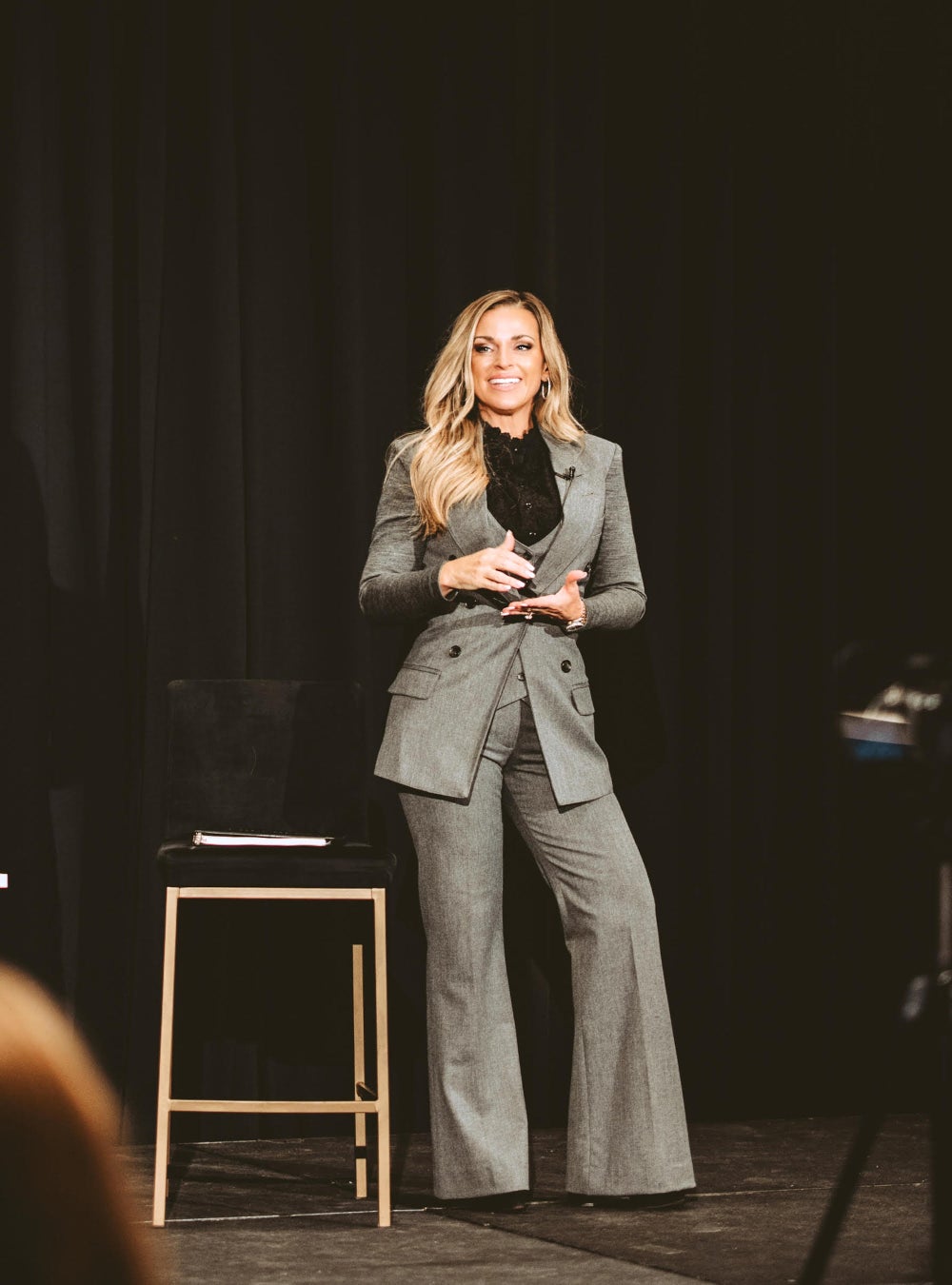
Richard

How a 27-Year-Old’s ‘Crazy’ Side Hustle Hit ,000 a Month

How a 27-Year-Old’s ‘Crazy’ Side Hustle Hit $30,000 a Month


This Side Hustle Spotlight Q&A features Angel Rodriguez, 27, of Miami, Florida. Rodriguez uses the peer-to-peer boat rental platform Boatsetter to run his yacht rental side hustle.

Image Credit: Courtesy of Angel Rodriguez

What was your day job or primary occupation when you started your side hustle?
I started my career as a car salesman at South Motors Honda, where I worked for three years. That experience helped me develop my skills in sales and marketing. From there, I launched my first business, Xperience Miami, a jet ski rental company.

Related: This 31-Year-Old Spends 2 Hours Per Week On His $3,000-a-Month Passive Income Side Hustle: ‘Trust Your Vision’

When did you start your side hustle, and where did you find the inspiration for it?
I launched my boat rental business in June 2023 — not out of inspiration, but out of necessity. At the time, my jet ski rental company was being forced to shut down due to new regulations in Miami Beach. I had two young kids to support, so I took a leap of faith. I maxed out my last bit of credit to finance my first yacht, hoping this venture would take off.

What were some of the first steps you took to get your side hustle off the ground?
After purchasing my first yacht, I asked myself: How can I stand out? I spent hours researching the market and came across Boatsetter, which I saw as a major opportunity. Instead of using Boatsetter to fill gaps in my schedule like many other charter operators, I went all in. I built my entire business model around their platform, applying a strategy similar to Airbnb arbitrage — but for boats. That decision made all the difference.

What were some of the biggest challenges you faced while building your side hustle, and how did you navigate them?
One of the biggest challenges was breaking the industry narrative. At the time, many in the Miami boating community viewed Boatsetter as just an add-on to traditional charters. When I told people I was dedicating my full schedule to the platform, I was called crazy. But I believed in my vision and trusted the platform. That trust paid off.

How long did it take you to see consistent monthly revenue? How much did the side hustle earn?
Within two to three months, I started seeing consistent revenue. By my third month, I hit $20,000 in earnings. By the end of 2023, I was averaging $30,000 per month.

Related: ‘My Brain Thrives on Variety’: His Side Hustle Inspired By ‘The 4-Hour Workweek’ Led to $600,000 in 16 Months

Image Credit: Courtesy of Angel Rodriguez

What does growth and revenue look like now?
Today, I own six yachts and partner on two more. My business has generated over $3 million in sales, with approximately 70% of that revenue coming from Boatsetter. Our fleet is now valued at over $4 million, and every investment — including the first yacht I financed as a leap of faith — is fully paid off.

What do you enjoy most about running this business?
I love the people I meet and the fact that we get to be the highlight of someone’s vacation. For many travelers, renting a yacht in Miami is a dream experience, and I take pride in making those moments unforgettable.

Related: ‘Over $100,000 a Month’: His Spicy Side Hustle Became a Full-Time Business and Hit 7-Figure Revenue — Here’s How He Did It

What’s your advice for others hoping to start successful side hustles or full-time businesses of their own?
Build a strong team and create a family-like culture. None of this would be possible without the incredible people around me. My partner Henry, along with Celine, Chris, Jorge, Amanda and many more, have been instrumental in this journey. From the very beginning, I didn’t have much, but I had determination — and I credit a lot of my success to Boatsetter, which gave me the platform and the tools to grow.

Above all, bet on yourself. I had my first child at 17 and my second at 19, and I knew failure wasn’t an option. Everything I’ve built has been for my kids, Angelina and Alexander. They are my greatest motivation and my biggest “why.”


Source link

How a 27-Year-Old’s ‘Crazy’ Side Hustle Hit $30,000 a Month Read More »

From Boardrooms to Virtual Calls: Your AI Meeting Coach Is Here

From Boardrooms to Virtual Calls: Your AI Meeting Coach Is Here


Disclosure: Our goal is to feature products and services that we think you’ll find interesting and useful. If you purchase them, Entrepreneur may get a small share of the revenue from the sale from our commerce partners.

Some might say that meetings are the heart of business. They are where decisions happen, deals are made, and ideas take shape. But in fast-paced conversations, critical insights can slip by, strategic moments can be missed, and crafting the perfect response on the spot isn’t always easy.

That’s why Hedy AI is your ultimate real-time meeting companion, designed to help professionals stay sharp, contribute confidently, and never miss an important detail.

With Hedy’s AI-powered support, you’ll gain access to real-time insights, instant transcripts, and AI-generated talking points that give you an edge in business meetings, interviews, lectures, and more. Whether you need help crafting the perfect response, summarizing key takeaways, or identifying strategic opportunities, Hedy ensures you’re always prepared.

For just $29.99 (reg. $69.99), this exclusive one-year Pro subscription is the best deal online—better than buying directly from Hedy AI.

For executives, entrepreneurs, and team leaders, Hedy AI acts as a personal strategist, note-taker, and communication coach all in one. Instead of scrambling to remember key points or struggling to articulate your ideas on the spot, Hedy listens, processes, and delivers the insights you need to make an impact.

Imagine being in a high-stakes meeting and needing to challenge a proposal, summarize key takeaways, or craft a diplomatic response to a tough question—Hedy has you covered. Simply ask, “Can you help me respond to that point about project deadlines?” or “How can I professionally challenge this perspective?” and Hedy will generate a polished, strategic answer instantly.

For global teams and multilingual professionals, Hedy’s real-time translation and multilingual support in 19 languages ensure you stay engaged, regardless of the language spoken in the room.

With AI-powered analysis, instant transcripts, and post-meeting summaries, you can focus on leading the conversation instead of scrambling to keep up.

Don’t miss this exclusive offer on a 1-year subscription to Hedy AI Pro for just $29.99 (reg. $69.99).

Hedy AI: Real-Time Meeting & Class Coach: 1-Yr Subscription (Pro License) – $29.99

Get It Here

StackSocial prices subject to change.


Source link

From Boardrooms to Virtual Calls: Your AI Meeting Coach Is Here Read More »

Amazon’s RTO Mandate Complicated By Lack of Desks, Space

Amazon’s RTO Mandate Complicated By Lack of Desks, Space


Amazon issued a return-to-office (RTO) mandate in September calling its corporate employees back to the office by January 2. Over a month has passed since the mandate, and some Amazon employees have yet to see the office — because Amazon can’t find enough desks to hold its 350,000-person workforce.

According to a Thursday report from The Wall Street Journal, Amazon has postponed RTO for staff assigned to dozens of U.S. offices, including New York City, Houston, and Atlanta, due to a lack of space. Amazon employees assigned to some locations are still working remotely as they wait for further instructions about when they should be in the office full-time.

The San Francisco Bay Area is especially short on space. Amazon has 18 offices in the region, but it lacks desks for at least 800 employees. In response last month, an internal group submitted a proposal to Amazon’s facilities division asking for a new office to open in the area. According to the WSJ report, a spreadsheet supporting the proposal has drawn signatures from close to 600 Amazon employees.

Related: JPMorgan Shuts Down Internal Message Board Comments After Employees React to Return-to-Office Mandate

An Amazon spokesperson told the WSJ in an email that “the overwhelming majority” of corporate employees have desks and that only “a relatively small number” of Amazon’s “hundreds of offices” are “not quite ready” for fully in-person work.

Even in offices with desk space, there have been logistics issues with the RTO mandate, such as where employees should park. Jeff Ferris, principal technologist at Amazon Web Services Cloud, posted on X last month that when he tried to park his car in the office garage, he was turned away by security.

“2,000 people, 900 parking spaces,” he wrote.

Some Amazon employees who are back in the office report not having teammates who work from the same location, challenging the objectives of in-person work.

When Amazon CEO Andy Jassy first announced the RTO policy in September, he stated that it would be “easier for our teammates to learn, model, practice, and strengthen our culture; collaborating, brainstorming, and inventing [is] simpler and more effective; teaching and learning from one another are more seamless; and, teams tend to be better connected to one another.”

He reiterated the message at a leaked all-hands meeting in November, telling employees that the RTO mandate was about “strengthening our culture” and fostering collaboration.

Amazon employees have been working in-person at least 3 days per week since May 2023. Other companies with five-day in-office policies include Salesforce and Walmart. Amazon laid off dozens of employees in its communications and sustainability departments last month.

Related: Starbucks’ New CEO — Who Lives 1,000 Miles from HQ — Will Not Tell Employees What Specific Days to Come Into the Office


Source link

Amazon’s RTO Mandate Complicated By Lack of Desks, Space Read More »

Why The Wisest Leaders Listen First Before They Act

Why The Wisest Leaders Listen First Before They Act


Opinions expressed by Entrepreneur contributors are their own.

Ten years ago, I stood on the edge of a tall, craggy rock with waves crashing dramatically around me. Three or four feet away, surrounded by foamy ocean surf, rose an even taller, craggier rock. The sun was hot, the air refreshingly cool. I was enjoying some much-needed downtime in Seychelles, and I’d climbed the rock because I wanted photographic evidence for my six daughters back home in California.

It occurred to me that it’d look even better if I could somehow make it to the second, more impressive rock, so I immediately set about trying to figure out how. I noticed a series of stones between the two that might serve as a sort of bridge; the problem was that my current perch was too slippery to simply climb down. I’d have to jump.

I was nervous but determined. I felt strong — a little athletic. Any doubts were overridden by a sudden surge of confidence, which instructed me to go for it. Then I heard my wife of 15 years, Rachel, who was filming from the shore, say, “Are you sure that’s a good idea?”

Related: The Only 2 Answers You Need to Figure Your Next Move

The video evidence of the disaster that followed will never see the light of day. Suffice it to say that I didn’t quite reach the second rock. Back at the hotel that night, as I lay in bed contemplating my painfully gashed leg, battered body and bruised self-esteem, it occurred to me that there was probably a leadership lesson in here somewhere.

I could think of my accident in one of two ways. The first was that my loving wife had fatally undermined my confidence at the moment of truth; otherwise, I’d have landed nimbly as a cat. The moral for aspiring business leaders is: Be bold. Don’t listen to naysaying voices. Believe in yourself, and success will follow.

The second perspective was that Rachel had asked precisely the right question. At nearly 40 years of age and not quite in my svelte prime, I should have understood that assaulting the second rock was a less-than-stellar idea. In fact, I probably had understood it. What I’d taken for confidence was actually bravado. I knew I was talking myself into a bad deal, but by then, it was too late to retreat.

After carefully considering the available evidence for a millisecond, I chose door number two. In my experience, leadership isn’t always about boldly preceding others over dangerous terrain. Often, it’s a matter of listening to all sides and thoughtfully accepting the best advice. Did I take time to listen to input from all directions as I ran my business?

Related: Are You Ready to Start a Company? Ask Yourself These 6 Questions.

Did I value other points of view to the point that I allowed them to alter outcomes?

In no particular order, here are some thoughts that occurred to me over the next 24 hours as I sat on the beach (poor me, I know) nursing my injured leg instead of scuba diving:

  • Having a strong, competitive personality in any walk of life has its advantages, but humility doesn’t usually top the list. Being known for good ideas can cloud your memory of all the many, many bad ones that preceded or even accompanied the former. I’ve gotten okay at not emotionally investing personally in my own ideas over the years, but there are times when my king-of-the-hill side can take charge and propel me toward an unpleasant tumble. These are the times when I need as many people as possible to question my wisdom.
  • If Rachel had asked her question ten seconds earlier, there’s a chance I would have thought it over and concluded that no, monkeying around on slick, hard, uneven surfaces was probably better left to climbers much more agile than myself. I wouldn’t be surprised, though, if she held back like she did because she doubted that I’d take the hint anyway.
  • In the future, shaving off even a second or two of that hesitant doubt could mean the difference between a smooth, unmarred shin and the complete opposite. And the only psychological razor at my disposal in this scenario is to train and retrain myself to listen to people — especially people who know me well. There’s a very fine line between a leap of faith and a leap of hubris, and sometimes, you need partners with perspective to help you judge.
  • Sparing room in your personality for approachability is exactly that: a conscious decision followed by practice. When it comes to sports, school, creativity, etc., we accept the relationship between practice and improvement without much fuss. With moral, ethical and temperamental matters, our approach is less precise. If I can train myself to climb, I can train myself to listen.
  • Sometimes, you’re going to be wrong regardless. Rachel had a different view than I had as I crouched there precariously with waves crashing into me. A little exercise and training on my part, though, will probably alter her view if we find ourselves in similar circumstances in the future. Being wrong once doesn’t mean that I have to choose the less scenic spot from now on; it just means that I have to prepare better.

Albert Einstein reportedly said, “Any fool can know. The point is to understand.” I’ve known about the virtue of listening since I was a child, but how deep is my understanding? You might ask yourself the same question. Take it from a battered well-wisher: a warning that comes ten seconds too late is really a prophecy, and it sucks being at the wrong end of one of those.


Source link

Why The Wisest Leaders Listen First Before They Act Read More »

JPMorgan’s CEO Doesn’t Care About the Hybrid Work Petition

JPMorgan’s CEO Doesn’t Care About the Hybrid Work Petition


JPMorgan Chase CEO Jamie Dimon dismissed the 1,312 employees who signed a petition calling for the bank to keep its hybrid work policy, telling workers in a Wednesday town hall meeting that the five-day return-to-office mandate would still go into effect.

JPMorgan told its over 300,000 employees last month they would be required to be back in the office five days a week starting in March. The return-to-office (RTO) mandate immediately received pushback, with hundreds of JPMorgan staff commenting on an internal channel. Employees even circulated a petition with 1,312 signatures (at the time of writing) calling for hybrid work to remain the bank’s default policy.

Dimon, it seems, is not moved.

Related: Over 1,300 Google Employees Have Signed a New Petition Asking For Job Security

“Don’t waste time on it,” Dimon stated when employees asked him about the petition during the town hall meeting, according to a recording obtained by Reuters. “I don’t care how many people sign that f—ing petition.”

JPMorgan CEO Jamie Dimon. Photo Credit: Manuel Orbegozo/Bloomberg via Getty Images

Dimon said that while remote working, some employees failed to pay attention during Zoom meetings, which brought down their creativity and efficiency. He also doesn’t like being unable to talk to employees on Fridays, a popular work-from-home day.

Related: ‘Feels Like a Slap in the Face’: Some JPMorgan Employees Reportedly Aren’t Happy With Their Bonuses

JPMorgan saw a record $58.5 billion in profits during 2024, leading some workers to ask why the bank needed them back in the office full-time in 2025 if it proved able to drive record results even while some employees worked on a hybrid schedule, per Reuters.

According to Bloomberg, 60% of JPMorgan staff already work from the office five days per week, including managing directors and salespeople. Back-office workers are most likely to currently work on a hybrid schedule and be affected by the change.

JPMorgan follows companies like Amazon and Walmart in implementing a strict RTO policy. The bank is the largest in the U.S., with $3.9 trillion in assets. It reportedly laid off fewer than 1,000 workers earlier this month.

Related: JPMorgan Is Reportedly Laying Off Around 1,000 Workers


Source link

JPMorgan’s CEO Doesn’t Care About the Hybrid Work Petition Read More »

This Franchise Has Seen Remarkable Growth in the .3Bn Drug Testing Industry

This Franchise Has Seen Remarkable Growth in the $5.3Bn Drug Testing Industry


Are you looking for a high-growth franchise opportunity in a recession-resistant industry? Fastest Labs, a leader in the drug, alcohol, and DNA testing sector, might be the perfect fit for you.

Why Fastest Labs stands out:

  • Low initial start-up cost of $125,500
  • High-margin business model with multiple revenue streams
  • Ranked on Entrepreneur Magazine’s Franchise 500 List
  • Recession and pandemic-resistant industry

As a Fastest Labs franchisee, you’ll benefit from:

  • Proprietary cloud-based management software
  • Comprehensive training and ongoing support
  • Marketing assistance and national accounts program
  • Potential for scalability with multi-unit ownership

Fastest Labs has experienced remarkable growth in number of units since 2018. This rapid expansion demonstrates the strong demand for reliable testing services across various industries.


Source link

This Franchise Has Seen Remarkable Growth in the $5.3Bn Drug Testing Industry Read More »

How to Break Free From Your Comfort Zone and Start Fueling The Growth of Your Company

How to Break Free From Your Comfort Zone and Start Fueling The Growth of Your Company


Opinions expressed by Entrepreneur contributors are their own.

In the heart of Hancock Park in Los Angeles, California, a tiny miscalculation caused a domino effect that altered everything about how I approach business and life. A baby hummingbird, no larger than a few of my fingers, darted through an open door on my balcony. What followed was not just a tale of attempted rescue but a profound lesson in business and life that I never expected to learn from such a small creature.

As entrepreneurs and business leaders, we often pride ourselves on our problem-solving abilities. That day, my partner and I threw everything at the situation. This cute little bird was clearly confused and starting to panic. We didn’t want to harm the animal or scare it more than it already was.

We tried brooms, mops and even a Swiffer extended to its full length in our attempt to guide the hummingbird back to the open door. We tried to make everything dark except the doorway, hoping it would see the apparent path out and follow the light. We crafted makeshift solutions recommended by friends and videos on YouTube, such as adding sugar to bowls of water and eventually to the tip of the Swiffer itself. Each attempt was met with the same result — failure, but with a slight variation. Sound familiar?

The hummingbird’s behavior was fascinating and frustratingly familiar. Hour after hour, it hovered near the ceiling, caught in what appeared to be an endless loop between two light fixtures. The bird had found what it considered a safe zone, a predictable pattern that offered the illusion of security. Despite our efforts to guide it toward freedom, it remained steadfastly committed to its chosen path.

We covered the high windows with dark placemats to eliminate false exits. We draped a blanket across the room to reduce its options. A persistent reflection of sunlight remained on a small patch of ceiling, beckoning like a siren’s call to this baby. The bird, much like many of us in our businesses, continued to chase this artificial light – a metaphor so perfect it hurt to witness.

The solution was tantalizingly simple: if the hummingbird had just flown two feet lower and a foot to the right, it would have found the open balcony door — its ticket to freedom. But it didn’t. It couldn’t. Or perhaps more accurately, it wouldn’t. The safety of its established pattern had become a prison of its own making.

As this drama unfolded, I couldn’t help but see the parallels to our own business behaviors. How many times have we, as entrepreneurs, found ourselves in similar patterns? We stick to what we know, circling the same strategies, the same markets, the same approaches. We might make minor adjustments — a new marketing angle here, a slight product modification there — but fundamentally, we remain within our comfort zones.

Think about the last time you faced a business challenge. Did you immediately reach for your tried-and-true solutions? Did you, perhaps, simply add sugar water to your Swiffer, so to speak, rather than completely rethinking your approach?

The comfort zone is seductive. It offers predictability, familiarity and a sense of control. But like our hummingbird friend, this perceived safety can become a trap. In business, staying too long in your comfort zone can lead to stagnation, missed opportunities and, eventually, obsolescence.

The most successful entrepreneurs I know have one thing in common: they regularly force themselves to look beyond their immediate surroundings. They understand that breakthrough moments rarely come from doing the same things slightly differently. Instead, they come from taking calculated risks and being willing to fly two feet lower and a foot to the right of where they usually operate.

Consider companies like Netflix, which began as a DVD-by-mail service but was willing to look beyond its comfortable business model to embrace streaming. Or think about IBM’s transformation from a hardware company to a services and cloud computing giant. These weren’t just slight variations on existing themes — they were fundamental shifts that required leaving the safety of the familiar.

The fear and panic our tiny hummingbird experienced when trying to escape mirrors the emotions many of us feel when facing significant change. It’s natural. It’s human. But unlike our feathered friend, we have the cognitive ability to recognize our patterns and consciously choose to break them.

So, what’s the practical takeaway from this unexpected encounter? Here’s the challenge I propose: Be the hummingbird for one day, one hour or even just one minute — but with awareness. Observe your patterns. Where are you hovering? What artificial lights are you chasing? Most importantly, what would happen if you flew just a bit lower and a little to the right of your usual path?

Try these steps:

  • Map your flight pattern. Take 30 minutes to write down your recurring business challenges and typical responses to them, identifying where you might be “circling the same light fixtures” in your professional life.
  • Create a two-foot zone. Select one current business challenge and force yourself to generate three completely new solutions you’ve never tried before, even if they initially seem uncomfortable or unconventional.
  • Schedule pre-set freedom flights. Block out two hours each month specifically dedicated to exploring new business opportunities, markets or strategies just outside your current operation, treating this time as sacred as any other business commitment.

The next time you face a business challenge, resist the urge to immediately reach for your usual solutions. Instead, take a moment to look two feet outside your normal range of vision. Ask yourself: Am I solving the real problem or just adding sugar water to a Swiffer?

The path to growth, breakthrough and freedom often lies just beyond our comfort zone. It’s not about making dramatic, reckless changes. Sometimes, it’s as simple as making a minor adjustment in our perspective or approach. The window to opportunity might be closer than you think — if you’re willing to break free from the familiar patterns that keep you circling in place.

In business, as in life, the lights we chase aren’t always the ones that will lead us to where we need to go. The real question is: Are you ready to try a different flight path?

How did the hummingbird saga end?

After a few hours, the bird started to panic and flew around faster and faster. It was doing the exact opposite of what it should be doing, which is to slow down and look for a different solution instead of trying the same thing over and over. We continued to be guided by the bird and do the same thing.

Finally, we realized the only way to help this little bird was to lower the ceiling. That seems crazy, right? How do you lower the ceiling of a building? Together, we came up with a remarkable way to do just that.

We found two large cardboard packing boxes and cornered the bird (gently) with one of them. Then, we slid the second box across the ceiling in a parallel manner, in essence creating a makeshift birdcage with a cardboard ceiling. We slowly lowered the entire triangle birdcage until the new “ceiling” was flush with the top of the doorway. The bird immediately flew out into the big blue sky.


Source link

How to Break Free From Your Comfort Zone and Start Fueling The Growth of Your Company Read More »

JPMorgan Is Reportedly Laying Off Around 1,000 Workers

JPMorgan Is Reportedly Laying Off Around 1,000 Workers


JPMorgan has begun laying off what is expected to be fewer than 1,000 employees, according to a report by Barron’s.

The outlet notes that this round of layoffs affected “several” Houston offices and some now-former employees were notified on February 5. However, this isn’t the end.

JPMorgan is set to announce job cuts in mid-March, May, June, August, and September, though Barron’s states it is not clear how many roles will be impacted by the planned layoffs throughout the year.

Related: JPMorgan Shuts Down Internal Message Board Comments After Employees React to Return-to-Office Mandate

“We regularly review our business needs and adjust our staffing accordingly—creating new roles where we see the need or reducing positions when appropriate,” a spokesperson said in a statement to Barron’s.

A source also confirmed the news to Reuters on Wednesday. A spokesperson told the outlet the layoffs are due to “regular management of the business” and noted the high number of roles open at the bank (around 14,000).

“We continue to hire in many areas and work hard to redeploy impacted employees,” the spokesperson told Reuters.

JPMorgan had 317,233 employees at the end of 2024 and reported record profits in 2024.

Related: Here’s How Much 8 CEOs Made in 2024, From JPMorgan’s Jamie Dimon to Disney’s Bob Iger


Source link

JPMorgan Is Reportedly Laying Off Around 1,000 Workers Read More »

CPI Report: Inflation Rose in January. Will the Fed Cut Rates?

CPI Report: Inflation Rose in January. Will the Fed Cut Rates?


Inflation is rising at its fastest rate in over a year and a half, causing experts to predict that the Federal Reserve will keep rates steady at next month’s Federal Open Market Committee meeting.

New data released from the U.S. Bureau of Labor Statistics on Wednesday showed that the Consumer Price Index (CPI) rose 0.5% in January, the fastest monthly increase since August 2023, according to the New York Times. It was more than the expected gain of 0.3%, with energy prices up 1.1% and food up 0.4%. In comparison, the CPI only rose by 0.4% in December.

Federal Reserve Chair Jerome Powell said on Wednesday that the CPI data reiterated what had been said in past reports: That the Fed was “close but not getting there” on its 2% inflation target. He said that the Fed looks more at longer-term trends than just one or two off-target reports.

EY chief economist Gregory Daco told Entrepreneur in a statement that core CPI, a measure of the prices of all items not including food and energy, was also “disappointingly hot,” or increased rapidly, with a 0.4% monthly increase in January compared to a 0.2% jump in December.

“While CPI inflation has made steady progress toward 2%, it has remained stuck around 3% for a few months,” Daco stated.

Related: Here’s How Rate Cuts Affect Mortgage Rates, According to a 40-Year Veteran of the Real Estate Industry

How Will the CPI Report Impact Rate Cuts?

JPMorgan’s head of investment strategy Elyse Ausenbaugh says hot inflation forces the Federal Reserve to reassess when to cut rates this year.

“I continue to trust the Fed’s patient and data-dependent approach to deciding when it might be appropriate to make another move,” Ausenbaugh told Entrepreneur in a statement.

EY agrees, with Daco noting that the Fed will take “a wait-and-see approach over the coming months.”

Daco expects the Federal Reserve will hold off on cuts at the next Federal Open Market Committee meeting in March and instead make two cuts in 2025, in June and December.

In January, the Fed held rates at a target range of 4.25% to 4.5%. The Fed cut rates in 2024 by 0.5% in September and 0.25% each in November and December.

Overall, consumers paid 3% more for necessities like shelter, gas, and food in January compared to the same time last year, higher than December’s 2.9% inflation rate.

The price of eggs grew 15.2% over the month, the biggest increase in the eggs category since June 2015, per the report. The ongoing egg shortage is due to bird flu affecting farms across the country. The core inflation rate hovered at 3.3% year over year, higher than market expectations of 3.1%.


Source link

CPI Report: Inflation Rose in January. Will the Fed Cut Rates? Read More »

The Cost of Everything is Going Up, But Sam’s Club Membership is 60% Off

The Cost of Everything is Going Up, But Sam’s Club Membership is 60% Off


Disclosure: Our goal is to feature products and services that we think you’ll find interesting and useful. If you purchase them, Entrepreneur may get a small share of the revenue from the sale from our commerce partners.

Every time you check out at the grocery store, it feels like you’re spending more and getting less. The cost of everyday essentials like eggs and gas are getting so expensive they’re making headlines, and there’s no sign of prices coming down anytime soon. But there is one thing that could help: joining Sam’s Club.

When you sign up for your first year of Sam’s Club membership through us, you only have to pay $20 (reg. $50). This offer is only for new members or those with cards that have been expired for more than six months.

Discover how much you can save this year

Savvy shoppers have been visiting the warehouse retailer for decades, and you’ve been missing out on bulk groceries, home essentials, electronics, clothing, and more. And don’t be shy—everyone is there to fill their cart and make fewer trips to the store.

On the way out, don’t forget to fill your car’s tank with members-only fuel savings. You’ll have an entire year’s pass to more affordable gasoline, even if prices continue rising.

Other Sam’s Club membership perks? You can get free curbside pickup on orders $50+ and discounts on travel, like hotel bookings, car rentals, live events, movies, and more.

How to redeem this Sam’s Club offer

Buying a Sam’s Club membership online may be easier than waiting in line at the actual store. Here’s how simple it is to get your membership:

  1. Complete your purchase here.
  2. You’ll receive an email with a unique redemption code.
  3. Sign up for a Sam’s Club membership.
  4. Redeem your unique code with Sam’s Club.
  5. Start using your membership immediately.

Get your 1-year Sam’s Club membership for $20 (reg. $50) before this limited-time promotion ends. No coupon is needed to get this deal.

Sam’s Club 1-Year Membership with Auto-Renew! – $20

See Deal

StackSocial prices subject to change.


Source link

The Cost of Everything is Going Up, But Sam’s Club Membership is 60% Off Read More »