Richard

No More ChatGPT? Here’s Why Small Language Models Are Stealing the AI Spotlight

No More ChatGPT? Here’s Why Small Language Models Are Stealing the AI Spotlight


Opinions expressed by Entrepreneur contributors are their own.

In the rapidly evolving field of artificial intelligence, a new trend promises to change and democratize AI technology: Small Language Models (SLMs). This article explores how SLMs are becoming a game-changer for entrepreneurs and small to medium-sized companies, offering a more accessible and cost-effective alternative to their larger counterparts.

Small Language Models are revolutionizing AI development by providing entrepreneurs and smaller businesses with powerful, efficient and specialized AI tools that were previously only available to tech giants. Thus, they are leveling the playing field in AI innovation.

Related: OpenAI And Meta Models Will Soon Have ‘Reasoning’ Capabilities

What are SLMs?

Small Language Models are scaled-down versions of the massive AI models that have dominated headlines. While models like GPT-3 and GPT-4 boast hundreds of billions of parameters, SLMs operate with far fewer — ranging from millions to a few billion parameters.

This reduction in size comes with trade-offs. SLMs are specialists rather than generalists, focusing on specific tasks or domains. However, this specialization makes them more efficient and targeted in their applications.

These models demonstrate that it’s possible to create smaller, more focused AI systems that perform well on specific natural language processing tasks.

Related: How Generative AI is Revamping Digital Transformation to Change How Businesses Scale

Bringing AI to the edge

One of the most significant advantages of SLMs is their ability to run on devices with limited processing power, such as smartphones or IoT devices. This “edge computing” capability contrasts sharply with larger models requiring powerful cloud infrastructure.

This accessibility is a game-changer for entrepreneurs. Some SLMs can be deployed on a standard laptop using tools like Ollama. This opens up a world of possibilities for integrating AI into various sectors, democratizing the technology and allowing startups with limited resources to compete with tech giants.

Related: How Generative AI Is Revolutionizing the Travel Industry

Cost-effectiveness

Traditional large language models can cost millions of dollars to train and deploy, making them unattainable for even the best-funded companies. SLMs, on the other hand, can be developed and deployed at a fraction of this cost.

This cost-effectiveness extends beyond the initial development phase. Due to their smaller size, SLMs consume less energy and have a reduced carbon footprint when running applications. This lowers operational costs, making them attractive for businesses looking to balance innovation with fiscal responsibility.

Niche use-cases

The primary advantage of SLMs is their potential for domain-specific applications. While general AI models excel at various tasks, SLMs can be tailored to perform exceptionally well in niche areas. For specific use cases, SLMs often demonstrate superior performance and faster training times compared to their larger counterparts.

This specialization opens up opportunities for entrepreneurs to create highly focused AI solutions. Developers can create tailored AI products that outperform general-purpose models in specific areas by identifying underserved niche markets.

Mitigating ethical concerns

As AI becomes more pervasive, concerns about bias and fairness have increased. SLMs offer advantages in addressing these issues. Their smaller size and focused training data make them easier to audit and understand, providing more opportunities to scrutinize and improve them.

Additionally, since some SLMs can be deployed locally without relying on cloud infrastructure, sensitive information can remain on the user’s device. This feature is particularly appealing to sectors like finance and healthcare, where data protection and privacy are paramount.

Related: Towards a Responsible AI

Why entrepreneurs should care about SLMs

The rise of SLM creates several new opportunities for entrepreneurs:

  1. Reduced Barrier to Entry: The lower cost of training and deploying SLMs allows small startups to compete with larger companies.
  2. Improved Performance: Local deployment of SLMs can result in faster response times, leading to smoother user interactions and improved customer satisfaction.
  3. Faster Time-to-Market: Simpler deployment requirements mean AI products using SLMs can be developed and launched more quickly.
  4. Innovative Edge Applications: SLMs enable the creation of AI-powered mobile apps or IoT solutions that don’t rely on constant cloud connectivity.
  5. Enhanced Privacy: Processing data locally on the user’s device is a major selling point in privacy-sensitive industries.
  6. Environmental Friendliness: Lower energy consumption aligns with the growing demand for environmentally sustainable AI technologies.

Looking to the future

As the AI landscape evolves, SLMs are poised to complement and even replace larger models in certain applications due to their specialization and cost-effectiveness. This shift offers businesses, especially entrepreneurs and SMEs, a chance to integrate AI without the high costs or technical challenges associated with larger models.

While traditional large language models will remain important for tasks requiring broad knowledge and complex reasoning, SLMs will excel in specific, targeted applications. Embracing SLMs could lead to significant innovation and competition, allowing smaller companies to develop advanced AI solutions in areas once dominated by tech giants.

By focusing on the unique advantages of Small Language Models, entrepreneurs can leverage this technology to create innovative, efficient and targeted AI solutions. This could potentially revolutionize various industries and democratize access to advanced AI capabilities.

Related: Many Companies Are Launching Misleading “Open” AI Models — Here’s Why That’s Dangerous for Entrepreneurs

Fore reference, a few examples of SLMs are:


Source link

No More ChatGPT? Here’s Why Small Language Models Are Stealing the AI Spotlight Read More »

Earn 0K a Year with This Wedding Industry Franchise

Earn $680K a Year with This Wedding Industry Franchise


3 Benefits of Owning a Wed Society Franchise:

  1. Recession-resistant with a stable market due to consistent demand for wedding services.
  2. Potential for high revenue with low overhead costs and strong unit economics.
  3. Offers flexibility and control with a work-from-home model and virtual customer interactions.

Wed Society is a comprehensive franchise specializing in digital, social, print media, and event planning within the wedding industry. The franchise offers a unique niche market, providing a robust platform for wedding vendors to showcase their services and for couples to plan their weddings. Click Here to connect me with Wed Society.

Key Facts:

  • Minimum Initial Investment: $97,750 – $121,000
  • Initial Franchise Fee: $45,000
  • Liquid Capital Required: $100,000
  • Net Worth Required: $200,000
  • Veteran Incentives: $10,000 off franchise fee


Source link

Earn $680K a Year with This Wedding Industry Franchise Read More »

4 Takeaways For Franchising From the RNC

4 Takeaways For Franchising From the RNC


Opinions expressed by Entrepreneur contributors are their own.

Kicking off hours after an assassination attempt on a presidential candidate, the Republican National Convention took on heightened significance this year. In my role as President and CEO of the International Franchise Association (IFA), I traveled to Milwaukee for a policy roundtable entitled “Franchising, the American Dream,” with U.S. Representative Kevin Hern (R-OK), who is the co-chair of the congressional franchise caucus, McDonald’s franchisee Jimmy Williams, and hotelier Jyoti Sarolia.

Matt Haller and Jyoti Sarolia Credit: Matt Haller

To be clear, IFA is non-partisan and does not take sides in presidential campaigns. We will be in Chicago for the Democratic National Convention in August, and we work with anyone from any party who champions our priorities and fights for our franchise small business owners. That’s also why we partnered with POLITICO and CNN with Milwaukee-based Batteries+. We created a brand activation at the POLITICO/CNN Grill, where over four days we gave away wireless battery chargers to over a thousand attendees, communicating the economic benefits of franchising to convention-goers, with a QR-code that linked to IFA’s Open for Opportunity campaign.

Related: Check out the 2024 Franchise 500 Ranking

Political conventions are always exciting, and this year was no different, especially after COVID-19 curtailed the in-person festivities in 2020. The buzz and energy were palpable. In my conversations with various stakeholders from all walks of life, certain commonalities emerged. Here are four of them.

1. Unions and franchising are not incompatible

The fiery speech from Sean O’Brien, president of the International Brotherhood of Teamsters, got people’s attention. It marked the first time a teamster addressed the RNC in its 121-year history. The Wall Street Journal headline read, “Trump Courts the Union Vote.” The GOP is not used to speakers at their convention railing about “economic terrorism.” But as O’Brien pointed out, the Teamsters have supported Republican candidates before, including Presidents Richard Nixon, Ronald Reagan and George H.W. Bush.

For the franchise community, O’Brien’s presence served as a reminder that we have a compelling story to tell and we need to tell it.

First of all, our model provides nearly 9 million direct jobs, and not a single one is being outsourced overseas. Second, jobs in franchising pay up to 3.4 percent higher wages and provide higher rates of paid leave and other benefits than those at non-franchises, according to data from Oxford Economics. Third, franchises ARE small businesses, and that is the benefit of our business model.

Related: 7 Ways The Expanded Joint Employer Rule Would Hurt Franchises — And Your Wallet

While we are not going to agree with the Teamsters or other unions on much, one thing we do agree on is that policymakers should be focused on creating good jobs right here in America, and that’s what the franchising community is doing. Even when our brands open new franchises overseas, we are bringing money back ashore to the U.S. via the royalty stream paid to operate a U.S. brand abroad, creating a net-trade benefit to the U.S. economy.

We must push back on the idea that the franchise model and unions are incompatible. It’s false. We can and do have both. It is true that the union’s top policy agenda, the PRO Act and an expanded definition of joint employer, and franchising cannot co-exist, but unions are not inherently an opponent. It’s their history of policy priorities that would bring down franchising that we oppose.

2. Franchising is re-aligning party lines

Second, the traditional political and party lines are re-aligning, creating another golden opportunity to expand the franchise tent. For example, public polls have shown former President Donald Trump receiving as high as 30 percent of the Black vote — nearly three times higher than the 12 percent he earned in 2020.

Here again, franchising has an important role to play. Franchising has higher rates of business ownership among women, veterans and minorities. In fact, more than one-quarter (26 percent) of franchises are owned by people of color, compared to 17 percent of non-franchised businesses.

Paul Calkins (IFA), House Speaker Mike Johnson and Matt Haller (IFA) Credit: Matt Haller

As Clement Troutman, an IFA member, U.S. Navy veteran, author, and Maryland-based Tropical Smoothie Cafe franchisee, wrote in a column for the Washington Times observing Juneteenth, “the last few years have been challenging for Black entrepreneurs. From challenges accessing capital to a disproportionate impact stemming from the pandemic, Black small business owners face major obstacles.”

Clement noted, “Franchising can help, but only if elected leaders do their part in creating the right business environment.” These are wise words and lessons that all candidates should take to heart if they want to expand their political base of supporters.

3. J.D. Vance has sided with franchising in the past

There was a lot of scrutiny on Senator J.D. Vance after his selection as the vice-presidential nominee, and nearly every conversation I had with members of Congress and others in Milwaukee centered around what to make of Senator Vance’s selection. In the event of a Trump victory, many view him as the natural GOP standard-bearer in 2028. Throughout his two years in the Senate, Vance has raised eyebrows by deviating from traditional Republican orthodoxy. For example, he has marched on union picket lines and famously praised Federal Trade Commission (FTC) Chair Lina Khan as “one of the few people in the Biden administration who I think is doing a pretty good job.” Yet when it came to franchise issues, particularly joint employer, Senator Vance sided with franchising. When the stakes were the highest during this spring’s repeal of the joint employer rule, Vance stood with us, and that is telling.

4. The next president will have a huge impact on franchising

Members of the franchise community — like all voters — are assessing their presidential choices through the prism of past policies. We have a sense of what a second Trump and Biden administration could look like by evaluating their previous time in office. Certainly, IFA is focused much more on economic and regulatory visions than we do on political ideology. What is the plan for job creators?

Related: Decoding the Massive Impact of the NLRB’s Joint Employer Rule

For example, the individual tax provisions in the Tax Cuts and Jobs Act (TCJA) are set to expire next year. The law significantly restructured numerous aspects of the federal tax system for small businesses, including reductions in individual and corporate tax rates, a new 20% deduction for income from pass-through businesses, 100% bonus depreciation for capital investments, and a new limitation on the deductibility of business interest. The GOP platform expressly calls for tax cuts and many Ways and Means Committee members who will write the next tax law, including Chairman Jason Smith of Missouri, Vern Buchanan of Florida, and Lloyd Smucker of Pennsylvania, have all highlighted the importance of ensuring pass-through businesses like most franchises are treated fairly in the next round of tax reform.

Beyond tax issues, the next president will choose their own FTC chair, who can in turn update the Franchise Rule, something that hasn’t happened since 2007 — the same year the first iPhone was introduced — and will make appointments to the NLRB, including the general counsel, who is arguably the most powerful position at that agency.

The stakes are high for franchisors and franchisees alike. We do not vote as a monolith or along strict party lines. But one thing is clear, the list of issues facing franchising is long, and the importance of having a seat at the table is more important than ever. Thanks to the support of so many IFA members, and what our brands, franchisees and suppliers do every day, I’m confident that whatever November brings, franchising will continue to thrive and IFA will be at the forefront fighting for the best interest of franchising.


Source link

4 Takeaways For Franchising From the RNC Read More »

Jake Paul: Mindset Hacks, Mike Tyson Fight, Embracing Fear

Jake Paul: Mindset Hacks, Mike Tyson Fight, Embracing Fear


At 27 years old, Jake Paul has amassed 26.6 million Instagram followers, 17.8 million TikTok followers, and nearly 20.7 million YouTube subscribers. He started in content creation when monetization was in its infancy, and managed to amass almost two billion views making comedy videos on Vine (RIP), beginning around 2013.

Fast-forward a decade, and Paul’s consistent work ethic has catapulted him from influencer to entrepreneur to professional boxer. He is fighting former UFC fighter and bare-knuckle-boxing champion Mike Perry in his eighth pro match on Saturday, and taking on Boxing Hall of Famer Mike Tyson on November 15, which will be streamed on Netflix.

Paul, it seems, is no longer just about comedy and pranks.

“It’s just very surreal and it feels like all my hard work is starting to pay off,” Paul tells Entrepreneur over a video call. “I’m very honored to be in the ring with Mike Tyson. After 12 to 15 years of knocking down the door of opportunity, I was able to open this door. So it just goes to show that you have to start with one step at a time and grow into things like these, that you can’t even believe you’re doing.”

Jake Paul is seen at Michael Rubin’s Annual Fourth of July party on July 4, 2024, in East Hamptons, NY. (Photo by Gotham/GC Images)

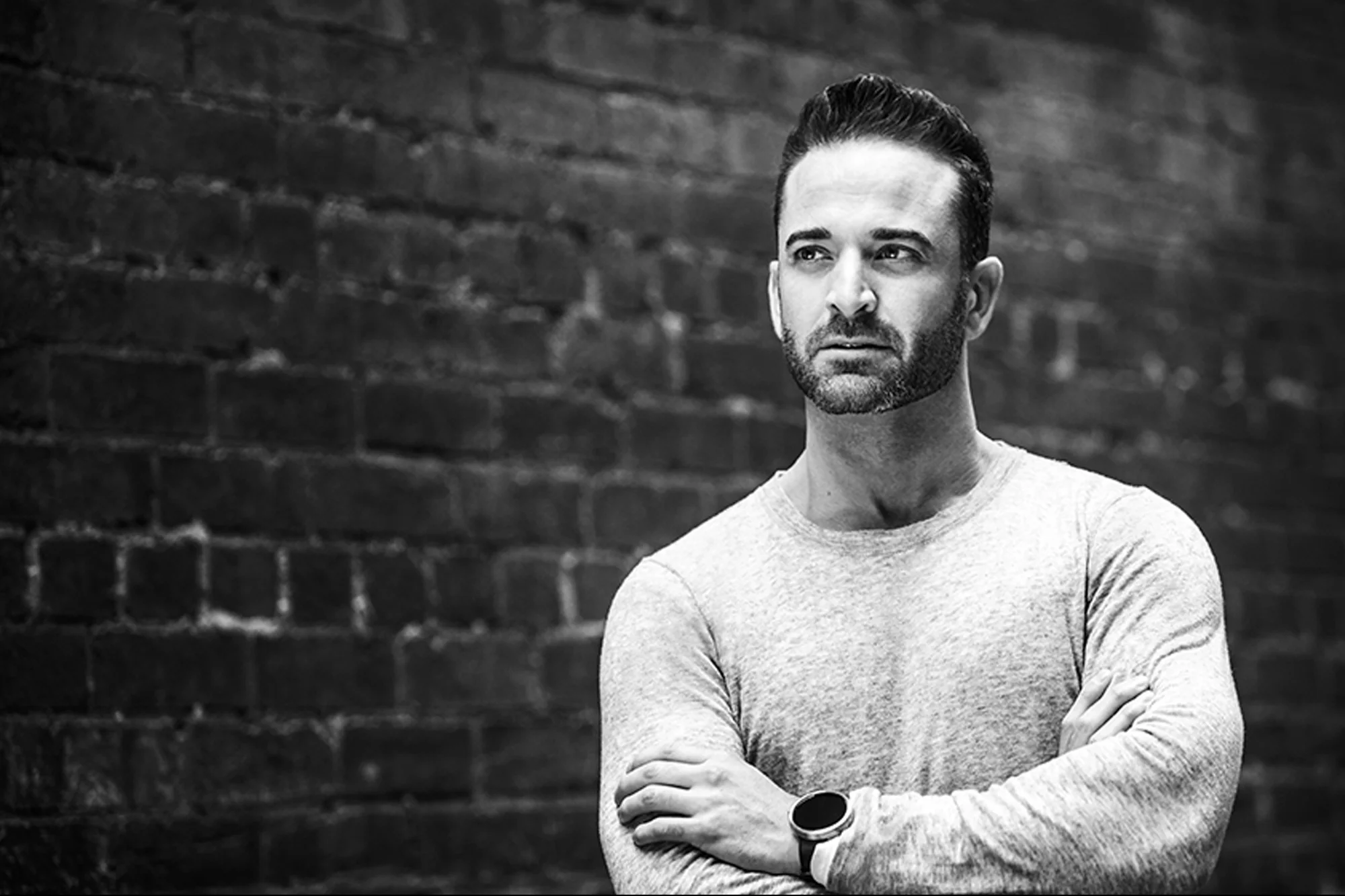
When the Tyson fight was announced, Paul emerged as the favorite to win. But his response wasn’t one of an untouchable heavyweight — he’s just happy to be here. And yes, he says he is scared to fight Tyson.

“Fear is always going to be there, you’re always going to be scared,” Paul said. “I’m scared to fight Mike Tyson. I’m scared to fight Mike Perry. It’s about being brave enough to have the courage to do it when the fear is never going away. You have to embrace it and let it fuel you versus let it stop you from maybe making the best decision of your life.”

Still, he hasn’t been without controversy. Business Insider reports allegations of online scams, abusive behavior, and vandalism.

His videos filming protests during the pandemic in 2020 led to the FBI raiding his home in 2021 in connection to a looting incident at an Arizona shopping mall. Paul was charged with trespassing and unlawful assembly.

Following an investigation, the U.S. Attorney’s Office ruled that he would not face federal charges.

Around the same time, Paul had tension with the mayor of Calabasas, California, when he threw a massive party during the pandemic, despite social distancing restrictions.

Despite the setbacks, Paul didn’t step away from the spotlight and took it as a learning lesson. Paul’s net worth is now an estimated $34.3 million.

Jake Paul, Brand Builder

Paul owns four businesses — sportsbook app Betr, VC fund Antifund, sports promotion company Most Valuable Promotions — and now his latest, a men’s body care line, W, sold direct-to-consumer at Walmart, which launched in June.

“I started not knowing what anything was, I just learned a little every single day, accumulated knowledge, applied all my learnings, and worked harder than my peers,” Paul said.

Paul likens W products to “a new, better version of Axe for millennials.”

“These old legacy brands that we’re going up against are companies owned by massive conglomerates. We’re coming in with a new game plan, and a new way to market,” Paul added. “There’s so much room to grow and to change things here and to innovate on a product that can connect with a younger audience of men, which is my audience.”

Related: Ringside Tyson-Paul Fight VIP Tickets Selling for Millions

Paul’s marketing techniques are not for everyone (he was nearly attacked by a shark, and filmed a lie detector test on Instagram), but they feel authentic to who he is and his already hyper-online social media presence.

“I think people should be themselves. Authenticity is what’s winning, show your failure, show your mistakes, tell your story,” Paul said. “The struggle is what people can relate to, and I think that’s what’s missing with a lot of entrepreneurs.”

Paul says when he was making videos on Vine as a teen a decade ago, he anticipated how big the influencer economy could be one day. He was right: A recent report from Emarketer projected that U.S. marketer spending on sponsored social-media content could rise 16% this year to $8.14 billion.

“[Back then], the numbers spoke for themselves,” he said. “We were Viners getting millions of views on our Vines and getting paid like $2,000 for a video, but a commercial slot on TV would get maybe 500,000 views, and they get paid $100,000 or $200,000.”

Paul said he knew eventually that numbers “would be the most important thing,” and that influencers and creators would become more valued. “And that’s becoming true,” he added.

Paul says his first paycheck was for $300, and he spent it on Christmas-edition LeBron James sneakers and a Diesel watch.

“You have to embrace it and let it fuel you versus let it stop you from maybe making the best decision of your life.”

Transitioning into the business world didn’t come without a slew of haters, either.

“I [was] scared to put W into the world to see how people are going to receive it,” he said.

Paul says that he heard a quote years ago about entrepreneurs being the best at sweeping their mistakes under the rug, learning, and moving on, and he tries to remember that when things get tough.

“It hasn’t been easy at all, it’s difficult every single day still,” Paul said.

Related: Jake Paul Reportedly Earned Sky-High Amount for Fight

And he may just be fighting his old reputation for a while: After all, he knows the Internet is forever.

“I want people to look at me as an example of the American dream, of relentlessly pursuing my dreams for over a decade and never stopping when I fell flat on my face and persevering through all of those moments,” he said.


Source link

Jake Paul: Mindset Hacks, Mike Tyson Fight, Embracing Fear Read More »

Crowdstrike CEO Responds to Causing Largest IT Outage in History

Crowdstrike CEO Responds to Causing Largest IT Outage in History


Many banks, media outlets, and airlines experienced the blue screen of death this morning when they turned on their Microsoft Windows machines. The dreaded error page, with the message “Your device ran into a problem and needs to restart” was caused by a single update from Austin, Texas-based CrowdStrike, a cybersecurity giant with operations in more than 170 countries.

Most (70%) of the $900 million in revenue CrowdStrike earned for the quarter ending in April came from its U.S. customers, including Google, Amazon, and Microsoft.

CrowdStrike’s wide reach resulted in “the largest IT outage in history,” according to some cybersecurity experts. The update delayed Delta, United, and American Airlines flights, canceled scheduled surgeries at hospitals in Massachusetts and Ohio, disrupted 911 services, and impacted other public and private sector operations across the globe.

George Kurtz, CEO of Crowdstrike. Martina Albertazzi/Bloomberg via Getty Images

CrowdStrike CEO George Kurtz wrote in an X post Friday that CrowdStrike has found the cause of the issue and released a fix.

“This is not a security incident or cyberattack,” he emphasized, adding that organizations should communicate with CrowdStrike representatives and check the support page.

“Our team is fully mobilized to ensure the security and stability of CrowdStrike customers,” he added.

In a blog post, he said: “We know that adversaries and bad actors will try to exploit events like this. I encourage everyone to remain vigilant and ensure that you’re engaging with official CrowdStrike representatives.”

Kurtz also went on TODAY and apologized for the disruption, giving more details on what went wrong. He explained that the update CrowdStrike implemented had a software bug in it, which caused problems with the Microsoft Windows operating system.

“As systems come back online as they’re rebooted, they’re coming up and they’re working,” he said. “Now we are working with each and every customer to make sure that we can bring them back online.”

When asked how a single content update could immediately shut down everything from emergency services to credit card payment systems around the globe, with no backup, Kurtz said, “We have to go back and see what happened here.”

Related: I’ve Gone From Entrepreneur to the Corporate World and Back Again. This Is What It Takes to Lead a Company.

CrowdStrike currently leads the worldwide market in endpoint security or protection for devices like desktops and laptops.


Source link

Crowdstrike CEO Responds to Causing Largest IT Outage in History Read More »

The Top 5 AI Tools That Can Revolutionize Your Workflow and Boost Productivity

The Top 5 AI Tools That Can Revolutionize Your Workflow and Boost Productivity


Opinions expressed by Entrepreneur contributors are their own.

Discover the top 5 AI tools for marketing and content creation that every marketer needs to know! As AI transforms the business landscape, staying ahead of the curve is crucial. In this video, I dive deep into essential AI marketing tools that can revolutionize your workflow and boost productivity.

Download the free ‘AI Success Kit‘ (limited time only). And you’ll also get a free chapter from Ben’s brand new book, ‘The Wolf is at The Door – How to Survive and Thrive in an AI-Driven World.’


Source link

The Top 5 AI Tools That Can Revolutionize Your Workflow and Boost Productivity Read More »

How to Build A Startup, From an Early Lyft, Twitch Investor

How to Build A Startup, From an Early Lyft, Twitch Investor


Even though there’s a .00006% chance that a startup will reach a $1 billion valuation, Silicon Valley investor Mike Maples Jr. has placed early bets on more than one startup that beat the odds.

Across his nearly two-decade investing career, Maples found that startups he invested in early that are now worth over a billion dollars, like Twitch, Twitter, and Lyft, shared one thing in common — they broke patterns. Instead of competing in a crowded space, successful startups defined the future on their own terms.

“Most people, when they saw the iPhone 4S, didn’t realize that the thing in their hand or in their pockets could change the future, but the Lyft guys and the Uber guys did,” Maples said on a Thursday episode of the Masters of Scale podcast with LinkedIn co-founder Reid Hoffman.

Maples added: “I have to break the pattern in order to escape the gravitational pull of the present, right? And so, I like to say great start-ups have to force a choice and not a comparison.”

Related: How to Be a Billionaire By 25, According to a College Dropout Turned CEO Worth $1.6 Billion

Maples gave Airbnb as an example of a startup that successfully forced a choice. According to Maples, Airbnb turned the strengths of the status quo (identical stays wherever you go around the world) into a weakness (wouldn’t you rather have a unique stay that reflects the place you’re in for the same price?).

In doing so, Airbnb created a separate category noticeably different from what was already out there — which forced consumers to make a choice and not a comparison to what already existed.

Maples said that Airbnb also had another trait of a groundbreaking startup: It created a social movement beyond money or business. Instead, Airbnb focused on transforming society and people’s lives.

“What I find is that the great startups very often are more like social movements,” Maples pointed out. “Typically a movement has a minority of people who feel a sense of grievance with the status quo majority. And that minority of people wants to change the future.”

Related: How to Start Your Dream Business This Weekend, According to a Tech CEO Worth $36 Million

Pattern-breaking, social movement-starting startup ideas are polarizing and most people won’t like them at first — but Maples says that all you need are those few people, the minority who can start a movement, who think the idea is “amazing” and can’t live without it.

In a separate Harvard Business School profile, Maples explained that when Twitter co-founder Evan Williams pitched him the idea for Twitter, Williams had no roadmap or revenue model.

Williams’ rationale was that when he made Blogger, a million people wrote blogs. If there was a micro-blogging platform, maybe he could get 10 million people to write micro-blogs.

Twitter, now X, was acquired for $44 billion in 2022 by Elon Musk.

Twitter co-founder and CEO Evan Williams. (Photo by David Paul Morris/Getty Images)

What gets an investor to say yes at an early stage to an idea like Twitter, with little data to go off of about the startup’s track record of success or the market it is trying to create? The answer is the founders themselves. Maples stated in the profile that he was looking for technically excellent founders with drive and tenacity.

Maples pointed out additional qualities on the Masters of Scale podcast: the founder’s ability to find groundbreaking ideas and their ability to deliver on those ideas.

“Time and again, the product that ends up winning is not the product that you see when you’re doing a seed investment,” he said on Masters of Scale. “That was true of Twitter. It was true of Twitch. It was true of Lyft.”

Related: This One Talent Is ‘the Greatest Skill You Can Develop’ for Entrepreneurship, Says Professor Scott Galloway


Source link

How to Build A Startup, From an Early Lyft, Twitch Investor Read More »

How Family-Owned Restaurant Think Greek Made It to Food Network

How Family-Owned Restaurant Think Greek Made It to Food Network


Opinions expressed by Entrepreneur contributors are their own.

Entrepreneurial dreams are only far-fetched until they come true. This proved true for Think Greek, a family-owned Greek restaurant in Port St. Lucie, Florida, that started as a food truck and has since won “Best Bite” on Food Network’s Best Bite in Town. General manager Rosanne Leo attributes the restaurant’s success to focusing on providing authentic Greek recipes and a distinctive Greek fusion menu.

“We are first-generation Greek Americans, so we knew when we started the food truck in 2014 that is what we wanted to do,” she says. “But we didn’t want to [just] do regular Greek food. We wanted to incorporate a fusion menu, coming up with different items that people haven’t heard of before.”

When South Beach Wine & Food Festival asked Think Greek to participate in 2020, the team immediately knew their original fusion menu item, Gyropitakia (Greek wontons), would be a hit. Their hunch was correct, and they won the title of “Best Bite on the Beach.” Listen to the episode below to hear directly from Leo.

“It was just an incredible feeling because this is something that we came up with,” Leo says. “It wasn’t anybody else’s recipe. It was [us] brainstorming one day on the food truck.”

The following year, Think Greek returned and won again, helping it solidify its reputation for tastiness and consistency.

Earlier this year, Think Greek participated in another cooking show, but the stakes were even higher this time. Food Network contacted Leo to be on the first season of Best Bite in Town, a spin-off of Diners, Drive-Ins, and Dives with celebrity chef Guy Fieri.

“This was our dream to be on Food Network, but more specifically, we wanted to be on Triple D… I was so excited,” Leo shared.

Related: Guy Fieri, Cable’s Highest-Paid Chef, Hopes to Save His Industry With ‘Restaurant Reboot’

The show’s premise involved Fieri sending three people to a town to try two dishes from six different local restaurants, ultimately choosing one “Best Bite” in that town. The dishes were judged based on capability, presentation and taste. Think Greek won “Best Bite” of Port St. Lucie and then went on to win “Best Bite in Town” during the show’s finale with its Gyropitakia.

The judges explained that they’d never eaten anything like Gyropitakia before, leading to Think Greek’s win. The dish’s novelty and creativity set the local restaurant apart, a huge testament to the family-owned business’s efforts.

“That really made us feel all the hard work, energy, brainstorming and everything is working and is paying off,” Leo says. “Sometimes, as a family-owned business and as a mom-and-pop, you get overlooked a little bit, and it’s disheartening. But to hear that our efforts are not being ignored really does give us that energy to keep working.”

Related: Guy Fieri Is Insanely Busy. Here’s How He Gets It All Done.

With new attention from the TV show and increased media visibility came many comments from customers and viewers. Leo says that scrolling social media to see the latest feedback sometimes becomes overwhelming. She decided to take it day by day and hold space for both positive and critical reviews.

“You can’t please everybody, and that’s okay. Some comments are less than nice, and that’s fine,” Leo says. “Everybody’s entitled to their opinion. All I know is that we’re trying our best, and we’re putting out the food the way we put out our food.”

Leo’s willingness to take risks and seize big opportunities, such as being featured on a TV show, has elevated Think Greek’s brand. Over time, her persistence helped establish the restaurant’s positive reputation.

Her advice for business owners seeking this kind of success is to stay consistent with their creative efforts and values and use social media to engage their audiences and uncover feedback for improving operations. She also encourages business owners to believe in themselves and what they can achieve.

 ”Sometimes I’m just like, wow, I can’t believe it,” she says. “But people should never say never. Anything is possible. Some days, you want to give up, but keep going because this is your baby. This is your dream. This is your opportunity to show what you’re made of.”

For over a decade, Think Greek has stood by these simple — but crucial — tools for success:

  • Seize opportunities as they come. Attending local festivals and competitions can lead to gaining more visibility, which can snowball into larger opportunities in the future. Being open to trying new things can springboard your business into fresh and exciting arenas.
  • Embrace innovation to set yourself apart. Innovating your products or services can distinguish a business and attract customers seeking novel experiences. Creating your own niche can help customers choose you over competitors.
  • Value feedback, but don’t let negativity deter you. Receiving criticism can be challenging and requires resilience. Recognizing it’s impossible to please everyone allows you to focus on giving your best effort to the things you know you can do well or even improve.

Subscribe to Behind the Review for more from new business owners and reviewers every Thursday. Available on Spotify, Apple Podcasts, Google Podcasts, Pandora and Soundcloud.

Editorial contributions by Angela Lee and Kristi Lindahl

This article is part of our ongoing America’s Favorite Mom & Pop Shops™ series highlighting family-owned and operated businesses.


Source link

How Family-Owned Restaurant Think Greek Made It to Food Network Read More »

Guide Fellow Entrepreneurs to Success with an Exit Factor Franchise

Guide Fellow Entrepreneurs to Success with an Exit Factor Franchise


3 Benefits of owning an Exit Factor franchise:

  1. Niche market focus with specialized exit strategy coaching.
  2. Flexible lifestyle with the ability to work from anywhere.
  3. Comprehensive training and ongoing support for franchisees.

Exit Factor is a business coaching and consulting franchise that specializes in training small to medium-sized companies to enhance their value and prepare for a successful business exit. Founded by industry expert Jessica Fialkovich and part of the United Franchise Group, Exit Factor offers a low-cost opportunity with multiple revenue streams in the growing business services market. Click Here to learn more about Exit Factor.

Key Facts:

  • Minimum Initial Investment: $59,415 – $82,345
  • Initial Franchise Fee: $39,500
  • Liquid Capital Required: $100,000
  • Net Worth Required: $250,000
  • Veteran Incentives: 10% off franchise fee


Source link

Guide Fellow Entrepreneurs to Success with an Exit Factor Franchise Read More »

Why Taylor Swift Believes in Her Lucky Number

Why Taylor Swift Believes in Her Lucky Number


People reports that Chiefs star Travis Kelce just attended his 13th performance of Taylor Swift‘s The Eras Tour, and the significance of that number is lost on no one.

Swift is a big fan of the number 13 — so much so that before every show she paints a 13 on her hand for good luck. Why are those digits so near and dear to her heart?

Swift was born on December 13, 1989, and explained in an interview with MTV News: “I turned 13 on Friday the 13th. My first album went gold in 13 weeks. My first No. 1 song had a 13-second intro. Every time I’ve won an award I’ve been seated in either the 13th seat, the 13th row, the 13th section or row M, which is the 13th letter. Basically, whenever a 13 comes up in my life, it’s a good thing.”

Swift isn’t the only one who leans into superstitions to give herself an extra boost of confidence. In the book Recipes for Good Luck, author Ellen Weinstein researched the superstitions and rituals of some of the most famous and successful people in modern history. And while some might seem odd or silly to others, Weinstein writes that beliefs, rituals and routines can “help you face the world with ambition and confidence and inspire you to go on making good luck of your own.”

Here are some other superstars who used pre-performance rituals to get ready to go.

  • During his playing days, NBA superstar Michael Jordan wore UNC shorts underneath his Chicago Bulls uniform. They were the same shorts he wore in 1982 when he scored the winning jump shot that brought his college team, the University of North Carolina Tar Heels, their first NCAA championship since 1957.
  • Tennis great Serena Williams has several distinctive pre-performance and on-court rituals: before a match, she’d tie her shoelaces in the exact same way and always bounced the ball five times before her first serve and twice before her second.
  • Before beginning the opening monologue of her former talk show, Ellen DeGeneres would be sure to throw a mint in the air and catch it in her mouth.
  • Rihanna has said that she doesn’t allow anything yellow in her dressing room before a show, believing it is bad luck.
  • Soccer legend David Beckham has a thing against odd numbers. His wife Victoria told The Chicago Sun-Times that their house had several refrigerators, each devoted to different types of food. “In the drinks one, everything is symmetrical,” she explained. “If there’s three cans, he’ll throw one away because it has to be an even number.”


Source link

Why Taylor Swift Believes in Her Lucky Number Read More »