Richard

More unmarried couples are buying homes together

More unmarried couples are buying homes together


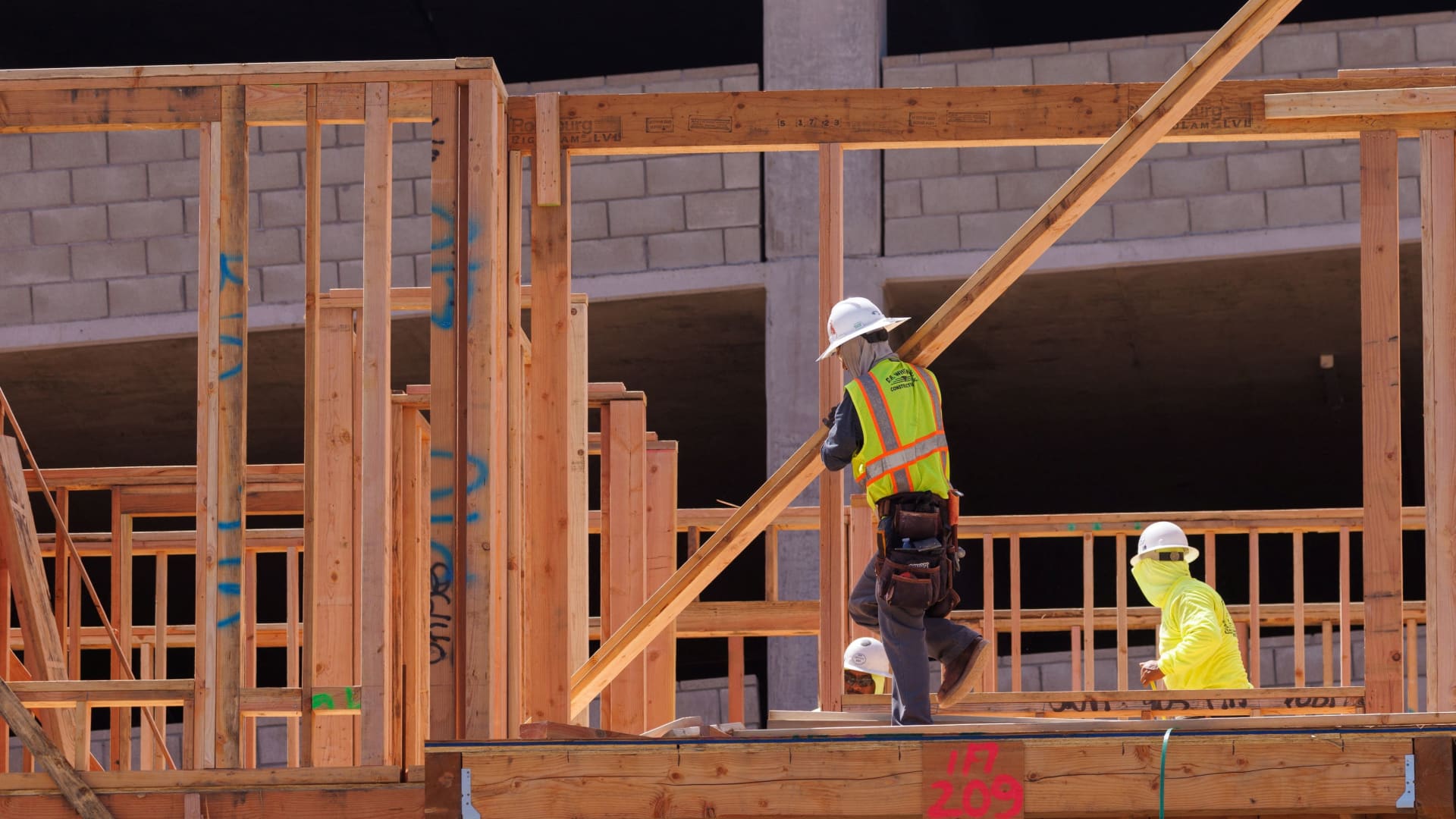
Gary Burchell | Getty Images

More couples are becoming homeowners before tying the knot.

Unmarried couples make up 18% of all first-time homebuyers, up from just 4% in 1985, according to a 2022 report by the National Association of Realtors.

The organization mailed out a survey in July 2022 and received a total of 4,854 responses from homebuyers who bought a primary residence between July 2021 and June 2022.

More from Life Changes:

Here’s a look at other stories offering a financial angle on important lifetime milestones.

“Unmarried couples have been on the rise [as homebuyers] and now they’re at the highest point that we’ve recorded,” said Jessica Lautz, the Washington, D.C.-based vice president of research of the National Association of Realtors. 

Buying a house is a bigger commitment than renting, so while these couples may be eager to own a home, there are a few things they should consider before purchasing a property together.

‘Housing affordability really is a struggle’

Many young, unmarried couples live together, often for financial reasons. About 3 in 5 unmarried couples in the U.S. live with their partners, according to a report by the Thriving Center of Psychology.

Splitting the cost of housing, which can be a big part of your budget, makes sense.

Even so, unlike married homebuyers, almost half of unmarried ones — 46% — made financial sacrifices, including picking up secondary jobs, to finance their purchase, the NAR report found.

“Housing affordability really is a struggle, so pulling your finances together as an unmarried couple can make a lot of sense to move forward on that transaction,” said Lautz, who is also the deputy chief economist of NAR.

The typical unmarried couple buying a home together for the first time was roughly 32-year-old millennials with a combined average household income of $72,500, according to Lautz. Additionally, these shoppers were more likely than married couples to receive loans — 4% versus 3% — or be gifted money from friends and family — 12% versus 7%.

One reason unmarried people may decide to buy homes with their partners is the strength in numbers that pairing up offers when it comes to qualifying for financing, as real estate prices and interest rates remain high, said Melissa Cohn, regional vice president of William Raveis Mortgage in New York.

Foreign buyers of U.S. homes fall to lowest level on record

While one could argue couples should simply get married if they’re already investing in a house, some people may opt to keep things, such as their estates, separate.

“There are reasons why people don’t get married; it’s not an automatic given these days,” Cohn noted.

But unmarried couples should carefully approach making a commitment of this scale.

There are often no legal protections they can fall back on, said Cohn. If one person decides to leave, the other can be saddled with the entire mortgage and may not be able to afford it, she said. 

How to secure each other’s investment

Four factors unmarried homebuyers should consider

Here are four things that certified financial planner Cathy Curtis, founder and CEO of Curtis Financial Planning, in Oakland, California, says unmarried couples should think about before buying property together: 

1. Carefully weigh tapping into retirement accounts for a down payment: While it’s generally not the best idea to pull from retirement funds, millennials still have years to recover, said Curtis, who is also a CNBC Financial Advisor Council member. “The reality is, for most millennials, this is where most saving happens.”

Funds in a traditional IRA can be used for a first-time home purchase, up to the lifetime limit of $10,000. The amount will be taxed at ordinary rates in the year withdrawn but will not incur a 10% penalty if it is a first-time home purchase, said Curtis.

Roth IRAs can be accessed as well, but the rules must be followed closely, said Curtis. You can typically withdraw contributions at any time without incurring taxes or penalties, but there are age and time requirements for withdrawn investments to count as a qualified distribution.

Mortgage interest rates matter 'less today than they have historically': NAR's Jessica Lautz

Many companies allow employees to borrow from their 401(k) plans. An employee can borrow 50% of their invested balance, up to a maximum of $50,000. “If a person has $100,000 or more, they can borrow $50,000,” said Curtis. “If they only have $70,000, they can borrow up to $35,000.”

Loans must be paid back over five years or in full if employment ends. 

2. Review credit reports and scores to ensure you get the best mortgage rate possible: Make sure there are no inaccuracies, diligently pay your bills on time and reduce your debt levels as much as possible before the purchase. Keep in mind that lenders will look at both partners’ scores if both are on the mortgage application.

3. Keep credit activity low: Avoid making any large purchases on credit cards, as well as opening or closing new lines of credit as any of these could affect your credit score.

4. Save money in a high-yield savings account: Instead of keeping your down payment savings in the stock market, consider using a high-yield savings account. “The market could dip right when the cash is needed,” added Curtis. “Fortunately, rates are very good right now.”


Source link

More unmarried couples are buying homes together Read More »

How To Achieve ‘Lean,’ Not ‘Mean,’ When Cutting Your Company’s Costs

How To Achieve ‘Lean,’ Not ‘Mean,’ When Cutting Your Company’s Costs


Uncertainty about the economy doesn’t do companies any favors. When business and consumer spending slows, leaders face tough decisions about which expenses to cut. And workers worry about whether those cuts will send them to the unemployment line. It’s not an unfounded fear, as 2023’s layoff announcements from big-name companies keep coming.

During this year’s first quarter, 136,000 employees got their pink slips. While tech giants have been in the news with headcount reductions, large banks, auto manufacturers and retail pharmacy chains are also letting people go. It’s decisions like these that make employees question whether leaders are on their side.

When times are tough, it’s convenient to slash the payroll. However, there’s more to running a lean operation than reducing staff down to a skeleton crew. With any cost-saving measures, you want to be attentive to your employees’ needs and enable your company’s long-term strategies. Here are some ways to achieve both.

Target Inefficient Processes

Yes, the salaries and benefits for the people on your payroll can be significant costs. But inefficient processes could be what’s truly costing your business in terms of lost productivity. You could be zeroing in on the wrong target and damaging employee morale by cutting your HR budget.

The phrase “work smarter, not harder” is about finding the most efficient way to accomplish your goals. Take a team of IT support techs as an example. From a high-level perspective, you notice their resolution times are too long. Yet it also appears they’re not devoting enough time to work-related tasks. Customers aren’t getting the service they deserve, while the company is apparently paying the team to twiddle their thumbs.

It might be tempting to call everyone into the office separately, asking them to explain what they do around here. You can take a different approach by focusing on the tools and processes the team has at their disposal.

In this case, support techs may be working with outdated software that doesn’t enable them to efficiently tackle the problems they see. The team feels their efforts are futile, so they compensate by slacking off. By identifying what’s driving the undesired results, you can implement more efficient tools and processes. This approach may take additional time upfront, but it demonstrates your willingness to address shortcomings human to human.

Be Strategic

To seem fair, leaders sometimes reduce costs across the board. They cut 10% of staff from all departments, for example, or tell every mid-level manager to stop ordering complimentary team lunches. These moves may save your company money in the short run, but they’re far from strategic. And they don’t always address long-term performance goals.

Gartner reports that only 43% of leaders achieve their savings targets during year one of a cost-reduction drive because of unrealistic objectives. Blanket cost cutting can actually set companies up for repeat failure since the measures don’t address the behaviors behind inefficient spending. You have to think about where the problems lie and the company’s ongoing strategy.

Say your sales numbers are down by 20%. However, you discover one product is behind the drop. There have been technical glitches over the past year, causing customers to lose faith. As a result, they’re discontinuing their use of your company’s other solutions.

Penalizing every business unit with equal cuts doesn’t make sense. It’s better to fix your problem child if your company’s strategy is to be a reliable market leader. The source of those technical glitches may be overlapping vendor relationships—you might simply have too many cooks in the kitchen. Streamlining the resources behind the product will do more to help your company meet its long-term objectives without alienating your staff.

Reskill Employees

AI may be here to stay, but there’s a sharp disconnect between how executives and individual contributors feel about it. Research shows 64% of executives think AI is exciting. Two-thirds of high-level leaders also believe AI will positively impact employees’ experiences. However, 46% of individual contributors think AI is scary, and 31% believe it will negatively impact them.

With AI’s capabilities increasing, employees fear bots will replace their jobs. Automating repetitive tasks may help companies implement lean processes. But relying on technology to completely take over for humans to save a buck is seen as cold. It discounts the contributions and talents of your staff. You’re writing them off in favor of cheaper and faster, but not necessarily better.

What leaders should instead is acknowledge where AI and humans can work together. It may mean automation does take over some of the tasks your staff currently performs. But instead of getting rid of people, reskill them to take on advanced responsibilities in areas of need. Chatbot software may handle insurance policyholders’ initial claim requests, but carriers can upskill employees to address claims with complex injuries.

Thoughtful Cost Cutting

Shaky economic conditions drive budget cuts as leaders worry about whether the balance sheet will even out. While dismissing the idea of cost cutting may be unrealistic, your decisions don’t have to demotivate your team. Targeting inefficient processes, aligning cuts with strategies and reskilling staff members will help you achieve “lean,” not “mean.”


Source link

How To Achieve ‘Lean,’ Not ‘Mean,’ When Cutting Your Company’s Costs Read More »

The Real Estate “Red Pill” That Made Me 0K/Year

The Real Estate “Red Pill” That Made Me $400K/Year


Real estate investing is changing. Builders aren’t building what buyers and renters want, insurance companies are pulling out of top investing states, and property threats are growing increasingly common. This may sound like doom and gloom to you, but in reality, it’s keeping your competition out of the game, and if you use the advice on today’s show, you could build wealth while most cower in fear.

Seeing Greene is back again as David is on to give his time-tested wisdom to every real estate investor on the planet. But he’s got backup. Rob hangs around on this episode, and special guest Dana Bull, the “know when to stop” investor, is here to drop some knowledge bombs. We take viewer questions like whether you should buy one pricey property or a handful of smaller rentals, what to do when a property you’re buying has an illegal ADU (accessory dwelling unit), why insurance companies are leaving states like California, Florida, and Texas, and what’s the BEST property type to buy in today’s market?

Want to ask David a question? If so, submit your question here so David can answer it on the next episode of Seeing Greene. Hop on the BiggerPockets forums and ask other investors their take, or follow David on Instagram to see when he’s going live so you can hop on a live Q&A and get your question answered on the spot!

David:
This is the BiggerPockets podcast show, 813.

Dana:
I was a recent college grad from UMass, and I had actually bought a little bit of real estate. I had a condo, I had a two family, but I was sort of just going through the motions. Had hired a real estate broker and he brought me into his office, and it was, I call it the corruption. And it was very much this matrix moment where he said, “You can take the red pill and see how far the rabbit hole goes, or you can take the blue pill and just kind of get out of this real estate thing and just keep going down the typical path.”

David:
What’s going on everyone? This is David Greene, your host of the BiggerPockets real estate podcast, here today with the Seeing Greene episode, and I brought back up. I’m joined today by my cohost, Rob Abasolo, as you can see, if you’re looking on YouTube, looking handsome and ever. As well as Dana Bull, who is featured on BiggerPockets podcast episode 187. We brought her back to give us a little bit of air support on the questions that you, our audience, has answered, and today’s show does not disappoint.
We’re about to get into questions that you asked and provide our answers that everybody can benefit from. Dana is a real estate agent, an investor. She basically has a strategy that was like, how can I get out of real estate investing, instead of how big can I get? Very interesting philosophy, and the answers that she provides are based on that philosophy. Rob, what are some things that you think investors should keep an eye out for in today’s episode?

Rob:
Is going to be a great episode. I can already tell you that. We’re going to talk about so many cool things from how big should your first investment be? Should you go all in? Should you maybe be a little bit conservative with your first investment? We’re going to talk about the logistics of adding to your property. We’re going to talk about seller financing. Today, we’re going to cover some pretty big topics that I know will change perspectives at home.

David:
Yeah. So, keep an eye out for that because we have a very good conversation about things to look for in different markets if you’re into long distance real estate investing, and things you might not have considered that can help you make that decision. And before we bring in Dana, today’s quick tip is brought to you by Batman. Don’t forget to make insurance part of your due diligence. For many years, insurance was such a small percentage of the overall monthly payment that it was sort of just something you tacked on, it wasn’t a big deal.
Across the country, insurance companies are going out of business. They’re fleeing certain states, and it’s getting much more expensive to find it. Rob and I recently had this problem with our Scottsdale property where my company was able to find us a policy, but it was much more expensive than what we were expecting. So, don’t consider insurance to be a small expense like it used to be. In some places, it’s doubling, tripling, or quadrupling. So, make sure you underwrite appropriately. Anything to add there, Rob?

Rob:
It hurts whenever your insurance rate doubles, triples, or quadruples. Can confirm.

David:
Yeah, because other things don’t. Property taxes don’t. If you have a fixed rate mortgage, that doesn’t double or triple, but insurance goes up in leaps and bounds. So, keep an eye on that, folks. All right, let’s bring in Dana and get to your questions.
Dana and Rob, thank you so much for joining me today. Quick recap of Dana. Her story is featured on BiggerPockets podcast episode 187. She thinks it’s a myth about how having a strong why is important.

Rob:
So Dana, tell us why is having an end goal more important than having a why when it comes to real estate investing?

Dana:
Well, I think one of the biggest unknowns for people is knowing when to stop. Real estate can be addicting, it can be fun, riding that roller coaster of emotions. And I just found that it was easier for me to come up with a plan, execute on that plan, and then give myself permission to be done and to move on to other things in life. So, I feel like you don’t always need to have a why, but you do need to have a will to be able to execute.

Rob:
I love it. We recently had a guest, Chad Carson, on the air, and he gave a very similar thing, right? Having an end goal, having a reason. Not just blindly stating it, right? Having a purpose, but not just having a super wide net cast out there, but actually having intention behind it. So, a lot of reminiscent things. And as I understand it, your original end goal was to hit $450,000 in gross rental income, and you hit that within five years. First of all, congratulations. That’s absolutely insane. Why did you pick that goal and how did you get there?

Dana:
Okay. So, let me tell you a little bit about how it all began. I was a recent college grad from UMass, and I had actually bought a little bit of real estate. I had a condo, I had a two family, but I was sort of just going through the motions. And I had hired a real estate broker who I met on Zillow. Zillow was this new platform at the time. And he brought me into his office and it was, I call it the corruption, and it was very much this matrix moment where he said, “You can take the red pill and see how far the rabbit hole goes, or you can take the blue pill and just kind of get out of this real estate thing and just keep going down the typical path.” And I was so curious. I didn’t have a why, but I was impressionable, and I frankly had nothing better to do at the time.
So, the next step was, my boyfriend and I, we were in Florida. After we had this conversation, we were all fired up. We were walking down the beach and we were just talking to each other, asking each other, “Should we go for it?” And we decided, yeah, let’s do it. So, we were out getting drinks at the restaurant bar, and we chicken scratched this plan. And we pulled the number, the original number was $400,000 gross, and we just pulled that out of thin air. And the rationale was, if we have a business that’s bringing in $400,000, we should be good. We should be set. We should be able to make that work. At some point, it actually creeped up to 450, but the original goal was $400,000.

David:
You don’t want to set your goal’s too low.

Dana:
Right.

Rob:
Let’s add another $50,000.

Dana:
Yeah, why not? Why not?

David:
Why shortchange ourselves?

Dana:
So, from there, we actually reverse engineered into it. The average rent at the time our market was $1,600 a month for a two bed, one bath. So now, I’m just taking $400,000, dividing it by $1,600 a month divided by 12 months in a year. So I need 21 units. 21. I can do that, right? And so then, I became obsessed with 21 units. It’s like, eat sleep, 21 units. The next step was, we came home from the trip in Florida and I created a business plan. And when I start talking about business plans, people, their eyes glaze over. But I think it is so helpful, even if you don’t feel like you’re super business savvy, my business plans are always just one page, and broke it down into where I’m at with real estate right now, the direction I need to go in, and then what are the goals, what are the next steps, what are my marching orders? And that’s how it started.

Rob:
Well, okay, so obviously big goal here of 400 to $450,000. At what point, because obviously that’s gross, right?

Dana:
Yes.

Rob:
Was there any moment where it sort of dawned on you that the actual profit of that $450,000 is different? Or was it just sort of big scary goal, doesn’t really matter, I just want to put something out there and I’ll figure it out as I go?

Dana:
Yeah, so that was actually the point of narrowing in on gross instead of net, because once I realized if I tied this to net, I would get so into the weeds with it. And for me, this is just all long-term. The idea is, I will be hopefully sitting pretty in 10, 20, 30 years. And that’s where my mindset was at the time, so that’s why it became more practical for me to narrow in on gross instead of net.

Rob:
Okay, so you were kind of thinking of it as, obviously you want the portfolio to make money, but even if it were breaking even theoretically, once it’s all paid off in 20 to 30 years, you’re effectively making $450,000 profit every single year.

Dana:
Right.

Rob:
Got it. Okay.

Dana:
Plus the benefits, the other benefits of investing, the write-offs. Boston, the Boston area is a huge appreciation play. So, with all my buildings, there needs to be cashflow. That’s a must. But what I’m really leaning into is appreciation. I just decided I’m not going to fight that. That’s the market where I live, that’s the market I’m knowledgeable in, so I want to lean into it as much as possible.

David:
Yeah, I think that’s the way that the savvy investors are adapting right now. First off, we want to highlight, appreciation is not the same as speculation. Those have become synonymous, and I think a lot of people get nervous whenever appreciation is mentioned because they assume that means hoping that the prices go up and you have no plan in place. There’s no cashflow, there’s no built-in equity, the loan to value is crazy. You’re just hoping that prices go up. That’s not what we’re talking about.
There actually is a mathematical approach to investing in real estate that will capitalize on how appreciation plays out. So, I think that’s wise. But even more wise is, why go against the grain? If your market is a cashflow market, you’re going to invest for cashflow. If your market is an appreciation market, you’re going to invest for appreciation. If there’s creative opportunities, you’re going to use that. So I think that’s wise that you just said, “Hey, why fight the flow just because everybody else talks about it a certain way? This is what my market’s good at, so I’ll take advantage of it.”

Rob:
So, what are some other mistakes you see people making today?

Dana:
So, a mistake that I made is compromising a bit on location. The location, location, location, we hear it all the time, but it’s hard to grasp. What does that really mean? And I think it’s all about understanding the context. So, if I were to buy a multifamily in some of the nicest neighborhoods of Boston, I’d be looking at $2 million entry price point, right? I can’t afford that. So, instead, I’m going to step out of that market, but I still want to purchase a property that is sort of premier for the location where I’m buying.
So, my strategy was built on buying properties in A and B locations in various towns. And I made the mistake of buying two properties in B minus locations. And the caliber is staggering. They’re my problem properties, just nonstop headaches. I don’t really understand what the correlation is, but it’s real. And now that I have 10 years worth of data, I don’t regret what I did, I don’t regret those purchases, I’m not going to sell them. But if I were to go for a second round, I would be very specific with my buy box, and I would only focus on the A location.

David:
Yeah, that is a mistake a lot of people make. When you look backwards 20 years and you say, “Hey, what properties performed the best?” Not just appreciation, but cashflow too. Rents go up way more in the best locations than they do in the shorter ones. And for some reason, we’ve gotten into what I think is an unhealthy habit of analyzing properties based on right now, year one, as soon as you buy it. We know that real estate is an organism that grows at different rates in different areas and different opportunities, but yet, we still only analyze a deal as tomorrow if I bought it, what would my cashflow be?
But we’re not going to own it for one day. We’re going to own it for a long period of time. So when you buy in these grade A areas, they can look like a poor investment when you compare it to some turnkey thing in the Midwest that has a 16% cash on cash return, and then 30 years later, it says a 16.5% cash on cash return, and those grade A areas have gone up 10 times in rent and you’re crushing it. So, I appreciate you sharing your wisdom on that.

Dana:
Yeah. The other thing that really blew my mind, and I learned this further into, about five years into my career, and I actually learned it through this property where I’m sitting right now for this recording. I’m sitting inside of a small cottage that was built in the late 1800s. It was a fishing shanty. So, this property, based on the assessment is, the overall real estate is worth about $500,000. The actual structure is $35,000. So, I just bought a minivan for $55,000, okay? I own a car that is more expensive than the structure.
All the value in this piece of real estate is tied up in the land. Just, it never really clicked until this slapped me in the face with owning this home. So now, when I’m working with clients, especially those who want to buy single family homes as investments, I really point this out and want them to be aware of the land value.

Rob:
Yeah. I mean, I think this is significant for a lot of reasons. I mean, it’s something that can be a plus or a minus, I’d say. But one reason to really think through that, I guess, to sum up what you’re saying, the real estate, the entire property, house, land, $500,000, the land is very valuable. The actual structure is just, it’s basically, I don’t want to say a tear down, but is insignificant compared to the land value, right? And that comes into play especially for cost segregations, depreciation, because you can only depreciate the actual improvements on a property. And so, if you go and you buy a property where the improvement is only worth 5% of the entire purchase price or the cost basis, then you actually won’t be able to depreciate very much on that property. Is that right?

Dana:
Yeah, that’s true.

David:
Well, we are going to take advantage of your insight, Dana, reading some questions from different listeners who have written into Seeing Greene, because they’ve got some problems and they want solutions. So, let’s dive into that. Question number one, this comes from Gabby in Los Angeles. So, as I start planning for my first investment property, I’ve been thinking about this question. Is it a better strategy to put all of my cashflow to get one best property I can afford or diversify into a few lower price properties?
So, this is the typical all my eggs in one basket or several smaller eggs over several smaller baskets. I wonder if it’s better for me to put 20% down in a $1.2 million-ish property in LA, or get three, $400K-ish property somewhere else? Or also get a lower price one first, then a more expensive one when I have some experience? What are some factors I should consider to make the best decision here?
Dana, what do you think so far?

Dana:
Oh my gosh, she took the words right out of my mouth with the putting all your eggs in one basket. I love this question and it comes up all the time in markets where, pricing markets. So, I probably tell this listener what they want to hear. These are both great options. I have two pieces of advice, two kind of overarching considerations. The first is, what do you want to buy? Because they both work, and I really sincerely mean this. I’m a advocate for buying properties that you are excited about, and I know most investors, they want to take the emotion out of it. And I just refuse. That’s a hill I will die on.
The reason being is that I truly feel the way to make significant wealth in real estate is to just hold onto it and to do whatever you need to do in order to hold onto it. So, if you end up buying a property that you’re not excited about when problems arise, you’re going to be very tempted to sell. When I was younger, my mom taught me something, which has nothing to do with real estate but also everything to do with real estate. When we go back to school shopping, she would make me try on all the clothes, and then she would evaluate, “Do these pants fit? Okay, they’re not too big, they’re not too small, they fit.” But then, the next question she would ask me is, “Do you love them?” And then she’d go a little bit deeper and she’d say, “How do they make you feel?”
And I’ve learned to apply that to everything that I purchase, especially real estate. So, this new investor is talking about putting 20% down on a $1.2 million property? That’s probably everything she has. So, I would encourage her to really think about what type of property is she going to be excited about. The other thing that I think this person needs, no matter which direction they take, is a jumpstart plan. So, some way to make this work. And Rob, you have a ton of experience here, but the first thing that I think about is probably a 12-month lease is not going to work on this $1.2 million place. It’s probably going to be negative cashflow. So, could she do a shorter term rental, a midterm rental, get those numbers up for the first few years? Because she’s going to need that to become confident and to also get the momentum going.

Rob:
Yeah, 100%. My LA property, I mean, it kind of happened accidentally, but it was a short-term rental. Actually, at one point, I had a short-term rental, midterm rental and long-term rental, all in the same property. But it was really nice to start off strong income-wise with the short-term rental, test out that property, see how I do, and then it did well. But then, when regulation hit, I converted it to a midterm rental and actually found that I really liked that strategy even more, and it was a great hybrid. And having done all three, I could experiment on that property and see, I could choose my own adventure basically. But I think it is really nice to have those contingency plans and see what are the different ways that you can make revenue from that same property.

Dana:
Right.

David:
So Rob, what’s your thoughts? Should somebody put all their eggs into one basket in one property or should they diversify over smaller ones?

Rob:
I don’t think anyone should put all their eggs into their first property. I think they should take a swing, but I don’t think they should swing for the fences, right? I think, real estate is a skill that you get better at, and I would rather, personally, scale accordingly. Learn how to do real estate before you get really, really crazy with it, right? So hit a couple base hits, load up the bases, and then go for the grand slam, right? That’s how I did it. Usually, if someone were approaching me with this exact same question, I’d honestly probably tell them to go somewhere in the six to $800,000 range. Don’t go so small that you actually can’t cashflow it, and then you find that it wasn’t worth it.
Similar to what you’re saying, Dana, we want to make sure that this property is something that you like. And if you’re only making $100 on it, I don’t really think it’s going to, I think a lot of people, especially for their first investment will say, “Well, I don’t know if this is worth my time.” So, I would definitely find that sweet spot in the middle. I would like to see this person sort of break it up into two purchases, and give them a bigger one maybe in that six to $800,000 range. Learn the ropes, learn how to do real estate, give themselves enough capital to get into that next property, if they really find that real estate is what they want to do.
What about you, Dave?

David:
I think, my advice to Gabby here is capital preservation. We only have so much time, we only have so much energy. We understand that, but it’s easy to forget how quickly you run out of capital, especially when you’re putting 20% down on every deal. So, the worst thing that can happen is you buy 3, 4, 5 bad deals. You go through the, “Oh, turnkey sounds easy, I’ll do that.” Works out bad. “Oh, this cheap area, I’ll go invest in there.” Turns out terrible, you don’t want to do it anymore. You finally figure out the right location, the right asset class, the right deal, how to find it, and you run out of money.
So as you’re learning, what I advise people to do is to try to keep as much of their capital as they can in the first couple of deals. No huge renovation or rehab projects where you seek hundreds of thousands of dollars into the deal. Don’t put 20 or 25% down just to try to buy cashflow because you’re obsessed with it. Try to do it with primary residence loan, 3.5% down, 5% down. Learn the basics, but keep as much of your capital as you can. Once you’ve done what both Dana and Rob said, you’re a little bit more comfortable with how this rhythm of investing works, now you have the money to really ramp up what you’re doing and you don’t run out of cash. So, start slow. Once you’ve got it down, then go big. Sound good to you guys?

Rob:
Yeah. My favorite part about this is that we’re all right. You know what I mean? All of these things are perfectly great answers. It definitely comes down to preference, and some people are just go-getters, and they’re like, “You know what? I’m ready to go. Let’s do this thing. I’m going to go big or go home.” And then some people are like, “Yeah, I sleep better at night knowing I have money in the bank, but I can take the small risk and see how it goes.” That’s totally fine too.

David:
All right. Our next question comes from Gregg Peterson, Gregg with two Gs, in Cape Coral, Florida. I was just in Fort Lauderdale, Florida not that long ago, and let tell you, you can cut the humidity with a knife. I’m planning to buy my first small multifamily within 90 to 100 days. I’m looking in Cape Coral, Florida. The one thing I hear constantly is to force equity build on or additions. Sounds like he’s been listening to me. I ran into a lot of listings that show potential, but how much of a headache is there for trying to legally add on or buy a property that has a non-legal addition already? This is good. There’s nothing that influencers like talking about more than legal issues, especially ones that could get people in trouble. So Dana, we brought you in to absorb all the liability. Rob and I aren’t going to say anything. Go.

Dana:
Rob, you want to take this one?

Rob:
Sure. Sure, sure. I’ll talk about it. Listen, I think that new construction and adding onto a property is an absolutely amazing way to build equity. I actually think that it is the best way to build equity. You can go and you can buy a property and you can rehab it. There’s a lot of risks, really, I mean, that goes into that because you don’t really know what’s behind the walls, right? But when you’re talking about new construction, there are no surprises. It’s not like you’re going to open up a wall and be like, “Oh my gosh, there’s mold here.” It all usually follows a pretty good plan and it just gives you so much equity once you’re done, because you’re basically building it at your cost, right?
Now, with that said, building is not something that is a cashflow play right now. It is an entire process, and if you’re talking about, let’s say, building an ADU, if you’re talking about building a new construction, if you’re talking about adding onto your property, could very, very easily be a 12 to 18 month process. And if you’re talking about a non-legal addition that you have to convert, I don’t even, I would never even tell someone to go that route because I don’t know enough about it, other than that it will probably be a very painful experience.
So with all that said, I think that if you have the time to wait and you don’t need the cashflow right now, and 12 to 18 months is not a big deal, then you should do it, because I think it’s a really great way to supercharge your cashflow on a property.

David:
What’s your thoughts on buying something that already has non-permitted additions in the property? Because that’s almost everything. Very few, in my experience as an agent, I don’t know if it’s the same for you, Dana, you hardly ever find ADUs or additions to houses where the people went and got permits because that’s just asking for your property taxes to get raised. So most people add onto their home but they don’t get it permitted. Is that a danger if you’re buying the property?

Dana:
This comes up all the time. Yeah.

David:
Well, we’ll start with Rob and then I’ll get Dana’s take on it.

Rob:
I’m iffy on it. I think it depends on how easy it would, because I think it’s going to be county by county, and then I’ve also had lenders that have kicked back that kind of stuff in the appraisal. Or, the one thing that really affected me not too long ago, maybe about a year ago, was that they valued the addition or the kind of other structure significantly less than the actual square footage of the home, so the house didn’t appraise and I fell out of escrow a week before. So, I’ve run into situations like that. So, usually, I’m more in the camp of start fresh and do it. But again, I think that’s going to be up to the individual investor. What about y’all?

David:
Dana?

Dana:
I agree to tread lightly. Where I see this is in the small multifamily space where you might have a two family property that’s zoned as a two family, building department has it as a two family, but it’s actively being used as a three family. And I always tell people, “Look, we have to analyze this and evaluate it as a two family, but this could be huge if we could get it approved.” And sometimes, there’s a pretty good chance. So, in my market, we can’t bank on it, but a lot of times it comes down to parking. So, does the property have adequate parking? Because in the Boston area, we don’t have enough housing, we just don’t have enough housing. So, it might not be a quick thing, but it is possible if you push on it. You just need to accept the risk that it may not pan out the way you hope.

Rob:
Yeah, like do you have the time and the budget for the upside and for the downside, I think is ultimately where I would land on that too.

Dana:
And also to your point, with financing, that is a huge snag. Usually they want the stove, I don’t know what it is with the stove, but you got to pull the stove out in order for the property to still go through financing.

David:
Yeah, I can tell you that’s why. It’s because one of the regulations that Fannie Mae and Freddie Mac have is that it can’t have more than one kitchen unless it’s zoned for multifamily. So, if it’s zoned for three units, you can have three kitchens. If it’s zoned for one, but the house is split into three pieces, it’s not a kitchen if it doesn’t have a stove. It can have a microwave, countertops, you can have as many fridges in your house as you want. They’re never going to come and say, “Who told you that you could have a second fridge?” Some garages have four fridges or freezers full of elk meat, if you’re a Joe Rogan fan.
But the stove is the big thing. So, you see, frequently, people take the stove out of the house. Now the appraiser will say, “This qualifies for financing because it’s not breaking a zoning regulation.” Then they just go put the stove right back in it. Nobody really ever talks about this, I just said it on the podcast. But this frequently happens, like stove removal. If someone can have a company that’s like, “We take your stove and we store it for seven days and bring it right back,” they’d have a really good business.

Rob:
Well, it’s really with the appraiser, right?

David:
Yeah, it’s the appraiser, and only for financing. That’s the other thing, because the person buying the house can’t get the loan if the appraiser says no because it’s the zoning laws. But people confuse that with the city is going to get all mad at you. Some cities don’t care at all. They could not care less that you have an extra kitchenette in your house or you’re renting it out. I will say this though, it really depends on what city you’re in. I’ve seen clients and I’ve had houses that no one takes a second look. When I got into short-term rental investing, this whole thing got turned over on its head. I have several properties in Florida that I bought and I did not add the units to them. I bought them with the units in them. And when I applied for the short-term rental permit, the city was angry about short-term rental investors.
They’re getting all kinds of angry phone calls from the neighbors who don’t want a short-term rental in their neighborhood. They came in and said, “I need to tear down the ADUs that are a part of the house.” One of them is literally a duplex on the same lot as the main house and they tried to say, “You have to tear down your duplex.” I didn’t build this duplex. It’s been there forever. All the other houses on the street also have ADUs. And I said, “Why do I have to do this, but all the other homes that you can clearly see driving down this alley, they have the same thing.” And the city told us, “Well, we don’t actually do anything until someone applies for a short-term rental permit. And when they do, we go in there and we make them tear them down. So, even though we know they have those ADUs, we’re not going to do anything to enforce it unless they apply for a short-term rental permit.”
So, it can be tricky, when in the past it wasn’t tricky. They weren’t looking to target people, but there’s certain scenarios that will bring it up as a red flag. Have you seen that, Dana, in your business as well?

Dana:
Yeah. So, the issue is the liability with an unpermitted unit, and then you can’t get a certificate of occupancy when you go and register it because most people are not registering their rental units. But eventually, you might get called in to do that. The other sticky point is, it becomes more difficult when the property is occupied. So now, how are you pulling out a stove, getting all this figured out while somebody’s living there, and then it’s triggering for the tenants. And they realize, “Oh, this place isn’t even legal? Does it have egresses?” All this kind of stuff. So, I would say, it’s pretty hard in my area to push it through just because it’s been there. It would need to go through all of the official, it would need to go through the official process for somebody, I think, to feel comfortable renting this moving forward.

David:
It’s a great big mess, isn’t it? We don’t have enough housing, so that makes housing super expensive, which sucks for tenants because we have to keep raising rents because we have to keep paying more for the houses. Then they make more regulations, so it’s harder to build more houses, so investors buy and then we try to add housing so that we can keep rents lower by increasing supply. Then the city comes in and charges us more, or makes us take away the existing housing that was already there, making rents even more expensive, all in name of protecting tenants. It is the most ridiculous, backwards, circular logic, and it’s happening in big cities near you, everywhere.

Rob:
Brought to you by your city. Yeah. This has all been, I’ve been trying not to shed a tear because I did have to pull the stove out for a cash-out refi many years ago for an appraiser while I had a tenant in there, who luckily was great and it was super easy to do. But, yeah.

David:
I love how you say you shed a tear because you pulled one stove out, while I’m literally having to destroy a duplex and turn it into a garage. It’s like, oh yeah, David had to-

Rob:
How insensitive of me, I’m sorry.

David:
… David’s arm had to be amputated. I can relate. I popped a pimple once and it was, it was so painful.

Rob:
I threw out my back, man. I’ve never recovered.

David:
I had to take a stove out for two days.

Rob:
I had to go rent a dolly,

David:
I had to rent a dolly. You threw your back out.

Rob:
You understand how much dolly rentals are? They’re $25.

David:
It’s because you do everything yourself. This is exactly why. Rob’s like, “Oh yeah, I had to fly to Tennessee and rent a dolly and take a U-Haul to move the stove because I couldn’t trust anyone else to do that right.” That’s funny. All right. Our next question here comes from James in Seattle. Do you think this is James Dainard who also is a James from Seattle? Is he sneaking into Seeing Greene?

Rob:
He’s asking for… He’s too nervous to text us for advice because he doesn’t want to seem green.

David:
He doesn’t want to seem green, that’s exactly right. I don’t want to admit I don’t know this. All right. From Jimmy Neutron himself. As a brand newbie considering markets outside of my hometown Seattle due to cost and competition, how do you decide to factor in future environmental impact on your investment? Okay, this isn’t James Dainard. He’s lost me right there. Florida and Texas look like great opportunities, but they’re under threat of hurricane and flooding, and insurance companies are going bankrupt or fleeing. Side note, that is actually a good point. We should talk about that later. Phoenix looks inviting, but they are out of drinking water. Insurance companies are refusing to insure California and Colorado due to wildfires, and Florida due to hurricane risk. BiggerPockets Ally Elle just wrote an article about this.
Do you try to keep your exit strategy short on markets like this, say, a five-year term, or avoid them entirely? Thanks for all the inspiring and sobering content. Listening to BiggerPockets has catapulted my confidence. Okay, this is a good question. Let me go sum up all the things he mentioned because I read a lot there for you, and then we’ll go to you, Dana. He’s trying to invest outside of Seattle because there’s so much competition, which is driving prices high, but he’s considered about the negative aspects like defensive investing here.
So, Florida and Texas would be good, but there’s threats of hurricanes and flooding. Insurance companies are leaving some of the top markets, which is true, like Florida and Texas. Phoenix is running out of drinking water, California and Colorado have issues with wildfires, and Florida has constant hurricanes. All true as well as all kinds of lizards everywhere, and alligators. It’s amazing how many people are moving to Florida with as wild as that place is. What are your thoughts, Dana, on when you’re picking a market, how much you should consider some of these environmental hazards?

Dana:
Oh, you should definitely consider it. This is coming from somebody who buys old properties. Knob-and-tube doesn’t scare me. Nothing scares me.

David:
Can you explain what knob-and-tube is for those of us that aren’t agents who have seen this destroy?

Dana:
Sure. So, knob-and-tube is old wiring. It’s risky.

David:
As far as electrical systems are concerned, it’s like an abacus.

Dana:
Yeah.

David:
Instead of a calculator.

Dana:
And I see it in properties all the time. That doesn’t scare me. We can fix that, we can fix property problems. Environmental threats, I think, are ultimately the biggest threat to your asset, to your real estate. I’ve been waving a red flag on this for a while with insurance. It’s definitely hitting me here. A couple months ago, I actually had to go out and procure all new policies because some of my policies were being dropped. Where I bump into this is with flooding, because I work in markets, coastal communities, and the FEMA flood maps are your friend.
You can Google FEMA flood map, search by address. It’s going to pull you to a website where you can type in an address and see how close you are to a flood zone. Pull up the GIS mapping, whether you’re in a flood zone, and this is a conversation I’m regularly having with people. It’s going to be a problem before it actually is a problem. And I won’t do it. I will not buy in a flood zone. The last four investments I’ve made are properties that are all perched up on hills, and I’m very specific about that because I want to, again, I’m a long-term investor. So if I am partnering with these properties for the next 30 years, I don’t want them to be underwater.

Rob:
It’s likely that, yeah, likely, if it’s in a flood zone, in 30 years from now, it will have faced at least a flood, in theory.

Dana:
Yeah. So, that’s how I feel. I know it’s doom and gloom and it does feel like, well, where can you invest where we don’t have this environmental threat? I guess I would position it, if it is a current known threat, why wouldn’t you avoid it? Why would you buy in a flood zone for an investment property? If you’re buying in a flood zone but it’s your primary residence, you’re going to get to wake up every day in your $3 million oceanfront home and enjoy the views. Okay, we can justify that potentially. But if this is really for investment purposes, maybe just try and find a property up on a cliff.

David:
What about mudslides? What about rainstorms?

Rob:
Yeah, I was going to say, that sounds like its own risk there too.

Dana:
On a cliff and back from the cliff, I don’t know where you’re going to find this property.

David:
What about lightning strikes? Have you considered that?

Dana:
So, that’s where it’s, it’s just, you have to assess your own risk tolerance, because yeah, we could pick apart so many markets. Yeah, Florida, we have hurricanes, we flooding. But flood, if it’s in a flood zone, it’s in a flood zone. It’s going to flood.

David:
That’s a pretty clear one, right? Absolutely. You know what my dream day would look like?

Rob:
Hanging out with me?

David:
Hanging out with you, but I get to just look at the negative side of everything you say. So you’re like, “Hey David, do you want to get Chipotle?” And like, “Oh, they charge extra for guac. It’s really not fair. They never give me enough cheese.” And you’re like, “Okay, what about Chinese food?” “Oh, I don’t like the MSG. If people just came to me and said, “Hey David, you should invest in real estate,” and I just got to come up with all the reasons it won’t work, like what we just did, God, that would be fun, because this is, I’m always on the other side of it all the time.

Dana:
Yeah.

David:
Like, “You should buy a house.” “Oh, but housing’s too expensive. Rates are too high.” “Okay, well your rents are going to go up too.” “Yeah, I would’ve bought before when rates were lower.” But when rates were lower, it was like every house got 20 offers. You couldn’t get anyone and they were complaining about that. You could just go back. Every single market had problems.
This is a funny thing I was just saying last night to my group. If prices dropped as much as we want them to, that means nobody wants to buy houses, right? So, if all these houses at $800,000 dropped to $300,000 and we’re like, “I’d buy all of them.” No, you wouldn’t, because the only reason they would drop that far if there was some serious massive problems with the industry. You couldn’t find tenants or insurance went up times 10. Something terrible has to happen for no one to want them, right? So, you keep getting these people that are, “I’m waiting for the next crash. I can’t wait.” Assuming that the crash is going to happen and real estate’s still going to be an attractive vehicle, and it will never, ever occur.

Rob:
Yeah. The moment it’s doomsday on their prices, everyone’s going to be like, “Oh, hey, you know what? Nevermind. Let’s just see how it goes for the next three months.”

David:
“This is a bad buck to invest in. It’s going to go down even more. Don’t catch a falling knife, blah, blah, blah.” They’re going to have a reason not to want to do it.

Rob:
Yeah, totally.

David:
So, I thought, Dana, you provided some good stuff there. What do you like about Boston? Is there a lack of environmental hazards that you feel comfortable investing there?

Dana:
Generally, yes. I would say that the rising sea levels is our big threat. But we have snowstorms, so it’s expensive. If you have parking, to make sure your driveways are plowed.

David:
Yes.

Rob:
Yeah, that’s a big one.

Dana:
We’ve been having freakier weather, for sure, more. We’ve had tornado warnings more commonly than in the past, so we are experiencing some change. Our winters are not as cold as they used to be as when I was a child, which is concerning. But yeah, I mean, in general, I’m with you, David. With real estate, it’s like we can pick apart and we can figure out why we shouldn’t do things, and I have a very high risk tolerance. This is my thing that gets me worked up is the environmental stuff. But yeah, overall, long-term, 30 years out from now, sure. I’m worried about it.

David:
Rob, you’re a local, or sorry, you’re a fellow out-of-state investor. You never read my book, but you did it anyways, which is cool. Not that I’m upset about you only have reading one book.

Rob:
I’ve listened to the podcast, which is kind of like-

David:
A functional equivalent. It saved you the $12 of getting the book?

Rob:
… Yeah, it’s the director’s cut of your book, the director’s commentary.

David:
Nice analogy. You have been hanging around me, man. That was very nicely done. But what do you think about when you’re picking these markets to invest in? And should we do an episode where all we do is find negative things about every single market? That could be a fun thing to do where you guys are like, “What about here?” And we just find everything we can wrong with it.

Rob:
Yeah. What about… Yeah, what Montana? It’s too beautiful. No.

David:
I don’t want a elk running through my house and trashing the whole thing, and I got to drive too far to get to a gas station, and Teslas would never be able to make it out there. That’d be funny.

Rob:
I don’t… I would say, honestly, the biggest thing that scares me is the insurance, especially in Florida. David, we have our Scottsdale property, which has been a bear with insurance on that too. Luxury properties are tough to get insured. So I think, that’s my first and foremost thing, because you sort of need that to be protected, from a liability standpoint. I kind of come from the mindset that everything is fixable, right? It doesn’t mean that I want to, but I have a beach house in Crystal Beach, and there will be a hurricane there again. I understand that. I know that.
It will likely need repairs, and that was sort of, that is my, both my personal home that I use whenever I want, and then I also rent it on Airbnb to help supplement the income. It’s fine. I understand the risk there. It’s very high, so I won’t get flooded. But I probably don’t, I don’t seek it out though. I’m not seeking out buying homes where natural disasters are, right? Probably not going to buy a house in Tornado Alley, per se.

David:
You don’t want to go into New Orleans and have another huge flood.

Rob:
Yeah, not really. It’s not really at the, it’s something I consider, but it’s not necessarily a deal breaker unless it’s clearly in the… If on Redfin it’s like, “Flood factor, 10 out of 10.” I’m like, “Yeah, probably not going to do that.” Right? But overall, everything else, I’m usually okay with if I really like the property or the deal.

David:
That’s really good. I love that I get to answer last because it’s like playing poker. You get to watch what everybody else’s bets were, and you always have the better position to be in, because I get to hear all your arguments and then sum them up and add one little thing on. Remember when we were interviewing Alex and Layla and he said, “I like to let Layla answer first because I could just take what she said, sum it up and add one extra piece.” And she was like, “Yeah, it sucks. I always have to be the…”

Dana:
Throw us under the rug.

David:
Yeah.

Dana:
Or your throat. Wait, what is that? What did I just say?

David:
Under the bus. You were saying sweep it under the rug and throw it under the bus, and you created a hybrid analogy there. I liked it.

Dana:
Well, let’s go with it. Let’s go with it.

David:
So, there’s two things that I would say when it comes to these concerns, which are valid. One, if you can develop the skill of quantifying risk, your crock brain that screams, “This is going to hurt me,” will quiet down. So, find some way to take the what if this happens and turn that into a number. Numbers aren’t as scary. The easiest way to do that is through insurance, because insurance people are way smarter than I will ever be. They’ve already quantified the risk of flood, the risk of hurricane, the risk of fire, the risk of earthquake, and they’ve turned that into a number that I can just use to protect myself.
So, like Rob said, luxury properties have more expensive insurance. That will cut into your overhead, so it needs to be priced into how you’re going to analyze the deal. But man, insurance is this awesome tool that I can use for all these, “Well, what if this happens?” Well, if I’m covered by insurance and I know how much it is, I can easily underwrite it and make the decision. The other thing is I’ve learned, changes will always happen. At some point, Arizona very well may run out of drinking water. So you got to ask yourself the question, what would happen if that happened? Would we all just say, “Well, there it goes. Time for everybody in the state of Arizona to go somewhere else.”

Rob:
Right.

David:
If you thought that buying the areas you think they’d go to, you’re going to get an influx of demand and you’re going to do well. But probably not. They’re probably going to find a different way to ship water from somewhere else. They’re probably going to change some rule to dig more wells to bring water up, or they’re going to put funding towards turning salt water into clean water, and we’re going to develop a technology, just like we did when we got scared of gas prices being high, and 10 years later, we have electric cars everywhere, right? When everyone’s talking about, “We’re going to run out of gas,” or, “It’s too expensive.” We’re like, “Okay, we’ll build electric cars.” We could do the same thing with drinking water. I don’t know exactly how it’d work out because I’m not that smart, but I do know it’s a problem that humans can solve.
That’s why I don’t freak out completely. I just think, if we do this, what would the result be? That’s one of the reasons I sort of understand economics when it comes to the housing market and why prices didn’t drop when everyone said they would. We shut down the country. We should have gone into a great depression, but we didn’t because we printed a bunch of money. Well, what would we expect the result to be? A lot of inflation. Things are going to become more expensive.
So, I adjusted my advice. Don’t quit your job right now. Things are going to get more expensive, and buy assets that rise with inflation, which real estate is one. The people who followed that, they did really well over the last five or six years. I think we’re going to consider to see it. If you could get into the mode of just saying, “How do I quantify the risk and what can I expect the reaction of humanity to be when these things happen?” You can make calculated decisions that aren’t that bad. But it stops you from getting into analysis paralysis, you guys agree with that?

Rob:
Alternatively, you could also buy assets that rise with the sea levels and only buy boats.

Dana:
There you go.

David:
House boats?

Rob:
Buy boats and rent them. House boats.

David:
It’s screaming real estate. It’s a houseboat.

Dana:
What’s the land value?

Rob:
Zero.

David:
Do you get the mineral rights?

Rob:
Exactly.

David:
Rob’s told two funny jokes today, man. He’s really stepped his game up here.

Rob:
Thank you. You told one, so you could still come out on top here.

David:
Dana, we got one more question, and Rob talked too long in the last one, so this is only going to you. While we have you here, do you have any insights on the current market that we haven’t talked about today?

Dana:
Yeah. So, there’s something that I feel like people aren’t talking about enough in general, which is this misalignment between what’s being built and what people actually want to buy. And if I were to get back into investing actively, this is where I would plug right in. It’s the fact that we’ve got the millennial buyers, they make up over 40% of buyers, and they want single family homes, these traditional homes. And what’s being built, I don’t know if this is just happening where I am or everywhere, but luxury townhouses. And I understand why, developers have to make their margins work.
But the result is, people are fighting over the little inventory for single family homes, the traditional properties. So, people ask me, once they hear that I stopped investing, they’re like, “Why?” They’re also confused why I never graduated into the commercial space, right? It’s very unusual for somebody to build their entire portfolio off of small multifamily homes. What’s ironic is, now that I’ve taken a step back, if I were to get back into it, I would actually go smaller than small multifamily. I would just go straight into single family homes because I do see this gap, and it’s significant.

David:
Awesome. I like that line that you said, there is a discrepancy between what people want and what is being built, which always creates opportunity in the market. So, I’ll wrap up by just asking you, Dana, if you were giving advice for people who can take advantage of the opportunity, the gap between what is wanted and what’s being provided, what would you tell?

Dana:
What would I tell them? Go for it.

David:
Yeah?

Dana:
Is that what the question was?

David:
Or specifics of where should they be looking based on what you see. Should people get into spec building? Should people be buying properties and converting them into something different? What should they convert them into?

Dana:
So, where I see the opportunity, and it’s this, at least I can speak to this market, the formula is location. Narrow in on the location. Quiet side, straight. Heck, I’ve just bought properties because they’re sunny, and I like the trees in the neighborhood, right? Finding that classic home, paying attention to something called neighborhood conformity. Are you familiar with this term?

David:
No.

Dana:
It’s where, sometimes we go down a street or we go down a neighborhood and we can’t really pinpoint what it is that we like about it. Oftentimes, it’s because the properties all play nice with each other and they’re a similar aesthetic. Maybe they’re all colonials, they’re all a mix of colonials and capes, and they play well. When you see a property that sort of sticks out like a sore thumb, that can be, I think, a higher risk investment. So this concept of neighborhood conformity is something I would pay close attention to if you’re buying a single family home.
And then the last bit is value add, and I know we sort of beat a dead horse with that one. But can you finish out a basement? Can you add livable square footage? Can you reconfigure the current layout to make it more functional for today’s living? All these sorts of ideas can create this power play.

David:
Awesome. Well, this is awesome. Dana, thank you for joining me on this Seeing Greene. We got to see green, and through the eyes of Dana and Rob today. Where can people find out more about you if they want to reach out?

Dana:
So, my website is just my name, danabull.com. I’m on Instagram. It’s a bit cringe-worthy, but you can check me out there. And I’m on LinkedIn.

David:
Wait, why is it cringe-worthy?

Dana:
I just don’t know what I’m doing. Social media is not my thing, but I’m sort of having fun with it.

David:
You’re talking to the person whose online handle is DavidGreene24, and Rob mercilessly calls me old and boring for having a handle. He thinks it should be like OfficialDavidGreene or DavidGreene_ [inaudible].

Rob:
TheRealDavidGreene.

David:
Yeah. He wants it to be like ThyRealDavidGreene or something, so I don’t think you’re as cringey as you think.

Dana:
The 24 works.

David:
DanaBull_Realtor. That’s awesome. Rob, where can people find out more about you?

Rob:
You can find me at Robuilt24 on Instagram, on YouTube, and on Threads. I’m going to add the 24 just for one day, just for you, in solidarity.

Dana:
How’s Threads?

Rob:
It’s the Instagram Twitter. You can find me at Robuilt. On YouTube, I make fun videos that teach you how to do this real estate thing every week.

David:
All right. Well, thank you Dana. If people want to follow me, they can do so here on BiggerPockets, or my social media is DavidGreene24 on Instagram, Facebook, TikTok, Twitter or YouTube. So, go check me out there. Great time with you, Dana. Thank you for coming back, and congratulations on your successful business and making real estate work for the life that you wanted for yourself. Very nice to see.

Rob:
So cool.

Dana:
Thank you.

David:
This is David Greene for Rob. No asky, no getty Abasolo. Signing off.


Help us reach new listeners on iTunes by leaving us a rating and review! It takes just 30 seconds and instructions can be found here. Thanks! We really appreciate it!

Interested in learning more about today’s sponsors or becoming a BiggerPockets partner yourself? Email [email protected].

Note By BiggerPockets: These are opinions written by the author and do not necessarily represent the opinions of BiggerPockets.


Source link

The Real Estate “Red Pill” That Made Me $400K/Year Read More »

Home prices rise in July, but may be on the verge of cooling off

Home prices rise in July, but may be on the verge of cooling off


Home prices may be turning lower

After rising steadily since January, home prices may now be turning lower again.

The latest read on home prices shows they hit another all-time high in July, rising 2.3% from the same month last year, according to Black Knight. That’s a bigger annual gain than the roughly 1% recorded in June, and August’s annual comparison will likely be even larger because prices began falling hard last August.

But prices weakened month to month, according to Black Knight. While still gaining, which they usually do at this time of year, the gains fell below their 25-year average. This after significantly outdoing their historical averages from February through June. It’s a signal that a slowdown in prices may be underway again.

“In addition to monthly gains slowing below long-term averages, Black Knight rate lock and sales transaction data also points to lower average purchase prices and seasonally adjusted price per square foot among recent sales,” said Andy Walden, vice president of enterprise research at Black Knight. “All of these factors combined underscore the need to focus on seasonally adjusted month-over-month movements rather than simply relying on the traditional annual home price growth rate.”

Behind the cooling off: mortgage rates. They rose sharply last summer and fall, causing prices to drop. They then came down for much of the winter and a bit of the spring, causing home prices to turn higher again. Now rates are back over 7% again, hitting 20-year-plus highs in August.

Add to that, new listings rose from July to August, atypical for that period of the year. Some sellers may be trying to cash in on these historically high prices. Active inventory, however, is about 48% below the levels seen from 2017 to 2019.

“While the uptick in new listings is good news for home shoppers, inventory remains persistently low, even with record-high mortgage rates putting a damper on demand,” said Danielle Hale, chief economist for Realtor.com.

A drop in prices would come as some relief to buyers, but unlikely enough.

The jump in home prices since the start of the Covid pandemic, combined with much higher mortgage rates has crushed affordability.

It now takes roughly 38% of the median household income to make the monthly payment on the median-priced home purchase, according to Black Knight. That makes homeownership the least affordable it’s been since 1984.


Source link

Home prices rise in July, but may be on the verge of cooling off Read More »

Does ACC With California, Stanford & SMU Need To Change Its Trademark?

Does ACC With California, Stanford & SMU Need To Change Its Trademark?


If this conference needs to change its trademark, it is not alone.

With the latest shake-up in college sports bringing two California teams, and one from Texas, into the Atlantic Coast Conference (“ACC”), the conference name is ridiculous. Everyone sees that. It goes even further than that. In fact, a brand new entity with the mark ACC would likely struggle to be registered in the U.S. Patent and Trademark Office based on this membership of schools. At the moment, it does not seem anyone is going to reasonably (I presume) try to challenge the ACC’s mark as being a “misdescriptive” one. It has a long history and people know who are there. Any new college conference (football gets much of the attention from these realignments, though other sports and academics get involved) called the “Atlantic Coast Conference” would seem to raise the expectation that this was comprised of teams generally near the Atlantic coast, in coastal states like the Carolinas, Florida, and Massachusetts. When you include California and Texas, you might have a problem.

Terms that are geographically misdescriptive are very difficult, and sometimes impossible, to protect under U.S. law. Unless people really did not think that Atlantic Coast Conference meant “Atlantic coast,” the conference could be shut out of formal trademark registration. Some specific formalities in the trademark rules, even if the organization showed that people fully understood who the “Atlantic Coast Conference” was, prohibit terms that misdescribe geography. Other terms which describe goods or services can be registered under some exception or because they have been in use so long that people know exactly who they are, descriptiveness be damned. When an organization has been in existence for so long, it can often overcome obstacles to registration. Where the problem is considered misleading geographic associations, some technicalities in the law flatly prevent registration.

For the ACC, it has a long history, and it would be difficult if not impossible for any after-the-fact challenge to their registered rights. (By the way, I am a long-time ACC season ticket holder, but that’s neither here nor there.) But if a business owner was to adopt and use a mark like this from scratch, and try to register it under similar circumstances, they would face some struggles. (I am going to ignore other technicalities, such as the fact that a couple of the existing conference members already are not in coastal states, namely Louisville and Pittsburgh.) There is a lot about trademark law which is very intuitive. Then, there are things like this.

Geography is not the only reason colleges need to start re-naming their athletic conferences. The marks use geographic terms from coast to coast, sacrificing distinctiveness. Tradition is important, true. And these leagues are so old and highly publicized that it is hard to argue that simple names really matter (yes, the name National Football League is not a big eye-opener, and they seem to do just fine). The ACC is not alone in this respect. There is the legendary Big 10 conference, home to 14 schools. They may not have the geographic problem, but it has been a long time since the “Big 10” was a big 10. Should they update the “Big 14?” Do fans know the Big 10 now identifies a league, and the number of members is irrelevant? What if someone were to make a legal argument that some competing product comes from a place with ten members, and would be distinguished from the Big 10 because everyone knows that the Big 10 is a 14-team league? Would that avoid conflict?

The conference has a logo, which is “B1G,” where they depict the “1G” in different letters to give the general impression of the number “10.” At least it is a trademark. Is it the word “Big?” Is it the “1G?” Is it the “10?” B1G has been used for a dozen years now, and right from the start, the conference cleverly told the Trademark Office that it had a detailed description of this mark, which is composed of the letter “B” and the number “1,” followed by a stylized letter “G,” “such that when read together, the letters and number spell ‘BIG’ and the stylized number ‘1’ and letter ‘G’ spell the number ‘10’” (not even an institution of higher education can “spell” a number, but who am I to quibble with academics). The conference has stuck with this description of the logo over the years for athletics, as well as a range of university activities including scientific endeavors; apparently there were no grammar competitions.

The Southeastern Conference had itself a nice little logo back in the 1930s, which it finally got around to registering 44 years later. The registration has since expired, but this original had the words “Southeastern Conference” surrounding a wheel-like design, with the letters “SEC” in the middle, and the names of each of the member schools at that time (Alabama, Auburn, Florida, Georgia, Kentucky, LSU, Mississippi, Mississippi, State, Tennessee, and Vanderbilt) as spokes of the wheel.

Now, the SEC logo is registered with the familiar three letters, surrounded by a circle format, which they adopted back in 1981. If every conference could copy the SEC, things would make much more sense. The Southeast Conference consists of all teams which are in the south or east. Not necessarily in the southeast, but let us not quibble. There is no misdescriptive number of teams. (Or is that why they have the biggest TV contract and greatest on-field success?)

The Pacific 10, or “Pac 10,” had a number of venerable trademark registrations and a logo. Alas, they had to abandon those once (stop me if this sounds familiar) they were no longer consisting of ten schools. Those Pac 10 trademarks went all the way back to 1928, by which time they had already grown to ten members. But the “Pac 10” trademark was effectively dead in 2010 when the conference became the “Pac 12,” which it has remained ever since. At least the Pac 10 had its own mark which it has been able to perpetuate, even as the name of the conference changed to PAC 12. The mark is “Conference Of Champions,” which it has been using since 1979. This permitted the conference to keep featuring this trademark, even as the number of teams and league name changed over that time. A trademark which survives changes in the business – it is a good concept, and advisable to every business. Protect a mark which works today, but which will also be durable as changes happen. As things look right now, with California and Stanford gone, the Pac 12 might be too. Who will own this trademark? Or will it be abandoned, hence destined to be picked up by entrepreneurs down the road who can try to eke out some goodwill from the past century.

So, will the ACC change its name? Sometimes there is a telltale sign when in anticipation of using a new mark, an entity files an application to register its mark in the Trademark Office. Nothing like that is on file as of today. The ACC did start using the mark “Bring Your A Game” around 2014, and has a registration for that mark still, but it seems to have been a specialized use. Will they change it to APCC (Atlantic/Pacific Coast Conference)? Or just the Coast Conference? Will they migrate to some entirely new name? History tells us none of that is likely to happen. Although if they want to get creative, remember that the “Pac 12 Conference Of Champions” may be up for bid. If California can be the Atlantic, then Boston and Miami might just as well be in the Pacific.

No one wants to change a working trademark, especially one with the long history of the ACC. But on the other hand, names have changed, even if the changes were small. The Big10. The Pac 10. The former Big 8, which since it merged with another conference became the Big 12 (naturally, comprised of at least 14 teams). It does create issues with which a trademark lawyer can work. Like, can you really say some knockoff of Big 12 stuff would be immediately confusing, if there is also the “Big 10” with 12 teams, and the “Big 12” with 14? (Also, institutions of higher learning should be able to count.)

Almost always, using famous marks as a guide can inspire when they are good, but when they exist on the back of longevity and perhaps brute force, perhaps it is better not to look to them for inspiration for your own business.

All of those above conferences are in a grouping of college football powerhouses called the “Power Five.” That leaves five other football conferences in the NCAA on the inspirationally named Football Bowl Subdivision. (Really, is anyone else seeing a trend here?) The FBS schools not in the Power Five are called the “Other Five.” – Nope. Just kidding. It is the “Group Of Five,” comprised of the American Athletic Conference, the Mountain West Conference, the Mid-American Conference, and the Sun Belt Conference – the last of which sadly probably wins the award for the most clever and strongest brand-name among these major college football conferences.

The other divisions outside the FBS are largely more of the same, with names like Big South, Great West, the in-between and sort-of geographic Big Sky Conference, and the more creative Ivy League, Patriot League, and Pioneer League. Ivy League is full of nuance for a variety of issues, and is often defined as the premier grouping of academic institutions in the country, and maybe anywhere. It turns out they may also be in the lead for distinctive conference names.

How much do fans – or universities – care about the conference names? Maybe we will find out.


Source link

Does ACC With California, Stanford & SMU Need To Change Its Trademark? Read More »

No Capital OR Credit? Get Deals Done with THIS Financing Tool

No Capital OR Credit? Get Deals Done with THIS Financing Tool


Don’t have the capital OR credit to invest? Seller financing is a powerful tool that could allow you to score multiple real estate deals without ever going through a bank. The best part? You can create your own terms! You just need to put together an effective pitch that wins the seller over. Today, we’ll show you how!

Welcome to another Rookie Reply! In addition to seller financing, Ashley and Tony cover several CRUCIAL real estate topics in this episode—from critical first steps to take before investing to closing costs—who pays for what? Does paying cash make a difference? Stick around to find out! Off the back of their new book, Real Estate Partnerships, they also tackle a couple of partnership-related questions—when it makes sense to get a partner and how to structure an agreement where both sides are compensated!

Ashley:
This is Real Estate Rookie episode 318.
We all love seller financing, makes things way easier most of the time than going to a bank and doing conventional financing.

Tony:
Say, the house is worth $300,000. Say I agree to buy her property and it’s a $2,000 a month payment. Now, she’s only paying taxes on $24,000 a year versus the $300,000 per year, that she get if she sold the property.

Ashley:
My name is Ashley Kehr and I’m here with my co-host, Tony J. Robinson,

Tony:
And welcome to the Real Estate Rookie Podcast where every week, twice a week, we give you the inspiration, motivation, and stories you need to hear to kickstart your investing journey.
And today we are back with another Rookie Reply, as always, we’re happy to answer questions from the rookie audience. And if you want to get your question featured on the show, head over to biggerpockets.com/reply and we just might choose your question for an episode.
So Ash, I guess really quick, give me an update. What’s going on in Ashley Kehr’s world today?

Ashley:
Well, for the first time ever, one of my real estate friends that I have met across the country, I’ve met a lot of real estate people. Someone is coming to visit me in Buffalo, New York.

Tony:
Going all the way to Canada to come hang out with Ashley for a couple of days, had to get his passport.

Ashley:
Yeah. Literally only for two days, but I’ll take it. So yeah, I’m super excited about that. He’s coming in this week and I’m going to show him some of my properties and hopefully do some fun stuff. And you just had your baby shower?

Tony:
We did. We had the baby shower. So Sarah’s due here just in a few short weeks now. I think we’re about seven weeks away, so time is ticking. So we had a house full of gifts the day after the baby shower, so we’re starting to build stuff and we got to get the nursery repainted, so-

Ashley:
You got to build an addition on just to fit all your stuff.

Tony:
Yeah. Just to fit all the stuff. And then my son actually started his sophomore year of high school today also, so just lots of stuff going on in the Robinson household this week when it comes to the kiddos, but exciting times. We’re happy for it.

Ashley:
Yeah. Awesome.
Well, on this week’s Rookie Reply, we have five great questions. We’re going to go through, a couple of them even pertain to partnerships. So if you guys haven’t already check out our new book Real Estate Partnerships, you can go to biggerpockets.com/partnerships and you guys can even get a discount if you use the code, Tony or Ashley.
Okay. So one of the questions that we talk about is seller financing. So if you’ve been wondering how to structure seller financing, what are some of the pros and cons, and what you should do as far as approaching a seller about seller financing? We kind of do a little mini breakdown of the tax advantages for a seller and also how to present the seller financing to the seller too.

Tony:
Yeah. We also talk a little bit about closing costs. What are typical closing costs in a real estate transaction? Who pays for what between the buyer and the seller? And we also talk about like, “Hey, just if I want to invest in real estate, what is kind of my roadmap of steps? What should I do first? What should I do second?” And we break that down. So overall, lots of good questions. Excited to get into those.
Before we jump over to the questions though, I would love to get a shout-out to someone that’d love to say 5-star review on Apple podcast. This person goes by the name of ScottyDude2314. But Scotty says, “Every time I run into a situation, I come back here, look for the episode that relates to that situation listed, take notes and execute. Thanks so much for y’all’s help. Closing on my first 12 plex this month.” And he says, “Constantly coming back for more knowledge.”
So ScottyDude appreciates you and kudos to you on getting that first 12-unit under contract. And just last piece, so Scotty makes an incredibly important point. We have hundreds of episodes of the Rookie podcast and I can almost guarantee that most situations you might find yourself in, has probably been solved and thoroughly discussed on some episode of the Rookie podcast.
So if you ever find yourself stuck, you’ve obviously got the BiggerPockets forms, the Facebook groups, but don’t sleep on the 317 episodes that came before this one, that have tons of information about your real estate journey. So be sure to check them out, use them as a resource and share it with someone that might benefit from it as well.

Ashley:
Okay. So today we have an Instagram shout-out to Artina Marie. So Artina, A-R-T-I-N-A, Marie, M-A-R-I-E. You can follow her on Instagram at her name, and she is a serial entrepreneur obsessed with passive income and sharing her real estate journey. So go and give her a follow and check out her Instagram and follow along her journey.
Okay, today’s question is asked by Nicole Marie. Remember, if you would like to submit a Rookie Reply question, you can go to biggerpockets.com/reply.
So Nicole’s question is, “What is the first step? My credit score is good. I have about $40,000 to put down. I want to BRRRR a rental property, but I’m stuck trying to figure out if I look for properties, meet with the real estate agent or get financing first. But then it’s like how do you get financing without a property to give them numbers for? I also can’t HELOC, do a home equity line of credit or live in it for FHA. So that limits me to conventional or some type of financing that allows the rehab budget in the loan. I’ve been reading a lot and I’m just confused how you start and take the first step.”
Okay, so the first thing, awesome, you have a great credit score and that you have some cash $40,000 to put down. That definitely opens up the doors for you to have available. And then you want to do BRRRR, a rental property. So remember BRRRR is buy, rehab, rent, refinance it, and repeat.
So the question is, “Do I start looking for properties, meet with a real estate agent or get the financing lined up first?” These are actually two things you can do simultaneously. If you do have your financing and your funding lined up, when you find a property and you’re ready to make an offer, it definitely makes it a lot smoother, easier process because especially if you’re in a hot market and you put in an offer, you’re going to have to put in your proof of funds or your proof of financing. How you are going to fund the purchase of this property, and sometimes those offers have to go in quick and being able to go through the pre-approval process may not be quick enough to actually get that for your offer letter.
So Tony, let’s kind of break down as far as her options for doing a loan. So she can’t live in it and get FHA, or she had mentioned a home equity line of credit, but you have to actually already own the property and to be able to get the line of credit on the property, you can’t get a line of credit to use it to purchase, unless that line of credit is on another property.
So in her current primary residence, if she was able to go and get a HELOC, she could take that money to go and purchase the property. But she’s going to say she can’t do that and she can’t get an FHA loan, so conventional or some other type of financing, but she wants to do the rehab budget in the loan.

Tony:
Yeah. I mean there’s tons of options out there. I mean, we’ve used a lot of private money to fund our rehabs. Ash, I know you’ve used similar and hard money, so those are always good options, Nicole as well in terms of how to make that piece work.
But Ash you mind if I just want to even take it one step back a little bit and just kind of give for all of our Rookies the framework of just in general, what are those sequence of steps look like? Because obviously we give a lot of content on the podcast and there’s tons of information on YouTube and social, but sometimes it’s hard to sequence those different pieces of content correctly. So you know what to do first and what to do next.
So when I think about a brand new investor, someone that hasn’t done anything yet, but they’re in that kind of early education phase. I think the first thing that you need to do is identify your investing strategy. Now Nicole, you’ve already seems like decided on that, that you want to borrow properties, that’s a good first step. But for everyone that’s listening, the first step is, “Do I want to do long-term buy and hold? Do I want to do short-term rentals? Do I want to flip? Do I want to wholesale? Do I want to do large syndications? Do I want to do self-storage?” Decide on your type of investing in your asset class first.
Once you’ve got that piece nailed down, the second step in my mind is to identify what your purchasing power is. So again, Nicole, you’ve kind of alluded to this a little bit already, but generally speaking, your purchasing power is made up of two things.
It’s the capital that you have available or at least access to invest, and then it’s what kind of loan product can you get approved for. So when you combine how much capital you have to put into an investment with the amount of debt you can get, that lets you know what type of property you can afford buying.
I think a mistake Ash, I see a lot of new investors make is they get all enamored with this certain type of investing strategy with a certain market. Then comes to find out they can only afford a fraction of what it costs to invest with that strategy in that market.
So I think identifying what your purchasing power is first before you do anything, can save you some wasted time because then, say that you look at your purchasing power and you’ve got half a million dollars in the bank and you’ve got the ability to get approved for a $5 million loan, that gives you a lot of options. On the flip side, if you’ve got $40,000 to invest and you can get approved for a $250,000 loan, okay, that’s going to dictate what kind of markets you can look at while you’re looking to invest.
So Nicole, you’ve already kind of taken that first step of identifying the 40K, but yes, I would 100% say understand the financing piece, so you don’t waste your time looking at properties as you can’t necessarily get approved for.
Once you’ve gotten your purchasing power, the third step is market selection. And I don’t think that Nicole in this post here, in this question, specifically talked about which market she’s looking to invest into, but I think that’s an incredibly important piece is the market selection to really be able to get good at finding deals in that specific market.
Because another mistake that we see a lot of investors make, Ash, is that when they first get started, they kind of have the shotgun approach where they’re just looking any and everywhere for properties. When ideally you want to be able to narrow it down to a small of, I guess a radius as you can. So your market selection, and then you can go into the deal flow and the due diligence piece.
But I just wanted to give that overview. I mean Ash, I don’t know, is that in line with kind of what you typically feel makes sense for Rookies also?

Ashley:
Yeah, definitely. I think we can kind of go into as to how she’s going to fund the rehab now. That was the next part of the question and looking for different ways and going through a bank to actually fund the rehab. So Tony, you did do this correct on one of your Louisiana houses?

Tony:
Yeah. So my first two or three long-term rentals out in Louisiana, we had a bank, it was a local credit union that funded both the purchase and the rehab of those properties. Now, there were stipulations or I guess boxes we had to check to be able to get approved for that kind of mortgage. Specifically the purchase price in the rehab had to be no more than like 72% of the after repair value, but I was able to get funding for both the purchase and the rehab.
So Nicole, there are banks out there that will give you that type of loan product. I think it’s just a matter of picking up the phone and calling as many small and local banks and credit unions in your chosen market to see which ones have an option that might be able to work for you.

Ashley:
So one thing that I was thinking of when I saw that there was $40,000 to put available in this, would obviously depend on the market that you’re into as far as how much would $40,000 get you, but you could use some of that money for the down payment. So that means you are going to be able to afford less property since you now have a smaller down payment and then use maybe the other half or a portion of that 40,000 to fund the rehab.
With the rehab, you can also structure it with your contractors or if you’re doing the work yourself, that you will cover materials yourself that you will purchase them, instead of having the contractor go and purchase and then bill you for the materials. And one of the advantages of doing that, is that you’re able to get 0% interest rate credit card.
So this is usually over a period of time, you have to be super diligent about credit card usage and maybe not have a history of collecting debt on your credit cards, but in this scenario you want to be able to go and get a credit card. We did this recently for a property and we did a credit card that was 12 months 0% interest. Over those 12 months, if you made the minimum payment on time for the 12 months, they actually extended it to a 0% for 18 months. We didn’t end up needing the 18 months anyways because the project had completed, we paid it off.
But having a long time just in case something does go wrong with your project, you’re not racking up this debt of material costs and then all of a sudden you have a 22% interest rate, that you’re paying on the credit cards. But going through and putting those on and then you would go and refinance the property and then pay off the credit cards would be that last step to get rid of it.
But it can be a huge advantage that you are getting your materials paid for at 0% and not borrowing any money from anyone. And that can be a huge chunk of your actual construction costs, your rehab costs, and then you would just have to come up with the cash to pay your contractors unless some of them do take credit card.
We do work with some vendors, like plumbing companies and stuff that they do actually. They’ll send an invoice to email, which is through QuickBooks and they actually have an option to pay by credit card too if we wanted to. So it really depends on the contractor and vendors you’re using, but that is definitely a tool you can use, is the 0% credit cards to cover a portion of that rehab cost too.

Tony:
Yeah. I think the other option is to, if you did want to bring someone else into the fold, like Nicole, let’s say that you have someone in your life that maybe has whatever, say your rehab budget is 50,000 bucks. Someone in your life that has $50,000 that’s just sitting in the bank account earning whatever single digit percentage, and you say that to this person, “Hey John Doe, I’m going to give you 12% annualized returns if you let me use this money.” Then you go out, you fund your rehab with that person’s capital and then at the end of the deal you refinance and you pay that person off.
So similar to the credit cards, but the benefit I think of the private money is that it is a little bit easier to use in all situations. So like most vendors, if you’ve got cash from your private money lender, then you’re going to be able to pay that person.
So again, we’ve used private money pretty extensively, actually exclusively for all of our rehab projects and it’s worked out I think well for both parties.

Ashley:
Okay. So our next question is from Rob Malloy. Okay, so Rob’s question is “I just read Ashley Kehr’s article on finding a partner and I had a couple questions about method number one. Ashley got a partner to purchase the duplex in cash. They split the cashflow 50/50 and she pays them five and a half percent interest over 15 year for the purchase price without bio option at any time. Why go this way? Is this more beneficial than financing through a bank to begin with? Reason I ask is that I’m looking at a duplex, both sides already rented and the numbers seem to work if I go with 15% down and I just manage the property myself, what would you do? Does partner make sense? Thanks for taking the time.”
Okay, so this scenario that Rob is talking about, is my first ever partnership with Evan and I had the limited belief at this point in time that you could not go to a bank to purchase an investment property. I just thought that you could only pay cash because the investor that I worked for, that’s what he did. So I didn’t even know there was an option to go to the bank. I would not do this scenario again.
Now, Tony and I have been talking about this a lot lately as to the value of having experience and knowledge and other types of sweat equity, that brings so much value to the table rather than just the money. And I didn’t value myself enough at this point where I gave 50/50 partnership. So they got 50% of the cashflow, we eventually sold the property so they got 50% of the profit of that property and then they got five and a half percent interest plus all their money back that they had invested into the purchase price. So sweet deal for my partner on that. The thing with this is that it got me started.
So this is an option for you and this is maybe your only option, then yes, if that gets you into a deal because me making that 50% of the cashflow was better than me making no money off of this property at all.
So in Rob’s situation, he’s saying he’s able to put 15% down and manage the property himself. So he must have found a bank that would allow him to do 15% down. As far as managing the property yourself, if you’re going to do that, make sure when you run the numbers, you’re still adding in for a property management company.
So research your areas, find out how much it would cost for a property manager in your area so that later on if you do decide you have the option to be able to go and hire a property management company and it’s not going to kill your cashflow.

Tony:
I think the only thing I’d add there, Ash, is that for Rob and for everyone that’s listening. Anytime you enter into a partnership, there should be a reason why. Ash and I talk about in the partnership book about your missing puzzle piece, so ideally you should be entering into a partnership because you’re partnering with someone that has a complimentary skillset ability resource to yourself. But if you have everything you need to do this first deal, then maybe it doesn’t make sense for you to partner.
So Rob, if you are in a position where you’ve already got the financing lined up, you’ve got the capital available, then maybe giving up 50% of your deal doesn’t make sense. So I think every person should be assessing their own unique kind of personal situation, trying to understand where you feel that you have maybe a shortcoming or where you’re lacking or whether it’s experience, money, time, whatever it is, and that’s when you want to partner. But if you can check all those boxes for a deal, then it might make sense to move forward by yourself.

Ashley:
Next question is from Brett Miller, “How common is it as a buyer purchasing a cash only property is expected to pay closing cost? Isn’t the seller supposed to pay closing or is that traditional financing typically?”
So this is a great question, because it really can go either way. Before we even talk about that, let’s break down what some of the closing costs even are when doing a property.

Tony:
Yeah, you read my mind. I was actually about to pull up my last closing disclosure here to look through what those closing costs were. So there typically are just like as an aside, there typically are more closing costs when you have financing, because lenders are going to require more paperwork and there’s more things that they need and they got to get paid.
So a lot of times there is more, but I’m just going to read through here and see what some of my closing costs were on this last flip that we recently sold. So I had taxes. So there are taxes that were due that I had to pay. Me as a seller, I had to pay those. There was my payoff to my private money lenders. I had mortgage security documents recorded with the county. So before I could get paid, I had to make sure that my private money lenders were paid back, their principal plus their interest.
I had my real estate commissions. Typically, a seller will cover the commissions for both the seller’s agent, so for their own agent and for the buyer’s agent. So for this flip that I sold, that’s what it was. Mine was a total of 5% in commission. So two and a half percent went to my agent. The other two and a half percent went to the buyer’s agent.
There’s a bunch of title cost. I probably spent, I don’t know, somewhere around 3000 bucks, maybe a little bit more on everything related to title and escrow. There’s some county taxes just for paperwork and things like that. Some additional kind of inspections for septic and natural hazard disclosures and things like that. That was actually everything that was on this closing disclosure.
So some of those things are going to be present no matter if you’re going with financing or if you’re going with cash. But we actually also gave the buyer a small credit because they had things on their end like an appraisal they still have to pay for. There are points they might have to pay to their lender to close this deal.
So sometimes as a seller you might also give credits to the buyer, which is what we did in this situation as well. But I feel like that’s a decent idea of what you could expect to see for closing costs on a property transaction like that.

Ashley:
Yeah, one thing too, depending on what state you’re in, you may have to pay attorney fees too at closing. So New York State, you have to use an attorney to close on a property and usually it’s the seller’s paying their own attorney and the buyer is paying their own attorney too. And sometimes that would just be added into the closing cost or your attorney can actually bill you separately, but that’s still going to cost you and that’s still money you need to have to come up with the closing costs too.

Tony:
So I guess to answer the question in a nutshell for Rhett, because again, he’s saying, “How common is it as a buyer to place some closing costs?” So the answer is yes. There’s still probably some closing costs you’ll incur. Definitely not as many as if you have a mortgage or a lender that’s kind of facilitating that transaction.
But you can also negotiate with the seller to say, “Hey, Mr. and Mrs. seller, I’m super interested in your property, but my one condition is that you cover all of my closing costs.” And depending on where we’re at in the market cycle, they might say yes. And like I said, the last flip that we sold, we covered all of that buyer’s closing costs because it still makes sense for us to sell the property that way. So don’t be afraid to ask Brett, I think to have those costs covered. And the worst I can say is no.

Ashley:
Okay, we have a seller finance question next, and this is by Bill Rogers. “So once you have a house under contract, how long until you are able to refinance? I know you don’t want to do it right away, especially with these rates, but isn’t that one of the ways you actually get sellers to do seller financing is for tax mitigation reasons? Is this something that would have to be written in the terms of the contract?”
Hey, so seller financing, we all love seller financing, makes things way easier most of the time than going to a bank and doing conventional financing. But the first question here is, how long until you are able to refinance? So in Bill’s situation, we’re going to assume he’s going and doing seller financing and then going to refinance out of the seller financing.
So you can set it up however you and the seller agree, but you want to make sure that you have enough time that it’s not too short of a time. So some banks require a seasoning purchase from when you purchase the property a seasoning period. So it can be six to 12 months from the date of purchase. So you don’t want to make your seller financing due, you are only doing it over the course of three or four months.
You want to make sure that you have enough time to go and do the refinance on the property, but really you could set it up for… Pace Morby, we’ve had him on the show, he talks a lot about seller financing and he’s done 40-year terms where he doesn’t, he’s paying the person for the next 40 years on the property and there is no rhyme or reason for him to go and refinance. It’s really all about how you set it up.
Maybe if you do get a great great interest rate with them or you have great terms where your payment is low enough that it works for the property. When you structure the seller finance deal, you want to create an amortization schedule. So the amortization schedule is going to show you the full amount you’re borrowing, the monthly payments, how much of that monthly payment is principal, how much of that monthly payment is interest, and then what the balance would be due if you were to pay it off.
So this is one way you can kind of negotiate with the seller too is like, “Hey, look, over the course of one year, I’m going to be paying you an extra $10,000 in interest that you wouldn’t get if I went to a bank.” So Bill had mentioned the tax mitigation reason, the tax advantage of doing seller financing for a seller, but there’s also ways that the seller actually makes more money because they can make the interest off of you too.
So he said something in here about how he doesn’t know if he would go right away, especially with these rates. So if you can get a great rate and great terms from the seller, there is no reason to go and refinance, but you want to make sure in your contract that you have that.
So what I do in several of the times that I have done seller financing is I will do instead of a balloon payment. So a balloon payment is saying that you’re going to do seller financing for 12 months and then the balance that is locked after you’ve made payments for 12 months is due in a balloon payment, paying that whole chunk. So that’s where you typically go and refinance with the bank.
What I have done is I try to push it out as long as possible, but I will do a loan callable date. So this would be in three years, the seller has the option to call the loan instead of a mandatory balloon payment. This is where the seller can say, “You know what? No, keep making payments. I’m not going to call the loan.” But anytime after that year three, they can call it, but they have to give me eight months written notice to be able to call the loan. And then I would have eight months to be, “Okay, I need to figure out how I’m going to go and refinance this and pay this off.” But eight months will give me plenty of time to do that.
So when you are writing up your contract with the seller, make sure you are putting in these kind of different exit strategies or things that work for you and the seller. And that’s where I really like to get face-to-face for seller financing, sit down and go through everything.
I will send a seller the contract and the amortization schedule. And as much information as I can, the night before I’m meeting with them to give them some time to review it, and then I will sit down with them the next day and walk through the whole thing, so that way I can pick their brain as much as possible as to, “Okay, you don’t agree to this, let’s figure out what we can change, what we can do.” And I try to get down to figure out what’s their real motivation, what do they really want, and then just try to negotiate and adjust the contract right then and there to make it work. So that’s the amazing thing with seller financing is you can set it up so many different ways.
One thing I would really try to avoid is prepayment penalties. And a lot of commercial lenders will do this for banks where they’ll say, “Okay, we’re doing this loan, but if you pay this loan off within the next five years, you’re going to owe us 2% of whatever the balance is as a fee for paying this loan off early, because we’re banking on making this money off the interest.
So if you can avoid that with sellers, then you can go and refinance at any time. And that keeps your options open, especially if you decide you want to go refinance because you want to tap into more equity to pull that out of the property. Or maybe rates do go a lot lower than what you’re paying in seller refinancing, so you can go ahead and refinance to the better rate too.

Tony:
Yeah. What a world-class breakdown Ash, on seller financing. I think the only part of the question that’s probably still lingering there, and I just want to clarify a little bit, is the tax mitigation piece.
So to explain what Bill’s talking about here. Again, he says, “Isn’t that one of the ways you actually get sellers to do seller financing as for tax mitigation reasons?” What he’s referring to here is that when, say that I’ll use Ashley myself as an example.
Say that Ashley owns a property and whatever, say she owns it free and clear and say, the house is worth $300,000. If Ashley goes out and sells that property, she’ll have a taxable event on the net proceeds of that sale, right? So again, say, whatever, say she makes $300,000 if she were to sell that property in full.
What some folks, now obviously there are some ways to get around that you could do like a 1031 exchange or something to that effect. But say she wanted to avoid that big taxable event for selling that property, yet she still wanted to tap into that equity. The reason that seller financing becomes attractive to folks in Ashley’s situation is because say I come to her and say, “Ashley, look, if you sell this property to John Doe, you’re going to have $300,000 taxable event that you have to worry about. If you sell or finance it to me, the only money that’ll be taxable is the payments that I’m making to you on a monthly basis.”
So instead of say, I agree to buy her property and it’s a $2,000 a month payment. Now she’s only paying taxes on $24,000 a year versus the $300,000 per year that she get if she sold the property. So for some people there is a tax incentive to not cash out on day one and instead take those payments over time. Now, I’m not a CPA, forgive me if I explain some of that incorrectly, but at least it gives you an idea. There’s a tax benefit to deferring that big lump sum payment and instead taking it in small chunks.

Ashley:
Yeah. And there’s also some great books on tax strategies for specifically real estate investors. If you go to the BiggerPockets bookstore, Amanda Hahn has written two really great books for BiggerPockets about tax strategies.
One’s just very basic knowledge we recommend for the rookie investors. And then there’s also an advanced tax strategies book. I think it’s Tax Strategies for the Savvy Real Estate Investor is what it’s called. But if you go to the BiggerPockets bookstore, you can find it on there.
Okay. And our last question today is from Denise Biddinger. This question is, “What’s the best way to structure a first time partnership?” And Tony, I know you have our book there if you want to hold it up.

Tony:
I do. So for those of you that don’t know, hopefully you know by now, but Ashley and I have co-authored a book published by BiggerPockets called Real Estate Partnerships: How to Access More Cash, Acquire Bigger Deals Than Achieve Higher Profits. And the book is available for you to purchase. So head over to biggerpockets.com/partnerships and you guys can get all the nitty-gritty about how Ash and I structure our partnerships and use partnerships and avoid partnership pitfalls, but there’s a lot about partnerships structures.
So I guess the first thing that I’ll say is that there is no right or wrong way to structure a partnership. At the end of the day, as long as you’re not breaking any laws, you and your partner can agree to whatever terms both or at least make the both of you happy. Now, there are some things I think to consider when you’re putting a partnership together and I’ll call out some of those.
I think the first thing I’ll say though, is that there’s also two types of partnerships and people kind of, I think usually just think of one, but you have debt partnerships and you have equity partnerships. In a debt partnership, there’s the money person and there’s the sweat equity person. So one person’s just going to loan the money, the other person’s going to do all the work, and the person who’s doing all the work, we’ll pay some kind of fixed return back to the person that’s lending the money.
I’d say the majority of partnerships that we see in it that a lot of the rookie investors do are actual equity partnerships. And within an equity partnership, there’s several ways to structure, I guess at least several levers you can kind of look at.
So the first thing you wanted to think about is the distribution of labor. Every project that you think about should have some sort of distribution of labor. It could be that one person’s going to do all the work. It could be that you guys are going to split it down the middle. It could be that one person’s going to do 75%, the other person’s going to do 25%. But you want to do your best to think about, how are we distributing labor between the both of us? And the reason this is important is because if one person is doing more work in that partnership, then ideally they should be compensated more for that.
If you guys are split everything down in the middle and the time commitment on the labor side is equal, then it makes sense to have your equity and profit distributions match that. But I think the first thing to consider is, “Hey, how are we divvying up the labor?” The second thing to consider is the actual capital. Are you both bringing capital? Is one person bringing the capital? Is it split down the middle? Was one person bringing 80%, the other person’s bringing 20%? How are you divvying up the capital that you needs to purchase this deal?
The second piece of the capital is the mortgage itself. If you’re going out and getting debt, are both of you going to carry the mortgage? Is one person going to carry the mortgage? How will the actual debt be structured? So you want to start thinking about all the different roles that each person will play inside of that partnership, and then try and assign a value to each one of those roles that each person is playing. And ideally, you want to get to some kind of structure that accurately represents the amount of effort and value that each person is putting towards the partnership.
Now, I’ll say a lot of my deals are just straight 50/50, right? We have partners that bring the capital, they carry the mortgage, we do everything else, and we split it down the middle. And it’s been a mutually beneficial arrangement for both of us. We have some deals where we brought a little bit of the capital and we charge a property management fee as opposed to taking a bigger equity stake.
So there’s a bunch of different levers you can pull, but I think the most important thing is identifying who’s doing what and trying to assign values. What are your thoughts on that Ash?

Ashley:
Yeah, and I think that’s actually the hardest thing, especially for rookie investors or even going into a different strategy where maybe it’s your first time doing the strategy and you don’t know exactly what effort or time it’s going to take for the roles that you are going to be performing for the property.
So one thing I would suggest is that when you are doing the operating agreement, maybe you could put in there some kind of clause where after one year it becomes, you have that discussion as to, “Okay, do we need to actually change things as to, now you’re going to be paid a hundred dollars per month for bookkeeping.” Or something like that.
I think leave your options open, so that in your partnership agreement there is room for change, especially if you’re going to be doing a buy and hold property where maybe you’re both doing a lot of the rules and responsibilities is to look at it every year and be like, “Okay, this is something I don’t want to do anymore. What can we do? What can we change for this?” But definitely sitting down and figuring out what your partner, what is fair, because there is no, as long as it’s legal, there is no wrong way to structure your partnership.
As we just went over, it was the second question that we went over today for Rookie Reply. My first partnership, and that was awful for me. I did all the work and I got the least amount of benefit from it, but it got me started, it got me in that deal. And honestly, that property wasn’t a ton of cashflow.
I mean, we ended up having, I had no money into the deal and I was making a hundred bucks a month or whatever. So it’s like, “Okay, if I got a little bit more equity, it’d be 20 more dollars a month.” But to have that opportunity to get into that first deal, that was what was important to me at the time, and I really wanted to prove myself and show my partner that I knew what I was doing. And the way for me to do that is to really put up more safeguards for him to get his money back, and the property and to have it be an advantage for him and the opportunity for him.
So I think just really look and understand what’s important to you, what do you really want out of this deal and the partnership that you’re going to do. And then go and talk to your partner and see what’s really important to them, and from there, you can structure it. There’s just so many different options you have. And if this is your first time partnering with this person, make sure that you’re setting it up, that you’re dating them.
Maybe you’re just doing a joint venture agreement and you’re not committing to an LLC where you’re going to buy 10 properties over the next year. You’re going to do one property and see how it goes, and then maybe you can branch off and add on from there, depending how that is.
But in the book, we do go over some case studies, and Tony has talked about before how he actually walked away from a flip he was doing with a partner, or it was a BRRRR, right? To be a short-term rental, not a flip. So he walked away from that long-term commitment with that partner just because it didn’t feel right. And having those kind of exit strategies in place I think are almost more important than the actual structure and the benefits of it.

Tony:
Yeah. Super important point, Ashley, and I’m glad you finished with that. I think the only other thing I’d add is, and you talk about this a lot as well, but it’s as you kind of think through what every person’s going to be doing, you have some options on how you compensate.
So for example, in one of our partnerships, we took a reduced equity stake of only 25%, but we also charged a property management fee of 15% of gross revenues. So we are compensating ourselves for the work that we’re doing in the property with that 15% management fee, which is a slight discount from what you see in that market. Most Airbnb, short-term rental hosts charging 20 to 25% at least. So we gave a slight discount to the property, but then we also retained 25% equity because we put up 25% of the capital.
So just think through like, “Hey, who’s going to be doing property management?” If there’s rehab, we should be managing that bookkeeping and accounting, finding the actual deals, analyzing those deals, managing the tenants, the guests or whoever. There’s a lot of different roles to go into that. And you can either say, “Hey, I’m going to compensate myself for doing this work by charging a property management fee.” Or, “I’m going to pay myself an hourly fee.” Or maybe it’s a fixed flat amount per month for doing the bookkeeping. But just try and think through what those look like and try and work that into your partnership.
I think the last thing I’ll add is when it comes to the capital side, two important things that you want to discuss, and this is me assuming I think in this question, she said, Denise said, “Hopefully finding a partner.” Because they don’t have the capital. So it sounds like you want someone to bring all the capital.
The other questions you’ll want to ask yourself, Denise, are what is your method for paying that person back if there is one? So we have some partnerships where there is no payback, right? It’s like, “Hey, you’re putting in your $50,000 and that’s your contribution to the partnership because I’m doing everything else.” We have one partnership where there is a mechanism for that partner to get paid back. And Ashley’s example of her first partnership, that partner essentially had a loan against their partnerships. So they got back a fixed amount every single month before any profits were distributed. So you could do it that way if you wanted to.
In our partnership, the capital recapture is what it’s called, only kicks in if we refinance or sell the property. So just think about like, “Hey, are we going to want to pay this person back the 50K?” You don’t have to, but it is something that’s kind of important to think through. And the last piece on the capital side is how would you handle potential shortfalls in revenue?
So one of our Louisiana properties, we had a massive shortfall because we had this crazy, you guys probably know the Shreveport story, but we had this crazy increase in our homeowner’s insurance, and then we tried to sell the house and we ended up finding foundation issues. So when things like that happen, is it the partner who contributed to the capital that’s going to be covering 100% of that cost? Will you split that 50/50? Will you split it 75/25? So just think about those little details as well to really hopefully avoid some of those more difficult conversations before they happen.

Ashley:
Well, thank you guys so much for joining us on this week’s Rookie Reply. Don’t forget to check out Tony and I’s new book at the BiggerPockets bookstore, that’s biggerpockets.com/partnerships.
Okay. I’m Ashley, @wealthfromrentals, and he’s Tony J. Robinson, @tonyjrobinson on Instagram, and we will be back on Wednesday with a guest.


Help us reach new listeners on iTunes by leaving us a rating and review! It takes just 30 seconds and instructions can be found here. Thanks! We really appreciate it!

Interested in learning more about today’s sponsors or becoming a BiggerPockets partner yourself? Email [email protected].

Note By BiggerPockets: These are opinions written by the author and do not necessarily represent the opinions of BiggerPockets.


Source link

No Capital OR Credit? Get Deals Done with THIS Financing Tool Read More »

3 Steps To Building A Top-Performing Sales Team

3 Steps To Building A Top-Performing Sales Team


By Solomon Thimothy, who is on a mission to help as many entrepreneurs as possible start and scale their businesses. | President of OneIMS.

In my experience, building a high-performing sales team is not that difficult, but too many leaders are making the same mistakes and skipping the foundational principles. Here are three steps that can help you increase the efficiency of your sales department and generate higher results in the long run.

1. Empower Your Team

If you put pressure on the sales department to produce results but don’t empower them, they’ll end up using “snake oil” tactics to push for the sale and never get to building trust and rapport with customers. Do this for long enough and people will not want to deal with your company anymore.

Instead, take the other route. Think about sales as the heart of any organization. What can you do to support the heart? You can eat healthy, do aerobics every day, quit smoking and manage stress better. And what would that mean for a business? Doing lead generation, running ads to give our salespeople more leads than they possibly need and setting up automation to make their life more efficient. You can also add on an operations team to qualify the leads, score them and prioritize them.

Also, remember that salespeople come in different forms. Some are super technical but not so good at closing, while others are not technical but amazing on the phone. As a leader, you have to help them overcome these barriers and close gaps. Those who are highly technical may need to be taught how to ask better questions, while those who are less tech-savvy need to learn automation.

2. Assess Their Skills

Different people have different skills and sales is definitely a skill. However, not everybody is cut out for it. Your job as a leader is to match the skills to the job.

Some people just don’t have what it takes, and there’s a way to figure it out by putting them through a personality test. First, conduct the DiSC assessment. Once you have the results, you’ll be able to more clearly see which members of your team are suitable for sales and which ones would be more effective in other roles, such as customer service. If they are great at hosting a demo but afraid to ask for a sale, they shouldn’t be in sales. Your ideal salespeople need to be confident in your solution and assertive enough to lead a conversation.

Good salespeople also should not be prospecting. If you have a top-level salesperson on your team, hire a prospector to support them. I’d personally just have them do calls. They’re going to make way more money by making five calls a day than spending five hours trying to get one meeting (and running it, too). I recommend finding two appointment setters to feed their calendar. You’ll still make more money after paying the two appointment setters than you would otherwise if you had one person do it on their own. And your star salesperson is less likely to burn out because appointment setting can be exhausting—especially if you don’t enjoy it.

3. Train Your Team

The best way to turn a good sales team into a great one is by training them. Over the years, I’ve spent a lot of time and energy not only learning about sales but also training our people. And I really want to emphasize that sales is a skill. Your B players can definitely become A+ players if you help them fill the gaps that they have right now. But you also need to be serious about it if you want to see the results. You can’t recommend a book or send them to a one-time conference and then expect that they will become significantly better at their job. The only way to do it is through constant training. I recommend finding a professional sales trainer and putting your team on an ongoing, well-structured weekly program with role-playing exercises that give participants a chance to practice overcoming objections.

Implement these three tips to start seeing your team grow in their knowledge and skills. I think you’ll find your team will become more efficient and you’ll be more likely to meet your revenue targets.


Source link

3 Steps To Building A Top-Performing Sales Team Read More »

Expensive AND Affordable Markets Are Feeling the House Hackers’ Wrath

Expensive AND Affordable Markets Are Feeling the House Hackers’ Wrath


Buying a house in the 2023 real estate market is already exhausting. Sellers have regained control, and homebuyers are back bidding over every reasonably priced house within a decent school zone. But, buyers have gotten smarter, paying attention to one strategy that allows them to break even or sometimes cash flow, even with today’s sky-high mortgage rates. And our two expert agents from entirely different markets agree: this is the way to go.

To finally tone down Henry Washington’s non-stop Northwest Arkansas propaganda, we’ve brought Ryan Blackstone, local Arkansas agent and broker, on to the show to break down exactly what moves are being made in his “affordable” market. But we’ve also got BiggerPockets royalty, Anson Young, to give his take on where the significantly more expensive Denver market is headed.

Both agents review what buyers are looking for, what’s selling, whether the buyer or seller has control, and the strategies smart investors use to cash flow even in an impossible housing market.

Dave:
Welcome to On the Market. I’m your host, Dave Meyer, joined by the birthday boy, James Dainard, turning 40 years old today, in podcasting anyway. Thank you for joining us on your birthday.

James:
You know what? I wouldn’t rather be anywhere else.

Dave:
I think you’re lying, but I appreciate you saying that anyway. But how are you feeling? How does it feel to be 40?

James:
You know what? I’m actually feeling pretty sore, and I don’t think it’s the 40, it’s just because I had a little, I need to workout and just get after it this week. And I’ve definitely overdone it.

Dave:
I mean, you have more energy than most people I’ve ever met, so I don’t think 40 is slowing you down at all.

James:
No, not going to let it do a thing. Just keep growing.

Dave:
Well, James, we have an awesome show today. We brought in a couple of realtors. We have Ryan Blackstone from Northwest Arkansas, friend and partner of Henry’s, and Anson Young, one of the original BiggerPockets authors, and someone I’ve known for a long time, coming to talk about what they’re learning being an agent in two pretty different markets. As an agent yourself, what did you learn from this conversation or what do you think listeners should be on the lookout for?

James:
I think the biggest thing is to not just look at each market as one, but really just look at what is working in each market. Look at price points. The rates have spooked people, they’re kind of locking up and they think they need to look elsewhere. But the common message was, no, just break it down by price points and see where the opportunities are. And transactions can keep going on in any type of market.

Dave:
Awesome. Great. Couldn’t agree more. So we’re going to take a quick break of course, but then we’ll be back with Anson, Ryan and, of course, myself and James. Today for our realtor panel, we are of course joined by James Dainard, our resident realtor on the show. James, what’s going on, man?

James:
Oh, just enjoying the big day, number 4-0.

Dave:
Yeah, happy birthday. I was thinking about making these other guys sing to you, but I think that would be too embarrassing. But we’ll just tell you happy birthday.

James:
Only if it’s the Red Robin version, that’s the only one I want.

Dave:
I don’t know the Red Robin version.

James:
You don’t know the Red Robin birthday song?

Dave:
No. I know you were a Red Robin employee of the year. Can you sing it?

James:
Why don’t we save that for BP Con?

Dave:
All right, afterwards. Well, we also have other great real estate agents with us. BiggerPockets OG, Anson Young. Anson, what’s up, man?

Anson:
Hey, Dave. How’s it going, man?

Dave:
Good. Good to have you on the show. So Anson, for those people who don’t know you, can you just tell us a little bit about yourself?

Anson:
Of course. I’ve been investing and had my license since 2006-ish. And I mainly do residential single family real estate here in Denver, Colorado. I was briefly licensed in Arizona when we were doing some REO, so I have experience on the agent side with REO, short sales, just regular retail real estate. And then also do a lot of house hackers lately, seems to be a big market segment. But I’m also a BiggerPockets author, a book called Finding and Funding Great Deals. And yeah, enjoying life out here in Denver.

Dave:
And we also have Ryan Blackstone. Ryan, is this your second time on the show, third time?

Ryan:
Second time, yeah.

Dave:
All right. Well, welcome back. For those who didn’t listen to your first episode, can you just introduce yourself please?

Ryan:
Yeah, thanks for having me on. Ryan Blackstone, we’re in Northwest Arkansas. And we do residential, small multi, storage units and large multifamily. So, have fun on that.

Dave:
Nice, that’s great. Anson, let’s start with you, curious just a little bit about the Denver market. This is selfish because I still own property there. What’s happening in Denver?

Anson:
Yeah, man. Denver is nice because it acts like the coasts. And so when trouble comes around, we typically can weather the storm a lot better than the Sun Belt and the Southeast and areas like that, Rust Belt for sure. So yeah, looking at all the stats and everything, it’s still a seller’s market. It’s not strong, strong, but it’s still sellers market. Prices are still up year over year from this time last year. We only have six weeks of inventory, and inventory basically cures all problems, it feels like. As long as you have low inventory, it feels like things chug along no matter what. And yeah, we had a little bit of a dip in the beginning of the year, probably due to interest rates and other things. But yeah, this summer has been chugging along. And our days on market’s lower, and our prices are up even though we still have some price reductions and stuff. But overall, it still feels pretty normal and pretty the same stuff we’ve seen for the last three years. Inventory’s low, things are still selling and yeah, overall good.

James:
Anson, Denver’s market, I think it is funny, I’ve been tracking the market because it’s very similar to Seattle’s. We’ve been seeing the same kind of trend where it kind of came down, it bounced back up. Are you seeing the seesaw market, though, that we’re seeing, like every two weeks it goes up and then it comes back down? It’s like this constant up and down. And not big swings, but more just transactions wise. Are you seeing that in your guys’ local market right now?

Anson:
I don’t know about every two weeks. I think that’d be kind of hard to track. But I think it definitely does this weird thing. Obviously we’re seasonal, I’m sure Seattle is seasonal as well. Winter time’s a little slower than summer and all that. I think overall it’s been pretty strong. But there are fluctuations for sure where it feels like there’s less listings in the last couple of weeks, and then it’ll pop and then it’ll go back down. So yeah, for sure.

Dave:
What about you, Ryan? And just so everyone knows, Ryan and Henry Washington, who you all know, work together. But from what we hear from Henry, everything’s always perfect in Northwest Arkansas, and it’s just a magical place where real estate works all the time. Is that what you see as well?

Ryan:
Yeah, I think it’s the same thing that Henry’s been saying. So you guys need to invest here. But for real, I think for us it’s the same as what Anson was saying. It feels like we were climbing this mountain. And then when we got to the peak, which was like third quarter, fourth quarter, we kind of just have been on this plateau. It’s not going up. I mean, it’s going up slightly, it’s not going down. We’re just plateaued in some regard. The big change from 2022 to 2023 is seasonality came back. So typically, Q4, Q1 operates 20% less than Q2 and Q3. And so we have seen that, but that’s just signs of a normal, healthy market.

Dave:
And are all asset classes, all price ranges following the same pattern?

Ryan:
That’s a good question. No, that is not true. Small multifamily is just going nuts. I would say small multifamily is way harder than just normal single family residential. And that’s partly because, with the higher interest rates, a bigger buyer pool now is people who are wanting to house hack, where they buy a duplex, live in one side and rent out the other side. So now, small multifamily just runs and operates on retail market prices instead of any kind of cashflow price, from what we are seeing.
The other interesting thing for us is our rent rates are still double digits, like 18% increase in rents. And what I’ve heard or learned is we are so deregulated on our rent rates that, honestly, we don’t increase our rents because we don’t have to. If I needed to, to sell a property, I can double my rent rate and there’s no problem. Whereas, I heard in other big metropolitan areas where it’s highly regulated, you kind of have to keep rent increases, otherwise you miss out. And then office space I would say may be struggling, we’re not really filling that. But warehouse space, storage space is skyrocketing still. So that’s what we’re feeling.

James:
So Henry’s not painting a picture, Dave. It really is just a magical real estate bubble. Ryan, on these small multi-families, that actually kind of caught me a little bit by surprise, because I know the multifamily market has slowed down because our investor rates are terrible, it’s hard to cashflow deals. And you mentioned that now, and those investors were acquiring all these properties for two, three years, you couldn’t really get them as a house hack, owner occupied. And I know Anson also mentioned the same thing with the house hacking. Are you guys seeing that more in your local market where the affordability as people are just going to a new strategy to buy, they’re essentially paying for the rate increase and, by renting out, subsidizing their mortgage and then going towards the multifamily. Is that majority of the transactions going on, and where people are really focused on to get their monthly cost down?

Ryan:
What I’m seeing as far as buyers in the market, period, is you need to either have cash or cash equivalent. And if you’re needing to be in specific locations, you are looking to house hack and you’re totally cool with that, right? Or it’s like, how can I live in this or sustain in this property for the next five or 10 years? They don’t think they’re going to rotate out in a quick timeframe. And so the way to get your payments down, because the interest rates are high, is to offset with rentals.
Now, like Anson was saying, the biggest problem is still supply. We have 10 to 12 new households move in to Northwest Arkansas each day, and we aren’t even coming close to building that much. And in fact, builder permits have dropped even more. So again, yes, it’s harder for buyers and maybe the amount of buyer pool has dropped, but so has the seller pool and listings and new builds. And with multifamily, there’s not much multifamily being built. So I’m not seeing a ton of multifamily transactions. I’d probably see more if there was more supply. There’s just not enough supply out there. And the only big multifamily that is being built is a hundred plus apartment complexes.

Dave:
So Anson, everything’s perfect in Denver too, right?

Anson:
Oh yeah, for sure.

Dave:
Everything cash flows. You just throw a dart at a dartboard?

Anson:
That’s how I invest. I need that astrologer’s phone number. No. So kind of like Ryan was saying, I would say the majority of our transactions are just basic mom and pop, need to move before school starts, just pretty typical transactions. The house hacking pool are people who either want to get into investing but they want to stay local. So this is kind of the only way that they can do it in Denver. They’re not going to buy a duplex over in Edgewater or something and then spend $600,000 to do that and not really cashflow. They’re looking at that value play of house hacking their own property.
So yeah, I would say the majority of our transactions are pretty normal, conventional loans, all of that. And so there’s different market segments doing different things. But when your median house prices are like $600,000 or $700,000 and that’s kind of just your average price these days, people still need to move. Kind of like Ryan said, we have a lot of influx of new people, something like 50,000 a year coming to Denver, and we don’t have anywhere near that many units being built or inventory. I think we have like 5,000 that get listed every month and then 4,997 of them sell. So it’s like, we’re super low inventory and it causes a bunch of crunches in a bunch of different areas.

Dave:
Are you seeing any sort of, Anson, concessions anymore? I feel like last year we were seeing a lot of concessions. Is that still happening?

Anson:
It is a little bit. We’re not in that seller holds all the cards. They hold most of the cards, but not all of them. So they know that they have to budge a little bit here and there. There are, I think, your kind of below median house price homes in a good school district, the seller holds all the cards. It is going to list, it’s going to be gone in four days, there’s going to be multiple offers. There’s no reason to give any concessions.
In the condo market, and then also in that normal median house price, for some reason, is the one that’s a little bit slower right now. In those two markets, there’s going to be a little bit more concessions given than just that all day long below median house price houses that just fly off the shelf. So not a ton, and definitely not as many as the winter time, but they’re still definitely happening. I just had a listing where we had to give up 5,000 on concessions on a condo, but that’s pretty normal because condos aren’t selling nearly as quick, and way less showings and all of that. So just depends.

Ryan:
Yeah. What we see in our market for concessions is it is coming back. But what’s very interesting to me is right now if you took the city and you made it a bull’s eye, there was a lot of new build new construction on the ancillary markets, the outside rim. And the new builders are offering 10% in concessions. So they’re trying to pay closing costs, pay down points, offer upgrades because what happened is when everyone could work remote, they’re like, okay, it doesn’t matter where I live, I’ll go more outside of town. I love the country, heehaw. And then what happened was those prices went up, but now it’s unaffordable because now, you need to come back into work. So the amount you have to pay for gas and living far away has changed. Now, new build in the city is still going crazy and there’s no concessions there.

James:
You guys made a couple really good points. And as investors, we’re always tracking markets and cities and going, “This market’s doing really well.” But as you’re investing in today’s market with that high cost of capital, with a little bit riskier market that’s going on right now, you have to micro cut them down. And that’s what we’re having to do in Seattle too, is the upper echelon, the luxury pricing has compressed about 10%, and they’re still having to offer concessions because it is just expensive, and the amount of people that can afford those higher end markets. I know, Anson, we have very similar median home pricing. The luxury new constructions are like 3 million to 5 million in our market, that’s not trading at all.
But then your core, right around median home price homes, if they’re in a nice neighborhood, that are cleaned up nice, people are buying those and they’re selling for over list. The two asset classes that we’re seeing the most amount of deflation in, and concessions, are either the super high-end luxury or the massive fixers. Those are getting discounted dramatically too. But the rest of the market’s kind of just chugging along. People are going, Hey, we need the housing. They don’t have a choice at this point. They need the home. They want to get into a property. They have to make it pencil.
And I know in our local market, builders are the ones offering the concessions, not the flippers. The flippers are still moving their deals. The new construction guys are still getting lined up with buying their rates down, they’re getting preferred lenders and that’s helping move product. But that’s where we’re seeing this jolt back and forth on the uber expensive. The inventory’s above, if you’re double the median home price, it is sitting big time. But otherwise everything else is kind of moving forward.

Ryan:
Yeah, I would agree with that wholeheartedly. Flippers, they’re not giving concessions. And I think the big thing is, what everyone’s saying is, if it’s fresh and clean and doesn’t need repairs, the buyer’s taking it. The thing that makes it hard for that buyer is like, oh crap, it’s expensive and I have to worry about these things breaking or these things fixing as soon as I get in.
And honestly, the number one buyers that we’re really seeing is either cash or cash equivalent buyers, meaning that they already bought that first time home and then they’re upgrading up. So our average sell price is like 425 right now. If you’re at 425 or just a little bit higher, that buyer has a little bit more discretionary income so they can make it happen. But then we’re also seeing cash coming in from family members like grandparents to help the person buy the first home, or their 401K, they’re cashing out the 401K to then buy a house as well. So it’s keeping the prices up. I don’t really see that they’re putting like 25%, 35% down, but more getting to that 20%, let’s get rid of PMI, let’s get rid of FHA, VA loans and do conventional still.

Dave:
So this great is conversation about the market in general. I want to switch gears a little bit about what investors should do in your relative types of markets. So Anson, if I were a new investor moving to Denver, what would you recommend as a strategy?

Anson:
Yeah, in these high cost of living markets, you have somewhat limited options. You can’t do the crazy cashflow plays in the Midwest or anything like that. The things that I’m seeing and the things that I would do, house hack if you can. I think it’s still a great strategy here. There’s still a lot of upside and a lot of opportunities there, whether it’s like an up, down house where the basement’s split off or you split it off yourself, side-by-side duplex, there’s room by room. ADUs, we’ve opened up a lot of ADU zoning here in Denver. So accessory dwelling unit, you could build a carriage house or a garage with a two bedroom apartment over it. Those are all value add plays that make sense.
And if you’re not into house hacking and sharing your space, there are ways to maximize your cashflow here, which midterm rentals, short-term rentals and room by room rentals always underwrite your deal with long-term cashflow as your last resort. But we do have a lot of opportunities in certain areas for short-term. There’s restrictions of course in Denver, Aurora, Boulder, kind of the big areas. But there are little pockets where you can still buy for short-term rentals, and there’s no regulations. So I would keep an eye out for that.
Midterm. We have a lot of hospital complexes, really strong healthcare center for job centers here. That’s a great way to maximize your cashflow. And since it is not very affordable to live here, a lot of young professionals are opting for a room by room type arrangement where they can be in a five bedroom house, rent one of the bedrooms, and the common areas are furnished and they are saving half as much on their rent. You can go get a one bedroom for 2,000 a month, or you can rent a room in a nice house for 1,200 a month. Most of those young professionals would take that other option. And so those rentals are doing really well.
There’s even management companies that are springing up around just room by room management companies. And so there’s ways to do that that I think make a lot of sense when you can maximize your cash flow, because you can’t change your interest rate. And if you’re good at finding deals, you can do that. But if you’re just kind of a normal investor and you take what you can get from wholesale market or on the market, then working on maximizing your cashflow would be the way to go. So that’s what I would do.

Dave:
Yeah. Those are great ideas. Rent with the room, I’m always curious about this. Do you have any concept of how much more cashflow it could generate?

Anson:
So on a five bedroom, six bedroom house just north of Denver, in kind of like Westminster area, there’s some really good areas there where this makes sense. It’s close to Boulder, close to Denver, just down the road from the airport on the highway. So an area like that, a five bedroom single family, if you just rent it long-term, probably rents for 3,000, 3,200, somewhere around there. That’s probably the max that you’re going to get. Whereas room by room, obviously if it’s decent, the common areas are nice, it’s been upgraded somehow in some way, you can easily get 1,200 per bedroom. And so you’re talking 1,200 times five versus the 3,200 a month. So there’s almost, it’s not quite 2X, but there’s a significant boost in that income that makes it worthwhile for sure.

Dave:
Wow. That is very significant.

James:
I have found the same, that renting by the room will get you a lot more money for your property, but it also brings you a lot more problems, at least I’ve dealt with. I remember last year I got a call. I had brought a property up for rent for 3,500 bucks. And this group of five approached me and said, “Hey, we’ll pay you by the room. Can we do this?” And I was like, “As long as it’s on one master lease, I’m not doing individual leases.” And I was a little worried about it, but the cashflow was so much better. And then sure enough, 90 days later I get messages from all these tenants, like, “The fifth tenant is walking around naked all the time.” And I’m like, “This is not my problem. You guys redid one master lease. If you want to remove them, that’s fine.” But it is a great way to get into the market. And it comes down to, as an investor, sometimes you’ve got to deal with some grief to get into the game.

Dave:
Oh, totally. Yeah.

James:
When we were flipping in 2008, it wasn’t easy to get in, but we had to do what we had to do. And so it comes with the problems, but sometimes it comes with what the scenario is.

Ryan:
So is the suggestion to buy in Denver, house hack it and be okay with that naked man for a year and then we’ll be golden? That’s awesome.

James:
Yes, yes. That’s the strategy.

Dave:
No, but I agree with that general sentiment, James, it is so true that it’s not 2010. You can’t just buy anything and make it easy. That doesn’t mean there’s no options, but you’re going to have to do a little bit of work, whether it’s doing a reno, a value add, that’s work, in the same way that’s additional headache, in the same way that rent by the room is an additional headache. But we talk about this all the time, real estate is not really a passive business except in some extreme circumstances like syndications. But really, it’s just entrepreneurship, and you just got to pick the business that you want to run. And this is an option to build a higher cash flowing business, but it is more operationally complex.

James:
And treat it as a bridge. When you’re looking at a property, if you have to rent it by the room, that’s going to give you high income or cash flow it, but then see how long you’re going to have to do that. If you do think rates are going to fall over the next 12 to 24 months, you can plug that new rate in. That’s what we’ve been doing, is plugging the 6% rate in two years. And then we’re going, okay, cashflow is good here. So it’s almost just bridging you through. And the good thing is right now you can get some good discounts on property where you can get the equity, you can get the cashflow to cover, and then once rates fall, you can go back to a traditional rental and get rid of the headache. And so don’t always worry about the now. It’s that short-term pain, long-term gain. You just kind of got to grind it through at this point.

Dave:
All right. Ryan, what about you in Northwest Arkansas? What would you recommend for investors if they were new to the area and they wanted to get into the market? Best possible options for them?

Ryan:
So I always say the number one winner is always, if you’re going to be proactive in finding your own off-market deals, that’s surefire number one. House hacking is great as well. And I would just make a preface, I have a good buddy, Conrad Eberhard, shout out to him, he’s a lender. He was just telling me that buyers, there’s so much fear in the market right now, and so that’s reflecting in the interest rate. And then if interest rates go down to 5.5%, it’s like a trigger rate. And so what will end up happening is everything will go gangbusters again and prices will start soaring. And so if that is happening, then anything buying right now is still good, even though it’s hard. I would still say it’s good to buy.
My big thing is, as long as you can make the payments and then you don’t have to sell, then you’re never losing in real estate. So yeah, I would say off market. I would say house hacking. And then midterm is great. We still have not much regulation on any short-term rentals. And then flipping or building still is great. But when you’re not whole-tailing, you’re flipping it. You’re making it amazing.

Dave:
Nice. Have margins changed at all over the last couple of years?

Ryan:
Yeah. I mean, Henry has to do work to make 75,000 now per flip.

Dave:
Poor guy.

Ryan:
I know. I can’t just list it and be like, “Hey, that critter comes with the house. They got a lease on it.”

Dave:
That’s why we’re giving him the day off. He’s at the spa just relaxing.

James:
But that’s a good point. If you want to put in the work, the margins are there. It’s like, go after the ones that you have to put in work, and the margins have doubled, at least what we’ve seen across the West Coast. But Ryan said, you got to put in the work. This is a full on business, you’re not going to get lucky with the rates anymore.

Ryan:
It’s interesting. Typically, I would say our smaller market, which I still think we’re a big market, but whatever. You guys are like a crystal ball, which is great for me. So whenever I see the bigger markets take a dip or go up or whatever, I’m like, okay, that’s what I get to look forward to in six months. Yay. But it’s weird. It’s kind of still the same, right? That’s what I’m hearing, right?

James:
Yeah. I think so. At least that’s what we’re seeing on a national level in most of these big markets.

Dave:
So Ryan, I don’t know, are you an investor yourself as well?

Ryan:
Yes.

Dave:
Do you have any recent deals you can tell us about?

Ryan:
I’m honestly putting too much money into our office renovation, and that’s still going and struggle busting. But we just bought some storage unit facilities down in the capital of Arkansas, Little Rock. So that’s been good. And then flipping a deal here or there. So my main focus has been growing my team on the sales side of things and taking care of that office.

Dave:
Yeah. How long have you been doing the office, just out of curiosity?

Ryan:
Oh my goodness.

Dave:
You don’t want to say?

Ryan:
April of last year, I think I bought it, and just keep dumping money into it. So we did sell two storage unit facilities in Kansas City and got some money there to put into the office.

Dave:
Nice. Well, when James and I move to Northwest Arkansas, we’ll lease some space from you.

Ryan:
There you go. Yeah, it’s a coworking space. Henry’s there, I’m there, other investors.

Dave:
Well, the whole On the Market team, it’ll be great.

James:
Henry always puts a bow on that market. I’m really interested in going to visit it.

Dave:
Yeah, it’d be fun.

Ryan:
I’ll take you around. The only thing, James, is you have to fly to your boat. Sorry, man.

Dave:
What about you, Anson? What deals are you up to these days?

Anson:
Yeah, so for the past year and a half, two years, I’ve been focused mainly out of state. The grass is somewhat greener in some respects. I think competition really kind of drove me a little bit outside of Denver to go into the Midwest. And so our deals, what they look like now is BRRRR deals in Ohio and Nebraska. And then also we’ll wholesale or we’ll flip deals that just don’t meet our criteria, mainly wholesale them just to recoup some marketing money and go back at it. But that’s been my main focus, is cashflow. And so, finally getting on the smart bus and going that route.

Dave:
Well, yeah. Is it just a balance? Do you still own properties in Denver?

Anson:
I haven’t been much of a buy and hold investor here. I’ve been mainly just wholesaling and flipping in Denver my whole career.

Dave:
Okay. Yeah.

Anson:
So I don’t really have much here. Everything is out of state these days.

Dave:
But yeah, I guess you’re still kind of achieving that balance. You get your hits of income in Denver from flipping or wholesaling with your agent business?

Anson:
Agent stuff. Yep, exactly.

Dave:
And then getting the passive stuff externally. Yeah, makes sense.

Anson:
Exactly. Yeah.

James:
Yeah. Anson, have you switched the markets in the Midwest? So as you’re starting buying in other markets or you keep your rentals, with the rates changing, have you switched all that up and forecast in? Buying rentals in different states, I’m more of a backyard investor, but it’s always been interesting, but it’s hard, right? You got to renovate them, you got to target the right market. Are you buying in different markets now than you were 18 months ago because of just rates and the cashflow positions?

Anson:
No. Because once you’ve kind of built up teams and marketing and everything else and kind of pushed that snowball downhill, there would have to be something more catastrophic than just a couple of points in a rate increase to have to shift that hard, to take a huge right turn into a different market. So we’re still in the same exact markets that we were, we’re investing in the people on the ground and the market itself and still making it work through trying to buy as low as possible, trying to maximize the cashflow on the other end. And like you said, James, if the interest rate comes down to six in two years, then we’re golden for that. And in the meantime, we can still pencil deals now. And so we’re just focused on that. And so we haven’t had to shift too hard. We’ve probably pulled back in expanding into a couple of markets. But in hindsight, we probably should have just gone full bore into one or two other markets as well.

James:
Arkansas.

Dave:
Arkansas.

Anson:
I don’t know. Between James and Dave, it’s too much competition there.

James:
Nah.

Dave:
No. We’re going to all do it together.

James:
Yeah, and I love that because what Anson just said is he built good systems over the last three to five years in different markets. And no matter what’s going on, you’re still buying the same type of deal flow. You’re just kind of adjusting your mindset behind that. I know in Seattle we’ve had to do the same thing. It’s like, we don’t really care what’s going on, we’re just buying. We’re going to be always be buying. And you just have to tweak your systems. And if you have that set up correctly, you just have to more tweak it rather than rebuild. And for us, we’ve been buying a lot of value add and getting a lot bigger deals done because that’s just what’s available right now. And as long as you have those good systems, you can make your pivots. And every market still has an opportunity. It doesn’t need to be an affordable market. It can be an expensive market, they all have opportunities. You just got to switch on how you’re looking at them right now.

Dave:
That’s a good way to wrap it up, James. I think you just put a bow on this entire episode. So let’s get out of here. Anson, for people who want to learn more about you, obviously they have your book. You can find it in the BiggerPockets bookstore, which is biggerpockets.com/store. Where else can people interact with you, get to know more about you?

Anson:
If you want to connect with me on BiggerPockets, just search my name there, I’ll pop up. On Instagram, @younganson. And that’s me.

Dave:
All right. And Ryan, what about you?

Ryan:
Yeah, same. BiggerPockets, you can find me there, just type in my name. Or YouTube, we got a channel called Blackstone and Co. We’re starting to throw stuff on there. And then Instagram, I’m not on as much, but @ryan.blackstone12.

Dave:
All right, great. James, what about you?

James:
Probably the easiest place is Instagram @jdainflips or check me out on Jamesdainard.com.

Dave:
All right. And I am always on BiggerPockets, or you can find me on Instagram where I’m @thedatadeli. Anson and Ryan, thank you both so much for being here. Really appreciate it. Hopefully we will have you back on sometime. Tell us how your markets are shifting in a couple of months from now.

Ryan:
Sounds perfect.

Anson:
Love it. Thank you.

Dave:
On the Market is created by me, Dave Meyer and Kailyn Bennett, produced by Kailyn Bennett, editing by Joel Esparza and Onyx Media, Research by Puja Gendal, copywriting by Nate Weintraub. And a very special thanks to the entire BiggerPockets team. The content on the show On the Market are opinions only. All listeners should independently verify data points, opinions, and investment strategies.


Help us reach new listeners on iTunes by leaving us a rating and review! It takes just 30 seconds and instructions can be found here. Thanks! We really appreciate it!

Interested in learning more about today’s sponsors or becoming a BiggerPockets partner yourself? Email [email protected].

Note By BiggerPockets: These are opinions written by the author and do not necessarily represent the opinions of BiggerPockets.


Source link

Expensive AND Affordable Markets Are Feeling the House Hackers’ Wrath Read More »

Housing market is a waiting game right now as high rates persist: HousingWire’s Logan Mohtashami

Housing market is a waiting game right now as high rates persist: HousingWire’s Logan Mohtashami


Share

Logan Mohtashami, HousingWire lead analyst, joins ‘Squawk on the Street’ to discuss Mohtashami’s reaction to the morning’s pending home sales data, would-be sellers who now don’t want to move, and what it’ll take for new homes to be built in America.

04:07

Wed, Aug 30 202310:47 AM EDT


Source link

Housing market is a waiting game right now as high rates persist: HousingWire’s Logan Mohtashami Read More »