Richard

The US Dollar’s Downfall, Flipping vs. BRRRING, & Cash Flow

The US Dollar’s Downfall, Flipping vs. BRRRING, & Cash Flow


The US dollar could be ousted as the world’s reserve currency as more and more countries move away from using a dollar-backed standard for trade. This could lead to an economic domino effect causing more inflation and a difficult domestic economy. But what will this do to the housing market? How will investors be affected, and will this global move put downward pressure on the US economy?

Welcome back to another Seeing Greene where your “this is just my opinion” host, David Greene, shares his take on economics, lending, investing, and where to find cash flow in 2023. This time around, David touches on topics like flipping vs. BRRRRing and which makes more sense with high mortgage rates, why using a HELOC to invest in real estate could be risky, what to do when your rental won’t cash flow, and how to turn a troublesome rental into a fully-occupied cash cow.

Want to ask David a question? If so, submit your question here so David can answer it on the next episode of Seeing Greene. Hop on the BiggerPockets forums and ask other investors their take, or follow David on Instagram to see when he’s going live so you can hop on a live Q&A and get your question answered on the spot!

David:
This is the BiggerPockets Podcast, episode 762. I don’t know that I’d say it’s apparent that the dollar will no longer be the world’s reserve currency, but it is moving in that direction and I’ve been talking about this for years. So we’ve known that inflation’s going to be a problem since before COVID, especially during COVID. We’ve known that we’ve printed so much of our money and America’s position within the global market has weakened to the point that other countries don’t feel like they have to keep the dollar as the reserve currency. If the world stops using the dollar as the reserve currency, there is a very high chance that money that is in other countries is going to flood back into our country.
What’s going on everyone? It is David Green, your host of the BiggerPockets Real Estate podcast here today with a Seeing Green episode where I do my best to bring the heat to teach you more about real estate, to answer your questions and to expand your knowledge base when it comes to real estate investing, and I think we hit it out of the park today.
Today’s show is fantastic. We talk about what to do when your STR or short term rental is no longer cash flowing and it’s time to move on to a new deal. We get into when you should use the BRRRR methods, specifically when you’re using HELOC money, as well as some other issues regarding HELOC money and the best use for it, how the dollar may impact real estate vesting in America, what’s likely to happen if the US dollar loses its position as the reserve currency of the country, which we’ve been talking about on the podcast for a while. All that and more on a fantastic show.
All right, before we get to our first question, today’s quick dip is find the expert and let them do the work for you. Learn to leverage your community. So many of you’re asking great questions and you’re coming here, but what I then do is want to connect you with the expert that can answer it even better.
We at BiggerPockets, have a lot of ways that we can help you with that you can listen to our regular podcast where we bring in experts in different fields, from bookkeeping to construction to appraisals to subject to financing, everything that you could ever want. Contact those people. You could also use the agent finder under the tools on the biggerpocketss.com website to connect with a lender, with an agent, with a multifamily specialist, whatever you’re looking for. You could check out biggerpockets.com/bootcamps to take a course from a person who will teach you on a specific strategy or you could reach out to me and I’ll put you in touch with my team, my people and the people that I use. But whoever it is, however you’re doing this, make sure you’re talking to the expert and not trying to figure this out yourselves. I wouldn’t recommend anybody represent themselves in court. And in the same way, I wouldn’t recommend that anybody try to learn the jobs of other people involved in the real estate transaction. Focus on what you do best and let them do what they do best.
All right, let’s get to our first question. I’m excited.

Josh:
Hey David, my name’s Josh. I’ve done about a half dozen deals now in the Grand Rapids and Lansing area of Michigan. So I’m getting my feet wet and doing okay. And my question revolves around, I’m doing my first BRRRR and it’s actually working out pretty good. I purchased property for 42,000. I’ve got 55 into the rehab, all said and done, closing costs and everything. And I just had a desktop appraisal done because it’s not quite finished yet. I had a desktop appraisal done and it came back at 140, so I should be able to refi at 75% LTV and take all my money out, which is great.
The issue is that typically when I evaluate properties, whether or not I want to buy them, I look at my cash on cash for the first 12 months, but then after that point, I transition to evaluating properties based on return on equity once they’re in my portfolio. This property, because of interest rates is only going to cash flow about $150 a month, which is fine because I’m leaving nothing behind. So it’s an infinite cash on cash even though it’s a little lower monthly cash flow than I would like typically, but it’s a play and that’ll grow.
But the issue now is that I’ve got $40,000 in equity and I’m only making $150 in cash flow a month. That’s a really low return on equity on day one. So from a ongoing evaluation standpoint, it looks like I should sell the property and flip it instead of keeping it as a BRRRR. So my question is with interest rates where they are, is it ever the right choice to BRRRR or flip? Or I guess if you’re looking at return on equity, is it ever the right choice to BRRRR instead of flipping, or should I just be flipping? Or how do you look to evaluate? Because my return on equity’s going to be really low, but I do want the long-term benefits of another long-term rental in my portfolio. So I’m just a little curious about how you would evaluate these and what your advice would be for a BRRRR property with a low return on equity because it’s a BRRRR property. So thanks a lot, appreciate the podcast

David:
Josh, my man, such a good question and such a good position to find yourself in. This is just going to highlight so many good teaching points. You just won on The Price Is Right, and you have to choose between a Ferrari or Lamborghini. That’s the situation that you’re in. You’ve got 100% of your initial capital back out of the bur, but you’re recognizing with the equity that’s left in the deal after the refinance, the $150 a month is not an incredibly high cash flow.
Let’s go your two options. You could sell it and get the equity back out of the deal, put it into something else, or you could hold it. Benefits of holding well, you don’t need to get money out of that deal because you’ve already got your initial money out so you still can buy more real estate. This isn’t stopping you from buying more real estate. Holding this property over the long term will lead to appreciation and likely rent increases. How to capitalize on that? Is it in an area that rents are likely to keep going up every single year and the property’s likely to appreciate every year? If it’s not in one of those areas, if it’s in a stale market that just doesn’t grow, rents don’t increase, we might lean a little bit more towards selling and getting the equity out and putting it into something else. If it’s an area where growth, I’d lean more towards holding.
Now let’s look at the benefits of selling that property. You would get a little bit more equity out of it likely if you sold because you’re going to be leaving, that’s something about BRRRR is you get all of your money out, but there is still value left in the deal. For the people who argue BRRRR is risky because it’s increasing leverage. It’s not. When you refinance it, say 75% loan of value or 80% loan of value, that is no different than if you put 20% or 25% down on a house. Just because you get 100% of your capital out does not mean you get 100% of the equity out of the deal. You’re still leaving it in there. But if you sell, you’re also going to have closing costs, you’re going to have realtor commissions, you’re going to have expenses associated with it. So for more expensive properties, the portion of closing costs is a smaller proportion of the overall money you’re getting out. On inexpensive properties, your closing costs are a higher percentage of the money you’re getting out, so it usually makes more sense to try to avoid selling or even refinancing in some cases cheaper real estate, whereas more expensive real estate, you have the benefit of if you have to sell, you’re getting more money back than what you’re paying in the closing costs.
Another expense you’ll have if you choose to sell are capital gains. You’re probably going to have to do a 1031 if you want to roll over your gains so you don’t pay taxes because those can be significant on deals like this. Whereas if you hold it, you can avoid that. So once you’ve considered all of this information, you’re in a little bit of a better position to decide if keeping makes more sense than selling. If you sell, you’re going to have taxes. You’re also going to have closing costs, may not get as much of that equity back out of the deal as what you’re hoping to unless you do a 1031 exchange. And if you do a 1031 exchange, you got to have the next deal lined up. Those can be tricky.
Most of the time, Josh, you’re probably going to be better off holding it, keeping equity in the property, getting your infinite return, that 150 bucks a month and moving on to the next deal. The only time I would say you’re better off to sell and not keep, has nothing to do with the BRRRR just has to do with location. In the same sense that I would look at my portfolio and say, I’m going to keep the properties that are in good locations. I’m going to sell the properties that are in inferior locations. You’re in the same boat. I’d look at it the same way. Thanks for your question though, and great job.
All right. Our next question comes from Joe and Florida. “How are you evaluating your portfolio and future investing strategy now that is becoming more apparent that the dollar will no longer be the world’s reserve currency?” Oh boy, Joe, you’re asking the questions I love, but this scare me.
I don’t know that I’d say it’s apparent that the dollar will no longer be the world’s reserve currency, but it is moving in that direction and I’ve been talking about this for years. If you listen to this podcast, you hear the stuff that they’re going to talk about on the news before they start talking about it on the news, and that’s because most people don’t look at what’s going on under the hood of their car until the light comes on, the check engine light, the check oil light, whatever it is. We’re sharing with you guys from BiggerPockets what we see happening under the hood before the light comes on.
So we’ve known that inflation’s going to be a problem since before COVID, especially during COVID, we’ve known that we’ve printed so much of our money and America’s position within the global market has weakened to the point that other countries don’t feel like they have to keep the dollar as the reserve currency. I will come right out and say, I don’t know what’s going to happen, but I will share my opinion on what I’m planning on happening because you’re asking about my opinion and my portfolio.
If the world stops using the dollar as the reserve currency, there is a very high chance that money that is in other countries is going to flood back into our country. That means we will have even more inflation than what we have. Just because we’re feeling inflation, most people don’t pay attention to what’s going on until the symptoms come, but you can’t measure your sickness by the symptom. You have to know what’s going on inside your body. It’s pretty bad. We printed a lot of money so that we could avoid recessions in the past and there will be a price to pay for that and it will come from the weakening and potentially destruction of the US dollar.
Now there’s things that are working in our favor. Other countries have done the same thing. They’ve printed too much of their money, but we see what happened. Look at Venezuela, look at a lot of other countries that have had serious, serious problems with inflation, which creates affordability issues, which leads to poverty and at BiggerPockets is we’re trying to prevent poverty from happening. So the short answer is that’s why I say we need to buy real estate. That’s why I’m buying real estate. If we get massive inflation, the property I bought for $1 million will stop sounding like it’s that much money because everything’s going to cost $5 million at some point. The things that we think are expensive right now won’t be expensive, and I just guys just think about this.
At one point in our lives, my parents were paying rent that was like $250 a month, and that felt very expensive, but it was because at that time I could buy something of value with the quarter. We used to have, when I was a kid, coins actually were kind of important. I can’t remember the last time I needed a coin. Their just a pain in the butt. At some point we’re just going to get rid of coins. We hardly ever use them. Okay? At some point a million dollars sounded like a lot of money. It still sounds like a lot of money. It’s not nearly what it was. And there will come a point in history where we look at a million dollars and think why is millionaire a word? All of the book titles that have millionaire in them aren’t going to be very important. If any of you that are the younger listeners have wondered why we talk about six figure jobs, that’s a badge of honor. You’re confused by that. Well, when I was a kid’s six figure jobs meant you were really, it was like the equivalent of making $250,000 a year to be able to make a hundred thousand dollars.
This is what inflation does. That process will be sped up if dollars come back into our country or if we can no longer just keep printing money. That’s a secondary issue. If the dollar’s not the world reserve currency, we can’t just keep making more and more of it and having other countries hold it. What would happen is we would have to actually create more products in America.
So not that Seeing Green is meant to be an economic show, but that does affect real estate. So if you think about generally speaking, we import goods from other countries. So other countries make cars, medicine, clothes, everything. I’m wearing a shirt right now that was made in America, but that’s very rare. Most of them don’t come from America. We import useful things from other country and what do we give them in exchange? Dollars. Now, dollar has value because it’s the world’s reserve currency, and so it’s considered the safest form of currency, but if that stops happening, they’re not going to want our dollars. They’re not going to send us their cars, their clothes, our medicine, the things that we need, our supplies, they’re not going to trade that for dollars. They’re going to insist on something better, more of those dollars which creates inflation or something of value in return.
If that happens, we’re going to have to make more stuff in America, which means it will be more expensive. We have labor laws here, we have regulations, we have working conditions that have to be met. We have people that expect a higher wage. I think everyone can agree with me that in general it’s been hard finding people in America to want to work. COVID showed what that was like. You’ve been to a restaurant, they all have signs that say, “We’re sorry for low staffing. We are trying to hire, if you know anyone who wants a job, have them apply.” We can’t hire anybody. It’s becoming very difficult to get American’s to work, which means if we have to produce our own goods, we’re going to have to pay a lot more for those than when we’re importing them from a country like China or India that has a labor force that is willing to work for less.
So what does this mean? It’s not good news. It means everything’s likely to get more expensive, and that’s why I’m encouraging people to buy real estate. Real estate will collect income that is in proportion to whatever happens with inflation, so rents can go up when inflation goes up, the value of the property will go up as inflation goes up. It’s another source of income when everything becomes less affordable. Don’t know. Don’t have no idea if that’s the way it’s actually going to play out. Nobody does, but that’s my take on it. That’s what my concern is and that’s why I’m out here sounding the alarm that if you can own a home instead of renting, you should.
All right, our next clip comes from Quadre in California.

Quadre:
Hello David, and thank you for taking my question. My main question was I recently received a $200,000 HELOC on a property that I currently rent out in Wildomar, California, and I was thinking about taking that money and trying to invest it in properties in the Midwest. My main question is pretty much a two-part question is how should I go about that? One, should I use the money to buy a property cash, or would it be better for me to purchase properties with a 25%, 20, 25% down payment and go about acquiring properties that way? Thank you.

David:
All right, Quadre, thank you for that. Congratulations on the HELOC. Let’s break down your options. If you go pay cash for a property with the HELOC, I just want to differentiate because your mind will play tricks on you. You’re not actually paying cash for a property. That property still has debt associated with it, although the lien is not on it. The lien is on the investment property that you took the HELOC out on.
Now, think about what rates are right now. Your HELOC rate could be 8, 9, 10, 11, 12% depending on the situation because it is investment property. That’s the equivalent of getting an adjustable rate mortgage on the new property at 10, 11, 12%. I don’t know exactly where your rate is, and that means it can go up. Okay, so if you’re going to go buy that property, it’d probably be very hard to find one that cash flows with a mortgage at above 10, 11, 12%. So don’t get caught thinking that you’re analyzing the second property as if it doesn’t have debt because they’re going to look like they cash flow, but they’re not actually going to cash flow if you add the debt, at least it’s a great deal. Okay? Everything I’m about to say, throw out the window if it’s a great deal. We’re assuming this is just a standard base hit deal We’re talking about.
If you go buy a property and you use the HELOC for 25% of it, you end up paying the higher rate interest, say 10, 11, 12% for 25% of the mortgage and get a lower interest rate, say something in the sixes or maybe low sevens for 75% of it, which would make the property cheaper, but it will increase your risk. You’re now going to have a lot more financing on this property, okay?
I would need you to bring me a specific deal for me to be able to tell you if you should use the HELOC or the loan or a hybrid, and we don’t have that, so I can’t give you that specific advice, but I can give you general advice. In this market for most people in most cases, I like using HELOCs for short-term purposes, much more in the down payments on new property. I like flipping, starting a business, investing money in some way that’s going to get you a return. I like a wholesaler using a HELOC to spend money, 10 grand, 20 grand to send letters that’s going to turn into revenue when it comes back and they wholesale it much more than I like them using it to buy a cash flowing asset because those are very, very hard to acquire and find right now. So just something to keep in mind. And if you want me to give you more specific advice, just submit another question and be like, here’s the deal I’m looking at. Do I want to do it this way or that way? I’d be able to give you better advice with that information.
All right. In this segment of the show, we talk about YouTube comments from previous shows. I love getting into this because they get to hear directly from you the audience. First off, if you’d like to be featured on the show, head to biggerpockets.com/david, submit your question just like our other awesome guests have done. And if you don’t want to do that, head over to YouTube and leave us a comment on today’s show and I just might read it on a future episode. Want to increase the likelihood that your comment or question will get featured on Seeing Green? Make it good, make it funny, make it engaging, make it interesting. We look for the best ones to put on the show.
These comments come from episode 750. The first is from Zach Pate. “Building the foundation is so crucial, something I tried to put a lot of emphasis on prior to jumping into real estate. By skipping this, it’s like trying to build a house on sand. It will never hold up.” Wow, you just went full-blown Confucius on us right there, Zach. That’s powerful.
And I’m going to step into the role of broccoli. Okay? Seeing Green. I’m going to give you your green. No one likes it. No one likes vegetables. I don’t like them either. In fact, you didn’t ask, but I’ll tell you a little thing about me. When I do eat vegetables, I almost have to combine it with some kind of meat. I had asparagus today. I just don’t like vegetables, so what I did was I mixed it with the protein that I was eating. Little quick tip about David Green there, vegetables are not my favorite, but if I eat them with something I do like I can stomach them.
So I’m trying to take that principle of how I eat vegetables and feed it to you guys in the podcast that I do. I’m trying to give you what you need to hear, but mix it in with something that you want to hear to make it a little more palatable. When it comes to building wealth, when it comes to becoming a millionaire, when it comes to whatever your goals are, it’s not going to be what you see on people’s social media reels. They’re going to take the full dinner and they’re going to highlight the ice cream sundae and show you that to get you to come to the restaurant. They’re not going to show you that in order to get the sundae, you actually have to eat a lot of vegetables first, but wealthy people know this.
The people that are making really, really, really good money in real estate are not living passive lives. They are working a lot, a lot. And sometimes it’s okay to say, I don’t want that much money because I don’t want that much work or risk associated with it. The foundation is everything. You’re going to a build a foundation by having the right habits. The book I’m working on for BiggerPockets right now is called Pillars of Wealth. I’ll give you guys a URL for that. When we have a pre-order for it and it basically breaks this down. You have to be good at saving money and budgeting, you have to be good at making money, I call that offense, and then you have to be good at investing. You need to be good at all three. If you don’t have all three, you don’t have a foundation and you’re going to build something very quickly that’s going to collapse when the market changes, so thank you for that, Zach.
Our next comment comes from Lillian Luna Garcia. “Hi David. I have a question. I have listened to the BiggerPockets episodes for over a year, and I’ve recently got my first deal. I closed at the end of January. I wanted a fourplex but was not penciling in, so I got a duplex in Riverside, California County.” Hopefully you use one of our agents. I’d love that. “I’m house sacking and I’m remodeling the first unit to rent it out. The back house has a large garage and I want to make it into ADU of one bedroom, one bath, move into that, then fix the other unit to make it a two bedroom, one bath. However, I have to use my credit card to pay for my investment. Do you have a better strategy I can be using to speed up my project? I’m currently doing one unit at a time, paying off my credit card than doing the next unit. My goal is to make my duplex into the fourplex I originally wanted. Any advice helps. Thank you.”
All right, Lillian. First off, if you had used a David Green team agent, tell your agent that you want to talk to me about this and because you used us, I will answer this for you directly, but for everybody else to hear the advice that I would give you, I’m hoping you don’t have to use a credit card. I’m not thrilled with that option unless it’s your last, last, last resort or if you make really good money and have a really safe job, maybe you can take that risk. One thing you could do is finish the first part of it using private money, okay? So find a person out there who’s getting no return on their money, offer them a 6% return, a 7% return, and make interest only payments to them for a couple of years and use their money to do these remodels. Okay? That’s the first thing you could do.
Then when the remodel is done, you could refinance it, get your money back out, pay off that note, or just keep paying the 6% or 8% interest. Whatever you negotiated, that would be much cheaper than a credit card, would be the first thing I’d look for. Make sure you give yourself longer than a year. You’re going to want a couple of years in case something happens. Other than that, Lillian, you’re thinking the right way. You couldn’t find the fourplex, so you bought the duplex and you made it into a fourplex. This is not just looking for a great deal, this is making a great deal.
And our next comment comes from Casey Brightwell. “Awesome podcast. I’ve been listening now on and off for about a month. Great advice.” Thank you for that, Casey, and from EJC. “David, you speak often about the need to increase the velocity of money to build wealth. I’m starting to look at my 401(k) as stored energy that I’d like to put into motion to accelerate my wealth building journey.” Wow, this is a disciple of David right here. Way to go. I love the way you’re talking. “I took a loan out on my 401(k) when I bought my primary residence years ago, so an additional loan is not an option. I also looked into an in-service withdrawal, which I’ve heard some plans allow for an investor to roll into real estate. My retirement plan does not allow me to do this. I’m curious what your thoughts would be on taking a withdrawal that would result in penalties and an increased tax burden for the given year in which the withdrawal is taken. I’ve gotten hundreds of thousands of dollars locked into my 401(k) and that money doesn’t seem to be performing as well compared to my real estate portfolio. I’d like to continue to build my real estate empire and I almost think that the penalties will be a wash in the long run. What are your thoughts?” This is a super good question.
All right, so first off, if the penalties are evened out by the gains you make in real estate, yes, that can be something to be done, but there’s not a guarantee they will be, so we’re going to tread really lightly when it comes to doing anything that would incur penalties or a tax burden or in involve you risking retirement funds. Something that I was thinking when you were describing this is, are you able to take this retirement plan and roll it over into a self-directed IRA? We have a show coming up with an expert in this area, being lookout for Karin Hall and The Power of Investing in Realty and Alternative Assets With Your Retirement Account, should be episode 770.
That could change everything. If you could just take it from the form of energy it’s in, turn it into a self-directed IRA, which is a different storage of energy that has more flexibility for getting the energy in and out of it, otherwise the money in and out of it, that could answer your question there. If you can’t and you’re going to do it with penalties, only do it for a screaming deal. I’m going to say that again, only do it for a screaming deal. Do not do this for a base hit or a decent deal. When we say it’s okay to get base hits or we want to look for base hits, that’s assuming we have cash that we’re putting into them that is useless as far as increasing its value just sitting in the bank, losing money to inflation, you’re better off to put that into a deal. If you’re putting money into a deal that’s going to cost you money because you’re taking it out of your retirement account, it needs to be better than a single, right? Maybe it has to be a double, triple, double and a half, something like that.
All right, I hope you’re liking today’s show. If so, please go into YouTube and leave me a comment and tell me what you’ve liked about it, what you like about Seeing Green, what you think about my vegetable eating confession that I gave you guys and what you’d like to see more of on the show. Also, if you’re listening to this on Spotify, be look out for the polls. If you’re listening to the show, head over to Spotify and leave us a comment. We want to get better and stay relevant, so drop us a line and share your thoughts and fill out the polls that Spotify asks you about what you like about the show.
Our next question is a video question from Harold Blanco in Springfield, Massachusetts.

Harold:
Hey, David, how are you? My name is Harold Blanco. I’m calling from Springfield, Massachusetts, and I have a couple of questions about lending actually. The first one is the lending requirements, what are the lending requirements for a person that is a self-employed or has a owner of a small business? As you can see behind me, that’s Paula’s Barn Inc Child Care, my wife and I, we run a childcare business out of our house. And I’m looking into buy another house to house hack because this house is childcare. It’s a business more than anything else, but both my wife and I, we work here and this is our business, this how we get our income. And I would like to know what are the requirements, especially for this time that it’s so difficult when the interest rate so high and maybe banks are not lending as comfortable as they used to. Also, I have another question about lending. Does having an IRS debt or debt with an IRS have any influence on the getting a mortgage loan? Thank you and I hope you have a wonderful day.

David:
Thank you, Harold. This is a good question and it also is a good opportunity for me to make a teaching point. Questions on the specifics of a certain trade, like tax questions, mortgage questions, contract questions for real estate, sometimes even construction questions or bookkeeping questions. We do want you bringing those to me here, but I just want you to know I will never be able to give a solid of an answer as a good person in that trade. Now, part of the value I can bring you guys is if you reach out to me, I can connect you with the person who is going to be good. I can connect you with my CPA, I can connect you with my bookkeeper, I can connect you with a loan officer that I know is good at this. Because I can give an answer, but it will never be as good as the person who’s swinging a hammer every single day when you want to ask about floor choice, right? I sound like I know more about construction than someone who doesn’t get into it. I don’t know anything about construction compared to the people that are in it every day.
Very similar to jujitsu. You guys are waiting for a jujitsu analogy. Wait no longer. I am really, really, really good at jujitsu and fighting against people who don’t know and don’t know how to fight. The minute that I get against somebody who does train, I am terrible, okay? 15 year olds could whoop me. And there’s something to be learned about that in life. We’re often comparing the people that we look at to ourselves who know nothing and like, whoa, that person’s great. But in their world, are they great? Are they one of the better people at their academy? Are they one of the better people in their world?
So Harold, when it comes to self-employed lending, it is a completely different set of rules just like you mentioned, some income counts, some income doesn’t count. Some debt, like the stuff that goes to the government counts, sometimes it doesn’t. You’re going to have sometimes child support or alimony payments or back taxes. Most of the time our loan officers will check with the individual lender and say, in your loan program, can they use this income? How many years of income do you need to see from their childcare business before you feel good crediting them that income? And how much of it will you credit? How many years of taxes does this need to be claimed on? And the reason I can’t tell you right off the bat, this is the way it works, is every lender has different requirements.
Now, a good mortgage broker’s job is to go do what you are asking for you. You tell them, here’s what I got. They take what you got, and they go look for the person that will accept it. We call this 1099 approvals or self-employed. They’re definitely trickier. They take more time. This is why, especially if you’re self-employed, you don’t want to wait till you get a deal on contract and then run to a lender and be like, “Can you get me a loan?” You don’t understand what you’re asking for. It’s very difficult. W2 loans tend to be much easier to give. So reach out to me directly, I’ll put you in touch with one of the one brokerage guys. They can answer these questions and for everybody else who’s thinking the same thing, it feels safe to get the information. How does this work? But the answers change. Just like if you learn construction codes, those codes change, the rules change, the way that things are done often change. You actually have to have a contractor that’s aware of what the shifting regulations are.
So a little quick tip for everybody that’s listening here, send me your questions, but know that it’s better to be directed to the expert in this field that can tell you like a CPA that knows a tax code that’s changing. Then make decisions based off information you heard on a podcast two years ago, things like bonus depreciation changes with what can be taken, things like the full-time real estate professional status change. You might have been listening to a podcast from a year ago and we said, if you’re W2, you can’t take bonus depreciation against other forms of income, but now there’s the short term rental loophole they call it, that you could use. So you always want to talk to the person directly. Just let us at BiggerPockets, put you in touch with who those people are. Thank you, Harold and fingers crossed for you and your wife’s business man. I love, love, love small business owners. Way to go.
All right. Now, I was going to move on from this question, but I actually took a minute to talk to my partner in the One Brokerage, the company broker Christian Bachelder, and got his take on this as if we had contacted him ourselves, and I will tell you guys what Christian said. “First and foremost, it’s important to understand there are multiple ways to qualify.” I mentioned that to you guys as well. “If this is specifically referring to conforming guidelines, which I’m assuming it is, which means if this is for a Fannie Mae, Freddie Mac, conventional type of loan, any self-employed, our business income typically needs to be seasoned for two years on tax return for conforming loans. That’s a general rule.” Which is why you hear people say you need to show two years of income, two years of income. You hear that a lot. That’s because that’s one of the conforming loan rules.
“We take the average of the net income, not the gross, and add back depreciation, then divide that number by 12 to get monthly income.” Many of you, your heads are already, I don’t understand all that. He’s using a bunch of big words, which is why I tell you to contact a mortgage broker and let us figure it out for you. “That’s what we use to calculate a debt to income ratio, which is what we use to get the pre-approval. If the borrower has been in the business for more than five years, it’s possible to qualify with only one year of tax returns instead of averaging out the two years.” So if you have five years of experience in the industry, sometimes you can use last year’s income, not two years of income.
“There’s also non-conforming products that you can qualify based on deposits in your bank account. These are called bank statement financing,” I’ve used these loans myself because it’s a pain in the butt to show them all my different income streams and sources and have it all verified, “That are very forgiving to self-employed borrowers who do not report their taxes perfectly. Second, and regarding IRS having the debt you have influence your debt’s income, it does. The monthly payments, if you’re on an assignment plan that has more than 10 months remaining will be added to your debt’s income ratio just as any other liability would be.” So we would factor that into it for you, give you a pre-approval based on that.
Now, had you contacted us, what we would’ve probably said is, or you can skip all of that, not worry about qualifying off of your income at all, use a debt service coverage ratio loan that we can qualify you based off the income the property makes and you can skip all your debt to the IRS and all of the income and all of the taxes and all the things, Harold, that I think you don’t want coming up, which supports the fact that I’m saying you should contact the person directly and let them solve your problem for you. That’s what a good person does, is they solve your problem for you.
All right. Our next question comes from Jesse Dylan in Central Massachusetts. “Hi David. I’m about to sell one of my properties for the first time. I’ve owned it for less than a year, but isn’t performing nearly as well as I expected it to despite tons of analysis and pivoting.” Can’t say that I’ve never been there. “It’s a single family house that I bought as a short-term rental, and it doesn’t work as a long-term rental or a medium term rental rookie mistake.” Yeah, but way to go take an ownership of that, Jesse.
“It’s far from breaking even. Otherwise, I just write it out as it’s in a fine high cost, high appreciation state. Not a good feeling to have made a bad investment, but I’ll at least be breaking even and I learned a lot.” Good attitude about this so far. “I should walk away with 95K, but would have to buy something for 525K plus to do a 1031 exchange. Finding good deal that’ll work with less than 20% down on a time crunch seems impossible right now, especially because I’d want to get into a two or three family close by, so I couldn’t use a vacation home loan again. I’m considering not doing the 1031, using the money how I want. Then figuring out how to offset the $14,000 tax burden. I could add another unit to another property and cash out refi when rates are lower, buy another two or three family with 20% down around 400 K nearby, invest passively in someone else’s deal, buy a camper to medium term rental on my house hack property. The options are overwhelming. If cash flow is my primary goal. What are your thoughts?”
All right, let’s break this down into different components of your question. First off, if you’re selling it and and you’re going to have a gain after everything that’s going wrong, that’s pretty good, but I thought you said you’re breaking even. So I don’t know where the $14,000 tax burden comes from if you’re breaking even on this, you might not have a tax burden unless you 1031 into this deal from a previous deal. And when you say $14,000 burden, does that mean your gain is $14,000 because you’d only be paying a percentage of the gain, which would be insignificant, or does that mean your gain is like 80,000, 70,000 and so the percentage you have to pay is 14,000? I need a little clarity there. Because even paying 14,000 in taxes isn’t end of the world if you’re getting $95,000 back.
Another thing you could consider. When we had Tom Wheelwright on a previous Seeing Green episode who helped me out here, we talked about how you don’t always have to do a 1031 to shelter the gains. Sometimes you can take the gains on a 1031 buy real estate, do a cost segregation study, get bonus depreciation that you take up front, and that is enough to offset the gain that you made when you sold the property so you don’t owe taxes. So that’s another thing you could look into if you have a CPA you can talk to, if you don’t, let me know. I’ll connect you with one of my folks.
Now, if assuming we are past the tax issue and now we’re talking about what do I do with the money, you brought up a lot of good options, but here’s what I’m picking up from your question. There seems to be, and I’m totally reading into this because you just wrote it out on a document, but there seems to be a lot of urgency in what you’re saying here. You have all these different options. Do I want to invest passively in someone else’s deal? Buy another property and do a cash-out refi when rates are lower? Buy another multifamily property? Buy a camper to put in the back of a deal I already have to get a little bit more money coming in? I don’t think you need to be filling any urgency at all right now, Jesse. You’re good. You got into a deal. You realize it was harder than you thought. You bought it right, which is super important, so now you can get out with without a loss or with a very minimal loss, you got a good education. Don’t feel like you got to jump back into something and run full ahead of steam into this.
Now, if I break down why people do that, why I’ve done that, why this happens in life, it’s almost always because we are unhappy with our life right now. We don’t like our job, we don’t like our relationship status, we don’t like our car. We don’t like something about our lives and we think real estate is going to fix it, and so we get into this irrational exuberance, just I have to get in there and I have to go buy another property to make everything better. You don’t. Take stock of your life as a whole. If you’re not happy with certain parts of it, they might have nothing to do with real estate and fixing those problems will help you not make emotional decisions when it comes to real estate and instead you make financially sound decisions when it comes to real estate.
So with that $95,000, I would consider looking for a different house hack, a second one, okay? Can you buy another property in a better area, that’s a better property, that has more units, put 5% down and take the house you’re living in right now and rent that out, would the numbers work there? That’d be the first option. I’d also keep some money in the bank. It’s not the end of the world to have some reserves when we don’t really know what’s going on with our economy, with our country, with where America sits as a whole with the next election that’s coming up. This is the most uncertainty I’ve ever seen in the market. I like the idea of sitting on some cash right now and waiting for a great, great deal.
All right. I hope that helps. If my answer has got you thinking of new things, Jesse, please submit another question. Let me follow up with this on a future episode. I’d love for us all to be tracking your journey. And if you want to know more about Jesse’s story and see the cool person behind the question on Seeing Green, please check out the Real Estate Rookie Show, episode 231, but don’t listen until you’re done with this one, okay? You’re in class right now and you’re not excused.
All right. Our next question comes from Derek in Knoxville, Tennessee, an exploding market. “Hi, David. I’m 24 years old.” That’s a good number right there. I like 24. “And I just moved to the West Knoxville area. I’m trying to invest in a house hack in West Knoxville, which is the nicest neighborhood, and I have a full-time job in marketing. I like it and it pays decent. I also picked up a part-time job on the weekends at an apartment complex as a leasing agent, but it doesn’t pay very well. What are some of their fields related to real estate that I can venture into without a high barrier to entry while still working my full-time marketing job?”
Okay, let’s see here. You got a thing for marketing, which is always confusing to me when people say that they work in marketing. I never know what marketing means. Does that mean that you make flyers? Does that mean that you come up with SEO? Side note for everybody who’s in marketing or everyone who says, I’m in marketing, make sure your next statement is telling everyone what that actually means. This is just one of my pet peeves because I can’t give you a great answer because I don’t know what skills you have, right? If you told me you were an electrician or that you were a bookkeeper, I’d have a very good understanding of what advice I could give you, but marketing is just so vague and means so many things.
Let’s work under the assumption that Derek here is very good at getting eyeballs on whatever he’s responsible for. I’m guessing that’s why he’s working in the apartment complex as a leasing agent, because he’s good with people. He’s a very charismatic person, he’s friendly. He likes human beings. That’s also why he likes marketing. Look for people that need marketing, and that’s going to be a real estate wholesaler or a person who’s looking for creative financing or even a flipper. All of those people in real estate need marketing skills to find them off market opportunities. They can’t just go to the MLS and look for the deal, they have to go out into the world and get deals to find them. So if you have solid marketing skills and you want to work in real estate, that’d be a great opportunity is find a person who’s already flipping a lot of houses, a person who’s doing wholesaling deals because you’re going to learn from being around them, and you’re also going to actually have value that you can bring to their company by getting motivated sellers on the hook to hand it off to them.
Now, I want to ask you Seeing Green listeners, do you like the topic that we just covered? Are you interested in hearing more about real estate adjacent opportunities? Not a full-time investor, but not a different W2 job. Do you want to hear more about ways you can make money in real estate that don’t just involve owning the property? If so, leave me a comment on YouTube and we will work that into future Seeing Green episodes.
All right, we have time for one more question. This one comes from Anthony Wilson in the DC area.

Anthony:
Hey, David, Anthony here. Live in the DC area. I recently bought a quad-plex in the Detroit area, is my home area as an investment. I’m having a hard time renting out a few of the units because they’re two bedrooms, but the rooms are very small, so I’m wondering, should I take the wall down and make it a one bedroom that’ll be a decent size and maybe that’ll attract a better quality tenant, or should I keep fighting through with the two small rooms? One of them can probably just be a nursery or an office. I’d love to hear your feedback. Also, I’m looking to house hack for myself within the next year to get a place. Wasn’t sure about staying in the DC market, but I might be here for a while now, so I’m going to go ahead and do it. Love to hear your insight on both of these issues. Thanks.

David:
Wow, that’s a really good question, Anthony. We don’t get this very often. Should I convert my two small bedrooms into one big one? First question I would want to ask, where are you getting the intel the bedrooms are too small, so tenants don’t like it? Is that from a property manager? Is that your intuition or the tenant reps saying, I won’t rent your house because the units are too small?
Let’s assume that the intel is legit, that it’s coming directly from tenants. One thing I would consider before tearing down the wall is renting out as a medium-term rental or a short-term rental where people aren’t as likely to care about the bedroom being small because they don’t live there. They’re just needing it to sleep in basically. If you rent this out to traveling nurses or traveling professionals, they’re there to work. They’re there to work as much as they can, make as much money as they can. They just need a place to sleep, and this is better than a hotel room. Those people won’t care about a small bedroom. The person that cares about a small bedroom is going to be the family who is going to be using this for a living, and they have all their stuff that they want to put somewhere. Their kids need a place to play. So understanding your tenant base will really help make the decision on if you should tear down that wall or not.
Assuming that you can’t do the medium term rental or short-term rental and you you’re going to have to tear down that wall, I would still look for a way to use the space more creatively. If I was going to make one bigger bedroom, I would include a nook in there for an office space or a play area, something that was more than just a place to put a bed, right? Like the nursery that you mentioned. I like that.
Now regarding the second part of your question is house hacking in the DC area. I would recommend you to look into Section 8 Housing. Dr. Joe Osmo has been featured on the BiggerPockets Podcast several times. He’s also popular in the forums. He is known for doing very good with his Section 8 method because rents in DC for the Section 8 tenants are proportionally higher than what the cost of the home is or disproportionately higher. So you get a very solid price to rent ratio using that strategy in your area. So if I was going to house hack, I would look for a property that has as many bedrooms as I could possibly get that fit within the guidelines of the Section 8 program. I would live in one unit bedroom. I would rent out the others however you’re going to do it. After a year, I would now have a great Section 8 property that I could move out of that I only had to put 5% down or three and a half percent down to get.
You see where I’m getting at here? Don’t just look at the first year you own the property, buy it for the long term and take advantage of that. It’s the best advice I could give you in the DC area when it comes to house hacking. Sorry to hear about the problem of the bedroom being too small. I’d love to see you. Just to recap, try to rinse it out as a medium or a short-term rental before you tear the wall down and lose the bedroom.
All right, everybody. That is our show for today. This has been Seeing Green. I remember to turn the green light on. I wore a green colored shirt here or a green themed shirt. I talked about broccoli. I talked about vegetables, a lot of green, and hopefully I taught you all how to make a little bit more green through real estate.
If you’re listening to this on a podcast app, please take a second to give us a five star review, those help a ton. And if you want to know more about me, follow me, see what the heck I’m up to, you can check me out at davidgreen24.com or your favorite social media @davidgreen24. I recently posted a very short video on my Instagram that showed my legs, and I got quite a few DMs of people saying, I did not know you had legs, and I definitely didn’t know that they looked like that. So if you want to see what my legs look like or decide like, does David even wear pants because we’ve never seen anything from the waist down on any of these shows, you could do it on my social media.
Lastly, keep in mind that not only do we do the podcast, but we also have videos on the BiggerPockets YouTube channel. So subscribe to that. Leave us some comments when you watch them. And keep an eye for BiggerPockets webinars. We do those from time to time where we teach you guys information for free on specific topics like how to get your first, second, or third rental property, how to use the BRRRR method to grow and scale your portfolio, long distance real estate investing, how to get your next property in the next 90 days, how to make this next coming up year, the best year you’ve ever had. We have a lot of different topics on these webinars, analyzing Properties. We show you exactly how to run the numbers on them when we take real estate from being scary and make it much more simple. So keep an eye out on actually biggerpockets.com to see when those will be and sign up for those. And if you have a minute, watch another BiggerPockets video. I’d love to teach you some more. If not, I will see you guys next week. Thank you so much for watching. Please share this episode with someone that you love and know that I love you guys. Thanks for giving us your attention. I will see you on the next one.


Help us reach new listeners on iTunes by leaving us a rating and review! It takes just 30 seconds and instructions can be found here. Thanks! We really appreciate it!

Interested in learning more about today’s sponsors or becoming a BiggerPockets partner yourself? Email [email protected].

Note By BiggerPockets: These are opinions written by the author and do not necessarily represent the opinions of BiggerPockets.


Source link

The US Dollar’s Downfall, Flipping vs. BRRRING, & Cash Flow Read More »

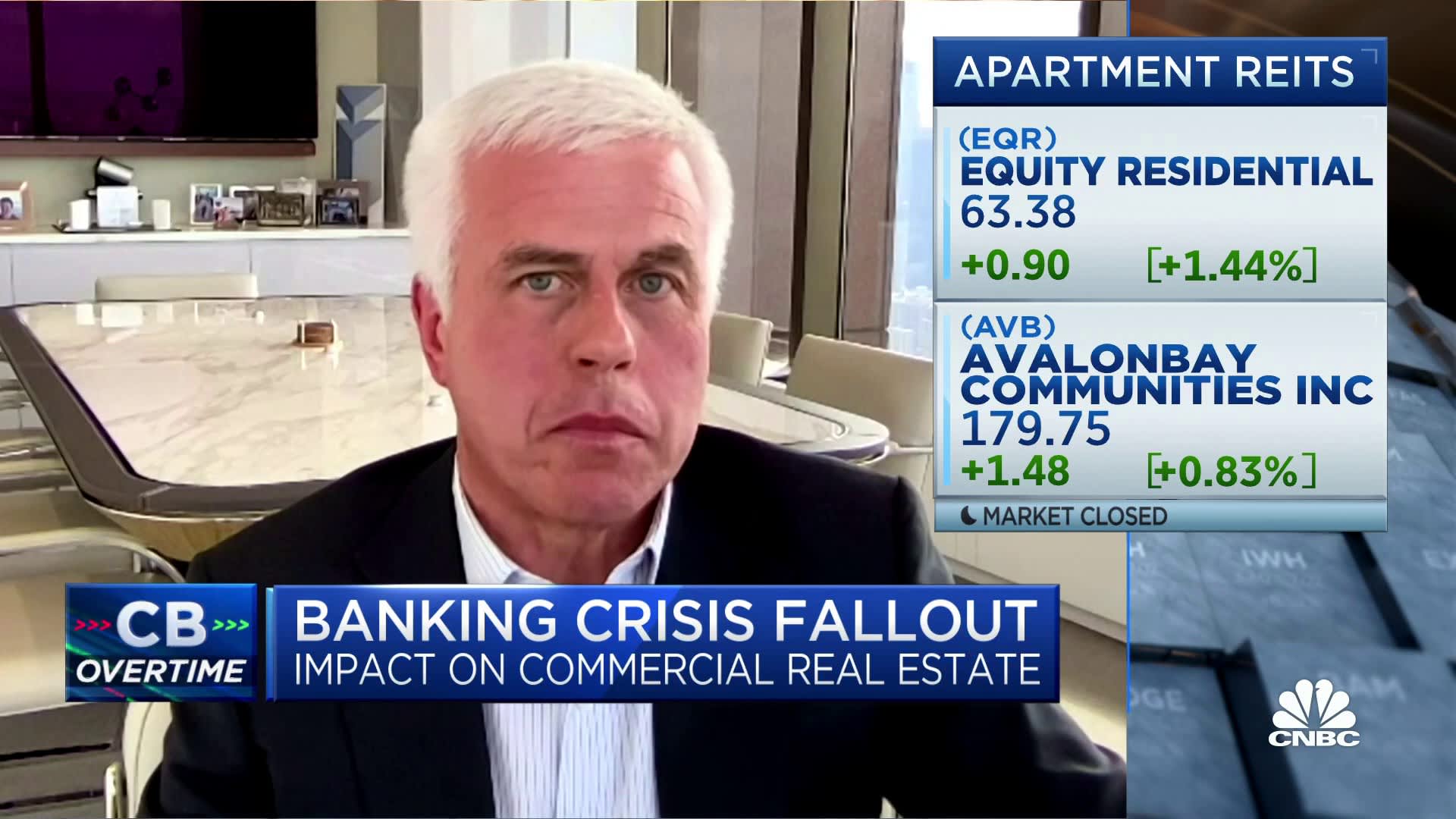
Commercial real estate starting to see the consequences of high borrowing rates, Buffett says

Commercial real estate starting to see the consequences of high borrowing rates, Buffett says


Share

Berkshire Hathaway Chairman and CEO Warren Buffett and Vice Chairman Charlie Munger preside over the 2023 Berkshire Hathaway annual meeting. The two discuss the U.S. property market and commercial real estate.

03:38

Sat, May 6 202312:15 PM EDT


Source link

Commercial real estate starting to see the consequences of high borrowing rates, Buffett says Read More »

A Market Niche For Startup Tech Companies?

A Market Niche For Startup Tech Companies?


Griffin Parry detects a sea change in the way software-as-service companies charge their customers. As he sees it, increasing numbers of vendors regard pricing as a strategic lever as they compete for business in a crowded marketplace. In particular, instead of charging fixed subscriptions based on an agreed number of users, they are adopting more flexible usage-based pricing models. “The problem,” he says, “Is that usage-based pricing is difficult to do.”

Parry – along with partner John Griffin – is co-founder of M3ter, a London-based startup specializing in usage-based pricing. Launched in 2022, the company has just raised $14 million in Series A funding to expand its operations in the U.S. and introduce new analytics-based decisioning features.

And you could see this is a bold move. The concept of usage-based pricing has gained traction over the past couple of years M3ter is not the only platform provider in the pricing game. But Parry sees a rising tide of demand and an appetite for workable solutions and that creates opportunities for specialist startups.

Market Tailwinds

In a report published in September 2022, consultancy Bain & Company noted that charging based on usage rather than subscription was “fueling some of the fastest-growing and highest-value SaaS companies,” Snowflake, Datadog and Twilio were among those cited in the report.

It’s a simple enough concept. Traditionally, software-as-service has been sold on a subscription model, with the price staying fixed, unless the plan is changed. The usage-based approach model allows users more flexibility. This might mean cutting down on costs if usage drops or, conversely, the ability to scale up their use of the software – and pay a bit more – when required.

Now that sounds pretty straightforward. After all, it’s a model we may well be accustomed to as consumers when we pay for metered water, electricity or phone calls. So why is this a growth market, providing opportunities for startups such as M3ter?

Parry says there are some helpful tailwinds in the market.

Product Led Growth

“The rise of product-led growth is helping,” he says. Over the past few years, it’s become easier – although by no means that easy – for vendors of all sizes to sell to enterprise customers by finding corners of the organization that are willing to try out a product, often on a free-trial or freemium basis. The idea is that once some people start using it, others within organizations will follow. A usage-based approach to pricing can be helpful, not least because it allows end users to scale up usage relatively easily.

Then there is the macro-economic situation. We are living through difficult economic times. Buyers of software products are looking more closely at pricing. In particular, they are looking for pricing models to suit their needs.

But here’s the question. Given that usage-based pricing is not in itself a new concept and that aforementioned utilities are among those who have been doing it for years, why don’t SaaS companies simply build their own billing systems?

Pain Points

Parry acknowledges that there is more than one way to create a usage-based offer. “You can build your own platform or do it using a spreadsheet,” he says. “And in the past companies have had to do it for themselves.”

But, he argues, it’s not easy to get right. When running a previous company – Gamespark – Parry says he and co-owner John Griffin dabbled with usage-based pricing but it was difficult to do. When the company was sold to Amazon, he worked at AWS (Amazon Web Services). Again, he says he saw difficulties implementing a usage-focused approach.

One of the major challenges, he says, is to ensure that everyone has the usage data. That includes, not only billing departments but also customer facing staff. “Anyone who speaks to customers needs to have the data at their fingertips,” he says. It also needs to be transparent for customers. Unless they know why they are being charged a certain amount, they may not be happy. So any system needs to combine usage and price data and distribute it to whoever wants and needs it. “If you make errors, you get revenue leakage and a poor customer experience.”

Strategic Pricing

There are of course non-technical challenges around pricing. It may well be the case, a vendor can charge on a usage basis, but is that actually what the bulk of customers want? A subscription-based approach may be a bit of a blunt instrument, but it is predictable. Finance department personnel can sleep easy knowing that costs aren’t going to jump because of a spike in users.

Bain’s report found 80 percent of users saying usage pricing delivers services that are better aligned in price terms to the value they receive. But it is important to get the model right. That could be simple as pay-as-you-go or a model that moves the end user through tiers of payment depending on activity.

For his part, Parry acknowledges that he is not an expert in strategic pricing. The role of M3ter and its competitors is to provide their customers with the means to align pricing with the demands and requirements of users. Customers include Stedi, Sift and Clickhouse.

The Data opportunity

Parry also sees a data opportunity. Part of the Series A money will be spent on adding analytics features. As he sees it, the customer usage data can be deployed to underpin a huge amount of automated decision making around pricing.

Usage-based pricing is on the up. Parry says that in 2020, 34 percent of software companies used the model. Today it’s 61 percent. Uptake has been in part driven by the economic environment which has forced both users and vendors to focus on the cost equation. However, when the world economy improves, he believes the trend will continue.

For startup companies working in the software arena, the concept may help them with their product-led growth strategies. It also creates a growing market for flexible pricing enablers.


Source link

A Market Niche For Startup Tech Companies? Read More »

What You Need to Know Before Buying Your First Rental

What You Need to Know Before Buying Your First Rental


Still waiting to buy your first rental property? Everyone’s been there. It can be nerve-racking not knowing where to buy, what makes a “good deal,” and whether or not all your hard work will go to waste. Even investing experts like Ashley and Tony were nervous about taking their first step, which is exactly what they’ll walk through on today’s episode! If you’re a rookie sitting on the sidelines, waiting to get into real estate, this is the episode for you!

Welcome back to another Rookie Reply! In this episode, we share exactly how to close an off-market deal when there’s no real estate agent involved. Ever wondered how our hosts went from real estate rookies to real estate pros? Today, they share their first deal diaries. Learn how Ashley ended up buying the first property she EVER looked at and how Tony bought his first two properties with ZERO money down. Finally, we touch on the struggles of analyzing deals when you’re just starting out, as well as choosing the right insurance policies for short-term rentals!

If you want Ashley and Tony to answer a real estate question, you can post in the Real Estate Rookie Facebook Group! Or, call us at the Rookie Request Line (1-888-5-ROOKIE).

Ashley:
This is Real Estate Rookie episode 284.

Tony:
I really focused in on not just one city, but I was looking at specific zip codes within that city. Within those zip codes, I knew the street boundaries that I wanted to stay within to make sure I was super laser focused on one little niche. That allowed me to get much, much better, much faster, and much more accurate at analyzing deals in those markets, because instead of looking at this big, large set of potential properties, it was this smaller micro set that was easier to digest.

Ashley:
My name is Ashley Kehr, and I’m here with my co-host, Tony Robinson.

Tony:
Welcome to the Real Estate Rookie Podcast, where every week, twice a week, we bring you the inspiration, motivation, and stories you need to hear to kickstart your investing journey. I love the rookie replies because it takes… Obviously, we’ve got amazing guests on all the other episodes, but it’s cool to hear what our Rookie audience is thinking about, and what’s stopping them from getting started or keeping going, and being able to dive into those questions head on.

Ashley:
So today’s question, we talk about a lot of different things for our Rookie replies. If you guys want to have your question submitted on here, you can always leave us a voicemail at 188-85-rookie. You can write your question in the Real Estate Rookie Facebook group, or you can send myself or Tony a DM at Wealth from Rentals or at Tony J. Robinson on Instagram, and we may play your question on the show. The first thing we’re going to do today, the question is our first deal diary, as Tony had called it. We break down the first deals that we ever did. We talk about partnerships, and then we also talk about closing off-market versus on-market deals. What’s the different paperwork you have to do? How do the processes vary?

Tony:
Then our last one here is actually about Short-Term Rentals, my bread and butter, and the liability that comes along with that and how to protect yourself, and get things set up the right way, so lots of good questions. Before we keep rolling here, I just want to give a quick shout out to someone by the username of Mrs. placidChaos. I’d love to say five star review, and the review says, “Real estate is something I’ve wanted to invest in for several years now, but I’ve been intimidated by the thought that I couldn’t financially make it happen, but this podcast has shown me so many different avenues that can be taken, and I’m confident I’ll have my first property before the end of the year.”
We are confident that you will as well, Mrs. placidChaos. If you’re listening to the Rookie Show, and you’re part of the rookie community, and you haven’t yet left us an honest reading review on Apple Podcast or Spotify, please do. The more views we get, the more folks we can reach, and the more folks we can reach, the more folks we can help.

Ashley:
With that, let’s jump into our Rookie Reply questions.

Tony:
All right, so jumping into our first question, this one comes from Sean Gallagher. Sean’s question is, “I’m new to investing, and was wondering what your first deal was. If you don’t mind, also tell me how did you analyze the deal to determine if it’s good or not?” So first, deal diaries is what we’re doing on this question, Ash. Why don’t you go first? Give us the details of that first deal.

Ashley:
My first deal was the first property I ever looked at. When I decided I want to be a real estate investor, there was one property that I saw on the MLS first, and so I contacted the agent that had listed it, and set up a time to go see it. She said, “I just want you to know there are a lot of foundation issues and flooding that has happened on this property, and that’s why it’s been sitting on the market.” That right there gave me cold feet, and I was like, “You know what? Nevermind. I don’t want to see it.” Then that’s when I actually contacted my parents’ friend who was a real estate agent, and said, “This is what I want to do.”
So, I found a duplex in a market that I knew, because I was already a property manager there, and went and looked at it. I called the person who had already agreed to be my money partner. They wanted to start investing in real estate too, but didn’t have the time, didn’t have any knowledge about it. So, we both went together to look at the property. I ran the numbers, and when I say I ran the numbers, it was a pencil and a piece of paper and me being like, “Okay, I know I can rent each apartment for $700 per month. My water bill is going to be this, because I contacted the village to ask approximately what the water bill would be.”
I got some of the utility cost from the seller. I had my agent ask for that. Then I tried to think of any other expense, property taxes, insurance, and I was like, “Okay, this will work.” My payment was going to be to my actual partner. He was going to pay cash for the property, and then he would receive a mortgage payment from our LLC, so we were paying him directly, and we weren’t paying a bank, which… Then he got 50% of the cash flow, so 5.5% on the capital he put into the property, and he was getting it fully paid back, amortized over 15 years plus the 5.5%, 50% of the cash flow. He was actually making out pretty good.

Tony:
Yeah, it’s a good deal.

Ashley:
I would never do that deal now, but it got me started. He put a lot of trust in me. He took his life savings, and dumped it into that property, so we created an LLC together. Once we got that property under contract, we started an LLC where we were 50/50 on the LLC. Then we went to close on the property. I put in a little money for the rehab. It needed a split unit for AC and heat in the upstairs, so I ended up paying out of pocket for that, and then I think maybe the flooring I paid for. Then we had a couple other… We put new cabinets in, things like that, where he put in the money for that. Then that was just money put into the deal that we didn’t actually pay ourselves back for.
We eventually sold the house, and made a good profit on it. The property did cash flow. I did make one mistake on that property, and that was I did not account for snowplowing. This property was outside of Buffalo, New York, and snowplowing is definitely something you need to pay for, or even if you have a tenant do it. So, I ended up, I think, discounting the lower tenant’s rent. I can’t even remember the amount, but they were in charge of shoveling the driveway since the driveway was used by both tenants of the duplex. That definitely hurt the cash flow a little bit.
It definitely wasn’t a deal breaker, but… That was my first deal. It was definitely not my best deal, but after I got that first one, we closed on our second one, I think, maybe three months later. It was just from there, just really that propeller-

Tony:
Snowballs.

Ashley:
Yeah.

Tony:
When did you close on that first deal, Ashley? What month? What year?

Ashley:
It was September 2014.

Tony:
2014. Man, I didn’t know it was in 2014. I didn’t realize that. That’s awesome. Then do you remember what the cashflow numbers were on that deal? How much were you making while you guys owned it?

Ashley:
Oh God. When we first started out, it was only a couple hundred dollars we were getting in cashflow, because we were basically leveraging the whole thing. We paid, I think, 72,000 for it, and the mortgage was for 72,000 because we were paying my other partner back, so it was 100% leverage by him. I would never do that with a bank or whatever, but it was very minimal cashflow. Then we did the rehab and the upstairs, and then over the years, we were able to increase the rents. We didn’t have a ton of capital expenditures on that property at all, but the lifetime we held it, we actually sold it in… 2020, I think, is when we sold it, and we ended up selling it for 130,000, I think.

Tony:
That’s pretty good.

Ashley:
That property was definitely a great play for appreciation.

Tony:
Did You ever refi, or did you keep it with that debt to the partner?

Ashley:
After we bought that property in February of 2015, we bought our second property, and that one, we used his cash again to purchase. Then when we bought our third property, we went and did a portfolio loan putting those two properties under one mortgage. We used that debt then to go and buy our third property. So, we had a mortgage on them, but we were still paying the partner. It was just… We just kept rolling over like that. The mortgage on property C, that ended up paying for the property D, and it just went through the line. That’s how we had acquired our units at that time.

Tony:
So you’re almost like… I mean, you were BRRRRing basically, right?

Ashley:
Yeah.

Tony:
The true BRRRR where you’re paying cash for it up front, and then refinancing and using that capital too.

Ashley:
Yeah. So basically, we’re just reusing and over… That same capital, we just kept reusing over and over again. So, we’ve actually kept that loan going, and so throughout the years as the cashflow has done well on the properties, my partner would go to Vegas or different things like that. He would take some of that cashflow out, because we’ve always just held it in there, or it would be he wanted to buy something expensive or whatever, and I would pay part of his mortgage off like, “Here’s 20,000. We’re just going to take it off the mortgage over for you.”
I looked the other day, and there’s less than a year left on that mortgage, because we’ve just accelerated the mortgage paydown on that. He is so bummed that he’s not going to be getting that mortgage payment anymore.

Tony:
He’s like, “Slow down. Slow down. Slow down.”

Ashley:
But I’m like, “You do understand. You’re still… We end up getting more cash flow now, because we don’t have your mortgage payment.”

Tony:
That’s awesome. Well, it sounds like a solid first deal. My first deal was back in October 2019. It was a single family house in Shreveport, Louisiana. Not Freeport, not Shreveports, but Shreveport.

Ashley:
I’ll still never remember.

Tony:
You’ll never remember. I actually broke down the numbers in pretty excruciating detail back in episode 10 of the Rookie podcast when I was on as a guest, but I’ll give you the cliff notes version here. So essentially, I found a bank in Shreveport that had a really cool loan product, where if you found a property where the purchase price and the rehab costs were no more than, I think, it was like 72.5% of the after repair value, they would fund the entire purchase and the rehab with a year-long note interest only, and then they would do the backend refinance to put you on permanent debt. So, I did that. I found a property. It was on the MLS listed for $100,000.
I locked it up, got under contract. We closed on it, spent another 60 or so thousand dollars to renovate the property, and then we refied it out, and appraised for $230,000. So, I was just was under that 72.5% on the refi, and I was basically into that deal for literally $0 out of pocket, and it was pretty cool. Then I found a property manager out there. I lived in California. The property was in Louisiana, so I found a property manager that got it leased up for me. I don’t remember what we were renting it for anymore. I had the property for a year, and I ended up selling it, but I want to say the cash was pretty minimal.
It was $150 a month, I think, I was making after accounting for property management, some of the other fees. But again, it was $150 on $0 invested. So even though the actual dollar amount wasn’t all that high, it was an infinite return, because I put no money into the deal. I did that same deal with that bank on two properties there in Louisiana.

Ashley:
Tell us the rest of the story on that first one. So, what happened with it?

Tony:
I mean, so that first deal actually turned out really well. It was the second deal in Shreveport where we had the flood.

Ashley:
We have many, many episodes talking about that second property.

Tony:
That’s second property.

Ashley:
But For the first one, what happened?

Tony:
I mean, so I held the property for a year. We had one tenant in there the whole time. There’s a military basin in that city, and it was a military family that was there on assignment. They ended up getting orders to deploy somewhere else. So, they gave us notice. After that year, we’d already transitioned into the short-term rentals. I was like, “Ah, I think I’m just going to take my money, and sell the property.” So, we ended up selling it, I think, for… It wasn’t 230, even though it appraised for that much. I think we sold it for 215 or something like that.
I still got the check when I sold it, plus all the cashflow, plus the tax benefits. It was honestly a really good… I got on base with that first property, and it was a really good proof of concept for me that I could actually buy real estate, and collect money.

Ashley:
So if you are doing that same thing, and say you’re starting over but in today’s market, do you think you’d be able to find that same loan product, and make that same deal work?

Tony:
I don’t know, because I actually contacted that bank. It wasn’t even until I asked him about the loan products. I think I needed some paperwork or something for my taxes, and I was just chatting with the person at the bank. They’re like, “Oh, actually, since COVID, we stopped doing that type of loan product.” I don’t even know if they offered that anymore. But if they did, I would’ve 100% go after that deal, because it’s such a low risk way to get into it. What was really cool was that the bank, they funded the entire purchase, but they also funded the rehab, but they funded the rehab in draws. So, it was four different draws that they allowed for the contractor to take.
The way that it would work is they did an appraisal before. Then they looked at the bid that the contractor gave me, and said, “Based on the current condition of the property, and if you combine this with the bids the contractor gave you, here’s what we think the property will be worth after you’re done.” So, they almost validated my ARV for me. Then during the construction process, before they would release a draw, they would send an inspector out to the job site to confirm that the work that the contractor said he was doing was actually done.
So, it was this second layer of like… It was almost like training wheels for my first deal, because I had this bank who had a vested interest in making sure that the project went well, who was… They were validating my numbers. They were inspecting the contractor’s work. They were managing all the draw payments. They made it super, super easy for me. So if I could go back and do it again, I probably would.

Ashley:
One thing I did learn about that, I met with this hard moneylender in Texas one time, and just he broke down everything about how hard money works and operates in all these different things, but they did the same thing, where they would have somebody inspect the property, and he kept pushing it and selling it. He’s like, “This is a huge advantage to you,” and it was. But the person that I was there with, he’s like, “Ashley, keep in mind they’re charging you for this service. They’re charging you to send an inspector out. They’re charging you all these fees for them to oversee the project. They’re charging you a fee for a draw.”
I don’t know if it was exactly the same for your bank, but that’s definitely something to be cautious of. That shouldn’t be the only reason you’re going to that bank to do that hard money, or to do that loan because of having that resource as an advantage. You may be able to pay a contractor or a real estate agent, or somebody else to be that oversight for you too, where it may be cheaper, more affordable.

Tony:
That’s a great point. I think I was in a unique position, because they were just a local credit union, so they weren’t a hard moneylender who needed to make their points on fees and all these other things. This is a person who’s nine-to-five employee. They’re just running out at their job, and the inspections and everything didn’t come with any additional cost, because for them, they just wanted to make sure they were protecting the asset. So, it was a fantastic way for me to get started. Honestly, like I said, if that loan product still exists, I might go back to that city to buy another one. It wouldn’t be in a flood zone, but I might go back to that city just to keep that ball rolling.

Ashley:
I think my advice for somebody listening that maybe can’t do the deal that Tony just did, because they can’t find that loan product, is to go back to episode 280, which would’ve been, I think, two weeks ago, we did a Pace Morby. We had him on for a Rookie Reply, and he breaks down creative financing, how to do subject two, and how to do seller financing. I think that is a great alternative in today’s market to be able to get some zero-money-down deal by using those two strategies.

Tony:
Ash, we should also answer the second part of Sean’s question is how did you analyze the deal to determine if it’s good or not? I think Ash and I both have similar… Well, maybe not for your first deal, Ash. I know maybe yours is a little bit different, but for me, that first deal, I was already well entrenched in the bigger pockets community as just like a consumer. So, I was already listening to the OG podcast. I had read several of the BiggerPockets books. I was a pro member with my calculator, and I used the BP calculator to analyze every single property that I was looking at.
I think this was before BP had the BP Insights. So, I was using tools like Rentometer. I was looking on Craigslist and Facebook marketplace, and just trying to analyze what the potential rental revenue would be. I used those numbers to plug them into the BP calculator. Then I actually met with the local property manager, the one that I ended up hiring. I had them give me numbers on potential expenses for a property of that size. That gave me a lot of confidence. I feel like what helped me a ton as well, Sean, was that I really focused in on not just one city, but I was looking at specific zip codes within that city.
Within those zip codes, I knew the street boundaries that I wanted to stay within to make sure I was really just super laser focused on one little niche. That allowed me to get much, much better, much faster, and much more accurate at analyzing deals in those markets, because instead of looking at this big, large set of potential properties, it was this smaller micro set that was easier to digest.

Ashley:
Mine is different actually. I didn’t… I bought that property the end of 2014, and I did not discover BiggerPockets until 2017. For me, my only knowledge of analyzing a deal was because I was managing a 40-unit apartment complex in that same town. I had also previously worked as an accountant. I was an intern at an accounting firm all throughout college. I had graduated with an accounting and finance degree, and so I had a basic understanding or maybe more than basic understanding of financials, of the profit and loss statement, how to calculate cash flow for any business. So, I basically just took what I knew from accounting, and I looked, “Okay, what’s my income? What are my expenses?”
Then to determine what my cash flow would actually be is, “Okay, what’s going to be my principal mortgage payment? Any other loans I’m going to need to be paid back?” That was the only way I knew how to analyze. As the property manager of that 40-unit apartment complex, I saw other expenses that may come up, what the property taxes were like for that town, just different things. So basically, experience from my accounting job and experience from being a property manager is I just figured it out how to analyze the deal.
Obviously, now, I don’t analyze deals that way. I realize there’s a lot more that goes into it, but at that time, I didn’t know what cash on cash return was. I didn’t know what ROI was. I didn’t know what price to rent ratio was. I was just, “Is this going to cash flow?” That was basically it. That was my only metric, I guess, if the property would be a good investment or not.

Tony:
But you got to start somewhere, right? That first deal is one that got you going. Obviously, everyone listening to this podcast has the benefit of already being exposed to everything that BP has to offer, so leverage the podcast, leverage the calculators, leverage the community, leverage the books, leverage the YouTube channel. That’s really going to give you the confidence to move forward and analyze correctly. Sean, hopefully that gets you started off on the right foot. Man, we’re excited to hopefully see you get that first deal closed, and you either be a rookie rockstar maybe a guest on the podcast one day.
All right, so next question here. Aaron J. Nygaard is the person asking this question. I’ve only heard the last name Nygaard one other time. Have you ever seen the show Fargo, Ashley?

Ashley:
No, I haven’t. I have at least heard of it. I’m pretty sure that you and I have never ever watched the same show or movie except for Tommy Boy, only because I except made you.

Tony:
Except the Tommy Boy because you forced me. Fargo is… I think it was on FX. I watched it on Hulu. You can watch the whole first season, but it… I’m not going to spill the beans, but it’s literally probably one of my most favorite shows that I’ve watched recently.

Ashley:
Oh, really?

Tony:
The main character, his last name is… His name is Lester Nygaard. Anyway, not what today’s question is about, but Aaron Nygaard, he says, “What paperwork do I need to close an off-market deal, and why? If there are cash offers, can it all be done between me and the seller? Do you typically ask for an inspection period? Any help with these questions would be great. Thanks.” Ash, I think we’ve both purchased properties both on markets and off market. So, I guess, what paperwork do you typically use to set up your deals when you’re going off? Actually, I guess we should take a step back, and just define…
Pace actually did this when we interviewed him on whatever episode that was. I think it’s maybe important for folks to understand what the difference is between on market and off market. So when you talk on market, those are properties that are typically listed by real estate agents that are on the MLS. So when you open up your phone on Zillow or Redfin or wherever, and you see all of those properties that are listed there, those are on-market properties. The vast majority of which have been listed by real estate agents. Off-market deals are properties that are not found on sites like Zillow, Redfin, et cetera, or are not listed on the MLS. Instead, there’s some direct connection between the buyer and the seller.
It could be that she was a buyer. Maybe it’s a neighbor of yours who’s selling their property next door, and the two of you are just having a conversation. Maybe you’re using a third party like a wholesaler, and the wholesaler is a person that’s found the seller. Now, they’re connecting you, the buyer, with the seller. But typically, it means that the properties are not listed publicly anywhere, and there’s no real estate agents involved typically. That’s the difference between on market and off market. The challenge with off market is that because there is no real estate agent, there is no one there to really guide the transaction to make sure that everything’s done correctly, so that’s the challenge.
Ash, what is your experience typically on the off-market stuff?

Ashley:
I think it’s also we should discuss… Depending on what state you’re in, there’s different ways to close on a property too. In New York State where I’m from, you have to have an attorney to close on a property. In California where Tony is, you do not have to. You can go directly to the title company. In New York State, the attorney is the facilitator between you and the title company along with you and the seller’s attorney. So for me, when I am purchasing an on-market deal, I have my real estate agent drop the contract. If I am purchasing an off-market deal, I have my attorney, usually her assistant, drop the contract.
So, she uses the same exact contract that a real estate agent would use, and fills it in for me. I just send an email with the information, so the property address, the seller’s name, what LLC I want to put the property in, the mailing address I’m going to use, what my offer is, any terms on the property. Then my attorney’s assistant will go in and fill in all of that information, send it to me to look over, and then I usually DocuSign it. Then that’s when I can present it to the seller, or send it over to the seller to sign. From there, I give my attorney the executed documents to sign documents. The seller gives their attorney those documents.
We have also put on the contract as to who each of our attorneys are. Then from there, the attorneys pretty much take over. They order the title work. They handle escrow, and they basically make sure each party is doing their part. Do I need proof of funds? Do I need a commitment letter from the bank after a certain date? Then they set up the closing date, and do the closing. That’s the difference for me when doing on market as off market is I’m just using a different facilitator in a sense, and I’m really not… I’m still pretty hands off in each situation. The big difference I see is if I do an off-market deal, is it just me, the negotiation with the seller, and being able to talk to the seller directly?
I actually think it’s a huge advantage than having to tell my agent to tell their agent to tell the seller. I feel like sometimes it’s playing telephone as to doing that. But whether I’m doing on market or off market, usually, after the real estate contract has attorney approval in either situation and assigned and both attorneys approve, any situations that may come up before the property actually closes, I have found that it’s best to have my attorney negotiate with their attorney to figure out a resolution for that instead of having my agent and their agent figure something out, or go back to the negotiation table or anything.
For example, if I have an inspection done, here are the things that I want fixed. I’ll usually send it to my attorney to just say, “Can we ask for five grand off because these are the things that are result of the inspection, whatever.” Then they ask their attorney and things like that. So, I do try to keep it to one person instead of having my attorney and my agent trying to figure things out throughout the closing process.

Tony:
Ash, what’s the typical cost if for your attorney? What fees do they charge on a usual transaction?

Ashley:
Usually, around $1,200 is what I’m paying right now to close on a property, and that includes the title work. I think my… The title insurance on that too, so I don’t know exactly offhand what is the actual attorney fee on it.

Tony:
That’s about what we pay our escrow company. Our process is super similar to you, but instead of using an attorney, we have a really good relationship with an escrow company that we like to use here in California. Whenever we have an off-market deal saying, “We just send them the details of the transaction, who the buyer is,” if we’re selling the property or who the… vice versa, just the details of both parties. They draft up all of the agreements, the documents. Typically, it’s the same what we would get from a licensed agent here in California as well, because California has a California version of a purchase and sell agreement.
They draft it all up. They send out all the DocuSigns. They collect all the earnest money deposits. They’re coordinating with title to get all the title work done and make sure everything’s clean and clear there. They almost act as almost like a transaction coordinator, but for me personally for each deal that we do. I would encourage anyone that’s listening, if you are doing an off-market transaction, even if you’re not using a real estate agent, still find that qualified third party, whether it’s an attorney if you’re in a New York, or escrow company like how we use, or a title company, whatever it may be.
Find that company to help facilitate that transaction, and that’s how you can make sure that you’re checking all of the right boxes.

Ashley:
One thing I do want to mention too, as far as the process, if you’re buying commercial property, you most likely won’t use the contract that real estate agents use like the statewide contract where real estate agents are just filling in the blanks. Usually in my situation, I use a commercial broker for commercial properties. Even though I’m using him, he doesn’t usually put together the contract. He will, but I usually have my attorney create the contract, because it’s usually so specific as to what’s included, what’s not included, and different things like that.
That’s also something to be cautious of where usually on the commercial side, there’s not just that general generic contract where you’re just plug and play the information. So, keep that in mind too if you’re buying commercial property.

Tony:
Super valid point. There’s just one other part of Aaron’s question here. He says, “Do you you typically ask for an inspection period?” Aaron, typically, all of the things that you would have in a regular real estate purchase and sell agreement, you should also include when you’re going off market. Obviously, it’s really whatever you and the seller agree to, but you can include all those same things. So if you need an inspection contingency, if you want a financing contingency, whatever other things you want to include in that contract, you’re more than welcome to.
You aren’t limited to doing that just because it’s an off-market transaction. So even for us, if we’re buying something off market, depending on who the seller is or what the situation is, we typically still do include an inspection period, because we want to make sure that we’re protecting ourselves, and buying this asset. We do have some wholesalers that we buy from where the EMDs are non-refundable on day one, but in those situations, we still want to make sure that we get eyes on the property before we put that EMD up to make sure that we’re not walking into any unforeseen issues. But yes, you can totally, and you should, include an inspection period when you’re going off market as well.

Ashley:
For me, I haven’t done an inspection in a long time, but I recently put an offer in on a property that I didn’t get unfortunately, but it was the first time I put an inspection in a long time just because it was outdated, but it was very well taken care of. It just didn’t look like it needed extensive rehab where properties have banned the last couple years have needed extensive rehab, and the market was just so competitive that I would skip the inspection on those, because I knew that I was going to be redoing everything anyways. It just gave me a leg up. I feel like the market is shifting, where you have that ability now to put that inspection period back in, and still be competitive in the market. But also, I think it very much varies on what kind of property you’re going in and purchasing too.
When I flip the house in Seattle, Washington, one thing I learned there is if there is something wrong with the sewer line that goes from the main to the house, for some reason, there’s… I can’t remember exactly if it’s a permit issue, or if it’s something, but it has something to do with the cost of repairing that septic. So if Tony sold me a house in Seattle, and there ended up being something wrong with that sewer line, it would cost me a lot more to fix it than it would if Tony, as the current homeowner, went in to fix it. I can’t remember exactly what that detail is, but you guys can ask James Dainer, because he’s the one that I learned it from. He’ll be able to rattle it off the top of his head the specifics.

Tony:
I wonder if it had something to do with maybe the assessed tax value of the property or something like when a property changes hands, they reassess it. Maybe that’s how… I don’t know. I’m shooting in the dark here.

Ashley:
Well, I’m pretty sure it was the direct cost, the cost too, so I don’t know if it was like you had to get a more expensive permit, or you actually had to get a permit where if you were the current owner, and you had already owned the property for so long or something, I don’t remember, but it’s just like those are little things you would never think of. So every single property, he does a sewer scope. He scopes that line, and what he does is he’ll just say, “Okay.” He’ll negotiate with the seller, and maybe one option is it’s going to cost five grand for this to be replaced.
We will actually add five grand onto the purchase price if you go ahead and just do this repair before we close and pay for it, because it’s going to cost us more. So, it’s worth it for us to just pay you to get it done.

Tony:
Cool. Well, let’s move on to our next question here. This one comes from Michael Bafudo. Michael’s question is, “Just went into contract on our first STR.” Congratulations, Michael. “But we went into it as a second home. Wondering if I should take out renter’s insurance or regular homeowners. If I take out renter’s insurance, will it mess up my mortgage? If so… I take out regular homeowners. Does it cover renters in it anyways? Thanks.” Michael, this is a great question. Renter’s insurance is…
Ashley, you can probably speak to this better than I can, but if I’m understanding the question correctly, Michael, renter’s insurance is typically what you make your tenants take out when they move into your property, not necessarily what you as the owner needs to take out on behalf of your tenants. I know every apartment I’ve lived in, and even the long-term rentals that we did have, we had our tenants get their own renter’s insurance, which covered the goods of theirs that were inside of that property. Now, what we do for all of our short-term rentals is we notify the insurance company that it is going to be used as a short-term rental. Even if you have a second home mortgage, you can still do that, because the short-term rental or the second home loan still allows you to rent out that property when you’re not using it for personal use.
So, we still let our insurance companies know that it’s being used as a short-term rental. They add some additional coverage to make sure that it accounts for the increased risk that comes along with having short-term rental occupancy. But in addition to that, what we also do is we got an additional umbrella policy to help with any potential liability that might come from that property. There are two resources I’m going to give you, Michael, to help with the insurance piece. One company is called Steadily. They’re an insurance broker in the short-term rental space. We’ve heard really great reviews from folks in the space about being able to get pretty competitive short-term rental focused insurance policies through Steadily.
Then another company is called Proper Insurance. They specialize in short-term rental home insurance. They offer some additional things like revenue protection. So if you have an instance where your property goes down for some reason, they can recoup your revenue for you, but they also have liability protection for short-term rental host. That’s my initial take. Ash, I don’t know, what are your thoughts for Michael here?

Ashley:
You said it exactly like you’ll have to get the homeowner’s insurance, because first of all, your mortgage is going to require it. If you don’t have a mortgage on the property, you don’t have to have insurance on it, I guess. You can be self-insured. I have actually bought a couple duplexes where the owner’s like, “Oh, I don’t have insurance on it. I’m self-insured.” So, you do have that option, but if you do have a mortgage on the property, the lender is going to require you to show proof of the insurance, and that it is paid every year, and you keep that policy in place.
They may have requirements too as to what kind of insurance you need to have, what kind of limits, what kind of coverage you actually need. As far as the short-term rental, I think, Tony, you couldn’t have explained it better, is going to talk to an agent or a broker who is experienced in putting insurance on short-term rentals. Where I have seen it is that you have your homeowner’s insurance, or maybe it is just an investment property for you. It’s not even a primary home or a second home. It’s just an investment property where you go and get a landlord policy with almost a short-term renter rider agreement that’s added on to your policy. That’s an extra cost.
That’s one way I’ve seen it written up too, but highly recommend having some coverage. For the LLCs, I don’t have that umbrella coverage, but for anything that is in my personal name, I do have umbrella policies on those to go above and beyond any policy or any coverage that my regular homeowner’s insurance coverage may not cover.

Tony:
Yes. You hit the nail on the head. The reason why we did that is because the majority of our short-term rentals are titles held in our personal name. So, we needed that extra layer of protection, because we don’t have that LLC on title to separate everything there, so makes us sleep a little bit easier at night with that additional umbrella. But, have you ever actually had a claim against any of your insurance policies at any of your properties?

Ashley:
No, knock on wood, I haven’t. Good thing I’m sitting at a wood table. But no, I have never had to make a claim. I did have to at the 40-unit apartment complex that I started out managing. We had severe water damage from an ice storm where ice built up on the roof, and then the ice started to melt, but the water had nowhere to go but into the roof and into the eaves. Then it caused $100,000 worth of damage for, I think, it was maybe eight apartments total that were all along this wall. It was an extensive project. We called a home remediation company where they come in. They rip out the drywall. They dry out the…
Basically, you’re down to the studs. They dry it out, and then they go back and rebuild the walls. What we did was we had hired somebody. I can’t think of what the name is, but it’s some kind of… It’s not an insurance broker, but what he does is he’ll come in, and he’ll try and get you more money from the insurance company, so loss rents. If we have to put people up at a hotel, make sure that you’re getting the maximum benefit from your policy. So, the insurance company originally offered to write a check for this to cover it, and we had him come in and actually get us more money from the insurance company, and then we had to pay him a percentage of what he got us over what we had originally got.
I can’t think of what his job title was called, but if you do find yourself in a situation where maybe your policy isn’t going to be covering what you thought it was going to be, it may be worth hiring someone like this, and giving them a cut because it’s better to get a little bit more than no more at all.

Tony:
Ashley, what was the episode where we had the asset protection guide?

Ashley:
I can’t believe I don’t know this offhand, because I give it out all the time.

Tony:
All the time.

Ashley:
I’ll look real quick.

Tony:
Look it over. Look. I’ll share really quickly. We actually haven’t had any claims against any of our insurance policies either, thank God, but I always do get somewhat nervous because obviously with the short-term rental space, we get people coming in and out. We have hot tubs at the majority of our properties. We have now an indoor pool at one of our properties, and those by themselves are just high-risk things to have. I’m just always nervous of those things. That’s why we wanted to make sure that we’re really beefing it up. Did you find it?

Ashley:
Yeah, it’s episode 106, Brian Bradley. He’s a asset protection attorney. He did two episodes with us, so I think it was 105 and 106 or 106 and 107. It was just such a wealth of information. We had to break them up into two episodes there.

Tony:
So if you want to be scared out of potentially ever buying your first long term or short-term rental, then definitely listen to those episodes. All right. Well, I feel like we got through a lot today already, right?

Ashley:
Yeah. This is good. Thank you guys so much for joining us for this week’s Rookie Reply. My name is Ashley at Wealth from Rentals, and he’s Tony at Tony J. Robinson. We will be back on Wednesday with a guest.


https://www.youtube.com/watch?v=ZepKCI0YWfk?????????????????????????????????????????????????????????????????????????????????????????????????

Interested in learning more about today’s sponsors or becoming a BiggerPockets partner yourself? Email: 

Note By BiggerPockets: These are opinions written by the author and do not necessarily represent the opinions of BiggerPockets.


Source link

What You Need to Know Before Buying Your First Rental Read More »

New Grad? 12 Pieces Of Advice That Could Help Launch Your Career

New Grad? 12 Pieces Of Advice That Could Help Launch Your Career


Every year, new graduates enter the workforce—each entering a different job market than the one before them. Navigating such a large change successfully can be difficult on one’s own, which is why it helps to consider the advice of those who have walked the same path before and who are achieving their goals.

Here, 12 members of Young Entrepreneur Council consider their own journeys and offer up their best advice to new grads entering the workforce and looking to launch their own successful careers.

1. Know That Passion Will Take You Far

Your degree does not define your limits, nor does it dictate your success. The biggest thing I’ve learned in business ownership is that you can be successful in any area where you have passion. With the growing interconnectivity of the world, if you have a unique idea backed by passion, it is relatively easy to find highly skilled people to build your business. Ideas are the new currency. – Alexis Austin, Right Law Group

2. Prioritize Building Your Network

New grads should prioritize building a strong professional network through industry events, alumni connections and professional associations. A strong network can offer valuable mentorship, job leads and collaboration opportunities, helping launch their careers by providing new experiences and connections. – Nic DeAngelo, Saint Investment – Real Estate Funds

3. Define What Success Means For You

Define what success means for you and the lifestyle that you seek. This can help you set personalized goals and priorities, ensuring that your career trajectory aligns with your values, passions and aspirations. By defining your version of success, you can better evaluate job offers, career moves and networking opportunities, leading to a more fulfilling and purpose-driven professional life. – Alfredo Atanacio, Uassist.ME

4. Learn How To Solve Problems

Learn how to provide value in any situation by offering solutions instead of discussing problems. Anyone can learn this skill by practicing mental models such as the Eisenhower Matrix and Occam’s razor. For example, you can list problems you see in a work setting, break down what’s urgent and then solve accordingly and quickly. Be the first to identify and solve. – Libby Rothschild, Dietitian Boss

5. Always Wake Up Feeling Excited And Grateful

I would tell new grads: I was in your shoes 16 years ago as I graduated pharmacy school and started my residency. I would love to remind you all to wake up every day feeling excited and grateful for what you have. As you are launching your career, make decisions based on where you want to be instead of making decisions based on where you currently are. What do you want your life to look like in 2028? – Dr. Christine Manukyan, STORRIE Institute™

6. Stay Eager To Learn

College gave you a baseline for learning; the workforce will give you actual practice. One of the perks for companies hiring recent graduates is that you’re malleable. They can offer you training opportunities, try to steer you clear of forming “bad habits” and set you up for career growth as long as you put in the work. Keep a good attitude and stay open—your leadership notices. – Greg Ashton, GROW

7. Reflect On Your Perfect Job And Go Find It

Take a moment alone to sit with a pen and paper and write out the perfect job for yourself. Be as detailed as you please. Don’t hold yourself to your sense of what is realistic because, as a new grad, you don’t know every option the world holds. Describe your day, your compensation, the impact of your work, the type of people you work with and everything that matters to you. Then, go find it! – Tyler Bray, TK Trailer Parts

8. Take Initiative

Don’t wait for opportunities to come to you; seek them out and create them for yourself. Whether it’s taking on additional responsibilities, seeking out mentors or networking with professionals in your field, be willing to put in the work and take calculated risks to achieve your goals. Be open to learning from your mistakes and adjusting your course as needed. – Kelly Kercher, K3 Technology

9. Embrace The Unknown

Embrace the unknown! As new grads enter the workforce, being open to new experiences, challenges and opportunities will help them learn, grow and adapt in a dynamic work environment. It’s a mindset that fosters resilience, innovation and continuous learning, setting them up for a successful career launch. – Sujay Pawar, CartFlows

10. Trust Your Instincts

Trust your instincts about job offerings that seem to have red flags. While you sometimes have to settle for positions that are less than satisfactory, sometimes companies are taking advantage of your lack of experience to underpay or violate expectations of candidacy. Never hesitate to ask for help from trusted mentors in your life to review any contracts or terms. – Duran Inci, Optimum7

11. Prioritize Self-Care

One piece of advice I would give new grads entering the workforce is to prioritize self-care. Launching a career can be stressful and overwhelming, and it’s important to take time for yourself to recharge and avoid burnout. This can mean different things for different people, whether it’s taking breaks throughout the day, practicing mindfulness or finding a physical activity you enjoy. – Pratik Chaskar, Spectra

12. Be Open To All Opportunities

Be open to opportunities that may not seem like your ideal fit. You are not likely to land your dream job on day one. Being receptive to different roles that you come across is going to help you find the right position. You never really know what life is going to throw at you, but the more receptive you are to opportunities, the further you will go. – Jennifer A Barnes, Optima Office, Inc.


Source link

New Grad? 12 Pieces Of Advice That Could Help Launch Your Career Read More »

10 Landlord-Tenant Laws Every Landlord Should Know

10 Landlord-Tenant Laws Every Landlord Should Know


While the process of finding a new tenant can be relatively straightforward, the tricky part is familiarizing yourself with landlord-tenant laws. And, even if you are familiar with them, rental laws are constantly changing. That’s why regularly keeping tabs on local regulations can help you better manage your rental properties.

While the best way to familiarize yourself with rental laws is to consult a qualified legal expert, this article offers a closer look at ten landlord-tenant laws that all landlords should research. 

1. Rental Licenses

Depending on where you live, you may need a rental license before renting out your property. Rental licensing programs exist to ensure that rental properties meet minimum housing standards.

Some states, like Oregon, require all landlords to have rental licenses for their properties. However, other states may only have mandates in certain counties, cities, or municipalities. For example, landlords in Philadelphia must be licensed, despite Pennsylvania not having a statewide requirement.

Failing to comply with these requirements could result in fines and other penalties, so review your state and local laws before leasing your rental properties. 

2. Rent and Security Deposit Collection

Rent collection is the primary income stream for rental businesses, so it’s essential to be aware of any applicable rent laws for your state. States like Ohio and Virginia have no specific statewide rent regulations. Meanwhile, California law says landlords can’t require tenants to pay rent in cash.

Security deposits are also subject to specific laws that vary from state to state. Rhode Island landlords, for example, aren’t allowed to charge a security deposit of more than one month’s rent and must return the deposit within 20 days of the lease ending. 

Florida has no limit to how much a landlord can charge for a security deposit. Still, if you decide to hold a deposit in an interest-bearing account, you’ll have to choose to pay the tenant either at least 75% of the annualized average interest rate or 5% simple interest per year. 

3. Late Fees and Grace Periods

late fee is an easy and enforceable way to encourage on-time rent payments, but states may have specific rules that apply to them. According to Tennessee law, landlords can impose late fees if they don’t exceed 10% of the rent price.

Before charging a late fee, you should also consider laws concerning grace periods. Tennessee has a statewide five-day grace period before landlords can consider rent late. 

In states with no laws concerning late fees and grace periods, landlords should include their policies in the lease for them to be enforceable.   

4. Required Clauses and Disclosures in Lease Agreements

Your lease agreement is a legally-binding contract that outlines rules and expectations both parties must follow during the lease period. To be an enforceable agreement, it must include locally-required clauses and clauses that don’t violate renters’ rights. 

States like New York, Minnesota, and Rhode Island all require the following clauses:

  • Landlord’s name, address, and phone number
  • Rent amount and due date
  • Length of the lease agreement
  • Description of the rental unit

Separate from clauses, landlords may also need to include specific disclosures in the lease as well. A common requirement in several states is to disclose all known lead-based paint and lead-based paint hazards with a warning and an EPA pamphlet

Some states may have more specific requirements. For example, landlords in Missouri must also disclose if the property was used as a site for methamphetamine production.  

You can research your local landlord-tenant laws to verify what clauses are required, but it can be helpful to include the clauses listed above in your written lease, even if there’s no statewide requirement. 

5. Marijuana Use

While laws surrounding marijuana use are changing in states nationwide, landlords are generally allowed to set their own policies for their rental properties. Similar to prohibiting cigar and cigarette smoke, you can also prohibit tenants from smoking marijuana in your unit. You may also be able to prohibit tenants from producing marijuana. 

For example, Wisconsin law prohibits the possession, sale, and manufacture of marijuana. Landlords can serve a non-curable five-day notice to quit to tenants who produce or distribute marijuana on the rental property.  

6. Pets, Emotional Support Animals, and Service Animals

Over half of US households own a pet, so understanding landlord-tenant laws in your state concerning pets can benefit your rental business. Some states, like Kansas, restrict how much landlords can charge for a pet deposit. Other states, like New Hampshire, have no limitations on pet fees.

It’s worth noting that emotional support animals (ESA) and service animals are not considered pets and are regulated differently. ESAs are animals that provide disability-relieving emotional support to an individual. According to the Fair Housing Act, disabled tenants with an emotional support animal may reside in housing with a “No Pets” policy. 

Landlords are allowed to request proper documentation for an ESA. However, landlords may not:

  • Charge a fee, additional rent, or a security deposit for having an emotional support animal
  • Ask the tenant about their disability
  • Require the animal to have any specific training
  • Refuse to house the tenant because their insurance does not cover ESAs

According to the Americans with Disabilities Act, service animals are animals that are individually trained to do work or perform tasks that mitigate their handler’s disability. Because they aren’t pets, they can’t be subjected to pet fees. However, landlords can collect a security deposit to address any damage the animal may cause to the property. 

7. Property Abandonment

Occasionally, tenants may leave some of their belongings at the property after moving out. Before discarding the items, you may need to follow a certain procedure to confirm the tenant no longer wants them. 

These laws tend to vary from state to state. Michigan has no specific laws regarding the abandonment of property, while New Mexico landlords must store any of the tenant’s personal property left at the rental for at least 30 days and notify the owner of their intent following the 30 days. Discarding the belongings without following the right process can leave you susceptible to legal issues.

8. Subleasing

If your tenant plans to be away from the property for an extended period, you may discuss subleasing as an option to keep your rental income uninterrupted. But what are the laws surrounding subleasing?

In most states, landlords can determine their subleasing policies based on their lease agreements. Generally, landlords will include a clause about subleasing within the written lease or add one with a lease amendment if necessary. 

Certain states like New York and Virginia have more specific requirements, so verify your state’s policy to avoid any challenges. 

9. Lease Renewals

Whether you’ve included an automatic renewal clause in your lease or found high-quality tenants you’d like to retain, you should verify your state’s lease renewal laws. 

Some states mandate that fixed-term tenancies terminate automatically at the end of the specified period and convert to renewing month-to-month tenancies with continued occupancy and payment by the tenant. In other states, automatic renewal clauses must be disclosed, and the landlord should remind the tenant during a specified notice period. 

Knowing how to handle lease renewals per local landlord-tenant laws can help you cover your bases and communicate clearly with your tenants as a lease ends.   

10. Evictions

Sometimes, the only way to deal with a problem tenant is by evicting them. This eviction process is highly specific and varies from state to state, so understanding the laws is essential if you plan to pursue an eviction. 

While the eviction process may differ between states, they generally begin by identifying a legal reason to evict a tenant. Some of these reasons include:

  • Nonpayment of rent
  • Violation of lease terms
  • No lease or end of lease
  • Material health or safety violation

It’s important to note that there must be a valid legal reason for a landlord to begin the eviction process. Furthermore, self-help evictions are considered illegal in most states. This means landlords can’t try to evict a tenant by changing locks, cutting off utilities, entering the property, removing the tenant’s belongings, and so on. 

Conclusion

Understanding rental laws can prepare you for various situations you may encounter as a landlord and give you the knowledge to handle them confidently. If questions arise, contact a legal expert to help you better understand local ordinances. 

*Disclaimer: The information provided on this website does not constitute legal advice. Instead, all information available on this site is for informational purposes only. Use of, and access to, this information does not create an attorney-client relationship between the reader and Avail, BiggerPockets, or the contributing law firm.

This article is presented by Avail

Avail Logo part of RDC

Feel good about the way you manage your rentals.

Avail, by Realtor.com, is free rental property management software that enables landlords to advertise their rental property listing across a dozen sites, screen tenants with customizable questions, request in-depth background checks, create and sign state-specific leases, collect rent, track your rental income and expenses, and much more — all online. 

512,000+ landlords use Avail because it’s the only end-to-end platform that helps you scale from beginner landlord to professional with tools, support, and education.

Note By BiggerPockets: These are opinions written by the author and do not necessarily represent the opinions of BiggerPockets.


Source link

10 Landlord-Tenant Laws Every Landlord Should Know Read More »

5 Ways Entrepreneurs Can Still Win The Podcast Game

5 Ways Entrepreneurs Can Still Win The Podcast Game


With millions of podcasts released into the ether every year, it’s easy for entrepreneurs to believe the market is already saturated and that it’s not worth any of their time or money to create a show of their own. However, listenership is also on the rise, surging to 464.7 million listeners worldwide in 2023. Within that, the U.S. podcast listener base has grown by 40% over the past three years, with 51% of consumers saying they started listening during the past two years. There’s still time for you to capitalize on this growth.

Ryan Gallego believes creating a podcast as an entrepreneur will prove to be a worthwhile investment. As the founder of video marketing firm Media Pouch and fully autonomous podcast studio, Pouch6 Studios in Austin, Texas, he feels that creating success in the podcast world is about to become more predictable for entrepreneurs. Gallego has been obsessed with recording techniques since his teenage years and his studios have hosted influential people such as Chris Williamson, Codie Sanchez, and Dr. Peter Attia, all of whom have expanded their personal brands with podcasting. Gallego’s dream is that podcasting at the highest level of quality will soon be available everywhere for everyone, without all the production costs.

For any entrepreneur thinking about dabbling in podcast hosting, Gallego doesn’t just believe it’s worth a shot. He believes meteoric podcast success is completely predictable with the right plan, sufficient understanding of podcast creation, and optimal allocation of resources. I interviewed Gallego to find out his top tips for success.

1. Put your personality forward

“The psychology behind successful podcasting is that people don’t listen to brands, they listen to people,” explains Gallego. Entrepreneurs must relate to people, whether through reading social media updates or listening to a podcast episode about a topic they care about. “If you’re an entrepreneur, you have to share stories about yourself for people to understand who you are and relate to you.” When you start a podcast, don’t make it about your brand. Don’t make it a sales pitch. Make it about you and the value you bring to an audience.

Although it might feel self-indulgent for your podcast to focus on you, listeners are searching for entrepreneur personality they can relate to. They are trying to find inspiration and idolization and you could be exactly what they’re looking for. Find a format that brings out your personality, because you’re passionate about delivering valuable information in this way. Whether through wild founding stories, hot takes on the policies of your industry, or lessons from your journey practicing what you preach; put your slant on every topic related to your field. Look to own a concept in listeners’ minds. Even if your brand is incredibly well-known, you will build valuable trust by people getting to know you personally. Be front and centre instead of behind the scenes.

2. Don’t scrimp on equipment

An obstacle thwarting potential podcasters is the money and time it takes to build a proper studio. Creating a podcast set with the wow factor feels near impossible without an audio engineering background, production experience, or interior design skills. Fake it until you make it is definitely true in the world of podcasting. In fact, the more professional a podcast’s setup, the more professional the hosts are seen by listeners. With a few tricks, you can do this at home. “You don’t even need a cinema camera, you can get away with using your iPhone,” said Gallego, adding, “Go into your iPhone settings, put it on 4K, select 30 frames per second, and put the Apple ProRes RAW on it for good measure. Then you’re golden.”

But there’s more to this than just your camera. “Smart entrepreneurs understand the importance and financial viability of outsourcing as many tasks as possible,” Gallego said. Hiring a studio is an easy way to outsource production tasks and equipment costs, among various annoyances that can come with trying to do everything yourself. Recording from home sounds like it will be fine, until the doorbell rings, the acoustics aren’t great, and there always seems to be something better to do. Gallego’s advice is to “Google podcast studios near you and find an option that suits your budget and timeline.” Leverage your large audience to get a good deal. If you’re not blessed with a huge listenership right now, “your professional setup will make that happen much faster.”

3. Hang out with fellow content creators

Gallego believes that, “podcast studios will become a sort of Soho House for entrepreneurs.” He’s biased, but he’s got a point. Entrepreneurs make deals and collaborate on projects with people they would’ve never met had it not been for their membership to entrepreneur networks. Meeting fellow entrepreneurs trying to start and grow their podcasts will work the same way, but with more aligned goals. “Start your show in the same room as the podcasts and podcasters you view as being 5 to 10 steps ahead of you. Network, learn and innovate with those already seeing success.

“If you’re making a podcast, you’re a content creator.” Identify with this title and find others who do too. Gallego wants you to brandish the label around to get ahead. “Ask the studio manager who else is recording on your booking day, or find out who uses which studios in your area.” Then work the room. “Make an excuse to show up early, shake hands, and offer ideas for collaboration. Look at going into the studio the way you would look at walking a trade-show floor.”

4. Leverage AI to outproduce

Don’t sit there struggling to come up with titles. Use the tools now readily available to outproduce other shows and build familiarity with your audience. “Ask ChatGPT for the top 5-10 video topics trending for your specific audience, in catchy headline format.” You can go one step further with the right prompts. “AskChatGPT to write a 30-second introduction script about a specific topic for a specific audience, so that all you have to do is hit record.” Make it easy to fall in love with podcasting and your high energy will carry through to your shows.

Don’t stop at titles and intros. Use AI tools to find impressive guests, send outreach emails and follow ups and summarize episodes into show notes after recording. Make shareable graphics and bite-sized quotes, find follow up topics for that same guest, and turn questions and comments from listeners into more content. Use AI like your very own podcast assistant and be amazed at what you can produce.

5. Consider outsourcing podcast production

AI can take care of the content and promotion, but Gallego believes the production is best outsourced. A growing podcast needs a system by which it consistently produces multiple forms of content, and you should, “look at the entire endeavour as creating content, not recording a podcast. Nevertheless, this stems from a valuable and high quality episode. At the very least, Gallego said, you should, “find somebody just starting out in the production space and ask them to record your content.”

If you’re in this for the long game, it doesn’t make sense to edit your own episodes, which can be difficult and time consuming. To ensure costs don’t get out of hand, set yourself a budget and produce a defined batch of episodes with help from the professionals. Compare listener numbers and feedback to the batch before, and consider what the upgrade has added in terms of time saved, growth and perceived production value. Compare and contrast to make your plan for the next steps. If you can, use that same person or company to repurpose your episode into multiple content forms, and “get skin in the game however you can.”

Podcasts are here to stay. Put your personality forward, don’t scrimp on equipment, network with those a few steps ahead, leverage AI to outproduce and find trusted partners for professional production. Stand out and stay on the cutting edge of the industry while making your podcast a worthwhile investment.


Source link

5 Ways Entrepreneurs Can Still Win The Podcast Game Read More »

Jeffrey Epstein private islands bought by billionaire

Jeffrey Epstein private islands bought by billionaire


Little St. James Island, one of the properties of financier Jeffrey Epstein, is seen in an aerial view near Charlotte Amalie, St. Thomas, U.S. Virgin Islands July 21, 2019.

Marco Bello | Reuters

An investment firm led by the billionaire Stephen Deckoff has bought two private islands in the U.S Virgin Islands previously owned by the late notorious sex criminal Jeffrey Epstein, Deckoff confirmed to CNBC on Wednesday.

Forbes first reported that Deckoff, the founder of the private equity firm Black Diamond Capital Management, purchased the two islands for $60 million, less than half of their initial asking price.

One of the islands was used by Epstein to sexually abuse young women for years, according to court filings.

“Mr. Deckoff plans to develop a state-of-the-art, five-star, world-class luxury 25-room resort that will help bolster tourism, create jobs, and spur economic development in the region, while respecting and preserving the important environment of the islands,” according to a press release about the sale.

SD Investments, which is led by Deckoff, announced the purchase.

“A significant portion of the sale proceeds are being paid to the Government of the U.S. Virgin Islands under a previously announced settlement agreement between the government and Mr. Epstein’s estate,” the release said.

Epstein’s estate and related entities in November agreed to pay the government of the Virgin Islands more than $105 million to settle claims of sex trafficking and child exploitation. That deal required the estate to pay the Virgin Islands half of the proceeds of the sale of the islands, Little St. James and Great St. James, and another $450,000 to address damages on Great St. James, where Epstein had razed the remnants of structures that were hundreds of years told to make room for development.

During a brief phone interview with CNBC, Deckoff confirmed he had bought the islands.

“No comment,” he said when asked about his plans for it.

Deckoff then hung up.

Little St. James covers more than 70 acres, and Great St. James is more than double the size of its neighbor.

The purchase was reported on the same day that CNBC revealed that lawyers for the U.S. Virgin Islands and an accuser of Epstein’s will depose JPMorgan Chase CEO Jamie Dimon starting on May 26.

The USVI and the anonymous woman accused JPMorgan in civil federal lawsuits of benefiting from Epstein’s sex trafficking of young women at his Virgin Islands property. Epstein was for years a customer of JPMorgan Chase, and had millions of dollars in deposits there.

The bank denies the allegations in the lawsuits. But it kept Epstein as a customer until 2013, five years after he pleaded guilty to a Florida state court charge of soliciting sex for money from an underage girl.

Multiple women have said they were raped or sexually assaulted on Little St. James, where Epstein had a mansion. They included Virginia Giuffre, who has alleged she was sexually abused there, and in other locations, by Prince Andrew, the younger brother of King Charles of Great Britain.

CNBC Politics

Read more of CNBC’s politics coverage:

Andrew has denied her claim, but in February 2022 agreed to a confidential settlement with Giuffre to end a civil lawsuit against him in U.S. District Court in Manhattan.

The USVI’s lawsuit against JPMorgan notes that Epstein “was a resident of the Virgin Islands and he maintained a residence on Little St. James, which he acquired in 1998 and in 2016 he also purchased Great St. James.”

The islands were collectively valued at $86 million after Epstein’s death in August 2019, when the former friend of Donald Trump and Bill Clinton committed suicide in a Manhattan jail a month after being arrested on federal child sex trafficking charges.

NBC archive footage shows Trump partying with Jeffrey Epstein in 1992

“The Epstein Enterprise in 1998 acquired Little St. James in the Virgin Islands as the perfect hideaway and haven for trafficking young women and underage girls for sexual servitude, child abuse and sexual assault,” the suit says.

“Little St. James is a secluded, private island, nearly two miles from St. Thomas with no other residents,” the suit noted. “It can be visited only by private boat or helicopter … Epstein had easy access to Little St. James from the private airfield on St. Thomas, only 10 minutes away by his private helicopter, but the women and children he trafficked, abused, and held there were not able to leave without his permission and assistance, as it was too far and dangerous to swim to St. Thomas.”

The lawsuit goes on to say that in 2016, Epstein used a straw purchaser to hide Epstein’s identity and bought Great St. James the nearest island to Little St. James.

“By then, Epstein was a convicted sex offender,” the suit says. “The Epstein Enterprise purchased the island for more than $20 million because its participants wanted to ensure that the island did not become a base from which others could view their activities or visitors.”

It adds: “By acquiring ownership and control of Great St. James to the exclusion of others, the Epstein Enterprise created additional barriers to prevent those held involuntarily on Little St. James from escaping or obtaining help from others.”

Epstein’s former paramour and longtime procurer Ghislaine Maxwell was sentenced last June to 20 years in prison for recruiting and grooming teenage girls to be sexually abused by Epstein.


Source link

Jeffrey Epstein private islands bought by billionaire Read More »

From Sleeping on the Floor to Making K/Month (in 2 Years!)

From Sleeping on the Floor to Making $80K/Month (in 2 Years!)


How do you go from absolute poverty to passive income in a short amount of time? What if you were raised on the other side of the world, where even a basic education had to be fought for, and every opportunity was a constant struggle? This is the real story of Yamundow Camara, who went from sleeping on a dirt floor in a small village of Gambia to making a million dollars per year thanks to real estate.

Yamundow grew up in an environment foreign to many of us. When her parents passed away in her youth, she was forced to live with relatives that treated her as a nuisance, not someone worth nurturing. She slept on the floor of her family’s home and was sometimes lucky enough to have a cardboard box as a mattress. She was set to be wed in her early teenage years, but thanks to her drive, determination, and pleading of her aunts, Yamundow was given a chance to go to high school and college and later immigrate to the US.

From there, Yamundow put success as her sole focus. She not only academically overachieved, but was able to do an INCREDIBLE amount of investing with almost no money, no credit score, and no experience in the industry. She now sits on over thirty rental units, with a monthly income that rivals most Americans’ yearly salaries. Yamundow has one of the most incredible stories we’ve ever shared on the podcast, and you’ll have to tune in to hear her unimaginable path to success.

David:
This is the BiggerPockets Podcast, show 761.

Rob:
This is the BiggerPockets Podcast, show 761.
You have about 34 doors now. 34 I think, is what you said. When you were a kid, sleeping on the floor, all you wanted was a bed of your own in a house.

Yamundow:
Yes.

Rob:
How does it feel to achieve what you’ve achieved?

Yamundow:
It’s unreal. It’s sometimes like, “This is me?”

David:
What’s going on everyone? This is David Greene, your host of the BiggerPockets Real Estate Podcast. Joined today, by that echo you hear in the background, Rob Abasolo with an episode that frankly I don’t have words for.
If you don’t like to cry, you might want to just turn this one off right now, because even the toughest person out there is probably going to shed a little tear and be incredibly inspired.

Rob:
Yeah. It’s a story of perseverance that I think hit home for me and will hit home for everybody at home. What do you think?

David:
Today’s guest, Yaamu Camara is like the poster child for BiggerPockets success. I mean, she built in three years of portfolio that you’ll be shocked by and she just used the basic techniques we talk about.
Before we get to this interview with Yaamu, which I know you’re all going to love and I’m going to ask you ahead of time to please share this podcast with other people, even if they’re not super into real estate, they will be, after listening to this.
I’m going to throw it to Rob for today’s quick tip.

Rob:
Ooh, we got a little curveball here, Dave. Well, lucky for you and for everyone at home, I came prepared. And my quick tip is, I’m not stalling. Buy your contractor lunch.

David:
All right. Without any further ado, let’s get to Yaamu.
Welcome Yaamu to the BiggerPockets Podcast. How are you this morning?

Yamundow:
I’m doing great. Thank you for having me.

David:
Yes. Let’s jump right into this thing. I want to hear about your story. So tell me where are you originally from, and can you give us an idea how you grew up?

Yamundow:
Sure. So my name is Yamundow Camara, but I go by Yaamu for short. I’m from West Africa, a small country called The Gambia West Coast is by Senegal. A little country inside Senegal literally. So it’s about two point something million.
I’m the seventh child of my family. And I grew up in that small village. I lost my mom when I was two and I lost my dad when I was 11. So I was raised by my elder sister and that’s a little background about me.

David:
So what was it like growing up there? Most of us have not traveled to the continent of Africa, much less where you’re from. Tell us a little bit about what daily life was like.

Yamundow:
Yeah. So it’s more of, we live in extended family. So when my mom passed, I was two. When my dad passed, before my dad passed, he was really sick so my sister was forced to get married, so she took me with her and my brother. My elder brother was four or five years older than me. So I grew up as an orphan in her in-law’s house.
It was hard growing up in an extended family that you don’t belong in. Because usually we live in a family. So let’s say, a family member. A husband has maybe four wives or five wives and they have kids. So that household is all, let’s say the last name is Greene. It’s like Greene Kundami. Everybody in the house is called is Greene.
So you coming in with a different last names, you don’t belong. There’s some activities that you will not participate in because you’re not a child of that household.

David:
So it was clear, growing up from an emotional standpoint you were a stranger in a sense in the house. I mean, they knew who you were but you were not welcome with open arms as if you were one of the kids. There was preferential treatment. You had at a very young age, you had to experience a lack of control and the pain that comes from not really having control over the outcome of your own life.

Yamundow:
Yes, basically.

David:
So I mean, you were thrown into a situation, you had very little control. Sounds like there was a lot of pain. Did you have your own room? Were you sharing a room with other people? What was that like?

Yamundow:
No. So sometimes I would come, and as a child just playing with other kids outside and I just run in to go drink water and there’s a meeting about us, about me and my brother being returned. So I always thought, “Oh, so we don’t belong here.” And it really hurts as a child.
I saw this meme on, saying on TikTok the other day and he clicked to me, I was like, “This is how it feels like.” “You don’t know what pain is until you live in somebody’s house who doesn’t really want you there.” And I was like, “That was me.” That clearly explained my life.
So I wasn’t allowed to sleep on the bed. So I would lay on the floor and when I say floor, I mean sand floor, not like cement, not like carpet or anything. So me sleeping on the floor, an eight-year-old, nine-year-old girl, I will have bedbugs. Sometimes ones will come and they will touch me and I’ll just wake up. So my brother made me this touch light, flashlight, you guys call it here. And I’ll just use batteries there, that night I’ll just wake up and I’ll kill the bedbugs on the wall.
So I guess, from there I was always obsessed with houses, because I never really had, my father’s house sometimes when I visit for holidays we would not eat sometimes. Sometimes we eat once a day and sometimes when I go one time it was a rainy season, the summer holidays and we would have to get up because the water was coming inside the house. That’s how poor we were. So even though the family that I lived with are not risked, still a village, but it’s a better nature where my, it’s better than my dad’s condition.

Rob:
Yeah, yeah.

Yamundow:
Yeah. So me laying down there as a girl, I always say, I’m obsessed with houses. So when I see friends from houses after school, I like to go to the houses and I always wondered, “One day I’m going to get this house.” “One day I’m going to buy a house.” But how did they buy multiple houses? I was just say, just the idea of having a house.

Rob:
Yeah. Yeah. You mentioned in that TikTok, well first of all, thank you so much Yaamu for sharing.

Yamundow:
I’m sorry.

Rob:
No, no, no. You mentioned in that TikTok that when you’re not wanted in the home, I think that’s when you experience the pain. Right? So I’m wanting to know, was that really the moment, that inspiration where you’re like, “I am going to find my own place one day. I’m going to have my own bed.” Was that sort of the beginning of your real estate dreams or did it come later on in life?

Yamundow:
Yes. That’s where it started. I always knew one day I’m going to make it and one day I’m going to buy home. That was my dream to say, “One day I also have a home and a bed.” So I’m like a house of my own.

Rob:
Is that your why? Is that today your why is the reason you do all this is basically to fulfill that dream?

Yamundow:
I have multiple why’s, but that’s one of them.

Rob:
What else you got? I want to know.

Yamundow:
Poverty. I don’t want my child to go through any of those things that I went through. Ever.

David:
That’s something as you were talking Yaamu, that I thought of the stereotype that wealth and money is the root of all evil. The people that say, it’s the wealthy people that are the problem. And I was thinking about for you growing up in a house, I’m sure the genesis of why people felt like they didn’t want you guys there.
They talked about you leaving. There was not enough money to go around. There was not. If you were not eating maybe one time a day, they were incredibly financially stressed. And so you’re a burden in a financial sense. You and your brother on this other family and they’re thinking from their flesh is, “What’s the easiest way to lighten my own load?” And the emotional pain that has on someone else as you experienced was intense.
Now, fast forwarding to where you are now, you have 90 units that you own and more under contract. You’re making $80,000 a month. You’ve come a long way from sleeping on a floor, having to wake up to kill bedbugs that were looking to crawl into where you were.
I know, I just kind of gave a spoiler alert to everybody listening to this, but it is a fantastic story. This is something right out of a comic book. Do you know that you’re a superhero?

Yamundow:
[foreign language 00:07:43] Thank you.

David:
Okay. Well, we’re going to find out how you did this. Right? What happened? You went from just wanting a bed to owning multiple, multiple, almost a hundred units at this point.
So let’s go back a little bit again. We understand that life was challenging in other ways other than just financial, especially as a woman in a male dominated society. Can you list some of the things that you were not supposed to accomplish?

Yamundow:
Yes. So this is not how the life of a girl from my village supposed to be. I’m the only one that went to college in my village, where growing up a girl is supposed to just go to all the way to maybe middle school and then you’re supposed to get married.
For me, it was hard for my auntie to push and my sister to push for my uncles because the male have more say in the woman’s life. And so when you’re getting married your uncles take care of it. So by the time I’m 16, 17, they already thinking of arranged marriage. They’re already thinking of who you’re going to get married to. It’s already arranged for you.
So for me, for them to even let me to go to high school, to college was a big deal. Talk less of coming to America by myself, had not been married. So by the time I was in high school, most of my friends, friends that I grew up, they already had two kids already married and everything.

Rob:
Yaamu, did you have to fight to go to high school? Was that a really big battle with sort of, I guess your family or your extended family in the household? I mean, I got to imagine that probably didn’t come easy.

Yamundow:
Oh no, I didn’t have to fight. My aunties, I had to go through my aunties. I don’t have the audacity to stand up to my uncles. So my aunties will say, “I think she’s smart at school. The principal says she’s really good, she has a scholarship. We’re not spending any money. Just let her go.” The same thing with college, it was like, “She has a scholarship, let her go.” They begged. Okay.
They already had the person I’m going to get married too. I already knew who I was going to get married since I was a young girl. So it’s pre-arranged marriage. So I already knew. They were like, “Okay. She knew she, she’s going to marry this guy when she’s done.” So it was like, I’d go to my auntie, my mother’s sister, my mother’s elder sister, who’s passed now rest in peace. But she was fighting for me a lot and my sister.

Rob:
Wow. Yeah. So you mentioned that obviously your why, was the ability to eventually go on and have your own bed and own your home and you said you don’t want to go back to poverty and that was a big motivation for you.
Was that the same with school? Because you mentioned you’re very good at school. This was something that you worked hard at. Did you work hard, with school, in your mind at your ticket out at that moment? Did you know, “Okay, if I really crush it in school, if I study and I get good grades, this could be my ticket out of this life”?

Yamundow:
So for me, I was like, “Okay. If I do so great and every exam I’m on top of my school, I will always have scholarships.” So where I’m from is nepotism. For you to get scholarship, you have to be have connection to the government or something. I have none of those connections. So the only way to get through is be the best. The best from my school, the best outstanding one.
So I was hoping if I can get to that top, they will not say, “Oh, we don’t have money for her to go.” Or, “We don’t have this.” It will just be, “Oh, she has a scholarship, what are you losing? It’s nothing. She’s just going to go.” And that’s how it happened.

Rob:
Wow. Okay. This is an amazing story. Again, I thank you for the vulnerability here. Tell us a little bit about your first entry point into real estate. Was that here in the States? Was that back in Africa?

Yamundow:
No. So it started in the States, here.

Rob:
Okay.

Yamundow:
With Africa, I just knew that I was going to, one day I’m going to make it and buy a house. But at some point I just wanted to get out because the more I go on my education, the more I know this is not what I want. I want more.
So from high school, I know I want to go to college. I was like, “This is going to be a big deal for me to beg them to go to. So I have to do really good for me to get a scholarship to get it.” So I made it to college, because they eventually let me go to college. It was more like, “Okay, you have to be a doctor.” African families, they dictate your life. Especially if you’re a woman. So it’s like, “You’re going to be a doctor.”
I have good grades in chemistry, but I don’t like biology and chemistry at all. And I don’t like blood. So I was like, “I have to figure a way away.” So there was this program, computer science that was introduced because I was good at math. It kind of clicked for me and I was like, “This is what I want to do.” And they’re like, “You don’t want to be a doctor?” I said, “No, I don’t want to be a doctor.” So it clicked for me because I love programming and that’s how it is.
So me being in the college, but the girls that I started with, all of them dropped out. So I did a bachelor’s in computer science and a minor in mathematics. So during my final semester, at this point, there was just few girls or maybe two of us, I think two or one of us in the computer science class. So I’ll go to some classes, all boys. So I was like, “You know what? Let me start a nonprofit organization that’s going to teach girls how to program, how to code, just basic IT skills.”
So I started this nonprofit organization. At that time I ordered to have an internship at the software company in the country there. So I will use their computers and we will travel with my colleagues in the organization and teach girls basic IT skills, like how to create a calculator, how to create folders and stuff like that. So it kind of took off and then different regions were doing it.
So at that time there was this program called Mandela Washington Fellowship. And this time President Obama, this is 2016. President Obama was the president. So he started a fellowship, named it after Mandela in honors of Nelson Mandela. May his soul rest in peace. [foreign language 00:13:23] And it’s for young African leaders that are doing amazing things in their communities. Like fighting wars, helping women, violence, crime, all that stuff.
So a lot of people will send me this link and say, “You need to apply because you’re doing amazing things.” I’m like, “I can’t compare to what these people are doing, but okay, I’ll just apply.” And I applied and I keep going. First interview at the US Embassy, I was selected. Second one, and then moved on to the third one. And then they emailed me from DC and say, “You got it. You’re going to come to the US. You’re going to come to the US and we’re going to place you at Northwestern. And after your fellowship you meet President Obama in DC.” So that’s how I came to the US.

Rob:
Wow. That is amazing. I mean, was that a dream come true or was that so far out, because for me, I imagine you, your dream was to go to college, but maybe I’m sure you never imagined this. Right? So what did that feel like?

Yamundow:
I was celebrating. My auntie was so happy. So that was also a ticket that now she has to push. They have to push with my sister for me to come because my uncle would not let she. They were like, “She did not even, she got picked by the US government. Just let her go. She’s going to come back. She’s not go anywhere.” So I was like, at that time, I was like “I’m not coming back to marry this guy.” I mean, there’s so many other things for me. There’s more for to accomplish than just come back and get married and that’s it. And that’s what had happened.
But then I was already applying for other scholarship at that time. So by the time the US embassy was processing and doing the orientation of how it’s going to be when I meet the president, all that stuff, I was already applying for schools here in the US and I got a full scholarship to study at University of Illinois. And I was like, “When I come back, I’m not going back.”

Rob:
That’s amazing. So you were studying, I guess, computer science in Africa and then you come to Northwestern and what are you studying? At this point?

Yamundow:
It was business. Business and entrepreneurship. Yep.

Rob:
Okay. And so obviously you crush it. You make it. You finished the program and you go into these respective careers, or is this when your real estate journey begins?

Yamundow:
Yes. So when I left for the presidential test, came back in with a student visa to study for my master’s degree at University of Illinois. I was, because I was a student fellow, I was given a stipend of a thousand dollars. And I work for the university as a data analyst. So I analyze their data and they waved my tuition fee and they give me a thousand dollars stipend and a debit card, of course a bank account.
So I had to find roommates just to, because I only have a thousand, I have to pay insurances. All of that influence to their insurances is very expensive. So 500 goes there, the other 500 has to be rent of utilities and bus fair and all of that because I couldn’t drive or I don’t have a car. So with that 500, I have to find roommates to be able to get a place.
So I have multiple roommates. So what happened was my whole class, mostly what their parents will do is get them a place and then they will rent out the rooms. More like rent out the space is in the room. So in one room you can have, they can, so let’s say the rent is $800 or a thousand dollars.
They will rent out each room. They will rent out international students to sleep on there. So the whole concept of renting a room is more like renting a space. So you get your mattress and you share the one room with three other girls. So we were paying rent to them while they take the money, make profit, and take them money and pay their mortgage.

David:
We call that arbitrage.

Rob:
I was going to say it’s the ultimate house hack. House hack arbitrage.

Yamundow:
Yeah.

David:
Okay. So it sounds like, when you saw that happening and instead of thinking, “Well, I’m being ripped off.” Or, “That’s not fair, they’re charging more than they have to.” You thought, “Oh, I want to be in that person’s position. I want to own the asset and I want to be renting out some people.” Right?

Yamundow:
Oh, yeah. I was like, “This is amazing idea.” I was like, “I’m going to do this one day.” So I always had, even when I was starting searching for my first property, I was looking for a property that has more than one unit. So that way I can do more rooms too.

David:
I love that. See, your data scientist’s brain. Okay. The pattern that I need to catch on is a property with more than one unit, more than one bedroom, a lot of spaces that can be rented as opposed to a pretty kitchen or a nice backyard or, the things that everybody else is, “Oh, I love the oak tree in the front yard.” You’re like, “No, no, no. There’s no space in an Excel spreadsheet for an oak tree. I need to see the place that I can get the most beds into this unit.” I love that. When did you start trying to invest in real estate yourself?

Yamundow:
Yes. So after I graduated, of course, I don’t have any savings, but I don’t have student debt. And of course, coming as an international student and you get a social security, but I never knew anything about credit because I live in a school setting. I work for the school, I go home, study. Come back, work for school. Go home, study. Come back, go to class. That’s all I knew. So there was no introduction to credit or anything, credit score.
So I have a debit card that the bank gave me that I gave my thousand dollars from. That’s it. So I don’t have any credit. But again, when I graduated, I had a job to work for the CDC in Atlanta. So I moved from Illinois to Atlanta, Georgia to work for the CDC as a data scientist.
First couple of months I started September 2019, just a few months later COVID happened. But before COVID happened, I’ve already started doing my research because I was like, “I’ve never made that much money that I had.” At that time I have saved up 8,000. I’m like, “I’m ready by then.” Because I love reading. So I went and said, “Okay. My first paycheck…” Of course, I have to send money back home. And as an immigrant, and you can ask any immigrant, especially from Africa.
If you travel to the US or travel abroad, you are like the ticket. So everybody depends on you. Everyone. You have a ticket of your family and stuff. I’m like, “This is not going to work out where I just work and send money and that’s it. But when does it stop and how when do I save?” So I said, “This what I’m here to do. Going to take all what I save and then start investing in real estate.” And of course before thinking of, I already knew I would do real estate, but I don’t have the knowledge. So what I did was I googled, went on YouTube and I see BiggerPockets coming up a lot.

Rob:
Oh, yeah.

Yamundow:
Of course, David and Brandon, every Wednesday you guys have this event that you do. That’s me in there every day listening at work. I’m listening to the podcast. I’m cooking, I’m listening to the podcast. I’m in the train, going to work, I’m listening to the podcast. So by the time I was already had so much information, I said, “Okay. They said the best way to get funding,” Of course funding was number one, “is to go and work with local banks.” I was like, “Okay, I cannot afford Georgia.” Of course, at the time it’s like, “Let me start with where I saw what I wanted to do.” Which is Illinois.
So I looked at properties in that area. The same city that I went to college in Springfield and didn’t, I wasn’t finding properties. So I called different cities. Different banks in the city, made a list and I call each of them. Every day, I’ll make different calls and I get a lot of no, but I’m used to getting nos. I didn’t let that stop me.
So I finally got one bank to listen to me and I said, “I just started working at CDC, this is how much I make. This is just my best salary, but I’m going to get more as I go. And this is how much 8,000 is what I saved up. I’m ready. I’m buying, looking for properties and describe her that.” So I already have my document and my speech ready for when I call what I save.

Rob:
And how many banks did you call Yaamu?

Yamundow:
It’s a lot of banks. I think I listed all of that. I just went on Google and I listed all the banks. I called a lot of banks. I cannot, I couldn’t even tell the number. I call every bank in the city and in around the area.

Rob:
And then finally you got one that would hear your story.

Yamundow:
Yeah. So she wasn’t, well she’s the vice president of the bank now, but before she wasn’t. So she was like, “Well I know you got all these great things and you know how to analyze properties and you know what you want, what aspect you want to go to. However, you don’t have any credit score. What you can do is, go get a Discover credit card, Capital One credit card and build your credit score and then you can come back in six months or in one year.”
So I say, “Okay, at least she get to listen to me.” And then I was like, “You know what?” Because every day I’m analyzing this. I was listening to BiggerPockets, analyzing this every day. I was like, “I got this. This to be a chance.” So what I did was I was like, “This is what I would do.” I found a property that was listed for 52,000.
It was, the owners were going through a divorce and they were desperate to sell. They wanted to get rid of it. They wanted to separate and do all of that stuff. So I was like, “Okay, found this property.” I went under contract even before approaching the lady. So I approach her back and say, “I found this property, it’s 52,000. It’s three units, two bedrooms at least are rented for 750. 1 bedrooms are rented for this month.” Even if for one, only one unit is rented, my mortgage would not be, I’d still cash flow.
So I wrote the numbers down because I ran it and the calculator and everything makes sense. So I submitted to her and then I called her. I submitted via emailed first, and then I called her. She was like, “You know what? We’ll give you a chance.” And they were like, “We’ll finance it.” And that’s how it happened.

Rob:
Okay. So you call, you go down a list of basically every bank in the city. You keep hearing, no, no, no. But not a big deal because you’re used to hearing nos. So you just keep going.
Finally, someone is willing to hear you out and before you actually get the pre-approval or the approval from them, you find this house and you say, “I’m just going to make an offer. I’m going to get it under contract and I’ll figure out the financing later.” And so you get it under contract and then you go to your banker, you’re like, “Hey, I got it. Hello, can you approve me?” And they’re like, “All right, we’re going to make an exception for you.” And then they basically fund the loan?

Yamundow:
Yeah. They funded it. They were like, “Well, the reason why we did this, because it’s not like your credit score is bad. You just don’t have history.”

Rob:
Right.

Yamundow:
So because my credit is fresh, so it doesn’t have history, but it’s not bad. And I don’t have any other debt. I don’t have any other expenses. I don’t own a car that time. I’m not paying anything except those two credit cards she told me. And I was already paying those off for two months before she was like, “Okay, we’ll do it.”

Rob:
Wow, that’s amazing. So you buy this property and you said, “All right, even if I just rent one, I’m going to cash flow.” What ended up happening? Did that property end up filling up more than that? How many units was it?

Yamundow:
It’s three units and it’s a two bedroom. It’s a mix of two bedroom, one bedroom. Everything that could go wrong in a deal went wrong in the property. Turned out the property manager, the numbers that the agents sent me were wrong. The tenants were not actually paying because it’s a COVID at this time. I closed on that property April 17th. It was already shut down already. This is COVID time.
The one tenant that was about to leave. And there’s another tenant that hasn’t paid for one year. And then there was one unit that was vacant. So them telling me they fully occupied and was bringing this much was all a lie. So what I did was the unit that was the tenant was about to leave, was in a better shape. So I just painted that, just basic cleaning and painting and then rented that out.
So while that was rented, the rent was coming in. After there was a announcement that the government is going to, the city were giving out to people that were behind on rent. So remember that the landlord and everyone has lied to me already at that point. So the tenant that was supposed to get that amount of money, about eight months worth of rent was sent to me directly because it was supposed to be an application between the landlord and the tenant.
So we applied together and she got 8,000. So I took that 8,000 and I put it to renovate the other units. And now, it’s cash flow for 2000 a month, and my mortgage is only $300.

Rob:
Wow, that’s amazing. Okay, so a bit of a rocky start, but then you’re able to work it out. And out of curiosity, because you said at this time you were working for the CDC. Right?

Yamundow:
Uh-huh.

Rob:
Okay. So was this particularly a difficult time? Because obviously you’re working for the CDC, COVID is happening. I’m sure you’re busy doing your actual job and then you’re also getting into real estate. Everything is going wrong. So you’re trying to have it, obviously you have to balance everything. Was that overwhelming or was it like no big deal?

Yamundow:
It was overwhelming, but it taught me so much. So at that time in my team, everyone in my team is a lab scientist. So I work in the lab. I’m the data scientist. So every time a lab scientist go into the lab, let’s say they go at 2:00 AM I have to be up by 4:00 AM to run the data so they can run it. They can get the report to send it to a particular state. So imagine all the data that’s coming on all 50 states about COVID.

Rob:
Yeah. A lot.

Yamundow:
Yeah. It was a lot. So I will be up at 4:00 AM. I’ll have my laptop waiting to analyze data, while I’m also checking my real estate and trying to figure out what the numbers and everything. So it was not easy at all. But I was still listening to podcasts. I was already in. I had to figure it out, but it was not an easy time. Yep. It wasn’t.

Rob:
Right. And so you go on to buy more properties, but you said that you were sort of struggling, you were kind of saving and maybe you had to send a little money to your family back home and then you had to renovate this property.
So how did you keep saving money or how did you save money to keep buying more property? Was there a specific skill or strategy that you developed?

Yamundow:
Yeah. So when I got that first property stabilized, I was like, “Okay. What next thing I need to do is move out.” Because I’m not having any much cash flow coming in at that time. So the property was actually cash flowing a lot 2000 a month, but however, I’m not getting the money. It’s going back to the property manager.
So I was like, “The property manager was stealing from me.” Every time I talked to him. He said he uses his card to pay his contractor because most property managers come with their own team. So he said he paid his contractor, for example, he said, “I paid the contractor 5,000 to do the flooring and pay for this unit.” And I will just do my calculation. The numbers are not making sense, but I know that it’s cash flowing because the tenants are paying at this point.
And my property manager always say, “Oh, Chester this.” Or, “Chester that.” So I know the contractors name is Chester. Of course, I’m a data scientist. If I want to sign data anyway, I would find it. So I went and researched on him. It’s a small town. I researched on him, I found him, and I was like, “Hey, my name is Yaamu. I know that you don’t have to answer these questions, but I have this property in this place and this is the address and I know you walked on it.”
So he up responded back and said, “Yes, I will.” I was like, “Can we jump on a call?” And he was like, “Yeah, sure.” So I asked him, I was like, “Does this receipt make sense? Did you charge me this much?” He said, “Well, I don’t know.” He’s an honest guy, older guy. He was like, “I don’t know how much you guys talked about, about your contract, but I will never charge these prices. And this other receipt is not even for your property. This is for another property.” So it turns out that he was charging me, sending me receipts because I’m out-of-state investor.
He was sending me receipts off other properties that he was working on. And I was just paying for that. So I fired him. And of course, I stayed with the contractor and he’s a full-time contractor for me now. We have an amazing relationship. So even though everything went wrong, I got my team from there and he’s made me millions.

Rob:
Wow.

Yamundow:
I learned, I learned, and I have been with him ever since. Walked all my properties.

Rob:
It must have been actually great though that he ended up being a lot cheaper than you thought. Right? So whenever you used him again, it was actually more affordable. So how was it working with him, I mean? Because you said you worked with him to this day. Was he a large part of a lot of the projects that you went on to go and work on?

Yamundow:
Oh, yeah. He worked with all my properties in Illinois. So I invested to and meet with Illinois, Cleveland, Ohio, Illinois, and Georgia here. So all my properties, majority of my properties are in Illinois. He walked on all of them, but that’s how I scaled and then… So scaling from that property, after finding him, I was like, “Okay. I’m not going to find a deal. That’s as amazing as the 52 unit, $52,000 property. That’s three units that are placed for almost 90,000 after few months of fixing it.”
So I went, I was like, “Okay, where else could I invest in?” Of course, I went back to BiggerPockets and this time I’m so active. So I was like, “What do I do next?” So a lot of investors were talking about, especially California investors talking about buying Cleveland. They have properties, their cash flow is great. I was like, “Okay, maybe I should look into Cleveland.” So I went on BiggerPockets and I went and search Cleveland investors. So of course, you have segments of if you want to invest in a city, it was fine. Those investors there.
So I reach out to them, “Hey, my name is Yaamu, I’m a new investor. I’m looking to invest in Cleveland.” So I get a lot of responses. Some will say, “Don’t invest here. This is the A area. This is B area. This is C area.” But the area that they’re recommending for me to invest is I can’t afford that. So I was like, “I’ll stay with a C, D area and then grow up from there.” And that’s what I did.
So I found this duplex in Cleveland that’s listed for 68,000. So the owner has listed two of them actually. So I wanted both of them because at this time, my cash flow at my property is Section 8. All three units cash flow is coming in. The bank is impressed with that. So again, I did the documentation, put all the numbers together and I sent it to them. They were like, “Yeah, we’ll finance it.”

Rob:
And this was your second deal. Right? Your second and third deal-

Yamundow:
Second deal.

Rob:
… of two duplex?

Yamundow:
Yes.

Rob:
Okay, cool.

Yamundow:
Yep. Yep, yep. So the bank was like, “Yeah, we’ll finance it even if it’s out-of-state. The numbers look great.” 68,000 mortgage was 250 something. It’s two units. One, it was seven something. So when the other one was six something. So I was getting 1345 or 1350 or something like that. And the tenant paid all the utilities. I only pay water, sewer.

Rob:
Okay. So, walk us through this really fast. Your first property, you said you bought it for like 55,000. You fixed it up, it appraises for 90,000. So you’ve built in $40,000 of equity. You’re like, “Okay. I think I experienced probably the worst part of it. I’m going to do it again.” And then you go and buy two duplexes and the bank finances those. And then just for reference, how many units did you actually end up adding to your whole portfolio in year one?

Yamundow:
In year one, I think about maybe at least seven.

Rob:
Wow.

Yamundow:
I think seven or eight.

Rob:
First year of real estate investing with no foundation other than listening to BiggerPockets and doing research and everything like that. Listening to the great David Greene and Brandon Turner, and you’re like, “Okay, I’m going to do this.” And then you go out and you buy seven properties. So you get that first one, two duplexes. Tell us about the next four really fast.

Yamundow:
Yeah. So the next one, I was like, “Okay. At this point I’m getting cash flow.” I’m getting a lot of cash flow, and I just got promoted by my job. So I was like, “Okay. From this, I want to scale more. What can I do?” So at this point I’m looking at, I was like, “How about I take the cash flow, wait few months and buy a really cheap house?” So I already build a relationship with that contractor.
So what I did was I found this property for 15,000. It was also a foreclosed property, so I got it for cheap. They probably got it for less than that, but I got it for cheap and it was a five bedroom, two bath. So my contractor charged me 9,000 to fix it up. Even at that point, I don’t have 9,000, I think I have 3000 at that point that I have in my savings. And the rest, I was expecting it to come from the cash flow because I’m getting 2000 here and 1300 over there. So I was going to pay him in installing. So that’s how I got that.
Once I fixed it up, I rented on Section 8 as well, and then I had equity in that property. So the bank was like, “You can pull out equity from your property if you want to scale.” That’s how I did that.

Rob:
David, there’s a term for doing that. Right? When you picks up a property and then you take the money out.

David:
Yeah. And there’s also a method to scaling, both of which can be found @biggerpockets.com/store by checking for the BRRRR book or the scale book. Yaamu, I wanted to ask, did you get these ideas, because you’re kind of tinkering with different real estate investing strategies. You’ve got the arbitrage thing you talked about. Rent by the room, Section 8, a little bit of long distance investing as well. You’ve been working into this. Right? Did all of this come from BiggerPockets?

Yamundow:
Yes, it did. I know you’re going to ask me in the end what’s my favorite book and I have it here. So this made sense to me because I live in Atlanta. At the time, there’s no way I can afford properties in Atlanta at that time, access with the credit score. So I could only afford outside. It does have to be your background.
And me learning that from BiggerPockets I was like, “Whoa.” A light went, I was like, “Of course, I can do it out of state.” But a lot of people that I talked to, even at work, my colleagues, they were like, “There’s no way you can, being a landlord’s hard, you cannot fix a toilet while you out of state.” And I’m like, there it is a method. I’ve already read and I’ve listened to multiple people do it. Why can’t I do it?

David:
Well, when you mentioned that you found the better property manager that allowed you to scale. That’s what I thought of was sometimes we just kick around trying to figure out, this is going wrong, that’s going wrong, and it affects your emotions. You just don’t, you’re not excited about buying more real estate because it feels like just nothing but problems. You got ripped off by the first contractor if that would make anybody want to quit.
Once you get your heart broke, you don’t want to love again. You don’t want to put yourself out there and find somebody else. So you just quit. But when you found the right person, it changed your process to be emotionally excited instead of emotionally discouraged. And so the Core 4 I’m sure really helped. Can you remind me where were you at with passive income at the end of year two?

Yamundow:
By year two. Year two by 80,000, because this April. This last April is my third I’ve invested. So by 2022 I was making like 80,000.

David:
That’s gross rents, correct? That’s not your profit?

Yamundow:
No, no. That’s, no, that’s profit.

Rob:
Wow.

David:
You’re making 80,000 profit after your second year?

Yamundow:
Yeah. That’s profit.

Rob:
Wow. After your second year, what was your first year? Do you know of the top of your head?

Yamundow:
I think the first year I was close to like six, 7,000. But then what happened was I got a package deal. So it escalated fast. With that package deal. Some of the units turnover was two weeks, three weeks. So my contractors would actually go into the unit and live there, to the property and live there. So they would stay there for that two weeks while they fixed it. So I was renovating houses faster.
So what happened was the reason why I scaled faster is with the cash flow. So everything I was getting, my expenses did not increase. Nothing. My lifestyle not increased. It was just the same. So it’s a matter of how much can I buy. So I do have a team that’s willing to do the work. So what happened was, and my LinkedIn, I was getting a lot of messages from other companies in the pharmaceutical companies to work for them. I said, “Well, I have a job. Why? How can I work two jobs?” Because me as an international person, I didn’t know you could have two jobs in the US.
So one of my friends that I met from BiggerPockets, we got credited from BiggerPockets and we find our own mastermind and every Sunday we talk and we hold each other accountable. I can say accountability group. They were like, “We have two jobs, why can’t you do it?” I was like, “Okay.” So I took that second job as a statistical programmer for Labcorp. It’s a six figure job. I did the interview. I didn’t think I was going to get it.
The next day they called me, they were like, “You’re amazing. You can start on one day.” I was like, “Okay.” So I got six figure job. So I was dumping all that money into buying more real estate. So I was buying packages at this point and just turning them at six unit.

Rob:
You’re working a full-time job for the CDC. You have a mastermind with people from the BiggerPockets community. They’re like, “We all have two jobs. You should have one too.” And you’re like, “All right, sure.” You go, you apply, you get a six figure job. And then they’re like, “Yeah.” So now you’re making really good W-2 income and instead of spending it, going out and just having fun, you’re like, “I’m just going to put it all into houses.”

Yamundow:
Everything. Everything into houses. So I’ll buy package to five units package deal, six unit here, five single property. So I was just doing and flipping them.

Rob:
Okay. All right. So you said your first year, passive income, six, 7,000 or something like that. Year two, it goes from six, $7,000 of passive income a year. And the year two it’s $80,000 of passive income. Are those numbers right?

Yamundow:
Yes.

Rob:
Okay.

Yamundow:
The reason why it got to 80,000 is because at this time, COVID had happened, 2021. Everybody’s talking about 2021, 2022. Everybody’s talking about Airbnb, short-term rental, so did in Atlanta, everybody was talking about in social media. So my social media page, what I did was I created a new page and I followed just real estate. Everything that has to do with real estate.
So I get a lot of people advertising about, “You know, you can get a property. You can do Airbnb without owning a property.” I was like, “Okay.” So I looked into the, buy a few courses here and there, a hundred dollars here, 150 here, and I joined these masterminds. I was like, “I’m just going to jump in and do it.” I created a LLC just like the courses would say, and I approach apartment complex here. So I was like, “How about I get these in my LLC name and I can arbitrage it?” So I got one unit, I arbitrage it and two weeks, three weeks into it, or three months into it, I got a booking for $40,000.
So the company booked for this guy, the company booked for him from New York. He’s going to be working in Atlanta for a whole year. So it’s $44,000. And I was like, “This is a double brainer.” So I got multiple. Now I have eight units in Atlanta.

Rob:
That’s really cool. So let me just clarify something. When you said your year two, your passive income was 80,000, was that 80,000 per month or per year?

Yamundow:
It’s per month.

Rob:
Oh my gosh.

Yamundow:
Yeah. So my section is, we’re bringing in about 15, 16,000, and then I was making about 40 something thousand on Airbnb with the multiple properties.

Rob:
Wow. Okay. So year two is 80,000 per month. I thought it was per year. And I was like, “Oh, 8,000 bucks a month.” I mean, most people work for 10 years to get to that level, just $8,000 a month. So you’re getting $80,000 per month. And so you get into the Section 8 game, you get into medium-term rentals and you do arbitrage. Were any of those your favorite, or were they all just fun because it’s all just new?

Yamundow:
Section 8 was more of a dream to give a family a home. The midterm rentals were more of me buying and scaling. So in 2021, when I was buying, when I was doing the arbitrage, I was like, “Okay. I already have a background real estate where I own my own properties. How about I take this money instead of renting from apartment complex here? How about I buy my own apartment complex?” That’s how the 80,000 came about for month.
So what I did was, I was like, “Okay, I’m going to take this method.” And I landed the arbitrage, but used the money to buy my own apartment complex. There’s a single-family went on Section 8. So I found this property that’s listed for in the same city that I invest in my Section 8. I found this property that was listed for 145. It was abandoned for two years, and the landlord just want to sell and get rid of it.
So there was a fire incident that happened and he was going through a lot of violations. So he had the city remove most of the violations, but it was always at the end. So when I came in, I offered 120 and he took 120 and he accepted. At closing, I got about 5,000. Again, I approached the bank and I told them the method that I’m doing.
So I always had this relationship with the bank already. I always make sure they know what I’m doing. So I told them about the short-term rental, big term rental, and they were like, “That’s not going to work in a small city like this.” What they don’t know is that property works for me because at this point I have experience with travel nurses. So that property was between two hospital, 1.6 miles from another one hospital and 1.2 mile from another hospital, so it’s perfect for me. I did the analysis, the market research, and most of the people that were renting to travel nurses did, were a month have passed.
So let’s say a family has a basement and they were renting it to travel rooms or a shared room or something. I was say, “Well, if I have this property with eight units and multiple mixture of single one bedrooms have studios, I could do that too.” So that’s how I did. The bank was like, “We thought you were crazy, but this is amazing number.” So with that property, that helped me scale to 20,000, because when I had my contractor go in there and he leaves one hour from that city, he came in there, he gave me a quote for 85,000.
So I gave it to the bank. They were like, “Okay, we’ll finance it.” So of course, I put 20% down and my contractors, they gave me, they were like, “It’s a lot of work that it needs. What you can do, what we can do is to give you a grace period of three months, so you don’t pay, only pay interest.” That’s amazing.
So my contractor was like, “We will move it. I will fix it from up and move our way down.” So while they were fixing, so let’s say they fixed two units, I’ll furnish it and have nurses already. I listed to have nurses already coming in. So by the time it was almost complete, I wasn’t paying in. I was only paying interest, no mortgage. That property alone brings me 22,000. That’s how I scaled to the 80.

Rob:
Wow. 22,000 a month.

Yamundow:
A month. 22, 23, 24, here.

Rob:
Just 22 to 24,000. No big deal.

David:
Be conservative.

Yamundow:
So I got mortgage was just 1200, and then each unit I pay utilities for a hundred, 1,200 work with my mortgage, and each unit utilities is a hundred dollars, 110, 120, something like that.

David:
Okay. I got two questions I want to ask. The first is, do you have one person managing all these assets in different locations or are you doing that yourself?

Yamundow:
No. So Cleveland, I have a property manager. Cleveland properties, remember they came in with tenant occupied already. So I was managing for a while, but when I was scaling with midterm rentals here, I have to find somebody to manage it. So I have a property manager in Cleveland, and of course in each of the cities, the closest cities will have one property manager.

David:
Yeah. You really are following the long-distance real estate. And then you manage those individual property managers. Right?

Yamundow:
Oh, yes.

David:
Okay. Next question. How are you running your numbers? You’ve got a different approach to this, and I’m curious if your data scientist background led to you looking at things differently, but can you share what your system looks like when a property comes your way and a bank thinks, “Well, this is all the income it would generate.” You’re able to generate more than that. What are you doing differently?

Yamundow:
Yes. So this is how I run my numbers. If the numbers don’t make sense, I’m not going to push it just to say, I have this unit. For Section 8, I want to get at least 800 to a thousand profit because it comes with more work, more attention and everything. With short-term rentals, I was just looking to scale. So it depends on how much I furnish it.
If I’m going to put 2000, $3,000 off up to $5,000 per unit, I want to get at least a thousand dollars. So with Atlanta, I could get all the way profit to 2000, especially at the peak season, per profit, per door. So that’s how I run it, depending on how the property was, with Section 8, I’m looking at, at least a thousand because it needs more work and I have to have pay the property manager, maintenance of course. So I include all of that. So that’s how I run the numbers.

David:
Okay. And I’m going to assume you’re also factoring in they need the cash flow more because in some of these areas you’re buying in, you mentioned C to D areas, they’re not going to appreciate as much, and the headache factor is higher.
So you have to make up for that by getting more cash flow to make the juice worth the squeeze, so to speak. And that’s where you came up with these numbers. Right?

Yamundow:
Yes.

David:
For people who hear this and they think, “I want to do what she’s doing.” Which I’m sure everybody’s going to be thinking. What are some of the challenges that people need to be aware of if you want to grow a portfolio, the way you grew yours?

Yamundow:
There’s so many challenges. You’re going to go through crappy contractors. There’s no investor that’s going to tell you, “Oh yeah, Mike, I have one contractor from day, one never stole from me, nothing.” I went through crappy contractors to get there.
Property managers, even though you have a property manager, doesn’t mean you don’t manage. You still have to run the numbers to make sure this makes sense. Because if I didn’t do that, I wouldn’t know that a property manager was stealing from me or even sending me receipts of other properties. Right?
It’s not that easy day, easy way out. You have to figure it out. You have to run the numbers, and of course, you have to always analyze deals for it to make sense. If it doesn’t make sense, you can’t force it.

David:
There’s also, I’m hearing you mention there’s a lot of management that goes into the properties. Once you have them, you have to look very close, which I think you learned at a relatively early stage, because in one of your first deals or the first deal you were taken advantage of. That separated you from this idea of passive income that you just bought it, forgot it, and there’s nothing more to it. That rhyme. Maybe we need to start saying that.
But you have to pay attention to your investments, that it’s not a thing that runs itself. It’s often described that you buy a property, it’s turnkey, it makes money, and you just go have fun on the beach or vacation everywhere, and your real estate pays for all of it. You don’t have to still work. Has that been your experience or has it been more like it’s a second job?

Rob:
Or a third job for a Yaamu?

David:
Yeah. Yeah.

Yamundow:
Yeah. Well, now that I’ve, well not mastered it, but now that I’ve learned, I’ve gone through so much mistakes and I’ve learned, I can say I could go chill at the beach now. So I got everything in place. I have a property manager’s place, I have systems in place, I’ve automated things.
But the beginning, no, you have to actually work the business to actually make it work. You can’t just buy and just forget it. There’s so many things that is involved with it. So now I do day-to-day stuff, I have a VA that go through my funds finder messages. I have property managers that do. All I do now is sign leases and analyze this.

Rob:
So Yaamu, obviously you came from Africa. I got to imagine that the tax code is very different there than it is here. So you come here, you’re crushing it, you’re making $80,000 a month. You have two full-time jobs, you’re making six figures on the W-2 side of things.
Tell me a little bit about your tax situation once you actually started really making money. Was this a big shake up for you where you’re like, “Oh my gosh, I have to pay the government money?” What was that whole situation like?

Yamundow:
That’s a really good question. It’s a shock coming from Africa where we don’t pay taxes like that. So the beginning, I had already had my son, and because I wasn’t making that much, I actually get to get a tax reform. And I was like, “This is America. This is amazing. America is nice.” At the end of the time that you get money.
And then I started investing real estate. And then when CPA tells me, “You’re going to be paying the added $30,000.” I was like, “What?” I was like, “No. But in real estate, when you invest, you get to save.” It was like, “No, but not when you make millions.” And I was like, “What?” That’s when I realized like, “Oh.” What my tax bracket was. And then he said, “And also your W-2 is not helping because you have two, double two that are paying you six figure now.”
And I was like, “Oh my God.” He said, “If it wasn’t for real estate, you would be paying way more to added than what your, so the real estate is actually saving you.” And then I was like, “Yeah, this can’t continue. I can’t pay the others this much.” So of course I let the, four months ago, I let the Labcorp job go and I just stick with the CDC one because now it doesn’t really make sense having the kind of cash flow. As soon as when I added my Savannah properties here that are bringing me about 15, 16,000 a month in just Savannah, Georgia. I was like, “It doesn’t make sense for me to get two jobs now.” So I let it go.

Rob:
Well, it’s also probably really hard to achieve real estate professional status with two full-time jobs and being the real estate thing. I know that there’s always conflicting stuff on that. So this always reminds me of that. There’s a meme out there that’s like, it’s the US government. They’re like, “All right, you have to pay us taxes.” And then you’re like, “How much?” And they’re like, “We don’t know.” And it’s like, “Okay, what happens if I pay you too little?” And they’re like, “Oh, you owe us a lot of money. If you do, we’ll find you.” And it’s like, “What if I pay too much?” And it’s like, “We won’t tell you. You have to figure that out for yourself.” And that really is exactly what the tax system is.
It’s you don’t know until your CPA’s like, “Here you go. You owe 30, $40,000.” So you quit your job. And did you figure out tax strategies or anything that was saving you money in the long run? Were you doing any kind of cost segregation or any depreciation to knock down your tax bill?

Yamundow:
Yeah. So my CPA did I hire does all of that for me. And then we have meetings every quarter. So he tells me and project how much I’m going to be have that. I remember one time it was like, “You have about 60, 40, $60,000 that you need to spend before November.” And I was like, “Oh, okay.” So I just dumped it on a property. I bought a property for 40,000 more house and I fixed it up, appraise for 200,000.

David:
It sounds like Rob’s tax strategy. He’s just like that. “I owe how much?” I’m going to go buy something right now.

Rob:
Yeah, exactly. I’m like, “All right, let’s write it off baby.” It’s a write-off. You guys ever seen that Schitt’s Creek where he is buying everything and they’re like, “You can’t just keep buying it and saying it’s a write-off.” I’m like, “It’s a write-off.”

Yamundow:
Okay, so write-off. Who pays for it? The government.

Rob:
The government. The write-off people.

Yamundow:
The write-off people.

Rob:
I don’t know.

Yamundow:
Yeah.

David:
So let me get a recap of your overall portfolio, Yaamu. You have Cleveland properties, and those are mostly Section 8? Correct?

Yamundow:
Uh-huh.

David:
Okay. You have Savannah, Georgia properties. How are those being operated?

Yamundow:
So those are midterm rentals.

David:
And then, where else other than Savannah and Cleveland?

Yamundow:
So I have Illinois, I have Springfield, I have Champaign, Urbana Champaign, all that sub areas in Illinois. So I have eight units here and there, five units, those are all. So since I got the eight unit, it makes sense because I was getting so many inquiries, so travel nurses and I’m not able to get the report because it’s all booked out. I was like, I need another one. So I got another apartment complex then I got another one. I got another one. It kept going.

Rob:
That’s so cool.

Yamundow:
So I have a mix of short-term rentals. I have mix of midterm rentals Section 8.

Rob:
Okay. And how many units total are we at now?

Yamundow:
So I have 33 doors including the one that I just bought here. So that’s 34.

Rob:
Wow. So you have about 34 doors now. 34 I think, is what you said. When you were a kid, sleeping on the floor, all you wanted was a bed of your own in a house.

Yamundow:
Yes.

Rob:
How does it feel to achieve what you’ve achieved?

Yamundow:
It’s unreal. It’s sometimes like, “This is me?” And sometimes, and this is why I give a lot, especially when it comes to my team. So I know where I started. It’s just so real for me. But I always knew that I wanted just one house. I wanted a nice bed. I wanted to experience what other kids experience that I didn’t.
But I never knew beyond my imagination. This is all God’s work. God put me in this place to actually buy houses, fix them up and give it to families. That’s why I said earlier I mention was Section 8 is more of me housing kids like me or someone who could not buy their own home. And then the short-term rentals just came into play. But it’s so fulfilling for me.

Rob:
That’s really cool. Is eight-year old you proud of Yaamu?

Yamundow:
Yes. I am very proud of myself. I’m so grateful to God.

Rob:
Well, you mentioned the tips with keeping your contractor happy. I’d love to end with that. If you have anything you can share with the audience about strengthening that relationship with your contractor and keeping them happy, I’d love to hear it.

Yamundow:
Just to say this, my husband says, when my contractor calls, my phone ring, I’m so eager to take the call than anyone else, including him, I was like, “Well, he made me millions, he did it.”
When they’re walking, I buy lunch. When they send me pictures and I’m so happy with the work and I’m like, “That’s on me.” So they’re staying there. And also I stock their fridges, buy groceries and send it because they stay there when they’re fixing the properties with his guys. So those are nice things. And I upgrade his phone. He’s an older guy, doesn’t like technology. They feel that. And just little things like that.

Rob:
That’s really cool. Yeah, you got to take care of your contractors. I mean, finding a contractor that you click with, is hard already, but finding a contractor that you can click with for five years is even harder. And I think, yeah, got to keep them happy, so that you can keep a lifelong of home building and home renovation going.

David:
Well, Yaamu, I think that we’re all floored after listening to what you’ve done. I mean, you talk about it so nonchalant that you’re doing this well. I mean, the collective jaws of the BiggerPockets sphere have dropped as they were listening to this.
We will definitely need to have you back to dive deeper into some of this because there’s so many elements from the power of your story to the way that you’ve scaled, to the passive income you’re making, to the systems that you’ve set up, to how BiggerPockets helped you learn all this.
I think, so many of us listened to this and we only see the reasons that it can’t work. And you came in and said, “Wait, you’re going to give me all this information for free?” And you went and put it to play. And what do you know, you’re one of the most successful investors that we have ever interviewed. And how many years has it been?

Yamundow:
It’s going to be three years. April 17.

David:
Yeah. There’s people that take three years and can’t finish one of the books. I just think, I don’t even know how to put into words what this has been like. It’s just fantastic and I really appreciate you sharing your story. Are there any last tips that you’d like to leave with our audience who are struggling to get started?

Yamundow:
It’s just to start, and BiggerPockets said analysis, analysis, if you stay there, you don’t actually jump and do execution. It’s not going to work out. You can listen to all the podcasts, you can read all the books, you can go to all the networking effects, you can do all of that, but it’s easier actually execute. It’s not going to happen. And I know it’s scary, but you have to do it.

David:
Well when you grow up without a bed, I don’t think you’re as scared of failure as somebody who has never faced that level of adversity and the littlest amount of rejection seems overwhelming. So I mean, who would’ve thought that those bedbugs would someday be a blessing? But maybe that could be the title of your book, How Bedbugs Become Blessings, when you write it, because you definitely need to.
Rob any last minute thoughts from you?

Rob:
No. Just wanted to thank you, Yaamu. I appreciate the vulnerability and the openness that you had with this. I know it’s probably hard to talk about sometimes, especially coming onto BiggerPockets, but I think there will be hundreds of thousands of people that listen to this podcast and their life will change because of your story. So I just want to thank you.

Yamundow:
Thank you so much. It’s a pleasure.

David:
Yep. It was a pleasure to have you. Where can people find out more about you if they want to get in touch?

Yamundow:
So my Instagram is buildingwealthfromrentals. I actually got that name from, I think Ashley has something like that. So when I was creating my own page, I was like, “This is for me.” And I started as me just doing it to hold myself accountable.
So I started to document miles. So I was like, “What name can I get?” And I was like, “Building wealth from rentals.” So I started with that. So you can find me at Instagram buildingwealthfromrentals and TikTok, buildingwealthfromrentals.

David:
There you go. Send her a message. Rob, where can people find you?

Rob:
Well, I mean it, listen, it’s not a big deal. All right, so I don’t want everybody there. Everybody that’s listening to his be like, “Whoa, that’s crazy. That’s a big deal.” But your friend Rob here is now verified on Instagram.
So if you look up robuilt, R-O-B-U-I-L-T, I’ll have a little beautiful blue check mark next to my name and you’ll never have to worry about me asking you randomly for crypto or to send me Forex. So find me on Instagram, look for the blue check and I will never message you first. What about you, David?

David:
You could find me @davidgreene24.com. And you can also find me on all the social medias @davidgreene24, including YouTube. Yeah, I’m still, my brain’s still trying to wrap itself, Yaamu, around how you did this in three years. It seems like it should have been full of holes, but as you’ve talked, we’ve seen very few holes in your entire strategy. It was like you were born to do this. I mean, it almost just seems like you had divine intervention.

Yamundow:
Thank you. Thank you.

David:
That you are a real life superhero and I hope that your husband knows that. You should go tell him as well as your kid.

Yamundow:
Thank you.

David:
And you have another one on the way. Right? Any day now you’re going to be.

Yamundow:
Yes. Any day now. Any day now should be here.

Rob:
Oh, congratulations. That’s amazing. Congrats.

Yamundow:
Any day now.

David:
There you go. Yeah. Make sure that when you’re listening to the podcast, you put your headphones around that so that she can hear all the things that you’re learning.

Yamundow:
I think she’s going to go come to the world being an investor.

David:
Yes, exactly.

Yamundow:
She has listened to so many podcasts.

David:
She’s got no choice. That’s awesome. All right, we’ll let you get out of here.
This is David Greene for Rob, quick, I need to buy a house so I don’t pay taxes Abasolo. Signing off.


Help us reach new listeners on iTunes by leaving us a rating and review! It takes just 30 seconds and instructions can be found here. Thanks! We really appreciate it!

Interested in learning more about today’s sponsors or becoming a BiggerPockets partner yourself? Email [email protected].

Note By BiggerPockets: These are opinions written by the author and do not necessarily represent the opinions of BiggerPockets.


Source link

From Sleeping on the Floor to Making $80K/Month (in 2 Years!) Read More »