Richard

Federal Reserve likely to hike interest rates again. How to prepare

Federal Reserve likely to hike interest rates again. How to prepare


Here's what the Fed's interest rate hike means for you

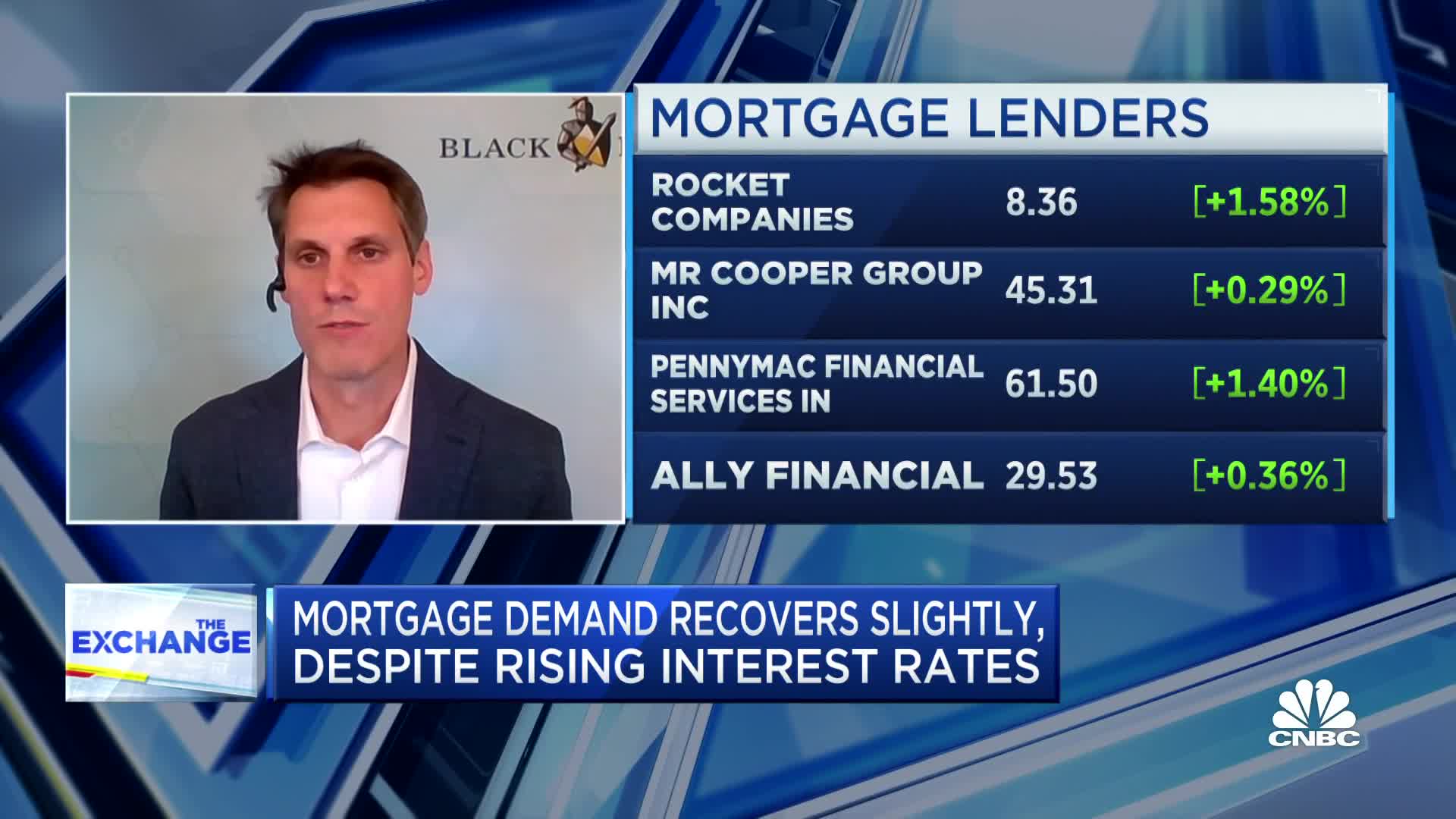
The Federal Reserve is widely expected to announce its eighth consecutive rate hike at this week’s policy meeting

This time, Fed officials likely will approve a 0.25 percentage point increase as inflation starts to ease, a more modest pace compared with earlier super-size moves in 2022.

Still, any boost in the benchmark rate means borrowers will pay even more interest on credit cards, student loans and other types of debt. On the flip side, savers could benefit from higher yields.

More from Personal Finance:
What is a ‘rolling recession’ and how does it impact you?
Almost half of Americans think we’re already in a recession
If you want higher pay, your chances may be better now

“The good news is that the worst is over,” said Yiming Ma, an assistant finance professor at Columbia University Business School.

The U.S. central bank is now knee-deep in a rate hike cycle that has raised its benchmark rate by 4.25 percentage points in less than a year.

Although inflation is still above the Fed’s 2% long-term target, pricing pressures have “come down substantially and the pace of rate hikes is going to slow,” Ma said.

The good news is that the worst is over.

Yiming Ma

assistant finance professor at Columbia University Business School

The goal remains to tame runaway inflation by increasing the cost of borrowing and effectively pump the brakes on the economy.

What the Fed’s rate hike means for you

The federal funds rate, which is set by the central bank, is the interest rate at which banks borrow and lend to one another overnight. Whether directly or indirectly, higher Fed rates influence borrowing costs for consumers and, to a lesser extent, the rates they earn on savings accounts.

Here’s a breakdown of how it works:

Credit cards

Since most credit cards have a variable interest rate, there’s a direct connection to the Fed’s benchmark. As the federal funds rate rises, the prime rate does, too, and credit card rates follow suit. Cardholders usually see the impact within a billing cycle or two.

After rising at the steepest annual pace ever, the average credit card rate is now 19.9%, on average — an all-time high. Along with the Fed’s commitment to keep raising its benchmark to combat inflation, credit card annual percentage rates will keep climbing, as well. 

Households are also increasingly leaning on credit to afford basic necessities, since incomes have not kept pace with inflation. This makes it even harder for the growing number of borrowers who carry a balance from month to month.

Here's how to get ahead of a rise in interest rates

“Credit card balances are rising at the same time credit card rates are at record highs; that’s a bad combination,” said Greg McBride, chief financial analyst at Bankrate.com.

If you currently have credit card debt, tap a lower-interest personal loan or 0% balance transfer card and refrain from putting additional purchases on credit unless you can pay the balance in full at the end of the month and even set some money aside, McBride advised.

Mortgages

Although 15-year and 30-year mortgage rates are fixed and tied to Treasury yields and the economy, anyone shopping for a new home has lost considerable purchasing power, partly because of inflation and the Fed’s policy moves.

“Despite what will likely be another rate hike from the Fed, mortgage rates could actually remain near where they are over the coming weeks, or even continue to trend down slightly,” said Jacob Channel, senior economist for LendingTree.

The average rate for a 30-year, fixed-rate mortgage currently sits at 6.4%, down from mid-November, when it peaked at 7.08%.

Still, “these relatively high rates, combined with persistently high home prices, mean that buying a home is still a challenge for many,” Channel added.

Adjustable-rate mortgages, or ARMs, and home equity lines of credit, or HELOCs, are pegged to the prime rate. As the federal funds rate rises, the prime rate does, as well, and these rates follow suit. Most ARMs adjust once a year, but a HELOC adjusts right away. Already, the average rate for a HELOC is up to 7.65% from 4.11% a year ago.

Auto loans

Even though auto loans are fixed, payments are getting bigger because the price for all cars is rising along with the interest rates on new loans. So if you are planning to buy a car, you’ll shell out more in the months ahead.

The average interest rate on a five-year new car loan is currently 6.18%, up from 3.96% at the beginning of 2022.

Boonchai Wedmakawand | Moment | Getty Images

“Elevated pricing coupled with repeated interest rate increases continue to inflate monthly loan payments,” Thomas King, president of the data and analytics division at J.D. Power, said in a statement.

Car shoppers with higher credit scores may be able to secure better loan terms or look to some used car models for better pricing.

Student loans

Federal student loan rates are also fixed, so most borrowers won’t be affected immediately by a rate hike. The interest rate on federal student loans taken out for the 2022-23 academic year already rose to 4.99%, up from 3.73% last year and 2.75% in 2020-21. Any loans disbursed after July 1 will likely be even higher.

Private student loans tend to have a variable rate tied to the Libor, prime or Treasury bill rates — and that means that, as the Fed raises rates, those borrowers will also pay more in interest. How much more, however, will vary with the benchmark.

For now, anyone with existing federal education debt will benefit from rates at 0% until the payment pause ends, which the Education Department expects to happen sometime this year.

Savings accounts

On the upside, the interest rates on some savings accounts are higher after a run of rate hikes.

While the Fed has no direct influence on deposit rates, the rates tend to be correlated to changes in the target federal funds rate. The savings account rates at some of the largest retail banks, which were near rock bottom during most of the Covid pandemic, are currently up to 0.33%, on average.

Guido Mieth | DigitalVision | Getty Images

Thanks, in part, to lower overhead expenses, top-yielding online savings account rates are as high as 4.35%, much higher than the average rate from a traditional, brick-and-mortar bank, according to Bankrate.

“If you are shopping around, you are finding the best returns since the great financial crisis. If you are not shopping around, you are still earning next to nothing,” McBride said.

Still, any money earning less than the rate of inflation loses purchasing power over time, and more households have less set aside, in general.

“The best advice is pick up a side hustle to bring in some additional income, even if it’s just temporary, and pay yourself first with a direct deposit into your savings account,” McBride advised. “That’s how you are going to create the pathway to be able to save.” 

Subscribe to CNBC on YouTube.


Source link

Federal Reserve likely to hike interest rates again. How to prepare Read More »

How To Get Comfortable Taking Risks (According To These Eight Entrepreneurs)

How To Get Comfortable Taking Risks (According To These Eight Entrepreneurs)


Different people have different comfort levels with risk-taking. Some are willing to jump out of an airplane just for the thrill of the adventure, while others may push themselves by reaching out to make a new friend. When it comes to entrepreneurship, your comfort level with risk may not necessarily prevent you from aspiring to be a business owner, but it can affect your success once you become one.

Business owners take risks every day, so those who may be more risk averse by nature may struggle to grow if they aren’t willing to take a chance every once in a while. Here, eight members of Young Entrepreneur Council offer their guidance on how risk-averse entrepreneurs can get more comfortable taking risks and why doing so is important to their long-term success.

1. Assess Risk From Both Emotional And Data-Based Perspectives

Nothing is black and white once it’s measured. Risk can be assessed from two primary perspectives: emotional or data-based. Emotional risk assessment involves considering subjective feelings or perceptions of risk and quantifying them to your best ability. Data-based risk assessment, on the other hand, involves using data and statistical analysis to quantitatively evaluate the likelihood and potential impact of an action or inaction. While the latter is more objective, having both measured in a spreadsheet in front of you will make it easier for your brain to differentiate the two, make better decisions and overcome any internal resistance. As a leader, you following this method will also help others overcome their fears without discounting the real human elements of decision-making. – Benji Rabhan, Aboutly

2. Leverage ‘Fear Testing’ And ‘Dream Testing’

Being a risk-averse entrepreneur is challenging. Being an entrepreneur in and of itself is a risk. I like the method of “fear testing” and “dream testing.” Fear testing is when you write down in the most vivid way you can the worst-case scenario and your battle plan for it. Dream testing is when you write about the best-possible-case scenario if you take your risk. Most entrepreneurs have enough optimism to realize that the promise of the dream is more powerful than the risk of the fear. You are smart enough to right the ship if it capsizes. You are capable enough to handle a worst-case scenario. Bet on yourself and take the leap. – Tyler Bray, TK Trailer Parts

3. Start By Taking Baby Steps

As an entrepreneur, you have to be open to taking calculated risks. If you are not willing to take calculated risks, then you will never reach your full potential or reach your business goals. So, one way to get more comfortable with risk overall is by taking baby steps. It’s best to start with small risks and work your way up from there. – Kristin Kimberly Marquet, Marquet Media, LLC

4. Push Yourself Personally Before Professionally

Learn to take risks personally first, then professionally. The more comfortable you become doing things outside the norm of your life comfort zone, the more you’ll learn to test the boundaries of your work comfort zone. Book a one-way ticket somewhere with no itinerary and figure it out. Go skydiving or climb a big mountain. Even just go to a movie alone. Push yourself personally to do what you would normally be afraid to do. When those uncomfortable things become your new normal, that will trickle into how you think about and operate in business. – Jonathan Ronzio, Trainual

5. Set Up A System Of Rewards And Consequences

I would suggest risk-averse entrepreneurs set up a system of rewards and consequences. This means setting measurable goals that, if achieved, will be rewarded, and if not, will incur some consequence. This system allows entrepreneurs to have a more precise measure of risk, as rewards and consequences provide tangible outcomes to observe the results of any decisions made. Entrepreneurs can use this system to learn from their mistakes and make better decisions in the future. Taking risks involves trying new methods, exploring new markets and pushing boundaries to drive innovation. Identifying and acting on opportunities is necessary if a business is to succeed in today’s competitive business environment. Taking risks is also a way to stay ahead of competitors and remain flexible and adaptive. – Jay Dahal, Machnet

6. Seek Out Networks Of Support

Seek out mentors and networks of other successful business owners who can provide support, guidance and advice. This is especially important for women in business and owners from under-resourced and LGBTQIA+ communities who may face additional challenges, such as discrimination and lack of access to capital, that can make it difficult for them to take risks. By building a supportive network of mentors and peers, business owners can become more confident, gain access to valuable resources and funding and obtain crucial advice and support that can help them navigate these challenges and flourish outside their comfort zone. Risk paralysis prevents us from attaining our highest levels of success, and with the right people around you, you can become comfortable with being uncomfortable. – Lauren Marsicano, Marsicano + Leyva PLLC

7. Shift Your Mindset Around Failure

Don’t take anything too personally. The biggest psychological turnoff for a would-be entrepreneur who’s risk averse is the fear of failure. However, if you shift your mindset to focus on failure being a learning opportunity rather than a personal setback, you won’t fear it as much. Because of that, you won’t fear risk so much. With great risk comes great reward after all, so get used to it. – Andy Karuza, NachoNacho

8. Understand How Risk Taking Differs From Making Bad Choices

Taking risks and making bad choices are not synonymous. If you’re risk-averse, the good news is that you can take calculated risks without feeling haphazard or close to failure. To become more comfortable taking risks, weighing out all possible situations and the pros and cons of the risk is crucial. By doing so, you can assess whether taking a chance is worth it. Ultimately, being a business leader is about taking risks, as there is no guaranteed success when leading a business. However, by approaching risk-taking in a controlled, calculated manner, you can mitigate the downside of taking risks and become more comfortable. – Jared Weitz, United Capital Source Inc.


Source link

How To Get Comfortable Taking Risks (According To These Eight Entrepreneurs) Read More »

How to Time Travel Back to 3% Rates on Your Next Buy

How to Time Travel Back to 3% Rates on Your Next Buy


With assumable mortgages, you can snag a three percent interest rate even in 2023’s high-interest environment. These loans exist everywhere around you—you could be sitting on an assumable loan without even knowing it! So, if there’s a way to pick up properties at all-time low-interest rates, why isn’t everyone taking advantage of assumable mortgages? We brought Craig O’Boyle from Assumption Solutions on to the show to explain.

Assumable mortgages aren’t new, but most real estate agents, loan brokers, and homebuyers have no idea what they are. In practice, an assumable mortgage allows a homebuyer to “assume” a seller’s loan with the same interest rate, contingencies, and principal paydown as the seller. This means you can walk into a home with significant equity, a low-interest rate, and the same fix-rated loan you’d be picking up from a bank. But, if you want an assumable mortgage, you’ll need to know where to find one.

Craig walks us through the ins and outs of assumable mortgages, where investors can find one, why most mortgage lenders and brokers don’t know about them, and one BIG caveat you’ll need to hear before you chase down this better financing. Want a lower rate and monthly payment with higher cash flow? Stick around; we’ll give you everything you need to know to find a low-interest assumable loan in your area!

Dave:
Hey, everyone. Welcome to On the Market. I’m your host, Dave Meyer, joined by Jamil Damji, who looks like he’s in a very dark and very… I don’t even know where… Where are you?

Jamil:
I’m in a penthouse in The Mirage in Las Vegas. For any of you that right now are shaking your head, or feeling like that’s very boujee, it is, but let me-

Dave:
It is.

Jamil:
Let me very quickly qualify the boujeeness of it. Pace was also in the penthouse in the Mirage. We’re both speaking here at a summit. However, his costs $1,000 a night, and mine was $200 a night, because I slipped the front desk girl a $50 bill, and asked her if there was any upgrades.

Dave:
That’s all it took?

Jamil:
That was it.

Dave:
Wow. Good tip from Jamil. That’s awesome. Well, nothing beats… It’s so dark where you are. Nothing beats the blackout shades available in Las Vegas. They know that you need to be able to sleep at any time of day, and it looks very comfy for you.

Jamil:
The blackout shades are a double-edged sword, because they are also called podcast killers.

Dave:
Did you have a rough night last night?

Jamil:
Not a rough night, just… It’s Vegas, man, all the things.

Dave:
It’s so much fun. All right, well, we’ve got a fun thing as well to talk about today. We have Craig O’Boyle, who’s joining us to talk about assumable mortgages, which I honestly… I sometimes just group a lot of creative finance together in my head, and it’s so helpful to really understand the differences and nuances between different types of creative financing. Honestly, I didn’t really know that there was a big difference between generalized assumable mortgages and sub two, which I know your buddy Pace is a big proponent of, but I learned a lot. Did you?

Jamil:
Man, the entire time, I’m sitting here thinking, “I don’t think Craig understands just how…” or he does, but he… I mean, I want to help Craig. I want to help Craig so much just shout about this from the rooftops, because this is one of those moments where I say, “O’Boyle, O’Boyle, O’Boyle.”

Dave:
You just can’t wait to blow this thing up.

Jamil:
I think that there’s a massive opportunity here, and I think that if marketed correctly, and if you educate agents in the right way, we could start creating more activity in the real estate market and so many homes that are sitting on the market stale with trade.

Dave:
Totally. That makes a lot of sense. Well, let’s just get into it then. We’re going to welcome on Craig O’Boyle, who’s visiting us and joining from Assumption Solutions. But first, we’re going to take a quick break.
Craig O’Boyle, welcome to On the Market. Thanks so much for being here.

Craig:
Thanks for having me.

Dave:
Can you tell our audience a little bit about yourself? Who are you, and what is your expertise related to real estate investing?

Craig:
Well, I got licensed in the real estate business as a real estate broker in October of 1995. I was 19 years old, so I’ve been in a little over 27 years. I guess the reason you have me here today though is during that time, I’ve sat at many closing table with buyers, and the topic of the assumability of certain mortgages would come up. It hadn’t made sense for a very long time, because rates have been dropping. About early to mid 2022, we went through a pretty big shift in the rate climate, and I started Assumption Solutions with a partner to help people understand and complete mortgage assumptions.

Dave:
All right. Well, very timely of you. Let’s just start at the top. What is an assumable mortgage?

Craig:
An assumable mortgage is the… Well, the only assumable mortgages that exist are government-backed mortgages. FHA, VA, and USDA mortgages can be assumed. What that means is when you purchase a property, instead of getting a new mortgage, you take over the existing mortgage at the existing rate and term that are in place. That was something that hasn’t really existed in the marketplace since the late ’80s, early 1990s. That’s because rates have effectively been dropping during that entire time. We’re now in a climate where rates have effectively doubled in just a few short months, and it makes sense.
The ones that used to be around used to have what they called non-qualifying assumables, which a non-qualifying assumable is just like what it sounds like. Anybody basically could say, “I want to take that over, jump in, and become responsible for it.” Those are all gone. Now, the only assumable mortgages are qualifying assumables, meaning you have to meet the criteria of the mortgage when it was taken out and put in place. We’re here to help people process those in transactions.

Jamil:
Essentially, what we’re talking about is a creative solution to purchasing a property, but by doing it by the book. We’re actually going to notify the bank. We’re going to let the bank… We’re going to say, “Hey, guys, I’m taking over this property. I’m not doing it subject to… I’m actually going to take over this property. I’m going to qualify for the mortgage so that this due on sale gorilla that for me is the biggest problem in subject two is appeased and fed.” Is that essentially, Craig, the way that the audience should interpret this concept of assumable mortgage?

Craig:
Technically, this is… Unless it’s some private financing or something, this is really the only legal option out there for taking over mortgage. When you take it over, it completely releases the seller and original note holder from liability and responsibility, and transfers it to the new buyer.

Jamil:
How likely is the bank to say yes?

Craig:
Well, so in our processing of this right now, the biggest challenge that we face is the servicers really don’t even understand it themselves. They haven’t been doing these. They don’t have departments for these, so we find that we are actually doing quite a bit of education on their side. We see them putting out information that is patently false and incorrect often to both the owner of the curb property, and the potential buyer of the property. So, in processing these, we’re trying to educate them because we actually see a lot of potential liability to servicers for putting out wrong information to people.
Because if you basically tell a guy who’s got a deal, “Oh, this can’t be done,” even though it’s part of the program that was put in place by VA, FHA, USDA as a benefit to those buyers, you tell them it can’t be done, and then they can’t sell their property, or they lose money. Well, I could see an attorney coming along at some point, and filing some lawsuit against them. We’re trying to straighten that out. We’re using a lot of resources that these government organizations actually have out there about how it should work, but it’s a challenge. There’s a lot of craziness out in this right now because it’s new.

Dave:
Craig, just so I fully understand this, assuming a mortgage is basically when the buyer takes over the existing mortgage of the seller. There’s two ways to do that. One is subject two, but the problem, as Jamil pointed out, with subject two is that it’s not necessarily with the bank’s blessing. There’s this clause in most mortgages called the due on sale clause, where basically if the bank catches wind of what’s happened, and for whatever reason decide they want to say, “You owe me all the loan balance,” they can do that. That is within their rights.
Then what you’re doing with these qualifying assumable mortgages is all above board, and so it’s just… It’s like subject two, but it’s a little bit less risky. Is that the appeal above subject two?

Craig:
Well, if you’re the seller of the property, it’s the best thing you can do if you do it. Now, the challenge is if you’ve got a conventional loan, you don’t have the option. If you don’t want to get rid of that existing note on a conventional scenario, then I guess your only option is subject two. But if you’re the seller of the property, and you can sell it, and you can no longer be on that note, it’s a huge benefit. Because if you’re going on in the future to buy something, it’s not going to show up on your credit, on your DTI, or any of those issues, because you have been released.
Not to mention the issue with if the guy that you let take it over has a shady nature, or doesn’t come through on making those payments, and it goes to foreclosure, well, that loss is coming on you, because you’re still on the hook On that note as far as the lender’s concerned,

Dave:
Craig, that’s a great point. As an investor, you often think of the implications as the buyer. But as a seller too, it obviously makes more sense.

Jamil:
What’s interesting is in Canada, which is where I began my journey in real estate investing, they have actually outlawed assumable mortgages. The reason for it is because the banks and the government in Canada have a very, very close relationship. So, it’s safe to say that in the long-term scheme of the bank’s interest, this doesn’t meet the top of the pile. Given that, who are the advocates, or who are the processors for the assumable mortgage? Because I could guarantee that the bank is not going to put out a person, and they’re not going to lend you a loan originator to help with this process, especially if we’re talking about assuming a mortgage that’s 3.5%, where right now, they’re making money hand over fist at six or seven.
What does that process look like, and what army of people do you need to bring to the closing table in order to process and actually create this situation from start to finish?

Craig:
Sure. You’re right, there’s low motivation on the servicer side. The people that approve these existing mortgage servicer is the one who ultimately has to qualify, receive the packet, and process this. Their motivation is not high. A lot of people that we work with and train are real estate agents, because they are on the front lines with clients who have these marketable assets that they’re trying to sell. So, we educate them about the process, and then when they have a deal, where the buyer and the seller’s going to do it, we onboard it, and we process it. We deal directly with the servicer.
A lot of the agents are out there going to mortgage brokers to try and get information. Mortgage brokers, mortgage bankers, loan originators, they have zero interest in being involved in these, because they don’t make any money. It’s for sale by owners with real estate agents. You’re generally not part of the equation.

Jamil:
Who’s going to get greased to make this happen? Essentially, what I’m trying to understand is do I got to pay the loan originator? Do I got to… Do I need to make sure that the real estate agent makes their commission?

Craig:
Well, you do pay us as at Assumption Solutions. We charge a fee to both the buyer and seller to get a completed assumption. The servicers do have the right to collect a fee for processing these. We’re finding that truthfully, on average, they’re somewhere between $1,000 and $2,000. That’s a lot less than a loan originator would collect at a new origination, so it’s lower. It’s not as much motivation, but our company is born out of something my partner did in the last downturn, where he created a company that effectively processed short sales on behalf of a buyer and seller to make a real estate agent’s life easier to get more deals done, and dealt with the servicers to get short sales done.
Now, this is a lot less of a pain point than that. They were getting those done, but I mean, the servicers in those cases, it was like, “How do we limit our loss?” At least in this scenario, it’s like, “We can make a little money. We keep a loan that’s on the books going forward,” but they’re not originating a new loan at double the interest rate, so not a ton of motivation. I think that’s a little bit behind the fact that they don’t have the process in place and the staff in place, and even the knowledge base that is in place to do these right yet.
We are trying to shorten that curve, and make it simpler, but it’s a process that takes, once you start it, anywhere from 60 to 90 days. Now, the short sale process when it was in the heyday, I mean, it could take six to 12 months. We think it’s still better than that timeframe.

Dave:
Because it takes 60 to 90 days, is the type of seller and therefore the type of property that you see go through these transactions, are there unique characteristics about it? Are these distressed properties, or is there something unique about them?

Craig:
You’re actually not going to be able to complete one on a distressed property.

Dave:
Oh, because it doesn’t qualify?

Craig:
If the loan is not current, it’s very unlikely that the servicer will allow it to be assumed. There’s important things that your listeners should know, especially since you guys are all about the investment side of the world. The only people who can qualify to assume these mortgages are owner occupants. So if you’re coming at this from an investment standpoint, you probably need to be looking at, “I’m going to be an investor who occupies and then turns around and goes to an investment down the road after a significant period of time so that that loan is taken over by you as an owner occupant.”

Jamil:
I think the main concept here is that the banks are wanting to make sure that there’s not a straw buyer situation, or you’re not the straw buyer, and saying, “I’m going to live in this.” Then seven months or 10 months or a year down the road, you say, “I changed my mind.”

Craig:
Well, with regards to a lot of those loans, number one, it’s about intent. It’s hard to put a timeframe on intent, but if you are in there for 30 days, and then it’s a rental, I think you could be in some trouble, but a year. I mean, just talking about VA loans benefit to a veteran. Veterans transfer all the time around the country with their orders, so it’s very common to see a guy get a house, VA loan, and then the army sends him somewhere 6, 9, 12, 18 months later, and it turns into a rental. Matter of fact, in my career, I’ve helped several people.
Gosh, I remember dealing with a gal who she was retiring. She was stationed in the Pentagon, and she was liquidating 10 or 12 homes around the country that she had bought everywhere she went, and was netting out a couple million dollars. This was back in probably the early 2000s. The key with regards to assuming is intent, and if your intent is not to occupy that property when you take it over, then you’re in trouble with loan fraud.

Dave:
Well, would this work with any residential mortgage? Could you do this with a duplex or a quadplex, for example, live in one unit, and live in the others?

Craig:
Let’s take FHA, specifically. FHA, you can do multi-family properties up to one to four units, where you live in one, and rent the others out. I actually connected with a gentleman in the Bigger podcast’s… Is it chat area or something in there who had some questions, because he had a property in Miami that he bought it, lived in. It was a fourplex, lived in it and was looking to sell it, and was getting a lot of people interest when they put it on the market, and mentioned that it was assumable. The challenge is all the people that were coming at them, nobody wanted to live in one of the units.
I said, “I look at it this way. When you’re marketing something to sell, it’s one more asset to the property, because when I put a home for sale, I’m marketing all the assets about it.” I’m marketing if it’s got updates like a new kitchen, if it’s got a great lot, if it’s got a great view, and I’m marketing if it’s got an assumed mortgage. It doesn’t mean it’ll sell that way, but it’s one more asset to market when you’re selling something. If you’re buying something, and if you can go that route, why not jump on it and save?
I mean, if you look at rates, your average $400,000 mortgage… I think in November of 2021, the rates were about 3.1%. By November of 2022, they’re about seven-ish, right? The difference in payment is $953 a month.

Jamil:
Over the life of the mortgage, Craig, what I want to really understand and impart to the listeners right now is what is the value of the note, and can I create an opportunity for me as a homeowner? Because you’ve been using some very interesting language when you call the note the asset, because he’s talking about, “I’ve got a renovated kitchen. I’ve got a renovated bathroom.” These are all things that add or force appreciation to a deal. You’ve got 3.5% mortgage attached to your property. Right now, the market says seven. So over the life of this mortgage, there’s a possibility of that gap costing hundreds of thousands of dollars.
So, what is the value, and how much could a homeowner add to their situation by saying, “Look, I’ve got this beautiful asset that I’m going to allow you to take over or assume the language is beautiful. Assume in this sale, but I want this amount of money as a premium in order to allow you to do it.” What’s the value of this asset, Craig? I think that there’s a lot of people right now. The bells are ringing in their minds, because essentially, the retail real estate market is slowed substantially. If you’re a seller right now, and you’ve got an assumable mortgage, now, you’ve got this gorgeous, beautiful essential asset that you can sell to the world.
What is the value of this, and can you rightfully market it in your listing verbiage?

Craig:
That’s a great question. I think the value of the asset increases the more people know about it, understand it. Right now, when I talk to people, my point is that if you’ve got two homes next to each other, and they’re all the same condition, they got the same lot. They got the same view. One’s got this conventional non-assumable loan on it. One’s got this VA or FHA assumable loan on it. Which one should sell for more? In theory, it should be the assumable, because like I said, at 400, you save $900 a month. Although I’m not sure it’s easy to quantify it just that you should list your home higher.
In the market that we’re in, I look at it as you might just be able to sell faster. That means if you can sell faster, technically, you probably sell for more. Because if your home has been on the market for 60, 90, 180 days, you’re likely chipping away at your list price over time. Now, the more this spreads, and the more people start hunting it, the more they sell faster, or you’re able to say, “Now, we can sell these for more, because they’re out there,” but there are a couple other things that make this process a little bit complicated that it is also a reason for me. It’s difficult to say that yes, it’s worth more.
Let’s talk about what we call the assumption gap. You have the purchase price at 500, and you have a mortgage that exists on the property of 450. We call the difference between those two your assumption gap, which is effectively what you look at as your down payment. The big question that I get from everybody is, “Can you finance that?” Well, there’s no guideline with the government organizations that you can’t get secondary financing, but what we have found is, number one, good luck finding a lender that’s looking to jump into a second mortgage position in the climate that we’re in.
Then number two, if you are able to find it, it’s up to the servicer who’s approving the assumption whether or not they’ll allow it. Everyone we’ve been involved with has been a cash down payment to cover the gap. Is there an opportunity there for a second, whether it’s an owner carry, whether it’s all these other things? Potentially, but we’re not out there telling people that that is an easy thing to accomplish, because we haven’t seen it done yet. So, when you have that gap, it does limit the pool a little bit, so you don’t have as many buyers.
Even though you have this asset to sell, you don’t have as many buyers, because if you think of a traditional VA, FHA loan, they’re designed to be low down payment entry points for buyers, for people that use them. Now, what I’m finding is a lot of the people that are going through these, they’re what I call the move-up person, right? They’re selling something. They’re coming out of something. They’re jumping into these products, because of the savings and because of the long-term makes sense. I mean, we’ve even seen…
The best one I’ve seen, the one that interests me the most that we’ve processed that I’m seeing is we have a loan that somebody’s taken over that’s 15 years old. That means it’s half paid down. It’s a low rate. It’s low below what you could get today, but I just love the fact, and the gap is half a million dollars, but I love the fact that a mortgage amortization, it’s so front loaded in interest. Guys jumping in at a low rate, where most of the interest on the loan has been paid. I love it

Jamil:
I mean, essentially, you’re at one of those very unicorn-type situations where you’re paying down primarily principle at this point. If you’re halfway through, and, like you said, the amortization schedule, if you look at any of that, and if you look at the way that those loans are front loaded, it’s sickening. You realize just how much money you’ve burnt.

Craig:
Well, they know most people sell within five to 10 years.

Jamil:
I mean, you essentially are a renter for the first 10 years of a house on a purchase. This is just incredibly timely and what a wonderful way to provide a solution for people to, a, sell their property, and b, as buyers come in and get financing, that is just unavailable.

Dave:
Craig, I’m curious. If you are a buyer who’s willing to meet these conditions, owner occupy… In the BiggerPockets world, we call an owner-occupied investment house hacking. So if you’re willing to do a house hack, how do you look for this? I get that you’re saying that it’s up to the buyer, excuse me, the seller and the seller’s agent to market it. But if I am bought in and want to find one of these, what’s the best way to do that?

Craig:
Our efforts and training with real estate agents, number one, we’re training people how to expose this asset that they’re marketing. In Colorado, Colorado Springs specifically where I’m located, our MLS system has input fields for this, where you can input one that’s an assumable loan, and then details about the loan, the PITI payment, the loan balance, the type of loan, all that kind of stuff. Nobody has used those fields in our MLS forever, so they don’t even know that. A lot of the agents don’t even know… I mean, most of the agents in the country have been licensed less than 10 years, truthfully.
So, we’re teaching them how to put that in there, how to get it marketed. Unfortunately, a lot of the MLS systems don’t pump that section of data out to public fields. I can build a client a search when they’re looking for a property in our MLS system, and it emails them stuff that meets that criteria. So if you’re looking for X, I can send it to you, but then you’d probably have to talk to me to see it, because the visualization of that criteria is not on my client’s side, unfortunately. I’d love to see some changes in that. We’re working on a lot of areas of contact for getting that out there.
Let’s just talk about finding stuff that maybe isn’t on the market that has this potentially. Because we’re training agents to grow their business by finding those, there’s a lot of data harvesting mailing list things that you can scrub for when things sold, what type of loans they have on them. All that kind of thing is out there. But in our local market, because we’ve done so much training, we’re probably the most robust with this in the country. I keep a search open. I can see every day a couple more assumable loans on the market, because in Colorado Springs, we have a huge military presence with multiple military bases here.
Between March of 2020 and March of 2022, we had 14,000 VA loans alone in our county, either originated or refinanced, which means their rates are most likely below 3.5%, some as low as two and a quarter, and that’s one county. So, there’s a ton out there. These products make up approximately, depending on your location, between 20% and 30% of the marketplace. The more military related your community or your area is, obviously, the more you have because of VA there, but USDA, I think, is it’s more of a rural product, and it’s about 1% of the market.
Then FHA can be used by anybody out there. So finding them, you really need to hunt down somebody who has access to real estate listings, but also who knows this product. Like I said, we’re doing education on this all over the country with agents, because we can process these anywhere in the country.

Dave:
That’s super helpful advice,

Jamil:
Very helpful. My mind is just full of so many opportunities that derive from, a, awareness of the availability of your note having this clause in it, and secondly, being able to execute on that. How does somebody in a reasonable way find out whether or not their mortgage is assumable?

Craig:
Well, it’s very obvious if you’re a veteran, and you took out a VA loan, right? Veterans know their benefits. If you were a first time home buyer, and you did a low downpayment program such as 3.5%, you’re most likely FHA. Now, if you don’t remember what you have, usually, you can go to something like a title company, and run an ownership encumbrance report, which will show you the debts filed against your property. VA and FHA are pretty clear on their deed of trust that they’re VA and FHA all over them. USDA, I mean, same. USDA and FHA are almost identical, so same thing there.
If you used a conventional product, and your downpayment when you bought your home was over 3.5%, most likely, it’s not assumable. Now, I do want to jump in with one thing that is important to talk about with VA loans. VA is a veteran benefit. It’s only a loan product that is available to a veteran when they take it out new. However, VA can be assumed by a non-veteran, but there’s something that’s important to know with that. VA’s process for giving loans is determining the level of eligibility that a veteran has available to them.
So, it’s like… You could do it on VA’s website, but it’s complicated, so I can’t… It’s not a dollar amount. That’s not true. It’s hard to say. There is a cap, but your eligibility’s it’s regional based. It’s got a lot of factors to it. But if you let another veteran assume your VA loan, not only are you released from the liability in the assumption, but your eligibility is released as well. Meaning, you can take 100% of your eligibility to get another VA loan in the future. If you go veteran to non-veteran, the eligibility portion that you used in that loan is stuck to that loan until it’s gone.
We see scenarios where for some veterans, they won’t do anything except veteran to veteran assumptions. However, we see some scenarios where it makes sense. The veteran’s just like, “I don’t care.” The big one I talked about, where it’s 15-year old note, the person selling that home is rather up an age. They’re getting a lot of equity out of the house. They’re actually… I believe they’re downgrading in what they’re going into, so they didn’t need to use a VA loan again. We’ve seen scenarios where some veterans are like, “I just need out of the house. I just want it sold. Whatever sells it first, I don’t care. I’m still getting equity, so I’ll go get a conventional loan in the future.”
There is a caveat to that. With the FHA, USDA, there’s no eligibility issues there at all.

Dave:
Awesome. That’s great. Well, Craig, this has been super helpful. I’m curious, do you have any other tips for our listeners just when it comes to assumable mortgage or just navigating the loan climate in 2023 before we get out of here?

Craig:
I mean, the best tip I can have if you want to assume something is it’s really good to have your penny saved up, either you’re coming out of a property, and you’ve got cash to put down, or you’ve been banking some money away. If you’re looking to buy something, why not capitalize on that low rate? That’s probably never going to come back. I mean, unless the government is foolish enough to think that just printing money is a great thing, hopefully they’ve learned their lesson on that. I don’t know. We’ll see.
But if you’ve got some assets, or you’ve got some cash saved, and you’re looking to get into something as cheap as possible that down the road maybe it makes the sense to turn into a rental, well, it’ll cash flow a heck of a lot better with a two and a quarter rate than it will with a six and a quarter rate.

Dave:
All right. Well, that’s great advice. Craig, thank you so much for joining us. For people who want to learn more about you or potentially work with you and your company, where should they contact you?

Craig:
Our company is Assumption Solutions. Our website is assumptionsolutions.com. We have lots of training. We have lots of info. We have lots of stuff that’s good for whether or not you’re a home buyer or home seller or real estate agent.

Dave:
All right, great. Well, thank you so much, Craig, for being here. We appreciate your time.

Craig:
Thank you.

Jamil:
Take care.

Dave:
Jamil, what’d you think? This seems right up your alley.

Jamil:
Oh my gosh, there’s so much right now that my mind is… I honestly feel like I need to call Craig, and I need to figure out how to bring this opportunity to America. Right now, we’re sitting on this massive opportunity, where people are really struggling with affordability. When you’ve got an assumable mortgage, and a reasonable seller, and an educated agent, and a buyer who obviously wants to rewind and go back in time, and get that opportunity-

Dave:
Now, you could do it. You could go back in time.

Jamil:
Yes. The assumable mortgage is the DeLorean of lending products.

Dave:
Yes, it is. Yeah, it’s amazing. It’s super cool.

Jamil:
Yes.

Dave:
I mean, I guess the only thing I was a little bummed about was to hear that it’s only for owner occupants.

Jamil:
That and then, secondly, just the qualification process and the unmotivated nature of the whole process, because here’s the thing. This is where I always find inefficiencies happen is when we don’t pay people, or people aren’t being monetized or being taken care of through the process.

Dave:
This is not incentivized.

Jamil:
They’re not incentivized. So then if you ever work in a situation, or if you’ve ever tried to navigate a situation where people aren’t incentivized, I can help everybody right now understand what that feels like. Go to a government office, and try to do something.

Dave:
Totally.

Jamil:
You’ll see that lack of motivation from everybody working there, because there’s no incentivization. So, that piece, I feel like, is going to create so much clunkiness, or make this more difficult than we might think that it could be.

Dave:
Than it has to be. This seems like it could be easier, and we would all wish that is what would just happen is the easiest thing. But to me, this just seems like tailor-made for people who want to make their first investment.

Jamil:
Agreed.

Dave:
If you have saved up some money, and you’re sitting around thinking like, “How do I get in? It’s expensive.” It’s like, listen, this is for people who want to owner occupy. We all know house hacking is one of if not the best way for people to get started in the first place. You can house hack, plus get an interest rate from a year ago that is going to increase… They said for a $400,000 home, Craig just said that that’s going to increase your monthly cash flow by nearly $1,000. That’s probably more than most people pay in rent currently.

Jamil:
I know.

Dave:
That would be a huge saving. So if you are new to real estate investing, I think that is huge. I think the other main lesson here is through the BiggerPockets conference and a few other things, I’ve learned that a lot of our audience here on On the Market is real estate agents. To me, this is just a goldmine for real estate agents.

Jamil:
Big time. Big time.

Dave:
If you have a selling contract for a qualifying mortgage, this is worth. They just said it’s worth $12,000 a year. For an owner occupant, if this is a home buyer coming in to buy this, they stay on average seven years. Seven times 12, what’s that? $84,000, that’s $84,000 on average that it would be worth for $400,000 homes.

Jamil:
That’s the entire life of the mortgage?

Dave:
No, that’s seven years. That’s the average amount of time people stay in a mortgage. But if they’re going to stay longer, it’s worth even more. It just seems like… Know what you got. If you’re an agent or a seller, if you have one of these qualified mortgage, that is extremely valuable.

Jamil:
I couldn’t agree with you more, Dave. I feel like this is the peacock feathers of a property right now. I think that there’s a massive opportunity, especially with real estate agents feeling the crunch right now. A lot of you might be listening to this, and sitting on a house right now where you haven’t had an easy time selling it. You’ve got a seller who has a terrible situation, and wants to sell or whatever’s going on, and there’s this gap in information and execution. Real estate agents that are listening to this, please do some homework. Get ahold of Craig, and see if there’s an opportunity there.

Dave:
Absolutely. Great advice. Well, thanks a lot, man. We appreciate you being here. For anyone who wants to connect with you, where should they do that?

Jamil:
Well, I’m always findable on Instagram at J-D-A-M-J-I. That’s @jdamji. Also, I have a YouTube channel where I go live and help people underwrite and learn all about the real estate investing that I do, which is a niche called wholesale. You can find me at youtube.com/jamildamji.

Dave:
Awesome. If you have any questions for me, or thoughts about this episode, please reach out to me on Instagram, where I am @thedatadeli. Thank you all for listening. We’ll see you next time for On The Market.
On The Market is created by me, Dave Meyer, and Kailyn Bennett, produced by Kailyn Bennett, editing by Joel Esparza and Onyx Media, researched by Pooja Jindal, and a big thanks to the entire BiggerPockets team. The content on the show On the Market are opinions only. All listeners should independently verify data points, opinions, and investment strategies.


Interested in learning more about today’s sponsors or becoming a BiggerPockets partner yourself? Check out our sponsor page!

Note By BiggerPockets: These are opinions written by the author and do not necessarily represent the opinions of BiggerPockets.


Source link

How to Time Travel Back to 3% Rates on Your Next Buy Read More »

Beyoncé and a 0k-a-night suite at Atlantis The Royal

Beyoncé and a $100k-a-night suite at Atlantis The Royal


Beyoncé performs on stage headlining the Grand Reveal of Dubai’s newest luxury hotel, Atlantis The Royal on January 21, 2023 in Dubai, United Arab Emirates.

Mason Poole/parkwood Media | Getty Images Entertainment | Getty Images

DUBAI, United Arab Emirates — It was the talk of the town. Of the entire country, really — and then some.

Beyoncé was performing her first live concert in more than four years at a private event for the opening of Atlantis The Royal, a $1.4 billion luxury hotel and residential project eight years in the making, located on the outer ring of Dubai’s Palm Jumeirah, a man-made beach archipelago in the Arabian Sea. The megastar was paid a reported $24 million for the night.

The concert, which took place over the weekend, was the grand finale event of the hotel’s “grand reveal,” whose 1,500 guests included model Kendall Jenner, rapper Jay-Z and a host of other influencers, socialites and royals.

The event, footage of which poured onto social media, showed off some of the hotel’s larger-than-life features including a fire and water fountain that coordinated with a light and fireworks show for the Beyoncé performance, eight new celebrity chef restaurants, and a seemingly endless number of infinity pools.

The stats themselves are pretty jaw-dropping. The hotel, 43 storys of what look like gigantic layered Jenga blocks, is home to 795 rooms and suites, 17 restaurants and bars and a whopping 92 swimming pools. Rooms go for an average rate of $1,000 per night, and Atlantis The Royal’s top-end suite costs a casual $100,000 per night. That’s where Beyoncé reportedly stayed.

The 99-acre property built by luxury developed Kerzner International also hosts 231 ultra-luxury residences — all of which have already been sold.

Models pose during the Ivy Park show at Nobu by the Beach during the Grand Reveal Weekend for Atlantis The Royal, Dubai’s new ultra-luxury hotel on January 22, 2023 in Dubai, United Arab Emirates.

Kevin Mazur | Getty Images Entertainment | Getty Images

“Following the gig, more fireworks than I’d ever seen filled the sky with explosions,” City AM’s Steve Dinneen wrote of the event. “This joyous, unabashed display of wealth is incredibly on brand for a city that prides itself on going bigger and higher than anyone has gone before.”

Atlantis The Royal’s launch is itself somewhat symbolic of Dubai’s meteoric economic recovery since the coronavirus pandemic and the emirate’s drive to become one of the world’s top three destinations for tourism, luxury and business.

Already well-known for its often over-the-top opulence, glitzy skyscrapers and record-breaking creations —like the world’s tallest building, largest Ferris wheel and biggest mall — the city that ballooned from a small fishing town into a teeming metropolis in just the last few decades seems to be making a new statement.

“Igniting the next chapter of the Atlantis legacy,” Atlantis Dubai wrote in an official tweet along with a promotional video of the opening fireworks.

Unlike the grand opening of Dubai’s first Atlantis luxury hotel, Atlantis the Palm, in 2008 — which preceded the worst financial crash Dubai has seen to date — the UAE’s commercial and tourism capital seems to be confident that this time, economic growth is here to stay.

“We have ambitious growth targets for the sector over the next ten years,” Sheikh Mohammed bin Rashid, the ruler of Dubai, said in a statement after touring the property. “The UAE and Dubai seek to build on their deep partnerships with the private sector to strengthen the country’s status as the world’s most popular destination for international tourists.”

“Our steadfast commitment to building an exceptionally safe and stable environment and a world-class infrastructure over the last few decades has created the foundations for a remarkable future,” he added.

Beyoncé performs on stage headlining the Grand Reveal of Dubai’s newest luxury hotel, Atlantis The Royal on January 21, 2023 in Dubai, United Arab Emirates.

Kevin Mazur | Getty Images Entertainment | Getty Images

Indeed, economic analysts note a raft of new reforms and regulations made to reduce risk and enable more people to work and live in the majority-expat city, including a remote worker visa, a “golden visa” for high-net worth individuals, liberalizing social reforms and 100% business ownership for foreigners.

Karim Jetha, chief investment officer at Dubai-based asset management firm Longdean Capital, noted the parallels between the new Atlantis hotel’s launch and its sister hotel in 2008, whose opening preceded the economic crash.

“With an uncertain global economic outlook, possibility of recession and a buoyant property market, it’s natural to ask whether history is repeating itself with the opening of Atlantis The Royal,” he told CNBC.

But despite this, he said, “there are good reasons to believe the economy is in a much stronger position this time.” He noted the oil-rich Gulf region’s windfall of higher hydrocarbon prices, and Dubai’s growth as a financial center.

“Dubai has seen a continued influx of wealthy expatriates as well as digital nomads attracted by the quality of life and availability of visas,” Jetha said. “Dubai is also growing in prominence as a financial services hub as underscored by several hedge funds opening up offices there.”

The swimming pool of a luxury villa for sale on Dubai’s Palm Jumeirah, on May 19, 2021.

GIUSEPPE CACACE | AFP via Getty Images

Luxury properties have been selling like hotcakes, aided by the deluge of wealthy Russians and citizens of other ex-Soviet states moving to Dubai to evade the instability and Western sanctions brought on by Russia’s invasion of Ukraine.

The last year registered a record 219 sales in homes classified as “ultra-prime,” or selling for $10 million and higher, according to property firm Knight Frank. That’s more than the cumulative total recorded in the decade between 2010 and 2020.

“The performance at the top of the market clearly demonstrates the arrival of Dubai as a luxury hub to rival long established markets elsewhere, with no sign to suggest a slowdown in the seemingly relentless demand from global ultra-high-net-worth-individuals,” Faisal Durrani, the firm’s head of Middle East research, said in a Jan. 16 press release.

Among the Gulf region’s wealthy, he said, “the UAE remains the second most likely target for a home purchase this year, behind the UK.”

The risk remains that many people in Dubai who don’t fall into the category of very wealthy may be priced out of the market; people who form much of the emirate’s economy. Numerous expats are already being forced to downsize as landlords ask for rent increases upward of 50%.

As property and rental prices continue to climb, Dubai’s dramatic recovery and continuing ascent — most recently highlighted by the lavish opening of Atlantis The Royal — may yet leave some of its residents behind.


Source link

Beyoncé and a $100k-a-night suite at Atlantis The Royal Read More »

Starting A DEI Consulting Firm For His Second Act

Starting A DEI Consulting Firm For His Second Act


After Stan Kimer retired from IBM 10 years ago, with 31 years tenure at the company, he formed a diversity training and consulting firm. Called Total Engagement Consulting by Kimer, the Raleigh, NC, business hummed along nicely for a while, until Covid hit, and demand almost totally dried up. Then came the murder of George Floyd and the national racial reckoning that followed, and quite suddenly the phone started ringing off the hook—and continues to do so today. “I went from almost nothing to operating more than full-time,” he says.

Becoming an Entrepreneur

As part of his benefits package, Kimer had access to a year of career transition coaching that was available to retirees. He decided to make the most of the service and work with a coach on a plan he’d long pondered—becoming an entrepreneur. “Working at IBM, I was a little fish in a huge pond,” he says. “I viewed this opportunity as challenge to myself.”

During those three decades at IBM, Kimer had done a variety of jobs, from marketing brand manager to director of sales operations. But one of his gigs was a four-year stint as corporate diversity manager for gay, lesbian, bisexual and transgender diversity. He’d found it particularly rewarding. “It was the most fun I ever had in a job,” he says. That, he decided, would be the remit of his new company.

So he set out his shingle, planning to work part time. Little by little, Kimer added to his expertise, what he calls “my portfolio of diversity knowledge.” He helped one company with its first employee to go through a gender transition. He worked with another on diversity training. He developed workshops on unconscious bias.

Going Beyond Statements

The business grew steadily until March, 2020, when it fell off a proverbial cliff. Then came the killing of George Floyd. “All of a sudden there was immense interest from companies in DEI training and strategy,” he says. “I had clients who realized they couldn’t just issue a statement. They had to start changing their own internal practices.” That interest has only increased since then, with the 2021 murders in Atlanta of eight people, six of whom were women of Asian descent, and last May’s attack at a Buffalo, NY, grocery store in a mostly Black neighborhood, during which 10 people were killed and three wounded, among other tragedies.

He’s also added more services, like helping companies launch employee resource groups and diversity councils. The latter are groups of 15 or so employees who volunteer to help drive a company’s diversity strategy. And he’s working on setting up inclusive recruiting programs.

Other Projects

About ten years ago, on a trip to Kenya, Kimer learned about the struggles of the people of Mtito Andei, Kenya, and the Kamba tribe, who faced high rates of poverty and HIV infection. With that in mind, he donated seed money to build the Kimer Kamba Cultural Center, which provides vocational training, HIV prevention education and help with boosting economic growth through cultural tourism.

Then there’s the figure skating. About seven years ago, at age 59, Kimer took up the sport. He recently won a gold medal in the bronze level for skaters age 66 and older at the U.S. Adult National Championships. He says he’s amassed three clients through contacts he’s made at skating events.


Source link

Starting A DEI Consulting Firm For His Second Act Read More »

Why Interest Rates Don’t Matter As Much as You Think

Why Interest Rates Don’t Matter As Much as You Think


How important are mortgage rates to real estate investing? Should I take out as much depreciation as possible to lower my taxes? And what should I do when my DTI (debt-to-income) ratio is too high? You’ve got the questions, and David Greene has the answers! On this episode of Seeing Greene, David goes high-level, getting into the topics like real estate tax benefits, return on equity (ROE), and why loans and leverage are riskier than most rookies think!

We’ve got questions from house hackers, BRRRRers, multifamily and commercial investors, and more on this week’s Seeing Greene. First, we hear from a college student trying to house hack in an expensive housing market. Then, a family who has outgrown their space and wants to use creative financing to buy their next primary residence. And finally, a mother concerned that real estate investing could affect her children’s stability. Don’t know what you’d do in these situations? Then, stick around! David’s got the answers!

Want to ask David a question? If so, submit your question here so David can answer it on the next episode of Seeing Greene. Hop on the BiggerPockets forums and ask other investors their take, or follow David on Instagram to see when he’s going live so you can hop on a live Q&A and get your question answered on the spot!

David:
This is the BiggerPockets Podcast show 720. Leverage is great. It’s not great for everybody. It’s meant for people that understand how to use it. There’s a lot of things in life that are like this. Okay. Cars are great, but we don’t let nine-year-olds drive them. We don’t even let 25-year-olds drive them if they haven’t passed a driver’s safety course and passed the test and understand the rules of the road. You got to earn the right to drive. You got to earn the right to play with fire, right. There’s people that use fire in their jobs. There’s welders. There’s different types of people that use heat to conduct certain things, but you don’t just give them the tool and let them go play with it right off the bat. You got to earn that right. Leverage is very similar.
What’s up, everyone? This is David Greene, your host of the BiggerPockets Real Estate Podcast, here today with a Seeing Greene episode for your viewing and listening pleasure. If you’re listening [inaudible 00:00:50] on a podcast, that’s awesome. I appreciate that. But you can also check us out on YouTube, if you want to see what I look like. I’m often told that I am taller in real life than what people thought. I don’t know if that’s a compliment or if what they’re trying to say is I have a shrill tiny voice that makes me sound like I’m four foot two. Not sure which way to take it. So let me know, when you watch me on YouTube, do I look like what you pictured in your head? It’s always fun when you see what someone looks like, and it’s very, very different than what you were expecting, and you can never really look at them the same way again.
In today’s show, we’ve got some really cool stuff. We talk about how to continue house hacking even when your debt-to-income ratio can start to shrink from owning all the new real estate. We talk about if a property that is currently owned should be rented out or if they should stay in that property and not buy a new one. We get into if someone should save $300,000 in taxes or if they should avoid that and save that money in the future, all that and more in today’s Seeing Greene episode. Now, if you’ve never listened to one of these episodes, let me just break it down for you real quick. In these shows, we take questions from you, our listeners, we play them, and then I answer them for everybody to hear with the goal of helping increase your knowledge base and real estate so that you can be more successful on your own path to financial freedom through real estate.
Before we get into today’s show, one last order of business are Quick Tip, and that is 2023 is now here. 2024 is not going to be better than 2023 if you don’t make intentional changes to do so. And 2023 is not going to be any different than 2022 if you don’t make intentional changes to make it that way. So spend some time meditating on what you would like your life to look like. And more importantly, who you would have to be to make that happen. Sometimes we make the mistake of asking, “What do I have to do, or what do I need to accumulate to get what I want?” It’s much better to ask, “Who do I need to become?” Because when you become that person, those things will find you. All right, let’s get to our first question.

Shalom:
Hi, David. Excited to have you answer my question. My name is Shalom, and I’m an avid listener of BiggerPockets. My question is as follows. So currently, I’m a college student in New York City, and I will be graduating soon with an income of $85,000 a year. I’m wondering how I can start house hacking or how I can continue my real estate journey. So currently I have one parking space, which I do arbitrage on. I lease it out for 275, and then arbitrages sublease it to someone else for 335 a month.
Now I’m looking to expand, but I don’t know how to house hack or how I can grow without… because my market is so expensive. So in New York City or in Brooklyn or in the outskirts in New Jersey, duplexes go for a million and a half, two million plus. So how can I house hack or expand in this market with such limiting constraints with… of income and other kinds of things? Thanks.

David:
All right, Shalom. Thank you very much for asking that question. I appreciate it. Let’s dive into this because there is an answer to what you’re asking. You’re talking about house hacking, which is probably my favorite topic in all of real estate to get into. There’s so many ways to do it. It’s such a superior investing strategy. It could be a… It’s flexible. It should be a part of everybody’s strategy, even if they buy properties using different means. House hacking is great.
What you’re talking about is a commonly encountered problem in high-priced areas, more expensive stuff. Like what you’re talking about, New Jersey, New York, you’ll frequently see this. The reason that duplexes sell for so much is someone will buy it, and I know that sounds silly, but think about it. If you’re normally going to be paying four grand a month for your mortgage, but you could buy a duplex and rent out one side for 2,500, it’s a huge win if you only have to pay 1,500.
So if you’re trying to get cash flow, it’s not going to work, but if you’re trying to save on your mortgage, it is going to work. So, unfortunately, all your competition is okay not getting cash flow, which creates more demand. The supply stays the same. Prices go up. That’s what you’re facing with. So if you want a house hack in an expensive market, which you should, there’s two things to think about. The first, well, are you currently paying rent right now?
If you factor in the rent that you’re paying and include that as income in the investment, you might find the numbers look a lot better than what you’re thinking of not doing that. The second thing is you probably aren’t going to be able to buy a duplex because the higher the unit count in the property, the more likely you’re going to make the numbers look better.
The other thing is that you could look into non-traditional house hacks. So we always describe the strategy of house hacking. Brandon Turner and I would do this all the time by talking about, “Buy a duplex, buy a triplex, live in one unit, run out the others,” because it’s very simple to understand the concept. But that doesn’t mean that the execution needs to actually be done like that. It’s kind of hard to make it work that way, to be frank.
It’s easier to go buy a five-bedroom house with three bathrooms, add another bedroom or two to it, so you have six or seven bedrooms, rent out those rooms and live in one of the rooms yourself. Now, this isn’t as comfortable, but that’s what you’re giving up. You’re giving up comfort in order to be able to make money. Now you’re a young guy. You’re making 85K a year, which is not bad at all.
You can take some risk by buying real estate. I think that’s a smart move. You should be investing your money but sacrifice your comfort. You don’t have to just buy a duplex and rent in one side of it. If you were going to do that, I’d buy a duplex that had two to three bedrooms on each side and rent those out individually. You’re always going to increase the revenue a property brings in by increasing the number of units that can be rented out.
This can be done by going from a duplex to a triplex or a triplex to a fourplex or a fourplex that has two bedrooms instead of one bedroom and renting the bedrooms out individually or converting a family room into a bedroom and renting that out. Now, this doesn’t work at scale. It is very difficult to build a large portfolio doing this because now you’re renting out 10 to 12 bedrooms on every single unit. It’s very hard to manage that.
But when you’re new, and you’re just trying to get traction, and you’re going to be building appreciation, buying an expensive market, this is probably the best way to do it. You’re also going to decrease your risk while learning a little bit of the fundamentals of investing in real estate. So that’s the advice that I’d have for you. Stop looking at duplexes.
You got to look at triplexes or fourplexes, and you got to look at single-family homes that have a lot of bedrooms and a lot of bathrooms with sufficient parking and neighbors that aren’t super close because you don’t want them complaining and putting your tenant’s parks in front of their house. So you’re going to have to be looking on the MLS and looking more frequently for the right deal, but be looking for a different kind of deal, and you’ll find that house hacking works a lot better.
All right. Our next question comes from Jesse Goldstein. “Hey, David. Thank you for creating what is clearly the best source of real estate content available. Your show is packed more full of real estate protein than my family after Thanksgiving dinner. My question is about how to apply creative financing strategies used for investment deals to the residential real estate space. As a background, my wife and I are expecting our fourth child and are quickly outgrowing our 2300-square-foot townhome.
Our plan is to rent it out if we can find a bigger place, but since we have not been able to find one price right in the few months since we have been looking, a colleague is relocating out of state in December, recently listed her beautiful home, but with today’s interest rates, it is significantly more than I feel comfortable spending. I was chatting with her a few weeks ago after I heard her saying they had no bites after two price reductions and were considering renting the property out.
It seems both of us have been hurt by higher interest rates. I think we may now be in a situation where they might entertain some creative financing ideas to potentially solve both of our problems. They are set on their 1.3 million market price but currently have a very low-interest rate in the twos and are now getting quite motivated rather than renting it out. We have spoken briefly about a subject to loan installment, land sale contract, lease option, or potentially holding a second mortgage, and we are both seeking advice from real estate attorneys.
What is your impression on employing these strategies in the residential space? None of the local Pennsylvania realtors have been speaking with have heard of this approach. If we proceed down these paths, how might both parties compensate our respective agents for their hard work over the last several months? Thank you.” Okay, let’s dive into this one, Jesse.
First off, when it comes to compensating the agents, that’s something that the seller is going to be responsible for. That needs to come from the seller side regardless of how the transaction is structured. Now, the title and escrow company can handle this for you. They’ll just take out the commissions that would’ve gone to the agents and pay them even if you’re not doing the transaction at what we call an arms lengths deal where you didn’t put on the MLS. They didn’t just find a buyer they don’t know. They’re selling it to you.
Your question comes down to structuring this creatively, and it sounds like what you’re thinking is you can get a better deal if you do that. Based on everything that I’ve seen here, the only part of the deal that sounds better is the interest rate you’ll be getting. You’ll get it in the twos and not in the sevens or the sixes or wherever they are.
You’re not actually getting a better price. They want that 1.3 million. One thing to be aware of is if you take this over and you’re not getting your own loan, there’s a little less due diligence that’s done. So you’re going to want to get an appraisal to make sure you’re not overpaying for that property unless you’re okay paying 1.3 and you don’t care what it appraises for. But odds are, if it’s not selling, they probably have it listed too high, and they’re considering selling to you because they want to get the same money.
Now they’re not actually losing anything here other than they’re keeping that debt on their own book so to speak. So they’re still going to be responsible for making the payment even though you’re the one making it for them, and if they try to buy their next house, they’re going to find that that’s difficult. So, sometimes because the sellers don’t understand the downsides of a subject to, you do all the work, you put it together, maybe you even close on the home, they go to buy their next one, and their lender says, “You can’t buy a house. You still have this mortgage on your name.”
And they say, “Well, no. So-and-so’s paying it.” Doesn’t matter. Still shows up as lean on the property under you. Subject to is not this like catch-all that fixes every single problem. It can work in a lot of cases, but in other cases, it doesn’t. I don’t know that this sounds like one where it says an immediate, “Oh, subject to will make the deal work.” You didn’t mention what the numbers are running it at an interest rate in the twos. Okay, people fall in love with the interest rate. It’s an ego thing. “My rate is high. My rate is low. I’m in the twos.” That doesn’t mean anything.
If the property loses money every month or you could have a cheaper payment if you bought somebody else’s house that you didn’t do subject to. It doesn’t matter what your rate is. It matters what the property’s actually producing. You could theoretically buy a house with a interest rate in the 40% if it cash flowed. If it brought in enough money, that’s what really matters. So you need to do a little bit of homework here, run some numbers and see, “If I buy this property with their mortgage, is it going to perform the way that I want it to perform?”
If it doesn’t just stop looking at it. The purchase price is going to be the problem here, not just the interest rate. If it does work, there’s your answer. Now all you have to do is figure out how to structure it if you’re going to buy it. Part of the problem is you’re going to have to come up with the difference between what they owe and what they’re asking for. So let’s say that there’s a mortgage on this thing for 700,000, and they want to sell it for 1.3.
Well, that $600,000 difference you would have to put as the down payment, or you’d have to pay as a note to them, or you’d have to get from another lender, and that lender’s not going to want to give you the loan because they’re going to be in second position behind the loan that’s already there. See, when we get a loan to purchase a property, we’re paying off the existing liens with the money from the new loan, which puts the new loan back in first position, which is where they’re always going to want to be. This is another complication that comes up with the subject to strategy.
So if they only owe 1.1 million, and they’re trying to sell it for 1.3 million, and you have the $200,000 that you were going to put as a down payment anyways, that could work. But everything’s got to line up for you perfectly if you’re going to make something like this work. My advice is to not look at creative financing as a way to make a bad deal seem like a good deal. It almost sounds like you’re trying to talk yourself into this deal because their rate is in the twos, or you’re like, “Hey, we know each other. Here’s my chance to use all the cool stuff I learned on BiggerPockets.”
I really like the excitement, but that’s not what creative financing is ideally designed to be. It’s more when someone’s in an incredibly distressed situation, and they are very motivated to sell, and they’re willing to do creative financing even though it’s usually not in their best interest. Now, if you’re looking to buy this house for yourself because you mentioned replacing your townhome, so maybe this is a primary residence, then your due diligence is even easier. Look at what your mortgage would be on this house, if you assume their mortgage.
Compare that to what your mortgage would be on a similar house that you might buy if you bought it with today’s interest rates and see which of those situations feels better to you. Do you like this one more at this price, or do you like that one more at that price? And if you like this house more, the only thing you got to work out is that situation with the seller where there may be the discrepancy between how much they owe in their old mortgage that you’re taking over and how much the purchase price is that you’re going to have to pay the difference. Good luck with that.

Guy:
Hey David, thanks for taking the question. My name is Guy Baxter. I’m 26 from San Diego, California. I’ve been listening to the podcast for almost three years now and just this year bought my first property in San Diego. I bought it in May.
I’m coming up on the sixth-month mark and have a few questions about BRRRRing, just with the current market conditions. Since I purchased the property, interest rates have gone up quite a bit, and I’m just trying to decide if I should continue on the path of the BRRRR and kind of bite the bullet with the higher interest rates and pull all of my cash out so I can put it and deploy it somewhere else, or if I should maintain the lower monthly payment and just save up a little bit more for next year to house hack again.
Luckily, with the rising interest rates in San Diego, the prices haven’t quite dropped yet, so I should be able to get most, are all of my money back, maybe a little bit more, and yeah, hopefully, that makes sense. I can’t wait to hear the answer. Thanks.

David:
Hey, thank you for that, Guy. All right. This is a commonly asked question, and I’m going to do my best job to break it down in a way that will help everyone. When trying to decide, “Should I refinance out of my low rate into a higher rate,” which is what you’d have to do to get your money out of the deal to buy the next deal. The wrong question to ask is, “Should I keep my low rate or get a higher rate?”
The right question to ask is, “How much money would I have to spend every month if I refinance to pull my money out more than what I’m spending now?” So let’s say that your debt is at three grand a month, and if you refinance, it’s going to go up to 3,500 at the higher rate with the higher loan balance because you’re pulling the money out. Okay. So now you have a $500 loss if you do this.
You want to compare that to how much money you can make if you reinvest the money that you pulled out. So if you’re pulling out $250,000, can you invest $250,000 in a way that will earn you more than the $500 that it costs you every month extra to take out the new loan? So now you’re comparing 500 extra to what I can get extra somewhere else. That’s the right way to look at this problem. Now, of course, this is only looking at cash flow, whereas real estate makes you money in a lot of different ways.
But if you can get the cash flow somewhat close, it’s a no-brainer to buy the new real estate because you’re going to eventually get appreciation. You’re going to get a loan pay down on a new property. You’re going to get rents that go up on the new property while your mortgage stays the same. So every year, it’s going to theoretically become more valuable to you, and over a 5, 10, 15, 20-year period, having two properties instead of one is almost always going to be a superior investing strategy. So most of the time, most of the time, pulling the money out to buy more real estate, in the long run, will be better, but it’s not always the case.
All right. If you’re cash flowing incredibly well on the San Diego property, maybe it’s a better quality-of-life move for you to just live off of that and not reinvest. If you’ve got a bunch of real estate and you don’t want to buy more, maybe it’s a better move to just stick with where you’re at. But what I want to get at is don’t ask the question of, “Should I get out of the 4% to get into a six and a half percent?” It just doesn’t matter. It matters what the cost of that capital is.
How much does it cost you to pull that money out, and how much can you make with the money if you go reinvest it, or are you going to lose money if you go reinvest it? What if there’s just no opportunities out there? That’s a realistic scenario for a lot of people. There’s nothing to buy that they like. In that case, it doesn’t do you good to do a cash-out refinance and have capital if you’re not going to go spend it on anything. Okay.
So ask yourself the right questions. Think through this. Maybe give us another video submission with some different investment opportunities that I could compare. And then, I can give you a better answer on if you should take the money out of the San Diego house and put it back into the market in a different property.
All right. Thank you, everybody, for submitting your questions. If you didn’t do that, we wouldn’t have a show, and I really appreciate the fact that we’re able to have one. And I want to ask, “Do you like the show?” At this segment of the show is where I read comments from YouTube videos on previous shows, so you get to hear what other people are saying. And here’s also where I would ask if you would please like and subscribe to this video and this channel and leave your comments on YouTube for us to read possibly on a future episode.
All right, this comes from episode 699, tip from a listener regarding an unsafe tenant from Ariel Eve. On question two, call Adult Protective Services to voice your concerns. They will conduct an investigation regarding her safety to live alone. Our next comment comes from Iceman Ant. Ariel’s comment there was from a person who had a tenant and they were concerned about their safety. They were afraid that the person might pass out or possibly even die in the unit that they had, and they wanted to know if they had any actual obligation to care for the person or any liability in that scenario.
Our next comment comes from Iceman Ant. “LOL. He said, programs. It’s cool, David. I also grew up in the VHS area.” All right, this is some criticism that I deserve. I made a comment when referring to old TV shows, and I called him programs because that’s what my grandma used to call them, and it was stuck in my head, and it came out when I was talking. And Iceman called me out on it. It used to be, “Are you watching your favorite program?” I know somebody out there remembers that people used to call TV shows, programs.
There’s certain things like that that we just still say. Like someone will say, “Are you filming?” And I’m like, well, we don’t really use film anymore. Nobody’s used film for a long time. Like now, we would probably say recording, but you’ll still hear people say filming. All right. Our next comment comes from Brie. “I’m concerned about the first viewer’s question as serial house hacking was also going to be my strategy getting started. However, if you cannot apply rental income from the property you’re currently occupying to debt’s income ratios, that presents a huge barrier to qualifying for that second house. This is my first time hearing of this. So the alternative is to move out by either renting or increasing W2 income to afford the two houses without counting the rental income. Any other tips?”
All right. Brie comment and question have to do with the fact that when you’re house hacking, you can’t take the income that you’re being paid and use that towards income for your next property. You’re not allowed to use income from a primary residence to qualify for more properties and your next property in most cases. Now, I believe if it has an ADU or sometimes if it’s a duplex or you’re living in one unit renting out the other, you might be able to. But many times, lenders say, “Nope, that’s your primary. You can’t count the income that’s coming in from it because we can’t verify it.”
This is also a problem when people don’t claim that income on their taxes. If you’re not claiming the income on your taxes, you’re definitely not going to be able to use it to qualify for the next house. And I’m frequently telling people to house hack every single year. The key is when you move out of the last house, it now no longer is a primary residence. It does not matter if your loan is a primary residence loan.
And by the way, if you are wondering, no. If you move out of a house, it’s your primary residence, it doesn’t just automatically adjust to a investment property loan with a higher rate. The bank doesn’t know, doesn’t care, doesn’t matter. You got that loan as a primary residence and those loan terms, if you got a fixed rate, will not change for the next period of time, usually 30 years that you have that loan.
So when you move out of it, you still get a loan that’s a primary residence loan, but now on your taxes, it is now claimed as an income property. You’re now claiming the income that it makes, and you can now use that income to buy additional properties. So sometimes you buy a house, you house hack it, you move out of it into something else, then you start claiming that income on your taxes as an investment property, which won’t hurt your DTI. Then you can buy your next house. You can repeat that process indefinitely. So it slows down how quickly you can acquire new house hacks.
But in a worst-case scenario, you can still do it every two years, right. And once you get to a certain point, you’re not going to need the extra income to qualify. Your debt-to-income ratio is going to be good from the rent that you have of all the previous houses that you bought being counted towards your income. So it can make it a little bit slower to get started, but long-term, it’s not going to hurt you all that much. Thank you for that, Brie.
Next comment comes from Austin. “I think there is something Eli, who asked the house hacking question, could do. You can buy a primary house once every year. So if he’s coming up on that year, let’s say his one year into his house is 12/11/22, he can get the roommates to sign a new lease that just isn’t a rent-by-the-room lease, but the entire house lease. Then get the roommates to sign it for, let’s say, January 1st, 2022. Even though it’s December now, they can agree to a new lease now. So he can be living in the house from 12/11 to 12/31, trying to find a new house.
He can go to his lender now and show his January 1st lease, and they will count 75 or 80% of the rent as income. Or if all his roommates want to move out December 31st, he could just rent, pre-lease the entire house to a family and get a signed lease. Take that signed lease to lender, and they will count 75 or 80% of the rent as income to help the DTI. The other thing Eli could do is to try to buy a duplex. Let’s say the duplex has side A rented at a thousand and side B is vacant. The lender would count 75 or 80% of the rental income from side A towards his DTI. Curious if anyone has other ideas. I am house hacking as well and looking to scale.”
All right. Well, thank you, Austin, for your contribution there. I would… It may be right, but we would need to verify this before we assume that any of the advice you’re getting would just work. So whenever I’m in a scenario like this, I just go to a loan officer, and I say, “Hey, how does this work?” Now, most of the time, the loan officers aren’t going to know either. This is just way too granular. So they’re going to go to the lender, and they’re going to say, “Hey, I need to talk to an account executive. What are your rules for underwriting when it comes to these scenarios?”
And they’re going to go talk to an underwriter. They’re going to wait to hear back. The underwriter’s going to look up the conditions that they have for all the different loan programs and let you know can it work, or can it not work, or what would work. And then we get back to you. This is why I have a loan company, the one brokerage, and this is why I go to them and say, “Hey, this is my problem. How can we fix it?” And I let the professionals work it out. It is tempting to try to figure all this out on a YouTube column, but it’s not wise. There’s no way that anybody here is going to be able to know, and these rules shift all the time.
So your best bet, if you have questions, is to actually contact a loan officer or a loan broker and ask them, “Hey, this is my problem. How can I fix it?” Let them come back to you with some answers. And our last comment comes from Kelly Olson. “David, you keep saying, accountability partner. Try saying accountabilabuddy. It rolls off the tongue and is fun to say.” Accountabilabuddy. Okay, that is easier to say, and it is also a little cheesier, and I don’t know how well green cheese is going to come across. So, for now, I am going to use the very square-ish accountability partner, but I will say, Kelly, accountabilabuddy is probably going to take off. It’s going to be very popular.
And if you guys prefer accountabilabuddy, please let us know in the comments by just writing in accountabilabuddy. All right. We love and we appreciate your engagement. Please continue to do so. Like, subscribe, and comment on this YouTube channel. And if you’re listening on a podcast app, take some time to give us a five-star review. We want to get better and to stay relevant, so please, drop us the line if you’re at Apple Podcast, if you’re on Spotify, Stitcher, whatever it is. We will not stay the top real estate-related podcast in the world if you guys don’t give us those reviews. So that’s why I’m asking for it. Thank you very much. All right. Let’s get back into the show. Our next video comes from JJ Williams in St. Louis, Missouri.

JJ:
Hey David. I’m under contract with a seller finance property. It’s a historic home that we’re going to look into turning into… It’d be three units in the main house, and then there’s also a tiny home associated with it. It is zone multi-family and commercial. So we’re looking to do two Airbnbs on the lower level as well as the tiny home. And then we’re looking to do either an office space or long-term rental in the upper level.
The deal it’s 125 doing 10% down seller finance, and then it’s going to cost about between 70 and $80,000 to rehab everything. I’m just curious. I have stocks to pull all the money out of to do the rehab. Is it smarter to take out a loan against those stocks, or should I just pull them out, use the money, and then, that way, my cash flow’s a little bit better? Let me know what you think. Appreciate you.

David:
Wow, JJ, this is a very interesting question. I don’t get these very often, which is funny because you started off your question giving me all the details of the deal itself, and then when you ask the real question at the end, I realize none of those details are actually relevant. But congratulations on the deal you’re putting together and for explaining how it’s going to work. That’s pretty cool.
All right. The real question here is, “I have stocks. Should I sell the stocks and use the money towards the down payment, or should I take a loan against the stocks to do this?” This is going to come down to how strong your financial position is. If your position is strong, it might be better to take the loan against the stocks. Now, of course, this is assuming the stocks hold their value or go up. If the stocks drop and you take a loan against them, you just went into double jeopardy there. You lost money on the stocks, and you’re losing money on the loan you’re having to pay, right.
And we don’t ever know exactly how it’s going to work out. So most financial gurus like myself are going to give you advice that’s conservative. Almost everyone’s going to say, “Don’t do it.” Okay. This is put on my little Dave Ramsey hat here. “Don’t ever leverage against stocks. In fact, you shouldn’t have leverage on anything. Sell it all and pay cash for the house, sell it all and pay cash for the house. Don’t be stupid.” Now, he might be right because I don’t know enough about your situation to be able to tell you. But I will say if you’re in a strong financial position and you believe in the stocks, it’s not a terrible idea, in my opinion, to take a loan against him to go buy the property.
It is a terrible idea if you can’t make both the house payment and the payment on the loan against your stocks, assuming everything goes wrong with this rental. All right. Now, this is advice I would give to everybody. Assume the worst-case advantage. You can’t rent the property out, nine months go by where it’s vacant. You have to make the loan payment to the person that sold you the property, and you got to make the loan payment against the stocks, and the rehab goes high. Can you still cover all of your debt obligations with the money you have saved up and the money you’re making at work?
If the answer is no, don’t borrow against the stocks. Don’t do anything extra risky if you don’t have that extra money. If the answer is, “Yes, David, I’ve been living beneath my beans for five years. I save a lot of money every month. I work really hard. I’m good with cash.” Well then, my friend have earned the right to use leverage, and that’s just the way that I look at it. Leverage is great. It’s not great for everybody. It’s meant for people that understand how to use it. There’s a lot of things in life that are like this.
Okay. Cars are great, but we don’t let nine-year-olds drive them. We don’t even let 25-year-olds drive them if they haven’t passed a driver’s safety course and pass the test and understand the rules of the road. You got to earn the right to drive. You got to earn the right to play with fire, right. There’s people that use fire in their jobs. There’s welders. There’s different types of people that use heat to conduct certain things. But you don’t just give them the tool and let them go play with it right off the bat. You got to earn that right. Leverage is very similar. Be wise about it. If you can handle it, use it. If you can’t, just wait and use it in the future.
Let me know in the comments what you guys think about my approach to using leverage. All right. Our next question is rad, and it comes from Claudia Dominguez in Coral Springs, Florida. “I purchased a property in late 2021 serving as my primary residence until I can rent it out later in 2022, one-year owner occupancy requirement per the association.” So it sounds like Claudia here bought a property in HOA. “Being that this will be my first rental property, I have several questions I would love help with.”
All right. It’s a three bed, two bathroom, 1800 square foot house. It is a corner unit, single-level townhome with a two-car garage purchased for 322 with 10% down on a 30-year mortgage. Claudia believes that it could rent for 2,500 to 2,800 per month. “Our monthly expenses, including association fees, are 2100.” So what we’re really looking at is 400 to $700 a month in cash flow before we look into maintenance and everything else. All right. Question. “How would I calculate my potential ROI on the property? Our down payment and closing costs came to 50,000. We spent another 5,000 on new floors after move-in before there was damage to laminate that was there before.”
All right, let’s start with that. You don’t calculate the ROI because you’ve been living in it for a year, and it doesn’t matter what you put down. It matters how much equity you have in the property right now. So subtract the realtor fees, the closing costs, any cost of sale from selling this home, and find out how much money you’d have left. All right. You’re then going to take the 400 a month that you’d get if it rented for 2,500. We’re going to go conservative. We’re going to multiply that times 12. Okay. 12 months times 400 a month is $4,800 in a year.
All right. You’re going to divide that by the amount of equity that you have in the house right now. So it’s purchased for 322 with 10% down. So you really don’t have hardly any equity at all, most likely. Okay. Because if you sold the house, your closing costs are probably going to be close to 6%. So that leaves you with only 4% equity in this property, which is probably 12 grand. So let’s say it’s gone up a little bit, and let’s say that you have say… Man, let’s be helpful to you here because Florida had a good year, and let’s say you’ve got $40,000 in equity in this property.
So if we divide the 4,800 by 40,000, that gives us a return on equity of 12%, which is pretty good in today’s market. Okay. But let’s say that you don’t even have 40,000 of equity. If we divide that 4,800 by… Let’s say your house hasn’t got up at all, and you only have about $12,000 in there. Well, now the return on your equity is going to be 40%. So the less equity you have in the deal, the higher the return on your equity is, which means the more sense it makes to rent it out rather than sell it and put the money somewhere else.
So, before I get deeper into your question, it’s already looking like moving out of this property and renting it out is going to be a no-brainer for you, but let’s keep going. “How can I confirm if it makes financial sense to update the bathrooms?” It probably won’t. Just the amount of money you’re going to have to spend update bathrooms isn’t going to increase your rent by as much as you’re thinking. But your question wasn’t, “Should I?” It was, “How could I know?” And so my answer to you is going to be if updating the bathrooms is going to increase the rent that you can bring in by a positive return on investment, it makes sense to do it.
So if you could bump up the rent from 2,400 to 2,800 just by updating the bathrooms, and it was only going to cost you, say, 15 grand to update the bathrooms, and you’re going to hold it as a rental for enough period of time to make back the 15 grand, that’s how you determine that question. “I’m struggling with my own bias that I would not rent a property outdated bathrooms. I’m considering a low-budget remodel because I can get more modern used vanities, and I found that tubs can be painted. I’m just not sure if I should keep spending money on this.”
Okay, first off, good job on you for recognizing your own bias. It probably isn’t as big a deal as you think. However, you’ve swayed me. If you’re looking at doing a low-budget remodel, some of it yourself, where you’re just getting new vanities and painting a tub, yes, that can actually make sense for you to do. I assume this was an entire bathroom remodel that we were talking about.
“If the market continues as it has been the last few quarters, it will mean spending considerably more on the next property I purchased with the intent to rent it out. What criteria should I take into consideration to assure I am purchasing a good investment at what feels like inflated prices? I believe I’ve heard that appreciation should not be an immediate, or do I rate factor for long-term holds? I’m not sure how to estimate the increase in rental rates that might otherwise support purchasing the next property in a tight market.”
Again, the interest rates don’t matter when you’re making this decision. I know that feels weird to hear, and the purchase prices don’t matter. What matters is it going to go up in value from when I paid for it and is it going to cash flow? Now, interest rates and purchase prices do affect cash flow, and they’re relevant for that purpose only. Meaning the higher the purchase price and the higher the rate, the harder it is to cash flow. But in and of themselves, they’re not important. So the criteria that I think you should take into consideration is it will be more of your time and more of your effort spent looking for another deal to replace the one you have.
And this is not uncommon in real estate. In fact, this is probably closer to a healthier market than what we’ve been seeing since the last crash. I know that sounds crazy, but we got spoiled. We got used to buying a property that appreciated every single year that needed very little work that wasn’t intended to cash flow in the first place. This was mostly residential real estate. We’ve all been buying. That cash flowed from day one, and not only cash flow, but cash flowed in double digits. That’s just us being spoiled. And now that we’re not spoiled anymore, we’re angry about it.
But traditionally, the way that real estate is structured, it’s meant to make you money over the long term, not over the short term. So it’s okay if it’s harder than what we thought to make it work. Real estate is still a good investing decision. Question two of three loan options. “What are the best loan options for purchasing a property? I have a W2 job that pays above average for my area. And I have good credit, but I only have enough for about a 10% down payment on the next property. Since I already own one property, I believe that will be forced a conventional loan requiring 10% down.”
All right. So the best loan option for you is to do the same thing on your next house as this first one that you did that we just talked about. You want to use a primary residence loan and put as little down as possible. You don’t have to put down 10%. You can actually put down 5% in a lot of instances or three and a half percent if you don’t already have an FHA loan. If you’re not buying it as a primary residence, meaning you’re moving out of the one you’re in and you’re not going to buy another house to live in, you’re going to go live somewhere else. You can put 10% down many times as a vacation home. Okay.
So these are like a house that you’re going to rent out some of the time. But you’re going to rent out to other people, or you’re not going to live there as your primary resident. So hit us up if you want us to look into finding a vacation home loan for you or go to somebody on BiggerPockets, use their tools there and find a person that’s a member that does mortgages and ask them, “Hey, what options do I have if I don’t want to burn my vacation home loan? I want to buy a primary residence.” But I don’t assume you got to put 10% down. You can very likely get into something for three and a half to 5% since you’re moving out of your current primary residence.
A lot of people think you can only have one primary residence loan at a time. That is not true. You can usually only have one FHA loan or one VA loan at a time. But you can have more than one primary residence loan at a time because not all primary residence loans are VAs and FHAs. You can get a conventional loan, often with 5% down on a primary residence. Question three of three. This is a family-related question.
“I’m house’s hacking to start. I live with my kids in the property that will be rented. We just moved from an apartment that we were only in for seven months after moving from the house we sold in 2021. My intent is to purchase another property and live in it for a bit before renting that one out and then ultimately purchasing my long-term home. I feel as if forcing my children to move every one to two years might negatively affect them, but I don’t want to use my kids an excuse for not carrying out my goals. How do you reconcile some of the demands of real estate investing, in my case, house hacking, where I move my kids around every year to a new place with what feels like shortcomings while raising family?”
Ooh, this is a good question here. And, of course, you’re asking a guy that doesn’t have a family and doesn’t have any kids, and yet I’m still going to sit here and do my best to mansplain away this difficult conversation. First off, I just want to say I understand actually, I can’t literally understand, but I empathize with what you’re going through, and I think you’re a good person for even asking this question. Because, on podcasts like this, we always talk about the financial components to real estate. It is why people are here to listen. However, we’d be foolish to not acknowledge that there’s an emotional component to real estate as well.
This is a part of the process, and if you want your subconscious to get behind what you’re doing and support you in it, you got to satisfy the emotional side of you. So I’m glad you’re asking this, and if other people have been wondering the same thing, don’t feel bad about it. This is totally normal and something that all of us have to work through as investors. In fact, one of the reasons I think I took longer in life to go start a family was because I knew how difficult my law enforcement career, my hundred-hour work weeks, my commitment to building businesses and making money through real estate would affect a family negatively. It is harder, and I think that was in the back of my head, and I just pushed off starting the family because I wanted to build success in this arena first.
It’s obviously a different position I’m in now. So now, if I wanted to start a family, I think I could without some of that guilt. But you’re right there, smack dab in the middle of some of this mom guilt. So let’s work our way through this one. Claudia, the first thing I think about is you want to have an honest conversation with your kids and share why the decision will be a benefit to the family in the future. It’s a teaching tool, right.
So maybe your kids aren’t old enough to understand math, but if they are, you could explain to them, “This is what our house payment is. Now, if we move into the second house, it’s only going to be this much. That means mommy doesn’t have to work as much at work, and I’m able to be home with you more if we move again.” I wouldn’t say, “This means mommy makes this much more money,” because if I was a kid, I heard that, I’d be like, “Oh, cool, so you can buy me more toys now,” which isn’t where you want the conversation to go. So make the correlation between the more money you save, the more that you could be with them.
The next thing that I would do is I would try to find a way to make it fun. Nobody likes moving. It’s a pain, right. So can you make it fun? Can there be some kind of reward that you could give these kids that doesn’t cost money, that will make this less of a… I don’t know if traumatic is the right word, but less of a negative experience. Can you guys all get together and have pizza or popcorn on the floor when moving, sit on bean bags, and share stories of your favorite part of the new house?
Can you take an adventure as a family and walk around the neighborhood and point out the houses that you like the most or see how far away the restaurants are, the ice cream shop, or the movie theater? Can you take them to the new movies and say, “Hey, kids, let’s compare this to the other movie theater and see what about this one might be better.” Right. Can you turn it into a game or a system or a pattern where, every time they move, they learn what it takes to move and so they get better at doing it? Now, I don’t know that if it’s a moving that’s super hard on kids as much as it is changing schools, that’s what I would think. It’s having to lose some of their friends.
So if you’re able to house hack in the same school district, that would definitely be better. If not, I would have a lot of conversations about what they’re going through at school. A lot of parents make the mistake of assuming that everything is good for their kids because their kids aren’t saying anything. But when I was a kid, I wasn’t going to go home and talk to my mom or my dad if I was getting bullied or if I had a issue going on. That didn’t happen very often, but I definitely wasn’t going to go talk about it. And the times I did try to talk about it with my parents, they sort of dismissed it because they had other stuff going on in their lives that they were more stressed about.
So I was like when we did move, it was a very, very, very hard move for me. I was going into seventh grade, so I went into junior high at a new school with a bunch of kids that had way more money than the kids at the last school. And I didn’t dress very good, and I was getting teased, and I had never been teased because I was very popular at my first school. I just didn’t know how do you handle this type of a situation. And there was no one to talk to.
So I would be open with them about are they extroverted? Do they make new friends? Are they introverted? Are they having a hard time making friends? And just give them some advice of what they can do to be more likable in general so that the transition isn’t as difficult for them. Of course, I want to recognize you’re making some sacrifices here. It’s going to be harder on them because you’re doing this. So kudos to you for putting your family first, even though it’s going to be difficult in the short term. All right, our next question comes from Jack Graham.

Jack:
Hey, David. My name is Jack Graham, and I have a big question for you, which is, should I bonus cost segregate some of my properties, so I don’t have to pay income taxes on my regular income? And just for context, I have about five properties worth about 2.5 million in value total. About 40% of that is in equity, and I’m trying to get some of these properties, which two of them I purchased this year, and I looked into YouTube, some videos, everybody brings up a bonus cost segregation.
Being a full-time realtor and ultra investor, I do work more than 75 hours a month in real estate. So I could technically use that part of the tax code to offset my personal income. And this year, I’m supposed to pay about probably 300 to $350,000 in taxes, and I really don’t want to. So my question was for you, “Hey, should I do this? Should I use those two properties that I purchased this year to bonus cost segregate them so I can keep the money in my bank and hopefully purchase new properties in the future, and I could make better use of my money right now versus keeping it… giving it to the government?
And what are the consequences? Do I pay more taxes in the future? If that’s the case, is that something I should still do?” Let me know what your thoughts are. Big fan of BiggerPockets, big fan of you and what you guys do. So thank you so much for everything, and looking forward to your response.

David:
All right, Jack, thank you very much for this. What a great question here. So I’ll give a gist of what you’re describing for anyone that’s unfamiliar with bonus depreciation, then I’ll do my best to answer your question. What Jack is talking about here is, normally, when you buy a property, let’s call it a residential property, the government lets you write off a portion of that property every 27 and a half years because it’s going to be falling apart. So they’re saying the useful life of this property is going to go over 27 and a half years. So you take the total price of the property, divide it by 27.5, and you get to write that off against the income that property generates. So if it makes 500 bucks a month, but the number that I just described is 400 bucks a month, you only pay taxes on $100 a month.
If you are a full-time real estate professional, they will let you take the losses. So sometimes what happens is you get to write off 700 a month, but it only makes 500 a month. So you have $200 a month that is extra that isn’t being covered. If you’re a full-time real estate professional, you can take that $200 and apply it against other ways that you made money through real estate, commissions, income-flipping houses, I believe. Pretty much all the ways that you make income, you can shelter against that 200%. Now, when you combine that allowance with bonus depreciation, you’re actually able to not wait 27 and a half years to take that money. You can do a study where they let you take it all in year one. It’s called a cost segregation study. It’s a little bit more complicated than I’m describing, but I’d be here all day trying to talk about it.
So without giving you the details, the overall strategy is that you look at a property. You determine, “Okay. Well, this much of it is going to wear out much quicker than 27 and a half years, so I’m going to take the loss from that all off the upfront in year one.” When you combine the strategy of taking all your losses into year one with the fact that you’re now able to shelter income from other things full-time real estate professionals can end up avoid paying income taxes. Now, this is how people like Robert Kiyosaki and Donald Trump and me when we say, “I don’t pay any income taxes. I don’t pay taxes at all. I’m not stupid.” This is really what they’re getting at. Okay. It’s not that they’re avoiding taxes like they’re breaking the law is that they’ve reinvested all of their money into new real estate, so they have all these new losses to take against the money that they’re making.
Now, it sounds great, and that’s why we do it because we don’t want to pay taxes. Jack here, you don’t want to pay taxes either, but there is a downside. There’s actually a couple of downsides that I’m going to describe before we know if this is the right move. First off, you can never stop buying real estate when you do this. I say it’s like taking the wolf by the years. As long as you’re buying new real estate… Like I got to buy real estate every single year to offset the money that I made, and sometimes I have to spend close to or sometimes more than 100% of the money that I earned has to go back into real estate to not pay taxes on it. Okay. So if your goal is to save up a big nest egg, this doesn’t always work. Sometimes if you just want cash in the bank, it’s better to pay the taxes.
Second off. It’s not free. Actually, when you take it all upfront, you lose the ability to take it over the next 27 and a half years because you took it all in year one, so that depreciation is gone. You don’t get to shelter any of that income after you’ve taken it right off the bat, which means you’re going to pay higher taxes on the future income that that property makes. Now, as long as you take that future income, included in all the money that you’re making as a real estate professional, and keep buying more real estate, you won’t pay taxes on it. But do you see what I’m talking about here? You’re getting sucked deeper and deeper into this world where you can never stop buying more real estate.
And when you do stop buying more real estate, you’re going to pay taxes on the money you make, and you’re going to make taxes on the income that those properties are making, and that income is not going to be sheltered by depreciation. The last downside that I can think of off the top of my head is the fact that this isn’t free. You actually have to pay for cost segregation studies, which can be anywhere between six and $10,000 a study in my experience. So not only are you not getting to take the depreciation forever, you’re only getting to take it right off the bat. You had to spend six to $10,000 for the luxury of doing that. So yes, you will save $350,000, but you will also take some losses in some of these other ways I describe.
That all being said, if we’re going into a market like right now where I’m expecting to see better opportunities than we’ve been able to see, that extra 300 to 350,000 that you would be spending in taxes is going to do you more good than it normally would. If we were going into a market where prices just kept going up, up, up, up, up. And it didn’t matter how much money you had. You just weren’t going to be able to buy anything, and if you did, you were going to lose money when you bought it, or it might be crashing. That’s a different story. But we’re in a situation now where you could take that 350,000 and wait out to see is it going to dip more. Is it going to, quote-unquote, crash? Having capital right now is more beneficial than having capital in other scenarios where real estate just keeps exploding because of all the money that the government is printing.
So I kind of do lean towards the fact that I think that you should do this, right. Another thing to think about is that if you’re investing for the future wisely and you are growing your equity, there’s ways to make money in real estate that are not taxable, that are not cash flow. So you have to report your cash flow as income because it is. This is why when people are like, “Cash flow, cash flow, cash flow,” and they just get the little dollar signs in their eyes like Scrooge McDuck, and they’re just obsessed with cash flow because it’s going to solve all their problems. It doesn’t. It doesn’t. Now, it’s great. I’m not saying avoid it, but I’m saying it’s not as good as we hype it up to be.
When you get equity, you can do cash-out refinances that are not taxed, not at all. And the cool thing about a cash-out refinance is usually it takes you a long time to build up equity. So usually, during the time you’ve been building that equity, the rents have been going up on the thing you bought. So by the time you do a cash-out refinance, the rents have increased enough to support the additional debt you’re taking out on the cash-out refinance. So you don’t actually take any danger. You don’t lose money when you do it. The property continues to pay for the loan that you took out. You get a cash-out refinance, which is not taxed. You can either live on that money, or you can reinvest that money into the future real estate that you have to keep buying if you’re going to use cost segregation studies and bonus depreciations.
The very last point that I just thought of that I’m going to throw as a little cherry on top for this for you, Mr. Jack Graham is that bonus depreciation will not be around forever. In fact, I believe in 2023, it is set to scale back to where you can only take 80% of the value and in 2024, only 60%, and so forth, until eventually, it’s at zero. So if you’re thinking about doing this, I would say you should do it now because every year, it’s going to get progressively less beneficial until it’s not there at all. Thank you very much for your question. Please let us know what you decide.
All right, and that was our show for today. But what you guys got a little bit of high-level stuff right there at the end with some fancy words like cost segregation, bonus depreciation, some cool stuff there, and then you also got some stuff from beginners like, “Hey, what loan can I use to buy my next house, and should I buy a house at all? How can I keep my debt to income high if I keep house hacking?” And that is what we’re here for. We want to give you as much value as we possibly can so you can find financial freedom through real estate just like many of us, including me, did. And we would love to sit here and root for you guys, guys to watch you on the way.
So thank you very much for following. If you want to know more about me particularly, you could follow me on social media @davidgreene24. Go follow me on Instagram right now. You could also find me on YouTube if you go to youtube.com/@, little @ sign, davidgreene24, and subscribe to my channel and check out the videos that I have there where I do a little bit more personal stuff. You can also follow us at BiggerPockets on YouTube as well. You can follow us on Instagram. You can follow us all over social media. So look us up there and follow as well.
Look, get rid of some of the crap in your life. Okay. Get rid of some of the stuff that isn’t helping you with anything. Just the mindless scrolling or the doom scrolling that you do, and start actually listening to stuff that’s going to give you a better future than what you have right now. Thank you very much for your time and attention. I love you guys. If you have some time, check out another video, and if not, I will see you next week.


Help us reach new listeners on iTunes by leaving us a rating and review! It takes just 30 seconds and instructions can be found here. Thanks! We really appreciate it!

Interested in learning more about today’s sponsors or becoming a BiggerPockets partner yourself? Check out our sponsor page!

Note By BiggerPockets: These are opinions written by the author and do not necessarily represent the opinions of BiggerPockets.


Source link

Why Interest Rates Don’t Matter As Much as You Think Read More »

Metro areas where U.S. rent prices have dropped the most

Metro areas where U.S. rent prices have dropped the most


Colorful cafe bars at the iconic Beale Street music and entertainment district of downtown Memphis, Tennessee.

benedek | iStock | Getty Images

Despite broad hikes in rental prices, competition is easing in some U.S. markets as inventory grows, according to a new report from national real estate brokerage HouseCanary.

At the end of 2022, the median U.S. rent was $2,305, which was nearly 5% higher than a year earlier. But when compared to the end of the first half of 2022, that median rent had declined almost 6%, the report shows.

Although rent prices have cooled in some markets, others have continued to grow, including metro areas along the East Coast and through the industrial Midwest, HouseCanary found.   

More from Personal Finance:
IRS warns tax refunds may be ‘somewhat lower’ 
Tech jobs hot in 2023 despite Amazon, Google, Meta, Microsoft layoffs
What’s in the Biden administration blueprint for a ‘renters bill of rights’

5 markets with the largest annual rent increase

5 metro areas with the largest annual rent decrease

‘It’s a pretty dramatic shift’ housing experts says

As rent prices ease and mortgage rates rise, it’s become cheaper to rent than buy in many markets. 

Renting a three-bedroom home is more affordable than owning a comparable median-priced property in most of the country, according to a recent report from Attom, a real estate data analysis firm. 

Similarly, Realtor.com’s December rental report published Thursday found the U.S. median rental price, $1,712, was nearly $800 cheaper than the monthly cost for a starter home.   

Wells Fargo to significantly step back from housing market

“It’s a pretty dramatic shift,” said Rick Sharga, executive vice president of market intelligence at Attom, pointing to one year ago when it was cheaper to buy than rent in 60% of the markets Attom analyzed. “You simply can’t overstate the impact that higher financing costs have had on homeownership.” 

While mortgage interest rates have recently cooled, rates more than doubled in 2022, which has never happened in one year, according to Freddie Mac. In January 2022, the average 30-year fixed rate mortgage was around 3% before jumping to over 7% in October and November.

Sharga said therate increase made monthly mortgage payments 45% to 50% higher for a home purchase, even as home price appreciation slowed. “That probably is the single biggest factor in creating that shift,” he added.

The decision to rent or buy is ‘always a matter of timing’

While conditions for homebuyers may be somewhat more favorable in 2023, it’s difficult to predict whether the economy is heading for a recession, which may shift financial priorities, experts say.

“One thing to always keep in mind is that markets are constantly changing,” said Keith Gumbinger, vice president of mortgage website HSH. “If you don’t need to be in this marketplace right now, you’re probably better to hold off and watch conditions change.”

Of course, there’s more to homebuying decisions than home prices and mortgage interest rates. “The decision on whether to rent or buy is always a matter of timing,” he said. “And more importantly, it’s a matter of need.”


Source link

Metro areas where U.S. rent prices have dropped the most Read More »

Is A Recession A Good Time To Start A New Business?

Is A Recession A Good Time To Start A New Business?


With tech layoffs making the news, it’s fairly likely that 2023 wouldn’t be a year in which it is easy to find a comfy tech job. While this would undoubtedly be a time of hardship, it would also be a time of opportunity. Here are the major threats and opportunities for new startups during a market downturn:

1. Capital:

Availability of capital is usually a problem during market downturns. Most startup funds become more conservative and generally speaking invest less in new projects. Even worse for early-stage startups – the risk tolerance of investors might also fall, which means that the available capital for new projects will naturally concentrate on a few “safe” bets.

That said, during economic downturns the usual government policy is to increase spending in order to battle the recession. This means that business loans along with other forms of fiscal stimulus (subsidies, etc.) could become more easily accessible.

2. Costs:

While capital might be a bit more difficult to find, you might need less of it in order to survive. During a recession, the cost of hiring employees, renting office space, and other operational expenses may be lower due to increased availability and reduced demand. This can allow a startup to stretch its funding further and become profitable more quickly.

3. Talent:

By far the biggest reason why a recession is a good time to start a new project is that great tech talent becomes available.

In periods of economic boom, it’s very hard to compete with established tech giants for top talent because of the level of pay and other benefits established corporations can offer. However, due to the layoffs, attracting and keeping high-quality people suddenly becomes easier.

However, in a time of cost-cutting and layoffs in the giants, experienced people suddenly become available on the market. This doesn’t just mean you can find and hire people more easily – you can possibly find co-founders of a very high caliber.

It’s not unheard of in layoff periods for ex-colleagues to become partners and start their own projects related to the industry they were previously working in. A recession is a great period to apply the lessons you learned while working for your previous employer during the economic boom periods, in which big businesses tend to grow more inefficient.

This leads us to our last point:

4. Markets:

The favorable market conditions and availability of capital during periods of economic boom make inefficiency less fatal for large corporations. A recession, however, puts a quick end to this. Consumers become much more cost-conscious and quickly cut their spending for what they consider non-essential products and services. Combined with the fact that capital becomes harder to access, this quickly drives inefficient and rigid businesses into bankruptcy.

This is both a threat and an opportunity for young startups. The agility of such projects gives them the opportunity to adopt innovative practices and business models – in other words, to apply the lessons we mentioned. Moreover, the failure of old businesses opens up space in the market for new companies that are able to provide better products and services.

Nonetheless, the cost-consciousness and conservativeness of consumers make it harder for unestablished brands to attract new customers, which means that in order to be successful, being the new shiny thing isn’t enough. You need to provide something of real value that people are actively searching for.

In conclusion, there are pros and cons of starting businesses during an economic downturn. All things considered, however, the higher likelihood to attract high-quality tech talent to your project makes it a great idea to try something new.


Source link

Is A Recession A Good Time To Start A New Business? Read More »

Escaping the Corporate Rat Race and Property Management Q&As

Escaping the Corporate Rat Race and Property Management Q&As


Escaping the rat race at 26 isn’t easy, but Isaac Lane, Arizona-based investor and rookie landlord, is doing it through out-of-state investing! Isaac started investing only a couple of years ago, but he’s been scaling quickly as he purchased five rentals in his first year of investing alone. Now, he balances his time between working his day job as an engineer for a commercial real estate firm and managing his properties that are multiple states away!

Welcome back to another Rookie Reply, where Isaac is helping us answer some common property management questions. He gives advice on how to start investing out of state and where to begin building your real estate team. And for those who still haven’t done their first deal yet, Isaac talks about property management, maintenance requests, inherited tenants, smart devices, landlord insurance, and why you ALWAYS change your locks during a tenant turnover.

If you want Ashley and Tony to answer a real estate question, you can post in the Real Estate Rookie Facebook Group! Or, call us at the Rookie Request Line (1-888-5-ROOKIE).

Ashley:
This is Real Estate Rookie, Episode 256.

Isaac:
The biggest thing for me when I was in college, I read Rich Dad Poor Dad and it really changed my mindset in terms of money, in terms of building assets and build a passive income. My parents make pretty good money, but they never really had any type of assets or passive income, and they were always doing the rat race where they constantly have to work to make money and just seeing there’s another side to it and having that idea where I don’t have to actually wake up and work to make money is just a beautiful thing. So I’m just trying to chase that. It’s my big motivation.

Ashley:
My name is Ashley Kehr and I’m here with my co-host Tony Robinson.

Tony:
And welcome to the Real Estate Rookie Podcast where every week, twice a week, we bring you the inspiration, motivation, and stories you need to hear to kickstart your investing journey. And today I want to shout out someone by the username Keon DGO. Keon left a five-star review on Apple podcast that says, “Invaluable. Love hearing different ways to succeed in real estate. My eyes are now open to the possibilities and have used some of the strategies to get a few slam dunk deals. I hope young people are listening. Great job.”
Keon, we appreciate you. And if you haven’t yet left us an honest rating review on whatever podcast platform it is you’re listening to, take the time and do us that favor because the more reviews we get, the more folks we reach, the more folks we reach, the more folks we help. That’s the goal here.

Ashley:
And we’re back again, live in person. So we have Isaac joining us this time here in Phoenix and he’s going to tell you guys a little bit about himself. And then we are going to do some rookie reply questions. We talk a lot about being a landlord, property management, and also lock systems and how to actually handle locks.

Tony:
And people break into your units, so make sure you stick around for that piece.

Ashley:
Yeah, there’s a good story at the end.

Tony:
But overall, Isaac’s got a really cool story. He’s in a couple of markets, so you’ll learn about how he got into that. And he started pretty young too, which I think is cool. Most of our guests started a little bit later in life, but Isaac’s one of the few that got started early, so cool. All right, so first we want to bring up Isaac Lane. Guys, clap for Isaac Lane.

Ashley:
Woo. Isaac, welcome onto the stage.

Isaac:
Thank you for having-

Ashley:
Yes. So why don’t you tell everyone a little bit about yourself and how you got started in real estate.

Isaac:
Yes, so I’m Isaac Lane. I’m 26 years old and live out here in Phoenix, Arizona. Just recently moved out here in March of this year, started investing in 2021 and in my first year bought three properties consisting of five units altogether. I invest primarily out of state in Columbus, Ohio, mainly single family homes or in small multi-family.

Ashley:
So Isaac, why are you going to meetups? What are you looking for and what value can you bring to other investors?

Isaac:
Yeah, so in terms of value, just the knowledge of investing out-of-state and what’s the best system of doing that. Majority of the properties I’ve bought have been sight unseen and I feel… I mean, fairly comfortable with it, buying them without seeing the properties. And then in terms of what I’m looking at, again, I’m pretty new in the Phoenix area, so just want to learn a little bit more about the area and where are the good places to buy. Looking to get a house hack pretty soon.

Tony:
And can you tell everyone what you do for your day job? Because I think it’s a unique thing that some people here might actually find some value in.

Ashley:
Oh my gosh, I think it’s super valuable.

Isaac:
Yeah, so my degree is in mechanical engineering. I currently do project management for a commercial real estate firm where we help commercial companies looking to renovate their space or move into a new space.

Tony:
So essentially say that I maybe want to open a dentist office and I need a space to… I want to find a space and convert it, that’s an empty shell into a dentist office. Your company could help us do that?

Isaac:
I’m your guy.

Tony:
So just really quickly man, I want to talk a little bit about the motivation for you, right? Because you went to school. Isaac also has his MBA, so he’s a well-educated guy and a lot of folks who go down that path, they just want to focus on climbing that corporate ladder, but you’ve made the decision to build this other path parallel to what you’re doing in your W-2 world. Just lean in… Help me understand why.

Isaac:
Yeah, I think the biggest thing for me, when I was in college I read the Rich Dad Poor Dad and it really changed my mindset in terms of money, in terms of building assets and building a passive income. My parents make pretty good money, but they never really had any type of assets or passive income. And they were always doing the rat race where they constantly have to work to make money. And just seeing there’s another side to it and having that idea where I don’t have to actually wake up and work to make money is just a beautiful thing, so I’m just trying to chase that. It’s my big motivation.

Ashley:
And where are you headed next with your real estate investing?

Isaac:
Yeah, so I want to continue scaling up in Columbus, Ohio. I want to move up to more medium sized multifamily properties and then also working to get a house hack in the Phoenix area.

Tony:
All right. But Isaac, we appreciate you brother. You got any last questions for Isaac?

Ashley:
Actually, I do. One thing is… I got two, actually. One is, what is your best piece of advice for a rookie investor getting started? Maybe it’s something that you learned as a rookie or something you wish you would’ve done.

Isaac:
Yeah, so my biggest piece of advice would be to find a mentor, somebody that’s been through it, that’s tried and true and can really tell… You can really learn from their mistakes and learn from their successes, I think. I try to just learn everything by myself, read as many books as possible, learn from the forums and… It was helpful, but a lot of the mistakes I could have avoided by finding somebody, so…

Ashley:
One of the questions that we’re going to address to you, Isaac, is what are the best first moves decisions to make when buying property out-of-state?

Isaac:
I would say trying to build a team. So I would say the biggest things would be finding a real estate agent and then also a property manager. They’re really going to have the expertise in terms of the market, in terms of which would be the best places to buy, depending on what your strategy is. And then also you got to trust them in terms of managing the property, in terms of the property manager, because, I mean, I vary… A lot of my properties I haven’t actually ever seen in person, so I’m really relying on them to manage it correctly and pretty much receive the income every month. So I would say real estate agent and a PM.

Tony:
Just one follow-up question. If you’re going into a new market out-of-state, how do you find that agent? What steps did you take to find that agent that you trust?

Isaac:
Bigger pockets. Just going on the forums.

Tony:
Say that one more time.

Isaac:
Bigger pockets. That’s the place to go. No, just going on the forums and asking people and they send recommendations, so very helpful.

Ashley:
Okay, and now we’re going to take it to this week’s rookie replies. Our first question is from Brian Parker.
Good evening all. I’m new to the group and to real estate investing in general. I’ve been getting as much education as my time allows. I have a question about property management. How do property management companies handle maintenance? Do they fix the issue and submit invoices to the owner, or withhold the amount from monthly payments to the owner? Just not sure how this part works. I have really been enjoying the amount of comments and great ideas that are shared in this group. So first of all, if you haven’t already joined the Real Estate Rookie Facebook group, do. You get to view some of these great comments and responses for us. Anyone. And if you guys have a question, you can post it into the group. We have over 54,000 people. We’re just like…

Tony:
Which is crazy.

Ashley:
… In the group that can help you with your real estate questions and we may pick it to be a reply on the show. So Isaac, how do property management companies handle maintenance? How have you seen that handled?

Isaac:
Yeah, it depends on the company. So I’ve had three different companies that I’ve worked with and some have a minimum deposit that you have to hold within that account, maybe $500. Some you don’t have a minimum in there. And usually there’s an issue that they call in… The tenant calls in with. They go out, they fix it. Since I’m out-of-state, I need some type of picture or video of what’s being fixed. I’m not paying them unless I have a photo of what’s getting done. And then either they’ll take that amount away from the rent that’s collected that month, before they distribute it out to me, or they’ll just have a running balance within the account. If it goes negative at the end of the month, I just have to pay them that overage that’s owed.

Tony:
You said that you had three different, or you’ve used three different property management companies. Can you really quickly… Just why? What was the impetus to firing one and moving on to that next one?

Isaac:
Yeah, so initially I had a property manager in Illinois, because I had a property in Illinois and then I had another property in Ohio at the same time. So I had those two and then I 10:30 to one out of the property I had in Illinois to go to Columbus. And I had two different experiences with the property managers from Illinois and Ohio and just wanted to try out other PMs to see…
I didn’t have a bad, I guess, experience with the one in Columbus, but I just wanted see if there was somebody better. So I went with somebody else and usually you have to sign a certain contract, maybe a year or two years with them before you come back out or you owe them some type of money. So I went with somebody else just to get the experience to see which one works better for me in terms of… My biggest thing was communication. It would take a while for me to hear back from the guy in Columbus. And especially being out-of-state, I want to hear a response right away, within 24 hours to know what’s going on with the property. So just to, I guess, spread out and figure out who is the best fit for me in terms of a PM company.

Tony:
And do you feel like you found that with that second company in Ohio? Or was it more or less the same between both companies?

Isaac:
I think I found it with the second company.

Tony:
Okay.

Isaac:
They were definitely… I guess the difference was they managed a lot. So they managed right around 300 properties within the area. And the other company, the first company was a bigger company. They managed maybe a thousand. So they were good at what they did, but since I only had a certain amount of units with them, I wasn’t their first priority. So weren’t going to hear back from compared to the smaller company I was with. They didn’t have as many people and they could reach back out.

Tony:
What are your thoughts on that? Going with the mega PM versus going with the smaller mom-and-pop? Because I think there’s pros and cons to both, right?

Ashley:
Yeah, I think one thing too is finding out… When you do find a property management company, are they trying to become that mega company? Because I think that’s where I ran into trouble with mine is that they were somewhat smaller, but they were trying to grow and scale, and they scaled way too fast where they didn’t have the staff, they didn’t have the systems in place. And we had so many issues because they were smaller and they have just exploded in growth over the last couple years. So I would think that would be something to be very cautious of is when you’re interviewing the company, ask what their growth plans are. If you prefer a smaller company, are they actually going to stay smaller and not grow and scale into this bigger company?

Tony:
And I think that just also leads into an important point about building your own real estate business is that sometimes you can scale too fast and the systems and processes that work when you have five properties, five units, may not work when you have 20 and which what works at 20 may not work at 30 and 40. So even as you’re scaling your own business, it’s really important for you to constantly be checking for those different… I don’t know, breaking points in your business.
We want to launch a co-hosting, like a short-term rental property management company. We’re holding off on it for the exact point of we want to make sure that our systems and our processes can support that growth before we turn it on. So just an important point for all of our rookies to understand is that growth just for the sake of growth isn’t always a good thing.

Ashley:
Okay. Let’s take our next question from Scott Forney. What are you doing when buying property that is occupied by tenants? Do you keep the current tenants there? Or do you make them apply again with you? Or are you stuck with the lease they had with the previous owner? What if they aren’t paying rent? Can you get them out now that ownership has changed even if there was a moratorium? This question comes up as it sounds like inherited tenants don’t work out most of the time. So Isaac, what are your thoughts on that?

Isaac:
Yeah, I guess from previous experiences, all the properties I’ve had have had inherited tenants. I would have preferred it to be vacant, preferably, but my first I guess, deal that I received was inherited and I didn’t think to ask if the tenants were up-to-date with rent and found out afterwards, and the seller said [they 00:12:12] hadn’t paid for six month.

Ashley:
They’re not going to willingly give up that information.

Isaac:
They didn’t tell me, “I know you’re thinking about buying this property, but just so you know, the tenants have not paid.” So I got in and found out they were six months late on the rent and hadn’t paid. And at that time the COVID moratorium and they’re trying to get, I guess, some rental assistance through the city. So that was, I guess, the reason why they were still in there. And it just depends what state you’re in. At that time I was in Illinois and they’re not as much of a landlord friendly state. So the eviction would’ve took about three months.
And then, especially for that city itself, they don’t really evict during the wintertime because they don’t want people to be outside when it’s super cold. So I was pretty much just stuck waiting until that rental assistance came in, which took about two months. And it was two months of worrying because I didn’t… Wasn’t sure if I was going to get it or not kind of thing. So usually, yeah, I keep the tenants until their leases is up, or leases are up before I switch them out, but yeah, it’s definitely a lot easier if it’s vacant when you get it.

Ashley:
Yeah. And that is one question that Scott had was are you stuck with the lease they had with the previous owner? Yes. If their lease term says they have another six months on that lease, you are stuck with them for six months, unless you do an eviction and have probable cause for the eviction, like non-payment. One thing that I have done when purchasing a property with inherited tenants is doing an estoppel agreement.

Tony:
Can you spell estoppel?

Ashley:
Actually, I can. E-S-T-O-P-P-E-L.

Tony:
Yeah. And that wasn’t me trying to put you on the spot. I remember the first time I heard it, I was like, “What word is that?”

Ashley:
There might even be two l’s at the end of it, but I think it’s just one.

Tony:
Yeah, yeah.

Ashley:
So estoppel agreement. You can Google samples of these, but basically you ask the seller for permission to give this to the tenant and then they will mail it back to you or get it back to you. And it’s a contact form that shows the… Asks the tenants to supply their contact information. So you can go ahead and put into your property management software for when you’re ready to close, ask them the terms of their lease. So when does it expire? How much is their rent? Do they pay any pet fees? Are utilities included? What utilities do they pay? Do they have any pets? Do they own the appliances, or does the landlord own the appliances? And this is stuff that you can help verify with what the owner said and compare it to what the tenant is saying to you.
And also the terms of the lease, that they both are on the same page, because I’ve bought properties where it’s a verbal agreement. There’s not even a contract, a lease agreement. So this estoppel agreement, then I have the tenant sign it and give it back to me. And then I just use that to gauge more information on the property than ask if they are aware of any repairs or maintenance that needs to be done on the property too.

Tony:
What about the non-payment? How can you, as a prospective buyer, validate whether or not that tenant has been paying rent? What steps would you take?

Ashley:
So if there’s a property management company in place, you can ask to see the detail of their payments on that part. If it is just cash, they give cash to the landlord, that’s definitely a lot harder to track. You could ask for the bank statements showing the deposits. Sometimes in smaller mom-and-pop landlords, they’ll actually give deposit slips to the tenants and they’ll go and deposit their own rent every single month into the bank account, so you can ask for the bank statements to show proof of that. But I think if the landlord tells you one thing and then the tenant tells you one thing, you know that something is off there. So that can be a red flag.

Tony:
And did you ask anything about potential rent payments and the landlord was just untruthful? Or was it just he didn’t say anything, you didn’t say anything and… How did that conversation play out?

Isaac:
So I asked him for the lease to confirm what the rents were, so I knew what the rents were supposed to be according to the lease. But no, I didn’t ask at the time. So a learning lesson for [inaudible 00:16:15].

Ashley:
And I think that is such an easy rookie mistake to make.

Isaac:
Totally.

Ashley:
There’s so many things that you need to ask and to verify and to do, and that’s the Real Estate Rookie Bootcamp. We actually put together an acquisitions’ checklist for the boot campers and where we go through, here’s the things that you should be verifying and asking, because I’ve been ready to close and my realtors say to me, “So you got the utility switch and you got insurance on the place, right? We’re closing tomorrow.” And I’ll be like, “Oh my God, no. I didn’t get insurance on it. I got to do that right now.” And just like there’s so many things that it’s easy to forget one thing.

Tony:
But as the buyer, depending on what the current lease says, you can ask for the property to be delivered vacant. If the lease allows for that current owner to terminate the lease with 30 day notice, you can definitely write, “Hey, I’m not purchasing this property unless the property’s delivered vacant.” And I’ve done that for… Usually our flips will do that, because flips are usually something… There’s stuff like that going on. But if I’m buying a flip, I usually want to deliver it vacant.

Ashley:
So our next question is from James M.
I’ve seen a lot of posts about Keyless Box and other smart devices like smart thermostats being used in rentals. I’m planning out my first rental and I’m wondering how investors are supplying Wi-Fi to these devices with renters in the unit. Are the investors offering free Wi-Fi to the tenants, or do they have a separate secured Wi-Fi network for devices in the unit? Does anyone have any insight into this? That’s a really good question. I never thought about that.

Tony:
That’s a great question. And obviously we’re in the short-term rental space, so all of our units have the smart devices like this, but I’ve never thought about doing it-

Ashley:
But that’s because you’re paying the Wi-Fi all along.

Tony:
Because we’re paying for the wifi, right? If it were… I don’t like… How would you handle that? If you wanted to put a smart lock one of your units, what would you do?

Ashley:
I don’t know. I’m hoping Isaac has the answer to this, because I don’t.

Tony:
Well, I guess, first, do you have any of those smart devices in your long-term rentals?

Isaac:
I do not.

Tony:
If you were to offer one, which route would you take? Would you do the… Or you’re paying for some Wi-Fi or just put it on the guest or the tenant. How would you handle that?

Isaac:
A great question. I would more than likely probably provide my own Wi-Fi for that and then just charge it back to the tenant.

Ashley:
Yeah, increase the rent by however much because the Wi-Fi cost is going to stay the same. It’s not going to be the electric bill where it fluctuates. Most of the time your internet bill is the same every single month.

Tony:
I think that works for a single family residence, but what if you have a small multi, right? Where there’s four units?

Ashley:
Well, then you could do Wi-Fi in each unit and [inaudible 00:18:53]

Tony:
Then just bill it back. Yeah, that’s true. That’s true. Yeah, there you go.

Ashley:
Or you could divide it by all four units, just whatever that is and charge them…

Tony:
Charges all of them. Yeah. Yeah, that’s tricky. I don’t know. I feel like I almost wouldn’t give them the Wi-Fi. I’d say, “Here’s the lock, here instructions on how to set it up when you set up your Wi-Fi.” But just imagine if the Wi-Fi goes down and now they can’t get into their apartment and now they’re calling you.

Ashley:
Yeah, but most of them have Bluetooth capability too, or they have the backup battery.

Tony:
That’s true.

Ashley:
So at the short-term rentals, the encode lock [inaudible 00:19:24].

Tony:
That’s true, even if there’s no Wi-Fi.

Ashley:
Yeah, it still opens it and closes it.

Tony:
That’s a valid point.

Ashley:
But there is RemoteLock, is the company… Do you guys use that at all?

Tony:
We use Encode.

Ashley:
Okay.

Tony:
Yeah.

Ashley:
Yeah, so we started working with RemoteLock to integrate with our short-term rentals to send the code for guests that check in, but they also have a program for apartment complexes.

Tony:
Interesting.

Ashley:
And so yeah, that’d be a good question to ask them as to how they manage that.

Tony:
How does that work?

Ashley:
Yeah.

Tony:
That was a great question.

Ashley:
Yeah.

Tony:
Yeah, got us thinking.

Ashley:
Okay. Our next question is from Michael Rooter. What type of homeowner’s insurance do people like on their rentals?

Tony:
So Isaac, what insurance policies are you putting on your properties?

Isaac:
That is a great question. I mean, it’s through State Farm, but it’s like…

Ashley:
You just tell your insurance agent you’re buying a rental property and they put it on the [inaudible 00:20:21].

Isaac:
Give me the different like… You want the most? This is your deductible, how much do you want? I don’t know. What are the different types?

Ashley:
I don’t know, but I’m saying you would go in… The difference is that you would go and get a landlord policy where you’re covering the building and the structure, and then you have a liability for the property too, where if it was your primary residence you’d be going and you’d be getting insurance on all your furniture, your contents, things like that. So oftentimes it’s actually cheaper for your long-term rental, because as long as there’s not a lot of hazards that are going to create huge liability

Tony:
Like flood insurance in Shreveport, Louisiana.

Ashley:
And then it’s a lot… It’s cheaper because you’re not covering all of the contents within inside the house. And if your finishes aren’t granite and all of these expensive finishes onto the actual property too, then your coverage isn’t going to be as high. So your premium is going to be lower because of that too on an investment property.

Tony:
Isaac, do you or your property management company ask your tenants to get renter’s insurance for your units?

Isaac:
Yeah, that is a requirement that they have to have renter’s insurance just in case there is some type of theft or some type of issue that they’re covered. That it’s not a liability for me.

Tony:
Is it the same for you? You have renter’s insurance?

Ashley:
Yeah, so each tenant is required to do them. What the renter’s insurance covers is their contents within the property. So we had an issue one time at a permit complex where there was ice damming on the roof and it caused… Then the ice started to melt, but where it was damped up, the water started leaking into the roof and it was dripping down into people’s apartments and it damaged some of the people’s contents. And this was still when I was very much brand new at property management, and I just did not like controversy.
And the tenant came to me and was like, “Here’s my bill for my new curtains, my new this.” And I think it was $225 or something and she wanted to be reimbursed for that. And I said, “Well, that’s what your renter’s insurance would cover is your contents for something like that.” And she’s like, “Well, then my premium will go up if I make a claim and this wasn’t my fault.” This was the structure of the building, which was technically weather related that this happened, so it wasn’t our fault either. And I gave in and I caved and I ended up reimbursing her for that, but that really was a lesson to me that really defeated the whole purpose of her even having that policy.

Tony:
It almost goes back to what you say about the lease, right? It’s like, well, what does the lease say?

Ashley:
Right. Yeah.

Tony:
And using the lease to be the bad guy in the situation, but I’ve seen some landlords where they won’t even allow you to move in unless you show proof of your renter’s insurance, just to make sure that that actually is in place.

Ashley:
Yeah, and the property management software, so Rent Ready, Buildium, AppFolio, and all of those ones I’ve seen where there’s a place to upload it where it expires or it’s going to expire, the tenants get a notification, they need to upload their new document, and then it’s all trapped in the property management software. And a lot of times now too, the tenant can actually buy renter’s insurance through the property management software. So when they sign their lease, it gives them the option of buying the insurance policy through them.

Tony:
Do you know how much your tenants are paying for renters insurance?

Ashley:
My one business partner actually lives in the apartment in one of the complexes and it was like $95 for the year. It was nothing.

Tony:
Is it the same in Ohio?

Isaac:
It’s like 10 bucks.

Ashley:
Yeah.

Tony:
Yeah. I think when I was renting, I think I was paying 17 bucks a month for renters insurance. So it’s super inexpensive for those of you guys that are listening, but it can definitely save both the tenant and the landlord, I think, from a lot of headache.

Ashley:
Yeah.

Tony:
All right. So one bonus question, because this one ties into what we were just talking about, but this question comes from Caleb Boyd. And Caleb’s question is, new question here. Do you change the locks after each tenant leaves? So Isaac, how do you guys handle that for your units?

Isaac:
Yeah, typically in terms of security, initially when we first buy the property, we’ll change the locks, put in new locks, and then each turn we’ll put in new locks. And then depending on how long, usually as soon as the property goes vacant, we’ll put in a security system in there. So I use Simply Save just to monitor it, just in case somebody tries to break in while nobody’s there. But yeah, I usually switch out the locks and put it in a security system during the turn.

Tony:
Have you ever not changed the locks at one of your properties and it caused a problem?

Ashley:
No, I have not. But I do have a story about where we thought it was a problem. But before I tell that we do change the locks, and when I was self-managing… I actually just pulled that up, it was landlordlocks.com where you can actually just buy the handle and then it has the lock insert. So instead of changing out the whole door handle, every time you’re just changing out the insert and you set up a master with them. So every time you need to reorder, you’re getting it set on your own master key too. So if you order more locks, it’s integrated into your master system.

Tony:
That’s so cool.

Ashley:
Yeah, so we did that. And then our property management company now, I’m pretty sure they go and buy a new door lock just from Lowe’s every single time. And there’s no rhyme or reason to… Not very efficient. Not how I would do it per se. And then I think how we talked about the lock integration, if you have the key code locks thumb, that’s a lot easier to just change the key code.

Tony:
So somewhat related, but a story of just why you should make sure you’re managing access to your properties. So for our short-term rentals we have two properties that are on adjacent lots, but they’re fenced in together. So if you walked in, you would think it was just one big compound with both properties. And one house is, I don’t know, on the left, one’s on the right, and it’s, I don’t… 50 yards in between the two houses.
So someone books the house on the left, and when they get there, it’s two girls. One girl goes into the house on the left and the other girl’s like, “Oh, there’s another one.” We can see all this on the camera, so we know this is how it happened. They pull up to the house on the left, which is the house they booked, and like, “Oh, there’s another house over here. Let’s walk over here. Oh, let’s see if our door code works.”
And we had left the default codes active on the locks. So each property had its own code, but we never deleted the default codes. So they typed in boom, boom, boom, boom, boom, and the door unlocks. So they get there, at four o’clock they check in, and they’re just… Now they’re in both properties just hanging out in both houses. One girl drags her luggage over to the other house they didn’t book.
And then the family that actually booked that property on the right, they show up and they call us. They’re like, “Hey, somebody’s like in the property.” So we call, we’re like, “What’s going on?” And the girl who was in the wrong house was like, “Oh, I’m, I’m so confused. When we booked, we thought it was both of them.” Which makes no sense, because the listing only had one property in there.
So anyway, long story short, we learned that lesson even for our short-term rentals. We want to make sure that the guest codes activate and deactivate based on when they check in and never use the same code between two different properties, especially if they’re right next door to each other, which in hindsight makes sense. But yeah, it is what it is.

Ashley:
So with the 40 unit apartment complex where we had the master lock set in place, there’s also a lesson in having a master lock. So you have the master key that goes into every door, and then every person gets their own personal key to that door. So we had an issue with a tenant, and she was actually really good friends with the owner of the property. And she came home one day, she had spent the night at a friend’s house, came home, she went and took a shower or something, came back out and there was a set of keys on her bed that weren’t hers.
And she’s going out and clicking the remote on the key because it had a key fob on it for a car. No car is going off. So she is in panic mode that somebody was in her apartment. So she was like, “I’m pretty sure my door was locked and I came in, but I can’t remember. I just don’t know if I did unlock it or not.” And just freaking out that somebody was in her unit. So we’re trying to figure this out. And the thing we can think of first is, oh my, somebody got a hold of a master key or somebody got a hold of her key, but we don’t know for sure.
And so we start integrating this plan to completely change out all of the locks in the building. And the owner’s wife, if she was really good friends with her is, “We need security cameras in this property. This cannot… Something like this shouldn’t be happening.” So we fully integrate. The next day we have an IT guy already coming in, setting up the security cameras. It was probably, maybe… So that happened on a Monday or a Sunday, I think. And that Friday we were set to have the new locks installed the following week, the whole camera system was already put in.
I go out to dinner and I see that tenant with the owner’s wife, and the owner’s wife goes, “Oh my gosh, did she tell you what happened?” And she’s like, “No, don’t tell her. Don’t tell her.” And I was like, “What?” And she goes, “Well, those keys on the bed, when I had left my friend’s house I had accidentally grabbed his keys and put them in my bag and then they fell out of my bag on the bed and when I got to my apartment they ended up being his.”
And the first thing was, “You weren’t going to tell me?” You weren’t going to say, “Oh no, don’t go and spend thousands and thousands of dollars and time switching out the locks.” And they just thought it was so funny that it was just, oh my gosh, it was no big deal. Nothing happened. And here I am sweating and gritting my teeth like, “Are you serious?” But a sigh of relief that the master key was not lost, that nobody had broken into a unit, but yeah, definitely a stressful [inaudible 00:30:23].

Tony:
Good stories, yeah.

Ashley:
So yeah. Well, Isaac, thank you so much for joining us. Can you let everyone know where they can reach out to you and find out some more information about you?

Isaac:
Yeah, most definitely. If you follow me on Instagram, it’s Isaac Lane, so I-S-A-A-C-L-A-N-E-R-E-I. That’s my Instagram. That’s the main way to find… Reach out to me.

Ashley:
Okay, cool. Well, thank you so much. We really appreciate you coming to record with us here, live in Phoenix. I’m Ashley at Wealth from Rentals. He’s Tony @TonyJRobinson, and we’ll be back on Wednesday with a guest.


????????????????????????????????????????????????????????????????????????????????????????

Interested in learning more about today’s sponsors or becoming a BiggerPockets partner yourself? Check out our sponsor page!

Note By BiggerPockets: These are opinions written by the author and do not necessarily represent the opinions of BiggerPockets.


Source link

Escaping the Corporate Rat Race and Property Management Q&As Read More »

What is a ‘rolling recession’ and are we in one? Experts explain

What is a ‘rolling recession’ and are we in one? Experts explain


Are we in a recession or what?

By most measures, the U.S. economy is in solid shape.

Although the first half of 2022 started off with negative growth, a strong labor market and resilient consumer helped turn things around and give hope for the year ahead.

related investing news

A further stock rally will be 'like bathing in lava' for market bears, BofA says

CNBC Pro

Gross domestic product, which tracks the overall health of the economy, rose more than expected in the fourth quarter, and the Federal Reserve is widely expected to announce a more modest rate hike at next week’s policy meeting as inflation starts to ease.

More from Personal Finance:
Almost half of Americans think we’re already in a recession
It’s still a good time to get a job, career experts say
If you want higher pay, your chances may be better now

Still, some portions of the economy, such as housing, manufacturing and corporate profits, have shown signs of a slowdown, and a wave of recent layoffs fueled fears that a recession still looms. 

“There’s no scarcity of economists with strong opinions,” said Tomas Philipson, a professor of public policy studies at the University of Chicago and former acting chair of the White House Council of Economic Advisers. “There’s a lot of scarcity of economists with the right opinion.”

A ‘rolling recession’ may already be underway

What this means for consumers

But regardless of the country’s economic standing, many Americans are struggling in the face of sky-high prices for everyday items, such as eggs, and most have exhausted their savings and are now leaning on credit cards to make ends meet.

Several reports show financial well-being is deteriorating overall.

“For consumers, there’s a lot of uncertainty,” Philipson said. For now, the focus should be on sustaining income and avoiding high-interest debt, he added.

“Don’t plan any major future expenses,” he said. “No one knows where this economy is going.”

How to prepare your finances for a rolling recession

While the impact of inflation is being felt across the board, every household will experience a rolling recession to a different degree, depending on their industry, income, savings and job security.  

Still, there are a few ways to prepare that are universal, according to Larry Harris, the Fred V. Keenan Chair in Finance at the University of Southern California Marshall School of Business and a former chief economist of the Securities and Exchange Commission.

Here’s his advice:

  • Streamline your spending. “If they expect they will be forced to cut back, the sooner they do it, the better off they’ll be,” Harris said. That may mean cutting a few expenses now that you just want and really don’t need, such as the subscription services that you signed up for during the Covid pandemic. If you don’t use it, lose it.
  • Avoid variable-rate debts. Most credit cards have a variable annual percentage rate, which means there’s a direct connection to the Fed’s benchmark, so anyone who carries a balance has seen their interest charges jump with each move by the Fed. Homeowners with adjustable-rate mortgages or home equity lines of credit, which are pegged to the prime rate, have also been affected.
  • Stash extra cash in Series I bonds. These inflation-protected assets, backed by the federal government, are nearly risk-free and are currently paying 6.89% annual interest on new purchases through this April, down from the 9.62% yearly rate offered from May through October last year.
    Although there are purchase limits and you can’t tap the money for at least one year, you’ll score a much better return than a savings account or a one-year certificate of deposit. Rates on online savings accounts, money market accounts and CDs have all gone up, but those returns still don’t compete with inflation.

Subscribe to CNBC on YouTube.


Source link

What is a ‘rolling recession’ and are we in one? Experts explain Read More »