Richard

Write-Offs, Loopholes, and How to Pay Less Next Year

Write-Offs, Loopholes, and How to Pay Less Next Year


Real estate tax strategies are plentiful. In fact, real estate investing is one of the most tax-beneficial investments you could make, with a plethora of tax write-offs and loopholes you can use to avoid taxes legally. But, if you’re new to real estate investing or don’t know about many of these strategies, you could pay tens of thousands extra every year, limiting your portfolio’s growth. That’s why we brought Amanda Han, CPA and real estate investor, onto the show.

Amanda has been helping investors lower their tax burdens for decades. As an investor herself, she’s had to grow her professional and personal knowledge to take advantage of as many tax deductions as possible. She’s so fluent in the real estate tax code that she even wrote the books on tax strategies for BiggerPockets! Dave and Henry spend today’s interview asking Amanda the tax questions you may have been too scared to ask your CPA.

We’ll touch on the most significant changes in the 2023 tax code, the big blow to investors starting next year, cost segregations explained, the short-term rental tax loophole, and why you should start planning NOW for next year’s taxes. If you want to pay fewer taxes, buy more real estate, and keep more of your hard-earned passive income in 2023, this is the episode to listen to!

Dave:
Hey everyone. Welcome to On the Market. I’m your host, Dave Meyer, joined by Henry Washington.

Henry:
What’s up buddy? Good to be here. Good to see your smiling face.

Dave:
Oh yeah. It’s all fake right now. I’m sick as I told you before, but I’m faking it as much as I can.

Henry:
Hey, well you’re doing a fantastic job, Dave Meyer.

Dave:
Oh, thank you. Well, no one’s going to hear the times during the interview with Amanda where my brain just melted down and I couldn’t speak. Thankfully they’ll edit all that out and it’ll maybe sound good during this episode.

Henry:
Absolutely.

Dave:
Well, it was a fun episode. This is a really cool episode because tax is not always the most fun, but I feel like this was actually a very entertaining, enjoyable conversation where I learned a lot.

Henry:
I totally agree with you and you’re right. The fact that it’s typically not a fun topic is the exact same reason why most people don’t think about it until they have to. And we talk exactly about why you should not do that in this episode, and it was really both and helpful for me.

Dave:
Yeah. I think most people, we talk about this a little bit during the interview, start to pay attention to their taxes on April 11th or whatever, a couple days before. But I think one of the main points that Amanda brought up is that tax planning is perhaps most beneficial around this time of year. You should be doing it year round, but there are a couple tips she gives that you can do even before the end of the year. I know this episode is airing with five days left in the year, but there’s still some things you can do to improve your tax situation by the end of the year.
And starting in the beginning of the year, starting 2023 off right is the best way to maximize your tax position because you have a full year to think of new ideas and implement those ideas to improve your tax situation. This is a really good timing and really important for you to start thinking about these tax strategies that Amanda shares either for this year and going into next year.
We are going to take a quick break and then we’ll be back with Amanda Han. All right. Well, let’s welcome Amanda Han, who is … I don’t know. CEO, Founder of Keystone CPA? What’s your title there?

Amanda:
I don’t really know. I kind of do everything here. I’m technically one of the managing directors.

Dave:
Okay. Managing Director of Keystone CPA, and author of two excellent textbooks, which I’m holding up here, which are books I have been reading over the last couple of weeks, perusing as we get into tax planning season. Amanda, thank you so much for being here.

Amanda:
Yeah, I’m so excited to be here. This is my first time on this show.

Dave:
Well, thank you for joining us. We know that we don’t have the same cachet as The Real Estate Show, but we’re glad that we were able to book you finally.

Amanda:
Oh, I hear this is the show to be on actually. I’m really starstruck to be here with you guys.

Dave:
Oh, well hopefully we live up to that, Henry. I don’t know.

Henry:
It’s definitely you. It’s not me, Dave.

Dave:
I don’t know. Well, hopefully we’ll ask some intelligent questions and impress you, Amanda. Well, thank you again for being here. Realistically, you are one of the most prominent experts on real estate tax in the entire industry. As we come to the end of the year, we thought it would be helpful to help our audience understand if just any, first and foremost, what they should be thinking about as real estate investors right now. Then we’re going to talk about some of the changes that did and wound up not happening in the tax world in 2022. Amanda, I’m going to just ask you a couple rapid fire questions so that everyone who’s dreading doing their taxes next year has some inspiration for actually doing this properly. When do you recommend real estate investors start their yearly planning for taxes?

Amanda:
Oh, that’s a great question. Tax planning really should be happening all year round. The earlier you do planning, the more options you have. Before the end of the year definitely is kind of the last point in time when you can do planning. My husband, Matt, and I like to joke that tax planning is sort of watching sports. When you’re playing a basketball game, one team might be up in the scores, the other one might be up at different times during the quarter, but what really matters, the winner of the game is determined by where the score is at the end of the game. And that works exactly the same way for tax planning and numbers. Where your income and expenses are on December 31st is going to determine how much or how little taxes you pay. All year long is good for tax planning, but year end is a huge … You want to end up on a high note.

Dave:
All right. Well, this show is coming out with five days less than the year. Everyone who’s listening to this. Cancel all of your holiday plans-

Henry:
Go, go, go, go.

Dave:
… and just spend the next five days doing everything Amanda says for the next 45 minutes.

Amanda:
Yeah, look me up on social media, YouTube, watch all that, do everything in a couple days. But I think even knowing that, right? If you don’t have enough time for strategies in the next couple days, it’s still a good idea to take some time to plan ahead, right? Because if you didn’t do things right already this year, we still have all of next year to plan, especially as you do more real estate, make more income. I mean, we’ll continue to have taxes and pay taxes, that’s not going away. The planning is always going to be beneficial. Still do it for next year if you haven’t done it already this year.

Henry:
I mean, at year end, is it really tax planning or is it more tax damage control?

Dave:
Tax scrambling?

Amanda:
Yeah. Yeah, I like the way you put it. I just put it a little bit more nicely, I guess. But yes, I mean, there’s still things that could be done before the end of the year. I mean, not for every single investor, but certainly for some investors there are things, and I mean, there are also things you can do after the end of the year to save on taxes, but those are just a lot more limited. When we start planning in January, there’s maybe like 101 ways you can reduce your taxes. Halfway through the year there might be 30, 40 ways to do it. In the next couple days before year end, there might be, I don’t know, five, six things you could consider. But even then those might be very powerful too.

Henry:
Well, it’s kind of like you’re a savant because that’s exactly what we were going to ask you for the next question, is what are the things investors can be doing to minimize their tax burden for 2022 with 10 seconds left on the clock?

Amanda:
Yeah. I mean, I think a couple major things for investors, major ones for year end planning. We’re looking at how do we shift income so that we pay the least amount of tax? If you’re having a big taxable event, and we’re talking with real estate investors, so if you’re potentially selling a property or getting a large amount of income from tenants and things like that, if you can defer it by even just one day from December 31st of this year to January 1st of next year, that could significantly defer your taxes for one whole year. Whatever income you make now, you’re going to pay taxes on it possibly in April, but if you delay it into January now you don’t have to pay the tax until January … I mean, April, 2024. You have a whole year to be happy and invest your money, more time with your money, but also just a lot more time for you to strategize.

Henry:
Give it a little hug.

Amanda:
But just a lot more time to strategize, right? Because we’re talking about okay, so this year if I’m going to sell a property, I’m going to have a huge gain of, I don’t know, a hundred thousand dollars. I have four days on how am I going to offset it? But if I just waited until January to sell, then I have all of next year to think about 101 ways I can defer taxes on the sale of that particular property. That’s one thing. Then I think on the flip side, we look at accelerating expenses.
That’s looking ahead at what are some of the recurring expenses that you have as a real estate investor and can I prepay for some of those before the end of the year to get a tax deduction? Whether it’s marketing or software, computers, any of those things that, or even repair costs, appliances for your properties, things that you know will have to spend in early next year, why not prepay for that before year end so you can get a tax deduction? And I think what people don’t know too is you don’t actually have to pay cash for a lot of those things. If you charge it on your credit card, a lot of times those are deductible this year as well.

Dave:
Oh wow. Well, I think this was strategic of us. We didn’t want to overwhelm you with advice for taxes in this year, so we gave you just five to do in 2022. But for those of us who are going to try and be more diligent next year, what are a couple of the strategies that people should be considering? Like we’re at the turn of the year starting in 2023, how do you get off on the right foot into the next year?

Amanda:
I think the way I look at tax planning, it sort of follows what your investment plan is. I think if as an investor, well hopefully you’re doing some goal setting, right? 2023, here’s what I want to accomplish. I’m going to buy X number of long-term rentals, or short-term or midterm or whatever, subject two deals. Then from there is having that conversation with your tax advisor and looking at what types of strategies would make sense in those scenarios. For example, if you are a short-term rental investor or you plan to buy a lot of short-term rentals, then looking at where are the properties that will give you the best maybe depreciation? Obviously we want cash flow and depreciation, but which properties will give you the best tax depreciation and what do you need to do to get enough hours so that you can actually use all those tax benefits to offset not just your rental income, but maybe income from your W-2 job or some other business you might be running. I think that the tax planning should follow whatever your investment goals are going to be for next year.

Henry:
That’s super cool. People have a general understanding of writing off helps me save on taxes. But I think when people think of tax write-offs, everybody thinks of the same things, right? What are some of those tax write-offs that real estate investors can do that maybe aren’t so common, or things that investors just forget about or miss completely that they’re not typically writing off that you see as a big miss?

Amanda:
Gosh, that’s such an interesting question. I’ve never been asked that before. It’s funny because I feel like people know what they can write off, but then it’s a little bit different when it comes to actually writing things off or actually tracking it. I always tell people like, “Hey, when you go to these real estate conferences or meetups,” right? You can write off all those expenses, your travel costs and hotel and meals. Then what happens is when I’m actually talking to the investors at tax time, I don’t see those things. I don’t see it on their financial stuff. And I’m like, “I know I saw you at BPCON. Where is all that stuff?”
I think it’s more important than just understanding what you write off, but also tracking it and making sure you give it to your tax person when they’re doing tax returns. But yeah, it’s all those things that are like we all know we can write off property specific things like repairs and insurance and property tax, but it’s all those kind of what I consider overhead, things that I got some personal enjoyment out of doing it. It’s not really for my property on Main Street, those are also deductible too, as long as it’s related to your real estate activities. There’s like a hundred different write-offs that fall into that category. Like cars and home office and travel, education, all that good stuff.

Henry:
No, you’re 100% right, because it really comes down to being diligent in the moment when you are thinking about your taxes. I think we as normal people, I think we want to think about taxes only one time a year, right? But to truly get the most benefit, you have to be thinking about it and be taking action on it throughout the year. I’m 100% guilty of that, of knowing that, “Hey, I can write this trip off” and then not being diligent about keeping track of expenses or receipts and things and then come tax time, I’m trying to dig back through emails and receipts to make sure that I can get that write-off. And I probably don’t realize the full potential of what I could have written off by not being diligent. That’s a great point. Thanks for sharing that.

Amanda:
I feel like I struck a chord with you when I said that too. Your reaction.

Henry:
I feel like you were talking to me, so thank you.

Dave:
That’s so true though. And it really is a mindset to start thinking in each interaction, everything that you do as an investor about how to create tax advantages for yourself. And it does seem like it’s the last piece of the puzzle for a lot of investors. You try and learn how to analyze deals, you get your deal flow, you work on operations, and then once you start having checks to the IRS that are big enough to start hurting, then you’re like, “Okay, now it’s time for me to start adopting the proper mindset.”

Amanda:
Yeah. I think I have two things to add to that. Henry, for you, one simple thing you can do is if you have a credit card or a bank account that’s dedicated to your real estate stuff, again, it doesn’t have to be for a property, but having that one bank account, one credit card, and you use that, it’s always in your wallet, you’re using it every time anything is business related, that will help a lot. And because then you know, you download all those transactions, those are just your business stuff, and you don’t have to go through your emails and calendar and try to figure out what this was.
And I think the other thing you guys said, taxes, the last on our mind, Henry only wants to think about it one time a year. But really what you want to do is just have it in the back of your mind every day. Whenever you’re spending money on something, ask yourself, is this reasonable that it would be a business expense? Am I doing it to better my real estate? And if so, charge it on that card. Not that you have to become a CPA or anything, but just always ask yourself that little question when you spend money. I think that’s going to go a long way. If you’re in a 30, 40, 50% tax bracket, a hundred dollars in expenses, it’s going to save you 30 to 50 bucks of cash.

Henry:
You know Amanda, I thought we agreed in the pre-planning for this that we were going to say I was asking for a friend. I feel like you just [inaudible 00:14:42] me out. But it’s cool. I appreciate it.

Dave:
You were talking about Henry and Amanda, about people who forget about this. Amanda, I’ve been wanting to ask a CPA this question for a long time. Does anyone actually keep track of their mileage when they’re driving around? I just feel like that’s a myth that people are able to do that. Because who has the discipline to keep track of everywhere they drive?

Amanda:
Yeah, I guess-

Dave:
You do it, don’t you, Amanda?

Amanda:
I have to say yes [inaudible 00:15:11] I tell people to do that. There’s great technology now, right? In the olden days, you have to write it down in a little notebook, which my father-in-law does. But no, there’s so many apps now that you can track it where you just turn it on and then it’ll do all the tracking for you. Just say, “Okay, this is business, this is personal.” MileIQ, there’s a lot of different ones out there that people use. But to answer your question, I mean, I hope people are tracking it. At least my clients tell me they are, but yeah.

Henry:
I cannot confirm nor deny. I use Everlance, which is a similar tool to what she talked about. It kind of tracks it in the background using the accelerometer on your phone and then you can just swipe whether it’s for business or personal.

Amanda:
Yeah. Yep, that’s exactly what I was saying. It’s just easy. You’re swiping on your phone all day anyways, guys, I’m sure you’re doing that. You just do it now for tax purposes.

Dave:
Okay. All right. Well, I just have one more tax 101 question for you. Then let’s move into some of the changes and updates about the tax code. What is one or two sort of more advanced strategies that most real estate investors overlook that you think they should be considering?

Amanda:
Gosh, advanced strategies. It’s hard for me to kind of determine what’s advanced for one person might not be advanced for another person.

Dave:
Well, one that’s from your book on advanced tax strategies and not from your one just for regular tax strategies.

Amanda:
Oh, thank you. Thank you for the plug of the books. Advanced strategies, one that we’ve been kind of talking a lot more about and hear a lot more about on social media recently is the concept of home home/rental. For newer investors, right? Where you have a primary home and then you are house hacking. Whether that’s turning later living there and then turning it to a rental, or you have a duplex where when you live in one and you sell the other one, that’s a rental. One of the strategies, there’s two separate things. One, we all know that if you live in a primary home for at least two out of the last five years, you can exclude up to $500,000 tax free. And as investors, we also know that when you sell a piece of rental property, you can 1031 exchange and defer the capital gains taxes.
Those two are somewhat simple strategies. But what I love about house hacking, if you’re doing it correctly, is that you can actually combine the two strategies. What that means is you can possibly sell, so if you have a home, you turn it into a rental and then later sell it, it’s possible for you to get up to $500,000 of gain tax free. And if your gain is beyond that, you can use a 1031 exchange to defer the rest of that gain too. I really like that because we’re seeing a lot of investors doing house hacking, whether it’s … I think a lot of people think house hacking is for newbie investors, but I have a lot of clients that are very experienced and they do house hacking because it’s one of the few ways that you can get tax free money, just a rehab and move every couple years. But that’s a really great one that you can combine two different strategies into one to get a really significant tax savings.

Dave:
Good idea.

Amanda:
You want me to do another one, right? Because you asked for two advanced.

Dave:
Take whatever you got. I’m writing notes right now.

Henry:
We’re going to let you talk about tax strategies as long as you want to.

Amanda:
As long as I want.

Henry:
Go on.

Amanda:
I’ll just share a client example, okay? This is a good one because we’re talking about year end and we’re talking about more advanced strategy. I have a client who is going to come across a big windfall. This happens to be a dentist who’s going to sell his dental practice. We’re working with them to try to delay the closing of that sale. Everything’s moving forward, all the due diligence, everything’s moving forward, but we are trying to help him to delay the sale until January of next year. This is a couple million dollars worth of gain and taxes that they’re looking at. By delaying it to next year, the two benefits. One, we’re delaying the taxes, but two, it’s going to give him all of next year to help plan for ways to offset that couple million dollars of gain from taxes.
The significance for this particular person is that this year they’re still working full-time, right? They have their dental practice, there’s no way for them to use rental losses to offset all that huge gain, but next year they’re going to be out of the dental practice, they’re going all in real estate. They’re going to have a bunch of properties, active real estate, passive syndications, and we’ll be able to use that to offset all this significant amount of capital gains tax. Just the power of how proactive planning across multiple years can really make a huge tax difference.

Henry:
That’s super awesome because again, selfishly, I’m getting so much value out of this and I think people should really be taking notes on some of these advanced strategies because you’re right, you want to be as proactive as possible. And one thing we do know about taxes and tax laws and rules is that they change. Can you give us some insight as to what’s changing for the upcoming tax year so that we can start to be proactive about how we plan for those changes?

Amanda:
Yeah. Well, I think for real estate investors, there’s two major things. The one is the good news that I wanted to share, which is in the last couple years we heard a lot about Washington DC trying to punish real estate investors. The landlords are big bad wolf and we have all these unfair tax advantages. Really trying to take away some of the benefits of investors, whether that’s depreciation or writing off interest or 1031 exchange, that was something that was always on the chopping block. The good news coming into this next year is that a lot of those things that we had been monitoring are kind of at a standstill. Right now as a stands, we’ll be able to do 1031 exchanges going forward with no limitations. You can sell millions of dollars of real estate and pay no taxes if you’re doing the 1031 exchange correctly.
Those are all the good things about real estate. I think the one change that is not as good specifically for when we talk about real estate investors is the change in depreciation that’s coming up. Right now for this year, we have what’s called bonus depreciation where we can write off certain things at a hundred percent. Before the show we were joking about cars and things like that, right? If you did buy a large truck or SUV over 6,000 pounds this year, you can write off up to a hundred percent of that purchase price. If it’s used, primarily used for your real estate business of course. And also other things within real estate like the furniture, fixture, things you’re putting into your short term rentals. A lot of those right now, we can get a hundred percent bonus depreciation. The change that’s coming up for next year in 2023 is that 100% immediate write off a little bit to 80%.
The example will be if I spent a thousand dollars buying some furniture from my short-term rentals, instead of writing off a thousand immediately, I’ll be able to write off 800 bucks of it immediately. The other 200 bucks I’ll get to write off still over the next five, seven, or 15 years. It’s not like we’re losing out on the benefit, we’re just getting it a little bit delayed. That’s kind of the major change coming up and a reason why you’re seeing a lot of investors aggressively trying to close, buy assets and put properties into service before the end of the year.

Dave:
Amanda, could you tell us a little bit more about what bonus depreciation is? Because this is a relatively new thing, right? And how is it different from regular depreciation?

Amanda:
Yeah, so regular depreciation, so the way depreciation works in the tax world is you have a specific asset and let’s say it’s furniture for your rental properties or appliances. The IRS says, “Okay, you can write that off,” let’s say for over five years. Whatever the cost of that appliance was you, you’re deducting it over the next five years. Bonus depreciation basically says you don’t have to wait five years to write it off. I’m going to let you write off all of that first in the first year or in the current year that you’re putting into service. It’s not creating new deductions. It’s just saying, “I’m going to let you write off more of it upfront.” And obviously the significance of it is, as a real estate investor, if I can write off a bunch of things this year and save on taxes or get a refund, then that’s great because I have more money to invest rather than having to wait on that tax benefit over the next couple years

Dave:
With regular depreciation, right? It’s not actually you’re not paying taxes, it’s a deferral of tax, right? Is that the same with bonus depreciation? You still have to do a depreciation recapture when you go to sell?

Amanda:
Yes, yes, that’s correct. The way it works and recapture basically is just saying, “Hey, you bought something,” let’s say you bought something for a thousand dollars and then you wrote it off, right? And then later on down the road you’re going to sell it for 1200 bucks. Well, you already wrote off that thousand dollars, so the whole $1,200 is going to be taxable gain. You don’t get to get a benefit again for what you already wrote off. And yes, you’re right, that is the same whether it’s regular depreciation or bonus appreciation because you can’t write off the same thing or you can’t benefit from the same thing twice.

Dave:
Yeah. I think this is super important and something very misguided people ask me because as Amanda knows, I know nothing about taxes. We’re learning a little bit right now, but people are always sort of the same question comes up, which is like, why do I care about depreciation or deferring taxes if I just have to pay it anyway? And that’s true, but if you think about it as an investor, so much of how you generate returns is by having as much money invested into an interest bearing or return generating asset as possible, right? It’s like this compound interest machine. And what Amanda’s saying is that basically you’re going to be able to keep more money earning you money for a much longer period of time. You’re still going to have to pay taxes for it eventually, but it means that your principal, the amount of money that you have in your investments that are earning you money can be higher for longer. Is that a good way of describing it?

Amanda:
Yeah, I mean, I always say if-

Dave:
No?

Amanda:
No, that’s the perfect way to say it. If I give you the choice, right, Dave? If I said, “Hey, you’re going to have to owe the IRS a hundred thousand dollars, do you want to pay for that now? Or do you want to pay for that five years from now or 10 years from now?” Right? Of course, I want to pay it later. Like we were saying earlier, right? I want time with my money, want time with my money so I can grow it, I can nurture it. When I pay it in taxes today, my ROI is zero, right? I mean, my ROI. Of course, I know the government is doing wonderful things with it, but my ROI on that money is zero. Because I gave it to the government.

Dave:
Absolutely. You pay it in deflated in money as well, and you get to invest it. There’s all sorts of benefits to it.

Amanda:
Yeah, and I say too, also, I know you mentioned people are concerned like, “Hey, I’m going to take all this tax benefit on depreciation, I’m just going to have to pay it back later anyways.” But that’s not always the case, or it doesn’t always have to be the case. Let’s say you have a property, you do depreciation, you sell it in a couple years. If you 1031 exchange it by buying more real estate, which most investors, that’s what they’re doing. They’re growing their portfolio. If you’re doing that, then you might not have to worry about depreciation recapture because you can still defer the taxes down the road over and over and over again. Then ultimately when we’re all super old, you pass away with the property and that property goes to the next generation, to your beneficiaries. And it might be possible that nobody pays taxes on any of that appreciation.

Henry:
Awesome. One question that I … Well, I’m sorry, asking for a friend.

Amanda:
A friend.

Dave:
Yeah. Your friend. He’s got a lot of questions.

Henry:
Hypothetically speaking, let’s say you’re a real estate investor and you have heard of this concept of depreciation, right? And you just talked about accelerated depreciation, but as real estate investors, we can also leverage what’s called cost segregation studies in order to help save on some taxes. But I think there’s a lot of either misinformation or people are a little bit confused about what exactly that is and what it means. Would you mind shedding some light on the cost segregation and how it benefits real estate investors?

Amanda:
Yeah, yeah. Cost segregation is basically a way to accelerate depreciation even more. Earlier we were talking about buy this appliance, I write it off over five years. Cost segregation does the same thing except on a larger scale. It’s not looking at appliances, it’s looking at the building that you just purchased. If you spend $1.2 million on a acquisition and it’s a million dollars worth of building, normally what’s going to happen is your tax repair is going to say, “Oh, there’s a million dollar building. I’m going to write it off over 27 and a half years,” right?
It’s a very small and slow depreciation. But what you can do is you can get a cost segregation study done. And what happens is that the cost segregation firm will look at the building and break out that million dollar building into different components like flooring, appliances, specialty plumbing and all that. The goal in breaking out those appliances and the various components is then you can get faster depreciation. Instead of maybe a small depreciation, you might get $300,000 depreciation in that first year. That’s the reason people utilize that as a strategy.

Henry:
Awesome. Thank you so much.

Dave:
All right, Amanda. I would like to ask you a little bit about something you mentioned earlier, which is that some of the proposed changes to tax law that were rumored in 2022 didn’t happen. Do you think there’s a chance that anything big is going to change in 2023? I know you’re not a politician, but from what you’re hearing, do you think there’s anything coming down the pipe we should be aware of?

Amanda:
Not really. I mean, not at this time for real estate investors, but like you say, yeah, anything could change. But right now there’s not a whole lot of talks about continuing forward with some of those things. Yeah, I think we’re probably in a good spot for now.

Dave:
Oh, great. Thank you. That made me feel a lot better. Good. I feel like sometimes I start to get a grasp on tax stuff and then everything changes and I’m like, “I just give up. I don’t know anything.” At least for one year now maybe I’ll have some understanding of what’s going on with the tax code.

Amanda:
It’s funny because I think a lot of investors or just people in general hate taxes or hate tax or fear taxes, hate taxes. This is so boring and complicated. But actually I think a lot of my clients who have really benefited from tax planning, I find that they’re always talking about taxes. Sometimes I have to stop them. I’ll find my clients on social media or other people’s podcasts and just talking about like, “Oh, I saved so much in taxes doing this and this.” I mean, it’s definitely a good place to be where it’s like once you see the benefit, it becomes such an exciting thing to plan for and a good asset to help you grow your wealth rather than something to be really fearful of.

Dave:
That’s a very good way to put it. I do want to ask you a little bit about how to find good tax advice, but before we do, I have one more strategic question for you. Something you taught me about. Can you tell me a little bit more about short-term rentals and how they have this special position in being able to help you write off some of your taxes?

Amanda:
Yeah, yeah. Oh, I’m so glad you were candid. You didn’t say it was a friend, a question for a friend, like somebody.

Dave:
It was a friend and it was you who told me that.

Amanda:
Okay. Yes. For short term rentals, we refer, myself and a lot of other CPA colleagues, we refer to as the short term rental tax loophole. The reason we call it have tax loophole is that it’s a loophole for people who are still working full-time maybe at a W-2 job and have a high W-2 income. The reason it’s a loophole is because if you are investing in long-term rentals and you have all these losses, and assuming your income is high income, so over $150,000, your losses from your real estate can only offset taxes from your rental income. It’s not really able to offset taxes from your W-2 income.
That’s a little bit of a limitation for people who are still working full-time and have high income. Short-term rental loophole is treated completely differently. The way it works is even if you’re working full-time at a job, if you have short-term rental properties and you’re using all these other strategies like writing off your car or your depreciation, all that good stuff, if you create a loss, you might be able to use it to offset taxes, not just from the short-term rentals, but also your W-2 and your other business income as well.
The reason for that is because short-term rentals, just the IRS treats it differently. They don’t care that you’re spending more time in that than your job. You just have to meet a couple hours requirements. And once you meet those hours requirements, what we call material participation, so if you meet one of the material participation hours requirements, then you can use those short-term rental losses to offset all types of income. We really see that as a huge benefit for high income people who are doing real estate on the side, not being a full-time investor yet.

Dave:
And how much can you offset if you use that strategy?

Amanda:
It depends on the type of income you have. Let’s say you are a business owner, you have a corporation that you’re flipping or wholesaling or whatever, there’s no limit in terms of how much those short-term rental losses can offset income from your other businesses that you’re involved in. But if we’re talking strictly about W-2 income, there is a limitation. It’s around 540 for this year. Meaning if you even a million dollars of W-2 income, you had a million dollars of short-term rental losses, you can only offset up to about 540,000 as a married couple.

Dave:
It’s pretty good.

Amanda:
Yeah, that’s still really, really good, right?

Dave:
Not earning a million dollars a year, but I would love to have that problem where it was too much. Amanda, this has been super helpful. Before we get out of here, for people who are new to tax planning and want to get started in some of these strategies in 2023, what are some things that they should be looking for in a tax strategist or a CPA and if they’re trying to find some outside help to assist them with their tax?

Amanda:
Well, I think it’s really important to find a tax advisor who specializes in real estate. Preferably they also invest in real estate because real estate people, we probably don’t even feel it because we’re always around real estate, but there’s like a whole different language and lingo and the way that we kind of talk that not everybody understands all that. Definitely someone who understands real estate and invests in real estate. I think a mistake that I see people make all the time is they’ll contact a CPA and say, “Do you work with real estate investors?” The answer is always going to be, “Yes, I work with real estate investors,” right? Because maybe I have one client who invests in real estate. That’s not really a good question, it’s not very powerful because that’s kind of a canned question with a canned answer.
I think a better question might be like if they say they work with real estate investors, kind of probe a little bit more, “What type of real estate are your clients doing? Are they doing subject two deals? Are they doing wholesale?” See how in depth they can go with you on that conversation. Or also, what are some of your successful clients doing in real estate to save on taxes? Just very open-ended questions. Are they talking about cost segregation? Are they talking about what kind of things are they sharing with you? I think those will help you figure out if that’s someone who understands. And of course, Bigger Pockets forum is a great one. There are a lot of other CPAs on there who specialize in working with real estate people, too.

Dave:
Henry, I was just wondering if your friend had any other questions for Amanda?

Henry:
No, no, no. But I did want to highlight that that was a phenomenal tip. You guys should write that down. Being able to ask open-ended questions so you can gauge what they truly know. Because you’re right, we speak a different language. We do things that a lot of people in other businesses think are crazy. Having that, asking those open-ended questions, seeing if they speak your lingo and truly understand what it is that you do is a phenomenal tip. Because I’m sure when I got started, I was guilty of the exact same thing. I asked if you work with real estate investors, and I 100% got a yes answer, and then we worked with somebody that probably wasn’t the best for our business right away. Thank you for sharing that.

Amanda:
And Henry, your friend can always contact me anytime if they have more tax questions.

Henry:
I will be sure to let them know.

Dave:
All right. Well, thank you Amanda, so much for joining us. We really appreciate your time. Where if people want to connect with you, should they do that? Or Henry’s friend, where should he connect with you?

Amanda:
Yes. Yeah, I mean, if you guys, for any of you who want to know more about ways to save on taxes on my website, my firm’s website, we have a free downloadable tax savings toolkit where we talk more in depth about how do you pay your kids to get a tax write off? What’s the best legal entity for your real estate? All those things that we didn’t get to talk about today. You can download those at KeystoneCPA.com, and on social media, I can most frequently be found on Instagram. I am AmandaHanCPA on Instagram.

Dave:
All right, awesome. Thanks again, Amanda, who is the Managing Director of Keystone CPA and the author of two Bigger Pockets books. The Book on Tax Strategies for Savvy Real Estate Investors and The Book on Advanced Tax Strategies, Cracking The Code for Savvy Real Estate Investors. Amanda, it’s always a pleasure. Thanks again for coming on.

Amanda:
Yeah, thanks for having me.

Dave:
Man, your friend really knows nothing about taxes.

Henry:
Absolutely. But hey, we’re in a better place now because it was a mindset shift for me. And it’s just like anything else, right? With investing or getting into investing, you’ve got to change your mindset before you can truly find success. And I never even thought about having a tax mindset, and it will just help you make sure you stay prepared throughout the year because man, there’s definitely things I’ve dropped the ball on that when I heard her talk about it, I was like, “Oh yeah, I should be better at that.”

Dave:
Yeah, I feel like the path to being good at taxes is blazed with terrible mistakes and regrets. You just have to learn sometimes the hard way that there’s better ways to do it. Honestly, I was working at Bigger Pockets when Amanda’s first book came out and I was like, “Tax strategies, what does that even mean? You just pay the amount that your CPA tells you. What strategy is there? You just pay it.” But she has taught me a lot. Not just now, but she is super smart and a very generous with her time and knowledge, so very grateful to have her on. All right. Well, thank you so much for being here, Henry, as always. Appreciate your insights and help, and where should people connect with you if they want to learn more from you or your friend?

Henry:
Yeah, I’m @TheHenryWashington on Instagram. That is absolutely the best place to reach out to me and my friend Harry, he doesn’t have an Instagram yet. Just message me and I’ll make sure he gets it.

Dave:
Yeah, you got to be the intermediary. You can find me either on Bigger Pockets or on Instagram where I’m @TheDataDeli. If you have any questions about this, you can also reach out to Amanda. But for that, thank you all so much for listening. We’ll see you next time for On The Market. On The Market is created by me, Dave Meyer and Kailyn Bennett. Produced by Kailyn Bennett, editing by Joel Esparza and Onyx Media, researched by Pooja Jindal, and a big thanks to the entire Bigger Pockets team. The content on the show On The Market are opinions only. All listeners should independently verify data points, opinions, and investment strategies.

Audio:
Come on.


Note By BiggerPockets: These are opinions written by the author and do not necessarily represent the opinions of BiggerPockets.


Source link

Write-Offs, Loopholes, and How to Pay Less Next Year Read More »
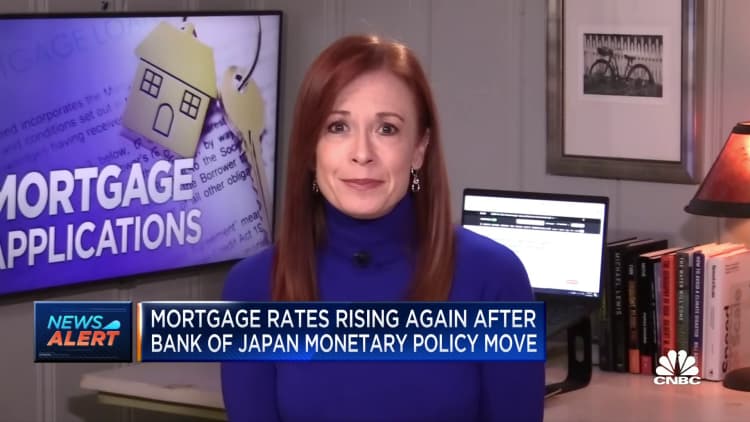
Mortgage refinance demand surged 6%, as interest rates dropped

Mortgage refinance demand surged 6%, as interest rates dropped


Total mortgage applications rise 0.9%, led by a surge in refinance demand

Mortgage interest rates dropped again last week, and while that did little to bolster demand from homebuyers, it did send homeowners looking for savings on their monthly payments.

Applications to refinance a home loan jumped 6% last week from the previous week, according to the Mortgage Bankers Association’s seasonally adjusted index. Volume, however, was still 85% lower than the same week one year ago.

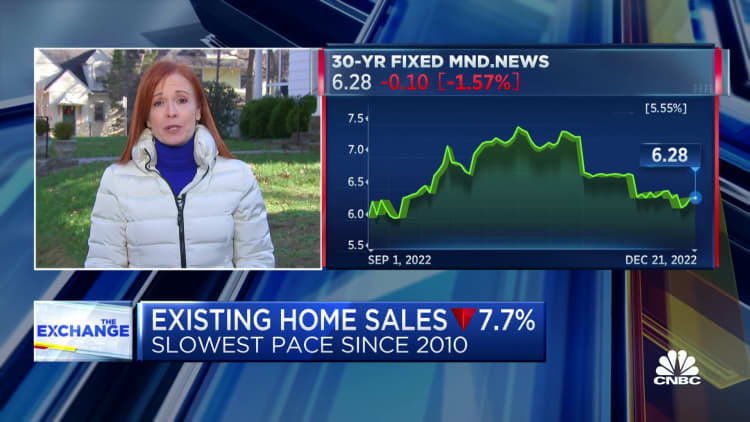
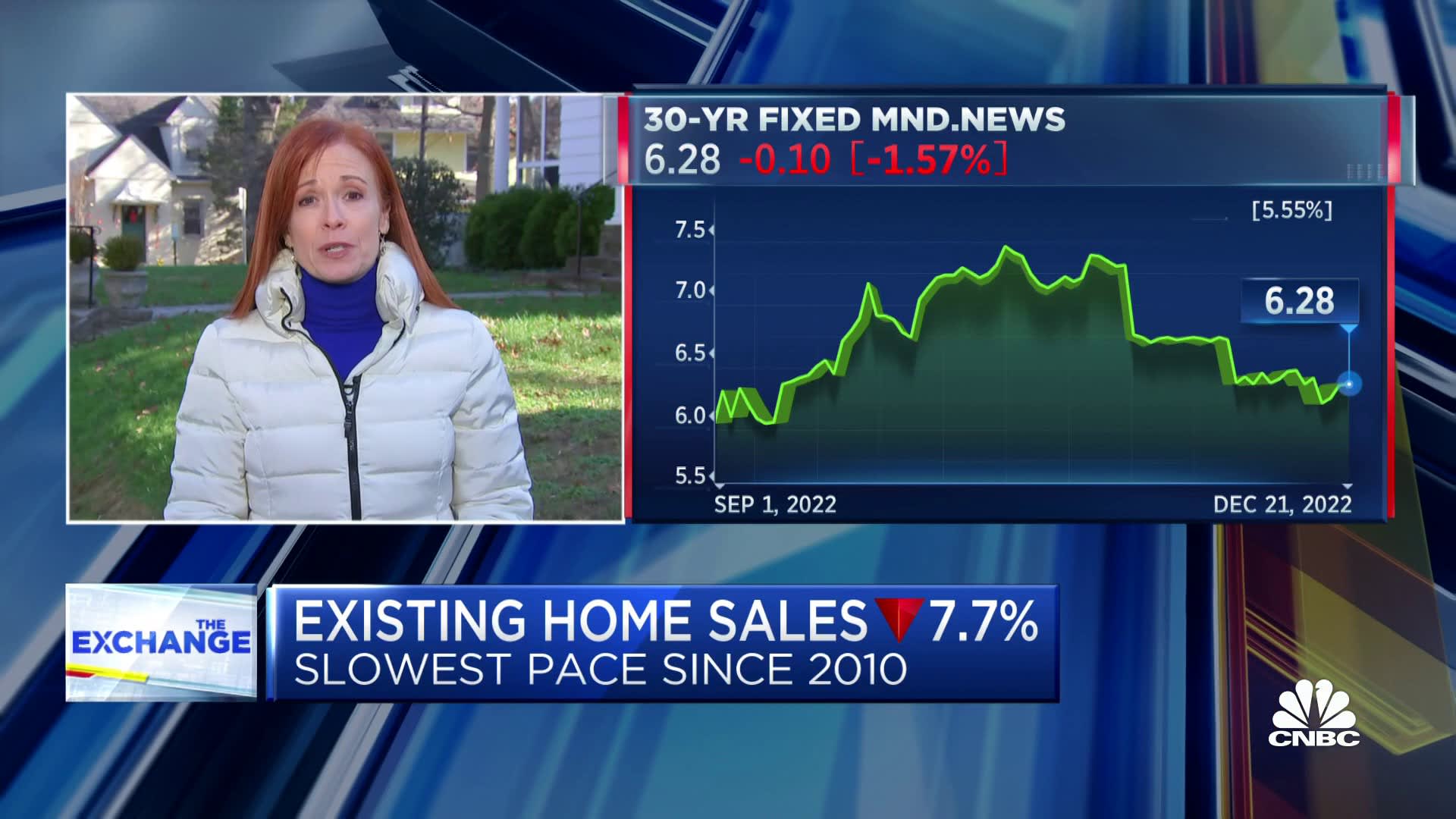
The average contract interest rate for 30-year fixed-rate mortgages with conforming loan balances ($647,200 or less) decreased to 6.34% from 6.42%, with points decreasing to 0.59 from 0.64 (including the origination fee) for loans with a 20% down payment.

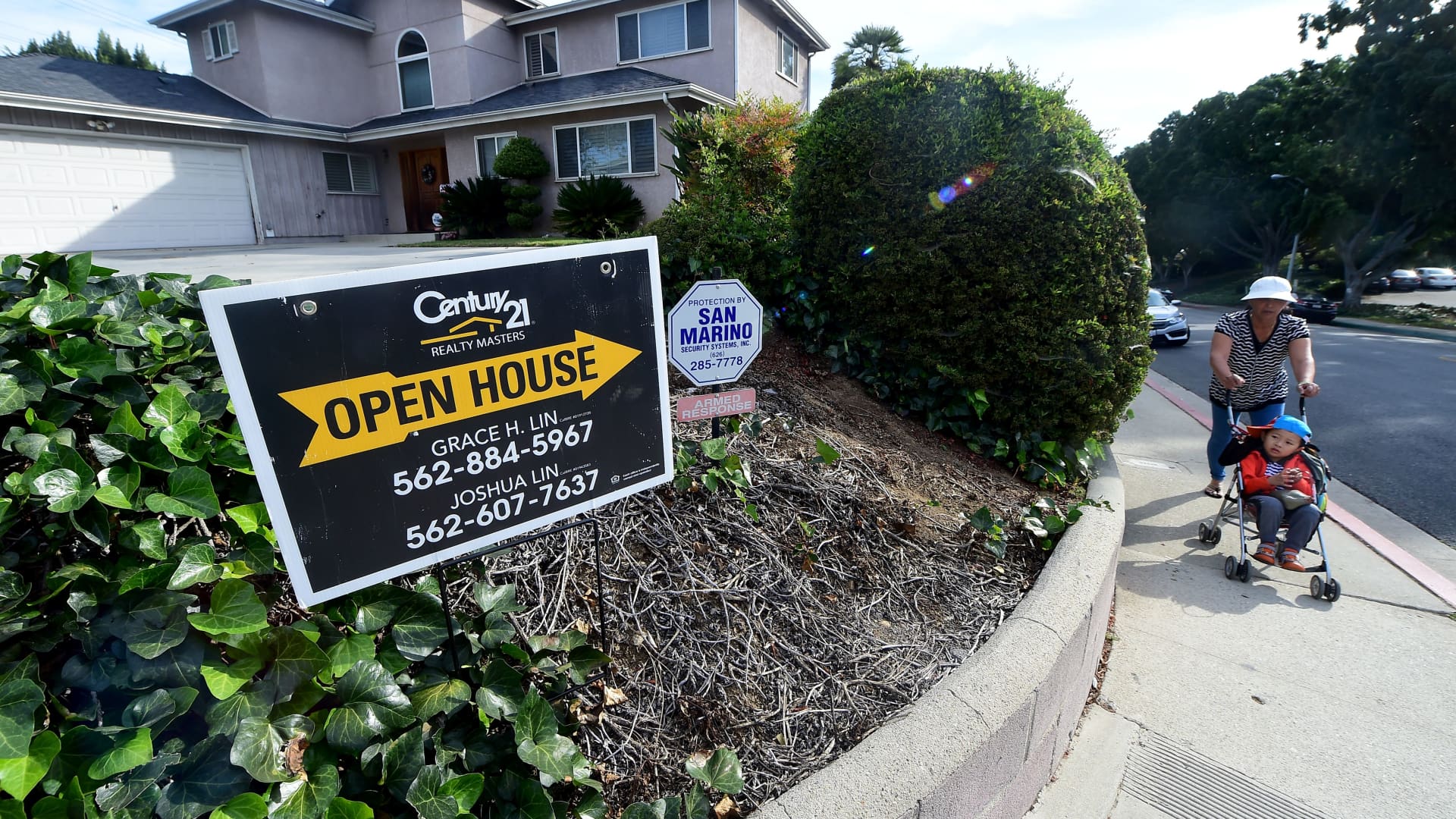
A property for sale in Monterey Park, California

Frederic J. Brown | AFP | Getty Images

Mortgage applications to purchase a home decreased 0.1% for the week and were 36% lower than the same week one year ago. This is historically the slowest time of the year for housing, and while rates are lower than they were a month ago, they are still more than twice what they were a year ago.

“The latest data on the housing market show that homebuilders are pulling back the pace of new construction in response to low levels of traffic, and we expect this weakness in demand will persist in 2023, as the U.S. is likely to enter a recession,” said Mike Fratantoni, MBA’s chief economist. “However, if mortgage rates continue to trend down, as we are forecasting, more buyers are likely to return to the market later in the year, as affordability improves with both lower rates and slower home-price growth.”

But rates started this week higher and continued to move up sharply Tuesday, after the Bank of Japan shocked global markets by changing its monetary policy. A separate survey from Mortgage News Daily showed the average rate on the 30-year fixed jumping 11 basis points.

“This isn’t the sort of thing that’s likely to have an ongoing impact on US rates in the short term,” wrote Matthew Graham, chief operating officer at Mortgage News Daily. “Moreover, the impact was bigger than it otherwise would have been due to the time of year.”

Rates are now close to 25 basis points higher than they were last week Thursday.


Source link

Mortgage refinance demand surged 6%, as interest rates dropped Read More »

The 5 Keys to Building a Financial FORTRESS (Part 1)

The 5 Keys to Building a Financial FORTRESS (Part 1)


You may know how to build a real estate portfolio, but how do you build an unshakeable one? Most real estate investors think that buying a few dozen dirt-cheap houses is all they need to do to make millions and live a life full of passive income. This is far from reality, as your entire net worth could come crashing down as soon as a housing market crash, correction, or new rental policy comes into play. So how do you build a sustainable real estate portfolio—one that will grow your wealth even during the worst of economic times?

David Greene has touched on this topic numerous times, often referring to “portfolio architecture” as one of the most crucial aspects of building wealth through real estate. This strategy not only helps you grow wealth but keep it even when everything goes wrong. Don’t believe us? Listen to David and Rob’s individual stories on what happened to their portfolios during the 2020 lockdowns and how quickly they bounced back while other investors had to completely rebuild.

In part one of this two-part podcast, David and Rob will go through the most common weaknesses in their real estate portfolios, what could cause everything to come crashing down, and the five most important keys to portfolio architecture. They also talk about diversification and how having just one type of real estate in one location could be a huge mistake.

David:
This is the BiggerPockets Podcast, show 705.

Rob:
Because that’s what real estate should be. It’s like you should always feel like you’re broke if you are investing correctly. And that’s a whole ‘nother probably episode of, I always call it the broke millionaire conundrum, where you actually are a millionaire on paper, but you’re deploying all of your cash to your investments. And so you’re always like, “Dang it, where do all my money go?” And it’s just tied up in equity, which is a good thing.

David:
What’s up everyone? This is David Greene, your host of the BiggerPockets Real Estate Podcast, here today with my co-host, Rob Abasolo who you just heard popping off with excitement about one of our biggest bookings to date, not just in the amount of money, but in the short period of time. And I hope you’re just as excited as we are. But today’s show’s not going to be about a bunch of wins, actually. You are going to hear about a lot of things that are going wrong in our portfolios, things that we didn’t anticipate that actually became hurdles for us, mistakes that we’re trying to work our way through, changes in the economy, just a bunch of stuff that isn’t going right because a lot of people are dealing with this. And how you handle mistakes is even more important than not making them.
Today’s show is a fantastic episode where Rob and I are going to go deep into our own portfolios, lives and businesses and share what we’re doing to handle the chaos and destruction that often comes for being a real estate investor. And I think you’re going to love it. Rob, what were some of your favorite parts?

Rob:
Oh, man. Oh, this is just filled with goodies because we talk about the multiverse, right? We may not be able to get you to get into Interstellar, but we can at least get you to talk about the concepts of the parallel universes, of the demise of our portfolios. And we even get to go toe to toe on metaphors and analogies. You talk about energy storage. I bring it with a battery analogy and I’m like, “Wow, the student has become the teacher.” And then lastly, we give a lot of just good thought about portfolio architecture, and how to structure your portfolio in a way that can help you weather any economic storm that we may or may not face.

David:
That’s exactly right, and that’s what I think is personally important. I’m talking a lot about how you build a financial fortress, not a flimsy shack that you could just throw together really quick, which frankly a lot of people did the last five or six years with the economy, there was people throwing things together that they never should have been, and they’re not doing very well. But there’s a way to construct your portfolio in a way that will stand the test of time, and that’s what we at BiggerPockets believe in.
Before we get to today’s show, a quick tip for the audience. Today’s quick tip is consider how your portfolio can be perfectly balanced, as all things should be. Consider yourself Thanos, and ask, “How could this all fall apart? And how can I create the amount of balance that I would need to prevent that from happening?” It could be seasonality with short-term rentals. It could be having a lot of money in the bank and then spending it all on a deal. Rob’s still trying to work out the balance. It’s harder than it looks, isn’t it over there?

Rob:
You got to see it on YouTube.

David:
Poke holes in your own portfolio. Make it a poke-folio, and look at ways this could fall apart and then be proactive about trying to prevent that as opposed to just living in fear, anxiety, and worry about what could happen, not having a plan for what you’ll do if it does.
With that being said, we are going to pull back the curtain and show you guys what’s been going on in our portfolios, how we’re handling those challenges, and what we’re doing to lock in and keep it tight.

Rob:
All right, David, I know you’re not a fan of Interstellar because you still haven’t finished it and you’re not really into the whole parallel universe thing, but I wanted to throw a couple of parallel universe scenarios at you and talk about it on today’s episode of BiggerPockets. Is that cool?

David:
I can probably get into the parallel universe thing. It’s kind of being forced on us all, if you like Marvel movies. You just have to accept it. Yes, exactly right. So we could bring the multiverse into the podcast.

Rob:
Okay, well let’s do it. So today what I wanted to talk about was we are relatively successful real estate investors. We’re in different journeys, different parts of our journeys, if you will, and we’ve done really, really, really well for ourselves. And I think we have enough systems in place and protections in place to really kind of weather any storm that’s approaching or that we’re currently in. But I wanted to flip the script a little bit today and talk about a world where our entire empire falls apart and talk about the scenarios that would cause the demise of David Greene and Rob Abasolo.

David:
I think that’s healthy. I think constantly planning for a paranoid worst case scenario can only make your portfolio stronger. So this would just be a multiverse scenario where Thanos is king and Iron Man has lost his armor and Captain America can’t find his shield and the Hulk has become anorexic. And how are the earth’s mightiest heroes going to manage these challenges without their superpowers?

Rob:
Okay. So yeah, I mean I’m curious, have you ever given thought to a world where your entire portfolio crumbles?

David:
Yes, I do think about it a lot. I think the challenge is that when things are going really well, you have the thought in your head of, it won’t always be this way or you got to prepare for whatever. But the emotional environment that you’re operating out of is very different. And the same is true on the other side, when things are very difficult, you have the thought in your head, I know I can make money through real estate, it can work, but your emotional state is just so negative and fear-based, it’s very hard to operate. So these exercises are good, because it forces you out of the emotional state you’re in right now based on temporary factors like the market, how your last deal went, or what you ate for breakfast this morning and into the mental side of it where it’s much more stable and beneficial to be approaching financial aspects from that perspective.

Rob:
But deep down, I know that you’re probably always comforted knowing that you have 10 million credit card points, right? Isn’t that your apocalyptic scenario, if everything is gone?

David:
Yes. That’s my one backup plan. So yeah, we were joking about how I have a lot of credit card points because having them there, it makes me feel better in case everything gets wiped away. If Thanos snaps his finger and half of my wealth disappears, I’ve still got these credit card points that I can live off of for six months without having to worry about going hungry.

Rob:
Yeah, David hasn’t really disclosed how many he has. That’s my guess. I will say that is the one thing, I’m more protective about my credit card points than I am my real estate portfolio. I’ve got like $12,000 worth of credit card points, I think. I don’t know. What’s 1.2 million credit card points, like 12,000 bucks? And I’m like, “I am never going to touch this.”

David:
That’s so funny, that and my Beanie Baby collection that I keep in various safety deposit boxes throughout the Midwest.

Rob:
I’ve seen that thing, man. That’s extensive.

David:
Yeah.

Rob:
Well let’s do it, man. Let’s talk about it. Let me just give my point of view before we get into it. I think, like you said, it is healthy to talk about the good and the bad and hey, what scenario, this and that. We have this mindset when things are going well that, “Hey, we’re crushing it, blah, blah, blah.” Honestly, I don’t care one way or another, this is probably a hot take, how the real estate portfolio does on a day-to-day. Like the cash flow is always nice, but I kind of stash it all in the bank account anyways and I really rely on appreciation anyways. So I have really good months. I have so-so months. Most of the time, they’re good months.
But honestly, at the end of the day, it’s a long game. And so I’m just like every day pushing that stone a foot forward, if you will. That’s not how it goes, but you know what I mean.

David:
Yeah. So from your perspective, when you’re… one of the ways you’re playing defense here is that you’re not going to spend the money from the cash flow. So you project the cash flow that you want to get, but you don’t rely on it. So there’s never an emotional connection you’re saying to your safety being relied to the cash flow.

Rob:
Yeah. Yeah. I’m a big advocate of having your real estate work for you and build wealth and everything, but to have a bunch of other streams of income that you can actually live off of… So I have probably 10 to 15 streams of income. That’s really what I live off of, so that I can always propel the real estate portfolio forward.

David:
I think that’s healthy. And the reason I think it’s good for us to bring this up, is most people don’t acknowledge that fact. The majority of the time, if you’re getting free information about real estate investing, if you’re paying someone, this could be different if you’re paying for coaching or a course or something, but if you’re getting the information for free, the person giving it to you has to make money somehow. So they’re usually going to be making money by trying to get you to… like for advertising, or to get views, to get attention to get followers. The quickest way to do that is to tell someone that they can make more money easier than what they’re currently doing. This has just been around forever.
So if there’s a girl that you like and she’s got a boyfriend, the first thing every guy wants to do is tell her all the reasons that her boyfriend sucks and how he would be better, right? The same thing comes true for if you want someone’s money, you got to tell them that the place they’re currently getting their money from could be better. “And if you come over to this world, girl, I’ll show you how to make some passive cash flow. Wouldn’t that be better than having to go to work every day?”
And so you’re frequently seeing TikTok and Instagram and social media scripts with little emojis in them that says, “Do you want to make $6,000 a month? Do you want to know how I make $300,000 a year without working?” And inevitably, this is some form of cash flow from real estate, and it’s true that in principle, you can make money passively from real estate. It’s also true that it is inherently less reliable than that W2 income that everybody is trashing.
So the new guy’s always going to tell you how he’s better than your boyfriend in all these ways. But then if you jump ship and you hook up with the new guy, you realize, “Oh, there’s a lot of stuff my boyfriend was doing that this guy doesn’t do that I maybe took for granted.” And for a lot of people, their W2 job is not the best thing they need to get out of it. But for others, you forget that when you’re having a bad week or you’re feeling down or you’re distracted or your kid’s sick and you’re not sleeping, man, that paycheck just keeps on coming. It doesn’t matter if you don’t perform.
You get into the world of real estate or entrepreneurialism and you’re not on your A game, that money might actually stop. And so it is worth acknowledging that income coming from a secure source has a value that income coming from an insecure source like cash flow doesn’t have. And it’s also worth acknowledging that this is never talked about in the real estate space because most people sharing the information don’t want to tell you that cash flow is unreliable. Because then you’re not going to follow them. You’re not going to subscribe to their channel, you’re not going to give them the like, you’re not going to give them the currency that they need to justify the free content they’re putting out.

Rob:
Oh yeah. It’s so funny because I’m always like, well on YouTube, in my content, or just my students, I’m like, “All right, let’s get you to $10,000 a month. I’m going to teach you how to do that.” And they’re like, “Oh my God, let’s do it.” I’m like, “All right. And here’s what’s going to happen when you make $10,000 a month, you’re not going to spend it.” And they’re like, “Wait, what?” I’m like, “Gotcha. I made you wealthy and I’m not letting you spend it,” because that’s what real estate should be. It’s like you should always feel like you’re broke if you are investing correctly.
And that’s a whole nother probably episode of, I always call it the broke millionaire conundrum, where you actually are a millionaire on paper, but you’re deploying all of your cash to your investments. And so you’re always like, “Dang it, where did all my money go?” And it’s just tied up in equity, which is a good thing.

David:
And that’s one of the reasons I’ve started referring to money as a store of energy and work as energy. I’m trying to move our thought off of the US Dollar, which has a value that’s constantly fluctuating with inflation. It’s very hard to know what a dollar’s worth, into an understanding of energy to where you can make a bunch of money, which was just you converting work into energy and then taking it in the form of money. And then you go trade that money for fancy clothes and fancy shoes and fancy cars and fancy vacations, and you’re just wearing your energy on the outside.
That’s all that it is. You’re not wealthier than other people. You’re just putting energy into things like cars and clothes, versus with real estate, we are constantly putting our energy back into the asset, back into the portfolio. We’re putting it into the future where it’s going to grow and replicate and create more energy, and we can pull energy out of the portfolio through cash flow, through cash out refinances. There’s these vehicles that we use to access that energy. But you’re right, the better way to grow your wealth is to keep as little of the energy as possible for yourself, and keep as much of it inside the vehicles where it’s going to grow more, which often leads to people wearing t-shirts just like you.

Rob:
That’s right. My one, my single shirt, I only own one. Actually, I think to use your analogy here, I actually think it’s better to think of your… Oh, this is really good. Okay. I got to work through it with you on the air here. But your money and your wealth is sort of a battery, battery storage, all right? And so you can store all your batteries for a storm, and when that storm comes, you can use it to weather the storm.
However, if you use your batteries for dumb things, I don’t know, RC remotes or RC cars or whatever, as soon as that energy is gone, it’s gone. You’re not getting it back. It’s a depleting source. And then on the flip side of this, batteries don’t last forever. If you just keep your batteries in the closet for 20 years, they lose power over time, which is inflation. So you have to be able to consistently move your energy to something that is going to produce more energy. I did it.

David:
I love it. Yes. And there’s so many people that think, “Oh, my laptop is charged. I’m at a hundred percent. I don’t need to plug it in.” Terrible attitude. You shouldn’t be like, “I’m rich, I’m at a hundred percent battery.” Plug it in. Keep the energy in the power source and have new energy coming in from the electricity to restore it, which would be new ways of making income through real estate, new ways of making income through entrepreneurialism.
Yes, you have a bunch of wealth stored inside of your real estate. Don’t just pull it out because you never know when you’re going to need it. You don’t know. What happens if the power goes out? Like you said, you can’t recharge that battery and you’re only at 4%, you’re only at 12% because you were too lazy to plug it in.
So in today’s show, we’re literally talking about how we prepare for that storm that’s going to stop you from being able to replace that energy, how you prepare for the storm that’s going to cut your battery life in half. How when everything is great and you think it’s always going to be great, we plan for when it’s not going to be great because those storms tend to not be the case all the time. We don’t have 20-year storms. They tend to be wicked, nasty hurricanes that come through in a couple years of devastation and then the economy’s better.
So overall, this is why we’re always doing well, collecting energy and collecting electricity in our portfolio when we’re investing it. But you’d be a fool to not plan for the fact that you’re going to have downturns, and the goal is just survival. How are we going to survive those short periods of time where the storms hit and we got to batten down the hatches, get in the basement, wait for it to pass, and then once it’s done, come out of there and go start planting our flag and scooping up all the real estate we can.

Rob:
Well, we just really, really masterfully put together a good analogy here over the last 13 minutes. I hope it actually makes it into the final episode. If you only heard one minute of this, just know there was a lot of good stuff that we just talked about.
But yeah, let’s talk about it, man. Let’s actually get into the structural weaknesses of our portfolios and what some of those scenarios are that could cause them to crumble. Obviously, they’re not likely, but we should consider what could happen to take us down.

David:
Yeah. So where do you want to start?

Rob:
Well I mean, the general question here is how could the whole empire fall apart? And I think that there’s a few ways that we could do that. So we could start with the question, like what are areas of possible weaknesses in your current strategy? Do you have anything to speak on on that kind of first bullet point?

David:
And I was just thinking before we recorded, I was having a conversation with somebody and we were talking about where business is going good and where business is going bad. And in general for me, the actual decisions I’m making are close to a hundred percent solid. I rarely make a bad decision when it comes to what to buy or how to manage it or how to manage the energy flow.
And so I will talk about that in the show, how I look at it so that I rarely make bad decisions, but I still have significant stress and problems and things that go wrong. So I was trying to figure out how is that happening if I’m making good decisions in all my investments? And what I realize is it comes down to two things and there are things that I cannot control. They are other people and they are things like regulations.
So I could look at a deal, analyze it from every single situation, walk into it with a really good plan, buy the property, and the neighbor complains about the construction and the city gets involved and they slow you down and it turns into a six-month project instead of a 30-day project and you lose 10 grand a month before you even get the property out and you’re $60,000 in the hole.
So then you don’t realize you need a second kind of permit. Well, that’s going to take another three months before you can get it, right? And then you go down this rabbit trail of just your construction, or your jump off part took nine months and you didn’t have $90,000 set aside, and the next thing you know, you went from being extra liquid to barely liquid at all. And then if you have another problem going wrong somewhere else in your portfolio, boom, you’re at that point where you’re not going to weather the storm.
So regulation is one thing that is very difficult for investors to navigate right now. And that is especially true with short-term rentals. You don’t know about what the neighbor’s complaining to city council and they come in and say, “This is no longer allowed.” Or an associate of mine recently had to sell three properties of his in Virginia because out of nowhere, the HOA just decided we’re not going to allow short-term rentals anymore. So what’s he going to do? He had to put the houses on the market and sell them. He wasn’t able to sell for a profit. Most of the money that they had been crushing it making over the nine months before that from all the work they put in, went to cover the closing costs and the realtor fees. And then after he and his partner split up the money, there was barely any profit that was made for nine months of hard work and success. Nothing that they could control.
So things like regulation can absolutely screw me up. And the other one is people. I was thinking about all the problems that I’m having. There are always problems from deals I did with other people. A partner in a deal got greedy or got lazy, or didn’t have the same value system as me and they made decisions that I wasn’t looking at that were very poor. So even though the plan and the property was perfect, the person was not perfect.
Or a business partner that you go into business with and you find out that the friendship you have with someone is not the same relationship you have once money gets involved. So I’ve had situations where we started an enterprise and they did really well really quick, and they completely changed. They don’t have the same values, they’re acting much differently. Their ego is more important to them than the success of the business. They’ve never experienced that much affluence that quickly, and it hit them in a way that I couldn’t have anticipated.
So those are typically the things that will cause stress in my life. And so trying to learn to limit how dependent I am on other people in these enterprises is the biggest threat to my portfolio. And most of the issues that I’m having right now come from that.

Rob:
Is that why you shut down your pink Volkswagen beetle rental service? I’ve always wondered why that went under.

David:
We had a ton of demand, and it was really good for my image. But yeah, the partner that I had decided, they didn’t want it to be pink anymore, they wanted to move into purple and I just couldn’t live with that.

Rob:
Creative differences. No, man, that makes a lot of sense. I think there are definitely… I mean regulations even go past, I think laws and short-term rental laws and everything like that. I mean we know that I am a short-term rental host. Obviously, we talk about it all the time, but there are other regulations that can really throw you for a loop. And I’ll give you one example of where someone’s empire might have crumbled. Mine did not, thankfully. I guess for the purpose of this podcast, we’ll say it was my empire.
I had a relatively successful Airbnb operation and a little glamp side operation that was cash flowing, a lot of money, things were going good, I was flying hot… Icarus, if you will, flying close to the sun. And then we got this little thing called COVID-19 pandemic across the world. And guess what? Airbnb canceled all of the reservations that we had for three months straight, and then the city shut down and they wouldn’t let you do Airbnb.
And so we actually had to refund 40 to $50,000 worth of reservations overnight. Now, I think for most people that are overzealous and very levered and don’t have a lot of reserves or anything like that, that would’ve eaten up most businesses. But my standpoint has always been to just keep all of our money in the bank account, don’t spend it. As I said, I try not to spend real estate money. So it was really no big deal. It was not a big deal for us to refund it. Obviously, I didn’t like refunding like 50 grand, but it was like, okay, we have the money, we’re just not going to make it. It’s not a big deal.
And then guess what? We ended up, because we were able to weather that, we were actually the most profitable we had ever been for the rest of the year. Whereas there were a lot of people in rental arbitrage, like master lease contracts where they had a hundred units, a lot of them went under during that time specifically because they couldn’t get tenants to rent their Airbnbs.
So even more of a global regulation could really cause your empire to crumble. Did you have any issues during that time with any of the rest of your portfolio, or were you okay? Did you have anything at all during your time when COVID-19 first hit that caused any structural cracks in your system or were you okay because you were mostly in long-term rentals?

David:
Well, the rental properties were more or less… Okay. I had a handful of tenants that didn’t pay, and I had one where the tenant didn’t pay for over a year. The problem with that was that I wasn’t watching the portfolio super close because of all the other businesses I have. So I don’t even know that a year went by or more than a year without this person paying. The property manager didn’t push it to the front of my attention.
That was the biggest problem with the rentals. The bigger problem was with the real estate team. Real estate agents were considered to be not essential. So we literally could not show homes anymore. Not just holding open houses. You can’t even get into a house to even go show it. Nobody was going to be buying homes. So this entire income stream was basically just shut down. You weren’t going to be able to sell anybody’s home and you weren’t going to be able to help buyers with buying it.
And it’s very easy from an emotional standpoint to see the money keeps rolling in. I can keep buying, I can keep spending, I can keep doing whatever I’m doing. And then COVID hits, which was a black swan event, no one would’ve ever thought, boom. They actually had a couple week period where loans wouldn’t fund. Fannie Mae and Freddie Mac loans, the government’s like, “We’re just not funding anything.” The only way you could buy houses with cash and the only way you could buy houses is not seeing it.
So no one’s going to be buying houses at that time. And so your portfolio as a whole is not just the assets that you own, it is your life, right? Like you mentioned saying you were over… you could be over levered. Everyone assumes that means taking out a loan on the property that’s too much of an LTV. No, you could be at 50% LTV really low, but what if your life is over levered? You’ve got massive car payments, you’ve got a huge house payment that you can’t afford. You’ve got a ton of debt you never paid off. You’ve got a lifestyle that other people are spending your money and you’re not paying attention to it. You can have prudent investments but run your lifestyle in a way that isn’t very disciplined and you can easily lose the assets because of what was going on on the other side.

Rob:
Yeah, for sure. I mean, I think speaking of the loan thing right now, another thing that probably a sticking point for a lot of people are bridge loans, or people that are flipping right now based on ARVs from six months ago that now that we’re taking maybe a… I don’t know what the correction is right now, but let’s just say it’s a 20 to 30% in the next six to 12 months if that’s what it is. I don’t know off the top of my head. But if that’s what it is, then it’s going to be a very tough to cash out and actually get your money back. Or if you’re even just selling, if you already had razor thin margins and you were only going to pull 10 to $30,000 of profit on a really light remodel, the correction of prices and then the increase in interest rates might cause buyers to not want to buy your flip and thus you are in this hard money loan or bridge loan that you can’t get out of.

David:
That’s actually happening to me right now on several properties. So I went on a buying spree right before rates went up, and then they’ve just continued to go up. So I’ve got a couple properties, like pretty big rehabs on million dollar or several million properties in the Bay Area where I locked in a bridge loan for 12 months at something like nine, 10% interest. At the time, rates were four and a half, maybe five, but probably less. And rates have gone up so quickly that to refinance out of my bridge loan, which is a form of a hard money loan, my 30-year fixed loan will be higher than what the hard money loan was.
And I can’t sell it because the values have gone down. They haven’t like crashed, but they’ve gone down less than where it was when I paid it because the rates have gone up so high.
So it is these perfect storms that we’re talking about. I had a lot of exit plans, okay, buy the property, fix it up, the ARV should be here, I’m going to get more than a hundred percent of my capital back out and I’m going to have this great asset. Well now, the cash flow is significantly less because rates were at five and then they jumped up to 10 and a half for this particular property I’ve got. And I can’t exit it by selling when the market was just climbing, climbing, climbing because the prices have gone down and they’re also in the middle of being newly renovated. So I have to finish the renovation.
And then of course, you get issues with the renovation, how long it takes, and then when you get permit issues that get popped up, new stuff just keeps starting to add on and you’re not able to collect any revenue for the property. You’re not able to sell the property and you got to keep putting money into it, until it’s finished so that you can actually have something that could be rented out.
And then when it is rented out, you’re not going to be making nearly as much as you planned because rates have gone up so much higher and you’re not going to get all your money back, or as much money back because the value went down. This does happen in real estate.
And the thing that you got to understand is it could not have been predicted. We didn’t know when rates were going to go up like this. We didn’t know when COVID was going to happen. You can’t know what’s going to happen. And the flip side of it is when you let the fear of something going wrong create analysis paralysis and you do nothing, and you watch everyone around you making money.
So you’re in a position where there is no risk-free move. You’re either going to lose out by not taking action or you’re going to take action like I did and you’re not going to get the result that you wanted. The only way that you mitigate that is that you don’t look at what’s happening in the immediate future. You look at what’s happening in the long term. I did certain things well, I bought them in locations that are guaranteed to appreciate much more than everything else around them, grade A locations, right.
I created additional units in these properties, so my cash flow will be more than a comparable property would be worth. At some point, rates will go down, I’ll be able to refinance and I’ll be able to get back to the numbers that I originally thought. It’s really just time that I lost. I thought I was going to be making a certain amount of money in six months, maybe it’s going to be two and a half, three, four years, hopefully less, but it could be that long before I end up making that money. So I just lost time.
But there’s still like, what if I’d have bought these in terrible locations? Oh, there’d be nothing I could do right now. You’d just be screwed, right? So the principles of real estate, this is where they come from, is we are planning for the worst case scenario. Did I think rates were going to go from five to 10 and a half for me? No. Did I ever think I’d refinance into a 30-year fix that was more than the hard money loan that I used to start the rehab? No. Did I think that the ARV would drop that significantly because the rates went up so high. On a $2 million house, if rates double, it hurts the value a whole lot more than a $200,000 house. No, I didn’t think any of those things. But what you do with your money and how you can struct your portfolio will allow you to survive those times.

Rob:
Well let me ask you this, just out of curiosity. When you go to refi those homes, you were saying you may not get the full… you may not get all your cash back, you’ll just leave cash in the deal in the house/

David:
Yeah.

Rob:
So it’s just energy that’s staying in the house, right, if you will. Yeah. I hate to use this against you, but in the Burr Bible you do talk about this a lot where people go and they rehab the house and for them, they want to get all their money back, but they may only be able to get 80% of their money back and they have to leave 20% in the deal and it’s like, “Oh, too bad.” Now you just have locked net worth into a home or whatever.
So I think at the end of the day, as long as you’re looking at it from a long-term perspective, you aren’t really losing… It’s hard to lose in real estate on a 20 to 30-year cycle, if you’re actually holding onto your assets.

David:
Almost impossible.

Rob:
Yeah.

David:
That’s exactly right. And that’s what we’re pointing out, is what I lost was time. I thought I was going to be at a certain point in my timeline sooner, and I didn’t. But I gained a bunch of time on the stuff I bought in the last eight years because inflation was so wild and rent increases were so crazy, that I got to where I should have been in 20 to 25 years in five.
I have some properties that I bought in 2013 that the rents have more than doubled. So a property, a fourplex is the one I use a lot. I bought it at rents for 700. Now rents are at like 1750, 1850 depending on which unit. That shouldn’t have happened for 20 or 30 years. That happened to me in eight or nine years. So I gained a lot of time on those deals. And on these ones where the market turned on around on me quickly, I’ve lost some time.
But yes, as long as you hold it for long enough, you’ll be okay if you’re following the right principles. But it’s not fun. Part of why we want to make this episode is so other people hear it. You’re not the only ones going through this. When the market shifts that rapidly and that unexpectedly, the rug is pulled out from underneath you, you don’t know which way you’re going to fall.

Rob:
For sure. Well, I guess on that note, I sort of wanted to talk about how liquid you can be with your portfolio to triage any major changes in the economy. Do you have liquidity in your overall portfolio to be able to exit? Because I know that this is something that probably a lot of people are going to have to face in the next year. They could be in the middle of loans, they could be in the middle of refinances, they can have a bunch of homes, they may have lost their job and they’re going to need money.
So through triage, what level of priority can you basically assign different homes? Can you get rid of them? What’s your flexibility right now with your overall portfolio?

David:
That’s good. My problems are based off of acquiring too many properties too quickly. Everything I’m doing is from the acquisition problems, the rehabs, the permitting issues. All the properties already owned are fine. So that’s just one thing I want to… I don’t want everyone hearing this to get scared and say, “Oh, David can’t even make it in this market.” Well if you bought 20 short-term rentals in a four-month period, anybody’s going to have some problems if everything doesn’t go perfect. So I just bought a lot of properties and hit the perfect storm at the same time that’s a problem.
As far as the properties that you already own, the question of, well how much liquidity do you want to, or equity do you want to keep in those properties? It depends on how much energy you’re keeping in your bank account. There’s a balance there.
So some people don’t keep very much energy in the property itself, so they don’t have a lot of equity, but that’s okay because they keep a whole bunch of energy in their bank accounts through the form of cash liquidity. So they’re fine. They don’t have to ever sell a property. If you’re somebody who’s thinking, “I don’t want to have a lot of cash on the bank, I want to just put it all in the properties,” maybe you’re the kind of person that likes to pay stuff off, so you feel good knowing, “Oh, my loan to value is only at 30%. I’m safe, I can sell.” Well that’s a person that can sell the property. But in order to access that energy, you have to sell. And I don’t ever like to sell in a buyer’s market. I don’t want to ever sell a property unless it benefits me to sell it.
The reason I don’t like the strategy of keeping your energy in the house instead of in the bank is the only way to access it is either to refinance it or to sell it or to get a HELOC, some form of that. And if values are down, meaning I don’t want to sell, rates are probably up, meaning I don’t want to refinance. There isn’t really a great scenario there, which is why I’m frequently confronting this belief that having your house paid down or paid off is not as safe as you think. I prefer to keep that money in the bank where I can use it for other things, or I can just make payments for longer.
So some people will have 300 grand in the bank and say, “David, I want to put 250 grand of this to pay down my $500,000 loan to a $250,000 loan.” I’m like, “Okay, so if you somehow lost the tenant and you couldn’t make the payment, wouldn’t you rather have $250,000 in the bank to make payments for nine years if you had to, than dumping it all into the house and cutting yourself really thin when it comes to your ability to make your note payments?

Rob:
Yes. Dude, I struggle with this one a lot. I’ll be honest. I know that the rule of thumb is always leverage and use other people’s money and all that kind of stuff. I am very much for that. Hey, let’s leverage, let’s use that to scale, use the bank’s money, right? But I am starting to feel a little bit more towards at least having your… if you could work towards having your primary paid off, that’s always going to be a… it’s a savings account that you have in case if you lose everything, you don’t have to pay a mortgage and you can stay in your house.
I kind of don’t hate that. You know what I mean? And if you really need to, eventually you can take a HELOC out. So I just think it’s personal preference there. I don’t say do that with your investment properties, but with your primary, I think there’s a little bit of comfort knowing I’m sitting on a half a million dollars of equity that if I ever really need to, I can take it.

David:
But you wouldn’t feel that same comfort having a half a million dollars in the bank?

Rob:
Not really, no. It’s actually pretty stressful.

David:
Is that because you’d be tempted to spend it?

Rob:
Not even that, dude. I mean I have cash in my accounts right now and I don’t like it. Because I just see it withering away, the value of it. And also I’m always… I don’t know, it’s inconvenient to move it around and to wire it to other bank, then the FDIC insurance, all that kind of stuff. I don’t know. I’m just like, yeah, it’s nice to have it. It almost feels good. But then it also is a reminder of all the employees that I have to pay to. I don’t know, this isn’t really real. This is more [inaudible 00:34:25]-

David:
No, but that’s how human beings… this is our relationship with money and energy that we’re talking about right now. It’s very real. It doesn’t make logical sense why you feel that way, but who cares, because that’s how you’re going to make your decisions. You’re going to see it. It’s going to cause you to have some stress.
And so I think this is part of the reason that you and I always want to feel like we’re broke. Because, the minute you feel like you’re rich, you start making decisions like money isn’t valuable, you start to lose respect for it. You’re just start spending it on things easily or letting people stay on the payroll that aren’t doing a good job or paying more than you had to for the house because you have the money.
When you always feel some form of broke or at least disciplined or a little financially stressed in a small way, you value the money a lot more. You treat it with more respect because you don’t have as much. I think that’s probably what you’re getting at.

Rob:
Definitely. So with that, how much money do you have in your bank account? No, I’m just kidding. All right. So I actually wanted to talk about the liquidity of my portfolio. Theoretically, a lot of my portfolio is actually pretty liquid. I have so much equity because I’ve purchased over the past five years and I’ve never really sold.
So I bought a house in Sevierville, Gatlinburg, Tennessee a year and a half, two years ago. I think I bought it for 500, thing gets in the 808 and 850 range. Lot of equity there. I bought a house for 300 that’s worth 550, 600. I’ve got all these houses that have six figures of equity. Almost every single one of the houses that I own have either six figures or multiple six figures of equity. And that’s not because I’m a genius, it’s just because I’ve purchased consistently.
And so if I really needed to sell, I could sell right now in a buyer’s market. Would I lose money for my equity? Maybe. But I still have the equity so it doesn’t… In my mind I’m like, all right, my tiny house in Joshua Tree, I built it for 165K. Whether I sell it for 300 or 350 doesn’t really matter to me, because the amount of equity that I’ve built, it’s obviously I want as much money as possible, but if I had to lose it 50K because of the market, that’s fine. The money is all play… like Monopoly money anyways. I’ve never realized it and so it’s not even mine. That’s how I kind of think about it.
So I would say the majority of my portfolio is like that, other than some of the more recent purchases, like our Scottsdale house. We bought that for 3.25 million. We have 20% equity in it from the down payment that we put on it. But if we try to sell it right now, well, I don’t know, maybe it would do okay, but with the, I mean the 6% in realtor fees would really cut into really a lot of that money for us. So overall, I feel pretty safe being able to sell my portfolio if I had to, but I don’t really want to.

David:
And you don’t ever want to be in a position where you do have to. You always want to be selling because it makes sense for you to sell. The leverage is on your side, if you’re going to sell.
And then selling is a complicated event in itself because you’re probably going to have taxes on that money you made and you’re going to want to do a 1031. So if you sell this house, do you have a place you can put the money or that you want to put the money? Is it going to create more stress in your life than it wouldn’t if you had just kept the property?
But constructing your portfolio itself so that you’re in a place where you never have to sell, I feel like is more than half the battle. The actual properties that you choose and the way that they work with each other is a pretty important component to making sure that you’re never in a position that you have to sell when you don’t want to. So what are some of the things that you’ve done, Rob, up to this point to maybe diversify what that portfolio looks like or buy different types of assets that will cover for you, so you don’t get in that position where, “Oh man, business didn’t go as well as I wanted the last couple months. I have to sell something.”

Rob:
So I am a big fan in diversification, even just with… I’m obviously mostly, if not all short… Well, yeah, short-term rentals are midterm rentals right now. But I’m a big fan of diversification. I’ve got 35 doors across the country, all right. I’ve got a couple in California. I’ve got one in… Well, I got a couple in Arizona, a couple in Tennessee, a couple in Texas, one in Wisconsin, several in West Virginia, 20 in New York.
So I’m all over the map. And people are always like, “Why would you do that to yourself? Isn’t it hard to hire your Avengers?” But for me, what I’ve found is I like to diversify across the country to combat seasonality. And this is something you talk about quite a bit too with portfolio architecture, which I want to get into here in a second. But for me, I have sort of staggered so many of my short-term rentals at different personalities that I’m never really hurting in one specific month.
I’ll give you a good example. If you buy a beach house and you close in May, you’re going to feel like a genius because you’re going to crush it from May to August. You’re going to be like, “Oh my god, I’m the smartest real estate investor that’s ever lived. I’m going to make half a million dollars on this house.” And then September rolls around and you’re like, “Oh, I am broke and I didn’t save any of my money,” right?
So to combat this, you have to understand that beach markets, for example, are highly seasonal and they only crush it for three months out of the year. Meaning that if you were going to pick up another property, you probably don’t want to do another beach property or else you’re only ever going to make money for three months out of the year. So what you would want to do is find another property that maybe for nine months out of the year, staggering it with the other three months, is actually making cash flow so that you always have money coming in.
And so this is something that I actually specifically experienced with, in a good way… or I’ve learned it really in a good way, like our Scottsdale property. We bought a 6,000 square foot mansion in the desert, enclosed in June when nobody goes to Scottsdale. And basically from June to November, I wouldn’t say it was crickets, but October was okay, November was a little slow. And it’s like, oh man, if anybody else that was not prepared for this stepped into a $17,500 mortgage payment, they would be hurting. They’d be like, “Oh my god, I’m going to go bankrupt.” But because the rest of my 35 units basically crush it, they’re all staggered throughout the year, it was no big deal.
And now we’re getting into December, we’re halfway booked, and then we just got a $7,000 reservation yesterday for January for five days, a $7,000 reservation. And that’s just one of the ones that came in. And now in January, we’re charging like 1500 to $2,200 a night. And now it’s like, “Oh, okay. Yeah, great. Note to self, buy a luxury property in peak season so that you’re not eating that mortgage payment for six months out of the year.” However, you and I were able to weather that storm because we have relatively diversified portfolios.

David:
That’s a very good example of portfolio architecture. You’ve got seasonality in short-term rentals. And it’s important because of the mental game. And like you mentioned, a lot of people spend the money that comes from their rentals because they replace their W2 income and you spend W2 income. So why wouldn’t you spend your passive income from real estate?
The problem is with traditional rentals, they lined up very, very closely, very well with the way that you manage your personal finances. So you get paid every month or every two weeks. And so you say, “I make X amount of money a month.’ Then your bills are all set up on a monthly thing. “I pay every month this many bills so I can put a budget together based on a month.” Well, if the tenant pays the same rent every single month, that fits in really nicely because you’re making a mortgage payment every single month.
Well, short-term rentals, screw this whole thing up because you can’t look at what you make in a month. We look at what they make in a year, because not every month’s the same. And so if you spend your money, oh, it’s so easy to get caught off guard, like you said, thinking that you’re crashing it, you’re doing amazing, now you’re dumping money into the property, maybe you shouldn’t be, or you’re spending more money than you should be. You’re justifying expensive trips to the property for stuff that don’t really have to happen because the money’s rolling in, and then you hit those winter months and it gets really bad, you’re losing money and now you’re feeling really bad. Your emotions are tanking versus, like you said, if you can get one that offsets the other, you never really have those huge spike, climbs up and the huge spikes down.
Another way that I think that the Scottsdale mansion worked out in a sense of portfolio architecture was that we knew we were not going to make a lot of money when we first bought it. I think we planned to more or less try to break even the first 18 to 24 months. And part of that was because we had to dump so much money into the property to get it ready. And also, we knew we weren’t going to know what goes wrong. We got to figure out a new market.
You can do that when your existing portfolio is cash flow solid. You can’t do that if this is the only property that you’re buying, this is the only one coming into your portfolio, you don’t have a ton of money, you would lose the property. We also bought this house with a long-term horizon.
We’re like, “We’re buying this whole thing for less than what the land itself would cost if we just bought land.” Okay, but we’re probably not going to realize that value for five to 10 years down the road. This was an area that we know we really like Scottsdale long-term, the type of people moving there, the way the economy is set up. We think that market’s going to do incredibly well, but you don’t have the luxury of cashing in 10 years down the line if you’re barely making it right now. If you’re like, “I want to quit my W2 job, this would’ve been a terrible house to buy.” So the reason we were even been able to-

Rob:
At the time that we bought it, at the month that we bought it, yeah.

David:
But even if we had bought it during a time when people visit Scottsdale, we still… Like the pool heater, we have to go replace and the water heater break in and the sport court that needs to be done. You can still step into this a couple hundred thousand dollars in the hole that you weren’t planning on when you’re buying a house this big in a new area. We were able to, because the stuff we had bought previous to this was performing so well that it bought us the ability to basically give ourself a huge windfall in the future. This is like you put a hundred dollars in your coat pocket and then 10 years later, you come back and you’re going to find out that it’s a hundred thousand dollars. It’s a kind of situation like that. But if you don’t have money to live on, you can’t put a hundred dollars in that coat pocket.

Rob:
Yeah, yeah, for sure. Yeah. And when I say the time that we bought it in, I meant more like we bought it in June versus January. So now I’m starting to get to that point where I’m like, “Oh, hey, we’re smart. Look at us. Look at this $7,000 reservation or this $10,000 one,” and now people are contacting us for events and all that kind of stuff. It’s just a little bit of a slow trickle. But like you said, we sort of planned our portfolios accordingly. I would never tell anybody to go and buy a $3 million property unless they had the ability to actually endure any kind of road bumps. But also just the financial aspect of having a portfolio that can be pick up the slack for you.

David:
You also would never tell anybody to just keep on buying $40,000 houses in the Midwest till you have 700 of them. That doesn’t work either, right? So there is a progression of how real estate investing should change. You started with training wheels or a tricycle, then you get into training wheels, then you get into a bike and you kind of move through asset classes as you’re learning. Keeping that in mind as you’re building your portfolio will help you to weather the storms of life that come.

Rob:
It’s true. And just let me just say, you did ruin real estate… How do I say this? You did ruin this for me in that when I wanted to go and buy 10, $300,000 houses, you were like, “Why would you do that? That’s a job. Go buy a $3 million house.” And I was like, “Ugh.” And then we bought it and I’m like, “Oh yeah, I shouldn’t buy these $300,000 houses anymore.” And so now I don’t.
So now it’s like I see these deals come across my desk all the time and they’re good deals, but as I’ve learned from you, it’s just not scalable to keep buying these onesies. And so now I’m very selective about the swings that I take in a bigger scenario. Right now, I’m trying to do 50 doors at a time or trying to do luxury properties, or trying to do things that are a lot more meaningful to my time. So I guess thank you on both ends of that. Thank you for ruining it for me, and thank you for transforming me.

David:
You were a cat and you were hunting mice and you were getting all of your caloric needs met from those mice. But my friend, you have grown into a lion and now mice are unbefitting of a lion of your stature and you are now chasing gazelles, as you should be.

Rob:
So David, when it comes to portfolio architecture, can you give us some of the, I don’t know, some of the pillars or some of the criteria that goes into actually assembling your real estate portfolio?

David:
Yeah. So when you’re looking at your portfolio as a whole, there’s five things that I like to try to create some kind of balance because these are all ways that you build sustainable wealth that you’ll actually enjoy. It’s a form of building like a financial fortress that will stand no matter what gets thrown at it versus a 3D printed home that you can just throw up really quick and scale fast, but when the first storm hits, it’s going to fall.
The first is equity. You want to have a lot of energy in that portfolio. Like you said, Rob, if you come on hard times, you can pull it out. This is where the big upside is in your portfolio. You’re going to build your biggest wealth through the equity that you create holding real estate long term. So that’s one of the first things that you want to think about.
The next is cash flow. You need cash flow, not just to replace your income, but also to make sure you can keep the property for a long time. Because cash flows are how you make sure you can make that payment, which allows equity to even take place, unless you stepped into equity right off the bat.
The next is liquidity. That’s not just in the portfolio but in your life. You need to have reserves. That’s a form of liquidity, money that you can tap into. Can you borrow out of a retirement plan? Do you have HELOC set up on property? If you’re in a pinch, if you get a good opportunity, do you have money that you can turn to right off the bat to go acquire a new property, fix something that went wrong, improve a property, whatever the case may be, that’s in the best health of your portfolio as a whole?
The next would be ease of ownership. You’re never going to build a big portfolio that does well if you hate owning it. If you’ve got 40 short-term rentals and you manage all of them yourself, you don’t have ease of ownership. That’s not something that you’re going to enjoy. If you’re buying properties in terrible neighborhoods, even if you’re getting great deals, you end up hating owning it and you’re not going to grow up big. You’re not going to get that equity or that cash flow. So you can have a handful of problem children in your portfolio. Sometimes they’re worth it, but it can’t be something where the majority of your portfolio is something you don’t like owning.
And you do have to consider that when you’re building. And the last would be scalability. Are you doing this in a way that you can keep scaling and you can keep going? Are you buying 10, $300,000 houses over and over and over? Well that sounds great on a podcast when we say, “Oh, you can borrow money from investors.” And we kind of construct the entire organizational chart of where every piece goes and it sounds great to an engineer, they’re like, “That works.” But then when you actually try to execute the play that you just drew up, you realize you don’t have the skills to do it or it doesn’t work in practice, like it did in theory.
So scalability is a super important part of your portfolio as a whole. And oftentimes, that will mean thinning out some properties that are too difficult to scale and replacing them with properties that are easier or moving from one asset class to another as long as your other four requirements are being met.

Rob:
Yeah, yeah, yeah. So it sounds like really what we’re looking for is a balance of a bunch of different things versus really going into one aspect and that makes sense. You asked me how I’m diversifying and I said, “Well hey, I diversify in location,” but that’s actually not just the only way I diversify when I’m like building my portfolio. I’m actually diversifying the types of units that I’m listing on short-term rental platforms as well.
So yeah, I’ve got them across Arizona, Texas, California, and New York. But I also have really cool units that I just like to have fun with. And sometimes I’ll buy a unit just because it’s a cool looking property. So I’ve got tiny homes, I’ve got yurts, I’ve got Airstreams, I’ve got chalets, I’ve got cabins, I’ve got mid-century modern cabins, I’ve got condos, I’ve got a little bit of everything.
And it’s really because I like to appeal to all the different types of audiences out there. That way, I know if something is trendy or if it’s just not as hot, which like a tiny house for example, people always love those. People don’t want to stay at tiny houses in a year or two, as much as they did this year. Well then I have all these other types of properties to meet all of that. So for me, I’m always looking for balance in my portfolio in the actual types of listings that I’m creating and the experiences that I’m serving up to people.

David:
That’s it. You got to be thinking like that. And when everything’s going great in the market, we don’t think about diversification. We don’t think about what if something goes wrong. We just think what’s the easiest, fastest and funnest way to scale what we’re doing. And that’s how you can build yourself a treehouse. You could build those really quick. In a couple hours, you can have yourself a treehouse set up, but it’s not how you build a fortress that’s going to withstand the test of time.

Rob:
Well I’ve been working on my treehouse village in Gatlinburg, Tennessee for about a year and a half now, but I just got the update on that today. And I actually think we’re breaking ground in like a month and it’s going to be four dome treehouses that are in the air, as I guess pretty standard for a treehouse, and then a tiny home, a tiny a-frame treehouse too. And so that also goes into how I’m diversifying. I want to go more into unique stays. But yeah, just so that I understand kind of your parameters for portfolio architecture, I just wanted to recap it for the audience. We’ve got equity, cash flow, liquidity, ease of ownership and scalability. Did I miss any? And with those five things, we want a good balance.

David:
That’s it. And you want that… so each of those things should be making up for the weaknesses in the others.

Rob:
Okay, awesome. Well this has been really good. I regret to inform everybody that we rift so much on the first half of this that we’re going to give you another… I guess, I don’t regret, I am excited.

David:
No. Two shows.

Rob:
Yeah, we’re giving you a part two of this where we get into some much juicier, maybe even profound questions. What are the actual challenges that we’re going through in our businesses, some of the pitfalls? If we were to actually lose it all tomorrow, how would we rebuild our portfolio starting from scratch with $0? That will be on the next episode of BiggerPockets. I’m really excited about it because I don’t know if I have the answers yet, but we are going to find out what they are soon.

David:
It should be very fun. These what would you do if you started over questions are always some of my favorites, because it forces you to pull things out of yourself that you normally wouldn’t have.

Rob:
That’s what it’s like every single time that you have your profound genius systems. And I’m like, “Uh-oh. I know my answer is nothing like that.” That’s good. [inaudible 00:52:49]…

David:
That’s why I would [inaudible 00:52:50] second because I’m a jerk.

Rob:
I know, I know.

David:
All right. Well, thank you, Rob. I appreciate some of the insights that you shared here and you also asked some really good questions, so thank you for that. I wouldn’t be able to give good answers if I didn’t get good questions.
And to you listeners, we hope you enjoyed this episode about all the things that can and do go wrong in real estate and what we do to mitigate that risk. In the next show, we are going to get into what we would do if we started over to help prepare for things going wrong, because wise investors don’t prepare for everything to go right. They make plans for what they’re going to do if things go wrong, and they prepare accordingly.
If you like this show, please do us a favor, give us a five-star review wherever you’re listening to the actual podcast, whether that’s Apple Podcast, Spotify, Stitcher, whatever’s your favorite. Just take a quick second, and please give us that review so we can stay the top real estate podcast in the world. And if you’ve got some time, listen to another one of our episodes. This is David Greene for Rob, has one t-shirt, Abasolo.


Help us reach new listeners on iTunes by leaving us a rating and review! It takes just 30 seconds and instructions can be found here. Thanks! We really appreciate it!

Interested in learning more about today’s sponsors or becoming a BiggerPockets partner yourself? Check out our sponsor page!

Note By BiggerPockets: These are opinions written by the author and do not necessarily represent the opinions of BiggerPockets.


Source link

The 5 Keys to Building a Financial FORTRESS (Part 1) Read More »

Home sales tumbled in November

Home sales tumbled in November


November existing home sales fall — 10th consecutive monthly drop

Sales of existing homes fell 7.7% in November compared with October, according to the National Association of Realtors.

The seasonally adjusted annualized pace was 4.09 million units. That is weaker than the 4.17 million units housing analysts had predicted, and it was a much deeper fall than usual monthly declines.

Sales were down 35.4% year over year, marking the tenth straight month of declines. That was the weakest pace since November 2010, with the exception of May 2020, when sales fell sharply, albeit briefly, during the early days of the Covid pandemic. In November 2010, the nation was mired in the great recession as well as a foreclosure crisis.

These counts are based on closings, so the contracts were likely signed in September and October, when mortgage rates last peaked before coming down slightly last month. Rates are now about one percentage point lower than they were at the end of October, but still a little more than twice what they were at the start of this year.

Lane Turner | The Boston Globe | Getty Images

“In essence, the residential real estate market was frozen in November, resembling the sales activity seen during the Covid-19 economic lockdowns in 2020,” said Lawrence Yun, NAR’s chief economist. “The principal factor was the rapid increase in mortgage rates, which hurt housing affordability and reduced incentives for homeowners to list their homes. Plus, available housing inventory remains near historic lows.”

Read more: Mortgage refinance demand surged 6% last week

At the end of November there were 1.14 million homes for sale, which is an increase of 2.7% from November of last year, but at the current sales pace it represents a still-low 3.3 month supply.

Low supply kept prices higher than a year ago, up 3.5% to a median sale price of $370,700, but those annual gains are shrinking fast, well off the double digit gains seen earlier this year. It is still the highest November price the Realtors have ever recorded, and, at 129 straight months, it is the longest running streak of year-over-year price gains since the realtors began tracking this in 1968. Roughly 23% of homes sold above list price, due to tight supply.

“We have seen home prices come down from their summer peaks over the past five months. At the same time, we have also seen rent growth retreat for 10 consecutive months,” wrote George Ratiu, senior economist at Realtor.com in a release. “However, the cost of real estate remains challenging for many households looking for a place to call home, especially as high inflation and still-elevated interest rates have been eroding purchasing power.”

Sales decreased in all regions but fell hardest in the West, where prices are the highest, down nearly 46% from a year ago.

Homes sat on the market longer in November, an average 24 days, up from 21 days in October and 18 days in November 2021. Despite the slower market, 61% of homes went under contract in less than a month.

With prices still high and mortgage rates hitting a cyclical peak, first-time buyers remained on the sidelines. They were responsible for 28% of sales in November, which was unchanged from October, and up slightly from 26% in November 2021. Historically first-time buyers make up about 40% of the market. A separate survey from the Realtors put the annual share at 26%, the lowest since they began tracking.

Sales fell across all price categories, but took the steepest dive in the luxury million-dollar-plus category, dropping 41% year-over-year. That sector had seen the biggest gain in the first years of the pandemic.

Mortgage rates have come off their recent highs, but it remains to be seen if it will be enough to offset higher prices.

“The market may be thawing since mortgage rates have fallen for five straight weeks,” Yun added. “The average monthly mortgage payment is now almost $200 less than it was several weeks ago when interest rates reached their peak for this year.”

Total mortgage applications rise 0.9%, led by a surge in refinance demand


Source link

Home sales tumbled in November Read More »

How to Become Real Estate Ready in 2023

How to Become Real Estate Ready in 2023


Don’t know how to become a millionaire? There’s a pretty simple formula for seven-figure wealth that the average American doesn’t know about. It isn’t complicated, but it does take a fair amount of time to come to fruition. If you follow the same strategy, regardless of where you’re starting right now, you too could become a millionaire in under ten years. This wealth-building formula is exactly what today’s guest, Remy, is looking for.

Remy is doing his mid-twenties the right way. He’s got a great income, contributes heavily to investing, and already has six figures in equity thanks to buying his home two years ago. He’s made moves that many young investors would envy, but he wants to go even further over the next ten years. Remy is looking to become “real estate ready” in 2023, meaning he needs to be in a favorable position to start building his rental property portfolio so he can have a million dollars of real estate by the time he turns thirty-five.

The plan is simple for Remy, but he’ll need to make some serious tradeoffs. Is more real estate worth forsaking his growing retirement accounts? Should he slash his emergency fund to pile more fuel onto the FIRE? And where can he cut his budget so he’s saving as much cash as possible, ready to invest in the next great deal that comes his way? If you want to get real estate ready like Remy, stick around! 

Mindy:
Welcome to the BiggerPockets Money Podcast, Finance Friday edition, where we interview Remy and talk about becoming real estate ready.

Remy:
I would love to invest in real estate. The area that I live in is a high cost of living area, so property tends to be relatively high. With most investment loans being 25% down, that’s a significant chunk of money that I would have to save up. Mostly looking at this as eight and a 15- to 20-year return basis. How do I get from here to there? I think I’m in a relatively good position to be a millionaire by the time I’m 35.
I’m not keen on making a move on my home, my current primary residence, but considering it could have a big financial impact on my positioning, is that something I should consider?

Mindy:
Hello, hello, hello. My name is Mindy Jensen and with me as always is my nerdy co-host, Scott Trench.

Scott:
3.14159, mathletes do it all the time. Thank you, Mindy.

Mindy:
Please tell me you had that on a T-shirt.

Scott:
No. Unfortunately, not yet, not yet.

Mindy:
Not yet. Not yet is right. Christmas is coming, Scott.

Scott:
Trench’s Tees, yes. That was one of my first business ventures that lost a large amount of money. Every once in a while, somebody views the Trench’s Tees Facebook site or something like that. I don’t think there’s anything for sale though.

Mindy:
Oh, you should make them. We should talk afterwards, Scott, because instead of buying inventory, you can just have it ready for somebody to order. We’re going to do that. I’ll make you a millionaire.

Scott:
All right.

Mindy:
Scott and I are here to make financial independence less scary, less just for somebody else, to introduce you to every money story because we truly believe financial freedom is attainable for everyone, no matter when or where you’re starting.

Scott:
That’s right. Whether you want to retire early and travel the world, go on to make big time investments in assets like real estate or start your own T-shirt business. We’ll help you reach your financial goals and get money out of the way so you can launch yourself towards those dreams.

Mindy:
Start your own T-shirt business. That is a story for a different day. Today we’re talking to Remy, and Remy would like to start investing in real estate. So, we are going to get him real estate ready. But before we do, my attorney makes me say the contents of this podcast are informational in nature and are not legal or tax advice and neither Scott nor I, nor BiggerPockets, is engaged in the provision of legal tax or any other advice. You should seek your own advice from professional advisors, including lawyers and accountants regarding the legal, tax, and financial implications of any financial decision you contemplate.
We want to welcome Remy to the show. Remy is 26, and January 2023 is going to be a big month for him. His PMI drops off his mortgage and his car payments end freeing up about $700 a month, which is good because right now his biggest pain point is cash flow. Basically, he doesn’t have any due, in large part, to living in a high cost of living area. Remy, welcome to the BiggerPockets Money Podcast. I’m so excited to talk to you today.

Remy:
I’m excited to talk to you as well. Thanks for having me.

Mindy:
Well, let’s jump into your numbers. I see a salary of about $5600 a month. Additional income, $650 in rent from your girlfriend, a hundred dollars a month from fitness coaching and a bonus that is generally 20% of your salary paid in a lump sum at the end of the year, which is where we are right now. Monthly expenses are about $5500 a month. That’s where that cash crunch is coming from. A mortgage of 2076 including property taxes and $192 in PMI, which we just said is going to be leaving in January. HOA of $269 a month, utilities 200, homeowners insurance 276 a year, gas $180 a month, restaurants 250, subscriptions $6. Nice job on keeping that low. Gym $120, shopping 150, car 500 a month, again ending in January. Car insurance 1149 a year, bars $120 a month, phone 45, miscellaneous 500-ish with a question mark, so I’m going to come back to that. Groceries $400 a month.
Average monthly spending this year is $5500 a month and, like you said earlier, you have some big CapEx numbers this year, which should go away next year. $7000 for a furnace. You don’t get a furnace every year, hopefully, fingers crossed. Some house renovations, dog vet bills. Overall, I don’t see anything remarkable in your expenses. Investments, we have $15,000 in an after tax brokerage, 4,400 in a Roth IRA, $60,000 in a 401(k) split between a traditional and a Roth. $4,000 in a retirement health plan. $30,000 in a cash position that you said was an emergency fund, 55 to 100 in an HSA, 3000 in crypto, which I believe is about 3000 too much, 320,000 in a mortgage at 3.125% interest, which is an awesome interest rate, a $1,500 car loan at 4%, which will be paid off in January.
So Remy, what does your money story look like and what are your biggest pain points and how can we help?

Remy:
My money story really starts probably when I was pretty young. My parents always did pretty well until my father lost his job in the financial crisis of ’08, kind of struck a chord with our family led to not a big financial rift, but significant enough where it caused some pain points in our life. When I got to college, I started to study finance, took a financial planning course, realized a lot of the things that most people get in trouble with were pretty easily avoidable. So I started doing that. I now work for a relatively large financial institution where I try and help a lot of people with that or we try and help a lot of people with that. So, that’s really where my money story lands.

Scott:
Awesome. What are the prospects for your current career? Your situation strikes me as one where you’ve got great money fundamentals. There are no glaring issues here, but you are treading water is my initial reaction. You’re not accumulating a large amount of cash and that seems to be jump out at me as the primary issue we need to discuss today is how do we ignite that engine of cash accumulation so that you can begin investing?
One component of that is your job. You may be at this financial institution doing a role that is likely to translate into significant income growth in the next three to five years as you advance through the ranks there or you may not be clear on that. So that has a major impact, I think, on the remaining part of the discussion. That’s why I’m asking that question.

Remy:
Sure. My career prospects, as they sit right now, I’m in a great position to advance in my career currently looking at positions within my company to move around, probably not necessitating a huge increase in salary or increase in pay in general over the next year or two, but the prospects are good for probably 25% earnings growth over the next 10 years or so. So, a really good position to start to accumulate more salary income, more bonus income over the next few years. Especially as the pay grades start to get higher, my company tends to do more bonus-based compensation, so the salaries grow relatively steadily, but the bonuses increase significantly. That’s really where a lot of folks in my company start to make very good money as they advance.

Scott:
And where do you want to be in the next couple of years? What’s the best way we can help you? I guess there are a couple of things there, so tell me if I’m wrong.

Remy:
Yeah, the best way that I’m thinking you can help me today is positioning myself to where I can get real estate-ready. I would love to invest in real estate. The area that I live in is a high cost of living area, so property tends to be relatively high with most investment loans being 25% down, that’s a significant chunk of money that I would have to save up. Mostly looking at this as a 10- to 15- to 20-year return basis. How do I get from here to there? I think I’m in a relatively good position to be a millionaire by the time I’m 35, but is there positions that I could take to accelerate that sort of thing?
I have a high-equity position in my home for only having it for two years, so I’m looking at. Is that something that I want to make a move on? I’m not keen on making a move on my home, my current primary residence but considering it could have a big financial impact on my positioning, is that something I should consider? That sort of thing.

Scott:
Well, great. I think what I would love to do is start with the basics and look at how much cash are you going to accumulate on an annual basis given your current income and your current expenses? And go through that because that I think is important here. I’d love to look at the prospects for growth in your job within the next 12 months as well. And then, yeah, I think that’s right. Let’s take a look at the housing situation, and there’s some ideas there. So, that sounds great. Do you want to start with expenses? And Mindy, do you have anything that jumps out to you?

Mindy:
I have a couple of things that jump out at me, and they are insurance. Your homeowner’s insurance feels low at 276 a year, so typically a mortgage will be principal interest, taxes, and insurance. I want to make sure that you’re not double paying insurance and if you aren’t double paying insurance, I think mine is $600 a year and I go for a super high deductible. So, my house is a little bit more expensive than yours, but I don’t think that what really generates the cost of the homeowner’s insurance. And I asked for a $25,000 deductible, and my insurance company… or my mortgage company made me drop it down to 10,000, but I think yours is really, really low, so I would just double-check that your homeowner’s insurance is actually 276 a month.
Your car insurance on the other hand seems high. You are younger than me and you’re male, but at 26 your car insurance should drop significantly. Also, if you get married, your car insurance should drop again. I would have that re-quoted, especially if you’ve been with the same company for a while. Now, that you are “older” and more mature and responsible, you should see a reduction in your annual cost. What kind of car do you have? Do you have a fancy car, a sports car, or do you have a boring car?

Remy:
I have a Jeep Grand Cherokee.

Mindy:
Okay. That might be big on the theft list, which would increase your car insurance, but also I think that you should just get it re-quoted because that seems high. And different areas of the country have different costs, but overall I would wonder what that 500 in miscellaneous is. I don’t see a lot of really crazy expenses.

Scott:
Could you give us information about what the homeowner’s insurance is?

Remy:
Sure, exactly. That’s where I was going next is, the two insurance pieces. The homeowner’s insurance at $276 a year. I’m sorry if I said a month, a year is the quote or the payment that I make. That is for the interior of my condo. My HOA covers a master insurance policy for the building. In the event of fires, floods, that sort of thing, it protects my property value, my home insurance or my home value. The property on the inside, which is couches, furniture, TVs, toys that are inside that kind of stuff, is covered on the home insurance. That’s $276 per year, and I believe I have $50,000 in coverage.

Mindy:
That, being a condo, explains a lot. Okay.

Scott:
Do you have $50,000 worth of stuff?

Mindy:
That’s the minimum.

Remy:
Yeah, I believe that’s the minimum. Yeah.

Mindy:
I argued with my condo insurance company as well. I’m like, “I have a thousand dollars worth of stuff in here.” They’re like, “Well, it would cost more to get it back.

Remy:
So here’s where… And this is going to probably get some people fired up, but at 26, I didn’t have $50,000 worth of stuff in there. The most valuable thing I owned was my suit at that point and my computer. So if this is not required, maybe you don’t have it, I don’t think it’s something that I would’ve done at that point, I don’t think I… I guess I do have renter’s insurance now, I’m a renter, which covers some of the same things, but something to consider.

Mindy:
Interesting. Okay. Scott, I think we should applaud him for having approximately $120,000 in investments.

Scott:
Oh, yeah.

Mindy:
Even though 3000 of that is crypto.

Scott:
Sorry, we should take a moment and say you’re doing great. There’s a lot of fundamentals that are going on really wonderfully here. I just jumped immediately with my brain too. Okay, problem here not having enough cash flow, let’s go ahead and tackle it. But yes, we should take a moment and say, “You’re doing fantastic. You clearly out of path to become a millionaire by 35,” like you said, assuming the market gives us reasonable historical tailwinds. I think a lot of things going right. Hope you can forgive us for going straight into the issues here.

Remy:
Sure, yeah. And if I can just clarify a little bit on the cash flow. You listed the income as 5,600 a month. Most of that is dictated by the fact that I, over the maybe up until about four or five months ago, had been stocking a lot of my income away into retirement accounts. Thus, the relatively high income…. or I’m sorry, investment balances. My gross income for a month is right around $9,100 a month and after backing out things like health insurance, 401(k), Roth, HSA balances, it comes back down to about 56.
So, I intentionally do that as sort of a forced scarcity metric. I have since re-allocated some of that to try and accumulate more of a cash position and especially now that some of these big payments are going away like the car and the PMI, I’m really considering how much of that I’m putting into Roth, especially if I’m considering financial independence at say 35 or 40 versus the traditional 60.

Scott:
Love it. We should talk about that. That’s a great situation or challenge there. Right in this frustrating spot of having a good income and having pretty reasonable expenses associated with that, but being forced to make trade-offs that are hard for a mathematically oriented person who works at a large financial institution to consider there. You either can put it all into your tax advantaged accounts or you can put it into cash.
Cash has less obvious, more subtle, but very, very powerful advantages in enabling future real estate opportunities, flexibility, and those types of things. And the tax advantaged accounts have very clear quantifiable value that you can put into your spreadsheet very nicely. It all depends on where you want to end up in that 15 years, in 10, 15 years, and what you want that portfolio to look like.
So let’s start with that question. What do you want that portfolio to look like? You have a million and a half dollars at age 37, let’s call it, what’s the dream portfolio?

Remy:
Let’s say the dream portfolio is probably about two or three investment properties. Generating somewhere in the order of a few thousand dollars in monthly cash flow, I think, is pretty reasonable to say, maybe $3,000 or $4,000 in monthly cash flow.

Scott:
That’s reasonable if the properties are very lightly leveraged, so you have a very high-equity position in those properties. Otherwise, you’re going to get much less than that.

Remy:
Okay. And then, alongside that, a relatively healthy ETF stock investment portfolio, maybe somewhere in the order of half a million, 600,000, something like that where a million dollars worth of my net worth is in real estate and cash flowing positions and then the rest of it is in investments that I can either draw from or just let ride.

Scott:
That’s awesome. Most people can’t answer that question.

Mindy:
Yeah, I love that you’ve thought about that. As you were telling your story and specifically with regards to your income, you said that income salary steadily increases, but bonuses have a much higher opportunity for increase. Have you talked to your boss about how to position yourself for a larger bonus? How does the company evaluate bonus compensation? What can you do to make sure you’re getting the most bonus that you could possibly get every single year? Because salary doesn’t sound like there’s a lot of opportunity for growth.

Remy:
The answer to the bonus question is essentially ascend in pay grade. So, when you ascend in pay levels, we have very clear rubrics for what pay levels look like and the bonuses associated with them. There’s always a pay range for each level and an assigned bonuses that go with them. I won’t disclose the percentages of those just as a matter of keeping it private for my employer, but those things ascend pretty significantly as you go into more of the vice president role types, you get into very significant compensation where potentially half of your yearly income can come from something like a bonus.

Mindy:
Okay. So, is there anything that you can do to accelerate that if you plan on staying at this specific company?

Remy:
Essentially, for my company, a lot of career advancement is based around breadth of experience rather than depth of experience. This is just my personal viewpoint of how I see the firm folks that move around a lot within the firm and have a wide breadth of experience tend to move up because you can jump from side to side and do the career twister, as I call it, or you just move from spot to spot. Whereas if you try and be super deep at, say, software engineer, the career path is very linear, which is great, but it doesn’t ascend as high as potentially something on the business side where you can go back and forth between what you’re doing, do something in investments, do something in risk, do something in product development, that sort of thing.

Mindy:
Okay, so it sounds like you’re aware of what you need to do to qualify for those extra bonuses? You mentioned two years in your house and potentially moving to a different state. When did you purchase the house?

Remy:
I purchased the house in August of 2020.

Mindy:
August of 2020. Oh, so you have actually been in there for two whole years. Just to reiterate, that is the magic number for paying no capital gains taxes when you go to sell. What did you purchase the house for?

Remy:
350.

Mindy:
And what do you think it’s worth now?

Remy:
It’s about, I would conservatively say like 460. A few months back, there was one or two units in my development that sold for 500 but with interest rates coming down, the last one I saw I think was like 475, so let’s just say 460 for sake of argument.

Mindy:
Okay, so that’s still a nice chunk of change. One thing to consider moving to another state that has no income tax is that they recuperate that with sales tax, property tax, a lot of other ways to tax. Do some research before you pull up and move to a different state simply to save on income tax. You could find yourself not saving anything over time, and I hear people listening right now saying, “He’s got a 3.125% interest rate on his house. Don’t sell it.” It might be worth it to sell it and move to a different place because you don’t make a lot of purchases. Your property tax would be lower or you don’t buy a house, you simply rent and then you’re not paying property tax at all.
What do rents go for in the area that you’re thinking about moving? If you are paying $2,000 a month for your condo, and then you would move to a place where you’re paying $2,000 a month in rent, maybe it doesn’t really make sense to move, maybe it does. You sound like your way around a spreadsheet. I would throw some of these numbers into a spreadsheet and really dive into that. Moving. How far away would this move be? I’m not familiar with the north.

Remy:
I could go as close as New Hampshire, so 20 miles from me or I could go as far as somewhere like Florida or Texas. I think no sales tax and places where my company has satellite offices. All three of those are potential spots.

Scott:
What would you want to do with your current house? Is your instinct to keep it or to sell it when you move?

Remy:
My instinct when I bought this place was to, as I moved on, I would keep this and rent it. But with the current payment and HOA, I’m not sure that that sort of thing with cash flow, it would be close. I would have to really look into things like how my utilities work out, what insurance on a rental property like umbrella insurance and things like that would work out too in order to figure out if it would cash flow. I would say it’s very close, but my instinct was to keep it unless I just found an opportunity where my girlfriend, who someday hopefully will become my wife, just happened to find our dream home, and the only way to make it happen is that we need the equity from the home in order to make that happen.
Now, of course, there is cash-out refi, but I’m not banking on that in the near term based on the fact that interest rates are high, and it doesn’t seem like the best financial decision to make, given the interest rate that I have.

Scott:
Cash-out refinancing is placed for several years, any meaningful effect at least. That makes sense. You’re thinking about moving. I learned about this today, this morning, from an expert on the subject. This concept of assumable mortgages. If you have an FHA mortgage or a VA or a USDA loan, these are eligible for assumption. So, someone buying your property because you purchased it with an FHA loan could simply assume your mortgage. If you wanted to sell it to somebody, they would’ve to come up with the cash difference there, but assuming that they qualified and met the qualifications of the loan, they could just simply take over the payments for you and assign that, and that would be an option available to you as well. That could be a powerful tool to lead into or learn about when you make this move.
The issue, on your end as well, will be if you want to buy a $400,000 property and the FHA loan, let’s make this up, is 300 grand on that property, you need to come up with a hundred thousand dollars to pay the difference. You can do that with your own cash, you can do it with debt, but you can’t get another mortgage from like Fannie-Mae to bridge that gap. Because of that and because you don’t want to keep this property, that makes me lean towards selling this property soon whenever you move, taking that cash and then potentially exploring something like this.
I think it’s a really powerful way to house hack right now, and this would be where I’d be looking if I was looking to build to start my portfolio from scratch in a new state. I would probably be looking, “Okay. Are there duplexes in particular? Are there single families? Are there multifamily properties that have an FHA or VA loan where I can maybe assume that mortgage that’s got a low interest rate?” That’s a dramatic change in purchasing power or cash flow on that property as long as you can come up with the cash to cover the spread. What’s your reaction to that?

Remy:
I really like that. It’s something that I’ve also heard that you can do is through an assumable mortgage, let’s say they have 50% equity in the place and you can’t come up with 250,000. There is potentially options out there where you can get a second to cover the difference mortgage where you still have 25% equity. So I’d be putting a hundred thousand down. But as a way to bridge the gap between what the assumed mortgage would be and the shortfall would be you can do essentially a bridge loan without the balloon payment. Traditionally, that accompanies a bridge loan.

Scott:
That will come with a very high interest rate, easily 10 plus percent interest, which will make your decisions very easy, right? So, you buy the property, and then you don’t have to worry about investing for a year or two while you pay off the bridge debt.

Remy:
Exactly, exactly right. I have considered something like that. Unfortunately, I really just don’t have enough knowledge in that sort of area, which is one of my homework assignments over the next six months. Scott, I really like one of the things that you talked about in a recent podcast around four times a year, take three months figure something out where you really want to dive deep on it. And that’s one of the things that I want to do is dive into assumable mortgages, duplexes, multi-families and figure out where is the cash flow? At what equity rate is their cash flow? And then, start to target that as a cash position that I can essentially try and reach in order to put myself in a position to be ready to pull the trigger when the moment strikes.

Scott:
A quick aside about assumable mortgages, based on what I learned today, is my understanding is that, again, they only apply to VA, FHA, and USDA loans, and you must occupy the property in order to do that. So I imagine, again I’m still new to this, but I imagine that that has a one-year requirement of living in the property when you do that. So, it’s not a tool available to investors. There are other tools like subject to that an investor who’s not going to occupy the property could use, but that makes it powerful.
Now, with the VA loan, if you are not a veteran and you assume a VA loan, then that veteran loses at least some of the entitlement for using another VA loan, right? There’s probably nuance there that I’m not stating correctly but know that that will be a disadvantage to a non-veteran. So, something to think about there. Okay, so we’ve talked about this, when would you like to make the move?

Remy:
That’s the thing. Myself and my girlfriend don’t really have a timeline. She is a nurse. She’s very good pay for the purposes of this episode, just putting that sort of thing aside, like her pay and her benefits. There is the potential for her to do travel nursing. She’s not huge on that sort of idea. The idea being if you live 50 miles away from where you’re working, you can get travel nurse pay, which significantly increases the amount of pay that you get. For us, moving to New Hampshire, moving 30 miles away, she would be able to get travel nurse pay, but then she has to commute 50 miles, so there’s that sort of thing.
But the timeline for us would probably be in the two to five year sort of timeframe rather than more immediate one to two years. Just as a matter of one cash flow, two career establishment, and three potential family things like getting married, having children, that sort of thing.

Scott:
Okay, well, I would reconsider that stance with the property. Even if you don’t move away, if you just move down the block and get a better rental property, this is the biggest, most actionable step inside of the next six months that I can see to moving you towards that portfolio you just described in a future state, if you could sell this property and reposition the equity into another property that was a better rental for some sort of investment, some sort of house hack. So I would just encourage you to think that through. If it’s not truly not an option, we will go to other parts of your portfolio with this.
So, I think the next area I would explore is your cash allocation decision. We understand the goal. We want to back into one and a half million dollars with a million in real estate equity and 500,000 in stocks spread across tax advantage and after tax brokerage accounts. Am I stating that correctly? Okay. So, that’s a heavy, heavy real estate portfolio. It also sounds to me, we’re not going to be conservative, we’re going to be realistic about this, it sounds to me like you’re going to advance in your company and you’re going to get larger and larger bonus potential in future years. So you’re going to have disproportionate back loaded income in this.
To me, that suggests get the cash out of these retirement accounts now, build it up in your cash position right now and continue to be aggressive about the real estate stuff right now. You want your portfolio to be two-thirds real estate and one-third stocks. You’re going to have an opportunity to back load the stocks, I think, but it’s going to be really hard to accumulate, it’s going to be really hard to max out those retirement accounts now and have significant amounts of cash with which to buy real estate lately leveraged later. You want to buy that real estate now, fix it up, add equity pay, and start amortizing those loans today if you want to back into that future portfolio. Mindy is grimacing here. So what do you think, Mindy?

Mindy:
I don’t like… I know I can hide this really well. I don’t like the idea of pulling any money out that is already-

Scott:
Oh, no.

Mindy:
… in there.

Scott:
Do not pull any money out yet.

Mindy:
Oh, okay.

Remy:
Oh, I thought’s what you were suggesting, is take the penalty.

Scott:
Sorry. Yes, I’m so sorry. Yeah, I’m not suggesting that I’m suggesting stopping the flow into the retirement accounts beyond any obvious wins like 401(k) match and putting that instead into purpose-driven real estate investment.

Mindy:
Okay. So, I will pull back my grimace a little bit and sort of agree and sort of not agree. I think we’re all on the same page. If your company offers any sort of match, absolutely contribute all that you can to get 100% of that match. I like contributing to the HSA as long as you can because early retirement is in your plans and you make a decent salary. Because you didn’t say that you have large medical bills, I am assuming that you are in relatively good health. You are dating a nurse. I am assuming that you have very low medical expenses.
You cash flow those as you can and you contribute, you max out your HSA, as much as possible while saving receipts for the random Band-Aids and contact solution and prescription. And every once in a while you go to the doctor for whatever, save those receipts up while you have the HSA and then as soon as you no longer have access to the HSA, you can cash in those receipts. You don’t have to cash them in the same year that you use them. You can also just let it grow and then I want to say it’s 55 or 59, you can start just pulling that money out as it’s like an extra tax-free retirement account.
The Mad Fientist has an awesome article about the HSA being the best retirement account on the planet or something like that. I would continue to contribute to a Roth IRA. I like the Roth IRA, especially at your age, it’s going to grow tax-free and help fund your post-retirement accounts. Plus the limit for contributions is $6,000 this year, I think it goes up to 6,500 next year, but don’t quote me. I still love contributing to a retirement account, but if you want to be so heavy in real estate, building up your cash position, putting feelers out, you mentioned Texas and Florida, those are going to be less expensive than the northeast and you could get some really great cash flowing properties there.
Start looking into those areas and keeping an eye on the market and seeing what’s happening. I mean, you’ve got $30,000 in cash right now. Maybe some amazing property comes up that is worth buying. You deplete your cash position because you know can replenish it simply by stopping your contributions to your retirement accounts and you jump in on a smoking hot deal. I wouldn’t jump in on a mediocre deal, but I would definitely jump in on a smoking hot deal.

Scott:
Remy, how much cash could you accumulate if you didn’t do anything with your retirement accounts? How much incremental cash would you be able to generate after text?

Remy:
Probably in the order of 20,000 a year or something like that.

Scott:
Okay, 20.

Remy:
That’s just extra by the way. So, on top of whatever cash position that I could create through income with the way I contribute now, I’m saying an extra 20,000.

Scott:
And how much total cash would that be if you combine both?

Remy:
Oh, probably like 35 in a year, something like that, 30, 35.

Scott:
Okay, 35 a year. That allows you to buy one property in your area every two years if you find a really good deal, maybe two and a half years with 25% down.

Remy:
Yeah, probably more like three years because we’re looking at, for 25% down, anywhere in the area, you’re looking at like 400,000 as a minimum unless you just clicked a real beat-up property, and you can do everything. I have a little bit of handiness where I can do some things myself, but big structural things where you would get that smoking hot deal as somebody who would understand how to do that thing, that is not me.

Scott:
Great. So that puts us at three, four, maybe four properties in 10 years. I’m going to give you a little bit of credit that you’re going to… Income’s going to expand over that time period. It’s not going to be static with this. So, that gets us pretty close to your goal but probably closer to 500,000, maybe 700,000 in equity, not a million in inequity. If you repair them or do something creative or house hack, you’re going to get there faster.
So, we’ve got the tools to get to back into that in a reasonable sense. I think I agree with Mindy based on that. We can slow that a little bit especially, again, if you’re willing to do something with your primary residence and take the match, take the HSA, max the HSA, and max the Roth. That’s going to pull out eight grand between the Roth, nine grand between the Roth and the HSA and then a few more thousand pre-tax with the 401(k) contribution. I like that that’ll slow you a little bit but that still gives you the 70/30 of the accumulation is going on after tax in a way that can help your real estate portfolio.
Also, knowing the little I know about you, I wonder if having cash after tax is going to make you feel somewhat uncomfortable and give you a little bit of sense of urgency to deploy that cash because you’re missing the opportunity cost of being able to put it into these retirement accounts.

Remy:
That’s definitely it. Opportunity cost for me is huge and sitting on cash for two years. As much as I like to think, I have the behavioral mindset to be able to do that sort of thing, I do see the opportunity cost of, “Hey, I could just put this in a market, and that’s one of the things that I’ve considered is, okay, do I just accumulate this money in an after-tax brokerage account? Put it in a 60/40 blend or a 50/50 blend and let it ride. And if it happens and it catches lightning in a bottle and accumulates 20% in the next three years, then I come out on the upside then great. And if it comes out on the downside, then I lose 20% over the next three years. And it comes out on the downside, then it takes me an extra year to go toward that real estate investing route, is that something I’m okay with as well? I think that’s sort of where I’m trending with it. What say you?

Scott:
I love that question, and my honest answer is I, at 26, in your shoes, I would’ve put it in a brokerage account. Most people are going to gasp in horror and say, “You can’t do that with that.” But I would’ve said, “I’m here to play a mathematical game that’s going to advance me toward financial independence as rapidly as possible. This is not going to bankrupt me. It’s only going to either accelerate or decelerate my progress towards that goal.
So, I’m going to play the odds in the way that I think are the best to get me there and accept that two years out of 10 I’m going to have a major setback on that and bad luck and bad timing, and the other eight years I’m probably going to get some good return on that. That’s my honest answer. A lot of folks will disagree, and I wouldn’t encourage everyone to do that for sure but-

Mindy:
I am going to tug off of Scott and say the same thing. I have many buckets from which to pull. If I needed a rapid infusion of catch, not the least of which is a series of credit cards that I can swipe and buy myself a month of time to figure it out. So, even though I host this money podcast and tell everybody they need to have an emergency fund, I currently have as much in my emergency fund as Scott has in my emergency fund, which is zero. I don’t have an emergency fund at all, and that’s because I have access to funds in many different ways.
If you also have access to funds, I mean, what is an emergency fund for? It’s for an emergency. If all four tires on my car and I just changed my tires this weekend from my regular to my snow tires and two of them have metal sticking out of the tire, they’re bald in ways that frightened me when I pulled it off, I’m like, “Oh, wow, that’s a problem. I need to change that.” I can go and buy new tires, I can afford that. I have a job that’s going to pay my credit card bill, and I’m going to swipe it, and it’s going to take me 30 days to pay that off. So I don’t have emergencies because I have a lot of buckets to pull from.

Scott:
I do have an emergency reserve, but it’s not an emergency reserve that’s setting me up for my next investment. It’s my emergency reserve.

Mindy:
You have cash just sitting there doing nothing waiting for you to spend it?

Scott:
Correct.

Mindy:
Oh, okay.

Scott:
I do that, and I love your approach. But personally, I have a large pile of cash, a year and a half, two years of expenses sitting there doing nothing for that. Remy has six months, eight months, nine months sitting there doing that. That’s great.

Mindy:
And I have zero.

Scott:
You pick a number you’re comfortable with for that and everything on top of that, that is going to go toward that next real estate investment. I wouldn’t have a problem, it’s just a matter of your risk tolerance and how you want to play it. I wouldn’t have a problem sticking that all into your after tax brokerage account and be ready to pull from that. You make sure you count for gains if things do go up. You’ll have to pay tax on those gains. But yeah, I think that would be fine. And the way I’m wired, I can’t stand a bad bet so I can lose money. I just can’t live with being not doing what I think is a reasonably optimized approach.
The cash I have sitting there that’s doing nothing to me is optimized because that is my reserve, that’s my cushion. I don’t have to worry about my entire investment portfolio at any given point in time because I can just draw down on my cash position.

Mindy:
Now, is that your personal or is that your business emergency reserve?

Scott:
That is my personal, and it waxes and wanes a little bit as I plan for tax payments throughout the year.

Mindy:
Okay. So here, three different approaches. And I think it’s important to note that I have access to other funds. That’s why I don’t have an emergency fund. If you don’t have access to any other funds, if you don’t have… I mean, I’m 50 years old, I have lots of credit, and I have lots of… I mean if really, really worse came to worst, I could call my mother and say, “Mom, can I borrow some money until next month?” I’ve set myself up in such a way that… I should say we because it’s my husband too, but we have set ourselves up in such a way that we are able to pull from a bunch of different spots. So, we do put all of our money into the stock market or real estate. But if that’s not you, then I think an emergency fund is a great position. Also, can you sleep if you don’t have any emergency fund?

Remy:
I could sleep. I wouldn’t feel as comfortable. One of the biggest things that I keep the emergency fund around for is I have a house that’s built in 1986, and one of the things that I just had to do is replace a furnace. $7,000 is not exactly a cheap thing to have happen. So, maybe that doesn’t justify having $30,000 hanging around, but that sort of thing does help me a little bit. Just thinking about. From a comfort perspective, having a little bit of extra money around does make sense for me.
Making sure that I can cover anything that comes up in just my regular checking accounts is something that’s important to me, so that’s why I keep the hefty cash reserve. But it is a decent thought exercise to say how could I more optimize that? Because even I’ve thought about, “Hey, $30,000.” First, my job is relatively secure. I have income coming in from other ways that I could ramp up if I wanted to in terms of the side gig. I could start to ramp that up. So, there’s opportunities for me to be able to cover shortfalls. If that sort of thing were to happen.
It wouldn’t happen right away, but it would be having a $15,000 cash position instead of a $30,000 cash position wouldn’t fundamentally change the way that I think about my finances, but it could put me in a better position to optimize how I deploy that cash.

Mindy:
Yeah. I think it’s remarkably silly to take all this money and throw it into the stock market, and then be anxiety ridden every minute until you can build it back up. But if you do this thought exercise and really think about it, talk about it with your girlfriend, if things are getting serious and you’re talking about marriage, talk about money with her too. How do you feel about this? “Oh, I think that’s really silly. We should have 15. You know what, I’ve done the math, 15 feels good. Let’s take 15 and put it someplace else” or, “Hey, it really gives me anxiety. If we have less than six months.” “Okay then, we’ll keep the 30.”
It’s not like we’re talking about you have $500,000 in cash sitting there that could be doing so much more, but it’s something to think about how much are you comfortable with and just putting thought into your finances, it doesn’t have to consume every minute of your day, some of us nerds, but-

Scott:
In your situation, your plan is to work your job for the next 10 years. If you told us I want to quit in three or begin looking at other options and moving my business, exploring entrepreneurial pursuits, you should be building up a way bigger cash position or that the 30 or more, but I’d feel totally comfortable in your situation of bringing that down and putting more than in the market if you’re really confident in your five, 10-year plan here and you’re like, “Great. I’m going to have work this stable job. I’m going to have good cash flow.”
Then, to me, my thoughts would be thinking about how do I deploy more of it? And it’s not a big deal, it’s a percentage in your thing. The big moves are going to be what you do with your primary residents and how soon you do it and where you put your cash and how fast you can make the second big real estate decision, first one being your primary. Those are the big moves, I think the big levers. And then yeah, I think you can keep controlling your expenses and keep advancing at your career, but this is a good plan. You’re in a good spot, and I think you can achieve what you want to do as long as you make the big asset allocation decisions, and then roll the dice those three, four times with those properties.

Remy:
And Mindy, I wanted to come back to your thoughts on the miscellaneous expanse line. So, here’s why I put 500-ish with a question mark. It tends to be, not a revolving door but just a musical chairs of what it’s going to be this month. As an example, October I had two weddings. So there’s $700 in wedding gifts in October. Let’s see, in July there was home insurance bill, I’m sorry, and the car insurance bill. So that covered that budgeted line item. So as far as monthly expenses, I budget that monthly expense as part of that 500-ish per month as a way to just even it out as the ride throughout the year.

Mindy:
That tells me that you’ve thought about it, which I like a whole lot more than, “Oh, I don’t really want to look at this expense, so I’ll just put that in miscellaneous.” I think some people who aren’t so thoughtful about their expenses are just shoving things in miscellaneous. I’ve seen a thousand dollars in miscellaneous, I’m like, “That’s too much money in miscellaneous. A thousand dollars can get categorized.” $10, $50 is just like random. “Oh, I know I had 50 bucks, but I don’t know what I spent it on.” That’s miscellaneous. That’s probably not going to kill your budget, but 500 tends to be a little bit. But you’re thinking about it and that’s as long as you have a good answer, that’s all I need.

Scott:
I think if you don’t have that assumption for the unknowns in your budget that it got to derail your budget, so I love it. Well, Remy, hopefully was this helpful for you?

Remy:
It was, yeah, it gave me some things to think about especially around how I allocate my cash, what to think about over the next year or so. Gave me some things to think about as I approach how I want to set up next year, and then thinking about 2024 as well. Because it sounds like 2023 is going to be largely spent accumulating a cash position or some sort of money position that allows me to do some real estate investing. And then, 2024 is probably the year where it starts to get deployed.

Scott:
Awesome. Well, I’m glad that was helpful. Thank you for sharing your numbers and your story with us. I think this has been really, really illustrative. You’ve got a classic set of challenges that I think a lot of folks have. In the context of a really strong financial foundation, you’re just at this point where you’ve got to make trade-off decisions at the highest level in big ways to shape that future portfolio. And the fact that you’ve thought about it and have the strong position you have right now is fantastic, you’re in a great spot.

Mindy:
Yep, absolutely. I agree with Scott 100%, and I look forward to next year when you reach back out to give me an update, so we can see where you’re at.

Remy:
Yeah, definitely. I would love to reach out and be pen pals about decisions that I’m making or things that I’m interested in. I’d love to make sure that, one, I’m not doing anything stupid. And then, secondly, I’m just updating you guys on the success.

Scott:
I don’t think you’re doing anything stupid.

Remy:
Yep.

Scott:
That is unlikely.

Mindy:
Okay, well, it’s [email protected] and [email protected]

Remy:
Awesome.

Mindy:
Okay. Thank you, Remy, and we’ll talk to you soon.

Remy:
All right. Thank you so much.

Mindy:
All right. That was Remy and Scott. I think Remy has a very good financial situation. What I love about him telling his story is that he has thought about a lot of the aspects of his financial situation. He doesn’t just throw money into a miscellaneous category because he doesn’t want to think about it. It’s a conscious decision. He’s putting money away for his retirement, he’s thinking about real estate, he’s thinking about other things. He’s doing things consciously, and that’s the best kind of financial story we can talk about.

Scott:
Yeah, I mean, I think Remy’s doing a lot of really good things. I do think that his situation illuminates a trap, the middle class trap in this country, and he’s not going to fall into it. But where he’s at is the guy, essentially, he generates some cash flow, he’s got a good emergency reserve, but most of his wealth is getting funneled into his home equity and to his retirement accounts right now. And that’s great. That’s a responsible position. That’s what the normal is here in America for a lot of folks.
But the problem is that if that is carried out, then in 10 years, he’s going to be a millionaire. But with all that wealth in retirement accounts, some cash left over and then a bunch of at home equity that he can’t really harness in any meaningful degree to have freedom in his life.
And so, again, to break that, we constantly hear this all the time in the BiggerPockets Money Podcast and with a lot of different financial positions. And you, listening, probably see it with friends, family, maybe in your own lives, that situation happening because it’s so automatic and such big chunks of money go into it. $19,000 per year in your 401(k), 6,000 in your Roth, $3600 into your HSA. It’s very easy to then have nothing left over, for the vast majority of America, if you’re even privileged enough to be able to max out those items.
And then, the left little leftover that is being accumulated is going to go towards a small emergency reserve and then the primary residence mortgage, and that’s it. And that’s what I think we’re trying to break here at BP Money, is we don’t want that outcome. That’s going to take you 30, 40 years to really realize the benefits of those decisions and have some flexibility at the tail end. Let’s have that flexibility much, much earlier in life and be able to do things that we want to do and have control, be able to make decisions like starting a business, taking multiple years off, start doing something entrepreneurial or investing in real estate.

Mindy:
I agree with that, with an asterisk at the top. Take advantage of the opportunities that you can only take advantage of while you are employed, like the Roth IRA. You can only contribute to a Roth IRA when you have earned income. I really like the Roth IRA plan. I like it for everybody, but I really, really, really like it for the younger people because it grows tax free and because you have such an amazing opportunity to have vast sums of wealth. And you can only contribute $6,000 this year, that’s $500 a month. If you back that out, that’s $125 a week, $25 a day. You can contribute a lot to your future wealth by contributing to a Roth, and it caps off after a certain income. It just makes a lot of sense when you’re young to contribute to a Roth.
The HSA plan, I love for so many reasons. If you are in good health, even if you’re not in good health, the HSA plan, having a high deductible plan can be a great plan. If you are financially stable and can… if financially secure, I guess stable is not the right word, and can contribute to and cash flow the expenses that you are incurring now, you can just… It’s like an extra retirement account. But like you said, Scott, so many people we talk to have these large 401(k) plans and then nothing in after tax brokerage accounts or real estate or whatever their easily accessible before retirement age accounts that they choose. So yeah, I think I love Remy for thinking about it in advance.

Scott:
Mindy, I can hear what you’re saying, and I understand. With folks that are starting in their careers, Remy’s almost in a midpoint for the average American in the career, like 9,000 a month is a really good income with that. But he’s still in a position where that eight grand, nine grand that goes to the HSA and then the Roth and another maybe four, I’m making this up, I don’t know how much it would be for his 401(k) match, that hurts. That’s like a third of his cash accumulation for the year. Right? For a year. Eaten up right there. That makes a dramatic impact on his ability to invest in that next real estate investment or build up that emergency reserve for those types of things, and it hurts even more if your total cash accumulation is going to be 10, $15,000 and now you’re sucking up 65% of that.
And so, that’s where I think that that gut check or that really hard decision exists for so many people out there of making that conscious choice about where, what do I want that portfolio to look like in a few years and how am I going to make the very painful trade-offs of taking advantage of these great accounts you just mentioned, or actually building flexibility right now for opportunities I can’t even see yet. I just want to make people aware of that hard choice because it’s so easy to just say, “Yeah, let’s do the HSA, let’s take the 401(k) match, let’s put the Roth IRA.” I agree with those things.
If your position is such that you can accumulate enough cash to max all those things out and still have plenty leftover, and you’re privileged with that level of income and the low expenses to be able to do that, then yeah, you go down that list. For most people that you’re going to have to make again, those really painful, and there’re just decisions to make that I want to make people aware of, and there are consequences to not making those decisions and putting all the money in those places.

Mindy:
Yes. And I think that it’s great to bring those up and people should be contributing consciously and not just, “Oh, well, this is what I should do, this is what I should do.” I really like these tax-free accounts. The 401(k) and the traditional accounts where you’re reducing your taxable income are great, but I really like the tax-free growth that some of these other ones provide for the younger. And you don’t have to max them out forever but just getting a few years at the beginning of your working career and just watching it grow. I mean, that tax-free growth, because after it’s been in there for five years, you can withdraw the principal. You can withdraw the principal for several purchases including housing, medical bills, housing, and I think college at any time.
But you can withdraw the principal after five years just for living expenses. So, it is accessible before your retirement traditional retirement age. It’s just the tax-free growth is just not something you get very frequently.

Scott:
I agree. Well, I’d love to hear folks’ thoughts on this. Let’s make it a discussion topic in our BP Money Facebook group, which is facebook.com/groups/bpmoney.

Mindy:
Awesome. I will post that in the Facebook group at eight o’clock on the day that this episode comes out. All right. Scott, should we get out of here?

Scott:
Let’s do it.

Mindy:
That wraps up this episode of the BiggerPockets Money Podcast. He is Scott Trench, and I am Mindy Jensen saying catch you on the rebound.


Help us reach new listeners on iTunes by leaving us a rating and review! It takes just 30 seconds. Thanks! We really appreciate it!

Interested in learning more about today’s sponsors or becoming a BiggerPockets partner yourself? Check out our sponsor page!

Note By BiggerPockets: These are opinions written by the author and do not necessarily represent the opinions of BiggerPockets.


Source link

How to Become Real Estate Ready in 2023 Read More »

November existing home sales fall — 10th consecutive monthly drop

November existing home sales fall — 10th consecutive monthly drop


Share

CNBC’s Diana Olick joins ‘The Exchange’ to report on continued tightening in the supply of available homes, an increase in the share of all-cash home sales, dips in the number of investor-based mortgages and demand from home buyers remaining flat.

01:46

Wed, Dec 21 20221:47 PM EST


Source link

November existing home sales fall — 10th consecutive monthly drop Read More »

The 3 Signs of a Perfect Rental Property Market

The 3 Signs of a Perfect Rental Property Market


What makes a great real estate market? If you’re a new investor, you might think that high rents and cheap home prices are all that matter, but you couldn’t be more wrong. Experienced investors search for more than just surface-level pricing when looking into where is worth investing. This is doubly true when you’re investing in short-term rentals and medium-term rentals—both of which require a specific area to succeed. So what would Ashley and Tony look for when scouting a new real estate market?

Happy Holidays and welcome back to another Rookie Reply! We hope you’ve got your presents wrapped and are ready for the greatest gift of all—Ashley Kehr’s singing voice…and some advice on real estate. This time around we’ve got a few technical questions that rookies may have trouble answering. These topics range from how to find the zoning on a rental property, whether to furnish your rental when renting by the room, when to hire an attorney for a real estate deal, and what makes the best real estate investing area!

If you want Ashley and Tony to answer a real estate question, you can post in the Real Estate Rookie Facebook Group! Or, call us at the Rookie Request Line (1-888-5-ROOKIE).

Ashley :
Happy holidays. This is Real Estate Rookie, episode 246.

Tony:
In terms of market selection, there’s three big buckets that I look at. I look at permitting, the policies in that market, I look at popularity, so the traffic of folks coming into that market. And then lastly, look at profitability. So if I look at the average return that I’m getting in a market versus the average purchase price, what does that ratio look like and am I able to hit my return?

Ashley :
My name is Ashley Kehr and I’m here with my co-host Tony Robinson.

Tony:
And welcome to the Real Estate Rookie Podcast, where every week, twice a week, we bring you the inspiration, information and stories you need to hear to kickstart your investing journey. And today I want to shout out someone who left us a review on Apple Podcast. This review says I’m a real estate agent in Minnesota looking to invest in real estate, and I think I found the perfect virtual mentor to help me get started. This is the best place to learn if you’re filling overwhelmed. We appreciate that. If you guys are listening, and haven’t yet left us an honest rating review on Apple or Spotify, wherever it is you’re listening, please do. The more reviews, the more folks that we can reach, more folks we can reach, the more folks we can help. Actually, Kehr, this episode comes out a day before Christmas, and I got to say, I think the best Christmas gift I’ve gotten so far is knowing that you have a pretty decent singing voice. That was a nice little intro right there.

Ashley :
You know what? I’m shocked that you’re saying that because my voice is not nice. So that must be the only two words that I can sing. When I was younger, I always thought that I would have a life with a mic in my hand, but I always thought it was because I was going to be a Spice Girl, not a podcaster.

Tony:
Not a podcaster.

Ashley :
So I think that’s definitely way more fitting than me actually singing.

Tony:
Wait, but our good friend Kara Beckmann, she actually just released a Christmas album. So if you guys can go support Kara Beckmann. I don’t know, producer, if you guys can put a link to Kara’s like Spotify album in the show notes, we’d love to support-

Ashley :
Yeah, Kara, I think it’s on Apple Music. I don’t know about Spotify yet, but yeah, she’s @beckmannhouse on Instagram and is an amazing designer. She has a short-term rental, she has long-term rentals and she does the most amazing luxury house flips too. So you’ll have to go and check out. This has been a passion project of hers forever. And I think it just shows too, the power of real estate investing is that you get to pursue these passion projects as you’re building up your wealth and your time freedom through real estate is that you can be able to go off and do some of the things that you’re passionate about. So Tony was recently kicked off Instagram, so that must be his passion.

Tony:
Yeah, I was banned from Instagram for three days, but I’m back now from Instagram jail, so cool. But we got a good show for you guys lined up today. So one of the last show you guys are here before Christmas, we got question on house hacking and how to make your units stand out if you’re trying to rent that extra room. We’ve got questions about zoning and what to do if you’re trying to figure out to what can I do with this property after I purchase it? We talk about a little known phrase called the Chamber of Commissioners, and what exactly does that mean, and how does it play a role as a real estate investor? And then last thing we talk about is litigation and how to deal with attorneys and how to use them as a new investor. And Ashley goes on a world class example of how she worked with her attorneys. And then we actually added a little bonus question that came from my Instagram about choosing your market and how rookies can go about doing that. So lots of good questions that popped up in today’s episode.

Ashley :
Yeah. And we tailor that last question to short-term rentals or long-term rentals, but it can definitely be tailored to flippers too, as to some of the key points out of that too is to choosing your market and just where to even start when picking a market, especially if you already know you’re going to invest out of state. Okay, you guys, let’s get started with our first rookie reply question. This is a house hacking question from Tony Wong. Should you furnish the house if you’re renting out rooms? So I mean, it depends. You don’t have to, you could. That is really up to you. But I think one of the most common things is that you are furnishing the common areas.
So if you end up furnishing the kitchen, the living room, you can always put that into your listing as to, there’s two couches, there’s a big dining table, room for everybody in the house to eat at. But also if you’re going to furnish the bedrooms, you can increase your rent by providing a bed, a dresser, maybe even a desk in that room, and that can increase your value. That maybe won’t be valuable to everyone. There’s probably people that already have their furniture, so they’re going to want an empty room and not willing to pay that increase. So that is completely up to you, but I think at least it’s very common to furnish the common areas of the unit.

Tony:
Yeah, that’s a great answer, Ash. I guess just to try and make that determination, take a look at some of your competition. Are there other listings that are being offered for furnished rooms or is everything an empty slate or is it the other way around where it’s like every single room that’s up for rent is also furnished, right? So I think taking a look at what the competition is doing can help guide that decision.
But ultimately, Tony, I mean there is no right or wrong answer. I think what I would look at to make that determination is what does it cost for me to furnish that room and what additional rents can I get by offering it as a furnished unit? And if the difference is nominal, if people aren’t willing to pay much more for a furnish unit versus a non unfurnished unit, then maybe spending the additional capital to furnish that room might not be worth it. But if the difference between a non furnished unit and a furnish unit is pretty big, then maybe it makes sense for you to go out and spend that extra couple of thousand bucks to furnish that room as well.

Ashley :
And since this is a holiday episode, it is Christmas Eve when this comes out, I’m literally going to twist every question into some kind of relation to Christmas holiday spirit. And I apologize if you don’t celebrate Christmas, but send me a DM with what your holiday is and if you want me to turn an episode into a holiday theme, I will definitely do it. So please send it to me. So for this one, that may include including a Christmas tree into the common area to make it all nice and warm and cozy, maybe putting Christmas lights in the window. So there’s all different kinds of things you can do. So even in the 40 unit apartment complex I managed, there was some common areas. There was a community room where it had a little kitchenette with a stove and then a large table.
So anyone that rented an apartment there, they could actually rent out for free. They just had to reserve the room and they could have parties in there for baby showers, holidays, whatever in there. So one thing that we did extra was we would put up a fake tree in there every year, and it started out with all of the tenants kind of adding their own little ornaments every year and then the tree would be brought out and everything like that. And it was just this… Especially when we were leasing in the winter, which in Buffalo, New York, not a lot of people move in the winter because of the snow. So it was nice to always take people into that room and just show them like, oh, this is a community, here’s that.
And so maybe that’s not for everyone. They just want to be kind of left alone and don’t want to talk to anyone or do anything. So thinking about ways that you can make your house hack stand out from other ones, and I think Tony hit it on the nail as to look at your comparables, what are they doing? And maybe what can you do that’s a little above and beyond, and that’s maybe a little extra but barely cost you anything. I mean, Black Friday, you can get what? A fake tree for probably $25, just a small fake tree to put up and couple dollar store decorations.

Tony:
Yeah, I love the idea of the decorations. We actually do offer, or not offer, but decorate our cabins in Tennessee for the holiday season. So every year right around Thanksgiving we’ll throw up the Christmas decorations and then after first week of January we’ll pull them all down. We don’t do it in Joshua Tree, it’s not as common out there, but in Tennessee a lot of people come out there for the holidays. But something else you said about what are some small things you can do to make the space more competitive, once you said that thoughts were just kind of running through my mind. And it’s like, if I were renting out a room, what are some of the small things I could do?
Getting obviously a smart TV would be a big one. If you could have the smart switches. So if you have an Alexa in there and it’s like, “Dim the bedroom lights to 25%”, and it can do that for you. If you get automatic roller shades, if you’re only got one or two windows in a room, it’s not going to be super expensive. But the experience with the person that’s staying there to say, “Hey Alexa, let there be light”, and the shades come up, that’s a pretty cool thing to have. Zinus brand mattresses, I love a Zinus brand mattress. So yeah, there’s a lot of little things you can do that don’t have or don’t cost a ton of money but still give you that good return on your investment.

Ashley :
And you know what? It does kind of tie hand in hand with a short-term rental almost, I guess. There’s some compatibility there as to things you can take from a short-term rental and put into your house hack as things too. So if you are house hacking, you know what will be a… Do you give out your checklist for supplies to purchase for a short term rental, Tony?

Tony:
I do. Yeah, if you go to the realestaterobinsons.com/shoppinglist, it’s got all of our household essentials in there.

Ashley :
So if you are furnishing the living room and the kitchen, you could go ahead and use Tony’s list and then maybe create your own off of that based on what you actually need for your house. But at least that gives you a starting point is okay, I at least need to get utensils in the kitchen. It may not make sense for you to give everyone their own drawer, their own cabinet and they all have to bring their own silverware, their own spatulas, their own pans and things like that. So I think that’d be a great starting point to anyone who is looking to furnish their home is to go to Tony’s website or there’s a ton of other… The Maddens, [inaudible 00:10:43] Madden. She gives out her checklist too as to what they do. And I think Rob does too. Robuilt gives out his on robuilt.com.
So okay, let’s move on to our next question. This question is from Robin in Prentiss. The first question is, how do you find out the zoning on a property? Is this what you need to know if you want to build more houses on it?

Tony:
So I actually just had this experience, we were looking at some land and it was landed a great location that we’ve been kind of eyeing for a while and a lot of times when it’s listed they’ll put the zoning in the listing description, but the zoning itself, if it’s RL3, what the heck does that even mean? So typically what you have to do is you have to go to the city of the county’s website, they’ll have a link to their ordinances and inside of those ordinances it tells you the allowable use for each zoning like zoning description. So like, hey, this is only for rule, you can only build this there or this is zone commercial, you can do this or this is for mixed use or this is high density, this is low density.
So typically for me what I’ve seen is just going onto that city or county website is a great way to figure that out. And then the best way is just like if you can just go to the city or the county and ask them like, Hey, I’m looking at this parcel of land, can you tell me what it’s zoned for? We’ve called the county in different cities multiple times to ask those questions as well.

Ashley :
Yeah, if you go onto the GIS mapping for the county, you’ll be able to see, but I would always take Tony’s recommendation and actually call to verify, especially if that zoning is really going to rely on what your project is going to be. You can always go to the planning board and you can request to have the zoning changed, but that is something that you don’t want to commit to a project not knowing if that is going to be approved or not. So talking to the local code enforcement officer and even maybe a member on the planning board if that is something that you want to do, is to change the zoning of that property. And also finding out, because it does vary from state to state, or county to county, maybe even town to town as to what can actually be done on how a property is zoned.
So if it’s commercially zoned, are there limitations as to what kind of commercial properties can actually be put onto that property? So I think looking further and make sure exactly what those things are. And a lot of times you go to the town or the village websites, you can just pull that up and kind of read it. Very, very boring reading, but it’s in there. And so a lot of the towns that I invest in, there’s a code enforcement officer and it’s a very small town, so it’s not like they’re overloaded with stuff or you’re waiting years for permits. So I usually just send an email and ask my question and then get a response that way. I found that the easiest.

Tony:
And Robin, one thing you can do if you’re looking at a property, you’re looking at land or whatever it is, you can put as a contingency in your offer to say, contingent upon zoning allowing for X and like, hey, we’re not going to close on this land unless we can make sure that we can do what we want to do with it, we’re not going to close on this property unless the zoning supports whatever our end goal is for that property. So you can definitely write that into your contract as well. And your EMD doesn’t go hard until you’ve been able to validate that.

Ashley :
Okay. The second question is not sure how to word this next question, where can I find out information about a town and its future plans? A town was halfway burnt down and I would like to see if there has been any talk meetings about rebuilding. Would buying a property on that town be a good investment? Wow, first of all, that’s awful, the half burnt town.

Tony:
Half is burnt, yeah.

Ashley :
Yeah. I think the best place to start is the planning board because they’re going to approve any kind of development that goes into that area. So they would be the ones where people would bring their proposals as to what they want to redevelop there in that area and then they would approve it and they would kind of go through the process.
So going to that town’s webpage and looking when the planning board meetings are. Usually they are once a month, at least where I’m from. I don’t know, maybe if that’s the same everywhere. But you can also read the minutes online so they’ll have somebody take the meeting minutes that kind of goes over everything that happened during the meeting and you’re able to read those after they had the meeting too, so you could go back and look at meetings you’ve missed and see what they have, or even if you can’t attend, you can go ahead and read those meeting minutes, but the planning board would be the place to start.
Also, even just going down and talking to the town clerk, I guess it depends on how large your city is, but when you’re investing in small towns, and I’m assuming this may be a small town since half of it burnt and going and talking to the town clerk. Where my kids go to school, they actually send out a newsletter. The town there, it’s a village and the village sends out a newsletter every quarter with the water bills. And so it will go through like, oh we are in talks with so-and-so about bringing in this franchise or whatever to come in here and they update you on the new development or things that are happening.
There was recently patio homes that were being built and they’re not being paid by the builder or anything like that. They’re just trying to promote things within the community as to this development that is happening. Another place that I find out what’s going on more in the city of Buffalo is I’m subscribed to Business First. It’s a newspaper, I get it mailed to my house and I go through it where they go through real estate happenings, business happenings. So I find out some information there too as to what’s going on.

Tony:
That’s a great answer, Ash. I literally have nothing of value to add on top of that.

Ashley :
The other thing I would say is join Facebook groups. My mom is part of one that’s like Be Neighborly Springfield and so she’ll know things that are happening before I do one of the towns that I invest in because she belongs to the Facebook group because it’s everybody in there telling what they know or what’s happening or there’s a police car parked outside somewhere and everybody’s going on in these groups. So that’s really also a great way to gather information. I will say it, use it as a starting point makes you verify that information. When I was doing this new development for an investor, we were building a 40,000 square foot auto dealership and we had to have an environmental study, but we also had to have an archeologist study done because they had built a highway extension behind this property several years prior and they had found artifacts there.
So they required us to pay for an archeologist to come out from one of the city colleges and do an archeologist dig and ended up going to a phase two thing, cost us $15,000. But they went out and they marked all these red flags, went viral across the town’s Facebook, they found a dinosaur there, an Applebee’s is being built there. All these different rumors just going around and it was so funny, and all it was, there was a farmhouse that had been there, it was one of the first houses in the town from the 1700s. And when they had done that highway extension, they had started all this research on that person because they had found the barn. But now on our property they had found the house and there was the actual stone foundation still there, but it was like crazy. They knew how many cows he had, how much milk his pigs produced. It was wild. I would’ve been fascinated by it if I was not part of the team-

Tony:
The person trying to make it happen.

Ashley :
… that was paying $15,000 to try… And my project stalled to try to get this thing going. But yeah, it was just… So, make sure the Facebook thing, at least everybody knew there was something going on there, so you could see something’s being built there. But there’s other ways. If anybody would’ve went to the planning board minutes, they would’ve seen that we had approached and it was for a new dealership that was going to be built there. So that’s a funny story for you guys.

Tony:
Interesting. So no dinosaurs?

Ashley :
No dinosaur bunk because I would’ve shipped those right out to AJ Osborne.

Tony:
All right, so you ready for our next question? This one comes from Doug Smith and Doug says, what does it mean when a house is owned by the Chamber of Commissioners? So I’ve actually never heard of the phrase Chamber of Commissioners. I’ve heard of Chamber of Commerce, I’ve heard of commissioners in a county kind of level, but I’ve never heard of Chamber of Commissioners. So Doug, I can’t say with exact certainty what a Chamber of Commissioners is, but without too much context, what it sounds like is that this property is owned by some kind of public like agency. It could be someone associated with the city or the county.
And that could happen for a multitude of reasons why land or a house is owned by the local city. It could be that it was just left empty for so long and no one claimed it. Maybe there were liens or some other reason. There’s a lot of different reasons how cities and local governments end up as owners of properties. What I have found though is that typically they’re not eager owners of those properties and typically there’s some kind of auction that’ll happen to get rid of those properties that are owned by that local government. So that’s my take Ash. I don’t know if maybe you have more familiarity with Chamber of Commissioners.

Ashley :
Yeah, I’ve never heard it. I’ve heard of the Chamber of Commerce, but I’m assuming this is more of a board of commissioners maybe, but the town commissioner who maybe the property has been vacant, and the town has taken over the property. Maybe an abandoned title has been filed or something like that. And so most of the time when the town takes over a property, they are obligated to put that property up for auction. They can’t just go and sell it.
So if you did see a property that’s owned by a town, the first place you could go to is talking to the town clerk, is go right there and ask, I’ve seen this property here. But also if you look on the GIS mapping system for that county that property is in and pull up that property, you should get a mailing address too for the Chamber of Commissioners. And you can send a letter to that mailing address too and just say that you are interested in buying this property. And worst case scenario is that they send you the information of when the auction is or how they plan to sell the property.

Tony:
All right. Our last question for today comes from Alan Thomas Taylor. Alan’s question is, at what point in the process, if at all, get a buyer’s attorney when going to purchase property? Before you even make your offer? Never? This will be my first investment property. So I don’t currently have any legal paperwork drawn up, but want to make an offer on a three units property. So Ashley, New York is the state of litigation. So I’ll let you take the first answer here.

Ashley :
So if you are doing an off market property where you’re not using a real estate agent, I would definitely start with an attorney and just talk to them and at least hire an attorney so that when you are ready to do your deal, you have an attorney ready to go. And you don’t have to put a retainer down with an attorney, you just setting a meeting or calling an attorney and just saying, this is what I’m trying to do, is this something you specialize in? Have you done this for other investors? Things like that. So it says that this is your first investment property, you don’t have any legal paperwork drawn up, but you’d like to make an offer on a three unit. So you’re basically going to tell the attorney that and ask them what is the process that you would help me with when walking through this purchase and getting the contract drawn up.
So they may send you to one of their paralegals, which is perfectly capable of doing that, and it will be a lot cheaper too, because you’re paying a paralegal rate than an attorney rate. So find your attorney first and get lined up before you make the offer. And then what I usually do for off market offers is I do a letter of intent. So you can Google this and you can use a sample format online where basically it’s just saying that you intend to buy this property at this address from this person for this amount. And it’s going to state in there that this offer is contingent on attorney approval. So make sure it does say that in there. And then you’re going to have the seller sign, you’re going to sign it, and then they give it to their attorney and you’re going to give it to your attorney and they’re going to use that to drop your contract.
So if there’s any kind of contingencies, like an inspection, you’re going to want to have that in the letter of intent too. But it’s not going to be your real estate contract that you’re drawing up to purchase this property. This is just to get that offer in agreement and something to give to your attorney to actually drop the contract. A seller could change their mind. So the sooner an attorney can get that contract turned around and you get under contract, the better. So that’s why it’s important to talk to an attorney first, have them lined up so that when your offer is accepted, you can go ahead and have them go ahead and put that contract together. They’re probably going to need some information from you about the property to actually get it started. I know that my attorney always includes the SBL number for the property, which is kind of like the property tax ID number, the Parcel ID number.
They include exactly how many acres, they include, everything that’s included. So appliances, are you purchasing the appliances with this three unit, things like that. So make sure that when you talk to the attorney and when they send you the contract you’re going through and making sure that it specifies everything that you want as part of the deal and everything that you are offering as part of the deal too. And I think talk to them too about structuring the contract, maybe if you’re doing seller financing, things like that and figuring out can they help you actually set up seller financing too, where they’re putting a mortgage on the property for the seller, things like that.

Tony:
Actually, that was a masterclass and I can tell you’ve done this a couple times.

Ashley :
Yeah Quite a few.

Tony:
So Alan, we don’t know what state you’re in and every state’s going to be a little bit different. So that’s the process Ashley has to go through in New York. For me in California, whether it’s in… And I’m assuming you’re going off market here. For me in California, when I go off market, we usually just go through our escrow and title companies here. So when I have a new off-market deal, I send it to my escrow officer and then between escrow and title they drop the contract, they send it out to the seller or the buyer or whoever the other party is, and they manage pretty much everything for me. They do ask me just a few details about the transaction, but outside of that I don’t have to get too involved. So I think depending on where you’re at, whether or not you even need an attorney is probably the first question. In California, we don’t, other states you do.

Ashley :
And when you get that contract too, if it is a commercial property and it’s not just a residential contract to purchase property, if it is a commercial one, I recommend getting a new contract every time because the commercial properties can vary so much. But if your attorney sends you a residential contract, and they send you almost like a Word Doc of it where you can go and change things in, what I recommend too is that you go in and you put in the information and then send it to your attorney to review and say, does this look correct? Here’s the letter of intent, did I put everything in okay? And that saves you in attorney fees by doing it yourself, inputting the information.
For my operating agreement, for a loan agreement, things like that, I have just sample contracts where it’s highlighted in yellow, the things that get changed every single time. Then I just go through and fill them in. And then if there’s anything extra that’s different from the norm, then I go and find out what spot should that be put in, or I ask my attorney and then I get that final attorney just glance over, send back, good to go. And then I take it to the seller to sign.

Tony:
We do the same exact thing, Ashley, for our JV agreements. So we sit down with our attorney usually once or twice a year to make updates to the actual agreements. But when it’s done, same exact, and there’s just yellow boxes that we have that we need to go in and fill out every time we have a new partnership. And that’s so much more cost effective than having your attorney do that legwork every single time you submit an offer or have a new partnership or whatever it is. So when you reach out to your attorney specifically ask them like, Hey, when we’re done, can you give me a template that I can use for future transactions? That way they can show you where you need to fill in that information. I think we got time for maybe one more question.

Ashley :
Yeah.

Tony:
I have one that popped up in my Instagram DMs. So let me take this. This one comes from Nathan LaPortes and Nathan says, Hey Tony, Nathan here. I’m a first time potential buyer for a rental property. I’ve been listening to your podcast, I’m watching your YouTube piano for a little bit. And I’m really interested in buying myself a duplex in hopes of listening one side as a short-term rental and the other side as a medium term. The question is, what is the best way to search out and make sure that I’m buying in the best area with the best chances of returns? What resources do we have, or how do we go about choosing the areas to give us the best results and run our numbers the right way?
So Nathan, there’s a lot that goes into analyzing. Well, you’re not even asking about analyzing here. First you’re asking about market selection, and then within market selection, once you found a market, you have to analyze the deal. In terms of market selection there’s three big buckets that I look at. I look at permitting, the policies in that market. I look at popularity, so the traffic of folks coming into that market. And then lastly, look at profitability. So if I look at the average return that I’m getting in a market versus the average purchase price, what does that ratio look like, and am I able to hit my return? And then within a specific property, there’s really three things that I’m looking at. It’s location within that market because some parts of a city are probably better than other parts of a city.
If you’re in a lake town, being lakefront is probably better than being two miles away from the lake. If you are in an urban setting, being maybe in the heart of downtown is better than being on the outskirts. If you’re on the beach, beachfront is better than two blocks back from the beach. So every market probably has its location that makes more sense than somewhere else. So location is a big one. Next is the amenities and the design standpoint. So if you’ve got a property that really creates an amazing experience for your guest, even if you don’t have the best location, maybe you can make up for by making the property super amazing. So location, then amenities and last will be value. So how good of an experience can you give your guests in comparison to the price they paid for that property? So it’s more of a framework for you, Nathan, to look at. So in terms of choosing the market policies, popularity and profits, and then looking at the actual property, I’m evaluating location, amenities, and value. Anything to add to that?

Ashley :
Well, not to really the short term rental side, but I pulled up an article that I’d seen from Bigger Pockets for more of the long-term rental side. So the Bigger Pockets published this article, and it’s The Top 10 Real Estate Markets for Cash Flow in 2022 by Dave Meyer. So I think a great way to start out identifying a market is looking where the research tells you to go and also where other people are investing. So even before that, you need to identify what your goal is for real estate investing. Is it cash flow? Is it appreciation? Okay, so if it’s cash flow, then you’re going to look at this article, 10 Real Estate Markets for Cash Flow in 2022. If then you’re going to go, if it’s appreciation you want, it’s the long-term play you just want to cash out in 20 years after you’ve built up all this equity in these properties, then you’re going to look for the Top 10 Real Estate Markets for Appreciation.
So in this article, it goes through the top 10. And so the number one is actually Detroit with the median sale price at 63,000, the median rent 1400. And so the rent to price ratio is 2.2%. Okay, that information right there, that does not mean run to Detroit and buy property. This is a starting point. This is where you can kind of analyze that data. You have to go and verify. Just because it has that cash flow target doesn’t mean it’s going to not bring headaches, it’s not going to… These aren’t going to be properties that constantly need repairs. Are they going to be in bad areas, maybe where you have to deal with a lot of conflict, things like that. So you’re always going to want to look at other things too. Are they in good school districts, things like that. What class of tenant are you going to be getting into the property?
So maybe you want to be really passive, so maybe you want higher end properties where they’re more turnkey, they’re brand new. You don’t want to have to constantly send people to do repairs even though you’re getting a larger amount of cash flow. So think about all of these variables and what’s important to you, and then kind of work backwards from that. But you can start with where other people are investing and then kind of analyze those cities and those markets to see if they fit what you want to do, actually.

Tony:
I love that advice, Ashley. And I think a lot of times, especially new investors, they just want that magic bullet that says, pick this city, right? But there’s so many factors that go into choosing the right market for you because what’s important to Tony might not be as important to Ashley, and what’s important to Ashley might not be important to Tony. So there’s this balancing of priorities and goals and objectives that each market kind of caters towards. So I think the point of thinking about what’s important to you first is super, super critical. So Nathan, hopefully that little framework helps you make the right decision for yourself moving forward.

Ashley :
Yeah. And Tony, I have one more thing to add because I was kind of just eyeballing the cities and states, and right after I stopped talking, I saw number two, and I don’t know why not… You would’ve been talking when I looked at this whole thing, I didn’t see this before, but number two is Shreveport, Louisiana-

Tony:
No way.

Ashley :
… for cash flow. It is-

Tony:
Is it really?

Ashley :
… median sale price, 93,000, median rent 950 with rent a price ratio of 1.02%. So if-

Tony:
I knew it, I was good.

Ashley :
… you guys have been a long time listener about Shreveport, Freeport, whatever I thought it was called for two years that Tony had to invest in property. So I think right there is an example of just because that’s the best cash flow you can get, does not mean that is the optimal market to invest them.

Tony:
Yeah. Yeah. So for those of you that don’t know, I lost $30,000 on a property in Shreveport, Louisiana. It was profitable as a rental unit. We had it rented out for about a year and we were making a couple hundred bucks on it every month. Got some great financing to kind of take that deal down. But when we went to sell it, that’s when all the problems started popping up. So anyway, it was one of these rookie reply episodes, you can go back and find it, but we lost 30,000 bucks on a house in Shreveport.

Ashley :
And that also gives another example is that, yeah, you were getting the nice cash flow, but also there was lots of repairs and even if you wanted to put the house up for sale, eventually these repairs would start [inaudible 00:36:33]-

Tony:
All those things would’ve came.

Ashley :
Yeah.

Tony:
Totally, totally.

Ashley :
Well, thank you guys so much for listening to this week’s rookie reply. And I hope you guys all have a wonderful holiday season. And I completely forgot after question one that I was turning every question into a holiday theme. But I wish everyone Merry Christmas and a happy New Year, even though we’ll have an episode next week and I’ll wish you a happy new year again before that. But thank you guys so much for joining us. And I just want to say you guys are amazing and you guys had an awesome year as rookie investors and some of you have just taken off and we love hearing your guys’ story. So keep sharing them with us at the Real Estate Rookie Facebook group and we’ll see you guys on Wednesday for a show with a guest.


???????????????????????????????????????????????????????????????????????????????????

Interested in learning more about today’s sponsors or becoming a BiggerPockets partner yourself? Check out our sponsor page!

Note By BiggerPockets: These are opinions written by the author and do not necessarily represent the opinions of BiggerPockets.


Source link

The 3 Signs of a Perfect Rental Property Market Read More »

Sales Slump, Rates Drop, and The Forever-Renters

Sales Slump, Rates Drop, and The Forever-Renters


There are few things more critical to a real estate investor than home prices, mortgage rates, and rent. Thankfully, those are three subjects that Redfin decided to tackle in their new 2023 housing market predictions list. But are these housing market projections the truth, or is the data showing something else entirely? We’ve got Dave to fly solo this episode to break down these hot housing market takes to see which could truly come true in 2023.

Welcome back to On the Market. As we wind down the year, we’re wrapping up as many real estate predictions and forecasts as possible so we can give you, the investors, the best chance of success in 2023! And although many of you have asked for Dave’s crystal ball (it’s just his head, people), he’s brought something even better today to share: cold, hard housing market data! We’ll be pinning it against Redfin’s predictions on mortgage rates, housing prices, home sales, rents, and construction for 2023.

Some of these predictions seem far more likely than others, as the future remains mysteriously shrouded in possibilities of a global recession or depression rocking the housing market over the next year. But let’s get to what you really want to know: which markets will be saved, how low rates will go, and when you can expect to get even better deals on investment properties. All that (and much more) is coming up, so tune in!

Dave:
Hello, everyone. Welcome to On The Market. I’m your host Dave Meyer, and I’m doing this one solo. I’m all by myself here, but we’re going to have an awesome show. We’re going to talk about and sort of summarize some of the major predictions for the 2023 housing market.
Now if you follow the show and hopefully you listen to lots of episodes, you’ve probably heard a recent episode where we had the full panel and everyone came on and talked about their expectations for 2023, which was a really fun show. But we’ve also want to know what other experts in the industry, perhaps people who maintain or build their own financial models or forecast models think are going to happen next year.
And one of my favorite sources for data in the entire real estate industry is Redfin. If you listen to this show or follow me on social media, you probably hear me quote it a lot. They actually have a ton of free data too. So if you want to download data or use their, if you want to just understand data about your local market, highly recommend you check out the Redfin data center.
This is not some paid sponsorship, I just use that website all the time, so you should check that out. But they also put out some reports and predictions based on all of their research. And today, I’m going to go through some of the predictions that they are making for 2023. I’m going to explain mostly why they think these things are going to happen.
I’ll provide my own opinion on these predictions, provide some color, and I think it will give you a really good sense in a holistic manner of what is going to happen or what is sort of the most probable thing to happen in 2023. Of course, no one knows what’s going to happen, there’s just so much and unending uncertainty with the economy.
Just in the last couple of weeks we’ve seen inflation numbers that were very encouraging, but then a few days later, the Fed raised the interest rates anyway, very uncertain if there’s going to be a recession next year. So we don’t know what’s going to happen, but we always, as investors should be developing our own investment thesis.
Right? We should keep in our minds what we expect or at least think is the most likely scenario in the coming months so that we can make decisions. Because if you just have no opinion or just say, “There’s, I have no idea what’s going to happen,” it’s really hard to make decisions.
Whether even if your decision is to hold off on investing, that’s okay, but that should be based on some thesis or belief about what’s going to happen in the housing market and what’s the best way to use your money in the coming months. So hopefully, this show’s going to be super helpful to you. I think there’s some really fun and interesting facts in here. We’re going to take a quick break and after that we’ll come back with these predictions.
Redfin’s first prediction for 2023 is that home sales will fall to their lowest level since 2011 with a slow recovery in the second half of the year. So I actually strongly agree with this. If you’ve been following data over the last couple of months, you’ve seen that the volume of home sales, and I just want to make sure that you know that this prediction is not about home prices.
This is about home sales, the number of homes that transact every single year. That is what Redfin is predicting is going to fall to the lowest level since 2011. And I actually agree with this. I don’t know necessarily know if we’ll fall to 2011 or something similar to that, but I do think we’re going to see a very big decline in home sales volume.
And this is really important. I think most people who are casually looking at the housing market sort of pay attention to housing prices first and foremost. But housing volume drives the entire industry. It has a huge impact on prices first of all, because if volume goes down, that usually signals that there’s less demand in the market and that can soften prices.
But it also has huge implications for all of the different services, for example, being a real estate agent or loan officers or all the different things that tangentially touch the real estate investing world. And so what Redfin is saying here is that they think that there’s going to be a huge decline in 2023.
And I agree, but let me just caveat saying why I agree with this. It’s because I think the first half of the year is going to see big declines in a year over year sense. And when we compare things in a calendar year, that’s how everyone wants to talk about things.
But when we look at 2022 and what’s happened over this last year, you see two very different markets. In the first half of 2021, things were booming, prices were going up like crazy, homes were transacting really quickly. Second half of 2022, we’ve seen a change to that.
So when we look at 2023 and we compare the first half of 2023 to 2022, it’s going to look like a huge decline, right? Because last year the first half was crazy and we all know the market is cooled and it’s not going to go crazy again in the first half of next year in my opinion.
And so we’re going to see a really dramatic change in year over year numbers for the next couple of months, but that to me doesn’t really necessarily signal that things are necessarily getting worse from where they are right now because we’ve already seen home sales volume tank. Right? Since June, they’ve been going down. We’re now, I’m recording this in the middle of December and we’re see already seeing that home sales volume is down.
And so this is why I think Redfin is saying that they’ll see a slow recovery in the second half of next year because again, first half of the next year we’ll be comparing to a crazy 2022. Second half of next year, we’ll be comparing to a slow half of 2022. And so we might see a recovery in home sales on a year over year basis towards the second half of next year.
So why is this happening? Why are we seeing this decline? Well, it’s pretty obvious, right? It’s because we have low affordability, right? Buyers just don’t want to buy right now. Sellers don’t want to sell right now. That is a perfect situation for lot, very few homes to start transacting. I’ve called it a stalemate, we’ve called it a standoff, a tug of war, whatever you want to call it.
Basically, sellers have anchored in their mind the prices from June of 2022. Whether that’s right or wrong, I think it’s a little bit crazy, but basically they’re like, “If I had sold in June, I would’ve made 20% more.” And now they’re going to hold out for that number for better or worse. That’s what they want and they don’t want to sell. Buyers on the other hand, just can’t afford prices the way they are right now.
Prices went up and they were affordable when interest rates were two and a half or three percent, but now that they’re six and a half percent, or I think they’re actually lower than that as of this recording, but they’re averaging around six and a half percent right now. Six and a half percent, it’s just not affordable so they don’t want to buy. And until one of those things change, I don’t think we’re going to see home sales volume increase. And to me, the thing that has to change is mortgage rates.
And we’ll talk about that with the second prediction. Prediction number two from Redfin is that mortgage rates will decline ending the year below 6%. To me, this is the single most important variable in 2023. And all of the other predictions that Redfin is making, all the other things that I am saying here are really predicated on what happens with mortgage rates. I just said this, right?
What is going on in the housing market is affordability is too low and that is preventing people from buying, it’s pushing down prices, so people don’t want to sell. The main thing, affordability has three components. Right? It’s home prices, debt, mortgage rates, and wages. And wages are still going up a little bit, but that happens pretty slowly. Home prices are coming down, but probably not enough to offset the increase in mortgage rates so far.
So what has to happen to restore some energy to the housing market is mortgage rates have to go down. And so this prediction, mortgage rates will decline ending the year below 6% would I think restore some energy to the housing market. But I don’t think we’re going to see this. Again, I think 2023 is going to be just like 2022 in the sense that it’s going to be a tale of two halves, right?
2022, you can’t describe the housing market in 2022 because the first half and the second half were totally different. I think we’re going to see something similar in 2023 where the first half of 2023, we’re going to still see a lot of uncertainty in the economy.
Mortgage rates are probably going to hang out where they are right now. And the mid-sixes might go up near seven, again, might hover near six, but let’s say between six and seven is probably going to be the average in my opinion for the next couple of months. But then in the second half of next year, a lot of things could play out, right?
Inflation, there is a case that inflation goes down, there’s a case that there’s a huge recession and mortgage rates go down because of that. There’s a case that the Feds cut interest rates. I think there are a lot of different scenarios where mortgage rates actually go down. And I know that is confusing to people because just two days ago the Fed raised interest rates again and actually mortgage rates went down right after that.
So let me just take a second and explain some of the different scenarios as why Redfin believes mortgage rates will go down in 2023. And I tend to agree with this. So the first is the more obvious scenario, which is that slowing, inflation slows and the Fed stops raising their Federal funds rate. Now the report that came out in mid-December reflects November numbers and shows that inflation on top level came down from 7.7% to 7.1%.
Don’t get me wrong, 7.1% inflation is unacceptably high. It is crazy. It’s still one of the highest numbers we’ve seen in decades. But that is the fifth month in a row that the CPI has fallen. And I think the most important thing to take away from the CPI report from the other day is that prices only went up 0.1% in March. That is one of the slowest monthly increases that we’ve seen.
And when we talk about the core CPI, which takes out the volatile food and energy sectors, that only went up 0.2%, which is the slowest monthly increase since August of 2021. So we are really seeing the pace of inflation start to come down. Now I know most Americans are not happy with inflation. It’s still way too high. I totally agree. But this is the beginning of potentially a trend.
And if this trend continues, for example, if we see 0.1%, month over month inflation rates will be below the Fed’s target by June. So this could signal that inflation is starting to get under control. And if that happens, the Fed could start stop raising their Federal Fund rate, which would stop putting upward pressure on bond yields and could make mortgage rates settle down. We could also see the spread between bond yields and mortgages start to come down.
So that is one scenario that is looking more and more likely right now because we’ve seen good inflation prints the last couple of months. And in my opinion, there are some things that point to the inflation coming down even more. Mostly shelter costs. So this is kind of wonky, but the way that the, this last month, the main thing that was keeping inflation high was shelter, which is basically rent and something that they call owner’s equivalent rent.
Basically, what a homeowner would buy, would pay in rent if they were renting their house instead of owning it. And the way that is collected in the CPI just kind of sucks. It’s really lag, it lags a lot. And so it’s still showing in the CPI that rents are going up really rapidly. But if you look at more current private sector data, there’s tons of it out there, RealPage is a really good one if you want to check it out.
You can see that rents are flat or falling in most markets. And so that reality has been happening since July or August, but it’s not reflected in the inflation report yet. And that is the main thing showing inflation going up in CPI. So when the real data starts to flow through the CPI in the first quarter of 2023, I think we’re going to see inflation come down even more.
So I think this is one likely scenario. The second likely scenario that could push down mortgage rates, and I’ve talked about this before, is basically a recession. And I know that is confusing, but basically what happens if the Fed over corrects, if they raise interest rates too much, which is another likely scenario right now, right?
Inflation is going down, but they’re still raising interest rates. So another likely scenario is that there they over-correct and that there is a global recession. What happens in a global recession is that investors tend to look for safe investments. And one of the safest investments in the world is US treasuries like the 10-year bond.
And when people want that bond, that increases demand and that pushes down to yields. Again, I’ve said this many times on the show, but bond yields dictate mortgage rates. And so when that pushes down yields, that could push down mortgage rates. So that is another very likely scenario. Right? We could have a big recession, bond yields could go down and mortgage rates could come down with it.
At the same time, if there’s a big recession, the Fed might realize that they over-corrected and cut interest rates. Another thing that can help bring down mortgage rates. So those two scenarios I think are probably the more likely and why I agree that mortgage rates will probably come down in 2023. There is one scenario where mortgage rates rise though, there’s probably few, but the most likely that I see is where the Fed raises rates like they are right now, but we don’t go into a recession.
They call this kind of a soft landing. But maybe they keep raising interest rates, which will put upward pressure on bond yields and mortgage rates. But if we’re not in a recession, then we won’t see this huge demand for bonds that pushes down yield. So that is another scenario that could happen.
I don’t know which of the three is most likely, but to me, two of the most likely scenarios push mortgage rates down and only one of the three likely scenarios pushes rates up. And so to me, I think the more probable outcome, and again, we don’t know what’s going to happen and you should be thinking in probabilities, that’s the best way to think as an investor, in my opinion. I think the most probable scenario is that mortgage rates go down in the second half of 2023.
I don’t think this is going to happen right away. So that’s my reaction to prediction number two, that mortgage rates will decline. I don’t know if they’re going to be below 6% too. That’s a specific forecast that I don’t know, but I think they’ll be somewhere between, let’s say five and a half and six and a half.
Right? So they will come down from their recent average, and I think that will probably reinvigorate the housing market a little bit. The third prediction, home prices will post their first year over year decline in the decade, but the US will avoid a wave of foreclosures. Strongly agree on both of these. So number one, Redfin is predicting a 4% year over year drop. I’ve made my predictions on YouTube, you can check those out.
But my estimate, and I don’t maintain financial models, I basically, I’m a data analyst. Right? I don’t have all these economic models, but I can look at historical data and trends. And my opinion is that we’ll probably see a national level decline in housing prices somewhere between three and eight percent next year. And remember that this is on a national basis.
Every market is going to behave differently and you have to really understand each of your markets. So I’m just talking about on a national basis. And I think the really interesting thing here about Redfin’s prediction is that they’re basically admitting, if you look at the details, that they don’t really know. That this is a really hard one to predict.
So in each of their predictions, they provide what they call a base case, which is what they think is going to be the most likely. They provide upside, so this is what happens if everything goes well. Or downside. Basically, if everything goes poorly, what’s the worst case scenario. In data analytics or data science, you often see something called a confidence interval. Right? Or you see basically a band of likely outcomes.
And again, this is sort of, maybe this is becoming a theme for this episode, but you want to think in probabilities. Right? People are making these predictions like, “It will be 4%.” But really when they do their analysis, it shows that it’s the most likely is 4%, but they are really confident that it’s going to be between 3% and negative 11%. Right? That’s really what the math comes out to be, and that’s actually what they say on their website.
So this is the headline that they decline 4%, but when you look at the details, what they’re saying is that they see a scenario, it’s not their most probable scenario, but they see a scenario where home prices actually go up 3% next year. That’s probably if mortgage rates drop considerably. They are base case what they think the most likely scenario is negative 4%.
And they also think the downside is negative 11%. So they also see a scenario, again, not the most probable scenario, but they see a scenario where national housing prices could go down 11%. So I think that this is a good analysis honestly. I do think that the most likely scenario is mid-single digit declines. Again, I’m saying negative three to negative eight percent is my belief. But there is downside risk.
There is a chance that things go way worse. If there’s huge job losses or foreclosures or mortgage rates go to 10%, yes, that can happen. I don’t think that’s the most likely scenario, but that can happen. There’s also a case that mortgage rates fall and home prices go up next year. I don’t think that’s the most likely scenario, but that can happen.
So I think this is a pretty good sober analysis of what’s happening in the housing market. And I am personally anticipating a, like I said, a single digit decline in national housing prices next year. Now there was a second part of this prediction, which was that the US will avoid a wave of foreclosures, and I definitely agree with that.
In the next couple weeks, we’re going to have Rick Sharga from ATTOM Data on. He is an expert in foreclosures. We already did the interview. We’re banking a couple shows before the holidays. So I already spoke to Rick yesterday and he was talking about foreclosures. And although there is going to be a tick up, we’re still far below normal levels and there’s very low risk of foreclosures.
People, very few people are underwater on their mortgages right now. Even, Redfin came out and said this, that even if their base case of negative 4% growth next year, if home prices go down 4%, only 3% of people who bought during the pandemic would be underwater. So that’s very few people would be underwater.
Being underwater doesn’t mean you’re going to go under into foreclosure as long as you keep making your payments. So that means very few people are at risk of foreclosure. And this is why Redfin, and I totally agree, I strongly agree with this, that there won’t be a wave of foreclosures. If you want to learn more about that, check out the interview with Rick Sharga.
It’s coming out in a week I think. Really fascinating conversation with Jemele, Rick and I, so check that one out. All right. So that’s what everyone wants to know, right? That’s the big headline. Right? I think housing prices are going to go down on a national level in the single digits. So does Redfin. Prediction number four, the Midwest and Northeast will hold up best as overall markets cool. I tend to agree with this one as well.
I do think that most markets are going to be impacted and go flat or even slightly negative, but when we look comparatively, it’s kind of obvious. Right? The cities that grew the most during the pandemic are at the biggest risk. You see these cities like Reno and Boise and LA and Seattle and Phoenix and Austin that grew 20, 30, 40 percent. It’s not sustainable.
The houses are not affordable in those markets. And so they have the largest likelihood of coming down, and most of them are already coming down. A lot of them have come down on a month over month from their peak. But what we really care about, again, don’t believe everything you see on the internet when people say things are crashing, look year over year.
That’s what you should care about when you look at a regional housing market. Year over year, they are starting to come down and that’s to be expected. So I do think that this is a good analysis. If you look at some of the lead indicators for markets in the Northeast and the Midwest. And lead indicators are just data points that basically help predict future data points.
I think I like to look at inventory days on market, new listings. If you look at those things in cities like Boston or Philadelphia or some areas of Connecticut, Chicago, Madison, some of these cities in the Midwest and the Northeast, they look more stable. They don’t look like they’re reverting back to pre-pandemic trends in the same way as some of these West coast cities.
Look at Denver, look at Austin, look at California. You see inventory is spiking, days on market is spiking, and that puts downward pressure on prices. So I agree with this. I do also think that there are some areas in the Southeast that are overheated, and but there are some areas that are going to do well. So think about a city like Tampa in Florida.
Florida in general probably has some markets that are going to see some declines, like the villages. I think, I don’t even know much about it, it’s a planned community. But it just went crazy. And there’s a lot of analysis out there that shows that the villages, for example, is going to take a hit, big hit. But I think areas Tampa, for example, seem to be doing really well.
So I think there are still subsections in the Southeast, in the West that are still going to hold up. Okay, but we’re just talking generally speaking. If you want to talk on a regional basis, then yes, I agree, Midwest, Northeast are probably going to do best as a whole. But there are still markets in North Carolina that are going to hold up great and in the Southeast.
In Texas, there are markets that are probably still going to do well. Even in California, even in the West, there are some markets that’ll do well, but on overall I agree with this. Brings us to prediction number five. Rents will fall and many Gen-Zers and young millennials will continue renting indefinitely.
All right, I have a lot of opinions about this. I’m going to just say I don’t necessarily agree with this. Rents will fall. Yes, I think rents are falling in some cities. We’re seeing household formations slow down. But I think the rent is going to be very, very regional. Right? Some markets are definitely going to see rents continue to go up, right?
Areas with large population growth, wage growth are probably still going to see rents go up. And I do think some markets will see rents go down, probably in areas where there’s a lot of large multi-family complexes coming online. If you look at some of the data coming out, there are areas where there’s just so many multi-family units coming on, specifically in the second quarter of 2023.
Those areas could see rents come down. I mean, it’s areas like, honestly, Arizona is one of the most guilty areas, Texas and Florida. So you might see rents come down, but generally speaking, rent is very sticky and I don’t think it will fall that much. You might see 1%, 2%, 3% drops. On a national basis, I would be surprised if we see rent go down more than one or 2%.
So that could change. It could be wrong, but rent is generally really sticky. Just for context, back in 2008, the peak to trough home prices fell over 20%. Rent fell six to eight percent depending on who you believe. So it’s a fraction, it’s a third roughly of what home prices fell. And I think that’s probably going to be true. Rent is just stickier than home prices generally.
Now I take exception to the second part of this prediction where they say that Gen-Z and young millennials will rent indefinitely. Now I don’t know what that means. Does that mean they’re going to rent for the next two years? Yeah, sure, probably. But I feel like for the last 15 years people have been saying, “Millennials don’t want to buy houses, they’re renters forever. We’re becoming a renter nation.” And it’s just not true.
I don’t know how to say it in more ways, but the data just does not support this. First of all, the home ownership rate in the United States is relatively stable for the last 60 years. It goes between 63% and 69%. Right now we’re at 66%. So we’re right in the average over the last 60 years. So saying that we’re a renter nation, not true currently. Of course things can change in the future, but right now that is not true.
And at least as of the last census reading, it was trending upward. So I don’t know if that’s going to continue, but the idea that we’re all of a sudden all renters is just not accurate. The second thing is that people, since the Great Recession have been saying millennials don’t buy homes. They don’t want to buy homes. It’s not that they don’t want to buy homes, it’s that they couldn’t afford homes.
If you look at all the data, it shows that they couldn’t. They weren’t earning enough money. This was the aftermath of the great recession. Wages were really suppressed and they couldn’t afford homes. Now when interest rates dropped and there was an infusion of cash into the market during the pandemic, millennials bought a ton of homes. It wasn’t that they didn’t want to buy homes, it’s that they couldn’t afford homes.
And as soon as macroeconomic conditions allowed them to buy homes, we saw this massive increase in demand for homes from millennials. And that is one of the major drivers that pushed up home prices over the last couple of years. So this idea, I don’t know if Redfin is saying this, I don’t know if they’re saying that they’ll never buy homes, but this idea that millennials or Gen-Z or any generation for that idea doesn’t want to own their own home, I think is really overstated.
And it’s just a matter of affordability. When people can afford homes, they tend to want to buy homes. And I think that is not going to change. So again, I do agree that given the low affordability in the entire housing market right now, young people are going to be hit the hardest by that. Right? They have the least time to save, they’ve tend to have the lowest income.
And so it’s likely that Gen-Z and young millennials will not be jumping into the housing market right now. But as soon as they’re able to, I think they will jump in. All right, last prediction. They did make 12 predictions, but I sort of picked my favorite so not to keep you forever here. But the last prediction that they’ve made here is builders will focus on multi-family rentals.
And this is another one I’m a little bit conflicted about. So if we’re talking relatively, are builder’s going to build more multi-family than single family homes in 2023? Sure. Yeah. I believe that because there is a national housing shortage and it is more efficient to build multi-family than it is single family. But I just generally think construction is going to be down in 2023.
We are seeing, I just said sort of in the last when we were talking about rents, that there is a lot of supply coming online in multi-family rents in the next year. Not so much that it’s going to make up all of the housing shortage over the last couple of years, but it’s a lot. And so I do think if I were a builder, I would sort of want to see how things play out over the next couple months with rents, with cap rates, with interest rates.
And I wouldn’t be building a lot. That’s just me. I’ve never built a house, so take that with a grain of salt. But I know I talk to a lot of syndicators, people who build, and I think that’s the general sentiment is, yes, maybe if you are building, you’re going to build multifamily instead of single families.
But generally think speaking, I think we’re just going to see lower construction, which might help stabilize the market a little bit and not see a glut of supply. But overall, the US just needs more housing. And so I hope that I’m wrong about that and I hope that we see more construction. Because generally speaking, to get the market to a place of more affordability where investors and homeowners can buy and the market becomes less volatile, right?
It’s just so volatile right now. And that’s not good for everyone. And I know people think that’s odd coming from a real estate investor like, “You don’t want to see the market go up like crazy? No, I don’t. I want it to be predictable. And that is we, for that to happen, we need a better balance of supply and demand. And that is not where we’re at. We need more supply.
And so I hope I’m wrong about this, but I do think we’re going to see construction come down quite a bit in 2023. All right. That is it for my predictions for, or I guess they’re not my predictions, my reactions to Redfin’s predictions for 2023. Thank you so much for listening. If you liked this episode, please make sure to give us a review.
We really, really appreciate it on either Apple or Spotify or subscribe to our YouTube channel. It really helps us and supports us in making the show. If you have any thoughts or questions about my reactions or thoughts of your own hot takes on the 2023 housing market, feel free to go on the BiggerPockets forums, we have an On The Market forum there. Or you can hit me up on Instagram where I’m at the Data Deli.
Thanks again for listening. We’ll see you next time for On The Market. On The Market is created by me, Dave Meyer and Kaylin Bennett. Produced by Kaylin Bennett. Editing by Joel Esparza and OnyxMedia. Research by Pooja Jindal. And a big thanks to the entire BiggerPockets team. The content on the show On The Market are opinions only. All listeners should independently verify data points, opinions, and investment strategies.


Note By BiggerPockets: These are opinions written by the author and do not necessarily represent the opinions of BiggerPockets.


Source link

Sales Slump, Rates Drop, and The Forever-Renters Read More »

These Three Forces Will Ensure 1031 Exchanges and Delaware Statutory Trusts Are Here to Stay

These Three Forces Will Ensure 1031 Exchanges and Delaware Statutory Trusts Are Here to Stay


This article is presented by Kay Properties & Investments. Read our editorial guidelines for more information.

It doesn’t seem that long ago when the winds surrounding the commercial real estate industry were rustling with whispers of the Biden Administation’s plans of repealing the current 1031 exchange laws and quashing alternative like-kind exchange vehicles such as Delaware Statutory Trusts. However, when Congress passed the Inflation Reduction Act with no proposed changes to section 1031 of the Internal Revenue Code, three powerful forces amplified the reality that the 1031 exchange and Delaware Statutory Trusts will likely be here to stay. 

What is a Delaware Statutory Trust and How Does It Connect to 1031 Exchanges?

A Delaware Statutory Trust (DST) is a real estate ownership structure for 1031 exchanges that allows multiple investors to each hold an undivided beneficial interest in the trust. The term “beneficial interest” means that investors hold a percentage of the ownership, and no single owner can claim exclusive ownership over any specific aspect of the real estate. 

The laws of DSTs allow the trust to hold title to one or more investment properties that can include commercial, multifamily, net lease, retail, office, industrial, self-storage, etc. Investors are keenly interested in DSTs because the IRS blessed them to qualify as “like-kind” investment property for the purposes of a 1031 exchange. 

Currently, the appeal for 1031 exchange strategies such as DSTs has never been stronger. According to the Mid-Year 2022 Market Update Report from the real estate research firm Mountain Dell—in 2021, securitized 1031 exchange programs, which includes DSTs, raised a record $7.4 billion—doubling the previous record of $3.7 billion set in 2006. According to the same report, the DST marketplace is poised to continue to grow. 

What’s driving the popularity of 1031 Exchanges and like-kind investment strategies as DSTs? We believe there are three major forces that are driving the popularity of DSTs for 1031 Exchanges now and into the near future and that these same forces will hopefully make it unlikely that Congress will pull the rug out from under the current exchange laws.

Force One: Demographics

One of the most fundamental forces helping protect the 1031 Exchange market is demographics. According to the U.S. Census Bureau, baby boomers hold more real-estate wealth than any other generation in history. Born between the years 1946 and 1964, the influence of baby boomers on all things real estate cannot be overstated. 

For example, Americans over the age of 55 own 53.8% of all the real estate in the United States, including trillions of dollars of highly appreciated real estate investments. Now, many of these aging baby boomers (the oldest of whom will be turning 76 this year) are rapidly relinquishing their investment properties via 1031 exchanges. In addition, they are looking for alternative real estate investment options that offer both tax deferral and other life-enhancing benefits. More and more, this group of aging baby boomers is employing Delaware Statutory Trusts for their 1031 exchanges in order to defer their capital gains taxes and enter a passive investment structure. 

Force Two: The Pandemic

Another powerful force that helped ignite the popularity of the 1031 exchange laws was Covid-19 and its impact on rental property owners. Because our firm actively works with thousands of commercial property owners across the country, we heard firsthand some of the challenges and pressures property owners faced during the pandemic (and continue to face). These include mandated eviction moratoriums, strict rent-control laws, and other regulations that directly impact the financial health of real estate investments. 

Now, many of these same investors are stepping away from the financial burdens brought about by Covid and the headaches associated with “tenants, toilets, and trash”. Investors by the thousands are relinquishing their rental real estate and reinvesting the proceeds into other real estate opportunities like 1031 exchanges and Delaware Statutory Trusts. 

Without the ability to defer capital gains and other taxes through the 1031 exchange rules, many of these “mom and pop” independent investors would be subject to tax bills that could amount to 40% of the gains these investors realized after decades of working hard to build a modest real estate portfolio. 

William Brown, past president of the National Association of Realtors summed it up nicely in a New York Times article when he said, “Getting rid of the 1031 exchange would hamper the opportunity of investors because most investors cannot afford to sell a property and then buy something else after paying taxes.”

Force Three: Economics

Finally, there is something inherently virtuous in the Internal Revenue Code 1031. That is, like-kind exchanges help propel commerce through a number of other industries like banking, construction, landscaping, and insurance. 

A well-known study written by Professors David C. Ling of the University of Florida and Milena Petrova of Syracuse University analyzed how 1031 exchanges encourage useful economic activity and growth that also support local commercial real estate markets and local tax bases. According to the study, DST 1031 exchange also achieves the following three major economic benefits: 

  1. Like-kind exchanges are associated with increased capital investment and reduced loan-to-value ratios (in other words, reduced debt) on replacement properties. 
  2. Tax-deferred exchanges improve the marketability of highly illiquid commercial real estate. This increased liquidity is especially important to the many non-institutional investors in relatively inexpensive properties that comprise the majority of the market for real estate-like-kind exchanges. 
  3. 1031 exchanges increase the ability of investors to redeploy capital to other uses and/or geographic areas, upgrading and expanding the productivity of buildings and facilities that, in turn, generates income and job-creating spending. 

Conclusion

By repurposing capital and real estate in a compressed time frame, 1031 exchanges and Delaware Statutory Trusts help the economic growth of cities and states across the country, making the like-kind law a relevant and important ingredient to the preservation of wealth and the continued strengthening of the United States economy.

This article is presented by Kay Properties & Investments

kay mainlogo darkblue

Kay Properties & Investments is a national Delaware Statutory Trust (DST) investment firm. The www.kpi1031.com platform provides access to the marketplace of DSTs from over 25 different sponsor companies, custom DSTs only available to Kay clients, independent advice on DST sponsor companies, full due diligence and vetting on each DST (typically 20-40 DSTs) and a DST secondary market. Kay Properties team members collectively have nearly 400 years of real estate experience, licensed in all 50 states, and have participated in more than $30 Billion of DST 1031 investments.

There are material risks associated with investing in real estate, Delaware Statutory Trust (DST) properties and real estate securities including illiquidity, tenant vacancies, general market conditions and competition, lack of operating history, interest rate risks, the risk of new supply coming to market and softening rental rates, general risks of owning/operating commercial and multifamily properties, short term leases associated with multifamily properties, financing risks, potential adverse tax consequences, general economic risks, development risks and long hold periods. All offerings discussed are Regulation D, Rule 506c offerings. There is a risk of loss of the entire investment principal. Past performance is not a guarantee of future results. Potential distributions, potential returns and potential appreciation are not guaranteed. For an investor to qualify for any type of investment, there are both financial requirements and suitability requirements that must match specific objectives, goals, and risk tolerances. Securities offered through FNEX Capital, member FINRA, SIPC.

Note By BiggerPockets: These are opinions written by the author and do not necessarily represent the opinions of BiggerPockets.


Source link

These Three Forces Will Ensure 1031 Exchanges and Delaware Statutory Trusts Are Here to Stay Read More »