Richard

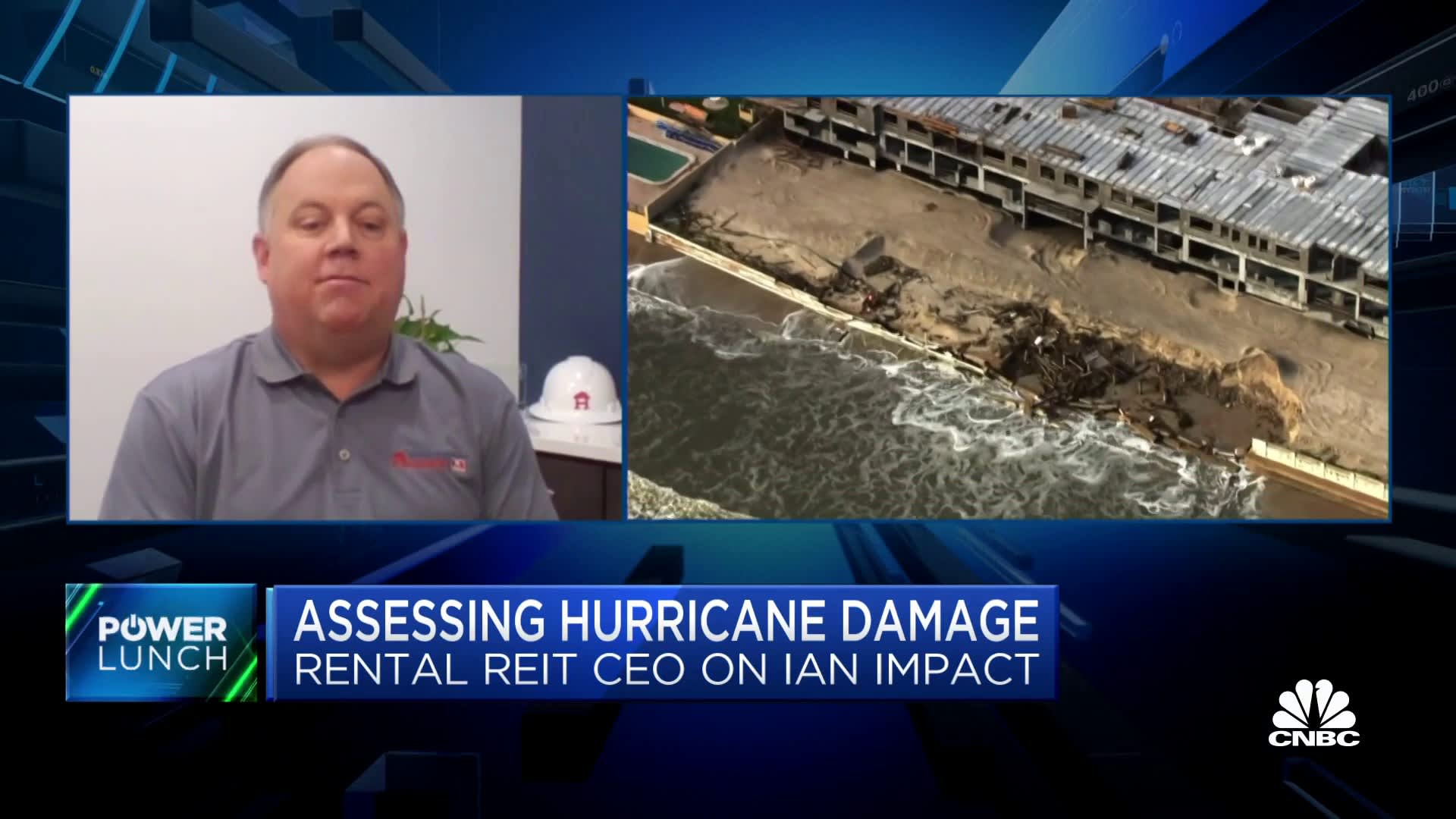
How to protect your finances from natural disasters like Hurricane Ian

How to protect your finances from natural disasters like Hurricane Ian


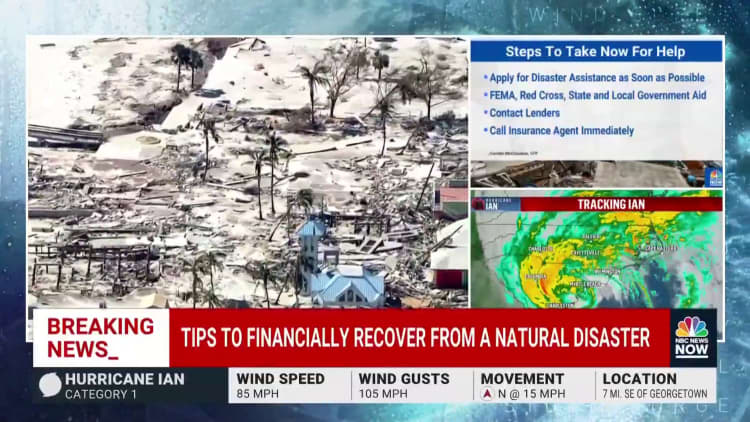
Tips to financially recover from a natural disaster

Tap emergency resources

Reach out to the Federal Emergency Management Agency, Disaster Assistance Improvement Program and the American Red Cross, as well as state and local governments, for emergency assistance. You may also find help in your community.  

“Disasters bring people together,” McClanahan said. “People are really good at helping people.

“If you have the ability to help, do it,” she added. “It may be you who needs help one day.” 

Contact mortgage and other lenders if you may have trouble making loan payments.

Prepare for insurance claims

If you’re going to file an insurance claim, inventory the damage before you start cleaning up. 

Make temporary repairs to prevent further damage, but hold off on permanent repairs until you’ve gotten approval for reimbursement. Keep a written record of the name of everyone you talk to about your claim, including the date of the conversation and summary of what was said. And keep all receipts.

Understand your flood benefits

Floods, including those from a storm surge, are not covered by most standard insurance policies. Coverage for floods requires a separate policy, either from the federally based National Flood Insurance Program or a private insurer. There is a 30-day waiting period before flood coverage is effective. 

Flood insurance for autos is an option under the comprehensive portion of a policy. 

Know your deductible

Many property owners in Florida will face a “hurricane deductible,” which is different than the standard insurance deductible. It’s typically a percentage of the property value.

“If you have a $300,000 house, you could have a $15,000 hurricane deductible before the insurance starts paying,” said Bob Rusbuldt, CEO of the Independent Insurance Agents and Brokers of America. 

After Hurricane Ian, Rusbuldt predicts, it will be difficult for consumers to find property insurance. 

Many will now be facing even higher premiums and deductibles and may have to find a new insurance company if theirs pulls out. Many Florida property owners already have insurance through Citizens, Florida’s state-run insurer of last resort. 


Source link

How to protect your finances from natural disasters like Hurricane Ian Read More »

Property Product-Market Fit: The Important Metric

Property Product-Market Fit: The Important Metric


Housing demand has caused home prices to explode over the past two years. But, even as interest rates rise, the Fed tries to curb inflation, and would-be-homebuyers enter back into the renter’s market, there still isn’t enough land to go around. For developers like Tommy Beadel, this is a good problem to have. On one hand, tailor-made homes for new homebuyers sell out quickly, but without a ton of deals to go around, where do you go to find good dirt?

Tommy is the CEO of Thomas James Homes, rebuilding experts in the Seattle, SoCal, Silicon Valley, Denver, and Phoenix markets. They do what most flippers won’t—buying old, often outdated homes, tearing them down, and rebuilding them to fit today’s standard. Doing this allows them to sell at the highest price to a consumer that only wants the best and latest home to buy. They skirt the line between new development and renovating/rehabbing homes, but this niche has paid off.

Unsurprisingly, Tommy came from a background like most of us. He attended a real estate seminar, surprisingly didn’t get scammed, and house hacked right out of college. His passion for real estate grew from there, taking him from the mortgage industry to investing and now building. But Tommy is convinced that his niche isn’t a cyclical one. Instead, it’s something he can rely on that will stand the test of time. He’s got the data to back it up, and you’ll hear all of it in this episode.

Dave:
Hey, everyone. Welcome to On The Market. I’m your host, Dave Meyer, joined today by James Dainard. James, what’s going on man?

James:
Just grinding it out in the Pacific Northwest right now. We’re dealing with the market, shaking out, so just pivoting, changing things and keeping our nose down and getting things done.

Dave:
I mean, I guess I’m pretending asking you what’s going on. We’ve spent the whole day together, so I’ve talked to you a little bit. But maybe before we jump into the awesome interview we have today, what are you focusing on up there in the Pacific Northwest to keep your business moving during this very strange economic climate?

James:
A lot. We’ve made structural changes at every business. The way we’ve been doing the last 24 months we’ve thrown out the window, and we’ve replaced staff or reposition staff, and we’re just rebuilding the companies, because at the end of the day, every market is a different business and you just have to pivot, change and get things moving.
And as I’m seeing the market kind of slow down, I don’t want to wait until the very end, I want to do it right now. And so make your pivots, build your infrastructure out, and then start looking at the deals you’re going to be buying next.

Dave:
That’s great advice. We also have a great interview today that you dreamed up. This is someone you know. Can you tell us a little bit about Tommy, who’s going to be joining us in a little bit here?

James:
Yeah. I met Tommy actually two years ago, because we’re real estate brokers as sources investment properties. And they came to our town, Seattle, and they changed everything for a while. They came in heavily funded, very good clients, very good builders.
And the cool thing is they built a very high quality home and they spent a lot of time perfecting the layouts for the demographics that want to come in. And for us as brokers, it’s made us very easy to sell. But as an investor, it’s also made me be an admirer, because I’m like, “Hey, I need to kind of do what they’re doing because it’s working so well.”
But they’re a very sharp company, very great organization. They have very good systems in play. Their team is amazing. They build a great product. And the thing I like about him, he’s not just a home builder, he’s an investor guy.
He understands the whole game, he gets the whole big picture. He’s not just putting up two by fours and citing. They’re financially planning and expanding through every market, so it’s just a really exciting company to know in general.

Dave:
Oh, absolutely. It’s great. And I think if you’re thinking, “Oh, I’m not a builder. I’m not a developer,” you’re still going to want to listen to this, because Tommy has an incredible way of explaining how he uses data to find opportunities that’s applicable to people who invest pretty much in anything, particularly in real estate.
We get into a great conversation about how to find product market fit that is applicable to people who invest in any type of asset class. You’re definitely going to want to stick around and hear what Tommy has to say. Anything else you think our audience should listen out for in this interview?

James:
Just understanding the trends. And what I really enjoyed about the conversation was just it’s a simple business when you’re looking at deals. We’re going from a seller’s to a buyer’s market. The true investors like stable. And he wants a stable market, just like I want a stable market. And most of us just this transition is not a bad thing, it’s a good thing, and it allows you to actually grow your business a lot better.

Dave:
Right on. All right. We’re going to take a quick break, but after that we’re going to welcome Tommy Beadel, the CEO of Thomas James Holmes to On The Market. Tommy, welcome to On The Market. Thank you so much for joining us today.

Tom:
Yeah, thanks for having me.

Dave:
Could you start by telling our audience a little bit about how you got into real estate in the first place?

Tom:
How I got in real estate in the first place. Ah, gosh. How deep do you want me to go? I mean, I was sitting on my couch after a late night in college watching an infomercial about a guy who said, “Buy real estate, get rich with no money out of your pocket.” I ended up at a seminar at LAX Airport where they taught you how to leverage up your credit cards or ask for more balance on your credit card so you can go out and buy a home.
And I ended up buying my first home in Long Beach in 2001, 100% financing back when you could get that. I was a full income documentation earner at the time, so it wasn’t one of those crazy stated income loans. But bought a condo, rented one of the rooms out to my brother and my roommate, which functionally paid the entire mortgage payment, I was like, “I live for free. This is amazing. How do I buy more real estate?”
That was my first foray into real estate back then. Then I got into the mortgage business, did mortgages during the mortgage boom from 2001 till 2008. Had started Thomas James Capital, a mortgage company in ’06 was my first kind of foray of starting my own business. And started as a mortgage business and then have had to adapt over the last 16 years to where you can make money doing real estate, and have found myself into the new construction, single lot infill development business.

Dave:
I got to ask you, do you remember how much that seminar cost you back in 2001?

Tom:
It was free actually.

Dave:
What?

Tom:
It was free. I’m convinced though what they told you was ask for more limits on your credit cards because on day two we’re going to sell you the next seminar. Right? I didn’t buy the next seminar. I was like, “Ah, you just told me how to do it.” So no, never spent a dollar on the seminars.

Dave:
Wow. I was thinking to myself, “I’ve never interviewed anyone who has walked out of one of those seminars better off for it.” Congratulations on being someone who did. That’s awesome. Can you tell us a little bit about what you’re doing now and what your construction company does?

Tom:
Well, yeah. Thomas James Holmes, we’re the country’s largest single lot tear down home builder, where what we do is we go into a market and buy a old home in the best neighborhoods to live in. We call it the right home right where people want it. The neighborhoods where people want to live have really old homes.
And so we go and buy that home, tear it down and build a new home in its place. We’re currently operating in Southern California, both in Orange County, Newport Beach area and the west side of Los Angeles, as well as the Silicon Valley.
We’re in the greater neighborhoods of Seattle and the Seattle Market, Kirkland, Bellevue, et cetera. And then we’re in the city of Denver and also in the city of Phoenix. And so we’ve grown a business that enables us to replace functionally obsolete old homes in the best neighborhoods where people want to live.

Dave:
I want to get more into the specific markets that you operate in. But how did you come to settle on that niche of tear down homes, single lot building? What drew you to that niche of new construction?

Tom:
Listen, I would describe myself 16 years ago as a opportunistic real estate investor. Right? 16 years ago I was in the mortgage business because you could make a lot of money doing mortgages. And then in 2008 mortgages stopped and I started buying foreclosures. We were one of the larger foreclosure buyers at the LA County Auctions from 2008 to 2012.
But it’s opportunistic, because that was a finite period of time where there were inefficiencies in the foreclosure market that you could leverage and have an advantage from, but it’s not permanent. Right? The mortgage business where we could make a bunch of money from ’01 to 2006 was not a permanent stable business. The foreclosure business was again a moment in time. And what I found through all of this is businesses have cycles that exist, again, mortgages or foreclosures.
And even fixing and flipping homes, it’s this period of time where there’s a disparity between what you can buy and what you can sell for. What I saw in new construction was a permanent business. It was a business that there is supply of hundreds of thousands of old homes that ultimately need to be torn down. And there’s demand from a consumer for great homes in the neighborhoods where they want to live yet there’s no supply of that home stock in the market.
And when I look at the macro dynamics of the market, the big public builders can never play in those markets because there is no land. If you correlate what we do versus a Toll Brothers, or a NAR, or D.R. Horton, they develop land and they monetize that land through home building efforts. Right?
And what we do in the markets where we are, there is no land to then monetize. What we’re doing is we’re really playing on the arbitrage of square footage that is there and what can be there.
The housing stock that was built in this country in these prime neighborhoods 80 years ago on average was underbuilt for how today’s consumer lives. 80 years ago the consumer lived in a two bedroom, one bath, three bedroom, two bath, ranch style home with a detached garage, single story living, across the country at single story living.
And that you look at these major public master plan builders and they build on smaller lots, they build two story homes where today’s modern family lives in a call it a 2,500, 3000 square foot home with an attached garage in the front and your downstairs comes out to your backyard. It’s just very different the way construction is now 80 years later.
And so what I saw in this business was a resilient business that wasn’t dependent on a moment in time of a real estate market or an economic cycle, right? That there’s always a need or demand for high quality homes in the best neighborhoods and there’s always a supply of these old homes that ultimately need to be torn down in those markets. And so saw this real ability to scale a different type of business to meet the consumer demand in these marketplaces.

James:
Tommy, part of the reason that you went from trustee, or would you say that part of the reason you went from trustee sales to new construction was also the scalability factor? Because I know a lot of people that listen are the smaller flippers and they’re trying to scale their business, and it’s very difficult to scale a remodel flipping business because every house is so different and it’s harder to systemize the construction.
Is that kind of how you guys pivoted? Because I know we went from flipping to now we flip and build. We’re much smaller than you guys it. But the reason we like building is it’s so much easier to actually build a business around, whereas flipping every house is different no matter what systems you have in line. Was it just like the next step?
Because kind of what you described is you are the paperclip investor. You started with a seminar, you essentially did something the BiggerPockets called house hacking, getting your first deal, renting that out, growing it, going in a flipping and now you’re running a extremely large new construction company. I mean, do you think you did that just because you targeted more of the scaling or was it more the investment engine that grew up faster?

Tom:
I think ultimately what you’re saying I describe with the word predictable. And the difference between the different models is predictability. If I go back to how I got into new construction, because I think it’s kind of interesting, Dave, which answers your question, James, is that we were a conduit at the foreclosure sales for other wholesale investors. Right?
Most buyers during the foreclosure boom weren’t able to go to an auction regularly, understand the dynamics happening at the auction guarantee title, all of the things that go along with buying at a foreclosure auction. And so we were a conduit for the smaller investors at these auctions back then.
And I had a partner of ours that was utilizing our services to get access to the foreclosure market and he was buying in neighborhoods that I didn’t understand the value of the real estate. And I looked at only the improvement as the value. Right?
I would look at the property and say it’s a whatever, 2000 square foot home on an 8,000 square foot lot, was built in 1950. And how much will that 2000 foot home be worth if we fixed it up, a typical fix and flip type model? And this gentleman was buying in the valley of Los Angeles in the San Fernando Valley, like in Chino, Sherman Oaks, et cetera.
And I’ll never forget one time we were talking about a property in Sherman Oaks and he said, “I’ll pay a million dollars for it.” And I said, “I can’t lay my money out for you because that house isn’t worth a million dollars. I’m going to be on the hook.” I asked him, “What are you doing? I have to understand why I should feel comfortable.” He said, “Well I’m not buying the house, Tommy, I’m buying the land sitting underneath it,” and this light bulb went off, like, “What do you mean you’re buying the land?”
Well, there’s a math problem that exists to build a home on that lot. The math problem is how much square footage can I build an FAR over the lot area, and then how much does it cost to build that square foot, right? What you’re talking about James on the fix and flip model is one 1950s home versus another 1950s home. I could say it’s a hundred bucks to remodel, but I don’t know until I get in and do I see the foundation and the HVAC and all of these things.
But building a new home on a 10,000 foot lot in this neighborhood on a flat pad versus building a home on this one is the same. It’s predictable, right? And predictable leads to scalability. And so when you can look at a math equation … I mean, I look at real estate as a math equation, right? And when that math equation is simple, pay X scholars for the dirt, pay X dollars for construction, have revenue of Y dollars, that math translates everywhere.
It doesn’t translate to the actual piece of property, which is where you find scalable challenges. Right? When we were doing fix and flip, and we did hundreds and hundreds of these things from ’08 to 2012, you had wildly profitable deals and mediocre deals, and then some really bad apples that you didn’t know what the construction was going to be and they kind of all had a weighted average that was acceptable.
When you go into new construction, we think of it as every deal should be predictable because you go in knowing your cost of construction and knowing if you build that this is the value of what you will be building against. I think scale requires predictability. Scale requires capital. Capital wants predictable returns on their capital, and so that’s how we really push to scale the business.

James:
Got it. Because that makes sense. For us, we’ve been able to scale our … We built town homes has been a lot easier for us to scale that out. And as we’re purchasing, it’s just a simple math equation, which every house is a lot different.
But as you guys are expanding into different markets, how have you guys been able to predict those markets? Because every market is so different. The climate is different, how you build. The cost are different each market. And then also just the value of the market conditions can swing.
You guys are in a desert state, a rainy state in the Pacific Northwest, you get the sunshine in SoCal, and then you get both the perfect climate in Colorado in my opinion. What made you guys want to move into those markets and then whatever you guys had to change to scale around that?

Tom:
Again, we look at supply and demand characteristics in a market on a macro basis. What’s the absorption of real estate? What’s the supply of the land or the old real estate that we can build on? And do the macro trends provide for a market to build in? I can tell you we thought years ago that building homes between the different markets was drastically different in building costs. It’s really not. Right?
Building a home in Arizona is very similar to Seattle, is very similar to Denver. Like as I described to my teams, a two by four in Arizona is the same cost as a two by four in Denver is the same cost as in Seattle. The labor cost of building a home in those markets is also very similar. The labor force in this country is very similar. I mean, you’re going to get slight swings, but the cost of building homes is very similar.
Yes, you have to build different. Every house we build in Denver, the majority of the homes we build in Denver, they have basements because of the climate. The majority of homes we build in Arizona or Phoenix are single story. There’s nuances market to market, but in general the cost of construction is very similar as you build homes in each one of those markets.
And so it’s really then extrapolating that same math problem across into these different regions and looking at where the math equation works. What I love about real estate is the data is so rich. Right? I can see where is land selling at a price that I can pay, because I know what it’s going to cost to build and I know what I then can sell because the data tells me what you can sell homes for in that same zip code. And so we’ve been able to really study how the business works in these different environments very predictably.

Dave:
Tommy, what about the specific markets that you invested in attracted you to them? You said you look at macroeconomic data, and that’s something we focus a lot on this show. You mentioned absorption rates. Are there any other key data points that you look at that you recommend to other investors they look at if they’re trying to expand to new markets?

Tom:
It depends on what you’re looking for. I’m looking to build a business long term that does this compared to investing in an asset today that’s going to have a yield tomorrow or in the next six months. Where am I going to place my capital? I’m making a bet that these markets long term have the financial viability to be in.
It just depends on which investor you are. Right? If you are looking to grow your business into multiple markets, there’s a lot more factors that go into what’s the scalability of that marketplace. What are the job trends happening in that marketplace? What are the regulatory trends happening around densification or additional ability to grow and scale the model?
I think if you’re an investor looking at how do I place my money today, to me it all comes down to supply and demand. Right? I think, and we track this in every one of our markets and markets we’re going into, what is the supply and what’s the demand, right? How many months of inventory are there? How many weeks of inventory are there in these marketplaces?
And where you see supply, outpacing demand and supply growing, you have caution, right? It’s basic simple economic function of supply and demand. And I think that it’s so key that sometimes people forget that if I’m going to place my money here, they’re looking at the deal and the economic terms of that deal, but they’re forgetting that there’s a broader market that they’re competing with on that deal. Right?
There’s a lot of times where people will look at, well, I’m going to be new so I’m only going to compare to new. I think we forget so many times that what is the consumer? Who are we trying to attract? We’re trying to attract a dollar to buy our home. I mean, I correlate it to a car as an example. Take the luxury segment, say it’s a Mercedes, a BMW, an Audi or now a Tesla in that, and I’m trying to attract a customer that has $70,000 to spend on a car, I’m going to look at all my options, right?
Real estate is no different. If I have a million and a half dollars in Seattle, I’m going to say, “Where does my million and a half dollars go best?” Right? If my work center is Downtown Seattle or Bellevue, what’s my pattern to work? Where does the spouse work? And where does my million a half dollars go furthest? Do I get a great town? Do I get an old single family? Do I get a new single family in a more up and coming neighborhood?
Where does my million and a half dollars spend best? And so when you look at supply and demand, I have to say as an investor, what’s the demand for the dollars? The dollars that are out there that I’m trying to attract to the product, what’s the demand and what’s the supply that’s trying to attract those dollars?
And so many times we get very bead focused in a neighborhood and say, “Oh, well, yes, there’s nothing in this neighborhood. Okay, but there’s 10 things in the neighborhood next door, which is the same proximity to work centers as that.” And so again, Dave, I think it sounds more macro the way that I look at it.
We’re managing over a billion dollars worth of real estate in these markets, and so we have to look at these major trends compared to did I buy this singular deal correct? And where do I want to do that singular deal? It really depends on which investor you are and how you want to place that investment of capital into the marketplace.

James:
When you guys are reviewing these trends, I mean, do you guys dig deep into the demographics? With each state there’s a different demand for each type of buyer pool. I was telling Dave before is that you guys spend so much time. You can walk into one of your homes and it could be an 800 to 900 square foot house, but how it’s laid out, they’re so carefully laid out, they feel massive, which is what people are looking for.
They’re looking for space, especially in tight size units. Besides just the normal trends, which are absorption rates, days on market, a median home price, how deep with you guys scaling out are you going into the demographics and going to that next layer of data so you can plan accordingly? Because on a build too, it’s a 12 to 24 month plan a lot of times. How far are you going down the line by digging into even deeper into the data?

Tom:
Yeah, that’s one of the unique parts of only building new construction is we get to design something from scratch every time. We’re not limited by the existing house that we have to remodel. We get to really say what is it that consumers want? Who is our target profile that we’re looking at? Yes, absolutely, James.
We go very deep with that volume of real estate that we own of who are the buyers? What is the life stage of the buyers? Are they empty nesters? Are they young couples? Are they singles? Are they divorcees? What’s the ethnicity of a buyer? Because different ethnicities in different markets want different characteristics of a home, and the layouts of a home, the things that are important to those people.
We do consumer surveys to understand what they’re willing to pay more for or less for, where they’re valuing things that are in excess of the cost to build them. Is yard space more important than a rooftop deck, or just different characteristics of a home that a buyer wants? And really understanding who the consumer is in the market and then how you design the product for the consumer.
And it’s very similar across five markets. You get nuances of demographics, age and ethnicity depending on which market you are in. But the consumer profile is actually very similar. And so then the design to meet that consumer profile is very consistent.
So then once you know who the consumer is, what they value and what they’re willing to spend money on, then we use that data to engage our architects to really design the best home for the market. And so, yes, we definitely go that next step when we get into buying homes.

James:
And so Tommy, how important do you think that is? Obviously we’re going through a market transition right now. Cost of money has gone up, things are slowing down. And one thing that I know Thomas James Homes been able to do is still move a lot of units compared to a lot of builders that are sitting there.
And I do know most local home builders aren’t digging that deep into the demographics. They’re going for that surface level data. And our show is about going to that next level to where you can mitigate risk, protect yourself. Do you think that the extra layer of research on demographics and what people want is helping you guys move the product a little bit better than a lot of different builders?
At least in our local Pacific Northwest market You guys have been able to do that. How important do you think that is for investors to be digging to the extra layer right now as we kind of transition into different types of pricing across the board?

Tom:
Yeah, look, I think a big part of it depends on the volume you’re doing. If I had a few homes to sell at a certain price point, you’d price them correctly, move the inventory. We’ve taken market positions, like in Seattle where we developed those cottages. The cottages were developed very purposely for a very specific part of the market.
We knew that. That’s why we designed them for those. Right? We knew people wanted to not be in towns. The people that are buying our thousand square foot cottages are not town home buyers, because there’s plenty of town homes for those people to buy, but they want to live actually in smaller space, but on two stories compared to three or four stories.
And so we knew that was a void in the market, which is why we developed a product to meet that void. And then knowing that, knowing who we built it for, marketing to that customer, telling them why we built it, telling them what’s great about it for them really helps us be able to move that inventory.
If we went in and built these cottages and just said, “They’re for everybody,” well, they’re not. They were built very purposefully. And so yes, I think understanding our consumer segment is important because it allows us who to focus on to market the product and really tailor our message to the people correctly to show them why we built those homes for them.

Dave:
Tommy, I think this is a great lesson for everyone listening to this. I mean, what you’re describing really sounds like just making sure you find a good product market fit between the product that you’re building and what the demand is. And this is true of obviously pretty much every business out there, and real estate investing is no different.
Even if you’re not a builder like Tommy or James, but even if you are a buy and hold investor, it’s important to consider the properties that you’re buying and if the type of product that you’re buying in a particular market makes sense for the people who are living there. You don’t want to necessarily buy a huge single family really nice home in the middle of a young college town.
There’s just different products that are meant for different types of people. And I think Tommy you did a great job articulating that, but I want to make sure everyone understands that it’s not just for builders here, this is for every type of investor should be thinking about who ultimately is going to be either renting or buying the property that you’re investing in.

Tom:
Well, look, Dave, real estate is an inefficient business real estate. That’s why people can make money in it. Where you get up to these big, huge commercial multi-family type projects, that’s where the efficiencies are gained and you have all the large Wall Street type money going after those things, because there’s no inefficiencies.
What you’re really describing is find the inefficiencies, understand them and beat them. As you were saying that I thought of a rental property. It’s funny, my wife and I actually bought a rental property here in Orange County a few months ago because I saw inefficiencies. I saw that there’s nothing nice and new in the market and there’s demand for somebody to have a nice new single family home and where the disparity of rent people will pay to have something new is.
And so we bought this home, remodeled it, made it beautiful and rented it in 10 days for $5 per square foot when the average in the market is like 350 a foot, because people will pay for that something that’s nice. And so that’s an inefficiency that’s found in the marketplace. And ultimately what I’ve done with new construction is found the largest inefficiency that exists and then taken advantage of that inefficiency in the marketplace for single family new construction.
We actually build rentals in Los Angeles for the same reason. I have about a hundred rental properties with a venture where we build brand new construction rentals in the marketplace for this investor that wants to own that disparity of where there’s demand for new construction living and people want out of a condo or out of a multi-family apartment building, they really want to live in a single family type home. It’s really understanding those different inefficiencies and seeing if there’s an ability to capitalize on them.

Dave:
Tommy, you mentioned earlier that one of the things you look at is of course absorption rate and months of supply. Those have been going up a lot, especially in the new construction market. How is that impacting your outlook over the next couple of years?

Tom:
Without getting into the specific data we track, we all saw what happened when the stock market kind of bottomed in the middle of June and interest rates started to run up, the supply started out pacing the demand for homes. And so what we’re tracking, is that a trend that’s going to continue or is that a trend that comes off?
Well, it’s a trend that happened through July and that trend has come off slightly in terms of supply of new construction homes or the price points where people are selling. And what we’re really tracking is months of absorption or weeks of absorption in the marketplace.
If there’s 70 available homes at the price point you’re trying to sell, and there’s seven selling a week, there’s 10 weeks of absorption in that product. I think what it’s helped us do is really on the buying side as well is where you’re seeing more supply of the input.
The input for us is land. And so if we go into a marketplace saying we’re going to pay a million dollars in this market for land, if we see the weeks of supply going from three weeks to six weeks to 10 weeks, that tells me that land will be cheaper in the coming months. And so then you slow down and you buy correctly, because the land will come down. Right?
It may not come down today, but when we buy a property we’re going to hold them for 18 months or longer. And so it’s really understanding how do we get in at the right basis. And what you really want to track is … I love a market that’s not a buyer’s market and it’s not a seller’s market but it’s just a market. And I feel like where we are right now is just a market.
Five months ago it was a seller’s market. We could demand anything. Through the middle of the summer, it was trending towards a buyer’s market, but that’s come off. And so I just want a normalized market where there’s constant supply of inventory and constant absorption of that same inventory.
The swings is what really causes in both ways. Look, as a seller, I’d love a seller’s market for my inventory, but I don’t want to buy inventory in a seller’s market to build new homes on. We just want a good constant market. And we track these trends by each neighborhood we’re in, by the major metros and across all the metros simultaneously to really see how should we be making decisions on selling homes and then buying new inventory.

James:
As you guys are tracking the data and the absorption rates, one thing that we’ve noticed, especially over the last 90 days or since June, is builders appetites have really backed out. They’re being very, very aggressive. The last 12 to 24 months they’ve calmed down. And then we’ve seen a dramatic drop in building permits and applications over the last 90 days.
I think nationally building permits are down 1.3%, or for single family housing they’re down 5% from last year. Do you see that more is a concern that the builder market is pulling back or more a good opportunity because there is such low supply that there could be this void in the market to where new construction could become this premium product that is expensive just because there’s just not a lot to cover?
I know for us as investors, whether we’re flippers or developers or buy and hold, we’re looking for the gaps. Where are people not kind of playing in? And as people pull back on permits, there is going to be less inventory coming, which for me, I like selling the product that nobody else has. Are you guys looking at that more as something to be cautious of or more something that you’re getting exciting on?

Tom:
Look, the challenge with new construction is we’re buying something today that we’re not going to sell for another year and a half. You’re trying to predict what the absorption of real estate will be at the end of 2023 going into ’24 with your buying patterns today. That you almost need a crystal ball for.
However, what we see is this demand that is not stopping. Right? Has the demand slowed slightly. Sure. But there’s demand for real estate in the markets. And I think it’s hard for me, James, because I have a very myopic view, because the only thing I understand is brand new homes in the best markets. When you look at flipping homes, it’s very hard for me to tell you what that real estate trend will be doing or new construction.
I only look at new construction in the best neighborhoods of Seattle. Seattle versus Tacoma, very different real estate trends. Because the demand in the prime neighborhoods, Northeast Ballard, Queen Anne, et cetera, of Seattle, it’s kind of hard to compare that to the overall global new construction building permits.
My view becomes very myopic in what is new construction in the best marketplaces. If permits in the markets where I am slows, investors are slowing down their buying, it provides more opportunities for me to buy and buy less expensively. But when I get to the back, 18 months from now I’m going to have less competition.
Because if I’m the one buying today, if six months ago we were buying five pieces of inventory to build new, and now I’m the one buying three pieces of inventory and the others have not bought the other two pieces, 18 months from now I’m going to own the only supply in the marketplace.
I kind of like that trend, but I also understand investors, right? I’m a very different investor, more of an institutional investor, invest in capital that is here to play through all market cycles compared to the smaller guy who’s investing friends and family money personally guaranteed on loans. There’s a lot more market factors in play when you’re making those very close to home personal decisions.

James:
And are you guys tracking that in every market that you’re in, like how many building permits are going through? And have you seen any trends stick out more? Because again, you’re in four different types of market, all good markets but different. They have different types of business sectors. Have you seen any drop more than others?

Tom:
Yeah, I’d love if you could share with me the way to track building permits because we have a very hard time tracking new construction building permits. They kind of are all lumped together. And so there’s not a good clean way to aggregate and track that data. Where we’re tracking it more is who’s buying the real estate that we’re not buying and what are they doing with it?
If we have a property that we don’t buy, are they remodeling it? Are they living in it or are they really going in and building a new home? Our number one competitor that we compete with across all five markets that we’re in are actually not other builders.
They’re homeowners buying the real estate to own and live in, or remodel and live in. There’s less development than there is I want that piece of property to own in the marketplace.

James:
Got it. I mean, that makes sense.

Dave:
One thing I wanted to ask you, Tommy, before we let you go is about material costs. It’s something that we’ve been trying to keep track of and I know has scared away some people from flipping, or getting into new construction or development. Have you seen material costs stabilize over the last couple of months or are you still seeing rapid rise … Well, I guess I should ask you, are you seeing rapid rises and sort of what are you seeing in the material costs?

Tom:
No, look, we’ve definitely seen a stabilization in materials. Lumber has come back down. We’re actually seeing a reduction in lumber costs across every market right now. You’re still have inflation. There’s certain cost codes that are inflating along with inflation trends, light fixtures, tile.
There’s a lot of materials that go into building a home that are dependent on oil. And so as oil costs went up, you saw much larger increases in oil cost. The markets that we build in require the labor force to come from outside the area. As oil was up and gas prices were up, you saw a larger influx in your labor cost because the labor had to move themselves to these job sites.
We’ve seen with fuel costs coming back down and lumber coming back down a stabilization, but we still have cost inflation pressures like anyone else does in the market. You got to keep in mind, 40, 50% of every cost to build, whether I think you’re remodeling or building new is labor. And that labor is paying more for their rent, they’re paying more for their groceries, they’re paying more for the fuel and their car, for the clothes that they’re wearing.
And so how do they pay for that? They have to charge more for their labor cost. And so 50% of the cost of construction is really affected by labor. And as a general term, the labor is being affected by CPI index like anybody else. Only about half of it is material cost and that material cost can be all over the place.
But the other major influence is really on labor. What I do think is good is we’re not seeing these drastic spikes anymore. I think we’ve gotten back to some sort of normalization, although now I hear that there’s so many products sitting in warehouses in the US that maybe some of the materials will actually come down over time because we overreacted to the short supply of supply chain issues and filled a bunch of warehouses with stuff here in the US that we need.
We’ll see if we really get cost reductions, I’m not counting on it. And we expect constant inflation due to labor. We just would hope it gets back more normalized than high 8% CPI or inflation index ,and gets back down into the threes and fours, which is pretty normal in construction costs.

James:
Are you guys accounting for more of this in your upfront underwriting, or what have you guys had to do over the last 12 months to kind of battle that labor? I know for us we’ve had to bring in people on staff. We just brought our labor in-house, because it was a way for us to control the cost more. Have you guys had to pivot that way at all or change your systems, or is it more just, “Hey, we got to account for this, build it into the proforma and put the plan in motion.”?

Tom:
Yeah, I think the biggest part for us is having the feedback loop of what it’s costing us to build today. We’re underwriting a new deal based upon our cost today. And so you’re always trying to maintain that feedback loop. If my HVAC is going up today in September, then I know I need to start budgeting more for the jobs that I’m buying that I’ll be putting HVAC in six, seven months from now.
We’re trying to constantly maintain that feedback loop of what’s the cost today and how’s that going to translate when we incur that cost down the road, because there’s a lag time when we buy a new project. The nice part is we don’t buy 400 lots, or buy a big master plan community and cut into foreign lots and locked into our land basis.
We’re always buying new land. And so we are always able to update our underwriting based upon what our current costs are. And so it’s really trying to maintain that feedback loop of different cost codes and where the changes are happening so that you don’t get surprised by them the next time you’re building that home.

Dave:
All right, Tommy, thank you so much. This has been super helpful. Is there anything else you think our audience of new, aspiring and existing real estate investors should know about how to navigate current market conditions or anything else you’d like to share?

Tom:
Yeah, no, look, it just takes taking a little bit of chance and hedging your risk as an investor. I mean, I’m sure some of your investors were like me 15 years ago when you were putting everything into a real estate deal and betting a lot on that.
Sometimes you have to make big bets to go to where you want, and you really have to figure out what it is you are doing. I’ll just share the last thing with you, Dave and James, is that I think you got to figure out as an investor what your goals are and what you’re ultimately trying to accomplish.
Are you trying to build a business? Are you trying to take advantage of a moment in time in a real estate arbitrage? And if you’re going to really build a business and invest capital and take risk, personal, professional, et cetera, why are you doing it? Right?
What’s the bigger, greater goal? If it’s just another dollar, that could be the greater goal. Right? But I love what Simon Sinek says, is, “Figure out your why and the what becomes way easier.” There’s a great YouTube video about it. But as these investors are out there taking risk, going out on a limb, doing deals, building businesses, why are you ultimately doing it at the end of the day?
And figuring out why you’re doing it really helps kind of alleviate all the stress that comes along with the risk that you’re taking in the marketplace. I hope that helps. But Dave and James, appreciate you guys having me on your show today. I really enjoy sharing with you, and hopefully your users learn something from me, and that is don’t pay for real estate seminars at the LAX Airport.

Dave:
Just go to the first day.

Tom:
There you go. There you go.

Dave:
And Tommy, if people want to connect with you, where can they do that?

Tom:
You can message me through LinkedIn, Tommy Beadel, B-E-A-D-E-L. You guys have it spelled L-E, but it’s E-L at the top there. Appreciate any messages you want to send.

James:
If you guys are any deal guys in those markets, look them up. They are great people to work with, a great company to work with. If you got deals, Colorado, Phoenix, Seattle, SoCal, all the new wholesalers out there, reach out to them.

Tom:
Thanks, James. Yes, no, we always like to buy new real estate deals. As a realtor asked me last week, “How do you feel about the market?” And I said, “I can’t find enough land to buy.” And they said, “No, no, but how do you feel about the market?” And I said, “I just said. I can’t find enough land to buy,” which means I feel good about the market. All right guys. Thanks so much. Thanks for having me. See you.

Dave:
All right, take care. All right, James, what’d you think?

James:
Oh, I thought that was awesome. For me as an investor, I’m always looking at how do you scale, how do you kind of move and grow and just … I mean, the fact that these guys can build on all four different areas pretty rapidly in a short amount of time, it really goes back to why people should watch our podcast.
Track the trends, learn what’s going on, and then you can build a business around those trends, not just about your gut feelings. I mean, he’s just taking data, analyzing it, and then putting his motion in play. And I did relate with a lot of what he said.
Scaling as an investor is just, it’s about having the right system, not just the right vision going, “Can I scale this and grow this down the road?” Because that is the hardest part of our business. We start with a certain amount of capital. How do you grow as fast as possible? But it shows that all those house hackers out there, you can go from house hacking to being the largest spot lot builder in the whole nation.

Dave:
Yeah, that was an incredible story. I loved his personal story. What he was talking about in terms of the data was fascinating to me, because we look at a lot of macroeconomic trends, looking at absorption rates, inventory, this sort of stuff makes a lot of sense to me.
What he talked about that I wish I was better at and could do more of is getting that data about what people want, what the consumer is buying. Because I love what he was saying about, generally speaking just about product market fit, and thinking about exactly who the intended buyer is.
But even if you’re a buy and hold investor, think about who the renter is going to be. And is the product that you are buying going to be appealing to the people who live in that area and who want to live in that type of building?
I got to find a better way to find that data. I wonder if he’s just doing like, I should have asked him, surveys or talking to agents. Or do you have any thoughts on how you get that kind of data about what layouts people want, what kind of architecture they want? I’ve never seen anything like that.

James:
Yeah, there’s some cool stuff out there you can do with … We do it actually for off-market tracking, like when we’re more targeting sellers, like who is the demographic that is most likely to sell? You can do the same thing. There’s a lot of different data scientists and analytics companies out there that for us as a wholesaling company we actually hire them, they go through our data and they give us our top list to go off of, and I think they do the same thing.

Dave:
Oh, really?

James:
Oh, yeah. It is not cheap. It’s expensive, but it makes your conversion rate substantially higher. And again, going back to his point, by them taking that extra layer of research and not going off your gut or just the surface to analytics, they’ve been able to sell a lot of units too.
Just like we can get our conversion rate by going to that demographics likeliness to sell or likeliness to buy, you can really kind of plan ahead and not be the odd man out. Because as the market’s transitioning right now, the last thing you want is to be the odd man out property. You don’t want to be the weird rental. You don’t want to be the weird remodeled flip.

Dave:
Totally.

James:
You don’t want to be the new construction lot with a negative impact, and that’s what makes your deal move right now.

Dave:
Yeah, that’s really good advice. I mean, I don’t know if that’s something applicable to our audience if it’s super expensive to buy it, but I mean, maybe it’s as simple as just talking to agents in your area too, just figuring out what type of things people want.
I know when I talk to my agent in Denver, he can always just tell me off the top of his head, “People want ranches right now. People are really digging detached garages,” or, “Renters are looking for this.” Try and gather that data some way. I wish I had some better advice from you other than paying a lot of money. But if you can get it, you’ll definitely have an advantage in the market.

James:
And there is one I do know of that’s not very expensive. It’s called NeighborhoodScout.

Dave:
Oh, yeah.

James:
Yeah. You can pull up every little neighborhood. And they show you the demographics moving in, the demographics moving out. And it’s actually super handy. It does not cost thousands of dollars. And you can buy it just for the little area that you’re in.

Dave:
Oh, perfect. That’s awesome. Thank you. Well, yeah, I’ve used that in the past. I’ve never used it for that purpose, but that’s great advice. Check out NeighborhoodScout if you want to get this kind of data. All right, James, thanks so much. I mean, it’s been a fun day. We’ve been together all day and hopefully I guess we’re going to be together in person real soon.

James:
I’m so excited for BPCON. I think it’s going to be a special one.

Dave:
Yeah. I mean, I feel like we’ve been talking about this for a really long time and now it’s finally here. I’m looking forward to seeing you in a week and a half.

James:
This is my first BiggerPockets conference too.

Dave:
Oh, really? You haven’t been?

James:
Yeah. No, I couldn’t make the last couple because of kids, kid commitment.

Dave:
Oh. Sweet man. Well, we’ll have a great time. And hopefully some of our listeners will be there. But if not, we’ll definitely be posting a lot. We’re going to do a podcast there that we will release so people can hear it.
And yeah, if you want to connect with me at any point about this episode or anything, you could do that on Instagram where I’m @thedatadeli. You can also follow BPCON there. James, what’s your Instagram handle or where should people connect with you?

James:
Yeah, the easiest way to connect with me is definitely on Instagram @jdainflips or our YouTube channel at Project Re. And definitely reach out. I know I’ll be around. And if you catch me at a conference, one thing you do know is I won’t stop talking. Come up, ask me questions, you will get answers. I’m very friendly.

Dave:
That’s a dangerous thing to start telling people.

James:
It’s terrible. I’ll go for eight hours straight. It’s bad.

Dave:
You’re going to be drinking those Rockstars and up till 5:00 in the morning.

James:
Sales juice. Sales juice.

Dave:
All right, thanks man, for being here. And everyone listening, thank you so much for being here and listening to us. Hope you learned a lot today like I did. We’ll see you next time for On The Market. On The Market is created by me, Dave Meyer, and Kailyn Bennett. Produced by Kailyn Bennett. Editing by Joel Esparza and OnyxMedia. Copywriting by Nate Weintraub. And a very special thanks to the entire BiggerPockets team. The content on the show, On The Market, are opinions only. All listeners should independently verify data points, opinions, and investment strategies.




Note By BiggerPockets: These are opinions written by the author and do not necessarily represent the opinions of BiggerPockets.


Source link

Property Product-Market Fit: The Important Metric Read More »

The fact there’s a meltdown among Chinese developers is a major story

The fact there’s a meltdown among Chinese developers is a major story


Share

Legendary investor Jim Chanos and Carson Block, investor and founder of Muddy Waters Research, join CNBC’s Dominic Chu at the Delivering Alpha conference to discuss the meltdown in the Chinese real estate market and how it should be a much bigger story than it is.

07:04

Wed, Sep 28 20224:15 PM EDT


Source link

The fact there’s a meltdown among Chinese developers is a major story Read More »

These 14 States Are Facing Higher Real Estate Insurance Premiums—Is Your State On The List?

These 14 States Are Facing Higher Real Estate Insurance Premiums—Is Your State On The List?


15% ROI”,”imageURL”:”https:\/\/www.biggerpockets.com\/blog\/wp-content\/uploads\/2021\/05\/large_Extra_large_logo-1.jpg”,”imageAlt”:””,”title”:”SFR, MF & New Builds!”,”body”:”Invest in the best markets to maximize Cash Flow, Appreciation & Equity with a team of professional investors!”,”linkURL”:”https:\/\/renttoretirement.com\/”,”linkTitle”:”Contact us to learn more!”,”id”:”60b8f8de7b0c5″,”impressionCount”:”262625″,”dailyImpressionCount”:”262″,”impressionLimit”:”350000″,”dailyImpressionLimit”:”1040″},{“sponsor”:”The Entrust Group”,”description”:”Self-Directed IRAs”,”imageURL”:”https:\/\/www.biggerpockets.com\/blog\/wp-content\/uploads\/2021\/11\/TEG-Logo-512×512-1.png”,”imageAlt”:””,”title”:”Spring Into investing”,”body”:”Using your retirement funds. Get your step-by-step guide and learn how to use an old 401(k) or existing IRA to invest in real estate.\r\n”,”linkURL”:”https:\/\/www.theentrustgroup.com\/real-estate-ira-report-bp-awareness-lp?utm_campaign=5%20Steps%20to%20Investing%20in%20Real%20Estate%20with%20a%20SDIRA%20Report&utm_source=Bigger_Pockets&utm_medium=April_2022_Blog_Ads”,”linkTitle”:”Get Your Free Download”,”id”:”61952968628d5″,”impressionCount”:”446662″,”dailyImpressionCount”:”180″,”impressionLimit”:”600000″,”dailyImpressionLimit”:0},{“sponsor”:”Walker & Dunlop”,”description”:” Apartment lending. Simplified.”,”imageURL”:”https:\/\/www.biggerpockets.com\/blog\/wp-content\/uploads\/2022\/03\/WDStacked512.jpg”,”imageAlt”:””,”title”:”Multifamily Property Financing”,”body”:”Are you leaving money on the table? Get the Insider\u0027s Guide.”,”linkURL”:”https:\/\/explore.walkerdunlop.com\/sbl-financing-guide-bp-blog-ad”,”linkTitle”:”Download Now.”,”id”:”6232000fc6ed3″,”impressionCount”:”157228″,”dailyImpressionCount”:”167″,”impressionLimit”:”200000″,”dailyImpressionLimit”:”6500″},{“sponsor”:”SimpliSafe Home Security”,”description”:”Trusted by 4M+ Americans”,”imageURL”:”https:\/\/www.biggerpockets.com\/blog\/wp-content\/uploads\/2022\/09\/yard_sign_100x100.png”,”imageAlt”:””,”title”:”Security that saves you $”,”body”:”24\/7 protection against break-ins, floods, and fires. SimpliSafe users may even save up to 15%\r\non home insurance.”,”linkURL”:”https:\/\/simplisafe.com\/pockets?utm_medium=podcast&utm_source=biggerpockets&utm_campa ign=2022_blogpost”,”linkTitle”:”Protect your asset today!”,”id”:”624347af8d01a”,”impressionCount”:”129480″,”dailyImpressionCount”:”175″,”impressionLimit”:”200000″,”dailyImpressionLimit”:”2222″},{“sponsor”:”Delta Build Services, Inc.”,”description”:”New Construction in SWFL!”,”imageURL”:”https:\/\/www.biggerpockets.com\/blog\/wp-content\/uploads\/2022\/04\/Image-4-14-22-at-11.59-AM.jpg”,”imageAlt”:””,”title”:”Build To Rent”,”body”:”Tired of the Money Pits and aging \u201cturnkey\u201d properties? Invest with confidence, Build To\r\nRent is the way to go!”,”linkURL”:”https:\/\/deltabuildservicesinc.com\/floor-plans-elevations”,”linkTitle”:”Look at our floor plans!”,”id”:”6258570a45e3e”,”impressionCount”:”119524″,”dailyImpressionCount”:”166″,”impressionLimit”:”160000″,”dailyImpressionLimit”:”2163″},{“sponsor”:”RentRedi”,”description”:”Choose The Right Tenant”,”imageURL”:”https:\/\/www.biggerpockets.com\/blog\/wp-content\/uploads\/2022\/05\/rentredi-logo-512×512-1.png”,”imageAlt”:””,”title”:”Best App for Rentals”,”body”:”Protect your rental property investment. Find & screen tenants: get full credit, criminal, and eviction reports.”,”linkURL”:”http:\/\/www.rentredi.com\/?utm_source=biggerpockets&utm_medium=paid&utm_campaign=BP_Blog.05.02.22&utm_content=button&utm_term=findtenants”,”linkTitle”:”Get Started Today!”,”id”:”62740e9d48a85″,”impressionCount”:”100287″,”dailyImpressionCount”:”154″,”impressionLimit”:”150000″,”dailyImpressionLimit”:”5556″},{“sponsor”:”Guaranteed Rate”,”description”:”One-Stop Mortgage Lender”,”imageURL”:”https:\/\/www.biggerpockets.com\/blog\/wp-content\/uploads\/2022\/06\/GR-512×512-1.png”,”imageAlt”:””,”title”:”$1,440 Mortgage Savings”,”body”:”Whether you\u2019re buying new or cash-out refinancing to upscale the old \u2013 get started today and we\u2019ll help you save!”,”linkURL”:”https:\/\/www.rate.com\/biggerpockets?adtrk=|display|corporatebenefits|biggerpockets|july2022_blog||||||||||&utm_source=corporatebenefits&utm_medium=display&utm_campaign=biggerpockets&utm_content=july2022-blog%20%20%20″,”linkTitle”:”Buy or Cash-Out Refi”,”id”:”62ba1bfaae3fd”,”impressionCount”:”55336″,”dailyImpressionCount”:”159″,”impressionLimit”:”70000″,”dailyImpressionLimit”:”761″},{“sponsor”:”Avail”,”description”:”#1 Tool for Landlords”,”imageURL”:”https:\/\/www.biggerpockets.com\/blog\/wp-content\/uploads\/2022\/06\/512×512-Logo.png”,”imageAlt”:””,”title”:”Hassle-Free Landlording”,”body”:”One tool for all your rental management needs — find & screen tenants, sign leases, collect rent, and more.”,”linkURL”:”https:\/\/www.avail.co\/?ref=biggerpockets&source=biggerpockets&utm_medium=blog+forum+ad&utm_campaign=homepage&utm_channel=sponsorship&utm_content=biggerpockets+forum+ad+fy23+1h”,”linkTitle”:”Start for FREE Today”,”id”:”62bc8a7c568d3″,”impressionCount”:”58538″,”dailyImpressionCount”:”177″,”impressionLimit”:0,”dailyImpressionLimit”:”1087″},{“sponsor”:”Steadily”,”description”:”Easy landlord insurance”,”imageURL”:”https:\/\/www.biggerpockets.com\/blog\/wp-content\/uploads\/2022\/06\/facebook-business-page-picture.png”,”imageAlt”:””,”title”:”Rated 4.8 Out of 5 Stars”,”body”:”Quotes online in minutes. Single-family, fix n\u2019 flips, short-term rentals, and more. Great prices and discounts.”,”linkURL”:”http:\/\/www.steadily.com\/?utm_source=blog&utm_medium=ad&utm_campaign=biggerpockets “,”linkTitle”:”Get a Quote”,”id”:”62bdc3f8a48b4″,”impressionCount”:”58622″,”dailyImpressionCount”:”96″,”impressionLimit”:”200000″,”dailyImpressionLimit”:”1627″},{“sponsor”:”MoFin Lending”,”description”:”Direct Hard Money Lender”,”imageURL”:”https:\/\/www.biggerpockets.com\/blog\/wp-content\/uploads\/2022\/06\/mf-logo@05x.png”,”imageAlt”:””,”title”:”Flip, Rehab & Rental Loans”,”body”:”Fast funding for your next flip, BRRRR, or rental with MoFin! Close quickly, low rates\/fees,\r\nsimple process!”,”linkURL”:”https:\/\/mofinloans.com\/scenario-builder?utm_source=biggerpockets&utm_medium=cpc&utm_campaign=bp_blog_july2022″,”linkTitle”:”Get a Quote-EASILY!”,”id”:”62be4cadcfe65″,”impressionCount”:”64107″,”dailyImpressionCount”:”115″,”impressionLimit”:”100000″,”dailyImpressionLimit”:”3334″},{“sponsor”:”REI Nation”,”description”:”Premier Turnkey Investing”,”imageURL”:”https:\/\/www.biggerpockets.com\/blog\/wp-content\/uploads\/2022\/07\/REI-Nation-Updated-Logo.png”,”imageAlt”:””,”title”:”Fearful of Today\u2019s Market?”,”body”:”Don\u2019t be! REI Nation is your experienced partner to weather today\u2019s economic conditions and come out on top.”,”linkURL”:”https:\/\/hubs.ly\/Q01gKqxt0 “,”linkTitle”:”Get to know us”,”id”:”62d04e6b05177″,”impressionCount”:”53162″,”dailyImpressionCount”:”104″,”impressionLimit”:”195000″,”dailyImpressionLimit”:”6360″},{“sponsor”:”Zen Business”,”description”:”Start your own real estate business”,”imageURL”:”https:\/\/www.biggerpockets.com\/blog\/wp-content\/uploads\/2022\/07\/512×512-1-300×300-1.png”,”imageAlt”:””,”title”:”Form Your Real Estate LLC or Fast Business Formation”,”body”:”Form an LLC with us, then run your real estate business on our platform. BiggerPockets members get a discount. “,”linkURL”:”https:\/\/www.zenbusiness.com\/p\/biggerpockets\/?utm_campaign=partner-paid&utm_source=biggerpockets&utm_medium=partner&utm_content=podcast”,”linkTitle”:”Form your LLC now”,”id”:”62e2b26eee2e2″,”impressionCount”:”39607″,”dailyImpressionCount”:”124″,”impressionLimit”:”80000″,”dailyImpressionLimit”:”2581″},{“sponsor”:”Marko Rubel “,”description”:”New Investor Program”,”imageURL”:”https:\/\/www.biggerpockets.com\/blog\/wp-content\/uploads\/2022\/07\/DisplayAds_Kit_BiggerPockets_MR.png”,”imageAlt”:””,”title”:”Funding Problem\u2014Solved!”,”body”:”Get houses as low as 1% down, below-market interest rates, no bank hassles. Available on county-by-county basis.\r\n”,”linkURL”:”https:\/\/kit.realestatemoney.com\/start-bp\/?utm_medium=blog&utm_source=bigger-pockets&utm_campaign=kit”,”linkTitle”:”Check House Availability”,”id”:”62e32b6ebdfc7″,”impressionCount”:”40530″,”dailyImpressionCount”:”144″,”impressionLimit”:”200000″,”dailyImpressionLimit”:0},{“sponsor”:”Xome”,”description”:”Search & buy real estate”,”imageURL”:”https:\/\/www.biggerpockets.com\/blog\/wp-content\/uploads\/2022\/08\/BiggerPocket_Logo_512x512.png”,”imageAlt”:””,”title”:”Real estate made simple.”,”body”:”Now, you can search, bid, and buy property all in one place\u2014whether you\u2019re a seasoned\r\npro or just starting out.”,”linkURL”:”https:\/\/www.xome.com?utm_medium=referral&utm_source=BiggerPockets&utm_campaign=B P&utm_term=Blog&utm_content=Sept22″,”linkTitle”:”Discover Xome\u00ae”,”id”:”62fe80a3f1190″,”impressionCount”:”22760″,”dailyImpressionCount”:”122″,”impressionLimit”:”50000″,”dailyImpressionLimit”:”1667″},{“sponsor”:”Follow Up Boss”,”description”:”Real estate CRM”,”imageURL”:”https:\/\/www.biggerpockets.com\/blog\/wp-content\/uploads\/2022\/08\/FUB-Logo-512×512-transparent-bg.png”,”imageAlt”:””,”title”:”#1 CRM for top producers”,”body”:”Organize your leads & contacts, find opportunities, and automate follow up. Track everything and coach smarter!”,”linkURL”:”https:\/\/pages.followupboss.com\/bigger-pockets\/%20″,”linkTitle”:”30-Day Free Trial”,”id”:”630953c691886″,”impressionCount”:”25674″,”dailyImpressionCount”:”164″,”impressionLimit”:”150000″,”dailyImpressionLimit”:”1230″},{“sponsor”:”BatchLeads”,”description”:”Off-market home insights”,”imageURL”:”https:\/\/www.biggerpockets.com\/blog\/wp-content\/uploads\/2022\/09\/image_6483441.jpg”,”imageAlt”:””,”title”:”Score off-market deals”,”body”:”Tired of working dead-end leads? Generate personalized leads, find cash buyers, and close more deals.”,”linkURL”:”https:\/\/batchleads.io\/?utm_source=biggerpockets&utm_medium=blog_ad&utm_campaign=bleads_3&utm_content=v1″,”linkTitle”:”Try for Free”,”id”:”6318ec1ac004d”,”impressionCount”:”13180″,”dailyImpressionCount”:”144″,”impressionLimit”:”50000″,”dailyImpressionLimit”:0},{“sponsor”:”BatchLeads”,”description”:”Property insights + tools”,”imageURL”:”https:\/\/www.biggerpockets.com\/blog\/wp-content\/uploads\/2022\/09\/image_6483441.jpg”,”imageAlt”:””,”title”:”Beat the shifting market”,”body”:”Don\u0027t let market uncertainty define your business. Find off-market deals and cash buyers with a single tool.”,”linkURL”:”https:\/\/batchleads.io\/?utm_source=biggerpockets&utm_medium=blog_ad&utm_campaign=bleads_3&utm_content=v2″,”linkTitle”:”Try for Free”,”id”:”6318ec1ad8b7f”,”impressionCount”:”19310″,”dailyImpressionCount”:”364″,”impressionLimit”:”50000″,”dailyImpressionLimit”:0},{“sponsor”:”Walker & Dunlop”,”description”:”Loan Quotes in Minutes”,”imageURL”:”https:\/\/www.biggerpockets.com\/blog\/wp-content\/uploads\/2022\/09\/WD-Square-Logo5.png”,”imageAlt”:””,”title”:”Skip the Bank”,”body”:”Financing $1M – $15M multifamily loans? Competitive terms, more certain execution, no strings to personal assets”,”linkURL”:”https:\/\/explore.walkerdunlop.com\/better-than-banks\/bigger-pockets\/blog\/quote”,”linkTitle”:”Learn More”,”id”:”6318ec1aeffc3″,”impressionCount”:”20815″,”dailyImpressionCount”:”348″,”impressionLimit”:”200000″,”dailyImpressionLimit”:”2334″}])” class=”sm:grid sm:grid-cols-2 sm:gap-8 lg:block”>


Source link

These 14 States Are Facing Higher Real Estate Insurance Premiums—Is Your State On The List? Read More »

Is BRRRR Investing About to Get Even Better?

Is BRRRR Investing About to Get Even Better?


BRRRR investing has become one of the most popular real estate investing strategies across the United States. But, the great contractor shortage of 2020 and 2021 almost decimated BRRRR investors. Record high prices, dragged-out timelines, and the inability to rely on almost anyone to fix up houses brought this strategy close to extinction. But now, we’re seeing a second wind of BRRRR investing as contractors aren’t being stretched so thin and competition for real estate starts to slump.

Welcome back to another episode of Seeing Greene, where your “I don’t seek validation, validation seeks me” host, David Greene, is back to answer your questions on anything related to real estate. In this episode, we talk about investing methods such as the BRRRR strategy, real estate syndication investing, becoming a real estate professional, and more. We’ll also touch on some deeper topics like why so many new real estate investors crave validation, how to know when to fire your property management company, and the medieval meaning of “racking your brain.”

Want to ask David a question? If so, submit your question here so David can answer it on the next episode of Seeing Greene. Hop on the BiggerPockets forums and ask other investors their take, or follow David on Instagram to see when he’s going live so you can hop on a live Q&A and get your question answered on the spot!

David:
This is The BiggerPockets Podcast, show 669. Get yourself around other people that are committed to their goals. And it doesn’t have to be real estate. Get yourself around other people that are committed to staying in the gym. Get yourself around other people that are committed to eating healthier foods. Get yourself around other people that are committed to having better marriages or being better parents or managing their wealth better. The first thing that you can do is when you start telling other people good job for what you did, it will silence the need you have inside yourself to hear it. I don’t know why it works like this, but it’s almost the equivalent of if you’re really hungry but you give someone else food, your hunger can go away. What’s going on everyone? This is David Greene, you are host of the BiggerPockets Real Estate podcast here today with a Seeing Greene episode.
If you’re new to BiggerPockets, you’re going to love it. This is a place where the best real estate investors in the world come to learn how to invest in real estate and build big wealth. And if this is your first time hearing a Seeing Greene episode, you’re in for a treat. In these shows we take questions directly from our community. Areas that they’re stuck in, advice that they need, hurdles they’re having a hard time overcoming or they’ve got a bunch of different options they don’t know which is the best one to take and I do my best to give them advice from my perspective as the person who’s Seeing Greene. In today’s show we’ve got some really good stuff. We get into a very good conversation about the timeline you should give a property manager to turn a property around, as well as what you should look for if you’re going to switch to a new property manager.
We talk about what the IRS considers a real estate professional and how you can take advantage of all the tax benefits that come from that designation. And we get into if real estate syndications are as beneficial as they may seem. All that and more in today’s show. But before we get to our first question, today’s quick tip is, this episode is dropping right when BP Con 2022 is starting. So what are you doing to get out there and make connections or foster the relationships that will take your business to the next level? Do you have a game plan to go demonstrate value to a potential mentor and get someone personally invested in your success? Have you evaluated what skills and talents you’re bringing to the table? Spend some time today to make your next event, conference, or coffee meeting that much more impactful so that you can supercharge the speed that you get through your learning curve and get into making big money and having big success soon. All right, let’s get to our first question.

Collin:
Hey David, thanks so much for taking the time to review my question. My question has to do with the BRRRR strategy. Given how hard it could be these days to lock down a contractor, given how far out in advance contractors tend to be booked, how do you balance the process of sourcing the right property to BRRRR with the process of ensuring that a reliable contractor will be available to perform the rehab process shortly after the property is closed on? The last thing you want to do is have to soak expenses to hold the property while you wait weeks or even months for the contractor to start the job. Thanks so much again for taking the time to respond to my question. Really appreciate all the great content you’re putting out there.

David:
All right. Thank you Collin. Some pretty good questions that you’re asking there. Let’s start with where we are in today’s market. With the interest rate hike we’ve had, we’ve seen a decrease in demand. And not every market’s the same, but in many markets across the country we’re actually seeing a slowdown. So I’m having an easier time finding contractors right now than I have had in recent past because there’s not as many transactions happening. So a contractor’s talents are in less of a state of demand, which means it’s easier to find contractors to do deals. That’s one thing to keep in mind. There’s also contractors out there that are busy and then there’s others that are actually looking for work. So I would say double down on the amount of people that you ask for referrals from different contractors that can do work. Then you’ve got the fact there’s different kinds of contractors.
There’s some contractors that just communicate with you, look really fancy and professional, spend a bunch of money on SEO so that you find their company when you’re googling them, and they sub out all the work to completely different companies. So they might go to a plumbing company and say, “I’ve got a job. What are you going to charge?” And the plumber says, “20 grand.” And the contractor tacks plumbing as 30 grand onto the bid and they make a $10,000 spread because they found the plumber. You’ve got other contractors, and these are the types that I tend to prefer, that have a plumber on in their company or a person that can do plumbing work that comes and does it. And so you’re not paying as much as if they contracted to a completely different company. There’s also the fact that in today’s market when houses are not flying out the shelves in every single market across the country like they have been, that you can get a longer escrow period.
If you put the house in contract and the contractor says, “Well I can’t start for another three weeks.”, you can go back to that seller and say, “Hey, can we close three weeks later? Can we delay escrow? Can I maybe close in a week and a half later?” And you only have to soak the cost of a week and a half instead of the full three weeks. So you’ve got something there. And then another thing that I’ll do … Because I have a couple BRRRRs going on right now and I got a property in contract today as we’re making this episode and that’s going to be a BRRRR. Now, part of that property can be rented out as is and another part of the property needs to be renovated. So in that case, I’m going to rent out the property as is as soon as I close as a short term rental. And when the contractor can start the work, that’s when I’ll shut down renting it out while he takes about 30 days to complete the renovations and I get it back on the market.
So not every property has this problem where you can’t do anything with it until it can be renovated. Now if you’re doing kitchen, bathroom remodeling in a single unit property, yeah, you’re going to be soaking those costs. So what I would do is I would look at building that into your offer. So if you know it’s going to be another three weeks before you can get to the job and you are going to spend $3,000 a month on mortgage, maybe see if you can get the house for $9,000 less or get $9,000 credited back to you from the seller to cover those expenses. Look for some creative ways that you can get the seller to pay for some of those expenses that you’re going to have if they won’t delay the escrow. But in any regard, I’m finding that right now is an easier time to BRRRR than what I’ve seen in the last eight years.
All right, our next question comes from Jake in Pennsylvania. The good old PA. “Are real estate syndications as beneficial as they seem? Would you recommend them for a beginner investor or should I focus more on multi-family rentals to start out?” Okay, let’s dig into this. I don’t know that a syndication will ever be as beneficial as it seems because how it seems is usually going to be the syndicator paying for some kind of sponsored ad on social media or selling you at some kind of a conference to say, invest in my fund, invest in my syndication, because they want your money. So I’ve never looked at it as if they’re as beneficial as they seem. I’ve looked at them as are they as beneficial as buying a house for myself?
And I have invested in syndications, primarily with my partner Andrew Cushman. He and I buy apartment buildings together and we’ve structured some like that. But I also spend more of my money on residential properties that I own myself, not in syndication. So sometimes I’ll invest in a syndication because I’m having a hard time getting a loan. Sometimes I’ll invest in a syndication because there’s not that many good deals out there. Sometimes I’ll invest in a syndication because I’m really busy and I don’t have time to manage a BRRRR, a rehab, getting a property up and off the ground and running so I’ll just give my money into a syndication and get it back in a couple years. I’ve done that a few times. There’s different reasons why I might want to. In general, I would say most people are probably going to be better off investing it themselves.
And here’s why. When you start off buying your own properties, you’re not only getting the return on your money but you’re gaining knowledge. You will learn so much more buying a deal and making mistakes and getting better than you will handing your money to a syndicator who’s going to go buy a deal, make mistakes and get better off of your money. I’d rather see you, Jake, house hacking. If you don’t have a property at all, house hack. I’ve said it before, I will say it again. Everyone listening should be house hacking one house every year. Every single year for at least the next 10 years you should be getting a primary residence, and probably longer because you can often get primary residences after you have 10 properties. If that’s all you did in your whole career, you would be very wealthy at the end of your career if you just bought a house, a year, house hacking, putting 5% down or three and a half percent down sometimes.
Now anything you buy in addition to that, you should weigh, is it better to buy the rental and put 20% down or is it better to put that money into a syndication? If you’re going to focus on multi-family rentals, you’re probably talking small multi-family. That’s going to be two to four units. Just make sure you’re doing that in an area that is not crime ridden, not full of problems from problematic tenants and is an area where you’re seeing population growth. One of the benefits of a syndication if this syndicator is good is they’re more likely to have done their homework on the area that they’re investing in because they have a lot of money going into it. So if the person’s good, they avoid buying into bad areas, which you as a new investor can easily wander into.
And if you look at most problems in real estate, it comes from someone that bought in the wrong area. So it all depends on your goals, how you’re going to vet the performance, if you’re trying to maximize your capital, how much time you have to put into it. There’s active and there’s passive and there’s a scale in between and you have to ask yourself how much you’re willing to do. You also have to be an accredited investor in most syndications, which you may not be. In which case it becomes a very easy answer. You should be buying your own properties. But if you’re looking at a small multi-family and you can buy it on your own and man, house hack is just staring you in the face. Just buy a triplex or a fourplex every single year. Don’t make this complicated. Get the best one that you can. Live in one unit, rent out the rest, then buy another one next year and rent out the one that you were living in right now and you’ll end up accumulating rental properties for five to 10% down instead of 20 to 25% down and your capital will go much further.

Paul:
Hi David. My name is Paul Charbonneau and I live in the Dallas Fort Worth area and I invest in Pittsburgh, Pennsylvania. My partner and I started this about two and a half years ago and over that time we have purchased 20 single family houses and we used private equity to purchase those and right now we’re working on our first refinance. And if we refinance 10 of them, or half of them, that will pay off the note and we will own the other 10 scott free. So, so far, so good. Everything seems to be working according to plan. But my question to you comes from a tax perspective. I work full-time W2 job and right now I could only take the tax loss for the passive income. It cannot offset any of my W2 income the way I’m reading it. And the only way to get past that hurdle is to become a real estate professional.
And I was looking up what that entails. And you can correct me if I’m wrong, but I think it says more than 50% of the personal services you perform in all businesses during the year must be performed in a real estate business you materially participate in. So that would tell me that maybe if I worked at a title company, I’m in real estate, but that’s not anything that I have a personal stake in. So I think that doesn’t qualify, but I would like clarification on that. And then the other thing says that you have to spend at least 750 hours in the calendar year in real estate services or businesses and I think I qualify on that aspect. I could easily do real estate all day. So the question that I have is can I reduce my hours at my W2 job? And let’s say I go part-time to a thousand hours a year. At that point, if I work 1,001 hours on real estate, do I qualify as a real estate professional under the IRS guidelines? And then the second part of that question is going to be, how do they look at the number of hours that you worked? Does scouring Zillow count? Talking to my property management group? I assume that works. What about talking to my realtor? All of those conversation emails. What constitutes as working 750 hours? Look forward to hearing your answer. Thank you.

David:
Hey there Paul. Thank you for this. First off, you’re asking the right questions. I love that you’re saying how do I do this, not am I doing this or can I do this or I can’t do this. You’re asking the right question. You’re also asking it in the right forum. Thank you very much for posting this on Seeing Greene. If you guys would like to also ask a question, just go to biggerpodcast.com/david and you can ask a question just like Paul. Now Paul, I do need to preface this by saying this is not legal advice. I am not a CPA and so I don’t know exactly what the law is. Now, I can understand the law as you read it and that is my understanding of what you said. Very similar to a 1031. I know most of the main stipulations, rules and regulations. Where you get tripped up with legal matters is in case law.
Now, in many cases in the law, if you guys have never heard of the phrase case law before, you have a hard and fast rule such as you have to perform 750 hours a year doing real estate related activities or you have to spend more than 50% of your time on something that you would be materially affected by. Something along those lines. However, sometimes there’s ambiguity in what would be materially affected or what would be considered real estate related activities. That’s where case law comes into effect. Now, case law is when judges look at a specific case and set a precedent saying, hey, in this case we found that this work did not constitute real estate related activity or this case it did. So your question about Zillow is a great question. Would that count? We would have to ask a CPA who knows the case law on that specific situation.
Has there been a person that claimed to the IRS, I’m a real estate professional because I looked at Zillow for houses as part of the acquisition part of my business, and if so, how did the court rule in that specific case? That then determines precedent or what we call case law. Now, coming from law enforcement, I had to study this laboriously. I was constantly learning case law when it came to use of force, evidence, rules when it came to the fourth amendment, which is really big in law enforcement. Search and seizure. If we find evidence of a crime on someone, there’s certain times where it’s admissible in court, there’s other times where it’s not admissible in court and you had to learn the case law to know how to make your case stick. That’s the same in the situation that you’re in here. So I’m going to tell you that you should run this by a CPA before anything that I tell you is something that you go put into practice.
What I can tell you is what I would do if I was in your situation. Part of why I am an entrepreneur now instead of just working the W2 job is because everything that I do is real estate related. I have a real estate sales team. The David Greene Team. I have a real estate loan company, The One Brokerage. I do real estate investing myself. I’m now raising money and helping invest it for other people. That’s Greene Capital. I write books about real estate. I make podcasts about real estate. I make YouTube videos about real estate. I write books about real estate. All of this stuff is real estate related so that it’s not hard for me to qualify as a full-time real estate professional so I save in taxes in a big, big way. You could do the same thing. The question is, is your W2 job holding you back?
And this is the case for so many people, Paul. I think you’re this prototypical, awesome example of a BiggerPockets member. You love real estate, you bleed real estate, you eat and breathe it, you can’t get enough of it. You listen to all the podcasts, you love to talk about it at barbecues. You’re the guy that all your friends come up to you because you have all the real estate answers and they’re fascinated by it. But yet you still have a foot or maybe a foot and a half in the corporate W2 world that stops you from being the full-time professional. I don’t think working at a title company would qualify because that’s still your W2 job. However, what if you started a title company, hired one even part-time person to work in that title company, started talking to realtors or other investors and saying, “Hey, when you buy a house, let me do your title work. This is the offer I can give you. This is the service I can give you. This is the price that I can give you that’s better than other people. Bring me your business.”
Even if that business isn’t making you money hand over fist, what if the hours that you put into running it start to qualify you as a full-time real estate professional? Now again, I don’t know the case law on this so I cannot come out and tell you this is all you got to do. Just go do this. I’m not a full-time professional. I’m not a CPA. I would have to run this by my CPA to ask, but these are the kind of questions that I ask. If I’m acquiring properties, if I’m refinancing properties, if I’m doing X or Y in business, would that qualify? When they tell me this would or this wouldn’t, now I know what direction to put most of my time in and the question becomes how do I make that profitable.
What most people do is they say, what’s profitable? How do I go do that? Well, you often paint yourself into a corner where now you’re not a full-time real estate professional. I don’t think you need to jump completely out of your W2 job, but I do think you can start a side business or a couple and start moving in that direction. And as those companies become more profitable, you can start to take more weight off of the W2 foot and put it onto the foot that’s in the 1099 world until eventually you can jump in all the way. Thank you for asking such a great question. I’m glad that our listeners got to hear a little bit about how that works. If you’re listening to this and you love real estate and you don’t love your W2 job, you’ve got more options than just completely quit your job and go full-time into investing or be stuck in a job you hate forever and never get out of it.
There’s a whole spectrum of stuff that you can do and I’m a really good example of someone who lives inside that spectrum. I’ve got tons of different revenue streams where I make money through real estate because there’s so many different ways that you can do it and I’d like to see more of you doing the same thing. So if you’re not happy with your W2 job, but you also wouldn’t be happy being a complete risk filled full-time investor, find a job that is somewhere in the middle like an escrow officer, a title officer, a loan officer, a loan processor, a real estate agent, a buyer’s agent, a showing assistant, a real estate administrative assistant, a contractor, a handyman, a CPA, a bookkeeper. I could go on, but there’s a lot of different people that work within this industry that serve it where you could start to dip your toe and get involved so you could be closer to real estate but not completely dependent on rental income to pay your bills. Paul, let me know if there’s anything I didn’t answer in your question. Please submit a follow up question if that’s the case. And also I would encourage you to post this on the forums on BiggerPockets so other people can weigh in.
All right. Thank you everyone for your questions so far. We would not be able to do this show without you. And in fact, my love and appreciation for you and those that have submitted their questions to biggerpockets.com/david has reminded me that I needed to turn the light green of everything I do with BiggerPockets. By far, I have the hardest time remembering to change the light from green to blue. So if you’re watching this on YouTube, no, it did not just skip to another video. I just remembered to turn the light on. But hopefully this different ambiance captures your attention and keeps you interested as my monotone, baritone, calming voice may be putting you to sleep so you can get more out of this real estate cornucopia of information that we’ve put together for you.
All right, in this segment of this show I like to read some of the comments that we’ve gotten off of our YouTube channel on previous episodes. A lot of these are funny or nice or sometimes they’re even mean and that’s fun to share too. So as you listen to these, please leave a comment for me on YouTube. Let me know what you liked, what you didn’t like, some insightful information that you got out of this or just something clever and humorous that I can read on the next show because it’s always better when we can spice the information up with a little bit of flavor and funny.
First comes from R. “I will unsubscribe if you ever get rid of the Seeing Greene episodes. These are the best ever.” I love that I get to read comments about me that are always positive. And I’m sure as you guys are listening to this, you’re thinking that. Does David just pick the nicest stuff about himself? Well, you’ll never know unless you go to YouTube and read the comments for yourself and leave one for me. R, I don’t know who you are, but I do know that that was a very nice thing to say. So I will try to make sure that you never unsubscribe and we will continue to make Seeing Greene episodes and hopefully make you a lot of money.
The next comes from Pewmeister, whose name alone has already got me chuckling a little bit. “Awesome episode as usual, David. Also, I ordered your book. I’m currently in law enforcement. I’ve gotten into investing. I’ve developed such a passion for real estate. I’m starting the courses to get my realtor license this week. Thanks for all the value that you have brought to the BiggerPockets community.” There’s something about people getting out of law enforcement and into real estate right now. I’m definitely seeing a trend. I might have been the first person to take the Oregon Trail and now everyone’s following me. I’m not sure what it is about these two professions that end up going hand in hand. My buddy Daniel Delrill told me there was some movie and I think Harrison Ford played a homicide detective that was also a realtor on the side. So he’d be on his phone putting deals together when he was at the crime scene. And there was definitely more than one moment where I was doing something very, very similar. And so if anyone knows the name of that movie, please go into the comments on YouTube and post it so that we can get a feel for what it is about Harrison Ford’s character that is drawing so many BiggerPockets members into taking a similar path.
The negative comment comes from Uli Mooli. We are on a role with the names today. “This was great. Any idea for you for new content would be to review other people’s advice to see what you agree and would improve.” Ooh, Uli Mooli. I got to say I like this. You start having me review other people’s advice and I get to critique it and maybe disagree with it and maybe offer a alternative opinion and you might start seeing a little bit of beef popping up in the real estate community. I’m okay with that. I think that’d be fun if we brought some people in and we had me give commentary and what I thought about their advice. I made reaction videos to people. Like Patrick Bet-David is a guy I respect a lot, but he made a video on how you can’t really trust your realtor because usually your realtor is working with the other realtor more than they’re working for you.
And I made a reaction video that described that happens less than 1% of the time that we even know the realtor that we’re dealing with on the other side. That happens at the ultra high end luxury community where a handful of realtors will sell 20 million houses and they all know each other. But to the general person, the realtor you’re working with probably sells three houses a year and they’re working with someone that sells six houses a year. They never cross paths. But I like it. That’s what I’m getting at. I like this idea. So if you would like, Uli Mooli, you can help us by going to biggerPockets.com/david, giving advice that you’ve received about a question you have and asking me what I think about it. Maybe we can start the trend there.
And our last comment comes from Gerald Smith. “I wish I knew of you years ago. I’m 75. Great advice.” Well dang. Thank you Gerald. I really appreciate that. It’s not every day that you hear a 75 year old tell you that you’re giving good advice so I will take that to heart and you made my day. Thank you for that. We love it and we appreciate your engagement so please keep it up. Like, comment and subscribe on YouTube. And also if you’re listening on your podcast app, whichever one it is, take some time to give us a rating and an honest review. We want to get better and stay relevant, so drop us a line. All right, let’s get to another video question.

Hieu Bui:
Hey David, this is Hieu Bui. I’m from Augusta, Georgia and I just want to say I really enjoy your format here. I’m always looking forward to a Seeing Greene episode. So kudos on that. Very good job. So about me, I am a full-time real estate investor now and I currently own about 20 to 30 doors here in Georgia. And because I’m a full-time real estate investor, I don’t have a high taxable income on paper due to write off and depreciation. So for all of my residential properties, one to four unit, I always used a DSCR lender to finance all of my properties. So that’s my wheelhouse. But recently I purchased a seven unit apartment and I know that my lender will not refinance it. I bought it with private money lender. But the DSCR lender would not refinance it because it is not residential. It would be commercial since it’s more than five units.
So my question for you is how do I go about refinance this property with a commercial loan or some other option when I don’t have a high taxable income? What would my option be in that case? And this property would cash flow really nice because, just some rough numbers, the total income will be 5,500 bucks per month and we currently only owe about $400,000 on it for the private money lender and we also bought it at a very good discount. I think we’re going to be at about 65 to 70% ARV after we fix it up. So the worst can happen, we can always sell it if we cannot refinance it. But I’m curious to see what is your experience with refinance a multi-family, which you don’t have any taxable income. So I appreciate it. Thank you. Have a good day.

David:
Well first off Hieu, I’m sorry to hear you got stuck there. If you were using my team, we would’ve told you not to buy a commercial property to try to use a residential DSCR loan. Maybe next time you can talk with your lender before you close on the property. Even if you’re going to refinance it, I’d give that advice to everyone. Don’t buy the property or do the thing and then run to the professional and say, “Help. I screwed up. What do I do?” Go to them before you close. When you’ve got a contractor who’s going to do the work, run it by the agent and say, “What would the ARV be when we’re finished with this?” Or when the property’s in escrow, ask the person, you’re going to refinance it, “What would you need to know about me?” That’s what I do. I don’t ever walk into it and just hope that the person at the end of the day is going to be able to bail me out.
I want to tell them about what I’m doing. And oftentimes they’ll say, “Well it’s not going to work this way but it would work that way,” and I have time to make the adjustment while it’s an escrow. So that’s a little quick tip for everyone out there. Now, there is some good news here. What I hear you saying is you bought a commercial property that cash flows very strong by commercial terms, that has a very solid loan to value ratio. I don’t see why you can’t just get a commercial loan on this commercial property. I might be missing something because you’re saying that your DTI isn’t that solid, your debt’s income ratio, but it usually doesn’t need to be on a commercial loan. They’re probably not even going to look at that. Much like we don’t look at them on DSCR loans. So I’m just not sure why you wouldn’t be able to refinance this into a commercial loan and maybe even pull out more of the equity than you put in like a commercial BRRRR. Those work too.
I’m racking my brain trying to think about why you wouldn’t be able to do that because I’m wondering … Maybe you just didn’t think about it because you don’t get the 30 year fixed rate. That could be the case. You’re probably going to be looking at a 5/1 ARM, a 7/1 ARM, maybe a 10/1 ARM. That’s just how commercial properties work. Double side note, this is why DSCR loans are so amazing and why we do so many of them. Because you don’t get the adjustable terms with the commercial underwriting. You get the residential 30 year fixed rate terms with the commercial underwriting. So it’s really the best of both worlds and this is why I’m buying so many properties right now specifically with this product because I don’t know how long it’s going to last. At a certain point, lenders will pull this off the market.
The only thing I can think about is you don’t like that adjustable rate. But if you’re going to sell the house now, why not refinance it into an adjustable rate mortgage with a fixed rate for five, seven or 10 years and sell it at the end of that period of time. Unless you think that prices are going to go down over the next 10 years. That’s kind of hard for me to see a scenario like that happening with the inflation rate that we have right now. Man, this would be a great one for us to have you back on with a coaching call so I could dive deeper. But yeah, I would just say find a commercial lender and refinance it that way. You could reach out to us. We’re happy to do it for you. Or you could talk to loan officer that you have already and see if he has a connection with a commercial lender. Just finance it that way and move on to the next property. Thanks Hieu.
All right, our next question comes from John Nunguster. John is from Thousand Oaks and has a rental property here in California. Thousand Oaks is in Southern California if you guys didn’t know that. Has one home and is looking to BRRRR in East Texas. There’s so many Californians that are all looking to invest out of state. It’s almost ironic that I wrote a book called Long Distance Real Estate Investing as a Californian who at one point had to do the same thing. “David, I feel like we are kindred spirits. I’m currently employed as a deputy sheriff. I’m also a blue belt in jujitsu.”
All right, let me just stop you right there, John. I’m a … Not only am a white belt man, I’m a clear belt. I haven’t gone to class in over three months. I’ve been traveling, buying properties and super busy with a 1031. So let me not give this fake impression that I’m a jujitsu master. But thank you because I am interested in it. I just haven’t put enough time into it to say I’m good yet. “I’m currently trying to build a portfolio to replace my current W2 income and I’m really feeling a calling towards building a team of law enforcement officers as private money lenders to buy real estate and become financially free. Do you have any tips on this?” Okay, I’m going to answer the first part of your question then get to the second. You need to look up Brian Burke. Brian Burke was a staple on the BiggerPockets platform when I first started getting into it almost 10 years ago now, and he was a law enforcement officer, I believe in the Santa Rosa area. I don’t remember which police department. It doesn’t really matter.
But he left to become a full-time syndicator. I believe he runs Praxis Capital and he’s a very good investor and more importantly a good guy. Brian’s a person I look up to as a mentor. He’s someone that I go to and say, “Hey, tell me what you think about this,” or, “What do you think I should do different?” I really, really respect Brian and I’ve never heard a bad thing said about him by anybody on the platform. So if you guys are hearing Brian’s name for the first time, give him a call and say that David Greene said he’s an awesome dude and you want to follow him and also search for blogs he’s written or any books that he’s written on the BP platform. He’s a great template of how you can do it.
All right, getting to the rest of your question. “Maybe you get this all the time, but I feel like you would be an amazing guy to grab a beer with and rack your brain for an hour or so.” All right, I do get that all the time. Let me just address this right now. For one, I don’t drink. I never have. It’s not like I’m an alcoholic or I have a conviction against it. I just don’t think it’s a very good idea and I have enough vices in my life like food for one, which is a struggle for many of us all the time. But I don’t need to add more vices by getting into drinking. So for all the people that have offered me a drink or said to go grab a beer, just know I was not rejecting you. I was just rejecting that offer because I don’t drink. And thank you for that. As far as racking my brain, this is the best place to do it. That’s why we do these Seeing Greene episodes so that everybody can rack my brain all at one time.
And this now begs the question, what the heck does rack someone’s brain mean? You hear this a lot. It doesn’t make any logical sense. Does anyone know where this phrase rack your brain comes from? Now I’m worried more about that than I am the question. Let’s get back on the topic here. “I have been an avid follower of BiggerPockets for several months now and even read your book on out-of-state investing.” How funny, I mentioned that earlier. “I’m currently reading Brandon’s book on creative financing and I’d like to know if you have any tips for me. And my question is, do you ever meet with the people one-on-one to chat about real estate and mentor a newbie?” Great question here. This is actually something I get asked all the time, probably several times a day. Maybe more. I’ll get a DM or an email or someone saying, “Hey, will you be my mentor?”
So let’s take a minute to break this apart. First off, BiggerPockets itself functions as the best mentor you could ever have. I’m sure you already know that because you know a lot about me. You know that I like jujitsu, you know that I’m a former law enforcement. So clearly you’re already listening to BiggerPockets and anyone hearing this advice, you’re in the same boat. Otherwise you’re going to be hearing it. Just keep in mind that BiggerPockets was formed to be that mentor you never had. To give you a place to go ask questions like the forums. We write books so that you could go read them so that you wouldn’t have to talk to another human being because all their information is put into their book. This podcast was meant to feel like you’re part of a conversation between a real estate investor and another real estate investor, and you get to be the fly on the wall and listen to what they say.
Seeing Greene particularly is something where you can come in to ask questions just like this. So this is already a form of mentorship. Now, there’s another form of mentorship that goes deeper that’s really more like an apprenticeship. An apprenticeship is a situation where someone experienced and knowledgeable in a skill passes down their knowledge and their skills to someone else to develop that person so that they can then go make money. Now, in my opinion, an apprenticeship is the best way under God’s green earth, no pun intended for Seeing Greene, to learn anything. That’s what jujitsu is. You get this instructor who knows a lot that walks you through the techniques and tells you to move your foot here, move your hips this way, grab here instead of there, grab with this part of your hand and not that. There’s all these details that they have learned over years and years and years of doing it. That’s how martial arts are passed down.
It’s done through the apprenticeship model. Now, the apprenticeship model made sense when the person teaching the apprentice was going to get something out of it because the apprentice was then going to work for them. Now, you may have already understood this, John, but I think a lot of people don’t, and that’s why I’m getting into this at a deeper level. In today’s world, you’re not going to learn the martial art from the black belt so that you can then go teach in the school. Most people are not interested in working for the person that they’re teaching. So instead of compensating them with their labor in the future, they compensate them with money right now. This is why I pay 150 bucks a month to belong to the jujitsu gym. This is why people may pay for courses where someone’s going to teach them, hey, here is how you do what I do in the real estate space.
Now, BiggerPockets is this amazing paradise of awesomeness because very few things here cost money. This is why we do it. We’re giving free information because we have such a big reach that the company can still afford to keep the lights on just by the sheer volume of people that are there, the ads that they sell, stuff like that. But if you’re approaching someone and wanting to be a mentor that you don’t know, it’s very rare that someone’s going to say, “Yeah, I was hoping that I could take some time away from managing all the stuff I already have going on to teach a different person that I don’t know.” And so the odds of you getting a mentor from that approach probably aren’t that great. What I would recommend, what I do, what the successful people I know do is they are more clever than that.
So for instance, I’m going to be in Scottsdale hosting retreats where I’m teaching the people how to invest in real estate. That’s a great way to get to know me better. If you go to BP Con and you see me sitting down somewhere and you come sit down and hang out in the conversation, that’s a great way to get to know me better. If you have a friend of a friend and you end up … There’s a couple guys that literally joined my jujitsu gym just because they were like, “If I’m rolling with the guy, I have to be able to ask him questions.” That literally happens is they will come to me and try to talk about real estate in class. Now, I’m not saying I want a bunch of stalkers. That actually can become problematic. I’m giving you examples of how you can use your creative abilities to build a relationship with someone rather than just emailing them and saying, “Will you be my mentor?” And probably not getting a response.
Another way that I’ve seen that people can do really well is they will go make friends with the people that are in my company that I rely on. All right. So guys like Kyle Renke who’s my chief operating officer or Christian Bachelder who runs the One Brokerage with me. Krista Keller, my assistant. These people contact me every day and play a very big role in my life. If you make yourself valuable to them and one of them is like, “Dude, this person’s been super helpful. They sent us this thing, they gave us this connection, they provided us with this resource that I wouldn’t have been able to get this thing done without them.” You make my friends like you, you’re going to make me like you. So if you really, really want a mentor, you need to think about how you can get in their world.
When we interviewed Alex Hormozi, he said he spent … I don’t remember what it was. It was more than $100,000 to talk to Grant Cardone on the phone for an hour. And he did that several times. Now, he didn’t just get the information that Grant Cardone gave him. Alex got a relationship with Grant Cardone that turned into a friendship. I’ve seen people do this with other people like Ed Mylet where they will pay a lot of money to get coaching from that person, but in the process of coaching, they develop a relationship which turns into the mentorship that isn’t the apprenticeship model. So just this word mentor is … It’s used very ambiguously and I’m trying to become more specific. You’ve got an apprenticeship and then you’ve got a relationship and each of them have different paths to get there.
So if that’s what you’re looking for from me or from someone else that’s in this space, you’re going to have to think how do you set yourself apart from other people? I appreciate the offer to get me a beer, but that beer would cost me so much money if I had to take time away from the other stuff that’s going on, it wouldn’t make a ton of sense. Now you show up at BP Con, you donate money to a charity that I really like, you become friends with someone that I know, you end up at an event that I’m at and something comes up. Now you’re in a position where you can start to develop that relationship that I know so many people here are looking for. This is how I got ahead is I joined GoBundance and I met a lot of the people you guys have heard on the podcast.
I met David Osborne and Tim Rhode and Pat Hiban. I met Andrew Cushman, I met Hal Elrod who wrote The Miracle Morning and wrote the endorsement for Long Distance Real Estate Investing, which we mentioned here. And a whole lot more people that I haven’t mentioned. But I didn’t go up to them and say, can you teach me everything? I joined the group they were in, I sat next to them, I went and rode snowmobiles with them and went wakeboarding with them and jet skiing with them and listened to their problems and tried to help them through it and we developed a relationship through that bonding process. So hope that that helps. I see that you’re in Thousand Oaks, so I have a team in Southern California. If you would reach out to them, that would be a great way to get the ball rolling with getting deeper into my world. Thanks for the question.
All right, for those of you who have also been dying to know, our producer for the show, Eric, has done the heavy lifting and has found the meaning to rack your brain, which I am now going to share with you. The meaning is to think very hard to find an answer. If you rack your brain, you strain mentally to recall or to understand something. The rack was a medieval torture device where the victim was tied to the rack by his arms and legs, which were then practically torn from their bodies. It’s not surprising therefore, that rack soon became a verb meaning to cause pain. The word was used whenever something or someone was under particular stress and a huge variety of things were said to be racked. The first recorded use of this being specifically applied to brains is in William Beveridge’s sermon circa 1680. They rack their brains, they hazard their lives for it. Where else are you going to get this much real estate information, this much direct advice on finding a mentor and this much historical knowledge on the meaning of phrases like rack your brain than BiggerPockets? That alone should get us a like and a subscribe from you on YouTube and your favorite podcast app.
All right, our next question comes from Nathan Nye. Like Bill Nye the Science Guy. “Hi, this is Nathan from Michigan. Not an investor yet, but hoping to change that soon after listening to the podcast for around six months. Can’t say enough how much I appreciate BP. Truly life changing. Anyways, very curious how you all at BiggerPockets navigate the topic of validation. Many people, including myself at times, thrive on someone else telling them good job. But whenever I find myself locked in this mindset, the tie to someone else’s opinion feels unhealthy and almost takes control of my process. That said, I find it hard to tell myself you did it even with tasks or projects in my daily work. How do you tell yourself I’m doing very well, I’m proud of this, even if others are leagues ahead? How does this one conversation play out when millions are watching like on the podcast or even when you just know you know about an event happening? Would love to hear how you think about this topic. Thank you, Nathan.”
Wow. We are going deep here. This is a great question and I’m not even quite sure how I’m going to answer this. I should start off by saying you’re not the only person that feels this and I appreciate you having the courage to say it. Most of our listeners, me included, will struggle with wanting validation. In fact, I was just thinking about this the other day because there’s a trait in people that will irritate me and it’s usually some form of pride.
When people think that they’re better than other people, when they act like they’re better than me … In general, when anyone acts prideful it gets under my skin and almost every prideful person is insecure. So what I was thinking is when I see pride, what I typically want to do is try to humble that person. But the process of trying to humble somebody usually will hit on their insecurity and make their pain even worse. And this is the problem with insecurity, which shows up in pride, but it also shows up in the need for validation. Now, we’re all created and designed to need this. When we’re little kids, we need our parents to say good job. It’s like a wiring that we have inside us. At least this is how I look at it. That is made by either intelligent design or evolutionary biology, however, you tend to look at it, to keep you alive.
If your parent doesn’t tell you good job, you don’t know what to do and you won’t do the right things and then you’ll end up dying. In the same way that when your parent says you have to look both ways before you cross the street and if you don’t do it, they yell at you or they spank you. They’re telling you you did not do a good job. And because that is painful to lose their approval, you’re more likely to remember to look both ways before you cross the street and not be dead. The same thing if you eat your vegetables and they tell you very good job. They are training you to do a healthy thing that is hard and against your willpower. Sorry, against your nature, I should say. Against your will, not your willpower. That will serve you well in life so that they can keep you alive.
So this need for validation is tied to your desire to stay alive, and that’s why it’s so powerful. You can’t just get away, get around it. The key is you’ve got to put yourself around the right people so that they’re giving you the right feedback and not leading you down the wrong path, as well as to put yourself in a position where you’re not completely dependent on it because now we’re not little kids and so now this can become a pain. Sometimes when someone tells me good job for something, I’ll spend more time doing it when it’s not in alignment with my goals. Other time I will be making progress with my goals, but I’m not hearing good job. So this is difficult. Here’s a few things I can tell you right off the bat that will help you. Get yourself around other people that are committed to their goals, and it doesn’t have to be real estate.
Get yourself around other people that are committed to staying in the gym. Get yourself around other people that are committed to eating healthier foods. Get yourself around other people that are committed to having better marriages or being better parents or managing their wealth better. The first thing that you can do is when you start telling other people good job for what you did, it will silence the need you have inside yourself to hear it. I don’t know why it works like this, but it’s almost the equivalent of if you’re really hungry but you give someone else food, your hunger can go away and that will help. The other thing is they’re more likely to feed you if they’re being fed. This is just a philosophy I have in life. Don’t go around trying to find someone to be your friend. Go around looking for someone to be a friend to.
Don’t go around saying, “Why won’t anyone love me? Where do I find someone to love me? How do I make someone love me?” Go around and say, “How can I find someone to love? How do I meet other people’s needs?” Because the people that meet everyone else’s needs, the people that are a friend to others, the people that love others by the law of reciprocity will have that turn back to them. To me, that’s what faith is. It’s knowing if you do the right thing that your needs will be met rather than manipulating a situation to try to get your needs met by doing the wrong thing. It’s trusting that if you do the right thing, that things are going to work out for you and then having eyes to see where it did. So when it comes to being locked in this mindset that you talk about, the tie to someone else’s opinion that feels unhealthy and almost takes control of my process, one really helpful way you can get yourself out of that is to go look at what other people are needing, what other people are craving.
How many talented people do you know that are working a job they hate because they don’t have the confidence to get out of it? How many really awesome people do you know that are stuck in an unhealthy relationship that won’t leave it because there’s not anyone telling them that they can do better? How many people do you know that are not happy with their weight, but they’re just too insecure or shy to go running that you can say, “Hey, why don’t I start walking with you every morning? Then let’s start running together. Then let’s go to the gym together.” How many people do you know that are suffering from the same thing that you are suffering from right now, Nathan, that you can be that person to that you’re looking for for someone to be to you? Now, I don’t know exactly how that’s going to work out for you. I just know that it will.
If you focus on putting other people’s needs first and validating them in the way that they need, people will turn around and do it back to you and the universe or God or whatever you believe, intends to smile on that and push blessings your way. I know this was not the tactical advice that you were probably looking for, but I really hope that you would start taking some actions out of faith here and then either DM or email me and let me know if you’ve seen a positive impact from this advice. All right, we have time for one more question.

Seth:
Hey, David. Seth Stevens with Silverback Investments in Cape Girardeau, Missouri. We own a 12 unit apartment building for about a year at this point. It’s third party managed. We’ve been able to raise rents, but overall, the building doesn’t really seem to be doing a lot better than when we first purchased it. So my questions are how long should you give a property manager to turn a property around and what are some determining factors in deciding to switch property management companies? Thanks for taking questions.

David:
Steven, love it. This is a great question. All right, let’s dive into this. First question. I don’t think the right way to approach it is how much time should I give them to turn it around? I like to take almost every problem I have like what you have and turn it into the flow chart. Is it yes or no, if this, then that, right? So the first question I would ask at the very top is, is this something that can be turned around? If the answer is no, switching property management companies isn’t going to help you. If the answer is yes, now you ask the question, how long should I give them to turn it around as well as what progress am I seeing that they’re making? And then when it comes to the progress, now I’d ask the question of like, well, why are they not making progress? I’d work my way down that flow chart.
If it’s a 12 unit property and it’s not in a great area, it might not be the property manager’s fault. Okay. Now just think about your Phil Jackson. You’re the best coach that the NBA has ever seen. I don’t know who the best coach is. That’s debatable. Let’s just say you’re a very good coach and you’re given the worst players in the league to play with. All of your knowledge, all of your skills with people, all of your handling of personalities, all of your brilliant play calling is worthless if the guy on the floor can’t dribble the ball without turning it over or your players can’t shoot and they can’t score. What I’ve found is that the people that perform at the highest levels have to be surrounded by talent. It does not matter how good you are at anything if you’re not surrounded by talent.
Now, your property manager in this case, let’s call the talent, that might be your actual asset. How nice the units look, what kind of area it’s in. Are there other people that are moving into the area? Companies that are driving up wages and making so people can pay higher rents? Or is there a ton of competition and no one really wants to live in this apartment complex? It might not be the coach’s fault the team isn’t winning. Now, if you’re doing everything right and it’s an amazing unit and everybody wants to live there and you’re getting tons of applications and they’re just mismanaging it, yeah, you need to get another company and need to do it right now. There’s no more time to give them to turn it around. My guess is you’re probably not thinking about if you were in their situation, could you do anything different?
So before you assume it’s the property management company, always start with yourself. What kind of an asset did we give him? What could we be expecting him to do? There’s certain problems that I think anyone just with pure effort and having a good intention can fix. For instance, if they’re having plumbers come out to fix trivial issues and charging you $1,000 when they could be calling a handyman to pay 100, they’re being lazy. Get rid of them. If it’s the expenses are just completely out of control, that’s usually something that the property management has some control over. They’re being lazy. Get rid of them. If everyone that’s applying to live there is willing to pay 895 and you want to bump the rents up to 1200 and no one’s willing to pay it, there’s not much you can do. If tenants are constantly breaking their leases and it’s not just one or two, it’s all the time, well, that may be that they’re choosing the wrong tenants, but it also may be they don’t have much tenants to choose from.
Most of the time, if they have a lot of high qualified tenants, they’re going to pick the ones that are less likely to break the lease. So you’d have to ask some questions. I’d be asking when we have a vacancy, how many people apply for it? I would be saying, how much competition do we have from other units in the area and they should know that. If they don’t even know what their competition is, that’s not a good sign. You might want to move on from them. And then the last piece of advice I’d give you is before you go find another company … Because I feel like you’re moving that direction anyways. You’re just looking for some reason not to at this point. Is ask the company what they would do different than what you’re getting right now.
Okay. So let’s say that you had a house for sale and it wasn’t selling. You had a listing that was the very same scenario you’ve got. You’ve got an apartment complex, it’s not renting for enough. If you came to me as your real estate agent and said, “David, my house isn’t selling. What would you do to sell it?” I would tell you. I would be straightforward. And there’s a very good chance that it wouldn’t be the house’s fault, it’d be your fault. A lot of people list their house too high. They save on not wanting to spend for marketing. They let the house smell bad. They don’t want to have to move their stuff out of it so they’ve got outdated furniture or they’ve got moving boxes, they’ve got stuff that stops the house from showing well, they’re not wanting to actually keep the grass cut or keep it in good condition.
And if you came to me and said, “David, why is my house not selling and what would you do different?” I’d tell you what you don’t want to hear. I’d give you the truth. And I would also say, “I’m not going to drop my commission to make this work for you. You’re going to have to put the work into getting your house sold because my job is to get it sold and this is what it’s going to take.” I want a property management company that would say the same thing to me. “Okay, here’s the problem. You haven’t spent the money on the units that you need to. You’re not marketing it in the right places. The units are not in very good shape. The lighting is really poor and the tenants are going to feel scared coming here at night.” They should have objective information readily available to tell you of what they would do different. If they go, “Well, I don’t know. Let’s just get in here and see what we got. We’ll figure it out.” That’s not the person to hire.
You want them to have a plan going in where they can write out to you specifically, this is what we need to do different. These are the 10 steps we’re going to take if you hire us. If they didn’t have a plan in place, I wouldn’t switch to that company. Thank you for the question there though. I’m really sorry this is what you’re going through. I love it as you struggle with this, once you figure out what it was you needed to change, if you would go in the forums, quote the number to this show and tell people, hey, this was my problem and here’s what I figured out how to solve it.
All right, Thank you again everyone for taking the time to send us questions. This is a wrap to this episode of the Seeing Greene Podcast. As always, if you like these shows, please go to YouTube and leave us a comment letting us know what you like about it, why you like it, and what you want to see more of as well as leave us a review to let us know that you love the show. If you’d like to submit a question, please go to biggerpockets.com/david where you can do so there. And lastly, if you’ve got some more time, please consider checking out another BiggerPockets podcast. We’ve got more Seeing Greene, we’ve got more traditional real estate podcasts. We’ve got a whole library of information on BiggerPockets YouTube channel. We’ve got the State of the Market Podcast, The Rookie Podcast, The Money Show, the Business Show, the Investor Podcast, and probably more that I’m not remembering because there’s so many out there. So check out all of the BiggerPockets podcasts and find the one that resonates with you the most. Thank you very much for your attention and the time that we spent together. I will catch you on another.


Help us reach new listeners on iTunes by leaving us a rating and review! It takes just 30 seconds and instructions can be found here. Thanks! We really appreciate it!

Interested in learning more about today’s sponsors or becoming a BiggerPockets partner yourself? Check out our sponsor page!

Note By BiggerPockets: These are opinions written by the author and do not necessarily represent the opinions of BiggerPockets.


Source link

Is BRRRR Investing About to Get Even Better? Read More »

American homebuyers find UK bargains, discounted by a weaker pound

American homebuyers find UK bargains, discounted by a weaker pound


Street in Chelsea district, London

Alexander Spatari | Moment | Getty Images

American homebuyers are searching for bargains in the U.K., as a weaker pound contributes to double-digit price cuts.

The fall in the British currency, which is off 17.5% against the U.S. dollar year to date, has made U.K. real estate cheaper for buyers paying in U.S. dollars. Prices in London are down nearly 20% over the past year on price declines and currency impact, according to real estate broker and advisory firm Knight Frank.

Brokers and real estate experts say the drops have created a rare investment opportunity for Americans to buy into the U.K. market — whether it’s a $400,000 London pied-a-terre or a $30 million historic estate in the countryside.

“We’ve seen a steady increase from Americans,” said Paddy Dring, global head of prime sales at Knight Frank. “There are those who are forwarding their plans, and will use this opportunity for their longer-term investment plans to diversify abroad.”

Knight Frank said the combined price declines and currency drops have created an effective discount of 19% in London’s sought-after Chelsea neighborhood and 17% in Knightsbridge.

When compared with 2014, when the British pound was equivalent to $1.71 and real state prices in London were 13% higher, the discounts are even greater, at over 50% in the Chelsea, Knightsbridge and Notting Hill, according to Tom Bill, head of residential research at Knight Frank. The neighborhoods of Kensington and Mayfair have seen discounts of over 45%.

A property listed at 5 million pounds in Knightsbridge, for instance, would have cost $8.6 million eight years ago but $4 million today.

The savings are even larger on the biggest and most expensive estates. Steve Schwarzman, the billionaire CEO and chair of Blackstone, just bought a 2,500-acre historic estate in Wiltshire County, about 90 miles west of London, for 80 million pounds. The drop in the sterling meant he may have saved up to $20 million or more on the purchase compared with last year.

Dring said American buyers run the spectrum — from older couples looking for smaller apartments, to families looking at studios for a son or daughter attending school in the U.K., to the ultra-wealthy looking for rare properties that make for good long-term investments.

“We don’t see much pure speculation,” he said. “The buyers are usually driven by a business or education or lifestyle.”

But the supply of homes throughout the country is scarce, especially for history country estates, Dring said.

For those with money, though, the savings can be substantial. Brokerage Savills just listed one of the U.K.’s most historic properties — a 1,922-acre estate in the English countryside called Adlington Hall. The property spans six farms, over 20 residential buildings, an event space and a village hall. It was once owned by the British Crown and has been in the same family for over 700 years.

The asking price: 30 million pounds, or about $33 million with today’s currency exchange rates. That marks a savings of more than $6 million for U.S. buyers, paying in dollars, compared with a year ago.


Source link

American homebuyers find UK bargains, discounted by a weaker pound Read More »

The One Mistake That Almost Got My House Foreclosed

The One Mistake That Almost Got My House Foreclosed


A rental property falling into foreclosure is a sad sign. “What happened to that landlord?” you might ask. Did a tenant do extensive damage, leaving them with a too burdensome repair bill? Did the landlord forget to pay their mortgage? What could have caused this? Well, if you’re like Ashley Kehr, someone else may have caused your home to (almost) slide into foreclosure, without you knowing.

Welcome back to this week’s Rookie Reply. Wait, scratch that. This week’s Rookie Confession, featuring our own Ashley Kehr! Many listeners know Ashley as a fast-moving, quick-thinking, real-life monopoly player, but in this episode, she opens up about a mistake that almost lost her multiple properties. It was an easy real estate mistake to make, but even veterans in the game get caught now and again. Want to avoid what happened to Ashley? Tune into this episode!

If you want Ashley and Tony to answer a real estate question, you can post in the Real Estate Rookie Facebook Group! Or, call us at the Rookie Request Line (1-888-5-ROOKIE).

Ashley:
This is Real Estate Rookie, episode 222.
My name is Ashley Kehr, and I’m here with my co-host Tony Robinson.

Tony:
And welcome to the Real Estate Rookie Podcast, where every week, twice a week, we bring you the inspiration, motivation, and stories you need to hear to kickstart your investing journey.
I want to start off today’s episode by shouting out some folks from the Rookie audience. We got another five star review. This one says, “I’m a small time real estate investor with one property, and I want to get to three to five. This podcast is amazing because they focus on the basics.”
So if you haven’t yet, leave us an honest rating and review on whatever podcast platform it is you’re listening to. The more reviews we get, the more folks we reach. The more folks we reach, the more folks we can help. And that is our ultimate goal.
So, with that out the way, Ashley Kehr, what’s up? What’s new? Tell me how things are.

Ashley:
Well, to be honest, today I’m going to use the Rookie Reply as my own confessional. I’ve had something just weigh me down on my shoulders and I just need to get it off my chest, and hopefully it will help some other people and everyone will realize that I am not perfect and bad things can happen. This bothered me so much, and I feel like I just need to get it out there in case it happens to someone else, that you know you’re not alone in this.
So at one point in time in the past year, I hired somebody to do my payables for the business.

Tony:
A bookkeeper.

Ashley:
Not even a bookkeeper, just paying the bills. So not even entering in any of the data, so just paying the bills. They would go and get my mail from the PO box. They would open the mail, they would scan in the mail, and I’d be able to look at it from there. And then they would write the check. They would bring the checks to my house that they wrote, have me look at them, compare them to the bill, sign them, and then they would make the envelope and mail them out.
So, first, I know you guys are all thinking that, “Well, why don’t you set all your things up on autodraft and automatic withdrawal?” Well, when you invest in small rural towns, sometimes there’s no online system. The only form of payment is walking into the place or mailing a check, unfortunately.
So there was things that would come in … or if a contractor, vendor, or something, something that’s an occasional occurrence, or the property tax bills, even the water bills. For in the small towns, the electric bills, they have their own utility company, and they only will mail out a bill and accept a check payment.
Anyways. So I got a letter in the mail about a month ago, and it said that my property taxes were not paid on one of my properties. In bold print across the top, foreclosure, property tax foreclosure, across … I seriously had a heart attack. At this moment I can’t even recall exactly what it said because all I did was panic inside. And it said: past due, nonpayment. These were due, I mean, like six months ago, that this happened.
And at the same exact date that I got that letter, I got an email from my bank that I have the loan with, saying, “Hey Ashley, just wondering what’s going on? This third-party company we check, to make sure things are paid on a property, said that the property taxes were not paid. What’s going on?”
Immediately, I felt embarrassment. I got sick to my stomach. I felt anger. What happened? So this person just did not do what they were supposed to do. So we went through the scanned documents, things like that. There was property taxes that were scanned in. Never paid. There was some that were never scanned in. Did she not get them? Things like that.
So I had to go through a lot of my accounts and just make sure everything was paid. Go through every property and pull up … And it ended up there was two properties that the property taxes were not paid for. Actually, no, I’m sorry, there was three. So one of them, what happened was that the property taxes were actually added to my next round of property taxes, and they were re-levied, they call it. So it was actually included into that bill. So they ended up being paid.
So what I did, was I went online to pay the property tax bill. And it says that they’re no longer accepting online payments. So I go into the town clerk in the small town and I go to pay the property tax bill. She’s like, “Oh no, I can only accept payments until June 30th.” And I was like, “Okay. How should I pay this?” And she goes, “Well, I don’t know. I’ve never been in this situation.” My embarrassment just overloaded even more. I’m like, “Oh my God.”

Tony:
“I’ve never had any bum landlords be this late on their property taxes.”

Ashley:
I know. And I was just like, “Okay. Yeah. I’m sorry, I’m not sure what to do. I was just asking for some guidance.” And she’s like, “Well, I guess I could Google it for you.” And this clerk is the one that you would write your check out to, to pay your property taxes. I just assumed they would know …

Tony:
Know what to do.

Ashley:
… what to do if someone’s paying late. So my embarrassment was awful. I had to work up the nerve to even go into it. I tried to make Darrell do it, but it would’ve had to wait another day until he was available because I didn’t want to walk in there. So it just got 10 times worse.
But what you ended up having to do was … she’s like, “You’ll have to go downtown Buffalo and you’ll have to pay it to the county now,” or whatever. So I got back in the car, I did my own Googling, and they actually accepted the payment online. So I didn’t even have to go into the clerk’s office, I could have paid it online. It was taken care of.
And then I learned that it’s actually two years of back taxes that you need before they will actually come and take your house and put it up for auction. But that was just a horrible, horrible feeling for me, is having that happen. So my biggest things that I learned, is that if you hire and outsource someone to do something … and I learned this with my property management company too … is that that doesn’t mean that you can forget about it. You need to still stay on top of things.
So that was my biggest takeaway from that. And if a bill is not paid, like your property taxes, it’s not the end of the world. But maybe I need to implement some kind of system, where I have a VA that’s going in and: check, check, check. Okay. All these property taxes are paid. Because if I don’t get a bill for something I don’t know to pay it. I can’t remember all of the property tax bills that should be coming in for my properties.
So if there’s anybody else out there who hired somebody that missed a payment, or maybe just forgot or something and missed a bill, I’m right there with you and felt the embarrassment.

Tony:
Yeah. Well, first, thank you for sharing, Ashley. I appreciate you sharing this super embarrassing story. I’m embarrassed for the both of us. I’m embarrassed that we’re even associated with one another now because I don’t want people to think that I don’t pay my property tax bills.
But, I guess, a couple questions. So, for me, I never have to worry about paying my property tax bills because my property taxes are impounded with my insurance payments for literally every single property. Is that not the case for your properties in New York?

Ashley:
So you have them in escrow?

Tony:
Yeah, all my payments are escrowed. Yeah.

Ashley:
Okay. So yeah, I have a lot of commercial lending on my properties, where they usually don’t require you to escrow your property taxes. So the nice thing about that is my monthly payment is low. Yes, I have to save up to make a payment, but a lot of my commercial loans, they don’t offer it or they don’t require it.

Tony:
Have you called to ask them if they would be able to do that on your behalf?

Ashley:
No, because I don’t know if I would actually want to. I mean, maybe now would be a good example. But I like that I’m just paying my insurance bill once. Because I have had it happen … this has actually happened twice now with a hard money lender … where I paid, at closing, for my insurance upfront, and they took the check and they were going to pay the insurance themselves, just for that one year, with the hard money lender.
I got notices stating that they have no record of the insurance, blah, blah, blah. So I’ve had a lot of issues with that recently. But I’m sure if they wanted to … I do have one commercial loan that has it in escrow, but that’s it.

Tony:
Yeah. For me, like you, there’s too many things going on, I think, for me to be able to keep track of that. So, for me, being able to escrow all that stuff has been super helpful.

Ashley:
Maybe that’s something I need to reevaluate going forward, is make sure that they are all escrowed. Yeah.

Tony:
Yeah. So my second question: did they send any notices before then about the nonpayment, and was this person who was in charge of that just not catching that? How do you think it went that far without it being brought to your attention?

Ashley:
So, actually, they would’ve received the bill a month before I let them go. So there was other things that were happening. So I had let them go, and then somebody else took over. And no, there was no bill received. This was the first notice that we got in the mail. And the bank had found out the same information at the same exact time. Which I thought was weird too.
But also, the next round of taxes for that property is coming up due now. So maybe they sent a notice before they re-levy it onto the next set of taxes for that property? So it’s like the school taxes are all coming up now. But yeah, I don’t know. But we thought that was really strange too, was that this was the first notice of it. And coming up too, is the big county auction for properties that they’ve taken for properties tax.

Tony:
So you’re like, “Oh no.”

Ashley:
I was like, “Oh my god, it’s going to be on the list. My LLC.” Oh my God, I was just sweating. People are probably Google satelliting the property, like, “Oh yeah, we want to bid on this one when it comes up to auction.”

Tony:
But luckily you avoided that.

Ashley:
Yeah. Yeah. Yeah.

Tony:
Crisis averted.
So I know you mentioned trust would verify, which I think is a big thing. And for folks, even if you just have one property, if you’re not doing everything yourself, I think there does have to be some kind of checks and balances in place to make sure that the things you’ve delegated to other people are actually getting done.
Just a quick backstory. So, for me, in my old W2 job, I was in a manager level position, so a lot of my information came secondhand from folks who were on my team. And obviously I had to trust them, that they were giving me the right stuff. But a lot of times I would just go back and I would just randomly pick different things that I would double-check, like if they were sending me data on how their shift perform for the last day, I would look at the email they sent me, but then I would just go into the system myself and pull some of that data to see if it all lined up.
So those little spot checks sometimes, I think, help catch some of those issues. And typically, what I’ve found, is that if you have someone that’s a low performing employee, if you find one mistake there’s probably some other mistakes in there as well. So it might be a telltale sign that there’s some other things you might want to dig into.

Ashley:
Yeah. And there’s probably things that are still going to come up from this too, I’m thinking.

Tony:
Yeah.

Ashley:
So we’ll see. But I had to get that off my chest. I had to do a real estate confessional of mistake.

Tony:
Yeah. And like you said, I think it’s helpful for the rookies to hear as well, because they hear our voice, they hear our stories every week. I know there’s this maybe misconception that things just always go right for us.

Ashley:
Yeah.

Tony:
But I shared my story about the Shreveport house that I lost money on. And things like this happen. As you’re building your business, things don’t always go right. So it’s not necessarily about maybe not letting those bad things happen, because sometimes it’s out of your control, but it’s about: how do you respond and how do you take those lessons and put them into your business so you can continue to get better?

Ashley:
And I think those are the people you want to have in your network too, who are open and honest about those things. While I was waiting for my kids to get off the bus today, I was on the phone with my friend Layka, who’s an investor in Seattle, and I was just telling her how some things were going wrong. We just found out this morning we have to put a new well on a property. And just every day there’s new costs, and it’s just like you’re moving money from the good properties to support the bad properties.

Tony:
Totally.

Ashley:
You never seem to have money because you’re always buying stuff.

Tony:
Buying stuff.

Ashley:
She’s like, “Yeah, you really get to enjoy real estate when you actually stop buying things and you just live off your rental income because you’re not putting it towards more properties.”
But she just rattled off all these things that are going wrong with her properties and then things that are going right with some. And it’s like, those are the investors you want to put yourself around, to share the good and the bad.

Tony:
I just want to share one thing that’s gone wrong in our business. So one of our cabins in Tennessee, summer is usually one of the busiest times of the year. Last summer we absolutely crushed it. And our second biggest cabin, there was a small leak, a little pinhole leak, that no one noticed. But we only started to notice because the floor was a little uneven and a floorboard started to pop up.
So our handyman went, he popped up the floorboard, and saw that it had just been leaking for who knows how long. So we had to cut out a big … I don’t know, like eight by eight square. And he replaced the subfloor and then put new flooring down. So this was two weeks ago.
We get a message from our cleaner on the same exact property, a few days ago, that they walk into that same lower level where we just replaced the floor and it’s soaked again. But this time it’s because the bathroom was clogged, the toilet in the bathroom down there was clogged, and literally re-damaged that whole section of floor that we just replaced.
So we had to block the calendar two weeks ago because of that first issue; we have to refund guests. And we have to do it again this week because of the second issue. So things that are totally out of our control. But like you said, it’s all-

Ashley:
And does that hurt getting super host, when you have to cancel people too?

Tony:
Yes, it definitely does. But if you have a cool guest and you just explain to them what happened, it’s like, “Hey, here’s what happened. You can stay if you want to. But just know this little section’s going to be unusable.” And if they cancel on their own, then you’re fine. But if they go to Airbnb and said I canceled on them, then automatically we would lose super host status.

Ashley:
Okay. I think that little tip is worth anyone listening to that episode because that’s great advice. Because my first thing was, wow, you had to cancel all these people. But no, you tell them what’s happening, and then you say, “I’ll give you a full refund if you choose to cancel,” so it’s on them. Ah, that’s a great idea.

Tony:
Yeah.

Ashley:
I mean, hopefully I don’t have any major …

Tony:
Yeah. Fingers crossed you never got to use that one.

Ashley:
Yeah. Yeah. Okay. Well, thank you guys so much for listening to my real estate confessional this week. We will be back on Wednesday with another Rookie Reply.
I am Ashley at WealthFromRentals, and he’s Tony at Tony J. Robinson. Don’t forget to check out our YouTube channel, Real Estate Rookie. And we’ll see you guys next time.


Interested in learning more about today’s sponsors or becoming a BiggerPockets partner yourself? Check out our sponsor page!

Note By BiggerPockets: These are opinions written by the author and do not necessarily represent the opinions of BiggerPockets.


Source link

The One Mistake That Almost Got My House Foreclosed Read More »

Want to Know the Easiest Way to Buy a Million-Dollar Property? Fractional Investing

Want to Know the Easiest Way to Buy a Million-Dollar Property? Fractional Investing


This article is presented by Arrived. Read our editorial guidelines for more information.

While real estate ownership has been one of the most consistent ways to build wealth in America, it has been notoriously difficult to access because of three main barriers: expertise, time, and money. 

First, investors will need the expertise to know what markets to invest in and which properties to buy at what price. Once an investor has the expertise, they need time to manage properties, tenants, and taxes. Last, investors need money to make a down payment, which can cost thousands, if not hundreds of thousands of dollars. 

Thankfully, fractional real estate investing has considerably lowered the barrier of entry by removing the above factors. In this article, we’ll cover what fractional real estate investing is and why you should consider adding it to your portfolio. 

What is Fractional Real Estate Investing?

Fractional real estate is an investment structure that allows you to buy a portion of a home or commercial property instead of the entire property. Think of it as a crowdfunding model: a group of real estate investors purchase shares of an apartment building, industrial complex, or a vacation rental, and split the costs and profits.

Fractional ownership is not a new investment strategy. You can now buy fractional pieces of many different asset classes, including stocks, classic cars, or million-dollar paintings. This fractional ownership model not only reduces the barriers for anybody to own these asset classes but also allows people to start small, diversify quickly, and see returns sooner. The same is true for fractional real estate investing. 

Until recently, buying commercial real estate, luxury vacation homes, or single-family dwellings in sought-after neighborhoods was only available to those with deep pockets. But companies like Arrived have created fractional ownership platforms, allowing individuals to reap the benefits of these long-term investments without the need to have the time, expertise, and money that have traditionally been required.

Top 5 Benefits of Fractional Real Estate Investing

Low barriers to entry

With fractional ownership, you don’t need large down payments or loans to enter the real estate market. You can purchase a share of the property for a small amount and add more as your available funds increase or diversify into multiple properties. 

Further, with a management company handling the property’s purchase and financing, you can confidently rely on their expertise and get started without the need for extensive research and learning. 

No operational headaches

Real estate investing isn’t always passive, especially when scouting for the right property or renting out single-family homes that require upkeep and repair. The rental income from a fractional real estate investment is genuinely passive because it requires no time or energy from you. It provides a reliable source of monthly passive income and capital appreciation without the need for you to manage and maintain the properties you own. 

Saves time

One of the best things about fractional real estate investing is that it allows you to earn rental income and potential appreciation with no significant time investment. 

That’s right! No more landlord responsibilities and headaches. The management company takes care of all the administrative tasks from selecting, purchasing, and renovating the home, to the day-to-day responsibilities like finding tenants, dealing with repairs, and managing expenses. 

Diversification

With fractional real estate investing, you don’t have to be a professional investor to gain exposure to the asset class. If you only have a set amount of capital to devote to real estate, you can break up those funds across multiple properties and geographies instead of having to sink it all into a single property. Furthermore, it allows you to invest across geographic locations and property types, amongst other factors, enabling a level of experimentation and risk management that is not possible with single-owner investments.

Distance is no longer a limiting factor

In the past, investors were mostly limited to properties in the markets close to where they lived. Otherwise, managing a property and dealing with its operational issues from a long distance would be a huge pain. 

Platforms like Arrived take on all responsibility for the operational tasks and have a local team available. This means that the investor can now pick investment properties in the market that yield the most favorable returns. 

Just think, you could own a piece of a single-family home in a desirable suburb with the best schools while also owning a piece of a vacation rental in one of the most popular tourist destinations!

Drawbacks of Fractional Real Estate Investing

While there are numerous advantages to the fractional investing model, we must also consider the drawbacks. First and foremost, since you are one of many investors in a property, you do not have control over the decision-making process.

Whether it’s something small like choosing the paint color for the walls or something big like selling the home. Second, you forfeit the ability to make tax-advantaged moves like a 1031 exchange. Third, while platforms provide access to fractional ownership across the nation, they must be compensated accordingly through fees. 

Is the Fractional Ownership Model Right For You?

The fractional ownership model provides access to new investors seeking exposure to the real estate market, as well as seasoned veterans looking to diversify their holdings across the nation. The decision as to whether or not the fractional ownership model is suitable for you depends on your particular situation, and you should not feel a sense of urgency since the asset class is known for its steady growth over the long term.

This article is presented by Arrived

arrived homes

Fractional real estate investing platforms allow anyone to invest in real estate easily, whether they are investing $100 or $100,000. Here at Arrived, we are proud to be a pioneer in this category, enabling anyone to buy shares of income-producing properties, including long-term and vacation rentals. Arrived will take care of all operations: finding tenants, dealing with maintenance requests, and everything in between so that investors can sit back and collect net rental income and their share of the home’s appreciation.

We have specifically designed our investment platform not only to make investing super simple but also focused on delivering maximum benefits to our investors. If you’re interested in learning more about our platform, check us out at ArrivedHomes.com

Note By BiggerPockets: These are opinions written by the author and do not necessarily represent the opinions of BiggerPockets.


Source link

Want to Know the Easiest Way to Buy a Million-Dollar Property? Fractional Investing Read More »