Richard

Huge Threat or Harmless Hedge Funds?

Huge Threat or Harmless Hedge Funds?


Home prices are a big part of the housing market. But not as big as interest rates. As the Federal Reserve sets out to “kill the economy” with rising mortgage rates, researchers like John Burns dig through the data to find out what real estate investors can do to take advantage. John isn’t a beginner in the real estate space—his consulting company has been doing this type of work for two decades, providing some of the biggest real estate investors with the most up-to-date information.

John isn’t optimistic about this housing market. The data he’s been collecting shows that home prices could see dramatic drops over the next couple of years and that the housing supply problem may only get worse. But, he also sees opportunities for investors that could take the place of the appreciation gains we got all too used to. John’s team participates in over nine hundred consulting studies a year, meaning if there’s one person who knows what’s happening in the housing market, it’s probably him.

In this episode, we talk about housing market predictions, how flippers got caught, why Ibuyers are less of a threat than most investors think, and what will happen to the housing supply as developers start selling off homes at break-even prices. Are we heading towards a 2008-sized cliff or could this be a small hiccup on the continuous road to real estate appreciation?

Dave:
Hey, everyone. Welcome to On the Market. I am joined here with Jamil Damji, coming to me from Phoenix, LA? Where are you?

Jamil:
I’m in Phoenix today, enjoying life, enjoying all of the fun-ness that comes-

Dave:
What’s the fun-ness? What do you-

Jamil:
What’s the fun-ness? Well, we actually got some offers on some of our flips. That’s been really relieving to me. Beyond that, I’m almost done filming season two of our television show. So, I’m about to become a free man.

Dave:
Dude, you’ve literally been saying that since I met you which was at least six months ago. It’s so hard. I hope you’re right this time.

Jamil:
Me too, me too. But I’m super… This guest was amazing.

Dave:
Oh yeah. John is great, and honestly, a lot of people have been messaging me and asking me and saying… A lot of the people come on the show share a similar opinion. If you’re looking for a contrarian opinion, that’s not that wild, I don’t think it’s crazy, but a very informed opinion about what you think is going to happen the next couple years, listen to this interview because John has access to data none of us do. He has his own consultancy firm, and he just provides so much good context and things that I’m good to go sit in a dark room and think about for the next like three hours.

Jamil:
Really though, I think one of the most enlightening conversations I’ve had all year. So, you guys are in for it.

Dave:
With that, we’re going to bring in John Burns who’s the founder of John Burns Real Estate Consulting. But first, we’re going to take a quick break. John Burns, welcome to On the Market. Thank you so much for being here today.

John:
Oh, I’m looking forward to this. You guys are great.

Dave:
Thank you. Well, I’ve been following you and your company for quite a while and I’m a big fan of your work, but for those of our audience who aren’t familiar with you and your company, can you just give us a brief background?

John:
Sure. I started it 21 years ago to figure out what was going on the housing market for investors, mostly big companies, and there’s 115 of us now that are trying to figure that out. We have a research subscription for big companies, it’s pretty expensive, and then we also do about 900 consulting studies a year. That’s very skewed to new home development.

Dave:
Wow. So, safe to say you’ve figured out the housing market, right? You know everything that’s going to happen over the next couple of months?

John:
No, I mean, our purpose statement is to solve today to help navigate tomorrow. So, I think we’re pretty good at solving today. What’s going to happen tomorrow, your guess is as good as mine.

Dave:
Well, I was hoping, that’s why we brought you on, John. You’re going to tell everyone exactly what was going to happen. So, we’ll just end the interview here.

John:
I do have a guess. So, I can tell you our… I mean, I have to decide how aggressively we’re going to grow our business. So, this is near and dear to me, believe me.

Dave:
Well, I’m just kidding. Obviously, we would love to learn as much as we can from you. So, just tell me a little bit. Over the last 21 years, what are the key variables, what’s the data, the economic indicators that you’re looking at to help understand what’s happening in the housing market?

John:
So, when I started the business 21 years ago, it was hard to find data. So, we were getting out and finding data, and now there’s just too much data. I feel like we’re become a data filter, and we’re still looking for more data. At the end of the day, the local market from a macro standpoint is all about job growth, and that’s free data. It’s available from the Bureau of Labor Statistics, always compare July to last July because it’s seasonal. We do that for our clients. That’ll tell you whether your local economy’s growing or not. There’s two surveys. The right answer’s usually right in between both surveys. So, I advise everybody to do that.
And then on the supply side, I know you’re monitoring listings and things, and we can get into the new home market versus the resale market because I think they’re going to behave massively differently this cycle, but just monitoring listings and days On the Market, everybody can do that, but that’s a very short-term indicator that can tell you what’s going to happen. The job growth will tell you whether or not your market is adding more people who can afford to rent your house or not.

Jamil:
I love that. It’s so simple.

John:
How did I build a business just on that, I don’t know.

Jamil:
I think that’s the key though, right? The more simple that you can make what you do so that people can digest the information, the better, right? From the perspective of your average investor in real estate, for the most of us that are involved in, I guess, the information that you’re disseminating, we’re looking at it from a resale perspective, right, and there’s not a lot of people that I know that are huge new home builders. For the most part, what we do is we buy distress property, fix, and flip them. So, if you don’t mind, Dave, I just want to come out the gate swinging here. I want to understand because you said something that is all the light bulbs in my head right now are firing off. How different is the new home market and the resale market going to look coming around the corner here?

John:
Well, we’re recording this at the end of August, and the typical home builder in America has already dropped price 5%. I don’t think the resale market has done that. So, the home builders are leading indicators, and there’s actually 23 of them that are publicly traded so you can listen to their calls for free and they’ll tell you what’s going on right up to the minute. There are businesses that are going to end up with empty homes that need to be sold, and actually, they’re going to convert, they are converting quite a few of them to rentals. They hadn’t thought of that 20 years ago. So, that’s going to be an interesting play here, but that’s what you might call a desperate seller. Even though their balance sheets are really strong, I wouldn’t say they’re desperate, but they’re businesses.
The resale market, as long as the economy is growing and people are not moving or not losing their job, they’re not desperate to sell their house. In fact, if they bought their home more than a year ago, they’re sitting on a ton of equity. They can just stay put. And the mortgages this cycle, as you know, have been pristine, so I’m wondering where the supply is going to come from in the resale market, and I don’t think there’s going to be a ton of supply. I think we figured out it needed to increase 800% just to get back to normal. I mean, that’s how ridiculously low it was.

Dave:
That’s from its low point though, right, not from right now.

John:
Yeah, yeah, maybe not quite that much. Maybe that was actually, that was a new homestead, but it needed to increase significantly just to get back to a normal level, and I don’t know where that increase is going to come from unless Jay Powell is successful in engineering a really bad recession. It seems weird to say successful about a recession, but in my view, that’s the only thing he can control to get inflation down, and he’s got a long way to go because the economy’s still super strong. Unemployment’s still super low. Maybe he’ll get lucky. Something will happen and inflation will tame down, or we just end up with inflation for a very long time which will be high borrowing rates which people don’t like.

Jamil:
John, would you mind clarifying that to me because we’re obviously seeing something a little different right now in the short term, right, with respect to listings and how things have sort of shifted since we’ve seen the interest rate spikes and all the people that were thinking of selling have rushing into the market and putting their listings On the Market which has obviously swelled inventory in many markets. One of the markets that I’m in… I’m in 132 different markets just to give you backstory on me. I run a wholesale franchise operation and we’re all over the country. Primarily though, the majority of our volume is sitting in Phoenix, Arizona, and we are fixing and flipping robustly out here, and throughout the year, we started the year off with… We would finish a house, we’d put it On the Market, and it would sell immediately over list, all kinds of crazy scenarios there.
And now, since the market has started turning the corner, we’ve seen that our flips are sitting longer. We’re taking price reductions. We’re getting lowball offers, something that we hadn’t seen in quite some time. Do you think this is temporary? Because from what you just said, the resale market is not going to have enough inventory to meet demand. Is this all a temporary blip where we saw this huge rush of listings and then maybe coming around the corner that might disappear.

John:
All right. Well, you’re not going to like my answer be because you’re like a home builder. I mean, if you’ve got a house that needs to get sold and it’s empty, you’ve got to sell and you’ve got to find the market. So, that’s exactly what’s going on. The difference is hopefully for you, you’re trying to find the market where there’s not a lot of other homes for sale, and so, yeah, maybe you have to price it back where things were in January or maybe even last spring or something when you got into the deal, and nobody likes that. But if you’re out in a new home area, they tend to be 10 builders across the street from each other, and there’s a hundred empty homes for sale. That’s a much more distressful situation.
The only advice I would say is you got to find the market. You made that investment when interest rates were three and your consumer was going to be able to buy the home, or maybe somebody would buy it from you and rent it out and borrow at three. Now, they got to borrow at five. They just have to pay less, and that’s happened.

Dave:
John, you said, and I tend to agree that the new home market and the existing home market are sort of going to behave differently in this cycle. Do you have any context how big the new home market is compared to the existing home market, and is it possible that trouble with builders and new construction could start bleeding into the existing home market?

John:
Yeah, the new home market is about 11% of all the sales in the country or something like that, and historically, it’s usually around 15. So, the lack of construction everybody’s been talking about is part of the reason why it’s less. Existing home sales are coming down so quickly, maybe they’ll be at 15 pretty darn quickly, but that’s a national number. I mean if you’re in Denver, it’s out by the airport where there’s a lot of new homes and it’s not near Stapleton where there used to be a lot of new homes. It’s a very different sub-market and behavior.

Dave:
I’m impressed by your knowledge of Denver. Do you live in Denver?

John:
No, but we do 70 pages on a hundred Metro areas and I’ve traveled enough to have gone to all home games at all 30 major league baseball teams. So, I travel a fair amount.

Dave:
Wow. That’s a very cool bucket list claim to fame.

John:
Yeah, I know, I know. They keep building new stadiums, so I got to get going again.

Dave:
So, what we’re talking about so far, I presume, is mostly with single family homes. Is that right?

John:
Yeah. I mean, town homes are similar to me. Apartments are different.

Dave:
So, can you tell us a little bit about how apartment conditions are a little bit different than town homes and single families?

John:
Well, right now, it’s a completely different story. When you jack mortgage rates, you tell renters who want to be homeowners, “You got to stay renting.” So, the demand is gotten even stronger which is really the challenge for the Fed. I think the CPI measure, I think 30% of that is rent. So, when mortgage rates go up, they’re actually pushing inflation up, not down because rent’s such a big component of it. Their favorite metric is something called PC. I think it’s about 17%, but they’re doing that really in my view to kill the economy because that’s what they need to have happen so demand slows, so inflation calms back down because history has shown that sustained inflation can actually be long-term worse for the economy than just ripping off the bandaid and having a short recession, like what happened twice in the early ’80s. I hope we don’t have to go there again, but it’s starting to smell like that to me.

Dave:
We sort of talked about the long-term and short-term prospects. Given what’s happening in the new construction market and home builders are having a hard time selling, do you think we’re going to start to see, and we’ve already seen construction start to slow down, but do you think there is a risk similar to the last recession where we just saw home building fall off a cliff and it took years, almost a decade for it to come back to that level? Is there a risk that we’re going to enter another period where we already have a housing supply issue in the US and it’s maybe going to get worse?

John:
Yeah, well, it’s going down. I mean, 23 public builders have told you they’re going to start less homes next year for the most part, so I’m not forecasting other than telling you what the guys who are going to build it are saying is going to happen. So many things are different this time, and I hate that phrase, but I mean, we are building less. We’re not building 2 million homes. We’re building 1,700,00, so still pretty high. There is a big pig in the python of all these unsold homes that are under construction that are going to get finished over the next 12 months. So, I do think that’s what’s going to drive prices down.
But what is different is the builder balance sheets, public and private home builders, have never been stronger, never. In fact, we just polled them on our client webinar last week. So, sales are down dramatically. Housing market should be the poster child for the industry that’s getting destroyed. We polled 400 clients and said, “Do you have more employees than you did at the beginning of the year?” and only, I think it was 20% of them had fewer and only 30% said they were going to have fewer 12 months from now which is very consistent with what they’ve been telling me is like, “John, we made so much money and we borrowed very conservatively, and if we have a recession, I don’t like it. So be it, but I’m not letting go of my good people, and I’m not dropping land, and I won’t grow as much.”
So, that’s a different story than the last cycle where people were borrowing money like crazy, and the consumer was levered up to their eyeballs with subprime debt, but most consumers can afford the payment. They’re fixed rate payments with their current jobs and they’re getting better raises than they were anticipating due to inflation. So, I don’t think we see anything like last time, unless the Fed induces some massive recession or something I don’t see coming.

Jamil:
John, how prevalent or important do you think the institutional investor has been in leading up into our current situation and possibly leading out of it? Because it’s interesting, I read a report that one of the major institutional buyers has just raised a tremendous, I mean, a sickening amount of money to purchase new homes and resale homes in the downturn that they’re currently describing. So, almost as if they have purposely pulled back, knowing that while the rates were spiking, they pulled back purchasing and everybody in the business of buying and selling, like myself, felt that, we all felt the institutions leave momentarily so that they could create a drop in demand, and then that will automatically create a drop in pricing, but they’re positioning themselves to come in and take a massive position. How impactful do you see that being in what we’re going to experience five years from now?

John:
So, we have done so much research on this.

Dave:
Finally. Someone.

John:
We’ve gone down to mapping each house that the publicly traded institutions have done and matching it to what they’re disclosing publicly. So, we’ve got it down to the house, and the headlines are complete BS. I won’t say the whole word, but they’re complete lies. So, I’ll give you some clarity on that. So, the iBuyers are 2% of the market nationally, two. Companies that own a hundred or more homes are three. Companies that own 10 to 99, which you’re in one of those camps, is three. And then those that own less than 10 are 19. Now, that 19 does include second homes, and the way we get the data is we say, “If the property tax bill is being sent somewhere else, this is not an owner occupant.” So, that’s how we… Maybe it’s not perfect, but The New York Times hates any PE firm that starts with Black. Congress gets reelected when they’re bashing Wall Street. So, all the headlines are on that, and I’m sure, and I’ll clarify it some more.
We actually summarized it by zip codes. There are some zip codes where the percentages of buying by institutions are like five times what I just told you. So, they all have this thing they call a buy box that you’re probably familiar with the term.

Jamil:
Yes, sir.

John:
So, the buy box is not in every zip code everywhere in the country. It’s in fast-growing metro areas, right around the median home price, right around a nice rent. That’s where the competition is super severe, and I totally get it, but I’m willing to bet that people listening to BiggerPockets is far bigger than anybody coming out of New York when you add it all up.

Jamil:
That is incredible to me. I want to reiterate this because I just had my mind blown because you just described what I… Leading up into this, John, I’ve been characterizing the private equity or the institutional buyer as the 800-pound gorilla, and you just told me that it’s actually, it’s an 80-pound chimpanzee.

Dave:
That’s really interesting. But maybe, Jamil, maybe you’re noticing it because they’re really active in Phoenix.

John:
It’s super active in Phoenix.

Dave:
Yes.

John:
Yeah, the percentages are bigger in… And you would really know. Are you in Charlotte?

Jamil:
We’re in Charlotte, yes.

John:
They’re crazy active in Charlotte.

Jamil:
Yes, sir.

John:
And actually, Dave, in Denver, it’s one of the least markets where they do the least. So, Denver and Austin.

Dave:
Really? Because it maybe’s just too unaffordable at that point?

John:
Well, for Austin, it’s all mom and pop. It’s all BRRRRs.

Dave:
Huh.

John:
The buy box is not working for the big institutions. Even with one of the biggest institutions in the country being headquartered in Austin, I think those hundred-plus are only buying 1% of the homes in Austin.

Jamil:
So, to just recap that, you said the iBuyer is 2% of the sales, of the purchases. The small institutional buyer is 3%.

John:
Well, yeah. Well, if they own a hundred or more nationally, they’re three.

Jamil:
Okay. So, that’s the large institution. That’s the big private equity firm.

John:
Yeah. Is that you too?

Jamil:
No sir. No, sir. That’s not us.

Dave:
Yeah, he’s just trading them.

Jamil:
I’m trading. Yeah. So, I sell to these large institutions.

John:
Yeah. So, flippers, flippers we think are about 8% of the market, but they’re coming in and out of that number, right? So, it’s hard. Some are in each of the buckets.

Jamil:
This is data that I don’t think anyone has put out there. You’ve got different data than I have seen. So, how did you track this? If you don’t mind, I know that’s proprietary probably, but how did you get so granular with it that you got it down to the house?

John:
We bought every transaction in the country. It was very expensive and we cheated a little bit. We did buy zip code because that was easier. So, if the proper tax bill’s going to a different zip code, that’s an investor. And then I just have a bunch of great people with databases that know how to run the math, and then we geo coded it too and did a lot of back checking. This took more than a year. I mean, this was not an easy assignment, but I knew it was critical to understanding the market.

Jamil:
The risk of a massive dump in inventory by a huge private equity firm isn’t as great of a risk as wall as the headlines or the media outlets are trying to make it.

John:
Well, I’ll even make you more comfortable with that statement. So, if you’re a REIT, which the bigger ones are, you pay a tax penalty as a REIT for selling houses.

Jamil:
What?

John:
Yeah.

Jamil:
I did not know that.

John:
Well, you get structured as a REIT, your income is tax free as a company and you pass it on to your shareholder. So, that’s the REIT benefit, and the flip side of that is they penalize you for becoming like a regular company where you’re selling homes, you have to pay regular taxes that way. And also, even further, they’ve borrowed money, putting all those homes up as security and a cash flow income stream, their debt covenants don’t allow them to sell a lot of homes.
The bigger risk is the guy who owns 10 homes and five homes and 20 homes times the many thousands of people that there are like that. That’s the person I think who dumps their home, and we’ve been talking to them. There’s a couple brokerage services now like Rootstock and SFRhub and others that specialize in that person. So, they’re clients of ours, and we’re asking them, “When you see a surge in selling, you be sure to let me know,” and they’ve seen a little bit of a surge, but what they’ve learned is that those sellers need to provide great information, like how have the financials been the last year and other things to sell these homes, and they don’t have it.

Jamil:
Because they’re not a sophisticated owner. They’re small ma and pa property management companies.

John:
So, they’re going to have to wait for the lease to expire and then kick somebody out and sell the house to somebody else. So, it’s not going to happen overnight. It would happen over time, if people are playing that game.

Jamil:
Wow. And primarily they’ve been purchasing with some tremendously low debt, right? And so, leading up into this, they’ve been holding a lot of inventory with some very favorable terms, and so, maybe that’s the vacuum we’re feeling right now is them leaving the space because the BRRRR’s not working as well as it was seven months ago.

John:
So, we have this fix and flip survey which by the way, if any of your BRRRR clients want to participate in that, just send it to me at [email protected], and I’ll get you in on the survey because we’re trying to stay on top of what people are doing. People are exiting and then not reinvesting the proceeds yet. I know that there’s 1031s and other things associated with that, but they’re not finding deals that are as underwriteable right now. In fact, I don’t have the exact stats. I’ve got it in the survey, but the percentage of ARV that they’re willing to pay now versus three months ago has gone down dramatically.

Jamil:
Do you have an average of what that has gone down?

John:
We have it by distribution, but it’s gone down maybe 10%.

Jamil:
Yeah.

John:
So, maybe if I was going to do a 75, I’d do a 65 something, but that means I’m going to pay less for your house or I’m going to borrow less money.

Dave:
Can you tell us a little bit more about that survey, John?

John:
Yeah. So, it’s just, it’s a survey. We partnered with a couple companies, Flatiron and Sundae and some others that are involved in this business. We’ve got a couple clients that fund fix and flip, and yeah, it’s just about 10 questions, but there’s a lot of participants, and you’re asking me these questions I don’t know the answer to, but if I ask a thousand people and poll them, we’re hoping to get those answers and find these things out. I want to ask, are you going to sell?

Dave:
Oh cool.

John:
Or are you going to reinvest?

Dave:
So, our listeners, if they want to participate and contribute data to this survey, they can, that’s what you were saying, email you or go to your website.

John:
Yeah. We’ll get you in. We do it once a quarter. We’ll get you on the next survey and then you’ll get all the results in return. That’s our give back.

Dave:
Cool. That’s awesome. I mean, if you’re a flipper, that’s a no-brainer. Go fill out 10 questions in exchange for a lot of information about your market. So, we’ve talked a little bit about what’s going on and what’s happening here, and I do want to get your opinion, I know that’s not data supported always and no one can predict the future, but what do you see happening over the next couple of months, and how do you feel about the long term prospect of housing valuations in the US?

John:
I mean, we think they’re coming down. I’m not going to quote the percentage, but it’s substantial, but I’ll say it another way. So, we just went through say two to three years of really substantial price appreciation. What if you had to give a year of that back? Would that sound unreasonable? No. Do the math on that percentage in your market. It’s a lot.

Dave:
Yeah, it is. And do you think that’s going to happen universally across markets?

John:
No. Every market is completely different.

Dave:
And so, you’re saying on a national level sort of-

John:
Yeah, right. And then those stats I quoted you, they’re so different in Charlotte than they are in Phoenix than they are in Denver, though that was all national. This is very local, and even I remember I have the Charlotte map kind of memorized in my head. It’s like all the east and west side of Charlotte where all this activity’s going on and nothing in the north and the south. So, it’s very zip code specific.

Jamil:
John, you’re saying that you’re seeing that housing values are going to come down based off of the research that you’ve done and some markets more than others, and I’m not quoting you, but possibly erasing an entire year’s worth of appreciation from our balance sheets. What’s the timeframe?

John:
I think it’s quicker where there’s a lot of desperate sellers like home builders, and it’s really slow on the resale side where people are not desperate.

Jamil:
So, emotions again, just like how we saw the massive appreciation happen based off of emotions because there’s a term that I love using, I call it emotional equity. That’s where we had people coming in and overpaying by 100,000, $200,000 more than a property was listed, and this isn’t lender-backed value. This is stuff, they were waving appraisal contingencies and just coming in and slapping down cold, hard cash to close this deal, and so, that equity, that appreciation that happened will disappear, and you’re saying it’s going to disappear as fast as it came here because it’s an emotional-based situation.

John:
Yeah. So, actually, a guy named Robert Shiller who won the Nobel Prize not that long ago for economics primarily won it for what you just said was his analysis on psychology and it feeding on itself. When things go up, it forces things to go up even more, and I think we’re going through a psychology shift the other way where if now’s not a good time to buy, I should wait three months or I should wait three… And I think that’s the most likely scenario until some new information comes along and changes everything I just said. But the other part of this question that I do find flippers don’t talk enough about is the mortgage rate and the borrowing rate. When you see 40% home price appreciation and rates go from 3% to 5.5%, who thinks that doesn’t matter? I mean, but that’s what you’re saying. If you don’t think prices are going to fall, you’re basically saying that doesn’t matter.

Jamil:
It has to matter.

Dave:
Of course, yeah.

Jamil:
It has to matter.

Dave:
Yeah, I mean, affordability is I think I saw some stat recently that said is near a 40-year low in terms of what people can afford, and of course that matters because it dries up demand and just less people are willing to get into the market. Do you think, John, this bodes… So, that’s sort of your short-term view. What do you think about sort of the long-term prospects of the housing market? Because we’ve done some analysis at BiggerPockets just about previous recessions, previous housing cycles, and to us it looks like the outlier is 2008 in terms of how deep housing price declines were and how long it took to come back to pre-crash levels. Do you see something like that as feasible? I know you can’t assign a probability or anything like that, but is it even feasible?

John:
So, that is the data and that’s exactly what it says when you chart it nationally. If you chart it locally, you’ll see that there are other precedents where things have taken just as long. So, like the S&L crisis happened in the mid-eighties in Houston, it fell for four or five years and took another nine years to come back.

Dave:
Wow.

John:
It happened in California in 1990. I mean, my wife and I bought our first home in ’91 20% off the initial asking price and sold it five years later for a loss.

Dave:
Whoa.

John:
And then seven, eight years later, it came back. Yeah, so this has happened. Yeah, look at the construction starts in the local markets. Now, I’m not saying that’s going to happen again. Those were all financial crisis. You know what happened last time before than that, it was the collapse of the S&L industry. There’s certainly no financial crisis that I’m aware of happening in real estate. If they were lending on Bitcoin or lending against hedge fund portfolios or something, then there could be one, but I don’t think it should play out like that, and we are undersupplied, our view is by about 1,700,000 houses right now. That’s a lot of undersupply. As we mentioned earlier, the apartment market is completely full. Until we finish all those apartments under construction, that’s going to stay the case. Yeah, it shouldn’t be something like you just outlined.

Jamil:
So, do you think the… Because we were sort of playing with this number of 10%, right, a 10% reduction in value, and do you think the 1.7 million houses that we’re short, do you think that’s what backstops that from a crash?

John:
Well, a simple demand supply chart, I think demands and rents have already corrected for that supply. So, probably priced out of those 1,700,000 people. So, as you drop rents or as you drop home prices, you allow those 1,700,000 to split up with their roommate or whatever they’re going to do and get their own place. So, I do think there’s an affordability component to that, but yes, the fact that we’re entering this undersupplied rather than oversupplied, which is the case in 2006 is a far better situation to be in.

Dave:
So, I’ll ask you the question probably on the mind of all of our audiences. Are better buying opportunities sometime in the near future rather than today because in your mind prices, values are going to fall?

John:
Well, the flippers have told us that. So, your listeners have already said, “My borrowing costs are up. I’m not going to take a bet on home price appreciation like I used to so I’m going to buy at a lower percentage of ARV,” and this woman, Kyla Scanlon has coined this term calling it a vibecession. We’re not in a recession, but it feels like it, the vibe is like we’re in a recession.

Jamil:
I like that.

John:
It’s exactly what you were just talking about. People are hitting pause, and when people hit pause, demand slows. What’s different this time is I don’t think supply is really going to skyrocket. So, that’s good, and people aren’t going to have to go through foreclosure and things like that in a big way. That actually argues for it taking longer to get back to where prices and rents need to be.

Dave:
That’s really interesting. Yeah, I love that, the vibecession. That’s a good point. We did a whole show on this, but basically we’re not technically in a recession, but who really cares because all of the underlying economics have been… The trends are what they are and people are feeling like it’s a recession which is pretty much what matters.

John:
Exactly.

Jamil:
Yeah, I mean, a hangover is a headache, but you can call them both the same thing, right? Either way, it doesn’t feel good.

Dave:
Yeah, exactly, yeah.

John:
Yeah. At least you know that’ll go away.

Jamil:
So, is there a way for a fix and flipper to bake in their forecasting? Because the bottom line is is that when we do this full-time for a business, right, it’s very difficult to just pause and wait and say, “Okay, look, I’m not going to purchase right now. I’m not going to…” Because you’ve got crews that you need to be responsible for. You have wages to pay. There’s things that need to keep the machine moving because if you don’t keep the ball moving, the entire thing falls apart, and then reassembling that later on is next to impossible, or it looks really different from what it looked like right now.
And so, I’ve seen a lot of rehabbers that I work with at least, they’re saying, “Look, Jamil, we can’t pause. It’s impossible for us to pause. We’ve got way too many people that we’re responsible for. We have a lot of inventory that we’re holding. We’re going to continue pressing forward, but we’re going to bake in some understanding. We’re going to bake in value, or we’re going to bake in a deceleration in pricing,” whatever you want to call it. What would you say to a fix and flipper that is trying to orchestrate a business plan for the next 12 months? How would you advise them?

John:
So, I mean, this has been really interesting for me because everything you just said, you sounded exactly like a home builder. Exactly. “I’ve got all these homes, I’ve got all these people.” What you didn’t say, but is underlying in all this is, “I’ve got a lot of debt that needs to get repaid,” and that is the answer to your question. So, if your debt is low or you’re able to restructure your debt and you can be patient, you’re going to be patient. If you have no choice, you got to go as fast as you can to make sure you pay back your debt, and Dave asked about the builders in the last cycle going under, they had a lot of debt. This cycle, they’ve been able to borrow like 4% fixed rate and it doesn’t mature for six years. So, they’re like, “I can be patient.” Their borrowing literally is like 30% against the asset value or less. If you’re at 70, 80% leverage, you’re in trouble.

Jamil:
You just described how rich they all are right now because they made so much money leading into this. So, when you’ve insulated yourself with all of this, all these years of really, really great returns, you position well to be able to come out of this at least intact.

John:
So, if your listeners have sold some house and stuck some cash in the bank and paid down their debt, they’re fine, but if everybody rolled it back to just keep buying more homes, which I know there’s a tax incentive to do that, you’re taking a lot of risk in a cyclical industry, and everybody knows housing is cyclical.

Jamil:
So, the depreciation buyer might not appreciate what you just said.

John:
Well, but they can hold on and enjoy the depreciation for a very long time. I mean, if you’re in a shape where you can just rent this out and refinance with some long-term debt, you’re fine. I know people that did that in the last cycle too. Some builders actually did that. There’s a famous one in Houston, did that with 4,000 homes that were intended to be for sale and they ended up renting them all out. It was awesome. It’s a different lender on a perm financing on something like that so you can get a fixed-rate debt too. I mean, maybe not from everybody, but that’s how you get through. You rent it out.

Dave:
John, this has been super helpful. I’m curious if you have any other things you think our audience of aspiring and active real estate investors should know about this about the housing market or where you think things are going.

John:
I’ll end on a positive because I felt like a little bit of a Debbie Downer today. I think this is not discussed enough. The housing boom of the early 2000s was 18 to 20 years ago and homes need a remodel on average, we’ve got the census data, 20 to 25 years after they’re built. So, the number of old, tired homes that need a refresh is massive. We have a lot of clients who are building products, clients who sell to the remodelers. We’re very bullish on remodeling and the need for rehabbing homes, purely due to the number of homes that was built 20 years ago.

Dave:
Oh, that’s fascinating. I didn’t ever think about that.

Jamil:
To my taste, Dave, I can’t live in a house that hasn’t been remodeled five years ago.

Dave:
Oh, I know, I know you buy a new house every year, Jamil. But do you think it’s possible, John, just curious if builders have all these people they’re trying to employ and they don’t want to build, would they reallocate resources towards remodeling? Is that possible?

John:
To some extent, but they’re also entering this with a labor shortage. So, it’s not like they have too many people they’re trying to… And actually, home builders are different because their trades are on somebody else’s payroll, but there’s been such a trade shortage here, I think some of those trades will flip to remodeling. In fact, I’m sure of that.

Dave:
Yeah, that’ll be interesting to see. John, I have one last question and it’s entirely selfish. I feel like the housing market is very confusing and so is the economy right now. In your 21-year history of looking at housing market data, how does this stack up in terms of complexity and normality, I guess?

John:
This is about as complicated as I can remember, but I think I would’ve answered that question the same over the last 20 years. It just seems to get more complicated.

Dave:
Yeah.

John:
There’s more things going on, and as I mentioned, there’s more data to analyze, like, “Oh my god, I hadn’t thought of that.” This flipper stuff, iBuyers, who was talking about iBuyers before? Yeah, it’s super complicated which actually is kind of good for our business.

Dave:
Yeah, it’s good for our podcast. That’s why we created it. But yeah. I mean, I think it’s reassuring to know for people who are new to this industry that this is complicated, that if you’re listening and feel a little bit confused about the economy, you’re not the only one.

John:
I think the guys in charge of the economy are confused about the economy.

Dave:
That is a painful truth.

Jamil:
Oh boy.

John:
When the Fed chair is apologizing for getting it wrong, don’t feel bad that you got it wrong.

Dave:
All right, John. Well, we’re very grateful. As investors and just people interested in the economy, we’re very grateful to have some time with someone like you with such great experience and access to so much unique information. So, thank you so much, and for anyone listening, if you want to connect with John, it sounds like the best place to do that is on your website or is there anywhere else they should do that, John?

John:
There’s a form on our website that would be awesome. Just fill out the form and say, “I want to be in the fix and flip survey,” or you can email it, [email protected] Someone will get back to you.

Dave:
All right. Great. John, thanks so much for joining us.

John:
All right. Take care.

Dave:
Dude, I feel like we need Kathy here to calm me down. We need to call her so we could have her soothsay to us for a while and make me feel better.

Jamil:
Right? That was sobering and depressing, but at the same time really interesting, right? I mean, I would have never guessed that 19% of the properties owned are just mom and pop investors. My eyes have been on these institutional investors in Wall Street, and it’s like one of those moments where you realize that you’ve been diverted, your attention’s been diverted to the wrong thing, and meanwhile, the actual situation is happening behind the scenes, and it was incredible to hear John describe that.

Dave:
Totally. Yeah, I think it’s one of these things that you look at data, read about data where it’s like is institutional investors going up, probably, but just with inventory and other stuff in the housing market right now. Is it going up from 1% to 1.5%? Will that impact a market? Sure. Is it going to impact the national housing market? Nah, probably not that much. So, it’s really important to get those sobering facts from someone like John who obviously knows. I guess, what I feel like if the housing market goes down, that obviously is bad for homeowners, for a lot of investors. That sucks. I think what’s making me just feel sad right now is just the lack of consensus. It’s like every person you talk to, it’s completely different, and the only truth is that no one knows right now, and it’s honestly great. It’s so good to have an alternative perspective. It’s so, so important because we’ve had other really prestigious analysts like Logan Mohtashami and Rick Sharga on the show, super experienced, saying something pretty different from that.

Jamil:
Totally different.

Dave:
I think the theme though that we’ve seen through the last couple shows is every market is going to be really different from here on out, and you really just got to understand your niche.

Jamil:
I think that’s really important, Dave, and I think that a reason why the BiggerPockets audience really needs to pay attention to this is because no one is going to give you the silver lining or that one-stop-shop answer. You’ve got to get into your local RIAs. You’ve got to get into your local marketplace. You’ve got to talk to the buyers out there. You’ve got to talk to the rehabbers out there. You’ve got to talk to the lenders out there, the hard money lenders. You’ve got to really do research for yourself to understand am I in a market right now that has the fundamentals that are going to remain strong so that I can make a decision. I mean, guys, he did not say that it was bad everywhere. In fact, there was a lot of positivity in those markets where that had strong job growth, right? If you’ve got strong job growth in your market, you really do have some insulation. So, paying attention to these key market indicators are super important in making a decision on how you’re going to progress your real estate investing business.

Dave:
Honestly, something about this makes me a little bit excited and feel like I have a bit of an advantage because the last two years it’s like you just throw a dart at a dartboard and you’re going to make some money. Now, it’s kind of like a researcher’s market. If you’re someone who likes to understand what’s really going on in your market, you’re going to have a huge advantage, and listen, there’s flip sides to both of these things. I feel like people I talk to, half the people are like, “Oh no, I’m so fearful of housing markets going down,” and the other half are like, “Can’t wait, can’t wait till the housing market goes down.”
And just the truth is that every market, like he said, even in Charlotte, new construction is different from existing homes. The north side is different from the east and west side. Single family assets are different from multi-family assets. There are going to be opportunities, but you’re going to have to try harder, and honestly, that’s a good thing. When it was easy the last few years, look how much competition you were facing. Everyone was out there trying to buy stuff because it was so easy. When it gets harder, the people who are committed to it and the people who really understand it have an advantage. And so, not wishing for anyone to lose money, but I’m just saying it means there will be opportunity, if John’s right. Who knows?

Jamil:
Yeah. Well, I think that’s great. You are right, and the good news, guys, is that you’re tuning into a podcast that’s going to keep you abreast of all of the information that we can find out there, right? We’re going to hear from all of the point of views, whether it be from somebody with a really optimistic, robust point of view of where things are going to somebody who’s looking at it from a different perspective. Always know that if you’re making decisions based on data that you’re doing a much better job than people that are just throwing darts at a dartboard.

Dave:
Totally dude. I mean, I think the thing I love about this show and everyone who’s on this show, I’m going to toot our own horn a little bit, is everyone just seems so willing to learn. We’re just taking information and changing your opinion, and I think that’s so important. So many people you see have said, “The market’s going to crash,” and they’ve been saying it for seven years. They won’t admit that they were wrong seven years ago, and we don’t know what’s going to happen. I don’t know if John’s right or if Logan’s right or whoever, but what we can commit to you is that we’re going to keep just bringing on people who are smart and who understand the industry and give you as much information possible, and hopefully, you can make good investing decisions with that. All right, man. Well, it was great having you on, really appreciate it, and hopefully we’ll have you again soon.

Jamil:
Always good to see you, brother.

Dave:
Well, thank you everyone for listening. We will see you all again next week. On the Market is created by me, Dave Meyer, and Kaylin Bennett, produced by Kaylin Bennett, editing by Joel Ascarza and Onyx Media, copywriting by Nate Weintraub, and a very special thanks to the entire BiggerPockets team. The content on the show, On the Market are opinions only. All listeners should independently verify data points, opinions, and investment strategies.


Note By BiggerPockets: These are opinions written by the author and do not necessarily represent the opinions of BiggerPockets.



Source link

Huge Threat or Harmless Hedge Funds? Read More »

Chinese stocks could plunge if real estate gets worse

Chinese stocks could plunge if real estate gets worse


This summer, rising anxiety among homebuyers about apartment completion brought problems in China’s massive real estate sector — and worries about spillover to the rest of the economy — to the forefront again.

Future Publishing | Future Publishing | Getty Images

BEIJING — China’s struggling real estate sector could significantly drag down the economy and the stock market if authorities don’t provide enough support, Morgan Stanley analysts said in a report Wednesday.

The Shanghai composite has fallen by more than 12% so far this year. Several economists have slashed their China GDP forecasts to near 3% or less this year as Covid controls and the property slump weigh on growth — officially targeted at around 5.5% this year.

This summer, rising anxiety among homebuyers about apartment completion brought problems in the massive real estate sector — and worries about spillover to the rest of the economy — to the forefront again.

The Morgan Stanley analysts generally expect the Chinese government will quickly attempt to rescue the property industry, including a “sizeable” fund to help developers finish constructing apartments. That would allow housing sales and prices to stabilize in the second half of this year, the report said.

But if such a fund is too small and other measures remain limited, the analysts are less optimistic about the impact on China’s economy and stocks.

Here’s how bad they think things could get under a “stress-test scenario”:

  • Chinese stock indexes could plunge by another 20% from current levels over the next six to 12 months — and potentially remain lower for much longer if the hypothetical stress scenario persists.
  • China’s GDP could slow drastically, averaging 2% growth in 2023.
  • More than 11 million people could lose their jobs, likely sending the urban unemployment rate above 7%. Construction, accommodation and catering would see the most job cuts.
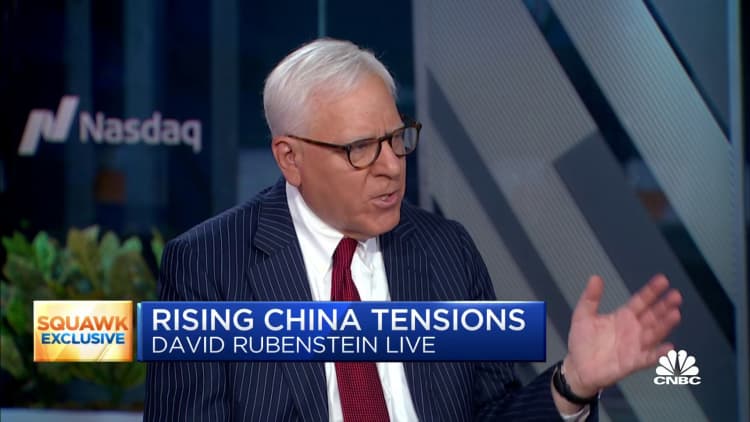
China has become a more complicated place to invest, says David Rubenstein

The Chinese government has yet to announce publicly any kind of large-scale fund to support real estate developers in completing apartments.

On Wednesday, Premier Li Keqiang headed a meeting that did emphasize support for ensuring delivery of homes by saying local governments should take a flexible approach in providing special credit policies and special lending.

The Morgan Stanley analysts described policy easing to support housing demand as “the most aggressive since 2016” and pointed out local governments’ efforts to address unfinished houses.

“The silver lining is that the spillover [from real estate] to the rest of the economy remains manageable so far,” the analysts said. But they warned the housing market’s size and “the momentum that has gathered” make it unclear whether recent measures are enough.

A shrinking driver of growth

Even if the Chinese government can stabilize the housing market, an aging population is expected to reduce demand for apartments, putting the nationwide real estate industry on a downward path.

Morgan Stanley’s base-case forecast expects long-term demand for housing to decline by 30% between 2020 and 2030.

That would result in a 10% to 15% drop in demand for construction materials and housing-related purchases such as large home appliances, the report said.

Overall, a slowdown in the residential property market will drag down GDP growth by 0.1 percentage points a year, in contrast to adding 1 percentage point to growth annually over the last two decades, the analysts said.

Soaring household debt


Source link

Chinese stocks could plunge if real estate gets worse Read More »

This Strategy Can Help You Buy a House Several Years Faster

This Strategy Can Help You Buy a House Several Years Faster


15% ROI”,”imageURL”:”https:\/\/www.biggerpockets.com\/blog\/wp-content\/uploads\/2021\/05\/large_Extra_large_logo-1.jpg”,”imageAlt”:””,”title”:”SFR, MF & New Builds!”,”body”:”Invest in the best markets to maximize Cash Flow, Appreciation & Equity with a team of professional investors!”,”linkURL”:”https:\/\/renttoretirement.com\/”,”linkTitle”:”Contact us to learn more!”,”id”:”60b8f8de7b0c5″,”impressionCount”:”231446″,”dailyImpressionCount”:”232″,”impressionLimit”:”350000″,”dailyImpressionLimit”:”1040″},{“sponsor”:”Azibo”,”description”:”Smart landlords use Azibo”,”imageURL”:”https:\/\/www.biggerpockets.com\/blog\/wp-content\/uploads\/2021\/11\/Logo-512×512-1.png”,”imageAlt”:””,”title”:”One-stop-shop for landlords”,”body”:”Rent collection, banking, bill pay and access to competitive loans and insurance – all free for landlords.”,”linkURL”:”https:\/\/www.azibo.com\/biggerpockets\/?utm_source=biggerpockets&utm_campaign=biggerpock ets&utm_medium=affiliate&utm_content=blog”,”linkTitle”:”Get started, it\u2019s free”,”id”:”618d372984d4f”,”impressionCount”:”289565″,”dailyImpressionCount”:”165″,”impressionLimit”:”300000″,”dailyImpressionLimit”:0},{“sponsor”:”The Entrust Group”,”description”:”Self-Directed IRAs”,”imageURL”:”https:\/\/www.biggerpockets.com\/blog\/wp-content\/uploads\/2021\/11\/TEG-Logo-512×512-1.png”,”imageAlt”:””,”title”:”Spring Into investing”,”body”:”Using your retirement funds. Get your step-by-step guide and learn how to use an old 401(k) or existing IRA to invest in real estate.\r\n”,”linkURL”:”https:\/\/www.theentrustgroup.com\/real-estate-ira-report-bp-awareness-lp?utm_campaign=5%20Steps%20to%20Investing%20in%20Real%20Estate%20with%20a%20SDIRA%20Report&utm_source=Bigger_Pockets&utm_medium=April_2022_Blog_Ads”,”linkTitle”:”Get Your Free Download”,”id”:”61952968628d5″,”impressionCount”:”423764″,”dailyImpressionCount”:”134″,”impressionLimit”:”600000″,”dailyImpressionLimit”:0},{“sponsor”:”Guaranteed Rate”,”description”:”One-Stop Mortgage Lender”,”imageURL”:”https:\/\/www.biggerpockets.com\/blog\/wp-content\/uploads\/2022\/01\/927596_CB_BiggerPockets-January-2022-Assets-512×512-1.png”,”imageAlt”:””,”title”:”$1,440 Mortgage Savings*”,”body”:”Whether you\u2019re buying new or cash-out refinancing to upscale the old \u2013 get started today and we\u2019ll help you save!\r\n\r\n”,”linkURL”:”https:\/\/www.rate.com\/biggerpockets?adtrk=|display|corporatebenefits|biggerpockets|july2022_blog||||||||||&utm_source=corporatebenefits&utm_medium=display&utm_campaign=biggerpockets&utm_content=july2022-blog “,”linkTitle”:”Buy or Cash-Out Refi”,”id”:”61ccd6a886805″,”impressionCount”:”118731″,”dailyImpressionCount”:”165″,”impressionLimit”:”200000″,”dailyImpressionLimit”:”2222″},{“sponsor”:”BAM Capital”,”description”:”Multifamily Syndicator\r\n\r\n”,”imageURL”:”https:\/\/www.biggerpockets.com\/blog\/wp-content\/uploads\/2022\/02\/Bigger-Pockets-Forum-Ad-Logo-512×512-2.png”,”imageAlt”:””,”title”:”$100M FUND III NOW OPEN”,”body”:”Earn truly passive income with known assets in an award-winning market. Confidently targeting 2.0x-2.5x MOIC.\r\n\r\n\r\n”,”linkURL”:”https:\/\/capital.thebamcompanies.com\/offerings\/?utm_source=bigger-pockets&utm_medium=paid-ad&utm_campaign=bigger-pockets-blog-feb-2022&utm_content=fund-iii-now-open”,”linkTitle”:”Learn more”,”id”:”621d250b8f6bd”,”impressionCount”:”138129″,”dailyImpressionCount”:”115″,”impressionLimit”:”150000″,”dailyImpressionLimit”:”2500″},{“sponsor”:”Walker & Dunlop”,”description”:” Apartment lending. Simplified.”,”imageURL”:”https:\/\/www.biggerpockets.com\/blog\/wp-content\/uploads\/2022\/03\/WDStacked512.jpg”,”imageAlt”:””,”title”:”Multifamily Property Financing”,”body”:”Are you leaving money on the table? Get the Insider\u0027s Guide.”,”linkURL”:”https:\/\/explore.walkerdunlop.com\/sbl-financing-guide-bp-blog-ad”,”linkTitle”:”Download Now.”,”id”:”6232000fc6ed3″,”impressionCount”:”136794″,”dailyImpressionCount”:”118″,”impressionLimit”:”200000″,”dailyImpressionLimit”:”6500″},{“sponsor”:”SimpliSafe Home Security”,”description”:”Trusted by 4M+ Americans”,”imageURL”:”https:\/\/www.biggerpockets.com\/blog\/wp-content\/uploads\/2022\/03\/SS-Logo-.png”,”imageAlt”:””,”title”:”Security that saves you $”,”body”:”24\/7 protection against break-ins, floods, and fires. SimpliSafe users may even save up to 15%\r\non home insurance.”,”linkURL”:”https:\/\/simplisafe.com\/pockets?utm_medium=podcast&utm_source=biggerpockets&utm_campa ign=2022_blogpost”,”linkTitle”:”Protect your asset today!”,”id”:”624347af8d01a”,”impressionCount”:”108218″,”dailyImpressionCount”:”152″,”impressionLimit”:”200000″,”dailyImpressionLimit”:”2222″},{“sponsor”:”Delta Build Services, Inc.”,”description”:”New Construction in SWFL!”,”imageURL”:”https:\/\/www.biggerpockets.com\/blog\/wp-content\/uploads\/2022\/04\/Image-4-14-22-at-11.59-AM.jpg”,”imageAlt”:””,”title”:”Build To Rent”,”body”:”Tired of the Money Pits and aging \u201cturnkey\u201d properties? Invest with confidence, Build To\r\nRent is the way to go!”,”linkURL”:”https:\/\/deltabuildservicesinc.com\/floor-plans-elevations”,”linkTitle”:”Look at our floor plans!”,”id”:”6258570a45e3e”,”impressionCount”:”100292″,”dailyImpressionCount”:”148″,”impressionLimit”:”160000″,”dailyImpressionLimit”:”2163″},{“sponsor”:”RentRedi”,”description”:”Choose The Right Tenant”,”imageURL”:”https:\/\/www.biggerpockets.com\/blog\/wp-content\/uploads\/2022\/05\/rentredi-logo-512×512-1.png”,”imageAlt”:””,”title”:”Best App for Rentals”,”body”:”Protect your rental property investment. Find & screen tenants: get full credit, criminal, and eviction reports.”,”linkURL”:”http:\/\/www.rentredi.com\/?utm_source=biggerpockets&utm_medium=paid&utm_campaign=BP_Blog.05.02.22&utm_content=button&utm_term=findtenants”,”linkTitle”:”Get Started Today!”,”id”:”62740e9d48a85″,”impressionCount”:”82109″,”dailyImpressionCount”:”103″,”impressionLimit”:”150000″,”dailyImpressionLimit”:”5556″},{“sponsor”:”Guaranteed Rate”,”description”:”One-Stop Mortgage Lender”,”imageURL”:”https:\/\/www.biggerpockets.com\/blog\/wp-content\/uploads\/2022\/06\/GR-512×512-1.png”,”imageAlt”:””,”title”:”$1,440 Mortgage Savings”,”body”:”Whether you\u2019re buying new or cash-out refinancing to upscale the old \u2013 get started today and we\u2019ll help you save!”,”linkURL”:”https:\/\/www.rate.com\/biggerpockets?adtrk=|display|corporatebenefits|biggerpockets|july2022_blog||||||||||&utm_source=corporatebenefits&utm_medium=display&utm_campaign=biggerpockets&utm_content=july2022-blog%20%20%20″,”linkTitle”:”Buy or Cash-Out Refi”,”id”:”62ba1bfaae3fd”,”impressionCount”:”38747″,”dailyImpressionCount”:”85″,”impressionLimit”:”70000″,”dailyImpressionLimit”:”761″},{“sponsor”:”Avail”,”description”:”#1 Tool for Landlords”,”imageURL”:”https:\/\/www.biggerpockets.com\/blog\/wp-content\/uploads\/2022\/06\/512×512-Logo.png”,”imageAlt”:””,”title”:”Hassle-Free Landlording”,”body”:”One tool for all your rental management needs — find & screen tenants, sign leases, collect rent, and more.”,”linkURL”:”https:\/\/www.avail.co\/?ref=biggerpockets&source=biggerpockets&utm_medium=blog+forum+ad&utm_campaign=homepage&utm_channel=sponsorship&utm_content=biggerpockets+forum+ad+fy23+1h”,”linkTitle”:”Start for FREE Today”,”id”:”62bc8a7c568d3″,”impressionCount”:”41661″,”dailyImpressionCount”:”108″,”impressionLimit”:”200000″,”dailyImpressionLimit”:”1087″},{“sponsor”:”Steadily”,”description”:”Easy landlord insurance”,”imageURL”:”https:\/\/www.biggerpockets.com\/blog\/wp-content\/uploads\/2022\/06\/facebook-business-page-picture.png”,”imageAlt”:””,”title”:”Rated 4.8 Out of 5 Stars”,”body”:”Quotes online in minutes. Single-family, fix n\u2019 flips, short-term rentals, and more. Great prices and discounts.”,”linkURL”:”http:\/\/www.steadily.com\/?utm_source=blog&utm_medium=ad&utm_campaign=biggerpockets “,”linkTitle”:”Get a Quote”,”id”:”62bdc3f8a48b4″,”impressionCount”:”44161″,”dailyImpressionCount”:”119″,”impressionLimit”:”200000″,”dailyImpressionLimit”:”1627″},{“sponsor”:”MoFin Lending”,”description”:”Direct Hard Money Lender”,”imageURL”:”https:\/\/www.biggerpockets.com\/blog\/wp-content\/uploads\/2022\/06\/mf-logo@05x.png”,”imageAlt”:””,”title”:”Flip, Rehab & Rental Loans”,”body”:”Fast funding for your next flip, BRRRR, or rental with MoFin! Close quickly, low rates\/fees,\r\nsimple process!”,”linkURL”:”https:\/\/mofinloans.com\/scenario-builder?utm_source=biggerpockets&utm_medium=cpc&utm_campaign=bp_blog_july2022″,”linkTitle”:”Get a Quote-EASILY!”,”id”:”62be4cadcfe65″,”impressionCount”:”49321″,”dailyImpressionCount”:”124″,”impressionLimit”:”100000″,”dailyImpressionLimit”:”3334″},{“sponsor”:”REI Nation”,”description”:”Premier Turnkey Investing”,”imageURL”:”https:\/\/www.biggerpockets.com\/blog\/wp-content\/uploads\/2022\/07\/REI-Nation-Updated-Logo.png”,”imageAlt”:””,”title”:”Fearful of Today\u2019s Market?”,”body”:”Don\u2019t be! REI Nation is your experienced partner to weather today\u2019s economic conditions and come out on top.”,”linkURL”:”https:\/\/hubs.ly\/Q01gKqxt0 “,”linkTitle”:”Get to know us”,”id”:”62d04e6b05177″,”impressionCount”:”37721″,”dailyImpressionCount”:”137″,”impressionLimit”:”195000″,”dailyImpressionLimit”:”6360″},{“sponsor”:”Zen Business”,”description”:”Start your own real estate business”,”imageURL”:”https:\/\/www.biggerpockets.com\/blog\/wp-content\/uploads\/2022\/07\/512×512-1-300×300-1.png”,”imageAlt”:””,”title”:”Form Your Real Estate LLC or Fast Business Formation”,”body”:”Form an LLC with us, then run your real estate business on our platform. BiggerPockets members get a discount. “,”linkURL”:”https:\/\/www.zenbusiness.com\/p\/biggerpockets\/?utm_campaign=partner-paid&utm_source=biggerpockets&utm_medium=partner&utm_content=podcast”,”linkTitle”:”Form your LLC now”,”id”:”62e2b26eee2e2″,”impressionCount”:”23700″,”dailyImpressionCount”:”139″,”impressionLimit”:”80000″,”dailyImpressionLimit”:”2581″},{“sponsor”:”Marko Rubel “,”description”:”New Investor Program”,”imageURL”:”https:\/\/www.biggerpockets.com\/blog\/wp-content\/uploads\/2022\/07\/DisplayAds_Kit_BiggerPockets_MR.png”,”imageAlt”:””,”title”:”Funding Problem\u2014Solved!”,”body”:”Get houses as low as 1% down, below-market interest rates, no bank hassles. Available on county-by-county basis.\r\n”,”linkURL”:”https:\/\/kit.realestatemoney.com\/start-bp\/?utm_medium=blog&utm_source=bigger-pockets&utm_campaign=kit”,”linkTitle”:”Check House Availability”,”id”:”62e32b6ebdfc7″,”impressionCount”:”23430″,”dailyImpressionCount”:”123″,”impressionLimit”:”200000″,”dailyImpressionLimit”:0},{“sponsor”:”Xome”,”description”:”Search & buy real estate”,”imageURL”:”https:\/\/www.biggerpockets.com\/blog\/wp-content\/uploads\/2022\/08\/BiggerPocket_Logo_512x512.png”,”imageAlt”:””,”title”:”Real estate made simple.”,”body”:”Now, you can search, bid, and buy property all in one place\u2014whether you\u2019re a seasoned\r\npro or just starting out.”,”linkURL”:”https:\/\/www.xome.com?utm_medium=referral&utm_source=BiggerPockets&utm_campaign=B P&utm_term=Blog&utm_content=Sept22″,”linkTitle”:”Discover Xome\u00ae”,”id”:”62fe80a3f1190″,”impressionCount”:”967″,”dailyImpressionCount”:”262″,”impressionLimit”:”50000″,”dailyImpressionLimit”:”1667″},{“sponsor”:”Follow Up Boss”,”description”:”Real estate CRM”,”imageURL”:”https:\/\/www.biggerpockets.com\/blog\/wp-content\/uploads\/2022\/08\/FUB-Logo-512×512-transparent-bg.png”,”imageAlt”:””,”title”:”#1 CRM for top producers”,”body”:”Organize your leads & contacts, find opportunities, and automate follow up. Track everything and coach smarter!”,”linkURL”:”https:\/\/pages.followupboss.com\/bigger-pockets\/%20″,”linkTitle”:”30-Day Free Trial”,”id”:”630953c691886″,”impressionCount”:”953″,”dailyImpressionCount”:”288″,”impressionLimit”:”150000″,”dailyImpressionLimit”:”1230″}])” class=”sm:grid sm:grid-cols-2 sm:gap-8 lg:block”>


Source link

This Strategy Can Help You Buy a House Several Years Faster Read More »

Mortgage demand falls even further, as rates shoot back up to July highs

Mortgage demand falls even further, as rates shoot back up to July highs


A real estate consultant shows a condo to a prospective buyer in Miami, Florida.

Joe Raedle | Getty Images

After falling back earlier this month, mortgage rates began rising sharply again to the highest level since mid-July. That caused mortgage demand to pull back even further.

Total mortgage application volume fell 3.7% last week compared with the previous week, according to the Mortgage Bankers Association’s seasonally adjusted index. Volume was 63% lower than the same week one year ago.

The average contract interest rate for 30-year fixed-rate mortgages with conforming loan balances ($647,200 or less) increased to 5.80% from 5.65%, with points rising to 0.71 from 0.68 (including the origination fee) for loans with a 20% down payment. That rate was 3.11% one year ago.

“Mortgage rates and Treasury yields rose last week as Federal Reserve officials indicated that short-term rates would stay higher for longer. Mortgage rates have been volatile over the past month, bouncing between 5.4 percent and 5.8 percent,” said Joel Kan, MBA’s associate vice president of economic and industry forecasting.

As a result, refinance demand, which is highly sensitive to weekly rate moves, fell another 8% for the week and was 83% lower than the same week one year ago. The refinance share of mortgage activity decreased to 30.3% of total applications from about 66% a year ago.

Mortgage applications to purchase a home dropped 2% for the week and were 23% lower than the same week one year ago.

“Purchase applications have declined in eight of the last nine weeks, as demand continues to shrink due to higher rates and a weaker economic outlook,” Kan said. “However, rising inventories and slower home-price growth could potentially bring some buyers back into the market later this year.”

Home prices are still well above year-ago levels, but they did decline 0.77% from June to July. It was the first monthly fall in nearly three years, according to Black Knight, a mortgage software, data and analytics firm.

While the drop may seem small, it is the largest single-month decline in prices since January 2011. It is also the second-worst July performance dating back to 1991, behind the 0.9% fall in July 2010, during the Great Recession.

Given the recent volatility in mortgage rates, the spread between jumbo and conforming loan rates widened again. Jumbos, which used to carry higher rates due to the size of the loans, are now 48 basis points lower than conforming loans. That spread went over 50 basis points in July. This is likely because jumbos are not backed by the government, which has stricter risk tolerance, but held on bank balance sheets. Banks right now are desperate for mortgage business.


Source link

Mortgage demand falls even further, as rates shoot back up to July highs Read More »

The “Deal Never Dies” & Picking Up Properties Other Investors Neglect

The “Deal Never Dies” & Picking Up Properties Other Investors Neglect


A “dead” real estate deal happens more than you’d think. Somewhere along the line, a buyer, seller, agent, or investor gives up. Either there’s not enough money, time, or patience left in the deal to get the property bought or sold. When real estate transactions drag out, you could get caught with months of holding time or thousands in inspection costs, only to have the deal drop out from under your feet. So, how do you revive a dead deal when everyone else has given up? Just ask Tyler and Trevor Sarter.

Tyler and Trevor are based in Detroit, dealing with lots of international investors who want a piece of the cash-flowing pie. They work primarily as wholesalers, but also flip houses, and advise/consult their investors from abroad. They have a “do what you need to do to get the deal done” type mentality, which to no surprise has served them very well in their business. When other investors give up, Tyler and Trevor are waiting in the wings to get the property closed.

As two former basketball players, they understand what working as a team means and how everyone needs to play their part in order to become champions. They’re not as profit-oriented as they are solution-oriented, making sure everything gets done no matter what comes their way. Because of this, they’ve built a successful real estate business, better yet as two brothers.

David:
This is the Bigger Pockets Podcast, Show 656.

Trevor:
And I think it’s about being proactive, and then also letting your ego take a backseat because as you guys know too, everyone in the real estate business is not the most friendly person. So you can get into these conversations where you got to be careful not to have a pissing contest with someone and realize that the greater good of everyone is just getting the deal closed.

David:
What’s going on everyone? This is David Greene, your host of the Bigger Pockets Real Estate podcast, here today with my co-host, Rob Abasolo. In today’s show, we interview brothers Trevor and Tyler Sarter, who run a business together that does all things real estate. These two brothers focus on helping other people make money through real estate while also earning a living for themselves, former basketball players that have learned the importance of chemistry, both with each other and with their clients, and most importantly, doing whatever it takes to win, which in this case is getting the deal done. In this episode, we dive pretty deep into the mindset required to succeed as well as some practical tips that you can use to build your own buyer’s list, find motivated sellers, and make sure you get to the closing table. Rob, what were some of your favorite parts from today’s show?

Rob:
Yeah, I really like a good brother dynamic, and this is just a good wholesome episode with two brothers, former college basketball players. And they actually talked about the number one thing that they learned from basketball that fuels their very successful real estate business today, so I thought that was really fun. And I think for them, their big thing is how to keep the art of the deal alive, right? How to keep any deal alive by any means necessary, what you have to do to get to that closing table and sign those documents and close that deal. So I thought this was a really, really fun episode just to kind of explore the brother dynamic and see how they run their business from day-to-day.

David:
I also like when you see two brothers that actually get along, because oftentimes families don’t get along. So when you see siblings that not only they get along or it appears so, but they’ve built a successful business together, they get to work together, I thought that was pretty cool.

Rob:
Yeah, yeah. But before we get into the episode, today’s quick, quick, quick, quick tip is brought to you by David Green.

David:
Nicely done, my man. Today’s quick tip is-

Rob:
Thank you. Thank you.

David:
We are heading into the traditionally slow season by seasonality for real estate, which means there are usually less buyers competing with you to get that great deal. So when you combine this with rising interest rates, fears about a recession, and the constant negativity that we’re seeing in the news, coupled with a slowdown in the competition that you have to buy houses, you are likely to find a better deal now more than at any other times. My advice to you would be to target houses that have been on the market longer than their competition, and reach out to the real estate agents to find out how motivated the sellers are and then write very aggressive offers and hope for the best.

Rob:
And that was today’s quick, quick, quick, quick tip.

David:
All right. We’re going to bring in today’s guess if you would be so kind, leave us a comment on YouTube and let us know what you thought about today’s show. If there was questions that you wish we would have asked or what you liked, also please go give us a review online on the Apple Podcast app, Spotify, Stitcher, wherever you listen to your podcasts, those really help this podcast get to more people. All right. Let’s bring in the brothers. Trevor and Tyler Sarter, welcome to the Bigger Pockets Podcast. How are you two doing today?

Tyler:
I’m hanging in there. David, how about yourselves?

Trevor:
Doing great.

David:
I’m hosting the best podcast in the entire world. I couldn’t be doing better. And I get to talk to you two fine former basketball players at a college level, men after my own heart. And we get to join that with real estate, so I’m doing good. Thanks for asking. If you don’t mind, tell me a little bit about the business that you two work in as well as your personal portfolios to get started.

Tyler:
For sure. So we’re more so a full service real estate investment firm company, per se, definitely heavy in the wholesale arena, do some fix and flips, and then also advise and consult a lot of international buyers, so that’s pretty much the gist of it. I’ll let my brother weigh in if I left anything out.

Trevor:
Yeah. I think that kind of describes what we do. When we started this company, Promise Land Realty, in 2015, it was pretty much solely focused on wholesaling and just being a cash building platform for where we were in our careers at that time. Since then, we’ve grown to do our own fix and flips. We hold just a couple rentals. We’ve offloaded a bunch of them while we still had good margins there, but now we also consult with international investors to get their short-term and long-term portfolios built up.

David:
All right. So you said you’re a full-time real estate firm. Are you guys doing direct mail campaigns to get deals coming in or are you more representing other investors, finding deals for them?

Tyler:
So both. So we use our website as a platform to get deals, to actually source deals from investors. And then, we also use it as our vehicle to offload portfolios for the clients that we service, so we’ve focused on both sides, acquisition, and sales. So we’re more so of a full service real estate investment firm.

David:
So give me an example of the different types of clients that you guys might get and the ways you help these different people.

Tyler:
Right. So right now, we’ve been working on a deal for about a year, and I won’t go super in depth here, but it’s an international buyer and the property that he was targeting, unfortunately had some title issues. So we were able to connect him with an attorney to complete the quiet title process, which took about a year. Also, coordinate inspections, there were some issues with the basement on that property, kind of rectify those issues or point him in the right direction of the best help, and then get everything back on track to a year later now being able to finally close this deal. So that’s just a kind of brief example of keeping the deal alive and kind of what we specialize in and working with investors who don’t have boots on the ground.

Rob:
Tell us why you worked on this deal for a year. I’ve got to imagine there was some financial incentive, right? Because if it was a $30,000 flip, you probably wouldn’t work so hard for a year, but I’ve got to imagine there’s something here, right?

Tyler:
Right. Well, it’s kind of what we do. We stick the flag in the ground. We go all the way to the end with every deal that we’re involved in, win, lose, or draw. And that’s what kind of makes us stand out from other wholesalers or real estate investors. It’s kind of like a “never say die” mantra, and it leads to repeat business. Yeah, the wholesale fees are good, but real estate is a relationship business. And doing good business, going the extra mile for a client, leads to referrals or repeat business from that client, so that’s kind of what we built our business around.

Rob:
Okay. So when getting started in real estate, you obviously started in the wholesaling side of things. What was your reason there? Everyone’s got a lot of reasons for starting out in wholesale, and obviously that’s the big bread and butter right now of your company, too. Was there something that attracted you to that? Did you have a mentor that brought you into it, because it’s always a thing about circumstance, right? So what was the initial draw to that section or that niche of the industry?

Trevor:
Well, initially I started off marketing and managing bank-owned properties quite some time before we started the wholesale business, so in ’07, and my little brother was in high school. We got to be on the good side, if you will, of the economic crash and in terms of being signed up directly with the banks to help manage their inventory. So from there, I was able to get listings as an REO agent for pennies on the dollar and make good commissions. But then in hindsight, we thought about those investors that were actually making those purchases and that were able to cash out once the economic crash was over, and it was kind of like, “How do we become that guy? Right? How do we become the person that’s actually capitalizing in, that has less liability than say an agent?”
So when we got back together, started this kind of trek to figure out what that looks like. As far as starting Promise Land Realty, my brother was able to go up to Baltimore and become an intern with Jay Morrison and he got the textbook and sent it to me. And we learned about this thing, wholesaling, where we already had an idea of how to have a Rolodex of buyers and sellers. But now, with this new weapon, if you will, it kind of changed our mind state and expanded us from just being local in Michigan to possibly having a nationwide business.

Rob:
Okay. So Trevor, you started out, you were already kind of in real estate, Tyler came to the table. Is that right?

Trevor:
Yeah.

Rob:
And then you guys sort of came together. Now you have this firm. I’m kind of curious, what role do you take on out of the two? And then Tyler, I’d like to hear from you, what do you do and how do you guys complement each other as brothers in this? Because I know that a little bit of a family dynamic here can sometimes either complicate things or excel things.

Tyler:
From my perspective, I mostly deal with acquisitions and bringing properties into the pipeline, so going out there and sourcing deals, connecting with investors, and kind of solving their problem. And then my brother, and I’ll let him speak after this, he deals more so with offloading the properties or working with the buyer. So we’re like peanut butter and jelly, so to speak, you can’t have one without the other.

Trevor:
For sure, for sure. And just to that point, this deal he was describing and why we do take on deals for that long is because he actually has a relationship with the seller, and I myself have a relationship, personal relationship, with the buyer. We’ve closed several deals. The guy’s a real cool guy, straight shooter. And it was a great property that I wanted him to have after we had done so much work. So that’s just an example of one of many deals that’s been like that where my brother has had some sort of relationship within his network with the seller and I’ve had a direct relationship with the buyer and we’ve been able to make it work.

Rob:
That’s really cool. And I think in kind of digging into your story a little bit here, I found out that one of the first deals you’ve ever closed was actually a church. Can you tell us a little bit about that? How did that come to fruition?

Tyler:
Yeah. So that was our first deal. It was actually a storefront church that we were able to wholesale to another investor, and then the church was repurposed into a small grocery store. So that actually came through a friend of mine, Brandon Brand, who’s a real estate investor in Detroit. So Brandon, if you’re listening to this, thank you. We appreciate you. But it was like just jumping out there, and we got our wholesale contract. We’ve got a friend who needs to offload a property at the time, and just throwing our hat in there. We were using all type of tactics at that point, going to Craigslist, blasting out emails, violating all type of email rules at that time. We were just novice wholesalers, so yeah. But we got it done in a pretty short amount of time, so it was a good experience for all of us involved,

Trevor:
Quite a few of our deals, as I was taking notes for this, quite a few of our deals have been helping out friends, even childhood friends. One of the last closings we had together in Detroit was for the Chapman’s, who is my brother’s childhood friend. And that was a real smooth deal, one of those just dream deals. The guy comes in, does the inspection, two weeks later closes. And we also did another deal for one of my real close friends who was having issues with substances at that time, got behind with HOA like $18,000, and we were able to help him sell it. And he actually netted a $55,000 profit, was able to kind of turn his life around. So I think as we started getting into it, it became about more than just the money, knowing that we could actually solve some of our friends’ life problems and still earn a living at the same time.

David:
All right. So give me some stories that you guys have had with a deal that you thought was going to fall apart and maybe what you did to keep that deal alive.

Trevor:
So this is actually a deal that we just closed, what, about two weeks ago?

Tyler:
Yeah, about two weeks ago.

Trevor:
About two weeks ago. And actually, when the deal came in, it came in through a buddy of Tyler’s, so it was already kind of like a daisy chain. And so we’re like, “Okay. Let’s see what we can do,” because we didn’t have any attachment to the seller at all, really. And once we started fishing up interest, it became real frustrating because we couldn’t get any answers. So we kind of gave our guy who gave us the lead, we kind of gave him every chance, “Okay, can you get answers back? What’s going on?” This went on for probably about a month and a half. And so, finally he kind of threw his hands up like, “Man, I don’t know what’s going on.” So Ty and I got together, I reached out to the seller, got him under contract with the expectation of closing in three weeks, because this is a no-brainer in Detroit, all brick, two family flat, paying tenants, in good condition, just a decently moving deal.

Tyler:
A layup, yeah.

Trevor:
A layup, supposed to be a layup. So I reached out within my network to source one of my investors in Detroit who’s a real rascal. The guy is a real trash talker, but a guy who you can’t leave him alone because he’s probably going to pull through, but you want to leave him alone because he’s so full of crap. So this guy gets in the deal. Now, this seller we’re dealing with is a man by the name of Mr. Tally, who’s 91 years old. Okay? So he’s looking to just cash out and go on his way with his wife.
So our guy, Rodney, keeps telling us, “Okay. I’ll be able to close this out two weeks, no problem.” So this is in early April, I believe. So he’s like, “Two weeks, no problem.” So every week it’s something else. So, Mr. Tally has a CPA at first. They’re on us because it’s not even him, so he is like, “What’s going on with the deal, guys? We’re trying to hang in with you guys.” So long story short, Rod was getting financed by another guy and then trying to set up a double close to a whole nother lady who we had no idea about until like two months in. But we finally were able to line up all the stars after what, about five, six different delays and get it done. And we still-

Tyler:
After closing without funding the deal first, and then funding the deal probably two weeks later or something like that. So it’s all about managing people’s expectations, knowing your buyer and your seller’s personalities, and being able to keep everybody in, keep everybody engaged until that wire gets in the air and it closes. So I think that’s a good example of us keeping at it.

Trevor:
Yeah. And even after, because a lot of people, and you guys can attest to this, when the deal gets closed, they’re done with it. But it takes a real professional to really follow up, making sure, especially in a tenant-occupied situation that the keys are transferred, water bill gets turned over, all those things like that.

Rob:
We just closed on a hotel, and there were so many components to making sure that that transition went smoothly, that in retrospect, we probably would’ve made a few different decisions moving into it, but we figured it out along the way. And I think one of the things that I really like about y’alls story here is I see a theme and the theme is persistent. You guys are very persistent with your deals, right?

Tyler:
Absolutely.

Rob:
And you talked about how you closed on a deal that took you a year. Most people probably would have walked away from that, especially if it was a wholesale contract. But you guys kept with it, this deal right here, kind of dealing with the buyer and everything like that. So I know that one of your specialties is the art of keeping the deal alive. Do you think you can walk us through some tangible steps on how people can do that and how they can just make their way to the closing table at all costs?

Tyler:
Right. So a few ways that immediately come to mind is when you’re in a deal and you’re working with a buyer and seller, transparency and transfer of information is imperative, so keeping each side updated with new information constantly. It can be small or big. If title work came back, following up that, following up and sending it to both parties immediately, addressing any issues that may come up with a deal, immediately following up on every email chain, coordinating the inspections, collecting your END, confirming your wiring instructions with your buyer and your seller. Basically, leaving nothing to chance in a real estate deal and making it easy for both sides to close, I think is what you get paid for as a wholesaler. It’s more than just assigning a property. It’s about doing all the dirty work to make sure that you get to that closing table and you collect your commission at the end of the day,

David:
Something I spend a lot of time teaching the people that work for me on the real estate team, or it works with investing as well, is real estate is this unique industry where you can do 99% of the job and you get paid exactly the same if you don’t get to 100% as if you do 1%. There is this often a subconscious belief that we get from working in the W2 world, where if you work a half day at work, you get a half day’s pay. So it’s not as good as a whole day, but it’s still something. And then you get into our world, and it’s so discouraging because you feel like you’re working so hard, but then you’re making no money, because if you don’t get all the way to the finish line, it’s nothing. It’s everything or nothing in our world.
And I’ll see that if you don’t have that killer instinct, that, “It does not matter. I will do whatever it takes. It has to close.” You’re not going to last in this industry very long, because you’re just going to be burning a ton of energy and not getting a result. Do you guys mind sharing a little bit about your experiences with that concept?

Tyler:
Yeah, definitely.

Trevor:
I was just going to say, to your point, I definitely agree with you. But I have to add something to that, that keeps me having faith as I’ve been doing this full-time for so long, is on the other side of the coin is no work is done in vain. So yeah, you might have a couple closings where you did everything you could do and you kind of fell short. But something in that last deal that didn’t happen prepares you for the next deal, because either you’re going to win or you’re going to learn, basically is kind of my ideology with it.
But to your point, yes, for sure. As a grown person, knowing that we have to have funds to pay our bills, you have to check every box off to close, yeah. And I think that’s one thing that kind of separates the killers from the wannabees is that one instinct to where it’s like by any means necessary, and everything that’s physically possible and legal, within legal bounds, you have to be willing to do that if you want a consistent check in this real estate business.

Tyler:
Right. It’s like you eat what you kill. There’s another mantra we have, it’s called “lions only.” In this business, if you want to be successful, it’s lions only. So basically, doing whatever it takes. I can go into a very quick example of what I mean by that. There was a commercial deal actually, I just helped sell the barber shop that I go to on a weekly basis. So the seller was out of state, New York seller, we were supposed to close on a Friday, mail-away closing.
The title company gets the closing documents out late. His originals all have to be signed in blue. So he gets it, he is going to mail it back to me to obviously save time. I’m so on it that I hold the package for delivery because we have a 1:00 PM closing time on Monday. I go, get there, get to the FedEx location, pick up his originals. He has a partner that I have to meet. Drive it 30 minutes to meet his partner, get it notarized at the local UPS Store, then take the documents myself to closing, just to make sure that we get it done in time, all because the seller was initially inconvenienced by the title company getting the closing package out late. So that’s just some of the stuff that you have to do if you want to keep a good name in this business and you want to actually get deals done. You have to take things into your own hands.

David:
Trevor, what’s something that you’ve learned as a former college basketball player? For those that didn’t play basketball in general, to understand why I’m bringing this up, everyone plays basketball. It’s not like baseball or football where you’ve got to get a whole team together, and you can just go grab your buddies and go play baseball or something. Football is the same way, right? Once you get out of school, there’s not a football league you could go join in most places. But there’s always basketball. Every gym you go to, every playground, you can grab your buddies. So everyone grows up playing basketball, which means if you want to play it at a high level, it is incredibly competitive. A lot of people are all chasing that same dream. So in order just to play at college, you have to be very, very good and very, very driven. And I’m curious, what are some of the skills that you learned in that environment that are now helping you be successful with your role in the company now?

Trevor:
I think the number one thing that I learned from basketball was that you can get better. When I was in, I think, seventh grade, I got cut. And it was the first time that I got cut from the AAU team, and it crushed me. I did skip a grade, so I was a year younger, but still I thought I was real good. And we’re from Michigan. That next year, man, I shoveled the snow, anything. I shot every day. And I was starting on that next year, but it just showed me if you put the work in, you can actually get better. You don’t have to stay at the same level if you don’t want to, as long as you’re willing to put the work in. And I think that’s one thing that I kind of carried into the real estate business with my brother and I, is a lot of things we didn’t know starting off, but I was like, “Okay, as long as we keep studying, as long as we keep making calls, showing up, eventually we’ll get better, and the numbers will reflect.” And that did happen.

Tyler:
That’s a great question, by the way. But I would have to say, when you start off, it’s kind of like street ball, and then you go into organized basketball. And then from being an organized basketball team, you look at a team that’s intricate, or has very detailed, like the Golden State Warriors. So just that maturation in our business; when you first start off, you’re playing street ball. You’re just trying to score a basket. And then you understand the rules of the game and you become more organized. And then you become a fine-tuned machine like the Golden State Warriors. So I think we look at great sports organizations, Chicago Bulls, we mentioned them earlier, the Detroit Pistons of 2004. And in the 1980s with Isaiah Thomas, being a well-built organization and kind of following those teams. We watch those games in the background when we’re writing PAs or sending assignment agreements. It’s kind of like nostalgia. It definitely keeps us worn, for sure.

David:
Something I learned about really well-run sports teams that helped me in business that I needed, was I looked at business like there’s a blueprint that everyone follows to be good at this thing. And it’s always the same for everyone, as if you could build a sports team just by, I get five players at these positions. The better players I have, the better the team is going to be. And it’s not that simple. The chemistry between the players means a lot. And you see the really good teams, like we’ll take the Golden State Warriors. They’re built around a star, like let’s say Stephen Curry, and then they look for support pieces that have a better chemistry with Stephen than they would on… So if you took Draymond Green off of the Warriors, he’d be a good player. He would not be nearly as valuable to another team as he is on that team, so they get more out of each person they have.
And when I started approaching my business like that, I’m the Stephen Curry of this business. I need people that support my unique strengths, my skills. And that would be different than Rob’s business, because he has different strengths, and people that might support me might be useless in his organization and vice versa. I guess it was hard for me to give myself permission to admit I’m that important in this business. And I need people to surround me that will help me be good. Would you guys mind sharing what your evolution was like, where you realized, “Hey, I am good at this thing. And I’ve got to own that and put people around me that allow me to be good at it.” We’ll start with you, Tyler.

Tyler:
I think, for sure, just being the expert in my peer group, my circle of influence, with regards to real estate. It took me a long time to really step into that gift that I have, just my passion for helping people through real estate, my passion for continued knowledge within the industry and different parts of the industry, as we are trying to transition into more commercial and then into development. I definitely think that’s the natural progression, and just stepping into that and just acknowledging your talents and accepting your gifts and using them, because if you don’t use them, you’ll squander what you’re really supposed to be doing and it’ll be taken away from you. So that’s what did it for me.

Trevor:
Yeah. I think, especially starting off, it’s a matter of fit and feel, especially when you’re trying to form different teams. And it’s part of overcoming ego and just looking at the facts from where you are gifted at, because I know, and this has just been from facts, from proof of concept. If I get the right people around me, I’m good at developing other leaders. And so, that’s kind of what I look to now, is if someone has potential, as long as they want to work and as long as they want to learn, I can put them in a position to help me more by becoming the best them.
But that doesn’t happen if the environment is not safe for me to do what I do. So I definitely hear what you’re saying on that, Dave. It’s so key to have the right energy too, because you might have… Look at the Brooklyn Nets. You might have super killers on your team, but you can’t win because everybody doesn’t see it the same way. So I think that’s the difference between a good squad full of guys in a championship ball club is that chemistry, that communication, that sort of thing to make this work.

Tyler:
Being on the same page.

Trevor:
Being on the same page.

Tyler:
Understanding our system and what works for us like you were saying, David, because the Princeton offense is not the same as the triangle offense. So understanding what our system is and bringing in the players who fit in our offense and can make things work with us.

David:
Yeah. I had a cop I worked with, and we were actually learning building search stuff, which is incredibly difficult. I won’t go too deep into it, but it feels exactly like when you’re playing a sport like basketball. Depending on if this person goes this way, you’ve got to go this way. You’re quickly adapting all the time. There’s new stuff getting thrown at you. It’s very challenging. And they were talking to us about teamwork and he said, “Look. Let’s say you take a team of NFL All-Stars. You take the best players from the entire league. You put them on the same team, and the next day they’ve got to go play the New England Patriots. Which team is going to win?

Tyler:
The New England Patriots.

David:
It’s pretty obvious, right? The Patriots are going to crush them, right?

Tyler:
Yeah.

David:
And it just was an example of, it’s easy to not factor in chemistry when you’re looking at building the team. Do I work well with this person? Do we communicate well? Do they have a complimentary skill set? You don’t want a team full of five point guards. And I think a lot of people looking at the industry from the outside, it’s very easy to just think, “Oh, I just need to find people. Build my team, find a person that’s good at whatever they do.” But no, you’ve got to find a person that works with you because you’re building it around you. And that was a big step for me as I built things. Rob, did you have a similar sort of epiphany, or are you still trying to figure that out?

Rob:
Yeah. I’m kind of in the throes of it. I’m trying to keep up with all the basketball lingo here. Admittedly, I’m not very good at basketball, and that will be revealed very quickly in this podcast episode. But I will say I did watch The Last Dance, and so I understand the triangle offense thing. I’m pretty sure I can keep up with that. But, yeah.

David:
Robby.

Rob:
And I took that personally. But yeah, I think ultimately for me, it does come down to team chemistry, right, because everybody really compliments each other. I heard a very important phrase that a mentor told me one time, and he said, “If we are the same, then one of us is unnecessary.” Right? And so, that is something that has really resonated with me ever since, because me and my business partner, he’s kind of like the COO of my real estate business, and we’re both very visionary and very kind of big picture thinking. And so, what I kind of came to realize was we both really can’t be working side by side on the same project because we both do the exact same thing, and we both think the exact same way and we execute the exact same way.
And so, there’s a lot of times where we were working on a project and stuff was falling through the cracks because it’s like, “Oh, I thought you were doing that.” And it’s like, “No, I thought you were doing that.” And it’s like, “Well, I usually do the big picture stuff.” And he’s like, “Me, too.” So we kind of learned that in order for us to function as a team, we sort of had to lead our own projects. And there’s a lot more collaboration that comes from that because there’s not the pressure of having to double fill the same role, right? And so, I think for us that’s something that we kind of learned, not necessarily the hard way. I think we’re happy to have gotten there, but I think we’ve seen a lot more progress in our own systems and our own practices as we’ve kind of taken on different projects and can kind of come together for bigger strategic meetings, but execute on our own different projects, if that makes sense.

Tyler:
Absolutely.

Rob:
Yeah. So I kind of wanted to keep jamming a little bit here on the keeping the deal alive, because I know you talked about the persistence, we’ve talked about team chemistry here. And I know one other kind of aspect of this was being solution-oriented. I know you kind of spoke to this a little bit with one of the deals, of kind of having to make sure the information was all being transferred and everything like that. But can you give us a little bit more in the world of being solution-oriented and why this is so important to keeping a deal alive?

Tyler:
Yeah. I think just in real estate, in a real estate transaction, nothing is ever going to go as planned. I think you two can attest to that, the unexpected circumstances that arise. And it’s a mentality, it’s a mindset, being solution-oriented, and just having that approach, knowing going in, “Okay. It says 30 days, this deal is going to close in 30 days. But we hope. We’re going to do everything within our power to make it close. We’re going to control all the variables that we can control personally to make it close. But being able to accept that when variables outside of our control arise, that we’re going to be solution-oriented. If the title’s not clear, okay, we’re going to order a FOIA. We’re going to wait for the FOIA to come in. If the FOIA doesn’t cure the title, then we’re going to pursue a quiet title suit. If it takes a year, it takes a year. But we’re going to get the deal done no matter what.” That’s kind of my approach. And I think you have to have that to be a successful real estate investor.

Trevor:
And I think it’s about being proactive, and then also letting your ego take a backseat, because as you guys know too, everyone in the real estate business is not the most friendly person. So you can get into these conversations where you’ve got to be careful not to have a pissing contest with someone and realize that the greater good of everyone is just getting the deal closed. Because there’s been times, people talk to you crazy on the phone, and you could look at what you’ve got going and be like, “Yeah, I don’t need this. I don’t have to sit here and listen to this.” And in some cases you don’t, right, as long as you’re not being disrespected. But in some cases, you have to just put your ego to the side and be like, “Okay, is this something I can deal with? Yes. What’s going to go ahead and get the deal done will be me doing X, Y, Z.” Instead of beating your chest up against a buyer or a seller, just go ahead and get it done.

Tyler:
How many inspections am I going to coordinate on a specific deal to get it done? As many as it takes. Am I going to wake up and go at 6:00 AM and go get photos of this property? Yes I am. Because that’s just the intangibles to make a buyer or a seller more comfortable to get the deal done.

Rob:
Yeah. So I was wanting to ask because I’m kind of curious, do you feel like you stepping in and making that solution yourself, if that means you have to personally show up at 6:00 AM to take those photos or if you have to actually get your hands dirty, do you consider that a solution? Are you willing to do that? Or is a solution for you more so in the camp of, “Who can I empower to go and do that for me?” How involved are you getting in some of those day-to-day “solutions?”

Tyler:
So, from my perspective, I’m very involved on the day-to-day. If I personally have to do something, I take pride, I enjoy getting my hands dirty, even still, even with I don’t know how many deals we’ve closed. I still like it because it keeps you alive. Real estate is personal. A lot of people don’t do it hands-on, but for me it is hands-on. Eventually, yeah. Of course, we want to create the team to where we don’t have to do these things and we have people on staff, but you always have to be willing to roll up your sleeves, and if push comes to serve, get the job done yourself.

Trevor:
Yeah. We pretty much had a frontline attitude from our days in marketing, managing the bank-owned properties, where we got large amounts of BPOs back then all across the state of Michigan. And so, we had so much work at some points that Tyler in high school would get the photos as well, and we’d split the money. And then, it was like you’re going into some of the wildest neighborhoods in Detroit, no doors on the homes. So coming from that to doing this is kind of like a piece of cake for us now. So we always had that frontline attitude to where it’s got to get done. And dealing with the banks, we were all raised on a timeline, so I think subconsciously we’re still on that 24 hour, 48 hours, it’s been 36 hours, so trying to get items done on time.

Rob:
Yeah. Yeah. And I know one of your underlying philosophies here with keeping the deal alive is also showing up. I’m kind of curious, what do you mean by that? What do you mean by showing up?

Tyler:
Showing up means going the extra mile. So for example, and I’m going to use this as a tip for all real estate investors out there, especially wholesalers, take care of the people who take care of you. So if you’re dealing with a title company and you close a couple of deals and you’re satisfied with your experience, drop them off a gift card. A little appreciation goes a long way. Just recently, I had a deal that closed, the Claremont, which we were speaking about earlier in the podcast. I just dropped off some gift cards to all of the staff at the title company. And that led to the actual processor or the person in control of funding the deals sending us two additional deals for us to work on directly through her properties that she owns herself that she would like to offload. So that’s just one example that I could give. And that’s not your typical example. That’s why I wanted to share it.

David:
That is awesome. And I think that’s a good point to transition into the next segment of our show. It is the fire round. We don’t always do this, but when we have extra intelligent guests, we like to fire questions at them and see what they would say. So I’m going to start, and we will go, how about Tyler then Trevor, for each of these questions. Question number one. Is there anything beginners should know based on your experience in this industry before getting started?

Tyler:
Yeah. So do everything to build your knowledge base before actually trying to get out there and get a deal. So that means tune into this podcast that we’re on right now on Bigger Pockets, join the Bigger Pockets forum. Read as many books as you can, definitely those beginner books, Millionaire Real Estate Investor by Gary Keller, Rich Dad, Poor Dad by Robert, Kiyosaki. Just build your knowledge base so that way, when you’re in the field in live action, you have those reps. So it’ll make your deal go a lot smoother.

Trevor:
Definitely preparing yourself mentally for a grind. And I think the mental preparation is everything, because the majority of what we’re talking about is entrepreneurship. So I think starting to understand entrepreneurship on the basic level is a good start for someone, too, just so you’re kind of braced for some of the frustrations that may occur as you’re trying to pursue your goal. And I definitely agree with my brother in reading as much as you can and getting as knowledgeable as you can. And also, if possible, shadowing someone or finding a mentor. I think that’s so key. Whether you know that person or not, whether it’s someone on YouTube or Bigger Pockets, someone that you can kind of follow their moves to where you can see in reality, it’s doable for you and repeatable for you as well.

Rob:
So a follow-up question on this, how do you go about getting a mentor? Do you have any tips there?

Tyler:
Getting a mentor? You have to seek, you have to go. If you want water, you have to go where the water is. So actually, when I wanted a mentor back in the day, I think my brother mentioned this, it was Jay Morrison at the time. I actually drove to Baltimore, got there early, and helped set up the seminar, and the relationship develop that way. So not just always having your hand out saying, “I want this information. I want this information. I want you to be my mentor.” But adding value to whatever the source that you’re seeking out, adding value to that situation and being selfless is a good way to stand out and secure that mentor relationship, for sure.

Trevor:
On the backside of that, I’m going to say one of the quotes is, “When the pupil is ready, the teacher will appear.” So basically, when you’re taking massive action towards what you’re trying to do, basic human nature is someone who is more experienced will say, “Hey man, tell me what you’re trying to do.” And they might have already been doing it or might be already great at what they do. And when you recognize that same energy within someone else, it’s easy for someone to bring you on board because you’re already actively trying to do it. Whereas a lot of people are just sitting out with their hand out saying, “Oh, why doesn’t anyone help me?” Because they don’t see what you’re doing. I think you can attract mentorship when you’re kind of engaged in process, making mistakes or whatever, and you kind of stumble upon that right person to help you and guide you in the right way.

David:
All right. So any tips from each of you, we’ll start with you, Tyler, on how to go about finding the mentor? I love that piece of advice. “When the pupil is ready, the teacher will appear.” And none of us ever want to hear that. We’re like, “Why can’t I just find someone that’s going to make this easy for me?”

Rob:
Right.

David:
We’ve all been there with that person that wasn’t ready to learn. And it was a disaster for both people. So what advice do you two have about finding a mentor?

Tyler:
For me, is actually going out and seeking, taking action, adding value to the relationship. For me, I went and sought the information out. I drove to Baltimore for a mentor, Jay Morrison, that I was pursuing at the time. And actually helped him, got there early, nobody asked me to do this, got there early to help them set up the event and make sure everything was coordinated for the people. And that led to a good relationship, and actually us getting started with wholesaling was actually through that interaction, and just being willing to go the extra mile and help outside of just having my hand out, being willing to give to get.

David:
All right. Next question. How much money should I spend on tools to get into wholesaling? Do I need to spend money or is there stuff out there for free?

Trevor:
My whole motto is to do everything that you can possibly do for free first and then start spending money, because when we got started, we were really on a shoestring budget. I didn’t even know about MailChimp initially. I was sending a thousand emails out name by name on Gmail, until my buddy was like, “Man, what are you doing? You can sign up with MailChimp and log your CRM that way.” But I would say once you start getting results on the stuff, whether it’s Facebook, whether it’s Craigslist, whether it’s bandit signs, whether it’s calling people on Zillow, I think you exhaust all of those free resources and start getting return and then you start making investments.
So some main investments I think you need to make once you get your wits about you is definitely real estate software, whether that’s REIPro or PropStream or whatever you use, just so you can get accurate data. I think it’s worth spending, tools, on anything that you absolutely need, but outside of just having just a bunch of shiny object syndrome, cool microphones and headphones and all that stuff, I think you need to just invest in stuff that’s going to bring a return first before you start spending a lot of money.

Tyler:
Yeah, definitely. I would say invest in your business, because yourself, you are a business. You need a professional website. You definitely need… It still holds true and true. A lot of people don’t have business cards, but I can’t tell you the amount of times a day that I wish that I had business cards on me. So definitely just investing in the simple things to set up yourself as a legitimate business, as a wholesaler or a real estate investor, not just a wholesaler, just making yourself appeal to your audience or to your target market the way that you want to present yourself in a professional manner. So invest in yourself is what I would say. That’s the best investment you can make.

Rob:
That’s awesome. Yeah. That’s very similar, I think. Trevor said invest in something that’s going to make you money. Investing in yourself and education, you really can’t beat that.

Tyler:
Yeah, for sure.

Rob:
How crucial is it being overly communicative? Can’t I just coast once I’m looking up deals?

Tyler:
Not if you want to get paid. But yeah, I’ll take that one. I think over-communication, and this is something that I learned. I also have a background of working in corporate America. It’s better to over-communicate and not leave things to chance. I think over-communicating gives everyone in the deal confidence that things are progressing. Even the smallest update makes a big difference in just keeping everybody engaged, because that’s a key component to keeping the deal alive is everybody has to be engaged. And the only way to do that is to over-communicate with all parties involved. So it’s definitely a pillar of success, I would say.

Trevor:
I think so as well. I’ve witnessed it as my career is matured. And a lot of the rockstar agents that I do deals with in St. Louis and other places, and even Tyler, I learned a lot from him and over-communicating just to be honest, because I was kind of a coaster because I was closing something like that. I was like, “Oh, it’s good. I’ll check back in with the title company.” And then you check back in and they’re like, “Hey, we don’t got you guys on the schedule.” You’re like, “Hold on. What do you mean?” So yeah, it’s definitely key because it keeps everyone in the game and everyone on the same page. Going back to what we’re saying on chemistry, everybody’s got the same point of view, whereas if you’re communicating with some people and not others, other people are going to be like, “Oh man, I thought this deal was dead.” I’m like, No. We’re closing next Friday.” So it definitely helps to just keep everybody in the same train of thought.

David:
Any cool tricks to find buyers and sellers that either other people aren’t doing or that you found work for you two that are under-utilized?

Tyler:
So, I will start with sellers since that’s more so my wheelhouse, and I’ll let my brother speak to securing buyers. So one thing that I picked up on is contacting people who are behind on property taxes or are maybe in the redemption period of possibly losing their home and offering them, being solution-oriented will say, “Hey, we don’t want you to lose your home for nothing.” So definitely going back, searching a public record. If you’re an agent and have access to last deed recordings, if you’re not an agent, there’s websites out there, Spokeo, where you could find out who the property owner is and have their contact information and just reaching out it. The obstacle is the way. So those are two strategies, especially for inner city markets such as your Detroits, your Baltimores, your Memphis, Tennessees, where there’s a lot of possible tax delinquent homeowners in those situations, definitely that’s one way I would recommend.

Trevor:
As far as buyers, I would say the number one for me is landlords. So these are “for rent” signs, signs that you might see every day. You can call and ask if they’re interested in purchasing more properties. Nine times out of 10, they probably are in the market to purchase something. One of the best ways I learned, especially before COVID and coming back now, is the real estate meetups, joining real estate clubs and getting there face-to-face with buyers, people that are act actively searching for properties in your area, real estate agents. That might be one of the best ways to find buyers for sure, because they’ve kind of automatically got buyers through access to the MLS and their network.
And then, once you build up your website, online lead capture is very good. And I will say for people just starting off, kind of a tricky way is also ghost bandit signs. So just kind of describing a house like a three bed, one bath, fixer upper with a phone number, and kind of trying to build your database that way. And you can’t leave out Facebook Marketplace also is one of the main tools that we used starting up to build our buyers list directly with emails and kind of getting a feel for who’s looking for what and in what regions.

David:
All right. This brings us to the last segment of our show, the world famous-

Speaker 5:
Famous Four.

David:
In this segment of the show, we will fire questions at you and we will let each of you take turns answering the same questions we ask every guest, every show. Tyler, we’ll start with you. What is your favorite real estate book?

Tyler:
Millionaire Real Estate Investor by Gary Keller, for sure, is what I started on. The blue book, the infamous.

Trevor:
I’m going to say the same thing, Millionaire Real Estate Investor, just because it was the most comprehensive book I found that kind of laid it out from start to finish. It was before a lot of other books came out, but that was kind of my bible for so long and how we got started.

Rob:
Okay. Awesome. Great books. Question number two, favorite business book?

Trevor:
So my personal favorite business book is Millionaire Fastlane by M.J. DeMarco. It really kind of revolutionized the way I looked at our business, and it took us up a level from the things I learned from Richest Man in Babylon, if you will, just about finances and what was possible. It kind of really expanded my mindset in terms of what could be possible when you pair real estate with the internet and the other pathways that come from that. So I’m going to say Millionaire Fastlane, for sure.

Tyler:
For me, this book is not directly related to business, but it applies to business in so many facets. I’m going to go with Mastery by Robert Greene. I just feel like that book has a lot of examples of how business leaders and leaders in culture and art and have mastered what they were pursuing. You look at Leonardo DaVinci to Freddie Roach in boxing, and just what all went into them pursuing their craft and mastering themselves in what they’re trying to get after, so that’s one for me.

Rob:
Awesome. And then, when you guys aren’t out there running your own real estate empire as two brothers, what are your hobbies?

Tyler:
So I can start here. I’m actually taking up a new hobby, which is boxing, not professionally or anything like that. But when you’re dealing with all these buyers and sellers, you just need a release. Sometimes you just need to hit that heavy bag. So that is definitely… You can catch me in a boxing gym if I’m not in front of my laptop writing a PA or sending an assignment agreement or researching a property.

Trevor:
Yeah. So I started off boxing too, but chess and boating now, my girlfriend and I, she’s really introduced me to this whole world of boating, so I’m really enjoying that, especially this season. We’ve been on a boat a couple times this summer, so I’m really liking that. And then, chess, I’ve loved that since I was in high school. Actually in Nashville, had a program to teach community youth how to play and we had to tournament, so I really like those things.

David:
All right. Tyler, in your opinion, what sets apart successful investors from those who give up, fail, or never get started?

Tyler:
Action. Taking action separates 99% of the people who succeed or fail. And then, knowing when to say no separates the other 1%. Knowing when to turn down a deal and not pursue an opportunity sometimes is the caveat that a lot of people overlook. I think the worst thing you can do is buy a bad deal or do a bad deal. So having that discernment is what separates the 1% from the 99%.

Trevor:
I’m going to say the will to keep going despite failure and frustration. And I’m also going to say being focused on one thing. I think a lot of people get started, they start on one thing for a while and then they split off in all these directions. And it’s like diverted effort is not as impactful when you’re chasing a million different rabbits. I think that discipline of just staying focused on one thing is what separates successful people from those who aren’t in this business, for sure.

Rob:
Okay. Awesome. Well, lastly, can y’all tell us a little bit about where people can find you on the internet?

Tyler:
For sure. Mostly at our website, if you’re looking for a deal or if you just want… We have other things, audiobooks, eBooks, promiselandrealtyllc.com and also Promise Land Realty on Instagram and on Twitter, where my brother is a super influencer and superstar. Promise Land REI, that is where you can find us. We’d love to interact with you guys and see if we could do some deals together.

Rob:
Awesome. Well, as always, you can find me at Robuilt on YouTube, Robuilt on Instagram. What about you, David? Where can people find you?

David:
You can find me at DavidGreene24, pretty much everywhere. If you got correspondence from me, make sure it’s me. Check the screen name very closely. And then, I’ve often said if I reach out to you for some reason and you’re not sure who you’re talking to, ask for a voice note. At this point, you know what all of our voices sound like, so I think that’s one work around that I encourage people to use.
And then you can follow me on YouTube at David Greene Real Estate. Gentlemen, this has been fantastic, and we really appreciate your time. I always love hearing about how the struggles that we go through at one point in life help us in the next phase of life. I feel like a lot of people are trying to get all the rewards without going through the struggle, and it just doesn’t work.
And I also like that line you dropped about When the pupil is ready, the teacher will appear.” It’s actually up to us to put ourself in the right frame of mind to get what we need to get to the next level. So you guys have a very inspirational story, very cool people to talk with, and I appreciate you guys sharing your information there. Any last words before we let you get out of here?

Tyler:
I just wanted to say thank you to all of the mentors that we’ve had along the way, all of the people from Detroit who have given us the opportunity to help them out with deals and in other markets, but Detroit has really been a springboard for us. So I just want to say we appreciate you guys, and just looking forward to doing more positive things in the future.

Trevor:
Definitely. Thanks. Thanks to you guys.

David:
All right. This is David Greene for Rob, my pupil with the coif, Abasolo, signing out.


Coming soon…

Help us reach new listeners on iTunes by leaving us a rating and review! It takes just 30 seconds and instructions can be found here. Thanks! We really appreciate it!

Interested in learning more about today’s sponsors or becoming a BiggerPockets partner yourself? Check out our sponsor page!

Note By BiggerPockets: These are opinions written by the author and do not necessarily represent the opinions of BiggerPockets.


Source link

The “Deal Never Dies” & Picking Up Properties Other Investors Neglect Read More »

There’s going to be plenty of online real estate touring but not as many deals, says Redfin CEO

There’s going to be plenty of online real estate touring but not as many deals, says Redfin CEO


Share

Glenn Kelman, Redfin CEO, joins ‘Power Lunch’ to discuss if buyers and sellers will get on the same page soon and offer insight into home purchase agreement cancellations.


Source link

There’s going to be plenty of online real estate touring but not as many deals, says Redfin CEO Read More »

Living for “Free” with 63 Self-Storage Units

Living for “Free” with 63 Self-Storage Units


The older you get, the more you realize how much life costs. As a kid, it’s easy to take for granted the free rent and free meals, but what if you could get back to that? What if you could live mortgage or rent-free as an adult? What if you could have your meals paid for on someone else’s dime? In today’s episode, our guest, Nate Weintraub, shares how he lives for “free” with his three properties that total sixty-five units.

With a real estate investor as a father, Nate has always been around rental property investing. He never saw himself getting into real estate until he worked his first W-2. After seeing the realities of a nine-to-five, Nate decided to buy a property after college and pursue real estate. In March of 2020, he put a house under contract in Rochester, New York. Since then, he has purchased a sixty-three-unit storage facility in Alabama and is currently house hacking in Florida.

As Nate works toward financial freedom, he has made steps toward reducing his cost of living while still living a life he loves. In addition to being an investor, he does what he loves as a self-employed copywriter—BiggerPockets’ copywriter in fact. At only twenty-four, Nate lives rent-free in his house hack, his rental property covers most of his food, and his real estate investment trusts pay for his car.

Ashley:
This is Real Estate Rookie, episode 213.

Nate:
I don’t count on any of the income that comes from the rental or the storage facility as true income. I don’t touch it. It’s just for reinvesting for right now, but in my mind I can allocate that stuff. So basically, I’m living for free right now in the house hack. The rental property covers most of my food every month. And I invested in a bunch of real estate trusts, which you can invest in the stock market and that pays for my car. So we’re slowly ticking the things off, with each property that comes up it becomes how can I live my life for free? And if you keep your expenses down to a pretty low amount, it’s very easy to do that with a small amount of properties.

Ashley:
My name is Ashley Kehr, and I’m here with my co-host Tony Robinson.

Tony:
And welcome to the Real Estate Rookie Podcast, where every week twice a week, we bring you the stories, inspiration, and information you need to kickstart your real estate investing journey. And if you guys have not yet done this, we would really, really appreciate an honest reading and review for the podcast on Apple, Spotify, or wherever it is you consume this content. And before we get started I just want to highlight a recent review that came in, this one’s from Iscriminator. And Iscriminator said, “Every episode is unique. I’m glad you guys do what you do. I’m addicted. I discovered you guys three weeks ago and I’ve been binge listening and catching up. Hopefully, soon I can share my success story with you.” So guys we appreciate all the honest ratings and reviews, it helps us reach more like-minded investors just like yourselves. So Ashley Kehr, let’s get into some boring banter. Tell me what’s going on. What’s new in your world today?

Ashley:
While we were actually recording this podcast, I was having an inspection done by a home inspector on a lake house that I have under contract. And this is the first time that I’ve actually hired a home inspector in probably five years I think. So really exciting to have a bit more peace of mind of what’s going on in property than just buying such a dilapidated property, where I already know there’s so many big issues that it would be a thousand page report from the home inspector, so why even bother hiring them. So excited to see how it turns out. My business partner went there and met the home inspector and there was no big red flag, so we’ll just get the final report and hopefully be moving forward.

Tony:
That’s awesome. The reason you haven’t gone much is because you knew you were going to have to gut the whole place anyway.

Ashley:
On other properties. Where this property it’s turnkey, we really shouldn’t have to do anything to it. But we just wanted to get just an inspection report on it, just because we’re buying it at a turnkey price.

Tony:
And want to make sure it’s solid. For all the inspection reports that we’ve done, I don’t think I’ve ever been there in person when the inspection was actually taking place. Usually, I’ll just get it afterwards and I’ll call if I have any questions. You said Darrell was there at the property today walking with the inspector?

Ashley:
Yeah. And actually the seller was there too, because he let them in. But when I first started out and I had inspections done on every property, I would go and I would just follow the inspector on just because I wanted to learn.

Tony:
Learn. Right.

Ashley:
Darrell brought back this binder of stuff that I’m like, “Wait, where’s the inspection report?” He’s like, “Oh no, they send it later.” Where five years ago when I was having it done he would hand write it as he was going along, and he got it at the end of the inspection and would go over it with you. And so when I stopped using an inspector, I would go through the property using his inspection checklist and-

Tony:
Template.

Ashley:
… his sheets. Yes, template and go through the properties myself and look at everything. And obviously I couldn’t do everything like check the electrical outlets, things like that, but it really helped me get familiar with what actually a home inspector does.

Tony:
There you go. What a great tip to start today’s episode.

Ashley:
So Tony, what about you? What’s going on?

Tony:
Yeah. So much is going on. We’re still working on our big BRRRR deal, so we got until the end of August to get that one closed, so making steady progress there. We’ve got a few flips that we’re working on. We’ve got a new short term rental that just went live two days ago, another one we literally just published today. So just lots of things happening, so we’re excited for the next couple of months here.

Ashley:
Yeah. Well, that’s awesome. And I think we are both very excited about the guest that we have on today.

Tony:
Yes.

Ashley:
So we have Nate on who is actually the copywriter for our podcast. We’ve never really gotten to put a face to his name that we see all over the podcast stuff, so this is awesome to really be able to meet him too along with hearing how he got started in real estate.

Tony:
There’s this misconception maybe about all the folks at BiggerPockets that everyone’s just this massive successful real estate investor, but it’s not the case a lot of people are just getting started. And Nate’s at three properties right now, two of those are single family type residences, but one is a self-storage unit. So we spent a pretty good amount of the episode talking about how he graduated up to self-storage, how he educated himself on analyzing and the process that he’s gone through to manage that property as well. So overall, just a lot of really good nuggets from Nate about breaking into the world of real estate investing.

Ashley:
So if you read the description of this podcast and you did not think it was great, blame Nate.

Tony:
Nate, welcome to the Real Estate Rookie Podcast, we’re super excited to have you. And before we get into your story, I just want to let everyone know that Nate you are actually a very, very, very important part of this Real Estate Rookie Podcast. Literally, every piece of copy that anyone has ever read about the Real Estate Rookie show came from Nate’s fantastic artistic marketing. I don’t know I’m running out of adjectives. I’m trying to be like you man, but you’re the copywriter for everything Real Estate Rookie. So super excited to have you on the show, man, but tell folks a little bit about yourself.

Nate:
Thank you so much, it’s been fun working with BP. And I’ve gotten to see every single time Tony’s worn a black shirt, it’s every episode, it’s just black shirts. There’s never a gray, there’s nothing, so he keeps that vibe going the whole time. So I’m the copywriter for the BiggerPockets Podcast. I started about a year and a half ago, we were probably in the high 300s on the regular show. You guys were much, much earlier than that, but I basically look at and watch every podcast that comes out from the BiggerPockets Podcast network. We write all the titles, the descriptions, so if you don’t like any of them, you can email what’s your email Tony?
[email protected], that’s the email you can email. But it was slightly before I started working with BiggePockets, I had just started getting into real estate investing. So obviously, digesting this on a daily basis, a multiple daily basis has helped out a lot. And it’s just been great to listen to Ashley and Tony give insight to other investors that are new like me.

Tony:
Yeah. I think there’s this idea that everyone that works at BiggerPockets is already a real estate investor, but it’s not the case. There’s quite a few people who haven’t started yet, or at the very beginning phase of their journey. And obviously, Ashley and I get to chat with a lot of folks at BiggerPockets, and it’s always so cool to see people start from zero and build themselves up. And Nate, you’ve got an interesting story as a real estate investor as well. Just give us the background. You were already thinking about real estate investing before you came on at BP, but take us through where that journey has led you so far.

Nate:
Sure. So from the very, very start, I grew up with a real estate investor as a father. My dad had been investing in rental properties before I was born, so that has been ingrained in me for a long time. The problem was growing up with someone who is heavily into single family and small multi-family rentals, you can see the headaches that come with it. So every single day it was not unusual for my dad and I to be talking and then he’s like, “Hold on.” And then he’d pick up the phone and it’s his handyman and a strong Southern accent, and I still have no idea what that guy was saying. Talking about a plumbing issue, a lighting issue, painting, something like that because he was running this small portfolio with his partner. And there was just a lot of things to take care of all the time.
So the 5:00 AM phone calls, the toilet calls, all that stuff that everybody dreads that’s scared of. It wasn’t a thing that I had to really like, “Oh, is that a possibility when I buy a rental?” I saw that growing up the entire time. The downside of that was because I saw that so much, it didn’t really seem like an option for me because I saw my dad stressing so much over it. And obviously, it had huge benefits for the lifestyle we were able to live. I never had to worry about any mortgage being paid or food or anything like that, because he was investing from a pretty young age. But I didn’t know that was exactly what I wanted to do because I seemed to only see the downsides of it. I didn’t see the nice life I lived around me.
I just saw, “He’s always on the phone. He’s always talking to these guys. He seems stressed a lot, there’s eviction, stuff like that happening.” So I remember when I was 16, he tells me he’s like, “Nate, when I don’t want to do this anymore, I’m going to give you all these rentals.” And I was like, “Please don’t do that. I don’t want that.” Which I know for everybody listening is like, “Are you kidding, that’s the opportunity of a lifetime.” But I think when you’re growing up, you just see the hassle a lot.
So it wasn’t until I started working at an internship close to the time I was leaving college when I was like, “Oh, this is how people actually work W-2s in the real world. I understand why he was doing this the whole time.” Because I had always had small businesses that I relied on for money from age 16, up to early 20s. So when I saw what the other reality was, which I know you both know very well, it clicked to me that, “Okay, there is a reason for all this stress.” It’s a worthwhile pursuit to do that.

Ashley:
That stress is better than working a 9:00 to 5:00 job.

Nate:
Yes. And that’s the thing is you always have to think about that, you’re going to suffer either way in life. And so are you going to suffer doing what you like and having control of your life, or are you going to suffer at the helm of somebody else and that’s your choice. So he chose the right thing in my opinion, but as I’ll tell later in the story I went a different way because I didn’t want to have the full throttle amount that he was handling.

Ashley:
We had this guest on once that was talking about how when he got his first rental, he got his first call from the tenant and they had a maintenance request, and he was just panicking and full blown anxiety and just like, “Oh my God, this is the worst thing ever,” and blah, blah, blah. And then he hung up with the tenant, he called somebody to go take care of the plumbing issue. And then he was like took a breath and was like, “Wait, that was just five minutes of my life and this lady is paying me a $1000 a month,” or whatever it was.
“I just made a $1000 for five minute phone call. That’s the only issue I had that whole month, it was that five minute and I panicked for no reason.” And I think that’s a great example, there’s going to be headaches, there’s going to be things you don’t want to do, but it’s so minimal and minuscule compared to other opportunities such as 9:00 to 5:00 jobs to make money in life.

Nate:
Exactly.

Ashley:
So tell us a little bit more about what you did before you started in real estate, and what made you decide to actually buy that first property.

Nate:
So during that internship, when I was looking around at everybody and I was like, “What are you guys doing?” And everyone’s just the same thing it’s like, “Oh, on the weekend I go out, I come home, I sleep and that’s it.” And I would talk to people about their finances because I’m generally interested. Now you can do that when you’re a younger person at an internship because people will just be like, “Oh, he’s young, he’s stupid. He doesn’t know that’s pushing the boundary.” Use that, do that when you’re young because people won’t mind. But I was talking to people like, oh, financial stuff, “How are you investing? Are you doing your Roth? Do you have any rental properties, stuff like that?” And the amount of people I talked to who were doing nothing really scared me, and I was just watching it week in and week out.
So I kind of clicked where I was like, “I think I should try and buy a rental property after college.” So at the internship I started going on Zillow and it was just looking at markets, looking at how much the prices of every house was in different places that weren’t crazy unaffordable, like my home state of California. So after I got a W-2 after I left college and then a year after that this was during about a year and a half after, so this was March of 2020. So the best time to buy real estate ever, nobody said it was a stupid decision at that time, everybody said, “Great. Buy during the pandemic.” I put a house under contract in Rochester, New York, Ashley, which I know that you’re probably well aware of.

Ashley:
Yeah. It’s like an hour from me.

Nate:
Yeah. This is a very heavy cash flow market, and I think when you’re young you care about that a lot more and you’re just like, “Oh, I got to get cash flow so I can retire early,” stuff like that. So I put a full cash offer in on a $40,000 house in Rochester, New York. And I had it under contract March of 2020, we didn’t close until June of 2020, it took that long, and that was the first investment I made.

Tony:
But before we keep moving Nate, can you just give us a brief overview of what your portfolio looks like today?

Nate:
Yeah. So I have the house hack I’m currently living in Florida. I still have that Rochester property and we also bought a self-storage facility, a 63 unit self-storage facility, me and two partners last month. So it’s just three properties, but I guess I can say 65 doors, which makes me sound really impressive. Can I say that at a meetup?

Ashley:
I would say don’t say just three properties because that’s still impressive. I think there’s people already drooling right now, “He has a self-storage facility. I want one of those.”

Nate:
That was me for a year, I was like, “How are you people doing this?” But with that first property it was really entirely cash flow. It was not a good market, I’m sure I can talk to Ashley about this later. It’s not a very good market. It was a C neighborhood. It was a C house. It wasn’t super taken care of. The saving grace, which was the reason I probably still invest in real estate now is that I had really good inherited tenants, really good people who the entire time during COVID, when they couldn’t have paid me, tried their hardest they could to pay me the whole time. And it was the same thing Ashley that you were saying before where as soon as I closed on the property, I remember I was going to sleep that night after everything was done.
And I was like, “Oh my God, they’re going to call me and something’s going to happen. I’m going to have to call someone else.” And that happened and you just get over it. But that was the first property and I think buying in a C neighborhood, a C property with still very good tenants, but not the best house, not the best area, the cash flow was fine. But buying that residential real estate and realizing that I was like even if I’m picking up the phone three or four times a month, and it’s maybe taking me one to two hours of work to do this rental property stuff. The scale of doing that isn’t that fast with just buying a single property at a time, and that led me into maybe we should try something a bit bigger.

Tony:
And I definitely want to get into the self-storage piece Nate because I think people are always intrigued by the idea of going bigger. But before we do, so you’ve got a property in Rochester, where’s the self source facility at, what state?

Nate:
The self source facility is in Alabama and I’m in Florida.

Tony:
Alabama. Okay. So you got one in Rochester, one in Alabama, this other one in Florida. So walk us through your process for choosing a new market to go into. What is your analysis and due diligence looks like? And at what point do you say, “Okay, this is a good market let me sink my teeth in. Let me start submitting offers.”

Ashley:
When you bought the Rochester one, was that when you were living in California, that’s literally the farthest point across the country to choose.

Nate:
I don’t know what it was, but I’ve never been to New York. I tried to go to upstate New York one time to look at the house during COVID and they were like, “Get out. You’re from California.” I was like, “Okay.” So I couldn’t do that. I don’t know why I chose the farthest part-

Tony:
Wait. So Nate, you still haven’t seen the property in person-

Nate:
I still haven’t seen the property in person, and I’m probably going to sell it soon so I can move it into more self-storage. But no, I never saw it, I don’t know why I picked that far away. But when I was doing it, I wasn’t very educated on choosing a market in the first place. It was literally just does it cash flow? Is my house going to get damaged by some really bad thing? And if it basically was there’s two to 300 plus dollars of cash flow and I feel like my tenants can safely live there, that was kind of it. That’s not the way you should do rental property analysis at all, but it’s worked out until now, it was very basic. I was a complete beginner.

Tony:
But Nate there’s several thousand miles in between California and Rochester and there’s thousands of other potential cities in between those two location, so what was it about Rochester that made you even begin to look there?

Nate:
They don’t have an increasing population, but they have a pretty large population, it’s 200,000 plus, their houses are relatively cheap. I bought the first house 40k in cash and I’m a very financially anxious person probably as it is. So for me buying something in cash took away that fear of a mortgage collector’s going to come after me. I just wanted to do the first one in cash just as a complete learning experience. Because I didn’t want to mess with any leverage when I really didn’t have any idea of what I was doing. So that was a market that hit, the population was relatively big, I knew there was a lot of renters. The cash flow was giving me two to 300 plus bucks a month, that’s true cash flow after everything. Their Section 8 laws are also really good. So that was another thing because I was buying in a C class neighborhood, I knew that I could probably get Section 8 renters there.
The thing is the house I bought it for $40,000, it could be rented on Section 8 for 1480 right now. So what is that like a three point something percent, it’s insane. But I just knew that there were options that I could take if something really went bad, because there is a pretty strong Section 8 market in Rochester and they seem to be able to give out the money quite freely. I had a few points where I felt like I had some defense going into the deal that I felt comfortable with that. Why I didn’t do anywhere in the Midwest it was just I looked at so many markets and nothing was matching that I can buy this in cash, making cash flow metrics. As soon as I got there I was like, “Let’s just do something,” because I was tired of waiting.

Tony:
So Nate something else you mentioned that I want to dive into is the fact that you still haven’t seen this property. So for a lot of new investors there’s a high level of fear and anxiety around buying property sight unseen, but you were able to do this nonetheless during a pandemic. So walk us through what your process was for completing your due diligence on this property that you were never able to see in person.

Nate:
So the first thing I would tell people is if you’re going to buy a residential property, probably see it in person, unless you have a really good team. I had obviously we did a full inspection and everything and we had about three months of closing, so there was time to do it multiple times. I had an investor friendly agent who I found probably through BiggerPockets that I got to go into the house and do the full Zoom videos with me, so I could see everything. Also when you’re buying a rental property in Rochester they make you go through a certain I forgot what it’s called, but you have to get a certain rental qualification.
Someone has to go into it from the city and make sure that it’s livable, so that passed. I looked at it with my real estate agent and I got an inspector to look at it. I also had a few months after I bought it, now this was after the fact. I had a handyman that my father knew in a neighboring state drive up there and do a full deep dive into everything that had to be done there. But it was basically inspector, the city and my agent who were all able to lay eyes on it before I wanted to dip out of the deal if I wanted to.

Tony:
Nate, I’m so glad you mentioned that because that is exactly the same advice that I give to new investors as well. It’s like Nate, you had never purchased a rental property before, so how much value do you believe you would’ve added on top of the city inspector, your agent and a professional property inspector?

Nate:
Oh zero. I’m a first time homeowner right now house hacking. I was impressed that I installed a sink in the bathroom. I don’t know anything about construction. If you show me an electrical box and you’re like, “How many volts?” I’ll be like, “I can’t even read this. I don’t know.” So if you’re someone who’s new that’s getting it and you know that there’s people, who have experience that you can trust that can do the things that you can’t do. I could say you could feel pretty confident buying an out-of-state property that you’ve never seen, because it’s like what you said what are you going to provide that they can’t?
If you’re coming from a background like mine where it’s like, “I know the numbers, but mechanically I know zero,” there’s not much I can add to that besides do I feel safe in this neighborhood physically, and for some people that might be worth it to go see it. But I asked my agent, “What do you think about this? How do you feel? Is it okay as a rental?” And he got back to me on all those questions, and we were talking every day about this stuff. So I had someone I could trust that I could ask.

Tony:
Nate I do think there’s a ton of value in obviously being able to see the property in person, but not so much for anything other than emotional. I think for a lot of new investors there’s just a sense of emotional, I don’t know, you just feel better as a new investors if you can see the property in person. But usually if you’re a new investor, that’s never purchased a property before, you’re just going to walk around, take a look, “Oh, this looks good.” You’re not going to have a really technical or critical analysis of what needs to be done to that property.
But you can get an inspection report and see that, “Hey, this panel is an old panel that might need to be upgraded,” and you can take that and get a quote. Or you can see that, “Hey, there was some leaking in the roof here in this bathroom that looks like maybe it was a bad patch.” You can take that and say, “Okay. What’s the quote to get that corrected?” You can take all the information that’s in an inspection report, shop that around to other qualified professionals, and then you’ll get an idea of whether or not that property’s still a good deal. So that’s always my advice for new investors is to have a property inspector agent, if you can get a contractor to walk through it, let the professionals be the ones to give you their opinion on the value of that property.

Nate:
Yeah. For the house hack I’m living in right now I came here. I came from California for me to look at all the properties because I’m living in this property. I’m also going to be living with other people in this property, that’s emotional value to me that I need to feel safe in my own neighborhood. If it’s your own house you’re living in, you’re like, “Oh, there’s a fountain out there. I love that fountain. I don’t know why, I just like it.” But that’s something that it’s not the same with a rental property as it would be when you’re living in there, so I completely agree.

Ashley:
There are those differences. And especially even with doing the due diligence, there may be things that you’d be able to live with if it’s your own house or versus if it’s a rental, it can go either way. But Nate, I want to know are you managing this from afar or did you hire a property management company?

Nate:
I learned from my father that 90% of property management companies are not great. And most people told me they’re in the Rochester area, I talked to so many agents and every single one said, “None of the property managers are good.” I tried to reach out to someone they didn’t even get back to me, that was like, “Oh, that’s the sign.” So I’ve been self managing it for two years now. I have a very good relationship with my tenants. They’ve done right by me so many times and as soon as they need anything fixed, they call me and I call whoever needs to come out and take care of the house.
It’s worked out fine for me, I haven’t gotten a call from them in a month and a half. If it’s a busy month I’ll get maybe three calls and it’s just stuff you have to deal with. But not even the money saving part of it, I felt like it was important for me as a first time investor to manage the property myself, even if it was out of state. Because I feel like I know so much more about not only my tenants, but the house through just talking to them through any issue that comes up.

Ashley:
Are you using any software or anything to make them pay their rent online, or they submit their maintenance request online or anything like that?

Nate:
I wish because I work for BiggerPockets I hear this enough. No, but I don’t though. It’s just because I had that one rental, I think if it was beyond that I would. But it’s so easy for me to manage everything internally, that I don’t have anything. I tried Stessa for a bit, that was fine, but I don’t know why I’m such a spreadsheet freak that I like my own stuff much better.

Ashley:
So you’re a lady in the streets, but a freak in the spreadsheets.

Nate:
Yes, I am a lady. I think if it’s just one property and you’re really trying to get nitty gritty, it’s fine. But I think anything past that where you have multiple tenants, it makes no sense to not use all the free property management software that’s out there.

Tony:
So Nate, I want to talk a little bit about your move as well. Now you were in California, you’re SoCal like me and you packed up a move to Florida, and I just want to know what prompted that move, was it a cost saving thing? Was it because you wanted to invest there? What was the motivation and what have been some of the benefits of making that move?

Nate:
I lived in San Diego, so for me being by the ocean is very, very important. Now there’s no waves here because I’m on the Gulf side, but there still is the ocean in a relatively short distance, so that was nice for me, but the biggest thing was probably affordability. Tony and I lived in California or he lives in California, I lived in California. I think the average home price in San Diego is about $800,000 right now. And even if you can afford that it’s hard to make that sense. I have friends who are house hacking in San Diego and even with the subsidies from renting out another room as a medium term rental, something like that, they still have to pay three to $4,000 a month just towards PI, CI stuff like that. So for me it was a lot of cost savings.
It’s not only that, you can buy a house here for 400,000, my house is 428,000 and I should be able to subsidize the rent by about 75%. And on top of that, I also now don’t pay any state income tax. So even though I’m not living for free on paper, I am living for free because I’m saving enough from state taxes that covers the rest of what I would be paying on my mortgage. So for me it was like, “I can be close to the beach, this area’s growing a lot.” I’m in Sarasota, so it’s close to Tampa, so it’s growing a ton. It’s a very nice place to live. The school systems are great. You’re close by the beach and I get to essentially live for free. I don’t really know why I wouldn’t do that, especially when I don’t have so much physical attachment over to San Diego that I couldn’t.

Ashley:
Do you have any other tips or tricks? It seems like you’ve gotten a great plan in place to live for free, but do you have any advice for our rookie listeners of some creative strategies that they can do to reduce their living expenses?

Nate:
I mean you can rent hack if you’re renting a place and it allows you to sublet it to other people, you can rent out another room that you’re not using. I know people that have rented out their garages as storage. You can get a couple hundred dollars a month for that. If you’re thinking about making a move for house hacking, definitely visit the area first, but look for the places that seem like there’s a lot of businesses going into them. Tampa’s a big part of that and that equals job growth, which usually equals more pay, so then everything is probably just going to increase in price.
Also Sarasota’s a place with very, very low inventory and you have to basically whack down jungles to build here, so there is some barrier to entry for new homes. So if you’re looking for some place that is going to appreciate that you are going to be able to subsidize your costs, just look at where the population is moving towards. Look at your total cost with state tax savings, if you’re going from one state to another state and go on roomies.com or roommates.com and look at what a room could rent for. And then just use the BiggerPockets calculators to go calculate out how much money you would save.

Tony:
So Nate, I know you’ve got the house hack going on, which is fantastic, and we recently had Craig Curelop on an episode where he gave all the ins and out outs of house hacking. So if you guys haven’t listened to that episode, go back and listen to that one. But Nate I know something else that a lot of folks use, as they’re building their portfolio they’ll say, “Hey, this rental is to cover whatever my credit card debt or this rental is to cover my student loan payments.” Are you using any of those strategies as you build your portfolio?

Nate:
Yes. 100%. I don’t count on any of the income that comes from the rental or the storage facility as true income. I don’t touch I. It’s just for reinvesting for right now, but in my mind I can allocate that stuff. So basically, I’m living for free right now in the house hack. The rental property covers most of my food every month. And I invested in a bunch of real estate trusts, which you can invest in the stock market and that pays for my car. So we’re slowly ticking the things off, health insurance is going to be a tough one because I’m self employed. With each property that comes up it becomes how can I live my life for free? And if you keep your expenses down to a pretty low amount, it’s very easy to do that with a small amount of properties.

Ashley:
So Nate earlier you said that you’re getting about $200 per month cash flow was it on that Rochester house?

Nate:
It’s probably 300.

Ashley:
300. So you said that covers most of your monthly food costs.

Nate:
Yes.

Ashley:
How much are you spending on a meal?

Nate:
I bet the producer Eric told you guys about this. I watched The Money Show because I’m also the copywriter for that. And I’ve always been a pretty frugal person and it’s made sense to me my whole life that the less I spend, the closer I am to financial freedom. So my girlfriend and I consistently will eat out for probably $25 or less. And if it’s over that we look at each other and we’re like, “What are we doing? This is insane.” We just buy a bunch of vegetables and beans and stuff like that and eat that stuff all the time.

Ashley:
The Dave Ramsey, beans and rice.

Nate:
Exactly. Oh my God, I get those Taco Bell, just bean and rice, no cheese. Just bean and rice burritos those are a $1.50 and I’ll just eat four of those at a time. There’s ways to do this people.

Tony:
So Nate, I want to talk a little bit about the self-storage piece because I know that’s an asset class that I’m super excited about. And I think honestly after we do short term rentals, self-storage would be the next asset class we move into. So I’m just curious, so you have this new one that you just got on your contract, 63. What do you call them in self-storage? They measure by the square footage, however many square feet typically. But anyway, so you have these two residential properties and you leveled up pretty quickly into this massive self-storage portfolio. Talk us through, A, why you made that decision to kind of level up, and then, B, how did you even start educating yourself on what is a good purchase in the self-storage asset class?

Nate:
Learning about this whole different asset class it’s just weird if you’re a residential investor. Because for a long time you don’t think you can buy these things, you think that’s for really rich people. Only they can buy self-storage facilities, only they can buy hotels and motels and camp sites and all this stuff that you guys are doing now. It takes a big mindset shift for you to realize that there’s not really a barrier in entry to any of this. There’s just, can you do it? And if you think you can do it, you probably can. So what was happening was I have someone who I used to work for, she was my manager at my old job and we were always talking about real estate at work. So she ended up buying a duplex in Cleveland around the same time I was buying the single family house from Rochester.
About a year later, she texts me and she’s like, “Can I pay you money to help real estate coach me?” I’m like, “I don’t think I can accept money. I have one unit, that doesn’t really seem like an acceptable amount to do coaching.” But I was like, “Do you really want to buy more real estate?” She said, “Yeah.” I said, “Why don’t we just go at it together and then just pull our money and do it together?” Because I trusted her, I worked with her for so long. So originally, we were thinking apartment complexes, but then we got on the whole topic of the toilets and the trash and everything else like that. And that over time it blended into, “Okay. So what should we do?” And we were thinking, “What can we do that’s not residential?” And then we had two options, mobile home parks and self-storage.
They both kind of operate the same, because both of them you’re literally just paying for a spot somewhere, that’s how it works. For mobile home parks, most of the time the mobile home owners will pay for all their own maintenance. Is self-storage, I have a concrete box. And it’s like in those movies where the angel scene because someone realizes something, that’s how I felt when I realized that somebody would pay money to put their stuff in a box. I didn’t realize this before, but it was so amazing when I realized it, so we shifted gears towards that. And then we hunted around for a deal for about a year before we finally got one. But the way that you would get educated on that is you read books, you read books by AJ Osborne. You read books like what is it Crushing It in Commercial Real Estate, is that by? Why am I forgetting his name?

Ashley:
Brian Murray.

Nate:
Brian Murray. And there’s sites. There’s tons of people talking about it on BiggerPockets, there’s sites like Storagerebel, stuff like that. It’s very easy to get self-storage information. And anytime I had a question, “Does it need to be climate controlled. What unit breakup do you guys have on your facilities?” I could just ask it in a forum and someone would answer it, and that was pretty much how we got educated on it. I don’t know if I answered the full question, maybe I went on a tangent.

Ashley:
Well, Nate, can we use this as your deal dive here?

Nate:
Yes, we can do the rookie deal review. Let’s go.

Ashley:
See, he even knows the name of it better than I do.

Nate:
Yeah. I’m ready for this.

Ashley:
Okay. So I’m going to rapid fire you some questions and then you can go into the story of it.

Nate:
I’m completely unprepared.

Ashley:
Okay. So you had mentioned this deal was in Alabama?

Nate:
Yes.

Ashley:
And how did you find the deal?

Nate:
So when I was looking for off market self-storage deals, I would be calling everybody throughout Florida, Alabama, Sun Belt area. And I found a deal that didn’t work for me, so I called a wholesaler whose list I was on and I said, “Just take this information. I don’t even want anything for it. Can you just keep sending me more deals?” And he was like, “Sure.” So luckily enough four months later, he’s like, “I’m on the email list and there’s a deal that’s coming up in Alabama.” I saw him start to drop the price over time and nobody was bidding at it, so I thought it was overpriced. We ran the numbers. We realized it would work at some level or some price, it wasn’t the price that he was asking for. So I got it through a wholesaler. Can I explain what a wholesaler is for people who don’t know what wholesalers are?

Ashley:
Yes, that’d be great.

Nate:
Okay. So a wholesaler is basically someone they’ll either send letters to or call properties that aren’t for sale on the market. And they’ll ask owners who might want to sell the property, “Would you sell the property to me?” If the owner of the property says, “Yes.” They’ll lock it up in a contract and then the wholesaler legally because there’s a stipulation in that contract that says, “Even if I don’t buy this, I can hand it off to another person who can buy it at the same price, same everything in the contract.” And they usually charge a fee for this, so our wholesaler did charge a fee. But that’s how a wholesaler works, they’re basically just the matchmaker between an off market property and you a person who doesn’t want to do all that work and they collect a fee at the end, so we got it through a wholesaler

Tony:
Nate really quick, before you move off the wholesaler piece, how did you find this wholesaler in this new market you’ve never been in? What advice would you have for someone looking to find a wholesaler?

Nate:
If you want to find wholesalers, if you’re looking at residential houses or anything, the easiest thing to do is look up on Google cash for houses, insert the city you’re looking for and there will be tons of websites that come up. You can email any of the people on those websites, and they’ll put you on a buyer’s list where they’ll send you deals. They like to blast a lot, Facebook groups, I’m part of a bunch of self-storage Facebook groups. People always say, “If you need deals sign up for my email list,” I know there’s people who will probably say it on BiggerPockets. You might even be able to look up wholesaler, my city and you can find a website and you can sign up for people’s buyers list on that website.

Tony:
That’s so funny, I’ve never thought of doing it that way.

Nate:
Oh yeah.

Tony:
I just Googled cash buyer or cash for houses Pigeon Forge and there was six, seven websites that popped up saying, “We’ll buy your house in Pigeon Forge.” That’s a great tip, man.

Nate:
Quick tip. There you go.

Ashley:
Wrong podcast. Back to the rapid fire. What was the purchase price on this property?

Nate:
So he wanted 400,000 for it, it didn’t make any sense at 400,000, it made sense around 360, but not 400. So I went to the wholesaler and I was like, “Dude, you’ve been emailing this out maybe four or five times, nobody wants it at this price. What if you just let the contract go, void it with the seller, give me the seller’s contact information, and then I’ll just pay you the same wholesaler price if I lock down a deal with him.” And for him that’s a zero risk way of doing it. We signed kind of a JV agreement with each other that if I got the deal, he would get paid his wholesaler fee. So there wasn’t any way of me going around him, so he says, “Let me wait for one other buyer to see if he wants it.” The other buyer didn’t want it.
He comes back to me and he goes, “Okay, I’ve just voided the contract with the seller. Here’s his information.” So remember the wholesaler was asking 400. I called the buyer and within about five minutes the buyer says to me on the phone, “I’ll take three 50 for it.” And I go, “Okay.” So that’s how we got to that price and that was a price that worked well with me, it was also a very, very nice owner. He’s helped us the entire time moving over to our management, sending us everything we need, going to the facility cleaning out units that he had stuff in.
He’s like, “I’ll mow the lawn for you the whole summer.” That’s fine. I’m like, “Okay.” I think people get hung up a lot of times where this is the price and it’s never that this is the price, there’s ways to get around that. But we ended up at 350 and the wholesale fee was 14,500 and that’s on a 2% interest only loan for two years. So hopefully, by the time we refi we can just give him that… Yes Tony, pretty crazy, right?

Tony:
2%.

Nate:
Oh no, sorry 5%. Two year at 5%. That’s still pretty good though.

Tony:
Oh, gotcha. Gotcha.

Ashley:
Yeah. Still.

Tony:
Okay. But still really impressive. Still really impressive. Wait, so if I can keep going, how did you guys finance this thing? Was is it a cash offer? Did you guys bring some debt? What did this look like?

Nate:
It was just a 20% down commercial loan from the local credit union who the seller was actually a commercial underwriter there. So he was like, “Hey, if you buy this and use our bank, I will give you a 4% interest rate for 15 years, 25 years amortized.” And I was like, “Yeah. Let’s do that.” So that was the thing, that closed on the first of this month. Interest rates were not 4% at the first of this month. I don’t know how they’re doing this, I don’t want to ask, I’m just getting the loan.
Let me explain that again for the rookies who don’t know what I was saying. It is a 4% interest rate, the loan will last 15 years, but the length of the loan is over 25 years. So at the end of that 15 year period we will in theory owe the next 10 years worth of loan payments at once. But we’re probably going to refinance out sooner than that or sell it before that even happens. So for us, it’s more a long term, low mortgage, low interest rate loan.

Ashley:
And instead of having it amortized over 15 years, the length of the actual loan spreading it out to the 25 years makes your payment a lot smaller, and hence gives you more cash flow the longer you can amortize-

Nate:
Exactly.

Ashley:
… out to, which is awesome. Your strategy with this is obviously self-storage, but how are you managing it? You had mentioned that the owner helped you switch over to your own type of management. What are the differences there compared to what he was doing?

Nate:
So before he was like everything’s on a piece of paper, that’s how he sent me everything. Every customer info phone number, address, contract is a written down piece of paper. I love the gentleman, he’s so kind. I would not do what he was doing, because it seems like such a headache. And my partners had to take the time to transfer 45, 50 tenants worth of all information contracts and everything onto spreadsheets and then into an online system that’s called ESS, it’s Easy Storage Solutions.
And that’s kind of a property management software for storage that allows people to put in their credit cards and have recurring billing, purchase insurance, stuff like that. But it was basically a Nate is on the weekend, Nate turns on a Netflix show, Nate tries to understand what this man scribbled on a piece of paper and put it into a spreadsheet, but we got it. We got all the customer info in after a month, it’s amazing, I’m so happy about that.

Ashley:
That is really cool, so what is your exit strategy on this? You said maybe you’ll sell it or refinance before 15 years, but what are some of your immediate goals that you have for it?

Nate:
Part of the reason we liked the storage facility, it was so heavily under rented or not under rented, the rents were way below market. It was about at 75% occupancy when we bought it, so pretty close to full, but for something that might have been $85 a month unit, the old owner was charging $40. And every single self-storage facility in the area was charging 85, $90. And this one had no online presence, nobody knew it existed unless you drove by it.
So our long term thing is basically we’re going to try and increase the rents over time, by either, A, getting new customers at the full price it should be, and slowly through a multiple tiered way that we’re doing it increase the rents of the current occupants. That should take us probably about a year or two, because I don’t want to do things too quickly and get people to just dip all at once. But when that’s done, when we get everything to market rent, start selling self-storage insurance, which if you don’t know this, if you offer self-storage insurance you get a kickback from the company, a pretty significant amount that increases your profit.
Once we get it all rented out like 90% plus, we’ve calculated the facility should be worth at a minimum with a pretty high cap rate $500,000. So then there would be 150k profit made over about a year or two. And then we could either choose to should we refinance and buy a same size facility or should we sell the whole thing and 1031 into a bigger facility, and just repeat until we’re bajillion, trillion, fafillionaires.

Tony:
So Nate, gosh, so many questions rolling through my head right now. So first I know you said that you’re using the Easy Storage Solutions software, but are you personally managing this thing or is Bubba still playing some kind of role in the day to day management for you guys?

Nate:
So we’re managing all that, we’re managing that ourself. I have two other partners, so one of them handles the customer service. I kind of manage getting everything into ESS, my other partner then just takes it from there. So we have everything in there, it’s super streamlined, you can text people, email everyone through that system. We’re handling all the management, the old owner isn’t handling anything besides just helping us continually get it rolling, because he lives in the area, but we’re self managing that whole thing.

Ashley:
Have you been there to that property?

Nate:
Oh no. She asked me this question. No I have not. I will be going in… I think we’re going to try and go in September. But the thing is which is cool is because it’s about an hour outside Huntsville, and I have a good friend who invested in Huntsville and had a great property inspector, so I got that guy too. And he looked around the facility, sent us a lot of pictures, we asked him his opinion of stuff and it’s been pretty good so far. And every single time we’ve had a new customer come in and say, “You guys have any open units?” And we say, “Yeah.” And they go, “Okay.” And they accept the full price that we ask them for. So we know we’re not completely off base for the area, but no, I haven’t visited. Why did you ask me that Ashley? Now I seem like a rookie.

Ashley:
No, I think that’s so cool that you’re able to get all this stuff done and you don’t even have to go to the property or look at it.

Nate:
Have partners.

Ashley:
I think that’s awesome.

Nate:
Have partners that do things that you don’t want to do. Doing this alone, I guess it’s cool because you get all of the clout if you’re like, “Oh, I own a 63 unit self-storage, I get all the profit.” But dude, it sucks if you’re doing all this on your own, it’s less fun, it’s so much pain. Everybody’s asking you for something all the time. When you spread the risk it’s just way better.

Ashley:
I have to 100% agree with you today while I’m recording podcasts, which I love to do. My business partner Darrell was out at the lake house where we’re buying and getting with the inspector getting this section done. And for me that is not something I enjoy standing there waiting for the inspector to be done, small talking a little bit with the seller, that’s things he loves to do. So you’re exactly right, it makes it way more fun doing it with somebody else. And especially when they enjoy the things that you don’t want to do.

Nate:
I hate calling people. I think it’s the worst thing ever. I just don’t like talking to people, even though I’m a very social person. So I have a partner who has no problem with it, I’m like, “What do you mean?” He’s like, “I’ll just pick up the phone from people.” And that’s the weirdest thing to me, but I’m so blessed. Thank you Alex, I love you, that he’s taking care of this for the business because there are things you’re good at. I think I’m good at the learning about real estate side and there’s some things my partners are good at, like calling customers who won’t pick up the phone and calling them five days straight, stuff like that, so I’m very thankful for them.

Tony:
So Nate, I want to talk a little bit more about the analyzing piece. So you talked about how you guys stumbled into this one and a little bit of the educational piece. You’ve talked about maybe 1031-ing wanting this property into something larger. So it makes me wonder, what is your buy box for these self-storage facilities? What kind of boxes do you need to check to say, “Okay. This is a good investment for us our team.”

Nate:
So off of the first one, we didn’t really want to borrow anybody else’s money. We wanted to make sure that we could do it all on our own. So we had a half a million dollar was the max price. We wanted it in an area that had at least a population of around 6,000 people, and there’s ways you can figure this out. How many storage facilities per a certain area does the area need to fulfill the demand? So that was another thing we checked out. I think this town is 9,000 people that we invested in and there’s four storage facilities. And if you can count up all the units under demand of what people need.

Tony:
Can you dive into that a little bit more Nate? What is an adequate number of supply given 9,000 residents in a city?

Nate:
So I’m not AJ Osborne, so please don’t quote me on this. But the way that it works is about… I think the recent numbers show that 10.5% of US households use self-storage, and there’s about two to three people per household. You can look that up in the county website, how many people per household on average is there in the city? So if you think there’s about a 10.5% need for how many households, you can divide it and say, “Okay, how many storage units are there available?” And if it’s under what the demand shows you can start up a storage facility in there. If it’s way over and there are some cities like small towns that have… I’ve seen towns with, “It’s a 300 person town, I have a 400 unit storage facility.” I’m like, “I don’t know if that’s going to work.”
So that’s some way to look at it is because it’s like this is a business. It’s more of a business than rental properties I think, even though obviously rental properties is a business. But it’s a real business, you’re on Yelp, people are looking you up on Google reviews. You need to make sure there’s actual demand there. And another great way to look at this is because ours wasn’t online, nobody knew it existed. We looked at all the other facilities within a 10 mile radius, every single one was booked minus a parking spot here, a one unit there. That shows you already that if everything’s filled to the brim in the area, there’s probably a good chance that other people want to get in. Especially, if you can call other places and they say, “Oh, we already have a 10 person waiting list, so you have to get on it.” 10 people, those are my 10 customers. Let’s go. There’s a few ways to figure that out.

Ashley:
And Nate real quick, he mentioned AJ Osborne, who is the self-storage king. If you guys haven’t heard of him and you are really loving this episode with Nate talking about self-storage. So you can listen to AJ Osborne on the BiggerPockets Real Estate Podcast, episode 286. If you really, really want to dig into the mind of a self-storage genius and check that out.

Nate:
Aren’t you friends with him?

Ashley:
Yeah. Yeah. He is an awesome guy too. I plug him every single day. Not only as a great real estate investor, but just a really awesome person in general.

Nate:
All right. Don’t show him this episode in case I’m wrong.

Ashley:
You know what’s funny I was thinking as you were saying that, I was like you could probably give him the exact town and he’d like, “Yeah, that’s about-” He’d be able to throw off some statistics, just a random town in Alabama.

Tony:
Cool. Well, can we talk a little bit more about the marketing aspect. So I know you said that this place had no online presence whatsoever. So what has been the plan for you all to beef up the online marketing for the self-storage facility?

Nate:
So the good thing about this is I come from an SEO background, and now a kind of SEO combo copy writing background. My partner also comes from an SEO background where she worked at multi-billion dollar companies and knows everything about organic search. So basically, the way that we’re doing this now is obviously you get your Google page set up. You have to submit all the information about your self-storage facility to the billions of listing sites out there, so you’re on every single one of them. And we’ve just been doing that, we’ve been hitting all those listing services.
We’re going to start trying to get in reviews because you’re in short term rentals, you know this, it’s the biggest thing if you’re trying to make your business just grow out of nowhere. So we’re getting set up with Google Business, all the listing services, Yelp, SquareFoot, everything else like that. And then we’re going to start a referral program with the current customers, we’ll look at X percent off of rent in two months if they refer someone over and that person also gets X percent off. I think in these small towns referrals is way bigger than for us in big cities, so we’re going to push on all those angles. My SEO partner could go more into this than I can because she’s doing all of it.

Ashley:
How are you going to track those referrals? Is that something you’re manually going to have to track or is that built into the software?

Nate:
We can set that up with different UTM URLs and stuff like that, where we can set up different URLs that people come in from. So on Google Analytics or other analytics softwares like that, you can see which site someone came from or which code they used or which ad campaign they came from as well. Again, it’s a business, less of a rental property, so if you know your stuff it’s kind of helpful, which thank God she does.

Ashley:
So to wrap up the deal here what is your cash flow going to end up being here?

Nate:
I think if we do it right, we should be cash flowing somewhere between two and a half to $4,000 a month off of it, and that’s after the mortgage payment. So it’s pretty good for three partners as a split, especially if it’s 3k, it’s like a $1000 each, but it’s more important that we get the cash flow up so we can refi. Because this is a commercial loan they’re looking at income, we need to just show as much income as we can to get the value of the property up.

Ashley:
And what do you think that value is going to be after you increase the rent to where you want them for everyone? What do you think that value will be on them?

Nate:
Hopefully, low estimate around 500k, it could be anywhere from five to 600, if things go really well. But we always set up these parameters in our calculations where we have a worst case, okay and best case scenario. And I always look the worst case scenario, I’m like, “That’s the one.” So if I can at least hit that I’m doing all right.

Ashley:
Increasing a property value by 150k in a short period of time, that’s awesome, that’s great. That’s 50k in net worth for you and each of your partners.

Nate:
And it’s cool because the partners I’m working with no one’s really concerned about taking profits or spending any of this right now. All of us are just thinking, “Okay, we’re going to use this for the next one and then do that for the next one.” And then in about five to 10 years when we’re all like, I’m tired of working with you, “I’m done with this,” then we can be good.

Ashley:
Just sell it all cash out, take your money and run.

Nate:
Put it in REITs and then just go to sleep for a while.

Ashley:
Yeah.

Tony:
Well Nate, congratulations, man. It sounds like you got a pretty killer deal there and we’re excited to see how it turns out. And again, just before we move off of this, I think that’s obviously the big power of commercial real estate is that you do have the ability to manipulate the value of that property in a way that you can’t really with single family residential properties. Because your commercial properties are based off of your NOI, your net operating income, and then the prevailing cap rates, where other big properties are selling for and you divide those things, whereas your single friendly residences are all based off of appraisals. So if you can buy this property, increase the NOI by increasing the income, decreasing the expenses or some combination of both, you’ve just immediately increased the value of that property as well. So really, really love the approach there, man, and we’re excited to see where you take that one.

Nate:
I’m going to try guys. I’ll do it just for you two.

Tony:
All right. So I want to take us now to our rookie request line. So for those of you that are listening, if you want to get your question featured on the show. You can give us a call at 885-ROOKIE and if the question is a good one, maybe we’ll use it for the show. So today’s question Nate it’s actually about partnerships, which you just talked about. So are you ready for today’s question?

Nate:
I think so.

Tony:
All right. So today’s question is from Davidson D. And Davidson says, “Having multiple properties with the same partner, should it be one big LLC or multiple single member LLCs owned by a parent LLC that is then split 50/50? Thanks so much for your time.” So what are your thoughts on that Nate?

Nate:
It’s multiple rental properties.

Tony:
That’s what it sounds like having multiple properties with the same partner, how have you guys structured your legal setup with you and your partners?

Nate:
The way that we want to do it long term thinking is each property has its own LLC. We want to limit the way that people can go after us. I’ve listened to a lot of the what is it asset protection on this show and the other shows. I can’t say because I’m not a lawyer, but we’re going to set up each property in its own LLC. And then eventually when it’s probably worth over a million dollars worth of things, we’re going to try and put it in a trust as an umbrella for all those LLCs, and then one day do the, “That’s in Bermuda, you can’t touch me,” type trust.
So I think that pretty much is our plan going forward. It’s so cheap to file LLCs that if you feel like there’s even a smidge of protection extra that you’re getting, it probably makes sense to pay the 100 to $200 to just set up for each property. And then I think you may know this better than I do, is it easier on an accounting end because then you each have each entity instead of just this whole scrambled seven properties and one LLC, and all these expenses for different houses type thing.

Tony:
For me in California, it’s actually, I think it’s 800 bucks to open up a new LLC, and then the tax returns is only 1200 bucks a year. So it can get pricey, especially on smaller family residences if you’re trying to spring up an LLC for each one. But to your point I think everyone’s going to have a different risk profile. And if you’re you’re really concerned about potential litigation or protecting your assets, then obviously it might be worth that extra expense. But I think our approach moving forward is that we’ll have a collection of properties that fall under one LLC. So maybe five in this one, five in the next one and so on and so forth, and then eventually we’d like to put a trust in place as well.

Nate:
And then it probably also matters on how expensive the properties are, you’d probably not want three $3 million properties in the same LLC. But if you have five 50k properties, that’s probably fine, don’t quote me on that. I’m not the lawyer.

Ashley:
I want something that Tony said to be a reminder to everyone, how he said it costs $1,200 for an LLC tax return in California and to do his return. So I think a lot of people forget to actually add that into their numbers when they are doing a rental property. If you don’t do your own tax return and you are hiring an accountant out, if you get an LLC that’s a separate tax return you have to pay for, I think mine runs 250 to $300 per year, per tax return. But if I were to go and put an LLC on every single property, that’s $500 plus that $300 for the tax return. And if you are just buying a small single family rental cash flowing, maybe a 100 bucks a month, you have a mortgage on it everything, there goes your cash flow it’s gone, if you don’t remember to add in that accounting cost.
But for my partnerships, each partner I have an LLC with them and we put our properties and I think Nate’s point is very valid. I’m buying $50,000 properties, we’re throwing a bunch of them into an LLC and then it just depends on the equity split. So with one partner we actually have two LLCs, one, we are 50/50 each and the other one we are 60/40 each. And it just depended on the money that each we’re putting in and the workload that we were each taking on, that determine that we are changing some of the properties to that 60/40 split too. So I think there can be a lot of costs associated with having multiple LLCs. I actually like having more properties under an LLC, because if you are using bookkeeping software like QuickBooks, they charge you per an entity.
So if you have an entity for each property, you’re going to have to pay 50 bucks per month per each property that you have, where if you have the LLC with five properties in it, you’re just paying for that one QuickBooks file. So I think there’s definitely an advantage. And as far as asset protection liability, if you have mortgages on these properties and there’s not a ton of equity, there’s not $3 million of equity in the property, you don’t have a ton to protect anyways, if you only have $50,000 in equity in your portfolio.
I think that kind of plays into factor too, because no big time attorney hotshot is going to go after your LLC, if it only has $10,000 in equity. Nate, we’re going to go to our rookie exam and this one is special for you, we actually have four questions for you today. So the first one is the most important, which podcast is your favorite to copyright for of the BiggerPockets platform?

Nate:
It’s not a hard decision. It’s the new podcast On the Market, which you guys should check out. More people over there because it’s a really good podcast and Dave Meyer does a very good job talking about up to date information. No, Rookie’s a really good podcast. Every single time it’s good because you see people who are in the same situation as you. And it’s just good because sometimes you’re learning the same lessons over and over again, but with just a different flavor, so you’re like, “Cool. I won’t do that thing that that person did.” So I love the Rookie Podcast, but go check out On the Market, it’s a great podcast.

Ashley:
On the Market is such a good answer because I love it too, my friend James Daynard who’s one of the hosts on it and I’ve been listening to every episode, it’s really great. Especially, now with a lot going on in the market to stay informed.

Tony:
And in the economy.

Ashley:
Yeah. Okay. So the next question, what is one actual thing rookies should do after listening to this episode?

Nate:
Just talk about real estate more. I met my partner through work because I just talked about it a lot. I’ve had people offer me money because I’ve talked about it a lot. She’s had multiple people offer her, they’re like, “Oh, you did a self-storage deal. You don’t want money for the next one?” It’s weird just post on Instagram, even if you’re not that comfortable with it, post once in a while, talk to people at work, talk to family members, just talk to everybody. Because most likely someone might not even be thinking of it, but it might be able to change their life in a way that they can do something that they love, so just talk to people.

Tony:
Yeah. That’s fantastic advice Nate, love that, man. Ashley and I have preached the same exact thing many, many times in this podcast, so love that. All right. Question number two what’s one tool, software, app or system that you use in your business?

Nate:
Easy Storage Solutions, it’s pretty intuitive. I like it. I know there’s two big ones for storage, storEDGE, it’s something called storEDGE. And it’s called Easy Storage Solutions, those are I think the main two that people use. But if you’re trying to get into self-storage, watch some videos on that because when you get a self-storage facility, it’ll be way easier, but it just makes running everything really easy.

Ashley:
And Nate, the last question, where do you plan on being in five years?

Nate:
Probably with more storage units, hopefully doing less. My goal is to do nothing, not in a lay around all day thing, but really just taking your brain away from things that, I don’t know, just putting your brain to the best use possible. And I feel like if you invest in real estate and you like investing in real estate and solving these fun financial problems that are fun for you. Buying more real estate probably will give you more energy than taking away from it even though it’s work. So hopefully with more units, hopefully doing less, maybe with a gator farm in Florida, who knows. We’ll see.

Ashley:
I can’t wait to come visit that.

Nate:
Yeah. Please.

Tony:
Yeah. I’m excited too, man. All right. Before we close this out, I just want to highlight this week’s rookie rockstars. So again, if you would like your story featured on the show, get active in the Real Estate Rookie Facebook group, which honestly one of the most active, the most engaged Facebook groups out there. Get active in the Real Estate Rookie forum on BiggerPockets, there’s a wealth of knowledge.
Almost any question you can think of asking has probably been answered somewhere at some point on the BiggerPockets forums, but today’s rookie rockstar is Andrew White. And Andrew says, “Started last week on our most ambitious project yet. This will be our fifth property in our fourth Airbnb, it’s a 1930s historic build in San Antonio, Texas. The plan is to Air-BRRR-nb this property and it’s a doozy.” Almost 4,000 square foot main house with five beds and four baths, as well as a two bed, one bath casita, so seven bedrooms in total, but they purchased it for 265,000.
They’re planning a whopping $210,000 for the rehab, and the ARV is projected at 70 or I’m sorry, $700,000. And then they did a cash out refi leaving about 10 grand into the property. Right now the monthly revenue is about 11 grand a month and they’re cash flowing about 5,100 bucks a month, which gives him a crazy cash on cash return of 660%, which is-

Ashley:
Wow. That’s awesome.

Tony:
Pretty solid.

Nate:
Get Andrew on the show. Why am I here? Drew’s killing it.

Ashley:
Well, Nate, thank you so much for joining us, really enjoyed hearing about your Rochester property and the self-storage. Can you tell everyone where they can reach out to you and find out some more information about you?

Nate:
Sure. If you have any organic content SEO copywriting needs, you can go to calicocontent.com, that’s calico like the pirate or the cat, calicocontent.com. Or you can email me at [email protected] You can also find me on Instagram at natelikesmoney, that’s actually my handle.

Ashley:
That’s a good one. I like that.

Nate:
Yeah. So that’s basically it.

Ashley:
Well, thank you everyone for joining us this week. If you love the podcast, please leave us a five star review on your favorite podcast platform and check out our YouTube channel and make sure you are subscribed at the Real Estate Rookie. My name is Ashley Kehr at WealthFromRentals and he’s Tony Robinson @TonyJRobinson on Instagram. And we’ll be back on Saturday with a rookie reply.

Band:
(singing).


Interested in learning more about today’s sponsors or becoming a BiggerPockets partner yourself? Check out our sponsor page!

Note By BiggerPockets: These are opinions written by the author and do not necessarily represent the opinions of BiggerPockets.


Source link

Living for “Free” with 63 Self-Storage Units Read More »

Home prices weaken but are still much higher than a year ago: S&P Case Shiller

Home prices weaken but are still much higher than a year ago: S&P Case Shiller


A “For Sale” sign outside a house in Albany, California, on Tuesday, May 31, 2022.

David Paul Morris | Bloomberg | Getty Images

Home prices in June were 18% higher than during the same month last year, according to the S&P CoreLogic Case-Shiller Indices.

That’s a weaker pace than in May of this year, which showed an 19.9% annual gain. The 10-city composite rose 17.4%, down from 19.1% in the previous month. The 20-city composite was 18.6% higher year over year, down from 20.5% in May.

Of the 20 cities, Tampa, Florida, Miami and Dallas saw the highest year-over-year pace in June, with increases of 35%, 33% and 28.2%, respectively. Only one of the 20 cities reported higher price increases in the year ended in June 2022 versus the year ended in May 2022.

“It’s important to bear in mind that deceleration and decline are two entirely different things, and that prices are still rising at a robust clip,” wrote Craig Lazzara, managing director at S&P Dow Jones Indices, in a release. “June’s growth rates for all three composites are at or above the 95th percentile of historical experience. For the first six months of 2022, in fact, the National Composite is up 10.6%.”

In the last 35 years, only four complete years have witnessed increases that large, he said.

Another report last week showed home prices declined 0.77% from June to July. It was the first monthly fall in nearly three years, according to Black Knight, a mortgage software, data and analytics firm.

While the drop may seem small, it is the largest single-month decline in prices since January 2011. It is also the second-worst July performance dating back to 1991, behind the 0.9% decline in July 2010, during the Great Recession.

Home prices are softening due to rising mortgage rates, making an already expensive housing market even more so. Sales of both new and existing homes have been dropping for several months, leading some economists to call a housing recession.

“We’ve noted previously that mortgage financing has become more expensive as the Federal Reserve ratchets up interest rates, a process that continued as our June data were gathered. As the macroeconomic environment continues to be challenging, home prices may well continue to decelerate,” said Lazzara.


Source link

Home prices weaken but are still much higher than a year ago: S&P Case Shiller Read More »

Maybe I’m Wrong. We Can Avoid A Burst Bubble If These Four Things Happen

Maybe I’m Wrong. We Can Avoid A Burst Bubble If These Four Things Happen


I fear for my fellow real estate investors.

Many of them, at least.

I fear many investors have been hypnotized by a market that went off the rails somewhere back up the tracks—a crazy train.

Case in point.

One of my friends is among the nation’s top commercial real estate syndicators and fund managers. But everyone has to suck on a lemon sometimes, and he had a sour one. His apartment deal barely cash flowed above the debt service. His experienced team worked on it for three years and failed to raise income or appraised value.

Earlier this year, he accepted an offer for about 50% more than he paid for the asset! Furthermore, my friend’s interest rate was around 2% (he’s a big player), and the buyer had bridge debt at about 5%. A rate that has probably risen significantly since the purchase.

Can someone tell me how this deal will work for this buyer and his investors?

But this was months ago. The situation has gone from bad to worse now, with interest rates rising significantly in the interim. (Note that a rise from 3% to 5% is larger than it looks. That’s a 66.7% increase!) And while we would expect property values to soften, they haven’t done so as much as the math would predict—one of many telltale signs of a real estate bubble.

We’re in the Valley of the Lag. A predictable disconnect between the market’s reality and sellers’ expectations. A time when frustrated but optimistic or naïve buyers may be tempted to overpay for assets that have avoided their grasp for years in this frenzied market.

I wrote about this in detail in my previous article. I discussed a few ideas on spotting a bubble and why we should act appropriately for where we are in the current cycle. We looked to seasoned mentors like Warren Buffett and Howard Marks for guidance.

But, I May Have Been Wrong—Sort Of

In this article, I want to present a few contrary arguments. We will ponder the possibility that we are not really on the edge of a cliff. Or, if we are, how speculators may be rescued anyway.

Specifically, I want to consider four reasons investors and speculators may be spared of disaster in this current market cycle, where we are gingerly poised on the edge of a plummet—and the factors that may provide a soft landing and a resumption of the continuing upward ascent we’ve enjoyed for the past 12+ years.

Mitigating Factor #1: Inflation

Real estate rent and value inflation are at staggering levels. According to the Federal Reserve, it took 11 years from the date I was married in 1987 to 1998 to see a 30% rise in median home sale prices. The following two rounds of 30% respectively took seven years and 15 years, ending during the heart of Covid. Note the average of 11 years again for these two periods. That’s 33 years for three 30% cycles.

Who would have dreamed the subsequent 30% rise would occur in only 18 months? Especially in the wake of a pandemic.

median sales price homes us
Median Sales Price of Houses Sold (1975 – 2022) – St. Louis Federal Reserve

Rental property values are impacted negatively by rising operating costs. Increasing interest rates are one of the biggies, potentially affecting some owners and almost every buyer. Interest rates have nearly doubled in the past six months, and they’ll likely go up more before they level off and retreat.

But real estate values are positively impacted by rent inflation. At least nominally (meaning “in name only” due to eroding currency values). This results in higher revenues and net operating income. Thus, higher values.

Investors may dodge a bullet if property rent and value inflation effectively outrun increasing costs, particularly the increased costs of debt service.

Mitigating Factor #2: Quick Economic Response to Interest Rate Hikes

The Fed has hiked interest rates significantly in 2022. Their goal is to cool an economy overheated by inflation. Given the structure of our system, it seems to work quite well. It has worked every time in the past.

How quickly and completely will these interest rate hikes cool our current market? And will the cooling of the market in general (including the stock market and the economy as a whole) occur much more quickly and thoroughly than the cooling of the real estate market?

No one knows the answers to these questions. But they are good ones to consider as we keep our finger on the pulse of the real estate cycle.

If and when the Fed feels they’ve effectively doused this inflationary fire, they will halt the hikes and potentially allow many real estate investors to avoid disaster.

Mitigating Factor #3: The Federal Reserve Doesn’t Overshoot Their Target

The Fed’s target annual inflation rate is 2%. It has been running at over four times that level recently, and many feel it is actually much higher. See the chart above for housing inflation, an essential component in the total calculation.

The Fed’s goal in hiking rates is to cool the economy and force inflation to retreat to its target 2% level. But it’s a tricky balancing act, and it’s nearly impossible to hit the target perfectly without overshooting. Suppose the Federal Reserve’s hikes result in squelching the economy to a level where inflation falls below its target, even into deflationary territory. In that case, this could devastate many real estate investors. See point #1 on the role of inflation above.

Is it realistic that the Feds could overshoot their target and cause a meaningful recession? History says it is quite likely. And Federal Reserve Chairman Jerome Powell is a disciple of Paul Volcker, the chairman who oversaw rate hikes into the 20%+ range in the early 1980s when I was a mere high school lad. Like Volcker, I believe Powell will stop at nothing to squelch inflation, and if it takes a painful recession to achieve this, he will stay on this course.

Yet, it’s possible they could hit the target and retreat before causing disaster for many real estate investors.

Mitigating Factor #4: Continued Housing Demand

Two major factors can cause inflation. The first is the push from higher costs. The second is the pull from higher demand. The current runup in inflation results from both.

Increased interest rates generally target the former, hoping to lower the cost of building and operations. We are already seeing meaningful declines in the price of some building materials like lumber. I expect this will continue as the impact of rate hikes continues to work its way through the economy.

But housing demand remains at crazy levels, especially in some markets. Sunbelt and “smile” locations in the Carolinas, Georgia, Florida, Texas, and Arizona are booming. Homeowners and renters fleeing California and New York land in places like Utah, Idaho, Colorado, and many other locations.

These folks often have a lot of cash and are willing to spend it to outbid their fellow refugees. The result is continuing inflation, even in the face of higher interest rates.

Another result of interest rate hikes is a home and multifamily construction slowdown. But this just fuels even more supply and demand inequity in popular locations. Part of the current inequity results from supply never catching up from its screeching halt in the Great Financial Crisis.

So, we see that interest rate hikes play more than one role in the demand for housing. And this fourth factor – continued high demand – may result in many real estate investors dodging the bullet I predicted in my previous post.

Conclusion

So, do you agree with these four likely scenarios? Do you think I just gave you a pass on the disaster I predicted in my last article?

Please keep this in mind: if everything, especially the market and economic factors outside your control, must go right for your deals to succeed and your portfolio to prosper, you are probably a speculator.

Investing is when your principal is generally safe, and you have a chance to make a profit. Speculating is when your principal is not at all safe, and you have an opportunity to make a profit.

If you’re counting on the market to go your way to create your profit, your principal is certainly not safe. And you’re risking your financial future and that of your trusting investors.

I’m writing this as a guy in his third decade as a real estate investor who has seen and done this already. I’m hoping you won’t follow my earlier mistakes.

Question: Are there strategies you can follow to control your destiny in any market? Are there tactics you can implement to significantly improve your chances of making a profit in an up, down, or sideways real estate and economic cycle?

Yes, I believe there are. So tune in for our third installment in this series next time to hear more.

recession proof 1

Prepare for a market shift

Modify your investing tactics—not only to survive an economic downturn, but to also thrive! Take any recession in stride and never be intimidated by a market shift again with Recession-Proof Real Estate Investing.

Note By BiggerPockets: These are opinions written by the author and do not necessarily represent the opinions of BiggerPockets.


Source link

Maybe I’m Wrong. We Can Avoid A Burst Bubble If These Four Things Happen Read More »

Goldman Sachs says brace for an even bigger housing downturn

Goldman Sachs says brace for an even bigger housing downturn


Source link

Goldman Sachs says brace for an even bigger housing downturn Read More »