Richard

Are Short-Term Rentals Still Profitable With Rising Interest Rates?

Are Short-Term Rentals Still Profitable With Rising Interest Rates?


As a short-term rental investor, I’ve been asking if it’s still profitable to invest in short-term rentals (STR) with rising interest rates? 

There is a lot of uncertainty in the market right now, and many are asking if certain real estate assets are still profitable with rising interest rates. We’re all quick to jump to the Great Recession and compare it to what we’re currently or soon could be facing. 

Though it is important to study market cycles to figure out if we could be moving into a recession, I would caution you to understand that every market cycle is unique. Many of the attributes that caused the last recession probably won’t cause the next recession.

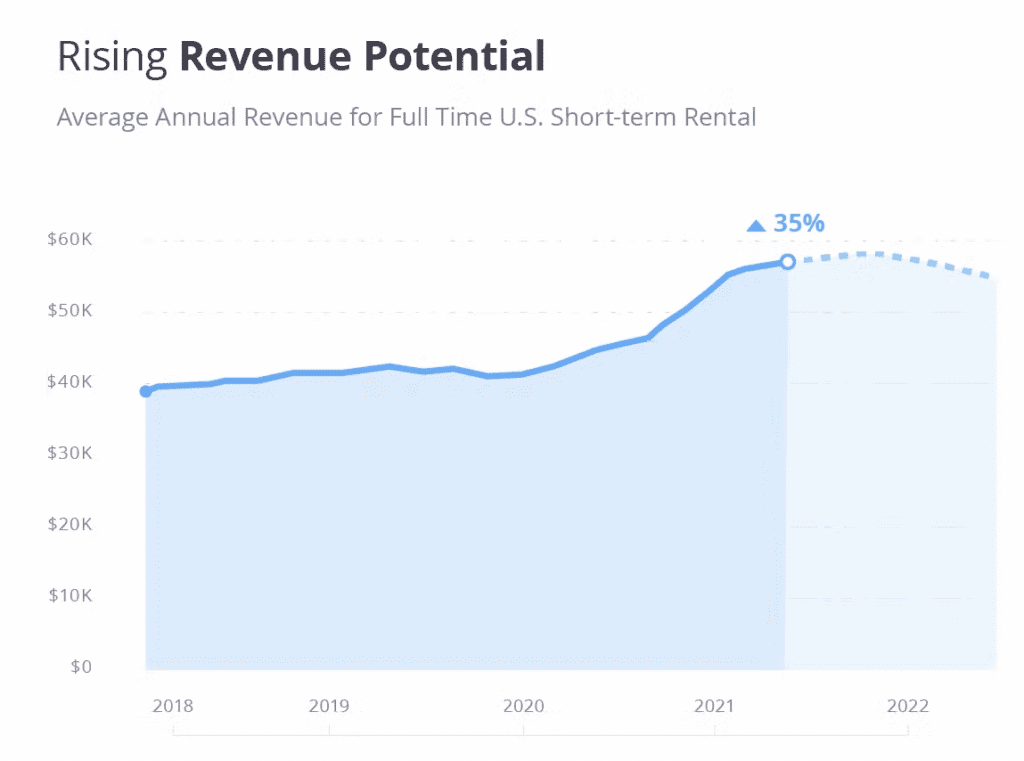
According to AirDNA’s 2022 Vacation Rental Outlook Report, “The pandemic has accelerated STRs into the mainstream. Demand is already 10% higher than during the pandemic, the industry is generating 40% more revenue, all with 10% fewer listings. As more investors add supply to capture the growing demand of the industry, it will evolve and adapt to changing consumer trends. Expect to see more unique properties in off-the-beaten-path locations providing one-of-a-kind experiences that will accommodate guests seeking an alternative to traditional lodging options.”

short-term rentals revenue average
Average Annual Revenue in the U.S. Short-term Rental Industry – AirDNA

According to the graph, the average revenue for short-term rentals is climbing higher and higher. While the projection shows revenue evening out and moving into a slight decline, it’s still higher than in years past.

Another interesting statistic that the report highlights is the rise of remote work during the pandemic. 60% of workers returning to the office are expected to choose a hybrid approach for returning to the office. Most of the guests who book my properties on the weekdays work remotely during the day and explore the city at night. 

In essence, a lack of STR supply and the rising popularity of remote work will be the driving factors in the continued demand for short-term rentals throughout the rest of 2022 and into 2023. 

If anything, the competition will become fiercer, and property owners will be looking to differentiate themselves from the crowd. The most significant trend I see is developers building unique properties such as log cabins, A-Frames, treehouses, and tiny houses to differentiate themselves from “normal-looking” properties on the market.

Case Study: What Doubling Your Interest Rate Could Do To Your Cash Flow

The first short-term rental I ever invested in was a 900-square-foot A-Frame that I did a ground-up construction on. After renting it out for nearly three years, plus appreciation, I had built a good amount of equity. 

This led me to a cash-out refinance to pull some of the equity out as working capital in some of the future short-term rental development deals I had going on with my partners. 

I knew that the new interest rate would not be as good as the current rate I had because I was transferring from a residential loan to a more commercial-like loan.

After shopping for lenders, I chose one that specialized in short-term rental loans, and we started the process of getting an appraisal on the property. 

The current rate I was operating with stood at 3.25%. After working through the details, my 30-year rate became 4.25%. Unfortunately, it was variable too.

However, the property was grossing about $82,000 per year and netting over $50,000, so I was not worried about the extra percent on the interest rate. I was slightly concerned about the variable part, but the refinance proceeded. 

Fast forward a couple of weeks, and we had completed the appraisal and scheduled a closing date. It seemed as if everything was good to go until two days before closing, when I received the closing disclosure stating that the interest rate was hiked to 6.9%.

I called the lender wondering what happened to the 4.25%. It turned out that there had been three interest rate increases over the 45 days leading up to closing. I was speechless. 

Going from a 3.25% to a 4.25% interest rate was fine. But to go from 3.25% to 6.9% seemed like a major problem. I was ready to step away from the deal because I could not fathom more than doubling my interest rate. 

Before scrapping, though, I was curious to see if the property would still cash flow at 6.9% interest. I ran the numbers based on the 3.25% rate, the 4.25% rate, and the new 6.9% rate, and even plugged in an 8% interest rate. 

To my surprise, the property at the 6.9% and 8% rates still had significant cash flow. The loan amount increased from $178,000 to $225,000. The difference in the mortgage payment between the original rate I was quoted (4.25%) and the new rate of 6.9% was only $375 extra. 

I was already charging $270 as the daily rate for that rental. I could make up the difference with just two extra bookings. Given that occupancy over the past three years hovered around 95% on average, I felt comfortable going through with closing. 

Final Thoughts

The best part of this case study is that I learned a valuable lesson. 

As we dip into a period with rising interest rates (albeit still low historically), short-term rentals will be one of the most resilient real estate investments to rate hikes, making this one of the best times to invest in them. 

Do not let the sticker shock of higher interest rates discourage you from moving forward with a deal. Don’t sit on the sidelines and wait for interest rates to drop back to where they were over the past two years. If you do that, you’ll probably never invest in real estate. It took a unique set of circumstances for interest rates to become the lowest they had ever been in history. But as inflation grows and takes a tough toll on the economy, you’ll find that those same easy money policies are well behind us.

Interest rates are increasing. Don’t let that be why you aren’t going out and looking for good deals, even if they double. With a well-placed STR, you’ll find it easy to make up the difference.


Source link

Are Short-Term Rentals Still Profitable With Rising Interest Rates? Read More »

Making Twice as Much with Half as Many Doors and 100+ Flips

Making Twice as Much with Half as Many Doors and 100+ Flips


Cash flow and revenue should always be your main focus, but that’s not always the case. Often, the focus tends to be on the number of doors, with many investors not realizing you can make more with less. Today’s guest, Welby Accely, has mastered the art of maximizing revenue per unit and automating his flips. Despite his primary focus being quality over quantity, Welby has done over 100 flips in just four years!

Welby’s success didn’t come overnight, in fact, most of it has come from trial and error. Welby started investing in 2004 without knowing anything about ROI or cash flow, but that didn’t stop him. Unfortunately, this lack of knowledge cost him a fortune in time and money. Fast forward thirteen years, Welby has realized all the detrimental mistakes he was making. The price of his lessons may have been high, but now he knows people with twice as many doors as him that don’t make half as much net income.

As Welby says, everything is about the numbers. When you realize this, it’s easier to focus on the properties that generate income and ditch the properties that don’t. Before you focus on the numbers, you need to understand cash flow and depreciation while also figuring out your financial goals and what aligns with them. These two metrics are Welby’s bread and butter. After he understood them, he created a simple formula for his flips and automated everything in his business, allowing him to make more while doing much less.

Ashley:
This is The Real Estate Rookie Podcast episode 187.

Welby:
Every state has a area, several areas outside of the major city that everybody wants to play in, every state. I don’t care what state, throw a dart on the wall, there’s going to be areas just outside of your area where you can play. So it’s okay to humble yourself and admit the truth that you can’t move in the manner how you want to move because the market is too aggressive.

Ashley:
My name is Ashley Kehr, and I am here with my co-host Tony Robinson.

Tony:
And welcome to the real estate rookie podcast, where every week, twice a week, we bring you the inspiration, information, and stories you need to hear to kickstart your real estate investing journey. So Ashley Kehr, the wonderful co-host from the beautiful state of New York, what’s going on?

Ashley:
Well, first of all, talking about beautiful. I just checked the weather for next week, and finally we’re going to get in the eighties.

Tony
There you go.

Ashley:
High of 78, high of 80 a couple days next week.

Tony:
That’s funny.

Ashley:
Yeah, I guess I’m looking forward to that. And I’m looking at myself right now in the recording here and I feel like I’m pretty washed out. I got my white sweater on, I got a white background, my white AirPods, and then my white pale skin, so I’m looking more to some sun.

Tony:
When you said speaking of beautiful I checked out, I thought you were going to say a mirror or something, and that you were blown away with how beautiful you felt about yourself, but you were just talking about the weather. Well, how are things on the business side? What’s cooking?

Ashley:
Yeah, doing good. We’re getting pretty close to finishing our A-frame cabin, which is so exciting.

Tony:
Awesome.

Ashley:
I finished the tile selections today, so that project I can’t wait to be done because it’s the first project that I tackled with my new business partner, so it’ll be his first investment property under his belt, so I’m really excited to see that finish.

Tony:
And you’ve been doing a great job of sharing that on your Instagram, so if you guys aren’t following Ashley, be sure to follow her @wealthfromrentals, you guys can follow me @TonyJRobinson, but I’ve loved seeing that one come along. How much more time do you think you guys need before it’s live and up and running?

Ashley:
I would say we probably have a month left on it.

Tony:
Okay, all right, that’s awesome.

Ashley:
What about you, what’s new with your projects? Because you have how many flips going on right now? Or rehabs?

Tony:
Yeah, we have four active rehabs going on right now. We literally just walked a property yesterday that I think they’re going to accept our offer on, that’ll put us at five. And it’s been a challenge. We’ve got a crew that we work with out in Joshua Tree, but he’s running at the red line right now as well, so he’s been struggling to find more guys for his crew. So he came back to us yesterday and said, “Hey, I think the most that I can handle at one time is three flips.” So he’s already over capacity. We’ve experimented with some other crews out in Joshua Tree, and none of them have really worked out. The last one we literally had to pull him from the job halfway through just because it wasn’t working out. So finding good people has been a big challenge for us, but we’re not going to let that stop us, we just got to go out there, keep looking for more folks, and hopefully we’ll get lucky and find somebody.

Ashley:
I know we have an episode to get into, but let me ask you, when you pulled that contractor, how hard was it, or how did you find somebody to replace him immediately to get in there?

Tony:
So we pulled him, and then we had our main crew that were working on other houses, and we just pulled them and said, “Hey, don’t touch anything on the houses you’re working on, just please come finish this job first and then go back to the other one.” So we literally had to stop work on our other projects to free up that manpower, so it’s been a challenge for sure. All the joys of being a real estate investor, right?

Ashley:
Yeah, yeah.

Tony:
Yeah. But that does tie into today’s episode, because today’s episode, we have Welby Accely, and he’s an investor who lives in New York but invests in Connecticut, and his whole strategy is flipping houses to build capital, and then dumping that flip capital into buy and hold rentals, and he does a really good job of talking about how he chose his market, how he built his team and expanded his team, how he manages his rehabs, and just really listen for the part too where he talks about the mindset and the discipline that goes into his business and how that’s allowed him to scale the way that he has.

Ashley:
Yeah, this is definitely in an episode to get you guys pumped up and motivated. Welby, you can tell, you can feel his passion as he’s talking about real estate investing. So make sure you guys have a notepad ready, take notes, he does go through a lot of numbers on deals to give you guys examples, so I think that’s great. You can see how he actually figures out what his numbers are, and figure out the ARV on a property before he’s even putting in offers, and how that’s really important to him, the ARV, which is the after repair value of a property.

Tony:
Yeah, so before we bring him in, also if you guys haven’t yet, please do us a big favor, leave us an honest rating and review on whatever platform it is you’re listening to this podcast, whether that’s Apple Podcast, Spotify, wherever, the more reviews we get the more people we’re able to reach, and obviously that’s a big goal of us here on the podcast, is to help more rookie investors just like you. So do us a favor, leave an honest rating and review.

Ashley:
Welby, welcome to the show, thank you for coming on. Obviously you are not a rookie investor. We’re not going to get too much into your backstory, if anyone wants to check out your BiggerPockets OG episode, that can be found on episode number 464. But today we have brought you on because we want your expertise on your strategy, so you want to start off just telling us what your strategy is?

Welby:
Well, I’m mostly known for flipping properties, so I’d say in last three and a half, four years I’ve done well over 100 plus flips, and the strategy basically for me is that in real estate you need money, even though there’s a narrative that you don’t need money, but you need to have the money come from somewhere. So where I found, where I can get the money is I flip properties, generated income from those properties. I stay disciplined enough not to spend that money on frivolous things, like buying a new car, or lavish trips, and I stay disciplined to then utilize that monies as down payment monies to acquire rental properties. So that’s basically the gist of that, and then I’m sure we could go into more details about what I do in that process.

Ashley:
Before we even get into that, I want to know how do you have the discipline to do that? Did you always have a strong financial foundation? What was your personal finances like that when you started to get into real estate, you knew that you had to save, you had to save that capital from the flip houses to invest into long term rentals?

Welby:
Well, you’re too kind, because I’m not as smart as people might think that I am. I’m not, it’s a lot of trial and error. When I first started in this real estate business, I talk about the good, the bad, the ugly of real estate, which is why a lot of people in our line of business gets turned off by me, because I give the people the truth, and I give the people my experiences. So as I said, again, I’m not the smartest person in the room, I took a lot of the information that was presented to me, I started back in 2004 and it looked simple. It’s supposed to be, hey, you want to get up tomorrow morning and be a real estate investor, then just get up and be a real estate investor, it’s going to work.
So when I bought my first property, my first initial properties, I was buying them basically with 106% financing. If anybody understands what happened with the subprime mortgages, I was buying them with 106% financing. I didn’t understand cash flow, I didn’t understand ROI, I didn’t understand purchasing correctly, I was buying just to buy, and I felt that because I was able to get qualified to get a mortgage I won, like a lot of people do today, they think that they won because they were able to get qualified. So I lost, if you guys go to my BiggerPockets interview, number 464, shameless plug, if you guys go to that I talk in detail about how it took me, from my initial start, 13 years to start realizing the mistakes that I was making, and within those mistakes, to answer your question, the importance of being disciplined, having cash reserves, the importance of having down payment, understanding your numbers was so important. So it was a lot of me losing trial and error, making major mistakes is what gave me the discipline to understand the importance of what I’m doing today.

Tony:
There’s a lot of important lessons to be learned when you’re getting beat up by life, and we talk about that a lot in the podcast, how sometimes those darkest moments give you the momentum you need to go forward and find success eventually. Before we keep going Welby. Can you just give us an overview of where your business looks today? So I know you’ve mentioned that you did 100 flips in the last four years, which is incredible, but what about on the holding side? How many units do you have currently?

Welby:
Here’s the thing, right now I go up and down as far as the holdings that I have. So I still continue flipping, last year, 2021 was last year, I did just about 20 flips last year. This year it’s a little bit slow because obviously you guys to see what’s going on with the after effects of the pandemic, so I’m only around maybe six or so, seven, I got to check. As far as my rental portfolio, I go up and down and I fluctuate, but here’s the thing I want to say, the reason why I don’t promote “doors” is because it’s a misrepresentation to people.

Tony:
Totally.

Welby:
What happens is is that people are more concerned about being sensational on saying, “Hey, I got $1000, I got $1,000,000, I got $500, I got $50.” I know people that have triple the amount of doors that I have, and don’t make half the money in net income, and it’s very important that people understand net income is what you put in your pocket, don’t make half the net income that I make. So I don’t really push that narrative of, hey, I have X amount of doors, because it’s a false representation to people, especially for the new investors walking in the business not understanding the business, that it’s not about the quantity, it’s more about the quality.

Tony:
I love that breakdown, Welby, because I think that is a misconception that a lot of new investors have is that they’re just focused on how many doors can I get to? But like you said, if I could have $1000 in net cash flow with two units, versus $1000 in net cash flow with 20, I’m probably going to go with two because it’s less headache. So if you can maximize the revenue per unit, there’s something to be had there.

Welby:
That’s my primary focus, is the quality of what I have in relations to what it cost me to acquire it, to how fast I could recoup that initial investment, to then basically have infinite return, not having none of my own money in that actual property. So if I could give a really quick example, the reason why I state that, I’m from New York, but I do most of my business in Connecticut. I have a good friend of mine who’s in the real estate business as well. I have a four unit building that after all expenses I’m netting roughly around $3,600 a month. Well actually it’s a six unit I’m talking about now, I’m netting in that six unit just over $5,000 a month. I purchased that property at 270,000, but its value is well over 550-600,000. So I have a 50% appreciation on that property.
A good friend of mine was looking at a property that was a 12 unit. He was paying 1.2 million for that property, and all he kept thinking about is that he got a property that he paid 1.2 million and it’s so big, it’s 12 units. By the time he finished breaking everything down and putting down a down payment, his down payment would’ve been 20%, roughly about 200-220,000, give or take. He was going to be netting roughly $5,000 a month in net income. So now it took him to make that $5,000 in net income $200,000 of down payment money, while it cost me $70,000 of down payment money to make the same money in net income, which means if I would’ve duplicated what I did times three to match how much he spent, I would be making roughly $15,000 for the same debt that he’s making 5,000.
So it goes right back to the point I’m saying about the quantities doesn’t mean that you have a better quality, but he could not wrap it around in his mind because all he kept saying in his mind is he’s got a 12 unit building. Well I could tell you now, as he’s owned it, how many years now he’s owned it, we both bought ours roughly simultaneously, he wished that he’d bought what I bought now because now he understands. So I hope that breakdown helps you out a little bit.

Ashley:
That was a great example, I think you really broke that down and gave two really good examples of different door amounts, different price points, but really, at the end, that’s what you care about. And I think if you are going to set a goal of say you want 100 doors, you’re setting that goal because you know you’re purchasing properties where the cash flow is $300 per door and you’re putting 20% down, or you’re doing a burn, you’re not putting any money in. So if you are setting that goal of how many doors you want, make sure you’re working, you’re starting with a dollar amount, or something, that’s your goal, but then you’re working backwards and saying, okay, I need 100 doors to get to that dollar amount, and not just saying, I want 100 doors, just to accumulate.

Welby:
You just make my heart skip. I love that. The reason why I love it is because I’m so passionate about this business. I’m so passionate about educating the people, because those fundamentals, people don’t understand the importance of the fundamentals that you, what you just said. And people that are in the industry that are doing this business to scale, if you asked a question, the odds are we’re going to come up with roughly the same answer, maybe presented differently, but the result will be the same answer because we understand the fundamentals of that. So you saying that is wonderful, I love it, that’s beautiful.

Ashley:
Welby, what kind of properties are you actually going after? So you mentioned you had a six unit, are you doing single family flips and then small multi-family on the rental side? What does that look like?

Welby:
Well, I focus on what my market gives me. So this is why I tell people you have to understand, which I think we’ll talk about when I say I do, excuse my word, if I’m saying it right, reconnaissance, somebody that’s in the army, or whatever, I go and I scope out the environment I’m looking to invest in, and based off of the environment I’m looking to invest in, I deal with what the environment gives me. I don’t force it. So in areas that I’m investing in, so if I’m buying a single family home, I already know from out the door I’m buying a single family home with the intent of flipping it to sell for profit. If it doesn’t align up with what I have to acquire the property for, to what it’s going to cost me to rehab it, to what I’ll be ultimately able to sell it for, I’m not buying it. If I do buy it, and I know, with a strong estimate, I project to be able to profit X amount of money after all expenses are paid.
I might even do the same approach on a duplex, because I’m not looking to keep even a duplex, my intent is to purchase that property with intentions of fixing it, acquiring it correctly to renovate it to ultimately sell it to flip, but then I’ll be looking for a different type of client because the odds are the person that will be buying that property might be a person that’s looking to move in one unit as their primary residents, and then rent out the other for the assistance of what the rental unit can provide them. Outside of that, anything that I purchased, three units or more, I already know my intentions is to keep it. So that’s pretty much it, anything that’s one or two, one, I’m definitely flipping it, two, I’m pretty much flipping it, three units, four units, five units, six units, seven units, I’m keeping those for long term holds.

Tony:
So Welby, I want to get into the nitty gritty of your strategy here because I think it’s a really powerful one for a lot of new investors to leverage, and I think your point at the beginning of the episode about there being this misunderstanding in the world of real estate investment that you don’t need capital, but you do need money, it doesn’t always necessarily have to be your money, but the money has to come from somewhere. So I definitely want to get into how you’re leveraging that piece, but I think if we take a big step back and we just go 30,000-

Welby:
Can I say something please? You make my heart skip as well. You make my heart skip as well, I love it, man, I just love it. Yes, yes, go ahead, yes, correct.

Tony Robinson:
The money’s got to come from somewhere, right?

Welby:
Yes.

Tony:
But I want to take a 30,000 foot view of your strategy, maybe you can walk us through step by step. So if I’m a complete rookie, and I just want to clarify this as well, so you’re in New York, but you said you’re investing in Connecticut, so you’re investing out of state. So if I’m a rookie, how do I go about choosing which markets to even get started in? I guess walk us through your decision making, why not invest in your own backyard versus going to Connecticut?

Welby:
Well, here’s the trick though, Connecticut is my backyard. It’s literally an hour, hour and a half tops drive. So it is my backyard. So people have a misconception of investing out of state means that you have to catch a flight to go and look at your properties. So I used to invest in Atlanta while I was living in New York. One of my downfalls of why that wasn’t a success, one is because of the lack of knowledge that I had, and two, to be frank, it was just too far away from me to mind my business, to handle my business, to take care of my business. I was depending on other people i.e. property managers and out-of-state realtors, that I can’t keep my pulse on the finger of my business to confirm what was being represented to me, especially as a new investor at the time.
So of course now everybody know New York is one of the most expensive cities in the world. I did a lot of business in New York, but then what happened is I had realized that with all of my mistakes, all of my losses, because I got wiped out multiple times trying to build this business up to zero, I realized that New York was the big fishes out here and I was a bit too small to play in the manner that I wanted to play. But I had made enough experience, I made enough money, and I realized that I don’t have to go too far away from my backyard to find other markets that can allow me to walk in at the financial level that I’m at, at that time.
So I looked around, and I could have went upstate New York. Just like any other state that you want to, every state has an area, several areas outside of the major city that everybody wants to play in, every state, I don’t care what state, throw a dart on the wall, there’s going to be areas just outside of your area where you can play. So it’s okay to humble yourself and admit the truth that you can’t move in the manner how you want to move because the market is too aggressive. That’s one. Two, New York is predominantly great for appreciation, aggressive appreciation. What people don’t want to accept, what a lot of influences are putting out to the country, is that they want people to believe that the way that things are appreciating in New York, Los Angeles, Seattle, California, big cities, most of America does not appreciate like that.
So you have to understand, I had to understand that I had to start focusing on cash flow. I had to start focusing on cash flow, and the cash flow in the manner how I wanted it I was not going to get it here in New York. So then by accident I would say, friend of mine said to me, “Hey, why don’t you come to Connecticut?” He’s lived in Connecticut, and it was really by accident, by the grace of God, by me talking and conversing with people, networking, I was told, “Why don’t you come out to Connecticut?” When I went out to Connecticut is when I started doing my investigating, looking at all the different towns, the different opportunities, then I realized that I could play here, because I had bigger city money, I could do it in Connecticut. So that’s what I started doing.

Tony:
So Welby, you mentioned something I think that is super, super important, and you said that even though you could get appreciation in New York, that wasn’t what your goal was initially for real estate investing. So as a rookie you have to think about what is your goal as you get into this. Is your goal to build long term appreciation so that when you retire, you have a multimillion dollar net worth? Or is your goal to build up cash flow in the short term so that maybe you can walk away from your job, because those two goals are going to dictate very different approaches and strategies when it comes to real estate investing. So it was a really important lesson, Welby, so I wanted to make sure we didn’t skip that.

Welby:
May I add to that too, if you don’t mind? I give examples, everything I speak on I have world examples, because this is what I’ve been through. Anything I talk to you guys about is not what I heard, this is what I do, did, or I’m going through. So I have another friend of mine in the New York area, because everybody wants to invest with me now, he bought himself a, I think it was a three unit building in Long Island. He paid 700,000 for the property. The mortgage on it, I can’t tell you off the top of my head, but with taxes and everything his mortgage and everything had to be close to $6-7,000. He had three units, everything’s about the math for me, he was renting out each floor for roughly $2,500. $2,500 times three is $7,500 a month, so he was netting, netting after all expenses, I don’t know off the top of my head, roughly $1,500.
Now that’s cool, I’m not telling you that you’re right or wrong. But then I gave him another example of exactly a property that I have in Connecticut that was a three unit, that at the time I purchased it I paid $120,000, at the time. When I’m looking at properties I’m looking at properties this way, it has to be distressed and or underperforming. Those are the two things for me, distressed and or underperforming. So I bought a property for 120 that was worth, by the time I would be done to it, at that time, 300,000. So I had over 50% of potential appreciation by the time I start adding value to that property.
But before I even owned the property I already knew that that property, that was a three family, there was a street level basement, which I knew I could convert to a legal apartment. So now that three family I knew I could make it a four family. Before I even own that property, with the relationships I have with the city, with the programs that I have, I knew off the top I was going to be able to generate out of that building well over 5,000 plus on that property. That property today is worth over 400 something thousand. Remember, I bought it for 120, I put 20% down, I was financing 90,000 on a property that’s worth three quarters the price that I purchased it originally. The net cash flow on that building to date is $3,600 a month. So I got right now over 300,000 in equity, with a cash flow of over $3,500 a month.
My net worth, compared to the two buildings, is higher than his, yet he paid way more than mine. You understand? So this is why it’s so important, everything in this real estate business is about the numbers. Everything is about the numbers, and what Ashley had broken down when she said, which was beautiful, on how you calculate what you can rent out each apartment for, to what it cost you with your mortgage taxes, insurance, and everything, subtracted by whatever, that’s what you got to do, and if the numbers don’t add up, you have to have the strength to say, this is not a deal for me, I’m going to walk away.

Ashley:
Welby, that’s a great point, don’t get emotionally attached just to get that unit count too.

Welby:
That’s right.

Ashley:
It’s that emotional side of it like, oh I haven’t gotten a deal this month, I’m just going to buy this and I’ll make it work.

Welby:
Absolutely.

Ashley:
And also don’t fudge the numbers either to make the deal work, make sure that you’re using accurate numbers that you verify. So I want to know about your team. What kind of team have you put in place, and what advice would you give to rookie listeners as to the first person, or maybe couple people, they need to add to their team if they want to start doing flips and purchasing buy and hold property?

Tony:
And how to find them, if you can, Welby, I think that’s a really critical piece today too.

Welby:
Believe it or not, my team started out with just a father and son. That’s how I started with my team. To date now we grew the team to, I would say consistently six, seven people, but then we have an extension of the team from subcontractors that we use. So how I started out with it’s okay, stop trying to chase everybody else, what everybody else is supposedly doing. I’ve met a lot of these people, and listen, I’m sure you guys have met them too, and you know what I’m trying to say, it’s not what you think it is. You understand? So it’s okay to humble yourself and understand that this is a marathon, it’s not a race.
So I started off with a father and son. When I start off with a father and son, it’s so important as an investor, so all you new investors understand that this ship, this car, this boat does not move without you, so I need you to be empowered to understand that this ship, this car, this boat does not move without you. Given the fact that you understand that you need to make sure that you educate yourself enough to then be the captain of your ship, to direct the people that work for you.
So given the fact that I understood the process of what to look for when I was looking for my first flip, how much I should buy that property for, then I went through the process of understanding a rough estimate of how much it’s going to cost me to rehab, I made sure I purchased the property correctly. Then I started with my friend’s father and his son, and those were the two guys that essentially renovated a lipstick property for me. I didn’t get a gut job, I didn’t get a property that was destroyed, I just got a property that you’re just going to show it a little bit of love, put it back on the market, and sell. So we actually grew together. So in our first year we-

Tony:
Let me ask this, Welby, let me ask this before you go on. So how did you find those two guys? Because you said you started with those-

Welby:
We were friends, we were friends, and they had ambition not to do what I do, they wanted to do construction. They knew how to do Sheetrock work, they knew how to do little bit of electrical, stuff like that. Listen, we all understand in this business there’s gray areas. You got to do what you got to do. So that’s how it started, I had to get in and get started. But what I had to do too is I had to understand that that was the two first people I started with, then I had to get introduced to realtors in the area. Most realtors will not understand the mindset of an investor. Every realtor thinks that they do because most realtors just understand if it’s for an investor, selling it to him hopefully low so that he can sell it high. No, it’s more than that.
So I had to educate the realtors, even the realtors that had more years on this planet than I did, in the business, had to explain to them, I need you to give me what that value of that home is going to be when I beautify it to the standards of what you’re telling me it needs to be. I need you to give me the ARV of this property. When they would tell me what the ARV of this property is, I would know roughly, I’m sure most of you people know what the 70% rule is, it works, I would calculate the numbers and then present to her, this is what my offer is. Most realtors, if they understand the way that us as investors have to move, they’re not going to want to work with you, that’s the truth, because most realtors do not want to work as hard as you need them to work with you to accomplish the goals that you want. So you have to kiss a lot of frogs in this business, people, you’re going to have to kiss a whole lots of them.

Tony:
And Welby, that’s true for every person that you bring on your team, right? You’re probably going to have to go through several contractors, you’re going to have to go through several insurance agents, title companies. I’ve cycled through all those different people as we’ve built our business. But when you find the people that work, you got to make sure that you treat them right, that you make it a mutually beneficial relationship.

Welby:
And if you understand the root of it for everybody else, it’s about money. Hopefully we’re going to be become friends, and maybe family, but everybody’s coming to this table because they see you as an opportunity to make money from you. Some people, some realtors want to make you believe it’s a partnership, some mortgage people want you to believe that it’s a partnership. No, it’s not. No, it’s not. Let’s be real about it, you guys all work for the investor, because the investor is the only one that has a calculated risk in this equation. The only one. Nobody else has to sign that contract, nobody else has to guarantee that loan, nobody else but that investor. So I want to empower investors, new investors, old investors, that this does not move without you.

Tony:
Yeah, so Welby, but you gave a really good example of how you’ve built your team out in that market, and obviously the realtor is an important piece to that because they’re the ones that are helping you find the deals that are going to make sense. And you mentioned the 70% rule, I just want to recap what that is really quick for our listeners. So ideally if you’re able to purchase a distressed property where the purchase price and the rehab come to about 70% of the after repair value, then typically you know that you’re going to be able to turn a decent profit on that. So, Welby, as you’re working with these realtors, what kind of properties are you telling them to look for for your business? What is your criteria when searching for a new flip?

Welby:
I’m not limited to anything. I don’t care if it’s a auction property, because you got a lot of people that get caught up about the source of where you find that property. That’s irrelevant. The process of you evaluating a property to understand if it’s a good deal or not is irrelevant to the source of where you getting that property. So I don’t care if it’s an auction, I don’t care if it’s coming from a family friend, I don’t care if it’s word of mouth, I don’t care if it’s off the MLS, and give you guys a secret, 90% of the properties that I buy that I flipped has come off the MLS. So the source of where I get the properties are irrelevant.
The number one question that needs to be answered, and I tell every investor, please listen to me with this, you have to lead with ARV. That’s your number one question that you have to ask at all times. The ARV gives you the follow through on everything else that you need to be able to calculate to determine what your maximum offer is going to be. So who cares what they telling you that you could rehab it for if you don’t know what the ARV is, who cares what you can do with anything involving that property if you don’t understand that. So I tell everybody, always lead with the question of what is the ARV of that property, especially when we’re talking about a flip.

Ashley:
Welby, when you are analyzing your deals, when you’re going through… Well first of all, before even that, I want to know about the MLS. You said 90% of your deals are from there, and I think very common thing we hear is there’s no deals on the MLS, how can I find deals? So can you let us know what is your secret, and how are you making deals work on the MLS? Is it just throwing out low ball offers? Is it looking for listings that have been on the market for a long time? Why do you think that you’re getting so many deals on MLS?

Welby:
Well, if you look at the amount of offers that I put out to how many I get told no to, excuse me, that I actually… Let me say that again. If you look at how many offers I put out to how many I get a yes to, I’m doing horrible, but that’s the nature of the business. So new investors don’t understand that, you have to put in, especially in a regular market, you have to put in, sometimes I put in 100 offers and I get told no to all 100 of them, but I just need that one yes. Now as far as what do I look for, I don’t look for anything. What I do is, here’s the thing. For everybody to ask as an investor do you need to be licensed? No, you don’t. I don’t have a license to do anything in this business, I just have a legal right to be in this business as an American. So everybody has a right to be in this business.
Now everybody that’s going to be working with you, i.e. what I call my starting five, my realtor, my contractor, my attorney, my accountant, my… Where’s the last figure? I wrote it down because I know I was going to forget, my funding source, my mortgage lenders, whomever. Every one of those people that are wrapped around you have to be licensed to be able to provide that service to you, except you. Given the fact that these people, so we talking about the realtor, I don’t have to do anything. Let the subject matter expert, which is your realtor, do the job. You give them the criteria of where you need to be at, after a while of you working with your realtor, your realtor is going to see a property on the MLS, or see a property driving and just know, Welby’s going to buy that property if I sell it to him. You understand?
So let your realtor do the job, let your realtor go through, break down to your realtor what your quick criteria are going to be, so in my area I’m looking for properties I can add value to. I’m not looking for a property that was listed by an owner that’s looking just to sell at retail price, I’m not looking for anything to be purchased at retail price. I need the realtor one day present it to me, my realtor has to present to me real simple, “Hey Welby, I found another property in the area that you’re in, the ARV is this.” That’s all I need. That’s all I need. Based off of that basic information, we all have these cell phones, let the cell phone work for you.
We all have, the same way we have Twitter, Instagram, and all those other apps, we also have apps for us investors. What are they called? Zillow, Redfin, Realtor.com. Use the app, click on the app and look at the photos through the app. Look at the square footage of the property that you’re looking to buy, look at the area that the property is in. If you start doing enough work in the area you’re going to be able to come up with a strong, which I talk about in my courses, and I talk about in my books and stuff, you’ll be able to come with a strong estimate so that you could put your offer in. Put your offer in and leave it to God. At least you in the game because you put your offer in. Now as an investor, the odds are you’re going to be told no. That’s just the odds, you’re going to be told no more than you’re going to be told yes. That’s okay, keep going. Eventually you’re going to get a phone call from your realtor, “Guess what? They took your offer.”

Tony:
Yes, right.

Welby:
You keep pushing it hard enough, believe it or not, I’ve had weeks where I’ve gotten accepted offers of 10 houses. I don’t know what the hell I’m going to do with all 10. So you got to keep pushing, pushing, pushing, you just can’t stop.

Tony:
So Welby, we talked a little bit about how you chose your market, how you’ve built this team of your starting five around you, but what about actually managing the rehabs? Are you going to the job sites every week? Or do you have your team doing that? Are you picking the materials? And if so, how are you determining between your flip houses versus your rentals? Just walk us through your process for managing your rehabs.

Welby:
You’re never going to do this business to scale if you’re doing everything by yourself. When I first started I was out in the field, I’m still out in the field, but I was more out in the field involved in a project. While I was caught up in a project I could not go out there to get more projects, which meant I couldn’t keep the guys that’s working for me busy. So what I did is the position that I was in in the field with my guys, I talked to my guy, his name is Jeff, Loosa Home Improvement for everybody, and I said to Jeff, “Jeff, you are going to have to take my position, what I’m doing with you out here, you’re going to have to pull in whomever, your father, whomever, into your position, and you’re going to have to pull someone else outside and find somebody to stand in a position your father was in.” That’s how we started doing it, so that I could slowly wean myself away so I could focus on scaling.
So because, once again, we got these smartphones, if there’s an issue you better call me on WhatsApp, FaceTime, show me where you at with things. When you start building up enough with that, they start to understand. When you start doing enough with these flips, it’s not HGTV, we’re not building theme houses, we’re not building the Count Dracula house today and the princess house tomorrow, every property that you’re going to do, the formula’s going to be the same. The gray tone walls with the white trim is what’s been in style for the last 10 years, so we have buckets of those in our warehouse, so we already know, when we bought the property, this is what we coloring all the walls with after we fix all the walls.
If the kitchen layout can be an open floor plan, you don’t have to ask me, “Welby, should we open up a floor plan or not?” We’ve done enough, you already know, we knocking down these walls. We have to renovate the bathrooms, we have to renovate the floors, or resurface the floors. When you start doing enough of these, the same thing you did in the first one is what you’re going to do in the second, third, fourth, fifth, et cetera. So you want to try to automate your business as much as possible so that the people that are working for you don’t have to think too much, they already know what they have to do. So that’s what I do, and I maintain a lot of my business through my phone, so I keep up with them through video chats and updates, and things of that nature.

Ashley:
Is there any software or apps that you’re using that correlate with just keeping up on everything on your cell phone? I mean, are you using spreadsheets to track the rehabs? Do you have a dashboard you can look at?

Welby:
I have a program, I can’t remember it off the top of my name, where it’s an online software, I paid a bunch of money for it, but it’s great when it coming to flips, that I am able to keep track of what was spent, and I could tell you to the penny, by the time the project is done, how much I made. Years before if you would’ve asked me, “Welby, when you sold that flip, how much money you made?” It was guessing, I didn’t know. I could tell you to the penny how much that I made on each of my properties. Also too I learned how to simplify my process. So I give an example, most of the rookies that you guys are going to be speaking to are going to be utilizing hard money. Hard money is going to be based off of, they’re going to be re… What’s the word? Not-

Ashley:
Refinance?

Welby:
Not refinance, drawing you the monies that you pay when you’re rehabbing, they’re going to draw you X amount of funds for the rehab that was done. Reimbursed, that’s what I want to say, I’m sorry. They’re going to reimburse you based off of the monies that you spent off the draws. I show the people how sometimes new investors make the scope of work too complicated. I show you how to simplify the scope of work so that you can get your monies from the hard money lender faster while you’re doing your project. So everything for me is to make everything as simple as possible, which is why people think, when they watch me on Instagram, that I make it look easy. No, it’s just I’ve been through a lot where I’m trying to simplify my process as much as possible so that I could make my life a lot easier.

Tony:
Can you elaborate on that a bit, Welby? So you say simplifying the scope of work and just simplifying the process. Does that mean that you’re, are you just paying the contractors more money up front, that way that your draws are easier? Or what does that process look like?

Welby:
For myself, with a scope of work, when I was saying that you’ll see a rookie when they’ll give a scope of work to a hard money lender, they will give, it’s basically a spreadsheet with lines on it, and obviously to the left you’ll see 1, 2, 3, 4, 5, 6, and let’s say hypothetically the scope of work was going to add up to $60,000. The rookie will have 50 lines, and they would break down the screws, the hand fixtures, the Sheetrock, and they make it complicated. So now what’ll happen is now when you now want to do a draw, the inspector that’s coming to the property, they’re going to have to go based off of the scope of work, and they’re not going to reimburse you until you 100% completed based off of the areas of the scope of work.
Myself, with the same scope of work that would’ve been 60,000, my lines of scope of work might be eight, maybe 10 lines scope of work. So I want to be as generic as possible so that when the inspector comes, he’s looking at a generic wording that I have there so that I know he’s going to give me that monies that I need to continue what I’m doing so I can get my project moving forward. But for myself, I don’t really do draws, we can maybe talk about that a little later, my draws is a bit done differently because normally I do one draw and that’s normally at the end of the project, but we can talk about that in a little bit if you want.

Ashley:
Welby, is that just the scope of work that you’re minimizing, is that just for the bank or the hard money lender, and do you have a separate scope of work with the contractor that really itemizes everything that needs to be done?

Welby:
Yes and no. I know that the way I deal with contractors I think is a bit unorthodox to most people, because obviously dealing with contractors, they can make or break your business, and a lot of the fears that people have, which I’ve gone through when contractors either ran off with the money, or did not do the quality of work that I needed them to be done, and there was no recourse for getting your moneys back, and also dealing with a contractor that gave you a price initially and then through the process of doing the work they then wanted to change the pricing, and if you weren’t willing to that, they would either say they’re not continuing, or you have to come up with the money. So I approach contractors and I deal with them a bit differently, that keeps them in line so I don’t have problems with contractors, as far as getting my jobs done.

Ashley:
So you think just because of how you build that first relationship with them, you don’t have to go into a huge detail scope of work because you’ve already built that trust, is that what you’re saying, I guess?

Welby:
Yes and no. Here’s the thing, once again it’s all about the money. That’s what the people are here for, it’s not because they like you, they’re here to make money. If you know and understand how to control the money, you going to control your project. And the manner in which I talk in my courses, and stuff like that too, the manner in how I handle a contractor, the contractor can’t do nothing to me. They can’t Rob a penny from me, and I’ll even pay a contract 100% upfront, I don’t care.

Tony:
So, Welby, you’ve given us so much information on how you’ve put everything together, I think the last piece that I want to go back to before we wrap up here, is just the financing piece. So you talked a lot about hard money, is that how you’re funding most of your flips?

Welby:
Most of my flips I’m doing hard money, correct, and then now I have private money that I started introducing to my business as well. So they give me better terms, and I’m able to cut a lot of the red tape, so I do a mixture of both. And sometimes, if it’s necessary, I have cash as well, I have plenty of cash, so sometimes I’ll even use that temporarily, so those are some of the options that I have.

Tony:
So I think every new investor’s dream, especially for those that are flipping houses, is to use private money. It’s typically easier, like you said, less red tape than hard money. So can you just give us a quick crash course on how you were able to find that hard money lender, and then what those terms look like and how you’re able to manage that relationship.

Welby:
To be easy, a good friend of mine, Mark McMahon, Mahone, Mark, and it’s another couple of guys, Dan USA Land Ventures and Full Auto, Gerald, we actually have a mentorship group that we’ve put together called Campfire Feal Estate, so watch out for that, it’s going to be amazing. But Mark, he’s actually the one that educated me. Once again, I don’t know everything, I like to be in a room with people that are smarter than me or I respect, and he’s the one that educated me on the private money side of the business. So what happened is I train a lot of people in this business, I’ve trained a lot of people, and a lot of people I’ve helped train are multimillionaires themselves in this business now. One of my students, believe it or not, has become my private money lender, one of my private money lenders.
So you imagine, for everybody that doesn’t think that this real estate business is possible for you, one of my students was brand new, just like you guys, he put his head down and worked, worked, worked, and he put himself in a position to become one of my private money lenders. The way we structured that business deal, I was actually able to buy two multi-units actually the beginning of this year, sometime early February, I was able to buy one commercial property and a four unit building, but the commercial property is also residential, and I was able to buy both of those properties for $495,000 using all private money. So I was able to walk into that property not coming out of pocket a single dime out of my own pocket, the private money lender funded that for me.
Reason I was able to do that is because the value of those properties combined is going to be roughly around 1.1, 1.2 million for the two properties that I purchased. So I put him on the insurance, but the contractual agreement that we had was 10% on an annual percentage rate, between those two properties. So the mortgage on that, interest only was roughly $4,125 per month interest only. But don’t forget, I didn’t put up any money buying these properties. The four family just got finished renovated, and I’m actually putting a mortgage on it now, and then the commercial unit building should hopefully be done in the next month, and I’ll be putting a mortgage on those.
Given the fact of how I was able to buy them, if I could break those two down separately, the four unit building that I bought for the 240 is valued at 400,000. The banks will be willing to give me a mortgage of 70% of the 400,000, which I can’t remember off the top of my head, but it’s roughly around 280,000. But I’m all out of pocket 240,000. So all I want is the 240,000. I don’t care about doing the bird strategy, or doing any of the cash out refi.

Tony:
Cash out refi, mm-hmm.

Welby:
I don’t do that, I focus on what my cash flow is. So that building is going be netting me with a mortgage of around $1,700, with none of my own money out of pocket that mortgage will be around $1,700 on a building that’s going to be cash flowing $4,800 per month. So I think that’s a beautiful win. The five unit building, which is a commercial building which I paid 255,000, the structure was exactly the same, that building is going to be grossing me over $6,350 a month on a mortgage of $1,800.

Ashley:
I just want to ask real quick, what are, for our rookie listeners, what are the main upgrades or the main value ads they should be doing so that they’re getting these great returns that you are?

Welby:
What I would tell people to do in the rentals is have the attitude, would you live here? Too many rookie people, too many landlords, have an attitude of I’m not going to live here so I don’t care. So they think it’s sufficient enough to just slap paint on the wall and who cares, I’m not living here. That’s going to give you the quality of the tenants that you’re going to have, and it’s also going to then limit to the increase of the rents that you’re going to have. My apartments, when I’m acquiring these properties, these apartments, are distressed, one more time, and or underperforming. So these same apartments that I bought, for example, the four family were being rented for $625 three months ago. By the time I finished, the apartment is pretty much fully rented now, and everybody’s paying $1,250, for the same apartment that was being rented for half that price.
I put in updated kitchens. If the kitchens can be refurbished, I don’t rip them out, I clean them up and I do professional paints on them. I put laminate floors, waterproof laminate flooring. One of the big things I tell everybody to do, install recess lights throughout the apartment. It’s inexpensive, but what the effects will be at the tenant when they walk into the apartment, it brightens everything up. Then I don’t rip down walls, I try to fix what’s existing. So I’m sure a lot of the rookies that are going to go into these apartments, you’re going to see these wood panel walls, people are going to rip those out. I never rip them out, I fix them. After I fix them I get them primered and then I do a beautiful paint job on them. What happens is is that it beautifies the apartment, and because of the wood paneling, it gives character to the walls.
I change all the outlets and switches, and I give love. That’s what I honestly do. So my attitude is, would I live here by the time I’m done? And it’s yeah, I would live here. Also, I want to give something else that’s very important. My business model for how I do, because people are going to ask me how much is it that I’m looking for in terms of cash flow. In a manner of how I’m buying in the area that I’m in, I put 20, well today’s market’s going to be 25%, I put a minimum of 25% down. I’m looking for a property that’s distressed and or underperforming so I can add value to it. Given the fact I’m buying the rental distressed and or underperforming, the value of it, the equity is already built in because I bought it for the right price.
I invest the money to rehab that property, pretty much all of my rental properties that are three units or more, one third of the property covers all expenses. The other two thirds is pure profit. So I give an example of a three family that I have, I purchased the property, the property was worth 300,000, I bought it for 150. I put down 20% down, I financed 130,000. The mortgage, especially before the interest rate went up, the mortgage is $947. I got receipts people, I could show you exactly what I’m talking about. I got receipts.

Tony:
And I like how well you know your numbers too, Welby, and there’s so many.

Welby:
Before you own it, before I own the property, I can tell you how much money I’m going to make off of that property in my pocket. So that building, my mortgage on it is $947, that’s including taxes, insurance, maintenance, everything. So let’s just round it to $1000. The first floor, I’m getting $1,500 on the first floor. So just of that one unit I’m already netting $600 a month. Second floor I get $1,300. The third floor I get $1,300. So just off of that building alone, in my pocket, after all expenses, I’m putting 3000 plus in my pocket.
Now here’s the trick. Remember I told you guys, I put down $30,000 to acquire that property. The way I handle my contractors, what will cost the average person to rehab that property costs me minimal. This takes time, of building these relationships. Now here’s the beautiful thing about it, my goal is I got to recoup back the money it costs me to acquire this property. I’m not making no money until that $30,000, let’s make it $40,000 to make it even better, I’m not making any money until that $40,000 is back in my account. You talk to the average person, that $40,000, based off of the way that they’re acquiring and buying, is going to take them on average six, seven years, barring no issues. Tenants not paying, roof not leaking, boiler breaks. On average it’s taking me roughly around 18 months or less to recoup back my initial investment.
So now I had to go look, about six months ago I look at the last seven properties that I own, I have none of my money in those properties. Every one of those properties have given me back what it cost me to acquire them, and then some, so in the last year, two years, all the monies I make is pure profit. And then you know what I’m doing now, with the money that is generating I don’t have to flip as many houses as often as I was having to do before, because what it costs me to acquire a rental, I’m doing it monthly, more than that. So you want to know what? You know what I’m going to do when we talk about sacrificing, I’m not going to buy me a new car this month, or I’m not going to go on that trip this month. I’m not going to do for the next two months. I’m going to save up X amount of money based off of my cash flow so I can buy me another baby so I can add to the cash flow.

Tony:
Yeah, that’s the machine, and as you start to build it it starts to feed itself, it starts to feed itself. But like you said, Welby, you got to to sacrifice for that short term to be able to reach that point, because I think so many people, they see the cash flow, they see the number of doors, but they don’t see the sacrifice that happened behind closed doors to be able to get to that point.

Welby:
It’s worth it, it’s worth it. I tell everybody, it’s worth it. I encourage everybody, it’s worth it, it’s worth the fight, it’s worth the long days, it’s worth the arguments, it’s worth the doubt, it’s worth it, just don’t stop.

Tony:
So Welby, before we wrap here, first, we just want to thank you, man. You’ve been like a wealth of knowledge, and again, I just think your strategy of flipping to create capital, using hard money, using private money, and just using that to build this machine, is a strategy that every rookie should seriously, seriously consider. So before we wrap up, though, we have a few more things we want to hit with you, first is our rookie exam. So this is the test that we make every guest pass, and if you don’t pass, well fingers crossed. But we’re going to jump into it. So the first question is, what’s one actionable thing that rookies should do after listening to this episode?

Welby:
Right now go download my free ebook. That’s the first thing that you should do. I give a really strong play on exactly what I do. So I would definitely do that, and I would say the most important thing, getting the money is the easy part, buying the property is the easy part, anybody can do that. Please educate yourself, educate yourself, educate yourself, that should be the first thing.

Ashley:
Okay, Welby, the second question is, what is one tool, software app, or system in your business that you can’t live without? Is it your phone?

Welby:
Oh yeah, yeah, yeah, definitely. Yeah, my phone, my phone, my phone, it’s everything, definitely my phone.

Ashley:
You had mentioned an app or a software that you use earlier too for your business. Maybe you can email that to us later and we can include it into the show notes.

Welby:
I remembered it now, the program is called Flipper Force.

Ashley:
Okay, thank you.

Welby:
That’s very good for keeping track of your expenses. And then what’s beautiful at the end of it, when you’re completed with the project, it’ll tally up for you and it’ll tell you exactly how much money is it that you’re going to profit after you finish selling, paying the realtor, and everything else like that. So Flipper Force.

Ashley:
Okay, awesome, thank you.

Tony:
All right. And then last question for you, Welby, where do you plan on being, or where do you see yourself five years from now?

Welby:
I just want to do what I want to do, when I want to do it, how I want to do it. That’s it. I’m not trying to be bigger and better than anybody else, I just want to run my own race, I want to take care of the people that I love. I like cars, so if I want to go and get that Lamborghini truck, I just want to just go get it. That’s what I want to do, and I want to help, I want to help people. I really believe that the market is going to be changing, horribly, soon, and they’re going to need people that’s going to navigate them through this, so I hope I can be a beacon for a lot of people to help them navigate through this, because it’s going to be a great, great, great, great opportunity for people to really become wealthy in this business if they position themselves and take advantage of the opportunity that’s coming, because if you’re not, you’re going to get ran right over. So I hope I could be a beacon to a lot of people.

Ashley:
I think so, because you definitely passed our rookie exam there, Welby, so thank you for sharing.

Welby:
Yes.

Ashley:
We want to give a shout out before we end to this week’s rookie rockstar, who is Mason M. So Mason finally officially closed on his first flip, he used private money to do so, and he ended up actually losing $1000 on this flip.

Welby:
Congratulations.

Ashley:
So the purchase price was 30,000, the rehab was 20,000, and he sold it for 70,000 cash, but there’s an opportunity cost here because Mason learned some lessons, rural markets are harder to comp for ARV due to fewer recent sales, and he should have spent more time on his own numbers instead of trusting the realtors’ numbers. And although he is handy and could do all the work himself, he made a rookie mistake that caused redundancies, and the value of time has never been more clear to him than it is now after completing this flip. So Mason, first of all, we made you the rookie rockstar because you actually told us about a loss, a deal that went bad, but you took the positives out of it, the lessons learned in that opportunity cost, so I hope that you’re sharing this with us because you’re going to keep going and you’re going to do the next one and use the lessons that you learned to continue, so thanks for sharing that with us, Mason.

Welby:
Congratulations.

Ashley:
Yeah, taking action, getting that experience. Think about how much people pay for courses and material to learn how to flip a house, and you just paid $1000 to get that hands on experience. Well, Welby, thank you so much for joining us today. Can you tell everyone where they can find out a little bit more information about you, and possibly reach out to you?

Welby:
My Instagram is @atmybest197, that’s A-T-M-Y-B-E-S-T-1-9-7, and you can also click the link in my bio and you’ll be able to see all of the courses that I have, the free ebook, definitely go check out the free ebook, and you can also go to my website, atmybest197.com, and yeah, that’s how you can find me.

Ashley:
Rookie listeners, thank you so much for joining us this week, I hope you took a lot of value from this episode. I’m Ashley @Wealthfromrentals, he’s Tony @TonyJRobinson on Instagram, and we’ll be back on Saturday with a rookie reply.


Source link

Making Twice as Much with Half as Many Doors and 100+ Flips Read More »

It’s inevitable home price appreciation will slow in the coming months, says Lawrence Yun

It’s inevitable home price appreciation will slow in the coming months, says Lawrence Yun


Share

Lawrence Yun, National Association of Realtors chief economist, joins ‘Power Lunch’ to discuss what spurred the decline in housing data, what a rise in listings tells Yun and more.


Source link

It’s inevitable home price appreciation will slow in the coming months, says Lawrence Yun Read More »

Inventory Shortage Could Continue As Interest Rates Rise and Homeowners Feel “Locked-In”

Inventory Shortage Could Continue As Interest Rates Rise and Homeowners Feel “Locked-In”


As the Federal Reserve aggressively raises interest rates and bond yields climb, we are leaving behind the era of ultra-low mortgage rates that prevailed from 2020 through the end of 2021. 

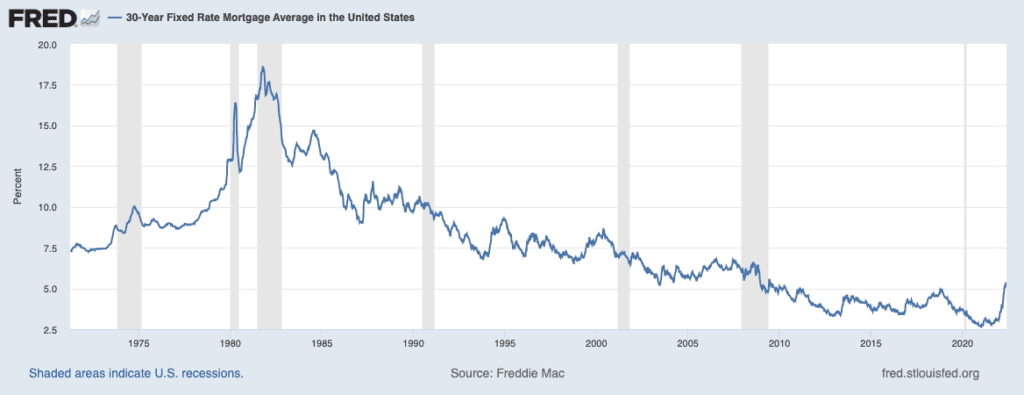
Over the past several years, we’ve become accustomed to mortgage rates below 4%, with the average rate on a 30-year fixed-rate mortgage (for an owner occupant) dipping as low as 2.65% in January of 2021. Those are extremely low in a historical context. As of this writing, the average rate on the same loan is about 5.3%.

fredgraph 3
30-Year Fixed-Rate Mortgage Average in the United States – St. Louis Federal Reserve

For at least the next several months and perhaps for years to come, we will experience a higher interest rate environment. However, the lingering impact of these years of ultra-low interest rates could be felt for the next several years or even decades to come due to what has recently been coined the “Lock-In Effect.” 

In the short-term, rising interest rates will do what it always does to demand—curtail it. Over the last several months, we’ve seen this happening as mortgage purchase applications are down about 15% through May 13 from the same period in 2021. Rising rates reduce affordability, pricing would-be homebuyers out of the market. As long as interest rates continue to increase, they will continue to put downward pressure on demand—nothing new here. 

However, what is potentially new is how rising interest rates could negatively impact inventory. 

Recent data from Redfin shows that 51% of homeowners with a mortgage have an interest rate below 4%. With so many homeowners locked into super low rates, there could be a disincentive for homeowners to sell. 

Think, if you have a home with a mortgage rate under 4%, why would you choose to sell that home and enter a super competitive housing market with high prices, only to pay more interest on your next loan? It’s not a very attractive proposition. 

To put it in perspective, consider a $425k house. If you had a 3.5% mortgage rate, your monthly payment would be around $1,910. If you rebought a home at a similar price with an interest rate of 5.3%, your monthly payment would be about $2,360. That comes out to roughly $450 more per month or $5,400 per year. 

Or consider someone looking to downsize. Perhaps an aging couple wants to sell the home they raised a family in, get some cash to invest with, and reduce their monthly expenses. 

If this couple downsized from a home worth $425,000 to a home worth $350,000—they would be saving approximately $0 per month. That’s right, they could buy a cheaper, smaller home, and still be paying the same amount. Sure, they’d get some equity on the trade, but their monthly costs would be the same, which is super important for people in retirement. Again, not a super attractive proposition. 

It’s for this reason the term “Lock-In Effect” has been coined. Many economists and analysts believe the number of new listings could remain low for a few years while homeowners feel “locked in” to their unusually low mortgage rates. 

It is worth mentioning that the number of homeowners who may be “locked in” varies considerably. According to the same Redfin report, Utah, Colorado, and Washington, D.C. have the highest proportion of homeowners with low rates. Oklahoma and Mississippi have the fewest. 

While we don’t know if this Lock-In Effect will happen, the logic checks out. If it does materialize, it could have profound impacts on the housing market for years, if not decades to come.

It all comes down to inventory. If fewer homeowners put their homes up for sale, it could prevent inventory from recovering to more normal, pre-covid levels when the housing market was more balanced. 

As I wrote recently, inventory needs to increase for prices to moderate or go down (or whatever you think will happen). 

There are a lot of different metrics related to inventory, so let me explain. 

Inventory is defined as the total number of homes on the market at the end of a given month. It is a very useful metric because it combines both supply and demand. It factors in how many people put their house on the market (known as New Listings) as well as how many and how quickly those homes are being sold (demand). 

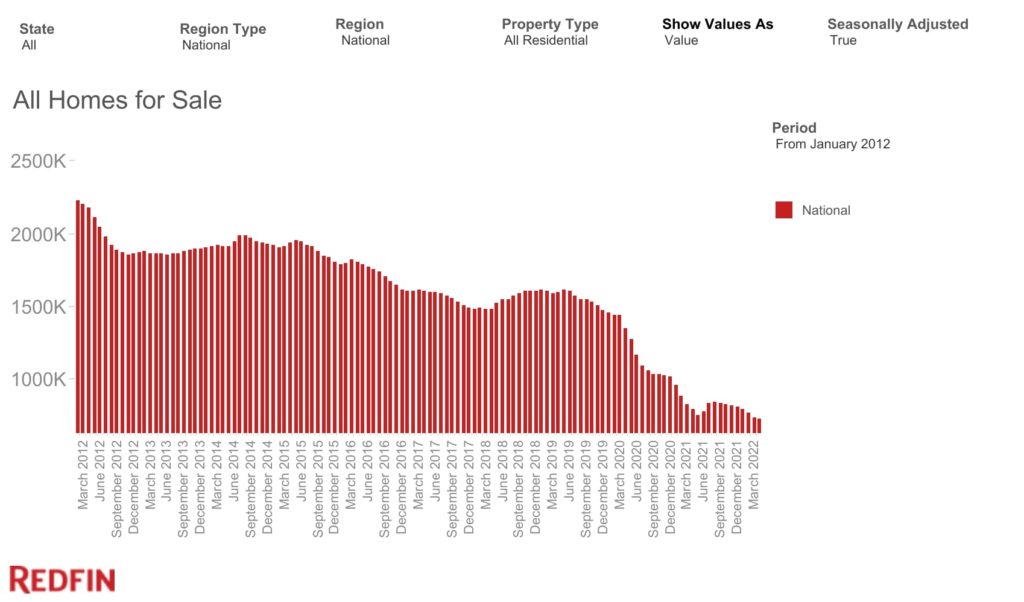
This is where inventory is as of March 2022. 

all homes for sale
All Homes for Sale (Mar. 2022) – Redfin

There’s a pretty dramatic story depicted in this chart. Pre-pandemic, we expected about 1.8M units of inventory over the busy summer months. Now, we’re at 600k. 

As other housing market analysts and I believe, this number needs to increase for the housing market to return to a healthier and more normal level (or to crash). Prices were still appreciating when inventory was at 1.8M, so you can bet they’ll go up with dramatically lower supply. 

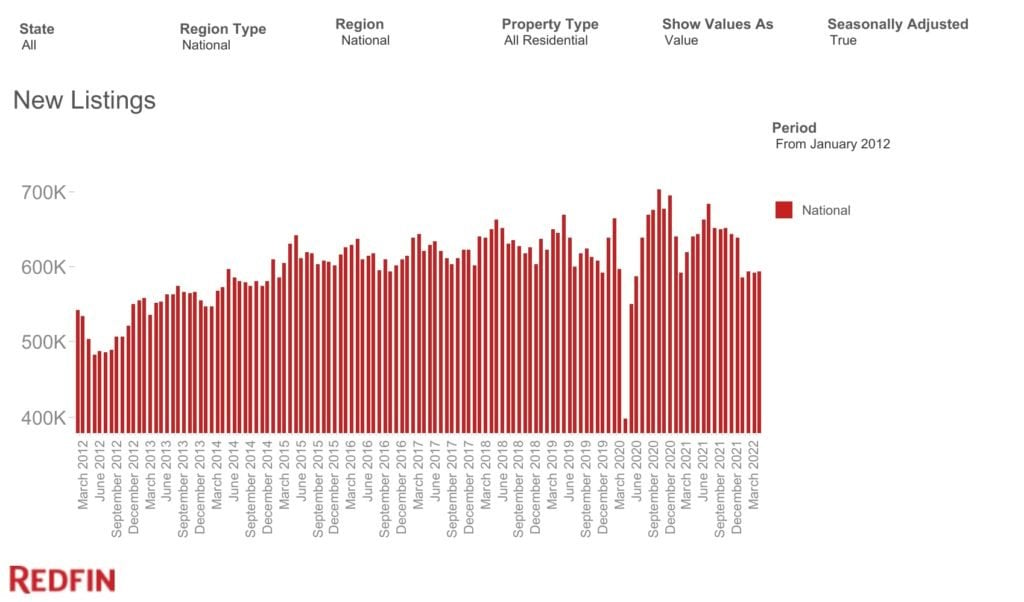
As demand moderates, inventory could start to pick up, but we’ll likely need to see more new listings. As of now, that’s not happening, as New Listings are down on a seasonally-adjusted basis. 

new listings
New Listings (Mar. 2022) – Redfin

But, New Listings could increase from three places: homeowners selling, new construction, or foreclosures. 

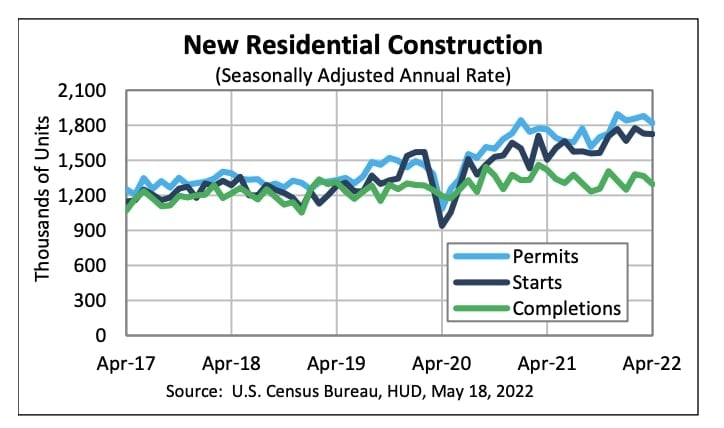
New construction could add to new inventory, but supply chain issues have suppressed completions, and new permits started to drop as of April 2022. 

new construction
New Residential Construction (Apr. 2022) – U.S. Census Bureau, Department of Housing and Urban Development

Many people believe a wave of foreclosures is coming and will add inventory, but that’s not going to happen. You can watch my other interviews and videos about that, but to put it shortly, mortgage delinquencies have dropped for seven straight quarters. Homeowners are not defaulting. Could a recession change this? Sure, but the inventory from a potential increase in foreclosures would be gradual and take years to play out. 

The last and the most important source of New Listings are homeowners. Normally, as COVID-19 becomes a receding part of our lives, I would think that New Listings from existing homeowners would increase. But this is where the Lock-In Effect could come into play. If over 50% of homeowners with a mortgage have ultra-low mortgage rates, we may not see many homeowners list their homes for sale. 

If fewer homeowners put their homes up for sale, that will put upward pressure on housing prices. Of course, some, or maybe all of that upward pressure, could be offset by the downward force of rising interest rates, but the impact of years of ultra-low rates will be a super important factor in the housing market, likely for many years. 

I can even see a scenario where this Lock-In Effect impacts the market for decades. Again, interest rates during the pandemic were the lowest they’ve ever been, and it’s not clear if rates will ever get as low as they just were. Ever. And even if it does happen, it could be a long time before it does. 

Personally, I think rates will rise for another year or so, but then we’ll see a gradual easing of interest rates. After all, the Fed has pursued easy money policies for about 15 years under four different administrations. While the Fed is temporarily raising rates, I don’t currently think we’re going back to an era of double-digit mortgage rates. At the same time, I also don’t know if we’ll see a 2.7% fixed-rate mortgage again in our lifetimes. It’s only happened once and took a very unique set of circumstances to get there. 

Of course, no one knows what happens next. But if you’re like me and want to get a sense of where the housing market is heading, keep an eye on the Lock-In Effect. It will be very interesting to see if the predictions of lower inventory come true. To keep track, just look at new listing and inventory numbers each month. 

If you want more data-driven information about the housing market, investing, and the economy, check out On The Market, BiggerPockets’ newest podcast, where I’m the host. Every Monday, you can find new episodes on AppleSpotify, or YouTube

On The Market is presented by Fundrise

Fundrise logo horizontal fullcolor black

Fundrise is revolutionizing how you invest in real estate.

With direct-access to high-quality real estate investments, Fundrise allows you to build, manage, and grow a portfolio at the touch of a button. Combining innovation with expertise, Fundrise maximizes your long-term return potential and has quickly become America’s largest direct-to-investor real estate investing platform.

Learn more about Fundrise


Source link

Inventory Shortage Could Continue As Interest Rates Rise and Homeowners Feel “Locked-In” Read More »

What to Do Before You Quit the High-Pay & Benefits of Corporate World

What to Do Before You Quit the High-Pay & Benefits of Corporate World


Before you quit your job, you will need to prepare yourself not just financially, but mentally. If you’re thinking of leaving your W2, and you’re not at retirement age just yet, odds are you have a side hustle or even an entire small business. As the side hustle begins to grow, you may be torn between spending time at your job and putting in the hours to scale your business.

This is doubly true if you’re like Daniella Flores from I Like to Dabble, who is at a high-paying, fully-remote job with a solid share of benefits. Before she decided to scale down her full-time work, she had to come up with an action plan that would allow her to slowly slip away from corporate life, so she can avoid the instant shock of being an overnight entrepreneur.

Daniella has some helpful tips for anyone who thinks their time at a job is close to the end. She has spent the last year or so planning for the departure, so when she leaves her job, she doesn’t need to search for a new one! Now, she can spend more of her time writing, designing, and building something that will truly set her up for long-term financial (and time) freedom.

Mindy:
Welcome to the BiggerPockets Money Podcast, show number 305, where we interview Daniella Flores from iliketodabble.com, and talk about the things you need to consider before quitting your job to go full-time self-employed.

Daniella Flores:
I got into therapy last year. And that was the one thing that helped me a lot. We were talking about this, because I was like, “I’m not sure if this was the right move,” because my job has all these amazing benefits. But I really want to do this. I really want to do this full-time because I feel like I’m wasting all this time, not wasting, but you use your energy throughout your workday doing these tasks and the energy to build up for the stuff you want to work on. So then after that, I’m like, “There’s all these things I want to do. And I feel like I’m losing this time to something else that my heart isn’t into.” I don’t see a future. And we talked about it, and she’s like, “I see the way you talk about your blog.” And she’s like, “I don’t see your face light up like that when you talk about your work.” That’s all you need to know. She’s like, “It sounds like you know what to do.” That’s right. I do, I guess.

Mindy:
Hello, hello. Hello. My name is Mindy Jensen. And joining me today is David Pere, from the Military Millionaire group. David, what’s going on?

David Pere:
I’m not finding the unmute button. That’s what’s going on.

Mindy:
Hey, that’s my job.

David Pere:
Apparently, you can use the spacebar to unmute, which means that I leave myself muted. So, there’s less noise. But apparently, if you drag the Google Doc over to type and then hit the spacebar, you just make a big gap in a sentence, which is what I just did instead of talking. So, that’s what’s going on in my life. And we had an appraisal come back really high today. So, that was cool.

Mindy:
Well, nice for you, we had the exact opposite. So, I wish your appraiser lived over here. David and I are here to make financial independence less scary. That’s just for somebody else to introduce you to every Money Story. Because we truly believe financial freedom is attainable for everyone, no matter when or where you’re starting.

David Pere:
Whether you want to retire early, and travel the world, go on to make big-time investments and assets like real estate, or start your own business, we’ll help you reach your financial goals and get money out of the way, so that you can launch yourself towards your dreams.

Mindy:
A few months ago, Daniella posted on Twitter that they were thinking about quitting their job, but there was a lot more to it than they originally thought. And if you’re struggling with it, you’re not alone. I know this firsthand, because my own husband… Hi, Carl, struggled with this too before he finally took the plunge. So, I feel qualified to talk about this both with Daniella and to give advice to people who are listening as well. David, you’re also successfully unemployed, right?

David Pere:
Yes, ma’am. Have been since October.

Mindy:
Now, is that official? Do you have a job? Do you do any sort of work at all, or you just sit around on the beach all day and eat bonbons?

David Pere:
Technically, still in the reserves for the Marine Corps, though I have not actually gone and done anything for the reserves in the last five months. So, we’ll see how long that lasts. I have not received a paycheck from anything outside of my LLCs since October 10th.

Mindy:
So then, I would call you unemployed. Because if nobody’s paying you, then you shouldn’t be doing any work for them. So, Daniella is here today to talk about both the circumstances leading up to their potential retirement or separation from employment, and what they’re going to do once they get there. One of the things I like most about Daniella is that they don’t like to hustle. They like to dabble. Their blog is called iliketodabble.com. And they do not promote the grind it all costs mentality that really makes life kind of suck.

Mindy:
To quote Daniella, “Stop this. You have to hate your life to become successful rhetoric. Hustle culture doesn’t work. You can do meaningful work in moderation, and be happy.” Daniella has taken these dabblings, combined them with their full-time job in IT and their low expenses, to get them to the precipice of retirement, which is where we join them today. Daniella Flores from iliketodabble.com, Welcome to the BiggerPockets Money Podcast.

Daniella Flores:
Thank you so much for having me. I’m so excited. I love this podcast, and I can’t wait to get into it.

Mindy:
I can’t wait to jump into your story. So, let’s get a little bit of a background from your money journey. Where did you start? And right up to about now where you are considering leaving full-time employment.

Daniella Flores:
Yes, so I guess I’ll start my story back when I started side hustling. So, when I started my first like go it side hustling was when I was in high school. I didn’t really think of it as side hustling at the time. I had a problem with spending money because I wasn’t familiar with how I was kind of triggered by money. So, I would basically spend my… at that time, I worked to the movie theater. So, it’s been like the whole paycheck on things that didn’t matter like food, clothes. These were things that I didn’t necessarily need at that time.

Daniella Flores:
I wanted them, but they really didn’t matter. And through all of that, by the time I had my bills come, I would need money for those because I was paying for my car. I was paying for my cell phone. I was still in high school, so I didn’t have rent stuff. But I would go and sell my clothes as well, as go to thrift stores and buy stuff and resell those at online. So, at the time, I was using Craigslist for this stuff because this is back in the day. And I was trying to basically remake the money back that I blew.

Daniella Flores:
I had the education of how to have a good financial. Hear me resay this. So, I had the education to have a good financial foundation for my parents, but I was somebody that would never listen to any of that. I thought that, “I have it covered. I’ll do it. This works for me.” And it did not work for me for a very long time. And I went on that way for about a couple of years until I got into college. I had to be a little bit more serious. I stopped side hustling per se. I had basically… they were jobs. They weren’t like these little one-off things I was doing. I was working three jobs through college, trying to graduate.

Daniella Flores:
At the time, working at my mom’s surgery center. I was doing health insurance verification, and I hated the tediousness of it. I was like, “I can’t wait to go to college or work in tech. My life is going to be so easy. I can’t wait to do all these things, have control my life. It’s going to be great.” And I got into school. I took an unpaid internship. I was making $0 for those first couple of weeks. I got hired on eventually at $30,000 salary. I thought that was a lot. I was not making much after taxes or anything. It was maybe $1500 a month after taxes, health insurance, stuff for life insurance, 401(k), the benefits that cost money at the place I was working at.

Daniella Flores:
From there, I actually had my first real experience in IT. I was a web engineer. But at this startup, the environment that the way it was was everybody was around my age, right out of college. We were all working 80-hour weeks. They would have alcohol in the office, all this food for you. They’d have parties and go to concerts for free, all these things so they could keep you in this environment. So, you’re always working. And I burned out hard. And I burned out very quickly. It took me 10 months, and I’ve burned out so bad. I just stopped going to work. And I was actually fired for my first job out of college.

Daniella Flores:
And that was when I started my first legit freelance kind of side hustle. I got a job waitressing. And then I got a freelance gig with one of the former clients that worked with me at that startup. I didn’t sign an NDA or anything. So, I was totally fine, just by the way. So, working with that freelance relationship, doing like a freelance… basically what I was doing at that startup as a freelancer, and they asked me like, “What would you like to get paid? We can pay you $100 an hour.” That blew my mind. It was crazy because they really valued my work. At the time, I was completely clueless about what I should ask. They’re like, “How about $100 an hour? It was only for 10 hours a week.” So, I was like, “That’s perfect. I can do that.” And so, I did that for a while. And I worked as a waitress.

Daniella Flores:
And then, I still had this pressure, though, for my family to get a real job. “You need to get back into a real job. What are you doing? You’re not going anywhere.” So, with this mindset my whole life, is like, you go to you go to college. You get a job. That’s what you do. And then, eventually, you retire. There’s no really stuff in between these, think about too much. Because you’re thinking about all the time. It’s like, I got to work. I got to make this money. I got to live, I guess.

Daniella Flores:
And at that time, I was trying so hard to get another job. So, I eventually got another job. And then from there, I kind of moved up these different positions. I did a lot of lateral moves throughout my career in tech. I did a lot of job hopping because I felt I was just stuck a lot at the other salary ranges I was in, who these jobs I was taking. So, I had to kind of job hop to get my salary to kind of bump up as I went. And I never really got any my money stuff, though, together during any of that. I was still spending like I’ve always been spending. And it wasn’t until about 2017 where we finally had to start getting our stuff together. I was having student loan. The student loan office’s calling me all the time about student loan payments that needed to be made. We had credit card debt that we had to pay. And we had car debt that we had to pay.

Daniella Flores:
At the time, my wife was also paying for her house. When we met, it was her house. That was in her name. So, I was like, “We need to get our stuff together.” And that’s what actually propelled us to basically get our money stuff together. So, it’s a long-winded answer. I went through a lot of all of these weird events in my life that were kind of telling me like, “Hey, you need to get your stuff together.” And just got it together eventually.

Mindy:
Yay! Better late than never.

Daniella Flores:
Yes.

Mindy:
So, I have a few things I want to unpack from this. First, you said, “I can’t wait to get out of college. So, my real life can begin.” And that is going to be the callback for later when you talk about your retirement because I hear you see, “Everything’s going to be great once I can quit my mom’s job or quit this job with my mom where I’m verifying insurance benefits,” which has to be just a horrible job. And then, I can get this great job.

Mindy:
And I hear that mentality from people who want to retire, “Once I retire, everything’s going to be great.” And then you went on to talk about the life that you had. And it was not great because it wasn’t the life that you wanted. And the retirement… and I know this firsthand from my husband’s experience. I’m going to call David to get his firsthand experience, is that, if you don’t plan your retirement, it’s not great. It’s kind of sucky. Your life gets pulled, and your attention gets pulled. And your time gets pulled in all these different directions because you have no plan.

Mindy:
And I’m really excited to talk about the next phase of your life because I want to see what you’re planning. Because I can see so many good things. You have learned from the time that you were in college that, “I can’t wait to get my real life planned.” And I know. I follow you on Twitter. I read your blog. I know you’ve got plans. And your retirement is going to be great. Because you’re not just jumping into it with both feet, and “Hey, whatever happens, happens.” You have to plan things in life, or life will happen to you. So, I just wanted to get that out there.

Mindy:
You also had this pressure from your family to get a real job. Everybody listening, stop pressuring people to get a real job. Whatever they want to do, if it’s covering their bills, if they’re not asking you for money, don’t bother them. And then, in one of your blog posts, you say, “I am an advocate for job hopping to increase your salary within reason.” I want to dive into that a little bit because I’m old. And I come from an era where you don’t job hop because you look flaky. And I can remember how many times my parents told me, “Well, you don’t like this job, but you can’t leave because you’ll just look like a job hopper, and nobody will ever want to hire you.” I have applied for so many jobs that I have gotten or been offered because I’m a good interviewer. They’re not going to care. But apparently, they do. And now, they don’t within reason. So, what does within reason mean to you?

Daniella Flores:
So, within reason, for me, I think that’s more of an open thing. Hey, if you’re job hopping every couple of months, like two months, three months, so that’s all your resume looks like. I’m not going to say that that’s a good idea. That’s what I mean by it, within reason. So, job hopping for me, if the job isn’t working out for you, whatever it is, however long you’re there, though, leave. Find whatever way you can to leave that job, and find a better job. But if you’re doing job hopping to just raise your salary, don’t do that. Like “Here, I’m going to job hop 10 different jobs and get a 500k salary.” What are your goals, though, with that?

Mindy:
So, let’s get to where we are today. You are considering leaving your job, but there’s a lot of things to consider. Not just, “I quit. Bye. I’m done.” And I liked your most recent article on acorns.com. Is it acorns.com or grow.acorns.com?

Daniella Flores:
I think it’s grow, grow.acorns.com. It’s the CNBC acorns, I guess, publication partnership that they have.

Mindy:
It was hack your job to earn more money. And step number one, you negotiated for full-time remote work. I love this tip from you. During the pandemic, I made sure to negotiate for this because I knew we would be asked to come back to the office eventually. And we wanted to move to another state. So, you negotiated before anybody else was asking to stay home full-time. You’re there right at the beginning of the pandemic. Talk about that. Let’s talk about how you negotiated this because this is not just “Hey, I want to work for remote forever.”

Daniella Flores:
Right, absolutely. So, I first want to say like a preface here. So, as somebody who works in tech, it is a lot easier for me to negotiate remote work than it is for somebody who is like a teacher, per se. I just want to say that for anybody listening. So, negotiating remote work for me was something that I had a lot of actual experience with. So, with the kind of positions I’ve had throughout my career, I’ve always worked remote in some capacity. It’s either been a hybrid remote relationship where it’s at least like one day remote to as much as being full-time remote.

Daniella Flores:
The last three jobs that I’ve had, I’ve been a full-time remote worker. So, I kind of knew already what they were looking for in a full-time remote worker when it came up to… we were all sent home during the pandemic. I was like, “Yes! Back into full-time remote role again.” I want to stay here. So, where I work currently, when I was originally hired, they had told me that I would eventually have the chance to become full-time remote. But at the time, their policy was hybrid. So, I was actually going into the office before the pandemic about two days a week.

Daniella Flores:
So, once we were home full-time, we wanted to make our move happen. Because with the way everything was at that time, we thought it’s like, “It’s either now or never. We got to move now. We just got to make it happen.” So, my wife was looking for jobs in the area we wanted to move to. And I was doing kind of the data analysis on my side with my job, looking around at the different programs. Because there were already people that worked full-time remote in other locations that have always been doing it that way. Because they had like little jobs, not little jobs, but they had positions that were open as remote only. Because it was a global company, this company has offices all over the world. So, they already had groups that were working remote. They had people that were working remote.

Daniella Flores:
And so, I looked around first to look at that… the climate of the company is like, “How are they going to receive it, if I ask it?” So, I did that. And then I use our ticketing system. So, the way that we do our work, everything’s tracked in tickets. And there’s all these different types of tickets. So, I can actually pull my own metrics of how I work and how much I get done, which is the same stuff that I use every year in our reviews. And I going to go through all the stuff that I do. And then, I showed them all the extra stuff I was able to do by working full-time remote since the pandemic.

Daniella Flores:
And I also showed that it was like this push of… they kind of made it that way though, anyway. They send everybody home. The expectations increased like crazy. If anyone’s listening, and they work in tech, they probably understand what I’m talking about. Because now, there are things in tech that weren’t there before. There are like measurements, that they measure how you’re working. They measure the tickets that you’re doing. They measure the data that’s in your tickets. They have these KPIs now that are set up to actually have people lose their jobs, which is kind of a whole other conversation.

Daniella Flores:
But I presented all this to them. And I was like, “Look, the job is already basically demanding me to be remote.” My wife and I are preparing to move to Washington State. And then I kind of presented all the information. I talked to my manager, and he was like, “I’m okay with it. We just have to go to legal and maybe, sign some stuff.” That also personal relationship I have with my manager. And he said I was always present. I wasn’t somebody he had to try to chase down. He said I always did my work. He never had a doubt of me being full-time remote if anything would change. He’s like, “You’ve kind of been hybrid remote, anyway. I know how you work remote. I don’t think anything’s going to change. We just have to see how the company can legally do that.”

Mindy:
I think there’s a lot of people out there who hate their job, and “If I could just work from home, it’d be great.” But if you go to work, and you hate your job, it oozes out of you that you hate your job. It oozes out of you that you’re a miserable person. And then you’re like, “Hey, I want to work remote.” And your boss is like, “Why would I let you work remote? You don’t get anything done at the office. Why would I let you go home and do even less at home?” You presented yourself as “I’m very good at working remote because here’s my past work experience. I’m already getting more stuff done because I’m already working remote. Look at how great I am already.” It should be very easy for you to allow me to work remote.

Mindy:
And being a good employee is going to get you the most benefits from your job. And if it’s not, then that’s a different conversation. You do need to quit your job if your company isn’t appreciating you. But you have to be somebody that the company wants to keep. They’re not going to bend over backwards to keep a crappy employee. So, I love this tip that you… like, “I went through the tickets.” I don’t want to offend you and call you a big data nerd.

Daniella Flores:
Well, I am a data nerd.

Mindy:
Good. That’s a term of endearment on this show. I bet you have spreadsheets too.

Daniella Flores:
Yes, I love spreadsheets.

David Pere:
Tim Ferriss kind of talks about this in The 4-Hour Workweek, right? The idea of being able to show that you are more… like test out a day at home and then show you are more productive that day and whatever. Where was the company physically located at before you went remote?

Daniella Flores:
So, the IT headquarters in our specific region was in St. Louis, Missouri.

David Pere:
Well, I can’t even talk smack about you leaving because I’m in Springfield.

Daniella Flores:
Springfield. I went to college in Springfield actually.

David Pere:
MSU?

Daniella Flores:
Yes, Missouri State University for my first year.

David Pere:
Cool. Cool. Cool. Good area. That’s where I do most of my investing. So, what I was going to say though, is that one’s kind of odd actually, because I was going to ask if they gave you a slight pay cut. So, I have a friend Daniel who lived in Carlsbad, California. And he moved to a much more affordable market to work remote full-time during the pandemic. And they gave him like a little bit of a pay reduction for the move. However, if you look at cost of living to pay, it was like a pay raise, essentially, to move. But I guess if you’re moving from St. Louis to Washington, you probably went to a higher cost of living area. So, probably didn’t give you a pay cut for that.

Daniella Flores:
For my employer, they have offices all over the world. So, in every big financial market country, they have an IT headquarters. So, with that said, there are tons of employees that work remote. So, they have actual location markers that they could put my name to. And I had the same salary that I was getting before that. So, they didn’t change my salary at all. And it’s actually shortly after that, that I job hopped within the company to a higher salary. But I still was able to stay remote.

Mindy:
Let’s talk about that.

Daniella Flores:
Yes. So, this was actually a little less than one year ago. It was about May. So, my former team… if anyone’s listening, I hope they’re not. Everybody on the team is great. There’s just a couple of people that made it a very toxic environment even though I was working virtually. And I know a lot of people say that, like, the toxic environments, there’s an extra boundary there with remote. And yes, that is true. But at the time, think about like this time last year during the pandemic, people’s attitudes, there was like that tension everywhere with work and everywhere you went. And it came out in team meetings. And I was getting on these 5:00 A.M. calls. I’m trying to run these calls efficiently to make sure that we’re on target for certain efforts that we’re doing in our iterations.

Daniella Flores:
And so, I got on these calls, and I would just get screamed at for over the smallest things, like a link that they don’t want to click to view a thing on a screen. The things that these people get upset about, I was like, “This seems not working out for me. I can’t deal with this every single day where I’m on the verge of tears after just a couple of morning calls.”

Daniella Flores:
So, I started looking around internally at the company. They have an internal career portal. Everything gets listed there first before it gets listed to their external portal. But I also looked into their mentorship program. So, I reached out to a mentor. And we started meeting on a monthly basis. And then, she gave me some tricks to look at the internal portal to kind of be like, “Hey, this hiring manager, I know that that position is for this specific thing.” Because it wouldn’t be really in the job description. Everything’s so vague in all the descriptions. She was able to kind of give me more of a lowdown of the certain jobs. So, I was actually starting to apply to a couple things internally. It didn’t get anything and not really much traction was happening.

Daniella Flores:
And then luckily enough, somebody else who was in my network at the job, they were just somebody else on like another team. They weren’t on my team. But we had talked because we worked on various projects together. And she said, “Hey, I have word that there’s a new organization being spun up. And they’re looking for a leader liability and an engineer for this team. They reached out to me, but I’m taking a manager position. So, I gave them your name.” And I was like, “Oh my God. Thank you.” And they reached out to me the next week for an interview. We interviewed. They said, “It’s fine. You can stay remote.” And they said the words, “I don’t see us ever returning back to the office.” But now they’re all there. And I feel horrible about it, but anyway.

Daniella Flores:
Anyway, I found this new team. I did a move. I was a senior software engineer then. And I’m now a lead reliability engineer. So, I got a pay bump with that, and I got a bonus bump with that. And that was a huge save for me. And I kind of got lucky on it because I was applying to other things. And I even got an email back from one of the offices. It was one that was listed San Francisco/ remote. And I was like, “Cool. It’s remote.” That would probably stay remote. So, I applied to that one. And they actually were trying to set up an interview with me, but they said, “We are remote now. But once we go back, we need you to move to San Francisco.” And I was like, “San Francisco is one of the most expensive places to live. No, absolutely not.” Like, no. I work remote now for the same company. I don’t know why you would require me to be there. So, that one actually… they passed on me because they said that, “If you’re not going to move here to eventually work in the office, then it won’t work.” and I was like, “Okay.” And then, that next week, that came through with my friend on the other team. So, that was pretty cool.

Mindy:
That reminds me of a job interview I had once where the interviewer said, “And if you’re here after six o’clock at night, the company will buy you dinner.” And I’m thinking to myself, “I don’t want to be here at six o’clock. Why are you acting all excited? I can make my own dinner at home. I don’t want to work till six o’clock at night.” And they would also buy you a cab home, and like, “The train’s $1.50, I’ll just take the train. Thank you.” Because I don’t want to be there so late. They make it sound like it’s so great. Well, we’re remote now. What do you mean you don’t want to come into the office and move to San Francisco? And like, I told them to take my name out of consideration. It sounds like they passed on me. That’s a good thing. That’s a great thing.

Daniella Flores:
Absolutely. Because I was looking at houses in San Francisco, and I’m like, “Pretty sure we can’t get one under $2 million.” So, that’s a no. It’s a hard pass

Mindy:
And that’s a shack that needs a lot of work, and broken foundation, no plumbing. electric is sparking, so they’ve turned it off.

Daniella Flores:
Right. There’s no floors.

Mindy:
Who needs floors? Why are you so picky, Daniella?

Daniella Flores:
I know right.

Mindy:
So, you just mentioned 5:00 A.M. calls when you were talking to your team in Missouri.

Daniella Flores:
Yes.

Mindy:
That’s not cool.

Daniella Flores:
No, it’s not cool. So, the nature of that team at the time, since we were an external customer facing application, so these are people using like rewards on their credit cards. We were an external facing application. But we worked with various teams in different regions, which a lot of the teams at that company are structured that way where you have a program, which is like your group of teams. And in that program, you have all the regions. And you all have to find a way to connect when time zones never match. I was the one who got the not the best end of the stick on that one.

Daniella Flores:
It also was a team of… it was a very male dominated, well, I was the only woman. I was only like female present. At the time, I identified as a woman. To people I’m female presenting, as you look at me, you think of female. But at my team, the only person who was a woman was a… she was part-time. And she was very good to work with. I wonder if any women in tech or listening to me right now. But they might often feel like they’re being stuffed into secretary tasks or administrative tasks as someone in tech. And that often happens on teams like that. And I was someone who is often shoved in these things to run meetings like, “Hey, Daniella. You want to run this morning meeting? They like to work with you. You’ll be great for it.” And I was like, “Well, sure.” I should have said no. And I say no, now. Now, I say no.

David Pere:
So, here’s the question. Did 5:00 A.M. call equate to two hour earlier being done? Or was it like, in addition to your normal work hours, you’re going to be on the phone at 5:00?

Daniella Flores:
Well, I was able to get off earlier, as long as nobody sent me an instant message on Slack right at last minute that they need me to fix some life shattering issue. That slash is there in evening.

David Pere:
I’m the weirdo who would love that. Like, “You mean I can wake up early, but I get to be off at three in the afternoon every day?” So old.

Daniella Flores:
That is a good thing. I do get off earlier. So, now, I don’t start that early. I start at 6:00, and I get off at 2:00, which is perfect.

Mindy:
But still, 5:00 A.M. I’m assuming, and maybe, I’m just being too American, but I’m assuming that you’re working with people in America on your team. So, I mean, even if it’s Pacific and Eastern Time, there’s a large chunk of time that you can still find in the middle of the day to not have to get up at five o’clock in the morning for some stupid meeting that probably could have been an email.

Daniella Flores:
I should clarify that when I say regions, I mean global regions. So, morning calls are usually with India. So, Pune, our Pune team. So, that’s a big part of all the teams, those teams over in the Asia Pacific region.

Mindy:
Okay, okay. Maybe, that’s just me being American. Everything centers around us.

Daniella Flores:
I know right. I’m always thinking that my time zone is the one.

Mindy:
It is. Except it’s my time zone that is the one.

Daniella Flores:
Yes.

Mindy:
Mountain. And I’ll even send emails to people that I know we’re in different time zones, like, “Can you do this at 10:00?” Then, they call me at 10:00 their time, they’re like, “Hey, where are you?” Like, “It’s 8:00. What are you talking about?”

David Pere:
I know. And the funny thing though… and it would almost make it easier if you always spoke in your time zone. But Mindy’s actually pretty good about remembering what time zone you’re in and sending it in your time zone every now and then. So, it throws me for a loop when she doesn’t. And I’m totally lost. I’m like, “Oh my goodness. Now I’m super confused.”

Mindy:
I try to put it in all caps to bring it up. This is mountain time zone. But sometimes I forget, like, “I feel bad.”

Daniella Flores:
That was a good one. I know that one. It’s only an hour after me.

Mindy:
Let’s talk about this next tip you have, “I made sure to prioritize my time.” I love these next two pieces that you have, “I stopped saying yes to everything. I started denying meetings that would be emails.” If only we all had that power, and especially, “denying all meetings outside of my working hours.”

Daniella Flores:
Yes. When I first started in tech, and even up until a couple of years ago, I would say yes to everything because I was anxious that if I didn’t say yes, I wouldn’t be seen as somebody who is performing well. Because there’s expectations that they set, but always you feel like you have to go above those to feel like you’re even being adequate. Obviously, that’s not true. But I figured out that me wanting to be available for everything and wanting to do everything was only hurting me, not helping me. So, I stopped saying yes. I started saying no. And I found out it was like, it’s not that bad to say no people really don’t care. It’s okay. So, that was nice.

Daniella Flores:
I mean, sometimes occasionally you get that person who they really, really want to have that meeting. It’s really necessary. And all you have to do is… I mean, what I did a lot of times is like, “What are your questions that you want to address on this email?” And then, they’ll send me the questions, and I’ll send them their answers, or send them the resources that they need. It’s like, “There you go.” That’s all you needed to do.

Daniella Flores:
But now, the number one thing that’s helping me the most is, because people will load up my calendar with meetings if they see slots because that’s how everybody schedules meetings, I guess, through slack, is that they want to see what your open slots are. They don’t really ask anymore. So, I’ve been time blocking the things that I need to do throughout the week at work. So, I make sure that those are actually taken up too.

Daniella Flores:
Because like, all right, I know I have a bunch of reports. I have to run for a month end kind of data stuff. So, I have to block this many hours on this day to do this. And so, if I do that, that makes sure that I don’t have all these meetings coming in and taking up my time. So, then I have to push this work to whatever else that can get done. Because I don’t want to do it on off hours. That’s a no, not going to be working on off hours. And I want to get my time done, when I want to get it done. I mean, my work done when I want to get it done.

Mindy:
Yes, during work hours.

Daniella Flores:
Yes.

Mindy:
Especially as a working at home person. I quit at 5:00, but now it’s 6:30. And I’m still sitting in front of my computer, because I just have one more thing to do. I mean, in IT, in tech, in almost everything, there’s always something else you can do. I am very fortunate that when I started at BiggerPockets, I think Brandon sat me down and said, Josh will always give you 150 more hours of work that you can do, and he knows it. So, do what you can and then stop at the end of the day, and start the next day. There’s always more work than you can do. It was like week one that he said that. And I’m so glad that he did because I would have felt overwhelmed with all the work.

Mindy:
It’s an online website where there’s people who can come in and talk any day. And I was in charge of the forums. So, anytime day or night, there’s somebody posting there. So, I could have literally been online all day every day. And never slept and never ate and never saw my family and just trying to keep up and frantically. And, of course, that’s not sustainable. And I would have to sleep and eat and whatever. But you can work 18 hours a day if you want. Don’t want that because that’s not a fun life.

Daniella Flores:
No, not fun at all. I guess a lot of people, for the folks that had the experience of going home to work remote, you might have realized that there is like an influx of meetings. I feel like when I went home remote, it was like, all my days are just people are trying to create all these meetings. And my dad works in tech too. And we were talking about this because like, “I feel like all I’m doing all day is meetings. I can’t do my work.” We like to kind of complain back and forth about our jobs because we have very similar jobs. So, we’re talking, is like, “Just all these people.” He’s like, “They’re just managers or things that they don’t know what they’re managing. And they’re just sending me meetings so they look like they’re busy.” We talked about, it’s like, “All right. Stop accepting them. And start filling up your calendar with the things that you know you need to get done. And make sure that you’re not completely sabotaging yourself at work.”

Mindy:
Exactly. Well, let’s move into your next life.

Daniella Flores:
My next life, yes.

Mindy:
What does your next life look like?

Daniella Flores:
My next life looks like a little bit like my life now. So, I’ve been working on my brand and my blog iliketodabble.com. I’ve been working on that since 2017 on and off. So, those first couple years, I stepped away from it a lot because I was getting burnt out with the content generation, kind of roller coaster that you’re on as you’re generating content. So, I burned out here and there. And I stepped away from it, and then I would come back.

Daniella Flores:
And then the last few years, I really went hit the ground running, got more serious about it. And as I started to hone in on ways to help people like me, people in the LGBTQ community, creatives, and people looking to increase their income if they don’t feel comfortable negotiating or comfortable looking for those opportunities. I tried to hone in on the things that I felt strongly about, and I was like, “I feel really passionate about this.” And a long time, I’ve had a problem with the word passion because you could have so many passions in your life. There’s not just one. So, I was like, “This is something I really want to do.”

Daniella Flores:
So, I got into therapy last year, and that was the one thing that helped me a lot. We were talking about this because I was like I’m not sure if this is the right move because my job has all these amazing benefits, but I really want to do this. I really want to do this full-time because I feel like I’m wasting all this time, not wasting, but you use your energy throughout your workday doing these tasks, the energy to build up for the stuff you want to work on. So then, after that, I’m like, “There’s all these things I want to do. And I feel like I’m losing this time to something else that my heart isn’t into. I don’t see a future in.” And we talked about, and she’s like, “I see the way you talk about your blog.” And she’s like, “I don’t see your face light up like that when you talk about your work.” That’s all you need to know. It sounds like you know what to do. And I was like, “That’s right. I do, I guess.”

Mindy:
So, I have a firsthand experience with this, from your wife’s point of view. My husband said the same thing, “I don’t want to work here anymore. I want to do other things. But I make all this money. I have these amazing benefits. Who am I to leave this great paying job to go pursue my passions, my dreams? Why would I leave this? It seems so selfish.” And it took him a year to come to terms with this. And even then, he asked his boss, “Could I just go three days a week?” And even that was like, “I should ask him, but I don’t want to. And what if he says no?” And then, he finally asked his boss like, “I don’t care.”

Mindy:
It feels like this huge decision because it’s so life altering to you. But it’s not such a huge deal to your boss because then they still got him. He had proprietary knowledge of… he wrote blood bank software for the VA hospital, David. So, if you need blood, if you got blood in 2010 to 2015, 2008 to 2015, he made sure you didn’t die. So, you’re welcome.

David Pere:
I can’t imagine that being a super high stress job. I mean, the VA does everything super slow and inefficiently. So, they probably don’t care when you get anything done.

Mindy:
Except it could kill you. If it gives you the wrong blood.

David Pere:
Not me. I’m AB positive. Anything you got, I’m good. I’m the one that can take everything.

Mindy:
Well, good for you. I don’t know anything about blood. Carl knows it all. But it was really stressful. So, he stepped down, and the boss is like, “Sure, no problem.” And then, when he finally quit, he’s like, “Wow, I should have done this years ago.” And I think that that’s going to be the same too. You mentioned just a few moments ago that somebody at work works part-time. Have you considered stepping back work instead of quitting cold turkey to test it out?

Daniella Flores:
So, this is something I’ve been thinking about. And I haven’t tackled it. This is another one of those fears, I guess, where it’s like, “I’m back at this thing,” where I want to ask this thing. I want to ask for a part-time work. And I’ve looked into it, and I asked HR portal, and I asked like, “Hey, are we still eligible for benefits if I were to move part-time?” And they said, “Yes.” So, I haven’t asked my manager yet, though. I just asked HR for informational. They didn’t say, “Yes, you can do it.” It was just informational of, “Yes, you can still get benefits at the same rate you do now if you’re part-time.”

Daniella Flores:
So, I can try to ask my manager that. But I tried to take stock of the current situation I’m in. Unfortunately, they just started going back to the office a couple of weeks ago. So, I’m on calls. And all of my team is required to be in the office. Two days a week, I think, is what they’re doing now. Some of them do like three or four. That depends on the person, like their style. But I can tell that there’s like a… I don’t know for sure if it’s there or not, but there’s like, “We all know Daniella gets to work from home all the time.” And they even have these benefits.

Daniella Flores:
So, the job has actually added new benefits to their benefit package called Work From Anywhere Weeks. But they have entire teams and people that work remote full-time that always worked from anywhere. And they were talking and they’re calling other day like, “I’m picking up my Work From Anywhere Weeks and stuff.” And I was like, “No comment.” I can’t say anything. So, if I bring this up to my boss, like, “Hey, can I move to part-time?” I don’t know what she will respond to that like. And I haven’t tackled it yet. But it’s an option I’ve been thinking about. Yes. But I’m also trying to think about the timing for it. Because it’s right, everyone just went back. And I feel like I’m the odd one out, and they don’t like it.

David Pere:
Just punch your own ticket in the IT system, and make it look like you worked the full week.

Daniella Flores:
There you go.

David Pere:
You run the system that catches people so you’re good.

Daniella Flores:
There you go.

David Pere:
Legal disclaimer, I’m not an attorney.

Daniella Flores:
Exactly. So, I’ve thought about moving to part-time. Maybe it’s something I should ask before I try to quit. So, that’s great that you brought that up.

David Pere:
So, your blog is all about side hustles, right? And dabbling and freelancing, and a lot of those things are not passive or recurring income. So, when you say retire, are you taking the money that you’re making from there and reinvesting in something that is going to be able to give you like cash flow or passive income? Or is your idea of retirement like mine? Where I’m retired, and it’s my office. Therefore, it’s me doing whatever I want. And you’re going to continue to push the blog forward and freelance and everything. But you’re viewing it as retire just because it’s on your own terms.

David Pere:
Just got curious the financial position there because usually when people… not like I’m an expert. But usually, when people make the transition from employed to successfully unemployed, there’s the finance question. And then, once you check that box, you’re like, “I’m good.” Then, it becomes like, “Now, what do I do?” And those are two totally different problems. But they both arise when you leave the employment world.

Daniella Flores:
Right. So, I’m leaving my employment world, but I’m not retiring and living off of investments. So, we are still actively investing, but we won’t be withdrawing from those investments during this. The only one we have is like our brokerage account, which that is like 10 years in the future kind of thing. So, we could use that money if we needed to. But we also have emergency savings that we’ve saved up. I’ve been saving up for months.

Daniella Flores:
I actually originally wanted to quit last year. And I just keep extending it because of all of my own doubts about yada, yada, yada. So, I’m not retiring from all work ever. I’m just retiring from like a W2 employee to being a self-employed person. So, what my plan is is to run the blog, but also do my freelance projects that I do, do the consulting and the coaching that I do, work with the several different publications that I do. And some of those do have like passive income streams. Like the blog brings in add income every month. We have affiliate income, some digital products that planned around those launches will have passive income come in. And we’re also trying to work to build up systems to make sure that I can automate a little bit more of that, and guarantee a little bit more of recurring income as we continue to save more and prepare for me to make the switch.

David Pere:
Does your job offer decent vacation benefits? Or is it possible to do a sabbatical? Because, like in the military, you could take 30 days paid vacation. And you could take a full month off, and at the end of the month, you’re like, “Wow! Yup, I’m ready.”

Daniella Flores:
[inaudible 00:42:30]. That’s perfect.

David Pere:
All right. I’ll give it a little bit longer. So, if that’s an option, I would definitely recommend doing that.

Daniella Flores:
Sabbatical. I don’t know if they have sabbatical as a benefit. I haven’t seen that on their benefits, but we have 30 days of vacation. I’ve already been using vacation this year like crazy because I know that I want to use them all up. We still get paid out though, for any that we don’t use. But I’ve been using them way more this year, like in the beginning of the year. Because usually, I have it from the summer offloaded to like the end of the year. This year, everything’s been offloaded to the beginning of the year because I want to leave. But I’ve been taking a little bit too much vacation lately, which actually, there is no such thing as too much vacation.

David Pere:
No, I mean, that was exactly what I was going to suggest is take as much as you have. Like, if you have 30 days on the book, take 30 days. And don’t think about work at all, and pretend you’re retired. And then by the end of that time period, you’ll probably know if you’re actually ready or not.

Daniella Flores:
So, I did that kind of a month. My mom and I went to Napa, California. I haven’t talked to her about it. Because my parents were the number one, not the number one, but one of those people in the back of my head being like, “Real bad. Can’t leave it. What about your 401(k) match, blah, blah, blah.” So, we even talked about it. Because I was showing her this product I was working on with another publication. And she was like, “This is really cool.”

Daniella Flores:
And she was really engaged. And she’s never been engaged in the stuff that I do. Because it’s tech, and she was in nursing and administration, hospital administration for a while. So, she’s doesn’t really vibe with all the tech stuff. So, I was talking about it. She’s like, “You excited when you talk about this stuff. I’ve never seen you talk about your work like that.” And I keep hearing this from other people. And I was like, “Yes, I love it.” And I want to do this full-time. She’s like, “Right away? You want to quit or you want to quit like down the road?” And I was like, “Well, I kind of want to quit like this year.” And she’s like, “Well, I mean, you enjoy it.” So, I was like, “Well, I didn’t expect you to say that.” My dad is the one that you have to convince, though. But either way, I don’t need to convince them anymore. It’s not like I live with them.

David Pere:
You just got to convince yourself.

Daniella Flores:
I know right. That’s the real one I have to convince.

David Pere:
I’m not saying that you have to convince yourself to make the leap. I’m just saying that’s the hardest part of the decision is coming to terms with, “I feel like this is the right move now. And I wrestled with it for like six months.”

Daniella Flores:
I’ve been wrestling with it now for about a year. I’m wrestling with mostly because of just the way I was raised and the way work is in my family. My dad was an immigrant from Venezuela. So, when he came over here, he worked several different jobs. He got into IT. And he worked up from Help Desk to a lead architect position. He’s a union worker. And he’s very much like work, work, this is the way to work in America. This is how you become successful and get what you want.

Daniella Flores:
And when I was a kid, he’s like, “America is the greatest country in the world.” Where he came from, and the tradition over there was to send the males to America to get an education. If you were in a well-off, not a well-off family, but a family that was able to do that for their male children. I don’t know why that’s a tradition per se. They weren’t really technically well-off. My grandma was a teacher. I think they actually had eight kids. But he was, eventually, able to come to America.

Daniella Flores:
And that was ingrained in my head as a kid, of like that culture of work is… this is what you’re going to do. And I don’t want to go for tech for school, originally, but I was good at it. And I was interested in it. And I knew it made money. Really wanted to go for fine art, but I did not have the money to pay for a fine art degree. I wanted to take out loans, but I didn’t want to take that many loans out. And my parents wouldn’t help me pay if I did fine art. So, I had to meet somewhere in the middle. So, I kind of did both. I did tech and graphic design.

Mindy:
So, you can take your tech salary. And now, you can finance your fine art love, and do whatever you want because you have set yourself up to be in this position. And I’m kind of glad your parents didn’t let you take fine art because my parents did. And for a long time, I stayed at that $30,000 level that you started out at. I didn’t get up to $200,000 because I was working in… what can you do with a fine arts degree? Would you like fries with that? I studied fashion design. David’s laughing at me because I’m not a fashion person at all. So, it was a stupid thing for me to study. It’s not my passion. I really don’t even know why I did it. I would have been better off studying business or I don’t know. The tech is my friend. When I was in college, it really wasn’t a thing. And I’m glad that you were on that path. Now, you can continue making money in tech things. Can you freelance in your tech job? Are there freelance opportunities or contract work?

Daniella Flores:
So, I started out in my tech role. After that startup, I worked as a freelancer for a while. And even after I got a “real job” like my parents would say, I stayed on with that freelance client for a while doing one-off work for them because it was a nice extra income. So, I can freelance. But I did freelance web development for a long time on the side of my job. And basically, attributed to me burning out with tech in the long run. I would never actually work freelance in coding or programming or anything like that again. It’s just like I’ve been in tech for 11 years now. So, I’ve rode this wave for a while. And I’ve tried a lot of different things. And I’m just ready to move on.

Mindy:
I’m just trying to gather up some ideas before I give you advice. I love David’s idea for a sabbatical.

Daniella Flores:
Sabbatical? Yes. That’s great if it’s available.

Mindy:
If it’s available.

Daniella Flores:
Right. But I mean, I’ve been building up the income with my business for a while now. That I’ve gotten it to, at least, to match my pre-tax income to my job. However, I have expenses. Everything that makes the blog run, I have people to pay that helped me with the blog. I have to pay taxes with that money. I have to pay my own health insurance with that money. I won’t be able to get a match anymore. All those things go into this whole decision. That’s what’s really holding me back is because these expenses are going to increase a lot.

Mindy:
So, can you get health insurance through your wife?

Daniella Flores:
Yes, health insurance through my wife is more than our mortgage.

Mindy:
Awesome. Welcome to America, the greatest country in the world. We have amazing health insurance.

Daniella Flores:
Right.

Mindy:
So, then maybe not that one.

Daniella Flores:
We’re a family that… we use our health insurance a lot. There are certain health care needs that we have to see a doctor every month. And there’s a lot of prescriptions that we get. So, we have to opt for her private healthcare that’s through her employer because there’s nothing on the marketplace that meets our needs. We don’t want to buy health insurance. That’s not going to cover anything.

Mindy:
Right.

Daniella Flores:
This is the only option that we have. People have gone back and forth trying to give me all these options for health insurance. And I was like, “Can someone give me an option that makes sense. Geez!”

Mindy:
Move to another country.

Daniella Flores:
Exactly. Right.

David Pere:
It’s part of why I stayed in the reserves was because six months, I still get TRICARE. And then after that, after this month, I guess, I go to paying for TRICARE out of pocket. But on the reserve side is like $270 for the family. And when I was looking at health insurance, I wouldn’t say that we have any kind of crazy medical stuff. I mean, I’m crazy. But you know otherwise.

David Pere:
I mean, there was a comma in there. And I was like, “Are you kidding me?” We live in Missouri. And we believe in like, “Butterfly Stitch? That’ll do.” I’m on a farm, “What do you mean I need to pay this much money?” So, it was definitely eye opening for me to see that. So, that was that was one of my biggest concerns getting out was that expense. And I ultimately… I had an option that I took, but I get that one.

Daniella Flores:
It was one that I did not see coming because the cost for was last year was different. It was still high, but it wasn’t that high. And we went back and looked at it again during open enrollment period for them. I was like, “This is the time. I’m ready to do this. Let’s see what their insurance is.” We brought it up. And we call the lady from like… because we looked at the form, and we’re like, “That can’t be right.” So, we call them. They’re like, “Yes. That’s right.” And we’re like, “Okay, never mind.”

Mindy:
So, does your company provide you with good health insurance?

Daniella Flores:
Yes. So, currently, we pay about a little under $300 a month for both of us. It is pretty good insurance. It’s still high deductible, like $3,000 deductible, but it’s 80-20 after that, which is about the same as this insurance that’s under her but with a way larger price tag on the premiums.

Mindy:
So, looking at your options, this is more of like a research opportunity for you, but what is your job? What do you excel at your job, like your day-to-day job? You mentioned tickets, and you’re doing it stuff. And I know already that’s way over my head, you could tell me exactly what your job is. I’d be like, that’s not my job. What do you do better than anyone else? What do you enjoy doing about your job? What would you spend your part-time doing?

Mindy:
So, just like you went to your boss and said, “Here’s all of the data about how I used to be a remote person. And this is all the stuff I did.” How can you present to your boss a good pitch for allowing you to be part-time? Look, I do all the stuff that everybody else hates. Or look at all the stuff that I’m so good at that nobody else knows how to do or whatever it is that you’re doing. How can you pitch it that it’s in their best interest to let you stay on part-time with these amazing benefits, so that you can work on your side stuff, but you still have the benefits?

Mindy:
So, you take that equation out that like, what am I going to do for health care equation out for a while, while still being able to do the stuff that you enjoy doing at work. Because you don’t want to be like, “Hey, I’ll take all the garbage work that everybody hates.” And then you’re working their 20 hours a week that really suck, 20 sucky hours. Can you load up to 40-hour weeks and then two weeks off? Or a part-time is whatever you make it, they just have to say yes. You can like cobble together whatever it is that you can do. What is it that you’re great at that you can solve a problem for them? Do you know what I mean?

Daniella Flores:
Yes. No, this is a great… this is an angle I’ve never thought of before with asking for part-time. I thought originally, if I was going to pitch this to my manager is, “Okay. I do this currently. If I take X, Y, and Z out of this equation, I could still do all of this currently at 20 hours a week, rather than 40 hours a week.” So, I originally was thinking of ways. We spent a lot of time hand-holding people that are higher up at the company through like… so our team supports this reporting counsel and stuff that they used to retrieval, other data metrics that they use for their things. And we have trainings for all this. And all this stuff is out there like Automate where they can go and grab that training themselves and all these things that we spend a lot of time hand-holding them for things that they don’t really want to take that extra step to go find it themselves. I mean, I take a lot of time every week to do this.

Daniella Flores:
And I was thinking about kind of pitching that angle a little bit where it’s like, “All right, here’s all this work that I’m doing that isn’t really valuable, that is already actually out there and available for people to actually retrieve themselves.” It’s just a lot of manual work that isn’t necessary. I can still do my job in 20 hours a week, maybe give up one project that I could… I don’t know what to do with that yet, but give up on project. And then also, we can try to, I guess, increase communications about the resources that are out there. So, our time isn’t wasted.

Mindy:
Just because you’re asking for part-time doesn’t mean I want to start part-time tomorrow. “Hey, I’d like to start part-time in June,” and see what happens. Or “I’d like to start part-time and test it for six months and see how it goes.” And here’s the suggestions that I’m going to make and leading up to that, June is a great time because that’s summer. So, leading up to June, any one of these hand-holding requests that comes in, instead, send them to me. And I’m going to say, “Here’s that resource. You can just click right here and find that information.”

Mindy:
And then, when they come back and say, “Can you show me how to do this?” It’s right here. And then, train them to do this. I am very guilty of that. Because my thought is, “Why should I go have to figure this out? Daniella knows how to do it. I’ll just ask her.” Now, if I asked Daniella, “How do I do this?” And “Hey, it’s right here.” “Okay, I’ll go get that link.” And you will become very familiar with all those links and where they are. And then, they will become familiar with where those links are as well. A lot of times, they don’t know where to look. Probably they do know where to look, and they’re unwilling to look, they would rather you just tell them, “Click here. Click there, whatever.” But if you continually push them over there, I’m hopeful that they will actually continue to go over there. But you can start to train them into that once they stop getting their hand held. Maybe they’ll take the initiative.

Daniella Flores:
Right. And that’s kind of already been in place. Those little practices that we put in place to reiterate things to people. We’ve been doing that for a while. But, I mean, that’s a great point that you put to maybe look at part-time and ways that I could talk to my manager about ways that we could do that, which I need to put more thought into figuring how that would look like.

Mindy:
And what’s her big pain point? Does she have? Does she have a big pain point? What problem can you solve for her? Does nobody ever do tickets on Friday afternoons? Then, you can make sure you’re working on Friday afternoons.

Daniella Flores:
Everyone’s always doing tickets, unfortunately. The worst thing about working at a global company is that there’s no nine to five office hours. It’s 24/7.

Mindy:
Well, that’s not a helpful hint, then.

Daniella Flores:
But it does highlight a pain point of hers is that she doesn’t want to be available on the other time zones. Neither do I really, though. The only one that I would maybe be available for is Australia, which is right now, would probably be when they’re getting online. But I could probably think of stuff like that. Where like, “What are her pair of pain points with our partner teams that we work with? Maybe I can take off some of that from her plate.” But I don’t know how to structure that with the work that I’m already doing. How would she receive it like, “If you want to move to part-time, what things you need to move off your plate? And I can’t give that to anyone else. Would I have to hire somebody else?” So, I don’t know how that part of the conversation would go.

Mindy:
If you’re not holding somebody’s hand, you can do your 20 hours and still get it all done. Then, she takes the hand-holding off of your plate, who’s going to do that? That could be more evenly distributed throughout the team.

Daniella Flores:
Yes, it could be. Right now, the way that they resource stuff, wherever they can is like trying to not hire anybody new. They try to maximize productivity, I guess, a lot of companies do, obviously. But there are things that I do. There’s projects that I could be doing, but I can’t do because I don’t have room for them on my plate. And I’ve said like, “I can’t do that. I don’t have the capacity for that.” So, there’s actually products out there that I can’t do because I’m already doing too much, though. So, I don’t know how I can transfer that to 20 hours and have her be like, “That’s a good idea.”

Mindy:
So, research opportunity.

Daniella Flores:
I can definitely. I’m going to research it, though. And see how maybe other people have approached this conversation and in a similar environment. So, that gives me a good idea.

Mindy:
And then if she says, “No, you can’t go part-time at all.” You would leave. Would that change her mind? Sometimes that changes minds when you’re like, “Hey, I would really like to go part-time.” “No.” “Well, here’s what I’m proposing.” “No.” “Well, here’s my two-week notice.” “Wait, let’s talk.” But sometimes that doesn’t happen. And sometimes, here’s my two-week notice, “Well, we’ll miss you.”

Mindy:
I worked at one place, and this girl said, “I can’t work here anymore. I have to quit.” And then the boss was like, “No, no, no. Let’s keep you. Tell me what’s going on.” And then a couple of weeks later, she was having a bad day. She’s like, “I can’t work here anymore. I have to quit.” And they’re like, “Okay, bye.” And you could tell she was really ready to quit the first time. And she was really not ready to quit the second time, and was like, “Well, I guess I’m going to leave then.”

Daniella Flores:
Well, I mean, that that could happen to, which I’ve already thought about. I’m good to go. If this health insurance wrench did not come up, I’d be gone already. I already had the meeting setup. And I had to cancel it. And I was like, “Is everything okay?” Like, it’s totally fine. Everything’s fine.

David Pere:
I would say if you’re that close, the one thing you… I don’t know, maybe you are factoring this in. But how much additional revenue can you bring through your platform by being full-time because I would be willing to bet that whatever that health insurance costs, you’ll cover that gap very quickly. So, I’m not going to tell you to make the leap because that is for you to decide. But I will tell you that I am paying more in salary right now than I was earning when I left a year ago. And it has grown very quickly with me being able to make those decisions and have all that time.

Daniella Flores:
Right. And that’s what I’ve been thinking about a lot lately, is that I’ve only been working on this platform like 10 hours a week. If I had 40 hours a week to dedicate to this. And even with the income I’m bringing, we would be able to do the health insurance costs still. We wouldn’t feel comfortable about it, the scrimp and stuff. That’s doable, of course. But it’s like, this is the income now, though, with how much I can work on it. If I can work on it four times as much, what would it be? That’s huge, then. And I don’t know what that looks like yet. But I know it looks better than it does now. So, that’s a great point, too.

David Pere:
And as you think about things from the marketing standpoint, of the brand standpoint, or whatever, right? The tagline of “I’m side hustling to earn extra income and leave my job” is one thing. The tagline of, “I left my job because of this, and I will never have to work again.” That will also help drive your… again, I’m not going to predict the future and tell you what to do. But I’m just saying, you will be surprised when you do make the leap whenever that is. You will be surprised, hopefully pleasantly, by what happens with the revenue at your side hustle when you’re able to focus on a full-time, not have things thrown off your creative flow and distractions. You’re able to use that tagline.

David Pere:
One of my buddies has a Ferrari, right. And he sells coaching programs. And one of the things he said when he was looking at weighing the cost of the car was one of his coaches was like, “Well, do you think if people see that you have a Ferrari, they’re going to buy into your course more?” Well, tangibly he’s paid for the Ferrari in course sales. And that’s something people don’t often think about. I think that even just being able to say, “Hey, I’ve already made it, and here’s why,” will help everything grow that much quicker.

Daniella Flores:
I’ve thought about that as well. Part of my brand though is always been like, “You don’t have to quit your job. You can use your job to help you. Then, build your side hustles and all the stuff to eventually move away from it.” That’s tracked until I got to this point now where it’s like I don’t see myself still going in this direction. And I know how it actually would look if I do. It’s so funny because I can actually visualize all of it. I’m ready for it. But my own limiting belief’s obviously still blocking me. But now, I finally figured out like all these things that I thought were roadblocks. Now, I get to plan around them. Now, I won’t have any more surprises.

Mindy:
You said that your side hustle, your blog is bringing in the same pre-tax income as your W2, but then, you have all these expenses to pay. What is your blog income after all of your expenses in terms of your spending?

Daniella Flores:
For like our family spending?

Mindy:
Mm-hmm.

Daniella Flores:
So, that would be fine. Looking at the numbers now. Like right now, after tax for my paychecks, and after all the other stuff, I get about a little bit above $5,000 a month. There’s a lot of stuff that gets taken out my paycheck but about $5,000 a month. With my blog, of course, it fluctuates once a month depending on projects and launches that are going on and seasonality. It’s been fluctuating this year before tax and before expenses like 6, 8, 10 the last three months. It’s kind of all over the place, still. But after all that, though, I still think I can put in after tax, at least three a month, with my wife’s, we just won’t be able to contribute as much to retirement, which it’s fine. For a while it took me to get around that because of my retirement benefits at my work. I’ll be missing out on that 10% match, which is like, that’s fine. I won’t be able to contribute that much more extra outside of my 401(k). And it’s like, that’s fine. It’s going to be fine.

Mindy:
Right now?

Daniella Flores:
Right now, yes, exactly. Right now.

Mindy:
You won’t be able to. When you are self-employed, and you have no full-time employees other than your spouse. And you have a self-directed solo 401(k), you get a 25% company match.

Daniella Flores:
What do you mean I have a 25% company match?

Mindy:
When you’re self-employed, if you open up a self-directed solo 401(k), your company can match up to 25% of your salary into your 401(k). So, up to 52 or $54,000, contributing to your 401(k).

David Pere:
It might actually be 56 now.

Mindy:
56?

Daniella Flores:
How does that work if I’m the company, like I’m an LLC?

Mindy:
That’s a self-directed, solo 401(k) is for self-employed people.

Daniella Flores:
Yes.

Mindy:
You open up your 401(k). You personally can contribute this year. It’s $20,500. And your company can match your salary, as contributions to your 401(k), up to 25% of your salary. So, your personal LLC can match in there. And I’m not a CPA. I’m just telling you this is another research opportunity. My company matches. So, first $20,500 automatically goes into my 401(k). And then 25% of that is $5,000. So, now, I have $25,000 in my 401(k), all legally because that are $26,000. And then, I’ll be over 50 this year. So, I’ll get the over 50 bonus. And then, any money that I make, my company matches 25% of my salary. So, right now, you have a 10% match. And, of course, you have bills to pay and all of that. But once you get over that, where you are making a lot of money, then your company can throw 25% of your salary in up to a total of $54,000 or $56,000. So instead of your measly, little $20,000 a year in your 401(k), you could be getting up to $54,000 in your 401(k).

Daniella Flores:
But where does that money come from? Is it expenses over my business, then?

Mindy:
No, it’s the income for your business. Let’s say your business makes $100,000 this year, and you pay yourself $50,000. Your company can match your salary up to 25%. So, 25% of 50,000 can go into your 401(k).

Daniella Flores:
I understand that. I understand how it works when I work for a company, they match it. I thought it comes out of their pocket, but it’s my company that I have. And it’s my LLC, and I’m [inaudible 01:08:14] this solo 401(k).

Mindy:
It’s like an expense for the company.

Daniella Flores:
So, that’s what I was asking. So, that’s an expense?

Mindy:
Yes.

David Pere:
It would basically be like you paying yourself $50,000 to take a salary from your company, and then paying your solo 401(k), $12,500 as the 25% match. And then the company, the LLC, that $12,500 is not income because it’s whatever or however that all plays out. You’re basically paying yourself an extra $12,500. It’s just going into the 401(k) instead of your pocket.

Daniella Flores:
Yes. I did kind of know this. I just never looked into how that would match. But now, I get it. I get it. So, it’s never going to be income because it’s going into that solo 401(k).

Mindy:
Yes, so definitely talk to a CPA. Neither of us are CPAs.

Daniella Flores:
Obviously, yes. I’ll talk to my CPA.

Mindy:
Talk to somebody who knows what they’re talking about. But there are ways for self-employed people to save for retirement. You’re just not able to save for retirement right this minute, like as soon as you quit your job. But as soon as you quit your job, you can dabble a little bit more in these side hustles that you enjoy and make money and bring you more joy.

Daniella Flores:
And have the time to look into these things to set up a solid 401(k), and talk to my accountant about how to do that because that actually changes my mindset a little bit about around all of this.

Mindy:
I think the bottom line is you don’t have to make a decision right now. What are you going to do? You can take the time. You have a job that you like. It sounds like you enjoy what you’re doing. You’re just ready for the next step. So, take the time to really explore the options that you’re going to go to, the options that you have and the choices that you have, and really choose the right adventure for you. Talk to your wife. Look at what she’s got. Look at what you’ve got. Her insurance is terrible. Does she want to quit her job?

Daniella Flores:
No. No, she doesn’t want to quit her job. She has a really good job. That’s a good job, and she enjoys it.

Mindy:
I don’t like the word stable. But that’s a stable position that can help support you while you are doing this side job, which can be the reason, the stability that you need to take the leap. And what’s the worst that can happen?

Daniella Flores:
I mean, there’s nothing really that bad that could happen. At first, when I was like, “I’m going to quit my job,” is like, quit your job. I never thought when you get your job, you can always go back and do something else if you want to. It’s not like you’re stuck doing this thing. I could do whatever I want with my life. I’m not tied to this job.

Mindy:
Yes, you’ve been in tech for 11 years.

David Pere:
Given that you’re in the IT field, going back and saying, “Well, hey, it’s not that I’ve been unemployed. I’ve just been working on this project.”

Daniella Flores:
Right.

Mindy:
“I was employed at this company. And now, I’m going to this company.”

Daniella Flores:
And there wouldn’t be a gap on my resume anyway, because I include my business on my resume.

Mindy:
There you go. Perfect.

David Pere:
If I ever create a resume, I’ll do that. That’s cool. I never thought of that. I don’t think I’ll ever have a resume.

Daniella Flores:
You don’t need one, but if you ever do create one.

Mindy:
Hopefully, you will never need one either.

David Pere:
You’ll be fine, Daniella.

Daniella Flores:
I’ll be fine. I’ll be fine. I mean, we had a good plan. We still have a good plan. I’m not on anyone else’s timeline but my own, sometimes I feel the pressure where it’s like, who’s making me? Who was urging me to do this stuff so quickly? Nobody, just me and my head. I could take some time.

Mindy:
But your head can be so… it’s such a bad place to be because you just get these thoughts. And they cycle back and forth. And you’re like, “I can’t see outside of this.” I get it. I hear you. Daniella, is there anything else you want to share with our listeners before we let you go today?

Daniella Flores:
Nothing, besides don’t let anyone tell you your job isn’t a real job.

Mindy:
Yes! Yes, yes. yes! If it makes you money, it’s a real job. If you enjoy it… what is that? If you enjoy it, you’ll never work a day in your life, whatever get paid to. She is Daniella from iliketodabble.com. Daniella, where can people find out more about you?

Daniella Flores:
You can find out more about me on my website iliketodabble.com. You can take the free side hustle quiz or anywhere online on social media as I like to dabble, and I like to double blog on Instagram.

Mindy:
Awesome. Thank you so much for your time today, Daniella. And we’ll talk to you soon.

Daniella Flores:
Thank you. Talk to you soon.

Mindy:
All right, David. That was Daniella from I Like To dabble. What’d you think of the show today?

David Pere:
That was good. I think they’re absolutely prepped to leave the corporate world. And, eventually, when they realize that it’s all going to work out for them.

Mindy:
I really liked your suggestion of the sabbatical. I liked some of the ideas we had for maybe stepping down to part-time, or maybe, cobbling together something that could really work out. I really liked the idea that you had that once you separate from full-time employment, you are going to see your side job, your side hustle, your dabble money increase because you have more time to focus on it. You have more time to, to spend on it. And what did you say? Your creative flow isn’t broken up halfway through the day, and “I got to go fix this ticket.” So, I’m super excited for everything in Daniella’s future. And I really know that they’re going to just crush it.

David Pere:
Absolutely. Going to be totally successful. It’s not a comfortable leap, but if you’re financially ready, which it feels like they are, then once you make the leap, it’s just a matter of overcoming that fear, that doubt, the imposter syndrome, and making it happen.

Mindy:
I completely agree. And I have first-hand experience with that. And it’s absolutely right. Now, my husband’s like, “I have too much stuff to do. I can’t believe I ever had time to work.” And he’s happier than he ever was working. So, I’m very excited for Daniella’s possibilities. And the future is wide open. Okay, David, should we get out of here?

David Pere:
Absolutely.

Mindy:
From episode 305 of the BiggerPockets Money Podcast, he is David Pere, and I am Mindy Jensen saying, can’t say blue jay.

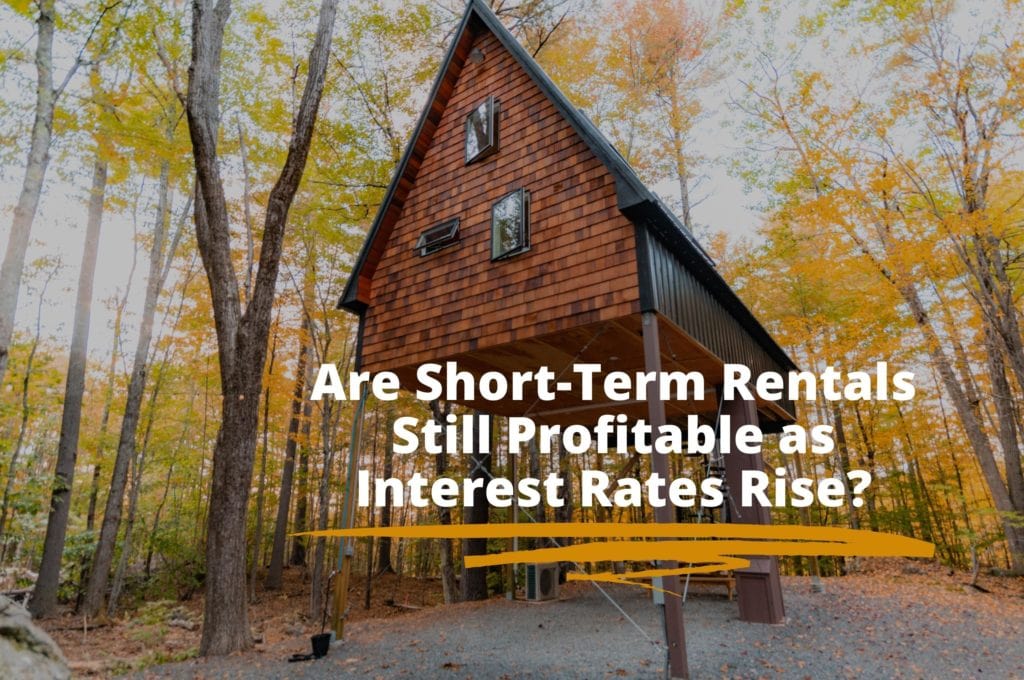
 

Help us reach new listeners on iTunes by leaving us a rating and review! It takes just 30 seconds. Thanks! We really appreciate it!


Source link

What to Do Before You Quit the High-Pay & Benefits of Corporate World Read More »

Here’s what you need to know about reverse mortgages

Here’s what you need to know about reverse mortgages


William_potter | Istock | Getty Images

With the stock market getting volatile but the housing market still hot, reverse mortgages have become a more attractive tool for older Americans who need cash for retirement but want to stay in their homes.

Home Equity Conversion Mortgage loan volume was up 26% in March, according to data from the U.S. Department of Housing and Urban Development reported by service provider Reverse Market Insight. It dropped 3.8% in April but remained well above 6,000 loans for the month — above the average in the last few years.

The economics of reverse mortgages are not as good as they used to be. In 2017, rule changes made by the U.S. Department of Housing and Urban Development, which administers the HECM program, increased the mortgage insurance premium on the loans to 2%, from 0.5%, with the aim of reducing potential losses to taxpayers. That increased the upfront costs of reverse mortgages by $1,500 per $100,000 mortgage face value.

The market conditions for reverse mortgages, however, are favorable.

More from Life Changes:

Here’s a look at other stories offering a financial angle on important lifetime milestones.

“This is still a great opportunity to consider a reverse mortgage,” said Wade Pfau, PhD, a principal and advisor with Tysons, Virginia-based McLean Asset Management. “There’s been a big increase in housing prices, and interest rates are still low historically speaking.”

Reverse mortgages have developed a strong following in the financial planning profession, with advisors like Pfau recommending them as a potentially useful option in retirement distribution management.

Home equity represents about 66% of the average retired American’s wealth, so using it as a potential source of funds if you’re strapped for cash makes sense — even if costs are higher now.

“Research in the financial planning profession consistently shows that reverse mortgages can improve retirement planning outcomes,” said Pfau, who has written a book about the products. “It helps to have another source of funds outside an investment portfolio that can provide a backstop for people.”

The idea is that even if you don’t need cash immediately, setting up a line of credit through a reverse mortgage on good terms can provide access to significant funds down the road. The line of credit will continue to grow at the rate of the reverse mortgage’s interest rate, regardless of what happens to the value of the home. In other words, a reverse mortgage hedges the risk of falling home prices.

If you have an investment portfolio, you can then decide to either sell investments or draw on the line of credit when you need cash. That may sound a bit like market timing, but Pfau suggests a simple rule to guide the decision.

“If your investments are worth more than when you retired, sell from the portfolio,” he said. “If not, draw from the reverse mortgage line of credit.”

Not all advisors are sold on reverse mortgages. Certified financial planner Howard Hook, a senior wealth advisor with EKS Associates in Princeton, New Jersey, has only spoken to two clients about the reverse mortgage option with one ultimately getting a loan.

Top pros and cons of reverse mortgages

Pros

  • With interest rates still relatively low and housing prices very high, borrowers can tap an average of close to 60% of their home equity on very good terms as either a lump sum, monthly payments or as a line of credit that carries interest only on withdrawals.
  • Reverse mortgages are non-recourse loans. As long as you pay property taxes and maintenance expenses, you can stay in the house as long as you like and the terms won’t change, regardless of the housing market or changes in prevailing interest rates. The loan is due when you die or leave the home.
  • A reverse mortgage line of credit provides flexibility in managing the distribution of retirement benefits. It allows a borrower to take tax-free withdrawals on the credit line rather than sell investments (and pay taxes) after a drop in the market.

Cons

  • It is easier to qualify for a reverse mortgage, but they are more costly than other mortgages and home equity lines of credit. If for health or any other reason, you don’t stay in the house for long, the costs will seem even higher.
  • If you use the proceeds of a reverse mortgage for questionable spending or risky investing, you’re setting yourself up for financial ruin. If it represents a last resort for funds, you are probably living an unsustainable lifestyle. “The better option is to downsize your home and reduce your spending,” said Hook of EKS Associates.
  • Homeowners are still required to pay property taxes, insurance and maintenance costs on the home. The lender could seize the property if you don’t.

 “I know a lot of reputable people like reverse mortgages, but I’m still hesitant to advise clients to consider them,” said Hook, though he agrees that the current economic environment is good for the product. “You have to be careful using debt to finance living expenses or to bridge a fall in the [stock] market.

“It’s easy money and it can foster bad habits.”

Hook believes reverse mortgages may be appropriate where borrowers need to pay off health-care expenses or a more expensive mortgage or personal debt and don’t want to sell investments. But the all-in cost and risk of the reverse mortgage is still high.

“Setting it up as a line of credit reduces the cost, but it’s still expensive,” said Hook. If you end up staying in the home for a short period, the costs will seem significantly higher.

“All the sudden, you may find you can’t climb the stairs, or you develop dementia,” he said. “Sometimes the decision to stay in a home isn’t up to you.”


Source link

Here’s what you need to know about reverse mortgages Read More »

3 Types of Real Estate Deals that Work in ANY Market Condition

3 Types of Real Estate Deals that Work in ANY Market Condition


Home flipping, wholesaling, and BRRRR-ing rental properties are all solid options in the real estate investing space. But, as most experienced investors know, different markets favor different strategies. In some markets, flipping outweighs the risk of renting out a property, while in others, something like the BRRRR strategy is a no-brainer. In 2022, after two years worth of wild appreciation and huge rent raises, which strategy is the best for investors?

We couldn’t have this sort of debate without our buy-and-hold expert, Henry Washington, our master house flipper, James Dainard, and our wholesale addict, Jamil Damji. Together, they each bring their own unique outlook on these strategies and give advice on which is the best to use for certain types of deals. Henry, James, and Jamil bring real-life deals to debate, and you’ll hear how experts analyze properties, even with just basic information.

If you’ve enjoyed listening to On The Market, we would love it if you gave us your feedback on the On The Market BiggerPockets Forums. Participate in our audience feedback survey or give us your take on the current housing market. Let us know what you think so we can keep making episodes that help you on your investing journey!

Dave:
What’s going on everyone? Welcome back to On The Market. Today, we have my friends, Henry Washington, James Dainard and Jamil Damji joining me for what is going to be a very fun episode. How are you all doing?

Henry:
Awesome.

James:
I’m doing great.

Jamil:
So good.

Henry:
We’re not doing as good as James because he’s in phenomenal temperatures and bragging about it, but.

Dave:
He looks so relaxed. He’s like Kathy. Yeah.

Henry:
Right?

Dave:
It’s that California lifestyle, just looking relaxed and healthy.

James:
Kathy is the most… She’s got the most peaceful vibe on her. She’s just a roamer.

Jamil:
Yes, that’s a nice life. Nice temperatures, nice life, Southern California.

Dave:
Today I know all three of you are excited to get into our due diligence section where we’re going to be going into deals that you all are actually thinking about or doing right now, which will be super fun. But before we do that, we’re going to go into between the headlines, talk about some of the latest news impacting the world of real estate investing.
And today we are going to play a new game called fortune tellers where you need to give me a 30 to 60 second reaction and prediction about what is going to happen given the information I give you. Everyone good?

Henry:
Let’s do it.

James:
Yap.

Jamil:
Yes sir.

Dave:
All right, sweet. So the first topic is about second home sales. I don’t know if you have been following this over the last couple of years, but at a certain point demand for second homes spike to 90% of pre-pandemic levels. So nearly doubling over the last couple of years. And all those gains have pretty much been reversed.
Redfin is now reporting that mortgage rate locks for second homes were up 9.1% from pre-pandemic level. So that was 90%. Now at 9.1%, basically back to where we were. Do you think this is going to impact the housing market? And do you think second home demand is ever going to spike like we just saw or was this a temporary blip? Jamil, what do you think?

Jamil:
I think it was a temporary blip. We all got trapped in our houses during the pandemic and we had these dreams and these ideas that, oh man, I want to live near James Dainard in Southern California, and I want that other lifestyle. I want to have options, right? And I think the pandemic gave us this idea that we all have options.
And so yes, there was a great demand, but with that demand, we have all of these situations that we’ve created from there. So I think that the spike in second home purchases was absolutely indicative of the time. And I think that there’s no chance of us getting back there again without another black swan event that pushes us there again.
And so personally I think that’s curved, but I still believe that just the general housing market with respect to rates and pricing, I think that’s also playing an effect. And so I don’t think we’re going to see it come back the way that we had it.

Dave:
Henry, what do you think?

Henry:
Man, I 100% agree. I mean, when you think about the pandemic changing everything, you were 100%, right? You no longer had to live where you worked, right? And so people got these grand… They got bored, and then they started thinking of these grand ideas of where they could live because they didn’t have to work there.
And then also you think about, you’ve got people who now had to live and work in the same space with their family members. And you saw a shift too in pre-pandemic. It was all about open concept and then pandemic hits and people are like, well walls and separation aren’t so bad, right?

Dave:
It’s so real.

Henry:
So people started looking for homes that fit their new lifestyle, right? So the second home spike was huge because people were well like, now I need a place that’s got more space because now I need a dedicated office space so I have to be working. I need to be away from my family in a room somewhere where I can get some peace and quiet or I can’t get my job done.
And the last thing that people wanted to do was lose their job in those unfortunate, uncertain times. And so yeah, that spiked second home and you just got people that got bored. They got bored and they wanted to feel good. They were scared and buying a new home kind of gave people that temporary, hey, this is exciting. I can be excited about something again.
And I think you saw a spike, but this is what everybody’s been saying, when are we going to return to normal? When are we going to get back to normal? Well, this is part of getting back to normal. We’re going to get back to the financial normal that was before, right?
So we’ve got, we’ll get back to second home price sales being down, we’ll get back to interest rates being where they were before that. All these things that people weren’t thinking about when they meant get back to normal is part of that too.

Dave:
Yeah, that’s a great point. James, I’m curious what you think in a broader sense, but also if you believe that this will impact pricing for short-term rentals, because a lot of second homes are in the same markets where people are targeting for short-term rentals. Curious what you think will happen there.

James:
I do think that that asset class is going to be the one that deflates the most or one of the most over the next six to 12 months. It reminded me and I was talking to somebody six months ago about this because these secondary home prices went through the roof in areas that do not typically appreciate that quick.
And they were appreciating probably 10 times as fast as they’re typically done. And, it reminded me of 2007 because it was the same type of concept. In Washington, we had this place called Suncadia. It’s a nice golf course community. People live there, they rent it out. It’s amazing. I had a BRB there myself, but I remember it inflated at almost the same rate as what it was doing right now.
And those secondary markets are the ones that popped the worst too. And so as the demand goes down, I do think that there’s going to be a good 10 to 15% deflation in that market. In 2008, we saw a 40% drop in those asset classes. That was a different thing. It was a totally different type of banking crisis. But as we see things come down, yes, people’s novelty of them do wear off.
They’re going to start selling them and then as people start to get a little worried about inflation, the secondary market, I do think that the VRBO market could slow down as well as liquidity dries up and an inflation starts really eroding people’s access to capital. The first thing that goes is vacations, going places and traveling.
And so I do think that the secondary home market, the Airbnb investor market it’s going to have a little bit of trouble over the next four to six months as it kind of normalizes out. But it’s what comes up must come down and the ones that hockey stick the most, those are the ones that are going to probably come down the quickest.
And if you really look at the secondary hallmark right now, as inflation’s eating up people’s expenses, you don’t want to go buy another house to service if you’re not going to rent it out. And in addition to when you factor in the new rates that are 30% higher than they were four months ago, it really affects your monthly payment to where it just doesn’t become worth it. And if it’s not worth it, things don’t trade.
So that’s where I think things are going to really settle down and come backwards. And and if you are looking for a secondary home, you’re probably going to be able to get one in the near future.

Dave:
That’s a great point, James. And one thing I’ve been reading about that I think was really interesting in this Redfin article is the authors were speculating that a big reason this is dropping off as well is due to the stock market just tanking.
There’s just so many people who had a lot of cash and just a lot of excess money to spend on a second home because of the stock market now that it’s down 20% of the year or whatever it is as the time of this recording. That until the stock market goes back up again, which could be a while, probably not going to see that demand go up.
All right, for our second headline today we’re only going to do two today. I want to talk about the lock-in effect, which if you haven’t heard already is this idea that because interest rates were so low for so long that so many home buyers and homeowners have locked in rates that are ultra low. And we may not see again for a while.
We might not ever see again in our entire lives. Just to bring some context to this, for years, we were seeing mortgage interest rates at 3%. At some point in January of 2021, it actually went as low as 2.7% for a 30-year fixed rate mortgage. Now it’s at about 5.3 at the time of this recording. And the idea here is that why would you sell?
If you were a homeowner right now, why would you sell your house so that you can enter an ultra competitive market with high prices only to pay more interest on your loan? And that makes sense to me, but the implication here is that inventory could remain down and that could help continue to provide upward pressure on housing prices over the next few years.
So Henry let’s start with you, get your crystal ball out. What do you think is going to happen? Are people going to stop selling in large numbers and is the lock-in effect going to be a real phenomenon over the next few years?

Henry:
Oh man, of course you made me go first so I can say I’m the jerk face. Here’s my general thoughts, right? Yes, people are going to be comfortable with those lower interest rates, especially right now. They’re thinking, I don’t know how high these interest rates are going to go. I’m going to stay put where I’m at.
And all that sounds good now because they just locked in their new interest rate six months ago, a year ago, a year and a half ago. But people don’t typically sell homes as a financial decision. It’s more of an emotional decision, right? They are selling for a particular reason. Maybe their family’s expanded. Maybe they’ve got a new job and they’re making more money. Maybe they are downsizing and want a smaller home.
Maybe they need to move closer to family. People sell their primary residences for more situational or emotional reasons. And does that mean interest rates or what it’s going to cost you doesn’t play? Of course it plays into it, but it’s not the only factor that they’re considering. And a lot of the times we know people see motions overrule the best financial decision point most of the time. And so will the lock-in effect slow down inventory?
Yeah, I think so. I think there are some savvy homeowners out there who are just going to say, hey, it’s better for me to stay put because their lifestyle or their family situation will allow them to continue to stay where they are. And I think the ones that whose lifestyle or family situation changes, they’re still going to look to buy.
I mean, as long as interest rates aren’t 15% or something like that where it just doesn’t… You literally can’t do it. But I think if people have the financial ability to do it, their situations are probably going to dictate that they do it and they want to.
It feels good to buy a new home. It feels good to upgrade your lifestyle. And most people are… There’s tons of people who just aren’t thinking financially for this decision. It’s just not that important to them if they can afford it.

Dave:
All right. James, what do you think? Do you think this is going to have an impact on prices in the housing market? Or is this just going to impact a small number of people?

James:
I think there’s always going to be a section of the population that it’s going to really impact or to where they’re going to be fixated on the rate cost. I mean, I talk to investors all the time. They’re always pricing the rate, because they’re going after rate first like, how do I get the cheapest rate?
And so there is that mindset where I think people are going to lock-in. They can’t see past anything else, but their rate and their uncomfortable payment and they’re not going to be selling. But I do think that investors and people and just the… Or especially Americans, they live in the now.
So it’s always right now, it seems expensive on the money, but it’s going to get normalized in the next six to 12 months. And the more normal it is, people are just going to say, well, I’m going to go do those things now. I’m going to have to refi, even though my rate’s going up. For the next six to 12 months, I think people are going to not be wanting to move around.
But as it gets more normal, as rates seem they stay where they should be, that people are just going to go for it or just going to get used to it. One thing I do think is that a lot of people locked in low rates. They have a lot of equity position.
And if we move into some sort of recession, which it looks like we might be doing, and then with the inflation factor eating up people’s extra income, I do think there’s going to be a boom of cash out refis to where people all of a sudden that’s going to become the norm.

Dave:
Because they need it, because they need the cash rather than because the rate is attractive.

James:
Yeah, I do think that the general public has gotten used to spending money the last 24 months, or at least a portion of it. Not everybody, but people that are buying homes and they’ve had access to money. They’ve seen their equity positions explode over the last 12 to 24 months.
At some point though, as inflation’s getting to 10% in the market, things are getting more expensive. We got these Ukraine… We got these conflicts overseas and we’re going to be going into… As a recession rolls in that could be less paying jobs. There’s other things that are going to eat up people’s disposable income.
And I do think because people do live in the now, they want to keep going with that disposable income and they’re going to be fixated on that rate until they’re not. And they’re just going to say, hey, look, now I’m going to go tap into my good purchase and do refi it out. In addition to people, also bought homes and they went to go build them out and design them themselves.
They traded a house that they lived in for a long time. They got a new property, they got a bigger one and their bids are coming back at record high numbers. And they thought they were making the right trade, but now they don’t have the liquidity to finish the rehab.
So I think there is going to be a little bit of a reset where people are going to have to pull out cash out. And so I do think people are going to do what they have to do. If they can keep their low rate, they will. And if they can’t, then people get used to paying a higher rate.

Dave:
That’s a really good point. Living in the now is a very good way to describe how people spend their money. All right, Jamil before we move on to our deal analysis, part of the show, what is the last word on the lock-in effect?

Jamil:
I 100% percent agree with a blend of both of what these guys are saying. I think what James really nailed there was just how short-term our memory can get with respect to what’s happening in life. Because look, everybody’s talking about, oh my God, these rates are so high. These rates are so high is because we’ve all forgotten.
We’ve all forgotten that 5% mortgage rates or 6% was normal. And then we got used to this two, 3% for a little while, and we’re like, oh my God, that’s where it needs to be. But our brains will reset, and just like James said, we’ll be in the now and we’ll say, yeah, five is normal, 6% is normal. This is totally okay. We’ll forget about the two and 3% mortgages.
We’re going to forget about that. It’s just going to take a little bit of time, and then people are going to move along in a life. And Henry was talking about, situations are going to continue to persist. Life will happen. And no matter how much we want to pretend that we all love to make these really smart and strong financial decisions for ourselves and our families, when it’s time to buy some jet skis, we get jet skis. That’s what’s up. And so I think…

Dave:
It sounds like you’re speaking from experience here Jamil.

Jamil:
I don’t jet ski, but I’m.

Henry:
You ever seen a sad guy on a jet ski?

James:
It’s not possible. It’s a smile factor.

Dave:
You can’t be sad on a jet ski. Well, alright, so all three of you are selling the idea of the lock-in effect. I actually think it is going to play a role until the market gets less competitive because why would you enter this market? Why would you sell only to face more bids? But we’re already seeing the market get less competitive.
So I think it will sort of be this trade off. As the market gets less competitive, people will be more willing to sell and get back into it. With that, we are going to move on to our next section where Jamil, James and Henry are all going to share a deal. I know that they’re all chomping at the bit to talk about deals and actually get into the numbers.
This is going to be a lot of fun, but first we’ll take a quick break. We’ll be right back after this. All right, we are back to this episode of On The Market and we are going to do, I think this is the first time maybe in BiggerPocketss Podcast history we are going to break down some actual deals in real time. And we were all chatting before this.
And I know there’s some contentious undertones behind some of these deals. So I just want to get started with Jamil first because he’s got a deal and I think Henry’s going to rip him apart. So let’s just start with this deal. Jamil, tell us what you got.

Jamil:
So to give everybody a little bit of backstory on me, if you don’t know I’m a wholesaler and it’s in my DNA. And so I haven’t held a lot of property. I’m constantly trading. I’m trading, trading, trading, trading, trading. Look at Henry’s already disappointed in me. I haven’t really held anything.
I hold a beach house in California and my home, personal home. And other than that, I trade everything. That’s just what I do. It became really clear to me how much of a mistake that was when just for my last tax bill was just over $800,000, okay? And so my lifestyle has absolutely changed over the last few years.
Success has come our way and I’m super grateful for it. And I’m looking at my best friend and co-star on our TV show who is doing a tremendous amount of business as well. And he got a refund. He got a $3,200 refund and meanwhile, I’m paying $800,000 plus in taxes. And it’s sad, right? It’s sad to me that that’s the differences in our lives because I’ve been so inefficient with respect to how I’m approaching life.
So what I’ve done is I decided I came across this deal and I don’t know if we can pull it up on the screen, if not, I’ll just kind of give us the deal points. This is a multi-family acquisition in the Arcadian neighborhood of Arizona. That’s 85018.

Dave:
Is that near Phoenix.

Jamil:
In Phoenix, correct.

James:
That’s where everyone wants to live right now, right?

Jamil:
Correct. So this is the neighborhood that I live in. In fact, this building is around the corner from my house. I can walk there in 30 seconds. It’s a 53 unit multi-family all one bed, one bath. To give you an idea of the neighborhood, the annual household income, the average annual household income for this Arcadia area is $122,000.
Whereas in Phoenix, the average is about $72,000. So gives you an idea of the demographic that lives in the neighborhood. The median home sales price as of April was $1.7 million. And in comparison to Phoenix, the median sales price is $515,000. So this neighborhood is incredible. Now let me tell you about the deal. So the acquisition cost of the deal is $12.5 million. That’s $235,000 a door.
Looking at the comparables of what is traded in the neighborhood with the same sweet mix, with the same sort of parameters, we have an as is value of around 280 a door without any repositioning. This is a group that owns it right now. They’re out of Canada. And for whatever reasons they are deciding to liquidate.
They had started a renovation. They actually renovated 46 of the 53 units and they renovated them to incredible standards, beautiful, beautifully modern. They’re incredible. Seven of the units are left to remodel. Currently the gross monthly rent is around $63,600. And the units are renting at about $1,200 a month.
Rents can increase to $1,700 a month and that’s conservatively based on the style, the neighborhood and the type of unit that we’ve got. So there’s a large gap in a reposition there. Now, here’s where my problems run. We can take this building down. It’s going to require us to come out of pocket around $2.5 million for the down payment. And we’re looking at a debt service of around $60,000 a month.
So cash flow, as it sits right now is negative or flat. There’s not a lot of income to be made right now without a reposition. But if we renovate the last seven units and re reposition the building, increase the rents to $1,700, we’re looking at roughly $18,000 a month in net income after you adjust for expenses and vacancy.
So we’re looking at a total value once we reposition the building of around $17.5 million. So there’s a gain of around $5 million to be made. On top of that, if I look at and do a cost segregation study on the building, I can save roughly $2 million in taxes. So when I look at this, I can put $2.5 million down to acquire the building.
That’s going to save me $2 million in tax liability. Or I can take the exit strategy that I’m good at and know, and I actually have a contract right now. I have a buyer for the building right now at $15 million. So I can make a $2.5 million assignment fee, would be the biggest assignment fee I’ve ever made, add to my tax liability.
Or I can take the building down and do the right thing, which is, I know what Henry wants me to do. Take the building down depreciate, save money on taxes and create cashflow. So this is the deal. The risks that I see the current rental market could turn. We might see some… Our projections could be off with respect to how much rent’s escalated.
I don’t think so, but it’s possible. We could run into some issues with project management, because this would be a deal that I really don’t have a lot of experience in doing. And so we could mismanage it and we could totally fumble the ball, and ruin that just because of our lives and how busy we are.
So that’s kind of what I’m playing with. Do I take the $2.5 million right now, add to my tax liability and do what I do as a wholesaler? Or do I take the building down, save money in taxes and create cashflow?

James:
Well, my first question is, do you have the 2.5 to buy?

Jamil:
Yes.

James:
Or do you have to raise money and, and give out the equity on the deal? So it’s 100% owned by you?

Jamil:
I will bring in Pace Morby as my business partner on the deal. He’ll acquire it with me. So each of us would be coming in with 1.25.

James:
1.25, and then it’s a 50/50 split on that deal.

Jamil:
Correct.

Henry:
I will give you $1000 for 1% of the deal.

James:
So on this deal, you’re looking at a tax savings of a million in-

Jamil:
Each, correct.

James:
Yeah, a million each on that deal. So basically you’re coming up with 1.25, and you get $1 million tax savings, which is, or off the top, which is going to save you, what? In your bracket, if you’re hitting 800 grand, it’s going to save you 400 grand right away on year one.

Jamil:
Correct.

James:
Or not year one, but it’s going to pop back. One of my biggest questions would be, if these things are all renovated, why is the performance 25% higher than what it’s at right now? If they’re an investment company that stabilize it, they renovated to the highest and best used. Why they’re so far below market?
And do you think that has anything to do with Arcadia being a family neighborhood and one bed, one bath won’t trade well in that kind of climate?

Jamil:
Well, they’re 100% occupied and again, looking at just the rent comparables, 1700 is actually pretty conservative for a one bed, one bath in the neighborhood. You’re absolutely right, it is a family neighborhood. And so there’s less demand for that type of unit. That’s the hands down real thing, but the schools are better here.
There’s still a lot of the population here that’s servicing the people that live in the neighborhood, there householders here. And so I think that just having access to that type of product isn’t needed for the neighborhood, because you can just check, see by the vacancies there’s a demand for it. Now, why are they so underperforming?
That’s a great question, and I think a lot of the rent escalation that’s happened over the last 12 months is a reason for it. I think at the time when they had increased to $1,200 a month, that that was a deal at the time. But I think that they thought that that was the highest that they were at.
And now with where rents have gone, and again, we’re banking on rent staying where they’ve spiked to, right? And so I think that’s the juggling act that we’re in right now, because if for whatever reason rents go down, we’re in trouble.

Dave:
But how much trouble? If rents went downtown 10%, how long would it take for that 10% decline in cashflow to eat away at the $1 million in tax savings?

Jamil:
You’re absolutely right.

Henry:
I agree, and that was my exact thought. You think about what you’re getting in savings from taxes versus what you’re having to put down versus the cashflow you’re going to create by finishing the renovation and putting all the units at market rents. All that’s great. Rents typically don’t go down, Jamil. I mean, does it mean they can’t?
No, absolutely not. Sure, something could happen when they do, but the benefits of this property for you are on the tax side more so than they are on the cashflow side, and you are going to get the appreciation from this property as you continue to hold it. And the thing that I think is great… So I love one bed, one bath units.
I love one bed, one bath units in neighborhoods that are super desirable and family neighborhoods because it gives a subset of people who want to live in that super cool part of town who can’t afford a house a way in. A way to say, this is where I live.
I live in this neighborhood. And so I think you just tweak a little bit of your marketing and you’ll have more people wanting to live there than what to do with. Because being able to get a one bed, one bath in a neighborhood where it costs 1.5 to buy a house on the average is impossible to find, right?
And so I think you’re always going to have demand because even if rents go down, it sounds like in this area, your rents aren’t going to decline as much as maybe Phoenix, Metro might decline, right?

Jamil:
Correct.

Henry:
And so this is… I mean, I’m a buy and hold guy. So for me, this is a no brainer, right? You buy that.

Jamil:
So you’d hold this all day and you would forego the $2.5 million quick assignment fee that as a wholesaler, I want to take?

Henry:
Yap.

Dave:
I want both.

James:
So do you get 100% of the 2.5 or are you 50/50 on that too?

Jamil:
It would be 50/50 because I brought Pace into the deal. I needed his money before I even… I’m $250,000 non-refundable on my EMD.

James:
Yeah. So on that scenario, that’s 1.25. So you’re walking with 650 grand after taxes. And so it’s really if you’re picking up $5 million in equity, if your numbers are right and you’re picking up that upside right there day one on the buy-in margin and then you get up there, you’re picking up three to four million in wealth, plus picking up a million and two in tax savings all for 600 grand. And so do the math on that, you’re 3X in your money at that point, but you have to wait. And so…

Henry:
You can always exit, Jamil. Somebody will always buy this deal because of the desirability of the neighborhood and frankly, the desirability of the units. My one bed, one baths are my best performing units. I can’t rent them fast enough when they’re vacant and people stay forever. I love them.

Jamil:
There’s also a play where we take a portion of the building and we turn them into short-term rentals because it is a resort style building. We got a beautiful pool. There’s a fitness center. I mean, it’s an incredible property. It’s an incredible property.

Dave:
Do it. Hold it.

Henry:
Hold it.

Jamil:
Hold it.

Henry:
Hold it.

Dave:
All right. Is everyone voting hold? I don’t know, I guess we’re turning this into a voting show, but I say hold it Henry’s obviously hold it. James?

James:
I think honestly it’s a no brainer to hold it. You’re 3X in by keeping it right away. Just keep it.

Jamil:
Keep it, okay. Thank you guys. Every bit of me is like, you’re so dumb Jamil. There’s $2.5 million, there’s $1.125 million that you’re going to have to pay taxes on it, but it’s still like, come on.

Dave:
I mean, it’s very tempting, but-

Jamil:
It’s so tempting.

Dave:
We’re here for you Jamil. This is-

Henry:
I’ll be your support group for sure. I’ll be your accountability partner.

Jamil:
James, should I go raise my portion of cash that I require to get into this deal, bring in an equity partner, not be into it for cash at all and just have this as a depreciation play?

James:
I mean, that’s what some people do. You can get the best of both worlds. You could package that deal up, charge an assignment fee to the deal most indicators do. So you can still get your wholesale fee, give out a portion of the equity. Typically, it’s going to be, you’re giving out 70% of the ownership of that building.
Keep the 30, so you can get the best of both worlds, get your assignment fee, keep 30% ownership. You can continue to get fees by managing that project with Pace, and then all of a sudden you’re still making your income and getting the ownership. Plus you’ll get 30% of the cost side depreciation over the tax return. So there is the middle answer of do both.

Henry:
Yeah, I think that’s awesome for someone not in your financial position. I think you can afford to do this on your own and you need to do it based on what you just told us. You pay taxes. Might want to keep this one for yourself.

Jamil:
Thank you guys. I appreciate the advice.

Dave:
All right, we’re going to have to come back to this and see how you’re doing, make sure you’re not just going to sell it randomly one day.

Jamil:
July 11th is my close date. So the audience, hold me accountable, ask me the questions. Henry, James, Dave ask me the questions. July 11th is the day. I’m either going to be walking away with my assignment fee or I’m going to be walking away with a building. We’ll see what happens.

Dave:
All right.

Jamil:
Or maybe both.

Dave:
Okay. With that, let’s move on to Henry’s deal. Henry, I’m sure it’s going to be a buy and hold after this. Tell us what you’ve got.

Henry:
It’s a similar situation too. So yeah, let’s talk about it. The numbers aren’t as amazing as Jamil’s, but this is just one unit. So I’ve got a deal. It’s a three bed, one bath single family home in Bentonville, Arkansas in a very desirable neighborhood of Bentonville, Arkansas, right?
And so purchase prices 225,000. Now this area of town is a really, really highly desirable area because of a couple of things. It’s near downtown Bentonville, which is where people want to live in the Bentonville area. There’s so much money being poured into there. There’s museums that have gone up, walking trails.
It is where people in Bentonville want to live, hang out, party, socialize shop. And then it’s maybe a two to three minute walk away from where Walmart is building their brand new state of the art home office complex. And so they are building this complex to compete with the Amazons and the Apples for the talent that they need to hire to keep Walmart relevant.
And so it’s supposed to be this phenomenal state of the art, and they’ve already started construction. And so the purchase price is inflated because of the neighborhood. Typically, if I were going to buy a three bed, one bath 1100 square foot home that was built in the 60s in any other part of Northwest Arkansas, I would probably pay no more than a 100 grand, right?
Maybe 120 grand, but we’re paying 225 for this one because the ARV on the property, because of where it is. They just built a brand new private school. They call it [inaudible 00:33:38] school. You can throw a rock and hit it from the front yard of this place. And so, because people are going to want, wealthy people are going to want their kids to go to this school, right? They’re going to be looking for properties that are closer to these areas.
And that makes it a great Airbnb location too. So the ARV on this property is 550,000, right? And so we’re buying it at 225 and to renovate it to the nines, which is what we would need to do to get that 550. We’re going to have to put 70 to 80 into it. And then we can exit that thing for 550, which puts my potential profits after commissions and fees above 200,000, which is phenomenal for a single family flip-

Dave:
Off 225,000.

Henry:
… In Arkansas, right?

Dave:
So you’re almost doubling your money.

Henry:
Yeah, absolutely. So phenomenal flip, right? But I love the location. And so I have more than one exit. And so I can look at, hey, do I whole tail this thing? Which is just sell it in the current condition that it’s in. And the market says, I can probably get around 310 for that. And I could probably stick that thing on the market and have that money in my pocket in 30 to 45 days.
And that’s about a 60 grand profit to do almost nothing. Clean it up, make some minor repairs, make sure that it’ll pass an FHA or a conventional inspection, right? And that’s about a 60K profit. So I can get 60K quick or I can make sub two or above 200 in four to five months, would be what I would think it would take me to get this done or we can rent it, which is what I would normally do.
But when you look at rents right now, I think I could only get about two grand a month for this thing. And so when you’re buying at 225 and then you’re putting… And now if I rented out I wouldn’t have to put as much into it, but I’d still have to put 30 to 40 into it, right? And so I’d be sub 250, 260, 270 and renting it for 2000. That’s negative cashflow, but I would get off.

Jamil:
What about short-term? What would you get on the short-term rental?

Henry:
Short-term rental, I’d have to put more into it, 70K probably, but I could get four to five grand a month.

Dave:
Before we get into this, can I just ask you Henry? How’d you find this deal?

Henry:
That’s phenomenal question. So I found this deal through direct mail. So this was a direct mail marketing driving for dollar. So I have people, I’ve got about two people who consistently drive for me. So they go out and they identify distressed properties. And then I send those people direct mail. And then I also cold call. I have a cold caller that cold calls this list.
So this was one I’d been sending mail to for a while and didn’t get much of a response. Had a cold caller call him and then boom got them on the phone, and it was just timing. They were just ready to sell. It’s funny. I went to go look at the house. So they called me and they were like, hey, we want to get out of this thing. We’ve had a tenant in there.
She’s not paying rent, and we just want to sell it with them in there and be done with it. And I went to go look at it and it was the first time they’d been in the house in over a year. And so I’m walking the house kind of with them and they’re seeing the same things I’m seeing.
They hadn’t seen it over a year. I literally walk in the bathroom and the floor is having so much water issues that they had covered up with rugs that I literally fell right through the floor.

Dave:
Oh my God, just stepped through the floor.

Henry:
Yes, stepped right through the floor.

Dave:
Wow, that’s ridiculous.

James:
I’ve also fallen through the floor. It’s a sign of a good deal. If you fall through the floor, buy it now.

Henry:
I was like, good timing, because they’re… My price just went down when I went through the floor and they had no idea there was a problem there.

James:
I might need to get an engineer up here.

Henry:
Right, absolutely.

Dave:
So you found it driving for dollars, which is great for anyone listening to this. Obviously that works. So I know a lot of people who say they can’t get deals. This is obviously a good example. How would you finance the 225?

Henry:
Yeah, so we’re going to use a small local bank to finance the deal and they are going to finance it at 70% of the appraised value. And so as long as it apprai… Whatever it appraises for, they’ll loan me up to 70%. So as long as what I need to purchase and renovate that property.
So the 225 plus the 80, if that is under 70% of that appraise value, then I won’t have to bring anything to the table. The lower that appraisal comes back, the more money I’ll have to put in.

James:
And so Henry, what is your plan with this property? I mean, because the math hits on a lot of different ways. It obviously cash flows well on the short-term, but not so well on the long-term. Unfortunately about 90 days ago, it actually probably would’ve broke even.

Henry:
Right.

James:
With rates.

Henry:
Absolutely.

James:
I was playing with all the rates yesterday and I was like, man, this is brutal. So now you’re at a point where you’re not. So are you planning on keeping this? I mean, I know what I would do with it, but…

Henry:
Yeah, I love the location. And just like I said to Jamil, I can always sell this because this new home office complex at Walmart’s building is coming and there’s a higher chance that that increases values than it does decrease the values. I don’t think this is an area that becomes any less desirable any time soon.
So I’m willing to bank on the fact that it’s going to go up. And so my initial reaction is I’m going to keep it as a short-term rental. And if I make cashflow every month, that’s awesome. And if I don’t and I break even, I’m okay with that too for now. Because once they finish building what they’re building and as that area continues to appreciate.
It’ll be a cashflow monster on the Airbnb side. And if it decides it’s not, then I can sell it at a different point and still make a phenomenal profit. I’m entering it pretty well for what the ARV is.

Dave:
Can I ask Henry, do you have enough deal flow that if you flipped it, you would be able to reallocate that money into a good cash, other cashing assets that have a better cash on cash return than this one?

Henry:
Yeah, I do. I’ve got other deals that I could flip it into. But I honestly, if I sold this, it’d be one I’d want a 1031 into something. And I like the idea of 10301s, but I think if you don’t have something lined up that’s a good deal to 1031 into, a lot of people sometimes end up buying an okay or not so great deal just because they have to 1031.
And then was it really that much better than paying the taxes? Sometimes it is, sometimes it isn’t. And so if I had something lined up perfectly that was going to be a better cash flowing machine then I might consider doing that. I don’t have anything in the pipeline for that right now. I could probably go get something. What would you do, James?

James:
So my vote… I mean, honestly, I’m a guy that sells that deal. I like the… Path of progress is a great thing. You know what’s coming in there, but if I’m losing six to seven grand a month on that property in negative cashflow, I’m going to claim the equity and reposition that profit into some other deal, or like what you said, keep it as a, I call those equity earner properties or equity in my portfolio growers, where I keep that deal for one year, I take the short-term pain.
I limp along on that property for a 12-month period. And then I 1031 it into something else. Because then you can take that huge equity spread, defer the taxes and pick up some major cashflow or trade into that same exact neighborhood with your equity position and actually get it to be cash flowing. So you’re kind of moving things around.
But right now with things the way they’re going, I just don’t buy appreciation. And so for me if I’m losing money on this deal, which you’re probably negative, what? Five, 600 bucks a month on that, two grand a month on the rental, I don’t like the liability.

Henry:
I absolutely would not long-term rent it. I would short-term rent it.

Jamil:
And that’s assuming that short-term rentals stay as robust as they are. I mean, James had a great point at the beginning of the episode that we may see some pain in the short-term rental market in the coming while. And so that could be something that could become a factor for you, Henry.
For me my vote on this would be the same as James. In fact, I wouldn’t even do the renovation on this thing. I would take your first approach. I’d whole tail that thing, I’d make the 60 grand and I’d move into the next deal.

Henry:
I knew both of you would say those things.

Dave:
I’m tempted because I also am primarily buy and hold investor, but I agree that I’m worried about the short-term rental market. I only have one, but I’m seeing bookings seriously down from last year, and I know several other short-term rental investors who are experiencing the same thing.
These are A class properties in good neighborhoods that are seeing declines in bookings. And I think we haven’t even hit a recession. So I’m personally a little concerned about that. I’ve never flipped a house in my life. So I’m being a total hypocrite here, but I would say flip it.

James:
Oh, one thing I will say is hotels just skyrocketed the last 60 days. I went to book for work out and they’re two and a half times what they were for the last 12 months. So I mean, that could protect the Airbnb a little bit, but yeah, they stepped on their pricing for sure. And these are not areas that I’m going to that people want to travel to. It’s just a work destination, but they’re expensive.

Henry:
What I didn’t get into with this market that’s kind of aiding my decision is that Bentonville is a phenomenal Airbnb market because this is such a tourist destination for outdoor sports. It’s the mountain biking capital of the world. It’s got the Walmarts, the JB Hunts, the Tyson Foods, all headquartered here bringing people to come here to work and stay short-term.
And so you have a lot of people coming here to visit and you don’t have nice hotels here. There’s maybe two to three really nice hotels in the area, and then everything else is extended stays and LaQuintas, and people don’t want those when there’s nice Airbnbs. And still there’s not a ton of Airbnbs and they go quick. So it’s a really unique market for short-term rentals.
And so yeah, absolutely, I know I am picking the riskier strategy and I don’t want to encourage everyone to take the riskiest strategy when you’re doing something like this. I have a portfolio that will help me stay insulated if things turn. So I can choose to be a little riskier when the location, location, location factor is good.
So don’t take me making this decision, new people, as you taking the riskiest option or the riskiest exit strategy on a deal. I have the benefit of being able to do that because I have a portfolio that will hold me up if something goes awry, but I’m also willing to bank on A, the location and B, what’s coming so that I can continue to cashflow this thing big time in the long-term.
And at the end of the day, if in 12 months, 24 months, I look at this thing and I want out, I know I can get out of it pretty well.

Dave:
All right, you convinced me Henry. I’m on team short-term rental now. It’s just my instinct. I mean, there’s just only so many opportunities that be close to a slam dunk economic engine, right?

Henry:
Yeah, absolutely.

Dave:
If you could pick being in Silicon Valley or any of these giant things back in the day-

Henry:
That’s what I’ve been telling people.

Dave:
… Walmart is not going anywhere. And Walmart in a recession is going to do better, I want it.

Henry:
Going to do better.

Dave:
Hotel this to me, Henry.

Henry:
What I tell… Go today, James, Jamil, anybody listening go today and look at home prices in and around Microsoft’s home office. Go look at home prices in and around Amazon’s home office. Go look at home right around, literally less than a mile away from it. Go look at what they’re selling for compared to anything else in that area.

James:
But how much is the 550 ARV? How much is that up from 18 months ago?

Henry:
Not a ton. That’s a phenomenal question.

James:
There we go. Well, then the upside could be then Henry, I’m not totally against your idea. I’m not a short-term rental guy, man. That thing is painful for me. I don’t know why.

Henry:
I’ll just give it to somebody else to manage it.

James:
You’ve got to have a certain thickness of skin.

Henry:
I don’t manage it. Absolutely not.

Dave:
All right, well, speaking of Microsoft’s headquarters, let’s move to Pacific Northwest over here with James. Tell us about your deal.

James:
Yeah, Henry got me with the Microsoft’s. That all of a sudden I started thinking about it. Hey, so we found a deal. We have deals in all different types of price ranged up at the Pacific Northwest. Sometimes we’re spending $2 million to buy it. Sometimes it’s much cheaper depending on what you’re looking to get.
So this is a deal that we sourced off market. We actually hired a call room called Call Magic. And so we pound the phones on landlords that maybe want to trade out. So this guy had owned the property for a long time and it was a good time for him to sell it. What it is, is a three bed, one bath, 1,250 square foot house in Tacoma, Washington, which is about 35 minutes out of Seattle, 40 minutes out, sub market that’s been appreciating at a pretty high rate.
And in addition to, it’s got a 450 square foot unfinished basement on the house. So right around, it’s going to be roughly around 18, 1900 square foot fully finished. The reason I like this deal all the way around is because the purchase price is actually $285,000.
The reason I like that is this is going to be a recession proof deal. So there’s multiple exit strategies on this. And so as we’re looking at this, we can look at three different options. The first option is we just renovate the upstairs, 1200 square feet. We put 70,000 in and we sell it for sure at 469.
We have comparables that are actually at 475 to 485, but because of what we’re going into with the rates adjusting up, we actually kind of tick that back down 5%. So at the 4 69, we already baked in the cushion on the resale. Or we can put in 90 to 100,000 into the renovation, finish the basement, add another bathroom and then the value’s going to be at 499 to 535.
We have three comps at 535, but again, we kind of backed down our comp to 499 to adjust for the interest rate hikes because all those comps were from February, March, and April, which the market was a little bit hotter then. So what we’re looking at on the two flips is we’re looking at we can make about 50,000 on the first way, the cosmetic, which we can probably get in and out in four to five months which is going to be about a 50% cash on cash return.
Or we can do the larger renovation, which is going to take about seven months and we’re going to profit out about 60,000 with a little bit of upside to where we’re going to get about 55 to 60% cash on cash return in the next six months. Or the third option is we can do a bur on this one. And the reason it’s going to work as a burs is hitting all the different metrics.
We’re getting that equity position. We’re buying it cheap enough to where we’re at 285 to max out the rents on this. We’re not going to have to finish out the whole basement as well. So we can do a quick renovation, put a renter in there. It will rent for $2,500 a month. We have four different rental comps. One’s at 2,800. So there’s a little bit of upside still left in the deal as well.
And then we’re going to be able to cashflow that deal about 150 bucks a month after we renovate it. We purchase it with hard money, refi it into a new conforming loan. We’re going to leave about 15,000 to the deal, cashflow about $150 a month, which isn’t that much, but we’re picking up $100,000 equity position.
So the reason I like this deal all the way around is I look at when I’m looking into transitioning markets or any kind of recession type of market that we might be going into, right? Stock markets, it now is a bear market rather than a bull. We can do this deal any which way. And we ran our numbers at our rental. The cashflows at $150 a month at 6.5% rate.
If the rate settled down, it drops down to 5.0, we can actually increase our cashflow to almost 250 to 300 a month and keep that equity position. So typically with single family houses, we own a lot of different apartment buildings, a lot of different… We go with larger rental properties typically, but I call this my portfolio builder type of purchase where you can buy this.
You can leave very, very little money in the deal, refi it, keep it for one year. And then I’m planning on trading that out in one year and then reloading that into a two to four unit at that point with the $100,000 gain. Just because the tax hit on the first two flips just isn’t going to be that big of a benefit to me.

Dave:
Can you tell us a little bit more about Tacoma? I don’t know anything about it. What’s the big economic engine around that area and what kind of neighborhood is this in?

James:
So Tacoma’s got a lot of ports. The one big thing that’s driving is the transit, has been drastically improved over the last two years and is continuing to grow. So they have a big train transit station going into all the different neighborhoods of Tacoma, especially North Tacoma. I bought a 12 unit right next to that as well.
I like to go where the path of progress is just like Henry was saying. He likes the areas where he knows there’s growth. Transit’s helping with the growth to get people to Seattle. It’s about 40 minutes out. It’s kind of like a hipster city where it has a similar vibe to Seattle, but a little bit more settled down.
I would say that the job growth is still developing down there. Most of people do commute quite a bit to Seattle. The transit is helping. That’s what surged it recently. And then the affordability factor of people getting just burned out on the expensiveness of Seattle is they move to Tacoma. They can get the similar vibe. They got a similar feel.
They kind of like this more quiet in general down there, but they’re paying 75% less. So people are going where the affordability is. There is some things in the works right now like in the… It is a port city. So there’s more import export going on in there.
Tesla, from what I hear is looking at opening up some warehouse space. So there is some anchor businesses starting to come in through that area just for affordability reasons.

Henry:
Yeah, man, well, you’re speaking my language as far as the rental numbers go. So for sure, I like that. I’d actually do something a little different with this one, is I would do everything you said on the rental side, except I wouldn’t cash out refit. I’d HeLOCK it. And I wouldn’t sell my equity.
So I’d take a HeLOCK out on that, equity on that 100,00 get about 85 of it on a HeLOCK and then leverage that to buy something else if I needed it before then. Because if I’m in a cash position where I don’t need to sell or to refi something to take the money, then I won’t, because your interest is front loaded on a new loan, right?
And so cash out refi and getting access to that money. It’s more expensive to cash out refi it than it is to get a HeLOCK on it at like four to 5%, maybe a little less, and then leverage it that way is what I would do.

James:
Yeah, a lot of the reason we do the cash out refi anyways, or it ends up being yeah, a little bit of cash out because when we’re doing that deal to buy that we need 15 to 20% of total project costs. So if we’re at 230 or 285 is the buy and we’re putting 70 in, that’s roughly 350 grand. So we got to come up with about 70 grand to do that deal.
And that’s going to finance us back all the construction costs. Reason we do that is we’re setting it up with usually a hard money or soft money lender to close quick, because these are deals that to get this price, the seller’s also saying, hey, close in five to 10 days. And so we’re kind of beating those terms. And so no matter what we’re going to have to refi anyways.
A lot of times when I am looking at if I know I’m going to leave less than my down in, I can bring in a secondary partner too and line up the financing at the same time and do a rate and term refi. Because yeah, that cash out, it does bang you for half point right now.
And so that’s a great thing to bring up, but yeah, so a lot of times we’ll bring in a secondary lender too just to cover part of it to where they’re almost… We have a first at 75% of total project cost, maybe a secondary guy at five to 10% just to get the rate and term refi done. And that’ll keep your rate lower.

Henry:
We’ve got to get you working with some of these small local banks and get you 100% financed on these things, man, on these quick flips that you’re turning around.

James:
Oh, we love the local banks. Problem is they can’t fund in five days.

Henry:
Yeah.

James:
And I’m a five day offer guy. I’m going to come in. I want the right price, but I’m going to close quick. But yeah, local banks are the most untapped resource with a lot of small investors. Yeah, I like your program. 70% of ARV, that’s a great loan.

Henry:
Yeah. Wells, 70% of appraised value. They appraise it as it sits, but they’re in-house appraisals. So they base it on comps and usually it’s pretty favorable.

Jamil:
I was taking notes listening to the way that James is approaching this deal. It’s so outside of the way that I do business. I mean, it’s brilliant James and I love your approach to this. I think what Henry had mentioned getting the HeLOCK on that, sounds to me like the most favorable way to pull the money out without having to take that hit on that fee.
But again, my brain’s just like, the lizard brain in me is just like, James, what kind of assignment fee could you get if you wholesale that right now?

James:
So on that, that would roughly… We’re probably picking up 15, 20 grand on an assignment fee on that deal. Because I mean, there’s got to be meat on the bone for that next investor. if they need to… They’re going to need to get 25, 30K out of that flip.

Henry:
Jamil, send him a hedge fund to assign it to it like 95% of-

Jamil:
Oh, yeah, I’ll get you a better… I’ll get you probably 25 or 30K on an assignment fee on that.

James:
That is true. And that’s something we always factor in. We wholesale a lot of deals ourselves too where I would wholesale this. If I can’t cover my mortgage, I probably am not the guy to flip that property down there. We spend a lot more times on larger projects. I like to be on bigger, more profitable deals because it eats up a lot of my resources.
And so I probably wouldn’t flip this. I would wholesale it to a client at that point that is down in that market, that has the contractors that work on that type of product. But I’m going to keep it because I want to build up my portfolio. Anything that I can stick inside my portfolio that’s giving me a massive equity push that’s paying for itself when I run in my numbers conservatively, that’s something I want to stick in my portfolio.
I’m going to keep it from a minimum of one year. And then again, I’m going to trade it out for something else. I don’t like taking on more debt on too many properties. I got that 2008 whiplash where I got kind of smacked from over levering.
And so for me, I’d rather deleverage and roll it into something else just to reset. Plus I like resetting my depreciation schedule. Every time you make that trade, you can reset that and then get the more tax benefits in there as well.

Dave:
So you’re keeping it, you’re holding it for at least a year.

James:
I will have this for one year and a day, probably. It’s one year and a day, get it to the 1031, get it to my… So I can save the taxes.

Dave:
All right, well this has been fun guys. We should-

Henry:
This is super fun.

Dave:
We’ll ask our audience, but I think we should be doing this a lot. This is a lot of fun. I learned a lot. I hope everyone listening to this learned a lot as well. We’ll be back in just a minute for our crowdsource section before we get out of here.
All right, welcome back. We just have a couple of more minutes. We did let that section go along, because that was just great guys. Thank you all for bringing these deals. It was super helpful. You guys learned anything?

Henry:
Yeah, man, I learned I need to have James review my tax strategy.

James:
I definitely get smacked with taxes. So yeah, I actually want to go check out, I was serious, I want to go check out Arkansas.

Henry:
Come on.

James:
I mean, I like the Walmart factor. I like the outdoor. I mean, it sounds like the Pacific Northwest, but a little warmer.

Henry:
Dope bro.

James:
You’ve got tech. You’ve got outdoor nature and you don’t have 50 degree, 45 degree rainy days.

Henry:
Dude, this place will blow you away. We’ll show you a good time. Come on out here.

James:
Done.

Dave:
James, let me know when you’re going. I’ll meet you there. Jamil, are you in?

Jamil:
I’m so in.

Henry:
Come on, let’s just record an episode here. Let’s do it.

James:
I’m in. Done.

Dave:
Yeah, let’s do one in Arkansas. That’ll be a lot of fun. We’ve been talking about doing it in Amsterdam, but I think Arkansas might be a little more beautiful.

James:
Same, same.

Dave:
All right. Well, we were going to get to some questions from the On The Market forums on biggerpockets.com, but this show is running a little long. We do have to get out of here. So I am just going to leave everyone with one call to action, which is to go on biggerpockets.com and fill out our audience participation survey.
I don’t know, participation, whatever you want to call it. Audience feedback survey. We want to hear what you think about On The Market. You can vote on what your favorite episode is, what type of information you’re getting the best out of it. If you have any ideas, topics you want us to cover, we would love to hear from you how we’re doing so that we can get better.
Topics you’re interested in, it would be super helpful for us. Just go to biggerpockets.com. When you go to the forums, one of the top forums is On The Market. We will be posting a audience feedback survey there. So please go do that. And thank you all for being here for that. I will say goodbye on behalf of Henry, James and Jamil.
We’ll see you all next week. On The Market is created by me, Dave Meyer and Kaylin Bennett, produced by Kaylin Bennett, editing by Joel Esparza and Onyx Media, copywriting by Nate Weintraub and a very special thanks to the entire BiggerPockets team. The content on the show on the market are opinions only. All listeners should independently verify data points, opinions, and investment strategies.


Source link

3 Types of Real Estate Deals that Work in ANY Market Condition Read More »

Lucrative Lot Splits & Lowering Your Liability as a Landlord

Lucrative Lot Splits & Lowering Your Liability as a Landlord


Rental properties come in all shapes and sizes. You may be investing in short-term rentals, long-term rentals, glamping sites, or, maybe you’re trying to help someone else buy a rental property. Regardless of where you choose to hang your hat on the real estate investing spectrum, David Greene probably has a golden nugget of advice for your next purchase, sale, or client.

In this week’s episode of Seeing Greene, David takes questions from investors, agents, wholesalers, and more to help answer some of the most common real estate inquiries. You’ll hear topics such as: whether or not a special use permit will increase property value, when to sell and when to refi a rental property, whether or not each separate short-term rental needs its own LLC, and why David stopped looking for under-market properties and started looking at something else entirely.

Want to ask David a question? If so, submit your question here so David can answer it on the next episode of Seeing Greene. Hop on the BiggerPockets forums and ask other investors their take, or follow David on Instagram to see when he’s going live so you can hop on a live Q&A and get your question answered on the spot!

David:
This is the BiggerPockets Podcast Show 615. If you’ve got two different duplexes that are sitting on their own lot, you’ve added value to the property, you’ve actually literally created equity out of nothing, and value out of nothing. You can now refinance them, you can now sell one of them if you want. You won’t increase your cashflow, so to speak, but you will increase the value of the property, and that gives you options. Like I said, you could sell one of them and reinvest into something else, you could refinance one of them to get the money and put into something else. I would be a bigger proponent of this.
What’s going on, my people? This is David Greene, your host of the BiggerPockets Real Estate Podcast, coming to you live. Well, it’s actually recorded but it’s live when I’m saying this. With another Seeing Greene episode of the BiggerPockets Real Estate Podcast. In these Seeing Greene episodes we take your questions directly from the BiggerPockets community, submit them here for everybody to hear and then I do my best job of answering them. The goal of this podcast is to help you see what goes on behind the scenes and get a deeper dive into different questions that people have so that you can learn from the experiences of myself, as well as others, and those that are asking the questions.
In today’s show we get into some really good stuff. We talk about how a Special Use Permit can affect property value, particularly if you want to sell it. We talk about how an agent can get started in a new market and crush it if they don’t know anybody, and we talk about when to subdivide a lot, when to leave it alone and how to approach it if you’re going to subdivide it. We get Into a lot more stuff regarding different markets you can invest in, as well as different strategies, so please listen all the way to the end.
Also, if you’ve been wondering why the Quick Tip sounds different, if you make it to the comment section you will see, in this episode, me addressing that very question. And I want to know, do you guys like the deeper Batman-style Quick Tip voice or do like Brandon man voice, which is a little bit higher pitched.
Moving on to today’s Quick Tip. If you like something you heard me say, if it triggered more questions after you’ve heard me give an answer and you want to dive deeper into it, or if I totally botched an answer and you didn’t get your question answered, consider going to the BiggerPockets website and checking out the forum. At the BiggerPockets Forums there’s tons of questions being asked all day, every single day, and a lot of answers being given. You can search the entire website for different questions on different topics. And if you like something that came up here and you want more, go get it there.
Also, check out our new podcast page. If you go to iggerpockets.com/podcast, you can see a whole library of different podcast that we are offering you at BiggerPockets, and find more stuff to listen to when you’re waiting the next show of Seeing Greene, or the Real Estate Podcast to come out. So, getting more involved in the community, go check out th website, get everything that BiggerPockets has to offer and keep listening to these shows here. All right, let’s get into our first question.

Chris:
Hey, David. My name is Chris Jube, my wife and I run a glamping operation down here in Monument, Colorado. In fact, and one of Rob Abasolo’s students in his glamp camp. So, Rob, if you’re watching this, how you doing, brother? It’s good to see you. We’re doing a great job here in Monument and we’re entering into our fourth year, and getting ready for it. My question has to do with financing, because this year we’re applying for a Special Use Permit, chances are very good that it’s going to go through and it’s going to help legitimize our business and make it even better. But I’m anticipating justifying financing to duplicate this, so either later this summer, this fall or maybe next year, to keep running glamping opperations.
How would a Special Use Permit change the valuation of my property? Because it’s kind of like a little commercial property now< when you think about it, even though it’s a single family residential property and it’s not a large piece of acreage. Now I have a Special Use to put this business on it and the Special Use goes with the and not the person, so I could actually sell it or approach a bank. See where I’m going here? Approach a bank to justify financing for another property and another operation, maybe two or three, or four, something like that. So, that’s my question, how does a Special Use change the value of a property and how would a bank value that? So, your answer much coveted. Thank you for all you do, David, you’re crushing it with BiggerPockets. And same with you, Rob, it’s need to see… Actually, Rob turned me onto BiggerPockets, so thank you for everything you do, and I look forward o your answer.

David:
Hi, Chris. Well, first off, congratulations on your whole enterprise over there as well as your Special Use Permit, and any friend of Rob’s is a friend of mine. All right, let’s talk about will this Special Use Permit increase the value of your enterprise. First thing to consider is you’ve got properties that are improvement, then you’ve got land, then you’ve got a business that uses those land and those properties to generate money, and all of those are going to be evaluated differently. So, if you were to sell the land with that Special Use Permit, theoretically that would make it worth more. If you’re going to sell the properties on that land individually, somehow, with that Special Use Permit. Yes, theoretically that could make them worth more, but that’s mostly because the properties you have, these glamping, I don’t know if they’re tents or if they’re actual structures. If they’re not structures, if it’s just a tent then I wouldn’t actually call that a property and I would take that back. But if it was it wouldn’t be valued based on comparable sales because you’re not selling a typical property that has comparable sales.
Then you’ve got the business that you’re going to be running, and this permit would help that too. Here’s the best advice I can give you for how to look at this. The permit allows you to get an income stream that more legitimized, makes it harder for someone to shut you down, it’s making what you’re doing safer. So, when you go sell this to someone else, the value f that permit is they’re getting safety and a protection of the income stream. The permit itself does not necessarily make everything else worth more, because if you’re going to a bank and you’re saying, “Hey, my property’s worth this much.” All they’re going to look at is how much income is it generating. The bank is concerned with the income that it’s generating because they want to know that you can cover the debt service on any loan that they would give you. So, I hope you see what I’m getting at here.
Having the permit does not automatically make your business worth more money necessarily, but it does give you the ability to increase your revenue and the increased revenue will make your business worth more, both to a bank or to a business, if you’re going to go sell it. So, this is a step in the direction you’re trying to go, but until you get all the way there, which is actually creating more revenue, you’re probably not going to see an actual increase in the valuation of your business, but that doesn’t mean that this isn’t important. There’s many steps along the journey, this is a big one for you, keep going. And when they’re all in place you should have a business that generates more revenue and, therefore, is worth more money.
All right, our next question comes from Peter in Sacramento, my hood. “I’m single, in my 30s and was fortunate enough to have bought a home before the pandemic at three-and-a-half percent down. After only a few months it was obvious the house was more of a fixer upper than I expected, and even without those costs I was house poor with just the mortgage and utility so moved out and turned it into a rental. As of today I have $120,000 in equity. I would like to buy a duplex or a quadplex in the next two to three years. The current property is in a great up and coming neighborhood that would make a nice retirement home for me in 30 years’ time. At the same time, if I were to sell it I could buy a duplex as 100% rental and move in on one ide. Do I hold onto the house ad take the money out of it that way, or do I sell it for the cash and walk away?”
All right, so this is a question of do I keep and refinance or do I sell, or do I do nothing and just save up money and buy more homes? Well, here’s the first thing, Peter, I don’t think looking at this and saying, “Hey, this house is in a great up and coming neighborhood so should I hold it and move into it in 30 years?” There is no way you can know in 30 years if this is the house you’re going to want to live in. There’s a bit of a scarcity mentality gong on there, there’s a lot of houses, you have 30 years to make money, save money, buy real estate moving around, and who knows if you’re even going to want to be in California in 30 years. So, let’s just throw that out completely, it does not matter if this house is where you’re going to live in 30 years.
What matters is, will you have enough money to buy the house you want in 30 years and how can this house help you get to that point? So, that’s where I’m going to give you advice. It’s in an up and coming neighborhood so the question I’d be asking is, “Is it going to continue to grow in value faster than something else that I buy?” If you sell a house in an up and coming neighborhood to buy a home in an established neighborhood that’s not growing in value, you’re losing out on future equity over the years. However, you’re probably going to gain in cashflow if you get a quadplex or a duplex, so you have to weigh out, “Am I going to get more in equity or am I going to get more in cashflow over the long-term?”
If you have $120,000 in equity, here’s what I’d like to see you do. Sell that home, buy another home with another three-and-a-half percent down payment to replace that home that you’re going to house hack. Use the rest of the money that wasn’t in the three-and-a-half percent down payment and buy an investment property. Now what you’ve done is trade in this one house that was a fixer upper for two homes, one an investment property, one a house hack. Keep your own living expenses low by hacking out the house hack and get some cashflow from the investment property. Let those home appreciate, once they’ve gone up in value evaluate if you should do the dame thing or if you should hold on to them.
Focus on growing your equity and growing the amount of money you have n the bank, to on buying a house right now that you might want to live in in 30 years. Having money gives you flexability and then you can make choices in life that make you happier. But hands-off to you for doing a great job on your first property, let me know if there’s anything I can do to help with this.
Peter also says, “In response to a comment you made on the April 10th YouTube clip, I appreciate your direct style so please don’t stop. For those learning about something as expensive and complex as real estate, the truth needs to be told. Thank you.” Well, thank you for that, Peter.

Siri:
Hi, David. My name is Siri, I’m from San Diego. And my question pertains to how to hold ownership of property, short-term rental properties is what I’m into. My business partner and I have just purchased our first one, we’re in the middle of rehabbing it and our intention is, once it’s done and renting we’re going to BRRRR it and buy more. We’ve heard several things, we currently own ours as an LLC and we’ve heard that you should own each property separately in a separate LLC, for liability reasons. So, I was wondering if you know if that’s correct. And also we’ve heard that if each property is owned in a separate corporate structure, or not corporate if it’s an LLC but that you can sell the business to just sell the property when you sell it. True, not true?
Once you get many, many properties, because we have a 10 year plan that has some pretty expansive growth, what is the best structure for holding a short-term rental piece of property, or multiple properties? We were thinking maybe [inaudible 00:11:13] would save us money in bookkeeping if we’re not having every single one in a separate entity, but just wondering because I haven’t been able to find what best practices are in the industry and I though, probably, you would know. So, thanks for your help.

David:
All right, thank you for that, Siri. My question to you, I’ve got to know. You’re surrounded by people that have to be saying, “Hey, Siri,” to have get your attention. How often are iPhones just pinging all over the place everywhere you go that you just hear Siri’s voice responding to everybody saying, “Hey, Siri.” I think that would be hilarious that everywhere you go phones are just going off, you’re the first Siri that I’ve ever met in real life.
Now, as far as your question to me, it’s a good one. So, here’s what I think I hear you saying, “I’m going to be buying a lot of properties, do I need to have an individual legal entity,” think that’s what you meant when you said corporation, I understand, “… for each property or can I put them all into the same one?” Then you also asked if you have a business can you sell the business but keep the property. Let me answer that one first because I think I can do it quickly.
From what I’m understanding of your question, you own a business that would be a legal entity, which is incredibly easy to do. So, first off, everybody out there, when you hear someone say, “I’m a business owner.” That could mean nothing. It’s kind of like saying, “I have a podcast.” It’s pretty easy to make a podcast, you can have three followers and say you have a podcast these days, same as self-authoring a book. Being a business owner doesn’t mean anything, a business entity is just a way that you take title to a business and you run your cashflows through. Well, if you have no cashflow you have no business.
If you’re buying a business and putting a property inside of it, if that property is the only thing generating cashflows you would have to sell the property with the business or else nobody would be buying it. Let’s say that you owned a assisted living facility and you had a property that you ran this through, in that case you could technically keep title to the property but sell the actually labor of the business, sell the business and the income streams that people pay to rent out your place, and you could run your opperations in the house and have whoever bought the business pay rent to your house.
So, there’s some situations like that where the real estate is independent of the business and that might be what you’re thinking about when it comes to this Airbnb situation. So, I guess, technically you could sell the business which would be the right to list the house on Airbnb and manage it, and have someone buy it with an arbitrage model where they just pay you rent to use the house, but I wouldn’t think that would happen very often because most people are going to want to use the 30 year fixed rate loan to buy the house and inherit the business with it. So< I don’t know, for your situation I don’t think it’s good to think about business and how separately they’re going to be too tied together.
As far as how you should keep title to these properties, the reason you would do this is if you had one accident happen in one of your properties and you’re sued. The person suing you would theoretically only be able to get access to the equity of whatever is in that LLC. So, if you have one property in that LLC they’d only get access to the equity that is in that LLC, if they were to win a judgment. The problem is, if you put a new LLC together, or a new legal entity together, every single time you buy a new property you end up with a lot of them and it’s very difficult to manage. So, most people try to find some happy medium. They keep several properties in one LLC.
Now, I want to highlight, my understanding of this from the people that we’ve interviewed on the podcast that do legal protection, is it doesn’t matter how many properties you have there it matters how many equity you have there because that’s what someone is going after. So, having one million dollar property completely paid off has $1 Million of equity, whereas having five million dollar properties that have a loan of 900,000 on them, there’s only $500,000 of equity. So, even though there’s five properties there’s less for somebody to get after.
That’s what I’d be looking at. There’s no problem to keep all your properties in the same legal structure, and then as the equity grows consider moving an individual property into its own legal structure at that time and leaving the other ones in there. Just remember, it’s not how many properties are there it’s how much equity is inside of that individual entity. Thank you very much for asking this question, and please go on YouTube and let me know how often you hear, “Hey, Siri,” and hear phones going off.
All right, thank you everyone for submitting the questions that we have so far. If you would like to submit a question, please go to biggerpockets.com/David, where you can submit your video or your written question there and hopefully we get to answer it on the show. In this segment of the show we go over the comments that other people left on YouTube after watching these videos. Please consider going to YouTube and leaving me a comment yourself, I’d like to know what you think about the show, what you’d like to see different and what you don’t like a all.
All right, our first comment from Rena [inaudible 00:16:02], “David, you and your analogy is like a man in the Biblical times speaking in pericles, lol.” That’s not me saying lol, she said lol. “One of my predictions has been that people are going to start saying lol in real life because we do it in text so often. I love it, I love the content and all BP continue to share.” Well, thank you Rena, that’s very sweet of you to say. I appreciate that.
From Kevin Katao, “Seeing Greene is the best BP show right now. Thank you David.” Well, that’s pretty cool, thank you for that. Next show question, “Many in this community believe that landlords provide an important service by providing housing to others. How do you refute someone who is anti-landlord that states landlords are taking away homes that owner occupants could buy, particularly in single family residents? If landlords buys homes they aren’t taking away opportunity and raising market prices for non-investors looking to live in the dream of home ownership.”
Yeah, there is a pretty big debate going on in that space, so here’s basically how I see it playing out. When home prices go up people say, “Why are so many people buying homes?” And often will all these greedy investors get brought up. And the idea is, because investors pay more than somebody would for a normal home, they’re driving the price high and making homes unaffordable for someone that wants to just live in it. So, the argument would be, if landlords were not allowed to rent out homes, they would not buy them, then there would be less competition and home prices would be lower, and somebody could buy a house to live in themselves.
And to be fair, that’s probably true. If you took investors out of the housing market then it would make homes more affordable in most cases, and easier for someone to buy. But here’s the thing, not everybody actually buys homes. In fact, a lot of the time the reason that landlords are renting them out is they’re renting to people that don’t want to buy or can’t buy. So, I don’t know that there’s as many home owners out there that are really trying to buy and they just can’t, as what people think.
And here’s the flip side, if we did that you have all these tenants that now can’t live in a home, where are they going to go? Well, they’re going to have to go into an apartment, which means we’re going to build more apartments, which means we’re probably going to have more public housing to support all these people that need a place to live. Public housing is usually not the best housing, think about your experience with anything public like the DMV. It’s usually not great.
So, if we did what these people are saying we would just have a different problem. We’d have a bunch of people that are living in apartments that are complaining that it’s not fair to them, because don’t they deserve to have a yard, don’t they deserve to be able to rent a house in an area where they want to put their kids to school, why are they being discriminated against just because they don’t want to own real estate or they don’t want to buy a house. Maybe they have bad credit and so they’re going to claim that it’s not fair that they’re unable to buy a house, and they’re regulated into cheap public housing or project housing that the government has made to house these people.
Even if they go in the private sector they’re still stuck in a small apartment complex, they don’t get a bigger home, it’s harder to have pets, it’s harder to get outside, you don’t have a yard, you can’t have a garden. There’s a lot of things that would suck, then we would just have people complaining about that. So, when it comes to refuting someone like that, the best advice I can give is if you’re going to engage with them, paint a picture for what it would look like if they got their way.
It’s very easy to complain about something and only look at the first step, but if you allow wisdom to run its course and actually think about how things would look if that person won, the end result is often worse than what we have right now. Hope that that helps.
All right, these next couple of comments come from my changing up of the BiggerPockets Quick Tip because I don’t love the super high pitched Brandon Turner Quick Tip that he made me do for years. Coming from Primetime21, “I love the analogies, David, and the Batman Quick Tip.” So, that’s something that I brought to the podcast so I was a little different than Brandon. I use analogies and I like to say, “Quick Tip.” Jimmy, “Fr the Quick Tip new sound, put in a clip of Brandon’s voice. We all love Brandon and it keeps it OG.” Not a bad idea, so there could be times where I’m saying, “Here’s today’s Quick Tip,” or we could have Brandon singing his very high pitched melodic, angelic version of the Quick Tip.
Hammer Radiology, that’s kind of a cool name, says, “Definitely the high pitched Quick Tip, it makes me chuckle too,” which is I think why Brandon did it because he likes to make people laugh. Batman vs Brandon, I’m glad we’re getting into this debate. Do you guys want Batman or do you want Brandon man? Your call.
All right, are these questions and comments resonating with you? Do you enjoy hearing what other people on BiggerPockets are saying? Look, you are a part of a community if you’re listening to this podcast, get more involved in that community. Get in the YouTube and leave comments, say something funny, say something positive, say what you’d like to see more on the show. Ask the question that’s never getting asked on the show, that you wish was, so that we could get into it. As long as you’re keeping it classy, we want to hear more from you.
So, please, if you’re listening to this on iTunes, on Stitcher, on Spotify, on SoundCloud, wherever you listen to the podcast, just check us out on YouTube and go there, leave a comment and let us know what you think of the show.

Oladimeji:
Hello, my name is [inaudible 00:21:11]. I am from Brooklyn, New York, and my question is about ethical wholesaling. Now, in your BRRRR book, David, you seem to place an emphasis on the buy and you tell us that the way to build equity is in the buy itself. Now, correct me if I’m wrong, that kind of comes across as you telling us that we should figure out how to pay less than market value for a property. So that way once the purchase is completed, we have equity built in that property already, before even doing a rehab, et cetera.
Now, in your Ethical Wholesaling episode with Jamil you seemed to place more of an emphasis on paying market value for a property and figuring out how to add value to that property, as opposed to focusing on how to pay less than market value for the property. Hope this isn’t confusing, but those two messages seem to be at odds to me, they seem like they’re conflicting. Please clarify, my apologies for the long-winded voice note. If I haven’t mentioned this already, I am [inaudible 00:22:16] from Brooklyn and looking forward to hearing from you. Thank you.

David:
Hey, Oladimeji, my man, thank you very much for asking this question. It doesn’t bother me at all. I actually appreciate that you’re asking this because it means it’s on the minds of other BiggerPockets community members, and gives me a chance to address it, and there is a really good answer. So, when I wrote the BRRRR book we were in a different market than were in today. At the time I wrote it I was just ripping through BRRRRs because nobody wanted fixer upper homes. Real estate investing was not as hot as it is right now, and so when someone looked at a fixer upper home what they saw was a problem they didn’t want to deal with. And the way that I was solving the problem that no one wanted to deal with was through a rehab.
So, I would give the advice on how I was finding deals, at the time I was looking for properties that had been sitting on the market for a long time, stuff that some other flipper had started to undergo and then ran our of money and couldn’t finish. I was looking for things that wouldn’t qualify for conventional financing because they were in such bad shape, so I could go in there and buy it cash at the discounted rate that I described to you, put money into fixing it up and then when the house was in better shape and would qualify for financing, I would go refinance it.
The strategy was working and I was buying two to three houses a month, at a certain point. It was amazing. Well, I wrote that book and then I also wrote Long Distance Investing, and then BiggerPockets published them, and then everybody in the world was able to see what I and other investors were doing. And what do you think happened? Everybody rushed in and did the same thing. At the same time that was happening the Fed was putting ridiculous amounts of money that was just inflating the economy by a lot, and they were holding interest rates super low so that people that didn’t want to invest in real estate were forced to because they couldn’t keep their money in the bank, and the values of real estate was going up ridiculously fast because interest rates were low. It was a perfect storm that caused everyone to flood into the market.
Well, what happened is those fixer upper properties were now problems other people were also looking to solve, it wasn’t just me and investors like me. And that’s why my advice changed, because the market evolves and so does my advice within it. This is not uncommon for anything else in life. You look at how people played football in the 1930s, it’s a lot different than how they play it right now. The advice that somebody would be giving to somebody in the NBA in the Bob Cousy days is a whole lot different than what they would be giving to someone in the Shaquille O’Neal days, and now in the Steph Curry days.
We have to evolve our strategy, now I totally understand why this would be confusing for you because you’re getting into this space and you’re seeing all of this information that’s being presented at one time. Your not understanding the timeline of how it was evolved. So, I believe when you were referring to the latest advice I gave I was saying, “It’s okay to buy a property at market value if the area is continuing to go up in value.” I’m giving that advice because if it’s market value r nothing, market value is better. Previously, in a different market, if it was market value or less, less was better.
Now, I’m not turning down opportunities to buy deals below market value, I find them occasionally. I just got one in Moraga, California that I got way below market value. Before that I got one in Pleasant Hill, California where it was the same thing. But then there’s other properties that I bought, like with Rob, were only slightly below market value, and other properties that I buy at market value. You don’t always know how it’s going to come in, but what I’m doing, and I can only share how I’m investing, is I switch from saying, “Here’s market value, I want to buy a house below it, to the area being below market value.” I’m looking for undervalued locations. Okay, so where I used to say, “All right, Jacksonville, Florida, the property is worth 150, I’m trying to buy it at 120.”
I’m now saying, “All right, I can’t put a number to it but where are people moving to? Which areas are appreciating in both rents and values and demand, faster than others?” And I want to go buy in the area that I think is undervalued, meaning the properties in that area are likely to have rents that go up faster than properties that are around those. Now, this is a harder way to do business, I totally recognize it because you can’t put this information into an Excel Spreadsheet and let the numbers do the work for you. But that’s where the advice that I’m giving comes from.
If you’re able to buy a property that cashflows 2% in Miami, Florida, it’s probably going to crush it five years later because Miami is going to appreciate a whole lot more that Gary, Indiana. It’s just a different way of approaching it and, to be honest, I don’t love it, I don’t like that this is the way that I have to play the game right now. I wish that I could go back to just fining properties that were under market value and only buying those. Here’s the problem, if I only buy the very best deals in my situation I’m going to lose a lot of money from buying solid deals, just getting base hits and getting on base, and letting the market carry it.
Now, not everybody is in that situation, if you don’t have a lot of reserves, if you don’t have a ton of money, if you got to get it right, you’re going to have to work harder to get that deal under market value like what you’re saying. But if you’ve done well, if you’re in a strong financial position, if you’ve saved money, if things are going well for you, don’t hit home runs every time. You can’t always get a home run, sometimes you just got to get on base and then let somebody else bring you in. For me, that’s the market, I get on base and I’m letting the market bring me in. Thank you very much for asking that question, I appreciate you giving me the opportunity to clarify it. I’m really hoping that put off a lot of light bulbs over the heads in the BiggerPockets community members, as a whole.
Let me know in the comments below, what are market that you guys like, what are your concerns with trying to buy in a market versus buying a property, and are there strategies that you’re seeing that are working that I’m missing on the show, that you’d like to share?
All right next question comes from Britt in Placerville, California, which is also not too far away from me in Northern California. “Hi, David. I have two duplexes on a large lot that can be split into two lots, both units are lined up along the street.” That is helpful information, by the way, because if they’re both lined up on the street horizontally, you can have two addresses. If they’re lined up vertically you’d have a house behind the house on the street, very difficult to build it out. “I believe there’s a lot of potential benefit to splitting up the lot and eventually selling them down the road, if I choose. But is there any benefits of splitting it up a lot sooner rather than later, if so are there any downsides to insurance or taxes?”
Okay, Britt, this is a great question and you’re in my hood. So, side note, anybody who’s in California, please reach out to me, DM me, message me on BiggerPockets, let me know. I want to get you in my database because I do run meetups out here I’d love to invite you to. I’ve got a real estate team in Southern California as well as a team in Northern California, so we are pretty well situated.
Now, your question about splitting up your lot, the first thing is you’re going to have to ask the city if they’re even going to allow you to do this, they may say no. If they say no you’re going to keep checking back every six to 12 months to see if they’ve changed their mind and they’re going to let you do it. As far as having higher insurance and taxes, yes that is true, If you do this you may end up having slightly higher taxes and insurance because you’ve now take two duplexes on lot and turned it into one duplex on two lots, and you just have two of them. So, that’s okay, but my guess would be the overall value is going to be much better than the increase expenses, and here’s why. If you’ve got two different duplexes that are sitting on their own lot, you’ve added value to the property, you’ve actually literally created equity out of nothing and value out of nothing.
You can now refinance them, you can now sell one of them if you want. You won’t increase your cashflow, so to speak, but you will increase the value of the property, and that gives you options. Like I said, you could sell one of them and reinvest into something else. You could refinance one of them to get the money and put it into something else, I would be a bigger proponent of this. Now on the downside, let’s say you don’t do it and say, “Hey, I’m just going to do it later.” You don’t know what changes are going to happen in zoning, you don’t know who’s going to get onto the city council that doesn’t like landlords. If you’re in a favorable position now it could get worse if you wait. So, I don’t think that the increased expenses are going to be worse than the increased value, I think you’re better off to do this sooner rather than later. And if they tell you o, I would keep checking until it’s a yes.
All right, now let’s consider a hypothetical situation here where you have a property on a big lot, and that lot could be divided into two pieces. So, if that was the case you’d have one lot that has the property on it and another lot that you’ve now created that is unimproved or doesn’t have a property on it. I’m going to answer that same question as if someone asked it in that format.
As far as the downsides to insurance or taxes, I don’t believe you’re going to have any insurance on a lot without an improvement, you typically only get insurance if you have an improvement on a lot. I’ve never owned vacant land so, please, if this is wrong don’t everybody jump down my throat, I’m just sharing my understanding of it. There’s no fire insurance if you have a building that can catch on fire.
Taxes could go up, so what you need to ask the city is if you split it into two lots, how are they each going to be valued because you’re probably going to end up paying property taxes that are a little bit higher if you do it earlier, because you may have a lot that’s valued at 300,000 and once you split them into two they’re each valued at $200,000 which is an extra 100,000 you could be taxed on. However, land is typically not valued nearly as much when nothing’s built on it so the taxes are a lot lower than most people would actually realize. I would be looking at doing it sooner rather than later.
You never know when opportunity’s going to come around, this is something I’ve learned a ton. A lot of times we wait until an opportunity comes and we scramble to try to get ready and it passes us up. If you’re ready before opportunity comes, if somebody wants to buy that lot or you meet a builder and you want to build on it, whatever it is that happens you’re ready to go and you don’t miss the opportunity. So, if it was me I would jump on it sooner rather than later.

Ryan:
Hey, David. Ryan here from Pittsburgh, Pennsylvania. I am a real estate agent and investor, I started buying properties last year and I have eight doors in Cleveland, and then I also have a short-term rental in the Smokey Mountains. My question to you, though, is more geared towards the real estate agent side of things. I got my license back in 2019 but I was only part time for the past three years, I went full time this past March because help from the rentals, and everything, I was able to get out of my nine to five.
My question to you as far as the real estate side of things of being an agent is, if you had to move into a new market, for whatever reason, a market where you didn’t know anybody or you didn’t know very many people, what would you focus on to generate leads and basically dominate that market? I just started doing videos because heard obviously that that’s a big part of it, but I wanted to get your insight on it and I have your first book, I have the second one pre-ordered and everything so I’m waiting for that to come out. But just would like to get a gauge from you, and answer from you on what you would do in a new market like that, if you were presented one, and how you would go about it to generate leads and everything, and get noticed in that market.
So, that’s it, that’s my question, and appreciate everything you guys are doing at BiggerPockets. You truly are changing lives, and you’ve changed my family’s trajectory for sure in the past year just alone, with eight doors and the rentals that we’ve gotten. So, I appreciate it and looking forward to hearing your answer. Thank you.

David:
All right, thank you for that, Ryan. And thank you for mentioning the books that I wrote, they’re not as well known in the agent series. So, everyone knows I wrote the BRRR book, people know that I wrote Long Distance Real Estate Investing, but not everybody knows that I wrote books for agents. Sold is the first one and the second one, Skill, is coming out in a couple of weeks, if you go to biggerpockets.com/skill you could pre-order that book.
Personally I think Skill is twice as good as Sold and Sold is doing really well. The premise of Skill is, this is how you become a top producing agent, this is how you be someone who does a lot of business and makes a lot of money that different than just a person who can have a career where they make some money in real estate, which is where people start off and that’s what Sold was written for.
All right, here’s what every realtor needs to know if they really want to do well. Instead of starting where you are and saying, “What’s my first step? All right, I should make videos, I’m told that. What’s my next step, I should cold call. Okay I’m going to do that. What’s my next step, I should go knock on doors. Okay, I’m going to do that.” What happens is you end up taking all of these steps and then seven of them don’t work, you finally get the eighth one that does and then you start over and you take another eight steps and only one of those is going to work. It’s very time intensive and it’s not very conducive to being successful.
What you want to do is go actually to the end and say, “How do I want to look when I’ve done a good job? So, people come to me to have me sell their house or help them buy a house because they trust me that I know a lot about real estate. If you’re listening to this and you have a house to sell, I want you to come out to me and let me know because I’m into real estate, that’s what I’m doing.” And that’s really what we’re all looking for, you guys are listening to BiggerPockets because you trust that the people that are giving you advice are good at what they do. We all want to work with someone that we believe already knows how to do the thing better than us, I hired a mechanic for my car because I believe they know way more about cars than I do and they’ve done it a lot.
When I’m looking for an agent I’m looking for someone that owns the type of real estate that I want to buy. Their advice is much more valuable to me. I’m not looking for someone that answers their phone every single time I call, I’m not looking for someone that is super friendly and makes me feel happy, I’m looking for someone with experience. And if they’re quirky, they’re a little bit weird, I have to work around their schedule, that’s okay because I value experience that much more.
You’ve mentioned something that gives you a huge advantage, you have eight rental properties. You’ve done this, you understand what it’s like to own real estate not just to be a sales person. I always give this example of someone who goes into a car lot. I don’t want a salesman who’s really nice being the person to sell me a car, I want to talk to a mechanic who understands that car or a person that owns that car themselves, who can tell me what it’s like to drive a Ferrari versus a Lamborghini. And I use those luxury car example because to most people buying a home, the purchase is so big and scary it’s the same as I would feel if I had to go buy a Ferrari or a Lamborghini.
I don’t understand, I don’t know what all my expenses are going to be, what if I choose the wrong one, which one’s going to go up in value more, which one’s going to lose value? I have all these questions, it’s a scary thing. That’s what owning a home is like for people that haven’t bought it, and you’re somebody who owns eight exotic cars. You can tell them which cars they should buy, what cars work best for which purpose, and what to expect when they buy that car. This is a huge advantage.
So, if you were to go into a new market where you don’t know anybody, the first thing you should do is set up educational meetings. You should be doing meetups, you should be making videos that specifically talk about home ownership and what people should expect. You should drop what I call hooks, and in my book series I talk about these hooks, they’re little lines that you can mention at a open house or in a meeting, that tells people something they would not have know if you didn’t say it and makes them wonder what else do you know.
So, for instance, many people don’t know that property taxes are different in different parts of the city. There are special assessments that are put in place, there’s things that are called [inaudible 00:37:34] in certain areas, which are extra taxes to pay for schools or fire departments, or land improvements, or whatever it is the city’s doing and they’re making the people who buy a house in that area subsidize those decisions. If you can tell clients that certain areas have cheaper property taxes than others it makes them wonder, “Well, what else do you know? I want that to be my agent.”
And that’s what you should be doing, you should be talking about real estate, the benefits of home ownership, the risk that you can help them navigate and you should be doing this to as many people as you possibly can, and then just work backwards from there until you get to where you are right now. Thank you very much for asking this question, Ryan, and remember you have a huge advantage over other agents, you need to take advantage of that.
“Hello, all, I have a question about NOI. I have seen it the way you get net operating income is your gross income minus expenses. It is taught on BiggerPockets to put away for vacancy, CapX, et cetera. Would all those fall as an expense reducing my NOI when it came to looking at my cap rate to round out the value of a property?” Okay, I see your question here, Daniel, and I think I can also see why you’re confused. This is also coming from Daniel in Northern Arizona.
NOI is a metric that we use most often with multi-family properties, okay. When we talk about BiggerPockets, when I say we I’m referring to our calculators and how we’re telling people to analyze a property, we’re letting them know you’re going to have expenses like vacancy, capital expenditures, maintenance, stuff like that. You’re kind of conflating those two worlds, so different people are going to come up with their income minus their expenses differently. NOI as a bank is going to use it, it’s going to be different than how we’re telling the individual investor who’s buying a house, “This is what you should look for.” So, don’t make the mistake of mixing up multi-family with residential property.
Now, it wasn’t in the notes I read but my understanding is you’re looking to buy a six unit property which is technically a multi-family property, and it’s going to be evaluated like that. Here’s the best way to move forward, talk to the lender who’s going to be funding the deal and ask them the question you’re asking right here, “Hey, when we’re coming up with the NOI that we’re going to use to determine the value of the property, are you going to look at these things and if not what things are going to be included?”
There you have it, another episode of Seeing Greene BiggerPockets. Appreciate you guys hanging out with me, and I really appreciate those who submitted questions, we can’t have the show without questions. So, if you like these shows please go to biggerpockets.com/David and ask your question. It doesn’t matter what it is, it could be about getting a deal, it could be about how to better manage a deal you already have, it could be a philosophical question about real estate or it could be a tactical question about real estate. I want to know all of them because what’s important is that you all figure out a way to buy the right kinds of properties to give you the life that you really want. If you got some time please consider checking out another one of our videos and make sure you follow me on social media, I am DaviGreene24.


Help us reach new listeners on iTunes by leaving us a rating and review! It takes just 30 seconds and instructions can be found here. Thanks! We really appreciate it!


Source link

Lucrative Lot Splits & Lowering Your Liability as a Landlord Read More »