Refugee’s Multimillion-Dollar Business Beat Odds: Skrewball

Refugee’s Multimillion-Dollar Business Beat Odds: Skrewball


Steve Yeng, co-founder with his wife, Brittany, of Skrewball Peanut Butter Whiskey, was born in Cambodia in the wake of the Cambodian genocide, which left more than 1.7 million people dead at the hands of the Khmer Rouge. When Steve was one year old, he was diagnosed with polio. His right leg became permanently paralyzed, and his parents sought medical help across the border in Thailand.

“We entered into a refugee camp, essentially a prison where we couldn’t get out,” Steve tells Entrepreneur. “We stood in line for food and water. After six years, which is quite a long time for those types of camps, we got sponsored to [move to] California by a couple who wanted to do a random act of kindness.”

The family settled in San Diego. Steve’s parents got jobs at a local donut shop a block away from his elementary school, where he first met Brittany. The pair started dating in high school and stayed together even as they pursued different paths post-graduation. She received her master’s in chemistry and attended law school. He jumped into the restaurant business.

Image Credit: Walking Eagle Photography. Steve and Brittany Yeng.

Steve’s parents had gone on to buy the donut shop they’d worked at, and he followed in their entrepreneurial footsteps. He and his brother Scott opened OB Noodle House in 2008 and The Holding Company in 2016.

“We realized we had really built two separate worlds,” Brittany says, “where [Steve] was getting home at 4:30 in the morning, and I was leaving for work at 4:30 in the morning. And we were expecting our first daughter.”

“We used that underdog mentality [and said], ‘Let’s do it.'”

The couple had been toying with the idea of a new project that would allow for more time together: starting a peanut butter whiskey brand. Peanut butter, which Steve and his family often received in baskets of food during their early days in the U.S., was a favorite flavor. He’d been experimenting with adding it to all sorts of things: wings, noodles, fried rice — then Jameson.

The Yengs tinkered with the peanut butter whiskey recipe to make it shelf stable, which ultimately meant landing on one that wasn’t creamy, but mixable and good for cocktails. Despite the different lives they led at the time, “Peanut butter is the glue that really brought us together,” Steve says. The duo seized their “now or never moment” and started a business.

Image Credit: Courtesy of Skrewball Peanut Butter Whiskey

The Yengs’ peanut butter whiskey had a solid fan base in their small community of Ocean Beach, San Diego, but they faced more skepticism from investors and research and development companies. At one point, an industry consultant discouraged the venture altogether, saying they seemed like a nice family who shouldn’t spend all of their life savings on a non-viable business idea.

“They all laughed,” Steve recalls. “Everybody was a doubter. No one believed in us. They saw us as a novelty, not a phenomenon. [But the] skepticism fueled our drive. We’d been successful before; we used that underdog mentality [and said], ‘Let’s do it.'”

 ”It finally clicked with us that the product itself was an outsider,” Brittany adds. “It wasn’t just us who were outsiders. It’s this peanut butter whiskey. The first time people hear it, they’re like, ‘I don’t know.’ So that product and origin story combined to [perfectly] encapsulate the brand.”

“We wanted to own it and put the black sheep leading the group.”

Having already honed the brand’s recipe through trial and error, the Yengs leaned into their “underdog” status when it came to their branding, too. Skrewball’s label features a large black sheep surrounded by smaller white sheep. “We look at [being a black sheep] as our superpower,” Brittany explains. “We wanted to own it and put the black sheep leading the group.” The founders also note a double meaning in the “Skrewball” name: evoking the odd one out but also the hope of finding your “krew.”

Skrewball officially launched in San Diego in 2018 — and the bootstrapped business was a massive hit. The brand remained only in San Diego that year because it couldn’t yet keep pace with the production required to expand. Independent liquor stores like Keg N Bottle, Newport Farms and Crest Liquor were crucial to Skrewball’s early success, the founders say. So was the San Diego bar and restaurant community, which “immediately brought Skrewball in and treated it like their own brand.”

Image Credit: Courtesy of Skrewball Peanut Butter Whiskey

Still, some naysayers considered the significant victory a flash in the pan, the founders recall. But when the brand went on to launch in California at large, it replicated its sold-out success. Ultimately, Skrewball achieved national distribution across all 50 states in January 2020. “We were the fastest to a million cases for any brand over $20 in history,” Steve says. “Nobody expected it.”

“In 2020, the only brands that grew faster than us in dollar sales were Tito’s and Hennessy.”

Of course, like most growing businesses, Skrewball had to contend with some serious challenges along the way. In the midst of the brand’s expansion, the longest government shutdown in U.S. history ground the process of acquiring proper labels to a halt. Heading into 2020, the business faced major production and bottle shortages that almost bankrupted it. There were times the founders “came home to no electricity because we couldn’t pay the bill.”

However, the Yengs consider those very obstacles the catalyst for Skrewball’s eventual lasting success, explaining that they helped them prepare for the pandemic years. Skrewball built up a surplus of bottles and dry goods late in 2019, and that allowed the company to expand and keep up with demand when global shortages hit.

Hitting the road when many major suppliers stayed home was another key move that boosted the business. “I lived on the road — safely — and personally promoted Skrewball, supporting the bars and restaurants that were open,” Steve says. “It brought a lot of awareness to Skrewball at a time when few other brands were present. In 2020, the only brands that grew faster than us in dollar sales were Tito’s and Hennessy.”

The couple stresses it’s not luck that’s brought Skrewball this far, but their refusal to give up and commitment to listening to the brand’s customers.

“We still do tastings,” Brittany says. “We were just at a market. Keeping that feedback loop to make sure you’re still relevant to your customer, providing them value and responding to their needs [is important]. It’s easy to get behind a desk and forget about why you’re actually doing what you’re doing.”

Image Credit: Courtesy of Skrewball Peanut Butter Whiskey

“You have to be able to adapt. Adapt to changes and overcome those obstacles.”

Now, Skrewball is a multimillion-dollar, globally recognized spirits brand. By March 2023, it felt like the right time to find a strategic partner for the business. “My daughters were growing up, and I didn’t want to miss it,” Steve says. The founders decided to partner with Pernod Ricard, confident in values that mirrored their own. The wine and spirits company acquired a majority stake in Skrewball. The Yengs also enjoyed a bit of a full-circle moment: Their brand had started with peanut butter in shots of Jameson, one of Pernod Ricard’s spirits.

The Yengs look forward to the brand’s continued growth — and continuing to win over any doubters.

 ”[We’re still] proving those skeptics wrong,” Steve says. “[When people first hear about it, they’re like], ‘I don’t know.'” But then they try it, their face lights up, and they introduce it to another friend or family member, who typically has the same reaction — and it’s one that “never gets old.”

Both Steve and Skrewball beat the odds they’d ever arrive at this point.  ”When I caught polio, there’s not much that’s expected of you, especially in Cambodia,” Steve says. “When I was in that refugee camp, I remember [wondering] Why? I was a healthy kid; all I needed was one shot, and none of this would have happened. [But what seems like] an obstacle, looking back, may be a blessing. You have to be able to adapt. Adapt to changes and overcome those obstacles.”


Source link

Refugee’s Multimillion-Dollar Business Beat Odds: Skrewball Read More »

Former Trader Joe’s Employee Grew Her Side Hustle to M

Former Trader Joe’s Employee Grew Her Side Hustle to $20M


This Side Hustle Spotlight Q&A features siblings Jaime Holm and Matt Hannula. Holm is the founder and VP of design, and Hannula is the CEO at Tinker Tin, which spearheads experiential marketing and advertising projects for companies like Lexus and on Hollywood sets like the infamous trailers of the Manson family in Once Upon a Time in Hollywood.

Holm started Tinker Tin as a side hustle more than a decade ago while working at Trader Joe’s and recalls taking phone calls about the business in between stocking bananas; eventually, she had so many inquiries that she quit the job to focus on the venture full-time. Responses have been edited for length and clarity.

Image Credit: Courtesy of Tinker Tin. Matt Hannula and Jaime Holm.

When did you start your side hustle, and how did you get it up and running?
Holm: I started Tinker Tin 13 years ago. I had just gotten married and was reminiscing about the time I spent living in a camper and surfing in Australia before my now-husband and I started dating. I was perusing the internet to see if there were any campers or funky vans to rent in California for a road trip. At that point, the U.S. had things like RV America and maybe one other company that rented modern-day RVs, but that was it. I told my husband we should find an old, funky trailer, fix it up and rent it out like I did when I was in Australia. He liked the idea. (He had worked on hot rods in high school.)

Related: She Quit Corporate Life to Pursue a Side Hustle With Her Sister. They Saw Over $100,000 During Launch Weekend — and Now Have an 8-Figure Brand.

From there, we got our first camper for $800 and became the first vintage trailer rental company in the U.S. We pivoted fairly quickly from camping rentals to renting these vintage trailers out to Hollywood studios for movies and commercials. We started getting calls for branded trailers for cosmetic companies’ road shows, such as LUSH or Pacifica, and we did activations for Facebook, Pepsi, Williams Sonoma, New Belgium and many more. The companies would always ask us to build a retail display to pair with the trailer to showcase their product. Early on, the companies stopped asking for the trailer rentals and started solely asking for us to design and build another retail product display, and then another. It went from one to hundreds to thousands, to not just a single retail display SKU, but then to designing and building entire retail stores. That’s how we went from being inspired by vintage camping to a full-fledged design and manufacturing company.

If you could go back in your business journey and change one process or approach, what would it be, and how do you wish you’d done it differently?
Holm: I might hire for key positions faster. We are a zero-debt company, so we saw slower growth in the beginning and [had] some burnout from having a skeleton team for longer than we probably should have. Once my brother became an owner in the company and our CEO, and I was able to step back and focus on what I do best without juggling the entire company — that is when our true growth took off. Matt was able to implement lean manufacturing principles, our combined vision and so much more to streamline our growth.

Hannula: When scaling a business, talent is so important. Sometimes, it is hard to get good talent early on, especially paying for it, but if I could have interviewed folks longer, asked more questions, run personality tests, etc., we would have saved so much stress, time and money (actual cost and costs from mistakes and underperformance).

I also wish I had fired faster. When running and scaling the business, it often felt like a death sentence to fire someone because I “thought” I needed them. But really, getting rid of a bad seed or poor talent is the exact thing I should have done early on to help scale better, faster and more efficiently.

Image Credit: Courtesy of Tinker Tin

Related: These College Friends Started a Side Hustle Out of ‘Sheer Frustration.’ It Did $1 Million in the First 9 Months and $20 Million in Year 4.

When it comes to this specific business, what is something you’ve found particularly challenging and/or surprising that people who get into this type of work should be prepared for, but likely aren’t?
Hannula: The devil is in the details, especially in manufacturing. There are so many moving parts that make or break manufacturing. Tying it into building a product specific to a client adds another complexity. We always say here at Tinker Tin, “Do the right things, right.” Focusing on what we should be doing and how to do it correctly. There is no room for big mistakes in manufacturing because it’s not just a lost sale — it’s a lost product. The pain compounds when mistakes happen, and being aware of these mistakes early on is very critical to success. You can burn cash flow very quickly by not getting it right. One missed screw could render a product useless.

Can you recall a specific instance when something went very wrong? How did you fix it?
Holm: In the beginning, when we were looking to expand our retail client base, we would design beautiful stores, retail displays and more for free. These decks were gorgeous, and the clients were so happy! As young entrepreneurs, we didn’t want to scare them away with design contracts or large manufacturing limits out of the gate. We got word that some of the retail clients were shopping out our designs in China or using the decks for their board of investors to make them look good, but would never circle back with us. This was a big fail on our parts, but it also gave us a lot of confidence in our capabilities. Instead of taking a scarcity approach, we treated this process as R&D and were able to restructure, knowing our worth and value add to our clients was bar none.

Hannula: I could write a book called The Million Things That Went Wrong, VERY WRONG! The one that comes to mind was when we first started producing large quantities of product in Mexico. Logistics matters in Mexico, and having trustworthy logistics partners through the entire supply chain is as critical as it gets. Long story short, we had a bad partner within our supply chain that ended with us losing a semitruck of product worth over $250,000 for about two weeks. The supply chain went silent. We pulled in the sheriff, the Department of Justice and the CIA in local offices to shed light on the entire situation. Luckily, because I own a cybersecurity services company, we were able to run very detailed information searches on the entire supply chain and received valuable information that brought the criminals back online. After this event, we fired our entire supply chain. A supply chain that took over a year to develop, and we got rid of it instantly. It was painful but 100% necessary in order to have the confidence that it will never happen again.

How long did it take you to see consistent monthly revenue? How much did the side hustle earn?
Holm: Luckily for us, it was fairly quick out of the gate within the first year. Our industry didn’t exist, so it was a big fish, small pond scenario that worked in our favor. In year one, we made a couple hundred thousand. Our side hustle turned into a real business that supported our family in the first year, which was not what we had anticipated or planned on.

Related: This 34-Year-Old Was ‘Wildly Un-Passionate’ About His Day Job, So He Started a 9-Figure Side Hustle: ‘Be an Animal’

What does growth and revenue look like now?
Holm: We started with one employee on payroll and an entire family of volunteers. We grew year over year, and 13 years later, we are a $20 million company with no debt, and three of us in the family are full-time now — no more volunteers.

Hannula: When I came onto Tinker Tin in 2018, we had done $650,000 the year prior. Now we’re at $20 million — and just scratching the surface. Manufacturing is not a space that everyone is jumping into. We are fresh and focused on building a manufacturer of tomorrow. We near-shored a while back because we saw the issues and tensions with China bubbling up over a decade ago. We plan to continue to bolster our domestic manufacturing presence in the U.S. and Mexico.

Image Credit: Courtesy of Tinker Tin

What do you enjoy most about running this business?
Holm: We hang our hat on “beauty at scale,” and this is something I absolutely love — to be able to design a retail display that is not just a pretty rendering, but translates into a physical product that looks better than the digital. These days, everything looks prettier online versus in person, but I believe in the tiny details, the tiny “whys” throughout each project. It keeps me excited.

Hannula: Every day, there’s a new problem to solve. For some, this is stressful, exhausting and just plain terrible, and although I feel those emotions, I enjoy all of the challenges. An entrepreneur buddy of mine once said, “Pressure is a privilege,” and I couldn’t agree more. The pressure of running a successful business is one of the greatest privileges one can experience. Creating something for yourself that you can control and choosing to do all the things that suck and getting the reward for all the things that go well is just an incredible feeling. As Jaime always says, it’s all about the journey, not the finish line.

Related: This 17-Year-Old High School Student Has a $20,000-a-Month Side Hustle — and It All Started With a Skill He Learned in Class

What is your best piece of specific, actionable business advice?
Holm: Don’t let your hobbies take a back seat, and if you don’t have any hobbies, do not let your business become your hobby. Hobbies are your inner fire-starter that help the hard work days feel less hard. They help regulate your nervous system, can motivate or inspire new ideas and can help you mentally check out and re-check in with yourself and your truth. Losing your sense of self in your business helps no one, especially the business. Having a hobby allows you to separate yourself from your work in a way that invites you to step into your creative side more fully.

Hannula: It is maybe cliche, but I have not experienced any better advice than working your ass off. If you can force yourself to work your ass off day in and day out, you will crush it. Every success takes time and hard work. No one ever hit a home run without swinging the bat. The more you swing the bat, the more effort you put into it daily, weekly, monthly, yearly (it’s not overnight), [the more] you will succeed. Also, you have to commit! 100%. If you have an idea and try it for a couple of months or a year, that’s probably not enough time. If you have an idea and you hit hard and commit and don’t do anything else, you might be successful quickly, but you will be successful in the long run.


Source link

Former Trader Joe’s Employee Grew Her Side Hustle to $20M Read More »

0 Million Deli Fraudster Sentenced to Prison

$100 Million Deli Fraudster Sentenced to Prison


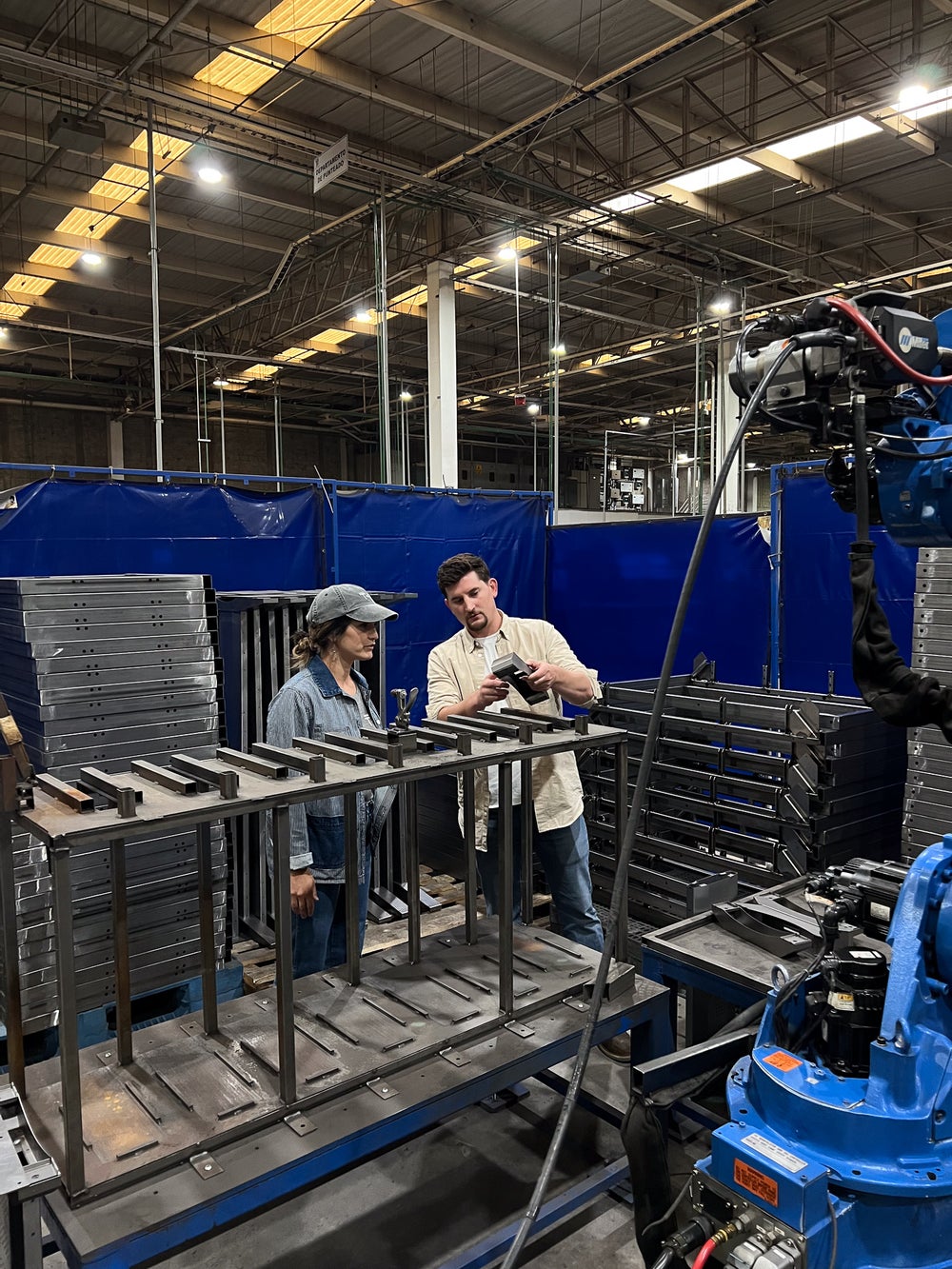
This deli made too much bread not to attract attention.

In September of 2023, North Carolina businessman Peter L. Coker Sr., his son Peter Coker Jr., and a third accomplice, James T. Patten, pled guilty to securities fraud in a scheme that falsely valued their single-location New Jersey-based Hometown Deli at $100 million.

The Cokers and Patten artificially inflated the price of two companies, Hometown International, which owned the deli, and E-Waste, to make them more appealing to private firms. It was later revealed that Hometown only owned one money-losing deli, and E-Waste was not operating in any capacity.

Related: Reality Stars Are Sentenced To Prison For a ’15-Year Fraud Spree’

Today, Coker Sr., 82, was sentenced Tuesday to six months in prison and ordered to serve six months of home confinement after his release. He will also be required to pay a $500,000 fine and up to $644,000 in restitution, reports CNBC.

“I’m terribly sorry for my part,” Coker Sr. said at his sentencing. “This episode has been the worst time of my life.”

“I’m sorry for every investor harmed by my actions,” he added.

Related: ‘We Got Back to Work’: Kevin Bacon Opens Up About Losing ‘Millions’ in Bernie Madoff’s Ponzi Scheme

Coker Jr. and Patten’s sentencing will follow. After his initial arrest in 2022, Coker Jr. went on the run and was found hiding in a hotel room in Thailand’s Phuket province. He will face deportation after he serves his sentence, per CNBC.

“This was a fraudulent scheme from the inception,” Judge Christine O’Hearn said at the start of the hearing. She labeled the companies worthless and said she “learned more than I ever care to” about their fraudulent operations.

This deli made too much bread not to attract attention.

In September of 2023, North Carolina businessman Peter L. Coker Sr., his son Peter Coker Jr., and a third accomplice, James T. Patten, pled guilty to securities fraud in a scheme that falsely valued their single-location New Jersey-based Hometown Deli at $100 million.

The Cokers and Patten artificially inflated the price of two companies, Hometown International, which owned the deli, and E-Waste, to make them more appealing to private firms. It was later revealed that Hometown only owned one money-losing deli, and E-Waste was not operating in any capacity.

The rest of this article is locked.

Join Entrepreneur+ today for access.


Source link

$100 Million Deli Fraudster Sentenced to Prison Read More »

The Secrets to Success for Alexander’s Patisserie

The Secrets to Success for Alexander’s Patisserie


Opinions expressed by Entrepreneur contributors are their own.

On a busy Saturday afternoon in Mountain View, California, the line at Alexander’s Patisserie — a pastry shop known for its precision and innovation — can stretch out the door. Customers eye a display case of delicacies, from black sesame croissants to more than 20 flavors of macarons. It’s easy to assume the appeal is in the presentation, but beneath the patisserie’s viral popularity is an authentic story: one of team leadership, craftsmanship and a dedication to continuous improvement.

Central to this story is Shuyao Cao, better known as Chef Shu. As the pastry chef behind the Alexander’s menu, she leads with creativity and intention, uniting the business with a collaborative spirit.

Related: Want to Work With Influencers? Here’s What Small Business Owners Need to Know.

“I feel like our whole team, everyone has their own talents,” Cao says. “Each one of them is unique, and I take the string from them, and then I put it together. I can’t come up with [the brunch menu] all by myself.”

The team dynamic is evident from the moment customers walk in the door. Whether staff are managing a packed tea service or catching up with regulars, the atmosphere is warm and welcoming. David Brungard, vice president of operations for Alexander’s Group Corporate, says Cao’s leadership has helped make this work environment possible.

“[Chef Shu] earned every single person’s respect, including the dishwasher, because she does everything,” Brungard says. “She cleans the walk-in, makes the croissants, comes up with ideas and walks around to taste stuff. She makes family meals for our employees so that when they come to work, [they don’t have to eat pastries all day].”

According to Brungard, Cao’s hands-on leadership style has fostered a workplace culture built on trust and appreciation: “The level of quality in your life depends a lot on how you feel when you are at work, and [Chef Shu] knows how to make everyone in our team feel valued,” he says.

Related: 5 Secrets to Success From a Sustainable Business That’s Grown 95% in 3 Years

One of the patisserie’s most talked-about menu items — the famous flat croissant — wasn’t even for customers at first. “I wanted to try it because it went viral in my Asian area,” Cao says. “I wanted to taste it myself, so I made one at the patisserie, and the front and the back of the house really enjoyed it. So I said, ‘Let’s put it on the menu.'”

Since then, Cao’s flat croissants have become a fan favorite, driving traffic in-person and on social media. But trending pastries are only responsible for a portion of the patisserie’s success. What keeps Alexander’s relevant is its commitment to adaptation through customer feedback.

“ We see how customers react and how much we sell every day,” Cao says. “We see how people react on the internet, too. I read every review the customer leaves me, and I mean it. I take opinions, and then I let the whole team taste it. Even [Brungard], when he comes, I pull him.”

For Brungard, reviews function as both valuable feedback and a celebration of the team’s efforts: “When they mention an employee by name in a raving review, it makes me super happy because they deserve the credit,” he says. “I love it when the public recognizes their hard work. And then when they don’t, I take it on. That’s what I’m here for.”

Part of Alexander’s staying power comes from thoughtful sourcing that spares no expense for quality. “We use chocolate imported from France… the best chocolate in the world,” Cao says. “We make sure we use an AOP butter for our croissant. AOP butter is super expensive, and only one region of France makes it.”

And when specialty ingredients aren’t available through traditional vendors, Cao gets creative. “Sometimes I find matcha powder [or] the best sesame paste brand in the supermarket or the Chinese grocery store,” she says. “I can pick out different stuff for myself and then ask my sales guy if he can find me a bulk item.”

Related: How This North Carolina Lawn Care Company Earns Customer Loyalty

From recipe tasting to fixing kitchen equipment, Cao and Brungard run operations like clockwork, but always with heart. “Part of our meeting is to talk about new products, reviews, what’s broken in the kitchen,” Brungard says. “How can I fix it? How can I give you what you need to be successful?”

This behind-the-scenes support reinforces a company-wide policy: Take care of the team, and they’ll take care of the guest.

Ultimately, Alexander’s success comes from the patisserie staying true to its values. Thoughtful leadership and room for experimentation allow the team to chase their passions, resulting in a sweeter experience for the guests. “When you put love into something, it reverberates into the world,” Brungard says.

Consider Alexander’s Patisserie’s guiding principles for creating a thoughtful experience for both customers and staff:

  • Lead from within. Respect is earned. Set the tone by working alongside the team and staying hands-on in the operation.
  • Innovate with intention. Let curiosity, creativity and customer feedback drive your menu changes, rather than trends alone.
  • Feedback helps you pivot and grow. Read and discuss every review to identify areas for refinement and improvement.
  • Quality begins with sourcing. Whether it’s imported French butter or the perfect sesame paste, sourcing should be deliberate and can help your business align with its (and customers’) values.
  • Culture is the secret ingredient. A welcoming team translates into a positive guest interaction. When your team feels supported, the entire operation succeeds.

Related: She Runs a James Beard Award-Nominated Restaurant. Here’s Her 2-Step Process for Hiring the Best Employees.

Listen to the episode below to hear directly from Cao and Brungard, and subscribe to Behind the Review for more from new business owners and reviewers every Thursday.

Editorial contributions by Alex Miranda and Kristi Lindahl

This article is part of our ongoing America’s Favorite Mom & Pop Shops™ series highlighting family-owned and operated businesses


Source link

The Secrets to Success for Alexander’s Patisserie Read More »

Why Workforce Efficiency Isn’t Just Code for Layoffs

Why Workforce Efficiency Isn’t Just Code for Layoffs


Opinions expressed by Entrepreneur contributors are their own.

When we see high-profile leaders in government and industry promising to boost efficiency, the automatic association might be that workforce efficiency equals cutting jobs. But that’s rarely the case.

Across-the-board layoffs are not, in and of themselves, a recipe for efficiency. In fact, they could lead to exactly the opposite: loss of high performers or critical talent.

That said, efficiency is having a moment — and for good reason. Companies are being buffeted by new tech, shifting tariffs, flagging productivity and inflation. In these uncertain times, finding ways to get more from your people is often a matter of survival.

At its core, efficiency is a nuanced concept, but an absolutely critical one. Too many businesses fail to understand and measure it. Getting more with less requires thinking differently and using data differently, with a little help from AI.

Here’s how companies can harness data to boost workforce efficiency the right way.

Related: 6 Transformative Methods for Boosting Workplace Efficiency

1. Start with why

Before a company does anything in the name of efficiency, it should look at the big picture. The key question: What problem are you trying to solve?

Efficiency means different things to different businesses, after all. One furniture manufacturer might have a goal to produce as many chairs as possible, while another decides to focus on quality over quantity.

But too often, the de facto goal of efficiency exercises becomes cost-cutting. Laying off 10% of your employees might yield short-term savings, but in the long run, it’s exceedingly hard to cut your way to better results.

Replacing high-potential talent can cost a business up to three times the outgoing worker’s salary. When businesses factor in the total cost of recruitment, training, time to proficiency for new hires and lost productivity, haphazard downsizing often emerges as the least effective path forward.

Related: 4 Ways Leaders Can Increase Workplace Efficiency

2. Understand the people and resources you actually have

Even after working in people analytics for more than a decade, it still surprises me how many organizations are in the dark about their own workforce. Many large companies struggle even to get an accurate headcount of permanent and temporary employees across different business units.

Meanwhile, businesses continue to define employees in terms of rigid “roles,” rather than thinking in terms of “skills.” Someone’s job title might say “customer support rep,” for instance, but their underlying skillset includes product knowledge, people skills, technical know-how, etc.

At a time when tech is changing jobs overnight, smart businesses are increasingly using AI to catalog employee skills and match them to new and evolving roles. Rather than laying off that customer support rep, for instance, they’re reskilling and shifting talent to sales or business development.

This approach yields clear dividends. Besides being more than twice as likely to place talent effectively, skills-based organizations are about 50% more likely to improve processes that maximize efficiency.

3. Connect people with business results

There is perhaps no more important and overlooked way to improve efficiency than this: bringing people and business data together.

People data is all the information about what employees do, such as their performance and contributions. Business data is all about how they work — metrics like sales figures, customer satisfaction and profitability.

At so many companies, this information remains siloed. HR is entrusted with people data, while finance, operations, and sales and marketing hoard business data. Only when a company breaks down those silos by combining people and work data does a true picture of its employees emerge.

Here’s a real-life example from Cartier, the luxury jeweler. For its hundreds of stores worldwide, the company integrated people data and point-of-sale data. That let it see which locations were performing better than others, plus each store manager’s training history. Knowing which sales training got the best results, Cartier could apply it where needed to improve efficiency.

Compared to their average peers, high performers are 400% more productive. That climbs to 800% for managers, software developers and other complex roles. By pinpointing the right people at the right time for the right job, a company can avoid blanket layoffs that could end up slashing precisely the wrong people.

Related: 12 Unconventional Ways to Boost Employee Productivity

4. Democratize access to data and insights

It’s hard, if not impossible, to improve efficiency if you’re flying blind. To make the right decisions, people and performance data need to be accessible, not just to VPs but to the frontline managers making key hiring decisions.

This is where so many organizations fall woefully short. Historically, workforce data has either been jealously guarded or else buried in spreadsheets and scattered across multiple systems. Even basic questions require waiting weeks, sometimes months, for analysts to crunch the numbers. Meanwhile, managers have been left to rely on intuition to make time-sensitive talent calls.

Making better decisions requires democratizing workforce data, while preserving privacy and security, and that’s where AI is proving a boon. Need to know who your top performers are by location? Which managers are most effective? How does employee engagement compare to industry benchmarks?

New AI tools stitch together data across disparate systems, pulling out insights in a matter of seconds. Dense jargon and spreadsheets are replaced by explanations in plain English. And much like a human analyst, the best tools make informed suggestions about what next steps could make the biggest impact.

5. Review results and adapt in real-time

Efficiency is not a one-and-done exercise. At a moment when companies are contending with rapidly changing business conditions (Tariffs? No tariffs? Your guess is as good as mine), workforce planning can’t simply be an annual event.

The better tack here is to take a continuous approach to assessing how many workers your organization needs to support growth, ensure profitability and achieve goals.

New dynamic analytics tools help companies do just that. By tracking workforce plans against what’s happening on the ground, they let management make adjustments in real-time so forecasts are constantly up-to-date. These tools also help HR and finance get on the same page by reviewing planned, forecasted and actual headcount costs and course-correcting when needed.

Another real-life example: Providence Healthcare recently found itself looking at turnover in key roles. Using past data to make predictions, it was able to identify a group of employees where the organization would at least break even by paying them more to stay — and, in some cases, would even save money.

By using the estimated costs of turnover and calculating the cost to adjust salaries in the targeted groups, Providence saved an estimated $6 million a year.

Nor are these results unusual. Taking a more dynamic approach to workforce planning pays off. In one study, businesses with robust workforce planning boosted productivity by up to 25% over two years.

For companies in today’s unpredictable business climate, improving workforce efficiency is a very real priority. But simply slashing and burning can create more problems than it solves. A data-backed approach, with some help from AI, is a surer path to efficiency gains.


Source link

Why Workforce Efficiency Isn’t Just Code for Layoffs Read More »

Why I Stopped Trying to Be Friends With My Employees

Why I Stopped Trying to Be Friends With My Employees


Opinions expressed by Entrepreneur contributors are their own.

Early in my career as a founder and CEO, I desperately wanted my employees to like me. I believed that if I behaved like my “real self,” I could build stronger bonds with my team. Despite my good intentions, it seldom worked.

I had to learn, and re-learn, a crucial leadership lesson: Employees are not your friends. The inherent authority of your role creates barriers to forming healthy friendships. Worse yet, employees may leverage your friendliness to undermine your authority. This happened to me many years ago, and when it did, I was devastated.

I was attending an industry conference with some employees. On the final night of the conference, there was a big party with food, drinks, a DJ and games. I challenged an employee to a video game competition, which I won. I then bragged about my win in an overly dramatic and flamboyant manner. I behaved this way with my friends, who understood my absurd boasting was not serious.

However, the employee described this event much differently to co-workers. I was portrayed as overbearing and humiliating the employee. When I overheard this twisted retelling, I was shocked. I sincerely cared about my team. I thought we were just having fun. I was only being my “real self.”

My CEO coach helped me see that as a leader, you are always “on stage.” Employees interpret all your behavior through the lens of power dynamics. When you hold employees accountable, an essential part of leadership, resentment can drive employees to label your attempts at friendliness as invasive or abusive.

As a leader, you are entirely responsible for creating and maintaining a productive, positive and supportive workplace. This means you must not only hold your team accountable to their job expectations, but you must also build healthy relationships with each team member. These two demands often clash. You must carefully balance being friendly and demanding. If you go too far in either direction, your authority and respect suffer.

Boundaries help you maintain this balance. Here are some strategies for building healthy boundaries with employees.

Related: Marc Andreessen Says You Shouldn’t Bring Your Whole Self to Work

Be the person your dog thinks you are

I like this aphorism because it humorously captures an important leadership concept: Employees judge you on what you do for them, not what you accomplish as a leader.

Employees may not like you when you hold them accountable, but they will like you if you show genuine concern for their growth and success. Offering consistent encouragement, vocal recognition and genuine positivity minimizes negative perceptions of you as a leader.

Be a cool cucumber

It is entirely normal to feel frustrated, especially with co-workers. It is equally healthy to vent those frustrations to friends or counselors. However, employees cannot be your counselor.

Venting to employees makes you sound cruel, petty and vindictive. It will destroy whatever trust and credibility you have accumulated. Share frustrations or concerns with a mentor, therapist or professional coach instead. Maintain a calm, positive and supportive attitude with employees, especially the ones that irritate you.

Adopt a growth mindset

Blame and finger-pointing are toxic behaviors in the workplace, especially when a leader does it. They create animosity and mistrust. You must rise above blame to adopt a growth mindset.

Rather than focusing on who is to blame, focus on learning and growing. Acknowledge failure, but balance that with the resolve to learn and get better. When my company lost a deal, I was obsessive about finding out why and what we could learn. This turned every loss into a chance to fine-tune our processes, learn from our mistakes and win more deals in the future.

Building a “no blame” boundary ensures that your leadership is based on continuous self-improvement and not toxic behaviors.

Related: Treating Employees Like Pals Can Be a Dangerous Game.

The sound of silence

Silence is a powerful boundary. Let the employees talk, especially when something is wrong. Resist the urge to tell them what is wrong or how to fix it. Instead, be curious and ask questions. Let them hold themselves accountable.

Moreover, when you ask a tough question, remain quiet and allow employees the time to answer. It may feel uncomfortable, but silence allows people to assume responsibility.

Protect your privacy

Your privacy is a critical boundary. Keep personal details superficial. Avoid emotionally sensitive topics like politics, religion, sexuality or personal wealth, as these can incite unnecessary conflict or resentment.

Whether at work or socializing, encourage employees to talk about themselves rather than sharing your personal information. This builds rapport and makes you more approachable.

Establish clear work-life boundaries

Your employees’ privacy is equally as important as your own. Your authority over employees ends the moment they leave work. This is a sacred boundary that you must respect as a leader.

Avoid judgments about what employees do (or do not do) after work. If you must contact an employee after work, then thank them for their time.

Socialize strategically

It is good to socialize with your employees periodically. However, you must maintain a professional demeanor at all times. Remember, you are their manager even after work or in a social setting.

Limit alcohol consumption and avoid divisive conversations. If your spouse accompanies you, make sure you both follow these guidelines and maintain a united front.

Related: Employee or Friend? How to Maintain Boundaries with the People Who Work for You

Avoid competitive situations

Let your employees win. Any competition with employees should remain casual, friendly and devoid of any real stakes. Never wager real money, and avoid boasting after wins to prevent negative perceptions. If you engage in physical activities such as playing basketball or working out, you are still their boss. Overly aggressive or antagonistic behavior will translate back to work and may provide fuel for negative narratives.

You are always the boss — at work, after work, all the time. While it is possible to build friendly relationships with employees, true friendships are challenging.

Boundaries protect you and your employees. They help maintain respect and authority. They allow you to be friendly without overextending your authority.

Early in my career as a founder and CEO, I desperately wanted my employees to like me. I believed that if I behaved like my “real self,” I could build stronger bonds with my team. Despite my good intentions, it seldom worked.

I had to learn, and re-learn, a crucial leadership lesson: Employees are not your friends. The inherent authority of your role creates barriers to forming healthy friendships. Worse yet, employees may leverage your friendliness to undermine your authority. This happened to me many years ago, and when it did, I was devastated.

I was attending an industry conference with some employees. On the final night of the conference, there was a big party with food, drinks, a DJ and games. I challenged an employee to a video game competition, which I won. I then bragged about my win in an overly dramatic and flamboyant manner. I behaved this way with my friends, who understood my absurd boasting was not serious.

The rest of this article is locked.

Join Entrepreneur+ today for access.


Source link

Why I Stopped Trying to Be Friends With My Employees Read More »

These States Have the Most Affordable Housing in US: Ranking

These States Have the Most Affordable Housing in US: Ranking


The Wall Street Journal reported on Monday that the normally robust spring housing market was a “dud” this year, as economic and stock market uncertainty, coupled with mortgage rates hovering around 6.72% at press time, have kept buyers away.

The outlet notes that with more homes hitting the market, demand is not aligning with the rising inventory, and home prices are fluctuating (some areas are seeing drops while others remain high).

But there are some states where you can still find affordable housing.

U.S. News & World Report‘s 2025 Best States list looks at thousands of data points to rank each state on a variety of factors, including crime, economy, education, fiscal stability, health care, infrastructure, natural environment, and opportunity. Using that data, along with statistics from the Bureau of Economic Analysis and factoring in cost of living and other points, the outlet also ranked the best states for housing affordability.

Related: Thinking of Starting a Business? Here Are the 10 Best States for Startups, According to a New Report.

Still, it’s worth noting that many of the top states for housing affordability were ranked near the bottom of the list in categories including poverty rate, food insecurity, and median household income. But if you’re a remote worker looking for more land or the chance to buy a home at a low price, it could be worth checking out.

Here are the five best states for housing affordability, according to data used in U.S. News & World Report‘s “Best States” list.

1. Mississippi

Affordability Ranking: 2

Overall Best States Ranking: 48

According to Zillow, the average Mississippi home value is $189,710.

2. West Virginia

Affordability Ranking: 3

Overall Best States Ranking: 46

According to Zillow, the average West Virginia home value is $167,250.

3. Arkansas

Affordability Ranking: 1

Overall Best States Ranking: 44

According to Zillow, the average Arkansas home value is $217,895.

Related: Here Are the 10 Best States for Working Seniors

4. Alabama

Affordability Ranking: 8

Overall Best States Ranking: 45

According to Redfin, the average home price in Alabama is $281,400.

5. Kentucky

Affordability Ranking: 10

Overall Best States Ranking: 39

According to Redfin, the average home price in Kentucky is $263,400

You can find the full top 10 most affordable states list, here.

Click here for the full Best States list.

The Wall Street Journal reported on Monday that the normally robust spring housing market was a “dud” this year, as economic and stock market uncertainty, coupled with mortgage rates hovering around 6.72% at press time, have kept buyers away.

The outlet notes that with more homes hitting the market, demand is not aligning with the rising inventory, and home prices are fluctuating (some areas are seeing drops while others remain high).

But there are some states where you can still find affordable housing.

The rest of this article is locked.

Join Entrepreneur+ today for access.


Source link

These States Have the Most Affordable Housing in US: Ranking Read More »

More Robots Will Fill Pharmacy Prescriptions at Walgreens

More Robots Will Fill Pharmacy Prescriptions at Walgreens


A robot, not a human pharmacist, may be filling your prescription at Walgreens. And there’s about to be a lot more of them.

Walgreens told CNBC on Sunday that it wants to have more of its pharmacies send prescriptions to one of its 11 micro-fulfillment centers, or hubs that use robotic technology to fill patient prescriptions.

The goal is to have the facilities handle prescriptions for 5,000 pharmacies before the year ends, up from 4,800 stores in February and 4,300 stores in October 2023.

As of February, the centers took care of 40% of prescriptions for supported pharmacies, amounting to 16 million orders filled each month.

Related: Walgreens Boots Alliance Gets Bill for $2.7 Billion From the IRS After Tax Audit

The move to expand automation arrives as Walgreens readies itself to go private in a $10 billion deal. The drugstore chain announced in March that it had agreed to be acquired by private equity firm Sycamore Partners, with the deal expected to close in the fourth quarter of the year.

How does a micro-fulfillment center work?

When a Walgreens pharmacy supported by a center receives a prescription order, the system decides if it should be filled by pharmacists at that location or sent to the center. The decision often comes down to timeliness: Centers usually handle refills that don’t require immediate pickup.

The facilities then use robots, conveyor belts, and scanners to fill prescriptions accurately. While pharmacists fill prescriptions by hand at stores, robots dispense prescriptions down a carefully managed assembly line at centers.

There is still some human involvement at the facilities, though. A team of pharmacists and pharmacy technicians works behind the scenes at the centers to ensure that the right pills reach the correct bottles.

Related: This Walgreens Product Is Flying Off Shelves, Thanks to TikTok: ‘We Sold Through Nearly All of the Product’

Robotic centers drive cost savings for Walgreens

The micro-fulfillment facilities have had a noticeable impact on Walgreens since the first one opened in early 2021. Kayla Heffington, Walgreens’ pharmacy vice president, told CNBC that the centers have helped Walgreens save $500 million to date and allowed its pharmacists to spend more time with patients. She said that the centers allowed Walgreens to improve prescription volume by 126% year-over-year, while simultaneously bringing down costs by close to 13%.

Walgreens is now filling more than 170 million prescriptions per year, with the goal of raising that total to 180 million or higher with the help of the centers, she stated.

Rick Gates, Walgreens’ chief pharmacy officer, added that the centers give Walgreens “a lot more flexibility to bring down costs.”

“Right now, they’re the backbone to really help us offset some of the workload in our stores,” Gates told CNBC.

He noted that the facilities give Walgreens an advantage over independent pharmacies and other rivals that lack robotic prescription fulfillment.

Related: ‘Changes Are Imminent’: Walgreens to Shutter a ‘Significant’ Number of Stores

Amazon Pharmacy has its own automated pharmacy fulfillment centers that aim to bring medications to customers in two days or less on average.

Companies like Walmart, Kroger, and Albertsons each have micro-fulfillment centers that process items like groceries, but none have publicly disclosed prescription fulfillment centers.

CVS has also implemented automation in its supply chain, though not publicly for its pharmacies. At CVS’s Lumberton, New Jersey, distribution center, 152 robots work together to process 1.9 million products per week.

Walgreens was the second biggest pharmacy in the U.S. by prescription drugs market share in 2024, right after CVS.

A robot, not a human pharmacist, may be filling your prescription at Walgreens. And there’s about to be a lot more of them.

Walgreens told CNBC on Sunday that it wants to have more of its pharmacies send prescriptions to one of its 11 micro-fulfillment centers, or hubs that use robotic technology to fill patient prescriptions.

The goal is to have the facilities handle prescriptions for 5,000 pharmacies before the year ends, up from 4,800 stores in February and 4,300 stores in October 2023.

The rest of this article is locked.

Join Entrepreneur+ today for access.


Source link

More Robots Will Fill Pharmacy Prescriptions at Walgreens Read More »

Yes, I Was a Toxic Boss. Here’s How I Turned It Around

Yes, I Was a Toxic Boss. Here’s How I Turned It Around


Opinions expressed by Entrepreneur contributors are their own.

This is hard (and maybe a little weird) to admit, but I never thought that I’d mistreat others the way I was mistreated earlier in my career. And yet I did. I fell into a trap of my own making, perpetrating misconduct that I’d seen others exhibit before, and I don’t think I was even cognizant of it at the time.

The trap is called “toxic boss syndrome,” and once I became aware that I was suffering from it, I had to go into symptom treatment mode immediately. What kind of symptoms was I displaying? Well, to name a few, I made promises that I didn’t keep. I’d dangle carrots to get people to stay. I’d call my employees after hours just to vent to them. No, no and no. OMG, what was I thinking?

In hindsight, I suppose I thought these measures would grow my business and bond me to my staff. In actuality, I was overstepping, overreaching and overcompensating for what were actually my own deficiencies. Instead of breeding loyalty, some really good people left my company, and let me tell you, nothing makes the heart listen more than a bad breakup.

Losing those people proved to be my entry ticket into rehab, and now I consider myself a recovery agent advocating for the golden rule above all else. Here’s how I got there.

Confession #1: I offered no training and no feedback, but I expected excellence

When my nascent PR firm was burgeoning, I thought all my efforts should be dedicated to growing my client list and showing a profit. In the process, I was quick with criticism, I skipped essential foundational steps, and I never asked for feedback.

I thought leading meant directing people, and yet I was expecting everyone to hit their marks without ever giving them clear instructions and finite, manageable deliverables.

Solution: When my imagined script wasn’t being followed, I eventually had to stop in my tracks and actually start listening. I had to ask for input as to why benchmarks weren’t being achieved and people weren’t kicking ass in their roles. What I heard? Ouch. It prompted me to take a long, hard look in the mirror and realize that I was providing no training, no guidance, and I was not equipping my staff with the tools they needed to succeed.

Now I do. I both request constructive criticism and readily provide feedback, intentionally crafted to develop my team’s talents. I have a solid onboarding process in place and conduct regular check-ins with my staff. I’m still learning in this area — I still jump into the deep end sometimes and try to figure things out as a person, not just a boss. But I’m no longer a one-woman show barking out orders.

Related: What Makes You a Unicorn in Your Industry? Start by Mastering These 4 Pillars

Confession #2: To be respected as the boss, I acted like a robot

As I was assembling my team, it seemed like everyone wanted me to be professional. So, even though it went against my inherent nature, I was formal, I tried to be objective, and I considered it a weakness to let anyone see that I really had no clue how to run a business. I didn’t doubt my PR skills at all, but I didn’t spend sufficient time learning how to operate my agency as a fully functioning, well-oiled entity.

Solution: The robotic facade just wasn’t working for me. And it certainly wasn’t working for my staff. I wasn’t approachable, and I sensed distance and standoffishness in our midst. When I discovered that everyone just wanted me to be real, it freed me to shed my (fake) layers of invincibility, allowing me to reveal that I actually had more questions than answers about team dynamics.

As I sloughed my unnatural skin and let people see that I didn’t, in fact, have it all together, I became far more relatable, able to show vulnerability and be my real self. In turn, my employees felt less restricted and more open to being their genuine selves.

Things started shifting pretty quickly after that, and now I like to think propriety has been replaced with warmth, and I’m respected for my authenticity, not out of obligation.

Related: Are You This Kind of Toxic Boss? Here’s How You Can Find Out

Confession #3: I felt the success of my business rested entirely with me

I’m the one making the hires, I’m the one signing the paychecks, and I’m the one my clients bring any complaints to, so the fate of my whole operation falls completely on me, right? Wrong. As a business owner, you learn pretty fast that you can’t do it alone.

You can’t be in two places at one time, you can’t serve multiple masters in a single day, and you can’t make everyone happy all the time. “I will do it.” “I will make it happen.” “I can fix this.” Nope. But “we” can.

Solution: Perhaps the biggest game-changer in my firm has been the transition from the “This is my business” mindset to the “This is our business” mindset. I had to learn firsthand that every single person who reports to me makes a singular impact and has something meaningful to add to the conversation. Not only was it exhausting trying to carry the whole load on my own, but my business wasn’t benefiting from all the wonderfully diverse perspectives and skill sets I had available.

I’ll always be proud of starting my business as a single mom who had only a dream and a lot of naive gumption. But what has made that dream a reality is seeing my staff as partners, as equals, as co-creatives. We are so unbelievably stronger together than we are apart, and we’re achieving so much more as a tight-knit band than I ever could have done as Atlas trying to bear the weight on my shoulders alone.

Related: Avoid Costly Hiring Mistakes by Spotting These Employee Warning Signs

Confession #4: I invested in my business instead of my people

When things started taking off, I thought I needed systems and sites and external connections to fly. So I’d allocate resources to CRMs and productivity software, to office space rentals, press wire subscriptions and third-party professional contracts to take care of the financial and legal aspects of my company.

This isn’t necessarily a misstep — my business requires a lot of this; it just can’t be your only step in terms of where you funnel part of your profits. By concentrating on the cogs in the wheel, I somehow lost sight of what actually makes the engine of my company run: the people powering it. They weren’t being taken care of like my ledger books and meeting agendas were, and because of that, I wasn’t tapping into their fullest potential.

Solution: Now I take care of my crew first and foremost — yes, even above my clientele — and the result has been turning us from a work team into a loyal tribe. I’d do anything for them and they know it, whether that means bonus plans, pay raises, in-person retreats, flex time or running interference for them when they hit obstacles.

Most recently, I’ve commissioned an HR consultant to assess and boost workplace satisfaction, and we’re all really excited about the company’s charitable initiative we’re ramping up, an idea that came directly from my staff.

By consciously deciding to look to my staff as my greatest source of ROI, I’m excited and empowered to keep investing more in them and then letting the fruits of our joint labors flower as they will. When they know they’re my top priority, we all achieve top results together. Even more, we’re all growing up professionally together, and it’s a truly great feeling.

When I was starting out in the PR space, I recall a few work environments where it felt like everyone was walking on eggshells around my superiors. I remember thinking, “Why does it have to be this way? Why can’t everyone just do their job well while being well supported?” Even then, before “toxic” became a buzzword, I knew the balance of power was off and that things didn’t feel right.

And yet I made my own people feel like that for a time — something I’ll always regret. I’m the boss now. You’re the boss. We have control over the environment we create and the culture we cultivate. Don’t make the same mistakes I did. Do a toxic temperature check and, if necessary, get yourself into recovery. The health of your workplace will skyrocket, and your team will function more effectively and abundantly than ever before.

This is hard (and maybe a little weird) to admit, but I never thought that I’d mistreat others the way I was mistreated earlier in my career. And yet I did. I fell into a trap of my own making, perpetrating misconduct that I’d seen others exhibit before, and I don’t think I was even cognizant of it at the time.

The trap is called “toxic boss syndrome,” and once I became aware that I was suffering from it, I had to go into symptom treatment mode immediately. What kind of symptoms was I displaying? Well, to name a few, I made promises that I didn’t keep. I’d dangle carrots to get people to stay. I’d call my employees after hours just to vent to them. No, no and no. OMG, what was I thinking?

In hindsight, I suppose I thought these measures would grow my business and bond me to my staff. In actuality, I was overstepping, overreaching and overcompensating for what were actually my own deficiencies. Instead of breeding loyalty, some really good people left my company, and let me tell you, nothing makes the heart listen more than a bad breakup.

The rest of this article is locked.

Join Entrepreneur+ today for access.


Source link

Yes, I Was a Toxic Boss. Here’s How I Turned It Around Read More »

Here’s How Scaling a Business Really Works

Here’s How Scaling a Business Really Works


Opinions expressed by Entrepreneur contributors are their own.

I used to think scaling was just about growing — more customers, more revenue, more markets. But over time, I realized something that no one tells you early on: You can’t scale a company unless you’re willing to scale yourself.

In every company I’ve helped build — whether we were chasing our first million or pushing past a billion — I have encountered the same hidden truth: Growth doesn’t come in one clean line. It comes in thresholds. And at each one, the old rules break.

That’s when it gets counterintuitive: The same instincts, habits and systems that fueled early momentum can quietly start creating drag. What once worked well can now start to work against you.

This is the paradox most entrepreneurs miss. We assume scaling is about acceleration. In reality, it’s about reinvention. At every growth threshold, a company outgrows its own skin — and the founder has to grow just as fast.

Related: The 4 Biggest Mistakes Companies Make When Scaling Their Business

From idea to execution: $0 to $1M

In the earliest phase, ideas are fluid and fragile. Nothing is locked down — not your product, not your market and definitely not your brand. What is real at this stage is your team. Who is in the trenches with you? Who is building alongside you when there is no revenue, no guarantee and no roadmap?

When I founded BrightPlan, I was intentional about assembling a core team that brought strengths I didn’t possess myself. I leaned heavily on SaaS veterans and product minds who could work fast and think clearly under pressure. In a zero-to-one stage, the team is the strategy.

Forget perfection. Be ready to fail fast and adapt rapidly. What you need at this point is momentum. And if your early team can’t pivot, stretch and challenge each other constructively, it won’t matter how promising the product is — you’ll stall before takeoff.

From product-market fit to strategic focus: $1M to $10M

If the first threshold is about survival, the second is about alignment. You’ve got traction. Customers are buying. Investors start to show interest. And that’s exactly when the next set of dangers creeps in.

This is where capital enters the equation — and where I’ve seen more missteps than almost any other phase. Founders, eager to keep the momentum going, take the first term sheet without pausing to understand its implications. Then one day, they wake up with a partner whose goals, expectations or control terms create more friction than fuel.

We avoided that trap by being deliberate. We prioritized investor fit over speed, looking for partners who brought not only capital but context — people who could pressure test our thinking, open doors and stay in the game when it got hard. Not just capital providers, but true partners.

At this stage, everything tightens: your positioning, your hiring, your decision-making. What worked up to the $1M growth point can now start to introduce drag. To keep growing, you don’t just need focus — you need the discipline to let go of good ideas and even people in service of great ones.

Related: How to Navigate to the Next Phase of Your Business — 3 Tips as You Scale

From hustler to operator: $10M to $100M

This is the turning point. The company isn’t a startup anymore, but it’s also not yet an enterprise. You’re growing, but growth alone is no longer the victory. The question becomes: Can you scale how you work, not just what you deliver?

This was the phase where I had to evolve the most as a leader. I was no longer the default decision-maker in every room, and that was by design. We brought in seasoned operators to own product, operations and finance. People who had built through scale and had the playbooks — and the hard-earned experience — to prove it.

Stepping back doesn’t mean stepping away. It means building an organization that can function without you in the center. Most companies stall here not because they run out of vision, but because they try to scale chaos. You can’t power through with hustle anymore. At this stage, structure becomes your new advantage.

And then there’s the human side. You realize that some of the people who were perfect for the $1M sprint may not be right for the $50M structure. Letting go of someone who’s been with you since day one, someone who helped build the plane while it was flying — that’s not just a tough call. That’s a gut-wrenching moment. But leadership means being honest about whether loyalty is becoming a liability, for them and for the company.

From scaling up to rebuilding for scale: $100M+

Crossing into nine figures forces another identity shift. You’re no longer a fast-growing startup. You’re a complex organization with global visibility and operational gravity. And what got you to this point will absolutely break if you try to run it the same way.

At BrightPlan, we anticipated this. We automated and outsourced anything that wasn’t core to our differentiation — compliance, finance, legal workflows — so we could stay lean and responsive as complexity increased. That adaptability wasn’t luck. It was engineered.

But this phase isn’t just technical — it’s personal. You start confronting the invisible weight of legacy. That reporting structure you created three years ago? It’s now a bottleneck. That product flow you handcrafted with pride? It’s become a liability. You built for where you were, but now you’re somewhere else.

This is where reinvention stops being optional. And just like before, you’re called to let go — of systems, assumptions, even parts of your own role. Scaling this phase is less about adding and more about clarifying what no longer belongs.

Leading through the thresholds

Every phase of growth is a shift in identity — for the company and for the founder. Early on, you’re the driver and visionary of everything. Then, you’re the strategic decider. Then, the systems builder. And eventually, the cultural architect who must future-proof the business without dulling its edge.

What links all of these roles? The willingness to evolve before the business forces you to. To perpetually disrupt or stand to be disrupted. That’s the real way to unlock success.

Technology, especially AI, only sharpens this need. It accelerates timelines, changes how we work and redefines scale itself. But it doesn’t erase the transitions. You still need adaptable architecture. You still need a team that can scale with integrity. And you still need the courage to make hard calls at every turn.

Related: Scale Your Leadership Skills as You Scale Your Company

Growth is a series of thresholds, not a straight line

The biggest myth in entrepreneurship is that scaling is a linear process. It’s not. It’s a staircase of reinvention. And the companies that make it to the top aren’t the ones who go fastest. They’re the ones that know when it’s time to stop, rebuild and then leap.

I’ve come to believe that the most scalable companies are the ones whose leaders evolve just ahead of the business, not behind it. If you can see the next threshold coming — and start becoming the leader that phase will require — you’ve already won half the battle.

Because in the end, scale doesn’t reward the bold.

It rewards the agile.


Source link

Here’s How Scaling a Business Really Works Read More »