Mark Zuckerberg: Upcoming Meta Gadget Made Testers ‘Giddy’

Mark Zuckerberg: Upcoming Meta Gadget Made Testers ‘Giddy’


Mark Zuckerberg thinks that the next frame-breaking moment in technology, comparable to the first Google search or Facebook friend request, will be Meta’s holographic glasses.

“We’re almost ready to start showing the prototype version of the full holographic glasses and that’s wild,” Zuckerberg said in a June interview with YouTuber Kallaway. “Every person I’ve shown it to, their reaction, it’s giddy.”

Holographic glasses transform the wearer’s full field of vision into a three-dimensional space. Zuckerberg painted a picture of him as a full hologram, or 3D digital avatar, sitting on Kallaway’s living room couch.

Related: Mark Zuckerberg: ‘I Don’t Think AI Technology Is a Thing That Should Be Hoarded’

“And it’s not just a video call, it’s not just like there’s a screen and you’re there as a hologram,” he said. “We’d be able to interact. So you want to play cards, it’s a hologram, we’re interacting.”

Artists could create art together and content creators could collaborate on new projects as holograms, Zuckerberg explained.

The technology will come at a price, though the exact cost is unspecified for now.

Zuckerberg stated that the fully holographic glasses would cost “significantly more” than the $300 Ray-Ban Meta glasses currently on the market and that Meta isn’t thinking about selling the glasses to everyone right away.

“We’re focused on building the full consumer version of it rather than selling the prototype,” he said.

Meta still intends to demo what the prototype can do to the general public — something Zuckerberg stated he was “really looking forward” to.

Related: Billionaires Warren Buffett, Bill Gates, Jeff Bezos and Mark Zuckerberg Have 3 Habits for Success in Common — But Very Different Routines. Which One Resembles Yours?

Another example of a frame-breaking product, according to Zuckerberg, is Meta’s upcoming neural wristbands. The futuristic wrist straps pick up brain signals, without the need for wires or anything attached to the brain, with the aim of one day performing tasks like typing and controlling a computer mouse.

Zuckerberg said that the possibility of paradigm-changing products like holographic glasses and neural wristbands sets technology apart from other fields.

“In a lot of other fields, you can be doing the same thing for a long period of time, whereas in technology, every once in a while something comes along and just unleashes all of these new opportunities and you need to rethink what you’re doing,” he said.

Meta is currently an industry leader in virtual reality, drawing 37.2% of AR/VR market share in Q1 2024 compared to Apple’s 17%.

Related: Mark Zuckerberg Only Made $1 in Salary in 2023— But Earned Over $24 Million in ‘Other Compensation’


Source link

Mark Zuckerberg: Upcoming Meta Gadget Made Testers ‘Giddy’ Read More »

AI Marketing Secrets: 3 Game-Changing GPT-4 Use Cases to Make Money with AI

AI Marketing Secrets: 3 Game-Changing GPT-4 Use Cases to Make Money with AI


Tackle AI’s toughest questions with Ben Angel, mapping the business terrain for 20 years. Master the AI landscape and reach peak productivity and profits with insights from his latest work, “The Wolf is at The Door — How to Survive and Thrive in an AI-Driven World.” Click here to download your ‘Free AI Success Kit‘ and get your free chapter from his latest book today.


Source link

AI Marketing Secrets: 3 Game-Changing GPT-4 Use Cases to Make Money with AI Read More »

Lawyers Who Argued Against Elon Musk Pay Charge 0K Hourly

Lawyers Who Argued Against Elon Musk Pay Charge $370K Hourly


The legal team that argued against Tesla CEO Elon Musk’s record-high pay package now wants to get paid — a record-setting $7.3 billion in legal fees.

There were 37 lawyers, associates, and paralegals helping represent Richard Tornetta, the Tesla shareholder who sued the EV maker over Musk’s proposed $56 billion pay. Tornetta won in Delaware court in January, with Delaware judge Kathaleen McCormick throwing out the compensation package.

In response, Tesla held another shareholder vote in June and argued that Musk’s compensation was “not about the money” but rather about keeping his attention on the company.

Shareholders ultimately voted in favor of the compensation plan and an additional resolution to move Tesla’s legal headquarters from Delaware to Texas.

Related: ‘Passing By Wide Margins’: Elon Musk Celebrates His ‘Guaranteed Win’ of the Highest Pay Package in U.S. Corporate History

On Monday, McCormick heard from both Tornetta’s legal team and Tesla’s over the legal fee request.

Tornetta’s attorneys presented arguments and expert-witness testimony to show why they deserved $7.3 billion in legal fees, consisting entirely of Tesla stock. At Monday’s stock price, the fee works out to about $370,000 for each hour worked.

Their justification was similar to the one Tesla gave for Musk’s pay: It’s not just about the money, it’s about incentives for future behavior.

“If Delaware continues to perceive value in policing bad behavior, then narrowing incentives [for attorneys] would be a very bad idea,” Bernstein Litowitz Berger & Grossman partner Greg Varallo said.

Related: Elon Musk’s Proposed $56 Billion Pay Package Is ‘Obviously Not About the Money,’ Writes Tesla Chair

The attorneys stated that instead of the usual 33% fee recovery that Delaware permits, they are asking for a smaller 11% of the Tesla shares that would have gone to Musk — had the judge not voided his pay. They said they wanted “a slice of the value pie” they “created.”

“We did battle with the very best,” Varallo said. “Litigation against Tesla is never easy. There are companies who play by the rules every day, and then there are companies like Tesla.”

Tesla lawyer John Reed told McCormick that the fee request “looks like a real-life lawyer joke.”

Elon Musk. (Photo by Scott Olson/Getty Images)

Reed said that the January ruling caused Tesla stock to dip and cast doubt on Musk’s future at the EV maker. Though Tesla stock did fall after January, the EV maker is up overall since January at the time of writing.

Reed asked that Tornetta’s attorneys receive a $13.6 million fee.

Court documents show that over 8,000 Tesla stockholders have sent letters and objections to the court about the legal fees.

If approved, the legal fee would be the highest in U.S. corporate history, more than the $688 million awarded in an Enron class action suit in 2008.

Related: How Much Are CEOs Paid? Highest Chief Executive Pay Packages


Source link

Lawyers Who Argued Against Elon Musk Pay Charge $370K Hourly Read More »

Target Will Stop Accepting Personal Checks July 15

Target Will Stop Accepting Personal Checks July 15


As mobile pay and order ahead methods become mainstream, one major retailer is nixing an old-school form of payment.

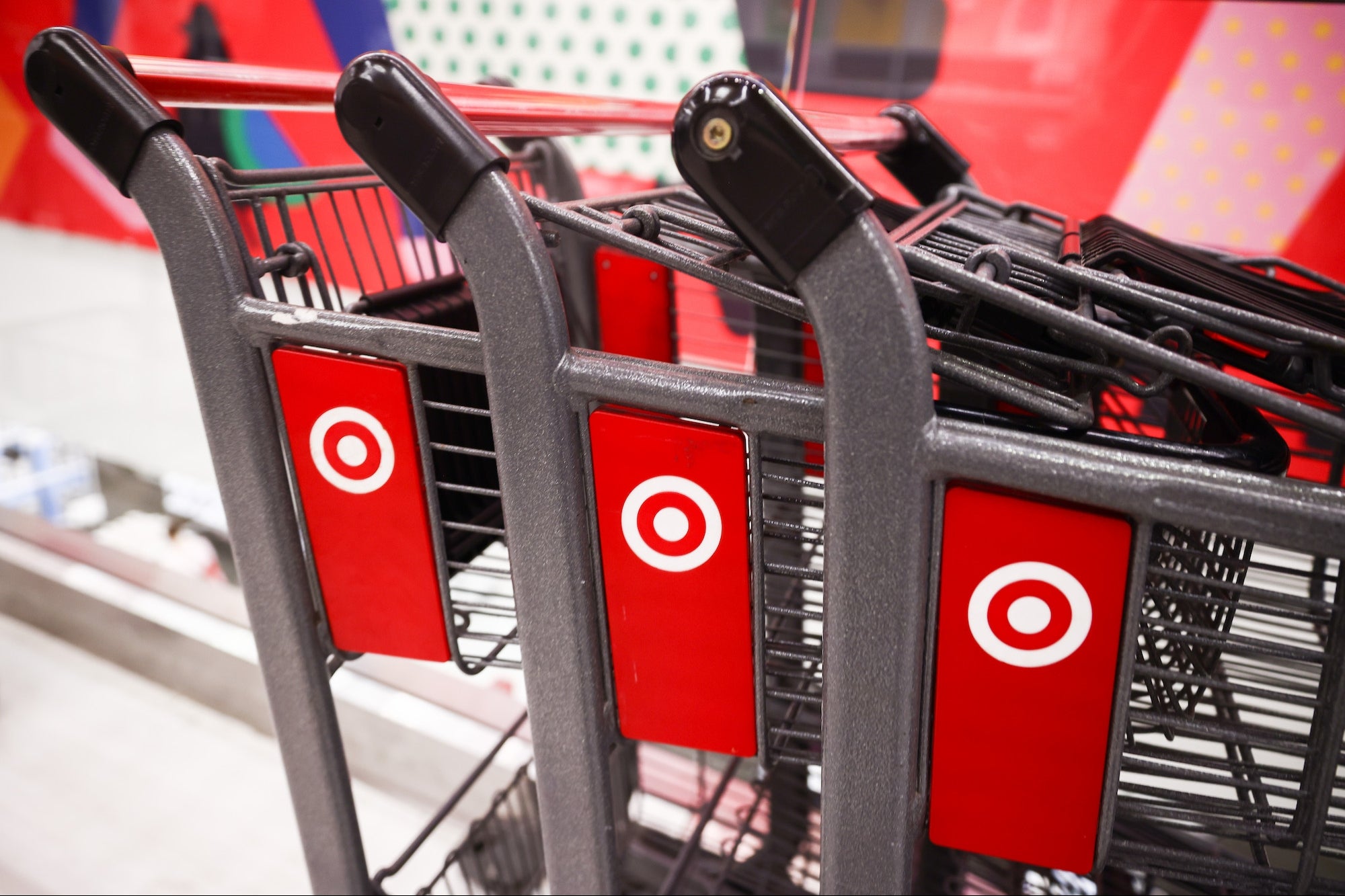
Starting July 15, Target will no longer accept personal checks as a form of payment in-store.

Related: Target, Shopify Sellers Team Up to Create Amazon Alternative

A spokesperson for the company told NBC Chicago that the decision was made based on “extremely low volumes” of personal checks being used and added that customers have been notified of the incoming change through “several measures.”

Target accepts cash, credit cards, debit cards, digital pay including Apple Pay, buy-now-pay-later services, and the store’s Target Circle Cards.

The chain also announced on Monday that it is extending two one-time offers: 20% for college students and 20% for educators.

Target did not immediately respond to Entrepreneur’s request for comment.

The retailer had a tough Q1 2024 after reporting $24.53 billion in revenue, down 3% from the same period last year. It was the first time the company missed analysts’ earnings expectations since November 2022.

Related: Target Sued for Allegedly Collecting Data Without Consent

“Looking ahead, our team will deliver for our guests through lower prices, a seasonally relevant assortment, ease and convenience, as we keep investing in our strategy and efficiency initiatives to get back to growth and deliver on our longer-term financial goals,” CEO Brian Cornell said in a release at the time.

Target was up over 12.5% year over year as of Monday afternoon.


Source link

Target Will Stop Accepting Personal Checks July 15 Read More »

Disney’s Balloon Daycare Is Going Viral as a Popular Service

Disney’s Balloon Daycare Is Going Viral as a Popular Service


Walt Disney World’s hospitality is going viral after a young girl had to give up her balloon to enter one of the major theme parks.

Stephanie McCarty took to LinkedIn over the weekend to share how her daughter had to check in a balloon with guest relations to enter Disney’s Animal Kingdom becasue balloons are not allowed because they “scare the animals.”

Related: Report: Food Prices At Disney Have Increased 60% in 10 Years

She was told to pick it up at the end of the day.

“When we went to pick it up at the end of our day not only did we get our balloon back, we also got a full report of what the balloon had done while it was separated from my daughter,” McCarty wrote. “What I love most about this specific experience was how they took a situation they knew would be unpleasant (if you’ve ever tried taking a balloon from a toddler, you know exactly what I’m talking about!) and found a way to make it less so.”

The service is branded as “Balloon Daycare” and of the four major parks, is only enforced at Animal Kingdom.

Balloons are not permitted inside Disney’s Animal Kingdom, water parks, ESPN Wide World of Sports, or Disney’s Animal Kingdom Lodge (Kidani Village and Jambo House), per Disney’s list of prohibited items.

McCarty’s post has received over 5,100 interactions and 325 comments on the social media platform, with many praising the company for its hospitality and attention to small details.

“When we went to Disney, my two-year-old played with the phone in our hotel room and accidentally called guest services,” one person wrote. “When guest services answered to a child, they transferred her to Goofy who had a chat with her. Amazing.”

“Forgot the branding, this is just touchingly human,” another wrote.

Related: Is a New Disney World Theme Park in the Works? Florida Vote

McCarty said this experience inspired her “to look for the same opportunities” to turn unpleasant experiences positive.

“What I love most about this specific experience was how they took a situation they knew would be unpleasant (if you’ve ever tried taking a balloon from a toddler, you know exactly what I’m talking about!) and found a way to make it less so,” she added.


Source link

Disney’s Balloon Daycare Is Going Viral as a Popular Service Read More »

Apple Likely Rolling Out Best Siri AI Features in 2025: Report

Apple Likely Rolling Out Best Siri AI Features in 2025: Report


Though Apple announced some sweeping AI changes to Siri at its WWDC event last month, it’s been unclear when these changes will reach iPhone screens. But a new report from Bloomberg chief correspondent Mark Gurman clarifies the timeline.

Gurman, who has an 86.5% accuracy rate on the Apple information he has leaked in the past, wrote in his Sunday Power On newsletter that though Apple Intelligence AI will come out this fall, the most important Siri updates will arrive next spring.

This includes Siri accessing and working with other Apple apps based on a simple command. For example, when asked, “Hey Siri, what’s my driver’s license number?” Siri will soon be able to go through the Photos app, find a picture of the license plate, and even be able to put the numbers in a web form.

Related: Apple Is Reportedly Eyeing the Home Robot Space After Scrapping Its 10-Year Electric Car Project

Another Siri upgrade on lock until next year is Siri understanding context, or being able to interpret what an iPhone user is looking at.

In the fall, Siri will still get supercharged with ChatGPT and get a design makeover, but the voice assistant will lack those key contextual features, according to Gurman.

The Siri update won’t be complete until developers beta test the features starting in January and Apple releases the upgrade publicly in the spring of 2025, per the same report.

A person holds a phone in front of the Siri logo. Photo by Artur Widak/NurPhoto via Getty Images

The Bloomberg report aligns with Apple’s public statements.

Apple noted in its June press release that Apple Intelligence will start rolling out this fall in beta, but “some features, software platforms, and additional languages will come over the course of the next year.” The fine print leaves room for certain features to debut later, after Apple Intelligence’s fall release.

Apple stepped into the AI game nearly two years after ChatGPT was launched but decided to take a more collaborative approach to AI development. Along with creating AI in-house, Apple also chose to integrate ChatGPT directly into its products and open up the doors for AI models from other competitors.

Related: Apple Reportedly Isn’t Paying OpenAI to Use ChatGPT in iPhones

AI could also prompt hundreds of millions of iPhone users with older models to upgrade this fall — Apple Intelligence only works on the newest iPhones.


Source link

Apple Likely Rolling Out Best Siri AI Features in 2025: Report Read More »

Why I Choose to Publicly Share My Startup’s Business Data on LinkedIn — And Why You Should Do the Same.

Why I Choose to Publicly Share My Startup’s Business Data on LinkedIn — And Why You Should Do the Same.


Opinions expressed by Entrepreneur contributors are their own.

LinkedIn is a wacky place. Next to business updates from the world’s largest companies, you’ll find posts like “Today, I proposed to my fiance. Here’s what it taught me about B2B sales.” Insightful recaps from industry conferences are juxtaposed with generic, AI-generated thought leadership boosted by engagement pods. And don’t get me started on the endless barrage of irrelevant cold pitches.

Still, if you’re an entrepreneur, LinkedIn is the place to be. Its unique business-oriented nature sets it apart from other social media platforms, offering an unparalleled opportunity to communicate with your customers, business partners and potential team members.

What’s not so unique, however, is the curation that is proving intrinsic to all social media. On LinkedIn, just like on Instagram, people and companies predominantly share only the best side of themselves – landing a job, closing a funding round, announcing a new partnership, listing tips that made them successful, etc. Posts detailing the less glamorous aspects of entrepreneurship are few and far between, painting an incomplete picture of the realities of running a business.

I decided to take a different route, namely, one of brutal transparency.

Here’s why I’m sharing my startup’s business data on LinkedIn, what data specifically, and how it has benefited my startup – and could benefit your company, too.

Related: Key Financial Metrics Every Founder Should Know About

Why share: Standing out with authenticity

Few startups share their real story, as the very nature of the startup ecosystem encourages overselling to attract investor attention. Those vying for make-or-break investment may feel like they cannot afford to publicize their challenges for fear of driving their own valuation down.

As a result, transparency becomes a way to not only stand out but also project confidence in the business fundamentals. This is where any profitable business — be it a startup or a traditional company — has a strong advantage over a money-guzzling startup, as it has the figures to demonstrate that its business model works.

Moreover, for some businesses, e.g., my startup, Supliful, transparency is a way to foster direct loyalty with our customers. Our CPG platform enables other entrepreneurs to launch their businesses. Hence, they have a vested interest in our current situation, as their own revenue streams depend on it. Seeing our entrepreneurial journey through hard data makes our business more relatable to the very people who use it, and it offers refreshing and interesting insights for our broader community of followers and supporters. Everybody loves to see how others manage in the face of adversity.

But it’s not all adversity. In fact, adversity is the exception. We’re growing quickly, and the vast majority of updates showcase the constant progress our company is making. This has been invaluable for capturing investor attention, be it demonstrating our potential to future partners or showing how far we’ve come to those who passed up previously.

What to share: No sugarcoating

In addition to regular content, I post business updates, such as moving to a new facility or attending a conference, or personal insights, such as what it’s like to run a startup as a father of three. I also share a monthly update that consists of three principal elements: key metrics, the previous month’s highlights and the plans for next month.

The metrics include unadulterated, industry-relevant data about our business performance, including Gross Merchandise Value (GMV) run rate, net revenue run rate, number of Shopify stores connected to our platform, number of items sold, and MoM growth performance. These are compared directly to the month prior, revealing any changes in performance – positive or negative.

The previous month’s highlights include specific achievements and milestones reached, such as general business wins, i.e., team growth, or, for example, the repayment of a loan or the solution to a particular challenge. The plans for next month’s section reveal our current priorities and the hurdles we’re currently trying to overcome.

All together, it serves as a quick but detailed overview of the current state of the company that includes relevant information for investors, interesting insights for followers, and transparent communication with our clients. For us, the latter is one of the most important aspects.

I often get asked if I’m worried that the information I share could be used against the company, for example, by an investor pointing to underperforming months to lowball an investment offer. The simple answer is no. My team and I aren’t worried because our single main point of focus is to ensure the entrepreneurs building on Supliful become successful – when they win, we win. Prioritizing our customers’ experience over self-aggrandizement has so far proven to be a winning strategy.

Related: Why Investing in Reputation Management is Crucial for Your Business Strategy

A big unexpected benefit

We’ve already touched on some of the benefits earlier, i.e., capturing investor attention, building stronger relationships with our customers and gaining organic supporters by being a breath of fresh air on a platform centered around boasting. Of course, this translates to new partners and more business.

For the company, however, one of the biggest and most surprising benefits has been talent acquisition.

The business we’re building is very challenging, as everything needs to operate like clockwork, from delivery to customer support. Every inefficiency is time lost and reduces customer satisfaction. That’s why a tremendous amount of effort goes into ensuring a bulletproof, world-class operation, and this requires a high caliber of talent – something every startup struggles with.

Not Supliful. When a position opens, we’re flooded with applications from experienced talents, as well as recommendations from well-connected industry connoisseurs.

Unlike with other startups, where you don’t usually know what you’re getting into, my company’s transparency lays bare its current challenges, performance, and priorities in a way that has proven to resonate with experienced hands and domain experts. Thanks to our LinkedIn efforts, people are invested in our story and eager to become a part of it.


Source link

Why I Choose to Publicly Share My Startup’s Business Data on LinkedIn — And Why You Should Do the Same. Read More »

I Quit My Corporate Role to Work a ‘Lazy Girl Job’ Instead — Here’s How This Career Change Helped Me Earn 10 Times More

I Quit My Corporate Role to Work a ‘Lazy Girl Job’ Instead — Here’s How This Career Change Helped Me Earn 10 Times More


Opinions expressed by Entrepreneur contributors are their own.

Editor’s Note: Gabrielle Judge, AKA Anti Work Girlboss, writes exclusively for Entrepreneur+ but offers this article free of charge to our readers. Subscribe today to access her upcoming and newest articles to help you make more money and work less.

You’ve probably heard of the “lazy girl job” trend that’s been going around. I’m the one who created it.

I’ve gotten mixed reactions from media outlets, some saying it’s a bad thing. But the reason why I actually got a lazy girl job was so I could become an entrepreneur. Let me explain.

“Lazy girl jobs” are not a secret list of jobs promising minimal work for high pay. In fact, there are barely any rules that dictate what is or isn’t a “lazy girl job.” The only definition I truly have is a job that allows you to have the autonomy you desire.

Related: This Simple Money Formula Helped Me Escape My 9-5 and Find Financial Freedom

For some, it can mean running a small business, being a desk assistant or working in the gig economy. It’s all about taking control of your work-life balance. Work culture has shifted so much since the pandemic. Everyone got a taste of what remote work feels like, setting up your schedule how you want and no longer having the pressure to commute or be physically present. Remote work was a huge gift that showed us how autonomous our lives could be.

So, as funny as it might sound, I got a job that allowed me to be lazy so that I could become an entrepreneur.

Here’s how I got my start

My first job out of college was in the tech industry. At the time, it felt like I landed my dream job — good pay, nice office, etc. My job title was technology consultant, and the responsibilities were vague.

This was a breeding ground for projects outside of my job description, an arbitrary career lattice I could aspire to climb, and an employer-backed private equity firm that changed direction every quarter. They loved how much I loved to do work, and they never said no to me taking on more responsibilities without a raise or promotion. I was confident I was going to be super successful. This was brought to a sudden stop when I got a concussion and could no longer use my brain in the same way that helped me work more than 40 hours.

I did something really scary during the healing process of that concussion. I decided to quit to find a “lazy girl job” — during the so-called “Great Resignation Era” in 2021 and 2022.

Another way of looking at it was I was becoming underemployed — working a job for which I had more qualifications than was required. I did not have the fun and cute nickname for it yet. It was not fun at all and quite scary to me at the time. I felt like I was taking a step back and was not “getting ahead” like I expected myself to do with every career decision for the rest of my life.

Related: More Companies Are Holding on to Their Employees — and Vice Versa. Here’s How to Capitalize on This Labor Market.

I took on my first “lazy girl job” because making content was calling my name. TikTok was gaining traction during this time, and I developed a community by posting about my career on the app. I had many side hustles and part-time jobs in my teens and early twenties, and I was able to share my experiences with my followers.

So, I spent two hours a day at my “lazy girl job.” I worked at Wix and found my job quite pointless in terms of the business’s goals. I loved this job because it allowed me to focus my energy on becoming a content creator and educator.

I never got fired. I enjoyed my bosses and working environment. I really had no complaints. I just knew this wasn’t my 40-year plan, and for some reason, the longer I stayed true to my goals for my business while maintaining a good standing at my job, the more I trusted myself.

Fast-forward a year and a half. I had more followers than my employer. My content was becoming a distraction at work. It was challenging to complete my mere two-hour daily quota, so I started my exit from that job. It was difficult to put in my two weeks. Every part of what I knew about work and financial safety was tested. During my first month on my own, I made 10 times what I normally would. I felt like I could finally breathe a sigh of relief and know I had made the right decision.

My advice to those considering the switch to a “lazy girl job”

When I created the term “lazy girl job,” my goal was to help young people trust themselves more. The biggest thing stopping me from going straight to entrepreneurship full-time was that, for whatever reason, I just didn’t believe in myself. I want young people to feel more confident about taking on an “easier job” and a work environment that allows them to have more work-life balance. Ultimately, you will have enough room and clarity to find your true zone of genius.

My “lazy girl job” was a stable safety net that didn’t exhaust my mental health or waste my time. If you want to become an entrepreneur, I recommend finding a job that still allows you to have a steady income but gives you more autonomy to work on the things you are passionate about.

However, there are more reasons to get a “lazy girl job” than just to become an entrepreneur. It’s okay to take the gas pedal off your career at any moment for whatever reason. We are all just trying to get ahead and worrying about what step lies ahead of us on the never-ending corporate ladder to be climbed.

Related: Why the Hustle-and-Grind Entrepreneurial Mentality is Unhealthy

On my platform, I talk a lot about “anti-work.” This doesn’t mean I don’t like to work — I do. It means decentering the corporate definition of work.

Successful work doesn’t have to be mindlessly agreeing to whatever learning opportunity lands on your desk in the name of upskilling. Maybe that project you agree to is just made up of busy work from a few links up the chain of command created to justify that person’s role’s existence. Maybe that project provides no intrinsic value to the organization or your career, and you’re wasting time completing it.

It’s okay to pause and slow down today to eventually speed up tomorrow. Or maybe speed up in a few years, or maybe never. “Lazy girl jobs” was a huge social experiment for me. It was intentionally polarizing and intended to make a statement on the lack of productivity I see today in the workplace. I also forgot to mention — it’s not just for women either!


Source link

I Quit My Corporate Role to Work a ‘Lazy Girl Job’ Instead — Here’s How This Career Change Helped Me Earn 10 Times More Read More »

Why Mom and Pop Stores Should Never Overlook Their Branding Strategy — And How They Can Outshine Retail Giants

Why Mom and Pop Stores Should Never Overlook Their Branding Strategy — And How They Can Outshine Retail Giants


Opinions expressed by Entrepreneur contributors are their own.

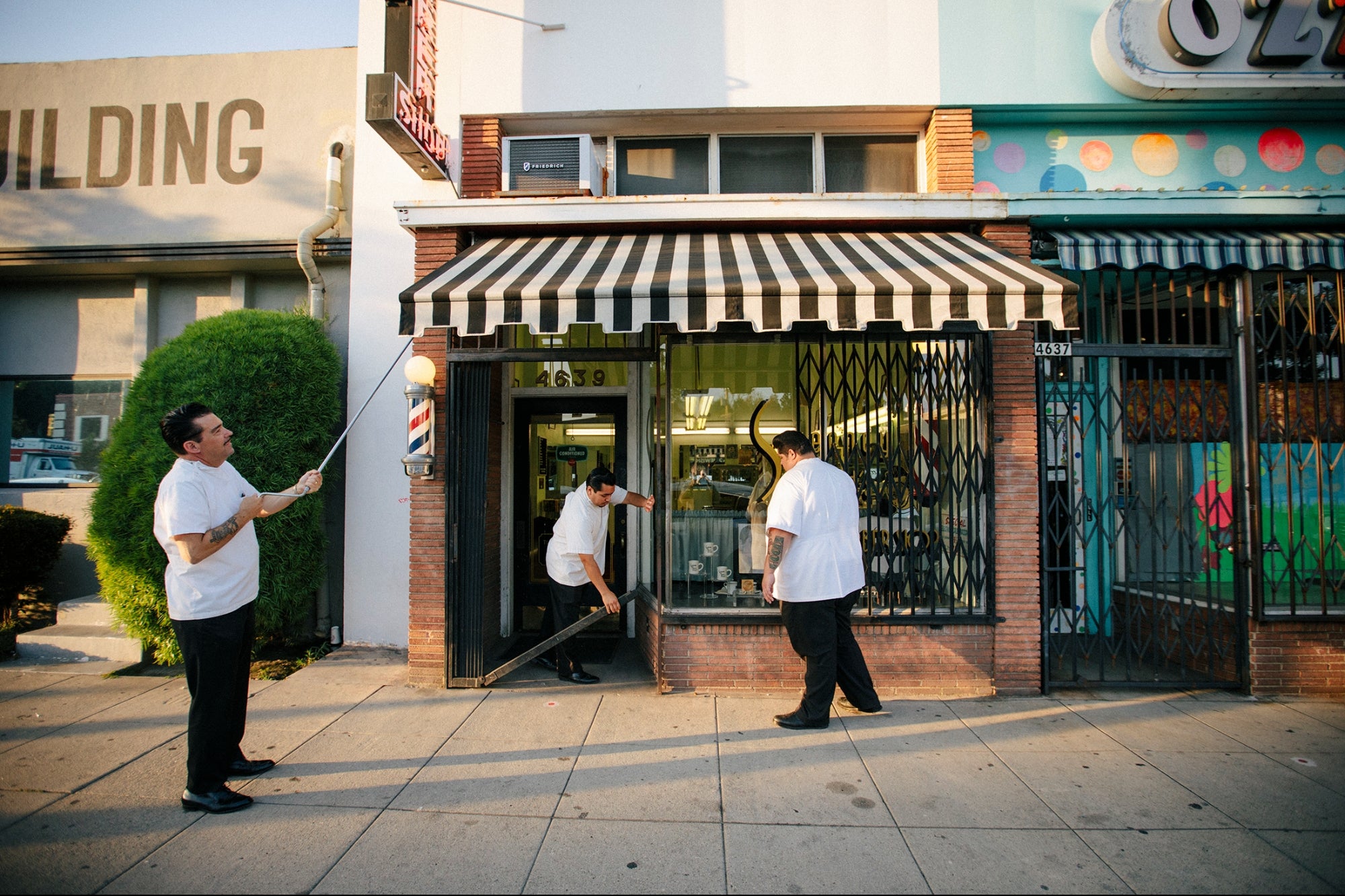
When was the last time you entered an establishment, looked around, and thought, “This place is a real mom-and-pop shop!”

Historically, “mom-and-pop stores” were just that: small stores run by someone’s parents as a business that brought in just enough to raise their kids. Looking back a hundred years ago, you might think of a corner grocery, or a little bakery on a back street in town. These days, though, “mom and pop” can apply to any small business — though “small business” itself has expanded drastically to include businesses with up to hundreds of employees. That’s certainly not what most would think of with a mom-and-pop-type store.

At its core, a “mom and pop” endeavor is small, independent, and often family-owned and operated, hence the name. They tend to be local, with a limited audience. Though small stores can flourish in big cities, the mental image that most of us get is that of a small town, with a general store providing goods to loyal customers – many of whom don’t have much choice in where to shop. And while this may be true in small-town America, there are plenty of family-run independents everywhere you go.

But if you know that your little store has a limited audience, to begin with, it begs the question – is branding important for a mom-and-pop store?

The answer is yes. Here’s why.

Related: What Big Brands Can Learn From Mom-and-Pop Stores to Connect with Customers

Fighting the competition

By their very nature, mom-and-pop shops don’t have a lot of resources to draw on. In the era of globalization, this can make it even more difficult for small businesses to keep up.

It’s a fact that the financial state of the average citizen tends to be unstable. Jobs come and go, and the economy seems to be rocking more and more every year. With the rising cost of living, consumers are increasingly searching out cheaper products—and big businesses, outsourcing to other countries for manufacturing, are eager to oblige. If you can get a product online for a fraction of the cost of buying it at a local store, it seems like an obvious choice to make.

Luckily, there are some initiatives that are giving mom-and-pop shops an edge on ecommerce and big business. Small Business Saturday was founded in 2010 to encourage shopping locally; in its wake, hundreds of variations on the theme have popped up in communities across the U.S. Spending money in small local stores has become a point of pride for many, even if they spend more there than they would online.

However, branding still makes a difference for small local businesses, even if they have a limited audience. Part of that is due to the brand personality.

Make it easy to shop local

“Branding” as a whole incorporates a lot of things. It has visual aspects, such as a well-designed logo. Advertisements and campaigns fall under branding, too. However, a mom-and-pop store’s branding strategy emphasizes elements that are more important than your logo.

Think of it this way: branding is the process of introducing your business to your neighbors. Your logo is like telling them your name. But your brand personality is who you really are — not just what a shopper can find at your store, but why they would want to shop there.

A consumer might go to a big-box store for a certain product, but if you offer excellent customer service, they’ll come to your business for you. Customer service as a big part of branding can never be overrated, especially for a localized business that survives and thrives based on connections and loyalty.

Related: How Local Mom and Pop Shops Are Conquering Big Box and E-commerce

Establish your aesthetic with a local touch

This is not to dismiss the visual aspects of branding or imply that these don’t matter. Your logo, as I said, is like telling your neighbors your name. It puts a label, a mental image, in their mind. Every time they see that logo afterward, your business’s reputation will come to the fore — and if it’s associated with a pleasant workforce and a shopping experience they can feel good about, then your branding is working hand in hand.

Investing in your community and participating in local events is an excellent way to market your brand and network with your target audience: your neighbors. Your visual branding works along with your brand personality at these events, too – make sure that your presence, whether at a booth or as a sponsor, is marked with your logo and your company colors to make it clearly identifiable. When your audience sees a logo they recognize, they’re more likely to come looking for faces they recognize, too.

One key point to remember when designing your visual branding is to avoid taking a page out of the big box playbook. While big businesses tend towards more generic marketing to “play it safe” with a broad audience, you have the gift of knowing your audience well. Do what you can to personalize your visual branding to your local area. Logos that include local landmarks or features, business names that include the name of the town or the family who runs the store — anything that ties your business to your area and lets everyone know that you’re at home there will help your store engender loyalty in your community.

A small business like a mom-and-pop store can be challenging to run in today’s environment and economy. But with careful attention to branding—in customer service, in your branded visuals, and in your brand personality—a small store can grow into something truly successful.


Source link

Why Mom and Pop Stores Should Never Overlook Their Branding Strategy — And How They Can Outshine Retail Giants Read More »

You Can Play Music From Streaming Services in the Car with This Wireless Adapter, Now  Off

You Can Play Music From Streaming Services in the Car with This Wireless Adapter, Now $50 Off


Disclosure: Our goal is to feature products and services that we think you’ll find interesting and useful. If you purchase them, Entrepreneur may get a small share of the revenue from the sale from our commerce partners.

Driving a car in 2024 and being unable to stream music and podcasts from your favorite apps through your car speakers can be super annoying. To help users overcome this limitation, the PlayAIBox Apple CarPlay and an Android Auto Wireless Adapter with streaming service support can bring your car up to speed with those that have Bluetooth-playing functionality and beyond.

The best part: It’s on sale for only $79.97 (reg. $129). This deal runs through 11:59 p.m. PT on July 21 only.

It comes designed with an Allwinner A133 chip, which lets you use multiple apps at a time without sacrificing speed or quality. It supports more than 800 vehicle models, and its compatibility with Apple and Android phones, plus its navigation apps, makes it a home run for consumers of all backgrounds.

The high-performance adapter is also well-designed for adventurers. It has a robust performance build and can withstand and operate in temperatures ranging from -30°C to 75°C.

Make sure to add this highly capable adapter to your car before this price drop ends. It can also make a world of difference when traveling for business.

Don’t miss your chance to save on this PlayAIBox Apple CarPlay and an Android Auto Wireless Adapter with streaming service support while it’s on sale for only $79.97 (reg. $129). This deal runs through 11:59 p.m. PT on July 21st only.

StackSocial prices subject to change.


Source link

You Can Play Music From Streaming Services in the Car with This Wireless Adapter, Now $50 Off Read More »