Process from Start to Finish

Process from Start to Finish


Heard that you can score a great deal when you buy a foreclosure home for real estate investments?

Buying foreclosed homes soared in popularity during the Great Recession as a wave of foreclosures hit the market and drove down prices nationwide. While foreclosure rates since then have fallen—270,222 in 2023, a steep drop from 2019’s numbers—there are always people who default on their mortgages.

And for real estate investors and homebuyers alike, distressed properties spell opportunity.

But learning how to buy foreclosure properties isn’t as simple as TV shows make it out to be. To begin with, you have to understand the foreclosure process — and how the strategies for buying foreclosures differ at each phase.


Home Foreclosure Process

When a borrower defaults on their monthly mortgage payment, it triggers a lengthy legal process:

StageDescription
Missed Payment Outreach

15 days late: Informal notice sent by lender.

36 days late: The lender must reach out again.

45 days late: Written demand letter sent, including loss mitigation and repayment options.

Notice of Default

90 days: Official notice of default after three consecutive missed payments.

120 days: Legal foreclosure action will be initiated.

Filing of Foreclosure ComplaintThe bank hires a law firm to file a lawsuit in court. The borrower now owes legal fees in addition to late fees.
Notice of Trustee’s SaleThe lender’s attorney schedules a foreclosure date and sends an official notice to the borrower. The foreclosure sale is advertised publicly.
Trustee’s Sale (Public Auction)Property is auctioned, typically at the local courthouse. Bidding often starts at the total amount owed, including late and attorney fees.
Transfer of Legal OwnershipIt can take a couple of months from the sale until the deed ownership changes hands.
EvictionThe new owner must go through the eviction process to remove the previous homeowners if they remain as squatters.
Real Estate Owned (REO)If the lender acquires the property at auction, it is listed for sale through a real estate agent.


How to Buy a Foreclosure Home

The strategy and steps to buy a foreclosed home depend on the stage of the foreclosure process when you choose to buy.


Buying Short Sales

In the early stages of mortgage default, homeowners — and their lenders — have more flexibility. If the property is upside-down, the lender may agree to a short sale: a loan payoff lower than the balance owed.

But lenders are fickle, bureaucratic beasts, and you can expect extra red tape in the short sale process. It’s also hard to find good deals on properties offered on short sales, as lenders are loath to discount the loan payoff below the property’s market value.

Some investors find a way to make it work, but most opt to target pre-foreclosure homes instead.


Buying a Pre-Foreclosure Home

Once the lender hires an attorney and files for foreclosure in court, there’s no more Mr. Nice Guy. The borrower has had at least four months to bring their loan current, agree to a payment plan, or sell the home, and they haven’t done any of those.

Now the homeowner is under the proverbial gun, with an auction date looming. They need to sell now or lose their home at auction.

That urgency can make for motivated sellers. But it also puts you on a tight timeline to secure financing and settle.

When I first started investing in real estate, I bought pre-foreclosure homes. I found that the overwhelming majority of distressed homeowners didn’t want to sell — they wanted to stay in their homes.

You can offer to buy their home and lease it back to them, as one way to get their attention. You then enter an installment contract for them to rent the property from you and buy it back.

If you really want to get creative, keep their mortgage in place and use a wrap-around mortgage to finance your portion. That works especially well if they have a low-interest mortgage in place.

As for where to find pre-foreclosure homes, you can always go to the courthouse to look up foreclosure filings directly, but that’s a lot of work. Alternatively, just use an off-market distressed property platform like Propstream or Foreclosure.com.


Buying at Foreclosure Auctions

Anyone can show up and bid at a public foreclosure auction. You just need to provide proof of funds for the down payment — often a bank check made out to yourself, which you can later cancel.

The problem, however, is that you can’t see the inside of the property. The bank doesn’t own it at that point; it still belongs to the defaulting property owner. So you have no idea what kind of condition the property is in. It could look perfect on the outside and be a shell on the inside.

Or it could be pristine. You just don’t know.

Unless,  of course, you do. If you have previously gained access to the property, for example by meeting with the homeowner there to discuss options for selling, then you have insider information.

Remember, the lender typically sets the opening bid at the total amount owed on the loan. At this point, that includes massive late fees and legal fees. Only bother bidding at foreclosure auctions where the property still has plenty of equity.


Buying Bank-Owned REO Properties

If no one buys the property at public auction, the lender buys the property themselves.

After jumping through the legal hoops to take ownership of the deed, and possibly evicting the former homeowners if they refused to leave, the bank then hires a Realtor and decides whether to sell the property as-is or do some repairs first. Then it goes on the market, listed on the multiple listing service (MLS).

At this point, anyone can walk through the property and make offers. If the property needs significant repairs, you’ll get the “Needs TLC” price, but that’s still the market price for the property. You’re bidding against every other Tom, Dick, and Harry out there.

Unless, of course, you can get a first glimpse of these bank-owned properties. While huge corporate banks follow procedures to the letter, local and regional banks are more accessible. There’s probably one person in charge of REO properties at these banks, and if you can establish a relationship with that person, you can sometimes get first access to their REO list before they go through the hassle of hiring a real estate agent.

It makes sense for the bank, too. They get to sell the property faster, without having to pay a realtor’s commission on foreclosure listings.

Read more about how to buy REO properties if you like this strategy.


Buying Government-Owned Foreclosure Properties

What happens when homeowners default on government-backed loans, such as FHA loans and VA loans?

If no one buys them at auction, the government takes them back instead of the lender.

Expect some extra steps and red tape, of course; but in exchange, you can sometimes score a great deal on government-owned foreclosed properties. You can view the list of government REOs on the Department of Housing and Urban Development (HUD) website.


Source link

Process from Start to Finish Read More »

As graffiti moves from eyesore to amenity, landlords try to cash in

As graffiti moves from eyesore to amenity, landlords try to cash in


Julian Phethean’s first canvas in London was a shed in his backyard where he covered the walls with bold lettering in spray paint. When he moved his art to the city’s streets in the 1980s, it was largely unwelcome — and he was even arrested a few times.

“We had nowhere to practice,” he said. “It was just seen as vandalism.”

These days, the canvases come to Phethean, better known as muralist Mr Cenz. Recent facades, which he shares with his sizable following, have included an abstract mural on a Tesla showroom and a portrait of Biggie Smalls, sponsored by Pepsi Max.

“I never would have envisioned that I’d be able to do it for a living,” he said.

Landlords wanting to attract young professionals once scrubbed off the rebellious scrawls. That was before graffiti moved from countercultural to mainstream. Now building owners are willing to pay for it.

From Berlin to London to Miami, the wider acceptance of graffiti has attracted developers looking to expand into trendy areas, companies wanting to relocate to hipper neighborhoods and brands seeking creative ways to advertise their products.

But that attention to once overlooked neighborhoods has pushed up rents, leaving artists, fans and local officials with a quandary: What happens after the street art that brought character becomes commodified?

Contemporary graffiti traces back to the anti-establishment expression of the 1960s and 1970s, when anyone with a can of spray paint could tag the sidewalks of Philadelphia and the subway cars of New York. In Soviet-era Berlin, protesters splattered the west side of the wall while the east side remained blank — until it fell in 1989, opening vast new canvases overnight.

The gallery world took note, but it was social media and the fame of artists like Banksy, Vhils and Lady Pink that propelled it to a wider audience. What followed was a movement that experts say has been reproduced from Australia to Argentina, as street art added to a neighborhood’s cultural cachet.

Take Shoreditch in east London as an example: Decades ago, developers deemed it a rundown industrial area. Still, it was a sanctuary for artists who made use of cheap rents to build a creative enclave.

“What artists bring is a sense of buzz: newness, creativity, trends,” said Rosie Haslem, managing director of Streetsense UK, a consulting agency. “Hipsters attract more hipsters who have more money and are able to start paying higher prices.”

That buzz also drew developers and companies that sought to leverage the popularity of Shoreditch. A former tea-packing plant now hosts a branch of the private members’ club Soho House. Down the road is Amazon’s largest corporate office in the region.

Spray painters still add political messages to the mosaic of artwork in east London. But they are nestled between more commercial interests: hand-painted campaigns sponsored by L’Oréal, Sky and Adidas, and street tours that treat the art as a tourist attraction.

Many campaigns are from agencies that act as middlemen between artists and the businesses interested in their work.

“We were splashing around in the water and a wave came,” said Lee Bofkin, a co-founder of Global Street Art, a London advertising agency. In the decade since its inception, it has grown to more than 30 employees, and Adidas, Moncler and Valentino have leased its walls.

Developers are responsible for a chunk of the 300 or so murals splattering Miami’s Wynwood neighborhood. The windowless walls of the former garment district had long appealed to graffiti artists, but one developer helped drive the 2009 opening of the Wynwood Walls, an open-air gallery visited by 3 million people each year.

“We had to find a carrot to try to bring investment into the area,” said Manny Gonzalez, the executive director of the Wynwood Business Improvement District. Street art, he said, was the lure. “We knew that we needed to keep the art.”

Five years ago, there were no office buildings in Wynwood. Now, tenants include Spotify, accounting firm PwC and the venture capitalist Founders Fund. Sony Music has leased office space there. And tech companies from San Francisco and New York are coming, Gonzalez said.

Those employees will need somewhere to live, and developers are betting they stay local. At the forefront is the Related Group, a developer that has built a “market rate” co-living apartment building with a rooftop pool and a distinctive mural by artist El Mac. Last year, Related broke ground on luxury condominiums, and it commissions artists to add visual flair to its buildings.

“Every lobby, every hallway, common space, public area of the building has art in it,” said Patricia Hanna, art director at Related. “The philosophy is to continue what Wynwood is.”

For investors, backing buildings in these districts is paying off. In Shoreditch, leasing a prime workspace cost about $90 per square foot in the last quarter of 2023, according to CBRE, 112% higher than the same quarter in 2008. Rents in the City of London financial district increased 40% in the same period.

The asking price for office leases in Wynwood was about $80 per square foot in the fourth quarter of 2023, 83% higher than the average in Miami-Dade County, according to Colliers.

The east side of the Berlin Wall in Friedrichshain is now an open-air gallery, and the average rent in the area has doubled in the past 10 years, higher growth than in neighboring districts, according to Savills.

Developers have tried to bring that artistic buzz to other neighborhoods: One popular exhibit, The Haus, was hosted in a former bank by a developer, Pandion, which later replaced the old building with sleek condominiums. All of them have sold.

A large outdoor facade could cost six figures, said Charlotte Specht, a co-founder of Basa Studio, an agency in Berlin that has helped street artists collaborate with brands like Maybelline and Netflix. Brands eager for campaigns have a demographic in mind for their target customers: “They use Uber, they have an Apple Mac, they get their latte to go, they travel,” Specht said.

Street art had acted as “a powerful engine” to turn some neighborhoods into economic and cultural centers, said Thomas Zabel, managing director of Savills Germany. “Everybody wants to live there.”

But officials are wondering how to regulate street art, and whether the commercialization changes a neighborhood’s identity.

In Lisbon, Portugal, a municipal body called the Urban Art Gallery presides over new creations, resulting in a visual feast: Street art is splashed on walkways and train stations, and officials have pushed street art festivals and tours to beautify the city’s rougher neighborhoods. International students, digital nomads and foreign investors have rushed in.

Researchers say Lisbon has successfully used that art to brand itself as a hip destination. But its revival is divisive for the city’s less privileged, who argue that they have been pushed out of their homes.

In Wynwood, property owners promise that they intend to preserve the neighborhood’s artistic heritage. New buildings must include some art on their facades, and hand-painted advertisements are illegal.

But those regulations, some say, have led to diminishing organic spaces for artists, who cannot make the most of sponsored opportunities. “The developers become gatekeepers to some extent as to what the public gets to see,” said Allison Freidin, a co-founder of Miami’s Museum of Graffiti. “And you hope that the developers make a great decision.”

A harder-to-quantify cost is the displacement of residents who can no longer afford to live there.

“It’s really seen as a success story: Oh, look how art transformed this desolate area of a wasteland into this beautiful successful hipster area with restaurants and tourists,” said Rafael Schacter, an anthropologist at University College London. The art, he believes, has been complicit in erasing communities for not being “the right kind of people.”

Residents have pushed back. In Kreuzberg, a cultural haven near Berlin’s old wall, residents criticized the opening of a Google tech incubator, which eventually moved elsewhere. Artists there have painted over their own murals to protest gentrification and voiced concerns over sponsored content’s replacing public art. In Los Angeles, graffiti artists risked trespassing charges to slather an abandoned luxury tower, which, in turn, has boosted curiosity toward it.

Aware of the tensions, businesses have started charitable arms that their commercial projects help fund. Some, including London’s Global Street Art, paint murals in local neighborhoods. Others, such as Basa Studio, say they want to help artists get paid fairly for their contributions.

But places like Shoreditch have already lost their edge as they have turned mainstream, said Haslem of Streetsense, the consulting agency. “The risk in commodifying or commercializing some of this graffiti is you end up sanitizing it,” she said.

“It’s a double-edged sword,” Dean Stockton, who has painted for years under the name D*Face. He was disconcerted by the number of tourists on buses who stared as he worked on a recent Wynwood mural with the words “I WANT TO LEAVE.”

“If you are going to dance with the devil,” he said, “make sure you are getting paid handsomely.”


Source link

As graffiti moves from eyesore to amenity, landlords try to cash in Read More »

Boosting Your Small Business Visibility with Digital Signage

Boosting Your Small Business Visibility with Digital Signage


Did you know that digital signage gets more than 400 percent more views than static signs? With that astronomical number in mind, it makes complete sense to incorporate it into your marketing and advertising plan. As a small business, you need visibility in your field and digital signage is an impactful marketing and brand tool. So how will it boost your business? Kitcast.tv can help. Here’s how. 

Attract New Customers

Digital signage has a proven record many times over of being an effective way to attract new customers because it is eye-catching and engaging. Potential customers are attracted to a digital sign over a paper or fixed sign for the following reasons

  • Visual appeal – especially with moving images and bright colors. 
  • Location – a digital sign can direct customers straight to you. 
  • Interactive – give your customers an experience, not just an advertisement. 
  • Timely – deliver important messages for specific times of day, as well as specific events. 
  • Enhance word of mouth – people will talk about a digital sign to others, more than they will a static sign. 
  • Integrate with social media – add your social media handles to your sign to bring in even more traffic. 

Engage Your Customers

Having attracted potential customers, the goal is to convert them into sales by keeping them engaged with your small business and what it can offer them. Incorporating digital signage can be a powerful way to create a positive relationship with your customers. 

  • Target your message – customize your content based on your audience.
  • Interactive – get your customers involved with QR codes, surveys, and touchscreens. 
  • Updates – real time updates provide relevance to your customers. 
  • Education – give your customers vital information regarding your business and its goods and services. 
  • Emotional connection – use stories and images that resonate with clients, creating a positive relationship with each of them. 
  • Increased dwell time – not only will you bring customers in, but they will stay longer. 

Increase Sales

Th goal of any small business is to make sales and profit. Research finds that digital signage is an effective tool in these goals by influencing a customer’s buying decisions. How? Keep reading to find out. 

  • Prominence at check out – digital signs near the checkout points encourage last minute purchases, but can also be used to display sales, promotions and specials. 
  • Path to purchase – use digital signage to direct your customers through your store, which makes products more visible and increases impulse buys. 
  • Upselling – use your signs to suggest specific products or services, leading to more purchases. 
  • Increase urgency – digital signs can be used to promote limited time specials or exclusive offers, encouraging customers to make a purchase. 
  • Seasonal offerings – align your signs with special deals and discounts for holidays and seasons. 

Make the Most of Your Marketing Budget

A marketing budget should be used judicially. There should be greater investment in methods that are known to produce the desired results. What delivers the greater benefit for the lower cost? There also needs to be an eye on longevity and future benefits. Some methods offer slow burn and others a big but short-lived bang. Digital signage can help in a variety of ways. 

  • Instant updates – you can change the signs with ease, no printing or hanging required. 
  • Multiple campaigns – use your digital signs to market a variety of campaigns all at one time. 
  • Sustainability – save money and resources on paper, printing ink and manpower by using a digital sign.
  • Enhance your brand – being environmentally conscious can boost your reputation and create positivity to go with your brand. 

Build Your Brand and Image

When you run a small business, it can be difficult to become the most well-known or easily recognizable brand in your field or local area. Using digital signage puts your brand and image at the forefront of people’s minds when they shop. To create that lasting impression, put your signs to work for you. 

  • Unify your brand – use your signs to bring a cohesive nature to your colors, logos, brand and image. 
  • Build an emotional connection – when your image resonates with customers, you build a relationship that creates and cements brand loyalty. 
  • Share your story – give your customers everything about your small business to help build credibility and showcase shared values.
  • Share customer feedback – digital signs are effective in sharing positive commentary from your customers.
  • Fresh content – with a digital sign, it’s easy to update information quickly and timely to maintain a customer’s interest. 

Content Delivered in Real Time

What could make your business more relevant and easier to adapt for your customers than providing real time updates, such as weather impacts, brand new products, fresh deals and discounts and more. Use your signs in the following ways.

  • Advertise sales – holiday sales, special events, etc. 
  • Flash sales – get rid of extra stock and let customers know when you are doing so. 

Put Data to Work for You

Another great advantage of using digital signage is that you can collect data on its use, maximizing it for your purposes. 

  • Track engagement – this will tell you what types of signage to keep using and what might not be working for you. 
  • Adapt – use tracking data to modify and tweak your digital signage, based on the numbers and stats you collect.

Conclusion

Digital signage is beneficial in boosting visibility for your small business. Using it strategically across your operations can increase your customer base and profits.


Source link

Boosting Your Small Business Visibility with Digital Signage Read More »

10 Ways to Create Real Estate Equity Faster

10 Ways to Create Real Estate Equity Faster


Remember the story of The Little Red Hen?

She wants to bake bread, and at every step asks her friends for their help, but they all find excuses to avoid helping. Eventually she gets it all done herself and when her friends want to help her eat the bread, she says no.

The hen created something of value through work. She put in all the sweat equity over time – and she got to reap the reward.

Real estate equity works similarly. It takes knowledge and labor to find good deals on rental properties, and some work to manage them. But that knowledge and labor creates a barrier to entry, preventing every Tom, Dick, and Harry in the world from competing with you to invest in real estate.

Which in turn means you can earn higher returns on real estate investments than easy, universally accessible investments like stocks and bonds. Higher returns in the form of monthly real estate cash flow, higher returns from flips, and higher returns through building long-term real estate equity.

Here’s what you need to know about building equity in your properties, why building equity in your home is a good thing, and how you can build real estate equity faster.


What Is Real Estate Equity?

Real estate equity, whether in your home or an investment property, is quite simply the difference between what you owe on your mortgage and what the property is worth.

For example, if you own a property worth $150,000, and you owe $100,000 on the mortgage, you have $50,000 in equity.

Keep in mind that real estate equity exists on paper only. Tapping into it and actually accessing real cash from it requires you to either sell the property or borrow against it, both of which take time and cost money.

This means that your equity on paper and the actual cash you could access remain two very different things. If you were sell that property worth $150,000, you might incur $10,000 in closing costs such as Realtor fees, recordation fees, and other costs. So despite having $50,000 in equity on paper, you couldn’t actually walk away with $50,000 in your pocket by liquidating.


Reasons for Building Equity

Real estate equity offers multiple benefits to you as the owner, depending on your goals. You’ll have the opportunity to sell the property for capital gains of course, since that equity is essentially going into your pocket as a nice check at the time of sale. But the advantages don’t end there.

Another option is to tap into equity to buy more properties, using either a HELOC (try Figure, which even offers rental property HELOCs) or a blanket loan (try Visio). You get to leverage the equity you’ve accumulated in your existing rental properties or home to keep building your portfolio of assets.

If, for example, you wanted to use the equity in your home to purchase another home as a rental unit, you could use a HELOC and would only be required to make interest-only payments for the first ten years. This allows you time and flexibility for building real estate cash flow and any upgrades that might need to be made in the beginning.

You can also tap into real estate equity to take out a blanket loan instead of making a down payment. The lender secures a lien against your property with equity in it, in lieu of requiring a down payment.

Or maybe you’re looking to reach accredited investor status. Unlike home equity, equity in investment properties counts toward your net worth for qualifying as an accredited investor.

Building equity in your home is a good thing because the more equity you have, the more of your home you actually own, and the more money you’ll have available to invest and keep growing your wealth.

Other Creative Financing Options For Creating Equity

There’s a whole world of creative financing options that you can explore to build your equity. Don’t feel the need to limit yourself to the ones you know; explore your options and find out what fits better for your situation. Here are just some of them. 

Financing OptionDescriptionProsCons
Seller FinancingThe seller of the property provides financing to the buyer, acting as the lender.Easier qualification, flexible termsPotentially higher interest rates
Lease-to-Own AgreementsThe buyer leases the property with an option to purchase it in the future. Part of the rent goes towards the purchase.Builds equity over time, trial period for propertyHigher monthly payments, risk of losing equity if not bought
Home Equity Line of Credit (HELOC)A revolving line of credit secured by the equity in your home.Flexible access to funds, low interest ratesRequires sufficient home equity, risk of foreclosure
Cash-Out RefinanceRefinancing an existing mortgage for more than the owed amount and taking the difference in cash.Lower interest rates than other loans, one loan paymentExtends mortgage term, closing costs
Hard Money LoansShort-term loans from private investors or companies, based on the property value rather than creditworthiness.Fast approval and funding, flexibilityHigh interest rates and fees, short repayment period


10 Ways to Build Real Estate Equity

Like the Little Red Hen, there are plenty of ways you can boost your equity and build it faster in your properties. Here are ten creative ways to build real estate equity fast.


1. Make Property Updates

Adding value directly to the property will immediately build equity in a home. Cosmetic updating, rather than renovating, usually offers the highest rate of return, according to the research by Remodeling Magazine. Rather than gutting an entire kitchen, which only adds an average of 51% of its cost to the value of a home, simply painting a neutral color and updating fixtures and appliances brings an 81% return.

Everyone wants to live in a modern-feeling home, but not everyone agrees on style decisions, so keep it neutral and new.

Storage space is always a hot commodity. No one likes hanging their best suit or formal dress in the unfinished basement with the smelly shoes, so extra storage and organization will always add value.

For more information, consider these preferred upgrades:

Aspect of HouseDescription
KitchenKitchen remodels offer a high return on investment, modernizing this space can significantly increase home value.
BathroomsUpdating bathrooms can greatly enhance a home’s appeal and value, especially if they are outdated.
Exterior (Curb Appeal)Improvements like landscaping, exterior painting, and door replacements can boost a home’s first impression.
Energy EfficiencyUpgrades such as better insulation, modern windows, and energy-efficient appliances can make a home more attractive and eco-friendly.
Usable Square Footage (e.g., finishing a basement)Adding living space, such as finishing a basement, increases the functional square footage and appeal of a home.

Making smart property updates will not only increase the value of a home, but will help the property sell for a higher rental price if you’re currently using it as a rental. There is an upper limit though, so stick to property upgrades that are genuinely necessary, not vanity projects.


2. Adding a Rentable Unit

Remodeling a space over the garage, the basement suite, or adding an income suite or accessory dwelling unit can help you produce more rental income. You can even do this with your own home to house hack and live for free!

You can take that extra income and add it to your current mortgage payment every month to accelerate building equity in your home.

By boosting the income your property can generate, it boosts your rental property’s value. Income suites also add to the value of your home, as accessory dwelling units continue to grow in popularity.

Of course, these are cost/benefit dependent. Generally, the basement suite or apartment over the garage are a much less expensive investment, since the structures already exist. However, adding an accessory dwelling unit in your yard gives you a little more privacy in your space. And nowadays you can even buy relatively affordable kits on Amazon that you can build yourself within a few days.

Either way, the extra money added to your mortgage every month is paying down the principal and building that home equity fast.

(article continues below)


Source link

10 Ways to Create Real Estate Equity Faster Read More »

Why it’s so expensive to live in Phoenix

Why it’s so expensive to live in Phoenix


PHOENIX — In the five years since they began their life together in the desert sprawl of greater Phoenix, Devon Lawrence and Eren Mendoza have bounced from one itinerant home to another.

They have camped alongside a freeway off-ramp, using a gas station sink as their bath and a plastic tarp as their refuge from the relentless sun. They have slept on an air mattress in a friend’s living room. For the last two years, they have crammed into rooms at motels, paying as much as $650 a week.

Mendoza and Lawrence are both 32, and both have jobs. She works at a supermarket deli counter. He stocks shelves at a convenience store. Together, they earn about $3,500 a month. Yet they have been stymied in their reach for a modest dream: They cannot find an affordable home in a safe neighborhood in Phoenix, where rents have roughly doubled over the last decade.

“These prices are just wild,” Mendoza said. “It’s pretty much all anybody talks about. The fact that a dual income can’t support us is insanity.”

The impossible arithmetic of housing is a potent source of economic anxiety in Phoenix and many major U.S. cities — a reality that could influence control of the White House.

Arizona is one of six battleground states likely to determine the result of the presidential election. Its unemployment rate was only 3.7% in February, lower than the 3.9% national rate. Inflation has slowed. In the Phoenix area, optimism is buoyed by $60 billion in investments in factories that make advanced computer chips — a Biden administration talking point.

But polls consistently reveal economic pessimism, threatening President Joe Biden’s tenure. More than half of Arizona voters rated economic conditions as “poor,” and an additional one-fourth as “fair,” in a New York Times/Siena College poll of battleground states last year.

National polling in February found improving assessments about the economy yet worsening evaluations of Biden’s performance. More than 90% of respondents who rated the economy poor or fair had a negative view of the housing market. Biden has recently outlined proposals to lower the costs of homebuying while spurring the construction of affordable options.

Arizona exemplifies the stress over housing. Over the past decade, the allure of suburban life under cloudless skies has swelled the population of greater Phoenix to 5 million from 4.2 million, according to census data. The influx pushed housing prices steadily higher.

At the same time, restrictions on development, public opposition to growth and severe disruptions to the supply chain for building materials limited the construction of new housing. This is especially so for lower-income households because their profit margins are limited and they depend on subsidies.

Since 2010, the number of rental properties available for $1,000 or less in greater Phoenix has declined 86%, according to the Maricopa Association of Governments, a regional planning agency. The number of homes selling for $300,000 or less dropped 73%.

Those sorts of properties “used to be the majority of our market,” said Amy St. Peter, the agency’s deputy executive director. “They are virtually nonexistent now.”

For lower-income households, the mass disappearance of affordable housing has produced a wave of evictions, a surge of homelessness and desperation.

Even for people of greater means, an atmosphere of crisis grips housing. As the price they must pay to become homeowners soars, young professionals with six-figure incomes are taking on extra jobs and longer commutes.

Real estate agents — a professionally optimistic lot — cannot shake a gnawing sense of futility.

“Most people making $45,000 to $90,000 a year can’t afford to buy a house, and that makes people feel like the economy is crummy,” said Nathan Claiborn, an agent at Carin Nguyen Real Estate in the Phoenix area. “Housing affordability is a psychological drain for everyone.”

What the Bubble Built

The story of how Phoenix became a wildly expensive place to live stems directly from how it previously beckoned as a bastion of affordability.

In a nation reared on the mythology of the inexhaustible frontier, Arizona’s cactus-dotted landscape stretched to horizons that seemed limitless. Developers exploited the availability of land to sell the dream of Spanish-tiled roofs and swimming pools at discount prices — an antidote to the severe housing problems afflicting neighboring California.

Phoenix became the center of the speculative real estate boom that filled out the first years of the new millennium. The reckoning that followed yielded a wave of foreclosures. Local communities imposed restrictions on development.

Still, the population grew, especially during the pandemic, as professionals working from home sought larger properties in distant suburbs. From 2021 to 2022, Maricopa County — which contains much of greater Phoenix — added 57,000 people, registering the largest population growth in the nation.

As the Federal Reserve lifted interest rates to lower inflation, mortgage rates increased sharply, raising the costs of buying homes. Homeowners who might have sold properties — empty-nesters seeking smaller homes, and young parents needing extra bedrooms — have stayed put. That has limited the supply of homes on the market, keeping prices high.

Measures of affordability generally assume that a household should spend no more than 28% of its gross income on housing. By that criteria, only about one-fifth of all homes sold in the Phoenix area late last year were affordable for a family earning the median local income, about $72,000, according to an index maintained by the National Association of Homebuilders and Wells Fargo. Before the pandemic, nearly two-thirds of local homes were priced at affordable levels.

Housing experts generally concur on the solution: increase the density of neighborhoods, adding apartments at rates subsidized by tax credits. But most of the available land in Phoenix and its surrounding suburbs is zoned for single-family homes.

Community activists have used social media to sow alarm about the prospect of affordable housing projects. They have warned of rising crime and diminished property values in pressing an age-old mantra: Not in my backyard.

“The vocal minority in many communities are creating this avalanche of NIMBY-ism,” said Debra Sydenham, executive director of the Urban Land Institute Arizona District Council, a nonprofit group. “We are talking about providing homes for firefighters, for teachers, for nurses, for police officers. They view it as, ‘No, you’re providing homes for drug addicts.’”

Which helps explain why people like Mendoza and Lawrence remain stuck. Even if they could find an affordable apartment, they could not pass a credit check, given his student loan debt. They cannot come up with the first and last month’s rent plus the security deposit.

This also explains why Constable Lennie McCloskey is an especially busy man.

‘You Have to Leave’

McCloskey — known to his fellow municipal officials as “Lock ’Em Out Lennie” — spends much of his time evicting tenants who have fallen behind on their rent.

“They know they’ve got to leave,” he said. “I explain to them, ‘It’s only a contract. You agreed to do something. You didn’t do it. You have to leave.’”

Last year, landlords filed 83,000 evictions in the Phoenix metro area, the highest total since 2005, according to the Maricopa Association of Governments. The increase in part reflected the ending of a pandemic-era moratorium on evictions.

On a recent morning, McCloskey, 68, scanned the paperwork on a dozen fresh cases on his beat in the Western Valley. He donned a black bulletproof vest with a Maricopa County badge, and a holster bearing a green-handled 9 mm pistol.

He conducted his rounds with jovial aplomb, counseling people not to lose hope even as they scrambled to pack belongings in the minutes he allotted before ordering them out.

“Typically, it’s five to 10 minutes,” he said. “If they’ve got kids and pets, I work a little bit of time with them, but usually I won’t go more than 30 minutes.”

In the bedroom community of Peoria, McCloskey rousted a half-dozen squatters from a dilapidated home littered with drug paraphernalia, unwashed dishes and a mostly eaten birthday sheet cake.

He drove to an apartment complex in Glendale, near the Arizona Cardinals football stadium, to remove Leebert George Brown, 35.

Brown’s place was spotless, its white countertops glistening. He had lived there since August, when he moved to Phoenix from his native Florida, in pursuit of work as a plumber. The rent, nearly $1,600 for a one-bedroom apartment, seemed manageable once he cracked the ranks of the plumbers union.

But his application had been held up. He was driving for Uber and working nights at an Amazon warehouse, where he earned $17.63 an hour. He was falling behind while sending money home to his mother, who suffered seizures.

He had packed most of his belongings by the time the constable arrived — his clothes, his high school diploma, some personal finance books. As a maintenance man changed the locks, he grabbed his work boots. He would need them for his shift at Amazon in less than five hours. He would get off work at 5 the next morning. Then where would he go?

Brown shrugged. “I’ve got to work something out,” he said.

The constable held the door for him as he stepped into the hallway and headed toward the elevator, carrying his clothes in two plastic trash bags.

“Sorry it took me so long,” Brown said.

“Thank you for your cooperation,” the constable replied.

‘It Doesn’t Work’

In downtown Phoenix, at a homeless campus run by a nonprofit group called Keys to Change, the staff has grown accustomed to people arriving with problems like addiction and domestic violence. Those unable to pay market rents have run out of couches to crash on. They have exhausted assistance from sympathetic friends and relatives.

Even wealthy people are confronting compromises that have undermined their faith in the economic system.

Alexandra McDaniel, 29, grew up in Scottsdale, the affluent suburb north of Phoenix. As she and her fiance, Cameron Smith, 32, began their search for a home early this year, she hoped to live close to her parents and near her job at a fashion retailer. Smith was intent on finding an area where McDaniel could safely walk their dog alone at night.

Smith is a data analyst at Amazon. Together, he and McDaniel earn roughly $200,000 a year. They figured they could afford to pay as much as $550,000 for a home, though they aimed lower.

But as they sat in a conference room on a recent morning, their Realtor, Curt Johnson, projected a map on a screen that forced them to downgrade their expectations.

He had searched for houses with small pools and at least three bedrooms priced at $475,000 to $575,000. Scottsdale had no listings. The half-dozen properties he had found were scattered about 15 miles away and beyond a freeway.

“It’s a lower-income area,” Johnson said, adding that it had “a higher crime rate.”

He drove the couple out for a look. The first two homes had tiny yards unsuitable for their dog. The third place had a huge yard and a wide-open kitchen, but the asking price was $599,000. The next one was similarly priced, and the neighborhood felt seedy. The last house was within their budget, but alongside an apartment complex whose balconies looked directly into the yard.

As they drove back to Scottsdale, they struggled to make sense of their situation.

“We have great jobs,” McDaniel said. “We’re doing exactly what we were told to do, and it doesn’t work.”


Source link

Why it’s so expensive to live in Phoenix Read More »

Handling Common Sales Objections – Small Business Bonfire

Handling Common Sales Objections – Small Business Bonfire


Before we dive into the most common sales objections, I’d like to take a moment to caveat something.

Not everyone is going to buy from you (nor should they).

“If you can’t help someone, don’t sell someone.” should be your new motto.

If the timing isn’t right, or the offer doesn’t align, pivot to a follow-up.

Now that’s out of the way, let’s dive in, starting with the top objections you’re probably facing in sales.

Objection 1: “It’s too expensive.”

If you get this objection, you haven’t shown the value (your fault).

You must transition the conversation from price (who cares) to value (ROI).

Price then becomes an inconsequential object.

Ask your prospect:

  • “What do you mean by expensive?”
  • “Why do you think it’s too high?”
  • “What aren’t you getting what you’d thought you’d get at this price?”

From there, you can showcase the value and benefits of your offer that justify the price point.

Objection 2: “I have to think about it”

They don’t.

YOU’RE the only one with information that could guide them to the right choice.

The way to answer this is by asking:

  • “Help me understand what you’re thinking about?”
  • “What are the most important things you’re thinking about?”
  • “I’m the only one with the information you need; what can I answer for you?”

Then, again, practice active listening. They’ll then give you their biggest (real) objections.

Objection 3: “I need to run this by”

Gosh…this one.

If you’ve gotten here, you haven’t qualified the prospect properly (another future LFG issue).

That said, you can still ask several thoughtful questions, including:

  • “What part do you think you need to run by your partner?”
  • “What’s holding you back from making this decision solo (if it were a home run)?”

Finally, in this situation, it’s imperative to get a 3-way call with “the team.”

Make sure to schedule that call on this call.

Objection 4: “We’re already working with someone else”

This is a bit different; they already have another vendor.

But don’t worry, it’s not over yet.

First, ask:

  • “I’ve heard great things about X company, but what could they do better?”
  • “I’m hearing that they’re absolutely amazing, and you’re not even considering leaving them?”

From there, address those pain points and showcase your differentiators.

Objection 5: “I’m too busy.”

If they’re too busy, they essentially say, “I don’t think this is important.”

If they’ve said this, ask:

  • “So, solving these challenges isn’t a priority?”
  • “You’ve said this is important to fix, but you’re also telling me it’s not a priority. Where does this fit?”

From there, they might understand the urgency and see the value in your offering.


Source link

Handling Common Sales Objections – Small Business Bonfire Read More »

What Landlords Need To Know About Emotional Support Animals And The Fair Housing Act

What Landlords Need To Know About Emotional Support Animals And The Fair Housing Act


What You Can’t Require From Tenants With ESAs

As with service animals, tenants with ESAs have several protections that you, as the landlord, must respect, such as: 

Require ESAs To Go To Training

Just because a tenant has an emotional support animal doesn’t mean the rules don’t apply to them. The last thing you or the other tenants want is to hear an emotional support canary singing at 3 am. 

If the animal is or becomes disruptive at any time, you can SUGGEST training or behavior lessons before filing for eviction. The keyword here is suggest; you cannot require your tenant to get their ESAs to training. 

However, landlords can file for eviction if the animal continues to be disruptive or dangerous. What’s important here is, like always, to document everything you can so that, if worse comes to worse, you have proof that can support your eviction. 

Charging Additional Fees

No, as per the Fair Housing Act, landlords cannot charge additional fees for emotional support animals. Since emotional support animals are not considered pets, you cannot charge the tenant an additional pet fee, refundable pet deposit, or ongoing pet rent. 

However, if the animal causes any damage or harm to the property, you can deduct that amount from the initial security deposit. Ensure that the tenant is fully aware of their responsibility regarding damage done to the unit by the animal within the lease contract.

Deny A Tenant Due To Insurance Noncoverage For ESAs

Unfortunately, even if your insurance doesn’t cover emotional support animals, you cannot use it as grounds to reject a tenant. This falls within reasonable accommodations, but, again, you can always charge the tenant for any damages their ESA inflicts on your property. 

When Landlords Can Reject an Applicant with an ESA

Even though landlords are usually legally required to allow an emotional support animal, some circumstances allow for the rejection of the animal. Examples include:

  • Smaller multiunit (2-4 unit) buildings where one of the units is occupied by the owner (e.g. multifamily house hacking landlords).
  • Single-family homes rented without a real estate agent, by landlords owning three or fewer single-family rentals.
  • If the size of the animal is not compatible with the size of the property.
  • If the request becomes financially unreasonable for the landlord to make the accommodations for the emotional support animal.
  • If the animal is considered potentially dangerous to other tenants living in the same building or complex.
  • If the tenant does not meet all the typical tenant screening qualifications required before signing a lease agreement. Usually these would include credit, criminal, and eviction histories, income, rent payment history, and beyond. 

How to Handle Tenants Scamming Fair Housing Laws

In a perfect world, no one would abuse laws designed to protect the disabled. 

Unfortunately, there are plenty of renters who don’t suffer from a disability who take advantage of Fair Housing laws to game the system. Scamming websites offer fake certifications or documentation stating that the animal is a service animal when it is not. 

Don’t expect much in the way of legal protections against these scammers. If you ask the tenant screening questions outlined above and the tenant and animal meet the qualifications, you have little choice in the matter. You cannot reject their rental application because of the animal and must allow it to live in the unit at no extra charge. Otherwise, you face Fair Housing lawsuits over discrimination. 

Final Thoughts

As per the Fair Housing Act, landlords are legally required to allow emotional support animals or service animals. 

However, you are also protected by law if the request is unreasonable, the animal is disruptive, or the tenant is a scammer. Handle rental applications that include emotional support animals with kid gloves, knowing you risk a Fair Housing lawsuit if you overstep the line. 

Do you allow pets in your rental properties? Have you ever run into trouble with emotional service animals? 


Source link

What Landlords Need To Know About Emotional Support Animals And The Fair Housing Act Read More »

The hotel guest who wouldn’t leave

The hotel guest who wouldn’t leave


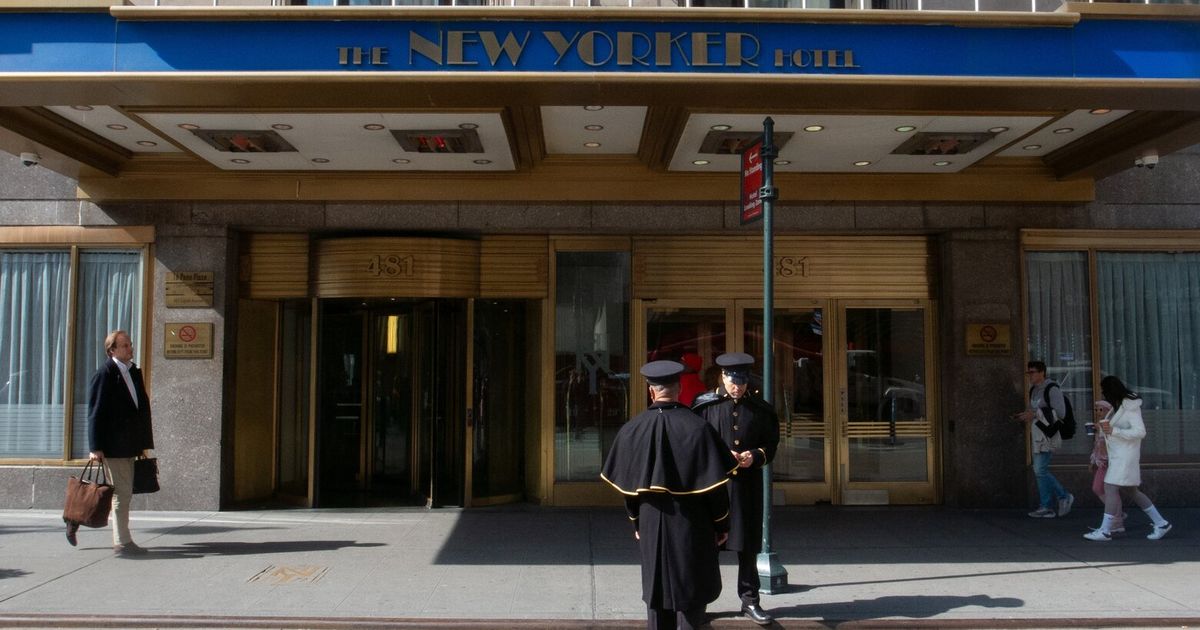
NEW YORK — On a June afternoon in 2018, a man named Mickey Barreto checked into the New Yorker Hotel. He was assigned Room 2565, a double-bed accommodation with a view of midtown Manhattan almost entirely obscured by an exterior wall. For a one-night stay, he paid $200.57.

But he did not check out the next morning. Instead, he made the once-grand hotel his full-time residence for the next five years, without ever paying another cent.

In a city where every inch of real estate is picked over and priced out, and where affordable apartments are among the rarest commodities, Barreto had perhaps the best housing deal in New York City history.

Now, that deal could land him in prison.

The story of how Barreto, a California transplant with a taste for wild conspiracy theories and a sometimes tenuous grip on reality, gained and lost the rights to Room 2565 might sound implausible — another tale from a man who claims without evidence to be a first cousin, 11 times removed, of Christopher Columbus’ oldest son.

But it’s true. Whatever his far-fetched beliefs, Barreto, now 49, was right about one thing: an obscure New York City rent law that provided him with many a New Yorker’s dream.

On that summer day nearly six years ago, Barreto walked through the hotel’s revolving door on Eighth Avenue and entered a lobby centered by a 20-foot art deco chandelier, a nod to the hotel’s geometric architecture.

When it opened in 1930, to great fanfare, the New Yorker Hotel was not just the largest in the city but the second largest in the world. It was an opulent hotel of the future, with 92 telephone operators, a power-generating plant and a radio with four channels in each room.

Today, the mystique has faded, although the property still attracts tourists with its central location. Less than half the rooms are open to guests, and the hallway carpet is tattered and lined with brightly lighted vending machines of sodas and snacks. Most of the building is occupied by followers of the Rev. Sun Myung Moon, a self-proclaimed messiah who bought the hotel in 1976 and made it his organization’s headquarters.

Even by New York City standards, the room to which Barreto was assigned was small, just under 200 square feet. The beds consumed most of the maroon-and-gold carpeted space. A tiny closet could fit a handful of garments. There was also a 42-inch TV with free HBO.

Over the course of several recent interviews, Barreto described what happened next — events that led to a yearslong ordeal for the hotel.

In conversation, Barreto vacillates between lucid and unstable. He said he experienced panic attacks and seizures but insisted he had never been diagnosed with a mental illness — even as he claimed to be the chief of an Indian tribe he founded in Brazil.

Much of Barreto’s story is corroborated by years of court records, but one crucial moment comes from only his account: On that first night, he settled into his room, high above midtown, with his partner, Matthew Hannan. Before that night, Barreto says, Hannan had mentioned, in passing, a peculiar fact about affordable-housing rules that pertain to New York City hotels.

With their laptops open, he claimed, they explored whether the New Yorker Hotel was subject to a little-known section of a state housing law, the Rent Stabilization Act.

Passed in 1969, the law created a system of rent regulation across the city. But also subject to the law was an assortment of hotel rooms, specifically those in large hotels built before 1969, whose rooms could be rented for less than $88 a week in May 1968.

According to the law, a hotel guest could become a permanent resident by requesting a lease at a discounted rate. Any guest-turned-resident also had to be allowed access to the same services as a nightly guest, including room service, housekeeping and the use of facilities, such as the gym.

The room becomes, essentially, a rent-subsidized apartment inside a hotel.

Despite the reasonable assumption that what they were undertaking had been orchestrated from the start, Barreto claimed the idea only took shape when his and Hannan’s online search stumbled upon the 27th line of a 295-page spreadsheet titled “List of Manhattan Buildings Containing Stabilized Units.”

According to court documents, Barreto left his room the next morning, rode the elevator to the lobby and greeted a hotel employee at the front desk. He handed over a letter addressed to the manager: He wanted a six-month lease.

The employee dialed the manager, and after a brief exchange, Barreto was told that there was no such thing as a lease at the hotel and that without booking another night, he would have to vacate the room by noon. The couple did not remove their belongings, so the bellhops did — and Barreto headed to New York City Housing Court in lower Manhattan and sued the hotel.

In a three-page, handwritten affidavit dated June 22, 2018, Barreto cited state laws, local codes and a past court case in arguing that his request for a lease made him a “permanent resident of the hotel.” Removal of his items amounted to an illegal eviction, he said.

At a hearing that July 10, in the absence of any hotel representatives to oppose the lawsuit, the judge, Jack Stoller, ruled in Barreto’s favor. Stoller not only agreed with his arguments but even cited the same case law as Barreto and ordered the hotel “to restore petitioner to possession of the subject premises forthwith by providing him with a key.”

Barreto returned to Room 2565 within days, now as a resident of the hotel — and soon, as its new owner.

Back in their room days after the ruling, the couple read Stoller’s ruling over and over. In it, there was no order that the hotel provide a lease, no limit on their stay, no suggestion that rent was due.

But one word was mentioned throughout: possession. Barreto was given “final judgment of possession.”

He said he called the court to ask someone to explain what exactly that meant. “You have possession,” Barreto, sharply and slowly stressing every syllable of the final word, said he was told. “You’re not a renter. You have possession of a building.”

And how is possession of real estate recorded? In New York City, it is at the Department of Finance.

With the judge’s order in hand, Barreto and Hannan visited the agency’s lower Manhattan offices. Barreto said he asked a clerk about putting Room 2565 in his name — as a new homeowner would — but was told that would be impossible because the hotel, unlike apartments, was not split up in city records by rooms.

The property had one entity on file, the hotel itself, identified in city records as Block 758, Lot 37. So, citing the judge’s order, Barreto filled out paperwork declaring his ownership of that.

“If I have the right to register it all,” he recalled thinking, “then I will register it all.”

In New York City, a change of ownership is recorded in the voluminous Automated City Register Information System, or ACRIS, which holds the real estate records for every property. Thousands of documents such as deeds and mortgages are received and published daily, too many for the city’s Department of Finance employees to scrutinize before posting online.

Barreto tried repeatedly to file for a deed but was rejected over various technicalities. After his sixth attempt, a clerk told him he needed to contact the sheriff’s office. (In New York City, the sheriff’s office is a division of the Finance Department.)

Barreto said he spoke to a sheriff’s deputy, an investigator in the department, who asked why he was filing so many times. He said he responded that he had been given possession of the property but was having technical difficulties.

At the same time, the hotel’s owners had filed their own lawsuit to evict Barreto, claiming the hotel was exempt from the housing law’s hotel provision. Ultimately, the lawyers could not produce documentation from May 1968 to prove the hotel’s weekly rate was at the time more than $88 a week. The judge dismissed the suit.

Meanwhile, Barreto filed for a deed for a seventh time. It was accepted.

On the afternoon of May 17, 2019, nearly a year after Barreto booked his one-night stay, he was identified in ACRIS as the owner of the New Yorker Hotel, a 1.2 million-square-foot building.

Barreto now had a recorded deed showing he had ownership of the hotel, but the true and only owner since 1976 was still the Unification Church.

Barreto’s next moves went far beyond the rights of a now-permanent guest.

He immediately fired off an email to a lawyer for the hotel, demanding to know about the property’s recent finances, and included a claim that he was owed $15 million in profits.

“That payment is past due,” he wrote, “and is due immediately.”

A few days later, another demand: The 38th floor needed to be cleared of guests. “I need to do an inspection of the building with my architect ASAP,” he said.

The lawyer quickly responded, “What are you referring to?”

“I have ownership rights in that building,” Barreto replied. “That’s what I’m referring to.”

He also wrote about wanting to make upgrades, including to the revolving door at the hotel’s entrance on Eighth Avenue between West 34th and West 35th streets. “That area looks like a war zone,” he said.

While the lawyer scrambled to file a lawsuit to revert ownership of the hotel, Barreto sent off an email to Wyndham Hotels and Resorts, which manages the property, notifying it that he now owned it. A Wyndham representative asked for a litany of legal and sales documents to be sent as proof. (They were not.)

Barreto sent a memo to M&T Bank, the hotel’s lender, and asked for all accounts to be put into his name. (They were not.)

Next, Barreto walked into the Tick Tock Diner, which is connected to the lobby by double doors. He dropped off a letter addressed to the owners. Monthly rent checks, he wrote, should be sent to a new address: Room 2565.

One of the diner’s owners, Alex Sgourgos, recognized Barreto. Since he had moved into the hotel, Barreto, along with Hannan, frequently ate at the Tick Tock, a round-the-clock restaurant styled as a 1950s diner with neon lights, red booths and a laminated menu. The two men often ordered breakfast, sandwiches and chicken entrees, Sgourgos said, and always paid in cash.

“They looked like strange guys,” he added.

After reading the letter, Sgourgos called the Unification Church, which told him to ignore Barreto’s demand. The couple continued to eat at the restaurant, he said, and never mentioned the rent payments again.

Two days after Barreto walked into the Tick Tock, the lawyer for the hotel was in court, explaining the situation and pleading with a judge to issue an order to stop Barreto from representing himself as the owner.

The lawyer, Matthew Meisel, said his law firm partners had “never seen such an egregious set of circumstances.”

In court, Meisel said he believed that Barreto was under investigation by prosecutors in the Manhattan district attorney’s office, although he did not specify for what.

Across the country, it is not uncommon for overworked municipal recorders to accept property filings under the assumption that they are legitimate, and for real estate speculators to take advantage of the system.

But Bill Lienhard, a lawyer who has represented many victims of deed theft in New York City, said he was stunned by the apparent ease with which Barreto transferred a 41-story Manhattan hotel into his name.

“Boy,” he said, “this takes the cake for the city’s record department not paying attention.”

Representing himself in court, Barreto insisted he had done nothing wrong. “As for me proclaiming to people I was the owner, I only did that after I had the deed,” he said in court.

A few months later, the judge issued a ruling: “The subject deed is a forged deed by all accounts,” he wrote. Barreto did not own the property.

But that was not the end.

Despite the judge’s ruling about ownership, Barreto was still a legal resident of the hotel.

His home, Room 2565, is near the end of a long narrow hallway that zigs and zags from the elevators. Around the corner is Room 2549, where Muhammad Ali spent the night in 1971 after losing the so-called Fight of the Century to Joe Frazier at Madison Square Garden.

With no job, Barreto said, he spent hours in his room every day, researching his family’s history in Brazil, where he was born and raised in the southern river town of Uruguaiana. He has an angular, youthful face and a military-style haircut and fidgets with his clothes as he talks.

A relative said he had excelled in school in Brazil, had never gotten into trouble and moved to the United States in 1990s. As a teenager, he was considered particularly gifted — the smartest child in the family.

But in recent years, he developed an obsession with his genealogy, claiming to have uncovered a direct connection to Columbus through Portuguese royalty. In Civil Court, he started to invoke the explorer’s name — “My family name ‘Muniz Barreto Columbus,’” he wrote in a 2021 filing.

Barreto also delved into the Unification Church’s origins on the Korean Peninsula, its expanding economic interests on other continents and its business connections with North Korea. He started to believe that leaders of the church were sending its income, including from the hotel, to North Korea in violation of sanctions imposed by the United States.

In an interview, Barreto said his concerns about the finances of the religious organization had become the main driver for staying in the hotel. He called it his patriotic duty as an American citizen, likening his efforts to someone having been able to stop one of the hijackers before 9/11.

“I’m sorry I disrupted your attempt to finance weapons of mass destruction,” Barreto said. “It’s Mickey Barreto versus North Korea.”

While Moon, who died in 2012, was born in what is now North Korea, his church’s current ties to that country are unclear; it once operated factories and a hotel there. The church came under intense scrutiny in Japan after the 2022 assassination of Shinzo Abe, the former prime minister. The alleged killer believed that Abe had ties to the church, which has long been accused of preying on vulnerable people for donations, in Japan and elsewhere.

Barreto voiced similar claims to relatives, about both the church and his family’s genealogy, leaving them confused about whether his statements were tethered to reality.

“It was something that was just hard to believe,” said the relative, who asked to remain anonymous because of sensitivity within the family. “I was thinking maybe it’s true, I don’t know. With Mickey, it’s hard to say.”

A Unification Church spokesperson declined to comment about Barreto’s allegations, his residency or the lawsuits.

Barreto had prevailed in two separate court proceedings; he had a right to a rent-stabilized lease for a room at the New Yorker Hotel. He had access to room service, housekeeping and all the hotel’s facilities.

But he refused to sign a lease — or pay rent.

The hotel’s first offer of a lease, according to him, exceeded the legal rent for a rent-stabilized room. He also declined additional offers over the years, claiming he was concerned about the church’s finances.

Last year, the hotel’s owner succeeded in court against Barreto. A judge ruled in the hotel’s favor, citing Barreto’s refusal to pay or sign a lease. He was evicted in July.

Even while that second eviction case had been working its way through Housing Court, Barreto had not stopped portraying himself as the property owner. In September, he submitted another deed showing that the hotel had been transferred once again into his name, and that the city had accepted it.

The transfer caused the hotel to lose a property tax exemption, resulting in a $2.9 million increase on its property tax bill.

Back in court, the hotel’s lawyers urged a judge to hold Barreto in contempt, and a judge signaled on Feb. 7 that there would be another hearing in the case.

A week later, police officers showed up before sunrise at the apartment on the Upper West Side where Barreto had been staying with Hannan.

Barreto was arrested and arraigned later that morning in a Manhattan court on 24 counts — including 14 felony fraud counts — in what prosecutors said was a criminal scheme to claim ownership of the hotel. Hannan, who Barreto said was not involved beyond staying with him at the hotel for much of five years, was not charged or accused of any crime.

Barreto is now awaiting trial in state Supreme Court in Manhattan and facing several years in prison if convicted. In jail before he was released on his own recognizance, Barreto said he used his one phone call to dial the White House, leaving a message about his whereabouts.

There was no reason to believe the White House had any interest in the case or any idea who Mickey Barreto was. But you could never quite tell with Mickey — he had been right once before.


Source link

The hotel guest who wouldn’t leave Read More »

The SMB Guide to Personal Branding 2024

The SMB Guide to Personal Branding 2024


Building a personal brand takes time and effort, but the following steps can help you get started:

Step 1: Define Your Brand and Develop a Goal

To define your brand, start with introspection.

Ask yourself:

  • Who am I?
  • What do I stand for?
  • What do I want to be known for?
  • What is my vision?
  • What are my values?
  • What are my goals?
  • What are my strengths?

From there, start to outline who YOU are and what you want to be known for.

Step 2: Establish Your Online Presence

Having an online presence is crucial for personal branding.

This includes:

  • Creating up-to-date social profiles
  • A personal website
  • A well-written blog

Get started by updating your current social profiles.

Make sure your social media profiles:

  • Feature a consistent visual brand, including the same background image, headshot, bio, etc.
  • Highlight your achievements and projects
  • Speak to your audience (who you want to help).

From there, you can build a streamlined website and drive traffic via your social posts.

Step 3: Produce Valuable Content

Creating valuable content is a cornerstone of personal branding.

Share your insights, stories, experiences, and client success stories.

Focus on delivering quality content that offers solutions and value to your followers.

  • Write blog posts or articles relevant to your niche.
  • Share insights on social media
  • Participate in podcast interviews (or start your own).
  • Create videos or webinars to educate and engage.

Content is a powerful tool to showcase your expertise and build a loyal audience.

Pro Tip: You can never give away too much value. Don’t hold back.

Step 4: Engage With Your Community

Building a brand is not just about broadcasting; it’s about interaction.

Here are a few ways you can interact with the community you’re building:

  • Respond to every comment on your social posts
  • Engage with other posts on all social platforms
  • Attend live networking events and engage with your peers
  • Offer help and support where you can
  • Join or create online groups that align with your brand

By engaging with your community, you can build meaningful relationships and establish yourself as an expert in your field.

Step 5: Continuously Learn and Adapt

The digital landscape and industries are constantly evolving.

Stay relevant by:

  • Keeping up-to-date with trends in your industry.
  • Adopting new tools and platforms where appropriate.
  • Upgrading your skills with courses or certifications.
  • Asking for feedback and making the necessary adjustments.
  • Following this field guide (woohoo)!

A commitment to learning and adaptation shows your audience that you’re a forward-thinking leader in your field.

Example: I learned recently that “cheat sheets” on LinkedIn perform better. Guess what? I’m now posting cheat sheets and monitoring the data.


Management TipsManagement Tips

Keep your ear to the ground.


Source link

The SMB Guide to Personal Branding 2024 Read More »

Who Pays Which Closing Costs on Real Estate?

Who Pays Which Closing Costs on Real Estate?


3. Insurance Fees

Buyers nearly always purchase a property insurance policy to protect against fire, storm, and other damage. Known as homeowner’s insurance or landlord insurance, mortgage lenders require it, and responsible property owners buy a policy even if they buy the property in cash.

You can also choose to buy your own title insurance policy that protects you against future title problems.

If you buy a property with a Fannie Mae or Freddie Mac mortgage, such as by house hacking, and put down less than 20%, you will have to pay for private mortgage insurance (PMI). In addition to ongoing monthly payments, you must pay a fee up front. Federal Housing Administration (FHA), United States Department of Agriculture (USDA), or Veteran’s Affairs (VA) mortgages require an up-front payment of 1.75% and then will continue with a monthly payment for the mortgage insurance premium (MIP).


4. Taxes

The government always gets their share.

When a property changes hands, both state and local governments typically charge transfer taxes on it. Usually, both the buyer and seller pay a portion of these.

Local governments also charge recordation taxes and fees to record the new deed and mortgage note.

The buyer also becomes liable for their portion of the annual property tax bill, as of the day of settlement. In most cases, the seller has already paid for property taxes for the year, so the buyer owes prorated property taxes to reimburse the seller.

In some instances, property taxes are deductible within your federal income tax statement. However, this varies, so be sure to consult with a tax professional prior to purchasing to see how you will be financially affected.

Seller Closing Costs

Sellers owe their own set of costs during the property selling process as well.


1. Real Estate Commission

Generally, sellers pay 5-6% of the total purchase price to cover the average real estate agents’ commissions. The seller pays for both the listing agent’s fee and the buyer’s agent fee, normally around 3% to each.


2. Unpaid Bills & Taxes

The seller owes the local municipality for any unpaid water bills, fines, or other fees at the time of settlement.

Additionally, the seller must pay their portion of the year’s property taxes if that year’s tax bill has yet to be paid.


Seller Concessions

Most buyers would rather negotiate a seller concession than a lower purchase price. A seller concession occurs when the seller agrees to pay a certain amount of money to help the buyer cover closing costs.  The purchase price is mostly borrowed from a mortgage lender, while the closing costs must be paid for out of pocket.

Sellers don’t have to offer concessions, of course, but it can help them move their property faster. Consider it just another part of the sales negotiation — everything in real estate is negotiable!

While many sellers refuse to offer any help toward the buyer’s closing costs, seller concessions become far more common during buyer’s markets. In a seller’s market, sellers have little incentive to offer extra perks like money toward the buyer’s closing costs.

However, even if seller agrees to shoulder some of the closing costs, there are maximum amounts for concessions with different homeowner loans. Here are some of them:

Loan TypeMaximum Seller Contribution
203K6% of the purchase price
USDA6% of the purchase price
FHA6% of the purchase price
VA4% of the purchase price


While portfolio loans and other privately-held investment property loans don’t limit seller concessions, they’re far less common in investment property transactions between professional investors.


Source link

Who Pays Which Closing Costs on Real Estate? Read More »