Reduce W2 Taxes With Real Estate (Updated 2024 Strategies)

Reduce W2 Taxes With Real Estate (Updated 2024 Strategies)


Working for a company is the most common way people in the United States earn their living. As an employee, your earnings are reported on IRS Form W-2, and federal, state, Medicare, and Social Security taxes are withheld every time you are paid.

Although there are benefits to being an employee—like simplified tax preparation—you may pay more in taxes than self-employed individuals or business owners because you can’t claim certain deductions. That doesn’t mean you don’t have options, however. You may be able to supplement your income, grow your net worth, and reduce your tax obligation by investing in real estate.

Understanding Real Estate and Tax Basics

An investment in real estate can be used to lower the overall taxes you pay, including your W-2 income. This is done by using certain tax strategies, like depreciation, 1031 exchange, deducting mortgage interest, and taking advantage of tax credits. Your ability to use real estate tax deductions to offset your W-2 income from investment losses may be limited by the “passive loss rules,” however.

A passive loss occurs with a rental property when the operating expenses exceed the rental income. If one of your rental properties suffers flood damage, for example, and you don’t have flood insurance, the repairs could be more than your rental income in a year, depending on the severity of the damage.

There is an exception to the passive loss rules for the 2024 tax year if you qualify as a “real estate professional.” A passive real estate investment is one in which you do not materially participate, like renting apartments or single-family homes. 

If your adjusted gross income is $100,000 or less and you incur a loss from your rentals in a tax year, you may be able to use the loss to offset non-passive income, like W-2 income, for up to $25,000 if you are a real estate professional.

To qualify as a real estate professional in the eyes of the IRS, you must meet two criteria:

  • Material participation: You are actively involved in the operation of your real estate investments. The IRS provides several tests to determine material participation.
  • Time spent: You must spend more than 50% of your working time in a tax year materially participating in your real estate investments. This is to make sure your real estate activities are your primary occupation.

If you believe you qualify as a real estate professional, it’s important to keep detailed records of your participation in your real estate activities to prove it. If you are audited, you’ll need proof of the hours you worked and the nature of your involvement.

Real Estate Strategies for Reducing W-2 Taxes

There are several ways that you may be able to reduce your W-2 taxes with a real estate investment. The type and whether you have an equity or debt investment determines the strategies you will qualify for.

Direct ownership and rental properties

Owning long-term rentals lets you grow your net worth almost on autopilot. Other than making sure your rentals are maintained and a few other tasks, this strategy can be mostly passive.

The most common way investors reduce W-2 taxes with rental real estate is by depreciating their properties. Depreciation is an accounting strategy that allows you to deduct a portion of the purchase price of your property on your taxes each year until the full amount has been deducted. Remember that the depreciated value of a property is not the same as its market value.

For a residential property, the IRS allows you to depreciate it over a period of 27.5 years in 2024. For commercial properties, the depreciation period is 39 years.

Real estate investment trusts (REITs)

A real estate investment trust (REIT) is a way to invest in real estate without having to deal with tenants, maintenance, and other time-consuming real estate issues. REITs are companies that own and operate income-producing properties. They invest in many different types of properties, including residential, commercial, industrial, and others.

Although some REITs are privately controlled, many are publicly traded on stock exchanges, which makes them highly liquid investments. Income from a REIT is received as a dividend.

Although a REIT does not directly lower your W-2 taxes the same way as rental properties, there are some indirect ways that it may provide tax benefits. REIT investors can benefit from tax-deferred growth on their investments, for example, if they are held in tax-advantaged accounts such as IRAs or 401(k) plans. Qualified dividends may also be taxed at capital gains tax rates in 2024, which are lower than the rates for ordinary income.

Real estate crowdfunding platforms

In recent years, a new way to find real estate opportunities has made it easier to invest. Real estate crowdfunding platforms operate entirely online and allow you to pool your money with other investors for certain projects. You can browse many different opportunities and crunch the numbers to see which ones appeal to you.

The best real estate crowdfunding platforms offer different types of investments, including single-family homes, apartments, commercial properties, industrial properties, and real estate development projects. You can invest in income-producing properties or act as a lender and earn interest.

If you are a W-2 earner investing through a crowdfunding platform, the tax implications will depend on whether you are a debt or equity investor. And if you are lending money (debt investing) to earn interest, the interest is taxable as ordinary income in 2024.

If you are an equity investor who earns investment income, you may be subject to capital gains tax if you sell your investment for a profit. You may also be able to take a depreciation deduction for the portion of the property you own.

More Advanced Real Estate Tax Strategies

If you are an experienced investor, you may be considering a 1031 exchange or investing in an opportunity zone. Both strategies may help you save on capital gains taxes in the current tax year. Here’s a look at each.

1031 exchange

A 1031 exchange is a strategy that allows you to defer the capital gains tax when you sell a property for a profit. Named after Section 1031 of the IRS tax code, some people refer to it as a “like-kind” exchange because you purchase an investment property that is similar to the one you just sold: You essentially swap one property for another.

This strategy doesn’t eliminate the capital gains tax, however—it just postpones it. The tax will eventually need to be paid. The main benefit of a 1031 exchange is that it gives you more money to invest in a new property when you sell.

Opportunity zones: investing in economic development

An opportunity zone is an area that the government believes will benefit from economic development to spur job creation. They are usually low-income communities with older homes and few businesses. Real estate investors can take advantage of certain tax benefits by investing in qualified opportunity funds (QOFs), which invest in businesses or real estate projects in opportunity zones.

An important benefit of investing in a QOF involves the deferment of capital gains tax. If you sell an investment property and reinvest the proceeds in a QOF within 180 days, you can defer paying the capital gains tax until you sell your investment in the QOF or until Dec. 31, 2026, whichever comes first.

Seeking Professional Advice

Coming in at nearly 7,000 pages, the U.S. tax code is complex and changes every year. Because it’s important to make sure your taxes are prepared correctly, be sure to seek the help of a tax professional. Some real estate tax strategies are complex—like 1031 exchanges—so you want to make sure you get everything right.

Seeking the advice of a financial advisor is also a good idea if you are considering certain real estate strategies. A financial advisor can provide expert guidance and may make recommendations to help you reach your investment goals faster and save money on taxes.

Finding someone to help you with your investment strategy and taxes has never been easier. With the BiggerPockets Tax & Financial Services Finder, you can quickly find an investor-friendly professional near you.

Final Thoughts

Investing in real estate for W-2 employees offers many benefits that go beyond tax savings. You could invest in rental properties, for example, to supplement your future retirement income. If you use the monthly rental income to make the mortgage payments, the notes will eventually be paid off, and you will own the properties free and clear. You can then enjoy mostly passive income in your retirement years, or sell your properties for a lump sum.

With careful planning, a real estate investment can also be used to lower the taxes you pay on your W-2 income. In addition to helping you save money, your investment will also appreciate over time, making it a strong hedge against inflation.

Before you take a tax deduction or credit, be sure it’s permitted in the current tax year. The tax code is amended every year, and something that is a tax break one year may not be the next. 

If you are unsure about a particular tax strategy, a tax professional can ensure that your taxes are prepared correctly and that you take every legal deduction and credit that you are due.

Related IRS Publications and Resources

Dreading tax season?

Not sure how to maximize deductions for your real estate business? In The Book on Tax Strategies for the Savvy Real Estate Investor, CPAs Amanda Han and Matthew MacFarland share the practical information you need to not only do your taxes this year—but to also prepare an ongoing strategy that will make your next tax season that much easier.

Note By BiggerPockets: These are opinions written by the author and do not necessarily represent the opinions of BiggerPockets.


Source link

Reduce W2 Taxes With Real Estate (Updated 2024 Strategies) Read More »

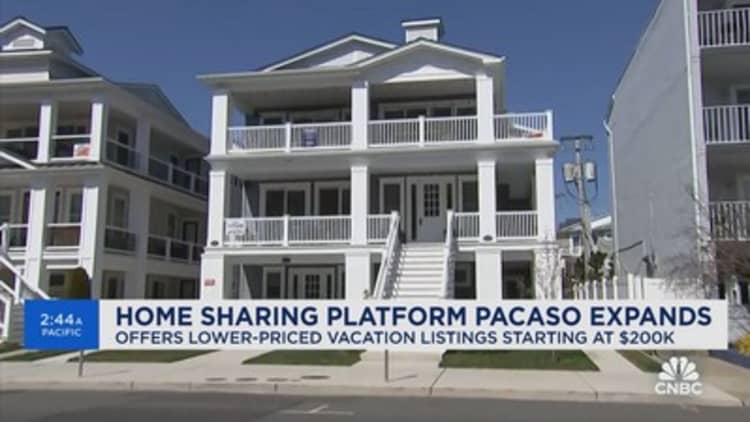
Vacation home co-ownership site Pacaso adds lower-priced listings

Vacation home co-ownership site Pacaso adds lower-priced listings


Pacaso adds lower-priced vacation home listings for co-ownership

Luxury vacation home co-ownership platform Pacaso is attempting to appeal to the masses, as it grows its business during a pricey and competitive phase of the housing market.

The company, which launched in 2020 with multimillion-dollar homes listed for co-ownership, is now introducing thousands more listings with share prices starting as low as $200,000. Previously, shares had been closer to half a million dollars, or higher.

Pacaso lists shares of vacation homes, generally an eighth but sometimes larger shares, and then facilitates the purchase, including financing if necessary. It also furnishes and manages the home, divvying up the owners’ time in the home through an app. It takes fees for both the purchase and the management.

“You can afford a lot more home when you buy one eighth or one quarter of it when compared to purchasing the whole thing, and we’re living in an environment right now where housing affordability is a problem,” said Austin Allison, co-founder and CEO of Pacaso. “Home prices are high, interest rates are high, so it’s really difficult for people to afford the home of their dreams.”

Unlike timeshares in resorts, where consumers buy the time, not the property, Pacaso owners can benefit from the home’s value, which usually goes up over time.

An example of Pacaso’s new lower-priced vacation home listings.

CNBC

“Our owners who have resold have benefited from about 10% appreciation above and beyond what they paid for the underlying home previously. So the Pacaso shares generally track with the underlying real estate,” said Allison.

Wealthier buyers have been scooping up ski homes in Colorado and beach homes in Hawaii, paying hundreds of thousands of dollars for their shares. Pacaso takes a hefty fee — between 10% and 15% of the value of the home on the front end — associated with aggregating the group of owners, facilitating the transaction, and setting up the co-ownership structure.

Pacaso reached more than $1 billion in revenue last year, the company said.

The company has, however, seen some backlash from communities that liken it to an Airbnb on steroids. There is even a website dedicated to fighting the company, called “Stop Pacaso Now.”

Residents of Sonoma, California, passed an ordinance prohibiting Pacaso from operating in that city. In St. Helena, California, which prohibits timeshares, Pacaso reached a settlement that protects its four homes already there, but the company is not allowed to expand to other properties.

“We operate in more than 40 markets nationwide and in only a handful are we misunderstood,” argued Allison. “Our approach is to work with policymakers and educate them on the facts and benefits. Our belief is that over time this will prevail. It hasn’t worked in Sonoma yet and a small handful of communities who have passed ordinances to resist the model.”

Pacaso is also adding a new suite of services to help primary homebuyers access the home-sharing model. Roughly one-fifth of primary homebuyers last year purchased with either a friend or relative, according to real estate site Zillow.

“People are now using co-ownership as a way to be able to afford houses that they otherwise wouldn’t be able to afford. So, it’s not just happening in the vacation home space,” said Allison.

Don’t miss these stories from CNBC PRO:


Source link

Vacation home co-ownership site Pacaso adds lower-priced listings Read More »

Signs It’s Time to STOP Investing in Real Estate

Signs It’s Time to STOP Investing in Real Estate


When is enough enough? When is it time to STOP investing in real estate? When you have a hundred units or a thousand? When can you step back and let the hard work and grind pay off so you can spend more time with your family, spouse, children, and loved ones? But maybe this is just the start of your real estate investing journey, so a better question would be: how to start investing when you DON’T have tons of money to get in the game? Whether you’re a couple of years away from early retirement or gearing up for your first rental, we’ve got you covered on this episode of Seeing Greene.

Full-time real estate investors David and Rob are back to answer your investor questions! This time around, live-caller Ethan wants to know when enough is enough. He’s built a big real estate portfolio, but his spouse is asking, “What’s the end goal?” Next, David and Rob share what’s going on in their own lives and the “perfect storm” that hit David head-on that could be headed your way. A young house hacker wants to know the best plan for his property after he moves out: rent by the room, turn it into a long-term rental, or go the short-term rental route. Finally, a homeowner with some sizable equity but no extra money asks if she should sell her low-rate primary residence and exchange it for some investment properties.

Want to ask David a question? If so, submit your question here so David can answer it on the next episode of Seeing Greene. Hop on the BiggerPockets forums and ask other investors their take, or follow David on Instagram to see when he’s going live so you can jump on a live Q&A and get your question answered on the spot!

David:
This is the BiggerPockets Podcast show 922. What’s going on everyone? This is David Greene, your host of the BiggerPockets Real Estate podcast here today with a Seen Green episode and I’m joined by Rob Abasolo. We’ve got an awesome episode for you. If you’ve never heard a Seen Green show, we take questions from you, our listener base, and we answer them for everybody to hear. Today’s show starts off with a live question where we go back and forth with the caller and then we have some recorded and written questions that we share with everybody. We’re going to talk about house hacking, we’re going to talk about options to scale when it comes to house hacking. We’re going to be talking about what happens when you hit lightning in a bottle and you grow a big portfolio and you’re not sure what to do next. And we’re going to be talking about if you should keep a property with a lot of equity and a great rate, or if you should sell it and start scaling a new portfolio. All that and more in today’s Seeing Green. Rob, how are you feeling today?

Rob:
I’m excited. I’m excited for the curve balls that are going to be thrown our way and I’m excited to hit some home runs, hopefully for everyone at home, help them get a little perspective on how to do this whole real estate thing.

David:
Yeah, so let’s see how Rob does when he takes his at bats. Let’s get into our first question today from Ethan. Oh,

Rob:
Before we jump into it, just a quick reminder, if you ever want to submit your own questions for a Seeing Green episode, head on over to biggerpockets.com/david and who knows, maybe we’ll pick a ruki, one of your cues.

David:
All right. Our first question comes from Ethan here. Ethan’s got quite the portfolio, 20 single family homes in Nebraska. Two flips a short-term rental in Scottsdale, a short-term rental in the Smokies, 11 single family houses in Chattanooga, Tennessee, and 50 doors in Illinois, as well as a farm ground in New England and Kansas, England. I dunno if I left anything out there. Maybe you also own a private jet, some oil rigs, perhaps a yacht you put on

Rob:
Turo. Maybe it’d be better to ask where Ethan doesn’t have real estate.

Ethan:
Being diversified is always a good thing. I don’t own anything in New England, that’s Nebraska, but I’ll have to take a look in New England.

David:
Good point there. That does make sense. There’s not a lot of farms I would imagine in New England, Nebraska does make a lot more sense there. It’s like

Rob:
I was like what? I was like, does that farmland go from Nebraska or New England to Kansas? It’s like a giant farm.

David:
I’m in Vegas at a Keller Williams event that I have not been sleeping enough and it is very visible here, but don’t worry, I am still awake enough to answer your question. So Ethan, let me know what is on your mind.

Ethan:
Simple question I get from my wife often I’ve been actively growing this portfolio the last decade. I probably have no end in sight as far as what is going to be the destination and my wife asks me every time we talk about a property or even our existing portfolio is when is enough going to be enough? We have a big family, six little kids. Oldest is 11, youngest is going to be three here in about a week. So I understand those. There’s a lot of expensive things coming down the roads with medical weddings, school, we go to a Catholic school here in Nebraska, so again, it’s a high operating cost family and I understand that and try and want to prepare, but she’s very humble and very simple and I know you guys are actively growing. It seems like those wheels never stop. Kind of relatable to that. So curious where the finish line is for you guys.

Rob:
Well lemme ask you this, are you still working at W2 or are you like a full-time real estate investor?

Ethan:
I do have a full-time job. I’m a independent contractor, but I do have a full nine to five job, yes.

Rob:
Wow, okay, cool. And then what is your income from your real estate portfolio?

Ethan:
I actually updated it today. My monthly cashflow is about 3,400 bucks. That’s just in Nebraska. The other stuff is with the partnership, so it’s him and I, so I didn’t figure anything that into our monthly income.

Rob:
No worries. Well, I think it really depends, man, honestly on what your goal is and you can kind of start to sniff it out pretty quickly. I talk to people, friends in this industry that their goal is I want to be a billionaire. And I’m like, okay, well then I don’t know when enough is enough because it’ll take a very long time to get there. But then there are people like me that I’ve realized there is sort of like this. There really is this moment where a certain amount of money doesn’t really change happiness or anything like that. And so for me, I always find that where I’m trying to go is to where I could make the income that I was making at my full-time job in real estate, I’m not going to say passively, but consistently with doing some work, I would never really count on this idea of retiring and being completely passive in real estate. I think you’ll still have to work for it, but I mean it depends on how much you love real estate and I understand your wife is wanting to keep it more simple, but if you feel like you want more out of this and you want to keep doubling or tripling up where your income is, then you may not really be close to enough yet. So I mean I don’t know enough about you to know this yet, but how much do you love real estate and let’s start there.

Ethan:
I enjoy it a lot. Honestly. I go back to the original BiggerPockets days a decade ago and I was reading through some of the forums last night and some of my inboxes with guys and it’s really kind of got me fired up again in the interaction that we can find amongst the real estate space. So it is something I really enjoy, whether that be the tenant relationships or even just the finding new deals. I really like to travel and I think that’s one thing my wife, I know that she likes to travel as well and I try and push her. These future opportunities are going to allow us to go wherever we want to. That’s one thing I try and push, try and plant that seed a little bit and water it as much as I can.

Rob:
Sure. The other thing I was going to ask that I probably should get some clarity on is do you want to work your job for the rest of your life? Because that’s important too. Some people are like, I hate working for the man I need to get out of this. And then there are other people that are like, yeah, I want to work my solid job for the rest of my life. And so I think that kind of factors into your decision a little bit too.

Ethan:
And I do have a great job, work for a great group of guys, so that is probably something, I mean I would say normal retirement age, that 50 mid fifties range, which is going to be 20 years, which as fast as the life goes right now, especially with young kids, it’s going to come quick. So I’d say 20 more years of that full-time job and I’ll be ready to be be done.

Rob:
So then honestly, this is my favorite scenario to be in, to be completely honest with you because there’s so many people that want to replace their salary with real estate, quit their job, and if you make 50 to a hundred thousand dollars, that’s really hard to replace with real estate, it’s really, really, really hard. You’re not super far off from that, but you would have to triple how much you’re making right now to make $10,000 a month where the power of real estate comes in. For many, many people, especially in your circumstances, if you’re okay with working for the rest of your career and working a nine to five and that’s where you’re going to make your money, then you’re in such an amazing spot because if you have an extra 3,500 bucks, let’s say you scale that up a little bit to $5,000 a month coming into your pocket, that’s life-changing money for a family that is vacation money.
That’s where the fun of real estate starts to really ramp up because you actually have cashflow to use for expendable income and vacations and everything like that. And then where it all comes to a head is when you’re 65 and you do retire from your job and not only did you make $5,000 a month doing real estate, you now have this portfolio of 20 single family homes and this and that and all that stuff. That’s all paid off worth multimillions is my guess. And then you can sell all that and retire a millionaire. That to me is the best place to be versus the person that’s trying to get to $10,000 a month in real estate and wants to quit their job tomorrow. So I actually think you’re probably going to find a lot more happiness being a small and mighty investor as our friend coach Chad Carson would talk about. And we did an episode with him back on episode 7 95 talking about his book, small and Mighty.

Ethan:
That’s awesome. Good perspective and definitely relatable. I’ve always said the real estate I don’t think provides my family any value even when it’s on our deathbed or down the road. So I’m sure the plan long-term would be to start selling if a house at a time will pay for a wedding hopefully at that point. But

Rob:
Absolutely, I mean you buy $150,000 house and 15 years from now I’d like to think that that house has been paid down considerably and has it appreciated a lot more as well. And at that point maybe you can sell it and use some of those to fund those things. So I think I find happiness with real estate funding the life that I want, trying to chase some big arbitrary goal of, I don’t know, like I said, a billion dollars. I have a lot of friends that want to be billionaires. I’m like, why if you make a million dollars a month or a hundred million dollars a month, your lifestyle probably isn’t going to change all that much if you’re actually a prudent investor and you are frugal if you got to a billion dollars. I don’t know. To me it all, it becomes this really weird competition with real estate investors and sometimes I’m just like, honestly, I’m pretty good where I’m at. I like to be happy in real estate. And I think for me, the whole enough question really comes down to at what point does real estate make you unhappy and that’s when real estate is enough.

Ethan:
That’s awesome. That is very solid insight. So it helped this year we were able to travel to Scottsdale and stay in our own Airbnb, my wife and I and our two friends. So I do think that provided a good insight for her to say, okay, maybe this is why we’re doing it, but I’d love to have an Airbnb or a Hellman every travel high travel or high vacation place in the country. That’d be a future goal of mine.

Rob:
Well, and I could have given you a much shorter answer and just said enough is when your wife says it’s enough and that’s the right answer to that question. But yeah, I think you have to kind of throw her a bone and make sure that she’s down for the ride to otherwise, yeah, there’s a turning point with real estate where it’s like, man, I’m making $3,400 a month to, I’m only making $3,400 a month, and you want to try to stop that second sentiment from ever coming in.

Ethan:
Right, understood.

David:
Alright, Ethan, do you mind if I offer you another perspective here?

Ethan:
Of course.

David:
Alright, before I do, let’s take a quick break and we’ll come back to hear my thoughts and we’ll come back. We’re here with Ethan who’s got a lot going on in the real estate world and he’s trying to figure out when enough is enough. When we say things like When is enough enough, the answer is typically I have as much as I need, how much more do I need? And it starts to feel like it’s greedy and then implied in that is life would be better if I wasn’t doing this. Which oftentimes very well maybe the case. It’s like I’m not spending as much time with my kids, I’m not doing as many things as I could be doing that I want. And that is a great question to ask, is accumulating more real estate the best move for my specific life? But for a lot of people, I think the assumption that what I have is good and it could only get better is erroneous.
I went through a two year period, I’m barely now climbing out of it. It looks like where business got decimated, my portfolio got decimated. I was the victim of a lot of property fraud where people stole titles to my properties. That forced me into a 10 31 where I had to buy a lot of real estate in a really short period of time. Right When I did that, I had a lot of bur properties, projects going on, interest rates doubled, everything went wrong at one time, and what had appeared at one point to be way more reserves and way more conservativeness than what I would’ve possibly needed actually became, thank God I have that because the plane would’ve crashed if I didn’t have a buffer that was that big. And everyone had asked me that same question, well David, when is enough enough? Why are you working so much?
Why are you doing this? And I think in my gut I knew the answer and this confirmed it. It’s because the more real estate that you accumulate, the more risk you’re taking on. We don’t talk about it like that a lot of the time and it doesn’t get presented that way because the market’s done nothing but go up. We’ve had a great 10 year run where everything just went up and so you don’t think about the risk you’re taking on because it rarely ever occurs, but when those rates shot up really quickly, it got exposed that, oh, this is actually a risky thing and things can go wrong. And to me it was like a perfect storm. I hope to God nobody else ever has the perfect storm of what I had, but I’m very glad that I had a lot of equity in my properties.
I’m very glad I had way more in reserves than I thought. I’m very glad I was still working and I had not retired and I didn’t have the ability to make money through stepping up efforts with whether that was flipping houses or selling properties or running businesses more. I just want to put that out there for you and for everybody else, if it’s just getting more to get more, it’s a good question to ask, why am I doing this? But if it’s getting more to offset the risk that we’ve taken off building big portfolios, well then I would say keep working, keep saving, but do it in a way that doesn’t take away from the goals you have in life, your family. Do the things that you like doing, do the things you enjoy doing, but don’t just be like, well, should I quit the whole thing?

Ethan:
I get that. Yeah, and that’s been a big part of why we started to go out of state and it was through a lot of the stuff again, through BiggerPockets that I realized I thought I had to be able to touch it, see it, feel it to invest in real estate and quickly realized that wasn’t the case. So we’ve been kind of backing off what we have here in Nebraska and moving out of state and my wife knows I can’t touch those, so that’s made her happy on that side of it.

David:
Yeah, that’s great. Rob, I mean you’re scaling probably one of the fastest real estate investors slash content creators out there on the interwebs. Is this something you’ve thought about as much as you’re taking on right now and as fast as things are growing, what you’re doing to kind of counter some of the risks that you’re taking on as your portfolio grows as fast as is?

Rob:
Yes, David, this is all I think about, especially as someone that’s looking at getting into developments and buying developments that are typically three to 10 million at a time. What I’ve learned is that we have this idea that we want to make cash so much on the front end and like cashflow, cashflow, cashflow that we never want to hire people because when we hire people we see that as making less money. But what I’m discovering is to really scale, you do have to hire people, make less money on the front end, but in the long term you’ll actually build so much more wealth because of what you can do with teams. And that’s the thing that I’ve never really unlocked building a 40 unit short-term rental portfolio is I was just doing it all by myself and I was too greedy and now as I’ve learned, if I can bring more people on, be a little less greedy right now, it’ll actually set me up for the rest of my life. So yes, existential question that you just asked me there, David, but it’s the only thing I think about whenever it comes to real estate.

David:
Well Rob, you need to read scale if that’s where you’re at, the book that you talked about all the time and haven’t actually read,

Rob:
I guess so I guess so

David:
Ethan, anything we can tie up for you there?

Ethan:
I do have one last question, especially Rob, you mentioned these bigger portfolios or bigger books or properties that you guys are buying. Do you get any sort of anxiety or like buyer’s remorse when you get the acceptance on an offer or if you sell a property? It’s like every time that offer’s accepted it’s like this rush of dopamine and I can’t decide if it’s fear or anxiety or joy, but it’s the same thing every single time. I’m just curious in your guys’ experience if that’s the same thing.

Rob:
No, I’m usually pretty relieved, but I’m a little scared, but I’m always happy that I did it. That little buyer’s remorse is really short-lived and will never compare to whatever the opposite of buyer’s remorse is. When you miss a good deal that was in front of you, that’s a lot more painful to see. This property that I just stalled on for like 12 hours or a day and it just went because I knew deep down it was a good one and it flew off the shelf and I’m really sad at myself and disappointed that I didn’t move faster. That’s a way worse pain than the short-lived buyer’s remorse that I’ll have on having an offer accepted. That’s common, everyone has that, but for the most part the excitement typically takes over pretty quickly.

Ethan:
Right on. Good.

David:
Alright, thanks Ethan. Keep us up to speed with what goes on there, man. Appreciate you. Thanks

Ethan:
Guys.

David:
Alright, thank you everyone for submitting your questions. We would not have a show without you, so give yourself a little pat on the back for making all this possible. And remember, I want more of them, so head over to bigger biggerpockets.com/david and submit your questions. And who knows, maybe we can feature you on a future episode of Seeing Green. Alright, if we’ve changed your life or if you’re just enjoying this show, let us know. Make sure that you like, comment and subscribe to the channel and let us know on YouTube what you think about today’s show. Alright, moving on. We have an Apple review to go over and then we will move on with the show. The review says the more the better you do. I’ve been listening and learning from the BiggerPockets podcast for the past three years. This free resource has led me to making some really solid real estate decisions. Did I say it’s free? I share the podcast often and I really hope that others see the value in this podcast from great B eight via the Apple podcast app. Well thank you for that. That’s awesome. I remember Rob, when you first stumbled upon our show and we had you on and you were an amazing guest and you thought that I hated you, but I didn’t. I thought you were really cool and you had similar things to say. So if you, did you ever leave us a review, Rob? Curious.

Rob:
I was too hurt. I was like, David doesn’t like me.

David:
We got over that now we’re besties, besties, trying to change the short-term rental landscape one property at a time. Time. But

Rob:
How funny would that be if I went and left us a review right now? Hey, I’ve been listening to the show for five years. This is a five star show. It’s my favorite. Rob is so handsome.

David:
That would be funny. You should do that. You should leave a review and say why you’re better than David. Alright everybody, we hope that you’re enjoying the show so far. We’re going to take a quick break and then we’re going to be back with a question from Zach about what to do after his house hack. Alright, and we’re back. Thanks for sticking around. Zach’s got a question about house hack strategy and Rob and I are going to get into it. Let’s hear Zach’s question.

Zack:
Hey David. Zach Chesky here, 27 years old. I’m a biomedical engineer by day and I try to be a house hacker by night. I just bought my first single family home in Dearborn, Michigan. Looks like a good market for medium term. There’s a hospital DTW airports right there and just general visitors of Michigan. My question is after this rent by room house hack strategy, do I shift towards Airbnb, which seems like the market could get me about two x, what a long-term could get with I understand recommended three to five x. Do I rent my room continuing once I leave rent out my area getting around the same with arguably less work or do I just go to a long-term rental, sacrificing some long-term cashflow that I would need to supplement my current job? Appreciate the help always. Awesome, thanks.

David:
So with his buffet of options, where should he start?

Rob:
So basically he could just hit the easy button right now, replace himself with someone else to rent his room in that home and cashflow like 800 bucks a month. A little bit more than that, but I think that’s a pretty good option.

David:
So you’re saying that he should continue to rent by the room?

Rob:
I think so. I mean if we examine his other options, he could do a long-term rental, long-term rentals in his area. He mentioned our 1500 to $1,800 to do that, so he wouldn’t make as much money doing that. And then short-term rentals in the area are looking at around a 31% occupancy. Again, this is information that we have on the backend, so for him to try to make money on Airbnb would be tough. What most people don’t consider with short-term rentals is that there’s a huge operational expense that goes into running a profitable short-term rental, whereas long-term rentals are just fixed expenses for the most part. Short-term rentals, you start adding cleaning and what you pay to Airbnb and vrbo and it really takes a lot more money to be profitable in an Airbnb than a long-term rental at first glance. So I don’t know if that’s going to be his best route.
And then of course he can always go the medium term rental route, a three bedroom and his area goes for about $2,600 a month. However, it’s not like you can just snap your finger and fill your place with the midterm rental tenant. It’s hard to do that and you really have to work to find those tenants. So because it seems like the safest option he has is to rent by the room, I would go that route. He’s making a little less than he would with the midterm rental, but he won’t have to work super hard to source that midterm rental tenant. So I think it’s pretty clear he just transitions from house hack to rent by the room.

David:
You know what I love about your analysis there, Rob? You went over all the options and you wait each of them on their own merit and it became pretty clear at the end of the day, Hey, there’s a lot of vacancy as a short-term rental. Hey, traditional rentals aren’t bringing enough money. The rent by the room strategy here is the perfect answer for this property. And then it’s not that much work, especially if he goes forward with economies of scale. If he gets another house hack, he does the same thing. He rents by the room, he’s got all the same systems he’s using with his first property, then he could just transfer over onto the second one and then he could do it again and then again and then again. Now he’s got five houses, he’s doing rent by the room. Now there’s enough income that you can hire a person to sort of manage that little mini portfolio and just handle whatever little disputes come up with all the tenants and it’s going to be the same disputes that happen all the time.
So that person isn’t going to take a ton of time and you have a pretty efficient system that allowed you to scale five properties. And if you hit the point where you’re like, you know what? It’s too much work with all these rooms that I’m renting, fine sell all 5, 10 31 into a small little apartment complex, buy a 10 unit place somewhere and start over scaling again with these smaller little houses doing the same thing that you’ll move into hotels. This is not a bad way to get started in a tough real estate market, building a portfolio and creating some equity

Rob:
And he’s pretty much already doing the rent, buy the room. All he has to do is put one tenant in there, easy peasy, go make your extra $880 a month. My man, that seems like a pretty solid plan to me. This next question comes to us from Robin in Idaho who posted this question in the BiggerPockets forums. Her question, should she sell her primary residence and use it as equity for her rentals? She says, we have a home worth about $650,000. We owed $350,000 in a place where we couldn’t afford to sell and buy another property. They got it back during Covid times interest rate was 2.8% and it was before a crazy boom out in northwest Idaho. She says, we’re stuck because my husband makes just enough to live. We’ve cut every possible expense and really want to acquire rentals but can’t find the capital. We have $250,000 in equity in the home after realtor cost. Is it crazy for us to sell, take the equity and move to a better cashflow market like Atlanta or Fayetteville, North Carolina and start our rental acquisition there. And then she asks, what are some great, even if they’re crazy strategies for building the real estate empire with $250,000 if we could go anywhere and we will do anything. All right. That’s an interesting question.

David:
Short answer here. I don’t think it’s crazy actually. When I started my whole bur run in north Florida, that’s where I buy most of them. I sold a property in Arizona that had appreciated more than the rents had kept up with it. It was basically a property that had a new housing development that was being built close to this house. And so the value of my house kept going up because the comps that were being built were brand new homes that were more and more expensive, but there were so many of these new homes that were built that were bought by investors that I really couldn’t keep getting tenants in my area or rents to keep going up because they had too many options. So what I found is the value of the home went up faster than the rents could keep up with.

Rob:
So scrolling around in the forums here, some of the answers were it sounds like they’re living on a single income. So one solution is get a job and work on that double income to save up money so that you can buy another rental. Some other people said you should house hack and then other people said it’s too risky right now to sell. I’ll give you my take First and foremost, I think that, I mean I hate to sound like a broken record, especially since we just did a whole question on this. I love house hacking and I think for you, getting a job might be pretty tough. Maybe you’re accustomed to a certain lifestyle. I would go the route of figuring out how I can make money the fastest. There’s two ways to do that. One, you can house hack rent out a room in your property.
Maybe that makes you an extra 300, 4, 500, 6, 7, 800. I’m not really sure in that market, but let’s just call it 500 bucks a month. That right there, that helps. It’s not going to be what turns into a real estate millionaire, but it definitely puts a dent in things over time. That’s one. Two is I probably would try to get some sort of extra job. You don’t have to go full time, you don’t have to go back to corporate life. You don’t have to work a nine to five maybe if it’s even 10, 15, 20 hours, that alone right there, the money that you make there can compound pretty quickly with the money that you’re making on a house hack. I’m not a big fan necessarily of selling. I mean, you always have this age old question of like, well, if I sell it, where am I going to go?
And you mentioned that, hey, we live in a place where we can’t afford to sell and buy another property. Well, if that’s the case, you kind of have this once in a lifetime opportunity to own this house that you can’t afford to live in because you bought it at the right time. That to me is always going to be the safest, more conservative route. I’m an aggressive investor by nature, but I always tell people, if you’ve got this magical primary residence with the 2.8% interest rate, that should be your backup plan, that should be your ripcord. In the case of like everything goes wrong, you can sell this property and cash in $250,000 if you really, really, really needed to. So for that reason, I’m always a big advocate of just hanging onto it. I know it’s not a super sexy answer to say, Hey, get a job house hack, make an extra 10, $20,000 a year, but it’s not a sprint, it’s a marathon.
And if you save up 10, $20,000 this year, house hacking and getting another job, and you do that next year as well, well great. Two years of hard work, saving and preparation can actually put you into a position where maybe you do invest in a different smaller market where 40,000 bucks or $50,000 depending on what you can save up, does allow you the luxury of buying another rental property. But my answer is, if you sell it, where are you going to go? So for that reason, stay there. 2.8% interest. That’s a beautiful thing in 2024. Don’t mess with it. What do you think, David? I mean that’s my approach. I think a 2.8% interest rate in this world in 2024. It’s the most beautiful thing ever. I think getting lucky and buying at the top of a boom is amazing and I think that they should build their net worth based on this amazing purchase that they made in 2021 and not sell it. I know it’s a bit of a conservative answer, especially considering I am a little bit more aggressive, but that’s how I feel. Sue me.

David:
All right, I’m going to play devil’s advocate here. I had a property in Arizona that I bought and then they built a housing development right next to it. They built more and more expensive houses making the value of my house go up. But a lot of those houses were bought by investors. So the rents never went up on my house because they couldn’t raise ’em too high because they would just go rent one of the new homes. So I had growing equity without growing cashflow. I sold that property, I took the equity, I took it into North Florida, and that’s what was my first bur. I pulled the money out, I bought my second bur and I bird up to about 40 properties, maybe 50 at one point in that area off of that seed money from the one thing. So even if they do something like that and they lose that 2.8% interest rate, if you can turn it into a whole portfolio of other properties, it can make sense.
The beauty of this dilemma is both options work. You keep a great rate, you keep a lot of equity, you win or you sell it and you take 300 grand, 250 grand into another market, and if you can execute growing that capital, you win. I think the key here is are there other opportunities and can you execute on them? Do you have the experience of an investor? Do you know what you’re going to be doing? Do you feel confident in what you’re going forward in? Or are you kind of just slow and steady wins the race and you still need to slowly acquire properties? That’s what I’d be looking at here. This is not the market where you can just go throw a quarter million dollars into something and trust that it’s going to work out well. There’s a learning curve to whatever strategy you get into because there’s a lot more competition.
So in today’s show, Rob and I talked about when enough is enough when you should keep scaling and how you should keep scaling, which is great to know in case you ever hit that great run where you buy a whole bunch of property, including a farmhouse in New England. We talked about how to evaluate your opportunities after you do a house hack. That’s something to think about once you get the first one down, where do you go from there? We talked about selling a primary resident to build a rental property portfolio, and we talked about Rob’s perspective as seeing solo. We also got into what’s going on in Rob’s life and in my life and in what you can do to support us. And we want to know what can we do to support you all. So let us know in this YouTube comment what we at BiggerPockets can do to help you with your goals. We will read those and we just may put those in a future episode of Seeing Green as well. Remember to submit your questions at biggerpockets.com/david so we can put you in a future episode of Seeing Green, and I’m going to let you get out of here. This is David Green for Rob. Seeing solo AB solo signing on.


Help us reach new listeners on iTunes by leaving us a rating and review! It takes just 30 seconds and instructions can be found here. Thanks! We really appreciate it!


Interested in learning more about today’s sponsors or becoming a BiggerPockets partner yourself? Email [email protected].

Note By BiggerPockets: These are opinions written by the author and do not necessarily represent the opinions of BiggerPockets.


Source link

Signs It’s Time to STOP Investing in Real Estate Read More »

Are Vacant Offices the Next Big Opportunity for Residential Investors?

Are Vacant Offices the Next Big Opportunity for Residential Investors?


Are empty city office buildings going the same way as zombie shopping malls, or can they be revitalized to become residential apartments and condos? 

That question has many developers, city planners, banks, economists, and commercial landlords scratching their heads. What’s not up for debate is that commercial office space in major cities are experiencing a death spiral, or an “urban doom loop,” as quoted in the New York Times, in the wake of the pandemic, as remote working and high interest rates have limited options for troubled building owners. The future of American cities is riding on a solution.

Across the country, prices are being slashed as they were in 2008, with 50% or more markdowns. The knock-on effect has been a decimation of city budgets with a loss of tax revenue, affecting every aspect of a city’s efficiency and upkeep. Ancillary businesses such as restaurants, hotels, and entertainment venues also are feeling the pinch.

In the same New York Times article, a professor from the New York University’s Stern School of Business estimated that the national office market lost $664.1 billion in value from 2019 to 2022. That has caused businesses and inhabitants to leave, further affecting tax revenue and increasing homelessness. 

Offices to Apartments: Is It Possible?

An often-touted remedy to vacant office buildings is converting them to housing. After all, with an urban housing shortage, surely it makes perfect sense. But is it feasible? There’s more to it than clearing out desks and bringing in beds and baths. 

The good news is that—at face value—it is doable, but as with many commercial real estate issues, it’s complicated.

A shining example of such a conversion is 160 Water Street in New York City’s Financial District, a former 1970s constructed office building, recently revamped as Pearl House, a new amenity-filled 600-unit apartment building.

The obstacles

Money and sustainability are the crosscurrents of resistance, making such conversions difficult. According to economist Stijn Van Nieuwerburgh, a professor of real estate at New York’s Columbia Business School, only 10% to 15% of office buildings nationwide can be converted to residential use due to their heavy carbon footprints and the difficulty in bringing in enough plumbing, light, and air. It’s not impossible, but it’s pricey. 

Another factor to consider is that, like Pearl House, rents would need to be high to cover the construction costs. That means luxury apartments instead of affordable housing, which is not the mandate for most cities.

City Living: A New Reality

Cities as we have traditionally known them—hubs for business—are most likely changing. While certain companies are demanding workers return to the office, for others, the reality is that it’s far cheaper for workers to be remote. And it’s far less expensive for retailers to forgo expensive stores in favor of e-commerce sales backed by robust online marketing.

So what’s left for cities? Entertainment, shows, restaurants, clubs, and socializing. In this respect, the Wall Street Journal contends, American cities are starting to thrive again with tourism up—just not near offices.

An Opportunity for Investors

With the price of office buildings slashed, there is an obvious pull for investors to come in and buy at fire-sale prices. If there is a demand to live in former downtown office areas of major American cities, bold developers will start repurposing newer buildings or tear down older ones. 

A key component to making this work is to make cities attractive places to live once again. With that in mind, creating a new dynamic—a work/life culture where workers can walk to work rather than commute—could be a feasible new model. After all, it’s not that offices are completely empty; they’re just not full. Also, not everyone can work from home. 

Hybrid work models provide a middle ground for workers who are now used to working in their sweats and slippers while doing the laundry and companies demanding face time and usual business practices in the office. This concept is being adopted by city officials across the country, with incentives for developers to build more affordable housing. 

The conversion model is hardly new. Over the last 20 years, almost 80 New York City office buildings have been converted to residences, the most in the country, according to CBRE. Such conversions are credited with converting Manhattan’s Financial District into a livable neighborhood for families rather than a soulless commuter destination. 

Nationally, from 2010 to 2021, 222 office buildings were converted into residential space, with Philadelphia seeing the most, followed by Chicago. A slew of such conversions are in the pipeline for New York. Some will tout the new work/life model, with office spaces beneath luxury residences. Additional conversions are slated for Philadelphia, Cleveland, Los Angeles, and Washington, D.C.

Cash flow in luxury condos is always challenging. Often, they are the domain of affluent investors looking to park their money, leaving the units vacant rather than dealing with the hassle of tenants. 

However, many buildings welcome the short-term and mid-term rental models. Miami is one such city where investors only live for a few months of the year and look to lease their units for the rest. According to a report by the Chamber of Commerce as quoted on Condo Blackbook, Airbnbs in Miami command the 10th highest average daily rate ($290) of all the large cities in the U.S. Smaller pockets such as Miami Beach ($426), Key Biscayne ($571), and neighboring Fort Lauderdale ($297) boast even higher average rates. 

While Miami condo prices are not cheap, offset by the global demand to visit the city, office-to-condominium conversions elsewhere could likely be more affordable, with developers looking to do early business to spark sales. Realizing that there’s nothing developers fear more than empty buildings, Airbnb and other short-term rental sites have specifically targeted them, offering to join forces nationwide. While apartment rentals are the obvious target, savvy investors looking to strike a deal for condos could use the same approach to generate ongoing passive income.

Final Thoughts

The pandemic has dramatically changed the use of office space in major cities. This, coupled with technology (Zoom, Google Meet, etc.), meant that the conventional use of office space was due for a change sooner or later. Time and money spent commuting and the cost of office rents versus tangible productivity meant that the pandemic accelerated the change rather than caused it. 

However, the loss of office space has dovetailed with a chronic housing shortage, and should cities encourage developers to reconfigure empty offices into housing, there could be an opportunity for developers and smaller investors alike.

Make Easier and Smarter Financing Decisions

Deciding how to finance a property is one of the biggest pain points for real estate investors like you. The wrong decision may ruin your deal.

Download our What Mortgage is Best for Me worksheet to learn how different mortgage rates impact your deal and discover which loan products make the most sense for your unique position.

what mortgage is best for me

Note By BiggerPockets: These are opinions written by the author and do not necessarily represent the opinions of BiggerPockets.


Source link

Are Vacant Offices the Next Big Opportunity for Residential Investors? Read More »

What it means for buyers and sellers

What it means for buyers and sellers


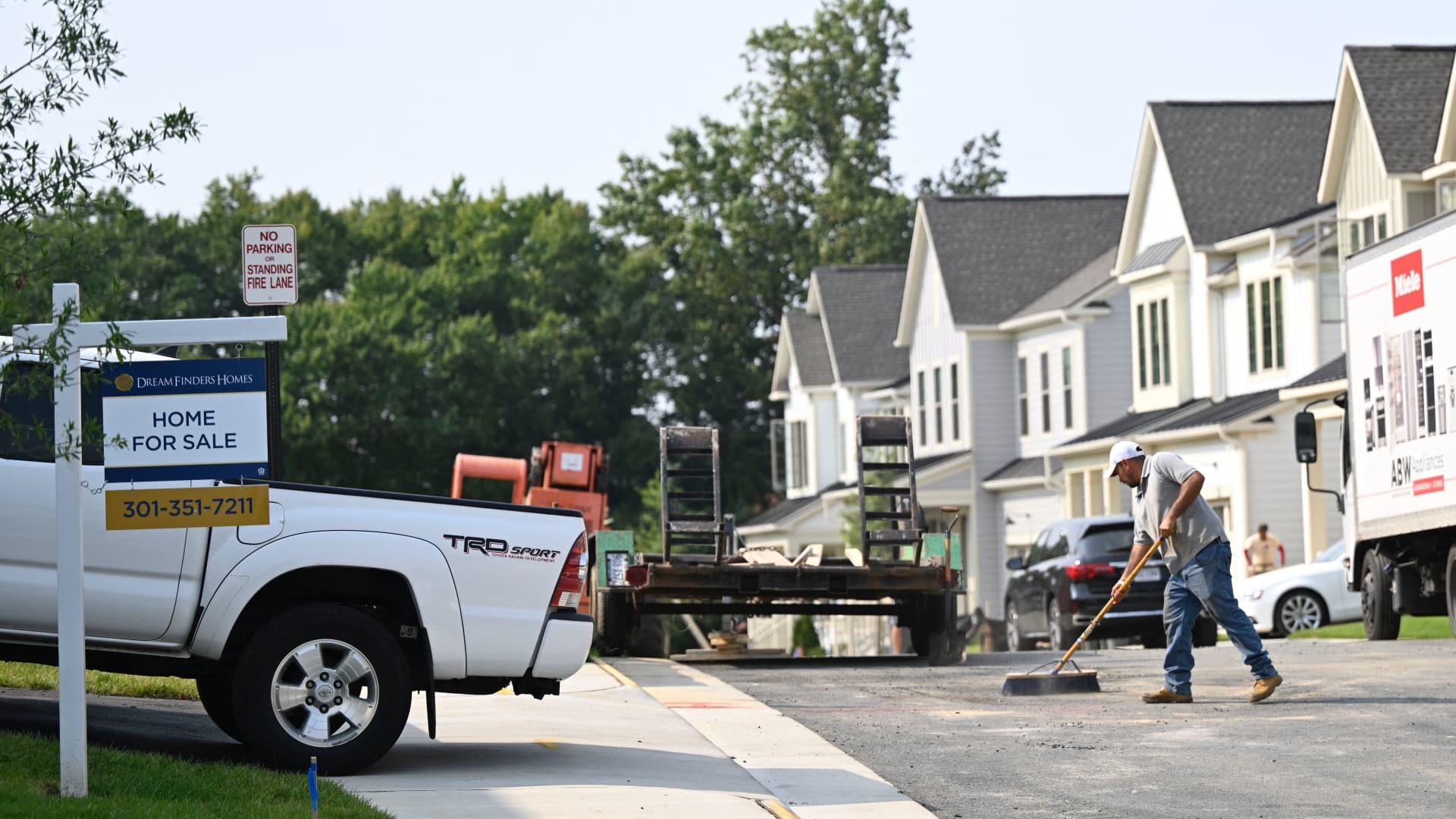
Andrew Caballero-Reynolds | AFP | Getty Images

The rate at which home prices grow is slowing down.

U.S. home prices increased 0.6% from a month before in February, in line with the 0.6% average monthly gain in the roughly eight years leading up to the Covid-19 pandemic, according to a new Redfin analysis.

Before the pandemic, it was normal for prices to grow about half a percent every month, or to increase around 5% or 6% annually, said Daryl Fairweather, the chief economist at Redfin.

“We’re back to that trend, despite these higher mortgage rates,” she said.

More from Personal Finance:
What a $418 million settlement on home-sale commissions may mean for you
In 2023, listings in this time frame sold for $7,700 more, research finds
What to know about about a condo and a co-op apartment

A similar trend appeared in Moody’s Analytics House Price Index, said Matthew Walsh, assistant director and economist at Moody’s Analytics.

“Home prices are appreciating at the same pace as before,” he said. “It’s returned to the trend that we saw pre-pandemic.”

However, the market today is vastly different from the market two to eight years ago, experts say. The average home is still unaffordable for most potential buyers while inventory has slightly improved but not enough to meet demand.

“The sentiment we’re getting from our agents is that neither sellers nor buyers are satisfied with this market,” Fairweather said. “Sellers are dissatisfied … with offers that they’re getting. And buyers are disappointed in rising prices and rising mortgage rates.”

Levels of transactions are at ‘recessionary lows’ 

While the housing market has stabilized in terms of price growth, a major difference between the market today and the pre-pandemic period is the relatively low number of transactions, which is largely due to high mortgage rates, said Fairweather. Mortgage rates peaked at nearly 8% last year, but are still over 6%, according to Freddie Mac data.

In fact, the level of transactions are at “recessionary lows” despite “a pop in the data in February,” Walsh said.

Another factor affecting sales is the extremely limited supply of homes, he added.

New listings climbed 5% during the last four weeks ended March 17, the biggest year-over-year jump since May 2023, Redfin found. But “it’s like a small recovery from a rock bottom,” said Fairweather.

“We’re not back to where we were pre-pandemic,” she said.

Supply growth is mostly tied to a seasonal trend, economists say. Owners often list their homes for sale in February because they prefer to move in the spring and summertime, Walsh said.

And sometimes, life happens. “Another factor is just people needing to move for either a new job or they’re getting married, or there’s some other big life event,” Fairweather said.

The rate lock-in effect is loosening its grip

The mortgage rate lock-in effect, also known as the golden handcuff effect, kept homeowners with extremely low mortgage rates from listing their homes last year: They didn’t want to finance a new home at a much higher interest rate. Now, that is loosening its grip on the market and slightly boosting available supply, economists say.

“It was definitely keeping people in place, but the more time that passes, the less strong that effect becomes,” Fairweather said.

Some buyers who had put off listing their homes “are coming to terms with higher mortgage rates,” because they feel they can no longer postpone the move, Walsh explained.

While the rate lock-in effect is still playing a role in today’s low inventory, it will fade further over time, especially as the Federal Reserve decides to cut rates later this year, Fairweather said.

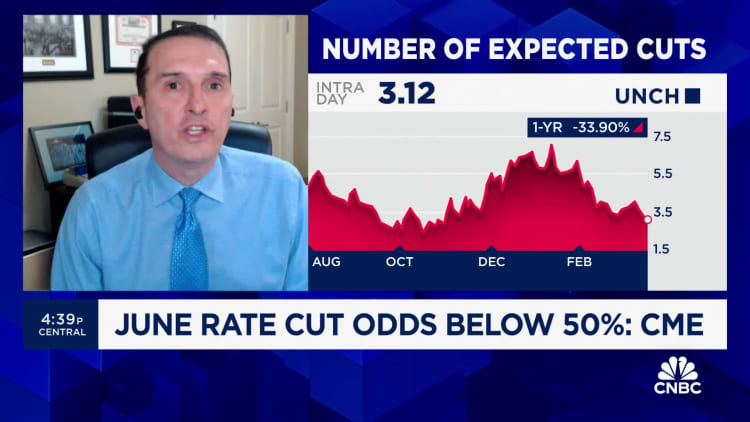
Mortgage rates are also forecast to modestly decline this year as the Fed trims interest rates, while home prices are likely to remain flat or unchanged nationally, Walsh said.

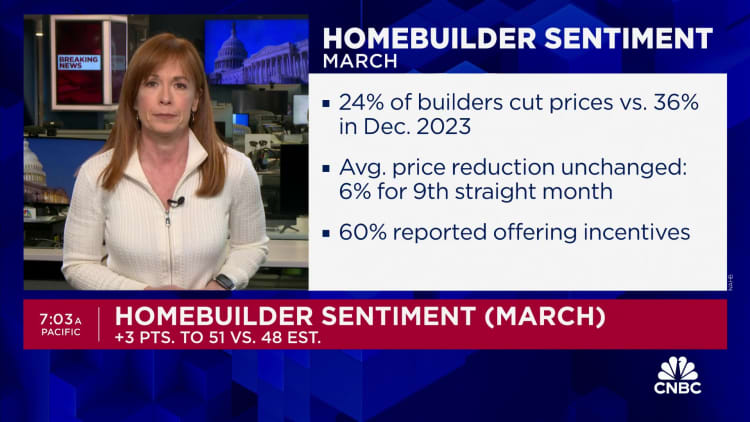
Homebuilder sentiment turns positive for the first time since July

New builds are slightly improving

New-home sales are running at the high end of the range seen pre-pandemic, averaging about 600,000 per month, Walsh said. There were 661,000 new homes sold in January, 1.5% more than in December, according to the U.S. Census Bureau.

Buyers frustrated with the tight supply of existing homes, are giving a lift to the new-home market. “Builders are certainly benefiting from that,” he said.

Homebuilders can also offer buyers incentives that homeowners might not, such as mortgage rate buydowns or price cuts, Walsh added.

However, the boost is not enough to bolster the acute housing supply across the country. “It’s going to take us some time to make up for that gap, even though they’re building more than before,” he said.

Don’t miss these stories from CNBC PRO:


Source link

What it means for buyers and sellers Read More »

Rookie Reply: “Managing” Your Property Manager

Rookie Reply: “Managing” Your Property Manager


A property manager can alleviate the burden of screening tenants, collecting rents, and maintaining your property. But if you’re not careful, exorbitant fees and unexpected charges can quickly eat away at your cash flow. Today, you’re going to learn how to navigate this relationship and ensure that you’re getting these services at fair value!

In this Rookie Reply, Mindy Jensen from the BiggerPockets Money podcast and Tiamo Wright, Director of Product and Marketplaces at BiggerPockets, are joining us to help field your recent questions. First, we discuss medium-term rentals and how they differ from both long-term and short-term rentals, as well as whether you should invest in real estate while you’re in debt. We also get into real estate development and some of the different ways to fund larger projects. Looking to buy your first short-term rental property but don’t know where to start? Our experts will point you in the right direction!

Ashley:
This is Real Estate rookie episode 383. Can you invest while wrestling with college debt and much more on today’s episode? My name is Ashley Care and I am here with Tony j Robinson.

Tony:
And welcome to the Real Estate Rookie Podcast where every week, three times a week, we bring you the inspiration, motivation, and stories you need to hear to kickstart your investing journey. And today we’ll discuss how to start your real estate development with a lack of funds and what are the exact steps for buying and launching a short-term rental. Now, if you guys have a question or want to maybe drop a horror story of your own, head over to biggerpockets.com/reply and we just might pick your story for the podcast. Now, today we are joined by two very, very special guests. We have Tama, who’s an investor and director of product and marketplaces at BiggerPockets, and we also have Mindy, who’s the host of BP money, also an investor and an agent.

Ashley:
And last but not least, we actually have a guest on today’s episode to ask a question live for rookie reply, and we are going to be discussing supplies for a medium term rental and also what is a medium term rental and how is it different from long-term and short-term? Let’s say hello to Mindy and tmo, our expert panel. Welcome. Thank you for having me. I’m so excited to be here. Thanks. I’m really excited to dig into some of these questions. Okay, well let’s get into it and welcome our first guest. Mitch, thank you so much for joining us today. Live on the real estate rookie reply. It’s not often we get to bring someone on to ask their question and to also have an expert panel. So Mitch, please tell us a little bit about yourself and then hit us with that hard hitting question that’s just nagging at you to get answered.

Mitch:
Cool. Yeah, thanks Ashley for having me here. And so a little background, I actually work with BiggerPockets on the agent sales side of the business and I help agents all across the US connect with investors in their market looking to buy their next investment property. I’m here just west of downtown Denver, Colorado. I’m now in our Nevada and I own a few rental properties now. And one of ’em, we just decided to experiment with the midterm rental strategy and we had been looking at it for a bit of time now and it looked like it was going to be the best fit. So we got the place furnished and we had used a referral from one of our real estate agents on who do you use as a property manager who’s great midterm rental property manager. And a couple months down the road we got a few bookings in and I think after the second booking we got hit with some fees, about $350 in restocking fees and kind of blindsided us a bit, seemed a little excessive, but we let it go and a couple months later, after another stay, so about 82 days in total we got hit with another $450 in restocking fees.
So at this point it didn’t make sense to us a lot of things like large ticket items, 200 trash bags, 115 dish pods all used in a two days and it just kind of raised a red flag. So we just had a question. How would you approach this situation with the property manager and risk burning the bridges with somebody that was referred to you? How would you approach that?

Tony:
Yeah, great question Mitch. And I think before we keep going, I just want to define exactly what a midterm rental is. So a lot of us are familiar with short-term rentals, Airbnbs, but a midterm is basically that kind of sweet spot between your traditional short-term rental guests and your traditional long-term rental guests. So think 30 days plus we probably less than a year somewhere in that sweet spot. So we have some special guests on the podcast today, so I’d love to get your opinion first. So we have Mindy and Temo. So Mindy, I’ll kick it to you first. What is your insight? What are your thoughts here for Mitch?

Mindy:
Okay, first of all, 82 days and they stocked 200 garbage bags. Are these people having massive, massive, massive parties? I mean that seems excessive isn’t the right word. That seems almost like they are taking advantage. So my first recommendation is to go back to your contract with your property management company because the contract is the legally binding document that is going to rule your relationship with your property management company. What is the section addressing restocking and to make sure that they don’t treat this as a short-term rental because there is a difference between short-term rentals and medium term rentals. I have a medium term rental myself and I give a kickstart to my tenants. I don’t expect them to arrive with toilet paper and dishwasher pods and garbage bags. I’ve got a few so they don’t have to rush right out the day after they get there and buy all this stuff.
But I’ve got like five dishwasher pods, a few garbage bags, a couple of sponges, a couple of laundry pods definitely have the toilet paper stocked because that’s a necessity. But afterwards, everything’s on them and I make sure that they know that in advance. This is a month to month rental and you are stocking everything just like a long-term rental. So I’m wondering if your management company has experience with medium term rentals and what that entails. So first I’m going to send you to the contract and then I’m going to direct you to chatting with the property management company and asking them directly why do you think 200 garbage bags is a reasonable restock on an 82 day stay?

Tony:
We do the same thing even for our short term. We give starter kits for supplies and things like that. We give more than enough. Most of our stays are two to three days on average, but even still every once in a while we’ll have someone that uses all eight trash bags in a two nights day. I’m like, Hey, you got to go figure that out for yourself afterwards. Right. Tiana, what about for you? What are your thoughts on that?

Tiamo:
Yeah, very similarly, we were at an Airbnb this weekend and they said very specifically what they do include and what they don’t include for us. So if we want to use extra supplies that was on our own. But similar to what Mindy was saying as far as the contract, I said very early exactly what the expectations were. And I actually looked at a lot of the housing for nurses across the nation specifically in Colorado to say what were their expectations? So they expected blackout curtains, they expected good linens, good towels, that kind of thing. They didn’t expect me to restock all their toiletries every single month that they kept staying with us.

Tony:
And Tama, I think you bring up a really good point about setting expectations because what leads to less than five star reviews, it’s not necessarily missing something from your listing, it’s just that a guest was expecting something, they didn’t get it. But if the expectations are set correctly when they enter, if they know, Hey, I’m going to get eight trash bags and I’ve got to do the rest myself, even if they run out of the all eight, then they still know that, hey, that was the expectation coming in.

Ashley:
I do have something I want to add to the conversation, but before I do that, we are going to take a short break and when I come back I’m going to play devil’s advocate.

Tony:
Alright, we are back from our break and we’re hearing Mitch’s story about some issues with this property manager and I’ve given some advice, Mindy tmo, but now Ashley says she wants to play little devil’s advocate. So what do you got to say, Ash?

Ashley:
Okay, Tony, I’m actually going to play devil’s advocate and I’m going to be on the positive side for the property management company and I’m going to try to look at maybe one reason why they were doing this as a positive. So when I heard the 115 dishwasher packs, the 24 cleaning sponges and the garbage bags, all I thought of was buying in bulk can reduce costs. So in my mind, I am thinking this property management company went out and said, we’re going to get enough supplies for a year for this property so that way we only have to send someone there once we’re buying in bulk. So it’s going to be cheaper than having to restock every once in a while buying just small 10 packs of garbage bags or however much you want for each person. And I look at my own Airbnbs where we have a closet where we stock up big time and do a bulk order and fill it up.
So Mitch, my question to you would be do you think that maybe this was a reason that they were doing that to kind of buy in bulk and to save you money, but it backfired because everybody had access to those items at all times. Where my cleaners, they ration share, they’ll give each person so many things, a toilet paper out of that closet and then it’s locked up. So I’m curious to hear, could that be one of the reasonings? And they weren’t actually to be bad property management or to kind of screw you over in a sense or overcharge you.

Tony:
It’s a good point, Ash, right? But I still think even if that was the case, it almost does speak to maybe a little bit of lack of efficiency on the property manager side to not

Ashley:
Giving the free for all

Tony:
Given the free for all. Yes. Right. Yeah. So there’s probably still some feedback there that needs to be shared. Manique, what are your thoughts on that?

Mindy:
My thought is I absolutely went that route and said, oh, they bought in bulk and I’ve stayed in a lot of Airbnbs and there is always that closet. It’s not always locked, and I am one to open every single door. I’m not one to take every single garbage bag because I’m usually traveling and plus I’m not a big steeler, but I always open every door and I see that there’s these giant Costco sized bags of everything. So I absolutely think that that’s what they did, but why did they do it twice? And if they did it the first time and left the door open and everything got taken by the first guest, then that should kind of be on them to restock on their own dime because great point. There’s no way that the first guest used 115 laundry pods or whatever it was. But again, I want to go back and direct Mitch to first the property management contract, and then if there’s anything missing in the property management contract, call up the property management company and get an addendum to the contract that spells out specifically the things that are missing.
Who is going to restock? How much is going to get restocked at a time? How frequently is it going to be restocked? You don’t need to go and buy a big $20 thing of Costco toilet paper every week, but if it’s, I mean, what is that going to last three months, four months, then every quarter you expect to have this expense, but that’s what you’re expecting, just like you’re setting expectations for the guest, the property management company or Mitch needs to set expectations with each other so that you’re not blindsided like this. And if the property management company simply doesn’t understand medium term rentals, then maybe this isn’t the right property management company.

Tony:
So Mitch, a lot of insights there, a lot of perspectives here in all that. What do you feel is maybe the best path forward for you?

Mitch:
Yeah, thanks so much. I love all of these answers here and it’s really helped me put together a plan, and I can’t say it enough, it sounds like the crystal clear communication is just key, but just going back and approaching it with the positive intent and maybe a place of we’re looking to learn and taking a little ownership, but I think really getting back and setting the expectation there, getting in and writing and agreeing on it together, what our goals are. Are they realistic? Maybe we are missing something at the property. Maybe they didn’t realize there was a locking storage closet and it sounds like maybe they did have it out and the guests took advantage of it, but talking about how we’re going to communicate with each other in the future. Yeah, like Mindy mentioned, definitely a red flag that the restock was done and there was really no communication on it. So yeah, I love these answers and I think getting back to the contract, looking deep into it and then approaching the property manager with the positive intent and really defining what that relation looks like moving forward.

Tony:
Yeah, I love that mention and I hope you’re able to find a good solution with this property manager. I just have one funny story on an owner’s closet that I want to share with you guys. One of the first Airbnbs that we bought there was an issue with the owner’s closet door lock. So it was reversed. So basically it was always set to be unlocked, right? So we couldn’t get it to lock itself, and whenever you put in the owner’s code, it would only unlock it. So the door was just always unlocked. So we took it live with it being open. Luckily we didn’t have any guests that rummage through it, but just triple check before you take your listing live that your owner’s closet actually locks. Alright, this next question is from Jared. Jared says, what’s up Ashley and Tony, I just graduated from college with a degree in engineering.
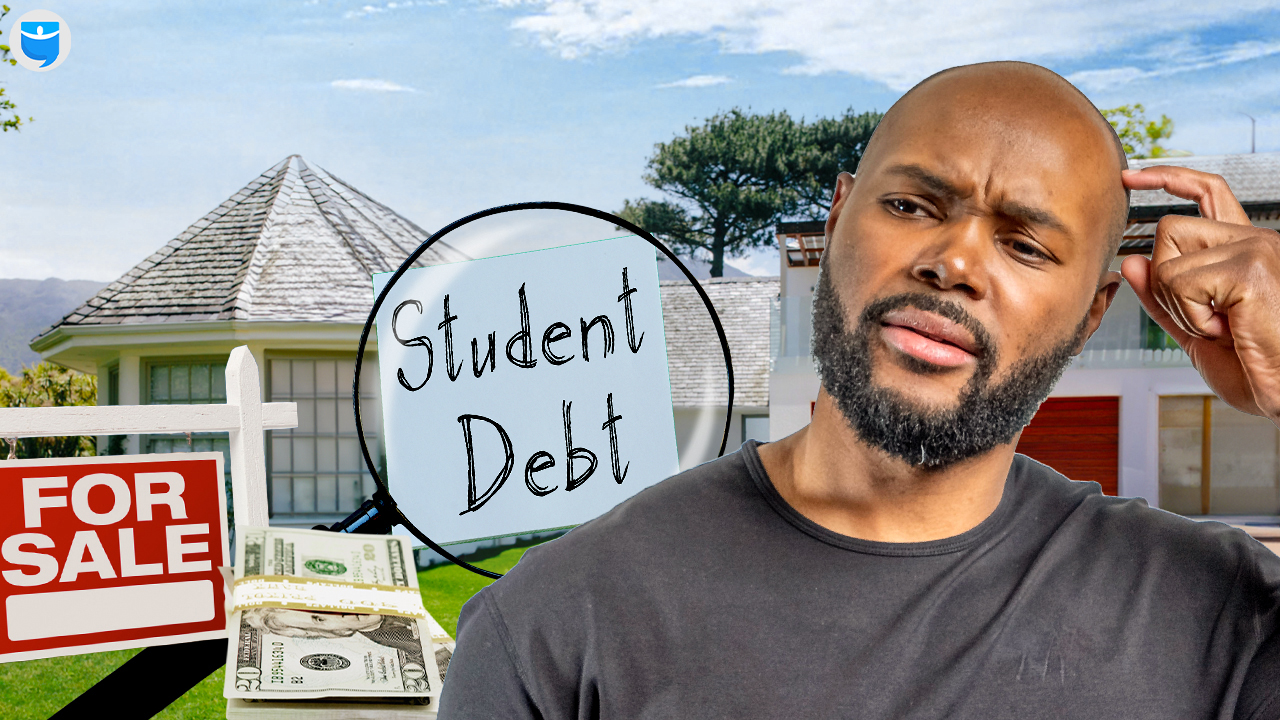
I’ve been listening to your podcast every day on my way to and from work, sometimes even at the gym. I want to get into real estate investing, but I’m currently paying $2,000 a month in student loans and will not be able to receive a bank loan. I’m so young. So my goal is to house hack, but I don’t see a way to accomplish this at the moment. Do you think I should wait a few years to pay down my loans and get my DTI more manageable? Please help. Alright, since we’ve got a few voices on the podcast today, we’re going to do this rapid fire. So you guys got 60 seconds top. I’m going to have the producers cue the Grammy music if you guys start going too long. So Ash, let’s go with you first. What do you got for Jared?

Ashley:
Okay, so the first thing I’m thinking about,
So the first thing I think of is myself personally. When I started investing, I had farm equipment debt, I had student loan debt, and what I did was I simultaneously invested and I used any cashflow that I had to pay off all of my loans. So that worked for me. In this case, what I would do, the first step would be to, if you can actually get approved for a loan, if you have money for a down payment and you can get approved for a loan even with your high student loans, then I would definitely recommend going in house hacking because you are going to hopefully, if you get the right deal, decrease your living expenses and you can use that extra money you’ve saved to rapidly pay down your student loans.

Tony:
Great job. Tama. You’re up next. What do you got?

Tiamo:
Yeah, I would say something pretty similar. It sounds like $2,000 a month, probably a bit too much for you to actually qualify for the DTI, but there’s a lot of programs out there that you can actually have quite a high debt and also you could have quite small amount of loan payment or loan down payment to put down. So I’d recommend that if not think about for the next year, live as cheaply as humanly possible. Could you be house sitting for people? Could you be dog walking their dogs and sitting for them? So I’d recommend live as cheaply as possible because I think house hacking is your next best option to get that started. I would not do any other investing beforehand because it’s a little bit too risky for having $2,000 a month of debt.

Tony:
All right, Mindy, what do you got for Jared?

Mindy:
Well, first I have a bit of a self-promotional plug. I host the BiggerPockets Money podcast where we talk about money questions and money problems all the time. So Jared, you need to be listening to me in addition to Tony and Ashley and their awesome show. Now I’m going to plug specifically episode BiggerPockets money 35 because Craig Curl up came in and shared his story, which is almost identical to yours. He had, and it’s been a minute since we recorded with him, but it had something like $80,000 in student loan debt. And instead of paying that off, he bought a house hack, lived in it, rented one unit and lived in the other while Airbnbing that other unit and threw all that money like Ashley said, into his debt. So he was able to eventually pay off his student loans by his investments. But also house hacking isn’t a one-way.
Street house hackers need tenants too. So you can reduce your housing expense by being what a house hackee a house hack tenant. Also, there are plenty of cities in this nation where the Airbnb rules state that you can only Airbnb your primary residence, and there’s a lot of people who own duplexes who would love to Airbnb half of it, but can’t because they don’t live there. So I would look for that sort of situation where you can either get a break on your rent or even a portion of the short-term rent that the landlord is collecting simply because you’re helping manage their property. Then bonus, you get short-term rental experience at somebody else’s short-term rental. So sorry, I know that wasn’t 60 minutes. Go ahead and play the music.

Ashley:
No, it definitely wasn’t 60 minutes. You were great. You were under 60

Mindy:
Minutes. Yes,

Ashley:
I came out of 60 minutes. Mindy, one thing I do want to add though is that you forgot to mention with Craig is he also slept on the couch that he rented out all the bedrooms too in his unit. So that’s to take it even to the extreme,

Mindy:
Yeah, he was hardcore with his house. Heck, and you don’t have to be that hardcore, but you could. One last thing is the $2,000 a month your minimum payment, or are you throwing extra money at it to pay it off quicker? Maybe you pull back if that’s the case and you start saving some of that money for your down payment.

Tony:
Yeah, Minnie, you wrap my mind. That was my next question as well, because two grand does feel a little bit high. So Leah, to your point, can you pull that back to just pay the minimums to reallocate those resources somewhere else? If you guys are looking for a good episode on the house hacking and using creative financing, almost episode 2 61, we had Nancy Rodriguez, she was from Love Is Blind, one of the seasons, right? But she used a loan from a company called naca, NACA, the Neighborhood Assistance Corporation of America. And guys, NACA has I think, the best loan product that I’ve ever seen for primary residences, it’s 0% down. There are zero closing costs, and their interest rates are usually about a point lower than prevailing interest rates, and you can use it for multifamily up to four units. So Jared, if you can go out and get approved for this NAL loan, now you’ve got a loan where you don’t have to worry about your down payment, right? You got literally almost no closing costs. I think Nancy got a refund at closing because she got a credit from the seller. So if you can check episode 2 61 with Nancy, look up the naone. It’s a great resource, Jared, to help you start house hacking the way that Mindy tmo and Ashley all talked about.

Ashley:
We are going to move on to our next question, but before we do, we’re going to take a short break and we’re going to be back with somebody who actually built their first property with new construction and now they want to be a developer. Okay, thank you so much for coming back with us for our next question with April. So April said, I just bought my first home, a new construction in September. My plan is to rent it out after a year eventually. However, my goal is real estate development, despite having a good credit score, I currently lack the funds needed for this venture. I’m considering using seller financing for the land. But the challenge is that even with this arrangement, I still don’t have sufficient funds for both the new construction and using the land as collateral. I’m seeking advice on to whether to pursue this path or if you have an alternative suggestion to help me achieve my goal of becoming a six-figure developer. Any guidance would be greatly appreciated. So tmo, I’m going to kick this one to you first since you do have some experience in commercial development.

Tiamo:
So a little bit less of the residential. It sounds like this question might be tied a little bit more residential, but I used to do commercial development in downtown Denver. So think about some of the best breweries you’ve been to think about some of the coworking spaces, self storage, that kind of development. And so the one thing I’d say is definitely talk to your city. Go to the city, figure out some of the opportunity zone thinking about residential. Make sure that you know what you can and can’t build in certain areas because even by going to some of those events within the city, downtown Denver has a downtown Denver partnership. You can actually learn quite a bit from those organizations to make connections with some of those developers that are around you. So city, lots of requirements, lots of rules, lots of regulations. You should know them, you should get really familiar and very comfortable with them, but I think that would apply also to residential.

Ashley:
Okay. And Tony, what are your thoughts? I know you’ve looked into doing some kind of development when you were looking at that property in West Virginia, so what would be your advice about building from the ground up?

Tony:
Yeah, April, I think that this is your goal, super commendable. Don’t feel like it’s out of reach just because you don’t necessarily have the capital. The funds are just one piece of the puzzle. So I think if you can find a killer deal and you can kind of map out that vision, then the next step is just finding a capital partner who can kind of bridge that gap for you. Because if you find a good enough deal, I would assume there’s a lot of people out there who have money sitting in their savings account right now that’s gotten eaten up by inflation over the last 12 to 18 months. Who would be happy to put this into real estate, which is appreciated over the last 12 to 18 months pretty substantially. So find that capital partner. So maybe just start small, do some infill development. I can’t remember which episode it was, but if you look up Donovan a Dero, Donovan a Dero, we interviewed him on the rookie podcast and he was doing infill new construction like town homes in Texas. So go back and listen to that episode. But he financed all of that new construction using partnerships. So don’t feel it just because you don’t have the funds of April that you can’t make this happen.

Ashley:
And Mindy, what would be your advice for April? Okay,

Mindy:
My advice is to connect with a developer. I love Tia O’s suggestion to learn the rules and regulations of whatever city you’re looking to start developing in. But connect with a developer and ask them if you can start learning from them. But here’s the caveat, don’t just say, Hey, would you teach me everything? Make a list of the skills that you have. Not real estate skills necessarily, but any skill that you have, make a list of those and offer to do things for the developer in exchange for learning from them, connecting with the developer and just asking them, Hey, can I learn? Everything is a great way to get shot down when you don’t have anything to offer. Some developers are, this is going to sound ageist, but I’m old too, so I’m going to say it anyway. Some developers are older and not very good with social media or technology.
And if you can help them in areas that they have pain points and relieve their pain points, they might be more than excited to help you out. Just sharing their knowledge and how do you meet developers? Go to meetups, TBOs suggestion for the neighborhood development area, the BiggerPockets forums. Put it out there that you’re looking to meet developers and you will be surprised at who is all of a sudden, oh, I know a developer, I’d love to introduce you. It’s Bob. He’s right over here, let’s go talk to him. But just putting it out there and being friendly and being open to connections is huge.

Ashley:
Yeah, I 100% agree with you, Mindy, and just asking the people around you, it might surprise you who, your sister, your brother, or your parents know. My dad has the most random associations with people, and it is always great to make those connections. So great advice. Well, thank you very much panel. And we’re going to move on to our next question. And this question is from Kai Menser. As a rookie, I’m becoming overwhelmed by the best process and sequence of events that need to take place from interest in buying a short-term rental in the first booking. What is your recommended sequence of events? So is it remodeling, acquiring accountant, cost segregation study? When does material participation start? When do I start checking costs? If and when do you start an LLC? When do you ensure it, et cetera? So my strategy is basically where do I want to a vacation or where do I want to live when selecting a short-term rental? So today we’re going to turn it over to the experts that actually use data and analytics to choose a short-term rental destination. So Tony, let’s start with you.

Tony:
So Kai, first thing I’d say is you’re thinking about step 30 when you should really just be thinking about step one. And I think that’s an issue we see from a lot of Ricky Investors is they start, we get people who start asking about, well, I’m so worried about how am I going to buy my third property? And I ask, well, how many properties do you have today? They’re like, zero. Well, why are you worried about property three when you should be focused on property one? So I think the very first thing Ka you should be doing is choosing your market, right? That’s the very first thing you should be doing because I see a lot of rookies who, they’re scattershot all across the country. They’re analyzing the deal here, doing one over there, doing one up there. So choose your market first, and that really comes down to knowing what your purchasing power is.
So how much capital do you have available to deploy? What loan amount can you actually get approved for? You put those two things together, you get your purchasing power, and then think about what your specific motivations are for investing in real estate. Is it cashflow? Is it the tax benefits? Is it depreciation? Is it you just want to subsidize the cost of your vacation homes? Because each one of those four motivations will dictate a slightly different market selection strategy. So the very first thing you need to do, and I can go on and on, but the very, very first thing you need to do, Kai, is choose your market and make sure that the market supports your ultimate investment goals.

Tiamo:
Yeah, tying off of that, I would say choose your market and educate yourself on that market. And then shameless plug, build your team on biggerpockets.com, and if you want to go in talking to a lender or an agent, knowing what you know. So there’s a bunch of research that you can do. You can inform yourself. Don’t just call an agent, call lender and say, you tell me all the things I don’t know. Go in educated. Once you pick your market, once you’ve done some of your research, they’re going to guide you, they’re going to help you and support you, but you want to make sure you do a little bit of research and then find exactly what Tony said, know what your purchasing power is going to be for this property, but find an agent, find a lender and get started. Because why are we talking about a cost segregation? What it maybe short-term rental isn’t for you? Maybe a long-term rental isn’t for you. Maybe we don’t want to do a cost egg at all. Maybe there’s other things that we want to be doing, but let’s start with educating yourself about the market and what maybe a rental in that market’s not going to work for you. So start there and then definitely build your team from that. I

Mindy:
Like what both Tony and Temo had to say. This sounds like a classic case of analysis paralysis. He’s got a lot of the lingo down. And like Tony said, you’re on step 30. Let’s go back to step one. You’re interested in buying a short-term rental. Why do you want a short-term rental? And where do you want it? Like Tony said, what are the rules there? Because I want a short-term rental in downtown Denver. Well, the rules say you can’t have one there unless it’s your primary residence. So make sure the rules of the location that you’re looking at, and then start from there. Start looking like Tiao said, get an agent and start getting listings and start looking. Know what a good deal looks like in the market that you have chosen because you’re not going to be able to pounce on a great deal or a good deal or even a mediocre deal if you have no idea what’s going on in that market. I’m a huge advocate for learning the market that you’re interested in. And maybe there’s two, you’re not sure if you want to do it in San Diego or in Fort Lauderdale. Great. Start getting both of those, but don’t start getting listings in a hundred different markets and trying to juggle all of this stuff. I think that this questioner is trying to get ahead of himself, and really you need to go back to the very basics. Where are you going to buy? What are the rules there? How much can you afford? Like you guys said,

Tony:
Mindy Tiao is super grateful that both of you joined us today. So before we let you go, we got to get one last piece of wisdom, Minnie, we’ll start with you. So give us one piece of parting advice for the rookie audience.

Mindy:
Oh, for our rookie audience. For your rookie audience. I want to say education is imperative. You need to educate yourself what you’re doing by listening to the rookie channel, but also you need to know your market. I am such a huge proponent of learning what a good deal looks like in your market so that you can be ready to pounce as soon as it pops up online. I’m a huge proponent of the MLS and finding deals online there. So get an agent, start getting listings and start learning what a great deal looks like in your market so you are ready to act as soon as you can.

Tony:
Love that. Tiana, how about for you? What do you got? For us,

Tiamo:
I would highly recommend going to biggerpockets.com, but I would recommend for talking about Kai specifically, I would say go to back slash smarter S-A-R-T-E-R, and that is a step-by-step, starting with your strategy, your market, your acquisition, if you’re renting or rehabbing, tracking it all the way to exit, and then how do you do it again and again, I would start at smarter. It will connect you to the calculators and the forums to learn and educate yourself and all the different finders that we have to connect you with various folks. It’s a step-by-step guide, wherever you are, maybe your past strategy, maybe you’re past the market phase, it’s going to guide you in those other additional advanced steps as well. So I’d highly recommend going to.com/smarter.

Ashley:
Thank you so much, Mindy and TMO for joining us today. And also a big thanks to Mitch to coming on and asking his question. It’s not always easy to be vulnerable that your investment is not going the way that you had actually planned. So we really appreciate Mitch taking the time to come here and share what he had going on, and hopefully some rookies can learn from his experience and what to do if they come across that. Thank you everyone for joining us for this week’s rookie reply, and we will see you next time.


Help us reach new listeners on iTunes by leaving us a rating and review! It takes just 30 seconds and instructions can be found here. Thanks! We really appreciate it!

Interested in learning more about today’s sponsors or becoming a BiggerPockets partner yourself? Email [email protected].

Note By BiggerPockets: These are opinions written by the author and do not necessarily represent the opinions of BiggerPockets.


Source link

Rookie Reply: “Managing” Your Property Manager Read More »

Trump fraud judgment deadline looms as son complains

Trump fraud judgment deadline looms as son complains


Former U.S. President Donald Trump speaks to the media after voting at a polling station setup in the Morton and Barbara Mandel Recreation Center on March 19, 2024, in Palm Beach, Florida. 

Joe Raedle | Getty Images

Donald Trump faces the severe risk that New York‘s attorney general will begin trying to collect a $454 million civil business fraud judgment against him on Monday unless an appeals court gives the former president a last-minute reprieve.

Trump’s son Eric, a co-defendant in the fraud case, accused Attorney General Letitia James on Sunday of trying to bankrupt his father with the judgment.

Donald Trump’s lawyers have said he is unable to pay for an appeal bond that would prevent the AG from collecting the judgment as he seeks to overturn the fraud verdict — and James told an appeals court last week that it should reject his request to pause the judgment from taking effect.

“They’re trying to deprive him of his cash, they want to bankrupt him, they want to hurt him so badly,” Eric Trump told Fox News in an interview.

“And it’s going to backfire, because he’s going to win this in November, and everybody in this country universally knows exactly what these people are doing,” Eric said.

Eric also said, “No one’s ever seen a bond this size.”

“Every single person when I came to them saying ‘Hey, can I get a half-billion dollar bond?’ … [T]hey were laughing. They were laughing,” Eric said.

Eric’s complaint came days after news that James’s office had registered the massive fraud judgment with the Westchester County, New York, county clerk’s office. Registration is required if James is to move to seize Trump’s golf course and Seven Springs estate in that county to partially satisfy the judgment.

Donald Trump, the presumptive Republican presidential nominee, Eric, and his other adult son, Donald Trump Jr., were found liable for fraud at the Trump Organization along with the company itself and two executives after a trial in Manhattan Supreme Court. James’s office was the plaintiff in the case.

Last month, Judge Arthur Engoron found that the defendants had fraudulently inflated the stated value of Trump’s assets to increase his purported net worth and obtain more favorable loan terms for Trump Organization properties. Donald Trump Jr. and Eric Trump have run their father’s company since he was elected president in 2016.

Former U.S. President Donald Trump’s son and co-defendant, Eric Trump gestures as he walks outside the courtroom on the day of the Trump Organization civil fraud trial, in the New York State Supreme Court in the Manhattan borough of New York City U.S., November 3, 2023. 

Shannon Stapleton | Reuters

The elder Trump is responsible for most of the $464 million in disgorgement and interest that Engoron ordered as damages in the case. However, the Trump sons were each ordered to pay $4 million.

Donald Trump asked a mid-level appeal court last week to pause the judgment, with his lawyers saying it has proved “impossible” for him to obtain an appeal bond.

Such a bond would guarantee that the state would receive the judgment if Trump loses his appeal of the case and is otherwise unable to satisfy it.

Trump’s lawyers said that surety companies wanted him to have upwards of $1 billion in cash or equivalents before they would consider underwriting an appeal bond in this case.

Read more CNBC politics coverage

The lawyers said in a court filing that the more than 30 companies he approached about obtaining a bond refused to accept real estate as collateral.

If the appeals court does not grant Trump a temporary waiver of the judgment, he could ask the state’s highest court, the Court of Appeals, to give him one. However, it is not clear that Trump would have much success at that level.

Monday is the first day James can begin the process of seizing Trump properties to satisfy the judgment without a court order blocking her from doing so.

Losers in New York civil cases must routinely post an appeal bond or be liable for the judgments against them as they appeal a verdict.


Source link

Trump fraud judgment deadline looms as son complains Read More »

How a Squatter in Oregon “Stole” a Property, and the Rising Tide of Disputes Ending Badly for Landlords

How a Squatter in Oregon “Stole” a Property, and the Rising Tide of Disputes Ending Badly for Landlords


“I always thought stealing was wrong,” real estate investor and developer George McCleary remarks at the end of a viral video posted on social media last month, “But turns out, if you steal a house, it’s not even against the law here.” 

The video details how McCleary easily broke into a rental listing in Portland, Oregon, fabricated a lease, put the utility bills in his name, utilized a taxpayer-funded legal assistance program to avoid eviction, and was ultimately given $10,000 to leave the property after nine months without facing any legal consequences. 

Commenters speculate that McCleary, a boutique real estate firm owner who has worked in real estate for the past two decades, didn’t actually break into a rental home and trash it, but the scenario he presented was nevertheless a realistic possibility, given robust tenant protections in Portland. The video exposes the dangers of widespread efforts to expand tenant rights in cities as a response to the housing affordability crisis. 

How Squatters Take Over Rental Properties

In McCleary’s video, which was widely shared and collected more than 6 million views, he explains how he navigated to a vacant rental property listed online and followed YouTube video instructions to break into the lockbox. He then forged lease documents and called local utility companies to put the bills in his name. 

“When the owner showed up, I politely explained that this is my house now, and they need to leave,” McCleary says in the video. The police, after viewing the fake documents and utility bills, let the owner know that this was a civil matter. 

When the owner hired a lawyer, McCleary mentions he called a legal advocacy group, which “gives me a lawyer that’s 100% free and funded by taxpayers.” After a months-long legal battle to evict the squatter, the owner gives up and writes a check for $10,000. 

“I didn’t even have to clean the place up, and that’s a good thing, because I do a lot of drugs, and the house looks every bit of it,” McCleary states satirically. “So I just got nine months of free rent in a house that otherwise would have cost me three grand a month, plus a nice cash for keys check, and I wasn’t even charged with anything.” 

It may seem like a far-fetched tale, but similar scenarios have played out across the country in recent years. The National Rental Home Council estimates that more than 1,200 homes in Atlanta are now occupied by squatters. In one case, the occupants used the property to operate an illegal strip club. 

Here are some more ripped-from-the-headlines cases:

  • In Beverly Hills, a group of squatters took over a mansion and threw wild parties, charging for tables and rooms and using a fake lease to avoid being removed from the premises. 
  • In Texas, a squatter with a history of evictions locked a homeowner out of her house and forged a lease for the property.
  • In Maryland, squatters took over a woman’s home while she was on vacation and sold $50,000 worth of furniture. 
  • In Chicago, where evictions can take six months or more, a homeowner struggled to remove a squatter with a criminal history who had changed the locks on a two-flat last year, even after an incident of gun violence at the property. 
  • In New York, a homeowner tried for three years to evict a squatter, leaving her with a hefty utility bill by the time the squatter was arrested. 

These crimes rarely lead to prosecution and cause significant losses for property owners. Owners are forced to continue to pay taxes and other homeownership costs, even if they don’t have access to their own properties.

In some cases, the trouble starts with a legal lease agreement. A tenant may move in, pay the initial required deposit, and then violate the lease terms down the road by failing to pay rent, damaging the property, or committing other infractions. 

But even in the absence of grand larceny and fraud, policies that expand tenant rights can have unintended and dire consequences for small landlords—and the wider housing economy. 

The Role of Policies That Expand Tenant Rights

Even before the pandemic hit, rents were rising more rapidly than wages, and renters’ budgets were strained. Everything came to a head when the economic slowdown put millions at risk of eviction, causing lawmakers to put in place $45 billion in rental assistance and a moratorium on most evictions. This turned the tables, and eviction rates declined. 

When the federal eviction moratorium expired in August 2021, many municipalities and states chose to keep the ban in place longer. Rents were still rising, and over 40% of renter households were considered cost-burdened (meaning they spent more than 30% of their income on housing costs). Policymakers also pushed for stronger tenant protections, ranging from rent control measures to free legal aid programs for renters, both ideas that garner strong bipartisan support from the public. 

There’s also been a wave of legislation banning criminal background checks on prospective tenants, as is the case in Oakland, or requiring landlords to ignore a tenant’s criminal history outside a specified look-back period, like in New Jersey. In Minneapolis, landlords can’t consider misdemeanors from more than three years ago when evaluating tenants, nor can they set a minimum credit score for applicants. Low-income renters are also entitled to free legal help if they face eviction. 

Policy initiatives like these make it tough for landlords to prevent issues with tenants and respond to them in a timely manner. And they also benefit scam artists who come to possess a rental property illegally. 

Many cities have made crimes like trespassing a low priority for the local justice department. “In jurisdictions where people know they can get away with crime, they’re much more likely to commit crime,” says McCleary in an interview with NewsNation

Though fabricating a lease is a criminal offense, the document creates the possibility of legitimacy, and the dispute between the property owner and the scam artist becomes a civil matter. Even after the fraud is uncovered, the squatters rarely face criminal charges. 

In most states, adverse possession laws require a squatter to live in a property for years before they have any legal right to ownership. But in New York City, squatters can claim their right to inhabit a property after just 30 days of residing there without interruption or objections from the owner. After that, the owner can face charges for changing the locks or removing the squatters’ possessions. That’s how an heir to a $1 million home in New York ended up in handcuffs when she approached the strangers living on her property. 

But even in jurisdictions where property owners have a leg to stand on against fraudulent tenants, lengthy eviction proceedings can destroy a landlord’s finances. 

Can Robust Tenant Rights Laws Solve Homelessness?

It’s important to note that just as fraudsters take advantage of lax laws in jurisdictions that are soft on crime, some landlords abuse their power in areas with weak tenant protections—there are both bad tenants, with and without legal leases, and bad landlords. And in many municipalities, landlords can evict tenants without just cause. 

But policies should aim to strike a balance between renter and landlord protections to avoid the negative consequences of favoring one party or the other. Research should also focus on the best ways to prevent homelessness rather than attempting to prove that landlords play a role in the housing affordability crisis. 

Case studies conducted in cities where tenants are provided with free legal representation show that these programs lead to lower eviction rates. Cost/benefit studies also show that legal aid programs that prevent eviction help cities save money on other social safety net programs provided to the unhoused.

However, many of these studies fail to consider the financial impact on landlords and the ripple effect on the housing market. Other solutions may have similar benefits without the fallout. 

For example, a Massachusetts study found that the commonwealth saved $2.40 in homelessness costs for every dollar spent on eviction representation for tenants. A new study from the University of Notre Dame shows that emergency rental assistance provides similar benefits, saving cities $2.47 for every dollar spent providing assistance to renters. The latter solution, however, keeps tenants in their homes without costing landlords an average of $3,500 per unit in eviction losses. 

Two recent studies, one from a Clemson University professor and one from a Ph.D. candidate at Stanford University, examined the long-term impact of tenant protection ordinances intended to prevent evictions and found similar results: The cost to landlords led to increased rents and a decrease in the supply of housing, adversely impacting low-income renters and causing a rise in homelessness. 

“On the surface, strict landlord regulation sounds good for tenants, but our paper points out, the solution isn’t that simple,” says Clemson University professor Lily Shen. “The research suggests that conventional thinking on the issue of more regulation may have the opposite effect on tenants.”

Most eviction filings occur due to tenant nonpayment of rent. Yet some researchers point to evictions as a “primary cause” of homelessness. While it is true that displacement worsens outcomes for low-income people, contributing to a cycle that traps people in poverty, it’s misguided to primarily focus on preventing evictions through tenant representation when the root cause of displacement is that tenants lack sufficient funds to pay their rent. 

The Impact on Landlords

Pandemic eviction moratoriums provide an extreme example of how eviction challenges impact landlords and their tenants. These moratoriums disproportionately impacted small landlords, according to the Joint Center for Housing Studies of Harvard University—landlords who owned fewer than 20 properties were more likely to experience catastrophic declines in revenue. 

Furthermore, landlords of all sizes were more likely to sell their properties during this time, and about a third deferred property maintenance, a sharp increase from the 5% that reported doing so in 2019. These consequences were cause for concern about a long-term decline in the availability, affordability, and quality of rental housing. 

Most rental properties aren’t owned by corporations. About 70% are owned by individuals with one or two properties, according to 2018 Census data. Research shows that small landlords file far fewer evictions than large landlords, often resolving issues with tenants directly, and are far less likely to evict tenants due to nonpayment of rent. 

Despite this evidence, the sentiment that “all landlords are evil” and the policies aimed at preventing eviction often fail to distinguish between small landlords and corporations. 

Urban Institute acknowledges that small investors play an important role in the availability of affordable housing, noting that policies should “incentivize capital investment by local residents and stakeholders” and that anti-eviction policies “should target the market’s largest landlords, who likely also have the highest eviction rates.” 

In addition, it’s small landlords who are also more likely to be hurt by scam artists who take advantage of tenant protection laws because they have fewer resources and are less capable of absorbing losses. 

In Seattle, a tenant claimed low-income status to avoid paying rent and keep the utilities on. Meanwhile, the tenant turned a profit renting the unit on Airbnb. The landlord, who was forced to continue paying the utility bills without rental income and couldn’t get help from city officials, essentially became homeless. “I consider myself lucky that I was able to build out a nice little camper van, given the situation,” he said. 

The Bottom Line

In many areas of the country, landlords have more rights and resources than tenants, which may threaten housing security even for honest tenants. But in recent years, dozens of states and municipalities have tipped the scales too far in the other direction, leaving landlords vulnerable to tenant nonpayment and fraud. 

Some of these jurisdictions have simultaneously gone soft on crime, allowing even illegal squatters to benefit from laws intended to protect tenants from displacement. And taxpayer-funded legal aid programs fail to address the root cause of displacement and have unintended negative consequences on not only the livelihood of small landlords but also the rental market and homelessness. Rental assistance programs and other solutions are more likely to keep renters housed without long-term adverse effects.

Ready to succeed in real estate investing? Create a free BiggerPockets account to learn about investment strategies; ask questions and get answers from our community of +2 million members; connect with investor-friendly agents; and so much more.

Note By BiggerPockets: These are opinions written by the author and do not necessarily represent the opinions of BiggerPockets.


Source link

How a Squatter in Oregon “Stole” a Property, and the Rising Tide of Disputes Ending Badly for Landlords Read More »

The Fed holds interest rates steady. What that means for your money

The Fed holds interest rates steady. What that means for your money


Fed may not cut rates at all this year, according to market forecaster Jim Bianco

The Federal Reserve announced Wednesday it will leave interest rates unchanged, delaying the possibility of rate cuts as well as any relief from sky-high borrowing costs.

Overall, expectations that the Fed is pulling off a soft landing have increased, but that offers little consolation for Americans with high-interest debt.

And now there may be fewer interest rate cuts on the horizon after hotter-than-expected inflation reports sent the message that “we are moving in the right direction, but we’re not there yet,” said Greg McBride, chief financial analyst at Bankrate.com.

For consumers, that means “a very slow downward drift in savings rates but no material change in borrowing costs for credit cards, auto loans or home equity lines of credit,” McBride said.

More from Personal Finance:
Here’s when the Fed is likely to start cutting interest rates
Nearly half of young adults have ‘money dysmorphia’
Deflation: Here’s where prices fell

Inflation has been a persistent problem since the Covid-19 pandemic, when price increases soared to their highest levels since the early 1980s. The Fed responded with a series of interest rate hikes that took its benchmark rate to its highest level in more than 22 years.

The federal funds rate, which is set by the U.S. central bank, is the interest rate at which banks borrow and lend to one another overnight. Although that’s not the rate consumers pay, the Fed’s moves still affect the borrowing and savings rates they see every day.

The spike in interest rates caused most consumer borrowing costs to skyrocket, putting many households under pressure.

Even with some rate cuts on the horizon later this year, consumers won’t see their borrowing costs come down significantly, according to Columbia Business School economics professor Brett House.

“The costs of borrowing will remain relatively tight in real terms as inflation pressures continue to ease gradually,” he said.

From credit cards and mortgage rates to auto loans and savings accounts, here’s a look at where those rates could go in 2024.

Credit cards

Since most credit cards have a variable rate, there’s a direct connection to the Fed’s benchmark. In the wake of the rate hike cycle, the average credit card rate rose from 16.34% in March 2022 to nearly 21% today — an all-time high.

With most people feeling strained by higher prices, balances are higher and more cardholders are carrying debt from month to month compared with last year.

Annual percentage rates will start to come down when the Fed cuts rates, but even then they will only ease off extremely high levels. With only a few potential quarter-point cuts on deck, APRs would still be around 20% by the end of 2024, according to Ted Rossman, Bankrate’s senior industry analyst.

“If the average credit card rate falls a percentage point from its current record high of 20.75%, most cardholders would barely notice,” he said.

Mortgage rates

Although 15- and 30-year mortgage rates are fixed, and tied to Treasury yields and the economy, anyone shopping for a new home has lost considerable purchasing power, partly because of inflation and the Fed’s policy moves.

But rates are already lower since hitting 8% in October. Now, the average rate for a 30-year, fixed-rate mortgage is near 7%. That’s up from 4.4% when the Fed started raising rates in March 2022 and 3.27% at the end of 2021, according to Bankrate.

Doug Duncan, chief economist at Fannie Mae, expects mortgage rates will end the year at 6.4%, but that won’t provide much of a boost for would-be homebuyers.

“The housing market is likely to continue to face the dual affordability constraints of high home prices and elevated interest rates in 2024,” Duncan said. “The problem is still supply. If rates come down and it ramps up demand and there’s no supply, the only thing that happens is that home prices go up.”

Auto loans

Even though auto loans are fixed, payments are getting bigger because car prices have been rising along with the interest rates on new loans, resulting in less affordable monthly payments. 

The average rate on a five-year new car loan is now more than 7%, up from 4% when the Fed started raising rates, according to Edmunds. However, competition between lenders and more incentives in the market have started to take some of the edge off the cost of buying a car lately, said Ivan Drury, Edmunds’ director of insights.

Once the Fed cuts rates, “that gives people a little more breathing room,” Drury said. “Last year was ugly all around. At least there’s an upside this year.”

Student loans

Federal student loan rates are also fixed, so most borrowers aren’t immediately affected. But undergraduate students who take out new direct federal student loans are now paying 5.50% — up from 4.99% in the 2022-23 academic year and 3.73% in 2021-22.

Private student loans tend to have a variable rate tied to the prime, Treasury bill or another rate index, which means those borrowers are already paying more in interest. How much more, however, varies with the benchmark.

For those struggling with existing debt, there are ways federal borrowers can reduce their burden, including income-based plans with $0 monthly payments and economic hardship and unemployment deferments

Private loan borrowers have fewer options for relief — although some could consider refinancing once rates start to come down, and those with better credit may already qualify for a lower rate.

Savings rates

Don’t miss these stories from CNBC PRO:


Source link

The Fed holds interest rates steady. What that means for your money Read More »