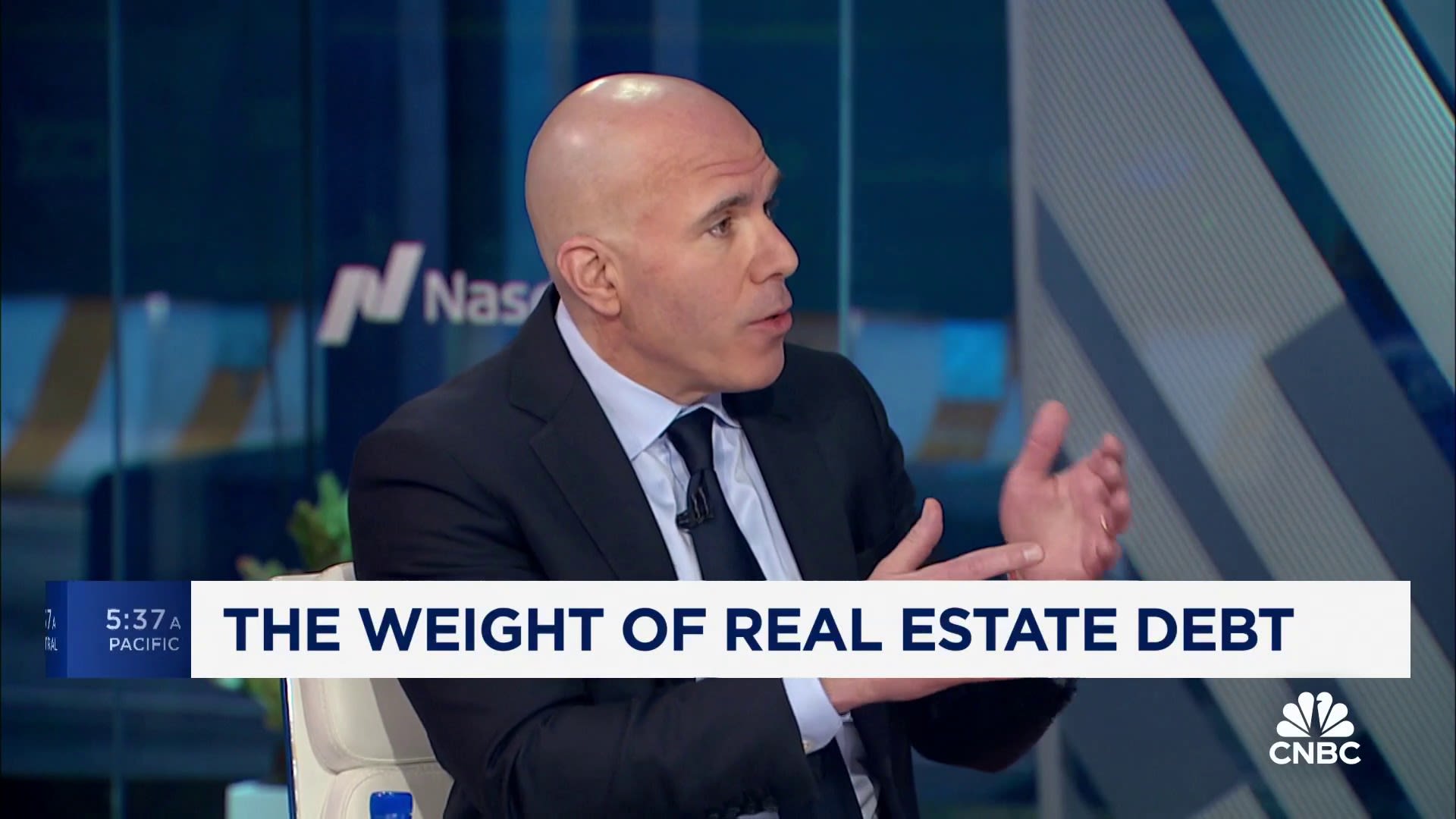
The real estate debt problem still hasn’t been dealt with, says RXR Realty CEO Scott Rechler

The real estate debt problem still hasn’t been dealt with, says RXR Realty CEO Scott Rechler


Share

Scott Rechler, RXR Realty chairman and CEO, joins ‘Squawk Box’ to discuss the state of the commercial real estate market, why he’s expecting a ‘slow moving train wreck’ for regional banks, the weight of real estate debt, and more.


Source link

The real estate debt problem still hasn’t been dealt with, says RXR Realty CEO Scott Rechler Read More »

The 0K “Stolen” Rental Property and How to Avoid a Real Estate Scam

The $150K “Stolen” Rental Property and How to Avoid a Real Estate Scam


Having your rental property stolen?! How is that possible? This would be a worst-case scenario for any investor, and it was nearly reality for today’s guest. Buckle up as we share one of the wildest real estate horror stories you’re likely to hear!

Welcome back to the Real Estate Rookie podcast! In this episode, which could be mistaken for the latest entry in your favorite crime drama, investor Matt Drouin tells the bizarre story of how he nearly LOST his $150,000 rental property to a professional scam artist. He shares some of his biggest lessons learned from this incident—including how to screen tenants properly, when to get an attorney involved in the eviction process, and how to avoid scams when looking for your own off-market properties.

But that’s not all. You’ll also learn about the many benefits of investing in your hometown, as well as when to branch out and choose a market beyond your backyard. What’s more, you’ll hear about the often-overlooked mixed-use buildings that can be a gateway into commercial real estate investing, and how to take down these deals with creative financing!

Ashley:
This is Real Estate Rookie show number 376. So some people like myself may browse Craigslist to find properties, but today’s guest found his own property listed for sale. You won’t believe how much it was listed for and how he found out about it. My name is Ashley Kehr, and welcome to the Real Estate Rookie podcast, where every week, three times per week now, we bring you the motivation, inspiration, and the stories to help you get started. Okay, so today’s guest is Matt Drouin, and Matt’s. We are so glad to have you on the show. He is a seasoned investor from New York. He believes if you are not a rookie at something that you’ll never grow. He had a newsworthy story to share, kind of almost like Leka’s if you haven’t listened to that episode yet. But he’s going to share with us an eviction that eventually almost cost him his property. So, Matt, thank you so much for joining us today for a little therapy session to tell us your horror story.

Matt:
I have so many horror stories in this business, so this is one of my favorite ones. But thanks for inviting me on. I am excited and terrified at the same time.

Ashley:
Yeah. Well, I’m excited to go over some other things besides just your horror story to kind of get to know your market because you are investing in New York, and I’m sure everybody’s thinking, “How could there be horror stories investing in New York? It’s such a wonderful place to invest.” And then also we’re going to hear about your first mixed-use deal and then how you handle the tenants during this nightmare. So lessons that we can all learn from. So, Matt, let’s get started with this Craigslist house. First of all, I am a little upset with myself that I didn’t actually see it listed for sale, and if it was a good price, jumped on it and bought it. So you want to start off with that day, I guess, as you’re looking at the Craigslist.

Matt:
Right on the clock. I didn’t actually find this on Craigslist. I got a phone call in the middle of the night. It was like 10:30. I was turning down to go to bed and I got a call from an unknown number, and this guy asked me, “Hey, do you own the property at 123 Main Street?” And I said, “Yes, I do. Why do you ask?” And he’s like, “Well, I just walked through it. And there’s a person with a pseudonym that sounds like a fake name, wanting to sell the house for $45,000.” This house is, I sold it recently about a couple of years ago, for $150,000, and that’s how the story started that evening.

Ashley:
So what was your initial thought? You get this phone call, and you’re like, “Is this guy scamming me?” What was your mindset going through at this point?

Matt:
Well, I knew this guy, and I was like friends with him; met him at a couple meetups and that sort of thing. And when he first told me, I was like, “Hey, listen, it is okay. It’s probably just another, a Craigslist scam or a Facebook marketplace scam where somebody stole the pictures on a rental that I had listed years ago and reposted them and is basically just trying to do wire fraud scam in terms of wire me 500 bucks and I’ll send you over a purchase and sale agreement and so on and so forth.”
And so, I tried to brush it off that way, and he was like, “No, Matt, I actually just walked through the property. There was somebody that’s there with groups of buyers and me being one of them, and this guy is trying to sell the house.” And I was like, “He can’t sell the house.” By the way, he hasn’t paid rent in two years, so there’s no possible way he could ever sell the house. He doesn’t have title to it or anything like that. So that’s kind of how that started. And obviously, I did not sleep well that night.

Ashley:
So you mentioned you knew this guy that had called to give you that information. How did this guy know that you owned this house? Had he had seen pictures of it on your Facebook before, or how did he kind of put that connection together after he walked through the property?

Matt:
Well, his instinct started creeping in, and he was like, “This seems a little bit sketchy.” So he looked up the property information on public record, saw that it had a mailing address. He looked up the mailing address, seeing what other LLCs were tied to this mailing address. And so saw one of the LLCs is my main company at the time. And so, that’s what led to the phone call. We were friends on Facebook. Him and I are both really active in the real estate community. So it definitely does pay to get yourself out there and network and build your network of people and your business, not just for being top of mind for potential deals and what you’re looking for, but also for things like this.

Ashley:
So you don’t sleep at all at night; your mind is racing. What’s the first thing you do in the morning?

Matt:
I emailed my property manager right away. It’s a good thing that he was actually a former police officer, so that definitely gave me some confidence. And so, I told them what was going on, and I was like, “Who is this person?” It’s a male. “And I signed a lease with a little old lady back a few years ago. So, what’s going on? Why does this person have possession of the house?”

Ashley:
Had you been getting rental payments from that old lady? Were you still getting a check every month for that property?

Matt:
No, no. The payment stopped. She was literally the sweetest lady I could possibly imagine, good income kept the place up really well. When I first walked through the house to introduce myself, the first thing she said was like, “Oh my gosh, you’re gorgeous.” I was like… People just don’t say. I was like, “Do you say that to all the guys?” But what happened after my property manager did some research with the person? Because this is a pretty large company, and so they got back to me and they said, “Okay, the son called after rent payment stopped, and we started issuing them notices and said that his mother died.”
And then when we said, well, “Who are you? You’re not on the lease if you’re 18 years older; you need to be on the lease. We need to screen you and all that other stuff.” And so he quickly said, “Let me call you right back.” So a few days later, after a property manager followed up with him, they called him back, and he said, “Oh, actually, my mom didn’t die. She’s just really sick, and she’s in the hospital.” So they started going through the eviction proceedings, that sort of thing. This was like in 2019, and actually it was early 2019, late 2018. And then, by the time that we got a court date set, the pandemic hit, and then the eviction moratorium.

Ashley:
Did you try to Google this lady’s name to see if there was an obituary or anything for her?

Matt:
I was almost like… It was so set; it was so sad. I did not do that. I was like, “Okay…” What I did, and the reason why this was sad, is because when she originally moved to the house, she was like, “I don’t have the money right now. I don’t think I can mortgage. Can I buy this house when it’s right?” So I actually built a relationship with her, connected her with NACA, Neighborhood Assistance Corporation of America, which is a nonprofit mortgage loader and generator for 0% down houses, basically for people that are moderate incomes, that sort of thing. So I got her into that program with the full expectation that I was going to sell this house to her and sell it to her for actually a price below market because nobody in her family tree had ever even owned a home before that she could think of. So that’s what was really sad is that that never happened. And then it turned to this nightmare story.

Ashley:
Did you ever find out if she was still alive or not? As to what the truth was there?

Matt:
Yeah, she definitely had passed away, and that was the other sad part too, because she was such a sweet lady.

Ashley:
Okay. So you’re trying to figure, there’s been nobody paying, somebody’s trying to purchase your house, you’re trying to talk to people as to what you should do. What are your next steps?

Matt:
My next step, is I call everybody that I know that is affiliated with the news. My friend Matt, who called me the prior evening, said that there was a dozen people walking through this property that evening. So first of all, I didn’t want anybody getting scammed because this guy couldn’t legally transfer title to anybody. All he could do was collect cash deposits and scam these people. So I wanted to get on the news so that there would be visibility for people to not get scammed. And also, so that I was like, “All right, if this is on the news, then maybe this guy will feel the heat and not do it anymore and maybe even leave because of the amount of heat.” The second thing I did was, like I said, my property manager was a former police officer, so I was like, “Hey, I got the Craigslist ad. I have this person’s phone number. Let’s set up a sting operation.”

Ashley:
That was the first thing I would want to do too.

Matt:
So I went on Facebook Live I set up an appointment here. I was like, “Hey, I have cash. I’m super interested.” That sort of thing. So my property manager was like, “Don’t park in the driveway; park across the street so they don’t see our car and that sort of thing.” So we walked up to this house, knocked on the door expecting to see this guy, and I was like, actually, I had my phone in my pocket to try to get… Now looking back on it, this was probably not the smartest thing to do in terms of, because who knows? I didn’t know. I didn’t know the son or what he was capable of, but I have to tell you, this is what happened, smart or stupid. And so, the guy ghosted us, and I was like, maybe he got tipped off and just basically ended up not getting spooked.
So I texted him, I was like, “Hey.” The pseudonym was because I want to protect the names of the guilty, but the pseudonym was Lexi Hernandez. So I texted him, and I was like, “Hey Lexi, we’re here to see the property. We’re super interested, blah, blah, blah, blah, blah.” And so he was like, “Hey, can we meet back a couple of days later?” So at this point in time, my property manager was like, “Listen, this guy’s just going to ghost you again and that sort of thing.” And so I was like, “I’m sorry, we’re no longer interested.” So 24 hours goes by, and Lexi texts me and says, “Hey, if you want to see the house, I just dropped the price to $15,000.”

Ashley:
Okay, Matt, I’m going to stop you right there because I feel like we’re getting into the nitty-gritty of this story here and we’re going to take a short break, but when I come back, I want to talk about how I missed out on an opportunity to purchase a $15,000 house. So we’ll be right back. Okay, we are back with Matt, and we are talking about how you can get $15,000 houses on Craigslist by illegally purchasing someone else’s house. So Matt, this guy, Lexi, it tells you that he is going to drop the price to $15,000 if you’re still interested. So, what do you say?

Matt:
So I didn’t respond to the text message. A couple of days later, the news story came out on TV, and this was on a Wednesday. And so I was like, “Okay, great, this is out. We can stop the scamming.” Hopefully this [inaudible 00:11:16] went viral on Facebook and social media, and the local networks network sort of thing. And so I got a call from a unknown number, and it happened to be a police officer that worked in the jurisdiction of where this house was. And he said, “Hey, are you Matt? Do you own the property at 123 Main Street?” I was like, “Thank God, I’m getting some help here in terms of rectifying the situation.” I was like, “Yes.” And he said, “Okay, well, great. Do you happen to know the tenant that lives there?” And I was like, “No, not really. I have a tenant; I have a lease signed with the other tenant, his mother, who passed away.” And so on and so forth.
And he was like, “Well, we just picked up, arrested a kid who used counterfeit money to buy a pack of gum at the 7-Eleven around the corner, who got this counterfeit money because he ‘sold an Xbox’ to the tenant that’s in your house.” And so I was completely floored that, and then this got me thinking, so I was like, “Okay, well, I don’t have persons. I mean, I have the person’s contact information; I can get them to you. I’m not sure if it’s a burner phone or whatever.” And so I knew right from then, after I was thinking…

Ashley:
What point did you realize that you’re working with a criminal mastermind here? I mean, making counterfeit money, selling someone else’s house.

Matt:
I know this poor kid who’s trying to buy a pack of gum and got arrested. So I started thinking, and I started putting my game theory hat on. I was like, “Okay, this guy’s collecting deposits to sell a house he doesn’t own. He’s buying property using counterfeit money using this house.” I was like, “This guy can. There’s no possible way that this guy can be living there anymore.” So what I ended up doing is, I ended up calling one of my contractors because my property manager wouldn’t do this. And I think this is beyond a statute of limitations. So what I did was not technically kosher from a eviction standpoint, but I had a contractor change out the locks on the property. We also conspicuously posted signs around the house saying, “No trespassing; properties under video surveillance.” I got a SimpliSafe system on there. If anybody tried to break in, I would be alerted to that.
And we just waited because this guy was getting entrance back in the house and was locked out. He probably would’ve called the property manager and was like, “Hey, I’m locked out of the house. Can you let me in?” We’re just trying to make contact with him. And this guy just disappeared, never came back. Two weeks passed. And so we just ended up keeping this stuff stored in the house, and then after 30 days we just ended up cleaning out the house, repainting it, and I was like, “All right, I’m done with this property.” And I just ended up selling it to an owner-occupant.

Ashley:
So what would you do differently now, looking back at that experience? We’ll kind of go into the details here, but overall, looking back, what are some things that could have prevented this whole thing from happening?

Matt:
Here’s the thing. Is there some things that will happen that are bad despite all of the preparation you put into it? Right. This tenant had perfect credit. This tenant had great income. Character-wise, she called me gorgeous the moment she met me, and she kept her own house up really well. My property manager always made sure to drop by a house and see how they lived to make sure that they kept care of their place. And so, we did everything the right way on the front end. This was one of those things that are just completely unpreventable, despite the amount of preparation you do. And so, I think the things I would’ve done differently is I probably wouldn’t have put my life and limit at risk trying to do the stupid sting operation.
And then also I probably, I should have consulted and listened to an attorney in terms of what the proper process was. I was just scared to death that somebody was going to “buy this house” and move into it. So I wanted to get possession of the property as quickly as possible, despite the legal gray area of changing the locks out with the property. So that was probably not kosher to do in New York State, but I had to weigh the possibility of somebody thinking that they bought this house and being scammed out of, let’s say, $40,000 or $15,000 for somebody who couldn’t afford to lose that.

Ashley:
That actually happened to James Dainard, an investor out of Seattle; he’s On The Market podcast, he’s one of the hosts on there. He actually purchased a property where somebody else had sold it, and they didn’t actually own the property. And he had to go through this whole thing, and the property just sat there forever because they were trying to clear title on it and things like that. But that can really, especially if somebody is pouring their life savings; maybe this is their first investment or this is their first home that they’re buying; that really can be detrimental to them financially and even emotionally if something like that where… They were to be scammed in that sense.
Yeah, so one big red flag: if you guys are on Craigslist and you see a house that should cost $150,000 and it’s only listed as $15,000, that may be a scam. So just be cautious out there. Some of the similarities I saw was one thing that you did do that seemed to really help you, and this is the same thing Leka had done on episode 360 was go to the news and get that kind of attention on social media and things like that. If someone is trying to do that, they’re in their own situation where they want to attract media coverage. What are some ways to actually do that? How did you get the media’s attention?

Matt:
I’m really involved in the real estate community and the housing advocacy community on behalf of housing providers in Rochester. So I was kind of always… And here’s the thing, is to make a friend with somebody that is on the news and being very available, and these people, when they get their news story for the morning, they literally have to get their footage before four o’clock that day. So I always made myself super available. If my friend needed to get coverage on some sort of housing-related story, I would always move my schedule around and be there. So that definitely helped having those contacts. And also, it helped because the story was so crazy; you just can’t make this stuff up.

Ashley:
So the power of networking, you just showed a great example of that right there, and even though you weren’t getting anything in return being useful and helpful to other people upfront, it paid out in the end. But you mentioned Rochester, and we haven’t talked about your market at all. So do you want to give us a little insight of after this deal happened, did you shoot out of Rochester and go across country to invest in somewhere else? But give us a little insight on why you have chosen Rochester as your market, and what are some of the pros and cons of investing in Rochester?

Matt:
Absolutely. Rochester is an awesome place to invest. The problem is that there is, you have really great areas, and then you have areas that are stricken with abject poverty. So a lot of out-of-town investors that call themselves cash flow investors look at properties like a duplex that’s for sale for $30,000, and they run the spreadsheets on it. They’re like, “How could this possibly go wrong?” The reason why it’s so cheap is because nobody wants to live there. At least people with means don’t want to live there. So great areas are great for a blend of between cash flow and also appreciation. I also want to bring people up to speed with… Rochester’s typical story you look at is the downfall of Kodak, Xerox, and Bausch + Lomband, and those titans did lead to a population outmigration in Rochester. But sort of the phoenix that has risen out of the ashes is that we’ve gotten a extremely diversified economy that is undergirded by medical and education.
We have seven universities that are surrounding our city. We have three to four major hospital systems that are world-class that employ a ton of people, a ton of people with great jobs, and also we’re surrounded by abundant fresh water as well, which I think, like, my brother lives in Arizona for instance, and he’s like, “I don’t know if there’s going to be any water in the next 10 years in Arizona.” So I was like, “All right, well, we have the Finger Lakes and we have the Great Lakes.” And stuff like that, and we don’t have tornadoes and hurricanes and volcanoes, and that sort of thing. So I just think it is important for people to come to Rochester if they’re looking to invest from out of town and really, really get in tune with the neighborhoods, because everything’s street by street and block by block in our community, and you really want to be come very knowledgeable about that and buy where people and where you would want to live.
That being said, the reason why I continue to invest in Rochester is because it’s in my own backyard. I know every street, I know every block, I know all of the players that are around town, and that gives you an extreme competitive advantage as an investor, investing in your own backyard. And so I’m a huge advocate for that. And every single market has its own investing strategy that works. And we’re just a blend of cash flow and appreciation; meager appreciation that is two to 3% per year is pretty typical for Rochester. It’s not going to be 10 to 15% per year or anything like.

Ashley:
That. What do you think is the best strategy in Rochester right now?

Matt:
Best strategy: I’m always a fan of buy and hold. Small multifamily properties is a great way to get started in our area. There are properties that will meet debt-to-income to, and also debt service coverage ratio. If you’re getting commercial financing of 1.2 to 1.25 on a lot of deals, so you can put 20% down and investment property in Rochester, and the numbers will make sense. Other markets of the country, you got to put 40% down in order for the numbers to make sense when you put financing on it. So that’s really, it’s a great place to get started. It’s a great place if you live in the area to get started. House hacking through multifamily property is a great way to start too.

Ashley:
Okay, Matt, so let’s say you can no longer invest in Rochester. You already bought all of the property there, and now you need to go out of state into a different market, and you don’t know a lot about it. What are some of the things that you have learned from your own market? With knowing everything about it, that you could take those skills and go to a different market to analyze? What would be some of the things that you would look at to make sure this market would be a good product for you?

Matt:
If I lost everything or if I bought everything and I couldn’t buy anymore.

Ashley:
Let’s go with the latter one.

Matt:
I think, I look at other markets, I passively invest in other markets with other operators to achieve my goals, which is not necessarily cash flow but an equity multiple in terms of being able to double and triple my money over a long period of time. And so, the things I look at in terms of other markets is strong economy. Diversified economy as well that’s not hinged on one company, like, let’s say, Amazon. If Amazon goes out of business, I’ve gone through that before. Every single one of my family members used to work for Eastman Kodak, and Eastman Kodak downside, they laid off my entire family. I’ve seen what that does. So having a diversified industry base, population stability. Also, I would concentrate on metropolitan areas. It doesn’t have to be a huge city. It could be a small to medium-sized city. You have a velocity of population of people moving in and moving out.
So you have people that are buying and selling, and renting in that market. And then, also look at specifically getting granular down to the actual neighborhood is I look at what is the one, three, and five-mile radius in terms of area median incomes on that property. I want to be in the middle or at the high end of incomes in the area. I don’t want to be at the very bottom in terms of incomes for a neighborhood, for instance, or a submarket in a metropolitan area. So those are just some of the criteria that I use just to make heads or tails of it. And then, if I like a neighborhood, I go to Google Street View, you can find a lot on taking your little orange Google man and dropping them down under the street.

Ashley:
One thing with that is to be cautious of is when the date was. So in some of the areas I invest in, it’s from 2020, and that was four years ago. And some of that data has actually changed. There’s different buildings and different things in there, but…

Matt:
That house ain’t there though no more.

Ashley:
So my next question is, where are you getting this data from? What are some resources that everyone can go to actually find the answers to these different data points you’re looking at?

Matt:
Great question. Typically, most realtors have access to this information because part of their membership dues, they pay as part of being part of the MLS, and the local board of realtors is they get access to other tools besides just the MLS to be able to pull actual market data such as incomes and that sort of thing. So that can be a great resource, and some of these realtors may not even know that they actually have these tools at their disposal, but they have a menu of tools that are part of the benefit of being a member of their board if they can’t find the answer. The Federal Reserve website is really helpful for me. Federal Reserve Bank of St. Louis is something I go to all the time to find out information about zip codes in terms of area median income and that type of stuff. But I mean, I think first things first is going to your local realtor and trying to find that data.

Ashley:
Yeah, some other ways you can get the information is also from the census, but you got to remember the last census, big census was done four years ago too, and we got to wait another six years for that. But just looking at different governmental websites and then also going to the websites of large commercial brokers, and even like Crexi, things like that. They’ll put out reports; Millichap will, a bunch of them. And then also On The Market, great podcast to get data. Dave Meyer put stuff onto the BiggerPockets website, especially if you’re a pro member of BiggerPockets. You get all of these exclusive articles that he writes, and most of them are on the data and everything and statistics of investing in different markets too.
So we’re going to take another break, and when we come back, I want to ask Matt about tenant screening. So in his years of experience, what are some of the things, the policies and procedures that he has implemented and getting the right tenants in and how you can prevent putting the wrong tenants in, even though, as we found, he had a perfect tenant in place and still it went wrong. So we’ll be right back.
Okay, Matt, we are back from our short break. So let’s talk about tenant screening here. What are some of the policies and procedures that you have implemented to really protect yourself from having evictions and having bad tenants?

Matt:
Yeah, super rigorous tenant screening is very important to the business model, especially in New York State, which laws have been passed recently that have been very tenant-friendly. So in addition to buying in great locations, you definitely want to make sure that you have a certain amount of rigor around tenant screening. So the systems that we use, we use a property management tool called AppFolio. You can actually input your income requirements and also your credit score requirements that are in there. We go on income; we require at least three times monthly rent in terms of income to qualify for apartments. So we start there. Anybody who’s paying more than 30% of their income is considered rent-burdened by HUD. And so we do not want to rent to somebody that we’re going to set them up for failure and possible displacement because we know what that looks like in terms of how it shatters families.
So we don’t want to be party to that. I think that credit score is definitely a good indication. I don’t run my management company anymore. My partner runs a management company, but once or twice a year, he’ll bring up a application that just doesn’t fit in a box that we have, but other things look good. For instance, we have a tenant that has strong income but they have a low credit score. So he’ll escalate that up to me. And what I would really do is I would do a deep dive on their credit report history and seeing what’s on there. So if they just have low credit because they pay cash for everything, I’m going to take that consideration.
A lot of times, also, people have a lot of student loan debt. We really don’t rate student loan debt very high, medical debt as well we don’t rate that high. But if I start seeing auto repossessions, any landlord collections, utility bill collections, if you can’t pay your utility bill, then how are you going to be able to pay rent? So we will get granular and make policy exceptions once in a while for at tenants that are right on the cusp there that we feel good about.

Ashley:
Yeah, I do the same too where student debt and medical debt, we really don’t take into effect. And I think the important lesson to take away from your screening criteria is that you were able to just spew off your criteria. You actually have a criteria, and that’s what everybody needs to do. If you’re going to be screening tenants, even if you have one rental unit and you’re accepting three applications, those are three different screenings you have to do and have a list of what your criteria is. So each time you can just go through and yes, yes, no, and that first of all makes it so much easier because you’re not going by your gut or getting emotional because their dog really wants that backyard to play in or whatever it may be. And plus then you’re also following fair housing laws, where you’re not rejecting somebody just because you think the other person will be better, even though you don’t even have a basis or a criteria to follow.
So that is something; if you don’t have that right now, sit down and write out what that is. And if you have property management software, you can incorporate your criteria right into the software. So the software will say automatically just this did not meet your criteria or this needs a manual review. So for us, it comes up if there’s student loan debt that is affecting that income, and that’s where we go in and do the manual review and usually end up approving it, or if they meet all the criteria approved, okay, we can continue to move on, but we have a record of all of the screening that we’re doing and we’re documenting it, and documenting it. So that’s a big lesson to take away here is building out that criteria. So Matt, before we wrap up here though, I love diversifying, and so I’ve learned that you have gone into a new asset class for you. So tell me a little bit about this transition and this pivot going into a new asset class.

Matt:
I love multifamily. What we found is that during 2018, 2019, prices started getting out of whack, where we couldn’t make numbers work anymore on multifamily deals. And we still wanted to fulfill our long-term objectives of growing our portfolio. So we started thinking about what asset class do people not like. So I started finding these mixed-use buildings where retail investors, usually these have retail on the first floor. Retail investors don’t like them because they’re residential, and residential investors don’t like it because it has retail. It scares the crap out of them. So I to, I said, I was like, “Okay, maybe we can find a market inefficiency in acquiring mixed-use buildings.” And so we kind of went down that road and told everybody we knew that we were looking for mixed-use properties. And to that end, through that networking, I was at a meetup, and this guy came up to me, and he was like, “I have this off-market broker pocket listing deal. I don’t want the retail in it, but it’s got a good amount of residential units.”
Had about 24 residential units. So we took a look at it, and I really was intimidated by it at first. First thing, the thing needed a ton of work. And secondly, this retail thing was new to me, but the good thing was that both the tenant spaces were occupied on the first floor, the commercial space. And when I was stress testing this deal, I was like, “If those two spaces are vacant, I’ll still be able to pay my bills with the property, the mortgage, the taxes, insurance, the repairs and maintenance, all that stuff.” So that’s really what gave me the confidence to kind of start diversifying into a new asset class. And that’s really what led me to having the confidence to start going into more commercial stuff like office, industrial and other fully retail buildings was from that experience and being able to dip my toes in the water without getting a hundred percent exposure to a new asset class I wasn’t familiar with.

Ashley:
And Matt, just because we love the numbers, how did you finance this deal, and is it any different to finance a mixed-use property than it would be commercial or residential?

Matt:
Yeah, so anything that’s mixed-use is going to be considered commercial. So typically, you’re not going to be able to get a 30-year fixed-rate mortgage on it. It’s going to be something that’s going to have to be with a community bank, typically, or credit union where they have a commercial lending department. This deal, it was actually a package; it was a mixed-use property that had a four-family property that was right behind it on a separate tax parcel, but it was adjacent to it, it shared a driveway. And so, when I was underwriting this mixed-use deal, I was buying the package for $775,000. And when I was running the numbers, I was like, “The big building alone would appraise for $775 all day long.” So I got to thinking, I was like, “Okay, how can I creatively structure this thing where I’d be able to get into this deal with none of my own money?”
Because at that point in time, it’s like a growing real estate investor is always running out of cash. So you start to have to either get creative or learn how to raise capital. And so, I had a hard moneylender that agreed to lend $180,000 on the four-family property. And so how we structured the contract was we amended it and broke it into two different contracts. The big property was going to be $775,000, and the four family was going to be at a dollar, contingent upon the sale and transfer of title of the bigger property. So this is the part that was crazy when we closed this thing, we used a credit union to finance the big property that already had a mortgage on it. So we did a mortgage assignment, saved some substantial amount of closing costs by doing that.

Ashley:
Can you just explain what a mortgage assignment is real quick?

Matt:
Yes, absolutely. So at least in New York State, when you put debt on a property, the local county will collect what’s called mortgage tax. And so a certain percentage of the actual mortgage amount on the property, and you, as the buyer or if you refinance the property, have to pay that. So one slick trick that you can use is you can ask your attorney, is it possible for the bank to assign the mortgage to the new bank so that the mortgage tax that we would pay would be on any additional debt placed on the property above and beyond the original mortgage. So in this case, the original mortgage was like $500,000. So we were able to actually have them assign that. So we saved about $5,000 in closing costs, which was pretty big for this deal.

Ashley:
That’s awesome. I’ve never heard of that. Let’s explain the difference real quick of the difference between that and assuming someone else’s loan too, because assuming the loan is where you’re actually taking over their loan with the same bank, but all you’re doing is having it transferred to your bank and the loan is in your name, everything like that, that’s really interesting. I never knew you could do that. And now I’m definitely going to try it out sometime because it’s what? 1%, right? That mortgage tax in New York State is 1%, which definitely adds up to quite a chunk of change. So that’s a really cool strategy that you used to do that. And so, what did you end up having to put down on this property?

Matt:
So let’s fast-forward to the closing table, right? So the property did end up appraising, I think for $785. We’re buying it for $775. And when it was time for closing, we had the closing for the four-family property with our hard moneylender’s attorney in one office at this attorney’s office downtown. And so we got the check for the $180,000 for the mortgage, and my attorney already had checks cut. He got the check and basically essentially walked the check down the hallway to the other office, where we had the closing for the bigger property. And so the hard money loan proceeds from this property provided a hundred percent of the down payment and closing costs for the acquisition of the total package. And also, we had some loan proceeds in excess about 11,000 bucks. So it allowed us to actually have some startup cash to start figuring out, “Okay, what do we want to do with this thing now?”

Ashley:
I want everyone to take a minute and to rewind that and map all of this out in their brain as to how creative this was to get this deal done. So you have the, what was it, a four-unit, the apartment building and back?

Matt:
Yes, correct.

Ashley:
Yeah. So you have the four unit where he’s going and getting hard money on it for $180,000, but on paper, it actually looks like he’s paying $1 for it. But his hard moneylender is giving him $180,000 for that property, which there’s going to be a lien on it, everything like that. It’s just for the county record; it’s saying he bought it for $1. Then you go to the other property that he’s purchasing for $775,000, the big commercial property, and he’s taking that 180,000 and using that for his down payment on that property and then getting a mortgage for the rest of it. So that’s a wonderful thing about commercial lenders, is if this was a residential unit and maybe you were house hacking it, they would say, “Well, where’s that down payment coming from? I need to see your bank statements, your mother’s bank statements, your dog’s bank statements.”
But in commercial, if the deal still works and the property can support the payments, you can borrow money from other sources for the down payment, and they’re not as stringent as to where that down payment comes from. And way more flexible with getting creative as to how the deal is put together. The bank just wants to make sure that on the commercial end, the rents can support you paying them and whatever other debt you borrowed to make this deal happen. And of course, your monthly expenses. And if it does, they’re usually good to go. So when you’re looking at commercial properties from now on, I want you guys to think of Matt and think of this deal and think, “How can I be like Matt? What would Matt do?” Okay. So, Matt, thank you so much for sharing that example with us. Is there any last things you wanted to add about that deal that made it remarkable? How’s it doing today?

Matt:
It’s doing great today. The original tenants we had has retail, that originally occupied the property was Rent-A-Center, which is a company I have a bone to pick with because they take advantage of low-income people. And also, it was a nail salon that was on the other side, and they were… Pretty sure they were doing human trafficking through that place because there was cots in the basement and that sort of thing. So I booted both of those tenants out, and I got a crumpet shop, which, Ashley, if you come to Rochester, New York, you can know what a crumpet is.

Ashley:
Yeah, I was just going to ask, is it like, here’s going to be, my guess is it’s like a chocolate or a candy or something, a crumpet?

Matt:
No, you have no idea. So it’s an English; it’s like a, think of a cross between…

Ashley:
Oh, like tea and crumpets, right? Tea and crumpets.

Matt:
Correct, yeah.

Ashley:
Yeah. Okay, okay. I still don’t know what it is. I’m assuming like a baked good, maybe? Is that what it is?

Matt:
It’s kind of like that. Yeah. Yeah. It’s crossed between an English muffin and a pancake kind of. It’s savory, so it’s what you put on top of it is what makes it. And I was also able to place a vintage clothing and home goods store next door in where Rent-A-Center used to be. So it’s really changed the complexion of the neighborhood. It was a really fun project. Looking back on it, I lost a lot of hair and earned a lot of gray hairs in the process, which is a completely different show of that story. But fast-forward to today; it is been a joy in my life.

Ashley:
Well, Matt, thank you so much for joining us today. We appreciated you sharing your nightmare horror story with us, talking about screening tenants and also about the Rochester market, in case there’s anyone that’s interested in investing there. They have an idea of where to start when analyzing a deal in that market. So thank you so much. And also mixed-use; you guys know how to get creative with putting your commercial deals together now. So, Matt, thank you so much for joining us. I am Ashley. You can find Matt’s information in our show notes, and also you can find me on Instagram, and we’ll link that into the show notes. Thank you, guys, and we’ll see you next time.


https://www.youtube.com/watch?v=XWMwyYq27DE????????????????????????????????????????????????????????????????????????????????????

Help us reach new listeners on iTunes by leaving us a rating and review! It takes just 30 seconds and instructions can be found here. Thanks! We really appreciate it!

Interested in learning more about today’s sponsors or becoming a BiggerPockets partner yourself? Email [email protected].

Note By BiggerPockets: These are opinions written by the author and do not necessarily represent the opinions of BiggerPockets.


Source link

The $150K “Stolen” Rental Property and How to Avoid a Real Estate Scam Read More »

0K In Equity But NO Cash Flow, Should I Sell?

$100K In Equity But NO Cash Flow, Should I Sell?


Where’d all the cash flow go? More than ever, rental property owners are waking up to find less and less mailbox money coming in every month. This is doubly true for those who used low down payments to house hack and turned their properties into full-on rentals. So, what do you do if you have a rental property giving you low, no, or negative cash flow? Should you sell it and swap it for another investment or ride it out, betting on future appreciation gains? We’re giving our thoughts in this Seeing Greene!

As always, David and Rob are here to answer your pressing real estate investing questions. But resident yacht tycoon James Dainard also brings his twenty years of investing experience to the show to help this week’s rookie real estate investors. First, our very own Noah Bacon asks what he should do with a negative cash-flowing house hack that has six figures in tax-free equity. Then, we ask a question everyone wants an answer to, “WTF is wrong with investors these days?” If you want to turn your house into a rental property, stick around because two more investors ask whether it’s worth it AND when you can start writing off those lucrative real estate tax deductions.

Want to ask David a question? If so, submit your question here so David can answer it on the next episode of Seeing Greene. Hop on the BiggerPockets forums and ask other investors their take, or follow David on Instagram to see when he’s going live so you can jump on a live Q&A and get your question answered on the spot!

David:
This is the BiggerPockets Podcast show 907. What’s going on, everyone? This is David Greene, your host of the BiggerPockets Real Estate Podcast, the show where we argue with the information that you need to start building long-term wealth through real estate today. And today we have a Seeing Greene episode. If you’re watching on YouTube, you see the green light behind me and you know that only means one thing, I’m filming this in front of a traffic stop at an intersection. Just kidding. It means that we are doing Seeing Greene, and I brought some help. We start off the show with James Dainard who helps answer a question for me from one of the BiggerPockets staff members actually, which he does from his yacht. And then James realized in the middle of the interview that he did not want to be on the interview, he wanted to be yachting around, so I brought in Rob little yachty Abasolo to sort of support me with this and he’s here to take over the second portion.
In today’s show, we get into some really good stuff, such as why expensive markets tend to appreciate more than cheaper markets, what to do about turning your primary property into a rental if it doesn’t cashflow, when your house hacking strategy doesn’t go according to plan, when you can count expenses for a rental property and when you can’t, and more importantly, what you have to do to make it eligible to count those expenses and more.
But first, we’ve got a question from Noah Bacon in Colorado. So Rob, why don’t you go check out the vacancy on our Scottsdale property and make sure we’re getting that sucker filled and then be back lickety split?

Rob:
Okay, but before I do, if anyone here is listening and you want to submit a question, remember you can always go over to biggerpockets.com/david to submit your questions for the next episode of Seeing Greene.

David:
Noah Bacon, the Bigger Pockets community manager, Noah representing BP, what you got for us today?

Noah:
Hey guys, thank you both for taking the time to answer some of my questions and it’s really great to hang out with you guys here today. So I started a house hacking in 2021 in Colorado, Springs, and it performed really well when I was house hacking. Since I’ve moved out, it hasn’t really performed all that well. On paper, everything was great, was going to cashflow about 300, $400 when I moved out. Turns out, went through an eviction, rental rates dropped a little bit now that it’s not in the summertime and insurance rates have really skyrocketed here in Colorado. My HOI fees went up 100% this year alone. So just immediately from 2021 on paper, everything looks great. Now we’re here in 2024, I’m breaking even.
So it’s not like it’s a terrible asset at this point, but it’s breaking even and I’m seeing the next two to three years on the horizon and I’m like, “Do I take the equity in the property and deploy it elsewhere or do I kind of go along this path and potentially be at a negative cashflow in two to three years and let the equity build since set a 3% rate?” I know a lot of people are in this great problem to have with the 3% rate in equity building, but the cashflow monthly is going to start to go on the downside. So when is a time do you guys think to scale, to start to think about different things? Should I ride this out? I guess what have you guys been hearing about things like this?

David:
I’m going to turn it over to James. Before I do, I’m going to give you my 2 cents on why I think this is happening because more people than you think, Noah, are in the exact same position. I saw 2023 was like the year of this, right? My opinion of why I think this is happening is we have really bad inflation. We printed a whole bunch of money. Inflation doesn’t come right away. It’s like if you have an earthquake in the middle of the ocean, it takes a while for that wave to build and actually hit the shore. But we’re seeing it continually go up and up and up.
A lot of people measure inflation through the CPI, which I don’t like because those things can be manipulated. But if you actually just look at your life, how much are you paying for steak at the grocery store? How much is milk cost? How much is gas costs? It’s really high. And I’m seeing homeowners insurance Skyrocketing and no one’s talking about it. I mean it’s not like it went up 20%. It’s like it’s doubling or tripling on some of these properties in one moment or another one, like you said, the HOA fees. It’s like, oh, it was 150. Now they’re coming back and saying $400, okay?
So rent can only go so high because rents are largely and loosely based on wage increases. Well as inflation is making everything more expensive. That doesn’t mean that companies are just paying their employees more. They’re actually kind of getting away with giving people pay cuts if you keep their wage the same, but everything becomes more expensive. So HOAs are going up because of inflation, insurance is going up because of inflation. I bet the next thing you’re going to see is municipalities start increasing property taxes because of inflation having it there, yet rents are not going up because people are kind of already tapped out with what they can afford. And it’s created this odd squeeze that I’ve never seen in real estate where rents are not going up with the same degree as the cost of goods and services because people couldn’t afford to pay them. You’d have tenants to say, “Well, I can’t make my payment if you raise my rent because I’m already not getting a raise at work and everything else is becoming more expensive.”
So James, what do you think? Did you see something similar or you have a different take on it?

James:
No, I mean the rising costs are eroding cash flow. Insurance is a huge expense for us as landlords, also as a construction company. I mean, our builders risk policies, it’s expensive and what we all have to do is our performance… The great thing about our performance last two years is we would blow them up with way more income coming in. We did a lot better than we thought. Now what’s happening is the expenses are starting to catch up. And honestly, people are starting to feel the real cash flow of real estate and a lot of investors are feeling this right now because as you buy real estate in your newer and real estate, and I did the same thing, it’s like you buy them, you get a couple hundred dollars a month in cash flow. And then the economy starts leveling out or something bad happens, you have to maybe pay for that asset because these are investments. Investments go up and down.
What I would do for any investor, Noah, especially you, is going what is your long-term goal that when you’re thinking about what to do with that property, you really need to know what is your one year, what is your three year, what is your five-year goal. And by doing that and listing down where you want to be with your passive income and your cash flow, that’s going to kind of tell you the direction you want to go. But personally for me, everything’s tradeable and I can always increase my cash flow position. And the great thing is, you made a very smart investment and you’ve made $100,000 in equity.
Now, you want to figure out what to do with that because equity is only good if you utilize it. It’s just sitting there. It’s not even a real thing. And at the end of the day, I still factor that into my return. So every year I run return on equity on every one of my properties. Is my return still meeting what my expectations should be? Or what can I do with that equity and trade it out? Because the great thing is you made that decision, you have $100,000 in gunpowder at that point, your issue is you don’t want to pay for your property every month, which is understandable. No one really does. I would trade that for another property that has a whole lot higher cash flow. You have 100 grand. You don’t need to add into any other property. That’s your down payment. And you can take that three to $400 a month or even break even and you can 3 to 4X that by making the right trading, getting maybe some more doors, trading into a little bit cheaper market, but it has to be your goals. “I want cash flow.”
If you want growth, I would take that property, I would 1031 exchange it into a value add property so I can double my equity position. If I’m buying it below market, improving with rehab, then all of a sudden my $100,000 in gunpowder might turn into 200,000. And then you’re talking about trading that for some serious cash flow. But write down those goals. It’s going to tell you your plan of action. But even if you have a 3% rate, who cares? It doesn’t matter what your rate is if you’re not making money. I would rather pay 10% and make money than 3% in breakeven. Capital is just a cost of the deal. And if the deal is worth it, pay whatever rate it is. And so I would just say write down your goals. Where do you want to be? Cash flow? Equity? Do you want to expedite the process? Go value add. If you want steady cash flow, trade into a lower market, get more doors. And then you can weather storms more because your cash flow is greater.

David:
Noah, we have to take a quick break, but I will give you a chance to react to James’s advice right after we get back.
And we’re back with Noah Bacon, the investor and house hacker in Colorado who is struggling with increased costs and the handcuffs of a low interest rate. Should he sell to tap the equity or keep the deal? What do you think, Noah?

Noah:
Yeah, that’s really well said. And I think I’m at a point too where it’s one property that I have, if it goes wrong, like we were just talking about James, it’s like two months of paying, two mortgages now, how can I potentially mitigate that risk? And I think like you’re saying, it’s time to stop looking at that 3% in the equity build over the 30 years of the 3% rate. I’ve been hanging onto that since the day I bought the property and it’s like it’s time to let that fantasy and reality go and start to scale. It’s just now that the environment’s different, I wasn’t expecting expenses to go so much more rapidly than what income was. I’m just like, “Okay, new year. I really got to think about these things.” So I really appreciate that because I really do think I need to start looking in potentially different market because I’ve seen on the forums, places that I’m in Colorado specifically with natural disasters are having massive increases on insurance. So I think I just really need to start looking more macroly instead of my own localized market now.

David:
And maybe get ahead of what the competition is going to be doing. So my guess would be in the next five years or so, more people are going to have a similar experience where their HOA jacked up rates a proportionally very high amount. Insurance went up because of natural disasters in that area at a disproportionate amount.
Some of the other costs that you can’t control are going to go up more than what they did in the past. So it’s not just HOA fees, but let’s say you own a condo and it needs to have the roof replaced. Well, roofs are three times more expensive than they were five years ago or so because like James just said the cost of construction is super high and the wages that they’re paying these employees are high. And so those special assessments used to be kind a mosquito bite and now they’re a dragon flame. It’s killing you, right? So you can avoid this by looking for properties that don’t have the danger of having these costs go up. Single family homes instead of condos. Properties that are not in an HOA, but they’re still in a decent area.
And even if they don’t cash flow right away, if you pick the right location over the next five years, the rents are going to go up in those areas more than the others and the values are going to go up in those areas more than the others because as other investors and homeowners start to realize how bad it is to be in an HOA if you can’t control the cost going up or an area where insurance is really high, they’re going to move into the areas that I think you should be looking for right now.

James:
So Noah, you house hacked this house, correct? You lived in it for a certain amount of time. And if you lived in that property for two years and talk to your accountant, you can take the homeowner exemption and your $100,000 could be completely tax-free. Because if you live there for two years, you’re going to qualify up for up to $250,000 of tax deferment at that point.
And actually after one year, your 100,000 might be totally tax-free. And if you look at that, your 3% rate, yeah, you’re saving something right now because you’re going to have to pay 6.5, 7% pretty solid, but you’re going to make $100,000 with no tax on that. And then what you can do is you can take that portion of your taxes, go reinvest that into your new multi and you might be able to buy two properties and you only have to defer it. You have a clean tax basis, you’re saving on 100 grand, you’re going to save at least 20 grand in taxes, you’re putting that back in your property and you can roll it into a new property to increase your portfolio. So utilize the tax credits to if you’ve got to trade up your rate, at least you’re getting a big benefit on the taxes.

Noah:
With my first property, I only lived there for a year and then I purchased my second house hack 12 months after. So I’m coming up on two years on the house hack I’m currently living in and it’s also townhouse in an HOI and I’m just expecting the same rainy day that I had on the rental property that I turned into. So I’m like probably when it comes to two years at the property I’m living in currently, I’ll think about that, deploy the capital and take the tax exemption. But with the property that I lived in previously, I only had one year, so I’m not going to be able to hit that tax exemption unfortunately.

James:
Yeah, but you can take a portion of it. I would talk to your accountant on it to see. And then that might tell you… So again, going back to your goals one year, three year, five year, you might be really comfortable in your house that you’re in now and you want to stay there and that’s perfectly normal, right? You got a low rate, you want to stay there for a long time that meets your goals or you don’t really care. Like for me, I’ll trade any house. I have no emotional attachments for housing anymore. Then I would utilize both.
And then you can go maybe pick up a new primary on a value add, start creating that equity again for another tax-free gain, take the portion and go buy one or two more rentals and get better cash flow out of those. And you’re going to really over a three-year period, you’re going to 2X your return right now because you’re going to pick up the value add on your property that will be tax-free over two years. And then if you’re increasing your cash flow, it’s helping with your monthly expenses. And if you buy on value add, you can increase that equity even further. And so it’s that domino effect, right? Every time you make a trade, pick up another trade, I never trade like for like. I want to improve my equity position every time because the equity position and the equity is how we really get financial freedom.

David:
It doesn’t have to be cash flow or equity, which is how the argument often gets phrased. I think it should be cash flow after equity. So if you think about how much control you have over cashflow, it’s very little. You can’t control what rents are. They’re going to be what they are. You could try to control expenses, but there’s only so much you could do. Your mortgage isn’t going away, your taxes aren’t going away. And when the insurance goes up or the HOA go up, you don’t have a choice. The only expenses you really have any measure of influence over are vacancy, maybe how much you pay for maintenance if you can figure out how to get some kind of handyman to be good, and even CapEx you can’t really control, right? So it’s incredibly difficult to build cash flow because you don’t have as much control over it.
But equity you have a lot of control over. You control how much you pay for the property. You control what area you buy in and where they’re going to be going up. You control what value add you do to the property. You control the whole project if you pay attention to it and how cheap the expenses are kept for the rehab. So if you have more control over something, you are more likely to be successful in it. My advice for most real estate investors, especially when they’re younger, is not to just race to cash flow and quit their job and then say, “Hey, I made it” because those people end getting back into the same rat race that they claim they quit, unless they sell courses and they live off of that and pretend like they’re living off of the rent.
My advice is just snowball equity like what James said. Every deal you pick up, you buy it under market value, you add value to it, you sell it, you go into another one and you build up this snowball. And then near the end, you convert all of that equity that you’ve built into cash flowing property, which is going to give you a lot more cash flow than if you take the approach of, “I’m going to keep acquiring your properties at $200 a month.” If we lived to be 900 years old like Methuselah, that would be a good strategy. Unfortunately, life is too short for that to work out.

Noah:
I’m thinking about this with a small mind until today, and I think it’s time to really start expanding the portfolio a little bit more and see what other options are out there. But I can’t thank you guys enough for your time today and helping me think about where my portfolio heading into the next year.

David:
All right, Noah, thanks for coming on.
And I hope you’re enjoying the shared conversation that we have so far and thank you for spending your time with me. Make sure that you like, comment, and subscribe to this video. Let us know in the comments what you think.
In this segment of the show. I like to take questions from the forums and answer those since it’s an awesome forum on biggerpockets.com. We also read some of the YouTube comments or address any of the reviews that were left where you can leave a review where you listen to podcasts. So go leave us a review and let’s talk about what y’all have been saying.
Our first question comes right out of the forums and it was a topic that was labeled, “WTF. What’s wrong with investors these days?” Rob, this is some good stuff. So basically, this was from Angelo Romero and he has a turnkey company that also helps manage properties in Toledo, Ohio. He has people that reach out to him and say, “Hey, I don’t want to buy any of your product, but I was hoping that you could help me to find a deal. Also, do you have any contractor, lender or agent referrals? Oh, and by the way, I’d love to have you manage properties that I bought with somebody else but not from your company.” And he was a little peeved about this and he says, “It seems to me that everyone wants something for nothing nowadays and nobody is willing to put in the work or pay the margin for the person who did put in the work.”
Now I can relate to this a little bit because people come to me as an agent and they say, “Hey, can you help me get an off-market deal? Or do you have any off-market deals?” And agents only get paid when the deal is indeed on the market. So it doesn’t really make sense to ask a real estate agent to represent you, but then they don’t get paid. So I am in this situation all the time. I just kind wanted to get your 2 cents before we dive into this, Rob.

Rob:
Well first of all, he caps this one when it says, “Folks want to own a monkey, they want to play with the monkey but not carry the monkey or clean its S-word when it does one. Hi-hi.” So that’s pretty funny. Well first of all, let me ask you when you’re getting it off-market deal, I assumed if you’re brokering that deal, there’s still some kind of finder’s fee, right?

David:
You actually can’t do that. So when you’re a real estate agent and you’re a licensed person, if somebody wants to help put something together that’s off market like wholesale, almost every brokerage is going to tell you that you can’t do that because when you’re licensed, you have a fiduciary duty to the people you’re working with and they expect that. And it’s a massive liability to help somebody that when you’re not covered by your license or the insurance that goes under your license.

Rob:
Yeah, so I guess the problem here is that people are asking for quite a bit. There’s a little bit of entitlement in that they expect you to do a lot of things for them, but they’re not providing the value upfront. So I probably try to go out of my way and see how I could provide value.

David:
We’re not trying to sit here and be negative on the show, but I do think that there’s a lot of people that are in the BP world that just don’t understand that the podcast is free and the blogs are free and the forum is free and the books are cheap. There’s so many things that are free, but the people that make their living from this that are on here sharing free advice, that doesn’t mean that they’re going to work for free.
One of the comments in the forums here said, “I guess we’ve gone from, ‘How do I invest with no or low money down?’ to, ‘How do I get other people to do all the work for me and I benefit from the deal without paying them?’.” And we’re only bringing this up because there’s a very good chance that people don’t realize that’s how they’re coming across. I don’t think anyone is conscious of the fact that when you go to a turnkey provider who’s basically digging in the streets trying to find that deal and putting blood and sweat and tears into getting it, and then you say, “Hey, can you just give me one of those so that I don’t have to do the work?”, that it’s going to be offensive to them.

Rob:
Provide value in a way that’s like a clear need that someone has and try to make a win-win out the gate. Instead of saying, “Hey, come in and teach me your ways and I’ll work for you,” that’s really hard because then you have to kind of show someone how to do that thing and that’s worked for us, it’s very different to then come in and say, “Hey, the thing that I am a master at is communication. I’ll come in and handle all of your communication with your vendors, with your guests, with your contractors, everything. That’s what I’m good at. In return, I’d like for you to do X for me.” And then there’s an actual value exchange there that doesn’t put so much pressure on the other person to, I don’t know, teach and mentor and provide the value.
I want this to be an insightful question of just this guy is right, “What’s in it for me?” And you have to understand that you have to try to answer what’s in it for them. If there’s no actual value or any kind of monetary compensation, then you really have to figure out how you can lead with value and make it a no-brainer or a win-win for them to actually help you. Otherwise, as nice as many, many people are, you’ll just never get the time of day asking for something without offering something very clearly valuable in return.

David:
And then you’ll be frustrated because you keep reaching out to people asking for help and they kind of blow you off or they just ignore you or they very politely misdirect what you just said and you’re like, “Man, how come no one’s out here to help me?” Well, that’s what we’re here to tell you. This is why they’re not helping you.
I tend to look at real estate like you got a bone with a lot of meat on it, and that meat is equity. So there’s some seller out there that has a property and everyone’s trying to find how they can get it under contract for less than what it would sell for on the open market its after repair value. Well, if you go find that seller yourself, it’s a lot of work, it’s a lot of rejection, it’s a lot of pain, it’s a lot of risk, but you get all of that equity. Now, what people do in the real estate space is they slowly start to slice off chunks of that equity to pay themself to help you with that process.
So just think about, “What are the things I don’t want to do and how am I willing to pay someone and who do I want to pay for those things?” as long as your expectation, “I want all the meat and I don’t want to have to pay somebody else for it and I don’t want to do the work myself.” Once you find your lane, that’s where you’ll get good at that lane. You’ll build up some experience and you start building the momentum, acquiring the properties, and you’ll get to be like Rob Abasolo here and show up wearing a G-Shock watch with a printed tee and a perfectly teased coif talking to the masses.

Rob:
And by the way, on top of the forum just being a really great place to get answers to your questions, it’s also a very therapeutic place to go and find other people that might be able to relate to your personal situation. So definitely everyone, take advantage of the BiggerPockets forums. It’s free and it’s a very easy way to level up.

David:
And we’ve got more in store for you. So stay tuned right after this quick break.

Rob:
Welcome back to the BiggerPockets Real Estate Podcast. Let’s jump back in.

David:
All right, moving on. Our next review comes from Apple Podcast. This one is labeled inspirational. “I’ve been listening to BiggerPockets for years and they offer stories, different ideas on how to approach a journey to get to a real estate investment level. I would say that you get what you give as far as my personal investment on time and effort that you put into finding deals and resources. I’ve found three and I found BiggerPockets played a role in that.” From Dave Scruff on the Apple Podcast app. Well, thank you for the 5-star review, Dave. People like you keep this episode reaching the masses.
All right, we love your guys’ engagement and we appreciate you listening to us. Please continue to comment and subscribe on our YouTube page, as well as leaving us your five star review wherever you listen to podcasts, Apple Podcasts, Spotify, Stitcher, whatever it is.
All right, let’s get into our next question. This comes from Joe Ademic in Boston.

Joe:
Hi David. Thanks for all the great content you’ve been producing. I found it really educational and I’ve learned a ton. My name is Joe and I’m located in the Boston area. I’m just getting into real estate investing and looking for a house hack soon. So my question is really, a couple episodes ago you kind of mentioned that a higher priced area like San Francisco will appreciate more than a lower priced area. I was kind of curious in the logic behind that, because I feel like a higher priced area, the prices are so high that they won’t be able to grow as much. I’m just curious if you’re suggesting that will the gap between a higher priced area and a lower priced area would just widen kind of thing in the future. And I guess any more tips on how to house hack your first property. And thank you.

Rob:
Solid question. Basically he wants to know what’s the logic as to why we would say a higher priced area will appreciate more. What do you think?

David:
Yeah, that’s a great question. I mean, I love this stuff. We get to talk about the fundamentals of real estate. And personally I think you and I, Rob, put the fun in fundamentals. Everybody else is boring, but we make it cool.

Rob:
I’ll put the mental bruv.

David:
All right. So the reason that they are priced higher in the first place is because there is more demand than supply. So think about it like people have to be willing and able to pay the price of a home or rent for that matter. Same goes for short-term rentals. How much are they going to pay per night? They have to be willing and able.
Willingness is a function of supply and demand. Is there other options? Well, I’m not willing to pay you 500 bucks a night If I could get something similar for 200 bucks a night. I’m not willing to pay $500,000 for that house if someone else is selling one for 300,000. Pretty sensible.
Now the other part is able. If wages have not increased in the area, even if someone was willing to pay that price for the house, they’re just not able to. The same goes for if they were willing to pay you that much for their Airbnb, but the economy’s really bad or they don’t make enough money, then they’re just not able to. So people have to have both. The areas with the highest price homes, have people that are willing and able to pay that price. And then you just let the free market do what it does. So he was saying, “Why did those areas appreciate more?” It’s because the people that have the money that are willing to pay for the homes are always going to drive the prices up more than the people that do not have the money or are not willing to pay for it. Does that make sense?

Rob:
It does. Let me ask you this because just from a basic math fundamental question, if the average appreciation on a city is let’s say 3%, well that’s going to compound faster on an $800,000 median price point than let’s say a $200,000 median price point. So just from the sheer value of a property, the more expensive it is, the greater that appreciation ends up being at an average appreciation rate of whatever the national average is, right?

David:
Yeah, that’s a great point. If a $800,000 house goes up by 3%, that’s 24,000. If a $2,000 house goes up by 3%, that’s 6,000. And you compound that over five years, right? The cheap house went up by 30 grand, the other one was like $120,000 or so-so.

Rob:
Yeah, I think there’s a lot more to all of this statement with the whole like, “Yeah, a more expensive house appreciates more.” I think all the economic factors that you talked about before I said that all play into it as well. But yeah, typically the more expensive a home is, the greater that appreciation is just in the way that compounding appreciation works.

David:
All right. Thank you, Joe. Hope we helped you there. And you didn’t ask this question, but I’ll just throw this in for everybody listening here. When you’re looking at rental properties that you want to cash flow, you will typically be looking at the $200,000 houses that Rob described. So the lower price points tend to make better rental properties because the price to rent ratio is more favorable on cheaper houses. Once you get into more expensive homes, they get further and further away from the 1% rule as they go up in price because there are less tenants that want to rent a million-dollar house than there are that want to rent $2,000 house.

Rob:
Yeah. Bonus answer here because he did ask for house hacking tip. I’m just going to say this house hacking is great. I would say if you can expect your expectations to not necessarily have to be to offset your entire mortgage payment with the house hack, then you’ll have way more options on the table. Too many times people are trying to make money on a house hack or have no mortgage at all as a result to all the money that they make from renting out rooms. It doesn’t have to be that. I think paying half of your mortgage through a house hack is a perfectly beautiful way to enter that game.

David:
All right. And our next question comes from Joseph Chavier in North Carolina. “Hello, Coach Greene. My fiance and I are 23 years old and purchased our first primary residence about six months ago with an FHA loan. Our plan was to save money to purchase another primary residence in two years. We underestimated ourselves drastically and have saved more in the past six months than we thought we could in two years.” Way to go, Joe. “The only problem with this is that the rental values of our current home has not gone up enough and we would be breaking even or even losing money if we include the vacancy rates and the maintenance. We have a long-term mindset and are thinking about retirement. While cash flow would be great, we’re more concerned about setting ourselves up for success in 10, 20 or even 40 years from now. My question is, should we stay put and keep saving and wait for rents to go up, eat the $200 loss and purchase another primary residence, purchase another property as an investment property or something else that we aren’t thinking of?”

Rob:
Yeah, this one seems right in your wheelhouse. I mean, first of all, congrats on saving more in six months than you thought you could in two years. That’s amazing. I’ve never heard anyone say that before. So that’s a really, really great thing.
As to whether you should lose money or not, we’ve done episodes on this on if the appreciation will ultimately make up for it. My question back to them would be like, are there ways to increase rents? Is there forced appreciation or forced equity play? Could they convert a basement or a garage into an extra room? Is there something they can do to try to get their rents to catch up with market value? I would probably explore that route first and try to maximize the income on one property before going out and buying another investment property.

David:
Great point there. I think the problem is he was saying, “Hey, we plan to leave our house and get the next one, but rents didn’t go up enough that it would cash flow if we left it. So is it okay to buy our second house if the first one isn’t cash flowing like everybody talks about?” So this is a good problem to have frankly, because you’re going to have some equity there. If you don’t want to lose that cash flow and you can’t do what Rob said, which is bump the rents up somewhere else or add another unit to it or use it as a short-term rental or whatever options that you have there, you can just sell it. Sell it and take the equity out and put it into the next one. If you don’t want to sell it because you think it’s going to keep going up in value, well then hey, keep it and lose a little bit of money there because you’re gaining more equity than what you’re losing in the cash flow because that’s why you wanted to keep it.
And if you don’t like either of those options, you could just keep saving money and staying where you are and delaying finding the next property. But you’re not in a rush to move. And that’s what I love about this. You can really look for the best possible house hack to buy for your next deal. And if the next one is going to save you even more money a month than this one because it’s so good, maybe it has a lot more bedrooms or the rents are a lot higher for different reasons, well then if you’re losing a little bit when you move out of this one, that’s covered by the savings that you’re getting of the next one so it’s still a net gain.

Rob:
Yeah, I’m very anti-losing cash flow on a rental in general. And if we know that you’re going to lose money on this, if you can’t force appreciation, force equity, all that stuff and increase your rents, I think there’s absolutely nothing wrong with selling it, taking the money that you make and putting it into a new primary and then just build your nest egg of equity. And one day, that equity will be great. You’ll be able to retire on that equity if you keep it until you retire.

David:
All right. Our next question comes from Taylor White in Atlanta. “We’re moving our primary residence to another primary residence and we will keep and rent out our previous home. At what point can we start counting expenses against the revenue that the rental will bring? Do we need to wait until closing in our new home before buying things for the rental? Do we have to wait until the rental is available for rent before we can expense? If so, when does it technically become available for rent? Thanks for all you do for the BP community.”
My thought would be, the minute you move out of it, you call it a rental property. And it’s available for rent, you just haven’t advertised it yet because it’s not pretty, but it’s still a rental when you move out of it. But we’ll just have to clarify that. They need to verify that with a CPA.

Rob:
So I basically want to know if they list their property on the first, but they don’t actually get it rented as a long-term rental until the 15th, can they start marking expenses on the first of that month? Now that sounds like like a tax question and you should always talk to your CPA for these types of things, but I happen to be friends with the best CPA in the world, Matt Bontrager. So let me give him a call really fast.

Matt:
Yes, they will be able to take those expenses, but it’ll just be capitalized either to the cost of the property or they will be able to just take those as expenses against the income. It’s just you can’t start to deduct those expenses at least in that year until that property is placed in service. So the fact that they’re… We’re really talking about a two-week lag, that’s totally fine. But yes, they need to end up getting it placed into service, which is actually, if it’s a long-term rental, just has to be available rent. If it’s a short-term rental, they actually have to get it rented.

Rob:
So that’s the question, when is it actually available for rent? Does it have to be advertised on websites like Craigslist?

Matt:
[inaudible 00:32:16] long term rental?

Rob:
Yeah, it’s a long term rental.

Matt:
Exactly. Once they start to advertise it and seek tenants.

Rob:
All right. Thank you very much. You heard it here first, everybody sue Matt Bontrager. Thanks, man.
Okay, so we just talked to Matt Bontrager over at TrueBooks. He says that it just has to be available for rent. And that means that the moment you list it on a website like Craigslist or whatever, that would count as being available for rent. So there you have it.

David:
So there you go. Put your property up for rent as soon as possible. If you don’t have pictures ready, well then just don’t put those in the Craigslist ad and just describe the property. And then collect the emails of the people that are interested in it. And then when it is ready to be shown, that’s when you can arrange for the showing. And then when you get the pictures and they’re all nice and pretty, you can upload those to the Craigslist ad. And make sure you verify this with the CPA just to make sure this is all up and proper.

Rob:
Wait. One noteworthy thing here though. He did say that it’s different between a long-term rental and a short-term rental. So if it’s a long-term rental, it just has to be placed… It just has to be made available, so say on Craigslist. If it’s a short-term rental, it actually has to be rented for that to start counting. So there is a small difference there depending on which route you

David:
Take. All right everybody. Thank you all for being here with us on Seeing Greene. We love doing these and we love being able to help you all. As a reminder, head to biggerpockets.com/david and submit your question that we can answer on Seeing Greene. And thank you Rob for being here with me today.

Rob:
It’s what I do best, my friend. Good to be here.

David:
If you’re listening to this on YouTube, make sure you leave us a comment. Let us know what you thought about today’s show and what you didn’t get answered. And if you’d like to know more information about Rob or I, our information and social medias are in the show notes. This is David Greene for Rob, putting the R in the BRRRR method, Abasolo, signing off.


Help us reach new listeners on iTunes by leaving us a rating and review! It takes just 30 seconds and instructions can be found here. Thanks! We really appreciate it!
Interested in learning more about today’s sponsors or becoming a BiggerPockets partner yourself? Email [email protected].

Note By BiggerPockets: These are opinions written by the author and do not necessarily represent the opinions of BiggerPockets.


Source link

$100K In Equity But NO Cash Flow, Should I Sell? Read More »

Tour  million mansion in Delray Beach, Florida

Tour $24 million mansion in Delray Beach, Florida


Tour: $24M mansion in Delray Beach, palm trees NOT included

The owners of this Florida mansion are asking for $24 million for their almost 11,500 square-foot residence inside one of the most expensive gated communities in Delray Beach, Florida.

The price tag puts the home, known as Villa Ananda, at a price per square foot of almost $2,100, which is well beyond record-breaking territory for a non-oceanfront home in the town.

Aerial view of Villa Ananda and the man-made lake that wraps around the estate rear garden.

Daniel Petroni Photography

“As long as affluent clientele regard Florida as a haven for lifestyle and tax benefits, the ultra luxury real estate market will flourish,” listing broker Senada Adzem told CNBC.

Over the past five years, the Delray Beach market has more than flourished — it has skyrocketed. Since 2018, the average price per square foot of a luxury home — representing the top 10% of sales — in Delray Beach has more than doubled from $416 to almost $840, according to the Elliman Report.

The 102% rise in Delray Beach is even more impressive when you consider it outperformed both the Miami coastal mainland, which saw an 86% increase in luxury price per square foot, and the Manhattan, New York, market where the average price per square foot of a luxury home declined 2%.

Villa Ananda’s living area is flanked by a sleek gray and white kitchen on one side and a wall of wine on the other.

Daniel Petroni Photography

The average luxury home sale in Delray Beach has also seen a dramatic rise, increasing 90% from $2 million in 2018 to $3.8 million in the last quarter of 2023.

“People tend to think of Miami and Palm Beach when the subject turns to high-end South Florida real estate,” Adzem told CNBC. “But Delray Beach is, without question, one of the region’s premier luxury residential markets.”

Many of the town’s high-net-worth residents have been drawn to an exclusive enclave called Stone Creek Ranch. The gated community is home to billionaire hedge fund manager Steve Cohen; National Football League star Khalil Mack; Gerry Smith, CEO of ODP, the parent company of Office Depot; and singer-songwriter Romeo Santos, to name a few.

Hewlett Packard Enterprise CEO Antonio Neri purchased a home here back in 2019 for $7.5 million. He sold it in 2022 for $14 million, an almost 87% increase in under three years. Both deals were brokered by Adzem.

16141 Quiet Vista in Stone Creek Ranch was purchased by HP Enterprise CEO Antonio Neri for $7.5M who sold it three years later for a hefty profit.

Daniel Petroni

“I purchased the home because I loved it and the neighborhood. It also turned out to be an extraordinary investment,” Neri told CNBC.

Just last year, the 37-residence community saw its priciest sale to date when a 17,800 square-foot mansion at 9200 Rockybrook traded for $26 million, or about $1,460 per square foot, in a deal that was also brokered by Adzem.

Villa Ananda’s entrance is flanked by mature Italian Cypress trees.

Daniel Petroni Photography

While her latest listing, 9303 Hawk Shadow Lane, isn’t the most expensive home to hit the market here, at almost $2,100 a square foot, it would be the highest price per square foot ever achieved in Stone Creek Ranch, surpassing the previous record by more than 40%.

“Trophy properties have gained momentum in the South Florida market over the past three years — for tax benefits, for safety reasons and because of the pandemic,” Adzem told CNBC.

The real estate agent knows this high-end neighborhood well. Over the past four years, she has sold five properties here, twice each, and brokered more than $136 million in transactions — all of them within just 500 meters of her latest listing.

An aerial view of the Rockybrook Estate in Delray Beach, Florida.

Douglas Elliman

While buyers-turned-sellers, like Neri, have turned hefty profits in a short time, Adzem believes the market is still trending in the right direction. Limited supply helps.

“The high demand for estates within Stone Creek Ranch, with only 37 multimillion-dollar properties available, further underscores this market dynamic,” said Adzem.

Here’s a look inside the 6 bedroom, 10 bathroom Villa Ananda:


Source link

Tour $24 million mansion in Delray Beach, Florida Read More »

Earn More Money By Renting Your Property by the Room

Earn More Money By Renting Your Property by the Room


When it comes to maximizing profit on your investment property, you’ve likely considered quite a few rental strategies. If long-term doesn’t pencil out, you could always consider revenue from medium-term or short-term tenants if your market supports it. But there is another successful, profitable rental strategy you should add to your arsenal: renting your property “by the room.”

Also referred to as a boarding or rooming house strategy, renting by room is not a new concept. But these kinds of arrangements are not as common as they were at the turn of the 20th century. Renting by room fills an important market gap, though, creating opportunities for renters who may not be able to afford an entire apartment on their own in a time of extreme housing shortages. In aggregate, you also stand to make a ton more money than if you just housed a single tenant. 

If you think rent by room could work for you, here are some things to keep in mind.

Start-up Costs Are Minimal

In the rent-by-room model, since your tenants will be renting a private bedroom each and sharing common spaces like living rooms and kitchens, you’ll want to make sure each bedroom has a lock on it for privacy and tenant security, and ideally, its own thermostat. Usually, in these scenarios, bedrooms also come furnished. If you have a bedroom with an en suite, you can charge a little more per month, but it’s not a required feature since tenants can share bathrooms. 

Where to List

Airbnb currently allows you to list your room rental (and offers protection through Air Cover), but this platform will likely attract more short-term tenants. There are also newcomers to the rent-by-room market, like PadSplit, that take care of all the management of a rent-by-room, including things like background and income checks as well as evictions. 

How the Numbers Break Down

Say you have a typical four-bedroom, three-bathroom single-family home. In this hypothetical situation, if you were to rent the full house to one tenant, you would gross $2,000 a month. Instead, if you rent the same home by room to four different people, you could make $1,000 a month from each tenant, increasing your gross revenue to $4,000. PadSplit estimates that owners can make up to 2.5x more renting by the room than they make with a single tenant.

Final Thoughts

The average length of stay is shorter with room-by-room rentals, averaging eight months versus a full year. But that’s still a lot less turnover/management than with a typical STR model. Instead of one lease, you’ll need as many leases as you have bedrooms and tenants, so there is more management if you choose to self-manage, and of course, roommate issues are no fun to referee. In some states, you may also need a special license from the state to run a boarding house. 

Ready to succeed in real estate investing? Create a free BiggerPockets account to learn about investment strategies; ask questions and get answers from our community of +2 million members; connect with investor-friendly agents; and so much more.

Note By BiggerPockets: These are opinions written by the author and do not necessarily represent the opinions of BiggerPockets.


Source link

Earn More Money By Renting Your Property by the Room Read More »

M mansion in Delray Beach, palm trees NOT included

$24M mansion in Delray Beach, palm trees NOT included


Tour a $24 million mansion in Delray Beach, FL with 2.5 lakefront acres. The residence sits in Palm Beach County, but you won’t find a single palm tree on the property. The ubiquitous trees were nixed for greenery that would make the home feel less like a Florida mansion and more like a mega-villa in the Italian countryside.

This 11,500 sq ft residence sits inside one of the most expensive gated communities in Delray Beach, Florida.   Villa Ananda, as it’s called, is on the market for $24 million, and the price-tag puts the home at a price per square foot of almost $2,100, which is well beyond record-breaking territory in the exclusive Stone Creek Ranch neighborhood.  Interestingly, this Palm Beach County home does not include a single palm tree.  The owners chose to skip Florida’s ubiquitous vegetation and plant greenery across the estate that would make the residence feel less like a Florida mansion and more like a mega-villa in the Italian countryside.  

Sales of luxury homes in Delray Beach have seen a dramatic rise in price over the past five years with the average price per square foot more than doubling.

CNBC’s Ray Parisi takes an exclusive tour with luxury real estate broker Senada Adzem of Douglas Elliman.

For a deeper dive into Villa Ananda and the dramatic rise in Delray Beach’s luxury real estate market click on this link to check out Ray’s article. 

Thumbnail photo credit: Daniel Petroni.


Source link

$24M mansion in Delray Beach, palm trees NOT included Read More »

Making 0K/Year From ONE “Rare” Property

Making $160K/Year From ONE “Rare” Property


Every investor wants a rental property that brings in six figures, but not every investor is willing to scour old listings, bring in a partner, or exhaust all of their creative financing options. If you want the perfect deal, don’t let money get in the way!

Today, we’re chatting with former Division II football coach Adam Howard. In just three years, Adam has bought several properties that provide enough cash flow to replace his W2 income. This includes the “crown jewel” of his portfolio and first commercial property, a 13-unit hotel tucked away in a beautiful New York lake town. Adam found this rare deal by digging up an old Zillow listing that was incorrectly described as a single-family home. He was able to get seller financing for the deal, and today, it brings in $160,000 per year!

Of course, this success story had its fair share of hiccups. Adam shares how he had to bring in a partner to take down the deal and identify creative ways to add value to the property before charging his ideal nightly rate. He also talks about the challenges of out-of-state investing and why building a strong investing team has been the key to his success!

Ashley:
This is Real Estate Rookie episode 375. Today’s guest is a former coach who started investing in his late 40s, and has been investing for just three years, but has already replaced his W2 income. He is a prime example of how you are one interaction away from changing your life. I’m Ashley Kehr, and I’m here with Tony J. Robinson.

Tony:
Welcome to the Real Estate Rookie Podcast where every week, three times a week, we bring you the inspiration, motivation, and stories you need to hear to kickstart your investing journey. Today, we’re here with Adam Howard, who is no stranger to doing the hard things. Like Ashley said, he’s a former Division II coach, and athletic director turned sales rep who cashed in his 401k, and took a chance on himself. Now, he’s also a follower of three with very, very active kids and super busy lifestyles there. He has a small portfolio in Ohio, and he just took down a value-add motel out of state. Now, he loves trying a mix of things in real estate, and recently started managing short-term rentals for others.
He’s doing all of this, guys, while working a full-time job, so no excuses. First, we’ll hear how just one follow-up led to his life-changing purchase from an incorrect MLS listing, and we’ll get into so much more. So, welcome, Adam. How are you doing today, brother?

Adam:
Oh, I’m fantastic. Thank you so much for having me.

Tony:
Super excited to dive into your story. We were chatting a little bit before we hit record about how hopefully I’ll get to learn something from you today about the out-of-state motel purchases. But I think based on what we already know, I’m not sure how you have time to sleep, man. So, how did you get yourself into a place to find this motel deal?

Adam:
It’s been the latest part of my investment journey. My wife and I were looking to expand our portfolio into a more drivable market from where we live in Cleveland. We were looking two hours away lake properties. We wanted something that was not necessarily on Lake Erie, which just tends to be a little rough for boating and things like that. So, we found Lake Chautauqua, and we ended up buying a small cottage there, so got that up and running. But while I was there, I had my eye on this other property that had set on the market for a while, and they listed it on Zillow, which is obviously a residential platform, and had a pretty high price. I was always curious what that property was. I had a friend while I was working on the cottage reach out to me, and say, “Hey man, can you FaceTime me and my realtor? He was also interested in the area. Can you attend showing with my realtor, and FaceTime me?”
Just got to talking to the realtor. I asked him about that property, “Hey, what’s up with this property?” He told me that it’s been sitting for a while. It’s actually a commercial property, and the owner had owned three motels. He started liquidating his assets, and this was his last asset. So, it just piqued my interest. From that meeting, I drove straight over there, and introduced myself, and the rest is history.

Tony:
One question I want to get clarity on, Adam, because you said the listing had been around. It was an old listing. I think for a lot of rookies, they actually look at old listings as there’s a stigma. They’re like, “Man, well, if it’s been sitting for four months, it’s because something must be wrong with that, so I’m not even going to look at it.” So, were you at all concerned about the fact that this was an old listing, and if so, I guess, what did you see that still made you confident to buy that deal?

Adam:
Well, it actually just piqued my interest, because through listening to podcasts and reading, there’s opportunity in sometimes the ugly places, things sit for a little while or maybe not so attractive. That’s where, I think, a lot of investors see opportunity. So, that’s what piqued my interest, and basically spawned the question to the realtor, “What’s up with this property?”

Ashley:
Adam, what ended up being those opportunities that you saw in this property?

Adam:
So, actually just pulling up to the property, it was like a trip in the past for me. My family spent nine summers in a row at a fishing camp in Canada, and this had all the same feels. You pull up and very much a fishing camp run very seasonal, had a beautiful house on the lake lakefront, but then behind that property, 13 units in two separate buildings. So, just automatically, I was like, “Wow, this could be an amazing opportunity to add some value.” I walked up to the office, and the owner happened to be sitting in there. He said, “Give me a few minutes.” He was dealing with a guest, and introduced myself. We talked for a couple hours actually. I just shared my stories about my childhood.
He walked me around the property, and I ended up just taking a risk, and I made him an offer. I wasn’t that liquid at the time. I was just like, “Hey, I’m interested in buying your property, and this is what I can do.” So, I just made him an offer right off the bat, and that’s what really got the conversations going.

Ashley:
We’re going to take a short break here, and then I want to get into the numbers as to what was it actually listed at, and what did you come in with the offer, and then any negotiation. I want to dig into that, but we’re going to take a short break, and we’ll be right back with Adam.
Okay, Adam and everyone else, welcome back to the show. Adam, you walked at this property with the seller, which I think is a huge value add in itself, building that personal connection with the seller. Instead of going through an agent and having them be the middleman, you could also find out some motivation, and you also get to know a lot of interesting things about the property that an agent isn’t going to know. So, let’s start off with what was the listing price? When you had originally seen it online, and it was listed for a while, what was that price listed for?

Adam:
So, it was listed on Zillow for 1.3 million. I walked the property, and just noticed right away there was a lot more opportunity there than just a house.

Ashley:
So, that was all that listed on there was just a single family house, and it didn’t even say the 13 units?

Adam:
Correct.

Ashley:
Wow. Incredible.

Adam:
It was only listed on Zillow, which was amazing.

Ashley:
Who was that agent?

Tony:
We got to pause on that for a second, because it just goes to show that everyone else that was looking at that listing, they only saw the single family home, and they saw this price point of 1.3 million, and they just ignored it. They didn’t do the due diligence there, but as you become a seasoned investor, you start to recognize like, “Something’s off here.” Either the realtor’s crazy, or there’s something bigger to this story that we’re just not seeing. So, kudos to you, Adam, for I think identifying that there was a little bit more there, and pulling that thread. So, how did you negotiate this deal? You said you gave an offer right there on the spot. Were you competent as you were going through there? What was that process like?

Adam:
My thought process was I knew after talking with him that he was taking a lot of cash from the property. He actually has a lot of Amish fishermen come to the property, so they have a lot of cash on hand, so he was taking that cash. I knew the financials wouldn’t be favorable for him in terms of bank financing. So, a normal investor goes in there, and tries to secure bank financing and disclosing the financials. I knew that he wouldn’t come close to what the purchase price was, so I told him I would give him $50,000 down, and then we would negotiate from there the purchase price, and try to get it under contract.

Tony:
Adam, one thing I want to drill down on a little bit, you said that it would be hard to get traditional financing on this property, because so much cash was coming in and out. Can you elaborate on that, or why exactly is more cash and maybe not a lot of revenue on the books a bad thing for a seller potentially?

Adam:
Ashley probably knows this. I know New York state, the taxes are a little bit higher than the normal place. He had owned properties. He owned it outright, so taking cash was just easy for him, and then just reconciling all of that. He didn’t really have a bookkeeper and all of those things, so they were very much a pencil-paper type operation. Knowing that the bank requires a lot more than that, I knew that there was going to be some problems going to the bank. Long story short, I did end up going to the bank. He disclosed his financials, and went to the bank just to show him, “Hey, this is what I can offer you on the property.” He obviously came back and said, “I really can’t take that,” and so we started really negotiating from there.

Tony:
So just one thing to call out for our rookies that are listening, banks want super clean books that support the purchase price of this commercial property that you’re looking at. Especially as you get into the bigger commercial deals, it’s like the bank… Say you want to buy a property that was maybe $10 million or $25 million. Banks usually aren’t going to look at the person who’s applying for that loan to cover a $25 million mortgage themselves. They’ll want to make sure that the property itself can support that level of debt. So even on these smaller commercial deals, they’re still looking at it the same way. It’s like, “Hey, if we’re going to loan you $1.3 million, we’ll want to make sure that the property itself can support that. If it can’t, then you can’t get a loan.”
I think that’s one of the benefits of going after some of these smaller mom and pop run commercial properties is that many of them use the same cash approach, and their books aren’t super clean. So, they almost have to offer seller financing because there’s no other route for getting debt on that property.

Ashley:
Okay. So, Adam, what was that number that you threw out at him, that first offer?

Adam:
Like I said, the first offer was, “Hey, let me secure this by giving you $50,000 earnest money, and we will talk about the purchase price.” Because in our conversations, he agreed that he probably wasn’t going to get full asking price, but wasn’t willing to go much below that. So, I knew there was a range there. My main concern was just to try to get it under contract due diligence, and then secure the asset in the long run.

Ashley:
Did you have a timeframe then where you could back out of it as to a due diligence period? I mean, that’s scary, giving him $55,000 for earnest money, and not even agreeing on a purchase price yet, but what a unique strategy as to, you’re right, let’s just get the deal locked up and under contract, and you have your contingencies in place so that you can get it out. You can get your earnest money back. So, tell us a little bit more about that full process. He agrees to this, and what happens next?

Adam:
He didn’t necessarily agree to that, but I wanted… I think the main purpose, Ashley, was just to let him know that I was serious and passionate about his property, and I think he appreciated that. His interest level, I think, increased once I did that. Then he started sharing more information, which was super valuable for me as the buyer. That’s really what kicked the conversation to the next level.

Ashley:
Then what was that next offer that came out? What did you guys end up negotiating?

Adam:
Took about two months of just going back and forth. I would visit the property, because I was working on the cottage across the lake. We were getting that up and running, so I would go and visit him. It turned into a relationship, honestly. My wife and I spent the 4th of July on their dock watching the fireworks, and developed a relationship where we enjoyed each other’s company. I think he respected also the business side of it, where I would go at him with an offer, and he would come back at me, and two months later, so yeah, we settled on. He wanted a larger down payment. That’s when I knew I had to bring in someone else, because I wasn’t that liquid. So, my first option was to approach an investor that I’m close with already that I knew he would bring some value to the table as a partner.
We went at it with a higher down payment. We ended up going at him with $50,000 earnest money, and then 250,000 down. So in all, we were in it for $300,000 down.

Tony:
What were the other terms of the seller financing? So, it was 300K down. What was the rate? What was the term? Was there any interest only? What were the other terms there?

Adam:
I wanted a period where I could show revenue. Like you were discussing early, Tony, I wanted a period where I could prove myself to the bank. So, I started talking to banks immediately, and talking to them, “How long would it take me to build confidence in this property that we could refinance the property?” They said, “Close to two years, showing you financials and clean books.” So, I built the offer around that where I negotiated two years interest only at 6% interest, and it ended up being a balloon payment at the end. I ended up going with that bank just to build confidence, so all of our financials are run through that local bank, and developing a relationship, inviting them on the property to take a look at the property after we were able to get it up and running.
But my whole goal and my strategy behind this is just to build some confidence with this bank, knowing that I want a really strong option when it comes time to refinance. So, I was trying to mitigate my risk there a little bit.

Ashley:
How far are you into the project now until that refinance period?

Adam:
We are scheduled to refinance in October of this year.

Ashley:
How has the project been going since then? What are some of the things you’ve encountered, maybe lessons learned, and where has some of the opportunity been?

Adam:
I could write a book about it. So many things. Once we closed on the property in October of ’22, just finding a contractor alone was the first step of just… I was already looking for a contractor before we closed. As you know, closing a property in New York, Ashley, is not easy.

Ashley:
It takes forever.

Adam:
Didn’t happen as fast as I wanted it to. In the state of New York, you have to have an attorney that represents the buyer, the seller. There’s a lot of people involved, an agent.

Ashley:
So, you’ve got the two agents, the two supplier, seller, attorney.

Adam:
Yeah, so it required a little patience on my end, but we were able to get through that, get it closed. In that process, looking for a contractor, interviewed probably 20 people, and it fell in the range of this property was not big enough for some of the big guys that have just larger projects, and then a little bit daunting for the mom and pop type operation contractor. So, I was just really struggling to find someone that wanted to work, and really lucked out just through the relationship with the owner. He had a local guy that lived nearby that worked in Buffalo all week for an investor, was a handyman for him for 15 years. This particular investor just started to liquidate some of his assets, so he was running out of work.
He had apartment buildings and single family homes in Buffalo, and he would travel up to Buffalo. It’s about, I don’t know, an hour and 15 minute drive to Buffalo. He would leave on Monday morning, and come back on Friday night. He would stay in one of the investor’s units, super knowledgeable, but he also did some work for the owner of the motel. So, interviewed him, and he was like, “Yeah, I think this could be a good fit. I’m running out of work here.” It was just a godsend, honestly. The guy was fantastic. He agreed to let me work alongside him, and it was really eight months, about six months of just really hustling every weekend, traveling there on the weekends. He would work all weekend. The guy was phenomenal, didn’t take a day off. So, very, very thankful to have found him.

Ashley:
Adam, there’s definitely different value add when it comes to commercial property compared to residential property. So, knowing you have this refinance coming up, you want your appraisal to be through the roof, what are some of the things you’re doing that may be different, because it’s a commercial property to really add value?

Adam:
Looking at the customer base, a couple of things I wanted to do. The previous owner stayed open just during the peak season, so he would close during the winter season. In this particular area, there’s still attractions through the winter. There’s ice fishing. There’s snowmobiling. It’s close to two ski resorts. So, I thought that’s going to be one way that I know is going to add a ton of value to the property. The other way that’s going to add value, it was owner operated, so he lived in the house. So, renting the house is going to be a huge value add, because the house itself sits on lakefront. The other thing that I looked at was there’s 30 boat slips on the property, and he’s actually a licensed MARINA.
In the state of New York, in order for you to do boat rental, you have to be a licensed MARINA. We’re not a full functioning MARINA, but we do have our license. So

Ashley:
Was that even on the listing, either that there was 30 boat slips? I mean, that is a huge value add right there.

Adam:
Absolutely. No, it wasn’t.

Ashley:
Wow.

Adam:
I mean, I think there was a picture of the… The pictures weren’t great, and it didn’t fully display the value of the property on the listing. So, those are some of the things that I was just thinking of how I can add value to this. Then also looking at who would visit the property, and a lot of conversations with the previous owner, mostly fishermen. Bimus Point, New York is a hotspot. There’s other things to do. There’s a golf course right across the street. There’s bars and restaurants that are on the lake. There’s a wine bar down the street. It’s like the quintessential lake town. So, I knew that there was opportunity to attract a different guest to the property. That there laid out my thoughts around design.
I had to both appease the fishermen, because I didn’t want to lose my client base. I also had to figure it out from a perspective that, “Hey, this might be a place where the fishermen would bring their wives too, and maybe some people that just wanted to enjoy the area.” That’s where we came up with our design ideas.

Tony:
Adam, I want to touch a little bit more on the design and how you manage this renovation, but first, if you can, maybe put a bow in this for us. What kind of revenue increases have you been able to see since you actually launched this property?

Adam:
After we were able to renovate the units, adding AC was a big value add to the units. Revenue increases were… The average daily rate, I think, was around 70, 80 bucks a night, what he was getting before. There’s eight kitchenettes on the property, so those units right now rent for $189 a night, and the ones without the kitchenettes rent for 149 a night.

Tony:
Wow.

Adam:
So, we were able to raise the ADR quite a bit there, and we were also able to keep most of our previous customers. We were able to send out a letter, and just… I think once they were on the property, they were blown away by some of the things and were a little more acceptant of the raise and the price.

Ashley:
Are you doing this full year then? You’re not just doing seasonal. So, what are some of the winter attractions that you’re hitting to?

Adam:
So yeah, unfortunately it hasn’t snowed that much in that area in the last couple of years, but we’ve had people that are interested in skiing in the area. Holiday Valley ski resort’s close by. Peak and Peak is close by. When the lake freezes over, we have ice fishermen and just people that just want to stay in the area. We were fortunate that a main attraction hotel in Bemus Point, an older hotel, closed down. So, that was one of the main spots that for people looking to come to Bemus Point to stay now, so that definitely helped too.

Ashley:
Is that that yellow one?

Adam:
Yeah.

Ashley:
The big yellow one. I know what you’re talking about.

Adam:
The Lenhart has been closed for a couple years, and I think a buyer backed out last year. It’s a big project. It’s a beautiful historic hotel right on the water, and a lot of people, they have a lot of memories around that hotel, coming there for 30 years. I was able to attract some of those guests over to my place, so it definitely helped out. Tony, would you like to see the bigger picture in terms of revenue too?

Tony:
Yeah, I think overall revenue would be great to see as well. I mean, a 2 to 2.5X increase in ADR is phenomenal by itself. But I guess on a year, what is revenue looking like now, and in a [inaudible 00:19:04], if you know that number?

Adam:
We had a stretch goal for our gross income was like 200K. I think it was 225 actually. My partner and I came up with goals, and our stretch goal year one, it was around 225. We ended up doing 310 gross.

Tony:
Congratulations, man.

Adam:
Thank you. Thank you. It was a grind. My wife and I managed the property too, so that helps keep the expenses down, but it was all about just trying to really take a look at the expenses. My partner’s great at looking at the books and helping with that part of it, and then just adding some amenities to the property, but our NOI without the management fee was 110. But if you consider that we operate, the property is 160.

Ashley:
Adam, we’re going to take a short break here. This is incredible. I’m super intrigued about this investment, and honestly upset that I did not get to steal myself, because I do love Chautauqua Lake. I want to talk about… You mentioned your partner does the bookkeeping, and you’re doing the management. When we come back from the break, I want to talk about what that structure is, and how it’s set up for your partnership.
Okay, we are back with Adam, who has been telling us about this gem that he found that was wrongly listed on the MLS, and actually had a surprise 30 boat slips, and surprise 30 units on the property and not just a single family home that was also lakefront. So, Adam, what are some of the reasons that you decided to take on a partner for this deal? Tell us how you negotiated that structure.

Adam:
The main reason, as I explained earlier, was that I needed a little more help based on what the seller’s demand was. So, I couldn’t go in with that large of a down payment. I probably could have liquidated some of my other properties, probably could have done it that way. I would’ve taken probably too much time, and I was afraid I would lose the deal. So, I decided to partner up. It’s been a really great partnership. I think our strengths offset one another. He’s a CFO. He’s great with numbers. I grew up in construction. My dad was a carpenter, so I had that knowledge. then the management piece was really good, because he didn’t have interest in the management part. He said, “Hey, you go at it with your expertise.” He trusts me to make daily decisions about the property. He reconciles the books, so we have a good thing going in terms of the partnership.

Tony:
Adam, you mentioned so many good things about partnership. Obviously for those that are listening, if you haven’t heard yet, Ashley Kehr and I co-authored a book called Real Estate Partnerships. You can pick that up at biggerpockets.com/partnerships. But Adam, one of the things you said, or a couple of things you said, you used the word trust. You used the word balance. You used the word compliment. Those are the things you want to look for when you’re talking about finding a potential partner. Just because you and someone like to go to the bar and have a drink together or watch the game, whatever it may be, doesn’t necessarily mean the two of you would be good business partners. So, you really want to look for the person that’s going to compliment your skillset, that’s going to compliment your resource, that’s going to compliment you as an investor to make sure that the partnership itself comes to be whole, I guess.
So, I guess maybe looking back, Adam, now that you guys have had this project for a little while, is there anything you would’ve done differently from a partnership structure perspective or maybe expectations upfront, but maybe just advice to someone who’s trying to get into a partnership for the first time?

Adam:
We actually amended the agreement. When we first agreed upon what the structure would look like, we didn’t know what a management fee for the size of a property would look like. So, after doing some research, and just the way we structured it just didn’t work. The agreement originally was for me to take a certain amount of money per month from the management fee perspective instead of a percentage. That wasn’t really working out, because it was just so inconsistent at the beginning, and getting the property up and running. So, we looked at it and said, “This isn’t going to work for the future, so let’s amend this and say, “Hey, the management fee is going to be 18%.” So from an equity standpoint, we’re 50-50 partners.
The other parts of the agreement, everything else worked out from a tax perspective, is a great value for him, because he’s a high income earner, and it helped him with his taxes, also helped me quite a bit. So, there’s a huge value there for him. Like I said, I think just the biggest value is that we recognize one another’s strengths that he could… 30 minutes probably a month, it takes him to reconcile things, and then we would share ideas financially, because he has a really sound mind financially. Then I would just be in the day-to-day operations.

Tony:
I want to understand, Adam, how you’re balancing this big of a project with your day job and your busy family life. But before we do, just one comment on the structure piece. It’s taken us a while to really identify the right structures for different type of property types as well. How we structured our first commercial deal is slightly different than how we’ve done the majority of our single family homes as well. So, we have one entity that owns the actual real estate itself, so whatever, 123 Main Street motel, and then I own a percentage of that. My partners own a percentage of that. Then we have a separate entity, which I just own, which does the actual management or will do the management for the property. So, very similar.
I have an equity piece, but then I also get a management fee for doing the day-to-day management of the property as well. So, for our rookies that are listening, don’t be afraid to separate those two things if the project is big enough. Adam, a million-dollar question here, right, because I know we get a lot of rookies who are listening that say, “I’ve got a spouse. I’ve got kids. I’ve got this. I got that. I don’t have time to be a real estate investor.” How the heck are you doing it?

Adam:
Honestly, I think I’ve been leveraging it from my previous life as a football coach, being an athletic director. Those are really, really time intense professions. When you’re young, and you’re thinking about what you’re going to do, you don’t think about having a family. How does that fit in when you don’t have a family? So, things change as you get older, but I think that built up my capacity to handle more down the road. So all in all, what I’m doing now still doesn’t compare to the amount of time that I spent as a college football coach. I’m almost ashamed to say that, because it grind me up a little bit. Very passionate about it, but, like I said, I think it built up my capacity to handle a little bit more, stay organized. I’m not going to lie, it’s hard at times.
It’s not easy, but I think that my ability to manage it, that’s one of the advantages I have. Being 49 years old over time, I was able to build up some skills and some techniques to be able to handle my time, and be more efficient with my time. I think a couple more things to add to this would be there’s probably a lot of listeners out there that can share a similar scenario, three kids, busy lifestyle, both parents working, trying to launch a real estate business, and all the chaos that ensues. I think it’s super important, and I think we talk about this as a family a lot, to have your priorities in line, just have a true north. We do try to keep God at the center of our lives, and everything else flows from there, but it’s also equally important to say no to the things that misaligned with what your priorities are.
That’s sometimes harder than just saying yes to the things that align with your priorities. So, I think that’s important, just keeping things simple, and then also just can’t do it alone. Being in sports for a long time make you realize that a lot of great things can be accomplished through employing a team, involving people around you. So if you’re listening, and you probably can do a lot. You’re on this podcast. You’re learning and you’re growing, but man, you’re only as good as the team around you. My wife is amazing. She has a great eye for design. She has a heart for hospitality, so she’s an amazing team member.
Obviously, I wouldn’t be able to pull it off this latest acquisition without my business partner, Brian, and his financial expertise, super important there. Then just lastly, I just don’t want to be one of those people that gets stuck in seeking comfort all the time, and then at the end of my life saying, “I wish I would’ve done more.” So, I think with the world changing around us all the time, the market’s changing. Interest rates change. Things change as an investor all the time. I think you have to be willing to adapt and grow, and have a growth mindset all the time. Don’t be afraid to ask that seller for seller financing, or getting told no from time to time, and maybe seek a little bit of discomfort, because on the other side of that, there’s going to be a lot of growth.
I think that’s in a nutshell how we manage all the chaos around us right now. I think one tip, Tony, that we do as a family, every Tuesday night, we get together. Some people might call it cheesy or whatever, but we literally… We sit down, no distractions. We have a cadence to our meeting with all the kids. We discuss things like what our priorities are. We discuss our calendar for the week, so we know where everyone is going so that… We have a very busy family, but we just carve out 30 minutes. It’s at 8:15 every Tuesday night. Every kid has to have their room cleaned before the meeting. Then we have a cadence to that meeting just discussing what our priorities are. It gives the kids a chance to have a voice too, so everybody in the family feels like, “Hey, they’re a part of this whole thing.”
So, we really haven’t strayed from that in the last couple of years, and stayed consistent, and that’s helped as well.

Ashley:
Adam, to wrap this up, what are some of the lessons that you have learned through the course of doing this commercial deal?

Adam:
I’ve learned a lot. I mean, I’ve made some mistakes, some little mistakes that turned into big things. Like for example, we ended up getting the wrong door lock that didn’t integrate with our software. We put all these door locks on, and then all summer long, we’re sending an email manually to all of our guests with their door code. So, it’s like, “Oh man, we’ve got to figure that out.” It’s part of my job getting more efficient this year. We had some unforeseen things happen, and you’re always going to have that. It was jumping through the hoops with the health department, things like that. We had to put a new water system in. Everything on the property is on a well, so we had to put a chlorinator in, and test the water every day, so just figuring all that out.

Ashley:
Adam, did you get a water certified, or do you have someone on site to get water certified?

Adam:
Yeah, so they came on the property, taught us how to do that. My cleaner and my maintenance person helps out with that, and keep record of that.

Tony:
For us, non-New Yorkers, what is water certified?

Ashley:
I think this is common with most commercial properties across the U.S. that have a well, where you have to do daily testing of the water, and you have to treat the water for the well. You have a pump house, a well house, and you can actually go and get certified. Daryl has gone to get his certification so that if we got a campground or a mobile home park, then it was on the well. If it has so many units on it, then you have to go and have somebody have the certification, and then they’ll keep your logs. Then the inspectors will come in from… Is it the health department, right, that sends the inspectors?

Adam:
Health Department.

Ashley:
Come in and just inspect every once in a while.

Tony:
That’s why I try and stay on CityWater. We have one property that’s on well, one of our cabins in the mountains in Tennessee, every year, it gives us trouble. Every single year, it gives us troubles. It’s a shared well, which is even worse. The house, it used to be on one parcel. There were three properties on one parcel, so there was only one well, for all three properties. The owner subdivided the land, still only kept one well. So, we have to coordinate with our neighbors. It’s a mess. Anyway, I can rant forever, but not the purpose of this podcast.

Adam:
You got to get water certified, Tony.

Tony:
I got to get water certified.

Ashley:
No, I’ll find Daryl’s textbook. He probably still has it. I’ll gift it to you for your birthday, Tony.

Tony:
[inaudible 00:30:46]. Please. Please.

Ashley:
Adam, you mentioned you have a cleaner and your maintenance person. What other staff do you have on this property to maintain it since you do live out of state?

Adam:
Really, that’s it. Well, I mean, I do have two, a main contractor that would do some of the bigger lift projects, and then I inherited the maintenance man that was there before. We have several cleaners. We actually… Just yesterday, we had one of our cleaners dropped off, so we’re in the process of interviewing new cleaners for the property. But year two, going into year two is just building out your standard operating procedures and expectations, and communicating to them. That’s been a big lift, and a stress just running the property from two hours away, but it is possible. This year, our goal is to be more efficient with our systems, so I don’t have to be so much in the business and as active as I was last year, but there’s value to that. I learned a ton. So, it was good.

Ashley:
There’s one last question I want to ask you. You had mentioned beforehand that you used money from your 401K. Can you talk about that process, and how somebody else getting started in real estate could take advantage of their 401k too?

Adam:
Sure. 18 years in college football working at small private colleges didn’t offer much in the way of retirement. So, it was one of those things where I was looking at that over COVID when I had all this time, right? I’m like, “Man, I’m never going to be able to retire, I guess.” So, learning about real estate, I was looking at that little bit of money I had in retirement. I said, “You know what? I’m just going to take a risk, and I’m going to pay the penalty, pay the taxes, and put this money to work.” It wasn’t really earning that much year to year for me. It wasn’t working for me the way I needed it to.

Ashley:
What’s the penalty, 10%, correct, to pull it out?

Adam:
Yeah. I believe it was 10%. I forget the exact number, but I think it was. It might’ve been 15.

Ashley:
Okay.

Adam:
But all in all, it allowed me to buy my first long-term rental about a duplex with it, had buyer’s remorse right away, called the realtor and said, “Man, I don’t want to do this,” but he assured me like, “Chill out. You did fine.”

Tony:
You’re making the right move, right?

Adam:
Yeah.

Tony:
It takes courage to do that, right, to be able to not reject, but to deviate from that normal path of wealth building, which is the 401k for the majority of Americans. Kudos to you for having that courage, Adam. Last question for me, and this is again me asking selfishly as we start to wrap up the rehab on our first motel project, you said that your goal was to do keyless, self check-in.

Adam:
Sure.

Tony:
That’s our goal as well. Have you been able to successfully do that, or do you find the need that there are a lot of guests who still want that kind of person to person touch?

Adam:
No, we have. We ran the property, last year, all keyless check-in. We did have some problems with the locks, so we get some phone calls, and we figured out solutions for the problem. I wish I would’ve thought of some of these problems before. But with the keyless check-in, this year, we’re going to just for a backup, put the actual key in a lockbox outside each door so that running the property from two hours away, I can always pivot and say, “Hey, here’s the code to the actual key so that you can get in.” Instead of having my cleaners come on site, go to the service garage, get the key, unlock it. Sometimes that just took too long, but we were able to do it. It worked out great. We had some issues along the way with some of the door locks when they get cold. So, you got to do your research about what type of lock you buy and things like that, and the climate you’re in.

Tony:
But overall, it seems like a successful test to say like, “Hey, this is a commercial property, but we’re not going to have anyone checking people in.” That’s what I needed to hear, just to give me some reassurance that I’m not crazy for thinking it’s possible. So, thank you for leading the way there, Adam.

Adam:
Of course.

Ashley:
Adam, could you leave us with some inspirational tips and benefits as to why someone listening should get started in real estate today? What are the benefits that you have seen personally from real estate investing?

Adam:
The benefits, honestly, is just having a peace of mind now. I love my W2 job right now, so there’s no reason for me to leave my W2, but having the peace of mind knowing that I could is a nice thing to have. I would just tell any of your listeners that it’s never really too late. It’s one of those things, where your career, if you’re sitting in a career that… I was in athletics for 25 years, and decided to pivot from that. Don’t be afraid of that change, and don’t believe the lies that you tell yourself that create all that fear and all that hesitation. Build a team around yourself, and dive in and learn, and don’t be afraid to take a chance on it.
One of the huge benefits, I think, was it’s a lifestyle asset for my family. It took us eight months to get there, nine months to get there where we actually were able to go and enjoy the property, but my kids just have an absolute blast there. My son, well, really, all three of our kids took up fishing, and just love to go out there, and fish. My two boys haven’t expressed a high interest in learning about real estate. My 14-year old’s talking about, “Hey, I can get a house, and have my friends pay for it.” I’m like, “Yeah, you can.” So, sometimes I think kids learn more by watching you, so hopefully they’re picking up some tips along the way. That’s been a huge thing, and that’s really something that my wife and I really value, that they’re getting a lot more out of this than just the financial part of it.

Ashley:
Well, Adam, thank you so much for coming on and sharing your journey and your story, and congratulations on this amazing commercial deal. I actually can’t wait to get the contact info, so I can book a reservation there, and bring the boat, and come hang out.

Adam:
Absolutely.

Ashley:
I’m Ashley, and he’s Tony. Thank you so much for joining us this week. If you want to learn more about Adam, we will link his information in the show notes. You can also find out where you can find Tony and I on social media. We’ll see you guys next time.
(Singing)


https://www.youtube.com/watch?v=yg6bVKdJQxo123???????????????????????????????????????????????????????????????????????????????????

Help us reach new listeners on iTunes by leaving us a rating and review! It takes just 30 seconds and instructions can be found here. Thanks! We really appreciate it!
Interested in learning more about today’s sponsors or becoming a BiggerPockets partner yourself? Email [email protected].

Note By BiggerPockets: These are opinions written by the author and do not necessarily represent the opinions of BiggerPockets.


Source link

Making $160K/Year From ONE “Rare” Property Read More »

How China’s property bubble burst

How China’s property bubble burst


China’s top real estate developers, Evergrande and Country Garden, have defaulted on their debts. But the issues in China’s property market have much deeper roots.

Desperate property developers in China have resorted to gifts like new cars, free parking spaces, phones and other consumer goods to attract homebuyers and boost flagging sales.

These incentives are just the tip of the iceberg in a crisis involving hundreds of billions of dollars in home builder debt, trillions in local government debt and at least a billion empty apartments.

But it wasn’t always the case. Since China’s economic liberalization in the 1970s and housing reforms in the late 1980s, locals have flocked to properties as the investment vehicle of choice over alternatives such as the stock market.

The property and construction boom helped fuel China’s – and the world’s – economic growth for 30 years. By some estimates, property in China was worth $60 trillion at its peak, making it the biggest asset class in the world.

Developers like Evergrande and Country Garden got extremely rich in the process.

As property values soared and Chinese households piled on more debt, Beijing attempted to cool its housing market and rein in risky business behavior. Spooked, Chinese consumers soured on property purchases.

But the country’s property crisis has deeper roots than speculation and uncontrollable debt. Watch the video to find out how China’s property bubble burst.


Source link

How China’s property bubble burst Read More »

I Grew up Going To Real Estate Auctions With My Dad—These Are the Lessons I Learned

I Grew up Going To Real Estate Auctions With My Dad—These Are the Lessons I Learned


I moved around a lot when I was younger. And I’m not talking from state to state or city to city—I moved a few doors down from wherever I was living. I never knew why, and frankly, I never asked my parents. All I knew was that I was with my family, so I went wherever they went.

It wasn’t until years later that I realized my parents were fixers and flippers.

Real Estate Beginnings 

We would intentionally move doors down from where we lived because of my family’s familiarity with the area. And it’s here that I eventually learned my first real estate lesson: Buy where you know, not where you think you know.

As a kid, my mom, dad, and I constantly drove around looking at houses. I always thought it was so boring—like, why are my parents paying so much attention to how the yard or the driveway looks? Why are they so obsessed with the trees around the property, or why do they care so much that more than half of the shingles fell off of the roof? Who knew that as I entered my 20s, I would be driving around asking myself the same questions? 

My parents loved to find distressed houses. If it had good bones (and sometimes even if it didn’t—whoops, it happens), my parents thrived on the idea of bringing a house back to life.

How quickly and effortlessly they fixed and flipped houses still dazzles me to this day. Vacant lots? No problem. Dad was in charge of the chainsaw, and Mom pulled the rope to take down a wilted tree. My parents were, and still are, some of the most hardworking people I know.

But you know what made me happy, even as a little kid? How happy my parents were to make a house into a home or a piece of property into an oasis for someone else to start their journey. And it’s here that I learned another lesson, this time a life one: Do what you love, and the rest will follow.

There are two kinds of fixers and flippers. The first are those who outsource the work to contractors, and the second are the DIYers who learn to do everything on their own. 

My parents were the second type. Every day, they were either painting, plumbing, drywalling, sanding—you name it, they did it. Today, even still, my parents have this running joke that my dad is the one who tears things apart, and my mom is the one who pieces it back together.

As I got older, I learned to appreciate the journey my parents went through with each investment they made. You know how, as a kid, you either think, I’m going to follow in my parents’ footsteps or pave my own way? The idea of fixing and flipping became something I wanted to do, too.

My First Auction and the Lessons I Learned

Almost every year, my mom would always cut property addresses out of the newspaper. I later learned that these were the properties my parents would buy at auction.

My first tax auction was with my dad. At the time, I was in my mid-teens and just excited to spend the day with him. And if I’m being completely transparent, I had no idea of what we were getting into.

We ventured over to the Buffalo Library, where the auction was being held. As we walked in, a bid number was assigned to my dad, and we took a seat with hundreds of people in this huge auditorium.

“Alright, kid, here’s what we got going on,” Dad said as he pulled out this stack of papers with property addresses listed from top to bottom. Lesson learned: Always obtain or print out the latest updated property list before you go to the auction.

He pointed to an address that was a minute down the road from where we lived. “The owners owe this much on back taxes,” he said as he shifted his finger down to a dollar amount.

My dad hands me his bidding number and says, “When this property comes up, I’ll tell you when to raise this.” I was pumped. I was not only there but also a participant in the unknown.

Everywhere you looked, you had people of all ages, bags in hand, which I later found out were loaded with cash. Lesson learned: Tax auctions are cash only—no ifs, ands, or buts about it.

“Did you see that 17 Main is up?” a man asked, this morning’s donut still stuck in his grayed-out beard. The woman he was talking to smiled and nodded but didn’t say anything. Lesson learned: Do not discuss the property you’re bidding on with anyone. And, trust me, people will try to pry it out of you.

When it came time to raise my number, I was bidding against five to 10 people. Eventually, those people dropped out, and my little arm was the only one left in the air.

“25k going once, going twice, sold to bidder #5467.” And that was that: A property was sold at $25,000 to some kid in the audience, just happy to be with her dad.

Eventually, we were told to stand in a line that was a mile long and wait for the next available cashier. Lesson learned: When you win the auction, 20% to 25% of your winning bid price is due right then and there, and the rest of the funds are due within a month.

As time passed, my interest in real estate grew, and eventually, I learned about the importance of due diligence, especially when it comes to tax auction properties. You always know the investors who didn’t do their due diligence because tax auction properties that were previously bid on go back to auction. Lesson learned: That 20% to 25% you put down as an initial deposit at auction, you don’t get that back. So, those initial investors kissed that deposit goodbye.

What to Consider at Property Auctions

Here are a few things I tend to look into before heading into a property auction:

  • Whether a property is vacant; if it’s not vacant, I’d possibly have to go through an eviction process.
  • If it’s a lot without a structure, I want to ensure it is buildable; they just don’t make land anymore, you know? If it’s buildable, it becomes more valuable to buyers.
  • I look into the current owners; if they are living, it’s possible that family members could be interested in the property. This is a whole thing and can be a legal nightmare if so.
  • I find out whether the property is in a current real estate transaction because the owners wanted to sell before it went to auction.
  • Driving by the property is crucial. I study the outside and ask myself if the property has been taken care of. If it’s a nightmare on the outside, imagine what the inside looks like. 
  • I also take a look at the neighbors’ property. Do they have no trespassing signs all around their property, garbage in their yard, or are there unnecessary things placed on the boundary lines? If so, this could mean there are property boundary issues, and they are likely to give a tenant or a seller possible issues.

Let’s back up: Say an owner decides to sell before it goes to auction. Not only are the owners pressured to get the home sold and closed on within a short amount of time, but then the pressure is on the buyer to close before the house goes to auction. Yikes.

There is also usually a flat fee that owners can pay to be taken off the list. Some owners wait the day and even minutes before the start of the auction to pay off their taxes.

Lesson learned: As a bidder, you’ll figure out that someone has paid their taxes because the property address is suddenly skipped by the auctioneer. Yay. So, if it’s the only property you went to bid on that day, even more yay.

On the other hand, you’ve got the owner who allows the property to go to auction, and it ends up selling, let’s say, for $100,000 over the back taxes price. Guess what? The owner gets the surplus amount. So, not only did they not pay their back taxes, but they also got cash for not paying their back taxes, and suddenly they had no mortgage and could go about their business buying another home.

Lesson learned: A tax auction property’s previous mortgage is often forgiven. So, let’s say back taxes are $20,000, the investor purchases at that price, and suddenly, they got a house for only $20,000.

Now, a lot of the time, renovations are needed, so a mortgage or home equity, some sort of loan, is necessary to fix up the home. This means people end up with some sort of lien on the property. Well, unless they have straight-up cash, then, well, cash is key, you know?

Lesson learned: It’s important to study the market values of homes in the investment property area and do a rough financial estimate of the possible work that needs to be done on the property. You don’t want to end up upside down in a property.

My First Investment Property Taught Me All Kinds of Lessons

My first investment property was a few doors down from where a few close family members grew up. It was a small Cape Cod, hidden behind two giant pine trees. The brush was so overgrown that it reached the top of the windows, and, in all honesty, it looked like someone hadn’t lived there for years. This place looked like a disaster to the everyday investor, even to them. 

I remember talking to the neighbors about the property. The electricity hadn’t been turned on for years, which I learned from my dad usually meant the basement was flooded, so everything would have to be replaced.

I found out the owner that lived there never brought their garbage out, so where did that end up? A big part of me was saying, I don’t know if this is such a good idea.

But this type of property, the one that was left for abandonment, was the one I grew up around, the one I was unintentionally taught to bring back to life.

Lesson learned: Don’t trespass. You’re not allowed to step foot on an auction property until you sign the paperwork that it’s yours.

Going into the bid, here’s what I knew: The property’s market value back then was $120,000. The house needed at least $50,000 in work. I could tell just from the outside that the roof needed to be stripped, the wood siding needed to be reworked, and the windows, doors, and everything else needed to be replaced. Again, thank you to my parents for teaching me what to look for.

From there, I determined an amount I was willing to bid, and I wasn’t going over it. Until I did. Lesson learned: Always set a bid limit and stick to it.

Sure, some people have financial wiggle room, great, but at this point, twenty-something me is strapped for cash, and now I had to come up with the few extra thousand I just overbid because I was so anxious and determined to get the house. Shoutout to my competitiveness.

Despite my parents’ look of angst after I proudly went over my limit, I did end up getting the property. “Congratulations, this is her first home,” said the auctioneer. He knew that because I reached out every week to make sure this property was still on the auction list. Again, remember that lesson I said earlier about not telling people? Yeah, that’s the one.

After I signed the paperwork, my house was mine, and you can bet that I drove right over to take a look, my parents proudly following behind me. And I’ll never forget when we walked in.

The basement had five feet of water in it, old photographs and letters floated on top of the water, and when we walked upstairs, paper was everywhere. In the fridge, in the toilet, on the stairs, in the cabinets, the tub, the closets. I was experiencing a hoarder’s house firsthand.

It took us at least a few months to toss out 12 tons-plus of garbage from the property, including old wood floor slabs that warped from the excessive moisture in the house and moldy drywall with flowered tulip wallpaper still stuck to it.

Once the property was ripped down to pretty much the studs, my family, friends, some contractors, and I started to rebuild everything from the ground up. Guess what? I lived in it while flipping it, and I’ll never forget that either, but that’s another story for a different day.

The house is now complete and fully updated, and once I find my forever home, it will become a rental of some sort.

The Next Investment

Flash-forward a few years after my initial investment, and Dad approaches me with a property that is right down the road from a family member. It’s a vacant lot around one acre that sits on top of a hill just overlooking the water. The property is also at the end of a private road that has a paper road leading up to it.

Let me tell you a little tidbit about paper roads: They often don’t exist on a Google Map—or any online map, for that matter. So, an anxious investor might overlook the property because they can’t find it on a map, but I knew better than to just write it off because I couldn’t GPS it.

Lesson learned: Next to each property address on the tax list is an SBL number. If you have trouble finding the property, go down to your local assessor’s office and pull out the county map to find the SBL number and where the property is located.

So there I was, staring at a gold mine of a piece of property in the assessor’s office, hoping in the slightest that some investor wasn’t going to do as much due diligence as I was at that moment.

And they didn’t. I ended up getting the property for a very low amount and more than quadrupling my original investment.

Final Thoughts

When I geek out on tax auction stuff and tell people about it, I usually get four different responses. The first reaction is, “I’d love to go with you next time to check it out,” and they do go, but that’s the end of their interest. The second is, “Wow, that’s amazing,” but they don’t care enough to do it. The third is the person who seems interested but will never act. The fourth are the people who see and act on the value by becoming a tax auction investor.

If it weren’t for listening and living through my parents’ story, I would be stuck in a 30-year mortgage, paying double the amount of what my property is actually worth by the end of it.

So this is my story for the fourth type of person. I know you exist because, at one point, I was you.

Ready to succeed in real estate investing? Create a free BiggerPockets account to learn about investment strategies; ask questions and get answers from our community of +2 million members; connect with investor-friendly agents; and so much more.

Note By BiggerPockets: These are opinions written by the author and do not necessarily represent the opinions of BiggerPockets.


Source link

I Grew up Going To Real Estate Auctions With My Dad—These Are the Lessons I Learned Read More »