Ashley:
This is Real Estate Rookie, episode 340. My name is Ashley Kehr and I’m here with my co-host, Tony Jay Robinson.
Tony:
And welcome to the Real Estate Rookie podcast where every week, twice a week, we bring you the inspiration, motivation, and stories you need to hear to kickstart your investing journey.
Ashley:
So today, November 16th, the day this airs is my birthday, and Tony got me the best birthday present ever Today our guest for my birthday is AJ Osborne, the self storage king.
Tony:
AJ’s story is incredible guys. I’d say maybe the first 20 minutes of this conversation we dive deep into AJ’s background. And if you haven’t heard the story, when we talk about motivation, when we talk about inspiration, AJ’s story is that. You’re going to hear a lot about the journey that he went through to get to where he is today. And then after that 20 minute mark is when we get really, really deep into the self storage 101. Everything you need to know if you want to get your first self storage unit today. And I literally ended this episode and you’ll hear me say this at the end, that I now need to get my first self storage unit because that’s how good AJ made self storage investing sound.
Ashley:
But also a lot of the advice he gives is applicable to any asset strategy you are doing, especially in today’s current market conditions. But before we bring AJ onto the show, I want to mention that BiggerPockets is doing a virtual summit. So this is taking place with Dave Meyer. You can join him for this four day summit virtually starting December 11th until December 14th. So get prepared to be successful in 2024. This is free for all BiggerPockets Pro members, so make sure you go to biggerpockets.com/virtualsummit to get all the details on how to access. AJ, welcome to the show. This is your first appearance, I believe, right? On Real Estate Rookie?
Aj:
It is, yeah.
Ashley:
We are so excited to have you. And as you may not be a rookie, we really wanted to bring you onto the show today to highlight some of the things you wish you would’ve done as a rookie investor and advice that you have to rookie investors today. I recently listened to you on Brandon Turner’s BetterLife Tribe podcast, and on that podcast you talked about when you got sick and some of the struggles you went through. I have a nonstop talking about that episode because there was some things I didn’t even know about you that happened to you, and I sat in my car that day and I said, I suck at life. I am so lazy. And I was wondering if you could give a glimpse of just what you went through and what you’ve still been able to accomplish because of that.
Because I think some days people need that awakening as to everybody goes through struggles, some struggles are different, but that shouldn’t stop you from pushing and grinding and achieving things.
Aj:
It’s funny because I’ve actually actually gotten a lot of feedback, tons actually, on that podcast, because I was just more open. Because Brandon’s like, is there something I should talk about? I don’t, I go, no, you can ask me anything. Right? Which I always try to be completely transparent, but lots of times I just don’t really get that deep into it. People see the surface level. In a nutshell everybody, just I became paralyzed out of the blue. Literally I was fine. I was planting trees in my yard and then my legs were hurting. I got in the bathtub because they were hurting and I couldn’t get out. My legs stopped working. And within a few days I was being put into a coma. And when I woke up out of the coma, I was a quadriplegic on tubes. So I was on life support.
And this happened just, I was in my early 30s, I think 32, maybe 33 at the time. We just had our fourth child. So my baby Theo, who is now almost seven, he is six going almost seven. He was three months at the time. I didn’t even really say goodbye to my kids. It was just obviously Tessa dragging out, my wife’s getting me out and getting me into the car and going. I stayed in the hospital for months and I was on tubes for a long time. They actually moved me to what’s called an LTAC. And an LTAC is a long-term care facility because there was no checkout date for me and there was nothing that they could do. Their job was to basically just keep me alive as my body, which was now completely paralyzed from the eyes down, was trying to get better.
It’s something called, we call it GBS, it’s called Guillain-Barre Syndrome. And almost all cases of Guillain-Barre are not that bad. So a lot of people get weakness, they do stuff like that, but it’s actually not bad. But there’s a subset which are just the really lucky ones, which is like a fraction, like a percentage or whatnot, which is me. And that’s when our whole body, our nerves are completely destroyed. So my nervous system and my body had been shredded and my brain could no longer send signals to my nervous system to get my body to move. There’s nothing to do to fix it. But we didn’t know what was happening. Obviously they didn’t even know in the hospital what was happening. It’s rare. It’s like one in a few hundred thousand people I think now that this happens to, and for what happened to me, it was even more, meaning I was on tubes for over two and a half months. I was on complete life support.
And when you’re on tubes that long, the outcome, it starts to go downhill, obviously very quickly, meaning they were having at the time discussions of what are alternative options here? What are we going to do? Because if he doesn’t come out of this, this is a very different thing. And so I was fired from my job in the hospital. I sold insurance and I made good money doing that. I worked for the second-largest group medical benefits insurance company in the world, and I was fired. And when I came out of the hospital, I was sent home, paralyzed in bed. So they let me go home, but it wasn’t like I got better or anything, it was just they put me in a rehab facility where I had to relearn how to do everything. I couldn’t even talk when I was on tubes because there was tubes going down my throat.
And so I couldn’t speak, so I couldn’t communicate. I communicated through these plastic sheets where I could see things and then I would blink yes or no. And when I went into rehab, we started to do speech therapy, occupational therapy, everything else. A lot of people look at that and they’re like, that’s hard to overcome and everything. And they’re like, what were you thinking? One of the interesting things is it wasn’t fun, but I was in complete pain the entire time. My nervous system had been shredded. And so the nervous system is now saying, we’re destroyed. It’s sending signals saying it’s as if we’d been blown up to bits, right? Because all the nerves are ripped. That’s what happens. Nerve gets hurt, send pain signals. So my entire body was sending signals to my brain, we’re on fire, we’ve been broken, destroyed, and burned.
So for the first three weeks I didn’t even sleep. I would get rest by passing out on tubes, and that’s how I got rest. They couldn’t basically stop the pain. I was on fentanyl, methadone, oxy, morphine and everything else under the sun, and they just couldn’t stop it. It was just too much. They’d kill me if they tried to do anymore. And so the whole time it was like this every single moment that my body clicked back awake, it was trying to manage and get through this. It was very much survival mode the entire time. But when they got the pain more and more under control, it never ever went away, but they could get it more under control. And when I went to rehab and I had to learn how to do all these things, every single step that I took was like walking on shattered legs. So the progress was excruciating, to do the simplest things. And I was sent home, paralyzed, then in bed with all this pain, everything else.
It was like, what do you do with the guy? And then I would go to rehab from there. My brother moved into live with me and he would help my wife and he would take me back and forth to rehab and I would lie in bed. And that obviously changed my life greatly. But out of it, when I was in the hospital, I was sitting there and I realized when I was going to go home, as I was sitting there paralyzed, I was like, listen, there’s two people that are going to leave this hospital. One of them is AJ in a wheelchair and the other one is somebody else. Now, I don’t mean that I thought I was going to get out of my wheelchair. We actually didn’t know that that would ever happen, but I meant mentally. Meaning that wheelchair was going to be me. That’s it. I was now that, or it was going to be somebody else and that somebody else then I didn’t know who they were and I didn’t know what that looked like anymore.
I was a father, that hadn’t changed, but what I’d become in my professional life and who I was and all that work that I’d done to become that, well, that was all gone. So even my core principle is who I was as a father to my children, that was all gone. I wasn’t daddy. I couldn’t go up the stairs to even put them to bed. I was now a patient in my own home. And that was devastating. Not that I was in that condition, but it was devastating that I had to see my kids look at me and know and see me like that. And so I was like, what do I do? How do I change this? And so then a person that came out of it, I didn’t know what that looked like or would become, but I just started. I started multiple companies out of my wheelchair, which all or did well over seven figures in revenue. One of them has over 100 million in assets. And as I grew, the only thing I could really do was move. Literally it was just like I just got to do something.
And I would compartmentalize things and then I would work on things very short. I only had a certain amount of hours that I could even function. I would start out, and my days working was I would go into the office for 30 minutes or I would go and see people for two hours and then my brother would’ve to take me back home, which I would fall asleep in the car on the way home because my body was obviously over exhausted. And so I had to start getting really good at prioritizing and figuring out the things that I could do or needed to dom because I didn’t have time to do anything else. There wasn’t any other options. And that’s gone on now for over six years. I can now walk again, which I actually left rehab. They said, you’re never going to leave your leg braces and your support system to walk. I’d gotten out of the wheelchair, I had these leg braces, and then I had a cane and I had these arm braces that would allow me to walk.
And I’d been going there for years. And they were like, AJ, we love having you here. It’s been a great three and a half years, four years now, but you just need to know that you need to start accepting your new reality and you need to be okay with that. And you can keep coming if you want, but the reality is you’re not probably going to progress anymore. And at that point I was like, there’s no reason to be with people that didn’t believe in me. And I went home. And the interesting thing was, especially my middle son, but my kids didn’t accept this, meaning that he would say no. He was really young when it happened. So when I went into the hospital, he was like my little kid. He was three, four years old, daddy’s little boy. He’s holding him and running around playing and stuff. So when I got home, he would be like, dad, you need to pick me up. You need to carry me.
And I’d pick him up and then he’d be like, no, you need to do it like you used to, stop using these arm braces and canes. And so I would. I would never tell him no. And so I just kept doing it and trying and trying. And then he wanted me to take him to bed, so I had to figure out how to get upstairs and everything else. And it was like, I’m not going to say no. I just didn’t say no to anything. And it was like, no, if we’re going to do this, I’m going to do it. I’m going to start a company. I don’t know how this is going to work, I don’t know if I’m even going to be able to do this, but I’ll have to figure it out. And I got really good at figuring things out in really bad situations and knowing that I couldn’t do everything. So I got really good at finding people that could, getting help, asking for help and relying on others. And that I believe made me incredibly successful.
Ashley:
AJ, thank you so much for sharing that story with us. And people that know you I’m sure have heard bits and pieces. And the one piece that I hadn’t really known about was that when you were in the hospital the whole time and even after, as to how much physical pain you were in. Because I think sometimes you hear someone’s in the hospital, they’re up on morphine, they’re laying there like a vegetable or whatever, just hanging out and it’s boring and all this stuff, but not thinking about that pain piece. And after listening to that episode, I think to myself now if I’m like, I don’t feel like doing something and I have to go back and think about you talking about that, and it’s like, I can do that. I am not in that position. And I think that everyone listening today needs to take just that little thing.
There was so many mindset things you had to go through along that whole time, talking about your children, talking about trying to walk, all these things. But if there’s one little piece they take away, I want them to understand that all of us may have struggles in different things, but you were still capable of even working those 30 minutes and making yourself go and do that. And I think so many of us struggle with that little bit of laziness as to like, it’s okay, I’m just going to binge in Netflix. I’m just going to watch this. But if it is that important to you like it was that important for you to carry your son, then you will go ahead and you will get up and you will do those things. So if you have a why, if you have a dream, if you want to buy a property and is that important to you, you will get up, you will show up every single day no matter what you’re going through, no matter what you’re feeling to try to get that done.
And I hope that everyone saves this episode, saves this story so they can go back and re-listen to it every morning, every time they need that motivation to keep going.
Aj:
Well, and two, because I just want to add in there, it’s interesting because I haven’t woken up not in pain in six and a half years. I don’t wake up by myself. It’s not like I wake up, oh, stretch, I got a good sleep. No, I wake up as soon as the pain meds start to wear off to a point where I can’t take anymore and my eyes shoot open in the morning and then I got to get my legs working again. It takes me a while to get moving in the mornings and it is constant pain. And it’s not like I’m saying that to pity on me or anything else. In fact, I think Brandon Turner’s was the first time I’d ever talked about it, because I didn’t want people to look at me like that. I didn’t want the pity obviously. And I only say that to say that it doesn’t matter. Meaning it just doesn’t matter.
So if I made a choice today to do things that didn’t cause me pain, I wouldn’t do anything. So that is the important piece I think, is that it’s like this may be hard, this may hurt, right? At some point it’s irrelevant. It just literally doesn’t matter. And I had to really come to that conclusion. Where, am I going to accept that I could be now in pain for the rest of my life, and am I going to keep going or is that going to stop? And I saw people that it stopped them and that terrified me. I didn’t want to be like that, but it didn’t mean that I could necessarily choose whether I wasn’t in pain or not. It just meant that I had to make the decision to go regardless of it. And I couldn’t let that affect things. I couldn’t let me being in pain now mean that I’m grumpy or mean with my family. It doesn’t matter.
The kids don’t understand that or know that. I have to be happy, I have to love them. It doesn’t matter that I’m in pain. I think a lot of us we do things predicated on conditions are right. I’ll do it when the conditions are right, when I have more money, when I have more time, when the market’s better. I love that one. I’m going to do it when the market’s better, right? I’m going to do it when it’s not so hard to find properties. I’m going to find properties easy. And I just have never met a successful person ever that is successful because they do things when the conditions are right, when it’s not painful, when it’s not hard. That’s not how it works.
Tony:
AJ, you mentioned a super important point about people waiting for the right time. I definitely want to circle back to that piece. I think that’s a big topic we want to learn from you on. But just one last piece on your story that I want to touch on. First, again, I appreciate you being so transparent. But someone once shared with me once the saying, a smooth sea never made for a skillful sailor, and you can’t build that grit, that resilience in life if everything is always easy for you. So the question I have for you, AJ, is do you feel that this challenge better equipped you to build these successful businesses? Do you think you would be the AJ Osborne you are today, had you not gone through that experience?
Aj:
Oh no.
Tony:
And how has that experience made moving forward with future challenges, either easier to deal with or just how has it impacted your ability to deal with those challenges?
Aj:
I completely agree with it. And it’s funny because every once in a while it obviously gets hard, the pain gets worse and whatnot, and sometimes you get down, I’m like, man, this stinks that this happened. I wish, maybe I could be doing better if it wasn’t. My wife just looks, which that rarely happens everyone, I don’t do that. I just want to make sure because I don’t believe I can change what already happened or anything else. But my wife looks over and she’s like, you know that that was the greatest thing that ever happened to you in most areas of your life, you are better off because of it. And it’s true. And it’s weird. It’s weird to think that I should be grateful for this horrific thing. And it’s not that I’m grateful for it, but I’m grateful for the outcomes.
And those outcomes are, first of all, it’s really easy to get rid of your pride when you’re lying on a bed and people are bathing you and rolling you over with rags and you just have to roll over because your limp body won’t do anything, lying naked in a hospital bed. There is no pride left. None. I couldn’t to do anything, couldn’t go to the bathroom, nothing. All gone. And my understanding of other people, them working with me and accepting help, that is probably one of the biggest things that changed. And that’s hard. That may sound easy. It’s really not. That tends to be really hard for us, everyone. And it’s a lesson that I forget all the time and I got to be reminded. But it made me also build and look at companies and building systems that aren’t relying on me, because we know it can’t be right.
First of all it can’t be because I don’t know that I can even be here or that I’ll execute, but I am limited. I’m limited. And that’s okay, because the fact that I know that I’m limited means that I can be unlimited in my outcomes. And that was a really big piece for me, is I had to rearrange my goals and what I wanted to do and who I wanted to become because all of those things that I thought before, oh, I’ll just improve my this, I’ll just improve this and I’ll be better at this, everything. All of a sudden I’m like I can’t do those things anymore. So does that mean I give up on everything or do I adjust? I changed a lot of that. It obviously I think made me tougher. I think it made me have way more perspective. That was hands down the biggest thing. That was a wild perspective change. Gratitude and having gratitude when everything is just horrible and horrific. You just look back and say, yeah, it could be worse.
The things you guys that I was, the things that I was excited about, the things that I was like, this is the most amazing thing in the world, were so dumb. We have videos of me and the first time that I ate and everybody’s cheering like I’m a 2-year-old, they’re all clapping. Everybody’s like, yay, good job, AJ. And I’m just looking around with the biggest smile. I’m a grown fricking man with four kids, and I’m so excited as people clapped, as I ate watermelon. That was amazing. And the first drink of water that I had, because I had tubes, I couldn’t drink water, so my mouth was ripped and bleeding and swollen. To me, I was dying of thirst. And then I had that first drink of water in months and it was incredible. It was the most amazing thing ever. And so your perspective really, really changes those things. And that’s something that I’m trying not to lose, but it’s really hard not to lose it because it’s not how the world works.
We’re not in those situations and we forget those things. We see other things we want and want to do more. The next thing was, it was just head down. I have to deal with what I have to deal with now. It’s like this is what’s going on. This is what I have to do, and all this other stuff probably doesn’t really matter. Now, that may make it annoying for probably a lot of people, I forget things really easily because I’m not focusing on them. Because I’m just like, eh, it just really doesn’t matter, so I’m not focusing on it.
Ashley:
When you forget to text me back.
Aj:
That never happens. That never happens, Ashley, I dare you. I don’t feel like this weight in needing to do things that I think don’t really matter. Now that can also come with downsides, which I’ve had to obviously put into place to make sure I can be successful and take care of things. One of the simplest things is I didn’t like doing emails. It took so much time and I had to go through all of this. And I looked at it and was like, first of all, even the ones that I needed to answer, most of it are junk, everything else. 80% of them I shouldn’t be the one answering. And two, they don’t actually need to be answered at all. And so I was like, I don’t want to do emails. This doesn’t make sense.
And so I set up systems and put things into place that would allow me to operate, focus on the big things and get rid of those little things down. And I’m like, I’m not doing them, because I can’t, because they’re not important. And that really was, all those little things, I felt like unleashing me. And it made actually with all of my shortcomings and chains that were holding me down from the medical stuff and not being able to, all of a sudden I actually felt more free than I had before, which is strange, but it’s true.
Ashley:
Tony, you recently did that too.
Tony:
Yeah, I was just going to say, Ashley and Eric, our producers, they know that I’m terrible at email as well. And I have my assistant who handles pretty much 90% of my emails now. And we have a meeting every Monday, Wednesday and Friday where she reviews, say, here are the ones that I really need you to respond to. And even those, I still lag on responding to those ones, but at least now the majority of my emails are being processed by someone else. I have my inbox on my phone-
Aj:
I do same thing.
Tony:
… it’s only filtered to the stard emails. I don’t even look at the general inbox anymore because I don’t want to see those things. I love that idea of the assistant [inaudible 00:25:02].
Aj:
I do the same thing. People are like, well, I always got to talk to your executive assistant. I’m like, no, you get to, because if you didn’t you’d never get an answer from-
Tony:
You’d never hear from me.
Aj:
The fact that you are talking to my executive assistant means that you’re actually really important, because if not, literally you’ll never hear from me or Siri. Literally she’ll plan my dates. She’ll plan time for me to go with my kids and things like that. Prioritize. Just because I’m like this is really important to me and I want help and make sure that I execute it and prioritize, so I set those things up in place, so I make sure they happen.
Tony:
AJ, you said something that was super important, and I want to make sure that I circle back on that because it is an important point for people to understand. But you talked about perspective, and perspective is incredibly important because in life we all have some level of trauma. We all experience trauma in different ways. Sometimes it’s big like what you went through, sometimes it’s small, but everyone has some level of trauma, bad things that happen to them that they have to deal with. And the truth is that we cannot control what life does to us. There are certain things that are out of our control. So when you think about the big picture, there are inputs, what life does to us, and there are outputs, which is how we respond. But that middle piece is what’s important, what a lot of people miss, and that’s your interpretation of those inputs.
So two people could experience the exact same thing, but the outcomes for those two people could be incredibly different. And I read this story once where it was two twin brothers who grew up in an abusive household. The father was a drunk, was an alcoholic, was abusive, and they followed these two brothers, twin brothers, identical in almost every single way. And one brother, just like his father, became an alcoholic, became abusive. The other brother never drank a sip of alcohol. So when you ask these two brothers like, hey, why did you become an alcoholic? Hey, why did you never drink a sip of alcohol? Their answers were the same. Well, look at my father. How could I not have turned out this way? It’s crazy to think that the same exact experience, but the interpretation was different.
So the reason I bring this up is because for everyone that’s listening, it’s incredibly easy to see these things happen to you and your interpretation be that you don’t have any control over what comes next, when the truth is that you have all the control over what happens next. AJ, I think you were an incredible example of living that philosophy, and I appreciate you for that, man.
Aj:
Thanks. And too, though, I also want to point for all the listeners and everything. When people, I think it’s actually funny, they may listen to it and they’re like, man, what am I doing? I have no excuses or whatnot, my drama or whatever, my life is not bad. That’s not how the brain works. And what I mean by that is some people, they have bad things that happen in their life, because we all do. And they think that it’s like a size comparison. Well, your bad things are worse, so it should have affected you. That’s not how the brain works, meaning that trauma and bad things are trauma and they’re bad things. So just because, there’s not a leveling system, it stops us and it holds us back the same way. You could have been in a divorce, you could have lost a parent, whatever it is. You could have been told that you were dumb all the time growing up.
Those limitations are not defined by the size of trauma. Things that I have to do, same thing that everybody has to do. So when I look at people and they’re like, I shouldn’t complain. No, that’s not how this works. It’s the same thing. It really is. It’s not like our brain sits there and goes, oh, this is bigger, so I should react bigger to this. No, every day it’s a struggle mentally, physically, and you just feel bad about yourself and you’re like, I’m not getting up. I’m not doing things. I’ve felt that way every single day. And think about how I felt. I’m only up two hours a day. I am worthless. I definitely don’t want people saying, I suck because I see what you’re doing, because that’s not true.
And because something that happened to me that you may perceive as worse, that’s not actually how it works. Yours is just as bad and just as important and just as impactful no matter how small you may think it is. And you have to do the same things and we all do. So I just want to make sure that that’s very, very clear.
Ashley:
I felt that directed at me. And you’re right. That is very true.
Aj:
Ashley, it’s the same thing, Ashley.
Ashley:
So did you actually start investing in real estate before this happened, or was this where you get out of the hospital and you’re like, okay, I’m ready to jump into real estate, I need another income stream? Talk about your start in real estate as a rookie investor.
Aj:
So you know what, that is the most important thing about my message, is I had invested in real estate prior, and I like to tell people, self storage saved my financial life. When I was fired, I didn’t lose my house. In fact when I was sitting in the hospital, I was going to get to go home the first time, it was Christmas morning, and I was going to get to watch my kids open the presents on Christmas morning. They were doing an assisted visit for me to go see my kids and everything from the hospital. And that night, as I sat in the hospital, looked at the snow, I was so excited because I just knew my wife was going to spoil the kids, and I wasn’t worried about us losing our home. I wasn’t worried about the kids lives being shattered and upended, and it’s like, we don’t know how we’re going to pay bills, and then my wife has to leave to try to get a job and have to leave the kids.
And I had that income coming in. And the impact at that moment for me was just almost overwhelming. It was like, holy cow, this isn’t just, oh, yeah, I have more money or I’m more wealthy. It is way, way, way more important than that. And I became so passionate about it, I was like, all right, I’m going to actually teach this now. I felt like it was like my moral obligation. I’m like, I’m going to teach it. I’m also going to let other people invest with me. Because what I did was, prior to it we were buying little storage facilities in the little towns. And I often tell this to people, because they’re like, oh, that’s commercial real estate. Oh, that’s a lot bigger. I’m not ready for that. And I’m like, the vast majority of people that are either in my groups or when I started, what they’re buying is smaller than a duplex in almost everyone’s market. It’s actually cheaper.
Ashley:
Is that what you’re saying, when you mean smaller, you mean less expensive?
Aj:
Less expensive, yes. There’s actually more doors. They’re bigger, but they’re less expensive.
Ashley:
I was like, are they buying a one unit self storage? It’s smaller than-
Aj:
One little garage port everybody. Spend $1,000 and you can buy it. But they are literally, we had a guy in my group that went in, it was Colorado for $250,000 and there was 80 doors.
Ashley:
Wow.
Aj:
He got 80 doors for that. And people think, they think, oh, that’s big commercial real estate, everything else. And so first of all I got to preface it with that. So it’s just not like, when we got started, we’re talking teeny facilities in third, fourth tier markets. We didn’t know really what we were doing at all. Not even close. We had no clue what we were doing, and there was no information even out there on what we were doing. So there wasn’t books, there weren’t podcasts. We didn’t have access to things. Banks didn’t like to lend on this asset class, so the financing was incredibly hard, and we were going in teeny cities and buying these little facilities and we were improving them.
Tony:
AJ, let me just ask, right? Because mentioned a few times about the small cities. How were you identifying? Because you’re in Idaho. How were you identifying these other cities across the country? If I’m a new rookie and I’m doing this for the first time, how do I know what’s a good city for self-storage?
Aj:
I can give you my actual playbook that works today.
Tony:
Yeah, please.
Aj:
This is exactly how I did it and how I think everyone should do it. I live in Boise, Idaho, and there’s a freeway that runs around the Northern Rockies, which goes through Washington, Oregon, Idaho, Wyoming, and Montana. It makes a big loop around my state. So it goes around the mountains. Reason why this is important is I could drive to almost anywhere in that loop in one day. So what I did is I said, I’m going to look at this loop, the Northern Rocky Mountain loop, as we call it, and I’m going to find all the cities that are in this region, and what I’m going to do is I’m going to find very simple things. I don’t want big cities because I was afraid of them to compete, everything else. I wanted under 50,000 people. All I wanted it to be was not a dying city.
And then from that, I took the top 10 cities, top 10 meaning they weren’t dying and they may have even had a little growth, and I listed them. From there I went in every one of those cities and I found all the storage facilities in them, so three or four, and I listed those and I ranked those based upon the best location and the worst run. Then I ended up and I had a list of my top 10, and then in every one of those top 10 cities, I have a list of the top three. All it was is based upon location and the worst run. The top three cities, the top three facilities in each one of those cities predicated on the best market, the best location and the worst run. And just like that, within an hour, I had a complete hit list of all the assets that I would want and want to go buy.
And then we went out and just started building relationships with owners. I actually went to brokers and said, hey, I’d love to get any of these facilities and tried to see what we could get. That’s it. It wasn’t complex. My business model that still works today was this. I like to think maybe that I’m not completely stupid, but I wasn’t smart enough to do anything very technical. Our model stood on three legs. It was the fact that we would answer the phone, we would actually make sure people paid their bill, and we would try to let people know that we were there. That was my business model and that was my value add system. And it works well, really well actually. And it was very simple. That was it. I do cities, sites, location, quality, what I could improve by simply answering the phone, making people pay their bills and letting people know that we were there.
Everything after that grew and just became fluff. Not fluff, it’s actual strategies. Obviously now we have a lot of employees. I have corporate offices, we have sites all around the United States. I own seven to eight companies. I’m actively the CEO and running four, five of them. I started up, I was the founder of almost all of those outside two of those that I owned, and I was a founding investor, and I sit on the board, and that all started from that very simple strategy and that strategy still works today. Everything else from there grew from something very simple. We didn’t have access to a lot of capital because banks wouldn’t give it to us. So guess what we did? We went and talked to the owners and said, I can’t give money. Nobody can give money because you’re a facility and nowhere town Washington, Idaho or Oregon or wherever. And so nobody’s going to lend us money. No bank’s going to.
Because this was prior to 2008 everybody, and self-storage, nobody knew. Nobody wanted to talk to me about storage. That wasn’t a thing. It was like, oh, you own junkyards or something? It was looked down upon. Very different than today. But at the time banks looked at it and were like, this is a weird asset class, that literally thought it was a fad. They thought it was a fad. They’re like, this won’t even survive. And so we had to go to the owners and say, we can’t get money, anything else. We need you to actually be the bank and we need you to help us with the banks to even get this done. And here’s what I can pay you and here’s how we can make this work. And so that’s how we got the properties. And then we just tried to do the basics and run them better and everything was focused around revenue. That’s it. And the best thing about storage is that it’s not a real estate asset class. It’s a business on top of a real estate asset class.
What that means is I can do very little things that actually improves the revenue, because I had a problem at the time where people talked about real estate and they said, because real estate, those that remember was a big deal in 2005 and six. People said, well, when I asked how do you make money? They said, well, the market makes you rich. And I’m like, what do you mean? They’re like, well, the market goes up and you make more money. And I was like, I don’t get that. That doesn’t make sense to me. I understand that may make sense to you, but actually that simple message to me was so utterly complex without answers that it scared me. When I looked at these little storage facilities out in the middle of nowhere, this was the answer. This thing has 60 units of, or let’s use 100 units, 10 of those units are not paying today.
Of the rest of them, some of them are paying way less than their other neighbors are paying and they should be. Nobody is answering the phone. Nobody’s doing anything. So I knew that I could buy it, and if I just made those 10 people that weren’t paying, I just increased gross revenue by 10%. That means my net income went up by like 30%. I.e my value just went way, way up. That to me was actually a less complicated answer, very simple. Why? Because I could see it. I could measure it. Now if the market goes up and things go up, that’s great. I’ve obviously made a lot of money because the market makes us all rich as it goes up. It’s not that that’s not true, but I couldn’t plan on that. I couldn’t measure that. That wasn’t real. Where storage facilities, I could look and I could actually measure what I was going to make, what that upside really was.
And two, I knew exactly how we were going to get it. It wasn’t on future things that may happen. And so that meant I could plan and I could buy, and I knew what I was buying and I knew the upside I was getting from day one. And so it wasn’t gambling and I didn’t need to know all these complicated things about macroeconomics and how interest rates affect everything else. I was just like, no, we need to-
Ashley:
Even though you do know all of that.
Tony:
I was going to say [inaudible 00:40:03].
Aj:
I studied that a lot, but at the time it couldn’t be based on a lot of complicated information that I couldn’t control.
Ashley:
So AJ, what about now? You talk about starting out prior to 2008, right now should somebody jump into self-storage or did they miss the window of opportunity? What does it look like right now?
Aj:
You got to remember I went through 2008. We didn’t lose any properties. I didn’t go bankrupt, nothing. We came out of it, we bought more. And about three years ago when everybody was buying up real estate and interest rates were free and everything was awesome, I started talking about a commercial real estate bubble, and I started saying, guys this doesn’t make sense because remember the fundamentals, these 10 people will pay. If they don’t, I can’t make money. And then all of a sudden everybody said, don’t worry about the 10 people, just pay this high amount and the market will make you more. And I was like, I don’t understand that again, so I can’t buy this. And so we started talking about a whole bunch of stuff, which I don’t need to get into here now. I wrote some papers on it, but I said, guys, this is overdone, we’re going to go through a contraction, a readjustment.
I started to get our investors and I started to get a lot of people ready. Well, then interest rates went up and everybody all of a sudden was like, oh, well now I’m scared, I don’t want to put money into real estate. And I’m like, this is literally what we’ve been planning and getting ready for, because right now it is actually the best time that I have seen in easily eight years to be getting into real estate. And two, it’s the best time if you’re a beginner. Here is exactly why. I’m not just saying that like it’s like, oh, you should be investing, so if you have $10 million, lucky, you’ll go do it. That’s not what I’m saying.
Ashley:
You mean you’re not about to pitch some kind of 20,000 coaching program as to now’s the best time to join.
Aj:
And guaranteed you will be successful. All you need to do is watch an hour long course and you’re going to be a multimillionaire. No.
Ashley:
AJ, I’m super interested in this as to, so please continue.
Aj:
It’s way more for you, Ashley, if you’re buying anything, but no. So when we look at the actual conditions that really make it worth it, it is based upon this. First of all, the market conditions that we have today, we have way less buyers because interest rates went up. Now you may say, as a beginner, interest rates going up hurts me, but actually that’s not nearly as true as the big guys. Lots of times when we start out, we think that the big guys, they have advantages on capital, things like that. But right now you guys, that capital advantage is gone. Why? Because what they were doing was I can buy something at a five cap and I get 3% interest, and the spread on that money is how I make money. Those are called capital allocators. What they do is they place capital into assets and they buy things as long as that spread exists.
So when you come and you’re trying to buy things, your interest rate was already higher than whatever theirs was. Right? Your interest rate’s four, theirs is two. So you can actually never win that game. And so you may have access to money, but you can’t compete with the other people that have access to money because you’re paying double what they are. In times like we have today where interest rates go up, that money game, that spread and just throwing capital around, it’s gone. Those guys, they can’t do it anymore. It doesn’t make sense anymore. So what we see in the market is that big deals, big portfolio deals and large asset deals, everything else, they just evaporated, because all the big money now can’t allocate capital. It literally is just gone. And the small deals, there’s nobody. And when you look at it, you go, okay, that doesn’t change the fact, AJ though, that I’m having a hard time getting capital.
Actually it changes the fact that the owner has to deal with it. I always ask people, they’re like, oh, now’s a tough time to get capital. I’m like, oh, was it easy for you three years ago? Was a bank just like here’s five million bucks? And the answer’s almost always, well, no, a bank wouldn’t give me a loan three, four years ago anyways. I’m like, okay, so nothing changed. But in the buyer’s mind, something dramatically changed. If I’m a seller, in a seller’s mind, if I’m a seller and I have to sell, I don’t have buyers that can get money now. They’re going to get at 8%. That means the value of my property because they have to buy it at something that can pay that debt, just went way down. I have to pay you literally way less because this interest rate doesn’t allow me to do it.
And the seller’s like, I can’t take such a big haircut. That doesn’t work. Well right now, sellers are now open door to seller financing like we’ve never seen, because if not, they either have to just lose tons of money or they can’t sell their properties in small assets, in smaller markets, they have nobody and they need to sell. So all of a sudden we’re going in and we’re structuring these deals. We’re saying, listen, we could pay you a higher price, but guess what? You’ve got to be the bank. And they’re like, great. What that means now is you’re getting better prices and you also are removing the biggest barriers that you had, which by the way, the barriers that existed prior, you weren’t going to win that game anyways. So that means it’s all advantageous to you, and the big boys aren’t going to work, because they don’t get paid for work. You got to remember that.
They get paid for placing capital, not for actually working, not for actually finding deals. They don’t want to find deals. They want a broker to give it to me and a third party manager to take it, and the price is only that spread, and I’m buying it and walking away. They’re not looking for deals. That’s not how it works. And so you come in and you’re willing to do the work, which that’s your benefit if you’re starting out. You’re willing to do just a little work. You’re going to buyers who have no options and you’re saying, hey, why don’t we look at this differently? And now all of a sudden you can buy deals that you didn’t have access to prior. Because the sellers could have sold them at a high amount in the last eight years. And so they don’t need to work with you and they don’t need to lower the price. So you were just out of the game. That’s changed and it’s all in beginner’s favors.
Tony:
Just so many good points, but the big ones you’re harping on are less competition from other buyers and then more flexibility from those sellers. And we’re seeing the same thing in our business. We focus more on the hospitality side of things, and we’ve got a hotel, 13 units under contract right now in Utah, and same thing, seller financed at a really great interest rate, a 10-year term, and we think we’re going to crush it, right? And same reason it was a smaller town in Utah that’s in between some of those national parks. And buyer did a really bad job of keeping their books. So even if we wanted to go out and try and get some bank debt, like there’s no tax returns, the P&Ls are written on scribbles of paper in their back office. So they understand that if they want to sell, they’ve got to be flexible.
And the crazy thing is that we’ve seen that time and time again as we’ve looked at a lot of these small mom and pop hotels and motels across the country. And what I’ve come to realize over the last year of us hunting for these deals, is that everyone’s always crazy about creative finance and they want to find seller financing, seller financing, but what they don’t understand is that it’s almost easier to get that on a commercial property than it is on a single family home for a lot of ways-
Aj:
Way easier on commercial.
Tony:
Because in a single family space, it’s a more foreign thing to that seller. But in the commercial space I think they have a better understanding that it’s a route they almost have to take to sell that property.
Aj:
100%.
Ashley:
And they’re more likely to understand the advantages of it too. Just the tax advantages of being a seller doing seller financing too.
Aj:
Yes, people may say that’s overwhelming, right? I don’t know anything about that, all that. And to which I like to say, why does that matter? When we first started doing seller financing, we didn’t know anything about it either. I didn’t know how somebody would be a bank or anything else. And guess what? I still don’t, meaning I know the basics and everything, but you think I’m executing on this stuff. I’m not an attorney, I’m not a CPA. All I’m doing is saying very simple things, price and interest rate that I have to pay. So when we look at it, we do a three offer strategy. We say, all right, if I have to go get all the money and just cash you out, I can pay you a million dollars. Now, if you’re going to come in and put some of your money up and I have to use a bank or I get some other type of debt and collateral, I can pay you, let’s call it 1.2 million.
Now, if you’re going to come in and seller finance the whole entire deal, I’ll pay you 1.3, because if I go to the bank, I got to pay a percent interest rate. Now, if you limit that down, okay, well, I can afford to pay you more, but if you’re going to come in and you’re going to seller finance this at 4% now on recos and I have to put less down, I’m going to pay you more. It’s that simple. How much are you paying? What interest rate are they charging for what time and what’s the liability? Meaning, is it we give them three options and they always want the higher one. They say, this one’s more money, so I’m going to take that one.
Tony:
Right. I was going to say, Ash, I know you’ve talked about that strategy before too, where you oftentimes submit multiple offers when you’re buying even the single family, small multi out by you. It’s a strategy that works both in the commercial space and in the smaller residential space as well. But AJ, one thing I wanted to ask you is I think for a lot of new rookies when they think about getting that first deal, they think single family home, small duplex, et cetera. You already touched on the price point and why you can oftentimes buy a self-storage facility for less than a duplex. But what are some of the other advantages of self storage over a traditional rental, either single family or small multifamily?
Aj:
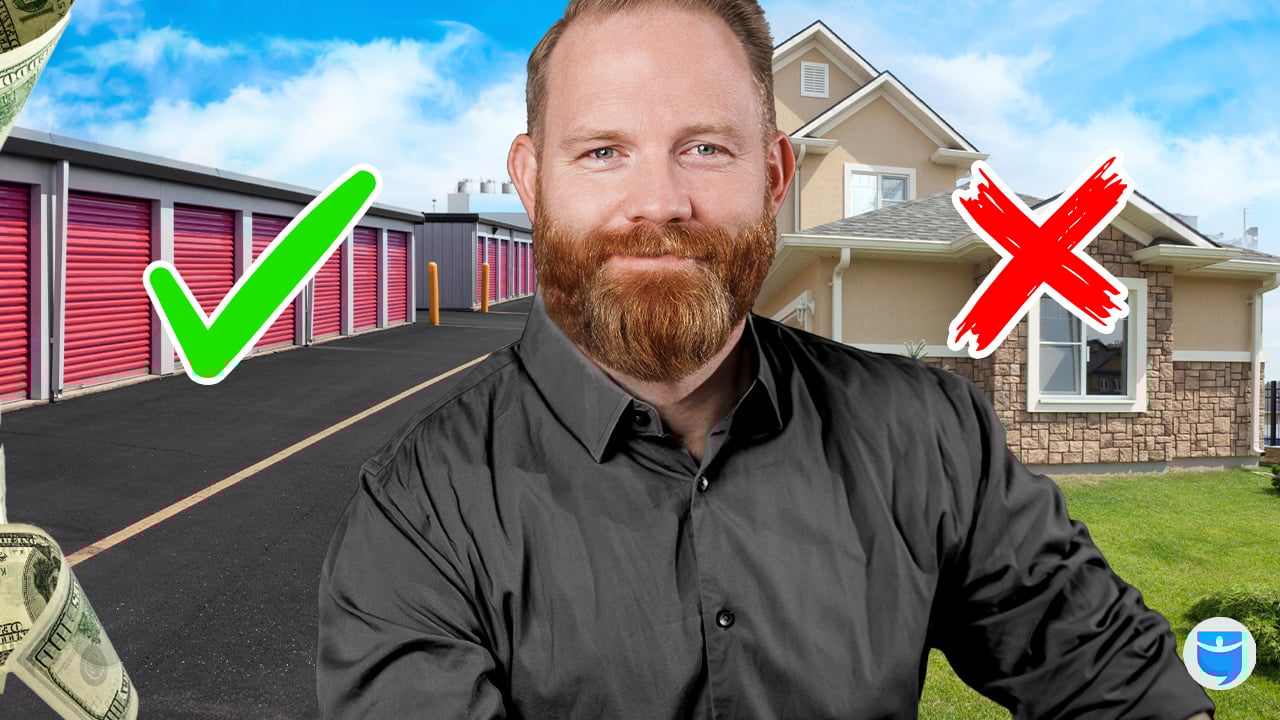
There’s a lot, and the actual reasons why you may be scared, people are scared and they think about that, are actually the reasons why you should do it. Because you have to remember that at the end of the day, single family houses you guys are not investment products. We turn them into investment products, but that’s not what they’re designed for. That means the supply, demand and the pricing is not driven by the NOI, how much you make. So what you’re doing is you’re taking something and you’re trying to turn it into an investment, and then you’re trying to make it make money for you. When you go buy a small storage facility or any small commercial real estate at all, you’re not doing that. You’re only buying a business, money. So if that business doesn’t make you money, day one, people don’t buy it, because that’s all it is. It’s an asset. It isn’t anything.
And then when you go to a bank, the bank says, this makes money. So you’re all looking at it to make money. So the bank is not investing solely in you, they’re actually investing in this asset. That means you actually have a lot of more options, because if you’re doing it by yourself, it’s solely predicated on whether you can get that money from the bank or not. With commercial real estate, they look at a lot of other factors. They look at, okay, how much does it make? Is this a good deal? What’s your plan? Who’s your partners? How you’re going to operate it? And then they give you money and you may not even be able to qualify for a 30-year mortgage for a home. And so everybody looks at it differently. If somebody’s going to sell it and it doesn’t make money, all the buyers are going to say, why am I going to buy this?
It’s got to make money. So you can look at it like that. The second thing is the actual upside. So once again, basic math, say $500,000 storage facility that you in a small market that you have 100 doors. All right, I can go in storage facilities and I can up rents like 20%. Why? Because 20% on a $50 rate isn’t a lot of money. It’s like what, a McDonald’s meal? And so nobody caress, right? It really doesn’t do anything. And they don’t change it because it’s not motivating and they don’t want to move for a McDonald’s meal. It actually costs them more to move than it does simply to pay the rate increase even at 20%. Now, what that does to you though, it means nothing for that tenant, but that’s because they’re one of 100. Now all of a sudden you just grew your entire revenue, the gross revenue by 20%.
If you had a 30% margin, you almost doubled your entire net income. And it meant very little to those tenants. And even if it does, let’s say you took a whole bunch of people off and 10% of them leave. Okay, so you lost 10 people, 15 people, whatever it is, you just fill it back up, but you have lots of other tenants. Your risk is diversified. If I have a single family home and there’s one tenant, one person leaves, that was all my income, all of it. And I hope that I can get somebody at that rate or higher, but if I can’t, then all of a sudden all your revenue takes that hit. Where if I have 100 units and I need to fill up, I can actually discount one to get people to move in, but the other ones are still paying the same price. It didn’t change any of that. So there’s just more flexibility on what you can do with pricing. It’s safer because it’s more diversified.
You’re buying it on the income you’re going to make because an actual asset, which you’re doing with a single family home or a duplex anyways, but that’s not what it’s meant to do. So all of a sudden you’re doing the same thing, you’re just getting more doors. It is more diversified, it’s safer. Self-storage is the lowest defaulting commercial real estate of any. It’s the highest performing in the last 26 years and it has a fraction of the default rate of things like multifamily does. And so all of a sudden you’re in a safe asset, you have way more upside and you can give upside. And I don’t know about you guys, but I don’t really care about people’s stuff. So if somebody doesn’t want to pay me $10 more a month because they are storing all their stuff, I just say move.
And I don’t have laws that say no, they get to stay in it forever. There’s no toilets. Nobody’s going in and flooding a toilet that I have to fix or anything else like that. That doesn’t happen. CapEx is way lower.
Ashley:
Actually AJ, didn’t someone build a house inside one of your units once.
Aj:
That is 100% true. Somebody literally built a house, like multi-level and everything. And we’re like, dude, we love the ingenuity. Amazing what you’ve done here, but it’s against the law.
Tony:
You got to take it down.
Aj:
You can’t do that. Get out. I don’t know what to tell you here buddy.
Tony:
AJ, I think given where we’re at in the economy right now, there’s fears about this recession that maybe is or isn’t coming. Do you feel that self storage is, quote unquote, recession resistant?
Aj:
Yeah. Thank you for not saying recession proof. That’s a trigger word for me. So a lot of people started saying things like recession proof, and that really triggered me. First of all, I’m like you say that because you never went through The Great Recession thinking that storage and everything else did really, really well. That’s not how it works everybody. Assets, there’s no such thing as a recession proof asset, because every recession is different and it hits different assets. And two, you have localized things. So commercial real estate is way more localized than residential real estate or others. The reason being is it’s predicated on those people that already live there right around them. It’s not predicated on big migration patterns and what’s going on. You have a three-mile radius, that’s it. So I can see how it’s doing today and what it’s doing.
So all of a sudden, if you’re buying and you’re looking at those things in a really localized area, even if the overall markets change, it’s just not nearly as impacted, because it’s so localized. But real estate cycles go up and down. All of them do. Right? Now, it is more recession resistant though than most asset classes, for the things that I just mentioned and also for the fact that we can change and do things quickly. There’s not nearly as many rules or laws. It is probably the best hedge against inflation of any asset class out there. Why? Because inflation goes up 8% one month and 5% the other. I can immediately give a rental rate increase. I can also immediately discount if I have vacancy and I can change those things like that. It’s just really easy to do.
So our revenue is, we can change it. We have an actual power effect. That means we have higher margins because there’s lower CapEx and lower operations. Storage facilities on average have a 40% margin, the highest in real estate. That means we can actually have cushion and we can survive more. It’s a cashflow game and that’s what we’re playing here. So yes, it is way more recession resistant than most other assets. I just always preface that because it doesn’t justify you guys going out and doing a dumb thing. Don’t be like aah, I can’t [inaudible 00:57:33].
Tony:
Still be smart about it.
Aj:
Yes, exactly.
Ashley:
That 40%, talking about cash cow, that’s 40% is a liquor store. The markup on liquor is usually 40%.
Tony:
40%. So more liquor stores and more self storage.
Ashley:
More self storage.
Tony:
But I do think just even common sense thinking even during a recession say that people start to downsize, where are they going to put their stuff? In self storage. So even if people start moving out of some of the bigger single family or multifamily stuff, self-storage might benefit from that.
Aj:
Change is good. Change is good. And that was something people, literally prior to 2008, people were like, no one will ever default on their house and pay a storage bill. That was so contrary to logical thinking. But here’s the problem, if I’m in a tight spot, do I care about a 50 buck or $100 a month payment or a $2,000 a month payment? The storage bill makes no difference whether you’re going bankrupt or not, none. It has no effect on it. So all of a sudden what they found is actually people will default on their home, move everything into storage units, and then they’ll go rent or they’ll downsize, because it’s actually cheaper to pay for a storage unit than it is to buy more house, than it is to rent a bigger house. So it’s actually an alternative option. And that’s the thing about storage. I got to make sure everybody knows.
A lot of people think storage are popular because people are hoarders, right? That’s not true. It’s actually an economic function. Yes, people are hoarders, but the reason why though is real estate has gone up in price so much that it’s a revenue or it’s a cost per square foot problem. First of all, in the United States, we have a lot of regulations on our lands, HOAs, government regulations. When I was growing up, if we wanted more space, my dad built a shop on the side of his yard. You can’t do that anymore. And two, even if you wanted to, that not only the HOA, but the city wouldn’t let you, even if you wanted to, that is going to be so expensive today. So if you just add on space, the cost of it is huge. Whereas if I can go rent a storage facility, all of a sudden it’s really cheap.
So I can’t do it because the laws won’t let me. So I need something to do with my stuff, but also it’s cost prohibitive. So all of a sudden you have businesses that are saying an office space to hold files is $200 a square foot a year for me to hold files. Where I can go put all those files in a storage unit and it’s 20 bucks a year. When then I turn that office space into revenue producing. Now it makes me $200 a year. That’s a $400 swing, and a storage unit costs 20 bucks. It’s an economic output. That’s why people use storage. I have some facilities that 30% of our tenants are businesses. It’s just we live in a world where space is expensive and it’s restricted. That’s why storage people use it and that’s why it’s popular.
Tony:
AJ, you’ve got me foaming at the mouth now about trying to get this first self-storage facility, my own portfolio. I’m going to have to replay this episode. But the last thing I want to hit on is the actual cashflow. We talked a lot about why self-storage is easier to get into, the financing, the cash, the ability to increase rents, but at the end of the day, maybe even give us numbers on one of your earlier deals, but if I go out and I buy 100 units somewhere in that north rim of the Rocky Mountains that you talked about, what kind of actual revenue and potential profits could I see on one of those deals?
Aj:
All right, I want to be careful about talking about this. Because obviously this is, but let me put it first. We do value add. I’m buying them and I want to turn them around and measure it. So I’m like, okay, when I buy it, I want to see what I can get and then I want to get it out of it based upon measurable things. That usually takes me two, three years. So generally when I buy them, I’m not looking for lots of cashflow upfront. Why? Because I’m changing signs. I’m doing all those things. I don’t plan on getting huge upfront cashflow or distributions or anything else like that. Why? Because I’m actually trying to take that income from here to here. I’m not just milking it. So generally when we do that, and two, when I say value add, this isn’t like multifamily people. I’m not going in and putting tons of capital in.
I’m talking like operations. We do better things online and we train things, right? We’re not injecting huge capital and we’re hoping that the market accepts this new offering. That’s not what we’re doing.
Ashley:
So it’s not capital improvements.
Aj:
Yes, not capital improvements. We have those, but it’s way smaller. We may have paint, you may have a reseal on the pavement and we will maybe if there’s an office space in it, we may do some things to the office and we have to change the sign. Maybe there’s a broken gate. That’s the most. If we did all those things, that’s a full rehab. You’re done.
Ashley:
And how many people hate rehab, the process of finding a good contractor, managing them, all those things.
Aj:
I do. So when you look at that, our assets that we buy, our model is, before I get into numbers, so you understand our model, I buy, I simply take what I call that money on the table, means I can see, it’s measurable. We go through. We get it off the table. That improves that net income, and then we refinance it, get our money out, and then we redeploy it and we still own the asset and then we just keep doing it. That’s how we actually grew to 150 million in assets without any investors. Before I went into the hospital, I never had an investor. It was me and my two partners, my dad and my brother-in-Law. We never had investors. We built up ourselves. All the companies we owned were ours 100%. And so by doing that, we just kept building, and kept compounding it. We knew we could get to the refinance point by what we could measure, so to us it was like a known thing.
We just had to do the work to get it, and that’s what we still do today. We still do that exact same process. Our long-term hold strategy, really unique, we do it based upon our return stuff, and I’m not going to go too far into that because it’s more deal. But with that said, so far our average has all been a 30% internal rate of return, north of that, I don’t think we’ve had any that is under 30% by the time we’ve got to that point. A lot of them we’ve had our money paid back completely in four years without even doing a capital event. We are looking at high cash flow, ability to improve. Now, during those times, some years there’s good years, some years there’s bad years. That’s how it works, which we’re fine with. We expect it and we actually structure our deals so that the market can change and move.
I don’t expect the market to make me, but I know the market can kill me at any time. And so we make sure that we can survive and our assets can survive, because the goal is to do improvements and make it better over that set period of time. If the market goes up, great. But even look at this year, so this year it was hard in commercial real estate and numbers were coming back down to earth off of COVID, and we saw reductions in occupancies and even rates across the board on every single asset. During that time, every one of our assets revenue went up. Every one. Even though in some of our markets we had a contraction of like 20% on market rates and we’re up. And so when we look at it, predict it, even when times go up and down, we’re moving within it. It’s that long-term. I don’t think five years is long-term, but it’s more of that long-term trend.
So we want to have cashflow and everything by year two, just we’re getting cashflow and distributions. And then as those distributions and cash flows that we have, they grow. We need to do a capital event where we get our money out. If not, we run into a problem where you have an equity to income problem. That means you have all this equity and the income you’re making is disproportionate to the value of your investment, and that means your investment’s actually not making a good return. Even though you’re saying, I’m getting a 15% return on my investment, that’s a great return. And you went, yeah, but that 15% now means your investment that was $100,000 is worth $300,000. So you’re not getting a 15% return on that investment because your investment also changed.
We want to make sure that the return is high, but that you’re getting a real good return. That’s why we want our money back and get it working again while we’re still getting that return. We call it stacking. We call it our stacking method. And what we do is we just stack assets and we stack cashflow and we keep our money, the original money just keeps going and just buying and building us more. So that’s what we do. That’s how we do it. We did it through 2008. We’re doing it through now and we’ll keep doing it. We’ll always do it. I have a whole portfolio of companies now that that’s all they do. I have an architecture firm, a debt brokerage firm. I own a tech company. We own and operate the assets. That’s the thing I want to make sure is very clear here. I’m not a syndicator, I’m not a capital allocator. I am not even an investor. I am an operator. I build and run my businesses.
I’m speaking from ground up building and running them. I’m not just out, there’s a big difference between that. I actually see the assets, I’m underwriting them or buying them, and my companies are changing them and moving them up. So it’s not like I’m just saying this stuff out of fluff or we got lucky or something like that. We just created a process that we know doesn’t work out every time because you’d be crazy if it did. With that said, I’ve never had an asset fail or not perform under that, but that doesn’t mean that obviously it’s guaranteed. We do things and set things in place to make sure that we are not subject to short-term things like spikes in interest rates, which get people in trouble and all of a sudden the market doesn’t deliver high occupancies. It delivers lower occupancies and lower rents, because that’s how it works and that’s okay.
And people, you shouldn’t think that because those things happened, you shouldn’t be investing. That’s not true at all, because it’s actually part of it and it’s an important part of it. If it didn’t happen, it would actually be really bad. Then you would have a total market collapse like 2008. You need to know how to work and build during those times and that’s what makes you wealthy. It’s not a quick got lucky over a four-year period of time, that doesn’t do it.
Ashley:
I think one of the key points that you touched on there is the operations piece. Even if you are seeing yourself as an investor and you’re buying multifamily, single family or whatever asset you are buying into, there is some piece of asset management and that is part of the operations. I think that’s actually where a lot of money is left on the table too, because everybody’s so focused on, I need more, I need more. I need more units. That’s how I’m successful. Instead of going back and looking at your properties and being, how can I restabilize them? How can I cut my insurance costs by quoting my insurance? Doing all of these big picture items and then getting into the details of the actual property and then how you have your systems and process. You go in and you’re like, this is the operation method we have. This is the process we’re using.
And that is part of why you have been so successful and been able to keep a strong portfolio, is because as you mentioned in the beginning, there was those three things. The quality, just answering the phone even, making sure people know you are there. That is a huge part of a lot of strategies. And Tony, even more for short-term rentals, customer service is a huge thing, and having those operations put together and if you can really take the time to put out those systems and processes, that is going to bring you more money than just buying, buying, buying.
Aj:
100%.
Ashley:
We had a guest recently on that did short-term rentals. And she said, we’re not buying anymore right now. We’re going back to the current rentals we have. We’re adding a hot tub, we’re adding a sauna. We’re seeing how we can add value to the current properties we have already, because we’re going to see a larger, we take 20 grand, we put it into our current property, we’re going to see a larger increase in revenue than if we went and bought a whole nother property where we have to set up another whole set of operations, we have more overhead now. And I think that’s a big piece that’s forgotten. Everybody just talks about the acquisitions, acquiring and the operations is almost set aside sometimes.
Aj:
And it did because the market was so good, nobody had to do it. And two, frankly, everybody got lucky. So everybody, all these capital allocators and everything, they were just like, oh my gosh, we’re just getting the benefit of this upside. Nobody thought about actually running it. Why? Because you didn’t need to. Occupancies were so high. Rental rates were just going up regardless of what you did. And that’s great in the moment, but that’s never a long-term trend, that will always reset. Always. The market will get rid of bad performers and owners and bad assets. That’s an actual inefficiency in the market if it doesn’t do that, right?
So when we look at it it’s really important, I love what you said, Ashley, because the goal is not to have doors. The goal is to have money. And so I’m not trying to have the most doors, I’m trying to have the most money. Most people think that just because someone has a lot of doors, that they actually own those things, which actually is most of the time completely not true. I would rather buy something at 30 bucks a square foot and have it be worth in 10 years 300 bucks a square foot as opposed to just having that much more doors, but not getting that lift. You’ll make more money.
Ashley:
That much more of a headache too.
Aj:
That much more of a headache and a not profitable one. Then you’re burn out everybody. And I talk about this a lot, most people buy themselves a job. That’s what they do. They buy themselves a job. And two, it doesn’t actually create them financial freedom. That’s not how it works. You can’t just buy something and it just works and it doesn’t have, you’ve got to build a structure on it. You have to build a business, even if that’s one property everyone, one property. And two, I’m not saying you build anything. You don’t have to property manage, you don’t have to do anything. You still have to build a business. So I’m my property manager, I have my broker, I have my bank, I’ve got my, maybe even an asset manager, maybe you’re the asset manager. I got my insurance guys, you’ve got your whole team.
What are the processes? What are the reports? That property manager, I need to know what they’re doing and I need to know if they’re doing a bad job or a good job. So I need to learn how to operate a real estate asset, not because I have to do it, but because I need to know the right questions to ask or I’m going to get reports and I’m not even going to know what they mean. So you are running a business even with one property, and even if you’re doing zero of the work, it’s still a business and you’ve got to treat it like that. And then from there you can also figure out how to grow more, because a lot of people aren’t going to like this guys, but one duplex isn’t going to make you financially free. It’s just not going to do it. You’ve got to have more than one.
Ashley:
Maybe if you want to live in your mom’s basement and she cooks sell you meals.
Aj:
I like ramen noodles. I’m okay with that, but you need to buy more than one. So you need to figure out, understand what you’re doing. Take your time. You don’t need to do the work, but then you need to figure out how to repeat that. And it’s not about owning 1,000, it’s about owning enough to hit your goals and having a good way that you’re operating it and that those things are building wealth and income for you. That’s what it’s about. And you need to do that good and right and take your time. So many people, you guys are just in a rush because so many people made so much money in the short term and now they think that they need to do it. They saw all these guys that just went and raised a bunch of money and put it to work, and now they’re saying that they own 1,000 doors and they’re just like, wow, I suck at life because I’m not doing any of these things.
Meanwhile, they actually make more money at their W2 than that guy does with his 1,000 doors. That’s actually quite common. And so I think bring it down to earth. Don’t beat up on yourself. Focus on the long-term and build correctly, even if you’re not doing it. Do it right.
Tony:
AJ, what a great note to end on. And Ash and I were chatting on the side over here that we could just listen to you talk real estate all day, man. We just need to have a segment of the Rookie podcast just like AJ’s musings. That way me and Ash can just keep picking up on all these nuggets, but so many good things around this conversation, brother.
Aj:
Thanks guys, I appreciate that.
Ashley:
AJ, where can everyone reach out to you and find out some more information about you?
Aj:
So Self Storage Income, anybody interested in self-storage, learning about it, how to do it, Self Storage Income, the podcast. I have a new book coming out. It might not be out when this comes out, but it’ll be out shortly. So if you want it, everything I’ve talked about in depth, how to do everything, step by step. And you can go to selfstorageincome.com and we actually have a spot that you can go in and we will get the book to you. It will be coming out this month. So Self Storage Income for education, if you want to look at investing with me or what we’re doing, my private equity company is called Cedar Creek Capital, so you can go there. But Instagram, ajosborne. Social media, that’s the easiest way. But investing with me, Cedar Creek Capital, that’s my company. The educational stuff for storage is Self Storage Income.
Ashley:
And even though AJ does not drink, he is also a member of the podcast Drunk Real Estate. So you can check out that podcast.
Aj:
Yes, I am.
Ashley:
I knew I would get yelled at if you didn’t mention that podcast.
Aj:
That’s right. Jay, it was mentioned. Guys, we did it.
Ashley:
Well, AJ, thank you so much. It is always a pleasure and you are just incredible and we love getting any opportunity to speak with you, so thank you so much for taking the time today.
Aj:
Thanks guys, I appreciate it.
Ashley:
I’m Ashley @wealthfromrentals and he’s Tony @tonyjrobinson on Instagram and we will be back with another guest. We’ll see you guys then.
Help us reach new listeners on iTunes by leaving us a rating and review! It takes just 30 seconds and instructions can be found here. Thanks! We really appreciate it!