

How Tiffany Aliche's Background As A Preschool Teacher Helped Her Become 'The Budgetnista'
Tiffany Aliche talks with Rosemarie Miller about budgeting, her personal journey with building community, and her future endeavors.
Source link
Tiffany Aliche talks with Rosemarie Miller about budgeting, her personal journey with building community, and her future endeavors.
Source link

Today, we’re sharing the five best vacation rental markets that’ll make you more money than anywhere else in the US. The best news? More than half of the markets on this list have vacation homes either under or around the median home price of the US, so you don’t need to splurge to buy your perfect beach-side short-term rental. What are the markets, and why have you probably never heard of them? Tune in; we’ll give you the top five markets AND where to find the full twenty-five market list!
But before we take any credit, this list comes from our friends at Vacasa, and their own Daned Kirkham is on the show to walk us through it. Daned and his team go through tens of thousands of data points, from average nightly revenue to insurance costs, expenses, improvements, average home prices, and more, to come up with a definitive list of vacation rental markets that’ll give you the best bang for your buck.
This list even has markets where you can find cap rates OVER ten percent (yes, in 2023), so if you’re starving for some short-term rental cash flow, THESE are the markets you can’t afford to overlook.
Dave:
Hey, everyone. Welcome to On The Market. I’m your host, Dave Meyer. And today, I’m going to be diving deep all by myself into a very hairy, confusing, but important economic topic. We’re going to be talking about what the heck is going on with the American consumer. If you follow headlines or read pretty much any news, you’re probably seeing really conflicting signals. People are spending a lot of money, but debt is also soaring. Economic confidence is down, but big purchases seem to be up. And I know that what’s going on with American consumers is not directly related to real estate, but it is still a super important topic that impacts every single investor and just our everyday lives. In the US economy, consumer spending actually makes up 70% of gross domestic product. That basically means that what consumers are doing makes up 70% of the entire economy.
And obviously, even though that’s not directly related to your particular investments or which homes you may be buying or selling, it obviously has impacts on rent prices. It has impact on whether people are going to be moving, what your tenants are thinking about, how comfortable you might be in making an investment, what risk you’re willing to take on. Today, we’re going to dive deep into this topic. And let me warn you guys, I guess it’s not a warning, but let me just tell you that we’re going to go into a lot of different numbers. We got all sorts of different stats. We have lots of different graphs. Well, actually, I guess you guys can’t see the graphs, but I can see the graphs and I will describe them to you. Or actually, I wrote a blog post on this on BiggerPockets that came out a couple of weeks ago, so you can also check that out if you want to see the graphs. We’ll put a link in the description. Today, we’ll find out what is going on with the American consumer. But first, we’re going to take a quick break.
First things first, when we talk about consumer spending, let’s just talk about the highest level possible thing, which is known as personal consumption expenditures. That is just a fancy word for how much consumers are spending. And people are spending a lot. Despite recession risk, despite inflation, despite higher interest rates, consumer spending is still up and is, in fact, at an all time high. But remember that when we were talking about all of this money that is being spent by consumers, that there has been a lot of inflation over the last couple of years. There has been a lot of new money introduced to the monetary supply. And so that means although the total figure, the total amount of money that has been spent by consumers in the last quarter, it is devalued dollars. And so although this top line number is huge, we have to dig in deeper to get a sense of are people feeling good about the economy, what they’re spending on, can they afford the things that they are buying.
And beyond this one top line measure, things get a little bit murky. We’re going to dive into a couple of different subsections. We’re going to talk about consumer sentiment. We’ll also talk about consumer debt because that is a really hot topic right now. We’ll also talk about the labor market and try to make sense of what is going on in the big picture. When we look at sentiment … And the reason I like to look at consumer sentiment is because it’s an important lead indicator. And if you’re not familiar with that term, a lead indicator is basically one metric or statistic that helps us predict or forecast another one. And I like consumer sentiment because it is a good lead indicator for consumer spending. When we’re talking about the big picture, it stands to reason that if sentiment declines, consumer spending might decline.
And if consumer spending declines, then GDP might decline. That could send us into a recession. I know it’s like a couple of orders of thinking here right now, but that’s why consumer sentiment is so important, at least in my opinion. Now, what is going on with consumer sentiment? This is measured by surveys, typically by the University of Michigan. That is the most reliable one. And what’s happening is sentiment has actually been up this year. If you look at the start of 2023, actually in the end of 2023, consumer sentiment started to rebound. Now, it’s important to know, because you’re not looking at the charts that I’m looking at, that prior to that rebound, it had fallen off a cliff. This index starts at 100, so that means average is about 100, and that’s where we were heading into the pandemic.
Consumer sentiment was relatively normal. Then when the pandemic happened, completely nose dived. It went down to about 75. That basically means that consumer sentiment … Basically, you can think of it declined 25%. Then through part of 2020 and into 2021, things got a little bit better. Then when people realized COVID was around for a couple more years, it absolutely plummeted to about 55, but it has now rebound up to 68. That’s a complicated way of saying that consumer sentiment has been climbing, but is way down from normal levels. But the key thing that has changed is just in the last month, it actually started to fall. If you can tell from me naming all these numbers, it has been very volatile, but it is starting to come down again. And I think as we talk about the big broad picture, that is really important.
For a little while in 2023, people were starting to feel better about the economy. Now they’re feeling slightly worse. It only fell a little bit. And so this is going to be important indicator to watch, is if that consumer sentiment declines even further. Now, when I do my research into the economy, I don’t like to just look at a single source. That data that I just mentioned is from the University of Michigan, but I also like to look at some surveys from the Conference Board that also measures sentiment. And what you see from the Conference Board really lines up with what you see from the University of Michigan, that over the course of 2022 and 2023, things were looking a little bit better, and then they start to decline. Now, the Conference Board, they ask a slightly different question. It’s not just consumer sentiment.
They ask, “How do you feel about your family’s current financial situation? Is it good or bad?” And for the last year or so, it’s been flat. It’s been relatively low, but it has been flat. But over the last two months, it has started to decline. And so when I look at these two data sets together, what I can see is a trend emerging, is that people were feeling uncertain about the economy. Things … Sentiment wasn’t high, but it was at least stable. But over the last month or two, people are starting to see decline. Now, that is kind of interesting because actually, if you look at a lot of broad measurements of the economy, the economy is doing pretty well. Just today, October 26th when I’m recording this, GDP numbers came out and GDP grew at 4.9% year over year, which is a humming economy. And it’s important to know that that 4.9% number is above and beyond inflation.
In other words, the economy grew almost 5% above the rate of inflation. That, to me, sounds like a good economy. And as we’ll talk about, the labor market has remained relatively strong, but at the same time, despite those facts, consumer sentiment is declining. And that brings us to consumer debt. People are spending, sentiment is slipping, but debt is at an all time high. The first metric I like to look at when we look at consumer debt is just the broadest thing, it’s called US total household debt. And that has hit a whopping $17.6 trillion. That is a very large number, obviously, and it is the all time high. But again, when we look at these absolute numbers, we need to remember that these are somewhat devalued dollars because of the increased monetary supply. But the other thing you should know is that it is starting to level off.
Consumer debt really has gone up since … it’s sort of … The way it’s trended over the last couple of years, it was going up to the Great Financial Crisis. It went down for a couple years. Then since 2013 or so, it has been marching up relatively steadily. And now, the last two months are actually the first time in about 13 years that it has start to level off. Again, this looks at a trend. Things were going okay. Things are going over okay. And then the last couple of months, things start to level off. Now, this number, the total US household debt, I think it is a little deceiving because it includes mortgages. And so of course, since from 2013 to 2023, of course household debt has gone up a lot because the value of properties has increased so much. And so when anyone bought a house in the last 10 years, which is millions and millions and millions of people, their debt went up.
Now, their equity went up too, so that’s the good thing about it. And a lot of this, you could argue, is considered, quote, unquote, “good debt”. Remember, when we talk about debt, there is bad debt, which is basically used to finance your lifestyle. And this is just my objective opinionation. There’s no definition of good debt and bad debt. But to me, taking on debt to finance your lifestyle to buy things that you can’t afford and that have super high interest rates is not necessarily a good thing. Good debt is something that is used to fuel an investment, like a rental property. I think you can also argue that student debt for the right degree at the right college is also an investment in yourself. Those are things that we’re using debt to improve your financial situation in the long run. And when you look at this debt and that a lot of it is mortgage debt, you have to think that some of it, at least, is considered good debt.
It is obviously shocking to see this number really high. But I think to try and understand consumer behavior, we need to drill down into another indicator, which is credit card debt. Now, credit card debt is less commonly used as, quote, unquote, “good debt”. Of course, there are good reasons to take on credit card debt if you want to start a business or you need to fund your business. There’s all sorts of good reasons to do it. But generally speaking, a lot of credit card debt is bad debt. And so when we want to understand American consumer, I think this is an important indicator to look at. And what you see when you look at credit card debt is that is at an all time high. For the first time in Q2 of 2023, which is the last quarter I have data for, it topped $1 trillion for the first time.
And I think more concerningly, because that number, it’s just … These days, we throw trillions around, so 1 trillion might not sound like that much. But I think the more concerning thing if you look at the graph, which I will describe to you, is that it’s just pointing straight up. For the last six or seven months in a row, consumer debt has really been spiking. It was at about 750 billion, now went up to a trillion in just the course of six months, so that’s a 33% growth in just six months. That is a very rapid increase in credit card debt, something I have personally never seen data for. That is going to be another key indicator to watch, is that consumer and credit card debt is really high. Now, if you’re like me, when you see this and you see consumer household debt is high, credit card debt is super high, you’re like, “Oh my god, this is going to lead to a disaster.”
But lucky for you, I did some homework for you and tried to understand does this really matter. And what I found is actually super interesting. What I did was look at consumer debt and figure out how much people are paying on that debt on average and how much that is relative to their disposable income. Put that another way, of all the disposable income an average household has, how much money, what percentage of that are they putting towards their debt? And the answer is only about 5.8%, so that is actually really low. And so think about how this can happen. You might be curious. If debt is ballooning, how can people’s percentage that they’re paying towards that debt actually stay too low? And there’s two reasons. One is inflation. We’ve printed more money, so people have more money. That money is devalued, and so they might be paying this debt, but it actually is less of their total income.
The second reason is that interest rates are super low. So many people refinanced during the pandemic. And so out of all of that $17 trillion of debt, a lot of it is mortgage debt. And so people took out new mortgages at a lower interest rate. And so even though total debt is going up, their payments on that debt may have gone down. And so 5.8% of disposable income going towards debt service is higher than pre-pandemic levels. I should make that clear. But it’s marginally higher. It used to be about 5.6%. Now it’s at 5.8%. It is way lower than it was during the Great Financial Crisis. And it has actually flattened out. By that metric, even though debt has really risen for consumers, it’s not really affecting them day to day. This starts to explain why consumer spending might be so high. Now, I did two other things because I’m a nerd and I really was just curious about this, but I wanted to look at US consumer debt as a percentage of monetary supply and US GDP.
Let’s do those one by one. Monetary supply is just a fancy economic term for how much money is circulating in the economy. And if you’ve paid any attention over the last couple of years, you know that there was a lot of money printing during the pandemic, several trillion dollars. It grew at the fastest pace we have ever seen. And so that has its own concerns. That is an issue that … Of course, that’s not what we’re talking about today, but that is of course an issue. But when we talk about its relationship to debt, it is really important to note that it grew faster than total debt. And so the amount of US consumer debt as a relationship to the total amount of money in the US economy, it has actually gone down. Pre-pandemic US consumer debt to monetary supply was about one to … It was about 100%.
Now it is about 80%. It is rising, but it has gone down. And that’s what I’ve been talking about throughout this episode. When I say this debt, yeah, these numbers are huge, but as a percentage of all the money in the US economy, they’ve actually gone down. Now, when you do the same sort of equation with GDP, you see the same thing. When you compare consumer debt to the total output of the US economy, it is basically flat. It has remained almost entirely flat for the last 10 years, so that really hasn’t changed. And just to recap, I just want to make sure everyone understands what I’m saying here. Debt is going up. That is true. But when you look at debt relationship to the economy as a whole, it’s basically the same that it’s been for the last decade. When you look at debt as a percentage of the monetary supply, it’s actually down from where it was pre-pandemic.
And so this, to me, signals that yes, having a lot of debt is a big long-term problem, but it hasn’t really changed. That problem has existed. That existed for 10 years. And it hasn’t really changed over the last couple of years, even though the headlines suggest. And they’re accurate, the debt has gone up. But when you think about people and the country’s ability to pay that debt, that hasn’t really changed, even though it is a long-term problem. Now, to back up that claim that I’m making and this research that I did, I looked into delinquencies on debt. This is basically looking at there’s all this debt, the number is going up, are people actually paying their debt? And the answer is yes. We see that credit card debt, people are actually paying relatively similar to pre-pandemic levels. Auto loans are starting to tick up a little bit, but are still relatively low in historical terms.
And mortgages, which is the biggest batch of consumer debt, are still extremely low. We talk about this all the time on the show. But there’s just mortgage delinquencies are very low right now. Now, all this can change, and we’re going to talk about that in just a minute, but we’re just talking right now about what is happening today. And right now, delinquencies on all this debt is really low. Now, one thing that was worth noting out, the chart I’m looking at shows delinquencies on student debt, which obviously dropped to zero at 2020. It actually used to be the highest delinquency rate. It used to be about 12% of delinquencies on student debt, which is higher than any other debt category that I can find or that is tracked, and that has fallen back down to zero. Later in the episode when we talk about things that might shift the balance in the American consumers, student loan debt is definitely something that we need to talk about.
But again, as of right now, delinquencies are very low. Just to summarize my reading of the American consumer right now, consumer spending is up, but it’s starting to flatten out. Sentiment, on the other hand, which has been kind of stable, is starting to decline. We have record levels of debt, but as of right now, Americans are paying their debt as agreed. The question now becomes what is going to happen in the future? Is this situation going to stay the way it is? Or is there a potential that all of this debt and consumer spending might start to decline? The question becomes could there be a debt crisis? Could the labor market break? And could consumer sentiment start to decline and send GDP downward? I don’t know the answer to that, of course, but I will pose five questions to you that I think are important to thinking through what might happen.
Now, the number one question to me is will the labor market break? Now, when we talk about the labor market, there are many ways to measure the labor market. None of them are perfect. If you look at unemployment though, it is near historic lows, although it’s ticking up a little bit. Wages, which were outpaced by inflation for many years, have actually started to outpace inflation by just a tiny little bit for the last couple of months. When you look at labor force participation, it is really starting to rebound near pre-pandemic levels. And as of the last reading, job openings, there are more than 9.6 million job openings in the United States. Although there is no perfect way to measure the labor market, when you look at all these things together, it is surprisingly strong. I personally thought we would see more unemployment than we do right now.
And although we are starting to see some softening, I don’t think anyone would describe what we have right now at the end of October 2023 as a, quote, unquote, “broken labor market”. But many economists, many analysts I think rightfully are questioning whether the labor market will break in 2024. We have been tightening interest rates for about 18 months. And most academic research shows that it takes somewhere between six and 18 months for the impact of higher interest rates to ripple through the economy. Think about that for a second. That means that right now, 18 months after the first interest rate hike back in March of 2022, we are just now starting to feel the impact of that interest rate hike. And that means even if the Fed is done raising rates, that for the next 12, at least six, maybe 12 months, we are going to feel ripples from interest rate hikes that already happened six months ago, maybe even 12 months ago.
And a lot of analysts and economists believe that one of the ripples that are felt are increased unemployment. Now, you’ve probably heard a lot about layoffs, but those are highly localized in certain sectors, like tech. In many other industries, job growth is booming. And they’re not always good jobs. Some of them are low paying jobs. But just, again, if you look at the whole picture of the labor market, it is strong. But I think that is … To me, the number one question mark going into 2024 is will we see a significant uptick in unemployment? I think it’s inevitable that we’ll see it go up a little bit, maybe to 4%, 4.2%. But do we see it get to 5%, 6%? Those are the numbers that really start to weigh on consumer sentiment, consumer spending, and could really weigh on GDP.
That is my number one question. The number two question is will pandemic savings run out? Now, a lot of people talk about this, rightfully so, that when you look at consumer spending and the lack of debt delinquencies, is that there was a lot of stimulus during the pandemic. People also just … even if you … Regardless of stimulus, there was nothing to spend money on, so people saved a lot of money. And this is a really hard thing to track. I’ve seen many different studies, but one recent one actually from the Fed, the San Francisco Federal Reserve Board, said that they believe that the excess savings that people built up during COVID are likely to be depleted during the third quarter of 2023. The third quarter of 2023 just ended at the end of September. By the Fed’s own analysis, they think we’re going back to pre-pandemic levels of savings, which obviously could put downward pressure on consumer spending.
If people run through their savings, they obviously have less money to spend. And so that is a really big question. It seems most academic studies that I have seen suggest that they have run out or are about to run out. And so whether or not that has an impact on consumer spending, we’ll have to see, but you mean logic dictates that it probably would. The third question is student loan repayments. Now, 40 million Americans have student loans, and those were forebeared. Is that a word? They were in forbearance for almost, I think, maybe over three years. And as I just said earlier, that was one of the highest delinquency rates of any type of … It actually was the highest delinquency rate for any type of debt. And I hope that people don’t go delinquent on their student loans, but they don’t even need to be delinquent on them for it to impact the economy.
There are estimates that the average payment that is going to start being resumed this month in October is 300 to $400 per month. That is a lot of spending money. If you think about 40 million Americans spending $300 less per month on consumer goods or consumer services and putting that towards their debt service, that is a really big potential impact on the economy. And so that is one I’m definitely going to be watching really closely. The fourth is the geopolitical situation. Now, everyone who follows the news knows that we are in a very volatile situation with wars in Ukraine and Russia and a new one emerging in the Middle East. And I’m not smart enough to pretend to know how ongoing wars and all this international tension that is going on impacts American consumers. Honestly, I don’t know. But let’s just say that these types of tensions make the economy more volatile in general.
The whole world becomes a bit more volatile. And so we have to consider what happens with these geopolitical situations when we’re trying to forecast the economy in 2024. Now, again, I have no idea what’s going to happen there, but I just want everyone to think about that this could impact the US economy. The last one, number five, is a potential government shutdown. Now, we avoided one with a last minute extension, but that was just for 45 days, and there is still potential that there will be a government shutdown. Now, government shutdown doesn’t necessarily directly impact consumer spending or consumer behavior, but it does have a psychological effect on pretty much the whole country. And there are government employees and service members who will not be getting paid. And so those people not getting paid, these are millions of Americans, they obviously might tighten up their spending.
And so when I look at this situation, when I look at these five questions … Will the labor market break? Will pandemic savings run out? What happens with student loan repayment? What’s going on with geopolitical situation and a potential government shutdown? To me, I see a lot of potential risk in consumer sentiment and consumer behavior going down. Now, I don’t know if that’s going to happen, but to me, it looks, and a lot of the data suggests, like we may have peaked for this cycle. Guys, I’m not one of those people who thinks this is going to be a crash of all crashes and that that’s going to destroy the entire economy. But business cycles are normal. Recessions are normal parts of living in a capitalist market economy. And we might be at the peak of consumer spending, at least for now. Now, consumer spending peaking or going down a little bit doesn’t necessarily mean we’ll be in a technical recession.
There is no real technical definition of recession. It is a subjective evaluation by a bunch of people at the National Bureau of Economic Research. But remember, consumer spending is important. It is 70% of the US economy, but it is not the entire US economy, and it is possible that other parts of the economy make up for any potential downside. But I just wanted to give you guys my reading of the situation. Because consumer sentiment is such an important driver of the economy, I wanted all of you, all of our listeners, real estate investors, investors in other things, and just Americans in general, to understand what’s happening and some of the risks to the biggest driver of the American economy going into 2024.
Of course, this is just my reading. If you have different opinions, I would love to hear from you guys. You can find me on Instagram where I’m @TheDataDeli. I really enjoy debates about this. No one knows what’s going to happen, guys, but this is my reading of the data. And if you have a different one or have thoughts or questions, feel free to hit me up. Thank you all so much for listening to this episode of On The Market. I’ll see you guys next time.
On The Market was created by me, Dave Meyer, and Kaylin Bennett. The show is produced by Kaylin Bennett, with editing by Exodus Media. Copywriting is by Calico Content. And we want to extend a big thank you to everyone at BiggerPockets for making this show possible.
Help us reach new listeners on iTunes by leaving us a rating and review! It takes just 30 seconds and instructions can be found here. Thanks! We really appreciate it!
Interested in learning more about today’s sponsors or becoming a BiggerPockets partner yourself? Email [email protected].
Note By BiggerPockets: These are opinions written by the author and do not necessarily represent the opinions of BiggerPockets.
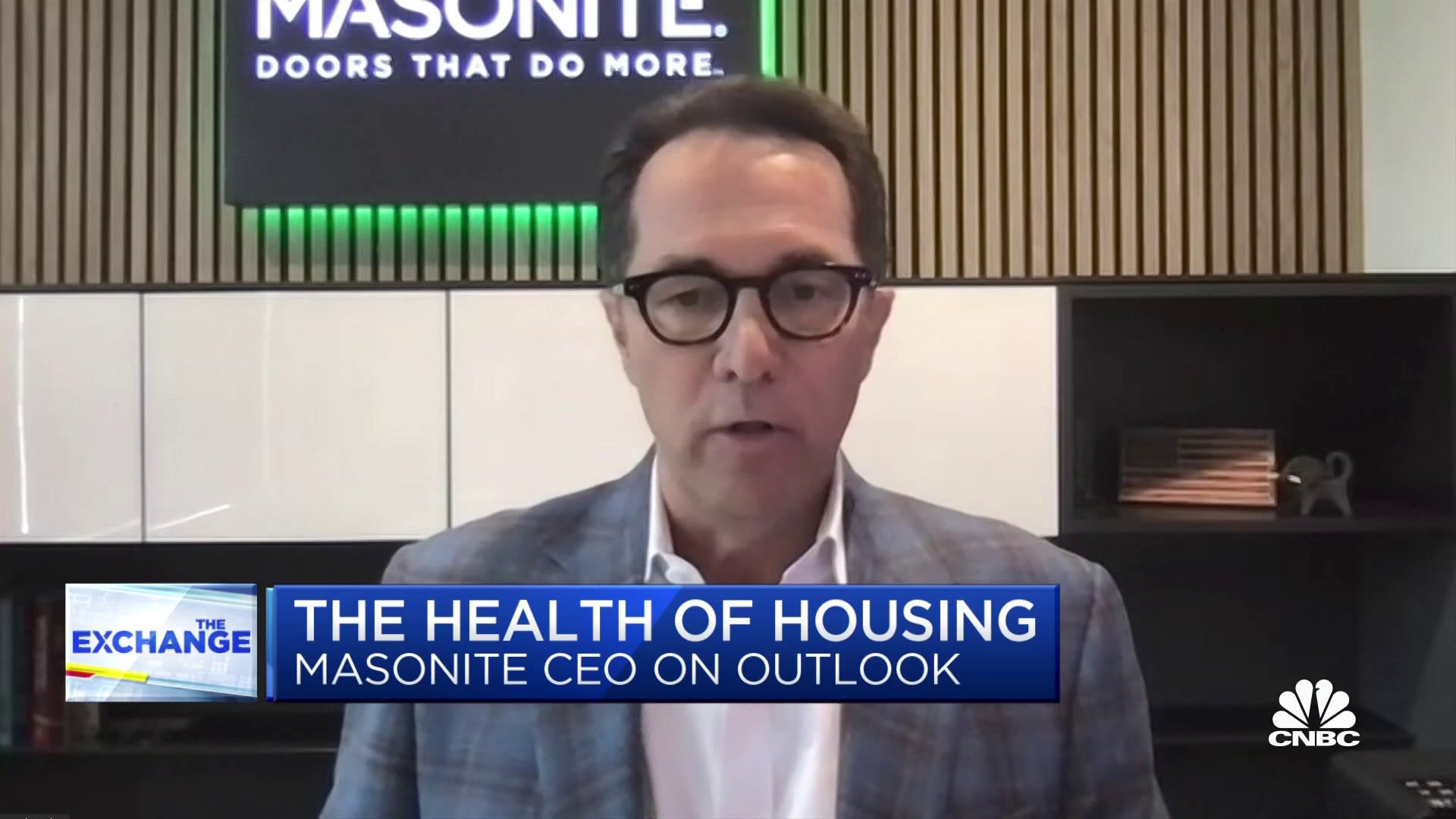
Bill Cobb, Frontdoor CEO, and Howard Heckes, Masonite CEO, join 'The Exchange' to discuss their companies' earnings results, the health of the housing market, and more.
Source link
Masonite CEO: We're not seeing as much deflation as we had thought Read More »

November is National Entrepreneurship Month, which aims to spotlight founders and small business owners and their contributions to innovation and economic impact. According to Fundera there are 12.3 million women-owned businesses in the United States. For many, launching, growing, and scaling is a lonely ride. Jenny Shum, General Manager of Chase Ink says something that can help make the journey less isolating is leaning into a like-minded community for support. “It’s that connection to the community that helps business owners find the resources they need to succeed.”
While the importance of being part of a community isn’t new, something that’s talked about less often is the power of winning awards. “Small businesses are at the heart of our communities,” Shum says. “Continued recognition and collaboration with trusted partners and peers can often help a business overcome potential headwinds and flourish.”
That’s why back in 2022, Chase Ink partnered with Entreprenista to launch the Entreprenista 100 Awards. The awards honor and celebrate trailblazing women founders who are changing the world. Jessica Abo sat down with three winners to learn more about their business and how being recognized helped boost their visibility, credibility, and bottom line.
Anouck Gotlib
After studying fashion design and working at fashion houses like Zac Posen and Natan, Belgian-born Anouck Gotlib went on to become the director of marketing of Belgian Boys, which makes quick breakfasts and cookies in whimsical packaging to bring joyful European treats to families across America. In 2018, she was named CEO.
When the pandemic caused the sudden loss of nearly a third of Belgian Boys’ business from airlines, food service accounts and more, Gotlib not only donated more than 80,000 treats to struggling local communities and frontline workers, but she also grew revenue and doubled the team. She joined The Entreprenista League and says being part of the community gave her the strength she needed to get through that challenging time. “Having a community gives you a sense of belonging. It’s seeing people and being seen. It’s elevating others and being connectors.”
She leveraged her network to secure Belgian Boys’ first outside investment in 2021 from Equilibra, the family office of KIND Snacks founder Daniel Lubetzky and was recognized as an Entreprenista 100 winner. She says winning and award has given her the confidence to reach higher and to raise the bar to drive more impact. Her advice for other women founders is to “surround yourselves with amazing people and to build the strongest team around you. Bring people together that inspire you and together you will build great things.”
Tori Bell
Tori Bell discovered firsthand the power of community while founding the organization “Black Women at Facebook,” which grew to 3,000 members globally under her leadership. Her passion to create inclusive change within companies, inspired her to take the plunge into entrepreneurship herself and launch Inclusion Unpacked in 2021. Bell says the biggest hurdle was securing funding to start. “Black women on average receive less than 1 percent of available venture dollars,” she says. “I knew the hurdle would be steep.” She managed to raise the capital she needed to create her digital membership community, which provides education, events and a support network for founders and leaders committed to building diverse, equitable and inclusive companies from the ground up.
“After applying for numerous grants and programs, I finally secured one after I received an Entreprenista 100 Award. The grant came at a crucial time for us. Since winning the award, we have secured venture capital investment and experienced a surge in sales from new customers.” With the support of her own trusted community, Bell has racked up several impressive accomplishments and accolades, including admission into several notable incubator programs, as well as being the first black woman to win Columbia Business School’s prestigious startup pitch competition. She says, if you’re starting out, you have to make yourself visible. “Being part of a network is essential. A significant portion of your early success is often a result of others advocating for and supporting you.”
Jill Apgar
After struggling firsthand to manage her biracial daughter’s curly hair, Jill Apgar was inspired to create a solution for other multicultural families. When she noticed silk pillowcases helped her own hair, a lightbulb went off, and Apgar designed a silk crib sheet prototype. Her daughter Cora’s tangles and dry skin improved almost magically overnight using the buttery-soft Coco Beans sheets. In 2020, after a serendipitous pandemic layoff from her corporate role, she decided to take the plunge and officially launch Coco Beans, a luxury bedding and sleepwear brand specially designed for children with textured hair. She also fearlessly pioneered a new bamboo pajama line amid market uncertainty, further diversifying the brand’s offerings with an eco-friendly fabrication kinder to both skin and the planet.
Apgar says she has had to navigate her own share of challenges, including supply chain issues caused by the global pandemic. “We were able overcome our cash challenges by shifting to an organic marketing strategy leveraging our small but loyal social media following as well as activating the Central Ohio market through a series of local pop up shops,” she says. “My advice is to start fast and small. Rather than waiting for a product or service to be ‘perfect’ and prioritize getting to market and start building a relationship with your customers. The feedback will help you deliver a better product or experience and ultimately you are building trust with customers – a key pillar of long term success.”
Apgar says transitioning from a corporate environment to owning her own business was a lonely road, but being part of women-founder communities like The League has been critical. “These women have been so generous, sharing lessons learned from both wins and failures, lending a compassionate ear during the challenging times, encouraging me to level up and cheering me on each step of the way.” She adds being honored with an Entreprenista 100 Award boosted her brand credibility as well as her reliability as a founder and she encourages more women to put themselves out there.
While these three founders are overcoming obstacles with the help of mentors and peers, they are not only leading fast-growing companies, but also empowering the communities around them. This year, they will be on the selection committee for the Entreprenista 100 Awards. The deadline to apply is November 22, 2024.
3 Founders Share Why You Should Join A Community And Apply For Awards Read More »

You want to invest in real estate, but you lack the cash or the income. With home prices and mortgage rates so high, even a decent-paying job won’t land you a rental property or even a primary residence. So, what do you do? Should you call it quits and let others build wealth while you struggle to make ends meet? Not quite. There’s one thing you should start doing today that’ll make your real estate investing much easier.
Welcome one and all to another Seeing Greene, where David answers your investing questions in today’s tough housing market. First, Rob joins us to advise an investor struggling to buy her business’s building from her father. He wants to sell after having a rough time with this commercial property, but Shelly, our investor, wants to convince him to keep the building OR give her a chance of ownership. What should she do?
Next, David answers the trifecta of 2023 investing questions: what should you do when your pre-approval is too low? How do you pull out home equity when you’re broke? And what to do when you don’t have enough income to qualify for a mortgage? A straightforward solution solves ALL THREE of these investors’ questions, and it’ll help you, too, if you’re struggling in this market!
David:
This is the BiggerPockets Podcast show 843. What’s going on everyone? This is David Greene, your host of the BiggerPockets Real Estate podcast here today with a Seeing Greene episode. In these episodes, we take real estate investing from my perspective as I answer questions from you, our audience, about where you’re stuck, what opportunities you have, and the best way to play the chess pieces that are sitting on your board. And we have got a great episode for everyone today, including a coaching call that we are going to start off with and then some other questions from all of you about ways that you’re looking to scale your portfolio. But it looks like you took a couple steps in the wrong direction and how to get you put on the right path. Many of you who are listening to this now are going to relate to the questions that our guests ask and you are going to benefit from them as well.
So thank you for being here with me. Get ready for a great show. If you’d like to be featured on Seeing Greene yourself, remember just head over to biggerpockets.com/david where you can submit your question, either video or written, and I will hopefully answer it on a future show. Before we get to our first question, today’s quick tip is going to be simple. I am here at one of my cabins right now in the Smoky Mountains. I have 12 of them out here, and I’m on a bit of a tour and I’m going to check out every single cabin I have. I’m going to stay in many of them and I’m going to get a feel for what it would be like to be the guest here as well as come up with ways to improve the experience for the guests. This is very important because if you are a short-term rental investor, you may have already seen that the competition is getting fierce.
And if you want to stay near the top, you need to learn to look at your home from the perspective of the person staying in it, not the perspective of you that’s looking to get as much money as you possibly can. So consider staying in one of your own short-term rentals as well as your competition and see how each one of them makes you feel and what improvements can be done to give a better experience to the guest that you are competing for. All right, let’s get to our live guest now. Welcome to the show, Shelly. What’s on your mind?
Shelly:
Hi, thanks for having me. I’m a little bit all over the place, but my name is Shelly. I live in Philly with my partner and my 5 year old. What I do for a living is run a bicycle shop. I opened up the bike shop 13 years ago. At some point my landlord wanted to sell the building. He said, I want to sell it to you. He told me the price he wanted. I couldn’t swing that, but I asked my dad if he wanted to invest and he said, ye. My dad bought this building.
We’re in a good neighborhood, but the building needed a ton of work. Within the first couple years of ownership, the entire front facade needed to be replaced, and now we are in the process of learning that they did it wrong and we have to do it again. So it’s this major headache of a problem. However, somewhere along this same timeline, my partner and I bought a house together. We wanted to move. We decided it made more sense to hang onto the property, rent it out. We bought our next place, wanted to move, rented it out and moved. So we did this, what you guys call house hacking type thing, but we were just doing it because that was our life. And now we’ve seen the benefits of doing that and I’ve been interested in real estate for a long time.
I want to keep doing this. I also feel like the property that my dad owns, I do the property managing. I have enough bits and pieces of this world that I know I like it and I know I’m pretty good at it. And we took out a home equity line of credit on our one property, which you guys were talking about, fixed versus variable. It’s a 3.99 fix for one year, and then it turns variable. So that seems like not bad right now.
So I’m at this point where A, my dad wants out of this very… The property is about a million dollars, not counting some money that he’s dumped into it to fix it up. But that being said, he was able to pay it off. So we had this amazing asset in a good neighborhood that I think is worth investing in. And also we’d be able to pull money out of that to continue to invest in real estate. But he’s not on board. He’s more like, I make way more than this for way less stress in the stock market. Why are we doing this?
David:
And this is the one with the facade, right?
Shelly:
Yeah.
David:
So your question is when do you call it quits on a property? Should you buy out your partner, or how should you exit this property? Right?
Shelly:
Yeah.
David:
So what I like from what you said is that you like this, you’re in on it, you like the area, you’d like to keep going. Even though this property has been super stressful, you see the upside on it. Had you said, yeah, this property is a bear. It’s not really that great of a neighborhood. I don’t really see why I’m doing this, then the obvious answer is I try to get out of it. Considering that’s not your mindset on this, I would really stress maybe trying to figure out how you can keep it. And you have a partner on it that just so happens to be a family member. So you may be able to arrive to some agreement on how you could pay him out. So are you a 50/50 owner of that property?
Shelly:
I don’t have any ownership.
David:
You don’t have any ownership? Okay. You were saying you were property managing for him, right?
Shelly:
Yeah.
David:
So on that note, is your dad, I know he can make more on the stock market, but is he like, hey, I need this million dollars today. Is there any opportunity to sell or finance it from him, I guess is what I’m getting at?
Shelly:
Yes. But then I think comes the other aspect, which is that, if I were to do that, I don’t think it would cash flow. I think he’s onto something that it’s not a great investment, so that’s stressful. It feels more like the appreciation game.
David:
Okay. Well that changes things a little bit. Where’s all the money going? It feels like $7,300 a month is not that far off from the 975 if it’s got no debt on it. Where’s all the money going?
Shelly:
It’s not that it’s not going anywhere, it’s that he’s looking at his cash on cash return and is like, it’s just not a lot of dollars.
David:
So here’s what’s odd. If you put a loan on it, if he did a cash-out refinance, his cash on cash return will skyrocket.
Rob:
Because he gets all that back in his pocket.
David:
And I’m not saying this to tell you that’s what you should do. I’m saying in his brain how he’s looking at this, if he’s only looking at a cash on cash return. There’s two levers that affect… And when I started seeing this real estate made a lot more sense. There’s in the formula of a cash on cash return, there’s two inputs. There’s how much profit you make and there’s how much money you put into the deal. If you pull on the profit lever, you can increase the cash on cash return, but it’s like a tiny short little lever. It’s very hard to pull. If you pull on how much capital is invested in it, your basis and you reduce that, your cash on cash return skyrocket. That’s the really tall big lever with all the leverage.
So if he did cash out refi, even with rates higher, the cash flow would go down, his cash on cash return would go up. He would have theoretically whatever money he pulled out of this thing to now go put in the stock market at his higher returns. And he would have effectively owned real estate and stocks using leverage from real estate to buy stocks instead of real estate or stocks. Not telling you that this is my solution right now, but do you think if he understood it from that perspective, it might change how he’s looking at this?
Shelly:
Perhaps. I mean, I think the whole thing is just beyond stressful for him. So that’s where I struggle. Because I’m like how can I angle this to me be like, no, it’s fun when it’s not my money.
David:
Why is it stressful for him? Because he’s just looking at that 6% and he’s like, I could do so much better?
Shelly:
No. Not just the dollars. I mean the actual act of we had to get all of our tenants into Airbnbs when this construction was happening. The bike shop had to close. All these things that dealing with the ins and outs of other people I think, maybe just don’t like that stuff.
David:
Well, that’s true. Real estate can suck when that is the case. There’s no way around it. This is definitely not passive income, and that’s one of the reasons that we talk about that is when you buy stocks, it’s relatively or completely passive income. You push a button, what return you get, but you just have less control over it. The stock market can collapse and there’s not as much you can do versus with real estate, if it starts to go bad, you can jump in there with some elbow grease and some creativity. You can salvage it. It sounds like he doesn’t like having to deal with the tenant issues and the building issues, and then he’s saying for the return, I’m getting the juice is not worth the squeeze, right?
Shelly:
Yeah.
David:
But are you doing some of that property management work? Why is so much of it coming down on him?
Shelly:
It’s not. I mean, I keep him in the loop. He wants to be in the loop. So I can’t just go writing 20,000, 30,000, $40,000 checks without checking in. And I think, yeah, every time something comes up, it is a little bit like, yeah, here we go again.
David:
He’s not used to that. That’s all that it is. He’s not listening to podcasts like this listening to all of the tenant problems that we talk about. He’s used to buying a stock in something and just looking at the number. And in his mind he has a baseline set of that’s how investing works. Is you don’t make decisions, you don’t feel any stress. Money just comes to you. So I don’t know that, Shelly, you’ve done anything wrong here. I think his expectations just weren’t at the same place that yours were. So maybe let yourself off the hook a little bit as you feel like you let your dad down or did you do something wrong? This is how normal real estate investing works.
Now I’ll add this. When Rob and I encounter the same stress he’s having, even though we’re like, our cash on cash return sucks, all these things went wrong. I’m really stressed out. What we are thinking of is, well, I’m still paying off the mortgage. Well, the values are still going up over time. Well, the rents are going to be higher in five years than they are right now.
Rob:
We’ve still got the tax benefits.
David:
Yes. There’s a big tax benefit. We didn’t get into that yet. So even when the one metric like cash flow isn’t working that we wanted, there’s a pot of gold at the end of the rainbow that stops us from getting discouraged that he doesn’t have. He’s not seeing that. He’s probably not getting tax benefits of cost segregation studies on a million dollar asset that could save him. If you added that into this, if he was a real estate professional, oh my gosh. And it sheltered all the other money that he’s making from his other investments, he’s like that 6% return goes to 28% or something like that. It would change everything. Right?
Rob:
Yeah. But he’s probably not a real estate professional is my guess.
Shelly:
Yeah. I was going to ask that because I just listened to that class episode and he did just retire from his day job. So could he be, if this is the only thing he’s doing?
David:
Yeah. That’s what I was getting at is he may not be right now. The question would be, well, dad, if you became a real estate professional… And the other thing, Shelly, is this only works if he’s making income. Does he have income coming in from other places that he’s being taxed on?
Shelly:
I mean, he just retired, so not really.
David:
What about other investments?
Shelly:
Stock market, does that count?
David:
What about the taxes that he would pay on the 6% return? If that was money he made in stocks, he’d pay capital gains taxes on it. But what if the depreciation from the real estate completely sheltered it? That 6% could start to become looking a lot better. And if you also have rent bumps worked into the thing, the tenants… Can you paint a picture for him that in five years that that 6% is actually going to be up here?
Shelly:
Yeah, perhaps.
Rob:
Well, I think the other thing to keep in mind is he’s zeroing in on cash on cash return. But the actual metric is really the ROI. And the ROI tends to be pretty significantly higher than that cash on cash because of the things that David talked about, which is debt pay down, appreciation, tax deductions and cash on cash return. When you factor all those in, it actually ends up being a pretty-
David:
Equity growth.
Rob:
Yeah. Equity growth ends up being a pretty juicy number I think.
Shelly:
And basically if you’re partnered with somebody who’s not stoked on the property, your options are either to convince them that it’s a good idea or try and buy them out. And that’s it.
David:
Yeah. Because this is more of a relationship question than just a real estate question. Because you’re like, okay, I like it, dad doesn’t like it, what do I do? Right?
Shelly:
Yeah.
David:
And from that perspective, you’re probably not going to get that horse to drink even though you’ve led him to water. If he’s stuck in his ways, if you’ve explained to him that this is different than stocks and here’s all the other benefits you’re getting and he can’t get out of that binocular of cash on cash return, you could say, all right dad, you could sell it. By the way, is there rent bumps worked into leases that you have with the tenants to where it’s going to be making more money later?
Shelly:
I mean, no. Historically, people haven’t stayed. There’s one apartment where someone’s been there a long time. But every time somebody moves out, we fix up up and charge more.
David:
Yeah. Is that because the area that it’s in is bad?
Shelly:
No. It’s a great neighborhood.
David:
Why are you getting so much turnover?
Shelly:
I mean, when I say not stay long, I mean two to three years. I think people use it as a, I’ll stay in this apartment until I buy a house or until somebody just graduated grad school, they moved to a new city.
Rob:
Well, I guess my other question to you, Shelly, is why are you so invested in the deal if you’re not an owner of the deal? Because you’re property managing it, so I imagine you make money from that. Are you just really wanting to keep that property management fee? Because it feels like you could just go property manage for other people now that you have experience.
Shelly:
Totally. No. I own and operate the bike shop. It’s on the first floor. I guess I get a little bit, and when this would happen when the landlord wanted to sell initially that I was like, oh gosh, who’s going to buy this and are we going to get pushed out?
Rob:
That’s interesting. So I mean, I feel like if you sold it, you probably could negotiate. Most of the time people don’t want to inherit tenants, but that’s usually like long-term rentals. I feel like commercial tenants may not be the same stigma, so I feel like if you were selling it, you’re inheriting a long-term lease, as long as you have good payment history and you met the owner. I think you can negotiate not getting pushed out. Looking at the actual, you mentioned that if you sell or finance it, you don’t think it would cash flow. If it’s a million dollar building and you said the rents are $7,300 bucks total?
Shelly:
Yeah. I mean that’s including bike shop rent, yeah.
Rob:
I see. Okay. Yeah, so it does feel like if you were to sell or finance, you’re going to be pretty close to a break even depending on the interest rate your dad gives you.
David:
Yeah, and I don’t think dad’s going to be stoked about seller finance because if he’s trying to get higher than a 6% return, he’s going to want higher than a 6% rate in his mind. And that doesn’t make sense for Shelly to do it.
Rob:
Well, yeah, but then there’s also the case that he’s going to have to pay capital gains on the million bucks so he won’t have to pay capital gains.
David:
But they bought it for 975. What would you sell it for Shelly?
Shelly:
Yeah. I mean I feel like to break even at this point, considering we’re going to have to do the facade again, it’d probably have to be like 1.2, maybe one one.
David:
Would it be worth that though?
Shelly:
Yeah. It is a good question. And I don’t know. The neighborhood’s gone up in value, but, yeah.
David:
So he may not want to sell it, because he’s going to say, I’m going to lose money if I sell it. Why is the brick facade needing to be continually replaced? What’s going on with that?
Shelly:
There’s a wooden beam that has warped and the entire… You’ve seen when brick buildings have a belly and sometimes you can reinforce it with star bolts. So this wooden beam is what’s holding all the bricks up and that’s twisting. And the first guys took all the bricks down, put all the bricks up without replacing that wooden beam.
David:
Okay. Yeah. Because it does feel like… Do you have any that you can put into this or no if you were to buy it from your dad?
Shelly:
Yeah. I mean not anywhere near those kinds of dollars. I mean…
David:
Well, no, because you bought it for 975, but what’s on the actual debt?
Shelly:
Well, there’s none. Yeah. I mean, there’s none.
David:
Okay. Yeah, it is all paid off. Okay. Cool. Yeah. All right. I think the problem… That investment, if I owned it, I would not be super mad about a 6% cash on cash return if it’s paid off free and clear. When you pay a property off, you’re making a conservative bet and you’re really betting on appreciation. It sounds like it’s just the paper cuts of little things going wrong that’s causing your dad to be frustrated because he’s not used to being a real estate investor. And when you first get in, this happens to everybody. You just don’t know about things like what you described about the structure of why the brick facade didn’t work, and it’s an expensive mistake that you make when you’re learning which is why I always tell people, don’t jump into something huge on your first one. Just all this stuff is going to go wrong. Learn with training wheels. So it’s a small fall to the ground. You don’t want to learn how to ride a bike on a motorcycle type of a thing.
Your dad probably, he might just say, yeah, sell it. I don’t want to deal with it. But is someone going to pay 975 when it’s a commercial property. And commercial paper it’s a little tricky getting a lot right now. What are you laughing at, Rob?
Rob:
You keep saying facade. It’s facade.
David:
I’m sorry. You’re right. Do you ever do the thing where you read a word and then you say it like your head sees it instead of when it’s said out loud. I’m going to be getting roasted in the comments of this [inaudible 00:16:58].
Rob:
Well, yeah. My wife used to say she had never read Helvetica before. So one time she’s like, “Why don’t you do a helveteta font?” And I was like, “Helveteca. What is that?” Helveteca. And man, she’s like, “Oo one’s ever said it out loud. How am I supposed to know?”
David:
I don’t know if that’s why that’s so funny to me but it always is. Thank you Shelly. You got me roasted here by the BP production staff and Rob. Usually Rob is the roastee… I’ve become the marshmallow and he’s become the stick for the first time.
Shelly:
I love to see it.
David:
It’s an interesting visual. Okay. All right, Shelly. I don’t know that there’s any easy answers out, but I don’t think it’s a terrible deal. It’s just a mediocre deal. And I really think moving forward in the real estate space, this will be the norm. Mediocrity is the new success in a sense. Because rates keep going up and everything is going against real estate ownership and the economy is really starting to stall. I don’t know that your dad’s going to be getting a 6% cash on cash return in the stock market forever. Definitely not with the potential upside of real estate.
So I think first off, you can’t keep bearing his upsetness with the whole thing. I would turn it back on your dad and be like, “Okay, dad, you know I love you. I want you to feel better. What do you want to do?” Because he probably just grumbles to you as the property manager every time something goes wrong because he wants you to fix it. And you can’t. You’re not the one that can go in there and fix the mistakes that were made. So I just turn it right back around. Say, “Okay, what do you want to do?” “Well, I don’t want to deal with this anymore.” “How do you want to not deal with it?” “Well, I just want to get rid of it.” “Okay. Do you want me to find a broker to sell it for you? Totally understand.” “Well, do you think it’s worth more?” “I don’t know. It might be worth less”. “Well, I don’t want to sell it at a loss.” “Okay, what do you want to do?”
You’re going to have to keep playing that game to get him to take ownership of this problem. And what you will find is that emotionally, all of a sudden this burden lifts off of you is you’re not having a deal with somebody else’s issue because you jumped into this trying to help them and they ended up hurting you. There’s a story in the Richest Man in Babylon. It’s a really good story and it talks about how there was an ox that was complaining all the time that the owner would wake him up in the morning and hook up the thing to his shoulders and he’d have to drag… What’s the thing that the ox drags the till? Whatever. The plow. Thank you for nobody remembering that. Thank you, David, for remembering that. The ox would have to drag the plow across the dirt.
So the donkey was like, “Look, here’s the deal. Tomorrow when he comes wake you up, just bellow really loud as if you’re sick and he’ll feel bad for you and he won’t make you work.” So when the owner comes to hook the plow up to the ox, the ox bellows really loud like he’s sick and it’s not going well. The owner tries three or four times and it doesn’t work, and he gives up and instead he gets the donkey and he hooks the plow up to the donkey and he makes the donkey do it. And the moral of the story was, which I thought was brilliant, never try to help somebody by taking on their problem.
You love your dad. You’re trying to fix this for him. You’ve jumped into the fray to help lighten his load when you have no equity in the deal, and you’re dealing with all of the burden and he’s not having to carry his own plow right now. Your dad needs to take on his damn own plow. And then you as the property manager should just be acting like the property manager saying to the owner, how do you want to fix it? And I think you’ll feel a lot better.
Shelly:
Cool. Solid.
David:
And if you want to know more about The Richest Man in Babylon, check out Pillars of Wealth: How to Make, Save, and Invest Your Money to Achieve Financial Freedom as I borrow heavily from the principles of that book in my own. Available at biggerpockets.com/pillars.
Rob:
Yeah, I was actually just thinking the sequel to your bird book could be bird den.
David:
Oh, that’s good. That’s very good. Look at this marketing master right here. The bird den. Removing the bird. The only way I could think of Shelly buying it, which she would either have to get a loan to buy it, she’d probably pay less than 975 with where rates are, or she’d have to do seller financing, in which case dad would say, “Well, I don’t want to do seller financing because I could get a better return to the stock market.” I’d like to see Shelly just push everything right back to him. Be like, “Okay, dad, you sit underneath all this stress and you figure out how you want to get rid of it.”
Rob:
Yeah. Ultimately, I’d say the real big reason you’re invested is because of the bike shop, I don’t know if I’d spend a ton really trying to solve this. I think if there’s an opportunity for you to really own this or buy this or negotiate this with your dad, then I’m like, yeah, great, push on that. But if it’s not, then yeah, I think try to move on, to push that back to your dad, like David said.
Shelly:
Yeah. That makes sense.
David:
The C S smile on that face next time we talk to you, Shelly. You got to get this burden off your shoulders. That’s the ox’s job. Be the donkey.
Shelly:
This is a BiggerPockets therapy session?
David:
Yes. First time that I’ve ever called somebody a donkey in a positive light.
Rob:
In a positive way. That’s right. Because you usually call… Yeah. When you say it to me, it’s usually other things.
David:
All right. Thanks Shelly. Let us know how that goes.
Shelly:
Thanks.
David:
Shelly. For those who may have ideas that we didn’t think of, because they’re always screaming at the radio like, “What do you mean? Why are you not telling her this?” I feel like there might be somebody out there who’s thinking that. How can they get ahold of you to share their advice?
Shelly:
Well, I did start an Instagram account for real estate stuff that has a silly name. It is called the Mousing Hackett. Like the housing market, but Mousing. So it’s got a picture of a mouse on a house. I don’t know. That exists. You could also find me at Fairmount Bikes that is spelled like it sounds, F-A-I-R-M-O-U-N-T-B-I-K-E-S bikes.
David:
The Mousing market or?
Shelly:
Really easy to say the Mousing Hackett.
Rob:
I see, okay. Is that what it is? Is it the Mousing Hackett? What? Everyone’s got hard Instagram handles today.
Shelly:
We’re going to have 250,000 BiggerPockets listeners trying to help you and they can’t find your Instagram account.
Rob:
Was it the Mousing Hackett, the nousing narket. I like it now. Now I get it.
Shelly:
When you see the mouse in the house, it’ll make sense.
David:
It’ll make more sense. That’s right. And that rhymes. You could have just called it that.
Shelly:
It’s true.
David:
All right. Thank you, Shelly.
Shelly:
Thanks guys.
David:
And thank you Shelly for bringing such a nuanced and complicated but very beneficial lesson for us all to learn from there. Best of luck with your data and let us know how that goes. I hope that everyone is getting a lot out of these conversations so far, and thank you for spending your time with us. All BS aside, I know there are so many places that you could be getting your real estate education from and they’re all competing for your attention, so I sincerely appreciate that you’re spending it here with me on Seeing Greene.
As always, please make sure to light comment and subscribe to the channel as well as share it with someone who you think would benefit from the message. We’ve got a few comments from other folks who did just that in previous episodes and we are going to read them in this segment of the show.
Our first comment comes via Apple Podcasts and it’s titled too good to be free. Boat Guy 545 says excellent source of real estate knowledge with a five star review. So thank you for that Boat Guy. Appreciate it. From episode 828, we have some YouTube comments. The first one says, love this episode, your podcast give me motivation when I start to lose steam, so thank you. Thank you for that. That is exactly what I want to do because it is a tough market. It is a tough economy and it could be a tough world to live in. So if we could give you some motivation, that feels great.
The next comment says, I’m not sure you can exchange a 1031 house for a multifamily. Are you sure he can do that? I know with the 1031 it has to be a similar investment. This is from JDP 0539 in YouTube and I will break this down for you. So it is called a 1031 like kind exchange, meaning that the trade in order to defer capital gains needs to be for a type of property that is like in nature and kind to the property that you sold. Now, it is something that you can trade a house for an apartment or a house for a multifamily, as long as they were both investment properties. My understanding of the law as it’s written right now is that is fine. What you can’t do is 1031 exchange a primary residence into an investment property, but you can change one type of investment property into another and that is pretty common. So thank you for pointing that out because we don’t want people to get into trouble, but you also gave me an opportunity to highlight what a 1031 like kind exchange is, so thanks for that.
Our next comment from Bridge Burner 4824 says, more Rob, always. The people have spoken and they want more Rob Abasolo on Seeing Greene. Let me know in today’s show if you want to see more Rob Abasolo on the Seeing Greene episodes. All right. Our next comment comes from Ramonda Laving House 3796. Thanks. I started listening to your blog recently and thanks, I have a question. How do you fire your property manager? Well, okay, that’s a good question. The first way is you have to tell them that you’re not happy with the service and you want a new property manager and they may come to you and say, “Well, you have a contract with us, you need to write it out.” I would just say, “What do you need from me in order to break the contract? I’m not happy here and I’d rather end our relationship amicably than have to go leave negative reviews about your company for other investors to see.”
Now, they may have spent some money advertising your property or preparing it. You don’t know what investment they made, so I’d ask about that and then I would explain that you want out of it and ask if it’s a financial thing or other methods that would make them be willing to break the contract, assuming you have one. From Andy’s Auto. I must say I’m 32 years old and have lived in Missouri my whole life, and there are many people here including myself that also use the word hella. Well this is news to me. How did this happen? I am from Northern California where apparently this word originated. I grew up my whole life in that area and didn’t know other people didn’t say hella.
So we must have had some a transplant that moved from California to Missouri and brought this non-indigenous word into the region where it then took off in this isolated Petri dish of Missouri where it went unchecked. And now much like when you have a non-native species that gets into an ecosystem with no predators, all the Missourians started saying hella all the time. I know UFC fighter Michael Chandler is a fan of the podcast and he is from Missouri. I have to ask him if he is ever said hella and how he feels about it. There’s also a very good chance that the cartoon South Park has had some influence in this. If anybody has a theory on how hella has made its way into Missouri, let me know in the comments. I would like to know how this could have happened.
All right. We hella love and we so appreciate the engagement on this show. So please remember to comment about what you would like to see on Seeing Greene, what you’d like to change and how you feel about the show in today’s YouTube comment section, and also take some time to give us an honest rating and review wherever you listen to your podcast. That will help us a ton. Let’s get back to taking more questions. Our first video comes from, Bryton Daniel in Texas.
Bryton:
Hi David. This is Bryton Daniel from Houston, Texas and I’m in a bit of a pickle. I’ve been following and listening to BiggerPockets for a few years now, and I’m ready to start my first house hack. I went and got an FHA loan and was approved for less than 100,000, which is challenging in any market. My question is, how can I best use this loan and amount to set myself up for success moving forward? I’ve considered getting a second lien with owner financing or possibly a 203K product. Would you suggest any of these ideas or is there a perspective I’m missing? Look forward to your thoughts. Thank you and the BiggerPockets community for everything.
David:
All right, Bryton, great question there and I do have a perspective that you’re probably missing. First off, I’m going to tell you to go to biggerpockets.com/pillars and buy my new book, Pillars of Wealth: How to Make, Save, and Invest Your Money to Achieve Financial Freedom. Now, here’s the reason that I’m telling you to get that book. It is the only book I know of that I’ve ever seen because I wrote it, that explains not only how to invest in real estate with strategies for how to do it, especially getting started, but also how to budget your money better and how to actually make more money.
So if you took me out of this position on the podcast, I lost everything and I was dropped off in the middle of Chicago with nothing, I would go get a job at a convenience store. I might work for free for a couple days to show how hard of a worker I am. I would work my way up to the top and I would slowly go get a better job that paid more money to do the same thing over and over. There is actually a blueprint to getting ahead in business. Now, many people are listening to podcasts like this if we’re being frank because they don’t want to do that. And I just take a different approach. I say, yeah, invest your money in real estate, learn how to do it, but also work really hard and improve your skills so that you can increase your earning potential because that makes investing a whole lot easier.
So here’s my advice to you, my friend. Pick up that book and practice the principles in it, particularly the first two pillars, defense, which is having a budget and saving money as well as paying down debt, and offense, which is making more money. Now, doing that is going to improve what we call your debt to income ratio or DTI. This is a ratio of how much money you make versus how much money you are spending, and the more favorable you can get that, the higher the pre-approval amount for the real estate that you can buy. That’s what’s going to make this journey a lot easier for you, sure. You can go use the gimmick strategies of trying to find someone else to partner with you or trying to find some way of creative financing. I’m not against it. If that’s going to work for you and you can do it, go do it. But it’s not practical.
For the vast majority of people listening, the best thing that you could do if you want to buy real estate is to change your life to fit the mold of a real estate investors. And a successful real estate investor saves their money. You need to pay down your debt, you need to put more money in the bank and increase how much you can put on a down payment. This is going to be very helpful for you as well as very financially healthy. At the same time, you need to ask yourself what you could do to make more money at your job or what job you could get that’s going to pay better. Now that’s going to push you, it’s going to test you. You’re going to feel some pressure, but if you handle it the right way, that’s going to be overall net benefit in your life. Let real estate investing the third pillar, be the carrot that causes you to improve your performance in the first two and have a well-balanced approach to investing in real estate.
All right. Our next question comes from Kate in Cape Cod. Kate says, hi David. I have a property that is in a living trust. My mom happily lives there now and I hope she does for as long as she’d like. But after she passes, I’m interested in possibly renting out the property and taking out some equity loan to buy another investment property. Does this even sound like a viable plan? I’m currently broke. How do I even start in the meantime? All right Kate, so here’s the good news. You’ve got a property that has some equity and you’re not in any a rush, which is also good because your mom lives there.
Here’s the bad news. Getting a loan to get equity out of that property, whether it’s a cashout refinance or a HELOC, is going to require you just like Bryton to have a debt to income ratio that will support that loan. Part of getting a loan is having the equity to pull out of it, but the other part is having the means to pay that loan back. Loans are not free money. Loans are being given money in exchange for a promise to pay that money back with interest, and if you can’t pay the money back because you’re broke, that’s where we need to start. Much like Bryton, you need to check out biggerpockets.com/pillars and get the book and start working now on what you can do to start making money so that you are no longer broke and saving that money so that you’ve got a down payment on the next property you want to buy.
This is exactly why I wrote this book and it just so happens to be hitting at a time in the economy when it’s very important to read. These are principles, these are fundamentals that people need to get back to. For the last 10 years, we’ve printed a ton of money. The value of real estate has gone up. NFTs have gone up. Crypto’s gone up. There’s been a whole lot of strategies that you could create wealth easily, and then when you head into a bad economy, all that stuff goes away. Now’s the time to get out of being broke, to develop some good healthy financial fundamentals and strategies and habits so that you can get that loan when your mom passes and you’re able to be a real estate investor. Let me know in the comments what you think as well as what you think when you read the book.
And if you’d like to learn how to be better, be sure to listen to BiggerPockets podcast 844 with Rob and I where we interview Jib Quick and he explains exactly how to do the stuff I’m saying at a higher level. It will be the episode that comes out right after this one. And from, Mike Rendon in Georgia.
Mike:
Hello David and the BiggerPockets team. First of all, thank you for all the content you guys put out. Love the podcast. Rob was a great addition to the team, been following him for a little over a year, so thank you for all you guys do. As for my question, I wanted to see if you guys have any strategies or ideas how I could get a mortgage for a home to live in. The reason that it’s difficult right now is because I put 20% down on a short-term rental about a year and a half ago approximately, and that place is cash flowing. It’s doing great. It’s got about 19 months of rental history. I also have another short-term rental that I purchased 13 months ago. I’ve been living in the home. It’s in Blue Ridge, Georgia, so I actually moved my family from where we are used to in Florida and we moved to the mountains middle of nowhere to be able to only put 5% down in this cabin and fix it up, which we’ve now completed and it’s been cash flowing for one month.
So we’re having a difficult time now finding a way to get a mortgage on a third home, ideally back in Florida so we can get back home. We now have these two great cash flowing properties, but one only has one month of history, one has 19 months of history, so it’s making it difficult to get another mortgage because my DTI is maxed out. So just looking at referring ideas, thoughts. One issue that is getting in the way just to throw this out there is I’ve got a 3.75% rate on both these mortgages, so if I refinance any of them, it pushes my DTI high. It’s already about 55% now. So yeah, just looking for any ideas that you guys might have. Thanks.
David:
All right. Thank you, Mike. This is incredible that we’ve had three questions in a row with very similar issues. Apparently many of you out there are in the same boat. Now, let me just take a stab at why I think that this may have happened. You’ve been listening to real estate podcasts, maybe even this one, maybe other BiggerPockets podcasts, maybe stuff you hear on YouTube that have been telling you how to scale, buy, pull equity out of something, buy the next one. Now, that has been a good strategy when the value of real estate and the rents were going up. The problem is many of you were doing this because you wanted to quit that J-O-B, and as you’ve had success and you’ve been able to scale just like Mike here has, you realize I need that J-O-B because I can’t get approved for financing of additional homes, which is something for years I’ve been saying.
There is a contingency of people that can quit their job and be full-time investors, but it’s not the majority of us. The majority of people should continue working. Now, the obvious answer is because you need a debt to income ratio that will allow you to get future loans. You have to be able to show the lender that you can pay it back and having a job helps. But it’s not just that. Having a job is also very useful when things break in a property that you didn’t know would. Being able to save money and put it away is something that you need when you’re real estate investing and many of the gurus out there won’t tell you that part. They’ll just tell you that if you give them your money or your attention, you can get a portfolio that allows you to quit the job.
Now, you’re stuck between a rock and a hard place here, Mike, because like you said, you have some cash flowing properties that have really good interest rates. So you don’t want to sell them, but you’re not going to be able to buy another house if you want to move back home because your debt to income ratio is maxed. So a couple options for you here. One, consider taking the knowledge that you have and applying it to something that will earn you money. If you’re self-managing these properties, consider managing properties for other people. Consider getting a job for a property management company to earn some extra money. That will make a huge positive dent on your debt to income ratio.
Now, mortgage companies like mine can actually give loans to people when they don’t have W-2 jobs. We can qualify people based off of the money that they have made in their contract or 1099 type positions, but you got to have a minimum of a year making that money for it to be eligible. So that’s where I think you should go is you don’t have to go to a job you hate, but go to a job within real estate, which you presumably love if you’re doing this. Another option is that you could house hack in Jacksonville, but reverse where you rent a room or a space from someone else. Rather than own the house and rent out parts of it. Can you keep your mortgage low by renting out from somebody else that’s house hacking. Support a fellow real estate investor, saving up your money and improving your debt to income ratio so that you can buy your own house later.
Guys, I don’t have a crystal ball. I’ve said this many times. I do my best to try to paint a picture of what I think is going to happen in the economy because those type of factors do affect investment decisions. And I feel like for the first time since I’ve been in a position of influence in the real estate investing space we are going to head into a pretty rough economy. Again, I hope I’m wrong. In the past we’ve seen bad signs, but the government came out and said, we’re going to print a bunch of money. We’re going to have quantitative easing, and I told everybody else, I don’t think the sky is falling. I think you need to go buy real estate. And I was right. The people that listened did really well.
Well, now’s a time where I’m saying, I don’t think you should sell your real estate because I don’t see any signs that the values of it are going to plummet, but I do think your ability to buy more of it is going to get significantly harder. I think that real estate overall is going to make less money and perform not as good as it did in the past, but it’s still going to vastly outperform all the other investment options, and as the entire economy slips into a recession, which who knows how long it’ll be and who knows how bad it will get. Having financial security is going to look like a positive thing, not the negative thing that it’s been painted as for so long now, where if you had a job, you were called a joke, or you were shamed by the people that quit their job to ride off into the sunset and drink those Mai Tai’s on the beach. I think you may see a lot of people going back trying to get jobs and realizing that there’s not as many jobs to be had.
Again, I hope I’m wrong, but I’d rather prepare you for the worst so that you’re in a better financial position than if you assume the best and you end up sorely mistaken. So Mike, you seem like a guy who’s smart. You seem like you got a good work ethic. You’ve already done well getting these properties. If you want to get more properties, you’re going to have to improve your debt to income ratio. My advice is you do that within the world of real estate investing, and I have a chapter specifically on that topic in Pillars of Wealth where you can go check that out and get some ideas of how you can make money in the world of real estate, but not as an investor, as somebody who’s working in the space often as a 1099 type employee.
I’d love to see the entire army or ocean of BiggerPockets listeners jump into the space and take over as the best real estate agents, the best loan officers, the best property managers, the best contractors. Wouldn’t you love it if the handyman that you hired listens to BiggerPockets. If the contractor that you hired listens to BiggerPockets. If your accountant and your CPA were all BP fans that understood the same things that you do and had the same goals as you, and we could all create a community of people that had each other’s back. That’s the vision that I’d like to see. Let me know in the comments if you agree with this and if you have considered getting out of a job that you don’t like or maybe you’ve been laid off and getting into a job and into the realm of real estate as a whole.
All right. That was our last question for today. Thank you all for being here. This is fantastic. I hope you enjoyed today’s show and we’ve had a great response from all of you. So please remember, if you’re listening to this on YouTube, to leave us a comment about what you thought of today’s show that we can hopefully read on a future episode. And if you’re listening to this on a podcast app, please go leave us a five star review and let the world know why you love BiggerPockets. Those help a ton as we’re trying to stay at the top of the podcast space in the business segments of Apple Podcasts.
All right. In today’s show, we covered what is in The Richest Man in Babylon. Remember, BiggerPockets sells that book. It’s a very short book, but a very powerful book. So go pick up on the biggerpockets.com/store, The Richest Man in Babylon and get some advice that Shelly received when it comes to taking on other people’s problems that are not yours and how you can avoid it as well as only investing in things you understand and great timeless financial wisdom. We talked about what options you have when house hack financing doesn’t come in where you would need it. We talked about when to keep your job, when to get a new job, how to improve your debt to income ratio, and why DTI is so dang important.
Don’t buy the hype. This stuff matters. And the people that build great big portfolios that retire better are people that continually worked at a job that was sustainable for them, that they enjoyed, that they did not hate, and built a portfolio up over time. As well as inheriting a property and what to do to prepare yourself in the meantime. Hope you guys enjoyed this episode. Let me know in the comments what you thought. You could find more about me at davidgreene24.com or on Instagram or other social media @davidgreene24. I will see you guys on the next Seeing Greene.
Help us reach new listeners on iTunes by leaving us a rating and review! It takes just 30 seconds and instructions can be found here. Thanks! We really appreciate it!
Interested in learning more about today’s sponsors or becoming a BiggerPockets partner yourself? Email [email protected].
Note By BiggerPockets: These are opinions written by the author and do not necessarily represent the opinions of BiggerPockets.

Andy Florance, CoStar Group founder and CEO, and billionaire investor Ron Baron join ‘Squawk Box’ from the Baron Investment Conference to discuss why Baron’s been bullish on the company since his first investment in 2001, the state of the real estate market, commercial real state trends, impact of the $1.8 billion broker fees ruling verdict, and more.

Pinky Cole is the owner and successful entrepreneur behind the plant-based Slutty Vegan franchise.
Source link
Pinky Cole's Recipe Is Gold, Her Journey To Restaurant Ownership & Beyond | Forbes Read More »

Finding an investment property in preforeclosure can feel like uncovering a diamond in the rough, as the seller may be more motivated to get a deal done faster and for less. However, there’s one crucial thing you should be aware of BEFORE you take action on your end. Hint: you could pay a few extra costs to score a RARE deal!
Welcome back to another Rookie Reply! In this episode, Ashley and Tony talk about buying properties in preforeclosure—including when it makes sense to buy a property “subject to.” They also go over the most important data points to analyze when choosing your market, as well as how to avoid jumping the gun when listing a new property for rent. Finally, home renovation projects can be tricky when you’re an out-of-state investor. Our hosts share how they purchase materials, as well as their go-to investing hack that will save you a fortune!
Ashley:
This is Real Estate Rookie episode 338. My name is, Ashley Kehr, and I’m here with my co-host, Tony J. Robinson.
Tony:
And welcome to the Real Estate Rookie Podcast where every week, twice a week we bring you the inspiration, motivation and stories you need to hear to kickstart your investing journey and if you’re watching this on YouTube I might look a little bit different today. I’m pulling a bit of a, Clark Kent, I brought out my glasses. Ashley, didn’t even recognize me today. She hopped on and she was like, “Well, who is this person and where is my co-host?”
Ashley:
I mean, you’re saying, Clark Kent. But I’m pretty sure I said nerdy or dorky, but okay.
Tony:
They’re one and the same. One and the same. But no, all jokes aside guys. We got a good episode today where we’re hitting you guys with another Rookie Reply and we’ve got four questions that we’re going to cover today. We talk a little bit about if you’re in that stage of choosing your market, what are those data points that you should be looking at to know if a market is a good market or not? Which is an important thing to consider today especially in 2023 if you’re thinking about investing. We talk a little bit about paying contractors. What’s the right way to do that without getting maybe scammed by a contractor and how do you make it easy on yourself as well?
Ashley:
Yeah. And we talk a little bit about credit card hacking and how you can incorporate that into your contractors paying for materials for your rehabs and your projects. Then we talk about liens on properties, foreclosure, pre-foreclosure and we give a couple examples of properties that I’ve purchased that are in foreclosure or were foreclosed on and what it was like dealing with the bank. So if these are things you are interested in this is the episode for you and as always, no matter what your strategy, what your experience, we always try to educate you and leave you little pieces of nuggets that maybe there’s one aha moment per an episode that we help you have. So if you have any of those aha moments, we would love for you to please leave us a rating and review on your favorite podcast platform or on YouTube and let us know what you have learned from the rookie podcast and maybe someone will read it and be inspired to take action on their real estate journey.
Before we bring on your Rookie Reply questions, this could be the last episode that, Tony, and I record together before baby comes. So even though when this actually airs, baby will be here.
Tony:
Baby will be here for sure.
Ashley:
But we are counting down the days before, Tony, is on his paternity leave and we’ll have separation anxiety from not seeing each other every single week on Zoom, sometimes twice a week. So there’ll be lots of FaceTiming with the baby, I’m sure.
Tony:
A baby girl.
Ashley:
Yeah. So if you haven’t already make sure you congratulate, Tony, because by the time the airs he’ll have a little newborn baby girl.
Tony:
Exciting times, guys. Well with that, let’s get into today’s questions.
Ashley:
Okay, today’s first question is from, Blake Kretsinger. I did not say that wrong. Kretsinger. Kretsinger, maybe one of those are correct. Okay. Blake’s question is, “What are some metrics you use when identifying potential markets to invest in? I’ve determined that long distance investing is my best bet as my home market, the DFW is a pricey one. I’m looking to utilize the BRRRR strategy and I’m looking to identify several markets with a lower cost of entry. The main factors I’m assessing as of now are population growth, medium home price growth, crime levels, average household income growth and job growth. What would you add, take out of my analysis?” Tony, I see you vigorously writing down notes. What do you got?
Tony:
So I think there’s a few pieces to this, right? So Blake, first it’s a fantastic question and one that I think a lot of rookies are thinking about. So I’m glad we get to discuss this but before we even get into hey, what are the data points I should be assessing when I’m looking at a market? I think the first question you have to ask yourself is, what is my motivation as a real estate investor? What is the actual purpose that I have for investing in real estate? And typically, there’s three big buckets that you kind of fall into. There’s cashflow, there’s appreciation and there’s tax benefits. Right? Cashflow, appreciation, tax benefits, and usually you’re trying to balance those three and if you’re investing in short-term rentals there’s a fourth one which is vacation. So maybe you just want to subsidize the cost of you owning a vacation home somewhere, but cashflow, appreciation, and tax benefits. So between those three I’d say gauge which one is most important, second important, third important.
So kind of prioritize those into a list and then that’s going to help you determine what are the underlying metrics that are more important to you. Because you have population growth, median home growth, crime levels, household income, job growth, etc. But what if your goal is really just cashflow right now today? Then maybe you’re not as concerned about average median home price growth, right? Because that’s not as important to you. What you’re really focused on is how do I maximize my cashflow? And if that’s your ultimate, ultimate goal, then maybe you’re not even as concerned about crime levels. Because you’re like I’m fine going into a war zone if I can get a 40% cash on cash return on a traditional long-term rental. So I think the first piece is understanding which of those three is most second and third most important. What are your thoughts, Ash?
Ashley:
So a while ago, Steve Rosenberg, another investor and he does a lot of business coaching and consulting and we sat down and we actually made a market analysis worksheet as to like here are the things that you should be looking at when analyzing a market. So I’m just going to read them off real quick, and it was really interesting to see our different perspectives as to what was more important to each of us and then we kind of combined them. So look at three different job industries, you want to make sure that there’s not just one industry that supports the towns. Because if that facility closes, then majority of people are out of work and they’re relocating. So you want to look at the three major job industries that are there, population growth, average home value, average rent, the price to rent ratio. So how much are you purchasing these properties for and what would be the rent that you’d get out of it? The tax assessment percentage, so how much are you paying in property taxes? What’s the percentage based on the home’s appraised value? The utilities, if there’s anything unique.
So around here, a lot of homes are heated with natural fuel. So we have lines that are run from the road just like you’d get your electric or whatever and then the gas heats your house, the natural gas. And sometimes there is not that available and you actually have to get propane tanks and hook them to the house and then you have to have a propane truck come and fill the propane tank. So looking at different things like that as to are there unique things that may determine the home’s value? It definitely is a lot more convenient to have natural gas supplied to your house than actually having to come and get your propane tank refilled. So different things like that. Then seasonal maintenance, are you going to have to worry about snowplowing? Are you going to have to worry about the snow load on the roof? Specialty insurance, are you in a flood zone? Are there hurricanes? Are there kind of natural disasters that happen? You have to have specialty insurance, earthquake insurance. The average age of renters, average income of renters.
You want to make sure that the average people in that market can actually afford what you would want to list your unit for rent. Average education level, percentage of homeowners verses percentage of renters. The crime statistics and the school district rating, the average age of property. So if you don’t want to get into renovating a 1900s home, don’t buy in an area where the majority of them where I live are from the 1900s. The average vacancy rate in the area for other landlords and then are there multiple exit strategies? So if you were buying this as a short-term rental, would it also work as a long-term rental or vice versa? So those are the things that we had on our list and I’m going to give you two resources to find a majority of this data without having to go and search for it. The first one is brightinvestor.com, where you can put in the zip code, the neighborhood that you’re looking in and it’ll give you a lot of this market research and then the other one is neighborhoodscout.com where it’ll give you a wealth of information too.
There are some free capabilities that you can… Some information you can pull from these or you have to pay. So I think NeighborhoodScout, you can pay per zip code or something and I think it’s like 20 bucks and you can get the full report. So those are my two recommendations as to someplace to get you started so you’re not having to find and Google and search every single little piece of information.
Tony:
That was a great breakdown, Ashley, of all of the different data points to look at and the insurance one really hit home with me. So for those of you that have been listening to the podcast for a while you know that part of the reason that my Shreveport house, that deal kind of fell apart was because the flood insurance premium quadrupled from one year to the next and almost immediately made that house unprofitable. So understanding those nuances I think are pretty important. But everything that, Ashley, just went over… I guess let me take a step back. There are two types of data that you want to consider when you’re considering a market to invest into. You have your quantitative data and then you have your qualitative data. So quantitative is everything that, Ash, just talked through. Right? Like vacancy, job growth, flood insurance premiums, things like that. Right? Your qualitative information, your qualitative data, that comes from conversations. So that’s you talking to local property managers in that market and getting a sense of hey, where do you feel this market is moving?
What are the pockets that work well? What are the pockets that don’t work well? Where should I avoid? Where should I focus on? Talking to local real estate agents in that market, right? A good agent should know their markets like the back of their hand. I love my agent in Joshua Tree because this guy is just an encyclopedia of everything happening in and around that city. He knows what laws are getting passed, he knows what the city council’s talking about, he’s just tapped into everything. So a good agent can also give you a lot of that qualitative information and then the third place to look for that is other real estate investors in that market. So go to your local meetups, right? Get active in Facebook groups that are local to your city and try and have conversations with folks to understand what has their journey been like? Because the data’s going to point to one thing, right? The data’s going to paint one type of story. But you can really get that full picture by talking to someone and really understanding their unique experiences because there’s always fuzziness in data.
You can never be 100% certain just by looking at numbers, but you can build that confidence in your decision by talking to someone that’s investing in that market. So if I wanted to invest near Buffalo, New York. I’m not just going to look at the data, I’m going to go to, Ashley. I’m going to say, “Ashley, give me the playbook. What should I be focusing on? What pitfall should I avoid?” And, Ashley, could probably rattle those off the back of her hand because she’s done it so many times. So you want to look for the quantitative and the qualitative data.
Ashley:
And I think some of the… When you’re deciding what markets to actually analyze start where you have those kind of opportunities. Whether maybe it’s your hometown, so you know some of the streets, you know the areas, you know what’s good and bad or you have a boots on the ground, you know somebody that you can ask those questions too. Just an idea, it may not work out to be the market that works for you but that’s a great place to start is where you have those advantages.
Tony:
Just one caveat that we should add to that too is that it’s good to have both. I see some mistakes that some people make is that they only rely on the qualitative data and that they don’t focus enough on the quantitative. So just because someone says Orlando Florida is a great place to buy a short-term rental or St. Louis, Missouri is a great place to flip a home. Just because you see that on TikTok or Instagram or YouTube or wherever, don’t let that be the only data point that you use to then go out and invest all your money into that market. So the qualitative is a good balance, but you want to make sure that you’re still getting both of those.
Ashley:
And verify data.
Tony:
And verify.
Ashley:
Yeah.
Tony:
Yeah.
Ashley:
Okay, so the next one is from, Inca Comstock, and this question is going to sound dumb but hey, no dumb questions here. “If a contractor lets you buy materials with your personal credit card, how do you do this? And you’re out of state. Do you just have to go with him and purchase materials with them? What options are out there?” So this is where, how much do you trust your contractor where you actually make them an authorized user and they get their own credit card to use and you know what transactions are coming from them. Because it’s a credit card that has their name on it and to add someone as an authorized user you don’t typically need their social security number or anything like that. You just need their name and address to have them added on, if they don’t want it to impact their credit.
You can do that, but another option is to actually buy the materials online with your credit card and have it ready to be picked up at the store and they will go in and be able to pick up the order and you would just add them as the person that’s picking up the order. That I think is one of the best ways to do it out of state, you don’t want to actually give them your credit card to do it that way.
Tony:
We’ve done both of those. Our guy, Nacho, who’s done all of our flips, he’s an authorized user of one of our credit cards. But same, usually like Home Depot you can have your credit card on file if you’ve got the… What is it? Like the pro account or whatever it is. Your contractor can just walk in and say, “Hey, I’m here for this job.”
Ashley:
And charge it.
Tony:
And yeah, they can charge it. And that’s a big reason why we’re kind of selective on which vendors we buy from. Sometimes our designer who we work with, she creates amazing designs but sometimes she picks these somewhat obscure places to get the selections from and we like places that we can always order online, that ship fast. So ideally we can even save our contractor the trip of going to the store to pick that stuff up, we try and buy everything online and just ship it directly to the property to save a lot of that headache. I guess one other option you could do, say that maybe the store you’re buying from is a local shop that doesn’t process orders online. If you’ve got maybe a more tech-savvy contractor that you’re working with, they could just invoice you say they’re using QuickBooks or something. They could invoice you, you could use their credit card to pay their invoice and now they’ve got the cash from that invoice payment to go out and pick up the materials. So another option in case you want to go that way.
Ashley:
The only thing with doing it that way then is that the contractor is paying the credit card fees.
Tony:
Or they’re just marking you up.
Ashley:
Yeah.
Tony:
Yeah, so whatever those fees are maybe tap on an extra 100 bucks or something like that. Well one thing that you said, Ash, that kind of brings up another question is you said if you add your contractor it doesn’t impact their personal credit. Do you always set it up as a business credit card or do you sometimes use personal credit cards? What’s your mix for funding the rehabs?
Ashley:
I definitely do business credit cards, because those sign up bonus points are amazing and so yeah, I always do a business credit card and, Daryl, does a lot. He handles pretty much all the project management for materials and things like that. But there was a couple, so he will usually order it online, have it ready for pickup. Or he’ll go and do the order and just go shopping or whatever and bring it to the property if it’s a department turnover or whatever for the contractor. But last year, over the winter there was two contractors I each gave a credit card to and all I had was keep the receipts in an envelope for me and then at the end of the project they had a budget and their budget was based on their labor and their materials. So I think they went over maybe $63 or whatever, but he paid that out of pocket that that was over the budget whatever.
And so I just had them save every receipt and then also anything that they needed to return to make sure it got returned and give me the receipt for the return and then I just would scan them all into QuickBooks. And now, Daryl, does all of that too where every receipt goes into QuickBooks with the ScanSnap and then it’s just assigned to whatever property it was for. But we just gave our short-term rental manager a credit card so she can go on Amazon and in our Amazon account and order stuff and it gets sent right to the cleaner’s house and then the cleaner will be the one that takes it to the property for us and so we actually added her as an authorized user on our credit card. So it’s me, it’s Daryl, and then it’s her for this one LLC and I like the fact that when the statements come I can have that kind of glance over as to how much each person is charging instead of just giving somebody my credit card or whatever.
Making them the actual authorized user. Because it’s not like anybody checks at a store that it’s actually you using a credit card. So technically you could just give them any credit card, especially if it is an LLC. No one’s looking at the actual name on the credit card, but I think it gives them a more sense of accountability is like this card has your name on it and it was used to purchase this.
Tony:
Yeah, there’s some increased accountability there for sure. One thing you mentioned though was the Amazon piece, and I just want to share this with people because it’s been really helpful for us from a bookkeeping perspective. But we have Amazon Prime, but there’s Amazon Business Prime and the way that we set it up is that you can have different groups. So each one of our business entities is set up as a different group inside of Amazon business and then you can assign your different team members, users, vendors, whoever to specific groups. And then whenever they go to make a purchase on Amazon you can set it up so that before they can complete that purchase they have to include the information you need for bookkeeping. So for us, they always have to tag what property that purchase is for and then they have to tag the account number inside of QuickBooks. So like is this consumable supplies? Is this whatever, repairs and maintenances? What is it? So that way our bookkeeper at the end of each month, instead of having to chase down receipts and do all this stuff she also has access to Amazon.
She can see all the receipts there, she can pull a report at the end of the month that’s itemized by expense that shows what property was it for and then what was the associated account number. That little hack alone sounds super simple but it saved us a ton of administrative time of managing receipts for Amazon specifically. So now Amazon’s got us, all of our consumable supplies we pretty much only buy it through Amazon because it’s really streamlined the process of the bookkeeping and accounting for us.
Ashley:
Yeah. That’s what we did too for the short-term rentals is we added a completely separate group and it’s definitely made it a lot easier. But did you know that with Amazon Prime Business, they don’t include Prime Video anymore? You got to pay extra for that now? It used to be included.
Tony:
I did not know that.
Ashley:
And I don’t have a personal Prime account, so I had to shell out the 11.99 for Prime Video.
Tony:
Ashley, you don’t have a personal Prime account? Or you just order it all through the business?
Ashley:
Yeah. I have one of the groups is me personally along with my four siblings, that’s my contribution to my family. My brother has the Netflix, I contribute Amazon Prime and yeah.
Tony:
Yeah, I got to set it up that way. Because we have Apple TV+, we have Prime or we have Amazon Prime, we’ve got Disney+, ESPN, Hulu, that whole bundle. It’s ridiculous now, we’re spending almost as much on these streaming services as we were on traditional cable and we still have cable which makes no sense.
Ashley:
Yeah.
Tony:
Yeah.
Ashley:
We just had to buy YouTube TV because that was the only way we could watch football games is that. Because last year we were streaming after we have to download this to watch the game and then we’d forget to cancel it and then we’d have to pay for it, but yeah.
Tony:
That’s how they get you.
Ashley:
Yeah. But one thing with the credit cards too, which we’ve actually talked about quite frequently is using the reward points on them too. So you had mentioned at Lowe’s you can do the Lowe’s business pro account or whatever and sometimes with some of their programs they have many different ones. The same with Home Depot is you use their credit card that they offer, like the Lowe’s credit card and you get 5% back or whatever it may be. But you want to weigh out what’s more important to you. So I don’t use the Lowe’s credit card anymore, we use usually it’s the Chase Business Preferred card or whatever where the signup bonus is 100,000 if you spend $5,000 within the first three months, something like that and that’s about 1,000 in travel right there. So that’s something to be cautious of too, is take advantage of those points that the credit card offers.
Tony:
I got to share a story because I was so frustrated when I did this. But we signed up for, I think it was an American Express card for one of our LLCs and got the card and we have a little booklet at home with all of our credit cards inside of it. I put it inside of that booklet and I just forgot about it, didn’t even remember that we had it and I missed the window to spend the $5,000 to get those bonus points. So it’s like I applied for this card and didn’t even get to use it and then I finally went to go use it for something and it got declined. I was like, “What the heck is going on?” It was a relatively small purchase amount and they’re like, “Oh, if you don’t use the card we actually reduce your spending limit down to something like…” It was like $500 if you didn’t use it fast enough. So I was like, “What the heck am I going to do with this card now? $500?” So anyway.
Ashley:
You’d go out to dinner.
Tony:
Yeah, right.
Ashley:
Then pay it off immediately before you use it again.
Tony:
Yeah.
Ashley:
Yeah, I just did one and actually I am always afraid of that of missing… So I always have to go through and look like when did I sign up for this, whatever. So I just opened one a couple of weeks ago and I put a calendar invite as to like here’s the last 30 days to hit that spend. So a reminder to myself to go in, see how much I’ve spent so far and I have 30 days before the statement ends or whatever to make sure that I reach that.
Tony:
That’s a really good idea.
Ashley:
Yeah.
Tony:
I feel like I need a Monday board that has all my credit cards inside of it because we have so many different entities that we’re spinning off right now. I feel like I need someplace to keep it in line.
Ashley:
Let’s see. Our next question is from, Charles Simon McAnte, “First time buying a property and placing it for rent right away instead of living there in the beginning, then turning it into a rental. So I have two questions. Do you have to wait until closing date to place it on the market for rent? It’s currently vacant. Second question, after closing do you turn on all utilities for a few days under your name then switch it to the tenant or do you just wait to have a tenant?” So the first question, which is a really good question is typically yes you do have to wait. There could be the circumstance where you put that into your contract with the seller but what happens if you don’t end up closing on the property? So first of all, make sure you have permission from the actual owner to list that unit for rent if you do decide to do that. Because you could get into a lot of trouble listing a unit for rent that you don’t even own yet, they call those people scammers.
So I would get permission from the seller to do that and get something in writing saying that it is okay and make it very clear that the house is not available for showings or whatever until a specific date in the listing. And I would not accept any kind of application or deposit or anything until you actually own the house.
Tony:
Ash, what do you think about using the coming soon feature that you see on some listing platforms? So maybe, Charles, could list the property but not like you said really allow anyone to do anything. But they can see the photos, they can submit their interest but not necessarily apply. What are your thoughts on that?
Ashley:
Yeah. So in AppFolio, they have what’s called Guest Cards. So it’s like the first step of somebody being interested where they fill out a little bit of information about themselves and that could be a great first step. Is you’re just collecting your list so that when you do close you can contact these people and say I’m doing showing this day or start to say that it’s now available. But yeah, I think that’s a great idea to do the coming soon for sure. I didn’t even think of that. Okay, for the second part. “After closing, do you turn on all utilities for a few days under your name then switch it to the tenant or do you just have to wait for a tenant?” Utilities and insurance When acquiring a property, you guys would be so proud of me. I closed on a property on Friday and everything was done at least four days in advance. Usually it’s the day before. But for this, so think about it especially since it’s vacant and you’re going to want to show the unit and you most likely won’t have a tenant lined up.
Because you’re not showing it before you own it, is you want to have the lights on, you want to have the gas on. Here’s what has happened to me a couple of times when I forgot to switch the utilities is that I then own the property. Well, the person that sold me the property they call and say, “I no longer own this property.” If nobody else has called to switch it into their name, the utilities get shut off. So when the utilities are shut off especially for gas, when they come and turn them on they give you a timeframe from 8:00 AM to 5:00 PM that they will be there and someone has to be there to let them in. There also has to be some kind of appliance in there like a stove where they can turn it on to make sure it lights the gas, everything is good and they also check all the pipes for gas leaks. So if you have a little tiny gas leak, a little pinhole, they’ll not turn your gas on.
It is way better to have a plumber come in and assess the pipes while the gas is on so that you don’t have to go through the whole thing and they will actually red tag your property and you have to wait until you can get a plumber to fix it and then you have to pass a whole inspection to get your gas actually turned back on. So having utilities stay on is worth you putting it, making that phone call and sometimes you can do it just online too you don’t even need to call anymore. Put it into your name those couple of days and some utility companies even have a landlord program. So every time somebody moves out of your property, they will automatically resort it back to your name and then you don’t even have to call anymore when somebody moves out to switch it back into your name. They’ll just switch it back until the new tenant calls to put it into their name too and it also keeps you listed as the owner of the property if there’s any problems or things like that.
So I recommend doing that in advance once you know the closing date. So if you know you’re closing on the 15th, call. Even if it’s two weeks before call and say it’s 15th, you can always change it or worst case scenario, you’re paying the electric for an extra day or something like that.
Tony:
Or what can happen is, which is what happened to me. I think I shared this story, but I had a property that was selling and for the buyer’s inspections I had to turn some of the utilities back on and one of those utilities was… I think it was the gas company and I turned it back on, forgot to call to turn it back off and I think eventually they ended up shutting it down. But they sent the final bill to the property instead of to me and I ended up going to collections for a $200 gas bill, because I never got notification that it was still running. So I actually just got that removed from my credit report after fighting with them for a year. So if you are going to do it just make sure that you’re like, Ashley. That you’re planning it out correctly and that you’re not like me and forgetting that you have these utilities turned on at certain properties.
Ashley:
Yeah, and I didn’t get anything sent to… Actually, I think I did get one thing sent to collection. When I left my property management company I found out there was a lot of bills that weren’t being paid, things like that and a couple of them were utility bills. Where tenants had moved out and they put it into my name and the billing address was the property management company. They got the bills, they had to get the notices, things like that.
Tony:
Didn’t send them to you.
Ashley:
Yeah, and this was even when they were managing it. It wasn’t like they were done yet, this bill was from January and they managed until May. So that I remember, and I remember getting the letter that it… I think it was going into collections or something and I’m like calling. I’m like, “What is this even for? I don’t even know.” And yeah, so nerve wracking.
Tony:
That’s the worst feeling to be surprised that you’re going into collections. I was literally applying for a refinance and my lender calls me he’s like, “Hey, Tony, we’re still going to be able to close. But your interest rate isn’t going to be what I told you because you’ve got this collection account.” I’m like, “Collections? I’ve never missed a bill in my life like what are you talking about?” And yeah, anyway. Learn from my mistakes, just be on top of that because it can hurt you in the long run if you’re not.
Ashley:
Yeah. My one business partner, he was going to buy a new business with his dad and he had to be approved. It was like a franchise thing and he had to be approved by the franchise and he was denied and it was because he had a Spectrum cable bill that was unpaid from when he lived in one of his dad’s apartment complexes and stuff and it was just like this whole thing and he paid immediately. But he was so embarrassed because it went to this franchise group he’s trying to start this business with and everything, it was mortifying.
Tony:
You can’t even pay an internet bill and you want to buy a franchise. But just, if you do find yourself in that situation you can get it removed from your credit report. You have to ask for what’s called a deletion letter. So basically I called these people I said, “Hey, look. I’m happy to pay you your money, I just need a deletion letter.” And part of the beef was that I wanted the deletion letter before I actually paid it, that way I could make sure that I actually got it. But they were just paying hardball, so eventually I just paid them the money upfront and they sent the deletion letter afterwards and you submit that deletion letter. They’ll do it as well, but then you could submit it yourself to the credit bureaus to actually show that it’s paid in full and it comes off of your credit report.
Ashley:
Oh, yeah.
Tony:
So yeah, I learned a lot about removing things from your credit report.
Ashley:
You know what? I’m glad you went through that experience so that if that does happen to me I know what to do now.
Tony:
You don’t have to freak out about it now.
Ashley:
Yeah, okay. Let’s go on to our next question here. This one is from, Kristen Marks. “Good morning everyone, thanks for adding me.” So this must be a question from our Real Estate Rookie Facebook group. You want to leave a question? You can definitely leave it into the group or you can go to biggerpockets.com/reply. Kristen, says, “I’m new to real estate investing and have a question. If I am looking at a pre foreclosure and there are liens against the property, can I still buy the property from the buyer or do I have to go through any lawyer or get it okayed from the bank? Thanks in advance, I’m excited to be starting this journey.” Tony, have you ever bought anything in a foreclosure or pre-foreclosure?
Tony:
I have not. But I think it might be even good, Ash, to define a few of these terms. Right? So what is foreclosure? What’s a lien and kind of what does that process look like? So foreclosure is when a person who owns a home or someone who is paying a mortgage. Right? They have debt, they have a mortgage against their property and if they stop paying that mortgage payment the bank then comes in and repossess the property. So they take ownership back and they foreclose on the person that owns the property, right? So it’s for failure of payment on your mortgage and then the bank now owns that property and then they want to get it sold as fast as they possibly can. Pre-foreclosure is like the step right before the bank takes it back because banks they don’t want to be in the business of owning real estate. Right? They’re in the business of lending money and making money on the money that they lend.
So if they can find a way to short sell that property if it’s necessary or whatever they can do to get out of it before they actually have to foreclose and take full ownership, they’ll do that. So that’s that pre-foreclosure process and then a lien itself is basically… I guess, how would you describe a lien? It’s like someone has a claim against a property.
Ashley:
Money is owed to that person and when the property sells they are entitled to payment from the sale of that property.
Tony:
Great definition.
Ashley:
So one common one is you have a line of credit, so you have your mortgage and then you go and get a line of credit for $10,000. So if your house sells, you have to pay back that $10,000 or whatever the balance is due on your line of credit. Or there’s also, what is it called? A contractor’s lien or is it-
Tony:
A mechanics lien.
Ashley:
Mechanics lien. I was like I know it’s not contractor, what is it? So if you have somebody that comes and does work on your house and you don’t pay them for that, they can go ahead and put a mechanic’s lien on your property too.
Tony:
So anyone that has a mortgage right now, whether you realize it or not you have a lien against your property. Right? So before you go off say you sell your property and maybe you bought it for $200,000 you’re selling it for a million bucks. If you still have a mortgage in that property, you don’t get that full million you’ve got to go back and pay off your original lender first so that’s a lien.
Ashley:
And that’s what when you are going and getting title work done you’re paying for that when you close on a property, this is what they’re doing is looking for liens on the property. Another type of lien too is a judgment lien, so this doesn’t even have to do with anything with the property. So I had a tenant that trashed a unit, they moved out, they used a lot of back rent, we evicted them. But I also went to small claims court and did a judgment against them and they now have… So it’s valid for 10 years. If they sell a property, a vehicle, anything that’s in their name, those funds from that have to go and pay my judgment and it’ll last for 10 years. We might be on year 10 right now, I don’t know. But close to and I think it’s maybe year eight, then I don’t see myself getting anything from it.
Tony:
Let’s just cross your fingers, Ash, they win the lotto or something and they come into this big chunk of money and then you get paid out.
Ashley:
I did see them at Verizon shortly after that all happened and they’re in their buying a brand new iPhone or whatever and I remember them like waving at me saying, “Hi.” And I was fuming. I was like, “How can you even look me in the face right now?” And I didn’t wave back. I literally think that I shook my head at them with disgust.
Tony:
Man, that’s another reason why I like long distance real estate investing because if I ever do have to evict someone I don’t have to worry about bumping into them at Target.
Ashley:
Ever see them? Yeah, true. Okay, so there’s all these different types of liens. There’s consensual liens, purchase money security liens, statutory liens, non purchase money security liens. All these different liens that can be on the property and that’s where you want to have your title work done and sort of seeing what these liens are that come up. You can do a little research yourself if you’re just scoping out a property and don’t want to pay to have all this title work done because you’re not under contract or anything. If you go to PropStream will usually tell you if there’s some kind of bank lien on it by big financing on it. If there’s a first lien for the mortgage, if they have a home equity loan or a line of credit that’s on there too. Or sometimes even if there’s a private money that financed the purchase of the house, something like that. Then you can also go to the county clerk records and you’re able to pull up documents from that. So you would actually type in the seller’s name and it would give you some documents that would show…
Sometimes it will come up and show different liens that have been filed against that person in that county. So I would start with the county the property is in and look for anything that comes up with their name too, you can get quite a bit of information from the public record of county clerks.
Tony:
So have you ever purchased, Ashley, a property that has a lien against it?
Ashley:
Well, all the time because there’s mortgages.
Tony:
Yeah, I guess beyond the traditional lien. But say something that’s got a judgment lien or maybe a mechanic’s lien or you can have a lien for unpaid property taxes. Just like have you purchased any property with a different type of lien?
Ashley:
Yeah. So I am sure there’s probably some that I don’t even know about, because it was just I’m paying for the property and then the attorneys have the money in escrow and they’re like okay… When I get my closing statement it would say, okay. The property I just closed on it was like we need five different cashier’s checks, we couldn’t wire the money. They wanted the cashier’s checks and I had to get five different cashier’s checks and one was going to the seller’s attorney, one was going to my attorney, one was going to the title company, one was going to the clerk’s office and one was going to the seller’s estate. But it could be one is going to KeyBank, one is going to the private moneylender. I’m sure that’s probably happened where there’s been different liens on the property of what’s being paid off and I’m just oblivious to it. Because it’s just something that’s handled through the attorneys and it’s on the seller’s end and the purchase price covers it and it’s not me accumulating those liens during the purchase, they’re being paid off.
The one property that we purchased subject to, it was a farm and we took over the payments for the mortgage from the seller. That’s what subject too is when you take over the existing mortgage and it stays in the seller’s name, but there was back taxes on it and there was a mechanics lien on the property. The mechanics lien wasn’t a lot but the back taxes I think were like $20,000. Paying off the back taxes, the mechanics lien and then also catching the person up on their mortgage payments that were past due. That was less money than if we would’ve went to a bank and put a down payment on an investment property. So that deal ended up working out great for us and that was part of the leverage. If that person would’ve went and sold that property on the open market they would’ve been underwater. They wouldn’t have had enough equity to actually pay those back taxes and they were in pre-foreclosure.
We initially approached the bank about doing a short sale, and that was our first idea and then I learned about subject to. We had a guest on the podcast who had done it and this was even before I had heard of, Pace Morby. We had someone on that talked about it and I was like, “Please send your documents, I’m going this to my attorney to see if we can do this.”
Tony:
This is, Kevin Christensen, right?
Ashley:
Yes, that’s who it was. Yeah.
Tony:
Yeah.
Ashley:
And so we paid off the mechanic’s lien and we paid off the back taxes and then paid to catch up the mortgage so that it was no longer in default and then we were able to deed the property into our name. So that was a property that was in pre-foreclosure but then we did a property… I actually bought a property that was in foreclosure, the bank actually listed it on the MLS. That was a slow grueling process working with the bank to try to close on this property, it was very slow moving. It’s just somebody at the bank that’s working on it, it’s not a motivated seller trying to get this deal closed. The bank owned it and I don’t even know what was owed on the property when they took possession of it, it sat for a couple of years vacant before we had even purchased it.
Tony:
I was trying to see if I could find our episode with, Kevin Christensen. It was early in the archive, so maybe our producers can help us out here. But he’s also exceptionally super active in the Real Estate Rookie Facebook group. So if you just search, Kevin Christensen, in the Real Estate Rookie Facebook group you’ll see some good stuff and I’m sure he’s probably even posted his episode inside of there as well. But yeah, really just heart of gold that guy and big on just giving back to people.
Ashley:
Yeah, it was show number 51.
Tony:
51, wow. Man, that was early, early on.
Ashley:
Yeah. February 10th, 2021.
Tony:
Yeah. Because I think my first episode was 39 or something like that.
Ashley:
Oh, yeah.
Tony:
Yeah. We barely even knew each other at that point, Ashley.
Ashley:
That was probably right around when we met in person, right?
Tony:
Probably.
Ashley:
It was in the winter the first time we met in person, going to BiggerPockets.
Tony:
Going to BP. Yeah, going to the headquarters. How so much has changed, right?
Ashley:
Now, you’re having a baby.
Tony:
Now we’re having a baby, now you’re sleeping in my son’s bedroom when you don’t have anywhere to crash. Yeah.
Ashley:
Okay. Well, thank you guys so much for joining us for this week’s Rookie Reply. I’m, Ashley, at Wealth From Rentals and he’s, Tony, at Tony J. Robinson, and we will be back on Wednesday with another guest.
Help us reach new listeners on iTunes by leaving us a rating and review! It takes just 30 seconds and instructions can be found here. Thanks! We really appreciate it!
Interested in learning more about today’s sponsors or becoming a BiggerPockets partner yourself? Email [email protected].
Note By BiggerPockets: These are opinions written by the author and do not necessarily represent the opinions of BiggerPockets.

Chair of the House Republican Conference Rep. Elise Stefanik (R-NY) speaks during a news conference after a caucus meeting with House Republicans on Capitol Hill May 10, 2023 in Washington, DC.
Drew Angerer | Getty Images
House Republican Conference Chair Rep. Elise Stefanik on Friday filed an ethics complaint calling for the removal of a judge presiding over the $250 million business fraud trial of former President Donald Trump.
The No. 3 House Republican and one of Trump’s most loyal allies in the chamber, Stefanik claimed in her complaint that Manhattan Supreme Court Judge Arthur Engoron had shown “clear judicial bias” against the former president and displayed “bizarre behavior” during his high-profile civil trial.
Stefanik, whose congressional district covers northeast New York, urged the state’s Commission on Judicial Conduct to “take corrective action to restore a just process and protect our constitutional rights.”
Stefanik also wrote that Engoron “must recuse from this case,” although the commission does not have the authority to remove specific judges.
The complaint is a remarkable step by Trump’s political allies in Washington to join his aggressive efforts to undermine Engoron, whose rulings in the case could strike a major blow to the ex-president and his business empire.
The letter from Stefanik, who is not a lawyer and has no relation to the case, could also be meant to support Trump’s argument if he appeals any of Engoron’s eventual rulings.
It comes after a week of testimony in the trial by members of the Trump family that some legal experts say did little to help their case.
The case will settle claims brought by New York Attorney General Letitia James, who accuses Trump, his two adult sons, his company and some of its top executives of fraudulently inflating the values of Trump’s assets to boost his net worth and rake in financial benefits.
Engoron will deliver verdicts in the no-jury trial, because neither side requested one.
Engoron has already found the defendants liable for fraud. The trial itself will determine how much the defendants will be ordered to pay in damages or other penalties. The judge will also evaluate six other claims in James’ lawsuit that have yet to be resolved.
In addition to seeking around $250 million in damages, James wants to permanently bar Trump Sr., Donald Trump Jr. and Eric Trump from running a New York business.
Stefanik’s letter Friday echoed many of Trump’s own criticisms of Engoron and James’ case as she urged the commission to sanction the judge.
She railed against the judge for striking a pose at cameras in the courtroom on the first day of the trial, for granting James’ request for partial summary judgement in a pretrial ruling, and for imposing a gag order on Trump and his attorneys. She also repeated Trump’s claim that the value of his Palm Beach, Florida, resort home Mar-a-Lago is much higher than the estimates provided during the trial.
Engoron had barred Trump from making public statements after Trump repeatedly targeted the judge’s principal law clerk on the second day of the trial. The judge later extended that gag order to Trump’s lawyers after their “repeated, inappropriate remarks” about the clerk.
Trump has been found to have violated that narrow gag order twice since it was imposed, leading to $15,000 in fines. Stefanik called the gag order “un-American.”
Her letter also targets the clerk, claiming that she has given more in political donations to Democratic candidates than she is allowed to as a court official.
“Judge Engoron’s bizarre and biased behavior is making New York’s judicial system a laughingstock,” Stefanik wrote. “The Commission’s sanctions against Judge Engoron are necessary to bring back credibility to our great state’s legal system.”
Asked for comment on Stefanik’s letter, Commission Administrator Robert Tembeckjian said in a statement to CNBC, “All matters before the Commission on Judicial Conduct are confidential according to law, unless and until a judge is found to have committed ethical misconduct, and a decision to that effect is issued.”
Don’t miss these stories from CNBC PRO:

New Regenerative Organic Certified Spirits by Anytime Spritz.
Maddy Rotman and Taylor Lanzet are college friends turned co-founders of a regenerative organic alcohol brand, sourcing their ingredients from ROC-certified farms here in the US.
“We met on Maddy’s first day of college in an environmental class,” says Lanzet. “We bonded over our love for cooking, agriculture, and dive bars.”
They went on to be roommates in New York while working at brands such as Imperfect Foods, Daily Harvest, Chipotle, and Everytable.
Taylor Lanzet and Maddy Rotman, co-founders of Anytime Spritz.
It was during this time that they turned their kitchen into a makeshift distillery, in an attempt to make Campari. It didn’t work. So they pivoted: putting herbs and botanicals into fruit juices. That led them to ask the question: how can farmers be more connected to the cocktail business?
Last year, they debuted Anytime Spritz, a canned spritz company. But there was one difference from the rest of the brands on the market: they had sourced their ingredients from organic farms in the Hudson Valley, and disclosed the ingredients on their cans (something the alcohol rarely does, Rotman says).
Now, they’re debuting a ROC certified gin and vodka, the first of its kind, she adds, made with ROC wheat. One of their key suppliers has been Breathe Deep Farm in New York, which wanted to build a “regenerative grain corridor.” Since 2018, Chris Cashen, an organic vegetable farmer, has been spearheading this effort: working with their neighbors, over 735 acres are being farmed regeneratively now.
In 2019, they started the transition, he says. “Because of our participation in ROC, we’ve had an incentive to double down our cover cropping and make sure the soil is covered throughout the year on nearly 100% of our acreage.”
This is believed to improve soil health. “Since becoming ROC, we’ve also increased our annual planting of small grains by more than 2x, adding crucial diversity to our farm landscape and extending our crop rotation.”
While data on soil health is not publicly available just yet, he notes that the farm has been collecting soil samples and tracking its changes. This year, Breathe Deep plans to be a part of a long-term study on carbon flows in the Hudson Valley. All this data will hopefully produce a clearer picture in coming years of how regenerative farming impacts the local ecology.
For Rotman and Lanzet, this is a core part of the work they’re doing with Anytime Spritz. “To date, still, only 1% of US farmland is certified organic. We know that there’s a demand for organic products, and only 1% of alcohol is certified organic. And so we’re like, if organic is growing year over year, let’s sort of bank on that last part of the value chain that people really want to get behind, which is regenerative,” says Rotman.
“You know, we talked with some folks at larger beverage conglomerates, and they have a hard time filling the demand for their organic beers. They can’t find enough supply for their demand of organic beer. So there is demand in that space. And I think there just really hasn’t been a brand that has sort of resonated with what the customer wants, which is an authentic, values-driven brand and nailed the taste and flavor.”
Their products are available in New York and California currently, with the aim to expand that core base of retailers across the US. But the world of alcohol distribution is more “complicated,” they note. It’s not quite as simple as selling other food products. For one, they are required to sell through a distributor and that will vary from region to region. However, they’re hoping that their experience working for fast-growing food companies will help them scale up Anytime Spritz and carry them through the challenges.
Yet, are customers seeking out an organic spirit and would they be willing to pay more for it? That’s the question that’s framed their company, Lanzet says.
“Well when you look at alcohol, there are so few options that tell you what’s in it and use organic or regenerative organic ingredients. The closest option is something with maybe great millennial branding, or supporting a women-run distillery. But there’s very few values-led options in this category. And so for us, our experience has been building these connectors, building this messy middle between what consumers want, and what farmers are innovating, and connecting the two.”
So could this be a new trend that pushes their competitors to also think about transparency and a farm-to-bottle (or can) approach that’s existed in wine but not as deeply in spirits? They certainly hope it does inspire others to follow suit.
“We’re not just waking up cocktails; we’re waking up an entire industry,” says Rotman.
Two Women Launch The First Regenerative Organic Gin And Vodka Read More »