SVB’s Risky Bailout and The Bank Run “Domino Effect”

SVB’s Risky Bailout and The Bank Run “Domino Effect”


Both SVB (Silicon Valley Bank) and Signature Bank have crashed and burned dramatically over the past week. What once was a few large customers making withdrawals quickly turned into a bank run of epic proportions. Within just a few days, SVB went from one of the largest banks in the United States to one of the biggest bank failures in the nation’s history. But what led to such a fast-paced collapse, and are more banks on the chopping block?

You don’t need to be an expert economist to understand what happened at SVB and Signature Bank this week. But you will want to hear Dave Meyer’s take on what could come next. With bailouts back on the table, many Americans fear we’re on the edge of a total financial collapse, mirroring what unfolded in 2008. With more and more Americans going on cash grabs, trying to keep their wealth safe from the “domino effect” of bank failures, what should everyday investors prepare for?

More specifically, for our beloved real estate investors, how could SVB’s failure affect the housing market? Will the Federal Reserve finally be forced to end its aggressive rate hikes? Could money flood into real estate as hard assets become more attractive? Stick around as Dave explains this week’s wild events and what it could mean for the future of the US economy.

Dave:
Hey, everyone. It’s Dave. Welcome to On the Market. Today we have a special episode for you. We actually had a different show entirely scheduled, but as you probably know, there has been a lot of crisis and activity in the finance and banking world, and we wanted to provide some context as information to all of you as soon as possible.
So that is what we’re going to do today. I’m going to discuss what has happened in the banking system over the last couple of weeks. We’re going to go into how and why this happened. I’m going to discuss some policy changes the government has implemented to address the issue. And, of course, I’ll give some thoughts on what this might all mean for the real estate investing world. So that’s what we’re going to do.
But just remember, I am recording this a few days prior to you listening to it. I’m recording it on Tuesday, March 14th, with the information I have right now at the time, but this story is, of course, still developing. That’s it.
The context and background will remain true going forward, and that’s what we’re going to focus on mostly today, but remember that, given that this story is evolving and will likely keep unfolding for at least the next couple of weeks, probably more, you should be keeping an eye out for updates, which we will be providing to you on the BiggerPockets blog, our YouTube channels, podcasts.
And if you want realtime updates, you can follow me on Instagram, where I’m @thedatadeli, and I put out information about this stuff all the time. So we’re going to get into this whole situation in just a minute, but first, we’re going to take a quick break.
Let’s first start with just going over what has actually happened and how this whole financial banking crisis, bank collapse started just a couple of days ago. So basically, the first signs that most of the public at least got that something was wrong was back on March 8th when the country’s 16th largest bank, Silicon Valley Bank, everyone knows this name now, showed some concerning signs.
And just in three days, from March 8th to March 10th, those quick three days, the bank had been taken over by federal regulators for insolvency fears. And this was really startling both to the size of the bank that collapsed and the speed of the collapse. Three days is quick for any institution to go down, but it’s kind of even crazier for a bank that had over $200 billion in assets. And also, this constitutes the second-biggest collapse of a bank in US history and by far the biggest bank collapse since Washington Mutual folded back in 2008.
So this collapse of Silicon Valley Bank, everyone has heard of it now, but it is not the only thing that has happened over the last couple of weeks. Since last Friday, March 10th, federal regulators have stepped in and took over another bank, Signature Bank, due to similar concerns about insolvency. And Signature Bank is smaller, but it’s still pretty big. It has over a hundred billion dollars in assets. So still a pretty significant situation.
And I should just say, right at the top here, big failures are not a normal occurrence. These are really significant events. So the fact that two of them have happened in just a couple of days is really remarkable and why we’re talking about this today.
So we saw that over the last weekend, and then, on Sunday, we also saw some other interventions from the government that were intended to stabilize the situation, which, at least for the time of this recording, have calmed fears at least for the very minute. But still, financial stocks are getting hammered, and there is just a lot of rightful fear about the banking system and financial system that is persisting right now.
So that is just sort of a high-level overview of what has happened so far and what we know. Silicon Valley Bank collapsed. Signature Bank collapsed. We’ve seen the government step in. So that’s at the highest level if you didn’t already know that what has happened.
But to really understand this issue and to understand what might happen, we need to get to the root causes and explain some of the background information. So in order to do that, I’m going to talk about some of the details, about what has happened, how the government is responding, and that will help us all get… By the end of this podcast, help us understand what this might mean for the economy and the housing market in general.
The first thing we need to do to fully understand the situation is to just take a step back and talk for a second about the business model of banks and how banks work. And if you’re familiar with the financial system, this may seem obvious to you, but it is worth reviewing, I think, because the details here matter.
You probably know this, but at the most basic sense, banks take in deposits from people like you and me or businesses. This is normally… If you go to your local branch, you can just go, take your money, and deposit it in a bank, and they will keep it safe for you. They will probably pay you some interest for keeping it at the bank, and then banks go and lend out that money for a profit.
So when you go and put your hundred dollars in the bank, it’s not like the bank is just keeping that hundred dollars in a vault somewhere. They’re going out and taking your money and lending it out to someone else. And they can do this in a lot of different ways. They can lend it out as a mortgage. That’s very common. Probably, investors here are familiar with that. You can lend it out as a HELOC, a small business loan.
And as relevant to this story, you could also lend it to the government in the form of government bonds. Buying a Treasury bill, buying a government bond is essentially just loaning the US government money for some exchange of interest. So that is basically how banks work.
But in order to ensure that banks don’t get too aggressive or start lending out money too recklessly, federal regulators require that banks keep a certain amount of deposits in the bank as, quote, unquote “reserves.” Basically, they can’t lend out every single dollar they take in as a deposit. Usually, they’re required to keep about 10% of all the deposits that they have in reserves.
So most of the time, this works. People don’t just normally, in normal times, all run to the bank at the same time, and they’re like, “We want our money right now.” So this 10% reserve system, the vast majority of the time, works.
So if the banks are only required to keep 10% of their deposits on hand, but then, say, 20% or 30% or 40% of people come, and they say, “We want to take all of our deposits out,” the bank won’t have enough money for everyone who wants to make those withdrawals, and the bank can fail.
And this underscores something that is just sort of an unfortunate reality about the banking system in the US and really in most of the world is that the banking is sort of this confidence game. It works because people believe in it, and they believe that when they go to the bank, and they want to take out the money that they are saving there, that it is going to be there.
But if people lose confidence in the banking system, it can be a very serious, dangerous situation. That’s sort of where we find ourselves right now. And normally, the feds, federal regulators understand that this is a dangerous situation. They don’t want… They are well aware that bank runs are really bad, and as we’re going to talk about, they can spread a lot.
And so, federal banking regulators do have protections. They have authority in the US to prevent bank runs and to stabilize the financial system in times of crisis or panic. And so that is sort of the context you need to understand what has happened to SVB, Silicon Valley Bank called SVB.
So now that we understand this sort of context and sort of what’s going on and how banks can fail, let’s just dive into what actually happened with Silicon Valley Bank.
So Silicon Valley Bank is very concentrated in the tech sectors. It’s not really a bank that works with normal customers. Not a lot of people just have their normal savings and deposits accounts there. It is highly concentrated with companies, so that is important to know.
But it’s also highly concentrated with a certain type of companies, tech companies, and even within tech companies, it’s a lot of startups, early-stage companies, and the investors who fund those startups, which are typically venture capital firms. If you’re not familiar with tech, venture capital is a type of investment that really focuses on high-growth companies, high-potential growth companies like tech startups.
And this is important because, during the pandemic, these types of companies, the specific types of firms that Silicon Valley Bank… Sort of their niche. They absolutely boomed, and deposits at Silicon Valley Bank grew like crazy because of this.
In 2021, the total deposits at SVB grew 86%. That is startling, and I think we all probably know why this happened, right? There was a lot of money flying around in 2020, 2022, 2021, all of them, and a lot of them… Venture capital firms were raising a lot of money from their investors, and tech companies were raising huge amounts of money.
So if you’re a tech company, a high-growth tech company, for example, and let’s just say you raise 10 million to start growing your company, you obviously don’t need all $10 million of that all at once. And so you put a lot of it, let’s say $9.5 million, in the bank. And a lot of these tech companies chose to do that at Silicon Valley Bank. And that is why deposits at Silicon Valley Bank grew so much, 86% in just 2021. So the bank exploded during these years.
Now, the bank, SVB, had a lot of deposits, and they want to earn money on it. That is, as we discussed, the banks’ business model. They take their deposits they rent, and they lend it out to other people for a profit. And so the bank wanted to earn a return on these deposits.
And the way they did it with a lot of these deposits, it’s they put money into US Treasurys. This is a government bond, basically. It’s as vanilla of an investment as you can make. And bonds, generally speaking, are very safe investments because the US government to date has never defaulted on a bond payment. If you buy a bond from the US government, and they say that they’re going to pay you 2% per year on your money, they so far in history have always done that. And so, when SVB bought these bonds, they were thinking, “Okay, that is probably a pretty safe bet.”
And this was all well and good until the Fed started raising interest rates, as we all know, about a year ago. And the rising interest rates impact this story in a couple of different ways.
The first way is that the tech sector has been absolutely hammered. If you own any stocks, if you invest in the stock market at all, you are probably very familiar with the fact that tech stocks, even the biggest ones, even the most reputable ones, have been getting crushed over the last couple of years more than really any other part of the stock market, generally speaking.
The other thing is that funding for startups has dried up. Those venture capital companies that invest in startups, they’re still making some investments but not as willy-nilly. The capital is not free-flowing to startups in the way that it was over the last couple of years. They’re tightening their belts a little bit because credit is getting harder to find, and so there’s less money flown to startups, which means that SVB is getting fewer and fewer deposits.
The other thing that impacts this is that because these startups were getting less money, and their stocks are getting hammered, and all these things, it means that these startups were burning through their cash faster than expected.
So remember that example I used when I said a tech company was keeping $9.5 million in the bank? Well, normally, they do that, but because of these adverse conditions that exist for a lot of these tech companies, they need the money. They’re using the money. They’re actually going out and spending the money that they raised from investors just to maintain their normal operations. They need to make payroll. They need to buy products, whatever it is. They are just using the money as they normally would.
But that has, obviously, an impact on Silicon Valley Bank. And the impact is that all these withdrawals meant that they had less deposits. They saw this huge spike in deposits during the pandemic. And since interest rates have been going up, their deposits have gone down.
And you can see this in some of their reporting. They’re a publicly traded company, so you can see a lot of their financial documents. And you can see that towards the end of 2022, SVB went from net inflows, meaning they were getting more deposits than they were lending out, to net outflows. Then this started at the end of 2022.
So that is the first way that rising interest rates affected SVB. They were just getting less deposits. People were using the money they deposited there. They had less money.
The second thing is that the value of those bonds that we talked about… Remember, we said they used a lot of that money that they had from deposits to go out and buy US government bonds. But rising interest rate has an impact on the value of those bonds.
So when you go and buy a bond, let’s say it’s a hundred dollars, you buy a bond for a hundred bucks, there is something called a yield, and that is the interest rate that you earn on that money. So during the pandemic years, if you went and bought, say, a 10-year dated US Treasury bond… It means if you hold the bond for 10 years, they’re going to pay you, let’s say, 2% per year. Yields were between 1% and 2% for most of the pandemic years, which is really, really low, and that is really important.
So that was fine. They went out and did this, and they were saying, “Okay, great. We’re going to get these really safe 1% to 2% returns from the government,” but they made a decision that is going to come back and haunt them in the story. It’s that they bought long-dated bonds, so they bought these bonds that don’t mature for 10 years, let’s say.
And so they are stuck with these bonds that have yields of 1% to 2%. And if interest rates remain low and bond yields stay the same, that can be fine. But when interest rates rise, it decreases the value of those lower-yield bonds. So since interest rates have gone up, bond yields… They were 1% to 2% during the pandemic. They are now, as of this recording, somewhere between 3% or 4%.
And so, if you’re Silicon Valley Bank, and you need to raise money because you have less deposits, and you’re thinking, “I’m going to go out and sell my bonds to make sure that I have enough reserves to cover the declining deposits that we have. I’m going to go sell my bonds.” Not many people want to buy those 1% to 2% yield bonds, right?
Because if I’m a bond investor, and I can buy Silicon Valley Bank’s bonds that yield 1% to 2%, or I can go and just participate in a Treasury auction, or I can go out on the market right now and buy a bond that yields 3% to 4%, I’m going to do that, right? I’m going to go out and buy the bond that has a better yield because it gives me better returns. It’s not really rocket science.
So the only way that Silicon Valley Bank can sell their bonds that are worth 1% to 2% is by discounting them. So again, let’s just use the example. If they bought, let’s say, a hundred dollars worth of bonds at 1% to 2% yields, the only way they can sell them on the secondary market is by heavily discounting them. And they might only make $70 to $80, let’s say, on that hundred dollars. So they’re taking a pretty big loss on all of those bonds, and that is obviously not good for the bank.
I just want to be clear that the bonds that they bought were still safe assets. Again, the US government has not, to date, defaulted on a bond. This selling, changing values of bonds is very common. Bonds are bought and sold all the time.
The issue was not that Silicon Valley Bank was not getting paid on their bonds. They were getting paid on their bonds. The issue is that their declining deposits mean they had to raise cash in order to cover their reserves. And when they went to raise cash by selling bonds, they were taking a loss, and so they weren’t able to raise sufficient cash in order to cover their reserves.
So because of these two things, the lower bond values and the fast withdrawals, SVB needed outside capital. They didn’t have enough inside. And so they went to Goldman Sachs last week to raise more money. The idea was, “We’re going to sell some extra stock, probably to some private equity investors, and that’s going to get us the reserves that we need. We’re going to have some money to maintain operations, and everything’s going to be great.”
Unfortunately for them, that didn’t happen quick enough. Moody’s Analytics, which is a credit rating agency… We’ve had guests from their show… Of their firm on On the Market several times. Different parts of the business. We’ve had people from Moody’s commercial real estate. The credit-rated agency is very different.
But Moody’s Analytics credit rating informed Silicon Valley Bank that they were going to downgrade the bank’s credit rating. They couldn’t pull off the private equity thing fast enough. That really is when all of the chaos started.
Basically, Silicon Valley Bank was worried that the downgrading in their credit would spook investors even more than the private stock sale. So they wound up announcing the planned sale, but Moody’s downgraded them anyway, and that’s when things really just started to get bad.
The following day, basically, investors were seeing this, and they were very worried. They weren’t able to raise the money in time from outside investors. They were getting downgraded by Moody’s. And the stock just absolutely tanked. The CEO, of course, came on to try and reassure people, but it just absolutely did not work.
So that’s when people really started to panic, and venture capital firms and startups alike started to pull their money out of the bank. And this happened really quickly, and I think it’s due to sort of the nature of startups and venture capital. But basically, a huge amount of their customers rushed to withdraw their money because they were worried that if there was a bank run, that SVB wouldn’t have enough money for everyone to go around. And so they wanted to be the first people to go take their money out while SVB still had some liquidity.
And that’s how a bank run starts. Basically, everyone’s like, “Oh shoot, I need to be the first one there.” And so everyone rushes to pull their money out. And as you know, most banks don’t have enough money on hand to handle those situations.
And I think that the particular details about Silicon Valley Bank… And this is important for understanding if and when… If this is going to spread to other banks. There are some specifics about Silicon Valley Bank that made this situation unique.
And to explain this, I need to just remind everyone that when you put your money in the banks, it is not guaranteed. It is guaranteed to a point, up to $250,000, but that is it. So when you go and deposit your money in the bank, the Federal Deposit Insurance Corporation, the FDIC, which is a federal regulator, guarantees your money. It provides insurance for you, basically, up to $250,000.
And that’s great because for most people, most normal people… You know, you don’t have a bank account with more than $250,000 in cash just lying around. But as we talked about, at Silicon Valley Bank, most of their customers are businesses. And so, businesses do have bank accounts where there is a lot more than $250,000 in the bank. And that means Silicon Valley Bank had a very unique situation where a huge, huge proportion of their money was uninsured. And so that makes people extra panicked.
Just for some reference point, the average bank, the average bank has about 50% of their deposits are insured by the FDIC. So that makes those people feel pretty good. Silicon Valley Bank, on the other hand, 86% of their deposits were uninsured. And so you can see from this situation how panic might have ensued really, really quickly, right?
Because all of these startups and venture capital firms are saying, “Oh my god, Silicon Valley Bank is not doing well, and 86% of our deposits are not insured. So if we don’t get our money out, there is a good chance that we won’t ever see that money again.” And that is why people started rushing to pull their money out of the bank.
And on Thursday, March 9th alone, customers tried to withdraw $42 billion from Silicon Valley Bank, which is about a quarter of the bank’s deposit. And that was just in a single day.
I think the other thing that is really notable about the particulars of Silicon Valley Bank is the relationship between startups and venture capital firms. So if you’re unfamiliar with this part of the economy, startups raise money from venture capital firms. Investing in startups is a relatively risky thing to do. And venture capital firms, generally speaking, remain pretty closely involved in at least the big decisions that go on at the startups that they invest in.
And what we saw on Wednesday and Thursday of last week is that venture capital firms saw what was going on with Silicon Valley Bank, and they sent out emails to the executives at all of these startups saying, “Pull your money out now.” I’ve actually seen some of these emails, and it’s pretty dramatic. These investors are saying like, “Wow, all of these deposits, 86% of these deposits are uninsured, and these are companies that we’ve funded, and they’re at risk of losing a lot, a lot of their money, so we have to warn them.”
And so venture capital firms all over the country sent out emails to their executives being like, “Take out your money as quickly as you can.” And so that obviously also contributed to why the bank run at SVB was so dramatic.
Again, those two reasons are one, because a high proportion of the deposits at SVB were uninsured. The second is because if a couple dozen of venture capital firms send out a few emails, the potential for billions and billions of dollars to try to be withdrawn is real. And obviously, we know that that’s what happened.
So that’s what happened on Thursday. And then, on Friday, because this huge bank run happened, we saw that the FDIC, which is again a regulatory agency, stepped in to take over the bank. And they did this because, as we talked about sort of at the beginning, bank runs are basically a cycle.
Banks are somewhat of a confidence gain. They work when people believe in them. But if the entire US country said, “Oh my god, Silicon Valley Bank just collapsed. What, is my bank going to collapse? Or is my local bank not doing well?” Because if people across the country start to fear that, they might take their money out of their local bank, causing another bank to collapse.
And so the government stepped in to basically say, “We’re taking control of this situation. We want to prevent any fear. We want to prevent any more banks from failing.” So that’s where we’re at as of March 9th.
And over the weekend, people really didn’t know what was going to happen. We didn’t really know if the $150 billion of uninsured deposits were going to be recovered. I have some friends who work in this industry, and they were really, really worried about whether they were going to be able to operate over the next couple of weeks.
But the government basically stepped in on Sunday the 12th to reassure markets, to reassure investors, to reassure just Americans about the state of the banking system. And they did three things.
The first thing they did was the FDIC took over a second bank, which we talked about at the top, Signature Bank. It has a lot of ties to the crypto industry. It’s about half as big as SVB, with a hundred billion dollars in assets. But again, anytime a bank fails is a very significant thing. So the fact that it’s smaller than SVB, sure, it is notable, but the fact that a second bank failed is super, super important.
The second thing is that the FDIC said that it would guarantee all deposits from both Signature and SVB. And this is really notable because, like I said, normally, a lot, the majority of the deposits in these two banks were uninsured. But the FDIC basically came in, and they said, “You know what? Everyone should get their money out. We are going to make everyone whole.”
And obviously, the idea here is to help people not worry. All these startups that were worried about making payroll, now they don’t have to worry about it as much. All these people who were banking at other small banks and worried about their uninsured deposits, now they can go and see that the feds sort of have this situation, they have it in mind, and they’re making people whole.
And although this smells a lot like a bank bailout, the Fed at least is saying that it’s not because it’s not protecting the bond holders or stockholders in Silicon Valley Bank or Signature Bank. The people who own stock in those companies or bonds from those companies are probably going to get wiped out. What they are doing is helping out the customers of Silicon Valley Bank. Again, it’s the depositors who are getting their money out and ensuring that they get all of their money back.
And it might not be called a bailout. They are saying it’s not a bailout, but it’s definitely bailout-esque. And so, obviously, the government is changing policy a little bit. This used to be that these deposits were uninsured, and now they are ensuring them. And we’ll talk about this in just a minute, but I want to get to the third thing that the government did.
The third thing the Fed did was loosen the rules around accessing reserves so other banks won’t face the same issues that SVB did. So if another bank needs money for reserves or a lot of people request withdrawals, the Fed is basically like, “We’ll lend you the money just so that there’s no liquidity crisis, there’s no insolvency, that you can maintain your reserves, all of those things.” So that is basically what happened on Sunday.
And these actions taken together were meant to calm investors and the general public alike because, as I’ve said a few times now, if people are afraid that smaller banks will fail, it could be this sort of self-fulfilling prophecy. People are afraid of a bank becoming insolvent, they move all their money to a bigger bank, and thus, they make the first bank insolvent. So there was risk that happened.
And as of Tuesday, when I’m recording this, that hasn’t happened. So hopefully, this government action will have stopped this crisis, but frankly, it’s probably going to keep playing out over the next couple of weeks. But so far, that is what we know.
That brings us to the last question. What happens from here? And, of course, this is a developing story. Something is probably going to change from when I am recording this on Tuesday from when we are releasing this, but let me just share a few thoughts with you about what is going on.
The first thing is that the banking system, you probably know this, is very complex and interconnected. Right now, the problems do seem to be isolated to smaller banks, mostly working with businesses, like SVB and Signature. These banks were hit particularly hard by rising interest rates.
And from what I can see at least, the big banks like Chase and Bank of America, and Wells Fargo, they don’t appear to share a lot of the same risks as these other banks do right now. So that is good because if those mega banks start to see problems, then we’re all in a lot of trouble. But right now, as of this recording, it doesn’t look like those huge banks are in trouble.
But there is, of course, still risk, and I’ve said this a few times, but I just want to reiterate this. A lot of the risk comes from people and fear, not from the banks’ balance sheets or anything at all, right? These situations are really hard to predict because bank runs are more about depositor psychology and what people do when in times of fear and panic, not necessarily about the balance sheets of banks.
I just want to remind everyone that when SVB started to go downhill, they were meeting all the federal regulations. So it really was all these people’s reaction to what was going on at the bank that caused the bank run and failure. It wasn’t necessarily… I mean, don’t get me wrong, Silicon Valley Bank made a lot of mistakes, but the thing that was the catalyst for them failing was not the mistakes that they made a few months or years ago. It was the reaction of the depositors about learning of these things.
So that’s why it’s super hard to predict because we could look at the balance sheet of all these banks and be like, “Okay, they’re in pretty good shape,” but if people panic and something crazy happens, then it’s really hard to say what will happen. So I think that is something to just keep an eye on and think about as this is going on.
And this idea behind psychology and people really needing to maintain confidence in the banking system is why the government intervention existed in the first place, right? I’m not an expert in the banking system to know if these specific actions, the three things I just said… They seem reasonable to me, but I’m not an expert. I don’t know if their actions are going to be the right thing to do. But I think it was important that they do something to ensure that the bank run did not spread. That would be disastrous. If there was this cascading effect of banks failing, that would be horrible for the entire country.
So again, I just don’t know if these are the right things to do. Obviously, I’m not a huge fan of bailouts, but I do think it was important that the government do something to stop spreading the fear because, to me, the worst possible outcome, again, is if people across the US start to panic. That starts a bigger bank run, causing a domino effect where tons of small banks fail, credit dries up, the economy is deeply and severely impacted. And to me, that needs to be avoided. And again, I really don’t know if the specific interventions the government used are the best choice, but I’m glad that they seem to have stabilized things, at least for now.
Third thing is, as this relates to real estate, I think it’s really too… A little bit too early to tell. The failures so far are localized in tech and crypto in many ways. These banks aren’t really real estate lenders. Silicon Valley basically had no exposure to real estate. Signature Bank, from what I understand, did have some exposure to real estate lending, but the problems so far are not really in the specific area of lending in real estate.
I just want to reiterate that the problems that have arisen of far aren’t due to bad loans. They are for sure due to bad business decisions, but not because the people that SVB or Signature were lending to were defaulting on their loans. That is not what is happening, and therefore, it is a key difference from what happened in 2008.
And I know these bank failures, financial crisis brings up a lot of issues with 2008, and there is good reason to be afraid about a broader financial collapse, but this is a key difference between now and 2008, at least so far, that it’s not because borrowers are defaulting. It’s because of business decisions that these banks made.
That said, I do think a few things could happen we should at least talk about in terms of the real estate space. The first thing is that credit could tighten. With banks on edge, they could look to reduce their overall risk and tighten lending.
This would probably put some downward pressure on real estate, especially, I think, in commercial lending, where credit would likely tighten more than in residential. Because in residential, as you probably know, there are big government-backed entities like Fannie and Freddie, and those things exist basically to keep the credit flowing. So if credit does tighten, I think it will disproportionately impact commercial more than residential.
Now, if there are more bank failures or there’s any sort of bank run in other industries, credit will probably tighten more across the board. But if we’re lucky, and the big dominoes have fallen already, then credit and real estate shouldn’t be too heavily impacted. At least, that’s my thinking right now.
The third thing here is that we also have to think about the future of banking regulations that might stem from this, and there might be tighter credit just generally in the future. Because the crazy thing about all of this is that SVB, again, was meeting regulations just a couple of weeks ago, and then, three days later, it was insolvent.
So clearly, there are a lot of regulations around banks, but none of them prevented this. So it will be interesting to see what, if any, policies change and if credit standards have to change at banks after this. So that’s sort of what I’m thinking about credit.
The second thing here is Fed policy, and I think this is one that’s going to be really fascinating. We’ve been saying for a while on this show that the Fed is going to raise interest rates until something breaks.
A lot of people, including me, I admit it, have been assuming the thing that would break first is the labor market, and we see mass… An increase in layoffs. But we have found something that broke, and that is the banking system.
So it’s going to be really interesting to see if the Fed looks at this situation and says, “Man, we didn’t directly cause the situation, but these banking crises are indirectly caused by our interest rate hikes.” And maybe that will give them reason to pause. I mean, the Fed has to be super concerned about a financial crisis right now, and that could cause them to pump the brakes.
The other thing is that today, on the 14th of March, the CPI dropped again down from 6.4% year-over-year to 6% year-over-year. Core CPI also dropped just a tiny amount, from 5.5% to 5.4%. So it’s not some amazing inflation print, but the slow and steady retreat of inflation has continued, and maybe that is another reason that the Fed might reconsider their super aggressive stance on raising interest rates too high.
Obviously, I mean, inflation is still too high for the Fed or anyone’s liking, but now they have more things to think about than just unemployment and inflation. They have the stability of the financial system to consider as well. And so it’s going to be really interesting to watch Fed policy over the next couple of weeks. I think most of us who watch this kind of stuff have been thinking, “Yeah, for sure, they’re going to raise rates in March and maybe through a couple more months of this year.” Now I’m not as sure, and we’re going to have to keep and hear what they have to say.
The other thing, the third thing, other than credit and Fed policy, I think is important to look at here is mortgage rates. As the financial system faces fear, bonds are seeing an absolutely huge rally right now. Bond yields were going up to about 4% before all this SVB stuff happened. Now they’re down to about 3.5%. And this happens because investors are basically taking their money out of maybe financial stocks or even out of the banks and putting them into Treasurys because bonds are safer.
And again, yes, Silicon Valley Bank did take some losses because they bought some bad bonds, but it wasn’t because the bonds weren’t paying off. The bonds, if you buy them, are still a really good bet that they are going to be paid off. And so people, investors around the world, seeing all this uncertainty, are pouring money into bonds because they see it as a really safe investment during this time of uncertainty.
When demand for bonds go up, yields fall. And that’s what we’ve seen. We’ve seen sort of this historic rally in bonds where yields have come down half a percentage in just a couple of days. And when bond yields fall, like the yield on a 10-year Treasury falls like it has, so do mortgage rates.
And so, on Monday the 14th, we saw bond yields move down sharply, and you should probably expect mortgage rates to come down a bit accordingly. And especially with the inflation print that wasn’t great, but it wasn’t terrible at the same time, mortgage rates are probably going to come down in the next week or two from where they had been in the beginning of March.
The last thing, and I really don’t have any evidence of this, is just the last thing to think about here is, will this whole situation increase demand for hard assets? So people are keeping their money in banks. Banks are looking a little wobbly right now. And so curious if people are going to take their money from banks, maybe if they have uninsured deposits and instead of keeping them in the bank, put them into things like Bitcoin and gold.
Just over the last couple of days, we have seen the price of Bitcoin and gold surge because it seems like people are doing exactly this. They’re taking maybe uninsured deposits or money that they would normally have in financial stocks and put them into some of these hard assets.
And another one of those hard assets is real estate. And real estate doesn’t work as quickly, so we can’t see if demand for real estate has gone up in the way that Bitcoin and gold have as quickly as we can see in those markets. But it’s something I just think is going to be interesting to keep an eye on over the next couple of weeks is, will all this uncertainty in the financial system lead people to want to put more of their money and their assets into real estate, which would obviously increase demand and put some upward pressure on the market?
So hopefully, this has all been helpful to you. I really wanted to help everyone sort of understand what has happened, why, and provide some preliminary thoughts on how this could all play out. Of course, it is really early. So what I’m saying here are just some musings. I’m just sort of like, “Here’s what I’m thinking about, given what I know about this situation right now.”
But obviously, we’re going to have to keep an eye on this, and we will make sure to give you updates on this podcast, across the BiggerPockets network. So make sure to subscribe to BiggerPockets, both our podcast or YouTube channel. Check out the blog and turn on notifications to make sure that you are updated anytime we are putting out information.
If you have any questions about this or thoughts about what is going on with the financial system, you can find me on BiggerPockets. There’s a lot of really good, robust conversation about this going on in the BiggerPockets forums that you can participate in, or you can always find me on Instagram, where I’m @thedatadeli. Thanks again so much for listening. We’ll see you next On The Market.
On The Market is created by me, Dave Meyer, and Kailyn Bennett, produced by Kailyn Bennett, editing by Joel Esparza and Onyx Media, research by Pooja Jindal, and a big thanks to the entire BiggerPockets team. The content on the show On the Market are opinions only. All listeners should independently verify data points, opinions, and investment strategies.

Interested in learning more about today’s sponsors or becoming a BiggerPockets partner yourself? Check out our sponsor page!

Note By BiggerPockets: These are opinions written by the author and do not necessarily represent the opinions of BiggerPockets.


Source link

SVB’s Risky Bailout and The Bank Run “Domino Effect” Read More »
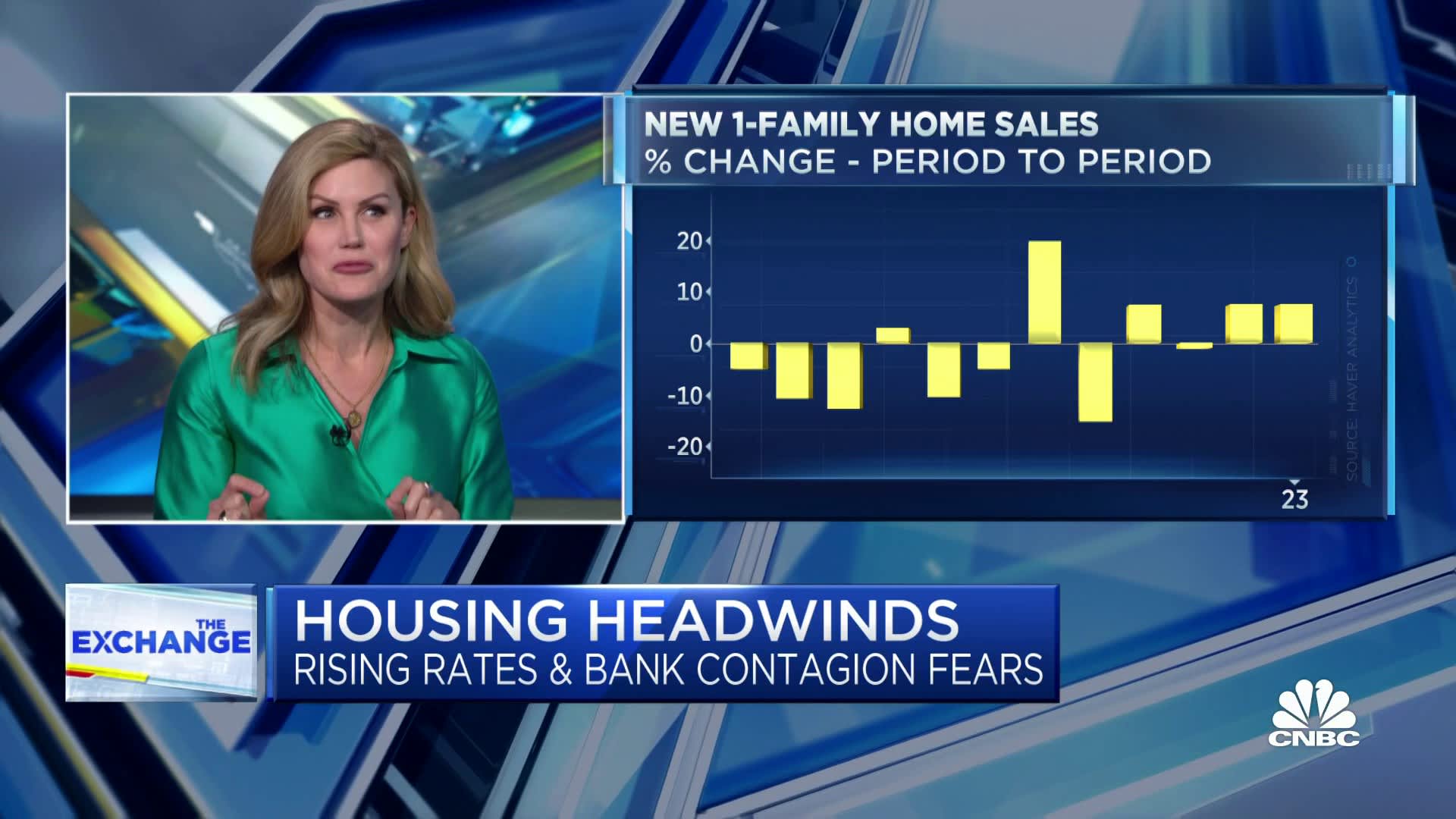
Lack of affordable housing has created a surge in rentals, says Nest Seekers’ Erin Sykes

Lack of affordable housing has created a surge in rentals, says Nest Seekers’ Erin Sykes


Share

Erin Sykes, chief economist with Nest Seekers International, joins ‘The Exchange’ to discuss volatility bringing down mortgage rates, demand for single-family homes and the lack of housing affordability.


Source link

Lack of affordable housing has created a surge in rentals, says Nest Seekers’ Erin Sykes Read More »

What Will Startups Do Now?

What Will Startups Do Now?


The last 96 hours have been one of the most manic and momentous in my last decade in venture capital. Silicon Valley Bank, once a stalwart of its namesake Silicon Valley was put into receivership by the Federal Government Insurance Corporation.

What does this mean for its customers? Its investors? The bank? The story continues to unfold.

But one thing is for certain: These failures will change the startup landscape and founder behavior in meaningful ways.

Here are five predictions.

Risk Management Comes To The Forefront

For many startups, it was completely rational, and justifiable to store deposits safely with Silicon Valley Bank. Afterall, they were a top 20 US bank and a cornerstone of the innovation economy.

No longer.

Startups will start to adopt strategies many of the largest players already employ: diversification and risk management in their treasury management function.

What does that mean? While the level of risk management will depend on stage (it is unreasonable to expect a two-person startup to have a sophisticated internal risk management function) and amount of capital raised (which drives the level of exposure) it will be part of the new mindset. Every startup can use multiple banks. Deposits, if on the bank’s balance sheet, should be diversified across multiple providers. Off-balance sheet solutions can be used if bank balances are too large. For example, one product, sweep accounts (which systematically spread capital across multiple banks) and money market funds can take capital off-balance sheet, and allow deposits to be bankruptcy remote.

Risk management will expand beyond just bank partners and become a key component for broader startup infrastructure.

Fintech startups that offer risk management will increasingly offer services for this category.

Counter-Party Risk Will Be Examined

For essential functions (banks, but also far beyond), counter-party risk will become a more important decision criteria.

If you’re an InsureTech with insurance partners, you live and die by your insurance partners. How much capacity do they have? What is their track record of consistency in good and bad times? How long have the individual sponsors worked at the bank? How committed are they to the strategy long-term?

If you’re a sales business, you may live and die by your CRM. How long have they been around? Are they profitable?

When a service provider is existential – as in if they stopped existing what would happen – counter-party risk should and will be more carefully examined.

For companies considering partnering with fintech startups: who is backing them? Are they profitable? Who are their partners? This will be a whole new area of resistances startups will need to overcome.

Diversification Where Possible And Practical

For certain providers, sole-sourcing is the only practical option (you would not have two CRMs or two payroll providers). But for many services particularly in the financial stack, redundancy is possible.

In these instances, startups should consider diversification.

As we have seen, banking partners, for the purposes of storing capital, can be easily made redundant with a few partners.

If you’re raising venture capital (of which I am one provider), don’t depend on only one firm. A single venture capital partner may happen to be out of capital the moment you need an emergency round. Having a few players around the table can be great (not just in good times to have multiple folks to support) but also when times are tough. And because staff at venture capital firms can also move around, make sure you meet a few of the partners in any one firm. I expect to see a rise in co-led rounds as a result.

Lastly, diversify your financial stack and capital options beyond equity. Venture debt historically was a key option. But since SVBVB
was one of the primary venture debt providers, going forward availability from them is no longer a given. New alternative capital solutions, for example, revenue-based financing, have started coming to the forefront for startups. We will see greater exploration of new capital types.

The Trust Barrier To Adoption Has Been Lowered

One of the reasons to go to Silicon Valley Bank was that it was Silicon Valley Bank. They were the incumbents in the land of innovation.

That made them the default option for so many products: banking, venture debt, etc. The same is true for many providers in different industries.

But as VCs, portfolio companies and many executives have scrambled for options, they’ve been open to try new ones as well.

This may be a unique opportunity for nimble players, both startups as well as incumbents, looking to serve startups in a tough time.

But even more broadly, SVB has shown that even the safest players are not immune from risk. Already nearly 90% of US consumers have used fintechs. But adoption was slower among corporates.

Subject to overcoming the counter-party risks and diversification needs above, I expect B2B fintech adoption to continue to increase. More people will be willing to experiment with emerging players.

Fintech Payers Coalesce Around One Of Two Stable Points

Where do things end up?

I predict two stable points for the world of banking.

On the one hand, players can be nimble rapid adaptable companies. That’s where fintech’s shine. Already, a number have reacted fast to the unfolding SVB collapse, doing everything from rapid enrolment to creating credit lifelines.

On the other hand, boring, timeless stability will be a feature, not a bug.

Incumbents that thrive will stay true to traditional risk management may see lower short term growth, but enduring long-term survival.


The Silicon Valley Bank story continues to evolve live. But one thing is for certain, the world of fintech and venture will never be the same again.


Source link

What Will Startups Do Now? Read More »

From 0 to 40 Rental Units After Going Broke in Last Crash

From $500 to 40 Rental Units After Going Broke in Last Crash


Eric Quinn turned $500 into over forty rental properties without rich relatives, a winning lottery ticket, or a magic genie. Like many investors after the 2008 crash, Eric was left flat broke, with an unbelievably high adjustable mortgage rate, hundreds of thousands in credit card debt, and just a few hundred dollars to his name. His “bed,” a pile of clothes in his parents’ house, was the one thing that could comfort him while digging himself out of the housing market hole he fell into.

Now, Eric’s life looks a little different. With dozens of cash-flowing rental units, even Eric questions how he got here. His story includes selling snakes, dealing drugs, storage wars, terrible real estate deals, and bad debt, but at the end of it, thanks to making the perfect pivot, he came out on top. He made almost every real estate investing mistake in the book, from buying a property he knew nothing about to purchasing fifteen rental properties in one month (don’t do this) and taking risks that were never worth the reward.

But Eric isn’t here to cry over spilled milk. Instead, he’s here to share EXACTLY how he made it out of a horrible situation and turned his life around to build wealth, have time freedom, and live without worrying. You might be feeling a bit like Eric did, and if you want to know the mistakes you should avoid and the moves you should make to get in a better position, tune into today’s episode!

David:
This is the BiggerPockets podcast. Show 740.

Eric:
I had 10 to 15 grand a month in bills, 150 grand in credit card debt, plus the house that I couldn’t afford. And I had 500 bucks off of my name. And it’s the cliche story of I called or I did this thing 50 times, right? So I heard about storage units and I had no idea how I learned about storage units, and so I called 47 storage unit facilities. In that storage unit, I said, “I don’t know what I’m doing, but I’m just going to show up.” I had literally 500 bucks left to my name. I spent $450, bought three storage units, and in two weeks we made about 2,000 bucks.

David:
What’s going on, everyone? This is David Greene, your host of the BiggerPockets podcast. Here today, as you can see, with a little change of scenery, I’m joined by my co-host Henry Washington and our guest, Eric Quinn. Today’s show is absolutely staggeringly incredible. You’re going to love this show. Our guest is Eric Quinn. Eric has owned over 40 rental properties, done 15 flips, and currently sits at 15 sober living facilities, seven single family houses, a couple of duplexes, and a mix of some small commercial office and apartment complexes. Eric has a wide variety of sales experience, including door to door sales, as well as gym memberships, storage unit auctions, and thrift stores, to restaurant equipment.
The focus of today’s show is going to be how you can pivot just like Eric did, looking for open doors that should be the focus of any successful business owner. Not being afraid to fail was Eric’s way out of hardship, and we believe that that will work for a lot of other people. And you are going to hear how Eric has lost it all, not one or two times, but four separate times, bouncing back every one of them to end up with a successful brokerage and an investing business that has more than tripled over two years. Each of these chapters plays a critical role in where you’re at today, and we are excited to dig in, Eric.
But before we get into the show, today’s quick tip is if you fail, you will learn, and that is part of the process, and it may hurt, but that’s okay because success hurts. If you’re a more experienced person, keep your attention on finding the open doors that are in front of you. Sometimes when our ego gets too big, our pride gets too big, we take an L and we want to close up and hide from the world, and you end up missing the open doors that are all around you. This was something we learned in basketball. When you’re swarmed by defenders, which can be losses in business, you tend to just want to stare at the ball, but you need to keep your head up and look for open players around you and opportunities. You got to practice doing it, but it makes a big difference when you do. Henry, what was your favorite part of today’s show?

Henry:
Yeah, I think one of the best parts about the show is how Eric talks about how he never let a situation, no matter how terrible it was, stop him from continuing to think the right way. So when he falls on his face, he talks about, “Hey, I’m going to take this next round of money, this next endeavor, and I’m going to put everything I have into it.” And it takes a lot of tenacity to be able to fall on your face and then still think about how can I invest in something that’s going to return, that’s going to have a return for my family?
A lot of people fall on their face and then that’s the end of their journey, or they don’t start looking for those open opportunities, but he did the exact opposite. And in fact, had several conversations with his wife throughout the course of his investing career about, “Hey, remember how we’re just starting to get back on our feet? Great. I need to take the majority of that money and go invest it into something else.” And it takes guts to do that and strong support from your spouse, and it was just enjoyable to hear those stories.

David:
Yeah, this was a great episode. I’m going to dub this the feel good episode of 2023 because if you have ever had a loss yourself, you’re going to feel very good about yourself after hearing everything that Eric has already gone through. Let’s get into it.
Today’s guest is Eric Quinn. Eric has owned over 40 rentals, done 15 flips, and currently sits with 15 sober living facilities, seven single family properties, a few duplexes, and a mix of some small commercial offices and apartment properties. Eric has a wide variety of sales experience that ranges from door to door sales to selling gym memberships as well as storage unit auctions. That sounds interesting. We’re going to have to dive into that. And thrift stores, to restaurant equipment.
We’re going to be focusing on how pivoting and looking for an open door was his focus to building the business he has today. Not being afraid to fail was the way out of the hardships he encountered and how he lost it all not one or two times, but four separate times and bounced back to have a successful brokerage and investing business that has more than tripled in two years. Each of these chapters plays a critical role in where you’re at today, Eric, and we are excited to dig in. But before we do, a quick fun fact. Word on the street is he used to sell snakes to drug dealers as a kid to make money.

Eric:
Yes.

David:
Okay. We need to start with that. Tell me what environment were you in?

Eric:
So I believe the statute of limitations has run out, so we can freely speak about this now. And I believe I was probably, I don’t know, 10 to 12 years old. I was growing up in Florida and to make some extra money, I was always obsessed with reptiles, turtles, and snakes like that. We would go or I would go and buy these ball python snakes for eight to 10 bucks a piece at the time, and then I would go into the notoriously known area, I don’t know what my parents were thinking, and I would sell snakes. And so what I would do is I’d knock on the door and it was very weird me being there and they’d say, “Why are you here?” And I’m like, “Well, don’t mean any harm or anything, but the guy down the street, we’ll call him Bill, just bought a couple snakes from me, and I heard he’s kind of your competition. So I wasn’t sure if you wanted a snake as well.”
And he’d be like, “How many did he buy?” And I’d say, one, two, three, four, whatever the number was. And then they would always buy double and I’d sell them for 50 bucks, 100 bucks, 125, and I would slowly stockpile to buy more animals for myself, because as a kid, my mom made the great mistake of saying, “You can have as many turtles and snakes as you want as long as it doesn’t smell.” So I sold snakes to feed my own hobby and addiction, if you will. So yeah.

David:
So I got to ask, these drug dealers, this was the ’80s, right?

Eric:
Early ’90s.

David:
Okay. Early ’90s. Were snakes and reptiles the pit bulls of the ’90s? What was the [inaudible 00:06:18]?

Eric:
They were. Yeah, so these snakes, I shouldn’t say they were baby ball pythons. They were anywhere from four to six feet. They had some size to them, and so yeah, they’d wear them around their neck, they would display them in their cages and tanks and they would-

David:
This was a sign of wealth and affluence?

Eric:
Yes.

David:
This was not for protection.

Eric:
No, it’s a snake.

David:
Because that’s where my mind went first. It’s like, is this an intimidation thing?

Eric:
Yeah, guard snakes were not a thing then.

David:
Okay. So you can’t afford a big gold chain, or you’re smart enough to recognize that’s probably not a smart advertisement if you’re in the-

Eric:
In that profession.

David:
… illegal pharmaceutical distribution business. So instead, you put a snake around your neck.

Eric:
That’s right. Yeah, exactly.

David:
As a selling card. And that was your introduction into sales.

Eric:
Yes. Yeah, and then we moved to selling turtles on the side of the road and stuff like that as well. Yeah.

David:
Yeah, shout out to Ryan Murdoch, Brandon Turner’s, I don’t even what you call him at this point, but at one point his assistant. He loves animals too. And I won’t go here today, but I’ve always been fascinated with the people that are fascinated with reptiles because I never had that thing. It was never a thing where I saw them and thought, “That’s really cool.” I had a dinosaur phase when I was seven, but it never evolved into what you guys do. So I understand you had a very bumpy introduction to real estate. It was probably a little bit different than the illegal underground exotic reptile industry. Tell me about your first attempt buying a home. When was this and what happened?

Eric:
Yeah, so my first personal house was ’06. My interest rate was like 8.75, and it was the time where they’re like, “Oh, you have a pulse. Here’s a mortgage. How much money do you make? Whatever you…” So we bought the house in ’06 and… I bought the house in ’06, and ’08 is when things hit the fan. I don’t know, do you want me to go into that right now too?

David:
Well, we understand in 2008, the mortgage industry corrected and a lot of properties went into foreclosure, but did you just pay too much for a house or the mortgage that you couldn’t afford, or was there more to it?

Eric:
Yeah, so there’s a lot more to it. I lost my job, and so we spiraled adjustable rate, ARMs, adjustable rate mortgages, and ARMs. When we bought the house, it was 8.75. It got to a point where it was like 24.75. Yeah, we went into foreclosure four times and saved it every time. Loan modifications, double loan modifications, that paperwork glitches. And I can dive into that. It’s honestly what saved our house, but it was super terrifying. I lost my job in ’08 and I met my wife two weeks later and I looked at her and I said, “Hey, I’m going to lose everything. This is not good. I don’t have any savings. My bills are 10 to 15 grand a month. I have no 401k, I have nothing. I’m going to lose everything. And so you should leave.” And she looked at me and she said, “I kind of like you, so I’m in. Let’s figure it out.” And I’m like, “You’re crazy. It should have been a red flag.” But we’ve been together 15 years now and it’s been a wonderful ride. So yeah.

David:
I think you got a real one there. There’s a blessing in disguise if you think about that, which seems to be the case with a lot of your story, that if you had met somebody when everything was going great and everything you touch is turning to gold, you’re always wondering, does this person love me or do they just love what I can give them? But if you realize if your relationship was built with your wife at a low point in your life, that’s a amazing way to start the foundation you’re going to have. And she also got to see a side of you that a lot of people probably didn’t, which is just your tenacity.

Eric:
Yeah, it was definitely a tenacity and a very humbling event. I worked in some sales positions prior to that, and I will say that my ego was probably got the best of me quite a bit. I was not a wonderful person, let’s just say it that way. I was very egotistical. I don’t know if I can say (beep) canoe, but that would be a good example of that.

David:
[inaudible 00:09:55]?

Eric:
Yep. So it was very humbling. I was put on my knees. And so we were able to grind through that, and it’s done pretty well so far.

David:
Yeah, that’s such an important part of a successful journey. One of the things I’ve noticed with anyone who gets into real estate sales, real estate investing, any kind of entrepreneurship, there’s this expectation that you’re going to get in and you’re either good or you’re not good. You’re going to either crush it or you’re going to suck. And if you suck, you should move on. If you crush it, you’re there. And in my experience, it’s almost always a cycle of crush it, get really high like Icarus, you crash, then can you pick yourself up and go up again? In the second iteration, you’re going to fail too. It is a series of successes and failures where every single failure, you have to be tough and get up, and every single success, you have to learn to be humble.
And people don’t walk into it expecting that. They think that it’s just going to be like, once I get the plane off the ground, I’m going to coast and I’m going to retire and live on the beach and drink my Mai Tais and watch Dancing with the Stars after three years of hard work. And nothing really works that way, whether it’s your fitness goals, whether it’s your relationship, whether it’s finances. So how did you start digging yourself out? Because this sounds like financially, this was the first time that you experienced that crash. And when you’re flying high and you have a crash from a height, it hurts.

Eric:
Yeah, so this actually wasn’t the first time. So this was probably now second, almost third time. First time was in Houston with Enron. Enron went bankrupt. It didn’t affect most of the country, but I lived in Houston at that time, and so it was miserable. You had these execs that were making 80 to 150 to 300 grand working at McDonald’s. So it was bad. I was so poor at one time that I slept on a pile of clothes at that time. So I moved to Colorado in my mom and dad’s basement. And so when I was… Fast-forward to ’08, when I lost everything this time, I had 10 to 15 grand a month in bills, 150 grand in credit card debt, plus the house that I couldn’t afford. And I had 500 bucks off to my name, and it’s the cliche story of I called or I did this thing 50 times.
So I heard about storage units and I had no idea how I learned about storage units. This was before the TV show by a couple years, grace of God, let’s call it, the universe opening a door for me. And so I called 47 storage unit facilities. Most of them had auctions, but they were all far in the future. There was one that had one the next day. In that storage unit, I said, “I don’t know what I’m doing, but I’m just going to show up.” I had literally 500 bucks left to my name. I spent $450, bought three storage units, and in two weeks we made about 2,000 bucks.

David:
Now, when you say you bought a storage unit, you’re saying you bought the stuff inside the storage unit?

Eric:
Correct. Yeah. Well, I was way too poor and bad credit. I couldn’t buy anything. I could barely afford Taco Bell at that time.

Henry:
So I’m doing the math. 450 bucks for the storage units. You had 500, so you were left with 50-

Eric:
Yeah, 50 bucks.

Henry:
… to live life with.

Eric:
Yeah. So that covered gas, hopefully. And then back then, McDoubles at McDonald’s were still a dollar, tacos were 50 cents, and ramen noodles. My wife and I… It’s funny, I was looking on Facebook the other day and there was a cart and we’re like, “We got food for a month.” And it was $280 and it was all just crap, like 50 cent banquet meals and stuff like that, because that’s all we could do. The funny thing is one of the storage units that I bought out of the three was filled with prison letters, adult toys, if you will, and broken furniture and heroin needles, unfortunately. And one of the greatest things about this is my wife and I would sort these things together and then she’d go down the rabbit hole of reading prison letters, and it was… She’s like, “We have so much to be thankful for.”

Henry:
I was going to say, that’s some perspective right there. Those, I call them God winks. That little, you’re doing exactly what you’re supposed to be doing in that moment when you find something like that that reminds you that even though things may seem not great, things could be a lot worse. That perspective, I’m sure, was grounding.

Eric:
Yeah.

David:
So you’re sleeping on a bed of clothes.

Eric:
So at this time, I got a bed, so I was 18, 19 when I had [inaudible 00:14:09].

Henry:
Did you get it out of a storage unit?

Eric:
That was later. But we made about two grand, short story of that. Those first three, I made two grand in two weeks, and so I said, “I’m in.” And we bought about 1,000 storage unit contents over probably 10 years.

Henry:
Was this at the time that that show was really popular that was going around?

Eric:
No. So it was before. So that happened about two years afterwards. I actually opened a thrift store and then this show came out. I’m like, “Come on, are you kidding me?”

Henry:
Here comes the comp.

Eric:
And that was exactly it. So these auctions went from three to 10 people there. The very next day, there was 400 to 500 people. So a unit that’d go for five bucks sold for 600. The nice thing was is that for me, we saw the thrift store and we saw the potential. I set the thrift store up for 500 bucks because I bought everything used, and we ended up selling the thrift store, I think, for 30, 40 grand. And when we pivoted and parlayed.

Henry:
So when you say you set up a thrift store, so that’s how you were dispositioning the things that you found?

Eric:
Yep.

Henry:
Was it a physical thrift store? Were you selling online?

Eric:
Yeah. So we would take all the knickknacks and actually put it in the thrift store, and then anything that was worth any kind of money, we would sell it on Craigslist. So Craigslist honestly saved my life. I have a incredible love for Craigslist. Now, it’s Facebook Marketplace. Things have transitioned and changed. But so we sold everything on Craigslist and eBay.

David:
I don’t know, did we get into what brought the idea into your head to buy self storage units when you had $50 left?

Eric:
So I honestly have no idea where it came from. I have thought a lot about this, but I have no idea. It was one of those things that I liked selling things on Craigslist, and I was like, “Well, I’m desperate. I need to buy more things. How do I get more things?” But I honestly have no idea where I came-

David:
Just interesting that when you only have $500 to your name, rather than going into a circle the wagons, defensive minded, cling to whatever, or have as your thought was, “Well, what could I invest this into that could get me a better return?”

Eric:
I didn’t have an option. There’s nobody hiring. I don’t have a college education. I was going to lose everything. So I had to figure it out. So it was either that or drug dealing, and I didn’t want to sell drugs anymore.

Henry:
[inaudible 00:16:22] snakes.

Eric:
Yeah, I could’ve gotten snakes, but 500 bucks doesn’t buy a lot of snakes. So I’m thinking about it, and it might’ve been somebody buying something from me off of Craigslist, but I’m not 100% sure where that idea came from, to be honest.

Henry:
How did… This story mirrors so many investors where it’s a lot of us got started flipping stuff. Yours was just flipping through storage units, mine was flipping stuff from auctions. But how did the conversation go with your wife when you said, “I need to take the majority of our last $500 and invest in this thing I’ve never done before.”?

Eric:
Yeah. So I don’t know why she’s so supportive and what she saw in me. We’re living by this motto and ethos that as we’re growing this business, I want to believe in you even if you don’t believe in yourself yet. And the yet is the biggest part. And there’s been critical times in my life where somebody believed in me and maybe they didn’t say, “Hey, I believe in you.” But they were there and they supported me. So there is this… While we’re going through this thing, everything in our house was for sale. There was times we didn’t have a couch, we didn’t have a kitchen table. We’ll go back to the bed thing. So when I was 18 to 20, I couldn’t afford a bed, so I slept on a pile of clothes. And when I met my girlfriend, now wife, I said, “Hey, this is what my past is. I promise you, no matter how bad this gets, I will never not have you sleep in a bed.”
So that’s what we did. So the only thing that was not for sale in our house was our bed, because that’s our bed, but everything else was for sale. There’s times where my son would come into town and he thought we were rich because he was young and he had a new bedroom set every time because the moment I dropped him off at the airport, I’d immediately listed his bed on Craigslist. So yeah, everything was for sale. We had a new couch every other week.

Henry:
My wife would tell you that everything in our life is for sale right now still. There’s always a price. There’s always a price. So Storage Wars comes out, increased competition, things are going for more money. Obviously, you had to pivot yet again. So what did that pivot look like? Where did real estate come into play?

Eric:
Yes. So not yet. I pivoted into restaurant equipment. So I had a friend that does stainless steel manufacturing. He’s a large distributor, and he called one day, he said, “Hey, are you still selling stuff on Craigslist?” I’m like, “I am.” He said, “I need you to come to the warehouse and I’ve got this restaurant equipment, I need you to sell it.” And I said, “I’ve never sold restaurant equipment. I have no idea what I’m doing.” And he goes, “Have you heard of a website called Google?” And I’m like, “Thanks, yes.” And he said, “Come on over.” And all this equipment was brand new. It was all in the box, but it was three to six years old, three to five years old. And he couldn’t sell it to his customers because it was dated, even though it was brand new in the box. And he said, just Google it, whatever the MSRP is on it, list for half and then I’ll pay you 20% commission.
And I said, “Okay, what’s the worst that happens?” So I ended up doing about $100,000 in sales for him in 90 days. This is the biggest paycheck at that time that I had ever gotten. And so I looked at my wife and I said, “We’re not selling couches anymore. We’re going to sell some refrigerators.” So I started doing restaurant auctions and restaurants that were seized for taxes or workman’s comp and stuff like that, or payroll. And we built a business like that, selling on Craigslist as well. And then I got my real estate license in 2012.

David:
So you’re selling all kinds of different things. You’re moving from, I can see the transition from snakes to drugs to storages to refrigerators. You’re starting to move into the [inaudible 00:20:12] area. [inaudible 00:20:13] point you realized that real estate actually is the best thing to be selling. So tell me, how did you transition into real estate?

Eric:
Yeah. So I got my license in 2012. I was the cliche agent of, I’m going to do it part-time. I’ll do it if a deal falls on my lap. So I actually didn’t get serious about real estate until 2017, 2015 area. And I would sold maybe five, 10 houses. And then I sold 15, 20, and then I sold 25. And I looked at it, I was like, “I’m missing the boat here. There is so much more potential and so much more opportunity if I take a risk.” So you fast-forward to 2016, 2017, and I had the conversation with my wife and I said, “Hey, we’re going to shut down Craigslist. We’re just going to shut down and walk away.” And she’s like, “Are you kidding me?” We’re making low six figures and we’re almost out of debt. And we had 150 grand when we started, and I worked it all the way down to, I think about 25 and with all the foreclosures and stuff like that, or pending foreclosures.
And so I said, “I think this is the right decision. I don’t know why, but I think we need to walk away.” And so I said, “I’m going to close May 1st.” And so from January 1st to May 1st, I was working on liquidating the warehouse of restaurant equipment. I had only sold two houses, which commissions on two houses is not a lot. And she said, “This is a terrible idea.” I was like, “I know.” And she’s like, “All right, let’s do it.” And so we did it. And then from May to the end of the year, I sold another 50 houses. So life changing, incredible. And we were able to parlay that money into investing. So we bet on ourselves.

David:
But I mean, did you get into real estate because you just wanted to sell more expensive things, so you got your license?

Eric:
No, I’d always been obsessed with real estate. I watched Armando Montelongo in the early 2000s and even before that. So I had this vision of a one-stop shop where one level would be real estate, one level would be investing, one level would be mortgages, one level would be contractors. And this grandiose dream, if you will, it’s a curse and a blessing. I can only think big. So since I was a kid, I always saw myself in real estate. I just didn’t know how it transitioned or parlayed.

Henry:
Did you get your license and then see the money being made by investors and decide to make that pivot? Or were you always on the thought process that, “I’m going to be an investor.”?

Eric:
A little bit of both. So I got my license and I was still obsessed with Craigslist because I didn’t have any money. We were still super in debt, and so I just kind of chipped away at everything. And then finally, I took the gamble and I had been listening to BiggerPockets for years, like the first 500 episodes, 350 episodes. And I said, “I’m just going to do it.” So the way I bought my first house was the house that had gone into foreclosure four times, we decided to sell. And I had always said, “We’re not going to sell this house. It’s always going to be a rental. We’ll try to figure it out.” But the market had appreciated so well.
So I bought the house for 255. When I went to sell it 10 years later, I owed 265 because of foreclosure fees, attorney fees. Paid on it for 10 years, I still owed more money than I bought it for, but we sold it for 435. So it was a great windfall. We made $180,000 when we walked away, tax-free, because it was owner occupied. And I put 100 grand down on our new house, paid off all of our debt. So we were 100% debt free and left me with 80 grand. And that’s when we bought our first real estate transact or first investment.

David:
So what do you do once you got into real estate? Did you carefully, strategically, and with a calculated measure, move forward? Or did you Eric Quinn your way, rhinoceros right into this?

Eric:
Yeah. So we’ve come up with a new saying, it’s called Quinning. So we just went all in. We did. I spent way more money than I had again. I put it on credit cards and on marketing and Zillow buyer leads. Back then, Zillow was still good. And my income has doubled and tripled every year for five, six years now. Last year, I took the year off, so it was a little lighter last year, but I just went all in again and I said, “What’s the worst that happens here?” And don’t get me wrong, it was not all cupcakes and rainbows. I got kicked in the shin repeatedly and definitely full of self-doubt. And what am I doing here? But for some reason, I was dumb enough to keep going forward.

David:
Well, I see that you bought 15 renos in one month. Was that the case?

Eric:
Yeah. So half of those I put on credit cards. I charged myself and put them on credit cards so I had the cash to buy them. So that is one of the… A great learning experience. So I bought a bunch of houses in Ohio because the sheriff auction sale has a very quick right of redemption.

David:
For reference, where were you located?

Eric:
Colorado. So I lived in Denver and I bought… My first transaction was a warehouse in Ohio. So I was already going to Ohio, I met a local real estate agent, and we’re like, “Hey, let’s partner.” And so we did. So we bought 15 houses in one month. I think all 15 houses cost, you’re going to laugh when I say it, I think less than 100 grand total. And I was like, “This is a grand slam. What could go wrong?”

David:
I can relate to that, Eric. Yeah, I just bought 18 houses over a two-month period. And it’s funny because when you’re looking at the numbers, the numbers work. And we tend to factor the numbers. What you don’t factor is the time and the red tape and the reliance on other people, whether that be a contractor, an employee, a bookkeeper, someone, a property manager. And when you do like a property and little things go wrong, it’s happening at a pace that you can handle it. When you multiply that by 18, it gets out of hand. And I cannot in one day do everything that has to happen. Or you buying 15 renovations in a month. They’re not problems you don’t know how to solve. You just can’t solve 15 of them. It’s like trying to juggle 15 balls versus one or two.

Eric:
Well, and honestly, I probably didn’t know how to solve any of it because it is truthfully my second deal.

Henry:
So no infrastructure [inaudible 00:26:37].

Eric:
No. But I thought I did. I thought I had the boots on the ground. I thought I did my due diligence, but I did not do it well enough. And so it was a lot of learning, and we were robbing Peter to pay Paul and, “Hey, contractor, fix this house. Oh wait, we need you on this house.” And so it took forever and ate all the profits and all the stuff. And my partner, we both mismanaged. I don’t think any malicious intent, but at the end of that partnership, I actually paid him a substantial amount of money to get out of the deals because that was just the right thing to do. And so for me, I would rather leave money on the table because I play long term. I’d rather lose some money today and be safe long term than… Yeah.

Henry:
So can you in any way quantify what was the small gain and/or loss from that situation? And what’s the most valuable lesson you learned from that?

Eric:
Yeah, so we lost probably $200,000 in a year. And I will say that the $200,000 that we lost was potential profit, so not physical dollars. So I want to make that very clear. However, when we dissolved the partnership, I had to give him about $80,000 worth of properties that I owned outright. And there was zero reason for me to play nice. I should have done something differently. However, for me, it was done and I could close that chapter, the weight was lifted off my shoulders, and I could move forward. Do I like losing money? Absolutely not. But I learned and I grew and I pivoted.

David:
Well, it’s hard to make money. It’s hard to be creative. It’s hard to see your next step when you’re just drowning in anxiety and stress. On paper or on spreadsheet, that might look like a bad call. But when you’re in the situation and everybody who’s been there, they totally understand when someone says, “Why would someone sell their house for that cheap?” Man, when you just can’t sleep at night, it’s ruining your relationships, your quality of life is horrible, it’s worth it to get out of that scenario. I actually had a gross analogy when you were talking that I was thinking about. Buying 15 houses at one time is just like eating 15 donuts at one time.

Eric:
It sounded like a good idea.

David:
It’s delicious for a little while.

Eric:
Right? Great idea. Especially if they’re Krispy Kremes.

David:
You get that immediate regret. I can’t digest this and I’m a miserable. And there comes a point where the pain of throwing up is better than the pain of sitting with those 15 donuts. And normally, no one would ever say, “Yeah, just go throw up.” You’re going to feel like crap when you do it. But that makes sense when you’re in that moment. And then you start over. And you hopefully don’t eat 15 donuts.

Henry:
Do you have a Rolodex of different metaphors and comparisons?

David:
Like a magician. I’m going to [inaudible 00:29:26].

Henry:
Yeah, you just yank one out. [inaudible 00:29:27].

Eric:
I have no idea how my own brain works, man.

Henry:
That was [inaudible 00:29:30].

David:
But okay, so you moved on and then you bought a warehouse. So you got out of the 15 donuts and you said, “Okay, instead, I’m going to move on to a new food group.”

Eric:
Yeah, so the warehouse was actually the first transaction I bought. So I bought the warehouse and that’s what caused me to go to Ohio and then these 15 deals. So I’d like to go through the warehouse when we do the deal deep dive, if that’s cool because that was a lot, a lot of learning.

David:
All right. So let’s recap where we are so far. You took your last $500, started a side hustle that saved your family. Turned that into two grand, right? So [inaudible 00:30:01] extra money on that. Turned that into a profitable business, that upselling houses that really got you out of just financial distress and put you on some kind of solid ground. Then you pivoted into becoming a real estate investor. So your first attempts were gnarly. You had to pay 80 grand to get out of the situation. Where’d you go from there?

Eric:
Yeah, so we actually parlayed into some fix and flips, and I was very fortunate enough that of a buddy that had a HELOC on his property, and so he just would give me money to go buy these houses in cash. And then from there, we transitioned into sober living homes. And that’s what we have currently right now, is a bunch of sober living homes.

Henry:
So what triggered that thought process? Because that’s not where most investors [inaudible 00:30:48].

Eric:
So the grace of God, another door open. So I had a client of mine in Denver, I’m a real estate agent as well, and that’s what he was buying. He was buying these sober living homes and he refused to give me the contact information. He’s like, “No, man, these are good deals. I’m not giving them to you. When I’m done buying, I will make an introduction.” And I said, “That’s some crap.” And so two years later, he actually gave me the information. And so we made our first buy about a year after that.

David:
Well, now, information for who or what?

Eric:
Yeah, so these sober living homes, I don’t run them. I’m the landlord. So we partner with local nonprofits, and then the nonprofits actually run the sober living homes.

David:
So he had a contact with a nonprofit that is paid government funds to manage these sober living homes. And he was basically sub-leasing them to those people. And so he just knew what type of property they needed. He would go… You would go find the property for him, he would put it on the contract, buy it, lease it out to them. All right, and he didn’t want to give you the connection to the people that were leasing it?

Henry:
That was the keys to his cashflow.

Eric:
Yeah, 100%. Totally good.

David:
Why did he get out of it, by the way?

Eric:
He retired and he’s got, I believe he’s got 12 of them, and it provides a good life. He worked for a fast food corporation and was with them for a while. Also ran out of cash to keep buying and then said, “I’ve got enough. I’m just going to retire and stare at the mountain sunsets every day.”

David:
And you take the keys.

Eric:
I took the keys. Yeah.

David:
Okay. So when you’re buying these sober living facilities, where should we start? Should we start with what are you looking for in a property that will make these profit?

Eric:
Yep. So we are looking for three, four, or five bedrooms, larger square footprints because we’ll convert dining rooms into a bedroom, we’ll convert extra space, living room, family room. Very, very similar. We’re looking to be on bus lines, walkable distances to jobs and stuff like that. The big thing is I’ve been sober for 22 years as well, and my little sister is an addict. And so these sober living homes, it’s not just about the cashflow for us, it’s about actually making a difference and helping people get their life back together. So it just happens to do very well financially as well. So that’s kind of what our buy boxes are. Sometimes we’ll add pergolas. We have some nice homes that have swimming pools, and it’s actually the community meeting area for some of these houses. We actually own in five or six states total. So I buy out-of-state on all of my properties now for them. And that’s kind of what we’re looking for to make sure it’s advantageous for everybody involved.

David:
Now, do you worry about buying too much and there’s not enough demand for them?

Eric:
Yes and no. What’s slowing me down right now is my buy boxes. I’m getting very strict on what I’m buying because I’m looking to say no with everything going on. Unfortunately, when the economy is good, drug addiction is good. When the economy is bad, drug addiction is good. So I don’t foresee that changing, unfortunately, and it’s an epidemic. And we’re trying to make a difference, but we’re pretty safe.

David:
So going into 2023, what’s your thoughts on the type of buy box you’re looking for, your concerns, or are you excited?

Eric:
Yeah, so I’m actually super excited. So we’re still buying. We have two under contract right now, hopefully three by the end of this week. We’re still buying. I’m just being very specific in what we’re buying. I love Florida. We own five or six in the panhandle. However, the last one we were underwriting got completely blown up because of property taxes and losing homestead exemptions and reassessments and the homeowner’s insurance. I was underwriting these property at 2,500 bucks a year. It’s what it always has been. And my insurance quote came back at 6,300.

David:
Yeah, Florida’s been brutal.

Eric:
Yeah.

David:
[inaudible 00:34:39].

Eric:
It’s brutal. Yeah, it’s definitely kicking me. So we’re looking at that. We’re analyzing the interest rates, obviously, right? I’m doing DSCR loans on everything. Have a great lender. So the rates are pretty good there. Compared, right? It’s not good. It’s comparatively.

Henry:
I’m assuming the cashflow from these things is good enough that even though the interest rates are higher now that you can still purchase and using DSCR loans, you’re putting a 20% down payment typically for every property?

Eric:
Yep. So we’re doing a one point origination, 20% down, 30 year fix rate. So we’re at least doing three 30 year fixes on them. Some of them do have prepaid penalties, but if the interest rates drop enough, I’ll take the hit. The cashflow is pretty solid. We’re pretty happy with it. If it falls below certain cash on cash returns, that’s another box for me.

Henry:
Have you found yourself in a situation, especially now, given market conditions changing where you’re having to pivot a strategy, do you have to sell out? What’s your secondary exit plan if you can’t make the money you’re looking to make doing sober living, or if maybe the property just isn’t in the perfect location? How do you get out of that?

Eric:
So that’s a great question. So I have one of those right now. So we bought it two years ago. Thankfully, the market’s been on my side for the last two years. But it didn’t perform very well. So we’re selling it. This is business for me, so I’m not emotional. So even the houses that I bought two years ago, I was going for the throat on my offers. Now, if it… Let’s say a house is listed for 300, I have zero qualms offering 175 to 225. And if the numbers don’t work, the numbers don’t work, and I just go to the next one. So I’m buying off of MLS. I target specific homes in specific areas, and I go for the throat. I still beat up on inspections. I just got a whole roof replaced. And they’re like, “We’re going to sell it as is.” Sure, you are. And so we’re being very specific and I am taking emotions out of it.

Henry:
That’s one of the biggest fallacies in all of real estate. There is no as is. There’s no as is.

Eric:
No. Completely made up.

Henry:
There’s no as is. So ask a different way. So when you’re buying these sometimes, you’re converting dining rooms, sometimes living rooms, garages, and so if you have to pivot and go to sell some of those things, are you having to then go back in and undo some of that?

Eric:
We haven’t faced that yet. With where we’re buying, we’re usually okay on that. The other thing is that if worst case scenario, I lose the tenant as the sober living home, it will still cashflow as a regular rental, as a long-term rental. So we’re safe there. I would much rather not do that because the cashflow isn’t good. I don’t want to make 100 dollars a door, 50 bucks a door, breakeven. So worst case scenario, we’ll sell. Usually, we’re forcing appreciation anyways, even with this market turn. But when you’re buying a house at 70%, there’s a lot of meat on the bone to go wrong.

Henry:
Absolutely.

David:
What about your rehab on these things? Is it expensive? Are you able to get the money back out of it once you do?

Eric:
Yeah. So I’m just paying cash for the rehabs right now. I leave it in there. I’m not doing any BRRRRs or anything like that or refinances yet. My wife and I have self-funded everything. So we have debt, obviously, in the mortgages, but the 20% is how we’re carrying ourself. The rehabs range anywhere from three grand to 12 grand, depending on the extent that we’re doing. But we’ve got it pre dialed in and systematized. I have a wonderful assistant that will garner three to 10 contractors and set it all up, and then we’d kind of go from there to see who’s the best. And I don’t price shop anymore too. That was another lesson I learned. I don’t go with the cheapest. I very rarely go with the most expensive, but we’re very cognizant of our costs and stuff like that.

David:
Right on. Okay. This is fascinating, but I want to hear about this warehouse that you told us about that did not go well. So we have a special guest today that you’re willing to come on and share a deal deep dive. That was crappy, which people don’t want to do. They want to come on and show off their flowers. But you brought a third and I appreciate that.

Eric:
Yeah. Yes. It is special.

David:
So in this segment of the show, we dive deep into one particular deal that our guest has done, and we will take turns firing questions at you. I will start. What kind of property was this?

Eric:
So it was a commercial warehouse space, is about 16,000 square foot, 16,500. Yep.

Henry:
Awesome. How’d you find it?

Eric:
So I went to LoopNet where deals go to die. I don’t know if I could say that [inaudible 00:39:19].

David:
You hear the miracle story of a LoopNet deal, but in general, it usually is something like this. It’s funny. Yeah. That’s one of the problems that commercial real estate, they don’t really have an MLS. It’s still like a good old boys club in a lot of ways. And so typically, LoopNet’s the closest thing there is, but it’s usually the backwash that makes its way.

Eric:
Well, it’s so much cheaper than some of the other commercial sites too. So yeah, no.

David:
All right. Next question. How much did you buy this thing for?

Eric:
So it was listed for 100 grand.

Henry:
Okay. How’d you negotiate that?

Eric:
Yeah, so like I just said, I always heard that LoopNet was the place that deals go to die. So I offered cash, quick close. As we were negotiating, I found out that the seller was actually the widow of the person who owned the property. And she had just turned 90 and she was liquidating. So I offered half. I actually offered, I want to say it was 45, 45 grand.

David:
Man, I mean, this sounds attractive, right?

Eric:
It sounds great.

David:
Listed at 100, got in for less than half. I’m already thinking of Rosie Perez and White Men Can’t Jump. Sometimes when you lose, you really win. Sometimes when you win, [inaudible 00:40:31].

Henry:
Billy.

David:
All right. So how did you end up funding this deal?

Eric:
So when we sold that first house in 2017, that $180,000 I was talking about, we had 80 grand left. I took half of our money and paid cash for [inaudible 00:40:46].

David:
I don’t know what to do. Just do half.

Eric:
Just do half. It’s fine.

Henry:
Do you have a tone of voice when you go to your wife with these… My wife always knows when I’m about to ask her something outlandish. I’m always like, “Hey, you know that…”

Eric:
I get a look in my eye. About that.

Henry:
Remember that money? I need to use it for something crazy again.

Eric:
Yes.

Henry:
Awesome. So you funded it with cash. So what’d you do with it?

Eric:
Yeah. So we actually had planned all these things. It’s a 16,000 square foot building. It’s going to be great. We’re in it for nothing. We’ll rent it to a big commercial renter. If that doesn’t work, we’ll subdivide it. If that doesn’t work, we’ll do this. If that… So we ended up leaving it empty.

Henry:
Plan Z.

Eric:
Yeah.

David:
Why did you end up leaving it empty?

Eric:
We couldn’t rent it.

David:
I swear this sounds simple, okay, but many of us have made a mistake because when you make decisions based off of a spreadsheet, the spreadsheet tells you what will happen if your projections are accurate, but it cannot tell you if there actually is demand for this unit or things that could go wrong, which is why spreadsheets… We say buy real estate by the numbers and that’s true, but it’s not only by the numbers. The numbers can lie to you sometimes. So that’s funny is you like, “I crushed it on the deal. It was good walking in. I got it for 45% of what it was listed for.”

Henry:
Can’t lose.

Eric:
No. Can’t lose. It’s a winning deal.

David:
Yeah. There’s only one thing that makes real estate not work, and that’s when you don’t have a tenant because there’s only one way that it makes money.

Eric:
That’s absolutely right. Well, and we’ll go into some lessons learned on-

Henry:
Yeah, that’s the next question. What did you learn from this?

Eric:
Yeah, so I learned that you shouldn’t use a residential inspector on a commercial building.

Henry:
Okay, that’s [inaudible 00:42:42].

Eric:
He said, “Oh, man. This is a great building. Super… This is the easiest inspection I’ve ever done. It’s perfect.”

Henry:
It’s fine.

Eric:
And I’m like, “Great. This is my first deal. This makes sense.” Within a month, the roof completely failed. And I don’t know if anybody’s priced out a 16,000 square foot building roof. I didn’t have that kind of money.

David:
I mean, that’s probably more than you paid.

Eric:
Yeah, it was. It was $75,000. Yeah. And I didn’t have that because I…

David:
Because you just spent it on buying it.

Eric:
I spent it on buying it. Right. So I found a guy to do roof coatings and roof repairs, and that was 30 grand. And he used regular paint instead of roof coating. And it was just-

David:
Was this a residential person that-

Eric:
No. It was supposedly a commercial roofer.

David:
That’d be easy to make that mistake twice. Residential real estate, you go to your residential hookups.

Eric:
Yeah. So I didn’t know what I didn’t know. So it’s one of those things that as I’m learning and growing… And hindsight’s always 20/20. One of my new goals now is to be the dumbest person in the room or to be in a room where I can share and help and just give. But I don’t necessarily want to be the smartest person in the room. And I wish I would’ve embraced that on this first deal because I could have asked for help. I could have presented it to somebody else. I could have said, “Hey, what am I missing?” And so it was really bad. So the real outcome though, so we bought it for 45, 47 grand. I’m in it for 75, 80, $90,000 at this point. I listed it on the market, it sat for 18 months because guess what, the warehouse is 16,000 square feet. The lot is 16,500 square feet.

David:
[inaudible 00:44:25].

Eric:
There’s no parking. There was a parking lot next to the building that I thought was included, but it belonged to the church across the street. And so I didn’t do my due diligence. I thought the plot lines were right. So it was miserable. It was listed for, I want to say 18 months. And finally, I said, “I’m done.” I fired the agent and I listed it on Facebook Marketplace. I actually got a bidding war. I listed it for 50 grand because I’m like, “I’m just going to lick my wounds and move on.” I got a bidding war. So we sold it for 63,000 and I only lost 30 to 40 grand. Only lost. I thought that was a win. I’m sure it felt great. It was a win to me because yeah.

David:
And you only had to throw up twice to get it all out.

Henry:
So you only lost the cost of your roof.

David:
[inaudible 00:45:10].

Eric:
Right. Yeah.

David:
You know what I was thinking when you were telling that story, because this is so common, especially when you feel like it’s no risk, you’re getting it at such a good price. How could it go wrong, right? What I see a lot of people will do when they’re in your situation is they will reach out to Henry or me. “Hey, can you look at this deal?” And the odds of us actually being able to analyze an asset class that we don’t buy in in a area that we don’t know and dive into that when we’re running other businesses is incredibly low. You’re way better off to be in a smaller group of people, a mastermind, a group, even a meetup club, anything that you can ask somebody who goes, “I don’t know.” But John buys warehouses and John takes one look at it and in two seconds says, “There’s nowhere to park.”

Eric:
Right.

David:
Right? Or “There’s no one who’s going to rent this out in this area, or the zoning is different.” The person who knows the asset class doesn’t need to put a eight-hour investment like Henry or I would have to do. And the people that don’t want to either invest the time or the money or the energy, or like you said, just giving back into groups, that’s where these mistakes come from. And like you said, you don’t want to be the smartest person in the room. That’s very valuable because that same question could be, for me, like three days of research to try to get back to you or for somebody else, five seconds. That you now looking at some of this stuff would be like, “Absolutely not.” Because you’ve learned what you didn’t know.

Eric:
Well, and I’ll say that’s probably one of the successes, greatest successes and pivots in my life as well, is getting involved with these mastermind groups. There’s meetup.com right now. There’s all sorts of places that you can do. Obviously, do due diligence because there are some fake gurus out there, if you will. But I don’t know if you remember this, but when you and Brandon were asking to meet Vanilla Ice, and that’s how we met. And then I did a mastermind group with you, and that was fantastic for a year, and then I took a break.

David:
Oh, I remember. I was trying to convince you to stop taking listings at 1%.

Eric:
Yes. And that has changed my life, by the way. We could talk about that separately. So just for the record, my new average commission is 3.75 for my slide. Yeah.

David:
That’s a big jump.

Eric:
It’s a huge jump.

Henry:
Did you get a piece of that?

Eric:
No, he should though.

Henry:
Get it in the emotional.

Eric:
Yes. But I was in your mastermind group, and then I took a year off, and then I reached out two and a half years ago and I said, “Hey, man. I really want to get into this larger group that I got denied in at first.” And you were my sponsor. You vouched for me. And that has changed my life. So it is who you hang out with. When we were super poor, I was best friends with Tony Robbins, Jim Rohn, Zig Ziglar, because that’s all I listened to. Eric Thomas. That’s all I would listen to. And I never met those guys, but they were my best friends. You are who you hang out with.

Henry:
[inaudible 00:47:49].

David:
That’s awesome. We’re not going to ask you the hero on this deal was because this was a big, flaming, stinky turd.

Eric:
My wife. My wife.

David:
Seems like the hero in everything that you’ve told.

Eric:
Yeah. Let’s just be honest. It’s all her. It’s all her.

David:
All right. Well, that’s fantastic. So from turds to helpful words, we’re going to move on to the last segment of our show. This is the world-famous Famous Four. In this segment of the show, we ask every guest the same four questions every episode. Question number one, what is your favorite real estate related book?

Eric:
Yep. So I’m going to go a little bit different. I would say that I have two. The Gap and The Gain and Who Not How.

David:
Benjamin Hardy books.

Eric:
Yeah. Yep. Dan Sullivan. I’ve been kind of obsessed with them lately to kind of systematize and streamline. So those two have been really, really good for me.

Henry:
Awesome. So obviously, the next question is business books. So do you have another recommendation or is it these two?

Eric:
Yeah, so Atlas Shrugged, if you have not read that. I never identified as a reader, but I’ve made it my mission. Last year, I read 10,000 pages, and this year, I’m going to probably try to do 15,000. It scared me. It’s 1,100 pages, 1,200 pages book. It’s terribly intimidating, but it is incredible. I’m only halfway through, but it is one of the best books I’ve ever read. The other one would be The Greatest Showman movie on Disney Plus. If you haven’t watched that, it will also change your life. Watch it with captions.

David:
I want you all to let me know in the comments if an 1,100-page book is better because you pay the same price to get more book or if you’d rather read a 40-page book? Because I go round and round with book publishers about this where they always want a shorter book. And I’m like, “Why would I want to give you a short book? Why wouldn’t I give you a long book?”

Eric:
It sat on my nightstand for probably six months before I was like, “Okay, I’m going to do it.” And now, I’m like, “Oh, I love…” I read it on the entire plane ride here. So I spent three hours reading it today.

David:
Eat that elephant one bite at a time. Brandon Turner, actually, a couple months ago, was telling me about Atlas Shrugged.

Eric:
Yeah, it’s great. It is so scary how spot on it is with life. It’s incredible.

David:
Well, my understanding is it kind of brings up a part of life that makes people uncomfortable that we don’t always want to acknowledge.

Eric:
100%. I don’t want to ruin anything, but it’s really good. I would definitely recommend. It’s 10 bucks on Amazon. Pick it up.

Henry:
How much is that? What’s that per page?

Eric:
[inaudible 00:50:09]. It’s a good ROI for yourself. Yeah.

Henry:
Investors, right?

Eric:
Yeah.

David:
Immediately [inaudible 00:50:16].

Henry:
Great. So what are your hobbies when you’re not reading 1,100 pages?

Eric:
Right. Yeah. So obviously, hanging out with my wife and kids. I’ve been on this crazy rabbit hole of health. Lost 40 pounds in the last…

David:
Me too.

Eric:
Nice. Yeah. So I lost 40 pounds the last 120 days. So we just bought a sauna, we have a cold plunge, weights and stuff like that. So really going, dialing in nutrition. I actually have two cold plunges. One for myself and my wife, and then one for my kids because I don’t want them to get too cold. And so we have family bonding every night. We do the sauna and cold plunges together. It’s pretty crazy.

David:
I think I saw you recently posted a picture on Facebook, right? The fitness room kind of in your house where you have the sauna and everything set up. You’re like, “Oh, I might go way too far down this rabbit hole.”

Eric:
Yeah. But it’s a good rabbit hole to go down.

Henry:
You slept on clothes and now you have a cold plunge room.

Eric:
Right, exactly. [inaudible 00:51:09]. Yep. And then we also still breed snakes.

Henry:
Of course you do.

Eric:
We have a…

Henry:
The story had to go downhill.

Eric:
We have a side hobby still. Yeah. Yep.

David:
All right. In your opinion, what sets apart successful investors from those who give up, fail, or never get started?

Eric:
Yeah. I would say it’s pivoting and learning, not being afraid to fail. I don’t think there is anything as failing, because if you’re learning and growing. And it’s cliche to say everybody’s saying that right now. The other thing is when I was doing the storage unit auctions and the auctioneer would try to get people to bid, so when the auction would stop or the bidding stalled, he would say, “Hey, they print more money every day.” And that has resonated with me. They print more money every day, so when I do make mistakes and missteps, which is going to happen, it’s okay. They print more money every day. I just got to figure out how to get it.

Henry:
People think of failure as an ending, and I agree with that, because you can only fail if you quit. If you keep pushing, then it’s just a road bump.

Eric:
Right. And if you’re a savage, just tenacious and a savage on learning and growing, you’ll be good. You’ll be good.

David:
That’s the danger in taking the blueprint mindset. Just show me the blueprint and I’ll build it exactly how you said to build it. Life doesn’t actually work out that way. It could be explained when we’re dumbing it down to simplify the concepts that work in something. A blueprint can make sense. But the actual application, anyone that’s ever played a sport, the play is never going to go the way that they draw it up.

Eric:
Right. You go do jiu-jitsu and you’re like, “I’m going to do this move to do this move to do this move.” And then within a half a second, you’re like, “Well, there goes that idea.”

David:
That’s… Yes.

Henry:
That’s what Tyson said, man.

David:
Yeah. Everyone has a plan until they get punched in the mouth. And that is life. That is literally how life works. You are much better to try to learn the principles of jiu-jitsu, the tenacity needed to stay in a fight when you get punched in the mouth, the ability to pivot within real estate and move, than it is to say, “I just want to pay for a course to learn a blueprint that I’m just going to go execute. And I’ll never make a mistake.” You won’t actually make any progress doing that. So I appreciate you being here to share your story. This is really cool. You actually flew in from Florida just to come meet with us in person, which is awesome. And then also showing some of the warts, right? It’s very common that people want to come on a podcast like this and they want to show off their flowers. They want to tell everybody how great they did.
And then that becomes discouraging for all the people listening who make mistakes and go, “Well, I must be doing it wrong, because these guys have these great stories.” Everybody’s got warts. Everybody’s making mistakes. In this economy, especially, we’re starting to see more and more and more of the moves that were made a couple years ago, or even six months ago, are much, much difficult. There’s a lot of pivoting that’s going to be happening. So in the famous words of Ross Geller from Friends, you need to pivot [inaudible 00:53:53] success.

Eric:
It’s true.

David:
[inaudible 00:53:54]. Henry, any last words for you?

Henry:
Nah, I just want to thank you for your vulnerability. Thank you for being real. Thank you for sharing some stories that were personal. And I think it’s truly going to help people. And never met you before today, but feel like I know you now. So thank you for being so real.

Eric:
Yeah. And thank you for having me. It was terrifying. This is really the first podcast I’ve ever done. So I just-

Henry:
You’re a natural.

Eric:
I just really appreciate the opportunity and thank you.

David:
Eric, people are going to be fascinated by your story. They’re going to want to find you. Where can they go to find out more about?

Eric:
So I just set up Instagram.

David:
Congratulations.

Eric:
So ericquinn929 on Instagram. Facebook is really great there too. Just Eric Quinn on Facebook.

David:
E-R-I-C?

Eric:
E-R-I-C. Yep.

David:
Henry, how about you?

Henry:
I am @thehenrywashington on Instagram or henrywashington.com.

David:
There you go. And I am davidgreene24 on every social media and davidgreene24.com for the website. So we’d love to hear from you guys. Thank you for listening. Let us know what you think about our setup here. Tell us in the YouTube comments. Do you like this? Do you like the Zoom format more? What was your favorite part of today’s show? And let Eric know that you appreciate him. This is David Greene for Eric “Quinning” Quinn and Henry “The Prince of Pivot” Washington, signing off.


Help us reach new listeners on iTunes by leaving us a rating and review! It takes just 30 seconds and instructions can be found here. Thanks! We really appreciate it!

Interested in learning more about today’s sponsors or becoming a BiggerPockets partner yourself? Email [email protected].

Note By BiggerPockets: These are opinions written by the author and do not necessarily represent the opinions of BiggerPockets.


Source link

From $500 to 40 Rental Units After Going Broke in Last Crash Read More »

Why rent control won’t solve the issue of high rents in the U.S.

Why rent control won’t solve the issue of high rents in the U.S.


In December 2022, $1,981 was the typical monthly rent in the United States — a 7.4% increase from the year prior. But while rent has begun to stabilize nationwide, rent affordability remains difficult for many Americans. 

“There’s literally nowhere in the country where a tenant is not burdened by their rent,” according to Leah Simon-Weisberg, an adjunct professor of law at UC San Francisco.

In response, support for rent control policies has gained traction.

But this isn’t the first time such policies have had widespread support. After the massive economic disruption caused by World War II, the federal government imposed rent control on roughly 80% of rental housing between 1941 and 1964.

Over time, it was abandoned because prominent economists unanimously argued against the policy. That sentiment mostly continues today.

“There are various surveys of economists. One done by IMG showed that only 2% thought that rent controls in places like New York and San Francisco were having a positive impact on affordable housing,” said Jay Parsons, chief economist at RealPage.

Economists argue that rent control would deter developers from building more homes, which would only worsen the housing supply crisis in the United States.

America already suffers from a deficit of 3.8 million homes, especially at low-income price points, according to Habitat for Humanity.

“We have not invested as a nation in building the supply of housing in a variety of communities, in a variety of different price points. We’ve instead relied on the private sector to do so,” said Sharon Wilson Géno, president of the National Multifamily Housing Council. “But unless that money comes into the market and investors see that as a better investment than some other kind of equity or some other kind of investment, they’re not going to come.”

Watch the video to find out why so many economists are against the idea of widespread rent control.


Source link

Why rent control won’t solve the issue of high rents in the U.S. Read More »

How This Entrepreneur Hopes To Build A Robust, Data-Centric Approach To Health And Wellness

How This Entrepreneur Hopes To Build A Robust, Data-Centric Approach To Health And Wellness


Andrew Herr, founder of Fount, wants to customize healthcare. This one-size-fits-all approach, he says, is not working. But to do that, he needs better data. “The current data we have is garbage.”

Herr, who has worked with the military and executives on optimizing their health, is interested in expanding beyond that elite niche to a broader audience. It’s a step-by-step approach that he hopes will become more and more affordable with each step.

“Right now, we have a few different problems with the way healthcare is set up,” he explains. “First we have these studies and clinical trials that are based on small numbers of people, only about 20 to 40 usually. Secondly, they’re using mice — and these are not even like mice that you would find in the wild, they’ve been altered. Third, the incentive right now is to turn out more papers and studies, because that’s what medical research is funding. So academics are stuck in this model.”

Instead of small groups of people for clinical trials, Herr says you’d need thousands to build a better data set. Instead of mice, you’d need humans. And instead of a few simple blood tests, you need bloodwork done over a longer period of time, coupled with other forms of testing and surveys.

By working with executives through his coaching business (who pay about $3,000 a month), he already has some of this data. However, he needs to scale it up. That costs money, and requires more support.

This week, Fount announced that it’s raised $12 million for its Series A. Plus, he’s part of a team that has the skillset to move in this broader direction. His co-founder Clayton Kim, for example, has a background in machine learning and AI, having worked as a data scientist at major companies before working on Fount. “So we have the expertise to be able to build this out,” Herr iterates.

“We get so much data per client. What we need is about 5000 people to go through the program. That’s not a crazy number of people to get accurate models, that could be used to build out a more customized approach to healthcare.”

Herr has already developed a product that tackles jetlag, somewhat as a proof of point. And he says it’s been effective, claiming to help nearly all their customers deal with the uncomfortable effects of jetlag. Similarly, he’s worked with women on menstrual issues, advising them on techniques to reduce cramps and monthly pain.

In the coming months, Herr is going to introduce a product that’s focused on sleep. Essentially, he wants to tackle the usual lifestyle pain points: sleep, stress, mood, focus. While these will all cost less than his monthly coaching fee, they’re still considered a “premium” service.

His goal, though, is that in a couple years, he’ll be able to drive down the price significantly enough that it’s competitive with the cost of a monthly gym membership or yoga class pass. “I’m not doing this to just help executives. I really want to reach as many Americans as possible.”

And the answer is not just supplements. It’s a combination of techniques from changes in your lifestyle, sleep, meditation, exercise, nutrition, and more. “Supplements are helpful. But they have to be given at the right time and in the right dosage for them to truly make a difference.”

That kind of customized approach, he argues, could help American address the underlying causes of inflammation and so many chronic conditions that can be reversed through non-medical intervention.

In fact, because the medical world requires a fair amount of regulatory rigor, Herr and his colleagues have taken Fount down the wellness route instead. “But to be honest, I think a lot of lifestyle-related illnesses can be cured without prescription meds. Actually, often they’re just managed with prescription meds, not cured,” he says.

And while there are a slew of health tech gizmos that people can use to monitor their sleep, activity, stress, etc., he finds that these companies are not as effective in providing a solution. “They tell you that your sleep is not great. But they’re not advising you on how to fix it, beyond just going to bed sooner. We want to be able to say to each person, based on their specific circumstances, what could help with that.”

So could Fount be a part of the transition to customized healthcare in America with a more holistic look at the human body? This week’s funding announcement is just a start.


Source link

How This Entrepreneur Hopes To Build A Robust, Data-Centric Approach To Health And Wellness Read More »

College Rentals, Airbnbs, & Plumbing Problems

College Rentals, Airbnbs, & Plumbing Problems


Don’t know what to do AFTER closing on a house? You’ve found your market, done your due diligence, passed your inspections, and now you’re asking, “what’s next?” Two of our three mentees are about to close on their first (and next) rental properties, but they don’t have to go in blind, thanks to the expert guidance of experienced investors Ashley and Tony. But we’re not just talking about a post-closing checklist. Instead, we’ll get into the nitty-gritty of getting a new short-term rental, how to handle inherited tenants, when to switch your investing strategy, and what happens when you discover a BIG plumbing problem in a property.

We’re back to conclude our final meeting with our ninety-day mentees. Brandon, Lawrence, and Melanie have made MASSIVE strides to become real estate investors. Brandon and Melanie come back with deals under contract and close to closing, while Lawrence is looking to switch up strategies and potentially re-enter the cash-flowing world of college rentals. All the mentees have taken significant steps to success in just three months, and you can do it too!

Stick around if you’re trying to get your next rental property under contract, as Brandon, Lawrence, and Melanie discuss why having community, accountability, and pressure for success took their investing to the NEXT LEVEL. If you want to break through your biggest goals, sign up for BiggerPockets Pro today and join our next Real Estate Rookie Bootcamp!

Ashley:
This is Real Estate Rookie episode 269.

Tony:
It’s so fantastic the power that community has and a lot of us have probably heard the saying that you’re the average of the five people we spend the most time with. And I think that’s so true, and I don’t mean this to sound like ruthless, but if you can protect your time, who you spend your time with, to only the people that are on the same journey as you, only the people that are supportive of you and your goals and your dreams and your ambitions, those are the people that will help you make those dreams of reality. It’s so cool to see the three of you leaning on each other throughout this process to support one another. It’s a really cool thing to see.

Ashley:
My name is Ashley Kehr and I’m here with my co-host Tony Robinson

Tony:
Welcome to the Real Estate Rookie Podcast where every week, twice a week, we give you the inspiration, motivation, and stories you need to hear to kickstart your investing journey. I want to shout out someone by the username of KSP 75. KSP said, love it. I own a multifamily home and my family lives in part of the house, so I have some exposure to tenants and leases, but Real Estate Rookie is fantastic to listen to as it gives information, guidance, and confidence to move to the next level of real estate investing. I plan to devour every episode, take notes, read, research, and be 100% ready with absolute certainty to pounce on my next deal when the conditions are right.
KSP we appreciate that five star review. And if you were part of the rookie audience and you haven’t yet left us an honest rating review, take the two and a half minutes it takes to do that. Log into your phone, open up the app, hit the five stars, say what you got to say, and we would be forever grateful for that. Ash, I’m excited. We’re going to get to hang out in-person in a few days here.

Ashley:
Next week as of this recording we’re doing a meetup and a host retreat for all of the BiggerPockets host. I don’t think we’ve all actually been together since On The Market started, because Scott Trench, the host of the Money podcast was having his beautiful baby girl and wasn’t at the conference. So this will be the first time all the hosts are together. I think everyone is going.

Tony:
But this’ll be the first time we actually get to hang out with each other. I feel like it will be pick on. It was so fast and it was just the whole stage thing, but this time it’ll be us really getting to hang out and know each other, so it’ll be fun.

Ashley:
Awesome. Today we have a great episode with our 90-day mentees. So Melanie, Brandon, and Lawrence are here to close out their 90-day journey and to let you know what they accomplished and what they learned and what they’re going to do next.

Tony:
It’s so crazy, these 90 days went by so fast. It feels like we just chatted with them for the first time. It’s really cool to see where they’re headed. And for those of you that are listening, let us know. Let us know in the reviews, let us know in the Real Estate Rookie Facebook group, how did you guys like hearing their journey? And if you are enjoying it, we’d love to keep doing this and showing behind the scenes of how new investors really start taking the steps to kickstart their journeys.

Ashley:
I think it’s so cool they thank us, but they did everything. They did everything. Just watching their progress and the things that they implemented and doing the action items assigned, just amazing mentees that took our advice and they ran with it and we’re so proud of them. I feel like a little mother scattering my little chicks. But it is so cool. And it’s going to be amazing to continue to watch them grow and expand and blow past us on this real estate journey. For sure.

Tony:
Melanie, welcome back. Super excited to have you on. So give us and the Rookie audience an update. What’s been going on since we last chatted with you?

Melanie:
Thanks, Tony. Good to be back. It’s been a good couple of weeks. Since our last conversation I dove into PriceLabs and did a lot of research per your recommendation to just get a little bit more comfortable with how bookings were looking the next couple of weeks out. And my other homework was to submit 10 offers. So at that time I actually within a couple of days submitted three offers, wanted to jump on that quickly, and one offer was accepted the next day. It was a backup offer and the original offer fell through. So went under contract and I close in just a couple of days now.

Ashley:
Oh my gosh. Congratulations.

Tony:
Congratulations, Melanie. That’s super exciting.

Melanie:
Thank you. I’m so excited.

Ashley:
And it only took three offers, not even the full 10.

Melanie:
Exactly. It only took three. It was lucky number three, and I’m super excited you guys, so thank you for all of your support.

Tony:
No, of course. I think that’s such an important lesson that you were the backup offer on another deal that fell through because that happened more often than people think. The second deal that I ever closed on as a real estate investor was the same exact thing. I had submitted the deal or that offer months and months before. And they wanted a contract with someone else and had fallen out, then they came back to me afterwards and said, hey, if you’re still interested, we are still here. So that is super exciting, Melanie. Can you give us the details? What city? What’s the purchase price, the size? Give us all the details.

Melanie:
Totally. I stuck with Savannah. I’m really, really excited about that city. The purchase price was 240 and I got 5,000 in seller credits. It’s a three bedroom, two bath. I’m still looking at 200 average daily rate. And so I think it’s going to do well on Airbnb. I had a lot of fears around that and the uncertainty, but ultimately I just wanted to continue moving forward and go after this goal.

Ashley:
We are so proud of you and I know that you thanked us, but this was all you. You did all of the fight work. All we did was tell you that you could do it. So congratulations, that’s really awesome. What are some of the next things you have to do maybe before you close and then as soon as you close, and is there anything we can help with for that?

Melanie:
Thank you. Really I’m just waiting to close. I am using a loan and so I’ve been working through the lending process, but other than that, it’s really just going to come down to getting out there and setting up the Airbnb. I’ll close remotely with the power of attorney and I basically have a giant spreadsheet and a bunch of just handwritten notes of all the things I want to check off. I’m ordering furniture and washers and dryers and getting the utilities set up and just trying to have it as organized as possible so I can get out there, set it out and set it live.

Tony:
I love that. Melanie, have you downloaded our, mine and my wife, we have a free shopping list. Have you downloaded that yet?

Melanie:
I haven’t downloaded yours. I’ve just been watching a bunch of YouTube videos. I would love to download that. I think any list, all the lists, I definitely I’d love to get that because I’m just trying to think of everything, so I’ll have to find that.

Tony:
Totally. I’ll send it to you afterwards. But just for those of you that are listening, if you go to the realestaterobinsons.com/shoppinglist, you got some download, all the stuff that we buy. Something else, you mentioned design, so are you going to design this yourself or are you working with a professional designer?

Melanie:
I reached out to a couple professional designers and priced it out. And honestly they were good deals, but I decided to do it myself. That was part of the fun for me and I really want to try that out. I am going to give it a go and hopefully it looks good. We’ll see.

Tony:
No, I love that.

Melanie:
But I’ve been trying to get a style in mind.

Tony:
My recommendation when it comes to the design is see what what’s already doing really well in the Savannah market and if you already have a PriceLabs subscription, you can literally just filter it down to three bedrooms, sort it by revenue and just go through the top 20 listings and see what their design aesthetic looks like. And the goal isn’t necessarily to copy verbatim, but see what some of those themes are, those elements or those design pieces that make a lot of sense and try to incorporate those. And the last thing I would say is also pay close attention to the amenities, our hot tubs. Something that you need in Savannah. Do you need game rooms? Do you need, I don’t know, pack and plays and high chairs? Really understand what are some of the amenities that are popular in that market. So that way as you’re building out your design budget, you’re making sure that you’re leaving room for those amenities as well.

Melanie:
That’s a great recommendation. I think the real only amenity I was really focused on understanding was, do I need to buy a hot tub? But I haven’t looked at some of those other things, so I definitely will look into that. And your recordings with PriceLabs were so helpful for me, so thank you for that access too

Tony:
Of course.

Ashley:
I was at Tony and Sarah’s most recent short-term rental conference and one of the questions someone asked Sarah was, should we buy the hot tub for the short-term rental? And she looks at everyone and says, what do we say? And everyone in the room yelled at once, buy the hot tub. Another thing that I also learned from Sarah during that same Q&A, was also looking at what your rules are and setting expectations up upfront for your guests. So the biggest thing she talked about was pets, put in there, pets are allow, but there will be an extra cleaning fee of $200 or whatever that is, and it’s clearly stated in there, and pets on the furniture, things like that, because that’s one thing I didn’t have with mine. And we just had our first dog hair explosion over the brand new couch and across the whole apartment.
I think that that was a great recommendation too, is making sure you’re setting those clear expectations ahead of time and then hopefully you don’t have to worry about having these surprises show up at your property.

Melanie:
I actually have a question about that. I’m so glad you brought that up. What’s the best way to put together your house rules? Those are great call-outs. Do you have guidance for a general list of rules that you have at every single property?

Tony:
You should 100% create, I guess there’s two pieces to that. First you have your house rules that you put on your actual listing through the platforms. And then the second piece is that you have your digital guidebook, which outlines more of the additional rules that come along with running your property. So you should definitely be utilizing both of those. On the platform we typically only put the ones that are most important. And for us that’s, typically we call out hot tub cleanliness. So if they dirty the hot tub, additional fees around that. We talk about quiet hours in our house rules on the actual platform, and usually that third one will be something specific to the property. So it could be like, I don’t know, if you leave the slider glass door open in the wintertime or something like that. I don’t know, just things that are specific to that property.
But then we also have the digital guidebook, which is the instruction manual and the rule book for our property. And we use Hostfully for our digital guidebook. And there’s other ones out there, but Hostfully is one that we’ve used. And Hostfully is cool because it allows you to create both written and video instructions for everything related to your property. Like Ashley said, we have little doggy beds at a lot of our short-term rentals, and we have in the digital guidebook, hey, make sure that if you bring a pet, that they sleep on the doggy bed, then there’s a photo of the doggy bed and says if they sleep anywhere else and we’re going to charge you. So you can put a lot of your extra rules inside the guidebook as well.

Melanie:
Great. One thing I see a lot on some of the Airbnb threads I follow, are excessive cleaning requirements. A lot of people complain that we’re paying for a cleaner. Why are we also required to do 10,000 things to keep the house clean? Have you run into that, do you run into that at all?

Tony:
I think there’s a fine line that you want to walk there. We stayed at an Airbnb last summer and they wanted us to do not one load of laundry, but two. They said strip all of the beds and they were all whites, put that in, run that full cycle, put that into the dryer, and then wash all of your towels second. And we didn’t do any of that. That’s way too much. But what we do and what Airbnb says is reasonable is they shouldn’t be cleaning more than they clean at their house. What we asked them to do is, hey, please don’t leave an excessive amount of dirty dishes. If you want to leave some, cool, but don’t just stockpile a week’s worth of dishes into the sink. We tell them to throw their dirty towels onto the floor of the bathroom, that way our cleaners can just gather those all up.
And that’s pretty much it. We don’t ask them to sweep, we don’t ask them to mop. We don’t ask them to take the trash out. I think there is a certain level of things that are reasonable and you can play with what makes most sense for your market.

Ashley:
We do the same too, where we have them take any blankets they use too, that are maybe in the common areas, and put those also with the towels on the bathroom floor just so we know what was used, to up just extra linens and stuff like that. I think we might have them load the dishwasher. And just so we know what plates and stuff they did use is load the dishwasher too, that might be one.

Melanie:
Were your lists learned over time?

Tony:
I think an easy way to do it is to just ask yourself what would you be comfortable doing at someone else’s Airbnb? And use that as your starting point. And if you get a lot of feedback from folks about, I can’t believe you’re asking me to do this. If it’s one person, maybe don’t worry about it. But if you hear that as a theme across multiple guests, then it might be something worth taking out. It’s always this iteration or this iterative process where we’re always tweaking our check-in messages and our expectations and our house rules based on the feedback that we get from our guests.

Melanie:
Great. Well thank you so much.

Ashley:
Thank you so much for sharing with us and asking great questions.

Tony:
And congratulations. We’re super excited for you and we really do hope that this first deal turns out to be a great success for you. Last thing I’ll say for you, you’re in Savannah, Georgia, right? You said that’s where you’re buying?

Melanie:
Yep.

Tony:
There’s a Savannah Bananas are in Savannah, Georgia, if I’m not mistaken, and they’re like one of the most popular minor league baseball teams in the United States. And it’ll be so cool if you had some element whether it’s like, hey guys, here’s a free ticket to a Savannah Bananas baseball game. I’m sure you could reach out to them or get discounted tickets or something, but use that cool little entertainment piece and see if you can tie it into your interior listing.

Melanie:
I love that idea. Thank you. I didn’t even know about the Bananas, but that’s hilarious.

Ashley:
Okay, well Melanie, thank you so much and we’re going to have you back on in a little bit here to do a group discussion.

Melanie:
Okay. Thank you guys so much for all your help.

Ashley:
Okay, Brandon, welcome back. We’re excited to hear your update. Last time we spoke you had gotten a property under contract. What’s been new since then?

Brandon:
Since then the closing actually got pushed to the 23rd, so next Thursday.

Ashley:
Well congratulations.

Brandon:
Thank you very much.

Ashley:
Even though it’s pushed, it’s still happening, so that’s still great progress.

Brandon:
It was a bummer to miss basically the full month of February forage, but the purchase money mortgage that the seller was using, he has to spend so much on his construction project before he can 1031 into it, was how he explained it to me. So that was the reason for the date to be pushed.

Tony:
So how are you still feeling about the property, Brandon? You’ve gone through your inspection processes, were there any pros or cons that you found as you were going through that?

Brandon:
I’ve got through the walkthrough, I’m pretty confident and there is some things that are just David’s, cabinets, flooring, it’s about 2005 or seven, so everything’s getting there after this tenant might be need to be gone through pretty confident in the property itself. The inspections actually tomorrow, so I don’t have any big things to report from that, if it went well or if it didn’t.

Ashley:
So you did decide to get one?

Brandon:
Yes. Yep. I did take your advice on that.

Ashley:
Interesting.

Tony:
Awesome. And here’s the thing, right? The inspection, and I don’t know what relationship you have with your seller right now. So maybe this isn’t a lever that you pull. But typically the property inspection is going to call out some things that may benefit you as the buyer to get some additional credit from the seller. So obviously if you already walked the property and you feel like you got a good feeling for most of the repairs that might need to be done, but say there is something that in that report that is a much bigger financial investment than you had originally anticipated, just know you have every right to go back to the seller and say, look, I was thinking I could patch the roof, but according to this inspection report, the whole roof needs to be replaced.
Or hey, I thought I could just service this HVAC unit, but now the whole thing needs to be repaired or something like that. Don’t be afraid to use the information that’s in that inspection report to make sure you’re compensated fairly.

Brandon:
That makes a lot of sense. Fortunately being a townhouse, the larger exterior stuff isn’t as much in play or I’m sure they’ll still check the attic and stuff like that, but the roofs were done two years ago in the whole association as well as siding not too long ago.

Ashley:
Brandon, what was the cost of the inspection?

Brandon:
I think it was about $360, something like that.

Ashley:
I was just curious as to what it would be, especially for a townhouse. I’ve never done an inspection on a townhouse before and just to give everyone an idea of what it may cost, but I still think even at that price point that’s well worth it. I think the last one I did, it was at a small single family property, I think it was 300, it was 300 or 350.

Tony:
And honestly, for the value that you get and the detail that goes into an inspection report, I feel like it’s so worth that money, because I think mine are about the same, three to 400.

Ashley:
You can also build a scope of work pretty easily. So if you do get a property that you’re going to be rehabbing, getting that you’re getting all the things they looked at, all the things that need to be fixed or maybe you don’t even need to be, but you’re going to want to fix them and you can use their inspection as a starting point as to like, okay, here’s all the exterior things they looked at and let’s start with this bidding count, the siding, things like that. Then getting into interior, here’s the plumbing stuff.

Tony:
And Ash, we get a lot of questions about, hey, how do I estimate my rehab costs? But it’s like if you do the inspection and you just share that inspection report with the contractor, that could even give them enough information to give you a ballpark scope of worker or budget for that project also.

Ashley:
That’s a great idea. So Brandon, what do you have planned upon closing? Are you doing anything with the tenants in place? Are you going to increase their rent? Are you going to have them sign new lease agreements or do they have a long-term lease already in place?

Brandon:
They do have a current lease up until May of 24. They’re signing over the lease to me, so I don’t plan on raising their rent. Well obviously can’t because they’re staying in the same lease. But the night before going over to walk through, just make sure nothing big has happened since then, because our closing’s at eight in the morning. So Wednesday night I’ll walk through it, introduce myself, hand out to making up a little business card for my contact information and stuff like that. Have you guys ever assumed tenants before? Anything that I should go out of my way to talk to them about?

Ashley:
Yeah. Have you had any contact with them at all yet?

Brandon:
I’ve not. Their one daughter was at home when I walked through it before, but outside of that, no.

Ashley:
The one thing I would do is send them an estoppel agreement, which is basically just confirming. So are you going to be there tomorrow for the inspection?

Brandon:
I wasn’t, no.

Ashley:
Okay. Well, you can ask, I would ask the seller permission to send this to them and it’s basically just everything that’s on the lease they’re agreeing to, or maybe when you read through the lease agreement, do you have a copy of the lease?

Brandon:
Yes, I do.

Ashley:
Okay. So go through that and look, does it state things like who owns the appliances in there? And just go through the lease and make sure everything is covered or if it doesn’t say pets are or aren’t allowed or something, then verifying with tenants, what are the rules? Does it say in the least who cuts the grass? You don’t want to go into this property thinking the tenant takes care of the grass and then you find out that actually the owner paid it and that’s another $500 a year you have to spend on someone cutting the grass or taking the time to go and do it yourself. I think verify with them anything that’s not in the lease agreement, doing that.
And then for anyone listening that there is no lease agreement or it’s like a handshake deal, verify that what the landlord is verbally telling you is correct or even what’s on the rent rider that comes with your real estate contract, that the tenant is in agreement with what they’re stating the rent and the terms are too. So that would be my only thing, is going through the lease agreement one more time and just seeing if there’s anything that you think is missing from there that could possibly become an issue later on as to who’s responsibility is that.

Brandon:
I had gone through it, highlighting the biggest things, the rent amount, the timeline that they’re staying in there. For the grass and snow is HOA, so that’s one that’s easy for both of us, but I will have to just make sure. The appliance stuff the landlord owns, but I also have to make sure that it’s written then.

Ashley:
And then I’ve had inherited tenants before and I haven’t had a problem, so I don’t think that you have much to worry about. I know some people have a bad experience with inherited tenants and say never buy a property with tenants in place, but there are definitely some pros to that as you get a rent check the day that you close.

Tony:
Day one.

Ashley:
And you don’t have to worry about filling the vacancy and learning how to lease and market a unit. I think that’s great for your first investment is to already have that piece in place and you’re just going to start getting that mailbox money. One more question. Are you going to use any software to collect the rent?

Brandon:
I was looking into RentRedi and I just had a bunch of difficulties trying to get it set up, so I’m reopening and trying to see, or the current landlord’s just collecting through a wire transferring or direct deposit into his account.

Ashley:
There’s so many different ways to do it and whatever makes you comfortable. RentRedi, Avail, apartments.com has one. Zillow even has one now. Those are some other softwares you could look at if you didn’t find RentRedi was appropriate for you. But RentRedi is also a dollar I think you’re a BiggerPockets pro member. I played around with it a lot. I like it. I think it has everything that you need, especially for your first several properties.

Brandon:
I’ll probably look into it a bit more, but I’m not in too big a rush to find one before closing, just with one property, just keeping it easy for them to just do the same thing and just direct deposit into one of my account.

Ashley:
You have access to the boot camps, right? The Rookie and the Landlord bootcamp?

Brandon:
Yes, I did.

Ashley:
Okay. Go through the Landlord bootcamp because I use RentRedi a lot as an example in there too. So if you do decide to use it, I did videos on how to do a lot of that stuff too.

Brandon:
Okay. I’m about a third through it.

Ashley:
Cool.

Brandon:
The Landlord one, I haven’t seen those yet.

Ashley:
Okay. Well awesome, Brandon, and congratulations, and you’ll have to put into the Slack channel when you do close. We’re super excited for you.

Brandon:
I’m excited to close and then I get to look forward to the other one in May.

Ashley:
Well we’re going to bring Lawrence on and then Brandon will bring you back for a group discussion.

Brandon:
Okay, be on.

Tony:
Lawrence, welcome back. Super excited to hear how things have been going. We know that you’ve been focused on trying to make some offers, getting something seller financed. So just give us an update how things have been since we last chatted.

Lawrence:
Of course. So the main thing was to submit more offers and more offers. I was up to maybe, possibly, I want to say 12 offers, almost had one that fell through. I was able to talk with a seller who has a property that’s located very closely to one of my current properties, and we were going to do a deal for 10% down. The purchase price would’ve been 100K for that particular one, a two bedroom, one bath, single family home. And unfortunately when I had an inspector walk that particular unit, there was some delayed maintenance from a water leak that the tenant supposedly never told the landlord. This is pretty much like a mom and pop landlord. I don’t know if that particular landlord was subject to the honor code of the tenant, just either actually purporting maintenance issues or not reporting them.
This particular landlord I guess didn’t have routine inspections. For me I constantly make sure that I am going into my particular units. And with that particular fall through with the water leak and replacing the plumbing to PVC piping, it was going to be over 30K.

Ashley:
Lawrence, what did you learn from that inspection besides what the outcome was? What’s something you learned maybe even about maintenance or doing a rehab or something that you’ve gotten value out of starting this deal and doing the inspection where it wasn’t just a waste of money and time so far? Where did you see that opportunity where it’s now an opportunity cost?

Lawrence:
Of course. With all of my properties, I always do an inspection, but this was the one that, it wasn’t contention on a bank appraisal. So I can be like, hey, it won appraise at this. It let me me know that, one, I don’t delay maintenance and I don’t want to ever be that person where a tenant is waiting on me to prepare something. So with my tenants it’s not a matter of if something’s going to be fixed, but when. And so, one, I don’t do delayed maintenance and also I’m very keen on having those inspections. So whenever it’s a brand new tenant, I do four inspections out of the year. So the property’s getting expected pretty much every quarter. And then if that tenant becomes a long-term rental, then I move to a twice a year inspection.
So definitely one thing I learned was that keep the model of not delaying maintenance. And then, two, how to factor in a what if there is a big ticket item, if I’m definitely going to be doing something that’s seller financing, because of course 10% down on 100K, it’s 10, and then a 30K redoing of plumbing, that’s almost 40K and it’s not a flip. I definitely learned a multitude of different things. It was definitely a curveball that I wasn’t ready for or I had not experienced had I not been a part of this mentorship program.

Ashley:
So what happened next? You got the inspection report back, did you go to the seller and say, I need you to knock 30K off, or did you walk away from the deal? Take us through those next steps.

Lawrence:
Of course I did go back to the seller. I pretty much explained the situation, identified the quote from the plumbers. And this particular seller was like, unfortunately it would either be we seller finance it for 100K or you buy for cash at a discount value. And right now I’m not buying properties for like 70K cash right now and have built in reserves to do a rehab or a flip. I definitely had to walk away from that. And that particular seller, we still have communication and it was someone who ended up buying it with cash. They didn’t do seller financing, they bought it as a discount and I believe they’re going to flip it. But a bright side is that particular seller does have more properties in the area and hopefully when that seller decides to deload more I can be a little bit more prepared to maybe get one.

Tony:
That was actually my very next question, Lawrence. Was about whether or not this seller had other properties. Just quick backstory, when I was initially investing, I lived in California, I was buying properties in Louisiana and I sent out some direct mail pieces. I met this wonderful lady, her name was Mary. Mary and her husband owned, I think 30 or 40 properties all paid for in that city. And they were looking to sell one property, tried to buy it from them and didn’t work out. She came back to me almost a year and a half later. Hadn’t talked to the lady after that first deal failed through. She came back a year and a half later and said, hey Tony, I don’t know if you’re still buying, but we’re looking to really start offloading more of these properties. So have you had any conversations, Lawrence, with that seller about the other properties in their portfolio?

Lawrence:
Yes I have. And I want to make sure I be careful, I don’t want to say the person’s name of course, anything like that. But yes, I’ve had conversations with that seller, and one of the properties that he owns us on the street of a property that I owned. And so he said the way that he sells his properties is he’s waiting for people to not rent them out anymore. He’s not renewing his tenants. He has been in the game for, I want to say like 40 something years, and he calls me a kid with gumption, because he was like, you really wanted to make this work, but I understand as an investor it has to be a win for both parties. And he said, I have your contact information. I actually have cards with my face on it in my bow tie. And so I gave him my card and he was like, I won’t forget you. I’ll remember the bow tie guy.
So hopefully a tenant does not renew and it’s not one that’s a delayed maintenance. And if so, maybe that will be added to my portfolio this year.

Ashley:
What are some of the next steps you’re going to take? Are you going to continue to target the same areas or are you going to maybe look for a different market?

Lawrence:
I’ve been targeting the same areas. One thing I did was I built out my list and I sent out 85 mailers and I hand wrote each one.

Ashley:
Awesome.

Lawrence:
I’m pretty much still looking into this area. I may be going up about 90 minutes out maybe to the college station area, to the college area because I do have a background in student housing, so I may try to get a duplex out there and see.

Ashley:
Okay, I love that idea of instead of switching a total market, and that’s why I wanted to ask that question because it’s so easy to get discouraged as to like, okay, I sent in my letters in this one area, it didn’t work out, now I’m going to go to a next one. I love that you are still sticking with it, but I really like how you’re like, okay, I’m just going to expand a little bit because there’s this opportunity here that I see and it’s adjoining to what you’re currently doing. I think that’s a great idea. So tell us more about doing the college rentals. Why does that intrigue you?

Lawrence:
Of course. I always tell people that I am a rookie as far as an investor, but I’m not new to real estate. I believe I may have said this, but I worked for two publicly traded student housing companies. I did leasing and marketing. I did high rises in West campus for UT as well as in college station for Texas A&M. I have that background of collegiate leasing, marketing and the whole buy the bid synopsis. I said, let me just pull out some of my old tricks of being able to do leasing and marketing with student housing because I knew that like the back of my hand. I’ve streamlined processes so much that I do not have to be local to manage it because I know student housing like the back of my hand.
I thought I was going to leave that in the past. But if I know it like the back of my hand, if I know how the leases run, if I know everything with the guarantors and the proximity of campus, I say, you know what? Let me just go 90 minutes out into college station and see if I can do a duplex or a fourplex and go back to being able to do student housing leasing, but as being the investor instead of the employee.

Tony:
Ashley, you mentioned this in one of the other episodes we recorded today, about how most people have something in their day jobs that might help them in their real estate investing career. And Lawrence, I love that you’re leaning into that skillset that you already have. Lawrence, as you think about next steps for you and what some action items are to help you continue to progress towards your goals, what’s on the docket for you? What do you have in mind?

Lawrence:
Well, I definitely will continue to use all of the resources provided via BiggerPockets and stay a part of that strong community. I definitely always stand by, it takes a village to be a real estate investor. So through this podcast I’ve grown my network of people who are telling me, hey, if you decide to do another market, hit me up. I know this market, I know that market. So definitely want to continue to use the resources provided by BiggerPockets, continuing networking, and then most of all share my story and my resources because in order to be a good mentee, it’s always good to be a mentor to someone else.

Tony:
I love that lesson, Lawrence. And if anything, the community that you’re able to build and the network you’re able to build and the value you’re able to provide to other people, there’s so much that comes along with that, that as long as you consistently do those things, you’re eventually going to get that deal that you want. I’m just excited that Ash and I got to play a small role and you’ve taken a step towards that bigger goal.

Lawrence:
Of course, I’m so excited to continue my journey, and again, very grateful for this opportunity.

Ashley:
Well, keep pushing Lawrence. We always love having you on and just like the glow in your light that comes up and radiates, it really transpires onto others. So keep it up.

Lawrence:
Thank you.

Ashley:
Okay, so we’re going to head into a group discussion with everyone.

Tony:
Awesome. So now we got Melanie, we got Lawrence and we got Brandon on the call here. So excited to get through of you all together and talk through what the last 90 days have been like. So Melanie, maybe I’ll talk to you first. If you look back to where you are today and where you were 90 days ago, would you say that maybe your goals have changed since you first started, with the goals you had on day one? Did they alter as you went through this journey?

Melanie:
I don’t know if my goals altered. I think what the goal looked like altered and changed a lot. Through and through I’ve really wanted to purchase my first Airbnb and make that my next investment, and that in practice evolved quite a bit from one particular city to another and the structure of how I was approaching it. And I think it started off a little chaotically, but it over time still ended up being the same goal for me.

Tony:
I love that.

Ashley:
I want to change that a little bit, Brandon, instead of the lessons learned, how have your goals maybe changed since you first started the 90 days?

Brandon:
My goals changed moving forward as the goal was to get my first rental property. Now I’m getting more excited and looking forward into the next few. My biggest worry now is running out of down payment money. So exploring other strategies that might produce more cash flow a little faster, like short-term rentals or medium term as well as trying to look for more distress properties to go forth, more approach just to leave less money in deals so I can scale as fast as I want to.

Tony:
I guess my question, this is really for all three of you, and maybe Lawrence you can answer first. What was the benefit of doing this with someone else? Because I think so often for a lot of our rookie investors, they feel like they’re on this island going on this journey alone. So for the three of you, what was the benefit of having someone else go through that journey with you? Lawrence, if you want to start.

Lawrence:
Of course, and I love that question. One, you can’t run from it. I would definitely say you have that accountability because, one, this is public. I’m one where I rarely talk about my goals and what I’m going to do next. This was something that I needed because again, I was so focused on, I’m just going to buy properties with my W2 whatsoever. Maybe I’ll try creative financing one day. But putting that goal out there, one, into the universe, and then having accountability partners. It was amazing to be a part of Melanie and Brandon’s journey. We would text at night talking about what’s going on, whether it was something that we was excited about with the journey, with the property or something that fell through. I remember Melanie trying to find her a new realtor.
I was asking my realtor friends in Georgia, like, hey, my buddy a part of this 90 day meeting program needs a new a realtor. I would say, one, it was making me accountable. I had to do this with someone. It’s like having a personal trainer. You can tell yourself, hey, I’m going to go to the gym and I’m going to work out. I’m going to follow this nutrition plan. But it’s a difference when you have a trainer or you’re a part of a challenge, a fitness challenge with other people. I had you, Tony, Ashley, Melanie, Brandon, and all of these people on social media saying, hey, I want to know what happens next. It kept me accountable and I’m very much appreciative of that.

Tony:
I love that. Melanie, what about for you?

Melanie:
I have to echo everything Lawrence said. The only thing I would add was also just being able to commiserate together. You’re still facing some hiccups and some challenges and in the background we cheer each other on, and we’re like, I’m really worried about this. Where are you guys with this? Where are you with your closing, Brandon? Or where are you with finding a new realtor? That was nice. The sense of community was very motivating. It felt like you had something to fall back on. I don’t know if I would’ve been able to keep moving forward at the same pace without this group.

Tony:
I love that. Brandon, what about you brother?

Brandon:
It was a good kick in the butt to finally be like, okay, now I have to do it. Versus going on MLS, seeing if anyone’s giving away any houses. It’s like, that one’s a good deal. It has 30 offers now. It pushed me more to find stuff not publicly listed or check back in on other investors I had done HVAC work for, and it was just a good, now I have to do it. I can’t just go through like,, start buying real estate when I find a good deal and maybe make good deals and reach out. The one in May I just followed up on an investor I put a furnace in a house for, and he’s actually looking to sell it to put money into his personal house he’s going to start building when that lease is up. So just reaching out and talking to people brought me two deals.

Tony:
It’s so fantastic the power that community has. And a lot of us has probably heard the saying that you’re the average of the five people we spend the most time with. And I think that’s so true. And it’s like if you can do, I don’t mean this to sound like ruthless, but if you can protect your time, who you spend your time with to only the people that are on the same journey as you, only the people that are supportive of you and your goals and your dreams and your ambitions, those are the kind of people that will help you make those dreams a reality. It’s so cool to see the three of you leaning on each other throughout this process to support one another. It’s a really cool thing to see.

Brandon:
The community aspect has been great.

Ashley:
Well, thank you guys so much for being open and honest and sharing your successes and your struggles throughout this 90 day journey. Melanie, let’s start with you. Can you tell everyone where they can reach out to you and find out some more information about you and your journey?

Melanie:
Yes, please find me on LinkedIn. It’s been great to get to connect with some people there, but yes, very active and hope to hear about people on a similar trajectory there.

Ashley:
Okay, awesome. Thank you. And Brandon?

Brandon:
You can reach me, I’m pretty active on BiggerPockets, Instagram and Facebook. They’re all my name. Instagram is my name, dot my last name, D-I-O-R-I-O. And then just my full name on Facebook and BiggerPockets.

Ashley:
Awesome. And Lawrence?

Lawrence:
I’m pretty much everywhere on all social medias. Lawrence_briggs, but I’m most active on Instagram, so definitely let’s be friends on Instagram. It’s lawrence_briggs. You can’t miss me. I have a big, huge smile and a bow tie.

Ashley:
Thank you guys so much. We can’t wait to continue to follow along you guys journey and to the success that you guys will have. Congratulations on your already success that you guys have had. It’s been great to get to know you guys and to work alongside you. I’m Ashley, @wealthfromrentals. He’s Tony, @TonyJRobinson, and we will be back with another episode. We’ll see you guys next time.
(singing)


????????????????????????????????????????????????????????????????????????????????????????????

Interested in learning more about today’s sponsors or becoming a BiggerPockets partner yourself? Email: 

Note By BiggerPockets: These are opinions written by the author and do not necessarily represent the opinions of BiggerPockets.


Source link

College Rentals, Airbnbs, & Plumbing Problems Read More »

94% Took Off Without VC

94% Took Off Without VC


Can you grow and takeoff without venture capital (VC)? That is the question every entrepreneur should ask. You spend the same amount of time to build a small business as you do for a growth venture. Might as well go for growth. And 94% of billion-dollar entrepreneurs took off without VC and kept control of the venture and the wealth created. Might as well takeoff without VC.

The real question that entrepreneurs should ask should be how to grow without VC because:

· 99.9% of entrepreneurs do not attract VC. If they want to grow, they need to know how 94% of billion-dollar entrepreneurs took off without VC.

· Getting VC is not a panacea. 80% fail with it.

· Taking off without VC has another key benefit – you can say in control of your venture and of the wealth created. This compares with 30% – 75% of VC-funded ventures where the Founder-CEOs are replaced.

· If entrepreneurs get VC too early, the VCs take control, find a new CEO, and dilute the entrepreneur. Among 22 billion-dollar entrepreneurs, those who delayed VC kept 2x the proportion of wealth created. Those who avoided VC kept 7x the proportion of wealth created.

But can you learn how to takeoff without VC? If you rely on the Entrepreneurial Education Ecosystem (EEE) that includes business schools, incubators, and assorted consultants and mentors, you will be taught the VC-Model, which is capital-intensive and helps about 20 out of 100,000 ventures. Its concepts include:

· First-mover products, which assumes that being first is key. But first-movers only dominate 1 out of 10 times.

· Minimum Viable Products, which may help you start your venture but may not be enough to succeed.

· The Business Model, which does not evaluate the capital efficiency of the venture.

The 18% of 85 billion-dollar entrepreneurs who delayed VC and the 76% who avoided it used the Unicorn-Entrepreneur-Model. The UE-Model uses skills and finance-smart business strategies of billion-dollar entrepreneurs to take off without VC. You too can learn these skills and strategies and see how far your venture will grow, under your control, and keep more of the wealth you create.

Here are 6 unique aspects about the U-E Model.

#1. Unicorn-entrepreneurship is based on how unicorn-entrepreneurs actually built their ventures, not on the assumption made by the entrepreneurial education ecosystem that entrepreneurs need the capital-intensive VC-model to build their growth venture.

#2. Unicorn-entrepreneurship is based on the strategies and skills that were actually used by unicorn-entrepreneurs to find the right product-segment-industry-sales-driver edge for high growth with less capital. Michael Dell focused on selling customized PCs to customers who were willing to buy direct from him. This strategy allowed him to bypass the retail channels, sell direct to consumers, get higher margins, and reduce his inventory needs. Joe Martin learned how to use the right sales drivers to sell cosmetics to consumers and built a unicorn.

#3. Unicorn-entrepreneurship shows how to develop and prove a competitive strategy. As Joan Magretta noted, “a business model is a description of how your business runs, but a competitive strategy explains how you will do better than your rivals.” Entrepreneurs need a competitive strategy to beat direct and indirect competitors, and grow. After developing your unicorn strategy, you can present it on one sheet of paper to investors.

#4. Unicorn-entrepreneurs used the finance-smart U-E Model and skills to takeoff without VC. VC is very limited and rationed to very few people, most of whom are from elite institutions. Skills for the U-E model are not limited.

#6. Unicorn-entrepreneurship is based on balancing intellectual smarts and street smarts. Successful entrepreneurs do not need to be intellectual elites from Harvard and Stanford. Sam Walton (Walmart) went to the University of Missouri. Dick Schulze (Best Buy) did not go to college. Michael Dell (Dell) dropped out of the University of Texas. Joe Martin (Boxycharm.com) graduated from Florida International University. These entrepreneurs combined smarts, skills, and strategies to build unicorns and control them.

MY TAKE: Entrepreneurial education would do better to re-examine its assumptions and ask itself whether it has really “researched” why it is focused on the VC-Model that serves 0.02% of entrepreneurs and not on the UE-Model that can help 100% of entrepreneurs.

FiuDeveloping High-Potential Ventures With Skills – Not Venture Capital
Harvard Business ReviewWhat Is a Business Model?
MORE FROM FORBESFrom $375 To The Newest Unicorn In Beauty: How Joe Martin Built Boxycharm.com Without VC


Source link

94% Took Off Without VC Read More »

Where the REAL Money is Made in Multifamily

Where the REAL Money is Made in Multifamily


The way you manage your multifamily real estate could be the defining factor when growing a bigger portfolio, reaching financial freedom, and leaving a lasting legacy. The “DIY management” style works for most real estate investors until they build a significant stack of multifamily properties. Then, the toilet calls, tenant complaints, and late rent checks get a little exhausting when you’re now taking care of dozens of tenants, not just two or three. So, what’s the right way to scale with multifamily real estate without losing your hair?

We’ve brought back multifamily investing experts Andrew Cushman and Matt Faircloth to explain how new multifamily investors can start to scale by making some strategic hires. Both of these battle-tested investing experts have dealt with their fair share of flaky property managers, late maintenance technicians, and asset managers who care more about a paycheck than building a profitable portfolio. They know exactly what does (and doesn’t) make a good hire and how you can start scaling quicker by outsourcing work you once thought crucial for an owner to do.

Andrew and Matt break down the difference between a property manager and an asset manager and explain why these roles are commonly confused. They also hit on how essential operations are at a time when cap rates are starting to expand and many buyers have fled the market. Finally, they’ll walk through the exact skills you should be looking for in an asset manager, property manager, leasing agent, and maintenance supervisor, so you can focus on growing your portfolio, NOT handling the day-to-day hiccups.

David:
This is the BiggerPockets Podcast Show 739.

Andrew:
So a property manager is somebody who does the day-to-day stuff. An asset manager is big picture, set the direction. So think of like a cruise ship. If you ever been on a cruise, there’s the activities director and that’s the person that works like 18 hours a day. They’re running around always making sure the shows are on time, and dinner starts on time, and the right number of chairs on the deck, and all that little minutia that is important to making for a good cruise. The asset manager is the captain of the ship.

David:
What’s going on, everyone? This is David Greene, your host of the BiggerPockets Real Estate Podcast, the biggest, the best, the baddest real estate investing podcast on the planet here today with a treat for you. I’ve got two of my good friends and studly multi-family investors, Matt Faircloth and Andrew Kushman here to talk asset management and property management and operations at a bunch of stuff that will make you money if you get into this space and more importantly help you not lose money if you get into this space in the future.
Today is fantastic. We get into two really, really important points, forming your money-making team and then learning how to communicate with them and train them to communicate with you so that you can scale and build a profitable business, not buying an asset that makes you want to pull your hair out of your head and end up like me. We get into actual stories that these two have experienced as they’ve managed multi-family assets for years now, so that you can learn from their mistakes and avoid your own as well as find the pieces that are most likely to help take you to the next level. Look, it’s no surprise that the economy is shifting. We’re heading into a recession and it’s getting harder and harder to make real estate work now more than ever. It’s important to understand how to actually operate the asset that you’ve been being told for years you need to go buy.
Some of the things that you’re going to learn if you listen today is where to find staff that will help you what to look for, questions to ask property managers, what to look for in a property manager before you hire them, the difference between an asset manager and a property manager, and what maintenance supervisors can do that can increase the NOI of your property and actually make it more profitable. That and more on today’s show. You don’t want to miss it. Before we get into the interview, today’s quick dip is check the show notes. We’ve got a list for you, 27 questions to ask a property manager before hiring them that comes directly from Matt and Andrew’s experience doing this themselves. That is free for you. Thank you for listening. We love you. All right, let’s get into today’s show,
Andrew, Matt, welcome back to the BiggerPockets Podcast live for us, but not for the audience from Lake Tahoe at our winter retreat in GoBundance. Today we’re going to be talking multi-family, but more specifically operation of multi-family. So let’s start off with people that don’t know the difference between a property manager and an asset manager. How would you describe that, Andrew?

Andrew:
So a property manager is somebody who does the day-to-day stuff. An asset manager is big picture, set the direction. So think of like a cruise ship. If you’ve ever been on a cruise, there’s the activities director, and that’s the person that works like 18 hours a day. They’re running around, they’re making sure the shows are on time, and dinner starts on time, and the right number of chairs on the deck, and all that little minutiae that is important to making for a good cruise.
The asset manager is the captain of the ship. Yeah. He’s saying, “All right, we got a storm coming in. We’re going to shift a little. We’re going to shift a hundred miles to the right, go around the backside of the island. We need to make sure we get to this port in seven days.” He’s looking big picture, making sure that’s going to happen. That’s the difference between property management and asset management. And it’s not a perfectly clearcut delineation, especially if you’re doing smaller stuff like fourplexes and 10 units. It is more of a spectrum. And if you’re self-managing and you’re just starting out with your first fourplex, you’re doing both jobs. But as you scale and grow, the difference becomes more and more important. And as an investor looking to create wealth, you’re really going to want to focus on that asset management side. That’s where the real money is made.

David:
So do you feel most investors are the asset managers themselves or is there a size of complex where you are actually going to leverage out asset management as well as property management?

Andrew:
I’d say most investors are the asset managers themselves. For example, I was my own asset manager until about a thousand units. And then once we got into over 2000 units, I started bringing on an asset management team to help with that because it becomes a full-time job. Even if you’re not involved in the day-to-day property management, just managing… If you’ve got 10 fourplexes scattered around town, even if you have an admin person to help with collections and filing evictions and all that, still you’re going to be dealing with the lender. You need to decide, “Am I going to sell this one in one year? Am I going to sell this one in two years? If I do sell it, what am I going to do with the money?” And so there’s a certain point… I think, again, I was my own up until a thousand, and I waited way too long.
And if I finally graduated, it was like Pinocchio. My business was like Pinocchio. It finally became a real business when I added some people to help me with that stuff. I remember that we were actually, maybe here in Tahoe when we were having that conversation about what it would look like to leverage off some of the work without leveraging off the actual vision casting, which I remember was like in your head you saw it as if I hire someone, I’m giving up complete control as opposed to you’re still creating the vision, but they’re executing on the vision that you’ve now cast for them. And I got to say, folks, his career has exploded since then and I’m going to take as much credit as I can.

David:
No, yeah, you deserve some of the credit for that. You seriously do. We had a good couple good long talks and that helped. Well, I certainly benefit from it because we partnered together on [inaudible 00:05:41]. I can’t say that I’m not eating out of that same throughout.

Matt:
I just want to throw one more thing out, that you’ve certainly rubbed off on Andrew a bit because he’s now made two analogies in the first five minutes of this podcast. You’ve made zero so far. So we’ve got a cruise director analogy and we’ve also got the Pinocchio “I’m a real boy” analogy as well.

David:
Andrew’s up to an early lead.

Matt:
Got some catching up with you, David Greene. So I will glad to keep score on the analogy scoreboard here during this podcast.

David:
All right. Matt, I’m going to turn it to you now. God, in the last several years of real estate, we’ve seen so much stimulus. We’ve seen so much people that were getting into the syndication game in particular that had no experience at all. And the rising economy, it really was this perfume that covered up a lot of stink where. At the first minute we see a little bit of interest rate rising. It’s like, “Oh, my God, this what’s been going on the whole time. The lipsticks coming off the pig in a lot of these cases.” What is your perspective on how important operations are compared to just acquisitions, which is where a lot of the attention is?

Matt:
Yeah. I mean, the last 10 years has simply been get into the game. You could have bought a multi-family and literally done nothing with it. Let it run into the ground, let tenants completely not pay the rent, let things go willy-nilly, let the grass grow three feet high, and sold it for a ton more than you bought it for. I mean really anybody could have gotten to this game, and guess what, anybody did. And there are lots of folks that are for 20 grand or whatever willing to teach you how to invest in real estate or whatever. And a lot of people did pay that kind of money to get into the multi-family game. And so now it’s simply been get into the game and get a deal and crush your fingers and you can sell it in a year for a lot more than you paid for it.
That’s worked up until recently with rising rates and the sellers can’t just name their prices when they go to sell properties anymore. And so we’re going to get back down to good old fashioned real estate investing where you’re going to have to invest for cash flow and not appreciation. And, if you’re going to invest for cash flow, if you’re going to make an investment into a thing that is going to reward you for its performance, you have to have good asset management on the asset. You can’t just cross your fingers and allow the rising tide that’s risen for 10 years, right? Well, let’s all high five. That’s been great. It’s helped everybody out. But that’s not the future. Cash flow is going to be king I think for the foreseeable future. And to make that happen, you need asset management, KPIs, business plans, well-run properties, and you might not sell a year after you buy it.

David:
One thing I’ve noticed, when you understand the fundamentals of real estate, first off, the whole thing gets so much more simple than when you ask for a blueprint of, “Well, what am I supposed to do? Tell me exactly what to do.” If you understand that apartments are, like the value of them or commercial property in general is a function of two pieces. You’ve got a cap rate and you’ve got NOI. And you can’t control the cap rate and you can’t control the NOI. That’s very simple. Now there’s things you can’t control the cap rate much like you can’t control the winds, but you can look at wind patterns inside of chart your course in a direction that will favor you. But ultimately, you can’t control that versus NOI, which might to be like the guys in the bottom of the boat rowing. I’m trying to catch up on analogies. You got a lot of them…
You got two factors that determine the value of a commercial property. Then if you go within NOI, there are two factors that control that. You’ve got income and you’ve got expenses. It simplifies things. So operations is a lot about just the art of how do I minimize expenses and how do I maximize income. It’s really that simple. So on that behalf, when we know that’s the only part that you can control within multi-family real estate, and it’s so important. What’s your thoughts, Matt, on if you should self-manage or if you should leverage something that important to a third party?

Matt:
When I first got involved in real estate, I did not go straight into it. There actually are other things you can invest in besides apartment buildings. And so I started investing in single families and small multis and worked my way up through that. And there was a point where Liz and I were running 115 units with a small crew ourselves out of Trenton, New Jersey. And so we self-managed for a very long time. And it can be done. It was in essence a full-time job for me and a small team to do. But the money that we made doing it, ’cause we charged ourself a property management fee, was enough to keep our lights on and keep our family fed and live a fairly good lifestyle.
But there was a fulcrum that it was like a decision point where we were buying a 49-unit that was not in Trenton. It was a good bit away from there. It would’ve forced me to have to start up a new PM company in a new market and that’s what I wanted to do. But my wife, who normally has the better idea than I do, said, “Let’s try hiring a new PM to run this.” And we did and they did a phenomenal job. I still believe we probably would’ve done better, but they did good enough to keep the asset running. And with good asset management tactics, the property did very, very well and that enabled me to scale.
So I think in the beginning for those listening to this that don’t have 2, 3, 400 units of, they maybe have a duplex, if you have a duplex and you want to eventually do this real estate investing business full-time, managing yourself it could be a lucrative enough business to feed your family, keep your lights on for now. And it’ll also really help you develop the parameters of management because I learned the ins and outs of management in doing it myself and eventually I ended up giving it up to another party, but it taught me a ton and it also fed me very well while I did it.

David:
All right. Andrew, throwing to you. In your perspective, what are some of the pros and cons of each option?

Andrew:
Yeah, Matt mentioned some of the pros. One is if you do it, scale it well enough, it can become another income stream. So it can be a balancing factor, stabilizing factor. Another thing that’s often listed as a pro is that you have more control, and that is true, but the assumption there is that control and also that you care about your property more than anybody. So the assumption there is, “Well, if I have control and I care about it more than anybody, then I’m going to do a really good job. Well, caring doesn’t equal competence.” If my wife needs surgery for something, I’m not going to walk into the OR and be like, “Hey, Doc, you know what? I care about her more than you. Let me take this.
No, I want the best. He could hate my guts, but if he’s really good at that surgery and he’s going to do it right, I want him to do that surgery. So that’s a myth of caring equals competence and it doesn’t. But, if you have the skills to go along with it, then yeah, that’s a really good combination. On the flip side, some of the cons of property management is one of the most high headache businesses. You’re basically running a giant HR firm. All you do all day long is deal with people problems and payroll and then delinquent tenants and evictions and courts and all that. And it doesn’t pay that well. It’s a very low margin, high stress business and it can be really draining, the people that I know they do it definitely say that.
And also that’s something to keep in mind, property management is a separate business from real estate investing, so you are running two businesses if you decide to do that. How do you make a decision? We could do an hour long panel on the pros and cons and really dive in into that. It depends on what your end goals are, how many units you have. If you’ve got one fourplex, you’re going to learn some stuff from self-managing that in the beginning. So I would recommend self-managing. Where do you make the transition? That’s stuff to say. Again, it’s a spectrum. It’s like, if you’re a vegan and you’re in into crossfit, how do you decide which one to talk about first? It’s going to be different for every person and it depends on the situation.

David:
You guys are digging deep on this analogy thing, both you two. I mean really you’re very competitive. I’m really enjoying as a spectator sport, watching the analogy back and forth. All right, so on that note, Matt, when it comes to finding a property management company, if that’s something that you’re looking to do, what advice do you have for how to find a great company? Well,

Matt:
What’s interesting is you could just look it up through your friends at Google, just Google PM companies in Albuquerque, New Mexico or whatever. But likely if you’re buying a property, and let’s pick Albuquerque because it’s a fun name to say as the market that you want to invest in, you likely got to the property that you’re looking at through other leads you have, probably a realtor that you’re working with, probably maybe a mortgage broker that’s local, maybe an attorney, maybe other real estate investor friends you have through meeting them on the BiggerPockets forums. So you ask for referrals, you talk to other people that are already active or already live or present in that market. And then you look for leads.
And then you’re going to want to also find out what do they manage, right? Because if a property manager tells you that they can manage the strip center that’s down the street from your property and they can also manage the duplex you’re buying in Albuquerque and they can also manage a hundred-unit apartment building that’s down the street, that’s the wrong property management company. Those are three very different entities that manage things like that. So you want to make sure that their sweet spot, their core, their, and I’ll throw an analogy out, the Goldilocks of them, not too hot, not too cold, just right is the asset that you have. You don’t want them to be everything to everyone because property management’s not that. There is a level of expertise that they need to bring to the table for the property that you’re buying.

David:
So Andrew, when you find a company that you think could be good and you’re looking to vet them, what are some questions that you’d recommend people ask those companies?

Andrew:
We got a whole long list of questions and we can provide a document with, we got 20 something of them. We can provide a link to that in the show notes. But some of the main ones, and Matt alluded a little bit to this, is what is their background? Is it a management company that just started two years ago? And are they a little green and inexperienced or have they been around for decades? And the founders, where did they come from? Were they ex-engineers because you don’t want to trust those guys. Or for example, the management company that we hired was founded by two executives in a much bigger management company that got fed up with the corporate culture and said, “We could do better.”
They jumped out, started their own and have done a really good job. So what is the background of the founders. Matt, you touched on this, asset and class specialization. You don’t want to hire a property management company to run your 10-unit when their focus is self-storage. They’re not going to have the knowledge and they’re not going to have the efficiencies and they may not even care. Some management companies will take on assets they shouldn’t just to get the revenue, but they’re not going to do a good job with it. And also if you specialize in C-class properties, don’t hire an A-class property management company because they will run your C-class way more expensive than it’s able to support. And there’s very different ways of running those. So it’s not just self storage and multi-family, it’s also class. You also want a management company that ideally specializes in your market.
There are some good national level property management companies. My preference is regional ones. So for example, the one we use, they only do the southeast United States so their footprint matches ours. They’ve got like 26,000 units. So they’re big enough that they have efficiencies of scale but small enough that I can call the owners of the company on their cell phone if there’s a real issue and I need to get somebody. So I’m asking questions, “Well, what’s your footprint? How many units do you have?” How many units do they have in your submarket? So if a company has 10,000 units in Dallas and you’re giving them a property in Lubbock, but they’ve never managed in Lubbock, they’re not going to be good in Lubbock. Number one, they’re not going to take the time to go out there. Number two, they don’t know the market. It’s a very different market.
So those are some of the question. And then another one that is critical that I think a lot of people don’t think to ask is you is really feel them out for what ideally Mr and Mrs. Property Management Company, what kind of relationship do you like to have with the owners of the property? Because if they’re the type of property management company that wants you to go away and just read your report once a month, that’s not going to work. That to me is a huge red flag. You want a property management company that sees you as a partner so that you can work together and grow together and build a relationship. And that to me is one of the biggest keys. And like I said, there’s a whole lot more questions beyond that, but when I sit down to interview property management company, those are some of the things I’m asking multiple questions to find out about.

David:
Matt, when it comes to hiring team members, so maybe like you were talking about what Andrew did when he started to scale so that he could get some of the stuff off of his plate that he was all doing himself. What are some things you’ve learned over the years? We’re going to talk to both you guys about this. Advice for other people that have some small multi-family or they have some large multi-family. They’ve been doing everything themselves. They’re burning out, or they want to scale, they want to go more. They’re hearing us talk about, “I want to be a real boy.”

Andrew:
Can’t steal someone else’s analogy. Thank you. Yeah, disqualified analogy reference. Thank you.

David:
Sustain. Andrew just objected off to the side. Your Honor, Objection. Overused. All right. So what are the things that you think people need to look for when they’re hiring or be aware of?

Matt:
The property management and asset management are people businesses. And so people don’t work at jobs forever. And so as a property management company and as an asset manager as well, you’re going to be constantly hiring. I mean, Andrew, you can say both you and I own multi-family properties. It’s always, well this maintenance technician quit or this site manager is found another job or the leasing agent left or whatever. So there’s constantly the effort of replacing seats on the PM side. And so, there’s the conversation of, “If I’m self-managing, I maybe want to hire a new maintenance technician? So what do they bring to the table?” When I first hired, one of my first hires was a maintenance technician and it was all about, I need somebody with a truck and a lot of tools on it. They can fix a lot of different things that knows about a lot of different stuff. The jack of all trades with a truck and a lot of the tools they need for those trades in the vehicle.
So if you are self-managing, that is maybe something you want to consider. So you’re not beholden to hiring third party contractors every time you want to, like hiring a Roto-Rooter every time you want to get a plumbing. Your toilet backs up. It’d be much better to have your maintenance tech with a plumbing rooting machine that he can do it himself. It’ll be 10th of the cost of what a the plumber’s going to charge. So I think it’s about just finding the right person to fit in the role that you’ve got open. So for self-managed, could be maintenance technician or somebody that’s got bookkeeping background that could be your site manager, your office manager to collect rents, bill out rents, those kinds of things. And then I mean, Andrew, I know that that’s something that we’ve talked about before with regards to hiring asset managers. We’ve had to do it. I know you’ve done it too. For team members, for larger companies that are hiring field reps or asset managers for not property management, but next level, right?

Andrew:
And I say one of the most common mistakes that I see large and small is somebody hires somebody for property management and then expects them to do asset management. If you’ve got a leasing agent that’s running… I’ll give you an example when one of the first people that I brought on board was an admin and she started helping with some leasing and dealing with tenants and all that kind of thing. And a lot of times what happens is people bring on that person or a leasing agent or even a property manager if you’re at a hundred units or whatever that might be, and then say, “Okay, cool. This person’s got it. I’m out.” And now what you’ve done is now you’ve made that property manager an asset manager and that is not what you hired them for and it’s probably not their skill set.
So that’s something to be aware of on your side, on the investor side and it is a very tempting thing to do. But when hiring team members, what we’ve found is skills and experience are secondary. Number one is attitude and culture and fit. And when I say cultural fit, it’s not only to you and your team, but also to your properties and your residents. So Matt, you’re talking about maintenance people. That’s what everybody does, “I need a guy with a truck and he’s got the tools and he actually shows up on time. Okay, that is a plus. And he’s been a maintenance guy for 37 years and he is HVAC certified. Great. I’m going to hire him.” But if he smells like a three-day-old subway sandwich that’s been left in the car in the summer and he’s rude to the tenants, that’s going to backfire on you because that maintenance person actually has more face time with the residents than almost anybody else in many cases, right?

Matt:
I’m glad you brought that up.

Andrew:
Yeah. So you’re not just hiring for skills. Skills are important. It’s not like check it out the window and hire anybody that smiles nice, but you have to have the right attitude and demeanor. Same thing with a leasing person. I can’t tell you how many times I’ve gone to a restaurant and either the concierge or the waiter just was so friendly and amiable. I’m like, “I want to hire this person and teach them how to be a leasing agent.”
I mean, yes, you have to have the right location on your property, you have to have the right amenities, but the number one thing is the feeling, people remember feelings, how you make them feel. And so when someone walks in the door and they’re greeted by a smile, or maybe if you got a four-unit, so your leasing person is meeting them at the unit to give them a tour. If that person that you added to your team gives that prospective resident a great personal experience and they were helpful and they were smiling and all that, it doesn’t matter if they know the difference between pig tailing and aluminum wiring versus replacing using CO/ARL outlets. That’s great, but that’s not going to make the big biggest difference.
So whether you’re looking for a leasing agent, property manager, maintenance, any of these positions, again, whether you’re hiring directly or part of third party, number one thing is attitude, culture, and demeanor. You can’t teach that stuff. That is inherent. You can teach skills. And some of our greatest team members that today I just can’t imagine living without came to us with zero multi-family experience, but they had an attitude of curiosity, of learning, friendliness, and just wanting to serve people.

David:
That’s something that’s very valuable for the listeners who want to get into this space or any space in real estate really to understand, we tend to look at this stuff where, “I need a mentor, I need someone to teach me what am I supposed to do.” As if once you have the knowledge, it’ll all just fall into place. But the people we know that are successful at this, you two, neither one of you are people who just have information but your butt holes.
If you don’t know hardly anyone who’s really… Unless they’re just incredibly savvy and they can get away with being a jerk, it’s very rare that you see that, right? In general, you don’t see successful people that aren’t good with other people. And so having that ability to make someone feel good, to make people to feel comfortable trusting you, raising money I don’t think… Bren and I were talking about this, when somebody brings an operating agreement to you or a private place, a memorandum and they’re like, “Here’s the perspective deal,” not only do you not know if it’s going to work out like they said, you can’t even know if they just made up those numbers. How do we ever go back and verify. You don’t have the skill to do that otherwise you probably wouldn’t be the LP in the deal.
You are trusting the human being, the feeling that they give you and then if you’re smart the track record that they have. So learning those skills, it’s like the cap rate versus the NOI. Cap rate plays such a bigger role in the properties value going up than the NOI, but the NOI is a thing you can control. You can skills, but if you can get the people skills down, it has an astronomically larger impact on the value. Just like if you bought a property at eight cap and it compressed to a two cap. It almost doesn’t matter what happened with the NOI. It’s so much bigger. The successful people we see, especially here, get lucky right there. Well, yeah, I mean the way that the math works. That would be more valuable.

Matt:
Yeah. The bottom line’s just don’t be a jerk. People skills and being able to take care of people and address their needs and think the big picture is really one of the largest assets out there that any business owner can have.

Andrew:
All right. Matt, when it comes to a good property manager, what are some skills that they should have?

Matt:
I think that, you don’t want a property manager that is always late for your calls. You can use little cues about, well, I had sent my property manager an email and it took them four days to get back to me. And every week I have a Zoom call with them and they show up 15 minutes late. They’re always scattered. So just all bottomlines are organizational skills. A property manager is literally the best juggler out there. They’re dealing with, I got collections coming up, and I got rent’s doing in the fifth, and I got those three HVAC units stopped working, and that tenant wanted me to call him back, send me a question. So a property manager needs to be in the middle of so many different things and handling a fairly large to-do list, and the to-do list could be a lot of different things all at once.
And so they need to be a hundred percent organized and there are little tests you can use to figure out how organized somebody is or signs you see for people that are unorganized, they need to be as they’re one of the best needs for people persons and warm. The property managers that I have that are really good at what they do. The tenants view them as almost like the parent of the apartment complex. It’s like the apartment building, “This is the mom or the dad that I go to.” And they treat the tenants like they’re their children in some ways because they keep them under their wing, they look out for them, they do everything they need. When the tenant needs something, they’re right on it. And I think on top of that… like a good parent, you resolve needs.
“Oh, your HAVC’s not working, that’s fine.” Well, you also need to be able to be disciplinarian. “Well, you didn’t pay your rent this month, and so I’m not going to just allow you… You it back to me next month. You can’t be a pushover as well.” And they’ve got to have that no BS attitude when it comes to being a property manager. You must have to be like Dr. Jekyll and Mr. Hyde in some ways to be willing to go tough on a tenant and not let them walk on you, but also be likable and respectable to what the tenant is going to respect you and know that you’ve got their back and they’re going to want to stay there for a long time because they know that you’re going to take care of their stuff as it comes up.

Andrew:
Yeah. I mean, when I look at our best property managers, there’s I say eight distinct traits. One, good organization skills. Matt, like you said, they’re handling invoices and payments and checks and evictions.

Matt:
And never drawing the ball.

Andrew:
Yeah. And requests from their owners and all kinds of stuff like that. You being very responsive to resident requests, even the ones that are annoying or seem silly or petty because it doesn’t matter. To that resident, it’s important. And the ability to separate those two things. You can still be annoyed, just don’t let the residents see that. Give them the respect. Matt, you touched on this, a balance of heart and no BS, empathetic, kind, understanding, but rent is due just like the mortgage is due and the property taxes are due you. I’ve seen a lot of investors get into trouble by being too empathetic. There’s a difference between, well, there’s a difference between empathy and sympathy. Empathy is understanding the person, whether they’re Susan’s sympathy is more of like, “Oh, yeah, okay.”

Matt:
Well, you’re getting involved.

Andrew:
Yeah, it’s getting involved. That’s better. Yeah. Sympathy is getting involved, empathy is more understanding. And sympathy is like, “Well, all right. It’s okay. I understand. You can just make up the rent next month.” Guess what happens next month, “Oh, you know what, I got a flat tire.”

David:
I’m going to treat you.

Andrew:
Yeah. This why I don’t manage anymore. I’m too nice. I’m that guy. When they told me, “Well, my car got a flat tire,” I believe them. “Okay, I’ll let you pay me next month and we’ll just do an attack in our next month’s rent and whatever.” There are certain people that are cut out to be property managers that are able to approach the world with a hammer in one hand and a hug in the other. For me, always the hug guy, very, very big heart and everything like that, but I’m not one that is very good on the hammer side with tenants and everything like that. So I got walked on quite a bit as a property manager, so I don’t do it anymore.

David:
You two, you should team up because you’re the hugger and he’s the hammer.

Matt:
Yes, that works out. Right. Right.

Andrew:
And the fourth thing is they got to be able to build good rapport with other team members, whether again yours or third party. Ideally they treat the property like it’s theirs. I’ve got some managers that… It’s amazing. I swear they act like they own it more than I do. And it’s amazing the difference that that makes. And when we try to recognize and honor and reward that, it’s not just, “Oh, cool, I got this person who…” And we encourage that and give them more autonomy to do things. We have a manager that just decided, “Well, I think that side of that building would look better a different color.” She went and painted it. And the regional was like, “What are you doing?” And I was like, “No, no, no, no.” We trust her and guess what, “That looks great. Do the rest of the property.” No, again, not everyone is cut out for that autonomy, but someone who like… Well, they could still bring it up to you.

David:
Exactly. Exactly.

Andrew:
Get this thing and get permission. In this specific example, she knew we were okay with her doing that thing because she’s so good. But you’re exactly right. It’s the sense of ownership. Just noticing, “This would look even better if we painted out this.” I want to do a 90 day challenge where people who are struggling to get a promotion or make more money or have success, just say for 90 days, “Treat everything of the person you work for, if you live in a property, treat it like it’s your own.” If it’s your boss and you think, “If this was my company, what would I want to do?” And see if that doesn’t absolutely change your life.

David:
You know what, you’re right because when we have a resident that comes out and they pick up the trash around the unit, even if it’s not from theirs and you go in their unit and it’s sparkling clean, everything’s nice and organized, we are definitely more inclined to give them a little bit leeway.

Andrew:
Oh, yeah, a hundred percent. It’s like it’s magic. Make people like you and you make people trust you. Like you said, the best point there when she took it upon herself to paint it, we said, “Go ahead and paint the rest of the property.” And you immediately thought, “How do I give them more responsibility, more freedom, more autonomy, more all the things we say we want.” We all complain about the micromanaging boss, but we don’t ask the question of ourselves like, “Well, what might I be doing that needs micromanaging?” Yeah, it’s always a shift in responsibility onto someone else. That’s why I would encourage people to treat things like it’s their own, because when you’re the person who’s the king, heavy is the head who wears the crown and you’re worrying about everything, when you see the person willing to carry the burden with you, it automatically opens your heart to where you want to give more.
Dave Osborne told a story of how Matt King, who’s now the CEO of GoBundance, became his first assistant where Matt said, “Hey, your wife’s coming to visit you. I’m going to go clean up your hotel room before she gets here.” Matt could have even said something, “Not my wife. I don’t care.” But he is like, “If my girlfriend was coming, I would want her to come into a clean hotel room.” I’ll treat Dave like I would treat myself. And lo and behold, he’s now running Dave’s empire.

David:
I think the missed point there is that Matt knew that Dave’s room was going to be an absolute mess when his break.

Matt:
I know. He’s like, “Listen, I know your room’s a train wreck right now and so I’m going to go and help.” The intuition was there.

David:
I mean, Krista, she’s smart enough to say, “Hey, so this thing was added to your calendar today.” She’ll send me a text message, just to say, “Make sure you see this.” She knows me. I will not check my calendar. I look at it in the morning and I see what I have to do and I’m done. That’s part of putting yourself in other people’s shoes and taking responsibility is thinking like, “If I was that person, this is what I would need.” So I think that’s really good advice. You have about two or three more I think.

Andrew:
Yeah. Number one, we touched on this really as someone ideally that’s really engaging with residents and the rest of the team member. Also somebody, and this is when you’re starting to scale up and get a little bit bigger, somebody that can help guide the team. So you get a manager, well then you add a leasing agent, now you’ve got a maintenance supervisor, and then you add a maintenance tech or a grounds person, whatever, that property manager is someone who can have a 10-minute meeting with the maintenance person in the morning and say, “All right. Here’s our work orders. Let’s prioritize them. Go out. Take care of that.” And then she checks in at the end of the day, which one’s got done, which one didn’t, why. “Hey, leasing agent, do this.” And can coordinate and do all of that.
And then finally somebody that is good at delegating work because the property manager can fall into the same trap that we as entrepreneurs fall into. We’re going to do it all ourselves because that’s what got us here. And that’s actually something we’ve had to help some of our property managers grow through is, “No, look, you’ve got a lot of units. Let’s get you a leasing agent and delegate this.” Or you shouldn’t still be doing these invoices day after day after day. This other person should do it. And then you just verify that they did it. So ideally it’s somebody that can delegate work so that they can grow and as you scale. Hopefully they can move up and scale with you.

David:
Now, Matt, will you talk briefly about, Andrew mentioned a leasing agent should be a friendly personality. He’ll see people sometimes working in retail like, “Oh, you should be the one answering the phone when people call or meeting him with you. What are some other things that make someone a good leasing agent?

Matt:
The best leasing leasing agents I’ve seen are ones that are able to a bit of a drive and that are somewhat financially motivated. And the best thing to do with a leasing agent is offer them some sort of a bonus, even if it’s not like a typical realtor will get half a month’s rent or something like that as commissioned. At a larger property management company, it may be just something smaller than that because that leasing agent may lease eight or nine units every couple weeks. So it can add up to be something significant. So it’s got to be someone who sees that, “The more I hustle and the more I grind and help fill this property up or help keep vacant units full, the more money I’m going to make. Have that alignment and that 50 bucks, a hundred bucks, whatever, per signed lease that they get as their incentive on top of their base salary needs to mean something to them.
They have to be hungry for that. I also find that they’re typically charming. They’re good closers, right? You can’t allow a tenant that, “Oh, I’ll just come back and in a week,” or whatever it is. A good leasing agent’s got to say, “Hey, listen, I’ve got three other showings this afternoon. Don’t’ you think you want to turn into rental application? Isn’t this unit great?” And finally, they’ve got to think that what you are providing is the best thing since sliced bread, right? They’ve got to like that, “We had a pool here in this property.” Or, “There’s a grocery store down the street even. It doesn’t have to be a property with a pool. Even if they’re showing your fore family, they’re just listing amenities, know the area. “Did they’re building a new shopping mall down the street, or did you realize the gas station’s adding a Quicky Mart or a drive-through car wash or whatever?”
They got to know the area and let the perspective tenant know like, “This is a good area that I’m moving into. And this is a good unit I’m moving into.” They’ve got to know the amenities as well onsite. They’ve got to be an expert for the property and make everything they’re talking about the most exciting thing ever. So I think those are great attributes for leasing agents and also good at following up, good at closing because not everybody’s going to follow up on a… Is going to sign a lease right then, so they’ve got to do follow through and reach outs and everything. And one more thing, in the modern world, I just described a great leasing agent, but a stellar next level leasing agent is someone who’s good on social media and can do Instagram posts for your property, that can do Facebook posts for your property, that can take ownership of your Google Pin Drop of the social media assets of your property as those are the next level stellar leasing agents.

Andrew:
So speaking of social media, we were doing a weekly call with one of our property management teams and I asked her, “Where did these leases come from?” She’s like, “Oh, this one, this one, this one, these two came from TikTok.” “Whoa, whoa, whoa, whoa, whoa, what do you mean these leases came from TikTok.” “Oh, yeah, I do all these…” So turns out multiple times a day she puts these little TikTok videos out and the property has this huge following and she’s getting leases off of it. And I’m like, “Okay, can you please teach our other managers how to do this?” And some of them are like, “Okay, great. I’ll learn how to do this.” I’ve got one that’s like, “I don’t do TikTok.” I’m like, “All right, fine. I’m not going to force you to do it.” So yeah, social media skills, that was something that our whole team and business learned because that manager was doing it, again, on her own without me even saying anything. And I’m Like, “Wait, wait, wait, you can get lease off TikTok?” “Sure can.”
I’m often the person that someone in my sphere will call with the real estate question, whatever it is. So frequently I’ll get old friends or people that are actually trying to figure out what apartment they should move into. I’m a real estate guys, so they call me, like I know how to answer.

David:
Oh, yeah, that one right there.

Andrew:
[inaudible 00:40:21] an apartment in my life. But I noticed that when they’re in that point of, “Am I going to go with the whispers, the lakes, or the heights?” They’ll create this list of all the amenities they have and then compare the rents. There’s a deep analysis that most tenants are going to go into when they’re picking where they’re moving because ideally they’re going to live there for a while. They don’t want to pack up and move constantly. “This was 2000 a month and it’s in this location, but it doesn’t have a pool and it doesn’t allow pets. This one does allow pets and it’s only 2,500 a month, but blah, blah blah.”
They really put a lot of effort into looking at this and when you’re in a position like that, that you’re that engaged in where you’re going to go, I absolutely believe that a leasing agent that’s following up, that’s selling them on why they’d be happier in the heights versus the whispers or whatever, is absolutely a game changer. That is such a big thing when you’re trying to make a decision and you don’t want to make the wrong one. When you have that reassuring voice that’s making you think… Most people, as weird as this is, receive that as God must be telling me to move to this one because this person called, we always give that credit-

David:
Sign. It’s meant to be.

Andrew:
Divine intervention. They followed up just as I was trying to figure this out. Now after you show them the apartment, they’re probably going home that night to talk to their boyfriend, girlfriend, whatever, and say, “Where do you want to move?” There’s a high probability that’s what they’re doing when you divinely intervene and call at 8:30 to just be like, “Hey, did you have any questions? I’d really like to have you here. I thought we got along really good.” “Oh, my gosh, they want us. We’re welcome.” “We don’t even have a dog. Let’s go over there.” Just that one little thing can absolutely make a huge difference.

Matt:
Let me to add on to that. And the reason for that is most people don’t go the extra mile. And so when you do, it is surprising to people, right? It’s like you normally don’t get followed up with like, “Hey, how was that?” Like, “Hey, you had your oil changed here at this at this shop or whatever. How was it? Were you happy?” I don’t get that phone call. And so when you do, they’d be like, “Hey, they actually care. That’s a good place. Oh, I’m going to go there forever. And we’re lease that apartment because this person actually picked up the phone and called me.” Right?

Andrew:
Matt, you made a really good point earlier that I think highlights the difference between asset management and property management. And when you said talked about aligning your team members’ interests with the success of the property. Most property management companies, if you ask them, “What should we pay this person?” They’re like, “Well, market’s between 24 and $27 an hour, so we’ll set it at 25.” And that’s the answer you’ll typically get. A good asset manager’s going to say, “Okay, great, that’s market.” But if my property has a net operating income of a hundred thousand dollars each year, I’m hitting my targets. If it hits 120, I’m crushing it. So what if I set it up so past a certain target, the property manager gets a certain percentage of every dollar above that. Well guess what, now their income goes up with as yours goes up.
And we’ve done that with a lot of our properties and it’s worked wonders because the property manager know, “Hey, if I work at extra hard on this, it’s not going to just make some investors across the country or some dude in California more money, it’s also going to make me more money.” We have a property manager that makes more than the regionals above him because he has knocked it so far out of the park. And I am so glad to pay him literally double market because when you look at how much he’s making us, it’s almost irrelevant because he’s doing so well. So that is a good asset manager skill is to make sure… Even if it’s your admin person, find some way to align their success with yours so that you’re always growing in the same direction.

David:
So when it comes to maintenance supervisors, this is another pretty big piece because poor maintenance will make people not want to live there anymore. I think most people in general will stay where they are until something happens that disrupts their peace. So the neighbor next door is too loud. Their first thoughts is probably, “Get management to fix it. If it doesn’t get fixed, I’m moving.” Or something’s broken that won’t get fixed. Everyone has a tolerance. And then at a certain point they just get to the point they’re like, “I have to leave to fix this.” And the vacancies are very expensive, both because you’re leasing agent now you have to pay someone to go and refill it, plus the period of time no one’s occupying, it’s vacant. And then the turn, you got to repaint and redo all this stuff. So maintenance supervisors can actually help to keep your expenses lower. What’s two things that each of you guys think that you would highlight as when it comes to maintenance supervisors? What are the most important things that you can recommend?

Andrew:
I mean, I think we’re going to operate on the base assumption that whoever you’re talking about has basic maintenance skills. They know the difference between a Phillips and a flathead, which is about as far as I can get. So I don’t have any better analogies than that. Number one is eager to contribute. And what I mean by that is they are, it’s not just, “Okay, I got these five work orders. As long as I get these done today, I’m fine.” Well, maybe they’re out working on work order number two and they see that the next resident over, their door just jams. It’s gotten absorbed the moisture and it doesn’t fit anymore. So every time they see them coming out and be like, shoving their shoulder. “Oh, hold on a second.” They come over, adjust the hinges, “Oh, look.” And get it fixed for them in like five minutes.
It doesn’t need a work order. And then they’re someone that is eager to help out the manager just wherever things come up. One example I can think of is we have a maintenance supervisor that we recently hired and he comes to our calls with a notepad and has a list of things to go over and then takes notes on the things we talk about so that he can go follow up on them and get it taken care. And we never even asked him to do that. I mean he’s just that eager to contribute and be a part of it. So that’s huge. And then one other one is I would also say, and they’re tied together, is that a maintenance person who understands it’s a team effort.
Yeah. Okay. He’s got five work orders to do, but he may have a contractor that onsite that’s renovating unit that he’s got to make sure the supplies are there and that the manager, property manager is there to make sure he got the supplies order. Because typically maintenance doesn’t order their own supplies. Sometimes that’s not the case, but often it’s a team effort with, “Okay, we need this. The manager makes sure.” And just being willing to step in and help out wherever needed. And being on call is candidly probably one of the worst aspects of being a maintenance person at an apartment complex, ’cause you’re going to get call at 2:30 in the morning on Christmas that someone shoved a teddy bear down the toilet and now it’s flooding the unit.
Not that anyone’s ever going to enjoy that, but somebody that is able to say, “All right, this is part of servicing this community and things like this are going to happen.” And hopefully as a good asset manager, you’ll make that up to them on the back end. We’ve had situations like that and we will send that maintenance person like a gift card like, “Go take your wife to dinner. Our property ruins your New Year’s Eve.”

David:
Okay, we understand. Sorry about that. And thank you for answering your phone and going and taking care. That’s awesome.

Andrew:
Yep.

Matt:
To add into there, it is funny, it just seemed to be a common theme across the property management team, therefore the site manager, leasing agent, whatever is a sense of ownership. And the way a sense of ownership shows up for the maintenance technician is things like, “Well, we’re 20 work orders back this month, so that means that these 20 tenants are waiting on me to do a thing for them are now waiting and that’s not okay. And so I need to pick up the pace. I need to knock out these work orders.” Whatever. A bad maintenance tech’s going to shrug their shoulders and say, “Well, that’s all-”

David:
I get to it when I get to it.

Matt:
Yeah, I get to it when I get to it. And we’ve all seen maintenance techs that have that philosophy and there’s also the hustle maintenance technicians that are like, “Listen, that’s not acceptable. These people need me.” Then that’s a sense of ownership and they really take… Showing up to the calls of the notepad. We’ve had maintenance techs tell us like, “Listen, we were giving unit turns,” meaning when a unit vacates, the onsite maintenance were the guys that were turning the units around. They came to us and said, “Hey, we need a little bit of help. And that world on unit turns ’cause had a lot of agencies show up and they asked us for help because they knew they couldn’t maintain their work order flow and it was not going to be okay for work order balance to get way out of whack because they knew that that was something, that was like ownership.
They knew they were responsible for that. So they said, “Can we bring in a little bit of short term help to help us do some painting, to help us do the trash out?” Whatever. And we said, “Sure, absolutely.” Because we knew they cared. That’s why they asked for that. And it wasn’t ’cause they didn’t want to do the work. It’s because their obligations were going to start falling off the plate.

Andrew:
Yeah. And there’s one last thing I want to address. So anyone listening might be saying like, “That’s great guys that the three of you have all these wonderful maintenance pairs of people. I’m just trying to get someone to actually show up and do something on time.” That’s our problem too right now. I mean, Matt and David and I are at the scale where we have these team members in place, but maintenance is probably the hardest position for us to fill right now. And we have unfortunately hired people that don’t fit these characteristics we just talked about and we’ve had to let them go. So if you’re sitting there going, “Well, that’s great, all these ideal characters. I just want some character traits. I just want someone to show up.” Yeah, we’re having that problem too. It’s not just you. Hopefully if the Fed does create more unemployment, hopefully one of the side benefits is that it’ll get easier to find good people. But that’s a problem that we’re having too. So if you’re experiencing that, don’t feel bad. It’s probably not you.

David:
Everybody’s kissing frogs. We talk about the ideal person. That doesn’t mean that you get them on the first try or even the 10th try. It’s often a actual skill of figuring out how you can find the right people, which is why you treat them so good when you have them because you want them to treat your property, and they’ll probably treat it closely to the way that you treat a lot of the time. Well, thank you guys. This has been fantastic. And it’s on a topic we don’t really talk about very often because it’s just been buy as much real estate as you can, borrow other people’s money, go in there fast, loose, and reckless, just spray and prey and you’ll hit the target a couple times and you’ll make a lot of money. And that target’s getting a lot tighter and it’s getting a lot harder.

Andrew:
“It’s going to work in the future.”

David:
That’s exactly right. So before I get you guys out of here, Matt, where can people find out more about you?

Matt:
They can hear about me on our company website, derosagroup.com, D-E-R-O-S-A-group.com. Or they can follow me on Instagram at themattfaircloth.

Andrew:
Matt’s also written a book for BiggerPockets. What was that book?

Matt:
That was called Raising Private Capital. And that’s something really exciting. And I think that investor relations and the way that you raise more money for your deals and the way that you treat investors that you already have into your deals is going to be something that’s going to become even more, it’s always important, but even more important in the changing economy. So everybody should check out Raising Private Capital at biggerpockets.com/store.

David:
All right. And Kush, where can people find out more about you?

Andrew:
Just search Vantage Point Acquisitions website is vpacq.com. Also call a colleague request me on BiggerPockets so we can connect there. And if you’ve made it all the way to the end of this podcast and at either you’re someone who loves asset management or you’re like, “I really want to learn that,” three out of our last four additions to our team have come from the BiggerPockets listeners. There are some amazing people who listened to this podcast and we are looking for another one. So if you’d like to come work with us in on the asset management side of the business, please go to the website. There’ll be a tab there and a link there to apply. And I look forward to hopefully working with you.

David:
Yeah. And I can co-sign on that. Andrew is my multi-family partner. We buy properties together and the people that have come to work for us have been fantastic. And they have actually made a lot of progress with their own portfolios as well. It’s a really, really good way to learn when you’re working for someone that’s going to hold you to a high standard, teach you things to do things the right way, model for you the right way to approach it. And those habits that are developed are the stuff we talked about earlier with the attitude and the personality that you’re bringing to the job matter a lot. So please, if you’re into multi-family, consider reaching out.
All right guys, I am going to get you out of here. Thank you very much for taking time out of your Lake Tahoe [inaudible 00:53:07] to talk some multi-family with me and our listeners. And hopefully this helps a lot of people. We’ll see you next time.

Andrew:
See you then.

David:
This is David Green for Matt “The Scorekeeper” Faircloth and Andrew “The Hamburgler” Kushman stealing all my analogies signing off.


Help us reach new listeners on iTunes by leaving us a rating and review! It takes just 30 seconds and instructions can be found here. Thanks! We really appreciate it!

Interested in learning more about today’s sponsors or becoming a BiggerPockets partner yourself? Email [email protected].

Note By BiggerPockets: These are opinions written by the author and do not necessarily represent the opinions of BiggerPockets.


Source link

Where the REAL Money is Made in Multifamily Read More »