Mortgage demand declines 29% from last year as rates eclipse 6%

Mortgage demand declines 29% from last year as rates eclipse 6%


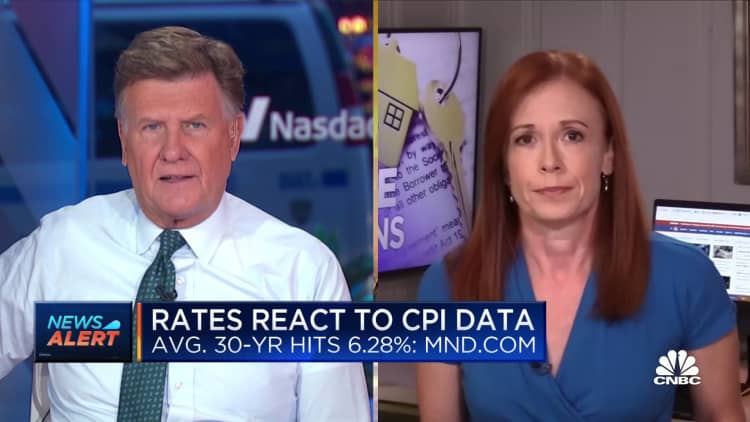
Weekly mortgage demand declines 1.2% as rates top 6%

Mortgage demand appears to have nowhere to go but down, as interest rates go up.

Application volume dropped 1.2% last week compared with the previous week, according to the Mortgage Bankers Association’s seasonally adjusted index. The week’s results include an adjustment for the observance of Labor Day. Since last year, homebuyers’ demand for mortgages has fallen by nearly a third.

Mortgage rates, which had been easing slightly through July and August, pushed higher yet again, after Federal Reserve Chairman Jerome Powell made it clear to investors that the central bank would stay tough on inflation, even if it caused consumers some pain.

The average contract interest rate for 30-year fixed-rate mortgages with conforming loan balances ($647,200 or less) increased to 6.01% from 5.94%, with points decreasing to 0.76 from 0.79 (including the origination fee) for loans with a 20% down payment.

“The 30-year fixed mortgage rate hit the 6% mark for the first time since 2008 – rising to 6.01% – which is essentially double what it was a year ago,” said Joel Kan, MBA’s associate vice president of economic and industry forecasting.

Refinance demand fell another 4% for the week and was 83% lower than the same week one year ago. With rates above 6%, only about 452,000 borrowers could benefit from a refinance, according to Black Knight, a mortgage technology and data provider. That is the lowest number on record. These few remaining candidates could only save about $315 per month per borrower.

Mortgage applications to purchase a home squeezed out a gain of 0.2% from the previous week, but were 29% lower than the same week one year ago. There was a bump up in demand for Veterans Affairs and USDA loans, which are favored by first-time buyers because they can offer low or no down payments.

“The spread between the conforming 30-year fixed mortgage rate and both ARM and jumbo loans remained wide last week, at 118 and 45 basis points, respectively. The wide spread underscores the volatility in capital markets due to uncertainty about the Fed’s next policy moves,” Kan added.

Mortgage rates jumped significantly higher this week, after the monthly inflation number came in higher than expected. That had investors worried that the Federal Reserve would hike rates more than expected at its next meeting.

“It was one of the last shoes to drop before the Fed announcement on September 21st, and it arrived at a time where the market had fully priced in a 75bp hike, but was willing to consider something even higher if the data was convincing,” wrote Matthew Graham, chief operating officer of Mortgage News Daily. “This was arguably convincing enough for the Fed to at least open the conversation.”


Source link

Mortgage demand declines 29% from last year as rates eclipse 6% Read More »

The Unforgiving Impact That The New Home “Sell-Off” Could Cause

The Unforgiving Impact That The New Home “Sell-Off” Could Cause


15% ROI”,”imageURL”:”https:\/\/www.biggerpockets.com\/blog\/wp-content\/uploads\/2021\/05\/large_Extra_large_logo-1.jpg”,”imageAlt”:””,”title”:”SFR, MF & New Builds!”,”body”:”Invest in the best markets to maximize Cash Flow, Appreciation & Equity with a team of professional investors!”,”linkURL”:”https:\/\/renttoretirement.com\/”,”linkTitle”:”Contact us to learn more!”,”id”:”60b8f8de7b0c5″,”impressionCount”:”246763″,”dailyImpressionCount”:”179″,”impressionLimit”:”350000″,”dailyImpressionLimit”:”1040″},{“sponsor”:”The Entrust Group”,”description”:”Self-Directed IRAs”,”imageURL”:”https:\/\/www.biggerpockets.com\/blog\/wp-content\/uploads\/2021\/11\/TEG-Logo-512×512-1.png”,”imageAlt”:””,”title”:”Spring Into investing”,”body”:”Using your retirement funds. Get your step-by-step guide and learn how to use an old 401(k) or existing IRA to invest in real estate.\r\n”,”linkURL”:”https:\/\/www.theentrustgroup.com\/real-estate-ira-report-bp-awareness-lp?utm_campaign=5%20Steps%20to%20Investing%20in%20Real%20Estate%20with%20a%20SDIRA%20Report&utm_source=Bigger_Pockets&utm_medium=April_2022_Blog_Ads”,”linkTitle”:”Get Your Free Download”,”id”:”61952968628d5″,”impressionCount”:”435067″,”dailyImpressionCount”:”136″,”impressionLimit”:”600000″,”dailyImpressionLimit”:0},{“sponsor”:”BAM Capital”,”description”:”Multifamily Syndicator\r\n\r\n”,”imageURL”:”https:\/\/www.biggerpockets.com\/blog\/wp-content\/uploads\/2022\/02\/Bigger-Pockets-Forum-Ad-Logo-512×512-2.png”,”imageAlt”:””,”title”:”$100M FUND III NOW OPEN”,”body”:”Earn truly passive income with known assets in an award-winning market. Confidently targeting 2.0x-2.5x MOIC.\r\n\r\n\r\n”,”linkURL”:”https:\/\/capital.thebamcompanies.com\/offerings\/?utm_source=bigger-pockets&utm_medium=paid-ad&utm_campaign=bigger-pockets-blog-feb-2022&utm_content=fund-iii-now-open”,”linkTitle”:”Learn more”,”id”:”621d250b8f6bd”,”impressionCount”:”148666″,”dailyImpressionCount”:”103″,”impressionLimit”:”150000″,”dailyImpressionLimit”:”2500″},{“sponsor”:”Walker & Dunlop”,”description”:” Apartment lending. Simplified.”,”imageURL”:”https:\/\/www.biggerpockets.com\/blog\/wp-content\/uploads\/2022\/03\/WDStacked512.jpg”,”imageAlt”:””,”title”:”Multifamily Property Financing”,”body”:”Are you leaving money on the table? Get the Insider\u0027s Guide.”,”linkURL”:”https:\/\/explore.walkerdunlop.com\/sbl-financing-guide-bp-blog-ad”,”linkTitle”:”Download Now.”,”id”:”6232000fc6ed3″,”impressionCount”:”146264″,”dailyImpressionCount”:”137″,”impressionLimit”:”200000″,”dailyImpressionLimit”:”6500″},{“sponsor”:”SimpliSafe Home Security”,”description”:”Trusted by 4M+ Americans”,”imageURL”:”https:\/\/www.biggerpockets.com\/blog\/wp-content\/uploads\/2022\/09\/yard_sign_100x100.png”,”imageAlt”:””,”title”:”Security that saves you $”,”body”:”24\/7 protection against break-ins, floods, and fires. SimpliSafe users may even save up to 15%\r\non home insurance.”,”linkURL”:”https:\/\/simplisafe.com\/pockets?utm_medium=podcast&utm_source=biggerpockets&utm_campa ign=2022_blogpost”,”linkTitle”:”Protect your asset today!”,”id”:”624347af8d01a”,”impressionCount”:”117549″,”dailyImpressionCount”:”83″,”impressionLimit”:”200000″,”dailyImpressionLimit”:”2222″},{“sponsor”:”Delta Build Services, Inc.”,”description”:”New Construction in SWFL!”,”imageURL”:”https:\/\/www.biggerpockets.com\/blog\/wp-content\/uploads\/2022\/04\/Image-4-14-22-at-11.59-AM.jpg”,”imageAlt”:””,”title”:”Build To Rent”,”body”:”Tired of the Money Pits and aging \u201cturnkey\u201d properties? Invest with confidence, Build To\r\nRent is the way to go!”,”linkURL”:”https:\/\/deltabuildservicesinc.com\/floor-plans-elevations”,”linkTitle”:”Look at our floor plans!”,”id”:”6258570a45e3e”,”impressionCount”:”110278″,”dailyImpressionCount”:”109″,”impressionLimit”:”160000″,”dailyImpressionLimit”:”2163″},{“sponsor”:”RentRedi”,”description”:”Choose The Right Tenant”,”imageURL”:”https:\/\/www.biggerpockets.com\/blog\/wp-content\/uploads\/2022\/05\/rentredi-logo-512×512-1.png”,”imageAlt”:””,”title”:”Best App for Rentals”,”body”:”Protect your rental property investment. Find & screen tenants: get full credit, criminal, and eviction reports.”,”linkURL”:”http:\/\/www.rentredi.com\/?utm_source=biggerpockets&utm_medium=paid&utm_campaign=BP_Blog.05.02.22&utm_content=button&utm_term=findtenants”,”linkTitle”:”Get Started Today!”,”id”:”62740e9d48a85″,”impressionCount”:”90870″,”dailyImpressionCount”:”123″,”impressionLimit”:”150000″,”dailyImpressionLimit”:”5556″},{“sponsor”:”Guaranteed Rate”,”description”:”One-Stop Mortgage Lender”,”imageURL”:”https:\/\/www.biggerpockets.com\/blog\/wp-content\/uploads\/2022\/06\/GR-512×512-1.png”,”imageAlt”:””,”title”:”$1,440 Mortgage Savings”,”body”:”Whether you\u2019re buying new or cash-out refinancing to upscale the old \u2013 get started today and we\u2019ll help you save!”,”linkURL”:”https:\/\/www.rate.com\/biggerpockets?adtrk=|display|corporatebenefits|biggerpockets|july2022_blog||||||||||&utm_source=corporatebenefits&utm_medium=display&utm_campaign=biggerpockets&utm_content=july2022-blog%20%20%20″,”linkTitle”:”Buy or Cash-Out Refi”,”id”:”62ba1bfaae3fd”,”impressionCount”:”45917″,”dailyImpressionCount”:”99″,”impressionLimit”:”70000″,”dailyImpressionLimit”:”761″},{“sponsor”:”Avail”,”description”:”#1 Tool for Landlords”,”imageURL”:”https:\/\/www.biggerpockets.com\/blog\/wp-content\/uploads\/2022\/06\/512×512-Logo.png”,”imageAlt”:””,”title”:”Hassle-Free Landlording”,”body”:”One tool for all your rental management needs — find & screen tenants, sign leases, collect rent, and more.”,”linkURL”:”https:\/\/www.avail.co\/?ref=biggerpockets&source=biggerpockets&utm_medium=blog+forum+ad&utm_campaign=homepage&utm_channel=sponsorship&utm_content=biggerpockets+forum+ad+fy23+1h”,”linkTitle”:”Start for FREE Today”,”id”:”62bc8a7c568d3″,”impressionCount”:”48600″,”dailyImpressionCount”:”74″,”impressionLimit”:0,”dailyImpressionLimit”:”1087″},{“sponsor”:”Steadily”,”description”:”Easy landlord insurance”,”imageURL”:”https:\/\/www.biggerpockets.com\/blog\/wp-content\/uploads\/2022\/06\/facebook-business-page-picture.png”,”imageAlt”:””,”title”:”Rated 4.8 Out of 5 Stars”,”body”:”Quotes online in minutes. Single-family, fix n\u2019 flips, short-term rentals, and more. Great prices and discounts.”,”linkURL”:”http:\/\/www.steadily.com\/?utm_source=blog&utm_medium=ad&utm_campaign=biggerpockets “,”linkTitle”:”Get a Quote”,”id”:”62bdc3f8a48b4″,”impressionCount”:”51474″,”dailyImpressionCount”:”67″,”impressionLimit”:”200000″,”dailyImpressionLimit”:”1627″},{“sponsor”:”MoFin Lending”,”description”:”Direct Hard Money Lender”,”imageURL”:”https:\/\/www.biggerpockets.com\/blog\/wp-content\/uploads\/2022\/06\/mf-logo@05x.png”,”imageAlt”:””,”title”:”Flip, Rehab & Rental Loans”,”body”:”Fast funding for your next flip, BRRRR, or rental with MoFin! Close quickly, low rates\/fees,\r\nsimple process!”,”linkURL”:”https:\/\/mofinloans.com\/scenario-builder?utm_source=biggerpockets&utm_medium=cpc&utm_campaign=bp_blog_july2022″,”linkTitle”:”Get a Quote-EASILY!”,”id”:”62be4cadcfe65″,”impressionCount”:”56884″,”dailyImpressionCount”:”69″,”impressionLimit”:”100000″,”dailyImpressionLimit”:”3334″},{“sponsor”:”REI Nation”,”description”:”Premier Turnkey Investing”,”imageURL”:”https:\/\/www.biggerpockets.com\/blog\/wp-content\/uploads\/2022\/07\/REI-Nation-Updated-Logo.png”,”imageAlt”:””,”title”:”Fearful of Today\u2019s Market?”,”body”:”Don\u2019t be! REI Nation is your experienced partner to weather today\u2019s economic conditions and come out on top.”,”linkURL”:”https:\/\/hubs.ly\/Q01gKqxt0 “,”linkTitle”:”Get to know us”,”id”:”62d04e6b05177″,”impressionCount”:”45843″,”dailyImpressionCount”:”83″,”impressionLimit”:”195000″,”dailyImpressionLimit”:”6360″},{“sponsor”:”Zen Business”,”description”:”Start your own real estate business”,”imageURL”:”https:\/\/www.biggerpockets.com\/blog\/wp-content\/uploads\/2022\/07\/512×512-1-300×300-1.png”,”imageAlt”:””,”title”:”Form Your Real Estate LLC or Fast Business Formation”,”body”:”Form an LLC with us, then run your real estate business on our platform. BiggerPockets members get a discount. “,”linkURL”:”https:\/\/www.zenbusiness.com\/p\/biggerpockets\/?utm_campaign=partner-paid&utm_source=biggerpockets&utm_medium=partner&utm_content=podcast”,”linkTitle”:”Form your LLC now”,”id”:”62e2b26eee2e2″,”impressionCount”:”31991″,”dailyImpressionCount”:”88″,”impressionLimit”:”80000″,”dailyImpressionLimit”:”2581″},{“sponsor”:”Marko Rubel “,”description”:”New Investor Program”,”imageURL”:”https:\/\/www.biggerpockets.com\/blog\/wp-content\/uploads\/2022\/07\/DisplayAds_Kit_BiggerPockets_MR.png”,”imageAlt”:””,”title”:”Funding Problem\u2014Solved!”,”body”:”Get houses as low as 1% down, below-market interest rates, no bank hassles. Available on county-by-county basis.\r\n”,”linkURL”:”https:\/\/kit.realestatemoney.com\/start-bp\/?utm_medium=blog&utm_source=bigger-pockets&utm_campaign=kit”,”linkTitle”:”Check House Availability”,”id”:”62e32b6ebdfc7″,”impressionCount”:”32637″,”dailyImpressionCount”:”90″,”impressionLimit”:”200000″,”dailyImpressionLimit”:0},{“sponsor”:”Xome”,”description”:”Search & buy real estate”,”imageURL”:”https:\/\/www.biggerpockets.com\/blog\/wp-content\/uploads\/2022\/08\/BiggerPocket_Logo_512x512.png”,”imageAlt”:””,”title”:”Real estate made simple.”,”body”:”Now, you can search, bid, and buy property all in one place\u2014whether you\u2019re a seasoned\r\npro or just starting out.”,”linkURL”:”https:\/\/www.xome.com?utm_medium=referral&utm_source=BiggerPockets&utm_campaign=B P&utm_term=Blog&utm_content=Sept22″,”linkTitle”:”Discover Xome\u00ae”,”id”:”62fe80a3f1190″,”impressionCount”:”14268″,”dailyImpressionCount”:”99″,”impressionLimit”:”50000″,”dailyImpressionLimit”:”1667″},{“sponsor”:”Follow Up Boss”,”description”:”Real estate CRM”,”imageURL”:”https:\/\/www.biggerpockets.com\/blog\/wp-content\/uploads\/2022\/08\/FUB-Logo-512×512-transparent-bg.png”,”imageAlt”:””,”title”:”#1 CRM for top producers”,”body”:”Organize your leads & contacts, find opportunities, and automate follow up. Track everything and coach smarter!”,”linkURL”:”https:\/\/pages.followupboss.com\/bigger-pockets\/%20″,”linkTitle”:”30-Day Free Trial”,”id”:”630953c691886″,”impressionCount”:”16898″,”dailyImpressionCount”:”89″,”impressionLimit”:”150000″,”dailyImpressionLimit”:”1230″},{“sponsor”:”BatchLeads”,”description”:”Off-market home insights”,”imageURL”:”https:\/\/www.biggerpockets.com\/blog\/wp-content\/uploads\/2022\/09\/image_6483441.jpg”,”imageAlt”:””,”title”:”Score off-market deals”,”body”:”Tired of working dead-end leads? Generate personalized leads, find cash buyers, and close more deals.”,”linkURL”:”https:\/\/batchleads.io\/?utm_source=biggerpockets&utm_medium=blog_ad&utm_campaign=bleads_3&utm_content=v1″,”linkTitle”:”Try for Free”,”id”:”6318ec1ac004d”,”impressionCount”:”3400″,”dailyImpressionCount”:”119″,”impressionLimit”:”50000″,”dailyImpressionLimit”:0},{“sponsor”:”BatchLeads”,”description”:”Property insights + tools”,”imageURL”:”https:\/\/www.biggerpockets.com\/blog\/wp-content\/uploads\/2022\/09\/image_6483441.jpg”,”imageAlt”:””,”title”:”Beat the shifting market”,”body”:”Don\u0027t let market uncertainty define your business. Find off-market deals and cash buyers with a single tool.”,”linkURL”:”https:\/\/batchleads.io\/?utm_source=biggerpockets&utm_medium=blog_ad&utm_campaign=bleads_3&utm_content=v2″,”linkTitle”:”Try for Free”,”id”:”6318ec1ad8b7f”,”impressionCount”:”3848″,”dailyImpressionCount”:”106″,”impressionLimit”:”50000″,”dailyImpressionLimit”:0},{“sponsor”:”Walker & Dunlop”,”description”:”Loan Quotes in Minutes”,”imageURL”:”https:\/\/www.biggerpockets.com\/blog\/wp-content\/uploads\/2022\/09\/WD-Square-Logo5.png”,”imageAlt”:””,”title”:”Skip the Bank”,”body”:”Financing $1M – $15M multifamily loans? Competitive terms, more certain execution, no strings to personal assets”,”linkURL”:”https:\/\/explore.walkerdunlop.com\/better-than-banks\/bigger-pockets\/blog\/quote”,”linkTitle”:”Learn More”,”id”:”6318ec1aeffc3″,”impressionCount”:”2312″,”dailyImpressionCount”:”171″,”impressionLimit”:”200000″,”dailyImpressionLimit”:”2334″}])” class=”sm:grid sm:grid-cols-2 sm:gap-8 lg:block”>


Source link

The Unforgiving Impact That The New Home “Sell-Off” Could Cause Read More »

What Tom Brady Can Teach Us About Real Estate Investing

What Tom Brady Can Teach Us About Real Estate Investing


Do you believe in miracles? I have for years. But I didn’t see this one coming. I don’t think anyone did. 

Love him or hate him. It’s hard not to respect the greatest quarterback of our time. Perhaps all time. Drafted in the sixth round at 24 years of age, Tom Brady led a great team, the New England Patriots, to nine Super Bowls over nearly two decades. The Patriots took home the Lombardi Trophy in six of them. 

Though Brady was remarkable, he was only one player out of 22 on the team. Owner Robert Kraft and coach Bill Belichick put together a historic powerhouse with stars in almost every position. When the nearly-too-old Brady was traded to the less-than-mediocre Tampa Bay Buccaneers, no one imagined he could take them to the Super Bowl in the first year. Let alone win.

The Buccanneers beat the Kansas City Chiefs, 31-9, in Super Bowl LV. Their first playoff appearance since 2007.

Brady is proof that one dynamic leader at the helm can change everything. 

So what? What does this have to do with real estate investing, and why did BiggerPockets publish this article? Brady’s story reminds me of the importance of picking the right players when designing your real estate investment strategy. 

Miracles for Active Real Estate Investors

If you’re an operator doing your own deals, I’m referring to your REALTOR®, your contractors, your banker, your business partners, investors, and more. You may be one key hire or partner away from success or disaster. So, choose wisely. 

If you’re looking for an all-star investor-friendly real estate agent to fill out your team, check out Agent Finder!

As I said, I have believed in miracles since I saw my first one with my own eyes in my senior year of college. (Feel free to ask me about that one!) But I experienced a miracle of sorts when I met Ben, my business partner at my real estate investment firm. 

Ben Kahle was only a junior at Liberty University when he reached out to me for advice nearly a decade ago. He came to my home, and I spent hours with him. We stayed in touch, and a year later, we met for hours again, and I convinced him to join us as an intern in his last semester of college. 

Fast forward to 2022. Hiring Ben was the smartest move I have ever made in three decades in any business. After learning the ropes for a few years, Ben transformed our company. Since making him a partner in 2018, Ben implemented systems that grew us from a struggling little team chasing one-off deals to the manager of six diversified commercial real estate funds with almost $100 million in investor equity under management. 

Hiring or partnering with the right person could be your miracle story. Your Tom Brady. Don’t underestimate the power of partnering with or hiring the right person to help you get to the next level! I can’t think of anything more important than getting this right. 

Miracles for Passive Real Estate Investors

I recently published an article on why I believe most people, especially those with full-time careers or retirements, will enjoy the best lifestyle and generate the most wealth by passively investing in real estate. 

If you decide to invest passively, you must choose the right team to invest in. We talk about due diligence all the time, and I’ve written on it at length. Thankfully, BiggerPockets published Brian Burke’s wonderful volume to assist passive investors in their diligence process: The Hands-Off Investor. I highly recommend you digest and utilize this information before making a passive real estate investment. 

Please do yourself and your heirs a favor and take the time and effort to carefully analyze the syndicator/fund manager’s team, track record, technology, and more before making any investment. 

If you’re investing passively, finding the right syndicator or fund manager operator may be like your own Tom Brady story. You may be one syndication or fund investment away from passive income and growth to start your passive real estate journey. 

A Recent Example of a Miracle

I’ve widely discussed my belief that it’s possible to get great deals in any economy if you know how to add value. Our firm is on a constant search to find recession-resistant asset classes and operators who provide us with this opportunity. Our most recent investment is in a new and up-and-coming asset class for us: RV Parks. 

There’s a lot to say about RV parks, and I will talk about them in future articles. But for now, I’d like to tell you about our RV park operating partner.  

In fact, our new RV park operating partner reminds me of Tom Brady’s Tampa Bay story. His company has a long track record of transforming mediocre commercial real estate assets into something special. And quite profitable.   

We’ve wanted to invest in RV Parks for years. Even before:

  • Covid helped launch RV sales and park demand to record levels.  
  • Outdoorsy and RVShare’s Airbnb-style rental programs gained widespread adoption and allowed any RV to double as a rental unit. Which potentially multiplies the demand for RV park rentals. 
  • Apartment and mobile home park syndicators began scrambling to figure out how to enter this suddenly intriguing asset class. 

We’ve partnered with one of the rare non-public national operators who is an expert in acquiring wonderfully located mom-and-pop parks and revolutionizing them into something great.  

Like their recent Branson, Missouri, acquisition, this previously undervalued and under-managed park is only 20 minutes from one of America’s favorite family destination cities. 

Like Brady transformed the Bucs, our operating partner is transforming this asset into a world-class family recreational park. (One of their parks was just named America’s #1 RV Park by USA Today.) 

Here are a few highlights of the Branson park we invested in: 

  • Expanding from 61 to 161 RV spaces
  • Adding 30 park model units (deluxe rental RVs) and 10 glamping tents
  • Adding a resort-style pool with concessions, a pond with a floating water park, a pavilion and stage, 50 golf carts (that rent for $75 daily), and much more 

The acquisition cost for this park was $3.35 million. The all-in cost with improvements is over $17 million. The projected year-five value at a conservative 7% cap rate is over $31 million, and the projected net investor year-five cash flow is 15%. 

RV park under real estate operator
Note that this is not the Branson RV park, but a developed/stabilized park from the same operator.

Our operating partner plans to refinance back most or all of the investor principal at year five, and investors will stay in the deal with the same ownership after that. This will be a win-win for everyone if it works out!  

Conclusion

In my opinion, investing in RV Parks right now is a rare opportunity to get in early on an asset class that feels to many like self-storage in the early ‘90s. I’m quite giddy about this asset class, and I think many of you will be, too. More to come!  

This operator is like our firm’s 2022 Tom Brady. You may be one syndication or fund investment away from investing in passive real estate opportunities like this yourself. 

What about you? Have you found the right partner, employee, or syndicator? Getting this right could make all the difference in your life, your wealth, and your future. 

Stand Out to Over 2M+ Real Estate Investors

Be a featured agent on Agent Finder, a resource that helps investors find the right agent, fast. Instantly match with serious buyers to fuel your pipeline with better leads.

Complete the form in 30 seconds to connect with an Agent Success Manager to get started today.

Be a Featured Agent on Agent Finder

Note By BiggerPockets: These are opinions written by the author and do not necessarily represent the opinions of BiggerPockets.


Source link

What Tom Brady Can Teach Us About Real Estate Investing Read More »

ROE > ROI and Why Your “Cash Flow” Number is Deceiving

ROE > ROI and Why Your “Cash Flow” Number is Deceiving


Cash flow—the two words every rookie real estate investor loves to hear. It’s always about cash flow. “If the property doesn’t bring in a healthy amount of pure profit every month, there’s no point in buying it!” This sentiment could cost you hundreds of thousands, if not millions over the lifetime of your real estate investing career. Don’t get us wrong, cash flow is important, but focusing on this metric alone may lead to your downfall.

Chris Lopez hopped off the “buy only for cash flow” bandwagon long ago, and he’s much richer for doing so. Chris has become successful quickly in the real estate game, which is doubly impressive if you look at his past business history. He didn’t start in real estate sales, investing, or anything of that nature—he was more interested in building content for other businesses he was pursuing. After realizing that rental property investing was the way to go, Chris took a hard pivot, repurposing the same skills he used in his businesses to work in real estate.

Now, he’s got eight units of his own, passive investments he doesn’t need to worry about, and a successful real estate brokerage situated in the real estate mecca of Denver, Colorado. He’s become the foremost expert on Denver real estate not because he’s done thousands of deals, but because he knows the area well enough to teach those who don’t. Chris talks about business building, mentorship, and a much better calculation than cash flow in this episode.

David:
This is The BiggerPockets podcast, show 662.

Chris:
I think everyone’s played Monopoly and I consider return on equity the way to go from a greenhouse to a red hotel and kind of skipping that second, third, and fourth greenhouse. So it’s a powerful way to scale up your properties and also scale up your portfolio. And this took me about nine months to truly wrap my head around, but once it clicked, it changed everything. It changed my own investing. It changed [inaudible 00:00:29] clients and changed my business trajectory as well.

David:
What’s going on everyone. This is David Greene coming at you from Scottsdale, Arizona, where I am having a little bit of a getaway with Christian and Kyle, and we are sort of enjoying this area. It’s beautiful out here. And while here, we have a fantastic episode for you. This will definitely be one that you want to share with other people and listen to more than once because it’s just chock full of great examples, anecdotal examples, high level strategy. Our guest today is Chris Lopez and he is a SEO master. He is a real estate broker that owns a brokerage. He sells houses, he owns real estate. He invests in real estate with other people. He teaches other people how to invest in real estate. He runs companies and we get into everything he does and more.
I’m joined today by the lovely, beautiful, and talented Robert Abasolo. Rob, what were some of your favorite parts of today’s show?

Rob:
We talked about how to get mentors, some of the realities of trying to get a mentor and how you can prove yourself to get in the door with somebody, how to provide value to someone so that they can take you on under their wing. I think we spend a lot of time talking about this. Something that I think we care about quite a bit because this is something that we see often. So I think if you listen to it, you’ll get some tangible advice.
But then we also talked about how to use content to market your business, how to get lead generation just from putting out podcasts and other types of content, the importance of copywriting in doing so, and then we put a beautiful bow on this that talks about the return of equity and how you can use that to become a multi-millionaire in real estate if you just play the real estate game of moving your money from own house to another.

David:
Yeah. We also, I forgot to mention this, we have a pretty lengthy discussion about mentorship, how to find a mentor, the right way to go about it, the wrong way to go about it, and maybe who you should be looking for when it comes to mentor. Chris has some really good insight into that, as well as you. I thought, Rob, you did a really good job giving some practical advice for people who are like, “Hey, somebody, please. I want to be rich. Help me to do it through real estate.”

Rob:
Yeah. I found out that the moment I started sending you gift baskets every single day, you finally decided to respond to me and say, “I’ll teach you, little one.” And so it’s cost me thousands in gift baskets, but I’m really glad that we’re partnered up together, man.

David:
I’m a weakness for a gift basket. Yeah, no, that’s not true. Please, don’t send me gift baskets. I feel terrible whenever people do that. Lately, I’ve been getting stuff that’s sent to me, which is awesome, but they don’t always put who it is that’s sending it, or my assistant gets it and opens it and then comes and gives it to me, but they’ve thrown away the box that had the label. And I feel terrible that someone sent me a gift and I don’t know who they are.

Rob:
One time someone showed up to my house and my wife was like, “What was that about?” And I was like, “Oh, a subscriber showed up to the house. I don’t know. They were nice.” And she’s like, “Okay.” And then a day later, this gift basket shows up and she was like, “I’m not eating that.” And I was like, “Well, hold on. This is a $300 gift basket full of sardines and jerkies.” And I was like, “I’ll take the first bite and I’ll let you know if everything’s okay.” Turned out that it was a delicious gift basket.

David:
Today’s quick tip is evaluate the equity that you have in your current portfolio. We get into this in-depth on some really good stuff. A lot of people are sitting on tons of capital and they don’t realize it because they’re not actually evaluating where their portfolio is at. So the easy formula is you look up and you see how much cash flow is this property producing in a year and don’t divide it by the initial amount you invested, divide it by the current equity in the property. We call this return on equity. If that number is less than you could get if you reinvested that money into a different deal, consider selling or at minimum, refinancing it and moving that money into more cash flowing real estate.
That is your quick tip brought to you by David and Rob. And now let’s get into the show. Chris Lopez, welcome to the BiggerPockets podcast. How are you today?

Chris:
I’m doing fantastic. Very glad to be here. Thank you guys.

David:
Yes. So tell us a little bit about how you got into real estate investing and what your portfolio looks like today?

Chris:
Yeah, so it all started about 20 years ago and I read Rich Dad, Poor Dad like majority of people out there, total mental shift and got me hyper focused on real estate, spent a little bit of time trying to get in real estate back then. I was a sophomore in college at the time. So I was about 19 or 20. So didn’t have money, didn’t have the knowledge and the internet was not what it was like back then.
So spent a few months trying to get into real estate, couldn’t make it work. So did some online marketing businesses for about 10, 12 years. But after that, business faded away and wrapped up. I then pivoted into real estate. And then over the last five years, I have really focused on building a real estate business first. I have a local podcast. I have a local real estate brokerage on focusing on building that [inaudible 00:05:21] there and then journey revenue, get in the game and then build my portfolio.
And my current portfolio is eight units, and then I also do a bunch of passive investing. So right now I’m in a very happy space with direct rentals and also a bunch of passive investments, but my main focus goes into my real estate business.

David:
And so your investments, are they all in the Denver area?

Chris:
All my directly owned rentals are. Yeah, they’re all within about, probably about 20 mile radius of each other. And then the passive stuff is just… that’s all over the country and half the states, but I’m a big believer in invest into my backyard so I can leverage my network, leverage what I know. It’s very hard for me to duplicate all this knowledge long distance. It’s not impossible, but I very much like to have a very singular focus and just down lay that. So I’ve decided to stick in Denver.

David:
So curious, what got you moving away from buying more units, doors, properties in Denver and into the passive side that you mentioned?

Chris:
Couple things. One is just a lot of it, it’s my lifestyle. I’ve got two young kids right now, three and five. So I’m very much in the trenches with my wife, raising my kids. I love it. And I’m also experiencing a lot of business growth right now for not only my brokerage, but also a couple other real estate related businesses. So I have a lot of very limited time. And so I’ve decided to start investing passively just to free up some time for me, and also better utilize my self-directed 401ks to start investing.
Not a big fan of investing directly on real estate with a 401k or a self-directed RA, usually not really great returns. So I’ve shifted a lot of that into more passive investing because it’s easier and you get better returns that way than the stock market.

David:
That’s cool. Kind of like me. It sounds like you’re a bit of a gadfly. You’ve got a real estate brokerage. You are in a private equity fund. You own some real estate, kind of a little bit of everything. So tell me, how did you get your business started? What’s the goal of the business that you got into? Do you see real estate investing as the end goal or is business the end goal and real estate investing is kind of icing on the cake?

Chris:
So I’ve gone through a few iterations like most people as I’ve grown personally, as my businesses have grown. Things have shifted and I’ll kind of rewind before I get into real estate about the past businesses I did because I built that previous internet marketing business, lots of success there in generating revenue and learning how to do marketing. And I started taking that cash flow, and then once I had achieved financial freedom, I started trying to pivot into the stock market day trading and then eventually foreign currency. This was all before Bitcoin and NFTs, and I got my butt kicked.
And so it made me realize that there’s three main things I can focus on. I said, hey, how can I invest my time and my money? Because those are two very different assets. And depending on what you have, you have different amounts throughout your life. So before I got married and had kids, I had a lot more time. So I prioritized my portfolio where I invest in the stock market. I’m a big believer in that, not majority of my portfolio, but I like investing in the stock market, but spend less than one hour a year looking at my stock portfolio. I’ll transfer in a couple times when I need to and I’ll check out three times a year to make sure the money’s still there, that’s about it.
Then I decided I can put my active time into real estate or a business. And as I started doing some deals, I did fix and flip, did a wholesale deal, did some things like that, I realized that my best use of time and skills really focusing on the business aspect of it. So I go out there and generate revenue that way and that’s where I get the highest return on my time. If I put a 100 hours or a 100 units into the real estate business, like my brokerage, my median, all that, I enjoyed a lot more, I didn’t get a higher return.
So my real estate investing, I spend a few hours a month on it, not a tremendous amount of time, but I very much put all my attention on the business and then real estate second and stock is a very, very third distance in my portfolio.

David:
That’s interesting. I like that. I like interviewing more people that run a business within real estate than simply are pure full-time investors. And that’s because I’d say when the podcast got started, your ability to become a full-time real estate investor to just buy a lot of property and live off the income that they made, this is a subjective opinion, but I just think it was easier than what it is today. There was less competition. There were less people interested in this. There wasn’t as much technology to make it smooth and as podcasts like ours have grown and new software companies have taken root and the information’s getting out there, man, it’s not hard to learn how to do this anymore. It used to be kind of a secret. It was like knowing Jiu-Jitsu and MMA. If you knew Jiu-jitsu, you had a secret nobody else had. Well, now everybody knows it.
It’s become significantly more difficult to become the traditional full-time real estate investor, but at the same time, there’s a big demand to get out of that cubicle, out of that commute, out of that job you hate. So what do you do? Well, I tend to think that a really happy medium is leave the job you hate and get a job in real estate which you like and let that supplement your investing. But like you said, you can also make good money doing something that you like more. So I’m curious, how did your background in tech as well as your SEO and marketing experience help you with building a successful real estate focused business? And was there a pivotal moment early on where you knew, “Ooh, I can go do this?”

Chris:
Yeah. So to kind of go back a few layers on there to build up to how this went into real estate, I want to tell that backstory because I’ve had explosive growth the last five years in Denver and my portfolio, my real estate businesses. And I’ll be like, “Wow, you’re an overnight success.” Yes I am, but it was built on 12 years in my previous business where it was not an overnight success and I got quite a few black eyes and punched in the face more than I would like to admit, but that’s just normal business, normal entrepreneurship.
So I started out, got my first position opportunity as a sales guy, not in real estate, but just general sales guy. I was like, “Cool, I’m ready to go. Let’s do this,” and I realized I needed leads. And so once I had that realization, oh, if I have leads, I can go out there and make my phone calls, make my appointments and then therefore get a commission so I can go out there and pay my bills and make money. So I had a huge mental shift there about generating leads. And so I put all my focus… All, majority of my focus on how do I generate leads? Because I realized if I had leads, I can make money. And I realized, oh, I can go out there and build a sales team, pass along the leads and act more as a sales manager.
So that led me to copywriting, YouTube marketing, Facebook podcasts. I kind of grew up with the internet from 2003 timeframe and just cranked on that business until about 2012, mixture of marketing and mixture of tech in there. And as I focused on the leads, I just kept getting more and more success. And then the huge wake up call, I think it was like 2010 or 2009, is something called the Google Slap, which I don’t think a lot of people are familiar with, but as I’d ramped up all my advertising campaigns, we were spending on average between about $20,000 to $30,000 a month on a Google AdWords campaign. When you search Google, those ads would pop up, Google Display Network, all the typical stuff.
Well, the Google Slap is what some marketers coined this 12, 13 years ago where Google just unilaterally turned off a ton of accounts. They turned off people in financial services, affiliate marketers, work from home opportunities. Anything with types of claims, just all board. They turned off the ads, no warning and just cryptic, “Oh, here’s an email. Your ads are turned off. Here are three bullet points. And of course, no contact.” And those Google AdWords campaigns was the majority of our leads at the time. And so we had one big pipe coming in of a lot of leads and it was phenomenal until they turned it off and it wasn’t phenomenal anymore.
So we spent six months, me and my business partner, pivoting, figuring out, spent like $20,000 on consultants to get back on Google. We eventually got back up there, but the big lesson I learned there is I need to have multiple sources of leads and ideally lead flow that I have control of. If all my leads are coming from one advertising campaign, it’s great until it’s not because then Facebook, Google, whoever can turn that off and just put you out of business very, very quickly. So that made me pivot more towards content marketing, personal branding, being a thought leader because if I can go out there and publish a content, establish my website, build my email list, I am controlling my destiny.
So I very much focused on that and that was a huge pivotal moment in my mindset as a marketer and also a business person, realized, hey, if I want to be in control of myself and my business, I have to know how to generate leads and have a consistent supply of it, and cannot rely on an advertising campaign from a big company that can just shut me off.

Rob:
Yeah. I think a lot of people fall into this trap where they want to put all their eggs in one basket, and I think the reason that this happens is because if you find success in the proverbial basket that I speak of here, why change it? Why do anything? Why would you take time away from a successful thing to then go and put time into something else that’s probably not going to be as successful? So I’ve seen this time and time again, even in my own business. I started out on Airbnb when I was starting out my short-term rental portfolio, and about a month ago, month-and-a-half ago, same thing, they shut down my account. They didn’t tell us why? This was happening to a lot of hosts everywhere. And we’re just like, “Oh my goodness.”
So after we got access to our account, now we’re like, “Okay, probably shouldn’t put all of our eggs in that basket.” So now we’re on Vrbo. We’re starting to list on booking.com. We have direct bookings websites. And so it’s something that is very painful in the moment to do so, to stop focusing on the one thing that works because it works. I just feel like I’m taking money away from my business by not doing that. This is something I’ve struggled so many times Chris, because I tend… I’m a YouTuber by trade, but now like you said, I do Google Ads as well, TikTok, Instagram. And I feel like it takes a lot of time at the very beginning to just establish all of those different ways to acquire leads. But once you lay the groundwork, that’s how you can truly start growing your business.
So after you’ve found out that your Google account was sort of back, obviously you started pouring back into that, but what was your first big step from a lead generation source? Was it content and was it a specific platform?

Chris:
It was content, and that happened as those businesses were winding down. So I won’t talk about what I did in that business, but how I took that knowledge and pivot to grow real estate because the previous stuff was a nutrition business, online marketing, not related to real estate whatsoever. And so you can always build upon those lessons and skills you’ve learned. And so I took that knowledge as I wanted to get into real estate. So it took me about 18 months to figure out the best way to get into real estate and I’m very happy to fail forward. I have no problem with failing as long as I don’t go bankrupt or hurt someone. I’ll fail all day long and I’m happy to fail because the faster I fail, the faster I learn. So we’re not there to fix and flip, did a wholesale deal, did a few different things, made money, but I was like, wow, this is going to be a very hard transition for me to get into real estate.
So I started realizing, wow, in real estate, especially local markets, there’s just not a whole lot local knowledge. And six, seven years ago, I found BiggerPockets, started listening to a lot of podcasts with Brandon, Josh and getting plugged in on the BiggerPockets community, phenomenal, learned so much, but I kept coming back to what do I do in my local market? What do I do where I’m at, which is Denver, Colorado? How do I have success here? Who do I find? And I could find no online content and I really had no network out here, no experience. So I did not know how to learn or connect with people.
So after probably about two months of just Googling and searching BiggerPockets forums, a light bulb went. I was like, “Oh, I can be the BiggerPockets of Colorado. That is my solution to go out there and they will establish myself and generate business and investment opportunities for myself.” So I basically took what I wanted to know because I figured I have all these questions. I’m not the only person out here wondering, “Oh, what do I do in Denver? Who’s the lender? What’s working? What’s not? Because the 2% rule did not work in Denver back then, all this stuff.
I said, “Hey, I’m going to go out there and fill that void.” And as I went out there and was analyzing where I could create content and also, I’d created a ton of content between podcasts, long form sales rental letters, YouTube videos, all that stuff, I decided to go on the podcast route. And that was because podcasting was really starting to boom then, but from just a content production standpoint, I think prepping, recording and producing podcasts is some of the easiest content. Videos were great, but man, a lot more prep, a lot more editing. Where a podcast, I was in my gym clothes half the time and just have a conversation like we’re having, and then go out there and publish it.
So I focused on the podcast because that worked well on the trends. And also, what I noticed was it was going to be the fastest way for me to go out there and create content, and I’m a big believer in speed. Speed matters in everything you do. So I could go out there and crank content very quickly. So I started with that podcast first approach, and then I just did some very simple tactics of writing a simple blog post to follow along with it, repurpose some content. And all I did was take what questions I want to know and other investors want to know, and I would go find and interview people with that expertise around Denver, and I would basically just stick the keyword Denver in front of the podcast title and it was just instant SEO juice. And so that helped grow the podcast and then that just started the whole machine going.

Rob:
So when you’re establishing yourself as a thought leader, and a thought leader is someone known in this space, an authority of sorts, if you will, what are you doing to really do that, to establish yourself in a new market, zero network and zero experience? I know that you have the podcast out there. And so right now you’re obviously very smart. You’ve done this, you’re successful, but for someone starting out, is it just a matter of making content and being like, “I’m just going to do a lot of it,” or were there specific things that you were doing to really, really solidify yourself in the space?

Chris:
Yes. The biggest thing I would say is I went out there and got a mentor. I had the expertise to create content and get to know how to get eyeballs on the content. What I did not have was the expertise on all the real estate investing tactics and techniques for what works in Denver, Colorado. So I had two options. I could go out there and… Actually, I had three options, go out there and try to learn everything myself and then create it, which is a very, very long way to do it. I could fake it till I make it, and I hate that because a lot of gurus, a lot of people over years, it’s fake it till you make it, and that is complete BS. I do not like being inauthentic, but the main way, I go out there and find that person with the knowledge. That was the biggest growth hack I could go towards.
And so my previous business, I learned the power of mentorship and the power of hacking into someone’s knowledge and network, because it can give you that hockey stick type growth of just vertical growth. So what I did was like, “Oh I have this idea. I need this, but I need to learn this skill. I need to listen to knowledge and so all these other thousands of investors around Colorado.” So I did something really unique in marketing. I started calling people. I started cold calling brokerages that had any type of semblance of investing, and I was just very pleasantly persistent in my follow-up and I found a mentor.
And when I find a mentor, my goal is to turn that mentor into essentially a business partner because what a lot of people do is we all want mentors. We all want that advice, that knowledge, but what happens is people go out there, “Oh, can I buy you a cup of coffee? Can I buy you lunch? Can I go sweep your fix and flip?” It’s not really like me going out and buying coffee with someone, they don’t care about that $3 latte I’m buying them. An hour of their time is worth way more than that. So a lot of times mentorships, it’s like a one way street in value. I’m taking, taking, taking. I did not want to do that.
So the focus is on how can I make it a two-way street of value? How can I make it a win-win situation? And that starts with being self-aware for what I am good at, what skills do I have and how can I apply those skills, knowledge and hustle to someone more successful to me? And a lot of times they have a lot of knowledge success in these buckets or these banks and I’ve got knowledge success in other buckets. Well, where can we find complimentary skill sets? Because if we’re both the same, not good partnership, but if we have complimentary skill sets, well then one plus one equals three.
So found the guy, Charles Roberts, and he was actually on your podcast. I think episode 278 or 276, The Boring Path To Real Estate Success. Found him, and just a phenomenal guy. He has founded one of the biggest brokers in Colorado. He had been investing in a realtor for about 15 years and just kind of one of the pillars of the community around Colorado. So highly successful, highly busy, but what I did is I went out there and I researched him. I found out what he wanted to do. I found out where there were gaps in his business. I talked to some of his employees and agents, and just did research on there and I found out he has a passion for teaching, he generally loves teaching. He would teach classes all the time, 30, 40 person classroom, but that in-person class is great, but it’s very hard to scale.
So I proposed the idea of, “Hey, we could take what you’re doing and put it on the internet, go out there and market it.” And he’s like, “I would love to do that.” And then what I did was once I provide that solution to him, I went out there and said, “Hey, here’s what we’re doing. Here’s the plan. Give me this.” And I didn’t wait for him to tell me anything. He gave me a couple lemons. I went there, made lemonade and came back, “Hey, here’s what I did. What can we do better?” And I just started executing.
So I think the key here for this is being self-aware, what’s my skillset? Trying to identify what value I can provide to my mentor, and then I want to align their interest with mine because hey, people can give free advice. They can be a friendly mentor, but at some point everyone has to focus on their business, their problems, their revenue. So the way we structured it was as we’re starting this content, this is very common in the real estate agent industry, is to pay referral fees. So as clients came in and I would create the content, I would work them and help them go out there and find the property, and then Charles would get a referral fee.
And the plan was, as everything built up, I’d always continue giving a referral fee, which I was very happy to do, but he had a vested interest in my success. So the more money I made, the more money he made and it was a great win-win situation that kept him interested and to start snowballing from there.

Rob:
A lot of music to my ears here, Chris, because this is something that I deal with every day. Probably you two David, feel free to chime in on this, but I have a lot of people that will reach out, and this actually just happened today. Someone reached out, they asked me a very, very, very long question on Instagram, that was like, “Okay. So I inherited this. I have $30,000 here. Here’s five deals. It comps out here, I would love for you to look at the whole 18 unit development, this and this and this. Also happy to provide any value to you as well. Just let me know.” And I was like, “Well, I could obviously chime in on that, but what value can he bring to me? I don’t know. I’m sure there is. I would love to know actually,” but he said, “Happy to provide value too.”
And I’m like, “But what do you do? Are you good at copywriting? Are you good at editing? Are you good at sourcing deals? Are you good at being boots on the ground? Do you have family? Do you have a family of realtors across the country? I have no idea.” And thus, because I didn’t know. I just didn’t have time to think about… It would be very odd if I was like, “Well, hey man, I actually need someone to answer emails. Is that value you’d be willing to provide to me?” It doesn’t really make sense. And so I think that if you’re seeking out a mentor, that’s totally fine. Shoot your shot, put it out there, but try to find out what that common ground is. And if there’s something that you know that, that person likes or wants or needs, talk about how you can fulfill it.
I think Brandon talked about this a couple years ago on the podcast where he said he wanted to learn how to surf or something like that. I think someone reached out and they’re like, “Hey man, I can teach you how to surf if you teach me how to, I don’t know, buy houses or something.” I don’t remember, and I think they actually became friends and worked together in that capacity. And I was like that to me is what people should be seeking when they’re seeking a mentorship. Don’t just ask, “Hey, can you do this for me? I can also help you too.” Be very intentional and specific with how you can help me, otherwise it just gets lost in a sea of messages. David, do you ever get messages like this? Or how do you handle it when this comes across your desk?

David:
Yeah. And I’m trying to be very diplomatic about how I answer this because Brandon and I did an episode one time where we said, look, don’t just ask us for a cup of coffee because $5 is probably not worth two hours of time, and it sounded very arrogant. I’m so good. I’m too good to help someone and I don’t want it to come across that way. It’s more-

Rob:
Sure, sure.

David:
If you want to, I can use an example of working out, right? If I want to work out with The Rock, the reason I want to work out with him is he is very good at working out. I’m going to learn things about workouts from The Rock. However, because he’s very good at working out, he is very focused and dedicated and purposeful about his workouts. Okay? He wouldn’t look like The Rock if he stopped every workout to teach the new person bench press form. Okay? So if you’re going to go, want to workout with a person like that and you’re asking for that much of their time in the space that they take very seriously, you can’t show up as a person that’s never lifted weights and be like, “I want you to be my personal trainer.” That’s kind of what you’re asking. Okay?
So you got to be aware that you probably don’t want work out with The Rock. Go start working out, follow what he does. When you get to a certain point, it might make sense to say, “Can I come work out with you? Let me spot you or let me help you,” in some way that would benefit The Rock. Did you have something you want to add there, Rob?

Rob:
That’s great. No, that’s very, very, very… That’s a nice way to put it. I think that’s perfectly diplomatic in that because it can seem harsh and no one obviously wants that, but I’ll give you a really good example of actually what just happened to me two or three weeks ago, I talked about on BiggerPockets, how I’m becoming a realtor in the Houston market and I’m going to start a real estate channel specifically for Houston. I just started shooting all the content for it yesterday. And someone heard that and they reached out to me on Instagram and they said, “Hey dude, I love your channel. I follow it super, super closely. I’ve actually started 14 real estate YouTube channels around the country. I’ve got 50 agents under me or a 100 agents. I can help you do this. Would you be willing to meet?”
And we met and he’s provided a ton of value and we’re actually going to partner up on a few things here in the city. And that to me was a really great example of him understanding that I was going to fall into some kind of issue. There’s going to be some barriers with what I’m about to go through and he’s like, “Let me help you with that.” And I was like, “Okay, I don’t know what I know… Sorry, I don’t know what I don’t know. Let me hear him out.” And I heard him out and now it’s going to turn into a really cool thing.
So that’s a really great example, David, because that’s… I’m not going to say I’m The Rock. I think we can all just look at me and pretty quickly see that I’m not, but in this analogy, I’m pretty good at YouTube and he’s done that too, and he brought it to me and I was like, “Okay, really, really nice.”

Chris:
It’s your hairstyle that kills The Rock persona story for you. That’s the main issue going there for you, Rob. But I actually want to unpack, to piggyback what you guys were saying there. It’s not just asking how I can probably value, be proactive. I have tons of content like you guys out there and people schedule a phone call with me or email me. I’m like, “Have you spent more than 15 minutes on one of my freaking podcast or my even read my bio on LinkedIn for goodness sake?” You can research someone. So if I was where I was years ago, go online, research people, go follow their channel, go follow them on social and do that for a week. And you can see things, especially from a marketing standpoint or business standpoint, and look for opportunities on how to make something better. Or, “Hey, I noticed this. I had this idea here or I saw this that you did here and actually repurposed this into a landing page or a podcast.”
Don’t just say how I can provide value? Come provide a solution, actually come with something in your hand, ready to go because guess what? That gets a lot more attention. I think you were saying that a few minutes ago, Rob, if someone has to ask you how I can provide value and I have to put on your busy schedule and already, I imagine you’re probably already maxed out in bandwidth like all of us are, you don’t have time to figure, “Oh how can this guy, how can user one, two, three, four on Instagram help me out?” I don’t know. Then you forget about the person. You never think about them again.
So research people and be proactive, and come back with a product or a solution proposal and show it to the person.

Rob:
Couldn’t have said it better myself. I think I’ve just experienced this several times and I’m like, I’ve seen it work. It’s worked on me several times. I’m like, “Yeah, there we go. You did it. You showed me value. Thank you.” At the end of the day, we just don’t want to think. We don’t want think. If you give us something and you make us think for five, 10 minutes, we’re too busy. We’re like, there’s so many things. I’m scatter brain. I’m ADHD. If I have to think about… put any thought into a random message that comes my way, I’m like, “I just can’t. I’m so sorry.”
But if it’s like, “Here’s what I can do. I’m working on it now. Here’s how you’re not doing it and here’s how I’ll help you do it,” I’m like, “Oh, that’s a great pitch right there.” The four second power pitch as they call it.

David:
This is a principle of success that I think Chris is a great example to highlight. So Chris, I’m going to get your two cents on this idea. The wrong way to approach getting good at anything is to say, “Oh, that’s a person that’s good at it. Let me just see if they will become my friend or my mentor,” because mentor doesn’t sound bad. That’s a nice word, but what’s it really saying is I want this person who doesn’t know me to do all of the heavy lifting that I don’t want to do myself to learn this thing and help me avoid all the mistakes that they had to go through themselves just because they want to help somebody out. That doesn’t sound as nice as mentor, but that’s what’s behind it. The way that success works is it happens in incremental steps. Okay? If you’re climbing a staircase, the step three quarters of the way up there, you can only get to if you can get to the step beneath it. You cannot skip from the bottom all the way up to the top.
So you have to have some form of a skill, some way to bring value to the world, that you then apply in a different way, that opens up new doors for you, that gives you new skills. Now there are more other doors that you can walk through. You get new skills there, you’re building momentum. So like Chris, what you were saying is you were in SEO, you were in marketing, you kind of understood copywriting. You knew how to get people to find you when they were searching the internet. You turned that into a brokerage that could get leads coming in. You learned a lot about real estate. You learned a lot about helping clients. You got exposure to investing by watching your clients go through this process and learning the system, which made you confident. That confidence allowed you to go buy your properties for yourself.
Now you’ve got the confidence that comes from owning property with the confidence that comes from helping clients. You can now apply this into starting a software company like, “Oh, I know. People need help with this thing. I can solve that problem.” That opens up doors that gets you into private equity or syndications or whatever you’re doing. Every successful person did some form of a trajectory that worked this same pattern. Elon Musk did not start Tesla as his first company. He got into whatever he did with PayPal. And before that, he learned something that gave him skills to get into PayPal.
You can absolutely get mentors, in my opinion, if you’ve already got a skill that you can bring to help them, and then you learn new skills from there. It’s the skipping, “I don’t want to build the skills. I just want to start off at the top,” that stops so many people from finding the connection that they need to get them ahead. And when we say things like bring value, that just is a confusing term because that could be anything. That could be like, “I’ll smile. I’ll be happy. I’ll get you a coffee. I’ll send you an encouraging message,” but that isn’t necessarily going to get the attention of the person that you want to help. It’s got to be something practical.
So I think Chris, you’re a great example of the person that walked that staircase. So Rob, I’ll let you get your question in there. And then I’ll ask you Chris, from your experience, what is a way that you see a person can start building skills right now, that would both benefit them in their wealth building as well as in the mentor that they’re trying to find?

Chris:
So I think the best thing to do there is you got to start off with a self-assessment, self-awareness because at this point, anyone listening to this podcast, I’m assuming they’re probably older than 18 or they’ve got some life experience out of high school. We’re already at that point in our life have inclinations towards items we like. Some skills we developed from some jobs, some courses, whatever it is, like their skills. So I’m a big believer in doubling down on what you’re already doing.
When I got started in real estate, I looked to go do a fix and flip. Did one, made $25,000, and it was a pretty miserable experience. I was like, “Wow, for me to start a fix and flip business, I’m starting a lot of my skills from zero. But if I can lean into existing skill sets, I can keep doubling down those.” So I think it all starts off with doing a self-assessment for two things. What current skills do you have? And then what do you enjoy doing? And I think really aligning those two things is phenomenal because anything that we are going to do, we’re going to put our heart into it. We’re going to put time into it. And I wake up excited every day to go out there and start my job, start my day and just attack the day. I love 90% of what I do, where as I was bouncing around the past and about what business to start, I would research something or start and be like, “Uh.” Kind of a humdrum feeling.
And then if I’m not that… I don’t have that excitement, I can’t go out there and execute. And so I think starting with those two things is very important and then go out there and leverage that into a mentor, into a new business. And I like to look at skills that can be very scalable and that I can go out there and just have a real honest crack at going out there and providing value to multiple people in different terms, but going out there and looking at your own skills and I would say pick one or two that’s already a good skill you have, that has value to the marketplace or whatever niche you want to get into. Go out there and get better at that.
I’m not a big believer in, “Oh, let me go to right field when I’m on first base. Let me stay where I’m at and get better and better and better,” because the more you focus on that, I think you get a better return on your time and your skill sets by getting very, very specialized.

David:
Why don’t we… Chris, do you have a four-step system, editor, you can take this part out, that we can go into?

Chris:
Yeah. I have a four-step system. So it’s that self-awareness like I talked about, and this is for finding mentors, I would say. This is my four-step process for a mentor. So it starts with that self-assessment I just talked about, goes back to what we talked about to research the person. And basically, I’m not going to be diplomatic. Don’t ask stupid questions. Don’t waste the person’s time because if you do, they’re probably not going to return your phone call or not going to return your two-page Instagram DM.
The third step is be proactive and provide a solution the mentor needs, and the four-step is actually follow-up. I call it being pleasantly persistent. Now, when I first started reaching out to Charles or the mentors over the years, I get it. They’re busy. Cool. They don’t reply to one email. I don’t stop there. I don’t go and cry, “Oh, you just stopped calling me. You didn’t email me back.” I get it. He probably gets a 1,000 emails a day. Awesome. Give it a couple days, send it back, do something else and just stay pleasantly persistent.
And as you do that, make sure you execute. So those are very much the four things that I have focused on and I have repeated that process numerous times with really good success.

Rob:
Yeah. I really appreciate the non-diplomatic response here. I think this is probably something that we deal with a lot. If I had a $1 for every time someone reached out and said, “Hey, I’m looking to start a short-term rental business. Do you think you could send me your favorite YouTube video that you’ve done on how to do that?” And I’m like, “You could just go to my YouTube channel and just like… It all teaches it really.” And I’m sure David, how many times have you ever had something that’s like, “All right, man, I’m looking to BRRR any tips?” I’m sure the response is, “Have you read my book?” Because I do have a whole book and it’s the biggest. It’s the greatest assortment of tips out there on how to do a bur.

David:
Yeah, that comes up quite often. I think I just want to highlight, the reason we’re doing this is because we care about the people that are wanting the mentor. We legitimately wish we could help every single person but if we did that, we would never get our workout in. We wouldn’t look like The Rock and then you wouldn’t come to ask us, “How do I do this?” Because I’m not in shape anymore. Right? It’s not a, “I’m better than other people thing.” It’s just logistically, this is impossible. When you get the message where they say, “Hey, I’m looking at these seven deals. Can you analyze all of these for me, and then tell me which one of them you think is the best one?” You go like, “There’s absolutely no way I can do that.”
But you’re so excited and this person wants invest in real estate. You want to help, so what we think is, well, let’s make a video that would show people how to analyze a deal. Then everybody could watch it. In general, yes, you get the whole, “You can read my book or whatever,” but what I tend to find is the people that I’m mentoring the most, if I’m honest, are the people that work in my company. So if someone says to me, “Hey, I really want to learn from you,” I would say, “Well, do you want to work at the wine brokerage? Do you want to work on the David Greene team? Do you want to work on whatever thing that I have going on?” Because I will pour into those people because Chris, like you said, that now becomes a two-way relationship.
I’m sure agents that work in your brokerage have a much better chance of getting your attention and your mentorship than a person who’s like, “Yeah, I’m buying my house with this other company that’s not you, but my realtor doesn’t know what they’re doing. So can you tell me what I could do instead?” That’s a very common one I’ll get and I don’t think people realize it’s the same feeling of you ask a girl out and she says, “No, I’m not interested.” She dates another guy. And then she’s like, “Can you tell me how to communicate better with men? Because my boyfriend doesn’t understand me.” That hurts. You chose to list your house with someone else and then you’re coming to me to say, “How can you list the house?” That’s not a way to get a mentor.
If you came and said, “Hey, would you sell my house? And if you do it, I’d really appreciate if you could show me some of the techniques you use when you’re flipping a property,” now there’s a very clear two-way relationship and we can pour ourselves into it.

Rob:
I really do liken this to Instagram ads and why they work on me so well. I’m such a sucker for an Instagram ad because I don’t like to think about things that I need because I’m just too busy to think about it, but I know for a fact I need more clothes because all my clothes have holes in them. And so if Instagram serves me a picture of a cool guy, strapping with a nice shirt and I’m like, “Yeah, that’s a nice shirt. I’m just going to do that because I didn’t have to think about it. You made the decision for me.” I’m such a sucker for ads. I hate it, but it’s very true.
So Chris, I wanted to talk about… Did you cover off on all four of those steps before we move on? What was the fourth one? I think you probably ended there.

Chris:
Yeah. The fourth one kind of muddied up on my explanation. That’s just being the pleasantly persistent, which is a polite way of saying follow-up, but that’s my mindset. I want to be pleasantly persistent, not annoying, but like, “Oh yeah, I got to answer this guy. Oh yeah. This guy, this guy, this guy.” So be pleasantly persistent and then also just falls into execution, which maybe step five. I just assume execution, probably shouldn’t assume that, but execute on what you’re going to say.

Rob:
So that’s the four steps. I think that’s very nice bow on how to find a mentor. I’m sure now you’re probably seeing kind of the opposite end of it now, as you become the mentor. Dave talked about how he takes the different employees in his company and that’s the people that he pours into. I want to start moving in back to-

Chris:
Actually, can I?

Rob:
Yeah.

Chris:
I want to throw one more thing on it because this has been a very interesting shift for me because I’ve been very focused for the last 20 years on finding that mentor to grow, grow, grow, and now with where I’m hitting in my career, now I’m the older, more successful guy that I used to go after. And so I’m having that new effect where I’m kind of changing from always finding mentors, which I still want. I’m still finding bigger and better mentors, but I also have now people reaching out to me that are doing the same approach, which is creating investment opportunities, business opportunities or great employee agent opportunities to where I get to kind of be in that mentor role now, and I always try structure with how I’ve structure the mentors in the past.
And that’s been a super fulfilling, personally fulfilling for me personally, but also very rewarding for me from a financial and business standpoint as well.

Rob:
Yeah. Actually, I’m curious, on the opposite end of this, you said it’s fulfilling, but obviously you’ve been on the end where you’ve tried to get mentors time and time again. You said you’re still there now. At what point now are you looking… How much of a mentor are you looking to be? Are you looking to be a mentor for more people in your life or do you see your role as a mentor more in the content capacity and more in the podcasting capacity where you can influence a much larger group of people?

Chris:
It’s both, because I love the one-on-one mentoring, but the problem is that’s very hard to scale and there is… We all have so many hours in a day that we all have, so have to be realistic about that. So I definitely view the content marketing as like that’s the most scalable way because whether one person listens to it or a million people, it’s about the same amount of work in cost a lot of times. So I focus on a lot of that to do the top of the funnel type branding and providing value, and then looking at various ways to mentor people, whether it’s an agent on my team to go out there and mentor them in their business, or if it’s a new business opportunity where someone can bring, “Hey, I got this idea, can we leverage this and do this?”
So I try to spend most of my time doing the content, but also looking for highly one-on-one relationships that give me a great return on my time for investing in that person.

David:
Funny that you look at relationships in a similar way to how we look at real estate. We don’t put our money into deals that don’t give us a return. We don’t dump money into a property that’s not going to give us some form of cash flow. Right? That mindset that goes into investing really does incorporate into everything else.

Rob:
It really does. I hadn’t really thought about it that way. David, you’re so profound sometimes, man. It’s getting me right here, right in the old [inaudible 00:44:04]. Well, I wanted to ask Chris because obviously, podcasting and in the content side of it was a really big component to this for you. So the content side of it was one of the ways that you wanted to start producing the leads and I wanted to talk about that dichotomy, the marriage of content and lead generation and how you were able to start actually extracting leads from the content that you made? Was that simple to figure out at the beginning or is this something that you’re still figuring out?

Chris:
I’ve been doing this for about 20 years now, so it’s very simple for me. When I got into real estate five or six years ago, I already had so much that I could do it in my sleep. And I think one of my superpowers is that I’m very good at putting myself in the shoes on the other person. They’re on their iPhone, they’re on their laptop. I’m very good at putting myself in their shoes and getting the right information on there.
So my general attitude is that there’s a whole audience out there. A third of the people won’t like me, a third are indifferent, and a third really like me. I don’t care about the people that don’t like me. I don’t care about the indifferent people. I want the people that jive with me, that like me. And so my philosophy is go out there and push a lot of content, and just be very authentic and be very real because people eventually find out who you really are. So just be real from day one and that starts attracting the right people.
Now, what gave me a very… I think a great advantage is I’m also a salesperson. I talk to people, I grab coffee, I make phone calls. I go meet people. I go to networking events. So as I’m going through my investing, as I talk to other people, I know the tools people need. I know the questions they have. So provide all the content and then do the classic lead magnet. What do people need? Well, spreadsheets and local market trend reports, they work amazingly well. So Hey, here’s a toolkit. Here’s your… I call it your Denver real estate investing toolkit. Go to the website, download it. You get, I think it’s like three or four spreadsheets. You get a bunch of local trends, data, a few maps of what’s going on around town, and so a lot of people come opt into there.
And so it’s just the next step in the relationship. And then I get to talk to the person. And my first goal was just to every time someone opted in, I got their phone number and I called them and I would build the relationship up that way. And so at first, it was just a very small stream, a very small trickle. And then as you produce content, it’s like compounding interest. If you do it the right way, it builds up every single month. I think we all know the power of compounding interest. We’ve all seen like the 401k stock graphs and by year 20 or 30, you’re making more money off your interest than you are what you put in, and I view content marketing as the same way.
It starts compounding in two ways. You get more and more reach out there as you get different SEO and different long tail stuff out there. But also, since real estate’s such a big pipeline, people listen to me for a year or two and then reach out, “Oh, I want to invest. Oh, I should talk to that Chris guy.” And so as leads start coming in, I’d call every single person and help that individual out, put the game plan together and do the process. Well, then it got to the point where I had too many leads I couldn’t handle myself, and I started getting busier and busier. So I actually started taking the phone number off the form and started going more towards a marketing approach.
So I would just do that incremental stair step like Dave was talking about on… Every time I’d get to that next part of the funnel, I would figure out what do I need to do to scale? What do I need to do to kind of take this campaign or my business up one level? And that’s just a constant re-evaluation of what’s the best opportunity and what stuff is going to get off my plate? What’s not working well? Because making phone calls to everyone is great in the beginning, but it’s a lot of voicemails, a lot of time and eventually it gets to be too much, and then you adjust and grow from there.
So I very much focus on just content, lead gen, connecting with people. And then my ultimate goal is when I have my agents, I want to drown them in leads. That was my goal from day one. That’s the game I play. I’m like, “Oh, David, you’re on my team. All right. My goal is to drown you in leads,” and that’s just my competitive nature and gives me a really good focus.

Rob:
Yeah. Let’s talk about the lead magnet side of it because we’re talking about providing value to people. Right? And so your lead magnet to people is a piece of valuable digital real estate, if you will, right? A PDF that teaches you how to do something. You said it was the Denver investor toolkit. So that right there already, if you go and you open that and you read it, it’s going to give you some fundamentals about investing in Denver, that teaches that person a lot. You have now given that to them. In return, you’ve probably gathered their information, their name, email, maybe phone number, and that right there establishes a relationship. They trust you because you’ve given them something that they’re going to use. And now there is the opportunity for you to communicate them, whether it’s via email, whether it’s phone calls. For me, lead magnets are a really big part of my business too.
I provide as many lead magnets as I can. I have all the gear you need to start a YouTube business. I have lists of furniture that people can use to furnish their Airbnbs. I have the different models that you can invest in real estate, and I give all that away for free to people. And in return, I get a lot of different leads for the different businesses that I run and it’s not complicated. It really isn’t. A lead magnet’s going to cost you a 100 bucks in design fees. It’ll cost you Chris, your time to copyright it, give it to a designer, they design it, you advertise it through your content, and then people will download it because spoiler alert, people love free stuff.

Chris:
Really?

Rob:
I know. It’s a crazy concept. Right? So that really is the lifeblood of a lot of the businesses that I’m running behind the scenes, is just giving that content away for free. Obviously, the ultimate lead magnet is your podcast, but then if you can give someone a tangible thing, it’s just one more like, “Oh, thank you for this. I really appreciate it.” So on the side of the lead magnet, do those typically produce pretty quality leads from you or are you still having to filter them out quite a bit?

Chris:
No. They’re very high quality leads. You guys ever watch Glengarry Glen Ross? That Alec Baldwin show or the old Alec Baldwin movie?

Rob:
I don’t think so.

Chris:
You haven’t seen that? Oh, okay. Got homework. Go Google Glengarry Glen Ross and watch an eight minute video on there, and it’s a 90s movie with real estate brokerages in there, and it’s a great scene with Alec Baldwin in there. And they call him the Glengarry leads. And so the Glengarry leads are like the great leads. And so through that marketing, since I’ve already established myself, I give so much away for free publicly, again, people like me or they don’t. People are like, “Oh, you know what? Chris is an idiot. Chris is investing. Philosophy is silly. I don’t want to do that. I want to do this.” They generally don’t come out and reach to me.
I’m not a wholesaler. I’m not into fixing the flips. So in the beginning I got a lot of people reaching out, but as I’ve established my brand and the content, I have very, very few people reaching out. And now when people reach out, they’re usually an amazing fit for what we can provide in the various services and help them go out there and invest in real estate. And then through the funnel and through all that, we have a very highly qualified lead base in investors. And so, no I have… So to back up on there, the better the content, the better the marketing, the better the person, the better the lead. And so I very much focus on that to attract the right person.

Rob:
That makes sense and I’m told also that you have a very unique form of a business card. Do you think you could talk about that a little bit too?

Chris:
Oh, I actually might be able to show you too. I got a row of them back here behind me. This is, I think one of my strengths and also probably one of my weaknesses, is I like to be creative. So oftentimes I reinvent the wheel when I shouldn’t, but the other side of the corner is oftentimes I get some really good ideas. So I actually don’t have a business card. I don’t have the standard business card to give to people because when I get business cards, 90% of the time they’re in the trash can when I get home. Now, if I actually make a meaningful contact, yes, I’m going to talk to that person. But most of the time, oh, a business card, whatever. If there’s no relationship there, people throw it away.
So what I have focused on is self-publishing books. I have published four books for Denver and Colorado real estate investing. So a very, very specific niche, and to go out there and self-publish a book, you can do it for less than a $1,000. Take some time, hire some people on Fiver, but you can do it for very inexpensive through Amazon or these different self-publishing sites. So I took knowledge in specific niches, like Invest in Colorado, or a really good one I have is The Ultimate House Hacking Guide for Denver, and that’s very geared towards house hackers in Denver. So super niche focused. So I publish those books and that’s actually one of the lead magnets, I give away my website. Plus when I meet people, I always carry a stack of books in my car. I have a couple on my laptop bag and I give it to people. So it’s just a couple things here then. If you’re an author and whether it’s a great book or a junk book, you have instant credibility. Now of course, always strive for great content actually give great value, but instant credibility.
But the second thing is people don’t throw away books. We are wired to revere books. Maybe it’s different now with younger generations growing up with internet age, but when I grew up, you just really respect, you trust books. And one of my lending partners out in here, Joe Massey, we do a lot of work together. And every year we publish an annual guide to invest in Colorado. So nine months ago I was at his office. We were just catching up and BSing, and on his bookshelf behind him, he had 30 books from 2019 and I was like, “Dude, why don’t you throw those away? They’re kind of useless. They’re outdated to keep a couple around.” He’s like, “I cannot bring myself to throw them away. Even though they’re completely… I don’t need them anymore, I cannot throw away books.” When was the last time you guys threw away a book?

David:
No, I’d be more likely to go drop it off at a bookstore somewhere because it feels wrong to throw away a book.

Chris:
Exactly.

David:
Burning book is sacrilegious. Right?

Chris:
Yeah. And so that’s why I like it because people don’t throw it away. What happens? It usually hangs out in bookshelf for months or years or decades. And so if that lays around the coffee table, next to me the bookshelf, well, they’re constantly seeing my name and then they don’t get rid of it. So I have done this to my old business and I think it’s one of the best growth hacks out there. And yes, it takes time, but here’s a secret to doing it. There’s this really cool website called www.google.com. If you go in there, how to self-publish a book, you can find amazing content on how to actually go out there and self-publish a book, pick a niche and go out there, publish a book and create your business card that way. Instant credibility and then your business card, AKA your book, it hangs around that person’s apartment, their house for decades to come.

David:
Yeah. I did the same thing. I wrote a book called How To Sell Your House For Top Dollar, and that’s something that we give to clients whenever they’re interested in it. So I think that that’s really smart. It’s also, in the world we live in now, nobody wants to pick up the phone and call someone that they don’t know, but they will stalk you online. They will find everything that they can about you without having to directly confront you. So a book sort of allows them to satiate their curiosity about let me know about this person without having to face rejection or awkwardness of a real conversation. We do the same thing with a lot of our listings where buyers don’t want to call and talk to an agent, but they will text. So we set it up where if they text, they can get pictures of the house and ask questions and chat with people, and then you can transition that into a phone call.
Something that I noticed you do different than other realtors and even maybe investor friendly realtors is that you’re obsessed with return on equity, which is cool because I think about this constantly. I teach and talk about it all the time. Can you tell us what this means and why it matters?

Chris:
Yes. I think everyone’s played Monopoly and I consider return on equity the way to go from a greenhouse to a red hotel, and kind of skipping that second, third and fourth greenhouse. So it’s a powerful way to scale up your properties and also scale up your portfolio. And this took me about nine months to truly wrap my head around, but once it clicked, it changed everything. It changed my own investing, changed [inaudible 00:56:38] clients and changed my business trajectory as well.
So a lot of the content out there, a lot of the education, a lot of our focus is on, hey, what’s the deal today? Let’s go out there and look at a property. What’s the cash on cash return? What’s the cap rate? Is there a good deal today? Which is a very important metric, but if I bought a property six years ago in Denver, a lot of things have changed. The market has changed. That property has changed and especially the last six years, appreciation has skyrocketed. And so it’s another way that the market gives you a return and I think a lot of us know that leverage is critical to success in real estate, and often while we get double digit, sometimes triple digit returns, because we can use leverage in real estate, which a lot other asset classes you can’t do.
And so if you think about a simple fraction, you have the numerator on top, the denominator on bottom, the numerator is the money that you’re making. So in that one year, it’s the cash flow, it’s the appreciation, it’s the tax benefits. It’s your tenants paying down your property. So it’s four ways you make money in real estate. That’s the numerator. The denominator, when you first buy the property is your initial investment. Great. I put down $50,000. I’m going to make $10,000 a year in cash and appreciation. Great. We know that return, but then after you get into years two and three and four, you can no longer just use your initial investment because your equity is starting to grow.
And you get into this really interesting, I say almost tension when looking at properties because what people see is their cash flow goes up and that’s usually the biggest metric in how we look at how well real estate is performing. So your cash flow is going up and a lot of times your appreciation is going up and all that, all your returns, but your denominator is growing as well. So if your denominator is growing $50,000 a year from appreciation debt pay down and your numerator is growing $10,000 a year, well that return gets smaller and smaller every year.
And so, one of my mentors out here, he’s just a brilliant, brilliant person. He mapped it all out. And a lot of times after about eight to 10 years, you start getting returns similar to the stock market as your real estate gets unlevered. And so the key with return equity is looking at, hey, how is this performing? Now, when you look at that, you can often see a 100%, 80%, 70% returns, but every year, especially… I should say every year, but in the markets we’ve seen the market conditions last 10 years and markets like Denver, a lot of other appreciated markets, you actually start getting a lower percent return on your money, now your equity, even though your cash flow is going up. So it’s vital for investors to go out there and figure out how to analyze it.
And I’ll give you a perfect example on how this happened to me. I bought my first place about 11 or 12 years ago. Before I was into real estate, before I was a realtor, I just knew things were so cheap and I needed a place to live. I should go buy something. I bought a condo for about $70,000, two bedroom, two bathroom condo, had a roommate and house acted it and got a private loan on there, 0% down at 5%, amazing loan condition. I didn’t realize how lucky I was at the time. And in my mind I was like, “Wow, why would I ever sell this property? I bought it for so low. I’m having an infinite return on my investment of zero. Why would I ever sell the property?” Right?
Well, fast forward seven years, [inaudible 00:59:59] I was like, “Oh, I’m going to sell this bad boy,” because what happened is I took this condo that went from $70,000 to $230,000, cash flow on the 1,000, 2,000 bucks a year, nothing great, but was paying the bills. And then I was sitting on about $180,000 in equity, and as I realized I could sell that or I could actually extract the equity, either through a cash out refi or sell and do a 1031 to kick taxes down the road, and I could take that equity and redeploy it. So I sold it, did 1031 and bought a fourplex. And now that fourplex makes me $1,000 to $2,000 a month in cash flow when I trade it up, and not only was the cash flow was there, but now I went from a $230,000 asset to an $800,000 asset.
So now I’m getting more appreciation, more debt pay down, more tax benefits. I increased all my returns and basically took that condo from not just a lower cash flow, but it was like a 5% return equity. Now I’m making a 25% return on my money with the fourplex. So that concept was extremely powerful for me. And then if you guys have any questions on there, we can talk about that, but I actually want to spend some time and talk about how I shifted that into helping my clients and that turned into some really cool business opportunities as well about repurposing skills into more opportunities.

Rob:
Sure. Yeah, let’s hit that.

Chris:
All right. And so this kind of came from the mindset and you guys are marketers, we are all in the minds of how do we repurpose content? Like the standard thing to say, we got an hour long podcast, let’s take a 42nd clip, post it to social. That’s repurposing content. It is a key pillar for success in marketing. And so I’ve trained my mind to always go out there and repurpose, repurpose, repurpose and years ago, the light bulb went off for me that, oh, I can repurpose skills. I can repurpose business processes that I’m doing into other products, whether it’s a different business or an info product. Like you’re an Airbnb expert, Rob. You know everything about Airbnb. You can turn that into a course or a download or coaching to go out there and you can repurpose that skill.
So I always look for how to repurpose things. It’s just a maximum return on my time. So this eagerness to learn return equity was for me and my investing. Light bulb went off and I was like, “Oh, well, I’m going to go out there and do a detailed write up on this condo trade up I did.” And now that became a great content piece of my website, my podcast. It’s actually one of the top content pieces ever produced. Draws on a lot of people, but actually help clients go out there and invest more. So it actually draws people in and helps me do more business and helps clients reach their goals by getting a better return.
And then through all that, we started developing ways to go out there and scale that so we could help clients more. Now, I built a spreadsheet and it was the spreadsheet I used to analyze my own condo to fourplex trade up. It was great and I used that for two to three years with people. Well, it just is very hard to scale a spreadsheet. And then what happens when you have a guy with nine properties? Let me make nine spreadsheets. Let me do all these different scenarios. I should cash out refi, I should do this. And you start getting, “Oh, now I have to create 50 spreadsheets.” You can’t scale that way.
So that pivoted into, wow, we need a software platform to go out there and actually be able to scale this and model these for clients. And of course, my first thought process was, hey, go out there and find the website to do it. Well, there was none out there and there was another light bulb, “Hey, we’re not the only people that need this. We can go out there, create it, create for our business, which would be key here. And if it works, awesome. If it takes off, great. It might be a whole other business because return on equity and housing properties is not specific to Denver. It’s not specific to Colorado. That service is needed for investors all around the country and all around the world.
And this goes back into… I call it, the riches are in the niches. This is a very niche thing that started out in a very, very specific market in a very small market segment. And then going deep on that and looking how to repurpose that grew into opportunities and services and software, and go out there and help other people around the country. So it was a big way. I took a concept for me and then repurposed it across marketing, across legion, across helping clients, and just some new business opportunities as well. And then starting to scale national as well.

Rob:
That’s amazing. That’s smart. That’s a very smart way to kind of swoop in and sort of just command that space. David, I know you’re relatively obsessed with the idea of a return on equity as well and you speak about this quite a bit. How are you doing the whole execution of return on equity in real-life?

David:
I have a great anecdotal example of what this looks like when you do it using several of the strategies that we’re teaching here at BiggerPockets and how exponentially powerful this can be. So I bought a property in Buckeye, Arizona several years ago and it was doing well. The problem is they started building a lot of new home construction around this house that I bought. So the value of my home was going up because new more expensive houses were coming in and there were now higher comps, but the rent wasn’t going up because most of these new homes were being bought and then rented out. So there’s too much competition for my rent to actually increase.
So I ended up with that numerator, denominator thing that you were talking about, Chris, where the equity in the home was increasing at a faster pace than the rent was going up. And so my return on investment wasn’t really climbing. So I sold that house. I think that I had probably put down like $60,000. It had climbed about $80,000 in value over a year-and-a-half or so. And I took that $80,000 in profit and I bought a house cash in Jacksonville, Florida. This was the first house that I bought out there and I ended up doing the BRRR Method on that property. So I recovered a 100% of my capital. I had almost the same cash flow on that deal as I had had in the Buckeye deal, but I had my $80,000 back, which I bought another house.
And then I used these long distance investing as well as value add as well as bur altogether. And I just kept using that same $80,000 to buy another house every three to six months, while I was still saving money to buy new properties. That one house turned into 10. On average, each of those homes had about $40,000 in equity when I was finished with them, which was $400,000 instead of the $80,000 that had been sitting in the original house. And then from there, I was able to build relationships with contractors, relationships with other wholesalers and people that were now bringing me deals because I’m the guy doing all the business out there. That led to more deals outside of just that initial $80,000.
And then the cash flow ended up being several thousand dollars, probably $4,000 to $5,000 on those 10 properties. And it’s a great example of had I just wrote it out and like, “Oh, it’s doing good. Why mess with it?” Or, “Oh, I have a really good interest rate on that property. I don’t want to have to lose it and get a higher rate on another property,” I would’ve missed out on not only the $400,000 in equity and the $4,000 in cash flow, but also the other 30 homes that I ended up buying in that same area, which I ended up selling and then doing the exact same thing like, “Oh, the cash flow’s not keeping up with the growth. Let’s sell it.” Did a 1031. Now I’ve got into more expensive properties that are short-term rentals, the cash flow’s going to be even higher. I added around a $1,000,000 in equity just from moving the money from one to another. If you look at on day of closing, what they appraise for versus what I paid, just that one move gained a million.
So in a sense you could say, I took $60,000, invested it in a property that went up to $80,000. I reinvested the $80,000 and turned that into not only a million in the new equity, but I’ve been paying that loan down for a while and the properties have been appreciating as well. That’s several million dollars over the course of, it’s probably seven or eight year time frame. Now, there’s a lot of things that go into that. We’ve had a really hot market. We’ve had a bull run. It’s not like this is going to happen every time, but you are going to have the same pattern happen every time. You’re going to see exponential increases when you take action with the tools that we talk about.
I just wanted to tell that story as a way of highlighting. You described the concept really well and I think people go, “Ooh, that sounds good.” Well, this is what it looks like when you actually do it. That’s a little bit more exciting when you can see how it plays out.

Chris:
Exactly. And kind of the way I pivot that for myself and our clients is that a lot of people sit down with a financial advisor and be their stock portfolio every year. “Hey, what do we need to rebalance? Do we need to go from change your stock allocation to higher buying allocation and all that stuff?” I think people should sit down and do an annual portfolio review and give themselves a reality check. Very few people do it, but I think it’s a great habit of doing it. And a common mistake I see is that people look at, “Oh, I bought this property five years ago. I bought for a seven cap. Okay, great. I’m going to let it ride.” No, no, no, no. You have to reevaluate that property at today’s value. What’s today’s cap rate? What’s today’s metric? What’s today’s value? What’s today’s rent? And is it a good investment today?
And that parlays into what David was talking about with analyzing, hey, if you have a bigger equity run up versus a cash flow run up, probably makes most sense to extract the equity or sell in 1031. So I’m personally having a look into my properties every single year, if not more frequently. I’m not a real active trader. I kind of do more of a swing every couple years. Trade up is my goal that fits my personality and strategies very, very well, but I would highly recommend investors out there, look at their portfolio every year. And if we have agents or lenders out there in a space, you want to create an amazing value for your clients. Do that, sit down with your clients, your investors once year, help them look at their portfolio. It’s going to do two things. You’ll help them reach their goals. You’ll also do more transactions, which is a good win-win.

Rob:
Man, I have just been waiting because I quit my full-time job about 15, 16 months ago. And obviously now to a bank, I look super broke when I’m doing okay, and I’ve just been waiting for my income to, “Season on my taxes,” for two years, so I could go out and get loans and stuff because I have so many houses with equity in them that I can’t touch. I just can’t do anything because I can’t qualify. And now, I just did my taxes. And finally, I’ve got my original house, the house that really kicked started a lot for me. And I used the equity to build other houses and cash out of those. That house has half a million, $600,000 of equity in it that I’m just like, “Oh, the things I could do with you if I just had access to the money.”
So yeah, I’m really excited. I am bummed because my interest rate on that is 3.2%, 5%. So I think we know it’s probably not going to stay at 3.25%, but just like you guys were saying, the yields from whatever properties I get into will definitely offset that extra a 100, 200, 300 bucks that I’m going to be paying.

Chris:
Yeah. And that’s another thing. People get stuck on the interest like, “Oh I got this property. It’s worth a $1,000,000 or $300,000 loan balance, but I got a three and a quarter interest rate.” Okay, great. That’s definitely a great interest rate, but let me show you what you’re missing out on, and that’s where people have to understand that real estate’s way more than just cash flow because right now you trade up, you’re not going to see a lot of times a big swing in cash flow. Of course, if you go to Airbnb or a higher cash flow model, yes, but long-term to long-term rental, you’ll see some cash flow increase, but what you really see is a bigger asset increase in NOI, net operating income.
And I always view NOI as future cash flow. As that property pays off or as things go, that is future cash flow. I think that’s a very important metric to look at when doing these evaluations, is not just cash flow, but what’s the overall return to really maximize that and realize, hey, a lot of this, it’s future wealth. It’s delayed gratification.

Rob:
Very true. Yeah. David slapped me around when we first met. He was like, “Dude, it’s not just about cash flow. Stop it.” And he shook me and I was like, “You’re right, you’re right Sensei.” And now I realize when you factor in cash flow, debt pay down appreciation, all that stuff, your return is double. It’s double usually what the cash flow is at a minimum. So thank you, David. You changed me. You changed how I think.

David:
People don’t get to hear this very often because the majority of real estate educators, they only understand cash flow themselves. And so that’s all that’s talked about and because cash flow is like what everybody starts off wanting, it’s the training wheels that you don’t always grow out of. Now that doesn’t mean cash isn’t important. It plays a very important role. You still need cash flow but just for an example, with the 1031 that I just described, my cash flow did go up, but let’s say I didn’t go into the 1031 space. And so let’s say theoretically, my cash flow stayed relatively the same. Well, I still took that $130,000 in debt that I owned on the Buckeye house and I turned that into, by burring and then doing the 1031 around $13 million of debt. So now I have the tenants that would’ve been paying off $130,000 are now paying off $13 million.
I took the overall amount of the house was worth around like say $200,000 or in that range. Okay? And that’s been now turned into a little over $15 million. So imagine if your property appreciates by 10%, a $200,000 house goes up 20 grand, a $15 million portfolio goes up by $1.5 million. Then because I’m value adding it every single turn, I’m also forcing equity at every single exchange of stuff. So every time I go out there and I’m buying deals and I’m getting them below market value, and then I’m doing stuff to add value, to fix them up, you’re forcing equity… I call it buying equity when you buy it below market value, but you’re just taking all these tools that we teach at BiggerPockets. They only make sense when you apply them and you have to be buying property to be able to use them. When you just buy it and it sits there, that is a strategy. It’s not wrong.
I buy every property assuming I’m going to hold it forever, but then you play the cards that you get dealt. And what we just got dealt was ridiculous inflation and huge appreciation and all this opportunity. Now there’s loan products where I can use to buy a house with that service instead of my own income, and buying is fun and easy again. And you take all this knowledge that people have been soaking up for the last five to six years, you start applying it. It’s sort of like watching these workout videos, knowing everything about working out, but you never go to the gym. You actually got to go work out to apply the stuff you’re using.
So I love, Chris, that you’re sharing this information as a broker, as a person representing clients. Guys, this is what to look for when you’re picking your agent or you’re picking your broker. You want a person that knows how to build your wealth, not the person who says, “Well, my commission is the cheapest,” or not the person who says, “I’m a marketing expert.” There’s a whole lot of stuff that agents have learned how to say. One of my favorites is, “I’m the neighborhood expert,” and people forget that no buyer ever cares where the listing agent lives or what they know about. They’re never going to even know the name of the listing agent, but yet listing agents can come along and say, “I’m the expert in this neighborhood and I know more.”
No, look for an advisor. Look for a person with experience that has done this, that is passionate about helping you grow your wealth and then develop a two-way relationship. Send them referrals, support their business, help them in the same way that you want them to help you. And in my opinion, in the real estate space, there is no better way for your average American to become a millionaire, to build massive wealth than just hitting these fundamentals repeatedly. Nothing I’m describing, nothing that we’ve described on the show is a massive home run that you just fell into or you got lucky. It’s just getting base hits, drawing walks, getting on base, slowly advancing forward, and then letting the power of real estate do its thing.
So this episode has me excited for all the people who have been watching and they’ve wanted to get in the game, but these really low rates and this artificial demand that we’ve created has kept anyone from being able to buy. You had to be the one out of 10 buyers for the last six to seven years to even have a chance of getting that house, and now the force has finally become balanced. Buyers are getting some leverage, a lot of your competition’s backing out. So you can actually use these tools that we’ve been religiously teaching all the time to get your butt in the gym and get those gains, get those financial gains. So thank you Chris, for sharing this. I’m going to move us on to the last segment of our show. This is the world famous-

Speaker 4:
Famous Four.

David:
All right, Chris, in this segment of the show, Rob and I will take turns firing questions off at you, one by one, and we are interested to see what you think. So the first question is what is your favorite real estate related book?

Chris:
My favorite one is What Every Real Estate Investor Needs To Know About Cash Flow and 36 Other Key Financial Measures by Frank Gallinelli. I read this book years ago. It’s actually one of the few books I actually referenced back on a regular basis, because it is a deep, deep dive into metrics and very advanced stuff, but this helped me really understand all those advanced returns, return equity that we just spent the last 15 minutes talking about. So this has been the most critical book for me in real estate.

Rob:
Awesome. What is your favorite business book?

Chris:
Oh man, that changes every time. I’ll give you two answers. So my all time favorite right now is Good To Great, Jim Collins book from I think 20, 25 years ago. And just one of the phrases that stuck in there with me was, “The right people on the bus,” because this book looked at a bunch of companies and just the great companies. How do you go from a good company to a great company?
And the thing that I remember was they focused on the right people on the bus and as your business grows, your seats change. And sometimes people no longer fit in a seat or you have to get a new person. “Oh wow. We have a new seat. We got to go fill this.” It’s all about getting the right person on the bus. And so that stuck with me and along that same theme, my current favorite business book is Who Not How, which is a very similar concept, just picking the right people.
And so that has been a key concept that’s really changed my business and how I’ve been able to scale things, and also just grow. So Good To Great and Who Not How.

Rob:
That’s awesome. You can kind of see it in the background. My buddy just mailed me that book this week and it was a note from Amazon. It said, “I think this book is going to change your life.” And I was like, “Everybody keeps telling me to read it.” So it’s going to happen this week. It will be the only book I’ve read since the BRRR Bible by David Greene, running joke on the podcast because it is the last book that I’ve read.

Chris:
BRRible.

Rob:
The BRRinle, I like that. Chris, whenever you’re not masterfully executing the art of getting a great return on equity, what are some of your hobbies?

Chris:
So I have two young girls and I just absolutely love them. So spending time with them, a lot of typical things other than Colorado, beautiful state, so outdoor activities, hiking, and also just kind of spending time with my girls to teach them life skills. This has been a very interesting thing for me. I’ve always known I love mentoring, but to actually be able to create and mentor little human beings into real human beings has been a very fulfilling thing.
So a lot of my time goes on there and then I go on an annual retreat every year. I don’t even say a retreat, but just an annual trip every year. And a lot of times they get older. It’s more like canoe trips or whitewater rafting trips, get unplugged for 10 days. I go with a couple friends who are not in real estate and it’s just a complete unplug and I find it very mentally refreshing. And so only seven days there where I don’t think about business or real estate.
And so getting that unplugged or unplugging is very, very critical to my mental health, I would say.

David:
In your opinion, what sets apart successful investors from those who give up, fail, or never get started?

Chris:
Oh, man. Where do we start the list on that? I think some common ones, I’d say two common ones are people don’t have patience. Real estate is not hard to get rich in, but it takes time. If you do what we talked about, like David was talking about, you do that for decades, you can become a multi, multi millionaire, but it doesn’t happen overnight. It’s not hard, but it takes time.
So I think people lack, patience and going along with that long-term perspective, that patience in mind is a lot of people set themselves up for failure from the beginning. Hey, if this is going to be a 30 year career for, it’s going to set you up so you’re can retire one day and you’re thinking about your future grandkids, taking care of them, well, you got to get through year one, two and three to worry about 30 years or 300 years from now.
And when people make the transition to being an agent or an investor or they quit their job and go full time, they don’t give themselves a financial runway because it all takes time to go out there and start a business and go investing. And I think everyone should go out there and structure a financial runway. When I pivoted to my real estate business five, six years ago, we structured things with my wife where she’s a veterinarian, stable W2, complete opposite to what I do, entrepreneur and investing, but everything was structured where we could live off of her salary. No problem.
And so we’d plan out. So if like two, three, four years, I did not have to have the pressure of worrying about paying bills from my income. I go out there reinvest money and reinvest my time to go out there and build a much bigger income. So I think having that patience, but with patience, you have to make sure you can get from 30 years past month three. So have a financial runway.

Rob:
Great. Very wise words. Thanks man. Yeah. Finally, Chris, can you tell us more about where people can find you on the internet if they want to find out more about you, how they can work with you, all that kind of stuff?

Chris:
Well, since I’m a marketer and I’m SEO, the best way is actually Google Chris Lopez Denver, Chris Lopez real estate. If I do my job, I’ll pop up on there, but actually something I want to plug and I’m very excited about is I’m in the process of recording a bunch of house hacking videos for the BiggerPockets YouTube channel. We actually just recorded our last one like two days ago and I’ve done a few YouTube series with BiggerPockets. I absolutely love it.
And so I love for people to go check it out. It’s called the House Hackers Ride Along, and it’s a very unique look at house hacking, which I think is a phenomenal way of getting into investing. We go through and look at different strategies and different people and how they execute it. A single person, a married couple, a family with kids, having to go out there and house hack. We talk about their strategy. We go walk the property. And then of course, we talk about return on equity. What I call the house hack stack, which is a great way to do it.
So Google me or go check out that new house hacking series, which should be live once its podcast publishes.

Rob:
Awesome, man. And David, what about you? Where can people find you on the internet?

David:
Go to YouTube, David Greene real estate or David Greene 24 on pretty much all of social media, and I’ve been putting out more content. So let me know what you guys think or what you’d like to see more. And then Rob, where can people find?

Rob:
You can always find me on YouTube at Robuilt, R-O-B-U-I-L-T. Actually, feel free to Google it. Google Robuilt. Maybe some SEO will start kicking in for me. You can also find me on Instagram @Robuilt, and TikTok, Robuilto, if you want to see me do funny little dances.

David:
There it is. All right, Chris, this has been fantastic. Thank you very much for joining us today and everybody make sure you go check out Chris on the BiggerPockets YouTube channel. Let us know in the comments what you think about what he’s doing. My opinion, I’m sure Chris would second it, house hacking is the most powerful strategy in all of real estate right now for both beginners and experienced investors.
Unless you are like at that Ken McElroy level where you’re buying a $100,000,000 apartment complexes, house hacking is something that you need to be doing constantly and then adding in everything else we talk about here as a supplement. Chris, I will let you get out of here. Great job today. Thank you for joining us and keep flying the BP flag out there in Denver, Colorado, the Mecca. This is David Greene for Rob funny-dances-online Abasolo signing off.


Help us reach new listeners on iTunes by leaving us a rating and review! It takes just 30 seconds and instructions can be found here. Thanks! We really appreciate it!

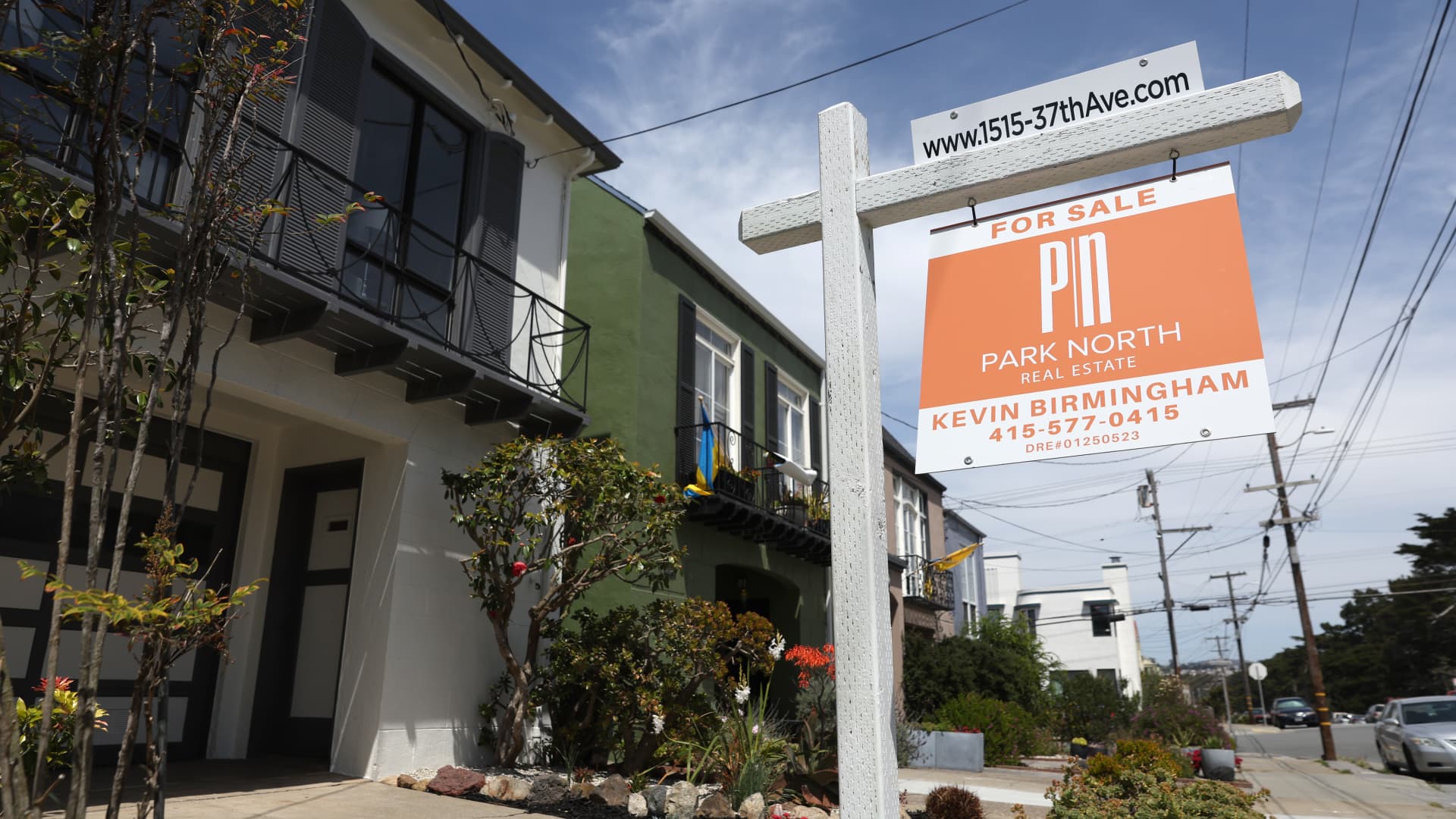
Interested in learning more about today’s sponsors or becoming a BiggerPockets partner yourself? Check out our sponsor page!

Note By BiggerPockets: These are opinions written by the author and do not necessarily represent the opinions of BiggerPockets.


Source link

ROE > ROI and Why Your “Cash Flow” Number is Deceiving Read More »

16 Units in 3 States as a BiggerPockets Power Couple Working Full-Time

16 Units in 3 States as a BiggerPockets Power Couple Working Full-Time


Successful real estate investors don’t find success alone. Real estate is a relationship business, so eventually, you need someone—an agent, contractor, cleaner, or handyman. At times, your success depends on these people, so you need to build a relationship with them. Once you cultivate a relationship, maintenance becomes the next step, but how do you do that? How do you find the balance between too friendly and impersonal? How do you turn a transactional relationship into a transformational one?

Today’s guests, Evan and Katie Miller, have prioritized relationship building in their business and have seen tremendous success. The advantage of investing as a couple is they balance each other out. Evan enjoys numbers, while Katie enjoys working with people—creating the balance they need to be a well-oiled real estate machine. They have sixteen units across seven properties in Florida, Denver, and Nebraska. 

While growing their real estate business, they both work full-time jobs with a baby at home. Katie is the General Manager of  BiggerPockets Publishing, which motivated her to invest because she sees the power of real estate every day. Since they still work full-time, they prioritize time management, relationship building, and organization. Evan and Katie hope to hit fifty properties in five years while keeping a full-time job.

Be sure to listen through to the end for a special discount code to purchase BiggerPockets books!

Ashley:
This is Real Estate Rookie episode …

Katie:
Two hundred …

Tony:
And seventeen.

Ashley:
Get out of here.

Katie:
And really when you’re working with guests, working with tenants, or working with your cleaners, there’s three things, right? Treat others as you want to be treated. It’s pretty simple. A golden rule to live by irregardless of if you’re paying someone or they’re paying you. Two is just treating them as real humans. They have bad days. I have bad days. The third thing is just leading with honesty. It goes both ways. The more that you are honest with them, they’ll bring it back to you.

Ashley:
My name is Ashley Kehr, and I am here with my cohost, Tony Robinson.

Tony:
And welcome to the Real Estate Rookie podcast, where every week, twice a week we bring you the inspiration, information, education you need to kickstart your investing journey. And usually I start off with a cool review from iTunes or wherever, but I don’t do that today. Today I’m just going to ask you, please leave us a review on whatever platform it is you listen to. The more reviews we get, more people we can help. And that’s our goal here at the Rookie show is to help folks. Ashley Kehr, what’s going on? We’re here.

Ashley:
Yeah, we’re in Denver.

Tony:
We’re in Denver.

Ashley:
Tonight we are doing a Real Estate Rookie meet up with Denver’s badass investing group. We’re doing a joint meet up tonight at Rhino Brewery. Super excited to meet tons of rookies and other investors and just kind of network.

Tony:
And if you guys aren’t here, obviously this is going to come out. We’ll have already have done this. But if you guys want to come to the next meet up, I don’t know, I guess let us know in the Real Estate Rookie Facebook group where you guys want to do this next. Ashley and I have this dream of going on the road with all things BiggerPockets and Real Estate Rookie.

Ashley:
Rookie Road Trip.

Tony:
So maybe if you guys get active and let the people know where you want us to go next, we can try and set something up in your city.

Ashley:
We both really want the Rookie road trip dream. We just visualize it differently. Tony visualizes flying out there meeting me, and I visualize it in a camper van traveling across country. We got to find a way to make those two dreams [inaudible 00:02:08]

Tony:
But either way, we got a really good show for you guys today. It’s a little bit different. We decided we should take advantage of the fact that we’re here in Denver. We brought some BiggerPockets employees on, or a employee plus a husband onto the podcast today. We’ve got Katie and Evan.
And I learned a lot about their story today too. I didn’t even know how big their portfolio was. But they shared so many good insights on working together as husband and wife, about not being afraid to take action, investing in different markets, appraisal issues. I feel like we touched on so many good things.

Ashley:
Yeah. My favorite thing that they touched on was relationships just between themselves as partners, but also relationships with other people, and how they handle that and how they actually add value to other people. And that’s more of a priority to them than actually taking value from other people. Evan talks about that a lot, and that’s a really great piece of advice that I think you guys should take away from this podcast.

Tony:
And Katie had a 30 second piece right near the beginning of the episode. And I don’t want to spoil it, but just look, I call it out after she says this. Just make sure you guys listen for that part as well. But overall fantastic episode. Whether you’re a husband and wife duo listen to this, or you’re just a new investor in general, you’ll definitely get some value from hearing their story.

Ashley:
And they’re also both working full-time jobs and building this real estate business.

Tony:
And they have a new baby.

Ashley:
Yeah.

Tony:
Yeah. Katie, Evan, we’re super excited to have you both here. This is a different podcast, even for me and Ash because we’re in-person. We’re doing this in Denver near the BiggerPockets HQ, and we got some special guests. For the folks who don’t know you, and Katie maybe we’ll start with you, who are you guys? Why are you here on the show today? And tell us what makes you maybe a more special, not more special guest, but there’s something special about you that maybe most guests can’t talk about.

Katie:
Well, thank you guys for flying to Denver to meet us and to hang out. This is so great. We’re really excited that you’re here, so thanks for being here. My name is Katie Miller. I am our general manager of our publishing division at BiggerPockets. I started at BiggerPockets, wow, five years ago now almost to the day.
I applied to a job posting that was on a startup website portal. And sent in my resume, and probably 20 minutes later Scott Trench calls me on my cell phone, and here I am. Yeah, we’ve started with just a couple books and now we have almost 37. A couple of them are in queue. And yeah, so I love it. I love BiggerPockets. Really excited to be here today with my husband, Evan.

Tony:
And let’s not mention the book that Ash and I have been super delinquent on one day that book will make it to the public.

Ashley:
I think we signed the contract to it almost a year ago now.

Tony:
Probably.

Katie:
No pressure, but I really want to publish it.

Tony:
I’m moving a little bit faster.

Katie:
You know what? It doesn’t even matter. We got a book deal. I wasn’t going to bring it up, but now that you did.

Tony:
[inaudible 00:05:07] Evan, what about you, brother?

Evan:
Yeah. I’m Evan, Katie’s husband. And I actually had started listening to BiggerPockets before I met Katie. And then she was working a different job when we started dating and stuff. But had bought a house downtown, and just really liked the process, looking at a lot of architecture houses, the inside and outside of Denver and surrounding area. And I really enjoyed that, so I wanted to keep doing it.
I actually just Googled real estate and investing in real estate, and found Brandon’s how to invest in real estate with no or low money down. And that was before Katie was on the team, so the books have gotten a lot more polished and awesome since then. But that one was, it kind of got me hooked. And it was really cool that Katie found a job posting on BiggerPockets, I was like, “I listen to them every day, twice a day.” And so it’s been kind of history ever since, but that’s-

Ashley:
I want to know who is more excited about this actual job, Katie or you.

Evan:
… I’m pumped about it. Yeah. Yeah. Stuff like this, I definitely wasn’t expecting that. I knew BiggerPockets was in Denver, which I thought was pretty crazy once I learned that listening to Josh and Brandon. I was like, “Oh, sweet. It’s like we’re sort of neighbors, but I have no idea where you guys are.”
And then since then getting to go to conferences, showing up at things like this, meetups, getting to meet a podcast host like you guys, it’s been really cool. And then also getting to see the behind the scenes of how BiggerPockets works. And as a consumer of their content, I’ve really enjoyed that.

Tony:
I think something else that’s unique about the two of you, and I don’t know if we said this already, but your husband and wife. And I know me and my wife, Sarah, we’re business partners, husband and wife duo. And there’s always, I think, a lot of questions that come up about what does that dynamic look like, how did you get the other person on board? So kind of give us the origin story of, not necessarily the marriage, but I guess we get that if you guys want to as well, but more so how did the business partnership kind of form between you guys as husband and wife.

Katie:
Yeah. I don’t really know if there’s ever been a start date of like, “Okay, we’re going to do this together,” but it was just I had one building, one unit before we got married and Evan had two. And marriage, we now share assets. Now I had three at the time, and he got one more required and we actually moved into the unit I had.
And so I think from there it was just kind of, “Hey, we can really do this. We can have full-time jobs. We can have a kid. We can have a dog and have a beautiful marriage and family life while still investing in real estate and still working every day.” And for us, it really just came down to kind of our core family values. And how does real estate kind of fit into that?

Evan:
And for me it was basically once she was the publisher of BiggerPockets, I was like, “I got to lock this down.” That was a big reason to propose. I think we were definitely both on board and it felt not being fully onboard together was really limiting us in what we could do. And I remember thinking about that pretty practical mindset when it comes to marriage. I was hesitant, but that was like, we can do so much more once we are a real team together in building this, our future together.

Katie:
And we really have a good dynamic. I don’t care about the numbers. I don’t want to do deal analysis. Show me a spreadsheet my eyes glaze over, right? That’s where his forte is. It really is helpful that we kind of have our own yin and yang of what we’re good at and do best in.

Tony:
Katie, you were already investing, was it an investment that first unit or was it just your primary residence?

Katie:
It was my primary residence that I house hacked, and now it’s a full-time long-term rental. I started at BiggerPockets in August of 2017 and closed on this place in November of 2017, because that’s kind of drink the Kool-Aid.

Tony:
That’s how it goes. And then Evan, yours, they were both investments?

Evan:
It was. That was a big difference between … She bought a lot smarter than I did on the first one. I was just buying because I knew that it was smart. My uncle actually had told me the one thing I would definitely do is buy a house as soon as you can. I was in the military, so I had the access to the VA loan, so didn’t need any capital whatsoever to get started.
And I love Denver. I’m from Denver. I just love the city, and so I wanted to live there, and it’s not practical. It’s actually still the only unit that doesn’t cash flow. We still have it, but its been great for appreciation. But Katie’s cash flow is much better.
She has the type of eye for a unit that people are going to want to buy. She has all the design instincts that I don’t have. That one’s been kind of a pain, but I still love it because it was my first one. It’s in Downtown Denver and …

Ashley:
It’s what got you started.

Evan:
Yeah, exactly.

Tony:
Wait, Ash, can I add one thing just on speaking about losing money in deals that don’t cash flow? There’s a part two to my Shreveport deal that I got to tell you guys about. There’s this house in Louisiana in Shreveport that I tried to sell. It took us over a year to sell the property. We ended up losing $30,000 on this house, right? We sold it.
I thought I was done with it. Turns out I turned on the gas for that property to do the inspections for the buyers, and they sent the final bill, instead of to my primary residence, they sent it to the house. I never got the final bill for this property.
We were going to close on a property two weeks ago and my lender says, “Hey Tony, we can’t close on this deal because you have a delinquency on your credit report,” and I’m like, “What are you talking about?” He’s like, “Yeah, there’s some property in Shreveport.”
And as soon as he said Shreveport, I screamed from the top of my lungs because I thought this house was done, but it’s coming back to haunt me. So now I’m fighting with this utility company in Shreveport to get this off my credit report.

Ashley:
Tony, I wish you would’ve saved this because tomorrow I want to do a Rookie reply with you and it’s basically on that topic. I already pitched it to our producer and everything. I got to get something off my chest too, so we’ll record more of that tomorrow. But before we go any farther, what does your portfolio look like today?

Evan:
Yeah. We have those three that we talked about. It’s a condo and then a town home and then a duplex that Katie bought. And then we have a 10 unit in Omaha. That’s one building. And then we have a single family in Omaha as well. And then the last one that we just did is a short-term rental in Santa Rosa Beach in Florida. It’s a total of 16 units, seven properties and kind of a hodgepodge of all the different kinds.

Ashley:
Well, congratulations, you guys. That is really awesome.

Evan:
Thanks.

Ashley:
Let’s kind of start, you guys had your own properties, and then what was the first investment you guys did together and what was the story behind that?

Evan:
Yeah. The first big investment was buying our first house together. And it was mostly just to buy the house and we were going to be able to use the VA loan again because we refinanced out of the downtown condo. And we were looking, and Denver is super expensive. This was end of 2019 into beginning of 2020. And-

Katie:
The height of COVID, mind you, so everything was crazy.

Evan:
… Everything was crazy. A lot of uncertainty. I mean, that was our schedule, so we weren’t going to let a global pandemic interrupt that. And it ended up working out really well. A lot of things aligned. We had considered continuing to house hack, and what that would look like, because that’s all either of us had ever done.
And put an offer on a couple of houses that we would’ve really had to work to turn into Airbnbs as a part of the property, and we came across the one that we ended up with. And they did an amazing job designing the basement to be a short-term rental. And I think they just got tired of it. We’ve kind of asked our neighbors since then like why did they give up such an awesome income producing asset.
And they almost didn’t. It was really quite the story just getting that deal closed. But now that’s where we live. It’s in East Wash Park, and it’s an amazing location for a short-term rental. People love coming to visit the neighborhood.
And it’s just been a really good experience, as I’m sure Tony you guys both probably know short-term rentals are really fun. And so that’s been the first project together. We combined on both of them on the other three, just letting each other run with our strengths before that. But this one was where it really dug in.

Ashley:
After that, kind of keep going with the story of acquiring them and then maybe we can break down some things that you guys have learned along the way and what your strengths are. After that one, how long was it before you bought the next one after that?

Evan:
That was our second to most recent one. We bought that one in … I guess we closed on April 1st, 2020. And we didn’t actually close on the next one until April 1st, 2022. It’s two years before the next one, and that is the Florida short-term rental.
We had a little bit of experience, both of us together working on doing a short-term rental downtown with my first condo, trying to make a cash flow better, but that’s a whole nother story. We had some experience with that, and then this basement was a really good next step into short-term rentals.
I do all the maintenance. It’s easy to go downstairs at 10:00 o’clock at night when the guest calls and it’s an immediate emergency. That’s a lot, logistically a lot easier to do than trying to find a handyman that’s willing to do that. That was kind of getting our feet wet, getting really good at it.
And then we felt comfortable to try the long-term thing. And so we started looking in Florida. Katie has always wanted to own a beach house, and I was like, “All right, as long as it’s a income producing asset, I’m into that.” And so we were looking at a bunch of different places.
I knew Cocoa Beach pretty well. I had visited it and just paid attention to the area. But we’ll probably get into this later, but the regulations, the Airbnb regulations aren’t very well established there, and they’re super not friendly to, the regulations that there are not friendly to short-term rentals.
And so it was going to be a big project to turn that one around. And Katie has a lot of awesome relationships with authors that she’s produced their books, and one of them is Avery Carl. And we had talked about maybe we should just talked to her. She was listening to one of her podcasts. I think it was on BiggerPockets money maybe, BiggerPockets real estate.
Anyway, that she kind of turned us on that we could really do this with a secondary home loan. And so we called her brokerage, worked with the short-term shop. Rush Valentine was our agent, and just kind of went from there. And we found an awesome spot. It was, again, the turbulent closing. I think probably all the closings have something come up. Everybody gets experience with that, but you get to the closing day and really get to finish the project and it’s all worth it in the end. [inaudible 00:16:51]

Katie:
Not to mention that I was one day before having my baby when we offered on the house. During this whole time Evan is getting all of our loan documents together with a newborn at home, so that was a wild ride.

Evan:
Yeah. We offered on a house, and we’re under contract on a house in December of 2021. And awesome interest rate at that time was like 3.75 or something like that, maybe low fours. And everything worked great until we got an appraisal that was way under. We had offered at 830, the appraisal came in at 760. And anything that was selling in the area was selling for over 900. It was like, “I don’t know where you got these comps from.” We disputed it, some in appraisal [inaudible 00:17:43]

Ashley:
Can you talk about that process real quick? What does that actually entail when you dispute an appraisal?

Evan:
Yeah. Rush in the short-term shop helped a ton. They’re really good at all things closing on real estate. By now, I look at all sorts of deals on a regular basis. And we had been looking in that area for a year by then. And so I was really familiar with the type of property we were looking at.
We were looking at four bed, three bath, three bed, three bath. They’re all really similar. And so you kind of have an idea of what it should be worth. And there’s a reason we offered 830 instead of 760. And in this case there was an extra unit outside that they had turned into a bunkhouse, and that accounted for I think 250, 300 square feet.
And the appraisal agent didn’t want to count that. So definitely should have counted it. It made the property better. It wasn’t like a just add on afterthought that wasn’t very good. And so that was kind of the big sticking point. If he had included that square footage, it would’ve gone way over nine.
But he wouldn’t do it. It was just like you got nowhere with it. But the lender and the real estate agent worked together to submit the request for reconsideration, just kind of got a flat no back. And so I’ve heard what you guys have talked about successfully getting it disputed, and I’ve heard success stories on that, but that hasn’t happened for us.

Tony:
Wait, so you guys weren’t able to successfully challenge?

Evan:
No.

Tony:
Really?

Evan:
Yeah. The-

Katie:
Huge bummer.

Evan:
… Yeah.

Ashley:
Yeah.

Evan:
And so we lost that deal. And at the same month, all of the way that investors treat, loan investors treat secondary home properties changed. They started seeing it more as investment properties versus just secondary homes. That basically automatically increases the interest rate by 1%.

Ashley:
And your down payment probably too. Did it change your down payment that you had to do on it?

Evan:
It didn’t. We were still able to do the 10%. But I mean, loans were more expensive to close at that time too, so it ended up being 130,000 that it took to close, even though 10% of 830, which we actually closed on another house for 830.

Ashley:
Do you know what that first house actually ended up sold for?

Evan:
Over nine.

Ashley:
Oh, really? Oh my God.

Evan:
They sold for overnight.

Katie:
But it was on and off the market at least two or three times.

Ashley:
So it must have been cash purchase or people were able to cover the gap.

Tony:
Yeah. I mean, another lever you can pull is just … And obviously we love Avery. Avery is amazing. And not to take away from her, but you can always try a different lender. Because if you go to a different lender, they’re going to have to pull another appraisal anyway. You might be able to get a better opinion of value if you go with another lender.

Ashley:
Yeah, that’s a great tip.

Tony:
Something to keep in mind if you guys find yourselves in that position.

Evan:
Yeah. I think we consider doing it at the time. And I don’t remember why I didn’t. I think it could have just been we were busy. And then at the time-

Ashley:
[inaudible 00:20:53]

Evan:
… There’s a lot on your plate, but I think it would’ve saved us. It ended up being a full per percent that it would’ve saved us. We had to buy down some of the interest rate in the end for the property we ended up closing on. But yeah, it’s a whole nother process to work with another lender.

Tony:
Yeah, a lot of lessons learned there. But something a lot you mentioned, Evan, that I want to drill in on, you said that you guys have a specific criteria that you’re looking at. It’s like a three bedroom, three bath, or a four bedroom, four bath. How did you guys land on that criteria? What was the thought process behind that?

Evan:
Yeah. You can jump in on why you wanted to do the four bed, three bath. But we talked with our agent and just kind of figured out based on the analysis the short-term shop had done and then what we looked at with AirDNA. That’s where the cash flows the best in that area.
I mean, I make very few decisions without the numbers really making sense, from choosing what college I go to all the way to now. But then as we’re touring that, touring those properties, we kind of fell in love with it. It’s an amazing area that’s so gorgeous. And the houses are really spunky. All of them have really unique character. And whereas the condo buildings not as unique, they’re all-

Tony:
All the same.

Evan:
… Exactly. It’s really fun. It’s a really fun type of property.

Katie:
And when he says touring, this is all virtual. Rush is on FaceTime with us, or taking videos and sending us nine files over the course of a half an hour. It’s like we never went in-person to any of these until after we closed. And really it was nine weeks after our initial offer went in that we actually saw the place in-person.

Ashley:
How did you get comfortable doing that?

Katie:
Just be comfortable with discomfort. Honestly, I think at least for me, I am not a very good vision oriented person. So having a total trash house that some people look at and like, “Oh, I can make this a million dollar building. It’s going to look great. I’m going to have the kitchen here and take out this wall and this bath.” Not me.
I don’t have that eye for design. And so I was totally against this house, this property that we ended up actually getting. Because the way that it was already set up … It came fully furnished as well. The way that it was set up for the short-term rental already, it had crappy ’70s couches that were dingy and had brown stains all over them.
The rugs were just horrible. The carpet was stained. The staircase was just nasty. And I was so tense, I’m like, “Evan, why are we spending almost a million dollars on a property that’s trash?” And-

Evan:
That’s interesting that you say that, because I was just like, “I mean, you’ll fix it, right?” That was my approach, because she does have the eye for design. Maybe not moving walls, but definitely lean on Katie’s … I mean, this place, the pictures that were on the listing and the way it was when we bought it looked like a house I furnished.
I would’ve gone to the thrift store, just like these guys did, and buy a couch for 50 bucks, and sweet, they can sit on that couch and that’s all that matters. But it’s like, what are they sitting in though? And that’s what the stuff that Katie cares about.
That’s interesting that you say you don’t have the eye for design, because I think that’s the only … I mean, if we didn’t have you designing the Airbnb listings, which is so important for how they pop off the page to get people to stop scrolling and actually look at your property and decide to book it, it’s all because of the vision that you have.
I don’t think it’s fair for you to say that you don’t have the design. I think it’s probably I’m just like, “You’ll figure it out, and I’ll move the couches and it will work out.” Yeah. I think it definitely-

Katie:
… That’s nice of you.

Tony:
You’re selling yourself short a little.

Ashley:
You guys have talked about a little bit of what your roles and responsibilities are. You said that Evan does the deal analysis, you do a lot of the design. What about the actual operations? Are you self-managing the properties and taking on those roles, and who does what?

Katie:
Totally. Yeah. All of our properties in Denver, we manage ourselves. The properties we have in Omaha, we have a property manager for those. And then the one in Florida, we’re also self-managing from afar, which is really cool, learnt that all from Avery Carl’s book, Short-Term Rental, Long-Term Wealth.
And it’s really incredible how people oriented real estate is. I feel like a lot of investors and especially rookie investors go into real estate because maybe they’re bad at working with people in their job, maybe they don’t like their manager, maybe their manager doesn’t like them and they’re on their way out. What else can I do?
Real estate is a people-oriented business. And so for us being able to manage all of our properties, both in Denver and in Florida from afar, we really rely on our team that we have out there.

Ashley:
And what kind of team members do you guys have out there?

Katie:
For our Florida house, I joined a Facebook group for Airbnb Hosts of Florida that I found actually from the BiggerPockets Facebook group, a little offshoot of that one. And I just kind of scouted in there as, “We’re closing on a property in a month. Does anyone have any cleaners or housekeeper recommendations for me?” And I probably got, I don’t know, maybe 10, a list of 10 cleaners that-

Ashley:
Wow, that’s pretty good.

Tony:
That’s a lot. That’s a lot.

Katie:
… Yeah.

Evan:
While I’m over here trying to type into Google cleaners in Gulf Shores, and I came up with a few lists and it was like a few options and it was like four options. None of them panned out. Definitely going the relationship route worked a lot better.

Katie:
Yeah. And the recommendations I got, someone linked to Julie who is our housekeeper out there, someone linked to her Facebook profile. I just got to put right on her, and see her whole life and see everything about her that I could. And Evan actually set up the interview with her while we were in Florida and setting the house up.
And she came by and we met her and we hit it off from the start. She’s kind of our go-to there. And we have her team of people as well. She has a maintenance guy that she works with really closely. And she has a secondary helper, cleaner that comes with her as well. Really if anything’s wrong with the property, she either finds it for us or we hear about it from guests and just send her a text and say, “Hey.”

Tony:
You mentioned a really important point, Katie. And I feel like every episode has this 30 second portion where people just need to re-listen to it. And what you said I think is that moment for this podcast, and it’s that real estate is very much a people-driven business. And it’s like, yeah, there’s the analyzing and there’s getting to the closing table.
But at the end of the day, you can’t be a successful real estate investor by yourself. You need a property manager, or you need a cleaner, or you need an agent, or you need a lender, or you need this person, someone to fund your deal.
Every part of this business requires some kind of interaction or relationship with somebody else. And I think the better you get at cultivating those relationships, the easier it becomes for you to be a better real estate investor. I didn’t want to gloss over that because it was really a really impactful statement. But sorry, Evan. I can go ahead. I know-

Evan:
Well, that’s huge. That’s I think one of my biggest learning points since I’ve started is learning that real estate is a people-oriented business, endeavor, everything. I’m not a super charming engaging person, and I like the numbers. I like sitting behind spreadsheets. And that’s probably why I like real estate, because I can swing a hammer, look at spreadsheets, do all that stuff, and it doesn’t require to meet me to be very outgoing.
And then I’ve sat back and watched Katie build relationships. I think the most important relationships we have are with our cleaners, the one that does our basement at home and the one in Florida. And starting with hiring the cleaner, that’s where it starts. That’s not where it ends. Finding the cleaner, then building a good relationship with them, keeping them happy, keeping them motivated to prioritize your building.
There’s been so many times that our cleaner in Denver has prioritized us because she loves Katie. And that’s been so amazing to me when I’m like, “It should just work. We pay you what you said you wanted, and you’re going to show up a very transactional thing.” And there is transactions in business and in real estate, but the relationships behind them really drives it.

Katie:
Well, that’s the thing. I don’t see that as being difficult. It’s easy for me. It comes naturally to me. Evan, let me take that. I’ll take care of the people, you take care of things in the building and the spreadsheets and everything. And really when you’re working with guests, working with tenants or working with your cleaners, there’s three things. Treat others as you want to be treated. It’s pretty simple. Golden rule to live by.
And regardless of who, if you’re paying someone or they’re paying you, treat them as you want to be treated. Two is just treating them as real humans. They have bad days. I have bad days. Hopefully our bad days don’t align and we’re nice to each other, right? But just being able to take a step back when someone’s upset about something and just kind of hearing them out is probably more important than you being heard as the owner of the property or their manager if they’re a cleaner.
And then I think the third thing is just leading with honesty. If something happened to the property, and we’re not trying to rip off our cleaners at all, it’s like, hey, we had a bad interaction. The property might be in shambles. Just FYI, might have a rough day.
Or Julie, if she has a conflict with work, she also works a full-time job while managing our property over in Florida, so she has a conflict with her work it’s like, “Hey, just tell me. Great. Thank you for being honest. We’ll figure out what we can do with the next guest if we need to maybe delay their entry a little bit or something.” But just leading with honesty, it goes both ways. The more that you are honest with them, they’ll bring it back to you.

Ashley:
That was awesome. And I think those are very valuable tips. And it reminded me of this book, Hug Your Haters by Jay Baer. And it’s a customer service based book, but I think everybody should read it. And especially if you are doing hospitality, or even have long-term rentals, or just dealing with people in general.
And it just talks about when people do have bad days and give you that negative feedback or criticize you how to handle it and actually basically kill them with kindness, and turn it around, and then you kind of build that relationship with them.
If you guys haven’t read that yet, check out Hug Your Haters. Let’s get into some of the nitty-gritty. How were the deals financed? You talked about you did the VA loan, you did the second home loan, which ended up being more towards the investment side. What were you guys doing for down payments for cash reserves? How were you able to scale to 17 units so quickly?

Tony:
And sorry. And I’m especially interested in the 10 unit, because I think that’s something that a lot of folks aspire to, especially as they’re just getting started.

Ashley:
Yeah. The decaplex?

Tony:
Yeah, the decaplex.

Evan:
Yeah. It started with the VA loan, because literally you need negative cash to buy a house with the VA loan. They’ll cover your closing costs as well.

Katie:
Didn’t you get paid actually on one of those?

Evan:
Yeah, you get cash back. Yeah. It ended up being a little bit more than the earnest money that I got back, which is … I got through a few properties before I even realized what closing costs were. And it was actually the decaplex that I was like, “Oh, geez.”

Tony:
You’re talking to them you’re like, “Hey, something’s wrong here. I’m supposed to be getting money back.” What is this?

Evan:
This is my lender paying me. What are we doing? I got two properties for myself, and then we closed on the decaplex before, after we were married. But that was my first experience with just more normal lending. We did a commercial loan with that. We’re just refinancing out of it, so I’m trying to separate the two different types of loans. But we did a 25 year amortized commercial loan. I think it ended up being 5.13% or something like that.

Tony:
I’m sorry. What year was this, Evan?

Evan:
2019.

Tony:
2019. What was the interest rate on that debt?

Evan:
5.1.

Tony:
That’s not bad.

Evan:
Yeah, for a commercial.

Tony:
And it was strictly in your LLCs name that the debt, the title, everything?

Evan:
Mm-hmm.

Tony:
That’s not bad. What was the down payment on that?

Evan:
There was a 20% down payment, and I raised most of that. It was like family and friends type of capital raise you could call it. I didn’t realize I was doing a capital raise at the time, I don’t think. But just talking to some of my parents’ friends and some of my friends. And one in specific was willing to … He has a few properties and he’s used to it, so he was willing to take a chance on us as a new multi-family operators.
The asking price was six 50. We bought it for 600. And we put in 120, I think it was. And I raised a total of 160, I think it was, for just have reserves. And I think the big thing was the main investor on that project was willing to put in more. And we had some smaller investors that we wanted to get involved, so we kind of replaced that money.
And I definitely underestimated the amount of capital that we would want to have on hand. And it turns out if you look at the numbers, raising another 30,000 or 40,000 wouldn’t have affected the ROI nearly as much as being able to get those projects done faster because we had the capital in the bank already. That’s kind of how that one looked. Like I said at the beginning, we’ve had a hodgepodge of loans. So the VA-

Ashley:
Did you structure that with the partners?

Evan:
… Yeah. Me and my dad had done my second property together on a 60-40, him getting the 60 and me getting the 40. They brought all them down payment. It was a 3.5% because I lived in it, so it wasn’t a huge down payment. But I didn’t have any of that. He got the 60 because I felt like he’s taken a risk and I got the 40.
We kind of tried to parlay that into the tenplex and it ended up being a really complicated structure. But essentially the operator got 30% of … We as the operators get 30% and then the investment gets 70%. And we put money into the investment side as well, so we get paid a little bit from both sides. But it’s a 70-30 split.
And the reason we did that was to make sure the investors got a good return. And that translates all the way through when we sell any equity gain, any cash flow, just everybody has this certain amount that they’re entitled to. It kind of got complicated with what the exact percentages are though, because the operators being also investors ends up with some crazy decimals that we have written in a spreadsheet that will pull up when it’s time to sell.

Tony:
Time to sell.

Evan:
Yeah.

Tony:
So you guys bought this in 2019. And this is in Omaha?

Evan:
Mm-hmm.

Tony:
Had you guys purchased in Omaha before this?

Evan:
No, this was our first Omaha purchase.

Tony:
Why Omaha?

Ashley:
Yeah.

Evan:
Yeah, I liked Omaha pretty much. I was supposed to get assigned there in the Air Force, and through a major luck I ended up getting assigned in Denver instead. But I heard things while I was trying to make myself feel better about going to Omaha. They were like, “It’s like a new Denver. They have a lot of really trendy breweries. The downtown is really starting to pop.”
Just hearing things that you want to look for as a real estate investor that I wasn’t a real estate investor at the time. But it all resonated really well when I was trying to look elsewhere. Denver isn’t a great fit for me as the type of multi-family investing that I want to do as for one I’m much smaller than most of the players in Denver, and then just have different access to capital, less access to capital than I think it takes to get in Denver, and especially in 2019.
I was looking elsewhere, and it just seemed like a pretty similar, relatively similar city that I felt like I could resonate well with. And then I just started calling realtors and started getting to know people there. And by the time I wanted to look at multi-family, we kept talking about other cities that were Midwestern blue collar cities that were just steady jobs and really good people we felt like that we were able to relate too well, but I was just more familiar with Omaha.

Katie:
Turns out his gut was right though, because there’s like an Amazon warehouse opening there. It’s like a burgeoning college town, so there’s lots of people in and out all the time going to college and grad school and that type of thing. And then there’s also a really busy hospital center. There is a medical school. It’s one of the main hospitals in all of Nebraska is in Omaha, so it’s a pretty good place for that [inaudible 00:38:55]

Tony:
Were you onboard from the beginning or was there some convincing that Evan had to do? I’m always curious, right? Because like you said, you guys played different roles. And I know what’s always helped me and Sarah be successful as a husband and wife duo is that I do a good job of staying out of her way and vice versa, right? Was there a little bit of that here where you’re like, “Evan, we need to get you checked for trying to go invest in Omaha.”?

Katie:
I was actually more bought into Omaha than I probably should have been. I grew up in Sioux Falls, South Dakota, which is just four miles north, or four hours north of Omaha. My memory of Omaha is driving a bus down in middle school to go to the Omaha Zoo for a day. I had very happy memories of Omaha. There was nothing negative going on there. But I was really set on a beach house.
Colorado has many things going for it, but one thing is not water. We’re landlocked. And even the water that we do have, it’s all freezing and it’s in the mountains. I had my eye set on this beach house and I was like, “Cool. Whatever is going to get us to the beach, I’m fine.” I was just like, “Let’s keep going and set our sites on this beach house coming up.”

Ashley:
How did you find this decaplex?

Evan:
Yeah, LoopNet is where I found the listing. Again, I think the networking thing is always an intimidating thing for me, and so it’s happened out of necessity a lot of the time. And I was just looking for properties and it took a while to find properties because I had no relationships with agents.
And the more agents I talked to, the more they were willing to talk to me about different deals. And I found this one on LoopNet, talked to … I had, I think, two agents at the time that were kind of my go-tos to talk about deals, and we decided to put an offer on it. And actually I was on the top of Kit Carson Peak when we closed on this-

Katie:
Carson, for those of you who are not fourteener climbers, is an insane mountain that’s like rock scrambles. You got to use all four limbs to get up to the top. I was not with him, right? [inaudible 00:41:07]

Evan:
… Yeah. We went under contract from the top of that. Good service on the top of mountains it turns out.

Ashley:
That’s so cool.

Evan:
But yeah, it was through LoopNet. I was looking at LoopNet’s multi-family version of the MLS sort of, similar thing, or multifamily version of [inaudible 00:41:23].

Katie:
Or some people say where deals go to die, but you can actually find good deals because people think they’re bad deals.

Evan:
Exactly. And it wasn’t a home run deal, but it was a deal that I could do and get-

Tony:
It got your feet, right?

Evan:
… Exactly.

Tony:
I mean, let’s talk about the numbers. It wasn’t a home run deal, but you guys, you picked it up for $600,000, right? How much did you guys put into the rehab?

Evan:
Well, so far, I think it’s been about 70,000 that we’ve put in total turning in.

Tony:
That’s a really reasonable amount, right? What do you think the property is worth today? Because-

Evan:
We just got it appraised. It’s 787,000 that it appraised for.

Ashley:
And you put 70 into it? Yeah, that’s awesome.

Evan:
Yeah. And that’s been a nice recent win for us to get that appraised and refinanced at that value and start to feel. It’s definitely felt tight over the last three years. It’s weird that you can buy 10 units for 600,000 in Omaha when we’re struggling to buy one for that in Denver.
But the numbers barely worked and they’re going to pay the investors well in the end. We’re not looking at 100% year over year cash on cash, any of that, but still a solid return for the investors. I learned a ton. And we have some momentum now. I feel some confidence around being able to continue to do multi-families in Omaha and build the short-term rental stuff in Florida.

Tony:
Just one last question. I want to keep moving. Just one last thing. Just on the property management side, how did you guys vet and find that property manager in this totally new market?

Evan:
Yeah, it took a while. I thought I should manage myself to learn from the beginning, and I wouldn’t recommend that. I think-

Katie:
Yeah, don’t give out your cell phone number to your tenants.

Evan:
… Yeah, lots of cell phone conversations with the tenants. Eventually I was working with a realtor that helped us find the single family. And she was excited about managing a property, so she worked on it for a little while, and she was awesome. And they remodeled a couple of other units, but it was just getting to be too much for them.
And they’re such good people that they didn’t want to just quit. They wanted to quit with a lead. And so they gave us this lead for CityLine Properties out there. Dan Zimmerman, I think he had been going for maybe a year or something, but he had 30 properties that he was managing at the time. Now they’re well over a hundred, maybe more. But-

Katie:
And as soon as I heard Dan’s name, I was like, “I got to look him up on BiggerPockets.” If he doesn’t have a profile, then he’s not legit.

Evan:
He’s not good.

Katie:
And luckily he did.

Evan:
We definitely used that. We definitely leaned on that to vet him. It’s hard to talk to property management companies. I talked to a lot of property management companies and just didn’t vibe well with them. I didn’t think that they were going to take care of the property the way I wanted them to. In this case, it was one of his first properties as a property manager and it was one of my first properties as a multi-family investor. That worked really well. And it’s turned out to be an awesome relationship.

Ashley:
What are some examples of questions that our listeners could ask when they’re interviewing a property manager to kind of get that feel that this person isn’t going to work out?

Evan:
Do you have any ideas that you wanted to throw out there?

Katie:
Well, I would say the first one is just their experience level, right? And not as necessarily a red flag, because this was also Dan’s first time managing, but just being able to understand where they’re coming from, and what their background is and kind of what they’ve been into since then I think is really important.
I think the second thing is their fees. I know you just had a recent guest on the rookie show who was a property manager and her fees just seemed so wildly different than what actually I think you mentioned what you’re paying and some of your fees.
Is it a mom-and-pop shop? Is it an individual? Is it a huge conglomerate? And what are the separate fees that go along with all of those I think is huge. And they are very so wildly. It’s just trying to figure out what works for you and what works for that property.

Evan:
Yeah. I think looking back now I’d have a lot of different questions than I asked at the time. A big one is just getting to know their organizational structure and their logistics, how they keep track of their properties, how they … What technology they use to manage maintenance requests, and to keep the books, and to send out owner distributions, all of that.
I think a lot of people get into property management because they’re good at doing maintenance, and just don’t want to be working for a different group, for a different company. And they often don’t have a very good business savvy, and you want to really find out that this person is in it to be a property manager, not just to not have to pay someone else to maintain their properties or something like that.
That’s, I think, where I would focus asking them about the logistics, and what tech they use, and how they keep track of everything, and what their team looks like. Do they have a bookkeeper? Do they have contractors that they get to do all their maintenance ticket items? Do they just do it? Do they have somebody in-house? Those types of things have ended up translating to a much different experience since CityLine has a really good system going.

Katie:
That is huge, like understanding what their systems and processes are. There’s emergency maintenance and they say, “Oh, well, we have a phone number they call.” Okay, who’s answering that phone? And then what happens? Do you call someone out immediately? Do they wait till morning?understanding what exactly those processes are in the company can really help you understand if they actually have systems and processes.
This one company we were working with, they had emergency maintenance line. And the fire alarm went off in one unit, the fire company was there. Nobody was home. They were trying to get in, they couldn’t get the Knox Box open, all these things. And they were trying to call the property management company, the property manager’s cell phone, the emergency maintenance number.
And it’s like 8:00 AM. It’s not like it’s 1:00 AM. It’s 8:00 AM. And they’re office didn’t open till 9:00, and so it’s just like, “Whoa!” If the fire department can’t even get ahold of you, how are our tenants supposed to get ahold of you? So really understanding those too I think is a big thing.

Evan:
Yeah. I think I took for granted and just assumed that if you had a business, you had all that stuff worked out. And it’s amazing to me the more I get exposed to different businesses, the more I look into everything. Turns out that, that’s what makes excellent businesses. That’s not what makes a business is having all your ducks in a row when it comes to those types of logistics. And a lot of businesses don’t have that, and a lot of property management companies don’t have that.

Tony:
Can I go off on just a brief tangent? Because I think that’s a really valuable lesson in so many different ways. First, anytime you’re vetting a vendor, you can be easily fooled. Because how hard is it today to slap up a website, get a logo and-

Ashley:
Social media.

Tony:
… Social media.

Ashley:
Oh my God, they have a huge following. They’re legit [inaudible 00:48:52]

Tony:
They’re legit. But it’s so easy to make those vanity kind of metrics look like they’re legitimate, so I think the homework you guys talked about is super important. But the other point that you mentioned, I think this is more so about building your own real estate business is that it is easy to get started.
But to be excellent, I think takes a different level of dedication, a different level of preparation, a different level of sophistication. I know almost everyone who’s listening to this is a rookie still, but even as you’re just getting started, think about what you want your business to look like five to 10 years from now, and start putting those processes and systems in place today.
So that way as you start to scale, you kind of know which direction you’re going. I think I shared in one of our Rookie replies like I had a whole org chart built out for our business, and it was just me and Sarah. Right? And now this past year we’ve been hiring people in. It’s been so easy to hire them, because I already know which part of the org charts I don’t want to do anymore and we’re kind of passing all these things off. So-

Ashley:
Tony, have you read the book Traction?

Tony:
… I’ve read it like five times.

Ashley:
Yeah, I was going to say, that’s exactly what Traction asks you to do. It’s like you set your current organizational chart, you set your three year, five year, and undetermined future org chart there, and you just fill in the blanks from there. It’s a really great read.

Katie:
That would actually be great question to ask a property management company. Can I see your organizational charts?

Evan:
Yeah, that is a good one.

Katie:
You would see how the departments were, who’s selected there, and be like, “Okay.” And so you know like, “Okay, it’s a maintenance issue. I know I need to contact this person.” Because that’s been a struggle with the property management company too is, if there’s an issue, who’s the person to contact?
Because sometimes it’s multiple departments. The apartment is up for leasing, but we notice this maintenance issue needs to be fixed. Do we tell the leasing agent to hold off on showing so this is done? And the communication between departments too. Yeah, that’d be interesting to ask to see an org chart in a property management company.

Evan:
Getting to the point where you are not overwhelmed as a rookie is difficult to do. I like to tell people a lot like, “Don’t bite off more than you can chew.” Especially as a rookie really ever, you hear about dreaming big, have big goals and all of that.
But the habits that you’re going to be building as a rookie, I still consider us rookies for sure, are so much more important than the exact numbers that you, or how fast being able to say that headline of, “I got so many units in such little years.”
But just learning how to be consistent and reliable with one property, even if it’s just your house hack. Katie and I took a year before we even considered looking at another short-term rental property. We really wanted to make sure we had seen a full year and gotten those habits and understood what it really takes.
And we have full-time jobs, so that obviously changes our timeline. But I think it’s important to be and understand the importance of learning the habits and getting all of your logistics well ironed out before you try to scale too much and then just bear yourself in business.

Ashley:
Thank you guys so much for sharing your story with us, coming on here and telling us about the decaplex, your Florida beach house. First of all, congratulations you guys. Really awesome what you guys are doing. But we want to hear more from you guys, so we’re going to go into our rookie exam. This is where we ask three questions to each of our guests and it’s going to be the hardest exam that you guys have taken. Okay. The first one, actually, Evan, I’ll ask this one to you. What is one actionable thing a rookie should do after listening to this episode?

Evan:
I think you should sit down and kind of write out what relationships you have right now, even personal if you don’t have a lot of business relationships. But like we talked about at the beginning of the episode, relationships are what’s going to run your real estate business. And if you’re not giving value to your relationships, then you can’t expect much in return.
This is one of the biggest lessons that I’ve learned that I didn’t know at the beginning. Sit down, write down the relationships that you know, and right next to it what value are you giving to those relationships. And then next to that, how you can improve the value that you’re giving to those relationships.
I think like the Avery Carl example, just different relationships in our life that Katie had been, mostly Katie, had been just pouring value into for months and years. And then one when we needed to talk to them, they were super happy to help us, and I was like, “Man, this is magic.” We accelerated our short-term rental project.
I was slogging through properties in a completely different location, and we were just like, “Why don’t we lean on some of the relationships that we’ve built up?” But if you can do that intentionally, because I think it’s important to be able to think of something you can actually do right now versus buying the sky goals.
You have relationships right now, go look at them, get more intentional about them, even if it’s just your brother or your mom or somebody, and figure out how you’re giving them value so that you can be more aware of it. If you’re not, this is an opportunity to improve the relationships in your personal life.
And if you are, that’s great, you’ll find the holes and you’ll just get better at it and that’ll end up paying dividends like you won’t imagine down the road for sure. It’s mind-blowing to me how important relationships are. And I think I’m probably talking a lot to myself when it comes to that. What can you do now to really build upon-

Tony:
To build on those, right?

Evan:
… what you have.

Tony:
Actually, someone mentioned on a recent podcast, I can’t remember which episode it was, but they said that relationships have an infinite return. That was just such a powerful statement because it’s so true, because it’s like you never know where one relationship can take you.
Ash and I are only sitting here as podcast hosts right now because of relationships that we built before we knew where they were going to lead. And it’s like, you just never know. I mean, I love that. But I love also the fact that you positioned it in a way where it’s like, how can I build up that other person with kind of no expectation of return?

Ashley:
And as you were saying that, I almost expected you to say, “What value can they bring to me?” That was awesome. And that’s so true. The more value you provide to somebody else, you’re going to get more than you could imagine back from them.

Evan:
Yeah. And when you didn’t know, you had no idea you were going to want that or the value. It’s like you said it. I’m really into building momentum. I’m not good at just immediately setting a perfect habit, and here I am, and we’re great. It takes a while to build a momentum, but once I have it’s a really solid asset to my life.
I think I made that mistake multiple times, calling a lender right when I needed a lender. And then that obviously didn’t work. But then I had started building that relationship, so it was much better the next time I wanted to look at a property, and I started to see that retroactively I didn’t know it going into it.
And so again, some of this started by necessity, but I saw the benefit looking back and we’ve worked on … Luckily I have Katie who’s great at relationships. That really helps. But I’m trying to get much better at giving the value, because chances are really good that, that relationship is giving you value. You probably don’t need to worry about it. And later on it will, so I think that’s the right place to start.

Tony:
I love that advice. Katie, this next question is for you. What’s one tool, software app or system that you use in your business?

Katie:
Well, I would be remiss if I did not say the BiggerPockets website has been I spend five years of my life.

Ashley:
Job security.

Katie:
No. But seriously, not to beat a dead horse here, but all businesses are people businesses, and real estate is not excluded from that list. How are you going to meet people? Go to BiggerPockets.com, sign up for a free account and then go to the forums. It’s like the very most simple way to get and give value, the value that Evan was just talking about.
You got to meet people, find people in your area, post a question, answer questions. And the more that you give, the more that you’re going to get back. You’ll start noticing people that you want to reach out to. And you might get reached out to from other people who notice you giving really good advice, or good answers to questions. Even if you don’t have a property, you can still start a conversation with someone in our forums. I’d be really remiss if I didn’t say that.

Tony:
Katie, let me ask you this. As a BP insider, what do you think is one part of the BiggerPockets ecosystem that a rookie isn’t maybe taking advantage of today?

Katie:
That is a great question. I would say our number one place where I think you can get the most bang for your buck is the BiggerPockets Conference. It is offsite, off the website, so there’s that piece of it. But I think truly it’s like a three day, maybe two and a half day event once a year, where you just get so much education in one place.
You have the networking that’s there, you have the educational piece that’s there. You can read a book, you can buy books from there. You can meet all of the authors, all of the podcast hosts, all of the people who you might be listening or reading on a daily basis. And I think the conference is really just the one place where you’re going to meet like-minded people, and be able to also get and give that value to those relationships.

Tony:
Love that.

Ashley:
I think it will actually make you realize that you know more than you think that too. Having those conversations with people, I think that’s a huge … It gives you really a big motivator. It gives you motivation that moment you’re like, “Wow, I actually know what I was talking about in that conversation. Maybe I am ready to start investing, or I actually know what I’m doing.” And I think that confidence boost is a huge thing about going to these in-person events like the BiggerPockets conference.

Katie:
Yeah. And it’s a little like the first day of college. You get to your dorm room and everyone’s trying to make a new friend, because no one has friends. Right? And so the conference is really similar to that. It’s really hats-off, no ego, meet people where they’re at in a new place, in a new city, preferably with a drink in hand.

Ashley:
[inaudible 00:59:51].

Katie:
It’s just a really good place for that kind of authentic and original friendship.

Tony:
Love it.

Ashley:
Well, we have one more question for you guys, and I guess we’ll kind of ask you guys together. Where do you guys plan on being in five years?

Katie:
Yeah. We hope to have full-time jobs while having 50 properties.

Tony:
50. Lovely.

Evan:
That’s the goal. Yeah.

Ashley:
That’s awesome.

Evan:
And we want to be able to operate it while we have full-time jobs, because both of us have careers that we do care about. And that’s one of the awesome things about real estate, why I really got passionate about it while I was still in the Air Force. It wasn’t an option for me to quit my job, and we’re not trying to build into our lives fewer choices.
If we want to five years from now make it a family business and go all in on real estate, we’ll be able to if one of us wants to, one of us doesn’t. But the plan is to be able to continue in our jobs and still be able to have a very big thriving real estate business on the side. Because I think that’s one of the biggest advantages of real estate is that you can delegate a lot of stuff and be able to run it without it consuming your life.

Katie:
And because I have a full-time job, I’m able to do this. Everyone who’s listening to this podcast right now can get 15% off any book, any format in the bookstore. All you need to do is go to www.biggerpockets.com/store, pick out your book, put it in the cart, and then type in the word publishing in your promo code spot. And we’ll call this the publisher special.

Tony:
We’ll call it the Katie special.

Katie:
Yeah. Yeah, 15% off. Just use the code publishing in the book store.

Ashley:
You know what, I feel like she’s really pushing it towards us like, “Your book could’ve been [inaudible 01:01:42]. You need to get writing.”

Tony:
No. But I mean that is the beauty of real estate investing is that you get to move at whatever pace you want. And at the end of the day, that’s why we want entrepreneurship, is for the control, it’s for the power of choice. And it’s like if you want to stay at your job, you can. If you don’t, you don’t have to. But it’s about having that choice to make that decision for yourself as opposed to that pressure of, “Hey, you have to do this one thing.”

Evan:
Right.

Katie:
Totally.

Tony:
Love it. All right, so we’re going to give a shout out to this week’s Rookie rockstar, and this week it’s Rafael Cabrera. And Rafael says, “Just purchase property number three with a nomad strategy.” And Rafael you might need to get an application because I’m curious to know a little bit more about what this nomad strategy is and how you’re using it.
But Rafael says that property number two, which I guess was recently purchased, he just happened to accidentally buy near the site where the new Convention Center is going up, so there’s some good news there. But Rafael leaves some final words of guidance, and he says, “Even if you’re unsure about this nomad strategy,” which is I guess just kind of moving around pretty frequently.
He said he’s doing it with a wife and a two year old and a two month old. Right? He said he’d be lying if he said it was easy, but he said it’s totally worth doing and he’s looking forward to what comes this next year. Rafael, congratulations to you and your family.
And yeah, if you guys want to get shout out as a rookie rockstar, get active in the Real Estate Rookie Facebook group, the BiggerPockets forum. You can slide into my DMS or Ashley’s.

Ashley:
Well, Katie and Evan, thank you so much for flying us out to Denver, buying us lunch.

Tony:
And dinner.

Ashley:
Dinner tomorrow night.

Katie:
For sure.

Ashley:
Yeah. Oh, we really appreciated having you guys on the show, and loved the value and everything that you shared with everyone, not just your story, but the great advice and the insights and the mindset. Thank you so much for coming on.

Evan:
Thank you guys. It was really fun. Thanks for having us on. And yeah, it was awesome to be able to just sit down and talk through things with you guys.

Ashley:
If you guys love the podcast, please leave us a five star review on your favorite podcast platform, and check out our YouTube channel Real Estate Rookie. I’m Ashley Kehr @wealthfromrentals, and he is Tony Robinson @TonyJRobinson. And we will be back on Saturday with the Rookie Reply.

Interested in learning more about today’s sponsors or becoming a BiggerPockets partner yourself? Check out our sponsor page!

Note By BiggerPockets: These are opinions written by the author and do not necessarily represent the opinions of BiggerPockets.


Source link

16 Units in 3 States as a BiggerPockets Power Couple Working Full-Time Read More »

Rent inflation can’t sustain itself, says Housing Wire’s Logan Mohtashami

Rent inflation can’t sustain itself, says Housing Wire’s Logan Mohtashami


Share

Logan Mohtashami, lead analyst at Housing Wire, joins CNBC’s ‘Squawk Box’ to break down moves in housing prices and whether a rise in mortgage rates is having an effect on demand.

02:45

Tue, Sep 13 20228:10 AM EDT


Source link

Rent inflation can’t sustain itself, says Housing Wire’s Logan Mohtashami Read More »

Are We Repeating 2008’s Mistakes?

Are We Repeating 2008’s Mistakes?


Home sales are starting to slump, days on market continue to climb, and price drops are becoming the new norm. Are we on the cusp of a 2008 housing market crash repeat? Or, are these eerily similar signs of a large-scale sell-off just coincidental, without much backing behind them? The On The Market Team wanted to know exactly how close we are to repeating the same mistakes from fourteen years ago, and whether or not the runup in buying activity over 2020 and 2021 could lead to a lackluster housing market for years to come.

We’ve brought our entire panel of experts back on the show so we can get an up-to-date read on everything happening in today’s housing market. With fears of a recession on the horizon, buyers and sellers live in fear of what could happen next. But are these “panicky” investors looking at the full data set that Dave and the rest of the team have been able to dig up?

In this episode, we’ll compare four of the most important metrics that could influence today’s housing market to 2008 data. These include consumer debt and mortgage quality, defaults and home foreclosures, housing market inventory, and appreciation and growth rates. Are we closer to a housing market apocalypse than we thought or are media outlets using a “crash” as a fear tactic to keep homebuyers out of the loop?

Dave:
What’s going on, everyone? Welcome to On The Market. I’m your host, Dave Meyer, and today we are going to talk about the rapidly changing housing market. In just the last couple of weeks, the data has been showing a pretty sharp decline in housing market activity and the media headlines calling it a crash or a correction have just increased a lot over the last couple of days. So we decided to invite the full panel on today and we’re going to have just a general conversation about the housing market, what everyone is seeing in their local markets and in their local businesses.
And then we are going to compare and contrast today’s housing market in 2022 to what happened in 2008, because that’s what a lot of people are saying, right? They’re saying, “There’s a crash. It’s going to be 2008.” And some of the data line suggests that a housing decline could be possible. So we’re going to learn what we can from 2008, compare and contrast, and see how this market might perform similarly or how it might perform differently to the great recession. So you’re definitely going to want to stick around for this one because the panel drops some incredible insights and advice for how to navigate a situation like we are in right now.
We got the whole fam together today: Kathy, James, Jamil, and Henry. I love having all of you guys here. How’s it going?

Kathy:
Good. Good to see you all.

Jamil:
It’s cracking.

Dave:
I feel even in the last three weeks or whatever, since all four of us were on a show together, the housing market has changed really dramatically. So we decided to bring everyone back to have a conversation about what is going on, what you would even call this weird housing market we’re in. So we’re actually just going to start and I’ll provide some data updates, and at the end of this I’d for each of you to tell me what this data means to you. Are we in a correction? Is the housing market crashing? Is it something else? What words, what emotions are you feeling? Let’s have a little bit of a session on what’s going on in the housing market.
So here is the data that we are seeing right now, at least over the last couple weeks. And I’m using Redfin data. They actually provide weekly data, which is really cool because a lot of the other data sources lag and are just looking at July. And what we’re seeing as of the last couple of weeks is that year-over-year housing market data is still up. It’s up 6% year-over-year and that’s really important because the housing market is seasonal and year-over-year data is kind of the gold standard in measuring the housing market. So that points to a housing market that is still relatively strong.
We’re also seeing that inventory has started to peak and active listings are going down. Both of those two things, when inventory stops growing and active listings go down are things that put upward pressure on the housing market. So those are some of the data points that sort of point to the housing market is okay or there’s a bit of a slide right now, but it’s not too bad.
But on the other side, we are seeing some other data that is a bit more concerning, or I don’t know if anyone’s concerned about it, but is putting downward pressure on the housing market. Specifically, we are seeing that days on market are still pretty low, but they’ve gone up in the most considerable way that they have in two or three years. We are seeing that 7.7% of homes had a price drop, which is a record high. And I think most notably the thing that most people are looking at when they’re saying the housing market is correcting or crashing is that month-over-month data from June to July was down 6%.
And so like I said, year-over-year is sort of the gold standard. But when we’re in a transitionary housing market we are right now, it is important to look at what’s going on on a month-over-month basis or even week-over-week if you can. And we’re seeing that housing markets in a lot of markets, they peaked in June and they’re starting to come down. And again, that is not year-over-year, which is sort of the gold standard, but that is month-over-month. And so we’re seeing that normally housing prices each year start to go down in August or September, but this year they sort of peaked in June and they’re starting to go down, which is a considerable departure to normal seasonal patterns and is therefore notable.
So that is really the data that we have to analyze here. And with that, let’s try and understand, let’s go to the panel and figure out exactly how you all feel about this. Kathy, are we in a crash, a correction, or something else?

Kathy:
Well there’s definitely a crash, but it is not what people think that means. There’s a crash in home sales for sure. Sales are down. It’s very hard to sell things today at higher interest rates and high prices. There’s not the huge demand that there was because fewer people can afford that or they’re just on the sideline because they’re afraid. So yeah, there’s a crash in sales and still a crash in inventory because again, new listings are down. People aren’t in a hurry to sell their home in this market for good reason, especially with what are they going to buy, something more expensive than what they have at a higher interest rate?
So it’s not a price crash. Maybe for people who bought in the last six months, they’re seeing their value of their home go down. But most people didn’t buy a house this year to sell it this year. If you’re a flipper, you did, and you are probably feeling some pain. But if you bought a house to live in this year and it’s gone down in value, are you freaking out or are you saying, “No, I got a pretty low payment here”?

Dave:
All right, so crash feelings, but not in necessarily crash level pricing.

James:
Crash-ish.

Kathy:
Yeah, The people feeling the pain are the people in the industry, people who try to sell homes, that’s hard right now. If you’re a realtor, you’re probably wondering how you’re going to get through this year. And mortgage brokers are getting laid off left and right. Construction workers are still busy because there’s a lot of homes that are trying to get completed. But people working in the housing industry, flippers are probably having a more difficult time than they did just six months ago. It’s a different market. But, yeah, so it just depends on who you are and what you’re doing in real estate.

Dave:
All right. Henry, is your word crash-ish?

Henry:
No, no, no. And obviously the caveat is real estate is market-specific. So there’s some difference in different areas of the country. I mean, I wouldn’t call this a crash. What I’m seeing is more of a correction and a slow down, but definitely not a crash. And I’m just speaking from the experience that I’m having. When we list a home, we’re still getting it under contract in five days. It’s not sitting long. And I think that’s due to that we have population growth here that’s probably unlike a lot of places in the country, and we also have housing shortage. There’s just not a lot of supply. And our supply for the last, I would say, three months was going up by about 100 houses a week and then it’s plateaued, it’s stopped. So we’re not seeing the growth in houses coming onto the market. So inventory is flattening out.
And we do have less buyers because the interest rates are higher, but there’s still plenty enough because we have population growth. There’s still new people moving here every single month because of the types of jobs that are here require butts in seats. And so when you’ve got population growth and shortage of inventory, yes, less people can buy, but you have new people coming in every month who still can buy because they’ve got these big salaries that these companies are paying people now to start working for them.
And so I think what we’re seeing, especially in this market, is more of a correction. We have seen price drops, and where we’re seeing price drops are on higher end houses. So houses that have more room. If a listing is listed for $2 million and they’ve got a million and a half worth of equity in it and they drop by $30,000, it’s really not affecting the seller, but it is going to do something to the numbers as far as houses that are taking a price reduction. We’re not seeing a ton of price reductions on the first-time home buyer types of homes, those single family, three bed, two bath, 1500 square foot homes, those things don’t have a chance to have a price drop. They’re gone.
So, no, I haven’t dropped… Have I dropped? No, I haven’t dropped price on anything. I’ve considered it, and then boom, you get offers in it and it goes. But I focus more on the first-time home buyer product, but we are seeing price drops on the much more higher end homes. And I think that’s just because people were shooting for the stars and hoping to land on the moon because values were still going up. And so if they didn’t get the price that they were dreaming about, then they just drop it to the price that they were expecting to get in the first place. To me the price drops aren’t, “Hey, I thought this house was worth 200,000 and the market’s telling me it’s only worth 150.” No, the price drops are like the house is worth 200, but I’m going to shoot for 225, and then if I don’t get 225, I’ll drop it to 210 and I’ll get 210, and it’s still more than the 200 that it’s worth. So no, I don’t think it’s a crash, it’s a correction to me.

Dave:
All right, well I think your market is the kind of market, at least according to my analysis, that is still poised to do well I would say, and definitely want to echo what you’re saying about list prices. People are definitely listing very aggressively, but still even to date, the sale-to-list price, which is a good way of measuring if sellers and buyers expectations are on, it’s right at 100%. So sellers are still getting what they ask for on average across the country. Now, let’s head to Jamil and James who are in more bubblicious markets, should we say, or ones that maybe a little bit riskier. Jamil, what do you think correction, crash, something else altogether?

Jamil:
I believe the housing market is in a standoff. I think that everybody’s got a gun pointed at each other here and there’s really no chance at victory for anybody. This is the reason why: When you look at Phoenix, Phoenix is one of those markets that was the poster child for the run up in 2006 and for the dramatic crash in 2008. And looking at the statistics, I love looking at Phoenix because it really gives us what this looks on a micro level. And then you can look at what the housing market’s doing on a macro level. So back in 2006, in Phoenix we had one house for every 80 people. All right, one house for every 80 people. Think of that. Now with respect to inventory, we have one house for every 360 people.

Kathy:
Whoa.

Dave:
Wait, can you explain that? How does that make sense? Where do people live? Does that not include apartments or something?

Jamil:
I think that’s just talking single family. That’s just talking single family. Because I think what’s happening is we’re seeing that the housing starts have dramatically plummeted, right? Back in 2006, we would have anywhere between 4 to 5,000 housing starts a month. Right now, those housing starts have gone down to about 2500 housing starts a month. So that’s nearly half. When you look at days on market, in 2008 the average days on market was 110 days. So that we had all of this inventory, we had a total of 49,000 houses on our MLS in Arizona at the peak of 2006. Right now we have 19,000 houses available on the MLS in Arizona. That’s down 61% from where we were at our peak.
So when you’ve got such dramatically low inventory, I think what we’ve seen and why we have this little pain point is investors. That’s who’s panic selling right now. The people who are fixing and flipping or the folks that need to sell immediately, they’re the ones that aren’t realizing the full potential or the full profits that they might have been able to extract from their deal. So they’re selling for less. You’re seeing those dramatic price decreases happen, and they’re happening for sure. We’re seeing them here in Phoenix. I look at the MLS and every day it’s price decrease, price decrease, price decrease. On all of my flips right now we are dropping price, but we’re still coming out profitable on those flips, and we’re still going under contract within 30 days of listing our house. Even in this correction.

Dave:
How much are you dropping price just out of curiosity?

Jamil:
Typically our average price reduction is about $10,000.

Dave:
So percentage-wise, like 2 or 3% or something that?

Jamil:
That’s about 10%. No, that’s about 1%. Because our projects are in the million dollar range.

Dave:
So pretty small relative.

Jamil:
So, small. Small price reductions and we are going under contract and they’re still going under contract within 30 days. I don’t see how that’s still a painful situation. I’m not hemorrhaging money on hard money. I’m not sitting on inventory choking out because I’m stressed out and overwhelmed. None of that’s happening. And I’ve made such incredible profits leading up to this time right now that I’m padded and cushioned to even break even for the next six months if I had to in order to stay in the game and keep my trades.
And so I think what we’ve seen happen, Dave, is we’ve seen that investors and people who had to sell, rushed to the market to list when they started hearing grumblings of a housing correction because of the rising interest rates. And now what we’re experiencing is these houses have jumped inventory and now that inventory can’t be replaced. And so we are going to see that number go from 19,000 dramatically low, dramatically decrease. And I predict that within the next six months that number will go back to dangerously low levels of inventory. And we’ll probably get back to that point where we have 6 to 8,000 houses listed in a month in Phoenix. And that’s going to be trouble.

Dave:
Yeah, just to clarify for people what inventory means, there are two components of it. Inventory is not just the number of houses that get listed for sale. That’s actually known as new listings, and that’s what Kathy said was actually dropping. And inventory is a reflection of how many properties are for sale on the market at a given time. And so inventory over the last couple of months has been going up because demand is falling off and so houses are sitting on the market longer, but it wasn’t because new listings were dropping.
Now new listings are dropping and so that’s counteracting the decline in demand and I think that’s why a lot of us are seeing inventory start to level off. Of course, we don’t know which way it’s going to go, but that’s sort of the dynamic at least in the data that’s going on right now. All right, James, Seattle. What’s happening up there? Are we in a crash or correction or are you going to say we’re in a standoff like Jamil?

James:
I think we are in a snapback is really what comes down to. If you look at Jamil’s market, my market, even Boise, all these peaked out markets that spiked, in Washington, a lot of our really strong markets, they appreciated 20 to 25% in March alone, which is a huge run up. And what we’re seeing is it’s just pulling back naturally. And I do think we are in a slide. I think it’s completely different 2008. 2008 was the breaks got hit on us. All of a sudden subprime mortgages went away, there was no money out there. And it just hammered us. It was very drastic and quick.
This feels this slow, slow slide, because what we’re talking about 6%. We’re up 6% but last month we were up about 10% and it’s just this slow slide back. And really I think the people that think it’s crashing is they bought it at the wrong time. If you bought any type of short term investment, whether it’s an Airbnb, a fix and flip, or those high yielding investments during I would say February to April, you are going to have problems. That is the reality of it. Just like the same type of good timing if you bought… If you bought four months after the pandemic hit, that’s good timing. You hit the same gas, but the brakes are getting hit right now, and what we’re seeing is we’re about 20 to 25% down from peak.

Dave:
Whoa.

James:
Yeah. I mean, it came right back down. There’s a house that I have listed actually with, we did My First Flip with Ashley Kehr from Real Estate Rookies. We bought this property in Bothell and when we performed at the deal, the comp was from 18 months ago, exact same house for a million, 50. During this remodel, it went all the way up to 1.5 in a six-month period. The value skyrocketed almost 40%, which is absurd. And I remember calling Ashley, I go, “Hey, we got to get this thing on market, because it can’t start going the other way really quick.” And I was joking with her and then it went the other way. And we sold that house. We listed at 1.2, so about 10% below what the peak was. We got it pending. That buyer fell apart because of financing at 1.1.
Now we’re at a million, 50, which is the same value that it was 18 months ago and we’re getting one show in a week max. And so there’s certain markets that come through and it really just comes down to where is the market at? When did you buy it, and kind of pushed through. But that’s where you hear all the crashing because people also broke a lot of rules and they weren’t really paying attention to what true real estate rules were. And those deals are coming backwards. The stuff that is crashing is homes that were always negative or had deficiencies that people bought acting they didn’t have deficiencies. That stuff is down 35%. But other than that, it’s really just the general market is just kind of leveling out.
There’s other markets, like Capital Hill in Seattle is one of the most expensive markets in Seattle. It’s had a little bit of issues with a crime and it had a weird kind of stigma for a while. And so during this peak, when me and Ashley’s Bothell one went up 24%, Capital Hill was actually very steady. It went up 10 to 12% during this time, which is the best market in Seattle. But it kept steady. We’ve seen no price change in that neighborhood. We listed six town homes last weekend. We sold all of them. We sold all six of them in three days. And so the markets that were steady and good and healthy, they’re fine. Deficiencies, spiked. I mean, it’s just like anything, hockey stick up, it comes the other way. And I definitely have seen that and I do think it is starting to level out but I predict that we might see some of those markets that really jolted come down to pre-pandemic pricing. I think that’s kind of where it’s going to level back out.

Dave:
Wow. Pre-pandemic, like in Boise and Reno, some of those really hot markets, you think it could come down that far?

James:
I think, yes, I do. I think in 12 months there’s going to be some markets. Because here’s the reality: Some markets are not supposed to be expensive. Where people live, they’re supposed to be affordable. And as you know we have some factors going on.

Dave:
What are you saying about Boise?

James:
I like Boise. I would definitely live in Boise, but you get this slow slide back and I just think as we see inflation going up and people, there’s an erosion of capital right now, of disposable income. There is right now one in six Americans are behind on their utilities. That’s a big deal. That means people are struggling to make payments, and in 2007 and ’08, they were at one in five. So there’s other signs of affordability issues which are going to cause the market to be flat because people can only buy what they can buy. People can only sell for what they can sell for. So there’s going to be just be this kind of stagnant market for the next, I think, couple years. But I think it’s just going to be this slow slide, not this sudden jolt. We’ve already seen the sudden jolt and now from here it’s more steady.

Kathy:
I wonder about the Boise market because a lot of that growth came from California, and right now California is facing a pretty severe drought. We can’t water our gardens for two weeks at all. We invested a lot in our yard and probably going to see that all just turn brown, and Boise has no water issue. So I’m also curious about those kinds of factors, if more and more people are retiring in California are able to move and are thinking maybe I want to be in a place where there’s water. So who knows? Who knows what the future brings but that could keep Boise prices up possibly.

Dave:
James, I was just going to say, man, you’ve probably had so many good deals and the one that’s fallen apart you did with the Bigger Pockets podcast. Pretty public one to take a loss on.

James:
Yeah, luckily though you, but you have to pivot as investor, right? It is what it is. The market is Mother Nature, you cannot fight it. You have to participate in it, you got to adapt to it. So just pivot and change things. So for that deal especially, we’re not losing money right now. We’re still making money. But if we sit there and we don’t make a change, as the market flattens out, that means longer hold times, you got to stop the bleeding.
So actually, I just paid off our hard money loan yesterday on that and because I had some liquidity come in, I called Ashley, I’m like, “Hey, I could just pay this off,” because now we’re not in a hurry to sell it and if we’re not in a hurry we can wait. Because I do feel good about our list price, but we don’t want the hard money and the debt expense to force us into a different situation. And so we just paid off the loan and now we have no debt, and now we’re going to wait for that buyer. Because if it doesn’t sell for a million, 50, that means we are actually getting close to pre-pandemic levels in that specific neighborhood, which is a great neighborhood. It’s right outside Seattle, suburb, good schools, everything is good about this neighborhood. So that’s a little scary to look at.

Jamil:
James, I believe first and foremost, everybody listening to this podcast right now, rewind what James just said and understand that he just gave you a look inside the mind of every one of your fix and flip investors out there right now. If you are wondering where they are, what their temperature is, what they’re feeling and what they’re thinking, you just got the most true example of what that thought process is. And here’s what I want to say about it, James. I think you’re a little bit over. I think you’re overthinking the pain part, which makes sense. I get it because you have to insulate for your projects moving forward, and I think that you will be positioned well to do that because of the pivots that you’re making right now. But I also believe that it’s not going to turn out to be as bad in six to 12 months as you’re planning for right now.
But for anybody out there that wants to do business in fix and flips, that wants to sell deals to fix and flippers, this is what they’re thinking. And if you can structure your deals in ways to give them enough runway so that they can stay in the game with you and they can continue to do projects, because they also don’t want to lose their trades. I think, James, for you right now, one of the keys is making sure that you retain your highly talented team but do so in ways that isn’t going to hemorrhage money. Would you agree that that’s a concern?

James:
Yeah, well it’s about working smarter and working in the certain market conditions. You have to keep your team but you also have to pivot and change thing and give different roles and responsibilities out. Because at the end of the day it doesn’t matter if it’s declining or flattening, it’s a different market than what it was 24 months ago. There those are three different types of markets. And so you just have to prep, move your pieces around, pivot and then make your adjustments.

Dave:
All right, this has been a great conversation. Thank you. It sounds the general consensus here is that things are adjusting. I think James probably the most bearish. I actually am feeling a little more bearish right now too. I’d say we’re solidly in a housing market correction. I don’t think we’re in crash territory, but the data’s definitely turning a little bit faster and more dramatically than I think I was personally expecting. And like you all said, different asset classes, different markets are going to perform differently, but on a national level, I do think we’re heading back towards at least very, very modest year-over-year growth and possibly even negative on a national level in the next couple of months.
I do want to turn this conversation to all the research you all did and just for everyone listening, what we’re going to talk about for the remainder of the show is how this housing market is different than 2008. You’ve now heard everyone’s, all the panelists opinions about what this market is and where it might go. But with all of the media coverage and about a crash, we wanted to analyze how the housing market is different from 2008 and we’re going to go through five different topics and sort of break down, compare and contrast different points about the housing market. But first we are going to take a quick break.
All right, so let’s get into our compare and contrasting of the 2008 market to the 2022 housing market. Myself and each of the panelists researched a single topic to talk about and how it’s either the same or perhaps different from 2008. And I’m going to go first and I probably took the easiest one. So thanks for letting me get away with the easy homework everyone. I’m going to go with consumer debt and mortgage quality. So as we all know, subprime mortgages was one of the main issues that led to the 2008 crash. Basically irresponsible debt was given out and I want to just show some data about how different it is now. So, the first thing is that the median credit score, I’ll ask you guys… Actually, I’ll have you guys guess. Does anyone have a guess what the median credit score for a mortgage is right now?

James:
680?

Kathy:
740.

Henry:
640.

Dave:
It is 773 is the median credit score right now. Yes. And that is actually down. It was up to 780 before, and what’s the highest? It’s like 850, but anything above 720 is considered excellent credit. So I thought this was an extremely telling point because credit scores, they’re not perfect, we all know that. But they are a very good indicator of how able you are to pay your mortgage. And a 773 credit score is phenomenal. There was also some other data that showed that anything below a credit score of 620, that’s considered a subprime mortgage. That’s like someone who has at least a relatively decent chance of defaulting on your loan.
Back in 2004 and 2005, the total number of mortgages that were originated that were below 620 was 14%. That’s what it maxed out at. It is now below 2% right now. So when you think about the main thing that brought us into the depths of the 2008 crisis, and listen, 2008 there was a drop off in demand, but in my mind what made it really bad was a lot of the foreselling, all the foreclosures, that kind of stuff. And so when I saw this, I thought that to me, although I am seeing the market go down, sort of like in my mind puts a stop gap on how bad things can get because you’re not going to see people who are going to default on their mortgages because lenders basically have cleaned up their act and are starting to lend to people who are actually qualified to pay back their mortgage.
I mean, it’s unbelievable. Kathy, you might know because you were doing this, isn’t there something that, what do they call it? It was ability to pay a requirement.

Kathy:
Nina Loan?

Dave:
No, not a Nina Loan. They now implemented this thing you have to believe that they can reasonably pay back their loan, which it’s crazy that that didn’t exist before. Unbelievable.

Kathy:
It’s crazy. Yeah. And when we were giving loans to subprime borrowers who already had bad credit, it really wasn’t too hard for them to walk away from a home. They had shown a history of not paying bills.

Dave:
All right, so my compare and contrast to 2008 is mortgage quality. Mortgage quality now much better than it was a decade or a decade and a half ago. I think this will probably overlap a little bit with what you brought, James. Can you tell us what you think about the 2008 market and how it’s a little bit different or maybe the same?

James:
Yeah, the 2008 market, when we were going through that, it was definitely a completely different thing. It was the whole banking market had stalled out and just… It was this skyrocketing of defaults and everybody threw in the white towel all at once, and it was like people just gave up. And that’s why we saw this skyrocketing of foreclosures and people just did not care. Whereas right now people have worked hard, they bought some properties and they can afford them. And like you were just talking about, the quality of mortgage borrowers are much better. A lot of people learned a lot of lessons in 2008 and so did the banking market.
But what we have seen, is we have seen an increase in defaults in foreclosures. There’s a 219% increase, basically from the beginning of… Or we’ve seen a 219% increase in foreclosures in the last 12 months. But the big thing is we are at a fraction of what it was in 2008. In 2008, they were at 1.8% of all housing units were in foreclosure. Right now we are at 0.12. So there’s this dramatic difference of defaults going on because people haven’t given up. It’s like right now, people just can’t go buy something new. They spent all their money and so things are flattening out.
We’ve seen some pull back to get into the affordability factor, but it’s more like people still want to go buy, they still want to own homes, they still want to get settled in, they want to maybe move into a different market and it’s really not that bad. Yes, we’ve seen the increase in foreclosures and I actually think we’re going to see an even larger increase because there was a moratorium for two years. There was no foreclosures going on.
So we’re going to see that scary percentage increase ratchet up over the next 12 months, but we would have to be almost 10 to 15 times the amount of homes in foreclosure to match 2008. So there’s a lot of runway on that at that point. And so the foreclosure is just totally different in general. I mean, we were swimming in foreclosures in 2008. You would drive down a street and it was like… Door knocking was very easy and you could be very inefficient. We could hit 80 homes in a six-hour period because they were so clustered together. Right now our guys are still driving everywhere. It’s just not the same type of market.

Dave:
That’s incredible. I mean if you listen to the episode, I think it was in June or July that Jamil and I did with Rick Sharga who’s sort of an expert on foreclosures. he was saying it’s starting to tick up and that numbers sounds scary, but to your point, it’s still like 1/15th of what it used to be. And he was saying that a lot of the mortgages that are ticking up were people who were in default prior to COVID and the moratorium and now they’re restarting foreclosures. And it’s not necessarily even, I’m sure there is an increase, but it’s not necessarily even a huge increase of new people going into foreclosures. It’s people that were previously in it. But awesome, that was very helpful. So far on the lending/foreclosure side, we’re seeing mortgages are better. Not a lot of foreclosures relative to where we are. Let’s move on to Kathy. Kathy, what did you bring to show and tell today?

Kathy:
To my topic was inventory. And I love this topic because it really comes back to the fundamentals of supply and demand. That’s really at the end of the day why so many different markets behave differently. It all comes down to supply and demand. Interest rates are of no issue. In 2009 and ’10 and ’11, interest rates were lower but then there was tons of inventory but no one was buying. So it really comes down to the fundamentals, supply and demand. So when you look at where we were in 2007, there was 3.7 million homes in the inventory. And then today you fast forward and yes, it has gone up. In the beginning of this year there was only 860,000 homes in inventory. So that’s what… I should do my math, but three, a third or even close to a fourth of the amount of inventory at the beginning of this year, it has gone up.
It’s almost doubled. And that can be scary when you see headlines. And please do not get your facts from headlines. You are getting bad advice. It’s only meant to scare you. So just stop looking at headlines please and listen to data because you’ll make bad decisions if you just listen to that. So where we are, yes, inventory’s gone up dramatically as it should and as it needs to. And if you could just say, “This is a good thing,” then it won’t be so scary. We’re at about 1.3 million in inventory today, but we still need to be closer to 2 million. So we’re still way under. So that’s on the supply side. Every market’s different. Different markets are going to be behaving differently, depends on jobs, population, but overall we still don’t have enough homes out there for the people who need them. So let’s talk about the people.
If you go back to 2007, 2008, that was 14 years ago. Do you think that the US has grown in population since then? Well the answer is yes, it absolutely has. There was about 300 million people in 2008. Today, fast forward, it’s 332 million. That’s almost 30 million more people. So how many people live in a home? 2, 3, 4? You got to have homes for these people as the population grows. So again, you fast forward from then till now, you have right now less than half the supply of what we had then. But you’ve got 30 million more people. So just throw everything else out the window and just look at that. Supply and demand. People need a place to live. They’re not investing like a stock. They want a roof for their family.
So then on top of that, let’s look at the generations and the demographics between then and now. And we know that millennials are the largest generation today. I talk about them all the time. I love you guys. 1981 to 1996 is generally what we consider millennials. There’s 82 million of them. That’s a lot. That’s a lot. There was only 65 million or so Gen Xers. So again, you go back 14 years and the oldest of the millennials were 27 years old. So this massive group of people, they’re not looking to buy homes. They were just trying to figure out what happened to their world. And as the Gen Xers that were the home buying age.
So here we had all this supply flooded the market with way too much construction without the demand that the youngsters hadn’t grown up yet. And there was all this talk about, “Oh, millennials are going to never buy houses.” Well they were 27 and the largest group of them were like 16. So it was just misinformation, bad headlines, ignore the headlines. And just know that today we have the largest group of people ever who are now at home buying household formation age and the inventory’s not there for them.
So it’s really a crisis, but it’s not the crisis that people are talking about in the headlines. It’s not a housing crash, it’s a housing inventory crash where we didn’t prepare well and preparation would’ve been helping builders build. And of course I’m going to say that because we’re in the development world and we would love some help because what’s needed is more supply, more affordable for sure. And it’s just not there. If you go to the supply. And what happened since 2008 that we were building, we were starting 1.6 million homes in 2002, 2003, 2004. 2005 was 1.7. We were just starting all these new homes when the buyers weren’t there, it was silly. So then when the market just crashed, then from 2008 to 2015, it was 400,000 a year starts down from 1.7.
So again, a huge correction and bringing on new supply just when these millennials were growing up and ready to start homes. So we did not bring on new supply. Just this last year we got a little closer, 1.1 million in new homes, but not enough to meet this demand. And there’s not a lot of lot supply either. When you go online and search new homes. It’s kind of scary because it says there’s 10 month supply out there. And that’s what a lot of people are using to say we’re oversupplied. And what they’re not looking at is the fact that there’s really only one month supply of new homes available because those are the completed homes that can actually be sold. The rest are seven million in some stage of construction, which has been delayed and delayed and delayed and delayed. And then you’ve got two and a half months supply that hasn’t even started. So that 10 month supply number is not what you think it is. And yet a lot of people are using that as a headline to say that we’re oversupplied. We’re just not.

Dave:
Wow. You just dropped so much knowledge. And that’s an incredible amount of data for everyone just to take in. And obviously that’s hugely important. It’s just the basic supply and demand. And if there’s more demand than supply, that will definitely at least put a backstop on some of the slide that we’re seeing. Even if you think the housing market is going down. Jamil, I mean that’s sort of dovetails with what you were saying before, right? About inventory in Phoenix.

Jamil:
Yeah, I apologize, guys. I thought I was doing inventory. So I literally have the exact same research and data that Kathy has.

Dave:
Just tell us again.

Kathy:
Let’s hear it, man.

Dave:
Let’s make sure it really sinks in with everyone.

Kathy:
We’re like twins.

Jamil:
Well, you know what, I love it. But they do marry each other very well because construction starts, that tells us sentiment. That tells us how confident builders feel about the housing market and where they think they’re going to be in a profitable situation. So when you’re looking at construction supply, I like to look at it from a micro perspective. So just looking at Phoenix for example, looking back at 2006, we were issuing 5,000 building permits a month. And that tells you where the builders were. That tells you where they thought the housing market was going. That tells you what they were thinking demand was coming from. And obviously it was coming from a lot of speculation. There was not the population, there was not the demand that truly was there to absorb all of that inventory.
Now you look at Q1 at 2022, and on a micro level, again, here in Phoenix, Arizona, they’re issuing two point 5000. So 2500 building permits a month. That’s half. That’s half of what it was back in 2006 and in the peak. And when you look at it nationally, in 2005, we had 1.7 million housing starts. 1.7 million as compared to right now in 2022, where we’re at 1.1 and that’s up from 400 to 600,000 housing starts that you had leading up to this ramp up that builders just actually started to increase their construction. So when you’re looking at it from construction starts and construction supply, we’re not there. We are so dramatically different from what led up to the 2008 crash to what we are experiencing right now in 2022.

Dave:
All right. So far we’ve heard that mortgages are better, foreclosures are way better, inventory is lower, and construction has just been very slow over the last decade or so. So the total housing supply is probably way lower than it was in 2008. Henry, what did you bring for us? Round it out. Is there any ways we’re similar to 2008 or what do you got?

Henry:
Not in this category. I’m talking about appreciation and growth rates. So I mean we’re talking about a huge recession in 2008 where values of homes dropped 20% or more in some markets and they dropped so rapidly that… When we were talking about crash earlier, you asked us was this a crash or was this a correction? To me, crash means things are dropping so fast that no one’s going to buy because who wants to buy while they’re falling? They’re going to wait until the bottom. That’s not what we’re seeing right now.
And so if we’re comparing appreciation and growth rates from 2008 to now to try to see if we’re in a similar boat, I mean absolutely not. We’re still seeing values increase. Even through this slowdown values are increasing anywhere between 2 and 6% in certain markets month-over-month. It’s crazy. And so it’s because you have to look at, everybody’s kind of touched on it, but the things that drove the housing market crash in 2008 don’t apply here.
And I know we as people human nature, we naturally want to compare things and we want to use history as a teacher so that we can put ourselves in better positions for future decisions. But this is completely different. Global pandemic kind of started this, which caused money to flood the market and people had more money and then all of a sudden you didn’t have to be physically tied to your location to do work anymore. And so people were like, “Let’s move.” And everybody was moving and they had all this money.
And so before the banks were lending money to people who couldn’t afford homes or couldn’t afford the expense of the kinds of homes they were buying, which caused a huge problem. But that’s not what happened during 2020, 2021 when people were, especially 2021, when people were bidding up on houses and removing contingencies. You did see houses sell for 20, 30, 40, 50 grand over asking price, but not all of those houses were appraising for over that asking price. People just had the money to pay the difference. That’s not a crash. That’s people saying what they’re willing to pay for. That’s what the housing market is.
People decide what they’re willing to pay for homes and they were saying, “I think this house is worth more than what it’s listed for to me.” And so no, you just can’t compare the two. And so as a appreciate… There was no appreciation in 2008. I think one quarter things dropped 12%. That’s insane as far as a price drop goes in a quarter. And here we’re still seeing prices rise. If you look at the data for July, 2022, you’ve got the median home price grew by 16.6%. And you said earlier in the show, we talked about sellers.
Sellers are still getting what they’re asking for. You said it’s at about 100% that people are still getting what they’re asking for. And so if the median home price is growing and sellers are still getting what they’re asking for, that means values are increasing. And so no, this is a completely different correction. I don’t think it’s a crash. I don’t know that it will crash. But what I do know is that the factors of this are so far different than what we saw in 2008 that we really don’t know what’s going to happen. Jamil’s right, it’s a standoff and we are just, we’re having to take our time and try to pick the best entries we can based on our financial conditions.
And I think that’s what buyers are starting to do too. The ones that are buying are saying, “Hey, I don’t know what next year’s going to bring. I just know that I think it’s the best time for me to try to get in and own something.” And so follow the fundamentals of investing if you’re an investor and that is you try to buy at a certain percentage under market value to give you some cushion. But, man nothing, this 2022 correction is just night and day different than what happened in 2008. We’re still seeing appreciation across the table.

James:
The only thing I want to add to this is I agree with everybody, it is totally different market. The foreclosures, the appreciation’s different, but the only thing I have seen a similarity in is the buyer sentiment right now. Like, when we were listing and selling homes in 2008, there was just as many bodies out there and it was the same type of buyer. They’re opportunistic, can they get a good deal on something? And the buyer sentiment is very, very similar. And until that turns, that’s where we’re going to see… That has to change for the market to actually start getting growth back in. But people are buying, I mean, I’m a buyer, my sentiment’s changed, but I still contracted $16 million in real estate last month for myself. We’re buying apartments, we’re buying development, we’re buying fits and flip. We’re still contracting, but you’re just being cautious and then that… But the sentiment is very, very similar.

Dave:
Well, James, one of the questions I wanted to ask was what are some of the lessons for those of you who were investing in 2008, what are some of the lessons that you learned? I’m curious, can you help us understand what changed buyer sentiment in 2008? How did growth start coming back?

James:
Well, growth started coming… It was a very steady… I mean, part of the growth started with the government. They offered that first time home buyer tax credit and it was just kind of this building block through. But I felt like the sledge hammer came through in 2008, which this is not that. And so it’s going to be a different turn too in the sentiment. I think it’s just going to be time. And then also what will change is the unknown. We have the Fed jumping around saying, “Hey, we don’t know what’s going on.” I mean, soon as the Fed changes its message going to, I think then once they give us a stable answer and that this is what they think and here’s the actual plan, not just we’re trying, then the sentiment will start to go.
Everyone’s just kind of freaking out. But it is definitely making for some good buys though. Again, we contract contracted 80-unit building. I haven’t been able buy an 80-unit building in Seattle in three years because the hedge funds are buying them all. And so the settlements, and I sound little… I’m definitely cautious, but I’m buying and being cautious. And I think that’s who’s there. The real buyers out there looking at your listings, the real investors out there looking. Yes, they’re cautious. They should be. And at the end of the day, it’s probably not going to change until the Fed gives us more consistency and everyone feels safer.

Dave:
Yeah, that’s a very good point. I totally agree. I think that the Fed is really the big question right now. And until we get some stability there, it’s just a lot of uncertainty. Kathy, you were around in 2008. What were your major lessons that you learned?

Kathy:
Oh, so many. So many. The big one was I didn’t listen to my own advice that I was giving everybody else. And so we did really well on our cash flow properties, but we took a really hard hit on a couple of properties that really just didn’t make sense and there was no reason why we should’ve bought them. We had construction properties and those would’ve been fine, but they were short term notes. And when it came to refi out of the construction loan, there were no lenders left. Nobody would lend to us at that point, which is kind of hard to imagine, but that’s how it was. Banks were failing left and right. So we were already past 10 loans at the time. Before that you could get unlimited loans and then suddenly it was limited to 10. If you were over that you were at a luck. So we had to hand those new construction properties back to the seller and we lost all our money on that.
We also bought in Boise, which at the time wasn’t ready. It wasn’t where it is today. And there was only like two major employers, and that was really tough. We couldn’t get those properties rented. So I’ve learned since to just stick with what I know, which is be in markets that are really well diversified with lots of different kinds of employers. That’s really helpful in a market that’s slowing down. You could see job losses and a slowing economy, but there would be a diversification of employer. So that’s super important. All of our Texas properties fared well. They did amazing during that downturn. Rents went up. Over time, values went up. So had I just stuck with what I was telling people and just stayed in diversified markets where they cash flow, it would’ve been fine.

Dave:
So just stay in your lane. That’s good advice.

Kathy:
Stay in your lane.

Dave:
All right, Jamil, I know you’ve talked pretty openly about taking some pretty big lumps in 2008. What did you learn from 2008 that you’re applying to your strategy now?

Jamil:
Well, it’s funny. Kathy and I, I know we’re kindred spirits because we have extremely similar thought processes on how to survive and thrive in today’s situation. So my biggest downfall in 2008 was A) getting outside of my core competencies and my investing strategy. I went from wholesaler to multi-family development and I got creamed because I was over leveraged because I was counting on lenders to take me out of deals.
When you’re accounting on a third party to get you out of a situation, regardless of what that situation is, you have no control, because that person can change their parameters, that person can change their mind, that institution can change their parameters, that institution can change their mind. Things can absolutely get away from you if you have the survival of your business model dependent on a third party. And so for me, the thing that I learned the most was I have to be in control. And in wholesale, I get to be in control.
And so the thing that… And I almost made the mistake again, we all heard that episode where I was so excited to be contracting a 12 and a half million dollar multi-family building. And I had an opportunity to wholesale that building and make a great profit. But what did I do? I did the same thing I did in 2008 and I decided I’m going to puff my chest out and I’m going to get out of my lane and I’m going to roll the dice at being a multi-family investor again. And what happens? Half a million dollars lost in earnest money. And forgetting that if I put my destiny, if I put my financial future in the hands of a third party, I could absolutely get creamed.
And so moving forward, my strategy will always be one that I can control. Stay in my lane with respect to what I know, right? Wholesaling is a safe way to real estate invest and also stay away from leverage.

Dave:
All right. Very good advice and some painful lessons I think all around. Henry, were you investing in 2008?

Henry:
I was not. I was not.

Dave:
I mean, I turned 21 in 2008, so I was just… You can imagine. So I was not investing at the time. But I guess I will say that I graduated college around that and learned a similar lesson to Jamil, just trying to take control of your own life, because it’s very difficult to get a job in 2009 and sort of inspired me to get into real estate investing because I wasn’t able to find employment in the way that I wanted and just decided to take things into my own hand.

Henry:
So to answer your question, I was not in real estate as an investor in 2008, but I was in real estate as a homeowner because I had been working at my new job out of college for a year or two. And I then decided I was going to be a homeowner and I bought a condo in 2007 in Virginia Beach, Virginia.

Dave:
Okay, how’d that do?

Henry:
So shortly after I bought it and everything went crazy, this was a new condominium complex at that. So they were still building new buildings and selling new units. And so by 2008 they were selling brand new units for less than what I paid for mine. And then I was looking to move to where I am now in Arkansas and I couldn’t sell it obviously because why would they buy mine when they could buy a brand new one for less? And so I actually got hit and had to short sale my property. So I was in real estate, I just wasn’t at it as an investor and I got burned.

Dave:
Man. Well good for all four of you taking lumps and getting back on the horse. It takes some guts for sure. How long did it take you to buy another house after that, Henry? Were you scorned for a while?

Henry:
Yeah. I mean it was on my record for the seven years and so I didn’t buy anything again until, gosh, 2015.

Dave:
And now look at you, buying houses left and right.

Henry:
Absolutely, buddy. Raking them in.

James:
I do think we’re going to see a rapid increase in short sales. I know I’ve already prepped for my business to start facilitating them. So it’ll be interesting to see if those come back.

Dave:
Like as an opportunity, you’re preparing your business to buy them?

James:
Yeah. In 2008 to ’10, we actually probably closed like 600 short sales as a facilitation. Because we were a fee business, we were just trying to make money so we would negotiate for brokers and investors and write offers ourselves. But it’s just like that with that, the utility stat, people can’t keep up the bills. Even though people have great interest rates, a lot of buyers stretch themselves when they bought. And so I do think there is going to be a gap of people where they paid a high price, it’s an affordable payment, but they can’t keep up with the inflation in the economy and they’re just going to want to go.
Also, a lot of people bought homes they didn’t really want, but their balances might be too high. Nowadays, America likes to file bankruptcy, so they just be like, “Hey, move on to the next thing.” That’s the scary part about America and what could happen with inventory.

Dave:
Wow. All right, so thank you all. This has been really insightful. Basically, I guess if I could sum it up, I think we’re all sort of in agreement that we’re heading towards some sort of correction, perhaps a standoff, but very different housing market from 2008. And this is just my opinion. I think all the stuff that we talked about sort of puts a backstop on the declines that we’re seeing. The housing market, it’s starting to slide. It could go negative on a national level, but I think the odds, personally, I just think the odds of seeing housing prices decline anywhere near what they did in 2008 is a relatively low probability. Sounds like you guys all agree.

Kathy:
I just want to say I’m stoked. I haven’t been as excited for a long time. We haven’t been able to find inventory and right now there’s this massive need for rental property, massive need, and all this sudden we’re getting discounts on houses. So I’m all in. We’re going. I’m starting a rental fund.

Jamil:
Bye, bye, bye.

James:
I like it.

Dave:
All right. Thank you all so much for listening to this episode of On The Market. We would really appreciate it, all of you, if you like this episode or you just love On The Market or any of our esteemed panelists to please give us a review on either Spotify or Apple or give us a thumbs up on YouTube. It makes a huge difference for us. We want all five stars as Henry is pointing out. So please do us a favor, throw us a review if you this show and we’ll see y’all next time.
On The Market is created by me, Dave Meyer and Kaylin Bennett. Produced by Kaylin Bennett, editing by Joel Ascarza and Onyx Media. Copywriting by Nate Fontrau. And a very special thanks to the entire Bigger Pockets team. Content on the show On The Market are opinions only. All listeners should independently verify data points, opinions, and investment strategies.


Note By BiggerPockets: These are opinions written by the author and do not necessarily represent the opinions of BiggerPockets.


Source link

Are We Repeating 2008’s Mistakes? Read More »