Blog

How to Get a Home Loan as a House Hacker, Investor

How to Get a Home Loan as a House Hacker, Investor


If you want to start investing in real estate, you’ll need to know how to get a mortgage. But with so many home loans available, which is the right one to pick? Do you go FHA or conventional? Do you work with your local bank or call a broker? How much can you even afford? These questions alone might put you into analysis paralysis, so today, we’re breaking down what it takes to get a home loan, how much YOU can qualify for, and the best real estate investment for beginners.

To demystify the home loan process is David Mackin—the third David in today’s episode—mortgage broker, house hacker, and home loan expert. He knows what you need to qualify for a mortgage in 2024 because he qualifies buyers all day long. David shares how YOU can determine how much home you can afford, why you’re getting different mortgage rates from different lenders, and how to find cash flow in your market by reverse engineering your real estate calculations.

And, if you’re looking for the easiest, lowest cost, and arguably best way to get into real estate in 2024, this episode is for you. We’ll break down why house hacking has become the new norm and why skipping out on it can cost you BIG in your real estate investing journey.

David:
This is the BiggerPockets Podcast show, 880. What’s going on, everyone? This is David Greene, your host of the BiggerPockets Real Estate Podcast. Joined today by Dave Meyer. It’s always a good day when Meyer is in town. How are you doing, Dave?

Dave:
I’m doing great. I’m excited for this episode, but I also think we owe our audience a little bit of a disclaimer because our guest today is also named David. So we’re going to have Dave, David, and another David joining us, and we’ll try and use our last names when we’re talking during the podcast, but that’s just a little disclaimer before everyone gets really confused.

David:
Yeah, it does get fun. In the Mighty Ducks, they had a move called the Triple D, and today’s show is a bit of a Triple D with a lot of David going around, but it’s a really good one. So if you’re somebody who’s ever been struggling with getting into the housing market as it’s becoming increasingly competitive, curious about house hacking, want to know what’s going on when you’re getting pre-approved for a mortgage or qualified for mortgage, or are not sure which lender you should be choosing, we get into all of those topics in depth and give a really good breakdown of what the lending industry looks like and how that can apply to real estate investing. Was there anything here, Dave? Oh, by the way, you’ve got a book releasing today, your Start with Strategy book. So let everybody know where they can go get that book, and then as your strategical mind looks through things, let us know what you think people should keep an eye out for in today’s show.

Dave:
Well, first I’ll just talk about the show so then I can talk about the book. Thank you. Appreciate it. But I do think what you were talking about with lending makes a lot of sense and it’s more practical and more important now than ever to really have your financing lined up because the number one thing that is impacting the housing market that is impacting investors is affordability. And it’s really important to understand what kind of deals you can afford, what kind of loan products are going to be best for your particular strategy. So definitely make sure to stay tuned and listen up for those nuggets that are going to be in there in our conversation today.
But I appreciate you bringing that up, David. This episode will come out after the release day, but the day we’re recording is the day my book comes out. It’s called Start with Strategy, and it’s basically a step-by-step guide to help investors of all experience levels develop a business plan or an investing plan that will help you figure out what your specific goals are, what real estate strategies are going to help get you to those goals, and even develop a buy box and action plan to help you achieve your long-term financial dream. So it’s a really good book, I’m really proud of it, and if you want to check it out, you can go to biggerpockets.com/strategybook.

David:
All right, let’s bring in Dave Mackin. David Mackin, welcome to the BiggerPockets Podcast. All right, to start the show, tell me a little bit about you as a lender. How big of a broker do you work for?

David:
We’re actually a pretty small broker, mom-and-pop shop per se here in Colorado. We have about eight employees at this point working on growing and such, but we have about 70 investors that we’re signed up and talking to. So yeah, super awesome being a broker, love doing it.

David:
So are investors your main clientele or do you work with other people?

David:
I guess I should clarify when I say investors, I use that, that’s a term I should be careful with. Different banks and financial entities that we can go to for funding, and that’s what I mean by investors that clients can shop around to see what kind of pricing and programs that they can use.

David:
So then who’s your main clientele? Who are you typically servicing?

David:
Well, I got into it starting off with house hackers, of course, I started house hacking myself and through speaking to my own lender when I started house hacking. I got super intrigued by the financial side of things. What intrigued me the most was that I think a lot of people go into the home buying process thinking, okay, I go to a bank, they tell me how much I can buy and then I go get a loan. What piqued my interest was, wait, there’s so many options, right? It’s not just, okay, tell me what my monthly payment is, how much I need to bring to the table and let’s get it. It was the, wow, there’s so much to consider here on all the options I have. I wanted to learn more about that. Curiosity took me in the direction of falling backwards into the mortgage space.

Dave:
David… And David, can I call you Mackin? Can we just go by last name, guys? This is going to be very confusing if we all call each other David.

David:
Call me Mackin. I’ve been called Mackin my entire life, so you can go ahead and call me Mackin.

Dave:
All right, Mackin.

David:
You can call me Batman.

Dave:
Mackin, what we want to talk about today and are excited to get your take on is what it takes to afford a home and how much a person can afford. So can you just give us some of the basics of this equation? How do lenders think about how much they are willing to lend to an individual?

David:
The high level I’ll start with is that the way that a lot of real estate agents and lenders go about pre-approving in the first place leads into this. A lot of times it’ll say, “Hey, you’re pre-approved up to 500,000 or you’re pre-approved up to 600,000.” The way that I like to think about it is, you’re actually just pre-approved for a monthly payment. Everything about being pre-approved comes down to debt-to-income ratios and therefore comes down to what your monthly payment will be on a particular property. And then when you go even further into it with house hackers, it’s what numbers actually make sense, not necessarily just what you’re approved up to, right? If you’re going to the high end of the ratios, that property might not make sense for the potential for cash flow. So there are so many things that go into it. It’s the principle of your loan, the interest on top of it, the insurance on the property, the mortgage insurance you’re getting for what product you choose, the taxes, all those things are going to go into what you can actually afford and actually get pre-approved for.

Dave:
So for our audience who doesn’t have the full equation and breadth of knowledge to take each one of those things and come up with what house they can afford, where should they start thinking about? Is it income, is it the property? What is the determining factor that people should be considering?

David:
I think it’s a combination of one, their income and finding a basic price point for what makes sense for them. There’s a lot of rule of thumbs you can start with until you actually go work with a lender and the rule of thumb for approval is going to be just around 50% of your debts plus what your housing payment is going to be to your income. And that’s a rule of thumb because it’s a lot more specific than that depending on what program you’re going with right there. If you go FHA, you can go up to 56.99% on the backend, 46.99% on the front end, right? I’m already going too far there. So a good rule of thumb is to think, okay, take 50% of my gross income by the way, and what I’m looking at properties, doing my own calculations on what the monthly payment might be on that house. That’s what I’m going to be approved for. But then as a house hacker, you need to go further and understand, does that monthly payment warrant the potential for cash flow at some point.

David:
You know, David, one of the things that I notice with our brokerage is that people think that the credit score is what’s going to determine how much money they get. There’s an obsession with credit score. Everyone’s like, I have great credit, or I don’t have great credit, or I’m trying to get my credit up another four points and there’s all this effort looked at it. But debt-to-income ratio is a way bigger piece of how much you’re going to be approved for and therefore what neighborhood you can get into. And that has a huge, huge impact and ramifications on the future wealth when you look back 20 years, if you buy into a terrible neighborhood versus a great up and coming neighborhood. And that’s one of the things I covered pretty heavily in my book Pillars of Wealth was debt-to-income ratios are based off of your debt and your income, right? Keeping your debt low and saving money, playing defense is very important.

Dave:
So ratios work.

David:
An income is how much money you make. So you could just simplify everything by saying, how do I go to work every day and become better at my job and to make more money. And how do I remain disciplined and avoid lifestyle creep by keeping my eyes on the prize, which is buying investment properties, which is the third pillar, right? And if you just follow those principles, I find it amazing that everything starts to fall into place. It also, you don’t ever have to worry about your credit score, because if you’re managing your money well, you don’t ever get yourself so into debt that you can’t make your payments. What’s your thoughts on that?

David:
Well, I’m glad that you said that because there’s also a lot of people that get into house hacking look at conventional versus FHA, and if you end up looking at the FHA strategy, FHA allows for credit scores in the mid 600s. If you’re somebody that’s starting at that point, you can look into the FHA option. And by the way, FHA is the option that allows for a higher debt-to-income ratio. So the credit score part of it more determines what option you may end up going with for a particular deal. But like you said, if you are somebody that is in tune with personal finance in the first place, things take care of themselves, like you said with credit score and things like that.

David:
Another common problem that I’ll see is people think that if I go to lender A, they’ll pre-approve me for this much, but if I go to lender B, they might pre-approve me for more. That’s very, very rare because almost all of these loans eventually go to the same investor, like you said, that has hard and fast rules that are put in place because they’re all insured by Fannie Mae and Freddie Mac, where the companies that aren’t doing those loans, they use those guidelines to underwrite. Is that something that you’ve seen as well, that shopping to different lenders, you may get different service, they may have different loan programs, but you’re not necessarily going to say, well that one pre-approved me for a million even though this one only pre-approved me for 500,000.

David:
That’s a rabbit hole. That might be another episode on shopping different lenders and why you might see different pre-approval amounts from the different lenders, but the end result, you’re right, ends up being the same. I think it’s important to shop multiple lenders for the sake of making sure you’re working with someone that will help you plan for the future in your investments and someone that you like talking to and someone that knows what they’re doing as far as helping you with the investment side of things and finding the right lender and shopping lenders to do so is smart in that way, but shopping just for the sake of trying to get a bunch of lenders to nickel-and-dime their way down to approve you for more quote unquote is a waste of time.

Dave:
All right. So we’ve covered some of the basics. We now know that the debt-to-income ratio is the most important thing lenders look at when figuring out how much they’re willing to lend to you. And in that regard it’s actually more important than credit score, but how can you get the best possible rate? David Mackin breaks that down right after this.

David:
And welcome back, everyone. We’re here with lender David Mackin, talking about the ins and outs of lending.

Dave:
When you think about the pre-approval process, like you said, for each individual debt investor, let’s just call them the people who actually provide these mortgages, they have similar underwriting processes, but when it comes to rates, does that change? Because I’ve seen personally pretty different rates when I shop around between providers.

David:
There’s a couple of different factors that go into why different investors are going to give you different rates. For one, as a broker myself and David Greene knows this as having a broker shop himself, you’re going to get different interest rates from all the different investors that you might or banks that you might send the loan to, right? They have different equations and algorithms for what they need to make before they might sell it to another servicer. They have more employees maybe, and they need to make more on the upfront interest to pay those employees to do their work. It all comes down to margins. And by the way too, when you’re working with different brokers, brokers have their own margins for commissions involved in the rate that you’re seeing as well too, and they can defer. So you are going to see different rates and what the cost for rate is when you shop for different lenders, different mortgage brokers as well as them actually going out and shopping to different banks and financial entities that are going to finance your deal.

David:
Yep, that’s a great point. So I think what you’re getting at there, David, you said something earlier I wanted to cover. I think what you were saying is, there are lenders that will tell you, we will pre-approve you for this much to get your business. And then once you’re in contract and they’re actually talking to the underwriters, they’re like, “Actually it’s not going to be that, there it is.” And by that point, you’re already halfway into the escrow, what are you going to do? You’re just going to be pissed, but you close with them. So sometimes finding the person that tells you what you want to hear is not wise. It can be bad, and the same come with rates.
In general, the lower rates are lower because the loan officer is going to be making less money or the brokerage makes less money. And while that, no one’s going to be mad about that, oh, I get a better rate because you make less money. You may find yourself working with a person who doesn’t know what they’re doing. They’re new, they’re inexperienced, they’re going to mess things up, they communicate terribly, that same thing you found.

David:
You have to consider how much is this person worth, right? For investors especially, is this person worth the money because they’re the person that’s going to help me buy multiple properties and build my portfolio and I don’t have to call another lender to do so. I have them on speed dial. And typically you might find a middle ground where someone’s offering really good rates and their service is incredible and what their knowledge is super incredible and great, that’s the person you found and stick with them.

Dave:
I just wanted to ask a clarifying question to you both, because we are talking about rates and the difference between rates and you both talked about something that’s very important that getting a good loan officer is super important, but from my understanding, there’s no reason why a good loan officer should have any higher rates. So it’s cost the same for an investor or a home buyer to work with a good loan officer as a less experienced or less high quality loan officer, right?

David:
It is different between lenders who you’re working with. There is a margin, the amount that a loan officer is making on a loan actually factors into what you are being offered as far as rates. If a loan officer is making more, let’s say for example, you’re looking at, let’s say the same rate across two lenders, you have 7% with one lender, 7% with the other, maybe 7% is costing half a point with one lender and it’s costing zero with another. That means that the lender that it costs half a point is making half a point more on the loan amount than the other lender where it doesn’t cost anything. It’s as simple as that. And so you as a buyer, as a house hacker have to determine is this person worth half a point to work with, because this transaction is going to be smooth, they’re coaching me on my future goals, et cetera, et cetera. And that’s where the difference really comes into play for most situations.

David:
Yeah, that’s a great point. So I’m sure a lot of people here are wondering why would I ever, ever want to pay a half point if I don’t have to, right? My advice there, if you’re a really easy borrower to work with, you have a good job, you have a good debt-to-income ratio, you’re using normal run-of-the-mill loans, you’re going to get approved. It’s not going to be anything tricky. You probably don’t need a rockstar superstar lender. Those are the people that can maybe find the online, click here for a 2.99 rate or whatever and they can roll the dice on that gas station sushi and they got a strong GI track, so they’re probably going to be okay.
But for the people that are listening that are buying investment properties that want to get multiple properties, maybe you’re self-employed, that’s the person that can find themselves in big trouble. If they use the basic loan officer, that’s the cheapest one they could find that does not understand how to read those tax returns, how to argue the case with the lender for why this income should be included or even how to package it together to give it to the underwriter.
I’ll tell you guys what goes on behind the curtains. A lot of the time when you hire the cheapest loan officer you can find, the reason your loan took three extra weeks to close is they did not know how to give the underwriter what they needed and the way they needed it. And every time the underwriter looks at it and says, “I need this thing,” you get bumped back in the queue another week. So would you agree that if somebody has goals of owning more than one property or they’re an entrepreneur, anything that would complicate their file, that’s when they want to get the more skilled professional loan officer?

David:
I couldn’t agree more. In our market, especially two, three years ago when the competition was super high, one of the biggest factors in going under contract was how quickly you could close. If you go and search an article on the internet, at the bottom it says apply now and you end up at some online lender that you don’t even know who you’re talking to, they’re probably not going to be able to guarantee that you’re going to be able to do a 14-day close, sometimes a 10-day close. So in a market like that where there’s a lot of competition for your loan officer, your lender to call the listing agent and say, hey, we can get this done in 10 days, that sometimes is a make or break for being the one that actually goes under contract in a competitive environment.
That means that you are going to be working with somebody that isn’t just a salesperson, isn’t just a intake at a call center. There’s someone that knows what they’re doing on the underwriting side, the processing side, the planning side. They understand all the options that are available to you. There is so much that goes into it and typically that takes more time and knowledge. I can’t remember where this quote is from, but it’s like I heard a story where someone was having a plumbing issue. All these people came in, they couldn’t figure out what was going on.
And then finally they had this guy come in that was a master, been doing it for a long time, comes in, spots it in a second, fixes it in 15 minutes and slaps a $500 bill down on the table. And they’re like, “Wait, what the heck? You did 15 minutes of work. Why are you having me pay $500?” He said, “You’re paying me for the time it took for me to get all this knowledge. You’re not paying me for the 15 minutes of work that I just did there.” And I think the same thing is true in any service industry and especially in real estate.

David:
So on that point, one of the things that we do at our brokerage is, we’re sort of a coach, we are going to coach you through what the best loans would be and how you should pursue if you’re trying to buy more properties, if you just want to buy one property, that’s different than if you’re looking to try to scale. If you’re going to use the BRRRR Method, if you’re looking the house hack, if you’re buying a second home, if you’re getting into short-term rentals, there are different loan programs that work better for those. And sometimes you have to think ahead, once you got four of them, this isn’t going to work, so do we have a plan to switch to something different? For you in the business that you’re running, how is it you’re coaching investors on purchasing properties? Do you talk them through the purchase and make recommendations or are you more of the person who says, you just tell me what you want and I’ll go do what you say?

David:
That’s a great question. The way that I go about coaching, especially house hackers is, here is every single option that you have. We’re going to get on a screen share, we’re going to get in person, whatever, and we’re going to put every option that you have for this next purchase and future purchases on the screen. And together through our conversation, we’re going to break it down into the one that makes the most sense. And the reason we do that is because say, write on paper, FHA makes sense. In our market, we’re a super high purchase price market, right? Cash flow is pretty hard to find in Colorado right now. And the enticing thing that people see is when they’re looking at an FHA loan versus a conventional loan, typically it’s about 10 grand more to go 5% down conventional with closing costs and everything, but the monthly payment is exactly the same as an FHA loan where you’re putting 10 grand less at the closing table, and that’s super enticing.
But then someone has to take into consideration, “Okay, I got this FHA loan. If I’m going to stay in the same market, then I’m not going to be able to use FHA on the next one.” Maybe it makes more sense for them to go, they have more cash in hand now. Maybe they want to go conventional first and then be able to utilize FHA when they turn this property into an investment property and buy the next one as a primary. And so there’s a lot to consider there. And I would say the biggest struggle right now is that difference between FHA and conventional, ever since FHA decreased their factor on their mortgage insurance. It’s a very enticing product now for a lot of people, but there’s a lot to think about with the FHA one.

David:
All right, David has walked us through the debt-to-income ratio and interest rates, but what other variables should investors focus on? Stay tuned for more on that after this quick break.

Dave:
And we’re back. David Greene and I are here with our third David, lender, David Mackin. Okay, so we’ve talked about the main thing about how much house you can afford being your income and the debt-to-income ratio. Obviously rates matter where they are, market rates and what rates that you’re getting offered by your loan officer. Mackin, are there any other variables that people should be considering when thinking through how much they can afford for an investment property?

David:
Definitely the other factor is going to be the insurance that you might get on the property and then the taxes on the property. Those are all going to be considered as part of the debt-to-income because that’s going to be a part of your monthly payment, right? And it actually goes even further. Right now in our state, we had a reassessment period this year for taxes rather last year. It’s early January, I keep doing that. And taxes went up 40, 50% for a lot of people, which is insane. And so they might be able to afford the house that they’re in right now, but when they get hit with that new tax bill and escrow reaches out for them to start increasing their contribution to their escrows, all of a sudden they might be in hot water.
And the same goes for anybody closing on a property before that new tax bill takes effect because we pay taxes in the arrears. They may be buying a property right now and the numbers make sense right now, and then very quickly that tax is going to go up and all of a sudden it changes their numbers completely.
So much like we were talking about working with a good loan officer, working with someone that foresees that and says, here’s what your taxes are probably going to look like in the future, make sure the numbers make sense for those taxes right there. And then the insurance too. I’ll speak on that real quick. You can choose different deductible amounts, things like that. You could have a very low deductible, but your monthly contribution to your escrows for that insurance policy are going to be higher and may affect your affordability. So some people really just want to get into a house and may opt for a higher deductible on their insurance so that their monthly contribution is lower because that might be the make or break for them even getting into the house. So there’s a lot to consider outside of just interest rate and what your principal balance on the loan is.

Dave:
That’s great advice, David. I think it’s something that doesn’t get talked about a lot, especially for newbies. You just look at the price of the house, you look at interest rates, but there are these other costs, and particularly right now as you mentioned with insurance and taxes going up so much that will impact your affordability, I kind of think about states like Texas. I actually thought about investing there because there’s a lot of good fundamentals going on in those markets. But Texas has no state income tax, but their property taxes are super high and it can actually really impact your debt-to-income ratio, it could impact your cash flow. And so that’s something everyone should be thinking about when they’re analyzing deals or approaching a loan officer to talk about what they can afford.

David:
Couldn’t agree more. And, Dave, if you’re someone that’s investing from out of state and you’re not in Texas, cool, there’s no income tax, but that doesn’t really change anything for you as an investor. Higher property taxes absolutely changes.

David:
It actually works against you if you don’t live in Texas, but you invest there because you’re still paying the state income taxes like me in California that are high and I’m paying higher property taxes when you go to Texas, right? So it is wise to be looking at different advantages and on that topic, how you look at your investing will make a big difference on the choices that you make. So there are some people who think buying cheaper properties is inherently better, so buying a house for 500 instead of 550 is wise just because it’s cheaper. But if you’re a house hacker or if you’re an investor, I don’t think that the actual price of the house is what you should be looking at. What you want to be looking at is how much income does it bring in versus how much does it cost.
We’re back to that whole offense defense debt income. So for instance, if you borrow another $50,000 to buy a property at a 7% interest rate, so the house you were going to buy one for 500 instead, you buy one for 550, your principal and interest on that extra 50 grand is about $333. But what if that house that has for $50,000 more has an extra bedroom that you can rent out for $700, right? In that scenario, the more expensive house is the smarter financial option, especially if it’s in a better neighborhood and the price of all your bedrooms, they’re all going to be raising. And so now not only are you getting an extra bedroom, but when rents rise, you have the rents rising on an extra bedroom every single time. What’s your thoughts on when you’re working with house hackers kind of creating that framework for them to be looking at this purchase through?

David:
I think it’s working backwards, right? When you’re looking at a particular property or you’re looking at multiple properties, do a really good analysis on what you think you can make for rent and the strategy that you’re going to use for making rents and work backwards with it. Okay, I go to this property, maybe it’s a five bedroom home, which you can find and I can rent out four of the bedrooms. And some houses in Colorado, you can rent out these rooms for a 1000 bucks, right? Okay, cool. I’m making four grand on this property and in order for me to be cash flowing, then I need to go and make sure that the mortgage on this property is going to be less than and therefore cash flow.
I mean, that’s the simple equation of doing cash flow. I just think that it just needs to be worked backwards, and that’s going to help you not waste your time going and seeing too many properties because you’re analyzing the rents on it first as a house hacker, right? Your typical home buyer’s going to go, “Okay, I want 30% of my income to be my housing expense.” Cool. Simple, right? It’s a little bit more complicated for a house hacker, but not too complicated. Start with the rents, work backwards, see what the payment’s going to be.

David:
What’s your experience been like with the type of people that are crossing your desk that are looking for real estate? Are you seeing more primary home buyers? Are you seeing more house hackers? I’m wondering because with rates going up, cash flow is getting a lot harder to find, so I’m wondering if you’re seeing less investors and more creative approaches.

David:
I’m seeing in my market is that house hacking is no longer investment only strategy. I actually think that for the new wave of home buyers, that house hacking is simply just the way to buy a home right now, especially in higher price markets. The word is out, everybody. House hacking isn’t just this secret sauce or anything like that. I’m not sure people are necessarily knowing the term house hack, but they’re going in and considering, “Okay, I’m someone that is young. I already have roommates that I live with at a rental property, I rent myself. What if I can ask them to come and move with me into a house that I buy, rent out the other rooms and I’m not paying nearly as much as I am right now in rent.” You may still be paying something out of pocket, but I’m seeing more people that are your normal home buyers doing the house hacking method to simply just have a lower housing payment. That’s it.

Dave:
One thing I want to call out about house hacking though, is that I think sellers are catching onto this. I don’t know if you guys have noticed this, but I’m seeing that sellers are pricing duplexes outside the realm of reason for a non-owner occupant. And so if you look at a duplex and the cash flow that it can generate or the rent to price ratio, they’re getting a little bit outsized, at least in the markets that I’ve been looking at over the last couple of months. And I noticed that on the listings, all the listing agents specifically pitch them as house hacks because as you guys said, the numbers work for house hackers, but they don’t work for investors. And so that’s good for a house hacker, but it also means you might be paying up a little bit.

David:
Something interesting happened with multifamily homes recently, and that was when Fannie Mae came out and said, “You can put 5% down on multifamily.” That announcement alone increased the value of multifamily homes, in my opinion. I mean, all you did was increase demand, right? You brought more people interested in multifamilies because of that, right? And so I agree that there’s a bit of a… I don’t want to say bubble button overpricing on the duplexes, the triplexes, the quadplexes, but if you go buy a 2-1, 2-1, you can find single family homes that are four bed, two bath, and you can rent out all the rooms and you’ll probably cash flow more on just buying that single family home and not have to pay a premium because it’s simply a duplex.
A lot of people that I work with that start to analyze the multifamily start to realize really quickly that potential for increasing cash flow is not as likely as they thought it was, right? And it depends on the property, but I do not blame the listing agents and the sellers on those multifamilies for marketing it that way and trying to get a higher price point. Of course, they’re going to do that. That’s what their job is to do. And people will go buy it with that strategy in mind. But don’t underestimate the single family home when there’s a shiny element to a duplex or a triplex, right?

David:
Yeah. I remember as a kid that people who own duplexes, there was sort of some pity for them. Like, oh, you’re poor, how sad. Too bad you can’t buy a real house, and you had to buy one of those pretend houses. It was like you didn’t have a motorcycle, you had a Vespa. It looks kind of like one, but we all know that that’s not anything that anybody wants, right? The duplexes were the Vespas of the housing industry and now they’re the Ducati. Everyone’s fighting to get those duplexes. And I think that it’s worth noting the reason that small multifamily is so popular is because housing’s so damn expensive. When you really don’t want to pay that full four grand a month and you can get a duplex or a triplex and take a big edge off of it, it makes a lot of sense. It’s going to put them in demand that they’re going to sell for more.
But the reason that housing is so expensive is we don’t have enough supply. Things can change if they figure out a way to incentivize home builders or technology improves to where 3D printing of houses becomes a thing that can happen all the time and boom, boom, boom, boom, boom, housing just starts to go up all over the place. Those people that really wanted that duplex are going to find it’s very difficult to sell, because someone’s going to say, “Why would I pay all that money for a tiny little duplex that’s 90 years old, when I could go buy the big brand new shiny house that just was 3D printed for half as much money?” And as investors, we always have to be aware that the trends change and what is popular now may not be popular in the future, and what nobody wants right now might be something that people wants in the future. But what doesn’t change is financial responsibility. Making more money was always going to be a result of increasing your value to the marketplace, and that’s going to encourage personal growth, and I’m here for it.

David:
That’s certainly a perspective thing too, of understanding where you’re at and enjoying it as well. Not everything is about what money can buy you, it is about freedom. It is about independence. And money goes, when all is said and done, you die. But the independence that it can give you while you’re still here is where the value actually is. So I couldn’t agree more with that.

David:
Dave Mackin, anything that you’d like to say before we get you out of here?

David:
One thing I will say is that anybody that may not be buying a property right away, or they’re really in the analysis period or they’re just interested in real estate, if you have any inclination to get into real estate as a career, that is something that is super powerful for me. You can buy deals and you can have as many deals as you can, and you’ll learn from all of those. But the opportunity to work with a lot of investors and go help them and be a part of their transactions, the knowledge that you gain from it is exponential, as compared to just doing your own. And so anybody that has any interest in it, I would highly encourage getting into it. Making sure that you can still qualify for homes when you get into it is another conversation, that is the danger of it. So I will asterisk with that. But if you’re someone that has that time, two years to get into it and get going, I would recommend it.

David:
But a good loan officer will help you find a way to make income and find loans that you can use, whatever income you make to qualify as opposed to a mid-one. So don’t go mid. You heard us mention on the show, my book, Pillars of Wealth: How to Make, Save and Invest Your Way to Financial Freedom, and Dave has a book out as well, Start With Strategy. You can find both of our books at biggerpockets.com/storemine. Woo woo.

Dave:
Woo woo. Yeah. Today is the day.

David:
Right on. If you want to learn how to make and save enough money to buy a house, and then once you’ve got it, you’re like, “Well, what should I do with this money? I need a strategy.” Those are two books that you should go pick up. I’ll let you guys get out of here. This is David Greene for Dave, my Stratego Amigo, Meyer, signing off.


Help us reach new listeners on iTunes by leaving us a rating and review! It takes just 30 seconds and instructions can be found here. Thanks! We really appreciate it!

Interested in learning more about today’s sponsors or becoming a BiggerPockets partner yourself? Email [email protected].

Note By BiggerPockets: These are opinions written by the author and do not necessarily represent the opinions of BiggerPockets.


Source link

How to Get a Home Loan as a House Hacker, Investor Read More »

China’s financial institutions urged to support property developers

China’s financial institutions urged to support property developers


An artwork juxtaposing Chinese yuan cash bills with the China’s flag

Javier Ghersi | Moment | Getty Images

China’s financial institutions should provide strong support to the country’s beleaguered real estate sector and not “blindly withdraw” financing for projects facing difficulties, according to a senior Chinese financial regulatory official.

His strongly worded comments follow the Chinese central bank’s largest cut in mandatory cash reserves for banks since 2021. Beijing also recently released a fresh policy mandate aimed at easing the cash crunch for Chinese developers, which have struggled under the crackdown on the sector’s bloated debt.

“The financial industry has an unshirkable responsibility and must provide strong support,” said Xiao Yuanqi, deputy director of China’s National Financial Regulatory Administration, at a press conference in Beijing on Thursday, according to a CNBC translation.

“We all know the real estate industry chain is long and involves a wide range of areas. It has an important impact on the national economy and is closely related to people’s lives,” he added.

China’s real estate troubles are closely intertwined with local government finances since they typically relied on land sales to developers for a significant portion of revenue.

HAIAN, CHINA - JANUARY 24, 2024 - A staff member of the personal finance business area of a bank counts and arranges the RMB deposited by customers in the daily account in Haian city, Jiangsu province, China, Jan 24, 2024. (Photo credit should read CFOTO/Future Publishing via Getty Images)

China is ramping up stimulus to boost market confidence — but is it enough?

The property market slumped after Beijing cracked down on developers’ high reliance on debt for growth in 2020, weighing on consumer growth and broader growth in the world’s second-largest economy.

“For projects that are in difficulty but whose funds can be balanced, we should not blindly withdraw loans, suppress loans, or cut off loans,” Xiao said. “We should provide greater support through extending existing loans, adjusting repayment arrangements, and adding new loans.”

Still, Xiao cautioned the latest relaxation of funding guidelines, which is only valid through the end of the year, is designed to be targeted.

“China’s state banks will issue operating property loans to real estate companies on the basis of controllable risks and commercial sustainability,” Xiao said.

“Eligible property developers may then use these loans to repay existing loans of real estate companies and open market bonds they have issued,” he said.

China’s Ministry of Housing and Urban-Rural Development held a meeting Friday morning that emphasized again that local regions could adapt the newly release property policy guidelines as needed, according to official reports.

While not new, the meeting is among several this week — pointing to official efforts to speed up implementation of recent policy announcements.

Bank of America and KraneShares strategists discuss the impact of China's PBOC easing on its markets

Beijing’s stimulus announcement on Wednesday also marked a rare decision to release news at a press briefing, suggesting the Chinese government is signaling its intent at a time when the country’s stock markets are teetering on the edge of capitulation.

Such policy moves are typically only published online and disseminated via state media. But the People’s Bank of China Governor Pan Gongsheng announced the forthcoming reserve ratio requirement cut and real estate policy in person.

Last week, Chinese Premier Li Qiang announced the country’s annual GDP growth figure in his address at the World Economic Forum in Davos — a day before China’s National Bureau of Statistics was scheduled to release the country’s official GDP print and other data.

— CNBC’s Evelyn Cheng contributed to this story.


Source link

China’s financial institutions urged to support property developers Read More »

8 Reasons to Add Turnkey Real Estate to Your Portfolio in 2024—And 3 Red Flags to Consider

8 Reasons to Add Turnkey Real Estate to Your Portfolio in 2024—And 3 Red Flags to Consider


This article is presented by REI Nation. Read our editorial guidelines for more information.

Are you searching for your next big wealth-building strategy? Looking for ways to strengthen your portfolio? If so, it may be time to add passive investments to your portfolio if you haven’t already, specifically through turnkey. 

Turnkey real estate is an increasingly popular option with a range of benefits, making it an appealing choice for individuals seeking passive income and long-term wealth accumulation. Typically speaking, a turnkey property is fully renovated and ready for immediate rental or occupancy, often managed by a property management company, either affiliated with your turnkey partner or a trusted third-party vendor. 

Compelling Reasons to Go All-In on Turnkey Real Estate

Produce income faster 

Turnkey real estate provides investors with the advantage of immediate income. Since the property is already renovated and typically has residents, you’ll start earning rental income on day one. 

This is particularly appealing for investors looking for a steady stream of passive income without the delays associated with buying, renovating, and marketing a property. When you already have residents, there’s no interim where you’re without rental income. 

Time efficiency 

Turnkey investments save investors significant amounts of time and effort. The biggest time saver is the fact that many of the intricacies that you must learn in order to be an active real estate investor require time and commitment. 

With turnkey real estate, finding, purchasing, and renovating a property, which are each of the most time-consuming aspects of real estate, are handled for you, so you bypass the stress. Additionally, investors won’t have to do so much heavy lifting on the front end. Your provider has already hand-selected rental properties for their market. 

Professional management 

Turnkey real estate investments often come with the added benefit of professional property management services. Property managers handle day-to-day operations, such as resident relations, maintenance, and rent collection. This relieves investors of the burden of managing the property—making it as passive as possible! 

We can’t stress enough just how valuable skilled property managers are. They keep things running smoothly so you can focus on the big picture. Since no passive investment is ever 100% passive, your biggest responsibility here is managing the relationship with your property manager. As an investor, holding a management company accountable is your top priority. 

Mitigated risk 

The risks associated with turnkey investments are generally lower than those of traditional real estate ventures. The property has already undergone renovation, reducing the likelihood of unexpected repairs or maintenance issues. Additionally, having residents in place at the time of purchase or, at a minimum, the property on the publicly available list minimizes the risk of extended vacancy periods. As you acquire more properties and diversify the income in your portfolio, this risk diminishes further. 

Diversification 

As an asset class, real estate has a low correlation with traditional financial instruments, such as stocks and bonds. That makes it a choice addition to your portfolio if you’ve relied on more conventional options. For investors, the addition of turnkey real estate—easily the most passive strategy involving full ownership of a property—hedges against inflation, generates passive income and grows in value over time. When done right, turnkey real estate is a phenomenally low-risk strategy to diversify your total portfolio. 

Predictable returns 

The stability of turnkey investments stems from the predictable returns associated with rental income. With a property management team in place, investors can anticipate a consistent flow of income without being directly involved in day-to-day operations. This predictability can be especially attractive for those seeking reliable long-term returns. 

Market access 

Turnkey real estate investments offer investors the opportunity to participate in real estate markets that may be geographically distant. This is particularly advantageous for individuals who want to invest in markets with strong rental demand or potential for appreciation without the need to be physically present. Your local conditions may or may not be conducive to successful rental investing; however, if you choose to partner with a turnkey provider, they will unlock market access with conditions better suited for immediate and lasting success. 

Hassle-free entry into real estate 

For individuals new to real estate investing, turnkey properties provide an excellent entry point. Professionals handle the complexities of property acquisition, renovation, and resident management, allowing novice investors to participate in real estate without the steep learning curve. You can reap the immediate benefits and take the time to acclimate to real estate investing without being left to make novice mistakes.

Red Flags to Consider 

At the same time, investors should consider these red flags when investing in turnkey real estate.

What does “turnkey” even mean? 

The biggest tripping point for many investors is defining and understanding what they are getting into when purchasing a turnkey property. Two decades ago, there was one definition, and only a handful of companies offered the service. Today, it is the Wild West when it comes to using the word “turnkey” for marketing, and there are as many variations to what turnkey means as there are companies. There is even a cottage industry that has developed involving turnkey promoters.

In other words, the word “turnkey” has evolved into a marketing term, meaning many different things to many different people. This means it pays to do your homework and exercise patience. As with any real estate transaction, there is no need to rush as you are learning and gathering information. It’s important to make sure you are speaking with a company that owns the properties they are selling and not simply marketing the strategy with a lesser definition than the full service you expect. 

In-house vs. third-party management 

When we first started marketing our company and used the phrase “turnkey real estate” in 2007, having in-house management was a value-added proposition. The point of having in-house management managing a home purchased and renovated by the seller was to prevent the typical finger-pointing that occurs when different companies handle different parts of the transaction. 

What is the motivation of a sales company to assist with an underperforming property six to 12 months after the transaction? Often, there is none. The same goes for a management company that inherits a poorly renovated or overpriced property that can’t possibly meet the expectations set by the sales company. What motivation do they have to improve the situation? 

I am adamant that the best approach for an investor is to work with companies that keep all the services and responsibilities under one roof. Over the past two decades, about the only thing 

One thing I can say with 100% certainty about real estate is that property management is the single most important element to your future success. 

Am I prepared to be passive? 

I love meeting with other investors, especially those who like to share and discuss all things real estate. As a property manager with a $2 billion portfolio under management, I have had quite a number of these conversations, and I am always amazed at how quickly I can turn an investor away from buying turnkey. 

I know that sounds backward, but I see it as my job to attract ideal clients—not clients who are never going to be able to be passive. If you love the day-to-day hunt for new properties, meeting with contractors, or even swinging a hammer or slapping paint, then you must ask yourself the serious question: Will you be able to give up all those decisions to someone else?

The color to paint the walls has already been decided. The flooring has already been picked out, and the resident has already been qualified and signed the lease. There is nothing left for you to do but connect with your management company each month and make the deposits match. 

It is not much, but it is important, and I have met two kinds of investors who don’t match up well: those who think that there is not enough decision-making for them and those who don’t understand why they need to manage the manager. If you can accept the limited but important role, then turnkey, passive investments may be a great route to take in building and diversifying your portfolio. 

Final Thoughts

While no investment is entirely without risk, turnkey properties provide a relatively headache-free way for investors to benefit from real estate investment. As with any investment decision, thorough research and due diligence are essential to ensure that the chosen turnkey property aligns with your financial goals and risk tolerance.

This article is presented by REI Nation

REI NATION LOGO

Ready to add turnkey real estate to your portfolio in 2024? If so, now’s the time to invest with REI Nation. Where you invest, and they handle the rest.

Discover stress-free real estate investing with the largest family-owned turnkey investment company, REI Nation. Whether you’re a seasoned investor or just starting, they are dedicated to helping you achieve your financial goals in the world of real estate investing. Visit our website to start your turnkey real estate journey, where your success is their commitment.

Note By BiggerPockets: These are opinions written by the author and do not necessarily represent the opinions of BiggerPockets.


Source link

8 Reasons to Add Turnkey Real Estate to Your Portfolio in 2024—And 3 Red Flags to Consider Read More »

The “Frozen” Housing Market Reignites in 2024

The “Frozen” Housing Market Reignites in 2024


The “frozen” housing market is about to get blowtorched as competition is set to heat up in 2024. With lower mortgage rates, bigger investor tax benefits, positive economic sentiment, and tight inventory, homebuyers will need to act fast unless they want to make the same mistakes of 2021 and 2022. Are the bidding wars and price hikes coming back? Will we look back at 2023 as an “affordable” time to buy a house?

Welcome to the first On the Market Headlines Rumble Show! We’re putting Dave, Henry, James, and Kathy in a metaphorical cage match as they each bring hard-hitting headlines to knock each other out with bigger and better news. No physical punches will be thrown, but psychological piledrivers will be aplenty in today’s show.

We’ll talk about the “frozen” housing market reigniting in 2024 due to stiff competition, low inventory, and falling mortgage rates. Next, why Americans are giving up on college degrees and going straight into employment. A MASSIVE investor tax write-off could make a comeback as bonus depreciation goes BACK on the legislative table. Plus, why Blackstone, everyone’s favorite hedge fund, is buying BILLIONS of dollars in housing in the US and Canada. 

Dave:
Hello everyone. Welcome to On the Market. I’m your host, Dave Meyer, and today we’re going to try a new format for the podcast, and we’re calling it the Headlines Rumble Show. And to help me out with that, we have Kathy Fettke, Henry Washington, and James Daynard joining me.
Did any of you guys watch WWE or WWF when you were a kid or now maybe you still watch it.

James:
Huge fan.

Dave:
Currently? Currently a huge fan?

James:
No, when I was a kid I had matching outfits with my buddy and we had our own tag team. I’m not even going to go what the name was, but it was something else.

Dave:
Please don’t. We’re going to have to bleep it out.

Kathy:
We need these photos.

James:
Yeah, I was a big Bret, the Hitman Heart fan.

Dave:
Oh, yep, of course.

Henry:
Dude, I was so into WW, it was WWF back then. But yeah, my dad used to always order the pay-per-views and we’d sit there and watch them. And every place I went to that had face painting, like for little kids and girls, I would get Ultimate Warrior face paint every time.

Dave:
Oh, that’s awesome.

James:
The greatest.

Dave:
Just by the fact that you called it Pay-per-view, because that’s what it was, just dates us all so much that we remember what Pay-per-view was.

Henry:
Now everything is Pay-per-view. FYI.

Dave:
Yeah, I guess that’s true. Well now James and Henry for being fans and anyone else listening, you might recognize this format. We’re calling it the Headlines Rumble Show.
It’s kind of like the Royal Rumble from professional wrestling. And basically the way it’s going to work is each panelist is going to bring a headline and we’re going to put two of them head to head.
So we’re going to start with two different headlines, vote which one is best, and then discuss that one for three minutes. And then after three minutes, a new headline will be presented and we can decide do we want to bring in the new headline or do we still want to continue talking about the first one?
Perhaps because more important or you have more to say. The idea behind this is to narrow down all the headlines we brought to the most important topical information about real estate, about economics. So that makes sense to you guys?

Henry:
Yeah.

Kathy:
I feel like I’m in a disadvantage because I had three sisters and we weren’t watching WWF, but hey, let’s do it.

James:
Let’s rumble.

Kathy:
Let’s rumble.

Dave:
All right, let’s rumble. All right, Henry, you are getting tagged in first. So what is your headline?

Henry:
Yes. First headline I have here is, Three Reasons Why The Frozen Housing Market of 2024 is actually more competitive than before the Pandemic, Zillow says.

Dave:
Okay, and that’s going up against Kathy. Kathy, what is your headline?

Kathy:
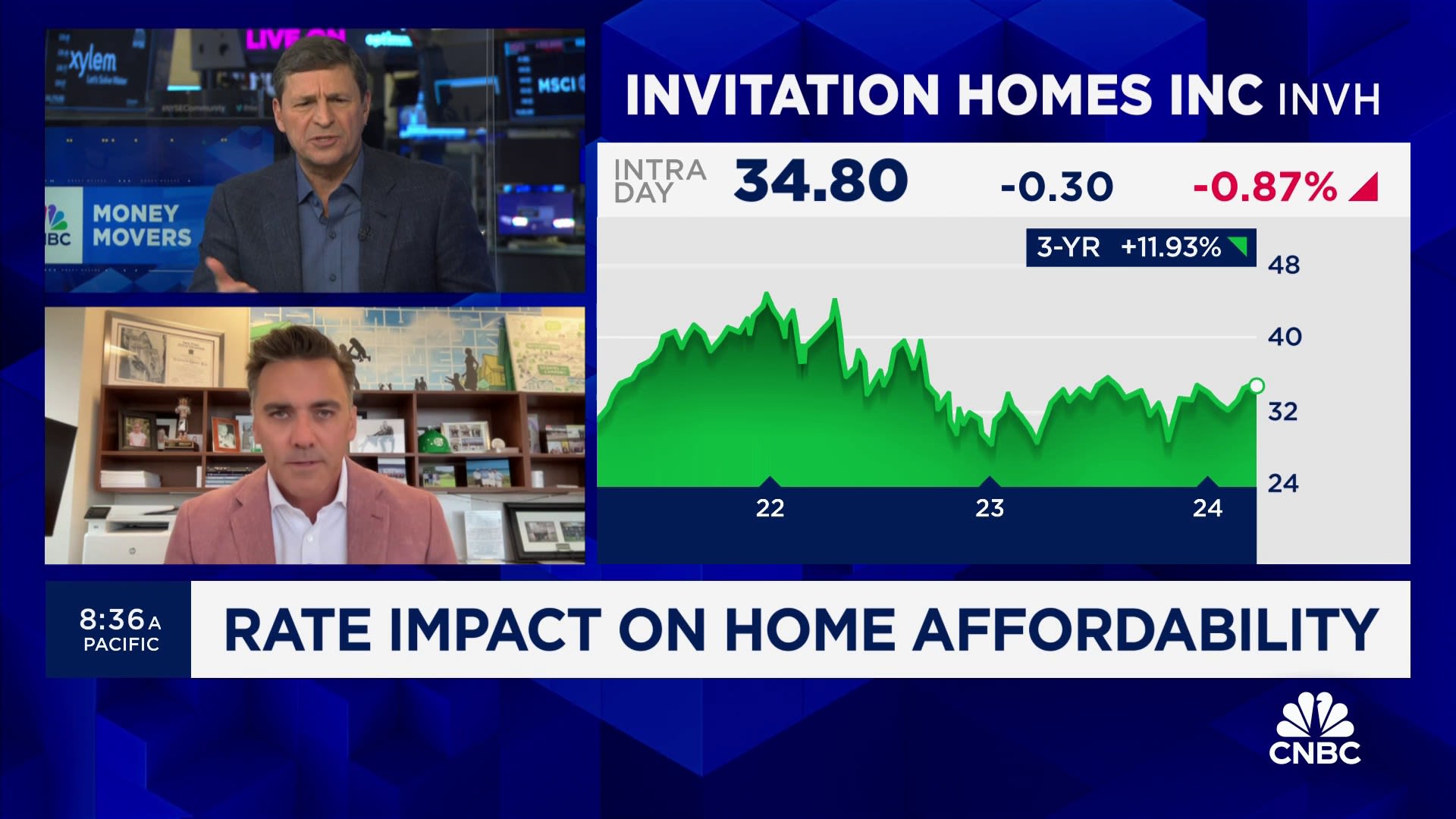
Mine is Invitation Homes to Pay 3.7 million in California Rent Gouging Case.

James:
I’m going with Henry’s.

Dave:
I’m also going with Henry. I don’t want to hear about invitation homes.

James:
And also what’s new? California over-regulating the landlords. This is not a new story, this is just what it is.

Dave:
Well we can’t talk about that.

Kathy:
This is why it matters to the listeners.

Dave:
You can’t talk about it Kathy.

Kathy:
See, I told you I don’t know this rules.

Dave:
Henry, your turn you win. Why do you bring this headline Henry?

Henry:
Well, I brought this headline because as we all know, the Fed said they were going to lower rates this year. And as investors, all of us, I think we’ve all shared the sentiment that as rates come down, more buyers are going to enter the market.
And so we know that that’s going to create another pandemic-y pre-pandemic kind of rush into the market. And so I thought this kind of fit along those lines, but what this article is saying is that the U.S. Housing market, despite having low inventory levels and high mortgage rate and rising home prices, remains super competitive.
And that it relates this to three factors. The first factor being faster home sales. So it says now that homes are selling 50% faster than pre-pandemic norms. So if you think before the pandemic, what did the market look like when we all thought it was a very normal market and now homes are selling faster than that.
The second point it brings up is that there’s stiff competition due to limited inventory. And we all have been talking about this since the inception of this show. We know there are not enough houses, particularly single-family homes for the amount of people that want to either buy or rent homes. And so that creates competition because everybody’s bidding for these same homes. I’m starting to see even more headlines of hedge funds buying single-family homes again.
So the rates are coming down and everybody’s starting to start to snap up what’s out there right now. And so the limited competition, but that’s going to drive prices up. And then the third point is the impact of increased home values and mortgage rates.
So as we all know, all of these things are going to lead to home values rising, but what the article is saying is that the typical mortgage payment was up 7.5% year over year in December 2023 and 106.5% higher than the pandemic average.
So I don’t know that we’re going to see any cooling anytime soon if rates drop or continue to drop, because they’ve already dropped some.

Dave:
That’s something interesting you said Henry, I hadn’t really thought about that. That days on market, which is how we measure how quickly home sales have fallen a lot over the last couple of years. And I wonder just absent of normal market dynamics, if that is now embedded into the psychology of home buyers, that even if the market, there’s more inventory or more supply coming online, if people are still going to act with quickness now and try and bid because the last couple of years that was necessary and people now think that that’s normal.

Henry:
Yeah, that’s actually a good point. And I think a lot of people have, what’s that when you slap someone’s hand and they get to their points and pull it away.

Dave:
All right.
Henry, we’re cutting you off unfortunately. Maybe we have an opportunity to keep talking about this unless James’s headline beats you out. James, what’s your headline?

James:
My headline is mortgage applications for new homes soar year over year despite a seasonal dip.

Dave:
Okay, Henry, Kathy, what do you want to talk about?

Kathy:
I agree that that’s a good headline, James, but it kind of falls into Henry’s. So I think we just have to stick with Henry’s like what is going on?
The bigger picture. It’s not just new homes, existing homes, sales are definitely down from where they were, but it’s really interesting to look at before the pandemic and are we really selling more homes than we did then We get so used to just the last few years without looking at the bigger picture a lot of times.
So I’m sticking with Henry’s.

Dave:
I’ll just stick with Henry’s too. I want to hear, hear what Henry was about to say. So we’re just going to vote you down, James, and Henry, you’ve got the floor once again. And remember who voted for you Henry, because me and Kathy have more headlines come up.

Henry:
All right, yeah, Dave, to your point, I think a lot of people, I would say the majority of first time home buyers don’t know what it was like to buy a home pre-pandemic, right? And the majority of second time home buyers are now hitting a time period where they probably bought their first home around pandemic time, maybe just pre-pandemic. So people don’t really know what the market was like before everything got crazy.
If they’re only buying their first maybe their second home and if they’ve gotten their hand slapped every time they were putting in offers before, that’s probably the way they’re going to treat this new market. Even if their seasoned agent is telling them, Hey, we don’t have to do that right now.
They don’t want to get beat out if they fall, and remember, home buyers who are not investors are not buying based on numbers like investors are. They’re buying based on emotion and on what fits their family and that’ll always cause them to want to maybe bid more than maybe what the house is worth because they don’t care what it’s worth. They care, this is what my family needs.

Dave:
Do you guys think we’re going to get in this situation where if a house sits on the market for more than seven, it either goes within seven days or it’s going to sit on the market for a really long time because people think it’s spoiled and we’re going to have this polarization of how long houses stay on the market?

James:
Yeah, I think right now when you’re listing properties, if they sell on that first weekend, they’re actually getting very, very competitive multiple offers. But I do find this article kind of funny because it’s a frozen market that’s kind of hot at the same time, it’s competitive.
So it’s like what does that even mean? Talk about confused buyers. But I feel like in today’s market we saw the rates skyrocket, the market did not collapse, median home price went up, and now the buyers are that great migration that goes on in Africa where the buffaloes are just kind of hurting and that’s what’s happening.
And every time you see a sale on the market, the buyers get a little bit of FOMO and it gets hot real quick. It’s like every data point that absorbs and there’s so little inventory, it only takes one. And we’ve seen this pretty consistently, even on our town home sites we’re selling, they’ll sit on longer than seven days, but then one clicks and they all go.
It’s a domino effect. And so I think if you hit that seven-day window, you’re good, but if not, you reposition your listing and they still come back as well.

Kathy:
Yeah, and it just depends on price point and affordability in the area. If it’s priced right, it’s going to go quickly and if it’s priced wrong, people are going to have to adjust. There’s still some people who think their houses or the property’s worth more than maybe it is, but properties, again, if they’re priced right, they’re going to go really quickly. And affordable housing is what’s needed most.

Dave:
It’s funny because back in the day I feel like it was 60 days is when a house would start to get a little bit stale. So now it’s just funny to think that if the house has been sitting on the 10 days, you’re like, oh, there’s something wrong with it, I don’t want to even touch that.
Or at least like a home buyer would. An investor’s probably like that’s what I want. But it’ll be interesting to see if supply comes back, if some of the other parts of the market return to normal dynamics or if we’re permanently now in this very altered state.
All right, the next headline is mine. I wanted to switch it up and not talk about the housing market. So mine is that Americans have lost faith in college. So do you guys want to keep talking about Henry’s or do you want to talk about Americans losing faith in college?

Kathy:
Well Dave, I just don’t know what that has to do with on the market. So I’m going with Henry’s.

Dave:
That’s fine. James?

James:
I think we can beat this frozen market to death at the end of the day, there’s nothing for sale. I’m going to go with, I want to switch the conversation. I want to hear some college, why people don’t want to go to college.

Henry:
Yeah I do. I want to hear about college because this is kind of a hot button topic for me. I’ve had some opinions about this myself, so definitely want to hear about this.

Dave:
Now I definitely want to do it. I want to hear your opinions. Well there was a recent article in the Wall Street Journal called Why Americans Have Lost Faith in the Value of College. And personally I just found this interesting just being a millennial, I feel like growing up you were just hammered into your head that you had to go to college and that was the only way to get ahead.
And now people’s opinions of that are really changing. In the last decade, the percentage of Americans who say they have confidence in higher education fell from fifty-seven percent. So the majority, down to thirty-six percent in just 10 years, which is a lot.
What’s crazier to me is nearly half of parents say they would prefer not to send their children to a four-year school after college. And two-thirds of high school students think they’ll be just fine without a college degree.
So to me that just sound crazy because I grew up in a different sort of environment I guess. But I’m curious what you guys think because personally college was very valuable to me and what I learned and matured a lot.
But was it valuable? $250,000 valuable? I don’t know. I think that the price has gone up so much that even though you learn something, these sort of cost benefit analysis has really, really changed. So curious what you guys think.
If you can get a good job, have a good career without college or you still need to go. Henry, you teased your opinion so I got to hear them.

Henry:
Oh man. Oh man. Look, I think that what was valuable about college before is that most of the employers who were going to offer jobs saw value in that person having a degree. And so it made it very difficult to get a high paying or a well paying job if you did not have a college degree because that was one of the first things, some employers wouldn’t even consider your application if you didn’t have a degree.
And it used to be that they wanted a specific degree, your degree had to be in whatever field that that job was in. And as time has moved on, and access to information has become more convenient with the internet and online. And one thing a lot of people don’t talk about is the pandemic forced everyone to get comfortable with online education. Right around the time of the pandemic, not everybody was comfortable going to school online.
There were some institutions who had online classes and some didn’t. There were weren’t as many online gurus “teaching things,” because not everybody was comfortable paying somebody some money to teach them something. Well, the pandemic forced everyone to have to learn online. It kind of fast forwarded that industry quite a bit.
And so now you can get an education as valuable or if not more valuable than college for a fraction of the price if it’s concentrated in one particular industry. And so all that to say, is that businesses have now started to notice that some of my best employees don’t have a college degree.

Dave:
Oh god, this is so ruthless. I wanted to hear what Henry had to say. Henry, now you have to propose another one. So what’s yours?

Henry:
All right, the headline I’m proposing is Congress Proposes Tax Breaks and Significant Limits on the ERC.

Kathy:
Oh yeah, yeah. I want to talk about this. This is good. I want this.

Dave:
I’m going college. James, what do you think?

James:
I’m kind of sticking on college.

Kathy:
Oh man.

James:
I think there’s important things people need to think about about attending college.

Kathy:
Oh, but the tax breaks, man. The tax break. Wouldn’t you like to get the hundred percent right off back, find short-term rentals.

Dave:
Henry, do you want to finish your own thought or do you want to move on? This is going to come down to you.

Henry:
Oh, okay. Let me take my own bias out of it. Our listeners are probably seasoned real estate investors and so they would probably care more about the tax benefits, but man, I would love to talk about the college. Maybe we needed to have a whole show dedicated to this so I can get on my soapbox.

Dave:
You can’t talk about it anymore. Henry. Forget it from your mind. Talk about tax breaks. Go.

Henry:
Oh man. So the Senate Finance Committee and the House Ways means committee have proposed a bipartisan tax legislation framework with significant changes to the tax code. This includes modifications to the employee retention credit, and in the article they break down what each one of these major changes are.
But let’s be serious guys. There’s only one of them in here that we all want to talk about.

Kathy:
Yeah, let’s talk about it.

Henry:
And those are the changes to the bonus depreciation Section 168K. It extends the ability for businesses to claim 100% bonus depreciation for investments. So we were losing bonus depreciation slowly year over year with it supposedly being phased out by, what was it, 2026 or 2027. We weren’t going to have bonus depreciation anymore. And now this proposal would bring back 100% bonus depreciation retroactively for 2020.

Kathy:
Bring it back baby.

Henry:
We can go back to last year and get a hundred percent bonus depreciation. And I don’t know about you guys, but I need that.

Dave:
So explain bonus depreciation, what it is. So if people don’t know.

Henry:
So bonus depreciation, in a nutshell is every asset has a useful span. Everything is returning to the dirt essentially, right? So everything is depreciating and so there is a scale at which each individual item depreciates, some depreciate over longer periods of time, some depreciate over shorter periods of time. What the 100% bonus depreciation does is it allows you to take all of that depreciation and use it as a write-off in year one.

Dave:
Got it. And so it was being phased out now it seems. Has it been voted on or is this just there’s bipartisan support for this?

Henry:
I don’t believe it’s been voted on. I just believe it’s been proposed and yes, and I would argue that everybody who would be voting on this owns assets. So we’ll see how it goes.

Kathy:
It does say bipartisan in the article so that yes, I agree with Henry that I think the politicians would like this too.

James:
I think the big thing about the bonus depreciation is it will bring a more surge to the multifamily market. The big benefit of bonus depreciation is on your big income years you can drive down. I know for me when I’m having large income years, I’m chasing that bonus depreciation. I’m trying to get my tax liability down.
And so I think it could be bring another surge of investors trying to place money, offset their gains and it could actually grow the multifamily space pretty rapidly again.

Dave:
James, have you ever had not a low income year?

Henry:
If he did, I would argue that the number, he would say that low-income year would not be considered a low-income year for me.

Dave:
Still better than my best year, probably.

James:
2008 was definitely a low-income year.

Dave:
Okay, fair enough, fair enough. So we have to move on to our next headline. Kathy, can you unseat Henry please?

Kathy:
Okay, we’ll just go with U.S. single family housing starts plunge in December.

Dave:
I’m voting for you Kathy because Henry’s on a roll and we got to take him down a peg.

Kathy:
Thanks guys.

James:
Yeah, I’m voting for Kathy’s just because we started a bunch of new construction projects, so we got it ripping.

Dave:
All right, Kathy, why’d you bring this story?

Kathy:
Well, I brought this up because we need new supply for prices to come down and stabilize. And so when you see headlines like U.S. single-Family Housing starts plunge in December, that exacerbates the problem.
And I know that California’s coming out with a lot of new legislation to make it easier for new homes to be built, and specifically affordable homes. It’s so hard to build homes cheaply these days. And for the average person who really needs it to not be a multi-million dollar home.
But starts did plunge. And right here the article says, single-family housing starts, which account for the bulk of home-building fell 8.6%, to a seasonally adjusted rate of one million twenty-seven units. So twenty-seven thousand units. So this is well below where it needs to be.
Multi-family starts have come down as well. And a lot of this has to do with the high cost of borrowing. It’s so expensive to get construction financing that builders just backed off, but hopefully in 2024 this will change now that we’re seeing a reversal, a Fed reversal, the Fed pivot potentially cutting rates next year and hopefully the cost of borrowing coming down as well.

Dave:
James, you said you’re building though, so you, you’re bucking the trend.

James:
Yeah, I think the big key to this stat is, I mean the reason housing starts are down, is the permit timelines have taken a lot longer when you’re trying to do density. When you’re a builder, the more density you’re putting on, the longer your permitting takes.
And with the cost of money being at it’s all-time high for developers, or not all-time highs, but all-time highs in the last 20 years, people have avoided those projects, and what’s happened is the confidence has been coming back and builders are selling their product off. The sellers have also changed their mind on how they’re negotiating terms.
And so what’s happening is as a developer, you can get permitted sites closed, which adds more in the pipeline. And so there’s this gap in time, but that gap in time is going to make the market rip because there’s going to be a shortage for this nine-month window.

Henry:
I think one of the things that’s been holding up new home construction is the high interest rates which make the holding costs on the land. So if you’re building density, you got to buy a big swath of land and it takes a long time from purchase of that land to when you’re actually selling homes and making, and getting some money.
And so those holding costs are eaten up builders. I’m buying two single family homes right now from a builder because he needs to take the money from these two singles and use it to hold onto another more large scale project that they’ve got going on.
So as interest rates come down and the holding costs come down, you’ll start to see more builders enter the market because they can afford to hold onto some of that land and they’ll be able to sell off their existing projects and put more capital in their pockets so they can continue to build.

Kathy:
And this article also shows that-

Dave:
Oh, all right. Well then this is an opportunity for James to get on the board. James, what’s your second headline?

James:
Second headline is Blackstone is back. Blackstone is moving back into the rental homes.

Kathy:
I vote for this one.

Dave:
Okay, Kathy, you’re satisfied with your own one headline run. James, you’re voting for yourself. I’m just going to vote for this too, but Henry, just for the record, which one would you have voted for?

Henry:
I don’t really care about Blackstone, so I would’ve voted to stay on topic.

Dave:
All right, well then you’re going to have to listen to us talk about something you don’t care about. James, go ahead. What’s this headline?

James:
All right, so I think this is a fairly big headline because Blackstone acquired Triclone, which is a huge single family housing investment company. They’re public and now they’re taking them private again, they paid $3.5 billion because they just can, and…they just write the check, no big deal.
And the thing is they are taking over a billion dollars in development pipeline, and to where they’re going to be bringing it to market. So this purchase of the portfolio is not only in the US but it’s also in Canada, which I think makes them the largest single family home buyer and owner in North America because they’re also picking up $2.5 billion in apartments from Canada.
And the reason I think this is so important is, I will say I can confidently, I feel confident that the guys in the back in Blackstone are much smarter than me, and they know how to read data better, they know how to forecast better. And when they can move that kind of money, they can also move things.
They can kind of change the market and it’s a big sign if they feel confident in the single family housing market that we could see. I think we’re seeing a drastic improvement because they did cut off, as far as I know, they were not acquiring for the last 12 to 24 months, and that’s a huge faucet they just turned on.

Dave:
Well, I’m sort of with Henry saying he doesn’t care about these things. It’s not like it’s not interesting. I just think people really overestimate how important this is to average investors because they own one to 3% of houses.
So if you’re in a market where they’re actively buying, it certainly matters, but it’s never really impacted me and it’s not going to impact I think investors on any sort of national scale.

Henry:
Yeah, I agree with you Dave. And what I do think it means for the average everyday investor is you’re supposed to follow the whales if you want to make money. And if you remember before interest rates started to go up on this show, we were talking a lot about how single family homes are the new cool asset class.
They weren’t cool before, but now that inventory is so limited, they were starting to become cool again and then all these hedge funds started to notice that and started to snap them up.
So this should just be your sign as an investor that hey, these whales are buying these properties. So holding onto something that is of limited inventory is always going to net you some money in the long term.

Kathy:
Yeah, if the headline said, Blackstone’s dumping 38,000 US rental properties, that would give us all a moment of pause, but it’s the opposite. And that was always a fear is that these big hedge funds would just dump all their properties all at once, which they would never do.
Why would they do that? That would only hurt them and the value of the properties. But this is evidence that that’s not what they’re doing. They’re back in.

Dave:
All right, last headline is mine. And again, I just did something not housing related. It is, Americans are suddenly a lot more upbeat about the economy. You guys want to talk about Blackstone or the economy? Henry, what’s your vote?

Henry:
The economy.

Dave:
James?

Dave:
I’m going to go with the economy.

Kathy:
Yeah, Dave, you got a hundred percent here. You are the winner.

Dave:
Okay.

Kathy:
Look at you.

Dave:
The fact that I just won on this is very surprising because at least on Instagram or YouTube, anytime I talk about anything positive, it never gets any views. People only want to hear something negative. So I appreciate you guys giving some space to hear something positive.
And that is that the consumer sentiment index has really spiked up over the last couple of months. We’ve talked about this a little bit on the show, but the University of Michigan takes a consumer confidence poll, consumer sentiment index every month. And for a while it was really low.
So just for an example, in June of 2022, it’s the lowest it’s been since the year 2000. It was at a reading of 50, which is like half of where the index is set to, now it’s climbed all the way back up to almost 80. And it’s important to note that this is still below where the index was from 2012 to 2019, but is a big improvement of where we’ve been over the last two months.
And this tends to be a good sign for the economy because when people are feeling good, they spend more money, which spurs the economy. Obviously that could mean more inflation if they spend too much money.
But what do you guys make of this? Is this good news in your opinion?

Kathy:
Yeah, I was kind of surprised to hear that because there’s been so much negativity and so much fear that there’s a recession looming that recession didn’t happen in 2023. They’re talking about 2024, but there’s really no sign of it yet.
There’s been wage growth and now inflation is down. So the wage growth is above inflation. So maybe that’s it. They’re making more money than the prices are going up now, just recently. So maybe they’re spending more.

James:
And we like that they’re spending more, especially if you’re a flipper or a developer, because the more positive people are about the economy and the outlook and what they’re feeling. I mean, one thing I have learned since this pandemic is our economy is very emotional, and it goes in waves.
If the general sentiment is that everyone’s feeling good, you just see a lot of competition people, I hate to say this, but get a little bit more careless with their spending. And then for us as investors, it allows us to sell them for more. And so anytime there’s a positive light, it’s just good. It makes things transact more. We might see more inventory out of this because people think they can actually go onto another house and they don’t feel trapped.
And so it can loosen up the inventory as well. Perception is key. And I think this is a very positive sign, at least in the short term. It is a very 30, it’s very surgy, so who knows, they might hate it next month, but as of this month, that’s a good sign.

Dave:
I think we’ve been talking about it for a while that at a certain point people just get used to the new reality and inflation was really bad. It’s still a little bit higher than the Fed wants it to be, and it’s still painful for people because inflation was way higher than wage growth for a while.
And so people were losing power, but people get used to it. And as Kathy said, that has reversed for the last couple months. It’s just a little bit above it, but it does make a difference. And the article also does point to gasoline prices going down, which always has a big impact on business, but a lot on consumer feelings is how much they’re paying at the gas pump.
And since those have come down, that’s probably contributing to some of this positivity.

Henry:
I’m looking forward to it. Not because, well, obviously I’m looking forward to it because I feel like my homes that I’m selling will sell for more and sell faster, but I’m also looking forward to it because I believe it’s going to open up access to money. I think people are going to want to have their money out there and working as they feel more confident in what’s going out there.
And so I want to use it as an opportunity to start to secure private money funds that I can use on rainy days. And I want to start securing more local bank funds and deploying those so that I’m able to build up access to money in a time where people feel confident so that if things change, I’ve now built up my buying power.

Dave:
Now that’s just a good idea. Get some dry powder when people are feeling good. All right. Is that the end to a rumble? That was the most peaceful end to a rumble I could imagine. We were all just like, yep, we’re done.

Kathy:
I think we have to learn to fight more, you guys.

James:
You know, maybe we should be allowed to a counter argument to change everyone’s mind, so it’s little bit more, a little bit more rumbly.

Henry:
A little bit more funny.

Kathy:
Yeah.

Dave:
Someone has to play devil’s advocate. That might be fun.

Kathy:
Oh yeah. You know what? That’s actually something we do at Real Wealth is you have, everybody wants to be so agreeable, so you have to assign somebody to disagree with everything and poke holes in everything because yeah, it’s too easy to do the group agree.

James:
That’s what they call the heel in WWF. It’s the bad guy.

Kathy:
The bad guy. All right.

Dave:
I have a few friends who would be perfect for that job who just disagree with everything in front of them. They would relish that opportunity.

Henry:
And for those of you listening right now and you’re wondering, is this really how they come up with show ideas? The answer is yes. This is literally us figuring out, we’re going to have new show ideas. You’re welcome for the behind the scenes look y’all.

Dave:
Okay, so next episode, we’re going to have someone play the heel. We’re all going to be wearing Luchadore costumes and it’s going to be an actual physical brawl.
Well, in reality, we would love to know what you think about this episode. We are always trying to think of new fun ways to share information with you. So if you like this episode and you’re watching it on YouTube, shoot us a comment below or leave us a good review on Apple or Spotify if you like what we shared with this episode.
We really do appreciate those positive reviews. Kathy, Henry, James, thank you all so much for joining us and thank you all for listening. We’ll see you next time.
On The Market was created by me, Dave Meyer and Kailyn Bennett. The show is produced by Kailyn Bennett, with editing by Exodus Media. Copywriting is by Calico content, and we want to extend a big thank you to everyone at Bigger Pockets for making this show possible.


https://www.youtube.com/watch?v=59uLoi8sNvE123????????????????????????????????????????????????????????????????????????????????????

Help us reach new listeners on iTunes by leaving us a rating and review! It takes just 30 seconds and instructions can be found here. Thanks! We really appreciate it!

Interested in learning more about today’s sponsors or becoming a BiggerPockets partner yourself? Email [email protected].

Note By BiggerPockets: These are opinions written by the author and do not necessarily represent the opinions of BiggerPockets.


Source link

The “Frozen” Housing Market Reignites in 2024 Read More »

BlackRock’s Rick Rieder generates outperformance and attractive yield for his income ETF

BlackRock’s Rick Rieder generates outperformance and attractive yield for his income ETF


Source link

BlackRock’s Rick Rieder generates outperformance and attractive yield for his income ETF Read More »

How Bad IS The American Economy?

How Bad IS The American Economy?


The “silent depression” is here. Just like in 1929, the American economy is ravaged by a declining GDPplummeting asset prices, widespread unemployment, and a completely fractured banking system. Wait…are any of those things happening today? Not quite. But, according to social media, a “silent depression” is widespread across the American economy, with high inflation, limited wage growth, and low homeownership for millennials and Gen Z.

To explain the “silent depression” trend, CNBC’s Jessica Dickler is on the show, giving her take on this trend and other popular economic trends across social media. We’ll get into why younger generations feel so bad about the economy, EVEN with strong financial fundamentals, the rising cost of living across the country, and whether or not economists agree with the “silent depression” theory.

And if you want to see Dave get really fired up, prepare to hear his best “you darn kids!” impression as he explains why so many young Americans are tired of older generations holding so much of the wealth.

Dave:
Welcome, everyone, to On The Market. I am Dave Meyer, your host, joined today by Henry Washington. Henry, how often do you get your news from TikTok?

Henry:
I don’t get my news from TikTok very often, but I’d be lying if I didn’t say I get my news from Instagram, which probably means I get the news late.

Dave:
Yeah. Yeah, because it goes on TikTok first and then to Instagram.

Henry:
Yes. True.

Dave:
Well, TikTok is increasingly a lot of people’s primary choice for information, news, economics, all of that stuff. And there’s a new trend emerging on TikTok about the economy. And the idea is that the US is in a, quote, unquote, “silent depression.” And this is a really interesting idea and interesting topic that is gaining traction, and we wanted to dig into it.
So, in order to do that, we’ve invited on Jessica Dickler, who is a contributing writer and editor. She covers personal finance for CNBC, and she recently wrote an article and investigated this idea of a silent depression. And Henry and I are going to chat with Jessica about this trend and learn more about it. And then stick around because at the end of the episode, Henry and I are going to talk about our feelings about this and what we think about the silent depression, if it’s real, and what’s at the core of some of the economic sentiment that is spreading across the U.S. So, stick around, we’re going to get right into our interview with Jessica Dickler.
(singing)
Jessica, welcome to On The Market. Thank you for joining us.

Jessica:
Thank you for having me.

Dave:
You wrote an article called Is the U.S. In a Silent Depression? Economists Weigh in on Viral TikTok Theory. So, there’s a lot to unpack in that headline, but let’s just start with what this trend is and when did it start?

Jessica:
Okay. So, there’s this idea that’s been gaining a lot of traction on social media, particularly TikTok, about being in a silent depression. People are basically sharing their experiences that it’s harder today to get by, things cost a lot more, just going to the grocery store or buying gas eats up more of their take-home pay, and it’s less affordable now than it’s ever been in the past.

Dave:
Just at first glance, that seems mostly to surround the idea of inflation, that things are getting more expensive, or is there something else to this idea? Because when I hear depression, generally I think of something beyond just inflation.

Jessica:
Right. Well, that is the crux of it. I mean, the U.S. economy has remained remarkably strong coming out of the pandemic, even dodging these recessionary forecasts for months and months. But at the same time, we’ve seen inflation spike in this very short amount of time. And yes, housing, food, transportation, those all cost a lot more than they did just a few years ago. And that’s what’s really driving people crazy. So, when they compare what things cost today to just in their recent memory, it’s clear that things are a lot more expensive and they feel like that’s this silent depression that they’re talking about.

Henry:
Yeah. I was looking at some of the videos from the trend, and it’s tough seeing things that compare a lifestyle from the ’20s and ’30s to now, but what does grab you is when they talk about percentages, right? Like the percentage of their income that is allocated towards a car payment or a percentage of their income that’s allocated toward the housing expense. That percentage does seem … I mean, it is a lot higher. What’s the age group of people that are typically talking about this silent depression?

Jessica:
Yeah. This is really popular among young adults, particularly those starting out. Housing especially has weighed on them because it used to be that you would graduate from college, maybe rent an apartment, or even buy a home. That is so out of reach for many people today, especially with a starting income.
And if you don’t already own a home, then you don’t have the advantage of higher home prices to leverage into a new house purchase. So, you are looking at higher home prices, smaller supply, and of course, mortgage rates, which we’ve seen really jump in the last few years. I mean, they’ve come down and are now a little over 6%, but that’s still twice what they were three years ago.

Dave:
And are these videos catching on? Is this becoming a mainstream idea that we’re in a silent depression or how popular are they?

Jessica:
Well, yes and no. This idea has become very popular and on social media, these negative sentiments seem to resonate a little bit more. But there is also the reality that many economists say the country is doing remarkably well. We’ve seen GDP grow every quarter, which is generally a measure of the health of the economy, and people have jobs, and that’s really the number one determinant of how people are doing is whether they have a job or not. And the unemployment rate has held steady at 3.7%, which is near a historic low.
So, I mean, there is all this good data out there, but at the same time, these negative ideas, once you plant the seed, they tend to grow and that’s what’s happening.

Henry:
Where would you say … Because obviously you’ve covered this and you’ve covered other stories like this, so where would you say, if there is one, the disconnect between what’s happening now and what people are feeling towards what happened in the past in a real depression?

Jessica:
Yeah. I mean, I think the disconnect really comes down to the affordability crunch that we’re in right now, which is a very true thing. Even though the economy has been trucking along and the unemployment rate is low, and people generally have jobs if they want jobs. At the same time, it does cost a lot more to go to the grocery store, to travel, to buy a car. Young adults also have student loan payments that have resumed after a very long pause, and people got used to not paying those.
So yeah, I mean, in your take-home pay, there’s just not enough left over at the end of the month to feel good about your financial standing. And that’s what we’re seeing play out on social media.

Dave:
I think it’s important to note that there is some data that supports this, as Henry cited some of the housing statistics, but also just for a lot of the pandemic year, so 2020 up until basically about a year ago, we were seeing that inflation was outpacing wage growth. And when you adjust for inflation, that means that everyone’s, on average, spending power for the average American had been declining.
Now, that has reversed since April of 2023, and it’s now about 1% better for wage growth over inflation, but there’s still a long way to go in terms of making up for the years of inflation eroding spending power. So, there is some logic and math behind what this trend is talking about, but what do economists think about this? You’ve mentioned some things about GDP, I don’t know if you’ve spoken to any economists directly, but how do you think they might respond to this concept of a silent depression?

Jessica:
The economist that I spoke to for this article really balked at that idea, just saying that the idea that we’re in a silent depression is completely divorced from reality. Of course, in many ways the country is in a lot better shape than it was nearly 100 years ago. There are social safety nets, there’s a better quality of life. People have more equal opportunities. I mean, just from an economic standpoint, the math doesn’t really math on the silent depression concept, but that doesn’t quite capture the emotion of what it’s like today.
So, technically from the economic standpoint, a depression is really defined by how the economy is doing, and we’re just not seeing that play out in the numbers. So, we’ve only had one depression in this country’s history, which was the Great Depression, which spanned a decade, and unemployment hit about 25%. Things are nothing like that today. In many ways, we’re much better off.

Henry:
Yeah, I tend to agree with you and the economists. I think what people are so caught up in is that the basic human needs of shelter and food are more expensive and it makes it feel like a depression. But I think it’s like this, we’re getting these terms mixed up or confused with each other because what we have now that wasn’t available then, and you guys hit on it before, was availability of jobs. Right? People can find a job pretty easily right now if they want to. It may not be a job they love, but finding a job is a possibility. In the depression, that wasn’t a possibility for everybody. There just wasn’t the money to go around.
But also, convenience, right? With the advancements of technology, you can make money without a job now. You can make money on social media or selling digital products or just people’s ability to reach an audience and then monetize that audience is far more available now than it wasn’t before. So, you don’t actually even have to go get a job. And so yes, you have to go make more money now to be able to afford the necessities and that is, or could be seen as a problem, but the opportunity is far greater.

Jessica:
Yeah, definitely. And so many people are taking advantage of that. Even like you said, you can pick up a side gig on your phone or sell things out of your home. It’s never been easier to do that, and it’s a great way to supplement your income. That’s the reality that a lot of people are facing that maybe they need a job and a side gig to make it work.

Dave:
I think my general feeling about this is that I do have empathy for anyone who’s struggling to afford basic necessities. Housing is more expensive. You cannot argue against that. I think the issue I have is that the term is just wrong. It has nothing to do with a depression, and it’s just a different branding of inflation. What’s being described is the detriments of inflation.
When you talk about depression, Jessica, you gave a definition of it. Yeah, is it a broad decline in economic output for several years across many industries? That is not happening by any measurement. And so, are there economic problems in the U.S.? Absolutely. But calling it a depression, I think, is a bad name for it.

Jessica:
Yeah, I agree. But except for the fact that that’s what caught people’s eye on social media, and a lot of it does come back to that. These ideas really pick up steam because they’re catchy and interesting, and we’re seeing that happen.

Dave:
That’s true. I guess, I think it’s a bad name, but for the people who created this content, they probably think it is a very good name because they probably got a lot of views for it.

Jessica:
Exactly.

Dave:
Jessica, are there any other trends about the economy you’ve noticed going around on social media?

Jessica:
I mean, there’ve been so many ideas about economic conditions on social media. It’s a hot topic these days, which makes my job a little more interesting. But I mean, we recently were all abuzz about girl math and the idea of you have to rationalize any expensive purchase by thinking about the cost per wear.
I mean, all this relates back to affordability and the economy and how people are doing and they want to buy things. And of course, consumers have been buying things, and that has really helped the momentum of the economy overall. But they’re also rationalizing and trying to justify purchases that maybe they can’t afford, and sometimes leaning a little bit too much on credit card debt. I mean, it’s just very interesting to see these ideas take hold to prop up how people are doing these days.

Dave:
Yeah, it’s super interesting. I think it just reflects some cultural shifts in how people think about the economy and spending in general. And I’m personally just very curious to see how it continues because we hear from a lot of sources that credit card debt is up and a lot of the excess savings from the pandemic has been depleted. But when you look at consumer spending and retail sales, they’re still pretty high. And so, at some point, it feels like something needs to give, but surprisingly that hasn’t happened yet.

Jessica:
Yeah, exactly. And I do think we’ll start to see that cool a little bit in 2024. I mean, the economist that I talked to also said that that level of spending just isn’t really sustainable and things will start to calm down a little bit.
I heard a new term that caught my eye, loud budgeting, where you just say no and explain why you’re not going to buy something, even though you want to buy it, but it just doesn’t fit in the budget and you’re going to talk yourself out of it.

Henry:
I can see people screaming in stores, “I will not buy this because rent is due in three days.”

Dave:
Yeah.

Jessica:
Yep.

Henry:
So, because you cover a lot of these financial trends and topics in terms of social media and what’s going on in the economy, how do you feel like both the media and social media have played into people’s concerns around the economy?

Jessica:
Well, I think some of these ideas without the real data and information behind them can be detrimental. I mean, why do people feel bad about an economy that’s doing well? I mean, you really need to look at the whole picture and not just what people are sharing on social media. And at the same time, we’re also seeing these lavish lifestyles, which also doesn’t help make people feel very good about how they’re doing, when they can’t afford those types of purchases or trips or whatever it is.
So, I think that in many ways it can be harmful, but it also is where we are today, and people get their news from social media and their information. It can be great to share your experiences and also raise the curtain if you’re feeling disheartened about your economic standing. I mean, it doesn’t have to be a secret, but at the same time, I think it needs to be balanced with some good data on what the reality is in this country and where we stand.

Henry:
Yeah, I agree. I think when I hear us talking about this, it gets me thinking back to when I was coming out of college and when I had my first job, I wasn’t making a ton of money. I think my first job paid me just under $30,000 a year, and there were plenty of trips that I couldn’t go on with my friends, that I had to say no to. There were plenty of budgeting decisions I had to make around what I was going to buy at the grocery store because of the expenses I knew that I had coming up. I missed out on what felt like a lot at the time.
And I guess the point I’m trying to make is none of this is really new. I think the new part is everyone shares all of their successes on social media and people feel like they want to be able to do that, and they can’t. No one’s on social media saying, “I’m at the grocery store and I can’t buy eggs because I need to pay my light bill.” That’s not making it on social media. And so, I think a lot of it is people’s need or want to be able to show the highlight reel and they can’t, but it doesn’t mean that they’re missing out on too much.

Jessica:
Yeah. I mean, I agree. I think that is the very common experience for young adults just starting out. It certainly was my experience too, but what I think is new is that there are these extremes that we’re also seeing exposed, where people just have access to more wealth, more opportunity, and it makes the regular rest of us feel like we’re even more deprived because maybe we can’t do all of those amazing things.

Henry:
So, that’s what it is, Dave. The Great Depression is just we are feeling depressed. It doesn’t mean there’s an actual depression.

Dave:
Yeah. Maybe I’ve been misinterpreting the language of this all along. It’s more an emotional depression than an economic depression.

Henry:
Yeah. Correct.

Dave:
Well, Jessica, thank you so much for joining us and sharing this information about this new trend with us. We really appreciate your time.

Jessica:
Thank you for having me.

Dave:
Henry, what do you make of this silent depression now that we’ve learned a little bit more about it from Jessica?

Henry:
It’s one of those things where my feelings are torn about it. Right? I understand that things are more expensive. I do. They are. I mean, housing is expensive. It is going to take the majority of your pay to pay for a housing expense if you want to live on your own. Right? There are some ways obviously, that people are supplementing that by getting roommates or house hacking or all of those other things. Yeah, I mean, groceries are expensive. They are extremely expensive, and they’re even more expensive if you actually want to eat healthy.

Dave:
Yeah, that’s the real tax, or [inaudible 00:18:37].

Henry:
Right. But, the big but is, the economy’s doing well and there are opportunities out there for people, lots of opportunities out there for people, not just for the job that they have, but to make additional money, have a side gig. It’s just the convenience is much better. It’s easier now than it’s ever been to make income.
And I think one of the things that we didn’t touch on was that, yes, the inflation is a thing, but we’re starting to see companies start to pay higher wages for jobs and roles now, so that people can combat some of those affordability issues. And so, I think even that’s starting to increase, and hopefully we’ll get to a point where we can lower the percentage of what some of these things cost.

Dave:
Can I go on a rant for three minutes? I need to talk about this with you.

Henry:
I would love that. I would love that.

Dave:
Okay.

Henry:
Nothing would make me happier.

Dave:
My wife says, I get in Larry David mode where I’m just complaining about these little inane details about things. If you watch Curb Your Enthusiasm.

Henry:
Oh, I know Larry David.

Dave:
Yeah. So anyway, I think the thing that annoys me about this trend is that it’s just mislabeled. It’s using one economic term that describes a specific thing to describe a totally different thing. A depression and inflation are totally different things. And as you said, Henry, inflation is real and it has evaporated some spending power for people. But when you look at the economy as a whole, by almost any metric you can find, it is growing at a very significant pace. Like GDP, which is the broadest measure of the US economy, it stands for gross domestic product, over the last three years has gone up somewhere around 22%. We don’t know exactly because 2023 numbers aren’t out yet. During the Great Depression, it went down 29%. So, you’re talking about growth of 20% versus decline of 29%. Not to mention all the things about convenience that Henry said.
I watched some of these videos too, and some were like, “This might be the worst U.S. economy ever.” That is just patently ridiculous and just doesn’t look at anything like at the history of the U.S. That said, there is economic challenges with the U.S. right now. And I think the reason it annoys me is because I think they’re just missing the main points about why they’re struggling. And GDP is growing. So, when you look at the big economic picture, the pie is growing. That does not mean that everyone feels the growing of that pie equally.
And so, I think that’s what people are actually frustrated about is that certain groups of people, either wealthy people, but I also want to call out older people, have absorbed a lot more of the wealth gains of the last 15 years than younger people. And I think that’s something that should be talked about, but that doesn’t mean that we’re in a depression. I think it just means that there are these big generational divides and how much wealth is being created. Just as an example, I pulled this up when we were talking. If you look at by age 35, 62% of boomers owned homes compared to millennials, 49%. About 14% of millennials right now have negative net worth. At the same age, baby boomers were 8%. So, you can see there are differences, and that is something that is worth talking about, but that doesn’t mean we’re a depression. It’s a totally different thing. It’s a totally different word. That’s the end of my rant.

Henry:
Mic dropped.

Dave:
I’m sorry. I had to say it.

Henry:
No, it needs to be said.

Dave:
Well, I don’t expect you to respond to that.

Henry:
No. My response is every time I see somebody post one of these videos, I go to their feed and I start scrolling backwards and I can always see a trip or a cool car. It’s like, there’s money’s being spent.

Dave:
Yeah. It is a trendy word. I don’t know. I guess what frustrates me is let’s talk about the real economic issues instead of just mislabeling them. But now I’m just complaining like an old man about social media.

Henry:
All right, boomer Dave, let’s move on.

Dave:
Yeah, exactly. Yeah, I’ve gone from millennial to boomer in the last five minutes. All right, well, I think that’s good thing to get out of here on.
Well, Henry, thank you for your thoughtful and good questions here. Appreciate the conversation. And thank you all for listening. We appreciate you and we’ll see you for the next episode of On The Market.
On The Market was created by me, Dave Meyer, and Kailyn Bennett. The show is produced by Kailyn Bennett, with editing by Exodus Media. Copywriting is by Calico Content. And we want to extend a big thank you to everyone at BiggerPockets for making this show possible.


????????????????????????????????????????????????????????????????????????????????????

Help us reach new listeners on iTunes by leaving us a rating and review! It takes just 30 seconds and instructions can be found here. Thanks! We really appreciate it!

Interested in learning more about today’s sponsors or becoming a BiggerPockets partner yourself? Email [email protected].

Note By BiggerPockets: These are opinions written by the author and do not necessarily represent the opinions of BiggerPockets.


Source link

How Bad IS The American Economy? Read More »

From His Grandma’s Couch Making /Hour to K/Year from ONE Property

From His Grandma’s Couch Making $15/Hour to $30K/Year from ONE Property


Could ONE multifamily rental property change your life? Just five years ago, Jaryn Pierson was sleeping on his grandma’s couch, working a minimum-wage job, and getting sober. But when the right deal came along, it altered his financial future!

Welcome back to the Real Estate Rookie podcast! Jaryn discovered real estate during the lowest point of his life. When friends and family warned him not to invest, he bought a duplex in his hometown. Today, that property nets $30,000 in cash flow each year! Since then, he has only added to his portfolio—buying an eight-unit apartment building through a RARE seller financing opportunity and launching his own property management company. His old minimum-wage job? He’s still got it, only he has been promoted to general manager of multiple locations!

In this episode, Jaryn shares some of the biggest lessons he has learned during his real estate journey—from becoming a better Airbnb host to raising rents on long-term tenants. You’ll also learn how to find properties to manage, as well as why you should focus on stabilizing your portfolio rather than scaling it!

Ashley:
This is Real Estate Rookie, episode 359-er. My name is Ashley Kehr, and I’m here with my co-host, Tony J. Robinson.

Tony:
And welcome to the Real Estate Rookie podcast where every week, twice a week, we bring you the inspiration, motivation and stories you need to hear to kickstart your investing journey. And as always, we have a great story for you. Today, you’re going to hear from Jaryn and how he went from grandma’s couch, making 15 bucks an hour, to cash flowing over $30,000 in his first year investing in real estate.

Ashley:
We are going to understand the power of buying your first home and how it can unlock your investing journey. Jaryn, welcome to the show. Thank you so much for joining us today. Can you paint a picture for us and tell us a little bit about life before you bought your first property?

Jaryn:
Yes, I can. First thing I wanted to just clarify or get out there is I want to say thank you. I think sometimes, when we do stuff like this, whether it’s to grow our own brand or whatever, our intentions are maybe a little different than actually what comes out of it. But four years ago, maybe five, I was unpacking the timeline a little bit this morning. I was sleeping on my grandmother’s couch, not by choice, and I can’t say that I’m much of much, but literally because of listening to this podcast and buying the books, getting my hands dirty a little bit, I have some rental properties. It’s not that magic and it really is the community and people like yourselves who do this that it’s crazy, just the life that’s been given to me over the last few years. I’m not even going to cry, but it’s emotional.

Tony:
Oh, Jaryn.

Ashley:
Don’t worry, we’ll make you cry by the end of the episode, Jaryn.

Jaryn:
It’s emotional. It’s real stuff.

Ashley:
Yeah. Well, that was very heartfelt. Thank you.

Tony:
I just want to add, man, kudos to you for taking the action because across the BiggerPockets community, the podcast, the books, there are millions of people who consume the content that we put out through BiggerPockets, but only a fraction of those people actually use what they’re learning to take action, to implement, to do the things they need to do. And you’re a part of that group, man, so kudos to you. And now you get to inspire the next generation of real estate rookies to follow in your footsteps, man, so super excited to have you on the show today.

Jaryn:
Yeah. So quick backstory. Basically, like I just mentioned, I would say four or five years ago, I was living on my grandmother’s couch, sleeping on my grandmother’s couch, not by choice. I don’t need to go too deep into this, but basically I was getting sober in that process. And because I was in my mid to late 20s at that point, I was partying too much and I had no direction in my life. That pain created this positive feedback loop and I just didn’t really know where to go with life.
So started to get that foundation together, started to move forward, and this is all going to tie into my job at the bike shop because it’s been five years now, which is amazing. I just needed a job where I could go to work, leave work, at work, and focus on myself outside of work. I say that I’m a recovering restaurant industry professional. My time was up in that career and I needed to make a change and it needed to be simple. I’ve always been a bike rider, so the bike shop felt like a good fit. I was living on grandma’s couch. I didn’t need a ton of cash, so $15 an hour, a.k.a., better known as minimum wage back then, was fine. I didn’t really care.
I had been doing that, really happy, some of the best years of my life. Those first two years at the bike shop, I was riding my bike all the time. I was focusing on myself. I was learning about different things, where I wanted to go, and I didn’t think about money once for those one or two years. It just was like something that came in my bank account and then I would use it to buy a candy bar and a bike ride. That was it. I wasn’t thinking about financial education or setting myself up for the future. I was just trying to build a foundation that maybe a lot of people got in their late teens, early 20s. I was just doing it in my late 20s.
So get the girlfriend. That starts to come together. And she had moved home because of COVID, and we had known each other for a long time, but we got together in a romantic way during COVID. I would say about halfway through that, she is all excited because she had been laid off three times through that process of COVID, whatever, and finally gets a job offer and it’s a six-figure job offer. And at this point, I feel like I’m doing really well. And then she’s like, “Oh, my god. I’m moving back to New York. I just got a six-figure job.” And I’m trying to be happy for her, but I’m like, “Oh, my god. What is six figures?” I’m making 16 bucks an hour or something at this point.
So that was super painful. The pain of a tenant calling you and saying that the toilet is overflowing and you need to come get it, I promise, anybody listening, is much less than falling behind. That is way more painful. So that was the catalyst though, to, all right, dude, you’ve got a lot of other things going as a foundation in your life right now, exercise, morning routine, reading at night, whatever. But financial something, it wasn’t anything I was looking at. It was like, okay, I’m uncomfortable. There’s some growth that needs to happen.

Ashley:
Well, okay, so what happened with the girl? Did she go off to New York and now you’re home and you’re trying to figure it out? Did you break up? Did you stay together? Is it long distance? We need some more details.

Jaryn:
Great question, the girl, the girl. Still in a relationship with the girl, going on four years, basically three and a half, four years. She moved to the city. She took the job. And I, throughout this whole time at the bike shops, I had been trying to figure out how I could be of more value to the bike shop. I love the business. I wasn’t thinking about getting a new job. I was thinking about how can I learn more things to help this bike shop grow? If I fast-forward a little bit, I started as just whatever employee at the bike shop. We didn’t have roles or an org chart back then and we read books like Traction or all these books, and now we have four stores. I’m the general manager of the whole business, grew that business, added value.
So basically, girlfriend moves to New York City and we’re like, “Oh, my god. How are we going to figure this out?” And she had a few months from when she got the job offer to when she moved to New York. So I had a little bit of time or we had a little bit of time to figure it out. So I very quickly started watching Graham Stephan YouTube videos. He’s like a financial influencer YouTube guy or whatever, and he was talking about buying duplexes and investing in real estate. I needed a place to live. I wasn’t on grandma’s couch anymore, but I was renting a house. It was whatever. I wasn’t paying any equity to myself, that’s for sure.
And pretty quickly when the pressure is on, we take some action. Got pre-approved, had some money saved up from getting lucky with some Tesla stock. To be honest with you, I had no clue what I was doing. And was like, all right, I’m going to buy a duplex. Not a huge plan beyond that. It was basically like I’m going to buy a duplex, rent out one side of it, with this idea in the back of my head that maybe I’ll rent my apartment out on Airbnb if the relationship works out because I’ll probably be in the city quite a bit.

Ashley:
So that was a big influence on your part as finding housing that would maybe suit your new lifestyle of traveling back and forth to New York. You want to have a better, strong foundation for your personal finances because this girl is going off making a hundred thousand dollars and you want to provide a better life for her and yourself. So you start to realize you want to look at duplex.
So I want to get into when that moment hit, how long did it actually take for you to actually take action and to purchase that? So start to think about that because we’re going to take a short break and when we get back, I want to dive into that momentum that propelled you from learning about duplex investing until actually taking action. And we’ll be right back.
Okay. Welcome back. Jaryn here is going to tell us about that period of time where he learned about real estate investing and where he actually took action and purchased his first duplex. So Jaryn, tell us about the feelings, the emotions, what you learned and that roadmap you took during that period of time.

Jaryn:
Okay, great question. The duplex, the first house purchase for me, which was about three years ago at this point, a little less. I was reading a lot at that point. I was reading all the BiggerPockets books. I was watching the YouTube books. When I get into something, I can get pretty obsessed and pretty focused on it and it’s really easy to do the work. I also had the pressure, girlfriend was definitely surpassing me in careers, and I had the pressure to keep up and figure it out. And so I had some money saved up, not much, like 15 grand. That was my whole net worth, and it was really negative because of other stuff, but we’ll call it 15 grand in cash I had.
Googled real estate agent. Found one. Picked the first one. She ended up being amazing. We’re friends to this day, but I just got lucky basically. Got pre-approved from the bank. It was just the only reason I picked the bank is because they were the only lenders, actually a broker that had a traditional proper FHA loan. All the banks had products that were similar, but they’re the only ones that had three point a half percent down, and that’s pretty much what I needed.

Ashley:
And how did you find that out? Were you calling loan officers? Were you Googling different banks? How did you find that out that that was the bank that had that?

Jaryn:
Good question. There’s a few people in my life that are a little ahead of me on this journey and I would just be chatting with them. How did you do it? How did you do it? Local people who are in the same market.

Ashley:
Yeah. Why reinvent the wheel when you have resources?

Tony:
I just want to add too, that’s a really important lesson for rookies to understand, is that banking is almost like a commodity. It’s like any other product that’s out there. You can’t go to Wal-Mart and buy the same things you’re going to buy at Target. You can’t go to the 99 cent store and get the same things you’re going to get at Dollar Tree. So banks are the same way. Each bank has its own suite of products, and sometimes one bank might not have what you need. That doesn’t mean there aren’t 10 other banks that have it. So I see a lot of rookies that feel a little discouraged when they talk to maybe one or two lenders and can’t seem to find the right product for themselves. But there are so many loan products out there and so many different lenders and so many different institutions. Keep looking until you find the right person that matches your unique situation. And it sounds like that’s what you did, Jaryn.

Jaryn:
Yeah, a thousand percent. And if I could add a little bit there. I think a topic that’s discussed a lot on here, but I think sometimes is easily forgotten in the moment, is that the banks make money off us as a consumer or an investor. They need us. So there’s a lot of fear walking into the bank. I had a lot of fear of like, I’m going to get rejected. I’m not going to get approved for a loan. But realistically, if you actually have a little bit of money saved up and your goals or your target is realistic, the banks are going to open the door. They’re going to open the door for you.
So I went to one other bank actually. Got approved for a loan, but the down payment they wanted was a little more than I had to spend. So I went with the FHA loan even though I had to have mortgage insurance and stuff like that. And it was probably, to directly answer your question, it probably was about three months until I started actually writing offers. And we’re in the middle of the pandemic, and so a lot of the noise you can hear is like, “Oh, don’t buy real estate. Prices are really high.”

Tony:
Dude, we’ve heard that so many times. So many of our guests bought during COVID and ended up being their best deal. I can say for me, my best deal was a property I bought right in the middle of COVID, hands down. Purchase prices were lower. Interest rates were super low. It’ll be hard for me to ever match that deal again. But before we keep going, Jaryn, because I really want to get into the details of this duplex, I don’t think you’ve mentioned what city you’re in yet. What city are you buying this duplex and what city are you shopping in?

Jaryn:
So the first duplex was purchased in Pittsfield, Massachusetts. It’s my hometown. It’s where I was born. I moved away for a long time, but I know the market. I understand the market. At least for that type of purchase, I understood the market enough. I knew the neighborhoods. I knew where the multifamily houses were. I knew where the multifamily neighborhoods that I maybe didn’t want to go into and I knew where the multifamily neighborhoods where I would be okay living and investing in were. It’s not a big city, 60,000 people, post-industry type area. It’s that part of the Berkshires. When I say the Berkshires, it’s like the western part of the state is pretty rural, but Pittsfield particular is like a small metropolitan area.
In a nutshell, the Berkshires are a beautiful place to live. And what feels like is happening is that more and more people are moving here daily, especially the southern part of the Berkshires. The southern Berkshires, because it’s a little bit more affluential, high-end area, it’s a great short-term rental market. A lot of people are coming here on vacation and they’re coming here on vacation, it used to be summertime, but that seems to be more of a nine-month calendar.
From that, the other part of Pittsfield, which I’m interested in or the Berkshires that I’m interested is Pittsfield is pretty open for the taking right now. There’s a lot of old multifamily between two and four units that have been old houses that have been renovated, chopped up into four units, that kind of thing. 50 to 75,000 a unit you can get into pretty affordably, and the rents are strong, 1,200 to 1,500, depending on the bedroom. So if you do some back-of-the-napkin math there, the market checks out not only for cash flow and if you want to bet like me, I’m hoping 20 years down the road that it’s a pretty nice place to live. And people have moved here and we see that appreciation that we hope in the markets that we’re investing in.

Tony:
So I just had to look up Pittsfield on the map, the Daily segment of the Rookie podcast where Tony gets his geography lesson. You’re like right on the border of New York state, it looks like, so far West Massachusetts.
Now let me ask this question. And I tell this to a lot of new people that are looking for cities when they’re asking that question of what city should I invest in? I always say there’s really two types of data you have to look at. You have to look at the qualitative information, the qualitative data, and you have to look at the quantitative information. Since you grew up in this city, you had all of the qualitative information. You knew where things were. You knew where the better parts of town were. You had a general sense of is this a good city to invest in? But did you take it a step further, Jaryn? Did you identify any of that quantitative, those hard numbers that still validated your decision to invest in that city?

Jaryn:
Short answer is no, but I have a gut, and a lot of it was based off that for this. It’s like, all right, we’re okay as a city. I live here. I know plenty of people that live here. Things aren’t really going up or down, fairly stable. And to me, the benefits of having a network in the area, whether it’s a friend who can hold a ladder for you or a friend who’s worked with a local real estate agent, that to me for a small duplex purchase was way more important than what are the bigger economic trends in the area.

Ashley:
For your first deal, you can’t know everything anyways. So there has to be that little bit of gut check like, okay, I don’t know everything. It’s my first deal. I have to take action.

Jaryn:
Analysis paralysis, right? I needed to buy a house and really, I needed a living situation. All the other stuff was ancillary. So it’s like if I started to think about population growth and what new businesses are coming into the area, and I think a lot of people do this, there’s going to be something in that web of data that’s going to tell you this is a bad idea. So I’m just like, I’m just going to do it and see what happens.

Tony:
Yeah. I think there’s a benefit, too, that you were looking for something to house hack, something that you could live in and rent out the other side because it just almost automatically force you to circle in on a certain area. So you land on your backyard, your hometown as a city you want to invest into. How long does it actually take for you to find that first duplex?

Jaryn:
I would say three months to get my stuff in order to write offers. I would say 60 days or less to actually have an accepted offer. I probably wrote five to seven offers in that time. My criteria wasn’t anything that crazy. It was like $200,000 or less, two family, couple of different neighborhoods. And beyond that, I was writing offers on anything that fit that bill. I didn’t know enough to be picky.

Ashley:
So tell us a little bit about that deal. What was the asking price and what did you end up getting it under contract for?

Jaryn:
I think asking price was 179. I think I wrote an offer for 179. I had gone around the merry-go-round a few times of last and final on some other houses and missed out. And basically, the conversation with my real estate agent moving forward was like, “If we’re going to write offers, let’s just write our last and final offer every time.” There was no writing an offer and then writing an offer under market value. It was different times than today. It was like, this is what they’re asking for. I can make the numbers work enough at that price. I need a house. And that’s how we did it. So it was five or seven offers. Got it under contract at asking price when they asked for last and final. I didn’t change my number. They accepted it. Under contract, learned that I was going to need to have flood insurance.

Ashley:
So that had to change your numbers a lot-

Jaryn:
Yes.

Ashley:
… having to figure out flood insurance. What did that end up costing you a year?

Jaryn:
Well, when you’re stubborn and desperate and need to make something happen, sometimes as things fly in your windshield, you just put the windshield wipers on and keep moving forward. Everything was getting scarier and scarier as we were going through it, but it ended up costing me $2,300 for the first year, which is crazy, but I knew I needed to just make something happen or I wouldn’t be here right now. I knew I could afford it. I maybe wasn’t going to make any money, but I knew I could afford it, so I was like, “Whatever. Screw it.”
Now after the first year, there’s a little bit of stabilization, all this thing is happening or whatever. Not that there’s much stabilization in the two family, but it felt like it at the time. I’m paying 1,050, so 1,050 bucks a year moving forward for flood insurance, which as far as I’m concerned, it’s the cost of doing business at this point. It’s not a big deal.

Ashley:
Tony, you had a really bad experience with flood insurance, right, in Louisiana [inaudible 00:18:59].

Tony:
I was trying to avoid reliving that terrible, terrible experience. Yeah. Our very second single family home, I can’t remember what the exact numbers were, but ours, I want to say our flood insurance premium tripled from one year to the next. And we shopped around to different providers. We talked to different insurance brokers and for whatever reason, we couldn’t get it down, and we ended up having to sell that property. We end up selling it at a loss because either way, we’re going to be losing money on it.
So my lesson is just I pretty much just don’t buy anywhere that’s in a flood zone any more just because I don’t want to run that risk. But if it’s stabilized and you can project what it’s going to be, maybe it makes sense still.

Ashley:
And that’s happening in Texas and Florida right now too for hurricane insurance and also flood insurance and different things like that where insurance is just changing so drastically. In Houston, for example, there’s large multifamily apartment complexes that are having a hard time getting insurance or it’s going to be super, super expensive. And it’s like when they purchased the deal two, three years ago, the numbers worked, but then when your insurance just skyrockets like that, it’s an expense you don’t account for, and now you have to figure out as the operator or the owner of these properties as to how to make that deal work, especially when you have investors involved too.

Jaryn:
Yeah.

Ashley:
So that’s always something to be cautious of. You have your property taxes increasing and your insurance. And property taxes, you’re most likely always going to have unless you turn your property into a church or something like that. But for your insurance, you don’t always have to have insurance. I’ve bought a couple of properties where the guy tells me, “Oh, I’m self-insured. I don’t have insurance on this place.” Technically, you don’t have to have insurance on the property if you don’t have a mortgage on the property, but pretty much every single bank is going to require you to have insurance on the property. So those are two things that you really want to understand and know what your increases could be to building out your numbers going forward too.
So Jaryn, when you were analyzing this duplex, did you account for your income for a long-term rental and a short-term rental or did you just do it as one? What did your income look like that you were accounting for when you analyzed this deal?

Jaryn:
The short-term rental thing was an idea. It’s not what you would consider to be a traditional short-term rental neighborhood. It was more like, okay, the house is going to cost me roughly this much. The rent from downstairs is going to be roughly this much. Here’s my income. Can I make it all work? And I was like, yeah, I can just barely make this work. We’ll see what happens. And then from there, it snowballs. It’s like, all right, I’m going to fix the apartment up. And while you’re fixing the apartment up, because I was in the situation I was in, I’m like, how can I make a little bit more money off this apartment? I don’t need a lot in life. I don’t need a huge house to live in for my three kids. In the Berkshires at least at that point, it was just me. I was going to New York City to be with my girlfriend on the weekends. So short-term rental revenue during the pandemic was a pleasant surprise, let me tell you.

Tony:
So Jaryn, I want to get into those numbers here in a second because obviously, I’m a big short-term rental guy, and I love it when I hear smaller cities like this that maybe you wouldn’t even think would be big for short-term rentals tend to do relatively well. But before we do, we want to take a short break to hear from our show sponsors.
So Jaryn, we’re back and I want to dive into the revenue from your Airbnb, but before we do, Ash, I just got to say before we broke, you said that churches don’t have to pay property taxes. I did not know that.

Ashley:
I’m pretty sure, right? Did you Google it to confirm what I said is correct?

Tony:
I did. I Googled it. I Googled it. You’re absolutely right. Churches are exempt, at least in California, from paying property taxes. So now I’m thinking like, okay, how can I turn all of my Airbnbs into churches?

Ashley:
No, and then you just do what the Kardashians do. You have all of your friends donate to the church, but then you do like church retreats to Puerto Rico or Hawaii or whatever and all their money is a donation, but then they can send it however they want. I don’t know. You can Google Kardashians’ church and how they funnel their investing through a church.

Tony:
Yeah, that’s a crazy idea. All right. Well, enough about skirting the tax laws by creating these churches. Let’s talk about the revenue from your short-term rentals, Jaryn. I just want to paint the picture here. So you have a duplex, and are you renting out one entire side as short-term rental? Are you renting out rooms? What was your exact strategy for the Airbnb side?

Jaryn:
Well, so you mentioned the market. So basically, the Berkshires are a slice of Western Massachusetts, like way Western Massachusetts. There’s a lot of different things happening here. Pittsfield, working class city. Southern Berkshires is where a lot of people come up to go on vacation from New York City, Boston, that kind of thing, so it’s pretty high end. It’s like the Hamptons basically. It’s very bougie.
And so when I said I’m going to house hack my duplex and put my apartment on Airbnb, people did not think of my apartment in a C-plus, B-minus class neighborhood as somewhere where you could have an Airbnb. And I believed them, but I believed you guys a lot more. It was like there’s a lot of different shapes and sizes that these things can operate in. So I was like, I’m just going to go for it. Renovated the apartment myself. I have no clue what I’m doing. I’m trying to never pick up a hammer again. I’m doing pretty well at that but not perfectly.

Ashley:
So were you living in it while you were renovating it or did you wait to move in?

Jaryn:
I was working probably 50 hours a week, trying to ride my bike three times a week. I was in the Berkshires from Monday morning at 8:00 until Thursday afternoon at 6 PM, and then I was driving to New York City to be with my girlfriend Thursday night through 5:30 in the morning on Monday.

Ashley:
So nobody else has an excuse to not get started in real estate investing.

Jaryn:
There was no time, but it worked.

Ashley:
If you want it bad enough, you’ll make time for it.

Jaryn:
Yes, and I feel bad for the people who … the tenants I inherited downstairs because I was sanding the walls from 8:00 at night until 1:00 in the morning, and they were patient, and yeah, you get a little bit less sleep. Not a big deal. We will survive.

Ashley:
So you get it done. Yeah. You post it up on Airbnb, and how does it go?

Jaryn:
I post it on Airbnb. I thought I had it ready. Here comes grandma again. I go on vacation to Cape Cod actually. I post it on Airbnb but I don’t turn it on yet. I just get it listed, and I have no clue how to build an Airbnb listing at this point. I’ve built dozens of them now, I know how to do it, but back then, it’s the first one, you’re poking your way through. I’m in Cape Cod and I’m talking to my girlfriend. I’m like, “You know what? I’m just going to turn it on.” Now, mind you, it’s summertime in the Berkshires. That’s when everyone wants to be here. I turn it on and I get 10 bookings in 24 hours.

Ashley:
Oh, my god.

Jaryn:
The first one is the next day. And so I call my grandma and I’m like, “Grandma, the craziest thing happened. I did this short-term rental thing that I’ve been talking to you about. Is there any way” … My grandma and I obviously have a great relationship. I talk to her all the time. “Is there any way you can pop over to my house to just make sure it looks good and is ready to go?” She calls me back the next morning, maybe not swearing, but, “Oh, my god. I can’t believe you thought that was going to be ready to rent like that,” things I know now that I didn’t know, which is the tub has to be clean, not work at the bike shop boy clean, like clean. And so she, thank god for grandma and for a million different reasons, tuned it up real quick. First person checks in and the rest is history from there basically, but it worked out.

Tony:
Can we talk numbers, Jaryn, because I’m curious, man. You’ve got this smaller city, not a major vacation destination but something that’s good for that regional area. In that first year that you had it, ballpark, what did the numbers look like?

Jaryn:
Yeah. So this is where it was, for me, it was so life-changing because I was making so little money. I had a tenant or, to use Brian Murray’s word, resident, which I like to try and start using that lingo, downstairs, paying a thousand dollars a month in a long-term lease. I put it on Airbnb and I was trending to do maybe $15,000 in the year. But then again, BiggerPockets, forum, books, something, I learn about dynamic pricing. I load the listing on to PriceLabs and I learned that I don’t have to charge $87 a night for this short-term rental. I can charge $349 a night. I never would have known.
And so there’s a lot of stories in there of accidentally charging too much just because I could. I’m getting greedy because of the sake you can get away with it, and that caused some problems, which I fixed with some integrity, I would hope. And landed on that pricing strategy for that property that worked out really well. And I think year one of being on Airbnb, I did, let’s call it 30, 36,000. It was more than three times what I was getting from the downstairs resident and I was living in the house four days a week.

Ashley:
Wow. So breakdown, what was your cash flow for the year or average on monthly? Were you having to pay anything towards your mortgage at all or was it completely covered and you’re walking away with cash every month?

Jaryn:
Great question. So cash flow is always a little bit of an interesting, tricky word for me. I think a lot of people, not necessarily on here, but just in general, talk about cash flow of whatever they’re making but maybe not setting aside money for reserves or this, that and the other thing. So I’m trying to be more careful about that. Basically, I brought in $50,000 in revenue in that first year, and if I look at the bills on the things that I didn’t have to pay, the bills were somewhere around, mortgage is 1,400, I have a whole P&L for this, but let’s call it 25 grand. So there was 25,000 or so available that I was able to hypothetically put in my pocket. But really, me as a landlord and where I want to go with this and because I’m lucky enough to have a day job, is that I really want to keep all the money in the properties, whether it’s-

Ashley:
You’re reinvesting it.

Jaryn:
Reinvesting them to make the property nicer or leaving it in a bank account tied to the property to then use as a down payment for another property down the road. I don’t need the cash flow anymore. In the beginning, maybe, but now as long as the property is completely supporting itself, I’m okay and I’d rather push the money in to try and drive the value on an appraisal down the road because I want the big chunk of money. I want the 200 grand from a new appraisal. I don’t care as much about the $200 a door a month or whatever that number is.

Tony:
So, Jaryn, just to give some clarity to the listeners here. You have a duplex. You’re renting out one unit long term. And then when you go back to the city to see your girlfriend, you’re renting out the unit you live in short term. So on a part-time basis, between the short-term rental and then the long-term rental downstairs, you did over $50,000 in revenue. I just want to make sure I’m tracking correctly.

Jaryn:
Yeah. And the asterisk to that is that that was learning how to do Airbnb during a pandemic when demand was very strong. Now, I would say at this point, I’m fairly I would say very confident with my abilities on Airbnb or short-term rental platforms. And I think this year, I’m going to do exactly like 31 or 32,000 from the Airbnb. So the rent downstairs is a little higher, like 45 grand gross in that house. But that’s being further along with learning how things work.

Tony:
And on that note, Jaryn, you mentioned that you learned some lessons as you were pricing and other things. What were some of those lessons you learned that you feel have helped you become a better host today?

Jaryn:
I’m juggling a lot of things. We have four bike shops. I got a relationship in New York City. I got a bike I want to ride. I want a community I want to be a part of. What I don’t necessarily think is a great use of my time is cleaning the sheets and cleaning the apartment. So first thing I did is I started dropping the laundry off at a linen company. They charge me a dollar and a quarter a pound. It comes back way better than if I do it myself. That was number one. That bought me back a little time, and that’s when I was like, I’m going to start an Airbnb management business and start Googling how that works. And then it’s like I need a cleaner, got a cleaner. All of a sudden, I’ve gotten back six hours a week of my time or five hours a week of my time and I’m putting that time, I’m not watching TV, I’m Googling how to start an Airbnb management business. That’s been the evolution there.

Tony:
Yeah, there’s a great book I read recently. It’s called Buy Back Your Time by Dan Martell. And basically, what you just described, Jaryn, is the premise of that book, is that as you’re building your own business, you want to identify opportunities for you to hire someone who can take away some of those tasks that you’re doing that aren’t the highest and best use of your time so you can continue to focus on growing the business at a higher level. And it sounds like that’s what you did, man. So let’s talk a little bit about the transition to the management side of things. I guess how many properties are you currently managing?

Jaryn:
It changes a little bit because sometimes, people are like, “I want to live in the house. I don’t.” But about 10 basically.

Tony:
That’s awesome, man. And what period of time, how long did it take you to go from zero to 10 properties under management?

Jaryn:
That’s a great question. I would say 12 months, give or take. And then eight to 10 felt like enough for where I was at as far as availability to put into that business. The reason I went down that road versus trying to be a contractor or a real estate agent or something is because of my living situation, I needed to do something that I could pretty much fully operate from my phone because I’m in different places all the time. So running short-term rentals for other people felt like the best fit. Now, today, I have a handyman. I have two cleaners. There’s people that make money in this business besides myself, plus all the homeowners. But that was the best fit for me. If I wanted to go deeper into real estate, that was the best fit.
Where I want to go with that business this year is I haven’t put a lot of extra effort in systemizing or growing that business that much over the last 12 months. This year coming is really hopefully going to be a time to focus on putting some more time and effort into that business.

Ashley:
Jaryn, do you think for another rookie investor, that’s a great almost side hustle for them to get into to help them build their investment portfolio? And maybe you could give us some insight as to how lucrative this actually is for you. Is there money in it? Are you doing it for the experience?

Jaryn:
So any type of property management that you can get your hands on, whether it’s long term, short term, medium term, cleaning houses, it’s a great way for someone who wants to learn and isn’t afraid of some hard work to get into. You’re in the properties. You’re dealing with people who are either staying or living in these properties. You’re learning what to do when the, everyone’s biggest fear, when the toilet starts to leak. And the other thing is that the barrier to entry is really low, well, especially financially. You don’t need a hundred grand to go start a small mom and pop property management business.

Tony:
What was your process for finding those 10 clients? Were you networking at real estate meetups? Were you sending out direct mail? How did you find those 10 clients?

Jaryn:
How I did it in the beginning was through some luck and it’s been a question that I would love to ask some people of a better way to do it. Here’s how I did it. I made up some flyers that cost me a hundred dollars to get printed. I paid someone a hundred dollars to go where there’s a flyer delivery service in the community and she dropped them off at a hundred different locations. That was part one.

Tony:
And then, Jaryn, did you actually drop them off at the Airbnb or were you dropping them off at owners’ residences?

Ashley:
Or different businesses?

Jaryn:
Bingo. So general stores, coffee shops, liquor stores, whatever stores are in the area that had a community bulletin board, we would post them there and got a few listings from that. I also started pulling a list of six months of real estate transactions in the Berkshires and then I would organize that list so it was only houses that were $250,000 or more. And then I would delete a few cities in the Berkshires out of that based on what I like and I would just send them a direct mail, which was a piece of mail that basically linked them back to my website. That worked a little bit. There is probably a million ways to create a much higher conversion rate that I am going to put some time and effort into this coming year, but that got me to 10.

Tony:
Yeah, that’s awesome, man. So we’re really focused, 2024 is going to be the year that we really focus on growing our Airbnb management company as well. And obviously, we’re going to leverage the platform that we’ve already built, but I think a big focus for us is going to be relationships, so talking to our agents, our lenders that we already know, saying like, “Hey, if you have more clients, send them our way.” Direct mail I think is going to be a big piece for us also.
And then a sneaky trick that I learned from one of my friends that has a management company in Arizona, but we have a cleaning company, and he said that his back door into management was getting cleaning clients first because everyone wants a good cleaner. There’s less friction in changing cleaning companies than there is changing property management companies. So if we can prove that we’re really good at the cleaning process, we’ve already built that connection, that relationship with the owner, then we can approach them later and say, “Hey, look. We’ve been cleaning for you for three months, but you know we also do management.” So I’m super excited about growing both of those businesses because I feel like there’s a big need for that in this space still.

Jaryn:
The cleaning business thing is something that I’ve put some thought into of like, let’s put it this way, if I wasn’t running a few bike shops right now, I would be fully, not even working on the business but working in the business, Airbnb cleaning company and would be whispering into people’s ears of, “Oh yeah. By the way, we run these listings as well.” Because of my job, I don’t have as much time to do that, but that is part of the plan for this coming year of how to grow that business a little bit.

Ashley:
And then in five years, you sell it to an even bigger management company and you retire.

Jaryn:
I have five-year plans. That isn’t exactly it but it is a good one.

Ashley:
Well, go ahead, tell us yours real quick if you don’t mind.

Jaryn:
Well, the whole thing for the management business for me right now is to try to keep it pretty passive. My focus is on the bike shops and taking the money from the management business and to buy bigger multifamily buildings. We haven’t talked about the bigger purchase I made this past year, which is totally fine. But basically, I bought an eight-unit apartment building and I really like that size multifamily, and it’s around, it’s available in the area. So let’s say eight to 10-unit apartment building, million bucks, you need 250, $300,000 to pull the trigger on that kind of thing. I want the money from the management company to be used for down payments for those types of purchases.
The other part of the five-year plan is that I’m very much a part of these bike shops, and retail is in an interesting point right now where we need to pivot a little bit. Margins are getting squeezed in different ways and we need to think outside the box of how to bring in revenue to retail businesses. So one of my plans is I know how to run Airbnbs. Why don’t we have an outdoor themed hotel, motel, lodge, this, that and the other thing as part of our bike shop ecosystem? You know what I mean? Bring it all together. I’d love to see that at some point in the future. There’s a million directions to go, but that that’s part of it probably.

Ashley:
Quite the visionary, I have to say.

Jaryn:
Because I put a lot of work into trying to do it like all of you. It’s the same thing.

Ashley:
Oh, one thing you had mentioned in there though is an eight-unit building. When did you get that?

Jaryn:
Oh, man, I got that … It depends how much of that can of worms you want to open up.

Ashley:
Yeah, let’s just go into it brief before we wrap up.

Jaryn:
That I closed on April 1st. I had been under contract since the end of October. I’ll tell you how I got there a little bit, which is that I refinanced the duplex and I had some cash from that because I wasn’t afraid to buy a property during the pandemic, even though everybody told me not to because it had appreciated like we’ve all experienced, and I pulled some equity out of that. It was burning a hole in my pocket. I was making payments on it and I was like, “I got to buy something. I got to put this somewhere so I don’t use it to buy a car or something stupid.”
So I made a list of all the multifamily homes in the neighborhood that I already was living in and I started calling. And I hear stories about a lot of people who call thousands of people. My fourth phone call, a woman answered the phone and I said, “Hey, my name is Jaryn. I live in the neighborhood and I’m trying to buy another property in the neighborhood. Are you interested in selling your house?” And she goes, “Funny. We actually have it listed for sale.” It had made the list two months prior and then was really busy with a few things and started calling.

Ashley:
Oh, so you didn’t see it yet.

Jaryn:
I didn’t see it. And I said, “Okay, my apologies. If you don’t mind me asking, what do you have listed?” And she’s like, “We have an eight-unit apartment building listed for 550,000 I think.” And I said, “Okay, that’s amazing. Good for you.” In a real way like, “Congratulations,” whatever. I was like, “It’s a bit outside of my buy box. I’m looking for a two to four unit.” And then somewhere way back in here, a voice said ask him about seller financing. And I asked and I said, “Would you ever consider seller financing?” And she paused for about 10 seconds and she said, “We bought it with seller financing 40 years ago. We’d be open to it.” And I pretty much fainted. Because we hear this stuff and it doesn’t feel like it’s a real thing. It’s a real thing.

Ashley:
I still get excited about it, Jaryn. Just literally yesterday, I got a text from Daryl saying the neighbor wants to sell his property and want to know if we were interested. And before I could work up my list of 20 questions, he said he’s interested in doing seller finance.

Jaryn:
It’s crazy.

Ashley:
And I still got excited. I was like, “Okay, there’s a big step there. We could make this a better deal just for the fact that he’s open to doing seller financing.”

Jaryn:
It’s a win-win for both sides if the situations are right, which is why it works. This ended up being perfect for both of us.

Tony:
And just one thing I’ll mention too is that I think there’s a stronger appetite from owners to offer seller financing on these bigger commercial properties or small multifamily even. We have a hotel in our contract that we’ll be closing on hopefully in the next couple of weeks here, and it’s a 13-unit motel, fully seller financed, and we got I think a 10-year term. First two years are interest only. It was like a six and half percent interest rate, and we got it below what it appraised for, just a killer deal all the way around.
And it’s because these commercial property owners, they know that if their books aren’t super solid, if their P&Ls aren’t good, if they don’t have good tax returns, it’s going to be difficult for someone to go out there and get traditional debt on that property anyway. So there’s a little bit more flexibility from those folks as opposed to going to a single-family home owner who lived in this property themselves for 30 years and doesn’t know anything about seller financing.

Jaryn:
It’s a different world. Once you get up into five-plus hotels, at least what I’ve experienced, the transaction is a completely different world.

Tony:
So Jaryn, let’s talk numbers on this eight-unit. Walk us through, yeah, give me the rundown of what the numbers were on this one.

Jaryn:
I want to add one thing that I did that I think got me the deal and is a tip for everyone out there.

Ashley:
Yeah, yeah, please share with us.

Tony:
Yeah, please.

Jaryn:
So conversation with the woman. She basically was like, “My husband deals with the real estate. I’ll have him call you.” He calls me back 15 minutes later. He says, “What are you doing?” I said, “Looking to buy a house.” He said, “I’ll meet you there in 15 minutes.” At this point, I’m along for the ride. He shows up. He tours me through every single nook and cranny of this house. This was something that this owner was really proud of, this is where I might cry, really proud of. And it was an amazing experience for someone like myself going through an eight-unit building, being like this guy is showing me everything. It was an education. I learned so much in two hours, maybe three hours we were there.
And at the end of the conversation, it was clear that I liked him and he liked me. That part was super important. From there, we looked at each other and we were both like, “What do we do?” And he was like, “You know what? I have it listed. I owe the broker the sale at least for now. If you are interested in purchasing this, write up an offer and put it, submit it through the broker.” I say, “Okay.”
Tony, to your point, I underwrote it a million ways to Sunday. This is where I have a lot of respect for Brian Murray. I bought the Multifamily Millionaire. I read it in three days. I learned how to underwrite bigger multifamily. And no matter how hard I squinted at it, I couldn’t make it work. And I knew if the management company started doing poorly or I got laid off from my job, let’s say, god forbid, or the Airbnb and the duplex did bad, I was going to potentially be in trouble. I was going to have to carry it too much for too long.
So here’s the tip. I wrote the guy a super honest, him and his wife, a super honest letter, telling them about banks won’t underwrite it because their rent doesn’t cover the debt service, this, that and the other thing. I hope we meet again, this, that and the other thing. But currently as listed, I don’t feel comfortable writing you an offer. I didn’t want to low ball. I had started this relationship with this guy. So I just wrote him a letter and it was an honest letter. In the back of my mind, I’m like, maybe they’ll call me someday, but I didn’t think it was going to happen as quickly as it did.
He called me back three weeks later and was like, “Jaryn, I want to sell you the house. They had it listed for 550. I want to sell it to you for 400,000. We’ll seller finance the whole thing for you if you can come up with 15,000 down at 5% amortized over 20 years with a five-year balloon.” And he was carrying me through this deal He said, “I want you to think about it for 24 hours, and if you want it,” I’m almost crying, “If you want it, call me in 24 hours and we got a deal.” So I fainted again, thought about it for 24 hours, woke up the next morning, moved a little bit of money around, if you will, and made sure I was good, and I called him back and got under contract, and I own it today.

Tony:
That is amazing.

Ashley:
All three of us, doesn’t that make you feel the emotion of like, I can’t wait until that’s me one day and I get this new investor that I get to give this great deal to and walk them through and hand my baby down to somebody else?

Jaryn:
To that point, it’s a once in a lifetime opportunity. I think we all get to a purchase like this at some point, but I think at the same time, real estate investors, we have a lot of responsibility, and there’s no question that I got to hand this thing down to somebody else someday. When? I don’t know but I have to.

Tony:
I just want to add one thing because I know this is something that I always wondered as I was getting into real estate investing, but it’s like why would anyone seller finance? And one of the things that we have to remember is that (a) there’s some tax implications of selling big properties all at once that they might want to avoid. And if they don’t want to 1031 into something else, that’s something to consider. But also think when they own the property, they’re responsible for all the day-to-day. Even if you have the property manager, they have to manage a property manager and make improvements to the property. There’s work that goes into being responsible for that property on a daily basis.
If they seller finance, there’s an opportunity they could get even more cash flow from this new note that they’re giving to you with literally zero work. So it really is a win-win situation for you as a buyer because you’re getting an amazing deal. You get to come in, do all the things you need to do to improve the value of that property. They’re getting a killer deal because there’s no big tax bill and then they get that stable, reliable cash flow every single month. So it really is a win-win situation.

Jaryn:
Yeah. The other thing that I’ll add is that they wanted a certain number for this building. They wanted half a million dollars for this building. And if you start to look at principal and interest, amortization schedule over five years, if I wait five years and refinance it on the last month that that note is due to them, they’re going to end up getting pretty close to their full asking price. They just have to get it over time. So they win too. They get what they want at the end of the day.

Ashley:
So Jaryn, to bring this full circle, what is your profit every month from this property, the eight unit?

Jaryn:
So this one for me is a bit crazier. I’ll say that when I purchased it, part of the reason why no one else had bought it and why they’re having a hard time selling it and why the bank wouldn’t finance it is it was bringing in $3,400 a month, eight apartments. Now, market rate realistically in the area is about a thousand dollars an apartment, depending on the apartment bedrooms, etc., but let’s use that as a ground rule, a baseline number. It was six months of stabilization. That was really uncomfortable in a million different ways, starting with closing, getting the keys and having to knock on eight doors of people who’ve lived there for a long time and say, “Hey, my name is Jaryn. I’m the new landlord. Oh, and by the way, your rent is going to go up a little bit probably.”
There was a thousand sleepless nights of plan of how I was going to increase the revenue of the property. And I probably didn’t know the exact strategy until two minutes before I knocked on the first door. I thought about it a lot, but I didn’t have it locked down. I was under contract for six months, which is why I had so much time to think about it but it worked perfectly.

Tony:
And just to set the table here. You’re saying just over 3000 bucks, but it was like 425 in rent per unit when market rents were a thousand. It’s a massive difference. So I guess what was your process, Jaryn, for taking those rents from 425 and getting them closer to that 1,000 and what number did you eventually land on?

Jaryn:
Very low, and it was very scary. The house I had worked out was going to cost me about $5,000 a month, and that’s right about where it’s at. If I really am sucking money into reserves and I’m under banking conservatively, that house should hold on to $5,000 a month. And that’s right about where it’s been after some renovations is where it’s stabilized out to. And I was bringing in $3,400 a month. So knock on every single door. “Hi, my name is Jaryn. I’m the new landlord. Here’s the plan.” No one was on leases. What’s a lease pretty much, right? We deal when we buy buildings that we can get under market value. There’s some problems you got to fix.
So basically, the deal was I’m going to have you sign a lease. It’s going to be a month-to-month lease. It’s going to be for two months. Two months from now, I’m going to raise your rent $50. I didn’t want to kill people. I did the math and I realized that 50 bucks over seven units, because one was vacant, I would bring the rent up, what, $350, $400 a month. I thought maybe I’ll get lucky somewhere and I’ll put an Airbnb into the one vacant unit and it’ll probably do 1,500 to 2,000 and that will buy me some time to turn some units over when people choose to leave. I didn’t want to kick people out. I didn’t want to go crazy with the rent. I wanted to try to meet people where they were at.
So if there’s seven tenants in a building that are way under market value and the new landlord comes in and he seems like he has this together and he’s talking about leases and he’s talking about taking photos inside of the apartments to get a baseline of what the condition of the unit is and all this stuff. The people who aren’t going to be great residents of the building, they leave. They realize that they might be accountable for some things and they decide that this maybe isn’t a perfect place to live.
Pretty much what happened is out of the seven tenants, four were completely understanding and incredibly grateful of the situation. They were able to afford the payments. I have them all on one-year leases right now. Two people left. They left the apartments. Both of them left them in really good condition. One of them, I swept. It was generating 450 a month. I swept it. I took photos. I rented it out three days later for 1,250 a month.
Another one, it was the one resident who was giving me a hard time, and I didn’t raise my voice or get mad but I stayed on them, “Hey, I really need that lease. Hey, I really need this done. Hey, I really need this done.” He left and he left on good terms. If I saw him today, I wouldn’t walk to the other side of the street. I’d say hi to him and I feel good about that. I renovated that whole unit, cost about $10,000. That’s rented for a thousand dollars a month.
So that plus two other little things. One was a section eight thing that was way … The paperwork was really off on it. That got to get raised a bit. And then I put the one apartment on Airbnb, which has done 2,000 a month basically for the last five months. All told, full circle, if I look at my rental right now, with the Airbnb income, it’s like 8,500 bucks a month and it costs me right around 5,000.

Ashley:
Wow.

Jaryn:
The last thing I’ll add is that the $3,000 a month makes me feel good. It’s some financial cushion, but I owe $300,000 on that property, give or take, right now. I haven’t got the appraisal done yet, and I’m going to wait because I want to pull money out. I want the 300,000. I don’t care about three grand. I think it’s probably worth between 650 and 750 right now. There’s so much money tied in there for when it’s time to do the next play, I’ve already got it, and that is why I’m really focused on the bigger multifamily at this point, and I could go buy a duplex right now, but it doesn’t make sense. It makes sense to just be patient, stabilize a little bit and try to buy another big one in a year.

Ashley:
I think that’s such a valid point as too many people get caught up in the growth scale. I got to a point where I was so overwhelmed with buying duplexes that I sold one that I only owned for a year because I had taken on too much at once and I wasn’t stabilizing. I was exhausted trying to manage all these properties and acquire more as rapidly, as fast as I could. So I think that’s a great point, is you can actually end up being more successful not being in that constant growth scaling, I got to buy something, I got to buy something, and focus on stabilization.

Jaryn:
Yeah.

Ashley:
I talk about this a couple of times, but we had a guest on who talks about how for her short-term rentals, they’re just adding saunas. They’re adding hot tubs. They’re not buying new properties. They’re stabilizing and increasing the value of what they already have.

Jaryn:
Yeah.

Ashley:
Jaryn, thank you so much for joining us. You definitely have come a long way from grandma’s couch. You took that first down payment. That’s $7,000 for a three and a half percent loan to buy your first house, and you have come all the way to having $300,000 in equity for an eight-unit property and all just ties back to taking action on that first property. So congratulations.
If you’re listening and want to learn more about Jaryn, we are going to put more information about him in the show description. You can find that on YouTube or on your favorite podcast platform. Don’t forget to join us in the Real Estate Rookie Facebook Group.
Get prepared to be successful in 2024. This is going to be a four-day summit that is exclusive for pro members with some access for free members. So make sure you upgrade to that pro membership before January 29th. It’s at biggerpockets.com/virtualsummit to get all the details on Dave Meyer and the real estate experts on how to access this exclusive event and to register.
Jaryn, thank you so much. I’m Ashley, and he’s Tony, and we’ll see you guys on the next Real Estate Rookie podcast.

Help us reach new listeners on iTunes by leaving us a rating and review! It takes just 30 seconds and instructions can be found here. Thanks! We really appreciate it!

Interested in learning more about today’s sponsors or becoming a BiggerPockets partner yourself? Email [email protected].

Note By BiggerPockets: These are opinions written by the author and do not necessarily represent the opinions of BiggerPockets.


Source link

From His Grandma’s Couch Making $15/Hour to $30K/Year from ONE Property Read More »

Here are the 10 hottest housing markets in 2024

Here are the 10 hottest housing markets in 2024


Grace Cary | Moment | Getty Images

The top 10 hottest housing markets are expected to be spread across the South, Northeast and Midwest this year, according to an analysis by real estate marketplace Zillow. But a “hot” market isn’t always great for would-be buyers.

Buffalo, New York, made the top of the list, as the area is slated to see increased job growth compared to the number of approved construction permits for new homes.

“In markets where you’re going to have a ton more job creation than there is housing supply, you’re likely going to see homes move faster, stronger home value appreciation,” said Orphe Divounguy, a senior economist at Zillow.

The list is based on an analysis of home value appreciation, how long it takes to sell a home and job growth relative to housing supply. That’s important information that can help you decide where you may want to look for a home — and places you may want to avoid.

What a ‘hot’ market means for buyers

“Market heat” refers to the level of competition among buyers; when you have more buyers than sellers, you have a hot market, Divounguy said.

“These are areas where competition will be stiff among homebuyers,” he said. “The hottest market doesn’t necessarily mean market health.”

More from Personal Finance:
Many young unmarried couples don’t split costs equally
Here’s how Gen Zers can build credit before renting their own place
Gen Z, millennials are ‘house hacking’ to become homeowners

Market growth in some areas may not correlate to newly created jobs.

Florida, for instance, is attracting baby boomer residents who are seeking warmer, tax-friendly places to retire, said Jessica Lautz, deputy chief economist and vice president of research at the National Association of Realtors.

The claim that “the biggest share of homebuyers are baby boomers looking into warmer climates is a trope, but it’s a trope that’s true,” she said. “They’re looking into warmer areas, favorable tax conditions and better housing affordability.”

Baby boomers are also the generation that holds most of the wealth and some of them are going to be cash buyers as they can tap into their home equity.

Where the housing market is cooling


Source link

Here are the 10 hottest housing markets in 2024 Read More »