
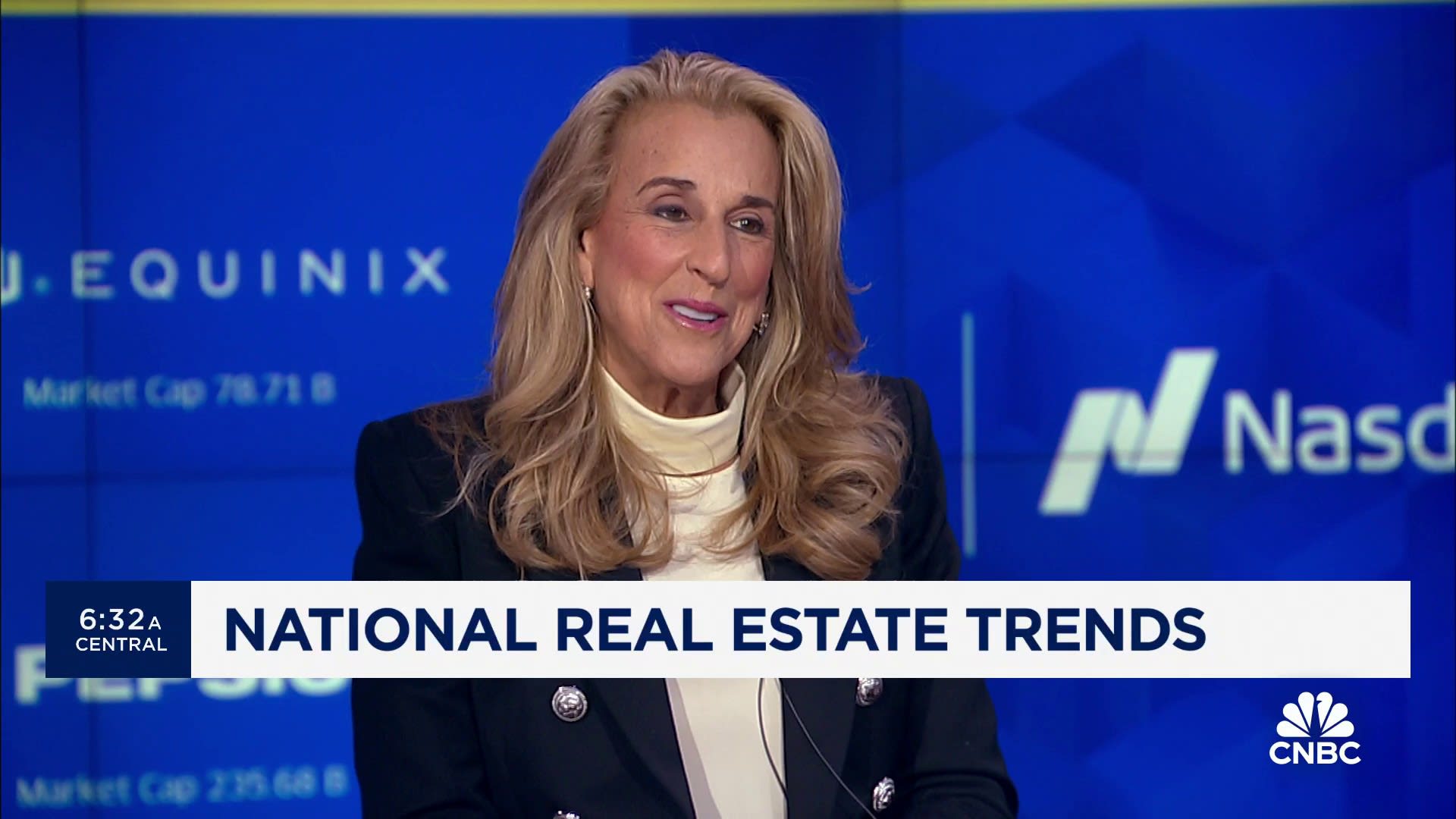
Taylor Morrison CEO Sheryl Palmer
Sheryl Palmer, Taylor Morrison chairman and CEO, joins ‘Squawk Box’ to discuss the state of the real estate market, impact of fluctuating mortgage rates, whether higher rates are keeping buyers away, and more.
Sheryl Palmer, Taylor Morrison chairman and CEO, joins ‘Squawk Box’ to discuss the state of the real estate market, impact of fluctuating mortgage rates, whether higher rates are keeping buyers away, and more.

For years, the BRRRR method (buy, rehab, rent, refinance, repeat) was every real estate investor’s favorite strategy. And it’s easy to see why. Using this simple formula, you can buy an outdated property, fix it up, lock in some solid equity, and then refinance, having the bank pay you back all the money you put into a deal. It sounds foolproof in theory, and up until 2020’s hot housing market, it essentially was.
But things have changed. Home prices are higher than ever, mortgage rates are still double what they were during 2021, and everyone and their grandma now wants to invest in real estate, making more competition for these outdated homes. So, one big question presents itself: Does the BRRRR method still work in 2024? And, if it does, what are some ways to beat the competition and score a seriously good deal, no matter the mortgage rate?
Well, we’ve got the man who literally wrote the BRRRR book on the show—our very own David Greene! David is giving his time-tested insider tips on how to build wealth with BRRRR, create more equity on your next home rehab, which new loans make BRRRR much better in 2024, and why you CAN’T rely on cash flow anymore, but you can rely on something MUCH more beneficial. Ready to get your first (or next) BRRRR done in 2024? This is the episode for you!
David:
This is the BiggerPockets Podcast show 904. What’s going on, everyone? I am David Greene, your host of the BiggerPockets Real Estate Podcast, joined today by my co-host, Rob Abasolo, and if this is your first time listening, well, we are super glad to have you. We’ve got an awesome show in place, and Rob is here to help me bring it to you. Rob, how’s it going over there?
Rob:
It’s good. I’m coming to you from a hotel conference room where I had to kick everyone out. They were running over on the schedule. I was like, “Hey guys, I’m doing a podcast.” And so they’re all standing outside of here and it is very important for this podcast to happen because, David, I feel like this podcast was made for you. We’re calling it The BRRRR in 2024. Does it Still work? Do we need to make tweaks to the strategy? We’re here to give you the inside scoop.
David:
That’s right, I know a thing or two about BRRRR after doing about 50 of them in my career, and I even wrote a book on it which you can find at the BiggerPockets Bookstore. So we’re here today to give you an update on the strategy and how we are applying it in today’s market, and this is so important that Rob, who’s actually extremely conflict diverse, did kick a bunch of people out of a hotel room. Rob, I’m very proud of you and thank you for doing that.
Rob:
It was awkward. It was really, I was like, “Guys, I’m so sorry. You said I could use this and it’s 1:00 PM and I got to go.” And then they’re like, “Oh, we’re so sorry.” So I have to bring it. I have to hold my end of the bargain. So let’s get into today’s episode and talk about the BRRRR.
David:
All right, let’s do it.
Rob:
Let’s set the stage first. So let’s talk about what BRRRR is. We talk about it a lot and a lot of people are like, “Are you cold? Are you talking about the nemesis to Alexander Hamilton?” So David, tell us what the BRRRR is and why is it such a popular real estate strategy?
David:
BRRRR is an acronym. It stands for buy, rehab, rent, refinance, and repeat, and it’s a popular strategy because it is a way that kind of forces you to become what I call a black belt investor in the book. You have to be good at the fundamental components of real estate investing to be able to pull off a BRRRR. That’s why I like it because it forces you to improve your skills. You got to buy a property below market value. You have to be able to rehab that property and add value to it. You have to understand the financing of the property so that you can refinance your capital out. It has to cash flow when you rent it out. And then you have to build systems which allow you to repeat this process.
It grew in popularity because it was a way of acquiring property without running out of cash. So the main benefit of the strategy is that you get capital out of the deal to put into your next deal, but it’s not capital that you had to take out of the bank. It is capital that you pulled out of a property that was pulled from equity that you created through good investing.
Rob:
Yeah, let’s contextualize this a little bit and let’s help people understand the basic premise by putting some numbers here. So let’s say that you buy a property for $50,000. Let’s pretend like, yeah, this is a market where you can buy one for $50,000. You put $25,000 of rehab and work into it, and as a result that property is now worth $100,000. You would then go to the bank and say, “Hey, I would like to do a cash-out refi because this property is now more valuable than when I bought it.” If it does appraise for $100,000, the bank in general will give you around 75% of that equity in a new 30-year amortized loan, meaning in a perfect case scenario, you’re able to get that $75,000 back to pay back your initial investment and rehab budget. Did I explain that correctly?
David:
That is perfectly well said, and sometimes it’s not perfect. Sometimes you bought it for 50 and you thought you were going to put 25 into it but you put 45 into it, so you’re actually all in for 85,000, and in that case, when you go to refinance it and the bank gives you 75,000 but you are all in for 85,000, you leave $10,000 in the deal. But that’s still better than if you had to take the whole $25,000 down payment and put that towards the house, and then even more on top of that for the rehab.
Rob:
Right, right. So this has been a huge strategy really for a very, very long time. The acronym BRRRR was something that was coined, I believe, by the BiggerPockets community. That’s right, right?
David:
Brandon Turner himself.
Rob:
Yeah, okay. That’s what I thought. And so, yeah, it’s a strategy that’s been utilized for a long time, but has there been a moment in time in which the BRRRR strategy worked best?
David:
Well, yeah. The BRRRR strategy allows you to get money out of your deal to put it back into real estate again which means as long as you’ve got new deals coming along, it works great because you’re amplifying how quickly you can acquire real estate. Now it’s also a buy and hold strategy. This is a strategy that you use to keep a property. It’s kind of like flipping, but instead of selling it to somebody else you refinance it and you keep it yourself. That means that it is susceptible to the same challenges that all buy and hold real estate has. So if you can’t find cash-flowing properties, you can’t find BRRRR properties because they have to cash flow when you’re done. And if you can’t find properties to add value to, it’s hard to find BRRRR properties because you can’t add value to the property. And if you can’t find great deals because there’s a lot of competition, it’s hard to find BRRRR properties because you can’t buy below market value. So it really trends with buy and hold real estate.
Now one of the ways that people have sort of adapted along is they’ve said, “Hey, well, buy and hold real estate is really tough, but I’m going to get into short-term rentals.” So they’ve used the BRRRR strategy and combine it with a short-term rental instead of a traditional rental. So when you’re analyzing for rent, you just use short-term rental analytics instead of traditional model analytics, and then people call that the AirbnBRRRR or the BRRRRSTR but really the strategy is a part of it the entire time.
Rob:
It’s been a strategy that’s worked for a long time, but I think a lot of people on the podcast are probably like, “Hey, I’m on board with this strategy, but it’s 2024 and things are a little bit tougher now.” So do you think you could provide a little bit of context or clarity as to how the current market is making the BRRRR much harder than it was in the last, let’s say, 10 years or so?
David:
Yeah, absolutely. It’s harder to find cash-flowing deals because rates went up. So as interest rates have increased, cash flow has gone down but prices have not gone down. So that makes BRRRR tougher, just like all buy and hold real estate is tougher. Another thing is that it used to be that there was tons of fixer-uppers on the market. When I was cranking these things out, doing five a month, I could just go on the MLS, find a bunch of ugly houses that had been sitting there for a long time, write really low offers, put them into contract, and then once I got back my inspection report, figure out if I wanted to move forward with the deal. Well, construction costs are much higher than they used to be, it’s harder to find contractors because everybody wants them, and there’s less inventory to actually pick from because less houses are hitting the market.
Rob:
It really does feel like contractor and rehab… Contractor in the labor force already is hard enough to find, and as a result, rehab costs seem to be much higher than they have been, and then if you’ve been around the BRRRR world for the last couple of years, there was that moment over the last few years where lumber was shooting up as well. It seemed to be shooting up at the same time as interest rates. And so, yeah, all of that just kind of created this weird standstill with constricting the housing supply. So there’s a lot of reasons why the BRRRR has been a little bit more difficult, whereas I think maybe entering now it feels like now the interest rates are starting to go down, so at least we’re trending in the right direction, right?
David:
Yeah, the interest rates are going down which makes it a little bit easier to find a property that could cash flow, but the price of the properties aren’t going down. They’re probably going to start ticking back up again, right? All of the costs of things that go into real estate, like you mentioned the lumber, the materials themselves, the price you pay for the labor to get the person to put the material into the house, that’s all going up with inflation which means that the price of the house is going to keep going up with inflation.
The odd dynamic that I’m noticing is that rents are not keeping up with all those other things because rents have an artificial ceiling put on them. They can only go as high as what people get paid at their job. So as everything we buy becomes more expensive but wages aren’t keeping up with that, downstream of it we find that rents can’t keep up as well, and so that means that even though the prices of these deals are going up, the rents aren’t quite keeping up with it which makes the cash flow harder, and that becomes one of the constrictions acquiring buy and hold real estate and slows you down, and BRRRR’s really meant to speed you up.
Rob:
Yeah. So let’s talk about this a little bit. I want to talk about the inventory or I guess the lack thereof and what kind of major issues that’s presenting for investors today. Can you tell us, is there a specific correlation as to how inventory sort of affects the BRRRR strategy?
David:
Yeah, because inventory affects pricing. The less houses there are, if we’re assuming that demand is constant but supply goes down, the more expensive something’s going to get. There’s also less options for you to choose from because investors forget that they’re competing with other investors. Everybody listening to this podcast, you and me, everyone who reads these books, everyone who’s listening to the other podcasts and the other people that are internet influencers, they’re all teaching people how to go find real estate. So you have more people that are all trying to buy these properties that have quit their jobs or quit pursuing their jobs and now they want real estate to be their full-time hustle that are all going after the same inventory that’s on the market.
In addition to that, you now have stuff that used to hit the MLS that everybody could buy that gets bought before it hits the MLS. You’ve got wholesalers that are sending out direct mail campaigns, text messaging campaigns, cold calling campaigns that are all trying to buy properties before they get to the MLS, before a real estate agent puts them on there. You’ve got big hedge funds like Blackstone that are scooping up a lot of properties and they’re trying to keep it inside their portfolio. That all used to be inventory that hit the MLS and now it doesn’t. So even though on the surface it looks like real estate’s the same as it’s always been, it’s actually very competitive to where it used to be, and that’s why we see so much less supply making its way down to the market that we could buy.
Rob:
Yeah, but what can investors actually do about this? Because everyone wants to break into this. It’s more competitive than ever. Do you have any tips for anyone at home that may be struggling with the onslaught of crazy competition, even in 2024 when, I don’t know, it seems like less people would want to get into this, but the competition still seems pretty high?
David:
Well, there’s two ways. You got to fight your way to the front of the funnel, okay? You can’t just show up and look at houses on Zillow and think that you’re going to get it when everyone else is too. You also have to be spreading the word amongst your specific sphere of influence that you’re looking to buy houses. You got to work just as hard as the other people are that are sending these letters and looking for ways to create funnels to buy off-market deals. You kind of have to make that a part of your everyday life is that everywhere you go and you meet somebody, you say, “Hey, I’m looking to buy houses. If you know anyone that has one to sell, let me know.” That’s a bit of a nuisance. People don’t like doing it. But if you don’t do it, it just means that house is going to go to the person that did. So acknowledging you’re in a competition, even though it’s uncomfortable, is a healthy way to start.
The other way that I’ve incorporated into my investing is that I don’t just look for the low-hanging fruit. We used to be like, “Oh man, look, ugly carpets, ugly cabinets, ugly kitchen. I could buy that thing, switch out that stall shower, make a tile shower, boom, I’ve added equity, I’ve got a flip or a BRRRR if I want to keep it.” Now you got to think a little more creatively. You have to think about different ways to add value to the real estate that you are acquiring, even if you can’t buy it at cheaper prices.
Rob:
So now with all that said, David, let’s ask, I think the main question of the podcast here, the thing that people actually want to know, what they came here for, which is it actually still possible to do a successful BRRRR in 2024. We’re going to answer that question in detail, including strategies investors can use to BRRRR, right after the break.
Welcome back. I’m here with Sir BRRRR himself, David Greene, and right before the break I asked him the question we’re here to answer. Is it still possible to BRRRR in 2024? So let’s jump back in.
David:
It is possible, just like it’s possible to buy a successful buy and hold real estate deal. But are you seeing as many of them, Rob? Are they overflowing with abundance like they may have been five or six years ago?
Rob:
Probably not. No.
David:
Yeah, it’s just going to be harder, right?
Rob:
Yeah.
David:
But it’s harder because it’s a better asset to get into. Everybody’s looking to buy these assets. The price of them is going up. That means that they will be a more solid, long-term buy and hold strategy because it’s going to hold its value, but it’s just going to be harder for you to find these deals. That’s why I’m advising people to start taking the road that other people are skipping. You actually have to treat this like a business as opposed to just looking for something that would be easy and automated and money just flows to you without any work.
Rob:
Yeah, so let me put you into this a little bit from a tactical standpoint, because over the last few years we discuss how the labor force has been such a… It’s been brutal in the real estate world, and that has also been paired with a crazy supply chain shortage which just I think has really made things complicated. So have you seen any in your personal rehab that you’ve done or within your network, do you feel like there’s been any relief at all in the supply chain to open up the goods for the renovation process?
David:
You know, that’s a great question. What I’ve found as the market that was steaming along and crushing it, and every property was gaining equity, and transactions were taking place all the time, and my real estate team was crushing it, my loan team and company was crushing it, and my properties themselves were crushing it, it all kind of came to a grinding halt when those rates went up. It was scary how fast the whole market turned. And so what I found is I had to pay more attention to my portfolio and to the businesses. I couldn’t just let the leader of the business run it because they were not being careful enough with the money they spent, the training that they gave, or the way that the employees were performing. We had to really tighten up on everything.
So I started hiring people to manage my own properties as opposed to outsourcing that to third party property management. The same thing has been true with the deals that I have going on, like for some of the short-term rentals that I have. If you let somebody else buy the materials, they’re going to go buy a brand new pool table for $5,000. But if I put somebody looking on Facebook Marketplace every day for two weeks, we find someone that needs to sell a pool table for $1,800 and negotiate it down to 1,200, right?
Rob:
Yeah.
David:
That’s the principle that I found you have to put into the deals you’re doing. So if you’ve already got a place under contract, it used to be a contractor gave me a bid, I reviewed the bid, I said, “Okay, sounds good.” I put a timeline in when I needed it done by, and that was that. Now I need to be involved in the process. Okay? I’d rather have our team buy the materials and pay them the labor to do it because then we can shop for the cheapest materials or we can look for really good opportunities. James Dainard has done a couple of these shows and he’s talked about the level of detail that he knows in every flip he’s doing and what things cost. That’s the level of attention that you’re going to have to pay to keep your rehab costs reasonable, and for people that aren’t doing that, they’re just going to be frustrated.
Rob:
Sure.
David:
It’s like, where’s all my money going? Well, it’s going to the contractor.
Rob:
For sure, and because they mark up the materials too and their time which rightfully so in many instances. So let’s talk about that. Let’s say, yeah, you bought the property, you’re in this rehab process, it’s the first R in BRRRR. Are there any other tips or tricks for keeping your rehab down? Is there anything else you can do to cut costs, especially if you’re a first timer doing this?
David:
If you’re a first timer doing it, your goal is to learn. So you need to be involved in as much of the project as you can, learning what a contractor does. Once you have a basic idea, you can keep your costs low by managing some of your own subs, and for knowing when you buy a property, what type of stuff you need highly skilled labor to do and what type of stuff can be done from less skilled labor that you can pay less. You really want to avoid getting into the projects that have complicated electrical issues or complicated plumbing issues or have really complicated permit stuff. We’re going to have holding costs that skyrocket because you’re waiting a long time with the deal. You want to get into the kind of projects that need a lot of drywall work, sheetrock work, flooring that’s going to be done, paint, dry rot issues perhaps. That type of stuff can be done by lower skilled labor so that you can save money on materials and then not get hammered when you have to go pay someone a ton of money to do the work.
Rob:
Yeah, I’m a big advocate for maybe taking on some of the DIY aspect on your first BRRRR or your first rehab, simply because I think there’s an intangible skill that you learn from that which could be the actual craft of doing a skill like, I don’t know, drywall or anything like that, but what I think you actually learn is how difficult it is to do something and how much it’s worth to you to pay that kind of thing. Because for me, for the first house that I ever bought, I did a lot of my DIY projects. I knew what was hard, I knew what wasn’t hard. That way anytime I actually worked with the contractor, I was like, “Hey, this $10,000 bid should be more like $2,000 and I’m not too dumb here.” So I think a little experience goes a long way. Are you an advocate for DIY-ing a BRRRR or your first rehab in any capacity?
David:
Well, I’m an advocate for doing whatever you can to reduce your risk when the market’s tough. So for instance, maybe you can’t find a flip property, but can you do a live-in flip?
Rob:
Absolutely.
David:
Right. That reduces your risk a ton. Maybe it’s really tough to find a big BRRRR property where you can get a hundred percent of the money out, but can you find a BRRRR property where you leave some money in but it’s significantly less than if you had bought it and you buy in a great location where it’s going to appreciate, and then three years, you’re going to take all that equity and you’re going to roll it into the next opportunity. You have to compare the opportunities that you’re looking at today with the other opportunities you have today, not the opportunities that you heard about five or six years ago from people that are on podcasts talk about this great portfolio they have when they bought when the market was different.
Rob:
David, something you mentioned that I don’t want to gloss over because I think this is super important, but it seems like the time horizon for a BRRRR has changed, whereas when the market was more flexible, we had a little bit more flexibility with how quickly or how slowly we could do that BRRRR. But do you feel like the timeline has shifted in 2024 with how long one should take during this entire process?
David:
Yeah, and for investing in general, I do think that. In fact, that’s the next book that I have coming out with BiggerPockets Publishing is on this exact topic that we sort of need to change our expectations for real estate and therefore change our strategy. Now there’s less to buy, there’s less meat on the bone, and it’s harder to get cash flow. The whole thing is trickier. Does that mean don’t do it? No. It means to adjust your expectations. So this book that I’m writing is about breaking our addiction to understanding that cash flow is the only reason you buy real estate. Cash flow is one of 10 ways that you make money in real estate, and several of these ways involve long-term delayed gratification.
It’s buying property in the best areas, adding value to those properties, doing what you can to buy beneath market value and incorporating other strategies like reducing your tax burden and buying in areas where the cash flow itself is going to increase because the rents are going to go up more than surrounding areas. When you put all these strategies together in the same deal and then you wait, what you find is you still get incredibly good returns, you’re just not getting them right away.
So I’m trying to get people to stop looking at real estate as the magic pill to help them escape the job they hate or the life that they hate or the fact that they’re struggling with things and look at real estate as being the carrot that you pursue that gets you to step up your game when it comes to the effort you’re putting into work, the skills that you’re building, the education that you’re acquiring, because, Rob, you’ve seen this too, the wealthiest people that we know bought real estate in good locations and they waited a really long time. All the strategies that we talk about here are just designed to get you to that point safely.
Rob:
Yeah. Yeah, yeah, it’s all about also being adaptive and being nimble which is why you’re titling that book Pillars of Stealth, right?
David:
That’s really nice. I like that.
Rob:
All right, so let’s talk about sort of the next R here which is rental, which there’s some parallel pathing that’s going on during the rehab and the rental side of things because when you’re rehabbing you have to sort of know, hey, how nice should I make this rehab or how standard can I make it. I’d imagine there’s a level of analysis that one should do by looking at the rentals in your area or in your neighborhood to see how nice they are and ask yourself, “Am I matching them or is there a delta in actually being a nicer quality BRRRR and will that delta yield me more profit?”
David:
It’s a great question, and the answer is sometimes. There’s three main reasons that I see people rehabbing a house. You’re either rehabbing it to sell to someone else which is a flip, you’re rehabbing it to keep it as a long-term rental, or you’re rehabbing it to keep it as a short-term rental. Okay? So if you’re trying to flip it, you don’t want to make it nicer than the surrounding areas because then you’ll have a more expensive property that the appraiser won’t give extra value to and you won’t be able to sell it for as much as you thought because it won’t appraise. So in that circumstance, no, make your property as nice or maybe a tiny bit nicer than not only the other properties in the neighborhood but you want to compare it to the other properties that buyers have available for sale. You actually want to look at the existing inventory that you’re competing with when your house goes on the market and be a little bit nicer than them, but not a ton nicer.
Rob:
But has this changed though, over the past years? Because I agree that is an underlying principle of the BRRRR, but do you feel like today, nowadays, renters are more demanding? Do they want more out of their rentals? Because I can tell you from an Airbnb or a short-term rental standpoint, the guests are definitely more demanding. I feel like they want this five-star resort kind of thing, and I’m curious if that also transcends over to the long-term rental side of things.
David:
What I’m trying to get at here is that the renter or the guest on Airbnb or the buyer of the flip, whoever your end product person’s going to be is going to compare your property to their other options, and you want to be a little bit better than those options. You don’t want to be too much better than those options because then you wasted money. You don’t want to be not as good as those options because then they won’t choose your property, and you don’t want to be exactly the same as those options because then you’ll be slightly competitive until your competitors do a little bit better. So you have to understand the reason you’re rehabbing it. If you’re rehabbing it to flip, you want to compare it to the other properties available for sale as well as the other properties in the area.
Rob:
Got it, got it.
David:
If you’re doing it for a standard renter, it doesn’t matter if it’s really nice or not that nice. What matters is what their other options look like. If they have a ton of inventory to choose from, yours has to be nicer, but in most markets there’s not enough rental inventory. So if this is just a standard buy and hold rental on a year-long lease, you don’t need to make it super nice. You need to make it super durable so that things don’t break all the time. But to your point, Rob, if this is a short-term rental in a highly competitive market, yes, you need to over-rehab. You need to make it extra nice. You need to make it nicer than the other competition and so much nicer than the rest of the competition that you buy yourself a couple years for everybody to catch up to you.
Rob:
Makes complete sense.
David:
All right, now that we’ve covered a few tactics that investors can use to give themselves an edge to make BRRRR work in 2024, we’re going to get into some good news about how financing options have changed and improved. So stick around and we’re going to get into that soon.
Welcome back everyone. Rob and I are here talking about how the BRRRR has changed and how they can still work in today’s market. So let’s get into the good stuff.
Rob:
I want to get into the next R here which is refinance, and this to me seems like what feels like the biggest crapshoot in the entire system of BRRRR because lots of things are changing. Interest rates are changing. Appraisals are always finicky. You never know what you’re going to get when appraisal. You can have a pretty good idea, and then market conditions and corrections are happening. So tell us a little bit about what the financing options are for people doing the BRRRR strategy today in 2024. Are rates any better? Is there a more positive outlook than there has been over the last year?
David:
Rates are higher than they used to be, but lower than they were recently. So they’re sort of trending in a better direction right now. They’re still historically low, and you actually have more financing options available now than I ever saw before. So you had a couple options. You could pay cash for stuff, which is what I was doing and what most people were doing. You could pay cash with somebody else’s money, like private money which you kind of had to be an experienced operator to get people to trust you with their cash. You could get a hard money loan, which was not very flexible and very expensive, or you could get a conventional type loan and then refinance out of it once you were done, but that was expensive because you had a lot of closing costs.
Now there’s a lot of products like bridge products that we offer where you can go in and you can borrow the money for the purchase and the rehab. Right? You put 15% down on the purchase and 15% down on the rehab and not having to pay for a hundred percent of your rehab is a significant savings in how much money you’re having to come out of pocket for. Those are usually loans that last for a year, sometimes two years. So once you’re done with that project, 3, 4, 6 months later, whatever it is, you can refinance out of it into a conventional loan or into a DSCR loan.
Since the point of buying these properties is to keep them, they’re supposed to cash flow, you can use DSCR loans to help make sure that you qualify for a loan even if you have more than five properties, even if you have more than 10 properties, even if your own debt to income ratio can’t support continuing to acquire properties, which was one of the old throttles of BRRRR is like, yeah, I got deals and I got money and I got contractors, but I can’t keep refinancing out of them because my DTI can’t keep up. Well, now you’ve got a lot more lending options that will allow you to do it. So even though the rates haven’t been as favorable as they were eight years ago, the lending flexibility is much more favorable.
Rob:
Yeah, and for everyone that may not know what a DSCR loan is, they’re a very powerful and beautiful tool. It stands for debt service coverage ratio. Basically what that means is the bank will use the projected rents of a property to approve you for that to underwrite you on that loan. And so, yes, David was talking about the DTI or debt to income ratio. When that maxes out, it’s very hard to get a loan conventionally, but a DSCR loan is really looking more at the actual projection of that rent. So it’s a really powerful tool. It’s a little bit more expensive usually than a conventional loan.
David:
Yeah, it’s usually a point higher on the rate usually.
Rob:
Yeah. But still worth consideration. I wanted to ask because there’s sort of this idea of this concept being tossed around where should we replace the R to an H and pull HELOCs instead of refinancing with the interest rates as they are right now, the BRRRR?
David:
Yeah, that can make sense if you think rates are coming down in the future. If you think they’re going to go down, you can get a HELOC. It’s a lot less expensive as far as the closing costs go, and you can still get your money out of the deal to put into the next one. So HELOCs will make it easier to continue to acquire more properties if instead of refinancing the entire note, you just put a HELOC on the equity, but they increase your risk because most of the rates on HELOCs are going to be adjustable. If rates go up instead of down, well then when you do have to refinance out of the HELOC you’re going to get a higher rate than if you had just done it in the beginning.
Rob:
Yeah, and just one quick caveat here. HELOC stands for home equity line of credit. You’re basically taking a line of credit on the equity of your house which I guess makes sense, that’s why they call it a HELOC. But one thing that’s not talked about enough is the fact that when you take a HELOC on a property, that is a loan in a sense because it’s like a line of credit. So there is a note, a monthly note that you have to pay. So you just want to make sure that you are accounting for that in your analytics, in your analysis of a property. Every HELOC is structured a little differently. I’ve seen five different ways that HELOC payments are calculated. So just make sure that you understand the mechanics of how the HELOC works for your personal bank.
David:
That is right. I guess sometimes we forget to mention that when you take out a loan, it usually involves some kind of repayment. But yes, that’s exactly the case.
Rob:
Yeah, because HELOCs are really powerful and they’re really cool things. In a perfect scenario they can get you out of a bind, but yeah, we don’t ever talk about the possible downsides, one of them also being that if you’re taking a HELOC out on a primary residence, that also adds to your DTI. So just keep that type of stuff in mind as you explore that option.
David:
That’s right. So to sum that up, rates are higher and they’re less favorable than they were in real estate’s heyday, but options and flexibility is better than it’s ever been when it comes to getting loans on properties. You can literally get a really good bridge loan to acquire the property and fix it up, borrow most of the money to do that. If you do the things that we’re talking about now, you focus on adding value to the property, you add square footage, you add bathrooms if it doesn’t have enough, you do a really good job on that remodel, you create a lot of equity, then you refinance out of that into a conventional 30-year fixed rate or a DSCR 30-year fixed rate. It’s actually pretty smooth to the financing where that used to be a big area of concern when you’re trying to scale a portfolio.
Rob:
Sure. And before we wrap today, I did want to ask you, considering that BRRRRs are different today than they were five years ago, than they were 10 years ago, what metrics actually make a successful BRRRR today and how is that different from previous market cycles?
David:
In the previous market cycle, we told everybody get as much cash flow as you can, and that’s the reason that you invest. Well, as cash flow has somewhat dried up, it leaves people with the questions of should I invest in real estate at all because the reason I was told to do it is gone, and I would still say yes, but you’re not going to get the immediate gratification that cash flow provides. You’re going to have to shift to delayed gratification. Now the good news is when you compare the money that you make over a 20-year period of time in appreciation and loan pay down, especially if there’s a value-add component to your real estate, it dwarfs however much cash flow you think you could have made. Okay? Take the biggest, buffest guy that you’ve ever seen, that’s cash flow, and this appreciation is like Godzilla. You can’t really compare it, right?
You have to take that longer-term horizon outlook which is why BiggerPockets has been doing a great job of providing overall financial education. Okay? It’s not about just let me get a couple houses and I’m out of the game and I’ve retired, I’m on the beach with a Mai Tai. It’s about building up your skills. It’s about delaying gratification. It’s about making wise investments that will grow over time. It’s about taking advantage of the tax benefits you get, or about starting a business within real estate and sheltering some of that money with real estate. Look at real estate as an amazingly crucial piece, a cornerstone of an overall financial strategy that you need to put together, and you’ll fall in love with it. If you look at real estate as an individual brick that you can just stand on and have your entire building based on, it’s going to let you down.
Rob:
Absolutely. I think we talk about it often on the show that real estate has several levers, cash flow, appreciation, tax benefits, debt pay down, and depending on the market cycle you’re in, the levers are going to be a little different. So understand that going into it because I always tell people, going back to what you were saying, I don’t know, sometimes people see breaking even on a BRRRR like not a good thing. I’m like, “Guys, in Vegas, they say a push is a win.” That’s great. Breaking even on a house that you got for free, come on.
David:
Well, not only that, they don’t see it as a good thing if they didn’t get more money out of it or if it doesn’t cash flow right away. But if I said to you, Rob, hey, you’re going to do a deal, you’re going to get all of your money out or a little bit of it out and it’s going to break even on cash flow, but you’re going to have created $75,000 of equity. You’re going to be paying off a loan every single month with the renter’s money. The rents are going to go up every single year from where they are today. The value’s going to go up every single year from where it is today, and this is going to save you $50,000 in taxes that you were going to have to pay. Oh, and by the way, if you want to add an ADU to it or another component of it, this deal would work for that. When you finish the basement, that’s going to add square footage, more value, and it’s going to increase a whole new income stream which is going to be going up every single year like the others, and maybe you even short-term rental part of it and you do the other part traditionally. Can you tell me how that’s a loss for you?
Rob:
No, I can’t. I was taking furious notes as you said all of that, and I just, I can’t argue with any of that, David. I would like that YouTube video if I was watching that on the YouTube video. So if you’re watching this on YouTube, hit the like button, hit the subscribe button, leave us a comment down below. And I think that wraps up today’s episode of BRRRR in 2024. Is it still a viable option? The answer’s yes.
David:
Nicely done, brother. You just got to adapt with the times like we always had. I remember at one point, BRRRR was an adaptation, right? When we were talking about it, it was like, what? You could get your money out of a deal? At one point, long-distance investing was an adaptation, right? Well, that’s crazy, you could buy in a different market that’s not your backyard, and there were so many podcasts done on how to do it. We’re still going to have to be adapting, and that’s why you listen to podcasts like this. So thanks for that. Rob, you want to take a shot at my nickname today?
Rob:
Oh, yeah, yeah, yeah. This is Rob for David Sir BRRRR Greene.
David:
Signing off.
Rob:
Signing off, signing off. End scene.
Help us reach new listeners on iTunes by leaving us a rating and review! It takes just 30 seconds and instructions can be found here. Thanks! We really appreciate it!
Interested in learning more about today’s sponsors or becoming a BiggerPockets partner yourself? Email [email protected].
Note By BiggerPockets: These are opinions written by the author and do not necessarily represent the opinions of BiggerPockets.

Douglas Elliman CEO Scott Durkin and CNBC’s Robert Frank join ‘The Exchange’ to discuss trends in luxury real estate, how the luxury market changed since the Covid-19 pandemic and more.
One-quarter of America’s ultra-rich plan to buy a home this year: Douglas Elliman report Read More »

Would you buy multifamily real estate now? Asset prices are falling, mortgage rates are still high, banks aren’t taking on new loans, and every real estate “expert” thinks that the multifamily space is full of dead deals. If this was so true, then how did Brian Adamson build a multimillion-dollar, 120-unit portfolio with plenty of cash flow and seven figures in equity all in the past four years, a time of tremendous booms and busts in the multifamily market? Well, he’s about to show you!
Brian started investing before The Great Recession but didn’t walk away from the housing crash unscathed. Thankfully, a few upside-down properties didn’t stop him from investing as he continued to do wholesaling and fix and flip deals from 2008 onwards. But, in 2020, he had a calling to start investing in multifamily during a hot market and in areas most real estate investors would run from.
Fast forward close to four years later, and Brian has a rental property portfolio of over one hundred units, with tens of thousands in cash flow coming in every month and millions in equity. He bought when he shouldn’t have, in places investors run from, with loans even top investors refuse to use, but he came out on top. In this episode, he’ll break down his exact strategy, what and where he’s buying, and how much money he’s making, plus some real estate markets he’s bullish on in 2024.
David:
This is the BiggerPockets podcast show, 903. What’s going on everyone? I am David Greene, your host of the BiggerPockets real estate podcast, today here with my partner in crime, Rob Abasolo. How’s it going, Rob?
Rob:
I’m good, man. I’m good. I’m tired. I woke up at 5:30 today. I’ve started the routine again. I’m back on the grind, but there’s light at the end of the tunnel because we’ve got a great show today where we’re going to be featuring an investor who is successfully investing in multifamily today in 2024.
David:
In today’s show, you’re going to see Rob put on his diva hat as we dive deep into a topic that most people are afraid to get into. Today’s guest, Brian Adamson, shifted from single-family rentals into multifamily investing at a time when others consider it risky to invest in that asset class.
Rob:
Yeah, we’re going to cover how to be successful in multifamily today and how to look at markets to invest in. We’re also going to address the big ole elephant in the room, which is funding in the multifamily space and some of the ticking time bombs that might be lurking around the corner for this niche in real estate. We’re also going to get into the nitty-gritty of the numbers on deals that Brian is currently doing in markets that he thinks will be profitable in the multifamily space for the next couple of years.
David:
That’s right. We’ve got awesome content for you. Brian is going to be sharing how much he likes to pay for door, what he wants the ARV on that to be, when he exes deals versus when he keeps them, what markets he invests in, as well as the rents that he’s looking for on the properties that he’s buying. This is some great stuff, so if you’ve been looking for an opportunity in real estate, there’s probably not a better one than in the commercial space is everybody else is afraid to get into that asset. We’ve got what you need on today’s episode of the BiggerPockets podcast. Let’s get into it. Brian Adamson, welcome to the BiggerPockets podcast. How are you today?
Brian:
I’m doing great, man. Thanks for having me.
David:
All right. Now, you’ve been in the real estate game for a long time now, me too, so let’s talk. What strategies are working for you in today’s market?
Brian:
I did fix and flip wholesale for many years. I bought single family at the start of my career back in 2006, and then most recently, the last few years, I’ve been buying commercial multifamily. Started out buying semi-occupied units and then will come in and reposition them. After the rent moratorium in my specific market, it was taking six, eight months to get people out. I’m like, well, I can’t pay for them to live there for free and then still have to do my reposition. I switched up my strategy and started buying vacant units. We come in, do the renovation, put our people in from day one. That’s we’ve been doing the last 18, 24 months to date.
David:
I like that you said commercial multifamily because it removes the confusion between are we talking two to four units or five units plus, because both sides use the phrase multifamily. I’ve had entire conversations where I thought they were talking about big apartments and they were talking about triplexes the whole time, so thank you.
Brian:
I’m a unicorn. I do both. I make sure I delineate which one I’m talking about for that very reason.
David:
Let’s talk about, first off, give me an overview of what your portfolio looks like right now, and then I’m going to dig in on some specifics.
Brian:
Right now, I’ve got about 120 units. I got a small tranche of two to four units, maybe got a single family or two in there. Then mainly though is I got a couple of six-unit buildings. I got a couple of 16-unit buildings. I got a 20 unit, a 40 unit, and 12 buildings, oh, properties, thank you, Rob, properties in total with 120 units.
David:
Now, I want to definitely hear why you are buying multifamily when everybody is running away from multifamily. That’s interesting. I also understand that like me, you are an out-of-state investor, so where do you live? Where do you invest and why did you pick that market?
Brian:
For sure. I live in Orlando, been here for the last almost 14 years, and I invest in Detroit. Now, many people think I invest in Detroit because that’s where I’m originally from. However, that’s not the case. It just so happened to be a great market with great equity positions and great cashflow positions. Unlike investing here in Orlando, while it may be sexy to say I invest here, the margins just aren’t there. You know what I mean? With respects to the yield that I get investing in the Midwest. When you develop good systems and processes and accountability measures, you figure out that you’re susceptible to the same things going wrong eight blocks away as you are 800 miles away. For me, if the risks are all the same, then I’m going to go where the highest potential yield is. That’s why I’ve invested from afar, the way that I have.
David:
I think you and I need to write a book for BiggerPockets, Eight Blocks, 800 Miles and 8 Mile Road, How I Picked Detroit and Why it Rocks. There are gems and areas that you would typically think of like Detroit back in the Josh Dorkin days. People definitely dumped on Detroit as a terrible market, but you’re making it work. Is there a certain local market knowledge that you have that you know where to invest in and where not to invest in because you live there? Or do you think that the gentrification, the money that’s moved in there, if people aren’t aware, a lot of mortgage companies moved in when the auto industries left and they brought a lot of jobs and opportunity, is that why you think Detroit is doing so well?
Brian:
It’s a myriad of those factors. It’s interesting because when I started in 2006, I was in college, I was a junior and a buddy of mine was flipping houses in CD class areas. I didn’t know what any of that meant, this is all retrospect talk. He gave me an opportunity to get started with a $6,000 refund check basically to help cover the down payment for his buyers to essentially gift them the money because they were using stated income loans. Then when he flipped them the house, he gave me a return on my investment. That’s how I got started. I’m going back to your previous question, David, about why am I running toward the market when most people are running away.
At that time, I didn’t have any education. I was just being opportunistic. I started buying properties with stated income loans my senior year in high school, I mean, in college as well. 2007, obviously, 2008 happened, and so while I was upside down on some of those bad investments at that time, I still wasn’t jaded. I was so new. I’m like, that’s three bad deals. All I know is that this $148,000 house is 29 grand now. I’m going to go do more of these. I bought over 20 doors from 2008 to ’10 when the market was contracted. Just because it just made sense to me, I’m like, I saw a lot of people losing their shirt and running away, but I’m like, if you picked this stuff up, you buy a house for 10 grand and you can make 700 bucks a month, how do you lose?
Still didn’t have some fundamentals down yet in terms of analyzing deals properly and planning for capex and all those types of things. I ended up being affected by that as those properties started to age and had to get rid of some of the portfolio. My point is that same energy now. Looking at what’s happening in the market, over a trillion dollars in bad debt coming due over the next 24 months or so in the commercial space, probably 600 billion of that in multifamily, specifically. That just to me means there’s more opportunity. If you know how to analyze deals, you know how to hire and build good teams and go from A to Z on the execution, then it’s a lot of great opportunity out there right now for operators that are being hurt that need help.
David:
All right, stick with us, we’ll be right back after this quick break. Hey, everybody, welcome back. Let’s pick back up right where we left off.
Rob:
That’s interesting because it does seem like there’s a bit of a ticking time bomb in that specific niche of real estate and you’ve known this, and in the last few years, you’ve decided to scale up into multifamily. When and why did you make that choice?
Brian:
June 20 of 2020, first time out the house during the height of COVID where my family, we went to Clearwater Beach, it was Father’s Day, actually. I was out on the balcony praying and God, clear as day told me, he wanted me to start investing in commercial multifamily. This didn’t make sense to me at that time because that was totally juxtaposed my whole business plan for that year, so much so when I called my consultant, he told me I was nuts. I was like, “Bro, I’m telling you, I heard this clear as day, I got to act on it.”
I went out, started seeking a mentor in that area all because I had done single family for 14 years and had a lot of success. I still believe in education. Found a mentor, went and got some framework and started taking action immediately. Had 136 unit locked up in 60 days after getting the framework. Anyway, while that deal didn’t work out and we don’t have enough time for me to go through that whole story, it got me in the act of taking action. From that deal led to the next one, which was my first one that I closed, which was a six-unit deal. Then shortly after that, I closed a 40-unit and then I just kept buying after that.
Rob:
Previously to the multifamily stuff, you said you were doing fix and flips, right?
Brian:
Yeah, fix and flip and wholesale.
Rob:
Cool. All right, so fix and flip wholesales, which are obviously once you’re a skilled investor, you’re good at one thing, it’s probably easier for you to transition to something else in real estate. More than someone just breaking into industry, you decide, hey, I feel like I want to do multifamily. You get into this first property and it didn’t work out. Tell us why. What was the actual process there? Because I feel like just jumping into 136 unit is something that most seasoned investors wouldn’t even do. Give us a little bit of a timeline of what happened in that deal.
Brian:
I didn’t realize I got to have a therapy session today. Well, thank you, Rob.
Rob:
What do you see on the cards?
Brian:
Yeah, exactly. It was a crazy situation where I found this deal on LoopNet and I started, it was in Flint, Michigan, 136 units. They wanted like 5 million bucks for this thing, and I knew it was overpriced. I just so happened to call the number. Why not, right? Called the number, just so happened the number was to the owner. He lived in Miami, I live in Orlando. We talked a little bit about the deal and I told him, I said, “I’d love to come down there and get knee-to-knee with you and do lunch.” I drive down to Miami and we have a conversation and he just was like, “Look, if you’re serious, I’ve had this thing fall in and out of contract a couple of times. If I don’t sell it by March, I’m going to lose it to some back taxes.” He was like, “If you fly up there, do all your due diligence and you’re ready to move forward, then we’ll put it under contract.”
I moved in faith, I went up, I got my contractors out. We did phase one appraisals, serving, everything. We did all the due diligence on it, walked all 136 units and finally got the thing under contract by Halloween. I was spending tens of thousands of dollars before I even had this thing under contract because I just believed it was that good of a deal. I got the number down to well under 2 million bucks because we had probably about a $400,000, I’m sorry, it was a $4 million renovation we would’ve had to do to it, but it would’ve been worth 8.5. In that process, because of working on a deal that big, shout out to Mayor Neeley, I got to meet the mayor of Flint. He and his cabinet gave me a ton of support and met former state senators and formed alliances with the local Boys and Girls Club.
It was a tremendous thing, and it was a faith walk because obviously, I’d never done it before, but this is why confidence is only built through competence. I only felt like I could do it because I took the time to invest in myself, get the right support, get the right mentorship network that afforded me enough confidence to keep taking these action steps. Through it all, we got redlined by a couple of lenders. We got pretty close to getting this thing over the finish line twice. When it got to final committee at both of these different lending institutions, they pulled on it because they didn’t like the fact that it was in Flint. Many of them thought that there was still a water crisis, although mass media covered the water crisis, but they didn’t cover the other side of it, which was the fact that it was fixed. I learned that from spending so much time up there that the issue was resolved.
By this time, it’s getting close to the time that the owner said that he was going to lose it if he didn’t figure something out. He ended up taking another contract on it, and those guys that were coming in had the money but not the infrastructure. They ended up calling me after I got cut out the deal and wanted me to partner with them and they were going to bring me in on another 171 units. The deal turned into almost $24 million worth of real estate, a little over 300 units. I would’ve had to move back to Michigan. They were going to pay me a salary. I would’ve had equity in one of the buildings but not the other. When I finally got an opportunity to meet their team, they flew to Orlando for a final meeting with me and some just didn’t sit right, to be honest. I saw the dollars, but it was a lot of character things, things that were mentioned during that meeting that just didn’t align with me and where I’m at and where I was at in life and that time.
I went to told him, give me a week, let me think about it, pray about it. Just so happened I got invited to this Mastermind in Miami and Jeff Hoffman was there and we sitting in this small room, this intimate setting. Jeff was just talking about how this billionaire was pursuing him to do a deal on a private island. He was like, he wasn’t interested. The guy flew his private jet to pick Jeff up in Orlando, and Jeff was like, “What part of I can’t be bought don’t you understand?” Somebody in the room asked Jeff like, “Why were you so upset with the guy?” He said, “Because our company culture is, we only do business with people if we can ask ourselves are they one of us?” For me, I felt that confirmation in my spirit at that time that, that was my answer. I got back that Monday. I called up the guys, I pulled out of the deal. The very next day is when I got the 40-unit apartment building that I eventually ended up closed.
Rob:
Let me backtrack a little bit here, because you said something that’s really interesting to me that I don’t want to gloss over, I feel like a lot of people don’t necessarily know how to close this loop. You mentioned the deal was roughly about 2 million bucks, somewhere in there, and you were going to need to put in $4 million in renovations, so we’re at 6 million total. As a result, it would be worth 8 million. You’re adding $2 million in value. Why is it now worth $2 million more after the renovations? Where does the actual, like what kind of metrics play into getting that much money out of a property?
Brian:
For sure, that’s a great question, Rob. Essentially, we did the capex, we’d have done the reno, but with that, would’ve afforded us stability to then increase rents. Once we increased the rents and occupancy, then our NOI would’ve increased. Then our NOI, which is our net operating income divided by the cap rate in that area, would’ve then given us our new evaluation and added that value to the property.
Rob:
That’s really interesting, because you mentioned you got some appraisals on the property. Were the appraisals that you got based on the actual real estate, the actual building improvement on the land, or were the appraisals based on NOI and the cap rate and all that good stuff?
Brian:
We did both. We did an as is appraisal, which was part of my leverage for getting the price down based on what he put a hat out there on the internet. Then we did an as complete with the income approach as well as the sales comparison approach. On these types of assets, you look at it from two different ways. You look at it from an income approach as well as the sales comparison approach, which is your cost per door versus what the actual thing is producing from an income basis.
David:
Now, I’m going to ask you the question every investor hates, so work with me here. We’re going to try to get as specific of an understanding of the numbers as we possibly can. Nobody go blow up Brian and say he said 40 a door and I found out it was 41 a door, so don’t worry about that. If we’re looking at someone who wants to buy a deal similar to this one, what’s the price per door that you’re trying to get? I’ve got a series of questions to ask you like that.
Brian:
I won’t talk about the one that I didn’t do, because that’s the one we were just talking about in Flint. In my local market in Detroit, I want to be all in at no more than 45,000 a door, and that’s with the acquisition as well as the improvements that we have to do to the property, so that I could potentially exit at 60,000 a door or more at some point.
David:
Beautiful. In a sense, this is like a burr or a flip where the acquisitions, what you’re paying for the property and the improvements would be your rehab budget. You want to be all in for $45,000 a door and you want to try to bump the ARV to 60,000 a door so you could sell. Now, are you buying these deals with other investors?
Brian:
I am, yeah. Most of my deals, I try to look for partnerships first and then I’ll put my money in if I have to, but I’ve been fortunate to raise a lot of capital.
David:
Now, you may keep the property of course, but you want to know that you could sell it if the partners wanted to get their money out, if interest rates weren’t in a favorable position, if you had a better place to put that capital. That doesn’t mean we’re flipping apartments, but you want to have that exit strategy available to you. It’s always good to have an emergency chair there when the music stops because when you’re playing musical chairs, which is the world of commercial financing, you don’t know when that balloon payment comes due, what that chair is going to look like that’s sitting right in front of you. What is the general rent you’re trying to have per door that you’re looking for?
Brian:
It’s interesting, the first 120 units I bought, I strategically bought them all in affordable housing space. I did that because at the time in which I started investing in commercial multifamily, obviously, again, June 20 of 2020, that was at the height of COVID. All of this, the CERA funds, and all of that didn’t exist yet. All the operators who had A and B and C class stuff that didn’t have guaranteed rents were being hosed and all of that.
For me, I was like, well, I want to start the base of my portfolio with as much guaranteed rents as possible so I could have Section 8, other subsidized rents, et cetera. I’m using Section 8 and other subsidized rents in my market. I’m actually outperforming market rent in those areas. Say for instance, on a one bed, one bath unit market, it’s probably 750 to eight. I could get 950 Section 8 in these areas that I’m buying in. Two bed, I could get up to 1,200 even sometimes. The one beds, we can get as much as 950 to a thousand Section 8. Then the two beds, in some cases, we can get as high as 1,200 bucks.
David:
You’re looking for anything between 900 to 1,200 a door, and of course, not every door is the same, so you’re going to have a mix of one bedrooms and two bedrooms in here. That does give people a pretty good understanding of a target to shoot for if they have a market similar to Detroit. Now, what are some of the things that would automatically disqualify a property? You don’t care what the numbers are, what the price is. Is there neighborhood issues, is there flood issues, is there crime issues? Is there building age issues or certain things in a building that you don’t want to mess with?
Brian:
Well, before I answer that, I do want to just put one more caveat on the market rent piece. Because although I evaluate these deals and I know that my target rents are Section 8 rents, which are outperforming market, but I also underwrite the deals from a market rate perspective. I keep that in mind because if for whatever reason I had to put a market rate tenant in there, I don’t want to overshoot what I can really get by assuming I’ll be able to guarantee that I’ll have the higher performing rents in there. I underwrite the deals more conservatively to make sure that I got that wiggle room and agility if it came to that. I just wanted to clarify that point so that people weren’t too overzealous in their approach.
David:
What are some things that you would just say, nope, I’m not going to mess with it? Is there an age of the apartment you don’t want to deal with? Are there neighborhood metrics or statistics that would cause it to be disqualified?
Brian:
Yeah, I buy a C minus, even D plus, but I won’t buy any F properties. I’m not doing that.
Rob:
I’ve got a question. I mean, it seems like you have a pretty good system for how to underwrite and how to pat it in a bit where you’re coming in a little bit more conservatively. Let’s talk about the funding a little bit, because I think right now with everything going on, I’d imagine commercial lending is probably not all that favorable. What’s your experience been in the last 12 months as it pertains to getting loans and getting funding on some of these commercial multifamily properties?
Brian:
To David’s point earlier when he said how finicky it is, it is so weird. You can literally start the underwriting process, have an application in, have an approval, and then two weeks later they’re like, yeah, we can’t do it. The markets have changed that much in that short period of a time. I’ve seen more stability as of late. 12 months ago-ish, we were trying to refinance a larger unit and we ended up having to do a second round of bridge debt on it just to wait, because the product that was available was so outrageous, like the bridge debt was actually better to some degree.
We’ve been fortunate that our units still performed with the bridge debt, but we’ve also had some other refis that have gone through that we put 30-year debt on recently as well. I’m actually, hopefully by the time I get off of here, I’ve got a six unit that I’ve got an appraisal coming back on today that hopefully will get closed out on the refinance next week in a 30-year debt. What I can say is the last 45 days I’ve seen things open up in the lending market again, but 12 months ago, yeah, it was brutal, for sure.
Rob:
How are you combating this? Are you just doing the bridge debt and hoping that it works out once that bridge debt is done, or is bridge debt the answer to some of the wonkiness that’s going on right now?
Brian:
It is. I think because my strategy also changed, I’m more comfortable with bridge debt than most operators because we’re buying these things vacant, which requires bridge debt anyway. Either you’re using all private capital or you got to use a bridge because we’re doing several hundreds of thousands of dollars on rehabs on these properties. We’ve been, again, fortunate because we’ve been buying at such a deep discount that our deal still cashflow with the bridge debt. You know what I mean? It’s not great, but it’s better than not.
Rob:
It works.
Brian:
Yeah.
Rob:
We’re about to take one more quick break, but stick around because when we come back, Brian is going to tell us how he’s combating the risks of bridge debt, which is a huge topic right now, what kind of profit his portfolio is actually making and the markets he sees the most potential in, right after this break.
David:
We’re back. Brian Adamson is here and we’re talking about how he’s making multifamily deals work in today’s market when everybody else is scared of them. Let’s jump back in.
Rob:
Can you give us just a quick refresher on how bridge debt works? Because we’ve talked about it enough where I think there’s some people at home that are like, I don’t really quite understand that concept, just what does that mean?
Brian:
Most of our acquisitions, we’ll get 75% of the purchase, which means that we have to put 25% down and then they’ll cover a hundred percent of our rehab. In that instance, depending on what the totality of the project is, we’ll immediately take out a 12 year, I mean 12 month or even a 24 month, depending on how the scope of the project, because it’s cheaper money if you pay for it upfront that you need an extension versus doing that on the backend. Essentially, bridge debt is designed to help operators get going on a project to bring it to a place of stability so that then you can get long-term financing on it from a more conservative institution.
Rob:
Got it. The idea is we’re trying to have this extension with bridge debt for as long as we can, hoping that the current market rates maybe go down a bit and we can refinance long-term into longer-term debt that is lower interest.
Brian:
For sure, 100%.
Rob:
Awesome. Okay, so tell us a little bit about your portfolio now. I know you mentioned you have a hundred units across 12 properties today. What does that look like in terms of profit? People hear the big numbers, is it more profitable than one would think? Is it not as profitable? Give us an idea of the cashflow of a portfolio that size.
Brian:
Man, I love this question, Rob. I’m always preaching this from my platform and in my community because I think a lot of new investors especially, they’re off on this. Don’t get me wrong, I think there’s a place for both, especially on the tax and depreciation, there’s a place for both. At the very same time, I want the new investor listening to this to understand, you may make more money on a four unit than you would on even a tuning unit in some cases, and that’s all predicated on what percentage of that deal do you own. You got a lot of people that may say, oh, I got a thousand doors. I’m not knocking this, I’m just bringing context to it. They may own 3 to 5% of that. That’s not horrible, but at the end of the day, it’s more of a trophy than it is, it’s something that can help them go on vacation. That, I can promise you. Don’t compare your unique starting point to those that have a big door count because you may be printing money when they’re not.
David:
Door count is the most useless metric anyone could ever give. It always happens at a meetup and they always say it to newbies. I went through the same thing when I was new, when I felt this big, when I’m listening to these people talk about all these doors and then I find out my net worth was like eight times theirs because I had six properties, but I owned all of them and they didn’t. I realized that people just start to say, I got 12 doors, but they don’t tell you it’s a garage door, a screen door, a front door, a bathroom door, a side door, a cabinet door. It’s not all the same, so I’m so glad that you’re mentioning this.
Brian:
It’s important. It’s important because I’ve got a four unit, for instance, that I bought a couple of years ago. I want to say all in, we were at like a hundred, maybe 110, and the debt service on that thing, PITI payment is like 900 bucks, principal, interest, taxes and insurance. We bring in, I think that one gross is 3,200. We net every bit of two grand a month on that property. Those are great numbers and those types of deals exist. On our larger units, I own on average 40 to 50%.
Rob:
That’s healthy, though. That’s more than.
Brian:
Healthy, yes, it’s pretty healthy, for sure. I mean because the way in which I structure my deals, the larger stuff anyway, typically, I open up 50% for limited partners, 50% for general partners. For the newbie that wants to get into jumping up to that space, understand that banks are going to require that you have experience where it’s like, well, how do I get experience if I don’t have experience? It’s a great question.
Rob:
The internship conundrum, where you need eight internships before they’ll consider you for the internship. This is my biggest frustration in college, and I was like, I can’t become an intern without becoming an intern first. What do you want from me?
Brian:
100%. You need to go out and find somebody called a sponsor. With these sponsors, you can have them participate in the deal from an equitable position, you could pay them outright or you could do a combination of both. Although I had 14 years of experience when I got started, my first couple of deals, I had to bring in a sponsor. After that though, then my equity position increased because I was able to sign off on my own debt and didn’t need to bring somebody in and give up a piece of the deal. My encouragement though in saying all of that is start where you stand.
Some people give up 80% of their deal, they own 20% when they start. Some people give up 90% and 10%. I don’t believe any investor should work for free, but I also think that you should be open-minded to what the ultimate goal is and start building toward that. Don’t worry about hitting a home run on your first one. Just keep hitting base hits and let that thing grow organically. That being said, I mean we make tens of thousands of dollars a month. We’ve got a couple of million dollars in equity given, I don’t know where the market is right now, somewhere between three to five I would say, and make tens of thousands of dollars in profit a month.
Rob:
That’s fantastic. I think what you said honestly is very fair because I don’t really like to poo-poo the door count thing because there are so many scenarios and so many times where new investors are bad at negotiating and they’ll take a bad deal just to get a free house. You might say, all right, yeah, you can have 75% equity. I’ll take 25% and I’ll manage it for free just so that I can get into this deal. A lot of investors get into these types of deals where they work for free for a long time, and I think it’s fair to be proud of maybe a partnership like you’re talking about where in your instance, I mean you have a little bit more probably equity than the people I’m talking about here, but I think it’s fair to say, hey, I’m working for free to get into this property. I think that to me is, the concept of partnering with someone to get a quote “free property” is something to be proud of, versus the actual arbitrary number of how many doors that might be.
Brian:
I could see it both ways. I think the thing I cringe most about when people work for free though, you got to have a lot of confidence in whomever that person is that’s making you all these promises or broken promises even. I agree with you, we got to be humble and start where we stand. It’s just that we got to make sure that whatever door we walk through, even if it is for free, that it’s going to lead us to the actual thing that we truly love.
Rob:
Could not agree more. That second opportunity rarely comes in those scenarios, so I agree with you there, and I think that’s super fair to bring up.
David:
Now, I understand that you’re working on achieving cashflow by actually paying attention to the asset, which can only happen if you move away from this passive investing approach, and that’s a personal thing with me. I’ve lost a lot of money over the years. I’ve seen a lot of other people lose money over the years by thinking that you just buy a property and forget about it, you stop paying attention to it. What’s your thoughts on achieving cashflow by keeping costs down and paying attention to the asset, treating it like something like a business or a child, something you have to pay attention to versus the way that real estate is often discussed where you just buy it and you never think about it again and money just shows up?
Brian:
We got to stop telling this lie that rental properties are passive income. You know what I mean? There’s nothing passive about it if you want it to be successful, in my experience. For me, it’s about keeping your pulses on what’s going on at all times, making sure that you’re meeting with property management companies regularly. We got a weekly cadence where I meet with my property management company in addition to the weekly report that they send me. Because even I believe monthly may be a little too loosey-goosey because by the time you find out something 30, 45 days later, that thing can evolve into a 90-day problem really quick. I like having a cadence and a rhythm of meeting with them weekly and really just monitoring more so the effectiveness and efficiency of the operation as opposed to the money that comes out of it.
David:
That’s literally the same cadence I use, it’s weekly meetings. I’ve actually stopped meeting with Rob every week and just to highlight this, as you can see, his shirt is halfway unbuttoned now. He’s showing more chest than he ever has. If you guys are watching on YouTube, you see what I’m talking about. This is an example of how quickly things fall apart when you stop paying attention. Rob?
Rob:
I can’t afford to have the button resewed on. The trials and tribulations I face is taking the buttons off my shirts. What you’re saying, Brian, is that you can’t passively make $10,000 a month and live on a beach and sit my ties, just like all the TikTokers say?
Brian:
It hasn’t been my experience, Rob. It has not been my experience.
Rob:
It’s funny how not passive Airbnb can be for me. I have a property manager/assistant and she, in theory, does all of the managing for me. I live a whole life that I shield her from that she doesn’t even know about. Even meeting with your property managers weekly, there’s just so much work and strategy that goes into making sure that your property managers are also properly property managing your portfolio
Brian:
100%. They essentially need to become a partner in your business, and if you don’t build that kind of synergy and alignment with them, then they just become another expense. I want to make sure that my property management company feels like a partner and that they treat my business as their own in my absence. I invest remotely, that’s been a great strategy for me for over the last decade. Whenever I’m in town, I’m spending less time looking at my properties. I’m spending more time with the people that are tending after my properties. I just think that’s a really, really key piece.
David:
We could do an entire show just on this, and maybe one day we will, Brian. Because it’s like, I just want to shout out from the rooftops, you got to make up for 10 years of bad information people have been hearing that real estate is passive. Brian, I got one last question for you before we let you get out of here. What are some markets that you are bullish on or you think people should be considering similar to how you found Detroit that are worth investigating right now?
Brian:
I think Milwaukee is one of those places. I believe, definitely Cleveland, Cincinnati, Columbus, parts of North Carolina. A lot of people in my community are doing things in Georgia, even. Lithonia, Atlanta, some of those outskirts surrounding Atlanta. I just think the yields in those markets are really good. Just to be clear, it’s a good market in every market. It’s just about what is good, because I think that’s relative to the investor.
David:
And your specific strategy. That’s what I’m getting at for what you’re doing, the way you look at a deal, you feel those markets have a higher-than-average probability of finding a deal that’ll work.
Brian:
For sure.
David:
All right, and do you think people should stay away from commercial or do you think now is a good opportunity to get into it?
Brian:
I think it’s a great time if you don’t know it to learn it and then jump right into it, like 100%. I believe that we have to get out of this idea that just because it’s cheap, we should buy it. It’s the fastest way to lose money because cheap properties are expensive, so make sure that you really understand how to evaluate these deals and you don’t get overzealous just because of the discounts that you see.
David:
Brian, thanks for being here, man. I appreciate it. This was really good stuff. If you guys would like to learn more about Brian or Rob or I, you can find our information in the show notes. Let us know on Instagram what you thought about today’s show, and how happy were you that a guest actually gave the numbers, the metrics, and even cities that he likes to invest in when nobody else ever wants to give those details. Well done, Brian. We appreciate you, man. I’m going to let you get out of here. This is David Greene for Rob what are you doing with email Abasolo, signing off.
Help us reach new listeners on iTunes by leaving us a rating and review! It takes just 30 seconds and instructions can be found here. Thanks! We really appreciate it!
Interested in learning more about today’s sponsors or becoming a BiggerPockets partner yourself? Email [email protected].
Note By BiggerPockets: These are opinions written by the author and do not necessarily represent the opinions of BiggerPockets.
120 Rentals in 3 Years by Buying Multifamily During a BAD Market Read More »
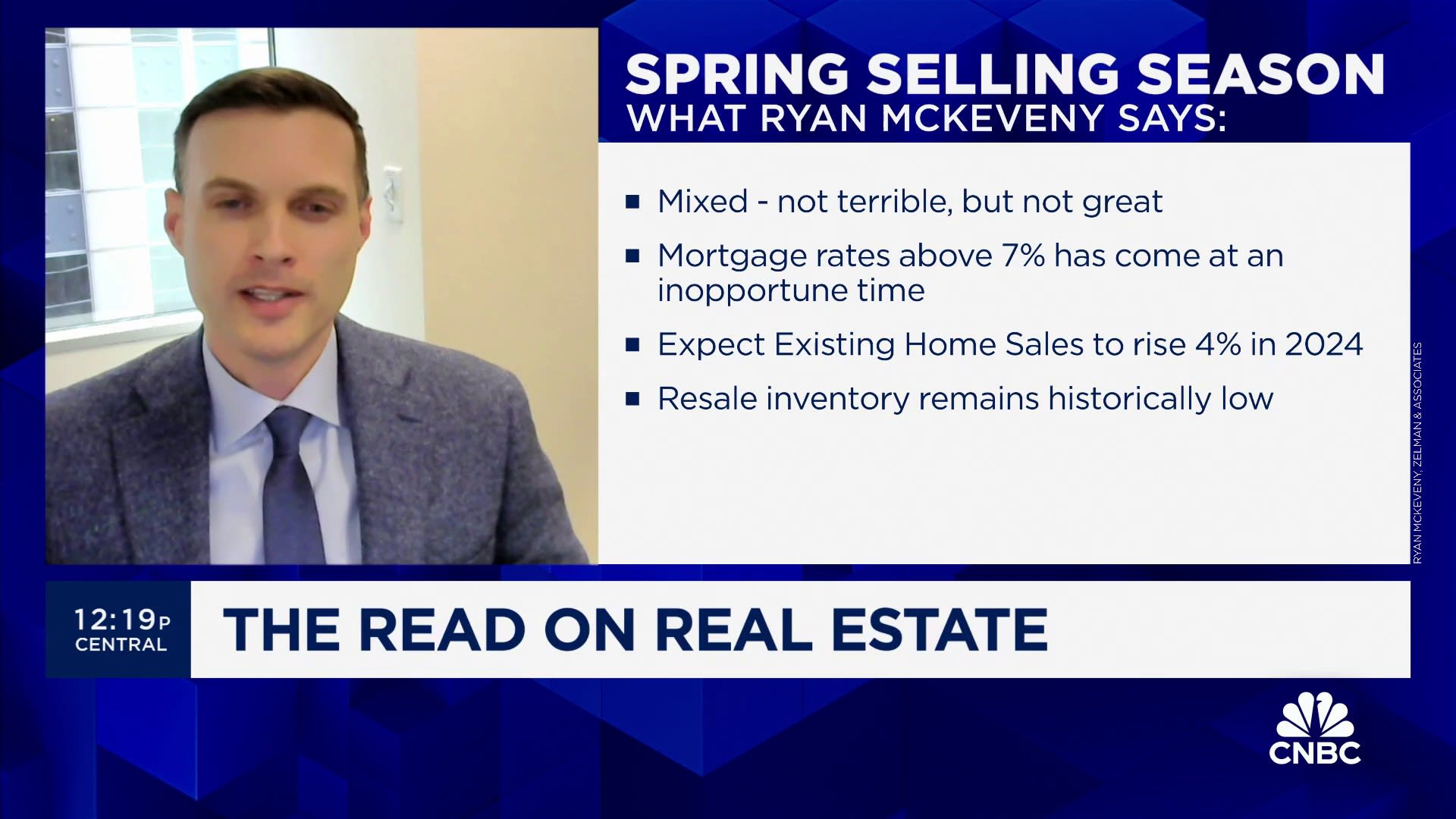
Ryan McKeveny, Zelman & Associates managing director, joins ‘The Exchange’ to discuss the state of housing and how the Fed’s moves will impact the sector.
05:02
Thu, Feb 22 20242:14 PM EST
Existing home sales will see an upward tick this year, says Zelman’s Ryan McKeveny Read More »

Need to estimate rehab costs or calculate ARV (after-repair value) on a property? For new investors, these tricky tasks can often make or break a deal. But, as always, our hosts are here to deliver some helpful tips!
Welcome back to another Rookie Reply! After diving into rehab costs, discussing hard money, and weighing the pros and cons of FHA loans, real estate tax strategist Natalie Kolodij returns to the show to deliver some extra tax advice. She talks about passive losses and why you need to carefully track them from year to year, as well as how tax benefits are allocated in real estate investing partnerships. Stick around until the end to learn the ONE mistake you can’t undo on your tax return!
Ashley:
This is Real Estate Rookie Show 371. Do you know how to find a hard money lender? Does a Yelp exist for that? Or FHA loans? What are the pros and cons? We’re going to find out today. I’m Ashley and he’s Tony.
Tony:
And welcome to the Real Estate Rookie podcast, where every week, three times a week, we’re bringing you the inspiration, motivation, and stories you need to hear to kickstart your investing journey.
Now, today we’re going to be talking about tax strategy for real estate rookies, which is incredibly important. We’ve got a special guest, Natalie Kolodij, who is on episode 368, and she’s back to give you some more real estate strategies. But before we jump into that, first we want to talk about hard money lenders. What are they? How do you find the good ones? Let’s dive in.
Ashley:
Okay. Our first question is from Carl Anthony, “How do you decide what hard money lender to use? Is there some kind of Yelp or review system somewhere?” This is like on the MLS, like a different website, Zillow, realtor.com. You can rate your real estate agent that you used on there.
I have not run across any kind of rating system. If you do go to the BiggerPockets forums and you ask people if they have recommendations or referrals or if you’re thinking of using a certain lender, go ahead and post it into the BiggerPockets forums and see if anybody else has used that lender and get their experience from them.
I think one other thing you could do is search the county records too in your area because you are able to see who has a lien on property. And you can search that company you’re thinking of using and find the mailing address of the property owner and call them up or mail them and just say, “Hey, I’m wondering how was your experience using this hard money lender?” Tony, what about you? What kind of ideas do you have for getting referrals or recommendations on hard money lenders?
Tony:
BP does have the lender finder, so that’s a tool that you can use, Carl. And I think the biggest thing is that you want to date around a little bit. Talk to as many hard money lenders as you can, some of the big national ones, some of the more local ones, and just compare both the customer service and the cost of doing business with that lender.
Every hard money lender is going to have slightly different packages or products that they can offer to you. Some are going to charge you super high rates if it’s your first time doing this, others are going to say like, “Hey, even if you’re a first time investor, we’ll work with you. No problems.” I think talking to as many different hard money lenders as possible is good.
But what I’ve found is that if you can just talk to someone who’s already used a company before and get their firsthand experience, a lot of times that’s the best way to let someone else do that homework for you. And then you’re just drafting behind the hard work they’ve already done. Now what I will say is for a lot of folks that I know that use hard money heavily, most of them have used multiple different companies in the past. A little bit of is a trial and error, just trying different companies to see what works, but that’s what I’ve seen, Ash, to help find that right hard money lender for each investor.
Ashley:
And just real quick before we move on to the next question, some of the things you should be asking are not just bland questions like how was your experience or did it go okay? Would you use them again? Those are great questions, but get more into the nitty-gritty of it as to what was the process like when you had to draw money out for your contractors if part of the rehab cost was involved? What was it like when you closed on the property?
I had a very bad experience where we were supposed to close on a Friday and there was title issues because the hard money lender didn’t do a lot of deals in New York state. And we had to wait and close until Monday until we could get a title attorney that had to come in and clarify that me and my attorney were correct and they were wrong. Asking specifics about the different fees that you’re charged and the process of everything and also how much experience they have doing loans in your market.
Okay. Hopefully some of those questions and places to look for hard money lenders was helpful for you guys. We are going to take a quick break and we’re going to come back and we’re going to talk about estimating rehab costs. You’re going to find out if Tony was born with a construction belt on his hip or if he had to learn all of these things too.
Okay. We are back after our short break and our first question is from Rebecca. “Big newbie looking into BRRRR. For the rehab portion, how do you get the knowledge to estimate repair costs? How would you then estimate the ARV? Thank you in advance.” This is a very common question is how do you learn this stuff? And first let’s break down what BRRRR is. This is a real estate investing strategy. You can buy the property, you can rehab the property, you can rent the property, and then you can refinance the property and then repeat the process on another property. Then ARV is after repair value.
The first recommendation I’m going to give, a super easy one, is the BiggerPockets Bookstore is The Book on Estimating Rehab Costs by J. Scott. But Tony, I think if you’re a long time listener, everybody knows you don’t know a ton about construction. You’re learning, learning, learning as time goes on. But starting out you definitely weren’t swinging the hammer so how did you become knowledgeable in doing rehabs?
Tony:
Yeah. First I think that there’s a misconception from a lot of new investors that you have to be an expert in the actual rehab work itself. Like, oh man, I got to know how to lay tile. I got to know how to frame and hang drywall and I got to know how to repair a roof. That’s not necessarily what it means to be a real estate investor.
If you look at Grant Cardone or Sam Zell or the guys running guys and girls running BlackRock and all these big hedge funds, they’re probably not the ones that are laying the tile. It’s all about making sure that you can factor those costs in, which I think is what Rebecca’s question here is.
But what I found to do, and this was my approach, is when I did my very first rehab property, it was my very first out-of-state borough, that was my first real estate deal ever. My approach was super simple. I looked at my property, I got a very clear picture of what the current condition of that property was. I looked at other properties that had sold that were rehabbed in that market. And I took those rehabbed properties, I went to a few different general contractors and said, “Hey, here’s what my property looks like today. Here’s what I want it to look like. Please give me an estimate. Give me a bid on what it’ll take to get the property from point A to point B.” And I talked to three different contractors in that first deal, and that was what gave me a general sense of what I might spend when it comes to rehabbing a property.
Obviously J. Scott’s book on estimated rehab costs is incredibly detailed. That’s a great way to really nail that estimate step, but if you just want to, as beginner as you can possibly get, let the contractors who know those numbers like the back of their hands give you that number. And the goal of getting three is that you can average between those three different bids to find the most realistic cost.
Ashley:
Yeah. And for me, I took on a partner who knew construction and I learned from him our good friend, Kara Beckman from Beckman House, when she would hire contractors starting out she didn’t know a ton about rehabs or anything like that. And she would literally follow the contractor and ask questions like, “Why are you doing that?” And not because she wanted to do the work herself, but she wanted a better understanding of how the work was done so that she would know if people were doing the work correctly or not. And she had a good comprehension of what she needed to actually get a project done too. That’s something else you could always do. I mean, I think of my contractors and they would hate to have me over their shoulder, but maybe it’s something you could pay for them to teach you a couple things.
Tony:
And that’s another thing too. You could just follow the contractor around when they’re giving you a bid and just ask those questions. And that starts to give you a better sense of what it looks like as well. But Rebecca, I think don’t overestimate or don’t over-complicate the estimation piece. If it’s your first deal, lean on the expertise of the general contractor in that market.
But the second part of her question was the ARV, how do you estimate your after-repair value? And this step is honestly to me, way easier than estimating the rehab costs. All you have to do to estimate your ARV is identify properties that are similar and form function, size, et cetera, to your subject property and see what those properties sold for.
Now, there’s some caveats here. First is time. You don’t want to go back too far into the past. If you found a property, say it’s a perfect model matched to your home, but it sold three years ago, you probably don’t want to use that number. I know for me, I typically try and go to a 90-day window. If I can’t find enough, then I might push it out to six months, but that 90-day window I found is pretty solid for me. Time is important.
Style is important as well. Say you’ve got a single-family ranch style home that was built, I don’t know in the nineties, you don’t want to compare that to a two-storey new construction that was built two weeks ago. Because even if they’re right next door, those are two different styles of home that might attract a different style of buyer. And usually the appraisals look a little bit different as well. That’s a big one.
Proximity, you don’t want to go, and this will vary from city to city. Ashley, where you’re at, it’s a little bit more rural, you’ve got bigger parcels of land, you might be able to go out a little bit further. But in a traditional suburban setting, you probably don’t want to go out more than a quarter of a mile, half a mile, start with that smaller radius first. Because again, if you go a mile out, you might be crossing a major highway, you might be crossing a major street that divides the city into two different sections. Those are the things to look for as you’re looking for that ARV, for those comps for the ARV I should say.
Ashley:
For a third question, we have one that says, “Can someone please give me a rundown on the benefits or cons of using FHA loans? I’m looking to purchase my first property with plans to house hack and save for my next investment.” Okay. First thing Tony comes to mind for FHA loans, low down payment. Woo. Don’t have to bring a lot of money to the table. Okay. We’re talking three and a half percent to 5% down, but there are some conventional loans.
FHA loan and conventional loans are different. Conventional is your standard loan that you can go and buy a investment property, you could buy your primary, whatever that is. And that’s usually 20%, but they’re actually giving out that at 5%. My sister just went and got pre-approval and it was a conventional loan for 5%. Part of 5% down. Part of that pros and cons of using an FHA loan has been the con of having to do an FHA inspection.
If you’re okay with 5%, you’re going to be better off going the conventional route because you don’t have to do that FHA inspection. You’re going to do your inspection on your own, bringing in an inspector to tell you what repairs need to be done, doing your due diligence. But then FHA brings in their own inspector and they want to make sure that the property is habitable, that you can live in it.
Forget fixer uppers. The FHA isn’t going to approve those. I remember when my cousin purchased a property, she was using FHA loan. And they had to install hand railings in certain spots because they were not up to code and that’s one thing FHA flagged. There’s different criteria that they’ll look for in the inspection and they’ll want to either have that fixed before closing or tell you that, “Sorry, we won’t fund this deal.”
Tony:
And I think as an add-ons to that, Ash, because a lot of sellers know and understand that those FHA inspections can be pretty rigorous. If you have maybe say you’re offering $300,000 on this property and someone else is also offering 300,000, but you’ve got FHA and they’ve got conventional or some other type of debt, a lot of times all things being equal, all else being equal, the seller will choose the non-FHA offer over the FHA offer because they know that the likelihood of closing is higher.
That’s another con of the FHA is that it can also make your offer a little bit weaker. Sometimes you might have to offer additional things, maybe a higher purchase price, maybe a bigger EMD, maybe, whatever it may be to kind of make the seller feel more confident about your ability to close. When we bought our first home, our first primary residence, we did conventional 5% down. And we had the option of either going FHA or conventional. We chose conventional as well. There’s a lot that goes into that decision, but FHA is great for the down payment piece, but you got to make sure the property satisfies those requirements.
Ashley:
Okay. We have a special treat for you guys. We know after three questions, you guys are sick of hearing us talk. we are bringing a guest today. We have Natalie Kolodij coming on today. And she’s going to get into the one thing that you can never undo if your taxes are filed wrong. This means you can file an amended return for it. You can’t go back in time and fix this.
Who can take losses with a partnership? We’re also going to talk about that if you’re in a partnership. Does everybody get the tax benefits? And we’re going to go over so much more. Stick around. We’ll be right back after this break with Natalie.
Natalie, thank you so much for joining us for this week’s Rookie Reply. We always love it when we can have a special guest come on and give expert advice here. We wanted to start off with a question here as to what does a CPA need to know about you? What information should you be giving your CPA? And maybe these should be questions they should even be asking you. Natalie first if you want to give us a little background actually about you, and then we can jump right into that question.
Natalie:
Yeah, absolutely. I’ve been in tax for about a decade and specialized in real estate tax since 2017. And I’m also a national tax educator, so I teach CE for other tax professionals all about real estate, so I get to see both sides of the coin. When it comes to things that you want to make sure your CPA knows or your EA and that they’re asking about you, a big thing that’s overlooked is looking forward.
We hear about a lot of tax strategies, but knowing which ones make sense for you, you should really make sure that they understand how quickly you’re planning to grow and scale and what the next three to five years looks like for you to know what makes sense to implement today, what might make sense two years from now. And just create a roadmap for how you’re going to grow and what pieces should be put in place to make sure you have the foundation for the specific growth you’re looking for.
It’s not one size fits all, so you want to just have that forward-looking talk with them about what your end goal is. Because I talk to some clients who are like, “I want 40 rentals by the end of the year and want to be out.” And for other people it’s like a slow one a year, going to retire at 50. Getting on the same page with that will really help determine what applies to you.
Ashley:
And then, what about any passive losses? Do they need to know about your income, if you have active income, passive income, things like that to help with your tax planning?
Natalie:
Yeah. With passive losses, this is an area because again, with your long-term rentals, if your income’s too high, if it creates a loss, it’s passive and you can’t always use it. What that means is a few things. Make sure you’re tax professional, if you know that you had passive losses prior, maybe you switched to just using someone now or you switched firms, there’s a worksheet that tracks those, passive loss carryover schedule. Make sure they have that and make sure you see it on your return.
These get lost track of easily when you switch software, so you don’t want to lose those because they’re like a piggy bank. Something else I’ll hear from investors is, “I can’t use my losses this year. My income’s too high so my CPA said not to worry about it. We’re not going to try to generate more loss.” And that’s not the right mindset.
Even if you can’t use those passive losses today, you still want to create as much of a loss as you’re entitled to. And so you want to make sure you accountant knows everything you put in for cost. If you were traveling before you purchased the property and you had costs incurred there, you had inspections prior to purchase, maybe you paid a wholesaler or a bird dog fee, someone to find you this property, any of those costs they should know about. And those won’t necessarily be in your books or they won’t be on your purchase documents because it was prior. Make sure any costs that you incurred along the whole process, get in front of them.
And then even if it’s creating a passive loss that you can’t use today, you get to use it someday. You never want to just not maximize these. The way I like to describe this to people is your passive losses can build up and then you get to cash in on them at some point. And it’s a lot like going to the arcade. And if you start earning those tickets and instead of getting to use a few tickets this year to get a piece of bubble gum, you get to save your tickets for 10 years and buy the pinball machine on the top shelf. That’s what your losses are doing. Let those accumulate and then you just have this bank of loss.
When you inevitably sell a rental, which we all do every few years, we get tired of a market or it’s gone up a ton of value or you just hate the neighborhood, whatever it is, that gain can be offset with those built up losses. You want to save your tickets for that top shelf item. You want to save your losses to wipe out that $200,000 gain.
Even if you can’t take that $1,000 loss this year, build it up, keep accumulating it, and you’ll get to use it down the road. They never disappear. Always strategize and always make sure anything you paid for it gets in front of your accountant.
Tony:
I have a lot of partnerships, Natalie. And I want to understand how these losses play out in joint ventures and shared LLCs, things of that nature. Before I do, I want to make sure I’m tracking what you said here. It almost makes me think of everyone listening to this podcast is probably old enough to remember when cell phone plans had minutes restrictions every month. And then the cell phone providers started to promote these rollover minutes. Like, “Hey, if you don’t use all your minutes this month, they roll over to the next month.”
It sounds like the passive losses almost operates the same way where even if you don’t use all of your passive losses for this year, they’ll roll over to the next year, then they’ll roll over to next year until you actually end up using them. It sounds like there’s really no downside to trying to maximize your paper losses each year. But what I want to know is say that maybe you got bad tax advice. I’m in the short-term rental industry. Say I bought a short-term rental in 2023, but I didn’t do a cost segment because I didn’t really need the write off. Can I now go back in 2024 to retroactively create that paper loss for 2023? What does that even look like?
Natalie:
Yeah. With short-term rentals specifically because if they’re under seven days and you participate, they’re non-passive. We can often use those losses. Especially there, we want to be really strategic with creating them. When you buy a short-term rental in that year, you can do a cost segregation if you want. And what that does is separates out about 25% of the building value into stuff that you can almost always write off in that first year. It creates this large loss.
It is a year to year test is the other thing. The short-term rental, getting to use those losses is a one and done often. You have to keep buying more properties if you want to keep checking into those big losses. But it’s also something that’s looked at based on the specific year. What I’ll hear from people is, “Well, I don’t want to manage it though to be able to get this loss. I want to hand it off.” Or, “I don’t want to deal with a short-term rental. I want midterm or long-term. I don’t have time for that.”
If you buy a rental December 1st and furnish it and rent it short term for that month, where can you manage it for 30 days? Then January 1st you can make it a midterm. I do not care what you do on January 1st. There’s no negative claw-back, but it’s an annual test. If you are buying towards the end of the year, if you can have the average guest stay under seven days and manage it for just that time of that couple weeks left of the year, you would qualify to do this cost segregation and create a big loss you could use. That can be a really strategic tax plan.
If it’s a couple years down the road and you’re like, “Wait, my accountant never mentioned a cost seg. Can I do that now?” You can. If it has been any more than two years, basically if the depreciation has showed up on a tax return for only one year, you can either go back and change that year and take the loss then.
Or there’s a form 31 15 that says, “I’m going to change my accounting type, I’m going to change my method.” You can do that in any future year. What this means is if year two you decide like you learn about cost seg, you can file that form in year two. If you’re in year five, you can file that form and do the cost seg and you get to take that extra depreciation in the year you file.
This is another good planning point because if in the year you bought the rental, you don’t need those losses maybe. Let’s say you already have a big loss from something else or your income isn’t very high. You might want to wait until a couple years down the road, do your cost seg and take your losses that year with that form because maybe that year your income’s much higher and so you want to have $100,000 write off.
It’s always worth asking about a cost segregation and bringing it up with your accountant or your new tax professional, even if it’s years down the road, because you can still do it. You can still go back and get that adjustment. Now the longer you own it kind of the less benefit there is. Because if you’re in year 20 out of 27, we’ve already sucked up a whole lot of those write-offs. But if you’re in the first 10 years I would say, it is always worth looking at doing that cost segregation, even if you’re in a later year.
And with bonus depreciation, that thing that says you can write off 100% of an expense if its life is under 20 years. That was dropping down. It was 80% for this year is supposed to drop to 60. There’s current legislation that could pass that would bump it back to 100. But also with that amount, it’s based on the year you put the rental in service. Any rookies who bought a rental between 2017 and 2022, put it in service. It is always worth looking at that cost seg because you’re locked in on those 100%. It’s based on the year you started renting it, not the year you do the cost seg.
Tony:
So much good information though. And I think it’s reassuring for folks to know that even if you maybe missed it, maybe you got bad tax advice, maybe you didn’t realize it was an option, you can still go back to try and make it sound.
One other questions I didn’t want to touch on for the losses was partnerships. Again, I have a lot of different partnerships that I do. Most of them are joint ventures, but I think one that might be interesting, we just closed on our first commercial property. It’s a 13 unit boutique hotel in Utah.
I own 21%. I have another partner that owns 9% and then another 70% is owned by two other partners. There’s four of us on this deal. How does the losses work when you’ve got a mix of four people that own a property together?
Natalie:
Most often the losses are allocated based on ownership percentages. There’s more complicated ways to do it, but there’s a whole bunch of hoops. Just as a starting point, assume you’re just getting your percentage. Something to caution about is if you’re in a partnership with someone else and you’re trying to do that short-term loophole, that material participation test you have to pass is based on each person. That person needs to materially participate to get the benefits.
If you do a cost segregation on that property, and let’s say it has a $400,000 loss and you guys are all like, “Yes, this is going to be incredible.” But Tony, you’re the only one who put any time in on it. Your partners are passive and they’re like, “This is awesome. Tony knows what he’s doing, he’s managing it, he’s dealing with all the time, his hours are working on it. And we just sit back and collect a check.” They won’t qualify to take their portion of the losses against their income because they didn’t materially participate. The most common tests are 100 hours and more time than anyone else, so you’re pitted against each other.
On your large apartment complex, because the next test is 500 hours, so it’s possible two people put in 500 hours, but on a single family, probably not. If you and a friend partner on a single family in the Smokies, if one person’s putting in the time and the hours, their time’s going to trump the more time than the other guy. If there’s a short-term rental, there’s a good chance only one of the people will meet that criteria to get to use the losses against their income. The other people still get their share of the losses. It just goes into that save your tickets bucket where they might not get to use it this year.
And one other cautionary tale is if you’ve used an accountant who didn’t know real estate, or even if maybe you didn’t notice this, check your return. For that bonus appreciation, that awesome thing where you get to write off that big chunk, often 100% if you choose not to do that, there’s an election on your tax return where you can say, “Ah, we’re opting out of doing this. We’re not going to take that big write off all at once.” That’s permanent. You can’t ever change your mind about that.
If you are working with a new tax professional, look through all the pages of your return. And if you see something that says, “Under code 168(k), I’m opting out of bonus,” stop, pause, red flag, stop. Because once that’s there, you can’t go back and get it. Like you said, what if year five I work with someone new and I learn about seg and I want to go back and do it? You can always do it. But if they’ve ever put that there saying, “We’re not going to take this,” we can’t take it even if it’s down the road.
Always look for that election and you don’t want to have it. Before you sign off, if it says you’re choosing to not take bonus and you’re opting out, pause and tell them to please remove that. Unless there’s a very specific reason, it really hurts you down the road when you decide to circle back and do a cost seg. You can’t break out that 100% write off if that election has ever been on that asset.
Ashley:
Basically what you’re saying is that there is no going back and redoing it. This is one of the very few things that if you do it wrong or your tax preparer does it wrong for you, there’s no going back for it. What would be one of the reasons that a tax preparer would actually check that box for you?
Natalie:
Yeah. I’ve got some great responses on this. I interviewed someone who by default kept doing that on the trial returns. And when I asked them why they kept opting out, they said they were just taught to always do that. Option one is just they don’t know. They just always have. That could be it.
Sometimes there is a valid reason. I’ve had clients where we actually want the loss spread out across five years instead of all at once. It might line up with their income better. If there’s a specific reason to do that, sure. But I’ve had a situation where a client had a campground. It was all assets where we could have used a ton of bonus depreciation, they did a ton of renovations. We could have had this huge write-off, but their prior accountant opted out of that. When I got it and I was like, “This qualifies for this short-term loophole, we can take these losses.” We could, but we couldn’t create those extra losses with bonus because they had just decided not to.
There’s a handful of reasons they might. I think a lot of accountants do, because they either don’t know short-term rentals can be non-passive. In their head they’re like, “There’s no reason to take it. They can’t use the loss.” And sometimes they just don’t have a reason really. It’s just why would we do this? Just be cautious. Just keep an eye on that because it’s not revocable, so you can’t ever change your mind.
It is on specific classes, so you can choose not to take it on only five-year stuff or only 15. There can be planning there. But if there was no discussion, if there was no talk about it and you have it on your return, definitely ask about it first.
Ashley:
Well, Natalie, thank you so much for taking the time to come on this Rookie Reply. And if anyone listening would like to submit a question for us or an expert to answer on the show, you can go to biggerpockets.com/reply.
Help us reach new listeners on iTunes by leaving us a rating and review! It takes just 30 seconds and instructions can be found here. Thanks! We really appreciate it!
Interested in learning more about today’s sponsors or becoming a BiggerPockets partner yourself? Email [email protected].
Note By BiggerPockets: These are opinions written by the author and do not necessarily represent the opinions of BiggerPockets.
A construction site with new apartments in newly built apartment buildings.
Patrick Pleul | Picture Alliance | Getty Images
Germany’s housebuilding sector has gone from bad to worse in recent months.
Economic data is painting a concerning picture, and industry leaders appear uneasy.
“The housebuilding sector is, I would say, a little bit in a confidence crisis,” Dominik von Achten, chairman of German building materials company Heidelberg Materials, told CNBC’s “Squawk Box Europe” on Thursday.
“There are too many things that have gone in the wrong direction,” he said, adding that the company’s volumes were down significantly in Germany.
In January both the current sentiment and expectations for the German residential construction sector fell to all-time lows, according to data from the Ifo Institute for Economic Research. The business climate reading fell to a negative 59 points, while expectations dropped to negative 68.9 points in the month.
“The outlook for the coming months is bleak,” Klaus Wohlrabe, head of surveys at Ifo, said in a press release at the time.
Meanwhile, January’s construction PMI survey for Germany by the Hamburg Commercial Bank also fell to the lowest ever reading at 36.3 â after December’s reading had also been the lowest on record. PMI readings below 50 indicate contraction, and the lower to zero the figure is, the bigger the contraction.
“Of the broad construction categories monitored by the survey, housing activity remained the worst performer, exhibiting a rate of decline that was among the fastest on record,” the PMI report stated.
The issue has also been weighing on Germany’s overall economy.
German Economy and Climate Minister Robert Habeck on Wednesday said the government was slashing its 2024 gross domestic product growth expectations to 0.2% from a previous estimate of 1.3%. Habeck pointed to higher interest rates as a key challenge for the economy, explaining that those had led to reduced investments, especially in the construction sector.
Ifo’s data showed that the amount of companies reporting order cancellations and a lack of orders had eased slightly in January, compared to December. But even so, 52.5% of companies said not enough orders were being placed, which Wohlrabe said was weighing on the sector.
“It’s too early to talk of a trend reversal in residential construction, since the tough conditions have hardly changed at all,” he said. “High interest rates and construction costs aren’t making things any easier for builders.”
Heidelberg Materials’ von Achten however suggested there could be at least some relief on the horizon, saying that there could be good news on the interest rate front.

“I’m positive inflation really comes down now in Germany, maybe the ECB [European Central Bank] is actually earlier in their decrease of interest rates than we all think, lets wait and see, and if that comes then obviously the confidence will also come back,” he said.
Even if interest rate cuts are a slow process, von Achten says as soon as “people see the turning point” confidence should return.
Speaking to the German Parliament about the economic outlook on Thursday, Habeck said the government was expecting inflation to continue falling and return to the 2% target level in 2025.
The European Central Bank said at its most recent meeting in January that discussing rate cuts was “premature,” even as progress was being made on inflation. While the exact timeline for rate cuts remains unclear, markets are widely pricing in the first decrease to take place in June, according to LSEG data. Â Â
Germanyâs housebuilding sector is ‘in a confidence crisis’ Read More »

In case you missed it, Scott Trench, CEO of BiggerPockets, wrote this thoughtful article: Multifamily Is at High Risk of Continuing Its Historic Crash in 2024—Here’s Why. Scott and I have been discussing this topic offline anyway, so I thought I would take him up on his invitation to debate the subject online. Healthy debate is what BiggerPockets is all about, right?
I will start by saying I agree with most of what Scott wrote. I agree with most of his facts, the challenges facing the multifamily space, and especially the problems with many operators who have run into problems of late.
However, I disagree with Scott’s conclusion. I think now is a great time to save up your dry powder and pick up properties that may be financially distressed but are otherwise well-located, excellent assets taken over by proven operators.
I will argue that the multifamily asset class as a whole is fundamentally sound despite some short-term supply issues. Patient investors who wait for the right deals will be rewarded.
The distress in multifamily is not a tidal wave—it’s more like a trickle. But rest assured, it has already started, and there are deals to be had at valuations we haven’t seen in many years.
As in any market cycle, the time to hunt for great opportunities is not when all is well, euphoria is high, and everyone is chasing the same deals. When asset prices get frothy, it is exactly the time to hit the pause button. And when blood is in the water, it is exactly the right time to go shopping.
But I defer to the two best investors of all time, Warren Buffett and his recently deceased partner, Charlie Munger—the Batman and Robin of investing:
That said, no one wants to catch a falling knife, which is where careful analysis and patience are critical.
I will offer my perspective on “what good looks like” later. For now, let’s dive in and unpack Scott’s core thesis.
Scott’s arguments:
Scott makes a compelling argument that average apartment valuations are out of whack with the new reality of higher interest rates and that there are better ways of making a 5% return in today’s market.
My simple answer is: Don’t invest in those deals. You can do much better. If I’m not confident I can make a 15% to 20% annual return (cash flow plus appreciation) on a multifamily deal, I am not interested.
The issue is that, even though apartment valuations on paper have come down (20% to 30%-ish), there isn’t enough transaction volume yet to reflect the new reality. So, while there are deals that are still trading at 5% cap rates, for example, many more deals are not being traded at all because most sellers are in denial and would prefer to wait it out.
That said, I am seeing quality assets being bought at 6.5% and 6.8% cap rates, with interest rates at 5% and below. At some point, sellers won’t be able to hold on any longer, and more of these better deals will be available.
The best apartment acquirers didn’t acquire many properties at all in 2023 for this exact reason. Investors need to be patient, just like these seasoned operators are.
The bigger point is that we, as investors, don’t buy averages. We buy specific properties in specific markets. “Average” cap rates for single-family homes are terrible right now as well because prices and interest rates are high.
Don’t buy those deals, either. Don’t buy with negative leverage, don’t buy without cash flow, and don’t buy at inflated prices. Find better deals.
How far will multifamily values drop from their peak? My honest answer is, I don’t know. It’s hard to time the bottom.
I do know that buying now, at a 30% discount, is better than buying at the top. All else being equal, a 6.5% cap rate is better than a 5% one. If you are buying a good deal with a solid operator and hold it over a long enough period, you have a recipe for success.
Most importantly, the fundamentals of the apartment asset class are strong. And that creates a floor for future valuation declines and prevents an apartment-pocalypse. More on that next.

Scott’s arguments:
Scott is 100% correct about the influx of new apartment supply hitting the market in 2024. This will cause rents to stagnate in 2024, and in some markets, rent may even decline. Some markets will get hit harder than others, as Scott points out. This is a mathematical certainty.
But we, as real estate investors, should have a much longer time horizon than one year. What happens in 2025 and beyond? That’s when things get more bullish.
Take a look at this chart from CBRE’s “2024 Outlook Summary: Historical & Forecast Multifamily Construction Starts.” You can see that the huge spike of new projects that started during the pandemic is being delivered now.
But then look what happened. Starting in 2022, new projects tanked due to high interest rates and construction costs. That means new deliveries will decrease dramatically in 2025-2026. Supply/demand should rebalance, and rent growth should accelerate again.

2024 renters should get a badly needed break from incessant rent spikes. I think that’s a good thing for society. This also supports my thesis: The lack of short-term rent growth will put more pressure on those apartment owners who are already struggling with high interest rates.
The result for investors: More opportunity to pick up discounted properties. Smart investors with a long-term perspective will see over the horizon and past the short-term choppiness.
However, what about the demand side of the equation? CBRE forecasts that although vacancy rates will continue to surpass their pre-pandemic averages in 2024, sufficient demand will maintain the average occupancy rate above 94%. Developers have accurately gauged where demand will most effectively support new supply.
The markets with the most extensive supply pipelines (such as Dallas, Austin, Nashville, and Atlanta) boast the highest job growth projections. So it’s not so much the new supply but the absorption rate that matters the most—and the new supply should be absorbed over time.
Record unaffordability for home purchases also bolsters demand for renting. Scott points out the other side of this—that homeowners with low interest rates aren’t moving—which reduces rental demand as well. But the vast majority of these locked-in homeowners would be much more likely to buy than rent anyway.
The big picture here is that the U.S. suffers from a huge undersupply of housing, and that fact ensures strong demand for all residential real estate: single-family, multifamily, affordable housing, etc. The current influx of supply won’t make much of a dent. A significant softening of employment could change that, but otherwise, the long-term supply/demand equation favors apartments.
But as always, real estate needs to be analyzed at the local level. Investors should always evaluate the supply-demand dynamic in their local market and submarket.
How quickly is new supply being absorbed in your local market? What new projects might be coming onboard near your target property that could cause issues? These are great questions to ask the deal sponsor and require supporting data.
Scott’s arguments:
Touché. Scott wins this one. Increases in property taxes and insurance are a leech on the bottom line of apartment owners, and there’s no good remedy in sight.
One would think that property taxes would fall in line with falling property values. But like Scott, I am skeptical. And insurance costs are ridiculous.
A couple of points to remember, though. First, all these same factors hurt the economics of single-family rentals just as much. For example, I’m selling my SFRs in Texas because property tax spikes alone turned my once-profitable gems into a negative cash flow money pit.
Second, make sure operators are appropriately accounting for these costs in their projections—baked into the cake if you will.
Finally, there are some niche strategies that address the property tax issue. A tactic some operators use is negotiating with local tax authorities to completely eliminate property taxes in exchange for dedicating some units to affordable housing. It’s one of my favorite strategies in high property tax markets like Texas.
Scott’s arguments:
Scott is clearly a big interest rate nerd! Inverted yield curve prognostications aside, let me try to translate for the rest of us.
Most people think apartment borrowing costs will go down, which would give apartment owners stuck with high variable rates some relief. Scott is the contrarian: He thinks borrowing costs could go up even if the Fed lowers rates.
What do I think rates will do? I have no idea! The biggest mistake apartment operators made over the last two to three years was assuming rates would stay low when they refinanced their bridge loans. They bet wrong, and they are now getting crushed. If borrowing costs do rise, that creates more stress and, therefore, more deals for the savvy investor to pick up.
But more importantly, your investment strategy needs to be interest rate-agnostic. In other words, it needs to work if rates go up or down. That’s why I favor fixed, long-term debt (five-plus years) on apartment deals and at least a few years longer than the property exit plan.
Rates and market values can go up and down during the hold period, but I want my property to shrug it off, spit out cash flow, and benefit from a value-added plan that will produce equity along the way. And there should always be a sufficient margin of safety built into the deal economics (equity, cash flow, and reserves) to withstand the inevitable bumps—something many new operators failed to do in the last few years. I’m sure Scott would agree.
But how do you secure long-term, low interest rate debt these days? One way is to assume it. One of the coolest features of multifamily investing is that properties sometimes come with low rates that the seller can pass on to the new owner. These properties will be more expensive, but it can be worth it, given how important the debt structure is today.
Alternatively, operators can buy with more equity to mute high interest rates in the deal. However, I would still want to see positive leverage.
There are headwinds facing multifamily operators. But those same headwinds create opportunities for the rest of us. The apartment oversupply will work its way through the system, but perhaps not soon enough to save operators who overestimated rent projections in order to goose return projections for investors. Unless there is a recession, demand for apartment rentals should remain robust.
Cap rates have been stubbornly low. But that doesn’t mean you have to buy at inflated prices or accept deals with high-interest rate risk. Property and insurance costs are a problem that operators need to be realistic about and account for in their budgeting.
So what does good look like? I agree with Scott Trench about buying opportunistically and only accepting conservative assumptions from operators. Assume flat rent growth in the short term, look very closely at exit cap rates, and don’t buy with negative leverage (Scott’s suggestion of cap rates that are 150 bps above agency debt is a good benchmark).
I personally look for deals with a value-added edge that creates a greater buffer or margin of error in case things go sideways. Be cognizant of where your equity sits on the capital stack.
I couldn’t agree more with Scott about demanding more operators and capital raisers. His tips there are worth a second look. The most important thing to do is to choose operators with a strong, and ideally long, track record of success. Don’t be anyone’s guinea pig!
There needs to be more education about private equity real estate investing. Scott announced that Bigger Pockets is planning a new initiative called PassivePockets that will have expert voices weighing in on what “good looks like” for multifamily investing. I’m looking forward to it.
If you want to discuss multifamily investing, feel free to email me at [email protected] or visit ClaraInvestments.com.
Tyler Moynihan is a former executive at Zillow and managing partner at Clara Investment Group. He is an LP and GP and focuses on multifamily investments.
Need help finding the right market for your next investment? Dave Meyer created our brand new Picking a Market Worksheet to help investors like you identify and analyze the right locations for their next deals.
Download our worksheet today for quick and easy analysis when researching your next market.

Note By BiggerPockets: These are opinions written by the author and do not necessarily represent the opinions of BiggerPockets.

Witthaya Prasongsin | Moment | Getty Images
Despite a slump in U.S. home sales, many homeowners made a profit selling property in 2023. Those gains could trigger a tax bill this season, depending on the size of the windfall, experts say.
In 2023, home sellers made a $121,000 profit on the typical median-priced single-family home, according to ATTOM, a nationwide property database. That’s down from $122,600 in 2022. Â
But sometimes profits exceed the IRS limits for tax-free gains and “it’s a shock” for sellers, said certified public accountant Miklos Ringbauer, founder of MiklosCPA in Los Angeles.Â
Still, “the tax laws were written to encourage homeownership,” and many sellers qualify for a tax break, Ringbauer said. Â
Single homeowners can shield up to $250,000 of home sales profit from capital gains taxes and married couples filing jointly can exclude up to $500,000, provided they meet IRS eligibility.
If you’ve owned the property for more than one year, profits above $250,000 and $500,000 are subject to long-term capital gains taxes, levied at 0%, 15% or 20%, depending on your 2023 taxable income. (You calculate “taxable income” by subtracting the greater of the standard or itemized deductions from your adjusted gross income.)
There are strict rules to qualify for the $250,000 or $500,000 capital gains exclusions, Ringbauer warned.Â
The “ownership test” says you must own the home for at least two of the past five years before your home sale â but that’s only required for one spouse if you’re married and filing jointly.
There’s also a “residence test,” which requires the home to be your primary residence for any 24 months of the five years before sale, with some exceptions. (The 24 months of residence can fall anywhere within the five year period, and it doesn’t have to be a single block of time.)
Both spouses must meet the residence requirement for the full exclusion.
A partial exclusion may also be possible if you sold your home because of a workplace location change, for health reasons or for “unforeseeable events,” according to the IRS.
Generally, you can’t get the tax break if you received the exclusion for the sale of another home within two years of your closing date.
If your capital gain exceeds the IRS exclusions, it’s possible to reduce your profits by increasing your home’s original purchase price or “basis,” according to certified financial planner Assunta McLane, managing director of Summit Place Financial Advisors in Summit, New Jersey.
You can increase your home’s basis by adding certain improvements you’ve made to the property to “prolong its useful life,” according to the IRS.
For example, you could tack on the cost of home additions, updated systems, landscaping or new appliances. But the cost of repairs and maintenance generally don’t count.

Of course, you’ll need detailed records to show proof of capital improvements, because “estimates don’t work when it comes to an audit,” Ringbauer said.
After a home sale, the IRS receives a copy of Form 1099-S, which shows your closing date and gross proceeds. But you need paperwork to prove any changes to your home’s basis.
Failing to keep home improvement records throughout ownership is a “common mistake,” McLane said.
Here’s how to reduce your capital gains tax bill after selling a home Read More »

You can’t scroll through your daily news feed these days without seeing story after story about the impact of generative AI on virtually any and all industries. It’s here, and the good news is it can be an incredibly useful tool in real estate.
According to a recent analysis by McKinsey Global Institute, “In our own work with AI, we have seen real estate companies gain over 10% or more in net operating income through more efficient operating models, stronger customer experience, tenant retention, new revenue streams, and smarter asset selection.”
And this should hold true for the real estate investor as well—even those of us with fewer than 10 doors. Especially investors with small portfolios, in fact, since we often don’t have the help of slick management companies.
Think of generative AI as a super-smart, articulate virtual assistant, and then think about all the things you would delegate to that assistant if you could. Here are a few places to start:
Have a vacancy coming up? When writing your property listing, don’t waste time agonizing over your prose.
Enter the key details into ChatGPT, including the important keywords (“view, “covered parking,” whatever works for your market), and ask it to use those inputs to create a 250-word listing optimized for your keywords using a “friendly but professional tone.” In five seconds, you’ll have a listing that you can either tweak yourself or, better yet, ask ChatGPT to keep tweaking until it’s perfect.
Time saved: 1.5 hours
Use a generative image AI tool like the creative options in Canva to create an Instagram post for your new listing. Better yet, have Canva create 10 posts, including all the relevant captions and hashtags, each slightly different, highlighting a desirable feature of your listing, and post one every other day until you’re leased.
Time saved: 4 hours
Set up an auto-response within Instagram so that anytime a follower comments “details” (or whatever word you choose), an AI bot immediately sends them the full listing in their DMs (even if it’s 3 a.m.). The bot can also ask for their address—and now you’ve begun to grow your future marketing email list.
Do they want to walk the property? The bot can send your Calendly schedule with predetermined viewing windows.
Time saved: 2 hours
Every month, five days before rent is due, send your tenants a quick reminder (one ChatGPT has written for you and that you’ve auto-scheduled in advance, once for the whole year) with the link to your rent payment site. Once a quarter, automate a friendly check-in (again, have ChatGPT compose for you), asking if there are any maintenance issues that need attending to.
Time saved: 1.5 hours
Empty houses don’t sell nearly as well as furnished ones do. Show your potential tenant just how your place will look with their perfect mid-century sofa in the living room. Use generative AI to virtually stage your rental and help your hipster tenants image themselves right at home in your space.
Time saved: 8 hours and up!
How have you used generative AI to save you time and money?
Ready to succeed in real estate investing? Create a free BiggerPockets account to learn about investment strategies; ask questions and get answers from our community of +2 million members; connect with investor-friendly agents; and so much more.
Note By BiggerPockets: These are opinions written by the author and do not necessarily represent the opinions of BiggerPockets.
AI Tools Can Save You 10 Hours Per Week If You Use Them Right—Here’s How Read More »
