Blog

I Went to a $14,000 Retreat for 9-Figure Founders in Italy

I Went to a $14,000 Retreat for 9-Figure Founders in Italy


Key Takeaways

  • The OOAK Mastermind conference took place in late August in Tuscany.
  • In order to attend, founders had to apply and pay $14,000 in conference fees.
  • The event was geared towards founders of seven- to nine-figure founders who want to take their businesses to the next level.

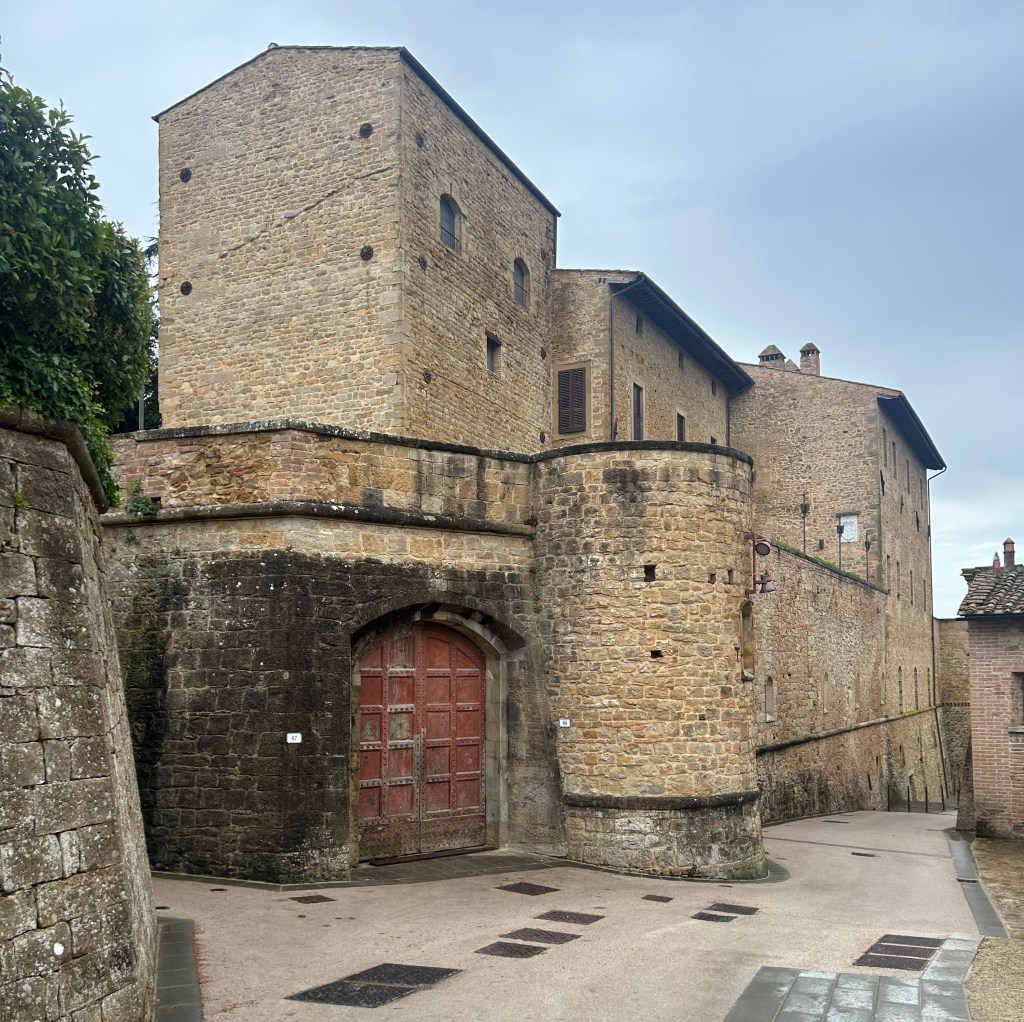
I first saw the hotel Castelfalfi from the back of a cab, its stone exterior rising out of the Tuscan hills. Inside waited founders who collectively generate more in annual revenue than some small countries — and each had paid thousands of dollars for the privilege of being there.

On paper, I had no business being at a $14,000 retreat for seven- to nine‑figure founders in Tuscany. I don’t run a massive consumer goods brand or a unicorn startup, and my net worth is far from impressive. But when I was invited to sit in on three days of keynote sessions and fireside chats at the OOAK Mastermind conference, I couldn’t turn down the chance to see what happens when ultra‑successful founders gather behind closed doors.

OOAK Mastermind was hosted by OOAK, short for One Of a Kind. The global consumer brand-building company creates, scales and acquires brands.

The three co-founders of OOAK were everywhere at this event. Bob Verlaat, Nick Nijhof and Vince Nijhof delivered the keynotes and moderated the fireside chats. The three of them are actually best friends from childhood; Nick and Vince are brothers.

OOAK founders: (left to right) Bob Verlaat, Vince Nijhof and Nick Nijhof.

The three founders came up with the idea for this event after hosting two smaller iterations in Dubai. They originally intended to keep this conference small, with only a few dozen participants, but kept attracting more interest and selling out.

What surprised me most was how young everyone was. Vince, Nick and Verlaat are all under 30 years old, and they were able to attract an audience of about 100 young founders.

The experience 

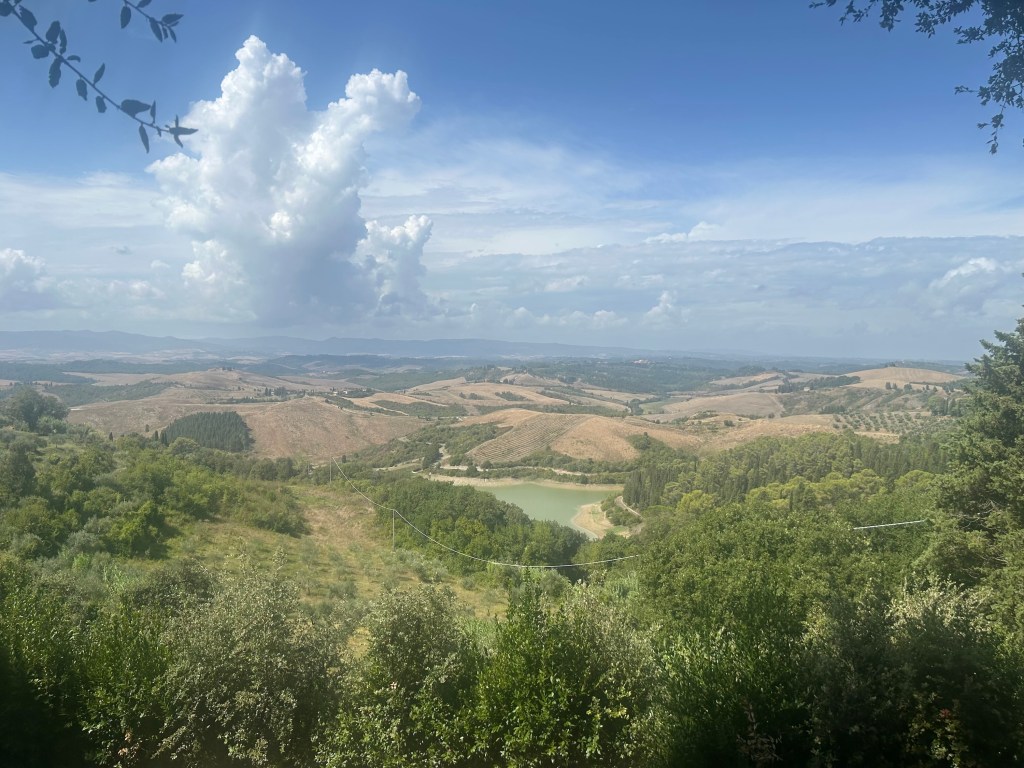
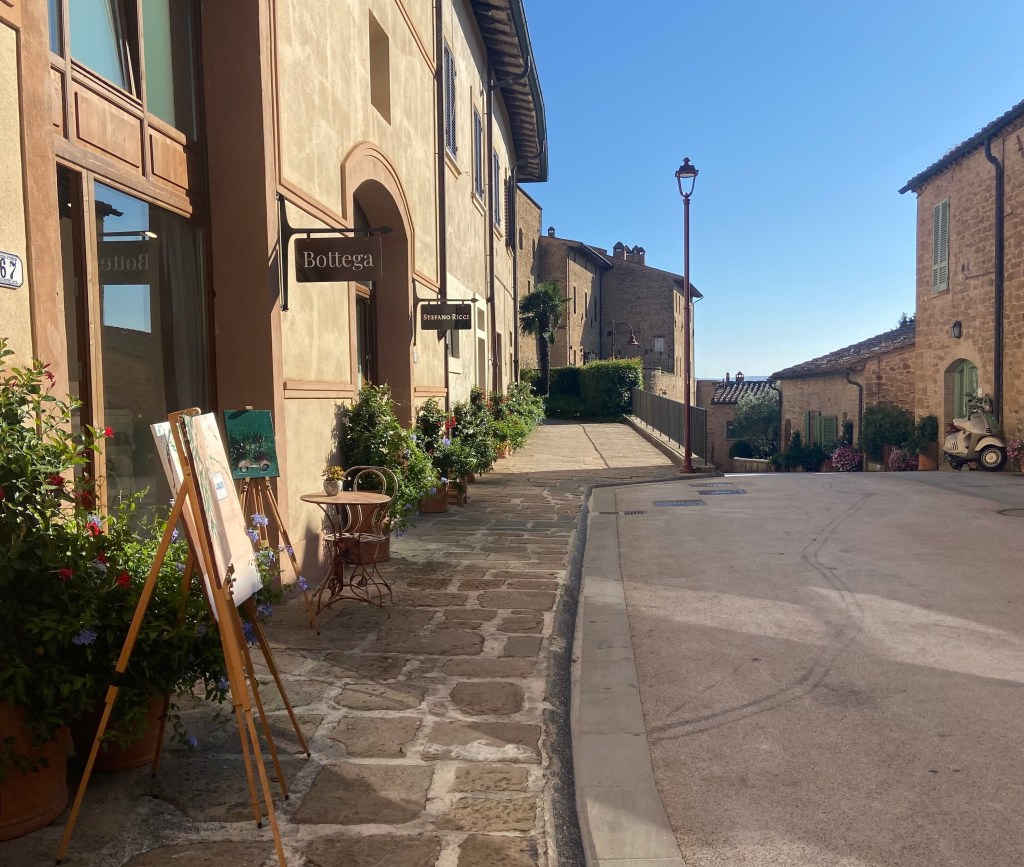
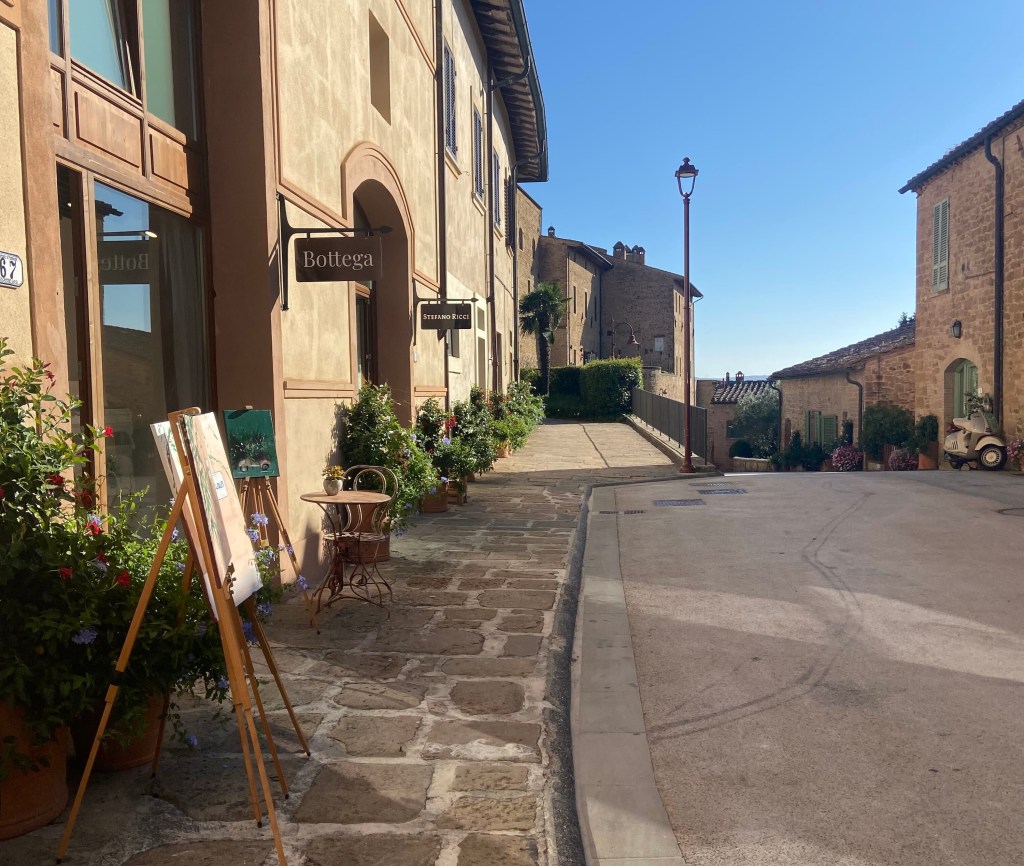
The event was at the Castelfalfi resort in the heart of Tuscany, Italy. The village of Castelfalfi was a five-minute walk from the hotel and featured a row of shops ranging from a clothing store to a gelato shop. Everywhere I looked, there were scenic views. 

Event participants paid $14,000 for five-star accommodations, meals and airport transfers. Attendees had to apply and have a proven track record of leading a seven- to nine-figure brand.

Besides the three OOAK founders, speakers at the event included Jeff Srithongrung, director of creative strategy at TubeScience, and Ray Jang, founder and CEO at AI ad company Atria. Srithongrung spoke about how to run an effective ad campaign and the benefits of changing an ad to appeal to different audiences. Jang spoke about the transformative effect of AI in advertising and said that AI has reduced the cost of testing concepts and trying new things to “close to zero.”

This was where I stayed.
The Castelfalfi resort
A row of shops in the village.

On Saturday afternoon, I joined the conference participants for a truffle-filled lunch: We had beef tartare with truffle as a starter, truffle risotto for the main course and vanilla truffle mousse for dessert. I sat with founders working on selling everything from supplements to gold. 

Truffle risotto.
Truffle risotto.
One part of the Castelfalfi village
One part of the Castelfalfi village.
The view
The view.

One attendee spoke about his success

Most event participants were brand founders. One speaker, 32-year-old Alvaro Gellings, revealed that he built an apparel brand and sold $1.4 million worth of products within the first hour of launch. He then built a sportswear brand called Day One and tapped into a partnership with German creator and endurance athlete Arda Saatçi. Gellings, who was also an attendee at the conference, knew that selling sportswear required more than just having a quality product. 

“Nobody’s looking for the next gym tank to buy,” he says. “Nobody’s in urgent need of the next T-shirt, the next socks, the next shoes. You have to create a story.”

Gellings created a highly publicized story: Saatçi would run 1,960 miles from Berlin to New York. 

He would start in Berlin and run across Europe to Porto, Portugal, then take a flight from Porto to Boston. For the final stretch, he would run from Boston to New York. He would do it all while wearing Day One sportswear, and the company’s official launch would be tied to him completing his run.

It took Saatçi 74 days in 2024 to complete the task. The ad campaign had “everyone posting,” Gellings says. It was a prime example of how companies can leverage partnerships with influencers to make their brands more recognizable and focus on the story, not the product. 

Framing products in new ways

The OOAK co-founders hosted a number of talks at the retreat, and I sat down with the trio before the event started to hear more about their entrepreneurial journeys.

Even if you don’t know OOAK, you may recognize one of their portfolio brands, like earplug company Hears and sleepwear startup Dore & Rose. Verlaat, Nick and Vince founded Dore & Rose in 2022, followed by Hears in 2023 and subsequently grouped the businesses under the holding company OOAK.

Verlaat oversees brand, creative direction and positioning while Nick handles product and people and Vince focuses on growth, paid acquisition and supply chain execution. 

“We all had a very separate skill set [when we started], and we still have [that],” Verlaat says.

He added that his blueprint for launching brands, his core thesis, was to take a “boring” product and frame it differently. For example, the founders position Dore & Rose as a premium sleep-wellness brand rather than a conventional bedding retailer, selling mulberry-silk sleep products infused with silver ions. They emphasize overnight skin recovery and restorative sleep.

The founders took a relatively familiar product, the silk pillowcase, and pushed it toward an emotionally richer category: beauty, wellness and sleep quality. It’s a silk pillowcase brand positioned as beauty, not bedding. 

Hears applies the same playbook to hearing protection: It sells earplugs for music, nightlife and event environments but positions them as a premium lifestyle product rather than a mere accessory. Its public narrative is about enjoying music clearly and confidently while protecting hearing. The founders repositioned the earplugs as a fashion product, not a medical device.

The outcome

So far, the way they market their products is paying off: The founders disclosed that OOAK Brands is making a combined yearly revenue of $100 million. They are targeting $200 million this year. 

In addition, they have sold over one million silk items through Dore & Rose and have placed their silk products in 50 five-star hotels, like Four Seasons, Belmond and Cheval Blanc. Dore & Rose has partnerships with over 150 retailers, including Nordstrom, Mecca and Namshi.

Meanwhile, Hears hit $7 million in revenue in its first year, 2024. Since then, the brand has sold more than 250,000 pairs of earplugs. Hears partnered with the Hearing Health Foundation to donate a portion of revenue and raise awareness for hearing protection. 

Their advice

Verlaat’s advice for potential founders waiting to make the leap is to “just do it.” “What’s the worst thing that could happen, really?” he says. “You don’t die.” 

He says that he knew from the start that he would succeed. “We always believed that we’re going to get to where we are today.”

Vince pursued entrepreneurship because he “wanted to work and make money.”

“I wanted to just go harder,” he says. “For me, I think I figured out really, really soon that working for a boss was not going to cut it for me.”

Nick was candid that founders needed to “wear multiple hats,” especially in the early stages of building a business. He is also an advocate of just getting started, even if a founder doesn’t have everything figured out. “You don’t need to see the finish line. You don’t need to know where it will end,” he says. “As long as you know your next step, eventually you will get there.”

Key Takeaways

  • The OOAK Mastermind conference took place in late August in Tuscany.
  • In order to attend, founders had to apply and pay $14,000 in conference fees.
  • The event was geared towards founders of seven- to nine-figure founders who want to take their businesses to the next level.

I first saw the hotel Castelfalfi from the back of a cab, its stone exterior rising out of the Tuscan hills. Inside waited founders who collectively generate more in annual revenue than some small countries — and each had paid thousands of dollars for the privilege of being there.

On paper, I had no business being at a $14,000 retreat for seven- to nine‑figure founders in Tuscany. I don’t run a massive consumer goods brand or a unicorn startup, and my net worth is far from impressive. But when I was invited to sit in on three days of keynote sessions and fireside chats at the OOAK Mastermind conference, I couldn’t turn down the chance to see what happens when ultra‑successful founders gather behind closed doors.

OOAK Mastermind was hosted by OOAK, short for One Of a Kind. The global consumer brand-building company creates, scales and acquires brands.


Source link

I Went to a $14,000 Retreat for 9-Figure Founders in Italy Read More »

Business Formations Are at Record Highs — and the Fastest-Growing States Aren’t the Ones You’d Guess

Business Formations Are at Record Highs — and the Fastest-Growing States Aren’t the Ones You’d Guess


Opinions expressed by Entrepreneur contributors are their own.

Key Takeaways

  • AI and remote work have erased the two biggest reasons founders used to move to Silicon Valley or New York — access to talent and access to tools — leaving affordability, tax climate, and quality of life as the real deciding factors.
  • The fastest-growing states for new business formation aren’t the traditional hubs but places like Wyoming, Oregon, Mississippi and North Dakota, signaling that entrepreneurial wealth creation is being redistributed across America in ways that reward founders willing to look past the coasts.

From movies to novels, we’ve been told that a business sprouts best in the most fertile garden. In The Social Network, Mark Zuckerberg drops out of Harvard and heads west to grow Facebook in the new tech hub of Palo Alto. The Great Gatsby finds rural North Dakota boy James Gatz moving to Long Island to build his business and reinvent himself in the process.

These may be works of fiction, but in real life the startup guide has been the same for decades. If you wanted to launch a successful business, you went where the opportunity was. In this vein, Silicon Valley became synonymous with innovation. New York dominated finance and media. Boston excelled in biotechnology, and so on.

Today, that assumption is extinct. AI, cloud computing and the adoption of remote work have changed the dynamics of starting a business. Founders no longer need to be in a major civic hub to access trained talent, sophisticated business tools or even global markets. Aspiring founders are now choosing where to build companies based on affordability, operating costs and lifestyle.

More than 548,000 new U.S. business formations took place this past June, the strongest June on record, and nearly 3.5 million through the first half of the year. But the interesting trend is where many of those businesses are launching. States like Oregon, Mississippi and North Dakota posted some of the nation’s strongest year-over-year growth, while Wyoming remains a magnet for new business formations, especially LLCs and out-of-state ventures. These hotspots underscore that entrepreneurial momentum is becoming more geographically diverse.

AI changes the economics of company building 

Until just a few years ago in the pre-ChatGPT world, launching a startup usually required hiring employees or outsourcing work. Entrepreneurs needed analysts to conduct market research, programmers to develop websites, designers to create marketing materials, writers to produce content and customer service reps to serve as liaisons. Now AI allows founders, even solo or two-person ventures, to perform many tasks themselves before making their first hires.

Let’s be clear: This doesn’t replace expertise or eliminate the value of seasoned employees, but it does significantly lower the cost and complexity of going to market. This means that one of the strongest advantages of traditional startup ecosystems – access to large pools of talent and cash – is no longer essential to nurture a company through its earliest stages.

Remote work unchains employees from offices

Along with powerful AI tools, post-COVID remote work has altered another enduring business assumption: that employers and employees must share the same offices. Many founders now recruit nationally or globally, customizing their teams based on expertise rather than ZIP codes. Software developers can work in Colorado, designers in North Carolina, accountants in Texas. Meanwhile, a company’s leaders can operate somewhere else, nearly anywhere they’d like.

This flexibility gives entrepreneurs something previous generations rarely had: the freedom to choose where they want to live without impeding access to talent. Instead of asking themselves, “Where do I need to move to build my company?” founders now ask, “Where can my company give me a strategic advantage?” and “Where do I want to operate from?”

Geography still matters for different reasons

As they say in real estate, it’s still about “location, location, location.” Geography continues to matter in many ways, but not because of specialized business hubs.

Lower commercial rents reduce overhead. Business-friendly tax policies improve cash flow. Decreased housing costs benefit founders and staff alike. Shorter commutes and better access to bike lanes and outdoor recreation can improve quality of life and help prevent burnout amid the nascent years of company building.

For entrepreneurs bootstrapping a business, every dollar they can save on overhead is a dollar that can be invested in product/service development, hiring or customer acquisition. Cities don’t have an irresistible magnetic pull anymore because they’re the preeminent hub for tech, finance or anything else. Unless your vision is a location-based business like a restaurant, retail shop or amusement park, more and more founders are unshackled by a “required” location.

Build where you can thrive

Business formation data suggests that the redistribution of entrepreneurship is accelerating. Communities that historically struggled to attract startups now find themselves competing on strengths that matter to today’s entrepreneurs: affordability, broadband connectivity, favorable tax climates and a high quality (and often slower pace) of life.

Wealth creation is becoming increasingly democratized, pushing into previously overlooked parts of America with a surge in LLC formations. Today, successful companies are as likely to emerge from midsize cities, suburban communities or even rural regions as from traditional metropolitan corridors.

Entrepreneurs have always been encouraged to “Think differently.” With a leg up from AI and remote work, that mindset is extending into where they plan.

Key Takeaways

  • AI and remote work have erased the two biggest reasons founders used to move to Silicon Valley or New York — access to talent and access to tools — leaving affordability, tax climate, and quality of life as the real deciding factors.
  • The fastest-growing states for new business formation aren’t the traditional hubs but places like Wyoming, Oregon, Mississippi and North Dakota, signaling that entrepreneurial wealth creation is being redistributed across America in ways that reward founders willing to look past the coasts.

From movies to novels, we’ve been told that a business sprouts best in the most fertile garden. In The Social Network, Mark Zuckerberg drops out of Harvard and heads west to grow Facebook in the new tech hub of Palo Alto. The Great Gatsby finds rural North Dakota boy James Gatz moving to Long Island to build his business and reinvent himself in the process.

These may be works of fiction, but in real life the startup guide has been the same for decades. If you wanted to launch a successful business, you went where the opportunity was. In this vein, Silicon Valley became synonymous with innovation. New York dominated finance and media. Boston excelled in biotechnology, and so on.

Today, that assumption is extinct. AI, cloud computing and the adoption of remote work have changed the dynamics of starting a business. Founders no longer need to be in a major civic hub to access trained talent, sophisticated business tools or even global markets. Aspiring founders are now choosing where to build companies based on affordability, operating costs and lifestyle.


Source link

Business Formations Are at Record Highs — and the Fastest-Growing States Aren’t the Ones You’d Guess Read More »

How I Became a Verified 7-Figure Short-Selling Day Trader

How I Became a Verified 7-Figure Short-Selling Day Trader


Opinions expressed by Entrepreneur contributors are their own.

Key Takeaways

  • After being diagnosed with a brain tumor at 25, my life changed completely. I had surgery and took my renewed chance at life to turn it into the exact one I wanted.
  • Success is not an overnight phenomenon. It requires rigorous discipline and sacrifice.

Some of the hallmarks of a successful entrepreneur include the ability to self-actualize through rigorous study, continuous learning, relentless tenacity and the resilience to rebound after setbacks. 

I know this firsthand. At 25, my goals were set in stone. I knew what I wanted: a career in architecture. At the time, I was enrolled in UCLA’s master’s program in architecture, studying and working on projects nonstop, setting the bar as high as I could. The renowned Pritzker Prize-winning architect Thom Mayne was my mentor. I was at the top of my game.  

Then, overnight, I received the blow of a lifetime: I was diagnosed with a brain tumor that required immediate surgical intervention. When I awoke, staring at the cold, clinical hospital ceiling, I had 150 stitches on the side of my head and was unable to move. However, I was able to discern two searing sentences of a conversation between my mother and the surgeon. 

“What have you done to my son?” My mother railed at the doctor. 

“I have given him 50 more years of life,” the doctor replied decisively. 

From that moment on, I knew I had to make that 50-year gift count. After taking half a year off from my studies, I returned to class with renewed zeal — and mounds of debt. Despite the appearance of gradual recovery, I had a long road ahead. 

Still, I was determined to make the most of every moment. But the medical bills kept piling up, and I was forced to make a drastic change — a pivot to a high-income skill. While searching online, I found day trading, which I understood less than nothing — but not for long. I studied the discipline for countless hours, delving into books, podcasts and YouTube videos until my brain hurt. I became so assiduous and single-minded that I knew I had to go further and immerse myself completely in my new focus. 

By sheer force of will and necessity, I absented myself from everything and everyone I knew. My colleagues and friends thought I had taken leave of my senses. My family didn’t know what had become of me. I sold my car, changed my number and ensconced myself in an office in an LA skyscraper for $230/month. 

“What happened to David?” echoed faintly in my ears, carried by the grapevine. But I didn’t care what anyone thought. I had “burned the boats,” as Hernán Cortés told the Conquistadors in the 16th century. There was no turning back. I had survived life-altering surgery; now my future was on the line, and I had to shape and claim it. 

To support my new venture, I took on odd jobs as a tutor and an Uber driver. The landlord kept knocking on my door, and the creditors couldn’t wait. While these practicalities held sway, I worked day and night, sleeping on the floor of my office to ensure wakefulness at the market open.  

In my personal life, I became a minimalist — again, not by choice, but by necessity. For example, when the world went into lockdown during the Covid-19 pandemic, all the gyms were closed, and I had nowhere to shower. So, I resorted to Skid Row. Stoic and poker-faced, I walked through the streets of downtown L.A., intent on reaching my destination undisturbed. I had 10 minutes to shower and then return to monitor my trades. Everything was the trade. 

When I wasn’t trading, I read voraciously and studied into the night, honing my skills, journaling and envisioning. The Law of Attraction was central to my approach. I truly believed — as I still do — that what I projected in my mind’s eye would manifest. And so it did: I became a high-stakes, 7-figure day trader with a 90%-win rate.  

However, success was not an overnight phenomenon. It required rigorous discipline and sacrifice. Some might say my tactics were extreme, but I had no choice. I had to become an autodidact, front-loading all my strategies and literally devising them. The result was a set of proprietary winning strategies that I share in my book, Short Selling Master: Proven Strategies from a High-Stakes Day Trader (Harriman House). 

My objective: to vanquish the 96% failure rate in my industry by providing cogent strategies for success. Today, I have become the mentor I never had, with the opportunity to witness others advance in the field and attain financial freedom.

Some might say that my unique methodology for attaining success — a compelled absence from mainstream society — was extreme. Indeed, that plan took all the fortitude I could muster. In no guise do I advocate such a plan for my students or other aspiring traders. But looking back, I have absolutely no regrets. Hard work and ingenuity led me to where I am today. I hearken back in gratitude while moving forward and lifting others up.  

Key Takeaways

  • After being diagnosed with a brain tumor at 25, my life changed completely. I had surgery and took my renewed chance at life to turn it into the exact one I wanted.
  • Success is not an overnight phenomenon. It requires rigorous discipline and sacrifice.

Some of the hallmarks of a successful entrepreneur include the ability to self-actualize through rigorous study, continuous learning, relentless tenacity and the resilience to rebound after setbacks. 

I know this firsthand. At 25, my goals were set in stone. I knew what I wanted: a career in architecture. At the time, I was enrolled in UCLA’s master’s program in architecture, studying and working on projects nonstop, setting the bar as high as I could. The renowned Pritzker Prize-winning architect Thom Mayne was my mentor. I was at the top of my game.  

Then, overnight, I received the blow of a lifetime: I was diagnosed with a brain tumor that required immediate surgical intervention. When I awoke, staring at the cold, clinical hospital ceiling, I had 150 stitches on the side of my head and was unable to move. However, I was able to discern two searing sentences of a conversation between my mother and the surgeon. 


Source link

How I Became a Verified 7-Figure Short-Selling Day Trader Read More »

Why Formula E Thinks It Can Beat Formula One at Its Own Game

Why Formula E Thinks It Can Beat Formula One at Its Own Game


Opinions expressed by Entrepreneur contributors are their own.

Key Takeaways

  • In just 12 years, Formula E has gone from a niche all-electric experiment that needed two cars to finish a race to a global championship with hundreds of millions of fans and cars that top 200 miles per hour.
  • Formula E’s mission is baked into its DNA: it is the world’s first sport to earn B Corp certification and works as a real-time test lab for EV innovation.

The idea of an all-electric racing championship used to sound like science fiction, and in its debut season, Formula E’s cars needed a mid-race swap just to make it to the checkered flag.

“12 years ago, if someone said we’re going to create an all-electric racing championship, people might have thought you were absolutely crazy,” says Jeff Dodds, CEO of Formula E.

At the time, just 300,000 electric vehicles were sold worldwide and, according to Dodds, “they weren’t very good.” 

“In our first season, we needed to have two cars to finish a race, because the battery wouldn’t last long enough,” he recalls.

Today, the technology has improved dramatically. Around 22 million EVs are expected to be sold this year, with BloombergNEF forecasting that figure could reach 35-40 million annually by 2030.

The transition is already accelerating in markets worldwide. And Formula E has spent the past 12 years positioning itself in the driver’s seat.

Altering the Formula 

Before joining Formula E, Dodds spent years in the automotive industry, working for Volvo and later Honda, where he became deeply immersed in motorsport.

“We had our own Formula One team, MotoGP, British Superbikes, touring cars—they had everything,” he recalls.

That background explains why Dodds doesn’t view Formula One as a threat. If anything, he sees it as the benchmark for elite motorsport

“Believe it or not, whilst I was an F1 fan, I also followed Formula E before I came to work here,” Dodds says. “I have a good appreciation for the journey that Formula One’s been on,” he adds. “We’re similar, and then we’re very different.”

F1 and Formula E both use open-wheel, single-seater Formula racing cars. But there are some major distinctions. The main one is obvious from the name: Formula E is an all-electric racing league, while Formula One uses traditional internal combustion to power its cars. 

This doesn’t just reduce Formula E’s carbon footprint — it changes the racing product itself. With limited energy at their disposal,  the world’s best drivers must decide when to conserve and when to push, adding another layer of strategy to wheel-to-wheel racing. Dodds likens it to “a game of chess on the racetrack.”

He believes this appeals to racing fans differently than F1. “F1, for me, is nostalgic,” Dodds explains. “I know the drivers. I know their journeys. I love the locations they race at. Perhaps the bit I like least about it is the actual racing.”

He compares many F1 races to a “procession,” where fans often have a good idea of who will win before the engines start.

Formula E, by contrast, places a premium on parity.

“If you say to me, ‘Who do you think is going to win the London race?’ I legitimately would say it could be anybody.” Dodds says. “Everyone has a chance of winning that race. That’s pretty rare in motorsport.”

Races are designed to last under an hour, with plenty of overtakes and the kind of “thrills and spills” that can hold the attention of viewers accustomed to faster-paced entertainment.

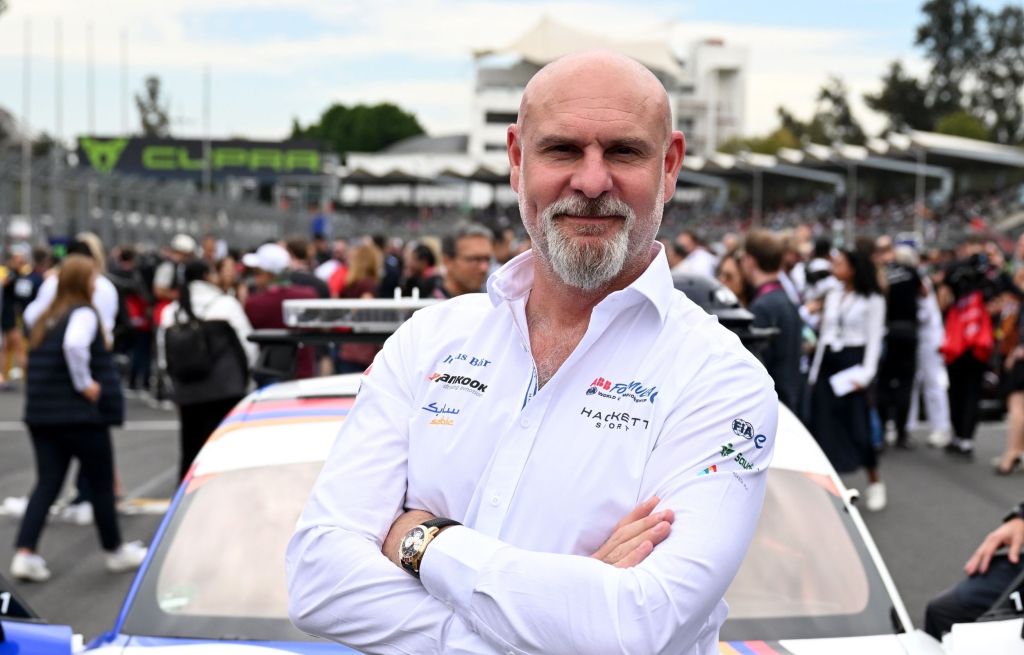
Those differences are reflected in Formula E’s audience. Its fan base skews younger, is split nearly 50-50 between men and women, and has a particular interest in technology, sustainability and innovation. That audience has also attracted the attention of media giants. On August 11, Formula E, Disney+ and ESPN announced a landmark multi-year agreement that will make Disney+ the global streaming home of the ABB FIA Formula E World Championship across 144 territories. In the U.S., races will stream on Disney+ alongside ESPN+ beginning with the 2026/27 season.

“I don’t mean to be disparaging because I watch it and enjoy it,” Dodds says, “but I don’t find F1 anywhere near as exciting as I find us.”

Speed without sacrifice

What sets Formula E apart from many companies now embracing sustainability is that its mission wasn’t created in response to a trend. Sustainability has been at the championship’s core from the beginning.

“If you’re a big business that decides you want to become more sustainable, that’s a very worthy thing,” Dodds says. “But you’re trying to reverse-engineer a more sustainable approach into your processes and the way you work. We’ve only ever had it as a core tenet of our business.”

Formula E was built around three goals: create an elite global racing championship, help accelerate the transition from combustion engines to electric vehicles and become the world’s most sustainable sport.

More than a decade later, Dodds believes the organization has a strong case for achieving that last goal. Formula E is the only sport in the world certified as a B Corp. This designation recognizes companies meeting high standards for social and environmental performance while committing to continuous improvement. 

Sustainability is embedded throughout the race weekend. Events are powered by hydrogenated vegetable oil, single-use plastics are eliminated on-site, and the cars are charged using renewable energy. Formula E says its Gen4 car will also be 100% recyclable or reusable.

“My personal view is when people hear ‘sustainable,’ they often hear compromise,” Dodds says. “They think the product’s going to be more expensive, or not as good, because you’re trying to do it sustainably. And I think we are a brilliant argument against that, because we produce the fastest-selling race cars in the world and the most exciting racing, while being the most sustainable sport.”

World’s most exciting test lab 

The racing is entertaining, but it isn’t what makes Formula E important. Much of the championship’s impact happens off the track, where it works alongside some of the world’s largest automakers to test EV technology that can eventually find its way into consumer vehicles.

Formula E has six manufacturers competing in its championship: Porsche, Jaguar, Nissan, Stellantis, Yamaha and Mahindra.

“One of the reasons they’re in is they treat the racetrack like a laboratory for testing technology that can make its way into their road cars,” Dodds explains. 

“If you look at the latest Porsche Cayenne Turbo, it’s the most powerful production Porsche ever released — and it’s all-electric,” Dodds says. “It’s an incredible piece of machinery, and a lot of the technology in that car has been developed through, or come out of, Porsche’s Formula E program.”

He also mentions Formula E’s work with Jaguar’s I-Pace, where Jaguar discovered a way to install over-the-air software updates to their cars from an iPhone. “This is where we are in terms of the cutting-edge nature of the technology,” Dodds says. “You know, things are being developed and discovered on our racetrack that will find their ways into your cars incredibly quickly.”

Zero to 100

Dodds admits it’s difficult to imagine just how far Formula E could go. After all, the championship’s first 12 years have already produced growth that once seemed unimaginable.

“12 years ago, we had zero fans, zero TV audience, and a car. You needed two cars to do a race. The car finished at 130 miles an hour,” Dodds shares. “Ten years on, you’ve got 420 million fans, over half a billion TV audience, and you’ve got a car that accelerates to 100 kilometers in 1.6 seconds and races well over 200 miles an hour. It’s inconceivable how far we’ve come.”

Because of this, Dodds is reluctant to put hard limits on Formula E’s long-term growth. In an industry moving as quickly as electric vehicles, he believes setting objectives too far into the future can be more constraining than helpful.

“I definitely have an ambition, but I wouldn’t want to constrain that by tethering us to a set of targets that are too low,” he says. They’ve already gone from zero to 100 incredibly quickly. It’s impossible to tell how fast they’ll grow now.

Key Takeaways

  • In just 12 years, Formula E has gone from a niche all-electric experiment that needed two cars to finish a race to a global championship with hundreds of millions of fans and cars that top 200 miles per hour.
  • Formula E’s mission is baked into its DNA: it is the world’s first sport to earn B Corp certification and works as a real-time test lab for EV innovation.

The idea of an all-electric racing championship used to sound like science fiction, and in its debut season, Formula E’s cars needed a mid-race swap just to make it to the checkered flag.

“12 years ago, if someone said we’re going to create an all-electric racing championship, people might have thought you were absolutely crazy,” says Jeff Dodds, CEO of Formula E.

At the time, just 300,000 electric vehicles were sold worldwide and, according to Dodds, “they weren’t very good.” 


Source link

Why Formula E Thinks It Can Beat Formula One at Its Own Game Read More »

The Next Wave of American Innovation Isn’t Being Built in Silicon Valley. Here’s Where It’s Actually Happening.

The Next Wave of American Innovation Isn’t Being Built in Silicon Valley. Here’s Where It’s Actually Happening.


Opinions expressed by Entrepreneur contributors are their own.

Key Takeaways

  • The innovation frontier is shifting from software to physical infrastructure — energy transition, supply chain resilience, advanced manufacturing, and climate adaptation — and the Gulf South, with 40%+ of U.S. crude oil production, half of U.S. refining capacity, and major LNG, aerospace, and defense corridors, is one of the few regions structurally positioned to lead it.
  • What makes the Gulf South an investable mispricing isn’t the assets alone — it’s that this level of global connectivity (to Latin America, West Africa, Europe, the Middle East, and Asia) exists at a materially lower cost basis than traditional capital hubs, creating the conditions where patient investors can build lasting positions before consensus arrives.

The most important shift in global capital right now is not about which sector is hot or which market is recovering. It is about how the system itself is being reorganized. While much of the investment world remains fixated on AI and software, the next wave of opportunity lies where technology intersects with physical infrastructure — from energy and logistics to manufacturing and defense. Those industries are being reshaped by innovation, and the Gulf South is emerging as one of the places where that future is being built.

The Gulf South sits at the intersection of American productive capacity and global demand in a way that very few regions in this country can claim, and that positioning is not yet reflected in how institutional capital is allocated here. The gap between what this region represents structurally and how it is currently valued is, in my assessment, one of the most significant mispricings in American economic geography.

An investment thesis in motion

Earlier this year, I attended the 3rd Coast Venture Summit in New Orleans, one of the Southeast’s premier gatherings for founders, investors and startup leaders. What I saw was a thesis in motion: founders building at the intersection of energy, logistics, climate and technology; capital from outside the region engaging seriously, some for the first time; and a community that had been building quietly and was beginning to move with real intention.

That moment reinforced what I had already been working toward as an investor building within the region. The opportunity is to build investment architecture specifically designed to capture this dynamic, connecting the depth of Gulf South industry to the global corridors of demand across Europe, the Middle East and beyond.

If New York is America’s financial brain and Silicon Valley is its technology center, then the Gulf South is its physical infrastructure and its gateway to the rest of the world. And right now, that gateway is dramatically undervalued relative to what it is already producing and what it is positioned to become.

Regional assets, global implications

The Gulf South — Texas, Louisiana, Mississippi, Alabama and Florida — is the load-bearing infrastructure of the American economy. Texas produces over 40% of the nation’s crude oil. Louisiana anchors American LNG exports to Europe and Asia. The Gulf Coast holds roughly half of U.S. refining capacity and is also home to one of the largest concentrations of aerospace production and advanced industrial capacity in the world. The ports of Houston, South Louisiana and Corpus Christi move an enormous share of what this country produces and imports. That alone would make it strategically significant, but the more interesting fact is where those ports point.

The region connects directly, by water, pipeline and long-established trade route, to Latin America, West Africa, Europe and increasingly the Middle East and Asia. These are the corridors where the majority of global GDP growth will originate over the next twenty to thirty years. Emerging markets are not a future consideration for serious investors. They are the primary consideration. The founders building here reflect that same orientation, constructing businesses with operational discipline and capital efficiency that the build-fast-break-things era rarely produced.

The opportunity for investment

What compounds this opportunity is the cost structure. This level of global connectivity exists at a materially lower cost basis than the traditional hubs where capital tends to concentrate. For investors and operators, that changes the calculus entirely. Capital can move into real industries at scale without the saturation or the premium that coastal markets demand.

Some of that mispricing has a foundation. Governance challenges and climate risk in certain metros — New Orleans being the most visible — create perception drag that bleeds into broader regional assessments. These are legitimate factors. They are also exactly what creates the entry point. Complexity and perceived risk, when layered over genuine structural strength, produce the conditions where patient capital can build lasting positions before consensus arrives.

There is also a deeper shift in what innovation actually means that makes this moment particularly important.

Where the innovation curve is heading

The dominant narrative of the last twenty years was software eating the world, and it did so productively. The frontier is now moving. Energy transition, supply chain resilience, advanced manufacturing and climate adaptation are the defining challenges of the next era. The innovation curve is bending toward physical systems and industrial complexity — toward the kind of problems that require more than a laptop and a good API. Those problems are native to the Gulf South. The companies being built to solve them will define a new geography of innovation, one that does not look like the last cycle.

The defense and space layer adds another dimension entirely. NASA infrastructure in Houston, New Orleans and Mississippi; propulsion testing corridors; defense shipbuilding operations across the Gulf — these represent strategic infrastructure in the fullest sense. They make the Gulf South simultaneously economically essential and geopolitically irreplaceable, a combination that attracts long-duration capital and signals something important about where national and institutional priorities are actually pointed.

In a multi-node world, rare combinations of productive capacity and global connectivity are exactly what serious capital should be identifying before the market does. The Gulf South is the connective corridor between what America produces and what the world needs. The opportunity now is not simply to invest in technology, but to invest where technology is transforming energy, logistics, advanced manufacturing and other critical infrastructure sectors the global economy can’t function without.

Key Takeaways

  • The innovation frontier is shifting from software to physical infrastructure — energy transition, supply chain resilience, advanced manufacturing, and climate adaptation — and the Gulf South, with 40%+ of U.S. crude oil production, half of U.S. refining capacity, and major LNG, aerospace, and defense corridors, is one of the few regions structurally positioned to lead it.
  • What makes the Gulf South an investable mispricing isn’t the assets alone — it’s that this level of global connectivity (to Latin America, West Africa, Europe, the Middle East, and Asia) exists at a materially lower cost basis than traditional capital hubs, creating the conditions where patient investors can build lasting positions before consensus arrives.

The most important shift in global capital right now is not about which sector is hot or which market is recovering. It is about how the system itself is being reorganized. While much of the investment world remains fixated on AI and software, the next wave of opportunity lies where technology intersects with physical infrastructure — from energy and logistics to manufacturing and defense. Those industries are being reshaped by innovation, and the Gulf South is emerging as one of the places where that future is being built.

The Gulf South sits at the intersection of American productive capacity and global demand in a way that very few regions in this country can claim, and that positioning is not yet reflected in how institutional capital is allocated here. The gap between what this region represents structurally and how it is currently valued is, in my assessment, one of the most significant mispricings in American economic geography.

An investment thesis in motion

Earlier this year, I attended the 3rd Coast Venture Summit in New Orleans, one of the Southeast’s premier gatherings for founders, investors and startup leaders. What I saw was a thesis in motion: founders building at the intersection of energy, logistics, climate and technology; capital from outside the region engaging seriously, some for the first time; and a community that had been building quietly and was beginning to move with real intention.


Source link

The Next Wave of American Innovation Isn’t Being Built in Silicon Valley. Here’s Where It’s Actually Happening. Read More »

7 Things AI Can Now Do for Your One-Person Business it Couldn’t 2 Weeks Ago (No Staff, No Code)


Key Takeaways

  • Seven things AI can now do — from operating software and building apps to coordinating agents around a complete business outcome.
  • Why the next advantage is not another prompt or subscription, but deciding which jobs AI should now own.
  • How to start with one costly bottleneck and turn AI into a working team around the goal that matters most.

AI has crossed another line in the past few weeks. It is no longer confined to answering questions or generating isolated pieces of content. It can now operate software, work in the background, direct other AI systems, build functioning apps from plain English and coordinate specialist agents around a shared goal.

In the video above, I demonstrate seven things you can start doing now that were unreliable or impractical only weeks ago. You’ll see AI recover lost customers, operate browser-based tools, build software around a small bottleneck and combine multiple agents into one working team.

What connects all seven experiments is a bigger change in how we work with AI. Instead of asking it to complete one isolated task, we can now give it a goal, the context behind it and responsibility for navigating the steps in between.

That changes the role AI can play inside a one-person business. It can move from helping you produce individual pieces of work to taking ownership of a complete job — whether that means recovering a customer, building an internal tool or diagnosing why revenue changed this week.

In The Wolf Is at The Door, I identified AI delegation — not collecting tools—as one of the collaborative skills that would determine who adapts fastest. At the time, delegation still meant prompting AI to produce individual pieces of work. Now one request can trigger research, decisions, software actions and follow-up across several systems.

A recent Intuit QuickBooks analysis found that 78% of small and midsize businesses using AI reported improved productivity, while 43% said it increased revenue. The companies seeing results are putting AI into real workflows, not limiting it to generic questions.

For a solopreneur, those workflows are hiding everywhere: your inbox, research, follow-up, reporting, customer recovery, content and the internal app you keep postponing because you do not have a development team. One AI does the research; another builds; another communicates; another watches the numbers

The video above includes all seven experiments, the customer-recovery job brief, the ChatGPT-to-Lovable handoff, the multi-agent workflow and the exact revenue-diagnosis outcome I would delegate first.

Once AI can own complete jobs instead of simply helping with tasks, the real question is no longer which tool you should try next. It is what you could build if you were no longer doing all of it.

The free AI Success Kit, available to download for a limited time, comes with a free chapter from my new book, The Wolf is at The Door – How to Survive and Thrive in an AI-Driven World.

Key Takeaways

  • Seven things AI can now do — from operating software and building apps to coordinating agents around a complete business outcome.
  • Why the next advantage is not another prompt or subscription, but deciding which jobs AI should now own.
  • How to start with one costly bottleneck and turn AI into a working team around the goal that matters most.

AI has crossed another line in the past few weeks. It is no longer confined to answering questions or generating isolated pieces of content. It can now operate software, work in the background, direct other AI systems, build functioning apps from plain English and coordinate specialist agents around a shared goal.

In the video above, I demonstrate seven things you can start doing now that were unreliable or impractical only weeks ago. You’ll see AI recover lost customers, operate browser-based tools, build software around a small bottleneck and combine multiple agents into one working team.


Source link

7 Things AI Can Now Do for Your One-Person Business it Couldn’t 2 Weeks Ago (No Staff, No Code) Read More »

I’ve Built Companies in 6 Industries. The Same 5 Patterns Determine Success Every Time.

I’ve Built Companies in 6 Industries. The Same 5 Patterns Determine Success Every Time.


Opinions expressed by Entrepreneur contributors are their own.

Key Takeaways

  • Serial entrepreneurs outperform first-timers not because they diversify but because they develop pattern recognition — the ability to see which principles transfer across industries and which don’t.
  • The best opportunities rarely come from brainstorming sessions; they come from recurring friction — the customer complaints, manual workarounds, and repeated problems your team has quietly accepted are the clearest signals of where a real market exists.

The more businesses I built, the more I realized that industries change, but the problems that determine success often repeat. Here are five patterns every entrepreneur should learn to recognize.

From the outside, my career may look like I kept changing lanes. I have built and operated businesses in hospitality, real estate, construction, home inspections, healthcare and digital marketing. People sometimes ask how I move between industries that seem so different. The truth is, I don’t begin with the industry. I begin with the problem.

A hotel guest, a homebuyer, an urgent care patient and a small-business owner are not the same customer. But each wants clarity, consistency and confidence. Each wants to know what happens next, whether the company can be trusted and whether the experience will be worth the money.
The greatest advantage of working across industries has not been diversification alone. It has been pattern recognition.

One NBER study of Danish firms found serial entrepreneurs were 39% more productive than novice entrepreneurs. But experience only becomes an advantage when you understand which lessons transfer and which do not.

Look for the emotion beneath the transaction

Customers rarely buy only the product or service listed on the invoice. A hotel guest is not just paying for a room. After a long day of traveling, that guest may be buying rest and reassurance. A patient visiting urgent care wants answers, relief and confidence that someone is paying attention. A homebuyer ordering an inspection wants more than a report. The buyer wants to feel informed before making one of the largest financial decisions of their life.

This is similar to the jobs-to-be-done approach developed by the late Harvard Business School professor Clayton Christensen: Focus on what the customer is really trying to accomplish. In every business, I ask three questions: What is the customer worried about? What would make the experience easier? What must happen for the customer to trust us?

Those questions often teach me more than a traditional competitor analysis.

Transfer principles, not procedures

Hospitality taught me that people remember how a business makes them feel. I carried that lesson into healthcare, but that did not mean turning an urgent care center into a hotel. It meant translating the principle.

In a hotel, a warm welcome, clear directions and quick resolution can reduce stress. In urgent care, those same principles may become a respectful check-in, accurate expectations about wait times and clear communication about the next step.

Franchising taught me another transferable lesson: Systems create consistency, but only when people understand and use them. That principle has helped us grow inspection operations across multiple markets. The procedures are different, but the need for training, accountability and consistent execution is the same.

When you see a successful practice in another industry, don’t copy it word for word. Identify the principle underneath it, then adapt it to your customer, team and operating environment.

Treat repeated friction as market research

Some of my best business opportunities didn’t begin in a brainstorming session. They began with a problem I kept seeing.

While operating local businesses, I watched strong companies lose attention to competitors that were easier to find and better at explaining their value online. That repeated problem eventually helped lead us into digital marketing. A service you struggle to source, a question customers ask every week or a workaround your team has quietly accepted may point to a larger opportunity.

The U.S. Small Business Administration recommends combining market research with competitive analysis to understand demand and identify an advantage. You can start closer to home.

For 30 days, keep a friction log. Record recurring complaints, delays, outside services you repeatedly purchase and manual workarounds. Then ask who else has the same problem, what it costs them and whether they would pay for a better solution.

Validate the pattern before building around it

Seeing a recurring problem doesn’t automatically mean you’ve found a viable business. Because you understand the problem, you may assume others value the solution as much as you do. Before committing significant time or money, talk with potential customers. Test a limited version. Ask customers to pay rather than simply asking whether they like the idea. Set a budget, a deadline and a clear result the test must produce.

Not every frustration deserves a new company. Some are operational problems that should be fixed inside the existing business. The goal is to distinguish between an inconvenience and a market.

Build a leader, not another job

A new opportunity becomes dangerous when it depends on the founder for every decision. Before entering another business or market, I consider who will lead it, what authority that person will have and which measurements will show whether the operation is healthy.

If every customer issue, employee question and financial decision comes back to you, you have not built another business. You have created another job. The common thread across my businesses is not a particular industry. It is solving real problems through service, systems and trust.

Entrepreneurs don’t have to chase every trend. They need to notice recurring patterns, translate lessons carefully, validate demand and develop people who can lead. Once you recognize patterns, new industries become less intimidating. More importantly, you become better at knowing which opportunities deserve a yes — and which require a disciplined no.

Key Takeaways

  • Serial entrepreneurs outperform first-timers not because they diversify but because they develop pattern recognition — the ability to see which principles transfer across industries and which don’t.
  • The best opportunities rarely come from brainstorming sessions; they come from recurring friction — the customer complaints, manual workarounds, and repeated problems your team has quietly accepted are the clearest signals of where a real market exists.

The more businesses I built, the more I realized that industries change, but the problems that determine success often repeat. Here are five patterns every entrepreneur should learn to recognize.

From the outside, my career may look like I kept changing lanes. I have built and operated businesses in hospitality, real estate, construction, home inspections, healthcare and digital marketing. People sometimes ask how I move between industries that seem so different. The truth is, I don’t begin with the industry. I begin with the problem.

A hotel guest, a homebuyer, an urgent care patient and a small-business owner are not the same customer. But each wants clarity, consistency and confidence. Each wants to know what happens next, whether the company can be trusted and whether the experience will be worth the money.
The greatest advantage of working across industries has not been diversification alone. It has been pattern recognition.

One NBER study of Danish firms found serial entrepreneurs were 39% more productive than novice entrepreneurs. But experience only becomes an advantage when you understand which lessons transfer and which do not.

Look for the emotion beneath the transaction

Customers rarely buy only the product or service listed on the invoice. A hotel guest is not just paying for a room. After a long day of traveling, that guest may be buying rest and reassurance. A patient visiting urgent care wants answers, relief and confidence that someone is paying attention. A homebuyer ordering an inspection wants more than a report. The buyer wants to feel informed before making one of the largest financial decisions of their life.

This is similar to the jobs-to-be-done approach developed by the late Harvard Business School professor Clayton Christensen: Focus on what the customer is really trying to accomplish. In every business, I ask three questions: What is the customer worried about? What would make the experience easier? What must happen for the customer to trust us?

Those questions often teach me more than a traditional competitor analysis.

Transfer principles, not procedures

Hospitality taught me that people remember how a business makes them feel. I carried that lesson into healthcare, but that did not mean turning an urgent care center into a hotel. It meant translating the principle.

In a hotel, a warm welcome, clear directions and quick resolution can reduce stress. In urgent care, those same principles may become a respectful check-in, accurate expectations about wait times and clear communication about the next step.

Franchising taught me another transferable lesson: Systems create consistency, but only when people understand and use them. That principle has helped us grow inspection operations across multiple markets. The procedures are different, but the need for training, accountability and consistent execution is the same.

When you see a successful practice in another industry, don’t copy it word for word. Identify the principle underneath it, then adapt it to your customer, team and operating environment.


Source link

I’ve Built Companies in 6 Industries. The Same 5 Patterns Determine Success Every Time. Read More »

LinkedIn Users Are Fed Up With Poorly Written AI Content

LinkedIn Users Are Fed Up With Poorly Written AI Content


Key Takeaways

  • LinkedIn added a new feature last month: a button users can press if the content they’re seeing “seems like AI slop,” or poorly generated AI content.
  • In the first two weeks of the button’s launch, more than a million people have used it.
  • AI-detection startup Pangram recently classified more than 40% of LinkedIn’s long-form posts as entirely AI-generated.

LinkedIn doesn’t want to lose users to a flood of AI content. 

In an effort to create a better user experience, LinkedIn chief product officer Hari Srinivasan announced in a post on the platform last month that the company would include a new feature: a “seems like AI slop” button. 

AI slop refers to poorly generated AI content. LinkedIn is allowing users to flag posts that appear to be AI-generated.

The button immediately proved popular. Srinivasan wrote on LinkedIn last week that within the first two weeks of the button’s launch, more than a million people have used it. 

“Overall members are now experiencing 40% less views on what we classify as AI slop from just a few weeks ago,” he wrote in the post. “Despite the progress, we know we have more to do to ensure LinkedIn remains a place where you can find real people & real perspectives.”

Avoiding activity from AI bots

LinkedIn is trying to avoid the “dead Internet theory,” or the idea that much of what users see online is no longer made by real people for real people. The theory imagines an Internet increasingly filled with bots, AI-generated posts, fake accounts and automated engagement. 

In other words, machines effectively post, like, comment and boost each other, making most of the content on the Internet AI-generated.

As AI agents and bots flood online spaces, the theory has gained traction. 

“There’s a lot of missing pieces of information, but a lot of the observed data suggests the same thing, which is there is more bot activity,” Rudy Yang, PitchBook’s enterprise and retail fintech analyst, recently told Fortune. “Agentic AI activity is driving a lot of the browser activity you’re seeing.”

AI content is gaining ground

Data supports the idea that the web is increasingly dominated by AI. Cloud platform Cloudflare said in April that for the first time, automated traffic had overtaken human traffic on the Internet. As of Wednesday, bots generated 58% of search requests, compared to 42% from people, per Cloudflare.

AI-written material is also showing up more often across the web. In a Pew Research Center analysis released last week, researchers examined 10,000 webpages gathered in July and found that 10% contained strong indicators of AI authorship, up from roughly 2% five years earlier. 

More than one-third of webpages published since ChatGPT’s late-2022 debut showed at least some evidence of AI-generated writing, the analysis added.

LinkedIn appears especially exposed to the shift. The professional networking site, used by more than 1.3 billion registered members to follow companies, industries and workplace news, had a larger share of AI-generated long-form posts than Medium, X or Substack, according to a  July analysis by AI-detection startup Pangram. 

Pangram classified more than 40% of LinkedIn’s long-form posts as entirely AI-generated.

Key Takeaways

  • LinkedIn added a new feature last month: a button users can press if the content they’re seeing “seems like AI slop,” or poorly generated AI content.
  • In the first two weeks of the button’s launch, more than a million people have used it.
  • AI-detection startup Pangram recently classified more than 40% of LinkedIn’s long-form posts as entirely AI-generated.

LinkedIn doesn’t want to lose users to a flood of AI content. 

In an effort to create a better user experience, LinkedIn chief product officer Hari Srinivasan announced in a post on the platform last month that the company would include a new feature: a “seems like AI slop” button. 

AI slop refers to poorly generated AI content. LinkedIn is allowing users to flag posts that appear to be AI-generated.


Source link

LinkedIn Users Are Fed Up With Poorly Written AI Content Read More »

America’s Power Grid Is Strained. Here’s the Business Risk.

America’s Power Grid Is Strained. Here’s the Business Risk.


Opinions expressed by Entrepreneur contributors are their own.

Key Takeaways

  • The rapid growth of data centers, EV charging and reshored manufacturing is putting unprecedented pressure on the power grid. Electricity demand is rising while much of the infrastructure carrying that power was built decades ago.
  • For founders building anything that touches physical infrastructure, real estate, logistics or manufacturing, grid reliability is becoming a crucial concern.
  • As aging equipment faces heavier loads, preventive maintenance and faster repair capabilities are becoming essential. Reliability will require smarter maintenance, faster response and better technology.
  • Businesses planning new facilities or expanding operations should consider not only how much power a location can provide, but also how quickly that power can be restored when infrastructure fails.

Between 2020 and 2025, U.S. electricity demand grew roughly 1.7% a year, more than ten times the annual pace utilities saw over the prior decade and a half, according to federal energy forecasts. Data centers, EV charging depots and reshored manufacturing plants are pulling more current through wires than the grid was ever designed to carry.

For founders building anything that touches physical infrastructure, real estate, logistics or manufacturing, this is not an abstract policy debate. It’s a supply chain risk. A transformer failure in the wrong substation can shut down a distribution center for days. Power reliability is quietly becoming a competitive advantage.

The challenge: Aging infrastructure meets rising demand

Much of the U.S. transmission network was built between the 1950s and 1980s, engineered for a slower-growing, less electrified economy. Layer today’s load onto yesterday’s steel and copper, and stress shows up fast: sagging conductors, overheated transformers, voltage drops during peak demand.

Add geography to the equation. Utility crews service lines strung across mountain passes, wetlands and dense urban cores, often well above 100 feet, exposed to wind, ice and heat that legacy equipment was never rated for. Every outage compounds: hospitals lose backup capacity, cold storage spoils inventory, data centers throttle compute as AI workloads push demand the grid was never designed to carry. The grid isn’t just old. It’s outmatched by the loads now riding on it.

Why maintenance is more critical than ever

Reactive maintenance, fixing equipment only after it fails, was tolerable when demand stayed flat. It isn’t anymore. A single unplanned outage can cost a mid-size manufacturer six figures in lost production, and repeated failures invite regulatory scrutiny utilities can’t afford.

Preventive maintenance flips the economics: Crews replace worn hardware on a schedule, before it strands a substation. It also protects people. Line workers hold some of the most physically demanding jobs in any industry, and a single fall or arc flash can end a career. Compliance bodies increasingly treat inspection cadence as a legal requirement, not a courtesy.

The role of advanced maintenance technologies

Utility maintenance has moved well past bucket trucks and paper inspection logs.

Insulated aerial platforms, drone inspections and modular repair rigs now let crews reach damaged conductors without de-energizing entire feeder lines. That single change cuts repair windows from days to hours.

To reduce downtime and protect crews working at extreme heights, utility providers increasingly rely on specialized electric line repair equipment built specifically for high-voltage transmission and distribution work. The same logic that keeps warehouse employees off ladders for hazardous tasks is pushing utilities toward remote, automated inspection wherever the terrain allows it.

Crews report real gains from this shift:

  • Fewer full line shutdowns during routine repair work
  • Lower injury rates for elevated tasks
  • Faster mobilization to remote or storm-damaged sites
  • Longer equipment lifespan through frequent, less invasive servicing

Scaling grid expansion with smarter solutions

Renewable generation adds complexity before it adds resilience. Solar farms and wind installations often sit far from existing substations, requiring new transmission runs into terrain utilities have rarely serviced. Data center power demand alone is projected to nearly triple by 2030, forcing utilities to expand capacity while keeping existing customers online.

Smarter deployment now centers on:

  • Modular substations installed without months-long shutdowns
  • Rural line extensions using rapid-deployment repair equipment instead of permanent crews
  • Staged upgrades that isolate single circuits rather than whole grids

Business and economic implications

Reliable power underwrites everything from manufacturing schedules to server uptime. Every hour of outage ripples through payroll, spoiled inventory and missed shipping windows — the same triage businesses run through after any physical disruption.

Faster repair cycles also help utilities retain skilled linework crews. Turnover is expensive to replace and slow to train; equipment that reduces physical strain and risk keeps experienced workers on the job longer, itself a resilience asset during storm season or rapid buildout.

The future of grid maintenance

Predictive analytics are starting to flag failing transformers before they fail, using sensor data the same way manufacturers now forecast equipment breakdowns. Remote monitoring, satellite imagery and automated drone patrols are shrinking the gap between damage and dispatch.

Capital is following. Utilities and private investors are funding infrastructure at a pace not seen in decades, betting that reliability, not just capacity, will define which grids can support the next wave of electrified industry.

Reliability depends on innovation

Grid expansion without maintenance investment is a bet against physics. Every new data center, EV fleet and factory adds load to infrastructure that still ages on a fixed schedule.

Business leaders building near that grid should treat maintenance capacity, not just generation capacity, as a site-selection criterion. Ask utilities how fast they can restore power, not just how much they can supply. The company that plans around repair speed, not average uptime, will be the one still running when the next storm or surge hits.

Key Takeaways

  • The rapid growth of data centers, EV charging and reshored manufacturing is putting unprecedented pressure on the power grid. Electricity demand is rising while much of the infrastructure carrying that power was built decades ago.
  • For founders building anything that touches physical infrastructure, real estate, logistics or manufacturing, grid reliability is becoming a crucial concern.
  • As aging equipment faces heavier loads, preventive maintenance and faster repair capabilities are becoming essential. Reliability will require smarter maintenance, faster response and better technology.
  • Businesses planning new facilities or expanding operations should consider not only how much power a location can provide, but also how quickly that power can be restored when infrastructure fails.

Between 2020 and 2025, U.S. electricity demand grew roughly 1.7% a year, more than ten times the annual pace utilities saw over the prior decade and a half, according to federal energy forecasts. Data centers, EV charging depots and reshored manufacturing plants are pulling more current through wires than the grid was ever designed to carry.

For founders building anything that touches physical infrastructure, real estate, logistics or manufacturing, this is not an abstract policy debate. It’s a supply chain risk. A transformer failure in the wrong substation can shut down a distribution center for days. Power reliability is quietly becoming a competitive advantage.

The challenge: Aging infrastructure meets rising demand

Much of the U.S. transmission network was built between the 1950s and 1980s, engineered for a slower-growing, less electrified economy. Layer today’s load onto yesterday’s steel and copper, and stress shows up fast: sagging conductors, overheated transformers, voltage drops during peak demand.


Source link

America’s Power Grid Is Strained. Here’s the Business Risk. Read More »

Knowing Your Values Isn’t Enough — You Have to Live Them

Knowing Your Values Isn’t Enough — You Have to Live Them


Opinions expressed by Entrepreneur contributors are their own.

Key Takeaways

  • When institutions wobble, vague values collapse. A written code makes your hardest decisions before the pressure arrives.
  • You cannot predict which crisis will hit your business next. All you can do is know that it will come someday, so prepare yourself by deciding who you will be when it does now.

On the evening of Friday, March 14, 2025, the White House issued an executive order that listed the Community Development Financial Institutions Fund (CDFI) among federal entities to be eliminated to the maximum extent allowed by law. My phone lit up, and my inbox was flooded within the hour. I have the privilege of serving as the CEO of B:Side Capital, a Small Business Administration (SBA) lender and certified community development financial institution, and the order had just put a large part of my organization directly in its crosshairs. I knew that come Monday morning, I would need to present a clear plan for my team and board members.

I knew that mission-based lenders wouldn’t escape the scrutiny of the newly-formed Department of Government Efficiency (DOGE), but I didn’t think that the CDFI fund would be targeted in such a dramatic manner. I didn’t have a plan in place for this move. Nobody did. What I had in its place was a code, and it turned a chaotic weekend into a sequence of decisions that had been explored long before the crisis hit.

I also teach leadership at Arizona State University, and from both the classroom and the boardroom, the same pattern is impossible to ignore: When real pressure arrives, the values we espouse are too vague to help. Concepts like “Integrity” or “People First” cannot tell you whether to cut staff, go public with your concerns or just quietly wait for the courts. Those words can sit alongside almost any decision without consequence, which is exactly why leaders who rely on them drift from their core beliefs.

What you need instead is a code: a short set of written commitments specific enough to be violated. I spent years studying leaders who navigated far worse than a bad news cycle, from the Roman Senate to the Depression-era Army, for my latest book on crisis-era leadership. The leaders who held in the face of crisis did not share a temperament or a strategy. They shared a moral architecture or code that held up under pressure. Their codes looked different, reflecting their unique backgrounds and perspectives, but they had one important thing in common: They were developed before the crisis hit. You can do the same by following these three simple steps.

Write a line specific enough to violate

State one thing you will not do regardless of what it costs you, and state it as a behavior, not a value. Platitudes like “I will not compromise my integrity” are useless; you can rationalize just about anything and convince yourself that your integrity remains unviolated. “I will not tell my team the business is fine when I know it is not” is different. It represents a real line in the sand. You either crossed it or you did not.

That weekend in March, my line was already written: I would not soften the truth with my team just to calm fears and placate them. Instead, I filmed a quick video telling the team, plainly, that we were facing an existential threat to part of our business, and that we would meet it methodically with our culture intact. It was uncomfortable, and part of me felt like I should have done more to soothe their nerves. However, I knew deep down that this approach represented the fastest path to finding an actual solution, and that is precisely what my team deserved.

Test your own line against the hardest situation you faced in the last two years. If it does not produce a clear answer, it is not specific enough yet.

Build the restraint before the offer arrives

Former President George Washington’s most consequential and lasting act was refusing power that no law required him to refuse. He could have been king, but he decided to take a different path years before the temptation showed up. That is the part that matters: The moment of maximum temptation is the worst possible time to be working out your principles for the first time. By then, the offer arrives dressed in arguments that almost always lead to justification.

Be wary of the temptation to do what feels good, for that instinct almost always betrays you. In the weeks after the order, there was a very real temptation to engage in public fight framing the battle as one of good against evil. This was nonsense, of course, but plenty of voices in our industry lashed out at the administration anyway. At times the pull to join them was real.

My team’s culture of restraint had been established and cultivated long before: We would not attack, and we would not let the response turn emotional. Instead, we worked our channels in Washington, engaging as constructively as we could to make the program’s value plain to the people who would decide its fate. You can do the same. Simply write down your non-negotiables before the pressure mounts, then tell it to someone who will hold you to it. A restraint kept private is only a preference.

Test your values every quarter

Leaders rarely fail in one dramatic moment. They fail one defensible decision at a time, each small compromise drawing them slightly further from the person they want to be. Seneca, the Stoic philosopher who ended up justifying the crimes of Nero’s court, is history’s sharpest warning that intelligence is no protection against drift.

The test that catches it is simple. Identify the person whose moral judgment you trust above your own, the one who would never let you get away with the comfortable version of the story or the easy way out. Then explain your hardest current decision to them, out loud or on paper, and look for the weak point: the place where the logic skips a step, or depends on them not asking the obvious question. That weak point is where character collapses and the drift lives.

Run this test quarterly, on a strict schedule, regardless of how the last 90 days felt. The test exists for the decisions that feel fine, because those are the ones eroding you.

There are two more components in the full framework, a growing edge and a transmission plan, and they matter. But the three above are the ones that carry you through a Friday night shock.

You cannot predict which black swan event will hit your business next. All you can do is trust that it will come. Prepare yourself this week by deciding who you will be when it does. Block out an evening, write your code in a language specific enough to test and hand a copy to someone who will hold you to it. The crisis will demand a code from you either way. The only question is whether you built it before the pressure arrived.

Key Takeaways

  • When institutions wobble, vague values collapse. A written code makes your hardest decisions before the pressure arrives.
  • You cannot predict which crisis will hit your business next. All you can do is know that it will come someday, so prepare yourself by deciding who you will be when it does now.

On the evening of Friday, March 14, 2025, the White House issued an executive order that listed the Community Development Financial Institutions Fund (CDFI) among federal entities to be eliminated to the maximum extent allowed by law. My phone lit up, and my inbox was flooded within the hour. I have the privilege of serving as the CEO of B:Side Capital, a Small Business Administration (SBA) lender and certified community development financial institution, and the order had just put a large part of my organization directly in its crosshairs. I knew that come Monday morning, I would need to present a clear plan for my team and board members.

I knew that mission-based lenders wouldn’t escape the scrutiny of the newly-formed Department of Government Efficiency (DOGE), but I didn’t think that the CDFI fund would be targeted in such a dramatic manner. I didn’t have a plan in place for this move. Nobody did. What I had in its place was a code, and it turned a chaotic weekend into a sequence of decisions that had been explored long before the crisis hit.

I also teach leadership at Arizona State University, and from both the classroom and the boardroom, the same pattern is impossible to ignore: When real pressure arrives, the values we espouse are too vague to help. Concepts like “Integrity” or “People First” cannot tell you whether to cut staff, go public with your concerns or just quietly wait for the courts. Those words can sit alongside almost any decision without consequence, which is exactly why leaders who rely on them drift from their core beliefs.


Source link

Knowing Your Values Isn’t Enough — You Have to Live Them Read More »