David:
This is the BiggerPockets Podcast Show 788.
Henry:
Outside of those first two houses, how much of your own money have you had to spend acquiring any of the rest of those assets?
Lamon:
Now, besides my own personal land that I just purchased to build my dream home, I haven’t put a down payment down since I’ve been on this journey.
David:
What’s going on, everyone? This is David Greene, your host of the BiggerPockets Real Estate Podcast. Here today with Henry Washington interviewing one of Henry’s friends, Lamon Woods. Look, this is a show that I can already predict is going to be one of our more popular shows. It’s going to be spread all over the place. So you are in for a treat. Lamon’s story is simply fascinating. It’s also heartwarming. He’s got a ton of information he shares that other people can follow and he did it all in a market that a lot of people would’ve never even considered investing in. Henry, what are the parts of the show that you think that investors will get the most value from?
Henry:
Oh, man. I think there’s two key parts that investors should pay attention to. One more practical and one more mindset. I think the practical is Lamon explaining how he uses what he calls or what’s called cross collateralization to build his portfolio. So he’s essentially figured out a way to work with lenders and buy properties by leveraging other assets he has and not having to bring his own money to the table. And this is … For some people, this may be something that they heard of before, but a lot of people have never really thought to talk to their banks about cross collateralization or how they could leverage assets they have in order to purchase more assets.
And so that strategy is fantastic. I think you’re going to learn a ton about how to do that. The more mindset is I love how Lamon talks about how he went and spoke to his bank about seasoning periods because I think that hangs up a lot of investors when they talk about using a strategy that involves a lot of leverage. People get scared about seasoning periods, they think it holds them back. But Lamon did something that I think a lot of investors need to do more of because he didn’t just take something at face value. He went and he met with his lender to talk about these things. So I think please, please listen to those tidbits and those bits of information because it could really help you grow your portfolio.
David:
Especially in today’s market, right? It’s not as simple as decide to invest, save up money, pick your market, go buy a property, make money. Now, there’s a lot of people trying to do the same thing. You have to be able to see angles that other people don’t see. So today’s episode is fitting for the current market. Now, before we bring in Lamon, today’s quick tip is simple. Remember that money is a store of energy and it comes in different forms. Equity is also a store of energy. Lamon shares a strategy of borrowing money to buy properties without using it on the property that he is buying. We call this cross collateralization. We will learn more about this in today’s show, but you will think of strategies like this and other ones when you understand that you have energy or wealth stored in many different investment vehicles, not just the cash sitting in your wallet right now.
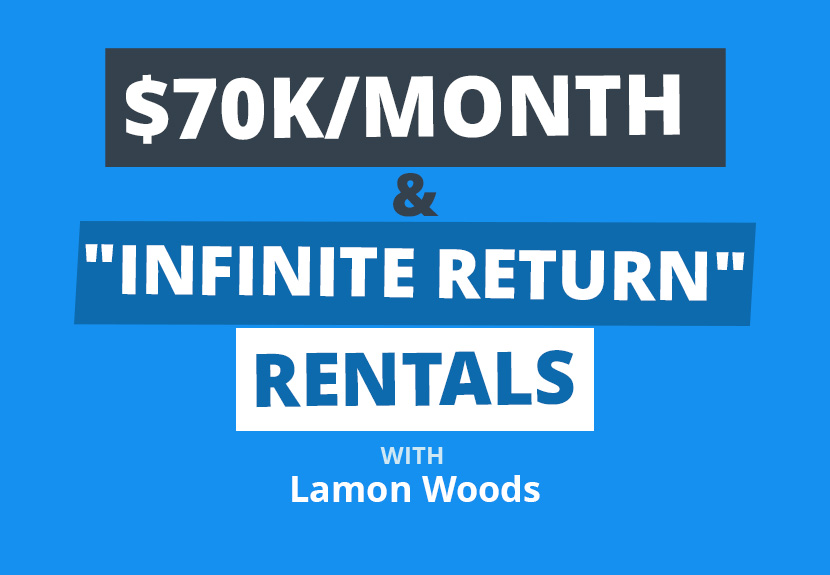
All right, let’s bring in Lamon. All right, Lamon, let’s dive into what your portfolio looks like right now. This is very impressive. Currently, you have 107 properties with $70,000 a month in rent roll. You’ve got two employees, plus you and your wife, Alicia, an in-house property manager, and an office manager. Side note, that’s actually a pretty effective way to structure two employees. I’m like, “Wow, that sounds really good.” And you’re crushing it in real estate. I understand you and Henry know each other, is that right?
Lamon:
Yes, sir, yes sir. Yeah, I know Henry. This is second time actually Henry’s gave me a great platform to speak on. He invited me down to Arkansas, me and my wife and my little boys, and we went down there and it was a blessing to know Henry because he invited me. But it was a blessing I got to bring some of my really good friends with me and, still to this day, they talk about that weekend because we don’t get those type of weekends being at home, being in a smaller market. So it’s like limited pool of investors and stuff. So it’s good to be able to do something, but also being able to bring them with me, that what made me happy as well. And then getting the opportunity to be on this podcast or show that I started listening to in like 2014 a little bit. But then 2015, I really turned it up and really started listening, man. So I appreciate Henry for that and good to meet you and appreciate you as well.
David:
Thanks, man. Henry does have that effect on people. I frequently find myself waking up in a hotel room today fondly remembering the last time I saw Henry just brings … It’s like knowing a human hug is what that is. Strong, masculine, warm, encouraging, everything that you need. So glad to know you guys know each other. Now, before we get too much into your story, I want to ask, how would you summarize your current real estate strategy?
Lamon:
Right now, it’s rebranding a lot of things I did in the past. So I call it survival mode. I was working a job making $26,874 and 33 cents and I had a wife and three kids and I was just hustling. So now, my strategy had changed. I used to buy a lot of properties in a rental HUD, Section 8. We do a lot of Section 8and a lot of lease purchase and stuff. So now I just bought my own clothes and own some properties more and I just bought a property last week that it rents for $1,400 a month. So for me, that’s a step up in a direction. So right now, it changed when I’m buying properties with a higher ARV and more margins in the rental spread for far as the rent rates and stuff like that.
Henry:
So you’re saying when you first got started, a lot of the properties you were buying were probably more inexpensive and then they didn’t have high margins, so you were getting low entry prices but then renting them and getting a little bit of cash flow and so now you’re focusing on higher value properties that can make you a higher spread?
Lamon:
Yeah. So right now, I’m in a long term. So when I first wanted to quit my job and got in real estate, it was cash flow. I was chasing the cash flow, I was chasing as much cash flow I could as possible. But now I’ve gotten in a decent financial situation and stuff like that, that now I pull back and I can strategize more and I can breathe a little bit. So now I refocus my energy in buying different assets more for the longer term holes. And some of the properties I bought in 2017, ’18 I first started, I’ve been selling off here. So my door count changes. So I might be at 115, then I might sell three or four of the ones that I bought for cash flow. And on those properties, I’m typically making 20,000 a door when I sell for difference between what the market is appraising. What they’re appraising for now are way higher than when I bought them. And now I owe like 20,000, 18,000, 15,000 on them to the bank and I’m selling them for 35,000, 40,000 or so. And I’m able to make a spread and I’m taking it and just buying better assets.
David:
So I was curious, when you’re looking at your portfolio and you said, “I’m going to sell these ones, I’m going to use that money to buy others,” how are you making the decision that these are the ones I should sell, these are the ones I should keep, and then what you should go buy?
Lamon:
Oh, basically, I create a spreadsheet and I’m emailing the bank, getting release numbers on certain loan numbers and I’m looking at, “Okay, I got a property over there in this couple mile radius and it’ll appraise for that.” My friends will tell me, “Hey…” Because they are still buying, I call it the rental HUD. They are really trying to scale and grow where I was a couple years ago. So they are still buying properties and they’ll tell me, “Hey, this property appraised for this.” Then I go look at my address and see I owe this, which is significantly less than what their property is. So then I just sell. And basically, the ones, when I got to get in the truck and go over there that I hate going to, it’s just time to dump them. I don’t like going to them no more. So it’s time to get rid of them.
Henry:
I love that. And it resonates with me right now because there’s levels to investing. When you’re starting out, you’re trying to get in the game and you’re trying to do it in the best way possible. Buying something that you know is going to give you a return. And sometimes we will take on a project maybe in a neighborhood we don’t love, but it’s going to give us the numbers we want. Or maybe it’s a class of property that isn’t your favorite, but it’s going to provide you the return you’re looking for. But as you start to grow and scale your business and your portfolio, your time is also more valuable than it was before you started. And your peace of mind is more valuable. And so when something starts to give you a headache, man, I totally agree with you. We have a duplex right now.
It was a pain in the butt to rent. And then once we had the tenants in it, some of the tenants don’t love the neighborhood. And so we have high turnover and one of our tenants just gave us notice that they were leaving. And my first thought was, “Sell it. Get it out of here. I don’t even care.” I know I can make some money on it. It’s a phenomenal duplex. It’s a rare duplex. It’s a three, two, two car garage, you don’t have too many of those. And I’m like, “Get it out of here.” I know it’s a great asset, but I just would much rather not have to deal with the headache. My wife, on the other hand, is all about the holds and so she’s not letting me sell it. But if it were purely up to me, that sucker would be gone. So I get it.
But what I like about you, Lamon, is you hustle for everything that you have and you got started. And, again, I tell people like this isn’t a journey where you get to know all the steps before you start. You have to take a risk and get started and then learn as you go. And your story’s the epitome of that. And I think people just really need to know and hear your story because it’s so inspirational. So can you talk to us a little bit about, before you got into real estate, what caused you to find real estate and then how that led to you doing your first deal?
Lamon:
Oh, man. I was heavily influenced by music. I’m a big fan of JC [inaudible 00:09:28] guys and they talk about being a CEO and stuff like that. So I was listening to that and then I realized I was working a job that I just hated. I hated waking up in the morning having to go to that place. I had no desire, or no push, or nothing like that. But I knew I had to pay the bills and I had to take care of the family. So I had to do what I got to do. I was working at the Coca-Cola plant and I was merchandising just going in stores and stocking the Coca-Cola, the Red Bull, and different things like that. And I just hated it. And I was making an $868 paycheck every two weeks. And we were standing in the rental HUD.
Our rent was 550. I was making less than 30 grand a year. My wife was making less than 30 grand a year. And that’s all we was able to afford. And my wife had an idea one day and she was like, “Hey, we should buy this property. We doing the work on it.” We rarely call the landlord, the property management company, and report repairs and stuff we’ll do on myself. And I was like … When you stay in a place, a less desirable area, your goal is not to buy the house and live there. So when she came to me with that idea, I was like, “Man, no, I don’t know what you talking about. I’m not trying to do that.” And she was just saying, “We don’t got to pay rent no more and different things like that. We now ready to put some of my own money in it and stuff.”
So it started to make sense and I went and talked to my dad about it, talked to my mom about it, and I was still nervous, but my wife actually ended up going to pay the rent at the property management Section 21, the property management company. And she just asked the property manager and he was like, “Yeah, my investor do want to sell.” And they gave her a price. The price was 15,000 and they was like, “You can get $15,000 cash and you can buy it.” So what ended up happening was we ended up purchasing the property. For some year, we’ve never got no income tax like that in our life ever again, but we got enough money between my tax return, her tax return, and a couple dollars that we had saved up, we was able to purchase that property outright. And like I said, the goal wasn’t to get into real estate, it was just so that we didn’t have to pay rent anymore. And when we purchased that property, the journey started from there.
Henry:
I love that. Our journeys are similar because my wife is the reason I’m in real estate as well. When I bought my first house, I didn’t have any money to do it. I had to borrow the money from my wife’s 401(k). And so her support is the reason that we are where we are. And so I love hearing your story. I also love that every time you tell the story to the pennies, how much money you were making, that’s how you know you were ready to get out when you remember to the pennies what you were making a year.
Lamon:
Yeah.
Henry:
So how did you get from owning the house that you’re living in, even though you weren’t quite sure you wanted to do that, to then buying real estate as a cash flowing asset?
Lamon:
Oh, so we stayed in that property for another year. Then my wife came home from work with another idea. We started to have kids and we was growing up, I was like 24, going to turn 25. So my wife was like, “We need to move in a more desirable area,” because the crime rate was really high in that area and different things like that there. So we moved into … We got a FHA loan. We went through … We moved in another property. And throughout that process, my wife, she’s a little older than me, so she has always been tapped into credit. I always thought I had bad credit because I just never used, I had a cash truck and everything else, it was just cash from working and stuff like that when we could afford to purchase it. And she put me on the credit game.
So the realtor was like, “Well, your credit’s not bad. You need to build a credit profile.” So I had to go through the process. My wife put me as an authorized user on her credit card and she had been using credit card for years. So my credit started to increase and we got approved for the FHA loan and we moved into a more desirable neighborhood. And so the goal was to take the rent from that property and pay for the property where we was residing in a more desirable area. And what happened was we got the house fixed up and we rented it out and I got a $400 deposit and a $600 rent check. And I was like, “Man, I got a thousand dollars,” and I didn’t know what I was doing. I got a lease from my uncle Doug and I was like, “I got a thousand dollars by telling some people don’t tear up my property, sign right here,” and I gave them the keys.
So I got in the truck with that thousand dollars and I was like, “Man, I got an $868 paycheck a week.” I had to bust my butt for and work 40 hours a week. And I was just like, “I took three minutes to do this,” and I’m working 40 hours a week for that. So I just had this idea and I was so excited and I called my wife and I was like, “Man, I just got the money almost a thousand dollars.” I got in the truck and I was just excited and it went from there. So when I grew up, though, borrowing money was like death. You was told don’t borrow money, don’t go to the banks. If you got a car or something, pay it off, because when I was growing up, I just heard people talk about how they wanted to pay stuff off.
You would hear your grandma or different people, I can’t wait until their last payment on this or their last payment on this. So my mind was trained not to borrow OPM, not to go to the bank. And we bought their first property cash. So our goal was to save up. So we learned a thing about compound interest. So we bought that property cash, but with that 550, we were paying the rent. Me and my wife would still pay that to the bank. So it was accumulating. We were … Because our finances were set up to still pay that. So we were still paying it to the bank and it was saving over time, but we owned the property and stuff like that. And then we got into the new property and I rented that one out and I was like, “Okay, well, I’m going to try to buy one house a year.”
So I was going to try to buy one house a year in cash, like we did, I don’t take the income tax. And I got on YouTube, BiggerPockets, and stuff and I heard about wholesaling and I was like, “Man, what if I could try to do that and I could try to take the money we are saving and the money we was saving and accumulating for over a year and take the wholesale profits and turn that into buying one house a year?” But the thing happened was … And I call this guy my real estate guardian angel because this guy changed my life. I got a property on a contract one time from calling some Facebook ad, calling some for rent signs. And one day I was leaving, I also got a second job in between the time to save up more money because my goal was really to buy another property outright cash.
And I called this we buy housing sign and this young guy named Scooter Howell answered the phone and I was like, “You buy housing?” He was like, “Yeah.” And I looked at the phone because I was like, “This young dude, he don’t buy no houses or nothing like that there,” because he sounded like around my age but actually he was like, “Okay, I’ll meet you there in 30 minutes.” So I didn’t think nothing of it. I didn’t think he’ll come. I went to the property, I text the seller and said, “Hey, I’m going to go show the property to an investor.” And she got it set up to where the property was unlocked at 2:00 by the time I got off work and I went over there and what ended up happening me and this guy, this guy didn’t buy the property because it wasn’t in his buy box, but me and this guy sit out there and talk for three hours and he told me in the three hours span about leverage OPM, he told me about his banker, the phone number, the email. At the time, he had like 77 properties and he was like 33 and he had been an entrepreneur for the last few years.
And I was like, “Man.” So everything that that guy told me, standing out there in front of that property for three hours, I took home and researched like crazy. I bought every book. I went on YouTube and they was talking about leverage OPM, equity. And I just really went to college of real estate. And I always say that I went to YouTube University, I don’t got no student loan debt. I just researched everything that that guy told me in that span of time. And then it went on from there.
David:
All right, so we all know that moment when we caught the bug, that’s when you caught the bug and it’s like the matrix man. You get pulled out of it and you’re like, “Now that I’ve seen it, I can’t unsee it.” And your brain switches into, what do I have to do to do more of this? Henry talked about his. Lamon, you talked about yours. When we’re trying to teach people to get into real estate investing, it’s almost a race to get to that point where you’re like, “Oh my gosh, that, I want to do it all the time.” So what was your second deal? What lessons did you learn on that one?
Lamon:
Second deal, it was a cash deal. I had some money saved up and stuff like that. And the following year … Because I owned that property, the first property outright, but I never went to the bank the guy told me to do because I still had the fear of borrowing money. So we saved up money and we bought that property cash. And what my dad … I usually typically get my dad the walker property with me because he been doing construction and his knowledge for over 30 years. But I just bought that property because the price was so cheap and I bought it. And then when I went and got my dad, it was like, man, he walked in and he was silent. So I was scared. I was like, “Man, I had messed up,” and stuff like that. So what ended up happening was that property needed to be rewired, it just needed so much work, foundation issues.
And I bought it really, really cheap and I didn’t have the funds because I was trying to do everything cash to really get that property off and running. So I bought that property for six grand and I sold it to a guy for 5,000. But what that did was that property taught me what type of properties I wanted to buy moving forward. So that property was like I got an education from buying that property. So I lost a thousand dollars but I got out a situation that would’ve been a money pit because I didn’t have the means to get the property up and running.
Henry:
Yeah, man. That’s a fantastic lesson. I’m glad you shared that because I think that’s a lesson that we all learn as real estate investors. Every single one of us learns at some point what we don’t want to buy. And usually it comes because we bought something that we didn’t like. I had the same thing that happened on a property. It was actually a 12 unit in my portfolio. The numbers were phenomenal. On paper, his was a fantastic asset and it made me jump in and buy it. But I learned a lot about the tenant class I wanted to support. It made me learn a lot about what repairs I do and don’t want to do and all of those things I wouldn’t have … I could have watched a video and learned that, but it wouldn’t have sat with me. So you lost a thousand bucks, but really you paid a thousand dollars for an education that’s probably saved you way more than that going forward.
David:
Yeah, that’s an extra important point to highlight in today’s market because there’s this pattern whereas real estate gets tougher and tougher to buy, people start breaking their own rules. You start investing in neighborhoods you normally wouldn’t invest in. You get into asset classes you normally wouldn’t go into. You start taking on challenges and convincing yourself it’s okay. But there’s a reason that that asset looked so good on paper. They were selling it at the price that they were because someone else had learned that lesson before you went in. And then I’m guessing you sold it, Henry.
Henry:
Yes, I sold it and it was the best day of my life.
David:
There you go. And now someone else is on a podcast somewhere talk about this property that they bought and how it’s like ruining their life. It’s like a haunted house, literally. And when you’re in situations like now where markets are really hard, it’s very tempting to take the pressure off by getting into those really difficult locations. And it’s not to say you can’t do it, but like you said, Henry, that wasn’t the type of repairs you wanted to make. That wasn’t the tenant base that you wanted to manage.
There is a personality out there who will do very well, very savvy, connects with those people, understands what they’re looking for, how to make it work, but it’s just not for everyone. It’s definitely not passive income where you’re just going to set it and forget it, what you’re trying to scale. So beware of the gurus of the people that are out there selling things that are using that method. Like, okay, come by in this market, you can get a cash-on-cash return of 65%. There’s always a sucker out there who’s going to take it, but there’s a reason somebody’s selling. That’s a good question to always ask is why is someone selling this if the numbers are that great?
Lamon, have you had to have a couple experiences like that yourself where you got into something and realized like, “Oh, man, I wish I never would’ve bought this?”
Lamon:
I’m having that later on because when I first started out that I was just hustling, I was hustling, trying to rack up as many houses to support me being at the job and stuff like that. But as you come full circle now, I feel like I’m more of a real estate investor than a businessman versus what I was when I started five years ago. It was just all about the grind, all about the hustle, doing all the repairs ourself, and my wife spent every weekend doing our own property management. It was just … So I could say since that deal I bought a few years back where I sold it and lost a grand, but I got out of probably was going to be a money pit. Now that I come back full circle years later, I got a better understanding of real estate and a better foundation behind me. I think about some of that stuff now, though. But I don’t think I’ll be to where I’m at today and have the capital and have the resources I have today if I didn’t buy some of that stuff five years ago to get me in a position that I am in today.
David:
Yeah, it served its purpose. And I’m sure the run of inflation that we had, real estate prices rising, that definitely helped when you get a property that you want to get out of. Much easier to get out of it if it’s gone up in value than when it’s staying the same when you’re stuck in that quicksand. So I understand you have somewhat of an interesting financing strategy that you’re using to continue stacking portfolios. Can you tell us a little bit about how you’re using cross collateralization to pledge equity for future properties off ones you already have?
Lamon:
Yeah, I realized that. So after I bought that property and I sold it, I finally went to the bank and met Mr. Jeremy Howell, guy has become a great friend, a banker and a mentor to me. And what Scooter told me about when I talked to him and he was like, “Hey, we can get that house that you own outright appraised,” and appraisal came back and I was able to borrow some money from, what it’s worth, basically what I paid for it. And I took that. And so Scooter called me again one day and he found a three-unit package deal that was outside his buy box he had no interest in. So I got it under contract, I sent it over to the bank and stuff and I got approved. I got an email one day while I was working, said I was approved for the loan.
So I was waiting on them to say something about the down payment and stuff, but they emailed me a closing date and I was telling my wife, “Well, they ain’t said nothing about” … Because I was listening to BiggerPockets and these different podcasts and they was talking about the money you need to put down at 15%. So they never said nothing about the down payment. So when I went to closing, we closed on the three properties and then I actually learned, okay, I was like, “I wonder what I did to get the financing for these three properties.” Then I realized I had collateral from that property that I owned that I bought outright. So a light bulb went off and I just like, “Well, if I can do it once, I can do it again.” And I just been doing it for years where I buy a property for significantly less where they’ll get appraised for from the 80% LTV and I have some equity in there and they could roll over and cover the down payment for the next purchase.
So I’ve been able to buy this real estate. So I used that strategy, cross collateral, and I got lines of credit where I buy cash, renovated with the cash and the line of credit. Then I refinanced after the seasoning period. So I’ve been able to get into these properties with none of my own capital. So I look at it like an infinitive return. Even when I bought doors I probably shouldn’t have bought, it really didn’t cost me anything to sweat equity. To me, it didn’t cost me anything because I just pledged equity from one property to the next one and it’s like an infinitive return because that’s $800, $700 more in cash flow that I didn’t have. So I just looked at it like that right there. So that’s the way that I finance.
Henry:
I love that strategy, obviously, because I’m a big fan of leveraging small local banks to help you invest in real estate and this is typically a strategy that some small local banks will allow you to do. Now, not every small local bank is cool with it, but a lot of them are. So correct me if I’m wrong, what their bank is essentially saying is either you already have a house, either that you have a loan with us on and it’s worth way more than what your loan is, or you have a house that you own outright and you’re allowing us to essentially put a second mortgage on it to cover what would be your down payment. And then that way, you don’t have to come out of pocket for that down payment. And then when you go buy the new asset, they do an appraisal on that new asset and they understand that the new asset you’re buying, you’re also buying it for less than what it’s worth.
And so because you’re buying a great deal and you have equity in other properties that you either have with that bank or are willing to pledge equity on a paid off property with that bank that they’re cool with letting you leverage that because you’re essentially giving them access to your properties. And what the bank is essentially saying is, “Hey, we think you’re buying great deals, that’s great for us because we’ll collect your interest payments, but if in the event you don’t make your payments and we have to foreclose, then we would get the property you’re buying and we’d get the property that you’ve pledged equity on, which we both know are good deals. And so there’s very little risk to us as the lender and it helps you grow and scale your portfolio.” I hope I summed that up right.
Lamon:
Yes, sir. Yes, sir. That’s basically how I go and I roll a closing cost, the appraisal fees, processing fees all into the loan and I go to closing and me and my wife just sign and we got new doors and we collecting cash flow after the renovations and we just move on.
David:
That’s something I’ve been discussing more often as we’ve seen how much money’s been created, the way it’s met inflation, just changing how we understand money. In the pillars book that I’m writing, I talk about how money is really a storage of energy. So you go and you put in 40 hours a week at your job, they paid you an $835 and 33 cents or whatever it was of energy. And so you traded one form of energy for another and then you can use that to go buy things from somebody else and then they use that energy to go do what they want to go do. Well, there’s more than one form that that energy can be stored in, right? Equity is just the name we use for energy when it’s kept inside of real estate. And when you understand that, Lamon, you intuitively got it, I got all this energy stored in real estate, it’s similar to energy stored in a bank account.
Now, it’s not exactly the same because you can’t go buy something with shares of equity. You can’t go to 7-Eleven and buy a Big Gulp and say, “I’ll give you one 4000th percentage of this property equity”. You have to convert it into dollars first. But when you understand that concept, it doesn’t blow your mind to think about going to a bank and saying, “I want to get a loan to buy a property, but I don’t want the loan on the property I’m buying. I want the loan on a property that I already have.” What does the bank care? And so I love that you’re sharing this. I love this strategy and how you’re describing you get an infinite return. You could pull that off for the rest of your days as long as you continue to manage this living breathing entity that we call a portfolio. Henry, what are you thinking?
Henry:
What I do want to say on that is because a lot of people are listening to this and if they are savers or they are … Because there’s two camps typically with real estate. There’s like you need to save the down payment and you need to put your money in the deal because you don’t want to overleverage. And then there’s people that are like, “Yes, I want to use other people’s money to grow my portfolio.” No real estate strategy comes without risk. And what I like that you are saying about what you do, because before we talked about how you’re financing these deals with cross collateralization, you talked about what you’re doing with your portfolio and it’s that you are always taking a look at your portfolio and figuring out, where can I sell a property, gain some money. And then you’re not just putting that in your pocket but you’re paying off other loans.
So you’re deleveraging as you’re leveraging. So you’re keeping your risk tolerance where you’re comfortable at. And I think that’s something that people need to pay attention to. He’s not just saying, “I just take out all the money I can and rack up all this debt.” He’s very strategically looking at his portfolio and figuring out, how to keep my risk and my leverage at a percentage that I’m comfortable with. And I think the other thing that people should think about is he also limits his risk by buying phenomenal deals. He’s not saying he’s going out here and paying retail value for every property that he buys and just buying it because he knows he can buy it with other people’s money. He’s being very strategic about the properties you buy. And so I think buying good deals helps you hedge your risk. And I think always taking a look at that portfolio and figuring out how to continue to pay off those notes so that you keep your risk tolerance where you’re comfortable with is important.
And I think the other thing people are probably thinking is, what about seasoning periods, right? That’s the question everybody always asks when you talk about leverage. So what about seasoning periods? Have you run into anything with seasoning periods or how do you handle that with your portfolio?
Lamon:
I want to say this, piggyback on you what you just said. So sometime when I do 85% loaner value, I’m typically 80, but when I do, I have to have that capital working for me because interest rates are skyrocketing pretty high. So if I pull out 85, the max loaner value, I’m paying one to two houses off at all times and I can double back and get a line of credit against old houses. And if I don’t use that line of credit, I got no payments. And with rent increases and stuff like that, that’s just cash flow that goes into my pocket on a free and clear asset now.
And when I want to do a bigger deal or something like that, I can go back and re-leverage that asset to get into something else. So that’s how I do it. And with seasoning periods, like I said earlier when we was offline, when I pulled out a big refi last year and I paid a bunch of personal debt off and a bunch of personal stuff off and paid my personal residence off, I got a six figure line of credit and I added it with the line of credits I had on some more houses and I just totaled it up. And I went and talked to my title company, I said, “Hey, if I get a property on a contract, could you get it closed and quick?” And they was like, “Yeah, 72 hours we can get it closed.”
I did have a seasoning period with my lender, but I went and talked to them and said, “Hey, this is going to be my strategy moving forward and I’m actually closing on four refis tomorrow. And this is fast as this ever went. This process took, I’d say, less than 30 days or right inside of 30 days and stuff like that. So I talked to them about the seasoning period because this would be my new strategy and they work with me on it. So I’m able to get it moving. The fastest … If I can get it renovated and get a tenant in it and I can show pledge and leases and et cetera, et cetera, and stuff like that, I can move forward with getting appraisal out and starting a refinance process.
Henry:
I love that answer. And here’s why I love that answer is because I think people in general, but real estate investors, we always make decisions for other people based on what we think they’re going to say or do. And so people may hear there’s a seasoning period or people may hear, “I can’t do this because of my credit score,” but they didn’t actually go ask anybody. They didn’t actually go do the research. They didn’t actually hear from somebody that they couldn’t do that. And so, yes, what you said was, “Yeah, my loan had a seasoning period, but I went and I spoke to my lender and I sat down and I explained my strategy and what I’m trying to accomplish,” and then you were able to get around it. I think most people, most investors, wouldn’t even think to do that. They’d just go, “Man, I got this loan, it’s got a seasoning period, so I can’t do anything until the period’s up.” Man. So I love that you didn’t just take that answer and decide it was going to define how you’re investing. You did the opposite.
Lamon:
And I was afraid to do that because my best friend, Jeremy, he was like, “Man, you just need to go talk to him about it.” And he gave me the confidence and I was afraid because it was typically a 30 to 90-day seasoning period. But I was just like interest rates skyrocketing, I need to be a cash buyer so I can continue to get deals. I got employees, I got an office, I got bills, I got to keep the deal flow and keep it going. So I got outside my comfort zone and went and talked to him about it and stuff. But I was hesitant at first, but I just got out my own way and had the conversation because I knew I had to keep the deals, the pipeline. I had to keep it going to support the people that work with me and different things like that.
David:
How important is it to know your market? Okay, you’re working in a very niche market. What do people have a hard time understanding when you’re talking about your market to investors that don’t live there?
Lamon:
Man, the purchase price. You can buy a property in my market for 25,000, put 10,000 to 15,000, in it’s worth, 70,000. In this market, it’ll rent out for seven … Right now, the rent has increased so you can get $700, $800 plus a month. So when you talk to people that’s in different markets and stuff like that, just because I said the price is this much for this particular property, that don’t mean it’s a hole in the wall. I live in a area where the average income is 19,000 and some change for people to try to support they family and some people make it work. They got cars, they got $150,000 houses and stuff like that in middle-class area. So that’s the hard part and stuff like that. And even when I’m talking to new investors that I get the chance to mentor in the area, I always say, “Man, your house is worth more to you than it is to the appraisal.”
You need to know your market. I know you went in here and put a good labor of love in the property, but you probably have overimproved this thing and you’ve paid too much forward. So I always try to get them to understand the ratios of where you need to buy and what your rehab need to be and different things like that. And I take them to some of my properties. So properties that I got that rents for less than 800 bucks, I use indoor, outdoor carpet. I go in and use a Formica countertop. I use the Glacier Bay $30, $50 faucet. I got a different type of rehab with those properties. Then the properties I get $800 plus for, we do the 12-by-12 ceramic tiles on the floors in the washroom areas. We do the vinyl planks, we do the ceramic tile on the countertops and different things like that.
So it’s different ways that I rehab properties based on the return that I will get and stuff like that. So I just try to tell people when they get in the market, it’s a smaller market. So sometime when I’m talking, yeah, our rental rates are less, our property value is less and stuff like that. But if you understand the market, you can still make it work for you. I’ve been at the job for four years. I was recently able to retire my wife and she been out the job for a year. So I’ve been putting it together and making it work. So just by knowing the market and knowing what I should pay for a property, what I shouldn’t pay for a property and et cetera.
David:
Yeah, that could be a big problem, especially for out-of-state investors. When they see the spreadsheet, the spreadsheet doesn’t tell the whole story, tells a piece of a story and then they go, “My market’s expensive, I’m going to go buy over there because price rent ratios are better. They have 1% real deals.” And then they got to do a rehab and they get a bid from a contractor that says 35,000. And they go, “That’s like one bathroom in my market.” What a steal. And then they spend way too much on the property and it takes about 17 years before they get enough equity to pay for that rehab that they went too big on. It’s very easy to make these mistakes.
Henry, have you seen the same thing in your markets since you guys are both in niche markets?
Henry:
Yeah. In my market, the price points are higher obviously than where Lamon’s market is, but the values are the same. And I want to make sure that’s what people understand, that the principles, I should say are the same. I think people probably hear your price points and go, “Well, this doesn’t relate to me because I can’t buy a house for $20,000 or $30,000.” And I promise you it absolutely relates to you because it doesn’t matter what the price points are. He’s still not going out there and paying retail value for a house. He’s going out there and figuring out, how do I get these houses at a discount? And then how do I leverage the equity that I just got on day one to build and grow my portfolio? And those fundamentals apply no matter what your price point is in your market. And so I want to make sure that people think less about the dollar sign he’s talking about and more about how he’s doing this because these fundamentals work across any market.
They work in my market. I do the exact same thing in my market. You asked about how that applies here. I am in the same way. We are consistently looking for how can I walk into equity on day one and then how can I leverage that equity or equity I have in another property to help me build my portfolio. And then just like Lamon, we take a look at our portfolio and we think about, “All right, what do we have? How can I monetize this and de-risk to a point where we’re comfortable? Or how can I take what I have and then move into a larger asset?” Because part of this, too, is lifestyle. I may sell a property because I want to go buy something that has more doors under one roof, which means less maintenance than if I have 10 doors with their own roofs individually. And that helps with lifestyle, that helps with the time we have to spend on that deal or the time somebody has to spend at that property. And so a lot of it, too, isn’t just about the money. It’s about, how do I get my portfolio to a place that allows me to have the lifestyle that I want?
David:
What would it be like to have a movement that had people quit telling you how many doors they have at every meetup and they started saying how many roofs they have? That’s the real flex, right?
Henry:
Right.
David:
How many roofs do you have? Two. Maybe they have 700 doors, but we all want to have those access, not death by paper cut I have and too many different. So at some point, I’m sure, Lamon, as you continue to grow, you’re building equity. Do you have a plan in place for how you plan on transitioning into selling some of these and maybe 1031-ing into larger assets where the management is a little bit easier?
Lamon:
Yeah, yeah, because I understand with these properties, I have a system in place that I got to make it work. I have in-house guys and family members that work in house. I have an in-house property manager so that’s paid by the hour. So that cuts down on my property management overhead and my day-to-day task and stuff like that. And just looking at the properties and saying, “Knowing when it’s time to exit.” So one day, my plan is to pay something down significantly, which I have already had for me to be 35 years old, debt free personally. And I got these properties that I got really low loan values on that I can refinance. Like I did earlier, pull out a big water cash and leverage that into a mobile home park or apartment building. Or I can just sell them off, look at how much I owe and know, “Okay, I’m going to make $20,000 to $25,000 a door when I sell these 10 properties at a time. Sell 10 here, come back later to sell 10 here and stuff like that. So it’ll work itself out and stuff like that. So, yeah, I do have goals of being able to do that one day, but right now, it’s just keeping it going, keeping it steady and stuff.
David:
Yeah. I mean, you have the option to do that when you want to do it. And that’s what matters is that you are not in a position where you have to do things that you don’t want to do or you’re making decisions you don’t feel good about out of desperation. You’re in the driver’s seat. What you have works. If you decide you want something different, you can pursue that. If you don’t, you have to. You can decide based on the age of your kids, the needs of the family. I mean, that’s what’s so great about real estate is when you’re working that corporate job, you do what the company needs you to do. It does not matter what your relationship status is, what your kids happen to need. You serve at the hand of the king. And when you get into being an entrepreneur and owning these assets, and to a degree, you still have to answer to people there.
When a tenant has something break, you have to figure that out. You have to look at the books and make sure things are going well, but you have much more control over when you throw yourself in, go into acquisition mode, ramp things up. When you sit back and analyze what you got and just trim the herd, make it go easier, it is a much, much easier way to live life. And it’s cool seeing that you’ve crested that hill. So let’s revisit your portfolio here. You have 107 units. I mean, that alone is a pretty cool thing to be able to say. $70,000 a month in rents. Congratulations on what you’ve been able to do so far. This is a great story. You said your wife was able to retire. What’s next for you guys? And what is why?
Lamon:
What’s next? That was a really big goal of mine. That’s why we made the scene to pay off some debt and do some things, move some money around. And that was just a goal that I was chasing and stuff like that. So for us right now, we’re just brainstorming. I made a lot of mistakes. Like I said, I bought a lot of properties that my temperament at this age in life can’t handle and stuff like that. So it haven’t all been peaches and cream.
David:
That’s a very nice and professional way of communicating. Henry and I know exactly what you’re saying. My temperament at this stage in life is not conducive to these types of problems that elicit from a portfolio of such.
Lamon:
Yeah. So I just … Once we did that, now we got time. We in the office every day, we got time to brainstorm and just, I can’t say, do it the wrong way because it led me to this point, but I could say do it a better way and having more knowledge and wisdom, and experience under my belt. So the next step of the journey is just getting out, want to go bigger. We trying to streamline everything. We got out for years. We was doing our own repairs, so my output cost was significantly low and I was able to save up some and stuff like that. We did our own management and stuff like that. But when we realized, hey, we wanted the business instead of another job and just being around Henry, Todd, Dre, and some other guys, I picked up there was systems.
And in the beginning, it was like I quit a job, start another job, but it was for myself. So I appreciated it. But at the end of the day, I wanted to streamline things. So that’s what we were working on and stuff like that. And trying to set ourself up to go bigger, invest in bigger assets. Yeah, the cash flow might be lower, but this property we’re buying today is a 20-year hole, a 30-year hole. We see ourself holding this way longer than some of the ones that we picked up in the beginning and stuff like that. So that’s where we going. Just trying to streamline everything. For years, it was like a family-owned business. So now we got subs that we work with. We got people we contract, work out to, because the amount of properties, it would change because now I’m buying some, then I’m selling some. So the portfolio balances out and stuff like that there. So just going through those changes that you learned five years in it. I grew and evolved and just thinking and seeing things different at this point in my life.
Henry:
I love seeing your growth, man. I’ve enjoyed getting to know you over the past few years. I want to ask you a question I’ve asked you before, but it’s been probably, man, a year and a half, maybe two years since I’ve asked you, but I think it’s pretty cool. So outside of those first two houses that you paid cash for, once you really started growing and scaling your portfolio, how much of your own money have you had to spend acquiring any of the rest of those assets?
Lamon:
Man, I haven’t put a down pay … None. I just, like I say, been buying cash and burnout. And I’ve been leveraging equity. Actually, it was weird, last week, me and my wife closed on our dream land to build our dream home. We believe in delayed gratification. So as we was scaling up our income, we didn’t scale up our lifestyle income, we didn’t scale up. So we … And I had to put a down payment down on the land. And it was weird because I’m used to going to closing without doing it. So when I read the HUD statement, it said to borrow cash, however … Yeah. And I was like, “Man, this is weird for me,” and stuff like that.” So none, man. I just figured out a way to … I just look at it. Some do have risk involved, but I just look at it as instead of having debt equity and that’s sitting, I’m just going to leverage it to buy cash flow because my goal from day one was to make as much cash flow a month as possible and stuff. Besides my own personal land that I just purchased to build my dream home, I haven’t put a down payment down since I’ve been on this journey.
David:
Well, Lamon, we appreciate you sharing your story, especially some of the creative elements of what you’re doing. You combined hustle with creativity, with ambition, with delayed gratification, all these great ingredients. And the end result was a portfolio everybody would love to have and a future that looks even better than where you are right now. So thanks for being here. Henry, thanks for finding Lamon or getting him on our show. This has been awesome. Do you have any last words you want to share with our audience, Lamon?
Lamon:
Oh, man, you asked me earlier my wife. Just my family. Always I’m saying to my kids and to me is always I wanted to figure out a way to upgrade the living because I knew making 800 and some bucks every two weeks wasn’t going to get it and stuff like that. So just trying to reach for the stars and give them the life that they deserve. And it’s hard work, man. I’d have been under houses on top of rules, putting flooring down, sacrifice weekends with my friends, came in town, couldn’t watch football, I’m a big fan, and it was just hard work, buying houses and then just jumping out the plane and figuring out how to fly later on. So I just say, man, assess where you at in life and just go for it. Some people going to agree to disagree and that’s okay, but at the end of the day, you know you’re playing, you know what you’re trying to accomplish in life and you know what you’re trying to do.
It always ain’t going to be pretty. It always ain’t going to be pretty, but if it worked for you, keep it rocking and keep it rolling. So for me, just stand down, man, and just figuring it out. And that’s just exactly what I did and it landed me upon where I’m at today. So if I can do it, no college, making less than combined household between me and my wife, we’re less than 30 grand for each of us to where we at today. If I can do it, I just feel like anybody can do it because nothing was handed out, nothing was given. It was all just hard work and determination and sacrifices.
David:
If people want to reach out and find out more about you, where can they get you?
Lamon:
I’m on Instagram, 1800_hustler. So I feel like my Instagram name is my lifestyle. I’ve been wanting to be a hustler since I was a kid, so I do some posting on there and I’m always on the weekend DMing people back and stuff like that. So that’s the only social network that I kind of be on. So if somebody had any question, I’m always up for answering or taking a phone call and just trying to figure out how I can help somebody. When I met a guy, Scooter, I met him years back and he helped me, so I just look at it like paying it forward.
David:
Henry, how about you?
Henry:
You can find me on Instagram. @thehenrywashington on Instagram or you can go to www.henrywashington.com.
David:
There you go. And I am davidgreene24.com. You want to check out my website or go follow me @davidgreene24 on Instagram, Facebook, Twitter, wherever it is that you like to follow people. This has been great. Appreciate you, Lamon. We’re going to have to have you on again in the future to see how things have grown, but thank you, guys. Go please do follow Lamon and Henry both if you want to learn more about real estate investing. These are great resources to learn. This is David Greene for Henry, everybody’s favorite Washington signing off.
Help us reach new listeners on iTunes by leaving us a rating and review! It takes just 30 seconds and instructions can be found here. Thanks! We really appreciate it!