Blog

Home price gains weakened sharply in November

Home price gains weakened sharply in November


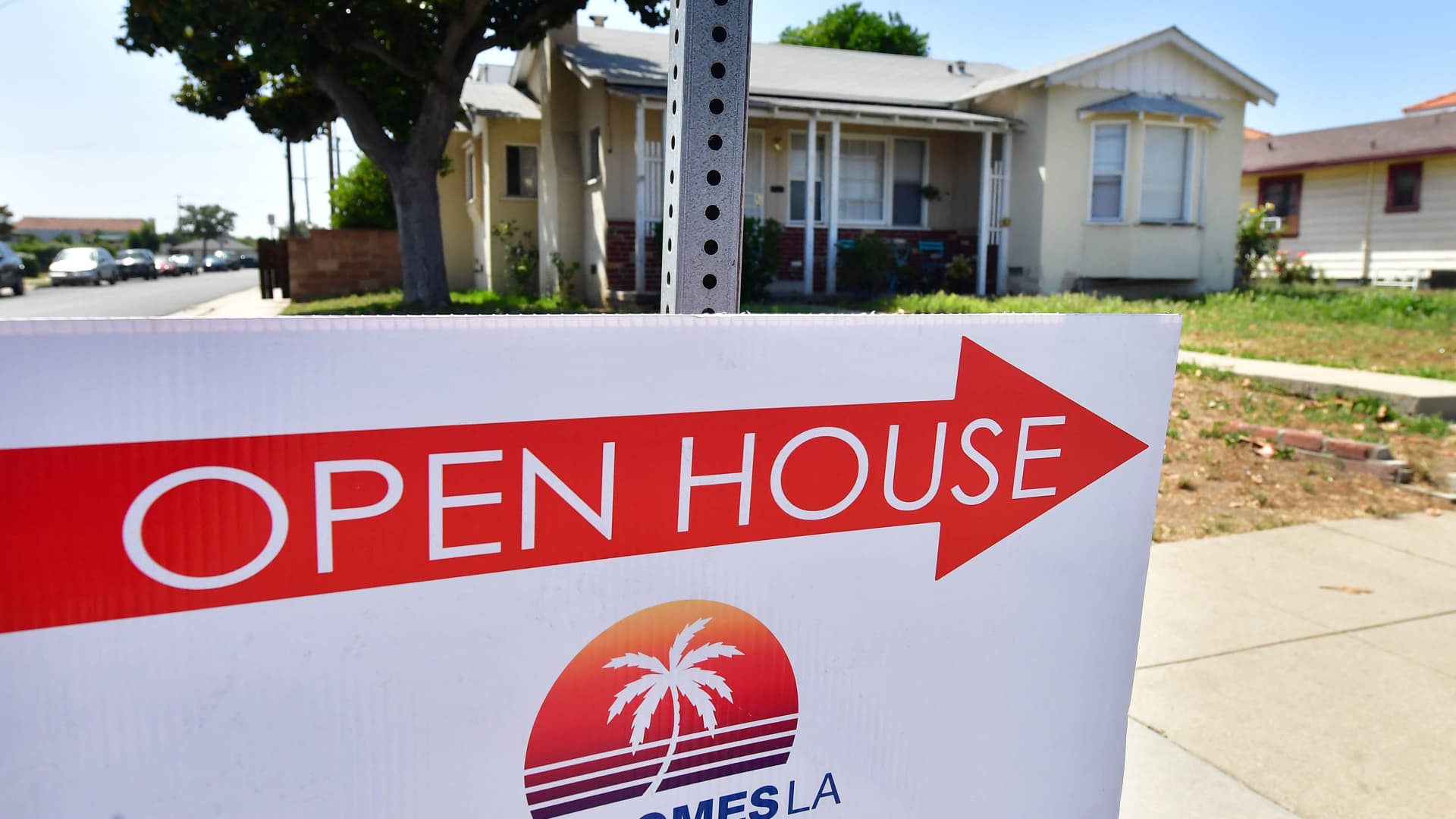
A sign is posted in front of a home that is for sale on December 19, 2022 in Los Angeles, California.

Mario Tama | Getty Images

Home prices are falling into a deep winter chill, as higher mortgage rates push more buyers to the sidelines.

Prices in November were still 8.6% higher than during the same month in 2021, but it was the first year-over-year reading in single digits in 21 months, according to CoreLogic. It is also the lowest rate of appreciation since November 2020.

Prices are now 2.5% below the spring 2022 peak and are expected to continue to move lower this year. CoreLogic’s forecast has price movement falling into negative territory by spring before rebounding to about 2% to 3% growth in the fall.

“Although home price growth has been slowing rapidly and will continue to do so in 2023, strong gains in the first half of last year suggest that total 2022 appreciation was only slightly lower than that recorded in 2021,” said Selma Hepp, deputy chief economist at CoreLogic. “However, 2023 will present its own challenges, as consumers remain wary of both the housing market and the overall economic outlook.”

Mortgage rates are back on the rise again after a brief reprieve in November and early December. Rates had more than doubled over the summer, with the average rate on the popular 30-year fixed loan exceeding 7%. It hit a high of 7.37% at the end of October, according to Mortgage News Daily. In November and December it fell back, hitting a low of 6.13% in mid-December, but is now back up over 6.5%.

“Potential homebuyers are grappling with the idea of buying amid possible further price declines and a continued inventory shortage. Nevertheless, with slowly improving affordability and a more optimistic economic outlook than previously believed, the housing market could show resilience in 2023,” added Hepp.

Florida, South Carolina and Georgia saw the highest home price gains in the nation, as buyers continue to flock to the Sun Belt. Washington, D.C., ranked last, with prices up just 1.2% year over year.

U.S. housing market faces tough winter as 2022 comes to a close


Source link

Home price gains weakened sharply in November Read More »

A New Investor Should Know BEFORE Closing on a Property

A New Investor Should Know BEFORE Closing on a Property


Before buying a rental property, real estate investing can seem scary. Only experienced landlords know how to deal with closing delays, overbudget rehabs, and tenant issues. But that doesn’t mean you have to come in blind on your first real estate investment. If you have the proper knowledge, expectations, and systems set up, you can build a real estate portfolio faster than the rest, which is what Ashley Kehr, author of Real Estate Rookie: 90 Days To Your First Investment, did.

Ashley hosts the Real Estate Rookie Podcast, where she interviews new investors who have had one or a few successful deals. She’s seen what it takes for someone to go from bystander to investor and wants to make sure you can purchase your first investment property too. On today’s show, Ashley walks through her pre-closing checklist, where she details everything from due diligence to budgeting renovations and rehabs, how to negotiate with sellers, where to find insurance and more.

This is just a brief glimpse at everything you can find in Ashley’s new book, and combining these golden nuggets with what is shared in Real Estate Rookie will get you on a faster path to landlord life and passive income. So, if you’ve been waiting to invest or feeling like you don’t know what you don’t know, this may be the perfect episode to start. Tune in, grab the new book, and get ready to make some property purchases in 2023!

David:
This is the BiggerPockets Podcast show 709.

Ashley:
So what I did was took my experience, everything that I have learned since starting in real estate in 2013 is when I started and putting that all into a plan. So steps. So each chapter is basically a step as to it’s organizing what you can do. You can find all this information somewhere else and what I’ve tried to do is build it all together, take the important pieces and show you how to get your first year next property.

David:
What’s going on everyone? This is David Greene, your host of the BiggerPockets Real Estate Podcast. Here today with a special episode. I’ll be joined by fellow real estate investor and BiggerPockets Podcast host Ashley Kehr. Ashley is the co-host of the Real Estate Rookie Podcast, which she does with Tony Robinson where they help rookies to buy real estate. And today, Ashley’s going to be talking about the new book she has coming out through BiggerPockets, Real Estate Rookie: 90 Days to Your First Investment. So if you are a real estate investor or aspiring real estate investor that wants some help on getting your next property and contract, this book might be a great move for you.
In today’s show, Ash and I get into a lot of good stuff, including the steps from when you put a property and contract to the closing table and specifically what you should be looking for during due diligence, the rehab, the insurance provider, the closing table, and more. We give you some really good tips and you want to make sure you catch them all because a lot of these will save you some time and some money even if you’re an experienced investor.
Before we get to Ashley, today’s quick tip is see what is possible in 90 days as you overcome analysis paralysis and set a goal to start making progress on your first or your next deal. Just consider getting Ashley’s book. Even if you’re someone who already owns some real estate, this book can help you be better at doing it and the value you get compared to the price of a book is probably the best ROI you can get in the entire space. Designed to guide every rookie from goal setting to goal realization in record time, this step-by-step guide will skyrocket you from real estate rookie to real estate rockstar within three months. You can find the book biggerpockets.com/podrookie. All right, let’s get to Ashley.
Ashley Kehr, welcome back to the BiggerPockets Real Estate Podcast. How are you today?

Ashley:
Good. Thank you so much for having me back on. It’s been about a year, I think.

David:
Yeah. Now before we get into why you’re here, I do want to say I just got done recording a Seeing Greene episode, and I wanted to pull you in and give you a question Seeing Greene style. Here’s my question and I’m going to pretend like I am the BP listener and you get to be me here.
As a buyer, why does the closing date on a deal matter to me? I never understood the significance. Obviously, I’d want to close on a property generally sooner rather than later, unless we’re nearing the end of December and may as well start the next tax year more cleanly. But is there a strategy element here that I am missing that would help my deal look even more attractive to sellers?

Ashley:
Well, I think the first thing is, is that it can change. It’s variable and it depends on what the seller’s motivation is. So here in Buffalo in the winter, it snows. Nobody wants to move in the winter. So sometimes even offering a delayed closing can be seen as an advantage if you are putting in an offer because sellers don’t want to move and they’re thankful. Like our house is sold, we’re under contract, but we can stay here three more months until the weather is warm and then we’re going to close on the property. Or these people could already have a house in mind, they want to get into their new property. So putting in a quick closing, and I see that a lot more common is that people want to close quickly, they want to be done with the property they’re selling and they want to move on to the next thing in their life.
And when you go with a cash offer, you’re most oftentimes able to close quicker than if you’re doing conventional financing or even an FHA loan. You can close quicker if you’re using hard money. So a lot of times the closing date will actually tie into how you’re purchasing the property too.

David:
Yeah, this question came from Brit in Oregon and it was a little confusing because she says, “Obviously, I’d rather close on a deal sooner rather than later, but most buyers are in the opposite camp. They want more time. You need time to get your loan together, time to get all the organizations of moving together. In general, buyers would like a longer escrow period because they have more time for due diligence, more time to prepare and sellers want to close sooner.” So like you said, Ashley, in general, a shorter timeline is usually more advantageous for the seller, but you also made a good point that you shouldn’t assume that. You got to ask, well, what do the sellers want? Because if they can sell quicker, they’re less likely to have to make another mortgage payment or they’ll get the money faster for the next thing they want.
But sometimes they don’t want to sell quicker because they don’t have anywhere to go. Or like you said, they don’t want to be moving in the middle of winter. And that’s the thing the agents can do, they can make deals work, is they can find out logistics of each party and then put the deal together in a way that works for both people.

Ashley:
Yeah, I’ve even done before that the closing date can be determined by the seller. That I’m not putting into my offer that I want it to close in 30 days, especially on the commercial side when I’m doing a letter of intent and it’s a lot more flexible than sticking to a residential real estate contract that the seller can choose the closing date that there’s no firm and hard time that I need to close by.

David:
Yeah, that’s smart because that takes a lot of anxiety off the sellers because you never know oftentimes what they’re thinking. Good advice there.
So we haven’t talked to you for about a year. I know you’ve been hosting the Real Estate Rookie Podcast there with Tony and that’s been going fantastic. I’ve bumped into you two a couple of times, but tell me what else have you been up to in the last year of your life?

Ashley:
Some of the big things are buying cabins on land and kind of updating these cabins and turning them more into a modern, glamorous experience. I just recently completed an A-frame property that turned out beautiful. That’s kind of been my projects over the last year, doing four cabins and completely renovating them. Besides that, I’ve been hosting BiggerPockets bootcamps on landlording and just being a rookie investor. Once I started doing that, I decided to write a book. My book is coming out January 10th and it is called Real Estate Rookie: 90 Days to Your First Investment.

David:
This sounds pretty juicy. What can we expect to be inside this book?

Ashley:
Basically everything and anything you find in this book except for maybe my own personal experiences, you can find on the internet, you can find in other books, you can find on podcasts, you can find in newspapers, you can find talking to other investors. What I did was took my experience, everything that I have learned since starting in real estate in 2013 is when I started and putting that all into a plan. So steps. So each chapter is basically a step as to it’s organizing what you can do. You can find all this information somewhere else and what I tried to do is build it all together, take the important pieces, and show you how to get your first year next property.

David:
It’s kind of a blueprint, it sounds like. Just follow step one, step two, step three, and you’ll end up with a property.

Ashley:
Yes.

David:
Very cool.

Ashley:
And it’s happened. Doing the bootcamp is we basically did the same thing in the bootcamps. I co-host it with Tyler Madden and we have had so many people come and tell us that they have got their first property or maybe they were stuck after their first or second property and then they went on and took the bootcamp and they were able to get another property under contract. I was just in Phoenix at a BiggerPockets meetup. Tony and I did a live podcast there and two people just at that meetup had attended the bootcamp and came up to me and told me one had gotten one deal already and the other one had gotten two deals.

David:
Okay. So this works, right? Let’s dive deep into one part that new investors may not know about and this would be why a timeline’s important. So you recommend this 90-day timeline, this comes up in the bootcamps, it comes up in your book. What is it about the 90-day timeline that you think helps new investors make progress?

Ashley:
I think just setting a goal and setting a deadline for that goal. So if you want to get a short-term rental or you want a long-term rental or you want to purchase a property to flip, this gives you enough time to complete and go through all of the steps to actually get a property under contract. Depending on the state that you’re in, like New York, you’re most likely not going to close on a property because sometimes it takes 90 days just to close on the property even after you put it under contract. So depending where you live, by the time you actually close on the property, it may not be 90 days, but what we like to see is that you are making offers and you’re getting something under contract within 90 days.

David:
Okay, cool. So let’s dive deep into what’s actually going to be happening in this process and let’s start with when you actually get something in contract. So once the property’s in contract, a lot of people think the job’s done, “Yay! It’s in contract, I bought it.” No, you did it. This is a step and this is where the real work starts and one of the first things is the due diligence. So what do you recommend investors do when they start doing due diligence on the property that they just put in contract?

Ashley:
Before we even get into that, I just want to highlight how important it is to actually get the deal and it’s so exciting and can feel like such a relief, but what I found is that a lot of real estate contract is getting you to that point of finding the deal, how to source deals, analyzing deals, and then making offers. But a lot don’t highlight into what you do after you get the property under contract before you close. So this is where I took a lot of time in the book to explain and I have an acquisitions checklist that I put into the book and then dive deeper into each thing. So a very important part is your due diligence.
We’ve seen in the last couple years that a lot of people were waiving inspections on the property where they were just going in making offers and not really completing any due diligence, but there’s a lot of due diligence that can be done as far as a physical inspection of the property. There’s also due diligence that you can just do from behind a computer of finding out information and data. So some of those things are verifying property taxes, getting a quote on insurance, finding out what the premium would be on an insurance, what type of insurance you need on the property, and then you also have your title company doing the title work looking and seeing if there’s any liens or judgements in the past ownership on the property. Then there’s also going to the county clerk’s office or the town hall talking to the code enforcement officer, especially depending on the type of property.
So with me looking into property with land in rural areas where you’re running into having septics and wells on the property and it’s not hooked up to public utilities. So there’s actually some due diligence that goes into that is finding when was the last time the county inspected it? Does the county need to come out and do an inspection upon the sale? Do you need to replace it? How much is it going to cost?

David:
On the very first property I ever bought, nobody told me that the property taxes were higher than what they were estimated at. So it turned out it was an area, we call them Mello-Roos out here. I don’t know if you guys have that, but it’s extra taxes collected to pay for schools that have been created. Special assessments would probably be the technical term. And I thought the taxes would be $140 a month and they were like 450. It was over $300 a month on a house that I bought for 195,000. It wasn’t like a super expensive real estate where taxes were that high and it crushed the numbers and I didn’t even know that was a thing that could happen. I didn’t know you could have some houses with higher taxes than others. Is that one of the things that you’re talking about investors need to be aware of?

Ashley:
Yeah, and also ar In New York state they have the STAR savings program. It is your primary residence, you can get a tax credit on the property. If you are a farmer or you lease your land to a farmer for agricultural purposes, you can get a discount on your property taxes. The same too if you are a veteran. So if you go and pull the property taxes, you need to know who is actually living in the property now and how is the property held because you could be looking at that low property tax and not realize that that STAR savings amount that is taken off is actually because they live in the property and you’re going to use an investment property and then it’s going to increase.

David:
That’s exactly right. When I first started selling houses, one of the things I would do for my clients is I would pull the property up in the county tax assessor’s website. So you’d look for the assessor’s parcel number. That’s what APN means, if you’ve ever heard the phrase APN, or you could just put the address in and you could find the property and this is actually public information. You could see what your neighbors are paying for taxes, you can see what anybody’s paying. And it would show, okay, here’s what the actual amount that the county’s going to collect is going to be or the state. And then here’s all your special assessments, you’re going to get this, you’re going to get this, you’re going to get this and you see what the taxes are for the individual property and I’m assuming that’s where the STAR assessment would show up or the rebate in the case of it’s a primary residence homeowner.

Ashley:
Yeah, so that’s a great point of where you can actually go to find the property taxes. You can go to the county GIS mapping website. So just Google GIS mapping in your county, and it’s a free website that shows a map and then the parcels and you can actually just click on the parcels or search it. You can go to your town website and a lot of times they’ll have them on there. There are some rural towns that I invest in that don’t even have them on websites yet and you have to physically go to the assessor’s office to pull them. Then there’s other paid sites like PropStream too, which is $99 a month where you’re able to get the property taxes on there.
Just make sure that you’re verifying the property taxes, especially if you’re buying on the MLS or even if the seller is just telling you what the property taxes are, make sure you go and actually verify that data and that you’re getting up-to-date data on it too. So if the property taxes are from over a year ago, make sure you’re pulling the new ones too.

David:
Yeah, and many areas have taxes reassessed upon the sale. So in a handful of places I’ve seen, the tax assessor every 10 years or something comes in and says, “Here’s the value of the property.” They reset all the taxes based on that. But in most areas, when the property changes hands, they reassess it. So the purchase price right there. So another thing that happened on that first house is it had been sold in 2006 as new construction for 595,000. I bought it for 195. So even though I ended up paying more taxes than I expected based on the 195, they collected a buttload of taxes from me at closing through the escrow process because they assessed it at 5 95 still. Then when it was sold, the tax assessor came in and he said, “Okay, it’s worth 195.” It’s one third of the taxes. This guy’s going to pay than what the other people did.
But they had already collected more than that from me at the escrow, so they were supposed to refund it to me. It doesn’t happen commonly, but what they did was they sent it to the property instead of to me and my tenant actually forged the check, cashed it, and then paid me rent with my own money for three months in a row with that tax rebate. So no, when you’re buying the property, when you’re looking at what the taxes currently are, they are a percentage of the purchase price. You’re probably, in most cases, paying more for the house than what the seller paid when they bought it. So your taxes are going to be higher. You can’t look at the exact number and say that’s my taxes. You have to look at the percentage of the purchase price. Is that similar to how you’re teaching the rookies when you’re having them do this part?

Ashley:
Yeah, and I think another important piece to add on to the property taxes of pulling the information is your utilities too is verifying what they’re saying the water and sewer charge is, especially if you are going to be paying part of those as the landlord. And also finding out what kind of utilities are using. So around in here where I live and the areas I invest for the heat, it could be propane, it could be natural, gas or it could be electric, or I actually just bought a house that it was just three wood burning stoves in the property. So there’s very different ways of heating the house and different utilities, also different utility companies. So during that due diligence process, so not only verifying the property taxes but also verifying what types of utilities are on the property and then also the amounts for them too.
So if a property is not well insulated and heat is pumping out of the house and the gas bill is extremely high, even if you are not paying the gas bill, when you get a tenant into that property, they’re most likely going to ask you, “Do you know what the average utilities are for the property?” You can get this information by calling the utility company and asking for an average. They can’t give you exactly what somebody’s bill is, but they can give you an average over six months or a year. Make sure you take the full year, especially you live in an area with different seasons. Because if you’re calling in the fall and you get the last six months, it’s going to be summer. So you want the full year to see what that average bill is. But that’s definitely going to impact tenants coming into the house. You may be able to trick someone and lock them into a year lease, but if they have that super high utility bill because the property isn’t insulated well, then they’re most likely going to move out after that year to someplace more affordable.

David:
That’s a very good point. Now, what about after you’ve done some of that work and now you got to figure out is there a rehab happening. Does every house have a rehab? Do some properties have rehabs? How do you advise people in the book to go about doing your due diligence on the rehab portion of the deal?

Ashley:
Yeah, so the easiest part is, is that you can take your contractor through before you even offer on the property, but sometimes that is just not feasible. So that’s when during your due diligence period, before you close on the property is setting up everything so that the day you close, you’re ready to take action onto the property. So that could be if you have permission, and I always put this into my contracts. Even if I’m not getting bank financing, I do put a contingency in there that I can have access for a contractor and or appraisal. So that way if I end up going financing or hard money or something changes, I still have that opportunity to bring somebody into the property. So for an appraiser or for a contractor. And this usually is not a problem because most of the properties I’m buying are already vacant.
If there are tenants in place, it may be more difficult to get the sellers to agree to this or if maybe they live there as their primary. But it’s always worth asking and always worth a try so that you can take a contractor through to get a more thorough estimate than what you budgeted for. So when you’re doing your inspection or even your showing before you offer on it is take as many pictures as you can and then take a video of the whole house so that way you can go back through and you can really build your budget like okay, there’s 13 windows in the property, they’re all going to need to be replaced. This is what a window costs and how much the labor is to put into it. And you can go through room by room and really build out your estimate and build out that scope of work which you can then give to contractors.
So even if you can’t get them into the property, you can send them the videos, the footage, the scope of work and they can kind of give you at least a ballpark idea. And then right when you close, you’re going to be able to get them right into the property and hopefully have them lined up.

David:
That’s such good advice. It’s very common I’ll hear people get discouraged, “My contractor can’t walk the house during the seven days of due diligence that I have. I have to back out of it.” And I just think that’s crazy because most of the time they can’t give you a super detailed thing. But in Long-Distance Real Estate Investing, when I wrote that book, I talked about how I do this when I’m not even in the area. And I’ve done it recently. I bought a house in Blue Ridge, Georgia or a cabin that you mentioned. You’re buying those two.
And when we were there, I actually taught my agent how to do this when I’m not here. I’m not going to be there on all of these, so get your phone out, take a video, walk through the garage, go slow at these parts and say, “Here’s what he’s wondering. Can we put a bedroom here, a bedroom here? Where would we put the bathroom? We want to knock down this wall.” And he takes a video of the whole thing in case the contractor’s trying to figure out, could there be a load bearing issue in that situation? Then we walked up the stairs of the garage to where basically they had a living quarter set up and we showed this is what the finishings look like here, we want you to match it downstairs.
He gave me a super tight budget of what it would cost to do that just based off the video. Then I closed and then they went in and said, “Oh okay, here’s a few adjustments we have to make now that we’ve seen the property.” But I didn’t need them to walk the whole thing. And it’s much, much simpler than I think we think. And it doesn’t even occur to a lot of people to take a video and then send it to the people when they’re not there. Is that similar to the method that you have in place when you’re buying?

Ashley:
Yeah, definitely. And a common question, and you had said sometimes you can’t get your contractor out there, and I’m seeing this a lot with the rookies recently that they can’t get contractors to come out to the property, especially if they haven’t even closed on the property yet, or maybe they’re not even under contract yet, but they’re new investors, they just want to take every precaution as possible. So one thing that you can do is you can offer to pay a contractor to come through it. So if you are not sure if you’re going to use them or not and you’re having a hard time, you can get that. But also what I’ve been doing is I’ve been building my own scope of work.
So if you have some knowledge or you have somebody that has knowledge, maybe they’re not a contractor or can’t actually do the work for you, but they could walk the property for you and build out, here’s the things that you need to do, build that scope of work and then send it to the contractor. So you’re not asking a contractor for a detailed estimate on what they’ll do. You’re going to send them that scope of work and hand have them fill in the line items. Then if you are sending this to three different contractors, you have very comparable estimates then because you actually built it out. And then also you’re going to get feedback I’m sure, and they’re going to give you something you miss, things like that. But that will also show you who’s actually a great contractor that’s looking out for you too, that they’ll give their input.

David:
What are your thoughts on having your contractor and your home inspector go on the same day when you can line that up?

Ashley:
I don’t know. I’ve never thought about that actually. I’ve never done that. I mean, I don’t see a disadvantage to it.

David:
What would hopefully happen is the home inspector sees stuff and he’s like, “Hey, that needs to be fixed.” But the contractor might not have known that this outlet’s not working or hey… Oftentimes, you’ll find outlets are wired the wrong way or the actual electrical panel isn’t set up correctly or the plumbing is funky. They’re like, “Yeah, that’s weird. Why is it running through here instead of there?” Where they can have the contractor include that in the scope of work if something needs to be done. And conversely, the contractor can say, “This looks weird.” And he can maybe have the home inspector look into if the studs were placed in the right area or if it was wired incorrectly.
That was one of the tips that I learned when I was investing heavily in Jacksonville, Florida and buying a lot of houses at one time, is if I could get both of them at the same time to do their walkthrough, it was less coordinating for my agent to try to figure out how to get the sellers to agree to this and then they kind of played off each other and it just gave me more information to review through the due diligence period.

Ashley:
Yeah, that’s a great point because then you only have to get access to the property one time by having them come at once. And then if for some reason somebody can’t do that, you can send the inspection report to your contractor.

David:
Yes, that’s definitely… We would always do that too. We’d say, “Hey, look at this, tell me the things that you think you could do cheapest.” Because if they’re going to be like it’s $9,000 to fix a little problem, I’m probably not going to have them do it. But sometimes they’re opening up the wall or they’re moving stuff around anyways, they’re like, “Oh yeah, while we’re there, we’ll just fix that.” And you don’t even have to pay anything versus if you had to call a plumber out specifically for that problem, they might charge five grand because they got to cut into your sheet rock and move things. But if you’re demoing the bathroom anyways, you can fix the stuff that shows up in the report.

Ashley:
That’s great too if you are planning on asking the seller to reduce the price or to cover the cost of some of the things that come up in the inspection too. So with having your contractor right there, you’re able to get estimates pretty quickly to be able to renegotiate too with the seller.

David:
Much better than trying to get your contractor to go the same property three times to get an estimate for a new thing when you’re in the middle of negotiating, which is a great segue to the next part of the process with after you put something in contract, it’s negotiating. What is your advice for how you negotiate to get into contract and then what’s your advice for once you’re in contract, what you can do to save some money there too?

Ashley:
Yeah, the thing that I like best, so there’s really two different scenarios, you’re off market or you’re on market, I think it is so much easier to negotiate for an off market deal because you can be direct to the seller and there’s no middle person there. So in that scenario, I’m usually doing a letter of intent where I’m stating the basic terms of the contract, the purchase price, the property, the seller’s information, my information, and the terms of the agreement and any contingencies, I like to send it to them and meet them within 24 hours. So I set a meeting with them, I’ll send it the night before, and then I go and I sit down with them. And I have a copy for myself and I have a pen ready to scribble things out and to initial things to make changes. So I like to get face-to-face for the negotiation and just ask them, “What are the things that you’re hesitant about? What didn’t you like?” And you’ll find out so much information.
I’ve had a seller tell me that he didn’t want to do it and he was kind of like offstandish and he said, “You know, I just need $2,500 a month, that’s what I need.” So what did I do? I worked backwards. I did 25-year seller financing, amortization at 3.5%, and that hit his $2,500 that he needed. And that worked out great for me and it worked out for him, but I never would’ve known that without just having a conversation and listening. So I think there’s so many different reasons people are selling or things that are important to them. So if you can get face-to-face with them, I think it’s a lot easier to read them when you’re talking about something that’s in the letter of intent, what’s important to them and what isn’t important to them.
And then it also gives you kind of the option to put out… So I always do this during the showing. I always ask if they’re interested in doing seller financing. If the answer is dead flat no right away, then that’s when I go and say, “Oh, I didn’t know if you had told your accountant, your CPA you were selling and they had recommended the tax benefits of that. That right there just kind of perks them up a little bit. And then it’s like, you know, there’s always some kind of little thing.” Well, I don’t know, I guess I could talk to them and stuff.” And, “Oh yeah, you should.” It’s many tax benefits.

David:
Can you share that briefly? What are some of the benefits that people can tell a seller about with why they might want to use seller financing?

Ashley:
The first thing is that the taxable income is spread out over the life of the loan agreement that they’re paying. So they’re not going to get hit heavy on taxes of getting a lump sum of money upfront. That’s usually the biggest thing for people. But also if they’re older, their seniors is having that fixed steady income coming in too. I’ve seen a lot of older sellers like that instead of… Especially in campgrounds, I’ve been going after campgrounds and they’re so used to having this monthly income coming in and to them to get this lump sum and now they want to stay within that monthly income that they’re used to getting and that can be seen with long-term rentals. But the biggest tax advantage is that they’re not getting hit as hard with taxes in that first year and it’s spread out.

David:
Yeah, they’re not filling the gain all at one time.

Ashley:
Yeah, and I think a lot of sellers too that are trying to build generational wealth. They see the value too of when I die, these payments are just passed on to my kids, my grandkids, so on so forth.

David:
Very good point. All right. Now what if someone’s using a real estate agent to buy the house? What advice do you have for them with how they can negotiate through their agent?

Ashley:
I think it depends on how much you trust or value your agent’s opinion and how much your agent is going to be working for you. I’ve been in a situation where my own agent that I was using made me feel embarrassed about the things that I was asking for. So I think that it’s very easy for things to get muddled. They’re going from the buyer to their agent, to the seller’s agent to them. And then if you actually get it under contract, in New York state, we have to use attorneys, then you throw the attorneys in the middle of that too and then it’s almost like six people that it’s actually going through.
So I think it’s a lot more difficult to have that conversation and that’s why I always put everything on paper. I write it out how I want it to be. So if I am asking for seller financing in the offer, I am going to write out that amortization schedule. I am going to say, “This month, I want to purchase it for this much.” But over the course of five years, you’re going to be making X amount in interest. And I lay it out. I don’t rely on either agent to explain that as even a benefit of it and showing that they’re actually going to be making more money by accepting the seller financing.

David:
Yeah. You got me thinking about why it becomes so complicated when agents are involved because you’re exactly right. It’s a good point. And I realized there are certain things that become “industry standard” when you’re dealing with agents and some of those vary by region. For instance, in Northern California it’s common for the seller to pay the property transfer tax but the buyer to pay the title and escrow fees. But in some parts of Northern California, you split title and escrow fees evenly. It’s different when you’re in the Bay Area or the Central Valley or the South Bay. What happens is there is no right or wrong way to do it, but the listing agent who’s going to propose the information to their seller is going to color it like they’re asking for something that’s not normal, they’re being greedy. They want you to pay for this. Well customarily, they’re supposed to pay for that.
So now the seller who doesn’t know anything about real estate goes, “Oh, they’re ripping me off.” And now they put their foot down like, “No, we’re not going to do it.” The agent’s like, “Yeah, that’s right, I’m going to save you money.” And then they go to the buyer’s agent and they say they’re not going to do it. The buyer agent goes to you and you’re like, “Yeah, go negotiate it again. That’s ridiculous. They should make them change their mind. That’s your job, right?” Now, the buyer’s agent is like, “Ugh, if I push too hard, they’re going to back out. If I don’t push hard enough, my client’s going to be mad.” And then you, the buyer has no idea what conversations are being had between the listing agent and the seller. And then when you throw in the uncle that wants to help and the dad that wants to protect their kid and the lawyers that are involved and everyone has their own set of values that they think should be operated by, it becomes very hard to do any negotiating at all.
Then, when you’re going directly to the seller, there’s not all of this presupposed way of doing things that you’re trying to fight through. It’s, “Here’s what I’m offering you. Does that benefit you?” “Kind of, but this would benefit me more.” “Okay, let me see if I can structure that in a way that benefits me.” And it’s much cleaner. You don’t have all of the traditions that sort of get associated with how to offend someone.
I was thinking in certain Asian cultures, it’s very traditional to bring a small gift when you’re meeting a new person and I wouldn’t show up bringing a small gift. I’d never think about that. We don’t do that where I’m from. And so you could offend people very easily and that happens in real estate sales constantly. And then you throw in different brokers that have different ways of doing things and different MLSs have different things and different title and escrow companies set things up differently. There’s so many ways to upset people. And each side is only hearing how the other side didn’t agree, and then both sides get really angry. It’s like game of telephone where things can get messy. So is that one of the ways that you like going just directly to seller because you can avoid all that?

Ashley:
Yeah, but I do have to say there has been times when having an agent has definitely been an advantage because maybe they are friends with the other agent or they know them well. And even times as it may seem unethical, there are times where agents do drop a hint or give a fact about the sellers that maybe other people putting in offers don’t know or things like that. Or even if you’re both wanting different prices and whatever, the agents are representing the buyer or seller, the different representation, they both want to sell the property. They both have the end goal of closing on that property to get their commission. So sometimes it gets to a certain point where the agents are more working together just to get the deal done. And that can be a huge advantage because you have the buyer and the seller’s agent both doing whatever they can do to make this deal happen.
So I’ve seen that, especially if something like a negotiation has dragged on and on and on or things come up. I had a property that I had under contract and I was doing financing on it, I was getting an appraisal done. The appraiser would not come out to the property unless the driveway was plowed. Seller absolutely refused to plow the driveway. So the real estate agents offered to split the cost of having the snow plow driver come in because they both wanted to move the deal and get it done. The plow driver actually got stuck in the driveway. It was another $400 to get him towed out of the driveway and it turned into this big awful thing. But just like right there, if it was just me negotiating with the seller, I am so stubborn sometimes that I wouldn’t have forked over the money to pay the plow driver, eventually maybe, but I think that was like, that’s definitely an advantage of having agents is when they decide to actually work together for what’s best for the buyer and seller to get the deal done.

David:
I’ve seen things like that happen that make no objective sense. So let’s say the seller doesn’t want to pay 500 bucks to get the driveway plowed, but it took them 90 days to get in contract. They’re going to wait another 90 days to find another buyer. They’re going to spend $7,000 in mortgage payments or more to go that period of time rather than spend $500 to plow their own driveway so that an appraiser can come into the property. But they get in that just stubborn, I’m not budging, and the buyers can do it too. That’s exactly right. A lot of what you’re doing as an agent, as odd as this is to say, is you’re negotiating against the other side, but you’re often negotiating with your own client. You’re trying to get them to see the ridiculousness of their emotional decisions.
Like we were the seller, the buyer was willing to spend 1.2. That’s where I negotiated the price to. It appraised at a million, the buyer’s still going to buy it and the buyer just wants the seller to fix some wood rot, a $2,000 thing and they’re like, “I’m not giving them anything.” And you’re like, “You do realize they’re spending $200,000 more than it’s worth and there’s a very good chance the next appraiser doesn’t give you that. And you might win this battle and then sell your house for the million it appraised for. You want to risk 200,000 over two grand.” And they’re like, “Oh, okay. I didn’t think about it.” Because people don’t think about it. They’re very emotional and good agents absolutely can bring some light into the craziness.
I think someone who’s experienced buying real estate often becomes experienced with humans. People think learning real estate investing is getting the numbers down. Man, that’s like the basics. It’s like the super fundamentals. That’s just dribbling a basketball and shooting a bat. It doesn’t make you good at basketball. Human beings and psychology is where your money really gets made, especially when you’re dealing with people. What advice do you have for people that are trying to break into real estate investing and maybe they’re struggling with understanding how to communicate better or the right way to present information?

Ashley:
The first thing is to read the book, You’re Not Listening. I’ll have to have the producers put in the show notes because I don’t remember the author offhand, but that book right there I think is exactly what you just talked about, is to understanding how someone’s feeling, reading their emotion and actually listening to them and not just trying to be reactive by responding right away and trying to rationalize with them. A lot of times people just want to be understood, they just want to be heard. And if you’re actually listening, you can maybe see some underlying thing that will help you actually resolve and solve the issue instead of trying to rationalize with them or really see what’s going on.
The other book that I would recommend is Hug Your Haters by Jay Baer. It’s a customer service based book, but I think it is a great read for anyone. So whether someone is giving you constructive criticism or bad feedback or you’re dealing with a difficult seller or a difficult client, this just goes through the steps of how to handle that situation. It’s kind of an exaggeration of kill them with kindness. It just shows all these cases of when somebody is almost attacking you or arguing with you, especially when you’re in a negotiation as to how you can handle that situation to end up getting them to be thanking you.
Between those two books, I think those are really great reads, but communicating with people, that I have learned so much along the years. I have worked alongside this investor for almost eight years I think now, maybe even longer. We often laugh at how far I have come. I started out as a property manager and just dealing with tenants. I would just get so flustered, I would get overwhelmed. And now it’s just handling different situations, staying calm, cool, collected, actually really thinking about how to respond because you can learn how to read people and all those things, but you’re not going to be able to actually take notice of things if you’re not yourself listening to them and actually observing. And you have to be able to stop yourself from reacting right away and going back and defending yourself and getting defensive before you can actually see the big picture of what they’re trying to explain to you.

David:
That is a very good point. You want to understand where they’re coming from before you try to make them understand where you’re coming from and that takes some discipline. That’s not a natural response.

Ashley:
And you just said everything I said in one sentence. That could have been way shorter.

David:
Well, I had the benefit of thinking of my response as you were giving yours. Don’t be too hard on yourself there.

Ashley:
And that’s part of the book is don’t think of your response. It’s like most people don’t listen, they’re actually thinking of their response, which is so hard to do, so hard to do.

David:
Yeah. That’s like our baseline right off the market, right off the factory assembly line is to be defensive and to try to prove people that we’re right, which is so weird because it’s wildly arrogant to assume you’re right about everything all the time. We all know the value of learning, but for some reason when we’re in a conversation with somebody else, we don’t think about learning. We think about how we need to teach them. We need to get them to see things from our point of view. I always use the example of if you’re a boxer and you’re trying to knock out your opponent, it doesn’t work when their hands are up and they’re not tired, you’re just going to punch yourself out and get tired. What you want to do is let them punch themselves out. Don’t try to knock somebody out until they’re tired they don’t want to be fighting anymore, which you usually do by getting them to talk.
Once someone has said everything they need to say, they’ve got it all out of their chest and they told you how they feel, they are at their most vulnerable point as a human being ever, that’s when you want to deliver your information. That seed will hit the softest, most fertile soil versus when you’re trying to shove it in there before the person’s ready to hear it. It actually just saves you a lot of energy too. That’s a great point. Thank you for those two books. Now, moving on to insurance. What are some things that people should need to know when looking to buy their house about homeowner’s insurance?

Ashley:
The first thing is finding an agent that’s familiar with doing landlord policies or whatever your strategy is. If you’re flipping a house and it’s going to be vacant, your insurance policy is going to be very different from a property that actually has somebody living in it. If you have a long-term rental property, if you have a short-term rental property, your insurance is going to be different. The cost of a short-term rental is usually higher than say your primary residence, but the cost of a long-term rental can oftentimes be lower than your primary residence because you’re not covering any of the contents in the building. So aligning with an agent as to who has experience in these different realms or whatever your strategy is and having them actually sit down with you in going through the policy as to what’s covered, what’s not covered.
So like something that could not be covered on an insurance policy here in New York is in basements, there are sump pumps oftentimes, to pump out any water that comes into the basement of these old, old houses at these old foundations. That’s like an added coverage onto most policies and you have to ask to have that added so that if the sump pump doesn’t kick on or have a malfunction, your insurance policy will cover that. Also, you can get a discount for so many things. Like having a sump pump, you can get a discount for because it will pump out the water if there is flooding. So there’s different things and find out and ask what those discounts are because they can really add up.
The next thing is any specialty insurance that’s needed on the property. So Tony Robinson, my wonderful co-host, he bought a property in Louisiana and he had to get flood insurance on it and the flood insurance skyrocketed where the property became unaffordable to him. So that’s why it’s important to find out the information beforehand, and this was his first investment property and it’s been a learning experience for us and many listeners too to understand, but there is earthquake insurance. There’s all these different types of insurance policies that you can get and some of them are required, especially if you’re getting a mortgage on the property such as the flood insurance.

David:
Okay. Last question for you. Do you have a preference between paying a little bit more to have an insurance agent that you communicate with if there’s a claim or if there’s a question or do you recommend people go the cheapest route possible and find an online insurance agency where you have to deal through virtual assistance or AI?

Ashley:
I don’t know if there really is a cost difference because when you hire an agent, you’re going through… So actually first, I wouldn’t go with an agent. I would go with an insurance broker because they’re able to quote it out to multiple companies. So then you’re getting the quotes back and then you can go ahead and choose from there. That’s my biggest recommendation. As far as doing an online site, I don’t know this for sure, I’ve never used them before, they say that they’ll quote out your policies and give you the estimates back. As far as them offering it discounted, I don’t know because it’s actually the insurance company sending the offer and not the actual agency. I don’t know. That’s a good question.

David:
Yeah, the insurance company sending the offer will often make it cheaper if you do it through the online portal because they don’t have to pay a commission or a wage to the person who brought them the business.

Ashley:
Commission?

David:
Yes.

Ashley:
Interesting.

David:
The problem is when you make a claim through that, you get no help. You can’t email someone and say, “I have flooding, what do I do?” That’s what everybody wants. You’re forced to go through the phone tree and they’re like, “Well, the reason we gave you the discount is because we don’t pay anybody to service your claim.” And I’ve just seen people pull their hair out of their head going, getting bounced from person to person or dealing with bots or not getting a reply or talking to someone who doesn’t speak English that just gives them a case number and hangs up on them.
It’s very frustrating if you ever have to deal with the insurance company, and that’s why I bring this up because it often seems like an easy way for investors to save money, which is funny because your insurance is such a small piece of your whole real estate budget. It’s probably the worst way to try to make it more profitable is by saving $12 a month on your insurance program or something. But if you have an insurance broker, like you said, you have a human being that you can go to and say, “A tree fell on my roof, what do I do?” And they say, “We’ll take care of it, we got you.”

Ashley:
And not even that part of it too. I find the biggest reason I need to talk to my agent or broker is because I need a copy of my policy binder showing that if I’m getting a new mortgage on the property or some kind of new financing that the lender is actually added on as a loss payee and just having that done quickly or just being able to put insurance policy on a property. And this is why I went through and made this acquisition checklist, it was because several years ago my agent called me the day before closing, my real estate agent, “Okay, are you all set to close? You got the utilities switched in your name, you got your insurance.” And I panicked. It just slipped my mind. There was just so many things going on and I just forgot this one basic necessity. And having an agent where I could just call right away and send them the information and say, “I need insurance asap. I’m closing tomorrow.” And having that relationship where they will drop everything and take care of that for you.

David:
All right. Last question of our show. What can someone expect on closing day if they make it that far?

Ashley:
That varies by how you actually close on the property. So there are several different ways. In New York state, you have an attorney. You could either go to the county clerk’s office and sit at a closing table, and that’s quite common if you are using to purchase it with a mortgage where you’re going to meet the attorney for the bank, you’re going to sit down in actual closing table and then your attorney is going to take the documents and file them with the county clerk.
If you’re in a state that you don’t have to use attorneys and you can just go through title, you may have to go to the title office and sit there and sign the documents, or you can have a notary and you can go to your attorney’s office ahead of time, sign, they’ll notarize them, or the title company can send a notary to you. You see a lot of investors on Instagram posting how they’re signing closing documents from the beach or a restaurant on vacation. And so I think closing has started to change. Like my attorney’s office, pre COVID, I always had to physically go into the office the day of the closing, then the papers would be rushed to the other attorney’s office that same day, then it would go and actually be filed that same day and I would bring the check and the check would be brought along.
Now, I just went and signed yesterday for a property that’s closing. It’s not going to close until next week. The funds are being held in escrow until closing, and then they will be released when it’s actually filed with the clerk’s office. So the paperwork between the next five days, the paperwork went from me to the buyer and then it will go to the clerk’s office all within that timeframe. So there are so many different ways. The most exciting I think is when you’re actually sitting at a closing table, you get handed the keys after you sign and you give your check, but I really have not seen that happen. Oftentimes, I don’t even get keys to a property anymore it seems like.

David:
Yeah, that’s true. You rarely ever get handed keys. Like your agent figures out some way to coordinate those. That’s a good point. What are some things you recommend that on closing day, when people go sit down, assuming that they’ve gone through an escrow company and a real estate agent, they’re not working directly with seller, that they should be looking at in their closing paperwork to make sure that it’s accurate?

Ashley:
So even like the day before closing or maybe the morning of closing, you should be going to the property and doing a final inspection, a final walkthrough. Even if you’re buying a property that’s been vacant the whole time you’ve had it under contract, you want to go in there and make sure the pipes didn’t freeze and water burst all over, different things like that. You still want to go and make sure the property is in the same condition as when you put it under contract. So that’s the first thing you should do. Then on the actual closing days, looking at the closing statement. And if you are working with a great title company or attorney, they should send this to you ahead of time to actually review.
So if you’re purchasing a property that has tenants in place, you want to make sure that you’re being prorated for the actual rental income. So maybe the tenants pay on the first, but you’re closing on the 15th so that it’s prorated for the 15 days that you’re going to be taking over the property and they’re keeping the first 15 days that they own the property. Also, if there’s a security deposit, that you are getting the security deposit. So that’s usually seen as a credit on the statement. So it’s not like you’re actually getting a check for $600, they’re just taking $600 off of the total purchase price.
Then you want to make sure the property taxes are prorated, which will be figured out for you. The seller had paid any that still cover part of the tax year. And those are kind of the big things. And then also just be aware as to what kind of fees you are paying, filing fees, title fees, survey fees, if any, things like that. And just get familiar with what a closing statement looks like. You can Google one and just look at, get familiar as to different charges that are on them. And if you’re closing with a mortgage too, it’ll definitely be way more in depth than if you just have your attorney put it together for a cash deal.

David:
Those are great, great points. Another one I’ll add, this is something that’s in my checklist that I have my assistants whenever I’m closing a property that they do, because it happens so frequently, is the closing costs that we’re negotiated are often not included in the paperwork. And I always would just get so angry like someone’s screwing me over until I realize how it works is the agents fill out the addendum, they work it out. Sometimes there’s two or three of them going back and forth before you finally agree, or more, on what it’s going to be. Those are forwarded to the title company. If they’re not forwarded to the title company, the title company has no way of knowing, or I should say the escrow company, has no way of knowing if those should be included. Even if they are, often the closing statement was filled out before the negotiations were done.
So some employee at that place gets the email that says, “Here’s addendums.” And they don’t read all of them, or they don’t look at them closely and they just don’t see, oh, $7,500 credit is supposed to go to the buyer because when they were originally negotiating, that wasn’t in there. So you should know going in what your credits that you’re supposed to be getting and whether they’re lender credits, they’re credits from the seller, or if it’s the other way around, if something was adjusted, if the appraise price came in lower and you adjusted the purchase price down. Don’t assume that the closing paperwork is going to reflect that. As the buyer, you have to go in knowing. And it’s okay to delay closing if you say, “Hey, this needs to be fixed.”
So that’s one of the reasons that we always try to schedule these last like when you go to sign your paperwork early in the morning. Because if you do it at four o’clock in the afternoon because that’s when it’s convenient for you or whatever, you try to figure it out at your lunch break at 2:30, it’s too late in the day to get the new documents drawn up and get all the approvals and now the closing is delayed by a day and that can screw things up. So there are still human beings that are involved in putting this stuff together and human beings make mistakes.
All right, Ashley. Well, this has been fantastic. Thank you so much for sharing so much of your knowledge, wisdom, and time with us on specifically how to get a property for someone who hasn’t got one or hasn’t got many. Before we let you get out of here, where can people find this book?

Ashley:
You can go to the BiggerPockets bookstore. And if you order before January 10th, which is when it officially releases, you get some of the pre-order bonuses, a bunch of worksheets and just tons of forms and documents I’ve put together over the years. But also you could win a chance to actually be mentored by Tony and I, and it’ll actually be recorded and played live on the Real Estate Rookie Podcast. So you’ll get some help from us and you’ll actually get to be a guest on the podcast too.

David:
Awesome. So go check that out. Unless you’ve got a million properties, go get Ashley’s book and learn how you can get more. And if you already do have a couple properties, learn how you can do it better, right? There’s lots of ways, like we talked about on the show, where you can make pretty big mistakes. So if you heard anything on today’s episode and thought, “Ooh, I’m not doing that.” Go get the book and see what else you might not be doing.
Thank you very much for your time, Ashley. I know you’re a busy woman, so I’m going to let you get out of here. Guys, if you liked Ashley’s show, go check her out on the Real Estate Rookie Podcast. Ashley, where else can people find out more about you?

Ashley:
You can reach out to me on biggerpockets.com, my profile there, or on Instagram, @wealthfromrentals.

David:
And you can find me on Instagram or YouTube or anywhere else, @davidgreene24. All right, thanks Ashley. Good luck with your book sales and we’ll see you soon.


Help us reach new listeners on iTunes by leaving us a rating and review! It takes just 30 seconds and instructions can be found here. Thanks! We really appreciate it!

Interested in learning more about today’s sponsors or becoming a BiggerPockets partner yourself? Check out our sponsor page!

Note By BiggerPockets: These are opinions written by the author and do not necessarily represent the opinions of BiggerPockets.


Source link

A New Investor Should Know BEFORE Closing on a Property Read More »

Renters Flocked To These Cities Last Year—And Left The Big Ones

Renters Flocked To These Cities Last Year—And Left The Big Ones


The average renter’s income is stretched thin from inflation, and more than 40% of renters are considered cost-burdened because they’re spending 30% of their income or more on housing costs. People are looking to trim their budgets in any way they can—even if it means moving in with roommates, family, or to more affordable areas out-of-state. The newest Rent.com migration report shows growing interest in the South and Midwest as many renters look to leave the West and Northeast. 

Researchers at Rent.com analyzed data from July, August, and September to determine a lead delta for each region, state, and metro. A lead is a potential renter who contacts a property manager or landlord to express interest in a property. The lead delta is the numerical difference between outbound and inbound leads as a share of all leads in the area. It’s important to note that these figures do not represent actual migration but give a good insight into areas with high demand and interest, which correlates with actual migration patterns.

People move for a variety of reasons, which aren’t measured by the report. They may move to be closer to family or to start new jobs. The trends suggest that high rents are pricing some renters out of certain urban areas, and they’re seeking rental homes in more affordable nearby metros and states, as well as desirable areas in the South and Midwest. Investors can look to popular areas with positive lead deltas to find sweet spots where the demand for rentals is high, and the price-to-rent ratio is low. 

Where Are Renters Moving From?

The following metro areas had the highest outbound lead deltas:

  • Chicago, Illinois (-46.00%)
  • Traverse City-Cadillac, Michigan (-43.32%)
  • Atlanta, Georgia (-30.91%)
  • New York City (-26.49%)
  • Charlotte, North Carolina (-26.23%)

Outbound Leads By Metro – Rent.com

Chicago rose to the top of the list this quarter. The city’s bleak winters could drive residents elsewhere, as could its reputation for crime. But high rents are another problem—Chicago is the most expensive city in the Midwest. It’s much more affordable than New York, where rent prices increased nearly 25% year-over-year, but it’s relatively expensive compared to surrounding areas in Illinois and the Midwest. In Atlanta, rents are up almost 14% year-over-year, which could be causing residents to seek homes elsewhere. 

The following states had the highest outbound lead deltas:

  • Illinois (-46.41%)
  • New York (-44.04%)
  • Maine (-17.91%)
  • Georgia (-17.14%)
  • Colorado (-16.43%)

Where Are Renters Looking to Move? 

People tend to inquire about nearby areas and states when they’re considering moving, but Southern states are attracting interest from further away. For example, Chicago renters inquired about Midwestern metros like Milwaukee, Minneapolis-St. Paul, and Indianapolis, but showed equal interest in Dallas-Ft. Worth and Nashville. New York City renters primarily looked at other Northeastern metros, but also expressed interest in Georgia communities. 

The following metro areas had the highest inbound lead deltas:

  • Biloxi-Gulfport, Mississippi (51.15%)
  • Huntsville-Decatur (Florence), Alabama (48.41%)
  • Madison, Wisconsin (42.32%)
  • Waco-Temple-Bryan, Texas (41.55%)
  • Springfield, Missouri (40.88%)

Inbound Leads By Metro – Rent.com

Chicago residents inquired about all five of these cities and were especially interested in Biloxi-Gulfport. The other metros drew residents from neighboring areas, but renters from notoriously expensive areas expressed interest in Southern and Midwestern metro areas as well. 

For example, residents of Atlanta, New York, and Chicago all inquired about Huntsville-Decatur. Huntsville was named the best place to live by U.S. News, and Madison made the top 20 as well. Madison drew interest from Los Angeles, New York, Denver, Milwaukee, and Chicago. Waco-Temple-Bryan also brought inquiries from Chicago and New York, but most came from within the state. Leads for Springfield came from St. Louis and Kansas City, but also Chicago, Denver, and Dallas-Ft. Worth.

State-level trends were similar. Many Illinois renters looked to stay in Illinois or neighboring Indiana, but some also expressed interest in Texas and Tennessee. Many New York and Maine renters looked to stay in their respective states or move to New Jersey, while some also sought homes in Florida, Pennsylvania, and Ohio. Georgia renters inquired about properties in the South, while Colorado renters looked at properties in neighboring Utah as well as the Midwest. Missouri, Wisconsin, and Michigan were all popular sources for outbound leads from Colorado. 

The following states had the highest inbound lead deltas:

  • North Dakota (38.7%)
  • New Jersey (36.35%)
  • Louisiana (35.71%)
  • New Hampshire (31.30%)
  • Mississippi (29.80%)

People are looking to move to North Dakota from all over the country. Over a quarter of leads came from far away states like Illinois, New York, California, and Texas. New Jersey mostly brought leads from within the state or from New York or Pennsylvania, but some Southern renters expressed interest in New Jersey as well. 

Louisiana brought the most leads from Texas. Other leads came from within the state, but almost 10% of inquiries came from the Midwest. The majority of people seeking homes in New Hampshire lived in-state or in Massachusetts or New York, but some renters from Southern states expressed interest as well. Renters from Louisiana, Georgia, and Alabama also looked at properties in Mississippi, but the second largest source of leads in the state, besides Mississippi itself, was Illinois. 

How Migration Impacts Housing Prices

Analysts at many firms expect home prices to fall across the nation in 2023, but how hard each area is hit will depend partly on the demand for homes. The demand for housing tends to increase when more people are moving into an area than out of it. If there aren’t enough homes to accommodate everyone moving into an area, that lack of supply relative to demand can act as a floor that prevents housing prices from decreasing in an economic downturn. In fact, some Southeastern markets that are drawing higher-income homebuyers away from expensive areas like the West Coast and Northeast are still appreciating rapidly while price growth slows in other overvalued markets, CoreLogic reports

Common Migration Trends 

When a city grows in popularity due to factors like incentives for businesses, a booming job market with high-paying jobs in a variety of industries, and a vibrant culture with growing entertainment options—rent prices rise. They can stay elevated for some time, even as people get priced out because demand from higher-income renters remains high. But eventually, price increases often become unsustainable. As people begin to move out of an area where prices have skyrocketed, demand for properties decreases and prices can drop. 

This trend is even more relevant now because remote work has become so prominent. In 2019, only about 5.7% of Americans primarily worked from home. By 2021, that figure more than tripled to 17.9%. With the freedom to live and work anywhere, more people are migrating to nearby areas—or different states altogether—to catch a price break. That’s illustrated by higher inbound and outbound lead deltas this quarter than last

This shift to cooling prices is already happening in Austin, which was overheated through the pandemic—rent decreases there are exceeding the national average. In the Denver area, you can see the shift in action. While rent prices are still up year-over-year in the city, price growth has slowed in Denver more than any other city in the metro. In the more affordable surrounding suburbs, meanwhile, rent prices are skyrocketing. Will Denver begin to mirror Austin? Or will the market stay competitive? Denver metro’s lead delta of -23.75% suggests demand may wane. 

How Investors Can Use Migration Data

When home price growth exceeds the norm, prices tend to come back down, following the principle of mean reversion—but investors can maximize their returns by buying when prices are low and selling when prices are high. One way to achieve this is to try to stay ahead of migration trends. If you can find the next locale that’s likely to draw residents from other areas due to more affordable pricing relative to nearby cities and a thriving economy, you may be able to capture those skyrocketing rents and realize appreciation. 

Huntsville is an excellent example of a desirable place where housing demand is increasing, but prices are low. But perhaps the best strategy is to look two steps ahead in your planning. Where will people go if Huntsville overheats?

Since investors can’t predict the future, there are always risks, and migration trends should not be the only data affecting decision-making. But the more information you can get when investing in a new market, the better. Following migration trends is a strategy that can help investors stay focused on the future and avoid jumping in head-first to hot markets that will soon decline.

Click here to view the methodology used in Rent.com’s report.

On The Market is presented by Fundrise

Fundrise logo horizontal fullcolor black

Fundrise is revolutionizing how you invest in real estate.

With direct-access to high-quality real estate investments, Fundrise allows you to build, manage, and grow a portfolio at the touch of a button. Combining innovation with expertise, Fundrise maximizes your long-term return potential and has quickly become America’s largest direct-to-investor real estate investing platform.

Learn more about Fundrise

Note By BiggerPockets: These are opinions written by the author and do not necessarily represent the opinions of BiggerPockets.


Source link

Renters Flocked To These Cities Last Year—And Left The Big Ones Read More »

Twitter reportedly hasn’t paid rent on its office spaces for weeks

Twitter reportedly hasn’t paid rent on its office spaces for weeks


Pedestrians walk in front of the Twitter Inc. headquarters in San Francisco, California.

David Paul Morris | Bloomberg | Getty Images

In an effort to cut costs following Elon Musk’s chaotic $44 billion acquisition of Twitter, the social media company has stopped paying rent, according to a report from The New York Times.

Twitter has not paid rent for its global offices or San Francisco headquarters in weeks, the report said, as Musk’s team has been trying to renegotiate the terms of the company’s lease. As a result, Twitter has received complaints from real estate firms like Shorenstein, which owns Twitter’s San Francisco buildings.

Representatives for Shorenstein and Musk did not immediately respond to requests for comment. Twitter no longer has a communications department.

Musk's managing five companies — who wouldn't be overstretched, says fmr. Tesla board member

Musk said Twitter suffered a “massive drop in revenue” in the days following his $44 billion acquisition of the company. Without providing any figures or evidence, he claimed in a tweet that the revenue drop was the result of activist groups putting pressure on advertisers.

Though many companies did pause advertising on Twitter, some major advertising giants like Apple and Amazon have resumed spending on the platform.

Musk has also revamped Twitter’s subscription service, Twitter Blue, with the hope of generating fresh revenue for the company. The service launched Monday after Musk pulled and delayed the launch in November.

Twitter Blue costs $8 a month for web users and $11 a month for iOS users who purchase it through Apple‘s App Store. The $3 iOS price difference reflects Musk’s recent gripes about Apple’s 30% cut of all digital sales made through apps.

Subscribers with a verified phone number will receive a blue checkmark once their account is reviewed and approved, Twitter said in a tweet Saturday. Blue users will also be able to edit tweets and get early access to new features. The company says Blue subscribers will “soon” see fewer ads, have the option to post longer videos and will appear at the top of replies and mentions.

Musk has been a vocal critic of Twitter’s previous system, which granted verification to notable users like politicians, executives, members of the press and organizations to signal their legitimacy. He said the new verification system will be “the great leveler” and give “power to the people.


Source link

Twitter reportedly hasn’t paid rent on its office spaces for weeks Read More »

How To Win Big As A Buyer In These Market Conditions

How To Win Big As A Buyer In These Market Conditions


I bet you’ve heard people say, “I’m going to wait to buy when housing prices start going down” more than once over the last couple of years. Well, guess what? Housing prices are decreasing, but we aren’t seeing an influx of new buyers. Many of the same people who were waiting for housing prices to fall are now saying, “Interest rates are too high. I’m going to wait for them to go back down.” 

Many people will continue waiting for market conditions to be absolutely perfect before they consider buying. The problem is that market conditions will never be perfect. It’s very rare that you’ll ever find a perfect deal. Buyers find great deals when they are actively looking for them. Over the last few years, the economic opportunity was to outmaneuver the competition of multiple bidders to get a home under contract at a historically low interest rate. Now, times have changed.

If you want to get off the sidelines, here are four ways buyers are winning in this current housing market.

Negotiate

Every real estate investor I know agrees that there hasn’t been a better time to negotiate in years! From the beginning of the pandemic through Summer 2022, it was an extreme seller’s market induced by record-low interest rates. When sellers told us to jump, the response was “how high?” Now, the tables have turned. Buyers have the power, especially if a home isn’t listed in great condition. 

Here’s what you need to snag a great deal.

Know your goals

Having goals that guide your decision-making is key when looking for a property. Whether that’s cap ratecash-on-cash return, or cash flow, setting goals will guide you in the home search and negotiations. A strategy I’m helping my investor clients utilize is looking for properties that will break even and pay for themselves, and then how much the property would cash flow or return after a refinance opportunity in the next few years. 

If you can get a property at a significant discount now, let it pay for itself, and then get a cash-on-cash return of 10% plus after refinancing at a 5% interest rate (which is conservative), I’d encourage you to strongly consider such properties. Upon refining your goals, you begin to ask, “what do I need to purchase this property at for it to be a great deal?” rather than simply seeing how much of a discount you can get on a property you like. 

Find an investor-friendly real estate agent

It all starts with getting a great real estate agent who can help you identify deals in line with your goals. A crafty agent will see the potential to find a property listed outside of your search criteria that fit your purchase price and meet your goals. An agent who can see possibilities, run numbers on your behalf, and pick up the phone to try to put a deal together can help you create a lot of wealth in this market. 

Look for distress

I look for listings in markets like these that other buyers may overlook because of specific factors. Some listings are passed over because of obvious things: the home is in bad shape, has a weird layout, has structural issues, etc. What I’m looking for is a little more subtle. Are the listing photos bad? Is the listing description bad? Is it back on the market after a recent purchase, making others think something must be wrong with it? Are the days on market high? Is it simply overpriced? All of these factors can lead to a home sitting, not getting offers, and open up opportunities to negotiate with the sellers of these properties. 

Implementing these criteria into your property search will lead to opportunities to negotiate and land great deals. I’ve had the opportunity to negotiate over $100K off of multiple properties in the last few months, but the goals of my clients have guided those negotiations. Get your goals together and get ready to negotiate hard to land a great deal! 

Creative Financing

Concessions

Negotiating seller concessions is an extension of the negotiation tactics listed above. Many sellers have circumstances that implicate them to sell their property. In this market, many sellers will have to make concessions to sell. Negotiating these concessions is another great way you can make a deal work. You can get a property under contract closer to the seller’s listed price and plan to bring them down during the inspection period.

If you find unsatisfactory inspection items (which you can be very liberal on what constitutes an unsatisfactory item), you can negotiate with the seller to give you concessions towards closing costs. Those closing costs can be used to actually pay closing costs (lender and title fees), or you can use those concessions to pay down the interest rate of the loan or pay for a temporary buydown. 

Many buyers are utilizing 2-1 buydowns these days, which means you buy down your interest rate by 2% for the first year and then have it increase by 1% for the next two years until it reaches the original market rate. Of course, if you can time these right, you could wind up paying the reduced rate long-term if rates come down within three years and you refinance. 

Assumptions

Another way buyers are winning in this market is by assuming seller loans.

Rather than getting a new loan on a property, as the buyer, you can assume the current property owner’s loan. The buyer goes through an application process with the seller’s mortgage provider to assume the loan, and the transfer is made if approved.

In almost every case, there is a sizable difference between the seller’s listing price and their loan balance. The easiest way to cover this difference is with cash. Where assumable loans get tricky is if a buyer doesn’t have enough cash to cover the difference between the purchase price and the loan balance. Each lender sets their own rules on how they would go about this. Some will allow a second or “junior” loan, but they set the rules on if it would have to be with them or from another lender. 

That said, many properties were purchased or refinanced in 2020 and 2021 and have locked in low interest rates. If a buyer can assume a loan at 3%, that is a huge win. Crafty real estate agents will know the questions to ask sellers to see if the loan can be assumed. Many sellers also list their homes with the loan being assumable in the listing description. A simple keyword search with “assumable” on Zillow or Redfin will give you access to homes with assumable loans on the market. 

Seller financing

Seller financing is also on the rise. Rather than going to a lender or bank to acquire a loan, a seller can give the loan to you. This can create a win-win situation because sellers can stop managing a property and create a passive income stream. They also have a good chance of getting the price they want if they can produce favorable terms for the buyer. Buyers have the opportunity to negotiate terms they wouldn’t otherwise be able to, like the down payment and interest rate.

House Hacking

House hackers always win, but they are especially winning in this market. Any other individual or couple buying a primary home has to pay a much higher monthly payment due to interest rates. Fewer homes sold equals more inventory, more days on market, and more opportunities to negotiate on the front end of purchasing a home.

House hackers can get into a home for a much better price in this market. Although their monthly mortgage payment will be higher because of high interest rates, they can mitigate that payment with the income they produce from renting out part of their home.

New Builds

Builders are desperately trying to unload their inventory as they see the market continuing to decline until mortgage rates reverse. Over the past couple of years, going through a new build process was insane. In some cases, buyers had to put down deposits to be on a waitlist, and builders would reserve the right to increase the price of your home if the market appreciated. 

You could not negotiate prices or terms. Now the tables have turned! To get these homes off the books, builders are slashing prices and giving massive credits through their in-house lenders to market lower interest rates. Buyers can negotiate the price as well. I have buyers set to close on a new build this month at $90K less than the original listing price and at a fixed 4.5% promotional interest rate!

Final Thoughts

The market has certainly changed in the latter half of 2022, but real estate investors always look for opportunities that any market presents, and there are plenty of opportunities in this new environment. I hope these strategies will inspire you to win on your next purchase!

Find an Agent in Minutes

Match with an investor-friendly real estate agent who can help you find, analyze, and close your next deal.

  • Streamline your search.
  • Tap into a trusted network.
  • Leverage market and strategy expertise.

Note By BiggerPockets: These are opinions written by the author and do not necessarily represent the opinions of BiggerPockets.


Source link

How To Win Big As A Buyer In These Market Conditions Read More »

Mortgage demand inches higher as interest rates move lower

Mortgage demand inches higher as interest rates move lower


Mortgage applications rose last week on lower rates

After a month of declines, mortgage application volume is rising, as current homeowners and potential buyers move on lower mortgage rates.

Applications rose 3.2% last week compared with the previous week, according to the Mortgage Bankers Association’s seasonally adjusted index.

The average contract interest rate for 30-year fixed-rate mortgages with conforming loan balances ($647,200 or less) did increase ever so slightly last week to 6.42% from 6.41%, with points increasing to 0.64 from 0.63 (including the origination fee) for loans with a 20% down payment. But the trajectory for rates has been lower for the past month, as government reports showed inflation was cooling. Interest rates slid Tuesday after the release of the November consumer price index.

Mortgage applications to refinance a home loan rose 3% last week from the previous week but were still 85% lower than the same week one year ago. The drop in rates from a high of just over 7% in October added to the still-tiny pool of potential borrowers who could benefit from a refinance.

A For Sale sign appears in front of a house on Oak Street in Patchogue, New York, on May 17, 2022.

Steve Pfost | Newsday | Getty Images

Mortgage applications to purchase a home rose 4% for the week and were 38% lower than the same week one year ago. That annual comparison is now shrinking slightly as rates drop.

“The ongoing moderation in home-price growth, along with further declines in mortgage rates, may encourage more buyers to return to the market in the coming months,” Joel Kan, an MBA economist, wrote in a release.

Lower rates have shrunk demand for adjustable rate mortgages. ARMs dropped to 7.7% of total applications last week from just under 13% in October, when rates were much higher. ARMs offer lower rates but at a higher risk, since they will ultimately adjust at the end of their fixed terms to whatever the market rate is then.

While mortgage rates dropped following the CPI report Tuesday, they could move markedly again Wednesday, after the Federal Reserve announces its latest move on interest rates and Fed Chair Jerome Powell follows with remarks.

“A friendly enough Fed could easily break the range, but we have our doubts as to how much fuel the Fed will want to add to the fire,” said Matthew Graham, chief operating officer of Mortgage News Daily. “If anything, the Fed is more likely to try to temper the exuberance because the exuberance is counterproductive to the Fed’s goals.” 


Source link

Mortgage demand inches higher as interest rates move lower Read More »

The 90-Day Mentorship to Grow Your Real Estate Portfolio

The 90-Day Mentorship to Grow Your Real Estate Portfolio


There’s a big difference between a real estate portfolio and having a few rental properties. Casual real estate investors can slowly start stacking one or two units a year and eventually end up with financial freedom, but often with stress and headaches that match their cash flow. Other investors, like David Greene and Rob Abasolo, take a more goal-oriented approach, building millions of dollars of wealth in under a decade with a portfolio that is self-sustaining, not self-defeating. Our goal here at BiggerPockets is to help YOU find financial freedom by following the same steps as investors like David and Rob.

In the same spirit, David and Rob have decided to sit down with three mentees and give them one-on-one coaching to get them to their ultimate goals. These mentees are all at different stages of their investing journey, focusing on different strategies with different properties. First, we talk to Philip, a school teacher who dreams of building out glampsites and campsites, all while developing cash-flowing retreat centers. Secondly, we talk to Wendy, an investor stuck in the “turnkey trap” who wants to escape her job and the low cash flow of “easy” investing. Lastly, we talk to Danny, a multifamily investor who wants to scale faster to regain his time.

All of these mentees have the same goal: financial freedom. If you’re trying to find your way out of the rat race and into the wealth-building realm of real estate, these are the episodes for you. We’ll continuously be checking in on our guests, giving them action items, and helping them work through any roadblocks that come their way. So stick around for the journey; you might hit financial freedom faster!

David:
This is the BiggerPockets Podcast Show, 708. I think something to consider so far is typically when we’re looking at real estate investing, we’re mostly looking at the value of the property itself or maybe the area that it’s in. This isn’t going to be the most accurate way for you to approach it. You’re mostly just looking at revenue. This is almost like buying a business because if you’re looking at having glamping or yurts, the improvements on the property aren’t going to be as big of a piece of the puzzle. So I’m just reminding Rob and I, that as we’re giving you advice, we need to keep this in mind that you’re not going to have some of the traditional safety nets of, the business didn’t work out well, but the real estate did well. The land improved in price, right?
What’s going on everyone, this is David Greene, your host of the BiggerPockets Podcast. Here today with my lovely, beautiful, and talented co-host, Rob Abasolo. Bet you weren’t expecting that, but it’s still true. Today we have a unique show that I think you guys are going to love. If you were at BPCON2022 in San Diego, we announced that we are going to be having a contest where we were going to select several people to be mentored by both Rob and I in accomplishing their real estate goals. Well, today is the day.
It is the first episode where we’re going to be introducing you to the winners that were selected, getting to know them better, and helping figure out the progress they should be making. In today’s show, we get into their goals, the plans, and the actions they should be taking, in that order. Which is ways that Rob and I help determine what our most important next step should be. This was a lot of fun. Rob, what’d you think about today’s show?

Rob:
Oh, it was great. They all remind me of a young me, you know what I mean? No, I’m just kidding. They’re all probably older and more accomplished than me, but it’s really great. I think it’s really nice to go back to the drawing board for some people. What’s really nice is I wish I had this. I wish I had someone teaching me all this stuff when I was younger because I just didn’t really know there’s so much information out there. I think one of the things that we were able to accomplish with our three new mentees, is we’re just helping them cut through the information, and really help fine-tune what direction they should be going in.
Sometimes, I think personally, in real estate it’s not necessarily about researching and knowing all the information. Most of the time you probably know all the information that you need to know, but you need to really start slicing through that information and figure out what information you actually need to execute quickly. Too much information sometimes leads to analysis paralysis. So I’m excited to hop into their journey, ask questions, poke holes in their plans, and push them along, to hopefully become what you dubbed at the end of the episode, future millionaires, if they’re not already.

David:
Absolutely. We also want to welcome everybody into the brand-new year. This is an exciting time full of possibilities and renewed focus, which we hope lasts for longer than seven days, which is what it usually does until people fall back into their real patterns. For today’s quick tip I’d like to remind you, ask yourself the question, what can you get done in the next 90 days? It is so incredibly important that you start the year off on a good track, building momentum and building habits that will sustain you for the entire year. This is why we do our goal setting episode because it’s important that you sit down and write out your goals.
Once you’ve got your goals, you need to come up with a plan that you’re going to use to achieve them, and then focus on taking the action that is needed. We’re here to help you with that. So throughout the year, we’re going to be going back to these people and asking questions to keep you on the same path. What can you get done in the next 90 days to set the right habits in place? Rob, you’re smiling at me. Why are you smiling like that?

Rob:
I was just thinking, what if every time you gave the quick tip in your Batman voice, you just gave a tip about watching Batman movies. You’re like, “Watch out specifically for this scene. There’s this Easter egg here.” And then we just never address why you always give Batman tips.

David:
You just had that thought running through your head, the whole quick tip? That would be a lot better than what I said, wouldn’t it?

Rob:
Well, it’s like that, I was talking about, you remember that thumbnail where they switched our hair or whatever, and I was saying it’d be very funny if we switched the thumbnail to actually be that. But we never addressed it. We never talked about it. That’s just the thumbnail of BiggerPockets.

David:
And no one knew why.

Rob:
No one knows why. I think it’d be funny.

David:
That would be very funny.

Rob:
So your Batman quick tip would be, in the scene with Bruce Wayne and Catwoman, there’s a part where she disappears on him, and he says, “So that’s how that feels.” Ask yourself, in what way are you needing a taste of the medicine that you give other people so you can have a deeper understanding of why you are the way you are?
Batman quick tip here is that Christopher Nolan directed Batman, and if you want more of his amazing catalog, he’d also directed Interstellar.

David:
Interstellar.

Rob:
Make sure to check that out.

David:
Are you serious right now? All right, let’s get to today’s first mentee, Phillip Fernandez, we met you for the first time a couple of days ago, and now we are here in person diving into your plans to build a real estate empire. How are you today?

Philip:
I’m feeling good. Thank you so much for this opportunity. I’m stoked.

Rob:
Yeah, for sure, man.

David:
Your background looks fantastic, by the way. It looks like right out of a Pinterest page.

Philip:
I wish I could take credit for this. This is my fiance’s… She’s a therapist.

Rob:
It feels very therapeutic. I feel very at ease now. Well, awesome. To recap, Phillip, I’m really excited to jump into your story here. You’re from California, you own properties in LA and Cleveland.

Philip:
Yeah.

Rob:
You’re looking into getting into multi-family and maybe Glenside opportunities. And then, if I remember correctly, you also raised about $200,000 towards your next real estate investments, ala Amy Mahjoory’s Mastermind, which is really great. You’re also a high school teacher of Espanol.

Philip:
Yes, sir. Yeah, that’s a good overview.

Rob:
And also, if I remember correctly, whenever David asked you how committed you were on a scale of zero to 10, 10 being you’re going to knock on doors to get into that next deal, you put yourself at a 9.78. You said, “I may actually be willing to go knock on doors if I have to.”

Philip:
I’m super committed. I’ve been teaching for 14 years, and I’ve been feeling like it’s been such an incredible opportunity to teach, but that I’m ready to transition out of teaching. That’s super terrifying. Even just telling that to my fiancé and my friends and family was something I never thought I’d say, but I’m ready to do what I have to do to be in control of my life, really.

Rob:
Excited for you, man. Well, we’re going to jump into what we’re calling your GPA, actually, which is relevant to the fact that you’re a teacher. But it’s your goal, your plan in action. So if you were explaining your goal for the next 90 days to your students, what would you say your goal is?

Philip:
My goal is to close on a property for a retreat center. My fiancé and I, we’ve been looking at properties for the last six months. We had some property under contract, we had land under contract. We got so far as having 500K in soft commitments for building out the land and doing a glamping village and retreat center. I just learned some things about the land that we had under contract, that this is not the right land. We’ve been looking for other properties since then. We have a property that we’re in negotiations for right now, 20 acres, a couple of hours outside of LA. That’s something that I’m fired up to keep working on and to make it reality.

Rob:
Cool. All right, so I want to refine the goal just a little bit here because I know you said you want to start a retreat center.

Philip:
Yeah.

Rob:
You also mentioned a glamping village. So just so I’m clear, your retreat center is going to be a glamping village, correct?

Philip:
Yeah, I’ve had a lot of time in meditation communities and different communities doing retreats, week-long retreats, and that has been a huge positive thing for my own life and progression. Right before COVID started I was like, I want to sit on silent retreat, I’m super stoked on this, and I could not find anywhere within eight hours of LA that was not booked out three months in advance. And it just lit a fire in me that this is something, that there’s a business model that will support it, and it’s something that will benefit people. A space where people could come, and we could support teachers of meditation that want to rent that space. We could support people that want to come for a week-long stay. That’s definitely something that is a priority for us.

Rob:
Awesome. So that I’m just really zeroing in here, do you have an idea or a goal for an amount of units that you want to launch with? In your ideal mind, phase one, let’s focus on phase one of this, how many units or what does that actual retreat village look like?

Philip:
Phase one is something that could host a group of at least 20 people for a week, with a vision of building out enough facilities for up to 30 people maybe for one-day, two-day, events. Maybe even more people that are not necessarily staying on the property, they’re not all staying on the property, but that we have a space for yoga retreat or meditation retreat that can can support facilitators and support teachers that want to hold these kind of offerings.

Rob:
So the 20 or so, would this be 10 tents, for example, that can host two people per tent? Would that fulfill your goal?

Philip:
Yeah, so I’ve had a couple of mentors in the space that have retreat centers, and they’ve done it in different ways. We’ve had to adapt as we’ve looked at different pieces of land. The land that we had under contract first, was in central California. It was really nice weather. We were looking at a glamping tent. I have some folks that have similar properties where they’re doing similar work with glamping tents essentially. That’s what we were looking at.
Lately we’ve been looking at places that are higher elevation, so places that are colder really. So maybe a glamping tent’s not going to cut it. We’re even thinking, what is potentially a tiny home or a yurt need to look like that will be comfortable for someone to stay? It doesn’t need to be the most fancy thing, but we don’t want people to be uncomfortable and freezing.

David:
That’s a good point. I think something to consider so far is typically when we’re looking at real estate investing, we’re mostly looking at the value of the property itself or maybe the area that it’s in. This isn’t going to be the most accurate way for you to approach it. You’re mostly just looking at revenue. This is almost like buying a business because if you’re looking at having glamping or yurts, the improvements on the property aren’t going to be as big of a piece of the puzzle. So I’m just kind of reminding Rob and I as we’re giving you advice, we need to keep this in mind that you’re not going to have some of the traditional safety nets of the business didn’t work that well, but the real estate did well, the land improved in price. So considering we have a good understanding of what your goal is, tell us about your plan for how you’re going to make this happen.

Philip:
I have agents in a couple of different markets that have been looking for me, and I’ve been underwriting properties, and like I said, we have an offer out on a property with 20 acres right now, that is pretty well set up for a lot of the first stages of putting it out. But really, I’ve just been having agents send me stuff and I’ve been underwriting it. I think one of the big challenges for me has been, I did a lot of boot camps and education and mentorship actually, with multi-family people. I’ve been working with Andrew Cushman, actually, really to vet multi-family deals because that was where my focus was for almost a year.
Even though I wasn’t able to close on anything, I really feel I got a lot of skills with the underwriting of those kind of properties. Transferring those skills into underwriting these properties has been a little bit of a challenge. Knowing how to do that, and what is the expected return that I want to be able to offer investors, and what are some of the pitfalls that I might be seeing, that’s definitely been a challenge for me. If I was going to say the other challenge has been the deal flow. I was very close to, maybe I need to start off market, just a direct-to-seller campaign in Ojai or some of these places that are really nice. There’s acreage, and it hits a lot of the boxes for how close it is to LA, for us.
But also, I’ve never done a direct mail campaign. I’ve done some direct to seller stuff, but I haven’t done a ton. So I was like, “Okay, am I just going to waste $4,000 on a direct mail campaign when I don’t really know what I’m going to do with a lot of the properties if they don’t fit my criteria.”

Rob:
Well, let me ask you this. Have you considered, because as much as I love the idea of taking raw land and transforming it into this vision, as someone who has done this and is doing this now, about 99% of the time, that actually ends up being a lot harder than if you could just find an existing campsite or RV park or anything that’s in that wheelhouse and converting it into what you want. So have you considered just the notion of taking a campsite that might be a little more dilapidated and investing money into rehabbing it to be a little bit closer to your vision?

Philip:
Yeah, I’m totally about that, really. I would say the problem has been the deal flow. I’m just not seeing stuff that’s a built-out campsite that’s within two hours of LA, that fits our criteria as far as what our purchase price is, or what our numbers are. Maybe I just don’t know where to look in the right way. Maybe I’m just not looking in the right way.

Rob:
Yeah, I think one of the hard parts is that you’re in LA and you’re trying to stick close to LA in an area that is notoriously one of the most expensive real estate markets in the country. So I wanted to just ask you, why are you married to the two-hour away from LA location versus executing this somewhere else in California or in maybe neighboring states?

Philip:
I think ultimately the goal is not just to have one site or one place, but I am very cognizant of the fact that I have never managed or I don’t have the little details of the operations for running a site like this. So jumping into I’m going to outsource all of the operations, I’m going to outsource all the management, or that I even know the numbers that I need to put in my underwriting to do that responsibly, I’m not so confident in that. I do have a very strong community in Los Angeles that is able to support, and some people that are even running centers like this, offerings like this, that are down to support within the distance of LA.

Rob:
Didn’t you just interview someone on the podcast that sells lots or that they have some kind of business model around exactly this wheelhouse?

David:
Yes, we did. And that’s exactly what I was thinking of. We’re on the same wavelength there, Robbie. So Philip, there’s a website, I believe it’s discountlots.com, where we interviewed the two founders. What they do is they put together wholesaling campaigns like what you were talking about. They talk to the owners of land, they buy the land from them at discounted prices then they resell it to other people at discounted prices, but you’re allowed to pay for it with monthly payments. You don’t have to come up with the full amount right off the bat. There’s a small down payment, and then you make a monthly payment to them. You buy it as an installment contract, but you have the right to use it while you’re paying it off.
You could probably go to that website, talk to those guys, and see what they have available throughout California. And if the land is cheap enough, a lot of these deals will probably pencil out because you’re not having to come out of pocket with nearly as much. You might not even have to raise the money from the investors. You might just be able to have a small down payment that goes right to them now that you don’t have a significant portion of either equity or debt that you’re going to be paying to other people, a higher percentage of these deals should work.

Rob:
And actually, if you guys want to go and catch that episode, David, you really masterfully interviewed these guys on the power of this business model. It was really cool. So that’s episode 704. Go check that out to learn everything. I think you guys are going to be really inspired by that one. I remember thinking, “Oh man, if I was in that interview, I was going to ask so many questions that probably took us so many rabbit holes.”
Philip, I had one recommendation I actually wanted to throw your way. There are realtors that specialize in every type of asset class. There are realtors that will specialize in single-family acquisitions, there are realtors that specialize in multi-family. I actually didn’t realize this until a couple of months ago, but there are also realtors that specialize in campgrounds. Someone brought me a deal for a four million dollar campground in Sallisaw, and they gave me the information of the realtor/broker that was working that deal.
I struck up a conversation with this realtor and she was really, really, really nice, and it turns out that she’s so good at campground sales, and she used to actually manage campgrounds that she is, I want to say either the official or the unofficial realtor for a lot of the KOA campsites in the country. So whenever a deal becomes available, they just send it her way. A lot of the times it may never even hit the market because she’s got a list of people that she just sends it out to.
What I was going to say is you should try to see if you can find a realtor that might specialize in campgrounds or RV parks. There’s something in this world that might be able to feed you some of these deal flows because a lot of this isn’t necessarily what you know, it’s who you know. So if you can connect with the right realtor, they might be able to feed you some of these leads that you’re not able to find on your own.

Philip:
Yeah, I think that’s great advice. Finding a realtor that knows a lot about land development has been really challenging. We’ve had some really great help from a realtor in Central California, but also, she was learning. She was learning with us, and that became a little challenging when some of the land development stuff came up.

David:
All right. So now we’re going to move into you taking action based on what we’ve said so far and what you’ve been thinking, all coming together. What’s your most important next step, and what’s the timeline that you’d like to have it done by?

Philip:
I’d definitely go into discountlots.com. That seems pretty easy. I can just Google search that and have a conversation with them. I guess, where do I find the realtors that specialize in the campgrounds?

Rob:
I think an important next step on that is you call different realtors. You would find different pieces of land, or let’s say, you could even go to LoopNet, for example, and find a campground. You would find the broker or the agent that is listing that property and ask for a contact, or you can take the advice that David gave me one time when I was looking for a short-term realtor in Arizona. David told me to call the top brokerage in the city and ask for the top dog that knows everything about short-term rentals. So I called and I was like, “You listen here, bub, David Greene told me to ask for the top dog.” So they actually gave me the contact of the realtor that we ended up using, who was super knowledgeable in short-term rentals in Scottsdale. That was super valuable for us in that process.
I think you might be able to do the same thing. Call a broker and really hammer them for a contact that actually knows that world. You might have to make phone call after phone call after phone call, but eventually, I think you’ll make a little bit of progress there.

Philip:
Cool, thank you.

David:
I would also listen to episode 704 and get the names of the gentleman, find them on social media, and actually say, “I’m looking for something like this. Do you have anything in your pipeline, or can you look for something for it? This is what I could pay, or this is what I’m hoping it would do.” They might have some properties they’ve come across that they didn’t actually put into contract, but if they know that there’s an end buyer for it, they can go back to those people and say, “Look, we can pay you this much money for the land.” If you like the price, you might be able to get something that’s not in their current inventory.

Rob:
Fun fact about them, they were actually some of my Glamp Camp students, my program on glamping. So you might even just be able to pick their brain. You might be able to say, “Hey, I talked to Rob and David, they said to reach out to you. I know that you’re in the glamping space and you sell land. Here’s the situation I’m with. Do you have any contacts that might make this a much easier journey for me?” You can use this conversation right here to maybe strike up a relationship and propel you even further. Obviously that’s not going to be sustainable for every single one of you, but in this particular instance, that’s a really great example of using your network to basically make your daily goals happen.

Philip:
Sounds good. Yeah, I’m down.

David:
All right. Any last questions for us, Philip?

Philip:
In the back of my mind, with all of this stuff, I am doing a bunch of other things also at the same time. I’ve got a couple of rehabs in Cleveland right now, I’ve just raised money for someone else’s deal. What would you guys say as far as how to focus my energy, how to choose what not to do, given that I do have a very aggressive timeline for being in control of my financial freedom?

Rob:
I would say that you want to stagger all of your different projects in a way that actually allows you to maintain some level of cash flow because I’ll tell you what, as someone in the space of doing the glamping retreats and everything, that’s not something that’s going to make you money for, I’m going to say, two years. You’re going to be two years out before the cash flow actually hits. So I know that you had an aggressive goal of quitting your nine-to-five job eventually and doing this full-time. That means that you still have to have other projects, other irons in the fire, that can actually produce income to sustain you while you build towards this larger, more intangible goal.
The glampsite’s more intangible right now because it’s not actually built, but if you have a couple of flips going, you’ve already raised money, those are tangible things that you can continue to execute on. I wouldn’t leave those behind because those are going to be your bread and butter, your moneymakers until you actually achieve that larger goal, if that makes sense. I would just really focus on what you’re good at and what you’ve proven success at and use that to fuel this labor of love that will eventually turn into a cash flow machine for you in two years, if that makes sense.

Philip:
That’s great advice, thank you.

David:
All right. Thank you very much, Philip. We’ll be in touch.

Rob:
And just as a larger tip for everyone at home, I do want to say there are so many like-minded people everywhere that want exactly what you want. You just have to find them, right? I think a very easy way to do that, you can go to the BiggerPockets forums, for example, and you could, if you’re trying to build a glampsite or if you’re trying to get into a multi-family property, or if you want to learn about partnerships, you can go and ask that question. You can go onto the forum and say, “Hey, here’s what I’m dealing with. I’m in this cit. I’m trying to achieve this goal. Is there anyone here that can connect with me, hop on the phone, and meet up for coffee, I’d love to learn from you.” Or you can just ask for it in the forum.
You’d be very, very surprised at the amount of people that will reach out and support you and your goals. So find out a way to get in the room with other like-minded people. You can do that by getting into the BiggerPockets forums, you can do that by hosting a meetup. There’s so many ways you can do it, but if you’re trying to figure it out on your own, it’s going to be a lot harder and a lot less inspiring than hearing someone that’s been successful at it.
All right, so before we let you go, Philip, I wanted to leave you with a little bit of homework that you can bring to the table the next time we meet. Is that cool?

Philip:
I’m down.

Rob:
All right. So I just gave you the idea about the brokerages. So I want you to contact five brokerages and ask them for someone that specializes in land acquisition/bigger properties such as RV parks, mobile home parks, campgrounds. Five brokerages that can do that. David, you got anything on your end?

David:
Yeah. When you call those brokerages, they’re likely to say, “I don’t know.” Or “No one here does that.” Ask to speak with a team leader, a manager, a broker, someone of prominence there. They may have different names, but you could just ask who runs this place? So that’s Tom or that’s Mary. And when you talk to her, say, “Mary, I’m trying to find a realtor that specializes in campgrounds, what advice would you have for me of how I could find him?”
A big mistake people make is they call, they ask the question, they get to no, they give up. Or just say, it’s Rob asking someone when he calls, “Hey, I’m looking for the top realtor in town and I want to do short-term rentals.” And Rob says, “Do you have short-term rentals?” “No, I don’t really have any. I could help you if you want, but that guy over there, he’s the expert in it.” Which led to Rob being connected with the right agent.
So I don’t want you to stop at no. After they say no, you say, “Okay, well what would you do if you were in my position?” That forces people to actually think about how to solve your problem, not just check the box, get you off of the phone, and move on to the next thing in their life.

Rob:
Yeah. I want to say to you put yourself out there in three different ways. I want you to ask for help three different ways, all right? One way, I want you to do it on social media, make a post on Instagram, on stories, on Facebook, wherever, and ask people, “Hey, do you know any campsite owners that I could connect with? Is there anyone in your network?” Go to the BiggerPockets forum and post, “Hey, I’m looking to get into this. What are good resources for finding campsite owners in California, or something like that. And then find a third way to put yourself out there and ask for help. Because researching is one thing, but actually asking for help tends to attract people that want to help you. So find three creative ways to ask for help outside of the brokerage.

Philip:
That’s great advice.

Rob:
And let’s see, I think that’s pretty much it, on my end. I mean, I also would say, I don’t know, David, maybe you’d agree or disagree on this one. There are wholesalers that do this kind of thing. So could you find a way to get connected with wholesalers that are actually dealing some of these campsites or mobile home parks or anything like that? I get emails for this stuff every single day.

David:
I would Google that to try to find them and let that lead you down the rabbit trail of Facebook groups and different landing pages, and try to find if you could actually get a person’s contact info.
There’s a lot of people, Philip, that if you say, I want this, and they know what you would pay for it, that will reverse engineer how they would go find you what you’re looking for. And they have the skills, the resources, the tools, the experience to go find it. You trying to do it on your own is going to be a very sloppy, slow process, that’s going to take you away from a lot of the other things you were saying that you have going on.

Rob:
Yeah, just remember, putting yourself out there is what creates the opportunity to arise. If you take Amy Mahjoory’s advice, every time you meet someone, when they say, what do you do, if you say, I help people get double digit returns through real estate, right? I don’t remember the exact 13-second power or four-second power pitch, but-

David:
That’s it.

Rob:
By you saying that, you open up the gate for them to say, “Oh, tell me more.” No one’s going to know to ask you more questions about your campsite developments or anything like that unless you put yourself out there. So always be willing to make yourself uncomfortable.

Philip:
Sounds good.

David:
All right, thank you, Philip.

Philip:
Thanks guys.

David:
All right, next up we have Wendy St. Clair. Wendy, you live in Long Beach, but you also live in Colorado part of the time. You bounce around like me. You work in high tech marketing, which is cool because that tells us right off the bat that you have some experience with solving problems and understanding complex situations. You’re not going to be looking for the easy answer and everything. You currently have nine single-family rental properties and you’re ready to branch out of the turnkey model, which is very exciting. So thank you for that. In order to help craft your goals, help us understand where are you stuck right now and where are you trying to get to?

Wendy:
Great. Thanks, David. So excited to be here with you guys. So like you’ve said, I live right now in California. I have nine properties that are turnkey rentals, primarily. One of them is a nice home that I used to actually live in that I have lots of equity in right now. It’s not a turnkey rental, but the others, my goal initially was to do that and then also do my high-tech marketing. But as I learned more and more about the business, and I really love real estate and have become super passionate about it, I’d like to find a way to get out of making money, doing high-tech marketing and somehow find a way to turn my passion for real estate into something that is more permanent.
Initially I looked at BRRRR model, I’ve looked at some flips, and I’ve been considering all different sorts of things, but I keep going back to the training wheels, if you will, of turnkey because it is safe and it is easy, but it’s not really giving me the dollars that I would like to have to eventually retire with. It is a long game. So I keep doing the turnkeys and staying in my business because it’s safe, but my goals really are to retire in the next three or four years. When I retire, I’d like to have a certain amount of dollars that are making me some passive income. I think that to get there, I need to use the equity that I have left and maybe find ways to raise more money to build my little mini empire, of whether it’s long-term rentals, midterm rentals, etcetera.

David:
I’m guessing the reason you got into turnkeys, you said they’re safe, but it’s not just safe, they’re convenient, doesn’t take away time that you’re putting towards work and the other things that you’ve got. Is this something where we still have to work around the commitments that you have to your marketing?

Wendy:
I have quit twice and I’ve gone back every time because it’s like the blankie that you can’t get rid of. I don’t want to keep going back. While I appreciate the employer that I have today, I would much rather spend my 45 hours a week building my own business and finding ways to see the fruits of my own labor with my own business. I’m not afraid of the hard work. I’m not afraid of being a project manager. I’m not afraid of doing all of the things. I just haven’t found the right path.
Part of my goal was, and really why I was interested in this mentor program-ish, is to find a way to network more effectively with people. Find someone that I could saddle up next to, be a big help to them in their business, and learn, and just have someone to bounce more ideas off of. I think one of the biggest fears I have is that I’m just doing this all by myself. I’m divorced now. When I was married we did some things, but it’s just a different world when it’s all the decisions are on you. I always fear that I’m not making the right choice.

Rob:
I understand that. I mean, you have nine properties, so we know that you at least have the ability to get to nine, which is a lot of people work their whole life to get to nine. This is the good news. I think I want to understand a little bit more about are you willing or are you able to put more work into those nine units to make them cash flow more or are we trying to just leave those as is and then get into new stuff?

Wendy:
They’re all fairly new to me and they were all renovated when I purchased them. So I think they’ve got about a two to three year window where they’ve just got to sit and earn a little bit of equity. They’re not in particularly fabulous neighborhoods for the most part. Three of them are in Indiana, Northern Indiana. Four of them are in Baltimore that are brand new to me, and two of them, those aren’t even rented yet.
I’ve got the property managers just getting those going. The one that I have, that is kind of my crown jewel, is my home in Colorado that I used to live in. One of the things I’m actually thinking about is moving back into that house next year and maybe using that as a house hack. It’s a 3500 square foot house. I’ve got a finished basement. I’ve got two or three bedrooms downstairs, another two or three upstairs. So I could do a short term, not short term, but probably a midterm rental with that and save myself a lot of money and use that to then build more equity to branch off and buy some more multi-family. I guess I’m interested mostly in multi-family, moving forward. No more dodgy neighborhoods, single family homes in turnkey neighborhoods.

Rob:
And from I guess, ability standpoint or a capital standpoint, do you have capital? What are you working with to actually get to that next property? Or is that the difficult part right now?

Wendy:
If I had to scrounge it together today, I probably have $50,000 right now, and that’s it, that I could invest in something additional. There is some equity in the other properties, but the main equity is in my house in Colorado, which I think I owe $230,000 on. It’s worth 800 today. So that money is just sitting there. That’s one of the other reasons I thought about moving back into that and finding a way to get a HELOC on that property, I mean, at three percent interest or something on that loan. So I don’t really want to exchange the loan, but maybe a HELOC would be a good idea.

Rob:
Okay, good to know. Well David, unless you have any other questions about the goals, I think we could get into the plan here and maybe start putting together some steps.

David:
The only question I have about your goal, it seems like you don’t hate your job, so what is it that’s appealing about… Do you hate it? Is that why you’re like, “I just don’t want to do this anymore?”

Wendy:
Well, in the unlikely event that someone from my company might be listening to this podcast, no, I don’t hate my job. But if I had the opportunity to work in real estate in some other fashion, and oh, by the way, I almost did get my realtor’s license. I went back and forth and back and forth, but I don’t want to be that person on Sundays making cookies in a-

David:
So that was my question because there’s ways to make money in real estate other than being an investor. In fact, being an investor is a very, very difficult way to do this full-time. It was less difficult 10 years ago, definitely less 20, 30 years ago because you didn’t have competition. There’s so much more competition over these assets we’re trying to get. You have to wait a lot longer before they start performing the way that they used to perform. It used to be if you could just talk somebody into putting 20% down on a house, getting double digit returns was fairly simple right out the gate. That is not the case anymore.
Being a realtor is not the only way, but have you looked into buying more rental property but supplementing that income by doing something else that works in real estate, an escrow officer, a title officer, a real estate agent, an owner of a real estate brokerage, a real estate broker themselves, a loan officer, a marketing person, starting a turnkey company and selling house to other people, there’s a lot more options than just buying real estate. Is it that you’re in love with buying it or are you open to some other ways that you could work in the field of real estate and make income?

Wendy:
I’m open to it, I just haven’t found it yet. Realtor was the natural one that came to me and I thought, no, I don’t really want to do that. I actually applied at a couple of software companies last year like, “I love real estate and I want to get into real estate.” I got close to some of them there, but it just wasn’t the right fit for whatever reason. I keep getting back into marketing because it’s what I’ve done for 25 years. And so people say, “Oh, marketing. Well let’s just do this again. I just keep getting stuck and hired in those same roles.

David:
Do me a favor, when you say marketing, tell me what you do for a living without using the word marketing.

Wendy:
I am a writer. I write content, I do lead generation, I do website design, limited. I’m sort of a jack of all trades, but most recently, I do a lot of artificial intelligence positioning and messaging for software products.

David:
So you’re helping sell more software

Rob:
Eventually the AI, you’ll make it so good that they actually do replace you.

Wendy:
Yeah.

Rob:
Yeah, eventually.

David:
Thank you, Rob for making the AI joke that everybody makes every single time this thing comes up.

Rob:
But she’s actually doing it.

David:
The reason I’m asking Wendy, is I could tell just from talking to you, you’re very intelligent. You’re going to be good at whatever you do. It doesn’t make sense to be good at buying turnkey properties. There’s better stuff out there for you. If you’re in a position like that you have a lot of responsibility. People depend on you to create sales. Most W-2 workers, statistically, they’re there to serve something someone else has already done. So someone built an entire system and they just have to be there to greet someone at the door and get them to a table or something like that.

Wendy:
Right.

David:
That’s not hard. Those people really struggle when they move out of that world into an entrepreneurial world. It’s like they’ve never done exercise and they’re thrown into climbing a mountain or working a CrossFit workout. You’ve been exercising incredibly intensely for years. You’re going to be good.
I would strongly urge you to consider becoming a real estate agent, becoming a loan officer, something that you can take these marketing skills and market yourself. Starting a property management company. You’ve got a very, very good skillset that you can use to raise money, advertise your own company. You don’t have to sell other people’s software. You could be managing short-term rentals or managing long-term rentals, or excuse me, working as a loan officer, helping other people to invest in real estate. You’ve got this pedigree of properties you own yourself. What worked? What didn’t work well.
I definitely want you to keep that open as we work through this process with you, and not just assume, “Okay, I’ve got 50 grand, how can I replace my income? That would be incredibly difficult to do. If you look at it like, “I want to invest, but I want that to be icing on the cake. I’m okay working a different type of a job as long as I’m working for me and it’s in real estate.” Man, you’ll have a lot of options that you can really enjoy.

Rob:
Yeah, that’s solid advice. I mean, Wendy, you’ve got a great persona, you got a great voice, people very much underestimate the power of writing, and certainly underestimates the power of lead generation. If you’re good at lead generation, imagine if you were generating leads for yourself over and over and over again instead of somebody else. If you could generate multiple leads for yourself as a loan officer, or as a real estate agent, you could make a lot of money doing that.
That’s a really good point, David. I think a lot of people sleep on the skills. They want to just quit their nine to five job that they’ve been so good at for the past 10, 15, 20 years. They don’t really think about the fact that they’re really good at it. So what if they just did that, but for themselves? There’s a lot of money there to be made, I think.

Wendy:
I wouldn’t mind the property management aspect at all. I do manage some of my own properties, and I have managed my properties before. It’s hard to do it remotely, easier now than it ever was before. I think what has stopped me from even getting my real estate license is I haven’t been able to commit to a certain state. Am I going to stay in California? Am I going to go to Florida? Am I going to go to Colorado? That maybe has been a barrier for me to do some of that.

David:
We should talk about you being a loan officer, because the one brokerage does loans all throughout the country, all over the place, and a lot of them do work remotely. So if you’re good with numbers, if you’re good with, I don’t want to say being convincing, but you have to be passionate. That’s the thing. A lot of loan officers, they get very dry, they just give people information. They don’t understand that people don’t make decisions off of just information. They make decisions off of, “Does the person I’m talking to really believe in what they’re saying?” I can tell you don’t have a problem with that. At your job, when you step in there, you grab the wheel and you take that car where it needs to go. You have a vision, you understand what you’re doing it. That’s a rare skill to have.
I’m constantly looking to hire people that approach things that way. Most people are like, “I’m here. Tell me where to go. Tell me where to do.” Every single small business owner listening to this is face palming right now, “Yes, that’s what my problem is.”
Companies need more people like you. We call that intrepreneurship, where you take your skills and you work within a business somebody else has formed rather than trying to build something from the ground up completely from scratch. And you’re clearly, what’s the word, passionate about real estate, and that’s what I want more people in our industry to be. There’s too many agents that are not passionate about doing a good job, that don’t understand what investors are even looking at. There’s too many loan officers that are not passionate about putting together the system in a way that maximizes the effectiveness for the client or anticipates things that might go wrong. They just react to whatever pops up.
So the industry definitely needs more people doing what you’re doing. And the cool thing is, if you could make good money in those things, it makes it easier to now buy more real estate.

Wendy:
Right.

David:
When you quit your job to be a full-time investor, it’s so hard because you have to live off the money that real estate’s making, but then you don’t want to buy more of it because you’re afraid of what if things go wrong and you have less money to invest into more of it. So what happens is, by default, when people live off their income, they end up out of fear sliding into these $50,000 houses where it’s very difficult. You end up in the bad neighborhood, you end up with the, you called it the dodgy type of a property that the turnkey companies provide, right?

Wendy:
Yeah.

David:
When you’ve got stable income in some other source, you can play the long game and you start catering more towards the best locations, the best areas, the best properties. You’re like, “Well, if it takes two or three years to get to the cash flow I’m looking for, I’d rather have that with tenants I love than try to get it right out the gate and end up just banging my head against the brick wall.” Which is I’m sure what you’ve got going on with the plan you have right now.

Wendy:
Yes.

David:
Those turnkey properties give you this impression that is very elusive about progress. I got another one, I closed out another deal. You do all this work and then you get this house that’s worth $900 more than you paid for it, five years down the road, and the rents are going up five bucks a month every time there’s a lease renewal.
And you’re like this, “There’s no way this is what everyone’s talking about when they’re talking about passive income. I’ve got nine of these things and it’s still not working.” You could probably sell all nine of those, buy one short-term rental that you manage yourself, and you’d make more money and have a better time than letting somebody else manage nine of them. So those are the ideas that I want you to be considering here because you’re not afraid of work.
And like Rob would tell you, when you’ve got a short-term rental, you’re marketing it. You’ve got to think about it like that. You’re trying to get guests to come back again. You’re thinking about how well it performs, how efficient the whole thing is. You’re anticipating problems. All the stuff you’re doing in your current job. You get a couple of those, much better situation for you.

Rob:
Yeah.

Wendy:
How do I go about finding what are the right opportunities for me? Someone had said to me once, I went to visit one of my turnkey guys, and he said, “You should get into syndication.” And I said, “What, like Grant Cardone? I don’t know that I want to be the next Grant Cardone.” They said, “No.” So I was like, “Well maybe I’ll look into whatever that really would look like or what that means, but I don’t even understand it.” So I’m trying to find things that I would be good at doing. And for the life of me, I need that book, What Color Is Your Parachute, for real estate people.

Rob:
Yeah, that’s fair. I mean, you do have to remember, because I remember my wife and I, we used to work out together back in the day when we first got married. I remember we went to the gym and I was like, “All right, let’s go. Let’s go lift these dumbbells over here, do curls or something.” And then I remember she was like, “Well, I don’t want to do that. I don’t want to look like a bodybuilder.” And I was like, “Well, you have to do that 2000 times over the course of five years for that to happen.”

David:
I love this analogy. I love it.

Rob:
It’s a slow it process.

David:
Everyone’s afraid if they touch the weight, they’re going to wake up the next day looking like the Incredible Hulk. Then you have these people that are completely, utterly committed and focused and they care about nothing else other than eating insane amounts of protein and lifting the heaviest weights they can, and they still can’t look anything close to that. That’s a perfect example of where we get afraid of, “Huh, I don’t want to have so much success so quick that I’m not happy.” It doesn’t usually work out like that.

Rob:
Yeah, you’re dabbling and you’re really kind of exploring each phase and you’re seeing what you like about it. So a very actionable step is, go find three creators in each segment or each category or niche that you’re trying to get into and just go down a rabbit hole and binge the content. So if you are interested in, let’s say syndication, go find three people on YouTube that do syndications full-time and watch it and see, does this interest me? If you’re interested in being a loan officer, go to YouTube, type in loan officer and just see what loan officer creators are out there that will tell you the harsh realities and the good realities of being a loan officer. If you’re interested in becoming a property manager, go type in property management realities on YouTube, whatever. You’re probably going to get a list of people that talk you through it.
Look at the good, look at the bad, and weigh that against which one you actually want to dive into a little bit. Another one we talked about was being a realtor. Instagram, there are so many realtors out there that put out content that teach you how to be a realtor. They talk about the good stuff, the bad stuff. They all do it through reels. Just go binge the content and say, “Is this the life that I actually want?” Or, “Hey, is this exciting?”
Once you find which one of those excite you the most, then start clicking into that, right? And doing more and more and more. That’s usually how I do. This is the really good and the bad thing about YouTube University is that it always teaches you the really highs and the really lows. That in between stuff is hard to find. The only way you can do it is by really just looking and watching a lot of raw built content, no, I’m just kidding, a lot of content on YouTube.

David:
Let’s shift a little bit back into picking what kind of investments you want to do. Okay, so let’s assume you’ve got another job, you’re making money, you’ve built your 50 grand up into 125, and now you’re trying to figure out where do I want to invest? First question I want to ask you, how did you end up falling into this turnkey purgatory? What was appealing to you about that niche?

Wendy:
It started with a phone call to one of the providers. The person that I was talking to on the phone probably did a good job of saying, “Look, we’ve got providers all over the country and they do a good job and you can put your 20% down, and you can make this percentage back.” I’ve done all my research on the numbers, I’m not upside down on them right now, but it’s maybe one to $200 a month per door is what I’m bringing in after all is said and done. Some of them have a $3,000 eviction, and some of them have a tree that was 1800.

David:
That’s what I mean by purgatory. You can’t ever get out of it. You’re just on this treadmill.

Wendy:
This year I sold a house in California that I had bought for 400,000 and I sold it for 700,000. This was going to be my exit out of turnkey. So I went to Savannah because I was very highly interested in Savannah. I felt like I had my big girl panties on and I had a realtor and we went and we toured Savannah and we looked at all these properties, and I started making bids. I made offers on three or four or five different houses. There were duplexes. There was a duplex. There was a quad. I was so excited I was going to make it. I was going to get out of turnkey.
I was going through a 1031 exchange and all happened very fast. So I make these offers on these houses in Savannah and I come back and they do the inspection, and it turns out that what I thought was a duplex wasn’t even a duplex, it was a single family house that some guy had. The heating and air conditioning wasn’t separate. There was no separate things. They weren’t quads, they were in single family neighborhoods, but they weren’t zoned as duplexes or quads. So in the end, the value wasn’t going to come back to me in a quad or duplex way, and the foundations were upside down. So that’s when I realized I’ve gotten over my skis.

David:
So it felt safer to go back to turnkey? I hear you.

Wendy:
Yeah. And I had 45 days. So next thing you know, I owned four houses in Baltimore. Now I’m like, “I did not want to buy four houses in Baltimore.”

David:
That makes total sense. That is the 1031 backdoor trap that has sucked many of us into a similar situation. So now you’re not in that position. You could take your time, you could figure out what your next step is. So as far as your most important next step to determine, you got to get a dual headed approach here. On one hand, what type of industry do you want to get into to work in? And on the other hand, what type of assets do you want to buy? I’d like you to give me a most important next step for both of those directions.

Wendy:
So if I were to pick an industry that I’d work in, that I could still make money, best case scenario, it is location independent. I’m not saying I want to go live in Portugal. I’m saying I cannot decide if I want to spend my time in California or Colorado or Florida or Atlanta today. That’s why realtor has always been out. It’s because I need it to be available. What was the second part of the question, I’m sorry?

David:
How do you want to figure out what type of assets you want to be learning more about and pursuing?

Wendy:
What type of assets? I think I would like to do more multi-family. Small multi-family is fine. Actually, up to 10 is probably fine for me, if that’s what you’re referring to. I did have a tenplex at one point in time when I was married. We were able to manage that pretty effectively. And then house hacking is a possibility for me.

David:
I need you to tell me what you’re going to do when we get off this call to go look into, if you think your first step should be house hacking, if you want to get right into a duplex. I love if you say house hacking is a possibility because that 50K is now a pretty solid number. You’re not facing a lot of challenges. You don’t have to put the HELOC on the house. You’re not forced to move to Colorado. So if that resonates with you, I want you to come back and say, I’m going to figure out what neighborhood I’m going to invest in. I’m going to figure out how many bedrooms it has to have. I’m going to figure out if I’m going to do a multi-family or a single family. I need you to be looking into those questions and get a little bit of clarity on what type of asset you’re open to house hacking.

Wendy:
Okay. Well, initially, the house hacking thought was the house in Colorado, that I could house hack that, use that as an excuse to move back in and get a HELOC on it. But because right now, I’m literally considering sitting on $600,000 in equity, I’m probably never going to sell that place, but I’ve got a very solid tenant in there and I make a few hundred bucks on it every month. But I feel like that equity’s just sitting there.

David:
Your return on equity is not very strong. So you could do that, but you’re going to get this equity out, you still got to go spend it on something. Is that where you’re going, Rob?

Rob:
Well, I was going to ask, why do you have to move in to get the equity? Those aren’t connected.

David:
Because it’s hard to get a HELOC on an investment property. That’s why. It’s much easier to get it on a primary residence.

Rob:
But you bought it as a primary residence, no?

Wendy:
Yeah, but I think I quitclaim or warranty deed, a quitclaim deed it to my LLC a few years back.

David:
Even if you didn’t the bank would check to make sure you live there. They’d want to see some kind of utility statement or something.
But I guess what I’m saying, Wendy, even if you can pull 600 grand out of it or 400 grand out of it, you have to invest that into something else. So I need you to have some clarity on what you’re going to go invest into so that we can narrow down what those options look like and come up with a nice clear target.

Wendy:
Okay.

David:
And as far as what industry you want to work in, you said you wanted to be location independent, top two things that come to my mind would be property management and being a loan officer.

Rob:
Definitely. Yeah, realtor would be out. The other thing I would want to just maybe toss out there, Wendy, I don’t know if you’ve done this yet, but maybe just run the numbers on some of your properties to see if they work better as short term rentals or medium term rentals. Or, I was actually just talking about this on a previous episode with David, what I call reverse arbitrage, which is basically you rent out your house to someone who wants to host on Airbnb, and if market rate is, let’s say 2000 bucks, you charge them a premium, 2,500 bucks for them to have the ability to list it on Airbnb. So that gets you out of having to actually do any of the stuff involved with the Airbnb, but you actually make more money on the cash flow.

Wendy:
I don’t think any of my Indiana ones would be good ones for that, but maybe Baltimore, but it’s a sketchy neighborhood sometimes, but I will look into that. It’s a good idea.

Rob:
Okay, so we’ll just leave you here with some homework, Wendy. Homework is run numbers as short term rentals, medium-term rentals. Maybe contact a couple of medical staffing agencies, see if they have clients that they’re looking to place. What [inaudible 00:54:56] they might provide for those clients if they were going to place them in your home as a medium-term rental. And then second piece of the homework on top of that is to just go down the content rabbit hole of the three creators in let’s say, property management and being a loan officer. Do a little bit of research to see if any of those lifestyles would fit you. Wendy, I’ll even send you a calculator that might help you comp out your properties just to see how it all lines up, all right?

Wendy:
Awesome. That’s great, thanks.

Rob:
Okay, third up, his name is Danny Zabada, and I wanted to just run us through the background here. So software engineer by day, he’s a dad, owns small multi-families in the Sacramento area, two duplexes, a four and a sixplex, and he is just looking for that next bigger step. Did I encapsulate all of that correctly, Danny?

Danny:
That was pretty good, except it’s actually Zapata, so a slight correction there.

Rob:
Zapata?

Danny:
Yes, sir.

David:
Like Emiliano Zapata?

Danny:
Exactly. I was in high school, one of my history teachers used to call me shoes, which luckily didn’t stick past that.

Rob:
All right, so we got Danny shoes here on the BiggerPockets podcast. So let’s jump into your goals here, man. Can you tell us what your why is?

Danny:
For me, my biggest why is time. As the late great Tony Stark once said, “No amount of money ever bought a second of time.” But I disagree with that because I feel like if you have that money and you have that life set up where you’re not an employee, you’re on the other side of the cash flow quadrant where you’re a business owner, you’re an investor, then time is all your own. And for me, that’s the most important thing. I’ve had a lot of loss over the last few years, and just really impressed on me how important time is. I have an 11-year-old daughter and I absolutely want to spend more time with her, my friends and family, doing good for the community. I want to be there and just be able to free up and make it my choice what I do on my time.

David:
That’s pretty awesome. Okay, so if you had all your time back, what do you think you’d spend it doing? Do you know that yet?

Danny:
Yeah, I mean, primarily it’s family, spending time with family. I’ve gotten over the pandemic. I’ve gotten really good satisfaction gratification from doing charitable giving. I feel like that’s something that really feels good to me and something that I want to continue. I work in high tech and there’s a real estate investor group, and I really get a lot of joy of bringing folks along with me. When they see what I’m doing, I document my journey there, they come to me and say, “Hey, how can I help? Can I get your opinion on these things?” And I really, really enjoy doing that kind of stuff and bringing people along with me and making them successful.

Rob:
Yeah. Are you the kind of person that, because I find this is the ultimate entrepreneurial conundrum and it comes down to what kind of entrepreneur you are, but the more successful I become and the more I hit my goals towards getting my “time back” the more that happens, the less time I actually give myself because I’m like, “Oh, it’s working. I’m just going to keep doing this over and over and over again.” How do you feel like you fall on that spectrum? Do you feel if you were actually successful with all of this stuff, are you the kind of person that would actually disconnect and go spend that time with your family? Or would that always be a struggle being split between family and business? I’m just curious here.

Danny:
No, it’s a great point. First, I feel like that would be a great problem to have. To even have that choice, I think, would be amazing. So getting there. I’m fairly driven. I’ve worked at startups and I really like the high tech world, so it’s not something that I need to jump right out of immediately, but I want it to be my choice. I think with time, I feel like I can carve out some time. I’ve got enough hobbies in the back burner over the years that I’ve touched upon and different things that I can find ways to fill it and be fulfilled.

David:
All right, what about the stuff? Because we always look at time, I think everyone is aware of time they’re spending on something. I don’t think we look enough at energy. This is something, that as I’ve gotten a little bit older, I think about it a lot. I was just having a long talk with my best friend, [inaudible 00:59:30], about. We don’t ever feel like we’re working if it’s fun stuff. If it feels light, if you’re excited, if you’re passionate about it’s not work. No one cares about what they’re spending time on when they love what they’re doing. It’s time spent doing crap, we hate. That we’re actually trying to get rid of. So what are the elements of real estate investing so far that you are interested in, that you have fun doing? If you could do that for the majority of your day, you’d be happy and excited?

Danny:
Great question. When I started, I spent a lot of time driving around Sacramento, looking at properties and looking at the potential. I thought that was really cool. I’ve listened to you a lot, David, over the years and thinking about how you can take one property, which may not work for most people, and you can transform it by adding rooms or moving walls and doing really interesting creative stuff. So for me, I think that’s probably the most fun of it. All of my projects have been value add, from buying stuff that’s beaten down to bringing it up and repositioning it as something successful. I think it’s really satisfying. But I think if I had to narrow it down, I think it’d be that portion of it.

David:
So small multi-family or residential single-family that is converted into multi-family use are the kind of things that you would have the most fun doing?

Danny:
Yeah, even just transforming anything, making it more than what it was intended to be.

David:
So as far as a plan for how you’re going to get there, tell us what you’ve thought of so far.

Danny:
I’ll give you a little background first. My last project was a sixplex that I bought in Sacramento in 2020. It was an 1890 building, full gut remodel. It turned out to be on paper it was an amazing deal. I have two other partners. We were going to cash flow, it was going to be done in nine months and perfect. As it turned out, it turned into a two-year project, which I’m just finally repositioning now. It was a slog. I recognize that I probably got some burnout from that and my team got burned out from that. So for me, I think my plan would be, as a software engineer, we have these things called retrospectives where we do a few months of work and then we look back on it and say, “Hey, how did that go? Are there things that we should stop, start, continue?”
And for me, I think the first step, now that I’ve outed that project, I’ve had a chance to go to BPCON and kind of reset my head. Got into this amazing program with you two, I think now it’s the right time to go and take all the lessons learned, do a retrospective on that project, and make sure that we don’t repeat the same mistakes as I look to scale larger.
I see a lot of value in scaling larger, and I think I want to take what I learned and apply it. I think the first thing would be to get that resync, that retrospective. I already recognize there are a couple of parts of my team where they’re not as good as they should be. In particular, the contractor who we won’t be using again for a large project. And I want to make sure that referencing your book, your long distance book, the Core 4. I want to make sure they’re solid plus a few other players around that.

Rob:
Cool. I might have missed this, that project you said you had a little bit of burnout. Is it done yet? Is it sold? Is it being rented? Where is that project currently?

Danny:
We just filled the last unit, the sixth unit of that. So we refinanced but did not get all our money out. But we’ve got enough out that we feel okay and we’re good to hold it for a couple of years before rethinking about pulling more money out. It’s a fairly steady state right now.

Rob:
Okay. And then is it cash flowing? I know you didn’t get your money back out. No? Okay cool.

Danny:
No, not at all. But it’s right there, flat basically.

Rob:
Oh, okay. Okay, cool. And that’ll be after you rent out the last… Or you said you just filled the sixth unit in it?

Danny:
Yes.

Rob:
Okay, cool. Nice. What exactly are we working with to get started with here? Do you have capital to put towards your next project? Are we having to be pretty scrappy here? What is the actual financial state of Danny shoes himself?

Danny:
Oh man, I can’t believe that stuck. I live in Redwood City, I have this house here. We’ve remodeled it, pulled out some equity, but not all. We’ve left it largely intact. I have a HELOC that I’ve been using for all my investing, so I kind of use that to do the cash offers when I’m acquiring and rehabbing things. But as you’re scaling, I recognize that you can’t do that all alone and it gets very expensive, which is why I brought in another money partner. For this next project, I envision it being well beyond what cash I have. I have cash, I’ve raised money, I’ve had folks because I talk about what I do with real estate to everybody I meet, there’s been a lot of interest over the years, “Hey, let me know about this project or what your next thing is.” And I’ve actually been able to get some private money that way.
So the way I envision it is if conceivably this large project, I think the acquisition cost is going to be a little different versus where I had just done a cash offer. I think it’d probably be financed because it’s going to be too much. But funding the rehab part of it shouldn’t be an issue. So that’s roughly how I’m looking to split it.

Rob:
Okay, cool. So we have access to capital. The question now is it sounds like you’ve learned some valuable lessons from your last flip or your last renovation BRRRR. Is that what you want to do again? Is that what we’re feeling? Or are you interested in other avenues in real estate as well?

Danny:
Rob, listening to you on the podcast and your short-term rentals have been super interesting, but I’m trying my best to not get the shiny object syndrome, especially coming out of BPCON, where you’ve got the midterms, you’ve got the short-term, you’ve got all these things coming at you. So for me, I think the value would be to take what I’ve learned and keep applying it to bigger and bigger projects. So I’m pretty good on getting something bigger in the same area to leverage everything that I’ve done so far.

Rob:
Okay. So what would that look like? Can you give us a purchase price, a unit price, a budget to nick away at here?

Danny:
At that scale, I’m looking at commercial size. So over that, and as I’ve learned with this last project, that turns into commercial lending and the property basically dictates the lending for you. So I am good with going double, triple, quadruple, the size that I’ve done. I’m not quite the 10X comfortable yet, but I think taking almost Brandon Turner’s domino effect, one and a half times bigger, so I want to at least have my next project be over 10 units. I’m comfortable with 20 units as long as the numbers work. I haven’t thought too much about per door price or that kind of stuff, but this is stuff that I like to plan out and make sure that after everything’s repositioned, that it turns into something that’s worth my time, and all the time and effort that I’d be doing.

Rob:
Cool. All right. So we know that we want to do something bigger than you’ve done, minimum of 10 units is what you’re looking at. We have not looked at budgetary things quite yet, but we at least know what we want. We want to stay focused on multi-family, and even though short-term rentals and mid-term rentals are attractive, you want to be good at the thing that you’re good at, right?

Danny:
Right. At least for now.

Rob:
That’s good. I’m very envious of that discipline. I don’t have that. When I see something cool, I’m like, “I’m going to try it.” And I probably would’ve scaled a lot faster if I just stuck with the same thing. But that’s really good. You’ve realized this early on. I think, David, if you’re cool with it, I think we could probably move into the action size here and start discussing the most important next steps. Maybe a line here on a timeline of how fast you’re looking to execute and maybe give you something a little bit more tangible to work on before we send you out into the world.

Danny:
Sounds awesome.

David:
Yeah. So do you have anything planned for actions that you were thinking about taking yourself?

Danny:
I was just talking to my wife about this earlier. I think I’m going to make a trip to Sacramento this weekend and reconnect with my agent. I’d like a little bit of advice around that because I have an agent who’s a great guy, he’s been in the area for 30 years, but he’s really largely a single-family. I brought all the knowledge and kind of digging into BiggerPockets and reading all the books. I’m the one that pushed it along in terms of this is the multi-family that works. He’s really good at relationships and fostering those with people and getting the deal done, but he doesn’t have the experience around the multi-family that I do. So would you suggest that I continue to educate and keep building on that foundation that I built there? Or should I look at it fresh and look at someone who has that multi-family larger scale experience out the gate?

Rob:
Are you talking about the person that you’re partnering up with, the private money or the capital that you’re raising?

Danny:
Just the agent.

Rob:
Oh, it’s the agent.

Danny:
[inaudible 01:09:20] Deals, yeah.

Rob:
I used to be more flexible on working with agents that may not be exactly in your wheelhouse or at the exact same level of your education. I think right now, in this economy, it behooves us to be extra conservative and lean into the people that know more than you. It’s actually really refreshing when realtors do know more than you or at least can squabble with you if you will, in the expertise that you bring to the table.

David:
Yep, I would agree. I don’t know that you’re going to find that in multi-family real estate, though. In general, you don’t have buyer’s agents in that space. Majority of it is listing agents and they’re expecting you to understand how to come in. They’re not looking to walk you through the deal as much as they’re looking to vet you to make sure that you’re the one that they want to sell to. So it’s going to be tough for you if you’re trying to find it from a real estate agent. I like the idea of continuing your education by learning from being in a group with someone, especially if it’s reasonably priced, where you can learn from someone who owns a lot of multi-family because they’re not just going to teach you the fundamentals, like how you analyze it or how do you use the calculator. They’re going to say, this is why I like to buy these type of properties in this area, and this is why. You’re going to learn a lot of their experience that they had, what went wrong.
I bet if someone came to you and said, “I want to buy this sixplex.” The advice you would give them would be very different because you went through all the work of this one and then it didn’t cash flow like you thought, right? So you’d see angles now you didn’t see in the beginning. That’s the benefit of having a mentor or person that you’re learning from in a space that understands it because they’ve been doing it. If you’re buying fourplexes, duplexes, triplexes, of course, you can get a buyer’s agent there. Those are considered to be single-family still, even though they’re multi-unit, and you can have someone that’s having your back. So I think Rob’s advice would apply to two through four units. But if you’re going to be getting into something bigger than that in the commercial space, you’re going to absolutely need to have some kind of a mentor that can help you anticipate things you might not be seeing.

Danny:
Okay, that’s good advice. Thank you.

David:
All right, anything you want to ask us, Danny?

Danny:
I’ve been listening to you and reading books for a while. I’ve gone through a few contractors already, which is a super common problem. I’ve read some tips around going to Home Depot at 6:00 AM and finding that person. You famously say, rock stars, no rock stars. So kind of connect through there. Any other angles I should be thinking about around that?

David:
As far as how to get yourself around the right people?

Danny:
The contractors, in particular.

David:
Well, it’s easier to get a contractor now than it has been in the past. They’re not as busy because the market’s going down. You’re probably more likely to get referrals from other investors about the people that they enjoy. We’re very protective of them. When the market’s hot, it’s hard to get them. But now that there’s not as much stuff going on, people are going to be more likely to share who their contractor is that they really enjoy. And that contractor’s going to be more likely to give you prices to make a lot more sense.
They’re probably not going to start at that. So when they give you the bid, I’d be more aggressive at getting them to come down on the price for certain things because no one’s going to start at low, but they’d be willing to go low that they wouldn’t have been in the last couple of years. So I would just try getting around older investors that own more assets and then enjoy teaching and sharing stuff. They’re the ones that are going to actually want to help versus the younger people who are in acquisition mode and see you as competition. They might actually probably give you bad advice to slow you down.

Rob:
Yeah, I think that’s a general tip for everyone out there, is for the most part, people have been very close to the chest. I certainly have been very close to the chest with my vendor list, but since I’m not doing as much, I do genuinely want my vendors to win. And so I’m definitely a lot more open to sharing that kind of stuff with people in my network and stuff like that. So if there’s anyone listening to this right now and you’re looking for a contractor and you’ve asked someone before, I think if you go back and you ask them now, you might have a better chance of them actually imparting their vendor list. If you’re going to do that, offer some kind of value back to them.
No one likes to be the person that’s always asking for advice but never giving something back. Say, “Hey, can you share a contractor with me?” And also, “Hey, what can I help you with? Do you need something? I have my own list of people that I’d love to share with you as well.” That way it’s not quite so one-sided. I think the one-sided stuff is where people tend to get burnt out in the whole sharing resources world.

Danny:
I haven’t made any connections in Sacramento around experienced investors. A lot of folks are purely new and are actually reaching out to me. I do know some very experienced people in Southern California, but then that’s a different market. So I’m going to have to get a little more aggressive about finding these folks.

Rob:
Yeah, and I mean honestly, one of the most important ways that I’ve actually found my contractors is through my realtors. So if you have options on who your realtor can be, and you’re trying to narrow down which realtor you want to use, ask them who’s on their dream team. “Hey, do you have a contractor or a plumber or a tile guy or whatever. Do you have any of these people that I can use for this project?”
If you’re interviewing four realtors, for example, chances are one of them will probably have the resources you need. That’s always been how I found my vendors. That’s just something to keep in mind as you start going down the rabbit hole of which realtor you want to work with because a firsthand recommendation is worth its weight in gold.
All right, Danny, so we’re going to send you off with a little bit of homework here, all right? So I think it sounds like contractors are going to be a need for you. So find three investors in your market that you might know or get in contact with and ask if they have a contract referral. Three people.
Interview the different realtors that you’re talking to as well, and ask them if they have a contractor. And then here’s a little bit more of a tangible, you’re going to have to work on this. Go find a neighborhood that is always just getting remodeled, one of the most prosperous neighborhoods that’s just totally being revitalized, and drive around for 30 minutes and look for those giant dumpsters in front of the house where the house is being remodeled, and then walk inside and ask to talk to the contractor for that property.
I’ve also found a lot of my contractors that way. And actually, some of the best vendors I’ve ever worked for have been by walking to a house where there’s a giant dumpster. I’m like, “Can I talk to the contractor,” getting their info and actually having them quote out a job for me. All right, so that’s going to be three different ways. Three investors in your network, a realtor, actually boots on the ground at a construction site.

Danny:
That is awesome. I’ve never heard the dumpster technique before. Thank you.

Rob:
It helps if you know Spanish, but if you don’t, it’s okay. It usually still works.

Danny:
I know a little bit.

Rob:
All right.

David:
My homework for you is I want you to get my email. We can get it after we get done here or if you go to my Instagram page and you look at contact, it’s in there. Email me. I’m going to connect you with Johnny, one of the agents on my team. We’ve had him on the podcast before, he’s done a couple of others. He’s a real estate investor and one of my top agents. Very good at looking at things creatively just like you do. You guys are probably going to have a four-hour conversation, but please don’t have a four-hour conversation because I keep Johnny really busy. I’m going to have him giving you some creative ideas of where you can find properties, how you can add value to them. I think when you’re done talking to Johnny, your questions are going to be how do I raise enough money to go do what I want to do with some Bay Area properties? Because he’s in a similar area to you. He lives in San Jose and he helps a lot with the South-based stuff that I have, as well as other areas too.
You’ll really enjoy that. And then I want you to look at what’s worked with Rob’s homework, and ask yourself how you could apply that to other things. I heard you say, “Oh, I never thought about doing something like that.” Try to teach your brain to look for that same opportunity in other scenarios. That was how you find a contractor. Would that work for finding a real estate agent that knows the area well? Would that work for a subcontractor, not a general contractor? Because sometimes you can save a lot of money if you go right to the people that do the drywall or they do the flooring or they can do the exterior or the paint or whatever it is. You go to a general contractor, they’re going to charge a lot more than if you could just find a very skilled handyman that can do a little bit of everything, and then you just avoid projects that need electrical work or extensive plumbing or any of this stuff that becomes very expensive.

Danny:
Awesome. Thank you, I appreciate the connection.

David:
Absolutely. All right, Danny.

Rob:
Go forth and prosper, my friend.

Danny:
Will do.

David:
All right, that was our first ever call with our coaching mentees who were selected after the announcement that we made at BPCON2022 in San Diego. That’s pretty fun. Rob, what are you thinking?

Rob:
That’s good. We got three candidates with very, or not candidates, mentees. I guess they were candidates, now they’re officially under our wing here. But they all have very different, I don’t know, battles or things that they’re going through. So I’m excited to work with it.
We had Phillip, he wants to develop a glamping retreat center. He’s currently a high school teacher who wants to quit and make real estate his full-time job. We have Wendy, she’s currently in marketing and she’s looking to just figure out how she can dive more into real estate and get out of turnkey and trying to find out what path can lead her towards, I guess, more financial freedom in the real estate space. And then we have Danny, Danny shoes as he self-dubbed himself, who is already relatively experienced. He has a couple of multi-family properties, but he’s looking to go bigger, better, and he’s wanting to scale up into something that’s just bigger than he is ever done before.
And he’s really at that phase where I think a lot of investors and a lot of people at home are listening right now can all relate to where we’re like, “I’ve done it here. I’ve done it on a small scale. I’m really good at it now I’ve got to go bigger and I’m scared to do it.” I think that’s where he’s at. I think we’re going to help him be able to do that too. So it should be fun. Should be a fun couple of months.

David:
Yes. And everybody’s going to get to learn on the journey. So even if you were not chosen as a mentee or you didn’t even know that there was a contest going on, you’re still going to win. Because we all get to follow along with what everybody’s going through. These first episodes are not very tactical. It’s like in the initial stages when you’re first meeting with a client who wants to buy a home. So as a real estate agent, let’s say, this is very common. We don’t even show you what houses are out there. At least if you’re good, you don’t. We ask what your goals are, we ask what your fears are. We ask how much capital you have to work with. We get a feel for your life to know how big of a project can you really take on, or what would work best for you? What would be exciting?
It’s only after you get that why, that understanding of where they’re trying to go, that you actually start to put together a plan of how to get there. And then every one of these check-ins will get more and more detailed and eventually more and more direct about the tactical approaches to what do I do when this or that happens. It’s not very often that people get to see the chicken when it’s first coming out of the egg, but we’ve got a bunch of chickens who are just poking their beaks through today.

Rob:
Yeah. I think everybody’s just so antsy always to say like, “Oh, I’ve got to get started. How do I get into the first house?” There’s a lot of strategy and philosophy that goes into actually doing that. So patience is actually the most important skill you need when you’re first starting out, because you need to be able to patiently think through your strategy before going all in.

David:
Yep, absolutely. Well, great job as always, Rob. I’m glad to have you here with me on these. I’m excited to see what advice you give these fine folks as we lead them to future millionaire status. Actually, some of them could be millionaires right now, we didn’t ask that. But suppose it doesn’t matter. It just matters if they get to the goal that they have. All right, I’ll get us out of here. This is David Greene for Rob, will you be my mentor, Abasolo? Signing off.

Rob:
I’ll always be your mentor, baby.


Help us reach new listeners on iTunes by leaving us a rating and review! It takes just 30 seconds and instructions can be found here. Thanks! We really appreciate it!

Interested in learning more about today’s sponsors or becoming a BiggerPockets partner yourself? Check out our sponsor page!

Note By BiggerPockets: These are opinions written by the author and do not necessarily represent the opinions of BiggerPockets.


Source link

The 90-Day Mentorship to Grow Your Real Estate Portfolio Read More »

Do You NEED an LLC for Rental Property?

Do You NEED an LLC for Rental Property?


Do you need an LLC for rental property investing? Ask some investors, and they’ll hit back with a resounding “of course!” But ask another group of investors, and they’ll tell you “not at all!” This duality causes many rookie investors to become confused, not knowing when to protect their property with the limits that come with an LLC. So how are millionaire investors setting up their properties and partnerships? Or, more specifically, what are Ashley and Tony doing to protect themselves?

Welcome back to this week’s Rookie Reply! We’ve got some great questions queued up for our cabin and campground co-hosts, Ashley and Tony, to answer! First, we take a question about what to ask a seller during a final walkthrough, and how talking to tenants may be worth the extra time. Then, we hint at when to ask a listing agent for financials on a commercial property, the great LLC vs. umbrella insurance debate, and finally how to buy an investment property when you’re strapped for cash!

If you want Ashley and Tony to answer a real estate question, you can post in the Real Estate Rookie Facebook Group! Or, call us at the Rookie Request Line (1-888-5-ROOKIE).

Ashley:
This is Real Estate Rookie, episode 248.

Tony:
But you have to weigh the pros and cons of the risks associated with keeping it in your personal name versus the cost of doing it under the LLC.

Ashley:
And what you just said, I think is one of the most missed expenses on a line item, when people are analyzing a deal, especially it’s your first deal, you are putting it into an LLC. I don’t see a lot of people accounting for those fees that you just said of setting up an LLC, that’s going to enter your cash flow. Maintaining the LLC, it’s only $25 in New York City.

Tony:
25?

Ashley:
Every year for the annual filing fee.
My name is Ashley Kehr and I am on live with my co-host Tony Robinson.

Tony:
And welcome to the Real Estate Rookie Podcast, where every week, twice a week, we’re bringing you the inspiration, motivation, and stories you need to hear to kickstart your investing journey. And I want to start today’s episode by shouting out milkman2333.
Milkman left us a 5-star review on Apple Podcast and said, “I owe everything to this podcast. What an amazing show, easy to listen to, and I love when they give updates on themselves. Started listening in May 2020 and because of them, I had the courage to buy in November 2020, January 21 and September 2021. Trust me and listen. Next up for me, is partnership with the silent partner. Thanks, Tony and Ashley, I owe it all to you guys.”
Well, milkman, we appreciate that. And honestly, that’s why we do what we do. We love hearing stories just like that. So if you haven’t yet left us a 5-star or honest, I should say, I’m waiting and review on whatever platform it is you’re listening to. Do yourself a favor, do us a favor and leave them for us.

Ashley:
And that’s why me and Tony, are geeking out because tonight and we are going to a meet up, we are going to get to hear so many inspiring stories from rookie investors and just experienced investors or the motivation and excitement of somebody who’s trying to get started in real estate and attends this networking event.

Tony:
Yeah. It’s so crazy. As much joy as I get from buying that next property and getting that listing live and seeing the returns come in. It’s a different level of fulfillment when I read stories like that and hear people in the rookie audience who say, “I was afraid, I was confused, I was lost. I didn’t know where to start. And I started listening to the podcast and now I have one deal, two deals, five deals.” And we hear these same stories over and over and over again. And it’s just such a crazy and humbling kind of position for us to be in.

Ashley:
Well, tell everyone about that text that you were telling us about this morning that you got about the person who bought the short-term rental.

Tony:
So Olivia Tati, she sent me a text over the weekend and she said, “Tony, thank you so much for your inspiration, for your guidance.” She’s just taken her first listing live and she was like, “Within the first couple of weeks, our mortgage is covered for the next couple of months and they just took the listing live.” So hearing stories like that, it’s crazy. It makes it all worth it.

Ashley:
Okay. Well, today we’re going to go over four Rookie Reply questions. We are going to talk about LLCs, putting properties into your personal name and what are some of those differences and what you should consider when deciding to do that. Then we’re also going to talk about financing options.
We have Lisa who gives us a scenario of what her current financial situation is, and we give her some ideas as to how she can tap into some money to buy her first investment property.

Tony:
Yeah. And then we also kind of finish off by talking about what to do at that final stage of your escrow period? What are those things you should be looking for to make sure you’re not stepping into a bad deal? So overall, lots of good questions.

Ashley:
Yeah.

Tony:
All right, so let’s get into our first question, which comes from Evan Yen, and Evan’s question is, “What are the best questions to ask a seller during the final walkthrough?” So I can kind of share my experience, first.
I don’t think I’ve even really seen most of the sellers that I bought my properties from. I’m typically not there during the inspections. If it’s a rehab, I typically will walk with my crew. But if it’s just a typical property that we’re buying, short-term rental, I’m almost never there during the property inspection. So I don’t really ask the seller any questions.
What I do use is information from the property inspection report to kind of inform my decisions around, not even what I need to ask the seller, but what are the things I need to follow up on. So for example, we have a property center contract right now and we had our first inspection come back and there were a lot of question marks.
Some of the things that came out of that are, “Do we need to replace the septic?” The property inspector couldn’t get access to the septic tank, it’s an older property. We want to know what the condition of that is. We need to follow up with that. There’s no working HVAC system. So now we need to go and look out, “Okay, what are we doing to quote out new HVAC?”
There’s a pool in the backyard, that’s been filled with dirt. What is it going to cost for us to go out and get that pool brought back to life? So I think the property inspection honestly is going to give you a lot of the questions that you need to ask yourself when it comes to purchasing this property. What do you think, Ash?

Ashley:
Yeah, and to get technical, when I hear the word final walkthrough, I think about you’re ready to close the next day and you’re doing one final walkthrough of the property. So I don’t know if that’s what they mean or just any kind of walkthrough of the property, after you’ve gotten it under contract, but I typically don’t see a lot of the sellers either doing those processes even if I am going to the property myself, a lot of times the sellers aren’t there.
So if it’s an off-market deal, it most likely is the seller taking you through the property, again, but I would say you can get a lot of information just from listening and not even asking questions from the seller, but everything they say anyways, make sure you’re verifying that information too.
So just some typical things that you can ask about the property, if you did do an inspection, ask them about these issues, these problems that came up. If they have any more information about it, are there any things, any kind of routine maintenance that they currently do on the property that you should be aware of? And then just maybe the history of the property too. Finding out things like that.
But as far as if it’s the final walkthrough, it’s the day before closing, I don’t see a lot of questions that you could ask because you’re already forced to close the property, anyways.

Tony:
You’re pretty close. One thing I will add is sometimes you do give value by talking to the tenants. There’s a property that we did walk yesterday, the owner wasn’t there, but the tenant was there and she gave up some information around, some deferred maintenance and things she had noticed about the property. So sometimes if you talk to the tenant at the property, they can give you maybe more information than even the actual owners can.

Ashley:
Yeah. I love when tenants are home and I see your property. I feel very uncomfortable-

Tony:
Ashley, this is dollars sounds.

Ashley:
… that I’m walking through because I do feel a lot of tenants, it’s a hard situation for them not knowing who’s going to buy it, what’s going to happen, are they going to have to move? And that can be very uncomfortable coming in as a potential buyer and just being in that situation. But I do think you can get tons of information from the tenant.
And what I do too is I ask the seller once I have it under contract, if I can send an estoppel agreement to the tenants. And this basically is a form that the tenants are going to fill out with their contact information and then what the terms of their lease agreement are. If they own any of the appliances, what utilities they pay, do they have any pets, just all the information about them that would typically be on a rental application or be in their lease agreement. And then I also compare that to either what the owner, the seller had said, or what is in the lease agreement.
Another thing I ask too is, what are repairs and maintenance that need to be done to the property? And you usually hear an earful of repairs that actually need to be made or just improvements that they would like seen done to the property too.

Tony:
So Evan, hopefully that helps answer the question for you, but again, everything we shared I think is what you want to lean on. But to me, tenants inspection reports as we were going to get a lot of golden information.

Ashley:
Okay, next up. Oh you know what? Actually, before we go to the next one, I’m going to say one more thing about that information on the property. The last thing I’ll say, is Google the address of the property.

Tony:
That’s a great idea.

Ashley:
Because I had a wholesaler try to sell me a property and you know what? I just knew that I had seen that property somewhere and the address of it looked so familiar. So I googled it and it had been a meth lab.
I remember it being in the news that they had busted this house and when you cook meth in a property, you have to do some kind of remediation to make it safe from all the chemicals in there. So just Googling a properties address can give you information on the property too.

Tony:
Just imagine going to list that property for rent and you thought, 123 main street and then potential tenants type in, 123 main street and the first thing that pops up is meth house.

Ashley:
Yeah.

Tony:
You’d want to, A, know about that before the tenants. And B, be able to say, “I know, we took care of it, here’s what we did. It’s brand new XYZ.”

Ashley:
Right. And it was a wholesaler trying to sell it. So the fact the wholesaler hadn’t even Googled the address and was trying to sell the property into somebody else, he did not know anything about that. And I don’t think he was ever able to get rid of that property-

Tony:
Sell that property.

Ashley:
… and probably fell out of contract. Yeah. Okay. The next question is from Caitlyn Lauture. “Question for anyone with experience with mid-size multi-commercial. Is it appropriate to ask the listing agent for financials upfront before even seeing the property? Or is that information only disclosed during due diligence period? In other words, how much information can I ask for upfront? I’d love to base analysis on actuals, trying to determine what is customary so I can ask the best questions and make the best impression with the seller. Thanks all.”
So I actually did this today. Someone sent me a campground for sale and immediately I emailed requesting the financials on the property and then said I would like to review those before I go and see the property, because I think there’s so much more information you gather from the numbers on the property that you can see kind of an idea of, “Okay, this is where it makes sense. Is it even worth me going to the property to look at it and kind of doing some due diligence beforehand?”

Tony:
Yeah. I think in the commercial space, most brokers almost expect potential buyers to request financial information. Usually, you will have to submit or sign some kind of non-disclosure agreement or NDA, but as soon as you sign that, most brokers will send you a trailing 12 for like, “Hey, here’s a property over the last 12 months.” They might send you tax returns, just anything they have. P&Ls, regarding the property and the owner’s financials.
Because for a commercial property, you almost do need that information to be able to even make an informed offer around what you’re willing to pay for, because if you think it’s doing X, but in reality it’s doing Y, when you go to purchase that property, get debt, whatever it is, it’s going to be far more difficult for you. So I think that is common for commercial.

Ashley:
And especially if there’s leases on the property too. You want to get copies of the leases and know what the rent is now on the property and how long of a term you’re going to be stuck with that rental income, because you could know projections that the market rent for this size unit is X amount, but it could be way undervalued, and there you still have 12 more months left on their lease and you’re going to have to carry that property along those 12 months at that lower rental income, which would vastly decrease your cash flow over that time. So completely appropriate and I highly recommend asking for the financials upfront.
I have had times where the agent has said they don’t really have financials. It’s a mom-and-pop self storage facility, where they go there the first Sunday of the month, collect the rent and cash, but that gives you actually more leverage.

Tony:
Leverage.

Ashley:
So that’s where you go to the realtor. Well are they going to be accepting seller financing offers since this would be a hard property for a bank to finance with no financials and a track record.

Tony:
And just break down what Ashley’s saying, most commercial lenders when they’re lending on self-storage, large partner complexes, whatever it is, they’re not looking at Ashley and Tony as the borrower to say, “Well, we give you this debt.” What they’re looking at is, “What is the current and historical performance of that property, and can the performance support the debt that we’re going to give you guys?”
So we ran into this issue a lot as we were looking for hotels this past year to try and purchase, is that a lot of them were small mom-and-pops that had terrible books or no books whatsoever. And because of that, most banks weren’t willing to lend on those properties. Banks want to see stabilized assets.
But to your point, it did give us leverage because we got multiple seller financed offers, that sellers willing to entertain because they knew that that was the only way they were going to sell that property.

Ashley:
Yeah, and that out is to, it’s completely appropriate to ask for those kind of things, as much as information as you want before you’re even under contract if that’s what you need to run your numbers, because you don’t want to be stuck estimating something that you could verify before you make that offer.

Tony:
All right, well let’s jump into the next question. This one comes from Cade Bigelow. Cade says, “I’m super new to this. I just found out about BiggerPockets a few weeks ago, but what is the importance of putting your home under an LLC instead of your personal name? Is that something you should do, that everyone should do or only in certain situations?”
So Ash and I both kind of come from different ends of the spectrum where almost none of my long-term holds are under my personal or are under my LLC and Ashley’s on the opposite and we’re almost all of yours are in LLCs, right?

Ashley:
Yeah.

Tony:
So I’ll kind of talk about it from my perspective of why I didn’t, and then Ashley can talk about maybe why you did go that way.
For us, a lot of the debts that we were using didn’t allow us to purchase it using an LLC. We got personal debt, which meant we had to hold those titles in our personal names. Now, we could have gone back and updated those loans, I’m sorry, updated the titles on those properties after we closed to change ownership from our personal names to our LLC and then kept the debt on our personal names. We just haven’t done that.
Instead, what we opted to do was to get an umbrella policy. So we have debt titles on our personal names, then we have this umbrella policy that gives us that additional layer of protection in addition to our home insurance. So for us, what was more important was getting the most favorable debt terms, and in order to get that, we had to, under our personal names.

Ashley:
For my properties, when I first started out investing, I wanted that nice 30-year fix, low interest rate. So I did a lot of the rentals that I owned myself in my personal name. Then every time I have a partner, I put that partner into an LLC. So any properties we buy together go into that LLC with partner A. Anything I buy with partner B goes into that LLC together. And then we typically get commercial financing on those properties.
I have found one bank that would lend me on the residential side for putting a property into an LLC. It was not a 30-year fix, but it was a 25-year fix, but at the time, interest rates were around four and a half percent if I would’ve done it in my personal name. And they charge us 7.375%. So it almost would’ve been better off going to the commercial side and getting it fixed for five years to have that lower interest rate, but once again, the mistakes you make is a rookie investor.
So typically mine are in an LLC for the liability protection, especially with having partners. I never recommend that you go on title in your personal name with somebody else in their personal name too. So I like having that liability protection is the biggest thing why my properties are in an LLC and then I’m mostly doing commercial lending at this point.

Tony:
I think the other thing to consider too, Cade, is the additional cost comes along with LLCs because in California, I don’t know, I think our attorney charge is 1200 bucks. So just file all the paperwork, set everything up, and then every year it’s $800, just to maintain the LLC.
You have your additional tax returns, you have to file every year for your LLC, your QuickBooks subscriptions for each LLC, the bookkeeping becomes a little bit more expensive because there’s multiple files that your bookkeepers are working with. So there definitely is an additional cost to having multiple LLCs. So you have to kind of weigh the pros and cons of the risks associated with keeping it in your personal name versus the cost of doing it under the LLC.

Ashley:
And you can also get umbrella insurance if you do have in your personal name, and that’s what I did, was get an umbrella insurance policy that basically on top of your landlord policy that covers the rental, you have another higher coverage so that if you are sued, there’s more money that the insurance company would pay out to protect you in a lawsuit.
And what you just said, I think is one of the most missed expenses on a line item, when people are analyzing a deal, especially it’s your first deal, you are putting it into an LLC. I don’t see a lot of people accounting for those fees that you just said of setting up an LLC that’s going to enter your cash flow. Maintaining the LLC, it’s only $25 in New York City.

Tony:
25?

Ashley:
Every year for the annual filing fee.

Tony:
800 in California.

Ashley:
It’s about $800 to start it, the LLC with total fees, but to do the every year it’s only $25 per an LLC. But if you have that $800, that’s a huge chunk of your cash flow potentially to have that. And I don’t think a lot of people run the cost of that business. And then of course, as you grow your portfolio, you can spread that number out among your units if they’re all in that same LLC, but definitely something to think about too, for sure.

Tony:
Cade, I think my last piece of advice would be if having this LLC set up is the only thing that’s preventing you from submitting offers, just put the offers in.
You can always go back and adjust title later down the road. If you find a lender that says, “Hey, you need an LLC set up to get this kind of debt.” Then handle that during your escrow period, but I think what’s more important for you Cade, is getting those offers in finding that first deal and just getting started.

Ashley:
Okay. So our next question is from Lisa Ann. “What is the best way to determine lending when you have no cash down? All my money is invested in stocks right now. I have equity in my home and decent credit. Do you borrow from your own home, get private lending, then refinance? Is there anything that prohibits you from buying more properties afterwards? Do you apply in your own name or create an LC? What is the best resource to research options in your state? Thank you.”
So the first thing that I think of when I see this, is that she has money invested in stocks. So if those are not in a retirement account, and they’re just in a brokerage account, then you are able to go and get a line of credit against those stocks. So instead of having your home as collateral, if you went and put a line of credit on that or a mortgage on that, your stocks are actually going to be the collateral.
So there are limits. You have to have at least over a hundred thousand dollars in value, I believe. And it probably differs on what bank you go with to do this, but there are limitations on it, but it’s usually a very low interest rate because your collateral is so liquid, where if you do not repay your debt, the bank isn’t foreclosing on a property and then having to resell it, they’re basically just cashing out your stocks and taking that money and running. So there’s a lot less risk for them. And that way you’re getting a better interest rate. So I would say that would be your first option is getting a line of credit against your stocks.
People, you may have heard people do this with their 401(k) where they take a loan from their 401(k). The difference is when you’re doing the line of credit against your stocks, is your stocks are still invested, you’re not touching them. So you still have that kind of separate income accumulating over there and you’re not pulling it out. Where when you take a loan from your 401(k), you’re actually drawing the money out of the stock market to borrow from it, and then you’re repaying it back.
Good side, you’re paying yourself back the interest and putting it back into your 401(k), but you’re losing that investment strategy, and I always love to diversify.

Tony:
Yeah. It’s two really great point, Ashley. On the line of credit side, you’re exactly right. I have a line of credit with E*TRADE and we use that to fund some of our real estate stuff. And literally, even as the market fluctuates, if they see that your stock portfolio starts to decrease to a certain level, they won’t even ask you, they’ll just sell your stocks and they’ll recoup whatever funds they need.
So that is one of the, not risks, but it’s really how the bank mitigates their risk when they’re lending this money to you, but like you said, the interest rates are so incredibly low on that stuff, it’s almost like free money. And we use that to fund, I think two of our initial deals when we were out in Louisiana.
And the 401(k) piece, it sucks that you’re pulling your money out and you’re not getting on that, but it is also better than taking those penalties and just pulling that cash out. So a lot of times when people ask me like, “Hey, should I cash out my 401(k)?” I was like, “I mean, it’s an option, but if you can get a loan, even if you can’t access all of that capital, maybe if it’s some of that capital, at least you’re not paying those penalties on pulling that money out and you’re paying yourself back, so it’s still going to grow.”

Ashley:
And then the next question is, “Is there anything that prohibits you from buying more properties afterwards?” So she had talked about, she did this line of credit, so the only thing that would happen is depending what path she chooses, whether it’s free financing or primary, is that your debt-to-income would be affected because you have now taken out a loan on the property and you now have that debt repayment. So that would affect your debt-to-income.
So you would just have to look at what would that repayment amount be, what is your income, and would you stay under the bank’s requirement, the threshold? Do you know, off the top of your head what the requirement is right now for a DTI, for most banks?

Tony:
No. I haven’t applied for a loan in a little while. So, no.

Ashley:
Yeah. Me either.

Tony:
I’m not even sure.

Ashley:
It’s just on the commercial side, but they don’t ask.

Tony:
Yeah. The only other thing that I’d add there too, when we’re thinking about kind of how to set this up, talking about lines of credit, Lisa, and in my mind, I think the best way to leverage a line of credit is if you’re doing some kind of BRRRR.
So if you’re buying a distressed property, you’re rehabbing it and then you’re refinancing and put some kind of long-term fixed debt because say that you do this with just a traditional line of credit and you go out and you buy a turnkey property. Now, your capital that you invest into that turnkey deals essentially stuck in that property for who knows how long. And most lines of credit aren’t infinitely open, right? So at some point you have to pay them back and it could just get into your cost’s way.
So in my mind, the ideal way to do it is you take your line of credit or whatever it is you’re doing, use that, buy a distressed asset, rehab it, fix it up, put in some long-term fixed step, repay yourself, and then pay down that line of credit, and now you can recycle that line over and over again.

Ashley:
Yeah. I just looked it up. According to Google, an average lenders like to see a 43% debt income or less.

Tony:
Yeah. So that means say you make a thousand bucks a month, your debt obligation should be $430 or less. So if you’re at 431 or higher, that’s where banks start to have some concern.

Ashley:
Okay. And then we kind of already touched on this, “Do you apply in your home name or create an LLC?” On the last question. So I’d refer back to that one and see which one kind of fits for you, and then what is the best resource to research options in your state?
So I think all of the questions that were asked can kind of be general over every state, that there’s not really state specific on types of ways or which strategy you should go to pull money out of your brokerage or your investments.

Tony:
I think the last thing, and Lisa didn’t even really ask this, but if you find a killer deal, Lisa, and say you don’t have the capital to take it down and maybe some of these more creative options aren’t working for you, then find a partner.

Ashley:
Mm-hmm.

Tony:
Right? And that’s what Ashley I did when we found these amazing deals at the beginning of our real estate deals. We didn’t have the capital to take it down. We found a partner. So look for someone in your network that maybe has an interest in investing in real estate, but doesn’t have the time desirability to do it themselves, but they have the capital.

Ashley:
Okay. Well you guys, thank you so much for listening to this week’s Rookie Reply. I’m Ashley at Wealth Firm Rentals, and he’s Tony, @tonyjrobinson. Make sure guys check us on YouTube and subscribe to the Real Estate Rookie and leave us a review on your favorite podcast platform. We’ll be back on Wednesday with a guest.


????????????????????????????????????????????????????????????????????????????????????

Interested in learning more about today’s sponsors or becoming a BiggerPockets partner yourself? Check out our sponsor page!

Note By BiggerPockets: These are opinions written by the author and do not necessarily represent the opinions of BiggerPockets.


Source link

Do You NEED an LLC for Rental Property? Read More »

Tips to Build a House Hack STACK in Your 20s

Tips to Build a House Hack STACK in Your 20s


Couch flipping may be the best side hustle you’ve never heard of. It’s so lucrative that today’s guest Parker used couch flipping to save up his down payment for his first house hack! Of course, who could have assumed otherwise from someone like Parker? He’s a financial analyst who made an intelligent move from expensive Boston to sunny Tampa to house hack for the first time with one of his best friends. He’s making some impressive moves at a young age, but he still has questions about what to do next.

Although Parker is thankful for buying the house hack, he doesn’t know what he should do after he moves out. Does he sell the property, keep it as a rental, transfer it into an LLC, or go back to renting as he saves up enough money for the next house hack? He also has some very pressing capital expenditures on his mind, like a new roof, HVAC, and other large system replacements that could cost him and his house-hacking partner tens of thousands out of pocket. These replacements won’t be cheap, but they could help improve the property before he potentially sells.

And like most FIRE-minded twenty-something-year-olds, Parker needs to know where the highest ROI for him is. Does he continue to save up to buy another house hack, or should he be contributing to his tax-advantaged Roth, HSA, and 401(k) accounts? Plus, with such an unbelievably lucrative side hustle like couch flipping, how much time should he put into building this income-replacing revenue stream? Parker is on a great path, but with guidance from Mindy and Scott, he could reach financial independence even faster!

Mindy:
Welcome to the Bigger Pockets Money Podcast Finance Friday edition, where we interview Parker and talk about house hacking and couch flipping.

Parker:
A little bit of both, it really depends. That’s why I bought the truck I own because when we moved here I bought the truck for $3,500, put some money into it, it’s probably worth five grand now. So when we were renting a house we would just buy a couch, stage it, maybe clean it up, re-list it, offered delivery on the couch. But I think between September, 2021 and May, 2022, we made $36,000.

Mindy:
Hello, hello, hello, my name is Mindy Jensen. And with me as always is my can definitely bench press at least 10 pounds more than me co-host Scott Trench.

Scott:
Maybe, but no one can lift our listener’s spirits like Mindy Jensen.

Mindy:
Aw, Scott that’s so sweet, you’re going to make me cry. Scott and I are here to make financial independence less scary, less just for somebody else. To introduce you to every money story because we truly believe financial freedom is attainable for everyone, no matter when or where you’re starting.

Scott:
That’s right, whether you want to retire early and travel the world, take a break for a year and travel the world. Go on to make big time investments and assets like real estate or start your own business, we’ll help you reach your financial goals and get money out of the way, so you can launch yourself towards those dreams.

Mindy:
Scott, I’m excited to talk to Parker today because he has a fun set of circumstances and also a really amazing side hustle, that we don’t get into until the very last minute, where you will find me a little bit shocked at how much he can make.

Scott:
Yeah, Parker’s crushing it, has a lot of good options. And he needs to focus in on a couple of key areas and make some allocation decisions. He can do anything but he can’t do everything.

Mindy:
Ooh, taking a page from our friend Paula Pant. All right, before we bring in Parker I must tell you that the contents of this podcast are informational in nature and are not legal or tax advice. And neither Scott nor I, nor Bigger Pockets is engaged in the provision of legal tax or any other advice. You should seek your own advice from professional advisors including lawyers and accountants regarding the legal tax and financial implications of any financial decision you contemplate.
Before we bring in Parker let’s take a quick break. And we’re back. Quick note, if you are interested in being a guest on the finance Friday, and having Scott and me review your financial situation to see what we would do if we were in your circumstances, please apply at biggerpockets.com/financereview. All right, today’s guest is Parker. He is 26 years old. He has a rental property that he co-owns with a friend and he’s busy fixing up the rental, and would like to take a year off in the next few years to travel. Parker, welcome to the Bigger Pockets Money Podcast. I’m so excited to talk to you.

Parker:
Pumped to be here. Love the podcast. Let’s do it.

Mindy:
Yay, thank you. Well, let’s do it. Let’s jump right on in. “We have a salary of approximately $4,200 a month after taxes and 401K contributions, with additional income of $475 a month from a tenant and two to $400 a month from side hustles.” We’re going to jump into those in a minute. Your debts total or I’m sorry $346,000 balance on a 30 year fixed interest mortgage at 4.125%. So since you own half the house, I’m assuming half of that is your mortgage?

Parker:
That’s correct.

Mindy:
There’s no other debt, so yay, off to a great start. At 26 that’s a really, really, really great start. Monthly expenses total approximately $3,000. I really don’t see anything in these monthly expenses that stand out. You’ve got $1,100 in housing, 200 in utilities. The food is something that I would like you to reconsider. “I’ve got a $1,000 for food,” which is approximately a third of your budget. Health and wellness a 100, car insurance 90, gas 125, travel a 100, gifts 100, Amazon 50, gym 50, clothing 50. Again, nothing really crazy. Maybe you’re eating organic or something super healthy.

Scott:
Well, we found out at the beginning of the show that Parker benches 225 pounds, so he probably needs a lot of extra food to maintain that [inaudible 00:04:19].

Mindy:
Yeah, I’m thinking he’s eating protein.

Parker:
Yeah, food’s my big thing. I eat a lot, I work out a lot. Thankfully it’s Costco, so maybe some that includes some toiletries and stuff like that as well. I figured you were going to point it out.

Mindy:
Moving right along to your investment accounts. We have a mostly pretext 401k of $28,000, that’s great for being 26 years old. $12,000 in a Roth IRA, 2,400 in an HSA, 19 in cash, 10 in-house equity, 1,000 in alternative investments of crypto and silver, and 5,000 in truck equity, which we will talk about later. So can you give us a very brief overview of your money story Parker?

Parker:
Yeah, let’s do it. So I grew up in a mixed financial household. So my parents were solidly middle class and my grandparents were somewhat better off. So I was really fortunate to be able to graduate completely debt free, paid for by my grandparents. But I also got to see how my parents struggled with money at the same time, and I didn’t want to make the same financial mistakes they did. So when I went to college and knew that it was going to be I paid for, I knew I wanted to set myself up for success knowing that once I got out of college it wasn’t you’re going to rely on family money or whatever. You have to set yourself up for your own success and be able to support yourself. I’ve always been interested in finance and I studied business, that’s the main part. I guess I’ve always been really independent, so I don’t like the idea of having to rely on other people. So being able to financially support myself and set myself up for success is important to me.

Scott:
Awesome. Well, can you tell us a little bit about your career and how that’s progressed over the last couple of years?

Parker:
Yeah, so I work as a financial analyst make about 70, 75K a year. Started off in accounting. So I graduated in 2019 with a degree in international business and finance and moved to Boston, going into the office, everything like that. And then COVID happened, went fully remote. Was kind of like, “Why am I paying all this rent in Boston?” I was paying $1,500 a month for rent. Everything was closed, couldn’t really do anything, that allowed me to save a lot of money, but I wasn’t very happy. So I was living with my buddy there from college, we were like, “Let’s go check out Tampa for a weekend.” Came down and really liked it and we ended up moving here about a year and a half ago in 2021. Rented for a year and ended up doing a house hack together, which I don’t think I’ve heard anybody on the podcast who’s bought a property with a friend. I think it’s a unique thing. People think we might be in a relationship or it’s like a different thing. But no, we’re just friends from college who bought a property together.

Scott:
I’ve done that.

Parker:
Yeah, it’s awesome. We have different strengths and weaknesses. I’m kind of the numbers guy, the design guy, and he’s an engineer, so he is great at fixing stuff up, so it actually works really well.

Mindy:
Oh, okay. I’m going to highlight this for a second. If you have money and maybe not super awesome at fixing things, finding somebody else to partner with who has money is not the best choice. It’s good that you’ve got two financial powerhouses that are putting money into a problem, and there’s no problem in real estate that is too big that you can’t solve it by throwing enough money at it. However, that’s not what we are here for at the money show.
So partnering with somebody whose strengths are your… not strengths, I hate the word weaknesses, but whose strengths cover what yours do not is a great way to partner. I think that’s an awesome partnership. We don’t see a lot of friends getting together and buying a house together, because there can be some issues that happen. You’re all friendly when you start off, but then something happens and you want to do it one way and he wants to do it the other way, and then the friendship can kind of fracture. But you’re still stuck together with this legal document that is called home ownership. So did you guys go into a partnership agreement? Did you write out everything in advance?

Parker:
We didn’t get a lawyer and write everything down basically, but we basically came to an agreement verbally which I know is not the best thing. We should probably get something in writing, but we have an understanding of when we’re going to move out, what are we going to do with the property. We veto each other on decisions, stuff like that. This isn’t a guy I’ve been living with a year, we’ve been living together since my sophomore year in college, it’s been about six years. He’s a good friend, he’s as financially stable or even more so than I am. So we both feel very comfortable in being able to make the mortgage payments and we both have a similar vision for the property.

Scott:
I think this is perfect. I’ve done something very similar to this in my past and I think it’s great. At some point you should put it in writing. And you’ll approach your friend with saying, “We’re not going to have a problem here.” You’ve known this guy for a long time, sounds really reasonable. “But one day you are going to get married and I don’t even know this person, you’re not even dating them yet. And if you were to pass away, I might be dealing with that person, they might be terrible.” Or use yourself as a reverse with that. Or if you already have significant others and you say, “I’ll have a kid and that kid will be a pain in the rear, you’re going to have to deal with when this thing is over. So we’re not negotiating against each other, we’re negotiating against these future people in our estate and we want to get those things buttoned up.”
And a very simple tool, you don’t have to spend a lot of money on this. A very simple tool that I think is very powerful is this shotgun clause in the agreement. Because really if things get bad you want to exit the deal. There’s a whole bunch of other things you can and should cover in the agreement who has final say, but a shotgun clause if you’re not familiar with it essentially says if you want to exit the deal, you say, “I’d like to buy you out at this price.” And they have one opportunity to say, “Yes,” or, “no, I’m going to buy you out at that price.” They can reject and go the other way, very simple and effective tool for dissolving partnerships in that situation.

Parker:
That’s a great idea, I like that.

Scott:
Probably cost you 500 bucks to get an attorney to draw something up like that and it’ll just be there.

Mindy:
So Parker, what is your greatest money pain point and how can Scott and I best help you today?

Parker:
I think it’s really figuring this house out. Trying to treat it more as an investment as opposed to a forever home, because it’s definitely not a forever home. We could put a $100,000 dollars into this house if we wanted to, but that wouldn’t really make financial sense in terms of a rental property. At the end of the day it’s a two bed, one bath, a 1,000 foot main house and a 380 square foot mother-in-law suite. So you could put a million dollars into it at the end of the day, it’s not going to rent for more than 2,500 a month. As it stands right now it’ll probably rent for about 2,000 to 2,200 in the main house. And then the mother-in-law suite we did a full renovation on, so it’d be probably more like 1,200.
So there’s more that needs to be done. The roof is going to have to be replaced because it’s 18 years old and I live in Florida, and there’s this whole homeowner’s insurance crisis going on. And they won’t insure the house within the next year or two unless we get the roof replaced as far as I know, so that’s a big expense. The HVAC might need to be replaced in the next couple years as well, so that’s maybe 20 grand right there. And then the rest of the house it’s all been renovated within the past 15 to 20 years, so it’s not bad but it’s just things need to be updated. So my main question is how do you view putting in improvements into a house hack? Because I think the main goal of this property is to live here for two years. So then we’d sell it within the next five years we’d not pay income tax on that gain.

Scott:
Be careful with that assumption because if part of it is a rental… So let’s suppose hypothetically that the… is the property purchased in both your names or just one?

Parker:
It’s in both our names.

Scott:
Okay. And is any part of the property a rental without you living in it?

Parker:
So right now we’re living in it and we’re renting out the in-law suite.

Scott:
Okay, that portion… so this is the pain in the rear. From a tax perspective the portion that you live in you can’t depreciate and is your primary residence, and the portion that you rent does depreciate and is not your primary residence. So filing your taxes on a house hack is a real pain, and is even more complicated than filing taxes on a true rental property or someone with a primary residence, even if it’s a bigger property with that. Yet the house hacker by definition is always a frugal, you know what? And so they’re not going to spend hundreds of dollars on tax preparation for the most part each year. If you fit that mold, you’ll have a DIY tax project to learn at and think about when that comes up. But I’d encourage you to think of it more like a rental and less like a primary. Well, it depends. If you’re living in the big part of the house then it’s more like a primary than it is a rental.

Parker:
Okay. What do you guys see as the highest ROI in terms of sprucing a place up.

Mindy:
Kitchen, number one, hands down, but also the roof because you live in Florida where they have hurricanes.

Scott:
The roof doesn’t change your rent, right?

Mindy:
No, the roof doesn’t change it.

Parker:
That’s the thing. I think it might have been replaced without a permit in the past because it doesn’t look 18 years old. But we have state subsidized insurance because in Florida that’s the only insurer that would insure the house, Citizens, I don’t know if you’re aware. So the appraiser said it had three to four years of useful life left, which was lucky because they won’t insure if it’s one to two years useful life left.

Scott:
The way you win with the roof is if you stay on it for as long as possible, and do nothing to it and then replace it at the last possible minute without having an emergency forced upon you. So that’s the game I think that you have to play as a real estate investor is how do you time that perfectly. I don’t know if you can, so that roof is going to add no value to the property other than you saving money.

Parker:
Exactly.

Scott:
It may.

Mindy:
Well, then you can insure it.

Scott:
Once you get to that point you have to.

Mindy:
Okay, well let’s run through the numbers on this property.

Parker:
Yeah, we purchased it for 375. It appraised at 367, so we had to pay an appraisal gap of 8,000, but they gave us 9,000 at closing, so it basically evened out. They gave us that money because there was a lot of issues with the house, which we can go into, but we put 5% down, so only two and a half percent each. Out of pocket it was like 15K each at closing. And then we’ve put in an additional $30,000 into renovations so far, so another 15,000 each. Total mortgage payments 2200, which is 1100 each. And then we rent out the in-law suite for 950 a month, utilities included to a friend of ours. So total out-of-pocket cost about $630 a month for living expenses with utilities at another 200 each. About $830 a month is my current living expense right now, which is pretty crazy when you can’t really find a one bedroom in Tampa under 1500 or 2000, so it’s pretty awesome.

Scott:
What would the property rent for fast forward a year or two, it’s all stabilized. What do you think of the cash flow analysis, you gave me some of those numbers, but what do you think you’d net from a cash flow perspective?

Parker:
Yeah, so the in-law suite, I don’t know, it’s tough to value an in-law suite because the laundry room is disconnected from the house. So there’d be shared laundry between the main house and the in-law suite, that’s how we do it now. But there’s a lot of these in Tampa, a lot of multi-generational households and stuff, and I’ve seen them similar ones go for as much as 1,400. But conservatively I’d say 1,100 to 1,200 on the in-law suite, and then the main house 2,000 to 2,200 as it sits right now. Maybe 3,200 for both and our mortgage payments 2,200.

Scott:
Walk me through what you would estimate for vacancy, CapEx and repairs, property management, those types of things.

Parker:
Our plan is to stay in Tampa, so we’d manage the property ourselves at least for the time being 5% for vacancy. It’s a pretty hot area. Maintenance and repairs, we’ve put a lot into it already. I don’t know how you budget that on a 5% annual basis or something like that, but I haven’t really thought about that as much.

Scott:
Okay. So we got $150 a month in vacancy. We got $150 a month in maintenance and CapEx on the low end with those, and then I assume that tenants would pay utilities.

Parker:
Yeah.

Scott:
Okay.

Mindy:
Okay, I have a comment. I want you to bump up your vacancy to 8% because one month is 8%, not 5%.

Parker:
Okay, that sounds good.

Mindy:
And if you can get it rented faster, that’s great, then you just have extra built in. But if it takes longer to get it rented, then your numbers are all out of whack. CapEx is something that I like to personalize for each property based on the actual age of the things in the property. Like your roof needs to be replaced in the next couple of years. A roof, I don’t know what it is in Florida, but where I’m at a roof is 10 to $15,000 and it lasts 25 years. So over the course of 25 years you should be saving up 10 or $15,000 and that’s just a couple of hundred dollars a month. But if your roof is 20 years old and you need to replace it in five years, you now need to save up $10,000 in five years. So that’s $2,000 a month or you need to save up 10 to $15,000 in one year to replace it, so that’s a whole lot more. Did you get any concessions for the roof?

Parker:
Just the 9,000 they gave us at closing.

Mindy:
Just covered everything. And that’s fine, you bought it in April of 2022, which was the hottest market that the real estate scene has ever seen in the-

Parker:
It was tough.

Mindy:
… history of the world. It was tough. So that’s why somebody’s like, “Oh, why did you pay more than it appraised for?” Because that’s what you did in April of 2022, that’s just how it went. So with CapEx you’ve also got your furnace, you said the HVAC will need to be replaced soon. I don’t know how much an AC is there. I think it’s like eight to $12,000 where I’m at. You have time to start getting quotes and start asking people, “Who do you use? Who’s reliable?” Start getting quotes and find somebody. Don’t wait for the next hurricane to come through because then it’s impossible to find anybody to work on your house. I don’t know where you are. Or when was the last time there was a hurricane in Tampa? It’s been a while hasn’t it?

Parker:
100 years.

Mindy:
Okay, well, then you’re due, so-

Parker:
We’re due.

Mindy:
… make the quotes now. But you don’t want to wait until, “Oh, I’m going to do it in June.” And then the end of May something comes through and now you can’t get a new roof. And then you don’t have homeowner’s insurance and then there’s a lot of-

Parker:
That’s also my concern with Citizens, which their customer base is doubling every year because of the homeowner’s insurance crisis. If there was a hurricane even if it was in Miami, putting in a claim it could take years and could be a big financial risk. That’s my other concern in terms of getting the roof replaced and maybe going through a private insurer. But I don’t know if it’s worth paying double compared to a state subsidized policy.

Scott:
I think these numbers should make you a little uncomfortable, it will make everyone uncomfortable with this. But I think in your case a good exercise would be to go through and do the work of customizing your CapEx allocation and saying, “I think my roof’s going to last me three more years.” Give it a guess, that’s your best one. Okay, great, that’s $10,000 over three years. That’s what $3,300 a year that I need to save, that’s 400 bucks am I doing that right a month.

Mindy:
Let’s call it 400 a month.

Scott:
Yeah, 400 a month I need to save. Then on top of that I’m going to need to replace the AC, that’s going to be five grand making that up, that’s going to be in five years. So that’s 1000 a year, about a $100, 80 bucks a month. And you add those up, one by one, and if there are any other things around the property. Maybe the kitchen’s fine and you’re good to go for 15 more years before you need to really update that and that’ll be 10 grand. So 10 grand divided by 15 years divided by 12 or whatever it is. I don’t know how bad his kitchen is. Maybe it’s good, maybe it’s bad, I don’t know. But if you do that exercise you can stare at a number and say, “Okay, that’s really what my cash flow is going to look like in this particular property over the next 10 years or five years.”
And that will help you make decisions based on that. So my belief is that once you do those numbers, and I would encourage you to keep property management here, you’ve got a okay property. It might break even a little bit and if it’s in a good spot and you hold onto it for a long time, it might appreciate. But this is not going to be a cash cow property once you move out, even when you do move into market rents. So something to noodle on there and that may be exactly what you want, that’s fine, it’s a great way to build wealth. Or it may be not what you want, you want to sell it and see if you can harvest service some gains if you can add value to the property.

Parker:
Yeah, I think the goal is to keep it as a rental. Tampa rents are growing 20% year over year, so those numbers could even be outdated. But it is an old house. I do have to budget more in maintenance than probably the average house, it’s a 1950s house. Another thing I wanted to ask was when we move out should we transfer it into an LLC or just… is that even possible or is that something I should just ask my lender about?

Mindy:
I was going to say your lender is probably going to tell you not to do this because if you transfer the ownership out of your own name, which is where the mortgage is currently in this will trigger a due on sale clause where all of a sudden the lender will say, “Okay, now you owe us the entire remainder of the balance of the mortgage.”

Parker:
So they make you refinance basically.

Mindy:
You will lose-

Scott:
They could.

Mindy:
… all of your… it could, it could.

Scott:
This is a huge debate we’ll get into this for a good five minutes here. This is a great one. Go ahead Mindy.

Mindy:
My lender that I go to all the time said when rates were 2% and you could refinance at 2%, nobody really cared. Lenders were like, “Look, if the payments are continuing to be made, we’re not going to make a big deal of it.” But now that you have a 4% mortgage and for an investor rates are like 9%, 7%, 8%, they might make you refinance. They’re losing money on their 4% mortgages, they’re losing money on their 2% mortgages. So if they can get you to refinance, they will.

Scott:
I think that there is a lot of people who… we’re asking about a major policy change here. So first of all the question is can I put it into an LLC? The answer is yes, you can put it into an LLC. The question is what are the pros and cons of doing that? The pros are potentially some protection once you’ve moved out of the property from legal liability. If you self-manage the property, guess what? They can still go after you for those types of things. And you really in my opinion and I’m not a lawyer, you should ask a lawyer about this. But my opinion it’s like why the heck would you self-manage the property and put it in an LLC, when you’re exposing yourself to the risk of this due on sale clause that Mindy just pointed out in order to do that.
Second, if I’m going to protect the property by putting it an LLC and going into the trouble of setting up an LLC, running the LLC, filing taxes for the LLC, all those different types of things, I need to be protecting something that’s worth protecting. And you guys have maybe 30K in equity in this property and if you sold it you probably have transaction costs, you probably have very close to zero equity in the property right now. So am I really going to go through all this trouble to protect nothing is another question that I’d ask here.
So obviously I have a strong opinion but I’m not allowed to go all the way there because it’s a legal topic with this. Next up is the due on sale clause. I actually think that the due on sale risk is not that large because most of these lenders they don’t keep the loan on their balance sheet, they sell it to a large institution like JP Morgan or one of these big banks, Wells Fargo, whatever that’s going to service the loan. And they can always sell the loan again to Fannie Mae, a government backed corporation. So I don’t understand why a performing note, whatever get called due. The due on sale clause is an option, not an obligation of the lender to call the note due and force you to refinance. It is possible, it could happen. It hasn’t really been a factor in the last 20 years for any investors.
I don’t know a single person who has had a note called for this and I’m not anticipating it. But if move all the properties to LLC, you might get some protection peace of mind on the liability side if you set everything upright and higher a property manager. But you might assume this keep you up at night risk of the lender calling the note due. So I don’t think there’s a good answer to this question. And I think if you post this to the Bigger Pockets forums, you’re going to find people with very strong opinions either way on this based on what they’ve done.
For example, you probably should post it there and see what people say. But my guess is that I would maybe keep it in your name for a while here and consider shifting it over, if and when you have a much lower debt to equity balance and have something worth protecting here and are maybe not self-managing.

Mindy:
I would say if you are going to do the LLC for protection purposes get an umbrella policy instead. It’s an umbrella that covers all of your assets and interests so that you don’t… You’re not going to be sued, your insurance company has more money than you do, so they’re going to cover you. I’m doing a terrible job explaining what an umbrella policy is. Let’s look that up on Google, so I can actually say what is umbrella policy? An umbrella insurance is extra insurance that provides protection beyond existing limits and coverages of other policies. Umbrella insurance can provide coverage for injuries, property damage, certain lawsuits and personal liability situations. So something that I just discovered is I re-quoted my homeowners and car insurance policies, and got an umbrella coverage for all of this for less than what I was paying for a lower amount of car insurance at a lower amount of homeowners insurance. It’s not that expensive to get a very simple umbrella policy. And that I think is a better choice than going into an LLC, and potentially losing your 4% interest rate just to save some liability.

Parker:
That makes sense.

Scott:
Also I would not put the property into an… we can talk about lawyers about this one, but I would not put the property into an LLC while you live in it. You want protection, you living in the property, how is there going to be a corporate veil there if you’re an inhabitant on inhabitant of property.

Parker:
Not going to sue myself.

Mindy:
Okay, I have a couple of other questions about your property.

Parker:
Yeah.

Mindy:
How did you take title with your friend? Did you take it as joint tenants or did you take it as tenants in common?

Parker:
I think whichever one, if one of us dies the equity goes to my beneficiary not the other person.

Scott:
So you used tenants in common.

Mindy:
That’s tenants in common. Okay, that’s good. That’s good because that makes it easier for you to separate yourselves if you decide, “Hey, I don’t want to live here anymore.” He’s like, “Ooh, I would really like to live here.” And you’re like, “Hey, why don’t I just sell my half to somebody else,” if he can’t afford to buy you out or he doesn’t want to buy you out. That makes it a lot easier to do so. If you are considering buying in a partnership, talk to your attorney, talk to your real estate agent about the different types of ways to take title. And one last question is why do you rent your mother-in-law suite out for less than it could be rented for?

Parker:
We’re helping out a friend so that’s a main thing, and then he allowed us to continue doing renovations while he was basically living in it. So it’s a very flexible situation where if we need to enter the property and fix something or do anything like that, it’s also less liability because he’s our friend, he’s going to pay on time and he is reliable.

Mindy:
I am so glad that this friend is paying on time, however, lots of friendships have been broken up over this. So I will say because I am older than you are, I will say that I hope you have a lease and if you don’t you need to get one. And is there an end date for him living there because you are essentially subsidizing his rent by $250 a month every month that he lives there, which is very generous. And him allowing you to do work on the house while he’s still paying you rent allows you to collect some money while you’re fixing it up, but eventually that has to end. He’s listening to the show now and he is like, “Mindy shut up.”

Parker:
It’s a month to month lease.

Mindy:
So I would have a conversation with your co-owner and say, “How long do we want to let Bob Jones live in the mother-in-law suite before telling him, ‘We’re going to raise the rent to 1200, which is the going rate, would you like to continue to live here or would you like to find a new place?’”

Parker:
I have a question about that in terms of the backyard is pretty much shared and the entrance way to the in-law suite, you basically have to walk past the whole house. So how would you structure that in a lease where the laundry area is shared and the backyard is pretty much shared? Would you put up a fence to make a private area for the in-law suite, or would you write in a lease that the laundry room is shared between buildings or something like that?

Scott:
I think I’d write it in the lease that the laundry room is shared, and I would just say that there’s common area in there, and I’d make it clear who is responsible for common area maintenance. So for example, in some of my properties like a duplex, I’ll just say unit A is responsible for shoveling the sidewalk and maintaining the front lawn. And that’s just part of the deal with living in unit A, unit B does not have to worry about it or whatever.

Mindy:
Yeah, definitely be specific. When there is an opportunity for confusion the tenants will take that opportunity to be confused. Now describe again the laundry situation, can you close off the laundry room?

Parker:
Yeah, it’s an outdoor closet almost.

Mindy:
Okay. So the tenant in the mother-in-law suite wouldn’t necessarily be bothering the other tenants? I would absolutely post specific laundry hours. You can’t do laundry at two o’clock in the morning. Laundry can’t be done after eight o’clock or nine o’clock or whatever, because that could disturb the tenants in unit A. And the laundry is common area and the yard is common area. And if somebody is going to be responsible for mowing the lawn that’s great, and if they’re not responsible then they have to pay for lawn service.

Parker:
Yeah, that all makes sense.

Scott:
Well, from the property standpoint I think you have a decision to make about whether you want to sell it or keep it after a couple years. You will have tax complications advantages relative to other folks when you make that decision. But you’ve got a property that is likely not to lose money for you over the next couple of years, but is also you need rents to go up for it to continue to produce a good cash flow.

Parker:
I have another question if that’s all right. So right now I’m basically paying $800 a month to live, if you subtract the equity towards the house, the cost of my net worth’s is 600 bucks a month including utilities. So if we want to move out of this place it’s fine right now but I’m 26, I don’t know, I might want to live alone at some point in my life. How do you justify going from paying $800 a month to living alone and paying $1,500 a month or more? I don’t even know if that makes sense. So I need to grow my income by a certain amount or is it I need to just buy another property or sell this property? Because I think the goal is to turn this into a rental, but then it’s like where do I live because I don’t have the capital to buy another property. So does it make sense to turn this into a rental just to turn around and pay rent to somebody else?

Scott:
I think it’s a philosophical question and one around your values. So what I did is I house hacked in dumpy duplexes for seven years. I came on the other side of that with a moderately sized real estate portfolio, lots of savings, more cash invested in stocks and a position of at least a baseline for sure well beyond that level of financial independence around the age of 30. I just went to New York City last weekend, had a blast, visited a friend. To rent a one bedroom in an okay part of town is 4,500 or $5,000 a month, it’s an incomprehensible amount of money to me. But you live in New York City, you have all these different fun things you can do, it’s a blast. Whatever you want to do is there, it’s a life choice.
What you do you want is that worth not pursuing financial independence for 10 years and going and having a ball in this city and then figuring it out in 10 years? For lots of people the answer is yes, for you it might be yes. You can’t have it all. You probably can’t go there and come out with five properties in the next seven to 10 years and do that, but you can do that. I don’t know if there’s a right answer to your question, is that even a helpful initial response in framing that?

Parker:
Yeah, no I totally get what you’re saying. I think it’s more so we know we don’t want to be here forever just because it’s two guys and sharing a bathroom, a 1,000 square foot house. Obviously, like you said house hacking you have to take on some amount of risk and discomfort and everything like that. I think the main thing is I want to have a plan one to two years from now on what I’m going to do. I think the plan, like I said, is to turn into a rental. So I’m trying to mentally justify, okay, my out-of-pocket living expenses could go from 800 to $1,500 a month if I go that route. So in that sense it’s just part of budgeting for that expense to come, or trying to grow my income to match that housing increase.

Mindy:
Well, let’s look at your income and expenses. You have $4,200 a month salary and you spend $3,000 a month. Where does that $1,200 a month go?

Parker:
Right now it’s just going to cash. I’m about to max out my Roth, so my cash is going to go down to about 13K. That’s my other thing am I over contributing to retirement? I feel like that’s hindering my cash flow. Maybe if I want to buy another property or invest in other side hustles I’m not really keeping that much cash after contributing to retirement. And I contribute 12%, 8% pre-tax, 4% Roth, then I’m maxing out my Roth and I’m also maxing out my HSA this year. So that’s about 19,000 towards retirement. And then I’m only cash flowing about 12,000 a year plus my side hustles, maybe a little bit more. What’s your thoughts on that if I want to…

Mindy:
What does invest in side hustles mean? What side hustle do you have?

Parker:
Right now I’m not really doing much. We used to be really into flipping furniture and stuff like that, that’s basically how I was able to afford the down payment on the house. I have some other side hustles. But in terms of investing, buying another property or buying another income producing asset would be my goal.

Scott:
Okay, so let’s zoom out even further here. I think there’s a fundamental question of what do you want in one year, three year, five year, seven years? What is that trajectory? If you said, “I want to have five cash flowing properties and be reasonably set up there, and I’m willing to sacrifice most other things to get to that point.” We’d say, “Okay, continue house hacking.” Maybe even move into the mother-in-law suite or whatever with that, figure that out. Keep your expenses ridiculously low, grind and side hustle. Let’s talk about this job, all that other kind of stuff. If you’re saying, “I’d like to have one, maybe two more properties over that time period and live a really nice life in the meantime.” Okay, now we’ve got a different thing there. The goal is not to be retired in five years if that’s the case and we can do that. So what’s your hunch there? What do you want?

Parker:
I think I’d like to buy another property. I don’t think I will have enough cash to do that before I move out of this property. So this is probably going to be some type of place to rent while I transition, but I think I want to buy another property.

Scott:
So you want to house hack another property as soon as possible.

Parker:
Exactly. There’s a lot of what ifs with the economy and interest rates and everything like that. But I think I’d like to buy another property maybe two to three years from now.

Scott:
Well, you could buy another property next year if you stop the contributions to a lot of these things. You have $19,000 in cash, we save five by not contributing to the Roth, and we have another 12 by the end of the year in order to do that. And guess what, I think that’s perfectly reasonable. If you think a house hack has a good ROI, I did that. I did not contribute to a Roth and instead purchased a house hack, because it’s a better return in many cases. Now, not always, there’s always market risks and those types of things. But on average in a 3% inflationary environment and you’re advertising alone, you’re spending less to live, the house hack’s almost always going to be better than one of these retirement account contributions if you buy reasonably well. So that’d be one place to think about it if that’s really your goal. You got 30 years to max out those retirement accounts, maybe 40.

Parker:
That’s true.

Scott:
You have only probably five more years to house hack quite as reasonably. Mindy’s not liking this.

Mindy:
I am not liking this. I’m bit my tongue while you say this.

Parker:
Yeah, but then it’s me saying the money I contribute now is going to be worth the most when I retire because I’m never going to be younger, especially, the Roth and HSA contributions.

Mindy:
The Mad Fientist says, “The HSA is the best retirement account on the planet, in the whole world, in the universe,” yada, yada, that’s direct quote. So I would say continue to contribute to the HSA because I love it so much, it has a lowered limit too like 3,500 or something for you because you’re single.

Parker:
Yeah, 36 something.

Mindy:
I would love to see you continue to contribute to the Roth IRA, but if you choose to buy a house that’s fine too. I will give you some homework assignments. I would like you to look at what other remote job opportunities pay. So perhaps you could find a new job that pays a lot more, that allows you to continue to save for your retirement, and save for a house hack at the same time. I would like to know how much time you were spending on your couch flipping side hustle. Was this just seriously pick up a couch and then list it and give it to somebody else? Or were you doing work to fix up the couches?

Parker:
A little bit of both, it really depends. That’s why I bought the truck I own because when we moved here I bought the truck for $3,500, put some money into it, it’s probably worth five grand now. So when we were renting a house we would just buy a couch, stage it, maybe clean it up, re-list it, offered delivery on the couch. So I think between September, 2021 and May, 2022 we made $36,000 after expenses.

Mindy:
$36,000, that’s a job. That’s a whole job and this was like part-time work.

Parker:
Yeah, pretty much.

Mindy:
Okay. Research opportunity get back on Craigslist and Facebook Marketplace and start finding these couches and if it needs a lot of work, skip it. But if it doesn’t need a lot of work you’re just picking it up, storing it in your garage while you wait for somebody to come buy it, do that. That’s my new favorite thing, we should have talked about this the whole time. $36,000, good God.

Parker:
Well, 18,000 each over nine months. We were probably each clearing 2K a month after expenses in profit.

Mindy:
Why did you stop?

Scott:
So your next property needs to have a big garage.

Parker:
It was kind of the COVID craze with furniture being hard to find. I don’t know if I could continue making that and the house has taken up more time as well, but it’s been a great side hustle.

Mindy:
Do you make $36,000 on your house right now? No, you don’t. So there you go, flip couches.

Scott:
I agree with that. I think that income is a major factor here. You’re early in your career. Financial analyst is a great way to start your career. I’m biased, that was my first job. But I think it’s fantastic, a lot of options open up to you after that because you understand financial… You’re literate with financial statements, what good looks like. You can tell what’s what’s going bad. You can make basic economic analysis, it’s a really good trading ground for a lot of things. So you have a lot of options there. It’s a slower career path if you stick with it for 15 years, I think there are other options. So I would encourage you to think about jumping around in the next couple of years. And I think this side hustle is really exciting. Run your numbers, do your spreadsheet on that one as well.
And then do your spreadsheet on your house hack. Last spreadsheet you should run is on Roth IRA, HSA, 401k and compare them to a house hack under moderate conditions. Your ROI on the house hack if you put down 5% in any normal environment, and who knows next year could be a bad year for real estate, I don’t know with those things. It could be a bad year for stocks. But in any normal environment the house hack ROI is going to be 50 to 100% with a low down payment on that, if you’re reasonably able to assume 3% appreciation on that. And so while I get that first year of Roth is going to be worth the most in 30 years, the first year of the house hack is going to be worth the most in 30 years.
I bought my first place for 240 in 2014, now that place is worth 550. My Roth contribution in 2014 ain’t worth 300 grand. Proportionally as much as that investment is, it’s maybe be doubled in that time period. So I think it’s a really powerful tool there. And look, the reality of your situation right now is you have ways to make more money, you’ve got a good property, but you cannot have your cake and eat it too. You can’t have spend $1,500 a month on rent and max out your Roth, contribute to your 401K and your HSA and buy a property. You got to choose. And so use your skillset as a financial analyst and rationalize it based on the highest returns there. And I think there’s no way you’ll run those analyses and come out with another house hack as the clear winner, unless you believe prices are going to go down substantially for a prolonged period.

Parker:
Regardless of what I think it’s hard to predict. I kind of have these differing opinions. My finance background has me thinking, “Oh-” And I think that’s what most people say you should get your 401K to the match, then max out your Roth and go back to your 401K and completely max it, and then after that go into a taxable brokerage or investing in real estate. But if I did that I have no cash left, so I think that’s a good point.

Scott:
Run the analysis, ask yourself what do I believe and then do the thing with the highest return that you believe.

Mindy:
Do you have a match at your company?

Parker:
Yeah, 4%, I’d have to contribute 8%, but right now I’m contributing 12.

Mindy:
I would contribute enough to get the entire match.

Parker:
Yeah, I am, I am.

Mindy:
What do they say that’s free money. So then you could pull back on that if you choose and take that extra 4% and put that into cash. Or take that extra 4% and put that into your HSA, and then stop the HSA and the Roth and just think about it.

Scott:
I agree with Mindy that you should take the match, but I do want to also just continue to push the seed of doubt in there that you are 26 years old, you’ve already started two or three different businesses at this point, some of which have been very lucrative and opportunistic. Getting cash in your bank account that you’re willing to use to advance your position is going to be way more powerful for you than almost anybody else in different life positions.
Because you will use it to change that job, join the startup, start your own business, try the next rental property investment, those types of things. And the ROI on that is going to be higher than the 10% that you’re going to get on an annualized basis in an index fund in the stock market. Everything on top of that, that you don’t need to pursue those opportunities I think that you dump that into the tax advantage retirement stack as far as you can go. But I have a heavy bias towards cash for folks like you in your situation that are learning lessons, working, living literally in their business, all that kind of good stuff.

Parker:
Right now’s the time I’ve got no dependents, no girlfriend, no anything. That’s the thing I like about real estate is I can have an active role in creating my success. Not that contributing to retirement is not a good thing, but it’s just buying ETFs and just letting it sit there doesn’t really feel like I’m being as proactive towards being successful.

Scott:
I think 10 years down the road Parker with $30,000 in cash is going to be way richer than Parker with $50,000 in his investment accounts and less in cash.

Mindy:
That’s hard to argue with.

Scott:
I can compute that in a spreadsheet though, the formula would work out. Hopefully, the argument at least makes you think about things.

Mindy:
Parker this was a lot of fun and I’m really jealous of your $36,000 couch flipping side hustle. That should be a main job, that’s not even a side when it pays $36,000 a year. So get back into that, that’s really awesome… Even if you can only do half of that $18,000, there’s your down payment. So I encourage you to start combing the ads again to find the stuff that sold really, really well.

Scott:
IF you make that much money also, that’s a good one to set up the LLC for, so you were asking about LLCs.

Mindy:
Yes, it’s a great LLC and a self-directed solo 401k and oh my goodness, so many fun things. I really appreciate your time today Parker. Thank you so much for joining us and we’ll talk to you soon.

Parker:
Thank you guys. Love the show, so great to be on. Thank you.

Mindy:
Aw, thank you.

Scott:
Thank you.

Mindy:
That was Parker, and I cannot believe he makes $36,000 flipping couches. I’m going to go buy a truck and flip couches too Scott.

Scott:
I think it’s a great side hustle and I think that… Well, we didn’t really touch on this nearly enough. The big story here is how Parker sets himself up for income growth over the next couple of years. At 26 financial analysts making $75,000 a year, the world is his oyster. He needs to go and figure out how he can apply that skillset to a variety of opportunities. Either continuation of his track in the finance world, starting a new business, buying more real estate, expanding the site hustles, all those things are really the major lever in his financial position on a go forward basis. And I think that’s exactly where he should be focusing his time.

Mindy:
I agree. I think he’s got a lot of different opportunities and just what does he want, what are his goals and how does he want to accomplish them, and how many different ways does he want to make money? It seems like there’s a lot of passive and semi passive ways that he can generate income.

Scott:
Yeah, he’s got a lot of good options just needs to focus in on them.

Mindy:
Yep. All right, Scott, should we get out of here?

Scott:
Let’s do it. And that wraps up this episode at the Bigger Pockets Money Podcast. She’s Mindy Jensen and I am Scott Trench saying give me a hug, ladybug.


Help us reach new listeners on iTunes by leaving us a rating and review! It takes just 30 seconds. Thanks! We really appreciate it!

Interested in learning more about today’s sponsors or becoming a BiggerPockets partner yourself? Check out our sponsor page!

Note By BiggerPockets: These are opinions written by the author and do not necessarily represent the opinions of BiggerPockets.


Source link

Tips to Build a House Hack STACK in Your 20s Read More »