Blog

FEMA, Floods, and Florida Real Estate After Hurricane Ian

FEMA, Floods, and Florida Real Estate After Hurricane Ian


After Hurricane Ian, Florida real estate took a huge hit. With multiple communities literally underwater and the entirety of Southwest Florida facing pricey home repairs, Florida went from being the Sunshine State to the “do we have enough insurance?” state overnight. And with more and more natural disasters taking shape across the US, how can homeowners, landlords, and renters prepare for what mother nature is throwing at us?

Thanks to both heavy state and federal funding, Florida is well on its way to a successful recovery, but how did this happen? To learn more about the ins and outs of disaster recovery, we brought on Jeremy Edwards, Press Secretary at FEMA (Federal Emergency Management Agency), to share what the federal government is doing to aid in building back communities. Jeremy touches on storm tracking, pre-disaster preparedness, flood insurance coverage, and temporary housing programs landlords can use to help affected areas.

We also take a detour to talk about the rising insurance costs in disaster-prone areas like the Gulf Coast and the flood mitigation assistance grants that FEMA has set up for local governments to lower their chances of a devastating event. Jeremy also talks about what private homeowners can do if they don’t have enough insurance coverage, and how they can build back better so their own homes are protected when disaster strikes.

Dave:
This is On the Market, a BiggerPockets podcast, presented by Fundrise.
Hey, what’s going on everyone? Welcome to On the Market. I’m your host, Dave Meyer. Today we’re going to be talking about the impact of natural disasters on local economies and the housing market because of what happened recently in Florida with Hurricane Ian. Most of us here at BiggerPockets were actually at the BiggerPockets conference during Hurricane Ian or right after Hurricane Ian. And one of the most common questions that I got then, and following that is, how does this impact people, either renters or homeowners, landlords in the area? How do governments, how do investors respond to these types of situations? So since then we have been gathering some information. We’ve done a bunch of research on how these types of events impact the housing market, and we have the press secretary from FEMA, the Federal Emergency Management Association, who’s joining us today to talk about how the federal government basically assists state and local governments in their recovery efforts.
So not only if you were impacted, hopefully not either directly or indirectly by Hurricane Ian, there will be some really good information for you about how to access some of those funds. But also just as investors, home buyers, people in general interested in the economy, there is some really good information about how to prepare yourself, how this all works. And so I think we have a really interesting show for you. So make sure to stick around for this one.
Okay, so if you’re not familiar with Hurricane In, it was a huge disaster. Unfortunately, 146 people in Florida died from the event as it hit mostly Fort Myers and Naples, Florida. As we learned from our interview with Jeremy in a few minutes, there’s actually 26 counties in Florida that were directly impacted. And this has just been a terrible situation across the board. Obviously, personally, people have lost their homes, they’ve lost their possessions, many people are displaced. I read a sort of heartbreaking article earlier about elderly retirees who are struggling to rebuild.
And so this has been a really big issue. And of course, we don’t want to make light of the humanitarian and social issues that came out of this. We deeply feel for the people have been impacted. But as this show talks about investing home ownership, we want to talk about what happens in these situations to our businesses, our investments, the things that the people on the show might be wondering about. So we did some research and what we’ve seen is that since the events in Hurricane Ian, the housing market in this area has really taken a very significant hit. And a lot of this area of Florida, which is Western Florida, was already starting to see a decline. You probably know this, but it was one of the hottest markets in the entire country during the pandemic, and it was starting to come down.
But since then, in the weeks ending October 16th, so just a couple weeks ago, we saw that the pending home sales down nearly 60%, 60%, year over year in Cape Coral, Florida, which is really significant. We’re also seeing similar numbers in Naples, 52%, and North Port, 51%. Meanwhile, elsewhere in Florida, the housing market is cooling but not as much. Like in Miami for example, it’s 47%. In Jacksonville, it’s 46%, Palm Beach, it’s 43%. So you’re seeing that this area of the country is seeing a more significant slowdown in the housing market than the rest of this. Nationwide, I should mention, that home sales are down 32%. So when you look at areas like Cape Coral, it’s nearly double what’s going on in the US as a whole. And that obviously makes sense because there’s just less inventory on the market, a lot of homes need to be repaired.
But obviously, this means that we’re going to see some decreased activity in the housing market. For example, in Cape Coral, we’ve seen that new listing sank 59% on a yearly basis, and this is just going to further exacerbate this problem. We’re not going to see a lot of home buying activity in this area until there’s more homes that have been fixed and can enter the market. Now, this does have longstanding implications, not just for this area, but also due to just some of the things that we see happen after a hurricane. So thanks to Pooja Jindal, who’s our researcher, did some research into this and we found that after hurricanes, financial hardship causes a large spike in home mortgage delinquencies.
For example, after Hurricane Ida, which was in 2021, but we wanted to compare what’s happening now to something previously. We saw that in Houma metro area, which is in Louisiana, the delinquency rate for mortgages went up from 1% per month to 7%. So it’s 7x’d because of these hurricane. And now we’ve seen that the percentage of home buyers in Houma who are at least three months behind on payments jumped by 50%. So this sort of makes sense logically that all of these areas are going to be negatively impacted economically. And we don’t know exactly what will happen with Hurricane Ian specifically. But if this pattern continues, this could be a drag on that area’s economy for the foreseeable future.
The second thing that I think is really interesting and potentially has long standing implications, not just for this part of Western Florida, but also for Florida and really the whole country, is what happens with insurance here. Because this event, Hurricane Ian, private insurance losses are expected to reach $67 billion. This is one of the largest natural disasters in the United States history. And that doesn’t even include funds. We’re seeing these huge numbers come out.
CoreLogic, one of the greatest, biggest real estate analytics firms came out and said that they think that the damage that was caused could be between 28 and $47 billion just for home sales. That first issue included businesses and other stuff. But just for that, it could be one of these deadliest costliest storms in the history of Florida. And this comes at an interesting time for Florida because Florida has already seen a lot of insurance companies start to leave, and premiums in Florida have gone up very, very significantly. Florida insurers, people who still operate, insurers who still operate, depend heavily on what is called reinsures. This is basically insurance companies for insurance companies. So like insurance companies, they analyze risk and they estimate how much to charge in premiums to ensure that they can pay for everything in case there’s an event like this. But sometimes they’re wrong.
And so they actually take out insurance to make sure that if they’re wrong, someone else comes in with even more money to refill their coffers basically. So they’re really dependent on these reinsurance programs. And actually Florida has actually, the state government has had to come in and create its own reinsurance programs because there’s just not enough insurance dollars coming into Florida. Just as an example of what is going on with Florida’s insurance program back in May, Governor Ron DeSantis called a special legislative session to try and shore up the insurance program and lawmakers took steps to including providing $2 billion in reinsurance to carriers. But obviously, that’s not enough, right? $2 billion, that’s great. But I just said that some of the estimates here are that insurance are going to be between 28 and $47 billion. Now, we haven’t really heard from any insurers that this is going to be a catastrophic event for them and they can’t pay for it.
But we’ve already start to see insurance premiums go up in states like Florida or in places where I invest in Colorado where there’s more wildfires. So that is just an open question about what goes on with insurance. I don’t know exactly what’s going to happen, but there have been a lot of questions. I’ve been reading Florida newspapers all day preparing for this about what’s going to happen with the insurance market in Florida. So although it looks like, according to Redfin, housing market activity is really declining, it looks like investors are actually not really that deterred right now. There was a recent Wall Street Journal article that says that investors are basically swooping in. And I was very excited to see that the person they quoted was Ken Johnson, who we had on this podcast back in, I think it was like May or June, to talk about his rent versus buy model that he created. Just as a reminder, it’s a great episode if you want to go check that out.
But according to Ken Johnson, what he thinks is going to happen is, quote, “We’ll most likely see an increase in prices almost immediately driven mostly by continued strong demand and stormed induced inventory shortages.” He goes on to say, “While pricing might be erratic for the first few months, the demand for living along a coastline with warm weather and a business friendly economy seems to have led to quick economic recoveries after recent past hurricane strikes.” So this is just something to note that although it does look dire right now, and that is sort of going nationwide where we’re seeing a decline in housing market activity, Ken Johnson, who again was on the show, thinks that this is going to be probably pretty short lived. And according to his research economic activity, home buying activity has picked up relatively quickly in Florida after similar events in the past.
So we invited on Jeremy Edwards from FEMA to talk about how the federal government is helping state and local governments shore up the insurance system, provide disaster relief for the people who need it. And so we’re going to take a quick break, but after that, we’ll welcome on Jeremy Edwards from FEMA.
Jeremy Edwards, the press secretary for FEMA. Welcome to On the Market.

Jeremy:
Thank you Dave. Great to be here. Thanks for having me.

Dave:
Absolutely. Thank you for being here. Before we get into some of the more recent events, can you help our audience understand what exactly FEMA is and what its mandate is?

Jeremy:
Sure. So FEMA is an emergency management agency. It’s a federal emergency management agency. We kind of operate as a big coordinator of federal resources when there’s a disaster. So most typically, folks’ interactions with FEMA is like something terrible or tragic has happened, whether it’s like a hurricane, a wildfire, flooding event, tornado. And basically what happens is the state or a territory will have a specific amount of resources to respond to that disaster. And usually, if they’re going to tap out of those resources or they don’t have enough money to respond to something significant, then they’ll call on the federal government for what’s called a major disaster declaration or an emergency declaration. And then that’s kind of when FEMA steps in.
And again, our big kind of tools to address those is either direct funding through individual assistance or public assistance. And then the other hat that we put on is a coordinating officer. So we’re basically at HQ pulling, together the various disparate parts of the federal government, whether it’s like the US Army Corps of Engineers, HHS, those types of agencies. Coast Guard, sorry, I was blanking for a second, the US Coast Guard. Bring them all together and then kind of mission assigning them like what they’re going to do.
So we’ll say, “Okay, US Army Corps Engineer, you’re going to go help get the power back on. HHS, you’re going to help set up some temporary health facilities to address those needs. US Coast Guard, you’re going to help us with search and rescue.” So that’s kind of our main role. The other hat we kind of wear that’s been more important with climate change, increased extreme weather is resilience. So we provide a lot of funding through our resilience office, resilience grants. We have flood mitigation assistance and hazard mitigation grant funding, which basically gives communities funding to strengthen them to better stand up, build back better. So that way when disaster is going to come, they’re able to withstand it.

Dave:
Got it. All right. Thank you. So it sounds like you’re funded by the federal government and respond and help preempt. Is it only natural disasters or is there other types of assistance that FEMA provides?

Jeremy:
No, actually, so it’s hazards. So our authority comes from the what’s called the Stafford Act primarily. And basically, natural disasters are usually what people think of, but it’s really any hazard. It could be something that’s related to nuclear, it can be a manmade disaster. We also have a role with continuity. There’s like an issue with there’s some sort of terrible thing that might happen in Washington, DC for example, where we have kind of a continuity role there too. So folks usually think of us when it’s hurricane season because those are kind of the biggest types of disasters that will hit the nation, but it’s really any hazard.

Dave:
Got it. Okay. Thank you for explaining that. Well, we are definitely guilty of thinking of you when it comes to hurricanes because the impetus for this show, our show focuses on people in the real estate industry and home buyers who want to take a data driven approach to their home purchase. And obviously, with Hurricane Ian recently, there was a massive loss of property, obviously, tragic loss of life as well. Can you tell us a little bit about how FEMA was or still is involved in the recovery from Hurricane Ian?

Jeremy:
Sure. So I don’t want to say a good thing about hurricanes, but one benefit in terms of disaster preparedness is you can kind of see it coming a few days out. So we’re tracking the storm early on. Before the storm made landfall, President Biden approved an emergency declaration for Florida, so that way they could kind of preposition materials. That emergency function really helps with the life saving and life sustaining efforts. So making sure that we can move personnel swiftly to an area, making sure they have commodities on hand, helping them with first response, search and rescue operations, things like that. So that was on the front end. We basically put a bunch of people and a bunch of resources in areas that were close enough to where once the storm passed we could basically flood the zone and get in there but far enough away where they’d still be safe.
And then that’s kind of like that immediately response action. So like I said, that’s a lot of search and rescue efforts, making sure we’re saving lives, et cetera. Then, basically right after that happens, you’re switching into recovery mode and that’s kind of where we are now. And that’s something that’s going to continue on likely with a storm like this for years, given the amount of devastation. So right now our primary role is supporting the state in things like debris removal, but then also providing both public assistance and individual assistance. The public assistance is what’s going to the state for things like infrastructure projects. So there’s a lot of bridges that might have collapsed, roads that need to be repaired, and that’s when our public assistance comes in. And then the individual assistance is kind of the money we provide directly to survivors to help them make their homes habitable again, maybe give them some temporary housing assistance as well. So that’s kind of the mode we’re in and that unfortunately, with something like this, is going to be a few years.
Yeah. You just see the pictures, it looks horrible what happened down there and I’m glad to hear that there’s concerted effort by the federal and state governments to help everyone affected by that. What do you typically see? You said years. In this type of situation, I don’t know if FEMA has any estimates, how long does it normally take for communities, we hear specifically about Naples and Cape Coral, some of the worst affected areas, how long does it take for them to recover?
For a disaster like this, we’ve been told it’s probably going to take somewhere in the ballpark of about seven years in this recovery. If you look at old disasters or disasters that we’re still recovering from, like we’re still recovering from Storm Sandy up in New York and New Jersey. There’s still recovery efforts underway for Hurricane Maria, which that community five years later is in the middle of recovery and then they get hit by another hurricane. So these are long efforts.
Part of that is because when you have severely damaged infrastructure, it’s just going to take time to rebuild those things. When you have areas where communities example in Fort Myers Beach have been completely almost washed away in some areas, that’s going to involve folks not only trying to rebuild their lives, but in some instances, they might have to think about making tough decisions, can we even move back here? Can we rebuild here? So these recovery efforts take a long time, but FEMA has the funding and the resources and the personnel. We’re basically there until the recovery’s over. So we still have folks down in Puerto Rico who were originally recovering from Maria, they were there five years later. We have folks all over the country that are still helping folks recover.

Dave:
Got it. Okay. And so for specifically, let’s just look at Hurricane Ian, the recent example, does FEMA help reconstruct homes, for example? You mentioned bridges and stuff, but what about local economic conditions or is it homes, businesses? What is the scale of what you’re assisting with?

Jeremy:
Yeah, so there’s a few different things. The first thing is FEMA is not necessarily the builder or the contractor. What we’re really doing is providing the funds so the state can lead that effort. And a phrase that we use around here is state and local led, federally supported. So the state, because they’re close to the issue, they’re closer their constituents, they’re closer to the residents, they know what they’re going to need and they’re going to have to make sometimes those tougher decisions of maybe we can’t necessarily rebuild a community right here. We might have to start elevating homes. We might have to say this is actually now in a flood plain, we would not advise people building houses here. So we’re basically going to be giving those folks money.
So right now, the federal effort, all told, that’s FEMA assistance and small business administration as well, is about $2.6 billion has gone to the State of Florida. And then beyond just helping folks either rebuild their homes, a couple other tools that they can use are, there’s SBA low interest disaster loans that are available for both homeowners, businesses and in some cases renters that basically in addition to any sort of FEMA assistance, they can get that type of assistance. And FEMA also offers flood insurance. We have a National Flood Insurance Program that insures properties up to $250,000 worth of damage. So there’s a few things, few resources that folks can take care of, but primarily it’s a state that’s going to kind of be leading on those rebuilding efforts and then FEMA’s kind of funding a lot of that stuff.

Dave:
Got it. Okay. You mentioned insurance, which is something I want to talk about, I’m sure something you talk about all the time. But the idea of home insurance is that you are covered in these types of situations. So how does FEMA work with or augment personal home insurance?

Jeremy:
Yeah, so just to start off, generally, insurance is a confusing concept for a lot of people. It’s very technical. But most homeowners’ insurance actually doesn’t cover things like flooding, unfortunately. So that’s why separate from homeowner’s insurance, if you live in a community that is participating in our NFIP program, the National Flood Insurance Program, FEMA is basically the insurer. They’re underwriting those policies so you can get flood insurance through us and then we will insure your home or property. And then the individual assistance basically is to fill gaps or for folks who might be uninsured.
Now, what I will kind of say to your listeners is that FEMA’s job is really to jumpstart your recovery. We’re not necessarily there to make everyone entirely whole, that’s kind of the state’s primary job. We’re there to basically say, okay, here’s a disaster, here’s injecting money into the problem, either directly to people or to the public through public assistance to the states to basically start that process going. But flood insurance, to your question, is really the best way to protect yourself, which is why we encourage everyone, even if you’re not living on the beach or next to a river bank, to consider getting flood insurance because wherever it can rain, it can flood. And we’ve seen disasters where Hurricane Ida, for example, comes up as a hurricane, turns into basically a storm system and then all of a sudden we see massive flooding in places like New York City that wasn’t even in the path of the storm, so to speak. So that’s definitely going to be the best way to protect yourself from these types of damages.

Dave:
Okay. So it’s not like FEMA’s coming in and people who don’t have insurance are essentially getting recovery funds to completely replace the role of private insurance.

Jeremy:
Exactly. So it’s like you have these pools of money. So you got the flood insurance money that we would encourage everyone to get. If you don’t have flood insurance, we have individual assistance to help those types of folks. But again, reminding everyone that it’s really there to just jumpstart your recovery. And then some other things we have while you’re kind of trying to figure out what to do next, we have transitional sheltering assistance, which basically pays for you to stay in a hotel or a motel. And then we also have our housing mission, which is actually just being stood up now for a few counties where we will basically provide either a trailer or some type of other structure where you can live in while you’re in the process of rebuilding your home or making those necessary repairs. Because the last thing we want is for people to have to stay in a home that is clearly uninhabitable.

Dave:
I’d love to get back to that housing mission in just a minute. I think that’ll be of particular interest to our listeners. But wanted to ask one more thing about insurance, because this seems to be a big issue, particularly in Florida. I was reading that in Florida a lot of insurance companies are leaving the state because it’s becoming so expensive to insure there and that the state has actually stepped up and provided some reinsurance to some of the main providers. And I was just curious how FEMA reacts to that. Is that going to mean that FEMA’s going to have to inject more money into states like Florida in the future because private insurance might be doing less?

Jeremy:
I think what that really means is that, to your point, climate change, rising sea levels, warmer oceans are going to be leading to more of these types of events. That is just the reality of the situation. And what that is going to end up doing is likely going to be higher premiums for some folks who are living in riskier areas. We’ve implemented here at FEMA a new methodology for how we determine folks’ premiums, called Risk Rating 2.0, which basically identifies the true risk of a property. So folks can start making those decisions because that’s what it’s going to come down to, just saying, is it worth the risk to live in an area like this? And that’s what those types of tools will tell you. There’s also other tools like the National Risk Index, which is a great tool that I would encourage anyone who’s moving to a new area considering developing some new property, buying or renting a home, to check that out.
We also just recently announced a new tool with Argonne and AT&T called ClimRR, C-L-I-M-R-R, which is a cool tool that basically shows your future climate risk, mid to late century. So you can look not only what’s your risk today, but you can look like, okay, what’s this area going to look like in 20 years, 15 years? And those I think are important tools because especially when it comes to someone who’s looking to build property or build a new home, you’re not going to want to move to a place that could very well be underwater in 20 years. So these are some tools. As far as FEMA’s concerned, we are going to continue to provide flood insurance to communities that are participating in the National Flood Insurance Program, whether or not there might be private insurers there.

Dave:
Got it. All right, that makes sense. Thank you. Thank you for explaining that. And then one last question about the insurance thing. I guess maybe it’s not insurance. I read something about the 50% rule and that FEMA basically will only provide funds to help rebuild if the repair cost is less than 50% of the appraised value. Is that correct?

Jeremy:
Not exactly. Basically has to do with what local and state ordinances are saying. So basically a state and local government, you can’t basically rebuild if your home is seen to be substantially damaged. So if the home is substantially damaged, they’re not going to let you rebuild there unless you take certain actions to alleviate the risk in the future. So whether that means elevating a home, moving it out of a flood plane for example, but that is more of a state thing. And I’d actually love to get you some more information on that because we have some more detailed information that I could share as well.

Dave:
Great. Yeah, that would be awesome. I obviously don’t know that much about it when I was reading about it, when I was researching the show. And so if you do have any additional information about that, we can make sure to put it in the show notes for anyone listening, they can go and download that resource there.
So I’d love to get back to something you mentioned, which is the housing mission, which is something I think our listeners will be particularly interested in. You mentioned it provides temporary housing for people affected by these hazards and natural disasters. Can you tell us a little bit more about how that works?

Jeremy:
Yeah. So there’s two things that are going on. On the one hand, we’ll offer things like rental assistance to people if they need help with that. We also have the Transitional Sheltering Assistance and that’s like our hotel and motel program. And then we have our Direct Housing Mission. So we have that currently authorized for four counties in Florida. And basically, what that is, we determine that rental assistance is going to be insufficient to meet the needs of folks living in those counties. So there’s a few things that we might provide. One is multi-family lease and repair where FEMA will enter into a lease agreement with the owner of a multi-family property and make repairs to provide housing for those applicants.
There’s also basically they FEMA trailers. The technical name is a transportable temporary housing unit. That’s where we’ll basically bring an actual trailer to the property or adjacent property that’s in a safer area and folks will basically live in there while they’re either rebuilding or doing repairs for their homes. And that mission usually lasts about 18 months. And the only thing I would emphasize there is that these are temporary options. There’s not meant to be long term solutions. There’s other folks who are working in the space, like our friends over at Housing and Urban Development, who kind of have longer term housing solutions should you need housing beyond those 18 months. But that’s, that short term to medium term solution while folks are trying to get their lives back together basically.

Dave:
Got it. Okay. So it sounds like your first priority is to provide rental assistance rather than housing. So what does that mean? They could get vouchers to lease an apartment while their home’s being repaired?

Jeremy:
Yeah, basically. We’ll basically provide them with some sort of funding to basically, let’s say they can’t save at their house, they need to go do some short term lease somewhere else, we’ll provide rental assistance to them that way. The other way is the transitional sheltering assistance that I mentioned, which is they just go to a hotel that’s participating. I believe we have them in Florida, Alabama, and Georgia, where they can go to basically stay in a hotel and we’ll just pay the hotel directly for their stay there. And then if it looks like their road to recovery is going to be longer than that, that’s when that Direct Housing Mission comes in where it’s like, okay, the rental assistance or those transitional sheltering assistance is just insufficient to help this person, their needs are going to be a little bit longer. So then that’s when the direct housing comes into play.

Dave:
And does that apply to both homeowners and renters?

Jeremy:
Yes, this all applies to both, besides rental assistance of course. But with homeowners there’s also, like I mentioned, those SBA loans. But the direct housing transitional, it’s really just about whether you’re a renter or homeowner, is your home currently habitable? No? Then, these are where these programs come in.

Dave:
Okay, got it. If there are people listening to this, we have a lot of landlords on the show, people who own multi-family properties who want to offer this service or interested in working with FEMA on there, is that something they can do?

Jeremy:
I would suggest that anyone who has questions like that, call 1-800-621-3362. 1-800-621-3362. That is our basically individual assistance line that’s in. That’ll put you in touch with recovery folks. Frankly, I’m not entirely sure what there might be for homeowners who want to help out on the rental side of things. But at the very least, if you’re looking for that type of assistance, that’s your best way to get it. Phone lines are open, got a bunch of people waiting. I’ve been told that call times have decreased significantly since the beginning of this disaster. And then there’s also disasterassistance.gov, which is somewhere we would encourage folks to check out.

Dave:
Thank you very much. That’s super helpful. And is anyone eligible for these types of programs or just FEMA assistance in general? Is it just like anyone who needs it or are there criteria for who can get assistance?

Jeremy:
Yeah, so the primary criteria is are you living in an impacted county? So going back to your first question about what does FEMA do, how does this process kind of work, when there’s a major disaster declaration, we will, at the request of the state, identify the counties that are impacted. So in Florida, I believe we’re at 26 counties right now. That means anybody living in those counties is technically eligible for individual assistance. Now, the major caveats are legally we cannot duplicate benefits. So that means if you have an insurance claim and the insurance is going to pay to fix your home, you’ll likely not qualify for individual assistance unless, this is a hypothetical, but let’s say your insurance only covered for wind damage or something, you actually don’t have flood insurance. Then the individual assistance might come in to fill some of those gaps.
And then the other part of it is through our policies, we’re required also then to do home inspections. So if you’re like, “Hey, my basement got badly flooded, it’s causing some structural damage here, mold,” et cetera, we will then, once you’re in the process, send out a home inspector. Usually at your convenience, they kind of work that process out and they’ll come in to basically just assess the damage. And that’s all part of how we determine the amount of assistance that person’s going to receive. So the short answer is yes, if you’re in a eligible county, you are eligible for assistance. But then there’s just those little caveats that I mentioned.

Dave:
Thank you for helping with that. This has been very helpful, understanding how you all react to disasters and hazards. You mentioned at the beginning of the show that part of FEMA’s mission is also to help with prevention or with awareness. Can you tell us a little bit more about that?

Jeremy:
Yeah. There’s basically a bunch of grants that we give out through our resilience directorate, which are basically to help communities harden themselves to extreme weather events. So our big pool of money is what’s called hazard mitigation, our Hazard Mitigation grant program. And basically what that does is when there is a major disaster declaration, those communities are then eligible for hazard mitigation grants moving forward. So basically, it’s like you get hit by a hurricane, now you can start applying through that disaster to get these hazard mitigation. So the next time you might be hit by a hurricane, it’ll be lessened.
Two other areas that we have are flood mitigation assistance grants, which basically provide similar type of funding to make communities more resilient. And then we have the Building Resilient Infrastructure and Communities program, or what we like to call it around here, BRIC. And that is a program that has been a received increased funding from the president’s bipartisan infrastructure law. That does the same thing. It’s basically communities who want to build up resilience, apply for grant funding, we review their applications, and then we will basically provide them with funding depending on what they need to help just build up resilience there.
And what I really love about those two programs in particular is we’ve have implemented new initiatives to basically get more money to underserved communities. So historically, communities that have been historically underserved, disadvantaged, vulnerable, have had a harder time accessing this type of money. And then ironically, or even maybe even expectedly in some ways, it’s those communities who end up suffering the most when there are disasters. So this is kind of a way for us to say, okay, we want to make sure that everyone’s able to have access to this money. So it’s just making those programs more accessible.

Dave:
Got it. And you’re saying the communities. Does that mean that it’s state or local governments who are applying for these or do individual homeowners or renters have any option to access some of these funds?

Jeremy:
Depends on the program. So a lot of these though, are usually state and local communities are applying for the grants and then determining where that money is going to be spent. For example, there’s a program that we have, which is effectively a flood buyout program. So if your home has been impacted basically repeatedly by a flooding event, the local community can basically determine what properties that they’re just going to want to buy out. They’ll just buy your home from you. And then FEMA will provide that money to the local and state community to carry out that program. And that instance, it’s like the community slash the local government or the state government is the one driving the program, but it is to basically help individual households out.

Dave:
Okay, great. So if you are a homeowner or investor in these areas, sounds like the best that you could check with FEMA, but also check what your state and local governments are doing to build resilience and allocate some of these funds.

Jeremy:
Exactly.

Dave:
All right, great. Well, Jeremy, thank you so much for being here. Is there anything else you think our listeners should know about FEMA’s mission or how they can build resilience against these types of hazards and disasters?

Jeremy:
Yeah, the one thing I would just like to say is preparedness, which I don’t think we talked a bunch about, but it’s, I think, arguably the most important thing that you can do when it comes to these disasters is just take steps to make sure you’re prepared beforehand. We have a ton of resources available, low cost and no cost options to prepare. I want to tell your listeners to check out ready.gov or listo.gov, which is our Spanish version of the same website, that kind of has preparedness tips. We also recently relaunched our FEMA app, we revamped it’s more accessible and it’s got a couple cool tools that folks can use. And it’s just as simple as plugging it in on your iPhone or your smartphone. And that will tell you not only local emergency alerts, but it will tell you where shelters might be located. It will tell you how to apply for disaster assistance if you’re impacted. And it also has a lot of those preparedness resources.
And just on that note, coming off the pandemic, which a lot of people are moving to areas that they’ve never lived before. We have a lot of people moving across the country, living in environments that they’re not used to. So that’s what really where the preparedness comes in. There’s people living in places, they might have never gone through a hurricane. They might not have any experience with wildfires, which is where this preparedness stuff comes in. And the final thing I’ll say on the preparedness piece is, don’t get complacent. Just because, you didn’t get hit… Folks in Tampa, this hurricane was originally supposed to hit Tampa. At the last minute, kind of shifted down, but it very well easily could have gone there.
Maybe next year they get hit. Maybe next year Miami’s on it, or we see with things like Hurricane Ida, you’re not even in the path of the storm and then you’re suffering other things from the system, tornadoes and things like that. There’s few places in the country where you’re not going to have to deal with some sort of possible natural disaster. I used to say Upstate New York was the safest place to live, but then we just gave Buffalo a major disaster declaration for all the snowfall that they just got. So really, just don’t take it for granted and do everything you can to prepare. Even if it does seem a little silly sometimes, you’ll just like never know when you might actually need those skills and those resources.

Dave:
All right. Great. Well, thank you so much for joining us, Jeremy. We really appreciate you being here for this episode of On the Market.

Jeremy:
Thank you. I appreciate you having me.

Dave:
All right. Big thanks to Jeremy for joining us from FEMA. That was a really interesting interview. I am embarrassed to admit that I did not know very much about what FEMA does or how they provide help to communities and homeowners and investors previously, but learned a lot about that. We did pull together some stats just so you can understand of the scope of what’s going on in Florida and what FEMA does. FEMA has, to date, provided $603 million to households and 322 million to the state of Florida for emergency responses and to help survivors jumpstart their recovery. It has made individual assistance available to 26 counties in Florida. And as of October 22nd, FEMA’s National Flood Insurance Program has received more than 42,000 flood insurance claims. Wow, 42,000 claims. And paid more than 147 million to policy holders, including 103 million in advanced payments. So that’s really interesting and good to hear.
And I think there are some main takeaways that I sort of wanted to just recap from the interview with Jeremy. First and foremost, as he said, part of their mission is to provide housing assistance, either in temporary housing or rental assistance or putting people up. So one, if you are personally affected, hopefully you’re not, but if you are, you should seek out those assistance programs. But if you have a tenant, for example, or someone who is seeking housing, you should encourage them to seek out the state and government assistance. And if you have vacancies or open multi-families like they were talking about, perhaps you can come in and provide a service to the people who are affected and sounds like FEMA and the federal government will foot the bill there. So that could be a great win-win situation.
The other thing that I think that Jeremy hit on that I wanted to talk about was just preparedness and buying good insurance. So flood insurance, counter to what people often think, is not included in standard homeowner policy. And I really like what he said that anywhere could flood. So I mostly invest in Colorado, it’s where I was living prior to moving to Amsterdam. And my home was actually in a flood plain. And if you know anything about Denver, it never rains there. But it’s almost like because it never rains, when it does rain a lot, these huge flash floods come around and it could be really detrimental.
And so I really encourage you to look at the flood plains, flood information for your neighborhood and make sure that you are properly insured for anything that could happen. Because like you said, it’s like one of those things, insurance, you never want it, but when the time comes and your number gets called and that happens, unfortunately, you’re going to want the best insurance. So I’m a big believer in buying good, high quality insurance and recommend that if you are an investor, homeowner of any type, you reevaluate your policy.
I also loved what he said, or I didn’t love it, but whatever, I think it was a really important point, is that people are moving to new places where they don’t have experience. Florida, for example, has seen this huge increase in population over the last couple years. And so there probably are a lot of people, maybe even if you owned a home in a different state or in a different city, are moving to a new place where you don’t know, maybe you haven’t lived through a hurricane and need to take some new consideration, make some new considerations about your insurance. So if you have moved to a new place, whether it’s Florida, or like Jeremy said, Buffalo, New York, you should reevaluate some of the risks that exist in your area and make sure that your insurance policy has you adequately covered.
All right, well thank you all so much for joining me for this episode. This has been really interesting. I learned a lot from Jeremy. Hopefully this has helped you understand how housing markets and how insurance markets react to these types of disasters. Thank you so much for listening. We’ll see you for next time for On The Market.
On the Market is created by me, Dave Meyer and Kailyn Bennett, produced by Kailyn Bennett, editing by Joel Esparza and Onyx Media, research by Pooja Jindal and a big thanks to the entire BiggerPockets team.
The content on the show, On the Market, are opinions only. All listeners should independently verify data points, opinions, and investment strategies.


Note By BiggerPockets: These are opinions written by the author and do not necessarily represent the opinions of BiggerPockets.


Source link

FEMA, Floods, and Florida Real Estate After Hurricane Ian Read More »

Rents will keep rising as mortgage rates make home buying harder, says Patrick Carroll

Rents will keep rising as mortgage rates make home buying harder, says Patrick Carroll


Share

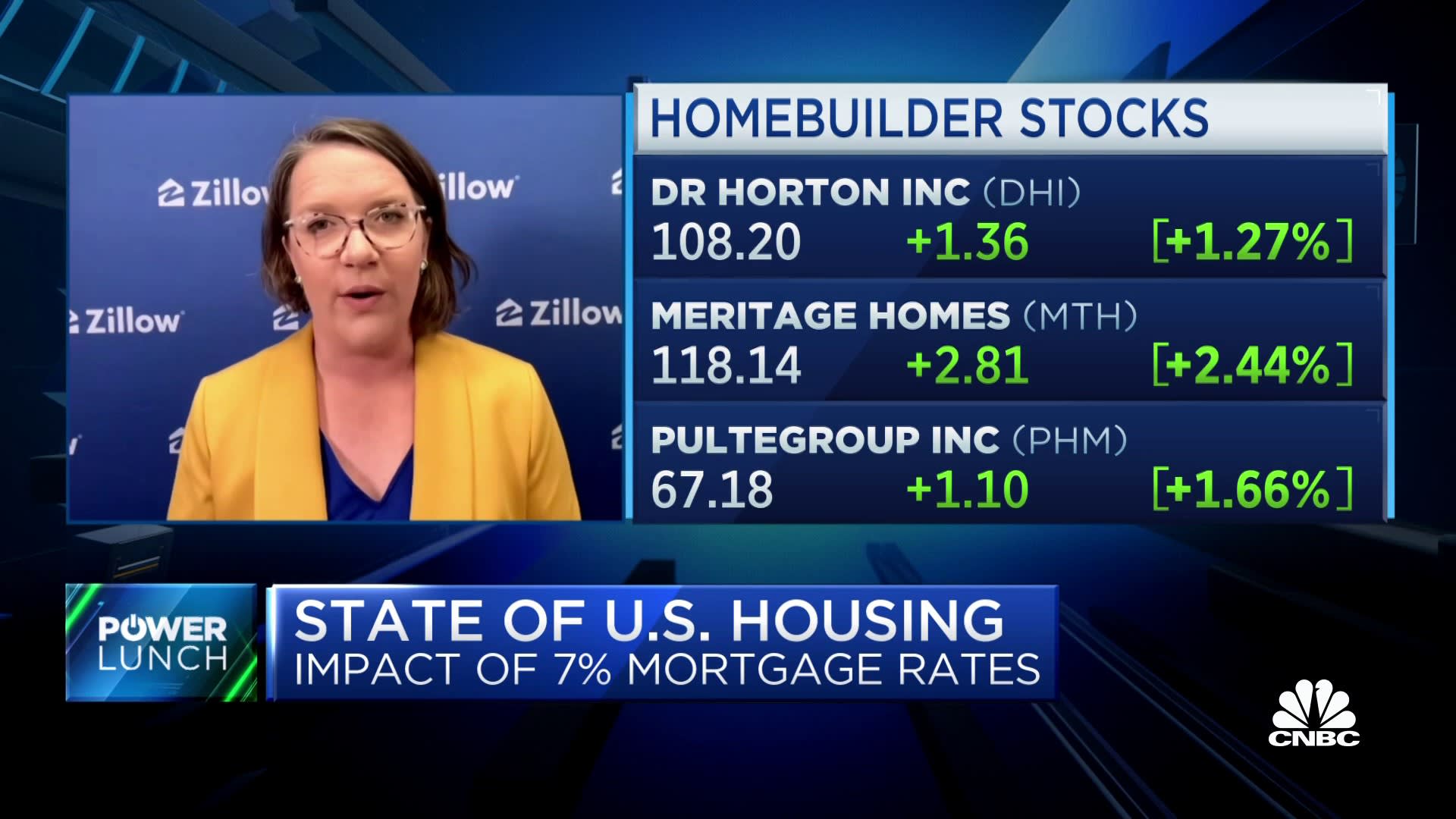
Patrick Carroll, Carroll Management Group founder and CEO, joins ‘Power Lunch’ to discuss which way Carroll sees rents trending, if the company’s a builder of homes or an investor and whether there’s a lasting impact from the pandemic on the real estate market.


Source link

Rents will keep rising as mortgage rates make home buying harder, says Patrick Carroll Read More »

From Toxic-Marriage to Financially Independent Mom

From Toxic-Marriage to Financially Independent Mom


Finding financial freedom is hard enough, but doing so right after going through a toxic divorce can seem almost impossible. All of a sudden, you’ve gone from a two-income household to just one, your children are now your sole responsibility, and you’ve got to almost financially start over. Finding financial independence after events like this would be awe-inspiring—so imagine you did it all in just two years. Sarah King did just that, with thirteen units under her belt since buying her house hack property in 2020.

Sarah worked hard to put herself in a strong financial position. She was a debt-free disciple who paid off six figures in debt. Then, she focused on her savings, minimizing her expenses and increasing her income as much as she possibly could. But then, when everything started to feel stable, she uncovered something that would unravel her marriage. She went from financially stable to undoubtedly anxious in a matter of days. But it’s what she did next that was incredible.

Knowing she had to do whatever she could to take care of her daughter, Sarah went on rental property shopping spree. She built the portfolio she knew her family needed, and now just two years later, she’s enjoying the fruits of her non-stop labor. But how did she get the money for the deals? What strategy allowed her to cash flow so much in such a short amount of time? If you want to do what Sarah did, you’ll have to tune into this episode.

David:
This is the BiggerPockets Podcast show 698.

Sarah:
There’s nothing very satisfying to me about just watching my money grow in a bank account. I had been actively trying to pay off the debt and there was nothing active really about the financial independence journey. And I feel like so many people were couponing and I’m like, I hate coupons. I hate it. I don’t want to go to the grocery store with envelopes and coupons for the rest of my life. I’m not going to bike to work, I’ll be sweaty. I don’t want to be there and dripping sweat when I get to work because I biked here and live that minimalistic lifestyle that I think was really prominent. So then real estate was really my answer on how do you do financial independence faster.

David:
What’s up everyone? This is David Greene, your host of the BiggerPockets Real Estate Podcast, the biggest, the best, and the baddest real estate podcast in the world, joined today by my fearless sidekick and oftentimes leader, Rob Abasolo. Rob, we had an amazing conversation with Sarah King. She just leaves you feeling really good. What were some of your favorite parts of today’s show?

Rob:
Well, Sarah King’s story is just the ultimate version of inspiration. I mean, genuinely a lot of people, they’ll put reasons out there to never get started. Sarah actually got started again and she’s crushing it now. We’ll talk about it in the story, but there has been some adversities that cause her to have to restart her real estate journey. And when most people would’ve given up and thrown in the towel, she went all in and she decided, “Hey, I’m going to own this and I’m going to be reborn in the world of real estate.” And honestly it’s one of those things where it’s like, “Man, if she can do it, it should be an inspiration to everybody that anything is possible with enough tenacity.” She is like tenacity… I don’t know. If you were to look in the dictionary, she’s [inaudible 00:01:49] right there.

David:
Personify.

Rob:
Personify. There we go person. Thank you. I needed that.

David:
I was expunging what you were spitting. Yeah, I thought her story was impressive and inspirational without being intimidating. That’s what was so impressive about it.

Rob:
Totally.

David:
Listen to this, you’re like, “Man, I just want to get out there and do it,” but you don’t feel like I could never do that because Sarah’s so relatable. So you guys are definitely going to enjoy this episode. We cover a lot of cool stuff. We get into overcoming adversity. She talks about how she had a spouse who got into chemical dependency and how that left her on her own to try to figure things out with the kid and how real estate really helped her to bridge that gap and provide stability in her life. We talk about getting into one asset class and then jumping into another one to improve your lifestyle, setting goals to figure out where you want to go, and then pivoting once that’s happened, and finding a niche that nobody else is into, which I think a lot of us are looking for right now. So this episode is very relevant to making money in today’s market. I’m very excited about it. Before we get to Sarah though, Rob, what is our quick tip for today?

Rob:
That’s right. Our quickest tip is-

David:
Quick. Quick.

Rob:
That’s right. Quick, quick, quick tip. I don’t know which sound effect we’re going to go with there. But, okay. So quick tip for today everybody is learn, understand, and master funnels. I think this is something that people sleep on quite a bit, right? A funnel is effectively the user journey that someone takes to get to your final product or service. And for a lot of the people at home today, that final product or service is either property management or the actual real estate that you’re trying to lease out to people. If you can understand how people are going through the user journey to get to your property and you can open up different ways to market to them so that they go through this journey, this funnel down to the service that you’re offering, it could really lead to a very, very small amount of vacancies across your portfolio. So we’ll get into this a little bit more at the end of the episode. But do yourself a favor, go Google funnel marketing, check out stuff on YouTube. This to me is the marketing strategy that makes real estate millionaires.

David:
Wonderful. That’s really, really good. And if you could learn to see the world that way, you will end up having more success in all of your business ventures. Brandon Turner talks about this now, Rob Abasolo is talking about it. It’s very true. And we actually get into the episode later in the show so make sure you listen all the way to the end where we talk about how improving your funnel. And improving the way you approach things from a funnel perspective will absolutely make operations easier once you land that perfect property to build your wealth. All right, let’s bring in Sarah.

David:
All right, so Sarah, tell me how did you get started in real estate? What happened? And then how did you have your rebirth?

Sarah:
Yeah, so really this is kind of my round two in real estate is what we’re kind of thinking about, is really what I’ve done in the last year and a half to two years. So in 2020 I started out house hacking. So I moved into a house hack and that was my first foray into private money, bought a house of private money and then I refinanced back out after a year and put it on the lovely 2.6% interest rate we had in about 2021. And so started house hacking. It was actually a single family home with a walkout basement and I remodeled it over the course of about six months into a basement unit. That was honestly the first major remodel I’ve ever done by myself. I had to YouTube how to drywall and do all these things and I hired out most of it, but there was just… You learn quickly the cheapest contractor is not great and all of that. And so I burned through a lot of contractors just trying to use friends and family in cheap labor before probably costing myself twice as much.

Sarah:
I think my original contractor bid that I thought was overpriced was $12,000 and I ended up being $26,000 by the time I was done, so that was unfortunate. But that really could have got me started. And so my dream, which we’ll kind of talk about over the years has always been to house hack and to kind of get into the situation where you aren’t spending a thousand dollars or more on your housing costs. And so that was kind of step three in my whole process of trying to reach financial independence and to start building out my real estate portfolio.

Sarah:
So once I was living for free, then I started buy additional real estate. And by then I had used private money once. It was a really good way of doing things. And so I ended up using private money I think four more times after that. So I’ve used friends, I’ve used family. And then recently I’ve been doing a round of raising private money on Instagram, which is interesting, which we can chat about. And then, well obviously legally too, so just kind of building out an email list of people that are interested in potentially being lenders. And then there’s an email list I send out deals that I’m generating.

Sarah:
And so in 2021 after I refied, I bought another duplex, and so I was at four units. And then this year I’ve bought nine units across four properties. So I have one single family home. I bought two duplexes and a fourplex. And then hopefully by the end of this week or maybe next week I’m going to be under contract another fourplex, which is awesome. So using a combination of commercial loans, conventional mortgages, and then private money kind of all together. But private money has kind of really been the driving, I guess, charge here to kind of build that quickly. If I was using my own money, it definitely would’ve been slower. So figuring out how to do that and getting over your fear of pitching it was definitely I think the secret of getting to 13 units in essentially under two years.

David:
What caused you to choose that asset class and that location?

Sarah:
Location, I live here so that was really helpful. So I’m in Indiana, I’m in the Midwest. My primary market is Fort Wayne, Indiana. And so it was nice because my family’s here. I went to college in a few different places. I lived in Michigan for a while, I lived in South Carolina for a while. And so really being back in this area, I was finding deals pretty easily in a lot of markets I feel like you don’t have that. So I was fortunate I didn’t have to be an out-of-state investor, I could invest in my own market. So just the community I knew was really to get started.

Sarah:
And then I liked the idea of providing essentially a housing that people needed, something that people could finance with a conventional mortgage. So I was the multiple ways in and out of a deal. And so I kind of liked the one to four unit niche to get started. I think I have some self-loading beliefs probably about large commercial that I need to work through at some other point. But right now, loving the small multi-family. It’s been good to me so far.

David:
Rob, what do you think about that? Because I know you got into your niche market of short term rentals. Maybe even not just short term rentals, but you’re kind of drawn to the kitchy unique type of thing. Sarah clearly has a similar system where she’s found a market that other people are not in. Do you think there’s a part of us that investors that like knowing that, “I found a thing that other people aren’t doing” and we get a sense of comfort from that?

Rob:
Oh my god, yeah, for sure because it’s like one of those things where, A, I love a good challenge. I love a good challenge of finding something that’s a little bit more undiscovered. And to a lot of people that’s a very risky thing. I honestly feel like with enough strategy and hard work, you could probably figure that out. And then once you overcome it and you become really good at it, then it’s something that I really love really diving into because, because I know that there can be a learning curve with some of that, then it’s actually a little bit more comforting to go a little bit more all in and really dive deep into a strategy like that.

Rob:
So for me, when I was doing unique Airbnbs for example, I know that there’s a lot of questions that are involved with figuring out the logistics of setting it up. And because of that, I know that I probably am not going to have a lot of competition around me. But then again, I always spoil that too because I’ll just talk about it on YouTube and really give the details on how to do it. So I’m really only able to buy myself a little bit of time, but I don’t know, I think that’s the itch that we scratch in real estate is just challenging ourselves and then really going all in. So that’s really cool, Sarah.

Sarah:
Yeah. I definitely think the real market, people tend to be really afraid of it. When I tell people that Rentometer doesn’t work in my market, they don’t know what to think. And then I build out my own Excel spreadsheets of rent comps because there aren’t any when you’re investing in these tiny towns. But it was pretty easy to see there was a need, an unmet need. You’d see people on Facebook all the time looking for housing and that’s still a big area I pull renters off of. And so it was more using grandma’s strategy of pretty boring investments, especially from your guys’ standards, doing the one to four units single family homes, like there’s 0% sexy about it but it’s a really good tried and true method. But I think the tiny markets were definitely a risk with something that’s been pretty easy to differentiate yourself when you provide a quality unit in an area where a lot of landlords are kind of depressed and aren’t really maintaining their units very well. It’s nice to be a quality housing provider in these areas without overdoing it too.

Rob:
Right. Yeah. Okay, so first of all, clarify this for me because I’ve said this name before on YouTube and people kind of laughed on me. Is the way you say it Rentometer? Because I always say Rentometer.

Sarah:
I’m probably mispronouncing it. I have no idea.

David:
This is a topic of contention in the world of investing, this comes up a lot. This is one of those like, “Should I buy an LLC or should I buy in my own name?” Here’s the only way that I’ve ever addressed it. We don’t call it a speedometer in your car.

Sarah:
Right. Speedometer, yeah. It’s weird how they write it in the name though. I think it’s hyphenated. Now I need to go back [inaudible 00:11:24] on their website.

David:
Yeah, they make you think it should be Rentometer, which is exactly right. And also maybe it depends on how fancy you think you are. I don’t know if you guys have watched that ancient apocalypse show on Netflix that’s trending really high. They were on the Joe Rogan Podcast. But the guy is British and so he doesn’t say Indonesia, he says Indonesia or amnesia. Like everything, it’s chance, not chance, right? And it just sounds fancy. You’re like, “I’m going to listen to you and believe what you’re saying because you’re British.” And clearly, speedometer sounds much fancy. It’s like saying finance instead of finance.

Sarah:
It does sound better.

David:
All right. So tell me, Sarah, you got into investing and my understanding is you sort had a little bit of a break and then you started again. What happened and what made you want to have this new approach to investing?

Sarah:
Right. Okay. So I got started… Well, it’s kind of interesting because I’m a very big Dave Ramsey dropout so I got started in a whole different world than what BiggerPockets plays in. So I started out as a Dave Ramsey person at about 2016 and learned really just educating on money and getting finances and everything straight. So I’m kind of a finance nerd through and through. And so kind of started with that. Obviously Dave Ramsey buying a bunch of real estate and having a million dollars in real estate debt, which I’m super proud of, isn’t a big hit in the various circles. You’re either cool in one and not in the other.

Sarah:
And so it was kind of a slow process of kind of undrinking the Kool-Aid, kind of backing yourself out of this really big scarcity mindset after paying off a lot of debt. And so I took about two years in the Dave Ramsey camp and got to a 50% savings rate, paid off $118,000 in debt kind of after college, newly married, working through all of our debt pieces and got everything paid off. And then about a year in, I was like, “Well, what are we going to do with this 50% savings rate? I’m not going to go back to just spending it.”

Sarah:
And so then I got reading into the financial independence guys. So a big name around here is Coach Carson. So he’s an amazing guy, love his idea and his philosophies on things. He kind of also walked the line. So when I was fresh off the Dave Ramsey boat, the idea of massive leverage was a little scary at first. And so it was relatable to hear him at least talk about using debt strategically. And I think that kind of made me dip my toe in the water of trying to build wealth in a different way.

Sarah:
So essentially, I got into financial independence, did the standard path you’ve all heard of. It’s like the Rich Dad, Poor Dad. And then it really was Scott Trench’s book actually, so a BiggerPockets book where he wrote Set for Life and it really talked about lifestyle design and he hits really hard on your car and your housing and your income. And so those are really my big three that I took away from that book. And that period of time was just, “How can I get my income up?” And about the same time in my career, I kind of reached the epiphany that in the world of the W2 job, they don’t really care about you. The hardest worker is often not the one that’s getting the promotion. And so I was just kind of burning myself out at the sake of other people. And so I just really took a step back and I’m like, “Okay, what is the life I want to be living?”

Sarah:
And so I really started going after those, I guess, big three of trying to get housing costs and income up and transportation. So the house hack is the third piece of the pie. So that came in a couple years later. But first I made the hop out of hospital jobs. So out of the W2, I switched into a W2 in corporate America to get the income up. I actually raised… So over the last six years I’ve tripled my salary, which has been a lot of job changes, which is really crazy. I was always told you like, “You’ll never make a lot of money in your career field. You’ll make good money, but you’re never going to make what a doctor makes.” And I’m in mid-level. I’m a genetic counselor, that’s my degree. And so I was always told like, “That’s not really riveting. You’re never going to be this great career woman.” I think my first job starting out was like $56,000 or $57,000 and you just didn’t think there was a lot of high income earning out of that career field.

Sarah:
But I really started diving down, I’m like, “Okay, what can I do with my degree that actually pays me?” And then I discovered this beautiful box called the MSL role that kind of helped me boost this financial independence journey where you actually got a company car. And so that checked my other Scott Trench, I guess piece. I’m a really good box checker, I figured that out over my life. And so essentially checking that next box on the list of like, “Okay, so I got my income up and then I figured out how to get a company car.” So I no longer pay for a vehicle, I don’t have a car payment, I don’t pay for gas, I don’t pay for car insurance. And so it was a career that I’d never even heard of before, but I just started searching like, “How can I do this differently and what jobs can I take?”

Sarah:
But then I honestly, after you learn about financial independence and you educate yourself on investing, read The Simple Path to Wealth, got really pro index funds, got really nerdy into that whole rabbit hole that is the financial independence community. But it all seemed very intangible at the time. It was like, “Oh, you’re going to super save into this giant fund of money and you’re going to build this beautiful IRA and these 401(k)s and it’s going to have $3 million in it and then you can retire.”

Sarah:
But there’s nothing very satisfying to me about just watching my money grow in a bank account. I had been actively trying to pay off debt and there was nothing active really about the financial independence journey. And I feel like so many people were couponing and I’m like, I hate coupons. I hate it. I don’t want to go to the grocery store with envelopes and coupons for the rest of my life. I’m not going to bike to work, I’ll be sweaty. I don’t want to be there and dripping sweat when I get to work because I biked here and live that minimalistic lifestyle that I think was really prominent. So then real estate was really my answer on how do you do financial independence faster and how do you accelerate that path? And so that was really kind of the pivotal moment that led me into real estate.

Sarah:
At the time, it was about 2018, I was married and had taken this new job. We decided to have a baby because again, all the box checking, you did everything in order, you graduated college, you graduated grad school, you have this degree, you get the nice job and then you have kids, right? And then later, so when my daughter was born, it was a planned pregnancy to me and my husband. And then when she was about three months old, he actually started acting really weird and our life started getting really, I guess, confusing and I couldn’t figure out what was going on. And it ended up he developed a drug addiction.

Sarah:
That was kind of the beginning of the end of our marriage, was really he started on this drug path and I had a three month old daughter and he was never around and we had just started buying real estate together. So I don’t know exactly when it started because honestly we were so busy with the newborn and we were buying investment properties. We had five properties by the time I actually ended up stepping away from the marriage and filing for divorce. But during that time I actually had to learn because he was always the handyman. He was amazing with projects, he did really good work. He was an amazing tile work. And I had to start taking on all those projects because he was just unavailable to do that. And I always thought I needed to be handy. I think that was really the turning point for me deciding I am a real estate investor and this is going to be my passion.

Rob:
Right. So I’m sure that was really tough to find out when you did. I think a lot of people would probably just try to figure out how to cash out and start over. What was your thought process here in the real estate side of things where you’re like, “Oh my God, it’s all over”? Or were you still wanting to really pursue this path into real estate? Tell us a little bit more about that turning point in your life.

Sarah:
I definitely thought everything was over. I remember the first time I found out exactly what was happening with him and actually found the drug addiction piece, I was so embarrassed I didn’t tell anyone for three months because I was humiliated, like how can my husband be doing this and making these choices? And so honestly, a lot of it was just fear. I was really frozen for probably three to six months where you just didn’t know what to do and I’m like, all I can do is take care of this baby, otherwise I’m not really… And just keep the rentals going.

Sarah:
Now, granted we had only three of the units had tenants in them at the time, so I was really only managing three long-term rentals. It’s super easy, super passive, but I remember taking the newborn to meet HVAC contractors and things. But yeah, you definitely are frozen in place. And my idea was really not… It was really just to keep a hold of everything when your entire world was crumbling apart and you didn’t know what to do. And so definitely building out a real estate empire was not on the forefront for at least a year and a half. I would say I’d make a strong case for almost taking two years for me to actually figure out that real estate is what I wanted to be doing because it was such a mess and it was so horrible and soul crushing to kind of walk through that.

Rob:
Was there ever a moment in that time when you wanted to throw in the towel on the real estate side of things? Was there a moment where you’re like, “I think I’m ready to just hang up the hat and I don’t want to do this anymore”?

Sarah:
There’s definitely been moments. I would say crazy enough it’s been while I’m in the scaling up phase, less so than in the divorce phase because at that time COVID was just starting to happen and he was laid off for a period of time. I still had my job and I was like, “Oh my gosh, if he never gets better and he continues on this path, I’m down to one income, what if I get laid off?” And so my number one fear kind of went to, “Okay, my family’s falling apart. I need to keep my daughter healthy and going, but also someone has to pay the bills and someone has to have it together. And clearly, that’s going to have to be me.” And so it was just really scary. I feel like as though for me, I’ve learned over the years, money’s a very big sense of security and I hear that pretty commonly with women actually. I’m sure men also feel that way to some degree, but sometimes there’s just the security of having these stay jobs sometimes that we kind of clinging to.

Sarah:
And so losing and being a one income family in a volatile time, I just dodged a layoff too right around that time. And so it was a little terrifying. So it became a, “I have to do real estate because I need a second income stream and that’s going to be how I do it.”

Rob:
How did your life goals change at this time? Obviously, there’s a lot going on and it seems like you were moving towards your ideal picture perfect life, but then it all changed up. Were there any big changes and a different end goal during this whole process?

Sarah:
Yeah, I think that’s really interesting. So it probably took a couple years where I just stopped doing goals because your whole life is torn apart. You don’t know how much money you’re going to end up with. I didn’t know if we were going to sell the houses, if we were going to keep the houses, if the partnership was breaking up, if he was going to go to rehab, what was going to happen. And so you really just stop making goals.

Sarah:
I actually went to this goal setting retreat last year in December, a year ago. I was sitting there and everyone’s writing down their goals and there’s these experts on stage with these giant notebooks. I think a lot of people watch these amazing goal setting people that have their daily notebooks and all these big tasks and everyone’s doing like year of the goal setting. And I just sat there and couldn’t think of a single thing to write down because you’ve been such in a survival mode for so long just trying to keep afloat and keep the pieces together that you… And I’m always an achiever personality. I’m always like a goal checking. I love achieving things. I like having always been to move forward too. I have a very specific lifestyle I’ve always wanted to get to. And I feel like the end goal was always there but the pieces stopped being there just because you’re in survival.

Sarah:
And so I would say for just this year now I finally have some written goals again. But it was almost scary to start writing them down after you’ve seen how quickly your life can change. Writing out a five year plan seemed insane to me when my five year plan was destroyed in a day. So it’s a learning curve to almost get back to goal setting.

Rob:
100%. David, you’re kind of the king of goal setting. I’ve been very inspired with how much of a process you have. What is your process, man? Because we did a podcast a couple of weeks ago and you really laid down, you had goals and you had micro goals. Honestly, it’s very inspirational. And for someone that’s has as much success as you David, is there a system that you actually implement to write down your goals when you’re doing it?

David:
Yeah, the system is the simplest part. I take all the categories of my life I care about, I write it on a Google document in the center of the page like I center do it. And then I write down what the goals are for each of those businesses which are typically very general, like, “I want to buy this many houses. I want to increase cash flow by this much. I want to sell this many homes, do this many loans, go to the gym this many times,” whatever that would be, okay? And then I start with that information and I work backwards. Like, “If I want to sell this many houses, what are the steps I have to take to do that?”

David:
And that’s where the micro goals come out that you talk about, Rob. And then once I’ve got that mapped out, I say, “Would I like this life?” And oftentimes the answer is, “No. This life looks miserable. If I’m trying to do all these different things, I would hate it.” And so I move goals off or I ask the question, “What would I have to do to accomplish these goals but me not have to be the one to do it?” Or, “How can I accomplish two of these goals at the same time?” So selling houses and doing loans are two different goals, but one action can do the same thing. If we do the mortgage and we sell the house, they’re each becoming a goal, right?

David:
This framework is why I’ve sort of built the businesses out the way that I have because I want to create synergy with all of the different goals that I have so that one person can accomplish all of them. But it’s also something, and I think Sarah, you can probably attest to this, sometimes you make your goals, you start down the path and you realize, “I don’t like how this worked out.” That happened with me when I got to 50 single family rentals. “Okay this is miserable. I don’t know why I ever did this in the first place. I wanted to get to 100.” And I realized. “I just wanted to get to 100 because that was a number with three digits.” So there’s no reason to ever do that.

David:
So I sold them and I bought a bunch of short term rentals and now I’m saying, “Why the hell did I buy 18 short term rentals at the same time? This was a terrible idea.” I knew it was work, I just didn’t realize how hard the work would be and how many people it would burn out and quit my team because they couldn’t do it, right? So I don’t want to make it sound like I got everything down. I’m having to learn this stuff. But what it comes down to is when you set the wrong goal, it doesn’t fit your lifestyle. Real estate investing is not now serving the goal you had, which in your case Sarah, could have been some security. “My husband’s on drugs, I can’t rely on this person to help provide for our family. Real estate’s going to provide security, or maybe freedom, or maybe fun,” right?

David:
Like, right now my portfolio is anything but that. It’s stress and it’s frustration. And it makes my life harder because now I have to go hire new people because the people I had had to quit because they couldn’t keep up with the demands of what happens when you buy 18 of them in a row. So now I’m kind of redoing those goals.

David:
I guess I’m just saying this because it’s okay to say, “I don’t like my goal. I accomplish it or I’m on the way to accomplish it” and then to pivot and go into another realm. And you sort of mentioned that. You started off scaling and buying these properties and then you realized, “Okay, well I can’t make enough money this forever” so you started raising capital. Then you want to move into a safer asset class, you’re going to feel better at because you’re raising capital so you owe people money, the stakes are raised. Now you want a little bit more security and you’re probably okay to take a little bit off the upside if the downside is more secure. And do you plan the next step? What things are going to go?

David:
So as far as where you’re at with your life plan, how do you like how things have worked out and what do you think the next step for you is going to be?

Sarah:
Yeah. So I feel like that was the other piece. I’ve scaled up pretty quick this year. Not a ton of units obviously, but doing midterms is definitely a job. And I still have a job still to this day. And so I’ve kind of done a good job where my biggest fear in life used to be being laid off. So I’ve kind of gone from my number one fear being a laid off to, “Actually, I would love to be laid off but please also give me a severance package. That would be great.”

Sarah:
So essentially, your biggest fear kind of becomes your dream now where essentially I would be fine if I didn’t have a job, which is what I planned on doing, but it’s a lot more active than I was anticipating. And so I was able to hit that number and get to that income level by doing the midterm. So I need less units to do it. But exactly like David’s saying, it’s a lot of work when you start having turnovers and I had my first tenant destroy a property and police called and all of that fun stuff. And so it’s you kind of go through the punches and things. And so when you are used to managing three or four, that’s a whole different ballgame than having 13.

Sarah:
And so just kind of deciding, “Where do I move from here strategically so I’m not making my job harder?” And at what point do you hire more people to help you reach your business goals and what’s the enough point on it. Or do I pivot back to long-term or maybe long-term type of rentals but maybe a larger property, kind of deciding where to go to actually get the lifestyle I want because I’ve definitely built myself essentially a second job now.

Rob:
Yeah, 100%. Okay, I would love to hear from you Sarah, because I love your approach here. I would say my biggest weakness that I’m recognizing this, I’m self-aware of it and I’m happy to have finally just figured it out, it’s hiring people. I, in theory, have the lifestyle that I want, right? I work hard, I put content out, I teach people how to do this every day. The lifestyle is exactly what I dreamed of. And it was so hard for it to be as fulfilling as… I thought it was going to be more fulfilling and then I really started sitting down and thinking, “Why is this not working?” And I realized I do too much. I’m really bad at hiring people.

Rob:
And so what is that in your real estate journey? Because I’m so understaffed. I’ve written out the plan and I’m starting to go down that rabbit hole and it’s very refreshing. But what’s that like for you? When do you know when to hire people and why is that complimentary to your lifestyle?

Sarah:
Yeah, I hire out most things now. So in order to be a single mom, and I have full custody obviously given the circumstances, and so it’s hard because you can’t just go spend the night at a property and paint all night when you have to get something done. You can’t do that anymore. She has a sleep schedule and school and all the things. And so I don’t work on any of my own properties anymore. Rarely I’ll still go in and furnish them. The last two I furnish. So I guess on the real estate piece, you need to find a team of contractors, you need to find HVAC people. So I just have lists upon lists of people.

Sarah:
From my personal life, I guess I’ll go with what I’ve done and then what I still need to do because I think we’re in the same vein. So I guess from the business standpoint, from the real estate, I’m hiring pretty much everyone but I still self manage from a property management standpoint. So I still do all the communication and placing tenants, but I have most of that automated through social media pieces using Facebook and having funnels and all of that stuff to find tenants and screen them. And then I funnel them to a property management software and they have a self screen and all of that good stuff. And I do two showings of property now. The people that do 100 of showings, I don’t know how the heck they’re alive. I’ll show it once maybe twice. So property management side.

Sarah:
And then from a personal side, in order to have time with my daughter and actually see her while I’m working full time and building out a real estate empire slowly, or I guess fast, depending on how you look at it, I also hired out cooking. I have a cleaner. I don’t do my own lawn. There’s very few things I do. So when I have my evenings with my daughter, I am just with her. And sometimes we’re doing real estate stuff together. I have a picture I think in every property I’ve bought so far of us having Chick-fil-A on the floor of a rental property and then everyone comes through social media and yells at me for eating on the dirty floors. But so far she’s still alive so I feel like I’m doing pretty well.

Rob:
That’s amazing. I think really what you just hit on is what I think has been my internal struggle here, which is we all are getting into real estate or financial freedom or whatever these side hustles are, or front hustles if you will, we’re doing it because we want to make more money, right? And so the idea of hiring people means that we have to make less money. And so we don’t want to do that cause we’re trying to make more money.

Rob:
And then actually once the money is good, if you’re working super hard all the time and you’re never taking a break, the money is not fulfilling. It’s not adding to the happiness factor. So what I love is that you just said you hire a lot, right? The cooking, the lawning, it’s all that kind of stuff. Because I think the big… I turned the corner sort of this week really on this and it’s like happiness is actually making less money. And what I mean by that, it’s hiring people to make my life easier. And yes, that will mean that I make less money but it also means that I can actually breathe again. And that’s really cool to hear that you’re sort of there too.

Sarah:
Yeah, I think my next step as a personal assistant. That just was going to be-

Rob:
Oh do it. Do it. I love it.

Sarah:
So I actually hired one, but we have to break up. It’s just not a good fit.

David:
Get used to that. It’s okay. You’re going to kiss a lot of frogs before you get your [inaudible 00:33:04].

Sarah:
I’ve gotten rid of contractors before. I don’t know why the assistant I just feel bad, but I’m like, it’s just not a good fit. I just know it.

David:
It doesn’t get better. It’s like that bad relationship.

Sarah:
A terrible divorce will give you a good gut instinct, I will say that. And I should have known before I hired her. I should have known better. There was a feeling and I couldn’t put my finger on it or verbalize what it was, but I just should have known. So trust your instincts also.

David:
Oh, that feeling is huge. In fact, I wish I could write a book called The Feeling, because it’s undefeated. It’s like father time. When you hire the wrong person, it’s hard to put to words what it is. It is a feeling like, “It shouldn’t be this hard. Am I crazy?” You start asking those questions like, “Is this on me?” Like, “I would’ve thought that when you canceled my appointment, you would’ve also realized, well if I’m not going on this trip, you should get me a refund for my airline tickets or you should cancel the babysitter that I had coming because now I’m not leaving town. Or you should at least ask me.” And they’re like, “Oh, well you didn’t tell me to do that,” right? That feeling in so many times in life is crucial. And it happens in real estate too. You’ll see a property and be like, “Ugh, it works on paper, but I just don’t know.” Rob, what were you thinking?

Rob:
Well, I was thinking that you’re probably going to have to have that conversation with your assistant before this podcast comes out.

Sarah:
Yeah, we’re destined to have it next week actually. So [inaudible 00:34:15] break up, it’ll be the holidays.

David:
This is accountability.

Rob:
I know. Please don’t listen to this. It’s going to happen. I’m going to get a mean text later. I’m sorry. It’s just not an ideal fit.

David:
It’s good for everyone to hear that because what I found when people try to scale, I have this theory that I call the three dimensions of success, okay? Let me walk you guys through this. So the first stage is just one dimension like a plane. Imagine Mario in Mario Brothers just running to the side, okay? You start on the left and you suck. The more you learn about what you’re trying to do, the better you do. And if you get all the way theoretically to 100, that’s where you’ve maxed out your own productivity. In that realm, you cannot make more money. You can’t sell more houses, you can’t own more rentals, whatever the thing is you’re doing. You’ve learned all of it for the most part. And when I say learn, I just mean learn the skills. There’s always knowledge that can be learned, but you max out.

David:
The only way to do from that point to do more is to leverage. But the problem is leverage is a completely different access. It’s a second dimension. This is Mario jumping, and you start off not jumping very high. You’re like 100 on this plane but you’re only in two and you suck. And no one explains to you. You’re stepping into another dimension with a whole new level of skills that you have to get good at just like you had to get good at owning rental property or analyzing property or all the crap that we have to do if you want to be a good investor.

David:
And because you expected that, “I’ll just hire someone. That’s what I hear David Greene say on the podcast like, ‘Oh I suck at hiring. I guess I’m not meant to be this’.” Everyone goes through this. I watch it happen in every single endeavor I’m at. For some dumb reason, we human beings think that the first time we get on a bike we should just ride it. The first time we get on a snowboard, we should just cruise down the hill. And nothing works that way in life ever, but when we fail at something, we’re like, “Oh, I guess I’m not a prodigy. I should have just stepped in about a black belt my first time doing whatever this thing was.” And it’s not, right?

David:
So if you can give yourself that grace of knowing “I’m going to hire and fail and hire and fail just as long as it took me to get good at investing in real estate,” it’s manageable. And then here’s the reward, Sarah. As you get all the way to the top of leverage, you’re like, “This is awesome. Let’s scale this and take it into another bunch of places.” And you start all the way over in the third dimension of leadership, which is going away from you. And now you suck at that and you get to… It never stops sucking guys, that’s what I’m telling you. So fall in love with the suck.

Sarah:
I was talking to one of my friends that was like, “Being an entrepreneur leaps. There’s like the leap phases.” And it makes so much sense because there’s sometimes where you’re like, “I don’t know how I managed. My long term suddenly became easy and they didn’t used to be easy and now I have more long terms than I ever have and I hardly ever think about them.” And now I’m just like, “Ah, damn you midterm rentals.”

David:
You started over. You got a new learn access that you’re on.

Sarah:
And I also switched markets because I went from small towns where my contractors were used to traveling everywhere to a different city where they’re like, “Well, I don’t work in the town. I’m not driving through the traffic.” And I’m like, “Here we go again.” So yeah, I feel that deeply. And I should know that about the personal assistant as well. So I know I need one and I need a new one. It’s just…

David:
You should know the talks Brandon Turner and I have had late night in Hawaii over the woes of trying to deal with personal assistance. We’ve often thought we should film this and sell it because it’s just so funny and deep. But you’re not the only one is what I’m saying.

Sarah:
I have a call with other female investors, there’s four of us. Our topic for the last month, every single week has been, “How do I hire a better personal assistant?” because we’re struggling through it. So that might be something to bring in. That’s a business idea.

Rob:
I mean, I will say one of really the first hire officially on payroll that I ever made was my assistant. It is one of those things when you hire someone and they are good, it’s kind of like a, “Oh, wow, what was I thinking? Why did I do that earlier?” I hired a COO a couple months ago. That was another big moment for me. It’s one of those things where I’m so bad at actually managing my personnel, my staff and my team right now because I’m so spread thin. And so I’m realizing I need to have a few of those key players that will alleviate so that I can actually provide the leadership that you’re talking about, David. Because that’s really the hard part, is I’m so used to working side by side with other people and I’ve gotten really good at that, but actually being able to lead them and delegate has been really tough like that.

Rob:
The assistant journey has been a good one because that is really your stepping stone into leadership because they’re going to follow your lead and they’re going to do what you ask them to do. And if you don’t have systems, then it makes it a lot harder on them. So a lot of the times that I have seen failures, and not that my personal assistant fails, but anytime that there are moments of like, “Ooh,” it’s always my fault because I did not lay out what I needed and I wasn’t clear. So it’s a really good learning experience,.

David:
But even when you are clear, they find a way to screw it up. That happens a lot of the time. Systems have two parts to them. We only talk about one. The first is knowing what to do. Writing out the steps, “Here’s where the tenants take their rent check.’ We think that’s what a system is. No, that’s half a system. The other half of the system is finding a person execute that. You still have to be good at what’s happening. Someone could teach you, “Hey, here’s the way that you shoot a bow and arrow. Let me lay out all the steps for you.” But there’s still a skill of archery that some people will learn and some people don’t learn. And so finding the right people is crucial. Yeah, without a system their job’s going to be way harder, but even with the system, they can screw it up.

Rob:
All right. So Sarah, we kind of glazed over this because we’re talking about so much good stuff here, but I don’t want to go back to it. I want to really ask you about funnels. You talked about how you set up your different funnels and how you’re able to find new clients that way for some of your rentals. Can you explain what a funnel is and why a funnel would be beneficial for a real estate investor in any of the, I guess, niches that you’re in?

Sarah:
Yeah, so I mean, funnels to me are how my brain operates, but I’m in a logistics nerd and I did my MBA for fun. So essentially, a funnel’s a giant triangle. So essentially you’re bringing in 100 people and you want to get down to one or two tenants. So you can use this for tenants, you can use this for social media. We can go both routes, it depends which way you are most interested in. So essentially from a property management standpoint, I feel like Facebook marketplace is where everyone goes to troll landlords, but it’s also a really good start of your funnel. So having a Facebook page for your property group. So I have a web or a Facebook page. I list all my properties, Facebook marketplace that are not furnished. So I have a different funnel I guess for my midterms.

Sarah:
And so I usually get around 100 inquiries, which is in these little tiny towns, which is fascinating to me because I didn’t realize our population was that large to get that many inquiries, but there’s a lack of good housing. And so I like to be the best housing provider while still hitting people’s budget, and so a thousand dollars a month is at sweet point. And so essentially getting everyone, the 100 people that say, “Hey, is it available?” and poke the button on Facebook like, “Hey, is this still available?” they get an automated message. And the automated message says you have to fill out this pre-screen and gives them a link. About 40 people actually make it through that link. They’ll actually click and start to fill out your, I guess, pre-screening questionnaire. And so then I’m left with instead of 40 people saying, “Is this available?” that I’m DMing, I now have about 40 people that import into a Google form that fills in a Google sheet actually.

Sarah:
And then from there I can go through and actually pick out people that qualify and then people will say dumb things. One time I had income, I didn’t require a number in there, and so people would free text in. And so one person, I said like, “What’s your income?” and he said, “Enough.” And I’m like, automatically that’s a no for me. It just is a no. People are dumb. So you automatically have some people that just aren’t going to qualify for your properties so they don’t make enough income and you’d strap them for cash. So it’s just finding the right people and then ultimately picking maybe two to four people max to actually show the property too is kind of one example.

Sarah:
And then how I’m using the same strategy is through Instagram to work on my private money. So I kind of use the same structure online where Instagram is essentially my beginning point. So I started out on Instagram as a content creator, trying to be like, “Okay, I’m going to build this business.” And every year I lose money on my Instagram account. I don’t know if I’m just really bad at monetizing, but it’s a blood bath out there to try to make a sustainable money on Instagram.

David:
No, I make $14 maybe. So don’t feel bad.

Rob:
Oh, no, no. I make no money on Instagram.

Sarah:
And every year I’m like, “I made $1,000, but I spent 3,000 to do that.” So it’s just really depressing. Every year with the amount of money I make, it goes up, but every year my spending goes up.

Rob:
Yeah, but you just said you raise money on Instagram though, right?

Sarah:
I do.

Rob:
So you actually didn’t lose the money because it brings you in money through the funnel.

Sarah:
Right. So that’s the cool thing I’m doing with Instagram right now that I just started doing this year, was essentially I started talking about my deals more and deal analysis and actually talking to people about private money, high structured deals, how I’m paying lenders essentially like mailbox money to be a lender on a property where they essentially act like a bank and they get guaranteed rent on intangible asset. So I just talk about that online. And then I started building an email list. So I essentially used the same process.

Sarah:
Where I do a Google form, it goes into a Google sheet, I ask them this set list of questions. If you go on Instagram, you can totally see this and essentially build out a funnel. So now I have a dedicated list of people that may be interested in lending private money. And so that’s kind of how I’ve pivoted to being a failed content creator on Instagram to being like, “Oh wait, actually maybe I’m not.” If that’s just the start of my funnel, then I’m kind of successful and really all I need to do is curate those relationships and kind of love what I do most, which is buy real estate.

Rob:
Yeah, this is huge. I think everybody go and rewind and watch the last five minutes. Funnels are genuinely where millionaires are made. If you understand funnels, this is how every business works, right? A funnel is basically a journey that people are taking and you’re sort of at your product or your service, the actual conversion is at the bottom of this funnel.

Rob:
So the way I like to think about it is like a calendar, right? We always say it’s a triangle, but I think of it as a calendar that has all these holes in it, right? Along the journey as they travel down this calendar-like funnel, whatever, this conceptual thing that I’m making up on the spot, a lot of people are going to fall through the holes in that calendar, but some will keep making it down. And there are different layers, right? So it starts with, let’s say on Instagram, you say, “Hey, I’m going to do the… Reach out to me.” Or you basically make content that interests people. A percentage of them actually reach out, a percentage of them fill out the form like you talked about, a percentage of them actually talk one on one with you and then a percentage of those people actually give you money and invests, right?

Rob:
Every single business works this way. And it’s really cool to hear you explain it that way with real estate because real estate is funnels, but no one really understands that concept that, hey, the way that you market your Airbnb or your midterm rental or the way that you get tenants, that’s all just a funnel. And if people really understood that user journey, they would never have vacancies.

Sarah:
So now I need to work on applying this to midterm rentals because I’ve kind of pivoted my social media. So now I feel like I’m not “failing,” I guess air quotes because it’s a total different way of bringing in partnerships, like equity partners.

David:
I think there’s a deeper truth to what you two are saying right now that people need to hear. A lot of the time, remember I said that we fail when we expect our first hire should just be the hire-

Sarah:
Exactly.

David:
… and we realized that you got to do it a lot? But that’s that form of a funnel, right? I think a lot of people assume, “Well, they said to buy a rental, they said to use the BiggerPocket calculator. I did that, I bought it. But I’ve had nonstop problems the whole time I’ve owned it. I must suck at real estate.” And I bet if you trace it back, they rented out to the first person that applied. Or they had two people that they talked to, they didn’t do a credit check, they didn’t screen them. They threw someone in there thinking that’s how the system works.

David:
If you understand it’s supposed to be a funnel, you start with a lot of people, you whittle that down. And like you said Sarah, you only show it to two out of four because you’ve already whittled a lot. Your experience with real estate is so much better and now you like it and now you want to do it more, but that never gets told to the people who are first starting. The expectation they had is like, “Oh, you just find a tenant. It’s in a good area. I should get a good tenant.” They don’t know how to find a good tenant, or their property manager doesn’t know how to find a good tenant so the whole experience sucks. And so I’m glad you guys are saying this because it’s going to save a lot of people a lot of pain if they understand, “Oh, once you buy the property, it’s still work. I thought the work was done? I thought I was just supposed to analyze another 100 deals.”

Rob:
100%. Yeah, 100%.

Sarah:
And I will say that’s probably why my midterm, because it’s newer, is sucking right now because I haven’t really built out my funnel. My long term things I feel so comfortable with that funnel development and being able to weed out people. And I feel like my strategy just isn’t there with midterms yet. So maybe that’s the leap phase of my business. Maybe I’ll start liking midterms again.

David:
Maybe that’s why fate has you here with us today, Sarah.

Sarah:
Maybe it is.

David:
You need to hear it’s okay to suck. You’re supposed to suck. Every time you switch to a new thing, you start over a new cycle of sucking, which is like the real estate god’s ways of stopping us from going too deep into shiny object syndrome.

Sarah:
It is.

David:
Because it’s the thing that we love to punish ourselves where, “I suck, I suck, I suck. I finally got good at it. Oh my god, years of misery are over. It’s running like I want. It’s smooth. I have all my time. We enjoy it for a week.” And then we go, “This is kind of boring. What’s that guy doing over there? Creative financing. That sounds good. Let me learn about that.” And we jump into a whole new cycle of suck that makes us miserable again, right? Right when we got out of the thing that we were good at. And so there’s definitely a balancing that you have to take in between.

Sarah:
Is this like the check to see if you should be an entrepreneur? Do you just constantly sign up? Because I’m like, that’s how my whole journey… Dave Ramsey got boring. This got boring. Someday real estate will probably be boring because long term rentals kind of get that way. But now I’m like, ‘Ugh, this sucks again.” But your suck always changes. After you’ve replaced so many furnaces, I;m like furnaces and foundations don’t scare me anymore because I’ve had that suck before and now they don’t make me nervous. But for your average person, like…

David:
That’s it. Boring’s just a form of suck. You could have boring suck or you could have incredibly stressed out losing money, hating your life, chaotic suck, right? Boring’s not the worst thing ever. That’s one of the things I try to remind myself.

Sarah:
Right.

David:
Like, “Oh, I want to go jump into another realm of real estate investing like I did in a short term rentals.” Well, I shouldn’t have done 18 at one time or whatever it was I bought, right? But-

Sarah:
You 10X the chaos. Yeah.

David:
Yeah. Now my suck is like this incredibly crushing anxiety that sits on my chest of eight properties that are probably 10 grand each that aren’t bringing in any income at all plus the huge rehabs I’m doing. Now the boring suck doesn’t seem so bad. Rob, what about you? What do you think?

Rob:
Yeah, I was actually just talking with the BP superstar, Jamil Damji, about this because this is a big thing, right? So I think that the important skill is recognizing if your suck can get better, right? So a lot of the times the you sucking or you’re not being good at something really comes down to reps. If you do more reps, you will be better at something. But sometimes you are just not made for a specific thing. So for me, I’m not athletic. There will be no world where I become a basketball superstar. It is not in my body type. I don’t have the hand-eye coordination. And I know that if I play basketball every day, I mean I’ll get a little better at it, but I’ll never be… You will always laugh at me, I’ll put it that way.

Rob:
But I know that from a skill standpoint, I’m good at real estate generally speaking. I understand concepts. And so when I look at things like wholesaling or sub2, I’m going to suck at doing that for a long time. And it’s not because I’m unable to, it’s just because I haven’t done enough reps. So if I go all in with wholesaling or sub2 just to diversify a bit, it’s going to be me putting in reps every single day and getting better at talking to people, understanding scripts, understanding funnel marketing. And the more I do that, then I know that I will one day not suck. So I think recognizing, “Can I actually be good at something?” is a really, really important skill that most people they don’t recognize and they’ll just automatically write something off and never even try.

David:
Yeah, because they’re following somebody else’s blueprint.

Sarah:
And I will say I feel like once a month I find something new I want to get better at. Last month I met with title companies, people who work for title companies. I just need to understand the process better. Right now I’m trying to pitch seller financing more because I just feel like that’s kind of the name of the game that the market’s flipping a little bit and everything kind of pivoting a bit. So I’m going to get really bad at doing sub2 and then get better hopefully.

David:
All right. So with all the options you’ve got at your disposal now, Sarah, because that’s cool when you do get enough rental properties to replace your income and you get a form of security, the whole world’s oyster. But a lot of oysters smell like fish and that doesn’t mean that they’re all good, right?

Sarah:
Right. Not all oysters are good. It’s a good… Yeah.

David:
That’s exactly right. Not every oyster is good. They’re not all full of pearls. The gulf oysters?

Rob:
Not good.

Sarah:
No. Yeah.

David:
So what are the goals you have now moving forward based on what you’ve learned about yourself and what seems interesting to you?

Sarah:
Yeah, so I think when we were prepping for this episode, I was like, my biggest goal was to really hit this very specific number. So if I stopped today and paid off everything, I’d have about $13,000 cash flow on paid off properties. But that sounds very unsexy in the world of real estate where everyone leverages. And so I’m like, okay, so I built to that point where if I got laid off and the world came tumbling… My worst case scenario was realized or something, I’m like, “After you go through a terrible divorce like this, nothing’s that scary anymore.” So you’re like, “Oh whatever. I built my second income stream, I did it.” So you’re like, “Do you stop now? Do you keep going?”

Sarah:
So it’s always this kind of philosophy of… And where I’m at right now is you kind of do both. I think I’m going to try to get a couple mortgages paid off just so I have that security because I like the fact that these properties are all mine. If I get remarried, prenups, all the things, these are mine to be financially independent. So if anything ever happens in the future because you can never expect to see these things coming, never in a million years I just expect this would be my life story but here we are, you have the safety net that would be for me and my daughter always. And so that’s really important.

Sarah:
So I think if I get into partnerships or another marriage someday or kind of develop a life with somebody else, that I always keep my core portfolio. And so it’s like, “Do I stop and pay things off now? Do I pay off a little bit and start doing other projects?” So I’m kind of in this philosophical debate of I got to my magic number and I’m supposed to stop right now, but that sounds terrible. So now how do you keep going strategically? Can you do both? Can you pay off 13 units, which is six properties? Or do you forget that stop throwing money at it? But I’m like, now at least I’m trying to buy deals using my private money funnel I’m developing and put none of my own money into my new deals while I’m kind of working on stabilizing this core portfolio on the side. So kind of like a two phase business. I think actually might open a new LLC for my new kind of ventures to keep going. So that’s kind of my thoughts.

Sarah:
But I don’t know. How do you challenge that philosophical question? Because I know this is where a lot of people say, and I mean math will always say you keep scaling with leverage, it just will. But then your gut check is, “There’s nothing more secure for you and your daughter’s future than having six houses that are paid off. There’s really not much more secure than that. Real estate is such a good asset to be in. So where do you go? What do you do?”

Rob:
Yeah, yeah. It’s one of those things, right? I’m always like, “Do as I say, not as I do,” right? Because it’s one of those things where I definitely believe in leverage a lot. I’m like, “Okay, if you want to get to $50 million or $100 million dollars, you have to leverage. I mean obviously there are people like Dave Ramsey who have done it, but it’s a rare scenario. But sometimes I’ll be very honest, there are times where I think about paying off things like my personal home or a couple of my homes.

Rob:
The way I of justify that to myself is let’s say I have a one and a half million dollar house, it would be very foolish in a lot of people’s minds to pay that off. But I sort get very tempted about that because I’m like, “Well, I have that as a savings account.” If things ever go wrong, I can always pull out a HELOC or I can always do a cash out refi and pull the money out if I really, really, really, really need to. That goes against everything I actually believe and do, but there are a lot of times where I’m like, “Well, maybe just one time. Maybe just one time I’ll just pay this off and have that liquidity, theoretically, liquidity to my name and pull from it when I need it.

Rob:
I think I actually kind of justify this because I’d like to get into more BRRRRs, BRRRR STRs and flips, that if I could have a lot of equity in a house and just have a giant call it $1.5 million to $2 million home line of credit, I would never have to go to the bank again. I could just use that home line of credit and I would never have to worry about underwriting and stuff like that. So that would be a trade off that I think it’s worth, “Hey, am I not leveraging to the fullest ability?” Sure, but I also make my life a lot more convenient by never having to get permission from a bank.

David:
Part of this philosophical question that we’re discussing here has to do with, “Should I feel bad that I want to pay things off?” It’s not mathematically sound, it’s not the right thing to do. The reason we look at it that way is because the metrics that we measure are typically cash flow and equity. When you’re looking at life from that perspective, yeah, leveraging is the right answer. You’re going to make more. And because we all came here to make money, that’s what we do.

David:
But if you came here to live a better life and you don’t need more than 10 grand a month or 20 grand a month or whatever it is, getting from 20 to 30 or 40 grand a month isn’t going to change your lifestyle a whole lot but it might change your peace of mind a ton. And in that position, if you don’t want to own more real estate, you don’t want to take on more headaches, you don’t want to hire more people because hiring people is hard, sometimes the way you make progress is paying down the debt. That’s another way to get more money, albeit not as much money, but it’s still more cash flow than you were getting if you had leverage without taking on more headache.

David:
And that’s the question is, what metric are you measuring? Are you measuring peace of mind? Hours worked? Or are you measuring purely the growth financial metrics? Because whatever one you’re looking at is going to be what you see as the right move to make.

Rob:
100%. Are you trying to fulfill a financial goal or a lifestyle mental mindset goal? Those are two very different things. If you’re doing financial, yeah, then metrics are going to scream one thing and, “Hey, leverage, leverage, leverage.” But if you’re just trying to be happy and make a little cash flow for peace of mind like you talk about, that’s a whole nother thing. That’s a whole different thing than the financial aspect. And I think there is a balance. We probably don’t give it enough credit, but there’s definitely a happy balance of how much should you leverage and how much should you pay off for peace of mind.

Sarah:
And I will say I think it’s pretty easy to answer that question because I feel like the only goal I’ve ever had was this very odd specific vision. People talk about the vivid vision a lot, you guys have all heard of this, where you always have this very specific goal. And so my current dream in life, which is really depressing I feel like for most people because everyone’s like, “I want to be in Hawaii and do something cool…” And I’m like, “My dream is drop my daughter off at school and go to any coffee shop. There’s this really cute little boutique coffee shop down the road and I love it. And just sit there all day and be on my computer and I can work from anywhere, be fully remote.”

Sarah:
So I could be working from a coffee shop in Indiana or I could be traveling anywhere across the United States and be working. Essentially, I want to sit there. And essentially, the coffee shop people or the locals walk in and out and they’re like, “Who is this girl that’s always here? Does she even work? What does her husband do for a living?” And it’s like, “No, it’s my real estate that makes me able to sit here.” I’m running an empire off my laptop and it’s all mine that I’ve kind of built for me and my daughter to have this really stable foundation going forward where we’re not really in this scared, afraid mentality of what happens if mom loses her job or something. Just knowing we’d always be safe, but not really having like, “Oh, I don’t really have a rich husband. That’s really just me.” If I do awesome someday, that’d be great. But I mean for right now it just sounds pretty cool to just have the flexibility of calling any coffee shop my office for the day.

Sarah:
And so I think that vision’s kind of been the direction of wanting to go where I don’t miss school activities. This year is the first year I ever miss something for my daughter because my job started traveling more. So I was on a work trip and she had school picture day and I couldn’t do her hair. And she’s three years old, she will never remember that mom did not do her hair. She actually doesn’t like when I do her hair that much, she’s very particular about her aunt doing it. So she lived her best picture day life. But it’s just hard. I don’t want to miss little things like that. And so I think that’s the trade off when you get into high paying corporate jobs, is that’s your trade off. And that’s not ultimately the life I want to have. I want to be working from anywhere, but then always being home when things are important or I don’t want to miss something.

Sarah:
And so I think that vision is kind of the guiding path, but then real estate’s just really fun. So then you always end up in this philosophical debate back again because it’s very hard to stop buying, which is I’m sure something we all probably have in common, is just the enough point. And we tend to get in and over our heads I think a little bit.

David:
Well, buying because it’s fun is different than buying because you feel like you have to or you’re supposed to. I think you’ve told a very beautiful story so far. It’s fantastic where you’ve gotten, it’s provided the security that you lost obviously when you have a spouse that gets into drugs and they lose complete control over their life, their decision, their impulsivity. That’s going to rock anybody’s world. And so I see real estate’s kind of provided a little bit of stability there.

David:
And now I would just encourage you don’t be in a rush to try to figure out what your next move’s going to be. Like you said, real estate’s fun. So just wait and see what sounds the most fun and what’s going to be the least intrusive on my life. And then I have no doubt if you’ve got this fire, you’re going to be great wherever you go there. But there’s no big rush. But the way that the economy’s going, it’s kind of nice that we can be patient. We can sit and wait and say, “Oh maybe I don’t have to fight for deals as hard as I used to. I can kind of wait and see what comes my way.”

Sarah:
Right. Because I think I… I don’t really realize I was in a rush until I hit that number and I was like, “Okay, I guess I was in a hurry to get here.” And I think I need to learn to take a breath and be more present and be on my phone less and really refocus because I got a little too far away from now I’m neurotic at a coffee shop. I don’t want to be anxious. I feel like I need to be doing something at all times. I want to be relaxed.

Sarah:
And so taking a pause is kind of where I’m at, which sounds depressing in a world full of goal setting. But I think taking a breath and really making sure that, like you said, you’re building the business that… I wrote down actually from this. Like, “Do I like this life?” I need to start asking myself that question all the time with building out businesses to keep aligning with that goal. Kind of that overall vision is, “Do I actually the life I’ve made” because I’m a little too busy right now and I need to figure out how to fix that.

David:
That’s the same question Rob asked about his haircuts, how he ended up with the [inaudible 01:01:04].

Sarah:
And we’re here. Yeah.

Rob:
This is my final form. I’ve done it. I don’t know if I can fix it. TikTok would disagree though.

Speaker 4:
Famous Four.

David:
All right, Sarah, we are going to move on to the last segment of our show. This is the Famous Four. In this segment of the show, we ask every guest the same four questions. And I will start with question number one. What is your favorite real estate book?

Sarah:
So from a real estate… Probably Set For Life because I feel like that was my pivotal book.

Rob:
Makes a lot of sense. Yeah. Okay. Question number two, favorite business book?

Sarah:
I still love The Simple Path to Wealth, even though it’s a little bit more of a finance book. It’s still a really good one because I feel like it’s important to keep the lifestyle design into the mix when you’re building out a business.

Rob:
Awesome. And when you’re not crushing the real estate and midterm rental game, what are some of your hobbies?

Sarah:
So spending time with my daughter definitely. We like to travel and go anywhere warm. Because I feel like when I’m not working all the time, I want to be on a beach. Our preferred location is somewhere near a body of water. But otherwise I’m like, how do you say that I like to go shopping and plan Instagram? I think there’s an audio that says this on TikTok that’s trending right now. So I’m a pretty basic in my needs in terms of just quality time with family and friends. I’m also not sporty, so that’s not something that appeals to me. So honestly, it’s a lot of time just spent on social media and just quality time with family.

Rob:
Are you saying that you’ll also never become a basketball pro either?

Sarah:
I have zero hand-eye coordination. It’s really embarrassing. My best friend’s primary hobby is like, “Throw something at Sarah, it’s hilarious to watch her try to catch it.” She was a D1 athlete and her number one pastime is throwing stuff at me. So to watch me [inaudible 01:02:51].

Rob:
My wife does that to me too. She does a thing where she pretends to throw it at me and watches me cringe really fast and she loves, loves doing that to me.

Sarah:
Yeah, I’m pretty sure she probably has a whole album of videos of watching Sarah catching things on-

David:
That sounds like a funny TikTok compilation.

Sarah:
I should work on that. I need to get the feed from her.

David:
All right, Sarah, in your opinion, what sets apart successful investors from those who give up, fail or never get started?

Sarah:
The boring consistency. There’s not a magic formula. I think avoiding the shiny… We hit briefly on the shiny object piece and it’s so important. I try very strategically to align with people that have been here a long time to just see what works. So I do a lot of networking with people that have been through a 2008 downturn and things and just kind of picking their brain on how they built their business and what parts of their business helped them make it through recessions. So that’s honestly why I focused a lot on long term and small single family, multi-family, was just because that seemed like a good stable piece of a lot of people’s portfolio.

Sarah:
And so slowly building consistently as boring as possible. Grandma’s cool way of investing is probably one of the best for the long term if you don’t want this really stressful life. And being really mindful about just constantly showing up all the time and constantly learning your craft. I don’t know. Kind of always picking up new skills in the space too. So taking people to lunch is probably my favorite way to just learn from people, to just learn what have they done consistently over time to get to where they are and crafting the lifestyle that way.

Rob:
Amazing. Well Sarah, thank you so much for sharing your story with us. Can you tell us where people can find out more about you?

Sarah:
Yeah, so I am on Instagram primarily. I kind of live on there. So in terms of hobbies, that’s definitely my number one. So I’m under nerdsguidetofi. I will probably rebrand at the end of the year. So depending on when this airs, I’ll probably rebrand under Sarah King just because that’s easier. So I started out in the financial independence space, but I feel like now it’s just kind of way easier in real estate to just have it be my name. So look up probably Sarah Elaine King or nerdsguidetofi on Instagram. I have a website that has the same-

Rob:
Snag that.

Sarah:
Yeah, I’m going to go snag it-

Rob:
Snag that now before it comes live. Yeah.

Sarah:
Yes, exactly.

David:
Also Snatch Can’t Catch King. That’s got a nice ring to it.

Sarah:
Yeah. And it’d be a good icebreaker too. “Where’d you get that handle from?” Like, “Because I literally can’t catch anything. So look at me under nerdsguidetofi. I have a website and a podcast under the same name and we’ll go from there.

David:
Wonderful. Well thank you Sarah. You have an awesome story and I appreciate you sharing it with us today. If you want to find out more about me, you can follow me @davidgreene 24. And now that YouTube has handles, I’m actually @davidgreene24 on YouTube as well. How about you, Rob?

Rob:
You can find me @Robuilt on YouTube. R-O-B-U-I-L-T. You can find me on Instagram @Robuilt as well. And while I’m here, I just wanted to say if you enjoy us talking about real estate, if we’ve ever helped you, if you’ve ever found our shows inspirational, I just ask consider leaving us a five star review on the Apple Podcasts platform and anywhere that you listen to your podcast. It would mean the world to us and it does actually help us with the podcast algorithm.

David:
Sarah, it was a pleasure. Thanks so much for being here. We will follow up with you in the future.

Sarah:
Sounds good. Thank you.

David:
This is David Greene for Rob, the real estate athlete Abasolo, signing off.

Rob:
Oh, that’s good. That’s really good.


Help us reach new listeners on iTunes by leaving us a rating and review! It takes just 30 seconds and instructions can be found here. Thanks! We really appreciate it!

Interested in learning more about today’s sponsors or becoming a BiggerPockets partner yourself? Check out our sponsor page!

Note By BiggerPockets: These are opinions written by the author and do not necessarily represent the opinions of BiggerPockets.


Source link

From Toxic-Marriage to Financially Independent Mom Read More »

Why your credit score is so important as interest rates rise

Why your credit score is so important as interest rates rise


How credit scores can both help and hurt Americans

The national average credit score sits at an all-time high of 716, unchanged from a year ago, according to a report from FICO, developer of one of the scores most widely used by lenders.

However, this marks the first time since the Great Recession that scores did not improve year over year, the report found. That’s in part due to a small uptick in missed payments, elevated consumer debt levels and an increase in the number of consumers opening new credit cards or new lines of credit.

“These moderate changes toward more risky behaviors have contributed to the leveling off of higher average FICO Scores,” according to the report.

FICO scores range from 300 to 850. A good score generally is above 670, a very good score is over 740 and anything above 800 is considered exceptional.

Average nationwide credit scores bottomed out at 686 during the housing crisis more than a decade ago, when there was a sharp increase in foreclosures. They steadily ticked higher until the pandemic, when government stimulus programs and a spike in household saving helped scores jump to a historical high.

Where to find the highest, and lowest, credit scores

Why your credit score is important

Generally speaking, the higher your credit score, the better off you are when it comes to getting a loan. You’re more likely to be approved, and if you’re approved you can qualify for a lower rate, potentially saving thousands of dollars in interest charges, according to FICO.

An average score of 716 by FICO measurements means most lenders will consider your creditworthiness “good” and are more likely to extend lower rates.

“Every 20 points or so can make a really big difference,” especially with mortgage rates, said Ted Rossman, senior industry analyst at Bankrate and CreditCards.com.

For example, borrowers with a credit score over 760 could lock in a 30-year fixed mortgage rate of 5.75%, but it jumps to 7.3% for credit scores of 640 or below. On a $300,000 loan, paying that higher rate adds up to an extra $113,000 over the lifetime of the loan, according to data from FICO.

“Something similar plays out on a smaller scale with car loans,” Rossman said. “It’s at least a few hundred dollars a month and potentially more than $100,000 over the long haul.”

More from Personal Finance:
Here’s the inflation breakdown for October 2022
These 4 tips can help you stay out of debt this holiday season
High inflation is hitting holiday travel plans

The best way to increase your credit score comes down to paying your bills on time or reducing your credit card balance, Rossman said. 

Rossman advises borrowers to keep revolving debt below 30% of their available credit to limit the effect that high balances can have. Asking for a higher credit limit or making an extra payment in the middle of the billing cycle can help.

“A lot of this is more of a marathon than a sprint,” he said.

Subscribe to CNBC on YouTube.


Source link

Why your credit score is so important as interest rates rise Read More »

From Line Cook to Long-Term Investor with 32 Wholesale Deals

From Line Cook to Long-Term Investor with 32 Wholesale Deals


Hard work comes with everything, and real estate is no exception. To achieve success, you must be willing to work hard and continue to work hard even when things get rough. That means viewing mistakes as lessons and being resilient enough to power through whatever life throws at you. Today’s guest, Sahleem Lee, started his real estate journey and almost gave it up, but after a three-year hiatus, he has come back even stronger. Now he has thirty-two wholesale deals under his belt.

Sahleem’s real estate journey started with flipping cars and fast food. Sahleem worked as a line cook, but he always planned on moving up. His eye was on the general manager position until he got into car auctions. He began flipping cars, and his coworker saw his real estate potential. After a lot of convincing, they became business partners and split a deal fifty-fifty. Unfortunately, the deal went south, and after such a terrible experience, Sahleem decided to step away from real estate. 

He got bit by the real estate bug again three years later after stumbling on a YouTube channel about wholesaling and reading Rich Dad Poor Dad. From there, he decided to use real estate to pursue freedom and started to become a student all over again. Now, along with his wholesale deals, he has three long-term rentals and two and a half acres, where he plans to build twenty-two units with his business partner and mutual mentor.

Ashley:
This is Real Estate Rookie, episode 241.

Sahleem:
Our dreams were the confidence. We had dreams, we had dreams, we had no road blockages in front of us. Nothing could stop us from completing this property. There was something in our minds that say, “Hey, every obstacle that we faced, we’re going to jump over.” We did not care at all. And I believe that I still carry that to this day. I do carry that to this day actually. There’s nothing in my way that’s going to stop me from being myself.

Ashley:
My name is Ashley Kehr, and I am here with my co-host, Tony Robinson.

Tony:
And welcome to the Real Estate Rookie Podcast, where every week, twice a week, we give you the inspiration, information, and stories you need to hear to kickstart your investing journey. We’re here for those people that are new or looking to get started and expand and scale. So, before we jump into today’s amazing episode, I want to give a quick shout out to a person in the Rookie audience that left us a review on Apple Podcast. Their username is just a collection of letters and numbers. I’m not going to try and pronounce what that is, but it says, “BiggerPockets is a great resource, definitely worth listening to. Every episode has solid content, tangible stories from real rookie investors.” So, if you haven’t yet, please leave us an honest rating and review on whatever podcast platform it is you’re listening to. The more views we get, the more folks we can reach, and our goal is to reach as many people as we can. So, Ashley, we got a pretty good episode lineup for our listeners today, right?

Ashley:
Yeah, I mean, we could have gone on and on. We have Sahleem on today who goes into almost a James Dayner type story for those of you that listened to On The Market. Sahleem started out working at Chipotle and turned into a wholesaler. So, he goes through his journey, and my favorite part about the episode was that he tried real estate and then actually took kind of a brief pause from it from three years because he got into such a bad deal, and I think it just goes to show that even if you’re scared right now to get started because you’re afraid of having a bad deal, I love having people on that have this bad deal to show you that life goes on. You can overcome it. There’s different exit strategies. There’s different ways to pivot your business strategy. And so, I think Sahleem is a great example of that. And just his motivation, he’s just so cheerful, and he makes me want to get pumped up and go do something more.

Tony:
I know. I love Sahleem’s energy, and yeah, just his whole demeanor and his vibe. But Sahleem also I think in this episode provided a great example of how you can find a mentor, and there’s this phrase that we threw around called mutual mentorship near the end of the episode. So, if you’re a newer investor and your goal is to find that mentor to help you add skills or learn new things in the world of real estate investing, Sahleem is a perfect example for you to follow and model.

Sahleem:
I did. Yeah, I was a line cook. First, I started off as a line cook, then I was a kitchen apprentice. That didn’t work out too well. So, when I started off as a line cook, I was there for about two years before I actually got into the kitchen. The biggest thing for me was moving up. I always wanted to move up in Chipotle because everybody wanted the general manager spot. If you cooked well enough and you can wash dishes well enough and you can run a store, then hey, you can get a hundred thousand job at Chipotle. Most people don’t know that, but you can.

Ashley:
So, basically you have to do all the jobs in Chipotle and then become the general manager. Yeah, yeah.

Sahleem:
Yeah.

Tony:
Really? So, the general managers at Chipotle makes six figures?

Sahleem:
Yes. Yes.

Tony:
Wild. It’s the same thing for In-N-Out. There’s no In-N-Out where… Do you know what In-N-Out is?

Sahleem:
Burgers, a burger spot, right?

Tony:
Right, yeah, yeah, but In-N-Out’s like this-

Sahleem:
Like McDonald’s? Yeah.

Tony:
No, nothing like McDonald’s.

Sahleem:
I’ve only gone one time because we don’t have them New York either.

Tony:
No disrespecting In-N-Out like that. No, but In-N-Out, it’s like the White Castle of the West Coast, right? It’s all super fresh. Nothing’s frozen. But same thing, I have friends that have worked at In-N-Out. Even if you come into the base bottom level, you’re making pretty good money. Yeah, if you’re a manager for a location, it’s a pretty healthy six-figure salary for doing that. So, I do know people that have made a career out of In-N-Out Burger. It’s crazy.

Ashley:
Yes. So, Sahleem, what happened with Chipotle, and how did you get into real estate then? Where was that transition from wanting to be one of the chefs in the kitchen to now you’re buying property?

Sahleem:
Okay. So, interesting enough, I always wanted to be better. I always wanted better for somehow. I didn’t know how to make money, but I always heard about people buying and selling cars, always heard about the car auctions down in Philadelphia, Pennsylvania where I’m from. I’ve heard people say, “Hey, I just bought this car for $2,000.” And I say, “Hey, well, I work overtime all the time. My checks are maybe $1,300.” At that time, I probably had two to $3,000 bills. So, I say, “Hey, you know what? Let me save up some money to go buy me a car so I can go to the auction and make my own money.” So, I believe my first car was a Buick Century or a Buick Park Ave or something like that.
I went to the car auction. I had like $2,300, and from there I actually bought the vehicle. I knew how to fix cars all the time because I used to watch all my friends fix cars. So, it kind of led me to go into flipping cars. So, I bought one car, bought the Buick, next thing I bought a Pontiac, next thing I bought a Hyundai, a Honda. It just kind of tripled.
So, from me buying all these vehicles, I had a guy at my job, he said, “Hey, I always see you coming to work with new cars all the time.” He’s like, “How are you doing this?” I said, “Hey, I’m just going to the auction. I drive the cars for two weeks just to make sure that they’re good and stable, and then I go and post the car on Craigslist or OfferUp,” and I would sell the car and I would make almost like a 500 to a $1,000 profit depending on the vehicle it was. So, from there he said to me, he say, “Hey, why don’t you jump into real estate? I’ve heard about this real estate game. I’m going to this event.” I did not make the event because of work. I had to go to work. So, he told me, “Hey, come to this event next time.” I still didn’t make that event. I just wasn’t taking him serious. So, once he was like, “Hey, I have this thing called wholesaling,” and he was trying to tell me about wholesaling and I just wasn’t interested. I wasn’t interested at all.

Ashley:
Why do you think the reason was that you weren’t interested? Why do you think that was?

Sahleem:
I just don’t, it was too much. He was telling me about contracts and you have to assign it over to… It was too technical for me. The only thing I knew was HDTV. The only thing I knew was people on YouTube. All I knew was people on Facebook flipping houses, and that was my inspiration. I said, “Hey, I want to flip houses. I don’t want to wholesale.” So, we kind of brought our money together. We had a LLC together. I totally forgot the name of it because that was back in like 2015 or 2016, not too sure. Oh, actually I got it. It was called Growing Homes LLC. So, it was Growing Homes LLC. We were 50/50 on the LLC. We went to the Philadelphia sheriff’s auction and we purchased a property, and we didn’t know what we were getting into.

Ashley:
Before we even get into the property of what happened, how did you decide to partner with this person and did you… Being your first deal, because I know even for myself putting together my first partnership, it was very loosey-goosey, but can you talk about that? Did you guys have an operating agreement? Did you have your roles and responsibilities? What went good? What went wrong?

Sahleem:
So, I believe I rushed into that deal. I didn’t know anything about paperwork. I didn’t know anything about operating agreements. All I knew was LLC. That’s all I knew was limited liability company.

Ashley:
Did you set it up yourself?

Sahleem:
We set up ourselves.

Tony:
Yeah. If I can ask just one clarifying question, Sahleem. So, I mean, this is the same partner that was trying to get you to come out to this event and was trying to pull you into the world of real estate investing. So, I mean, you were hesitant at first, and it seems like you went from zero to a hundred because you went from I don’t want to do this wholesale thing to, okay, let’s form this partnership. So, what was that turning point where you finally said, “Okay, I think we should try and pursue this together”?

Sahleem:
We had a three-hour talk. He called me one night. I remember exactly where I was at. I was standing on the corner for three hours. He called me, and I was standing in the corner for literally three hours pacing back and forth talking to this guy, and he was just telling me just the world of real estate and just how we can change our wealth and just our mindsets. He said, “Hey, you already have the mindset. You buy broken down cars, you fix them up and then you sell them.” He said, “Do you know how much money you can make?” And at this time, I’m maybe 20, 21 at this time, and he’s telling me these things, and I’m not grasping all this stuff until the second hour of the conversation. He’s just telling me, “Hey, your Chipotle checks won’t have anything on real estate at all.” He said, “You want freedom in your life.” He said, “I know you hate coming to work sometimes.” He said, “I see you, you come in here, you drag. I know you don’t want to come to work sometimes, but if you do this stuff right here, you can set yourself up for the rest of your life.”
And once he kind of put that bug in my head, I continuously just pictured myself living the life that I wanted to live, living the life of having freedom, and doing all the things that I ever wanted to do in my life. At that time, I’m 20, 21, I’m thinking about material things at that time. I’m comparing my life with material things. That’s just what it is. So, from there, I took that bug and I said, “Hey, you know what? Let’s take this money. Let’s put this money together, and let’s go and buy this property.”

Tony:
Man. So, he was able to convince you, it sounds like, by pointing out, A, the skills that you had in yourself that you weren’t even really recognizing. He’s like, “You’re already doing this, you already have the ability,” but it sounds like what really kind of puts you over the edge was that he painted the picture of what your life could be like, and I think that, that, Sahleem, is the part that’s really interesting to me because… And, Ashley, we get this question all the time, right, how do I get my spouse on board, right, or how do I get my partner to want to come along with what I want to do, and it’s like maybe if you get really, really good at painting the picture of what your life could be like once you get there, that might be the key to actually unlocking that partnership.

Sahleem:
Yeah. Yeah, and that’s exactly what happened for me. I believe that key has switched and it never turned off. It never turned off. Even when I enlisted in the United States military, that never turned off. That stayed with me the whole time I was there. I always knew I wanted to rank up when I was in military, and even with ranking up, I always wanted to go to every duty station and do real estate. That was my goal.

Ashley:
Sahleem, thank you very much for your service. And what is the kind of timeframe that you served in the military? Was this before Chipotle? Was this after?

Sahleem:
This was after Chipotle.

Ashley:
So, I mean, we’ve got a lot to talk about here. We’re going to need longer than 40 minutes here. So, you’re at Chipotle and then you go and do your first deal in 2016, and then it was after that that you went into the military?

Sahleem:
Yes.

Ashley:
Do you want to continue to go into that auction deal, and maybe break down how you even buy a piece of property at auction?

Sahleem:
So, at that time, and in the Philadelphia auction, they have a book. So, they put out like a book every month. The beginning of the month, they put out a book. So, you have to go and pick the book up or sometimes they even mail them out if you’re on a mailing list.

Tony:
Like a physical book, like printed papers? That’s crazy.

Sahleem:
Printed paper book, yes. So, this is at that time. Now times have changed now. Technology’s a little bit more advanced. So, we opened a book, we found a property, and I forgot the exact price that… There wasn’t a starting price on the property, I believe. I don’t believe there was a starting price. But we looked at the property. We used to drive up and down the street just looking at the property. We would drive up and down the street just looking at it, and then one day we got out and we kind of walked because it’s a row home. In Philadelphia we have a lot of row homes, and they’re like two story, three story. So, we walked down the street, up the street again, checked the neighborhood out, and said, “Hey, oh, it’s a good deal. Hey, we got the money, so let’s go. So, let’s wait until auction date and let’s go to the auction.”
We went to the auction, we bidded on a house, and we won the bid. You have to put down 10% of the purchase price of the house and you have the next 30 days to come and you have to cover the rest of the bill. So, that’s what we did. I believe we were in the property within a week after putting down the 10%. We were in the property at the week. The property, it was a vacant property. It was trashed. So, this is a two-story property. You walk inside the front door, the beams were hanging down, there was trash everywhere. It was busted. The house was disgusting, I’m sorry. This is one of the worst houses I have ever encountered in my life, and I’ve been in so many old houses. There were raccoons everywhere.

Tony:
Raccoons inside the house?

Sahleem:
Yes. Yes, raccoons living inside the property.

Tony:
Did you have to evict them?

Sahleem:
They evicted themselves. They actually evicted themselves once we went there and sprayed some repellent in there. So, they actually left the property after that.

Tony:
It sounds like, Sahleem, once you guys purchased this property, it was a much bigger job than you had anticipated because had you seen inside prior to actually closing on the property or was it was just the outside view?

Sahleem:
No. It was just the outside, literally.

Tony:
Let me ask a couple questions here, Sahleem. So, what made you guys confident that this was a good deal, given that you weren’t able to inspect the inside of the property before buying it?

Sahleem:
I believe our dreams were the confidence. We had dreams, we had dreams. We had no road blockages in front of us. Nothing could stop us from completing this property. There was something in our minds that say “Hey, every obstacle that we face, we’re going to jump over it.” We did not care at all. And I believe that I still carry that to this day. I do carry that to this day actually. There’s nothing in my way that’s going to stop me from being myself, from me jumping into these properties or me doing anything in life. Me and my girlfriend were skydiving like a week, two weeks ago. I was so scared. I wanted to tell her, “Hey, I don’t want to get on this plane. I want to stay on the ground and you can go up.” But a switch flipped and I got on the plane and that was it, and I jumped. That’s how I lived my life from day to day. So, during the time that I had that property, I had the same mindset that I have today.

Ashley:
Sahleem, not to make you feel bad, but just the last guest that we interviewed last week, he actually has over a thousand skydives.

Tony:
Yeah. He was a professional skydiver.

Ashley:
Yeah. So, to go from a professional to being terrified.

Sahleem:
Oh my god. Yeah. I mean, when I hit the door, it was the most terrifying experience I could have. I don’t know how to-

Ashley:
Okay, but then after you did it, after you did it, what was the moment?

Sahleem:
I still was scared.

Ashley:
So, there never was a moment where it was like, “Actually this is awesome”?

Sahleem:
When the parachute actually opened, that was it.

Ashley:
Well, yeah, that’s what I mean, that relief, and then from there it was enjoyable?

Sahleem:
Yes, it was very enjoyable, very.

Ashley:
Kind of, or until your feet hit the ground?

Sahleem:
My feet hit the ground. Everybody else was on the ground before me because I don’t know why, I guess I was so heavy. I don’t know what went on, but everybody else was on the ground before me, and I’m just like, “Hey, y’all all jumped out after me. How are y’all on the ground after I jumped out? It doesn’t make any sense.” So, just having that mindset literally kind of channeled me to be the person I am today.

Ashley:
So, how do you think that kind of translate into getting deals and doing business?

Sahleem:
So, I believe that the one thing that may translate is overanalyzing. We can sometimes overanalyze some things and we overanalyze out of fear. I believe sometimes when we overanalyze, that’s a road blockage for us because some of us overanalyze and we never jump. We never jump out that plane. We never buy our first property because we overanalyze. So, I believe that me not overanalyzing things and me just taking action once I learn these types of things have translated into real estate.

Tony:
Yeah, Sahleem, I love that mindset, and I do think that fear is something that holds a lot of people back, and I’ve heard a bunch of other successful people say this, I think Brandon Turner’s even said it before, but there’s two types of fear. There’s real fear which poses an actual threat and then there’s perceived fear, right, and that perceived fear usually comes from a lack of knowledge or a lack of understanding. As a new investor, you have to be able to decipher between those two types of fear, right? If I jump out of an airplane without a parachute, that’s dangerous, right? But if I jump out of an airplane with someone who’s trained and that has done this a thousand times and he has not one but two parachutes, the level of perceived risk starts to decrease. So, as investors that are new, I think we want to try and break down or differentiate between the two types of fears.
Sahleem, I want to tie this back though to that first property that you guys purchased because I feel like what you guys did, it almost is jumping out of an airplane without a parachute, right?

Sahleem:
We jumped.

Tony:
You guys couldn’t see the property. And this is your first deal, right? So, you had no experience rehabbing properties. You had no experience managing crews. You had no experience. So, I guess just kind of take us through, once you guys actually closed on that property, what was that journey like and was there ever a moment where you felt that parachute open?

Sahleem:
So, parachute opening, no. But, okay, so the first week of actually having that property, me and my partner, we actually started to clean out the property ourselves. We walk around the neighborhood. We seen bunch of dumpsters, and we seen people throwing out trash, throwing out all types of wood, chairs, all types of stuff from vacant properties. So, we did exactly what they were doing. We cleaned out the property ourselves. We literally got all specks of dirt off the floor. That’s how I feel. We were literally in there with Clorox, bleach, doing all types of stuff, cleaning a vacant property. The walls were disgusting, we cleaned the walls. We literally had this image in our head that if we cleaned this property, that we would be able to complete this property ourselves.
Leading from us cleaning out the property, we didn’t know. We kind of had a few contractors come to the property, and this is when I was working at Chipotle, of course. So, I would leave Chipotle, drive all the way to the property in the car that I got from the auction, and walked through the property with a contractor, and these contract would tell us, “Hey, this is going to cost you about 60,000 to fix up.” We say, “Oh no, it’s not.” Of course, we didn’t know. So, we hired, not hired, excuse me, I guess pre-hired, or we had some inspectors come through and they all told us 60, 70 to fix this property up.
So, it was like, “Okay. Hey, we need a loan. We need a loan. We need to get a loan from somebody,” because we didn’t have the money to fix the property up. So, we actually got a loan from somebody. It was like $5,000 or something like that, and we came up with the rest because we had a framer who came to the property and he framed the property up, but he was only going to charge us $5,000 to frame this property. We gave him $11,000 to frame the property and to do the drywall. He frames the property up-

Ashley:
You say to do it. So, did you give it to him before he did it?

Sahleem:
Yes. The worst mistake ever.

Tony:
Yeah.

Ashley:
I mean, that is so common we hear that. I’ve made tons of mistakes. Even just last year, I paid a contractor hourly. They just dragged that out, and I eventually had to fire them. We all make these mistakes because we feel like these people are so trustworthy, like, “Oh, this is awesome. We found a contractor. It’s a great price,” blah, blah blah, and we all just put these blinders up. We know the red flags, we know them, but we just don’t follow them.

Sahleem:
I didn’t have any type of blinder, any type of parachute, any type of help at all. We literally gave this man $11,000 in cash. We didn’t have a checkbook. We didn’t have a business bank account. We didn’t have anything. We literally gave this guy $11,000 in cash. He said, “Hey, I’m going to charge you $5,000 to frame this whole house up, and I’m going to charge you another six to drywall the whole place.” The guy didn’t show up. We paid him the five, he framed the whole house up from top to bottom. Knowing what I know now, he framed the house up with the foundation messed up, that’s one, on the inside the bathroom. The bathroom floor was still kind of caved a little bit and the back windows were still… The brick in the back was kind of falling. The molding was falling. So, he framed the property and basically just didn’t show up.

Tony:
So, after that happened?

Ashley:
Yeah, what do you do after that?

Sahleem:
I quit. I quit real estate after that. I quit real estate after that. I did not want to get back into real estate at all. I didn’t want to touch anything with real estate. I hated it.

Ashley:
What happened with the property or with this guy? I mean, did ever see him again or he’s just gone in the wind?

Sahleem:
The contractor, we did not see again. My partner, we’re still good friends to this day. I let him keep the property and he went on. He sold the property, an as is condition as it was. I kind of got a few thousand back and that was it. I did not touch anything with real estate after that until 2018, 2019.

Tony:
So, how much time had elapsed, Sahleem, between when that deal-

Sahleem:
Three years.

Tony:
Okay. Wow. You were that kind of emotionally beat that you said, “I need a full three years off before I even think about investing again.” So, what was that moment then, Sahleem, where you said, “Let me see if I can give this real estate investing another shot”?

Sahleem:
So, enlisted into the military in January 2019. I went to Fort Sill, Oklahoma. I was there in my barracks room for I want to say a good four months, good four to five months I was in my barracks room. During the second month there, I ran across a YouTube video about wholesaling. Again, oddly, wholesaling pops up in my face three years later when I don’t have anything to do. Along with that, the next day, literally the next day, I saw a video about wholesaling. A guy I was talking to just about business, he handed me Rich Dad Poor Dad, and I’m telling you, this book was ripped up. I still have this book to this day. The book was ripped up. It had all types of drawings in the back. On the front page, it had all types of drawings. There was so many things that were there. I’m like, “I’m not reading this book.”
So, I went back into my barracks room and I opened up YouTube again and I started learning wholesaling. I don’t know the guy’s name exactly, but he had 20 videos in wholesaling from top to bottom. Literally the first video was step one, the last video was step 20. That was it. So, the guy basically, hey, he kind of gave me the juice of kind of wholesaling, and then he mentioned Rich Dad Poor Dad. He said, “Hey, you need to change your mindset,” and he mentioned Rich Dad Poor Dad while this ripped up book is sitting right on my desk.

Ashley:
Isn’t it funny how the universe works, that sometimes it just comes full circle, yeah.

Sahleem:
It’s amazing. So, I picked this book up, and I’m telling you, I’m reading this book in between lunch breaks, on the weekend, after class. I’m reading this book, I’m just so intrigued. This book is attracting, it’s taken so much of me not to read this book. I have to read this book. I got to read it from front to back. So, I completed this book front to back, and from there, I kind of got this bug. I’m like, “Hey, I have to do something with real estate. I have to do something that’s going to free me or that’s going to allow me to have some type of freedom in my life when I get older,” because when I first started, all I was thinking was, “Hey, get you a few rentals for when you retire so you don’t have to work anymore.”
I wasn’t thinking about using real estate at that point, even though the book was kind of telling me, “Hey, use real estate as freedom while you’re young, or in your ages, use this book as some type of freedom.” I did not pick that up until I start actually wholesaling. Until I actually start wholesaling and going to REI meetups and all types of things, I did not pick up what the book gave to me, but I always had it instilled in my mind that I’ve wanted some type of freedom at a age.

Ashley:
What do you think makes you different than people who are just working a nine to five and waiting for retirement? Why do you think that you decided, “I want financial freedom”?

Sahleem:
Because there was a point in time when an employer had a check coming to me and they cut it. They cut my check. They were in control of my income, and that, I didn’t want anymore.

Ashley:
I think that’s a great reason right there, and the fact that you can think of that moment, because I can think of that moment too. For me, it was I was working as an accountant and I was an intern through college, and then I got my first job offer with this company I’ve been interning for, for two years. I was just, I waited and waited for this day when I’d finally be making big money, I was graduating college, and I opened the letter and I was like, “Wait, what?” It was not even that much more that I was making as an intern, but now instead of working 10 hours a week, I had to work 50 hours a week, and I was just like…
It was that moment right there, and I remember when… So, I lasted six months on that new salary and I decided to quit, and I remember walking into the office of the partner at the CPA firm and I just said, “I’m putting in my two weeks’ notice, and I just, I thought it was going to be a lot more money than I thought it was going to be.” And she said, “Well, you know what? Look at me. I wish I was making a lot more money too, and I’m a partner.” I was like, “You literally just proved my point. I don’t want to be like you, I don’t want to be here for 20 more years and still not be happy with what I’m making.” That was kind of my aha moment there. Tony, what about you? Did you have one of those moments?

Tony:
I did. And it’s funny, I just got interviewed on one of my friend’s podcast and they asked me that same question, and it was very similar to your situation, Ashley, where it was my first big boy job after college, and it was my first review cycle in your reviews where you get your first raise and everything like that, and I remember I sat down with my boss at the time and she said, “Tony, you’ve done a fantastic job this last year. Everyone’s super thrilled to have you. We see you doing really big things with this company. We’re excited to give you your raise this year, and it’s a one and a half percent raise over what you made last year.” So, I think I went from making $60,000 a year to 61,500 or something crazy, something stupid small, right? After the taxes in the inflation, I was like, “I could buy myself an extra cup of coffee every month.” Right?
When that moment happened, I was like, “I gave so much of my mind, my time, my energy into this company,” and they felt, they determined that I was only worth an additional one and a half percent, and when that happened, I was like, “Man, I never want my value in the marketplace to be driven or determined by someone else. I want the amount of money that I’m able to make to be dependent on me and the value that I provide, not what someone else feels I should be worth.”

Sahleem:
I think that’s amazing that we all share the same mindset as real estate investors.

Ashley:
Yeah, it’s that time freedom, and having that moment can really trigger that motivation to… And even thinking back on that moment can even get you more amped up to be like, “Wow, I actually got out of the rat race. I got out of that nine to five. Look what I’m doing. I control my income now.” It can be so powerful.

Sahleem:
Yeah.

Ashley:
So, you were sitting in the barracks and you were researching wholesaling. When did you actually take action? Did you have some analysis paralysis as to how do I even get started in this, or did you just go ahead and jump both feet or jump right out of the airplane?

Sahleem:
So, I jumped out the airplane, but this time I had a parachute.

Tony:
There you go.

Sahleem:
So, I want to say during probably the 10th video, I literally downloaded an REI, REI Skip. I don’t know if it was REI Skip or Need to Skip or something. I downloaded a skip-tracing software.

Ashley:
Can you just explain what that is for anyone that doesn’t know?

Sahleem:
Yeah, so skip tracing is exactly what it sounds like. You’re going to trace the owner of that property. That’s all. Skip tracing actually comes from the court system. The courts used to use that when they couldn’t find people who were out on bond and they tried to change their number or change their address. That’s exactly where skip tracing came from. So, I actually skip traced somebody who had a house on the Philadelphia vacant list. I think they were going to put the property up for auction or something like that.

Ashley:
Okay, hold on. I want to break this down nitty-gritty, okay? So, where did you get that vacant list from?

Sahleem:
Okay, so the Philadelphia sheriff cell, they actually had, so this is different, I didn’t pull this from any records or something like that, from like Podio, not Podio, sorry, PropStream or something. I didn’t pull that from there. I pulled that directly from the Philadelphia, pa.org website. They had a list of vacant properties, properties that were overdue on water bills, electric bills, or anything that was overdue, they had judgment to all types of stuff. I actually went on that property and I kind of closed my eyes and I just picked the property literally, and from there, I entered his name. I forgot his name. Let’s call him T.J. I literally put his information into the software, and he had a number that popped up. I was so afraid to call this guy. I had his number for about two days before I called him because I didn’t know how to approach him.

Ashley:
That would be me too.

Sahleem:
He had three numbers. I didn’t know. He had three numbers, and I believe the third number was him. I got to him on the third number. The first two numbers, I kind of got cursed out because I guess people were calling, they kept calling trying to find this guy, and on the third try I got to him, and the guy had two other wholesalers or investors looking to purchase the property. But somehow, I took the script that the guy gave me from YouTube, YouTube University, I took that script, and he was ready to sell the property to me. I believe it was like two weeks. I was talking to him for a good two weeks.
Unfortunately, he didn’t contact me back after I kind of sent him over a contract. I think I had the purchase price was at $60,000. When I ran my numbers through my ARV, it was like 320,000. So, I’m like, “Hey, this is a home run deal. I need this deal. I need this house. I know people who are buying houses in this area just because of me being in Philadelphia. I know the real estate investors there. Let me try to see if I can buy this house.” So, the guy said, “Hey, yeah, he offered me 120, this guy offered me 120,000. You’re offering me 60,000.” So, after that day, I didn’t hear from him again. I kept calling back and kept calling back and I got nothing. That was it.

Tony:
So, I just want to before we go too far, you said you were nervous kind of reaching out to these sellers, but what did you actually say? So, this owner picks up the phone. How do you break the ice? How do you go from being a complete stranger to this person eventually being willing to sell you probably one of their most expensive assets that they own?

Sahleem:
So, I knew his hurt point from the video. From videos I was watching on YouTube University, I knew his pain points because his property was on the list to be up for auction. So, I kind of knew his pain points. I knew he was in a crunch time. He needed to sell this property. So, when I called him, I asked him, “Hey, are you the owner of 123 Main Street?” He proceeds to yes. And then from there, I don’t remember the conversation exactly, but what I do remember is because I’m from Philadelphia and he’s from Philadelphia, we start talking about sports.
I kind of made the conversation personable. I shied away from talking about business. I didn’t want to come to him, because I knew he was kind of going through something, I didn’t want to approach him talking about business because when somebody’s in that, it’s very emotional. Somebody’s going to lose their property and they don’t have the funds to cover the bills or whatever it is so they can keep their property. So, I kind of made that conversation personable. I’ve always been a very personable kind of person when it comes to business or just a conversation in general.
So, I took the conversation away from business and we start talking about other things and then from there, “Hey, how about those Eagles, right?” So, I come back, “How about those Eagles?” So, I come back in there, I’m say, “Hey, so what are your plans with the property?” After I ask him that and he say, “Hey, the Eagles won last night or something.” After that, I might come back and say, “Hey, what are your plans with the property?” I do remember this. He said, “Hey, I don’t have the money to cover this property. It’s going to go up for auction.” So, from there, he was still in conversation with two other wholesalers and somebody already offered him. At that time, I didn’t know the number that they offered him. So, he was okay with the 60,000 at first because he actually might have got that number after I gave him my number. He got that number after. That’s why he didn’t call me back. But I believe I approached the situation being very personable and taking it away from business.

Tony:
Got it. So, walk through how you ended up closing that deal then, Sahleem.

Sahleem:
So, I actually didn’t close that deal. That deal wasn’t closed.

Ashley:
But it was the learning experience.

Sahleem:
Yes.

Ashley:
It was like that first call that got you over that fear of making many more calls.

Sahleem:
Yes. So, I didn’t get my first deal until I got to Fort Campbell, Kentucky where I was stationed at. That’s where I got my first wholesale deal at.

Ashley:
Yeah. How long was that from that first call with this guy until you actually got your first deal?

Sahleem:
Okay, so that happened, so, I left Fort Campbell, Kentucky, I’m sorry, I left Fort Sill, Oklahoma in August of 2019. Literally, it took me to January of 2020 to get my first deal, to get my first wholesale deal, and I was fronting the whole time.

Ashley:
That’s what I was going to ask next is, okay, did you only have five calls in between that or continuously going?

Sahleem:
So, from August of 2019 to January 2020, I was driving for dollars. I was cold calling. I was literally writing out… I write so sloppy. I write so sloppy. So, I was actually, I was writing letters. I was sending letters out to people. I was reaching out to people on Facebook. I was doing so much marketing that my fingers would’ve burned off the amount of marketing I was doing every day. So, from August 2019 to January 2020, I probably spent most of my checks on marketing.

Ashley:
Was it worth it?

Sahleem:
It was very much worth it, very much worth it.

Ashley:
For somebody who’s maybe grinding it right now, has not got their first deal yet, what advice do you give them to keep going?

Sahleem:
So, I think a lot of us, well, just people in general, sometimes we expect instant gratification, and I knew that instant gratification wasn’t going to come. I used to be a track runner and literally I was doing a four by four, and I ran off the track because I was so out of breath. I thought I was going to pass out when I was in high school. And ever since that day when my track coach kind of got on me, I never quit anything else that I’ve ever done, except the real estate part because I lost a lot of money then.
But I knew I wasn’t going to get anywhere without continuous work. I knew I was going to be stuck somewhere if I didn’t continue to do this same thing over and over again. I listened to podcasts. I literally went on YouTube and listened to so many people who were doing what I wanted to do, and they all said, “Keep going, keep going, just keep going,” and I kept going. I was motivated by so many other people who were doing what I wanted to do that I just kept going. I even drove Uber and Lyft sometimes to fund my marketing campaign.

Ashley:
Sahleem, that first deal, that bad deal where you say that you quit, what was your reason for doing that? At that time, was that because you wanted the time freedom, you wanted financial freedom, or was it just because you wanted to flip a house? What was the motivating factor behind that one?

Sahleem:
So, two things. I wanted time freedom, but I also wanted, I was 20, 21 around that time, I wanted material things. I wanted material things around that time.

Ashley:
It wasn’t actually just flipping a house.

Sahleem:
It was also flipping a house.

Ashley:
But what you were striving for was something that you have now.

Sahleem:
Yes.

Ashley:
So, did you really actually quit? I don’t think so. You pivoted, you changed, you took a leave of absence, you did some more research, and you figured out what would actually suit you better, and then you ran off with it and did it. So, I think it’s very unfair to say that you quit because you didn’t quit. Look at where you are now. And so, what has happened since you got that first wholesale deal January 2020? 2020, right, it was?

Sahleem:
Yes.

Ashley:
What’s happened since then in that time period?

Sahleem:
Okay. So, January 2020, I get this property under contract. I reach out, I use one of my marketing strategies of reaching out to somebody on Facebook. The actual owner of the property, I couldn’t get through to him so I found his wife. I saw that she was married to this guy, and I messaged her and said, “Hey, 123 Main Street, do you guys own this property?” I knew it was vacant, high grass, broken windows, rails all busted up. So, I proceed to send her a message. I did not get a message back from her until like a week later. She messaged me back and she said, “Hey, what’s your number? My husband is interested in selling this property.” He said, “This property, we had it as a rental, but the tenant trashed the property and we never got back down to Kentucky to come fix this property.”
So, I literally gave the lady my number, I want to say 10 minutes after I gave her my number, her husband calls me. He was overseas somewhere. He was stationed in… I’m not sure exactly who he was stationed at, but I know it was somewhere in the eastern region. He was over there, and I walked through the property. I did not know anything about numbers around this time. I walked through the property. I think I got it under contract for like 45,000 or something like that, maybe like 50 I think it was at that time. I sent them over a contract. I had got a contract off Google. I got a purchase and sales agreement off of Google. It was a blank, hey, address, property, price, and just all the laws and stuff like that, that are incorporated.

Tony:
Bills, yeah.

Sahleem:
Yeah, just everything that was incorporated with the contract. So, I proceed to send him a contract, he sends it right back. I send it through DocuSign, he sends it right back, and I was so shocked. I was so amazed. So, now I’m like, “Hey, I got this property now. How am I going to get in it?” He had a property manager who still had the key, but the lady was trying to convince the guy to keep the property, but we were already under contract so it really didn’t matter at that point. She gave me the property, she gave me the key to the property, and I didn’t know what to do with the property after that. I did not know at all. So, I was stuck with this property for about a good four days before I actually got this property under contract.

Ashley:
Okay, the I was stuck with it, I thought you were going to say four months. Four days before you [inaudible 00:43:26] for it. Okay.

Tony:
That’s pretty fast.

Ashley:
That’s great.

Sahleem:
In my sleep, I couldn’t get any sleep at that point because I’m just like, “Hey,” I know in this contract I had to give him $500, earn this money deposit. So, I’m like, “Hey, I’m going to lose my $500 if I don’t get a buyer on this property.” So, I posted the property on Craigslist. I posted property on OfferUp and Craigslist, and at that time I didn’t know about, we had in Clarksville… So, actually, let me just explain this real quick. In Tennessee and Kentucky, they’re right on the border. So, where the base is, you can be in Kentucky if you step across the street, or you can be in Tennessee if you step across the street. So, Clarksville, Tennessee, they have a page, we have a CREIG page. It’s the Clarksville Real Estate Investors Group. I didn’t know about that page at the time. So, I only posted the property on Craigslist and OfferUp.
So, I posted the property on Craigslist and I was just waiting. I’m twiddling my fingers. I could not get any sleep at all because I’m like, “Hey, I’m going to lose my $500. This guy’s going to sue me. He’s going to think I’m a fraud. What did I get myself into?” So, at this time, on the fourth day, I was on lunch break and this guy, he called me out of nowhere. He said, “Hey, I saw your property on Craigslist.” So, I’m like, “All right, I got somebody. Finally.” My pictures were all messed up. I only had a picture of the front of the house, not a picture of the inside or nothing. So, he’s like, “Hey, I want to come by and take a look at your property.”
So, the next day on my lunch break, no, sorry, actually after work that day, I met this guy at the property and he’s like, “Hey, okay, I want it.” He walks through the property. There’s a big hole in the wall. The floors are all messed up. They were laminate floors or whatever and that was all peeled up. There were water stains on the ceiling. I’m like, “All right, this guy’s not going to buy this property.”

Tony:
That was like an investor’s dream.

Sahleem:
It was his dream. He made it his dream. So, from there, he walked and he said, “Hey, I’ll give you 50,000 for the property.” I said, “Okay, cool.” Well, actually, no, no. My assignment price was like 53 or something like that. I don’t know. I have to look back. I had like a $3,000 assignment fee.

Tony:
Yeah, you made a few thousand bucks on the thread.

Sahleem:
Right. But his thing was, “Hey, I’ll give you right now,” he said, “I’ll give you a $2,000 assignment fee now and then I’ll give you $1,000 once the actual deal was done. Once I flip this property, I’ll give you $1,000.” I was just like, “Okay.” I didn’t care at all. I’m like, “Hey, I’m about to make $2,000.” Well, actually, at that time, $1,500 because I had $500 owner’s money. So, I’m like, “I’m okay. I’m going to make some money.” So, we went under contract, and from there, one day I just drove past the property and his car was outside, and I was like, “You know what? Let me stop in here. Let me go say hi to him.” So, I stop in and I knock on the door. He has his dog in there. He has all his tools spread out all over the place. Next thing I know, I’m working in a property with him. I say, “Hey, do you mind if I come back and come learn some of these things?” I was just so intrigued by him. He had the whole place ripped out. I wanted the walls ripped out.

Tony:
So, Sahleem, I want to pause you for a second because I want to make sure our rookies are following along with what you’re explaining here. So, you found your first deal, you marketed it on online, you found your buyer. What your buyer said was, “I’ll give you a portion of your assignment fee today when we close, and I’ll give you the rest once I sell this property after the rehab is complete.” You said, “Okay.” After that first transaction closes, you stop by, check in on this guy, and then you end up working with him on the rehab. Man, what a tremendous way for you as a new investor to learn the skills of rehabbing a property, right? This guy’s invested in you because you brought him this deal which is a great way to build that relationship, and now you’re able to make it mutually beneficial because now you’re learning the part of his business. Did you learn a lot on that deal? Have you repeated that process with other folks?

Sahleem:
So, this guy’s still my partner to this day.

Tony:
Wow.

Sahleem:
He’s the one that I’ve been investing with for the last three years from, well, for the last two and a half years. From January 2020, he’s still my partner to this day. Everything I do within real estate now, me and him, we do together.

Tony:
I just want to say, Ashley, we get the question all the time, how do I provide value, or how can I find a mentor, or how can I pick someone’s brain, or how can I X, Y, Z, and I think most people almost go about it the wrong way, where it’s like they ask for value before providing any in return, where Sahleem, you did it the exact-

Ashley:
Or they ask what they can do.

Tony:
Right, which is also difficult.

Ashley:
They’ll just jump in and grab a tool and start hammering away.

Tony:
Yeah, and, Sahleem, you did it the other way where you provided value first. You brought this investor a great deal, you gave him a break on your assignment fee, so when you came around and then offered to work with him in exchange for him teaching you, there was already that rapport there. You’d already given him so much value that the law of reciprocity starts to kick in. So, I mean, what would your advice be, Sahleem, for our rookies that are listening, that are looking for mentors as they start down this path of real estate investing?

Sahleem:
I’m going to say first one, be willing to learn. Always be a student. Never learn something and feel like that’s the end-all, be-all. Never learn something and feel like you don’t have room to grow. That’s first and foremost. Always pick up a book. Always listen to podcasts. Always write down your goals. Always reach out to other investors or just other people who are doing things that you want to do in your life. Always reach out. That’s first and foremost starting. And I’m going to say the next thing is provide, like you said, provide some type of effort towards your goals. You have to be able to bring something to the table. Right? You can’t just come empty-handed because there a thousand other people who may want to come and work with you, Ashley, who may want to come and work with you, Tony, but you may not be missing what they’re offering.
You have to get to know the person and provide some type of value to them. You can’t just come to the table empty-handed because we’re all so busy, right? Sometimes we might get so busy that we don’t have time to sit down and talk to you for an hour, two hours, or even bring you along some walk-alongs. We don’t have time to do that type of stuff. So, if you were to come in a walk-along and hey, I want to build up a museum, right? You know how to find the deal. So, I want this land. Hey, I want to build a museum. You know how to find the deal. I know how to do the construction. Hey, let’s mesh. Let’s make our operation a thing. And that’s what I did with my partner to this day.

Tony:
We need to coin that phrase, Sahleem, where it’s a mutual mentorship, right, because you mentored that person in the art of finding a good deal and then he in turn mentored you in here’s how you manage rehab and flip a home, and I think if more rookies can kind of approach you with that mutual mentorship, they might find more success, but they can only do that if they first invest in a skill themselves. You spent the time to learn how to find off-market deals which then became a value that you could provide to other people.

Sahleem:
Yes.

Ashley:
Sahleem, before we wrap it up here and go into our segments, I just want to ask, how many wholesale deals have you actually done though?

Sahleem:
So, wholesale deals, I’ve done about 30, 32 wholesale deals I believe it was. I got to go back and look.

Ashley:
That’s awesome.

Sahleem:
About 32, 33.

Ashley:
I mean, yeah, you don’t have to tell us exactly. And then have you kept any of them to flip or to turn into long-term rentals? Okay, cool.

Sahleem:
Yes, so I have three long-term rentals now.

Ashley:
Are they still in the market?

Sahleem:
Yes. I have two in Clarksville, Tennessee, and then one in New London, Connecticut, and then also I have two and a half acres of land that I’m going to be building 22 units on.

Ashley:
Wow, awesome. Congratulations.

Sahleem:
Thank you.

Ashley:
We’ll have to have you come back on to talk about doing this new development.

Sahleem:
Yes, I’m so happy, so ready, but also so nervous because of the interest rates.

Ashley:
Yeah, yeah.

Sahleem:
But overall, we’re going to break ground pretty soon on the 22 units. We literally have all the plans approved. We have everything we need. The lot is already purchased. We purchased a lot first. That’s kind of a mistake that we made, but not really because we have everything else approved already. But yeah, that’s what I have now in my portfolio, three property, three single family homes, and two and a half acres of land.

Tony:
Well, Sahleem, congratulations.

Sahleem:
Thank you. Thank you.

Tony:
Well, Ash, should we head into our rookie request line, got anything else recently before we jump into that?

Ashley:
No, go ahead.

Tony:
All right. So, if you guys are listening, you guys can always give us a call at 8885-ROOKIE if you would like your question featured on the Real Estate Rookie podcast. But today’s question comes from Ladi in Brooklyn. So, Sahleem, are you ready for today’s question?

Ashley:
I’m ready.

Ladi Sonibare:
Good evening. My name is Ladi Sonibare from Brooklyn, New York, and my question is regarding wholesaling. I am trying to use wholesaling as a way of getting enough money together for my first cash purchase, and I’d like to know what the most cost effective way to wholesale properties would be. I’m not sure if it’d be necessary for me to have to hire a contractor to tour the property and give me a rehab estimate every time. I don’t know if that’d be wise or cost-effective. So, any help you could offer would be greatly appreciated. Also, if you can offer any book recommendations, I’d appreciate that as well. Thanks a lot for your help and take care.

Sahleem:
Okay. So, I started off by cold calling myself. I think it’s the most cost-effective way that you can do anything. You already pay for your phone every month. You can download Google Voice. You don’t have to use your phone number. You download Google Voice. You can get a dialer. If you don’t want to get a dialer, dialers are about like $99 a month, dialers will help you with a list of numbers. So, think about it this way, you’re already paying a hundred bucks for your cell phone bill every month and you’re going to pay another a hundred bucks for your cold calling software. You can use that and pay $200 a month so you can make an affinity amount. I believe that you should always start off with those types of things first, very low cost-effective, and you won’t pull a lot of money out of your pocket from then. What was the second half of that question?

Ashley:
What was a book recommendation?

Sahleem:
Okay. So, right now, I’m actually, so I’m going to start off, I think every real estate investor should read Rich Dad Poor Dad. That’s it. Plain and sample. That’s like our bible as real estate investors and as entrepreneurs, period. Right now, I’m actually reading Twelve and a Half. Twelve and a Half is a very good book. I’m reading that right now. I think I’m like on chapter two or three right now, and it’s a very good book for leaders. And I think that all of us should have some type, well, we all need some type of leadership to run our businesses, right? Because now you’re going to step up from you cold calling to you hiring a virtual assistant, to you having contractors, to you having lenders, to you having all types of people, you need some type of leadership skill to help you progress through your business. There’s not going to be much things that you can do without leadership. You need some type of leadership in your life so you can progress.

Ashley:
Okay. So, this week I actually called dibs on shouting out the Rookie Rockstar. So, our Rookie Rockstar is selected for us and each week we get the honor of kind of showcasing this rookie that has had this win or maybe is just sharing a lesson with us. So, this week, I started laughing when I saw who the Rookie Rockstar is because it is actually my friend Ryan Dossey who is far from an actual rookie. But the coolest thing is, is that these are mostly pulled from the Real Estate Rookie Facebook group, and Ryan has put kind of his deal in here to kind of showcase everyone five things that he wishes people would’ve told him before he started. This is just a prime example of why joining the Real estate Rookie Facebook group is so just motivating and inspirational, and you’re getting tons of advice from not only other rookie investors who are like-minded like you, but there are a ton of experienced investors in the Facebook group too sharing their journey.
So, Ryan said this one deal was three times what he made in a year as a W2 employee. So, five things he wishes people had told him before he started marketing for off-market deals. So, the first thing is, most of the people who’ve sold me houses over the years were unrealistic, unmotivated sellers who I motivated to sell. The sellers asking price is meaningless. Three, if they say no, follow up anyway. Four, do not give your max offer initially unless there is competition. And then number five, people will get offended by anything and everything. You’re not going to be for everyone.
So, he got his deal under contract in March, closed in April, and rented it back to himself while he found a place. So, all in for 141,000, sold for 215,000, and he netted 65,400. So, amazing, Ryan, as always. It’s awesome to have you share your experiences in the Real Estate Rookie, and especially that you’re not just saying your win, but you are actually providing tremendous value to all the rookies. So, thank you very much. So, Ryan Dossey is this week’s Rookie Rockstar. If you want to be featured as a Rookie Rockstar, makes sure you guys post in the Real Estate Rookie Facebook group, and you can also leave us messages on YouTube in the comments below, or send us a DM, @wealthfromrentals or @tonyjrobinson. Sahleem, thank you so much for joining us. Can you let everyone know where they can reach out to you and find out some more information about you?

Sahleem:
Yes. So, I’m on Instagram as invest.w.lee, invest.w.L-E-E, Lee, investwithlee on Instagram. You can find me on Facebook as Sahleem Lee, S-A-H-L-E-E-M, last name Lee, L-E-E, and on Facebook as well, invest.w.lee

Ashley:
Thank you so much for joining us. We really enjoyed recording with you and appreciate you taking the time to join us. I’m Ashley, @wealthfromrentals. He’s Tony, @tonyjrobinson, and we’ll be back on Saturday with a Rookie Reply.
(singing)


Interested in learning more about today’s sponsors or becoming a BiggerPockets partner yourself? Check out our sponsor page!

Note By BiggerPockets: These are opinions written by the author and do not necessarily represent the opinions of BiggerPockets.


Source link

From Line Cook to Long-Term Investor with 32 Wholesale Deals Read More »

Can you live on a cruise ship? Yes, and here’s how much it costs

Can you live on a cruise ship? Yes, and here’s how much it costs


Austin Wells loves to travel the world.

But he doesn’t like long flights, jet lag or an unsettled routine.

And that’s why, Wells, who is 28 and lives in San Diego, leased a residence on board a luxury boat that he will move into — and work remotely from — for at least three years as it sails around the world. It comes complete with medical services, a farmer’s market, private kitchens and an exercise center, along with 24-hour room service, a co-working space and spa.

His room is on a mega cruise ship named the MV Narrative, made up of more than 500 private rooms and apartments, which will be home to around 1,000 residents who will live on board more or less permanently.

“The thing that most excites me is I don’t have to upend my daily routine, in order to go see the world,” Wells told CNBC by video call.

“I’m going from this model where you want to go somewhere, you pack a bag, you get on a flight, you rent a room, to now my condo, my gym, my doctors and dentists, all of my grocery stores travel the world with me,” he added.

'It's just like owning a condo' said Austin Wells on cruise ship living

Wells — whose job at Meta‘s augmented and virtual reality division, Reality Labs, is fully remote — plans to continue to work U.S. West Coast hours as the ship visits European cities.

“My working hours will be shifted towards evenings, nights and very early mornings. But that does open up the ability for me to … maybe see a city midday to afternoon and then start my workday around six or 7 p.m.,” he said.

“This is probably the first time ever that there is even the ability to have a standard job and even consider working and living from a floating apartment complex,” Wells added.

What is the MV Narrative?

There will be 11 types of residence on board, with the largest — “Global” at 1,970 square feet — on two levels, with up to four bedrooms, two bathrooms, a large balcony, a dining room that seats six and a walk-in closet.

Some apartments are located on a deck with a Champagne and whisky bar, cigar lounge and small pool at one end, while others have observation lounges and event spaces.

Other facilities, spread across 18 decks, will include 20 restaurants and bars, a 10,000-square-foot gym and spa open 24 hours a day, three swimming pools, a school, library, bank and office spaces. The ship will also have a theater for performances and movies, though unlike traditional cruise ships, extravagant entertainment won’t be much of a focus, Punton told CNBC.

Where the ship will go

What it costs

Who’s buying


Source link

Can you live on a cruise ship? Yes, and here’s how much it costs Read More »

San Diego Real Estate Market Trends

San Diego Real Estate Market Trends


The San Diego metropolitan area features a robust housing market—with some of the highest historical rent and price appreciation in the United States. Anchored by a growing economy, low unemployment, and a significant military presence, the San Diego real estate market offers investors a stable base with strong long-term growth prospects.

Economic Overview

San Diego, located in Southern California, is the eighth largest metropolitan area in the United States, with a population of about 3.3M people. From 2010-2022, San Diego County grew nearly 7%, but recent estimates show a 0.4% decline in population from 2020-2021. For context, the state of California overall had an estimated decline of 0.8% during the same period.

san diego population
San Diego Population (1971-2022) – St. Louis Federal Reserve

Wages in San Diego are very high, with the median household income coming in at just above $82,000, compared to a national average of $65,000. Poverty rates are relatively low at 9.5% compared to the national average of 11.6%. These strong economic indicators are partially driven by a highly educated workforce, with nearly 40% of citizens holding a bachelor’s degree or higher. 

One of San Diego’s greatest strengths is its labor market. Unemployment rates remained solidly below the national average for many years pre-pandemic and have returned to very low lows in 2022.

san diego unemployment rate
Unemployment Rate in San Diego Compared to National Unemployment Rate (2012-2022) – St. Louis Federal Reserve

An important economic factor for real estate investors is the diversification of employment in a target market. When an area is highly dependent on one industry, it makes the market more susceptible to economic cycles. San Diego, however, has a well-diversified economy with a strong representation in education, hospitality, trade, professional services, and government.

san diego jobs
Breakdown of Employment in San Diego

Housing Prices

San Diego has a strong track record of property appreciation, growing a staggering 270% from the lows of the great recession in 2009 to current day, according to the S&P/Case-Shiller Index. As a result, San Diego has a relatively high entry point with a median sale price of almost $828,000 as of October 2022.

As with many markets, the San Diego market is showing signs of changing course. Since June, inventory (as measured by months of supply) has increased from pandemic lows and has started to level off near pre-pandemic averages.

san diego real estate market months of supply
San Diego Months of Supply – Redfin

This shift presents both opportunity and risk for real estate investors. With high-priced markets that appreciated rapidly during the pandemic, the risk of price corrections is considerable. It’s likely that prices will come down in San Diego in 2023. 

However, increasing inventory and price declines mean that the San Diego market has shifted from a seller’s to a buyer’s market. When buyers have pricing power, they should focus on buying properties below asking price to insulate themselves against potential future price declines. 

Rent Trends 

For investors, one of the most attractive reasons to invest in San Diego is the strong rent growth. The median rent in San Diego is above $3,100 and has grown 10% in just the last year alone. While rent growth is starting to slow down, San Diego still has one of the country’s highest year-over-year rental growth rates. It’s a highly desirable place to live, and the demand for rental units is strong.

Find a San Diego Agent in Minutes

Connect with market expert David Greene and other investor-friendly agents who can help you find, analyze, and close your next deal:

  • Search “San Diego”
  • Enter your investment criteria
  • Select David Greene or other agents you want to contact

BP Elite Agent DG 500x500 1

Cash Flow Prospects

With potentially falling home values combined with high rents, cash flow prospects in San Diego are likely to increase in the coming months. That said, cash flow is relatively hard to come by as measured by the rent-to-price ratio (RTP). 

Generally speaking, the higher the RTP, the better. Anything with an RTP close to 1% is considered an excellent area for cash flow, but it’s not a hard and fast rule. But that doesn’t mean cash flow cannot be found. There are good strategies for real estate investors to employ to generate excellent returns in San Diego.

Winning Strategies 

According to David Greene, a local market expert, short-term rentals, medium-term rentals, and house hacking are all excellent ways to find cash flow in this market. Traditional buy-and-hold investing can still work but will likely require some value-add work to make the numbers pencil out.

If you can generate a good cash-on-cash return with some of the strategies mentioned above, San Diego could be a winning market for investors, given its reputation for great appreciation. Appreciation might slow down or reverse in 2023, but the long-term prospects remain very strong. 

Getting Started: Invest in San Diego 

To learn about investing in San Diego, partner with a local investor-friendly real estate agent like David Greene, who can help you find, analyze, and close the right deal. 

Here’s how to contact David on Agent Finder. It’s easy:

  • Search “San Diego” 
  • Enter your investment criteria
  • Select David Greene or other agents you want to contact

David is a nationally recognized authority on real estate—he’s an agent, lender, investor, author, and co-host of the BiggerPockets Real Estate Podcast. He’s been featured on CNN, Forbes, HGTV, and more. David is the first to know which strategies work, when the market shifts, and the best areas for investing that will meet your goals.

Find an Agent in Minutes

Match with an investor-friendly real estate agent who can help you find, analyze, and close your next deal.

  • Streamline your search.
  • Tap into a trusted network.
  • Leverage market and strategy expertise.

BP Elite Agent DG 500x500 1

Note By BiggerPockets: These are opinions written by the author and do not necessarily represent the opinions of BiggerPockets.


Source link

San Diego Real Estate Market Trends Read More »

Housing has a fair amount of room to fall, says Morgan Stanley’s Egan

Housing has a fair amount of room to fall, says Morgan Stanley’s Egan


Share

Jim Egan, Morgan Stanley U.S. housing strategist, joins ‘Power Lunch’ to discuss why the housing market is going to get worse, why housing starts and sales are poised to fall even lower and how insurance prices play into the housing market.

03:21

Thu, Dec 1 20223:19 PM EST


Source link

Housing has a fair amount of room to fall, says Morgan Stanley’s Egan Read More »

3 Coast-to-Coast Markets We’d Invest in Next Year

3 Coast-to-Coast Markets We’d Invest in Next Year


Each real estate market has its own type of flavor. Some are short-term rental markets, others are affordable cash-flowing long-term rental markets, and many are in between, capitalizing on strong appreciation with enough monthly profit to keep investors going. The great thing about investing in the US is that we have fifty states’ worth of land to buy, improve, and rent out. And today, we’ll be looking at three specific markets, all with wildly different price ranges and profit potential for 2023.

Welcome back to this month’s BiggerNews, where your host Dave Meyer (not David Greene *gasp*) will be interviewing three of the most elite agents across the United States. We’ll talk to Rob Chevez, the investor and experienced agent operating in our nation’s capital, Washington, DC. You’ll also hear from Dahlia Khalaf, managing broker of ASN Realty Group in affordable Oklahoma. And, of course, we’ve got David Greene, California’s favorite realtor, here to talk about why sunny San Diego deserves an investment from you.

With mid-priced markets like DC, affordable real estate in Oklahoma, and massively-appreciating west-coast properties to build your wealth, this episode of BiggerNews shows you how you can invest in ANY of these markets and build wealth in 2023. The agents also talk about the strategies that are working in each market and some of the major pitfalls you could stumble upon if you aren’t a local expert.

Need to find an agent in your neck of the woods? Use the BiggerPockets Agent Finder to connect with a local expert in your area!

David:
This is the BiggerPockets podcast show 697.

Dave:
Are you then recommending mostly long-term buy and hold-type deals for your clients?

Dahlia:
I do. I mean, I just feel like it’s the safest route because people always need a place to live, right? And so your long term rental is just going to be the most stable. And not only that, especially in these markets where you are seeing a lot of short-term rentals and then not enough properties for just regular renters, which is why I’m sure they’ve implemented these restrictions for you guys.

David:
What’s going on, everyone? This is David Greene, your host of the BiggerPockets podcast. And in case you’ve been living under a rock, we are the best, the biggest, and the baddest real estate podcast in the world. The show’s being hijacked today by my co-host and friend, Dave Meyer, who joins me from Amsterdam to bring you guys an awesome show with a little bit different of a situation than we normally have. Dave, welcome.

Dave:
Thank you so much. Yeah, it’s a little bit of a hijacking, but we also just want to bring some of the things that we’ve been doing on my podcast on the market to this episode to help everyone listening to this episode get some knowledge about what’s going on in the market. We do these regular panel episodes where we get experts from across the industry and do sort of a round table discussion. And so today we’re going to do one with different agents. So we’ve brought in two new real estate agents who are going to be coming to provide their insight, and David is going to switch roles and instead of being the host as he usually is, I’m going to sort of moderate the conversation and Dave’s going to put on his agent hat and help us understand what’s going on in the markets that he operates in.

David:
That’s exactly right. I love getting to do this, I’ve been a real estate agent for a while now, and I’m still intimately involved in the details of the David Greene team and what’s going on in the market. And I buy houses in these markets too, so it’s fun when I get to jump in and give the advice and the council of someone who’s leading others towards building wealth the same way that I have.

Dave:
Were you an agent or an investor first?

David:
Investor.

Dave:
Really?

David:
I’m probably the only one dumb enough to go from being the investor to willingly getting into the real estate agent space. Almost everybody in our market does it the other way. They’re like, “This is driving me crazy. I want to be the person to own the real estate, not sell it.” But it’s that drive to want to share the information, and there’s not really a better way to share information about how to wealth build than jumping in the mix with your clients and walking them through that process.

Dave:
Yeah, good point. It seems to have worked out well for you. And yeah, it’s the best situation for an investor, right? If you are an investor and you willingly became an agent because you knew you had something to offer, I mean, that’s exactly as an investor who you want to be working with. And that brings us perfectly to today’s quick tip. Quick tip. Do I have to say it weird? Do I have to say it like-

David:
Brandon made me say it weird for years and I can make you say it deeper. Yeah. But no, that PTSD that I have from those high pitch quick tips I did, I would never wish that on my worst enemy, so no.

Dave:
Okay, we’re liberated now.

David:
That’s exactly right.

Dave:
Than you, thank you.

David:
Free market.

Dave:
All right, today’s quick tip. There we go. That was as boring-

David:
That’s such a Dave Meyer way of saying it. That’s how you’d expect a data analyst to say quick.

Dave:
I calculated the most efficient way to say quick tip, and then I said it that way. All right. Well, today’s quick tip is to check out the BiggerPockets agent finder. It’s completely free. And as you’re going to learn over the course of this episode, having a great agent is not just about doing all the transactional stuff that is involved in being a real estate investor and buying a property, but it’s also someone who’s a partner with you and helps you navigate these challenging times that we’re going through. David, I’m guessing you agree, but I personally believe you can make money in any type of economic cycle, it’s just about adapting your strategy accordingly. And in this type of environment, it’s more important than ever to find a good partner who’s usually an agent to help you adapt your strategy to meet what’s going on in your market.
So if you want to do that, you want to find a great investor-friendly agent, you can do that for free on BiggerPockets, just go to biggerpockets.com/agentfinder, you put in your market like San Diego, Washington, D.C., or Tulsa. Those are where our guests are from today. You just enter in what you’re looking for, put your investment criteria in, and then you can get matched with agents who can help you succeed. So that is the quick tip. I guess I’ll give a second quick tip because you said I can do whatever I want. And that’s if you like this type of market-based information, these panel discussions, check out BiggerPockets’ other podcast, it’s called On the Market. You can find it anywhere you listen to podcasts, Spotify, Apple, whatever. David, anything else before we get into this episode?

David:
Yeah, last thing I’ll leave people with is when you’re using the agent finder, you’re still going to have to vet the agent to make sure this is a person that you want representing you, so take the conversations that we’re having here today and use them as a form of template or a model that you want to be able to have a similar conversation with the agent that you’re choosing. If you have an agent on there that’s never sold a house, just because they’re on the deal finder doesn’t necessarily mean they’re going to be amazing. It also doesn’t mean that they’re going to suck. You don’t know. You got to have the conversation with them and figure out what they know about the market, what strategies they can recommend, and what they can do to help you on your goal. A lot of people always say, “What am I supposed to ask my agent?” Well, listen to today’s show, hear the conversations we are having, and try to find the closest thing you can to that.

Dave:
David, I love that advice because I just think that’s true of anything. Like finding an agent or anything people, you need to just vet whoever you’re working with in real estate investing. Even if you hire a turnkey company, you do a syndication, make sure you do your due diligence that’s an important part of being an investor. Okay, one more thing, sorry, you told me that I could do what I want with the quick tip and now I’m drunk with power and I’m going to give one more tip. And that’s if you like this show, if you like On The Market, please give us a positive review. We really appreciate them. It really helps us make these great shows that you all love and rely on to become informed and successful investors.
With no further ado, let’s get to today’s interview. All right, well thank you all so much for being here. Super excited for this show. Let’s just start with a round of introductions. Rob Chevez, could you please tell everyone listening a little bit about yourself?

Rob:
Thanks for having me guys. I appreciate it. I’m Rob Chevez out of the Washington D.C. Metro market. I have the honor and privilege of leading The CAZA Group. We’re a team within Keller Williams that will do around $180 million in volume this year. And I run one of the largest real estate investment networks in the country called GRID. And I’m just happy to be here. I’m happy to participate, so I appreciate it guys.

Dave:
Great, thank you so much. Next we have Dahlia Khalaf. Dahlia, could you please introduce yourself?

Dahlia:
Yes. Well, also thanks for having me. I am so excited to be here. So my name is Dahlia Khalaf, I am the owner and managing broker of ASN Realty Group. I’ve been an agent for about 15 years and then a broker for the last two. I also have my own investment portfolio that I personally manage and I primarily work with investors and my real estate firm has just kind of naturally evolved into an investment firm and it’s kind of our niche. And that’s pretty much me in a nutshell, and I’m just super thankful to be here.

Dave:
All right, great. I feel kind of weird asking you to introduce yourself, David, but just for giggles, why don’t you introduce yourself to everyone who probably already knows you?

David:
I am the other David in the David and David shows here, often called Dave and David by real estate connoisseurs who are a little more cultured. But I’m a real estate gadfly. I do a whole bunch of different stuff. I run the David Greene team, so we sell homes all throughout California looking to continue helping the BP community, representing them out here. I have a mortgage company called The One Brokerage, where we help people financial estate all across the country. And then I buy rentals all over the place, write books about real estate, and host the BiggerPockets podcast, which is what people already probably know if they’re listening to this.

Dave:
Let’s hope so. Today we’re going to be talking to all of you. All have a lot of experience, but talking to you in the context of being real estate agents because so much of what’s going on right now in the market is very fast paced and it’s sort of hard to keep up. Even someone like me who looks at a lot of data, data is always in arrears, it’s backward looking. And so we want to hear from all of you about what you’re seeing on the ground in your respective markets and what you’re counseling your clients with and how you’re preparing yourself for this shifting market dynamic. So Rob, I’d love to start with you. Can you quickly just tell me a little bit about the D.C. market over the last couple of years? What happened during the pandemic and has anything changed recently?

Rob:
Well, a lot has changed, but let’s go back in time a little bit. Let’s start from 2017 to 2019. We saw just kind of this modest appreciation at 3% to 4%, which was normal. Same volume of properties was selling year over year. And then in 2020 we saw an 8.5% spike in appreciation, and then we also saw a 5% increase in the number of homes that were selling, so more home sold for 8.5% more. But then the next year was super interesting, 2021, we saw a massive spike. We saw another 8.5% or 8.2% growth in the D.C. Metro market, but there was a 13% year-over-year increase in the volume of homes, the number of homes that sold. So we just had a lot more homes sold, it’s almost like we pulled some of those future sales into the present.
And then year to date, it’s been fascinating because year to date we still have experienced about a 6% appreciation, but we’ve seen a 19% drop in the number of homes sold. So pretty significant. And really we know it’s the second half of this year, it’s really been the second half of this year. When I compared the Q3 of this year compared to Q3 of last year, it’s pretty fascinating. I mean, it’s like a 26% drop in the volume of homes, but we still had a 3% appreciation. So there’s still low inventory in our market was about 24 average days, our market’s 24 days and there’s about a month and a half supply in the D.C. Metro area.
But if you drill even, go down a little bit deeper, what’s fascinating is that D.C., D.C. proper is actually having kind of its worst five-year cycle. And so D.C. is experiencing longer days on market, more inventory than the historical five-year average. And it’ll be interesting to see how this plays out over the next couple years. I think what we’ve done is we’ve gotten to the other side and so we hit this inflection point and now over the next quarter to two, we’re going to start seeing a significant drop in my opinion.

Dave:
All right. That’s great. I want to get to the point where you tell us a little bit more about what you think is happening. So it sounds like you had solid growth for five years with the last two years seeing above average appreciations, I think you said 8.5% in 2020, 2021, which in a normal year in times is pretty high. I mean, that’s extraordinary, but not necessarily compared to some other markets like David in San Diego. What were appreciation rates like over the pandemic? I mean, I assume it was double digits, right?

David:
Well, before the pandemic things were humming along really, really well in that market. California’s a big market, we like to call it California around here. And so a lot of people don’t realize Northern California and Southern California could be different states. They might as well be like North Carolina, South Carolina. So every city’s different, you can’t look at this state and say this is what’s happening, but San Diego’s been one of our crown jewels for as long as I’ve been around. It is massively popular. There’s hardly any reason to see why that would change, the industry’s very solid there, the weather’s incredible there. And so before the pandemic, days on market was at less than two weeks, like houses, even an old ugly house was just flying off the shelves because everybody wants to be in San Diego and inventory was always the biggest problem that we had there.
Now with rates going up, I’ve talked about this before, the higher that a price point is in San Diego, the average price point in the city is about a million, and if it’s in the county it’s about 800,000. But higher price points, the markets become very sensitive to interest rate hikes. When you get a higher rate, if it’s a $200,000 house, it doesn’t have a big effect. But on a million dollar house, that’s massive. And so you sort of see a point where a market can only get to be so expensive if people are using loans to buy the properties.
Now, you also have a couple areas in California where people just pay cash. They don’t care. They’ve got $8 million, they go throw it down on a house, they’re not going to be using financing, so those markets are different than these, that’s just pure comparable sales. And they actually can do better in down markets because people want to throw their money onto a beachfront property in Southern California. If they’re worried that the market’s going to crash, that’s a safe place to hold it. But San Diego in particular has slowed down from what it was like pre-pandemic. It’s actually growing in about 1%, which is not amazing, but that’s actually an incredible good opportunity if you’re looking to buy in San Diego, because it’s been very, very difficult. It’s not crashing by any means, but days on market have about doubled in the last year. So they were around two weeks, now they’re sitting just under four weeks right now, which means buyers actually have a chance to get into one of the most solid markets in the country.

Dave:
Awesome, great. Well, that’s super helpful to understand because already we’re seeing different dynamics in certain types of markets. D.C., it seems like has sort of been the last five years, slow and steady, hasn’t started to come down so much yet, but is maybe at the precipice, whereas San Diego saw this explosive growth and now is, I guess at least approaching flat.
Dahlia, how is it in Tulsa? I think that’s probably one of the markets I’m personally not as familiar with. So curious to learn what’s been happening in your area over the last few years.

Dahlia:
Yeah. So Tulsa is going to be very different from you guys’ markets. We are always a very stable market as long as I’ve been in real estate. So even things that are affecting you guys on the coast and you’re seeing a lot more in terms of price drops and that kind of thing or huge inflate appreciations and that kind of thing, we see some of those things, but on a much smaller scale just because we’re just so stable there in the Midwest. So we saw our median sales price back in 2020 was around $200,000. And now we’re at around $250,000. That’s our median sales price right now. So we saw some really good appreciation these last two years, but what a lot of us in the real estate business here are saying is that this is Tulsa playing catch-up. We were so undervalued for so long and now we feel like we’re getting to where we should have been and just stabilizing.
And then as far as days on market, obviously in 2020 things were just flying, our average days on market was less than eight days. Now we’re around two weeks. So things have slowed down, but they’re still moving fairly well, especially in certain price points. Our inventory is still low back in 2020, it’s still very low. We have less than two months worth of inventory right now. And then obviously the interest rates are the huge factor that we’re seeing between 2020 and now is how that has impacted buyer demand. So those are the main things. I would say, especially our under $200,000 is still moving very well. Once you get over the 220, 230 price point, and I think that’s obviously because it’s closer to our median sales price, things are not moving as much, staying on the market longer.

Dave:
Well, just for context for everyone listening, going from eight days of days on market to two weeks is a dramatic shift percentage-wise, but is still remarkably low in any historical context. Anything really under, I don’t know, 30 days is still pretty low, I guess depending on the market. So it sounds like things generally in Tulsa are still, would you say it’s still a seller’s market or how would you categorize the environment now?

Dahlia:
Now, when I’m talking about that eight days on market, we’re talking about in 2020. Now, if we’re talking about prior to that, it probably was closer to around 30 days, but this was once we started seeing the inventory shortages and all of that. Now, as far as buyer’s market, seller’s market, I feel like under $200,000 is a seller’s market still. That’s a competitive price point. I mean, think about what your entry level price point is in your markets versus ours is just so much lower. But once you get to that 230, 240 and up, it’s definitely become more of a buyer’s market.

Dave:
So, Rob, you mentioned that in your market in D.C., that you think at least D.C. proper, and I know D.C. is a pretty diverse group metro area, it’s comprised of Virginia, West Virginia, Maryland, all over the place?

Rob:
It’s got a lot of facets to it, kind of like California.

Dave:
Yeah. And so you mentioned that you think things are going down. Can you tell us first why you think that? And then secondly, if that’s the case, how do you advise your clients right now about what to buy and how to invest wisely?

Rob:
I feel like what we’ve experienced is tons of momentum and inertia. So we have all this inertia that pulled us, has been pulling us through in 2022, and we start seeing a slow-down. I’m hearing Dahlia say the same thing, there’s a little bit of a slow-down in her market. Same thing with David. And that inertia will start going the other way. And we are already seeing it in D.C. proper, it’s still… Here’s the thing guys, seriously, it’s still a seller’s market. There is in Virginia, in Northern Virginia, there’s a month and a half of inventory, some sub-markets it’s under 30-day inventory. In D.C. proper it’s like 2.4 months, so that is still a seller’s market. It just feels so much different than the 15 days. I think that was the lowest that we had, Dahlia, in our market was like 15 days. It’s now crept back up.
But what I’m seeing is that just like there was momentum going up, there’s now momentum going the other way and there’s no way to time a market like Dave, I believe that if the numbers work for somebody, and depending on what their hypothesis is, and the numbers work, they should buy. And if somebody’s looking to hold onto an asset long term, that they should buy if they can make the numbers work. Rentals increased quite a bit, so it helped calibrate some of those higher prices. And within our market, people have gone just an hour away in places like Front Royal or in Winchester. And the Airbnb market is thriving in that market right now. And so what we do is we just kind of look at where can we get the return and how can we help clients win over the long haul? And over the long haul, things look great, right?
Employment in this area is ridiculously amazing. We’re like a tech hub in this area, we’ve got the government that’s in our backyard. I mean, that’s the thing with the Washington D.C. Metro market is that we’ve always had the government that kind of helps stabilize us and is a backbone to the business. And then we’ve got all these tech companies that are generating a lot of new jobs. And so even though we’re going to see a dip in pricing, which I believe we’ll see a dip in pricing toward Q1 of next year, still incredibly good market over the long haul to buy it. And I went through the whole 2007, 2008 craziness and values came right back and past that. So long term, still a great market for us to be buying into.

Dave:
I’m glad you brought up 2008, Rob, because I wanted to ask you about that. D.C. strikes me as one of those markets that are relatively recession-resilient, I would say, if that’s a term.

Rob:
Sure.

Dave:
And just because of the government public sector jobs, they’re less cyclical and volatile than a lot of private sector jobs. So did D.C. bounce back faster than other areas of the country? Was the dip as severe or how did it compare to other markets back then?

Rob:
So it held better than other markets for sure, especially compared to a lot of the Sand States that are out there, but we still got whacked in certain areas in the D.C. Metro market, like 30%, 35% off market highs. But then by 2009, 2010, you started seeing values come back up. And Dave, I remember in 2012, 2013, because we bought, I’m an active buyer as well, we bought things at such discount. When things started rebounding in 2012, 2013, I felt like things were overpriced and I kind of pulled back some of my buying a little bit, shame on me for doing that, right? But there’d been a 30%, 35% drop and I just bought at pretty low prices, but it came back pretty quickly.

Dave:
All right, cool. Thank you, Rob. That’s super helpful. I mean, think over time, I’ve just seen this dynamic where certain markets are a little bit more volatile, they spike up, they come down, they peak and valley a little bit more, but certain markets, it sounds like D.C. is more of like a slow and steady kind of thing, but that can be very beneficial, especially for long-term investors. David, what about you? You said appreciation’s out to 1%, which is obviously still up, but a pretty big shift. I was actually… Well, I’ll share something I read the other day after, but just what do you think the play is in San Diego right now? What are you advising your clients?

David:
You’re probably not going to, your average person isn’t going to go get nine San Diego rental properties. They’re going to have to put $200,000, $250,000 down on every one of them, then you got to just look for the needle in the haystack to make it work as far as the cash flow is concerned. It’s not really a market where you’re going to make this the meat and potatoes of your portfolio, but I’m very big on what I call understanding portfolio architecture. How do you add properties to your portfolio that compliment each other, that make up for the weaknesses of other properties with the strengths of this and vice versa? San Diego is very resilient. To me, I think it’s the best weather I’ve ever seen and it might be the best weather in the entire world. We just had BPCON there. Every time I go, I’m like, “I could never live here because I would never work. It’s the Bermuda Triangle.”

Dave:
It’s so nice.

David:
It’s so nice. Yeah. People that have money are going to want to be there. There’s no way around that. And weather is not dependent on industry or population trends or whatever technology company happened to go there and bring all the jobs with them and they can’t really build a ton because the city’s built out really far. So the play for San Diego in my opinion, is that if you’re a resident there, you need to be buying a property in house hacking. I think this is the best house hacking market in the entire country as far as what I know. And it’s because it’s got all the pieces that you need, a bunch of people that want to live there that will never be able to afford a home, so they got to be able to rent something.
We all know somebody who moved to San Diego after high school and never came back and they’re still working at a bar, working at a restaurant. They’re not ever going to be a homeowner because they’re stuck in that Bermuda Triangle, they need a place to rent. Then you’ve got the rents that are crazy expensive for you if you’re trying to live there. So house hacking works best in areas where housing is expensive, it gives you this added benefit of doing it. And then you’ve got the fact that it’s got a strong short-term rental market, but it’s very difficult to get a short-term rental occupancy deal from the city. They limit how many people can actually do short-term rentals, so if you want to try to just go buy a property and throw it up as an STR, the odds of you getting picked are low and that’s a very expensive property to hold while you’re waiting, but if you live in the property yourself, you can rent out another part of it as a short-term rental.
It’s sort of a back door that you can get in, which is just another benefit to house hacking. So I don’t think that you’re going to build your entire portfolio full of San Diego properties, but you definitely should have one or a couple if you can get it over a span of a couple years because the appreciation is going to be incredible and it’s not an investment you’re going to have to have significant worry about losing. It’s not an area like, “Oh, fracking went away. So all these properties in North Dakota that were exploding at one point cut off completely.”

Rob:
Dave, the D.C. Metro market is similar. It’s a house hacking kind of market for investors. But then if you just go an hour and a half outside of D.C., you’ve got some beautiful country, you’ve got the Blue Mountains, you’ve got the Shenandoah River, and STRs are where I’m seeing a lot of investors go out to those markets and making the numbers work. And it doesn’t sound like there’s the same hurdles that you have to go through compared to a place like California. One of the rules is in the Warren County area, you just have to be a hundred feet away from your neighbor. That’s it. If you’re a hundred feet away from your surrounding neighbors, if you go through the process, pretty easy to get a permit for an STR.

Dave:
Yeah, that’s awesome. Dahlia, I want to check in with you. What are the top three strategies you recommend right now given what’s going on in Tulsa?

Dahlia:
So Tulsa’s definitely more successful when it comes to long-term rentals right now. Surprisingly, we do have quite a few short-term rentals, although we’re not necessarily a vacation destination. I think the culture has just changed, especially in the last two years, where people would just rather rent a house or a town home or whatever than stay in a hotel to accommodate their family or just to be more comfortable. So we did see quite a bit of saturation with STRs here. And we don’t have all those limitations in terms of getting a license here, it’s very easy. It’s basically, I think $300 for a license for the year. There’s no inspection, there’s no process you go through other than just applying and paying the license fee.
So we saw a huge influx of STRs in the last, I’d say four years. And so now we’re pretty saturated. So I had clients purchase STR in the last couple years, now I’m advising it’s always great to purchase something that would serve great as both, something that’s in a location that would do well as an STR or an LTR so that you have the flexibility to flip back and forth if you need to, you have an exit strategy.

Dave:
Yeah. I mean, I love that point about creating that flexibility. That’s a great way to protect yourself and mitigate risk. I was just curious though, how are you seeing, how is this oversaturation in STRs manifesting itself? What are you seeing that is telling you that there’s too many right now?

Dahlia:
Vacancy.

Dave:
Okay. And are you seeing clients that have bought STRs struggle to make their numbers work?

Dahlia:
And I try to keep in contact with my clients after they purchase. We stay connected. I try to keep a pulse on what’s going on. So far, the ones that had STRs, they’re doing okay, the ones especially that are in more high-demand locations. But I’ll tell you where I saw more of a flip is my clients that bought midterm rentals, specifically catering to traveling nurses, which we saw an influx of those during COVID. But then as things calmed down, those contracts got canceled. And so I did see multiple clients of mine that had bought midterm flip to either short term or long term.

Dave:
Got it. That’s super helpful to know. Honestly, I think you hear a lot about the things that are working, which is always helpful, but it’s great to hear the things that you would recommend people stay away from. That’s really helpful for our audience. So are you then recommending mostly long-term buy and hold-type deals for your clients?

Dahlia:
I do. I mean, if you’re going into it, I just feel like it’s the safest route because people always need a place to live, and so your long-term rental is just going to be the most stable. And not only that, especially in these markets, so especially for you guys, where you are seeing a lot of short-term rentals and then not enough properties for just regular renters, which is why I’m sure they’ve implemented these restrictions for you guys.

Dave:
Yeah, that’s super interesting. And yeah, personally, I know this is a boring thing to say, but I just think you can’t go wrong with buy-and-hold investing. It just works as long as you hold onto it through the cycle.

Dahlia:
If it’s not broke, don’t fix it.

Dave:
Yeah, exactly. David, I’m curious. There is this dynamic where I mostly invest in Denver and there’s this dynamic where they put in a lot of short-term rental restrictions where it has to be your primary residence. So basically you need an ADU or I have a primary, I live out of the country so I could rent out my primary. But for the people who have it, it actually turns out to be even more lucrative in those markets because there’s constrained supply. So do you see people who do this house hacking strategy really do well with their short-term rentals?

David:
Yeah. And you made such a good point. The fact that it’s a constraint supply to many people is a reason they don’t want to invest in the market. “Oh, it’s hard. I wrote an offer I didn’t get accepted. I wrote two, it just isn’t going to work. I’m just going to go out of state. I’m going to go find a market where I can get a house and a contract right away.” But there’s this rhythm to life, I need to come up with a name. If Brandon Turner was here, he’d come up with a name. He was very good at that.

Dave:
Brands everything.

David:
Yes. If it’s easy on the front end, it’s hard on the back end. If it’s easy on the back end, it’s hard on the front end. And human beings have this erroneous belief that they can have both. They think like, “All right, it’s a market where real estate’s appreciating rapidly. It should be easy to get into that market.” No, the fact it’s appreciating rapidly is why it’s hard to get in. And if it was easy to get in, you wouldn’t get on the back end all the appreciation, all the increasing rents. Every real estate agent understands this, you can’t have a buyer’s market and a seller’s market at the same time. You have to learn what makes this market appealing. So if for instance, in the city of San Diego or the area, it is the fact that supply is very constrained, there’s massive demand for it, and it’s very expensive.
So the stakes are high. You can make good money if you do it well, but you can’t just go buy a tract house. It’s got to be a place that’s got an ADU or ideally two ADUs or play you could turn something into an ADU that other people aren’t seeing. It’s got to have something unique about that. And then when you buy it, you’re going to do great on the short-term rental market. There’s a lot of conferences that happen in the San Diego area that a lot of people travel to, there’s a lot of vacationing. I mean, the weather’s so nice, there’s people that don’t go to Mexico, they’ll just go to San Diego even though it’s right there because it’s so, so nice.
But the key that I think every good agent understands is helping their clients see the angle that works on their market. You can’t hear about what works in Tulsa, Oklahoma and go try to do the exact same thing in Washington, D.C. And vice versa, there’s very specific strategies that we talk about on these podcasts that work better in certain locations and in better cycles in the market. And the right agent who’s listening to BiggerPockets, who owns investment properties, who’s working with investors all the time, they’re like the Sherpa that can lead you to the top of your own market’s Mount Everest, that can help you find the deals.
And so those are the questions I just think people should ask. If you’re going to work with us in San Diego, you want to know, “Well, what are your other clients doing that’s working? What are some things you’re figuring out?” The same would go for Tulsa and for Washington, D.C. Don’t try to take that basic understanding that, “Well, I heard this strategy on the podcast, so go make it work,” when the market is not applicable to that specific set of circumstances that the market’s facing. Or, “Well, I want to be a short-term rental investor, but I want to invest in this area because it has the best something else.” Sometimes they’re in conflict with each other and they don’t work.

Rob:
I don’t know if you guys are seeing this in your market, but in our market we’re seeing a lot more sub-twos and lease options, a lot of creative financing. There’s a lot of that happening right now because we’ve had all of these really low interest rates that people have locked in for some time and yet life happens. Death, divorce, drugs, like all the rest and people need solutions. And so I’m seeing a number of my investors kind of shift to some of these strategies. And we just put a property at a contract, it’s a lease option at $1.2 million and they put down $100,000 non-refundable deposit because they just couldn’t settle straight away, but they still wanted to lock-in the property.
And so we’re seeing some of these strategies kind of come back and an agent that understands how to navigate those strategies or has done this before, is more valuable in this marketplace. They see real estate from a 360 standpoint versus just kind of the narrow lens of helping somebody buy and sell, you’re literally becoming a problem solver in a market where people are going to face problems and the right agent’s going to know how to solve those problems for their clients.

Dave:
Rob, can you explain quickly what sub-two is and why it’s becoming more popular?

Rob:
Sure. Well, we all know interest rates had been really low for a long time. People locked in at 2%, 2.25%, 3%. And these loans are out there and life happens where somebody for whatever reason might lose a job. You see all these tech companies that did lay off thousands of people and now they have an asset, not only the physical asset, but the mortgage, the underlying mortgage itself is an asset that becomes valuable to somebody. And sub-two is merely just taking over the payments for somebody in exchange for the deed of that property. And you might pay them some of the equity up front, you might be able to structure it so you pay them some of the equity on the back end. But it’s a way to solve somebody’s problem if, let’s say, not even if they’re behind. Let’s just say they were an expired person who failed to sell the first time, but they need to sell because there’s a job relocation happening and it’s a pretty house.
Well, if they’ve got a really good loan on that asset, an investor like myself might be able to put that property under contract and essentially buy that property with the underlying debt that’s there, so effectively the loan stays in that seller’s name. We effectively almost become partners together in that respect. And so I know our team has completed a couple this past month, we’ve helped navigate that process with some of our sellers. We personally have bought, I bought one last year in the process of buying one right now that way. And it’s just one additional strategy, Dave, that people can use in a shifting market like we’re in today. And as long as you can create a win-win-win for everybody, then you should employ.

Dave:
Thank you, that’s super helpful. Yeah. And you can find those types of deals super beneficial right now and hopefully there’s more sellers willing to do that for investors out there who are interested in it. Dahlia, David mentioned earlier about people trying to find great agents, and I think it’s a perfect example, especially in these types of markets, over the last couple of years, you could just buy anything and it would go up and it looked great, but these are more challenging times. Do you have any advice to people who are trying to find a good agent to work with to help them navigate these times? What should they be looking for in an investor-friendly agent?

Dahlia:
Sure. So I think one important thing is are they an investor themself? Do they own investment property? It just gives them what Rob was talking about. It just gives them insight that a non-investor just most likely doesn’t know. I’ve had, I don’t know how many times where I have someone come to me and they say, “Hey, I was working with this other agent, they were great, but they just don’t get it. I need someone that understands the investment world.” As an investor agent, you just have such a pulse on what’s going on, or at least you should. You should know what the rental rates are like, you should know how long properties are sitting, rental properties are sitting on the market. Is this a good area? Is this a rentable area?
You’re going to have an understanding about, you’re going to have resources, contractors, property managers, creative financing lenders. All these things that a non-investor agent just doesn’t have access to because it’s just not part of their niche. So that’s why I just think it’s imperative to have somebody who is an investor themself and just very familiar with what’s going on in the investment world.

Dave:
Dahlia, were you agent first or a real estate investor first?

Dahlia:
So I was an agent first. I got my license about 15 years ago. It just kind of happened by chance. And not only that, my dad’s an investor, so I always knew that at some point I was going to go that route, it was just getting financially ready for it. But I grew up around it, grew up with my dad buying rental properties, so it’s just always been around me.

Dave:
That’s awesome. Was it hard, did you have to learn or do anything extra to start catering and working with investors once you were already an agent?

Dahlia:
I mean, I feel like it just happened organically because I was already an agent and an investor. I was getting referrals, people that were just referring people to me because they knew that I was doing both and that I was knowledgeable. And so it just kind of naturally happened that way. As far as doing anything extra, not really. I just gained experience working with a lot of investors, especially the out-of-state investors. I’ve pretty much created a very seamless process for them now since I’m eyes and ears for those out-of-state folks that a lot of time never even set foot in the property they purchase. So it’s really just experience.

Dave:
Awesome. What about you, Rob? How have you built out your expertise as an investor-friendly agent and what other advice do you have for people who are looking to find a great partner to work with?

Rob:
So a couple things. One, I love… Actually, I’m going to say it right now, the investor-friendly agent Moniker. Hate that Moniker.

Dave:
Really?

Rob:
Yeah. Only because I feel like what you are, it almost sounds like GoFetch. GoFetch is a friendly investor agent, but really the Moniker is really more of a consultant, like helping somebody understand all of real estate from a 360 standpoint. So I know everybody uses it, it’s just one of my things. But I started off as an investor first, so as an investor first, my wife and I would buy 20 to 25 houses a year, we’d fix up small multi-family properties, we’d then sell them to investor’s turnkey, then we would manage assets for other investors, and we learned the game there. And what I realized was that we had a skill set at that point to be able to guide other people to be able to do the same.
When you put your own money where your mouth is to sell your own asset and to manage your own asset, you understand all the little nuances that help you make a better return on the investments that you buy. And so I really feel that a great agent investor understands those nuances. They’re consultants, like David said, they’re Sherpas, they’re literally guides in the marketplace that can help you build massive wealth. And I think the only way that you’re going to learn how to do that is by doing it yourself. How could you possibly take anybody on a wealth journey if you haven’t gone on the wealth journey yourself? And so I think that that’s a critical component of being able to help other people. You just got to do it yourself.

Dave:
Got it. That’s great advice. And I will never call you an investor-friendly agent again. It’s [inaudible 00:43:50].

Rob:
No, it’s fine. Everybody uses it, can’t escape it. David, you got to come up with something that’s better than that.

Dave:
Sherpa.

David:
Yeah, the Sherpa. We tell our agents, “You’re not an order taker. This isn’t a restaurant where someone says, ‘Can I have a Coke?’ And you run and get it and bring and say, ‘What else would you like?’” All that is people absolving themselves of the responsibility of leadership. It’s easier if someone tells you what to do, you don’t have to think. You want the person at the best restaurants, I used to work in fine dining places when I was in college, where I don’t say, “What do you want?” I say, “Would you like wine tonight?” “Maybe. What do you have?” And then I show them the list and I say, “If you’re looking for something like this, this would be a good pick, but if you want something like this, that would be.” And then you ask me questions and then I show you I know about wine, so now my suggestion sounds like something you’d want to trust.
Real estate should work the same way just with higher stakes and more details. If you’re an agent and you don’t know what’s happening in your market, it’s like being a person that is trying to sell wine and you don’t know anything about wine. You want to be recommending things to people, you want to be advising them, leading them in a sense. And you got to have confidence to do it. And I love the point you made that you should be building wealth for yourself. Ideally, you want an agent that owns properties in that market and is very comfortable with it, because if your motive to become an agent was, “I hate my job, I hate my life, I just want a different one. Maybe I’ll strike it rich.” You’re like the person that move out to California for the gold rush and try to figure out like, “Maybe the face will bless me.”
Those were not the people that did well. The ones that did well had a plan. They were the people that went out there, they sold the picks and the shovels to the gold miners. That’s what you need. You need to be the agent who has a plan, who’s doing it yourself, who’s in it for the right reasons. You have the right motives, you’re trying to help people build wealth because you’re also building wealth. Nobody wants a personal trainer that looks terrible. If you pick a personal trainer, that looks really nice. So if you’re financially unfit, then you’re going to have a very hard time being the Sherpa that can get people to the top of that mountain.

Rob:
Yeah, the agent investor advisor or something. I don’t know.

Dave:
Yeah, you need to lead by example, David. It’s like you can’t just spit theory, you have to also be able to walk the walk a little bit.

David:
Yes, absolutely.

Dave:
Well, this has been super fun, but we do have to get out of here soon. But I would love for you all to leave us with one piece of advice. So could you each give me 60 seconds or less on why you think your market is a great place for investors to consider investing right now? David, your experience. I’ll make you go first. Experience at podcasting, I know you’re all experienced investors and agents. I could just make David, put him on the hot seat first.

David:
Yeah, I dropped so many mics that they actually put it on a stand so that I can’t drop it anymore. I was breaking material with all these great clips. My advice is don’t think I’m too busy to help you with getting a house. That’s something that people just stop reaching out to me when I started hosting the podcast. I’m like, “I have an entire freaking company that’s designed just to help you make money with real estate, with all of the information that I’ve learned that I’ve tried to pass on to my agents to help you. So reach out.”
The second piece of advice that I’ll give is stop looking at what’s right in front of your nose. Whenever we talk about strategies that work, people that built wealth, unless they invested in FTX and they thought that they were really rich, which they’re now regretting, it’s people that took a long-term perspective. The people that made money real estate did it over 20 years, over 30 years, they didn’t buy a house and when one fence board broke, they thought, “Ah, this isn’t worth it. There’s an expense I didn’t know.” They played the long game.
So stop zooming in on what’s happening right now or how to get the perfect deal or waiting for the perfect market. And then 10 years go by and it never came and you lost hundreds of thousands of dollars that you could have made had you just found the best deal you could in the situation that you were in right there and then went and recapitalized so that you could do it again and let time does what it does with real estate. So I’m constantly just trying to be an evangelist for this zoom out perspective that I have. No one remembers what was in their inspection report 30 years ago. You can all ask your parents or your grandparents what freaked you out about buying the house, and they don’t remember. They don’t know the escrow officer’s name, they don’t know the inspection report, they don’t know what interest rates were. What they know is how much money that they made in real estate holding it over a period of time, letting the loan get paid off, and letting inflation appreciate the asset.

Dave:
Love it. And I assume you believe that San Diego’s a great place for that long term, right?

David:
Yeah.

Dave:
There’s been a lot of exodus from California or people say like that, but you still believe San Diego long term is going to perform well.

David:
Yeah, that’s a good point too. Your agent should be able to guide you. I would tell San Diego’s very strong, Orange County’s very strong. There’s a lot of places in San Francisco that are still strong. Like Downtown LA, not very strong. That’s not a place that I’d be aggressively routing offers right now. So not every path to the top of Mount Everest, to use that analogy, is the same. And when weather changes, you’re going to take different paths. Sherpa’s know all of them, so that’s why you want to have an agent that knows your market, so we can guide you away from the wrong areas and into the right.
San Diego’s one where I’m happy to talk about on a show like this because that is as resilient and bulletproof of a market as I’m aware of. And when things are slowing down like they are right now, you want to be in the grade A places. This is not a time to get into D neighborhoods or even C-minus neighborhoods. You can get away with that when the market’s going up, up, up or right after you’ve already had a crash, not when we’re sitting at a point where we don’t know where things are going like right now.

Dave:
Great advice. Dahlia, what about you? What would you say for people who are considering Tulsa, what’s your pitch?

Dahlia:
I mean, the great thing about Tulsa is affordability. I mean, you can get a great single family rental for under $200,000. And stability. Like I said, we’re not seeing the crazy ups and downs, it’s you park your money there. Just like what David was saying, this is not a sprint, this is a marathon. So Tulsa is a great growing market, we are seeing some really good appreciation catch up, it’s just the perfect time to invest here. A few things that I would just like to touch on is if you’re looking to get started, just take that first step. Nobody regrets their first investment purchase, they regret not doing it sooner. So there’s never a better time than now. Get your finances in place, get your lending figured out, find the right agent, which is hopefully why you’re watching this, and learning about all of this great agents on here. And run your numbers, use those BiggerPockets tools. They make it so easy for you to run the numbers and then just take the emotion out of it. And if the numbers make sense, do it.

Dave:
All right, thank you. And Rob, what about the D.C. area?

Rob:
Well, this is our nation’s capital. We’ve got the federal government that’s kind of like the backstop here in this market. We’ve got a lot of growth, a lot of technology growth happening in this market. And I echo what David said. I mean, long term this market has just been stable, just keeps growing, keeps getting bigger and bigger. I mean, a couple years ago I listed my dad’s best friend’s home. His family, his mom and dad had passed. And this was in Arlington, Arlington is a ridiculously hot market in our backyard, and they bought the house, they’d bought their house for $45,000. And I remember talking to him. He said, “I felt like I overpaid for the house when I bought it. And today that dirt was worth $850,000.” So just time, time and a growth market. This is a business that plays out over time. So I echo everything that David said and this market is just a great market to see it play out over time.

David:
Yeah, let me say one last piece before I get out of here. It’s not always about, “Do I invest in San Diego, or Tulsa, or Washington D.C.?” I think that there is absolutely a way you construct a portfolio where you invest in all of those markets and you just construct it in a way that the long-term appreciation you get in San Diego is going to be paired with the short-term cash flow that you can get in Washington D.C., and the cash flow paired with actual odds of scoring and being successful investing in Tulsa.
You find the best properties for what you want to do in each one, you put them together, they all sort of make up for the weaknesses of the others with the strengths that they provide, and you continue to build momentum buying in the right markets and putting it together like a puzzle piece versus thinking, “Ah, I got to pick the best one.” And then you stay in analysis paralysis for six years and then just beat yourself up because you never bought a house for six years. And then every time you listen to the podcast you get guilt and you feel terrible and then you don’t want to do it. You see, this is the spiral that I’m talking about getting into. That’s what we want people to avoid.

Rob:
David, do people have to… Do you think they have to leave San Diego to build that portfolio? I mean, not San Diego, but California’s huge, right? I mean, Northern California is considerably different than Southern California. Can you construct that same portfolio properties there and never leave the state?

David:
You absolutely could because the principles are the same. And in places versus California, you could grab one from this city, or this city, or this strategy and this strategy. It’s a principle that will work. And it doesn’t have to be across the country. The idea would be in Dahlia’s market, you could get something that cash flows, you’re not going to be fighting with a hundred other people, the price points are not going to be massively high, so you’re not making a million dollar mistake, you’re making a $200,000 mistake as you’re learning. And then once you’ve got some momentum, you’re like, “Hey, now I want to go invest in one of these other markets where the stakes are a little bit higher and I could take the training wheels off. Maybe I don’t want to start off there.”
And then the same would be true of individual properties in those individual markets. We all know the markets within our own city where this is where the big boys play, and this is the shallow end of the pool where you can get your feet wet and you can get into with an FHA loan and relatively reduce your risk as you learn the rhythm here, but it’s breaking out of that mindset. “I got to be perfect, I got to find the perfect deal at the perfect time in history with the perfect tenant.” And when nothing is Perfect, and you don’t take any action.

Rob:
I have one more question. I’m sorry, Dave. Just my question for Dahlia because where were most of your investors coming from? Like California?

Dahlia:
Yes.

Rob:
Okay.

Dahlia:
Most of my investors are from California. I have some from Colorado, Texas, some other places, but the bread and butter is California.

Dave:
Okay, great. Well, thank you all, first of all, so much for being here. I would love for you to just tell our listeners where they can connect with you if they want to do that. Rob, where should people find you?

Rob:
Sure. They can go to gridinvestor.com or just find me on Instagram. Rob Chevez, @RobChevez. Pretty simple.

Dave:
All right. What about you, Dahlia?

Dahlia:
So my website is asnrealtygroup.com. You can also find me on my Facebook page @ASNRealtyGroup, and then of course on BiggerPockets.

Dave:
All right, great. And then David, I know you’re pretty tough to find, but where could people seek you out?

David:
I will give you an email that you are guaranteed to get an answer at. Email us at [email protected] [email protected] There’s an E at the end of there, I have a person monitoring that email all day long. We would love to help you with buyer selling in California. I am not too busy to help you buy or sell a house, that’s actually why I exist. So please, like the biggest sting ever is when somebody uses another agent and comes to me and they say, “They screwed it all up. What do I do?” I say, “Why didn’t you ask me?” “I thought you were too busy.” “But I wasn’t too busy to come ask me how to fix it, huh?” So reach out to us first.

Dave:
All right. Well, David, Rob, and Dahlia, thank you all so much. This was really insightful, and hopefully everyone listening can learn a little bit about how to navigate the current market, what’s going on, and what to look for in building when you’re building your team in this correcting transitionary market that we’re in. Thank you all so much for being here.

Dahlia:
Thank you.

Rob:
Thank you.

Dave:
All right. Thank you so much to our panel for joining us today. They all abandoned me, so it’s just me here, Dave, now. And I’ll just remind you that if you do want to connect with any of our panelists today, David, Dahlia, or Rob, or any of the great investor-friendly agents who are on BiggerPockets, all you have to do is go to biggerpockets.com/agentfinder, search for a market like San Diego, Washington, D.C., Tulsa, any other market. Enter your investment criteria, and pick agents that you want to connect with, all of whom are investor-friendly agents.
Lastly, remember, if you do want to learn more about the current events data, news that is impacting the real estate investing market, make sure to check out BiggerPockets’ other podcast called On the Market. You can find that on Apple or Spotify. And lastly, for David, the Gadfly Greene, David Meyer. And just so everyone knows, I had to look up, I Googled what gadfly means, and it means it’s a fly that bites livestock, especially a horse-fly, warble fly, or botfly, or an annoying person, especially one who provokes others into action by criticism. I don’t think David really meant that because he is neither of those things, but I just wanted to poke fun at him. So thank you all for listening. We’ll see you next time.

David:
It seems like everybody got a haircut today. All of you guys’ hair is looking really good.

Dave:
Oh, thank you.

Rob:
This is how I rolled out of bed.


Help us reach new listeners on iTunes by leaving us a rating and review! It takes just 30 seconds and instructions can be found here. Thanks! We really appreciate it!

Interested in learning more about today’s sponsors or becoming a BiggerPockets partner yourself? Check out our sponsor page!

Note By BiggerPockets: These are opinions written by the author and do not necessarily represent the opinions of BiggerPockets.


Source link

3 Coast-to-Coast Markets We’d Invest in Next Year Read More »