Blog

Why Gen Z Is Choosing to Stay At Home Instead of Dating

Why Gen Z Is Choosing to Stay At Home Instead of Dating


Key Takeaways

  • Dating has become a financial luxury for Gen Z and young millennials.
  • In a recent survey, more than half of unmarried 22- to 35-year-olds said that lack of money was their biggest barrier to going on dates.
  • Many young adults say they would like a partner partly to cope with high living costs, yet they can’t afford the upfront cost of dating to find one.

Gen Z is increasingly choosing not to date because of the high cost of going out. 

According to a national research project from Brigham Young University’s Wheatley Institute and the Institute for Family Studies, more than half of single young adults ages 22 to 35 cite financial struggles as their biggest obstacle to dating. 

The survey, released earlier this year, found that only about 30% of young adults are dating at all, and just 31% say they date at least once a month. Nearly three-quarters of young women (74%) and almost two-thirds of young men (64%) reported they hadn’t dated or had dated only a few times in the past year.

For a generation just starting out, financial reality can interfere with plans to meet people and connect. Dating feels almost impossible when confronted with a lackluster job market and rising costs of living, according to a recent New York Times report. 

In cities like New York, that pressure intensifies. A high cost of living can cause an expensive dinner date to break the bank. A survey from BMO Financial Group found that Gen Z spends more than $200 on an average date night, including the cost of transportation and getting ready. 

Gen Z isn’t willing to pay the price

Gen Z has expressed interest in relationships but is disillusioned with the current expensive dating landscape. 

“I definitely do want to get married and have kids,” Grace Sakellariou, 27, a single woman who lives in Astoria, New York, told the Times. “But that just feels so unattainable. I can’t even think about affording a wedding.”

She added that it was “discouraging” to encounter men who asked to split the bill on early dates. “I think it’s stunted our growth that everything’s so expensive,” she said. 

Josh Timmins, a 25-year-old who intends to go to law school next year, is choosing not to date because of the high price of going out. He characterized dating apps as a “bit soulless.” “It’s hard to find actual connection,” he told the Times. 

Couples can save on rent

According to the Times, Gen Z increasingly faces a problem: They need a partner to survive the economy, but they can’t afford the cost of finding one. 

In Manhattan, the priciest New York City borough, sharing a one-bedroom with a partner can cut rent by more than $25,000 a year. It’s the biggest savings gap in the country, according to StreetEasy’s 2025 analysis of median asking rents.

When couples split the rent check, it gets easier for them to pay down student loans and save up for a down payment. They can also take a chance on a big career move, like switching jobs, starting a business or going back to school. 

Benjamin Goldman, a labor and public economist at Cornell University, posed the following question to the Times: Could the drop in dating and marriage be part of why so many people in their 20s and 30s feel so economically stuck in New York and other big cities? “It’s one piece of this that’s been under-discussed,” he told the outlet. 

Key Takeaways

  • Dating has become a financial luxury for Gen Z and young millennials.
  • In a recent survey, more than half of unmarried 22- to 35-year-olds said that lack of money was their biggest barrier to going on dates.
  • Many young adults say they would like a partner partly to cope with high living costs, yet they can’t afford the upfront cost of dating to find one.

Gen Z is increasingly choosing not to date because of the high cost of going out. 

According to a national research project from Brigham Young University’s Wheatley Institute and the Institute for Family Studies, more than half of single young adults ages 22 to 35 cite financial struggles as their biggest obstacle to dating. 

The survey, released earlier this year, found that only about 30% of young adults are dating at all, and just 31% say they date at least once a month. Nearly three-quarters of young women (74%) and almost two-thirds of young men (64%) reported they hadn’t dated or had dated only a few times in the past year.


Source link

Why Gen Z Is Choosing to Stay At Home Instead of Dating Read More »

Ready for Growth? Take These Strategic Next Steps for the Fastest, Lowest-Risk ROI

Ready for Growth? Take These Strategic Next Steps for the Fastest, Lowest-Risk ROI


Opinions expressed by Entrepreneur contributors are their own.

Key Takeaways

  • Companies that say they’re ready to grow are usually just ready to spend — and scaling a weak strategic foundation only accelerates its weaknesses.
  • Real growth comes from six strategic moves, not bigger budgets: mapping the true customer journey, sharpening personas, investing in advocacy, de-risking positioning, protecting differentiators and enforcing trade-offs.

Your business is ready for growth. You are past the launch phase. You have hired your first employees. You are ready to grow monthly revenue. But how? What are the next steps with the best ROI for the right kind of growth?

Many companies, new and long-established alike, say they are ready to grow, ready to hire more and ready to open a new office or expand into a new market. Few are actually prepared for it.

Being unprepared for growth is rarely a matter of effort. Growth stalls because of misdirected investment — too many companies spend on ads, sales pushes and visibility campaigns without first repairing the strategic foundation underneath.

If your company is serious about growth, and not just activity for the sake of hard work, these six moves will deliver the fastest and most sustainable return.

Secure the base with a customer journey map that reflects how buyers actually decide

Growth accelerates when friction disappears. Most customer journey maps are built on internal assumptions rather than real customer behavior. Even ideal customer personas do not move in a straight line, and your strategy should not assume they do.

A useful journey map accounts for continual market disruption, the decision moments that matter most and how those moments shift over time. It captures current buying patterns, points of friction and capacity gaps that slow conversion from consideration to purchase.

Ask yourself where prospects drop off — and how those drop-offs are quietly capping the ROI of every dollar you spend on marketing, brand and PR.

Clarify your customer personas or keep guessing

If you are talking to everyone, you are persuading no one. Personas that are too generic — or that ignore the emotional drivers behind real decisions — produce generic messaging. And generic brands do not scale.

The most valuable personas go beyond geography, buying power and reachability. They surface the behavioral and emotional drivers that move a customer from “nice to have” to “cannot live without.” Brands that invest in understanding those drivers waste less spend and sharpen their targeting, messaging and positioning.

Invest in advocacy, not just more acquisition

Your fastest growth channel is already paying you. Existing, satisfied customers are one of the most undervalued growth assets in most companies. Yet too many brands overspend on acquisition while under-investing in the customers who could sell for them. A Google review or the occasional testimonial does not count as advocacy.

Real advocacy starts with a system. Identify which customers are the most credible ambassadors for your brand. Figure out what would motivate them to advocate publicly. Then design an advocacy program with incentives that align with — rather than undermine — their credibility.

De-risk your market position before you scale it

Scaling a weak position just accelerates failure. Growth amplifies whatever already exists — strengths and gaps. Before you invest more in acquisition, ask whether your positioning is genuinely clear or simply convenient to your current operations. Would the market miss your brand if it disappeared tomorrow?

De-risking means stress-testing four things: relevance, differentiation, value and credibility. Brands that skip this step tend to confuse awareness with demand — and pay for the mistake at scale.

Protect your real differentiators before competitors copy them

If it is not protected, it is temporary. Most brands assume they are differentiated until a competitor or new entrant says the same thing, only louder. True differentiation is more than a claim. It is a position that can be clearly articulated, is hard to replicate and is reinforced across every touchpoint in the customer journey.

If your value proposition can be copied in a week, it is not defensible. The goal is ownership of the position, not dominance of the awareness game.

Enforce strategic trade-offs

The most important question in any growth plan is also the hardest: Where do we say no?

Strategic trade-offs sharpen positioning, create clarity inside and outside the company and ultimately drive growth. Brands that scale well are intentional about what they will not do. They focus on the efforts that reinforce what the brand is for, and resist the distractions that dilute it.

Trying to be the brand for everyone reduces your capacity to be the brand for anyone.

Growth is a strategic decision, not a spending one

The brands that scale fastest grow with intention, guided by a winning strategy. Real growth requires alignment between customer experience, clearly defined positioning and defensible differentiation.

Growth does not start with spending more. It starts with deciding better.

Key Takeaways

  • Companies that say they’re ready to grow are usually just ready to spend — and scaling a weak strategic foundation only accelerates its weaknesses.
  • Real growth comes from six strategic moves, not bigger budgets: mapping the true customer journey, sharpening personas, investing in advocacy, de-risking positioning, protecting differentiators and enforcing trade-offs.

Your business is ready for growth. You are past the launch phase. You have hired your first employees. You are ready to grow monthly revenue. But how? What are the next steps with the best ROI for the right kind of growth?

Many companies, new and long-established alike, say they are ready to grow, ready to hire more and ready to open a new office or expand into a new market. Few are actually prepared for it.

Being unprepared for growth is rarely a matter of effort. Growth stalls because of misdirected investment — too many companies spend on ads, sales pushes and visibility campaigns without first repairing the strategic foundation underneath.


Source link

Ready for Growth? Take These Strategic Next Steps for the Fastest, Lowest-Risk ROI Read More »

How Motherhood Is Redefining Leadership for Women Founders

How Motherhood Is Redefining Leadership for Women Founders


Opinions expressed by Entrepreneur contributors are their own.

Key Takeaways

  • As leaders, we have two responsibilities: one, understand perception, and two, decide intentionally whether to reinforce or challenge it.
  • My client’s perception of me made me question whether I had blurred the lines between motherhood and leadership. But I came to realize they aren’t competing identities but harmonious, complementary ones.
  • When women realize that truth, the assumptions built to shame women begin to lose their power.

“You’re just a mom with a side hustle.”

His words shook me to my core.

Our client was canceling his contract with us. In the discussion and feedback about our work, he shared his perception of me. Not of our results. Not our strategy. Not of my 18 years in business. This was his perception of me — my identity. In one sentence, he reduced everything I had built to a hobby project run between nap times. His perception became a business reality. As leaders, we have two responsibilities: one, understand perception, and two, decide intentionally whether to reinforce or challenge it.

I had been the breadwinner for my family for more than half a decade. We were nine months into scaling our second company, navigating a new agency model. I was also a mom to two boys who were then seven and three. And from the outside, my personal brand featured a lot of mom content, because that is the role I love most. Even though, as a female founder, you’re apparently not supposed to admit that.

Studies show that when women discuss family and personal matters publicly, they are perceived as less business-focused. It’s a reputational consequence men don’t face when they drop the #prouddad posts. Worse, lab experiments published across multiple disciplines find that mothers are consistently evaluated as less competent and less committed than equally qualified women without children. Not because our work is different. But because of the perception of our priorities.

Researchers call it “the motherhood penalty” — a persistent societal bias in which mothers are stereotyped as prioritizing caregiving over career commitment. It follows women into entrepreneurship, too. Research from the Wharton School found that mothers disproportionately leave traditional employment to start their own businesses specifically to escape this bias, only to find that digital platforms replicate it, penalizing caregiving breaks with lower visibility scores and reduced professional standing.

There’s even a dominance penalty layered on top: The more successful a mother becomes, the less likable she is perceived to be. The system, in other words, has built a no-win architecture around the multi-hyphenate mom-female-founder. Be seen as a capable founder, or be seen as a mother. Rarely both. Either way, we lose ground that dads never have to give back.

My client’s words weren’t simply one person’s opinion. They reflected a pattern researchers have been documenting for decades.

The leadership identity shift hiding in motherhood

Motherhood reshapes your identity. It shifts how you make decisions, how you lead, what you’re willing to fight for and what you’re finally willing to let go. Science, not sentiment, explains why.

Research on fetal microchimerism confirms that a baby’s cells literally migrate into a mother’s body during pregnancy, cross the placental barrier and embed in her organs — her heart, her brain, her liver — where they can remain for decades. A Tufts University geneticist found that fetal cells still present in a mother’s blood 27 years after she gave birth. You don’t just carry your children. Science says you are, in some measurable way, permanently altered by them. And when your biology changes, your leadership often does too.

You begin asking different questions. Not simply: How do I build a successful company? But what am I building this company for? Success becomes less about optimizing for status and more about optimizing for both presence and legacy. Decisions once made solely through the lens of efficiency become filtered through stewardship, values and the world your children will inherit.

That’s the shift we’re watching play out across an entire generation of entrepreneurial mothers.

Then Covid blurred the boundaries between work and home in ways few of us expected. Entrepreneurial families began redesigning their lives around greater proximity rather than greater separation. Homeschooling has grown by more than 50% over the past six school years, according to The Washington Post, reflecting a broader shift: Parents are increasingly choosing intentionality over default systems.

Rather than outsourcing more of motherhood, many entrepreneur parents are redesigning their lives so they can participate in it more fully. They’re building location-independent businesses, choosing flexible work over traditional career ladders and, increasingly, rethinking not just where they work, but how their children learn.

More than 3.4 million children in the U.S. are now homeschooled — a figure that has grown more than 50% over the past six school years, far outpacing both public and private school enrollment growth. At the same time, world-schooling and hybrid education models have exploded among entrepreneurial families who are choosing to integrate education into the rhythms of business, travel and real-world experience.

Entrepreneurial parents are redefining proximity as an advantage rather than a distraction. They’re choosing intentionality over default systems and embracing the kind of education no institution can fully replicate: one delivered by someone who has everything to lose if that child doesn’t thrive.

How motherhood is redefining leadership for women entrepreneurs

I never thought not to integrate motherhood into entrepreneurship. I’m a second-generation entrepreneur. My playroom was also the home office of my parents’ tree company, which my mom ran while my dad was out in the field. Business and life, work and family, ambition and motherhood weren’t competing identities in our home. No one taught me that becoming a serious business owner meant leaving part of myself at the door.

So I didn’t. I shared both. Proudly. It wasn’t until someone else’s perception collided with that worldview that I paused to ask whether I had somehow blurred the lines between motherhood and leadership. For a moment, I considered that possibility, because every entrepreneur has a responsibility to examine how they’re perceived. I took that responsibility seriously.

But the more I reflected — and the more I researched — the more I realized this wasn’t simply about my messaging. It was about the lens through which motherhood itself is viewed in business.

For generations, women have been handed an impossible standard: be ambitious, but not too ambitious; be devoted mothers, but never visibly so; work, but don’t appear distracted by your family; stay home, but never become dependent. No matter the choice, we’re judged against the one we didn’t make.

The mom-founders I’ve watched succeed didn’t compartmentalize motherhood. They stopped treating one of the most defining experiences of their lives as something to be concealed. Motherhood sharpened their discernment. It clarified what they were building, why it mattered and who they wanted to become in the process.

The moment a woman realizes those aren’t competing identities but harmonious, complementary ones, leadership stops requiring fragmentation and begins drawing strength from integration. That’s when the assumptions built to shame women begin to lose their power. Mom-entrepreneurship is a revolution.

The permission we never needed

If you are a founder and a mother reading this, here is what I invite you to consider:

Stop measuring the value of your labor only in revenue. The work you do inside your homeisn’t separate from leadership. It refines it. Before 7 a.m., for moms, you’ve practiced negotiation, emotional regulation, conflict resolution and long-term thinking, sometimes even before coffee. Those aren’t soft skills. They’re executive skills.

Stop apologizing for showing your children. In a marketplace saturated with AI-generated sameness, your humanity is your competitive advantage. The late-night feedings, school pickups and business calls from the parking lot aren’t distractions from your brand. They’re part of the story no algorithm can replicate.

And if someone ever calls you “just a mom with a side hustle” — let them finish the sentence. Then whip out the receipts.

Motherhood isn’t the reason you can’t build the business you’re imagining. It might be the very reason you build something that ripples into generations. You already have, mama.


Source link

How Motherhood Is Redefining Leadership for Women Founders Read More »

Netflix VP Says He Was Fired For Opening Up at Company Retreat

Netflix VP Says He Was Fired For Opening Up at Company Retreat


Kevin Baillie was VP, Head of Creative/Head of Studio at Eyeline Studios, Netflix’s visual effects division, when he showed up to a company retreat in January 2026. The retreat included a “Vulnerability-Trust exercise” meant to encourage team building. Baillie shared that he’d been doing ketamine therapy for clinical depression after his mother died.

Two months later, he was out of a job. Netflix’s own attorney admitted the therapy had “factored into the termination,” according to a lawsuit reported by the California Post. The company’s investigation also dug up profanity and drinking, including a moment where Baillie did a headstand while chugging a Guinness.

But Baillie’s suit says Netflix’s own culture practically encouraged that kind of behavior. He claims Eyeline CEO Jeff Shapiro kept a personal bar in his office and once handed out beer to staff on a car ride to an awards show.

Baillie is now suing for wrongful termination, disability discrimination and lost severance, and wants a jury trial. Netflix and Eyeline haven’t responded publicly.


Source link

Netflix VP Says He Was Fired For Opening Up at Company Retreat Read More »

Your Balance Sheet Is Missing the Assets That Actually Drive Growth

Your Balance Sheet Is Missing the Assets That Actually Drive Growth


Opinions expressed by Entrepreneur contributors are their own.

Key Takeaways

  • Positioning, reputation, insight, networks and trust (PRINT assets) do not appear on the balance sheet, but they make businesses more durable.
  • They make growth less dependent on brute force, client acquisition less random and losses less frightening. They can turn a business from something fragile into something far more resilient.
  • The goal is not to eliminate surprise losses; it’s to build a company that’s not badly damaged by those surprises — one with intangible assets that help replace what is lost and create new opportunities faster than before.

I first noticed this pattern during my career in nuclear power operations. A licensed reactor operator could be lost through a resignation, transfer, medical issue or career move. But replacing that operator required years of screening, training, qualification, testing and licensing.

The loss could be sudden. The gain was never sudden.

I later saw the same pattern in my investment advisory business. New client relationships often developed slowly, sometimes with months or years between meaningful additions. But exits could be abrupt and unexpected. One signed transfer form could end a relationship that took years to build.

Then something different began happening in my tax business.

Prospects started appearing already interested. Referrals arrived from unexpected places. Clients stayed because the service was specialized, relevant and hard to replace. Losses became rare and understandable. Gains became surprising.

What changed?

As I studied what had changed, I realized the most valuable assets in that business would never appear on my balance sheet. The reversal did not come from cash, software, furniture or equipment. It came from invisible assets: positioning, reputation, niche expertise, referral networks and trust.

Context still matters, of course. Some markets and environments, such as licensed reactor operators, require a long runway no matter how strong the processes may be. But in many client-driven businesses, these invisible assets can dramatically change the timing and frequency of replacement.

Every business owner and accountant understands the assets they can count. Cash, receivables, equipment, inventory, software and real estate are easy to identify because accounting is built to capture them.

But accounting records are far less useful at capturing the assets that change the direction of a business. Accounting may vaguely refer to goodwill, but it rarely explains what creates that goodwill in the first place.

A balance sheet will not tell you whether the market trusts you. It will not reveal whether prospects understand what makes you different. It will not show whether your expertise is becoming more valuable with each client served. And it certainly will not measure whether your referral network is quietly working on your behalf.

Yet these are often the assets that determine whether a business becomes harder to grow with time, or easier.

PRINT assets

Over time, I came to think of these as PRINT assets: positioning, reputation, insight, networks and trust. They do not appear on the balance sheet, but they leave an imprint on the market. They shape how prospects understand the business before the first conversation, how quickly trust forms, how often referrals arrive and how difficult the company becomes to replace.

Positioning is the work of making your expertise easy for the market to understand. Done well, positioning allows the right prospects to recognize themselves as suitable clients while also allowing poor-fit prospects to screen themselves out. That matters because time is one of the owner’s scarcest resources. Strong positioning helps ensure more sales conversations happen with qualified prospects who already understand why the business may be relevant to them.

Reputation is broader than simply being known. It is the market’s accumulated judgment of your competence, reliability and character. Business owners should develop a reputation for doing hard work well and delivering what they promise. But they should also build a reputation for being easy to work with. Clients love “easy” when they are trying to solve difficult problems.

Insight is when deep niche expertise becomes visible to the client. It is what allows a specialist to recognize patterns, identify problems before they become expensive and explain complicated issues in simple language. When a business can clearly describe a client’s problem before the client even recognizes it, the business immediately separates itself from generalists.

Networks create reach that the owner could never manufacture alone. In some markets, especially those where prospects are busy, skeptical or difficult to reach, referrals from existing clients may be the only reliable way in. Owners should also look beyond clients and get to know the non-competing professionals who already serve the same niche. We found a payroll provider who shares our niche. Believe me, those relationships can become powerful sources of opportunity.

Trust is built or damaged in every interaction. Do what you promise, when you promise it. When delays happen, communicate early. When mistakes happen, own them. Take responsibility, make the situation right, and avoid hiding behind excuses. In the short run, that may cost money, time or pride. In the long run, the benefits are immeasurable.

The worthy goal

The goal is not to eliminate surprise losses. No business owner can do that. Clients leave. Employees move on. Markets change. Competitors improve. Referral sources go silent. The unexpected is part of business. It is part of the uncertainty that keeps business interesting.

The worthy goal is to build a company that is not badly damaged by those surprises. Better still, build one with durable intangible assets that help replace what is lost and create new opportunities faster than before.

That is where PRINT assets matter. Positioning, reputation, insight, networks and trust do more than help a business grow. They make the business more durable. They reduce the damage from normal losses while increasing the odds of unexpected gains.

A poorly positioned business chases every new opportunity and catches few. Early on, mine certainly did. A well-positioned business gets found. A business with a weak reputation has to keep proving itself from zero. A business with a strong reputation starts the conversation with credibility. A generalist waits for the client to discover the problem. A specialist often sees the problem first. A business without a network depends on its own direct outreach. A business with a network has other people carrying its name into rooms it could never enter alone.

None of this appears neatly on a balance sheet.

But these invisible assets change the behavior of the business. They make growth less dependent on brute force. They make client acquisition less random. They make losses less frightening. Over time, they can turn a business from something fragile into something far more resilient.

The balance sheet tells you what a business owns. The invisible assets tell you whether the market would miss it if it were gone.

Key Takeaways

  • Positioning, reputation, insight, networks and trust (PRINT assets) do not appear on the balance sheet, but they make businesses more durable.
  • They make growth less dependent on brute force, client acquisition less random and losses less frightening. They can turn a business from something fragile into something far more resilient.
  • The goal is not to eliminate surprise losses; it’s to build a company that’s not badly damaged by those surprises — one with intangible assets that help replace what is lost and create new opportunities faster than before.

I first noticed this pattern during my career in nuclear power operations. A licensed reactor operator could be lost through a resignation, transfer, medical issue or career move. But replacing that operator required years of screening, training, qualification, testing and licensing.

The loss could be sudden. The gain was never sudden.

I later saw the same pattern in my investment advisory business. New client relationships often developed slowly, sometimes with months or years between meaningful additions. But exits could be abrupt and unexpected. One signed transfer form could end a relationship that took years to build.


Source link

Your Balance Sheet Is Missing the Assets That Actually Drive Growth Read More »

Biggerpockets Pro Members Can Now Turn Home Equity Into a Flexible Line of Credit With Aven

Biggerpockets Pro Members Can Now Turn Home Equity Into a Flexible Line of Credit With Aven


Home equity is one of the biggest, most underused assets most investors have. It’s sitting there, tied up in the walls of a property, while cash-out refinances take weeks and traditional home equity lines of credit (HELOCs) come with paperwork, appraisals, and closing costs that can make the whole process feel like more trouble than it’s worth.

That’s the gap Aven is trying to close. BiggerPockets is excited to welcome Aven as our newest Pro perk partner, and the timing makes sense: More investors are looking for ways to access capital without taking on a new mortgage or waiting weeks for funds to hit their account.

What Aven Actually Is

Aven’s core product is a credit card backed by a home equity line of credit. In practice, that means you get a card you can use anywhere, for anything, but the credit line behind it is secured by your home’s equity rather than your credit history alone. Because the line is secured, Aven can typically offer rates well below what you’d find on a traditional, unsecured credit card.

For homeowners, that opens up a few practical use cases:

  • Consolidating higher-interest debt onto a lower rate
  • Funding a renovation or repair without pulling cash out of a deal
  • Covering a large expense without applying for a separate loan
  • Having a flexible credit line on hand for whatever comes up

The application process is designed to be fast and mostly online, which is a meaningful shift from the multi-week timelines that have historically come with home equity products.

Why This Matters For Real Estate Investors

Investors tend to have more of their net worth tied up in property than the average homeowner, which also means they have more equity sitting idle. A tool that makes that equity easier to access, without refinancing a low-rate mortgage or taking on a second loan with a lengthy approval process, is worth understanding, even if you don’t use it right away.

That doesn’t mean a HELOC-backed credit card is the right fit for every situation. Like any credit product secured by your home, it’s worth understanding the terms, the variable rate structure common to HELOCs, and how it fits into your overall financial picture before applying. But for investors who want more flexibility with the equity they’ve already built, it’s a tool worth having in the toolbox.

The Pro Perk

Here’s where the partnership gets interesting for BiggerPockets Pro members specifically: If you apply and get approved for the Aven card, Aven will give you a $400 statement credit when you spend $400, the same amount as an annual Pro membership.

It’s one of a growing number of Pro Perks we’ve added because our members told us they wanted more than education and tools. They wanted partnerships that put real money back in their pockets.

Worth a Look

Aven joins the lineup of Pro Perks built to help members put their real estate investments to work in more ways than one. If a lower-rate, home equity-backed line of credit is something you’ve been curious about, this is a straightforward way to see what you qualify for.

Click here to see if you qualify for the Aven card.

Terms and conditions apply. Approval for the Aven card is subject to Aven’s underwriting criteria, and statement credit terms are set by Aven. Review the full offer details before applying.


Source link

Biggerpockets Pro Members Can Now Turn Home Equity Into a Flexible Line of Credit With Aven Read More »

OpenAI Exec: Stop Following This ‘Bad Advice’ for Your Career

OpenAI Exec: Stop Following This ‘Bad Advice’ for Your Career


Key Takeaways

  • OpenAI’s chief economist, Aaron “Ronnie” Chatterji, goes against traditional career advice.
  • He says not to look at successful people’s resumes and not to try to replicate their success.
  • In his words, a successful person’s resume often omits periods of failure and uncertainty.

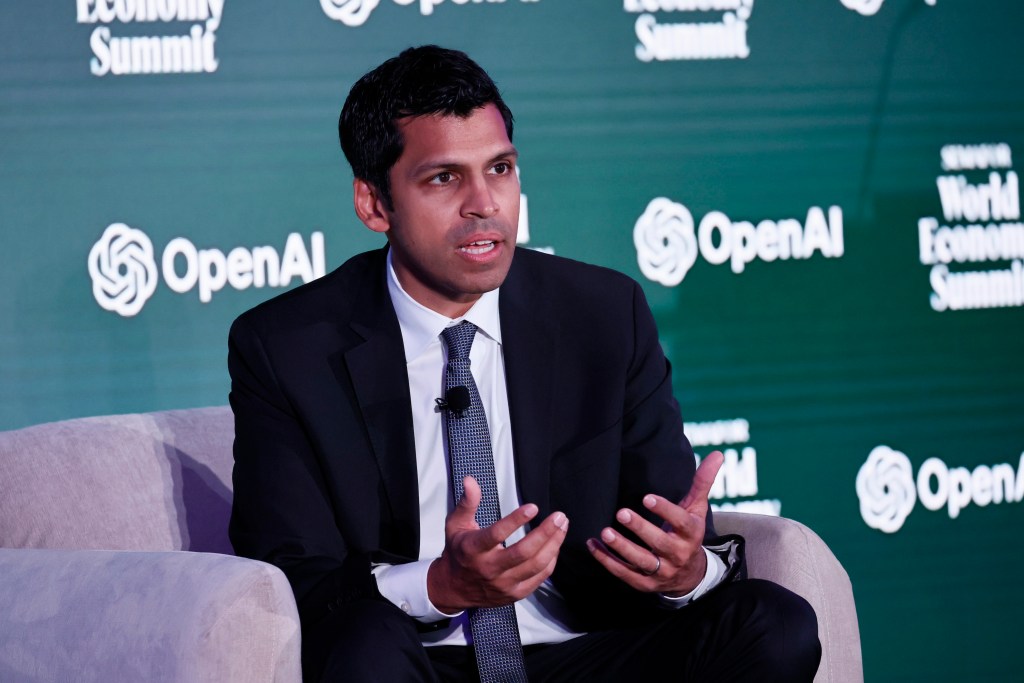
Are you looking at the careers of successful people, trying to retrace each step they took to get to where they are? It’s a futile endeavor, says OpenAI’s chief economist Aaron “Ronnie” Chatterji. 

Chatterji, who is also a distinguished professor at Duke University, said in a recent interview on the Summation podcast that job-seekers often study success in the hopes of making it their own. Conventional wisdom advises them to look at other people’s resumes and try to replicate their wins. This is “relatively bad advice,” Chatterji said. 

“People often say something like ‘success leaves clues,’ meaning you should follow the paths of other successful people,” Chatterji said. 

However, a successful person’s public resume often omits times of uncertainty, failure and hardship. It is the polished version of their history, not the most truthful. Economic moments shaped the choices they took; their success depended on the environment they lived in, he said. 

“The path that they took whenever they took it was very context dependent,” Chatterji said. “Very rare to find someone self-aware enough to say, you know, the way I did it won’t work for you anymore. It won’t work for anybody.”

Silicon Valley success stories 

When Chatterji spoke, he avoided singling anyone out, but the pattern is hard to miss. Many of Silicon Valley’s most recognizable leaders emerged alongside life-changing technological shifts, situating their success within broader trends. 

For example, Mark Zuckerberg grew Facebook just as widespread Internet access pushed social networking into the mainstream. Meanwhile, Jeff Bezos built Amazon as ecommerce began to take off, and Sam Altman has steered OpenAI through the AI surge. 

“We should use our heroes, our career heroes, our occupational heroes for inspiration but not step-by-step advice,” Chatterji said.

Skills to emphasize

As AI grows more popular, it requires workers to evaluate their skills. Chatterji said that coding, math, formal reasoning and AI skills will be vital in an AI-driven economy. He said that as AI absorbs a growing share of routine work, skills like sound judgment, adaptability and resilience will only grow in importance. 

Other leaders emphasize skills like critical thinking. For example, JPMorgan Chase CEO Jamie Dimon said last year that AI taking over tasks “doesn’t mean that people won’t have other jobs.”

“Learn EQ [emotional quotient or emotional intelligence], learn how to be good in a meeting, how to communicate, how to write,” Dimon told Fox News’ Sunday Morning Futures. “You’ll have plenty of jobs.”

Meanwhile, Meta’s chief AI officer, Alexandr Wang, said last year that AI’s coding abilities were a game changer for him. 

“It’s impossible to understate the degree to which I’ve been radicalized by AI coding,” Wang said on the TBPN podcast.

He said that teenagers should spend “all” of their time vibe-coding, or using AI to generate blocks of code from simple English prompts. He added that teenagers who spend “10,000 hours” getting familiar with AI coding tools have “a huge advantage.”

Key Takeaways

  • OpenAI’s chief economist, Aaron “Ronnie” Chatterji, goes against traditional career advice.
  • He says not to look at successful people’s resumes and not to try to replicate their success.
  • In his words, a successful person’s resume often omits periods of failure and uncertainty.

Are you looking at the careers of successful people, trying to retrace each step they took to get to where they are? It’s a futile endeavor, says OpenAI’s chief economist Aaron “Ronnie” Chatterji. 

Chatterji, who is also a distinguished professor at Duke University, said in a recent interview on the Summation podcast that job-seekers often study success in the hopes of making it their own. Conventional wisdom advises them to look at other people’s resumes and try to replicate their wins. This is “relatively bad advice,” Chatterji said. 

“People often say something like ‘success leaves clues,’ meaning you should follow the paths of other successful people,” Chatterji said. 


Source link

OpenAI Exec: Stop Following This ‘Bad Advice’ for Your Career Read More »

Papa Johns Franchisee Wade Oney Shares Ownership With Staff

Papa Johns Franchisee Wade Oney Shares Ownership With Staff


Wade Oney started as a Domino’s store assistant in 1981. Today he owns 112 restaurants across three brands, including 96 Papa Johns locations, and he’s letting his employees in on the big picture success. Bam-Bam Pizza Inc., his franchise group, generates $160 million in annual revenue, Franchising.com reports.

Oney spent over a decade climbing the ranks at Domino’s before Papa Johns lured him away to help grow the then-emerging brand, eventually making him COO. He stepped down in 2000 to focus on being a franchisee full time, scaling from 35 stores to 96 today.

His signature program is letting managers, supervisors and executives buy minority stakes in the restaurants they run. About a third to half of his leadership team now owns a piece of the business. “It helps them know it is a team and a career and not just a job,” Oney said. “That is a pretty cool thing that has happened, and our people love it.”


Source link

Papa Johns Franchisee Wade Oney Shares Ownership With Staff Read More »

What 9 Years in Business Taught Me: Movement Is the Most Underrated Productivity Tool

What 9 Years in Business Taught Me: Movement Is the Most Underrated Productivity Tool


Opinions expressed by Entrepreneur contributors are their own.

Key Takeaways

  • Movement fuels the cognitive work you’re paying people for — and McKinsey estimates that better employee health could unlock up to $11.7 trillion in global productivity each year.
  • The fixes are structural, not perks: walking 1:1s, camera-optional calls, standing meetings and calendar blocks that make stepping away feel normal.

Picture a typical day at your office. People typing at desks. Sitting in meetings. Sitting in the kitchen grabbing lunch. You can go through an entire workday without standing up once. That should worry any founder trying to get real output from a team.

I’ve spent nine years building and scaling BetterMe, and if there’s one lesson I keep returning to, it’s this: movement is one of the most underrated drivers of productivity in business, and most companies treat it as a wellness perk instead of infrastructure. A meditation stipend or a gym reimbursement doesn’t fix a workday designed around sitting. Rethinking the workday itself does.

Here’s how I approach it — for myself and for my team.

What happens when people stop moving

Think about a lazy, couch-bound Sunday. After a day like that, do you feel energized? I don’t. I feel sluggish, slower and even simple decisions get harder. That’s the exact state employees end up in after spending a day moving from one chair to another.

The qualities we value most at work — creativity, mental clarity, problem-solving — all rely on good blood flow and oxygen reaching the brain. Movement supports both. When you move, circulation improves, more oxygen reaches the brain and cognitive function sharpens.

There’s a real economic case too. The McKinsey Health Institute estimates that improving employee health and well-being globally could create up to $11.7 trillion in value each year. Much of that comes from higher productivity and less presenteeism — people who are technically at work but nowhere near their full capacity.

What my day actually looks like

Staying physically active isn’t a wellness habit for me. It’s one of the tools that keeps my energy and focus where they need to be. Instead of squeezing in a workout when I can find time, I’ve built movement into the structure of my day.

In the morning, I start with at least an hour of movement. Most days it’s Pilates or yoga. A few times a week I get out for tennis or golf. By the time I sit down to work, I already feel switched on. During the day, I schedule short breaks for stretching, walking or a quick exercise. Even ten minutes can reset your energy. In the evening, I slow things down with quieter mindfulness practices — meditation, chanting mantras and Pranayama breathing. It reduces stress and clears mental noise. When I go to sleep with a calm mind, I wake up more focused.

None of this is unusual. What’s unusual is treating it as non-negotiable and letting it shape how the workday is structured.

The changes that actually move the needle

Culture isn’t purely top-down, but it helps when leadership sends the first signal. When a team sees a founder step away for a walk between meetings, others feel like they can do the same without overthinking it.

From there, a few specific changes make it easier for everyone.

Make the environment movement-friendly. Adjustable desks that let people switch between sitting and standing. Whiteboards, coffee and supplies placed farther from workstations. Open space to stretch or walk between calls. A dedicated recovery zone with soft lighting, plants and a view outside.

Rethink meeting culture. Not every meeting needs to happen sitting down. Turn 1:1s into walks. Make stand-up meetings live up to their name at a standing table. And on some calls, make cameras optional — say upfront that they can stay off so people feel free to stretch, walk or move while listening. That one change did more for our meeting culture than anything else we tried.

Create shared rituals. A quick stretch before any meeting that runs more than an hour. A short exercise after 30 minutes of sitting. A Friday step-count check-in with a weekly leaderboard. Small habits, shared by the team, give the day structure.

Make it social. It’s easier to stay consistent when you’re not doing it alone. Sign up for a step challenge as a team. Turn team-building events into something active — badminton instead of drinks. Set up a Slack channel to share progress and small wins.

Block it on the calendar. If it’s not scheduled, it’s easy to skip. Encourage employees to block windows for movement resets. When people see those blocks on each other’s calendars, stepping away stops feeling like something only they do.

The point isn’t to turn the office into a gym. It’s to stop pretending that eight hours of sitting produces the best version of the people you hired.

Why this compounds

A study from Oxford University’s Saïd Business School found workers are 13% more productive when they feel better at work. Movement is one of the most direct, cheapest levers a leader has to move that number.

Strong teams don’t just brainstorm together. They move together.

And if it’s been a while since you last stood up, this is a good moment to do it — and to show your team it’s okay to do the same.

Key Takeaways

  • Movement fuels the cognitive work you’re paying people for — and McKinsey estimates that better employee health could unlock up to $11.7 trillion in global productivity each year.
  • The fixes are structural, not perks: walking 1:1s, camera-optional calls, standing meetings and calendar blocks that make stepping away feel normal.

Picture a typical day at your office. People typing at desks. Sitting in meetings. Sitting in the kitchen grabbing lunch. You can go through an entire workday without standing up once. That should worry any founder trying to get real output from a team.

I’ve spent nine years building and scaling BetterMe, and if there’s one lesson I keep returning to, it’s this: movement is one of the most underrated drivers of productivity in business, and most companies treat it as a wellness perk instead of infrastructure. A meditation stipend or a gym reimbursement doesn’t fix a workday designed around sitting. Rethinking the workday itself does.

Here’s how I approach it — for myself and for my team.


Source link

What 9 Years in Business Taught Me: Movement Is the Most Underrated Productivity Tool Read More »