Richard

From Broke at 40 to FI at 50 While Raising 4 Kids

From Broke at 40 to FI at 50 While Raising 4 Kids


In the early retirement movement, becoming a millionaire is a crucial part of the financial path. While everyone has different spending habits, the first million will allow you to start pivoting so you can make choices for your enjoyment, not just for the sake of money. But when is it too late to start making these moves? Is there a certain point where early retirement, or retirement at all, is off the table? If you think so, listen to today’s episode with Courtney Robinson.

Courtney was raised frugal, and unlike most, she never strayed off that path. Buying old cars, eating at home, and seeing matinee movies were the norm for her, but this began to get harder and harder as her family grew. Courtney was raising four children on her own, making only $15,000 per year, with multiple debts to pay off. But now, only ten years later, she’s a millionaire with equity, retirement investments, a large cash reserve, and multiple rental properties.

How did she make the switch in the “late period” of her life? Courtney goes over the details that led her and her husband out of bankruptcy, into investing, and eventually to millionaire status. By no means was this an easy or quick journey, but Courtney serves as living proof that even if you’re in your forties or fifties, you still have plenty of time to build a strong financial foundation, and maybe retire early!

Mindy:
Welcome to the BiggerPockets Money Podcast show number 333, where we interview Courtney Robinson and talk about her late start journey.

Courtney:
I don’t have any kind of financial insecurity like I used to have. In that way, it’s so much better. I mean, in all ways it’s better. But I do want to say to people, there’s a lot of joy in the journey. I think people are so afraid of change because it’s scary and they are afraid that it’s going to be hard, or they can’t do it, or they’re attached to their ideas about it. But we have a saying in our family, which is, “I would rather be rich than look rich.”

Mindy:
Hello, hello, hello. My name is Mindy Jensen, and with me as always is my mysteriously absent for this intro, but here for the interview co-host Scott Trench. Scott and I are here to make financial independence less scary, less just for somebody else, to introduce you to every money story because we truly believe financial freedom is attainable for everyone no matter when or where you are starting. Whether you want to retire early and travel the world, go on to make big time investments in assets like real estate, or start your own business, we’ll help you reach your financial goals and get money out of the way so you can launch yourself towards your dreams.
Today, we’re talking with Courtney Robinson, a listener who got a late start on her financial independence journey, hit every roadblock you could think of along the way and still managed to reach financial independence less than 10 years later. Courtney Robinson, welcome to the BiggerPockets Money Podcast. I’m so excited to talk to you. You’re a member of our Facebook group. You posted this amazing story a few months ago about how you and your hus… Well, I don’t want to give away the whole ending, but Courtney is doing a really great job after starting late and starting from not a position of amazing financial security. Courtney, welcome to the show.

Courtney:
Thank you so much. I’m so happy to be here. I’m a huge fan.

Mindy:
Well, we’re huge fans of you. You’ve got an excellent story. Let’s jump right into it. Where does your journey with money begin?

Courtney:
I think that it’s all relative to go back in time and the fact that I was raised by my grandparents who went through the depression. Growing up, we lived in a nice neighborhood. We had a nice Brady Bunch house, but we never… That saying that more is caught than taught, that was definitely my experience growing up because we had cars that my grandparents only replaced their cars once in the 22 years that I had them in my life. Our house was well kept, but never updated. It was a time capsule for sure. They just were very frugal. But on the other hand, while they were very old fashioned and had gone through the depression, they were very smart about a lot of things.
My grandfather had purchased land. I live in a national park or outside of a national park. My grandfather had… Yes. My grandfather had purchased land when they built a lake on the lake. That was a really good investment that would later help me. He also purchased some private stock options in the company that he worked for. I guess there’s a private stock market. You guys probably know more about that than me, but he also purchased some stock options. I would grow up with these very frugal grandparents, went out on my own at 17. I worked back and forth between Houston and Arkansas as a very young adult. I was a modeled young in my life.
I had these really frugal habits that helped me, and I was very independent and entrepreneurial, but I would get married young to someone who had a lot of problems. We divorced, and then I got remarried at the age of 20 and had three babies. Within a very four year period, during that time, my grandparents passed away within five weeks of each other. They left me a small inheritance of about I want to say it was maybe $70,000. And with that money, I was able to purchase the lake house from my mother. At the time, it wasn’t worth a lot like it is now. I was able to take that money and stay home and raise my children.
I was also in college at the time and was in college until I was 29, going at night, working part-time and taking care of my three little boys. Fast forward, later in my thirties, I would adopt a little girl that was nine years old. And fast forward a little more than that, and at 40, my ex-husband and I got a divorce. I found myself with four teenagers. One, My youngest son, who’s 25 today, has autism. Here I am divorced, single mom. I’d been working part-time. I had become a yoga teacher at 30 and become a yoga therapist. I owned a school, a vocational school, and I used that money from that vocational school to build up and put myself in a position to be able to support myself.
But at that time, I was only making about $15,000. Right after that is when I met my current husband, which we dated for six years. Do you want me to go on or do you want me to stop there?

Scott:
At the moment, around the time of the divorce, what was your financial position like? You have $50,000 in income per year from it sounds like yoga and the related activities with your school you owned. Any other assets or how are we doing on debts?

Courtney:
15,000, not 50. I don’t know if you said 50 or 15. I had 15. I was making about 15. I had helped my ex-husband get through college with my inheritance. The debts we had, we had a house. I want to say it was probably we had about 170 mortgaged on the house. We had some Visa loans for some windows we had put in this old house that was built in 1930. We had my car loan and we had his school loans. When we divorced, I inherited part of that Visa credit card for the windows. I had my car loan and I had the house. I ended up buying the house from him. The divorce took about a year and a half. Over that time, I increased my income by, honestly, I went to work more.
I went to my bosses where I was teaching classes and asked if they had a job literally the day after we split up, and they did. They gave me a job as the director over all the fitness. I went to work just trying to earn more money. I don’t really know how I survived that first year, to be honest, but my position was that my net worth was probably about $20,000 at the end of the day and very little income. I didn’t receive any child support or support for about a year that first year. It was tough. It was really tough.

Scott:
You have four kids that you’re taking care of at this point in time?

Courtney:
Yes. My kids were 14, 15, 16, and 18.

Scott:
Wow!

Courtney:
Yes.

Mindy:
Those are the easy years.

Scott:
Could you give us any idea of how you were able to budget on that or managed through that in that particular year?

Courtney:
I remember calling my creditors and talking to them about the situation and working it out. I want to say that… I had a yoga school and I had had $14,000 put in the savings account for that yoga school. Now, I’m going to be honest, my ex-husband was not very good with money. I wasn’t lying about the money, but I would say that it was for the school. But I lived off of that money that first year in addition to the little bit of money I had coming in. There was about $14,000 in savings with the yoga school, I say savings in air quotes, and then there was the money I was earning, and then I started getting a little bit extra.
But we literally lived on scrambled eggs and peanut butter and jelly. There was no extra anything. I put my kids on free lunch at school and free breakfast. I think my ex-husband was having to pay half the house payment. It was such a blur because I started working so much and that held us over for a little bit.

Scott:
Awesome. Sorry to interrupt there. I just wanted to get a snapshot. Please continue with the story.

Courtney:
I ended up… Because I owned a yoga school. I had had it for two years, and it was pretty successful. I never meant for it to take off like It did. I was always happy just kind of making the grocery budget. But at this point, I needed to make a go of it. I’m working at the YMCA making about $600 a month. I am teaching yoga school. I decide I’ll go teach yoga workshops. I start traveling around every other weekend while the kids are with their dad or the oldest one could take care of himself. During the week, I start working, teaching more classes every day. On the weekends, I’m teaching yoga school, or I’m teaching yoga workshops. I would make anywhere from a thousand to $3,000 a weekend doing that.
But for the next nine years, I would work literally 28 days a month, but I was still able to be home when the kids got home from school. I was able to have some flexibility. Because when you teach classes, you’re either going to teach a morning class or an evening class. I had some flexibility to be there for the children when they needed me. I had a little bit of help with my parents, not financially, but they would help me watch the children if need be and everything. After I got divorced, I met my now… He was my boyfriend for the first I would say six. We’ve been together 10 and a half years. I do want to expand on Jim a little bit. My youngest son has autism level two, which means some support.
He is independent. He lives on his own, but I manage his money and we supplement his income and everything. I heard about this guy who had this dojo, he was a ninth degree black belt, that had all these kids with disabilities. My son was being bullied. I take my son to this dojo and my husband now meets me. He tells me now he says to himself, “I’m either going to lose a student or gain a wife.” As soon as he realizes I’m single, he asked me out and I’m thinking, “This seems like a really stupid plan. He’s my son’s teacher,” but we kind of kept it under wraps.
We started dating and I find out that he’s in law enforcement part-time at the time. He owns this dojo, and he is doing construction on the side. We fall in love, and I find out that he is in bankruptcy and he has tax liens. I’m like, oh no, this is not going to work. We don’t break up or anything like that.

Scott:
Just to get a quick thing, what time period are we in right now? What year is it?

Courtney:
I’m 51 now. We’re at the point I got divorced at 40. 41 when I meet him.

Scott:
This is 2012?

Courtney:
2012, yes. We met in late 2011 and started dating. I tell him like, “I will not get back in a situation financially like I was in before. I would rather live in a ditch than be married to someone who’s bad with money.” He goes to a Dave Ramsey class with me. I have been to two in my life. I actually want to mention that I started reading Larry Burkett, who is Dave Ramsey’s predecessor. He doesn’t often get much credit, but I started reading Larry Burkett 20 years before Dave Ramsey came around. I tell my now boyfriend at the time, “You’re going to go through this class with me and you’re going to get your financial stuff together, or I’m not getting married.”
It takes a while. It takes about four or five years he gets all of that ready. I mean, all that figured out. I started to help him with the dojo, and I realized it’s not really making any profit. This tenderhearted tough guy is letting too many people come to school that can’t afford to pay for it. The business is suffering because he’s not making people pay their tuition. Eventually we closed the dojo and I’m telling him, “This construction business you have is really something. This could be really good.” So I help him. I’m really good in the office and he is a hard worker. My husband is a cop, a Marine. He a former bareback Bronco rider and a ninth degree black belt.
When I tell you work workaholic, you get the picture. I am the opposite of all of that. He gets his financial stuff together. Around 2014, he gets the bankruptcy cleaned up, the tax liens. We get the business going on the roofing business, which is our main business now. We’re not married. We haven’t yet moved in together. 2015, all the kids have graduated. They get out of the house, except for the baby. We move in together.

Scott:
Can I ask one question before we get into that? What was your financial position like at that point when you met?

Courtney:
I worked myself up to paying my car off. I paid the Visa bill off. I paid my lawyer off for the divorce, which cost a fortune. I shouldn’t have. I buy the house.

Scott:
In a year and a half?

Courtney:
In four years. In four years, I go from making 15,000 to $57,000 by working all the time, just working all the time and living…

Scott:
Where are you living during this period again?

Courtney:
I owned a house in town. Now we live out on a ranch.

Scott:
And which state is that?

Courtney:
Arkansas.

Scott:
Arkansas. Okay, great.

Courtney:
Very low cost of living. That’s very important to this story is Arkansas is one of the cheapest places to live. I was able to live on about $33,000 a year while making 57. I was saving the rest of it. I built up about a $25,000 emergency fund during that time. By the time he moved in, I would say we were making about 70 to 80,000 and we were living on about 33,000.

Scott:
I’m sorry to keep interrupting here. I just want to get the whole snapshot here. Could you go through those debts one more time that you paid off? You had the car loan. How much were all those debts that you paid off in those four years?

Courtney:
I owed 11,000 on the car loan. I want to say I had about 7,000 on the credit card. The house payment, I refinanced it. Ran me about 1,100 a month. I would later sell it and make a profit, and I’ll get to that. And then I had… I’m trying to think. I ended up getting another vehicle that I had a small car loan on because I was traveling. But it took me about four years to get out of debt, save a big emergency fund. It’s hard for me to remember the exact amounts because I also ended up paying my attorney about $10,000 and I paid my ex-husband $5,000 for the house.

Scott:
Overnight success in building a financial foundation in four years of just grind here with four kids in the house. Coming and going, it sounds like, as some of the kids sounds like they were getting… About time to move out or getting into early adulthood during that period as well.

Courtney:
Yes. Three of them went off… I say three, because I’m including my stepdaughter now. Three of them went off to college. My son with a disability, of course, stayed with me until a few years ago. I had a do you say failure to launch? I had a late to launch one as well, who didn’t leave until 23. Yes, I still had kids at home, but they were going to college from home. One of them was. Some of them were living at home, going to college. And while I didn’t make them pay rent, I did make them pay for their cell phones. I made them pay their car insurance.
I bought them each a clunker, like a $2,000 car, but they were responsible for repairs and costs that went along with that. While they had a roof over their head and I paid for their clothes and their food, I did make them work and be responsible, because I had to. Around 2015, my now husband, we don’t get married. He moves in. We get the roofing business going. The yoga school is going. I write a book, and then another one.

Scott:
What are your books on?

Courtney:
Yoga therapy.

Scott:
We’ll have to link to those in the show notes here.

Courtney:
Yes, thank you so much. I appreciate that. From about 2015 to 2016, we get the roofing business really going, and we’re debt free, except for the house. I have this one vehicle that I’m using to travel around and teach. It isn’t my personal expense, but the business was covering it at the time. We found this land that we’re on now. We have 40 acres. Mindy, I don’t know, Scott, if you remember the show Green Acres, but it’s Green Acres. I mean, I hear the song in my head.

Mindy:
Green Acres is the place to be.

Courtney:
Oh my gosh, it’s terrible.

Mindy:
Farm living is the life for me. Scott is not old enough to remember.

Courtney:
No. It was a show about a guy who wants the country life and a city girl and they get married. It’s hilarious. We buy this ranch. It’s 40 acres. It’s grown up. It has an old trailer on it, an old house, a barn, all these out buildings and about 40 horses just roaming around. I want to preface this. There was a local bank that took pity on me when I was going through my divorce. Getting a loan, making $15,000 a year and having debt was almost impossible. I went to four different banks, no one would give me a loan. There was the president of a bank who knew my situation with my ex-husband. And for some reason, that man took pity on me. I had a great credit score, and he gave me a loan.
I mean, I still can’t understand how that happened, but it was a local banker. I was able to buy my house from my ex-husband. Because I had paid that loan on time, never been late, paid a little bit extra, when it came time to buy this land, he gave me a bridge loan. Now, my husband now could not be on the loan because he had bankruptcy, so it was me owning the house. It was me buying this land. I think a lot of people see my husband and I, because we’re 12 and a half years apart, maybe they think he was my sugar daddy or something, but it wasn’t that way at all. We buy this land. We only borrowed 218,000 because we were going to remodel the old farmhouse that was on the property.
We purchased it for 120. My gym had saved $48,000 in two years to put down on this land. We put down 24. We used the other 24 to clear it and clean it up, which we promptly realized we cannot save the house. It’s falling and decaying. We have to build and we decide not to borrow any more money. Part of our story… I hear it a lot with the fix and flips, I believe that’s what you call it, is elbow grease. I mean, to the extreme. We did so much of this work ourself. We built this house ourself, except my husband did all the woodwork, the roofing, the insulation, the staining, the painting. We hired HVAC plumbing. And as things would come along, we would pay for them as we worked.
We were paying as we worked. We got in the house for 218,000 in 2018 and we got married. I still had my house in town. I could not sell it. It wasn’t selling. This was back in 2017-2018. It makes me sick now because it’s worth about 100,000 more than what I sold it for. I sell it and I made about $36,000 profit on it. I was able to pay off that one little car loan that I had. We’re completely debt free, except for the mortgage.

Scott:
When you say we’re completely debt free… I’m sorry to again interrupt, I just want to make sure that folks get the whole story here with these things. You mentioned that during this period before you got married, your husband paid off or cleaned up his financial situation. Would you mind giving us the highlights of that as well, and then returning back to this situation following selling the house?

Courtney:
Yes. My husband and I, neither one ever experienced… I probably grew up… He grew up very poor. His dad was a church builder. My husband lived in what was the equivalent of deer camp. I don’t know if you know what deer camp is, but it’s not very nice. He lived in an old house he rented for $500 a month. He did not have a lot of bills because he had gone through bankruptcy. He got the tax liens. I don’t know that they were liens. He owed a tax bill and he got it reduced down and paid it off. He went through that Dave Ramsey course.
But if you ask Jim, and I’m kind of glad he isn’t here because you never know what will come out of his mouth, but if you ask him what was the biggest thing is I had him sit down and write what his income was and write what he paid every month. He said realizing needs before wants was the biggest impact. Just needs before wants. He’s an old cowboy. He was the type that if his daughter wanted a $400 prom dress, he got her a $400 prom dress, even if that $400 was to go to the electric bill. He didn’t have any financial education. It was all about making his daughter happy. I mean, and not just her.
He was just always kind of living by the seat of his pants. For him, I just think once he realized that needs had to be paid for before wants, he just cleaned it up. I think during that time, I would also like to say he had open heart surgery. He’s very fit. They said he was the fittest patient they’ve ever seen for 64. He’s an athlete. He had to have open heart surgery and five bypasses. And that was a real wake up call as well.

Mindy:
Five bypasses?

Courtney:
That very year, nine months after that open heart surgery, he went to Italy and competed in Taekwondo for a world championship and won. I mean, he’s a beast. Anyway, I think also, I mean, not to toot my own horn, but I think he was so worried I wouldn’t marry him and I would leave, that he was willing to make whatever changes had to be made to stay together. He started to see the benefit. He said, taking that money, that 48,000 he had saved and giving 24,000 at closing or giving me 24,000 because I was the one doing, was the hardest thing he ever did. He started really loving that feeling of having money in the bank because he had never had any money in the bank.

Mindy:
I think we need to go back and focus for a moment on what you told him to do. Go back and write down how much you are making and write down how much you are paying out. It’s one thing to have a general idea in your head, but having those very stark numbers in black and white on a piece of paper staring at you with your income at the top and all of your expenses underneath, and then looking at that and saying, “Wow! My income is $1,000, but my expenses are $4,000,” that can be the slap in the face that you need to make the changes. I’m sure he never looked at that before you suggested that. I just make some money and then I pay some money, and that’s just how it goes.
If you don’t have the financial education and the financial background to understand this, it seems so no brainer to people who are listening to us sitting here talking about this, but that’s kind of the first step. Look at your obligations. How much are you paying out every month? And then how much is coming in? If you’re paying out more than you’re coming in, you’re not going to be saving anything. You’re not going to be growing anything. You’re just going to grow your debts, and that’s it. That was really like, yeah, he had a great motivator, to keep Courtney, but he also needed to do the changes himself.
He could have just said, “You know what? This is just how I am. I’m a good old boy, and that’s just what we do is we just have debts and that’s just how life is.” But he didn’t. He changed his life and changed his financial situation because he wanted to make the change. 10 years before, maybe that wouldn’t have been a thing. Maybe he would’ve been like, “I just don’t want to do this anymore.”

Scott:
It all comes from a particularly entertaining version of a money date before you got married. I think it’s fantastic.

Courtney:
I think he also saw the opportunity. He really wanted a ranch and a farm and all of that. He saw that there was a way to have those things, but you have to save and work for them. Once we saw the black and white… I think what he was doing was he had this job at the court and it was a W-2 job, and then he had all this side work he was doing and he wasn’t really counting that money. You know what I mean? He was just a sole proprietor and he wasn’t really counting that money. He didn’t know how to turn it into a business. I didn’t go in and just say, “You’re going to do this.” I said, “Would you like my help? This is what I want out of my life now. I’m 40 years old. This is what I want my life to look like.”
I also had gained my own independence knowing that I could support myself. And that helped a lot, because I got to the point I didn’t feel like I needed anybody. That was a lot healthier position for me to be in for us to go into it being a team, I would say. I forgot to tell you too, that one thing I did do right, because I had been following Larry Burkett and Dave Ramsey and all of those, and I had been very big into the voluntary simplicity movement, I don’t know if you all are familiar with that, that I did… When my ex-husband got his job, we both worked at the college, the local college. I worked in health and fitness and he’s now the vice president of computing.
One thing I did know to do was we had a 401(k) there and I made sure to get the match. When we divorced, there was about, oh my goodness, $180,000. He never once questioned that that was our 401(k) because we’d been together since we were 20. I did get half of that and I put it in a brokerage firm account. And it never really grew. Needless to say, when I found you all and J. L. Collins, my life changed greatly when I got away from that broker. I just stuck that money there and I never touched it. We come back to 2018. We’ve purchased this house, but we’re still working ourselves to death. I’m still traveling. I’m still owning the yoga school.
I’m exhausted. He’s working as a police officer and court security. We’re running the roofing business. We built an Airbnb on our property with the money that was left over from the sell of my house, so that $30,000, and then we cash flowed the rest of it. We actually built it for our son who’s disabled, but it didn’t work out. He ended up getting… My son is on a HUD program and they won’t let you rent to your family. I could not rent it to him. A friend of mine rent it to him. I’ve got this cabin on my property and I’m like, “Okay, well, I guess we’re Airbnb now.” We have an Airbnb on our property as well.
Over that four year period, we keep hustling, grinding, hustling, grinding because now you don’t know how to get out of the hustle and grind, right? You’re so used to it. We paid off our house in four years. We were paying an average between maxing out our IRA at $14,000 a year, 7,000 a piece because I’m 51 and he’s 64 now. We paid about $40,000. Was it 40? No $60,000 a year on the house. Our house was paid off this March. I moved everything over to Vanguard. Thank you. We make about 110 to 145 a year. Most of the time it’s around 110, and that’s suggested gross income. We paid off the house. We were maxing out the IRAs. We built up an emergency fund of $60,000.
In that amount of time, in 2019, I decided to leave the school, to close my school because I went to work for a doctor. I had been working for him and I went to work full-time for him as his yoga therapist for the clinic. We’ve just been hustling and grinding. I don’t know what to say about that. It’s not really glamorous. It’s like we’re frugal. We hustle and grind. Mindy, I heard you on that show with is it Ramit?

Mindy:
Yes.

Courtney:
I’m the one that got all mad when you started crying. I was like, “Don’t pick on Mindy. I know what that’s like. I have so much trouble.” It’s so hard to enjoy spending when you aren’t really used to it. You’re not used to spending all this hard money that you’ve been working for. That’s where we are today. Now, today, do you want me to go through where we are with our finances now?

Scott:
That’d be great, yeah, If you could share where at.

Courtney:
Okay. I had two realtors come out and look at the ranch. We have two newer cabins on the ranch. One’s 1,800 square foot. I would say ranch. I use that term lightly. We have adopted animals. They’re all rescued, except for two. They’re just our pets. It’s not cheap to take care of them. We have 16 right now, so horses, donkeys, cats, and dogs. We have 1,800 square foot cabin and a 420 square foot cabin and 40 acres. It is valued at between 750 to a million, depending on which realtor you speak to. We don’t owe anything on it. I say 750 because I feel like that’s a conservative place.
But we have the problem that I hear you all face, because I listen to every episode, which is most of our net worth is tied up in our home. Our investments, that’s taken a big hit. They’re down. I’m in Vanguard. We’re in VTSAX and an international index fund and an international bond or in a bond fund, index fund. I don’t remember exactly, but those are down quite a lot. They’re about 177 combined. Mine is about 160 and his is about 17 to 20. And then in cash we have… Oh gosh. I do listen and I implement. I would say that I think that’s the one big thing is I’ve implemented all the things I hear you all talk about on your show.
I keep what, I guess, you would call CapEx funds or emergency funds for all the businesses. The cabin, I’ve never taken any money out of it. Thank you. There’s $4,500 in the cabin bond. The yoga fund, because I’m in a heart clinic, we’ve really taken a hit with COVID and my income is hit and miss with that. There’s $4,500 in what I call the yoga fund, which doesn’t really need to be there, but I have to pay for licensure and stuff like that. $45,000 in our money market. And then right now there’s about $85,000 in our roofing account. We have just switched over putting me on the roofing as an employee.
I know this is more of a money success story, but that’s where we are. We’re trying to get to the point where by next year we’re semi-retired. We’ll keep our roofing business open and the Airbnb, but my job may be phasing out anyway. I don’t know if I’ll keep being a yoga therapist. I’m not sure. That’s where we are. It’s been a lot of grind. I guess my message is always, when I see people in the group, I especially get tickled with the 30 year olds who think they’re getting a light start because I’m like, it’s all right. You’re going to be all right. In 10 years, we went from broke to technically being millionaires, but it’s not been anything other than just doing the steps that you learn on here.

Scott:
That’s fantastic.

Mindy:
That the thing, there’s no magic button. I mean, winning the lottery would be super awesome, but that’s not repeatable and that doesn’t make for a very interesting story. Welcome to the BiggerPockets Money Podcast. Thanks. I won the lottery. Okay, and that’s the end of the show. That’s not fun to listen to and that’s not repeatable. This is repeatable because you recognize what you were doing was not the path to wealth. You changed your actions. You changed your habits. You changed your entire financial life, and then started growing it. It didn’t happen overnight because that’s not how it happens. It happened over 10 years.
But how many people have we talked to, Scott, where it happens over the course of about 10 years starting from zero? You can get to financially free or so close you can taste it in about 10 years. That’s the message I want to send to anybody who’s listening who is thinking that, “Oh, I got a late start. Can I even do it?” Yes, you can. In 10 years, you’re going to be 10 years older if you start today or if you don’t start today. In 10 years, you’re still going to be 10 years older. Start today.

Scott:
After a 10 year period of self-sacrifice, grinding it out at work, raising your incomes, studying the subject of money in a general sense, building out cash reserves, boring old cash reserves, and then investing consistently in something, you can recreate this type of situation. Yes. That’s the story. That’s why people don’t do this at a large level is because it’s not… There was no secret to your success here. It was just hard work and consistency over a long, long period of time to get to that. Now, let me ask you this though, is your life better today than it was when you started this journey?

Courtney:
Yes.

Scott:
Has it been getting better?

Courtney:
Yes. I mean, it’s better. It’s so much better. I don’t have any kind of financial insecurity like I used to have. In that way, it’s so much better. I mean, in all ways it’s better. But I do want to say to people, there’s a lot of joy in the journey. I think people are so afraid of change because it’s scary and they are afraid that it’s going to be hard, or they can’t do it, or they’re attached to their ideas about it. But we have a saying in our family, which is, “I would rather be rich than look rich.” I know this is crazy, but I kind of took pride in my husband driving around. We just got a new truck. Not new. New to us. It’s a 2007, but my husband was driving around a 1999 Ford that we paid $1,000 for. My husband is a dirty farmer all the time.
I mean, he’s usually in dirty Wranglers and an old cowboy hat. He looks like he just got through picking potatoes. But yet I’m like, but he’s got it down. It made me proud that we’ve made these choices. I don’t mind driving a 2013 Honda Accord at all. It doesn’t bother me in the least. I just take a lot of pride in that. There’s a lot of joy in that for me and finding ways to hack things also. I find so much joy in that. Going to a matinee and out to lunch is half the price than going to an evening movie, an expensive dinner, but I get the same value out of it, or using credit card reward points to pay for a vacation that cost me a quarter of what it would cost me if I didn’t know these things. It’s just exciting when you do that.

Scott:
Travel awards are very powerful when you own a roofing business, I’m sure.

Courtney:
Yes.

Scott:
Well, let me ask you this, how much does your life cost you today?

Courtney:
Well, with inflation, it’s definitely been a little bit of a jolt. I was thinking we could retire on about 30,000 a year. And of course, we’re in a very low cost of living area. I was just up in your neck of the woods, because my son actually goes to school in Fort Collins and I come up there quite a bit. It’s a lot more expensive where you live. I mean, definitely hands down. I’ve been listening to Carl and Mindy talk about their budget, and I’ve decided that right now while our life is probably costing us about $42,000 a year currently, where before it was about 36, that I will feel comfortable retiring on about 48 to 50 with a nice emergency fund.
I would like to say to the people who are older like we are, we have a plan too for the inevitable, which is if something happens to one of us, we have a trust. We also know that at some point we may downsize and sell this place and get a smaller place. I think it’s important to… I’ve seen my mother lose two husbands at young ages, and I think it’s important that people also have a plan for your future. You can live for it today, but you definitely need to have a plan, then that helps you enjoy life more in the present when you know you’ve got those taken care of.

Mindy:
How much income does the Airbnb generate?

Courtney:
It’s paid for because we cash flowed it when we built it, but I would say on average about 600 a month is what I came up to, because I knew you had asked me that question. During the pandemic, my son was in Maryland, one of my boys was in Maryland for a while, and he came back here and lived and just worked on the farm in exchange for living there. We opened that in February of 2020, and we all know what happened. It hasn’t been consistent. When I keep it open, it’s very consistent, but around 600 is my profit every month.

Scott:
Awesome. What would it be if you kept it open consistently the next six months?

Courtney:
I think I could double it.

Mindy:
Okay. You said there are two on the property?

Courtney:
There’s the house we live in, and then about 400 feet away, there’s a little cabin, a little 420 square foot cabin.

Scott:
How much of the house you’re living in Airbnb for?

Courtney:
Oh gosh, I don’t know. I know that the rent on the house that we live in would be around 2,500 a month here. Rent’s a lot cheaper here than it is where you are. But I don’t know. I never really thought about it because quite frankly, I’m really weird about… I don’t really want to manage. I don’t love doing Airbnb. It’s not hard, but we’re older. We’re tired. We’ve been hustling for 10 years. When we retire, we want to spend four years traveling. We plan on doing some of that. We’ve been trying to do more of that now because my husband is still healthy at 64 and very fit, but we don’t want to Airbnb forever.

Scott:
We’ll have to think through this at a future time, maybe on a Finance Friday to think through how we can get over that retirement hump in the next couple of years as fast as possible here. I think that would be… Do you think that would be fun?

Mindy:
I think that would be a fun exercise. Yeah, let me think about this for a little bit and we’ll get her back on and do a Finance Friday as well, because I see a lot of opportunities here.

Courtney:
Yes. I have lots of questions. Because our roofing business is weather dependent and we had a really bad storm this year, and I know Scott’s going to get here in a sec, but we’ve been really profitable this year. Like crazy profitable. And now I’m freaking out. What do I do? Where do I put this money? Because I’m looking at the market and it’s just like, okay, I know it’s on sale, but it’s still scaring me quite a bit. I’m trying to figure out where to… All that money that we were putting on the house, where do I put it now?

Mindy:
My philosophy is with the market going down is you’re not investing for tomorrow. You’re investing for 10 years from now, five years from now. It’s okay that the market’s down a little bit right now because you don’t need this. If you need this money tomorrow, do not put it in the market right now. It’s not the best time to do that, because you don’t know how long it’s going to be squidgy. But you will need money in five years. You will need money in 10 years. That’s the thought to have. But yeah, if there is money that you need in the next five to 10 years. Actually, Scott, what timeframe do we want to call that, two to five years?

Scott:
Well, I think, Courtney, when do you want to retire? What’s your goal?

Courtney:
My goal right now is to save $200,000 in cash in the next four years and have 400,000 in investments. I have contacted Fidelity about a solo 401(k). I also contacted Vanguard. They make it hard. Fidelity seems…

Mindy:
Go with Fidelity.

Courtney:
Yeah. I’m looking at putting some of that cash in the Treasury bonds as well.

Scott:
It’s a four year goal. We want to get to the best position we can in four years, right? That makes things harder, because it’s one thing to say, “Oh, just stick it in index funds because in 30 years they’ll probably be higher,” right? Well they may not be higher in four years and that’s going to be the challenge in thinking through how to set up your portfolio. You got to design it so that it’s in finished state, ready to be drawn down in four years, not invested for a long-term maximum value.

Courtney:
My plan is to have some savings built up to use in that period from the time I’m 55 to the time that I’m 59 and a half or 62. To have cash reserves to use because also got to get my health insurance down. If I’m going to be on the ACA, I’ve definitely got to get my income down.

Scott:
Well, this will be a good discussion. Let’s have you back on in a few days here and talk about the what’s next part of the journey and think it through.

Courtney:
Thank you. It’s been such a joy to talk to you both. I appreciate it.

Scott:
Courtney, we really appreciate the story. This is phenomenal. Thank you so much for sharing the struggles and the triumphs that you’ve had over the last couple of decades here. We really appreciate it.

Courtney:
Thank you so much.

Mindy:
Courtney, this was a lot of fun. I really love your story because it highlights the rewards for hard work, which is exactly what you and your husband did. Tell him kudos from all of us. He did a great job fixing his finances. You did a great job fixing your finances. But we’re not done yet. Today, we’re going to do the Famous Four. Just me asking because Scott is having technical difficulties.

Audio:
Famous Four.

Mindy:
Courtney, are you ready?

Courtney:
Yes.

Mindy:
What is your favorite finance book?

Courtney:
I don’t know that I have a famous finance book per se, but I love the course Voluntary Simplicity, which is a book, but Voluntary Simplicity. It’s a book and a course, and I was a volunteer facilitator for that for about 14 years.

Mindy:
That’s interesting. Okay, I’m going to have to check that out. I haven’t heard of that one. What was your biggest money mistake?

Courtney:
Oh, so many. There’s so many. I’ve thought about this and I actually have two. The first one would just be like I wouldn’t trade… I don’t look at life in regrets. I look at life as an educational experience. One thing I share with my children is it’s very important the person that you marry. Your financial situation…

Mindy:
Yes.

Courtney:
…is who you marry. The second one was buying a car with someone who didn’t have the title in hand. I don’t know that I even need to expand on that because it was so stupid.

Mindy:
You know what? We can’t go back and change any of these things. I am not here to tell you that you made a big mistake. We move on. We learn from our mistakes. But buying a car in general is one the most frequent biggest money mistakes.

Courtney:
Yes. Yes.

Mindy:
Well, let’s switch gears and say, what is your best piece of advice for people who are just starting out?

Courtney:
To try to stay out of debt. Avoid debt that doesn’t have an asset tied to it. That’d be my number one.

Mindy:
I like that a lot. In honor of Scott, what is your favorite joke to tell at parties.

Courtney:
I had to write it down. Ii don’t have a favorite one to tell at parties because I can’t remember any of them, but what sound does a cow make when it runs out of milk?

Mindy:
Oh, I don’t know.

Courtney:
None. There is utter silence.

Mindy:
I have one for you based on yoga. What do you call a bagel that has mastered yoga?

Courtney:
What?

Mindy:
A pretzel.

Courtney:
That’s good.

Mindy:
And why does everyone love yoga teachers?

Courtney:
Why?

Mindy:
Because they bend over backwards for you.

Courtney:
Oh, that’s sweet. Thank you.

Mindy:
Okay, Courtney, where can people find out more about you? Give us the names of your yoga books and all the ways to contact you.

Courtney:
The best way to find out about me is just to Google my name, which is Courtney Robinson, and put the word yoga with it because everything I’ve ever done will come up. Courtney Robinson yoga, Google. My book, I like to promote my publisher because she’s independent, Et Alia Press, but you can go into Amazon. And if you put, again, Courtney Butler-Robinson yoga, you’re going to come up. It’s called The Mud & The Lotus. Both of them are The Mud & The Lotus, different versions. One is actually… I’ve done three books actually, written two,,= and then I’m a contributor to a textbook on yoga therapy.

Mindy:
That’s awesome.

Courtney:
Thank you.

Mindy:
Courtney Robinson, thank you so much for your time today. This was a delight to talk to you.

Courtney:
Thank you. I appreciate you so much.

Mindy:
I appreciate you listening. We will talk to you soon. Wow! What an inspirational story. We are going to have Courtney on again in a few months to go through her numbers for a Finance Friday episode and dive a bit deeper into her numbers and her story. From episode 333 of the BiggerPockets Money Podcast, he was Scott Trench, I am Mindy Jensen and saying see you later, alligator.


Help us reach new listeners on iTunes by leaving us a rating and review! It takes just 30 seconds. Thanks! We really appreciate it!

Interested in learning more about today’s sponsors or becoming a BiggerPockets partner yourself? Check out our sponsor page!

Note By BiggerPockets: These are opinions written by the author and do not necessarily represent the opinions of BiggerPockets.


Source link

From Broke at 40 to FI at 50 While Raising 4 Kids Read More »

Bank of America to help minorities buy first homes with new mortgages

Bank of America to help minorities buy first homes with new mortgages


Morsa Images | Digitalvision | Getty Images

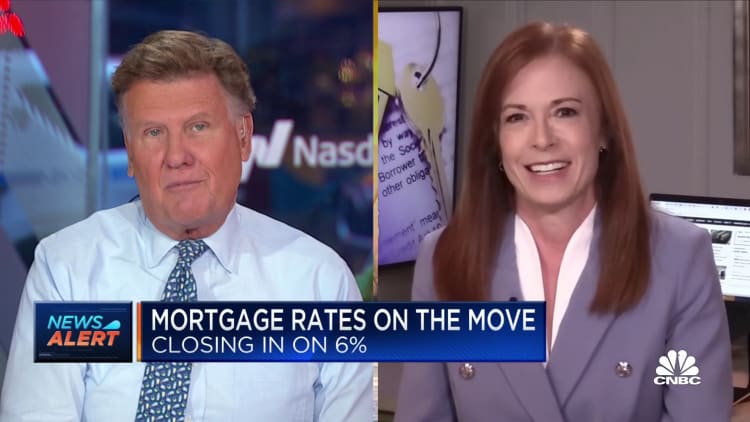
To help narrow a homeownership gap among Black and Hispanic-Latino communities, Bank of America is launching new zero down payment, zero closing cost mortgage products to help people in minority communities buy their first homes.

The program — called the Community Affordable Loan Solution — will be available to certain markets including majority Black and/or Hispanic/Latino neighborhoods, in Charlotte, North Carolina; Dallas; Detroit; Los Angeles; and Miami.

The loans are subject to rigorous underwriting and are based on credit guidelines including on-time bill payments including rent, utilities, phone and auto insurance payments. Eligibility is based on income and home location. No minimum credit score or mortgage insurance is required.

Applicants do not have to be Black or Hispanic/Latino to qualify for the loans.

Before applying, applicants must complete a homebuyer certification course provided by housing counseling partners approved by Bank of America and the Department of Housing and Urban Development.

“Our community affordable loan solution will help make the dream of sustained homeownership attainable for more Black and Hispanic families, and it is part of our broader commitment to the communities that we serve,” AJ Barkley, head of neighborhood and community lending at Bank of America, said in a statement.

Total mortgage demand drops 1.2%, hovering at 22-year low

‘The problem does exist’

The Wall Street bank’s efforts come as research has shown how difficult it can be for minority individuals and families to become homeowners.

A recent report from LendingTree found the mortgage denial rate for Black borrowers is twice that of the overall population.

“The problem does exist,” Jacob Channel, senior economist at LendingTree, recently told CNBC. “We have data that backs that up.

“But there are solutions, and Black homebuyers shouldn’t lose faith that they’ll never be able to become homeowners,” he said.

In research from earlier this year, the National Association of Realtors found the homeownership rate for Black Americans is almost 30 percentage points lower than white Americans.

As the U.S. homeownership rate climbed to 65.5% in 2020 in the highest annual rise on record, the homeownership rate was 43.4% for Black Americans, 51.1% for Hispanic Americans and 61.7% for Asian Americans, according to the research.

Moreover, Black and Hispanic mortgage applicants were more likely to be rejected for loans, each with 7%, compared to white or Asian applicants, at 4% and 3%, respectively, the National Association of Realtors found.

More from Personal Finance:
Mortgage denial rate for Blacks is twice that of overall population: report
These bank fees could take a bite out of your budget
New guaranteed income experiments are taking place across the country

Bank of America separately has made a $15 billion community homeownership commitment to help individuals and families purchase affordable homes by 2025. The program includes affordable mortgages, grants and educational opportunities. To date, the program has helped more than 36,000 individuals and families become homeowners. Two-thirds of the program’s loans and grants made through the program have helped multicultural clients become homeowners, according to the firm.

Bank of America has also made a separate $15 billion commitment to provide mortgages to low- to moderate-income homebuyers through the Neighborhood Assistance Corporation of America through May 2027.

Bank of America also announced the launch of a new small-business down payment program aimed at helping minority and women business owners obtain credit and purchase commercial real estate through grants. That program is launching in Atlanta, Chicago, Charlotte, Dallas and Los Angeles. There are plans to expand to additional markets in 2023.


Source link

Bank of America to help minorities buy first homes with new mortgages Read More »

Housing is Unaffordable, But Could It Actually Get Worse?

Housing is Unaffordable, But Could It Actually Get Worse?


The housing market, for most people, seems like an unaffordable investment. For years, housing unaffordability was climbing, but not fast enough to keep average Americans from buying primary residences. Now, combine rising interest rates with all-time high appreciation, and the average renter can’t afford a home in most American metros. But how did this all come to be, and is there a chance that home affordability could get even lower than it stands today?

We wanted to know how affordability in the United States compared to other similar countries around the world. Although most Americans would call today’s real estate market completely unaffordable, the data seems to point to something different. There are numerous real estate markets around the country boasting low home prices, high rents, and population growth to support any investment decision. But where are these markets?

Dave does his best in this episode to give you a quick overview of how affordability works. We also talk about what causes housing markets to become unaffordable, which metro areas are the most and least unaffordable, and how the United States ranks when put head-to-head against other economies. Thankfully, there is some good news for landlords throughout this episode, so be sure to stick to the end!

Dave:
Hey, everyone. Welcome to On the Market. I’m your host, Dave Meyer. Today, we’re going to be talking about one of the most hot button issues in the entire economy, housing affordability, and we all know that housing affordability has been declining pretty steadily throughout the course of 2022. According to the National Association of REALTORS, which has been tracking housing affordability over the last couple of decades, housing has reached its least affordable point since 1989.
There are a lot of different ways that you can measure affordability, so we wanted to double-check that, and according to Black Knight, another really reliable data source, they actually think affordability is at its lowest point that it’s been since the mid-’80s, so by almost every measure, we are seeing affordability go down. This, of course, creates all sorts of problems, not just for home buyers, but also for investors, it even creates home problems for renters, and basically all of society becomes sort of burdened when housing is as unaffordable as it is today. Of course, this is sort this really huge, broad topic, and there are a lot of questions that need to be answered and discussed about affordability, in general, and unfortunately, we can’t get to all of it today, but we can start chipping away at this issue. We’re going to probably do a bunch of other shows about housing affordability, rent affordability, and some of the tangential things around this over the next couple of months, but today, what we can start addressing and what I think is most pressing for most people, especially for real estate investors is just, “Where are we in terms of affordability? Is it sustainable?”
“Is this unusual in the United States? Is it unusual in the context of the world?” Some of the questions I’m going to dive into today are, “Why is affordability so low?,” and for the purposes of this episode, we’re mostly talking about housing, not rent. That can be another episode, but so we’re going to talk about, “Why is affordability low for housing right now? How has affordability trended over the last several decades?,” so we have some context about where the housing market is right now. We’ll talk about how the U.S. compares to other countries in terms of affordability.
This might not seem that obvious, but so many people ask me if current levels of affordability, or maybe I should say unaffordability are sustainable, and for that, we sort of have to look outside the U.S. because we only, as a country, know what’s happened in the U.S. so far, but if we look at different countries, we can see other examples of whether the U.S. is relatively affordable compared to the rest of the world and whether levels of unaffordability, like we have now, can be sustained into the future. Lastly, we’re actually going to look at some of the markets in the U.S. that are the most and least affordable because as we’ve seen for years, people are moving to more affordable markets, and so that could perhaps inform some of your investing decisions if you know where housing is the most or least affordable. We have a great show for you today. As always, the whole mission of this show is to try and help you better understand the economics surrounding the housing market and real estate investing, and today’s show is going to really help you understand the limits of housing price appreciation, right? We’ve seen it go up and up and up, and people wonder, “Where can it go?”
That’s what we’re talking about today, where the housing market is and where it can go in the next couple of years. All right. First things first, let’s just define affordability and what it means, because that’s what we’re going to be talking about today, so we might as well all have a mutual understanding of what housing affordability is. Basically, when we say housing affordability, what we mean is how easily the average American can afford the average priced home. Of course, this is going to vary pretty dramatically from city to city, San Francisco obviously being really unaffordable, cities like Kansas City are more affordable, but for now, in the first part of this episode, we’re going to talk about this on a national level. We’ll get into the regional differences in just a little bit.
To calculate housing affordability, there are a lot of different companies that do this, and each of them sort has their own way of doing it, their own methodology, but there are basically two really obvious inputs for how you calculate affordability. The first is income, “How much money do people actually have?,” and the second is housing prices, “How much do houses cost?” Those are the two obvious inputs, but I should point out that there’s a third really important input, which is mortgage rates. It was actually kind of harder to figure out the number of houses in the U.S. that have a mortgage or are purchased with a mortgage. I found some different competing data sources. It looks like it’s above 90%.
Either way, it’s the vast overwhelming majority of homes are purchased with some kind of mortgage, whether that’s an FHA mortgage, a VA mortgage, conventional. Most of them are purchased with a mortgage, and so that is a third really important variable, right? You can’t just look at housing prices and income, you have to look at how expensive the debt is that you’re using to purchase that house, so most measurements of affordability use these three variables, and I’m going to be talking about a bunch of different studies and information here, but just know that regardless of the methodology, those are sort of the primary factors and primary variables that go into affordability. With this understanding, hopefully for you, it’s easy to see why affordability is so low right now. Prices, of course, everyone on earth basically knows that prices have been going crazy over the last couple years.
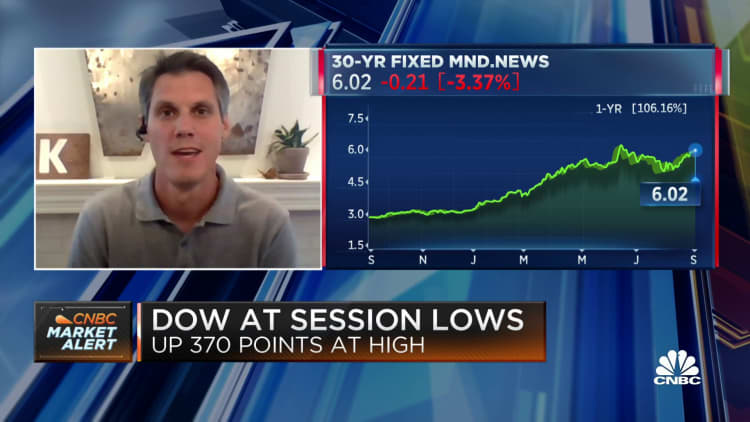
They’re up over 40% pre-pandemic. As of July, they’re up 14% year over year, and that is slowing down, but 14% year over year is still incredibly high by any historical context, and so this is one of the fastest rates of appreciation and growth that we’ve seen in the housing market ever, and so that is one major reason. If one of the three variables we just talked about has skyrocketed, like they have, that’s super important. The next is interest rates have doubled since the beginning of the year, or nearly doubled, I should say, and rates are really volatile right now, so it’s hard to know. Depending on when you listen to this, it could change a little bit, but we started the year with interest rates at about 3.1% for the average 30-year fixed rate mortgage, and that’s for owner occupants, not for investors, but that rate has jumped up somewhere between five and 6%.
It’s trending right now as of this recording, which is the end of August. It is trending around mid-5s, 5.5, 5.6%. It’s gone close to six, it’s been back down to five, it’s all over the place, but whatever it is, it is up a lot from the beginning of the year, so you take those two things combine, you see that prices have gone crazy, interest rates have gone up nearly double, those are two of the three factors in affordability and they’re both pointing towards less affordability. The last factor, of course, is wages and income, and that is going up. It’s gone up 5.2% year over year, and that’s great.
In a normal year when there’s not super high inflation, that would be incredible, but it’s just not enough to keep pace, right? If housing prices went up 14% year over year, interest rates have doubled, a 5% year over year increase in wages is definitely not enough to even really make a dent in affordability. I guess it helps a little bit, but it really is not even close to enough to where it would need to be for affordability to moderate. That’s sort of where we are today. Affordability is very low because housing prices have skyrocketed, interest rates are up in the mid-5s, and wages have not kept pace.
The question that becomes like, “Is this new? Is it sustainable? Has this happened before?,” and the short answer is this is not new. Actually, this is not an unprecedented time. I actually kind of thought it would be, that this would be one of the least affordable times to buy a home in the U.S., but that is not the case. In the late ’70s and early ’80s, housing was actually less affordable, and for periods of that, it was way less affordable than it is now largely because of interest rates.
Interest rates in the late ’70s, some points in the ’80s were actually in the double digits, and I’m talking about mortgage interest rates, because inflation was super high. Can you imagine that? People right now are complaining that interest rates have gone up to 5% or 6%? They were like 15% in the ’70s and ’80s, and I really don’t believe that we’re getting back to that point at any time, but as you can imagine, even though home prices were not as high as they were then, when you have interest rates that high, you can bet that affordability is going down, and that’s exactly what happened. I think it’s also important to note that we are less affordable now than we were leading up to the great recession, and that is correlation. That is not causation, everyone, so that does not mean that just because affordability was low prior to the great recession, that the market is going to crash, but it is important to know.
It’s an important data point, that in 2006, we were slightly less affordable than we were now. Now, we all know … I just think … Let me just stress that point again because I don’t want anyone to get confused. This does not mean that there will be a crash just because these two data points happened at the same time.
We all obviously know what happened in the late 2000’s, but it’s also important to know that it didn’t crash in the ’70s or ’80s. In the ’70s and ’80s, the price-to-income ratio was above 50%, which is crazy. It’s at about 36% now, and so it was way worse. It was way less affordable, and the market did not crash in the ’70s or ’80s. It actually grew pretty steadily, at least in nominal. Nominal means not inflation-adjusted terms, so just keep that in mind, that the market kept going up despite that really, really high unaffordability, less affordability than we saw today.
That’s something just to take note of and want to make sure everyone understands. These are not causal, they are correlated. All that said, the question of, “Is this new?,” no, it’s not. Housing is the least affordable. It’s been in decades, but it’s not even close, really, to the worst it’s ever been. It was actually way worse in the mid’80s, so that is something that you should keep in mind, that obviously, this is a problem.
It’s a problem for everyone, for home buyers, investors, renters, society, but it’s not the worst it has been, and that’s important to keep in mind as we consider whether this can keep going and what’s going to happen next. To me, this historical context makes me think that unaffordability could get worse. I’m not saying that in today’s market, it’s going to get worse. I actually sort of think that we’ve seen prices started to come down, and I think that affordability is probably at least going to level off and maybe get a little better over the next couple of months, but I just want to provide some historical context and show you that, “Is it possible that it gets worse and the market doesn’t crash?” Yes, because that has happened before, but of course, just looking at the United States is not a ton of data because the market has changed so much over the last couple months, so we decided that we were going to look at how the U.S. compares to other markets, other countries basically, and see if housing affordability in the U.S. really is all that unaffordable compared to other countries, because I’ve heard this thing like, “Oh, housing is so unaffordable in the U.S.,” but then you hear that perhaps in other countries, it’s even worse, and their markets haven’t tanked.
We looked into this, and for the purposes of this podcast, we decided we would use this study from the OECD. It’s this big economic organization. It stands for the Organization for Economic Cooperation and Development. It is a coalition of 38 countries. It’s like a lot of the large advanced economies in the U.S.. There’s tons of information in here.
We’ll put the link in the show notes. There’s tons of good stuff in there, but on this list, out of the 38 sort of most advanced economies in the country, the U.S. ranks 12th for unaffordability, so it’s in the upper half, right? It’s less affordable than the average OECD country, but it’s not at the top. Despite some of the narrative, unaffordability in the U.S. is a problem, and it’s at its highest point in decades, and compared to the rest of the advanced economy world, it’s not really all that different. It’s kind of close to the average, actually, for most advanced economies.
There are several countries that have less affordable housing markets, and if you’re curious, Portugal takes the list as the least affordable housing market. We also have New Zealand, Luxembourg, Austria, lucky me, the Netherlands, where I live is the fifth least affordable. We also have Canada, Germany, the Czech Republic, Hungary, Spain, and Chile. Those are less affordable countries in terms of the housing market than the U.S.. Again, U.S., as compared to most advanced economies, close to the middle.
The most affordable of all those, if you’re curious, is Japan, which sort of makes sense because if you follow the global economy, you know that Japan has seen a lot of deflation and actual stagflation over the last couple of years, but also kind of weird because Tokyo is super expensive, but obviously, Tokyo is not the whole country, and the rest of the country must be more affordable to average it out. What this means to me, when we look at all these other countries, my takeaway is that while the U.S. is very unaffordable compared to its own history, there are many large, advanced economies where housing is even less affordable, and so I looked into a couple of these because I wanted to know what was going on, and so I looked at Canada, and I think this is a great example. Obviously, it’s another North American country, shares a lot with the U.S.. What’s happened in Canada is that housing has been getting progressively less affordable there for decades. If you look at disposable income versus their housing prices, it’s not even close, and so that goes back to 2000, but what’s interesting to me is that although the Canadian housing market is less affordable than the U.S., and has been getting less affordable for 20 something years, the prices didn’t crash in 2008.
They dipped, but they did not crash, and I think that’s super interesting because, again, when we look at affordability in the U.S., we saw the last time affordability was even close to this level. It was pre-crash, and then before that, in the ’80s, and so if you look at Canada as a parable, apparently the level of affordability in Canada has not caused the housing market to crash, at least as of yet. The same thing happened in New Zealand. If you look at New Zealand, this is another sort of notoriously unaffordable housing market, and in New Zealand, we’ve seen that things have gotten less and less and less affordable and have not crashed. Of course, things could crash still, so this is just a single point in time. I’m just looking at history, but if you’re wondering, the point of this episode is if you’re wondering if housing prices can get less affordable, both data points we’ve looked at point to yes.
If the U.S. is history, is any guide, and if international comparisons are any guide, then yes, the U.S. can see the housing market become less affordable, and that’s, honestly, it’s not a good thing. I’m not rooting for this. I don’t want housing prices to keep going up at the rate they are. I think that’s super unsustainable. It’s bad for everyone.
My job is to tell you what the data tells us, and the data tells us that there is historical precedence for advanced economies having even less affordable housing markets than we have today without seeing crashes. Again, this is just history. We are in a very strange economic time. We know countries really have seen the level of appreciation that we’ve seen over the last couple years, so we’re all in a new times. I’m just saying that there is historical precedence for what we’re seeing in the U.S. right now.
Now, of course, this is just on a national level, and regionally, every housing market is different. We’ve been talking a lot recently on the show about how the housing markets, the most likely scenario, in my opinion, for what happens over the next year or two is that there’s sort of a split between what happens. Some markets are going to go down, and we’re starting to see that. Some markets are probably going to keep growing, and so I think it’s important to look regionally. We can’t look at all of this.
We will put a link into the OECD affordability, but what’s really telling, and so … Sorry. It’s not OECD, my mistake. We’re going to talk about this other study that we looked at, called the Demographia International Housing Affordability, and this is a little bit different. It doesn’t look at all 38 OECD countries. It looks 92 major metros across eight countries, those being Australia, Canada, China, Ireland, New Zealand, Singapore, and the U.S..
The results, you guys, are that housing is really damn expensive everywhere. It is so expensive, and people are really struggling with this across all of these places. What stood out to me on a country by country level is that while everywhere is super expensive, the U.S. has sort of a wider distribution, so there are really expensive markets, but there are some that are actually affordable. The study sort of breaks down each of the 92 metro areas into four different categories. They’re affordable, moderately unaffordable, seriously unaffordable, and severely unaffordable.
Wow, those are all really daunting names, right? That all sounds really cool, so all four of those. In the U.S., 27 out of the 56, so nearly half of the markets are severely unaffordable. Half of the major metros in the U.S. are currently ranked severely unaffordable. That’s terrible.
Secondly, by comparison, the UK is pretty similar. They have 11 of 21, so again, that’s actually worse. A little bit over half of them are severely unaffordable, but if you look at Australia or Canada, it’s worse. In Australia, five out of five of their markets are severely unaffordable. In Canada, four of six are severely unaffordable.
While the U.S. does have about half being at the worst end of the spectrum, there are some that are actually pretty good, and on this list, the U.S. actually has the most affordable housing markets of all. Of all 92 across these eight countries, Pittsburgh, Pittsburgh, Pennsylvania is actually the most affordable market of all of them, so if you’re looking for a cheap place to live, Pittsburgh, number one on the list. In fact, that top three most affordable markets in the whole country, or across these eight countries are in the U.S., so Pittsburgh is number one, then we have Oklahoma City, Rochester, New York, where I went to undergrad is number three, very affordable city, and there are a bunch more in the top 10, so we got St. Louis, Cleveland, Cincinnati, which is by a lot of measures, right now at the end of August, the hottest housing market in the entire country, Buffalo, New York, Kansas City, Louisville, Kentucky, and Tulsa, Oklahoma. If you’re wondering, the least affordable city by comparison is Hong Kong, and that’s followed by Sydney, Australia, and Vancouver, British Columbia, and Canada. Then, the least affordable cities in the U.S., I bet you can predict it. Think really hard for one second about what the least affordable city in the U.S. is going to be.
If you guess New York, you are wrong. It’s actually San Jose, California, followed by Honolulu, San Francisco, Los Angeles, San Diego, and then Miami, so interesting. As a native new Yorker, I thought it was going to be New York, but it’s mostly places in California, so we got San Jose, Honolulu, San Francisco, LA, San Diego. That’s what we got. That’s the information I have for you today.
I wanted to just give a quick guide on where we are in affordability. The takeaways right now are this, the U.S. is getting more unaffordable, but my guess is that it’s going to level out, because housing prices are starting to come down off their peak, and although mortgage rates are really fluctuating, and they will probably go higher, I don’t think they’re going to go much higher, so I think the impact of rates going up and prices on houses going down a bit are going to counteract each other and affordability is probably going to stay stable over the next couple of months. That’s my guess, but in terms of historical and international precedent, it is possible that affordability actually gets worse, and that is not what I think anyone wants to hear, but that’s the reality of what we’ve seen in the past, and of course, this situation is different, but that is what we’ve seen in the past. A couple other things that sort of stood out to me, takeaways, action steps, next steps for you are, one, with the rise of work from home, we did an episode about this a couple weeks ago. If you want to listen to that, you should. With the rise of work for home, that is stabilizing, and about 30% of all days are work from home now, so that’s stabilizing.
With that, there is evidence that people in the U.S. are migrating from more expensive to less expensive places, right? If they don’t have to live … If you can get paid a San Francisco salary, but live in Tulsa, people are interested in that because their quality of life is going to go up. The cost of living is going to go down significantly, and so we’re seeing that a lot right now, and that could continue if unaffordability stays relatively high, and we’re starting to see evidence of that, not just in the Sun Belt. For years, we’ve seen people been moving to the Southeast because it was relatively more affordable, but now, as of August, at least, we’re seeing that some markets that are the hottest right now are some of these sort of really affordable cities.
Cincinnati is blowing up right now, as is Rochester, New York, just as two examples of really hot markets right now that were both in the top 10 most affordable markets across those eight countries, right? That is really notable that perhaps demand, which has been elevated in affordable cities, is going to keep going, and that is a good sign for appreciation, even in the short-term. Some markets like Cincinnati might still go up in the market right now, and it shows for rent. Rent in Cincinnati went up, I think 30% year over year, so if there is demand in these affordable cities, that is really notable for real estate investors, because obviously, that bodes well for economics, economically for people who own properties there. The second takeaway here is sort of a riff on what I was just saying, which is high home prices increase demand for rent.
When we started looking at this research, I was curious, “What happens in countries where there is high housing prices, there’s rent also higher?,” and the answer, in short, is yes. We’ll dive into rent affordability another time, but the answer is yes. If there is less affordability, then there are two things happen. There’s a higher share of renters, so the home ownership rate goes down, which means that there’s demand for rental properties, and when there’s demand for rental properties, that means rent goes up, and so that bodes well for real estate investors who own properties, is that demand is going to continue to go up, and this just makes sense, right? If people can’t afford to buy, they need to live somewhere and there needs to be enough rental units on the market to supply that.
What we’ve seen over the last couple years is not only are there not enough homes for purchase, and that’s pushed up housing prices, but there aren’t enough rental properties for rent in the U.S., and that’s pushed up rent prices a lot. I know probably a lot of rental property investors have enjoyed that, I being one of them, but this, to me, is not a sustainable level in the U.S.. We can’t have rent growth go up at this rate and expect our society to function well, right? There’s going to be a lot of discontent if housing prices, as well as rent remain this unaffordable. During period, just to recap, during periods of high unaffordability, they’re likely to have a large amount of rent growth due to increased demand, and that’s what we’re seeing right now in the U.S..
Even though housing prices have peaked in many markets, interest rates are elevated, so if affordability stays high, rent growth is likely to keep up. It is slowing down, but is likely to stay high, or at least keep going even if house prices to go down. The last takeaway here is that high home prices, it’s sort of this self-fulfilling thing, where it actually reduces demand for homes, so when people can’t afford homes, they drop out of the housing market. This puts downward pressure on housing prices, and this is why a lot of people believe that because housing affordability is so low in the U.S. right now, the market is going to decline, and honestly, that’s what we’re starting to see. Even though there is precedent for lower affordability, I think we’re seeing that the American public is not going to tolerate.
They don’t want a part of it, right? We’ve seen this tipping point where interest rates are going up, housing prices are so high, and people see risk in that. They can’t afford it, and so I believe the reason we’re seeing this correction take place right now, where prices are coming off their peak … Again, I don’t think we’re at a point where it crashed. That is definitely still a possibility that it will crash, but the reason we’re seeing this correction, in my mind, is affordability.
We’ve just reached a point where people aren’t willing to pay more for houses, and so we’re probably going to see things come down. Again, that’s not, in my opinion, going to be in every market. My belief is that we will start to see the market split. Some markets will continue growing, albeit at a more modest pace, some will start to see declines, and we’ve seen that the markets that are seeing declines the fastest right now are the ones with the least affordability. Look at places like Las Vegas, Austin, San Jose, San Francisco.
You know these cities, right? The least affordable places are coming down the fastest, so this is really important. If you want to start understanding which markets are going to do well over the next couple years, my bet is on places that are more affordable. It doesn’t mean they have to have good economic growth. Of course, you don’t want to go to a city.
Even if it’s affordable, you don’t want it to be affordable because the population is declining and there’s no economic growth. The best chance of seeing housing price growth, or at least stability over the next couple years, in my mind, is places that have relatively consistent affordability, places that still have population growth, still have economic growth, but haven’t seen this huge surge in unaffordability over the last couple years because at a certain point, when it’s so unaffordable, things start to come down and we’re already starting to see that happen. That’s what I got for you guys today. Hopefully this was helpful to you. I get questions about this all the time about housing affordability, how the U.S. ranks compared to other countries and compared to our own history, so hopefully this answers questions for a lot of you out there, but I would love to know what all of you, what questions you have about affordability.
You can ask them to me in two places. One is on the BiggerPockets Forums. We have an On the Market forums specifically for the show there, and you can go ask me a question there, or you can do it on Instagram, where I am @thedatadeli. Thank you all so much as always for listening. I really appreciate it, and if you like these kind of shows, if you like our show in general, if you listen every week, we would love it if you gave us a five-star review on Spotify or Apple.
It really means a lot to us. It cost you nothing, and it would really help us out, so thanks again for listening. We’ll see you all next time. On The Market is created by me, Dave Meyer and Kalin Bennett, produced by Kalin Bennett, editing by Joel Ascarza and Onyx Media, copywriting by Nate Weintraub, and a very special thanks to the entire BiggerPockets team. The content on the show, On the Market are opinions only. All listeners should independently verify data points, opinions, and investment strategies.


Note By BiggerPockets: These are opinions written by the author and do not necessarily represent the opinions of BiggerPockets.


Source link

Housing is Unaffordable, But Could It Actually Get Worse? Read More »

More home sellers drop their asking price as the housing market cools

More home sellers drop their asking price as the housing market cools


Daniel Acker | Bloomberg | Getty Images

Home sellers are getting nervous, as the once-hot housing market cools fast.

One in 5 sellers in August dropped their asking price, according to Realtor.com. A year ago that share was just 11%.

The average home sold for less than its list price for the first time in over 17 months during the four-week period ended Aug. 28, according to a report by Redfin.

Homes are simply not selling at the breakneck pace they were six months ago, when strong demand butted up against tight supply, bidding wars were the norm, and a seller could often get a signed contract in under a weekend. Homes in August sat on the market an average five days longer than they did a year ago — the first annual increase in time on the market in more than two years.

The supply of homes for sale is also rising fast, up nearly 27% from a year ago, even as fewer sellers decide to list. Pending sales in July, which represent signed contracts on existing homes and which are the most recent sales data available, were nearly 20% lower than July 2021, according to the National Association of Realtors.

High rates are driving consumers to rental properties, says Black Knight's Andy Walden

“For many of today’s buyers, the uptick in for-sale home options is taking away the sense of urgency that they felt during the past two years, when inventory was scarce,” said Danielle Hale, chief economist at Realtor.com. “As a result of this shift, coupled with higher mortgage rates, competition continued to cool in August, with listing price trends indicating that home shoppers are tightening their purse strings.”

The median listing price in August dropped to $435,000 from $449,000 in July, according to Realtor.com.

Mortgage rates have been rising since January, hitting a recent high in June and then falling back slightly in July and much of August. They are, however, rising again and are now nearly matching that June high.

Redfin reported that requests for home tours and other homebuying services from its agents at the end of August was down 16% from the same period the year before. Touring activity was also down 9% from the start of the year, compared with an 11% increase at the same time last year, according to home tour technology company ShowingTime.

“The post-Labor Day slowdown will likely be a little more intense this year than in previous years when the market was super tight,” said Daryl Fairweather, Redfin’s chief economist. “Expect homes to linger on the market, which may lead to another small uptick in the share of sellers lowering their prices.”


Source link

More home sellers drop their asking price as the housing market cools Read More »

Can You Start Investing with Just ,000?

Can You Start Investing with Just $5,000?


The best way to build wealth isn’t always the most obvious. More people will take the passive road to wealth building, which is usually far slower, and much less efficient than the active path to wealth. The active investor takes time making calculated decisions that would scare almost every average investor. Flipping a house, renovating a rental, or buying a thirteen-unit apartment building may be a little too much for most people, but probably not too much for you.

If you’re looking to fast-track your way to millionaire status, have the passive cash flow to float you in retirement, and live life on your schedule, then real estate investing is probably your chosen asset. The guests of today’s Seeing Greene episode prove this even with their quick questions. In this episode, David will answer questions on which investing strategy is best over the next ten years, whether to invest in stocks vs. real estate, how to start investing with as little as $5K and up to $100K, and how increasing your leverage can slingshot your net worth.

Want to ask David a question? If so, submit your question here so David can answer it on the next episode of Seeing Greene. Hop on the BiggerPockets forums and ask other investors their take, or follow David on Instagram to see when he’s going live so you can hop on a live Q&A and get your question answered on the spot!

David:
This is the BiggerPockets podcast show 657. This is why we rarely see a ton of appreciation in areas like Indiana or Kansas. There is so much land they can build so many houses that supply continues to grow along with demand, that keep prices from going up. It’s when supply is constrained and demand continues to grow that you see a rise in prices. I don’t know where you’re living, but I would definitely look for the best school districts. The areas that the city limits are pretty much all built out, the can’t buy more homes, go find the best neighborhood, go find the ugliest house or the biggest house that you can, and then slowly add value to that property by fixing it up over time. Over a 10 year period, that will be the fastest way to grow appreciation, and it’s super simple.
What’s going on everyone. Welcome to the best dang real estate podcast in the entire world. If you don’t know what BiggerPockets is, you are in for a treat. BiggerPockets is a company where we teach you how to build wealth through real estate. It’s pretty much entirely for free, and it’s some of the most talented people and best information you can possibly get. On today’s episode of our podcast, it is a Seeing Greene edition, meaning you get me David Greene, answering questions specifically from our fan base who are stumped in a position they don’t know how to solve or have come across some really good opportunity, you’re trying to figure out how to make the most of it. I answer all those questions and more on today’s show.
In today’s show we get into several pretty amazing questions. One of them is from someone who feels that they’re pretty good at real estate investing and wants to start coaching. And he asks me what advice I have for starting a coaching business, how he can incorporate this into other businesses, how he could basically change his life through real estate. I give a pretty detailed answer on a path for that person to take. I also get into one of my favorite things to talk about today, which is portfolio architecture. Not sure what portfolio architecture is, well make sure you listen to the show and you will find out about it and hopefully come to love it just as much as me.
And then finally we have several people on today’s show who have done very well based on appreciation they’ve gotten over the last couple years. One of them is a 20 year old, the other person I think is 25. They’ve got over six figures in properties and they’re trying to figure out, should I keep this house or should I sell it and reinvest that money? I give detailed and specific plans of action to both people that should definitely increase both their equity and their cash flow by increasing the efficiency of how hard their money works. And you will learn how to do the same by listening. This is my first quick tip, there’s going to be another one. Today’s quick tip. Think about how hard your money’s working. So many of us are letting our money be lazy. We work really hard, but then we take all the capital that we’ve saved and we don’t hold it to the same standard we hold ourselves to.
Stop doing that. Your money should be working just as hard or harder than you are. And for the second quick tip, we’re about a month away from BPCON. You’re here because you want to learn, right? So why not come to BPCON and learn from 2000 other people that are taking the same journey as you. I’m just saying that you should be there. It’ll be in San Diego in the early fall. Who doesn’t want to go to San Diego? And I will be there. So will a lot of other BiggerPockets personalities, and we’re all there for one reason, to help you on your journey towards financial independence through real estate. If you haven’t already go grab a ticket. All right, let’s bring in our first question.

Ben:
Hi David. This is Ben from Denver, Colorado. Thank you so much for taking my question. Love the Seeing Greene episode podcast. Very useful information. So thank you for that. Here’s my question. I own currently four properties, my primary residence, and then I have three rentals. One of my rentals is not performing too well, so I’m going to sell it via a 1031 exchange. My question is, it’s a two part question. First part, do I need to utilize all the proceeds towards one property or can I split the proceeds in 1031 into two single family homes? And the second part of the question is, in the long term, let’s say 10 years from now, which assets will have retained the most value and prone to appreciating, a small multifamily or single family homes? Thank you so much for taking my question. Looking forward to your answer.

David:
First off, Ben, this is a great question. I just want to commend you for asking a very good question. Also I know our audience is loving how concise and direct your question was. If you’re considering submitting your own video question, go to biggerpockets.com/david and do exactly what Ben did, because that was perfect. All right, Ben, I like that you’re asking about a 1031. I’m in the middle of one myself right now. And this might come as a surprise to some of you, but this is the first 1031 I’ve ever done in my entire career. Mostly because I rarely ever sell properties. Now I won’t get into the reasons why I had to sell. There were some complicated issues that were going on. It wasn’t anything to do with the portfolio itself. It was more business stuff that I had, but I was sort of forced to sell a lot of properties in Florida and reinvest that capital.
Now the road that I took was I wanted to high appreciating markets, just like what you’re saying, that your goal is. And I took on more debt than what I had before and I went for bigger, nicer stuff. It was really an upgrade all across the board. I did learn several things during a 1031. If anyone here has questions, I would highly encourage you to submit them at biggerpockets.com/david, especially if they’re about at 1031, I’d like to talk about this more. A few things that I need to say. First off, I’m not a legal expert. I am happy to connect you with the 1031 company that I use. Not a problem at all. Just send me an email or a message about that. But I am not a lawyer, so I could be giving advice based on my understanding that isn’t exactly accurate.
And especially with these situations there’s often nuance that goes into them where you want a qualified intermediary giving this advice. However, I feel comfortable answering this at a general level. My understanding is, yes, you can change one house for several properties. It does not have to be one for one. That’s not one of the rules. If you sell a property for a million dollars and you owed $500,000 on that house, you can go buy two new houses and put $250,000 down on each one. In my case I think I’m actually buying less properties than the amount of them that I sold. It usually would go the opposite. I just had quite a bit of equity and I’m buying more expensive properties than the ones that I sold. That’s why it worked out that way.
Something you do need to be aware of though, Ben, you have to have at least as much or more debt on the new properties than the ones you sold. When that hypothetical example, if you had $5,000 of debt on the properties you sold, when you buy the new property or properties, you have to have $500,000 or more of debts. You can’t actually access your equity through the 1031. There’s several other rules that I don’t want to take up the entire show talking about, but this is some really cool stuff. If you guys would like to know more about 1031s, please let me know. The second half of your question. What do I do with the money? How do I invest it? Is it going to work out better in a small multifamily or is it going to work out better in a single family residential home? Love this question.
First off, we have to make this apples to apples, because a small multifamily in Malibu, California is going to appreciate a lot more than a single family home in Tupelo, Mississippi, right? So just consider this as we’re getting into it. But let’s say you’re investing in the same market, in general single family homes will appreciate faster than multifamily homes, but in general multifamily homes will cash flow more than single family homes. This is not an across the board rule. So please don’t go comment on YouTube and give me the exception that you know about to this rule. It’s a general understanding. My advice if you’re looking for the most appreciation, the most money you can make over 10 years, is buy in a terrific neighborhood, buy the ugliest or biggest or both house in that neighborhood at the best price that you can get it at, and then fix it up over time.
If you’re choosing an area because you’re looking for appreciation, you want to see a place where demand is going to grow while supply will not keep up. This is why we rarely see a ton of appreciation in areas like Indiana or Kansas. There is so much land that can build so many houses that supply continues to grow along with demand, that keeps prices from going up. It’s when supply is constrained and demand continues to grow that you see a rise in prices. Look for areas that are either built out or have a political environment that limits how many permits are given or the home prices themselves stop home builders from moving in there to build. Sometimes if the prices are really high, it’s hard for builders to build a ton of homes and they tend to just be spec houses that are built in those areas.
I don’t know where you’re living, but I would definitely look for the best school districts. The areas that the city limits are pretty much all built out, they can’t buy more homes, go find the best neighborhood, go find the ugliest house or the biggest house that you can in that neighborhood, particularly if it’s both, and then slowly add value to that property by fixing it up over time. Over a 10 year period that will be the fastest way to grow appreciation, and it’s super simple. All right, our next question comes from Travis in Newberry, South Carolina. Travis has seven long term rentals within one hour driving. I absolutely love real estate investing and managing properties. He has a W2 job, but he dreams about the day of leaving that to do real estate full time.
He’s considering becoming an investing coach. The goal isn’t just to make money, but basically to do what you guys do every day, help others get started in real estate, but do it at a local level. The question is, what’s the best way to go about this? I’m thinking of charging a flat fee of $1,000 to get people into their first investment property and basically walk with them step by step the entire way. Maybe a percentage of monthly rent to manage their property on top of that. I know technically I’m not allowed to manage the property for them without a property manager license, but I still could do this under the title of lease up specialist. I’m in the process of getting seven LLCs for each property and a holding company for the whole lot. Should I operate this coaching under the holding company?
I imagine that becoming a real estate agent who helps them find suitable investment properties would be a natural next step. I’m considering this as well. What recommendations would you have for me? Okay. Thank you very much for this Travis. First thing I can’t give you legal advice on if you should do the coaching company underneath the entity that the homes are. I don’t see off the top of my head why that would benefit you. If one of your clients sues you and you’re having that business run out of the same LLC as the properties, I’m not a lawyer, so I might not be getting this perfectly right, but it seems like they’d have access to equity in your houses and that doesn’t benefit you. If you’re going to start a coaching business, I would start a separate legal entity that’s not connected to the homes.
Another thing to consider is that if you’re charging someone a thousand bucks to get them into their first house and you’re working with people that don’t take action, you’re never going to get paid, because they’re not going to actually get into the property. Another thing to consider is that this is a very difficult business to get into. You end up feeling pressured to make claims that you can’t really support, or you have people that are taking up all your time and blaming you for why it doesn’t go. I don’t know anyone who’s running coaching businesses the way that you’re describing. And because we here at BiggerPockets we give away information for free, you’re going to be competing with people like me that are giving out the information.
I definitely like the idea of you getting your real estate license instead. Let me tell you why. If you get your real estate license and you help get people into their first property or their second property or their third property, you’re going to be getting a lot more in commission than $1,000. You’re not getting into this guru territory where you’re now trying to charge people for something that they could get for free somewhere else. And this is part of the job of a real estate agent, at least a good one, and we could use more good agents in our field. I think that rather than people being coaches that teach people how to invest in real estate, it would be better if they became real estate agents that help their clients invest in real estate. This is what real estate agents are supposed to be, and they’re not very good.
So rather than having agents and coaches, I wish coaches and agents were the same thing. I would love you to consider tweaking your business model to go that direction. And then if somebody wants your advice but they don’t want to use you as an agent, just say, hey, I’d love to help you, unfortunately I can only help my own client. You’re going to have to ditch the realtor that isn’t doing their job, which is why you’re talking to me and use me. As far as collecting a percentage of monthly rent to manage a property, not every state has that rule that you have to be a licensed agent or have a specific property manager license. In California you don’t have to be a real estate agent to manage property.
So verify the rules in the state that you live in to make sure that you do have to have a property manager license, but if you’re going to be getting a real estate license, you might as well get a property manager license. It’s probably going to be a very similar testing process. And then you can legally be compensated for both, and you don’t have to worry about coaching. Okay? Even if somehow you do take the coaching road, you’d be better off to have coaching, which is the front of a funnel, and then you could take your clients and you could serve them as a property manager or a real estate agent, which is another way to create revenue, but it’s still bringing value. And then your clients that are the best at this are going to buy more properties. You’re going to have more properties to manage.
You could literally build a real estate agent business and a property management business off of the work you did. So giving coaching, and you might not even have to charge for that coaching. It could be something that you do for free and you still get compensated by helping represent clients. I think we need more people in the real estate agent space and the loan officer space and the construction business and the property management side and the CPA side and the bookkeeping side, all of it that are actually real estate investors themselves. I hope that I see you in my world doing just that.

Dave:
Hey everyone, this is Dave Meyer, host of the, On The Market podcast. Tom, I have a question for you from Matt Wilson. Matt wrote us and wrote, I just got under contract on a flip I completed in Wilmington, North Carolina. The house has an inground pool, so the liability of that combined with the very hot market swayed me to sell instead of hold on as a BRRRR. I funded the purchase and rehab with a line of credit on my stock portfolio, which is great funding option because of the super low rate, low fees, and even the option to make no payments until you pay it off. I have a few long term rentals in town already and my goal is to continue buying short single family homes and small multis and eventually 1031 into something big and completely passive like an Amazon warehouse.
My question is, how best to use the profits from the flip to buy more real estate? After fees and taxes I should keep about 150,000. The type of rental homes I like to buy are about 300K. So the 150 profit could cover 20% down in the closing costs on two more homes. Should I go this route or would it make more sense to put the profit in the stock portfolio to increase my credit line, so I can go after more and bigger BRRRR projects?

Tom:
Well, Dave, let me address the tax side of that, because that’s my expertise as a tax professional. From a tax standpoint, clearly better, you don’t get tax benefits putting money into the stock market, period. Except for 401(k), IRA, you don’t get tax benefits. The big tax benefits are going to be bonus depreciation from a cost segregation. You might be able to get 25 to 30% of the purchase price of that new project. The reality is, is that your flip is going to cause you to have ordinary income that’s tax at the highest rates. There are some things you want to do to reduce that tax liability, and one of the big things is to reinvest the money into long term real estate, as opposed to just building flips, because you’re just going to pay a lot of tax when you’re doing flips.

David:
Man, Matt, I love these kind of questions. When you’re starting off investing in real estate it’s all about the individual house. I remember those days where you would just analyze every single angle of this entire house. You knew every floorboard in it. And then once you’ve invested in real estate for long enough, you start to recognize patterns in investing and you start to see that the details don’t ever actually make you money. It’s much more of the big picture stuff. And then your priorities start to switch. And instead of analyzing a specific deal to death, you start just understanding the parts of the deal that are going to make you money and trying to capitalize on as many of those. So for instance, when I’m looking at real estate now, I’m looking much more at how can I add value to it? How is it going to cost?
Where am I going to find the contractor to do that? If it’s a short term rental, what can I do to increase revenue? And then what can I do to decrease the amount of time I’m working on this house? Which areas are likely to grow the most? What kind of backup options do I have? I’m typically looking at angles like that rather than just analyzing 100 deals a day. So questions like this that involve several different asset classes, I’ve got stocks, I’ve got homes, I’ve got options. I love it. Please send me as many of these questions as you guys can. I love talking about what I call portfolio architecture. How do I structure a portfolio for maximum efficiencies? We’re kind of getting into that with your question here.
First off, I like the way you’re thinking. You’ve got 150,000, is it better to buy one property or a down payment on two properties or put the money into stocks? I think Tom did a great job of explaining the tax benefits of investing in real estate. I’m going to take the next step and say that you’re also getting leverage. If you put the money in stocks, you’re not going to be borrowing more money to buy more stocks. You’re just going to be dumping 150 grand into those stocks. I’m also going to add that that’s going to be a little bit riskier. Now you did make a great point that putting the money into your stocks will increase your line of credit. I wouldn’t mind if you wouldn’t submit another video and just tell us how that works. I think our listeners would get a kick out of hearing how they can take a line against their stock, especially if it’s a low rate.
I personally haven’t ever done that myself, so I wouldn’t mind hearing more about it as well. However, here’s what I’d like to see. Let’s stretch that 150,000 into even more than two new properties. What if you put a very low down payment, say 5% on a house hack that could become a rental property when you move into it and it’s not going to take very much. If you can get a $300,000 house hack and you put down 5%, that’s 15 grand, you get your closing cost paid by the seller. You’re keeping almost all of that 150,000. So now you’ve got a house right off the bat that will become a rental property when you move out. Then you take your remaining 135,000, you have down payments for two new properties at 300,000. That’s 120. You’ve got $15,000 left over and you don’t even need that for closing costs because in today’s market you can make the seller pay for those closing costs.
You take that 15,000, you either put it in reserves or maybe put that into your stocks. Then take the cash flow that you’re making from these three houses that you bought, not two, you’ve increased your portfolio size by 33%, and you’ve increased how much money that you’ve borrowed and how much leverage you’ve taken as well, which your tenants are going to be paying off for you, which goes right to your net worth over time. Take the cash flow and put that into the stocks. Okay? You’re not going to put this really big, huge lump sum in there like you’re talking about where it’s stocks or real estate, you’re going to get both. You’re going to get real estate. Plus three of them, not two. You’re going to take that profit. You’re going to put that into stocks and you’re going to let it grow that way.
I like the idea of increasing your stock holdings, especially if you’re good at doing that. And if you can take a line of credit. I don’t like the idea of putting all your eggs in that basket, especially because like Tom said, you’re not going to get as many tax advantages from it. And this is why I love talking about portfolio architecture. I don’t know if I coined that phrase. Maybe I did. If anyone else has heard somebody else saying it, let me know. Otherwise I’m probably going to start taking credit for it. But it’s fun. I like getting into this kind of stuff. I hope that advice helped. I love to see you exponentially grow your wealth in many ways. Thank you for your question. And please let us know more about this line of credit you’ve got on your stock holding.
All right. Thank you, Tom, for joining me and giving some backup on this, Seeing Greene edition. Thank you everyone else for submitting questions. At this step in the show, I like to read comments that we have on YouTube from previous episodes. And at this point I want to encourage you, if you’re listening to this on YouTube, on your phone, on your computer, as long as you’re not driving, go and write a comment. Tell me what you think about my question. What questions that you may have, what you liked about the show. Do you like Seeing Greene? Do you like different stuff? Do you want to see more coaching calls? Tell me what you want and we will make content the way that you like it.
All right. Our first comment comes from DJ Parton. Here’s a show format idea. An episode entirely consisting of deal, deep dives. It could include deal deep dives into all kinds of deals from wholesaling to single family rentals to commercial. It could also include deals that went well and deals that bombed. It is a hard market to get started in right now, so hearing the specifics of deals real people are doing on a daily basis in this market could be very helpful to folks like me. Thanks for all the content y’all put out. DJ, fantastic idea. I love that. And Seeing Greene is a perfect place to do this. How about this? If any of you like this, go to the YouTube comments and say, yes, I’d like to see a deal deep dive episode.
We will either find a guest to bring in or several guests to do that. Or I could do my own deals that I’m buying and I could do deep dives on some that went well, some that did not go well, and I could break down for you all of that. Maybe I do three, four, five of my own deal, deep dives right here on a Seeing Greene episode. And you guys can see what I did. I could even bring in a partner. My lending partner, Christian is intimately familiar with all my deals because he’s financing them. And he also helps sort of, we tag team this when I want him to go smooth something out with someone that maybe my realtor ruffled feathers, I use Christian like a ninja often.
We could maybe bring him in and we could tag team these together. Let us know if that’s something that you’d like and I will have our awesome producer, Eric, put that together. Next comment comes from Cynthia Ibarra. Hi David. I loved your show. Loved, you don’t love it anymore? Just kidding. You guys are the best. I would like to see more about second home mortgages. Thank you. All right, Cynthia, I will keep that in mind. We will keep an eye out for questions. If you’ve got a question about a second home mortgage, please go to biggerpockets.com/david and submit it there. And our last comment comes from King Elaine C1. Recently found this channel and it is growing on me. I’ve only been investing for seven years and I learn something new with each episode.
Well, that’s pretty cool. Glad to hear that we have you in our world now and I hope you stay here. All right. We love it and I appreciate the engagement. Please continue to submit your questions or your comments on YouTube as well as video submissions or you could even submit a question written out at biggerpockets.com/david. Also don’t forget to like, comment and subscribe on our YouTube channel and share this with anyone else you know who’s interested in real estate. Oftentimes you can create friends for yourself by sharing content like this, that they end up liking to. All right, question number four comes from Wade Kelessa.

Wade:
Hey David, Wade Kelessa here, coming at you from Sioux falls, South Dakota, currently sitting in our second duplex that my wife and I own, doing a full rehab on this one, which is exciting. But my question is actually in regards to my parents who are both nearing retirement age, neither have a lot saved for retirement and do not have a lot of disposable income, but she reached out to me and was curious what she could do with a small amount of money, maybe around $5,000. If there was a way that they could jump in and get their feet wet in the real estate game. Any thoughts you have would be appreciative and I appreciate all you do. Thanks.

David:
Thank you for this, Wade. All right. How do you get started in real estate with $5,000? Well, there’s a couple options that they have that don’t involve actually buying property. I can’t think of any situations where $5,000 would be enough to get you started in real estate. One would be, they could give it to you. You could combine it with some of the money you have and they could invest in a property as a partial owner. Let’s say you find something that you can get into for $25,000 down. If you borrow $5,000 from them, you could give them 20% of the equity. I believe that that’s around, my math might be wrong, but you could give them a portion of what that would be, and they could get paid that way, especially if the property grows in equity. And that would make sense if you could use some extra cash for the next deal you’re in.
Another one, check out our episode with Matt from the Motley Fool, episode 639. Matt gives some ways that people can invest in real estate passively without having to qualify for a mortgage. In that episode, we talk a lot about real estate investment trust. Also known as REITs. REITs are very similar to investing in stock that’s based in real estate. You’re basically buying a portion of a portfolio that professional real estate investors and managers have handpicked and are managing. And as that portfolio grows in value, so does your investment. Matt talked about a couple REITs that he’s into as well as how to research REITs. I would definitely steer them towards that.
If they’re looking to buy specific property, they’re going to have to partner with someone else or they’re going to need some more money. Can they pull some money out of their 401(k) and use that to invest into real estate? That could work. However, they’re probably not going to be good at it. If they only have $5,000. I don’t know that investing in real estate is the best move for them right now. I would definitely turn them onto the podcast. If you guys are listening to this episode, hi, welcome. That’s officially from BiggerPockets. We’re really glad to have you here. And start focusing on education, right? Get exposed to this. The last piece of advice that I’ll give you is house hacking. If they can buy a new primary residence and get a little bit more than the 5,000, they can start to live in a property and rent out part of it. And then after a year they could always move back into the house that they had before.
Maybe the house they’re in could become a rental property if they live somewhere else. Overall I would need to know what their goals are. If they’re just looking to make a little bit of extra cash investing it in a REIT could be a good idea. If they’re actually trying to become a full-fledged real estate investor, they’d be better off to put their time into learning about real estate than trying to get in with $5,000. All right. Question number five comes from Paul Williams in Florida. Hey there, David, I have a two, two unit that I house sack in downtown Sarasota. It has two separate entrances. I live in the front and I Airbnb the back. In this hot market of Florida that we’re about a mile from the beach. I have a super good location. I have never had any issues renting this out as a short term rental.
I recently started travel nursing and raised quite a bit of capital to do something with. Travel nurses get paid really well. I just found this out not too long ago, like 15, 20, $25,000 a month, depending on where they’re going and to work into certain locations. If you’re a nurse maybe consider travel nursing, and if you’re trying to figure out what job you might want, I don’t know what the demand is right now, but travel nursing does seem pretty lucrative. Okay. Back to our regularly scheduled verbal question. I also saw that a similar house up the street for me sold for 500,000. My original plan was to drop 30K to fix the house up and make it a premium vacation rental. But my question is, what’s the better play?
If my goal is to buy my second investment property at the end of the year, should I put the 30K in and get it to a premium level rental that basically runs itself? It looks like after all said and done, I’d make between 10 to 12K a year after expenses renting it as a vacation rental. Or should I put a bit less in and list it and if I get an offer for four 50 K or more, take that and use it to buy other rental properties? My thinking is that would give me about 225K in cash in the bank, as I owe about 190K on it. I’m wondering is the passive income over a long term is better or since I’m new and trying to expand my portfolio as a chunk of cash as a potential jumpstart, a better play. Thanks. And I love listening to y’all.
Well, this is a great question and I get to talk a little bit about portfolio architecture again. I am a happy camper. The question isn’t should I keep cash flow or should I get a chunk of money? It just starts there. The question is, should I keep this property to cash flow or can I get more cash flow somewhere else? That’s what we’re really getting down to, because that chunk of money is going to be converted into that cash flow anyways. Right? The question is, is the property that I’m in the most efficient way to use my equity? This comes down to the return on investment versus return on equity, calculus that I’ve used before, where we look at how much equity are you making on your property. In fact, we might be able to do that because you gave me quite a bit of detail in your question. Let’s dive into that.
You said that you’re going to make 10 to $12,000 a year. Let’s assume that you are on the higher end and you’re doing 12,000 a year. That’s nice because that’s a thousand bucks a month. And you think that if you sold it after all your expenses, you would walk away with $225,000 plus. Let’s say that you’ve got 12,000 a year coming in and you divide that by 225,000 in equity. That is a 5.3% return on your equity. Not super amazing, especially for a short term rental. I think you can do better. I don’t think it’s uncommon for you to find a 15% return on your money, especially the area I’m familiar with in South Florida, where you are owning Sarasota. You could take that 225,000 and you could get a 15% return on it, which would triple the money you’re making from 12,000 a year into 36,000 a year or $1,000 a month into $3,000 a month.
You could also add to the amount of money that you’re borrowing. You sound like a younger fellow. I’m going to assume that you’re in a financially strong position because you said you’re a traveling nurse, which means that you are prioritizing building your wealth and making money, you’re not someone on a fixed income who I would give different advice to. Which means if you sell this place, not only can you increase the amount of money you owe from 190,000 into more, but what that turns into is buying additional properties. You could probably sell this house and buy a legit three more. And if you look to house hack another one, you might even get four more houses. That’s quite a bit of capital.
My advice would be this, sell this place, buy a new one that you can house hack, just like this, because you’re going to need a house to stay in, but try to find one that has three units, instead of two, you can get more cashflow that way. Take the rest of the money and buy more short-term rentals. Now we’re also assuming that you believe the fundamentals are strong, in Florida they are very strong, so I don’t have any qualms giving you that advice right now. Increase the amount of money that you’re making on the equity that you have and you could find that this could almost replace your full-time job with as much money as you make if you do another round of this three, four, five years later. You’re in a fantastic position, Paul, you are doing everything right. Keep your nose to the grindstone, stay focused, keep on your hustle.
Look to maximize that equity as much as you can. Buy in the best areas, manage your properties very, very solidly and continue to save money just in case something happens, and you’ll do great. Question number six, from Colby Fasilla in Des Moines, Iowa. Hi David. My name is Colby. I’m 20 years old and I’ve house hacked my first investment, a duplex at 19. Since then I’ve also flipped a single family home. I purchased a duplex for 170,000 last year. And today I’ve subdivided the duplex into buy attached units and both units are under contract for a total of 330, with a profit of around 150, along with the profit for my last flip, I have about 200 grand in cash. That is a good number for me to know. Thank you.
I’m planning a building in a high appreciation neighborhood with the builder I currently work for, but I’m wondering what I should do with the rest of the money, which is about a hundred grand. I’m currently renting with my wife until that build is finished, and then I will be there for two years. My goal is to be a millionaire by 25. Love your opinions and advice on BiggerPockets. Your show introduced me to house hacking in real estate and now I’m never looking back. Well, first off, I’m really glad to hear that our show helped to make you $200,000 of tax free money. That’s more like $280,000 of money if it’s being taxed. That’s probably more than most people would make in years of their life, and definitely more than most people would save. And you did it while still working a job. So you are off to a great start.
Let’s talk about what to do with that $100,000. Well, if you’re building a home, you’re probably going to be somewhat busy managing that. So there is the option where you could let somebody else borrow that money and pay you interest for a year or two or three while you’re working out some of the other stuff you have going on. Let’s say that you’re not too busy, well, you’re doing this build because I’m assuming that you want to live there. You didn’t mention if you’re going to be doing a build because you want to rent it out. So this $100,000 could be used for something else. I’m not sure why you’re putting a hundred grand into the new build if it’s a primary residence, you could probably put less than that unless you’re buying like a million dollar property. And doesn’t really sound like that’s something that you’d be doing.
So how can you invest this $100,000? Is there short term rentals around there that you can get into? Can you get into a two, three or four unit small multifamily property and put your money there? You work with a builder, which means you probably have access to people that do construction and you have a competitive advantage. Can you find yourself a fixer upper or an ugly home and do a side, maybe not a live in flip because it sounds like you’re going to be living in new construction, but can you work on a side project? You buy a house, you rent it out, maybe you leave one of the units vacant and you fix that one up with some of the connections you have in the construction business. Then rent that one out for more rent and fix up the next one when there’s a vacancy.
I would definitely look for a value add with a construction component with that $100,000. Once the house is fixed up, you either keep it and refinance it or you sell it. You turn that a hundred into another a hundred or maybe another 200 more. Now you’ve got 200 to 300 that you can snowball into the next deal. Continue to make base hits. Continue to find properties that you can add value to. Continue to buy in areas where there is growing demand, like where you are right now and continue to buy the worst property in the best neighborhood. You do this over the next five, 10 years, you will become a millionaire. All right, we have time for one more question. This one comes from Christin McKinney.

Christin:
I’m 42 and my husband is quite a bit older than me, 59. We own three small single family homes, a commercial building where he currently runs his business out of. Our primary home which is a pretty modest home, a duplex, which I tried to do a BRRRR on, but it didn’t appraise for what I thought unfortunately, and a house/cottage in Florida that we rent out as two short term rentals. Now to buy the last two properties, I now owe over $88,000 on the HELOC and $30,000 on the 401(k) loan. But we have another exciting potential opportunity as well from a guy that we know that wants to sell his 13 unit apartment building, but he is a little bit back and forth, wants to wait a couple years. He is in his 70s, it’s paid off, the rents are low, so it seems like it could be a really good opportunity for us.
Our goal would be to sell two of our single family homes to put down on the apartment building and then use the HELOC once I pay that off, as a backup for repairs. Now I also feel more pressure since my husband’s quite a bit older than me and I want to be able to retire at the same time as him basically retiring from my W2 job early. We don’t have any kids, so we do have a lot of flexibility there. I’m just wondering a couple things. I have a really good job, should I continue paying the HELOC and the 401(k) off and save up like I’ve been doing for the past few months, even though I feel like I’m really missing out on an opportunity for cash flow in the meantime?
I’m just not really sure if the smart thing is to pay off debt or to try to invest more with the risk of over leveraging ourselves. I’m also not sure if I should put all my eggs in one basket in regards to this apartment. I appreciate you listening to my story and providing any advice you have on what you would do if you were us. Thanks.

David:
All right, Christin, thank you for that. You did give me some pretty good context about what your goals are and that helps me to give you the best advice I can. The question of, should we continue paying off our debt or should we go invest in real estate? Now, if you had said I have 25 years before I retire, I would’ve said, well, then continue paying off your debt. But because you’re in somewhat of a rush and you’re trying to catch up with your husband so you guys can retire at the same time, that does change what you have to do. You’re not going to get where you want to get at the current trajectory that you’re on, which means that there is going to be some increased risk if you’re trying to shorten the timeline of when you can retire.
This 13 unit department complex, I don’t know the details. I don’t know the area. I don’t know the condition, so keep that in mind. But just assuming everything is good, this looks like a really good opportunity. I’m also assuming that the two properties that you would sell to buy it would be cash flowing a lot less than this 13 needed apartment complex. I don’t really see a reason why you would not do that. If you could sell those two properties and buy his apartment complex, that would increase your cash flow, would put you much closer to being able to retire. But you said he’s 70 years old. He may not need you to actually get a traditional loan and pay him off. You should ask if he’s interested in seller financing. You might be able to buy his apartment complex that’s paid off without selling your properties at all.
You could keep them, you could just take out a note, give him whatever down payment he’s looking for, which could be from the rest of your HELOC line, I just thought about that, and you could get these properties without having to sell the ones you have. If you do have to sell the ones you have to buy his property, it doesn’t mean you lost two properties. It means you traded less cash flow for more cash flow, less equity for more equity. And that you can take the cash flow from this apartment, start saving that money and then go buy two new duplexes to replace the ones that you had to sell. Okay? This is something I see people get into pretty frequently. They look at it like if I do this, then I don’t get that.
And at the beginning stages, that is true. But if you structure it the right way, there’s almost always a way that you can have this and that. It just means how much time can you take to get there. It sounds like you guys are making a lot of moves the right way. Do you have equity in the commercial building that you own? Could you tap into that through a cash out refinance or a HELOC and use some of that money to buy the apartment complex? There’s probably ways that you could get into it that don’t involve you having to sell two assets that you like. But if you do have to sell the assets that you like, just come up with a plan to save more money to buy two new assets to replace them and decide how close that’s going to get you to the money that you would need to be comfortable retiring.
I am rooting for you. I hope you guys are able to retire at the right time. I think it’s awesome that you’re doing this with your husband. Please tell him that we said hi. And then remember when you retire, you’re probably not going to stop doing real estate. You might actually make more money when you retire from the equity and the cash flow that you build in your portfolio than you are making at your W2 job. I see that all the time. And you guys already have a good enough of a head start that you’re going to be making some serious traction when you do start making moves. So don’t look at retirement like it’s just a scary thing and you’re going to lose money, it may actually make you more money when you get there.
All right, that was our show for today. Thank you very much for joining me. I really appreciate that. I hope that you like these types of episodes, because we put a pretty decent effort into getting them set up for you because we are told you guys really like this. If you do like the Seeing Greene episodes, please let me know that in the comments below. If you’re listening to this on YouTube and if you are listening to this as a podcast on an app, whether that’s the Apple Podcast app, Spotify, Stitcher, or what’s the other one? SoundCloud that people use, leave us a review on there. More people will get to hear about this if you would do so, and we really appreciate it.
If you would like to follow me or learn more about me, my name is David Greene. You could follow me on social media at davidgreene24 or on YouTube at youtube.com/davidgreene real estate. And BiggerPockets has an entire website for you to explore. It is more than just this podcast and YouTube channel. Please go to biggerpockets.com and check out everything. You can start at biggerpockets.com/podcast, and you can see a whole suite of podcasts we have. We have a rookie show. We have a money and financial independence show. We have a show geared specifically for women. We have a show geared specifically for people that want to invest in real estate. We have shows that are all about what’s happening on the market right now.
Tons of content for you to peruse through, grow your knowledge and help build your wealth through real estate because we are passionate about helping you do that. Thank you again for being here, we will continue to support you. Please do the same and I will see you in the next video.


Help us reach new listeners on iTunes by leaving us a rating and review! It takes just 30 seconds and instructions can be found here. Thanks! We really appreciate it!

Interested in learning more about today’s sponsors or becoming a BiggerPockets partner yourself? Check out our sponsor page!

Note By BiggerPockets: These are opinions written by the author and do not necessarily represent the opinions of BiggerPockets.


Source link

Can You Start Investing with Just $5,000? Read More »

High rates are driving consumers to rental properties, says Black Knight’s Andy Walden

High rates are driving consumers to rental properties, says Black Knight’s Andy Walden


Share

Andy Walden, vp of enterprise research at Black Knight, joins ‘The Exchange’ to discuss housing affordability, why interest rates are pushing consumers to rent, and how return to office policies are contributing to housing market dynamics.

02:37

Fri, Sep 2 20222:28 PM EDT


Source link

High rates are driving consumers to rental properties, says Black Knight’s Andy Walden Read More »

Here’s How Biden’s Student Loan Forgiveness Plan Affects Real Estate—You Probably Guessed It Already

Here’s How Biden’s Student Loan Forgiveness Plan Affects Real Estate—You Probably Guessed It Already


15% ROI”,”imageURL”:”https:\/\/www.biggerpockets.com\/blog\/wp-content\/uploads\/2021\/05\/large_Extra_large_logo-1.jpg”,”imageAlt”:””,”title”:”SFR, MF & New Builds!”,”body”:”Invest in the best markets to maximize Cash Flow, Appreciation & Equity with a team of professional investors!”,”linkURL”:”https:\/\/renttoretirement.com\/”,”linkTitle”:”Contact us to learn more!”,”id”:”60b8f8de7b0c5″,”impressionCount”:”232777″,”dailyImpressionCount”:”302″,”impressionLimit”:”350000″,”dailyImpressionLimit”:”1040″},{“sponsor”:”Azibo”,”description”:”Smart landlords use Azibo”,”imageURL”:”https:\/\/www.biggerpockets.com\/blog\/wp-content\/uploads\/2021\/11\/Logo-512×512-1.png”,”imageAlt”:””,”title”:”One-stop-shop for landlords”,”body”:”Rent collection, banking, bill pay and access to competitive loans and insurance – all free for landlords.”,”linkURL”:”https:\/\/www.azibo.com\/biggerpockets\/?utm_source=biggerpockets&utm_campaign=biggerpock ets&utm_medium=affiliate&utm_content=blog”,”linkTitle”:”Get started, it\u2019s free”,”id”:”618d372984d4f”,”impressionCount”:”290764″,”dailyImpressionCount”:”204″,”impressionLimit”:”300000″,”dailyImpressionLimit”:0},{“sponsor”:”The Entrust Group”,”description”:”Self-Directed IRAs”,”imageURL”:”https:\/\/www.biggerpockets.com\/blog\/wp-content\/uploads\/2021\/11\/TEG-Logo-512×512-1.png”,”imageAlt”:””,”title”:”Spring Into investing”,”body”:”Using your retirement funds. Get your step-by-step guide and learn how to use an old 401(k) or existing IRA to invest in real estate.\r\n”,”linkURL”:”https:\/\/www.theentrustgroup.com\/real-estate-ira-report-bp-awareness-lp?utm_campaign=5%20Steps%20to%20Investing%20in%20Real%20Estate%20with%20a%20SDIRA%20Report&utm_source=Bigger_Pockets&utm_medium=April_2022_Blog_Ads”,”linkTitle”:”Get Your Free Download”,”id”:”61952968628d5″,”impressionCount”:”424862″,”dailyImpressionCount”:”214″,”impressionLimit”:”600000″,”dailyImpressionLimit”:0},{“sponsor”:”Guaranteed Rate”,”description”:”One-Stop Mortgage Lender”,”imageURL”:”https:\/\/www.biggerpockets.com\/blog\/wp-content\/uploads\/2022\/01\/927596_CB_BiggerPockets-January-2022-Assets-512×512-1.png”,”imageAlt”:””,”title”:”$1,440 Mortgage Savings*”,”body”:”Whether you\u2019re buying new or cash-out refinancing to upscale the old \u2013 get started today and we\u2019ll help you save!\r\n\r\n”,”linkURL”:”https:\/\/www.rate.com\/biggerpockets?adtrk=|display|corporatebenefits|biggerpockets|july2022_blog||||||||||&utm_source=corporatebenefits&utm_medium=display&utm_campaign=biggerpockets&utm_content=july2022-blog “,”linkTitle”:”Buy or Cash-Out Refi”,”id”:”61ccd6a886805″,”impressionCount”:”119653″,”dailyImpressionCount”:”210″,”impressionLimit”:”200000″,”dailyImpressionLimit”:”2222″},{“sponsor”:”BAM Capital”,”description”:”Multifamily Syndicator\r\n\r\n”,”imageURL”:”https:\/\/www.biggerpockets.com\/blog\/wp-content\/uploads\/2022\/02\/Bigger-Pockets-Forum-Ad-Logo-512×512-2.png”,”imageAlt”:””,”title”:”$100M FUND III NOW OPEN”,”body”:”Earn truly passive income with known assets in an award-winning market. Confidently targeting 2.0x-2.5x MOIC.\r\n\r\n\r\n”,”linkURL”:”https:\/\/capital.thebamcompanies.com\/offerings\/?utm_source=bigger-pockets&utm_medium=paid-ad&utm_campaign=bigger-pockets-blog-feb-2022&utm_content=fund-iii-now-open”,”linkTitle”:”Learn more”,”id”:”621d250b8f6bd”,”impressionCount”:”138838″,”dailyImpressionCount”:”148″,”impressionLimit”:”150000″,”dailyImpressionLimit”:”2500″},{“sponsor”:”Walker & Dunlop”,”description”:” Apartment lending. Simplified.”,”imageURL”:”https:\/\/www.biggerpockets.com\/blog\/wp-content\/uploads\/2022\/03\/WDStacked512.jpg”,”imageAlt”:””,”title”:”Multifamily Property Financing”,”body”:”Are you leaving money on the table? Get the Insider\u0027s Guide.”,”linkURL”:”https:\/\/explore.walkerdunlop.com\/sbl-financing-guide-bp-blog-ad”,”linkTitle”:”Download Now.”,”id”:”6232000fc6ed3″,”impressionCount”:”137497″,”dailyImpressionCount”:”175″,”impressionLimit”:”200000″,”dailyImpressionLimit”:”6500″},{“sponsor”:”SimpliSafe Home Security”,”description”:”Trusted by 4M+ Americans”,”imageURL”:”https:\/\/www.biggerpockets.com\/blog\/wp-content\/uploads\/2022\/03\/SS-Logo-.png”,”imageAlt”:””,”title”:”Security that saves you $”,”body”:”24\/7 protection against break-ins, floods, and fires. SimpliSafe users may even save up to 15%\r\non home insurance.”,”linkURL”:”https:\/\/simplisafe.com\/pockets?utm_medium=podcast&utm_source=biggerpockets&utm_campa ign=2022_blogpost”,”linkTitle”:”Protect your asset today!”,”id”:”624347af8d01a”,”impressionCount”:”108938″,”dailyImpressionCount”:”167″,”impressionLimit”:”200000″,”dailyImpressionLimit”:”2222″},{“sponsor”:”Delta Build Services, Inc.”,”description”:”New Construction in SWFL!”,”imageURL”:”https:\/\/www.biggerpockets.com\/blog\/wp-content\/uploads\/2022\/04\/Image-4-14-22-at-11.59-AM.jpg”,”imageAlt”:””,”title”:”Build To Rent”,”body”:”Tired of the Money Pits and aging \u201cturnkey\u201d properties? Invest with confidence, Build To\r\nRent is the way to go!”,”linkURL”:”https:\/\/deltabuildservicesinc.com\/floor-plans-elevations”,”linkTitle”:”Look at our floor plans!”,”id”:”6258570a45e3e”,”impressionCount”:”101100″,”dailyImpressionCount”:”182″,”impressionLimit”:”160000″,”dailyImpressionLimit”:”2163″},{“sponsor”:”RentRedi”,”description”:”Choose The Right Tenant”,”imageURL”:”https:\/\/www.biggerpockets.com\/blog\/wp-content\/uploads\/2022\/05\/rentredi-logo-512×512-1.png”,”imageAlt”:””,”title”:”Best App for Rentals”,”body”:”Protect your rental property investment. Find & screen tenants: get full credit, criminal, and eviction reports.”,”linkURL”:”http:\/\/www.rentredi.com\/?utm_source=biggerpockets&utm_medium=paid&utm_campaign=BP_Blog.05.02.22&utm_content=button&utm_term=findtenants”,”linkTitle”:”Get Started Today!”,”id”:”62740e9d48a85″,”impressionCount”:”82648″,”dailyImpressionCount”:”118″,”impressionLimit”:”150000″,”dailyImpressionLimit”:”5556″},{“sponsor”:”Guaranteed Rate”,”description”:”One-Stop Mortgage Lender”,”imageURL”:”https:\/\/www.biggerpockets.com\/blog\/wp-content\/uploads\/2022\/06\/GR-512×512-1.png”,”imageAlt”:””,”title”:”$1,440 Mortgage Savings”,”body”:”Whether you\u2019re buying new or cash-out refinancing to upscale the old \u2013 get started today and we\u2019ll help you save!”,”linkURL”:”https:\/\/www.rate.com\/biggerpockets?adtrk=|display|corporatebenefits|biggerpockets|july2022_blog||||||||||&utm_source=corporatebenefits&utm_medium=display&utm_campaign=biggerpockets&utm_content=july2022-blog%20%20%20″,”linkTitle”:”Buy or Cash-Out Refi”,”id”:”62ba1bfaae3fd”,”impressionCount”:”39290″,”dailyImpressionCount”:”119″,”impressionLimit”:”70000″,”dailyImpressionLimit”:”761″},{“sponsor”:”Avail”,”description”:”#1 Tool for Landlords”,”imageURL”:”https:\/\/www.biggerpockets.com\/blog\/wp-content\/uploads\/2022\/06\/512×512-Logo.png”,”imageAlt”:””,”title”:”Hassle-Free Landlording”,”body”:”One tool for all your rental management needs — find & screen tenants, sign leases, collect rent, and more.”,”linkURL”:”https:\/\/www.avail.co\/?ref=biggerpockets&source=biggerpockets&utm_medium=blog+forum+ad&utm_campaign=homepage&utm_channel=sponsorship&utm_content=biggerpockets+forum+ad+fy23+1h”,”linkTitle”:”Start for FREE Today”,”id”:”62bc8a7c568d3″,”impressionCount”:”42203″,”dailyImpressionCount”:”118″,”impressionLimit”:”200000″,”dailyImpressionLimit”:”1087″},{“sponsor”:”Steadily”,”description”:”Easy landlord insurance”,”imageURL”:”https:\/\/www.biggerpockets.com\/blog\/wp-content\/uploads\/2022\/06\/facebook-business-page-picture.png”,”imageAlt”:””,”title”:”Rated 4.8 Out of 5 Stars”,”body”:”Quotes online in minutes. Single-family, fix n\u2019 flips, short-term rentals, and more. Great prices and discounts.”,”linkURL”:”http:\/\/www.steadily.com\/?utm_source=blog&utm_medium=ad&utm_campaign=biggerpockets “,”linkTitle”:”Get a Quote”,”id”:”62bdc3f8a48b4″,”impressionCount”:”44760″,”dailyImpressionCount”:”134″,”impressionLimit”:”200000″,”dailyImpressionLimit”:”1627″},{“sponsor”:”MoFin Lending”,”description”:”Direct Hard Money Lender”,”imageURL”:”https:\/\/www.biggerpockets.com\/blog\/wp-content\/uploads\/2022\/06\/mf-logo@05x.png”,”imageAlt”:””,”title”:”Flip, Rehab & Rental Loans”,”body”:”Fast funding for your next flip, BRRRR, or rental with MoFin! Close quickly, low rates\/fees,\r\nsimple process!”,”linkURL”:”https:\/\/mofinloans.com\/scenario-builder?utm_source=biggerpockets&utm_medium=cpc&utm_campaign=bp_blog_july2022″,”linkTitle”:”Get a Quote-EASILY!”,”id”:”62be4cadcfe65″,”impressionCount”:”49911″,”dailyImpressionCount”:”127″,”impressionLimit”:”100000″,”dailyImpressionLimit”:”3334″},{“sponsor”:”REI Nation”,”description”:”Premier Turnkey Investing”,”imageURL”:”https:\/\/www.biggerpockets.com\/blog\/wp-content\/uploads\/2022\/07\/REI-Nation-Updated-Logo.png”,”imageAlt”:””,”title”:”Fearful of Today\u2019s Market?”,”body”:”Don\u2019t be! REI Nation is your experienced partner to weather today\u2019s economic conditions and come out on top.”,”linkURL”:”https:\/\/hubs.ly\/Q01gKqxt0 “,”linkTitle”:”Get to know us”,”id”:”62d04e6b05177″,”impressionCount”:”38344″,”dailyImpressionCount”:”175″,”impressionLimit”:”195000″,”dailyImpressionLimit”:”6360″},{“sponsor”:”Zen Business”,”description”:”Start your own real estate business”,”imageURL”:”https:\/\/www.biggerpockets.com\/blog\/wp-content\/uploads\/2022\/07\/512×512-1-300×300-1.png”,”imageAlt”:””,”title”:”Form Your Real Estate LLC or Fast Business Formation”,”body”:”Form an LLC with us, then run your real estate business on our platform. BiggerPockets members get a discount. “,”linkURL”:”https:\/\/www.zenbusiness.com\/p\/biggerpockets\/?utm_campaign=partner-paid&utm_source=biggerpockets&utm_medium=partner&utm_content=podcast”,”linkTitle”:”Form your LLC now”,”id”:”62e2b26eee2e2″,”impressionCount”:”24373″,”dailyImpressionCount”:”153″,”impressionLimit”:”80000″,”dailyImpressionLimit”:”2581″},{“sponsor”:”Marko Rubel “,”description”:”New Investor Program”,”imageURL”:”https:\/\/www.biggerpockets.com\/blog\/wp-content\/uploads\/2022\/07\/DisplayAds_Kit_BiggerPockets_MR.png”,”imageAlt”:””,”title”:”Funding Problem\u2014Solved!”,”body”:”Get houses as low as 1% down, below-market interest rates, no bank hassles. Available on county-by-county basis.\r\n”,”linkURL”:”https:\/\/kit.realestatemoney.com\/start-bp\/?utm_medium=blog&utm_source=bigger-pockets&utm_campaign=kit”,”linkTitle”:”Check House Availability”,”id”:”62e32b6ebdfc7″,”impressionCount”:”24454″,”dailyImpressionCount”:”147″,”impressionLimit”:”200000″,”dailyImpressionLimit”:0},{“sponsor”:”Xome”,”description”:”Search & buy real estate”,”imageURL”:”https:\/\/www.biggerpockets.com\/blog\/wp-content\/uploads\/2022\/08\/BiggerPocket_Logo_512x512.png”,”imageAlt”:””,”title”:”Real estate made simple.”,”body”:”Now, you can search, bid, and buy property all in one place\u2014whether you\u2019re a seasoned\r\npro or just starting out.”,”linkURL”:”https:\/\/www.xome.com?utm_medium=referral&utm_source=BiggerPockets&utm_campaign=B P&utm_term=Blog&utm_content=Sept22″,”linkTitle”:”Discover Xome\u00ae”,”id”:”62fe80a3f1190″,”impressionCount”:”2408″,”dailyImpressionCount”:”357″,”impressionLimit”:”50000″,”dailyImpressionLimit”:”1667″},{“sponsor”:”Follow Up Boss”,”description”:”Real estate CRM”,”imageURL”:”https:\/\/www.biggerpockets.com\/blog\/wp-content\/uploads\/2022\/08\/FUB-Logo-512×512-transparent-bg.png”,”imageAlt”:””,”title”:”#1 CRM for top producers”,”body”:”Organize your leads & contacts, find opportunities, and automate follow up. Track everything and coach smarter!”,”linkURL”:”https:\/\/pages.followupboss.com\/bigger-pockets\/%20″,”linkTitle”:”30-Day Free Trial”,”id”:”630953c691886″,”impressionCount”:”2344″,”dailyImpressionCount”:”362″,”impressionLimit”:”150000″,”dailyImpressionLimit”:”1230″}])” class=”sm:grid sm:grid-cols-2 sm:gap-8 lg:block”>


Source link

Here’s How Biden’s Student Loan Forgiveness Plan Affects Real Estate—You Probably Guessed It Already Read More »

The housing tech revolution boosted by the pandemic continues even as market cools. How to play it

The housing tech revolution boosted by the pandemic continues even as market cools. How to play it


Source link

The housing tech revolution boosted by the pandemic continues even as market cools. How to play it Read More »

How to Build Your Dream Short-Term Rental Team

How to Build Your Dream Short-Term Rental Team


15% ROI”,”imageURL”:”https:\/\/www.biggerpockets.com\/blog\/wp-content\/uploads\/2021\/05\/large_Extra_large_logo-1.jpg”,”imageAlt”:””,”title”:”SFR, MF & New Builds!”,”body”:”Invest in the best markets to maximize Cash Flow, Appreciation & Equity with a team of professional investors!”,”linkURL”:”https:\/\/renttoretirement.com\/”,”linkTitle”:”Contact us to learn more!”,”id”:”60b8f8de7b0c5″,”impressionCount”:”232465″,”dailyImpressionCount”:0,”impressionLimit”:”350000″,”dailyImpressionLimit”:”1040″},{“sponsor”:”Azibo”,”description”:”Smart landlords use Azibo”,”imageURL”:”https:\/\/www.biggerpockets.com\/blog\/wp-content\/uploads\/2021\/11\/Logo-512×512-1.png”,”imageAlt”:””,”title”:”One-stop-shop for landlords”,”body”:”Rent collection, banking, bill pay and access to competitive loans and insurance – all free for landlords.”,”linkURL”:”https:\/\/www.azibo.com\/biggerpockets\/?utm_source=biggerpockets&utm_campaign=biggerpock ets&utm_medium=affiliate&utm_content=blog”,”linkTitle”:”Get started, it\u2019s free”,”id”:”618d372984d4f”,”impressionCount”:”290764″,”dailyImpressionCount”:0,”impressionLimit”:”300000″,”dailyImpressionLimit”:0},{“sponsor”:”The Entrust Group”,”description”:”Self-Directed IRAs”,”imageURL”:”https:\/\/www.biggerpockets.com\/blog\/wp-content\/uploads\/2021\/11\/TEG-Logo-512×512-1.png”,”imageAlt”:””,”title”:”Spring Into investing”,”body”:”Using your retirement funds. Get your step-by-step guide and learn how to use an old 401(k) or existing IRA to invest in real estate.\r\n”,”linkURL”:”https:\/\/www.theentrustgroup.com\/real-estate-ira-report-bp-awareness-lp?utm_campaign=5%20Steps%20to%20Investing%20in%20Real%20Estate%20with%20a%20SDIRA%20Report&utm_source=Bigger_Pockets&utm_medium=April_2022_Blog_Ads”,”linkTitle”:”Get Your Free Download”,”id”:”61952968628d5″,”impressionCount”:”424862″,”dailyImpressionCount”:0,”impressionLimit”:”600000″,”dailyImpressionLimit”:0},{“sponsor”:”Guaranteed Rate”,”description”:”One-Stop Mortgage Lender”,”imageURL”:”https:\/\/www.biggerpockets.com\/blog\/wp-content\/uploads\/2022\/01\/927596_CB_BiggerPockets-January-2022-Assets-512×512-1.png”,”imageAlt”:””,”title”:”$1,440 Mortgage Savings*”,”body”:”Whether you\u2019re buying new or cash-out refinancing to upscale the old \u2013 get started today and we\u2019ll help you save!\r\n\r\n”,”linkURL”:”https:\/\/www.rate.com\/biggerpockets?adtrk=|display|corporatebenefits|biggerpockets|july2022_blog||||||||||&utm_source=corporatebenefits&utm_medium=display&utm_campaign=biggerpockets&utm_content=july2022-blog “,”linkTitle”:”Buy or Cash-Out Refi”,”id”:”61ccd6a886805″,”impressionCount”:”119431″,”dailyImpressionCount”:0,”impressionLimit”:”200000″,”dailyImpressionLimit”:”2222″},{“sponsor”:”BAM Capital”,”description”:”Multifamily Syndicator\r\n\r\n”,”imageURL”:”https:\/\/www.biggerpockets.com\/blog\/wp-content\/uploads\/2022\/02\/Bigger-Pockets-Forum-Ad-Logo-512×512-2.png”,”imageAlt”:””,”title”:”$100M FUND III NOW OPEN”,”body”:”Earn truly passive income with known assets in an award-winning market. Confidently targeting 2.0x-2.5x MOIC.\r\n\r\n\r\n”,”linkURL”:”https:\/\/capital.thebamcompanies.com\/offerings\/?utm_source=bigger-pockets&utm_medium=paid-ad&utm_campaign=bigger-pockets-blog-feb-2022&utm_content=fund-iii-now-open”,”linkTitle”:”Learn more”,”id”:”621d250b8f6bd”,”impressionCount”:”138682″,”dailyImpressionCount”:0,”impressionLimit”:”150000″,”dailyImpressionLimit”:”2500″},{“sponsor”:”Walker & Dunlop”,”description”:” Apartment lending. Simplified.”,”imageURL”:”https:\/\/www.biggerpockets.com\/blog\/wp-content\/uploads\/2022\/03\/WDStacked512.jpg”,”imageAlt”:””,”title”:”Multifamily Property Financing”,”body”:”Are you leaving money on the table? Get the Insider\u0027s Guide.”,”linkURL”:”https:\/\/explore.walkerdunlop.com\/sbl-financing-guide-bp-blog-ad”,”linkTitle”:”Download Now.”,”id”:”6232000fc6ed3″,”impressionCount”:”137316″,”dailyImpressionCount”:0,”impressionLimit”:”200000″,”dailyImpressionLimit”:”6500″},{“sponsor”:”SimpliSafe Home Security”,”description”:”Trusted by 4M+ Americans”,”imageURL”:”https:\/\/www.biggerpockets.com\/blog\/wp-content\/uploads\/2022\/03\/SS-Logo-.png”,”imageAlt”:””,”title”:”Security that saves you $”,”body”:”24\/7 protection against break-ins, floods, and fires. SimpliSafe users may even save up to 15%\r\non home insurance.”,”linkURL”:”https:\/\/simplisafe.com\/pockets?utm_medium=podcast&utm_source=biggerpockets&utm_campa ign=2022_blogpost”,”linkTitle”:”Protect your asset today!”,”id”:”624347af8d01a”,”impressionCount”:”108767″,”dailyImpressionCount”:0,”impressionLimit”:”200000″,”dailyImpressionLimit”:”2222″},{“sponsor”:”Delta Build Services, Inc.”,”description”:”New Construction in SWFL!”,”imageURL”:”https:\/\/www.biggerpockets.com\/blog\/wp-content\/uploads\/2022\/04\/Image-4-14-22-at-11.59-AM.jpg”,”imageAlt”:””,”title”:”Build To Rent”,”body”:”Tired of the Money Pits and aging \u201cturnkey\u201d properties? Invest with confidence, Build To\r\nRent is the way to go!”,”linkURL”:”https:\/\/deltabuildservicesinc.com\/floor-plans-elevations”,”linkTitle”:”Look at our floor plans!”,”id”:”6258570a45e3e”,”impressionCount”:”100912″,”dailyImpressionCount”:0,”impressionLimit”:”160000″,”dailyImpressionLimit”:”2163″},{“sponsor”:”RentRedi”,”description”:”Choose The Right Tenant”,”imageURL”:”https:\/\/www.biggerpockets.com\/blog\/wp-content\/uploads\/2022\/05\/rentredi-logo-512×512-1.png”,”imageAlt”:””,”title”:”Best App for Rentals”,”body”:”Protect your rental property investment. Find & screen tenants: get full credit, criminal, and eviction reports.”,”linkURL”:”http:\/\/www.rentredi.com\/?utm_source=biggerpockets&utm_medium=paid&utm_campaign=BP_Blog.05.02.22&utm_content=button&utm_term=findtenants”,”linkTitle”:”Get Started Today!”,”id”:”62740e9d48a85″,”impressionCount”:”82525″,”dailyImpressionCount”:0,”impressionLimit”:”150000″,”dailyImpressionLimit”:”5556″},{“sponsor”:”Guaranteed Rate”,”description”:”One-Stop Mortgage Lender”,”imageURL”:”https:\/\/www.biggerpockets.com\/blog\/wp-content\/uploads\/2022\/06\/GR-512×512-1.png”,”imageAlt”:””,”title”:”$1,440 Mortgage Savings”,”body”:”Whether you\u2019re buying new or cash-out refinancing to upscale the old \u2013 get started today and we\u2019ll help you save!”,”linkURL”:”https:\/\/www.rate.com\/biggerpockets?adtrk=|display|corporatebenefits|biggerpockets|july2022_blog||||||||||&utm_source=corporatebenefits&utm_medium=display&utm_campaign=biggerpockets&utm_content=july2022-blog%20%20%20″,”linkTitle”:”Buy or Cash-Out Refi”,”id”:”62ba1bfaae3fd”,”impressionCount”:”39166″,”dailyImpressionCount”:0,”impressionLimit”:”70000″,”dailyImpressionLimit”:”761″},{“sponsor”:”Avail”,”description”:”#1 Tool for Landlords”,”imageURL”:”https:\/\/www.biggerpockets.com\/blog\/wp-content\/uploads\/2022\/06\/512×512-Logo.png”,”imageAlt”:””,”title”:”Hassle-Free Landlording”,”body”:”One tool for all your rental management needs — find & screen tenants, sign leases, collect rent, and more.”,”linkURL”:”https:\/\/www.avail.co\/?ref=biggerpockets&source=biggerpockets&utm_medium=blog+forum+ad&utm_campaign=homepage&utm_channel=sponsorship&utm_content=biggerpockets+forum+ad+fy23+1h”,”linkTitle”:”Start for FREE Today”,”id”:”62bc8a7c568d3″,”impressionCount”:”42079″,”dailyImpressionCount”:0,”impressionLimit”:”200000″,”dailyImpressionLimit”:”1087″},{“sponsor”:”Steadily”,”description”:”Easy landlord insurance”,”imageURL”:”https:\/\/www.biggerpockets.com\/blog\/wp-content\/uploads\/2022\/06\/facebook-business-page-picture.png”,”imageAlt”:””,”title”:”Rated 4.8 Out of 5 Stars”,”body”:”Quotes online in minutes. Single-family, fix n\u2019 flips, short-term rentals, and more. Great prices and discounts.”,”linkURL”:”http:\/\/www.steadily.com\/?utm_source=blog&utm_medium=ad&utm_campaign=biggerpockets “,”linkTitle”:”Get a Quote”,”id”:”62bdc3f8a48b4″,”impressionCount”:”44620″,”dailyImpressionCount”:0,”impressionLimit”:”200000″,”dailyImpressionLimit”:”1627″},{“sponsor”:”MoFin Lending”,”description”:”Direct Hard Money Lender”,”imageURL”:”https:\/\/www.biggerpockets.com\/blog\/wp-content\/uploads\/2022\/06\/mf-logo@05x.png”,”imageAlt”:””,”title”:”Flip, Rehab & Rental Loans”,”body”:”Fast funding for your next flip, BRRRR, or rental with MoFin! Close quickly, low rates\/fees,\r\nsimple process!”,”linkURL”:”https:\/\/mofinloans.com\/scenario-builder?utm_source=biggerpockets&utm_medium=cpc&utm_campaign=bp_blog_july2022″,”linkTitle”:”Get a Quote-EASILY!”,”id”:”62be4cadcfe65″,”impressionCount”:”49780″,”dailyImpressionCount”:0,”impressionLimit”:”100000″,”dailyImpressionLimit”:”3334″},{“sponsor”:”REI Nation”,”description”:”Premier Turnkey Investing”,”imageURL”:”https:\/\/www.biggerpockets.com\/blog\/wp-content\/uploads\/2022\/07\/REI-Nation-Updated-Logo.png”,”imageAlt”:””,”title”:”Fearful of Today\u2019s Market?”,”body”:”Don\u2019t be! REI Nation is your experienced partner to weather today\u2019s economic conditions and come out on top.”,”linkURL”:”https:\/\/hubs.ly\/Q01gKqxt0 “,”linkTitle”:”Get to know us”,”id”:”62d04e6b05177″,”impressionCount”:”38162″,”dailyImpressionCount”:0,”impressionLimit”:”195000″,”dailyImpressionLimit”:”6360″},{“sponsor”:”Zen Business”,”description”:”Start your own real estate business”,”imageURL”:”https:\/\/www.biggerpockets.com\/blog\/wp-content\/uploads\/2022\/07\/512×512-1-300×300-1.png”,”imageAlt”:””,”title”:”Form Your Real Estate LLC or Fast Business Formation”,”body”:”Form an LLC with us, then run your real estate business on our platform. BiggerPockets members get a discount. “,”linkURL”:”https:\/\/www.zenbusiness.com\/p\/biggerpockets\/?utm_campaign=partner-paid&utm_source=biggerpockets&utm_medium=partner&utm_content=podcast”,”linkTitle”:”Form your LLC now”,”id”:”62e2b26eee2e2″,”impressionCount”:”24212″,”dailyImpressionCount”:0,”impressionLimit”:”80000″,”dailyImpressionLimit”:”2581″},{“sponsor”:”Marko Rubel “,”description”:”New Investor Program”,”imageURL”:”https:\/\/www.biggerpockets.com\/blog\/wp-content\/uploads\/2022\/07\/DisplayAds_Kit_BiggerPockets_MR.png”,”imageAlt”:””,”title”:”Funding Problem\u2014Solved!”,”body”:”Get houses as low as 1% down, below-market interest rates, no bank hassles. Available on county-by-county basis.\r\n”,”linkURL”:”https:\/\/kit.realestatemoney.com\/start-bp\/?utm_medium=blog&utm_source=bigger-pockets&utm_campaign=kit”,”linkTitle”:”Check House Availability”,”id”:”62e32b6ebdfc7″,”impressionCount”:”24454″,”dailyImpressionCount”:0,”impressionLimit”:”200000″,”dailyImpressionLimit”:0},{“sponsor”:”Xome”,”description”:”Search & buy real estate”,”imageURL”:”https:\/\/www.biggerpockets.com\/blog\/wp-content\/uploads\/2022\/08\/BiggerPocket_Logo_512x512.png”,”imageAlt”:””,”title”:”Real estate made simple.”,”body”:”Now, you can search, bid, and buy property all in one place\u2014whether you\u2019re a seasoned\r\npro or just starting out.”,”linkURL”:”https:\/\/www.xome.com?utm_medium=referral&utm_source=BiggerPockets&utm_campaign=B P&utm_term=Blog&utm_content=Sept22″,”linkTitle”:”Discover Xome\u00ae”,”id”:”62fe80a3f1190″,”impressionCount”:”2042″,”dailyImpressionCount”:0,”impressionLimit”:”50000″,”dailyImpressionLimit”:”1667″},{“sponsor”:”Follow Up Boss”,”description”:”Real estate CRM”,”imageURL”:”https:\/\/www.biggerpockets.com\/blog\/wp-content\/uploads\/2022\/08\/FUB-Logo-512×512-transparent-bg.png”,”imageAlt”:””,”title”:”#1 CRM for top producers”,”body”:”Organize your leads & contacts, find opportunities, and automate follow up. Track everything and coach smarter!”,”linkURL”:”https:\/\/pages.followupboss.com\/bigger-pockets\/%20″,”linkTitle”:”30-Day Free Trial”,”id”:”630953c691886″,”impressionCount”:”1969″,”dailyImpressionCount”:0,”impressionLimit”:”150000″,”dailyImpressionLimit”:”1230″}])” class=”sm:grid sm:grid-cols-2 sm:gap-8 lg:block”>


Source link

How to Build Your Dream Short-Term Rental Team Read More »

Million-dollar homes lose luxury status as buyers get less space

Million-dollar homes lose luxury status as buyers get less space


A for-sale sign in front of a home listed for more than $1 million on April 29, 2022 in San Francisco.

Justin Sullivan | Getty Images

Grocery shoppers aren’t the only ones who have to contend with the phenomenon known as “shrinkflation,” which is what happens when the price of something stays the same or gets higher even as the item gets smaller.

Home buyers have to worry about “shrinkflation,” too. The trend is hitting homes, particularly those in the $1 million range, where the size of the homes that buyers are getting for their money is shrinking, according to new research from real estate website Zillow.

It’s one way inflation is hitting the housing market, according to Skylar Olsen, chief economist at Zillow.

More from Personal Finance:
Lower credit scores may lead to $104,000 more in mortgage costs
Rents are high in these 5 cities. Cheaper areas have hidden costs
What to know about backing out of a home purchase under contract

Money will not go as far for homes at any price point, she said. But the $1 million threshold is particularly eye-catching because of the expectations buyers typically place upon it.

“A million dollars isn’t as luxurious as it once was,” Olsen said.

The idea that $1 million is only enough to buy a typical home has been around for awhile in California. Now more and more markets are also experiencing that same sentiment, Olsen said.

More than twice as many $1 million-plus homes were sold this spring compared to two years ago, according to Zillow. The biggest increases happened in Austin, Texas; Portland, Oregon; and Riverside, California.

Yet $1 million homes are getting smaller, according to Zillow listings floor plan data. Those homes peaked at 3,021 square feet in mid-2020 and were down to 2,530 early this year.

However, home size at that price level has now risen to 2,624 square feet, which is still 397 square feet less than from the 2020 high.

Smaller million-dollar homes have fewer bathrooms

Since 2019, the typical home selling for around $1 million has shrunk in nearly every major metropolitan area, Zillow’s analysis found. Today’s $1 million homes tend to have fewer bathrooms and are generally older, the report notes.

The largest declines in size of homes at this price point happened in Phoenix, where they fell about 1,116 square feet, and Nashville, Tennessee, where they saw a 1,019-square-foot decline.

Just two metropolitan areas saw the size of their floor plans increase for $1 million-plus homes in that time. That includes Minneapolis, with an increase of about 36 square feet, or about the size of a closet, and St. Louis, by about 406 square feet, or approximately a room and a half.

Prospective home buyers looking in the $1 million range may get the most for their money in Hartford, Connecticut, where the price per square foot is $205, according to Zillow.

That was followed by other cities in the middle of the country including Indianapolis, with $209 per square foot; Oklahoma City, at $214; Kansas City, Missouri, $221; and Cincinnati, $222.

The highest price per square foot in all the major metropolitan areas tracked by Zillow was San Jose, with about $715. A typical single value home in that city cost more than $1.5 million as of July.

Zillow defines $1 million homes as single-family dwellings that sold between $950,000 and $1.05 million, while $1 million plus homes sold for $1 million or more. The data excludes condominiums.

How the cooling market may affect shrinkflation

The recent hot real estate market has led to 72% of recent homebuyers having regrets about their home purchases, a recent survey from Clever Real Estate found. Spending too much money was the most common reason for buyer’s remorse, with 30% of respondents.

However, as the market cools, there are signs prices are coming down, with 1 in 5 sellers dropping their asking prices in August, according to Realtor.com. That may give buyers more opportunity to shop around and get the most value — and square footage — for their money.

“Surround yourself with experts who actually care about your goals and your dreams and also are knowledgeable of the local area,” Danetha Doe, economist at Clever Real Estate, recently told CNBC.


Source link

Million-dollar homes lose luxury status as buyers get less space Read More »