Seller Concessions Are Mounting As The Housing Market Continues To Decline

Seller Concessions Are Mounting As The Housing Market Continues To Decline


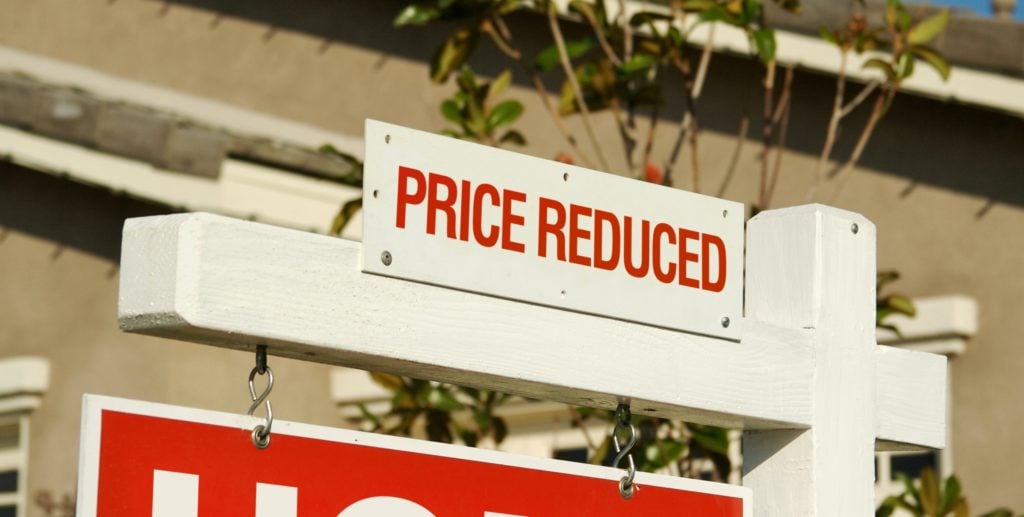
New data from Redfin shows that seller concessions, such as mortgage rate buydowns and cash credits for repairs and closing costs, are becoming increasingly common as high mortgage rates curb demand for homes. This may be keeping housing prices artificially elevated while the actual cost of buying a home falls—the Case-Shiller Index has been modestly declining since July, but the situation could be worse than it looks for sellers. 

Concessions were popular before the pandemic, but at the peak of the homebuying frenzy, sellers had all the power. Buyers pounced when new homes hit the market, sometimes offering to waive the inspection, while sellers fielded multiple over-asking offers and asked buyers to cover appraisal gaps. Now, as buyers pull back due to affordability concerns, homes are sitting on the market longer. It’s sellers who are looking desperate, while buyers expect to be persuaded.

How Common Are Seller Concessions?

In the fourth quarter of 2022, 41.9% of home sales involved concessions, a record high since Redfin began tracking concessions in July 2020. It even surpasses the portion of homes that sold with concessions during the three-month period ending in July 2020, when homebuying activity hit a wall due to the onset of the pandemic. And it’s a significant increase from the trough. Between April 2021 and September 2022, sellers offered concessions in only about one-quarter to one-third of home transactions. 

The data comes from buyer agents across the nation, who reported to Redfin when a seller offered something to reduce the buyer’s total purchasing cost. Cash credits for repairs, discounts on closing costs, and offers to buy down the mortgage rate were all considered concessions. Lowering the listing price was not considered a concession—but some sellers had to reduce their listing price or accept offers under-asking in addition to offering concessions. 

In fact, in 11% of home sales, sellers dropped the price, offered a concession, and still sold below asking. 19% of home sales had a concession and a price drop, and 22% of homes sold below asking even with a concession. 

Which Markets Are Most Impacted?

In San Diego, California, sellers offered concessions to buyers in 73% of home sales in Q4, an increase of more than 20 percentage points year-over-year. Phoenix and Seattle saw the biggest increase in the share of transactions involving concessions, exhibiting 29.7 percentage points and 25.6 percentage points, respectively. 

This is consistent with predictions from RedfinMoody’s Analytics, and other analysts, which suggest the markets that experienced the most rapid increases in home values during the pandemic will be the most vulnerable to price declines. Concessions are becoming more popular in many of the cities that are expected to have the steepest corrections, including Phoenix and Seattle, where home prices have begun cooling—but there are outliers. 

For example, concessions have become slightly less popular in Austin, Texas. About one-third of home sales in Austin involved concessions in the fourth quarter of 2022, down from 38.1% the year prior. The trend of concessions concealing an actual decline in the cost of housing transactions may not be occurring there—but sale prices in the Austin market are cooling faster than in many other metros. 

Metros Where Most Home Sales Now Involve Concessions

U.S. Metro AreaHome Sales with Concessions, Q4 of 2022Year-Over-Year Change
San Diego, CA73.0%20.7 ppts
Phoenix, AZ62.9%29.7 ppts
Portland, OR61.6%15.8 ppts
Las Vegas, NV61.3%22.2 ppts
Denver, CO58.4%15.7 ppts
Sacramento, CA55.2%11.2 ppts
Los Angeles, CA53.2%7.2 ppts
Atlanta, GA51.0%14.7 ppts

Metros Where Concessions Have Increased the Most

U.S. Metro AreaHome Sales with Concessions, Q4 of 2022Year-Over-Year Change
Phoenix, AZ62.9%29.7 ppts
Seattle, WA46.0%25.6 ppts
Las Vegas, NV61.3%22.2 ppts
San Diego, CA73.0%20.7 ppts
Detroit, MI42.0%20.4 ppts

How Can Investors Benefit?

If you asked a seller for concessions in the summer of 2021, you might have been laughed out the door. But it’s no longer unreasonable to expect mortgage-rate buydowns, warranties on home appliances, and cash credits for repairs or closing costs, even if you’re making an offer that’s less than asking. Keep in mind that homeowners made vast equity gains over the last two years—many are in the situation to be able to fund concessions without losing money on their homes. And the more you can reduce the cost of the transaction through concessions, the more you can increase your return. 

Find an Agent in Minutes

Match with an investor-friendly real estate agent who can help you find, analyze, and close your next deal.

  • Streamline your search.
  • Tap into a trusted network.
  • Leverage market and strategy expertise.

Note By BiggerPockets: These are opinions written by the author and do not necessarily represent the opinions of BiggerPockets.


Source link

Seller Concessions Are Mounting As The Housing Market Continues To Decline Read More »

Can Startups Raise Funds In A Bearish Market?

Can Startups Raise Funds In A Bearish Market?


Everyone is talking about an economic crisis and asking how it will influence tech investments.

The good news is we’ve seen those kinds of crises in 2008. Before that, in 2000, in 1984, and a flash of it in 2020 (Covid19), and survived.

The bad news is it is painful. It was painful back then and painful today.

The ugly part with the bullish market in 2020-2021 and way over-inflated valuations, is that it will be very hard to return the investment to those who invested in an over-inflated market.

The pretty part is that those who raised a lot of money and have figured out a way to keep it or reach profitability will win big time.

To understand the startup funding challenges, you need to start with basic investors’ mentality. If you invested during 2020-2021 and in particular beforehand, then you have seen the value of your investment going through the roof, regardless if it was S&P500, Nasdaq, startups, or even more extreme cases like cryptocurrency, NFT, or any other mind-fart.

If you weren’t part of it, you have seen others making fortune through investments that perhaps didn’t make sense. That drags people into the always-up bearish perspective of “I’ve made tons of money in investing – therefore I’m a genius and I should be investing more into even more risky investments.” Or “everyone is making money, I want it too.” Or the most common approach of all, “I’ve made 20-30-40-50% on the stock market, I should take some profit and allow myself to invest in high-risk investments like startups or VC.”

Unfortunately, the bullish market era ended with a splash, and a bearish market took its place. Together with it a bearish market mindset. The profits people meant to use for investing in startups disappeared, or lost 25% on the S&P500 index fund. The investors don’t want to sell while losing, or more commonly, they thought that startups are risky and dound out that S&P can be very risky.

Add to that the inflation and higher interest rates, and all of a sudden for potential investors getting a 4-6% interest rate on USD is not that bad, and it is risk-free.

The result is people are inclined to invest in a startup in a bearish market, and even those who made commitments to VCs prefer not to invest. I’ve heard some VC partners quoting their LPs, saying that in the case of a capital call, they will keep their commitment, but prefer that you don’t call them.

VCs on their side realize that, preserve cash for the existing startups, and refrain from investing in new ones.

For entrepreneurs – it is winter time. Raising capital is harder, longer, and results in way less during the winter. The good news is that there is always spring after the winter.

But investors are right. Winter is a bad season to invest in. In fact, the return on investment during other seasons is higher than the investment made in winter time, and the reason is the next round.

The next round is still going to be in the winter time or just at the beginning of the spring and insufficient traction (due to insufficient funding in the first place) will make it harder to raise capital and in many cases that will slow down the startup journey.

What Can Startups Do? Go Back to Basics

· Solve a problem – solving a problem is the best way to create value. You need to create value in order to justify your existence. Your investors will give up on a company whose value is unclear.

· Focus – do one thing and one thing only, don’t spread. If you are trying to demonstrate product-market fit, don’t try to build a business model at the same time, or don’t try to go global. Serve the business, not the investorץ

· Adjust objectives and in particular adjust the organization to the objectives. At the end of the day, the most expensive part of the journey is the next month, when your organization is overinflated. It is still overinflated this month, in the next month, and the one afterwardץ

· Aim for profitability faster. It may be your objective if it is feasible, but the closer you get there, the less burn you carry with you, and the available cash will last longer.

Think of the burn and run rate again. If your revenues per month are $200k and your expenses are $600k, and you have $5m of cash, your run rate is a year. This may not be enough to get out of the winter. But if you can turn revenues to $400k a month, then you have two years of run rate.

Adjust quickly, don’t wait.


Source link

Can Startups Raise Funds In A Bearish Market? Read More »

Rent Prices Are Falling Every Month—What Happens Now?

Rent Prices Are Falling Every Month—What Happens Now?


Outside of the roller coaster ride the FTX and Terra coins took, I have rarely seen anything quite like the trajectory nationwide rents have taken over the previous year.

Take a look for yourself.

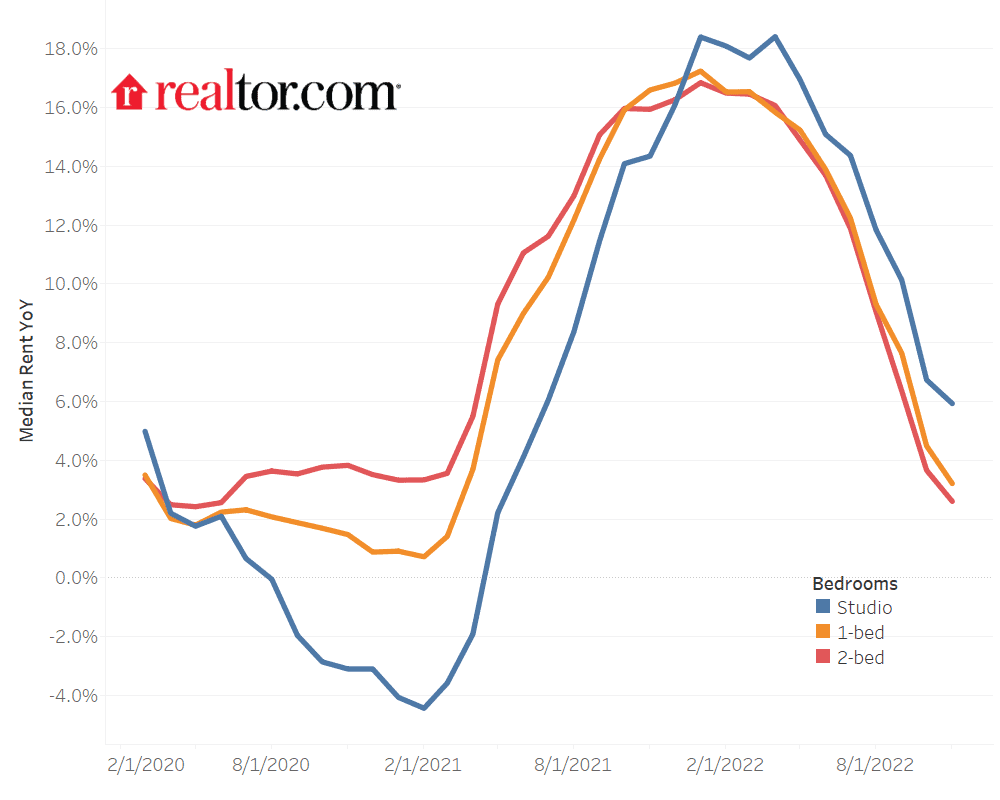
YoY rent growth by unit 2022
Median Rent Growth Year-Over-Year By Unit Size – Realtor.com

Of course, this is only showing the year-over-year change and not the rents themselves. Rents are still up year-over-year despite the dramatic about-face that occurred around last March. That being said, we have reached an inflection point where rents have started to decline month-over-month in nominal terms as well. 

As Realtor.com notes,

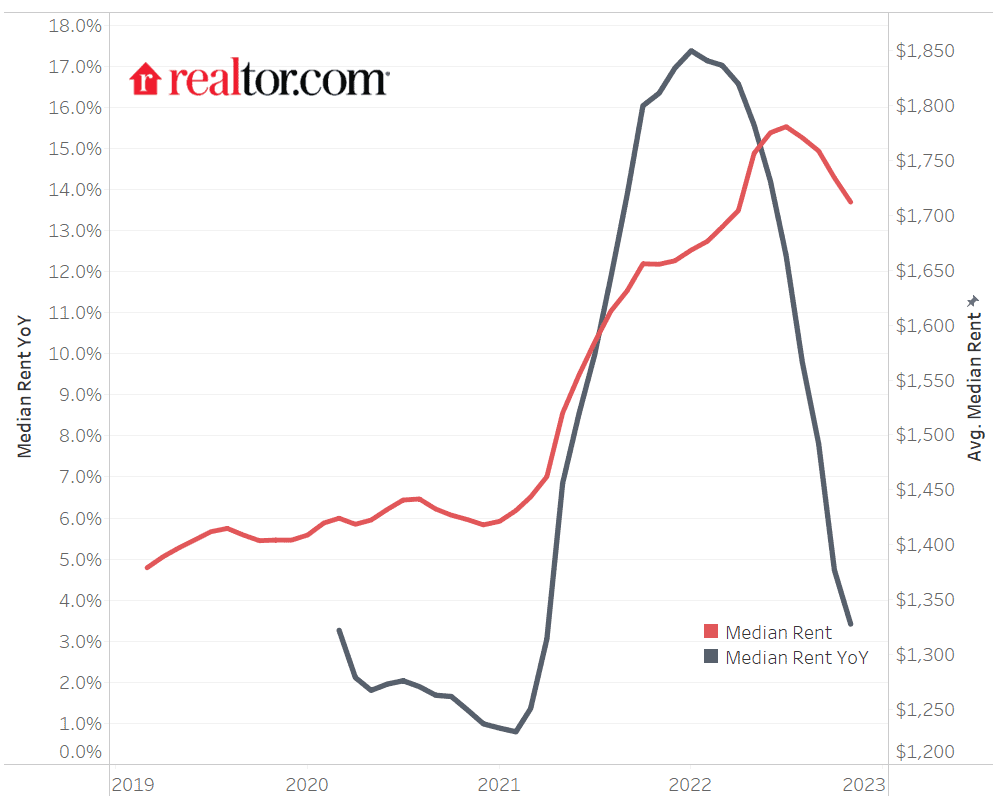
“In November 2022, the U.S. rental market experienced single-digit growth for the fourth month in a row after ten months of slowing from January’s peak 17.4% growth. The median rent growth across the top 50 metros slowed to 3.4% year-over-year for 0-2 bedroom properties, the lowest growth rate in 19 months. The median asking rent was $1,712, down by $22 from last month and $69 from the peak but is still $308 (21.9%) higher than the same time in 2019 (pre-pandemic).” [Emphasis mine]

And if we were to account for inflation, the decline is even sharper.

YoY median rent growth 2022
Median Rent Growth Year-Over-Year Compared With Average Median Rent (2019 – 2023) – Realtor.com

Furthermore, the “builders strike”, as I call it, “could also put off home shopping plans and further increase rental demand.” The supply side also bodes poorly (or bodes well, depending on your perspective) for future rent prices,

“On the supply side, the number of for-rent properties may gradually increase as homebuilding activity continues to pivot to multi-family properties. This extra supply in multi-family homes could shift market balance, raising the still-low rental vacancy rate and helping temper recent rent growth driven by the excess demand.”  

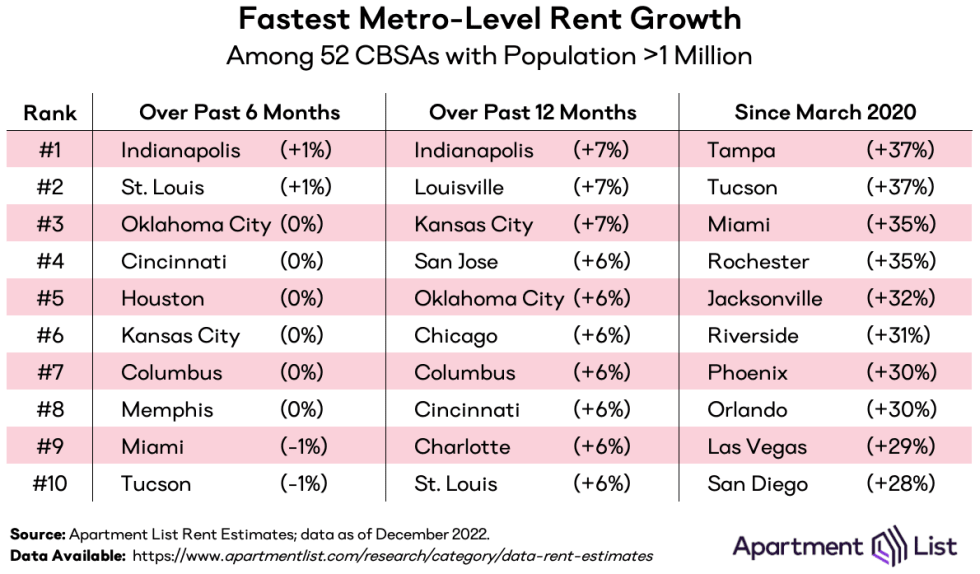
To drive home just how dramatic this shift has been, compare the fastest metro-level rent growth in the top ten cities over the past six months, 12 months, and since the beginning of the pandemic, according to data from ApartmentList. It goes from 37% growth since March of 2020 (Tampa) to 7% in the last 12 months (Indianapolis) to 1% in the last six months (Indianapolis). 

fastest metro-level rent growth
Fastest Metro-Level Rent Growth (2020 – 2023) – ApartmentList

When the fastest-growing metro area is at 1% growth, that should tell you everything you need to know. 

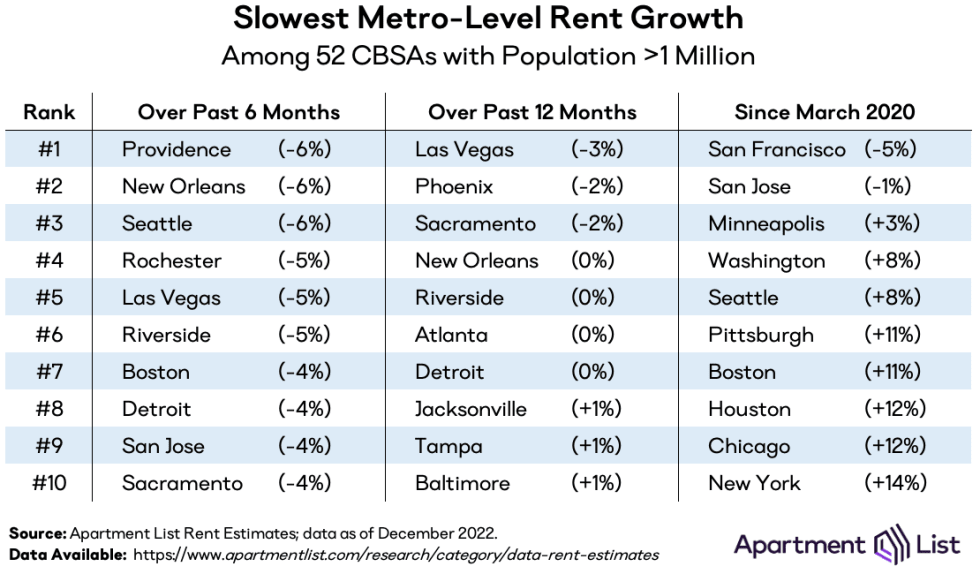
For what it’s worth, the worst-performing market over the past six months was Providence, Rhode Island, at -6%. Since March 2020, the worst has been San Francisco at -5%, but that is mostly due to local factors. In fact, San Francisco is one of only two markets with negative rent growth since March 2020 and one of only five with less than 10% positive rent growth.

slowest metro rent growth dec22
Slowest Metro-Level Rent Growth (2020 – 2023) – ApartmentList

Why is This Happening?

One part of this is just seasonality. Prices and rents both tend to dip a bit in the winter. But this is a much larger dip than normal seasonality would predict. There’s much more to the story than just that.

Before the Fed started jacking up interest rates, real estate prices were skyrocketing due to a variety of factors, most notably historically low interest rates and the large, country-wide housing shortage that came from a decade of insufficient housing construction. That shortfall in supply was then further exacerbated by Covid and lockdown-induced delays. 

The housing shortage had the same effect on the rental market as it did on the sales market. However, when rates went up, the “sellers strike” began, and new listings fell dramatically. Remember, unlike in 2008, most homeowners today have 30-year fixed loans with low interest rates. There is little incentive to sell.

So one of the first pieces of advice I gave given this new and very odd market was, “[I]f you own your home and need to move for work or other reasons, selling your home is not the way to go.” You really shouldn’t ever sell or refinance a house with an interest rate of 3% or less.

“Instead, it makes more sense to rent out your current home and then rent where you are moving (assuming it doesn’t make sense or is unaffordable to buy there).”

It turns out that a lot of people took this advice or had a similar thought. At the same time that new listings are way down, we have noticed the number of rental listings shoot up in every submarket of the Kansas City metro area we have properties in, both for houses and apartments. It appears to be that way all around the country.

Furthermore, while rents on new listings were increasing by over 15% from one year to the next, that was nowhere near the rent increase the average tenant had to pay. As NPR pointed out, “Government consumer price data show that the average rent Americans actually pay—not just the change in price for new listings—rose 4.8% over the past year.”

The average increase on a lease renewal hasn’t come close to the average increase on a new rental listing. Thus, not surprisingly, many tenants (like homeowners) aren’t moving. 

Americans, on the whole, are moving less than at any time since 1948, and according to data from RealPage, apartment lease renewals are at 65%, up almost 10% from just 2019. 

With more properties coming to the rental market, that increases competition and puts downward pressure on prices. At the same time, most tenants aren’t paying rent at market rates for new listings six months ago because their lease renewals weren’t keeping up with market increases. Thereby, they don’t have much incentive to move if they are going to have to pay a substantially higher price in order to do so. 

Several other trends have also contributed to this state of affairs. For one, many of the construction projects Covid delayed have finally come online, adding additional supply to the market. In addition, inflation and rising housing costs were nearing the limits of affordability in the middle of 2022. This has hampered rent growth, particularly by convincing more Americans to move in together.

As many as one-in-three adults rely on their parents for financial support, and many young adults, in particular, have taken to moving back in with their parents. More Americans are also open to renting out a room or portion of their house. A Realtor.com survey found that a full 51% of homeowners were willing to rent out extra space in their homes, a rate that is highest amongst Millennials (67%). Indeed, Americans living with roommates is an increasingly prevalent trend for years

All of these trends put together are bringing rental prices back down to Earth. 

Is Renting Your Property Now a Bad Idea?

As with the real estate market in general, it is highly unlikely that the rental market will collapse. After all, there is still a housing shortage, and new construction is slowing down again because of high rates (at least high by recent standards).

Furthermore, many people who were looking to buy a home are in the process of giving up and looking to rent. As their plans change, that will increase demand and put upward pressure on the market. And again, part of this recent decline is just seasonality, and as we enter the warmer months, the market should heat up again (pun possibly intended, I’m not quite sure), at least to a certain extent.

Rents skyrocketing over the past few years was an aberration, and the fact they are coming back down to Earth may not be great for landlords, but it is better for the country on the whole. While new purchases are made more difficult by higher interest rates, the rental market should stabilize. 

You should not expect rents to be much higher next year than they are now. But I wouldn’t worry too much about being unable to rent your properties.

On The Market is presented by Fundrise

Fundrise logo horizontal fullcolor black

Fundrise is revolutionizing how you invest in real estate.

With direct-access to high-quality real estate investments, Fundrise allows you to build, manage, and grow a portfolio at the touch of a button. Combining innovation with expertise, Fundrise maximizes your long-term return potential and has quickly become America’s largest direct-to-investor real estate investing platform.

Learn more about Fundrise

Note By BiggerPockets: These are opinions written by the author and do not necessarily represent the opinions of BiggerPockets.


Source link

Rent Prices Are Falling Every Month—What Happens Now? Read More »

The question is how quickly shelter deceleration unfolds, says Zelman & Associates’ Dennis McGill

The question is how quickly shelter deceleration unfolds, says Zelman & Associates’ Dennis McGill


Share

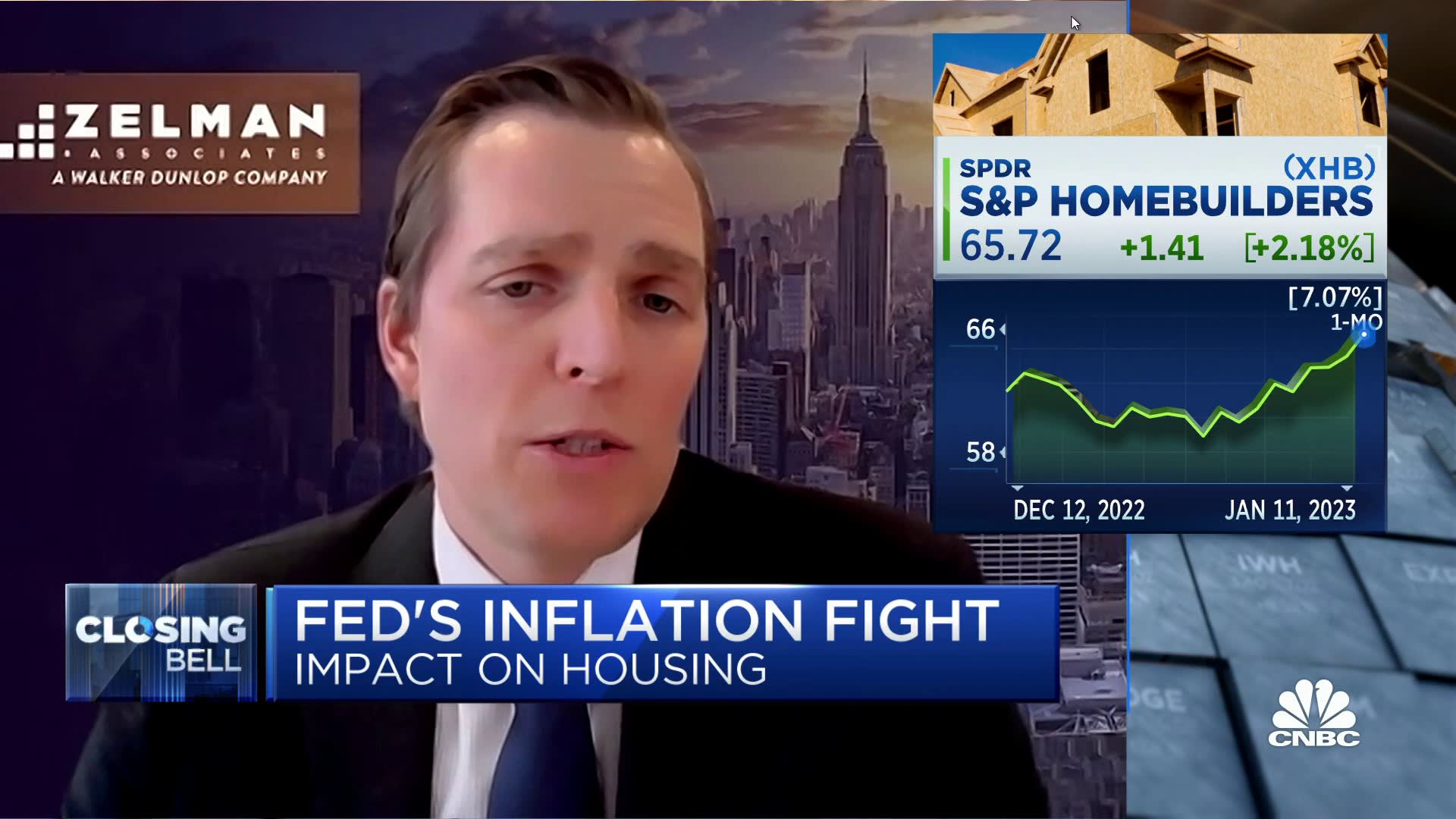
Dennis McGill, Zelman & Associates, joins ‘Closing Bell’ to discuss whether we’ve reached a housing inflation peak and if it will show up in tomorrow’s numbers.


Source link

The question is how quickly shelter deceleration unfolds, says Zelman & Associates’ Dennis McGill Read More »

Rookie to Real Estate Investor in 90 Days: LIVE Mentorship Calls

Rookie to Real Estate Investor in 90 Days: LIVE Mentorship Calls


Becoming a real estate investor isn’t complex. Find a property, buy the property, and rent it out. While this formula may be easy to write down, putting it into practice is much more complicated. This is why many wannabe investors never make the jump to buy their first investment property. But, with the right advice, mentorship, and mindset, anyone can become a passive-income generating real estate investor, with a path laid for financial freedom and early retirement.

Today, Ashley and Tony combine their real estate knowledge to help three investors buy their first or next rental property. First, we talk to Brandon, a future house hacker who struggled to buy a home last year and is now looking for his first primary residence that can help subsidize his mortgage. Next, we speak with Lawrence, an investor who bought two rental properties within six months but wants to expand quicker with the help of creative financing. Finally, Melanie joins us to discuss her plans for a short-term rental property, but she still doesn’t know the best place to buy.

If you’re finding the 2023 housing market a tough nut to crack but know that you want to invest in real estate, this is the episode for you. We’ll follow along with our three mentees over the next ninety days as Ashley and Tony give strategic advice on what they should do next to get a profitable rental property under contract. So follow along, and you too could get your next property in ninety days (or less!).

Ashley:
This is Real Estate Rookie, Episode 251.

Tony:
Every recession going back to the ’60s, most of them lasted, on average, just under 12 months. So it’s like, can you buy this property? Even if it maybe isn’t a home run over those first 12 months while there’s all this economic uncertainty, what happens in year two and in year five and in year 10 as you own the short-term rental? If you kind of check those boxes that we talked about where you’re hitting the location, you’re hitting the value, you’re hitting the amenities, more likely than not that listing is going to continue to do well. There will probably be some uncertainty in the short term, but I think as real estate investors, we have to roll with those punches and remember that we’re really investing for that long-term appreciation and cash flow as well.

Ashley:
My name is Ashley Kehr, and I’m here with my co-host, Tony Robinson.

Tony:
Welcome to the Real Estate Rookie Podcast, where every week, twice a week we bring you the inspiration, motivation, and stories you need to hear to kick start your investing journey. I want to start today’s episode by shouting out someone by the username of Eshazamm. Shazamm [inaudible 00:01:05] to say five-star review on Apple Podcast. It says, “All these real life stories are so inspiring. I love knowing all these people jumped in without being experts, they are learning along the way, and they exemplify that there are many ways to approach real estate investing. The guests aren’t necessarily practiced interviewees. But Ashley and Tony, you do an amazing job keeping the podcast flowing and interesting. And you guys are just adorable personalities, too.” Shazamm, I appreciate that. I think that might be the first time as an adult I’ve been called adorable, but I am here for it. I’m all about it.

Ashley:
Tony, every time I meet somebody, that’s usually the number one thing they say about you.

Tony:
“Oh, he’s just so adorable.”

Ashley:
“What’s his skincare routine? He’s so adorable.”

Tony:
Skincare, I get all the time, but the adorable is a new one, but I’m okay with that. I’m okay.

Ashley:
Yeah, I’ll take that any day.

Tony:
I’ve been called worse.

Ashley:
Tony, I’m super excited because today we are starting a new series in the Real Estate Rookie Podcast episodes. We are doing a 90-day mentee group. We have three people we have chosen where we are going to stick with them for 90 days and help them in any way that we can to reach their real estate investing goals.

Tony:
It’s super exciting. We’ve got such an engaged and amazing rookie audience. Us, along with the production team, we thought, how can we provide more value to folks in our audience? We thought, man, what cooler way than bringing some folks who are rookies onto the podcast, following along with them for 90 days, Ash and I giving as much value to them as we can. Then the rest of our rookie audience getting to listen along and hopefully pick up some cool things along the way. So you guys are going to meet three amazing people on the podcast.
First up, you’re going to meet Brandon DiOrio. He is from Minnesota. Then we’re going to bring on Lawrence Briggs from Texas. We’re going to finish off with Melanie Wilmesher from Colorado. Each one of them is in a slightly different position, slightly different starting points, slightly different goals. Ash and I are going to do our best to break down what they’re working on and give them some insights and advice on how to keep moving towards those goals.

Ashley:
I already know that we’re going to learn a ton from them, too, which I’m super excited about. That’s one of the best things about being the host is we get to learn from everybody else firsthand, too. Today, we’re just going to talk about goal setting. We’re going to assign some homework and give everyone their MINS, the most important next step, and plan out what we’re going to be doing with them over the next 90 days. So today’s just the starting point, and then we’re going to be doing follow-up episodes to see what the journey is like and helping them get those deals.

Tony:
Really, what we want you guys to do as you’re listening is to challenge yourself to follow along. If your goals are similar to what Lawrence and Brandon and Melanie are all working towards, see if you can challenge yourselves to do the same things we’re talking about in these episodes. Then maybe by the 90 days or so, you have your own goal achieved just by listening to what we have here. So that’s our challenge to you guys, is to follow along and do it at home as well.
Brandon, welcome to the Real Estate Rookie Podcast. You’re the first mentee up. As a quick intro for our rookie audience, I just want to share a quick few things about you so folks can get to know you a little bit better. Number one is that you’re an HVAC contractor, looking to get that first deal done. Number two, your family’s in commercial real estate, but you are actually interested in residential. Number three, you enjoy paint-balling, man. Anything else outside of those three points you want to share with the rookie listeners?

Brandon:
No, that sums me up pretty good. Work quite a bit when it’s hot and cold now like it is. I’m actually in my truck in between calls. Pushed my lunch to 2:00 p.m.

Tony:
Dude, if that isn’t the sign of a rookie investor, I don’t know what is, man. You’re out there working on your lunch break, hopping on this podcast episode. Before we started recording, you told me how cold it was where you were. Just give us a sense of how frigid it is out there. You said it was in the single digits?

Brandon:
Yeah, single digits overnight. Right now the sun’s still pretty strong. It’s 22 degrees, so I don’t have my truck running. It’s not too bad. But overnights are pretty bad, walking my dog who woke me up at 3:00 last night to go out.

Ashley:
Brandon, I have to ask, what is your strategy for when you have to break that bad news to someone that they need that new HVAC system put in?

Brandon:
I don’t really have a strategy that much. Because with how expensive furnaces have gotten, it’s hard unless it’s truly unsafe. That’s about the only time I really try to emphasize getting a new one. But you get to 20-year-old furnaces that need $1,400, $1,500 worth of work, then you try to educate them that’s just not worth it, like an old car with bad tires, brakes, and a weird engine tick.

Ashley:
So you don’t get a lot of customers that would cry like me because they have to spend a lot of money and have to console them.

Brandon:
It’s never usually like the total amount, but it’s red tag when furnaces are just putting off too much carbon monoxide and you have to shut off their gas. That’s the one that gets to people.

Ashley:
We are super excited to have you on over the next 90 days with us. Can you maybe tell everyone a little bit about what you have going on in real estate investing now?

Brandon:
So nothing active right now. I’m trying to track down a few deals. Just actually missed out on one today because it was a pre-foreclosure. It was the last day of the rescission period, I believe it was. We just couldn’t come up with the money fast enough. It was only about a two-week heads up from walking through it to when that was running up. Just trying to identify a house for either long-term or a house hack for myself.

Ashley:
In what market are you currently looking in?

Brandon:
About 40 to 50 minutes west of Minneapolis where I’m currently living, so just wanting to stay somewhat close.

Ashley:
When did you start looking for deals? When you decided, “I’m taking action, I want to start putting offers in, I want to start looking, I want to do this,” how long have you been in this period of time?

Brandon:
About a year ago I spent two months pretty heavily trying to buy something but was never even close with how the market was. Basically foolhardily gave up offering and looking and stuff like that and just focused more on reading the books and learning what I could. Now that stuff’s finally slowed down, trying to finally make it happen.

Ashley:
Now that the market has changed, what do you think is your biggest obstacle, your biggest hurdle, the thing that you need help with right now?

Brandon:
I guess the biggest thing I need help with is just knowing that I’m looking at numbers right, just using the different programs for estimating rents, managing rehab costs, and stuff like that.

Tony:
When we think about your goals, I just want to recap for our listeners here. You’ve been thinking about doing this for about a year or so, maybe dabbling a little bit. But the goal for you, Brandon, is that over the next 90 days to get your first property under contract somewhere in and around that region that you’re at in Minnesota.

Brandon:
Yeah.

Tony:
Awesome. Now one quick thing, because I mentioned this when we first started, you said your family’s in commercial real estate, but you’re choosing to go the residential route. Give us some insight into why you’re leaning that way versus the commercial.

Brandon:
Right now, I’m leaning residential mostly just for the startup costs. Down payment money with commercial is just much, much more, a little bit harder to get into. My family, they did a lot of development, but they’ve kind of moved into residential now more that I’ve been talking about it and a few opportunities have come that they were able to tackle that I wasn’t able to. So they’re kind of split with a few properties in both now.

Tony:
When we think about this goal you have of getting that first residential property under contract in the next 90 days, what are some challenges that you’re anticipating, maybe with your market or any other things, rent control? I know every market’s a little bit different. What are some challenges you feel like you might be facing?

Brandon:
Challenges right now are just making the numbers work. Now with higher interest rates, just trying to find a property that cash flows a little bit just so I can be safe about it or just something that makes sense for moving into for myself and renting out the rooms.

Ashley:
Brendan, can we dive into your finances a little bit? As of right now, what is your plan to purchase a property? Have you been pre-approved for a loan? Do you have a down payment saved? Do you have a private money lender? What does your purchasing power look like right now so we can get an idea?

Brandon:
I actually did just get re-pre-approved because the other one was a year old today. I do have a down payment saved up, so I could put 20% down of upwards of 440 kind of. I think that math works out there. So I do have that set aside waiting to make something happen. Ideally, it would be two cheaper properties with the money I have set aside for a down payment.

Tony:
It seems like you’re in a pretty good spot, Brandon. You have some capital set aside. You have the ability to get approved for a loan. When you think about the challenges, you said it’s really just making the numbers work. I just want to ask you a question. In the last month, how many deals would you say you’ve analyzed?

Brandon:
Last month, last 30 days [inaudible 00:10:14], do you mean?

Tony:
Yeah, yeah.

Brandon:
I’d say only probably about five looked heavily into and kind of a hundred-foot view on closer to 20.

Ashley:
Brandon, do you have a buying criteria like a buy box as to when you’re looking at the property, it’s like, “Okay, checklist, it matches this, this, oh, not that. Okay, I’m moving on to the next one”? How are you doing that overview of the properties and then deciding which one you’re actually doing that deep analysis on?

Brandon:
That could be kind of where I hang myself off is I don’t have a 100% buy box or anything narrowed down. The biggest thing, surfer house hack, ideally, I would like something with a master bedroom, which, in the price point that I’m looking, there just hasn’t been too many because it’s older houses that just never had those. For more long-term stuff, I guess my buy box for interest has been, if it looks rough, that’s kind of sparked my interest. Scrolling through pictures, I like seeing older furnaces, older ACs, water heaters, stuff that I can very easily take care of and also use as a negotiation for saying that those have to get swapped out and then being able to do them both in a day. Other than that, I haven’t really narrowed down too much. More of it’s an area thing for me at this point.

Ashley:
Are you saying that when you see a property, it’s just in your head as you’re looking through it?

Brandon:
Yeah.

Ashley:
This makes it easy for us. This is your first homework assignment. What I want you to do is actually take the time to write down some of those things you listed off to me and then add more things on, like what is your budget for a property, all these different things that you want in a property, and just start making a list of that. Then as you’re going through and looking at these properties, maybe you’ll think of more things like, “Oh you know what? This property had this. I think that would be a huge value add. I’m going to add it onto my criteria, my buy box.” So every time that you’re looking at a property, you’re going through this same checklist. That will get rid of the fluff, and you won’t be wasting time analyzing deals that don’t meet what you actually want anyway. That way you’re getting it right off the bat as to looking for those things that are on your list so you don’t spend more time on it. Then Tony, what would be the second part to that, doing deal analysis, you think?

Tony:
Yeah. I think we got to ramp up the volume of deals that you’re analyzing. You said you did about five deals in the last month. I want to five, six X that. So if we can get you to a point, Brandon, where you’re analyzing at least one deal per day, you get off of work, you’re eating dinner, whatever it is, just spend like that 30, 45 minutes analyzing a new deal.
What’s going to happen is two things. First, the buy box piece that Ashley talked about, that buy box is going to become clearer for you. Because as you analyze more deals, you’re going to start recognizing trends in certain areas or bedroom sizes or square footages around, “Okay, these properties tend to do better than these properties, so I’m going to narrow my buy box down to now just these things.” So that’s the first thing is your buy box gets tighter just by analyzing more deals. Second, there’s a good chance that if you analyze 30 deals this month instead of five compared to last month, one of those 30 might be worth actually submitting an offer on. I think that’s the first hurdle that we have to get you towards is submitting those offers. Because once that starts to happen, now we’re getting closer to you actually closing on that first deal.

Ashley:
Brandon, as you’re doing… It’s so easy for us to say that, but you’re going to have to make the time and be intentional about doing that deal analysis and creating that buy box. So when we’re done on this call or sometime even tonight is time block, “Okay, this time period, every single day I’m going to be doing this.” Or you know what? Maybe you’re just going to batch do it. On Sunday evenings, you’re going to do seven different deal analysis. Even if there’s not seven deals that meet your buy box, just grab anything just to practice running the numbers on it, too. Just remember, too, that even though that’s what the asking price is, that doesn’t mean what you have to pay for a property, so just decrease the asking price, decrease your offer to make the deal work, and see what that number actually comes to.
I want you to do those things and work on it. If you need that accountability, feel free to post into our Slack channel that we have your deal analysis. So if you’re using the BiggerPockets’ deal analysis, post those reports. I might actually harp on you and nag on you if I don’t see any activity in there, just to help hold you accountable and just submit them in there. Then too, maybe we can provide more value to you as to look at this thing and maybe you could change that and just help you fine tune that deal analysis, too.

Tony:
Last question from you, Brandon, just so I better understand your situation. Are you currently working with a realtor? Are you sourcing these deals yourself? What’s your deal flow look like?

Brandon:
Currently, my dad’s the realtor that I’ve been working with. I have my license as well, but it’s frozen right now. I’ve been using his insights on a lot of stuff, which might have been what’s been slowing me down as well is I underwrite with an extra percent or two, and then he looks at it and adds the percent or two over what I have, so then stuff just has never worked out. So definitely need to kind of narrow it in there.

Tony:
I feel like we’ve got a decent game plan for you. Ashley mentioned the idea of time blocking. It is difficult to make the time to do these things when you have a full-time job, especially one that’s demanding from a time perspective, from a physicality perspective. So what I really want you to focus on, Brandon, is why you’re starting on this journey. So if you can, share with us why is it so important for you to reach this goal, and what does your life look like if you’re not able to make this happen in the next 90 days?

Brandon:
I guess the biggest thing is to have the flexibility if I want that as I grow up, start a family. I don’t want to get to the point of wanting a family and wishing I had more time for that. I love what I do, but physically I don’t want to be struggling to get up out of bed in 20 years because my knees are gone or something like that. I want to do what I am doing as long as I can because I do enjoy it, but I do want the freedom when I might need it if something unforeseen happens or wanting to focus on family stuff.

Ashley:
Brandon, that’s definitely a great why. We’re super excited and happy to help you. Just make sure you go through that homework until the next time we touch base. It’s so easy. Some people may be thinking, “Oh, that’s so obvious of a thing to do,” but how many people actually sit down and do it? That’s the hard part is sitting down and actually doing it. It’s so easy to tell somebody or to know that you have to do something, it’s taking the action and actually doing it. Brandon, if there’s maybe somebody who’s in the same situation as you and maybe wants to reach out to you and have some accountability, where would be some place that they could reach out to you or find out some more information about you?

Brandon:
Instagram would be best. It’s brandon.diorio, so my full name, so B-R-A-N-D-O-N dot D-I-O-R-I-O.

Ashley:
Well, Brandon, thank you so much for taking the time from your lunch break, and hopefully you’ll have a couple minutes to eat. Usually, Tony shoves his face before any recording, so feel free next time to bring your lunch [inaudible 00:17:59].

Tony:
You can eat while you’re doing it. It’s totally fine.

Ashley:
Okay, Brandon, we’ll see you next time. Thank you so much.

Brandon:
Thank you guys.

Ashley:
Next up we have Lawrence Briggs from Texas. I feel like Tony and I already known Lawrence just from Instagram. We see him all over the place. Lawrence has professional property management experience and has been investing in single families near large military bases. Lawrence currently owns two long-term rental properties, but he’s looking to take his business to the next level and secure creative financing. Lawrence, welcome so much to be our mentee for this Quarter 1.

Lawrence:
Thank you. Thank you all so much for having me. This is like an epic opportunity.

Ashley:
Well, we’re very excited to learn about where we can help you with. So why don’t you start off with maybe telling us a little bit about your current investments that you have.

Lawrence:
Of course. I have two long-term rentals. I actually purchased two rental properties within six months of each other this year in 2022. I did both of the properties off market, so I was able to source the deal, put the deal together, and now lease them and self-manage. Right now leading up into 2023, my Q1 goal can go either way. I’m very close to becoming 100% consumer debt free. However, if I can land another property by Q1 of 2023, I’d rather purchase another property and let the cash flow pay down that little bit of consumer debt that I have.
Right now, I’m a W2 employee like most people, so I have a extremely low DTI, but I’ve been looking at possible properties that are a little bit above what I would normally get approved for, especially if I want to get into maybe a duplex. So my goal is to be able to learn how to strategize and use creative financing to my advantage because I’m not afraid to go out there and find a deal and put it together. I just need to make sure I’m putting together the right deal that’s going to become beneficial for me and the seller, so possibly either a DSC loan type thing or a seller finance for the next deal.

Tony:
Lawrence, first, congratulations on knocking out those first two deals and doing them in such a short period of time. I think so many of our listeners are looking to be in that same situation, so you’ve already set a foundation there.

Lawrence:
Thank you.

Tony:
When you talk about your goals, it really is adding to that portfolio, but really focusing on, like you said, either some kind of DSCR-based loan, or maybe some subject 2 or seller finance type deal. What type of property are you looking for? Are you looking for a single family residence, large multi-family, small multifamily? What does that property type look like?

Lawrence:
Of course. My ultimate buy box are single family homes just because I am close to a military base, and so it’s very advantageous for single family homes to be available in this area. Then my secondary buy box would be either a duplex or a fourplex. Again, that would be contingent on if I can put together a stellar win-win seller finance deal or a DSCR-type deal.

Tony:
Lawrence, when you think about the steps you need to take to get from where you are today, to getting that first creatively finance deal in place, what does that roadmap look like to you?

Lawrence:
Definitely, I need to learn how to be able to analyze those properties to make them work for seller finance. So that’s kind of my biggest hurdle that I would definitely be very appreciative for you all to help me in that area to be able to look at deals and say, “Okay, would this work for DSCR and/or seller financing or possibly subject 2?” So that’s my ultimate goal of learning how to analyze those properties. Because we all know as of 2022 going into 2023, there are some road blocks when it comes to interest rates with traditional financing.

Ashley:
I think one way we’ll be able to help you, Lawrence, is to submit multiple offers. So looking at a deal and saying, what number or price point would this work at with seller financing? What would this look like with doing a bank loan? What would this look like if we can do subject 2 on it? Lawrence, do you want to just explain to everyone what subject 2 is? Because we don’t hear that a ton, but we did recently do an interview with Pace Morby as a Rookie Reply, so if you guys want to go back and listen to that more. Lawrence, do you want to just describe it real quick what it is?

Lawrence:
I’ve never did a subject 2 loan. Most people, what they’re going to do is they’re going to take over pretty much an existing loan. That can be advantageous in this area because it’s a military town. What happens is that we have our soldier members buy properties with VA loans, and then they’ll get to deploy or leave the area. So now they’re stuck with these properties, and they don’t have a background in real estate investing. So it can be very advantageous to be able to come in and do a possible subject 2 where you pretty much take over that loan.

Ashley:
That episode, too, with Pace Morby, for anyone that wants to learn more about subject 2, is Episode 236.

Tony:
Lawrence, you said one of your challenges was analyzing these deals using creative financing, but you analyzed those first two deals that you purchased on your own?

Lawrence:
Yes, yes. I’m a huge nerd when it comes to Excel, so I have my Excel sheet and I run the numbers of what I would ask for, what I would be approved for, and then I run about five different scenarios of different interest rates and down payments. If it gives me that sweet spot, then I will just go ahead on and do the deal.
I don’t like to à la carte deals. I like to holistically look at a deal. Some people are like, “Oh, I have to have a 15% cash-on-cash return. If not, I’m going to leave it.” I’m like, “No, I’m not going to à la carte a real estate deal. I’m going to look at it overall.” Because for me, I’m single with no kids, so I’m in the long haul. I’m investing for generational wealth to change the trajectory of my family. I may fall short of that cash-on-cash return, but guess what? I may be able to get that appreciation. My primary residence that I purchased four years ago pretty much doubled in value when people were saying not to buy in 2018. So I don’t like to just say it has to hit this particular item or I’m done with it.

Tony:
I want to dig into that idea of building generational wealth, something we talk about often, but it sounds like it’s a strong why for you. But before I do, I just want to point out something. You talked about how you analyzed those first year properties that you purchased. You talked about the different Excel models, analyzing them using different interest rates and down payments, that process can be applied to the creative financing route as well.
Just because the type of debt that you’re using is the seller instead of the bank, it doesn’t mean that your analysis of that deal changes. Because even when you go seller financed, there’s still going to be maybe some percent of money that you’re putting down. There’s still going to be an interest rate. There’s still going to be an amortization period. There’s still going to be a term for that debt. So even though those numbers may vary from seller finance to a bank loan, the analysis steps are still pretty much the same. Based on what you just described, it sounds like you’re pretty good at analyzing deals already. So I don’t know if the analysis piece is really as big of a challenge for you as you originally thought it would be.

Lawrence:
Yeah, it’s definitely… That’s why it’s good to have mentors because if you’re just talking to yourself, you don’t realize that you’re already doing something. I just want to make sure that it’s win-win. Whenever I did put together my previous deals, it was a win-win for me and the seller. But just kind of learning as though how would it work, because some deals, they may want a balloon payment, or how would it look if I would need to refinance it, being able to put that extra layer on what I’m already good at with analyzing.

Ashley:
Lawrence, the deals that you’re getting, that you’re analyzing, how are you sourcing them?

Lawrence:
Oh, network. I’m a huge networker. I carry around business cards. People recognize me from my bow tie around town. I just tell people, “Hey, I’m a real estate investor. I’m looking for properties. Reach out to me.” I’m active on social media, as you all are aware. The two ways that I found those properties, one was through doing food delivery. So I stopped and I thought the contractor was the owner, and I’m like, “Hey, is this your home?” He’s like, “No, but I’ll give you the owner’s contact information.” I’m like, “Oh, great.” And I purchased that property. Then the second property was through a Facebook group. A guy posted and was like, “Hey, I’m trying to sell a property.” I’m like, “Okay, let me run the numbers.” So I definitely feel as though, people like to say cliché, your network is your network, but that’s really true. It’s not what you know but who you know.

Ashley:
Real quick, what are some ways that you’re like, besides… So you’re looking through Facebook groups, you’re stopping places. What are some other ways that you’re sourcing deals besides just telling anyone and everyone what you’re doing with real estate? Are you doing any kind of mail campaign? I guess you’re kind of doing door knocking, stopping contractors.

Lawrence:
I did one mail campaign, and I did it myself. I handed all of the letters. I think I did maybe 50 because I was like, “I really want them handwritten and stuff.” I think probably after the 10th letter I was like, “I’m over it.” But I gave myself a goal, and I sent out about 50 letters. I didn’t get any deals from it, but I end up connecting with a realtor who said, “Hey, did you ever send a letter to one of my clients? Because I think he received a letter. He definitely doesn’t want to sell, but he had never received a actual handwritten letter.” She’s like, “We’ll keep you in mind if he decides to ever sell something from his portfolio.”

Ashley:
Lawrence, what is your why for all of this? Why are you grinding and hustling to become a real estate investor? What’s the purpose behind it?

Lawrence:
My why is to break generational poverty in my family. I was born in the housing projects of New Orleans, the Calliope Projects. It’s probably one of the worst housing projects probably in America. I was raised by a single mother who was not lazy. She worked about three jobs, but just with a barely high school education, maybe up to ninth grade. She had to become a janitor in hospitals. So what she did, as a single mother, she tried to help me and my sisters. I’m one of seven. I have six sisters. She didn’t have a financial literacy background. My work ethic comes from her, but she didn’t know you can’t just get wealthy from working.
My why is to break that curse because I’m the only one that’s mainly in my family who understands financial literacy and practice it. So it would be a full circle moment to be able to leave a legacy that’s beyond me, so my future nieces and nephews and great nieces and nephews and possible children wouldn’t have to be born into poverty. So that’s my why.

Ashley:
Lawrence, I’m so proud of you. Just stating that you’ve taken the initiative to educate yourself, that’s very hard to change how you’ve known everything for your whole life to change and to want to take action onto something else. I think that is a great why-

Lawrence:
Thank you.

Ashley:
… and it seems like it’s definitely motivation enough for you to keep going and to really create that generational wealth.

Tony:
Lawrence, I love hearing the story, and I think it’s proof that where you start obviously has a big impact on how far you can go, but it definitely doesn’t cap what you’re capable of. I think my follow-up question is, what do you think it was that sparked that idea in you? Because so many people who grew up in certain environments, it’s all that they know, it’s all that they’re exposed to, they can’t even fathom anything beyond what they see around them. So what was it in your upbringing that allowed you to see beyond that?

Lawrence:
Of course. Like I said, my mother worked about two or three jobs. What she did was she wanted to expose our mind, and so she sent me to private schools. So I was one of the few kids from the projects going to a private school with children whose parents were doctors and lawyers and stuff. When I would leave this poverty area, I would go into these neighborhoods or suburbs. I started to fall in love with these single family homes, and my little brain kind of associated that with a better life. We know that there’s crime and criminal activity that happens anywhere. But I was like, I need to get my family there, and I never want any one of my family members to not live in a, quote/unquote, safe environment. So being able to go into those neighborhoods when I was going to private school, I associated those houses as a better life because that environment was completely different than the criminal gunshots and activity that I witnessed as a child.

Tony:
Well, kudos to your mom for having that insight to help you expand what you were seeing because all you have to do is see it and then immediately now it becomes something that that’s attainable. So a couple things. First, I love that you’re focused on creative finance. Ash and I, that’s not our super specialty. I think both of us have kind of dabbled in the seller finance space. There are a couple of episodes on some other BiggerPockets shows I want you to go listen to. This will be part of your homework. On the Market, Episode 29, Pace Morby’s on that episode, and then BiggerPockets Episode 527.
Then for those of you that are BiggerPockets pro members, Lawrence, I know you are, but this is more so for our rookies that are listening. If you guys are pro members, you actually get access to as a pro member to Invelo, which is the software that helps you find off-market deals. You can send mailers, you can do [inaudible 00:33:13], all kinds of great things to help you find off-market deals. Lawrence, you already got access to that, but for our rookies, it might be a good thing for you guys to check out as well.

Ashley:
Well, Lawrence, thank you so much for sharing the start of your journey with us. Tony went over your homework a little bit, to listen to those Pace Morby episodes. Then I’d also challenge you to put together a sample offer. Even if it’s just a property you see on the MLS, go ahead and actually write up what you would offer for seller financing. How much would you put down on the property? What would be the interest rate you would do? How many years would you have it amortized over? Would there be a balloon payment? Would it be callable? So put together a sample offer. Then I want you to bring it with you next time we’re on a call, and we’re going to go over it and look at it. We’ll look at the numbers on the deal, and we’ll look at how you set up the seller financing on it and what number actually makes sense to purchase the property at.

Lawrence:
Awesome. That sounds great. I’m ready to get to work.

Ashley:
Lawrence, what is your Instagram if anybody wants to connect with you?

Lawrence:
My Instagram is Lawrence, common spelling, L-A-W-R-E-N-C-E, underscore Briggs, B-R-I-G-G-S. You can’t miss me. I have a big smile and a bow tie.

Ashley:
Lawrence, thank you so much, and we cannot wait to spend the next 90 days with you and provide as much value as we can to help you continue your investing journey.

Lawrence:
Me too. Whoo!

Tony:
Melanie, welcome to the Real Estate Rookie Podcast. You’re our third and final mentee for this episode. We are super excited to share your story with our audience here and get into what’s going on over the next 90 days. Quick background on you, Melanie, you’ve already got two properties in Colorado, which is amazing. You spent the last month in Florida looking at some short-term rentals out there, so excited to dive into that. You already have your real estate license, which is great. The long-term goals for you is stepping away from that W2 and spending part of the year in somewhere that’s a little bit warmer than Colorado. So excited to have you on the podcast, Melanie. Welcome to the mentee group.

Melanie:
Thank you so much. I’m so excited to be here. I couldn’t have introed myself any better, and really, really excited to be part of this cohort. Lawrence and Brandon are wonderful. We’ve been chatting offline. Just very grateful for the opportunity.

Tony:
Exciting. I know you’re looking at short-term rentals. How has that journey been for you so far? Because you already have the two long-terms in Colorado, and this will be your first short term?

Melanie:
One’s actually a midterm, part of our primary residence. We kind of stumbled into it. It was meant to be long term, but yes, this would be the short-term venture.

Tony:
What are some of those challenges you feel like you’re running up against as you step into this world of short-term rentals?

Melanie:
I guess to give you some background, I went to BPCon and sat in on Amanda Han’s session about tax strategies and basically learned about cost segregation studies and specifically the benefits of being a W2 employee and having an STR. So I left BPCon and just said, “Okay, I’ve got to buy an STR before the year is over.” I’m a native in Colorado, but I couldn’t hate being cold anymore than I possibly do.” So I thought Florida’s probably the place. We have family there. I am just going to be committed to that process.
I found an agent off the BP forums, and he’s been phenomenal. We’ve been talking a lot about what I was interested in and my budget. Pretty quickly off the bat, I realized I was feeling a little in over my head. My W2’s in the tech industry. When I started the process and thinking about it, I felt like I just had more risk tolerance in general, and I’m starting to feel like I have just a little bit less. So thinking about buying a $400,000, $500,000 property with a pool that would do really well on Airbnb just became a little more nerve-racking. So that was kind of the start of that.
We shifted a little bit. I changed my price range a little bit. We started looking at some other properties. But my current challenge there is I’ve been looking at a number of them, I saw a few in person, the average daily rate is, in some of my analyses, just not panning out to really show any profit, and, in many cases, it’s quite negative. I think that makes sense for my price point and just looking at some of the properties a little further off the coast.
What I would say my biggest challenge is, do I really need to reconsider this move for the current time that we’re in? I’m looking at occupancy on Airbnb properties all over Florida and just seeing much lower occupancy than I would expect and what I’ve heard to be peak seasons. So thinking about viability considering the state of the economy, economic headwinds and everything, I just want to be smart about this goal because ultimately the idea is to have a cash-flowing property. I can wait to escape winter for a few more years before I will just jump into a forced deal.

Tony:
Well, I appreciate all that background, Melanie. A few follow-up questions from you here. What would you say is more important to you? Is it getting a property in Florida, or is it getting the right property anywhere?

Melanie:
Great question. It is getting a cash-flowing property. The broader goal is becoming financially independent and finding cash-flowing properties. So I would easily sacrifice finding a property in any specific area if I could locate one that would add to a portfolio, my portfolio, and start to help generate real profit.

Tony:
One additional question, have you looked at any other markets outside of Florida?

Melanie:
Yeah, I follow The Short-Term Shop. I really love Avery’s podcast. I know some of the areas that they’re active in. I haven’t done any analysis there, but I looked at, besides the area I was in Tampa, some of the other Florida markets that they were looking in. I know they’re in the Blue Ridge Mountains, some areas in Georgia, Mississippi as well. I’m open to those. I think one thing I wanted to run by you all is it’s an investment. I want to make sure that I’m not getting spooked too early and I’m not giving up too early. Of course, the goal is find a property in the next 90 days. But the short answer is I’m open to considering other markets if it comes to the point where I just need to reconsider my previous decision.

Ashley:
Obviously, Tony is going to be way more value at understanding the short-term rental industry than I am. One common occurrence I’ve seen from guests that we’ve had recently is that you want to look at where there’s big attractions where people are always going to be visiting. We just had somebody on that talked about national parks, how they don’t ever see people stop visiting national parks. Tony, I’m interested to hear also what you think of that as to sticking in markets where there is that large attraction where people are always going to consistently visit. Then, Melanie, if you could follow up as to the markets in Florida that you’re looking at, do they have some big draw that’s maybe just more than warm weather and the beach?

Tony:
Obviously, both markets we’re super active in right now are centered around national parks. We’re in Tennessee near the Smokey Mountains. We’re in Joshua Tree near the Joshua National Park. So I do have a big love for the national park scene as well. Well, here’s my advice, Melanie, and I’ll let you answer Ashley’s question as well.
I do think that a lot of the more mature vacation rental markets, we’ve seen massive price increases over the last two years, but the average daily rates in those markets have not kept pace with those price increases. So a cabin in Tennessee might be worth 75% more in 2022 than it was in 2019, but the ADRs haven’t increased by 75% to offset that difference. So you are seeing profits in some of these bigger, more mature markets getting squeezed a little bit, which is why I asked the question around market selection. I think for newer investors going into some of these more secondary and tertiary markets where there is demand, something like a national park or some other kind of driver, but they’re not as popular as the Smoky Mountains where there’s 10,000 listings in that general region. I’ll let you answer Ashley’s question about what the other draws are to Florida.

Melanie:
To be honest with you, Ashley, what I did instead of… No, I wasn’t looking for other hotspots. I know that that is really vital advice that I’ve heard on a lot of podcasts, making sure you’re by hospitals or other tourist locations. My biggest consideration was just the ocean and personal preference at first. So I definitely have room to dig into that further. I was kind of picking areas based on, also… My second factor, as I was taking a step back, was to look at some analysis platforms. So STR Insights was one I was looking at quite a bit. Basically long story short, I was just thinking the prices are much lower in this particular area. Perhaps there’s going to be a higher margin here because you’re putting down less. But then I did a little more digging on the BiggerPockets forum. A lot of the feedback I got was that there aren’t draws to this area, and just these analyses, basically looking at data from specific locations isn’t enough. So it’s a factor I really need to take into consideration now if I continue with finding a short-term rental for sure.

Ashley:
My short-term rentals are all in very rural areas where the attraction is a very small hospital, or people just come and stay because there’s only one hotel in the town, so there’s literally nothing else. But also I’m doing Airbnb arbitrage where there’s very little risk. I’m not dumping $400,000 into a property. The ones that I do own are $50,000 to $100,000 properties, so they’re not these huge investments that, if for some reason people aren’t coming there anymore, it’s not that big of a deal that I can cover the cost of it for a while. But you had said that you’re getting the negative cash flow when you’re doing the deal analysis. How many offers have you submitted?

Melanie:
I have not submitted any offers.

Ashley:
Here’s what I want to challenge you for your homework is to put in some low-ball offers. So at the purchase price, you’re getting negative cash flow. So what would the purchase price need to be and what would the terms of the loan need to be to make it cash flow? Then just start throwing out an offer. Even if you just do one offer between now and the time we talk, just throwing it out at that low price.
Another thing you can do, too, is if it’s already an existing short-term rental is asking for 2019 data. We analyze campgrounds, me and my partner, and that’s one thing that every campground operator we’ve talked to has said is don’t use data just from 2020 and 2021 and now 2022. Go back to 2019 and pull data from there, too, before traveling exploded for those couple of years and see what it was like then. So see if you can get any of that data. Then even going back to… Tony on AirDNA, can you go back and look at data for markets to see what the daily rate was in 2019? Obviously, it’s not going to be the same, but you could look at what the occupancy is.

Tony:
Usually, the data I look at it only goes back, I think, 18 months, so I don’t know if that software goes back to 2019 or not.

Ashley:
Well, Melanie, we would love for you to submit an offer, even more than one, better, but just make it at the price point your offer and don’t be afraid to insult someone or to put in that low offer. Plus, it’s super exciting and so worth it if it gets accepted. Or even if they counter at you, you can see maybe there is another way to make this work, and we can talk about that, if that does happen. I think it’s time you’re ready to put in an offer at whatever that price point is that makes sense.

Melanie:
Thanks Ashley. I love that recommendation.

Tony:
My second piece of advice for you, I guess the homework here would be to choose at least two other markets. Florida is a very big, popular market with lots of competition. Regardless of where we’re at in the cycle, people are always going to Florida and just a very popular travel destination. So I want you to try and find at least two other markets that are maybe mid-size markets, somewhere where there’s 100 to 500 listings in those markets, so there’s still a decent draw there, but the competition is definitely softer in terms of how many people were submitting offers, and the price points will probably be a little bit smaller as well.
When you look into these markets, there are really three things you want to be looking for. This applies not just to you, Melanie, but to all of our listeners as well. First, you want to look at the policies. You want to understand what the short-term rental permits are for that city, for that county. Typically the county website or calling up there, you can get that information pretty quickly. The second is popularity. You don’t want to go too small. If there’s anything less than 100 listings, I probably wouldn’t touch that market. I want to see at least some active short-term rentals already just for proof of concept. I don’t know if I’d want to be the 10th listing in any given city because it might mean that who knows if the people are going to show up or not. The third thing is just the profitability. You want to make sure that after you check those first two boxes that you’re still able to find deals that meet your return.
When you’re actually looking at the properties themselves, you want to look at location. Every city has a hotspot where listings tend to do a little bit better, and through your analysis, you’ll starting to see where those better performing properties are. You want to look at amenities. What are the top amenities in that market? Does this property have those amenities, or do I have the ability to add those amenities? Then third is the value, the same as profitability. Are you going to get the return you want after factoring all those things? I know that’s a mouthful. Go back, re-listen to what I just said right now. But I think if you tackle those few things, you’ll be in a much better position when we talk next time.

Melanie:
Thanks for that. I have one follow-up question if that’s okay.

Tony:
Yeah.

Melanie:
I’m wondering, thinking about the year ahead, in calculations or just as you advise people, are you considering lower occupancy? Are you trying to factor that in just knowing that things are shifting in general?

Tony:
I definitely think you probably want to add a little bit of buffer to any ADR or occupancy calculations that you’re doing. How much is really hard to say because no one really has that crystal ball. But I think adding maybe a negative 10% on your ADRs or 15%, if you want to be super conservative, is realistic. Just know every dollar change in an ADR has a pretty big impact on your revenue at the end of the year. So somewhere around 10% might be pretty good.
Just know, every recession going back to the ’60s, most of them lasted, on average, just under 12 months. So it’s like, can you buy this property? Even if it maybe isn’t a home run over those first 12 months while there’s all this economic uncertainty, what happens in year two and in year five and in year 10 as you own the short-term rental? If you kind of check those boxes that we talked about where you’re hitting the location, you’re hitting the value, you’re hitting the amenities, more likely than not that listing is going to continue to do well. There will probably be some uncertainty in the short term, but I think as real estate investors, we have to roll with those punches and remember that we’re really investing for that long-term appreciation and cash flow as well.

Melanie:
Yeah, absolutely. That’s a great reminder.

Ashley:
Melanie, before we end today’s call, what is your why for real estate investing?

Melanie:
I really love my W2. I’m fortunate to have a wonderful team and be able to do what I do. At the same time, I just don’t want to sit behind my computer for the rest of my life. I really want to be able to build some of that freedom into my life, so financial independence is the ultimate why. It helps that real estate is so fun and challenging and exciting and interesting. So I’m just very motivated to continue learning and growing. I also have pursued getting my license on the side just because I really do evaluate or do enjoy evaluating deals. So I hope that that continues to be part of my career, but a little bit more flexible as time progresses.

Ashley:
Well, Melanie, thank you so much for joining us for the next 90 days. We’re super excited. Where can someone reach out to you if they want to connect with you?

Melanie:
I hate to sound just so dry, but I would encourage you to go to LinkedIn. I’m not very active on Instagram. I feel like I’m always on LinkedIn. So just my name, Melanie Wilmesher, and super responsive there. That’s probably got to be the saddest place for people to reach out to that you’ve ever heard.

Ashley:
One of my best friends, Lika, she is a LinkedIn queen. She nags on me all the time because I am not at LinkedIn. She has scored so many deals from there, private money lenders from there, and investors to work with. She has had huge success with it.

Melanie:
Okay, I’ll take it.

Ashley:
Thank you so much for joining us Melanie. Tony, we have just met our three mentees and went over their goals and gave them their first homework assignment. What are your thoughts?

Tony:
I think some of the things I’m seeing across all three of them is that the challenges that they thought were challenges weren’t as big as what they really were. When you take some time to unravel those, you understand the steps you need to take are a little bit more clear than what they initially anticipated. Honestly, I think that’s a big thing that a lot of new investors run into. There’s this emotional aspect that makes things a little bit scarier than they really are, but when you take stock of all of the things you already know and things you understand, it is a little bit easier to move forward than you give yourself credit for.

Ashley:
I think this can relate to me and you, too, Tony, is sometimes we know what we need to do. It just takes somebody else to tell us to do that.

Tony:
That’s why I love having a trainer in the gym because it’s like, “Yeah, I know I should be doing this,” but when they’re in your face saying, “Do it one more time,” then it keeps you motivated. Hopefully, we can have that same impact on our mentees here as well.

Ashley:
For all the rookies at home, we would love for you guys to set your own 90-day goals. If you don’t know what your why is yet, really try to define that and give you something that’s going to give you the motivation and really energize you every single day to keep pushing forward to actually reach that goal. I’m Ashley @wealthfromrentals, and he’s Tony @tonyjrobinson on Instagram. We will be back with another episode. See you guys next time. (singing)

 

?????????????????????????????????????????????????????????????????????????????????????

Interested in learning more about today’s sponsors or becoming a BiggerPockets partner yourself? Check out our sponsor page!

Note By BiggerPockets: These are opinions written by the author and do not necessarily represent the opinions of BiggerPockets.


Source link

Rookie to Real Estate Investor in 90 Days: LIVE Mentorship Calls Read More »

Consumer confidence in housing rises as prices fall

Consumer confidence in housing rises as prices fall


We are underbuilt as a nation and need homes, says UBS analyst

Mortgage rates are still twice what they were a year ago, but home prices have been falling since June, and that’s finally making consumers feel better about what had been an overheated, highly competitive housing market.

A monthly housing sentiment index from Fannie Mae showed sentiment improving from November to December. The index is still lower than it was a year ago and just slightly off its record low set in October and November.

related investing news

Bank of America double upgrades Zillow, says stock can rise 20% on improved growth outlook

CNBC Pro

The share of respondents saying now is a good time to buy a home was still low, at just 21%, but it was up from 16% in October. The share saying now is a bad time decreased.

On selling, however, sentiment continued to drop. The share of respondents saying now is a good time to sell dropped to 51% from 54%, while the share saying now is a bad time to sell increased.

Prospective buyers view a real estate showing.

Carline Jean | Sun Sentinel | Tribune News Service | Getty Images

More consumers now believe home prices will fall in the next 12 months, and more also said they believe mortgage rates will come down.

Prices in November, the most recent measurement, were 2.5% lower than the spring 2022 peak, according to CoreLogic. They were still over 8% higher year over year, but that annual comparison is now half of what it was in June.

The average rate on the popular 30-year fixed mortgage hit a recent high of 7.37% in October but then fell back into the mid-6% range throughout November and into December. As of last Friday it had dropped to 6.2%, according to Mortgage News Daily.

“As we enter 2023, we expect affordability to remain the top challenge for potential homebuyers, as even small declines in rates and home prices — from the perspective of the buyer — may not produce sufficient purchasing power,” said Doug Duncan, Fannie Mae’s senior vice president and chief economist, in a release. “At the same time, existing homeowners may continue to wait to list their properties, since many have already locked in lower mortgage rates, creating minimal incentive to sell and buy again until rates are more favorable.”

That tension will continue to drive home sales lower in the coming months, Duncan said.

Adding to the confidence in housing, the share of consumers who said they were concerned about losing their jobs in the next 12 months dropped from 21% to 17%. Fewer, however, said their household income is significantly higher than it was a year ago.

With the housing market now in its historically slow winter season, some agents are reporting activity is “frozen.” Pending home sales, which represent signed contracts on existing homes, dropped more than expected in November, suggesting that closed sales in January will be lower as well.

Those sellers who are braving the housing chill are offering more concessions: Roughly 42% of sellers did so in the fourth quarter, the highest share in recent years, according to Redfin, a real estate brokerage. That’s up from just over 30% in both the previous quarter and the fourth quarter of 2021, and is higher than the previous high of 40.8%, notched during the three months ending July 2020, at the start of the Covid pandemic.


Source link

Consumer confidence in housing rises as prices fall Read More »

The Fall Of Short-Term Rentals

The Fall Of Short-Term Rentals


It’s a story that’s echoed across social media platforms from rental property owners across the nation: Vacation rentals are no longer generating the steady revenue investors grew to expect during the pandemic. The era of #Airbnbust has taken hold. 

Real estate investor Sabrina Must, who once rented her 2-bedroom condo in Encinitas, California, for $1,000 per night on a holiday weekend, has dropped her rates to $275 per night due to waning demand, The Wall Street Journal reports. Another couple who got into real estate investing during the pandemic saw strong bookings in the beginning, followed by low occupancy rates this past summer. 

It’s a problem for many everyday people who decided to try a hand at real estate investing during a period of booming demand, sometimes without a backup plan or the skills to remain competitive during a downturn. As the situation evolves, the short-term rental strategy is losing its appeal, especially as an entry point for beginners. 

Why the Short-Term Rental Strategy is Losing Steam

Oversupply limits cash flow potential

Airbnb occupancy rates have exhibited year-over-year declines for eight months straight, according to data from vacation rental research company AirDNA. It’s not because inflation has curbed the demand for short-term rentals. In fact, nights stayed are up 21.3% as of October when compared to last year. But the supply of Airbnb listings has surged 23.3% year-over-year. 66,000 new rental properties were listed this October, an increase that overshadowed the growth seen the October prior. 

What created the oversupply? During the pandemic, demand for second homes nearly doubled as low interest rates collided with remote work opportunities and the desire for more space. The skyrocketing demand for vacation rentals and record revenue data in 2021 also encouraged a new group of real estate investors to buy homes exclusively as rentals. And now, Zillow predicts the number of first-time landlords will grow significantly as second-home owners attempt to earn money from their properties while inflation persists and stock market expectations are bearish. Furthermore, homeowners who have locked in low interest rates may be tempted to rent their homes rather than sell when it comes time to move. 

Notably, occupancy rates are still up 12.8% compared to October 2019. AirDNA forecasts that supply will increase another 9% in 2023, despite high mortgage rates causing affordability pressure for would-be second-home buyers—but expects occupancy rates to stay elevated above pre-pandemic levels. However, if rising unemployment cuts into the demand for short-term rentals or if more homeowners decide to become hosts in an effort to boost their incomes, there’s reason to believe occupancy rates could dip even further. 

Growth in average daily rates and bookings slows

When compared to 2019, demand for short-term rentals has remained stable or increased all over the world. But Airbnb’s revenue growth slowed from 58% in the second quarter to 29% in the third quarter, and Airbnb predicts that holiday revenue won’t live up to market expectations. 

AirDNA also reports slowing growth in average daily rates. The 5.6% growth in average daily rates (ADRs) expected for 2022 actually represents a real loss due to inflation. And ADR growth is expected to slow to 1.7% in 2023, while inflation is predicted to remain elevated. The revenue per available room is also expected to decline because the slightly higher rates won’t offset the decrease in occupancy rates. 

Local governments are cracking down

Short-term rentals were relatively unregulated in the beginning days of Airbnb, and there are still plenty of cities that only require hosts to apply for a short-term rental license. But increasingly, local governments are tightening short-term rental rules due to criticism that an overabundance of vacation rentals limits the availability of affordable rental housing in a community. 

In New York City, short-term rentals of less than 30 days are prohibited unless the host is present and the guests are given unobstructed access to the entire unit. In San Francisco, short-term rentals must be primary residences where the owner lives for at least 275 days out of the year. Similarly, Denver only allows homeowners to apply for a short-term rental license for their primary residence. These are examples of a growing number of cities cracking down on short-term rentals. It’s evident that investors entering the short-term rental market now will need a backup plan because if large cities that depend on revenue from tourism are passing strict requirements for rental property owners, it can happen anywhere. 

How Investor Struggles Could Impact the Housing Market

New investors who snatched up rental properties during the pandemic based on forecasted ADRs at the time may not be able to cover their mortgage payments. As occupancy rates continue to drop, many may be forced to sell their properties. Widespread selling of properties intended for short-term rentals would increase the supply of homes, contributing to a downturn in home prices. Low supply is one factor currently preventing home prices from dropping too rapidly, even as prospective homebuyers pull back due to high mortgage rates. 

A more serious problem may occur if prices fall and new investors are left with underwater mortgages. Over the last year, debt service coverage ratio (DSCR) loans have become increasingly common, Bloomberg reports, allowing investors to qualify for larger amounts based on future income projections rather than a large down payment or personal salary. Some of these loans (it’s unclear how many) were packaged and sold to investors as mortgage-backed securities by Wall Street firms. Several lenders in the space have said they expect to issue hundreds of millions in rental-based loans this year, and a significant portion of borrowers will qualify based on projected Airbnb income. 

While most experts contend there won’t be a housing crash because lending standards are stricter now than they were before the 2008 financial crisis, these rental-based loans are another story. Without a full account of how many of these loans are out there, it’s impossible to say whether potential defaults could cause enough foreclosures to impact the economy. But certainly, the Airbnb slowdown could contribute to a larger supply of homes on the market. 

How to Stay in the Airbnb Game

The extensive supply of short-term rental properties means that investors in the space need to stand out as stellar hosts if they hope to maintain high revenues. Brian Egan, CEO, and co-founder of vacation rental management company, Evolve, tells The Wall Street Journal that the most successful hosts provide an outstanding experience by raising the bar for hospitality and ensuring the property meets or exceeds guests’ expectations after viewing the listing. 

Hosts should also research the algorithms each listing platform uses to try to expand their reach and enhance their listings to improve conversions. Prioritizing professional photos and offering competitive pricing and policies can increase the likelihood that guests will book your rental, and quick response times are also important. 

Ultimately, a backup plan is essential. You may not be able to achieve the revenue you’re hoping for if there’s an oversupply of properties in your market. A deep recession could curb demand for vacation rentals in general. Or local regulations could prevent you from listing your property as a short-term rental altogether. You may need to shift to a medium-term or long-term rental strategy, which you should ensure is possible in the area where you buy. You should also have enough cash reserves to cover your mortgage payments and maintenance if fair market rent won’t provide positive cash flow. 

The Airbnb boom may be coming to an end, but there’s still an opportunity to earn money from short-term rentals, especially for experienced and strategic investors. Even as occupancy rates have dropped from their peak, hosts are earning more money now than they were before the pandemic. But property prices and mortgage rates have skyrocketed since then, so new investors must proceed cautiously. Don’t expect any property you buy to be an automatic success. Understand the risks, make research-backed purchasing decisions, and be prepared to pivot in the changing economy.

Master the Medium Term Rental

The first-ever book on medium-term rentals, this guide will help you find the right markets, properties, furniture, and tenants to make you a successful medium-term rental host with maximum cash flow and minimum worries.

Note By BiggerPockets: These are opinions written by the author and do not necessarily represent the opinions of BiggerPockets.


Source link

The Fall Of Short-Term Rentals Read More »

Can the Fed Dodge a Recession in 2023?

Can the Fed Dodge a Recession in 2023?


The Federal Reserve is a misunderstood arm of the government. Is it public? Is it private? Does congress have any control over it? Most Americans don’t know. Because of this constant confusion surrounding this shadowy subsection of the government, Americans are struggling to understand what’s going on with interest rates, mortgage rates, bond yields, and more. But there’s one person who knows the Fed better than the rest.

Nick Timiraos, reporter at The Wall Street Journal, has been tracking every move the Federal Reserve makes. Whether it has to do with inflation, interest rate hikes, job growth and decline, or anything in between, Nick knows about it. As the foremost expert on the Fed, we took some time to ask him some of the most critical questions on how the Fed’s decisions could affect investors in 2023. With so many variables up in the air, Nick helps pin down precisely what the Fed is thinking, their plans, and whether we’re on the right economic track.

You’ll hear how the “overcorrection” of inflation could pose a massive threat to the US economy, the significant risks the Fed faces today, the three “buckets” that the Fed is looking at most, and why we’re targeting a two percent inflation rate in the first place. We also get into when the Fed could stop raising interest rates, how investors should react, and whether or not we’ll see three and four-percent mortgage rates again.

Dave:
Hi everyone. Welcome to On The Market. I’m your host, Dave Meyer, joined today by Kathy Fettke. Kathy, how are you?

Kathy:
I’m doing great and so excited for this interview. I can’t wait to hear what he has to say. Hopefully, it’s great news.

Dave:
I know. Nick is an excellent interview, and I follow him closely on Twitter. He just knows everything about the Fed. I feel like I follow it closely, and every time I read something he writes, or listen to an interview with him, I learn something new. Hopefully you all will too.

Kathy:
Yeah, the Fed is for a lot of people, something they never really heard of until this year, or didn’t know very much about. It’s still this sort of mysterious thing. What is it? Is it a government agency? Is it a private company? How does it work? What do they look at? What we do know is that whatever they decide affects all of us a lot. I think it’s important for people to start to recognize what is the Fed, who are they, what are they doing, and how is it going to affect me? We’re going to learn a lot from today’s interview.

Dave:
I wonder if you did a poll of how many Americans know who Jay Powell is in 2019 versus today, it’s probably quadrupled or more.

Kathy:
Yeah.

Dave:
I feel like no one knew who he was prior to the pandemic, and now everyone waits on his every word. He’s like the most important person in the country.

Kathy:
Or even, did people know what a Fed fund rate was? Oftentimes, reporters would get confused between what a Fed fund rate was and what a mortgage rate was, and therefore the audience was confused. Again, hopefully that clarity has been made and that there’s more insight on how we as investors and consumers are really manipulated by this thing called the Fed, and therefore we really need to understand it.

Dave:
Absolutely. Well, with that, let’s get into our interview with Nick, but first we’re going to take a quick break. Nick Timiraos, who is the chief economics correspondent for the Wall Street Journal, welcome back to On the Market.

Nick:
Thanks for having me, Dave.

Dave:
Yeah. I actually looked this up before you came back. You are our first ever guest. The first two podcasts we ever did for this show was just the panelists and the regular occurring people, and you were the first external guest we had. Thank you for helping launch our show. I think we’re like 60 or 70 episodes later and going strong. We’re super excited to have you back.

Nick:
Thank you. Thank you so much for having me back.

Dave:
All right. Well, back then it was April, so we were sort of just going, and for anyone listening who didn’t hear that, Nick is one of the most, in addition to knowing a lot of things about the economy in general, and how the government plays a role in that is, one of the most foremost experts on the Federal Reserve, and we talked a lot about that last time. You’ve also written a book, Trillion Dollar Triage, about how the US responded to the COVID pandemic economically.
Back when we had you on the first time in April, we were just at the beginning of this rate hike journey that we’ve been going on for the last eight months. I think most people who listen to this podcast have probably been following along, but could you tell us in your own words how you would summarize what’s happened with the Fed over the last, basically over the course of 2022?

Nick:
Yeah. Well, really what we’ve seen in 2022 has been the most rapid increase in interest rates in any year since the early 1980s. When I was on your program back in April, the Fed had just raised interest rates by a quarter point. Of course, inflation was very high. It would get up to 9% in June, largely because of what happened in 2021, but then also the Ukraine War that started at the beginning of 2022. The Fed was just beginning to figure out how to shift to a higher gear.
The Fed raised interest rates a half point in May, and then three quarters of a point in June, which hadn’t done since 1994. They did four of those increases in 2022, and then they stepped down to a half point rate increase last month in December. That’s where we are now. Interest rates are now slightly below four and a half percent. The Fed is suggesting they’re going to raise interest rates a few more times this year in 2023.

Kathy:
Do you think it will work? Do you think they’ll get what they want? Lower inflation to 2%?

Nick:
Yeah, that’s a great question. Will it work? The Fed seems determined here to get inflation down and we already see some signs, of course, that inflation has been coming off the boil. We can talk a little bit about why that is and where that’s coming from. When you say will it work, I think the big question everybody has for 2023 is how bad is the recession going to be if we have a recession? How do you define success in terms of getting inflation down? I think for the Fed, they are resigned to having a downturn if that’s what it requires.
Of course, everybody hopes we don’t have a recession, but if you look historically, when we’ve had inflation this high, it’s never come down without a recession. Then, of course, if you’re in the real estate industry, if you’re in the housing market right now, we’re in a deep downturn already. I think the question really is, when does it spread to other parts of the economy, to manufacturing, to goods production, and then ultimately to the labor market and higher unemployment rate? That’ll be the big question for 2023.

Kathy:
I was going to say, didn’t the Fed jump in a little late though on all of this? There’s still so much money printing. Of course, I want to tie the money printing to all the inflation. Let’s start there. Would you agree there’s a correlation?

Nick:
If the question is did the Fed get started too late? Yes. Everybody I think agrees broadly, including the Fed, and there were reasons why they were late that made some sense at the time. There was a view that inflation would be transitory, that inflation was tied to the pandemic, that if the pandemic was something that would have a beginning, a middle, and end, so would the inflation. Monetary policy textbooks say you don’t overreact to a supply shock.
If there’s a big contraction in the ability of the economy to supply goods and services, and you’ve been successful in keeping inflation at 2%, a low and stable inflation, then you have that credibility. You don’t have to react to a supply shock. What the Fed misjudged in 2021 was that it was only partly because of supply bottlenecks. It was because there was a lot of demand in the system. They also misjudged, I think, the strength of the labor market and the imbalances in the labor market. The question now, a lot of people say, “Well look, inflation’s coming down.”
The goods prices, used cars went up 40% in 2021. They thought used car prices would come down faster in 2022. They are beginning to come down now. You are seeing elements of this sort of transitory inflation from the parts of the economy that were really distorted by the pandemic. The concern now is that high inflation is going to be sustained because incomes are growing, because wages are rising, and because the labor market’s tight. If you haven’t changed your job, you’re probably not getting a raise that’s keeping up with inflation. You’re getting a four or 5% raise when inflation was six, seven, 8% last year.
The way that you beat inflation if you’re a worker is you go change your job right now, because you can get more money if you go to a different company. That’s the concern the Fed has is that even though the labor market is not what started this fire, it could provide the kindling that sustains the fire. Yes, if the Fed had started raising interest rates earlier, maybe inflation wouldn’t have been so high, though you can look at other countries around the world. Inflation is high almost everywhere, in places that did a really good job dealing with the pandemic, and in places that didn’t; in places that provided a lot of generous support, and in places that didn’t.
It’s a tough time for central bankers, because they have egg on their face from waiting too long at the end of 2021 to raise rates. They played catch up last year. When you play catch up and you go really fast, it raises the risk that you end up raising rates more than you have to, and you cause unnecessary damage.

Kathy:
Again, coming back to the modern monetary theory and this policy that you can just print money without consequences, just looking at the money supply alone, it’s 21 trillion versus, what was it just a few years ago, 15 trillion with 7 trillion flooding the market. It seems like they’re trying to mop up a flood with a wet mop. How do you pull that? Is there again, is there a correlation between all that monetary policy, all that printing and inflation?

Nick:
Well, we printed a lot of money. It’s true, but a lot of that cash wasn’t lent out. Banks actually make money by keeping those funds, they’re called reserves. They’re basically bank deposits that you keep at the Fed, and they earn money on them. They weren’t lending out that money. Some of the correlations that were really popular, if you took a high school economics course in the eighties or nineties, the growth of the money supply would cause inflation. Since 2008, the Fed has changed how they conduct monetary policy.
You could say they’ve sterilized the money supply. Banks aren’t lending out all of that money. I think the big difference in 2020 and 21 versus what we saw after the 2008 financial crisis is that you didn’t have a lot of damage to the economy after the pandemic. Households were healthy, people were out buying homes, they were spending money on cars. You had a lot of fiscal stimulus. Even though the Fed was keeping interest rates low, the big difference this time was that Washington went and handed out money to people, gave money to businesses, and that is what really added to the inflation.
The Fed in 2021 was looking at the experience of 2008 and nine and 10, 11, 12, saying, “God, we really don’t want to do that again. We don’t want to have this really long slog painful recovery, where it just takes a long time to get the economy growing again. We’re going to commit to really provide a lot of support, keep interest rates low for a long time.” What ended up happening was that the economy was just completely different. This wasn’t the last war. The Fed fought the last war. 2022 was a story of catching up, raising interest rates a lot, and trying to pop some of these bubbles that you had seen forming in 2021.

Dave:
Nick, you noted that the risk now seems to be of an overcorrection. The Fed was late in raising interest rates, and now some people at least are arguing that they are raising rates too fast for too long, and that there’s a risk of overcorrection. I understand that inflation is still really too high. 7.1% CPI is ridiculous, but it is on a downward trajectory.
I’m curious, how does the Fed in your mind view inflation, and do they look at it all equally? For example, we’ve seen some segments of the economy, prices have come down, and prices are no longer growing. Other sections, notably to this group, shelter for example, inflation remains super high. Can you tell us a little bit about how the Fed evaluates inflation data and what they care about most?

Nick:
Yeah, that’s a great question. It’s true that the risk right now, there are two risks for the Fed. One risk is that you do too much. You cause unnecessary weakness. You push the unemployment rate up above 5% or 6%, and you have a harder landing than you might need to get inflation down. The other risk is that you don’t do enough, and you kind of get off of the throat of the inflation dragon too soon, and you allow a more pernicious inflationary cycle to take hold.
If you look at the 1970s, that’s what the Fed is worried about going into this year. In the early 1970s, inflation was very high. There was a recession in 1973, 1974. The Fed raised interest rates a lot, but then as the economy weakened, they cut interest rates. Inflation fell, but it didn’t fall that much, and it re-accelerated. That’s the worry the Fed has right now is yes, they could do too much. They probably will do too much. It’s a little bit like driving a car and not finding out where you were until 15 or 20 minutes later.
You’re going to miss your exit when that’s the way that you’re driving a car, especially if you’re driving very fast, which the Fed was last year. Those are the two risks, and they see the risk of doing too much as probably the lesser risk, the risk of not doing enough, and having what they called the stop-go rate rises of the 1970s, where you never really get on top of inflation. That’s the worry. Now, on inflation, what are we seeing right now? You can look at a speech that Fed chair J Powell gave at November 30th to get a really good idea of how they’re thinking.
Just to summarize it, he broke inflation down into three buckets. The first is goods: used cars, appliances, furniture, the things that really increased in price a lot over the last two years, because of what happened in the supply chain, because we were all stuck in our homes in 2020. We were buying stuff instead of spending money on restaurants and travel and so forth.
You’re seeing the deflation or the declines in prices that the Fed was always expecting to get in 2021, they are coming through right now. You look at the last couple of inflation reports, and inflation has printed soft. It’s been in part because of energy and in part because of goods. That’s a positive story for the Fed. They see that, they want to see more of that. That’s good news.
Then the next bucket is what’s happening in the housing market and shelter. Of course, housing inflation’s measured a little bit differently. The labor department, which calculates the consumer price index, they look at rents of primary residences, and then something called owner’s equivalent rent, which is basically the imputed cost of the caring cost to rent your own house. That’s how the government measures housing inflation. Now, rents have been decelerating a lot in the last couple months. They really came off the boil in the fourth quarter.
Household formation kind of exploded coming out of the pandemic. People were moving out on their own, wanted more space, work from home, made a lot of flexibility there in terms of where you could live. People bought and rented. Of course, a lot of your listeners know, that’s now slowing, but because of the way the government calculates these inflation, these shelter inflation readings, it’s very lagged.
Even though you see new lease rents declining right now, that won’t feed through to the government inflation measures for another nine to 12 months.The Fed is basically saying, “We see that. We know it’s coming.” On two of these three inflation buckets, they’re expecting progress. That’s one of the reasons they expect inflation to fall this year to about 3% by the end of the year. In their most recent reading, it was a little bit below 6% if you look at headline inflation.
That leaves the third bucket. The third bucket is basically everything else. They call it core services, so services excluding food and energy. Then they also exclude housing since we counted that in the second bucket. For the Fed’s preferred inflation gauge, which is called the personal consumption expenditures index, that’s about a little bit more than half. The reason it’s a concern to the Fed, that they’re so focused on this core services excluding housing, is because services are very labor intensive.
If you think about a restaurant meal or a haircut, pet care, hospital visits, car repairs, a lot of what you’re paying for is labor. If wages are rising, that can provide the fuel that sustains higher inflation, even if you think you’re going to get a lot of help from goods and housing. The Fed has a forecast right now that has inflation coming down to 3% by the end of this year, from close to 6% in the fall of 22. We may get more than that if housing really weakens a lot, and we get more goods deflation, if energy prices come down more, we may get more help there. That would be great news.
The concern for the Fed is that we could have a wage price spiral, which is where paychecks and prices rise in lockstep. I haven’t been keeping up with inflation in my wage. I’m asking for higher pay. Companies have pricing power because people are spending money, they have income, income growth, they’re getting jobs, they’re changing jobs, they’re getting more pay. The worry there is that inflation settles out at a lower level, but still between, say, three and 4% or maybe even higher than that. The Fed has a 2% inflation target.
The final point here is the concern for the Fed is if you think about a calendar year effect, where the end of the year you say, “Well, prices went up this much. Wages went up a little bit less, I need more.” We had that in 2021, we had that in 2022. If you now have a third calendar year here of higher wages, but not quite keeping up with prices, then you could actually bake in a higher wage growth rate into the economy, and that wouldn’t be consistent with 2% inflation. The Fed worries a lot about that.
They worry about expectations that what people think prices are going to be in a year actually determines what prices are going to be in a year. They’re trying to prevent a change in psychology where prices continue to rise. That’s the big question this year is are wages going to slow down? If wage growth slows, then the Fed will be able to really take its foot off the break and say, “Okay, we think we’ve done enough, on top of everything we’re seeing in the housing and goods sectors.”

Kathy:
Do you see that as a possibility when there’s such a severe labor shortage, that we would see wages decline?

Nick:
The optimistic story the Fed says, you hear about this soft landing. What is a soft landing? A soft landing is inflation comes down without a recession, without a really bad recession. Powell has referred to a soft-ish landing, which is basically, yeah, we might have a couple of quarters of negative growth, a technical recession, but we can get the labor market to slow down without a big rise in the unemployment rate. How would that happen?
One way would be for companies to cut back hours, but they’re going to hoard labor because it’s been so hard for them to find employees. They’re not going to let everybody go at the first sign of weakness. They could reduce job openings. Right now, there are over 10 million job openings. There’s about 1.7 job openings for every unemployed person. It was about 1.1, 1.2 before the pandemic. There’s room in their view to bring down the number of unfilled jobs without having a huge increase in the unemployment rate. That’s kind of the positive stories.
Maybe we can do this without as much pain as you would look back over history and see what’s been required to get inflation to come down. We only have seven or eight examples of business cycles since World War II, and we don’t have any examples of something like what we had with the pandemic, where we were basically asking people not to work, to stay in their homes for the sake of the public health infrastructure. It’s a different environment perhaps, but you always do get goosebumps when you start saying things like, “Well, this time is different.” We’ll see.
I think the concern here would be that when the unemployment rate starts to go up a little bit, it goes up a lot. These things are not linear. The economists call them non-linearities. Usually, when the unemployment rate goes up by a half percentage point, it goes up by a lot more than that because every time the unemployment rate has gone up by a half percentage point, a recession has followed. The idea that the Fed can fine tune this, they talk about using their tools, but they really only have one tool. It’s a blunt instrument, as people in the real estate sector have discovered over the last year.
That’s the challenge here is you want to moderate demand for labor without a recession. You want to slow consumer spending so that companies actually have to compete again on price. They have to lower their prices. They can’t keep passing along price increases to their customers. If you look at recent earnings reports, you don’t see a lot of evidence that that’s happening. I like to look at companies like Cracker Barrel, the restaurant chain. They’re reporting lower sales growth, but higher prices. They’re passing along higher prices.
They had a lot of food inflation last year, but they’re able to pass that along right now. They’re reporting 7%, 8% wage growth. That’s probably not going to be consistent with the kind of inflation the Fed wants. You do have to wonder if at the end of the day here, the Fed, they won’t say publicly that they’re trying to cause a recession, but they’re taking steps that have almost always led to a recession.

Kathy:
Whew.

Dave:
Yeah. It certainly seems like we’re heading in that direction. That’s super interesting and something I hadn’t exactly heard about, that potential optimistic case, but I agree that it does sound like everything would have to align really well for that to happen.

Nick:
Yeah, you would need good luck. After a year where the Fed had a lot of bad luck, the war in Ukraine was just really disruptive. Huge increases in food prices, commodities, energy, and so it’s hard to predict the future. Maybe things will start to go the Fed’s way, but you have to do a lot of charitable pulling the threads there.

Dave:
Yeah. Well, we can hope. I do want to get back to this idea of the 2% inflation target. I understand that some inflation is desirable, a low level, because it stimulates the economy and gets people to spend money. Where does the 2% number come from, and why is this the magical target that the Fed is aiming for?

Nick:
Yeah, that’s a great question. The Fed formally adopted this 2% inflation target in 2012. They’ve had it for about 11 years now. They had sort of behaved. They released all the transcripts of their meetings with a five year delay. Really since the late 1990s, they had sort of behaved as if one and a half to 2% was a desirable way to ensure price stability. Congress has given really two mandates to the Fed: to maximize employment and to maintain stable prices. They haven’t defined what price stability is. The Fed beginning in the late 1990s, but again, officially in 2012, decided 2% was how they would define Congress’ price stability mandate.
2% actually began in New Zealand in the early 1990s. The Central Bank, the Reserve Bank of New Zealand was the first to adopt a specific numerical inflation target. 2% at the time, there wasn’t like some great science behind it. I don’t want to say it was completely picked randomly, but it wasn’t as if there was a lot of study that said, “Oh 2% is better than 3%.” New Zealand picked 2%. A number of other central banks followed suit. As I said, the Fed was behaving as if one and a half to 2% was a desirable amount of inflation.
Alan Greenspan in 1996, there was a big debate behind closed doors at one of the Fed meetings in 1996, where they began to talk about, “Well, how would you define price stability?” Alan Greenspan defined it as price stability is where consumers just don’t pay attention to what’s happening with inflation, where prices are low and stable enough that you don’t take it into account in your behavior or your decision making. People thought 2% was about right. The reason they didn’t pick 0%, there were some people that said, and that still say, “Why not zero?” There’s measurement error, we can’t perfectly measure inflation.
There’s a concern that if you have prices too low, you could tip into deflation, declining prices, which is actually a much more pernicious problem, harder to fix for central banks. 2% was seen as something that gave you a little bit of a buffer. It was low enough to satisfy Greenspan’s definition of prices low enough, people just ignore what’s happening with inflation. That’s sort of where we were over the last 25 years. In fact, right before the pandemic, the Fed was concerned that it had been too hard to hit 2%, that they had provided all this stimulus.
They had kept interest rates very low after the global financial crisis, and they were just struggling to get their chin up to 2%. There was a lot of discussion around monetary policy not being powerful enough in the next downturn because of some of the things you had seen in other countries, in Europe and in Japan, where they had negative interest rates, they had low inflation, and very little scope or juice to squeeze out of the fruit when the economy weakened. You couldn’t stimulate the economy.
The discussion had actually turned towards, “Well, could we see periods where we might want to have a little bit higher than 2% inflation, because that would give you more room to stimulate economic growth in a downturn?”

Kathy:
Yeah, it seems like it would be really hard to measure because say, a bag of chips, I don’t know if you’ve noticed, but the chips, there’s a lot less of them. It might be the same price maybe, but you’re getting less. Would you say that, it was about a year ago that inflation really started to rear its ugly head, and now the year over year data might look better because of that? Do you think that’ll make a difference?

Nick:
Yeah, so those are called base effects, where you’re just the denominator from a year ago, when it was very high, now it’s easier to beat the number from a year ago. Inflation first spiked March, April of 2021. There was a hope that in 2022, as you began to lap those high numbers, the year over year readings would come down. That didn’t happen, again, because there was more strength in the economy, spending began to rotate out of the goods sector into services, and you had some of the effects of the Ukraine war.
Now, we’ve had two years really of high inflation. It is true if you look at the last few months, the year over year numbers are coming down, in part because the growth rates of inflation have slowed, at least in the last two consumer price index reports. Also because inflation a year earlier was much higher. You have seen the CPI fall from 9% in June to 7.1% in November. Next week, we’ll get the December CPI where we’ll see if now we have more of a durable trend of lower inflation. The Fed will pay attention to that. They use a different index as I said before, but you don’t have to look at the 12 month trend to conclude that inflation’s getting better.
You can look, and the Fed does look, at three month annualized inflation rates, six month annualized inflation rates. If the inflation report is good on January 12th, then you’ll now have three months, at least in the CPI, of much better behaved inflation. You’ve already started to see markets get very optimistic now that the Fed might be done. Mortgage rates have fallen through December, through the latter part of November, because of this much more constructive or bullish outlook for inflation.
If you look in different securities markets, there’s a treasury inflation protected security, so kind of a market you could look at as a market-based measure of where investors think inflation will be in a year. Investors are looking at inflation coming down to two and a half percent, maybe close to 2% a year from now. The market really has bought into this idea that even though inflation rose a bunch last year, it could come down pretty quickly. The market right now probably sees inflation improving faster than the Fed does.
I think part of that’s because of this view that the Fed has over wages, and they’re concerned that it may not come down quite as fast because inflation is high in categories that don’t come down very fast. They’re called stickier prices, they’re slower to come down.

Dave:
Nick, as we head into this new year, one question I’m curious about is how long do you think the Fed wants to keep inflation? How long does it have to stay under 2% for them to adjust policy? To your point about the seventies, what seems to have happened is that they’d see inflation come down to where they thought it was better, then they would cut rates, and it would just bounce right back up.

Nick:
Right.

Dave:
It seems like the Fed this time around is inclined to get it down to a level they find acceptable, below 2%, and then hold it there for a while, to really make sure that we lock in and squeeze out and push out inflation for a while. Do you have any sense of how long that sort of rest period would have to be?

Nick:
It really depends on what’s happening in the economy. When Powell talks about these three categories, goods, shelter, and then core services excluding shelter, that third category, really just think of the labor market. I think what the Fed is beginning to say is, “All right. For so much of 2022, we told you we were very focused on inflation.” I did an interview with Powell in May in New York. At the time he said, “This is not a time for overly nuanced readings of inflation.” Now, his November 30th speech, he was allowing for more nuance in inflation.
I think what they’re doing is they’re basically saying, “Okay, we see that inflation’s coming down but we’re worried about the labor market. The labor market is too strong, it’s too tight. Wage growth is not consistent with 2% inflation.” The answer to your question, how long do they continue to raise rates? How long do they hold rates at that higher level, whether it’s a little bit below 5%, a little bit above 5%, or whether it’s closer to 6%, how long they hold there? It depends on how long it takes for them to see some softness in the labor market.
Once they see that, then I think there will be more comfort. It’s almost insurance that you’ve done enough, because now if the labor market’s softening, you don’t have to worry as much about the stop-go of the 1970s. What Powell has said, including at his last news conference in mid-December, is the Fed wouldn’t cut interest rates until they’re very confident that inflation is on a path back to 2%. There are different ways you could define that. One way you could define that would be you’ve seen now six months of inflation that’s consistent with two or two and a half percent.
They would want to see something like that. We’ve had two months. Powell has said that’s not nearly enough to be confident. I think of the Fed’s policy tightening, interest rate increases here, coming in three phases. Phase one is over. Phase one last year was moving aggressively to get to a place where you could be confident you were restricting growth, where you were removing all the stimulus that had been put into the economy. That meant moving in large 75 basis point or three quarters of a percentage point increases. They dialed down to a 50 basis point increase in December.
We’ll see whether they do 25 or 50 basis points in their meeting in early February. Phase two would be trying to find that peak rate or that terminal rate, the place where you’re going to say, “All right, we think we’ve done enough. We can stop, we can hold it here for a while.” They really don’t want to have to restart rate increases once they stop. They’ll do it if they have to, but it would be quite disruptive perhaps to markets for the Fed. Once the fed stops, everybody’s going to assume the next move will be a cut. They’re going to try to find that resting place. That’s phase two. That’s where we are right now.
Phase three will be once they’ve stopped raising interest rates, when do they cut? Usually, the Fed cuts once the economy’s going into recession, but this time could be different. We haven’t been through a period in 40 years where inflation was this high. Markets right now I think have been primed to expect that the minute the economy looks like it’s really weakening, the Fed will cut a lot. The big surprise I think this year could come when the Fed, even if they do cut, they may not cut as much as they have in the past.
Again, I think part of that has to do with what they’re seeing in the labor market, and whether some of these labor shortages are going to be more persistent. They might actually be comfortable with an unemployment rate that is closer to four and a half or 5%. Right now we’ve been below 4% for the last year or so.

Kathy:
Yeah, they seem to be pretty clear that they’re not changing course for a while, and that they’ll be holding where they are if they don’t raise. With that said, so many of our listeners are trying to figure out what to do for 2023. Do they hold onto their money? Do they get a second job? Do they invest? What’s the outlook for 2023, say, for a real estate investor?

Nick:
It’s difficult. I think that I hear a lot of people asking me, “When are mortgage rates going to get back to something with a 3% or a 4%?” I don’t know, and I don’t know if you can plan on that happening again because this isn’t just something we’re seeing in the United States. Other central banks that had very accommodative monetary policy over the last decade, the European Central Bank had negative interest rates. The Bank of Japan has been trying to hold down long-term 10 year government bonds in Japan near zero.
What happens is as these other jurisdictions, as these other countries normalize their own monetary policy, all of a sudden, the returns in those countries start to look better. If you can earn a positive interest rate in Europe, maybe you don’t have to invest in US risk assets, buy US real estate, buy US treasuries. It’s possible that in the next downturn, we do get back to very low levels. I think you don’t necessarily, I wouldn’t make that my base case.
We don’t know if we’re entering into a different inflation regime here, where if some of the forces that held inflation down over the last 25 years and made central bankers look very smart, those forces included favorable demographics, more working age people coming into the global labor market. You had in the 1990s, a billion and a half people between Eastern Europe and China that came into the labor market and that was the tailwind for inflation. You had globalization, you had these amazing supply chains that allowed people to move production overseas.
Even though that was quite harmful for US manufacturing, American consumers, when you bought shoes and clothes and furniture, you benefited in the form of lower prices. If that’s facing a headwind now, if companies are deciding, “Well, maybe we don’t want to put everything in China because we’re not sure if that’s the best thing to do anymore,” and they began to have multiple suppliers just in case inventory management replacing just in time, that all means inflationary pressures could be higher. You could have more volatility in inflation, and in the business cycle, and in interest rates.
That just makes it even harder to plan for what the future’s going to be like if some of these positive tailwinds start to reverse. Maybe they don’t, and maybe we continue to benefit from a more globalized economy and better demographics. Maybe inflation does come back, and we end up looking back at the period of 21, 22 as sort of this freakish aberration. Maybe that wouldn’t be so bad.

Kathy:
A freakish aberration sounds about right. It’s very funny because just a few years ago, there were headline stories about, “Oh, the robots are going to take everybody’s jobs, but right now we could really use a lot of robots and automation.” We’re starting to see more of that with ordering food and so forth. How positive is that outlook that we might be able to solve some of these issues with more automation?

Nick:
Yeah, it’s a good question. There’s always concerns that you’re going to displace workers when these innovations happen, but banks still employ a lot of people, even though we have ATMs. I think the one occupation that probably was rendered obsolete by automation was elevator operators. You used to have all elevator operators and you don’t anymore.
It’s possible that as you have more of these kiosk ordering, that just allows those businesses to hire people to do other things, stock shelves, help customers, but we’ll see. That’s a big wild card for the economy in the years to come.

Dave:
Nick, you mentioned this low period of inflation over the last 25 years. We’ve also been in a very low interest rate environment for the last 15 years at least. I think everyone knows during the pandemic, it went down, but even during the 2010s, we were in a pretty historically low level of interest rates.
Do you get the sense that the Fed wants to change the baseline interest rate and that the average interest rate, we’re talking about cuts and hikes and all this stuff, but do you think the average interest rate, I don’t even know, I know this is a hard forecast to make, but over the next 10 years will be probably higher than they’ve been since the Great Recession?

Nick:
You do see markets expecting that. The 10 year treasury, if you take the 10 year treasury yield as a proxy for where interest rates might be in 10 years, then yes. Markets do expect higher nominal interest rates. For the Fed, I don’t think they have an objective here that we want to get higher interest rates. When they began to raise interest rates in 2015, you did hear some people saying, “Well, gee, it would be really nice to have, they call it policy space, but basically means we’d like to be able to cut interest rates if there’s a downturn.”
When interest rates are pit near zero, you can’t do that unless you want to have negative interest rates, which are not popular at the Fed, not something that the US is eager to try out anytime soon. Yes, you did hear some of that. I think now the Fed is much more focused on meeting their mandate, which right now is getting inflation down. Even before inflation was a problem, I think their view was if you just deliver on low inflation and maximum employment, then the other things will sort themselves out.
The big worry, of course, before the pandemic hit, was that we would go into a downturn and there wouldn’t be policy space, that fiscal policy wouldn’t engage, that monetary policy would be constrained. There wouldn’t be that much room to cut interest rates. Lo and behold, as I write about in my book, March, 2020 arrives, and you had this massive response. Washington really stepped up and said, “All right, we’re going to throw everything at this.” You do have an episode there where the policy response was really strong.
I think the question now is if we go into a recession, whether it’s the early part of this year, later in the year, or maybe it doesn’t happen until 2024, but what’s that response going to look like? This time the Fed will have a lot more room to cut interest rates than it did when the pandemic hit in March, 2020. Interest rates were a little bit below 2% when the pandemic hit, but what’s going to happen on fiscal policy? Will we see the same kind of generous increase in unemployment insurance benefits, child tax credits, sending checks out to people? Maybe not.
It’s possible Congress is going to say that really, we overdid it last time, and we’re going to kind of hold the purse strings. It’s always hard to predict where these things are going to go. Every recession is different, every shock is different. When you look back at the last couple of downturns, there was always a view when the economy was slowing that, well, we could achieve a soft landing.
You can see in early 2007 Fed officials talking about, “Yeah, we think it’s possible to have a soft landing.” Of course, that didn’t happen. We had a global financial crisis. Predicting these things is always difficult, but that’s kind of how I think we see it right now.

Kathy:
What grade would you give the Fed for the last couple of years?

Nick:
I don’t do grades.

Kathy:
No grades.

Nick:
I try to maintain objectivity as best I can, and it’s not easy, but trying to form opinions, I’ll leave the grading to other people.

Kathy:
Well, you got to get that Powell interview next time, right?

Dave:
Yeah, exactly. Jay’s got to pick up the phone.

Kathy:
Yeah.

Dave:
Well, Nick, thank you so much for joining us. You are a wealth of knowledge. We really appreciate you joining us. If people want to learn more about your research and reporting, or connect with you, where should they do that?

Nick:
I’m on Twitter, @NickTimiraos, and you can follow all of my writing at the Wall Street Journal.

Dave:
All right. Well, thank you, Nick. We really appreciate it, and hopefully we’ll have you on again to learn about what the Fed’s done over the course of 2023.

Nick:
Thank you, Dave. Thank you, Kathy.

Dave:
What’d you think?

Kathy:
My head’s exploding. I can’t tell if I feel more optimistic or less. What about you?

Dave:
Yeah. I don’t know about optimism or pessimism, but it helps me understand what’s going on a little bit more. When he was breaking down the different buckets of inflation, and why they care about service inflation because it’s stickier, that actually makes a little bit more sense. Sometimes, at least over the last couple months, you see the CPI starting to go down. You see these things that point to continuing to go down.
You’re like, “Why are they still raising rates?” I’m not sure if I agree, I’m not a economist and don’t have the forecasters they have, so I don’t know what’s right at this point, but at least I can make a little bit more sense of their thinking about inflation.

Kathy:
Yeah. The part I still can’t make sense of is why they were still stimulating the housing market this year, early this year with buying mortgage backed securities, that being the second bucket, that clearly, clearly the housing market was already stimulated.

Dave:
That’s a good point.

Kathy:
Yeah, he’s not going to grade them. I won’t share my grade, but it is disappointing. People who bought this year or trying to sell this year are going to be hurt by that.

Dave:
Yeah. That is really interesting, because I can understand when he’s saying that they thought, oh, it was transitory because of a supply shock. That all makes sense, but there’s a difference between going to neutral and stimulating. It seems like if you thought inflation was transitory, you could at least just go to neutral and see how things play out. They still had their foot on the gas for a really, really long time.

Kathy:
Yeah.

Dave:
You could probably guess where Kathy and I grade things. I do think that it is encouraging. One thing I really liked tearing was that they do look at some private sector data. One thing that my fellow housing market nerds complain about and talk about a lot is how that lag he was talking about in shelter inflation, and how it doesn’t show up in government data for six to 12 months.
It is encouraging to hear that at least the people are making these decisions are looking at some of the data you and I look at, and can see that rent, not only is it not going up 7% a year like they say, it’s actually been falling since August.

Kathy:
Yeah. Hopefully they do pay attention to that.

Dave:
Yeah. Well, do you have any guesses what will happen in 2023?

Kathy:
I kind of like to call 2023 Tuesday. 2020 was Saturday and it was a little bit scary at first to go to the party, but then it took off. Then the party raged through Sunday. Then Monday is like, oh, not feeling so good. That would be 2022 is Monday. It’s like party’s over, and you’re not feeling great.
Then next year just kind of feels like Tuesday, where I do believe things will kind of stabilize. It’s like, okay, everybody pick yourself up. It’s just back to work, and hopefully a little bit closer to what 2019 felt like.

Dave:
Yeah. Yeah, that makes sense. I think we’re going to see inflation moderate in a significant way, but per Nick’s comments, we’re probably, that doesn’t mean the fed’s going to start stop raising interest rates right away or start cutting interest rates. As we’ve discussed on this show many times, the key to the housing market reaching some level of stability and predictability is mortgage rates to moderate.
Until the Fed really charts a fresh course on interest rates, I think that’s going to be hard to come by, and maybe at best by the end of 2023, but maybe more likely the beginning of 2024 at this point.

Kathy:
Yeah, listening to my gut, it would be that they’re going to slow down the rate hikes, but what they’re saying is not that. It’s like, are they bluffing? All I know is like listen to what they say because they’ve been pretty serious this year. They haven’t budged from their plans. You got to assume that they’re going to keep rates high and maybe even keep hiking. My gut says that they’ll slow it down.

Dave:
You’re not alone in that. I think a lot of Wall Street is betting that they’re bluffing, that they just don’t want people to start reinvesting and stuff anytime soon. They have to keep signaling that they’re going to keep raising rates. Only time will tell though. That was fascinating. I learned a lot. Hopefully all of you learned a lot. Now as you hear new inflation reports come out, new reports from the Fed, you have a better understanding of what exactly is going on.
Thank you all so much for listening. We will see you next time for On The Market. On The Market is created by me, Dave Meyer, and Caitlin Bennett, produced by Caitlin Bennett, editing by Joel Esparza and Onyx Media, researched by Puja Gendal, and a big thanks to the entire Bigger Pockets team. The content on the show On The Market are opinions only. All listeners should independently verify data points, opinions, and investment strategies.


Note By BiggerPockets: These are opinions written by the author and do not necessarily represent the opinions of BiggerPockets.


Source link

Can the Fed Dodge a Recession in 2023? Read More »