Microsoft Staff Told to Use AI More at Work: Report

Microsoft Staff Told to Use AI More at Work: Report


A new report from Business Insider claims that Microsoft is considering formal metrics for evaluating how much employees use AI during the workday.

The outlet viewed an email from Julia Liuson, president of the developer division at Microsoft, which told managers to include time spent using internal AI tools, both in-house and from the competition, in employee performance reviews.

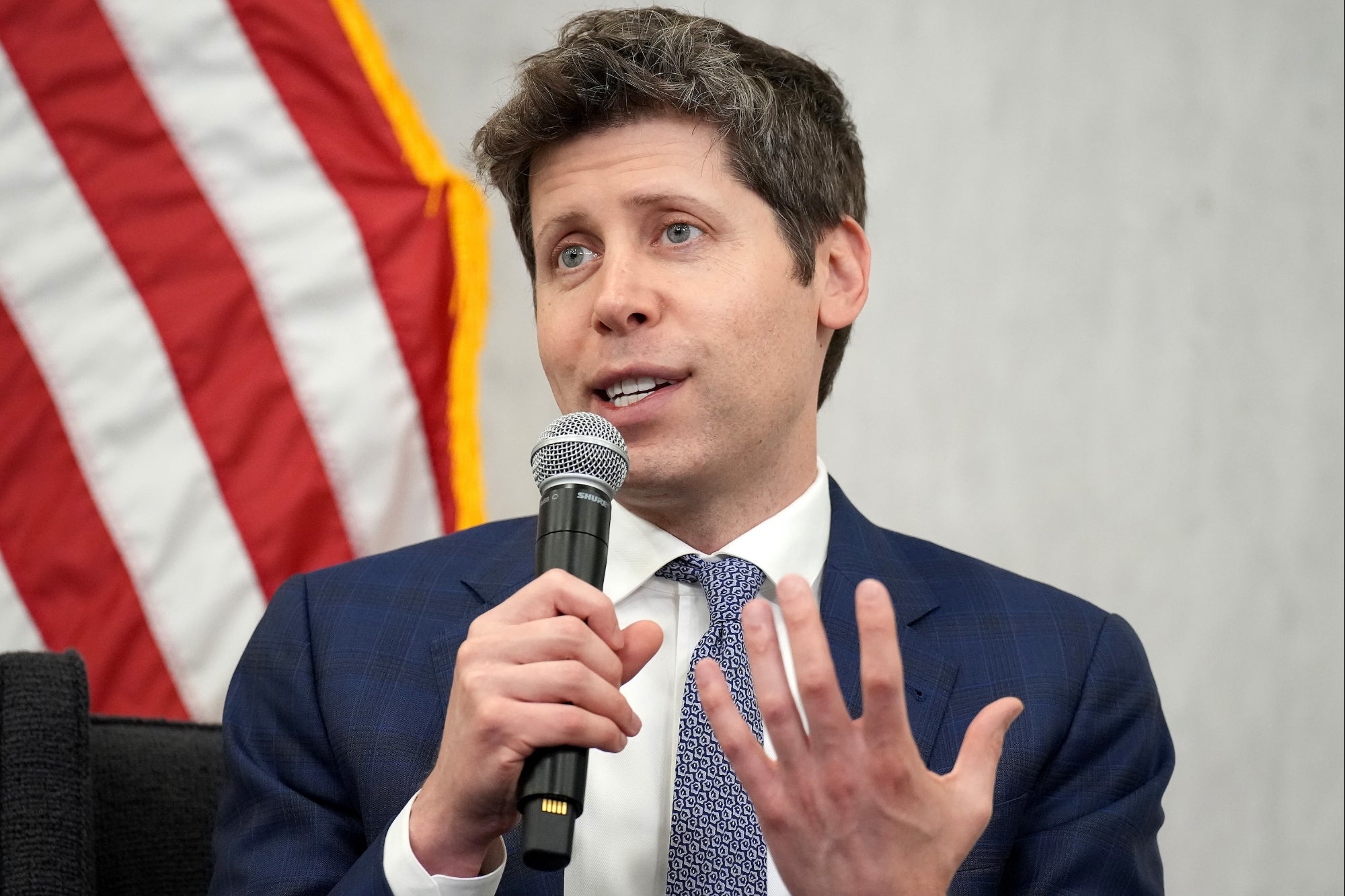
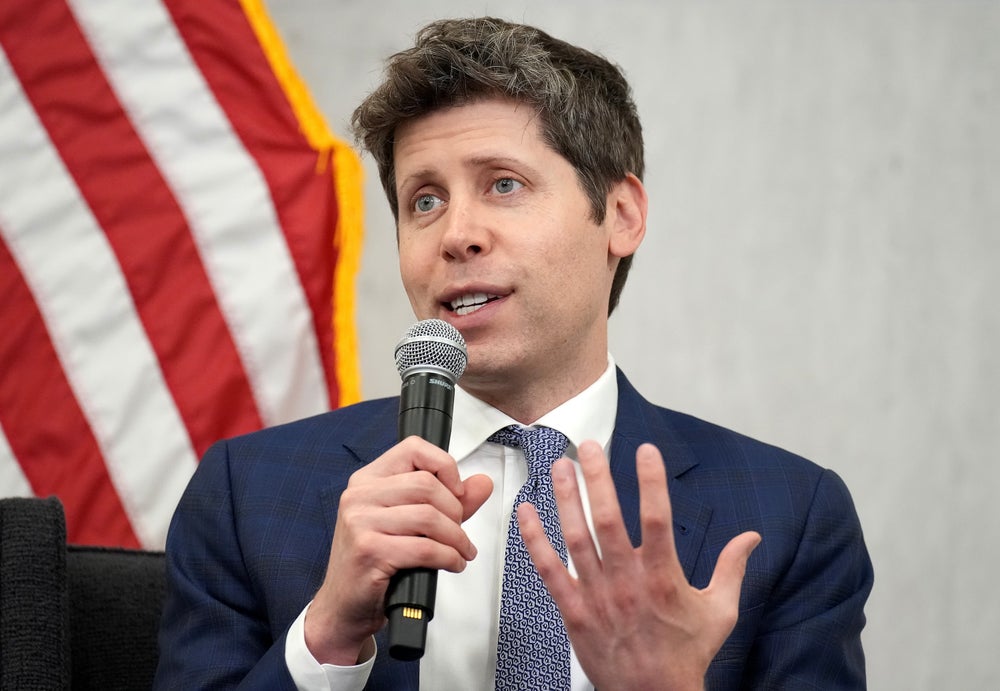
Related: ‘Not Cool’: Sam Altman Says Lawsuit Over Secret Jony Ive Project Is ‘Silly’

“AI is now a fundamental part of how we work,” Liuson wrote in the email. “Just like collaboration, data-driven thinking, and effective communication, using AI is no longer optional — it’s core to every role and every level.”

AI use at work is already on the rise. This week, Salesforce CEO Marc Benioff told Bloomberg that AI was handling half of all work at his company.

AI is taking care of “30% to 50% of the work at Salesforce now,” Benioff said.

Meanwhile, a new report from SignalFire, a venture capital firm that monitors the job movements of over 650 million employees on LinkedIn, found that advances in AI have already led big tech companies to reduce the hiring of new graduates (down 25% from 2023 to 2024).

Related: Meta Poaches the CEO of a $32 Billion AI Startup — After Trying to Buy the Company and Being Told No


Source link

Microsoft Staff Told to Use AI More at Work: Report Read More »

Struggling to Stick to a Routine? Here’s How AI Can Help

Struggling to Stick to a Routine? Here’s How AI Can Help


Opinions expressed by Entrepreneur contributors are their own.

I’ve always believed that consistency beats intensity. At the gym, I exercise for 30 minutes daily, rather than several grueling hours once a week. Every morning, I commit to writing 400 words, which I much prefer to banging out half a book in one caffeine-fueled haze. In the early years of building my company, there were no massive funding rounds — just showing up day in, day out, solving problems and improving my product one step at a time.

That’s why this quote from Atomic Habits author James Clear has always stuck with me: “You do not rise to the level of your goals. You fall to the level of your systems.”

In other words, it’s not your ambition that carries you forward — it’s your habits. And the truth is, building good habits is hard, especially when you’re running a business. You’re pulled in a hundred different directions, and it’s easy for even the most adamant resolutions to fall apart after a few days.

Even so, building routines can be tough — they require persistence, dedication and a surprising amount of mental energy just to stay on track. You have to remember your goals, fight off distractions and constantly reorient yourself when things get chaotic.

But here’s the good news: You don’t have to do it all manually. Thanks to AI, it’s now possible to build systems that help you stay consistent without burning out. I’ve always been pretty adamant about my routines, but now, it’s easier than ever. Here’s how I’m approaching it.

Related: 7 Ways AI Made My Work Smarter — and Not Harder

Use AI as an accountability partner

At work, you’ve got a manager (or a board). At the gym, you may have a trainer. It’s clear that having someone to hold you accountable adds an extra layer of urgency to achieving your goals. After all, it’s harder to blow off that morning workout knowing you’re keeping someone waiting (who you’ll still have to pay if you hit snooze).

With AI, accountability doesn’t have to be external. AI agents — autonomous decision-makers that can take action on your behalf, in particular, can do more than just nudge you about your to-do list. They can check in, track progress, adapt routines and even suggest improvements. That kind of support system used to require a team. Now, it can be built into your daily workflow.

Say you struggle, for example, with carving out time to work on a new product. Tools like Motion integrate directly with your calendar to track your habits, block focus time and adjust dynamically when conflicts arise. If you want to start prioritizing an hour of deep work every day post-morning coffee, a tool like this can afford these commitments the same weight as a meeting, automatically protecting your time and reminding you when it’s time to get started.

Cut down on decision fatigue

One of the biggest reasons we abandon routines isn’t a lack of motivation — it’s decision fatigue. Considering the average person makes 35,000 decisions a day, it’s no wonder we struggle to effectively prioritize our time. When every action requires mental effort, from choosing what to work on to when to do it, we quickly burn out.

Ironically, creating structure is one of the best ways to stave off the pressure of making decisions. I often think of the advice I’ve heard from pro athletes, who afford themselves zero room for waffling or negotiating when it comes to their training schedules. It’s cold out today? Too bad. They didn’t sleep well the night before? Also, too bad. There’s no decision involved — only doing.

That level of consistency doesn’t come from motivation — it comes from removing choice from the equation. And that’s where AI can play a powerful role. By automating the when, what and even how long, AI systems help you stick to routines without needing to summon willpower every time.

And while it’s true that no tool can force you to follow through on a commitment, they can do the next best thing: Cut off your access to distractions. When I can’t trust myself not to procrastinate a task I’d rather avoid, I use a platform like Freedom, which simply blocks my ability to lose myself in online distractions. It’s simple, but incredibly effective.

Related: Why Smart Entrepreneurs Let AI Do the Heavy Business Lifting

Don’t just build routines — design systems

A lot of people confuse routines with checklists: wake up, meditate, answer emails, repeat. But the most effective routines aren’t strict — they’re adaptive. They fluctuate with your schedule, adapt to your goals and grow along with you.

That’s where AI shines — not just in tracking habits, but in helping you design systems that actually fit your life. Say your kid gets sick and needs to get picked up from school, or even go to the doctor. Life happens. But it doesn’t mean your whole day needs to fall apart completely. For this, I like Reclaim and Clockwise, which can intelligently reschedule tasks when your best-laid plans take a sudden turn. Instead of you adjusting to your routine, the system adjusts to you.

With the right systems in place, consistency stops feeling like a grind and starts feeling automatic. AI won’t do the work for you — but it can make it a lot easier to show up, day after day, and keep moving forward.

I’ve always believed that consistency beats intensity. At the gym, I exercise for 30 minutes daily, rather than several grueling hours once a week. Every morning, I commit to writing 400 words, which I much prefer to banging out half a book in one caffeine-fueled haze. In the early years of building my company, there were no massive funding rounds — just showing up day in, day out, solving problems and improving my product one step at a time.

That’s why this quote from Atomic Habits author James Clear has always stuck with me: “You do not rise to the level of your goals. You fall to the level of your systems.”

In other words, it’s not your ambition that carries you forward — it’s your habits. And the truth is, building good habits is hard, especially when you’re running a business. You’re pulled in a hundred different directions, and it’s easy for even the most adamant resolutions to fall apart after a few days.

The rest of this article is locked.

Join Entrepreneur+ today for access.


Source link

Struggling to Stick to a Routine? Here’s How AI Can Help Read More »

Get This 0 MacBook Air Laptop

Get This $200 MacBook Air Laptop


Disclosure: Our goal is to feature products and services that we think you’ll find interesting and useful. If you purchase them, Entrepreneur may get a small share of the revenue from the sale from our commerce partners.

Lugging around your $2,000 work laptop on every flight, through every hotel, and across every unfamiliar city? Stress levels: maximum. Business travel is chaotic enough without worrying that a spilled coffee or housekeeping mishap could ruin your most expensive device.

That’s why this refurbished MacBook Air, now just $199.97 with free shipping, is catching attention as the ultimate backup laptop for entrepreneurs who work on the go (reg. $999). If it gets a scratch going through TSA, temporarily misplaced with your lost luggage, or stolen, at least it wasn’t your expensive, main laptop, right?

Here’s what this MacBook Air can handle

This MacBook Air isn’t a powerhouse, but it doesn’t need to be. It’s ideal for email, light web browsing, spreadsheets, document editing, and streaming on the go. With a 1.8GHz Intel Core i5 processor and Intel HD Graphics 6000, it handles essential tasks without lag.

The 13.3-inch display features a 1440×900 resolution, making it sharp enough for Zoom calls and Google Docs while also conserving battery life. Speaking of which: the 12-hour battery means you can work through long layovers or client meetings without hunting for a charger. And, since it weighs under three pounds, it’s a great model for travel or hybrid work.

It’s a grade “A/B” refurb, meaning it may show light scuffing or signs of wear, but that also explains the deeply discounted price. This is a backup laptop that’s designed to be used, not babied. A 90-day parts and labor warranty is also included with your purchase.

Take advantage of this refurbished MacBook Air deal, now $199.97 with free shipping while supplies last (reg. $999).

Apple MacBook Air 13.3″ (2017) 1.8GHz i5 8GB RAM 128GB SSD Silver (Refurbished)

See Deal

StackSocial prices subject to change.

Lugging around your $2,000 work laptop on every flight, through every hotel, and across every unfamiliar city? Stress levels: maximum. Business travel is chaotic enough without worrying that a spilled coffee or housekeeping mishap could ruin your most expensive device.

That’s why this refurbished MacBook Air, now just $199.97 with free shipping, is catching attention as the ultimate backup laptop for entrepreneurs who work on the go (reg. $999). If it gets a scratch going through TSA, temporarily misplaced with your lost luggage, or stolen, at least it wasn’t your expensive, main laptop, right?

Here’s what this MacBook Air can handle

The rest of this article is locked.

Join Entrepreneur+ today for access.


Source link

Get This $200 MacBook Air Laptop Read More »

Goldman Sachs Internship Acceptance Harder Than Harvard

Goldman Sachs Internship Acceptance Harder Than Harvard


Goldman Sachs’ famed summer internship program began last week. The 10-week program allows college students to “spend the summer learning from the firm’s leaders, working on the most consequential challenges in finance, and growing as professionals,” according to the company.

But you’ll have an easier time getting accepted into Harvard University than becoming a Goldman Sachs summer intern. While Harvard boasted a low 3.6% acceptance rate for its undergraduate class of 2028, Goldman Sachs had an even lower acceptance rate for its 2025 summer internship: 0.7%.

Related: Goldman Sachs Asks Some Managers to Move From Major Hubs Like New York City to Emerging Regions Like Dallas — Or Quit

Over 360,000 global applicants applied for 2,600 seats in offices around the world, marking “the most competitive intern class” in the bank’s history, the firm noted in a LinkedIn post. Over 500 schools were represented, with more than 85 languages spoken among the accepted batch.

Since David Solomon took over as Goldman Sachs CEO in 2018, the number of applicants for the bank’s coveted summer internship program has grown more than 300%, according to Fox Business. Compared to a year ago, the applicant pool has expanded by 15%.

Goldman isn’t the only bank with a less than 1% acceptance rate for its summer internship. JPMorgan reported receiving 493,000 applications last year for 4,000 seats, marking an acceptance rate of 0.8%.

The interview process for Goldman internships involves two steps: First, a 30-minute video interview with HireVue, and second, a “superday” final round of interviews with two to five interviewers. Engineering candidates additionally have to pass an online skills assessment.

According to Glassdoor, interns were asked questions like “Walk me through your resume,” “Explain banking like you were five,” and “Why Goldman Sachs?”

Related: Goldman Sachs CIO Says Coders Should Take Philosophy Classes — Here’s Why

The application process for Goldman’s intern program begins over a year in advance, in the spring of the previous year. Final round interviews are already underway for candidates for next year’s internship class. Applicants have typically completed their junior year of college by the time the internship starts, making them sophomores at the time they apply.

What’s harder than landing an internship at JPMorgan or Goldman Sachs? Being a NASA astronaut, which only accepted 10 out of 12,000 applicants when it opened up selection in 2020, for an acceptance rate of 0.083%.

Goldman Sachs stock was up over 20% year-to-date.

Goldman Sachs’ famed summer internship program began last week. The 10-week program allows college students to “spend the summer learning from the firm’s leaders, working on the most consequential challenges in finance, and growing as professionals,” according to the company.

But you’ll have an easier time getting accepted into Harvard University than becoming a Goldman Sachs summer intern. While Harvard boasted a low 3.6% acceptance rate for its undergraduate class of 2028, Goldman Sachs had an even lower acceptance rate for its 2025 summer internship: 0.7%.

Related: Goldman Sachs Asks Some Managers to Move From Major Hubs Like New York City to Emerging Regions Like Dallas — Or Quit

The rest of this article is locked.

Join Entrepreneur+ today for access.


Source link

Goldman Sachs Internship Acceptance Harder Than Harvard Read More »

17 Surprising Ways 7-Figure Solopreneurs Are Using AI — And You’re Not

17 Surprising Ways 7-Figure Solopreneurs Are Using AI — And You’re Not


Opinions expressed by Entrepreneur contributors are their own.

If you’re still using ChatGPT to write Instagram captions or answer surface-level questions, you’re leaving serious growth on the table.

In this video, you’ll uncover 17 high-leverage AI strategies designed to scale your solo business, increase profitability, and eliminate guesswork.

You’ll discover how to:

  • Audit your website and landing pages using Google AI’s Realtime Feedback — like having a 24/7 marketing analyst
  • Analyze your last six months of email campaigns to uncover revenue leaks and performance goldmines
  • Write higher-converting subject lines, sales pages and ads — based on what’s proven to work
  • Reverse-engineer viral competitor content, pricing models and bonus stacks
  • Perform deep market research without paying $200 per month for bloated SEO software
  • Extract customer pain points from Amazon reviews and turn them into powerful marketing angles
  • Automate onboarding, voiceovers and short-form content using tools
  • Streamline your business using pre-built GPTs and personalized AI workflows to save hours each week

These are the same tools and tactics I’ve used to dramatically boost conversions, free up time and run a lean, high-impact business.

No tech skills required — just a smarter way to grow. This isn’t about saving time. It’s about gaining leverage. If you’re ready to turn AI into your unfair advantage, this video is your roadmap.

Save it for later — and let’s dive in.

The AI Success Kit is available to download for free, along with a chapter from my new book, The Wolf is at The Door.

If you’re still using ChatGPT to write Instagram captions or answer surface-level questions, you’re leaving serious growth on the table.

In this video, you’ll uncover 17 high-leverage AI strategies designed to scale your solo business, increase profitability, and eliminate guesswork.

You’ll discover how to:

The rest of this article is locked.

Join Entrepreneur+ today for access.


Source link

17 Surprising Ways 7-Figure Solopreneurs Are Using AI — And You’re Not Read More »

My Success Felt Hollow — Until I Made This Pivotal Leadership Shift

My Success Felt Hollow — Until I Made This Pivotal Leadership Shift


Opinions expressed by Entrepreneur contributors are their own.

Four years ago, I hit a breaking point.

On paper, I had everything — degrees from Harvard and Oxford, a Rhodes Scholarship, bestselling books and stood alongside icons like Oprah and Richard Branson. I had launched global movements and built international organizations. But inside, I was empty.

A traumatic event in 2020 forced me to confront what I’d been ignoring: I was burned out, disillusioned and spiritually disconnected.

I had followed the script for success — achievement, recognition, scale — but it had left me physically depleted and mentally adrift. And while the personal toll was staggering, the professional cost was even greater. I realized something many leaders quietly suspect: You can’t lead well when you’re running on empty.

Related: How to Escape Entrepreneurial Burnout When You Can’t Just Quit

Fulfillment isn’t a luxury — it’s a leadership strategy

Burnout among top leaders is more than a personal problem. A 2024 study found 55% of CEOs reported experiencing a mental health issue in the past year — a 24% increase from the year before.

Leaders who feel unfulfilled make poorer decisions, struggle to build trust and drain culture. But when leaders feel connected to purpose, teams thrive. Engagement and retention go up. So does creativity, clarity and momentum.

Fulfillment fuels everything.

From breakdown to breakthrough

What pulled me out wasn’t another productivity hack — it was a deeper reset. I asked questions I’d been avoiding: Who am I without the work? What truly brings me joy? What do I want this all to mean?

That journey led me through a full personal overhaul — biohacking, longevity medicine and deep self-reflection. But the biggest shift wasn’t physical. It was internal. It was about redefining success — not as output, but as alignment.

Here’s what I now practice — and share with the leaders I mentor.

Reclaim your morning

Instead of starting the day in reaction mode (email, Slack, to-do lists), I protect the first 90 minutes for myself. Meditation, movement, reading — whatever connects me to clarity before the noise begins.

Tip: Ask yourself each morning: What would make today feel meaningful, regardless of outcome? Start there.

Audit your energy, not just your time

Your calendar reveals what you truly value. If most of it drains you, no supplement or sprint will fix it. I started building “fulfillment time” into my schedule — mentoring, hiking, ideating. It made me a better, more present leader.

Try this: Look at last week’s calendar. Highlight everything that lit you up in green. Everything that drained you in red. Then, make one adjustment.

Lead from purpose, not just pressure

Metrics matter. But when pressure is your only motivator, burnout is inevitable. Purpose sustains you.

Create a one-line purpose statement for yourself as a leader. Keep it visible. Let it guide how you show up for your team.

Talk about fulfillment out loud

For years, I kept conversations about meaning and mental health private. Now, I bring them into team check-ins and leadership meetings.

When we normalize these discussions, we build more human, resilient cultures. Try asking your team: What part of your work has felt most meaningful lately?

Related: How to Escape Entrepreneurial Burnout When You Can’t Just Quit

The wake-up call that too many leaders ignore

If you’re succeeding outwardly but feeling lost, it’s not weakness — it’s a signal.

Your burnout isn’t a badge of honor. And your fulfillment isn’t a personal indulgence — it’s a professional responsibility. Because when you’re grounded, whole, and purpose-driven, the ripple effect is powerful: stronger teams, healthier cultures and companies built to last.

You didn’t come this far just to feel numb at the top. Do the work. Define what matters. And lead like it.

Four years ago, I hit a breaking point.

On paper, I had everything — degrees from Harvard and Oxford, a Rhodes Scholarship, bestselling books and stood alongside icons like Oprah and Richard Branson. I had launched global movements and built international organizations. But inside, I was empty.

A traumatic event in 2020 forced me to confront what I’d been ignoring: I was burned out, disillusioned and spiritually disconnected.

The rest of this article is locked.

Join Entrepreneur+ today for access.


Source link

My Success Felt Hollow — Until I Made This Pivotal Leadership Shift Read More »

Get This 0 MacBook Air Laptop

Get This $30 Lifetime Microsoft Office Deal


Disclosure: Our goal is to feature products and services that we think you’ll find interesting and useful. If you purchase them, Entrepreneur may get a small share of the revenue from the sale from our commerce partners.

Still paying $10/month for Microsoft 365? That’s over $120 a year for Office apps that have hardly changed since their initial release. It’s like subscribing to Netflix to watch your favorite show over and over, when owning the DVD set is far cheaper in the long run. Well, we’re offering you a deal on the DVD set—a Microsoft Office lifetime license.

Normally $229, you can download Microsoft Office for Windows for only $29.97 this week only. When you cancel Microsoft 365 and start using the lifetime version, it pays for itself in only three months. Then, you’ll collect savings in your pocket that add up to hundreds over your lifetime.

What you get in the lifetime license

Microsoft Office 2019 Professional Plus comes with Word, Excel, PowerPoint, Outlook, OneNote, Publisher, and Access, giving you more apps than the newest lifetime license. It’s a one-time download for a single Windows PC, with instant access after purchase and no recurring fees. That means no cloud-based subscription, no billing cycle, and no interruptions.

This version doesn’t include Microsoft’s newer AI integrations, but for business professionals who just want to build spreadsheets, write proposals, and organize email without bloat or distraction, that’s actually a perk. Office 2019 is a stable, tried-and-true toolset that gets the job done without requiring a learning curve or surprise app updates.

If you prefer owning your software outright and cutting subscription clutter from your business expenses, this is your moment. Get the most affordable version of Microsoft Office you’ll find, and make that monthly $10 work harder somewhere else.

Download Microsoft Office for Windows while it’s just $29.97 this week (reg. $229). No coupon is needed to get this price.

Microsoft Office Professional Plus 2019 for Windows

See Deal

StackSocial prices subject to change.

Still paying $10/month for Microsoft 365? That’s over $120 a year for Office apps that have hardly changed since their initial release. It’s like subscribing to Netflix to watch your favorite show over and over, when owning the DVD set is far cheaper in the long run. Well, we’re offering you a deal on the DVD set—a Microsoft Office lifetime license.

Normally $229, you can download Microsoft Office for Windows for only $29.97 this week only. When you cancel Microsoft 365 and start using the lifetime version, it pays for itself in only three months. Then, you’ll collect savings in your pocket that add up to hundreds over your lifetime.

What you get in the lifetime license

The rest of this article is locked.

Join Entrepreneur+ today for access.


Source link

Get This $30 Lifetime Microsoft Office Deal Read More »

Salesforce CEO Marc Benioff: AI Is Handling Half of Tasks

Salesforce CEO Marc Benioff: AI Is Handling Half of Tasks


Salesforce CEO Marc Benioff said AI is handling a lot of work at his company previously done by humans — up to half of all work.

In an interview on Bloomberg’s The Circuit with Emily Chang on Thursday, Benioff said that AI is doing “30% to 50% of the work at Salesforce now.”

Related: AI Is Going to ‘Replace Everybody’ in Several Fields, According to the ‘Godfather of AI.’ Here’s Who He Says Should Be ‘Terrified.’

Salesforce sells AI products that tout the ability to handle tasks without human supervision, which Benioff told Bloomberg has about 93% accuracy. Customers include entertainment behemoth Walt Disney Co., among others.

“All of us have to get our head around this idea that AI can do things that before we were doing,” Benioff added. “We can move on to do higher-value work.”

Tech companies are incorporating AI into daily tasks across Silicon Valley. At Microsoft, engineers are using AI to write 20% to 30% of the code for company projects, CEO Satya Nadella said at Meta’s LlamaCon conference in April.

Related: Google CEO Sundar Pichai Says AI Will Advance Humanity in These 4 Key Ways

Meta CEO Mark Zuckerberg indicated at the same conference that AI will take over half of the company’s software development within the next year.

Meanwhile, CEO Sundar Pichai said on an earnings call in April that the company was using AI to write “well over 30%” of new code, up from 25% in October. Google employees are increasingly accepting AI-suggested code, he said.


Source link

Salesforce CEO Marc Benioff: AI Is Handling Half of Tasks Read More »

Standard Chartered CEO: Wharton MBA Was a ‘Waste of Time’

Standard Chartered CEO: Wharton MBA Was a ‘Waste of Time’


Bill Winters, the CEO of 160-year-old bank Standard Chartered, says that the MBA he earned from the University of Pennsylvania Wharton School of Business was a “waste of time” — but the humanities undergraduate degree he received from Colgate University was more worth it.

In an interview that aired earlier this week, Bloomberg’s Francine Lacqua asked Winters, 63, what he would recommend for young people to study. Winters responded by saying that he studied international relations and history as an undergraduate, graduating in 1983. He recommended those fields, stating that majoring in those areas taught him “how to think.”

But his MBA from Wharton in 1988 was unnecessary, he said.

“I got an MBA later, but that was a waste of time,” Winters told Bloomberg. “I learned how to think at university. For the 40 years since I left university, those skills have been degraded, degraded, degraded.”

Related: Goldman Sachs CIO Says Coders Should Take Philosophy Classes — Here’s Why

Winters explained that critical thinking skills are “coming back” and becoming more important in the workforce now because AI is taking over tasks on the technical side.

“I really think in the age of AI that it’s critical that you know how to think and communicate,” Winters said.

He clarified that communication doesn’t mean to act like ChatGPT and churn out answers, but to know an audience and anticipate their needs with curiosity and empathy. Technical skills are being needed “less and less,” Winters said.

Bill Winters. Photographer: Jason Alden/Bloomberg via Getty Images

Winters started his career at JPMorgan in 1983, rising over nearly three decades to become the co-CEO of JPMorgan’s investment bank. He was considered a potential successor to JPMorgan CEO Jamie Dimon, but was ousted by Dimon in October 2009. He started his own fund management business, Renshaw Bay, in 2011 and joined Standard Chartered as CEO in 2015.

Related: Using ChatGPT? AI Could Damage Your Critical Thinking Skills, According to a Microsoft Study

Winters isn’t the only executive encouraging the study of the humanities. Goldman Sachs’ Chief Information Officer, Marco Argenti, wrote in a post in the Harvard Business Review last year that engineers should take philosophy classes in addition to standard engineering courses. That’s the advice he gave his college-age daughter who was thinking about what to study.

Meanwhile, big tech companies are rapidly adopting AI in their operations as the technology sweeps over technical skills. AI generates about 30% of new code at Google and Microsoft, and up to half of software development within the next year at Meta.

Vibe coding,” or having AI code entire apps and projects based on prompts, is also on the rise. Even Google CEO Sundar Pichai stated earlier this month that he had used AI coding assistants to “vibe code” a webpage in his spare time.

Bill Winters, the CEO of 160-year-old bank Standard Chartered, says that the MBA he earned from the University of Pennsylvania Wharton School of Business was a “waste of time” — but the humanities undergraduate degree he received from Colgate University was more worth it.

In an interview that aired earlier this week, Bloomberg’s Francine Lacqua asked Winters, 63, what he would recommend for young people to study. Winters responded by saying that he studied international relations and history as an undergraduate, graduating in 1983. He recommended those fields, stating that majoring in those areas taught him “how to think.”

But his MBA from Wharton in 1988 was unnecessary, he said.

The rest of this article is locked.

Join Entrepreneur+ today for access.


Source link

Standard Chartered CEO: Wharton MBA Was a ‘Waste of Time’ Read More »

How a Setback Led to Success for Busy Philipps

How a Setback Led to Success for Busy Philipps


Opinions expressed by Entrepreneur contributors are their own.

Busy Philipps wasn’t trying to disrupt the celebrity marketing model when she first cried on Instagram stories. She wasn’t pitching brand deals or testing a strategy. She was just being real. But it turns out that unfiltered vulnerability — streamed to millions — wasn’t just cathartic. It was transformative.

Long before “authentic marketing” became a buzzword, Philipps was living it. And in doing so, the Freaks and Geeks and Dawson’s Creek actress discovered something Hollywood had long taught her to avoid: Being yourself online can actually be a superpower.

“Since I was a teenager, how I was portrayed in the media was always just very dependent on a reporter and the space they had allotted for a profile of a young actress like myself,” Philipps says. “I loved being able to have a direct line to people… being able to put [myself] directly out to the fans.”

Philipps’ Instagram stories marked a turning point in how she connected with the public. Rather than polished outcomes, she shared messy, behind-the-scenes moments to build deeper connections. And after years of curated press coverage and red carpet appearances, social media gave her the chance to control her own narrative and pursue opportunities she was passionate about.

Related: From Pennies to Millions: What It Felt Like to Make Money for the First Time

Her breakthrough moment came after her first late-night show, Busy Tonight, was canceled. In the old celebrity playbook, that kind of public career pivot would’ve been tightly managed. Philipps took another route — she processed her disappointment openly. “Oh, honey, I dwell,” she says. “I was just deeply feeling the injustice of the thing…but the more meetings we took, the more I thought, Why do these people get to determine what success looks like for me?

Instead of jumping on the next available offer, Philipps paused and listened to her instincts. She passed on a major deal, ultimately paving the way for her QVC series, Busy This Week. “I called [executive producer Caissie St. Onge] and said, ‘Just hear me out. I feel like we can go directly to advertisers and get them to fund our talk show.'”

That gut-driven decision led Philipps to a larger realization: Creators could bypass traditional gatekeepers and build something of their own. For entrepreneurs, the takeaway is equally powerful: Don’t just chase the next opportunity. Wait for the one that aligns with your values.

Related: 5 Secrets to Success From a Sustainable Business That’s Grown 95% in 3 Years

Today, Philipps is much more than an actress — she’s a producer, podcast host, QVC personality and investor in mission-driven brands. What sets her apart isn’t just the breadth of her work, but the intentional way she uses her influence. On her QVC series, every product is selected with purpose, and many sell out quickly.

“There was a dress that Caissie wore that sold out immediately,” Philipps shares. “And when Tina Fey was on the show, there was this slightly terrifying Christmas squirrel that she had a lot to say about — but that squirrel sold out less than a week later.”

As a late-night host, Philipps’ approach is collaborative, honest and driven by care — a strategy that any entrepreneur can learn from. “I might be a f****** visionary, but I didn’t go to business school, and I don’t know how to code,” she says. “You’re only as good as the people you’re working with. QVC has been an incredible partner because they’re open to all the ideas.”

Related: Want to Work With Influencers? Here’s What Small Business Owners Need to Know.

Philipps brings that same mindset to investing. She doesn’t partner with a brand unless she believes in it. “With [BEHAVE Candy], I literally was just buying it,” she says. “Then my agent brought it to me, and I was like. ‘Familiar with the brand? I literally have it in my pantry.'”

What matters most to Philipps is the “why” behind a business. The brands she supports, including BEHAVE and Period., share a common purpose. They’re built by founders who care about making a positive impact, not just turning a profit.

“We have a surplus of s*** in the world, so…why? Why do we want it? Why do we need it? What good is it to the world? And what good are you gonna be to the world?”

By leading with her values, Philipps has built a following that trusts her deeply, supporting the products and platforms she stands behind. That connection is the foundation of long-term influence. Whether you’re an actress or a small business owner, people are attracted to authenticity with a purpose.

As Philipps puts it: “Is it doing something good in the world? That’s what matters to me.”

These are some of the principles that Philipps followed to get to where she is today:

  • Own your voice. Don’t wait for permission to share your story. People connect with truth more than polish.
  • Take your time. It’s okay to dwell after a setback. Wait for what feels right.
  • Surround yourself with great people. Your team matters. Find people who fill in the gaps and support your vision.
  • Invest in alignment. Don’t chase influence—cultivate values-based partnerships.
  • Turn missteps into momentum. Even a public failure can become a launching pad if handled with transparency and care.

Related: This Local Bakery Has Lines Out the Door. Here Are the Secrets to Its Success.

Busy Philipps wasn’t trying to disrupt the celebrity marketing model when she first cried on Instagram stories. She wasn’t pitching brand deals or testing a strategy. She was just being real. But it turns out that unfiltered vulnerability — streamed to millions — wasn’t just cathartic. It was transformative.

Long before “authentic marketing” became a buzzword, Philipps was living it. And in doing so, the Freaks and Geeks and Dawson’s Creek actress discovered something Hollywood had long taught her to avoid: Being yourself online can actually be a superpower.

“Since I was a teenager, how I was portrayed in the media was always just very dependent on a reporter and the space they had allotted for a profile of a young actress like myself,” Philipps says. “I loved being able to have a direct line to people… being able to put [myself] directly out to the fans.”

The rest of this article is locked.

Join Entrepreneur+ today for access.


Source link

How a Setback Led to Success for Busy Philipps Read More »