Blog

From Burnt-Out Tech Worker to K in Passive Income in 2 Years

From Burnt-Out Tech Worker to $95K in Passive Income in 2 Years


Off-market real estate deals can make you a millionaire in just a few YEARS. Instead of buying the nicest-looking rental property in the best area through a brutal bidding war, David Lecko went the opposite route, purchasing the properties nobody else wanted, finding deals simply by driving for dollars or paying someone else to do so. He went from a burnt-out nine-to-five worker to financial freedom in just two years by following this strategy, and you can do it, too!

David was working all day and all night, making a meager salary with almost zero time freedom. His boss, who worked far less than he did, outsourced his business and had rental properties on the side. David knew that to be in the same position, he’d have to mimic his boss’ path to wealth. So, after work, David would drive around his local area, looking for the tallest grass, the biggest roof repairs, and the worst paint jobs. He finally found his first deal, which cost less than a used car, but ended up springboarding David to make millions.

In today’s episode, David will walk through EXACTLY how to find off-market real estate deals the RIGHT way, how to get around the lazy lists that most off-market investors use, and how to turn a few properties into millions of dollars of wealth and close to six figures a year in passive income. And in today’s tough housing market, finding deals like these is even MORE crucial. So, what are you waiting for? Financial freedom is only a couple of years away!

David:
This is the BiggerPockets Podcast show, 830.

David Lecko:
I actually started in 2016 when I worked for somebody who had five rental properties, and I was like, “Why do you have this?” He said, “Well, unlike the stock market that can go up and down, if you get rentals and you buy them right and manage them well, they’ll always make money.” That’s what motivated me to go looking for some of these real estate deals. There weren’t any, nothing was going to cash flow until I found out about going off market and then providing value to somebody, getting a discounted property, fixing it up. That’s actually led me to 2 million in rentals that I have today with a million-dollar equity position.

David:
What’s up everyone? This is David Greene, your host of the BiggerPockets Real Estate Podcast, the biggest, the best, and the baddest real estate podcast in the world. Every week we bring you stories, how-tos and the answers that you need to make smart real estate decisions now in this current market that is ever-changing. We have a great story for you today. Joining me is my overly eccentric co-host, Rob Abasolo, who is either being a mime or doing ASL for those who are watching on YouTube. Rob, how are you today?

Rob:
Oh, my gosh. Dude, I got home at 4:00 AM last night. Now, I feel like I’m on vacation. Now, I feel like I’m on vacation, because being on a plane with a two and a three-year-old for 12 hours? Hmm.

David:
Today we’re about to speak with David Lecko. He’s going to be describing the strategy that he’s used to build a $2 million portfolio with $72,000 a year in cashflow that he started with only $4,000.

Rob:
It’s crazy, man. On top of that little fun fact, he’s also the founder of DealMachine, which we didn’t really talk about in the podcast today. He’s got a really cool story and really breaks down, I mean, really everything from the beginning, I think it’s going to be encouraging for a lot of people to hear his story.

David:
Absolutely. Today’s quick tip is going to be brought to you by Rob, who actually has some advice to share that came out of today’s show.

Rob:
Hey, when you see an opportunity, take action. You’re going to hear why today at the very end of the podcast. We talk about a deal that I just did because the moment I saw the opportunity, I made the phone call and got stuff done.

David:
There you go. Strike when the iron is hot because it doesn’t stay hot forever. As we know, decisions are made based on emotions and emotions change. When you’ve got the right opportunity, don’t waste your shot. Much like Eminem said, you may never get it again. All right, let’s bring in David. David Lecko, welcome to the BiggerPockets podcast. How are you today?

David Lecko:
I’m great, thank you so much.

David:
Nice, man. Can you give our listeners a quick rundown of who you are, where you invest, and how long you’ve been investing for?

David Lecko:
I actually started in 2016 when I worked for somebody who had five rental properties and I was like, “Why do you have this?” He said, “Well, unlike the stock market that can go up and down, if you get rentals and you buy them right and manage them well, they’ll always make money.” We know Warren Buffet says the rule is don’t lose money, never lose money. That’s what motivated me to go looking for some of these real estate deals, but there weren’t any, nothing was going to cashflow until I found out about going off market and then providing value to somebody, getting a discounted property, fixing it up. That’s actually led me to 2 million in rentals that I have today with a million-dollar equity position and about $95,000 in net cashflow expected this year. Last year was 72, but I did a couple of acquisitions this year. Those properties were acquired over about a two-and-a-half-year period from 2017 to ’19. Then I chilled out for quite a while. I had a lot of appreciation. I’m now re-motivated to go acquire some more rental properties.

David:
All right, I want to ask you, Rob, a quick question. How long do you think we’ll still hear stories about people who heard about real estate from a human? Because now with YouTube and social media, it’s bombarded by real estate. I just realized, that’s how people used to say it. Like, I met a guy in a restaurant one day, mysterious man smelled of rich mahogany and leather-bound books. He told me he had rental properties, and I was so fascinated. Versus what it’s like now. I’m just curious, Rob, what your perspective. Do you think that anyone will ever hear about real estate from a human from this point forward?

Rob:
That’s very funny. I was legitimately just thinking about this because everyone that I follow on Instagram, they are all real estate people. It’s all like, “Here’s five rental strategies you need to perfect in 2022. Here’s how to make $10,000 cashflow.” That’s all my Instagram is. I’m like, man, the entire Instagram landscape has really changed for the real estate industry, but that is really a big part of how people even find out about real estate. I don’t know. I think the days of the coffee shop, meeting with an older real estate vet and they teach you everything and take you under their wing, I feel like those, yeah, it’s getting a little bit more rare these days.

David:
That’s true. Also, I feel like when you talk to someone before they tell you what they actually had versus when you hear something online, now it might be someone with a house they live in and one investment property, but they’re talking about it as if they have 50 rentals. That’s a little different too. It’s easier to find out about it, but you got to dig a little bit deeper to figure out what’s really going on, and that’s what we’re going to do today. David, we’re going to hear all about your expertise in a second here, but give me an idea on what strategy or tactic is working for you right now.

David Lecko:
I’m doing two things right now. I’m paying a driver to look for rundown properties. I’m sending marketing and I’m getting calls back answered by a call center, and then I follow up and do a virtual appointment. The other thing I’m doing now that’s new for this year that I’ve had a couple successes with so far, is actually making offers on properties in the MLS in my market that are over 45 days old and I’m sending 70% offers to those properties. I’ve sent about 500 of those offers and done about three deals, in the last three months I would say.

David:
You’re taking steps just to get the ball rolling. You’re trying to get the conversation going, just get that first date and then see where things go.

David Lecko:
Actually, the on-market listings that I’m giving it 70% off, they’re actually just receiving offers. 70% off as is, and you never know what they’ll accept unless they have a low offer in their hand. That’s actually, I mean they’re signing it and I’m like, “Oh, wow. I have a property on your contract.”

Rob:
I have a question about that. You’re making these offers, presumably if they’ve been on the market for 45 days. We’re getting towards the point where that listing is going to expire. That agent is probably going to lose the contract, is my guess. When you make an offer, how are you actually doing that? Do you have a realtor representing you making that offer, or are you just making that offer to the listing agent and asking them to represent both of you?

David Lecko:
It’s through an agent and I use a software that connects to her email and uses her contract and fills in the DocuSign details. I have a slider that says what percentage do I want to send out all my offers. I usually do 35 per week because she’ll get an influx of emails and texts and she does respond to those. Some of those end up being a counter. That’s how I get the ball rolling. It doesn’t take her time, but we have a process and a tool that we use that allows me to send those offers like that.

Rob:
Hold on. That sounds like the most system and process-oriented way of doing this. I just thought you were calling, “Hey, make this offer.” You actually have this, I don’t want to say automated, but really efficiently laid out to where if you’re going to make 35 offers, are you actually examining all of those properties running the numbers on them, or you’re just like, all right, hey, if it’s 70% and they accept, I’ll then run my numbers?

David Lecko:
The second thing. I’m doing a little bit of filtering, I just want a three-bedroom, two-bath house with a certain square footage. I’m not doing these offers on commercial buildings or I’m not doing it on a two-bedroom, one-bathroom house because I just do want it to actually be a property that I’d probably buy.

David:
We’re going to get into those details a little bit later. Before we move on to the show, just remind me, which area are you buying these in?

David Lecko:
Indianapolis, Indiana.

David:
We’re going to talk about the Indianapolis market as well. We’ll ask you some tough questions, so get yourself prepared for that. Hopefully, it gives you an opportunity to shine. Let’s start with a story. Tell me about a moment before you found real estate, when you knew things had to change?

David Lecko:
Man, my life was actually horrible. I’m working for this company for two years on a product that I actually built before I ever worked there, and I sold it for $10,000 now as a recruitment tool in another industry. The reason why I bought it is because there’s advice from Gary Vaynerchuk, for example, that says, you shouldn’t take the most expensive, the highest-paying job, you should actually go work for somebody that you want to emulate. That’s exactly what I did. I sold this tool I built and it was a low cost, and I was getting paid $55,000. On the first day, the CEO says, “Hey, David. Please don’t share what you make with anyone else on this team because nobody else makes that much.” I was like, “Man, I don’t even feel like that’s that much.”
I took a $20,000 pay cut to get here, and I did though really working a ton and I’m working a ton. I’m the software developer, I’m the tech support, I’m the trainer. When there’s a problem, I’m not actually having anyone else be able to do those things, so there’s no backup. I’m actually the most knowledgeable person that they have. This culminated over two years. I’m learning a lot. There was always these times where I take my computer to the bar with me if I was going to go out with friends, because something’s going to come up, I want to be able to fix it instead of have to drive home and come back. Finally, I’m at my best friend’s wedding and I’m actually in the wedding party. I leave the reception because I got the call, something is wrong and I’m out in my Honda Accord, 10-year-old Honda Accord with my hotspot and I’m fixing this tool.
I was like, man, he was upset, his wife was upset. I felt terrible because I’m missing the reception. I knew that something had to change. I knew that the owner of this company of mine had these rental properties, and so I knew I needed to start taking action towards making a change, towards finding an off-market deal. At the time he said, well, he bought these properties in 2009, which was a great buying opportunity, and I was a little bit discouraged by that. It wasn’t his intention, but I looked at the market and I couldn’t find anything that would cashflow. Thankfully, I went to a meetup and found people that were doing deals all the time. That’s when I realized you can’t just time the market. You’ve got to find deals in whatever market condition exists. You’ve got to figure out how to find good deals in all those conditions.

Rob:
You went to a meetup and you said people are doing deals. As someone that didn’t know anything about real estate or not all that much, you go to a real estate meetup and you find out that people are doing all these things. What kind of deals were they doing and then were they all doing so many types of real estate that it was overwhelming? What was that first experience even like?

David Lecko:
Well, it was pretty awesome, because they actually had a prize that was a random drawing for all the attendees, and I won the prize. It was an iPad, and I thought, “This has got to be a sign.” I’m not super spiritual, but this definitely doesn’t feel bad. This is great. I won this iPad and I immediately sold it for 500 bucks and I used that to start sending postcards to distress properties. I remember, there were people doing a lot of stuff, but the prevailing theme was wholesaling.

David:
I love this. What you’re saying is if somebody’s having a hard time getting started, they need to go to events, win prizes, and then pawn off the prize to get the capital C to get started. Correct?

David Lecko:
Yeah, exactly.

Rob:
I love it. I love it because instead of just having an iPad where you could log into Netflix and hang out and do nothing, you’re like, all right, look, I could have this iPad or I mean, it’s basically a free $500 that I can use to experiment and just do random things with in the real estate world and see what sticks. Somehow you land into the postcard world. How did you even learn about that?

David Lecko:
There was definitely a blog post on BiggerPockets that I saw on driving for dollars. The unique aspect of it was this person was putting the photo of the house on the envelope. That was something that they said gave them a better chance, a better response rate. From this day forward, every piece of mail that I’ve sent has the photo of the house on the property. Not the Google photo, like an actual photo that he took. People called back, still to this day, they’re like, “I got a few pieces of mail, but I called yours because it looked like you put a lot of time in it.” Or, “I could tell you’re really here. I could tell you were local.”

Rob:
That’s cool. You went to BiggerPockets, you figured out the idea of driving for dollars. You’ve unlocked a really great entry point into your real estate career and it seems like it’s working. How did that feel emotionally for you for it to start clicking really, I mean it seems like it’s relatively soon into your career?

David Lecko:
Well, there was a period of time where I was just looking for the rundown properties and I wasn’t sending out the mail yet. I was prepared for it. I had the money set aside for it. What I was focused on was finding the properties. It was so much fun driving up and down and just picturing myself buying this property. It felt really awesome. Two months into that, I had a nice list on a tablet of paper, but my stomach sank to the floor when I saw one of these properties had started construction. I went home, looked up. Sure enough, this property actually recently sold and I looked up the price. I wasn’t an expert on numbers, but I felt like it was way lower than what I would’ve even felt comfortable offering. I knew that could have worked for me. I had this terrible feeling that I didn’t even reach out yet, spent so much time just thinking about these homes that I wasn’t following up.
I realized humans have a lot of follow-up issues in general, and I needed to start nipping that in the bud and doing something. I went to go put those letters together with the photos, and that’s when I realized putting letters takes a long time, and at the time, you couldn’t send out mail one at a time. You had to buy a minimum of 200 with some mail house. That’s what left me doing them myself in my basement, which took quite a bit of time. That was the next struggle for me. I’m glad I did it because I didn’t have a ton of money and I heard over and over the driving for dollars is the best list.

Rob:
Well, there’s something ironic about the fact that you were making this list on a tablet of paper instead of an iPad, an electronic tablet. That’s pretty funny. You find this house, you find out it’s the one that got away, but not really, because you never even tried to get it to begin with. Then you get into this time suck. At this point in your journey, was time something that was very important to you or was that the beginning of your journey where time is all you had? Tell us about the emotions of that time in your real estate career.

David Lecko:
Well, as you know, I was working a job that was time-consuming. I don’t know the exact hours. It had some flexibility during the day, but it required lots of stuff at night and random times when people were using the software and I would need to go and fix it. I was feeling quite burnt out. I did enjoy driving around, but when it came time and I realized how time-consuming this was, it just didn’t feel like I had time. Working 9:00 to 5:00, couple of random things for work in the evenings. Now, I have to not only go out and look for properties, but I got to put them together and there’s not enough time left to go hang out with friends, to go eat dinner or anything else like that that I needed to. I was definitely feeling like the candle was burning at both ends.

Rob:
For sure. I think a lot of people feel that way, especially at the beginning of the real estate career. If you’re working a 9:00 to 5:00 or if you’re working any kind of job, and then when it’s over, you still have to do the real estate stuff to get that going as well. At this point in your career, did you have a very clear why defined, like your mission statement? Did you know what you wanted? I know that you missed some important moments in the best friend’s wedding and everything like that. Had you already defined what your why was?

David Lecko:
I had missed some important moments. I also noticed the owner of the company I was working for and learning so much about, didn’t put in the hours that I was. Now, I got the sense he did at the beginning, but I wanted that. I didn’t want to have to work so much for a small salary that I couldn’t even talk about. I wanted something more. It was definitely, I wanted time freedom, but it probably even goes back to high school where I saw some kids had these really cool cars and I wanted that. I wanted more than what I had growing up. I was driven by those two things.

David:
David, when you look at why you were driven for time freedom, can you trace it down to a specific event that happened in your life, an experience you went through, something you witnessed? I think a lot of us would like to have time freedom. We would rather not have to work for somebody else. If you’re lacking the motivation to get out there and make it happen, because it comes at a price. As you well know, you give up a lot of security, you maybe work more hours in the beginning when you’re trying to build that. What do you think about your story specifically led to you having that fire that you were able to use to get over the hump?

David Lecko:
My dad worked at a telecom company. He had a friend that was a contractor. I didn’t really know what that meant. They were buddies. That friend was not only a contractor himself, but he owned a contracting business. He would place people in different companies like this telecom company, and he would make a portion of their earnings as well. I met him at a breakfast with my dad. He gave me a book called The 4-Hour Workweek. That book taught me that you could build a business so you can earn income that’s not limited by how much time you put into it as long as you’re the one who’s actually setting up the business in the right way. That has to be my moment where I knew there was a better path than what I had been exposed to in the just W2 world.

David:
What about that quest for time freedom led you into our world of real estate?

David Lecko:
Well, it seemed like rental properties were pretty stable. If they were never going to lose money, if they were always going to appreciate as long as you manage well, it seemed like the more rental properties I get, the more secure salary I can have, where a business might have fluctuations, that was intimidating to me. A rental properties is physically, you could touch it, you could see it, you can rent it out for a certain price. Then when I went to the Federal Reserve graph on rent rates, I saw that it never went down. Even in 2008, it stayed constant for a year and it kept climbing up. That’s what seemed like it would give me the security the most secure way.

David:
It wasn’t that you heard someone else talking about it or you heard it on a podcast or a YouTube channel. Was there a certain influencer that caught your attention or did you just sit down and logically think through real estate makes the most sense?

David Lecko:
The time when I figured out real estate would make the most sense was the boss that I had at the final job that I had, had five rental properties. I asked him, I said, “I put my money in a 401k, why do you invest in real estate?” He told me it’s because you’ll never lose money as long as you buy them right and you manage them well. I had seen my 401k go up and down and felt like I had no control, and the feeling of control is just such a good thing. I knew that, that was something I wanted to go after at that point.

Rob:
Yeah, man. Let’s fast-forward a little bit. You go to this meetup, you sell the iPad, you get your postcards out. One of your dream deal gets away and you realize I got to take action. Where did that actually culminate into your first deal? Tell us about how that first deal actually took place.

David Lecko:
I got a phone call and he says, “Hey, I’d like to get an offer on my property.” I just knew after putting in 300 properties over the course of six months that it must be this small house, I remember with a blue tarp over the entire roof. I just knew that was probably it. When I looked it up, sure enough, it was. I didn’t know what to actually say next because I had never done this before, Rob. I just said, “Well, how about I meet you at 6:00?” I got off the phone as soon as possible, and once again, when I met him at 6:00, I didn’t know what to say. I didn’t know what to ask. I said, “Well, let me just take some pictures and I’ll just ask you about things that I see while you’re walking me through the house.”
Then it wasn’t a very big house, it was 600 square feet. I took the photos and then he said, “How much will you offer?” Again, I didn’t know, so I was like, “I’m going to get back to you 24 hours. I’ll have an offer in front of you.” I went home and I was going to offer $10,000 for this house. Now, it was in rough shape. I found out later that he thought I was just going to demolish it, but I ended up repairing it. I’ll tell you that I actually remembered this episode on the BiggerPockets Podcast where they said, “If you don’t feel like you’re uncomfortable making this offer, if you don’t feel like you might be offending them, you’re not offering lower enough. Because there’s going to be problems you’re going to encounter, and if you don’t leave yourself the profit margin, you’re going to find yourself in a bad place where you own this deal that you’re upside-down in.”
Instead of offering $10,000, I remembered that and I offered $4,782. Now, it was specific because I felt like that would help him see I approached this in an analytical way. I actually looked at some of the comparable sales by square foot, and then I subtracted the cost of everything that I knew I needed to do in that house, which was pretty much everything. Then I did subtract $10,000 for my profit, or in case something unexpected came up. I showed him that transparently. I said, “This is how I got to your offer price. I can make you this cash.” Because I actually had $4,000 and he waited a day. I got nervous, but he just said, ultimately, in a super calm voice, “I’ll accept it. Let’s go forward with it.” That’s how we ended up doing my first deal.

Rob:
I just want to make sure I got these numbers right. You offered $4,750 for an entire house?

David Lecko:
It’s 600 square feet. It was the smallest house in the neighborhood. There wasn’t even really a true exact comp because all the other houses were 1200 square feet. That’s right. 4,000 bucks.

Rob:
That’s great. You ended up renovating it yourself or is that what happened next?

David Lecko:
Good thing to know here is in the Midwest, Rob, as you know, there’s these neighborhoods that a house in perfect condition may only be worth 50 grand. You can get in trouble investing in these neighborhoods because you buy a house for 4,000 and you put 45 into it. It’s like, you don’t have a deal. That’s just a house. A lot of times it takes more than 45 grand to repair one of these crazy things. I thought this one could be worth a hundred grand. My plan was get four no interest credit cards. I applied it all on the same day because I was like, let me do it all at the same time. Maybe I could trick the credit bureau so they don’t know I have all these other cards. I did $65,000 renovation and then I rented it out for 99. It’s rented for 1200 now, but that’s how I ended up doing it. I still own the property to this day.

Rob:
Cool. When you took out the credit cards, I mean it’s not like you can just swipe your card to pay for vendors and stuff. Were you doing a cash advance? Did they send you a check that you could deposit into your account or what?

David Lecko:
I think those are really good. I didn’t know about those. The contractor that I found would actually let me swipe a credit card, yes, on his square account that he could use to receive payments. Now, he did charge me the extra 3% fee, but that was the only option I had.

Rob:
Well, you’d probably pay that regardless, even on a cash advance anyways. You buy this property, you rehab it, and that’s it. You were financially free, right?

David Lecko:
No, I didn’t know how to pay off those credit cards.

Rob:
Tell us about some of the lessons from that deal.

David Lecko:
I thought I could get a mortgage because on my account it appreciated for $100,000. Even though it was rented out for a 1% rural property, about 900 or a thousand bucks a month, the mortgage companies didn’t value the property like I did because there was no other house with that small of a square footage, and so I couldn’t get it to appraise, so I was stuck. It’s a good thing that my job actually picked up, my business for my primary income picked up. I ended up using that to pay down the credit cards. If I hadn’t done that, I would’ve been stuck. I would’ve had to go to a private lender or to sell the house or to get some type of bridge funding. That’s ultimately how I got unstuck, was I was able to ultimately pay those off. Another lesson that I learned was working with a contractor. A great way to find a contractor, the way I found him was I asked another real estate investor that I knew from one of those meetups who I should use, so he gave me his name.
Now, he didn’t have a crew ready, but he put one together. AKA, a group of people he hadn’t worked with before. Ultimately, after a month in, I was like, “Yo, what’s going on?” He’s like, “Well, they’re just doing this or that. They’ll start back in a week.” I got that about four or five times. I had a hard conversation with him. I was like, “Look, we’ve got to cut ties. Obviously, this isn’t going to work out.” I had paid him too much. I had paid him 50% of the project’s value. He had not done 50% of the work. I needed a refund if we were to part ways. We met in person. I think if you’re going to have a hard conversation with somebody, having it in person goes such a long way. It shows that you care and you can really read each other’s body language that way. That’s what we did. He ended up giving me a refund on one of those credit cards, and I started searching around for somebody else that could solve the problem.
The lesson there was actually don’t give huge chunks of payments, but do smaller increments. The other lesson was let him pick a due date himself at the beginning, then maybe add on a couple extra weeks and say, “All right, if you want this project, commit to this date. I’ll give you a couple extra weeks of padding. If it’s late, $50 per day from you that it is late.” Those are how I operate now with renovation projects. Two lessons there. Then the third one was I had to ask around for somebody who could bail me out of this project that was halfway complete that had a budget that wasn’t going to work anymore. Sometimes real estate investors have a special guy that can bail you out. When you need help, start talking with other people instead of just trying to figure it out yourself. Those are three lessons from that first deal.

Rob:
Going back to that second one about the timing. David, you have a trick of the trade here. I don’t know if you still do this, but didn’t you used to bonus your contractors based on if they hit their deadline? You would say, if you hit this deadline and you actually get done in time, I’m going to give you 1% more or something like that, or did you fall out of that strategy?

David:
How could you possibly know that since you never read any of my books? This is impressive.

Rob:
Well, I read the one book. I read Burr and I am in the first chapter of Pillars, which is not out yet, but it will be.

David:
Right on, man. Yeah, that’s exactly what I would do.

Rob:
David, I like that way more.

David:
You like what way more?

Rob:
I like the bonus for completing it on time, and I think people would be really motivated by that.

David:
Here’s what I would do. I realized there was a bit of a power struggle going on, and when I say that, I don’t mean in an unhealthy way, just human beings have different incentives. When we are an investor, our incentive is to get the work done as fast as possible, as cheap as possible, and as well done as needs to be done. The contractor’s job is to get as much money as they can, take on as many other jobs at the same time as they can and be held the least amount of accountable. They’re going to take on all these different jobs, they’re going to spread their crews thin. What you get is this clashing of, you said you were going to be done by X and them not wanting to tell you, well, I didn’t bid this right or I didn’t know the details, or the guy that was supposed to be working on it didn’t show up to work, or he ended up sucking. Or I had to put them on another job because we didn’t do that one right so yours fell behind. You never get the truth.
What I figured was I just want to fight my way to the top of the funnel of priorities in their head. When we were discussing the scope of work, I would say, look, this is going to be a contract, which you should be familiar with because you are a contractor. As a contractor, how long will it take you to do this job? They would give me a timeframe, say eight weeks. I’d say, okay, what if I give you nine? Oh, yeah. That should be no problem at all. Well, yeah, it definitely shouldn’t be because you told me eight. Here’s the deal. If you get this done in nine weeks, I will pay you what we agreed upon and I gave you an extra week of some grace. If you get it done less than that for every day that it’s early, I’ll give you a bonus of this much money. If it’s late, this is how much is going to come off the last draw. If they’re like, whoa, whoa, whoa, I can’t guarantee it’s going to be eight weeks.
Well, now you know the truth. You just do a little bit of digging and the truth will come out. If they go, yeah, no problem at all. Now, they’re incentivized to keep your job as the priority because they want to make all the money they were supposed to get and they hopefully want to make more money, which makes you a more important customer than the person who’s complaining that they left some paint on the cabinets or one of the tiles wasn’t laid correctly and they got to send someone back. They’re going to make that person wait five weeks. They’re not going to make me wait five weeks, and if somebody with paint on their cabinets has to wait five weeks, I’m okay with that. I’m not okay with it when it’s me when I got a 12% hard money loan and the market is shifting all the time, and if they don’t fix this thing, then the next thing can’t get done. We all know how the domino effect works.

David Lecko:
I think that’s really smart. Now I’m going to have to read that book to figure out the percentage that you pay as a bonus because I want to start doing that.

Rob:
Yeah, man. It sounds like you guys had similar strategies except David does actually do a percentage of money or whatever. You do this deal and it seems like it’s going pretty well. You’re obviously starting to move into your real estate business here and you talked about driving for dollars. Now, a lot of people can be a little wary about driving for dollars as extremely time-consuming and sometimes not worth the time. What would you say to that? Because I know you’ve built your business effectively on this model.

David Lecko:
Definitely. The advice I was hearing from everyone at that meetup was to go Drive for Dollars. At my time, there wasn’t really another option because just the group that I was with, they were saying that, that’s what I need to do. Then I totally get though that it can be time-consuming. If you’re a doctor, this may not be the strategy for you. It’s great if you have more time than you have money. Because the list is so good, these big real estate investors don’t typically do it because they’re buying these lists that are easy to get and they’re just spending more mail, spending more money on more marketing to those bigger lists, which is required because they’re competitive and they’re bigger lists and they’re less niche.
The driving for dollars list is a list that nobody else has. You’re the one who drove around and found those rundown properties. Plus, if a tree fell on a house that was vacant, that’s not going to show up on any list. You can’t buy that list. It’s hard to get. If you put in the time to do it, you can actually get a deal for smaller amount of money, because there’s less properties you have to market to, and there’s less people that are marketing to that homeowner. Therefore, you’re not going to have as much competitiveness in terms of them trying to shop around and get the best price. That’s why I like driving for dollars and why it’s been a really great business

Rob:
Actually, can you just run us through what is driving for dollars? I want to make sure that everyone at home is on the same page as us because we’re going to be talking about this a little bit more.

David Lecko:
Driving for dollars is a strategy to find a real estate investment by looking around for a rundown property. Then you look up who owns it and send the owner a letter asking if they want a cash offer on their house, and if they do, they call you back. That’s what driving for dollars is. The reason why it works is because that house is run down. They probably can’t sell it on the market. If something happens in their life, they might not have the cash to deal with a medical expense or deal with something that would cause them to have to move. They need to unload that property. Like a pawn shop. When you take somebody to the pawn shop, you’re not getting the top dollar, but you do want to take it there because it’s the easiest thing to do, it’s the quickest way to get cash and move on to the next thing in your life. People do that with their house. People need that service with their house and driving for dollars is a great way to identify those types of properties.

David:
Can I tell you why I like that strategy? Because it’s very difficult to do, which means nobody else wants to do it. There is a trend in our country, in our culture of how do I automate, delegate, systemize? I wanted to do a thing that makes me a bunch of money on its own and I just show up to the money tree and I pull the dollar bill out of the business, but I don’t want to have to pull the weeds, water the tree, shelter the tree, check the pH balance of the soil. I don’t want to do the work of a farmer. I just want it to grow and give me money. There’s become an obsession with that and there’s little tiny ways this will work for a short period of time. We saw it with crypto, we saw it with NFTs. Drop shipping at one point was like, it was like you struck oil and there was all this gold, and then everyone rushes into it, it dries up. It’s not a sustainable thing. You just might get lucky.
The popular way that most people are running businesses like you, David, is they’re trying to automate a system that sends letters that look like they’re handwritten, that hires somebody else in another country to oversee the job, that leverages out the answering of the phone and tries to qualify the leads and then sends somebody else to the house to go negotiate with the person. When it becomes easy like that, it just means everyone else can do it and someone with more money, more experience, more resources than you will just do it better. You end up chasing the same deals that everybody else is chasing, asking how come these strategies that I heard people talk about on the podcast don’t work? Driving for dollars cannot be leveraged. You can’t pay somebody to go out there and just drive around and look for the right homes, at least not effectively.
You have to go do it. When you do that, you find the property that’s not getting bombarded by other people. You find the lead that you actually have a chance to nail down and you get to make the connection with that person. You get to go talk with them, build rapport, use all the skills that you’ve built. Not some employee that is like, I only want to do the bare minimum and I only want to get under contract if it’s easy. They can hit the layups, but they miss the tough shots. That’s what I love about what you’re saying. This is the strategy and I see you smiling because it sounds like this is landing with what you’ve recognized in your business that our listeners can go apply because it’s real and it’s honest and it works. It’s not looking for a cheat code that everybody else has already found. What do you think about that perspective?

David Lecko:
I think it’s absolutely true. I think that’s why it works so well, is because the easy way to do it is to go buy a list of absentee owners or go buy a list of high equity. It’s just the easiest thing to do. People do that. Seeing the property, laying eyes on the property is something that is harder to do, and I think that’s why it’s such a better list.

Rob:
I think there’s always going to be growing pains with really any model if you want to achieve automation or anything at the largest scale, I mean you do. I think that’s always really tough to do. I’m curious, David, obviously you were the one driving around doing a lot of your own deals when you were doing this. How did you actually scale out of that? Because I know you said that time was so important to you, and this sounds like, I know you said it doesn’t necessarily have to be a time-consuming strategy, but when you were starting out, I’m sure you hadn’t figured that out. How did you actually scale in a way that was effective when it came to driving for dollars”

David Lecko:
I just kept doing it and I kept doing deals. As soon as I had done maybe $200,000 of, I did a couple of bird deals where I got the cash out and I could recycle that money. That’s when I realized, all right, maybe my job is worth what you can actually hire somebody to do this for, which might be $20 an hour looking at Amazon driver salaries. We can get into that, but that’s whenever I figured out maybe I shouldn’t be the one driving anymore. That was a couple of years into it after I had done several deals and after I learned a lot of the neighborhoods that I wanted to buy in, knew those by heart already.

Rob:
We’ve actually heard a couple of interesting strategies on BiggerPockets of how people, I don’t want to say automate, but increase their deal flow. We had someone on the podcast said that they give flyers to pizza delivery people and they say, “Hey, anytime you see a distressed property or if you’re delivering to a distressed property, leave this on the pizza box or leave it on the door or whatever.” I’ve also heard of people doing that with UPS drivers and all that type of stuff. It seems like you can get creative with ways of increasing your deal flow. Did you ever go down that route or did you just go straight to hiring somebody?

David Lecko:
I never did the pizza delivery thing. There’s basically three ways that you could hire a driver, and most of them are tricky if you don’t know exactly what you’re doing, which is still what makes driving for dollars great because it’s difficult to scale. Here’s the three payment strategies that people use. They either do per hour or they do per deal added or they do, you get a bonus when I close a deal, like to the pizza guys. People have made it work. I have not. One thing I’ve observed is that if you’re going to give a bonus when you close a deal, that could take three months. These houses have been distressed for a long time, so they’re not going to sell right whenever they get a postcard from you. You need to keep sending postcards. Every basic marketing advice says it takes 10 to 13 touchpoints before somebody responds to your marketing.
You’ve got to catch them at the right time. By the time that happens, the person you trained what properties to look for, they probably have moved on because they have bills to pay, they need to live their lives. Unless it’s like your mom, your spouse, somebody that loves and caress about you and can stick with you for three months without payment, I don’t know that I’d spend time training anyone for this model where you pay a fee just when you close a deal. The other one is per property added. Some people might pay 25 cents to $2 for each property that looks distress that they add. You could do that. It has worked. All three of these have worked, but I don’t like that one because people like security of knowing how much they’re going to make, and we think about jobs in terms of hourly payment.
That’s why the hourly payment is actually the best when you’re going to recruit somebody reliable and you want them reliable. If you’re going to spend time training them, you don’t want to train them and have them go away. I posted a job on Indeed for hourly, and I got a bunch of people responding. I set up five interviews on a Saturday and every person actually did not come to the interview. I texted them, I was like, “What happened?” One person even said, “I moved to Florida.” It’s like, I felt so disrespected, it was a huge waste of time. I knew I needed to change something. I incorporated a test project. Now, I posted the job again. When they applied, I said, “Please send me a two-minute video. Download this app that I use to look for rundown properties. It’s free, no cost. Just add three properties. Text me when you do that. I’ll Venmo you 10 bucks.”
That really weeded out people. If they did that, I knew they were tech-savvy. I knew that they had read my instructions instead of blindly apply. I knew they were serious. Then I pretty much had a 100% show up rate when I scheduled an interview. Finding them, I would incorporate a test project like that. Then $5 more than what Amazon drivers make is fair because the driver that works for you is they’re going to actually be using their own car and paying for their own gas. They will want to work for you because they love seeing that money that’s a little bit more than what they could make at Amazon. It’s a good deal for you as well because they’re paying for the car and the gas. If I were to say a couple of more pitfalls, have a weekly meeting with this person to review the properties they added and make sure that they feel like they’re a part of the team as well. That’ll keep them going week after week and stick with you for a long time.

David:
We’ve covered the bottom of the funnel, the hiring and the delegation of how you’re going to spread out some of the workload. What about the top of the funnel? How are you going to build this list of potential opportunities to pursue?

David Lecko:
I actually was given the advice that if you find a hundred rundown properties, that’s about what it takes to get a deal. Now, as time goes on, I’ve had the fortune of working with a lot of people who scale their Driving for Dollars teams, and I noticed that it depends on your market. If you’re in a lower-cost market, I’d recommend four to 500 rundown properties marketed six times each. If you actually are in the more expensive markets like Seattle, Los Angeles, somewhere in New York State, you may need to add as many as 1500 to 2000 rundown properties before you get a deal. Now, if you’re wholesaling, typically you’re going to get 15% of that value of the property as an assignment fee. You’ll notice that even though you spend more time and money to get a deal in a high price market, you’re going to make a bigger profit. It’s easier to get started in a Midwest market that’s lower cost. You’ll make a smaller profit, but it’s easier to get started.

David:
Why is that? Is that because most people are attracted to the higher profit market, so you’re just competing with a lot more people?

David Lecko:
Wish I had the answer, I just know what I observed.

David:
This is a principle that runs throughout business, that’s pretty good for us to talk about it. I talk to my team about this constantly. This will apply to many things in life, but definitely to business. What I say is, it’s easy in, hard out, hard in, easy out. When you buy an online lead for a real estate team, like the David Greene team, and we go to Zillow and we say, “Hey, we want to buy a Zillow lead.” They’re very easy to get what we call leads. People will say, “Hey, I want to know about this house on Main Street.” They’ll ask a question, but they’re not reaching out to you because they want you to be their agent. They just wanted to know about a house and they were forced to go through these hoops they had to jump through. They’re very hard to close. You got to get a lot of them and put a lot of work in to close anything, but they were easy to get.
When you go to an open house and you meet a person organically and they’re motivated to look for a home and they’re out on their weekend trying to find one and they haven’t found a good agent, you build a stronger relationship with them, way easier to put those people into contract. This happens with a lot of things. The toughest markets to get your foot in the door in will make you the most money over the long term. The easiest markets to get into are easy for a reason. There’s not as much competition, there’s not as much demand or there’s a whole lot of supply. You will make less money later. It’s just this idea of delayed gratification. It’s not that one way is better than the other, it’s just know what you’re getting into. What’s your experience like David, with running the business when it comes to the things that are easier to get the phone to ring? Do they tend to have the smaller amount of margin in them?

David Lecko:
Yeah. I would say definitely the things that are easier to get the phone to ring have a smaller amount of margin in them. The easiest thing that I’ve ever done is pull a list of high equity properties to have 35% or more equity. Then also, they actually expired on the MLS. You can pull that list straight out of a tool and you could start sending postcards or calling them. Of course, they want to sell their house. They listed it and it failed. Everyone else is calling those people. The fact that you’re going to try to approach them, how do you make your deal sound sweeter than the rest? You compete on price and then the margin shrinks. Exactly what you’re saying.

Rob:
I have a question. I guess I don’t really understand how this part works. You said that you’re looking for something that has higher equity, so that means that the owner has a lot of equity in the house? Meaning, in your mind, if they’re a distressed seller, theoretically, there’s more wiggle room for them to come down? How do you even figure out how much equity someone has in their property? It seems like that’s private info now.

David Lecko:
I use DealMachine to go look for these rundown properties. It has public info. It also estimates the equity they have on there. Just to be clear, when I’m driving for dollars, I don’t even look if it’s absentee owner, owner occupied. I don’t look at anything. I just look if it’s distress, I send the letter. When David was talking about do easy things have smaller margin? I was using that as an example, because separate from driving for dollars, I’ve pulled a list of just properties that expired on the MLS with decent equity, and it turns out a lot of other people pull that list too so that the margins are smaller there.

Rob:
Sure. Okay, cool. If you’re driving for dollars, I know that at this point you have a whole system for getting everything out automated offers made, but do you have a target profit or assignment fee or ROI that you’re looking for on a specific property?

David Lecko:
I’m looking for something in the range of perfect condition, $200,000. I want to either do a Burr deal where I put in 75% and that way I can refinance out and have no money in it at all. The Burr strategy, read David’s book, or I actually just want to analyze the rental. Say, well, could this cashflow at least 500 bucks at that price point? Meaning, the difference between what my mortgage payment will be and what I can rent it for would be 500 bucks. Those are two analysis that I look at to see if I want to actually do a deal.

David:
Question for each of you. If you had an opportunity to be all in for zero money on a Burr and you’re still having 25% equity, so houses were 200 grand, you’re all in for 150, $50,000 of equity, but none of your own cash is left, you got it all out. However, it loses $150 a month in negative cash flow in the first year. Is this a bad deal or a good deal and why? Let’s start with you, David.

Rob:
It loses how much? You said $250?

David:
150 a month.

David Lecko:
I’ll say this, I wouldn’t keep it. If it was worth 200 and I’m 150 in, got all my money back out, I would sell it. I would never keep a property that loses money for myself.

David:
Great point. You would just basically take that 50,000 of equity and you’d sell it. Same for you, Rob?

Rob:
I don’t want to keep it. I was just negotiating a seller finance deal last week or two weeks ago, and I laid out the numbers. I said, “Hey, man. Look, this is going to lose on a long-term rental, 200 bucks a month.” He’s like, “Well, the thing about rental properties is other people are paying your mortgage, and so sometimes you got to take a small loss. At the end of the day, the appreciation and the location is all that matters.” I was like, “Look, I understand what you’re saying. I don’t go into any deal where I lose money.” We renegotiated the terms, at least break even.

David Lecko:
Some people will do that deal. I know I could be able to sell it because if you own a rental property in San Francisco, a $3 million house may be only rented for $5,000. That doesn’t even cover the mortgage payment. Could barely even cover the taxes, but people buy them, just not me.

David:
Same question, but now the house is in a prime market in the country, it’s worth 800,000. You’re all in for whatever, 75% of that is, very nice location, but it’s still losing $150 a month in cashflow. However, when you look at the principal pay down, you’re paying off much more than the 150 a month. The appreciation is all but guaranteed and you know that rents are going to be going up pretty significantly in the future because it’s such a gray area with less supply. What’s your answer now on that same scenario, David?

David Lecko:
I still wouldn’t do it because I don’t want to have to babysit a property. I don’t want to have to calculate how much of my active income I have to suck away to actually keep that property afloat. I want to scale properties and the only way to do that is to make sure they all positive cashflow. I think I learned this from the cashflow game that goes along with the Rich Dad Poor Dad book is you can’t get out of the rat race if you have negative cash flowing properties. Now, sometimes randomly you could get the appreciation and sell it, but you’re still not out of the rat race yet until you actually buy cash flowing rental properties that are positive. Again, I would sell that deal, use the cash to buy some cash flowing properties.

Rob:
I really don’t like to lose money on a monthly basis just because I’ve worked so hard to get my cashflow where it is. With that said, I feel like you want me to say I would buy it, so I’m going to say yes. No, I’m just kidding.

David:
I see that there’s a lot more hesitation in each of your answers though. There was like, hmm. It moves the needle a little bit, right?

Rob:
Of course. I guess the caveat to that is like, I would take a deal that loses money if there’s a clear path to not lose money. Let’s say that I’m inheriting a tenant that’s under market like you said, and as soon as they move out, I can increase rents to not lose the money, and that’s going to happen within a year, no problem. I can do that. If it’s like I’m inheriting a three-year lease where I’m losing 500 bucks a month, no, I would never do that. If it’s going to turn pretty quickly, then yeah, sure.

David:
What if this property that we just mentioned at $800,000 can have a cost stake study done and the bonus depreciation is going to save you 50 grand that year?

Rob:
Yes. You see? Now you’re asking a good question.

David:
I guess here’s what I’m getting at, are you losing money if you’re only looking at the monthly income versus expenses or are there other factors at play in the overall investment of real estate?

David Lecko:
Yes, 100%. That’s a very fair point because yes, I think if you knew that you were going to, like you’re talking about Burr, flip it, get out of it in the next three years and you’ve got a ton of equity in there and you’re only going to lose, let’s say 10 or $15,000 in rents, but you’re going to make $200,000 from that flip or something. Totally, I think at that point, it would make sense.

David:
What about you, David?

David Lecko:
I would flip it. I would make the quick cash. Unless it’s making me money $500 per month, I’m not going to keep it myself. I still might do the deal if I was going to go ahead and sell it.

David:
What I hear you saying is that you would create energy through capital gains of a flip and then read or invests that energy into the cash flowing real estate that you know can find somewhere else, right?

David Lecko:
That’s right.

David:
I like it. Great stuff.

Rob:
Is this a preview? Is this the Blinkist of Pillars of Wealth?

David:
Wow. Dude, you’re getting good. This is scary good. I think I picked the right co-host. Look at this, man. That was really, really good. The book that’s going to follow it is just an understanding that most people were taught how to buy real estate using a training wheels model, which was just cash in cash out every month. That cashflow was the only thing that we were trained to look at. Once you get into real estate investing, Rob, like you were just mentioning, you own quite a few properties now, you start to see that it’s not quite that simple. That there’s energy that’s flowing in and out of these assets in many different ways. It could come in through equity that you bought at below market value. Equity where you forced equity. The cashflow doesn’t stay the same every year.
Rents go up in some areas or you can add units to properties to make them worth more. Certain areas tend to appreciate more than others. There’s tax benefits owning real estate. Then I think things also change if let’s say that David’s business that he’s running is bringing in 50 grand a month in profit, well now that $150 a month he might be losing isn’t as significant as when it’s like, dude, I’m on a tight budget. I got to get out of the rat race. For the people listening, we’re not all in the same position and the part you start at is not going to be the part you end up with. It’s okay if your model and your blueprint doesn’t look exactly like everybody else’s. David, for the person who’s starting off here, the real estate investor, who’s the ideal avatar that should consider driving for dollars?

David Lecko:
I think somebody who’s not got a lot of extra cash that they’re willing to invest in marketing. I think that if you haven’t done a deal before, it’s a great way to learn your neighborhood. The combination of those two things would be what I would recommend who should drive for dollars.

David:
What do you think, Rob?

Rob:
I think this is going to make the most sense for the newbie. I think obviously, anybody can enter this, but a lot of the times, people who are already relatively established already have their deal flow established. They’ve already got their deal flow going from people that are driving for dollars. It does seem a little bit more of an entry point for most people. With all that said, I just locked down a seller finance property, driving for dollars as well, like a week ago. Accidentally driving for dollars, I was driving in my neighborhood and there’s a for sale sign with the flag on top of it that said seller finance, and I was like, well, hey, I’m driving and I’m going to make the call and I made the offer.

David:
What a smart marketing strategy for that seller. That’s a smart agent or whoever put that together. That’s a great idea.

Rob:
Dude, it was a dream. It was a dream. 3% interest, 10% down. I mean, 30-year maturity. He just doesn’t want to pay the capital gains. Here’s the best part, everybody, he has 150 units in Houston multifamily, and he is like, “I’m wanting to get rid of them all over the next couple of years.” Guess who’s going to be first in line? This guy right here.

David:
I mean, you never know when you’re doing the right actions and you’re taking the right steps, what that’s going to turn into. I think that’s awesome. Now, David, these days you’re cash-flowing about 72 grand a year and you’ve got more coming. You’re helping other people find and close deals all over the country. Do you have the time freedom now that you were looking for in the beginning?

David Lecko:
100%. I could live off 72 grand if I wanted to. Now, I do spend a little bit more from other active income, but I’ve got the time freedom. What I love doing is getting up at 4:00 and going wake surfing three times a week. That’s something that’s not super cheap, but I’ve got the time freedom and the disposable income to be able to do that. That’s one way I love spending my time freedom.

David:
What kind of a sentence starts off with what I love doing is waking up at 4:00?

David Lecko:
It’s 4:00 PM. I get up. No, I don’t wake up at 4:00 AM, I get up from my desk at 4:00 PM.

David:
Okay, all right. That might make a little bit more sense to me than I love waking up at 4:00 in the morning. Rob’s been spending the last three months dragging himself through broken glass, trying to get to the gym, waking up early and letting us all know the whole time how terrible it is. Then David walks in and says, “My favorite thing to do is wake up at 4:00 in the morning. That’s what I use my time freedom for.” You’ve been able to experience a life you wouldn’t have been without real estate. You’re doing the things you love. They keep you charged up. You’re getting your wake surfing done, you’re experimenting with different barbers. You found the perfect wave to your hair, which I don’t think should be lost on our audience since you do love wake surfing. I wonder what Rob’s equivalent would be. Maybe mountain climbing. The quaff kind of looks like a bit of a, have you tried that yet before, Rob? Since his hair looks like a wave and he likes to wake surf?

Rob:
I feel like mine does also kind of look like in this particular moment, it’s got this bottom cloth and then there’s another cloth on top of it. I woke up like this. I got in at 4:00 AM last night.

David Lecko:
That’s when I was waking up.

David:
That’s funny, David, when it comes to landing these deals that you find the opportunity, you go talk to the seller. What we didn’t talk about are some of the psychological tools, scripts, whatever. What advice do you have for the person who thinks that they found an opportunity, they want to go open a conversation with the seller? Obviously, with your experience, you can write a person off who’s not serious, not motivated. You can also navigate the conversation when it’s a little more complex, but just for the person who’s like, man, I want to go talk to him, but I don’t know what I’m supposed to say. Are there books? Are there podcasts? Are there influencers? Who do you recommend that people listen to, to get better at having those uncomfortable conversations?

David Lecko:
I think Brent Daniels’ Talk to People would be a great person to follow and check out his Cold Calling Scripts on how to talk to people and have those conversations. Because ultimately, there’s only two things that give you money in this business, it’s finding distressed properties and communicating with the owners.

Rob:
I actually did a podcast with Brent not too long ago. Very nice guy. Love the philosophy. Seems very successful. Talking to people, what a novel concept, right?

David:
Right. I think for people that are good at talking to people, the assumption is why is this so hard? For people that are bad at talking to people, it’s like up there with public speaking. What I don’t want is for the people that are nervous about it, they don’t have a natural skill with other human beings conversating, but maybe they’re great at analysis or they have a great work ethic. I don’t want them to be afraid to go initiate contact. It is a skill that can be improved. I think when I read Pitch Anything by Oren Klaff, we had him on the show to talk about him. That was one of the takeaways I had is, there’s an actual science to communication. If you could get this down, people will listen to what you have to say and they will see your perspective and it will greatly increase somebody’s confidence with communication, which is what I teach to the people in my company.

David Lecko:
Communication is the foundation of life. I just started taking a storytelling class for the very same reason. It doesn’t matter if you’re trying to sell something, if you’re trying to entertain friends. The ability to communicate in a way that inspires people to listen and stay with you all the way to the end is the foundation of every relationship or every transaction. It’s just so important to life and I believe that.

David:
Awesome, man. That’s a great, great story and you did a great job of communicating today, so thank you for that. For people that want to communicate with you more, where can they find out more about you?

David Lecko:
You guys can follow me, dlecko on Instagram or if you want to check out DealMachine, get a seven-day free trial. We help people find distressed off market properties and make sure they’re communicating with those owners, which is so important. One of our top customers, and I host the DealMachine Real Estate Investing podcast where we interview people who’ve done their first wholesale deals.

Rob:
Love it. What about you, David?

David:
You can find me at davidgreene24 or davidgreene24.com to see what I got going on and how I can help people build their wealth. Rob, how about you?

Rob:
You can find me on YouTube over at robuilt where I talk about real estate, short-term rentals and life, liberty and the pursuit of happiness, and on Instagram too. All of it. If you want the goofy videos, go to Instagram.

David:
If you’ve got something off this episode and you want to keep learning more, check out BiggerPockets Podcast, episode number 781, where we have a round table discussion with Rob, Henry and I on the beginner’s guide to finding undervalued off-market deals in any market. Episode 731 with Brent Daniels or the Rookie Podcast, episode 241, where Sahleem Lee was interviewed, who went from being a line cook to a long-term investor with 32 wholesale deals. David, thanks for being here, man. Really appreciate you sharing your story as well as the details that you did. We will have to have you on again and follow up with how things are going. This is David Greene for Rob reading his second book Abasolo, signing off.


Help us reach new listeners on iTunes by leaving us a rating and review! It takes just 30 seconds and instructions can be found here. Thanks! We really appreciate it!

Interested in learning more about today’s sponsors or becoming a BiggerPockets partner yourself? Email [email protected].

Note By BiggerPockets: These are opinions written by the author and do not necessarily represent the opinions of BiggerPockets.


Source link

From Burnt-Out Tech Worker to $95K in Passive Income in 2 Years Read More »

Adjustable-rate mortgage demand spiked last week. Here’s why.

Adjustable-rate mortgage demand spiked last week. Here’s why.


A house for sale in Arlington, Virginia, in July of 2023.

Saul Loeb | AFP | Getty Images

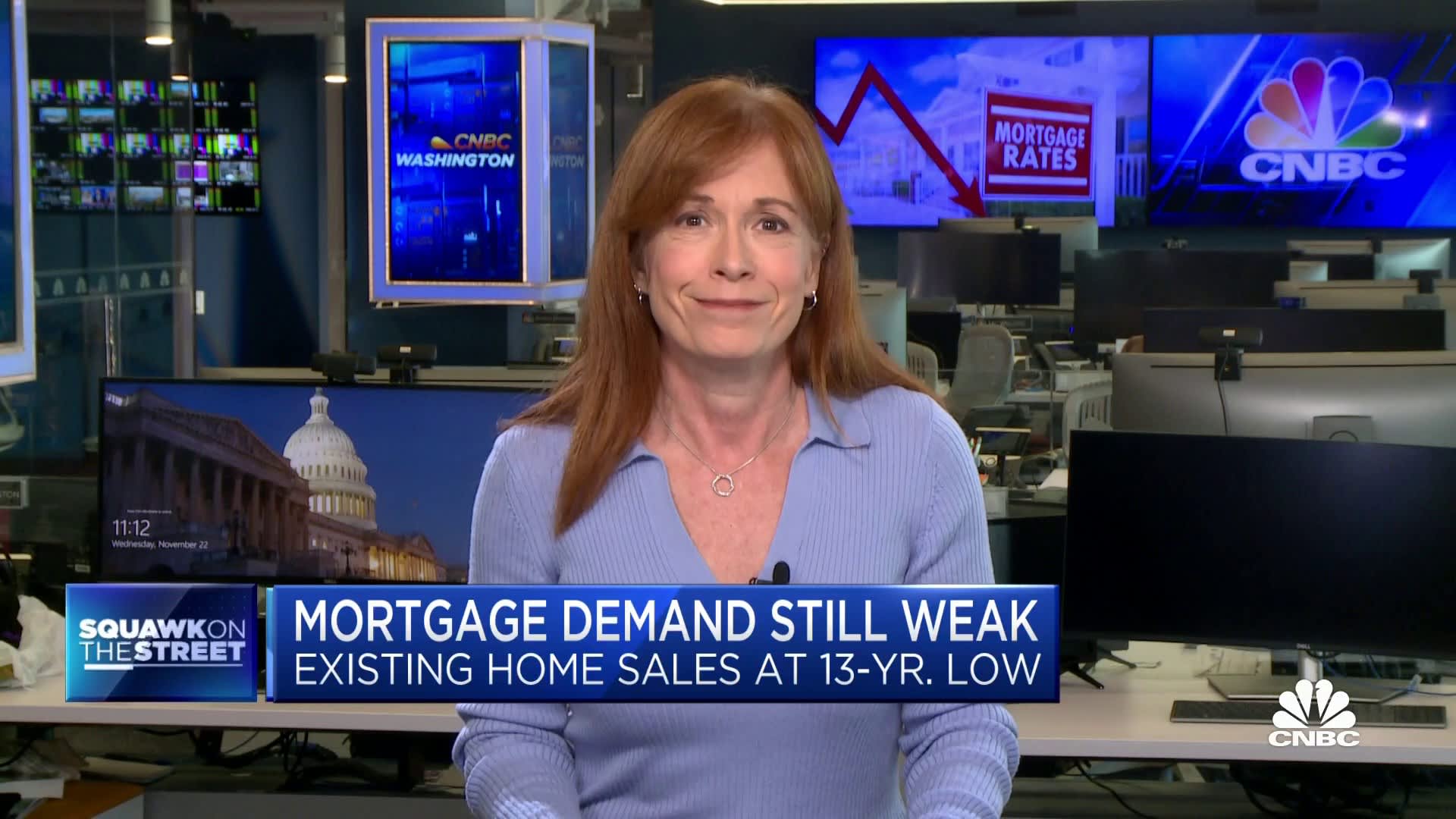
The average rate on the 30-year fixed mortgage rose to the highest level since 2000 last week, but rates on adjustable-rate mortgages fell. That caused a run on these so-called ARMs, pushing total mortgage application volume very slightly higher, up 0.6% from the previous week, according to the Mortgage Bankers Association’s seasonally adjusted index.

The average contract interest rate for 30-year fixed-rate mortgages with conforming loan balances ($726,200 or less) increased to 7.67% from 7.53%, for loans with a 20% down payment. But the average contract interest rate for 5/1 ARMs decreased to 6.33% from 6.49%.

ARMs usually offer much lower rates because they have shorter fixed terms. The difference between ARM rates and the 30-year fixed rate, however, has been unusually narrow recently. Last week, it widened.

“The level of ARM applications increased by 15% over the week, bringing the ARM share up to 9.2% of all applications, the highest share since November 2022,” wrote Joel Kan, MBA’s vice president and deputy chief economist, in a release. “The yield curve has become less inverted in recent weeks and ARM pricing has certainly improved.”

Applications to refinance a home loan inched up 0.3% from the previous week and were 9% lower than the same week one year ago.

Applications for a mortgage to purchase a home rose 1% for the week and were 19% lower than the same week one year ago.

“Application activity remains depressed and close to multi-decade lows, with purchase applications still almost 20% behind last year’s pace,” added Kan.

The average loan size is now at its lowest level since 2017. This indicates that most of the sales activity is happening at the lower end of the market. At the very high end, buyers tend to use all cash, and in the middle range affordability has been hit so hard that the market is essentially frozen.

At an open house in Washington, D.C., on Sunday, there were plenty of potential buyers looking, but most said that was all they were doing: just looking. The house was priced at $1.54 million.

“In this first two weeks of October, as anticipated, inventories have taken a jump, but then because interest rates have taken a jump too, we’re seeing less buyers. Lots of traffic, but not a lot of actual shoppers,” said Lisa Resch, a real estate agent with Compass who listed the home.


Source link

Adjustable-rate mortgage demand spiked last week. Here’s why. Read More »

Better Support Your HR Teams With These 10 Strategies

Better Support Your HR Teams With These 10 Strategies


As a cornerstone of any thriving business’s operations, a company’s human resources department plays a key role in the success of its people. And yet, it can be easy for CEOs to think of their HR departments like their own self-sustaining departments, recruiting and hiring employees without much need for additional assistance. However, just like any other department, HR can experience their own challenges and require the full support of the leadership team (and the company as a whole) if they are to function well.

So what can CEOs do to provide that support? Below, the business leaders of Young Entrepreneur Council share their thoughts and outline 10 different ways company leaders can better support their HR teams and why it’s so important to the overall health of a business.

1. Welcome Every New Team Member (And Cast The Company’s Vision)

A company’s outward customer experience will never be better than its internal employee experience. That’s because apathetic employees create apathetic customers—always. The employee experience begins at the top with the CEO. A critical role of the CEO is to support HR leaders and their teams to set the tone for the employee experience, beginning at (or even before) onboarding. Customers give you their money, but employees give you something far more valuable: their time and their talent. CEOs must make themselves available (even if only virtually and asynchronously) to help welcome every new team member and, in doing so, cast the vision for the organization. Helping every employee feel valued supports not only HR but every other part of the organization as well. – Brittany Hodak, Creating Superfans

2. Be Open To Adapting Policies To Meet Employee Needs

You can support your HR team by being flexible and open to adapting HR policies to meet the evolving needs of your team. Whether it’s adjusting remote work options or leave policies, you need to stay agile to support your employees effectively. You should also focus on employee well-being. You need to make sure that your team feels good, both physically and mentally. Create programs that support work-life balance, mental health and job satisfaction. Happy and healthy employees are key to your success. – Benjamin Rojas, All in One SEO

3. Value The Input Of HR In Strategic Decision Making

One common oversight is CEOs not actively involving their HR teams in strategic planning. To better support HR teams and the organization as a whole, CEOs should prioritize HR’s input in strategic decision making. HR teams possess critical insights into talent, culture and employee engagement, making their involvement crucial for informed decision making. By valuing their input, CEOs can align organizational strategies with workforce needs, ultimately leading to more effective talent management, higher employee morale and enhanced overall performance. – Ian Sells, JoinBrands.com

4. Prioritize Their Professional Growth

I know that CEOs can empower their HR teams by prioritizing their professional growth. It’s vital because HR is the driving force behind your company’s talent and culture. By investing in their development, CEOs demonstrate the importance of HR’s role. Continuous learning equips HR to navigate evolving regulations, technology and talent strategies, empowering them to lead transformational change. This results in attracting top talent, fostering high-performance cultures and championing your company’s mission. Supporting HR is an investment in your company’s future. It cultivates a workplace where innovation and well-being thrive, paving the way for lasting success. – Michelle Aran, Velvet Caviar

5. Maintain Open Communication Channels

We have outsourced our HR function, and it has been very helpful for us. Most of my team is remote, and my HR company is very good at finding out about any issues and resolving them. I provide them with all the input from my end in a weekly meeting. I have made HR easily accessible to my team as well. My team and I are very transparent in terms of communicating with and providing all the data to the HR team. Think of your HR team as your counselor—you don’t want to hide things from them. – Piyush Jain, Simpalm

6. Set The Example For The Whole Company

The best way for CEOs to help HR teams is to lead by example. When a new policy comes into play, be the first to embrace it. When a change takes place, show your support for it. By showing the rest of the company that you support the HR team and are invested in their decisions or changes, you make it easier for others to do the same and give the HR team the best tool to enforce noncompliance. Show your HR team you are part of their team and will support the decisions they make. – Zane Stevens, Protea Financial

7. Bridge The Gap Between Leadership And The Rest Of Your Team

HR teams are the middle layer between the C-suite and regular staff members. Most escalations happen due to the wide gap between management and employees. The simplest way to support HR is by bridging this gap and providing better opportunities for your team to communicate, raise feedback, overcome obstacles or get decisions overruled by middle management. Interact more frequently with your team and provide better communication channels. Hang out in group channels online or join lunch gatherings if you meet on-site. Communicate high-level business goals clearly. Motivated employees can follow the vision and calibrate based on your public road map once you give them the right opportunity and let them speak up. – Mario Peshev, Rush

8. Give Them Access To Useful Data And Insights

One way CEOs can better support their HR teams is by providing them access to data and valuable insights. The role of HR is not just hiring talent and taking care of other administrative tasks—it goes beyond that. Be it helping you increase the performance of your employees through personalized training or overcoming turnover challenges, HR actively contributes to boosting your efficiency through its recruitment, retention, compensation and administrative policies. So, by giving them access to useful insights, you’ll be making it possible for them to make data-driven and informed decisions. – Stephanie Wells, Formidable Forms

9. Check In Regularly And Listen To Their Needs

It’s important for CEOs to schedule regular check-ins with their HR leaders to see how things are going and find out if they’re experiencing any setbacks or roadblocks. This allows them to stay on top of what their HR teams need. You can then take steps to address any gaps they’re experiencing and provide resources and support. By doing this frequently, your HR teams will see that you’re not only serious about hearing their challenges, but you’re also following through with support and answers. When necessary, increase the frequency of these one-on-one meetings. These productive dialogues will ultimately help improve productivity, engagement and accountability. – Blair Thomas, eMerchantBroker

10. Invest In Technology And Software That Will Streamline Their Processes

Supporting HR teams is crucial because they are responsible for managing an organization’s most valuable resource: its people. To ensure that HR teams can fulfill these responsibilities efficiently, CEOs need to provide them with the necessary support. One way to support your HR team is to invest in modern HR technology and software systems that can streamline their processes, improve efficiency and amplify recruitment. These tools can automate administrative tasks, such as payroll processing and leave management, allowing HR professionals to focus on more strategic initiatives. – Eddie Lou, CodaPet


Source link

Better Support Your HR Teams With These 10 Strategies Read More »

Buying a Rental Property for  with This Loan

Buying a Rental Property for $80 with This Loan


Buying a rental property for just eighty bucks? There’s no way that’s possible. How can you close on a rental for the same amount of money it takes to fill up a tank of gas? Surprisingly, one type of mortgage lets you come to the closing table with no money down, no PMI (private mortgage insurance), and, if you play your cards right, (almost) no closing costs. Clint Campbell even used it on his recent house hack.

Thanks to serving in the military, Clint had his college paid for by Uncle Sam. When the opportunity to be deployed came up, Clint took it, knowing he’d make more while spending less.  He was able to save up a nice chunk of change and used it to buy a rushed first rental property. But then, Clint realized he could pay almost NOTHING for a home he would live in, so he looked around for just that, and the eighty-dollar house hack came to be!

In today’s episode, you’ll learn all about the VA loan Clint used to pay just eighty dollars for his first house hack, the limitations to this loan that service members MUST know about, and how to turn your girlfriend into a handyman and tenant combo who still loves you.

Ashley:
This is Real Estate Rookie episode 329.

Tony:
What was your actual out-of-pocket expense to purchase this duplex?

Clint:
I think I paid 80 bucks for a pest inspection.

Tony:
What was the purchase price on the duplex?

Clint:
It was 256.

Tony:
You’re controlling a $256,000 asset with $80.

Clint:
Yeah, basically. So…

Tony:
That is insane.

Ashley:
My name is Ashley Kehr and I’m here with my co-host, Tony J Robinson.

Tony:
Welcome to the Real Estate Rookie Podcast, where every week, twice a week, we bring you the inspiration, motivation, and stories you need to hear to kickstart your investing journey. Every once in a while, Ash and I bring on a guest where we both get to learn something new and today was one of those episodes, where we learned a lot about a special type of loan that allows you to have $0 down, no PMI, and potentially no closing costs if you can negotiate the right way.

Ashley:
But you also had to serve in the military. Thank you to anyone who has served. We really appreciate your service. This episode is for you, or if you know anybody that has military experience or maybe your spouse or significant other even.
But not only do we talk about the benefits of this loan product that you can get, if you are somebody wanting to get into house hacking, Clint, our guest today, also talks about how he was able to house hack his property and how he actually set that up to be beneficial. He also became a 1/6 owner in a really big real estate deal, if you compare his first purchase, his second purchase to his third purchase, the big price difference in that and how he was able to do that strategy. It’s all about partnerships and being able to grow and scale. So, do not forget to visit biggerpockets.com/partnerships.

Tony:
You’ll also learn in Clint’s conversation with us how to build your credit. So, if you’re someone who is either just starting out or maybe you’ve been a Dave Ramsey evangelist for a long time, you don’t have a credit score, you’re like, “How do I get started?” Clint is going to give you the answer and how he did it in his own life. So, really excited for you guys to hear what Clint has to say.

Ashley:
Well, Clint, thank you so much for coming on the Real Estate Rookie show today. Tell us a little bit about life before real estate.

Clint:
Before real estate, I was probably junior or sophomore year in college and basically, I knew I wanted to get into real estate. I just didn’t really know how at the moment. What ended up happening, it was perfect timing, I was in college going to school. I’m in the Air National Guard. I was getting my school paid for, and so I didn’t have many expenses. I was also living at home.
Then this opportunity popped up, where I could go on a deployment. So, I volunteered to go on this deployment and went on a deployment for, I think it was nine months. I was in Jordan for eight months, and then I was in Kuwait for two months. That allowed me to save some money and everything and then I was able to start my process and actually looking at real estate and really taking a hold of it.

Ashley:
With that money you had saved, why real estate? Of all things that you could spend your money on, what made you decide, “I don’t want to invest in the stock market,” or, “I don’t want to buy a new car”? What made you decide on real estate?

Clint:
Before the deployment, back up a little more, I guess, I started a Roth IRA. I put money into it and everything and it was rising up fairly well and everything. Whenever I got back home, COVID was actually starting and everything. Once that started, a lot of the money that was in it just plummeted. I understand it’ll come back up and stuff like that, but I wanted something that was a little more secure. Real estate, in my opinion, is an investment that I know what it is. I know how many bedrooms are in a property, I know how to fix it up and stuff. With an IRA or anything like that, I don’t have any control I feel over what I’m investing in. So, I just wanted the control aspect, I guess.

Ashley:
What was your goal as to how much money to save?

Clint:
Well, whenever I was on the deployment, basically I was just saving as much as I could. I was an E4. So, I wasn’t making a whole lot of money in general. I think it was 38,000, tax-free. That’s what I made over those nine months. But along with that, I think I spent maybe three grand over those nine months. So, I was able to save up quite a bit of money whenever I came home, and then that’s whenever I was really starting to look into buying a property.

Ashley:
Well, Clint, thank you so much for your service. We really appreciate it. Tell us about once you come home and is that when you started looking for properties, or was there a period of time before you decided what you wanted to do?

Clint:
I really didn’t know what I wanted to invest in. My whole mindset at the time was, I’m going to go home, buy a property, then I’ll be out of my parents’ house and everything. That’s what my motivation was at the time. I wasn’t really thinking about it as an investment.
On the deployment, we had lots of downtime and stuff. So, whenever I wasn’t doing anything, I would just be on Zillow or realtor.com looking at properties. I would find all kinds of properties and save them, even though I was four or five months away from actually being able to be back home and those properties would be sold and everything by then. So, it was just constant hold on the market that I was looking at.
Once I got home, I tried to actually make an offer on a property. But first, I wanted to get pre-qualified and everything, and that’s whenever I ran into a lot of issues because I didn’t have any credit. I just had no debt. I paid for my first vehicle in cash. So, I didn’t have any debt or anything like that or any credit cards. That’s my first experience of trying to figure out what it takes to buy a property.

Ashley:
What actually shows up on your credit report when you have no credit? Is it just zero, or does it show super low? What does, “I have no credit” actually look like, I guess?

Clint:
It basically just says NA. There’s nothing there.

Ashley:
Okay.

Clint:
The banker that I was using, he goes, “Either it can be a good sign or it’s a terrible sign.” Fast-forward a little bit, I guess, whenever I started the job I’m working now, I learned about credit. From there, I was actually able to get a credit card and start working on that.

Tony:
Clint, I want to touch on a little bit in a second here how you actually built that credit up to put yourself in a position to start buying real estate, but I just want to take a step back here first. There’s a lot of Dave Ramsey evangelists that love everything that Dave Ramsey has to say. Ash and I talk about this a lot, that there’s a lot of validity in what he says about managing your personal finances, living below your means, and not being financially irresponsible. However, unless you make millions of dollars a year, tens of millions, like Dave Ramsey does, chances are you’re probably going to need some debt at some point in your life, and especially if you want to become a real estate investor.
Just for our rookies that are listening, if you’re currently on your Dave Ramsey kick, I think continue to get rid of a lot of that consumer debt, but also try and be smart about how to start building your credit profile to put yourself in a position to buy real estate. Otherwise, you could be like Clint, where maybe you’ve saved up all this money, but then you go to a bank and they’re like, “You’re a ghost. You haven’t been anywhere. We don’t even know if you’re a real person or not.” Clint, I guess, the question that I have for you is, how did you go about actually building your credit from literally an NA on your credit report to getting to a point where you are in some way bankable?

Clint:
I was on the Dave Ramsey kick for a long time too. In college, I was listening to his podcasts and everything. I would listen to him for hours and I thought he was amazing. He’s really good at debt consolidation for credit cards and stuff, but in terms of buy a house in cash, that’s just not reasonable.
Some of the things that I did in terms of building credit was I got just a basic Discovery credit card. I think my credit limit was $500. So, super small. I had that for about six months before I actually started to receive a credit score. I don’t honestly know the other factors, but it took six months for me to get my actual credit score. From there, I just kept spending about 20 to 30% of that $500 or so, and then you pay it off at the end of the month every time and just don’t let it stack up or anything like that.

Ashley:
Tony, I just want to touch on quick too, and Clint, since you’re sharing this journey about as to… Maybe somebody’s never even looked at what their credit is and one way to do that is to sign up for a free account at someplace like creditkarma.com or you can actually pull your credit once a year I think it is, and you can pull it yourself. You go to, I think it’s… I don’t know, just Google, “Pull my credit through a government agency.” Make sure it’s .gov website you’re going to. You can pull your credit yourself and it’ll show you everything on there. You’re able to do that once a year and it will not have any impact on your credit.
I use Credit Karma and I’ll look at it. It’s not always super accurate, because it’s not actually pulling your hard data, but it’ll break down for you the things that your credit score actually takes into consideration. The first is payment history. It’s showing that you consistently made payments. The next is credit card utilization, so that if your credit limit on your credit cards is say, maybe between three credit cards, you have $10,000 available. The rule of thumb is you want to stay under 30% utilization of whatever that is.
Then derogatory marks. So, if you have anything in collections, you have late payments, bankruptcies. Credit age. If you’ve opened a credit card 10 years ago and then you decide to close that, you no longer have that 10 years of credit history and now, all of a sudden, you have one year of credit history. So, it takes that into an account. Also, the total accounts. How many credit cards do you have open? How many student loans do you have open? Also, hard inquiries. So, this is usually when a financial institution will pull your credit report. The more hard inquiries you have, then the more it can impact your credit score. There’s also soft inquiries, where it doesn’t make an impact at all on your credit score.

Tony:
Ash, that was a great breakdown and I really encourage everyone to be using Credit Karma. A side note, I wrecked my credit score last year because I had an electric bill or a gas bill from one of my properties in Shreveport, the very last one that I sold off. They sent the final bill to the property and I never set up any mail forwarding for that property. Anyway, that property ends up going to collections over a $200 gas bill. So, I had to fight with them to get that fixed.
Clint, I’m curious, if you had to give your credit building 101 for our rookie audience, what would that look like? Would you encourage them to go out and get a $500 credit card and pay it off every single month? What would your advice be to someone who’s in a similar situation?

Clint:
Exactly what I would do. It really hurt me on my first property, not having any credit. What I would do is I would definitely tell someone, “Go out, get an easy credit card that you can pay off,” and just like Ashley was saying, “utilize only 30% of that actual credit limit and pay that off each month.” Also, you can ask for increase in your credit limit basically. It is like those auto increases that happen, you can actually request an increase. That was something that I wanted to do because I wanted to put most of my monthly expenses on my credit card to where I could get at least some points back, rather than just using my debit card and stuff. So, I always was calling Discover every couple minutes… Or couple of months and just having them-

Tony:
Every couple minutes?

Clint:
Every couple minutes, yeah. Can I get an extra grand now?

Tony:
But Clint, you bring up something that I feel like doesn’t get talked about enough, but is putting those regular expenses onto your credit card. We’ve run a lot of our business expenses through our credit cards as well. I’m on vacation right now in Huntington Beach, California, and this entire trip is pretty much covered by our points. We vacationed a ton by using the points that our credit cards give us. I think Ash and I both use the Chase Sapphire card. Love that card. The Amex Gold card I heard was good for travel. So, I just got that one as well. Ash, I think you have the Southwest card too? You’ve got a couple travel credit cards.

Ashley:
I’ve got eight of them. I love travel hacking. I just opened another one recently because every LLC, you can open a couple of them. When they do the $100,000 point sign up bonus, you have to spend $3,000 in the first three months. I can spend that in one week for one of the properties.

Tony:
Right.

Ashley:
But yeah, the travel hacking. Thepointsguy.com is a great resource. Aunt.Kara on Instagram, she talks about it a lot. There’s definitely a lot of travel websites out there that talk about using credit card points. But just as Dave Ramsey would advise not to use them, we also say if you’ve had a problem with credit cards and being able to pay them off, maybe this is not the right strategy for you right now to try the travel hacking with points.

Tony:
But that’s why I think if you’re setting it up, where it’s like these are things that I’m going to be spending money on anyway and I’m just putting on the credit card and then turn around and paying them off. We probably go in every couple of days to pay down most of our credit card balances. So, we try not to let anything roll.
Clint, you do all this work to build up your credit. How long does it take before you become, I guess, credit-worthy to actually get a loan on a property?

Clint:
Well, the second I showed a credit score after having it for six months, it wasn’t a good credit score. It was in the 640 range, somewhere like that. I was actually closing on a house, I want to say it was three months after I showed a credit score. With the VA loan, the lender I used, they can dictate what their credit limits are and stuff like that, but their requirement was a 620 credit score at the time. So, I basically snuck in there with the 620 or the 640. But yeah, I also just got more credit cards as well. I have the Chase Sapphire and then I also have the Chase Freedom, I believe, for daily spending. But I know that you could pair those up together to where you have both of those points. So, that’s what my girlfriend and I are actually doing in December. We’re going to go to Europe and we have about a thousand dollars in points that we can go spend. So, that’s something-

Ashley:
Awesome. That’s super cool.

Clint:
Just get more streams of credit. Definitely, it’s a lot easier to build your credit whenever you have multiple credit cards.

Tony:
We’re going to have someone leave a review in the podcast saying, “I took the advice from Clint telling you and Ashley, and I’m a hundred thousand dollars in credit card debt. This is the worst podcast ever.”

Ashley:
“But I also am going to Europe for three weeks all paid for.”

Tony:
[inaudible 00:16:48]. Clint, I want to go back to that first deal and help me just understand the timeline here. You’re saying that you got that first deal about 90 days after your credit report finally showed something. Am I understanding that correctly?

Clint:
Well, that would be the property I’m currently in. My first property was whenever I didn’t have any credit. I had just come home from the deployment and basically my brother and I were going to move up to Columbia at some point. We were like, “Okay, well, let’s find a place.” We were looking around, we couldn’t really find anything. So, we decided to rent in Columbia. But then after we signed our lease and everything, a property popped up in Columbia. It was a two bed, one bath, just condo, and it was priced at 76,000. So, it was pretty cheap. And-

Tony:
Wait, sorry. Clint, when you say Columbia, are you talking about Colombia, the country in South America, or is this a state?

Clint:
Sorry, no, Columbia, Missouri.

Tony:
Oh, gotcha. All right.

Clint:
Yeah, no.

Tony:
Two very different places.

Clint:
Yeah, very plain here.

Ashley:
You mean you don’t know Missouri, Tony?

Tony:
Never heard of Columbia, Missouri. All right, gotcha.

Clint:
Basically, we moved up to Columbia, Missouri and we signed a lease. Then we found this property. It was very cheap. So, my brother and I were like, “Okay, well, let’s try to buy it and make it an investment property before we even have our own property.” We viewed the property and then we actually said an offer that they accepted, but we weren’t even pre-approved. This was our first time going through this whole thing. So, they waited on us to get a pre-approval letter for five days or so, which now you wouldn’t be able to do that.
Now, the market’s so crazy. But at the time, we ran to our bank and then they were like, “Since you guys have no credit, it’ll be 20% down.” We’re like, “20% down on a $76,000 loan?” It was annoying, but we did it and it was a three-year arm at four and a half percent. So, we were doing that and we got a tenant in, I think it was a week after we closed. Got a tenant in and then they were paying that mortgage and I think we were only cash flowing $25 each. It wasn’t much because it was that three-year arm.

Ashley:
Explain what an arm is in the three-year arm.

Clint:
Basically, with the arm, you have a set rate for, it was a four and a half percent interest rate for those first three years and then after that, it balloons up. You can pay the rest off or you can just refinance, so to speak, into whatever the current rates are for that.

Tony:
I just want to comment really quickly because the arm, the adjustable rate mortgage, is something that it’s a hate it or love it type thing. You see some investors who really hate the idea of an arm because some of, I guess, the potential downside of an adjustable rate mortgage is say that someone bought a property in 2021. Maybe, they locked in a 3% arm and they were cash flowing, whatever, several hundred bucks a month at that 3%. Now, they had to refinance in 2023 or 2024, when interest rates have gone up to seven or 8%. I just closed ReFi at almost 9%. It was 8.7. That arm now could potentially make that deal negative cashflow and unprofitable. So, there are some risks and some benefits with the arm. I guess, Clint, for you guys, what made you comfortable? I know this was your first deal and maybe you weren’t even thinking this far, but I guess, what made you guys comfortable with the idea of using the arm for that first deal?

Clint:
Like I was saying, whenever I went on the deployment, I saved $35,000. So, 20% divided by my brother and me, it really wasn’t a whole lot for me to invest. It was I think seven grand for me or seven and a half. So, I was fine with just making that investment for the three years. Our idea was before the three years was up, we would just sell it for whatever it appraised at and then take our money and invest into something that we actually see long-term.

Ashley:
With the arm mortgage, I’ve done a bunch of commercial mortgages. Well, even though they’re not really called adjustable rate mortgages, they end up going to adjust after a certain amount of time of being fixed rate. Typically, it’s a five-year fixed or 10-year fixed and then they adjust, or the loan actually ends and you have to go and refinance on the loan. But it can go to variable. I recently did my first residential mortgage doing the arm and I actually was just trying to search it real quick because I can’t even remember if it was a five-year arm or a seven-year arm is what we did, but I didn’t find it fast enough.
What we did with that one is we were able to get a way lower interest rate than what we could have if we did a 30-year fixed. So, we’re taking a risk, we’re having a lower payment now, but also I really thought the loan officer was super great and informational at explaining exactly what would happen, your worst-case scenario, your best-case scenario, giving it all to me in writing as to the minimum your interest rate will ever go is 5%. It’s at 5.25 right now for the next five or seven years, whatever it is, which is a great rate right now. You can’t find that anywhere. This was just last June, I think it was that it closed. So, not that long ago.
But then it says your interest rate can go up to 12%. That is the max it can do. When it is that five one arm, the first year, the max. After the five years, that first initial year, it’ll only go up to 6% and it’s that one year difference. Then after that, it will go up to whatever current rates are. With that, we looked at the property and said, “Okay, in that timeframe, we are able to pay off a chunk of that loan and we could go and refinance the lower balance.” Even if it is a higher interest rate at whatever the market rates are, our payment will still be affordable because we can pay off that certain amount of it. That’s the worst-case scenario for us.
Best-case scenario, over those next five or seven years, interest rates have come down and we can go and refinance at any time to get that locked in 30-year rates. Downside, we have to pay closing costs twice, but it would be worth it if you’re saving money long-term on the interest rate. So, this was my first time using that, but I looked at it more and it’s like it’s very comparable to what you’re dealing with on the commercial side of lending. You only get those rates for five or 10 years and sometimes those are even only amortized over 15 or 20 years and not even 30 years. So, you’re just taking the risk I have with all the commercial properties that are in LLCs.

Tony:
It sounds like, Ash, there’s a time and place where the arm does make sense. I love your idea of, “Hey, what’s the worst-case scenario here and could we live with that worst-case scenario?”
Clint, I think it sounds like you used the best option you had available at the time. I think for our rookies, that’s an important lesson as well is that sometimes, you just got to… You’re not looking for a home run on that first deal. You’re just trying to get on base and it sounds like that’s what you did. What was the outcome of that first deal and how did it, I guess, push you into that second deal?

Clint:
Basically, what happened was we were renting it out. Nine months goes by and our lease starts to end that we were actually renting from. My brother, he wanted to move to St. Louis. He needed money basically in order to move to St. Louis and the money that was in this property was tying him up. At first, I thought about refinancing with him to where it was just solely my ownership, but then I was like, “I don’t really know if I want to hold onto this property or not.” Looking back on it, I probably should have, but at the time I was like, “No. Fine, we’ll just…” We saw that prices for those condos had been rising, and so we were like, “Okay, well, let’s just list it on the market and see what happens.”
We listed it on the market for, I think it was just under 90,000, maybe 89 and this was only nine months after we had closed on the property. We got a cash offer for 88 or 89, something like that, nine months later. I think after realtor fees though and everything, I’m pretty sure my brother and I only profited about a thousand dollars each, something like that. It was very minimal, but it was a good introduction into owning real estate and everything like that. The property itself was very easy to maintain. I think actually the first week that we owned it, the tenant was coming in towards the end of the week, and the second she got in, her ceiling fan in the master bedroom was just hanging by the wiring. I was like, “This couldn’t have happened,” but-

Ashley:
Especially over the bed. That makes it even worse I feel like, like, “Oh my God, what if that actually fell?”

Clint:
Well, I was like, “What are the odds of that with…”

Ashley:
Yeah, and this was the first week you said of owning it?

Clint:
Yeah, very first week.

Tony:
Introduction to being a landlord, right?

Clint:
Yeah. I mean, that was a very easy fix, but at the time I had no idea about how to do anything. So, I watched a YouTube video, had my friend help me, and we fixed it.

Tony:
Isn’t it crazy how when you first start investing, everything seems like a crisis? You’re like, “Oh my God, the ceiling fan is hanging. What am I going to do?” Now, it’s just like you send a text and you don’t lose sleep over it.

Clint:
Absolutely.

Tony:
Just going back to the deal, Clint, you said that you and your brother only profited a thousand bucks, but I mean, it’s you guys bought the property, got cashflow during that time, and then were still able to get an additional chunk of cash when you exited. That’s a solid first deal, and it allowed your brother, I’m assuming he made his move to St. Louis after you guys did that? Just to clarify, St. Louis, for everyone that’s wondering, is also a city in Missouri. This is not St. Louis, a country in South America. It allowed you guys to move on to the next phases of your real estate career.
I guess, tee us up now, Clint, for that second property. You didn’t have any credit on that first one, 20% down, you have the arm. Now that you’ve been building your credit while this first deal is running, what does it look like for that second go round with the second property from a financing perspective?

Clint:
The second property, I was looking for a property for me and my girlfriend to live in. At the time, I was just looking for a single family property. I was like, “I just got to get out of renting. If I’m paying my own mortgage, that’s fine. At least, money’s going to be coming back to me whenever I do sell.” So, I was completely fine with just buying a single family property. We looked at a couple and we really liked them, but at that time, with COVID and everything, say the property’s 250, you make an offer, and at the time, the final purchase price would be 290. So, you’re-

Tony:
Half a million, right? Something crazy.

Clint:
Yeah. We were constantly getting outbid and we were honestly getting really defeated about it. I randomly saw a duplex in Ashland, Missouri, which is just slightly lower than Columbia, Missouri. Basically, it was a nice duplex and it was for sale, and I checked it out. The only thing is that it was a bad road in order to get to Columbia where I work. So, I was like, “I don’t really want to do this,” but the real estate agent said, “Oh, well, there’s three on the other side of the highway to where you don’t have to worry about the road. There’s three lined up and that one has a new water heater and new roof.” So, I was like, “Okay, well, let’s go check it out.” I didn’t even go inside. I walked around the sidewalk and then I was like, “Okay, well, let’s make an offer on it and see where it goes,” type of thing.

Ashley:
Clint, what gave you the confidence to just look at the outside of the property and decide, “I know what I can offer on this”?

Clint:
I would say, for the most part, it might’ve been I was looking at properties, single family homes, and I wasn’t going to charge my girlfriend a whole lot for rent because she has student loans and stuff like that. So, I was like-

Tony:
[inaudible 00:29:52].

Ashley:
Don’t try to justify it, Clint. You’re playing favorites.

Tony:
Word. No, I think what’s funnier is that his reason for not charging her was because of the student loans and not because it’s his girlfriend.

Clint:
She’s trying to get ahead and stuff like that. So…

Tony:
You’re a ruthless businessman, Clint. I love it.

Ashley:
My cousin, she started dating this guy that had a duplex, and I was like, “Oh, that’s so awesome you’re talking real estate investing.” Then a year later, she ended up moving in with him and I was like, “So, you’re house hacking now?” He’s like, “Yeah, she has to pay all the utilities because I know she’s going to be using more water and electric than me.” He’s like, “I’m not going to make her pay rent, but I am house hacking because she’s paying me all the utilities.” I was like, “Good job.”

Clint:
But yeah, basically, that was the whole thing. I wasn’t going to make her pay half the mortgage or anything like that. The second I looked at this duplex, I go, “Well, half the mortgage will be paid right there.” So, it was a very easy decision for me to just buy a duplex and then have the other side pay for most of my mortgage, and then I could pay for whatever’s left type of thing.

Tony:
Once you find this property, you fall in love with it, you submit the offer, how are you financing this? Is this another 20% down arm? Is there another option that you’ve discovered? Walk us through that piece.

Clint:
Yeah, I used a VA loan. The job that I work at right now, Veterans United Home Loans, basically they’re number one VA purchasing lender in the country. So, very big on the VA loan.

Tony:
Clint, if you don’t mind, just so I can clarify for our rookies, what is a VA loan? Does that stand for virtual assistant? What is VA?

Clint:
Just it’s for service members and their families. If say, a service member passes away, there’s instances where you could have that spouse survivorship carry on to that VA loan. So, it’s really just a chance to give service members and their families a chance to own a property and everything like that, more specifically, single family homes. It’s meant to be a primary home for service members.

Tony:
Clint, what are the, I guess, advantages? Why would a service member opt to use a VA loan versus a traditional FHA or all the other loan options that are out there?

Clint:
What interests me was with the VA loan, I didn’t have to put any money down, which meant that I could use that money for renovations on the property and stuff like that, which would inevitably increase rent and stuff like that as well. So, it was really nice not having to really put a down payment down. There’s also no PMI insurance throughout the duration of the loan.

Ashley:
Can you explain what that is too, Clint? What PM and I is? PMI?

Clint:
I’m drawing a blank right now as to the actual term.

Ashley:
Property mortgage insurance, I think, right?

Clint:
Yeah, property mortgage insurance.

Tony:
Property or private?

Ashley:
Private.

Tony:
Private mortgage insurance. None of us know. Who knows?

Ashley:
Just explain what it is.

Clint:
It’s basically insurance that the bank has on you to pay until you hit that 20% mark of equity. With the first time home buyer loan, I believe it’s the whole duration of that loan. So, you might be able to refinance after a while into a different loan, but with the VA loan, the big incentive there is there’s no PMI regardless of your down payment.

Ashley:
If you guys listen to the Real Estate podcast, you know they always do their quick tip though. Here’s a tip for anyone that put less than 20% down, if you are still paying that PMI on your mortgage, talk to your loan officer about getting that removed because sometimes the bank will just do a desk appraisal, where they will just say, “Yep, you’re right. You have enough equity in your property where you have more than 20% equity.” Even if you’ve only owned it a year and you haven’t paid down 20% of what you purchased it for, if you have enough appreciation in your area, you can go ahead and get that PMI removed, which oftentimes can be actually quite a few-

Tony:
Big difference.

Ashley:
A couple of hundred bucks at least.

Tony:
Just a quick personal story. We did that on our primary residence when we bought our first home back in 2018. It wasn’t a first time home buyer, but it was some loan assistance product from the builder. We had PMI when we first got the property, and I think it was less than a year. We were able to show that, even though we hadn’t paid down 20%, the appraised value of the home had increased, so that our spread, we had gained that equity through the increased value of the home. We were able to reduce or get rid of the PMI, and then we refinanced to bring down our interest rate. So, we’re actually paying less now for our home than we were when we first bought it, even though the value of the home has increased. It’s crazy. Highly encourage everyone to do that.

Ashley:
Yeah. Do you remember what that difference in payment was, just taking the PMI off?

Tony:
Gosh, I want to say our PMI, it wasn’t too much. Maybe, it was 200 bucks or something like that.

Ashley:
But still, that’s…

Tony:
Yeah, it’s a big difference.

Ashley:
Yeah.

Tony:
Absolutely. All right, Clint, sorry, continue. We’re talking VA loans. So, no down payment, which is fantastic, no PMI. Are there closing costs associated with this loan?

Clint:
Yeah. With my job, I talk to potential buyers that are veterans and such, and a lot of them, they hear 0% down and they think, “Okay, it’s a free loan and I don’t have to pay anything.” That is something that while it is a 0% down loan, you do have closing costs and stuff like that that go into it. In my instance, there was some things wrong with this property. So, I got a credit and basically I got paid $3,000 in order to close on the property. I had enough credits from just the things that were wrong with the property. I didn’t have any closing costs, luckily.
But usually, with a VA loan, closing costs can be a little more expensive, I would say, in terms of conventional. But at the same time, you’re still putting no down payment and there’s no PMI. So, I think it’s something that veterans probably need to be more aware of. Also, this is really besides the point, but this is something that we see a lot is a lot of veterans are scared to get their credit pulled because they’re like, “Oh, I have a great score. I don’t want to hurt my score.” If you pull it once, it might affect your credit maybe three to five points. It’s not like how the TVs advertise where, “Don’t check your credit, it’ll kill your credit.” It’s not that extreme. That’s just a little extra thing, I guess.

Tony:
Clint, I just want to look at the numbers really quickly or recap the numbers on this duplex. With this VA loan, you had no down payment, you had no PMI, and you said you were able to get a credit from the seller to cover all of your actual closing costs. So, what was your actual out-of-pocket expense to purchase this duplex?

Clint:
I think I paid 80 bucks for a pest inspection. That was about it. But like I said, I had the credits from the seller and everything. So…

Tony:
That is fantastic, man. I just want to give some context. What was the purchase price on the duplex?

Clint:
It was 256.

Tony:
Wow, you’re controlling a $256,000 asset with $80.

Clint:
Yeah, basically. So…

Tony:
That is insane.

Clint:
Yeah. Looking back on it, this was one of the biggest blessings I could have asked for. Like I said, I didn’t actually go into the property. I just made an offer without even viewing it. But that was actually the only time I got to see the property before I owned it was the pest inspection and the actual inspection. I showed up for that and was able to walk inside to one of the sides. They were smokers. So, we had to do a lot of rehab, a lot of kills on the walls, and a lot of painting and stuff. But we got rid of the smoke smell and everything and redid all the floors, did a whole bunch, basically turned this place upside down in renovations solely because we didn’t have to have any money put down as a down payment.

Ashley:
That money you saved, you had put towards the rehab, did you do the rehab yourself, or did you put your girlfriend to work, or did you hire out a contractor?

Clint:
Well, it was actually me and my girlfriend for a while. Every day after work, she would go here and paint or do whatever we had to do. I work evenings. So, I would come every morning and just be painting and fixing up whatever we needed to. I attempted to do flooring and bought some flooring off Facebook Marketplace, and I guess I really messed up the square footage because I had maybe enough flooring to do half the living room. So, I had to rip all that out and then-

Ashley:
Oh, no.

Clint:
I hired flooring out, but that was a learning mistake right there.

Ashley:
Well, I have a question real quick, Clint, about you and your girlfriend’s situation. Tony and I love partnerships and we love to plug our partnership book. You’ve talked about your girlfriend paying some rent towards living there, also helping you with some of the rehab, things like that. Do you guys have any kind of agreement in what would happen eventually if you got married? Would she get equity? Would you guys create an LLC and buy more businesses? Do you guys have a long-term plan, or is this maybe just your focus for now?
One of the reasons I ask is because my business partner, he actually dated a girl and he with her dad renovated the whole house. He has such resentment to this day because the house was in her name and he did all this work and put this money into it and got nothing out of it when they ended up splitting up. So, I’m just curious, do you guys talk about those, as morbid as it sounds like breaking up, what would happen and do you guys have future goals together as far as real estate investing?

Clint:
Yeah. Like you said, everything’s in my name. So, I guess, if things came to that, I would keep my property. We have talked about it and basically she does pay some rent. It’s much lower than the area around here.

Ashley:
That she’d pay anywhere else.

Clint:
Yeah, exactly. But she does, and the whole thing is that allows me to save up more money to where I can do more renos. She wasn’t in a position to purchase a property or anything. So, it allowed me to save up enough money to where I could go buy another property and just keep doing the same thing. But yeah, if I was paying her for work, I definitely owe her a couple thousand.

Tony:
Well, Clint, one of the things that I’ve seen or that I’ve heard about the VA loan, obviously all the amazing benefits of it, but there’s also some limitations. Give me a quick gut check here to let me know if I’m correct, but what I’ve heard is that you can only have one VA loan at a time. Now that you’ve used your VA loan on this duplex, you basically can’t use that loan again until you either sell or refinance this current property. Have you heard that? Is that a correct, I guess, understanding of how the VA loan works?

Clint:
Basically, with the VA loan, you’re allotted a certain sum of money. It’s different from a pre-approval, but basically you’re allotted a certain sum. I think in Missouri, it’s $726,000. With the VA loan, it has to be your permanent residence for at least a year. After a year came, I started looking again into buying another property under the VA loan because like I said, if you minus 726,000 minus my 250, you still have over 500,000 left that you can use. So, I was looking into more duplexes or single family or something like that. But yeah, you can definitely have two VA loans at a time. If you bought a hundred thousand dollar property, you could have $700,000 property.
I will say the funding fee can go up after you use it more than once. If you use the VA loan once, the funding fee whenever you’re closing is 1.6% and then every time after that, it’s 2.3%. I believe that’s right. There’s a lot of people that I talk to at work and they’re talking and they’re like, “Yeah, I used it back in 1960. So, I can’t use it anymore.” I’m like, “No, it’s a lifetime benefit. Do you still own that property or?” It’s definitely something that vets need to know about and I think that’s something that they could do in their future if they wanted to buy more than one property and everything and keep it under that VA loan.

Ashley:
Well, Clint, wrap it up for us, what has happened since that duplex? What have you been doing?

Clint:
Since I closed on this property, we renovated it. We got my friends that live on the other side of the unit. I guess, it was last winter, one of the agents that I used for that commercial or that condo, she actually is all over Columbia and she found this seven property unit that was going up for sale along with four acres that were undeveloped. She’s a big investor in Columbia as well. So, I was piggybacking off of her and she said, “If you want, we could try to get some investors in on this and then we could buy it and then go from there.” On the property, there’s seven houses and four acres that are still undeveloped. Basically, we closed on that. That was also an arm, and I think we put 25% as a down payment. So, it was a big chunk of change there. But basically, I now own one sixth of those seven properties.

Ashley:
Cool. So, you leveraged partnerships to get into your next deal?

Clint:
Yeah, exactly.

Ashley:
Awesome. When was this one? When did you close on that?

Clint:
We closed on those seven properties last December. Once we closed on those seven properties, I’m basically just a passive investor with that. The real estate agent I went with, she has a property management group as well. So, she handles a lot of that. I’m just a private investor in that regard. Basically, the whole plan with that is after five years, we will refinance the money that we’ve made in there and then put it towards other properties in the future.
After that property, it just so happened that a property two houses down from me currently went up for sale. It’s a duplex as well, and I thought it’d be perfect. They have a new roof on it, and then they had a newer water heater on one of the sides as well. I was like, “That’s perfect.” That’s a big thing is I want to get away from the big ticket items that might cost a lot. But yeah, along with the VA loan, I’m using that this time around as well on that property. If they would’ve had a VA loan, I could have assumed that loan, which would’ve allowed me to get a lower interest rate.
They bought it last year. So, interest rates were lower then. That was something I was interested in if by chance it was assumable just to keep that lower rate. Also, I’m over 30% disabled with the VA. Anything over 10%, you’re waived the funding fee for closing. Like I was saying earlier, that funding fee can be 1.6% and then every time after that, it could be 2.3% of that loan. So, it’s actually a decent amount of money at closing, but if you’re a vet and you have a VA disability rating of 10% or higher, that fee is waived.

Tony:
The VA loan has worked out really well for you, brother. So, the next duplex, you’ll be able to use that same loan product and ideally, hopefully maybe spend another 80 bucks to buy another property. Clint, I appreciate you sharing all that, man. I think Ash and I both learned a lot about the VA loan process and how it works and some of the nuances that a lot of folks just aren’t aware of. So, appreciate you breaking that down for us.
Before we wrap things up, I just want to go to our Rookie request line, and for all of our rookies that are listening, if you want your question featured on the show, just head over to biggerpockets.com/reply. Guys, you won’t believe how many episodes we had to go through before I could remember that URL for whatever reason, but anyway, it’s biggerpockets.com/reply.
Today’s question comes from Carsine Blakely. Carsine’s question is, “Is there a way to structure a partnership with someone who wants to use a VA loan to buy a house, but they also need a co-signer to fully qualify? This will be a duplex or a quad. How would you structure that contract to benefit both parties,” so you and the person that’s getting the loan, “so that both of you are on title?” What would your advice be to that person, Clint?

Clint:
Gotcha. It would depend on the reason why they’re not being able to qualify in the first place. Of course, there’s credit scores and stuff that you have to meet. In terms of having a co-signer for a VA loan, the co-signer would still have to pay… To my knowledge, they would still have to pay a down payment portion. I don’t know exactly how much, but they would have to pay a down payment in order to obtain the property.
If it was strictly income or finances that were blocking them from buying the property, maybe that individual that wants to be the co-signer, whether it’s a parent or someone else, they could just gift 10,000 or whatever it might be to the actual VA recipient and then work out a deal, aside from everything, as to how income comes to them and stuff like that.

Tony:
Gotcha. One other follow-up question on that, Clint, when applying for the VA loan, if you’re buying multifamily, like how you purchased a duplex, are they able to use the projected rents of the other side to help qualify you for that mortgage?

Clint:
In my instance, I can just go off of what I have. I was able to use what I was getting from my tenants at the time, and that’s what we were able to qualify off of. I’m trying to think, I believe they can only accept, or well, at least my lender was a hundred percent of what the mortgage payment is. Say, the mortgage payment is $1,500, but you’re getting a thousand dollars each side in rent. I think they can only qualify up to 1500 of that. That’s just to my knowledge. I’m not a hundred percent sure on that part.

Ashley:
I’ve heard of some banks similar to that, they’ll do a percentage of what the rental income is of it.

Tony:
All right, before we finish today’s episode, I want to give a quick shout-out to this week’s Rookie Rockstar. Today’s rockstar is Katie Avalos and Katie says, “Closed on our fourth property and third property while living overseas thanks to BiggerPockets. My husband and I live in Germany because he’s currently active duty military and I’ve had the time to listen to the BP podcast and I’m soaking up as much information as possible. The property’s in Jackson, Mississippi. This is our first rehab out of the country. Please wish us luck. But while we keep the current mortgage and pay off the loan for the rehab, it’ll still cashflow almost 300 bucks.” Katie, congratulations to you and your husband and same, thank him for his service to our country.

Ashley:
Clint, thank you so much for joining us and taking the time today to bring us your knowledge and experience in real estate investing. Can you let everyone know where they can reach out to you and find out some more information about you?

Clint:
Yeah, absolutely. It is a pleasure being with you guys. I really do appreciate it. But you guys can find me on Facebook and TikTok. I don’t have every social media any more just because it’s a lot to keep track of. TikTok, I actually do post every once in a while some of the renos that I’ve been doing on the properties. So, if you guys want to see what I do there, you can just go onto my TikTok as well.

Ashley:
Okay, awesome. If you’d like to give Clint a follow, you can check that out in the show notes. Clint, thank you so much for joining us today. We greatly appreciate it. I’m Ashley, @wealthfromrentals, and he’s Tony, @tonyjrobinson on Instagram, and we will be back on Saturday with a Rookie Reply.

Speaker 4:
(singing)


Help us reach new listeners on iTunes by leaving us a rating and review! It takes just 30 seconds and instructions can be found here. Thanks! We really appreciate it!

Interested in learning more about today’s sponsors or becoming a BiggerPockets partner yourself? Email [email protected].

Note By BiggerPockets: These are opinions written by the author and do not necessarily represent the opinions of BiggerPockets.


Source link

Buying a Rental Property for $80 with This Loan Read More »

Housing industry urges Powell and Fed to stop raising interest rates

Housing industry urges Powell and Fed to stop raising interest rates


New homes under construction in Miami, Florida, Sept. 22, 2023.

Joe Raedle | Getty Images

Top real estate and banking officials are calling on the Federal Reserve to stop raising interest rates as the industry suffers through surging housing costs and a “historic shortage” of available homes for sale.

In a letter Monday addressed to the Fed Board of Governors and Chair Jerome Powell, the officials voiced their worries about the direction of monetary policy and the impact it is having on the beleaguered real estate market.

The National Association of Home Builders, the Mortgage Bankers Association and the National Association of Realtors said they wrote the letter “to convey profound concern shared
among our collective memberships that ongoing market uncertainty about the Fed’s rate path is contributing to recent interest rate hikes and volatility.”

The groups ask the Fed not to “contemplate further rate hikes” and not to actively sell its holdings of mortgage securities at least until the housing market has stabilized.

“We urge the Fed to take these simple steps to ensure that this sector does not precipitate the hard landing the Fed has tried so hard to avoid,” the group said.

The letter comes as the Fed is weighing how it should proceed with monetary policy after raising its key borrowing rate 11 times since March 2022.

Fed Vice Chair Jefferson: Economy has been resilient so far

In recent days, several officials have noted that the central bank could be in a position to hold off on further increases as it assesses the impact the previous ones have had on various parts of the economy. However, there appears to be little appetite for easing, with the benchmark fed funds rate now pegged in a range between 5.25%-5.5%, its highest in some 22 years.

At the same time, the housing market is suffering through constrained inventory levels, prices that have jumped nearly 30% since the early days of the Covid pandemic and sales volumes that are off more than 15% from a year ago.

The letter notes that the rate hikes have “exacerbated housing affordability and created additional disruptions for a real estate market that is already straining to adjust to a dramatic pullback in both mortgage origination and home sale volume. These market challenges occur amidst a historic shortage of attainable housing.”

At recent meetings, Powell has acknowledged dislocations in the housing market. During his July news conference, the chair noted “this will take some time to work through. Hopefully, more supply comes on line.”

The average 30-year mortgage rate is now just shy of 8%, according to Bankrate, while the average home price has climbed to $407,100, with available inventory at the equivalent of 3.3 months. NAR officials estimate that inventory would need to double to bring down prices.

“The speed and magnitude of these rate increases, and resulting dislocation in our industry, is painful and unprecedented in the absence of larger economic turmoil,” the letter said.

The groups also point out that spreads between the 30-year mortgage rate and the 10-year Treasury yield are at historically high levels, while shelter costs are a principal driver for increases in the consumer price index inflation gauge.

As part of an effort to reduce its bond holdings, the Fed has reduced its mortgage holdings by nearly $230 billion since June 2022. However, it has done so through passively allowing maturing bonds to roll off its balance sheet, rather than reinvesting. There has been some concern that the Fed might get more aggressive and start actively selling its mortgage-backed securities holdings into the market, though no plans to do so have been announced.

The Fed doesn't have to keep threatening hikes, says Fundstrat Co-Founder Tom Lee


Source link

Housing industry urges Powell and Fed to stop raising interest rates Read More »

Blank Street Coffee Is Everywhere. The Founders Have (Maybe) One Regret

Blank Street Coffee Is Everywhere. The Founders Have (Maybe) One Regret


The Blank Street founders talk cold brew, the surprising reason they’re not opening in Los Angeles, and—yes—the trolls.

This is a story about coffee. It’s also about V.C. funding. But it starts with coffee, two young immigrants and a single coffee cart in Williamsburg. That’s the origin story behind Blank Street, founded by Issam Freiha and Vinay Menda, which suddenly feels inescapable. Though the company was founded in 2020, there are already something like 45 locations in New York City plus outposts in Boston, Washington D.C., and London.

The pitch was simple: in a world of precious, pour-over coffee, Blank Street would be a more affordable alternative—coffee served from a grab-and-go, postage-stamp sized café on every corner. The smaller footprint would help keep real estate costs down while the drinks were made by a hulking Swiss machine—meaning Blank Street could employ less workers per shift than their competitors (but pay them more). Venture capital funds loved the pitch. And in 2021 the founders raised $67 million dollars from the likes of Left Lane Capital, General Catalyst, and Tiger Global (who’d backed Allbirds).

It was an exciting time. But also a strange time. Online trolls accused Blank Street of being a tech company masquerading as a local coffee shop, and suggested the chain’s rapid expansion came at the expense of mom-and-pop shops. But V.C. funding had been all over the coffee space for years. Intelligentsia was bought by Peet’s in 2015 (before being absorbed by a German holding company). Nestlé, meanwhile, acquired a majority stake in Blue Bottle in 2017 for a reported $425 million. Why were people so eager to hate on Blank Street? (The founders have a theory. Read on.)

For the new Forbes series “Cereal Entrepreneur,” Blank Street founders Issam Freiha, 28, and Vinay Menda, 31, set the record straight over Cocoa Pebbles.

MICKEY RAPKIN: Before we start, I have to ask—Issam, did you just put protein powder in your Cocoa Pebbles?

VINAY MENDA: (laughs) He’s actually training for the Olympics.

ERIC RYAN: What?

ISSAM FREIHA: I’m training for cycling. I do think it’s possible by 2028 to take a stab at it. I’m originally Lebanese. There’s a lot of work to get the country into the Olympics with the Cycling Federation. But I do have a path if I focus enough on it.

RAPKIN: You’re running a coffee start-up with something like 100 locations. Vinay, are you worried he’s not focused enough on the coffee?

MENDA: If Zuckerberg can learn how to fight jiu-jitsu, I think Issam is going to be fine. It’s very meditative.

Morning Shot

RAPKIN: OK. Let’s get to Blank Street. When did you realize third-wave coffee was too expensive and there was room to disrupt?

FREIHA: I’ve been a coffee nerd for 15 years—popcorning-green-coffee-beans-in-my-kitchen type of thing. It came super natural to me to want to look at something within the coffee space. It’s been dominated by incumbents for the last 50 years. We were thinking about the mission from day one: Let’s figure out how to do high quality, specialty, third-wave coffee at a way more affordable price globally.

MENDA: By having smaller spaces we’re able to save some money on fixed costs to deliver the product for a cheaper price.

RYAN: That is the secret ingredient to most successful startups. How many successful companies were created off of youthful ignorance that allows you to see what other can’t.

RAPKIN: Is there something you’re glad you didn’t know?

FREIHA: VAT taxes in the UK. (laughing) If you had told me about how much accounting has to go behind the scenes before opening in the UK, I would’ve been like, “Yeah, maybe let’s open somewhere else.” But opening in London was one of the best decisions we ever made. The price resonated super well from day one.

Price Sensitive

RAPKIN: Let’s talk about the price of iced coffee. A friend of mine joked that he just got approved for a mortgage on a cold brew. If you’re leaving a tip, iced coffee is approaching $7 dollars.

FREIHA: (laughs) There was this Tweet the other day. I saw someone ordering an iced coffee beverage on DoorDash and end up paying—with delivery and fees and everything—$14 dollars for it. Cold brew elevated both the quality but also the price for coffee across the board. It’s a slower product to create, you’re brewing it overnight typically in-store. We do it at a central facility where we created this thing called the cold brew shot. It’s a way to reduce the price.

RAPKIN: I’m surprised to hear you’re a coffee nerd. Only because the initial Blank Street pitch felt like: This isn’t the best cup of coffee you ever had, it’s going to be good enough. I think you actually said something like that in an interview.

[Editor’s note: In an interview with the New York Times in 2022, Freiha said: “We donʼt need to be the most amazing cup of coffee youʼve ever had. We want to be the really good cup of coffee that you drink twice a day, every day.”]

FREIHA: In reality, what we meant by that— The way the sourcing works is most of your beans get graded on this thing called a Q Grade, which is similar in the wine industry where sommeliers rank wines. Anything that’s above an 82 or 83 out of a 100-point scale is called “specialty coffee.” We source at an 85, 86, 87. Beyond that level it’s very, very difficult for the average coffee consumer to know the difference between an 86 or a 92. What we meant by “it’s not the best” is that it’s not like the 95, 96 point thing.

Adventure Capital

RAPKIN: Let’s get into the V.C. part of this. Every headline seems to mention Blank Street’s V.C. haul. As if that makes the company somehow inauthentic. Is that because you didn’t pitch Blank Street to the public as coming from two guys obsessed with coffee?

MENDA: I think it’s just because, like you said, we opened our first retail store in February 2021. And by the end of 2022 we had 50 stores. We moved very quickly. I think when you see a company raising money—you see that level of growth—it’s very easy to connect those things together. Blue Bottle took ten, 15 years to get to that point. We started scaling from the very beginning.

RYAN: Does that perception bother you?

FREIHA: It’s not human to say that, like, it does not bother you. Reading things that aren’t necessarily about the customer experience or the brand or the products— Yeah, it’s not great. But ultimately our vision from day one was like, “We’re not going to be doing this if we don’t believe that this could be a way better ritual at scale for people.” We knew we could do this in one store. But the real question was, Can you do it in a multitude stores and cities for millions of people?

RAPKIN: Most of your drinks are made on this Swiss machine called an Eversys Machine. Can the average customer tell the difference between a cappuccino made by hand and one made by your machine?

FREIHA: No, no way. Right now, there are Michelin star restaurants using our machine.

RYAN: The machine is such a hero. In a lot of ways you are competing against the home coffee machine just like Southwest Airlines decided to compete against driving. Are you investing in proprietary machinery yet?

FREIHA: No, the machinery will never be really proprietary—not anytime in the short term. The magic of the machine is finding the right blend of coffee, calibrating it super well, making sure each shot is consistent and being on top of cleaning it.

RAPKIN: Boston is such a Dunkin’ town. We think of Ben Affleck— Was there any interesting feedback from that local Boston guy?

FREIHA: Boston really loves Blank Street. (laughing) I would say the one funny feedback that we had in Boston was— People want gigantic-sized drinks from Blank Street. We’re a specialty coffee shop. From a caffeine perspective, I don’t think it’s responsible for us to be selling a 32-ounce cold brew. But you would have people asking for our cold brew with no ice whatsoever, filled to the very, very top. And then a separate cup of ice. That was probably the main feedback that we still get every single day.

RAPKIN: Would you do that for a customer?

FREIHA: Yeah, we do that. From a hospitality perspective, we really want to empower baristas.

Meet Cute

RAPKIN: The Blank Street backstory sounds like it was written by ChatGPT. Two immigrants open a coffee truck in Williamsburg that gets V.C. funding? Let’s talk about how you two met. Did you really go to high school together?

MENDA: We did go to the same high school in Dubai. But at different times. We actually met in New York. He was at Columbia, I was at NYU, and we met through mutual friends. We started working together seven years ago on our fund while we were still in college. Technically speaking, I hired him as my intern. (laughing) Now he’s my boss.

RYAN: I love that.

RAPKIN: Your fund, Reshaped Ventures, invested in Sweetgreen, Postmates, and Sonder. I read somewhere that you were managing $100 million in funds. True?

MENDA: We invested a lot of money over a long period of time, but that was over six years.

RAPKIN: Where did all that cash come from? You started the fund in a dorm.

MENDA: In the very early days, we were raising money from anyone who would give us money. I think our smallest check was $2,000 dollars. We had hundreds of investors. Over time we got larger families, family offices, some institutional investors as well as some real estate developers. I think the fact that we were so young— It was just so crazy that random kids would be pitching you to invest in a startup. People were like, “You know what? Maybe let’s take a risk.”

RAPKIN: Issam, you come from a culture where coffee is meant to be enjoyed leisurely—not on the go. What did your family think of the Blank Street pitch?

FREIHA: My parents, growing up it was them having 15 cups of Turkish coffee a day or some crazy number. I’m not too sure about the health implications of doing such a thing. But they’re quite attuned at this point to the Blank Street experience. I mean, my mom orders the cappuccino six times a day now.

Innovation Caffeination

RAPKIN: I’m curious about your subscription plan—

MENDA: The Blank Street Regulars.

RAPKIN: For something like $18 dollars a week, subscribers can get a cold brew or whatever every two hours—up to 14 drinks. At one point the program was $12 dollars. Was it too successful at that price?

MENDA: The original plan—which was a beta test—was $12 dollars a week. But some drinks were free and some drinks were one dollar. People ended up spending $18 a week anyway. So, we made it an all-in program. We have a cheaper tier at $8 or $9 bucks for certain drinks, and have a more expensive tier at $19 for unlimited everything.

RYAN: That’s brilliant to build recurring revenue intro your business model. How’s the program doing? What have you learned?

MENDA: We only officially launched the program about a month ago. We have roughly 2,000 members right now and we’re growing every single day. People on the program would normally come to us—without the program—maybe two or three times a week. But with the program they’re coming six times a week. It’s really making this a daily ritual. We’re excited to scale it into London, into Boston.

RYAN: You’ve innovated on the business model. In this labor shortage I could see entrepreneurs being inspired to apply your approach to other food and beverage categories. But do you think the real breakthrough is from the consumer perspective—like they’re getting drinks faster? Or the business model?

FREIHA: They really go hand-in-hand. You want a super frictionless experience. Ideally you’re on a corner. You walk into one door, you order, you pick up, and you exit through the second door. That’s just a super smooth flow versus a midblock store. But if you’re opening in a residential neighborhood, people want to sit and linger. They want power outlets, they want Wi-Fi. We can adapt to those things. It doesn’t always need to be a transactional store, grab-and-go store.

RAPKIN: I thought Blank Street didn’t want people to linger? That seems like an evolution from the initial pitch.

FREIHA: 100%. It comes from customer feedback. When we’re opening in residential areas, if I’m working from home, I want to be able to work from a coffee shop as well and be able to linger a bit more. As long as we’re not materially changing the prices by making some of these decisions, we’re happy to do it.

California Dreamin’

RAPKIN: Let’s talk expansion. There were some reports that Blank Street was slowing down now.

FREIHA: From a macro perspective, we’re not scaling back too much. But from city-by-city, we’re being a lot more selective. In New York, we’re definitely pulling back. But we’re growing in London, we’re growing in D.C. and in Boston. We’re looking at new markets for next year.

RYAN: It sounds like you have been very thoughtful on how to pace growth. It’s not easy and companies are more likely to suffer from “indigestion” by trying to swallow too much growth vs. “starvation” by growing too slowly.

RAPKIN: I live in L.A. When will Blank Street open here?

FREIHA: No, we’re not going to see it in L.A.

RAPKIN: Why not?

MENDA: (laughs) One day.

FREIHA: It’s my happy place in the world. The cycling in L.A. is probably the best in the entire U.S.

MENDA: We’re worried that if we open in L.A., half the company will want to move to L.A.

FREIHA: That’s definitely one part of the issue.

The conversation has been edited and condensed for clarity.


Source link

Blank Street Coffee Is Everywhere. The Founders Have (Maybe) One Regret Read More »

How to Get “Unstuck” in Real Estate

How to Get “Unstuck” in Real Estate


If you take these three steps, you’ll reach financial freedom. There are no gimmicks, courses to buy, or get-rich-quick schemes. This three-step, repeatable blueprint to building wealth has been time-tested by some of the world’s most successful real estate investors. It’s not complex, but it will take work, sacrifice, and time to get where you want to be. So, what awaits you if you follow through? Financial freedom, multimillionaire wealth, autonomy, and the ability to do whatever you want, whenever you want. The weak won’t make it on this path, but YOU will.

Today, we hear directly from David Greene on what made him millions, mistakes he made that you should avoid, and what his new book, Pillars of Wealth, can teach you that most Americans will go their whole lives without knowing. This is a blueprint for wealth-building that only the most financially savvy know about, and you’ll get to hear about all of it on today’s episode.

So, if you’re tired of feeling stuck, not knowing how to make or keep more money every month, and need guidance on the next financial move to make, pre-order Pillars of Wealth today and start your journey to financial freedom!

David:
This is the BiggerPockets Podcast show, 8 29. These pillars are the three things that I recognize if I can succeed in each of these three, how well I keep the money I’ve made, how much money I can make, and then how well I invest it. Wealth just happens much like if you get your diet right and your workouts right. Physical fitness will just happen. What’s going on everyone? It’s David Greene, your host of the biggest, the baddest, and the best real estate podcast in the world, the BiggerPockets Podcast. Every week, we are bringing you the stories, how-to’s and answers that you need to make smart decisions in today’s ever-changing real estate market-

Rob:
You know what, David? Listen. Let me jump in here. Let me do the intro. You take a seat, you always do the intros. I just want to pop in here and say, listen, I’m really excited about today’s episode because I’m getting to dive into your mind. So we’re taking the interviewing pressures off of you turning them back to me, and I’m excited specifically because if you are at home listening to this and you’re struggling and you’re spinning your wheels and you’re not getting anywhere, you’re going to get a ton of value from today’s episode. One thing that I will let you do, David, before we get to the episode is today’s quick tip, what you got, pal?

David:
Thank you for that. Thank you for that, Rob. If people have ever struggled with shame for feeling like they’re not making the progress that they want in real estate and their wealth building journey, this show is going to hit you right in the feels. This is going to be aloe vera for your shame burn, but before we get into it, today’s quick tip is simple tracking gives you power.

Rob:
Speaking of power, quick tip number two, the long anticipated book by our friend David Greene here, Pillars of Wealth is coming out soon. So you’re going to want to pre-order that book because when you do, you’re going to get a ton of extra content and goodies that are going to set you up for some solid wealth building. So if you want to get your hands on a copy and pre-order everything, and if you want to find out everything there is to offer, head on over to biggerpockets.com/pillars. I’m not used to, this is such an honor to be interviewing my hero.

David:
No, you’re just stalling because you’re nervous to have to be the guy that reads to start.

Rob:
No, I’m excited. I’m excited. David Greene, welcome to the show.

David:
Thank you. Thank you. It’s an honor to be here, longtime listener. Not quite first time caller, but I’m a big BiggerPockets fan. I’m glad to be on.

Rob:
Well, listen, this is a full circle moment for you because I’ve learned so much about real estate from you and it’s really cool to be interviewing you right now. So I understand that you have a new book coming out, but before we get into that, I want to set the stage for folks at home. If you’re listening, it’s because we know that you’re a real estate investor and oftentimes with guests, we always focus on the investing part of their journey, the part that they’ve already become very successful at. But often I know it feels that we skip over all the things that they did before they started investing. So today we’re going to lay the foundation on everything that it takes to build wealth.

David:
Back in the day with baby Dave, when I still had hair, I weighed about 150 pounds. Things were a lot different. I started off working in a sandwich shop called Togo’s, and then I got a job at a restaurant and I was a busboy, and I eventually made my way up to waiter and I would track the money that I made working in that restaurant every single night. Now, I was doing that because to me it was insane how much money I was making busing tables. So I would look at the dollar per hour I was making, back then minimum wage was probably like 5.50 or something an hour, and I got this job at a restaurant and I left with 30 bucks, six servers all tip me $5, and I was like, this is doubling the money that I probably made for my six-hour shift. This is crazy. I got paid for twice as many hours just because I got tips and none of the other busboys even thought it was a big deal. Something clicked. I immediately started thinking, “How do I get more of these?”
“Well, I’d have to be a waiter. How do I get promoted? A waiter?” And I went to my boss and I asked some questions about what I would need to do to be promoted, and that was sort of the beginning of as I started to figure out you are in control of your destiny when it comes to work. But I also realized that the other people I worked with were spending the money just as fast as they need it. It’s easy come, easy go. Anyone that worked in restaurants, they understand how that is. So I would come home every day and I would write out a little piece of paper, $35, $40, $20 to track how much money that I made.

Rob:
Wow, okay. From the get-go, were you just stashing that away? Did you splurge ever? Did you ever treat yourself or was it sort of one of those instantaneous things where you realized you were the one that was writing your paycheck? And so did that just motivate you even more?

David:
Well, I was working a lot and I say working, let’s be honest here, working in a restaurant’s, not like climbing down into a coal mine-

Rob:
Unless the restaurant is in the coal mine.

David:
Yeah, I suppose that’s possible.

Rob:
And that’s a very niche group of people, but they might be listening,

David:
But I would say I was sacrificing my time to be there. It’s not climbing into a sulfurous mountain and carrying around rocks, like some of the people in China have to do, but it’s definitely somewhere you don’t want to be. You’d rather be somewhere else. And I looked at it like, if I have to give up my time to be in this place to make money, does it make any sense to go spend that $35 that I just made on a dinner that I’ve lost? Effectively, you’re sacrificing six hours of your life for a dinner that lasted for 45 minutes or maybe an hour, and you have nothing to show for it. Soon as the toilet is flushed, it’s gone. And my brain saw connection between if I’m making a sacrifice, I want to make it worth it. Saving became the vehicle to do that.

Rob:
That’s got to be so hard in that industry because it is such a social industry where waiters went out pretty much after every shift, maybe for a drink or two, whatever. Did you not really have a social life at the restaurant where you pretty much turned off from the social component of kind of waiting?

David:
No. I think my friends became the people I worked with. There was a group of us that were all kind of young guys and we had gone to different high schools in the same city. We’re all the same age. So I would go to work, you’d work a six, seven, maybe eight hour shift at a restaurant. I’d get off, I’d go to the gym, I’d work out. I had my gym buddies, I had guys I played ball with. You have ways that you can have a social life that don’t have to involve going to a bar, going to a lounge, going to a club.

Rob:
Well, awesome man. Well, I am super excited. I can’t wait to talk more about this book. The title of your book is Pillars of Wealth: How to Make Save and Invest Your Money To Achieve Financial Freedom. You’re probably like, “I know I wrote it,” but for those at home, if you’re listening, by the end of this episode, you’ll learn three very important things. You’re going to learn what to track to put yourself on track for financial freedom. You’re going to learn how to know when you’re ready for the next level of wealth building and what most people get wrong about investing. So first off, this book is called Pillars. What are pillars?

David:
Great question. So I’ve really simplified the process of building wealth and achieving financial freedom. What we talk about on this show is the third pillar that’s going to be investing. The pillars are defense, offense and investing. Everyone that’s been listening to you and I teach on the BiggerPockets Podcast, we focused on this third pillar. How do I buy assets that will appreciate, that will make me money, cashflow, equity, tax savings, all of these different things we talk about. But what doesn’t get discussed is the other two that really need to be brought into place for the third one to be possible. And that’s the ability to save the money that you make and the art, the skill of making money. I think a lot of people look at those who make money and say, “Oh, they were born into a rich family, or they got a better degree than I got. It’s just not in the cards for me.” They don’t realize that just like physical fitness, there is a science that can be applied that will lead to you earning more money.

Rob:
Basically, if I’m hearing you correctly, it’s like we tell people how to go and invest, but in order to invest conceptually speaking, you do need money to do so.

David:
And we always leave this part out or we tell them a way around the two pillars. So well, you can invest with other people’s money and we call it OPM, and then we make it a course that we teach people how to use OPM or we tell them, “Hey, here’s no and low money down strategies,” and we sort of create this entire world where it looks like this is just as viable as making and saving money and investing it, and they are possible. They are much more difficult to do. You and I have seen the people that have scaled portfolios, that have built big portfolios, the majority of them did it by earning money, saving money and investing that money at least until they got some momentum and they got good at real estate investing, and then they sort of got good with their mouthpiece. They could talk to people. They built a network, they built resources. They find these opportunities that don’t require their own money, but they don’t start off like that hardly ever.

Rob:
Sure, yeah. The old-fashioned way, they earn money, they save it, they invest it. So getting into this a little bit more, tell us why pillars are so important.

David:
If you don’t have a blueprint of knowing what to do, you’re not going to get a good result. And I’ll add on that and say most people get their content about how to build wealth or invest in real estate, that can become synonymous for most people from online content. It’s free. So you’re never going to get the full picture when you’re listening to a YouTube video, a TikTok video, an Instagram Reel, you’re going to get something that makes you watch it. The people creating the content are trying to get eyeballs. They’re trying to get subscribers, they’re trying to get clicks. They’re not trying to teach you how to build wealth in a way that is sustainable, and frankly, it’s not their job to, they’re not being rewarded for teaching that.
If I use a fitness analogy here, there’s a lot of people that want to be fit, but if you’re only shown a 30 second Reel on Instagram of a person saying, “This squat is better than that squat,” it’s entertaining. It catches your attention. You walk away feeling like you learned something, but is that actually going to be what gets you fit? And Rob, I could throw this back to you. You’ve been on a nice little fitness journey. You and Tony Robinson have sort of taken upon this challenge, and what I’ve noticed is that you eat very specific foods at specific times. You do very specific workouts, and then you have to wake up early in the morning to make this happen. Would you agree with this?

Rob:
Yeah. Right. Unfortunately, I do.

David:
So what you’re eating is something that you have to get right. If you want to be fit, you could do really good workouts and you might get stronger, but you’re not going to look healthy. You’re still going to be carrying around a lot of extra weight or you could get your diet. But if you’re not actually exercising in the gym and building muscle and burning calories, you are going to be healthier, but not your healthiest. You’re not going to be physically wealthy or physically fit. So these pillars are the three things that I recognize if I can succeed in each of these three, how well I keep the money I’ve made, how much money I can make, and then how well I invest it, wealth just happens. Much like if you get your diet right and your workouts right, physical fitness will just happen.

Rob:
And I know one of the things that you really get into in the book is tracking, right? The idea of tracking. It’s not just doing these things, but there is an actual component to having it on paper and having a system to actually measure success, results, routines, and everything like that. So getting into that topic a little bit, before you track anything, you’ve obviously got to figure out where you’re starting from. How can someone be honest with themselves about their starting point?

David:
Well, before you figure out how to become wealthy, you have to know what you’re measuring when you measure wealth. And in this book I detail three main things that I think we can simplify wealth into. The first is your net worth. This is how much all of your assets are worth minus your liabilities. It’s one way to track wealth. The next is cashflow. This is how much money you make every month compared to how much money you spend. And then the third is your quality of life because you can have a business that you hate that takes up all your time, and you work 18-hour days, you have a good net worth and you have cashflow, but you never get to enjoy it or you earn it in a way that you hate. You and I are lucky that we get to earn our living doing something we love. We love real estate, we love educating people. We love trying to figure out this puzzle of real estate. If I had to be making my living in something that I hated, I wouldn’t consider that to be wealthy.

Rob:
That wouldn’t be a very good quality of your life, right? You’re making money but you hate it.

David:
Exactly.

Rob:
Okay, so what I want to do is I want to run through what people should be tracking during each phase/pillar so that people can start doing this themselves today. And let’s get started with the first one. You talk about defense in savings. What were you tracking during your defense stage?

David:
So I have this philosophy that every dollar you make is yours to keep, and there’s a world of people that are trying to take it from you. This is just the way that I looked at the world. I recognize when I started trying to save money, how hard it was. I started to see commercials on TV that would make me want something that I didn’t want before I saw the commercial. I would have friends that would say, “Hey, we’re going to go somewhere,” and I’d feel that urge where I want to go to, but I would think, “Well, if I go on this trip, not only am I spending the money for the hotel, the plane, the food’s going to be more expensive when we’re there, but I also don’t make money for four or five days while we’re on this trip.”
They were thinking is, “Hey, it’s going to be $800 to take this trip,” but if we made a hundred dollars a night and you miss five nights, it would actually be $1,300 to take that trip. And if you compound that, if you invested $1,300 over 30 years, 40 years, that’s an insane amount of money that you’re actually giving up, especially when you’re young. So as I became disciplined and where my money was going, I recognized how many things were trying to take it from me. And The Richest Man in Babylon, great book, I referenced it a lot in pillars, sort of details this same thing that if you are not disciplined with having a plan for where your money’s going to go, you will spend it on other things. Most people that I come across, they don’t start saving money until they have a goal. It’s not so someone wants to buy a house. They’re like, “Oh, my gosh, takes money to buy a house. I now have to start saving.” But they don’t know where to start. They don’t have a blueprint like this of knowing what to do.
So what I would do is I would come home every night from the restaurant, like I mentioned, write down on a piece of paper how much money I made and then I made it a game. I have to save a minimum of $500 a week, which means if I want to go buy something, I can’t if I’m not going to put that money in the bank. And then that moves into the second pillar where I would have to pick up more shifts or work a better job or work more hours or whatever it was to make up the difference. But it was creating a challenge for myself that I have to save a certain amount of money that caused me to start tracking every dollar and really put these good defensive principles in place in my life.

Rob:
Now obviously people have to do this in a way that… I mean there has to be different ways to do this, right? Because the idea of writing it on a piece of paper seems can be a bit archaic. Are you an advocate of people sort of tracking however they see fit? Are you very rigid on someone’s tracking process? What are your thoughts there?

David:
I’m not rigid on what you spend your money on. I’m rigid on the fact that you spent it on something you planned to spend it on. I don’t like people making emotional decisions to spend money on a whim. So in Spartan League, we have our members actually come up with a budget. This is how much I will allocate towards these different things in life. There’s a spreadsheet and then they fill it out. Now, if you want to go spend your money eating out or getting extra guac on your Chipotle, like someone that I know might want to do, there’s nothing wrong with that. If you have made the conscious choice that I will spend this much money on food, I’ll spend this much money on entertainment, whatever it is.
And then we use apps like Mint or Rocket Money to measure where the money’s going, to make sure that it actually lines up with what we decided we were going to do on the spreadsheet. And this is important because if you’re not tracking something, you won’t be successful with it. That’s one of the things when you started on your fitness journey, Rob, I know you started tracking how much you’re eating, what you’re eating, when you’re eating, and what your workouts are. Very rarely is somebody really fit if they aren’t tracking what they do, at least until they can establish these habits that start with tracking and then tracking becomes less important.

Rob:
Very true. When I see a buff dude walk around, I just want to be like, “Hey, how many grams of protein do you eat every day?” Because I know that guy’s tracking it and I’m just curious.

David:
That’s exactly right. Yeah.

Rob:
I think it’s like when you see other people are tracking, it kind of keeps you accountable a little bit, if you know other people are tracking too. My wife and I, we very much track effectively every single meal and I measure my sleep and a lot of different things, but it’s a good routine. It is building that muscle. So however anyone is tracking at home for you, David, it’s an envelope with your tips and it was a notepad, but for other people at home, it might be something very simple like the Mint mobile app. There are so many budgeting apps out there. Is there anything that comes to mind from your coworkers at the restaurant in your early days that you saw them spending money on that you were like, “Man, this is crazy. I can’t believe someone would ever spend money on this.”

David:
That’s really funny. I was probably 19 years old. We were closing down the kitchen. I got promoted to waiter before they did, even though I started working after them because… And this will move into the second pillar of ways you can get promotions and raises, but I was asking my boss every day, “Hey, what do I need to do to be a waiter?” And they were just showing up every day waiting for the promotion that they thought they were entitled to. So there was a little bit of jealousy I would say, amongst that group of people that had worked there before me. A lot of them trained me in how to be a busboy. So they were giving me a hard time about how I would stay late and work all the time, or I never wanted to go out and spend money like they did.
And as they were razzing me a little bit, I remember saying, “Hey, how much do you guys spend every day between the going out to eat, the alcohol you drink every night and the weeds you’re smoking?” And one of them kind was like, “Well, I spent about this much on a weeded a week. I spend this much on alcohol because I go out this many times,” and food we had to kind of figure out together. It came out to be what I just thought was a wild number of how much money they were spending on just those things. Not their car payment, not their rent, not their big bills. It ended up being 15 grand a year.

Rob:
Wow.

David:
And I did this little… In my head I was like, “Okay, we’re all in college. We’re all freshmen in college. That’s going to be $60,000 when you graduate college that will be gone.” And remember, this is like 2003 money, that’s even more than it is today. And I just thought, it doesn’t seem like a lot of money when you’re just spending it in the week, especially when they would think, why could it make more? I’ll pick up another shift. I’ll make a hundred bucks and I’m good. But over a course of time, that becomes really big. And if you think about what $60,000 can do if you invested in real estate that’s 20% down on a $300,000 house, that $300,000 house becomes worth $400,000 after five years or six years. Now that’s $160,000 that you could have had over just four years. And something clicked where I realized what appeared to be small little decisions, they actually amplify into massive ones when you compound them over time.

Rob:
So give us an idea, what is mastery of this first pillar, the defense, the saving pillar? What does mastery of this look like?

David:
So the example I give in the book is most of us are in a river and we’re floating with the current that we don’t recognize because our eyes are closed and our eyes are closed because we are not tracking where our money goes. We don’t think about it. We use a credit card, we have a rough idea of how much we wake, but most people listening to this have zero idea where their money is actually going. When you’re in a river and your eyes are closed, you don’t feel the current, you don’t know where you’re going. It’s taking you backwards and you don’t realize it. When you open your eyes, that’s when you start tracking. You realize, “Oh, my gosh, all my money is disappearing. I’m getting nowhere. This is why I’m not making any progress on my goals. I’m listening to podcasts, I’m watching YouTube, but I haven’t bought any real estate,” because your money is disappearing.

Rob:
Yeah, yeah.

David:
When you put your foot down in the riverbed and you say, “I’m not going to move in this direction, I’m not going to spend the money.” That is when you feel the pressure of the current that’s been there all along. You don’t realize the temptation and the emotions and the feelings that cause you to spend until you make up your mind, you’re not going to spend and the tool that you need is discipline. You have to track where your money’s going and be disciplined to stick with it. Just like I’m sure there’s times that you want to get the burrito instead of the burrito bowl, and you got to tell yourself no, because it doesn’t match with your macros. The same happens when spending so mastery with defense is a combination of knowing where your money is going, where you made a conscious choice that you were good spending money with it, and then having the discipline to stick with it until it becomes a habit.

Rob:
Awesome. Okay. That is a very great encapsulation of what mastery for that pillar means. Let’s get into the second pillar here, which is the offense earning side of it. What are you tracking here?

David:
Yeah, this is all about how much money you can make and can you make more this month than you did last month? So when I started in my journey, I was a waiter and I would realize, “Hey, there’s things I can do that will make me more money.” Because I was tracking how much I actually actually made. I was looking at it every night. I made this much money. Patterns started to emerge. If I can get that section in the restaurant, it’s got the five tops, the four tops, the bigger tables. If I get this one, there’s only two people that sit down. Well, you notice when only two people come, they don’t eat an appetizer. They’re not going to order a full bottle of wine. The bills would be way smaller.
The minute I got to four people sitting down, well now they can split a couple appetizers and they’ll order a bottle of wine or two. The whole dynamic changes when you get a group of people, they’ll spend way more money. So the question became, how do I get to that position and I would just ask my boss, “I want that section. What do I need to do to get there?” “Well, you got to put your time in. You got to help.” “Okay, how can I speed that up?” “Well, if you could work on weekends, that would help a lot. I have a hard time getting people to work weekends.” “Great. I’ll work every Saturday and Sunday as long as you give me that section. Tell me what success looks like.” “Well, I want the customers to be happy.”
The restaurant, would track the average cost per person of the people that came in. So I realized I got to have the highest… One of my customers basically had to spend more per person than all the other waiters because that was a metric I could show my boss. I realized that in restaurants, you sort of get sat one table, then the next person, then the next person, there’s a rotation. Well, at the end of the night, they stopped seating all the servers except for one called the closer, and I realized if I’m the closer every night, I could take a normal night, which might be five tables, and I could get another four or five just from closing. I was way busier. I had to stay later. I had to make some sacrifices, but I could double my money just from closing.
Now if I’m doubling my number of tables and I’m getting the better section and I’m working more nights in the week while other people are taking them off, my income could more than double from the other waiters at the exact same job at what’s not considered to be a wealth building opportunity, waiting tables while you’re in college and applying that successfully eventually led to me graduating college with my school paid off, my car, completely paid for and a hundred thousand dollars in the bank.

Rob:
Wow. Dang. From college you had a hundred thousand dollars?

David:
And zero debt. Yeah, I walked out of college with that money and I didn’t have this crazy job. I wasn’t working at a day trading company or doing Bitcoin or anything. It was just the blue collar stuff. But I learned these principles, these patterns that led to success making money. And then when I got out of the restaurant industry, I became a police officer and the only way you make more money there is overtime. So I started to learn what do I need to do to get the sergeants to call me first whenever there’s an overtime shift? How do I get them to like me so that they want me the one to be the one that comes to work? I put speed dial on my phone so that when dispatch said, “Hey, we have an overtime shift coming up,” that phone was already ringing and I was going to be the one saying I’ll take it. You started to realize there were patterns that you could do to earn more money. That was the only way to earn more money when I was a police officer.
Then when I became a real estate agent, it was the same thing. How do you get more listings? How do you get higher priced homes? It wasn’t just how many homes can you sell? Which ones do you want to sell? Who are the buyers that are going to actually close on the deal and who are the ones that are going to talk to you all day long and get a free education and not close? There were patterns that I picked up in each of these industries, and what I learned was I would have to change David if I wanted to make more money. I couldn’t just look for the job that paid more, I had to become what that job demanded in order to get these opportunities.

Rob:
I understand that part of it, but help me understand what are you actually tracking in that side of it. We know the earning side, we got to put in more time. What are those tangible items that you were actually tracking? Because in the first pillar you were actually writing down pen to paper, these are my tips. I’m tracking those. I’m actually looking at how much money I’m making. We move into earning, how are you tracking the actual earning side of it?

David:
When I was a cop, I would have a key performance indicator. My KPI was hours worked. So I would say, “All right, I have to work a minimum of this many hours, and if I do that, this is how much money I can make above what my normal paycheck would be.” And I could literally double or even almost triple it by just working a lot of overtime because overtime gets paid at time and a half or sometimes more than that in addition to your regular shifts. So at one of the jobs I had, we would get paid double time if we work like seven days a week. So my Saturday and Sunday were normally days off. If I worked a 20-hour shift on each of those days, that was getting paid 40 hours a day, which was 80 hours over a weekend, that’s a full two weeks pay-

Rob:
Man, that’s wild.

David:
… that I could make in one weekend. So I would track that. And then the game becomes how do you find a way to safely do that? What do you have to give up in order to do it? How do you have to combine your shifts together? It was kind of a logistical headache, so you don’t want to do it forever, but for me, that was a sprint and I had the goal of investing that money in the third pillar, so that’s what I was tracking. When I became a real estate agent, I was tracking how many houses I closed and my total sales volume as well as making sure your expenses stay low. It’s very easy when money starts rolling into business to just start throwing it out the door.
This is what I see when I partner with someone who’s younger than me or someone becomes successful because we start a business together on enterprise and money starts rolling in. They spend it just as fast as they make it. That’s why I advise you need that defensive pillar to be locked down before you start making the money. But we train our students to track every month how much money they made and was it more than last month. And then the question becomes, what would I need to do differently? Do I need a new job? Do I need to be in a new industry? Do I need a side hustle? Is there overtime opportunities? Should I start a business while I’m working my job and start building up the success of that business so that the income of the business grows every month as well?

Rob:
Right. So you’re tracking things like hours, your KPI is the shifts that you work for the police force outside of your full-time job. And then obviously we’ve got the effort, how much effort you’re putting in relative to the quality of life that you’re getting. So DG, how do you actually keep tabs on those things and how often? Is it something that you were going in looking at whatever tracking system you had every single hour, every single day? Give us a snapshot of what that would entail for you.

David:
So when I was a cop, I would look at my paycheck and it would show how many hours I worked, how many normal hours of straight time, and then how many hours of overtime, and I could see time and a half versus double time and how it worked out. When I was a real estate agent, I would have a profit and loss statement that I would look at every month. This is how much money the company earned this month versus what it earned the last month, and it doesn’t really matter what you make, it matters what you keep. So the minute you start tracking it, Rob, here’s what’s crazy, your brain starts looking for ways to make it better. If I took this many listings versus this many buyers, I made this much more money. If I got a listing, I could usually get another listing out of it because the neighbors would see my sign and I would go talk to them and I could get another one. Or if I got a listing, I could hold an open house and I could get two to three buyers out of that.
So it became pretty clear tracking listings would lead to more money than just tracking the buyers. You started to see where everyone’s opportunity is individually, and that’s what I’m saying. Not everyone listening to this is doing the same thing. Some of them work in a 1099 position, some of them have a W2 job, some of them have a side hustle, some of them are house flippers. Everyone listening to this has a different way they make money, but mastery in the second pillar really comes down to adapting yourself to be what the market wants. The chapters in that are about leadership, it’s about taking more responsibility. It’s about looking for ways that you can pitch in and help the company and not just saying, “Well, that’s not my job. I don’t want to do it.” It’s about the pursuit of excellence.
Are you really trying to be good at what you do? You and I are in this podcast position, we talk frequently every week. How do we make this show better? How do we bring more value to people? How do we be better than the other podcasts that are out there? That is the pursuit of excellence. You’re looking at your YouTube videos, you’re looking at your social media and saying, “How do I make this better? How do I make this better?” And your stuff gets better and better as you go. I talk about the winning mindset. This is how winners think. I have a video that I’m going to be posting on my Instagram that talks about how losers tend to look and say, “Well, it could have been worse.” “Well, at least I showed up for work.” “Well, at least I have a job.” The winners say, “How could I be better?” “How could I have brought more value?” Those little things, when people start making adjustments, they will see that their income starts to improve.

Rob:
That’s a good snapshot of the mastery component of pillar number two. Now, I actually want to get into what… We’ve covered the foundations here. That’s the saving, the earning, but I do want to get into the stuff that I know everyone’s waiting for. It’s going to be this third pillar, which is investing. Again, let’s start with what to look at in the investing side of it. Can you talk about some of the ways that you track the actual real estate and the investing side of your operations?

David:
Yeah. I have a spreadsheet with all the properties I own and I track the things that I mentioned before, the net worth, the cash flow and the quality of life. So this spreadsheet shows what a property’s worth right now, how much I owe on it, what the interest rate is. And then another one will track how much that property made that month and how much that property cost me that month. It’s the same principles that I was describing with my personal budget that I apply to my portfolio. And then the third thing I look at is which of these properties are causing me a headache? Which of these are decreasing my quality of life and is the juice worth the squeeze?
What I find is that some of my nicer properties in better areas that are more expensive, they can cause a headache, but the juice is worth the squeeze. Their equity grows every single year. The cashflow goes up more than it did the year before versus some of the stuff I bought at the beginning of my career that was lower price, not as good of an area. It caps out. The equity’s not growing, the cash flow’s not growing, and the headache is still there, becomes very obvious those are properties I need to sell and 1031, that energy into something that’s going to grow more. Other people see the spreadsheet and they think it’s brilliant. They’re like, “I can’t believe you did this.” To me, it was obvious because I started tracking my tips on a piece of paper, and then I started tracking my profit and loss statements with the company. It becomes natural when you learn these fundamentals.

Rob:
Are there anything that stand out that you think that real estate investors should be tracking outside of the actual P and L?

David:
They should be tracking how much a property is improving in value. It doesn’t get talked about. We always focus on cashflow, and a profit and loss statement typically will only show the cashflow, and it’s important. I’m not saying it’s not important.

Rob:
We do like to make money in this industry.

David:
Yes, but we only look at making money through cashflow. If you look at how much money you make through equity growth over a 10-year period of time, it dwarfs whatever you made in cashflow. So that’s where my philosophy came, that cashflow is a defensive metric. It keeps you owning the property. You don’t go into foreclosure, but you don’t make a ton of money like you do from equity growth. And once you start tracking your real estate, these patterns will start to emerge. You really should be looking at which properties went up the most and which properties had the most rent increases because appreciation affects more than just the value. It does affect the revenue as well.

Rob:
Sure, sure. Well, you did mention that you track the quality of life right aspect of this. That’s not something obviously you put on a spreadsheet, but is there a tangible way that you track that. Not quality of life, but I guess sort of like the headache factor of it. You’ve got these properties that they’re not appreciating, they’re not making as much cashflow, they’re huge headaches. Is there a tangible way to say, “Man, the headaches that I’m getting from this property, I’m tracking it. I don’t like what I’m seeing, I’m going to get rid of it.”

David:
The thing with fitness is you only have so much energy and have so many calories you can burn in the gym. You can’t do it all day, but with business you can. If you stay focused on dollar productive activities all day long, you’ll make a lot more money. So when you’re tracking your quality of life as you’re looking at that spreadsheet that shows all your properties and you’re seeing it’s not making money or it’s barely making money, or it’s only making money because I’m self-managing.
There’s some people that bought a short-term rental, they paid too much, they didn’t buy in the right area, and they’re like, “Yeah, my ROI is 11%, which looks good,” but what they’re not telling you is that’s 40 hours a week of work to get that. And if they put that same 40 hours a week into a job, they would make way more than they make on the short-term rental. It doesn’t get discussed on the YouTube video or the Instagram Reel. When you’re looking at quality of life within your portfolio. If you’re asking yourself, how do I stay doing nothing but dollar productive activities? How do I stay in the gym metaphorically all day long? Certain properties start to become very clear that they’re not worth your time of having, and if they have equity, it’s a pretty easy answer that you should sell it and move that into something that will either take less of your time, be more enjoyable or have an upside that’s worth it.

Rob:
Yeah, we’re trying to track a lot more these days. We track year over year revenue. Now I’ve got some cleaners that are actually tracking the photographs of the home post clean, so it’s timestamped photos, and this has actually been pretty big for us because not only are we tracking that, but it’s like when a guest says they didn’t break something, we can send them a photo of the cleaners that just were in the day before and say, “Hey, here’s what the room looked like yesterday.” So tracking really has a lot of implications. It gives you a snapshot of your business, but it also I think provides a little bit of accountability when not only you’re tracking things, but you actually have your team tracking things as well and reporting those things back to you.
That’s sort of what we’re trying to incorporate now. It’s like we don’t want to just let things sort of accumulate like our reviews without reading them. We now read through them and we say, “All right, hey, we’ve seen this same thing happen three or four times. Where’s the accountability here? Whose job is it to address this one thing?” So I think that to really start excelling in this investing pillar, especially when you start building out the team, is actually having individual tracking, I guess, for different team members in their role, reporting it back to you. And that’s to me, we’re starting to see so many more efficiencies because when it’s all out in the ether and it’s not really written down on paper and you don’t have a system in place, how can you really track your business? You can’t, it feels like.

David:
You don’t, and accountability is the keyword that you said. I was just talking to one of my business partners last night and they were upset because they realized that we haven’t been closing the leads that we have been getting… Our agents haven’t been closing them. And I said, “Well, you’re supposed to be meeting with them every week. How did you not know until several months went by we weren’t closing leads?” And they said, “Yeah, I stopped meeting with them. I just trusted that they were doing their job.” I was like, “That’s the problem is we all want to…” The first thing we throw out is accountability, which is what tracking does. It’s like yeast. If you don’t have yeast in the bread, it’s not going to rise. It doesn’t matter how incredible your business is, how incredible your bread is. Without yeast, without accountability, it doesn’t turn into anything, and this shouldn’t surprise us because the principle applies to everything in life.
You can really only grow as fast as you can provide people in your business to hold others accountability. That is another success principle that you’re describing here. And imagine, Rob, how many people are listening to this that are reading the books? They’re making their calls, they’re going to the meetups, they are following the podcast, they’re doing everything they’re supposed to do, but they’re not tracking any of the metrics that you and I look at. They’re just spinning their wheels. They’re going to spend 10 years consuming content and not making any progress because they don’t know what they’re supposed to be focusing on developing mastery.

Rob:
Yeah, yeah. I mean, it happens all the time. Honestly, most of the stuff that I start tracking comes as a result of hearing what other people that are more successful than me are tracking and they say, “Oh, yeah, I track this and this and this.” I’m like, “You do?” It’s so simple. I’m like, “Oh, I guess I need to track that.” And when I start tracking that, I’m like, “Whoa, there’s a huge discrepancy here in the system as a result of having been so loosey goosey with it.” So it really is what legitimizes your business is the tracking component of it. So this is the last pillar. It seems like it’s always an evolving thing to track the investing side of your business. Can you even master this? Is it possible for someone to master this or is it just something that you always have to grow and evolve in?

David:
Well, you can measure the money that you’ve invested, how much has it grown? Not just from cashflow, which is typically we only measure the ROI. This is where I think we get it wrong, Rob. We look at a property and we analyze it and we say, “It’s going to earn me a 7% return on my investment.” And we say, “Okay, that’s good enough. I’ll buy it.” But then we don’t continue to track because the rents tend to go up and the mortgage usually stays the same if it’s a fixed rate mortgage, but the equity also goes up. It’s not a one dimensional investment like it looked like when you were analyzing it to buy, it becomes a three-dimensional investment you made or lost money based on equity going up or down.
A lot of the investments I buy, I add units to them. I call that forcing cash flow. So when I bought it made me this much money, but now that I’ve added units to it, I’ve added square footage to it, it’s making me more. Are we measuring how much the property is making me in relation to the equity it has return on equity, or are we only looking at the return on the investment? If your properties are performing well, they’re steadily going up in value, the rents are steadily increasing. You’ve added units to them to increase even more revenues. Now you have two or three units that have increasing rent instead of just one.
You can start to see how mastery in that third pillar is developed. You’re making sure that the energy that you’ve invested through the medium of money is growing, or if it’s not growing. Sometimes we’ll do retreats and people are bringing their portfolio and they’ll say, “Here’s my portfolio.” And they’ve got this beautiful spreadsheet that tracks everything well and their properties are not going up in value and they’re barely cash flowing if that, but they say, “I’ve got 12 doors, I’ve got 18 doors.” They’re measuring the wrong metric. They’re not looking at if the money is actually growing.

Rob:
That gives us a pretty good idea, I think, of the tracking of each of the pillars. But now that we know what to track, what do you think most people are actually failing to track? Is there something that you always see… And what are some of the pitfalls of each pillar when you’re really going all in on the idea of tracking?

David:
Well, first off, real estate education in general has become terrible at telling people to focus on acquiring cashflow. We will tell people, “Hey, if you get X amount of units, you’ll have X amount of cashflow and then you can quit your job. You can buy a Ferrari.” It’s like if you do a really good job being disciplined, you can make really stupid financial decisions as a result. Would you ever tell someone if you get to where you can work out for two hours a day for five days a week, you can go eat an entire cake? It’s foolish when we look at it outside the realm of real estate investing, but it’s normalized in our industry. I think that it’s much wiser to be teaching people, let’s figure out where your money is going.
Most people are failing to track where their money is going in the first place they treat money like a money tree. If I can just earn more of it, I can spend more of it, but you don’t get anywhere that way. Knowing where your dollars are going, how much of it is going into real estate and how well it’s performing. We are woefully bad at, like I just mentioned. We’re not even tracking how much your total net worth is growing, how much a properties value is growing. We’re just usually focusing simply on cashflow. I also think people are failing to track the effort that they put in every day in their job. Now, I know that this is a novel concept, but I talk about how everyone should go to work and they should have the attitude of, it’s the last day of tryouts and I don’t want to get cut.
We can all, every one of us can control the effort that we put into our job, and I think a lot of the time we clock in and we clock out and we say, “I did my job,” and we pat ourselves on the back, but we don’t ask ourself if we tried our hardest. I come from a sports background, I played basketball. You can be on the court for the whole game, but that doesn’t mean that you contributed the same way. The idea was to play a perfect game. How hard can I work? How many turnovers can I cause the offense to have? How many guys can I get open even when I don’t have the ball in my hand? There was a ton of things that I could do in basketball, setting screens, blocking off the defenders so other guys could get to the rim, making the pass, [inaudible 00:41:24] defenders to get other people open.
There was always something you could do. Even just running a fast break so that the defender has to pay attention to you and the guy with the ball can get to the rim easier because you’re distracting the defense. Do we take that attitude into our jobs? Can we all say that at the job we have, we are giving every single amount of effort we possibly have and looking for ways to be a better employee? Or do we take the attitude of, “Well, I’ll try harder when the coach gives me more playing time. Well, when you give me the ball, then I’ll try.”
I think that’s a disease that a lot of people have fallen into, and it’s this wealth entitlement idea that I’m supposed to be wealthy, and if it’s not coming to me, I’m not going to try hard. We hear a lot about this idea of imposter syndrome. I think what that really is your subconscious telling you if you got that promotion that you say you want, if you got that business opportunity that you say you’ve been waiting for, you know would fail because you’re not even crushing it with what you’re doing. We all want to be jacked. Okay, but Rob, if I went and put 500 pounds on the bench press bar, it said, “Here you go, this is what jacked people do.” Would that benefit you right now?

Rob:
No. It would crush my sternum.

David:
That’s exactly right. It’d break your rib cage. It would be the worst thing ever. If we gave a business to someone and said, “Hey, you now own 40 short-term rentals, you are going to flip a hundred houses a year.” It would crush them. They would lose all their money. They don’t have the skills required to do it. You only get to bench press 500 pounds by adding weight on and pushing yourself at every single workout. This is common sense at everything in life except for our industry.

Rob:
That’s interesting. So let me ask you this. As you level up, how do you make sure that you’re maintaining strength in the previous pillars?

David:
Well, for one, you have habits that develop after tracking. So let’s say that you stay on your diet for four years. At a certain point, you don’t need to track your macros because that’s all you eat. It’s not a lot of effort to meal prep. Once you’ve done it for years like it was in the beginning, you find efficiencies. You have the same food delivered. You know what you’re going to eat. Your body starts telling you it’s time to eat right now, and if you eat at the wrong time, it feels wrong. That’s not the case when you’re starting, that’s when tracking is so popular.
I don’t have to track every single dollar I’m making now because I have these habits in place where it feels wrong to spend money on dumb things. My habits are guiding me through this. The same with offense. I look to make more money, but when I get a new opportunity, it’s not this really anxiety riddled, how am I going to succeed here? I’ve done it so many times. It’s a predictable pattern. I know if I want to be better at jujitsu, if I want to lose weight, if I want to start another company, I’ve done it lots of times. I know how to do it again.

Rob:
So it’s almost like it becomes muscle memory at a certain point where you do work so hard to establish these habits and to track and everything, and then occasionally you might deviate a little bit and when you deviate, it does feel wrong. So honestly, it’s like more… It feels like it’s muscle memory. Is that sort of how you would describe this?

David:
Yeah, that’s a wonderful way of putting it. That’s a pattern of how life works out. The first time you work out, you’re super sore, but if we were that sore every time, nobody would do it. Your body adapts to it. It stops being sore, workout stops sucking when you’ve done them for a while, you actually start to crave the workout. It becomes something you want to do. Tracking, accountability, focusing on the pillars, it becomes easy and even fun once you’ve done it for a significant period of time.

Rob:
Well, that’s awesome. So before we wrap up, can you just give us one big mistake that people are making with regards to their wealth building? I know this is something you’ve come across. I know this is something you’ve consulted people on. What’s some of those common ones? If it’s not one in particular, but give us a quick one here and then we’ll close out the show.

David:
They’re not putting their best effort into the opportunity they have right now, and they’re telling themselves that I’ll try harder when it happens. You can’t have that attitude. You can’t think, “I’m going to work really hard to get someone to marry me and once I’m married, I’m going to stop and I’m going to chill and it’s going to be a passive relationship.” “I’m going to work really hard to get fit, and once I’m fit, I’m going to eat whatever I want and stop working out.” I’m going to have passive fitness. It’s a ridiculous thought, but it gets taught like that works in business. I’m going to build a big business, or I’m going to build a portfolio. I’m never going to look at it. It’s going to be passive income. It could be passiver, like we were just saying it’s less work. Once you’ve got good eating habits to stay fit, it’s less work.
Once you’re good at working out, you’ve done it for a while, but it’s never passive. You’re still going to have to maintain it. People have this ridiculous idea that they’re going to just buy some properties and it’s going to turn into money, and then they think there’s something wrong with them. They don’t understand that that’s not how the world works. If you stop paying attention to things, they fall apart. Or like I said earlier, they’re not giving their best effort. If you’re going to the gym every day and your goal is to leave without touching the weights, you’re a fool. I would say if you have a W2 job and you don’t like it, but you’re not working really, really hard to get better at it, you haven’t earned the right to get to the next position in life where you can make more money.
I remember this principle revealed itself to me very obviously. When I was on a hike with someone, it was like 105 degrees, very hot day. We’re hiking up a hill and this person’s complaining about how hot it is. “Oh, I’m so hot.” They just keep telling me how hot, and then they start moving at a snails pace. “It’s so hot, Rob. Oh, I just can’t do it.” And they’re crawling, and I was like, “Then let’s walk faster to get out of the sun so you could feel better.” You’re doing the most counterproductive thing you could when you’re in a situation you hate to say, “Well, I’m going to work less.” “I don’t like my job, so I’m going to try less.” “I’m really overweight and I am winded just getting out of bed, so I don’t want to go to the gym because it’s hard.”
If you don’t like where you’re at, the only way you get out of it is by working super hard, developing competence and eventually mastery, and then getting a job that you like more because you have the right skills. Everybody, if they take that approach… They may not all become multimillionaires, but they will definitely become financially secure. You could pay off a house and live without a mortgage. You could get all your credit card debt paid off, and you can have a really healthy amount of money saved up. You can house hack a house every year with 5% down. There are so many wealth building options that are available if we take that approach.

Rob:
Then let me ask you this. What would you recommend to someone listening at home right now who feels like they’re stuck or they’re waiting on the next thing?

David:
Stop watching the influencers like you and I that can lift 500 pounds of financial weight. Don’t worry about that. It would crush you. Ask yourself how many times a week you’re going to the gym and are you working out as hard as you possibly can? Are you maximizing the opportunities you have now? Are you looking for ways to build skills, to build talent, to improve your value at the position you have right now? Because if you’re not, you don’t want more weight, you don’t want more responsibility, you don’t want more wealth building opportunities, it’s going to crush you. Start building what you’ve got and you’ll build the skills and the opportunities will make themselves clear. Rob, you and I know this man. We have businesses and we’re looking for talented people all the time. Are you out there saying, “You know what? This person’s lazy. They don’t give a good effort. They’re not putting their most into life, but if I give them a job, I bet you they’ll step up and they’ll crush it for me.”

Rob:
Yeah, usually not.

David:
Usually it doesn’t work out. I spent five to six years making that mistake with hiring. What I’ve found is the people that are going to work good for me are already working good where they are, and they stand out. When I go to the restaurant, the waitress who’s kicking butt, who’s taking care of everyone else’s tables, who’s doing more than her job, if I hire her, she’s going to work like that for me. When you come across someone in the industry and they’re really good at what they do, you’re like, “I would hire that person for this new business opportunity.” There are financial opportunities everywhere because successful people need other hard workers and other talented people to help them grow. You got to make yourself look like one of those people to get those opportunities.

Rob:
Oh, man. That is awesome, man. That is good parting advice for everybody at home. So to recap our three pillars, we’ve got saving/defense. Not only how much money are you able to keep, but effectively how can you cut some of those expenses? How much of the money can you keep? Because the more you spend, the less you keep. We got pillar number two, which is the offense, the earning. Once you’ve got a really dialed approach to saving your money and stocking it, stocking it away, putting it in an envelope if it’s David Greene. How can I actually increase the amount of money that I’m making? What side hustles can I take on? How much more can I work? What double shifts can I pick up, and then how can I do that in a way that it doesn’t terribly affect the quality of my life? And then we’ve got number three, which is actually investing. Now that we’ve saved the money, we’re earning more, how can we deploy it in a way that will help us build wealth? Did I get that correct?

David:
Great job. It’s so simple.

Rob:
I’ve been listening adamantly for the past hour. I was like, I’m watching in masterclass. It’s hard to interject here because you’re bringing such good knowledge, but I think I got it, man. I’m ready to be wealthy.

David:
Yeah, stop looking for the way around the wealth building principles. Stop saying, “What’s the strategy when I have no credit, no savings, no skills, no work ethic, no girlfriend, no dog. I have nothing. How can I invest in real estate?” For a tiny percentage of people, that can be a good idea. My advice would be, “Well, let’s work on why your credit’s bad. Let’s work on why you don’t have any money. Let’s work on why your boss doesn’t like you.” Instead of saying, “Oh, my boss is a jerk. He wants me to be at work at nine o’clock every morning.” That’s just not me. Let’s fix those problems. Let’s build the foundation that you need to be able to handle the wealth when it comes and it will come your way.

Rob:
Awesome, man. So for people that want to find out more about you on the internet, they want to pre-order your book, can you give us a little bit of info, upcoming dates, all that good stuff?

David:
Yeah. I’m really trying to build a tidal wave, a huge community around this concept. I think it’s what American needs, and I think it’s what our listeners need. I think a lot of them have the skills, the brain, the knowledge to make it in the world of real estate investing that they don’t have the habits that are right. So you can get the book at biggerpockets.com/pillars, and please do. You can learn about me at davidgreene24.com or spartanleague.com, and you can find me online @DavidGreen24. If you like this content, if it resonates with you, but you feel like you just don’t know where to get started, or you need some accountability, you need some mentorship or some guidance, please do reach out. And please, as you’re listening to future episodes where you hear other people sharing their stories of how they built wealth, ask yourself, who would I need to become to do what that person did not? Not, how can I just find a way to get the results they have?

Rob:
Awesome. Well, you can find me over at Raw Built on YouTube and on Instagram, and of course, if you guys are looking for some really, really great content, we actually have an amazing episode that we’re about to release with David Lecko on off-market deals. So be on the lookout for that specific podcast, it’s coming out soon. David, close us out.

David:
This is David Greene for Rob, asking me the right questions like Barbara Walters Abba solo. Signing off.


Help us reach new listeners on iTunes by leaving us a rating and review! It takes just 30 seconds and instructions can be found here. Thanks! We really appreciate it!

Dive into DreamSofa.com, where luxury meets strategic design. If you own an Airbnb, a hotel, or a rental property you know furniture isn’t just a line item, it’s your co-strategist in a powerful investment! For BP listeners, head to dreamsofa.com and use code BiggerPockets at checkout for a free upgrade to White Glove Delivery! Make it strategic, make it an investment, make it DreamSofa.

Interested in learning more about today’s sponsors or becoming a BiggerPockets partner yourself? Email [email protected].

Note By BiggerPockets: These are opinions written by the author and do not necessarily represent the opinions of BiggerPockets.


Source link

How to Get “Unstuck” in Real Estate Read More »

Country Garden says it may not be able to repay debt

Country Garden says it may not be able to repay debt


Signage at a residential project developed by Country Garden Holdings Co. in Baoding, Hebei province, China, on Tuesday, Aug. 1, 2023.

Bloomberg | Bloomberg | Getty Images

Chinese real estate developer Country Garden Holdings said it expects it will not be able to make all of its offshore repayments, including those issued in U.S. dollar notes.

The company failed to make a debt repayment of 470 million Hong Kong dollars ($60 million), as of Tuesday.

Country Garden warned that this could lead to creditors demanding faster repayments of debt or pursuing enforcement action. Shares of the company fell 1.19%, compared with the broader Hang Seng index which rose about 2%.

In early September, the company narrowly avoided default after it managed to pay $22.5 million in bond coupon payments and its creditors voted to extend repayments on six onshore bonds by three years.

Country Garden also recorded contracted sales of 6.17 billion yuan ($846 million) for September — the sixth straight month of decline and a decrease of 80.7% from a year ago.

Looking ahead, the company expects uncertainty in its liquidity position and asset sales in the short and medium term amid a lack of material, industry-wide improvement in property sales.

Chinese property giants such as Evergrande and Country Garden have been plagued by debt problems, hurting consumer confidence in the sector.

Stock Chart IconStock chart icon

hide content


Source link

Country Garden says it may not be able to repay debt Read More »

Meet Aampe, The Company On A Mission To Make Every App Personal

Meet Aampe, The Company On A Mission To Make Every App Personal


Personalisation is a buzzword for marketers: by treating customers as individuals, tailoring messaging and marketing to their needs and desires, organisations hope to get a much better response. But there’s a problem: having staked the future on apps, betting that customers will download and engage with their software, they’re discovering that personalisation is very difficult to implement in the app world.

That’s the challenge Paul Meinshausen has set out to confront. The co-founder and CEO of Aampe, which has just announced a $7.5 million pre-Series A funding round, Meinshausen believes the marketing industry needs a new approach. “The assumption has been that once someone is inside your app, you can find ways to persuade them to make certain decisions or to transact with you,” he says. “But while everyone has built an app of their own, the technology around personalisation and the customer relationship is remarkably anachronistic.”

The problem, Meinshausen says, is that app builders currently have no option but to depend on rules-based software. If a user interacts with the app in a certain way, a particular response is generated. The aim is to personalise the interaction, but inevitably the scope for this is limited – in a labour-intensive, manual process, only so many responses can be programmed according to the underlying rules.

Aampe, founded in 2020, therefore takes a different approach. Meinshausen and his colleagues have built an artificial intelligence-driven tool that app builders can plug into their creations. The AI learns from app users’ responses – and the responses that the software has seen from other deployments – in order to create genuinely personalised content and messaging for each customer.

“It’s really about helping apps to get smarter,” Meinshausen explains. “Our software finds out what’s important to each customer in order to enable the app to provide a better service and experience on an individual basis.”

The hope, of course, is that this translates into people making more of the decisions that businesses are looking for – more spending via the app, for example. Aampe insists that is exactly what is happening for the customers it has signed up, including companies such as food delivery apps HAAT and Swiggy, the gig economy specialist IntelyCare, fintech PayU, and the retailer ZALORA.

At the latter company, Southeast Asia’s largest retailer, Aampe says it has already helped to drive a 13.2% increase in app visits and a 6.7% increase in additional purchases.

Certainly, many customers are looking for a new approach. Research suggests one in four users only open an app once before abandoning it forever, and the average app loses 77% of its daily active users within the first three days of them installing it. Meanwhile, research from Salesforce suggests 66% of consumers expect companies to understand their unique needs and expectations, while 52% expect all offers to be personalised.

A business that can square this circle therefore looks set to perform well. Investors in Aampe believe it could be a major beneficiary of this trend – this latest round of fundraising, led by Matrix Partners India and Peak XV Partners, takes the total amount of money raised by the company to more than $9 million.

“Customer engagement and marketing technology has been an early beneficiary of advances in AI and machine learning, and Aampe is a clear front runner in enabling organisations to adopt personalized and result-oriented communication to drive growth,” argues Aakash Kumar, managing director of Matrix Partners India. At Peak XV Partners, partner Anandamoy Roychowdhary adds: “As the world switches from growth at all costs to profitable growth with a solid unit economics profile, the way users are engaged and retained inside an application world has become more important than ever.”

Aampe isn’t the only player in this market, facing competition from a number of specialists in customer relationship management (CRM) software. However, investors are backing Meinshausen’s track record as the successful co-founder of Indian fintech PaySense, sold in 2019 for $185 million. His co-founders at Aampe, Sami Abboud, and Schaun Wheeler, are also well-known entrepreneurs.


Source link

Meet Aampe, The Company On A Mission To Make Every App Personal Read More »

Top Multifamily Investors’ Advice for Buyers in 2023? DON’T Do It!

Top Multifamily Investors’ Advice for Buyers in 2023? DON’T Do It!


The multifamily real estate market went from bad to worse. Interest rates are still at record highs, cap rates have somehow stayed compressed, rent growth looks bleak at best, and sellers refuse to budge on their prices. As a result, inexperienced operators are picking up so-called “deals” to shop around to their investors—and they could be walking into a massive financial trap without even knowing it.

If you want one hundred and one reasons NOT to buy multifamily right now, Brian Burke is here to help. But, if you want a counteracting force of optimism as to why you should pursue multifamily properties, Matt Faircloth can balance out this debate. These investors have owned and managed THOUSANDS of apartment units, but NEITHER of them has bought in over a year. Brian even went as far as selling most of his portfolio right before the commercial crash, a move many thought was far from wise at the time.

These two time-tested multifamily experts come on today to talk about the commercial real estate crash, the “chaos” that could ensue over the next year, why inexperienced syndicators are about to bite the dust, and why multifamily investing may not be the move to make in 2023. Think this is just a bunch of scare tactics to keep you away from good deals? Tune in to be surprised.

Dave:
Hello everyone. Welcome to On The Market. I’m your host, Dave Meyer, joined today by James Dainard. James, how are you feeling about the multifamily market these days?

James:
We’re feeling pretty good. I mean, our portfolio’s pretty balanced out. Our stabilized portfolio is doing well. Now, we just got to find the margin, but the deals are creeping through here and there. They’re sneaking through, so as long as the numbers make sense, we’re all about it.

Dave:
Well, I’m super excited for today’s episode. I don’t personally sponsor multifamily deals, but I invest in multifamily deals and I think this asset class is one of the most interesting ones in all of real estate. If you look at commercial real estate and residential combined, multifamily is in a really interesting space right now, and we have brought on honestly two of the most experienced multifamily operators I personally know. We have Brian Burke coming on, who is the CEO and president of Praxis Capital. He also wrote a book for BiggerPockets on investing in syndications, and we also have Matt Faircloth who is the president of the DeRosa Group. He’s also been a multifamily investor for almost 20 years now. And knowing these guys, I think we’re going to hear some interesting opinions that you might not be expecting about the multifamily market. You don’t know either of these guys, do you?

James:
I know of them, but I’ve never got to meet them, so I’m very excited.

Dave:
Well, I think we’re going to have a lot of fun today because they’re both very entertaining and really know what they’re talking about. And don’t beat around the bush at all. They’re going to give it to you straight. They’re going to tell you what they like about the market. They’re going to tell you what they hate about the market. So if you were interested in investing in multifamily or you’re just curious about what’s going on with this massive, massive asset class, you’re definitely going to want to check out this episode. So with no further ado, let’s just get into it. I’m going to start this interview with an apology to Mr. Matt Faircloth because I am a little bit embarrassed that I have known you and worked with you at BiggerPockets for eight years.

Matt:
Well.

Dave:
And this is the first time you’re on On the Market, and that is completely my fault and I’m sorry, but I’m very glad to finally have you here on this show.

Matt:
I accept your apology, Dave, and it is an honor to be here. Thank you for having me. And I, of course, did not take it personally and thanks again and I’m looking forward to today’s conversation and mixing it up with Brian Burke a little bit. I’m going to try and disagree with everything he says.

Dave:
Okay, good. That’s going to be fun.

Matt:
I’ll make it a saucy conversation to make it up.

Dave:
Okay, good. Yeah, just be a contrarian to everything Brian says.

Matt:
Absolutely.

Dave:
Before we get to Brian, can you just introduce yourself for those in our audience who don’t know you yet?

Matt:
Absolutely. Guys, my is Matt Faircloth. I am the co-founder of the DeRosa Group, and you better have heard of me through BiggerPockets through my book that just had a revised edition release called Raising Private Capital. New version has a foreword written by Pace Morby. I’m also one of the leaders of the BiggerPockets Multifamily Bootcamp that just launched another cohort with hundreds of people. We’ve had thousands of people, Dave, through the program, and I’m really grateful for those that have gotten the multifamily education we’ve been able to deliver with BP through that. So that’s a bit about me and my company is a multifamily operator in multiple states across the United States.

Dave:
Awesome. Well, welcome to On The Market. Brian, you were here I think in the beginning of this year and beginning of 2023, you were a guest on On The Market, but for anyone who missed that show, could you introduce yourself, please?

Brian:
Yes, my name is Brian Burke. I was On The Market podcast before Matt Faircloth. That is my claim to fame. I’m president and CEO of Praxis Capital. I’ve been investing in real estate for 34 years, multifamily for about 20 years. Bought about 4,000 multifamily units around the peak of the market a year and a half ago. I sold most of it, sold about three quarters of my portfolio, and then came on your show and talked about how I thought the multifamily market was going to go down and it since has, I’m also going to be the chief disagreer with Matt Faircloth today since that’s how he wants to play it. That’s how we’re going to play it. But I’ll start out with, you might know me from BiggerPockets through my book, which is the opposite of Matt’s book, which is Raising Private Capital. My book is investing private capital, but it’s not called that. It’s called the Hands-Off Investor. And it’s written to teach passive investors how to invest their money into the offerings from the readers of Matt’s book on Raising Private Capital.

Matt:
Absolutely. They’re good pairings those books. And I’ve had many investors come to join us on our offerings that we’re armed with that book. And so I think it’s a great book to tell passive investors how to approach the investments they want to make.

Dave:
Matt, you were supposed to disagree with Brian and right off the bat you’re just agreeing.

Brian:
He already failing.

Dave:
Yeah, you’re failing here.

Brian:
He had one job. You had one job.

Matt:
Yeah, it’s not as good of a book. How about that?

Brian:
Okay, that’ll work.

Dave:
I like how both of you are basically assuring our audience that they’re going to learn nothing because they’re just going to hear polar opposite opinions from both of you.

Matt:
We’ll just give other perspectives, Dave. We’ll give other perspectives. How about that?

Dave:
Okay.

Brian:
We’re not here to teach you anything, we’re just here to present our thoughts and let you draw your own conclusions. How about that?

Matt:
Right. There you go.

Dave:
All right, fair enough.

James:
Well, I am very excited to have both of you guys on here. I’ve been actually waiting to get to interview both of you. So you guys have a great reputation and I’m excited to chop it up. But to get things started, I think what I’m really curious about, you guys have been a multifamily for a really long time and we’re getting all these nasty headlines right now that it’s just about everything’s coming to doom and gloom. The rates are high, things are resetting, and I think it’s making people pretty unsettled right now. Are these headlines in this fear and this doom and gloom, what are you guys doing right now with the multifamily space? Are you guys getting bullish on it right now? I know we’ve been looking for a lot more new projects or are you starting to take a step back and seeing where the chips lay right now?

Matt:
I mean, Brian and I are actually very good friends and we’re in a mastermind together as well. So I could say that for us, and this may be what Brian will say as well, that my company hasn’t bought a deal in a year and a half, and we’ve bid, we’ve underwritten something like 350 deals. We’ve written dozens and dozens of letters of intent, none of which were accepted, of course. And it’s because just the numbers don’t pencil any more based on what people are asking for. There’s the widest gap that I’ve ever seen between bid and ask, meaning what a seller is asking versus what a buyer is willing to pay for a property that I’ve seen.
It’s starting to come down a little bit, but the sellers, and most importantly the brokers, I think they’re really culprits here, have not come down to the acceptance that rising interest rates are going to pinch a bit on what we’re going to be able to pay for properties. But a lot of properties are being sold in the four to 5% cap rate range or offered up at that range and they’re coming back on, they’re going under contract and they’re coming back on the market. So I’m starting to see a little bit of slippage, which we can talk about, but there’s, up until recently, a lot of stuff we’ve looked at, it’s been drastically overpriced.

Brian:
When I was on this show back in January, the title of this show, and if you didn’t see it, look it up, it was called The Multifamily Bomb is About to Explode or something crazy, some kind of crazy catchy title like that. And I had predicted some chaos in the multifamily market. And so yeah, I think James, to your point, there’s negative articles out there and we’ve earned every one of them. There’s a good reason for these negative articles, that’s because there’s really not a lot of good news to report. It’s just being frank. That’s how it is.
Somebody asked the other day to use a baseball analogy, what inning are we in? Are we in the first inning, second inning, eighth inning, ninth inning? And my answer was, to use your baseball analogy, I’m on the team bus sitting in the parking lot waiting to get to the next venue and we haven’t even gotten on the freeway yet to get to the next park for the next game. I’m not buying anything. I haven’t bought anything in two years and it might be another year or two before I do buy anything. So there’s not a lot of really good news to report, I’m afraid.

James:
And do you guys think that you guys haven’t bought anything in the last year or two just because the opportunity’s not there? Or you just want to see where it’s going because we’re seeing the same thing, we look at hundreds of deals and then we find one out of a hundred that will actually pencil really well, and typically it’s value add, but are you waiting for a better return or is it just because the math’s not working?

Matt:
I think this is where we differ a little bit because we’re still looking at deals. Brian, you’ve told me that most of the time you’re just deleting emails as they come in from the broker. His finger can’t hit the delete button fast enough. He’s like, “Why are you clocking my inbox with this garbage?” So for us, we still do underwrite deals and we still shop and we’ve come very close on deals and I’ve actually seen more and more distress come in, people that have to sell versus folks that want to sell. So I think that’s going to be the next opportunity. We’re trying to catch something like that for somebody that’s looking to sell for a reasonable number versus selling for some astronomical, somebody trying to sell it for double what they paid for it a year ago. And we’ve seen quite a bit of that, by the way. We’ve seen multiple deals that are literally double what the seller paid for it two years ago, and they’re just trying to pass their problem that they bought.
It wasn’t making money when they bought it two years ago. They’re trying to pass that problem up line to me. So there’s a lot, there’s more of that, but we’re seeing more and more distress. So we are actively bidding. We just submitted an LOI yesterday on a deal, but it was a good deal. I mean, it made money, this magical thing called making money the day you buy it instead of being negative for a couple of years, crush your fingers and hope that it makes money later. We’re seeing more of that. Maybe not a torrent or a flood or a bomb just yet. So if there is a bomb, as Brian predicted, I don’t think it’s exploded yet, but the fuse is short if there is one. Brian, am I right? Are you still deleting emails as they come into your inbox and not even [inaudible 00:11:01]?

Brian:
Finally, I get to disagree with Matt because-

Matt:
Oh, please do.

Brian:
… he’s right that in the beginning, I’d say the beginning, when was the beginning? Let’s say late ’21 to early ’22, I was literally doing that. I’d get an email of the new deal coming in, I would just delete, I didn’t even care. You could send me what looked like the greatest deal in the world. I didn’t even care, delete. I couldn’t delete them fast enough. Now, I’m actually underwriting them, but I’m not underwriting them because I want to put in an offer. It’s more like if you’re seeing two cars about to collide, you just can’t take your eyes off of it. You have to watch the accident happen. And so I’ve got to underwrite the deal so that I can see where is the market, what’s really happening, how far apart are the buyers and sellers? What number am I coming to versus what number are other bidders coming to? And I’ll have the conversation with the broker like, hey, where are you coming in on pricing? Oh, our offers are in this range. And it’s like, really? Yeah, just lose my number.

Matt:
Well, at least you’re reading the emails now, Brian.

Brian:
Yes.

Dave:
Yeah, just to make fun of people though.

Brian:
There’s got to be some entertainment. I’ve been doing this for so long, I got to change it up and have some fun. Come on.

Dave:
Right. Yeah. There is some data that supports what you’re saying, Matt. I think the gap between buyer and seller expectations is something like 11% I think I saw last week, which is one of the largest it’s been in several decades. And I just wanted to ask you, Matt, as you’re doing this, you said you’re offering, are these properties selling just for more than what you would pay for them and you disagree with the other investors underwriting or are they just sitting?

Matt:
Yeah, sometimes yes. Sometimes yes, they are trading and we do monitor. We have CoStar, which is a software you can use to monitor transactions and that kind of stuff. So we do see some of these properties, believe it or not, our trading, and I’ve even through our investor base, believe it or not, it’s a bit of a small world. So folks that do invest with me will email, and they say, “Hey, I’m looking at this deal in a market that you do shop in, would you be open to take a look?” And darn it, if I didn’t already bid that deal, and this is a deal that we lost on, and I’m looking at the proud new buyers offering memorandum, and there’s a lot of things that they’re having to do to make the deal make fiscal sense for their investors.
Things that we wouldn’t do necessarily cooking their books, but they’re using a certain crystal ball, looking into the future, hoping that things go well, hoping that rate increases stay great, and hoping that cap rates go even maybe even lower than they are over the next five years. Those deals are closing, but they’re closing with a lot less debt. I mean, Brian and I can remember a day when you could buy a property where 75, 80% loan to value on a mortgage. Those days haven’t been around for a little while. Now, you’re talking 65, 60, even 55% loan to value. And you could present to investors, “Hey, it’s low risk, it’s low debt,” not true investor, what really is at risk is your money.
It’s more risk for the investors because there’s a lot more equity that needs to go in and make these deals work. So those are trading, Dave. But the other thing that I’m seeing as well is we’re also seeing deals come back on, saying, oh, that buyer couldn’t close or that deal fell apart, saying it nicely, but they either couldn’t get financing, couldn’t raise the equity, couldn’t something, and so they ended up backing out. And so the deal comes back on at less than what they were asking before.

Brian:
Part of the problem is too, I mean, I see this as an owner. As owner, our operations are fine. So we look at it and say, “There’s no reason to sell at today’s values. The values are way too low.” And then as a buyer, I’m looking at it going, “There’s no way I would buy at today’s values.” So if I can’t get myself on the same page, there’s certainly no way that unrelated buyers and sellers are going to get onto the same page. It’s just simply not happening. There’s way too much of a spread. To Matt’s point about loan to value ratios, you might be paying a fair price for a deal when the max loan to value you can get is 60% or 55% if that income stream is rapidly growing.
But if that income stream is stagnant, because you’re going to grow your way in to more value on the real estate, but if the income stream is stagnant and you can only get 55 or 60% LTV because that’s all the income the property has to support a debt of that size and you’re not growing the income, you’re paying way too much. And that’s what’s happening. If you could start underwriting properties at 75 or 80 LTV right now at today’s debt rates, you’re probably paying a fair price, but that’s not where sellers are.

Matt:
And these deals are going in at 55% LTV, Brian, that I’ve seen, and the cashflow is 2% on equity to investors.

Brian:
How’d you get it that high? I haven’t seen one that high. Most of the ones I’m finding, it’s negative. I saw one the other day, it was a 3% IRR, let alone cash on cash.

Matt:
Right.

Brian:
Some of them are just really, really bad. Now, some of these trades are happening probably because you’ve got 1031 buyers, they’ve got a gun to their head. The tax tail is wagging the investment dog. You’ve got ones where you have funds that have raised a bunch of money that’s sitting there, maybe they’ve got pref burning a hole in their pocket, they have to spend it. There’s some transactions that are happening out there, but transaction volume is minuscule compared to historical transaction volume. I mean, we’re talking about drops of 70 to 80% in some markets in transaction velocity, and there’s a good reason for that. Nobody wants to pay this price and nobody wants to sell at the price where the value really makes sense.

Matt:
Before we move on, Dave, I want to throw an and in there to Brian, we’ll call it a disagreement. Brian, [inaudible 00:16:56], that’s because I remember we’re supposed to disagree, right? So you forgot to say about cost segregation studies, Brian, and people don’t talk about cost seg enough and how it’s become a driving factor in this market. I cannot tell you how many investors invested with us over the years because of the negative K-1 they could get because of cost seg studies and accelerated depreciation, which in essence guys allows investors to write off a lot of the investment that they made into a property to the tune of 30 to 50% of the check that they write to the deal they’re able to show is a loss. Cost segregation studies and…
Well, accelerated depreciation is slowly burning off. You’re only able to write off 80% of it this year, Brian, as you know, it’s going to 60% next year. So I think that that factor has been artificially driving the market a bit because I still get investors that call us regularly saying, “Hey, can you get me a negative K-1? I mean, I need one by the end Of the year.”

Brian:
Don’t you love it when people want to make bad investment decisions to save paying a few bucks to the government?

James:
It’s so crazy.

Brian:
I think some of the worst investment decisions ever made were made for tax reasons.

Matt:
Oh, goodness.

Brian:
Whether it was a 1031 exchange, a negative K-1, whatever you want to call it, forget about that. This is a game of making money, not saving tax. Now, I know that saving a dollar to the tax man is earning a dollar. Okay, fine. But losing $10 to save $3 doesn’t make any sense.

James:
Well, you guys are two of my new favorite people. I think because I’m loving this and I know when I want to practice my sales skills, I’m going to call Brian and try to sell him a multifamily building in the next six to 12 months.

Matt:
Can I listen in on that?

Brian:
I’ve said I’m the worst marketing person ever, and here I am, I’m in the multifamily business and I’m just totally bagging on it. So this is my marketing prowess at its best, James.

Dave:
People always want to give people money who don’t need it, Brian. So I think you’re going to get a couple of phone calls after this podcast.

James:
But speaking of being a little pessimistic, which I think is a good thing, right? As investors, we’re supposed to punch holes in investments, see what happens, and then whether we want to move forward or not. So I’m one of the most pessimistic salespeople there are in real estate, but going back to work through that pessimism and work through these deal flow, getting back to just the fundamentals of multifamily, like how we buy properties or how you guys have bought in properties over the years and just getting back into those core principles, what you were just talking about of people are using cost segregation just to try to get the tax break when they could be giving away money over here anyways, people get blind by certain strategies sometimes. I agree it makes no sense just to get the tax break if you’re losing money. It’s like when you go buy an expensive car every year.
I’m like, I don’t understand that either. You get the tax ride up, but you’re still spending money on the car. So as we get back to, I mean, the one good thing about these rates going up is it is slowly settling down the multifamily market back to where it was 2016, ’17, ’18. You could look at a deal, you can put your numbers on it and try to move forward. What fundamentals are you guys… Like Matt, you’re looking at a lot of deals, Brian, you’re denying a lot of deals. So you’re still going back to the fundamentals of what are you working through and what are you guys looking for in today’s market? So it hits your buy box of, hey, we’re going to move forward right now because it’s a riskier market. So you want to take your time. What makes you push yes on that deal?

Matt:
Yeah, and this is one of these, again, I get to disagree. Brian and I buy in different vintages. I tend to buy more workforce housing, like the 70s and 80s vintage properties. And so I look at ways that I can add value and take a 70s or an 80s vintage and bring it up to today’s standards. So I look for what can I do? What can I roll my sleeves up with our company? Because we’ve got a fairly robust construction initiative in our company. So what’s possible with regards to renovation, construction, revamping, that kind of thing, and be a little careful in today’s market about that. You have to be very uber sensitive to pricing because anything you invest in a property and CapEx goes to your total cost basis. You can’t have the purchase price be too much of that cost basis.
So we look for construction dollars, James, and then I look for a disparity between the market rent and what the actual rent is. Most of the deals that we’ve done that have gone really well were not owned by seasoned operators before us. These are folks that were onesie-twosie operators or folks that were newer to the space that didn’t really know how to manage properly, mismanaged from one reason or another. So those are deals that we really like. And so I look to bottom line at James, I look for rent bumps if I can get them, construction investments that I can make that’ll create real change at the property. And I look for mismanagement that I can easily cure with a better management strategy.

James:
Yeah, that value add makes a huge difference in your performa, Brian. So are you more pessimistic about the market just because salespeople are trying to pitch you bad deals? Or is it just because you just don’t think it’s the time to be jumping in right now?

Matt:
Brian’s always a pessimist.

Brian:
Yeah, I’m already pessimistic. Both of those are true, actually. I owned this one property that was a complete and utter dog. I mean, there was nothing I could do to get this thing to perform. So this guy, somebody owned it, tried to get it to work, lost it in foreclosure, somebody else bought it, tried to get it to work, couldn’t get it to work. I came in and said, “I can fix this problem.” So I go in, I tried to get it to work, I can’t get it to work. I literally had hired the sheriff’s department to have a full-time deputy on the property to try to control the crime. It was that bad. Finally, I sell it to somebody else because it’s like we got to get out of this thing. We earned a little bit on it, but it certainly wasn’t a smoking deal.
It was probably one of our lower performing deals. And then a year later, somebody’s pitching me the deal to buy this deal and they’re like, “It’s a proven value add strategy with upside potential.” And I’m like, “That thing is a dog. There’s nothing you could ever do other than burn it to the ground that will improve that property.” And so it’s just absolute broker hype and never ever believe it when they say these proven value add strategy, it’s a 100% BS. But at the same time, now, we’re in this market where the market also sucks. So I don’t like where interest rates are. I don’t like where cap rates are. I don’t like where things are going. And then somebody wants to sell me a crap property that proven value add strategy in the middle of a crappy market. So it’s a double negative and that’s not a thing.

Matt:
I’m going to go give Brian Burke a hug right now. I think he needs one.

Dave:
So Brian, you’ve cited a couple of reasons. I just want to make sure we understand. So you’re saying you don’t like where cap rates are, so you still think they’re too low, at least on the buy side. You cited earlier, sluggish rent growth, high capital costs. Is there anything else we’re missing there that you don’t like?

Matt:
Insurance.

Brian:
Oh, yeah.

Matt:
[Inaudible 00:24:05], Brian.

Brian:
I don’t like expenses. Insurance rates are going up, payroll is going up. So all your operating costs are increasing. So now, you’re in this weird position where operating costs are increasing, cost of capital is increasing, income is decreasing because rents are falling, the stats are showing rents are falling, especially in markets that had big increases. Now, you could say like, “Oh, well, they had big increases, now, they have a decrease. No big deal. You’re still up from where you were a couple of years ago, yada, yada.” Great. But that doesn’t help you if you just bought six months ago because that was your starting point. So you’ve got all those factors are problematic. Now, to make matters worse, we’re investing in these assets to do what? It’s to earn a return, right? We’re putting money into a deal with the hope that in the future you’re going to get more money back. That’s the only reason that we’re doing this.
And in order to quantify how much money we’re going to get back, we have to do financial modeling. And when we do financial modeling, we’re using assumptions to determine what the income is going to be in the future and what the property’s value will be in the future so we can see how much we’re going to ultimately sell this property for and how much we’re going to earn along the way. Now, if I can’t quantify the inputs going into this mathematical equation, I can’t quantify the output. And that’s the problem I’m struggling with right now. I don’t know where interest rates are going to be six months, one year, two years from now. I don’t have a lot of confidence that they’re going to go in the direction that I would find favorable and certainly not the direction where I think it’s necessary at today’s values.
So that one’s out the window. I can’t quantify where rent growth is because predictions are all across the map and they’re not what they were. And you can’t look in the rear-view mirror and say, “Well, it was 10%, so it’ll be 10%.” No, it won’t. So that one’s out the window. And then on top of all that, you don’t know where cap rates are. So how do you calculate your exit price if you don’t know the cap rate? And I think cap rates are still too low. I mean, it was one thing to buy four cap properties in a 3% interest rate environment when you had 10% or 15% rent growth, but four cap does not work in 0% rent growth, even if you didn’t change the cost of the capital. Four cap also does not work with increasing rents, but high interest rates. Now, you have decreasing rent and high interest rates and four caps are just a total joke.

Dave:
All right, well, let’s just end now. I think the episode is over. It’s over now.

Matt:
If you were an animal, you would probably be a bear right now, right?

Dave:
An angry bear.

Brian:
It’s realism. It’s demanding some realism in this market. Everybody wants to be rosy, like everything’s going great.

Matt:
Don’t you think there’s going to be opportunity though, bear man? You think there’s going to be opportunity coming down the pipe here, right? And this is like your bull optimist buddy over here talking, right?

Brian:
I was going to say, is this where you say moo or something like that?

Matt:
No, I don’t say moo. I say, right opportunity because I think that I’ll give you a few things that are on the other side of the coin. Equities expectations has not changed. I don’t know if the folks you’re talking to have or whatever. Yes, debt cost of capital has changed, but even though you would think that it would because an investor could just go popping their money into a mutual fund or a CD right now, whatever, and make themselves four and a half, 5%, their expectations on pref or expectations on IRR or returns on a deal have maintained somewhat realistic. It hasn’t changed. They’re not expecting to make… You would think that investors made 20, 25% IRR with syndicators getting lucky and selling deals to the market being really hot the last couple of years.
Investors were not seasoned by that and that’s not what they expect anymore. Investors still, I think I’ve seen investors expect 12, 13, 14% IRR on deals and they’re also willing to be even more patient, right? I think that in addition, everything you just said is right. I’m not disagreeing anything you said, but I’m just giving you another perspective. So I think that there is also opportunity to acquire deals for people that have to sell. There are maybe opportunities and this wave hasn’t come through yet because it just takes a while for distressed properties to work their way through the system to get… I know you were around in 2008 like I was. When the market crashed in 2008, the distressed deals weren’t on the market a month after that.
It took like a year or so for that distressed to work its way through. So that being said, I think we’re going to see maybe some more bank loan foreclosures come onto the market. I think we’re going to see owners that are going to get realistic that they’re going to realize they can’t sell for their number that they need to sell for and they’re going to get more in tune here. So I’m starting to see more of that, more distress in the market, more people that have to sell versus those that want to sell. And I think that in line with equity, in line with really good underwriting and factoring in everything you just said, I think will create opportunity and is beginning to create real opportunities that exist today.

Brian:
Well, I do agree with you that the investor’s return expectations haven’t really changed much. That part, I’m on the same page with you. The difference that I see is that two years ago, we were driving a Corvette en route to that destination and now we’re driving a Tercel and so with a quarter tank of gas. And so we’re still trying to get there, but it’s just difficult to get those mid-teens returns at where prices are today.

Matt:
I’m starting to see broken down Corvettes on the side of the road. And also I’ll give you one more. We don’t invest in top tier markets and that’s something you and I have always differed on that one, Brian, we invest in sub-tier tertiary markets like the Piedmont Triad in North Carolina is one of our markets. I have a joke, if the city has a major league anything, I won’t invest there, major league football, baseball, maybe hockey, but not baseball or football. [inaudible 00:30:33] if major league baseball, major league football’s made a big investment there, not me. I’ll go for where a minor league team is because the cap rates didn’t push down as far as they did in say Greensboro as they did in Raleigh or in Charlotte or something like that.

Brian:
Yes, I call those high barrier to exit markets.

Dave:
No one wants to buy. Yeah.

Brian:
I suppose that makes it easier to buy [inaudible 00:30:55].

Matt:
Something we’ve debated on a lot, Dave, is that it’s easy to get into but hard to get out of those markets.

Dave:
That’s right.

Matt:
Believe it or not, there are people that do want to buy in the tertiary markets.

Brian:
Yes, there is. And there’s arbitrage. There’s arbitrage you could play, I don’t care what the market looks like, you can play arbitrage. I could literally buy a deal today and it would work and I would confidently buy it and I could confidently pitch that to my investors, but it would be at a certain price. And the problem is that no one is willing to sell at that price right now. They will be when their back is against the wall, they will be. I just haven’t seen it yet.

James:
But it does feel like it is coming down, I mean, things are moving downstream right now. We’ve seen some syndicators that maybe are a little bit newer to the market. They’re getting caught with some bad debt right now and it’s causing some issues or their midstream and a value add and their costs are out of control. Maybe their vacancy rate was a little bit higher than they expected during that transition, the turn, their debt has crept up on them on the bridge financing. And so Brian, the one thing is yes, nothing’s making sense, but sometimes that’s the best time to buy a deal because things start falling apart and breaking down.
I feel like these opportunities are starting to come up. We’re starting to see some stuff that we can stabilize out at seven and a half, eight cap in there, which we would not be able to touch two years ago. And so as these things are transitioning though, does it also make you put your deal goggles on? Because when I see those things being able to buy that one rare deal needle in the haystack, I get excited and I’m like, okay, cool. We got some movement coming this way.

Brian:
Yeah, I mean, that’s the beginning of it. That’s the spark lighting the fuse. But for me, our scale is a little bit larger. We need to see that I can’t just buy one needle in one haystack. There needs to be a few needles in there to really make it worthwhile because that one needle in that one haystack is being chased by anybody that’s going to try to find it. Now, you can always find that one that nobody else had their eye on. And I’ve done really well over the years doing that, getting that one deal nobody knew about, but I just don’t think that they were there yet in enough quantity where it makes a ton of sense and I think we’ll get there and time will allow this to wash out. But I just think there’s another six months to a year of chaos that needs to play out before we get to a point where we can confidently say there’s going to be enough deal flow at a fair enough valuation to make the effort worthwhile.

Dave:
So Brian, if you’re not doing multifamily, are you doing anything else instead?

Matt:
Golf.

Brian:
Yes. I’m trying to improve my golf game. Actually, I just got an in-home golf simulator and I have my own driving range in my garage.

Dave:
All right, what’s your handicap done in the last year then? How many strokes have you shaved?

Brian:
It’s absolutely terrible. Absolutely terrible. I cannot break a 100 to save my life and it’s just because I’m not really good at sports and never have been. So yeah, literally nothing. It’s like I sold three quarters of my multifamily portfolio right before the market started to tumble because I saw this coming and I’m like, “We got to get out of all this stuff and sell it all while we still can.” I sold one of my companies and so I don’t have to do anything, so I’m just waiting for the right time. Now, when I was younger and broker, I was out hustling and trying to find deals and I looked for any little pocket I could find that little shred of opportunity. I totally get it. The people that are listening to this podcast, they’re like, “Hey, I’m newer in this business. I don’t have the luxury of being able to sit there and not work for a year. I need to do something.”
Get out there and do it. That needle in that haystack that James talked about is out there if you can find it. I think you’re going to find it probably in small multi. I think that’s where the opportunity is right now. I’m too lazy to do it, but I think if you have the energy for it, go out there and look for your duplex, four-plex, 10-plex because that’s where you’re going to find the quintessential tired landlord or that’s where you’re going to find the undercapitalized, unsophisticated owner that wants to get out of landlording and all that kind of stuff. That’s where you find those deals. You don’t find those in 250 unit apartment complexes. People that own that stuff are generally well capitalized, professional. They do this for a living. They have resources and ways to weather the storm. Now, that doesn’t mean they all do. There are certainly a lot of syndicators that gotten this business over the last few years that probably never should have. This market will clean them out, but the deals are going to happen behind the scenes.
You, casual investors, are never going to see them. There’s billions of dollars. In fact, I think I just saw an article the other day, $205 billion of capital sitting in dry powder on the sidelines by large PE waiting to buy distressed debt packages from these deals. And so what they’ll do is they’ll buy the debt at a discount and then they’ll foreclose. But when they open the foreclosure bid, they’re going to open it at full principal and interest, which will be more than the property is worth. So they’ll get the property back and they’ll buy the property before you ever see it. So I don’t think we’re going to see this big wave of foreclosures, all that’s going to happen in so-called backdoor deals that aren’t going to be out there on the forefront. So it’s just going to take a while for all this cleanup to happen. That’s all.

Matt:
If I may offer a alternative, my way to look at it, first of all, the needle on the haystack is never on the market. The needle on the haystack gets found behind the scenes and the way you’re going to find a needle in a haystack right now, and I’m talking to those listening on how to get going or how to scale up in today’s market. One thing I teach in the BiggerPockets Multifamily Bootcamp is about being market centered, right? You are not going to find a needle in the haystack if you’re just sitting around surfing LoopNet and waiting for a 8% cap rate deal to show up on LoopNet. But you might find a deal that pencils out and is a good deal if you pick a market, not seven, not 10, certainly not any more than one market that you want to become an expert in, and then drill into that market and get to know the brokers.
And then yes, you could start small, as Brian had said, if you’ve got the management equation figure it out on how to manage a 10, 15, 20 unit that you may find. Go for it, right? You are going to see more distress on the small side. Brian is right about that. But if you drill into a specific market, the brokers Will Certainly put the fancy pants, 95% occupied, 50% renovated apartment building with lots of value add, 1992 vintage. They will gladly put that all over the market and blast it to everybody. But what they’re not going to do is they might not put the 75% occupied property where the person’s run out of gas and true story guys, property where the syndicator themself has fired the construction crew and is in the units themselves painting the apartments. We saw that deal.
That’d be like Brian or Matt painting the apartments and doing the renovations on their own because they couldn’t get anybody to work for them anymore, couldn’t afford to pay the labor so that the operator decided to be the labor. Those opportunities are out there, but you’re certainly not going to see a broker mass marketing that opportunity. They’re going to walk around and make that a pocket listing or just find somebody who’s willing to give a good number for that deal because the broker’s not going to put their name on it or do a big blast on it or anything like that.
Deals like that, maybe seller’s a little embarrassed about what they’re dealing with. They don’t want 30, 40 different groups tramping through the property, maybe don’t want to tell their onsite staff that they’re selling. So deals like that are going to get sold more behind the scenes. And if you guys want to get plugged into those needle in a haystack behind the scenes deals, you got to become uber market centered. And they’re starting to happen now. We’ve seen them and there’s going to be way more of them soon. And I also agree with Brian on the foreclosure thing, he’s probably right. Private equity probably is going to buy up a lot of that and then we probably won’t see it, but there’ll be some distressed seller to owner stuff that will happen too.

Dave:
So Matt, you’re just out there looking for deals and not pulling the trigger. Are you actually doing anything, shifting any of your money out of multifamily into other asset classes?

Matt:
Making a lot of offers, but you don’t make money making offers, do you?

Dave:
Doing a lot of podcasts.

Matt:
That’s it. I know. This is a lot of fun but doesn’t pay well. So what we are doing is yet again, like I said, I want to be Brian. I do respect Brian quite a bit and I do follow a lot of what he’s done. And so he’s done very well with hard money and so we have launched a fund that puts money into hard money assets, which hard money gets used during times of distress. If you could borrow money from a bank, you would, you get money, hard money because you have to because you’ve got something that needs to go from A to B, call it bridge capital if you want to call it something nicer than that. But there’s becoming a lot more hard money that’s going to be used to take things to transition assets that maybe need to get around second base, so to speak, and get brought home.
So we’ve launched a fund that’s doing very well, that’s just deploying capital into bridge deals, smaller stuff, not big, big, big multifamily stuff. These are little duplexes, triplexes. We’re doing an office building, hard money loan, that kind of thing. But it’s a great way to create cashflow now because multifamily has gotten away from cashflow over the years. It’s more of an appreciation game or it has been recently. But the fundamental of multifamily used to be cashflow. And what’s great about hard money is that cashflow is day one. And so we really have been pushing that hard while we still bid, I don’t know, we might underwrite, we probably get to between 10 and 15 multifamily deals a week that our team is underwriting as well, hopefully to catch something.

Brian:
And Matt, you’ve brought a good point there about the hard money thing. The other advantage of that is it allows investors a place to invest capital in this market and earn a return. I mean, we’re doing the same thing. We started a debt fund a couple of years ago and it was a follow on. The company that we sold was a loan originator, a hard money loan originator. And so we flipped to the other side and became a debt buyer a couple of years ago. We got about 50 million in our portfolio, but we’re able to get investors an immediate return versus with multifamily ownership, it just takes so long to get there. And right now, we can give more cash on cash return with debt than we can with equity. So it gives investors a place to put money while they wait for the next multifamily cycle to come back.
And I just think right now, I’m more focused on risk than I am on reward because I think in order for us to earn a return in the next market upcycle, we have to survive the market down cycle without losing principal. So if you could put your money into a debt vehicle, I just think somebody else’s money is in first loss position. Our average loan to value ratio is 65%. That means somebody else has 45% or 35% equity in the deal that they can lose before we ever get touched. And so to me, that’s a downside risk protection. So I think people need to think about containing their risk first, finding avenues for cashflow with good risk management and forget about your pie in the sky, double-digit, mid-teens returns for now. Those days will come back, and in fact when they do come back, they’ll probably outperform.
It’s like three years ago, four years ago when we were projecting 15% IRRs on our deals, we were delivering 20s, 30s, 70 in one case. So those returns are really good when the market is really taking off, those days, they will be back. I’m not long-term bearish on real estate, the market or multifamily. I’m short-term bearish. And that’s all going to change. The problem is I don’t know when. Is it going to change next week, next month, next year or two or three years from now? I can’t call it yet. You’ll have to have me back on the show before you have Matt come back on. I don’t want to have him beat me the second time around. Then at some point, I’ll be able to figure out when that’s going to happen, but I can’t figure it out just yet.

James:
No, and I love the debt model. I’ve been lending hard money for a long time and I remember when I was 20, it was 2008 and the market just crashed. I met this private moneylender and he had a gold chain and he would charge us four points in 18%. And I remember I was like, “I want to be that guy when I’m older,” like lending out the money. Because it is, you’re right, it gives you a much safer loan devalue position. We do a lot of private money, hard money loans out in Washington, as debt becomes harder to get, it’s a great engine because you can get a high yield. But going back to the multifamily conversation, the good thing about it is you don’t get taxed at that same rate that you get as ordinary income coming through, right? It’s a high return, high tax.
And I guess since we brought up debt, what do you guys suggest? Hard money, people are starting to use it more for these value add multifamily deals too that are a little bit hairier. They got a lot more construction going on. Their commercial debt’s gotten a lot tougher to get. They don’t want to lend you as much money. It costs more. What are you guys seeing on the commercial debt side right now as far as apartment financing? And for people that are looking at buying that 10, 20, 30 unit buildings, because where a lot of the opportunities are, what kind of commercial debt and who should they be talking to? I know we’re doing a lot of local lenders where we’re moving assets over to them to give us more lending power, because the more assets you bring them, the more flexible they are with you. What are things that you guys are seeing as you’re looking at maybe buying that next deal or one day, if I can get Brian a good enough deal, maybe he’ll buy it. What would you be doing to lock down that debt?

Matt:
Well, okay, the deal’s big enough and it doesn’t need that much renovation. The agency debt, Fannie Mae, Freddie Mac are still probably the best out there that you’re going to get because they’re government backed. The yield spread they’re willing to take is a lot less than what you’re going to see elsewhere. So they’re still putting money on the street at like 6.89, I’m sorry, 5.8, 5.9, maybe 6.1, somewhere in there, which is about as low as you’re going to get. But if you need any renovation dollar at all, if you want to renovate the property and do some value add, you got two choices. You can either get that money from your investors and raise it and then hopefully you can recapitalize the property and refinance it or you create enough value add cashflow that the investors are happy with what they’re getting, which that’s what we do.
We just do renovations with investor capital. We just need to just raise what we need for renovations. The other way you can go about it, James, is you could, if you’re buying that 20, 30, 40 unit, a lot of small community banks on the small side would be willing to lend that to you, maybe a fixed rate debt as well. So what scares me is floating rate debt because no telling where it’s going to go and then there’s this awful, terrible invention called a rate cap. Actually, it’s not a bad thing, but they’re just so crazy expensive now that you’ll have to buy to stop your rate from going up. And the cost of those things can really kill the deal.
So if you can get small community bank debt, not a bank that has their name on the side of a stadium, but small banks that maybe has five to 10 branches just in the market that you’re investing in, they might be willing to throw in renovation capital as well and maybe offer to do what’s called rolling up to perm where they can give you acquisition debt and construction debt and then they’ll transition that loan over to a permanent loan and start amortizing it over time once you’re done your work. The only just asterisk put on there is a lot of times almost all the time that debt is recourse, meaning you have to sign off on a personal guarantee. So you have to be okay with that.

Brian:
Yeah, I think Matt’s nailed it as far as most of those financing sources are concerned. I think to that, I’d add that private money is a source to use when you can’t find anybody, any banks or agencies to loan more unique scenarios, heavier lifts, that’s where your private money comes in. It’s a little bit more expensive on an interest rate. It also has a pretty short maturity. There’s unique situations where that works. Now, you really have to be confident that you can execute in the timeframe that you have allotted because I think the biggest killer in real estate in terms of sponsors having a lot of difficulty is in short-term maturities.
And it’s amazing how fast time goes by. And if you take out a three-year loan with two one-year extension options and you think that’s forever from now, well, three years goes by in the snap of a finger in this business. And then if things don’t go according to plan, you might not qualify for those one-year extensions and now you’re completely stuck. So you really have to be careful about loan maturities. Now, in one place, I differ from Matt and I get to disagree with him again, which I love.

Matt:
Please do.

Brian:
Is I like floating rate debt and most people think you’re nuts, why would you want to take on interest rate risk? And the reality of it is if interest rates right now are at a all time high, and when I say all time, I don’t mean all time, all time, I mean, in the last call it decade, interest rates are higher than they’ve been in a decade. Do I want to lock in fixed rate debt at historically high interest rates in relation to this kind of short-term history? I don’t. I want to see it float down. Now, the other problem is when commercial real estate, now, residential real estate, totally different ballgame. I love fixed rate. Any residential property I’ve ever owned has had 30 year fully amortizing fixed rate debt. I wouldn’t do anything other than that.
But in a commercial space, you don’t get 30 year fully amortizing fixed rate debt. You get any kind of debt that you get in commercial real estate that has a fixed rate is going to have some kind of prepayment penalty and it might be a fixed percentage of the loan amount. In which case, that’s not so bad. It might be a concept called yield maintenance, which is astronomically horrible. Yield maintenance means if I take out a 10-year loan, I’m essentially telling that lender they’re going to get all 10 years of interest. And if I have this deal that I’m going to buy fix up and resell in, let’s say three years or five years, I’ve still got to pay the other five or seven years of interest to that lender that I’m not even borrowing their money.
And when you add up the cost of that, it’s enormously expensive. It can cost you millions of dollars. Now, do I want to do that when rates are high? No, because that means I can’t refi if rates go down, and if the property value goes up, I can’t sell either and I painted myself into a corner. Now, I like floating because it doesn’t have that kind of a penalty. Now, floating on the other hand has one risk, and that is if interest rates move high fast, it really sucks to be in floating rate debt. And what just happened, interest rates moved higher than anyone ever imagined, faster than anyone’s ever seen.
And this is the worst time to have been in floating rate debt in probably 20 or 30 years. And I have floating rate debt on the assets that I own, and it sucks. Now, we don’t know yet whether or not fixed would’ve been any better because if I go to sell in a year or two, I might’ve had yield maintenance that would’ve killed it anyway. So nobody really knows. A jury isn’t out until the whole thing is done. But debt isn’t a simple yes or no question. Debt is a very complex question that you have to tailor to your specific circumstance on the deal that you’re doing.

Dave:
That’s fantastic advice, Brian. Thank you. And yeah, I think for all of you who are considering multifamily or are currently investing in multifamily, highly recommend learning more about the debt structures. It’s something I feel still like a novice on, and thank you for teaching us a bit about it, Brian, but it’s a lot riskier and a lot more complex than residential financing. So hopefully you all can take the time to learn it. Maybe that’s what you should spend this time doing instead of buying deals, Brian, is everyone should be learning about commercial debt right now so that they can apply what they learn when the market cycle changes a little bit.

Brian:
Well, I’ve been saying, Dave, for a while, this is a fantastic time to build your business, this is the time where you should be learning everything you can about debt, building your investor base, building your broker network, building your systems. Because you know what? When the market gets really good, you’re going to be busy doing deals and you’re not going to have time to refine your systems and sharpen your tools.

Matt:
No.

Brian:
This is when you sharpen your tools and then you use them when the market is really good. So this is an opportunity, take it.

Matt:
Yeah, and I just would talk, I would work really hard on infiltrating a specific market right now. We’re not going wide, we’re going deep as a company. We’re not tip picking new markets, we’re just trying to make new friends in the markets that we’re already investing in because that’s how we’re going to find those needles in the haystack in today’s times. The worst thing I think you could do is to dilute yourself and go wider than you should as this market’s a little squirrely right now.

Dave:
All right, well, we will end on an amicable friendly note like that with you two, agreeing with each other and offering such great advice.

Matt:
Yes.

Dave:
Brian, if people want to learn more about you and what you’re not doing right now, where should they find you?

Brian:
Well, we are doing a debt fund.

Dave:
Yeah, that’s fair, true.

Brian:
You can learn more about us at our website, praxcap.com. It’s P-R-A-X-C-A-P.com. You can follow me on Instagram at investorbrianburke. You can check out my book biggerpockets.com/syndicationbook.

Matt:
Or you can meet him at the top golf down the block from his house, which is [inaudible 00:53:00].

Brian:
Yes, or you can meet me at BP Con where I will be moderating the panel on multifamily. Actually, it’s just on syndication, not specifically multifamily, but the panel on syndication.

Dave:
All right, great. And Matt, what about you?

Matt:
They can learn more about my company, DeRosa Group at our webpage, DeRosa Group, D-E-R-O-S-A group. They can follow me on Instagram at themattfaircloth and they can also see me at BiggerPockets at our booth that we have there at BiggerPockets. They can come see me at the multifamily networking session that we’re running there as well. So we’re going to be all over BP Con with me and my team from DeRosa. So really excited to connect with all the BP people at that event and seeing Brian as well. And Brian and I are actually really good friends. We actually have a lot of fun pretending to disagree with each other, but I am just a little more of an optimist about things, but I really appreciate people like Brian that can give me more of a real perspective on the world versus best case scenario, which is that’s the world I tend to live in my brain.

Dave:
All right. Well, we appreciate both of your incredible experience and knowledge and sharing it with us here today. And of course, we’ll have to have you both back on soon, hopefully when we have a little bit better line of sight on what’s going to be happening so we can start hearing some of the strategies that you’re both employing to start jumping back into the market. But who knows when that will be? All right, Brian, Matt, thanks so much for joining us again.

Matt:
Thanks for having us, Dave. Thanks, James.

Brian:
Yeah, thanks. Thanks guys.

Dave:
We were just completely useless in that conversation I feel like. We did not need to be here for that entire thing.

James:
No, we just need to do the intro and the outro, Dave, and let them go. That was one of the more entertaining episodes I’ve been on.

Dave:
This is perfect. It’s basically just you and I get to invite people we want to learn from, let them talk and I’m just sitting here taking notes not to ask my next question, just for my own investing of just like it’s basically our own personal bootcamp or webinar mastermind or something. Those two, super entertaining but also just extremely experienced and knowledgeable. I learned a lot.

James:
Yeah, that’s a great perk about our gig. We get to talk to really cool people and it was awesome to have both perspectives because everyone has an opinion on what’s going on right now and getting both sides of the spectrum. Brian being very conservative right now, it was nice to hear that it’s okay, right? He’s like, “Hey, I’m good to wait this out. I’ve done really, really well and it’s not for everybody,” but that’s what he’s going to stick with. So it’s just a great perspective.

Dave:
Yeah, I think that the thing that I walked away with is that for someone like Brian, think about his business model. He has been managing funds for multiple decades. The way he makes money is by collecting tens of millions of dollars from passive investors and investing them into multifamily. So his whole point is right now he could probably raise money. I bet he can, but there’s just not enough good deals for him to deploy that capital. So he’s not going to raise the money. For someone who’s just looking for one deal or for two deals, you might be able to hustle into good deals right now. He said that himself. And so I think that was just a really interesting perspective. If you’re a smaller investor or someone like you, James, who just knows your market extremely well and are willing to take deal flow where it’s just one successful deal out of every a 100 deals you underwrite, that’s totally fine. But I think it sort of makes sense to me that Brian, given his business model and how his business operates is being more conservative.

James:
Yeah, and I think that’s the right approach, especially when you’re dealing with that much of investor capital. And then it was good to hear Matt, “Hey, we haven’t bought anything, but that doesn’t mean we’re not swinging every month.” They’re swinging every month and he just wants to make contact on something. And depending on what you want to do as an investor, both, neither positions are wrong or right. You just want to figure out where your risk tolerance is and how you want to move forward.

Dave:
Yeah, absolutely. And totally agree on debt working really well right now. If you know how to lend money or are an accredited investor and can participate in debt funds, it’s a great way to get cashflow right now. So definitely agree with both of them on that. The other hand, I think it’s just a bit more waiting. It sounds like you’re still looking at multifamily deals, right?

James:
Yeah, we’re always looking and we were actually at a fairly good one in Seattle recently, a couple of days ago. So there’s buys out there, it’s good for us kind of middlemen guys that are in that 30 to 50 range. But yeah, if you’re like Brian, the bigger stuff just doesn’t have the margin in it.

Dave:
So 30, 50 units you mean?

James:
Yeah, it’s like kind of no man’s land right now. A lot of people are looking, so the margin’s a little bit better. The sellers are being realistic, but it takes a lot of swings and that’s okay. Just keeps swinging until you make contact. I think the biggest thing is don’t get itchy finger, just be patient and you’ll get what you’re looking for. Stick to that buy box number you need.

Dave:
Yeah, absolutely. Very good advice. All right, well, James, thank you so much for joining us. We appreciate it. And thank you all for listening to this episode of On The Market. We’ll see you for the next episode, which will come out this Friday. On The Market was created by me, Dave Meyer and Kailyn Bennett. The show is produced by Kailyn Bennett, with editing by Exodus Media. Copywriting is by Calico Content, and we want to extend a big thank you to everyone at BiggerPockets for making this show possible.


Help us reach new listeners on iTunes by leaving us a rating and review! It takes just 30 seconds and instructions can be found here. Thanks! We really appreciate it!

Interested in learning more about today’s sponsors or becoming a BiggerPockets partner yourself? Email [email protected].

Note By BiggerPockets: These are opinions written by the author and do not necessarily represent the opinions of BiggerPockets.


Source link

Top Multifamily Investors’ Advice for Buyers in 2023? DON’T Do It! Read More »