Blog

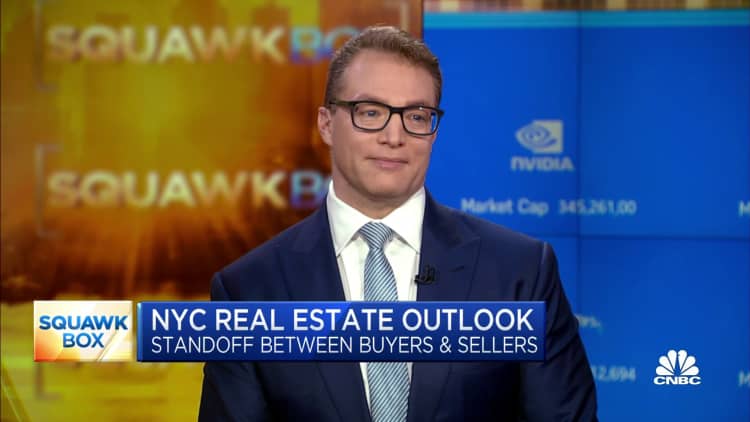
High-end luxury rental prices are astronomical, says Douglas Elliman’s Lorber

High-end luxury rental prices are astronomical, says Douglas Elliman’s Lorber


Share

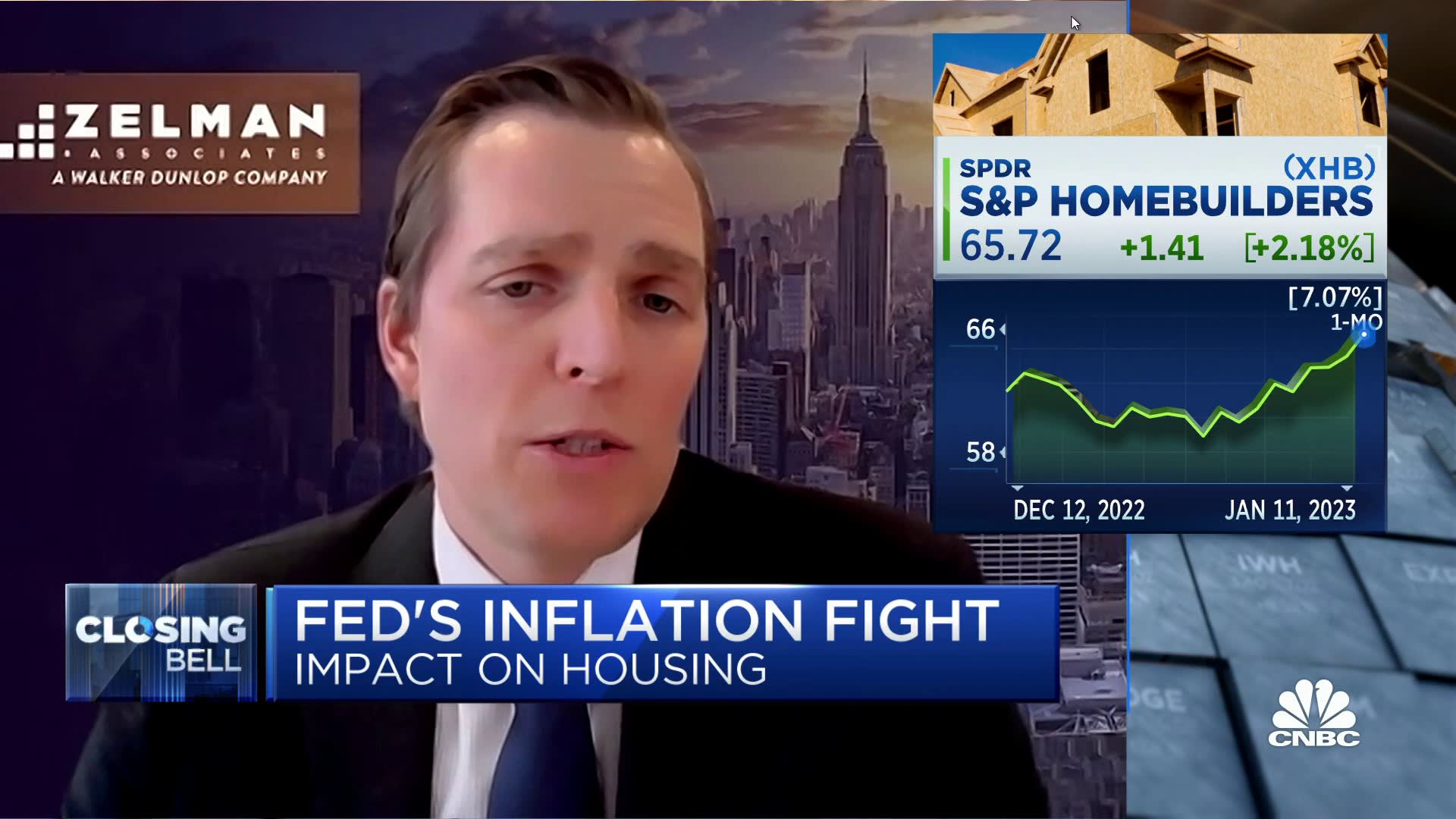
Howard Lorber, Douglas Elliman executive chairman, joins ‘Closing Bell’ to discuss how much the real estate market is being pressured by rising interest rates, when rents will begin to come down and insights into both the New York and Florida real estate markets.

04:05

Wed, Nov 9 20224:35 PM EST


Source link

High-end luxury rental prices are astronomical, says Douglas Elliman’s Lorber Read More »

Using the “Capital Carrot” to Find Money for Your Next Deal

Using the “Capital Carrot” to Find Money for Your Next Deal


Knowing how to buy a rental property is one thing, but coming up with the money is another. This is the constant struggle real estate investors find themselves in. When they have cash, there aren’t enough deals. When they have deals, there isn’t enough cash. This catch-22 usually puts investors in a spin cycle, never pulling the trigger on their first or next deal. But, it doesn’t have to be this way. With the right mindset, you can find the money to purchase more rental property, even if you’ve run out of options.

This is what expert investor, David Greene, refers to as his capital “carrot,” or the thing that allows him to find (and make) more money to buy even more real estate. And it’s just one of the topics in today’s Seeing Greene show. In this episode, David takes a live call from Garrett, who’s struggling with whether or not to sell or keep his first deal. We also get questions about BRRRRing with high interest rates, where to find medium-term rental tenants, and how to find a realtor in a brand-new market.

Want to ask David a question? If so, submit your question here so David can answer it on the next episode of Seeing Greene. Hop on the BiggerPockets forums and ask other investors their take, or follow David on Instagram to see when he’s going live so you can hop on a live Q&A and get your question answered on the spot!

David:
This is the BiggerPockets Podcast, show 687. Most of the time my lion does not come out unless I’m threatened. Okay? Unless I’m hungry. Then I actually realize what I’m willing to go do. I got to want something. When my life is comfortable, I don’t really function like the lion. When my life is uncomfortable, a different side of David comes out. And so this is an opportunity for personal growth if you choose to take that.
You could go take more jobs as an engineer. You could start studying sales or business. You could change elements of your personality like I had to do when I became a real estate agent to become more charismatic and easier to talk to and less of a cop.
What’s up, everyone? This is David Greene, your host of the BiggerPockets Podcast here today with a Seeing Greene edition. If you haven’t listened to one of these before, these are shows where I will take questions directly from you, our listener base, and answer them for everybody to hear.
We’ve got video submissions, we’ve got written submissions, and we have me going on rabbit trails explaining ways you can build wealth that you might not have thought about before. These shows are awesome, and you can usually recognize them by the glowing green light behind my head here.
Today’s show is fantastic. We’ve got several areas of interest that I’d like to highlight for you. The first is why cost in an area aren’t working and how to navigate the no short-term rental regulations. As real estate becomes more expensive, it becomes harder and harder to make it cash flow traditionally, which has pushed more and more investors into short term rentals. But there’s backlash from that too as communities don’t like short term rentals in their backyards and nimby neighbors make a stink. Sometimes you got to figure out a way to work around the regulations on your rentals, so we get into that with one of our callers today.
We also talk about why changing markets as an agent isn’t always the best bet. But what you could do if you’re a real estate agent listening to this to grow your business. And then I expand on that to say what you should look for in a real estate agent, that is very important. So that’s another point that we get into today’s show. What questions you should ask of your real estate agent, how to find the right one. And if you’re an agent, how you can make more money, how you can be better in the right way to serve your clients.
There’s also a great question about finding an out of state agent and putting a team together in a new market that you don’t want to miss. So please check that out. This is a great show.
All right. Before we get into our first live coaching call, today’s quick tip is check out biggerpockets.com/resources. It’s a place to find out about all the cool downloads that we have made available and the data that has been put together by our own data guru, Dave Meyer, of On The Market. These are the things that Dave and we at BiggerPockets think would be the most helpful for you to use and see and know.
So regularly check biggerpockets.com/resources. In fact, it might not be a bad idea to leave a tab open on your browser so you can check it every day. And if you listen all the way to the end of today’s episode, you might learn a little bit about what tabs are open on my browser as we speak.
All right. To start today’s show off, we have Garrett with a beard that rivals our own, Brandon Turner’s and Garrett’s car, from which he has asked questions in the past on shows 588 and 618. He’s now coming to us today live from said car. Garrett, welcome to Seeing Green.

Garrett:
Thank you, David. Good to be

David:
Here. Yes. So tell me what is your dilemma?

Garrett:
All right. So in the past episodes I’ve talked about wanting to get into the real estate. My next one was how I can deal with repairs and which one should take priority. And now I’ve kind of prioritized these repairs and got that all under control. I’m starting to pay down some financing. However, I’m trying to see long term with this investment and future investments. And I’m wondering… My question is basically trying to figure out an exit strategy. So I’m on the fence of holding long term, which I always told myself I would do if I would get into real estate staying in two out of the past five years so that I can get the $250,000 capital gains. Or if I should just wait one year after the FHA seasons, sell it, cut my losses and find something new, or possibly a 1081. I’m jumping all over the place.

David:
So this is not a rehab question, this is an exit strategy.

Garrett:
Exactly. Yes.

David:
So we got a property and you’re trying to figure out should… It’s your primary residence. You bought it with an FHA loan. Should you keep it as a rental or should you sell it and move into something else?

Garrett:
Yes. And like I said, I always wanted to buy and hold. However, the reason why I’m considering selling is because of this property. I feel like I might have bitten off more than I could chew. Just to run some numbers, so my mortgage and interest is about 3,500 a month. My W2 is bringing about 5,000 a month. Right now it’s fully rented. It covers principle and interest. However, all of the reserves are coming out of my own pocket. Basically, any repairs or rehabs, anything like that, it’s coming straight out of my pocket. I just don’t know if it’s a very sustainable property.

David:
Well, the rent should go up every year, right?

Garrett:
Yeah, sure.

David:
If you’re making 3,500 a month, that’s a pretty good location. Are you comfortable sharing where it is? What city?

Garrett:
It’s Jefferson Park, Chicago.

David:
Okay. So I’m guessing that those are not cheap homes, that that’s a decent area that you own this asset.

Garrett:
It is a decent area. I definitely feel safe in the neighborhood. It’s a little three flat. I rent out the top and middle unit, and then I live in the basement and rent out the second bedroom.

David:
So not only are your rents going to go up, but they’re going to go up on three different units over time. So exponentially this property will become profitable for you. That’s the first thing I want to say. What are you’re experiencing right now is normal, especially if you’re living in it. It’s a house hack?

Garrett:
That’s correct. Yeah.

David:
Yeah. So if it’s paying for itself and you only have to come out of pocket for reserves or expenses, how much would the rent be if you were to go rent somewhere else?

Garrett:
Probably not as good.

David:
No, just give me a dollar figure per month if you rented a different property.

Garrett:
If I rented a different property?

David:
What would you be spending on rent?

Garrett:
I don’t know, 15, 1600 to rent a place.

David:
Okay. So that property is profiting you 15 to $1600 a month. You’re not looking at it like that because you’re not factoring in the fact that you’re saving that much in rent. Now, if you moved out of that house, does that mean… How much could the unit you’re living in right now, how much would that bring in for rent? Or have you already factored that into the 3500?

Garrett:
So if I moved out, I would get an additional 500, maybe 600.

David:
Not huge, but it would definitely at least break even. Right? Okay. The first thing is when you’re saying, “I always wanted to buy and hold,” selling a property to buy another one isn’t necessarily not buy and hold. Right? I get what you’re saying is you intended to keep it forever and that is an option. But I want to present a different way to look at it. Money is useful for exchanging for goods. That’s typically how we look at money. But I’m writing a new book for BiggerPockets. I believe it’s going to be called Pillars. And part of the concept I’m trying to get through in this book is that money is actually a store of energy. Meaning you go to work and you put in eight hours of work in a day of labor, calories, effort, whatever you want to call it. You exchange that effort and you receive money in exchange. That money is the store of the energy that you poured out when you were working. Are you with me so far?

Garrett:
Yeah, I’m following.

David:
Okay. Now, money is a poor store of energy because of inflation. Inflation makes that money worth less. So the energy that you poured into it bleeds out. Just a different way of looking at it. But it’s better than spending your money and getting nothing. You go buy a pair of shoes, that’s an even worse store of energy than money would be. Right? A better store of energy is real estate. You take the money, you exchange it for a house. Now, that property not only stores the energy that you spent in work for the accumulation of hours you had to spend, it actually increases it.
It takes that energy and it amplifies it. It becomes worth more through appreciation, through cash flow, all these opportunities. When money cash flows into your pocket, you can buy more of it. I want you to look at real estate like a store of energy that you have expended previously through work.
If you sell this house and you buy a different property that performs better, cash flow is more… Whatever it is that you like about it more, appreciates more, has value add opportunity, you go into a rehab that’s not as daunting as this what was. Okay? You got away from buy and hold. You just took the energy out of a vehicle that is not a great storage of it and put it into a better storage. Okay? You’re shifting your energy from one thing to another.
And if this new house has value add opportunity, better neighborhood, also a three flat or a four flat, something is superior to the one you’ve got. You’re still a buy and hold investor. You’re just a better one. So I don’t want you to be afraid to pull the trigger by thinking, “Oh, I said I was always going to be a buy and hold investor.” If you’re doing real estate investing correctly, you will never own every property that you bought.
If you’re really good at this and you end up with 200 single family homes, you’re dumb. You need to exchange those for a couple big apartment complexes. They’re better stores of energy. They’re not going to bleed as much because you don’t have to pay attention to it. So the first point I’d just like to make here is if you sell it, that’s okay. You’re not a sellout. You didn’t do it wrong. The second piece I would say is let’s look at should it be sold? You had mentioned before the rehabs were very difficult. Is that still the case or have you pretty much gotten those under control?

Garrett:
I’ve pretty much gotten them under control. A few minor things here and there that pop up, but nothing I really can’t handle. But the returns are mostly in control.

David:
Okay. So you learned you’re not going to get in over your head like you were on this one, right?

Garrett:
Yeah, exactly. I think I’ve definitely learned that the hard way, but learned for sure.

David:
So you mentioned let the FHA loan season. I don’t think you have to do that. You can sell that house. You don’t have to wait a year to sell a home. Are you aware of that?

Garrett:
I actually wasn’t. I thought you’d have to wait a year.

David:
You have to wait six months to refinance, but you could sell anytime and anytime after six months you can refinance. Don’t have to wait a year at all. Now, you may have been thinking… I guess the year thing is you usually have to wait a year before you can buy another primary residence. That may have been where you got confused.

Garrett:
Yes.

David:
And you won’t be able to use an FHA loan on the second primary residence because you can only have one at a time. All right? So you can either refinance that FHA loan into a conventional loan and use the FHA loan to buy your next primary residence. Or you could keep your FHA loan and you could use a conventional loan to get your next one. That would be 5% down on a single family home. Are you with me so far?

Garrett:
Yeah, I think so.

David:
All right. I’m going to complicate it a little bit.

Garrett:
Okay.

David:
Because if you’re going to buy a true multifamily property… The one you have now, is it actually considered multifamily or is it considered single family, but it just functions as multifamily?

Garrett:
It’s actually considered multifamily, yeah.

David:
Okay. If it’s considered multifamily, you often can’t put 5% down like a triplex or a fourplex. They usually want somewhere between 10, 15, it might even be at 20%, even if it’s your primary. That’s one of the Fannie Mae, Freddie Mac rules that changed. So you can use an FHA loan at three and a half percent down to get one of those properties. So if you reach out to us at the one brokerage, we’re going to walk you through that. We’re going to explain.
So what might be in your best interest is if you refinance out of your FHA loan even into a higher rate which you’re not going to like, but you can use the FHA loan to buy your next property, you can put three and a half percent down on a multifamily house, which is much better than being forced to put down 10, 15% on it. You with me so far?
So even though the rate goes higher, you get the opportunity to keep more of your capital. And then you just get a better property than you did in year one. Less of a rehab that wears you out, little bit better of a location. You’re a little bit better analyzing properties. You’re not going to feel the pressure of, I got to go buy something because you’re comfortable where you’re at, so you can take your time and buy the right property.
The next one can only get better than this first one. So that’s the path I would lay out for you. What questions do you have considering that road?

Garrett:
I guess I’d just have to consider how long it would take to… Because if I sold the house… Or excuse me. If I refinance this house and I use FHA again to purchase another property, then I’m still going to have to put down that other down payment and any potential little cosmetic fix up or whatever might come along the way. But right now I don’t have that capital. So that’s the issue right now. So I’m like, I’m even considering maybe doing a flip here or there just to get something like this, but I also don’t want to deviate from the path at all of just buying small multifamilies right now.

David:
All right. That helps a little bit here. So first off, have you added much value to this house through the rehab you did to it?

Garrett:
Yeah, I’d say some. I mean, I did buy it a little bit over listing, so that complicates things a little bit. But I’ve added new windows. I’ve waterproofed the basement.

David:
I see what you’re saying, but the reason I’m asking is if there’s more equity in the home when you refinance out of the FHA, you may be able to pull some cash out, which could be your down payment for the next home. But if the work you did wasn’t necessarily going to make the house worth more, or if the market has gone down since you bought it, which likely could be the case, there might not be as much cash to pull out of it as what you think.
So that would be your first option is I want to refinance. I want to refinance the primary residence loan and I want to pull cash out. If they let you, there you go. You got some money for the next deal. If not, let’s go back to the drawing board. You’re saving rent right now that you don’t have to pay. You said $1500. That’s around, I don’t know what that would be. Probably 15 to $18,000 a year, something off the top of my head that you should be saving, plus whatever money that you were saving on top of that. Right?
So if you can save $25,000 in the next year by working a lot, that could be another three and a half percent down payment on your next house.

Garrett:
Yeah, that’s true.

David:
Are you just sort of ants in your pants, want to get going, don’t want to have to wait?

Garrett:
I am really excited. I just want to do more, do more, do more. But I just feel a little stuck right now.

David:
Well, when you don’t have capital, you are stuck. There’s no way around it. That’s why I’m writing that book I talked about for BiggerPockets, it’s about capital is freaking and important and real estate investors have access to it.

Garrett:
So in the first unit, the top floor, there’s a long-term tenant. They’ve been there for actually 10 years. So when I bought the place, their rents were really low and I raised that. And then the main floor, that’s the one that I did some cosmetic rehabs on, fixed up the bathroom, made everything look really nice. And then I got someone in there within a month and a half and now they’ll be there for at least… He said at least two to three years because it’s nearby a school for his son.

David:
Do you think, Garrett, there is a possibility that you could rent it out as a short term rental or are you locked into leases right now?

Garrett:
I’m pretty much locked into leases right now, at least until next year.

David:
What about if you moved out of the unit that you’re renting? Would that rent out as a possible short term rental?

Garrett:
So that’s what I’m saying. If I moved out of this unit and then I waited until next year’s due because I have a roommate as well. If we both moved out, I could consider it as a short term rental. That’s a possibility. But I’m not sure what the market is like on Airbnb. I wouldn’t even know where to start there.

David:
So another element we could look into here is if any of the units of your current property could be used as a short term or a medium term rental. What do you think of the possibilities of that are?

Garrett:
Yeah, so I think if my roommate and I move out, it would be about a year. And then after that, I could consider it for a short term rental. I’m not too sure what a medium term rental is though. Could you familiarize me a little bit with what that is?

David:
Yeah, that’s a really good question. A medium term rental would be you renting the unit out to a traveling professional, A person who needs a place to stay for more than a short period of time. So this could be someone has a sick family member at a nearby hospital, and so they want to go stay at a furnished property to be close to them or they get a contract to work at a certain area. They don’t want to buy a house they don’t want to rent for a year and they need it to be furnished.
So these are typically corporate people that are moving somewhere. Someone who moved into an area to get a temporary job. Maybe someone is like, “Well, I work remotely and I met this new girlfriend and I want to get to know her. So I’m going to move to this area, get my own space. I don’t know if it’s going to work out or not. So I don’t want to be committed.”
So those medium term rentals are something that we’re starting to see a lot more of coming into the space. And it’s not as much management on the owner’s behalf because once the person moves in, it’s kind of like they treat it’s a long term rental. So those would be some options that you could have to try to increase the revenue on this particular property. Outside of that, what are you doing for work right now?

Garrett:
So for work, I am in the construction industry. I’m an engineer. Basically, I’m out on the job site and making sure that the contractors and laborers are following the plans necessary to complete the project.

David:
Do you have options where you could increase your income with what you’re currently doing?

Garrett:
So we do have reviews coming up. That’s about it. I am actually currently looking into a second form of employment, like seeking some part-time work with either an insurance agency or selling solar panels, something where there’s room to grow and room to make more. It’s commission based. And maybe if that takes off, I could consider switching over into that. But right now I really do like what I do. I’m just looking for some extra money on the side.

David:
Okay. I’m going to give you my philosophy on this, and this is not the opinion of everyone at BiggerPockets or everyone in the world, just my personal way of looking at it. When we run into the problem, not enough capital, I want to scale, I want to buy more properties, I want to get more into real estate. You’ve got two options. One road is look for creative strategies. And this is typically the one that gets put out as the best option. Go find someone that’s got an off market deal and take over their loan.
Go find a deal from a wholesaler. Go do some kind of magic that you can figure out how to get this deal without money so you can scale. Go borrow money from other people. Learn how to raise private capital. The problem is we’re often giving that advice to people that are newer to investing like yourself. Right?You want to get more reps and you want more at-bats. That’s what you need.
The other option is to take that desire to buy more homes, which is this is the option that I took in life, and let that be the carrot that motivates me to go work harder, take more opportunity, get another job, start a side hustle, start another business, improve the way that I add value to the employer that I have. Do something to try harder.
So Garrett, you’re a human just like everyone else, and there is a element in you that is powerful and brilliant, and genius. It’s a lion. All right? We all have that. Most of the time, my lion does not come out unless I’m threatened. Okay? Unless I’m hungry. Then I actually realize what I’m willing to go do. I got to want something. When my life is comfortable, I don’t really function like the lion. When my life is uncomfortable, a different side of David comes out. And so this is an opportunity for personal growth, if you choose to take that.
You could go take more jobs as an engineer. You could start studying sales or business. You could change elements of your personality like I had to do when I became a real estate agent to become more charismatic and easier to talk to and less of a cop. I would encourage almost you and almost everyone listening to take that road. You want more than what you got.
You have skills in construction, you know you’re good at real estate, you clearly understand this. It’s time to level up. It’s time to get over. Whatever insecurities, fears, worries, concerns, all of us carry around every day that keep us from moving forward, right? It’s hard, it’s scary. That’s why you need the carrot. And you’re feeling it, okay? So that’s the advice that I’d like to give you is what can you do to go get into a different career, a different industry, do more of what you’re doing right now so you can make more money so that you can go buy this real estate that you want to.

Garrett:
Yeah. Thanks, David. I’ll have to consider that. It sounds like good advice.

David:
All right. Cool man. So going into the future, tell me the next steps you’re going to take.

Garrett:
I’d like to, obviously, purchase more real estate. I’m thinking one property every year following Brandon Turner’s favorite or famous stack method. I just finished Multifamily Millionaire. It was awesome. And then eventually after five, six years of owning enough properties and becoming 100% financially free, I’d like to travel more with my fiance, then wife, and just have time to spend with my family and be able to continue purchasing real estate and having that generational wealth for my family.

David:
Well, if that’s the goal, personal growth, accomplish the real estate will definitely make that future even sweeter. So good luck with that, Garrett. Let’s stay in touch.
All right, that wraps up our conversation with Garrett. Hope you’re liking the show so far. At this part of the show, we like to pivot a little bit and read some of the YouTube comments that we’ve received on previous shows. I like to hear what you guys have to say, what you’re enjoying, what you’re not enjoying, what you’d like to hear differently. We read these and we do take them into consideration, so please keep commenting on YouTube as well as subscribe to this channel. If you can take a quick minute to hit that little bell to be notified when new shows air, like and then share this with anyone else who you think wants to grow some wealth through real estate.
Our first comment comes from Phil. “I would agree that it’s easier to find contractors right now, but I’m still finding it tough to BRRRR. I find that it’s more work on the front end, making sure the numbers work given the higher interest rates. What are your thoughts, David?” Well, this is one of those issues where everything in real estate, there’s always something that’s difficult and something that’s easy in different markets.
So when values were going up like crazy and anything that you bought was appreciating more and more people were buying, it was fueling the frenzy of prices going up, and finding a contractor was incredibly difficult to do. So even if you found a great deal, if you didn’t have a person that could go in there and fix it up or their costs were absorbent, you had to pass on it.
Well, now there’s contractors that are willing to work and their prices are better, but guess what? That’s because there’s less demand for them. And why is there less demand? Because it’s harder to find the deals that work just like Phil is saying. Now, Phil, you’re saying that it’s harder to find deals at work because of interest rates, which leads me to believe that what you’re referring to is it’s harder to find something that will cash flow when you’re done.
A few things to keep in mind on that front. You write the offer based on what numbers work for the cash flow. So don’t be scared or don’t hesitate to write lower offers in this market that favors buyers. It doesn’t really matter what the list price is, it matters what your number is to make that work. We call that the home run number. So consider using some of BiggerPockets calculators to analyze these deals and find what numbers work and write your offers at that price. Then just follow up with these people to see who wants to play ball.
Another thing is I’ve noticed that a lot of the newer investors, they tend to try to make up for creativity with volume. What I mean by that is they will analyze more deals that don’t work, looking for the one that will. Whereas I would look at something and say, “Yeah, interest rates are too high to cash flow at that number. It’s not going to work.” So I’m going to quit analyzing those kind of deals. I’m going to look for a different kind of deal that would work. And how that actually turns out in real life is I look for properties that have more than one unit or even more than two units.
I look for ways in a property. Can I finish out the basement and make a separate unit? Does this one have an ADU that other people are not entering into their calculations? What additional ways can I generate revenue from a property that makes the numbers work? Remember how we were saying a while ago that you don’t find great deals, you make great deals?
Well, you can find great deals in today’s market, but you can still make great deals. So if you guys are banging your head into that brick wall, if it feels like you’re trying to take that square peg and push it into that round hole and it’s just not working out, find a way to take that square peg and put it into a square hole. Analyze different kinds of BRRRR opportunities with more than one source of revenue. That’s what I’m doing. I have three BRRRRs going on right now. No, four. And all of them, every single one of them I am adding square footage to that property or converting existing square footage to add a revenue generating component to the deal, which does make the numbers work. That’s all you got to do.
All right. Our next comment comes from Abby Jose. “Hello, I’ve been watching BiggerPockets videos for the past couple years. It’s because of you guys that I refuse to give up on purchasing my first home post-pandemic as a self-employed individual. You are also the reason that I’m gearing up to purchase my second property soon using the creative strategies that I’ve learned from your YouTube videos. That being said, I am in agreement with many of the other commenters. I would love to see some of your personal deal deep dives. Specifically, I’m interested in how you negotiate the deal with the seller and also how you deal with contractors.”
All right, Abby, I appreciate that. We are actually working on doing that. In the future. You might have to be a little bit patient because a lot of the time I will put a deal in a contract and it is months before the rehab is complete and I have a rental history that I can actually show how a property is performing.
So I would keep in mind, three months from now, six months from now, you’ll probably start seeing some deals that I bought six, nine months previously because I have some data that I can share saying how they’ve been going and how it’s been working out, and that’s just part of the rhythm of real estate investing. But we’ve heard you guys say that this is what you want. More specifics, you want to see how the deals work out. This is the first time I’ve heard someone say how they’d like to see me negotiate a deal.
So I will see if there’s a way we can put that into the show. I’d like to share that with you. It’s something I teach my agents. It’s something I teach the people to follow me. Negotiating is a huge, huge, huge part of getting deals in today’s market and there’s a lot to learn there.
Okay. Our next question comes from AZ. “David, I want to know what pages are on your browser when you open a new window? For me, NerdWallet for interest rates, the MLS, BiggerPockets, and my email. Basically, I want to know how you stay up to date with one, the market, and two, news. Also, do you look at the 10-year treasury bond daily, and if so, where?”
All right, AZ. So I actually have several tabs that are open on my computer every time I log in, and that is a different computer than the one I use for recording because I have so much open on it, there’s not enough RAM to be able to record efficiently. So I have a separate computer just for making these shows. Were I to open the other computer, you would see my normal email that is several hours of work every day to keep up with.
My real estate CRM called Brivity that we use to track the deals that the David Greene team has in contract. My investment tracker, which is made up of several tabs. The first tab shows, here’s all the properties I own. This is the loan balance. This is the current value. This is the equity. These are the interest rates. This is the loan servicer that I use to track my overall portfolio.
The second tab has a list of offers that I’ve written that I’m going to be following up with to see if I can put it in contract. The third is a tab that shows all the properties I currently have in escrow. The fourth is a tab that shows the closed properties that are currently under rehab. The fifth is a tab that shows my closed properties, the furnishing to get ready to go for Airbnb and so on and so forth. I have a tab in there to track every month how the properties did the month before so I can see what’s vacant, what is performing well, what needs some more attention to be able to improve its performance, et cetera.
After that, I look at my goals every day. What are the goals that I set for this year? Am I on pace to meet them? Then I have a dashboard that shows the different companies I have and the main statistics I want to look at. So for the David Greene team, how many escrows we have. As well as which agents have them. For the one brokerage, how many total loans that we have in submission for the mastermind that I run, how many members we currently have in there, my social media improvements, the passive income from my investments, the money that I’ve borrowed from other people that needs to be paid back. All that kind of stuff is on the dashboard.
I then go into my second email, which is specifically for my real estate portfolio with all the questions from property managers or contractors or the work that goes into that. Then I have a tracker that shows the overall profit of every company that I have and different revenue sources that I have. There’s probably 25 different sources there that I review to see, “Am I improving? Am I falling down? What’s going on?” And that is what I look at when I need to track what went wrong. We made this much revenue. Now, we’re only making this much now as the CEO.
I have to dive in and find out did someone make a change that I didn’t authorize. Did the market turn around on us? Did we lose a top producer? The dashboard is… Sorry, the RevTracker is how I track all the income that is coming in. Then I have the one brokerage growth plan that I review with my partner, Christian, and that has to do with the steps that we have for pushing that company forward.
There’s always a book I’m writing. Right now, it’s a book called Pillars. So I actually have a tab open that shows that where I am in writing that book at that time, so I can work on that in between meetings. I have a page that shows all the projects that I have going on that don’t fall into a specific company. I’ve got a daily schedule by Google Calendar that tells me what I need to be doing, where I need to be recording and what needs to be happening, what meeting I need to be in.
I tend to check Bitcoin every day because I’m looking to see if that falls more. I’ve got a BiggerPockets inbox. I keep a tab open for that so I can try to keep up with the things that come in there. This isn’t in my tabs, but I do have to check my DMs in Instagram, Facebook, and whatever other social media is out there to try to keep up with inquiries from that.
I have research I’m doing for the book, Pillars. There’s several tabs open for that as I’m looking up studies that have been done in personal finance or how people can make more money. I’ve got my David Greene team mastermind where we have a website that actually all the members talk in each other with and so I review that as well and more.
So I don’t actually have a website that I’m spending a whole lot of time looking up. I’m tending to just try to keep up with the chaos of what is happening as I’m building this ecosystem for investors to come to if they need whatever it takes to be able to have a trustworthy agent, loan officer, insurance provider. All the things it takes to be able to take what you learned at BiggerPockets and then go execute it.
So BiggerPockets is incredible at helping you start scale and manage your portfolio. And then I just try to fill in the little gaps of the specifics of what people need to be able to do that better. So most of the news that I get comes from specific searches that I do or something coming up in my phone. I’ll get notifications that this just happened. I also listened to a lot of podcasts. So if you guys are wondering how I keep up with all this in the day, I don’t really know how to tell you how I do it, but if you’re not getting an answer from your email, this is probably why.
Whenever I’m not working on something, if I’m taking a break to go walk or I’m going to the gym or I’m going to eat, I put in my AirPods and I listen to different podcasts that talk about the same type of stuff. So I am constantly having information going in my brain about other people that have read the news and they have digested it for me and I get their take and their summary on it.
So I liked that you asked me that question. I left out probably two thirds of the other tabs I have open. I just couldn’t remember them off the top of my head because I don’t have that computer open. But thank you for that question. All right, we love it and we so appreciate your engagement. Please continue to do so. We would also love it if you would like, comment and subscribe on YouTube as well.
If you’re listening on a podcast app, which many of you are, take some time to give us a rating and an honest review on there. Those help a ton. And in order for us to stay at the top of the business and the real estate categories, we need your ratings and reviews. So please do so.
Last thing, what did you think about all the tabs that I have open? Leave a comment about what information you’d like to learn more about or what you thought when you heard me read those off. Tell me what you’re thinking. All right, let’s get back into some questions here. Our first question comes from Ryan Alexander in Pennsylvania.

Ryan:
Hey, David. Ryan here from Pittsburgh, Pennsylvania. I am a real estate agent and investor. I started buying properties last year and I have eight doors in Cleveland and then I also have a short term rental in the Smokey Mountains. My question to you though is more geared towards the real estate agent side of things. I got my license back in 2019, but I was only part-time for the past three years. I went full-time this past March because help from the rentals and everything I was able to get out of my nine to five.
My question to you as far as the real estate side of things of being an agent is if you had to move into a new market for whatever reason and were in a market where you didn’t know anybody or you didn’t know very many people, what would you focus on to generate leads and basically dominate that market?
I just started doing videos because I’ve heard obviously that’s a big part of it, but I wanted to get your insight on it and I have your first book, I have the second one and everything, so I’m waiting for that to come out. But just would like to get a gauge from you, an answer from you on what’s what you would do in a new market like that if you were presented one and how you would go about it to generate leads and everything and get noticed in that market? So that’s it. That’s my question and I appreciate everything you guys are doing at BiggerPockets.
You truly are changing lives. I mean, you’ve changed my family’s trajectory for sure in the past year just alone with eight doors and the rentals that we’ve gotten. So I appreciate it and looking forward to hearing your answer. Thank you.

David:
Well. Hey, Ryan, thank you very much for the compliment there. It does mean a lot that we’re changing lives over here at BiggerPockets and frankly that’s because how much money you have has such a big impact on the quality of life that you live. And it doesn’t mean that I think you should go out there and buy fancy BMWs and wear jewelry. It’s more about money enables you to have the freedom to do what you want, when you want and how you want.
So you’re still working, you’re just working in a different way that you enjoy more and I love hearing that. I’ve often said that real estate and God are the only two things I’ve ever come across that I can’t outgive. As much as you give to real estate, it will give you more in return. I can tell that you’re super bought into it because why else did you become an agent?
If someone gets their real estate license, everybody, it means they love real estate because you eat a lot of crap when you’re an agent. You’re often sort of dealing with the hardest parts of the entire economy or ecosystem of real estate. Your question specific was how do you move into a new area and dominate a market? All right. The short answer is you don’t. You’re not going to dominate a market moving into it as a new agent.
Let’s get out of the sales pitches that people have to give realtors where they try to sell them software or a system or a marketing technique that will allow them to dominate a market. They’re going to tell you, “Oh, send letters to every house and farm a neighborhood and go door knocking and introduce yourself to the people there.” That was probably significantly more effective 20, 30, 40 years ago because he didn’t know an agent until someone came and met you and shook your hand and you got a feel for him.
That’s how people made decisions back then. I don’t think people make decisions like that as much anymore. A certain demographic will, majority of them. I don’t want to talk to someone who comes and knocks on my door and they shake my hand. I mean, some people may like that In general. I don’t trust the person who just walks right up to me. I want to be able to research them.
I think a lot more people are doing that nowadays. When you meet a new person, one of the first things you do is you go look at their social media or maybe you go look at a website that they have, but you’re trying to get information about a human to make a decision for yourself rather than just a gut feeling like what we used to get in person. So the farming technique doesn’t work as much anymore.
Video does help that you mentioned specifically because it allows people to get more information about you. But here’s the problem. Video is very easy to do which means every other realtor is doing it. And so we go deeper and deeper down this rabbit hole of how you make yourself stand apart and it’s incredibly difficult to do because everyone else is already doing anything that I could tell you.
When you look at the realtors that crush it, there’s a few patterns that I’ve noticed emerge. The first one is that they have been in the industry for a long time. It’s typically the agent that’s been in for 20 years, 15 years, 25 years, that’s doing so well. And as I ask myself, “Why is that?” It became pretty clear. It’s because they have the biggest database.
Time in the market as an agent, much like an investor is your best friend because you meet more people. That’s what you really want. You want an army of humans that are sending you referrals, which is a relationship situation. And the longer you give yourself to build these relationships, and the more that you can build, the better you will do.
If you jump around from city to city to city too many times, it makes it too hard to build the relationships that agents need to thrive. The second thing that I will notice with successful agents that do really well is that they make sure that every client has the best experience possible. They don’t try to automate their job. They don’t try to turn it into something that’s quick and easy. They’re not transactional. They’re actually not necessarily doing it for the money. The money follows the relationship. I know the difference between the agents that worked hard to make me money, that worked hard to find me deals and the agents that just waited for me to tell them what to go do.
The ones that work hard for me, the ones that go out of their way to find deals are the ones that get my business and my referrals the most. Again, it comes down to the relationship component. Now, if I were to move to a new market, the first thing I would consider is I want to move to market with high price points. I want to be selling $800,000 homes, $1.4 million homes, not $200,000 homes.
I would also brand myself as a person that helps people to make money. So you want people from out of your area to be looking for you because they’re easier clients to work with. You don’t go show them 70 homes. They look at the homes, you said. Maybe they find one on their own, they send it to you. You go to the property, you send a video, you do a lot of due diligence, the numbers work, they put it under contract. Those are much better clients than your standard ones.
So you want to be able to market yourself as someone who could do everything. You have the property management connection. You have the contractor connection. You have the lender connection. You know all the numbers to the city that they need to call to get the permits for whatever they want to do. Do you want to market yourself as the person that has all the answers that they would need?
Now, a lot of this is covered in the books that I’ve written for BiggerPockets. The first one’s called Sold, the next one’s called Skill, and the third one will be coming out in the next couple months, it’s called Scale. That’s about how to build a team. I think that you mentioned those briefly, but I would definitely read those books.
Now here’s the good news, there’s very few good realtors out there. If you set yourself apart with a great work ethic as a person who comes up with solutions rather than gives excuses, as a person who goes and looks for what needs to be done rather than tells the client why it can’t be done, you’ll set yourself apart. And that advice is good for everybody. I just got off the phone call with my chief operating officer, Kyle, about a different person in our company and we had said, “Hey, can you go do this work for us to prepare for an event we have coming up?”
And their response was, “This is why I can’t. This is why I can’t. This is why I can’t.” It is maddeningly frustrating when you need someone to do something for you or you want them to work through a solution and they give you all the reasons it can’t work. Now, you’re in the position of trying to overcome their objection and convince them why it can, get them to think creatively about the problem.
Don’t be that person is what I’m getting at. If you don’t want to do something, just straight up say, “I’d rather not do that.” Don’t give all the reasons why it can’t be done. The reason I wrote long distance investing and changed the way that people invest in real estate is everybody else said all the reasons it can’t go right or it can’t work. And I came up with a system that it could work.
The same is true for pretty much every business I’ve started, book I’ve written, or piece of advice I’ve given. If you look at what it would take to make something work versus give reasons why it can’t, you’ll find yourself significantly more wealthy. Ryan, you got the love for real estate. You got the drive. I can tell your energy is very positive. If you’re a solution-oriented person, you will absolutely succeed. I hope this advice helps you and reach back out and let us know how it’s going.
Next question comes from Becky Pike in Oregon. “I’m in Oregon and I’d like to invest on the Oregon coast, but so far I’ve found that rents don’t cover the mortgage payment very well.” What that basically means, Becky, is that the price to rent ratio is not in your favor. The homes are too expensive for the rents they can generate, which is normal. When you get into higher price point areas, it tends to work out much more favorably in lower price points when you’re looking into rent. And if you’d like, I can give you a more detailed explanation of why that is.
Just put something in YouTube comments that you’d like me to expand on that and I’d be happy to do so. Back to Becky, “The properties I can afford are zoned no short term rentals, only 30 days or more.” Before I keep reading, I’ll let you know. The reason that you can afford them that they would work out is because you’re not looking at long term rent. You’re looking at short term rentals, which are much more labor intensive, but do generate more money.
So you’re seeing, I can already tell in order to make that expensive housework, it needs to be a short term rental. But Oregon is one step ahead of you and they have outlawed short-term rentals. You have to rent them for 30 days or more. “I’d like to do medium turn rentals so I could raise the monthly rate, which I believe you mean to be higher than a traditional month to month rental. Where do I advertise such a rental so that traveling nurses and traveling workers can even find my place? Where are these people looking to find their medium term housing? Thank you, David.”
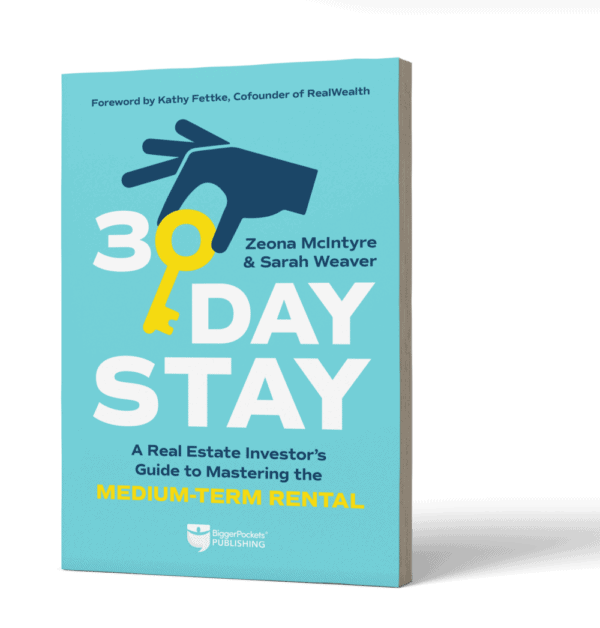
Well, first off, Becky, you’re asking the right questions, so congratulations on that. Second off, I’ve got a couple resources for you. We recently interviewed Sarah Weaver and Zeona McIntyre who wrote a book for BiggerPockets about this exact situation, about medium term rentals and how to manage them.
I would check out that podcast and consider buying that book. Side note, if you’d like to get 10% off anything that you order on BiggerPockets, just use my name as a discount code when you check out D-A-V-I-D. We also did an episode with Mark Simpson who manages short term rentals and gives advice for medium term rentals and he wrote about how you could do this without using online travel agencies, which is what you’re asking about.
So I would consider listening to that episode learning about that. Funny how all these questions were recently covered in what we’re doing and maybe getting his book too. I can tell you right off the cuff that Furnished Finders is one way that people find medium term rentals and Airbnb works the same way. So does VRBOO. You just classify it as a medium term rental.
And then the last piece of advice I’ll give you is I don’t look for that myself. I hire people who have experience doing this to be my property manager and they figure out where to go advertise it. So that’s another avenue that you could take is finding a person who does this and hiring them to advertise on whatever platforms I specifically don’t know about.
So to recap, you got the episode with Sarah and Zeona. You got the book with Sarah and Zeona. You got the episode Mark Simpson. You got the book with Mark Simpson. You got Furnish Finders, you got Airbnb, you got VRBO, and you’ve got property managers that can help you. I believe that is seven to eight different methods that you can use and I do think you’re wise to be taking this course of action and asking these questions. All right, our next video question comes from Aaron Horman in Kansas City.

Aaron:
Hey, David. This is Aaron here. Got a question for you about investing in a city that I’m not currently located in. So been looking in my hometown where I live and the market is pretty tough right now, so I’m looking at maybe investing. I’m looking for a property in some other areas that I’m interested in. Just want to get your advice on how you recommend going about looking for a realtor in that area that can help me find the properties I’m looking for. Thanks for your feedback and everything you do with the podcast. Great, I appreciate it.

David:
Thank you for that, Aaron and I do have some advice I can give you because I’m in a similar boat. First one, if you didn’t know it, I wrote a book called Long Distance Real Estate Investing that specifies exactly what you can do to find a realtor in another market if you want to do it by hand. So you can check out that book by going to biggerPockets.com/longdistancebook and using the discount code David for 10% off. That will help you out quite a bit.
Second off, you can use the BiggerPockets agent finder by clicking on tools and then agent finder and typing in the area where you want to buy. You’ll get a list of agents that are affiliated with BiggerPockets that understand the lingo that have worked with investors before. Research them and find one that will help you.
Third, you can reach out to me directly and you can ask, and if I have an agent in that area that I’ve used before, I am happy to refer them to you.
And then fourth, you can actually start asking other people on the BiggerPockets forums if they’ve used an agent and did they like them? Also, ask a question of what did you not like about this agent? That’s a good question to ask. That’s one of my favorite questions to ask. So if someone says, “Well, I didn’t really love that the agent was really pushy.” I David Greene might like that. I might prefer an agent who’s pushy because I have an idea of what I want, so pushiness doesn’t bother me. I don’t want a passive agent. I don’t want an agent that I got to text first that I got to keep saying, “Can you go do this? Can you go do that?”
I want an agent that runs out there, does everything, comes back and says, “Do you like it?” And if I say no, they go do it again. One of my big pet peeves agents do is they text me an address or they email me an address and they say, “Hey, I like this property. What do you think?” Then I have to say, “Well, what kind of revenue is it going to bring in? Did you get that verified by a second property manager? What are the comps for this? What do you think the price that we could get it would be? Have you talked to a listing agent? Are they motivated?”
Now, I got to give them a homework assignment that they got to go ask all these questions and I got to wait for them to come back. They should just do that first. Don’t send me the house until you’ve already called the listing agent and said, “Hey, I see you’re listed for 1.5 million. Do you think we could get something done at 1.2?” And they call the property managers and be like, “Hey, I think this house could work for my client. What do you think the numbers are like on this thing. What could they expect?”
And then wouldn’t it be amazing if they did the analysis for me and they said, “Here’s your income that you expect. Here’s your expenses that I would estimate. They’re conservative. Here’s what I think your profit would be. Oh, and by the way, I’ve already called the listing agent and they asked these questions and they said, ‘I think if we have a number between 1.2 and 1.3, we got a good shot.’” Wouldn’t that be wonderful?
As an experienced agent, that’s what I do. So I’m just expecting other agents to do the same. Aaron, if you ask these questions when you’re interviewing the agents and tell them that’s what you like, you’ll get a better feel for what you can expect when they are working with you and then be very direct about what you want.
That’s another problem that the clients make. It’s not always the agent. A lot of the time the client doesn’t communicate their expectations because they don’t want to seem needy or they don’t know what’s industry normal or whatever their issue is. And then the agent doesn’t know how to serve them. So check out my book. Use the BiggerPockets forums. Use the agent finder and message me directly and I’ll connect you to somebody in that area. Thank you very much.
And that advice goes to everybody else who’s looking to invest in long distance as well. I am here for you and so is BiggerPockets. One of the key components of long distance real estate investing was this idea of a core four. I call it long distance real estate investing, but it’s really a book about systems. These are the systems that I put in place and if I have these, I can invest anywhere.
A key piece of that is your team. And your team is made up of four people. Your deal finder, which is typically your real estate agent, your loan officer, your contractor, and your property manager. And if you have those four people, you can invest anywhere. So as you’re doing this research, my advice would be to ask your realtors, “Do you have a good contractor? Do you have a good property manager?”
You’re looking for realtors that can give you actual access to the people that you’re going to need to get a deal done in that area. If they say, “No, I don’t have any of that. No, I don’t have any of that,” they probably don’t do a lot of deals, because just by nature of doing a lot of business, they come across referrals that are needed. So that’s one of the things that I always prioritize.
Is this a person that can help me with putting my team together? And if they’re not, they better have a very specific niche skill set. They better be great at analyzing deals. They better know a lot about short term rentals. They better have some access to off market stuff that other people don’t have. There’s got to be some reason I’m going to work with you if you don’t have a team, because then I got to put the team together myself. Good luck out there. Happy hunting.
All right. That is our show for today. Thank you everybody for joining us on this Seeing Greene episode. I hope that I gave you some information that you didn’t already know that will help you in your journey, and I hope you had a good time listening. It’s important that as I give you information, I also make it fun and easy to listen to. So let me know if there’s anything I could do to make the medicine taste better, right?
The information is a brand muffin, but I can still put a little bit of icing on that brand muffin for you. So let me know what we could do to make this show better. We’d love it. Please subscribe to the channel and remember to give us an honest review on whatever app you are listening to this show on. We could really, really, really use that. All right, everybody. I’m going to get us out of here for today. Please check out another video or episode if you have time, and if not, I will see you on the next one.


Help us reach new listeners on iTunes by leaving us a rating and review! It takes just 30 seconds and instructions can be found here. Thanks! We really appreciate it!

Interested in learning more about today’s sponsors or becoming a BiggerPockets partner yourself? Check out our sponsor page!

Note By BiggerPockets: These are opinions written by the author and do not necessarily represent the opinions of BiggerPockets.


Source link

Using the “Capital Carrot” to Find Money for Your Next Deal Read More »

Here’s the inflation breakdown for October 2022 — in one chart

Here’s the inflation breakdown for October 2022 — in one chart


People shop for bread at a supermarket in Monterey Park, California on Oct. 19, 2022.

Frederic J. Brown | Afp | Getty Images

Inflation was cooler than expected in October, although household staples such as shelter, food and energy remained among the largest contributors to consumer prices still rising at a historically fast pace, the U.S. Bureau of Labor Statistics said Thursday.

Inflation is a measure of how quickly the prices consumers pay for a broad range of goods and services are rising.

The consumer price index, a key inflation barometer, jumped by 7.7% in October relative to a year earlier — the smallest 12-month increase since January. Economists expected a 7.9% annual increase, according to Dow Jones. Basically, a basket of goods and services that cost $100 a year ago costs $107.70 today.

The annual rate is down from June’s 9.1% pandemic-era peak and September’s 8.2% reading, but is hovering near the highest levels since the early 1980s.

“That’s obviously still very high,” said Andrew Hunter, senior U.S. economist at Capital Economics, of October’s reading. “But at least it’s a move in the right direction.”

A decline in the annual inflation rate doesn’t mean prices fell for goods and services; it just means prices aren’t rising as quickly.

More from Personal Finance:
Consumers cut back on holiday gift buying amid higher inflation
How to avoid Medicare scams during open enrollment
Here are pros, cons of owning cryptocurrency in a 401(k)

While the headline annual reading is generally easier for consumers to understand, the monthly change is a more accurate gauge of near-term trends, i.e., if inflation is speeding up or slowing down, economists said.

The CPI rose 0.4% from September, according to the BLS. Economists expected a 0.6% monthly increase.

“For the past year to 18 months, we’ve seen a lot of 0.4%, 0.5%, 0.6%,” Hunter said. “It’s the reason annual inflation has been so high.”

Consistent monthly readings in the 0.2% range would suggest inflation was under control, he said.

The ‘pervasiveness’ of price increases

A healthy economy experiences a small degree of inflation each year. U.S. Federal Reserve officials aim to keep inflation around 2% annually.

But prices started rising at an unusually fast pace starting in early 2021, following years of low inflation.

As the U.S. economy reopened, a supply-demand imbalance fueled inflation that was initially limited to items such as used cars, but which has since spread and lingered longer than many officials and economists had expected.

“That’s the crux of the problem: the pervasiveness of inflation,” said Greg McBride, chief financial analyst at Bankrate.

Inflation weighs on holiday gifting budgets

Inflation was a top concern for voters heading into Tuesday’s midterm elections. An NBC News poll issued last weekend found 81% of respondents were either somewhat dissatisfied or very dissatisfied with the state of the economy — a level unseen since the 2010 midterms.

The typical U.S. household spends $445 more a month to buy the same items it did a year ago, according to an estimate from Moody’s Analytics based on September’s CPI report.

Meanwhile, pay for many workers hasn’t kept pace with inflation, translating to a loss of purchasing power. Hourly earnings have fallen 2.8% in the last year after accounting for inflation, according to the BLS.

Food, energy and housing are top contributors

Large and consistent price increases in food, energy and housing have been troubling, despite some recent improvement, McBride said.

They’re necessities that constitute a large share of household spending, making inflation “so problematic” for households, he said.

“You can’t go without eating, you can’t go without cooking or heating the house and you need a roof over your head,” McBride said. “Those are three categories that continue to drive these high levels of inflation.”

Housing represents the biggest share of average consumer budgets, accounting for 34% of household spending in 2021, according to the most recent U.S. Department of Labor data. Transportation, which includes gasoline, and food are No. 2 and No. 3, respectively, at 16% and 12%.

Any meaningful relief for household budgets is something that is still well over the horizon.

Greg McBride

chief financial analyst at Bankrate

Shelter prices increased in October, jumping 0.8% from September — the largest monthly increase in that category since August 1990, according to the BLS. The category is up 6.9% in the last year.

The “food at home” index — or grocery prices — jumped 12.4% in October versus the same time a year ago. That’s an improvement from 13.5% in August, which was the largest 12-month increase in more than 40 years, since 1979.

The energy category — which includes gasoline, fuel oil, natural gas and electricity — was up 17.6% last month relative to October 2021. That’s a decline from September’s 19.8%.

“Any meaningful relief for household budgets is something that is still well over the horizon,” McBride said.

Gasoline prices had been a primary irritant for many Americans earlier in the year. Prices at the pump have retreated from summer highs of more than $5 a gallon nationwide, but edged up slightly in the past week; they currently sit at an average $3.80 per gallon, per AAA.

‘We have a ways to go’

Monthly increases came from shelter, motor vehicle insurance, recreation, new vehicles and personal care, according to the BLS. There were also some monthly declines: used cars and trucks, medical care, apparel and airfares, it added.

“Price pressures remain evident across a broad range of goods and services,” Jerome Powell, chairman of the Federal Reserve, said during a press conference Nov. 2.

The central bank has been raising borrowing costs aggressively to cool the economy and reduce inflation. Powell signaled that policy would likely continue for the foreseeable future.

“I would also say it’s premature to discuss pausing [interest-rate increases],” Powell said. “And it’s not something that we’re thinking about; that’s really not a conversation to be had now.”

“We have a ways to go.”

Inflation isn’t just a U.S. phenomenon

Inflation isn’t a problem in just the U.S. Indeed, it’s been worse elsewhere.

For example, consumers in the United Kingdom saw prices increase 10.1% annually in September, tying a 40-year high hit in July.

But on the global stage, inflation first showed up in the U.S., Hunter said. That’s partly due to Covid-related restrictions unwinding sooner in many states relative to the rest of the world and federal support for households kickstarting the economic recovery.

“The U.S. has been a leading indicator for what’s happened to inflation in other countries,” Hunter said.

Inflation is a global problem worsened by geopolitical factors such as the ongoing Russian invasion of Ukraine. Pictured: damage in Donetsk, Ukraine, on Nov. 5, 2022, after shelling.

Anadolu Agency | Anadolu Agency | Getty Images

Americans had more disposable income as the economy reopened, the result of federal funds such as stimulus checks and pent-up demand from staying at home. Meanwhile, Covid-19 lockdowns roiled global supply chains — meaning ample cash ran headlong into fewer goods to buy, driving up prices.

Those supply-chain issues are “only now beginning to unwind,” Hunter said. But higher labor costs — the result of ongoing worker shortages and wages that have risen near their fastest pace in decades — have led to upward pressure on the cost of services, too, he said.

Russia’s invasion of Ukraine also fueled a surge in commodity prices — for crude oil and grain, for example — which has fed into higher costs for gasoline and food, Hunter added.

High energy costs have broad ripple effects on other goods, which become more costly to produce and transport.

“I think this is something that will likely take much of 2023 to unfold, if we’re lucky,” McBride said.


Source link

Here’s the inflation breakdown for October 2022 — in one chart Read More »

Europe’s Energy Crisis Is A Bigger Issue For The U.S. Than You Think—Here’s What You Need To Know

Europe’s Energy Crisis Is A Bigger Issue For The U.S. Than You Think—Here’s What You Need To Know


The Federal Reserve just increased interest rates another .75% in one of the fastest course corrections in the history of monetary policy. Many are now predicting doom for the real estate market. And while real estate will almost certainly go down (indeed, that seems to be intentional), the strong lending standards of late, low-interest, fixed-rate debt most homeowners have, and the persistent housing shortage should prevent another housing crisis.

But the saying amongst military strategists that “generals always fight the last war” could just as well apply to economists; “economists always predict the last recession.” (That is when they’re not predicting seven of the last two recessions, but that’s another topic.)

Housing will likely suffer, and the market will “freeze,” as I will discuss further below. But the real dangers to the world and the American economy lie elsewhere.

Indeed, the “technical recession” of Q1 and Q2 this year, where growth dipped but unemployment stayed below 4%, is not going to be enough to quell inflation. And Federal Reserve chairman Jerome Powell seems (surprisingly from what I predicted) quite dedicated to “be sufficiently restrictive to return inflation to 2%,” which will almost certainly push the United States into a not-so-technical recession. 

But it’s important to remember that most recessions are far from catastrophic. People think of the 1950s as an economic boom time, yet it had three separate recessions. Even the deep recession in 1982 caused by Chairman Volker sharply increasing interest rates to quell inflation was relatively short-lived. There are, however, ominous clouds circling in areas outside of real estate and the United States in general that should be monitored carefully as they could conceivably cause a global financial contagion.

And the first place to look is Europe, most notably Germany.

The European Energy Crisis

Most of Europe has found itself in a severe energy crisis, with Germany being hit the hardest. When Russia invaded Ukraine, the United States and other European nations put a litany of sanctions on Russia. Russia responded by cutting off natural gas, particularly to Germany. Energy prices spiked and pressure mounted in Germany to reopen Nord Stream 2. However, such possibilities came to an abrupt end when the pipeline was sabotaged in late September.

Indeed, in September, the situation looked absolutely dire. Just look at this graph showing an almost ten-fold increase in the price of natural gas futures over the previous year.

dutch natural gas futures
ENDEX Dutch TTF Month Ahead Natural Gas Futures- Bianco Research

European leaders have scrambled to find alternatives and shipped in an enormous amount of natural gas from abroad. Indeed, they have shipped in so much that the situation has (sort of) reversed itself, and spot values have fallen below zero

Unfortunately, this most certainly does not mean that the problem is solved. Germany, and all of Europe for that matter, has enough gas to get through the winter as of now. The problem is how much they have had to pay for it.

As CNN notes, despite being blessed with “unseasonably mild weather” with “consumption closer to August and early September [levels],” natural gas futures “are still 126% above where they were last October.”  

Indeed, to fill European gas storage to capacity, it cost 6.5 times as much this year than in previous years. 

nat gas shortage
European Natural Gas Shortage Costs – Bianco Research

The crisis is hitting most of Europe. The U.K. government, for example, estimates 10,000 Brits will die this winter due to energy expenses making them unable to sufficiently heat their homes. But again, the country in the worst shape of them all is Germany, which was especially vulnerable as 55% of its natural gas had come from Russia before the war began. Spiegel International puts the crisis into context,

“The current gas crisis has all the ‘ingredients for this to be the energy industry’s Lehman Brothers,’ Finnish Economic Affairs Minister Mike Lintilä said recently. Back in 2008, investment banks triggered a global financial and economic crisis by selling toxic home mortgages tied up in wild securities constructs. This time, it is high gas and electricity prices that could trigger a systemic collapse…

“Many companies are unlikely to survive. In August alone, the number of insolvencies among corporations and partnerships, mostly medium-sized firms, grew by a quarter year-on-year. For October, Steffen Müller of the Leibniz Institute for Economic Research in Halle predicts an increase of one-third compared to 2021. And this doesn’t even take into account the increased energy costs and inflation. Müller expects a structural change in the German economy. Due to the long-term cost increases in energy, wages, intermediate products, and interest rates on loans, ‘some business models are just no longer sustainable.’ Müller says that weak companies ‘are now getting flushed out of the market.’”

The measures being taken to address this crisis have ranged from the obvious (extending the operations of nuclear power plants that were scheduled to go offline) to extreme (cutting down ancient forests for wood to burn as fuel). And, of course, Germany intends to subsidize electric bills while mandating less energy use amongst its citizens and businesses. 

Government forecasts for growth have been reduced by almost 3% and now expect Germany to fall into a recession in 2023 while inflation stays near 10%. At the same time, for Europe on the whole, energy bills could be three times higher than last year. 

And, of course, it could be substantially worse. There were, after all, many overly optimistic predictions about a short recession at the beginning of the housing crisis in 2008.

A Global Contagion? 

Europe is going to go through a lot of pain this winter. And while our thoughts and prayers should be with them, the immediate question is simply whether this will be Europe’s problem or, as Mike Lintilä analogized, “the energy industry’s Lehman Brothers.” We should remember that what was predominantly (but not only) an American housing collapse in 2008 unleashed a worldwide recession that was by no means restrained by the borders of the United States.

Markets are global, and shortly after the energy crisis started, the United States started sending the bulk of its export gas to Europe. While this made perfect sense, it also depleted domestic stockpiles and has caused prices here to rise.  

While nowhere near as acute as Europe, across the board, we’re seeing energy shortages. For example, in New York and New England, heating oil is at one-third of its normal levels, and rationing has already begun.

The United States also depleted half of its strategic oil reserve to combat higher gas prices earlier this year. In an attempt to alleviate global shortages, the Biden Administration asked (begged?) Saudi Arabia to increase oil production. Instead, Saudi Arabia cut oil production by 2 million barrels per day. Unfortunately, it turns out that relying on a medieval, theocratic oil company isn’t a particularly reliable strategy. 

In particular, though, diesel fuel is in short supply. As of October 25, the U.S. was down to just a 25-day supply. As New Your Magazine put it, “The last time there was this little supply, there were about 3.5 billion fewer people on the planet.”

Of course, the United States will almost certainly not run out of diesel. What will happen instead is that prices will rise to both ration supplies and incentivize imports and production.

The problem is that, well, prices will rise. In fact, prices have already doubled this year and will likely increase further. 

Screen Shot 2022 11 11 at 11.38.34 AM
Diesel Fuel Commodity Price (November 11, 2022) – Business Insider

Energy prices are a major driver of inflation, and, as we have seen, central banks are cranking up interest rates to slow general price increases. Even still, Germany is expected to have significant stagflation next year with near 10% inflation during an expected recession (and perhaps, a deep recession). And if many factories and businesses go under from excess energy costs, it could cause permanent damage to the German economy that will prevent anything even resembling a “V-shaped” recovery.

It should also be noted there are other global areas of concern. The war in Ukraine could potentially escalate. China’s sovereign debt situation is teetering on the brink of becoming a crisis. Volatility and risk is high right now, to say the least. 

Given this situation, it is unlikely that inflation will be quickly stymied, which will require central banks to maintain high rates at least through much of 2023. An all-out collapse isn’t probable, in my judgment. But at this point, recessions throughout much of the world—particularly Europe and probably the United States—seem to be all but a given right now. 

Of course, if we do fall into a deep recession, pressure will build for central banks to ease up, and, at that point, it’s anyone’s guess whether they will cave. Earlier this year, I would have said they absolutely would lower rates if we went into a non-technical recession (one with high unemployment), but their recent aggressiveness has given me second thoughts.

How Will This Affect the Domestic Real Estate Market?

A somewhat odd headline recently ran in Fortune starting with “Housing market activity is crashing.”  Notice it’s “activity” that’s crashing more so than the market.

It notes that, for example, “mortgage purchase applications are down 38% on a year-over-year basis.” It’s clearly not a good time to be a real estate agent or a mortgage broker. 

And with the increase in rates and global energy crisis, there’s no reason to see this train slowing down.

The good thing this time around is that lending standards were far better than pre-2008. Now, almost everyone has fixed-rate debt at low rates and substantial equity in their homes. Therefore, instead of a real estate crash like 2008, expect a “real estate freeze,” or, as Bill McBride puts it, a “Sellers Strike.”

New real estate listings are already down close to 15% year-over-year, and given most people don’t need to sell because of the fantastic loans that were available over the last few years, there’s little reason for them to sell.

It’s this ability for sellers to “strike” that usually buoys real estate prices during recessions. As you can see, looking through the Case-Shiller Index since its inception in 1987, in four of the last five recessions, real estate prices either didn’t go down or barely did. 

case-shiller index
S&P/Case-Shiller U.S. National Home Price Index – St. Louis Federal Reserve

Even during the 1982 recession, which saw interest rates in the teens, home prices actually went up 1%. (Although they went down in real terms when adjusted for inflation.) Of course, the 2008 recession was very different. That, however, was because the spiral of defaults and foreclosures from all the bad mortgages lead to a wave of distressed sales.

Goldman Sachs sees home prices falling 5-10% next year. Wells Fargo, for its part, expects the following for 2023:

  • New Home Sales down 6.5%
  • Existing Home Sales down 13.1%
  • Home Prices down 5.5%

I think it will likely be a bit worse, but not by any means catastrophic in terms of prices. 

It will be “catastrophic” in terms of activity. Again, it will likely be very tough for real estate agents, wholesalers, and mortgage brokers. Flippers will also have struggles finding buyers and buy and hold investors will have a lot of trouble with financing.

The most likely effect the global energy crisis will have on housing is that it will likely extend this “freeze” for quite some time. Don’t expect rates to be “back to normal” by the middle of next year. 

It could possibly lead to a global contagion and financial crisis as well. While not likely in my judgment, with this much uncertainty going into the winter, it would be wise to stay as liquid as possible with as high of cash reserves as possible. If we do go into a deep recession, having excess cash to help with increased delinquency and higher interest rates is essential. It’s also great for buying up cheap assets at fire sale prices. 

It would also be wise to be extra conservative on new acquisitions in the coming months, at least until Spring returns. Buying a large project before the bottom falls out is not a particularly lucrative strategy. 

Caution and liquidity would be my recommended approach, at least until it’s clear that the energy crisis in Europe (and the rest of the world to a certain extent) only causes a recession and does not become “the energy industry’s Lehman Brothers.” 

On The Market is presented by Fundrise

Fundrise logo horizontal fullcolor black

Fundrise is revolutionizing how you invest in real estate.

With direct-access to high-quality real estate investments, Fundrise allows you to build, manage, and grow a portfolio at the touch of a button. Combining innovation with expertise, Fundrise maximizes your long-term return potential and has quickly become America’s largest direct-to-investor real estate investing platform.

Learn more about Fundrise

Note By BiggerPockets: These are opinions written by the author and do not necessarily represent the opinions of BiggerPockets.


Source link

Europe’s Energy Crisis Is A Bigger Issue For The U.S. Than You Think—Here’s What You Need To Know Read More »

Look inside only large-scale 3D printed housing development in U.S.

Look inside only large-scale 3D printed housing development in U.S.


Lennar, ICON partner to build largest 3D-printed neighborhood

It looks more like a project at NASA than a home construction site.

Just outside Austin, Texas, massive machines are squeezing out 100 three- and four-bedroom homes, in the first major housing development to be 3D-printed on site.

One of the nation’s largest homebuilders, Lennar, is partnering with ICON, a 3D printing company, to develop the project. Lennar was an early investor in ICON, which has printed just about a dozen homes in Texas and in Mexico. These homes will go on the market in 2023, starting in the mid-$400,000 range.

“This is the first 100 homes, but we expect to be able to bring this to scale, and at scale we really bring cycle times down and we also bring cost down,” said Stuart Miller, executive chairman of Lennar.

ICON claims it can build the entire wall system of the home, which includes mechanical, electrical and plumbing, two to three times faster than a traditional home and at up to 30% of the cost.

“We exceed code requirements for all the different kinds of strength, wind, compressive strength by about 4x. We’re about two and a half times more energy efficient,” said Jason Ballard, co-founder and CEO of ICON.

The printers are designed to operate 24 hours a day, but they don’t because of area noise restrictions. They are almost fully automated, with just three workers at each home. One monitors the process on a laptop, and one checks the concrete mixture, which has to be adapted to the current weather conditions. Another works in support, misting the area with water or adding new material into the system.

“The promise of robotic construction is a promise of automation, reducing labor – therefore reducing labor costs,” Ballard said.

ICON aims to get the number of operators down to two over the next 12 months, Ballard added. Eventually, he wants even fewer operators. “I think the sort of Holy Grail is where one person can watch a dozen systems you need one person to watch a dozen systems,” Ballard said.

The main squeeze

The way it works is a digital floor plan is loaded into the software system called Build OS, which then prepares it for robotic construction. It will automatically map out the structural reinforcement, placing the electrical and plumbing outlets during the print. The printers then squeeze out rows and rows of a proprietary concrete mixture that looks much like toothpaste, slowly building up the structure.

Other companies, like California-based Mighty Buildings, are also using 3D printing technology, but they print the homes in a factory and then move them on-site. ICON brings the factory to the site.

“With this project, we’re improving our total house count 400%, and we expect to like continue at least doubling for the next three to five years,” said Ballard. He said he already has plans to work with other large-scale builders. DR Horton is another of ICON’s early investors.

Lennar’s Miller said his primary focus is on bringing more affordable homes to the market, and he sees this as one way to do that. But he knows it’s also still the early stages.

“This is all about innovation. If you go around the country and speak to officials at the local and state level, the single biggest question is: How do we provide workforce housing, affordable housing,” he said.

Lennar began plans on the project with ICON when the housing market was still red-hot, driven by strong demand and record-low mortgage rates. Now mortgage rates are more than double what they were at the start of the year, and demand has fallen off sharply, suggesting their could be added risk to this project.

“We still focus on our core business, making the trains run on time, building homes across the country, and as the market cycles up and cycles down we adjust our business,” said Miller. “Innovation is a cycle as it sits on the side of our business because we know, looking forward, there’s a housing shortage out there.”


Source link

Look inside only large-scale 3D printed housing development in U.S. Read More »

You DON’T Need Experience to Invest in Real Estate

You DON’T Need Experience to Invest in Real Estate


Before you invest in real estate, everything can seem new and confusing. Bidding on houses, renovation budgets, finding tenants—these are all skill sets you must acquire to become a financially independent real estate investor. But that doesn’t mean you need to be a pro before buying your first property. Just ask Brittany Arnason, AKA InvestorGirlBritt, the Canadian real estate superstar who started BRRRR-ing her way to wealth at just eighteen.

We brought Britt onto the show to help us dive deeper into a question we received on the Real Estate Rookie Facebook Group. This question came from JP, asking: How do you network and partner with more experienced investors when you feel you have nothing to add value? 

Most investors never feel like they know enough, and this is especially true if you’ve never done a deal before. But, Britt may serve as the perfect person to share her experience with JP, as she went from knowing nothing about real estate to becoming a multi-million dollar commercial investor all before the age of thirty!

If you want Ashley and Tony to answer a real estate question, you can post in the Real Estate Rookie Facebook Group! Or, call us at the Rookie Request Line (1-888-5-ROOKIE).

Ashley:
This is Real Estate Rookie episode 234.

Britt:
In order to raise money, in order to do those type of things, people have to like, know, and trust you. So a great way to build that trust and likability and get to know the people is through posting very consistently on Instagram. What that translated to for me was over $10 million in capital raised through my social media platforms for my projects.

Ashley:
My name is Ashley Kehr and I am here with my cohost Tony Robinson.

Tony:
And welcome to the Real Estate Rookie Podcast, where every week, twice a week, we bring you the inspiration, motivation, and stories you need to hear to kickstart your investing journey. And we’d like to start these episodes by shouting out folks in our Ricky audience. And today’s review comes from Azari E. And Azari says, “This is a must listen podcast. It’s my go-to for keeping my mind focused on real estate investing. The episodes are filled with digestible bits of information, fantastic guides on how to invest in relatable stories from other real estate investors at all levels. The hosts are authentic and super pleasant to listen to, and I listen to them on my runs making both of them super enjoyable.” Azari, I appreciate that, especially the part about the hosts are super enjoyable to listen to because there’ve been quite a few other reviews that have said quite the opposite. So I appreciate you, brother. But hey, if you guys haven’t yet, leave a five star review on whatever platform it is you’re listening to.

Ashley:
Yeah, thank you guys so much for those of you that have left reviews. We really appreciate it.

Tony:
We should maybe do that during BP CON where we just read all the mean reviews that have come in.

Ashley:
Like Jimmy Fallon Mean Tweets.

Tony:
Yeah, like the Mean Tweets because we got a lot of them. There’s enough for us to get through a few.

Ashley:
We do talk about crying at the end of this episode. It might not make me cry.

Tony:
But we’re here live at BP CON. This is I think our second episode we’ve recorded since we’ve been here. This one was super impromptu. We’re just sitting down here in a little media room and then a very special guest walks in and we’re like, “You haven’t been on the Rookie show yet. We got to change that right now.” So within five minutes we start recording this episode.

Ashley:
This is a real estate superstar that is coming on. She started out doing DIYs at the age of 18, buying properties, fixing them up and then renting them out. And since then, has transitioned to raising money for self storage.

Tony:
So today’s super special guest is the one and only Investor Girl Britt. She’s insta famous. She’s crushed it into real estate. And we brought her on some, to hear her story, but more so to talk about how she focused on building her platform early on, the impact it’s had on her business and what she would do today if she had to start all over in building that platform.

Ashley:
And more specifically, how it actually connects with you guys as rookies, why you should be doing it now, not having any experience, maybe just starting to learn about real estate and how you can actually add value to other people because of that.

Tony:
We also talk about how a case of food poisoning changed her life forever for the better. So make sure to listen for that part.

Ashley:
Before we bring on our special guest today, we do want to address a rookie reply question. So this question comes from JP Bailey and was posted in the Real Estate Rookie Facebook group. Today’s question is, “How do you network and partner with more experienced investors when you feel you have nothing to add value? I’m aware that this might just be me being too hard on myself.” Tony, I think this is actually a great question and very relatable to a lot of people.

Tony:
Totally. Even for me, Ashley, when I think about the investors that are more experienced than me, a lot of times I have to question myself and say, what value can I add? I do remember being a rookie with zero deals and that is a very real feeling. But I think there’s a few things, JP, that you can look at. So even if you have no deals, do you have time? Time is one of the most constrained resources that a lot of other successful investors lack. So if you can just bring an abundance of time to help them do the things that maybe they don’t have the time to do, that’s a tremendous way to provide value. So for example, say that you want to work with someone that’s an experienced flipper and maybe they don’t have the time to run to Home Depot to get supplies, or maybe they don’t have time to cold call people to try and get more leads, or maybe they don’t have time to… There’s so many different things going on in that business that are important, but not necessarily the best use of that investor’s time.
So if you just have time, that’s a great way I think for you to add value. And then another thing is ability. So even if you don’t necessarily have experience flipping homes, do you have experience maybe creating systems and processes? Maybe you can be the person that at the beginning of every job you walk the property with the crew and you create the scope of work in the budget. Or maybe it’s your duties to look at all the comparable properties that have sold recently. And you use that to create the scope of work. There’s so many things that go into creating a successful real estate project where even if you don’t necessarily have experience in real estate, but you have experience with other skills, you can still provide value to someone that’s more experienced than you are.

Ashley:
I think that our guest that we’re bringing on today will relate to this even more. So we’re bringing on, as we mentioned in the intro, Investor Girl Britt, and she actually talks about how she has partnered with AJ Osborne, the king himself of self storage. I mean if you think self storage, you think AJ Osborne. She also had that kind of limited mindset about herself as to wow, he’s this huge investor and I’m just burring these $30,000 houses in nowhere Canada. But she talks about how she did add value and she found a way that something he didn’t have. But as far as the networking piece, and not even trying to partner with someone but to network with them and make that connection. People really like to talk about themselves. So find something that that person is interested in and start talking about it with them, asking them questions about it.
Investors are probably tired of answering the same questions over and over, and they won’t get that light inside, that won’t spark a fire inside of them talking about those same things. But if you can find something that maybe they don’t get to talk about a lot that they really love and really enjoy and make a connection that way and build almost like a friendship before you even get into the real estate side. Tyler Madden, I feel like that is his superpower. An investor out of Denver. He’s really good at that, is finding out what people are interested in becoming friends with them or making that connection before it’s even talking business. How can we each add value to each other? Or things like that. So it’s just really think about just social skills in general.
Like dating. Okay, if you’re going to date someone, you’re going to try and find out what they’re interested in. You’re not going to be right away. “Okay, let’s get married. How many kids do you want? You want 2, 3 kids or whatever?” You’re going to find what interests them and you’re going to do things that interest them so they like you and vice versa. You don’t have to right away know how to add value to someone. It’s more about making that connection. Because think about how many times you hear people saying, “It’s not what you know. It’s who you know.” And if people genuinely like you and they feel that connection, they’re going to feel pulled to want to work with you, to want to do something with you.

Tony:
I’m so glad you brought up the networking side of it because I think a lot of people overlook the role that social media can play in building that network. I think for me, there’s a lot of people that reach out to us on social media and ask questions, but there’s always that one person that comments on almost every single post that I put up as soon as I post it and I’ve met some of those people in person and as soon as I see them I’m like, “Hey, I know you.” It’s like, “I’m the one that always comments on your stuff.” So if there’s someone, JP, that you look up to or that you do want to partner with, maybe just start being super engaged in their Instagram comments and every time they post something and don’t just put a little fire emoji, maybe do something like this more insightful, that’s like a value add comment to the rest of the community. And if you’re the first person to comment on every single thing that they post, eventually that relationship will naturally start to build.

Ashley:
Go stalk someone is what you’re saying.

Tony:
Yeah. I think that works up to a certain extent where if you’re trying to network with Dwayne Johnson the Rock, I don’t know if that approach will work, but if it’s someone that’s kind of a smaller influence, I think there’s a path forward there.

Ashley:
So let’s get into it with Britt. And I think that you guys are going to be able to relate to a lot of what she says. And even though this is the rookie channel, we love to bring on those rookie investors. Once in a while, we love to grab that expert at something and break it down for you guys how the thing that they’re doing can really propel you if you start doing it now as a rookie. So let’s bring on the famous Instagram Investor Girl Britt. Britt, welcome to the Rookie podcast. We are so happy to have you. Why don’t you start off telling everyone a little bit about yourself and how you got started in real estate?

Britt:
Oh cool. Thanks for having me, you guys. I can’t believe I haven’t been on the show before.

Ashley:
Because you’re too experienced. You’re not a rookie anymore.

Britt:
True. Well, we all have been there. So first house I bought when I was 18 years old and I got that one. It’s a weird story. I never know how to get into this because it’s kind of weird. But I got food poisoning when I was six years old and the restaurant paid insurance money out to all the people who got super sick. So I had this chunk of cash and when I was 18, I bought my first rental property. So I was a $25,000 house and part of that food poisoning money went to pay for that. And then I worked for the rest of it. The rent was 850 bucks a month. So I’m like, I don’t know anything. But I do know that 850 over the year, this house is going to be paid off in a few years. So it’s almost one of those things where nowadays we have so much information, it’s information overload. But me at that time, I’m like, “That makes sense. Very simple math. Let’s do it.” So learned a lot just after that first deal.

Tony:
I mean that’s got to be the best food poisoning experience that I’ve ever heard before.

Britt:
It’s the best. It was amazing.

Tony:
I mean first, kudos to you for being 18 years old and thinking I just got this $25,000 check and I’m not going to go blow it on, I don’t know things that 18 year olds buy, but I’m going to buy real estate. How did you get to that point? Was someone coaching you? Was someone teaching you? What was the trigger that made you say, “Let me buy real estate instead”?

Britt:
Well, my mom had tenants in our house because she needed help paying the mortgage. So there’s a point where she would have tenants. We had basement tenants and all of this stuff. And I saw her not being able to afford the property to being able to afford her mortgage with renters. And I’m like, “Okay, that makes sense if you have rental income coming in every month.” And then the other part of that was she got me and my brother to help her fix up these properties. So she’s like, “All right, here’s a paintbrush. You’re eight years old. Let’s get to work.” So it was great because I learned a lot of hands on stuff early on too.

Tony:
Got it. So it was your mom that kind of planted that seed for you to become Investor Girl Britt that you are today. For our audience that doesn’t know how much of a beast you are in the real estate space today, just give us an overview of what your business looks like today.

Britt:
Yeah. I grew my Instagram following. It was a huge piece to this as well. So now I own 28 doors I guess in residential. So that’s a mix between apartment buildings, some single family, but I’m kind of away from that now. And then self storage as well. So syndicating self storage in the US. So I’m kind of also in US and Canada and this gets really complicated. But that’s kind of been more my direction now, the commercial real estate space and working with amazing operators in the self storage industry. But through Instagram, there’s just capital that can be raised, there’s deals that can be found. It’s been a huge catapult really to get me to where I am today.

Ashley:
We talk a lot on this podcast about staying on the same path. Pick a strategy, pick your criteria and stick with it. So at what point did you decide, you know what? I’m going to pivot from single family, small multi-family to self storage. And what would be your advice to somebody as to when that time is right?

Britt:
Yeah, that’s a great point because I think it is extremely important to pick your path, get really good at it, but know that you can pivot in the future. Because there’s so many ways to make money in real estate. If I went full out into multifamily, I know I would be successful. Full out into self storage. It doesn’t almost matter the path you choose as long as you just choose it and go all in. But the point of pivoting for me, especially from single family, was getting in rooms with people and masterminds where they were doing big commercial deals. And I just thought, okay, if I want to scale and get to where… And I had this feeling, I really want to grow. I was really in my comfort zone with a single family. I’ll be doing DIY single family until I’m dead. I’m never going to stray away.
And then all my friends at this mastermind are like, “Okay, do whatever you want, but if you want to grow faster, it’s probably better if you stop doing everything yourself.” But I was so comfortable in that I didn’t think I wanted to change, even though I kind of knew deep down. Because it was hard. It was hard being in that world of doing completely everything, renovations, property management, Instagram. I handled all of it on my own. But then getting in that space with all these people who are doing the self storage and the large multifamily and all that, I thought okay, I can actually do this. And I just got a lot of confidence through that.

Ashley:
So you basically became a rookie again.

Britt:
Yes.

Ashley:
You became a rookie at a different strategy, a new business model. So kind of touch on that a little bit, what it was like. Here you were very experienced, an expert in long term buy and holds in your markets and now completely pivoting and you’re a rookie again in a whole different strategy. What was that like?

Britt:
I think the mistake people make is they think they have to do it all alone. You can hire people who are amazing at what they do and then you can use your strengths and then kind of start building a team. So that was difficult though because I’ve never hired anyone. And then I was reading the book Who Not How by Dan Sullivan. He’s like, “I just hire people to hire all my people.” So I said, “I’m just going to do that.” So I hired a company who helped me build out my whole team and just get that together because I had no idea. And that’s part of it too because I didn’t understand the business side of it so much. I just knew how to buy single family homes and renovate them. But the business end of it, I just could never really grasp that. But there’s so many amazing people out there and it’s better to all be working together and really just focus on your own strengths.

Tony:
So Britt, obviously the majority of our audience, they’re rookies who are super early, haven’t even really begun their journey yet. Would you have been able to build that team on day one or did you have to grind it out yourself first before you got to that point of being able to add those people around you?

Britt:
That’s a good question because I do think it takes some time to figure out who you are and what your strengths are. But really try pay attention to that and focus on it. Because if I was doing bookkeeping, there’s a lot of things that I should not be doing. I’m not very organized. But it’s very consistent through even in high school or through my serving jobs, all these skills and what I’m really good at, I’m still really good at. And what I’m really bad at, I’m still really bad at that. I think just paying attention to it and maybe people can start paying attention in their own job or life in general and write down all your strengths, all your weaknesses. There’s tests you can do online, like the DISC test and there’s one called Working Genius and then you can really just figure out, “Okay, I’m really good with this.” And then eventually, maybe it’s not right now, but eventually when you start to partner or build a team, you’ll have a good understanding on what that should look like.

Tony:
I think the other thing, and this is what I struggled with early on, was just being able to afford to pay people. It’s like when you’re first building your business out, there’s very little money coming from your business. So you do have to kind of do everything. But the decision you have to make as you start to scale is do I take the additional profits that are coming off and use that to inflate my lifestyle or do nicer things for myself, or do I take that additional money and reinvest it back into the business by hiring the right people around you? And we’ve made the decision to hire more people to build that team out and I feel like that’s unlocked so much more growth because now, like you said, we’re able to really operate in our areas of strength and not our areas of weakness.

Britt:
Absolutely. I very much struggled with it because I couldn’t understand. I’m like, how am I supposed to pay someone 50,000 a year? I’m not making anything. I’m trying so hard. All the money’s going to renovations. But the sooner I hired, it was the best thing ever. Because it just takes stuff off your plate and what gives you energy and what will actually move the business forward instead of doing all these little tasks that just take all your time and then you’ll never be able to… You just get there so much faster. But I think also thinking about it in a way where it’s not I’m paying someone 50,000 or whatever it is for the year. No, it’s a three month contract. Think about it more short term. Can I afford each month? And then go at it that way.

Tony:
So Britt, something that you’ve done phenomenally well is build your presence online. We talk to a lot of rookies in our audience and we tell them that your platform if you want to scale, is one of the most important assets you can build. First, can you share with our listeners how big that platform is for you today? And then second, if you were starting new today as someone who had zero followers on any platform, what steps did you start taking to build that platform out?

Britt:
So I’m at 250,000 on Instagram. That’s my main platform, but I’m trying to get on all of the different ones now too. But it is the best thing I ever did. I went to a real estate conference, my first one back in 2016 I would say. And I met a mentor there who told me, “Britt, you have to start doing something right now to build your credibility as an investor. Start a newsletter, start something.” So I started a blog and I’m like, “This sucks.”

Ashley:
We have to find that blog. We’ll post it in the show notes.

Britt:
You know what it was called? I forgot about this. It was called Little Investments on the Prairie. Because I had all these little $25,000 houses but I’m not a writer and it was just really difficult to keep up with. But then I found Instagram. I didn’t have Instagram previous to that and I didn’t even want it. I didn’t want to be on social media at all. But then just from this mentor, I thought that is a good idea. It took me a year to get to a thousand followers and I thought this is impossible. I don’t know how to grow social media. This is so hard and so much work. But I just kept very consistent at it. I’d post Wednesdays and Sunday. So I’d post consistently all the time. And then I discovered lots of people are interested in the video side of things and the transformation of the space. Because I was doing all fully renovating the house on my own. So people started to be interested in that and I started getting reposts and it really worked for me.
So I think when people are building their page, what stops a lot of people is they think they have to be experts but you don’t. People want someone to relate to. So that’s more important than anything. It’s building your story and showing transformation of yourself as a person too. Things you’re learning, different things you’re doing. So I think posting just about, even if you’re reading a book and then you could say, “Hey I read this book Who Not How and I learned this thing and now I’m growing and expanding my mind.” But you can always find someone in an audience that can connect to different things. You just have to keep trying different ways, and it’s actually been hard for me because I was doing the DIY renovations for so long, but then I pivoted to commercial real estate. I’m like, “I don’t know what to post anymore.”

Ashley:
Your Excel spreadsheets.

Britt:
I know, this is so boring. But it’s part of that pivoting again. And then I tried a whole bunch of different posts. Some of them went completely dead, just didn’t work at all. But then you try something else and then just kind of find what works. So you have to just keep trying.

Ashley:
Who was the first person that you hired to actually help you with the content creation side? Because you did it all yourself for a very long time.

Britt:
True. Yeah, I did all the content creation and the good thing is I have 50,000 photos and videos of all my renovations. So even though I’m not doing my DIY renovations, I have all the videos that I could still use and I just had a viral reel, I got 2 million views, and I did that project five years ago. So it’s pretty crazy. I think just capturing as much content as you can, no matter what it is, even if you think it’s kind of pointless. Just take a video or photo anyway because your future self will thank you.

Ashley:
What are some of the benefits of actually building a brand or getting your name out there? So for Tony and I, if we wouldn’t have had any social media or he wouldn’t have had his podcast, we probably wouldn’t be sitting here today because nobody would know who we were and how to reach out to us or what we were doing. So I mean that definitely is a huge benefit is that you’re provided opportunities because people see what you’re doing. They get to know you through your social media. So what have the benefits been for you as an investor?

Britt:
Well, real estate is a people business and it’s a relationship business. So the best way to build the relationships and a lot of them all at once is through social media, through Instagram. And you could do Instagram stories and people really feel like they’re connecting with you because you can’t tell if you’re looking… Your brain can’t comprehend the difference of if you’re looking at a phone, it’s like I’m talking to Ashley even though she’s on my phone, we’re not in person. She doesn’t know who I am, but I feel like I know her. My brain’s actually building that relationship with her. In order to raise money, in order to do those types of things, people have to like, know and trust you. So a great way to build that trust and likability and get to know the people is through posting very consistently on Instagram.
What that translated to for me was over $10 million in capital raised through my social media platforms for my projects. So it’s been pretty cool to see that and just friendships as well because real estate’s hard and it feels extremely lonely. It’s not easy. We all know that. We’ve all been there, but if you have people in your corner, you could build those relationships online as well. So you get friendships out of it, you get deals, you get capital investors, partnerships, everything.

Tony:
First, congratulations to you. You said that real casually, but that’s a big deal. I’m glad you shared that because it lets our audience know what is possible when you can build that platform. So I want to kind of connect it back to the audience about what they can do to get started. So you talked about posting consistently. You talked about not necessarily needing to be an expert, but just kind sharing your journey. What other things can you share with the rookie audience to say, Hey, if you’re starting from zero, here’s some good things to do to build that platform.”

Britt:
Yeah, I think there’s so many different formats to do it on too. And it doesn’t even have to be Instagram. If you’re an amazing writer, maybe it’s Twitter and LinkedIn and different ways. But kind of understand yourself. I’m very visual, so I liked Instagram for the photos and the videos, but if you hate photos and videos and you love writing, there’s opportunity for that as well. It’s like the picking your lane thing. So you pick your lane and then you could expand later on. Because I kind of expanded now, but for six years I was only doing Instagram and now I’m all over. But it was just, you have to really pick and focus. And then I think a good tip is people think, oh it’s all about me. And they feel weird. It’s kind of like this self-promotion kind of uncomfortable thing, but put it to the audience. You’re trying to help someone. You can change somebody’s life. You guys have changed so many people’s lives through the podcast, through your social medias.
I think that’s a good way to do it is to think about it that way, kind of flip the script on that. And then also I heard a thing from Patrick Bet-David, you know who he is?

Tony:
Yeah.

Britt:
So he was talking about his great-grandchildren and imagine all the things, the knowledge, the wisdom that he’s sharing and he thinks about them watching it later on in their lives. And I really like that. And I thought if my grandparents had videos and they were sharing their wisdom, I would love to go back and watch that. So that’s another way to put it too.

Tony:
Yeah, that’s deep.

Britt:
I know. I was like that’s a cool way to think about it.

Tony:
Yeah, that’s amazing. We talk all the time and Ashley touched on it earlier too, that neither one of us would be sitting in this seat if it wasn’t for the platforms that we built. So Ashley had a pretty decent following on Instagram before joining the podcast. I had my own podcast. And like you said, it’s like you never know where those little things will take you and the opportunities that might come your way. So what’s next for you, Britt? What are you planning to do next with your social platforms and continue to build those things out?

Britt:
Well, it’s a good question because I never even know what’s next. It’s just who would’ve thought? I’d never in a million years would’ve thought I’d be on a podcast, be speaking on stage. And that’s the thing. You’re just creating these opportunities for yourself when you really work hard and put yourself out there. So what’s next for me? I’m still on the lane for self storage, raising capital for that. And then just bought a multifamily in Canada as well that just kind of came across my plate through Instagram. So it was just these deals that you don’t even expect but then later on down the line, they just pop up.

Ashley:
Yeah, I think the biggest benefit is that things are brought to you that you don’t even know you need in your life. It’s like you could post about something and someone say, “Oh actually, here, use this or buy this thing or whatever.” And it’s like, oh my gosh, this one little post I did, I didn’t even know I needed that thing. I never thought that I would be a podcast host. But I love it so much. So I think that’s a huge opportunity and a huge advantage of sharing your story, providing quality content. I’m going to post a picture of me in a cute outfit probably in front of the sign later on and post it with some stupid caption. But you know what? The other stuff, I try to actually put some kind of content behind it as to something that you can learn from it too. And I think that makes a big difference too. I mean you go through and you show how to do concrete countertops or something like that. You actually tell people how to do it. And I think the quality-

Tony:
That was cool, by the way.

Ashley:
I actually used your videos to do the concrete countertops in my liquor store. We would go through and look back, “Okay, what products did she say we needed?”

Britt:
That’s so cool. I forgot about that. That’s so good.

Ashley:
It turned out great. So thank you. Along the lines of content creation and your social media posting, everything like that, the mindset side of it, do you ever get cringy or, “I don’t know what people think about this.” I doubt you probably get a lot of bad comments, but if you do, how do you deal with that side of things? When I first started my Instagram, I didn’t tell anyone I was doing it because I just didn’t want to be judged I guess. So it was a full year before anyone I knew even found it. But how do you kind of handle that?

Britt:
It is difficult because naturally we focus on the negative. So you can get a hundred amazing comments and one negative one and that’s the one that bothers you the most. But I think just understanding that’s part of it. You have to take the good with the bad. If you want these opportunities, if you want all this stuff, you have to kind of understand not everyone’s going to like you. It’s just part of how it is. You wouldn’t expect that. So I think going into it, understanding it’s going to happen. There’s no way that you can be online posting consistently and not get some negativities and the cringe worthy ones where you’re like, “Oh I don’t know.” Because it can be weird.
And I just started speaking on camera because I was doing my DIY renovations just working and posting the videos of me working. I never actually did face to camera on my feed. I do it in stories but not actually telling a 30 second story on a reel and it is really difficult and I watch the video and it’s just so embarrassing and it’ll take me 15 minutes to get a 30 second clip because I can’t even remember one sentence. This is really hard. So I think just that practice and consistency and then even if you feel really weird about it, it could help someone else. So I think just posting it and then trying to get better all the time.

Tony:
I appreciate you sharing that because I think someone looks at you who has almost 300,000 followers. I think that you’ve got it figured out. So the fact that you even still struggle to get that content in a way that you like it, that you feel comfortable sharing, I think hopefully it makes it easier for the folks that are listening to the podcast as well.

Britt:
Oh absolutely.

Tony:
So one other question for you, Britt. So do you ever feel that you have to take a break from social? And here’s why I ask that question. For someone that’s just starting out, obviously there’s a certain sense of motivation that comes from seeing other investors kind of crushing in their space. But I think oftentimes you also feel that there’s like this, not imposter syndrome, but you feel like, “Man, they’re doing so much better than me. Can I ever get there?” And obviously your business has grown a lot, but even for me, I still see people like, “Man, that guy’s crushing it, that girl’s crushing it.” It kind of makes you second guess yourself as an investor, right? Do you ever feel like you have to take a break from social media just for your own mental sanity or how do you navigate that?

Britt:
Well, that’s a great point because comparison is a terrible thing and the only thing we can do is try to recognize that and then say you have to compare yourself only to your past self and see that progress there. Because there’s no point if you… Because I felt that all the time, this feeling I’m so behind. I’m like, why can’t I get this? This is so frustrating. And I’ve been there so many times. But I think just understanding that and then as soon as you think that, just catch it and then say no. If I think back to 10 years, how much have I grown? I haven’t had to really take much of a break in that way, but I’ve definitely had those feelings and all you can do is know that you are here right now and you’re working really hard and you will get there.
There’s no way you can fail if you keep going. Even if you have bumps along the way, you lose money on a deal, that’s okay too, because you’re going to learn so many lessons from that. And the only way you’re going to fail is if you quit.

Ashley:
I think you and I kind of went through a time period around the same time of not knowing where we wanted to go next. Where was our pivot going to be? I remember being at AJ Osborne’s office together and you very much felt overwhelmed with things and you were trying to figure out what was the next thing for you. And I think that’s kind of where it blossomed with self storage, everything like that. And I went through the same thing and that’s where, okay, I want to do cabins and land and campgrounds, things like that. So you have I think those two things. It’s not knowing what to do next, what to do better, what to do greater, to keep up with everyone it seems like. And then also that imposter syndrome. Am I really doing everything that I could be? Do I even know what I’m doing?
Even on the plane ride here, usually I travel with my life auxiliary, my security blanket and I was alone on the plane and I’m texting him with tears strung down my eyes. I feel like I’m such an imposter. Do I even know anything about real estate? I have to talk on stage. The poor lady having to sit next to me probably looking over at me, but also having that accountability, that business partner, that friend or whatever who just helps you build back that confidence and reinforces it for you. So yeah, Daryl’s actually behind the camera rolling his eyes at me. But I think it’s important to be honest about those things. Those things happen. And just making your mindset stronger and stronger as you go along with the journey and not worrying about outside factors because social media definitely has changed the world on that for sure.

Britt:
It has. And we put people on these pedestals and then we think, “Oh, they have everything figured out, they just have no problems.” And it’s not that way at all. Everybody, no matter what level you’re at, they all have imposter syndrome in different rooms and it just depends what it is. But I think just knowing that we all feel the same is comfort in itself.

Tony:
You mentioned Who Not How by Dan Sullivan. Have you read The Gap in the Game?

Britt:
Yeah.

Tony:
That was a really eye opening book for me because I think most people that are entrepreneurial, they’re so driven to focus on what’s next and what am I working towards and here’s the goal, how do I get there? But we struggled so much at looking back and saying, what have I already done? When I read that book, it kind of gave me this epiphany moment where it’s like I’m really, really good at looking forward and being aggressive in that way, but I am terrible at looking backwards and being appreciative of what I’ve done. So I’m not even saying that you need to do this, but just for me, I’m talking to you guys and this is something that I’ve struggled with a lot and if you have that imposter syndrome, I think reading that book, it gave me a whole fresh perspective. So I highly, highly recommend it.

Britt:
Absolutely.

Ashley:
Well Britt, thank you so much for joining us for this and thank you for going deep with us there. I know our listeners probably appreciate all the honesty. Can you let everyone know where they can reach out to you and find out some more information about you?

Britt:
Yeah, Investor Girl Britt on all of it. Thank you guys. This was really fun.

Ashley:
Yeah, thank you for coming on. Literally Britt came into the room and we said, “Hey, you want to do a podcast?” Within five minutes, we were sitting down. So great job being put on the spot here.

Britt:
I love it. Well, thank you guys so much.

Ashley:
I’m Ashley at Wealth From Rentals and he’s Tony at Tony J. Robinson. Thank you guys so much for listening and we will be back on Wednesday with another guest.


BrInterested in learning more about today’s sponsors or becoming a BiggerPockets partner yourself? Check out our sponsor page!

Note By BiggerPockets: These are opinions written by the author and do not necessarily represent the opinions of BiggerPockets.


Source link

You DON’T Need Experience to Invest in Real Estate Read More »

First-time-buyer-focused homebuilders are best positioned when mortgage rates fall, says UBS’s Lovallo

First-time-buyer-focused homebuilders are best positioned when mortgage rates fall, says UBS’s Lovallo


Share

John Lovallo, UBS senior research analyst, joins ‘Power Lunch’ to discuss if mortgage rates could fall below five percent at this time next year, which homebuilders would benefit most and what price would entice first-time homebuyers.


Source link

First-time-buyer-focused homebuilders are best positioned when mortgage rates fall, says UBS’s Lovallo Read More »

The Middle Class Wealth Boom Is Over—According To Bloomberg

The Middle Class Wealth Boom Is Over—According To Bloomberg


Many Americans dream of a middle-class lifestyle, which has looked even rosier over the past five years. A bullish stock market characterized the period before the pandemic, and record-breaking increases in housing prices followed. Business closures coupled with government stimulus money caused the personal savings rate to skyrocket

But now, it seems the middle-class wealth boom is coming to an end, according to a Bloomberg News report that analyzed new data on wealth. Middle-class families are feeling the pain of inflation, a volatile stock market, and rising mortgage rates more than their higher-earning counterparts, who can more easily absorb the changes. What comes next in their financial journeys? 

Middle-Class Wealth Grew Rapidly Over the Past Five Years

In March, the average wealth of the American middle class reached $393,300, the highest it’s been in history. That figure includes savings, home equity, and other assets. Most of the increase was driven by rising home prices. Homeowners in Idaho, for example, saw the values of their homes increase by nearly 122% over the last five years. Some metro areas in Florida and Arizona even realized gains of over 200%, according to CoreLogic data. 

People who bought homes before the pandemic and those who took out a mortgage while interest rates were low benefited from these unprecedented boosts to home equity. Middle-class home equity values rose by $5.7 trillion between mid-2017 and mid-2022. The group now holds $17 trillion in housing wealth, representing 60% of total housing wealth in the United States, data from the Fed shows. 

It should be noted that there are multiple definitions of the middle class. Some experts define it qualitatively as having a house, a car, and a retirement account. Pew Research defines middle-class households as those who earn incomes between two-thirds and 200% of the median. The wealth data from the Bloomberg report skews higher income, including adults over 20 with between $48,000 and $170,000 in annual income and between $96,000 and $1.07 million in net worth. 

While the wealth of middle-class earners may have increased over the last five years, the size of the group has continued to contract. It’s not a new phenomenon but rather a trend over the past five decades. And it’s unclear whether current economic conditions will exacerbate the issue. 

The Percentage of Americans with Middle-Class Incomes Continues to Shrink

Since 2000, roughly one in four middle-class earners have either fallen into the low-income group or moved up the ladder to become high-earners each year. College-educated folks were more likely to see their incomes increase, while those without high school degrees were more likely to move down. Middle-class Black and Hispanic adults were also more likely to move down the income ladder than up. 

Experts attribute this to several factors, including an increasing reliance on trade with countries with low labor costs. Another primary cause is the decline in middle-income job opportunities offered to less educated individuals. Looking back to 1980, people without college degrees were equally split between low-income and middle-income occupations. But by 2016, only 29% of non-college workers held middle-income jobs—most of the change occurred because workers without college degrees were pushed into low-paying jobs rather than moving up the ladder as a result of training or experience. This shift had a relatively outsized impact on workers in urban and metropolitan areas, especially minorities with high school educations. 

Now, Wealth in the Middle Class is Declining

At the peak of middle-class wealth in March, the average middle-class adult was $120,000 wealthier than in January of 2017. But by October 25, middle-class earners lost about $27,000 in average wealth since the peak, a 7% decline. That’s the biggest drop in average wealth since the financial crisis that began in 2007. 

The remarkable increase in wealth leading up to the peak may be enough to insulate the middle class during a recession. With the consumer price index up 8.2% from last year, 78% of middle-class Americans report cutting back on spending at least a little bit—but there’s a chance that could be the extent of the impact. 

While research suggests the Fed’s plan to raise the federal funds rate to 2008 levels will cause rising unemployment, it’s expected to affect low-income workers in rural areas the most. Will the middle class stay safe from layoffs, and will their savings and housing wealth act as a cushion for price increases?

Will Housing Wealth Insulate the Middle Class from a Recession?

Some economists believe middle-class housing wealth will help cushion the recession’s blow for the entire economy. Housing wealth isn’t liquid—without taking out a home equity loan at today’s high rates, middle-class homeowners can’t access their housing wealth to help with their rising expenses. But fixed mortgage payments give homeowners more wiggle room than renters facing skyrocketing rent prices

And while some housing markets are cooling off due to higher mortgage rates limiting the pool of potential buyers, most experts don’t see a crash in the near future. Younger generations are fueling high demand for homes while supply remains low. And stricter lending standards mean today’s borrowers are much less likely to default than their counterparts who took out mortgages in the 2000s. That means it’s likely that middle-class homeowners will continue to realize appreciation gains that may help offset increasing expenses. 

Could the Job Market Increase Middle-Class Jobs, or Will More People Fall Out of the Middle Class?

The unemployment rate currently sits at 3.7%. There’s a chance that the competition for and high cost of hiring educated and trained professionals will lead businesses to provide more on-the-job training, creating more middle-class jobs. We’ve also seen pandemic employment trends reversing, with layoffs in higher-paying fields, such as finance and tech, and gains in some industries like travel. The Inflation Reduction Act seeks to create more registered apprenticeships, giving low-income workers a chance to climb the ladder. 

But there are signs the job market is already cooling. Major employers aren’t hiring new workers as rapidly as they once were. Turnover is also down, indicating that the job-hopping trend is winding down, and wages aren’t increasing as rapidly as last year. Executives report that it’s getting easier to attract and hire talent. If a decrease in consumer spending converges with the cooling job market at a time when it’s expensive for businesses to access capital, middle-class jobs could be at risk. 

If unemployment rises for the middle class, the size of the group could contract even further. Non-college-educated workers who are laid off from middle-class jobs may be pushed into low-income jobs. Meanwhile, high mortgage rates alongside high rents and expensive groceries are making it more difficult for people to become homeowners and build middle-class wealth. Each new generation has experienced a decrease in the homeownership rate since the boomers. Homeownership is less affordable now compared to historical averages in most of the United States. 

And since housing wealth is a means for passing down wealth through the generations, the problem could continue to snowball. It could become more difficult for low-income earners to enter the middle class, while at the same time, a recession could cause some middle-class earners to fall out of the group. But middle-class adults remain optimistic. 81% believe their children will have even better financial prospects, according to a Harris poll. Whether or not their expectations are met depends on a wide range of factors impacting an unpredictable economy. 

On The Market is presented by Fundrise

Fundrise logo horizontal fullcolor black

Fundrise is revolutionizing how you invest in real estate.

With direct-access to high-quality real estate investments, Fundrise allows you to build, manage, and grow a portfolio at the touch of a button. Combining innovation with expertise, Fundrise maximizes your long-term return potential and has quickly become America’s largest direct-to-investor real estate investing platform.

Learn more about Fundrise

Note By BiggerPockets: These are opinions written by the author and do not necessarily represent the opinions of BiggerPockets.


Source link

The Middle Class Wealth Boom Is Over—According To Bloomberg Read More »

Mortgage rates fall sharply to under 7% after inflation eases

Mortgage rates fall sharply to under 7% after inflation eases


A ‘For Sale’ sign is posted in front of a single family home on October 27, 2022 in Hollywood, Florida.

Joe Raedle | Getty Images

Mortgage rates fell sharply Thursday after a government report showed that inflation had cooled in October, prompting a decline in bond yields.

The average rate on the 30-year fixed plunged 60 basis points from 7.22% to 6.62%, according to Mortgage News Daily. That matches the record drop at the start of the Covid 19 pandemic. The rate, however, is still more than double what it was at the start of this year.

In turn, stocks of homebuilders such as Lennar, DR Horton and Pulte jumped, along with broader market gains. Those stocks have been hammered by the sharp increase in rates over the past six months.

The Consumer Price Index rose in October at a slower pace than expected. As a result, bond yields dropped sharply, and mortgage rates followed, as they follow loosely the yield on the 10-year Treasury.

Housing is the canary in the coal mine, says Tri Pointe Homes CEO Doug Bauer

So what happens next?

“This is the best argument to date that rates are done rising, but confirmation requires next month’s CPI to tell the same story,” said Matthew Graham, chief operating officer of Mortgage News Daily. “This was always about needing two consecutive reports of this nature combined with acknowledgement from the Fed that the inflation narrative is shifting.”

But Graham said rates are not out of the woods yet. They are also unlikely to move dramatically lower, as there is still plenty of economic uncertainty both in U.S. and global financial markets.


Source link

Mortgage rates fall sharply to under 7% after inflation eases Read More »