

China's economic situation could 'level out' only in the second half of 2023, analyst says
Andrew Collier of Orient Capital Research discusses how China's property market and reopening might affect its economic outlook for 2023.
Source link
Andrew Collier of Orient Capital Research discusses how China's property market and reopening might affect its economic outlook for 2023.
Source link

Deleveraging is a term you probably haven’t heard. And don’t be surprised; most news networks will never cover what deleveraging is or what it means for the real estate market. But, this capital constriction could implode the housing market, causing numerous investors and funds to go under, leaving the rest to pick up the scraps. This massive change is about to happen, but don’t get too scared; if you bought right, you could be one of the lucky few with a buffet of cash-flowing deals to choose from.
So, who’s better to ask about this impending crisis than Ben Miller, co-founder and CEO of Fundrise? He’s been on both ends of lending, not only buying significant assets with credit but also supplying the funding to others who need it. Ben is predicting a massive change in the real estate market that will shock investors to the core and could leave the economy worse for wear. This deleveraging crisis Ben talks about is not a simple concept, but once you understand how and why it’s happening, you unlock a piece of knowledge that 99% of other investors miss.
Ben speaks on how bridge loans and floating financing have put thousands of investors (and lenders) in a bind, why banks will be strapped for cash in 2023, and the scenarios that could play out over the next year if everything goes wrong. Make no mistake, this is NOT a doomsday forecast or some hypothetical hype meant to worry investors. Deleveraging is a real scenario that could have cascading effects for decades. If you’re investing, this is a CRUCIAL episode to tune into.
Dave:
Hey everyone. Welcome to On the Market. I’m Dave Meyer, your host joined with James Dainard up in Seattle today. James, ready for the game?
James:
I am ready. I got my cough drops. I’m ready to scream as… The 12th Man is a real thing so I will be screaming with him.
Dave:
I’ve always wanted to go to a game there. Is it really something different?
James:
Oh, when you are back here I will take you. Yeah, I’ve been seasoned ticket holder for a long time. It is loud. When Beast Mode did the beast quake, it was the most intense thing I’ve ever heard in my life, it was absolutely crazy.
Dave:
Yeah, that sounds fun. Well I’m going to be in Seattle in two weeks but you’re not going to be there unfortunately. But next year we’ll do it.
James:
If there’s a game I might be able to give you tickets, let me check the schedule.
Dave:
I’m definitely in. Well let’s get to real estate. So today we have Ben Miller who is the CEO of Fundrise who just full disclosure is the sponsor of our show. But Ben is the single most knowledgeable people about real estate I’ve met in my life. And this is a fantastic episode and interview that we just had. Can you give a brief summary to everyone listening about what they can expect to hear here?
James:
I think this is such a great episode. This is actually one of my favorite ones that we’ve done and the reason being is everyone’s looking for this opportunity and they’re frozen right now. They’re like, I’m not going to buy anything until I figure out what to buy. Ben talks about what’s coming down our pipeline and as an investor to prepare of where the major opportunities are. And the hints he drops are… everyone wants to know where to make the wealth, it is what we’re going to talk about in this episode.
Dave:
And I do want to just give a little bit of a disclosure here because some of what Ben talks about is a little more advanced. We get into the details of the banking system and how loans are generated in real estate, specifically commercial real estate. But it is crucially important to what Ben’s thoughts are about what’s happening in real estate right now. And he provides really good concrete examples of how some of the shifting dynamics in the debt markets and this big deleveraging as he calls it, that we’re going to see over the next couple years could impact commercial real estate assets. So it’s a fascinating episode, I personally learned a ton, but just be before warned that there is some nerdy wonkery in here. But I know for people like James and I, we loved it.
James:
I love shooting this sh*t with Ben, I think I sent you an email before the show, I was like, I had to listen to this podcast twice to digest it, but it is fascinating and it probably changed my whole strategy for what I’m going to do in 2023.
Dave:
Wow. All right. Well those are bold words so if James has taken it that seriously, you definitely want to listen to this. So we’re going to take a quick break but then we’ll be right back with the CEO of Fundrise, Ben Miller.
Ben Miller, the CEO of Fundrise. Welcome back to On the Market. Thanks so much for being here.
Ben:
Thanks for having me guys.
Dave:
Well we’re excited because last time we had a great conversation talking a lot about Build to Rent, but James and I have both listened to a podcast you were on recently. James admitted he listened to it twice because he liked it so much. That was talking about de-leveraging, I think it was called the Great De-Leveraging on that podcast episode and it was fascinating. So we were hoping to start there and just learn a little bit about your thoughts on this topic. So can you just start by telling us a little bit about what de-leveraging is?
Ben:
Yeah. So it means to reduce the amount of debt you have, less leverage, de-lever and that’s basically I think going to be a ratchet on the economy and on all assets this coming year or two.
Dave:
And so when you’re talking about that de-leveraging in terms of real estate, are you saying existing property owners are going to reduce the amount of leverage they have on properties or are purchases on a go forward basis going to use less of debt or how would you describe the phenomenon of de-leveraging as it pertains to real estate investing?
Ben:
So the argument I’m making right is that virtually the entire financial system, not just real estate, has to reduce the amount of debt it has, it has to de-lever. And that is because we were in a low interest rate environment, basically zero interest rate environment, for 15 years and before that we’d been in a falling interest rate environment for 40 years. So that’s a long time. And we move to a high and rising interest rate environment, so you’re basically, it’s like you’re a fish and now you’re in the air. It’s a sea change, completely different environment. And in that rising interest rate or high interest rate environment, the amount of debt a asset can support is less. So to put the math on it rather, you have a business, you have a apartment building and you have a certain amount of income from it, let’s just say a million dollars a year. When your debt service doubles, which everybody’s debt service in the new interest rate environment has gone up at least 2x, maybe 3x, you can’t support the same amount of debt service as you could before. So you have to have less debt on the asset.
Dave:
And are you seeing this already starting to happen in your portfolio or how are you noticing this manifesting itself?
Ben:
Well I can talk about us and then I can talk about what I’m seeing firsthand. So we’re a little bit different than most borrowers. We have essentially what’s like a public REIT, there are publicly registered REITs and so our leverage is much lower. Our average leverage in our funds is 45%, 43%. So that’s a lot lower than most companies or businesses lever their assets. A typical private borrower probably wants to lever 75%, 65%, maybe 80%. So for us, basically we don’t really have this higher leverage problem, but we do have a couple of assets where I have it, because it’s the average leverage, so some are higher. And when I look at a… I’ll give you an example asset and how it’s playing out and what it means and you can then extrapolate that to a lot of other borrowers. So we have a $300 million warehouse line that holds a lot of rental residential with a big investment bank and we’ve got that line of credit or warehouse line, it’s a revolver so you can buy, you can pay it down, you can borrow it again. About 18 months ago.
And so when we got it, we bought a interest rate cap and I think talking about interest rate derivative is a really interesting subset underneath this topic. And basically what the investment banks like to do is lend their balance sheet to you and then you take that and you buy real estate or anything and then they go and they securitize it. Basically their business is really by generating fees and they use their balance sheet to basically enable themselves to get more capital management fees, capital market fees. So that’s really what they’re doing. So they’re not really lending to you, they’re really just bridging you to the securitization markets. And securitization markets, last year, 12 months ago you could borrow… that portfolio we built, you could borrow a 2.25% fixed for five years and now that securitization market is 6%.
So we have to pay down that line with that investment bank, we have to pay it down, we’ll do that and we have to bring it down from what it was probably 73% leverage to 55% leverage. And that’s basically a pay down of about 15, 20%. But it’s illustrative of when interest rates have gone up so much, you basically have to pay down. And we don’t have to pay down until the cap expires, interest rate cap, basically the size of the loan we got is too big for an interest rate that’s 6, 7, 8%. So we have the liquidity, we have a lot of liquidity so it’s not going to be a problem for us. But for a lot of borrowers, if your lender turns around and says I need you to write a check for 20% of the loan and I need that in every single loan that comes due or any loan that basically you’re going to get for a new property, that’s basically the problem for a lot of borrowers.
James:
Yeah this is really interesting because with the sudden increase in rates, this is the fastest we’ve ever seen rates increase this quickly, we’re seeing this in all segments and I think everybody is seeing these interest rates rise and they’re all thinking that the housing market’s going to crash and that there is some sort of crash coming. And for a while I’ve been thinking that there’s going to be this investment graveyard because of exactly what you’re talking about where the loan out values do not work with the current money and there’s going to be this massive liquidity demand to pay down these loans right now. And I know a lot of apartment guys for the last four or five years or the last two years, I know we staggered out our portfolio to be at 5, 7 and 9 years on fixed rates because… Or in 10 years, because we didn’t want to get into that liquidity crunch. But I feel like I’m seeing this now everywhere on any kind of leverage where it’s hard money, it could be banking, it could be commercial loans where the asset now can no longer pay for itself and there’s going to be this huge shortfall of money. And I think that’s where we’re going to see the biggest opportunity coming up, is this demand for liquidity.
Dave:
So it sounds like generally… I mean across the commercial real estate spectrum, we’re seeing people who have adjustable rates or commercial loans are reaching maturity. They’re basically facing the prospect of either having their current loan going up or they’re going to have to pay off their loan or refinance at a much higher rate. And this is going to cause a lot of liquidity issues across commercial real estate. So first and foremost, is this mostly with residential commercial or are you seeing this across the asset classes?
Ben:
Residential is probably the best.
Dave:
Oh really? Yikes.
Ben:
And office is probably the worst. I don’t know, on my podcast I had Larry Silverstein, the owner developer of the World Trade Center and he and I… It was just an insane interview and he’s talking about, he’s like, I’ve been… He’s 91 years old and he’s talking about one building that he’s developing that’s 5 billion dollars.
Dave:
You only need one if it’s 5 billion, then you’re pretty good.
James:
That’s working smart.
Dave:
There you go.
Ben:
I’m a piker compared to him. But anyways, you have office buildings throughout all these big downtowns that are just like, oh my god, they’re just… they’re unfinanceable. Literally, you couldn’t get a bank in the country to give you a loan at any price, period. Done. It’s zero liquidity. Liquidity means ability to get money. No money, so office is the worst. But if you’re a small business, forget about it, it’s everything. So I talked to another bunch of banks this week, this week? This week, yeah, yesterday and the day before, one of the banks we are a borrower, big relationship with them. And they were telling me, so this is a top 15 largest bank in the country, hundreds of billions of dollars of assets, hundreds of billions of dollars. And they said to me, so the way… where do banks get money, right? That’s a question, right? I love to understand how my counterparties work. Because if you understand how they work, you understand how they will behave. So banks, 90 some percent of their money comes from runoff.
Dave:
Never heard that term.
Ben:
Banking and insurance or asset management, you have deals that pay off and as they pay off you have money to redeploy or relend. So it’s called runoff.
Dave:
Oh okay.
Ben:
So yeah, that’s actually where most lending… When you go to a bank and you borrow money, it’s actually from somebody else paid off their loan and that’s why they can lend you more money because they’re usually pretty heavily levered up, banks are levered nine times or something. Of all the people levered banks are the most levered. And so nine times is like 90% leveraged and I think they’re actually like 92-3% levered technically. So anyways, so this bank basically probably lent 30 billion dollars in 2022. I said to them, what’s going on with you and how’s it going on with this liquidity crunch? And he says to me, for 2023 our forecast to the amount of lending we can do based on the amount of runoff we’ll have is by next December we’ll be able to lend a hundred million dollars.
Dave:
This is a bank with hundreds of millions of dollars of assets.
Ben:
Hundreds of billions.
Dave:
Billions.
Ben:
They would’ve normally lent, I don’t know, 30, 40, 50 billion in a single year. And they only have a hundred million to lend next year.
Dave:
What! Is it just…
Ben:
Yes.
Dave:
Okay. So you’re saying that none of these deals are going to pay off because they think they’re going to default or just no one’s going to sell or where does the lack of runoff come from?
Ben:
The essence is, for a deal to pay off it either has to sell and nobody’s going to sell or the borrower has to write you a check which they probably got from refinancing with someone else. But since nobody will finance you, nobody will pay off their loans. That’s whats happening, it’s a fact. Leading up to the last podcast in the last two weeks, I’ve met with probably 7 of the top 15 banks in the country. 7 of the 15, all the exact same.
Dave:
Really?
Ben:
They’re all exactly the same situation, yes.
James:
This is why I listened to that episode twice.
Ben:
People didn’t believe me. I was on Reddit and they were like, no way, this can’t be true.
James:
You were talking about the turtles, right? Will you go over the turtle concepts? Because this is a very complex topic and it made it very tangible and it’s like this never ending…. Go ahead Ben, go ahead and explain it.
Ben:
Okay. If I can do it justice here, because I’m not normally good at being succinct. So the point of the story about the banks is you don’t often think about where the banks are getting their money. And there’s a saying in politics, which is always follow the money. You to got to follow the money, so you’re going to borrow from the bank, but where did the bank get the money? The bank got it from depositors, they got it from a payoff and then the bank levered that, the banks are levered, they borrow, anybody in the market who’s lending to you borrowed against their asset. Just to try to make that simpler, if you go to a bank and give them your house as collateral, you get money from them and they have your collateral. A collateral is an asset and they take those assets and they borrow against them.
So now your lender is a borrower from someone else, your lender is also a borrower and who do they borrow that money from? Another institution who also borrowed money. So there’s this infinite chain of everybody is a borrower and a lender in the system and it stacks up. In a hard money world, you have a property with a hard money lender, the hard money lender may have borrowed against that portfolio of hard money loans from a bank. And the bank has that collateral and that bank has borrowed against that portfolio of loans. So the bank is levered and where did they borrow the money from? They borrow the money from different parts of the securitization market. For example, who levered that up with repo loans. And so there’s just so much more debt in the system than you can see. And because basically we went from a low interest rate environment to a high interest rate environment, everybody in that chain of borrowing to lender, the lender to borrower, everybody’s over levered. 90 some percent of the market, some huge part of the market’s over levered.
And so as the defaults happen or as the pay downs happen, it’s just a cascading effect. And I’ll give you an example. I know a big, big private equity fund, everybody’s probably heard of them, let’s say, I don’t know, top three or four and country, every private equity fund started credit funds over the last 10 years, debt funds. And they went out and became lenders. So if you have an apartment building or an office building and you borrowed from them, let’s say 75% of the money, they turned around and borrowed that money from a bank. And so they have a hundred million dollar property, they lend you 75 million, they turn around and borrowed 55 million from Wells Fargo who is actually pretty active in this part of the market, they call it an A note. And then the private equity fund, we keep it B note and then the borrower basically just thinks that the money was borrowed from this fund, but it’s actually really more complicated than that.
So what happens is, let’s say you have a loan with this credit fund and your loan’s coming due on December 1st and you go over to the credit fund and say, hey I need an extension, the market’s horrible, I’m not going to sell this today, let’s just extend this loan by 12 months. Well that credit fund’s going to say no because they have a loan from a bank and they turn around to the bank and say hey bank, we need to extend this loan. And the bank’s like no, pay me. Because certain banks are saying, F-you pay me. And so the credit fund is turning around and saying, no, pay me. And you’re with the borrower saying no, no, look its fine, the property’s doing fine, just give me an extension. I mean what are we talking about? Just give me extension.
How many times have you gone to a bank and it’s just expected to extend the loan. It’s like nothing, fine I’ll pay a small fee, let’s just extend this thing. No, you can’t extend it, pay me. Well how much do you want? 10%, 20%, they need to turn around pay down their lender because they have to de-lever the loan, they actually used this collateral to get the money to pay you. So there’s this chain of nobody cannot pay down because everybody’s borrowed from someone else. And so if you have a loan, you think you’re going to extend it in the next 12 months just because the property’s doing fine and you go to the bank, you might be surprised to them say, no.
Dave:
So what happens then? I just think the whole system is obviously so dependent on this chain continuing to operate, what happens when… Like you said, at any point any one of the lenders could just be like, no pay me. So what happens to, let’s just say an operator of a multi-family property, what happens when they can’t get liquidity or they can’t refinance? How does this all play out?
Ben:
So there’s a few possibilities, so let’s do the easy to the hard. So the easy way is that multifamily operator says fine, I’m going to go sell all of my freaking stocks and bonds I own, they probably have money outside and they sell it all and pay down, they’re not going to lose their apartment buildings. So they can turn around and sell all their assets and pay down the lender. That’s a luxury situation to be. I just want to point out the second order consequences of that is a lot of people are going to have to be selling their liquid assets like stocks and bonds to pay down their loans. And I’m talking about even massive institutions are going to have to do this. They’re going to have to pay down their loans and so the amount of liquidity is going to go away.
And when you have forced sellers, prices fall. So that was exactly what happened in England. If you guys remember UK two months ago, the gilt or the UK treasury spiked and all these pension funds had to go turn around and sell other assets to basically cover their margin on their treasuries, on their gilts. So the liquidity crisis happened not in gilt but actually in CLOs. So that’s why the cascading effects are much more sneaky because it will hit the liquid markets because that’s where you get money, that’s where you get liquidity. Somebody along the line is going to have to get liquidity. So let’s just say the borrower says I can pay down.
Scenario two they can’t pay down, they go to the lender and the lender says… Depends on the lender, so now if you’re talking about credit fund, they’re going to foreclose, they have to, they don’t have a choice, the extend and pretend that was the playbook for all of banking for the last 15 years, they can’t do, they can’t extend and pretend because the loan no longer covers. Who’s going to pay the interest rate that it doesn’t cover, it just literally fails their FDIC regulations that say you have to have capital ratios, so it just fails it, so they don’t have a choice. The regulator is going to make them default that loan. So credit funds are going to foreclose.
The private equity fund I was thinking about foreclosed on two deals last month from huge famous borrowers. And all this is happening, nobody’s talking about it, its not hitting the news. But you would’ve heard of the borrower and you would’ve heard of the private equity fund. The residential deal they foreclosed on, they’re happy to own it. But even though they are the lender, they still have to pay down the senior. Because if they foreclose, they have a big apartment building and they’ll say 80%… And I know of a deal where this happened in a major city, the deal basically… Even at 80% that credit fund has to pay down their senior lender, it’s not enough. Even if they foreclosed, the senior lender who that has that asset now they foreclosed on, it’s still over levered with their senior lender. Do you follow?
James:
Yeah, it’s just leveraged to the till, it’s a complete mess.
Ben:
Yeah, so it’s confusing. So I almost wish I could say names but it’ll get me in too much trouble. So I’m just going to name like, you went to ABC lender and you borrowed 80%, ABC lender, now foreclosed on your 200 unit apartment building, great, they have a 200 unit apartment building, but they borrowed from XYZ lender and XYZ lender is still saying pay me down, pay me off, pay me down. So even that ABC lender has to sell some… They have to do a capital call, they have to get liquidity, pay down. And so there’s again liquidity getting sucked out of the system. As liquidity gets sucked out of the system, prices fall. It’s the opposite of quantitative easing, opposite of what happened in 2021 where there was all this money everywhere and prices went up everywhere, money is being withdrawn from the system.
If you’re familiar with money supply, the M2 is going to fall because of this deleveraging dynamic and also quantitative tightening. So you actually are going to see, I think a liquidity shock next year as all this money leaves the system. So that’s a second scenario. They also foreclosed on an office building and they’re like F this, what am I going to do with this office building? The office building’s probably worth less than their loan, way less, maybe actually less than the senior lenders loan. They may give that whole office building to the actual bank XYZ bank, bank of America or something. Offices just defaults left and right. It’s going to be a blood bath and everybody talks about office to residential conversion, they don’t know what they’re talking about.
Dave:
Yeah, we’ve had a few people on this show come on and be like, yeah that doesn’t work.
Ben:
It’s just some academic or somebody talking about it, government policy, it’s like, you’re dreaming.
Dave:
It sounds like maybe 5% of offices could realistically be converted, if that.
Ben:
One obvious point, how often is an office building a hundred percent vacant?
Dave:
Yeah, right.
Ben:
Never, there’s always some five tenants in there and this building’s 20% leased, how do you renovate a building when there’s 20% leased with five tenants, you can’t.
Dave:
Yeah, it doesn’t make sense.
Ben:
Anyways, the question [inaudible 00:26:43] interesting is basically does the regulator… Right now the regulator has the hurt on the banks that really… Just absolute [inaudible 00:26:50] to them. So the question is, does the regulator start looking the other way and saying, okay, I know that you have all these assets that are basically in default and not covering, I’m going to look the other way. That’s a question that is… I don’t know, I suspect the regulator is not going to do that, for a bunch of reasons. I say this a lot in my little world, but this is more 1992 than it is any other period in our lifetimes.
James:
In 1992 the investment companies got… Everyone thinks of the crash as 2008. But in 1988 to 1992 the investment banks got rocked and it was the same type of liquidity crunch because the Fed did not step in at all. They did not look the other way in these investment… I was reading up on that and wasn’t like 90% of investment companies just got hammered during that time? It was some astronomical amount that it kind of shocked me and they couldn’t recover for a good two, three years, I want to say.
Ben:
Yeah. So I say that that was the worst real estate crisis in American history, way worse than 2008. Most people our age, it’s way before us… So basically the policy approach back then was let them all burn and they foreclosed on I think 8,000 banks and every developer had their loans called, so every developer you can possibly name either lost all their assets or basically was nearly about to lose all their assets, nobody was spared. And so a lot of times you see with policy and actually generally with human behavior is, if something happened that was bad, people don’t repeat that mistake until enough’s times passed that people forgot and then they do it again.
Dave:
Seems like it’s about time. Yeah, it’s been 30 years.
James:
We’re overdue really.
Ben:
Yeah, so we’re like the full circle. If it doesn’t happen in this cycle, it’s definitely happening next time we have a down cycle. Because it just seems like all these lenders who got over levered, all these borrowers who got over levered, they seem like the bad guy and we should just let them all burn. And it feels very politically satisfying, so we might end up there again this time.
Dave:
You just don’t think there’s political appetite to bail out banks again after what happened 15 years ago?
Ben:
And bail out private equity funds and bail out the rich, that doesn’t… I think there’s probably not going to be any more stimulus this decade. Bailouts and stimulus, forget about it.
James:
Yeah, stop the stimulus. But sometimes you have to let things burn a little bit, right? I mean that’s capitalism.
Dave:
That’s capitalism. Yeah, that’s the basic…
Ben:
Okay.
James:
And what Ben’s talking about is a big deal, it’s in all different spaces of this… People were just middle manning money everywhere for the last two years and making good returns. And it’s not just in the multi-family space and these office buildings, the hard money space was really bad as well. These lenders would come in, they would sell the notes off at 7%, 8% and now these lenders are paying to their senior bank, they’re paying 10, 11% and what’s happening is these fix and flip or burn investors, they’re coming in and they’re going, hey my projects are taking too long, I’m over budget, the value kind of fell, I need that extension and their rates are getting jacked up five, six points or they’re having to come in with money or they’re just not getting extended at all. We’re actually a hard money lender up in Washington and we’ve had so many requests for refinancing other lenders because they have no choice, the lender will not extend right now and it’s causing a big, big deal. And then we’re looking at the loan to values and that’s our answer, yeah we can do this loan but you need to bring in another 15% down and these people do not have it.
And that’s what’s so terrifying, in 2008 we saw a lot of REOs and bank owns through the residential space. But this is like, if you don’t have the money, you can’t pay your bills. And these investment banks and lenders, they’re going to have to take this… There’s going to be a lot of REOs and deed in lieus going back to these banks and banks are going to become… we’re all freaked out that the hedge funds were going to be the biggest residential owner with all this acquisition of housing and they might be just based on bad loans coming back to them.
Ben:
And so again, all the interesting things are the second/third order consequences. So the second order consequence is everything you just said James, is that appraisals are going to start coming down because you’re going to have all these bad REO marks and people are going to be forced to sell and that’s going to really hurt your LTVs. So then you’re going to go to borrow money or refinance and then the LTVs are going to be even worse and then they’re going to be more foreclosures. So we’re going into this cycle that just starts to tear apart… it’s this vicious cycle down and that’s one of the other consequences across the board. And in every [inaudible 00:32:19] we’re a FinTech, buy now pay later. Guess what? Super levered.
Dave:
Yeah. You said appraisals are going to come down, so I presume that you think there’s going to be a significant decline in property values across commercial real estate assets? It has to, right?
Ben:
Yeah, there’s no question. It’s a great opportunity essentially because we’re not talking about organic pricing, the price that banks sell things at, there’s no relationship to what you think is actually worth after the next, I think, probably 24 months of real downturn and distress. And so there’s an opportunity to buy or opportunity to lend to and if you have low amount of debt, this is literally what Larry Silverstein was saying, you go through horrible crises, you come out of it, you still own the building and now he’s worth 10 billion dollars or something. It is part of the game, don’t get caught in the part of the game where you basically lose your asset.
Dave:
So you mentioned Ben, that there’s a lot of opportunity, for people listening to this how would you recommend they take advantage of some of the upcoming opportunity you see?
Ben:
You can go talk to the banks, approach the banks, the banks are going to have… They don’t have it yet and they’re really slow. The brokers that were doing all of the lending will move to become the brokers for this middle capital, this bridge capital, I call it gap funding, rescue funding. All the brokers that were previously doing the work to find you senior loans will now do this work. So the brokers are probably the biggest source of flow. Its funny, the stock market, I still think they’re another leg down, and then overall markets, the recession hits earnings. So you want to be in credit, you want to be in credit this part of the cycle because the real value, the real opportunistic value I think is still a ways off. But the lenders they’re really the headwaters. But the deal flow is going to percolate everywhere else.
James:
I know we’ve reached out and we’re definitely getting a lot of response. The different types of lenders are a little bit, I think seeing it first. These local hard money guys are definitely seeing it first right now because the notes are shorter term, they’re usually 6 to 12 month notes where some of these other ones, they’re 2, 3, 5 years. And there is a lot of inventory starting to show up. I have been getting quite a bit of calls from lenders saying, hey, we just took this back deed in lieu or we’re going to foreclose this, what can you pay for this? And they don’t typically like my number, but the number is the number. But you can do it right now with the local smaller lenders, they’re not big deals but there is volume coming through for the smaller investors or the mid grade investors right now. And it is coming to market as we speak.
Dave:
And it sounds like Ben, you’re putting together a credit fund at Fundrise to take advantage of some of this.
Ben:
Yeah, we’ve had a credit strategy for a long time, but we had sort of sized it back over the last two couple years because it just was… We were deploying mostly elsewhere because it wasn’t attractive. And now all of a sudden its like… I feel like what’s happening now or in the next couple years will happen to us or for us five times in our life, the kind of deals we’ll see, the kind of lending we can make. I went through 2008, I have all these scars from 2008 and so 85% of the time it’s business as usual. And then there’s a few times where it’s just the entire ballgame’s made or lost. And so yeah we’re going to do credit first and then we’ll do equity second. Because you could almost see the other side of this, you could feel confident that it’s not permanent. It’s a couple years of transition to essentially a new borrowing environment.
And some people are unlucky, they had maturities come due in the middle of this, basically this period where there’s high rates and no liquidity and that sucks. It’s unfortunate for them but it’s an opportunity for someone else, problem is an opportunity. I’ll give you another example, this is outside real estate, but we have a tech fund we launched and we’re debating this, I don’t know if we’re going to do this because it’s so controversial, but I have sales coverage, I was buying all this… I came in and started lending to all these big… Investment banks, they get these deals and they securitize them and the problem is all these deals they intended to lay off or syndicate they say, they got stuck with, it’s called hung loans. So they have tens of billions of all these hung loans. And an example of one that’s well known is they have 12 billion dollars of Twitter’s debt. And I know exactly who has it and I’m talking to them and I’m like, at some point they’re going to just dump this debt for nothing. They’re just going to be like get me away from this thing. And we’re debating internally, is this a good opportunity or is this just too messy?
Dave:
Wow.
Ben:
It’s so messy.
Dave:
It’s the brand new debt.
Ben:
Yeah, yeah, the new debt. So I don’t know if it’s a good idea or not. This is an interesting question, but that kind of thing is insane. Twitter was worth 44 billion a year ago and you’re like, do I like it at 5 billion? I don’t know, maybe.
Dave:
That must be a fun debate to have.
Ben:
Well also it’s just like, I don’t really want the noise. That’s the problem with it, it’s not just evaluation question, I’m only making an economic decision here, but I’m not sure that’s allowed. But it’s just illustrative, it’s just totally illustrative of that it’s a special time to have that kind of investment opportunity.
Dave:
All right. Well Ben, thank you so much. This has been very, very insightful, I’ve learned a tremendous amount. And honestly it’s really surprising people aren’t talking about this. So I guess maybe that’s my last question to you, is why is this not being talked about more broadly?
Ben:
Yeah, it was so fun to be here. Everybody talks about this, but back in early February, I was obsessed with the pandemic, February, 2020. And we were going to California, my kids and my wife and I, we were going to be in California for Valentine’s Day. And I was like, we can’t go and made the kids wear masks on the plane and my wife’s like, you’re f*cking losing it, she was so annoyed with me and at some point everybody woke up to it. There’s something where information has to leak out to the public and it adds up, it requires a preponderance of data before people will shift. And it then happens all at once.
Dave:
People don’t want to believe inconvenient news.
Ben:
And it’s just like people are busy, it’s not what they’re focused on. And so it just takes enough pings before people will start to pay attention. So that’s why… at least I think that’s like… And of course everybody, in this case its all the participants in the financial system, they’re not talking about it, this is the last thing they want to talk about. They want to say everything’s great. And same thing with China, they’re like, everything is great, pay no attention to the the doors we’re welding shut in Wuhan. So again, there’s active participants trying to stop this from becoming a story and that’s confusing for the media and it takes a while for it to just to graduate.
Dave:
All right, well we’ll have to follow up with you soon as this unfolds, we would love to get your opinion because you’re obviously a bit of a canary in the coal mine right now, warning us ahead of time. So we really appreciate your time Ben, this is always a lot of fun when you come, so thanks so much for joining us.
Ben:
Yeah, thanks for having me.
James:
Thanks Ben.
Dave:
I don’t know whether I should be excited or scared right now.
James:
I’m actually extremely excited because I feel like we’re all looking for that massive opportunity and this is going to be a big deal. For a while I’ve always thought about this investor graveyard and I think it could be a banker graveyard, not an investor graveyard.
Dave:
Yeah. You’ve been saying this for a while that, specifically, and just for everyone to understand, we’re talking about mostly commercial, this could bleed into residential as Ben was saying, there’s all these secondary and tertiary impacts, but it could be really interesting for people who have… Syndicators, people who can raise money to start going and trying to buy these assets really cheap right now or in the next six months, whatever.
James:
And especially because banks don’t want to own assets. A lot of times they don’t want them, they want to get rid of them. And if you have liquidity, it’s going to make a big, big difference in… I’ve been saying that for a while because the weird thing is I’ve saw people make a lot of money over two years and then six months ago they’d be like, oh, I’m strapped on cash. And I’m like, well, you’ve just made this much money over the last two years, why are you strapped on cash? And that could come to a fruition in 2023, there’s going to be a call for some liquidity and it might all be on the street.
Dave:
You’re a perfect person to answer this question because you do a little bit of everything, you lend, you flip, you buy distressed assets. If all of what Ben thinks is going to come to fruition does, and we start to see liquidity crunch, declining prices in commercial real estate, how would you look to best take advantage of it?
James:
For us, I think we’re trying to gear up with more private equity and equity partners to where we’re trying to bring in some bigger dollars on this. A good example is we’ve done more syndicating deals in the last 120 to 150 days than we did the previous two years because the liquidity is on a crunch. But partnering up with investors that have cash right now is key to everything. And whether it’s fix and flip apartments, it could be burr properties or cash flow properties, for us, you want to attach to where the liquidity is. For us, we’re raising some money right now because we do see the opportunity with these buying notes, buying defaulted buildings, and then just really start building the relationship with these people with paper.
And like what Ben talked about, it’s hard to get ahold of the big banks. You can’t get ahold of them, I don’t know anybody there. But these small local lenders, you could be reaching out to them and saying, hey, I have liquidity, I’m looking for projects, let me know what you have. And I can tell you we’ve gotten some fairly good buys recently where I’m like, I just throw a low number out and they do the deal. They’re like, can you close it in five days? And we’re able to kind of click that out. So just talking to the people that have been in that space, all these hard money guys that have been harassing you for two years to lend you money, talk to them, see what opportunities are and then keep your liquidity on hand, don’t rush into that deal, make sure it’s the right one.
Dave:
That’s very good advice. All right, well thanks James, this was a lot of fun. I really do enjoy having conversation with you and Ben. It’s always a high level conversation, pretty nerdy and wonky stuff, but I think for those of us who really like the economy and the nuts and bolts of how this all works, this is a really fun episode.
James:
Oh, I love having Ben on. I start geeking out and we go down rabbit holes, they’re all fun to go down.
Dave:
Oh yeah, absolutely. When the cameras turned off, we were trying to convince Ben to let us come out to DC and hang out with him in person, so maybe we’ll do that next time.
James:
Oh, I’m a hundred percent in.
Dave:
All right, well thanks a lot James, have fun at the game.
James:
Yeah, go Hawks.
Dave:
I don’t really have any dog in this fight, but I’ll root for the Hawks for you, so hopefully you don’t have to… I guess, can I say that on the air?
James:
Yeah, I got a big bet on the line right now.
Dave:
Do you want to tell everyone what your bet is on this Seahawks game?
James:
Yeah, I think my mouth got me into trouble because we’re playing the 49ers, they have a better talented team. And I made a bet with one of my good buddies who’s also a 49er fan that the loser has to wear the other team’s logo Speedo to the pool for a whole day. So I’m really hoping it’s not me.
Dave:
Yeah. Well I’ll root for the Seahawks for your sake, but that is a pretty funny bet, and hopefully you didn’t just tell too many people, this is the tail end of the episode, so maybe no one’s listening anymore.
James:
Yeah, everyone should be rooting that the Seahawks win, no one wants to see me in a Speedo.
Dave:
All right. Well thanks a lot man, this was a lot of fun. Thank you all for listening, this is our last episode of the year, so happy New Year to everyone, we really appreciate you helping us and supporting us through our first year for On The Market, we’ll see you in 2023.
On The Market is Created by me, Dave Meyer and Kaylin Bennett. Produced by Kaylin Bennett, editing by Joel Esparza and Onyx Media, researched by Pooja Jinda, and a big thanks to the entire BiggerPockets team.
The content on the show On The Market are opinions only. All listeners should independently verify data points, opinions, and investment strategies.
Note By BiggerPockets: These are opinions written by the author and do not necessarily represent the opinions of BiggerPockets.
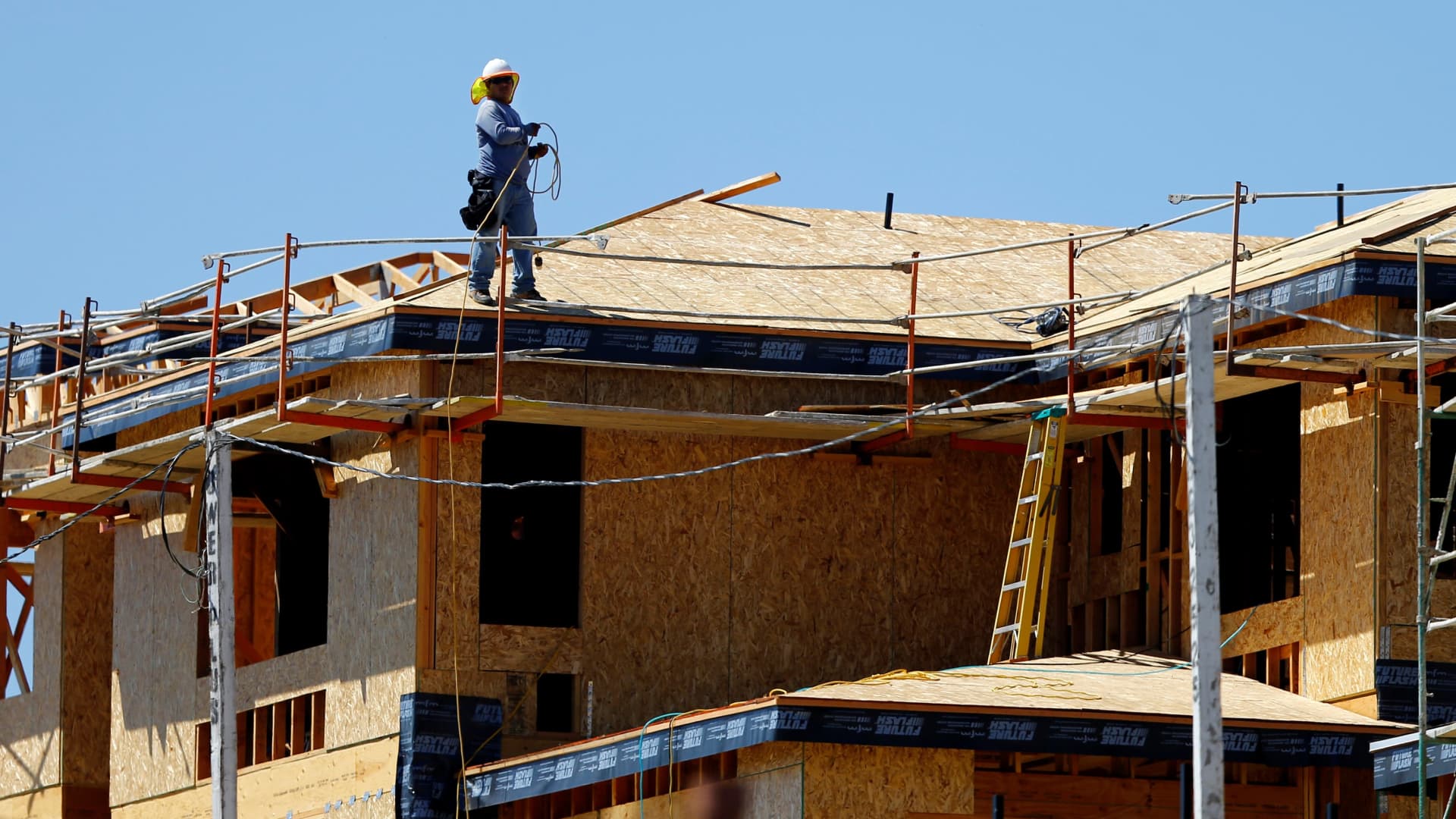
A worker walks on the roof of a new home under construction in Carlsbad, California.
Mike Blake | Reuters
Homebuilders were less confident about their business in December, but they are starting to see potential green shoots.
Builder sentiment in the single-family housing market dropped 2 points to 31 in December on the National Association of Home Builders/Wells Fargo Housing Market Index. Anything below 50 is considered negative.
This is the 12th straight month of declines and the lowest reading since mid-2012, with the exception of a very brief drop at the start of the Covid pandemic. The index stood at 84 in December of last year.
“The silver lining in this HMI report is that it is the smallest drop in the index in the past six months, indicating that we are possibly nearing the bottom of the cycle for builder sentiment,” said the NAHB’s chief economist, Robert Dietz. “Mortgage rates are down from above 7% in recent weeks to about 6.3% today, and for the first time since April, builders registered an increase in future sales expectations.”
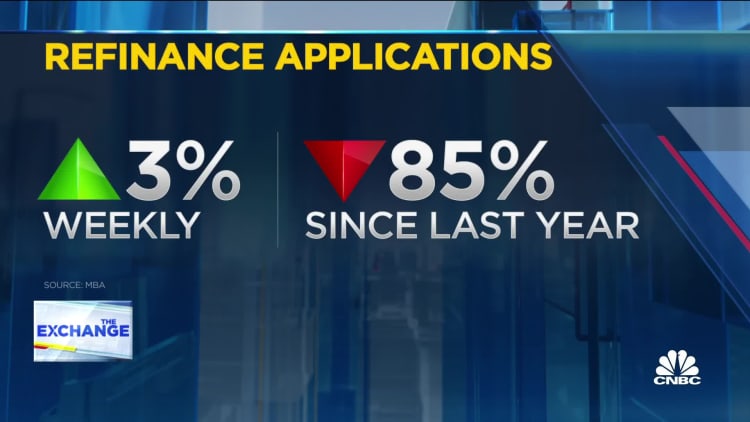
Of the index’s three components, current sales conditions fell 3 points to 36, buyer traffic was unchanged at 20, but sales expectations in the next six months increased 4 points to 35.
Regionally, sentiment was strongest in the Northeast and weakest in the West, where prices are highest.
The NAHB continues to blame high mortgage rates, which despite the recent drop are still about twice what they were a year ago. That has caused affordability to plummet.
“In this high inflation, high mortgage rate environment, builders are struggling to keep housing affordable for home buyers,” said NAHB Chairman Jerry Konter, a builder and developer from Savannah, Georgia. “Our latest survey shows 62% of builders are using incentives to bolster sales, including providing mortgage rate buy-downs, paying points for buyers and offering price reductions.”
But Konter noted that with construction costs up more than 30% since the beginning of this year, builders are still having a hard time cutting prices. Roughly 35% of builders reduced homes prices in December, down from 36% in November. The average price reduction was 8%, up from 5% to 6% earlier in the year.
“NAHB is expecting weaker housing conditions to persist in 2023, and we forecast a recovery coming in 2024, given the existing nationwide housing deficit of 1.5 million units and future, lower mortgage rates anticipated with the Fed easing monetary policy in 2024,” said Dietz.
Homebuilder sentiment falls again, but bottom may be near Read More »
The 1031 exchange is a strategy that helps investors build more passive income, with fewer properties, all while avoiding the tax man. While many real estate investors know about this strategy, only a few of them know it well enough to pull it off. The rules are simple; sell a property, buy another property with the proceeds, and pay no capital gains tax. But, this is far easier said than done, and it’s much easier to make mistakes than most people think. Even our real estate hero, David Greene, had a 1031 exchange go awry.
To clear up the misconceptions, highlight the common mistakes, and guide us to tax-advantaged freedom, we’ve brought on 1031 exchange expert, Ryan Finch, to the show to share everything he knows about this misunderstood, often misused strategy. Ryan is a real estate investor at heart, house hacking as a sophomore in college to live for free. After working at multiple commercial real estate and development companies, he got the itch to start investing heavier himself and help others propel their wealth.
Now, Ryan works to help real estate investors and everyday homeowners make the most out of their equity. Ryan has unlocked the tools that have allowed those with home equity to build passive income streams, buy bigger, better properties, and reduce much of their landlord burden, all in a single transaction. If you’ve been sitting on some post-2020 equity, this episode will teach you how to use it as fuel for your financial freedom fire, all while ditching the tax bill that comes with selling!
David:
This is the BiggerPockets Podcast show 707.
Ryan:
One of the most common phrases we get is, “Ah, I wish I talked to you three months ago. I wish I talked to you six months ago. I wish I would’ve sent my mom to you last year when she was in the middle of this.” So we really like to talk with people early so they’re aware of their options so that no one needs to be paying taxes unnecessarily.
David:
What’s going on, everyone? This is David Greene, your host of the BiggerPockets Real Estate Podcast here today with a very, very, very good episode for you. Today, I interview Ryan Fitch, who is a 1031 expert, runs a company that helps people with 1031s and does consulting to help people build wealth through real estate. And we get all into the 1031 exchange. In this episode, you’re going to hear things that you didn’t know existed. You’re going to hear about common faux pas that you can avoid. You’re going to hear about strategies that you probably didn’t know were open to you and how you can go from being an active investor into a passive investor. This is an amazing episode. I’m very happy to bring it to you today.
So I don’t want to take too long before we get to Ryan. But before I do, today’s quick tip is don’t delete all the knowledge you have as an investor. We often make decisions based on our emotions, and if you get in a bad emotional state, you don’t like your portfolio, you’re in pain from what’s going on, you just want to get rid of the whole thing, you can easily make bad choices.
In fact, buyers look for sellers that are in a position where they’re in pain and they just want out, and that’s how they get the best deals. Use the BiggerPockets community to help you. There’s people out there that can give you advice that you didn’t even know was a possibility. An example of that is a podcast that we have today. So if you’re ever in a situation where you’re in a problem with your portfolio, don’t just sell it. Don’t just despair. Don’t get too negative. Don’t forget everything that you’ve learned. Reach out to somebody from BiggerPockets. Let them know what’s going on and see what options you have available to you.
With that being said, let’s bring in Ryan. Ryan Finch, welcome to the BiggerPockets Real Estate Podcast. How are you today?
Ryan:
Very good. How are you, David?
David:
I am doing wonderful. Thank you for asking. All right. Let’s hear about your business, your life, your investing portfolio. Tell me who is Ryan Finch and how did he get involved in real estate?
Ryan:
Great. So my name is Ryan Finch, president and founder of Tangible Wealth Solutions. We’re a wealth management firm that specializes solely in investment real estate. I got really interested in real estate at a young age and actually bought my first home, my sophomore year of college. I read a book on invest in real estate, got really interested, went to my parents, asked for my second year room and board in cash up front, ran my own painting business and that was my down payment. So I found I could rent the bedrooms out and live for free and was able to get my parents to co-sign on the loan. It took several months to convince them, but that was my first foray into real estate and trying to get started in building my own portfolio.
David:
So what were those initial stages? Did you have thoughts in your head like, “I’m going to be a real estate investor, I’m going to work in real estate”? Was it sort of just, “Well, they’re into it, so I’m going to be into it”? At what point did you get passionate about being able to help people build wealth through real estate?
Ryan:
Sure. So going back before that, my mom was a paralegal in commercial real estate and I did not understand how she worked at a law firm without going to court and was just like, “How are you actually in law?” Not like the attorneys and paralegals I see on TV. So she brought home the plans for what at the time was Elitch Gardens, was a large amusement park that was in Northwest Denver. It was being moved down to these railroad tracks just outside of downtown Denver. So it was a massive redevelopment.
She brought home the plans and said, “Why work on this? This developer is going to build this?” And then I stopped her and said, “Well, who’s that guy? What do they call it?” So that’s a real estate developer and they redo these things. And so show me that. Another big project in downtown Denver and I just was like, “That is what I want to do. I want to look at land property and I want to change it to something better.” And it was just as downtown Denver, the urban core was starting to change.
They were starting to bring fun stuff to do downtown. ‘Cause up until that point everyone just… After they got off work, left downtown Denver. So I got to see that right at the very beginning. And then to see Elitch get built and know like I remember now it was just a piece of paper. So that was the initial spark that really got me going down the fascination with real estate.
David:
I’m glad to hear you say that. I just realized as we were talking, there’s quite a few people that have an answer similar to yours where they’ll say, “I love the idea of driving down a street and seeing dilapidated homes and making them nice. Or, I love the idea of seeing a boring interior and fixing it up and making it pop.” Sometimes they love to do it on a budget. And then there’s other people I’ll talk to and say, “I just love seeing how the math works out. Or I love chasing the deal. Once I get the property, it’s boring. I don’t want it anymore, but then I want the next deal.”
And I’ll bet you that there’s a limited number of avatars of why we’re motivated by real estate, why we like it that we never ask. I think we just always assume real estate is all the same thing. But that’s fascinating. I hear you saying that you like this idea of the creativity and the improvement. You’re pushing the ball forward, you’re taking something ugly, making it pretty. You’re taking something less valuable, making it more valuable. How did that drive manifest itself in the way that your career ended up going?
Ryan:
Yeah. I always professionally would take the next job that I could learn more. So I was not trying to climb the corporate ladder because in my head, my initial goal was, “I’m going to just build a real estate portfolio. I’m going to learn finance. I’m going to learn everything from these jobs I take, but eventually I’m going to go on my own and I’m just going to have my own real estate investments.” And then founded Tangible Wealth Solutions with that sole purpose back in 2016 to really advise people on how to invest in real estate, base it on their goals and really try to help them avoid a lot of the pitfalls I saw over my career in banking development, special assets, and then also try and promote those qualities and values that I saw the people that were really successful.
David:
And then once you were there, that’s where you actually started consulting with people and you took this passion for real estate, developing it, helping other people understand how to manage their assets, how to grow them. And it all sort of culminated in this 1031 approach where you were taking people that had some form of equity or money they’d built up in real estate and reinvesting it into an asset or a situation that worked better for their life. Is that a fair summary?
Ryan:
Yeah, absolutely. And the 1031 exchange is an incredible tool and we started helping clients with strategizing how to use the 1031 exchange to benefit. One of the biggest ones we started working with or type of client was clients selling in California, particularly the San Jose area where we could sell one home, 1031 exchange and buy three or four homes in Denver. We were able to increase their cash flow significantly and help them get closer to those goals.
So the 1031 exchange started with helping clients move from one property type to another property in a different location that got closer to their goals, especially the ones that were more cash flow oriented.
David:
Yeah, I love that. I wish more people thought along those terms. I think when someone says I want cash flow for instance, they often go to the areas where they get the properties that cash flow the most and just try to buy a lot of them and it’s very slow versus if you say I want cash flow, how do I get there? Well, it’s very difficult to increase cash flow. You’re held hostage by market conditions. You can’t make rents go up, but you can create equity by buying in the right areas, by improving properties, by buying them below market value. You have a lot more influence and control over creating equity.
And then once you have it, vehicles like this let you take this massive amount of equity like somebody in the South Bay and build and move it into a cash flow market and they get there in 10% of the time as it would be if someone was repeatedly buying in Denver. Are these the type of solutions that you’re often offering to your clients?
Ryan:
Yeah, absolutely. It’s doing that upfront analysis to see if selling the property. One, understanding the performance of your property. One of the biggest mistakes or parts that we see people missing is they look at their total amount of cash like, “Oh, I love this property. It pays me X amount a month.” And then we run the math and divide it by the equity and show their return on equity and be like, “Well, relative of the large amount of equity in your property, that’s actually a really low cash flow.”
So when we start talking about percentages, it’s much more adaptable to look at other markets than using whole dollar amounts. think people get stuck on that whole dollar amount. And they don’t realize sometimes, “Well, you could be getting this same cash flow in a CD or now that interest rates have gone up, you could get this in a high interest savings account.” And a lot of people aren’t doing the math to look at the percentage and they just look at that whole dollar amount not realizing they were in a market that properties have taken off in value and that’s actually a low cash flow relative to your equity.
David:
So in my world, we often refer to this as return on equity And investors, like you said, they notice, “Well, when I bought it was cash flowing a thousand a month and now it’s cash flowing 1,800. So I’m doing good. I’m up 80% from where I was.” But if you look at the actual equity in the portfolio, they’re often getting a 1% return, 2%. It’s very, very common for me to see in the last eight years that we’ve had just prices going up. Sub 3% return on equity, which no one would go buy a property at a 3% return on their money. They’re always going to want more.
But they’ll look at the stuff that they already have and they’ll never think twice about it. They’ll just accept it. It’s one of the first things that when someone comes to me for consultation, they say, “David, can you look at my portfolio? I want you to tell me what to do. You pull that open and it’s staring you in the face.” They’re vastly underperforming.
Money is so lazy. You would never let an employee that comes in and you get paid for eight hours but you work for 30 minutes. But that’s what your properties are doing. Is that similar to what you see in your space?
Ryan:
Yeah, it’s dead on. That’s exactly what we’re seeing when we’re running the math and trying to understand. Also, add that with someone wanting to pay down debt early and there’s the thought of getting a property free and clear, but not having that leverage work to you, especially if you’re in growth mode and you’re trying to really build wealth. We see that often as the case too where they’re the stigma with debt or they’ve got their own beliefs against debt. But when you do the math and you see the power of debt, when you use it as a tool, a lot of that time that return on equity with the power of debt is really, in my opinion, a math solution. And it’s a math problem that you’ve, you’ve got to figure out.
David:
Now, I understand that you have a funny motto that your company operates by when it comes to helping your clients find their next deal. Can you share what that is?
Ryan:
Sure. So we look at DSTs for clients, other 1031 properties, direct real estate, other real estate syndications. When we’re looking at these different deals, we like to say we kiss a lot of frogs. So we kiss a lot of frogs trying to find what makes sense for clients. And then sometimes we have to remind them when we’re making recommendations of we’re highlighting these three or four. To them, it can look easy like, “Oh, here’s three or four good strong option.” It’s like, “Well, we probably kiss 20 frogs to find those three or four deals that do make sense.”
And some people, because they don’t see the legwork going into it, they sometimes get a biased opinion of, “Oh, it must be easy to find four good deals.” It’s like, “Man, you got to really sort through to find those.”
David:
I can so relate to that. We’ll have buyers come to work with the David Green team. When I was an agent or my agents now, all pour through every house on the MLS and there’s 300 of them and I’ll narrow it down to the four that are the absolute best opportunities. I’ll show them those four and they’re like, “Yeah, but that’s only four. I want to see some more.” I’m like, “Oh, I didn’t let you see that there was 296 other ones that don’t work. So that’s definitely something in our position we need to make sure we communicate to people like the work that was done to get to the point where you’re showing them that opportunity. Because kissing frogs is not fun and it’s why a lot of people don’t actually go do the 1031 is, “I don’t want to have to analyze a bazillion properties, but having the right people can help.”
Ryan:
Yeah, absolutely.
David:
All right. Now we talk about this all the time, but let’s take a walk back in time. So tell me where does your background on 1031s come from?
Ryan:
So background, 1031 exchanges, always research it to know it for myself. And then we help clients doing 1031 exchanges. And then just through the process of doing exchanges, understanding the nuances, we really started then finding the other avenue. So within a 1031 exchange, there’s multiple options. There’s direct real estate. So selling one property, buying another property, they’re what are called DSTs, which stands for a Delaware statutory trust. And that’s where you can sell property and exchange and be a partial owner of institutional real estate and get rid of the management component. And then one of the lesser known is actually oil and gas mineral rights.
So just from helping people with their 1031 exchanges and establishing ourselves as an expert in the field, we’ve figured out these different options for clients and even the nuances between them to really help people come up with solutions based on their goals where clients would come in and they’d say, “I want exchange from this to this.” And then we’d listen to their goals and we’d say, “Well, did you know that this might work a little bit better. Or maybe we need to take this into account.”
David:
Now, can you explain or clarify why we even have this rule in the first place?
Ryan:
Sure. So the first legislative action in 1921 that really made the 1031 exchange legal or put some parameters around it to allow… It was done to really guide or drive people into reinvesting in more properties and investing capital, building capital. One of the bigger reasons people were doing this was for farmland is so they wanted farmers who owned small farms to grow into bigger farms. And instead of every time they went from one property to a larger property and growing and ding them with taxes, they felt that everyone in the investors would benefit better if that money was kept working for them.
So it started more with farmland and then years later there was a big lawsuit between a timber company and the IRS because when they first started out, you had to exchange on the same day and this timber company fought and said, “Well, nothing really states that it has to be the same day and can we have some more parameters because it’s almost impossible to exchange one property for the same property on another day?”
They ended up winning. And so from that point on, the IRS then went back and added these dates and deadlines and made it much more functional and put the exact parameters around the 1031 exchange. So it started out very loose, encouraging reinvestment in property and then there’s been several iterations since, but then they had to add the timing parameters. And those time parameters, at first they sound like, “Oh, 45 days, that’s plenty of time. 180 days to close plenty of time.” And then as you’re in that window, it’s like time speeds way up.
That 45 days goes by much, much faster than you would expect. And so that’s the history of the 1031 exchange. So even though they did give you this timing parameter, it’s not the same day. 45 days in my opinion is a lot shorter than a lot of people realize.
David:
Oh, a hundred percent. And then there’s also rules about what has to happen in the 45 days that I ran into that were not something that was explained to me and I ended up with less than 24 hours. I know a lot of people that have these issues that come up with 1031s. There’s a lot of nuance that goes into doing them.
Ryan:
From the government standpoint, the best reasons to have the 1031 exchange and the 1031 exchange has come up several times in the last several years about changing it. But the big argument is it really allows for more fluidity in the real estate market. It allows for more transactions to happen. It allows for the trade and improving because typically someone sells ability to someone else or sells a private to someone else and they’re going to come in and improve that building. And so not only is it help real estate and areas in real estate continually improve, it creates a lot of jobs as well.
You have the real estate brokers. You have the mortgage lenders, title insurance companies, then you have the construction and trades and there’s just so many people in the economy that benefit from the continued transacting of real estate that there’s a lot of economic drivers.
So even though they’re deferring these taxes, the benefits of deferring those taxes to the overall population, workforce, demographics, all that stuff benefits so much from the 1031 exchange. I’m also very biased because I work in the 1031 exchange, but I do see all these moving parts and people who are involved and professional partners that everyone is earning a living doing this, that it’s really a big benefit. And then when you look at it from the investor standpoint, one of Warren Buffett’s quotes is one of the most powerful things in the world is compound interest.
If I can do a 1031 exchange and I can go from one property and then I think this other one is better, I can keep all of my equity working for me. So say an easy 10%. Okay. Well, I have 100 grand. I go from one property to the other. Well, now I’m going to have my 100 grand still working for me in the other property. But if I had to pay 15, 20% capital gains, now I have 80% or 85% working for me. I had to get a much bigger return just to get back to a hundred.
Investing in real estate allows me to continue to invest but keep all of my equity growing at that higher rate. And so the fact that when you trade from one asset, one property to the other property that you’re able to keep all of that invested for you, take that over a 20, 30-year career and that difference than if you did a different type of trading and another type of asset that got dinged with taxes every trade, yeah, it’s a massive gap.
David:
It’s the velocity of money. It increases how… And that’s just something, I’ll take a brief break to explain to everyone how powerful real estate is with wealth building, not just for the people that own it, for everyone involved. I loved you pointed out how many people are involved in the transaction. Every time a property changes hands, there’s money that is exchanged, which means someone actually created wealth for themself and the government got a piece of it through all the different taxes.
It’s hard to get into now, but just when money changes hands frequently, the wealth of a nation increases rapidly. And not just the wealth of the people of the nation, but the government itself is also creating more. So if a dollar goes from me to you to seven other people, everybody made a dollar, everyone spends a dollar, everyone got the good that they exchanged for the dollar. When we all just hoard our money and no one spends it, everyone gets more poor.
This is one of the Keynesian economic factors why they support that type of an economic approach. And from that element, it’s true. If you get rid of the 1031, the thought would be, well, the government will collect more taxes because you can’t defer it. But all that happens is none of us would sell properties. We would all hold onto them a lot longer. And that’s why at BiggerPockets we are hammering this because it’s okay to sell something and reinvest the money, especially if you’re going bigger and better and you’re more experienced and you get to do good by helping all the people that are involved in that.
So from that perspective, let’s say that someone’s listening to this and they’re like, “Yeah, I got some equity in my portfolio. I bought it six years ago. I didn’t expect to have the run-up I did. But man, it’s amazing. I bought in Denver, Colorado at 400 and now it’s worth $600,000.” That’s life changing money for a lot of people, especially because it hasn’t been taxed yet. You have an opportunity to avoid the taxes. What are some things that they should be asking themselves? What kind of goals would you be digging into to figure out that they have? What are some options that they have? Tell me if they were coming to you to say, “What do I do with this property?” How would you handle that consultation?
Ryan:
Absolutely. So at first I would just talk to them, get to understand the property itself. What goals is this property satisfying and which ones is it falling short? Like, “I’d really like more cash flow or the cash flow is fine, but I’ve got a lot of equity I might want to unlock.” So really understanding what the property is doing for them. And then just in an ideal world, what would you rather this money doing? What could we be doing? I’d rather it growing at a more rate. I don’t need as much cash flow. I’d rather in maybe in urban core that’s really changing or I really want to try and hit some home runs. But really identifying what they’d rather the money do and then pick the strategy or the property type that’s going to work best for them and then decide, “Okay, I really believe that what you need exists and we could get there. We have a high confidence level and now let’s look at doing a 1031 exchange.”
I think sometimes people are so excited to maybe recognize the big gains they had and are like, “All right. I want to do a 1031 exchange.” And then they list it for sale or even go to sale and they’re under their 45 days and you’re like, “These properties that we’re looking at were not taking a step in the right direction or were not moving yourself forward or it’s a lateral move and why did we take that risk to move laterally?”
So really understanding what the property is doing for them today and in an ideal world, what they need it to do for them. And does it make sense to do that? If someone said, “Oh, I’m getting 10% cash flow but boy I’d rather have 40% cash flow.” Well, unlikely we’re going to be able to exchange and find you something for 40% cash flows.
David:
Yeah. Increasing the return on your equity, basically if you got a return on equity of two or 3%, that you can get a return on investment of eight or nine or 10% if you reinvest, that’s a very easy metric to tell. It makes sense to do it. But there’s other ones as well, right? You’ve got the opportunity where, “Okay, this property is appreciated. I fixed it up. I bought it for 400. It’s worth 650.” But the market is kind of stalled where you’ve got $250,000 in equity and there’s opportunity to sell it and buy a new fixer upper.”
And add another $200,000 to that property through forced appreciation and what I call buying equity, which is where you buy it under market value. Are there situations where you see that investors that are a little more active and they enjoy you fixing a property up, making it better, they’re not afraid of the elbow grease where they can grow their wealth that way too?
Ryan:
Yeah, absolutely. If they have the ability to create value themselves, then that makes it even more attractive to move forward for those types of properties. And then when you’re looking at the 1031 exchange, the other component that we like to run side by side is does it make sense to keep the property and borrow against it and use that for the next property?
We just want to make sure that, one, it fits their goals, they’re okay with that, but instead of a 1031 exchange, sometimes leveraging into the next property can make sense. And then other times the cash flows really tight on this property and maybe it’s not high enough on the next property. And cash flow is really what can protect you in a downturn. And then they can kind of be in a tight where you don’t want to take that risk.
David:
I like the opportunities where you can get a little bit of both. Maybe you’ve got a single family home in San Jose or some area that’s had a recent explosion, Seattle, but the projections aren’t going to be that it’s going to grow as much as maybe South Florida, Texas, one of these other opportunities. And you sell a single family home that you’ve already maxed out the value and you go buy a triplex in a growing area that has value opportunity also.
So you get some extra value or equity in the property. And because that area is growing, you start combining all of these factors that build wealth through real estate. Sometimes people think buying and holding is just the only thing to do and they buy a 90,000 place. I’m going to own it for 30 years and pay it off. And they stop thinking about, it’s not about owning a property, it’s about owning the energy that property contains. And if you go roll that energy into something more and grow it like the snowball, real estate starts working for you.
I’m only saying this because I assume in your position you frequently come across people with a locked fixed mindset that they just think, “This is my portfolio. This is what I have.” Maybe they’re emotionally attached to the property and you can see possibility that they might be missing.
Ryan:
Yes, absolutely. Or they want to go. I want to go from here to here. And you’re sometimes like, “Well, that is a path, but there might be another way to get there.” I think some people come in with one focus and we talk through it with them and we help go in another direction. So I do think it’s real important to listening to where they’re headed and then pointing out some other options that sometimes this direct path be open to that changing.
David:
Yes. So on that note, common sense is not always common practice. You might hear this, but you might agree with it in principle, but that doesn’t mean you’re going to take action to do something different. So what are the top things that Ryan Finch wishes that people asked or knew before trying to do a 1031?
Ryan:
Sure. So one misconception we constantly see as you only need to exchange your equity. And so people think, “I have a million dollar property, I have half a million debt. I just have to exchange my half a million and I’m good.” You need to exchange the equity and the debt. So your net sales price is the total amount you need to exchange. So I’d say that’s one of the most common misconceptions we have.
David:
Let me jump in real quick. So what you’re saying is if someone has 250,000 in equity, they think they can sell it and pay cash for a $250,000 property. Right?
Ryan:
Exactly. That’s exactly it. Yes. You need to replace the debt. You could replace the debt with more cash. So I just have to make sure that my total properties I bought in my exchange equal my net sales price of the relinquished property. So that’s one. The like-kind test, like-kind exchange. People hear that term and they think like-kind means industrial for industrial, single family rental for single family rental. It’s very broad. You can sell a single family rental and buy an office building.
An office building can buy investment farmland. You could sell farmland and buy an industrial complex. It’s very broad and in oil and gas, mineral rights qualify because that’s the real estate below the ground. So there are 1031 misconceptions they have in their head, “I’m going to sell this condo and I got to buy a condo.” So like-kind is very broad.
David:
Can I dive into that a little bit? Like-kind does sound like if I sell a duplex, I have to buy a duplex, right?
Ryan:
Yeah.
David:
How does the government define what like-kind means?
Ryan:
Great. So it is a real estate property held for investment purposes. So when you paint that brush or use that umbrella over the top of everything, that’s what it really needs to be. So just to help the client currently that was wanting to me to help her with a 1031 exchange, she bought a property 10 years ago. It’s appreciated significantly, put her parents in the home 10 years ago, but she’s never filed that in her tax return as a rental property. And so the advice from the CPAs, everyone we talked to was it’s really never been held as a true investment property.
And so it’s really going to be shown as a single family home… I’m sorry, a second home, so you can’t 1031 exchange that. So in that case, that like-kind exchange is what we were trying to help them with but weren’t able to because it’s not a property held for investment purposes. We were trying to show, well it was investment purposes, but because it was never on the tax return, or we didn’t deduct, there’s no way or story to back that up. But really any property held for investment purposes falls under a like-kind exchange.
David:
Now, can I sell a property and buy Bitcoin?
Ryan:
Not without paying taxes.
David:
Okay. Right. That’s not eligible for a 1031. I can’t go buy a piece of art. I can’t go buy a baseball card or some form of NFT. It has to be real estate, right?
Ryan:
Correct.
David:
That’s so good to know because there’s so many misconceptions in our space. You’d be amazed or maybe you wouldn’t be amazed maybe you know about it, but I was amazed how many human beings still think you have to put 20% down to buy a house.
Ryan:
Yes.
David:
Right? It’s amazing in the era of social media where I forget that there’s people that still think that, and I’ll say it and you’ll get this record scratch like what? So there’s so many things like this where listening to these podcasts or talking to somebody at your firm about what options you have explode with possibilities. I can’t tell you how many time people book a time to speak with me and then when I say you could do this, you hear this like, “You mean this entire time I could have done that?” And I’m like, “It popped out to me in 1.2 seconds.” That’s an obvious answer and they had no idea.
Ryan:
The one I point out is the three property rule for 1031 exchange. There’s actually three different rules that you can choose which one you want to use for naming replacement properties. So the most commonly known one is three replacement properties. Any value, you got to name them during that 45-day window. The nice thing is you don’t have to commit to the rule until the day you name.
So I may be having a strategy based on the three property rule, but on my 44th day it makes more sense to switch to one of the other two rules. I could do it on that day. So I’m not locked in at the beginning of my 45-day to using one.
David:
What are the other two rules?
Ryan:
Yeah. The second rule is the 200% rule. So I can name as many properties as I want as long as when I add them up. They’re not more than 200% of the net sales price of what I sold. And so a lot of times when we’re breaking people into smaller ones, the 200% rule is the one we tend to use.
David:
That was not explained to me when I did mine and it was mostly… Most of my portfolio was paid off. So I sold about $4 million worth of real estate and I only had a note of 500,000. Long story short, there was actually another note of 500,000 that escrow missed that I now have to just pay cash for because I bought more. That was a little frustrating. But for the purposes of this, I had to reinvest right around 3.5 million out of the 4 million I sold for. And they did not explain to me the 200% that never came up.
So what ended up happening is I submitted a list of a lot of real estate that I was during my 45-day period that I was then going to go pursue over 180 days. They said, “Oh no, you can only pick $8 million worth of it.” I’m like, I have to invest 3.5 Million. How could I only identify 8 million of real estate? I had about 24 hours to do it. So had I listened to a podcast like this ahead of time or known about these three rules, that would’ve helped me a ton. Even with someone who’s been investing as long as me and who teaches this stuff, it just never came up and no one explained to me that there was a limit on how much you can identify.
Ryan:
Exactly. Those are the two most common rules. The third rule, which I’d say is the least common, the least used, and not a lot of reasons or situations I would see it being used, but it’s called the 95% rule. And that’s where now I can name as many properties as I want for as much as I want, but now I have to buy 95% of what I named. So that is in my opinion, a pretty scary spot to put yourself in, especially with real estate is you lose a little bit of that ability or that the hammer to hit you if you walk away from that deal gets much bigger. And so I feel like that 95% rule is one where, “Man, I have to have a really good reason for using it.”
But the three property rule and the 200% rule, the two most common rules, but I’d say a lot of people that come to see us the first meeting have in their head the three property rule only and not realizing that we can do this 200% rule.
David:
Well, and sum up for me what the three property rule is.
Ryan:
So three property rule means I can name any three properties for any value so they can all add up to… If I sold a million dollar property, I could name three $1 million properties. I could name a $4 million property, a $2 million property. So the total amount that I named dollar amount doesn’t matter as long as I only named three properties.
David:
That would’ve been nice had that come up. I did not know.
Ryan:
Yeah.
David:
What ended up happening was I ended up putting more in contract than the 200% because I had too much money that I had to invest and I couldn’t make the numbers work, so now I had to close on 95% of them, which meant anything I put in contract I had to close on. Trying to negotiate with a seller no one in the back of your head if they say, “No, there’s nothing I can do,” is a terrible feeling to be in. It feels like you’re in a standoff and you got no bullets in your gun and you’re just like, “Ah, I hope this person doesn’t figure out it’s a terrible movie scene type of situation.” This would’ve been very good to know before I was in that point where I had literally one day to try to make all these decisions. It was terrible.
Ryan:
We typically recommend clients start… If they’re doing direct real estate, start putting properties under contract 30, 45 days before they’re closing. And the real estate market we had six months ago that that was very tough to do. You’re getting outbid and someone is like, “I got to wait. Your property hasn’t closed yet.” In this market now, it’s easier to do. It’s a little more acceptable. But if you could tie a property up before your 45-day, what you’re doing is basically just stretching that 45-day window, giving yourself more time.
David:
All right. Now, what about some of the tax benefits that you get when you invest in real estate and then you go do a 1031 exchange. So you gain from depreciation on a property and now you sell it. Do you get to start over a whole new clock and get new depreciation again?
Ryan:
Your basis will be the new basis that it’s been depreciated down to and then you’ll get to continue to depreciate that basis down. You don’t get any additional basis to depreciate.
David:
Which is good to know because people may be expecting, “Oh, I’m going to start all over again with a new $5 million property.” That’s not the case.
Ryan:
Yes. One caveat to that is you could 1031 into a property and if you do what’s called cost segregation analysis, which for a higher price property or for a multi-family property, what you can do with that is they can go in and look at the furnace, the cabinets, all the stuff that could be depreciated on a much shorter window and then depreciate that.
So in a way you could grab all that depreciation that was going to be depreciated over 29 and a half years and some of that could be done in the first several years. So you could move up your tax benefit. And then as long as you 1031 exchange, that depreciation doesn’t get recaptured, it continues to get deferred. The other misconception that people have is, “Oh, well, my depreciation recapture comes out. That’s fine because I’m in a low tax bracket.”
Depreciation recaptures that 25% regardless of your income tax bracket and that is oftentimes… We’re calculating what someone’s taxes are going to be or helping them with their CPA, that’s a part like, “Oh, I’m in the 10%, 12%, 15.” It’s like now it’s 25 regardless of your income. And that can really make a big difference in someone saying, “Yeah, it makes sense to continue to 1031 because the pain from taxes is just way too high.”
David:
Absolutely. Now what about if you buy a property through a 1031. You exchange one for another. You know that you have to reinvest all the equity, but what happens if you do a cash out refinance after the sale?
Ryan:
Sure. So after the sale would be okay. Doing a cash out refi before your sale can get some scrutiny. But once you’ve completed that 1031 exchange, pulling cash out will not affect your exchange.
David:
A lot of people don’t realize that either, that you can get equity out of the property, but it’s not through the sale. It has to be through the refinance. A lot of people’s minds are blown. So what I ended up doing with mine because I ended up in this terrible situation, is I bought some properties just pure cash and then after it was done, I refinanced those properties and now that cash that I could pull out was not taxed. I didn’t have to worry about waiting for the cash flow to build it up because I was investing, I think it was around $4 million.
A lot of them I bought with 80% down. Or sorry, 20% down, 80% loan. And then three, four, five of them I just paid cash for and then it was done. I refinanced and now I have that capital restocked back in my account where I have reserves. I have money I can put into the properties to fix them up. It was actually incredibly easy to do and I thought there’d be some rule that said, “You can’t do that because it was like a loophole.” But not at all. They don’t look at a refinance as a capital event where you owe taxes.
Ryan:
Yeah, because it is after the 1031 exchange, right? You’ve followed all the rules, you’ve checked all the boxes, and once you’ve done that and your exchange from one property to the next property is completed, that’s really all they’re looking at that you’ve completed all those stages and now you’re in a different part of the life cycle of that property, but it’s no longer having to be done within the rules of the 1031 exchange because it’s been completed.
David:
Now, the last line of questions I have for you have to do with common faux pas that you come across with helping people do this. What are some of the most common mistakes or misconceptions people have?
Ryan:
So one would be choosing the wrong 1031 exchange rule. The other would be letting the tax tail wag the dog where people are so focused on not paying taxes that they go into a subpar investment. And so we’ve seen that where they’re getting close to their 45 day and they’re like, “All right, I’ll do this property.” And they pick the property and you’re looking at it like, “Man…” Types of properties that we try to avoid is when I make someone else’s problems mine. Sometimes you’ll make their problems yours because there’s a value add component. But a lot of times people will… They’ll like the property so much, they’ll look past.
Maybe there’s some foundation issues. Maybe there’s some of these other issues. But all that person’s problems are going to become yours once you own their property.
David:
The tenant is a big one.
Ryan:
Yes.
David:
No one sells their rental property even if it’s not performing well. Most people don’t if everything is smooth.
Ryan:
Yes.
David:
You think about selling your property when you have headaches, you don’t want to deal with it. And it’s almost always, “Oh, I’m buying it with the tenant inside of it.” And you’re like, “I love that.| Thinking about the tax benefits and not the headache that you’re buying into is a big problem.
Ryan:
Yeah. So I think that’s a big one. One is a lot of people don’t realize they need the qualified intermediary. So we’ll have people set up and my closing, I’m like, “Who’s your qualified intermediary?” And they’re like, “The who?” And so having that qualified intermediary set up, we oftentimes recommend getting the qualified intermediary set up when your property to sell goes under contract. Why wait until two days before you’re closing. It doesn’t cost you anything usually to get it set up and have them ready. And they know that deals fall through all the time and they’ll work with you to get it set back up when you go back under contract. But getting that QI set up beforehand makes a lot of sense, so you’re not having to rush the last second or, “Oh, it’s deposited in my account.”
That’s okay. I’ll just send it to the QI. Well as soon as you deposit in your account, that’s the taxable event. So people not realizing they need the qualified intermediary set up beforehand is another problem.
David:
And it’s heartbreaking too. That’s one of those things where our people will message me and say, “Hey, I just sold my house and my CPA said I’m going to have this much in taxes. I want to do a 1031 exchange. I sold it five days ago, so I saw 40 days. What should I do?” And I’m like, “Oh, if you have that money, you can’t. You have constructive receipt. It needed to go to an escrow, a qualified intermediary.”
Ryan:
That’s exactly it. We see that with people. The other part is with the naming. I’ve had someone say, “I named mineral rights and so now you can help me.” And I’m like, “Wait, what did you…” Or I named DST? And they literally put DST on the 45-day naming. It has to be the actual mineral rights, the exhibit with all the wells, the legal description. So that actually… Another point. You can submit your 45-day naming deadline paperwork in on day 35 and have it as your placeholder. And then something changes six days later and you’ve got a better property. You want to place one. Name your paper again and say, “This is the updated one. Most current dated.” But it’s not a, “Once you’ve named it, you can’t change it,” until the 45-day.
David:
So coming back to long-term goals, what’s another step to think about as an end component to this whole process?
Ryan:
So when you’re thinking of your 1031 exchanges and you’re thinking of buying real estate, building a real estate portfolio, one component of that is the mental side of why. What do I want this money to do? And so sometimes we see people get so focused in a big balance sheet and then, “Well, how do you want that balance sheet to help you in your life?” So that’s where our planning comes in where it’s not just about building the wealth, but how are we going to use this wealth? How is this going to benefit you, benefit the people around you?
And then think about what type of real estate and at what stage of your life do you want to own that real estate? So a lot of our clients who’ve put in the work, they bought a rental, bought another rental, bought an apartment building, and have built significant real estate portfolios. They’re still very active in managing or managing the property manager.
And so there’s a certain time where they may want to take their foot off the gas on the growth and just start getting cash flow and not be so involved. A lot of times that will be where we see the DSTs, the Delaware statutory trust and the oil and gas mineral rights as a great 1031 component because it can allow them to be a more passive investor. What you are giving up is that ability to improve the real estate drive value, doing these things that are really growth-minded where you’re active in it, but if you’ve really hit your goals of equity and the cashflow is what you need now to live the way you want, those can be really good options.
And then when you’re thinking of passing your real estate to the next generation or you’re helping your parents understand how best to pass to you, really thinking through the assets that are going to be inherited or transferred and how that person receiving it, if they’re all about owning rental properties and a multi-family property, industrial property that can work great.
Person passes away. There’s a step-up in basis. You inherit it. You can go and grow those assets. And then these more passive tools can be great for someone who their heirs are all over the country and maybe the one brother wants to keep it and the other brother wants to sell it, but the brother that wants to keep it can’t afford to buy the other one out. And so inheriting real estate can be really challenging. And so there are steps you can take ahead of time and other 1031 options that people may not know about to position that portfolio for a wealth transfer.
David:
Yeah, it’s good to know that you don’t have to stay locked into owning real estate. You don’t want to own anymore or the headaches that come from it. There’s actually options to avoid taxes and get out of active ownership or the multitude of properties that you might have and you want to decrease that. Or like you said, sometimes inheriting real estate is a form of a partnership. You’re forced into a partnership with someone that you didn’t really choose and you have different goals.
Ryan:
Yeah, absolutely. What I find fascinating too is every one of the clients that have built these large portfolios and are at that point in time where we’re helping them 1031 exchange and it’s about estate planning. I’ve never ever heard the word easy. And so building a portfolio of real estate is work and you’re creating value and you’ve got to be ready for those things that go wrong, don’t go your way. And it’s really having that long-term focus.
But just knowing that investing in real estate is not easy. Things go wrong, tenants, and there’s so many people that you have to rely on to move your property forward. It’s challenging and you’re really earning those returns. So we just encourage people when we’re helping them, especially when they’re early on buying their first couple properties or just getting started is reminding them that there’s going to be bumps along the road and we need to keep our eyes on the long-term goal of where we’re trying to get to.
But what I often see is somebody who’s bought a property, it’s worked great for six years, they’ve got that terrible tenant. They’ve got the insurance claim. They’ve got all this in a three-month period and they’re like, “I just want out.” They want the pain to stop so bad that they take these huge losses. And if they could just take a breather, take a step back and think, “Hey, we had six good years. This is a short period of time.”
But that knee jerk reaction to get out of your real estate is one part where we try to get in front of the client, work them through it, and then yeah, the common sense isn’t always common practice that of course people know to buy low and sell high, but how often when you’re in pain or you’re really uncomfortable, your mind just wants to end the pain and you just sell.
David:
Which is what we teach buyers to go look for in a motivated seller as you have motivation. So here now we’re teaching people who own real estate, “Don’t be the motivated seller. Go talk to the professional and find a better way out.”
Ryan:
Yeah. Don’t be forced to sell. I’d say that’s one of the number one ways you lose money in real estate is putting yourself in a position where you’re forced to sell that quality real estate that you own.
David:
All right. Last question for you. Sometimes CPAs repeat misconceptions or misinformation. Either they don’t know or they’re not pursuing excellence in their craft and they’re just ignorant of this. So what are some good resources for people to look some of this stuff up if they don’t want to just rely on a CPA?
Ryan:
Sure. So a lot of times getting second opinion from another CPA can be really good. Some CPAs don’t deal with 1031s very often or it’s been a while since they re-looked at it. So they may not have all the information they need to give the advice. But a lot of the large qualified intermediary companies will have really good resources on their websites. So three large ones that we work with, we work with quite a few, but three large ones. One would be IPX. Another one would be Asset Preservation Inc and First American Exchange.
Those three have very detailed websites that have a lot of information about 1031 exchanges. They break it down. That’s oftentimes where we’ll direct clients who have technical 1031 exchange questions and CPAs where they’re getting information on a website that is typically has been prepared by their in-house legal counselor, their in-house CPAs where it’s not somebody giving it their best shot and throwing it up on website.
So I’d say those are three areas that you can have a high level of confidence if you’re reading it there for 1031 exchange advice. And they’re also very… Those three and several other [inaudible 00:45:18] we work with are very open to answering questions. They do not mind. They would much rather. From the ones I’ve talked to, they would much rather you call and get the right information so that if you do choose to work with them, things go the way they’re supposed to.
Then you didn’t call, you didn’t get the information and now you’re yelling at them because something’s not working and they’re like, “Well, that’s not how these work.”
David:
All right. Well, thank you for that, Ryan. We just might have to have you back to dive deeper into some of these topics in the future, because this is fascinating. You’re a wealth of information and we don’t want to keep people here for a four-hour podcast. But before I let you out of here for today, if people want to reach out after hearing this, where’s the best place for them to find you?
Ryan:
So our website is www.tangiblewealthsolutions.com. That has a lot of information. There’s a contact us website or you call our office number, which is 720-4396540 and we are here to answer questions, help people with their planning and offer solutions based on what people are trying to do or definitely want to be out there helping people. One of the most common phrases we get is, “Ah, I wish I talked to you three months ago. I wish I talked to you six months ago. I wish I would’ve sent my mom to you last year when she was in the middle of this.” So we really like to talk with people early so they’re aware of their options so that no one needs to be paying taxes unnecessarily.
David:
That’s right. So everybody reach out to Ryan, reach out to his company. If you’ve got questions about this, if you got a portfolio you’re not happy with, this is the best case. Don’t just assume you got to figure it all out yourself. There’s people out there that’ll help you and I’m one of them. You can reach out to me and I can see what I can do in the same way, because if you’ve already done the hard work of building up a portfolio, it shouldn’t suck. You shouldn’t hate it. You shouldn’t be sitting here like I wish I wouldn’t have done this. There’s a way to reallocate these assets that you can start to love real estate against. So thank you, Ryan. I appreciate everything that you’ve shared with us today. Keep doing the good work out there and we’ll have you back again.
Ryan:
Perfect. Thank you. No, I really appreciate your time, David, and in allowing me to be on here.
David:
General disclosure, not an offer to buy nor a solicitation to sell securities. Information herein is provided for the information purposes only and should not be relied upon to make an investment decision. All investing involves risk of loss or some or all principle invested. Past performance is not indicative of future results. Speak to your finance and or tax professional prior to investing. Securities offered through Emerson Equity, LLC member, FINRA/SPIC. Only available in states where Emerson Equity, LLC is registered. Emerson Equity, LLC is not affiliated with any other entities identified in this communication.
1031 risk disclosure. There’s no guarantee that any strategy will be successful or achieve investment objectives. Potential for property value loss. All real estate in investments have potential to lose value during the life of the investment. Change in tax status.
The income stream and depreciation schedule for any investment property may affect the property owner’s income bracket and/or the tax status. An unfavorable tax ruling may cancel deferral of capital gains and result in immediate tax liabilities. Potential for foreclosures. All finance real estate investments have potential for foreclosure. Illiquidity. ‘Cause 1031 exchanges are commonly offered through private placement offerings and are illiquid securities, there is no secondary market for these investments.
Reduction or elimination of monthly cash flow distributions. Like any investment in real estate, if a property unexpectedly loses tenants or sustains substantial damage, there is potential for suspension of cash flow distributions. Impact of fees and expenses. Cost associated with this transaction may impact investors’ returns and may outweigh tax benefits.
Help us reach new listeners on iTunes by leaving us a rating and review! It takes just 30 seconds and instructions can be found here. Thanks! We really appreciate it!
Interested in learning more about today’s sponsors or becoming a BiggerPockets partner yourself? Check out our sponsor page!
Note By BiggerPockets: These are opinions written by the author and do not necessarily represent the opinions of BiggerPockets.
1031 Exchange Deep Dive: Mistakes You MUST Avoid Read More »
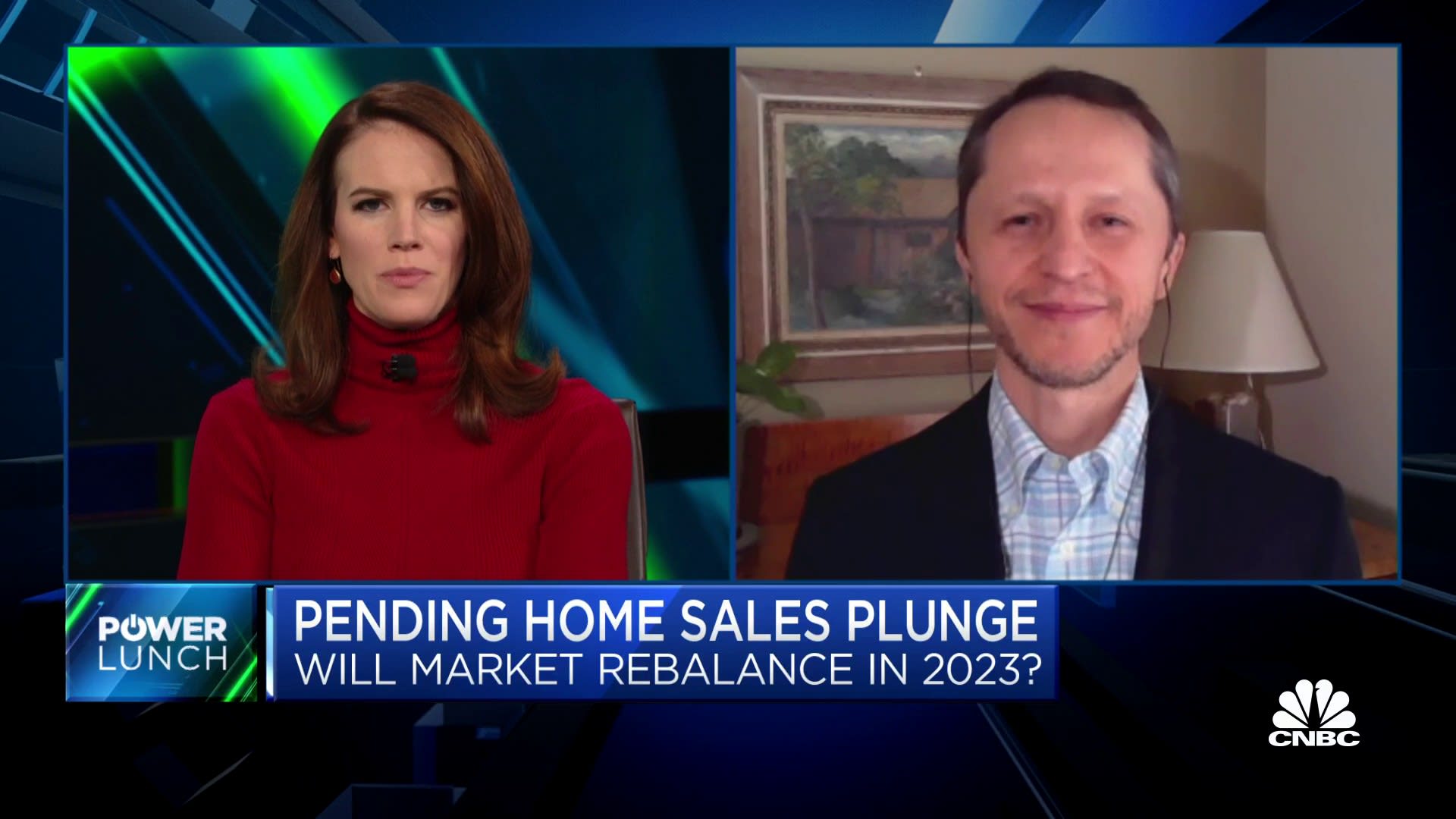
George Ratiu, Realtor.com senior economist, joins ‘Power Lunch’ to discuss the state of the housing market, how future rate hikes could impact home buying and how the housing market could look in two years.

It’s finally over! The crazy, unpredictable, and just plain weird housing market of 2022 has ended. Though analysts like me will likely be studying the 2022 housing market for years to come, we can finally take a quick look back at what happened this year and infer what might be in store for the year to come.
2022 was a tale of two halves. January through May/June was one type of market, and July through December was a very different market. It’s not possible to determine the shift’s exact date, but it was within this timeframe.
Through the first half of 2022, we saw a continuation of the wild appreciation that defined 2021. Every major variable that influences housing prices was putting upward pressure on the market. There was strong demographic demand fueled by millennials reaching their peak home-buying years. A decade of underbuilding contributed to a nationwide housing shortage. Inventory was almost non-existent. And, of course, mortgage rates were historically low.
But then, things changed. In March of 2022, the Federal Reserve started raising the federal funds rate, pushing up bond yields and mortgage rates. The change of policy actually spiked demand as homebuyers and sellers rushed to transact before the full impact of higher mortgage rates were felt. This, combined with normal seasonality, allowed the party to continue and for prices to continue going up for a few extra months.
Eventually, the impact of skyrocketing mortgage rates took hold. Already facing ultra-high home prices, higher mortgage rates priced many homebuyers out of the market, and demand fell. When demand falls, inventory tends to rise, which is exactly what happened.
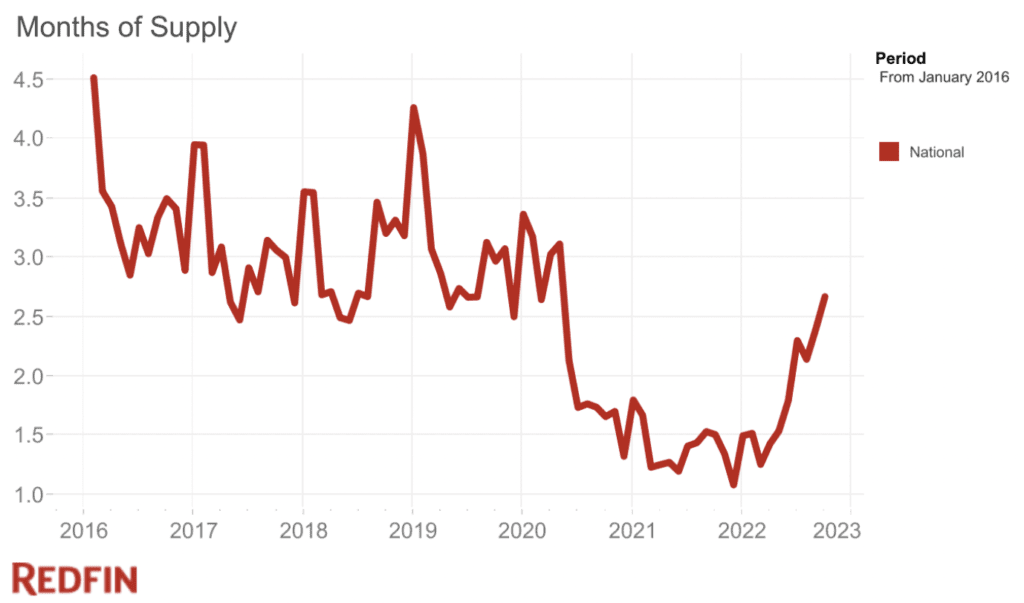
As inventory rose, sellers who were drunk on power over the last several years started to lose their leverage. Slowly, buyers started to have more options, and a bit of balance returned to the market, pushing down prices.
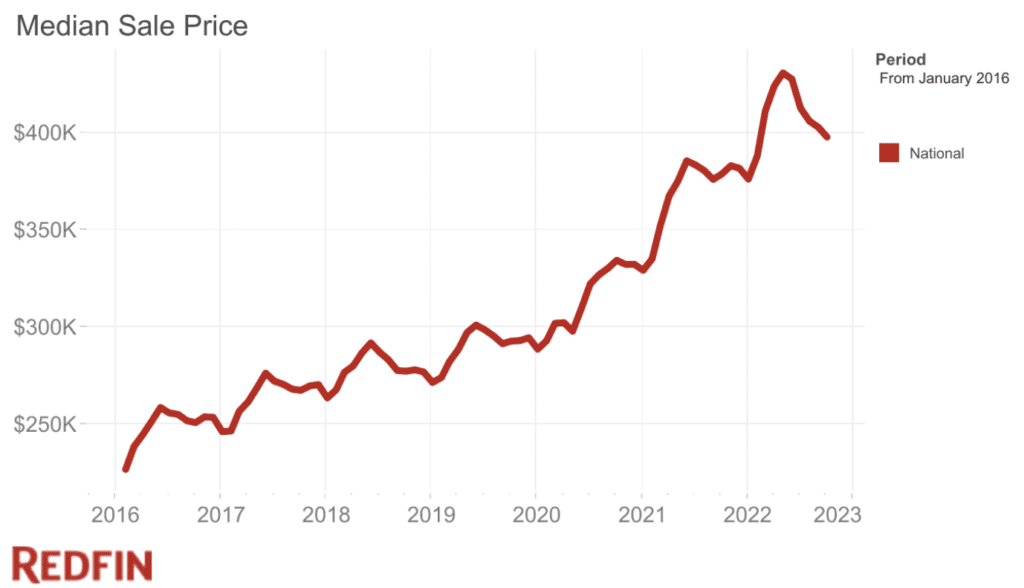
Some of the decline since June is seasonal, but as of December 2022, prices are down almost 10% off their May peak, and a typical seasonal decline is 5%-7%. The descent from the summer peak was deeper in 2022.
It’s worth noting that although prices are declining, they are not in free fall. Prices remain up year-over-year, and inventory has started to moderate. Mortgage rates have come down from October to December, and there are signs that the drop-off is becoming less steep. At this point, we remain in a correction, but not a crash.
Will we see a continuation of the downward trend we’re in now? Will things get worse? Or could the market reverse?
To me, it will again be a tale of two halves. I believe in the first half of 2023, we’ll see a continuation of the market we’re in now: sellers don’t want to sell, and buyers don’t want to buy. Of course, deals are still underway, but I expect sales volume to remain well below what we’ve seen for the last 7-10 years. Even though inflation is moderating, there remains too much uncertainty in the economy for the market to stabilize fully.
Hopefully, during the first half of 2023, we will see inflation come down and get more clarity about what is happening with the global economy. But what really matters for housing volume and home prices is about one thing: affordability. If housing stays as unaffordable as it is now, sales volume and appreciation will stay low. If affordability recovers, I expect the housing market to stabilize and perhaps even see a modest recovery in the second half of 2023.
It sounds overly simplistic, but housing is just too unaffordable in current market conditions. Some estimates say that housing is the least affordable it’s been in over 40 years. Until this changes, the housing correction is here to stay. The housing shortage and demographic demand haven’t gone anywhere. As soon as affordability improves, I think housing market activity will resume.
Affordability is made up of three factors:
Affordability can improve if wages go up or home prices and/or mortgage rates decline. Let’s take a quick look at if any of these things can happen.
According to the Bureau of Labor Statistics, real (inflation-adjusted) wages are down about 2% year-over-year but have ticked up about 0.5% since September. Nominal (not inflation-adjusted wages) is actually up a lot, but inflation is too high and wipes out all of those gains.
| Real Earnings | November 2021 | September 2022 | October 2022 | November 2022 |
|---|---|---|---|---|
| Real average hourly earnings | $11.21 | $10.95 | $10.95 | $11.00 |
| Real average weekly earnings | $390.20 | $377.71 | $377.80 | $378.42 |
Although it’s a positive sign that real wages have ticked up a bit, it’s very modest. It is possible that, as inflation moderates, real wages will go up—but I find it unlikely that that will happen in a meaningful way. To me, concerns about a slowing economy will slow the pace of wage growth alongside inflation. Therefore, no real progress on real wages will be made.
One area where affordability is likely to improve is home prices. Residential real estate prices will likely see year-over-year declines nationally, making homes more affordable. For affordability to really improve, we’d probably have to see prices drop more than 10%, and it’s very unclear if that will happen. If prices drop at all, and by how much, it will depend very much on mortgage rates.
Mortgage rates can be confusing, especially recently. The Fed continues to raise the federal funds rate and has signaled they intend to keep doing so into 2023. Yet, mortgage rates are falling. What’s going on here?
Mortgage rates are not directly tied to the federal funds rate. Instead, it is very closely tied to the yield on 10-year treasuries. So, in a way, mortgage rates are more influenced by bond investors than by the Fed (although bond investors are highly influenced by the Fed. It’s confusing, I know).
Over the last several weeks, bond yields have fallen for two reasons. First, inflation is moderating faster than expected, which tends to cause a rally in bonds, sending bond yields down.
Secondly, there are fears of a global recession. These fears tend to prompt global investors to seek the safety of U.S. Treasury bonds, which pushes bond prices up and bond yields down. When bond yields fall, mortgage rates also tend to fall, which is exactly what we’re seeing. So, mortgage rates may fall next year and end the year somewhere between 5.5% and 6.5%, down from the most recent peak of 7.23% in October 2022.
If my premise that the 2023 housing market hinges on affordability is correct, then there are two plausible outcomes for the second half of 2023.
First, mortgage rates fall, along with modest price declines (less than 10%), combining to increase affordability during the second half of 2023. This would likely cause a bottoming of the housing market in Q1 2024, and we’d start to see growth in the market again come early 2024.
The other option is affordability doesn’t improve in 2023, probably due to persistently high inflation and mortgage rates. If that happens, the second half of 2023 will look like the first half of 2023, and we’re likely in for a longer correction. In this scenario, we will probably see housing prices drop 10-20% over the next two years, and we won’t see a bottoming of the market until late 2024/early 2025.
It’s tough to know what will happen, given the amount of economic uncertainty. As of this writing, I think the first scenario is more likely given the recent trends in inflation and bond yields. But both options are reasonably likely at this point. Unfortunately, the next twelve months are cloudy at best.
What do you think will happen in 2023? Let me know in the comments below.

Fundrise is revolutionizing how you invest in real estate.
With direct-access to high-quality real estate investments, Fundrise allows you to build, manage, and grow a portfolio at the touch of a button. Combining innovation with expertise, Fundrise maximizes your long-term return potential and has quickly become America’s largest direct-to-investor real estate investing platform.
Note By BiggerPockets: These are opinions written by the author and do not necessarily represent the opinions of BiggerPockets.

This $58,808,000 mansion overlooking the Pacific Ocean is one of the largest homes for sale in Malibu. At 16,600 sq ft the single-structure residence is the grandest of its kind and a whopping 4,100 sq ft bigger than the next largest single-family home on the market.
The Bali-inspired residence at 11870 Ellice St is perched above the Pacific Coast Highway in Malibu is on the market for $58,808,000. The modern glass-and-concrete architecture, called the Kaizen House, is built around an open-air courtyard with lush palms and a koi-filled pond at its center. CNBC’s Ray Parisi tours the six-bedroom-ten-bath mansion with co-listing agent Branden Williams president and co-founder of the Beverly Hills Estates.
Inside the largest home for sale in Malibu: $58 million Read More »
Low mortgage rates, sneaky homebuying strategies, and getting into (and out of) debt, Lindsey Iskierka‘s story has it all. As the lead real estate agent on the SoCal David Greene team, Lindsey is in the thick of real estate day in and day out. But she’s not just helping others buy and sell homes, she also boasts a respectable rental property portfolio, with four units sprawled out across the states in three completely different markets. And even though Lindsey is in the real estate game now, it wasn’t always this way.
Back in 2015, Lindsey wasn’t making much after getting her grad degree. With her husband interested in real estate, they decided to go to a seminar, which later turned into a $40K debt they had to climb their way out of. Lindsey decided to get her real estate license to not only help pay off this debt but save enough to buy their first home—a house hack in Long Beach. It didn’t take long for the home to appreciate, leaving Lindsey and her husband with a hard choice—sell or refi the property.
We won’t spoil the story, but her choice allowed her to buy multiple other units across the country, which has now become a portfolio of short-term and medium-term rentals. Lindsey also gives some killer advice on how first-time homebuyers and investors can snag rock-bottom mortgage rates in 2023. We’re talking two percent lower than today’s rate! If you want to hear how you can lock in a rate below five percent, we suggest you stick around!
Ashley:
This is Real Estate Rookie, episode 247.
Lindsey:
And there’s a program that was recently released called the 2-1 buydown. It’s not an adjustable rate mortgage. Basically, it’s saying, “Hey, rates today are 6%,” which do 6% for easy math. For the first year that you own the property, you’re going to have 4% interest rate. The second year you own the property, you’re at a 5% interest rate. Year three, you go to 6%. There’s no pre-payment penalty and it’s not an adjustable rate where you’re subject to the market rate at that time. So in three years, if rates are 10%, 11%, 12%, we can’t even fathom that, right? But rates have been there.
Ashley:
My name is Ashley Kehr and I’m here with my co-host Tony Robinson.
Tony:
And welcome to the Real Estate Rookie Podcast, where every week, twice a week, we’ll bring you the inspiration, motivation, and stories you need to hear to kickstart your investing journey. And I want to start off today’s episode by shouting out Nick Halden 5621, who left us a five-star review on Apple Podcasts. Nick said, “I recently started listening to podcasts and I really like the way both of you conduct the show, the way you ask questions, the way you share your experiences, it really gives a lot of insight and knowledge to someone like me who is planning to buy his first investment property. Keep up the good work.” Nick Halden, we appreciate you, brother.
And if you’re listening to the show and you have not yet left us an honest rating and review, please do on Apple, Spotify, whatever platform news you’re listening to. The more reviews we get, the more folks we can help. And helping folks is what we do around Isn’t that right, Ashley?
Ashley:
Yes, it is. And speaking of all of our wonderful listeners, especially the ones that leave us five-star reviews, we are going to be in Denver on February 23rd, with almost all of the podcast host from every bigger pockets podcasts, and we’re going to be having a meetup in Denver. So make sure you guys go to bigger pockets.com/events to check out what we have in store for you in Denver. And if you guys want us to come to your city, send a DM to the Bigger Pockets Instagram account, or to myself or Tony at Wealth Firm Rentals or at TonyJRobinson and let us know where you guys want us to come.
Tony:
Well today we’ve got an amazing episode. We have someone who’s somewhat connected to the Bigger Pockets ecosystem. We got Lindsey Iskierka and she works with David Greene. Some of you guys may know that name from the other Bigger Pockets Real Estate podcast. But Lindsey comes on, and she’s just a wealth of knowledge, both as an investor and as an agent. And we talk about both sides of that equation as we go through the episode.
Ashley:
Some of my favorite lessons and takeaway from this episode are talking about different markets, 1031 exchanges, and then also the current market, which we had this drastic change from high housing pricing, low interest rates, and now it has shifted to high interest rates and lower prices. And Lindsey, I think explains why this actually can be an advantage to you as an investor and just a buyer in this market today.
Lindsey, welcome to the show. Thank you so much for joining us. Can you start off telling us a little bit about yourself and how you got started in real estate?
Lindsey:
Yeah, happy to. First off, thank you for having me. It’s a pleasure to finally talk to you guys and connect here. So my name is Lindsey Iskierka and I’ve been in real estate since 2015, got my real estate license, bought my first investment property in 2016 and since about May 2021, I have served as David’s partner and lead real estate agent for the Southern California real estate sales team. So, help investors buy, sell, invest, house hack, short-term rentals, mid-term rentals, long-term rentals, we do it all. And real estate’s my life and I love what I do.
Ashley:
And that is the David, David Greene that you are talking about.
Lindsey:
Absolutely right. For clarification
Ashley:
You probably don’t need to say his last name, but just to clarify. So Lindsey, when you got your license, this was before you actually started investing then,. That came first?
Lindsey:
Fully after I knew I wanted to invest in real estate, but we just didn’t get started quite yet. But I have an interesting story as to how I even got into it and I’ll probably go into that, but-
Ashley:
Let’s hear that right now. I would love to hear it.
Lindsey:
So I don’t recommend my start to real estate to anybody, but it is my story and here we go. So after grad school, I met my now husband and he had an interest in real estate investing. Real estate was not on my radar. No one in my family invest in real estate, owns properties. I have one memory of my parents buying a house when I was seven and they still live in that house today. Real estate just really wasn’t even on my radar or a wealth building strategy I had heard of. After grad school, I was making 14 bucks an hour, thinking there’s got to be a better way here. And I met my husband. And at the time, he had an interest in real estate investing but hadn’t gotten storage yet. [inaudible 00:05:02] of course. And then we went to one of those free seminars that’s supposed to teach you everything you need to know about real estate investing.
One thing led to another. Next thing we know, we were $40,000 in debt. We had bought one of those guru programs. And while I’m grateful for that experience and what it made me do, it was, they promise you the world, they promise you they’re going to teach you everything you need to know. And in reality, it wasn’t. We were just so far back in terms of our goal. So we had to get real and paid this debt off. And a way that we decided to do that, moved in with my grandmother. We rented a room from her for a year and a half. And so we got married during that time. So newlyweds going back to grandma’s house, you can imagine.
But we had a goal in mind, and I got my real estate license at that time. So, then within a year we were able to pay off that $40,000 in debt and save up reserves to buy our first house hack. And so, while I don’t recommend those programs to anyone, it served its purpose for our story and I’m actually really grateful for that experience. I don’t know if I would be where I am today if we didn’t endure that. So that’s how I got started. And so getting my license was a way to help pay off debt. But I had grinded, I worked really, really hard, built my business over five years before meeting David Greene. And so that was how we got started.
Tony:
So Lindsey, first thank you for sharing the hard part of your journey in terms of getting started. And a similar thing in my journey as well where my partner and I, we spent not quite $40,000, we spent $20,000 on a program like that. The program was more so focused on teaching you how to become an apartment syndicator, do commercial real estate. And after we, joined, we did zero commercial deals. And I always think, man, was it a waste of $20,000? But through that program, I became really good friends with the guy who introduced me to short term rentals. And it’s like, had I not done that program, would I have found this asset class? Would our portfolio people we’re at today? Would I even be on this podcast?
Even though it’s always super crappy to have to go through those situations, it’s like if you can find that silver lining and use that as your motivation to keep going forth, and there’s maybe still some value in that. So I just want to know, how did you not get discouraged? You invested all this money, you had these big dreams of everything that was going to happen, didn’t turn out the way you wanted to, you moved back in with your grandparents, it’s almost like a worst case scenario. So how did you, even with all that happened, stay motivated to continue moving forward and really still take your start in real estate investing?
Lindsey:
Really good question. I think we had a powerful why. We were already planning our feature together and I thought, “Okay, what I’m exposed to, it makes sense.” I know this can work and this wasn’t it, but here’s what we’re going to do. And when we lived in southern California, so it’s very difficult, very expensive market to start investing. And we thought, “Okay, if we’re going to own a home, we have to house hack.” There’s really no other way to get started. And we just had a strong enough conviction that he and I can do it together. This program wasn’t what we hoped it would be, but like you said, I did end up having some relationships with people that I don’t know if I would have if I didn’t go through that program. And opportunities came from there and it gave me hope that there’s a better way and I knew this could work and I just hadn’t found it yet.
So put my head down, I realized, and I fell in love with real estate. That was another thing too. I loved it. And that level only grew stronger as I saw the potential for it. So I knew the path that we were going on before was not the right path, and we hit a speed bump here, but what can I learn from this? I would argue that also is what makes a successful investor. Because you’re going to make bad choices, you’re going to make bad decisions or you’re going to have to pivot and say, That didn’t work. Now what.” But you can always find the lesson and the blessing in everything. So we are blessed that we also were put in a position as a newer couple to have conversations about money. We had to have real talks about how we’re going to pay off this debt, what are we going to do? How are we going to come together and do it?
So talks about money weren’t taboo to us, it wasn’t a fighting point, it wasn’t a difficult point for us. And I’m grateful for that very early on. So, several combinations and just his support. He was so supportive of me and he believed in me that I could do this. Because he was in law enforcement, and so he was really the steady, W2, not many flexible hours. I had more flexible hours and I was set off to go into this real estate thing. And he had such belief in me that I thought, I have no other choice. I have to make this work. So how am I going to make this work? And ultimately, we knew house hacking would be the best way to get started. And in paying off that debt, I built a pretty good real estate business for my first year being an agent. So it just all started to come together with consistent action.
Tony:
I love your story so far, Lindsey, and I can just see the motivation coming off your face, but I want to, before we go too far, I just want to, if you can let the listeners know what does your portfolio look like today? How many units do you have? Where are those units spread out? Because a lot of real estate agents, even though they might do a ton of transactions a year as a real estate agent, they might own zero real estate themselves.
Lindsey:
Yes. But they’re investor friendly, right?
Tony:
But they’re investor friendly. So what does your portfolio look like today?
Lindsey:
Sure. So we have sold a few of our houses this year. We’re in the middle of our second 1031 exchange right now. But as it stands today, we own four properties. Two of those are short-term rentals. One is a long-term rental that we’re actually going to start renovating and turning it into a midterm rental for better cash flow. And then we have a primary. So that’s where it is right now. But we’re actively buying, looking for more deals and really wanted to, probably more than double that next year.
Ashley:
Lindsey, can you explain real quick what a 1031 exchange is?
Lindsey:
Absolutely. So 1031 exchange, it’s a tax deferring strategy for real estate investors. So anytime you sell a property, it’s an investment property, meaning non-owner occupied, you don’t live in it, you’re a subject to capital gains tax. So what investors do, and it’s a great way to scale a portfolio, is you take the income from selling that property, you immediately roll all those proceeds into the purchase of another property. And so you avoid the capital gains tax.
And it’s a great way to scale. It’s a great way to buy a bigger asset or get into a new asset class and it’s used by investors to scale a portfolio more quicker and you avoid taxes. So, it’s our second one that we’re doing. First one worked out well too. That was from our house hack that we did. And if you want to do a 1031 exchange or thinking about doing it, you need to make sure you have a QI, qualified intermediary, to help you with that transaction. Really important piece of the puzzle. And then an agent that knows what that is and knows what is needed when you get into escrow to make sure that it actually goes through. And you can save tens of thousands of dollars in taxes if you do this correctly.
Ashley:
Lindsey, I want to talk about and start getting into some of your deals. So what markets are you currently investing in for those properties that you have?
Lindsey:
So personally, our first house hack was in Long Beach, California. So coastal town in southern LA County. Right on the border of LA Orange and County right there. That’s where I started. And then we thought it was a good idea to 1031 exchange that property into three houses in the Midwest. And those cities that we invested in were Kansas City, Missouri, Birmingham, Alabama. And so we were in those two markets for a little bit. We also now own a short-term rental in Kalispell, Montana. It’s right near Glacier National Park. I personally love national parks for short term rentals. I just think it’s always going to be a market or a key component of the market that I want to choose for my own investments. So we have that, but we still own one property in Kansas City, Missouri. And then we’ve sold the other ones. And I own again in Joshua Tree, is my other short-term rental.
Ashley:
With the 1031 exchange, so when you sold that one property, you bought those three with the funds from that first property. So what made you decide to, how did you even begin to find those three other markets? Can you walk us through that process?
Lindsey:
I can, definitely. So it was an interesting time in our life. So I would’ve house hacked longer. And that’s something that maybe we’ll get into in a little bit as well. Our family was growing, we were expecting [inaudible 00:13:45] and I thought we are out of space where we currently are at. And so we moved out of our first house hack, rented it out. It was cash flowing, but it needed some major repairs. We didn’t have the capital at the time to replace both roofs and redo the plumbing. It needed a lot of work. But we had equity and we thought, okay, we want to scale. How can we make this property work for us? A cash-out refinance did not work. We did a VA zero-down loan on it, so just a [inaudible 00:14:13] and cash out refinance. Ultimately, just really didn’t leave us with enough equity to really do much with. The only option was to sell it.
And I wanted to keep that property, but just at the time we had to make a decision. Made sense to sell it. When you do a 1031 exchange, you have a very quick timeline in terms of when you have to identify the properties that you’re going to buy. At the time that we were doing this, I had a newborn and an 18-month-old and did not really have a ton of energy or knowledge about other markets where I could manage renovations, I could do all of the different facets of buying several properties. So we turned to turnkey. We’ve been Bigger Pockets listeners for many years already. I’ve been listening to Bigger Pockets since 2015. So we had heard about turnkey investments, the pros and cons. At that time, turnkey properties made the most sense for us in that life stage. We were able to see the properties on a spreadsheet and say, okay, where’s the best ROI? What are the best neighborhoods that are available that we can identify within that 45-day period to meet the goal that we had to have for the 1031 exchange to go through?
So not to get too complicated with 1031 exchanges, you have to meet a certain property value limit and you also have to breach your proper loan amount limit. So all the pieces of the puzzle made it so that we were looking at turnkey properties and what available inventory they had for us to meet those requirements. We chose Kansas City, Missouri because my husband’s sister actually was in medical school in Kansas City, Missouri. And she was able to tell us in those suburbs of Kansas City where the better areas were. She said, “Oh, you want to go over here, go over here, avoid this area.” Thought great. And then Birmingham, Alabama actually had some really great ROIs according to the spreadsheet we’re looking at it. It was right next to downtown Birmingham. That was the best performing property that we had. So it was on a whim. We knew we wanted Kansas City out of the choices that we had based on the boots on the ground knowledge that we had access to. But other than that, it was just, “This’ll work, this’ll work.” We have to choose the markets.
Tony:
Lindsey, I just want to circle back really quickly on that decision you made about refinancing versus selling the property. You said that doing a refinance, you wouldn’t be able to tap into all of the equity. Can you just elaborate on what you mean by that? Why can’t you access all of the equity in a cash-out refinance?
Lindsey:
So we were going to do a cash-out refinance, we could only pull out 70% of the LTV. At the time, we had about, or that’s loaned to value. So we had bought the property for 750 in 2016. By the time it hit 2018, early 2019, it was worth 950. So we had 200,000 inequity. And if we’re going to do a cash-out refinance after doing all the math, we were only left with $65,000, $70,000 that we could actually put towards a purchase of another property because we put zero down.
So when you have equity, you have to also think about how much did I put into the deal? And with this one, since we didn’t have any, it really ate away at that plus. So we were doing the math, it didn’t make sense for us to let this property go and we really couldn’t do much more to it. And we had some hard tenants that gave us the idea that, let’s just get rid of this one. It’s served as purpose, let’s move on. So if we were refinance, we had wonderful tenants, it might have been a different story, but still, the money that we had access to after the refinance, was not enough for us to feel like we could fix up the property to hold onto it long term and to scale.
Ashley:
I think that was a great explanation because I think we get a lot of questions like that and we see people post in the Real Estate Rookie Facebook group as to here are my two options, which one should I do? And I think you did, the thing that everybody should take away from this is, you ran the numbers on both, what’s going to, the outcome, if you go either path, what are you going to be left with?
So, if you are going, say you have this amount of capital available, are you going to put it all into one house? Are you going to spread it out over several houses? We’ll use those scenarios and run the numbers, and what’s it going to look like in a year? What’s it going to look like in five years? And that’s what you did with either refinancing or selling and you looked, what capital do you have left and what can you do with it? So I think that was a perfect example of how running the numbers and just doing that analysis on those scenarios instead of just like, eeny, meeny, miny, moe, catch tiger by the toe, I’m going to go refinance.
Lindsey:
We had to. Funny thing too is, this is something to note is that at that time we wondered if we were at the top of the market. We had $200,000 in equity as new investors. That was pretty attractive. And we thought, gosh, what if the values do go down? This is in 2018, early 2019, pre pandemic. We thought we were at the top of the market or there was chatter about that. So I had to take that into consideration. If we don’t sell it and I refinance, can we make these repairs on the property, have it still cash flow? Because we had a great interest rate, and rates were up at that point. So can we make this work? And ultimately, it just didn’t. And we thought, “Hey, we have to make a move here. Here are the options that we have.”
So we at least made a move. And I think that’s something I really want the rookies on here to pay attention to is, taking action, even though it’s not the absolute best action, it’s better than not taking any action at all. I think people are so afraid of making a mistake and that’s inevitable. You’re going to make some mistakes and that’s okay. But the important point is to take consistent action with the available information that you have at hand with your trusted team, your advisors, and move the needle forward, however that may look in that situation.
Ashley:
You hit it right on Lindsey, that, so focused on making the right decision. But sometimes either decision can work out for you. Don’t get so focused on maximizing the cash flow. That’s why there’s more deals to be done, especially your first deal. Don’t waste time actually taking action by getting into that analysis paralysis of what’s the best way to do this? I want to maximize and pinch every single penny, but just getting started, that’s going to give you the momentum to go and give more deals. And that’s going to end up giving you a better return starting now than waiting until you’ve finally decided this is the route you’re going to take.
Lindsey:
Now you can no longer afford that property.
Ashley:
Yeah, that’s a great point
Lindsey:
Because you waited to long.
Ashley:
And how you were talking about the market, how you were thinking maybe it’s the top of the market, we should sell it now too, is something if, you went and refinanced and you pulled out that equity and then all of a sudden values did drop, but something comes up where now you do have to exit the property and now it’s not worth what you had drawn out in equity too. So there’s always that risk and that’s something, you know guys did a great job of foreseeing if those things were to happen along with running the numbers too.
Lindsey:
Thank you for that.
Tony:
Lindsey, you also mentioned that part of the reason you sold was because of the, not issues, but maybe the tenants weren’t your ideal tenant. Were you self-managing this property or what did that relationship look like with those tenants?
Lindsey:
Ooh, really good question. So partly yes, we did a property management for the back house. So just to give you a quick layout, it was a front house, a little craftsman house in the front that we lived in. There was a duplex in the back, the duplex in the back had sets of tenants and we had property management for that. Part of it was because, like I said, my husband was in law enforcement, he wanted safety, he wanted people to not bother us if they had concerns, they want us to see us as the bad guys. We wanted to act like, “Hey, we’re tenants too. You go talk to the property manager and not think that we’re the ones raising rent.”
Tony:
They didn’t even know that you guys were the owners. No.
Lindsey:
Oh wow. The first set of tenants did, because they saw us moving.
Tony:
So they’re moving in, you’re like, man, those landlords, they kind of suck guys, watch out for them.
Lindsey:
I know. [inaudible 00:22:18].
We had to play it up and it worked. Because we were the same age group, roughly, and they believed it. And it wasn’t until we had a main waterline backup that one of my tenants saw me walking the property with a contractor and she’s like, ‘Wait, are you paying for all this?” I was like, “Okay, fine. We own the property.” They caught me at that waterline to take care of. So that part was property management. We cut that as property management.
When we moved out of the front house and we bought another primary residence, when we moved out of that front house, we decided to do section 8 and we used a VA program actually called the VA VASH program. And essentially, a section 8 for veterans. So we wanted to do good with our housing. We had this wonderful house in a great part of Long Beach and we thought, “Okay, we may not get maximum rent here, but how can we use this house for good?” So we put a military family in there where they were trying to go through school, they couldn’t really afford rent in the area. And so that made us feel good by putting military housing, providing housing for veterans, which is very close to us. My husband’s a veteran too, obviously we used the VA loan, so we wanted to do good with the house that we had. So we did that. But things just turned a little sideways with some of our tenants, and it’s okay, we learned lessons, but they were not that ideal.
Ashley:
I think this is the first time anybody’s ever talked about this program. Can you maybe explain it a little more?
Lindsey:
It’s a wonderful program. I’m so glad we found it. Basically it’s sponsored by the VA and they work right alongside HUD. And essentially, it works just like section 8. Your unit is valued by the zip code and number of bedrooms, just like section 8 is. And it’s given a market value for that area. And it goes up little by little every year. So you get the benefits of section 8, where you do have guaranteed income coming in, which is really nice. Is that during COVID, should any tenants not be able to pay their part of the rent, HUD stepped in and paid the full rent amount, which was nice. So we didn’t run into that issue, but it was just another perk of that program.
So you have guaranteed income and you get to choose the background that you’re comfortable with. We really wanted a family in there because we had two bedrooms. We brought our daughter home in that unit. We really wanted to help out a military family. So we did that. So you can choose if you want a single person, a family, if you want no history of substance abuse or evictions and things like that. So you can set your criteria as to what kind of tenant you would accept and then they get the application process. You have a rep from the VA that works with the family or the tenant works with you and it’s very, very similar to section 8, but it’s only for veterans. So it was a great program.
Tony:
What was it like for you as the landlord to get added into that VA VASH program? Was it a long process? Was it pretty quick and easy? What was the vetting process for you to get onboarded?
Lindsey:
Probably depends on your perception of easy and quick versus difficult. It wasn’t bad. It wasn’t bad. The property had to meet certain criteria for inspections, but we took great care of that property. We had renovated it during the time that we lived there. And it wasn’t that long. Maybe it took six to eight weeks I want to say, for our application and inspections to be done. So it did sit vacant for a little bit and that was okay, but it felt good to know that we were going to do, like I said, we really wanted to do good with the property that we had. Six to eight weeks I want to say, with inspections and everything. And then we got tenants in there pretty quickly after that. So it wasn’t very quick. It wasn’t super easy. There were a lot of trips back and forth to the HUD office. So if things like that stress you out, just be prepared for that. But in hindsight, it really wasn’t that bad.
Tony:
And the quality of tenants that you got, you said that maybe you wouldn’t do it again, if I heard you correctly? what were some of the lessons there?
Lindsey:
I would do it again, just these, I would do it again. I think part of it too, and this is a dynamic that house hackers have when they move out of a home that was an investment property, but also primary residence. You put your blood, sweat, tears into those properties. So when you go back and you see tenants not taking great care of the home, smoking in it, grease stains all over your kitchen, they were damaging our doors and our brand new windows. So it’s rough to watch someone not beat up your house a little bit, when you’re like, “I brought my daughter home in that house, can you not?” So that was just a more emotional thing. But they were complaining quite a bit. They were not supposed to be smoking in the house. They would blame everybody for certain problems and they called us certain names when things didn’t go their way. So I would do the program again. Just at that time, the tenants were stressing us
Ashley:
Lindsey, when you did that program, did they pre-screen these people for you? And then did you do any additional screening on top of that too?
Lindsey:
They did pre-screen the tenants to make sure it fit the criteria that we wanted and then they presented their application to us and we can approve it or deny it. If I recall, we weren’t able to meet them in person, but we could deny their application if we wanted to at that time. It may change since then, but at that time we were able to approve or deny them as tenants as they came through.
Tony:
Well, thank you for introducing us to VASH, Lindsey. I’ve never heard of that. Ashley had never heard of that. And part of the reason this show is so cool is because Ashley and I can learn new things and selfishly take them into our own business. But obviously so many folks in the Rookie audience are going to be benefit from hearing about this program as well.
I want to transition just a little bit because you are in a unique, I think, viewpoint or vantage point as opposed to most of our guests, because not only are you a real estate investor, but you also see a ton of volume as a real estate agent. And there’s been so much uncertainty this year around whether or not people should get started in real estate investing. If I’m someone that’s sitting on the sidelines that has zero deals, is now the right time to buy? There is a bunch of price competition earlier in the year and then as that slowed down you saw interest rates climb super, super fast. So from your perspective as both an investor and as an agent, what are your thoughts on whether or not right now is a good time for new investors to get started?
Lindsey:
Really good question. Of course, this is a common conversation that we’re having and it goes back to what’s more important to you. So we had people, like you said, there was prices getting bit up through the roof. It was so hard to get an offer accepted. People held off. Okay, once interest rates started going up, prices came down, competition ceased, but people are holding off because now interest rates are too high. The fact of the matter is, we’re never going to have the perfect storm of a market where interest rates are low or good, prices are stable, there’s less competition, you have negotiating power. Something has to give. So the wonderful thing about real estate investing is that it comes back down to the fundamentals. Does a deal work today? Yes or no? What’s great, an advantage about people who do want to get started or continue their portfolio in today’s market, they are forced to underwrite the deal better.
People could get away with buying not such great deals earlier this year and in 2020 because they were saved by low interest rates and by prices going up. They’re just grateful they got a deal, because it’s so hard to lock one in. Today, you really have to make sure that the underwriting is solid, that the monthly payment, that the cash flow, that whatever metric you’re tracking makes sense with today’s interest rates. If rates go down, fantastic, you’ll refinance. You won’t then be having to jump into the market when everyone else is now going to jump back into the market. Because then if rates drop, I ask clients to sell the time. If rates drop, what do you think is going to happen? Oh, maybe prices will go back up. Yeah, exactly. And then we’re going to be right back to you complaining that prices are too high, it’s too competitive and you want to wait till it cools off. It’s cooled off.
So you have to decide what makes more sense for you. And what I think is great is that if you lock in a property at today’s interest rates, it can only get better. Because if rates drop, you’ll refinance. If you bought when rates were 3%, two and a half percent, if you need to refinance right now for whatever reason, you probably can’t afford that mortgage payment. And you’re stuck with that. And maybe the property is lost value right now already. And now you can’t sell that in scale. So I think you’re actually more at a better advantage right now than people were eight months ago, nine months ago, because that market is gone. You’re back to the fundamentals of real estate in this market. So there’s me buying opportunities no matter what market we’re in. If you’re an investor, you’re investing, no matter what the market’s doing. You’re finding opportunities in that current climate and taking advantage of it.
Ashley:
I saw someone post that on Instagram a couple weeks ago, maybe a month ago. And probably was you if you posted, but it was a real estate agent. And it seriously hit me, like, oh my gosh, that is so true, is your, whatever you pay for a property, you’re stuck with owing that dollar amount.
Lindsey:
Yes.
Ashley:
You owe that. So if you’re paying $300,000, no matter what the interest rate is, you’re going to have to pay that at some point or sell the property and cover it. But that debt or that cash has to be provided to pay for that property. But if you get that interest rate, that can change, you can change that interest rate. So whether rates are dropped and you go and refinance, you find a private money lender or you do something, you do creative financing, things like that.
But it just really, it was like an eye-opening thing for me is, you’re paying a lot, you can pay a lot less now and then, especially if you’re holding the property, a couple years down the road or however long down the road when rates do drop is going and refinancing and you’re going to be a lot better off because you purchased that lower price. So I am so glad we touched on that because I think that is such a valuable tool lesson that everybody can learn from this is that, the market was hot, it’s cooling off and interest rates are high, but how long do you, and that’s the thing nobody can predict is, how long do you have to cover that high mortgage payment until rates do drop-
Lindsey:
And don’t buy if you can’t afford it right now. And we’re also getting the sellers to buy down the interest rate. We’re negotiating killer deals right now. I just negotiated 2-1 buydown, we got $50,000 in credits. So the buyer can take, I think they’re doing a 3, 2, 1 buy down. They’re getting a crazy good interest rate and this property, they easily would’ve paid over 150 grand more for it eight months ago.
Ashley:
Can you explain that? If somebody’s agent isn’t doing that for them, how would they, what’s that process look like?
Lindsey:
Well, first call us, I’m just kidding.
But honestly, so basically, it’s a lot more likely because sellers are very fearful right now that they just want their house sold. And so they’re willing to, you’ll see some marketing that says like seller willing to buy down interest rate, but if they don’t, then you can find a way for the buyer essentially to get their interest rate buy down paid for by the seller. So when you go to buy property, in any case, there’s always interest rates that you can lock in. There’s par pricing, meaning this will cost you zero extra points. You can use lender credits to have less closing costs out of pocket, but have a higher interest rate or it can buy down the interest rate and have a lower rate that’s going to cost you more money. Right now we’re able to get the seller to pay it down.
And there’s a program that was recently released called the 2-1 buydown. It’s not an adjustable rate mortgage. Basically it’s saying, hey, rates today are 6%, we’ll do 6% for easy math. For the first year that you own the property, you’re going to have 4% interest rate. The second year you own the property, you’re at a 5% interest rate. Year three, you go to 6%. There’s no prepayment penalty and it’s not an adjustable rate where you’re subject to the market rate at that time. So in three years, if rates are 10%, 11%, 12%, we can’t even fathom that. But rates have been there. Rates were at 18% at one point. But so it’s not an adjustable rate mortgage, but you are essentially having the seller pay the interest upfront for you to have a lower interest rate for the first two years that you own the property. Really powerful.
So you have to qualify for the loan at today’s interest rates. It’s not a way for the buyer to be able to buy more or qualify for it, which I think is a really important point to distinguish. It’s not like, “Oh, I can afford this at 4% interest rate if we get the 2-1 buydown.” No, you have to qualify for the loan at today’s interest rates. You have the benefit of having a lower mortgage payment because you have a lower interest rate for the first two years that you own the property. So it’s great for short term rental owners because this only works for primary home buyers and second home loans. So if you’re doing a second home loan for a short-term rental, you essentially can have two years of a lower interest rate, paid for by the seller, again. And you can withstand, maybe if we have a downturn or market slows a little bit, you got your listing up and running, you can probably improve your cash flow for the first couple of years you own the property by having this program.
So we’re getting this paid for by the seller and we’re getting a lower price than list price. A list price is no longer a starting bid. List price is a suggestion now. And we’re saying, okay, is there a number that you have to hit to make this deal work for you? Let’s offer that. Let’s not be offensive, but let’s see what they come back with. And now we have healthy negotiations going on again. I love this market because we have negotiations. Both buyer and seller have to compromise and give a little bit. No one’s really having the full advantage right now, which I think it means a healthy market.
Ashley:
Lindsey, how much does that buy down typically cost? Have you seen that it’s, I’m sure it probably varies from the lender, but is there a typical percentage of the purchase price or what does that cost actually look like?
Lindsey:
Typically, what we’re seeing, and I’m not a lender. Talk to Dave’s lending team. The one brokerage, they’re fantastic at this. But typically we’re seeing anywhere from two and a half to 3% of the purchase price be enough for the 2-1 buydown.
Ashley:
Awesome.
Lindsey:
So it’s hefty. Sometimes we’ll work that into the sales price if it works. We’ll tell a seller, Hey, we’re going to take a chunk of your profit for the closing cost credit, but we’re going to add that back in to the purchase price in some way to make it a win for everybody.
Ashley:
It’s amazing to me how creative you can actually get with just your regular on the market bank financing deals. I mean, you hear creative financing a lot, but that’s usually off market seller financing, different things that are done with the creative financing. But there really are so many ways to get creative with traditional bank financing too. It’s always great to hear.
Lindsey:
It’s fun.
Ashley:
And learn more about.
Tony:
Well Linda, you’ve been like a wealth of knowledge and I’ve really enjoyed this conversation, but I would love to get us to our Rookie request line. That way our listeners can poke into that brain [inaudible 00:37:38] of yours and get some more information on how I can keep moving. So awesome. So if you guys are listening, you want to get your question featured on the Real Estate Rookie podcast, give us a call at 8885 rookie. And if the question is a good one, we just might use it on the episode. So Lindsey, are you ready for today’s question?
Lindsey:
I’m ready.
Tony:
All right, awesome. So today’s question comes from Schmidt, just the first name, like Oprah. I can’t find a deal anywhere. I do live in North Carolina, probably one of the hottest markets. I guess my question is, how should I start? Should I try to get a condo that is overpriced and has an HOA restriction on renting and just start there so I can start building equity and then move forward once the market cools off in a couple of years? I’m 30, so I want to get started sooner rather than later. But also my question is, do you guys think I should up and move? I work remote so I can move to a rural town that has an up and coming market, and start somewhere with lower prices. I have funding, I’ve been saving for years, but my comfortability is extremely low. I do plan a house hack and would love to hear your response. So what’s your advice, Lindsey, for Schmidt?
Lindsey:
This is a great question and immediately halfway through the question as it was going on, I’m thinking, you need to be able to make some adjustments and sacrifice. So I love that he is open to moving. I don’t know if you necessarily have to. I think it’s going to depend upon what he thinks is going to be a better “deal” for him. Is he looking for cash flow when he turns this into a rental or is he looking to let this stop the bleeding of rent and scale with equity, build quicker? If it’s equity position, then I would suggest staying where he is and buying the condo that he feels is overpriced. You could probably get a good price right now. And if realtors are telling you that, “No, it’s too hot,” find another realtor that’s a really good negotiator. Skills guys, is going to be more important in this market than ever.
You need to have someone representing you with the skills to get the negotiations done. So really be mindful of that as you’re searching for someone to help you. But if he is looking for equity, I would suggest staying where he is and find the best deal that he can. Suggest living in something that needs some work, add value to it over time. Don’t be afraid to get your hands dirty. You don’t have to live in the nicest and best unit and the best part of town. You want to live in a good part of town, have a unit that you can add value to over time that’s going to maximize the equity potential that will put you in a position to scale down the road. Either it be another house hack or buying more rental properties or what have you. If he is looking for less out of pocket, also depends on his budget too. So it’s going to be another situation that I don’t have information on.
But if he is wanting to be more cost conscientious and buy at a lower barrier to entry, then moving for a short period of time in an area that is growing, area that has population growth, job growth opportunities, something that he can do if it’s near a university, if it’s near a hospital where you have multiple extra strategies for that property in the future to hold onto as a rental, long-term rental, midterm rental, short-term rental, that’s going to be another great avenue too. So it depends upon what he wants to get out of this first deal and where he wants to be the next three to five years. I don’t have that from him. I would need a deeper conversation, and your realtor should be asking you the same thing.
But I hope that at least gives him a bit more of an idea on which direction to go. But I love that he’s open and not saying, “No, real estate doesn’t work. I’m going to keep on renting and I’m just going to hold off until the market goes down or what or whatnot. I was just getting in now, negotiating a great deal.” And just deciding what you want this deal to work and how you want it to work for you.
Ashley:
And you know what, I do love the questions too, where somebody has options. What’s a better position you could be in than having different options? So, congrats to Schmidt for wanting to get in, started in real estate investing and having those options. So you’ll have to write for us in the Real Estate Rookie Facebook group and let us know what you end up doing. Okay, Lindsey, are you ready for our rookie exam?
Lindsey:
I think so. I haven’t studied, but I think I’m ready. I’ll be okay.
Ashley:
What is one actionable thing rookies should do after listening to this episode?
Lindsey:
Oh, I have a two part to this and so I hope that I don’t get disqualified here. So part one of this, I want everyone to really take an honest inventory about where they’re getting their information from. There is such a hype of spreading fear, spreading the headlines that elicit a response and people are making decisions on their investing and their long-term goals based on these headlines. And so, if someone’s listening to you guys, if they’re listening to Rookie, Bigger Pockets, they’re involved in these kind of discussions, they’re already a step ahead, which is great. But just be mindful of where you’re getting your content from right now and who you’re allowing to influence your decisions on investing. Because these news articles, these sources, they want to make you feel a certain way. They want you to think a certain way. So almost try to think about when you read something, have some discernment.
Is this benefiting me? How are they benefiting from sharing this information with me? And just making sure that you’re not making any emotional decisions on your investing based on mass media. I think that’s a trap that I can see a lot of people who are nervous about getting started in investing falling into. I’m not saying don’t be prepared, don’t be well-informed, but just really try to have some discernment when you’re deciding who you’re going to allow to influence your decisions moving forward into 2023. Part two to that is also to evaluate your circle. I know from personal experience. I’m partnered with David Greene. That has done wonderful things for me in my journey. And I know that if you took an honest inventory of who you’re allowing to spend a lot of time with you, whose influence, whose opinions and is influencing you, really try to think about, are these people serving me?
They may be well intended, they’re probably very well intended, but maybe they just don’t get it right. Maybe they just don’t have the same goals or vision that you have. So really evaluate who you’re allowing to also influence you personally and look to elevate your circle in 2023. Meetups are great. I just recently joined GoBundance Women. I’m super excited about that. I know I need to elevate my circle of people that I look to for inspiration. So two parts to that, just be mindful of who you’re allowing to influence you and be intentional about that in this year.
Tony:
Absolutely love that answer. I love that answer. Your circle and the people you surround yourself with have such a big influence on you both consciously and subconsciously. So I think all of us should be more intentional about who we let into our lives and who we allowed to influence us. So love that. All right, question number two, what’s one tool, software app or system that you use in your business?
Lindsey:
Something I should use better as my CRM? You know, as you’re getting leads, whether that be for deals for clients, you really need to keep track of everything. And typically, us entrepreneurs are not very organized. And we hear CRM and we just, I avoided it. I’m like, “No, my notepad and paperwork’s just fine.” But we use a CRM called Brivity, and I don’t use it to its potential, but that’s at least helped me stay organized and focused. And then in terms of short term rentals with automation and analysis, I love PriceLabs and I love, PriceLabs, I think is what I use to analyze deals. And then Guesty for automation and taking that off my plate so that things don’t slip through the cracks and my Urban B guests don’t feel as accommodated because I didn’t message them right away or things like that. So those two, I gave you three, I’m sorry. I’m hoping for extra credit here. I’m giving you [inaudible 00:45:44].
Tony:
That’s fine. Totally fine.
Ashley:
Lindsey, with your CRM, what are some things you track in it besides just the person’s name and phone number? I’m just curious because my birthday was a month ago and I got a text message from this loan officer that I’m using that told me, “Happy birthday, I hope you have a great day.” And I was just like, okay, this is super random. Is this something he tracks and texts all of his clients or that, I’m just his favorite client and he happened to see it was my birthday today on a loan document.
Lindsey:
Maybe send me a copy of that text and I can say if it’s a template or not.
So really good question. I track important milestones and I track what they tell me. If they tell me that they’re going on vacation, if they tell me that they have big goals to renovate the house that they’re in, or this is where they want to be in a year from now, I track what’s important to them in the conversation. There’s a note section for every call that you make to prospects or a client. And that way, when I follow back up with them, I can relate to that. I can ask them a follow-up question so they feel, and they can see that I cared enough to remember that.
And I get pulled in so many different directions. My brain is always going a million miles a minute with our team and everything. So having those trackers about points of the conversation that I want to refer to later, next time I call them again, is really important. And then any objections that they have, I like to share that so I can make sure I address their personal objections and fears and not just blanket them with everyone else’s concerns too, so I can speak to them more on an individual basis.
Ashley:
I think that’s really awesome right there. And I think this doesn’t even just apply to clients, it’s just networking in general, is going to conferences, events, and writing those notes about somebody. What did they talk about? What made them light up, what excited them? So keeping track of those things so that when you do follow up with them or see them again, you’re going to be, they’re going to remember you because you remembered something about them too. And it’s going to make you stand out to them compared to somebody who’s just, “Oh hi, nice to see you again. Do you remember me from this conference?” And then somebody else who’s going, “Oh, how did your daughter like that car she ended up buying?” Or something like that.
Lindsey:
Or who are you looking to meet? I love asking people, who are you looking to meet? Who can I introduce you to?
Ashley:
That is another great point, that connection, being the connector. The matchmaker.
Lindsey:
Yes, absolutely.
Ashley:
Okay, so last question. Where do you plan on being in five years?
Lindsey:
I love and hate this question so much because if you told me five years ago I would be partnering with David Greene and running this big real estate team and having a portfolio, I’d be like, “You’re nuts. You’re crazy.” So I love this question, but I’m also like, “I have no idea.” So if I had to guess or goals that I have for myself and our family, I want my real estate team to be thriving. We would love to hit 200 million every year. We’re serving so many people. Our mission is to help everyone build wealth through real estate. Simple. So I really want to maximize that and grow and opportunities that come with that.
Personally, for our portfolio, I want to get into other asset classes. I’d love to get into self-storage. I’d love to get into other commercial spaces that are going to have more and more opportunity as things start, continue to shift. And I’m open to receiving leads or whatnot for those different ideas. I want to have a medium size rental portfolio. We’re more simple. I don’t want a huge portfolio. I’d rather have a handful of good performing properties and pivoting as necessary to keep that going. I don’t want to over complicate my life looking to simplify it. So I’d love to have a good handful, maybe 10 to 15 properties that are performing and performing well and now getting into other types of businesses and commercial asset classes.
And then I’d love to, this is silly, and you guys might laugh, but I would love to live on a farm. I want to buy land and we want to build a forever home, and I want to have the chickens and the goats and all the things, and just a simple life. I would love that. So if I can do that in the next five years and teach my kids how to grow their own food and be self-sustainable, I would love that.
Ashley:
Well, I can’t laugh because I live on a farm.
Lindsey:
I’m jealous. I love that life.
Ashley:
It’s a very, very working farm. We just have dairy cows. There’s no chickens, there’s no pigs. My nieces will sometimes raise a pig and we keep them at our barn. But it’s not the hobby farm, I guess, where you have all the cool animals and things like that.
Lindsey:
I would love that though.
Ashley:
No garden, really. Just crops to feed the cows.
Tony:
I’ve never felt more left out for not living on a farm in my life.
Ashley:
But you live near the cows?
Tony:
I do live near. There are some dairy cows that are near me. I’m not too far.
Lindsey:
Hey Tony. I’m from California too, so you never know. You may get exposed to farm life and be like, “I like this.”
Tony:
Fall in love with it.
Lindsey:
Exactly.
Tony:
Well those are great answers. You passed the exam with flying colors, Lindsey, as I thought you would. So as we wrap things up, I do want to give a shout-out to this week’s Rookie rockstar, which is David Long, and David says, ‘Seven years ago today at age 25, I bought my first rental property. It was four units full of drug dealers, which I didn’t know at the time. Right after closing, I drove down to the building filled with drug dealers, collected all the rent and cash, but it changed my life forever. I quit my job at 30 and never looked back. Now I make my own schedule. I started doing social media content creation, which I had no idea how much I liked or how lucrative it can be. Real estate opens so many doors when you can take chances that wouldn’t be possible being stuck at a desk all day. I now own 11 buildings with 31 units.” So David Long, congratulations. That is an amazing story. Love hearing the success.
Lindsey:
Why we do what we do. That fuels me, that gets me so excited. I love stories like that, and anyone can attain it. It’s not out of reach, really, and I love that.
Ashley:
Well, Lindsey, thank you so much for joining us today. Can you let everyone know where they can reach out to you and find out some more information about you?
Lindsey:
Absolutely. So I’m heavy on Instagram. That’s probably the best way to get to know me a little bit better. I put out a lot of content. I’m not great at reels. Tony and his team are just, you guys are all wonderful at the fancy reels. I just, I do stories and I share a lot of stuff with what I shared here on the podcast today, I like to share almost daily on my Instagram, so find me there. My handle is lindseyiskierkarealtor, and I’m also on Bigger Pockets, so you can reach out to me there as well. But I’m really heavy on Instagram. It’s probably going to be the best way to get ahold of me. If you guys want to talk to me and our team at all, you can go to [email protected] and we’ll make sure you guys get set up with a great agent to help you accomplish your goals.
Ashley:
Lindsey, thank you so much for joining us. We really appreciated all of the value that you had for us and to our listeners. We definitely learned some new things today and we really appreciate you taking the time to share that with us.
Lindsey:
Oh, this was fun.
Ashley:
I’m Ashley at WealthFromRentals and he’s Tony at TonyJRobinson. And thank you guys so much for joining us. We will be back on Saturday with a Rookie reply.
Interested in learning more about today’s sponsors or becoming a BiggerPockets partner yourself? Check out our sponsor page!
Note By BiggerPockets: These are opinions written by the author and do not necessarily represent the opinions of BiggerPockets.
From $40K in Debt to 4 Properties and How to Snag a Low Mortgage Rate in 2023 Read More »
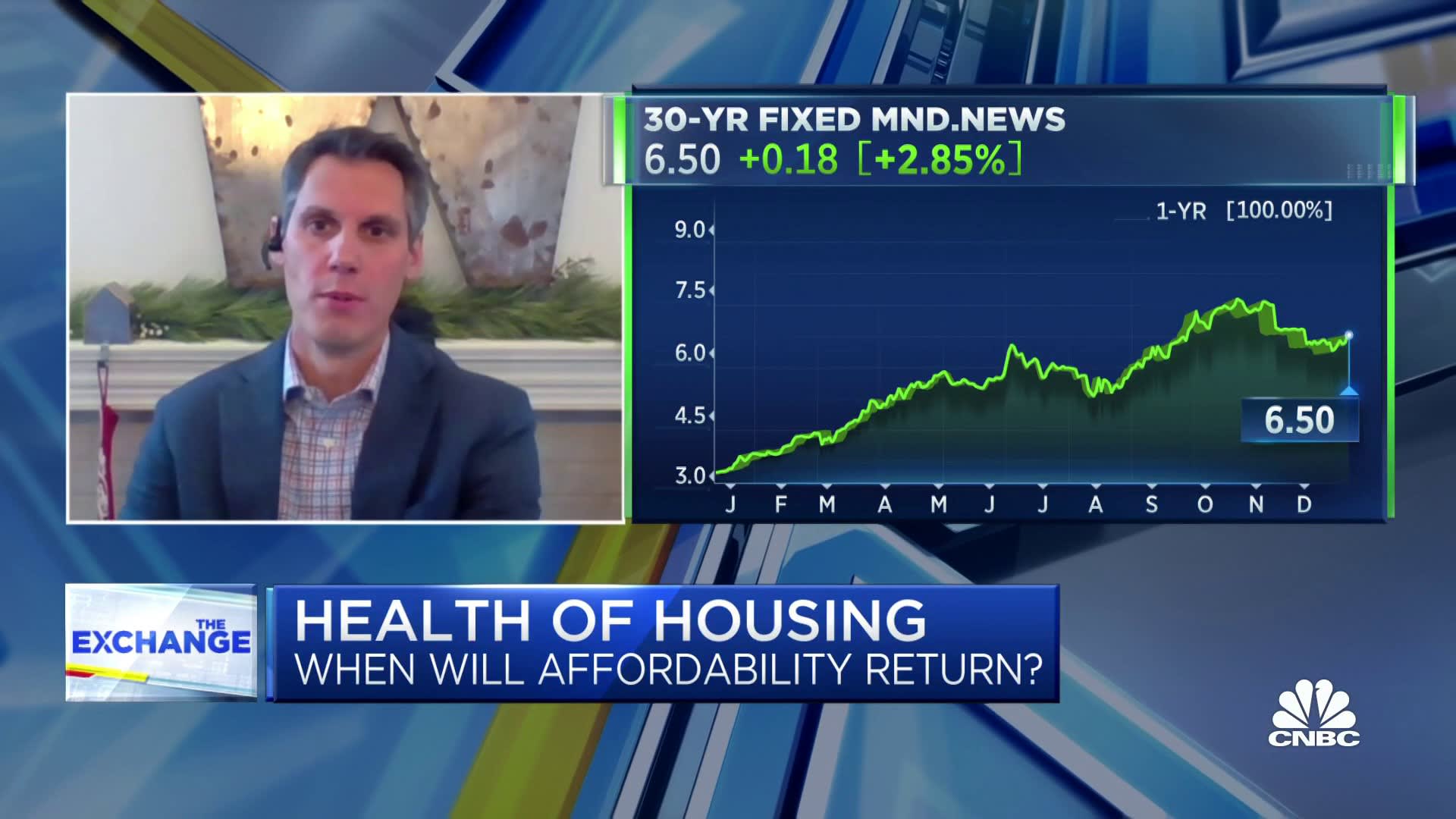
Andy Walden, Black Knight VP of enterprise research, joins ‘The Exchange’ to discuss the health of the housing market and headwinds the sector still faces.

Want to become a real estate millionaire? You’re in the right place. No matter how much money you’re starting with, how much experience you have, or how many Seeing Greene episodes you’ve watched, it’s ALWAYS possible to build wealth through real estate. But that’s easy for someone like David Greene and Rob Abasolo to say, right? They’ve already made it big, with millions of dollars in cash-flowing income properties. But they didn’t start like this.
David and Rob have come together to ask themselves, “what would we do if it all came crashing down?” If both of them lost their entire real estate portfolios in one fell swoop, how would they build it back up? Today, we put these two real estate legends in the hot seat and give them the biggest nightmare scenario so they can show you exactly how to build a real estate portfolio from scratch, no matter where you’re starting.
David and Rob will also be given certain dollar amounts to use in rebuilding their portfolio. So, if you’ve only got a thousand bucks on you, David and Rob will show you exactly how to use it best to catapult your wealth forward so you can become a real estate millionaire. If 2023 is going to be YOUR year to get started, get going, and get one step closer to financial freedom, we’d suggest following David and Rob’s plan!
David:
This is the BiggerPockets Podcast, show 706.
Rob:
In my opinion, real estate should… It’s fun making money, but real estate should never be fun because you should never be making that money and using it. You should be reinvesting it. And that’s not fun, that’s actually discipline. It’s like, “Yes, I like making the money, but it really hurt.” I’m like, “Oh, I felt like I could just use that $5,000 I made this month on this tiny house.” That would be really fun, but I have to force myself to say, “Well, sorry, Rob. Got to put it into the next property or into reinvesting in that property.” And it’s fun.
David:
What’s going on, everyone? This is David Greene with my co-host, Rob Abasolo who you just saw trying to match me with the 706, which is harder to do than you would think. And one of the reasons I’m the host of the show because nobody could get the hand gestures right. That’s right. You’re here at the best, the biggest, the baddest real estate podcast in the world for a pretty cool show. It’s going to be Rob and I solo today talking about what we would do if we lost everything and had to start over with no money and no houses in 2023.
Today’s show is very fun, very insightful, and very thought provoking, if you will, and hopefully very inspirational for you. Rob, how are you today?
Rob:
Good. As you were saying all that, it made me think of a show idea. You know how you do the Seeing Greene? What if I did my own version of it called the Robert Abasolo solo show? The solo-solo BiggerPockets show. Solo two.
David:
So you’re trying to get rid of me is what you’re saying?
Rob:
No, no, I’m just saying you do Seeing Greene. I think it’s time for the solo-solo show, the solo two.
David:
Abasolo show?
Rob:
The Abasolo solo show. But maybe you can still be a part of it. I just really like the name.
David:
Yeah, I just want to hear you talking solo that I don’t have to hear you and we’re going to be good. Right?
Rob:
Okay. Let me do this.
David:
Make sure I don’t like…
Rob:
The solo, solo, solo show where I have to talk like this the entire time.
David:
That would be really good. It would only be like a four-minute show because your voice couldn’t handle anything longer than that. That’s good.
Rob:
Not really, no.
David:
All right. Before we get into today’s show, a quick dip. What if I had to do a whole show in the Batman voice? That’d be something else. You’d really think about your words a lot more if it took that much effort to say all of them.
Rob:
Welcome. Welcome to the BiggerPockets show 710.
David:
And had to wear a mask the whole time as if you didn’t know who it was. Quick tip for today, what are your challenges? Write them down and think through solutions for them. You’ll quickly see avenues that you didn’t think about. I want everybody here to actually stress test their own life. What would I do if I lost my job? What would I do if I lost my spouse? What would I do if I lost my money? What would I do if the investments went bad? What would I do if we didn’t have food I could go get at the grocery store? This stuff is scary and cause some anxiety, but that’s okay because coming up with solutions will help build your confidence and help you be prepared for situations that we don’t know could be coming.
We’ve been lucky and blessed in this country to have a long run of a very, very healthy economy, but nothing’s guaranteed. If we learned anything from COVID, it was that. So take some time to stress test your life, your portfolio, and your goals and make sure that you feel good about them if everything doesn’t go perfectly. With that, let’s get into the show.
Rob:
All right. Welcome back to part two of the demise of Rob and Dave. Episode one. That’s right. Hey, you’re doing the mirror thing on the… Okay. I like it. You’re pulling a Rob. I like that. So in the last episode, just to recap everybody and level set and get everyone on the same page… Don’t make my hands…
David:
Kind of fun.
Rob:
Don’t take away my thunder here. So to quickly recap. Last episode, we talked about how our portfolios could basically crumble into oblivion. We talked about the ability to triage, which is a very fancy word of saying, could we sell off part of our portfolio if needed, or how liquid are we in our portfolio if we really needed to exit that? And then also how to actually assemble the architecture of our portfolio and how to strike a good balance between things like cash flow, debt, scalability. Dang it. I already messed up your-
David:
Ease of ownership?
Rob:
Ease of ownership. And then is there anything else?
David:
And liquidity.
Rob:
And liquidity. See, I knew that. I just wanted to throw you a softball. So today, we’re going to be picking up that conversation and talking about part two. What if we lost it all? What if we went down to zero? How could we actually rebuild our entire portfolio? We’re going to set some ground rules here. We still have our mind. We have our current knowledge. We’re still ourselves, but if we lost everything and it was just stripped away from our empires, how could we get back? How could we go from zero to Rob built and David Greene hero? So I’m excited, Dave.
David:
Yeah. This is one of my favorite things to do. I’ve often asked myself the question… You know that show Naked and Afraid? You’re dropped off in the middle of a jungle or something. You have no idea what you’re going to do. I’ve asked myself, what would I do if I had all the knowledge I have now, but none of my resources and you just dropped me into the middle of some city that I’ve never been before. I’m homeless, I don’t have any friends there. Would I be able to build wealth or would I just become addicted to drugs? So these exercises are kind of fun. And so now we’re going to do it with our portfolios.
Rob:
Yeah, man. So let’s get into just the first aspect of this and we’ll build to it. But I wanted to just start today’s show with just asking what are the biggest challenges that you’re facing right now, both emotionally, but specifically from a real estate standpoint, and is there any pitfalls that you’re currently encountering that that might lead to something like this?
David:
Well, this could easily turn into a therapy session for me if we’re not careful, so you’ll have to cut me off. But as far as the pitfalls that I’m going through, we have the market changing incredibly quickly. So pretty much almost all of the sources of income that I have come from some form of real estate. So my real estate sales team not selling nearly as many houses because the market has turned around. Rates are super high. A lot of buyers are wanting to wait to buy and a lot of the investors can’t make deals work because with the rates being high.
Even if you could get in contract, you can’t make a cash flow. Then you got the mortgage company, that’s the same thing. You can only qualify to buy a house off the debt to income ratio. So as rates are going up, it becomes harder to get people to be approved to buy the level of house that they have to get a seller to sell it. So income is going to be down there too. Well, all my employees are now making less money, and as you can imagine, people are not super happy about working harder and making less money.
So a lot of the character flaws that are present and all of us tend to not get exposed until times get hard. That’s one of the quotes that Warren Buffett has. When the tide goes out, you see who’s been swimming naked. So you’ve got all the personnel issues that you’re dealing with as the tide has gone down, the market is not doing good. Then I’ve talked about the 1031 that I was kind of forced into in a very quick timeframe. So I bought almost 20 properties. Maybe there was 20.
At the end of the day, almost all short-term or mid-term rentals across the country, massive problems with the rehabs employees that I had to let go of that quit that were managing these things that weren’t. I had to switch my CPA in the middle of all of this and my bookkeeper. So I’m every single week having to meet with bookkeepers to try to figure out what properties are profitable and what are not. Getting my taxes ready for the next year, and creating equities to hold all these properties in. Those mortgage payments still have to be made over and over and over. Then you throw in neighbors that are complaining about the construction that’s going on or that don’t want a short-term rental next to them. So they keep on calling the city to complain about nothing, which just means we have to now deal with more and more headaches.
And there’s more than that that’s going on as well. There’s a lot of things that are tough in life right now. So this is the perfect time for us to get into the fact that making money, especially making money in real estate is not always fun. In fact, it’s not often fun. It’s not glamorous all the time. You will hear the glamorous side of it when you’ve got a slick marketer trying to convince you to follow them on social media.
They want your attention. They want your subscribes. They want your follows. They’re going to tell you about the part of real estate that’s great. And then people get into it assuming that’s always the way that it works. And then when it doesn’t work that way, they think there’s something wrong with them or they think they weren’t meant for this and they get discouraged. But that is not the case. Even the people that are the best in the world are constantly sloughing through problem after problem to get to that cherry at the top of the sundae.
Rob:
Yeah. I mean, like you said, in my opinion, real estate should… It’s fun making money, but real estate should never be fun because you should never be making that money and using it. You should be reinvesting it. And that’s not fun. That’s actually discipline. It’s like, “Yes, I like making the money, but it really hurt.” I’m like, “Oh, I felt I could just use that $5,000 I made this month on this tiny house.” That would be really fun. But I have to force myself to say, “Well, sorry Rob. Got to put it into the next property or into reinvesting in that property.” And it’s not fun. It isn’t. But in 65 or when I’m 65, I should be having fun on my jet ski and realize my life dream of owning a jet ski on the beach, David.
David:
That’s exactly right. We talk about money being energy or really a store of energy. Energy that you’ve already accumulated from work that you did or previous investments that you made. The more of that energy that you can keep in your portfolio, the faster it will grow. The more of it that you pull out to fund your lifestyle, the slower that wealth will build. Now in your world, Rob, tell me about some of the pitfalls that you’re having with your real estate business.
Rob:
Yes, okay. A lot. I would say right now, this is being solved for thankfully, but a big pitfall that I’ve had is just not having cohesive bookkeeping in accounting. Now we had Matt Bontrager from TrueBooks on. He is my accountant and they are now doing my bookkeeper. That is solved. They’re doing really great. But actually last year for 2022, I had three… Oh, sorry, for 2021, I had three separate CPAs filing all of my taxes. I actually had four technically because I had all these different business partnerships and all of the partners were the ones that handled the taxes.
So my main tax accounting firm needed the taxes from everybody and they needed the tax. Oh, it was a big mess. But I have now fired all of them and Matt is now my sole CPA at TrueBooks. Now, they’re doing all my bookkeeping. So that’s going to solve a lot of the questions that I have day to day on what’s the true profitability? Because the way some bookkeepers track your accounting is just different than others. So that’s a big one. Another one is, this is probably the biggest problem that I face in my entire portfolio and it’s that I don’t have enough people on my team.
I’ve been very, very, very conservative and very slow to hire and that’s probably a good and a bad thing. But it’s been a bad thing for me because it really does slow down how quickly I acquire things. I’ve got a lot of plans to acquire properties and I see properties come across my desk all the time, but I honestly turned them down almost automatically whenever I think about the logistics involved with actually setting them up, just because I’m so busy with all the other miniature empires that I’m working with.
So on the real estate side, we’re a very slim team. On the content side, I’m a very, very, very scrappy team. It’s me and my editor. All the content that you’ve ever seen me post is just two people. It’s me and my editor for the most part. I write my own captions. I make my own Instagram reels. I do all my own posting. I respond to all my DMs. And some people at home might say, “Hey, how is this relevant to real estate?”
Well, my YouTube content, all my content fuel a lot of my real estate because that is my funnel for working with investors that approach me to invest half a million dollars. They find me off of YouTube. So that is a big fuel source for the acquisition part. But then I run into, “Okay. Well who’s my team?” I’m just now finally realizing that the thing that I’ve really needed to come to grips with is I need to force myself to make less money in the way of hiring more people.
Because hiring people are going to… It’s going to cost me a lot of money to hire them, but by that costing me money, it will actually make me a lot more money because I can scale up much, much, much faster. And so the big problem with my empire right now is that if I have a sick day, everything shuts down. If I were to die, it all crumbles. And this is actually a big stress point for me because if I were to not be around, not to get too morbid here, but we should probably talk about it a little bit. My wife doesn’t really know the inner workings of my portfolio and there aren’t that many people to run it.
My wife does not want to run my real estate portfolio where things to go that way. And so I’m having to now really focus and restructure my company to place more, I don’t know, more generals if you will, to run it for me so that if I’m sick I can actually take a sick day. Because right now if I’m sick, I don’t take a sick day. It’s even so bad now that when my wife is sick and I have to take care of the kids, for example, because she watches them on Tuesdays and Thursdays. That’s really tough for me in the business because then there’s no one to answer all the… It’s just a whole thing.
So I’m staffing up. I’m actually hiring a five-person content team. I’m going to have two full-time editors. My full-time editor now I’m promoting him to content director. I’m hiring a social media manager and a content writer. I’m doing that. And then I’m going to have acquisitions people on the real estate side. I’m launching a fund where I’m basically going to have seven to 10 people running the empire for me. It’s a whole thing. I feel like I just rambled here for five minutes, but it is a very real pitfall that I’m facing right now is just scaling and being able to hire and having the confidence to do so.
David:
Okay. So if this is your plan, tell me about some of the ways that this could go wrong and could all crumble around you.
Rob:
Well, I think for me, the reason I’ve been so nervous about hiring is I’m always… I have this very prideful and stubborn thought that I cannot hire someone to do a job that that will be better than me. Right? Because I’ve really good at the things that I do. And so it’s hard for me to hire someone even though I know that there are millions of people out there that are way smarter and more capable of doing the job than I am.
So I think my big fear of something going wrong is hiring someone that will not be able to pick up the slack and carry the torch forward and then that will effectively just cause structural issues within the business, if that makes sense.
David:
Okay. So what about the properties that are going to be buying for you? What are some areas where you think your acquisition team could make some mistakes or the operation side could let things slip to the point that you lose money?
Rob:
Okay. So I will say that for 2023 I am going to be more aggressively purchasing properties. I know a lot of people right now want to take the conservative route on that and that’s totally fine and commendable for those people. I see things a little differently right now. I think that we’re about to see some really huge discounts. I was very busy this year and I did buy properties, but not as much as I wanted to. And now it works out because now I’m seeing all these discounted properties and I’m going to go in and snap them.
So I think probably the pitfalls of this are going to be that I need my team and the acquisitions team that are running this for me. I need them to be really good at comping conservatively. I’m actually comping out all of my properties in an incredibly conservative manner that leaves a lot of room for error basically. I didn’t used to do that. I’ve always been very aggressive with my analysis. Most of the time I’ve been actually relatively correct, but now we’re sort of switching it over. So I’m just more right now weary of trusting the acquisitions team to be as conservative as I want them to because I think we’re actually in a time where we have to be the most conservative we’ve been in probably the last 10 years is my guess.
David:
Yeah, that makes sense. I mean, I wasn’t as upset with people that were riding aggressive offers the last six to seven years as others were because it was pretty clear to see that prices and rents were going to continue to rise. I think that you probably lost out on more gain than you protected yourself from loss if you were riding very aggressive offers when there was this much inflation happening. If you go back five or six years ago, someone would write an offer that a conservative guru could call a fool who made $200,000 and 80 grand a year on that property because they wrote aggressively.
But it’s difficult to see that trend continuing from this point forward with how concerned the government is with trying to slow down inflation. So as long as rates keep going up or stay high, they’re trying to push the cost of assets down versus where they were trying to create to print more money, which makes the cost of those assets go up.
So I do think you got to be able to pivot. You got to be able to be understanding that you need to stay high volume, you need to stay aggressive, but a conservative approach makes sense in this market. You’re not leaving money on the table anymore, being conservative. So I think that’s wise. Do you have any concerns about turning things over to other people in your business as far as who’s going to be doing the acquisitions?
Are you still going to be looking at every single deal before it’s bought and reviewing what they put together? Are they going to have some authority to make moves without running it by you?
Rob:
Yeah, that’s the hard part, honestly. I think I’m probably going to still be relatively involved because like I said, I’m launching Robuilt Capital, my big goal, my stake in the ground or the line that I’m drawing in the sand, I want to raise a hundred million dollars in the next five years. I’m dead set on that. I want to do that. I’m going to do that. And what I plan to do with that $100 million is I want to go and acquire campsite, RV resorts and basically remodel them and juice them up, if you will, to be like high-end glamp sites and unique stays.
So I just don’t think I can turn that over quite yet because I’m still not the RV park glamping assassin that I’m going to be. I’m very good at it, but I’m not good at good enough at it to just hand it over and direct. I think I still need to be in the weeds of this a little bit. But with that said, now that I’m hiring an acquisition person, possibly launching a property management company, I’m going to have the actual, I don’t know, the project manager, the investor relations person, the COO of the operation.
I’m going to have seven to 10 and most of these are already filled, but I’m going to have seven to 10 people that I’m having to actively train. It’s already hard to hire one person and train them for the role. I hired my first COO two or three months ago to run host camp for me and I’m involved. We talk every day. I have not been like, “Oh, here you go.” And I haven’t disappeared.
I’m in the trenches with him to train him to do that. So doing that with five to seven to 10 people at once, that’s going to be a real adventure that I’m a little nervous about, but also really excited about. So I’m looking to basically take an old school traditional approach to funds where you go and deploy them in multi-family or mobile home parks and put the Robuilt spin on it where it’s a little bit more of a glamorous, upscale experience.
I’m really excited to pioneer that. Because my intent is to pioneer that and be the number one fund that does that, then I’m sort of assigning myself sort of the trench digger, if you will. I’m going to be in the weeds of that, but I don’t know if that’s the healthiest approach, but that’s the approach that I’m going to take for now.
David:
I like you going big on something that’s unique. So you’re not saying, “I’m going to go buy a bunch of multi-family apartments that everyone else is buying.” You’re really banking on uniqueness. I’m going to do something other people aren’t doing. If I’m going to scale, if I’m going to be aggressive, I’m going to go big. I’m going to do it in a way where I don’t have as much competition as a form of risk mitigation. I think that that’s pretty wise.
Rob:
I mean, ultimately that’s my dream. I want to go heavy into unique. I think there’s the conservative layer that I’m placing on how I model all these things out. But then there’s also the extremely conservative layer that I’m now going to be working with investor money. So as a fiduciary, I don’t know, intermediary for my investors, I have to be even more conservative than how conservative I am now.
So a lot of is changing about how I’m investing and I’m curious, what about on your end? Is there any change in your risk versus your conservative approach to actually getting into properties now that you’re sort of in the trenches of all these remodels and all these short-term rentals that you’re about to launch?
David:
What I don’t like about the path that my choices took me is there’s a very long period of time from the point where I bought the house to the point where I’m going to get data back to see how the investment worked out. Takes a long time to do the remodels. The cities and the neighbors are causing a lot of problems. Then you get the property up and you don’t know when it’s going to start booking. You got to tweak with it like the different pictures or different design ideas.
It takes a little while for a short-term rental to pick up at speed. So it could easily turn into 12 to 24 months before I have solid data that I can say this strategy worked. And that’s a long time to go without actually having some input to be able to say, where should I pivot? So I’m kind of flying blind for a while.
I don’t love that. So during the period of flying blind, I really just focus on things other than acquiring more real estate. I’m either going to go back to an asset class that I already understand very well that’s much more predictable. This could be a long term rental, an apartment complex, putting money in with somebody else, flipping a house, something like that.
Or I put that energy into business. So it’s very difficult when things change this fast for people who are doing new stuff to figure out if they should scale or if they should go slowly. And I can definitely recognize that’s a challenge a lot of people are having. What are you doing to pivot right now?
Rob:
Oh, man. A lot. I’m a relatively diversified investor in the short-term rental space, but I actually want to do a lot of things in real estate. I have big aspirations. BiggerPockets has always been the golden handcuffs of investing because I’m really good at this one thing and I want to double down and niche down, but I see how many people in the world are crushing it in real estate and I’m just like, “I got to try all these different things.” So that was just me as a listener.
I’m like, “I want to try it all.” And then we interview so many people on the podcast that are amazingly talented and brilliant people that it inspires me to try new things. So I’m actually going to be doing quite a few things. I am going to probably not do so much short term rentals the way I have been where I was buying the one-off homes. But I’m actually going to be doing, like I said, the fund where I’m acquiring a lot more short-term rentals at mass.
I’m going to be doing a lot more medium term rentals. That’s my big push right now. I have two medium term rentals now. I have three and I love them. They’re super easy. I just locked in my biggest reservation ever on Airbnb for 33 grand for a six-month rental on my house in LA. I haven’t even heard from the guests since they checked in. It’s amazing. I absolutely love it.
So I am going to be focusing on getting more medium term rentals and focusing on developing contracts with medical agencies and different people like that. Because I know a lot of people that are crushing it in that space. Oh man, this is a really big pivot for me, but I’m actually going to be doing a little bit more rental arbitrage. I have a few reasons for it. We don’t have to get into it now, but I’m going to be doing a little bit more of that from an exploration and education side of it.
I want to be able to teach people how to get into it like zero money down. And then I want to actually get into reverse arbitrage, which is a new thing that I just thought of two nights ago. [inaudible 00:24:10]
David:
Where You would buy a house and let somebody else do the arbitrage so you don’t have to deal with all the headaches.
Rob:
Dude, you got this instantly. Everyone that I’ve talked to about this, they’re all, “I don’t get it.”
David:
Yeah. You’re getting rid of the worst part of being a short-term rental person. All the emotional ups and downs, the spikes, the headaches, the bad reviews, and you’re getting to own the actual asset, which is where most of the money comes from.
Rob:
Yes. And you get to charge a markup. So if I buy a place that’s 2,500 bucks market rent, I can tell an aspiring host, “Hey, I’ll let you rent it out on Airbnb, but you got to pay me $3,000 a month.” So not only am I ditching the low long-term rental returns, but I’m actually getting a premium on it. I don’t need a property manager. I can just rent it to an aspiring host and let them run their Airbnb journey and I get all the tax benefits.
I was in bed so excited about this two nights ago ’cause I was like, “Why isn’t this talked about more?” Long-term investors should be renting out their places to Airbnb hosts at a premium and you could double your returns.
David:
Yeah. That’s a way that when we talked about in the part one of this episode, how you can diversify risk and how portfolio architecture can help. Having a couple properties like this where you get to own a highly appreciating asset, that’s the market will work best in and it’s going to have to have a lot of meat on the bone for someone to make it worth their while. You’re not going to pull this off in Wichita, Kansas or Toledo, Ohio where the stuff is renting for $80 a night or something. It’s going to have to be a decent amount.
And the operator, it has to be worth their time to do it. But dude, if they’re going to absorb all of the worst parts of the business and pay you higher than market rent and you can own the property without having any of the headache, this is a great way to add some safety and some equity to your property without taking on the ease of ownership issues of a whole bunch of short-term rentals, which is kind of trying to babysit 25 toddlers all at the same time.
Rob:
Yeah. So to sum it up, I’m going to basically be doing long-term rentals, medium-term rentals, short-term rentals. So I’m going to diversify there and then acquiring large 50 to a hundred door properties that will eventually become glance site. So I wouldn’t say I’m necessarily… I guess it’s all pivots. They’re all small pivots, but they’re all pivots in my wheelhouse. That way I can at least still be in my element in some capacity.
David:
I asked you previously about your concerns with some of the mistakes you could be making, but now you have a little bit more clarity on the direction you’re going to pivot to. So do you have any more clarity on the types of mistakes you want to avoid going forward?
Rob:
Yeah. I’m trying to mistake proof myself right now like the way I am with recession proofing myself. All right. So I think the big mistake is the shiny object syndrome of trying to approach everything. I think that becomes a problem whenever you try to approach everything out of your wheelhouse. But everything I just talked about, the reverse arbitrage, medium-term rentals, short-term rentals and glamping, all of those are just different forms of short-term rentals in my mind. Things that I’m actually good at.
And so while I am spreading myself thin on the execution of how I’m doing it, it’s all within my expertise and knowledge. So I’m not super worried about the mistakes of the actual execution of those models. I’m just more nervous about, like I mentioned, not having the team to be able to execute them because I have three… I guess I’m more nervous about the mistakes at scale.
I’ve got three mid-term rentals right now. I don’t know what it’s like to have 30. That’s a lot different. I have 35 doors right now that are effectively all short-term rentals. It’s very different to manage 35 than it was to manage two. So right now, the only mistakes I’m nervous about encountering are going to be the scaling mistakes that I make with scaling like purchasing reverse arbitrage units at scale or medium term rental stuff.
But because I’m already doing most of this, I’m not super worried other than… I think, “Oh, you know what? Personal mistake, I think.” I think I’m going to make the big mistake of putting everything I have into this and that will bleed into family life, dad life and husband life. If I’m just going to lay it out there, I could see that being a big mistake that I make is not prioritizing what actually matters over this thing we call real estate.
David:
That’s very easy to do and it’s very wise of you to be planning for that ahead of time. And even if someone doesn’t have a family like me, sometimes those issues bleed over into just your… I don’t want to say your personal life, but your emotional wellbeing. When you’re up at night worrying about what’s going to happen or you borrowed money from investors and it’s not going as well as you thought, it can have a very big toll on how you’re feeling, the confidence levels you have.
Your mind can easily start to look for an escape and it can tell you crazy, terrible things to do to get out of those scenarios. So I think it’s wise to be considering what could go wrong so you can prepare mentally for how you’re going to handle those types of situations when they come up.
Rob:
Yeah, for sure. Well, what I’d like to do now is assume that we made all the mistakes and everything crumbled, we lost it all, and we went to zero. I want to talk about now how we would go from having $0 a net worth back to where we are today. You cool to jump into that idea?
David:
That’s a great idea. Let’s do it. The broken afraid version at BiggerPockets.
Rob:
All right, Dave, let’s fast forward. Okay. Let’s just say you make some crazy mistake. You’ve lost it all. You’re back to zero. David Greene is no longer green at all. He’s David eed.
David:
Yeah, the red.
Rob:
You’re in the red. Now you got to rebuild and start from square one. How are you going to get started? What’s your first step?
David:
First step? All right. I am probably going to do more than just investing in real estate. I’m going to look to diversify the way that my income is coming in because I’m at lost at all. I probably had too many eggs in one basket. I probably quit my job. I probably got super into investing, maybe one asset class like short-term rentals or something a little bit more risky. And then I had a bad couple months and boom, it was all gone.
So the first thing I wanted to do is to establish a much more solid base. So I want to scale horizontally before vertically. So I’m going to look for an industry where I can make money, where I’m still involved in real estate, which could be being an agent, being a loan officer, working for a construction company, being a contractor, consulting, working for a 1031 company, being a CPA. Anything I could do where I could help other people in real estate while helping myself.
Second thing, when I’m looking for properties to buy, I’m going to look for this stuff with the highest days on market in the best areas, especially if it’s more expensive real estate. Now, I realize this may come as a counterintuitive statement. You’re thinking, “Hey, the market is slowing down. Buy the cheapest properties you can find.” But that’s not what you want to do. That’s actually increasing your likelihood of losing them. I want to go for the stuff that used to sell for a million when the market was at its peak, and now that rates have doubled, it’s going to sell for maybe 650,000.
And it has the potential to go back to the million when the market does turn around and rates come back down. So I’m going to play the long game, not the short, fast game, which is probably what I did that caused me to lose that money in the first place. Is that making sense?
Rob:
It does. I want to ask you how would you choose your market? Is there a strategy for the market entry point that you want to get into?
David:
I want high days on market and I want an area that I believe in the next five to 10 years, more people with higher net worth are going to be moving into. Okay? So I don’t want to go invest in the part of town or the city where newlywed couples that have no money are going to go buy their house. You want to be where, all right, the wealthy people in California, in New York, in the northwest, in New Jersey, in these areas that were traditionally where wealth was gathered, where are they going to move to?
When they want to get out of there for whatever reason they have, high crime, bad weather, whatever it is, where are they going to go? That’s the place that I want to be investing in. Right now a lot of people are moving into Texas. That’s one market I’d look into. A lot of people are moving into Florida. They really liked how things worked out after COVID in Florida and the weather is better than where it is in Maine. That’s where I’m going to be looking into.
You and I bought a property in Arizona in the nicest city in all of Arizona where the wealth goes. You’re probably not going to crush it right off the bat investing in a market like that. You’re going to be like the tortoise coming out the gates. The hair is going to pass you up. The hair of cash flow, they’re going to go buy in Wichita, Kansas or Birmingham, Alabama. Some of these markets where the price points are lower, the price and rent ratios are more solid.
But wealthy people aren’t going to be moving into those spots. I’m going to be playing the long game because there’s opportunity there that I didn’t have when the market was hot. Now that the market’s cooled down, I’m not competing with as many other investors to get into these markets. They’re all doing the opposite. They’re all going after the cheapest property with the highest cash flow possible, not thinking about the future.
Rob:
All right. So if I understand this correctly, you’re going for the highest day on market. That’s going to be a strategy for acquiring good properties at a discount. You’re going to be looking for areas where a lot of people are moving to because of the tax savings, but also people are just moving out of California and going to certain areas. You want to pick up that incoming traffic basically, right?
David:
Before everyone else does. That’s exactly right. I don’t think other people are looking for opportunities there because they’re thinking, “Oh, that’s an expensive property. I want to buy a cheap one at this time. I’m going to be looking at the weather. I think that really matters.” Most people live where they live because that’s where their job is. But as work becomes more and more remote, you don’t have to live in North Dakota. People are going to start to figure that out.
Why am I in Fargo? I could be living in Miami. I could be living in Tampa. I could be living somewhere like Corpus Christi where it’s beautiful outside and I can still make money. So I’m going to go invest in those locations. The other thing I’m going to do is I’m going to utilize all the tools at my disposal when it comes to funding.
So I’m definitely going to use FHA loans. I’m going to house hack a house at least once a year. I’m going to try to do it more if I could get away with it. If I could convince a bank to give me a loan, I’m going to get a primary residence, live in it for nine months, rent that out and move into another one for whatever reason. Maybe my job moved or I had a sick family member, I had to go somewhere else. But I’m going to try to get away with as much 5% down properties as I possibly can in the best areas that I can justify so I can keep more money in reserves because I’m less likely to lose my portfolio again like I did hypothetically last time if I keep more money in the bank. So I don’t want to put 20 or 25% down if I have to.
Rob:
Okay. All right. Al good answers. Last one. How are you going to go about rebuilding your team? Because theoretically, all your current team, they’re gone. They’re out the window, they’re bitter that you lost everything, they lost their job. Now, you got to build a new team. How are you going to assemble those Avengers?
David:
I’m going to look for a property manager in the area that I want to buy the houses first because I don’t like managing property. And to me, that’s the hardest piece in the whole puzzle. This is why so many people manage their own properties. It’s very difficult to find a good property manager. It’s easier to find a good contractor or a good handyman than it is to find your own property manager that’s good.
So that’s the hardest piece. I want to get that first. When I find that property manager, I know they’re going to have contacts around town. They know the good handyman. They know the good contractors. They know the pieces that I’m going to need because all their other clients are sharing that information with them.
I frequently would say, “Hey, talk to my property manager. I don’t want to deal with it.” And then I would find that the property manager is now in cahoots with the rockstar realtor that I was using because when they met them, they realized they’re better.
Or I’d have a property manager that wasn’t that great and they would get me a bid and I didn’t like it, so I found my own person. And I was like, All right. Talk to the property manager. They’ll let you in the house.” So now the property manager is like, “Oh, this person is great.” We’re getting them as our referral person. So the better that you are, the more exposure you have to other people, the higher quality of referrals you start to develop.
From there, I’m going to ask about the top rated agents in town. I’m going to go and I’m going to find the people that either own real estate there themselves or sell a lot of houses. They’re going to help me find the deals. Those two people are going to help me find the loan officer, which is one of the easier spots to find. And then from there, I just need the contractor and I’ve got my core four and I can start buying in that market.
Rob:
All right. Now I want to fire around what you would do with certain amounts of money.
David:
Okay. This is interesting.
Rob:
You ready for this? Okay. So what would you do with a thousand dollars? You lost it all. You got a thousand dollars to your name.
David:
With a thousand dollars, I would probably host a meetup for as cheap as I possibly could. I would definitely cater it with Chipotle because there’s nothing that’s going to get more people to show up for a meetup than having Chipotle. It also shows that you’re a classy person and you can be trusted. Those are all qualities that Chipotle lovers enjoy. I’m going to have as many people come and I’m going to make as many contacts as I can and make as good of an impression as I can. I can probably stretch that thousand dollars into several of these and I’m going to have emails and phone numbers and names of all the people that came. That’s my new database.
I’m going to start off by just pouring into those people, building relationships, finding how I can help them and earning their trust, which I’m then going to turn into revenue through whatever real estate business I developed. If I became a loan officer, an agent, a contractor, a handyman, even, those are people that’s going to fuel my business by saying, “Hey, this guy David over here is a handyman. My buddy needs a new door hang at his house. My buddy needs a leaky pipe fix.”
I’m going to start creating revenue off of those relationships. And now every time I go meet somebody to fix something in their house, I’m going to let them know, “Hey, I’m looking to buy real estate. Let me know if you know anybody who’s looking to sell it?” I’m going to try to get some owner finance deals, some creative financing going on because I don’t have a ton of money, which means I need a ton of people in the network.
Rob:
Okay. How about $10,000?
David:
$10,000 is getting better. Now, I’m in a position I can probably get an FHA loan and I’m going to look for something right around $300,000 where the seller is going to pay the closing costs on that. I’m going to tell my agent they need to write the offers that way. I’m going to try to get the biggest and the best house in the best neighborhood possible that’s as ugly as I could possibly find.
If it’s ugly and it’s big and it’s in a great location, I’m going to want it and I’m going to just house hack that sucker with a grassroots campaign. I’m going to rent the rooms out if I have to rent the rooms out., I’m going to turn rooms into rooms that can be rented out. I’m going to have a person who’s got a trailer that they’re not using parking on my property and I’m going to rent that out to somebody else.
I’m going to scrape and claw to figure out a way to build up some cash flow from that first property that will keep my mortgage as low as possible or maybe even put some money in my pocket to help buy the next house.
Rob:
Perfect. How about $50,000?
David:
50,000, I’m starting to feel really good. I’m still going to house hack and do everything I said, but I’m going to have 30 to $40,000 left over after that to be able to buy another property. So maybe I take some of that extra 30 or 40 and I use that to improve the property I bought. Now, I can house hack a real fixer upper. I can get something that needs a lot of work and I can make it worth more which increases the equity. And then 12 months later I can refinance and hopefully pull out more and turn that initial 50 into more like 80, 90, maybe $100,000 after the refi.
So I’m not going to be able to buy something turnkey. I’m going to have to be very, very clever and put a lot of work into finding the property that needs a lot of work but has the highest upside. Okay? It’s a 2,800 square foot house in a neighborhood with other houses that are also big. But this is the one with the green carpet and the ugly wallpaper and it smells bad. Everybody walks into it and just turns around and says no, because they want something turnkey in that neighborhood and they can afford it. That’s the house that I want to go buy and.
I’m playing the long game. So 12 months later after I fixed it up and I put a little bit of money and some sweat and some tears into it, its values increase the most because the comps were much higher than the price I pay. There’s a bigger spread in the high to the low than some of the other neighborhoods with cheaper homes where the spread just is not that significant. You don’t have as much meat on the bone.
After that refinance, I’ll be able to repeat the same thing again, and at the same time I’ll be able to house hack. So if you do this right, you’ll have one house hack every year and then one fixer upper property like this, and you work those at the same time for several years in a row.
Rob:
No further questions, your Honor.
David:
Thank you very much. All right. If you don’t mind, I’d like to cross-examine the witness.
Rob:
Allowed.
David:
I’ll allow it.
Rob:
I’ll allow it.
David:
Sustained.
Rob:
There you go.
David:
You were going with court language, but you went with The Office’s Michael Scott. That’s what was so funny about that. All right, the year is 2023. You have lost your entire short term rental portfolio, yet you have not lost your fighting spirit. What is the first step that you’re going to take in rebuilding your empire?
Rob:
Well, there’s one thing that I’m really good at and it is marketing, sales and content. So I am going to be rebuilding my content system and ecosystem and platform to just make myself an authority again and really talk about the demise and the mistakes that I made and how those mistakes are going to make me wealthier and richer as a result. So I’m going to get out in front of the bad press of all the mistakes that I made with losing everything. I’m going to own them and I’m going to make really inspiring content that shows anybody that you can build from zero to hero all over again. Okay?
So I’m going to use my content as an opportunity to raise money. There’s no reason for me to scale slowly and build back from zero if I already have my knowledge. I think when you’re starting out in real estate, you have to go very slow because you just don’t know anything. I still retain my skills and knowledge. Right? So theoretically, if I lean on the mistakes that I made, I can go and I can raise money from an investor and use that to get into properties that are going to cash flow.
Now, I want to make money as quickly as possible. I need to be cash flowing. I actually need to make money. So I want to figure out how to get into different properties that make me money right out the get-go. And on top of that, I want to prove a little bit of credibility and reestablish a new track record. So I would probably actually start a property management company and I would manage Airbnbs for other people.
I would help them make a lot of money and I would try to get to 20 as quickly as possible so that I could go to an investor and say, “Hey, look at these 20 properties that I manage. I make all this amount of money for these 20 owners. I can make you that amount of money.” I’m going to do the sweat equity in exchange for equity in that property.
Now, probably what I’m going to do is put in no money, have the investor fund it, have the investor finance it, and I’m going to do everything. I’m going to source the deal. I’m going to work with realtors. I am going to furnish the place. I’m going to manage it. I’m going to do everything. I’m going to work my tail off so that this investor knows that I’m putting everything I have into this house.
Hopefully a strategic investor that will reinvest with me 2, 3, 4, 5, 6, 7 times. That’s going to get me some cash flow, but I also want to be working on appreciation at the same time. So through my different content, through everything that I’m doing, I’m going to do my best to join other syndications and other funds as a general partner, as a small role, whatever I have to do to get into a syndication so that I can have a small little piece of a pie of something that will eventually be a lot bigger.
David:
What role do you see yourself playing in that syndication? How are you going to bring value to them if you don’t have a ton of money?
Rob:
Probably the actual investor relations. I’m going to be the one meeting with the investors, walking them through everything. Not necessarily the number crunching. I’ll let the financial modeler do that, but I’m going to be in charge of the marketing. I’m really good at funnels. I know that I can create a funnel system that effectively reaches a large audience, and then from that funnel, that audience starts going down the funnel and eventually gets to the fund.
So between fundraising and actual marketing, I will be in charge of lead generation effectively for a fund and that will take care of my appreciation. So I want to try to get back appreciation and cash flow as quickly as possible. Equity and cash flow fuel, because those are the two components that are needed for hopefully a relatively sustainable lifestyle in real estate.
David:
Yeah. What I like about this is you’re not just relying on investing, you’re relying on your skills as a human being that you developed over time to give you that little push, that boost to help your building wealth. A lot of the people listening to this have skills they’re not even thinking about. They’re in marketing and they don’t realize that they could be helping a syndication with raising money or putting out better content. Right?
They analyze things for a living as maybe an insurance adjuster or something like that, and they’re not thinking about how they can help analyzing properties for a fund. So that’s very, very clever. Now it sounds like you’re not picking a market to rebuild, right? Because you’re going to link up with someone else who’s already done that.
Rob:
I’m trying to join other ecosystems and build it that way. I mean, if you think about Elon Musk, for example, when he wants to start a company, he’s not the one that’s actually doing it, right? He knows his skillset. His skillset is finding the right team, delegating it, providing the vision and kind of assembling it that way. But he’s never the one that’s in the trenches actually building that company from the ground up from a day-to-day tactical side.
So I don’t want to do that. I don’t want to be the person that’s doing a live-in BRRR and starting that process. I think marketing can solve a lot of those problems for me and get me back to where I was within a year if I really put a lot of time and effort into it. So from a market standpoint, I’m a big fan of national parks. So a lot of what I’m going to be proposing to investors into the people that I’m working with are to heavy up into some of these more recession resistant areas.
National parks are mother nature’s Disneyland, as I always say. So anything that falls within the Grand Canyon, Smokey Mountains, Yosemite, Yellowstone, I know that those are always going to be really rock solid properties and that that’s where I would probably heavy up is if I was going to start somewhere.
David:
All right. Now, if you’re going to source a team here as far as who you’re going to link up with, what are some things that you’d look for in the syndicators or the partners or however this is being structured that would make you think that’s the person I want to hitch my wagon to?
Rob:
So it kind of depends. If we’re just talking about me partnering up with an investor, I want a silent investor to just let me do my thing. I want a silent partner like, “Hey, I know you’re good at this. You’ve wined and dined me. I don’t want anything to do with this. I just need time to work that money, do my thing, embrace my mistakes, and go all in. So from an investor standpoint, I’m always looking for a silent partner. From the team standpoint, that’s a good question. I knew this was coming and I probably should have prepared for it.
David:
Well, you probably haven’t done this before, right? You haven’t found a syndication to throw yourself into?
Rob:
No, it’s just my syndicate. I started it. I started my own fund. I did that today. So I’m probably going to be working. I know what I’m going to do. I’m going to find a project manager type of person. Someone that’s very analytical, someone that’s very driven by logistics and details. That’s probably going to be the first hire on my team because I’m terrible at that. That is not my gig. I’m not good at that. I’m a visionary. I’m not good at detail oriented things.
So I need a counterpart that’s going to keep me on task, keep me on the path to where I want to go. So probably somewhat of a project manager or like a COO who’s willing to start from the ground, from the foundation and build up. Someone that’s like, “Hey, I’m down to be broke with you for the next couple of years. Let’s do this thing.” Someone that’s not focused on the cash flow benefit immediately.
David:
Wonderful. Okay. Let’s say you have a thousand dollars. What are you going to do with it?
Rob:
I’m going to invest that in some kind of course or some kind of education that is going to make me smarter, that’s going to make me money. I’m going to invest in that, or I’m going to change my personality type and I’m going to invest in $1,000 worth of books and read them. I’m going to use that thousand dollars to make myself smarter in some capacity, because you can’t do much with a thousand bucks in real estate. That’s always the advice. “All right. If you have a thousand dollars…”
David:
A thousand dollars gets you a lot of knowledge and wisdom through books.
Rob:
Yes, I agree.
David:
Brandon Turner had a point about this. He talked about how someone could have 10 or 20 years of life’s wisdom condensed into a $10 book and we just dismissed that like it’s not a big deal, but how valuable that actually is.
Rob:
Yeah. I mean, you can infinitely become smarter with one book, right?
David:
Yeah.
Rob:
So whether it’s that or some kind of little curriculum, something that teaches me. I just got to figure out how to make myself know something that I don’t already know.
David:
You also got to figure out how to make yourself spend more than four seconds doing one thing without having something else pop up that you have to go do. Because it’s going to be tough to read these books in your current state. I like that.
Rob:
Yep. Well, theoretically I won’t have a lot to do.
David:
Well, that’s a good point. Yeah. Maybe some of the money can be spent hiring virtual assistant to read you the books or you buy them on Audible. I suppose someone’s already taken that.
Rob:
Audible. Right.
David:
Yeah. All right. Same question with $10,000.
Rob:
$10,000. Like I said, I want to get cash loan as soon as possible. So I’m probably going to do a rental arbitrage deal or some kind of rag tag glamping operation, get into an apartment, pitch a landlord, beg them to let me release it on Airbnb. If they say no, I will say, “Hey, how about this? Let’s rent your apartment on Airbnb and we’ll split the profits that way they get some of the upside as well.
So I’m going to use $10,000 to go out and basically pay my deposit, my first month’s rent. About, let’s call it six to $8,000 on furniture and get it listed on Airbnb as soon as possible. Make some money. That’s option one. Option two would be like buy a $3,000 tent. Go find a property owner that has 50 acres, say, “Hey, can I put my tent on your property? Give you 25% of the cash flow that I make, and basically listed on hip camp Airbnb. I know that this is possible because my $3,000 tent grossed me $142,000 over the three and a half years that it was running.” So 10,000 bucks and get a couple of those, I hope.
David:
Glam pack. I like it. Okay, last question. Now you have $50,000. What are you going to do with that?
Rob:
That’s a really good question. I think I’m going to just go… You said the house hack. So I’m not going to do that because that would be a lame answer, but that was a good answer and I’m jealous that you said it first. I am probably going to try to get a second home loan and rent that property out on Airbnb. So I’ll try to get a 250K, $300,000 property in one of those national parks that we talked about. Probably not the Smokies. I’m going to be pushed out of there, but probably somewhere like Hawking Hills, Ohio.
I’m going to buy a property there and I’m going to get it set up so that I can make some cash flow. Because I lost everything, so I need to pay the bills. I got a family, they’re hungry. I want to make sure that everybody is okay. Equilibrium can be met as soon as possible.
David:
There you have it folks. That’s wonderful. Rob, this is our plan. If you dropped us into the middle of nowhere, broken afraid, without our portfolio, but with the knowledge we have now, what we would do to start over. Rob, anything that you thought of when you were hearing me talk that you wouldn’t have thought of or heard yourself say ’cause you had no idea what you were going to say when I asked you this question that you thought like, “Ooh, that’s really good. I want to hammer that point home”?
Rob:
Yeah. All of it really. But I’ll say this because my immediate thought was, “Oh, I’m going to make content and I’m, I’m just going to raise money that way. I’m going to do the thing that I’m good at and just get people to believe in me via social media. Because I’ve done it before. I do it every day now, right?” However, the thing I hadn’t considered is you’re doing the grassroots approach and you’re going to use your a thousand dollars to hold different meetups and get people there, get their emails, get their contacts, connect with them, network with them, see if you can partner with them, see if they’ll invest in your first deal. They’re exactly the same thing. They’re just different versions of each other and I like that.
David:
Well, I don’t have your rugged good looks so it’s harder for me to create as much attention and content on social media, but if you get me in front of somebody in person, I can work my magic. So I wish I could do what you were doing. You’re going to be holding a meetup in front of like 90,000 people because that’s all the views you get. If I made a video, it’d probably get 14 views.
Rob:
No, you just hit 10,000 subscribers. You’re moving on up in the world, my friend.
David:
How many do you have?
Rob:
550.
David:
That’s the same thing Brandon does. Brandon is like, “Good job. You got to a hundred thousand followers on Instagram and he’s at like 300,000. All right. So if people want to see, if people want to become one of those 200 something thousand subscribers that you have on YouTube, where can they find you?
Rob:
Look, they can find me on the Robuilt YouTube channel, R-O-B-U-I-L-T. I also recently did two videos for the BiggerPockets YouTube channel. So go check out the BiggerPockets YouTube channel. There’s some of the best videos I’ve ever made. I’m really excited about them and I want to make more. What about you?
David:
You can find me @davidgreene24 everywhere, even on YouTube. So if you want to be one of those 10,000 people, which is actually, if you think about it, they’re getting a bigger share of my attention than yours because you’re already so big.
Rob:
That’s true, that’s true.
David:
I’m just this little tiny guy in the space. So you want to go get some individual attention, check me out at youtube.com, @davidgreene24 or whatever your favorite social media is. You can follow me there. You can also check out my website at davidgreene24.com. That kind of shows all the stuff that I can offer you, ways that I can help you. There’s a lot of different things we do, so it’s good to kind of follow us there. And then Friday nights I go live on YouTube where people can come and they can ask questions and they can learn. This is just the best time ever in the world to learn stuff.
If you don’t like learning, this is a crappy time to be alive because there’s no benefit to it. But if you enjoy learning, you could just be learning almost the entire day every single day. Can you imagine living 1400 years ago and just being in the middle of the woods with you and your closest neighbor was God knows how far away and all you had was maybe your spouse to be there with you and you had to learn by doing versus now like the wisest philosophers in the world, the smartest people, the people that have spent years dedicated to just studying one tiny element of life like psychology and then one tiny element within psychology, like cognitive psychology, you can get all of that information basically for free if you just put the time into.
It’s kind of crazy how much information we have access to. I want to encourage everybody to take advantage of that because your life really does change as you learn more stuff.
Rob:
Well, I will say this, the thing that always trips me up about people 1,400 years ago, really up to 100 years ago, they didn’t have AC David. They didn’t have AC. They were just hot all the time. No, thank you. I like 2023. And with that, let me just say if you guys like this episode, if it was a nice twist, if you like the parallel universe of me and David losing it all and we proved ourselves to you on how we could rebuild our economical status, do us a favor, leave us a five star review on the Apple Podcast app or wherever you’d listen to your podcast. It helps us quite a bit. It helps us reach the top of charts. When we are at the top of charts, then that gets served up to new people that maybe wanting to get into real estate.
And if we’ve ever said anything that may have changed the trajectory of your life in a good way, we can do that for other people. If you help us with a little tiny five star review.
David:
We also get better guests for the shows if we’re at the top of the rankings and so we can make better content for you. Thank you very much, Rob. I appreciate you sharing everything you did. Your insight is brilliant as always. I’m going to get us out of here. This is David Greene for Rob “no AC8 for me” Abasolo signing off.
Help us reach new listeners on iTunes by leaving us a rating and review! It takes just 30 seconds and instructions can be found here. Thanks! We really appreciate it!
Interested in learning more about today’s sponsors or becoming a BiggerPockets partner yourself? Check out our sponsor page!
Note By BiggerPockets: These are opinions written by the author and do not necessarily represent the opinions of BiggerPockets.
How to Build a Real Estate Portfolio from Scratch in 2023 Read More »